
Most grooms I dress start with color and end up caring far more about fit, usually once they see a jacket that actually sits on their shoulders. The twenty suits below run from black and navy to earth tones, velvet, pattern and a few tuxedos, each shown head to toe so you can see the shirt, tie and shoes that go with it. Use your venue and dress code to narrow the field, then let his personality pick from what’s left. Double-breasted cuts, three-piece suits and textured cloth are all popular right now, and navy and black remain reliable for a reason. Whatever you choose, get the alterations scheduled early.
How a Wedding Suit Should Fit at the Final Fitting
Color gets the attention, but fit is what people notice without knowing why. Whether he buys off the rack, rents or orders made to measure, I run through the same checks at the last fitting. Have him wear the actual shirt and shoes he’ll wear on the day.
- Shoulders: the seam should end where his shoulder ends. A dent just below the seam means the jacket is too wide, and shoulders are the one thing a tailor can barely fix.
- Collar: the jacket collar should rest on the shirt collar with no gap when he stands naturally.
- Buttoned front: no X-shaped pulling around the button. If it’s there, the waist needs letting out.
- Sleeves: about a quarter to half an inch of shirt cuff showing with arms relaxed.
- Jacket length: roughly covering the seat. Shorter cuts are fashionable but look short in seated photos.
- Trousers: a slight break or none, and enough room to sit and kneel without the seat straining.
Alterations usually take a couple of fittings, and made-to-measure needs several weeks on top. Starting two to three months out leaves room for a second round if the first one misses.
1. Classic Black Wedding Suit
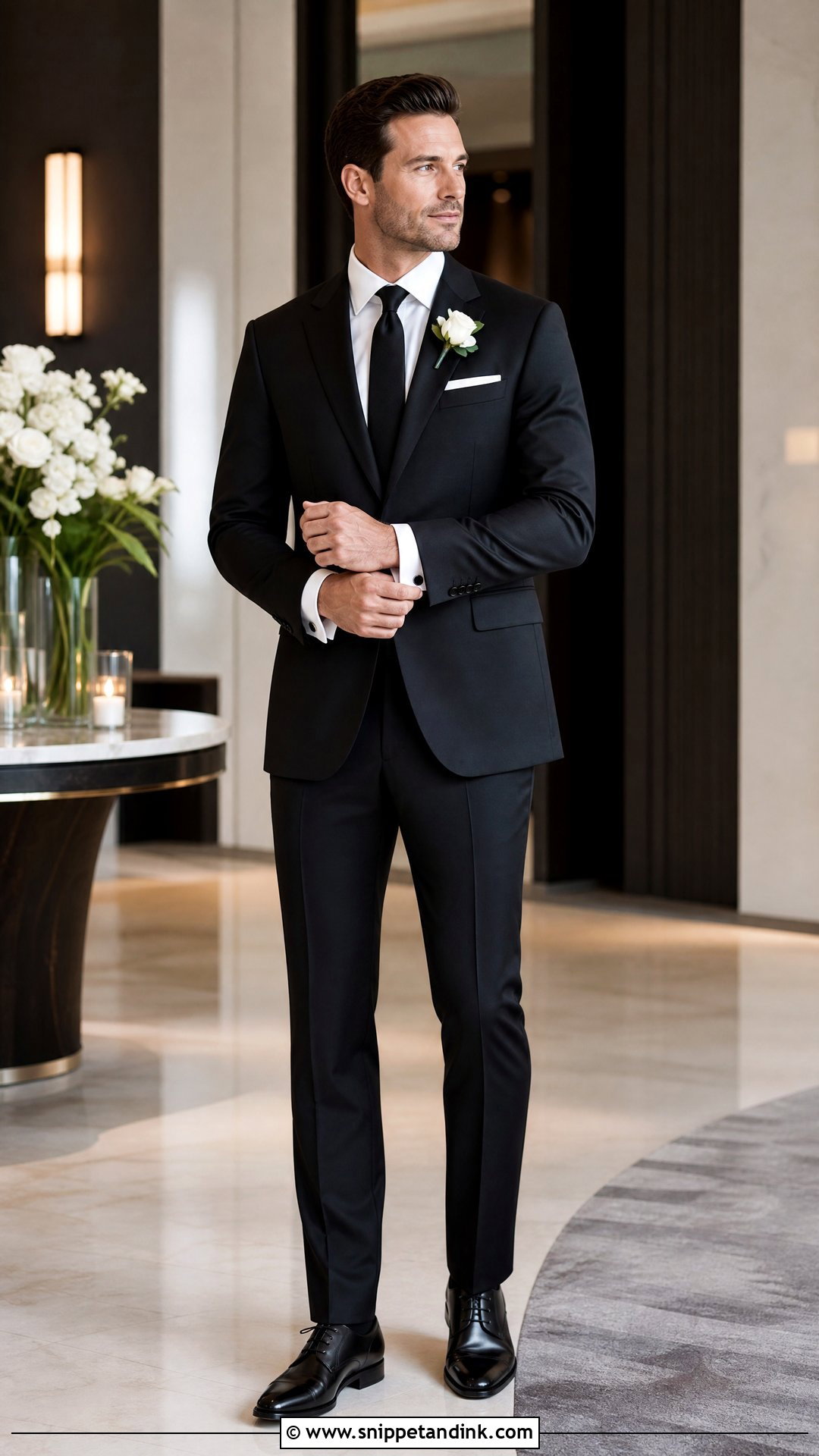
A black suit looks polished without needing a black-tie invitation. I’d go single-breasted with two buttons, flat-front trousers and a crisp white shirt, then a black silk tie and a plain white pocket square. Black Oxfords, a slim belt and silver cuff links are the whole accessory story. Black cloth is unforgiving in photos, because it flattens detail and shows lint and dust under flash, so a lint roller belongs in the best man’s pocket. Ask for little or no break at the hem. It’s at its best at an evening or city wedding.
2. Navy Three-Piece Wedding Suit
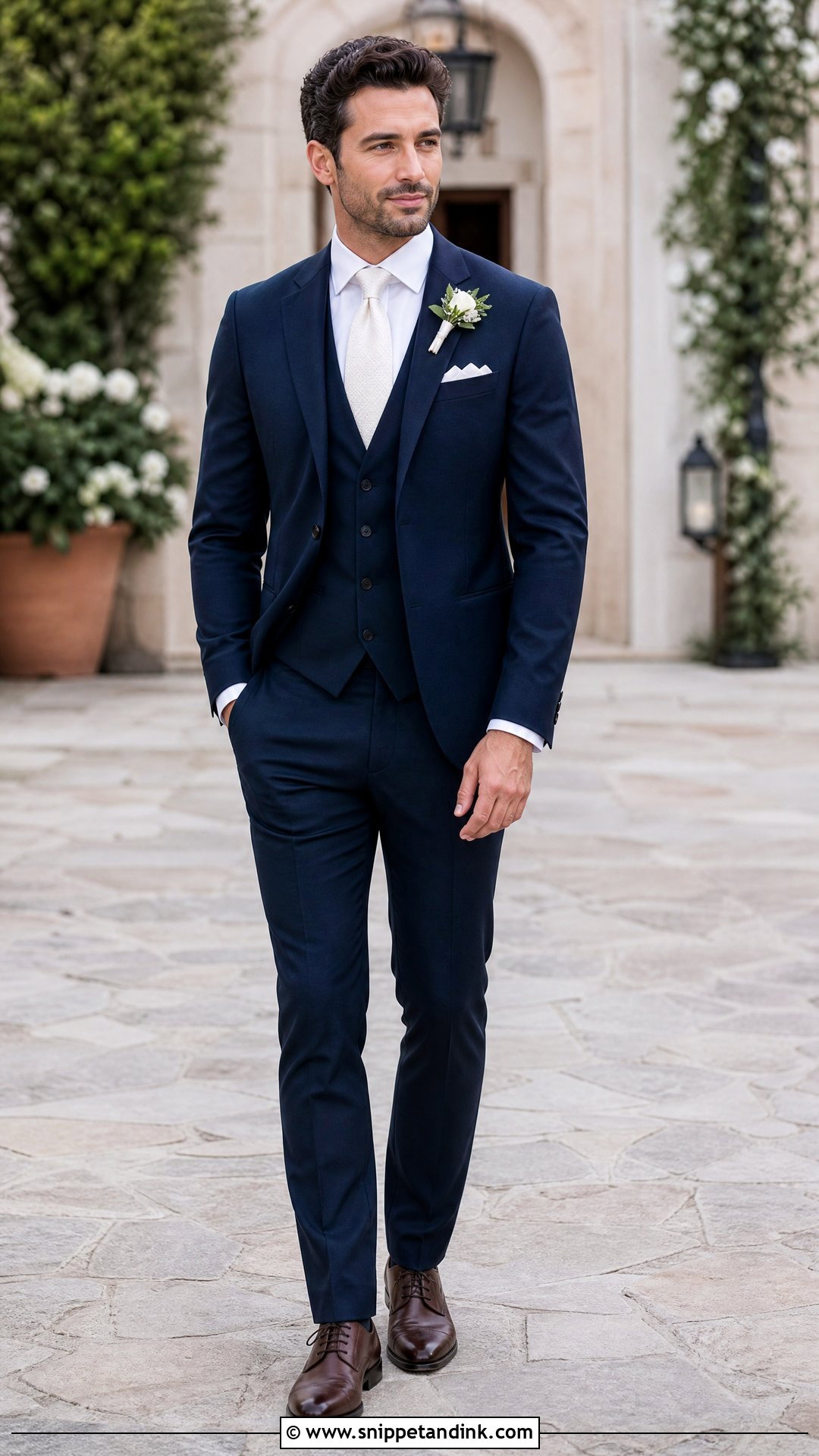
The three-piece navy suit earns its place at the reception, when the jacket comes off and the vest keeps him looking dressed. Pair it with a white spread collar, a textured ivory tie and dark brown cap-toes. I like a vest with five or six buttons, the bottom one left undone, and trousers with side adjusters, because a belt buckle under a vest creates a lump at the waist. Navy holds its color in daylight and evening light alike. If the groomsmen wear two-piece navy, the vest alone sets the groom apart.
3. Charcoal Gray Wedding Suit
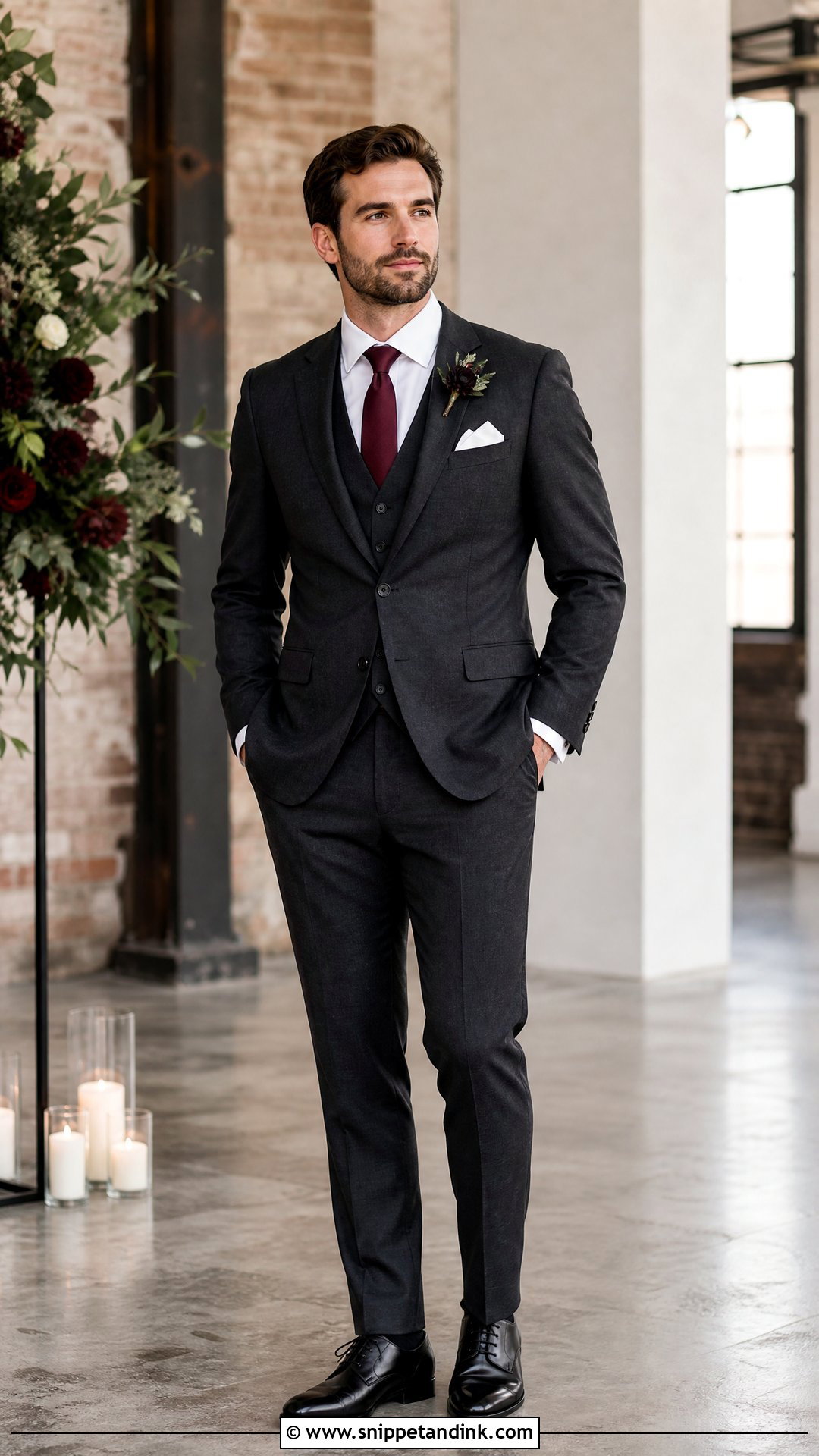
When black feels too formal and navy feels expected, a charcoal gray wedding suit sits neatly between them. Wear it with a white shirt and a black, silver or deep burgundy tie, and black Derbies or Oxfords for an evening ceremony. Look for a matte or lightly textured wool. Shiny charcoal reads cheap on camera, and it shows every crease from sitting. A charcoal vest or a darker boutonniere separates the groom from his party. This is a natural fit for fall, winter and industrial venues.
4. Light Gray Wedding Suit
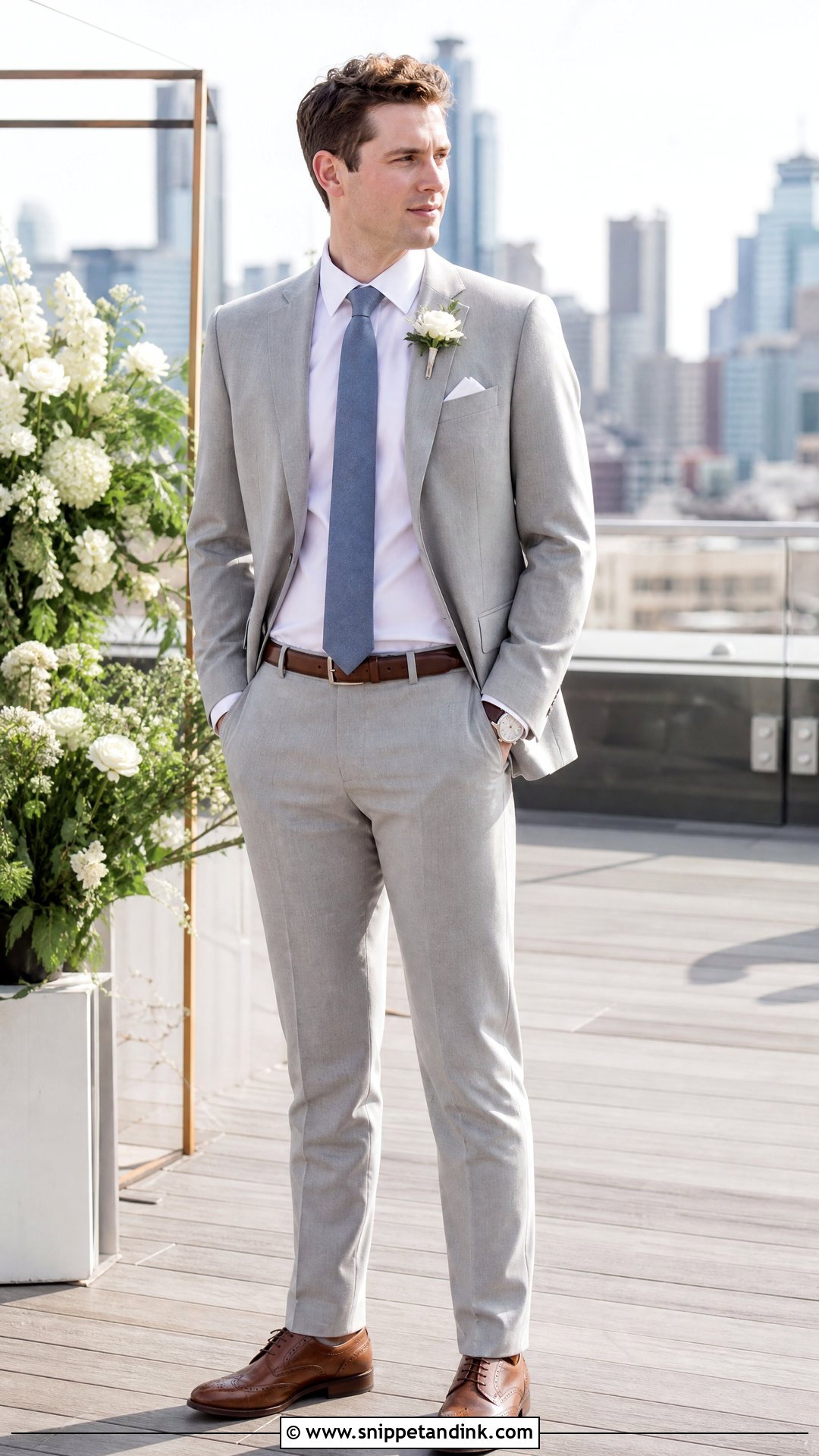
Light gray comes alive in daylight. Put it with a white shirt, a dusty blue tie and mid-brown loafers or brogues, and it suits a spring garden or rooftop. Choose tropical wool or a light wool blend, which breathes in heat but still holds a crease. Pale cloth also shows sweat at the underarms and the back, which is why I’d steer a groom who runs warm toward a half-lined jacket. Taper the trousers rather than making them tight. A double-breasted jacket or matching vest adds formality. Leave the sneakers for a clearly casual wedding.
5. Tan Linen Wedding Suit
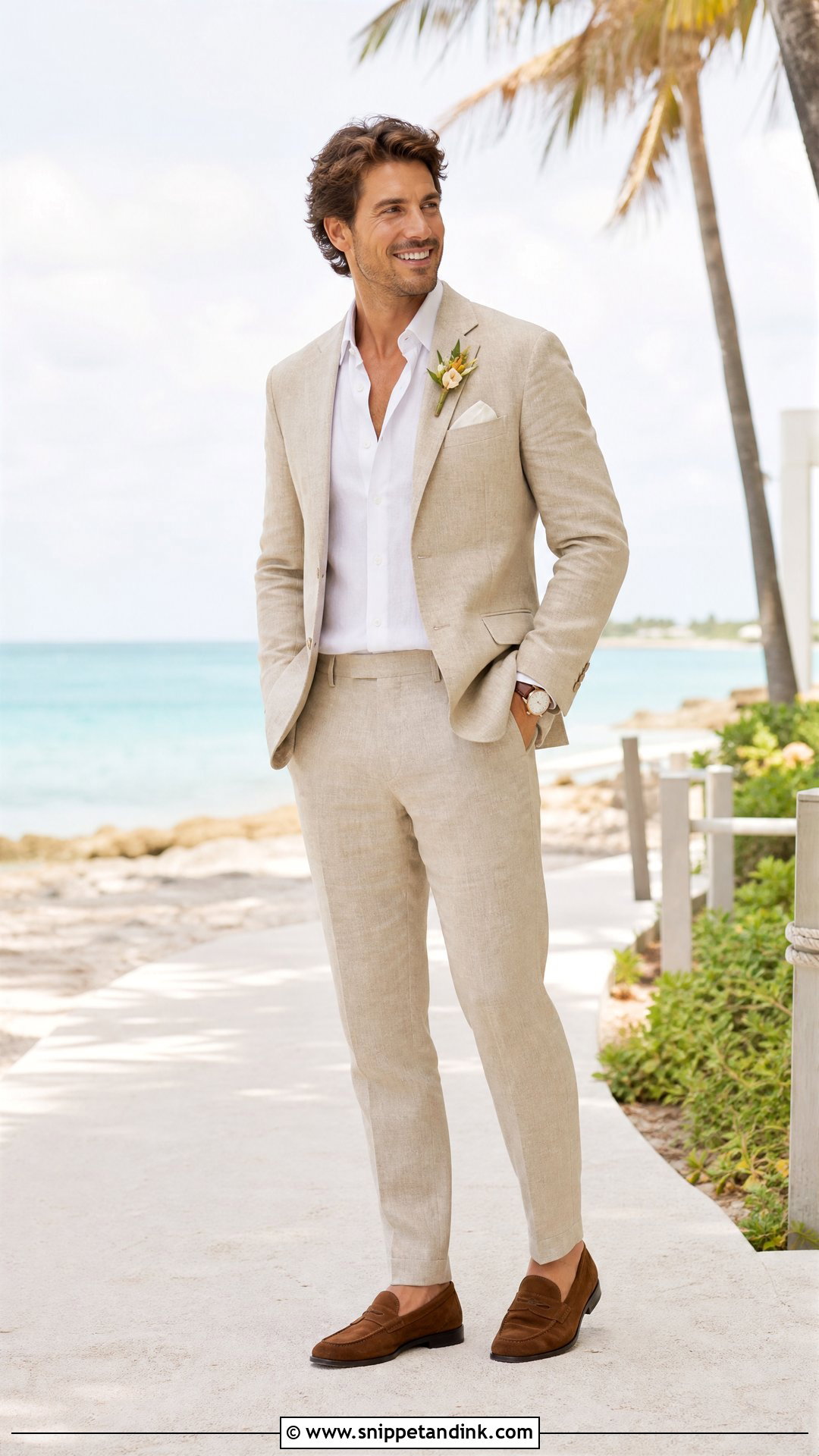
A tan linen wedding suit belongs with sand, greenery and sunshine. A lightly structured jacket, a white linen shirt open at the collar for the beach, or a brown knit tie for a bit more polish, then suede loafers. Linen creases the moment he sits down, and that’s part of its character; a linen-wool blend creases less if the photographer will be working all day. Keep the fit relaxed but clean at the shoulder. It suits a destination wedding or a rustic summer venue with an easy dress code.
6. Beige Double-Breasted Wedding Suit
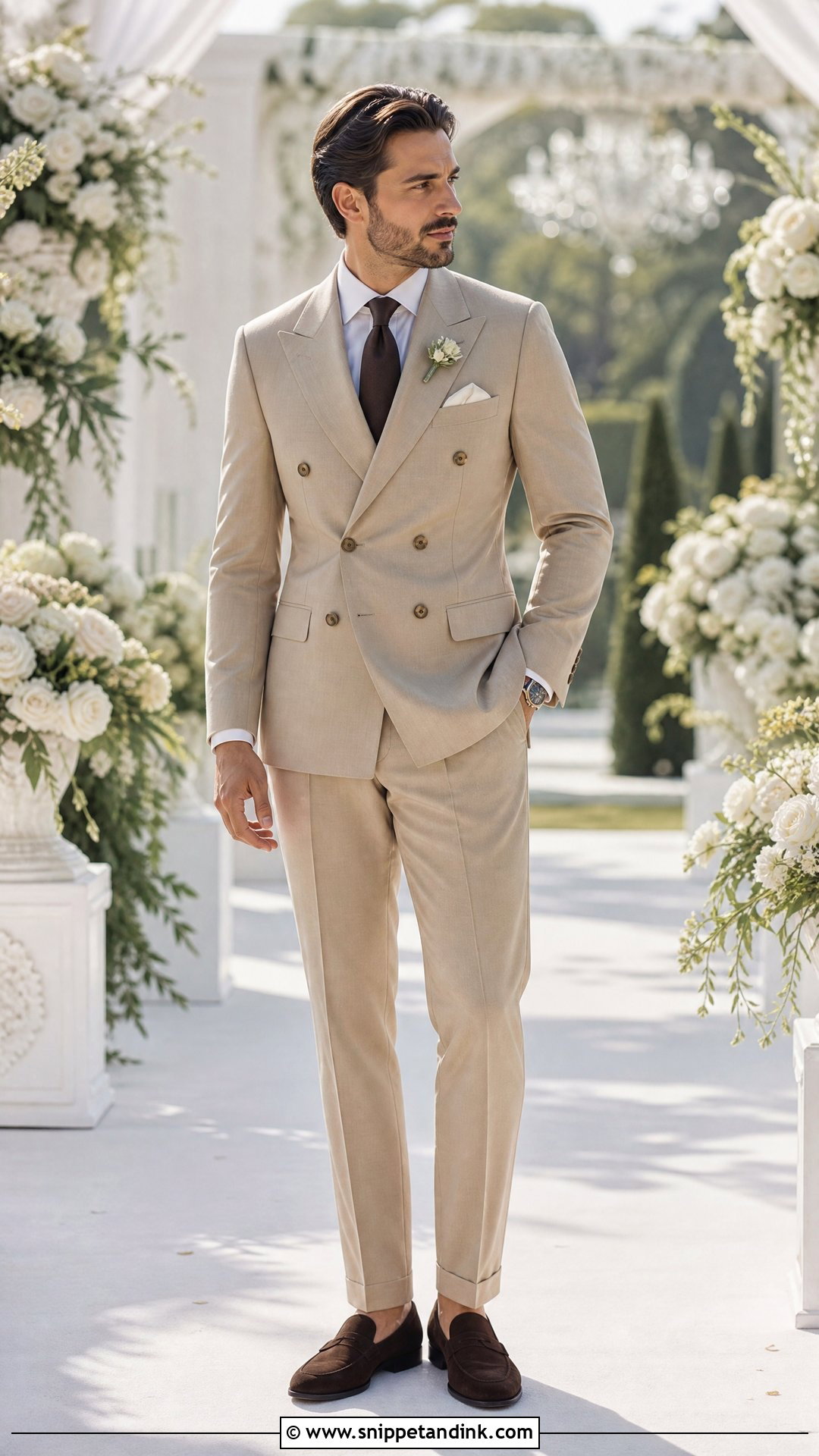
Peak lapels give a beige double-breasted suit real presence, and the pale color keeps it friendly. A six-button jacket, matching trousers, a white shirt, a chocolate tie and dark brown loafers make a clean set. Double-breasted jackets are meant to stay buttoned while standing, so the chest and waist must be comfortable closed; if he can’t sit in it buttoned without strain, it needs letting out. Pleated trousers balance the wider jacket and give room through the hips. A garden ceremony or an upscale summer reception suits it well.
7. Olive Green Wedding Suit
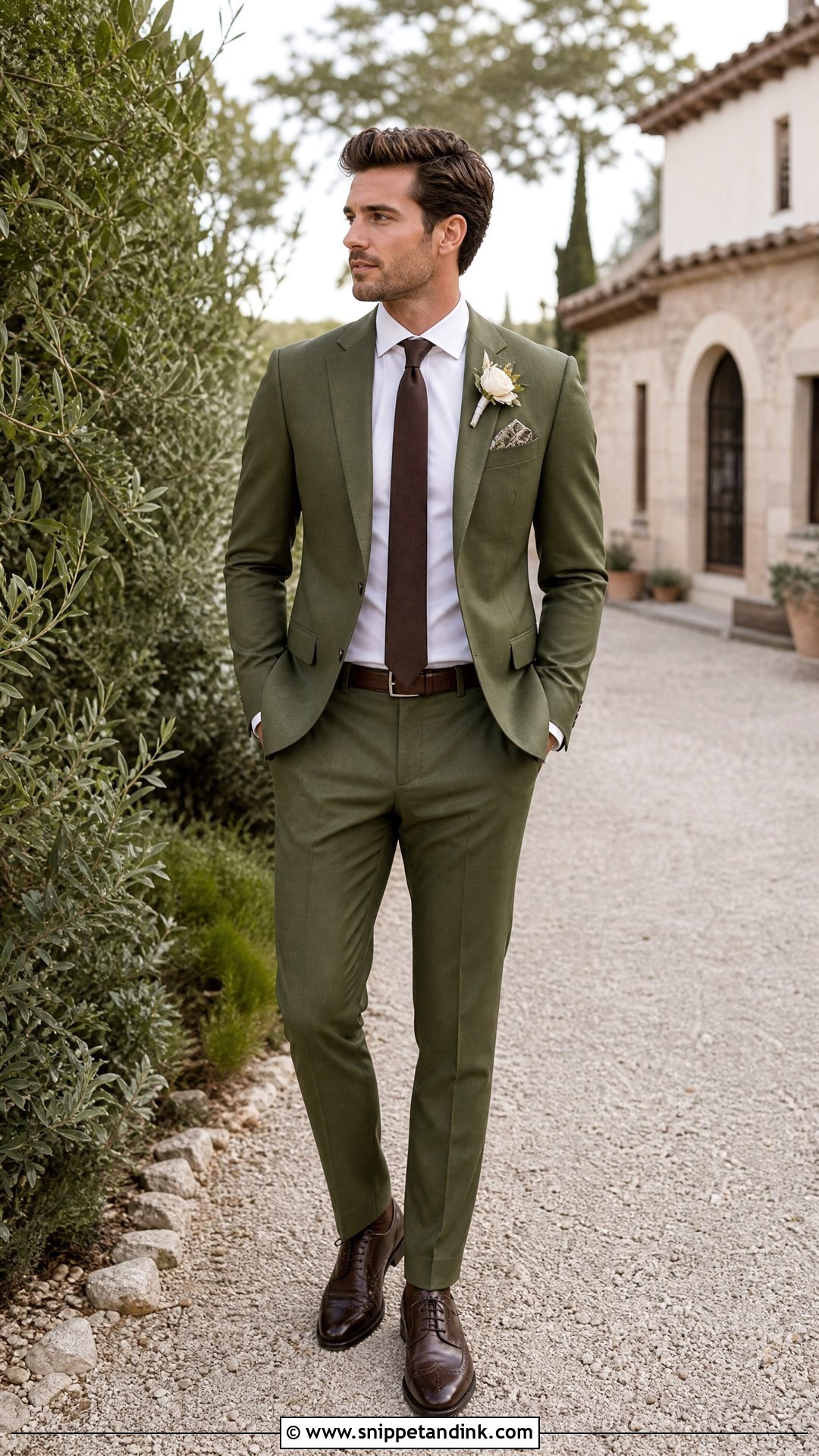
Olive is easier to coordinate than most grooms expect. It sits well with cream, rust and muted gold flowers and with outdoor venues in general. An ivory shirt, a brown silk tie and dark brown brogues are enough; any pocket square pattern should repeat colors already in the outfit. Medium-weight wool gives structure, while a linen blend helps in heat. Green dye varies a lot from mill to mill, so if the groomsmen wear olive too, order from the same supplier. If they’re in tan, the olive suit marks the groom straight away.
8. Sage Green Wedding Suit
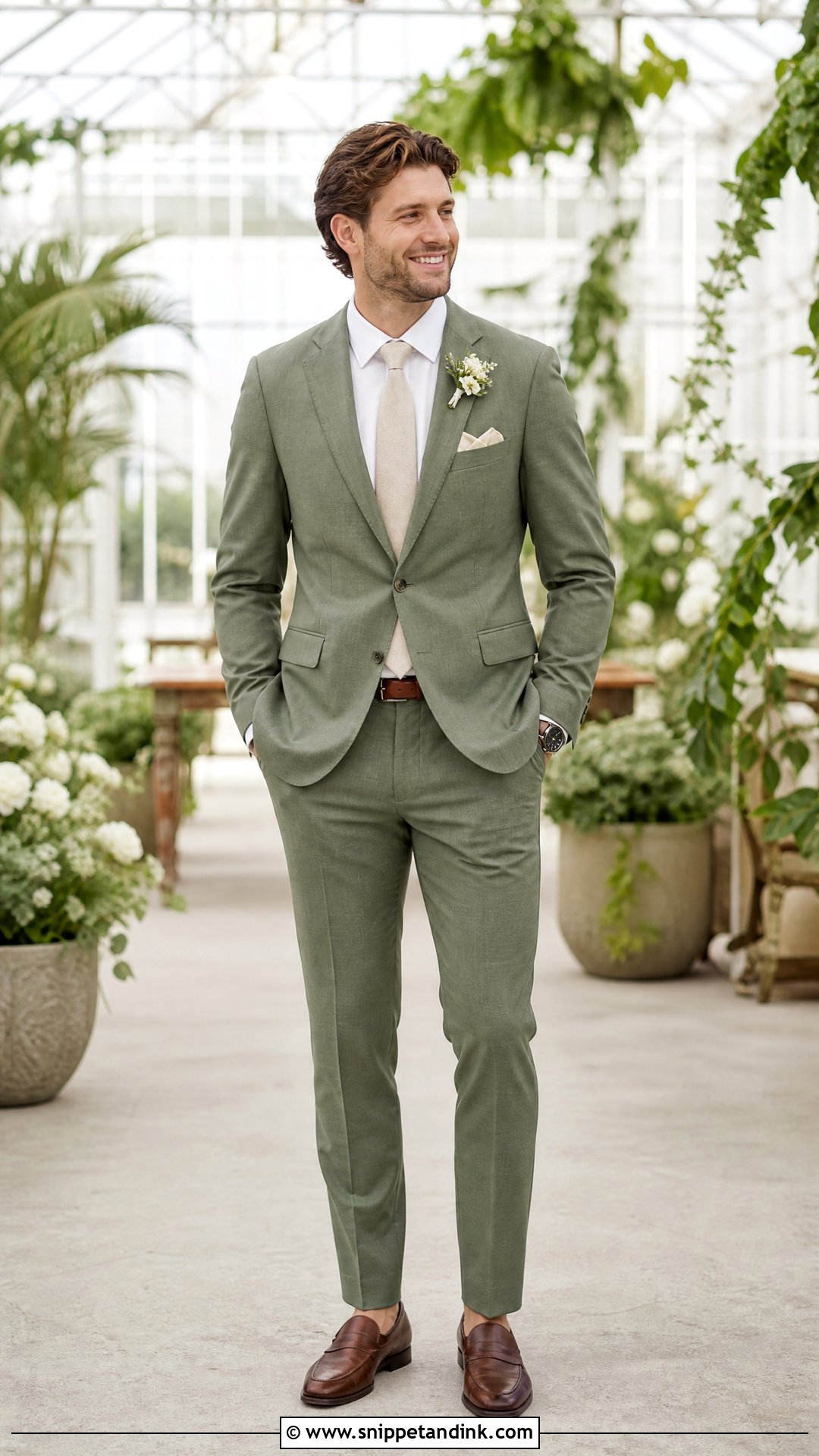
Sage is a soft, current choice for a warm-weather wedding. Wear it single-breasted with a white shirt, a champagne tie and brown loafers, and keep the boutonniere white. Pale green can look shiny under flash, so check the fabric with a phone flash before buying. A slightly relaxed cut keeps it modern, but the shoulders and sleeves still need to be exact; pale colors show a sleeve that’s too long more than dark ones do. Dark brown shoes, belt and watch strap frame the suit. Botanical and coastal venues suit this palette well.
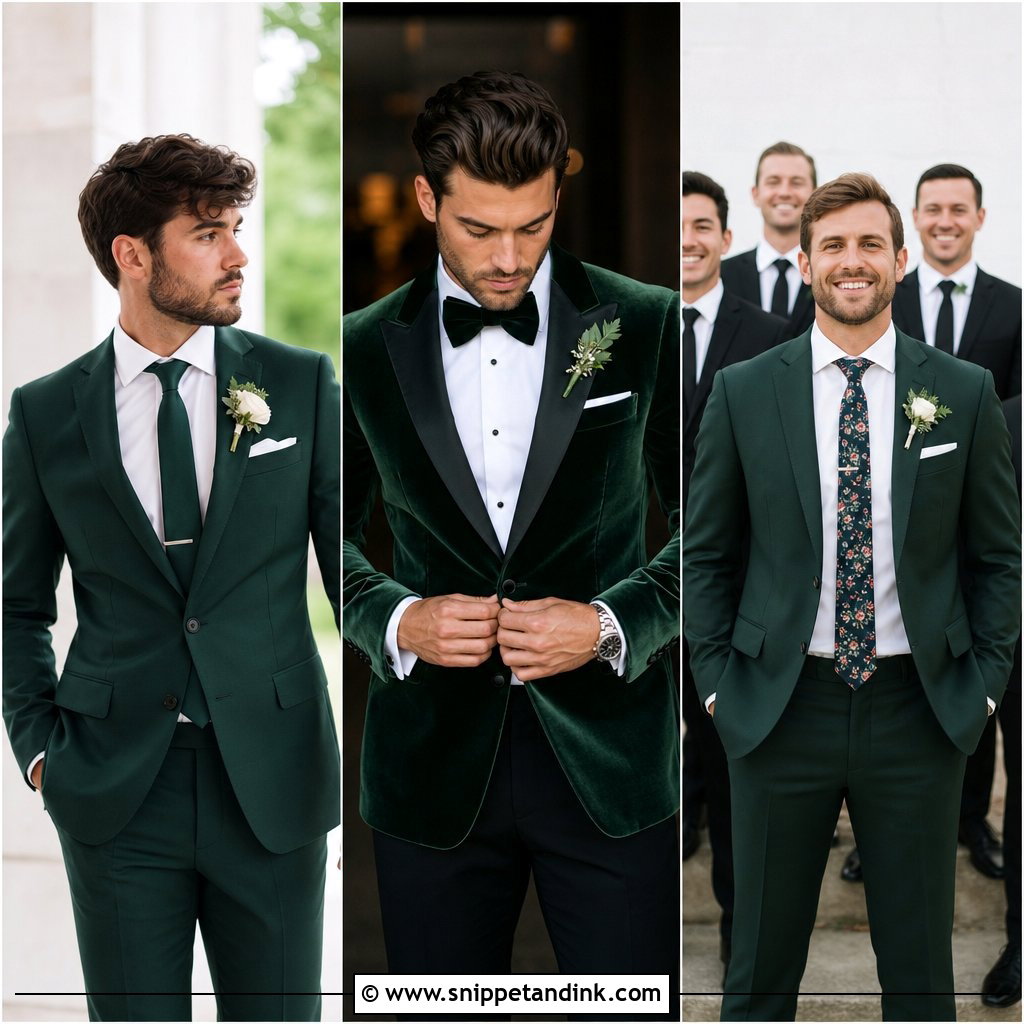
9. Forest Green Velvet Wedding Suit
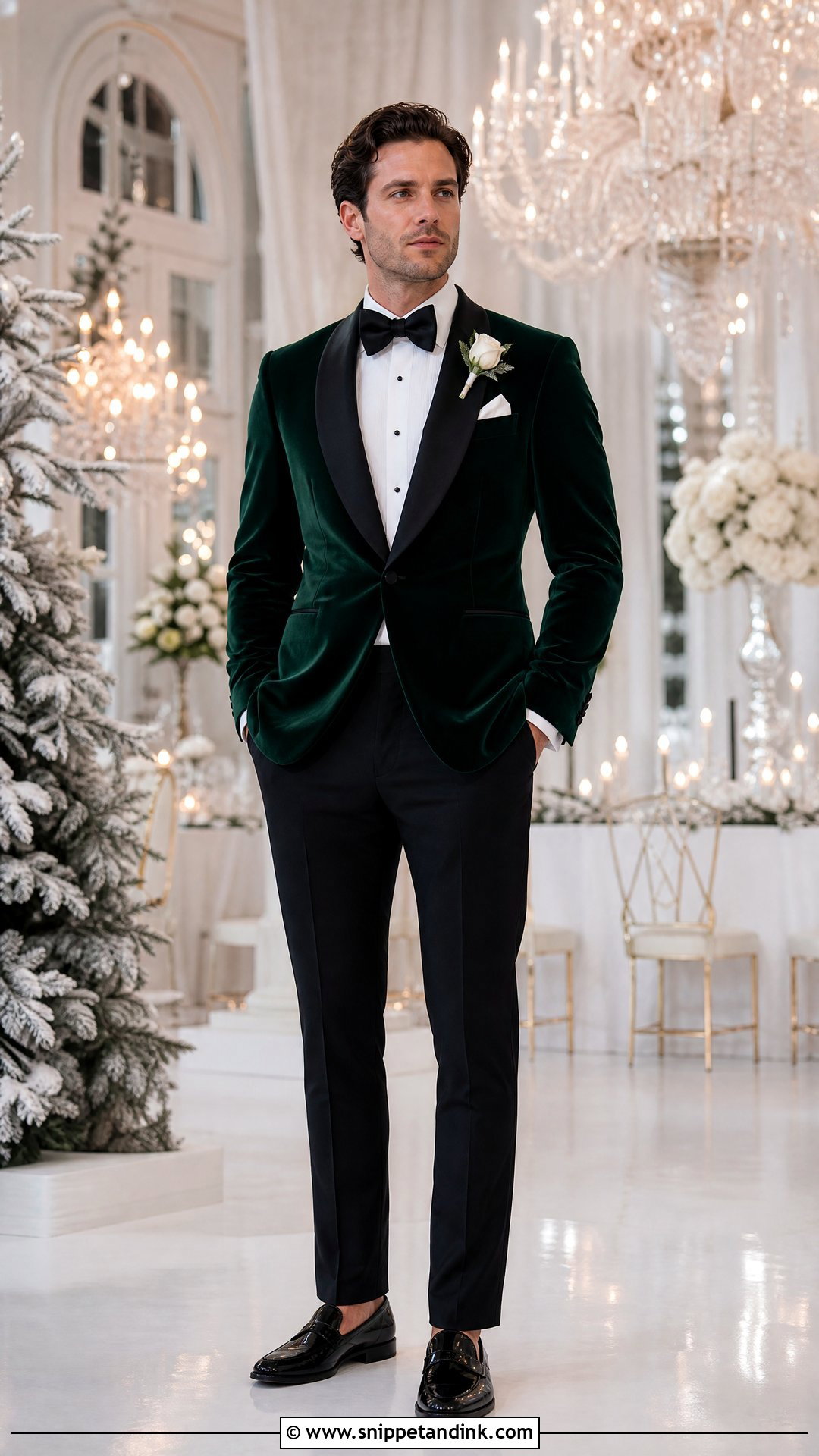
A forest green velvet suit feels made for cool evenings and candlelight. I’d skip velvet trousers and wear a fitted velvet dinner jacket over black tuxedo trousers, with a white formal shirt, a black bow tie and polished black loafers. Satin or grosgrain lapels connect jacket to trousers. Velvet crushes where it’s pressed, so hang it on a broad hanger and steam it from the inside, never iron it. Keep the tie and boutonniere plain because the cloth is already the statement. It suits a ballroom or historic venue in fall or winter.
10. Burgundy Wedding Suit
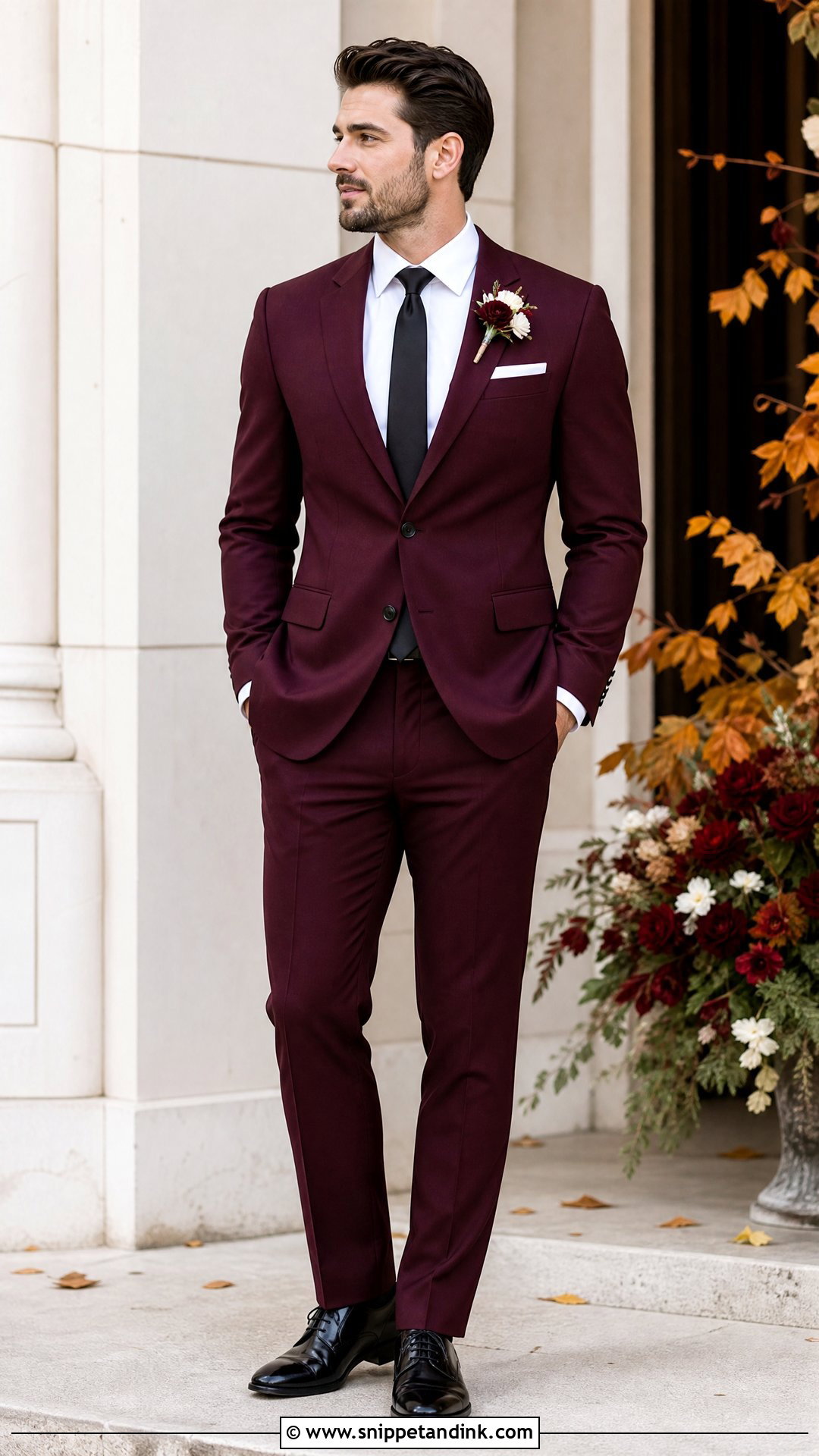
Burgundy brings warmth and a sense of occasion. A matte wool two-piece with a white shirt, a black tie and black Oxfords keeps the strong color in a crisp frame. For daytime, dark brown shoes and a muted beige tie soften it. Burgundy can lean purple or brown depending on the dye, so look at a swatch beside the wedding flowers before ordering. Keep the groomsmen in charcoal, black or navy so the groom stays the focus, and keep his boutonniere small and tonal. Fall and winter are its natural seasons.
11. Brown Tweed Wedding Suit
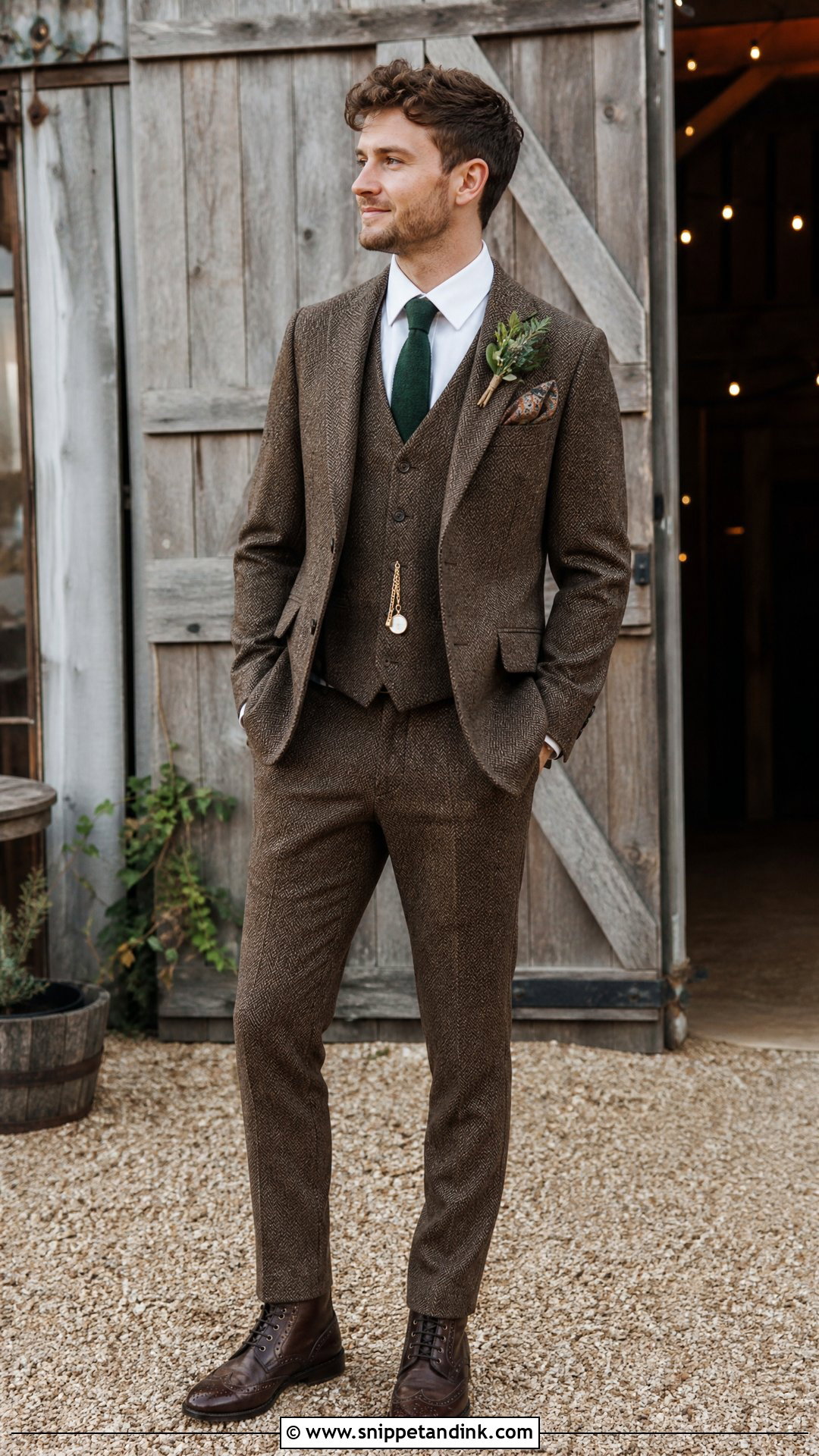
Texture is what makes brown tweed look right for a countryside wedding rather than an office. Build the outfit around the jacket, matching trousers and a waistcoat, then add an ivory shirt, a forest green tie and dark brown brogues or boots. Herringbone or Donegal weaves read well in photos. Tweed is warm, so it really only works in fall and winter. And it’s heavy enough that the waistcoat keeps him looking dressed when the jacket comes off. One vintage accessory, a pocket watch or a tie bar, is plenty. Finish with a greenery boutonniere.
12. Terracotta Wedding Suit
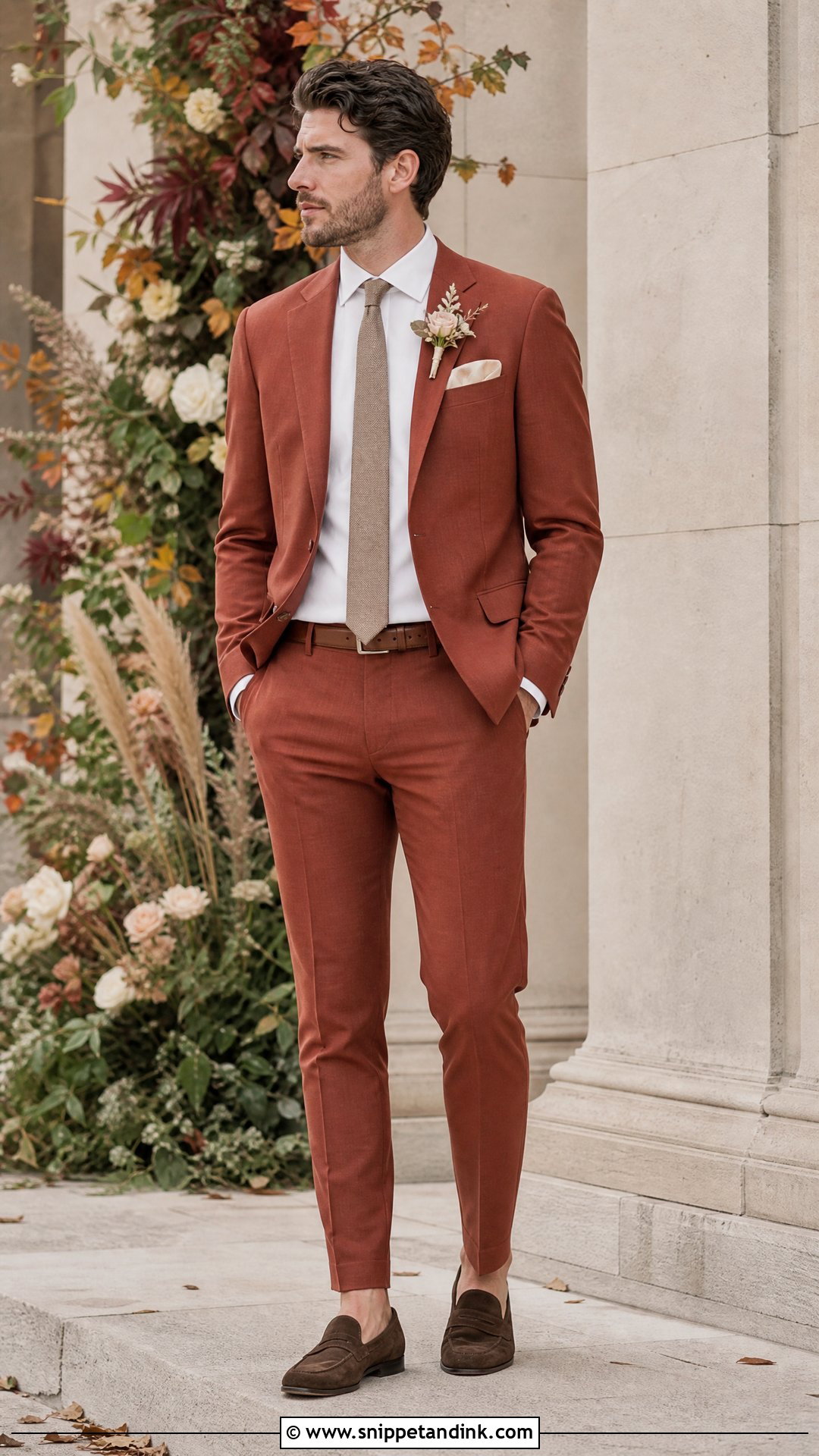
Terracotta warms up desert, garden and autumn palettes. An ivory shirt, a taupe tie and mid-brown suede loafers suit its reddish tone, with a single-breasted jacket and tapered trousers. Keep the pocket square cream and the boutonniere neutral. The shade is the statement, so leave out bright socks and patterned shirts. Terracotta fades in strong sun over time, which matters if he plans to wear it again for summer weddings. The groomsmen can wear tan, beige, or dark brown suits to build a related palette while the groom’s richer color stands out.
13. Powder Blue Wedding Suit
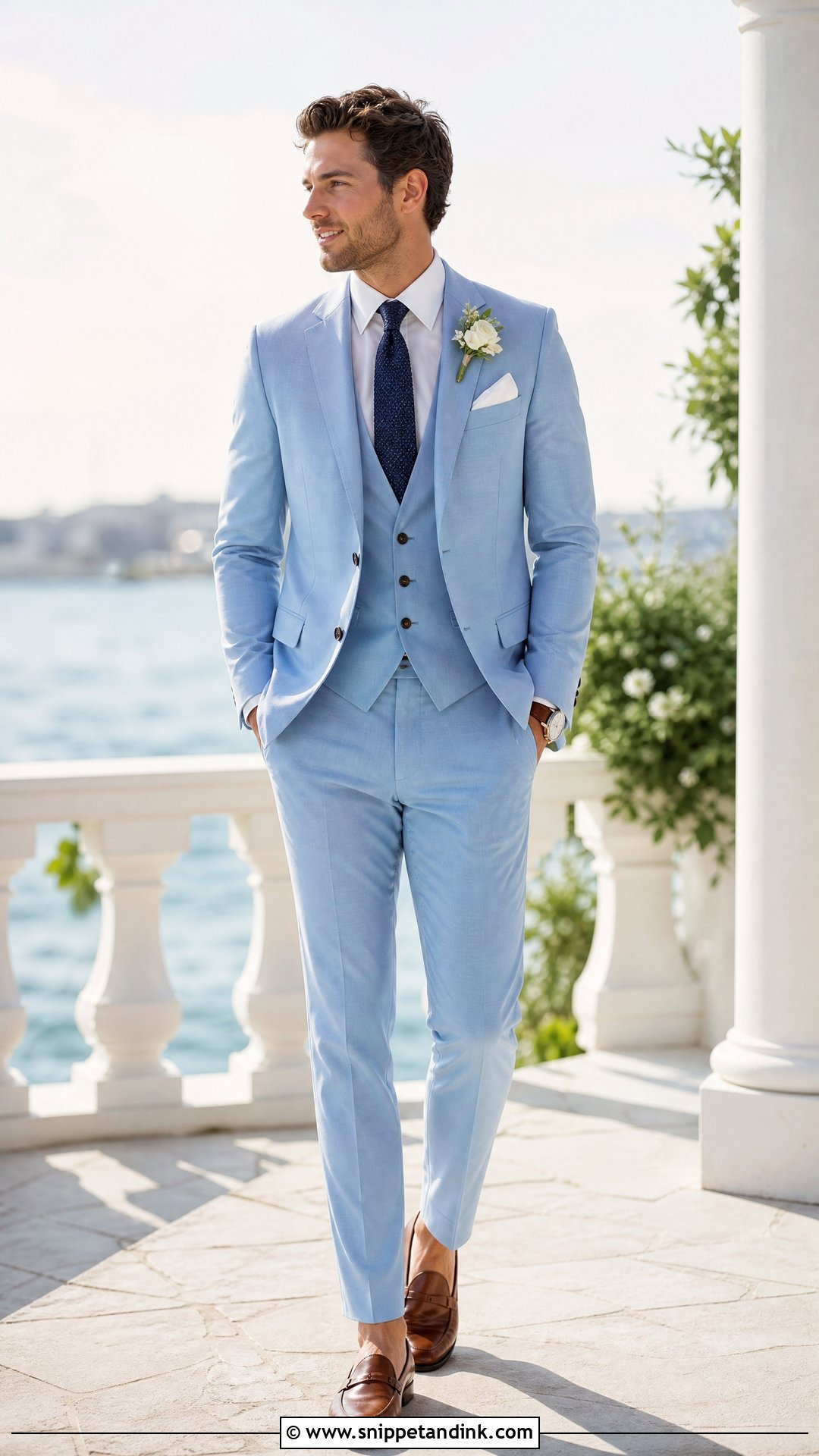
Few summer combinations feel as fresh as powder blue with white. Pair it with a white shirt, a navy knit tie and mid-brown loafers, plus a simple white pocket square. The fabric needs enough structure or the pale suit drifts toward casual; I’d look for a wool with a firm hand rather than a soft cotton. Keep the shirt bright white, since cream next to powder blue looks dingy. A matching vest adds formality. It suits a coastal or daytime garden ceremony with cool pastels.
14. Royal Blue Wedding Suit
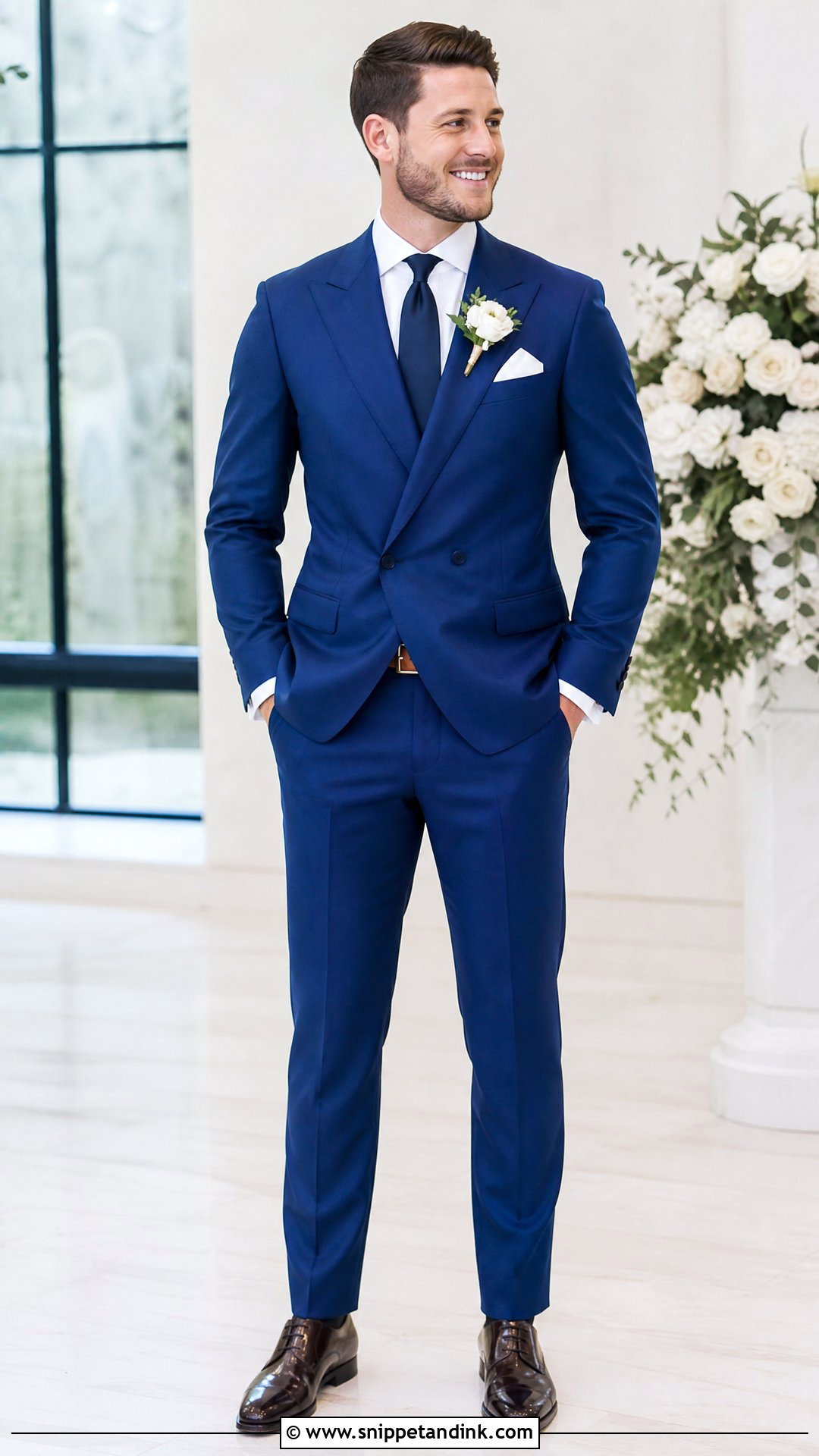
Royal blue is brighter than navy but still reads formal. A white shirt, a dark navy tie and polished dark brown shoes give it a solid frame. Choose a medium or deep royal rather than electric blue, which dates quickly. Check the cloth outdoors and under a camera flash before buying. Some blues with a sheen photograph a full shade brighter than they look in the shop, and that can make the groom glow next to everyone else. Peak lapels add distinction if the party is in standard navy. Bright indoor venues and daytime outdoor settings suit it best.
15. Ivory Wedding Suit
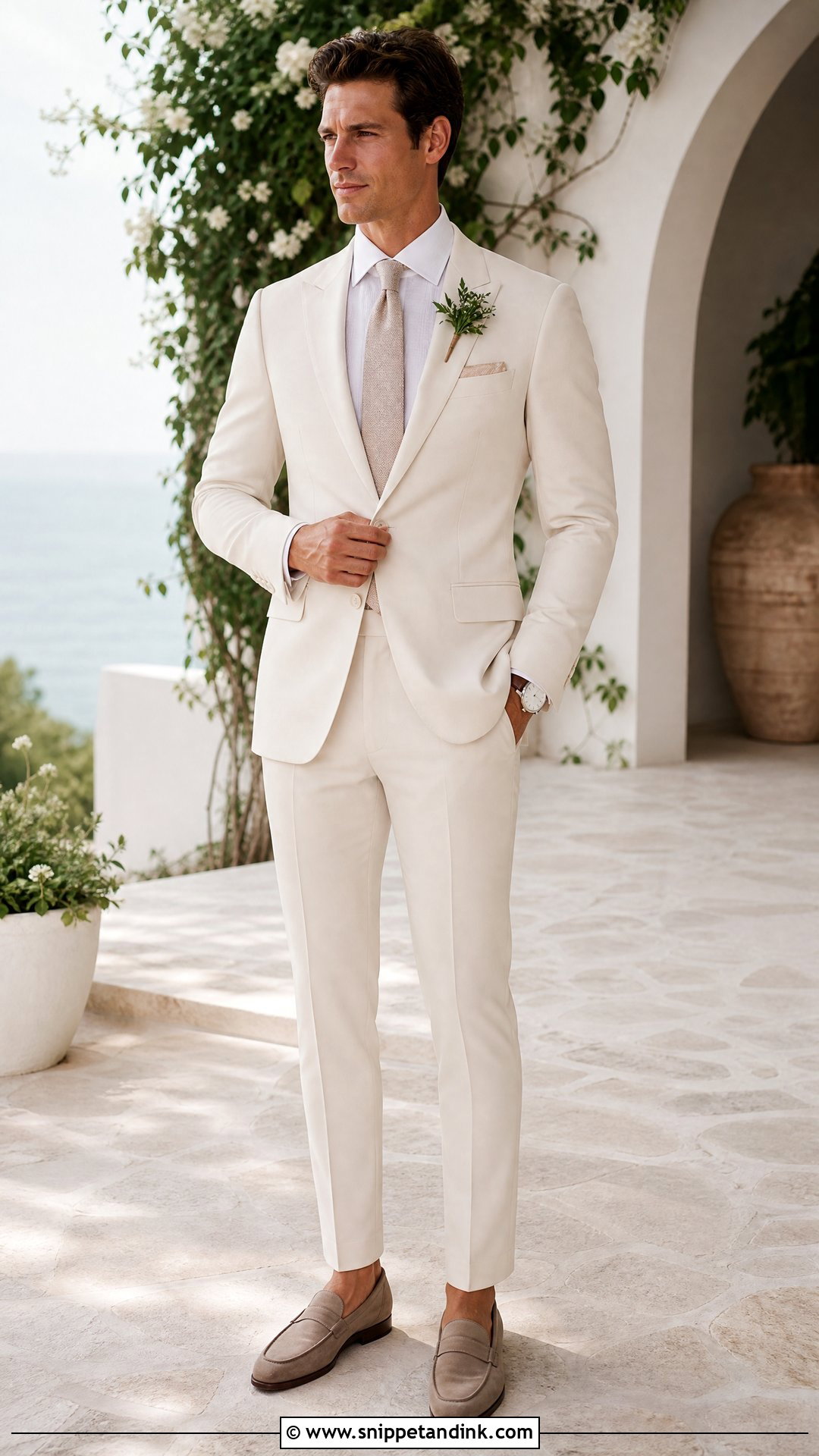
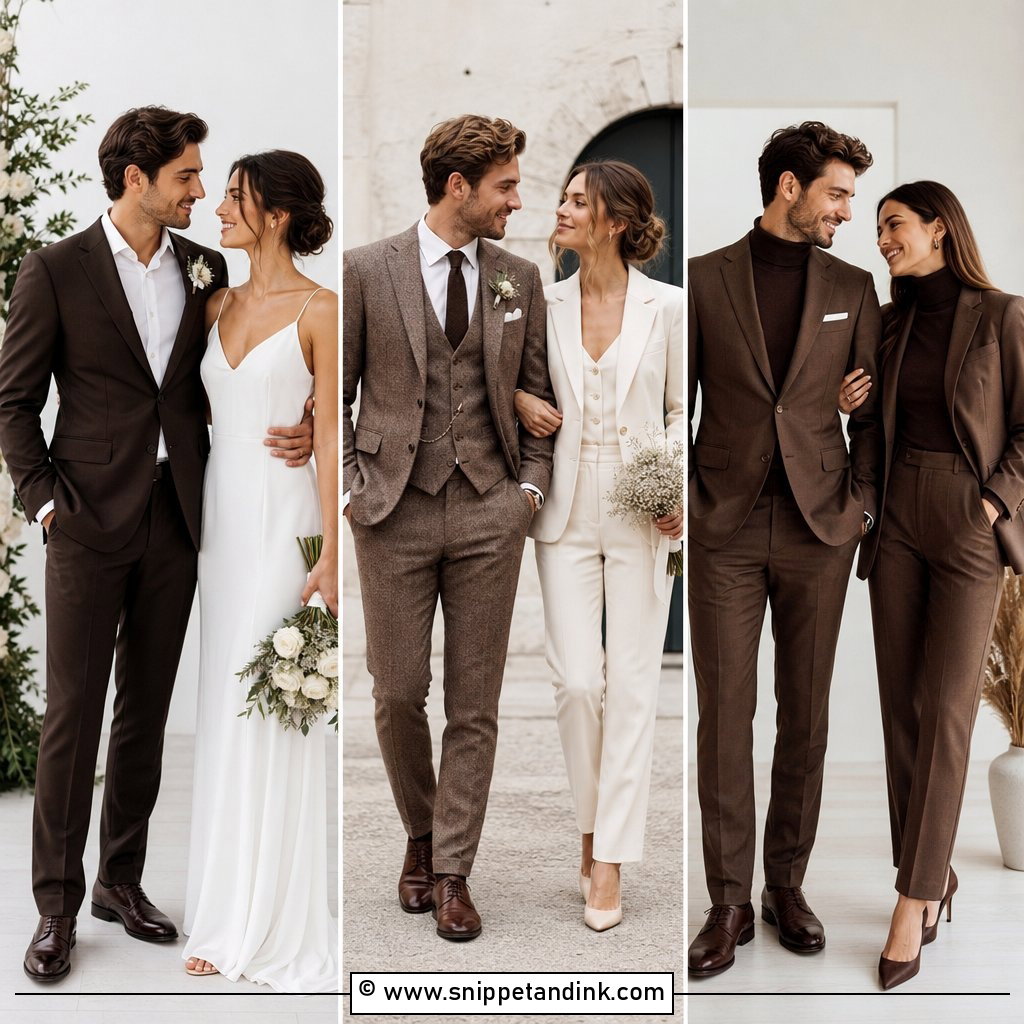
An ivory suit is a strong choice for a groom who wants a light, single-color outfit. Pair it with a white or soft ivory shirt, a champagne tie and brown or taupe loafers, and use slightly different textures so the layers don’t merge. Hold the fabric next to your partner’s attire in daylight, because two different ivories side by side look like a mistake in photos. Make sure the trousers are lined or heavy enough not to be see-through in sun. Pale cloth shows every wrinkle and uneven hem, so tailoring has to be precise. It suits a destination or minimalist summer wedding.
16. Black Tuxedo Wedding Suit
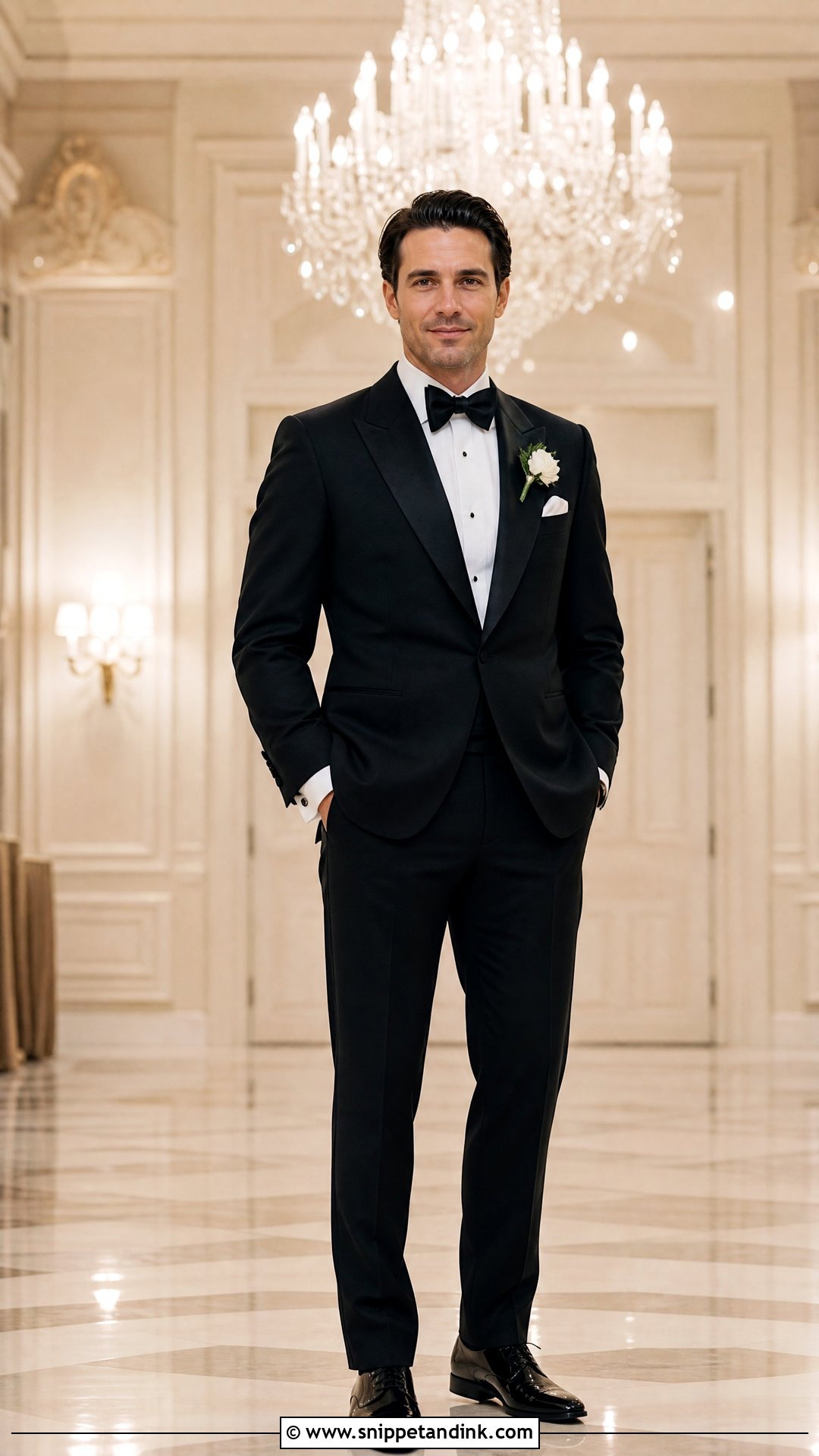
A classic tuxedo is hard to beat for a formal wedding. Black dinner jacket and trousers, a white pleated or textured formal shirt, a self-tied black bow tie and patent Oxfords. The lapel facing should match the trouser stripe and bow tie: satin with satin, grosgrain with grosgrain. Use side adjusters or braces and skip the belt. A good tux shouldn’t pull into an X across the button when fastened; if it does, it’s too tight at the waist. Simple cuff links and a small white boutonniere finish it.
17. Midnight Blue Tuxedo Wedding Suit
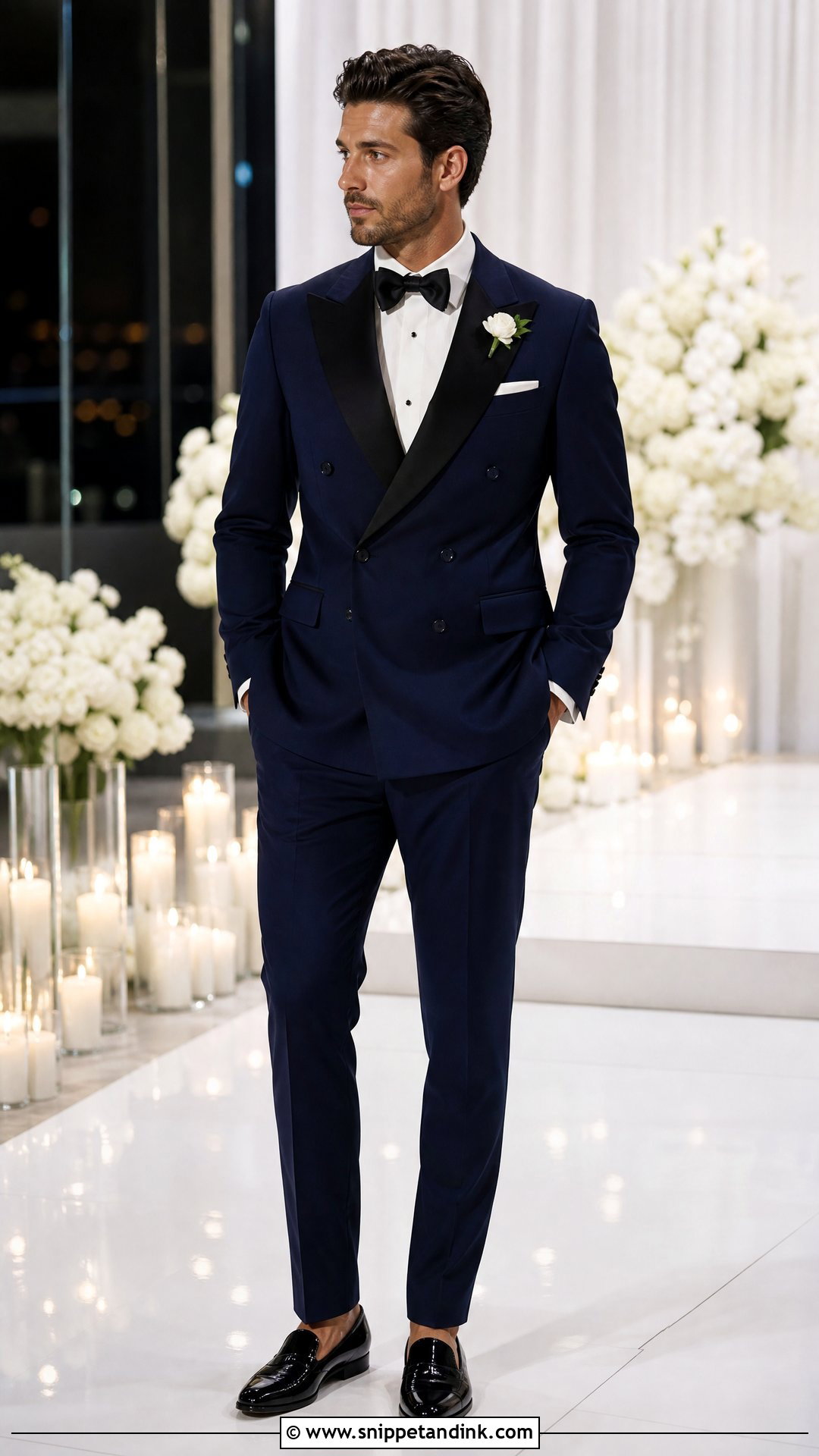
Under evening light a midnight blue tuxedo can look richer than black, which is exactly why it was worn as an alternative in the first place. Choose a very dark navy dinner jacket with black satin peak lapels and matching trousers. A white formal shirt, a black bow tie, patent loafers and a white pocket square keep it classic. In daylight it reads clearly blue, so it’s best for an evening wedding. A double-breasted cut or a subtle texture adds distinction. Keep the cuff links minimal.
18. Plaid Wedding Suit
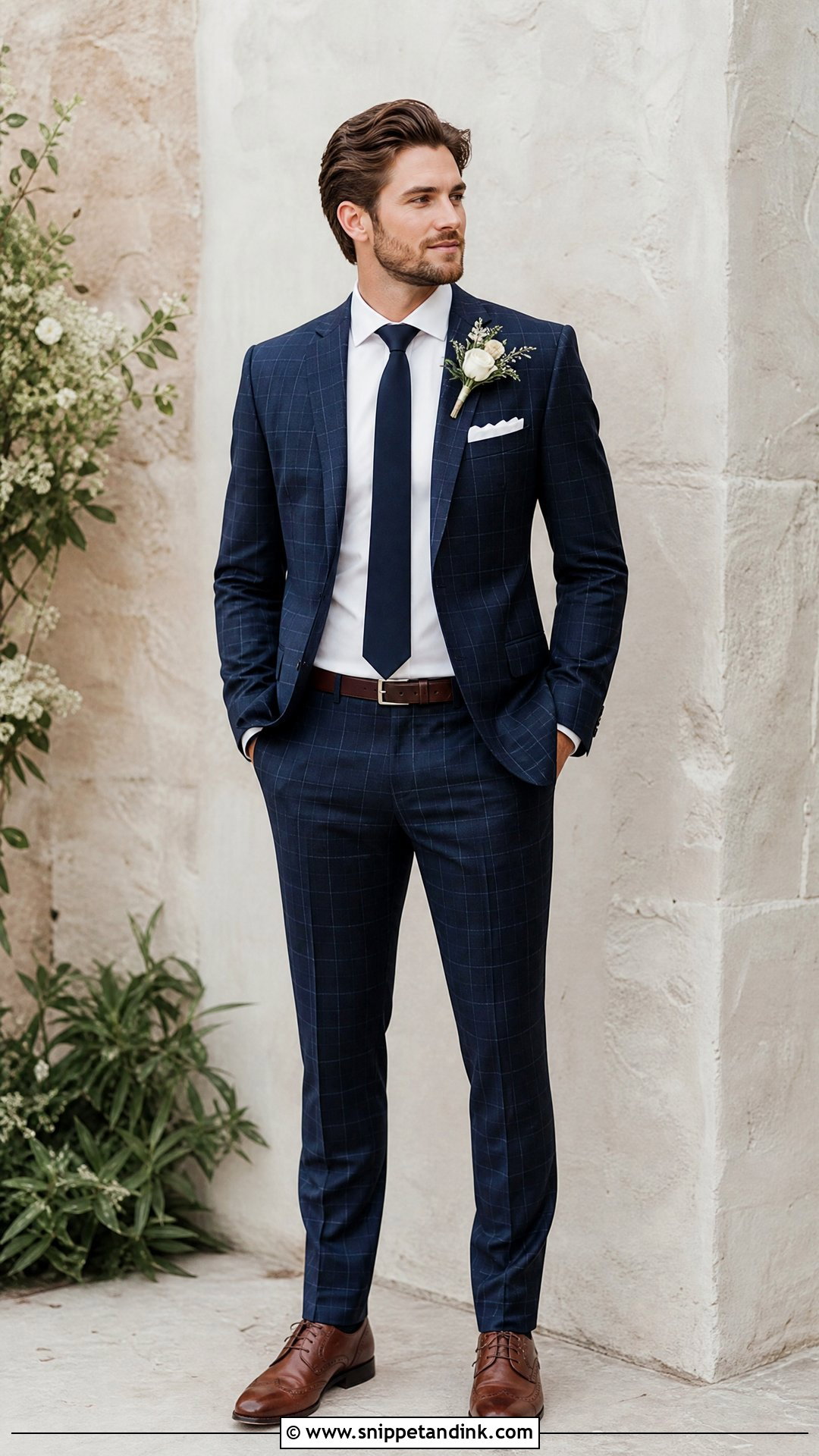
A plaid suit brings pattern while staying tailored. Pick a subtle windowpane, glen plaid or tonal check, not a large multicolor design. Wear the jacket and matching trousers with a plain white shirt, a dark tie and polished brown or black shoes, and keep every accessory simple. The quality tell is pattern matching: on a good suit the checks line up across the front, at the pockets and down the sleeve head. Gray and navy checks suit formal venues; brown or olive plaid suits rustic fall weddings. Groomsmen in solid colors from the check tie the party together.
19. Pinstripe Wedding Suit
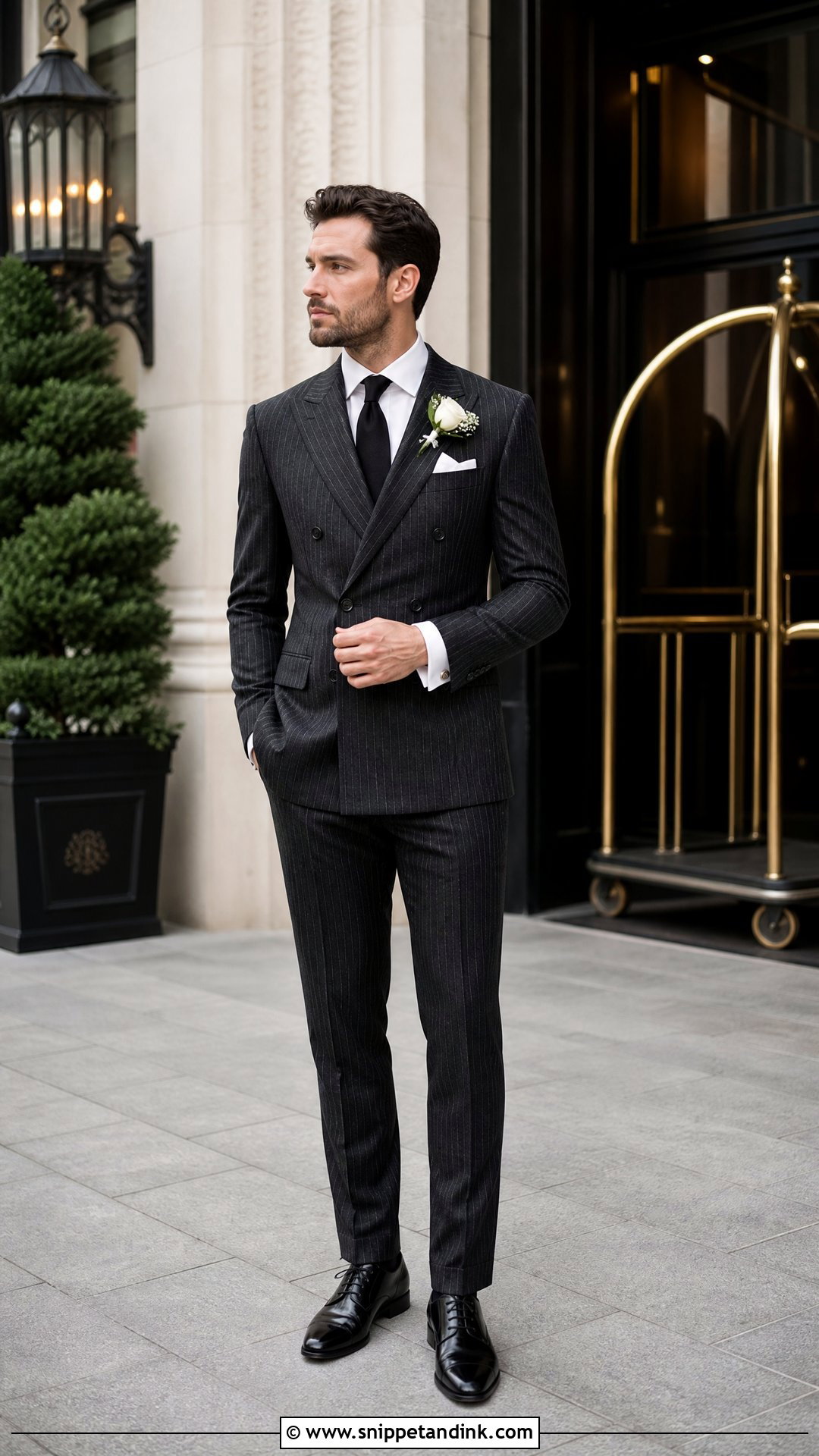
A pinstripe suit has a confident, city feel. Choose charcoal, navy or black with fine, well-spaced stripes, and pair it with a plain white shirt, a solid dark tie and leather Oxfords. Double-breasted pushes it toward vintage; single-breasted is simpler. Stripes lengthen the frame, but they also expose poor tailoring because any pulling bends the lines visibly. Keep the boutonniere compact so it doesn’t hide the lapel. Avoid striped ties and shirts. It’s a good match for a historic hotel or an architectural venue.
20. White Dinner Jacket Wedding Suit
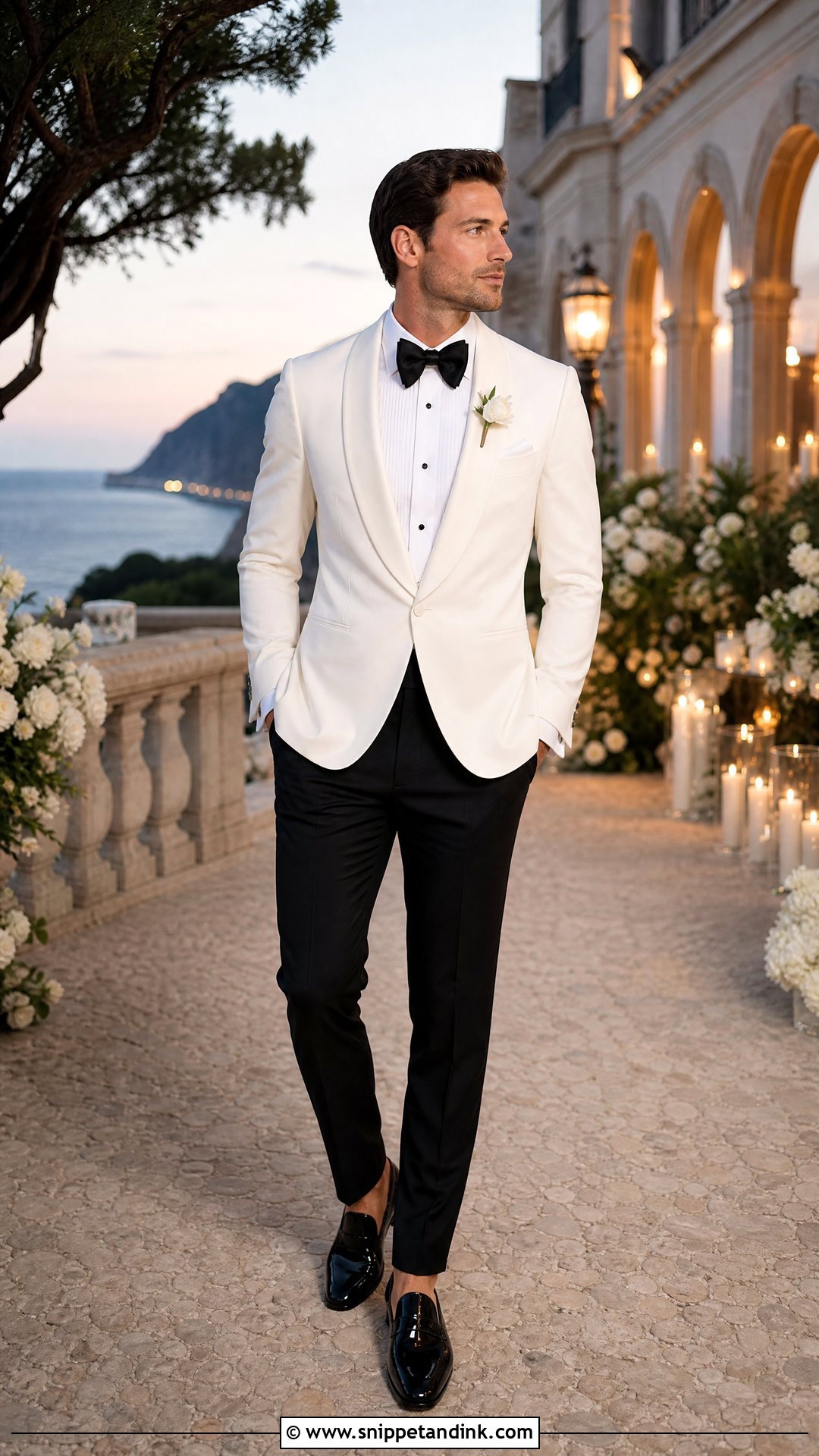
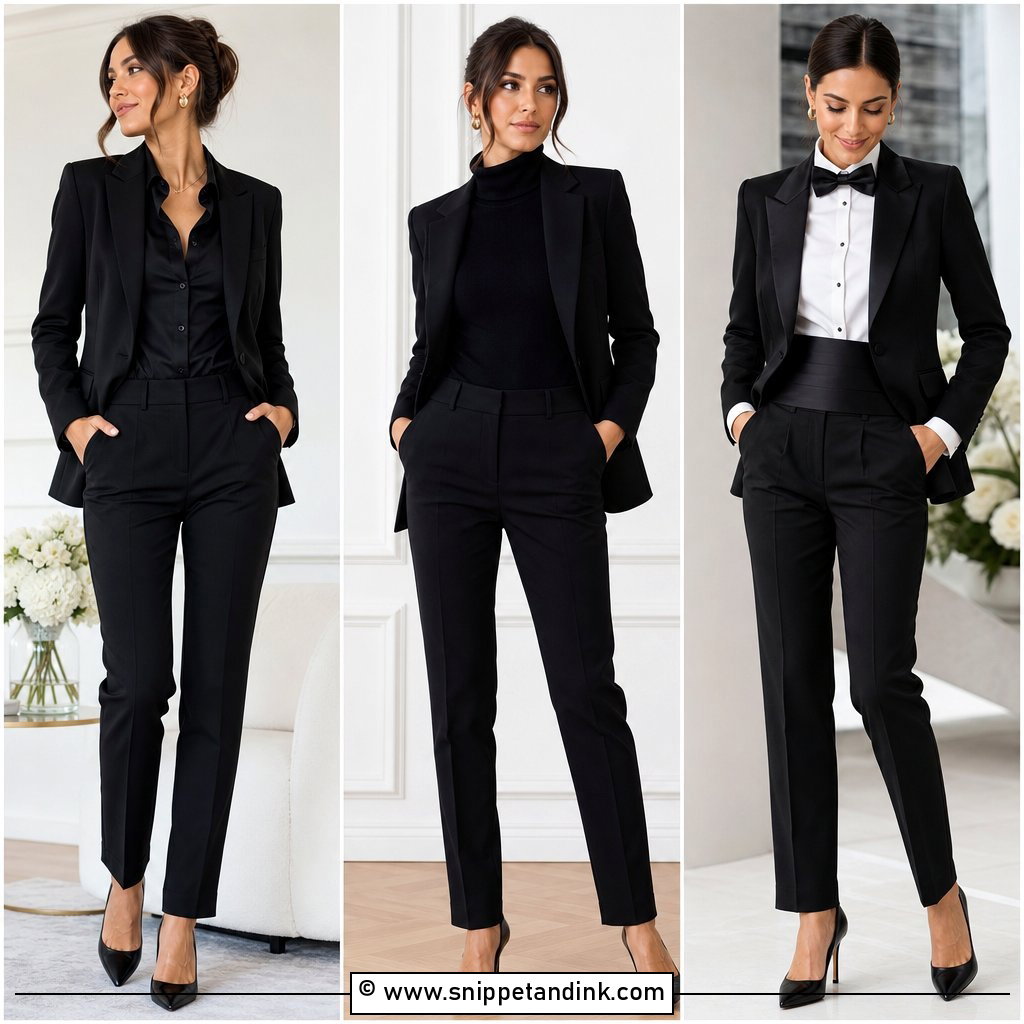
A white dinner jacket is black tie with a brighter, summery finish. Style an ivory or white shawl-collar jacket with black tuxedo trousers, a crisp white formal shirt and a black bow tie, then patent loafers and plain cuff links. Black buttons tie the jacket to the trousers. I usually steer grooms to ivory rather than pure white, which can glare against a bride’s dress and the white shirt. White jackets mark easily at the cuffs, so keep a stain pen handy. Skip the colored vest; the black and white contrast is enough.
Getting the Suit to the Altar Crease-Free and Dry
The suit leaves the tailor perfect. Getting it to the ceremony in the same state takes a little planning, especially for a destination wedding.
Travel and pressing
Carry the suit on in a garment bag, folded once, with tissue in the fold. On arrival, hang it on a broad shouldered hanger so the jacket keeps its shape. Wool relaxes overnight in a steamy bathroom; a handheld steamer finishes the job. Velvet and linen want steam only, never a hot iron, and velvet should be steamed from the inside.
Heat and the jacket-off moment
A thin undershirt under the dress shirt stops sweat showing through pale fabrics and protects the jacket lining. In real heat, agree with the couple when jackets can come off, usually after the formal photos, and make sure the shirt, vest or braces look finished on their own. Tuck a spare collar stay and a stain pen into a pocket.
A Suit Only Looks Expensive When It Fits
A groom’s outfit works when the tailoring is right and the formality matches the day. The suits here cover black and navy, lighter summer cloths, earth tones, texture and several tuxedos. Compare fabrics in daylight, look at how the color sits next to the wedding party and the venue, and keep the shirt, tie and shoes in support. Above all, book alterations well ahead. A suit that fits lets him forget what he’s wearing and get on with the day.
You'll Like These Ideas:


Leave a Reply