
Braids are the bridal style I trust most for a long day, because a woven section gives pins something to grip that loose curls never do. A braided updo usually looks the same at the last dance as it did at the first look. The catch is that every braid behaves differently: a fishtail needs length, a crown braid needs density, and a cornrow updo needs someone who works with textured hair every week. Below are 20 braided styles I’d happily put on a bride, with notes on who each one suits, how it’s built and where it tends to go wrong.
Length and Density Each Braid Needs Before You Commit
Most braid disappointments I see come from choosing a style the hair can’t fill. Braiding uses up length as it weaves, and it shows exactly how thick each section is, so the same photo can look rich on one head and stringy on another. This is roughly how I match the styles below to real hair.
- Shoulder length: crown, halo and French braids along the hairline work well. Fishtails and long side braids run out of hair too early.
- Collarbone to bra strap: nearly everything in this list, including the side-swept braid and the braided ponytail.
- Fine or thin hair: Dutch and rope braids, pulled open after braiding, look the thickest. A double braid splits the hair too much without added wefts.
- Very thick or very long hair: a full crown braid gets heavy, so I may braid only the outer sections and pin the rest into a low bun underneath.
- Coily or natural hair: cornrows and flat twists are protective and hold for days, and they’re best installed a day or two ahead rather than on the morning.
Hiding Extension Wefts Inside a Braid
Wefts disappear inside a braid far more easily than inside loose curls, because the weave covers the clips. Match the colour in daylight, not under bathroom lights, and bring them to your trial so your stylist can blend or trim them before the day.
1. Fishtail Braid With Pearls
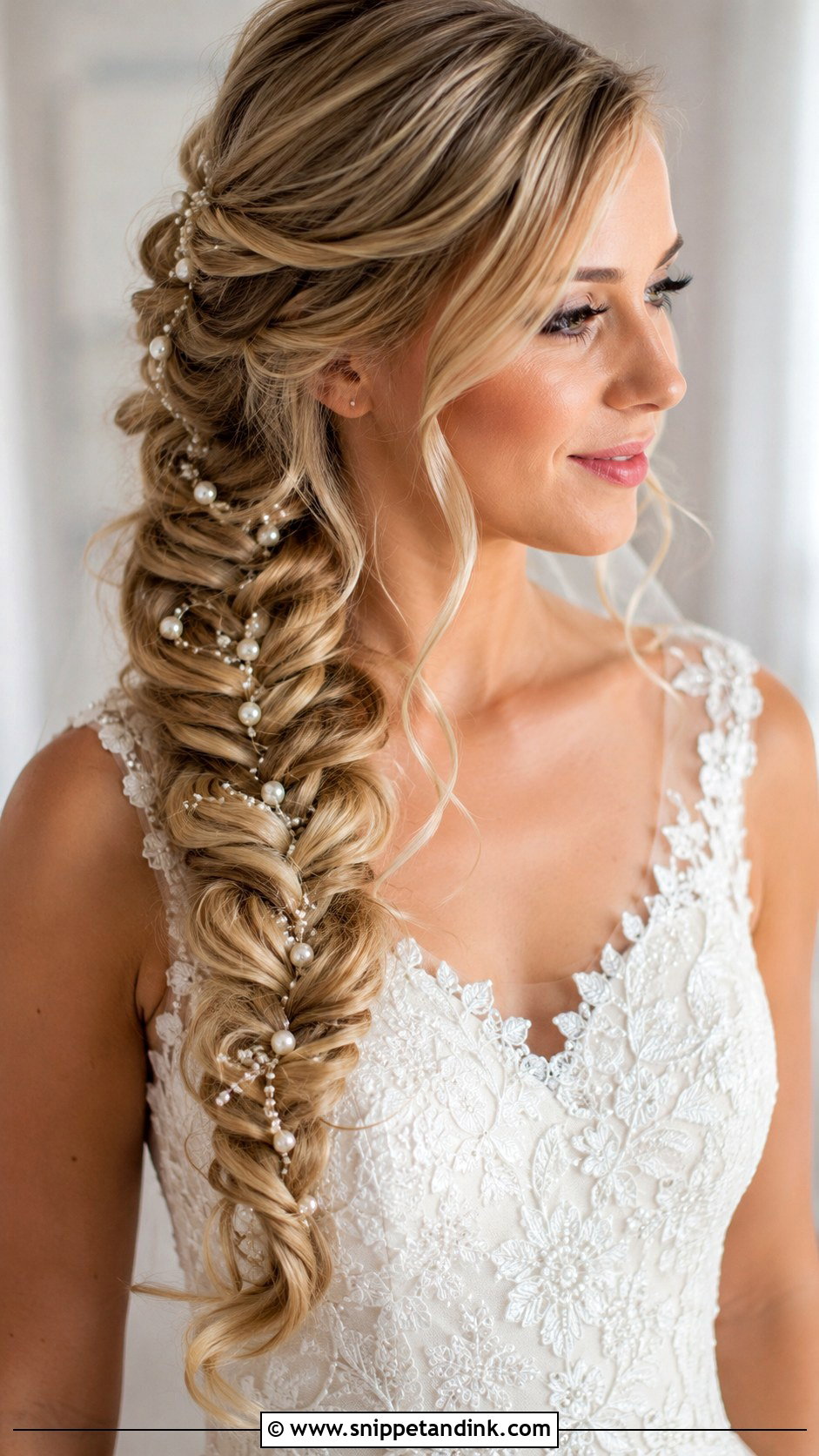
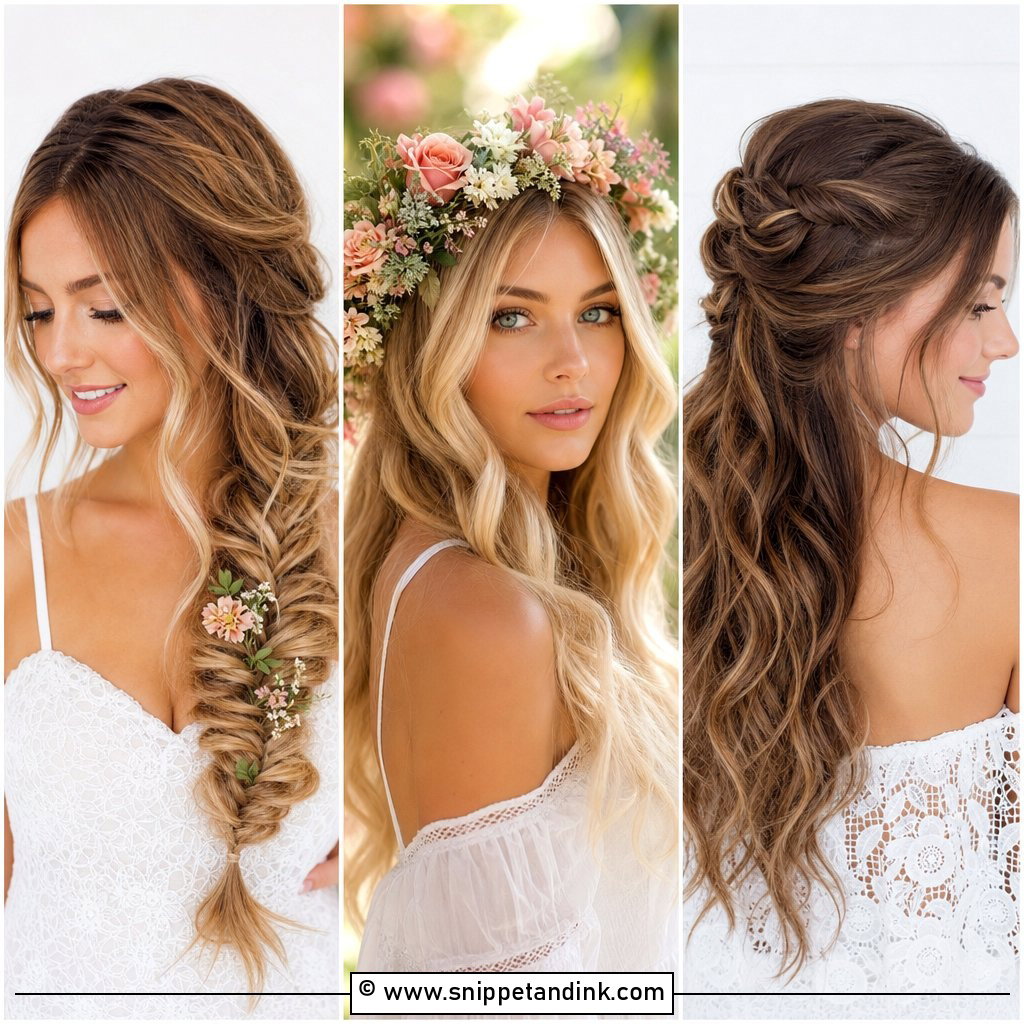
A fishtail is built from just two sections, crossing a tiny piece from the outer edge of one into the other, so the finer those pieces are, the more intricate it reads. Pearls look best threaded onto fine pins and tucked into the gaps after the braid is finished. Weave them in as you go and they snag. Worn over one shoulder, it needs hair at least to the collarbone, and I gently pull the edges outward so it reads wider on camera. Lace gowns hide a pearl pin’s clasp; on plain satin I place them more sparingly so they don’t start to look like a pattern.
2. Crown Braid Updo
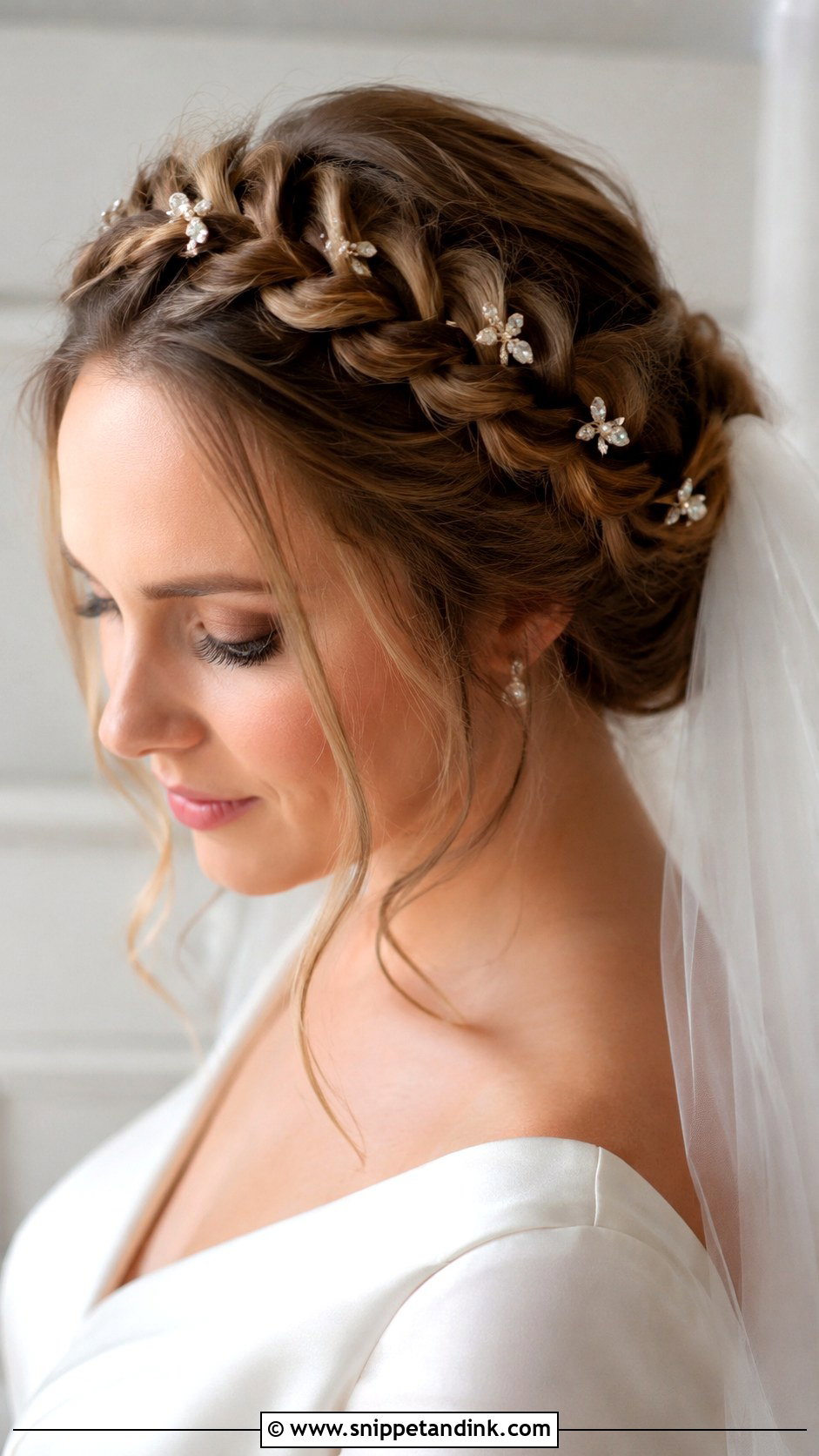
A crown braid circles the head like a halo, which is why it doesn’t need a tiara. It keeps every strand off the neck, so I suggest it for summer ceremonies and for brides who get warm when they’re nervous. The honest limit is density. On fine or shoulder-length hair the braid can look thin where it wraps the back, and I’ll often add a single weft underneath to give it body. Two U-pins every few inches, sunk into the braid rather than across it, hold it through dinner and dancing. A few fresh flowers or jeweled pins along one side are plenty.
3. Boho Braided Half-Up Half-Down
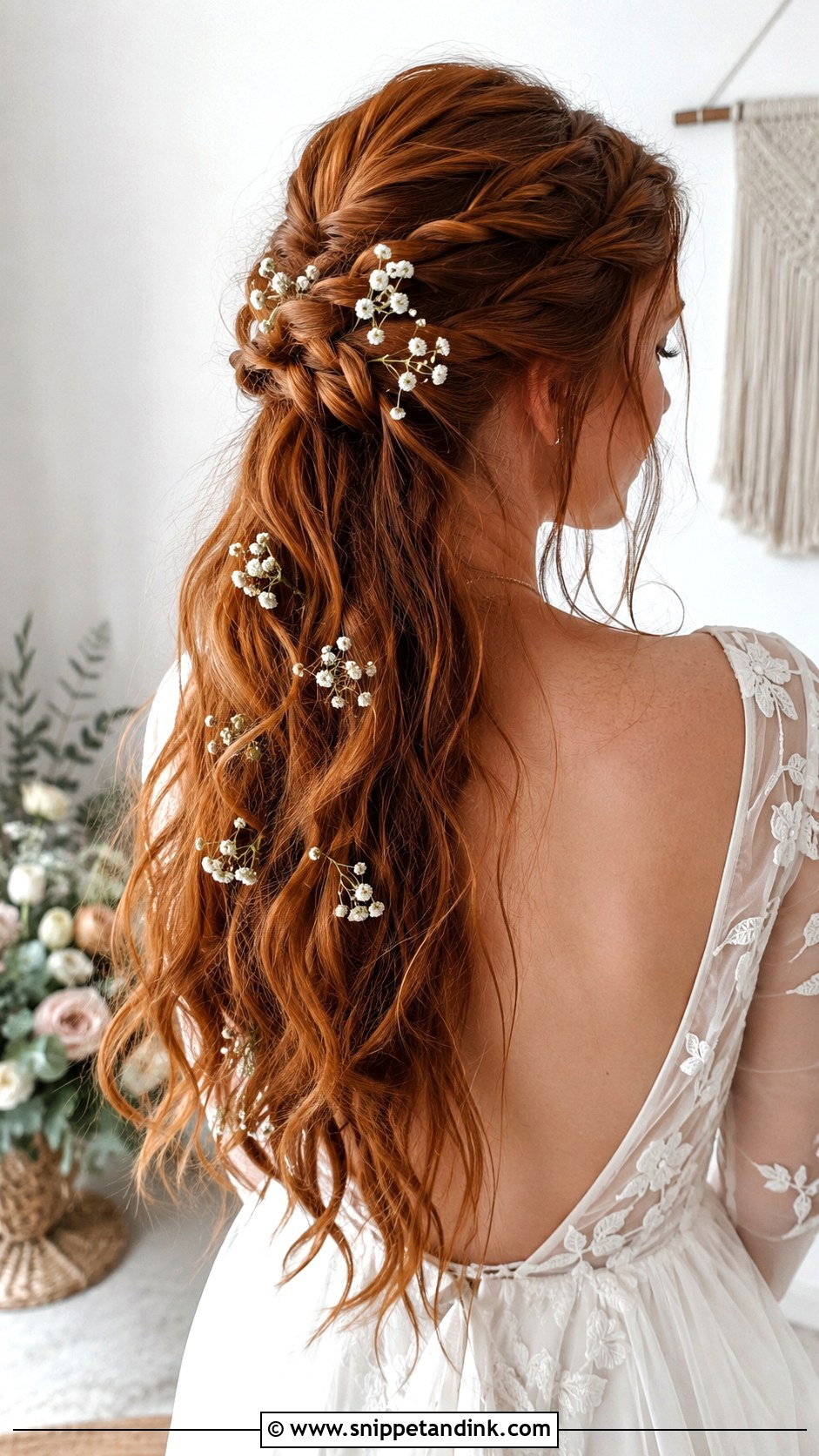
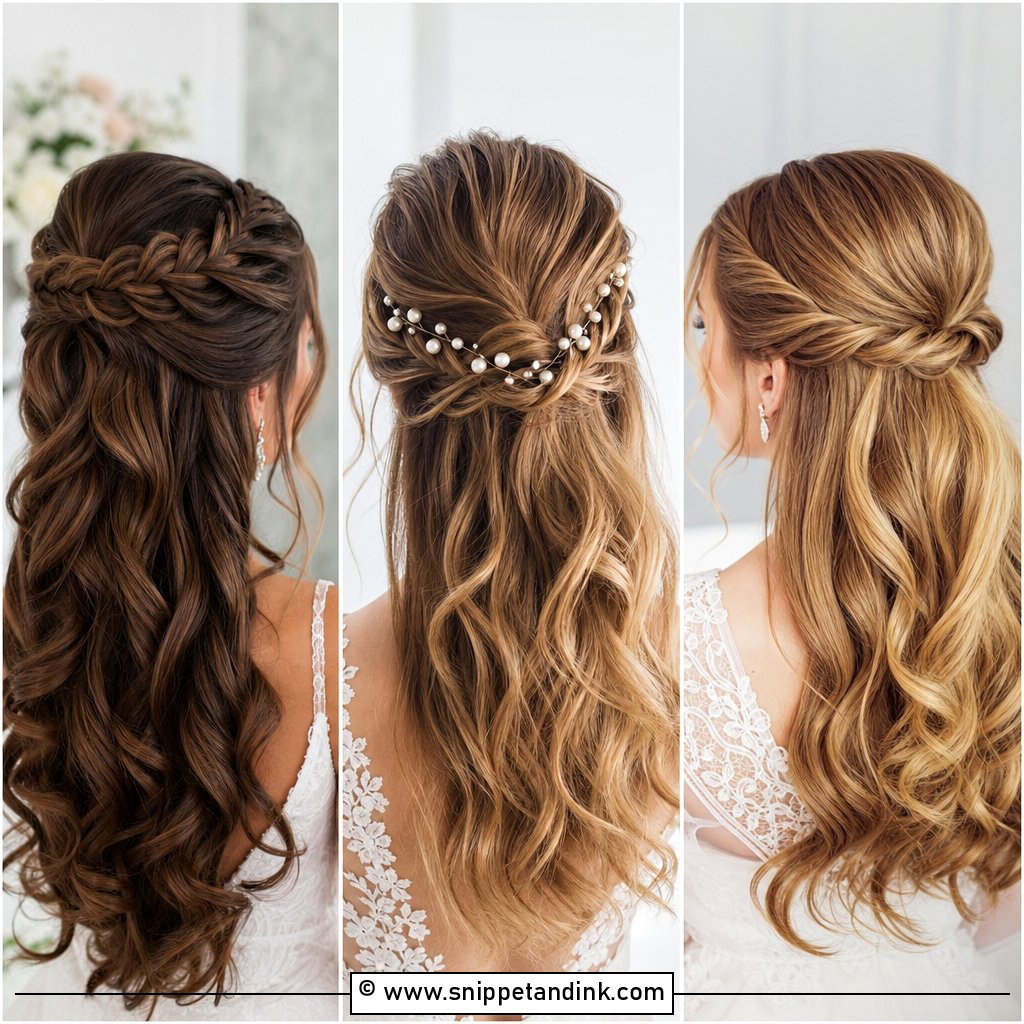
The half-up version is the most requested braid at my trials, mainly because brides still want to see their length. Two soft braids from the temples meet at the back of the crown while loose, tousled waves fall below. The waves are the weak point, not the braids. If your hair drops curl within an hour, I pin each curl to cool before brushing it out. Baby’s breath tucks in neatly where the braids meet, and the veil comb goes just under that join so the braids carry its weight.
4. Dutch Braid Low Bun
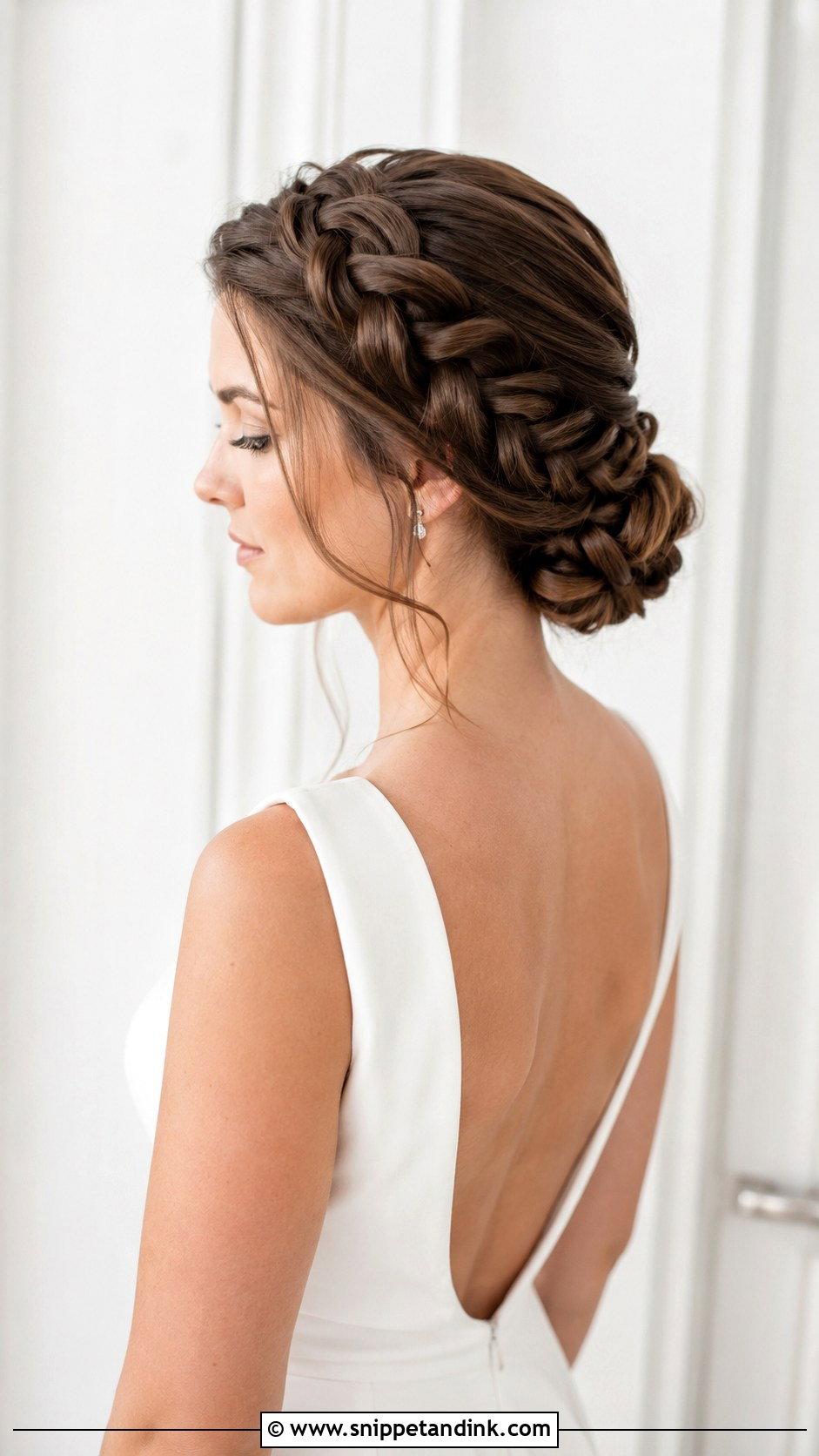
A Dutch braid is a French braid worked in reverse, crossing each section under instead of over, which is why it stands proud of the head rather than lying flat. Run along the crown and into a low bun at the nape, it gives a minimalist gown texture without any accessories. I keep the bun low enough to clear a high back or a cathedral veil comb. Face-framing pieces are worth testing at the trial; strands pulled loose on the morning with no plan often hang limp by the reception.
5. Waterfall Braid With Loose Curls
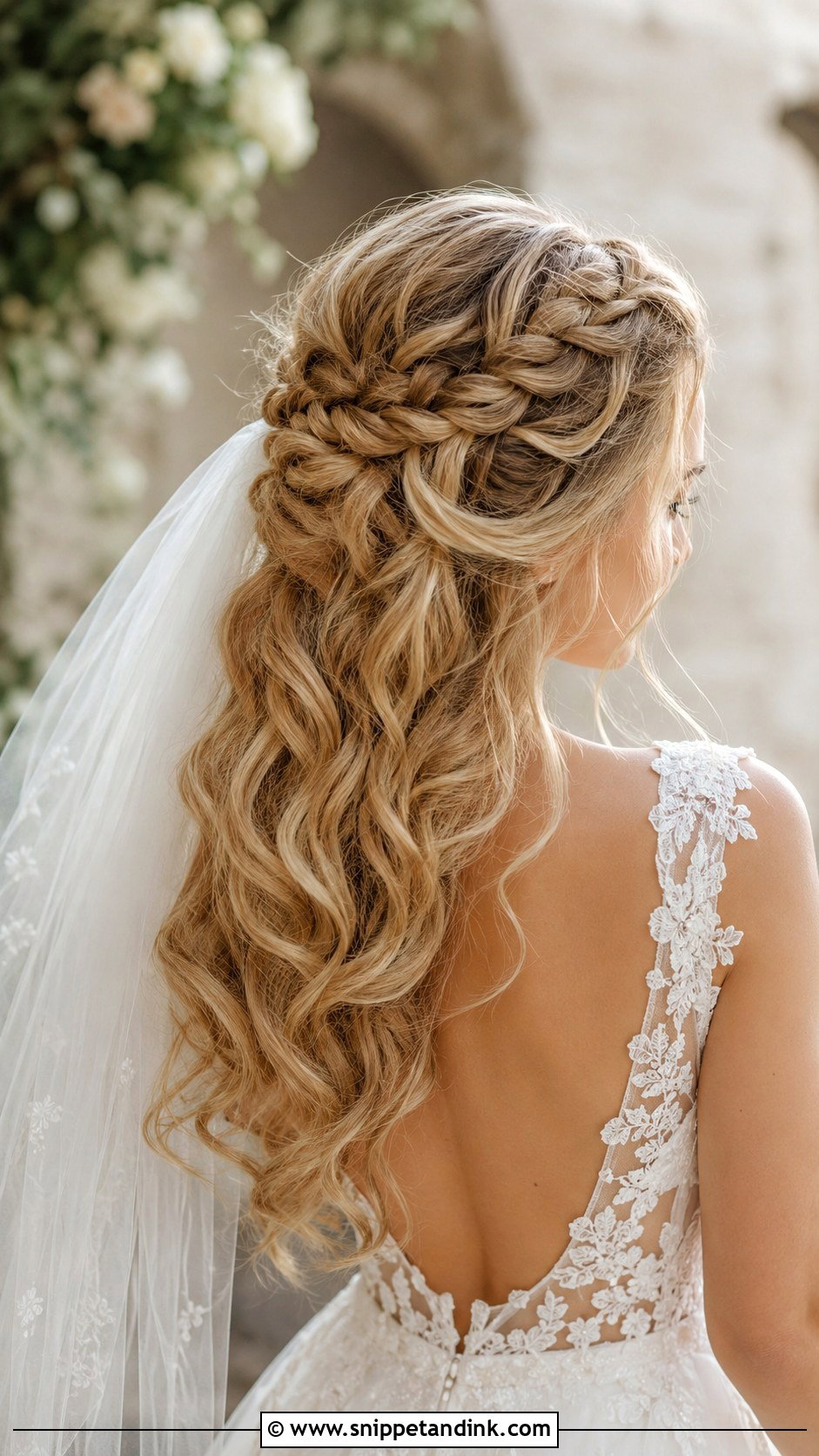
The romantic waterfall braid drops one strand out at every pass and picks up a fresh one, so the dropped pieces fall through like water over the curls below. Because those strands are loose, this braid lives or dies on curl that lasts. I curl first, braid second, then re-curl any strand that relaxed during braiding. On very slippery hair it can slide down by mid-afternoon, so I anchor the tail with a small hidden elastic and two crossed pins.
6. Braided Chignon
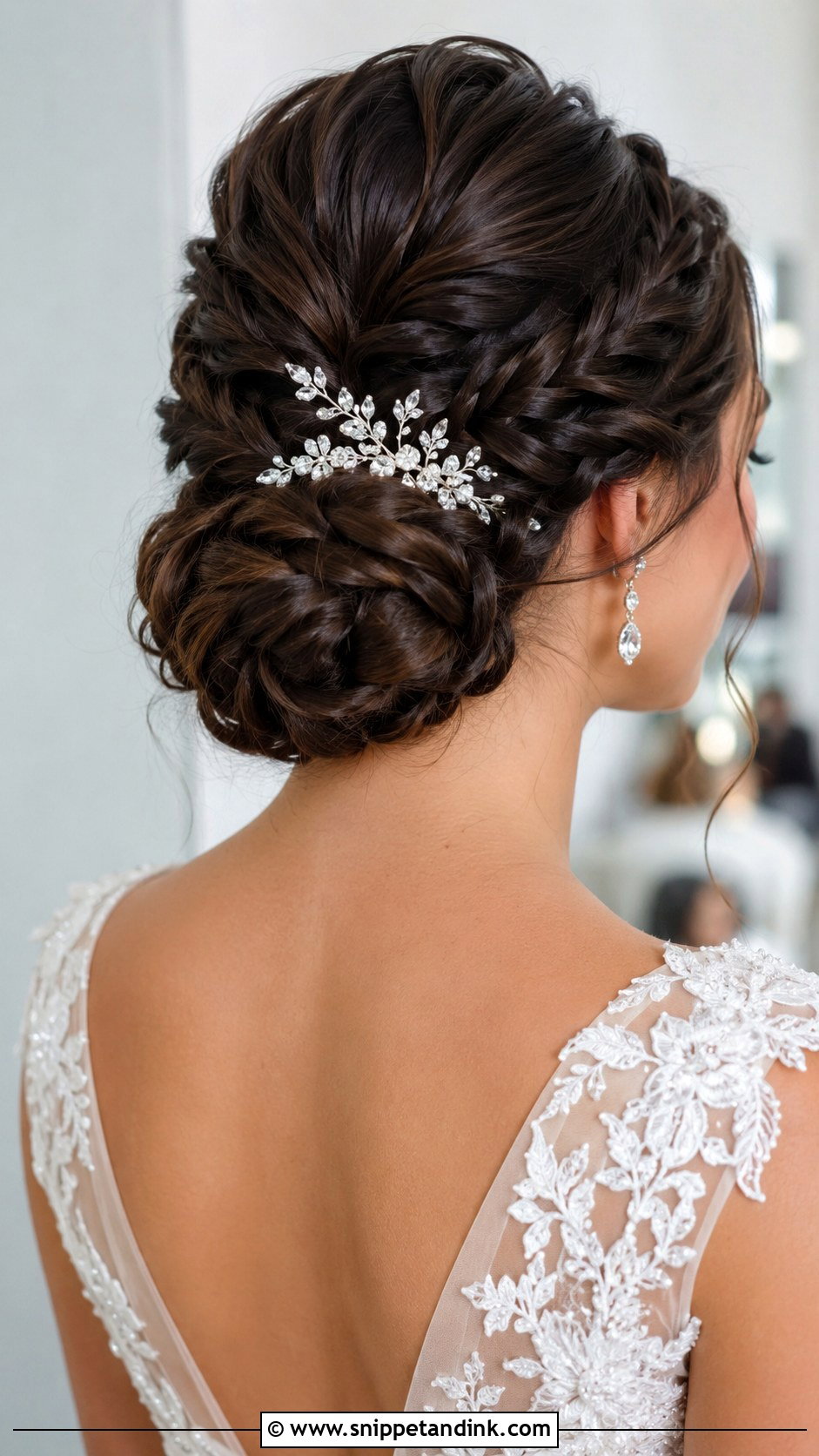
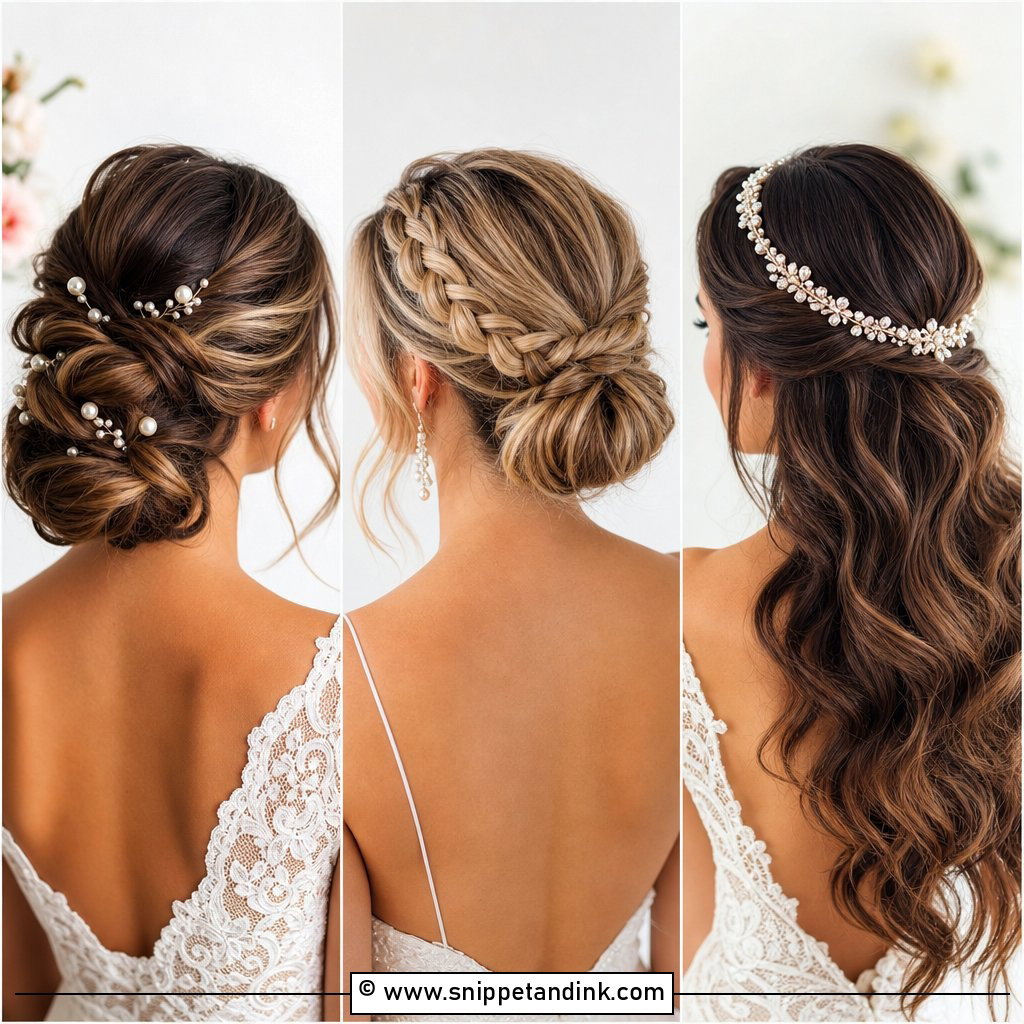
A plain chignon can look flat in the photos taken from behind during the ceremony. Braid one or two sections into it and the shape suddenly has shadow and depth. I build the bun on a tight base first, then wrap the braids around it, which keeps the whole thing compact under a veil. It’s the braid I reach for at a ballroom or black-tie wedding. One jeweled comb at the side finishes it; more than that competes with your earrings.
7. Side Swept Braid
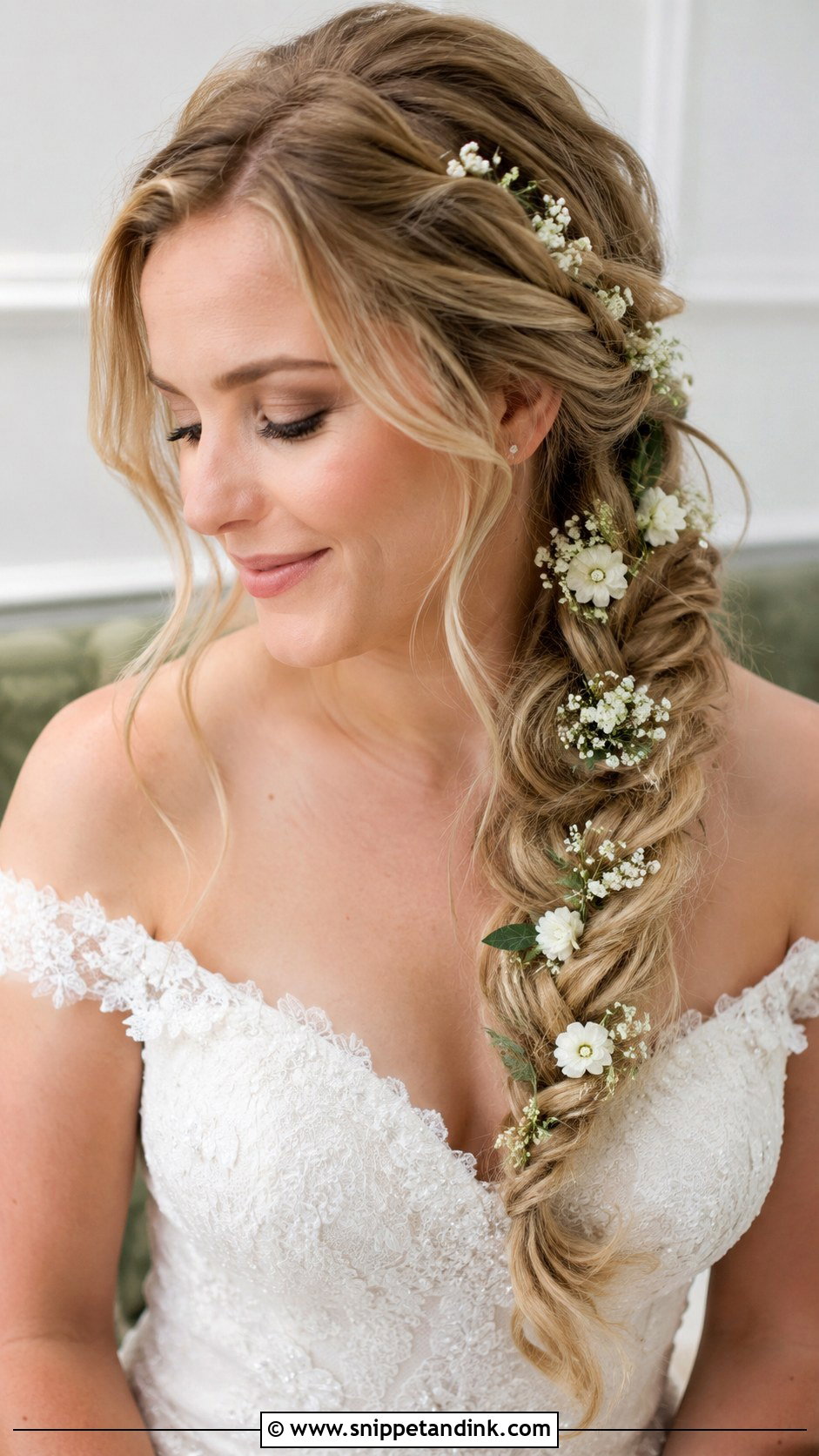
Bringing all the hair to one side shows off the neckline and the earring on the open side, which is why this one suits off-the-shoulder and one-shoulder gowns so well. Loose and tousled reads garden; tight and smooth reads formal. The practical issue is weight. A heavy braid drags toward the shoulder all day, so I pin its base behind the ear where it starts and bring it forward from there. Ribbon or a few small flowers woven through are enough decoration.
8. Braided Crown With Flowers
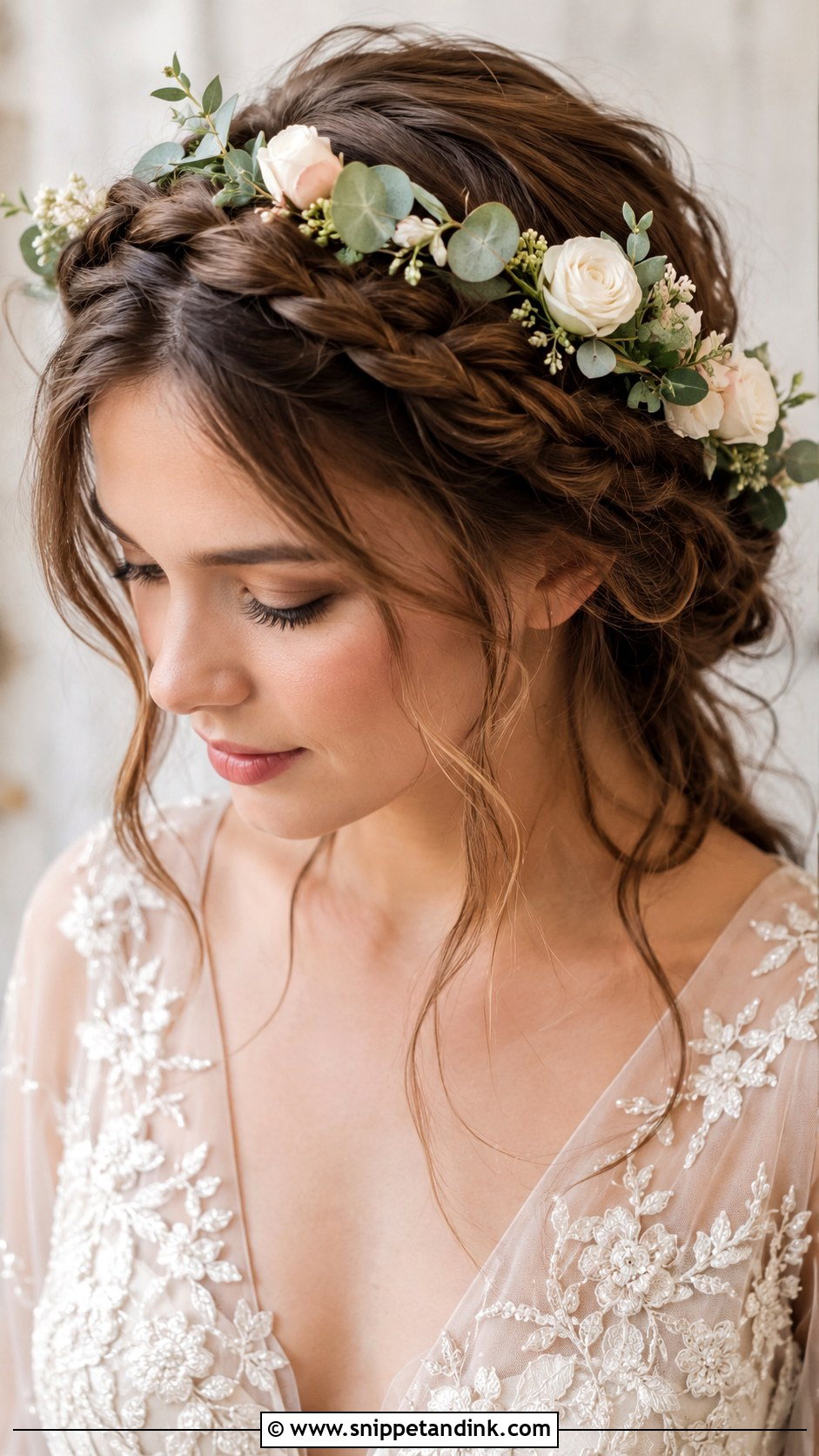
Fresh flowers wilt faster in a braid than in a bouquet, because they sit on a warm head with no water. For this halo I ask the florist for hardy stems such as spray roses, wax flower, eucalyptus and baby’s breath, wired and taped and delivered on the morning. The braid wraps the head and the stems tuck into it, so everything stays off the face and neck in summer heat. Matched to the bouquet, it gives the look real goddess vibes in daylight against greenery.
9. French Braid Updo
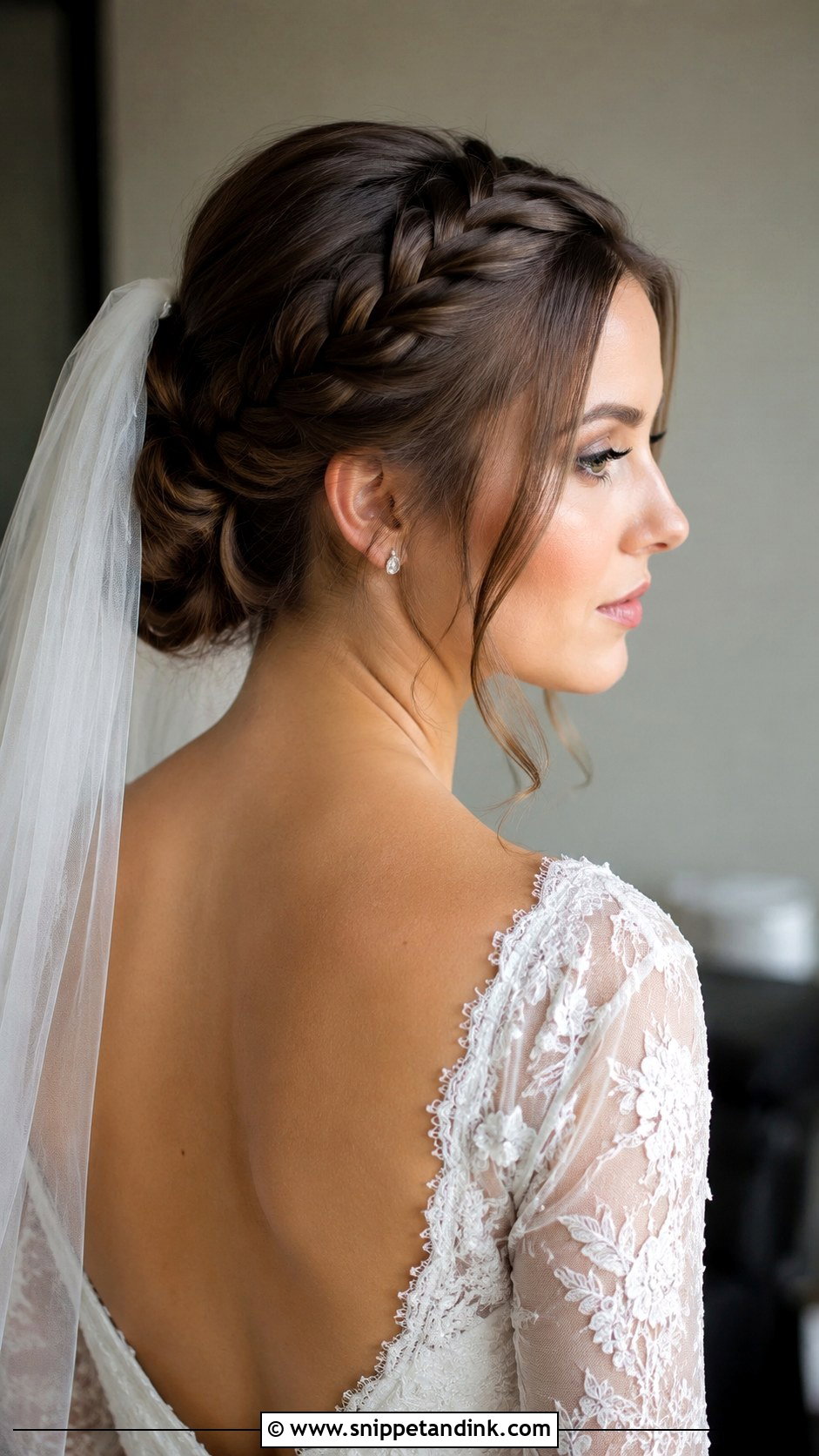
Each new section of a French braid crosses over the top, so it lies flat to the scalp and reads smoother and more classic than a Dutch braid. Taken into a twist or bun at the back, it holds through hours of dancing and hugging. I suggest it to brides who touch their hair when they’re nervous, because there’s nothing loose to fiddle with. Fine hair can look sparse along the part line, so I tease lightly at the root before braiding. One sparkling pin or the veil is all it needs.
10. Fishtail Braid Updo
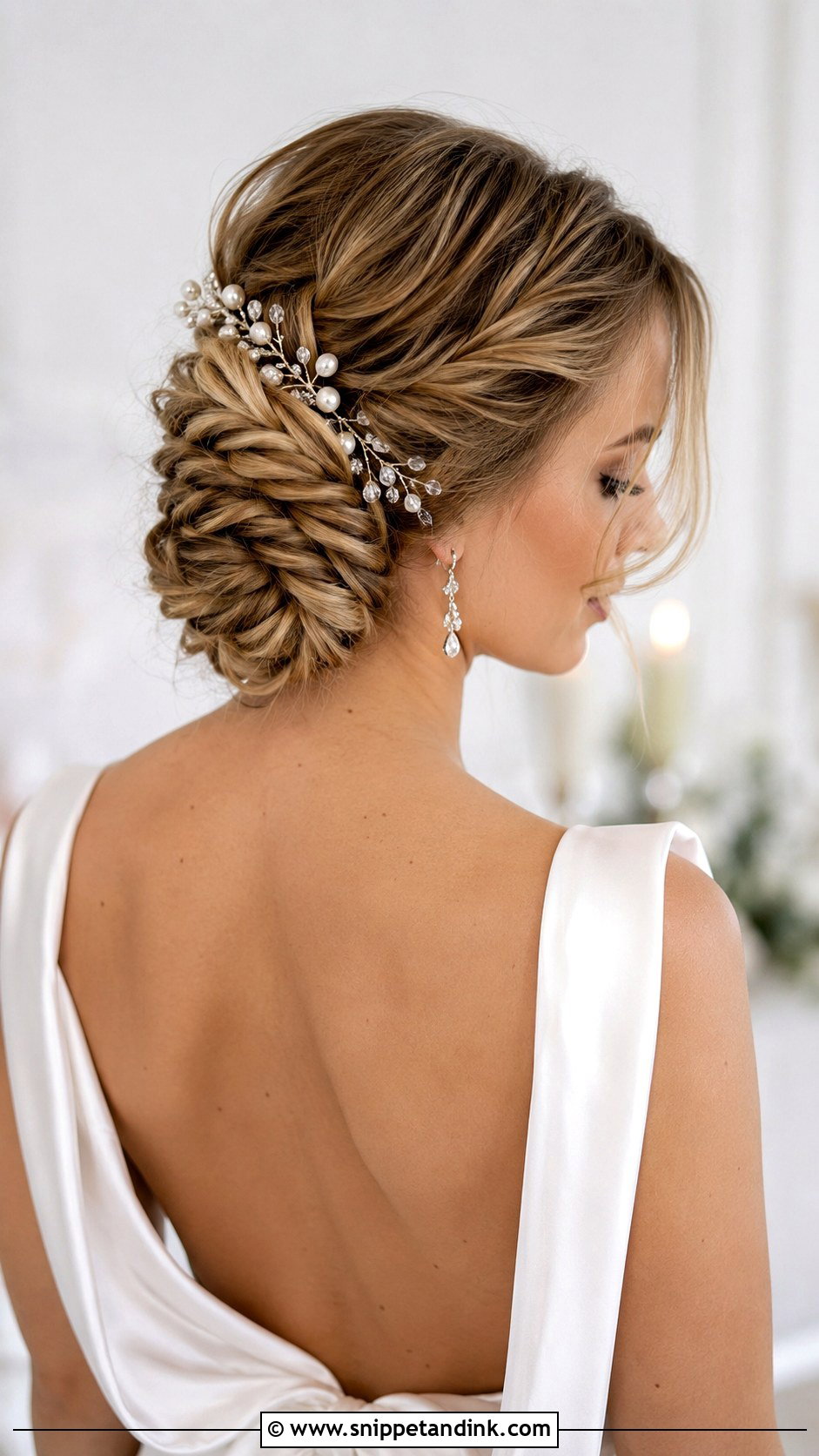
Folding a fishtail up and pinning it into shape at the back gives you more detail per inch than any other braid here. It looks harder to make than it is, but it does take time, so the morning schedule needs room for it. Tight, it reads sleek; loosened by pulling the edges, it softens. The tail end is where pins tend to show, so I tuck it under and cover it with a pearl or crystal pin. Layered hair with short pieces pokes out of the weave, and a little wax on my fingers while braiding keeps those ends in.
11. Braided Ponytail
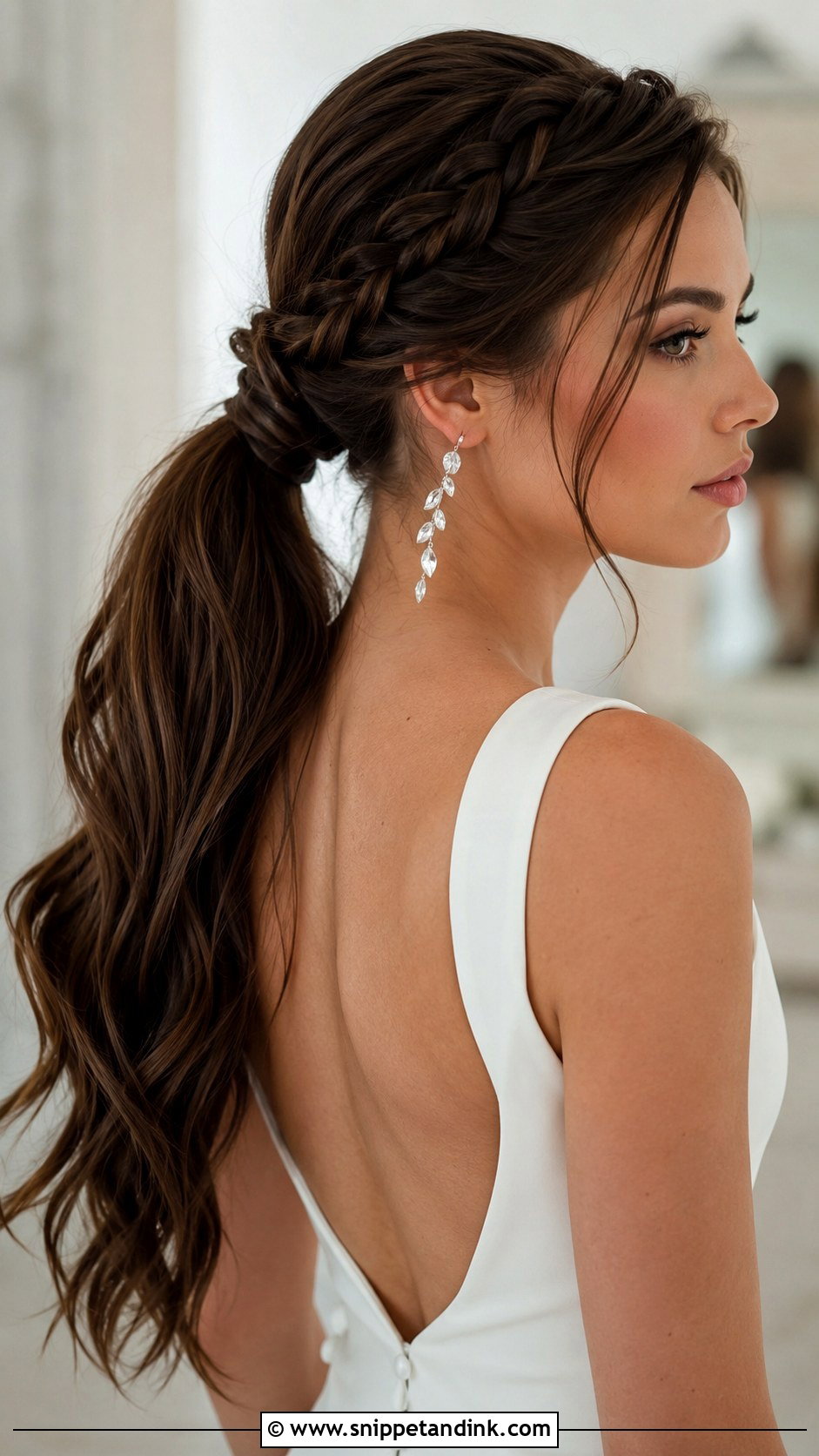
Who says ponytails can’t be bridal? The pony itself is easy. The trouble is the elastic, which shows from behind as you walk back up the aisle, so I wrap a small braid around the base and pin it underneath. A ponytail also drags on the scalp after a few hours. I set it a little lower than a gym pony and lock it with two crossed pins under the base, then braid the length or bubble it with clear elastics. Statement earrings and a modern gown carry it well.
12. Halo Braid With Veil
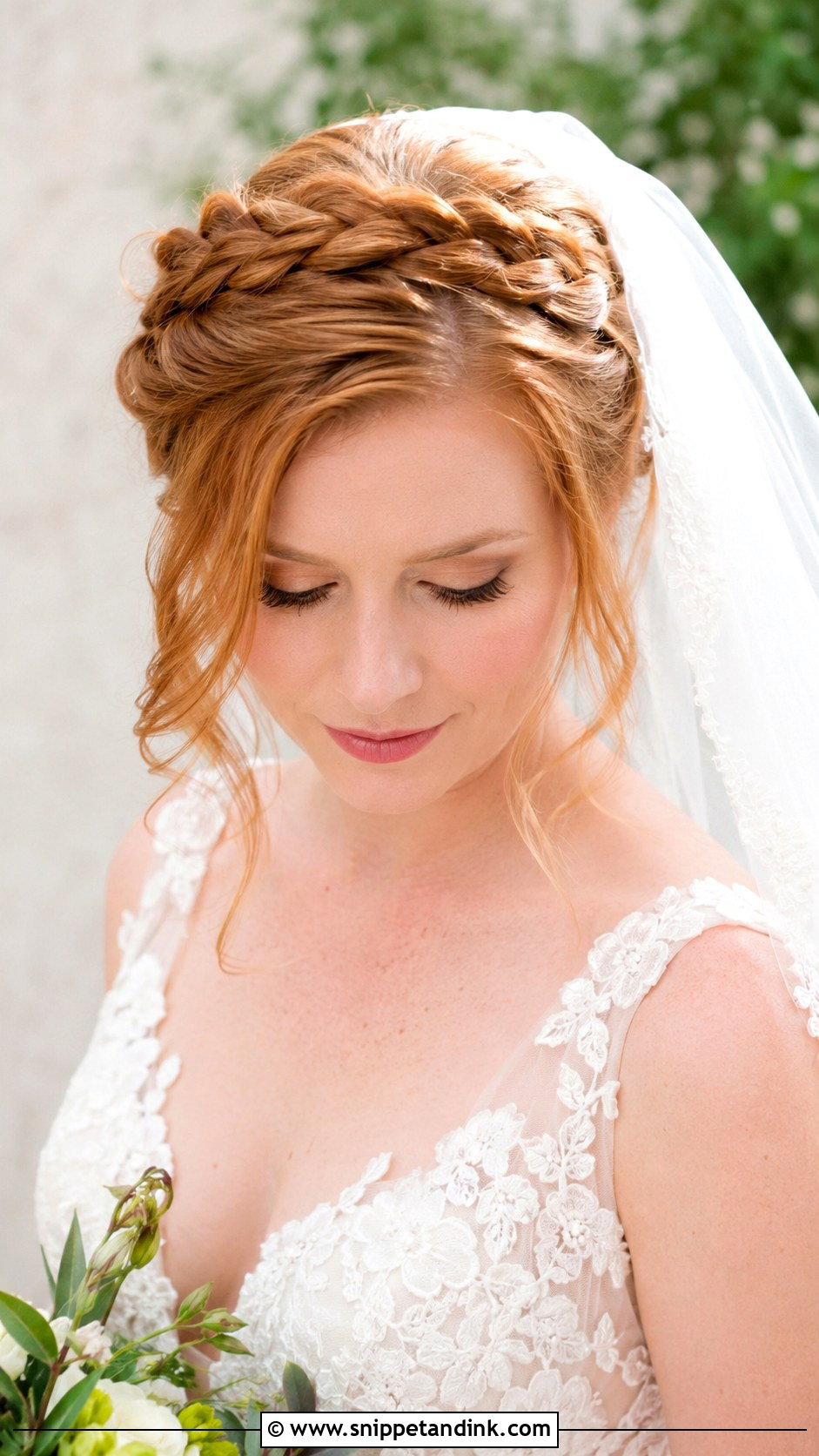
A halo braid gives the veil a firm band to grip. I slide the comb into the braid itself, teeth facing toward the face, then pin through the comb’s holes so a gust or a hug can’t drag it backward. After the ceremony the veil comes out and the halo holds its shape on its own for the reception. That two-part day is the real advantage of this pairing. A few small pins along the braid add shine without fighting the veil.
13. Twisted Braid Low Bun
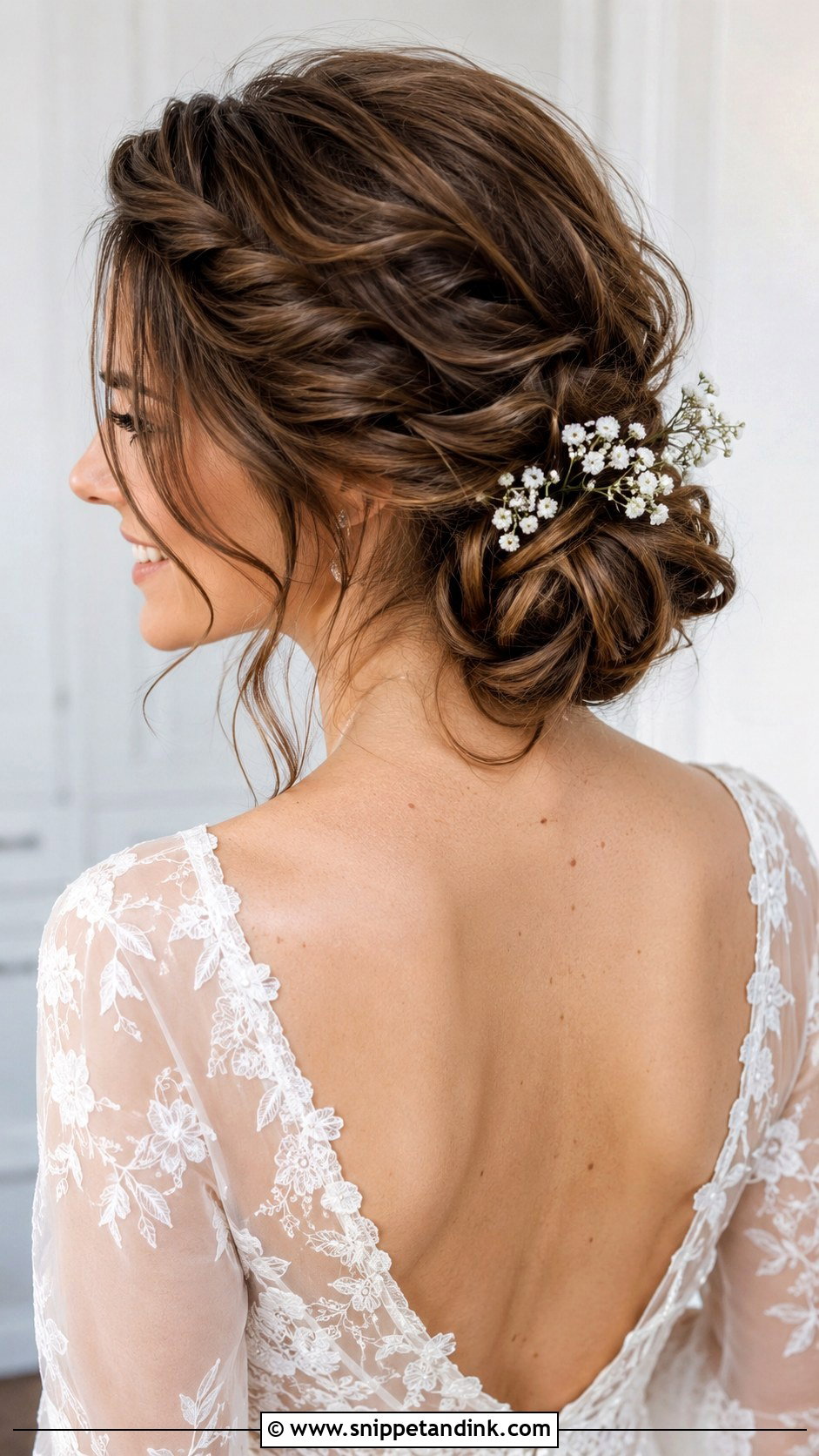
Rope twists are softer than a three-strand braid and quicker to loosen into an undone texture. Here they wrap into a loose chignon at the nape, which sits well at a garden or boho wedding. Twists unravel if they aren’t set, so I mist each one as I go and secure the ends inside the bun rather than on its surface. Pearls, a trailing vine or tiny blooms dress it.
14. Cornrow Braided Updo
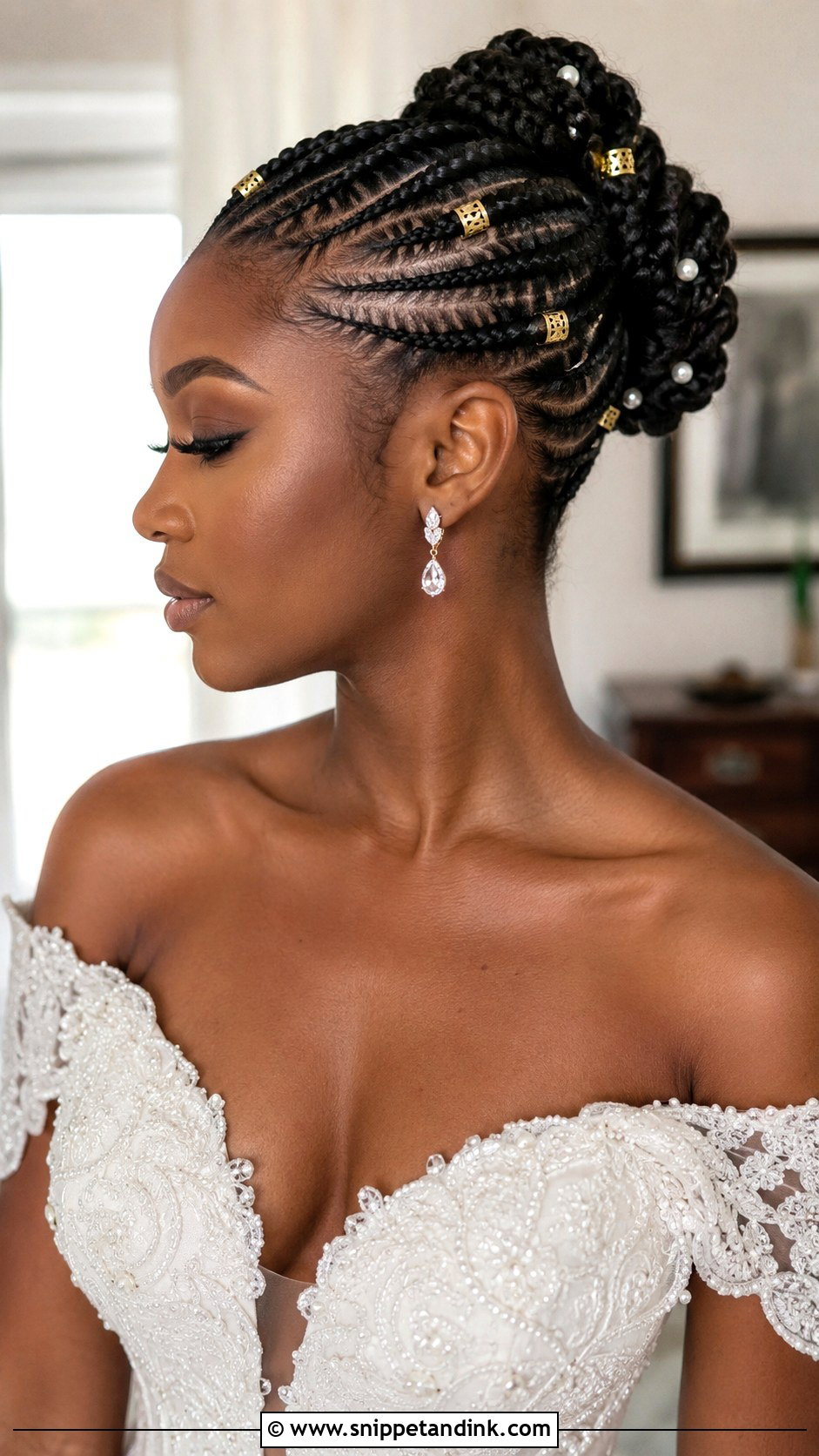
Cornrows are braided flat to the scalp with an underhand stitch, and the parting is half the design: straight lines, curves or a zigzag feeding into the bun. Cornrow updos are also protective, which matters for a bride with natural or coily hair who doesn’t want heat on it in wedding week. I’d have them installed a day or two before, so any tightness eases; braids put in tight on the morning can give you a headache by the first dance. Gold cuffs, beads and pearls slide straight onto the braids. Ask whoever installs them to keep tension off your edges.
15. Loose Braid With Curls
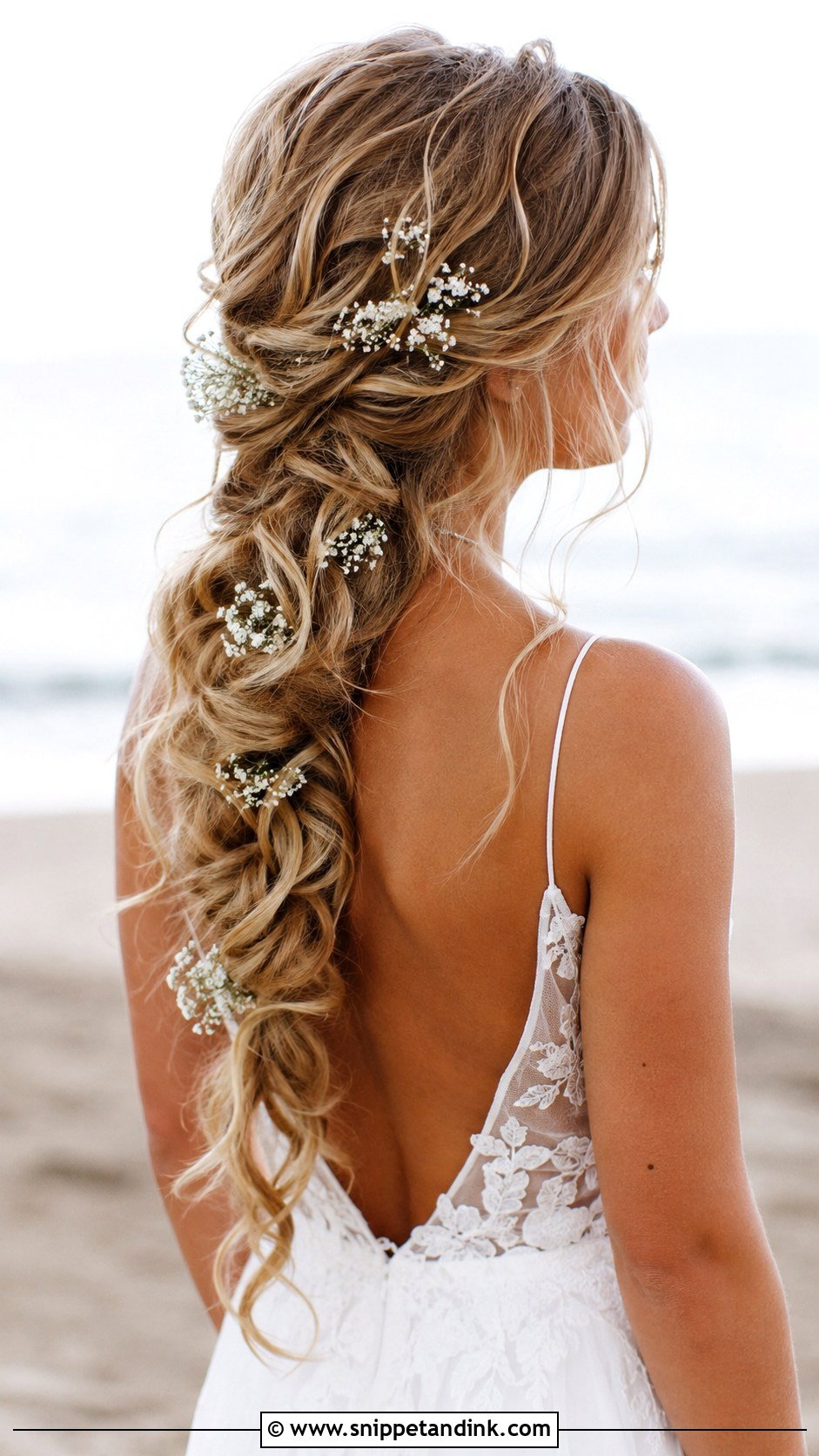
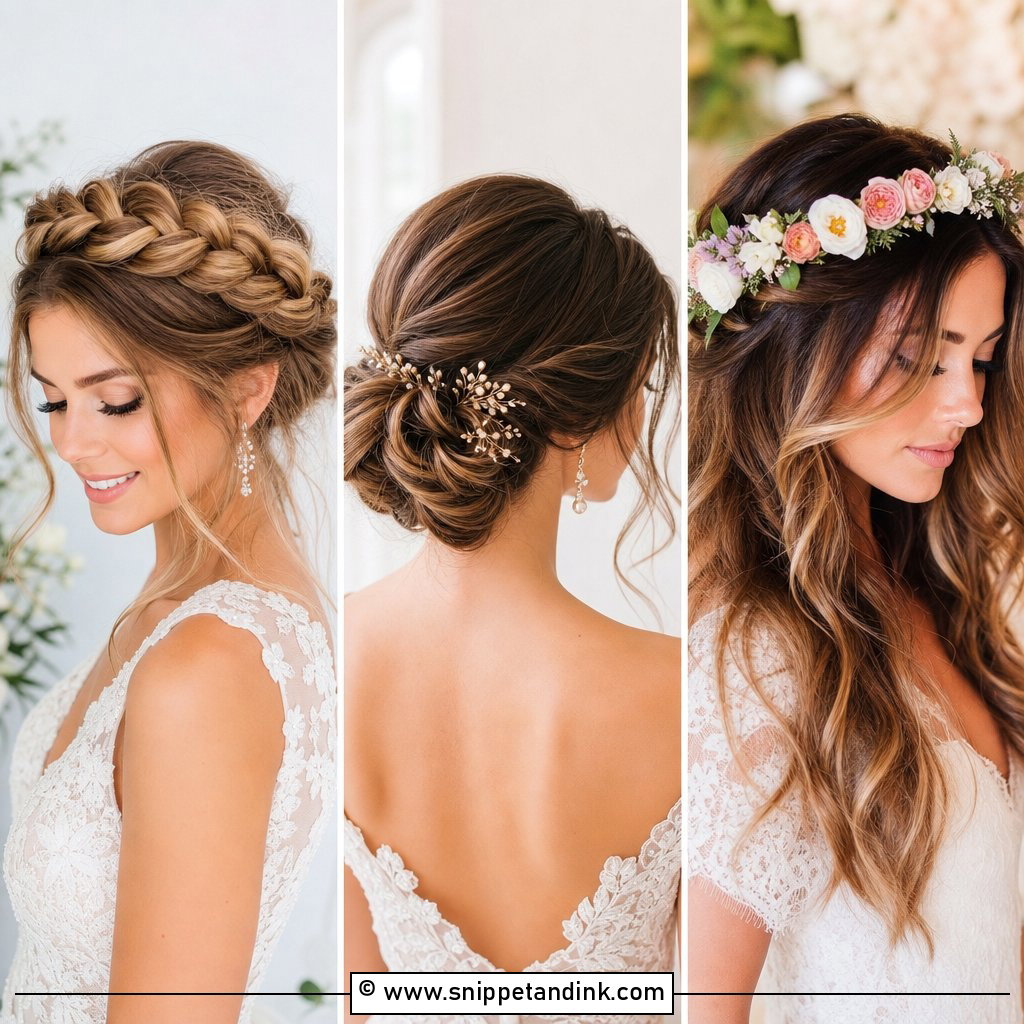
A loose braid pulled softly over curled hair has the most movement of anything on this list, and it’s comfortable enough to forget you’re wearing it. It holds up on beaches and at outdoor ceremonies, where wind will move it anyway and nobody expects every strand in place. Pull the braid apart a little after it’s done so it looks deliberate, not slept in. Baby’s breath tucks into the gaps. It works as a side braid or a half-up version.
16. Braided Bun With Tiara
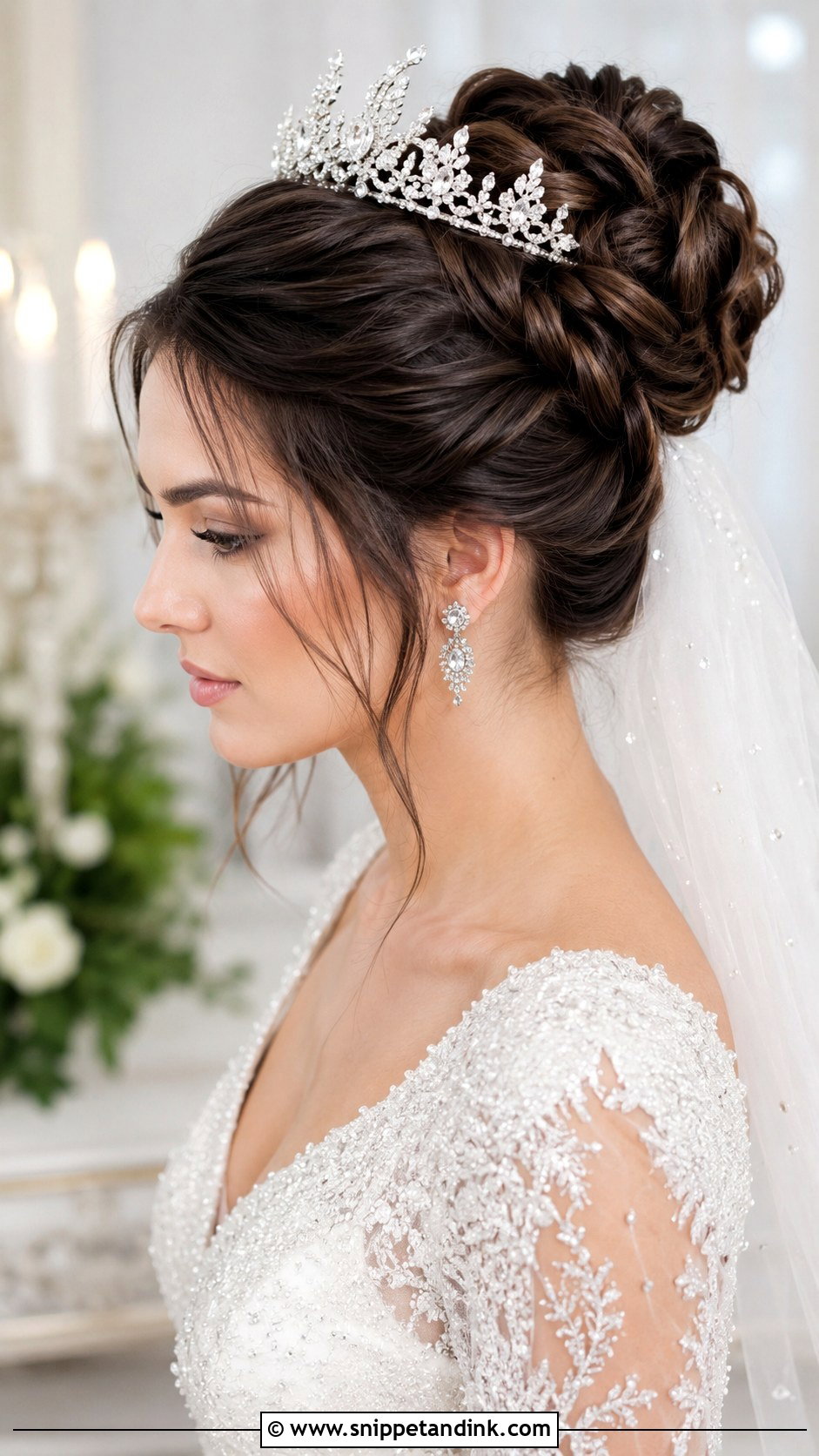
A tiara needs a firm base or it tips forward every time you look down at your vows. A braided bun is that base. I set the tiara before the bun is finished, pinning its combs or loops into the braid, then build the bun up behind it so it props the band from the back. The sparkling tiara sits at the crown, with the braid detail showing behind it. This pairing belongs at a formal or traditional wedding; at a barn venue it can tip into costume.
17. Boho Braided Crown
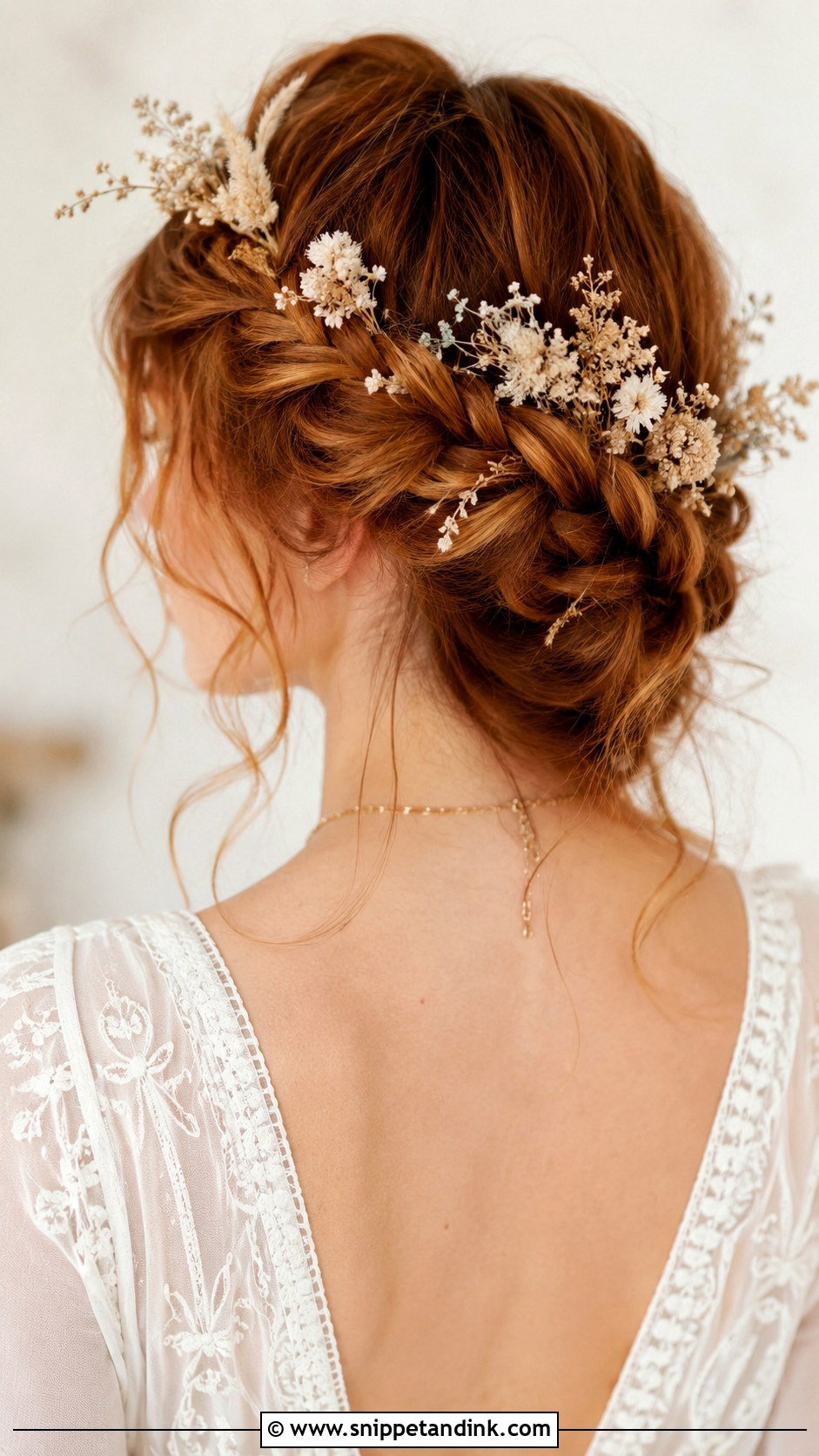
This is the crown braid’s relaxed cousin: looser braiding and some texture spray. Wispy tendrils stay out at the hairline. Looseness is harder to keep than tightness, so I braid it firm, pin it, and only then pull it open. Dried flowers outlast fresh ones here, and dried wildflowers with eucalyptus suit an outdoor or festival wedding. Keep the tendrils few. Too many and people assume the style has fallen.
18. Double Braid Updo
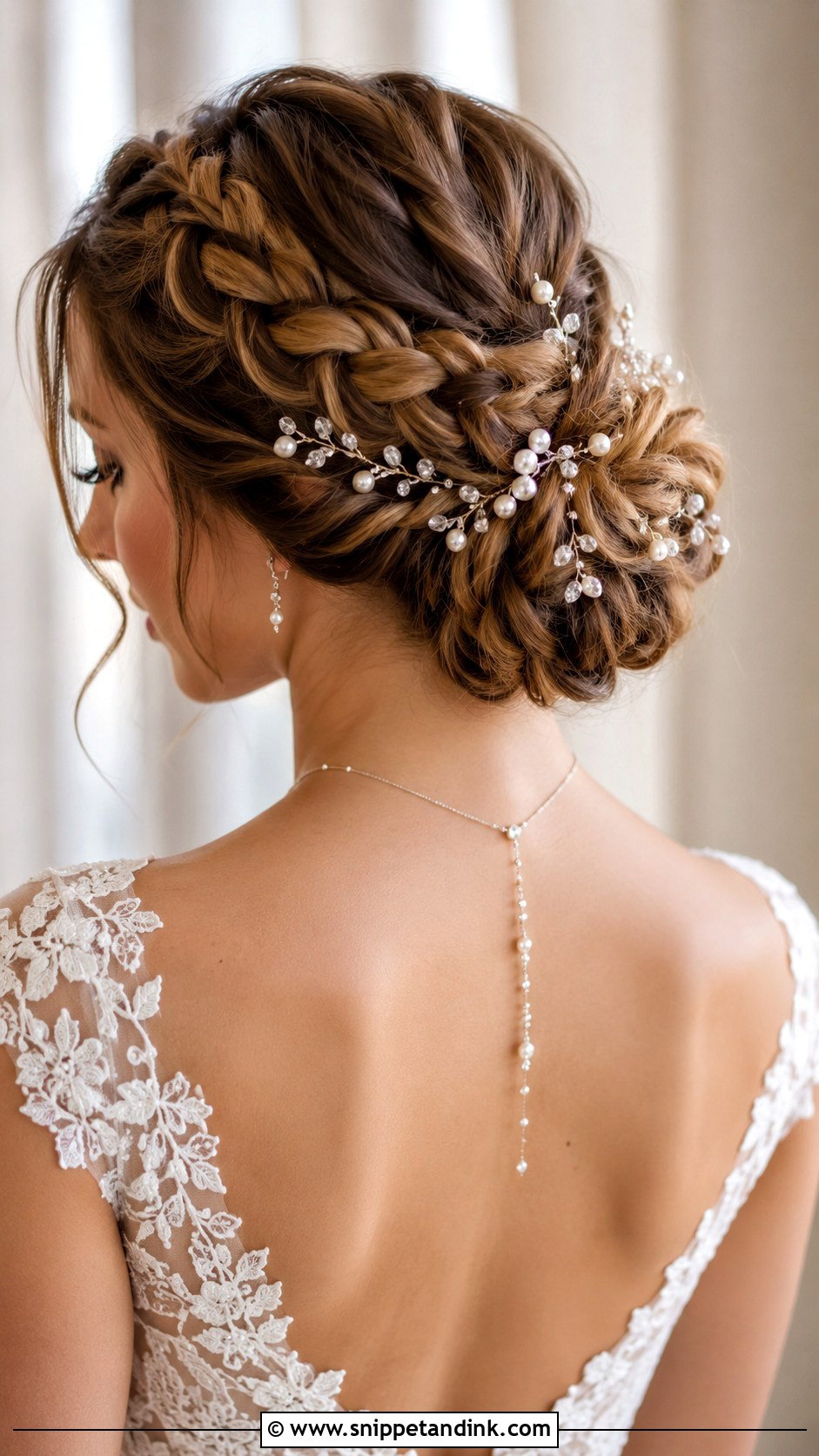
Two braids crossed, wrapped or stacked into one updo give more weave and depth than a single braid ever can. It takes real length and density, though, because you split the hair in half before braiding. On medium-thick hair each braid can end up skinny, and I’ll usually add wefts so both look full. There are more pins doing more work here, so expect it to feel heavier by evening. Pearls, crystals or a few blooms finish it.
19. Braided Half-Up With Veil
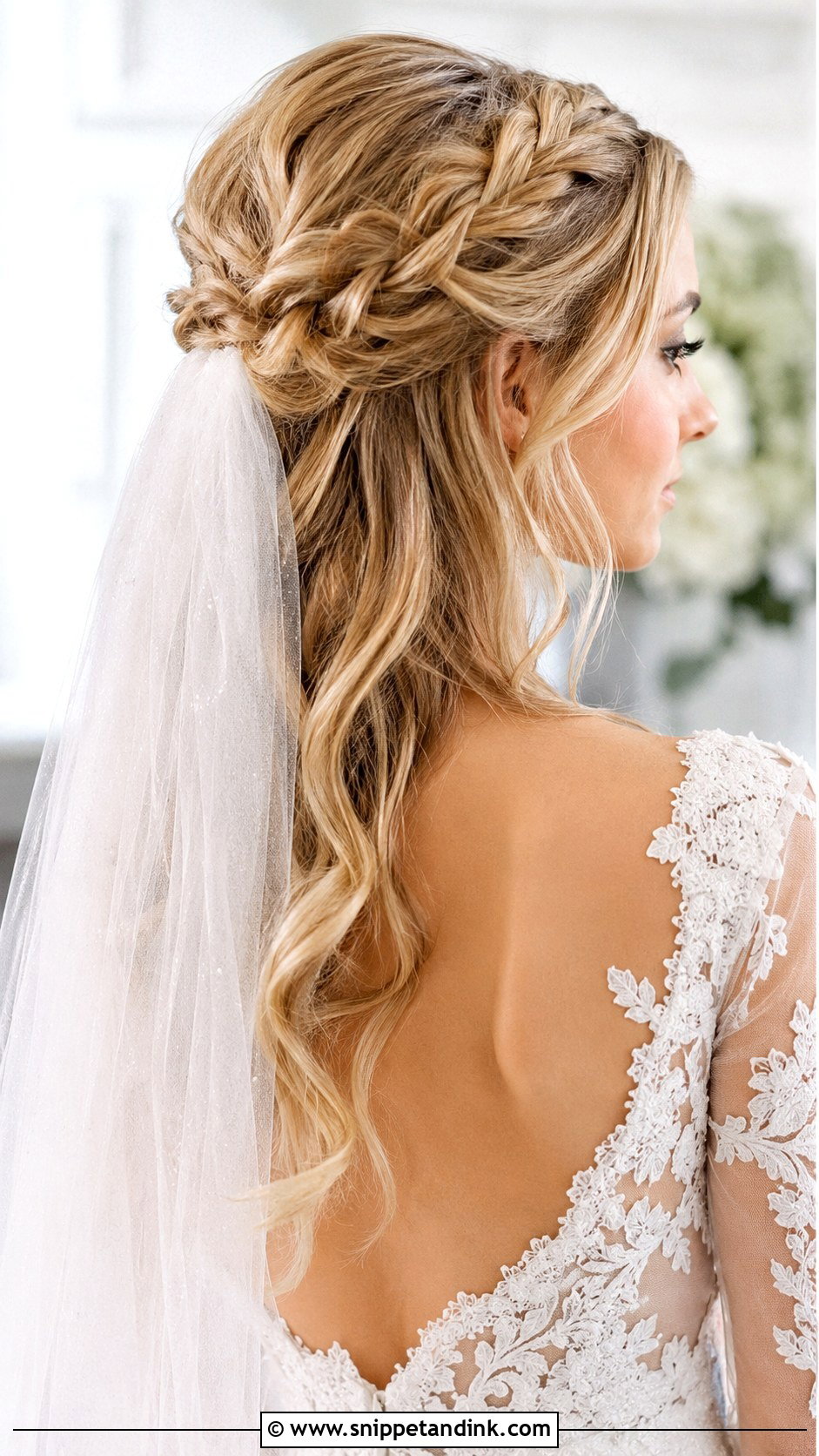
Here the veil comb sits just below the braids, so they act as a ledge and the comb can’t slide out during the ceremony. The lower lengths stay loose and waved. Your reception look is simply the same style with the veil lifted off, so there’s no restyle between ceremony and party. On very heavy hair I’d keep the veil short, since a long veil pulls on half-up hair far more than on an updo.
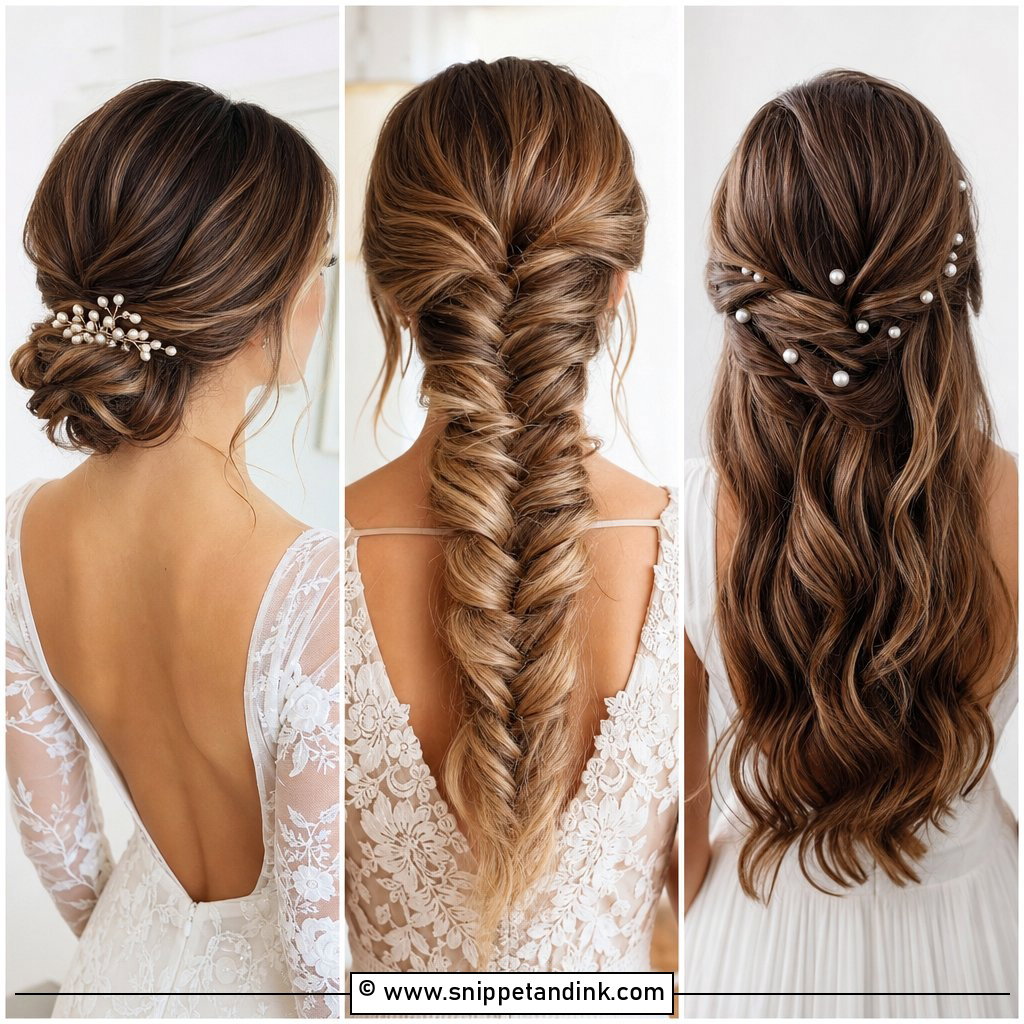
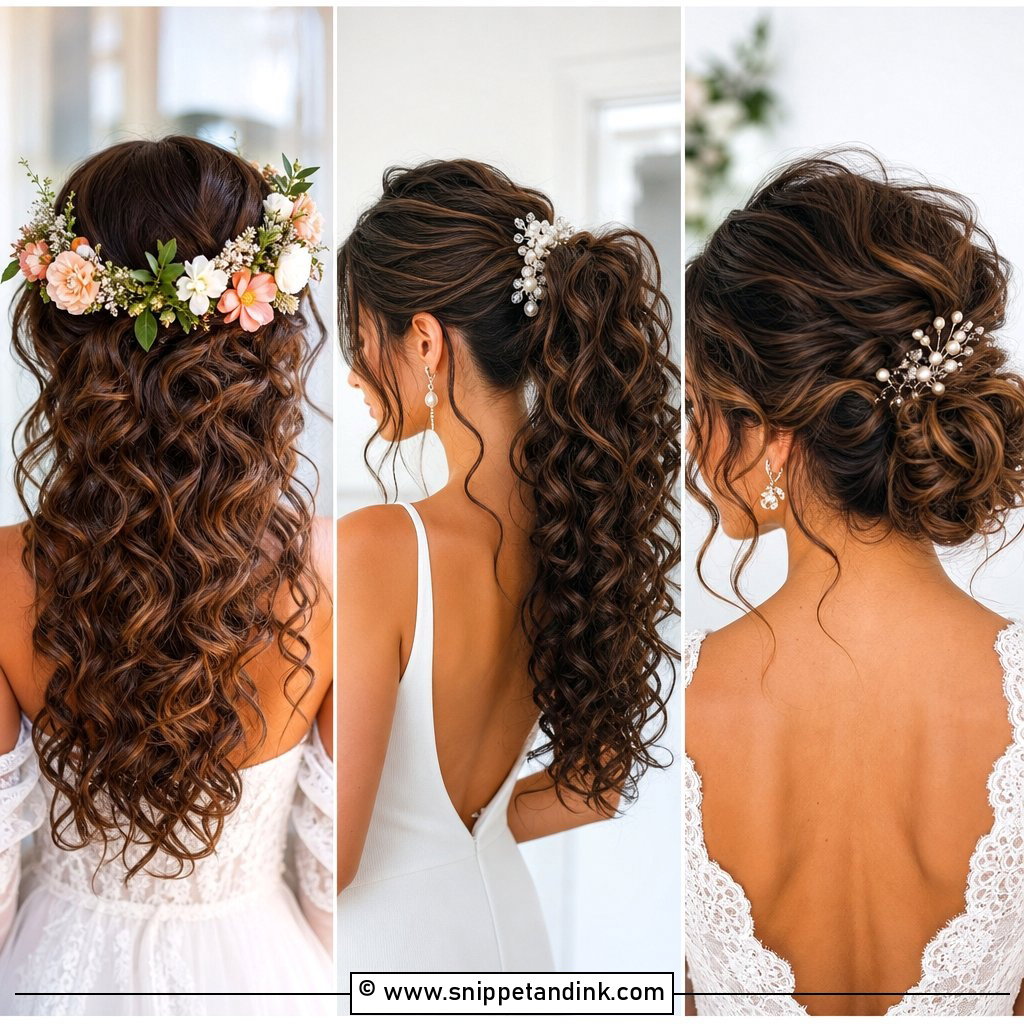
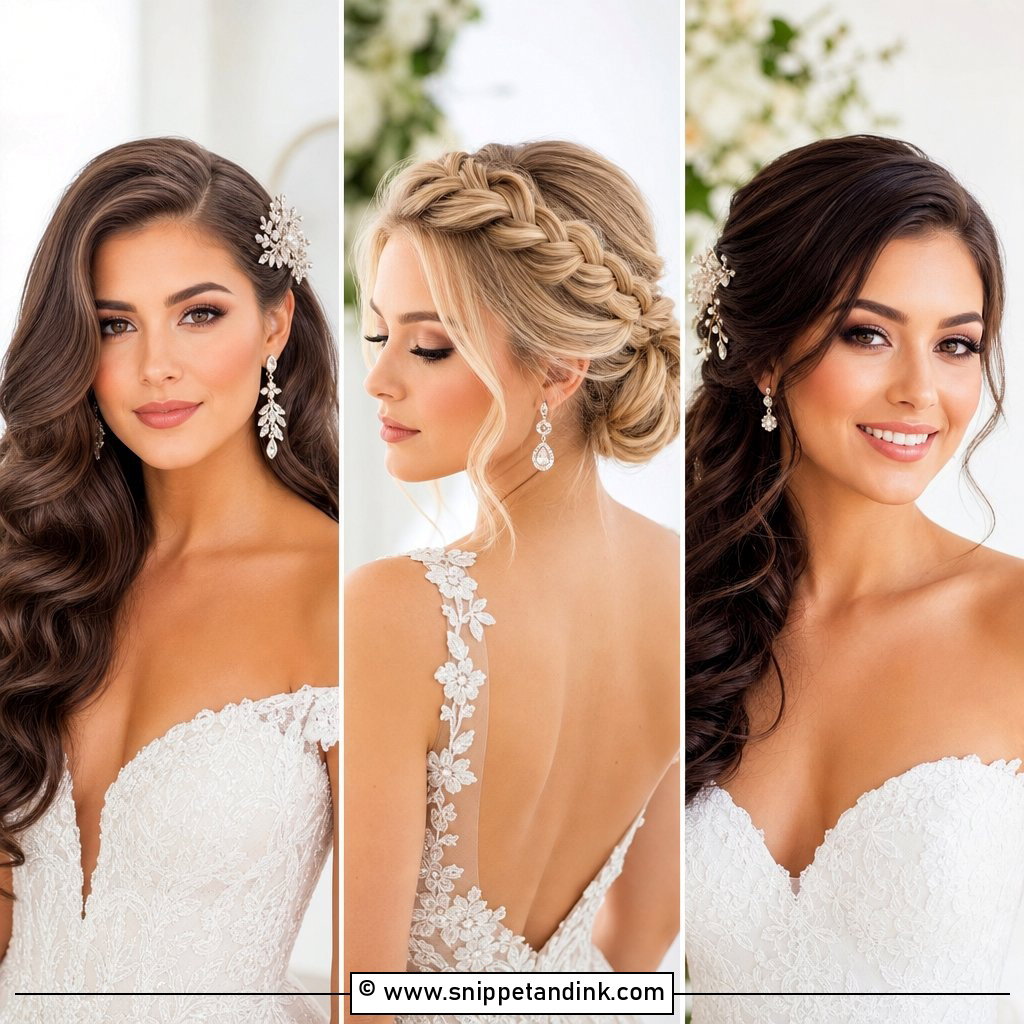
20. Rope Braid Updo
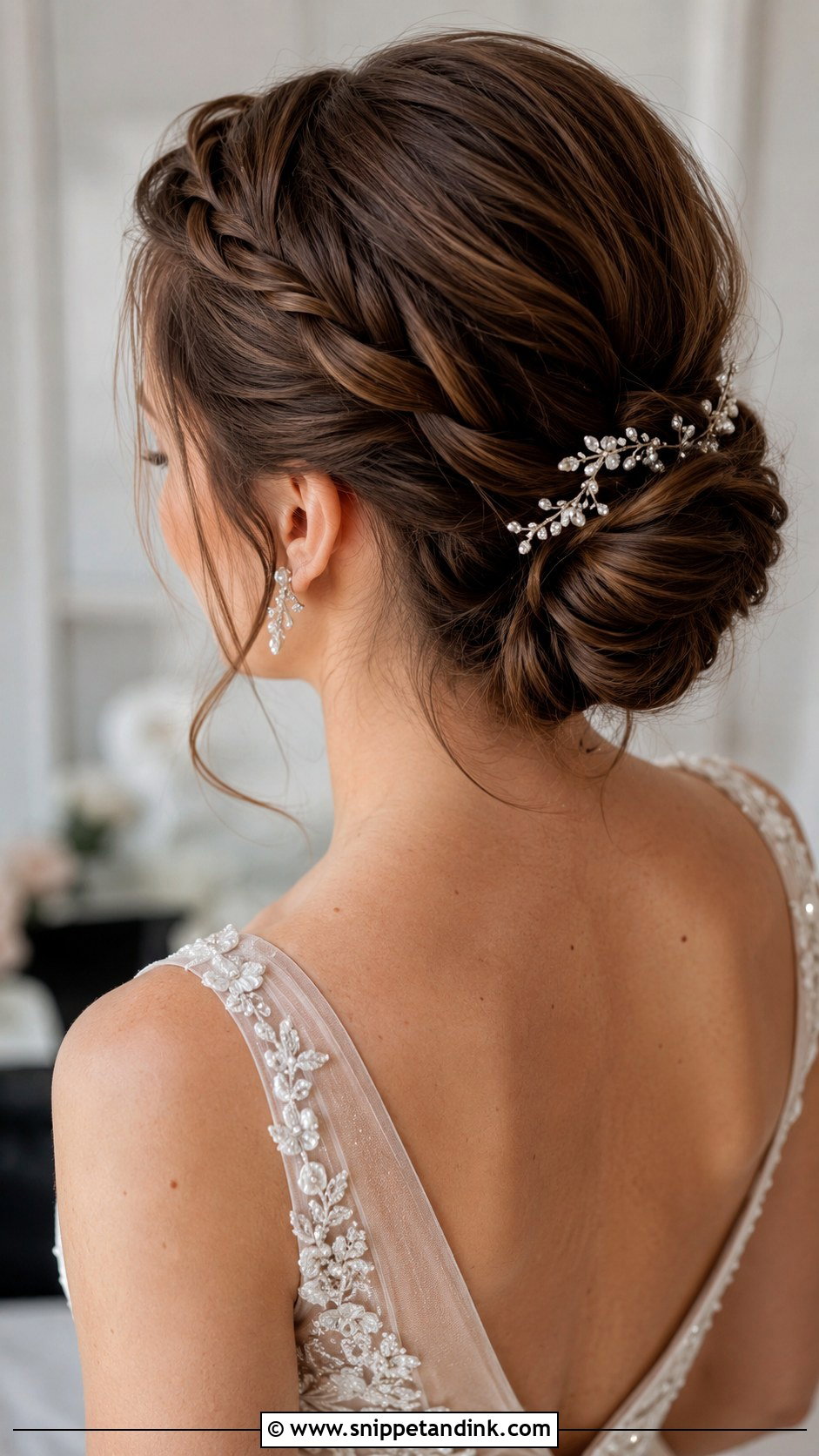
A rope braid is two strands twisted one way and then wound around each other the opposite way, and that counter-twist is what stops it unravelling. Wrapped into a bun or chignon, it makes a clean spiral that shows crisply in photos, and it’s quick to build. Fine hair benefits most, because twisting makes it look thicker than a three-strand braid would. Sparkling pins or a few flowers finish it.
Pin Pressure and Braid Headaches by Evening
A braid that feels fine at ten in the morning can ache by eight at night. Tension builds where the braid starts and wherever the heaviest pins sit, and a veil or tiara adds weight on top. None of this is something you should just put up with.
- Say so at the trial if anything pulls. A good stylist will loosen that first section rather than tell you it will settle.
- Wear the trial style for at least four hours afterward, ideally including a meal and some time outdoors.
- Widening a braid by pulling its edges outward is done last. Ask for it to be set with spray so wind doesn’t open it further.
- Give a bridesmaid a few bobby pins in your hair colour and a small hairspray. A loosened braid can usually be re-pinned in a minute without undoing anything.
Taking It Down After the Party
Pull every pin out before you touch the braid, working from the bottom up. If you’re exhausted, loosen it and sleep on it rather than tearing through each section. In the morning, work conditioner through and comb from the ends; sprayed, braided hair tangles badly when it’s rushed.
Take Your Gown’s Back Detail to the Braid Trial
Braids hold better than almost any other bridal style, but the right one depends on your length, your density and your veil more than on the photo you saved. Take that photo and a picture of your gown’s back to the trial, then wear the style for a few hours afterward and notice where it pulls or slips. A crown, a fishtail or a soft half-up braid can all be adjusted at that stage. On the wedding morning, very little can.
You'll Like These Ideas:


Leave a Reply