
Flowers in a bridal style only look easy when the hair underneath has been built to carry them. I always set the shape first and decide where blooms go second, because a stem pinned into soft, unprepped hair slides within the hour. The ideas below range from low buns with baby’s breath to waves with a few tiny blooms, braided crowns threaded with greenery and sleek chignons finished with a single orchid. Fresh flowers can echo your bouquet; good silk flowers are the safer call for heat, travel and a twelve-hour day.
Which Blooms Last Out of Water and Which Brown by Lunch
Hair flowers live without a water source for the entire day, against a warm scalp, often under sun. That rules some favourites out. Gardenias and white garden roses bruise and turn brown at the edges where fingers touch them. Hydrangea heads go limp within a few hours once they’re off the stem. I’d avoid both for anything that needs to look fresh at the last dance.
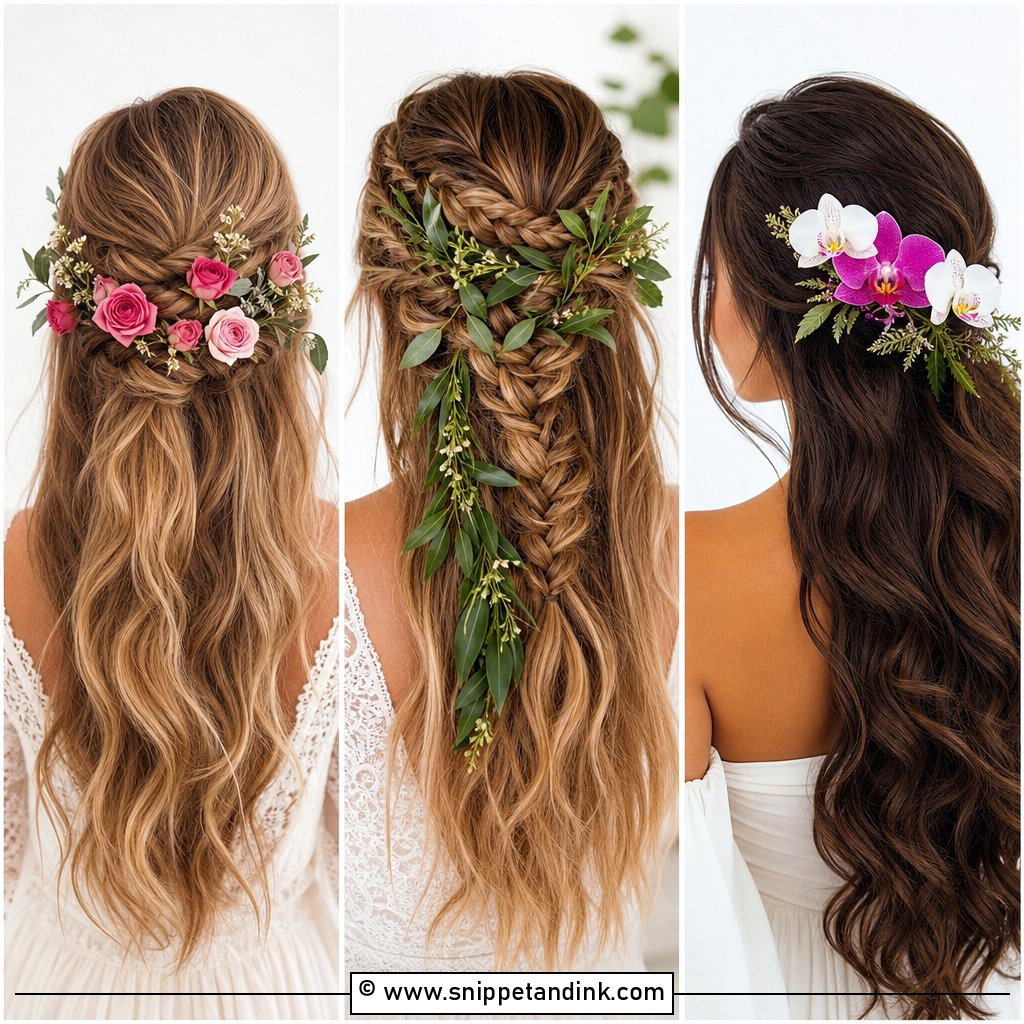
The reliable ones are sturdier. Orchids (dendrobium and cymbidium especially), spray roses, wax flower, baby’s breath, stephanotis, statice and most greenery like eucalyptus or ruscus hold up for hours out of water. Dried and preserved flowers don’t wilt at all, which makes them a good choice for desert or tropical weddings.
When silk is the better decision
If your ceremony is outdoors in high summer, or you’re travelling to a destination wedding, good silk flowers save a lot of worry. Look for ones with a matte finish and slightly irregular petals; shiny, perfectly symmetrical blooms look fake in close-up photos. You can also mix: silk for the main pieces that need to last, a few fresh sprigs matched to the bouquet for the first portraits.
1. Floral Bridal Low Bun
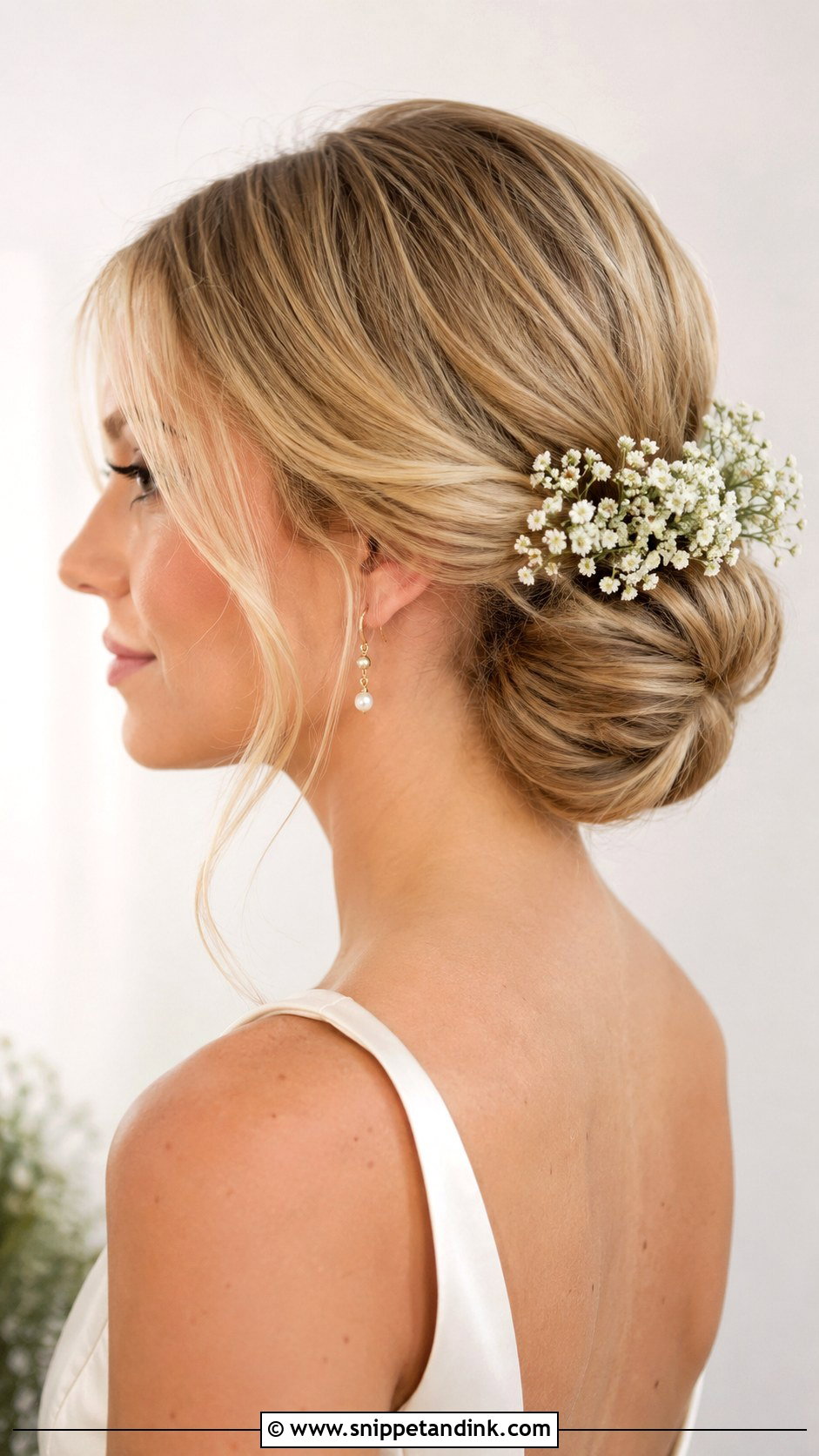
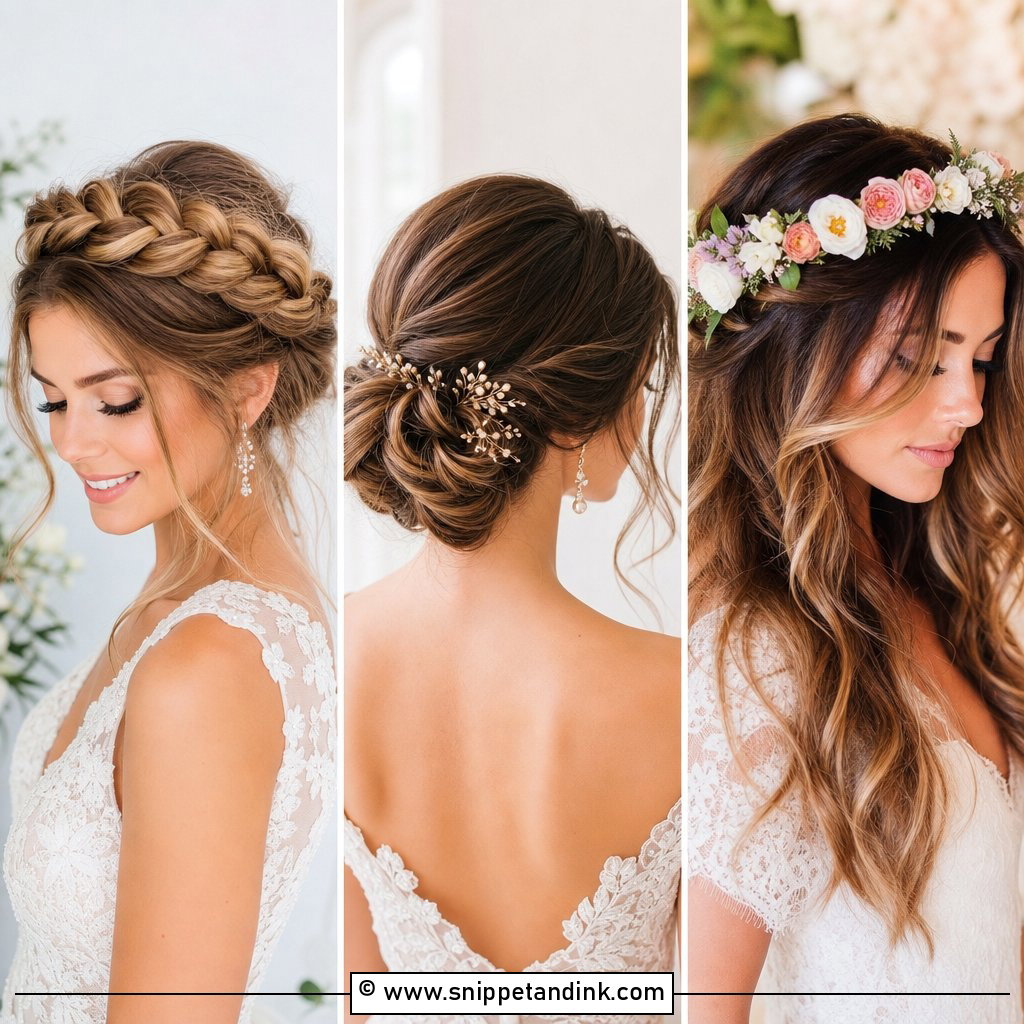
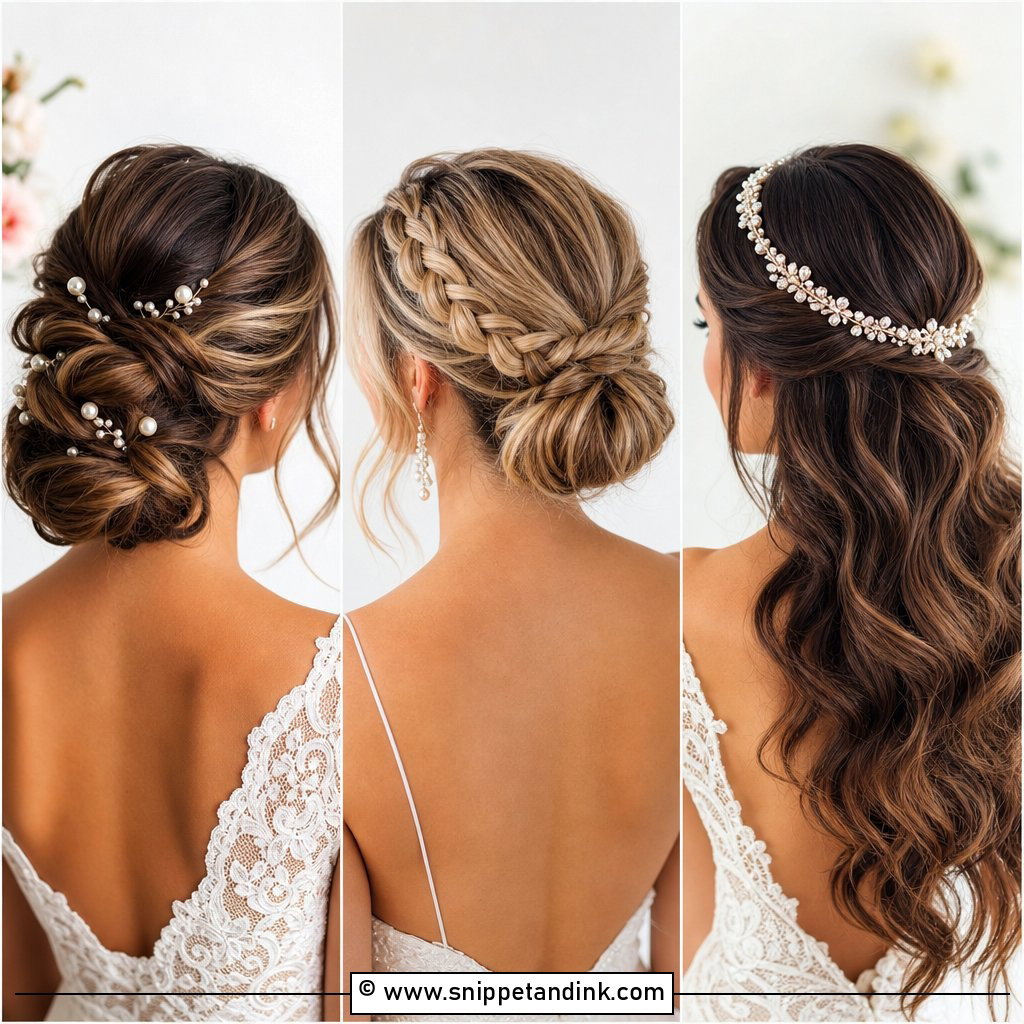
I reach for this shape more than any other when a bride is wearing a cathedral veil, because the comb slides in right above the bun and nothing fights for space. It sits at the nape, so it also leaves an open back or a sweetheart neckline completely clear. I tuck the flowers to one side only, small ones like baby’s breath, spray roses, wax flowers, or jasmine, and wire them into the anchor pins rather than the loose surface of the bun. A smooth finish reads formal; a little pulled texture softens it for a garden ceremony.
2. Floral Bridal Braided Bun
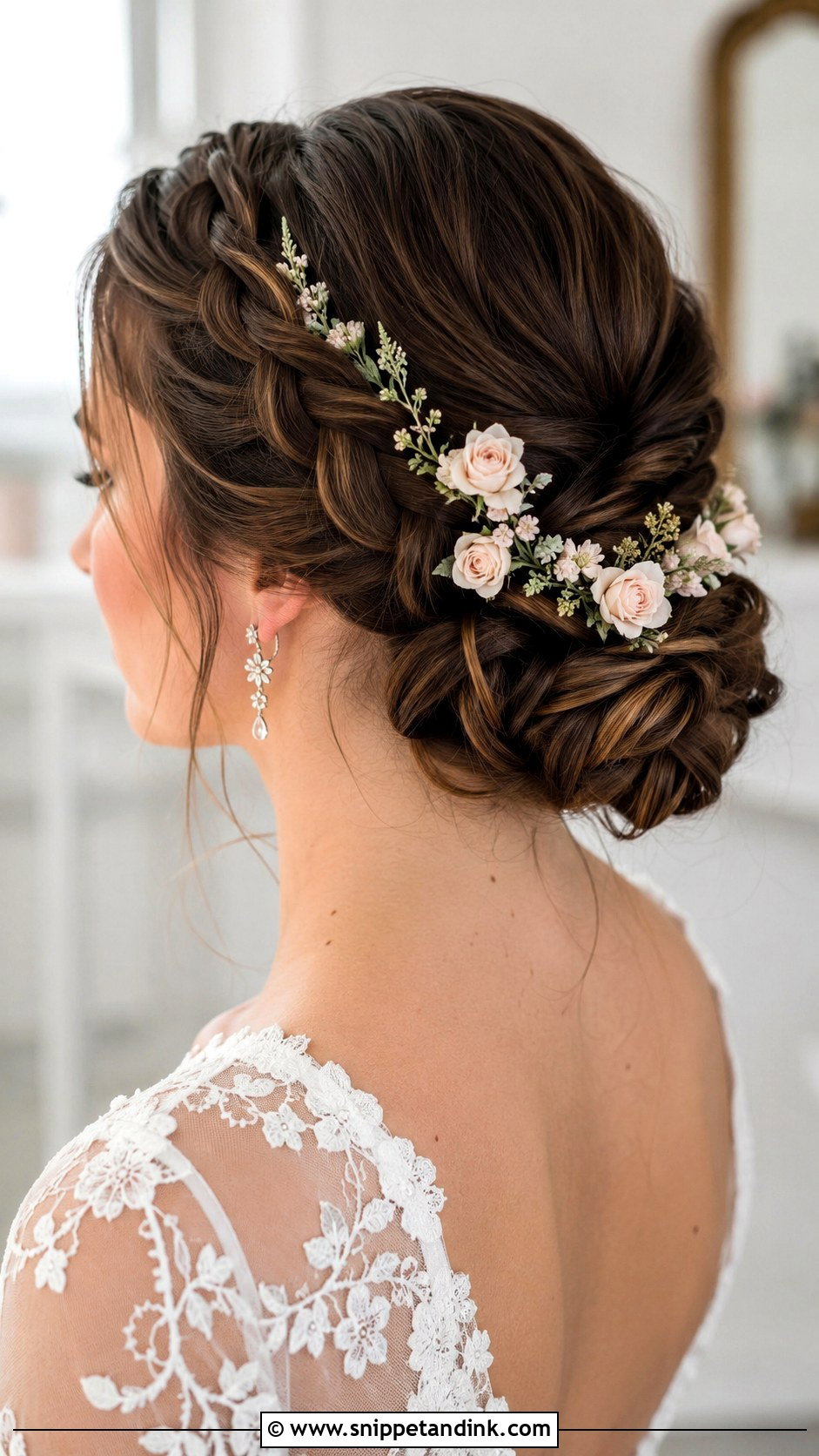
The braid gives flowers somewhere to live. I either wrap it around the bun or feed it in, then follow its curve with the stems so they look like they grew along it instead of being dropped on top. Small roses, jasmine and dried florals sit well here because they wedge between the plaits and stay put. If your hair is layered, this is a kinder choice than a plain bun, since the braid catches the shorter ends that would otherwise poke out by the reception.
3. Floral Bridal Half Up Hair
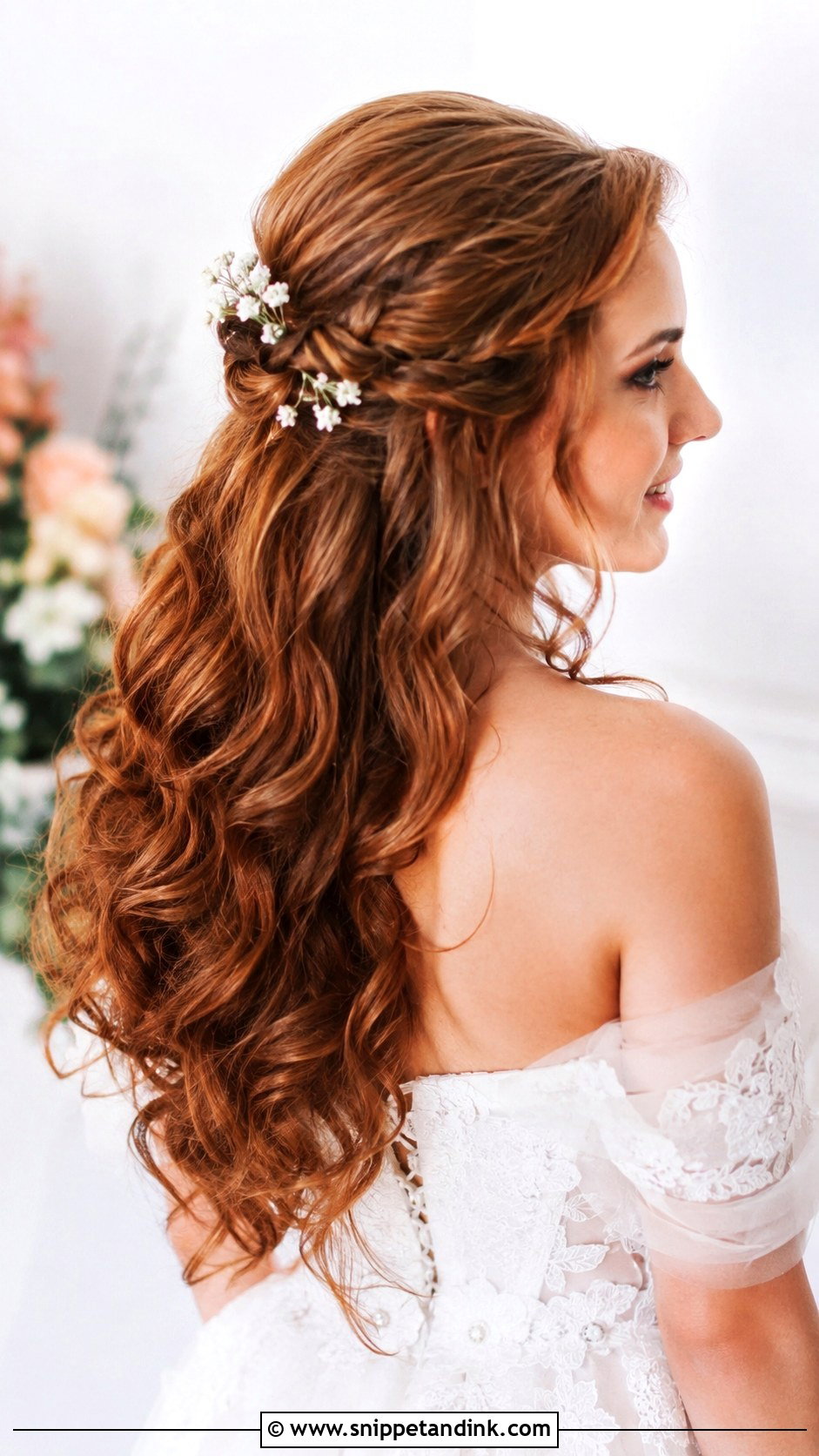
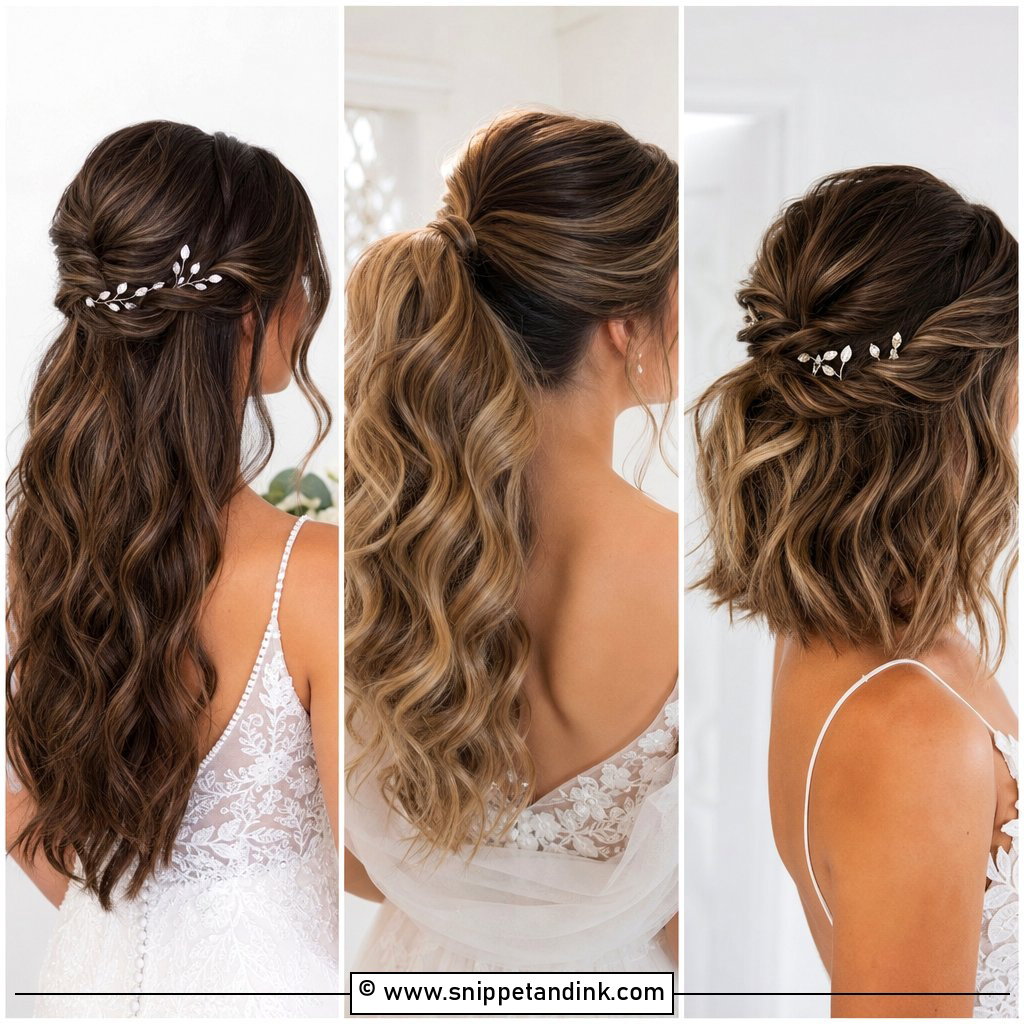
Half up is the style I watch most carefully on the day, because the loose lengths do all the moving and the pinned crown takes all the weight. I lift and twist the top section back, secure it with crossed bobby pins, and only then place the flowers across it or to one side. Medium to long hair gives the waves enough length to swing in photos. Keep the blooms delicate if your dress has heavy beading; a plain crepe gown can take something fuller.
4. Floral Bridal Crown Braid
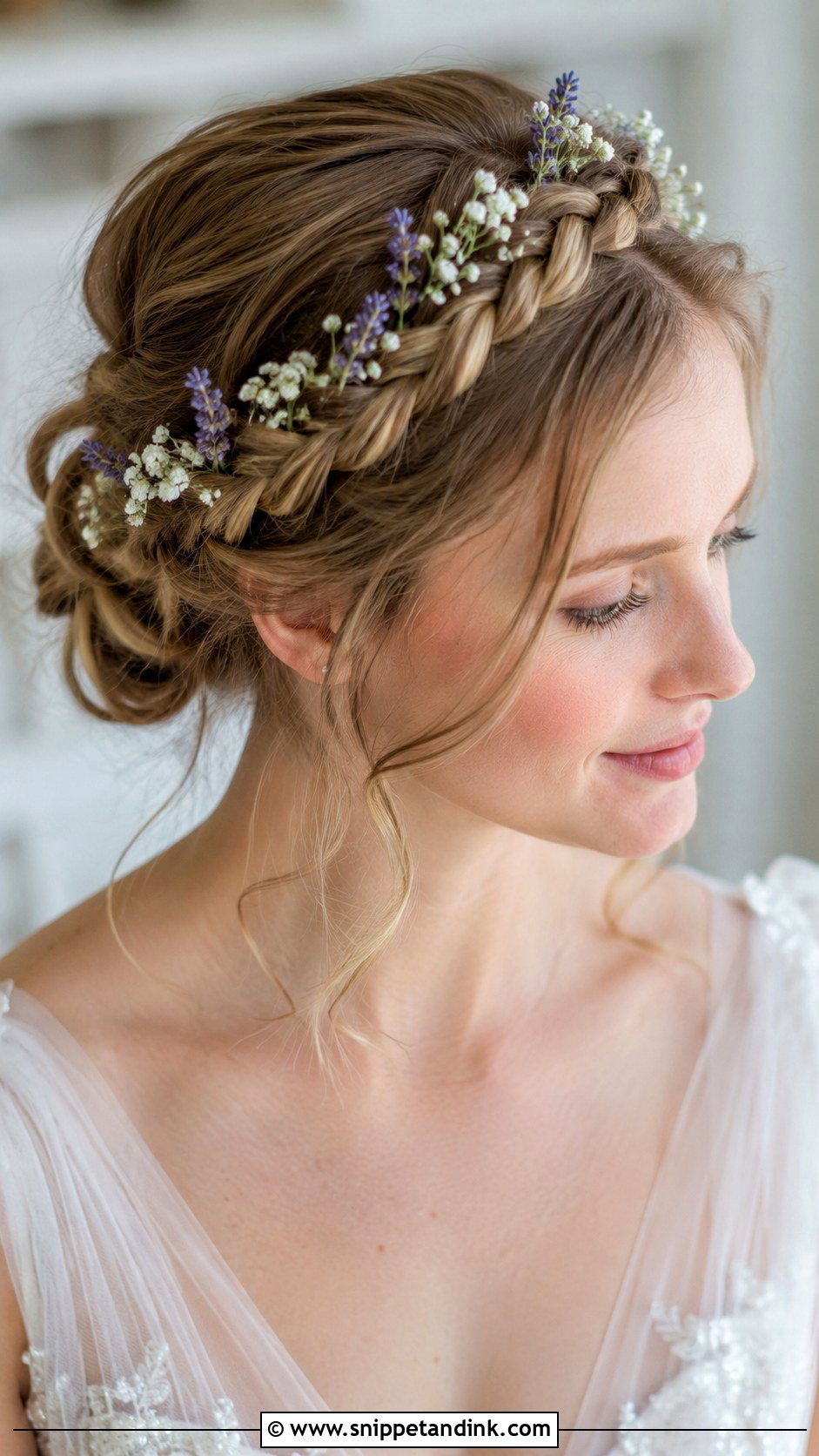
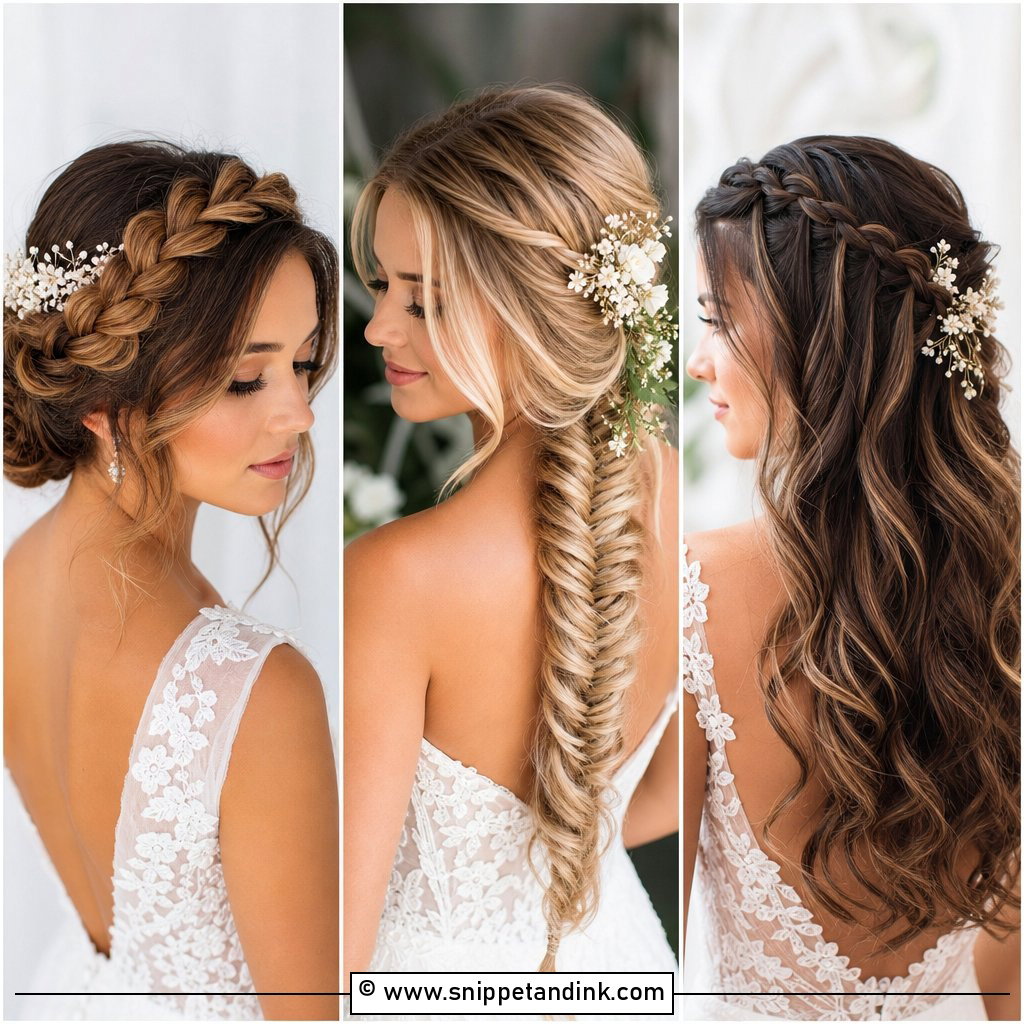
A crown braid circles the head like a halo and holds everything off the face, which is why it survives wind and dancing better than almost anything on this list. I plait it fairly tight first, then pancake the edges out so the flowers have gaps to sit in. Baby’s breath, lavender, small daisies and mini roses suit it because they decorate the braid without hiding the pattern. I usually leave two thin face-framing pieces out so it doesn’t look severe.
5. Floral Bridal Loose Waves
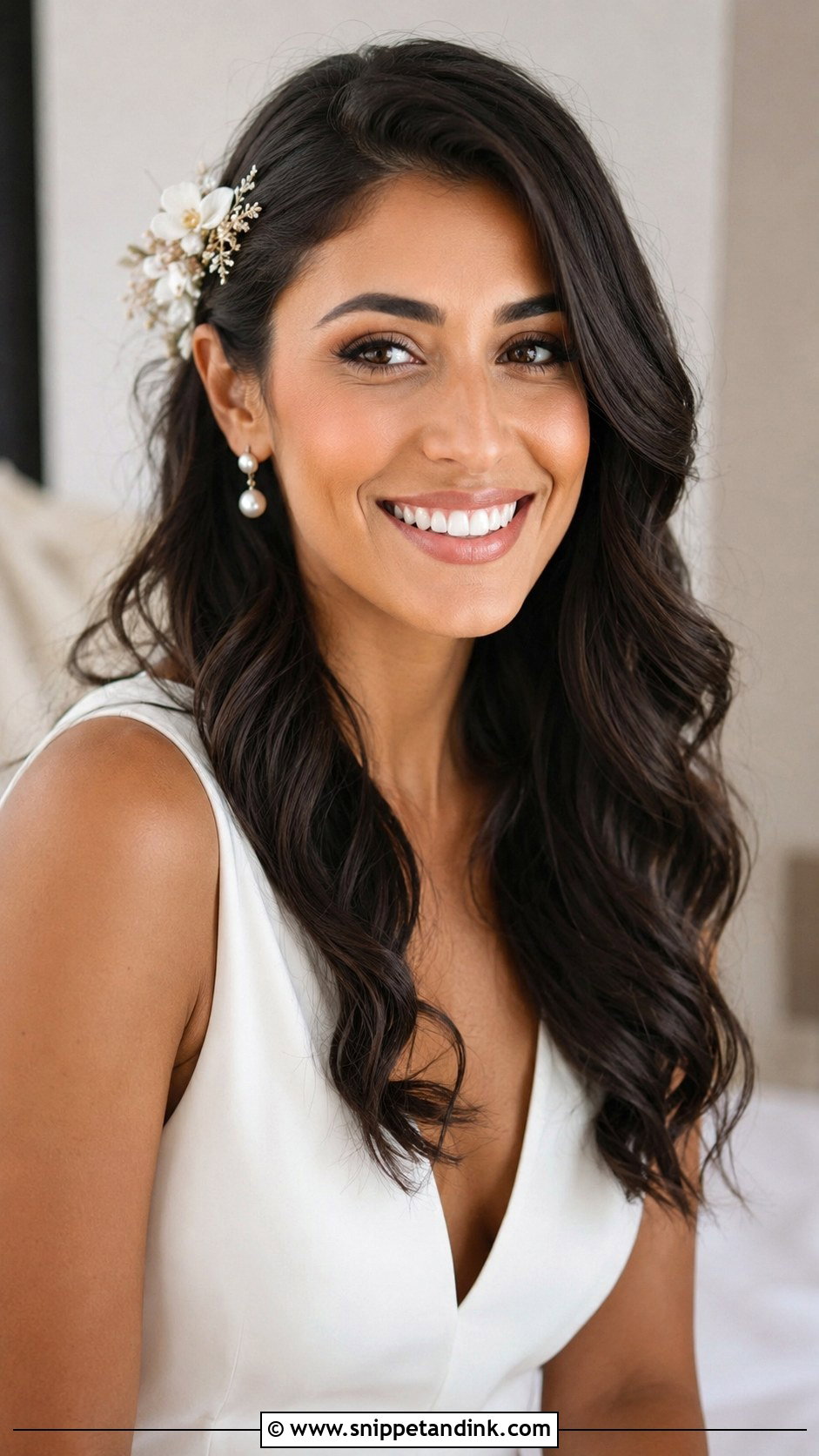
Loose waves are the style most likely to drop, so I set them stronger than the bride expects and brush them out at the end. If your hair refuses to hold a curl, tell your stylist at the trial; she can pin each curl to cool or use a smaller barrel underneath. Flowers go behind one ear, on a slim floral comb, or lightly through the back. Keep them light, because a heavy cluster on loose hair drags the section down and flattens the wave by the first dance.
6. Floral Bridal High Bun
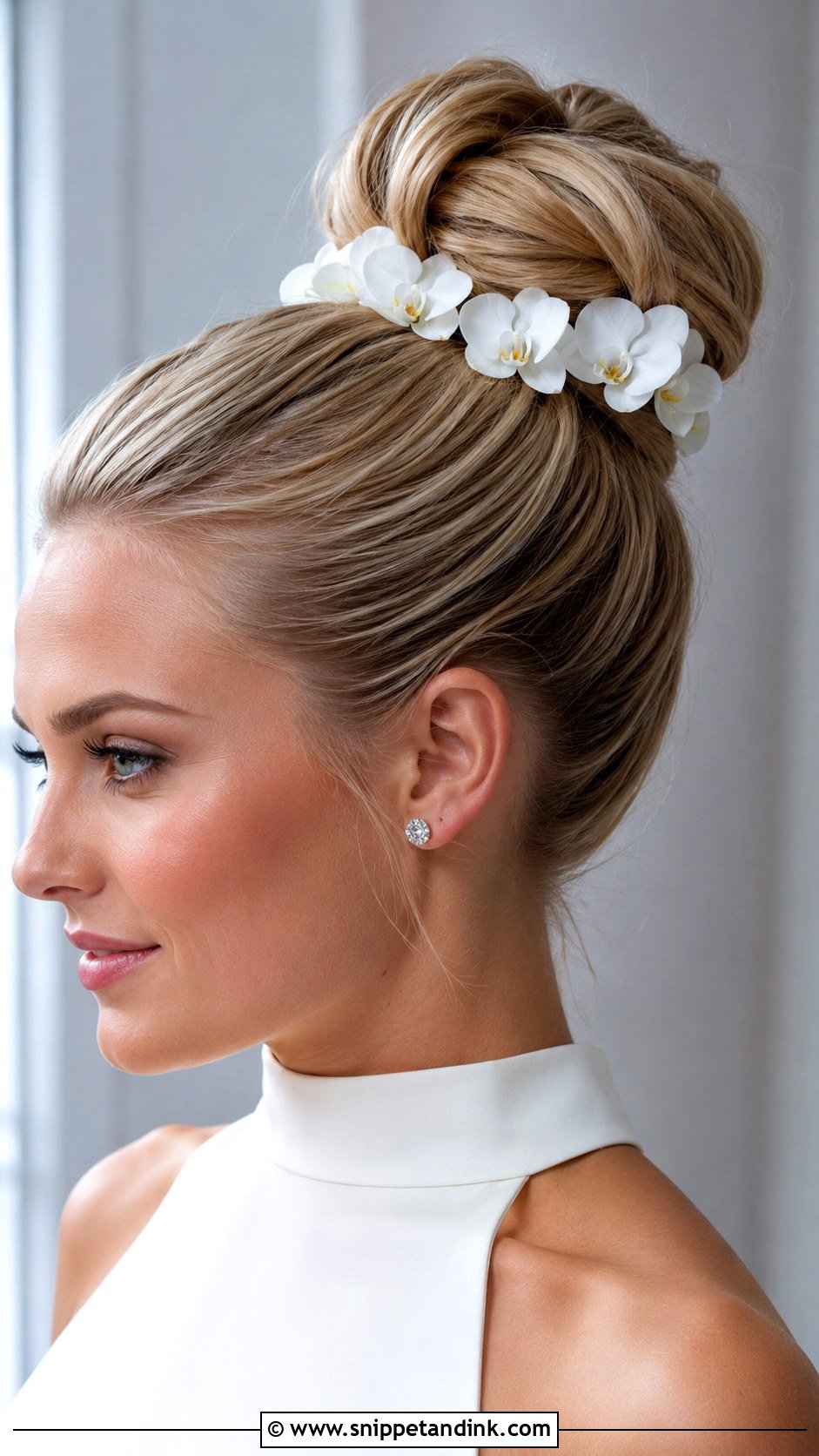
A high bun lifts the whole face and keeps hair off a damp neck in summer, which brides at July weddings tend to thank me for. It can be sleek or a little undone. I place small flowers evenly around the base, where the bun meets the head, since that ring is the most stable spot to pin into. It suits high-neck gowns and statement earrings well. Go easy on the height if you’re much taller than your partner; a very tall bun can make the difference look larger in photos.
7. Floral Bridal Chignon
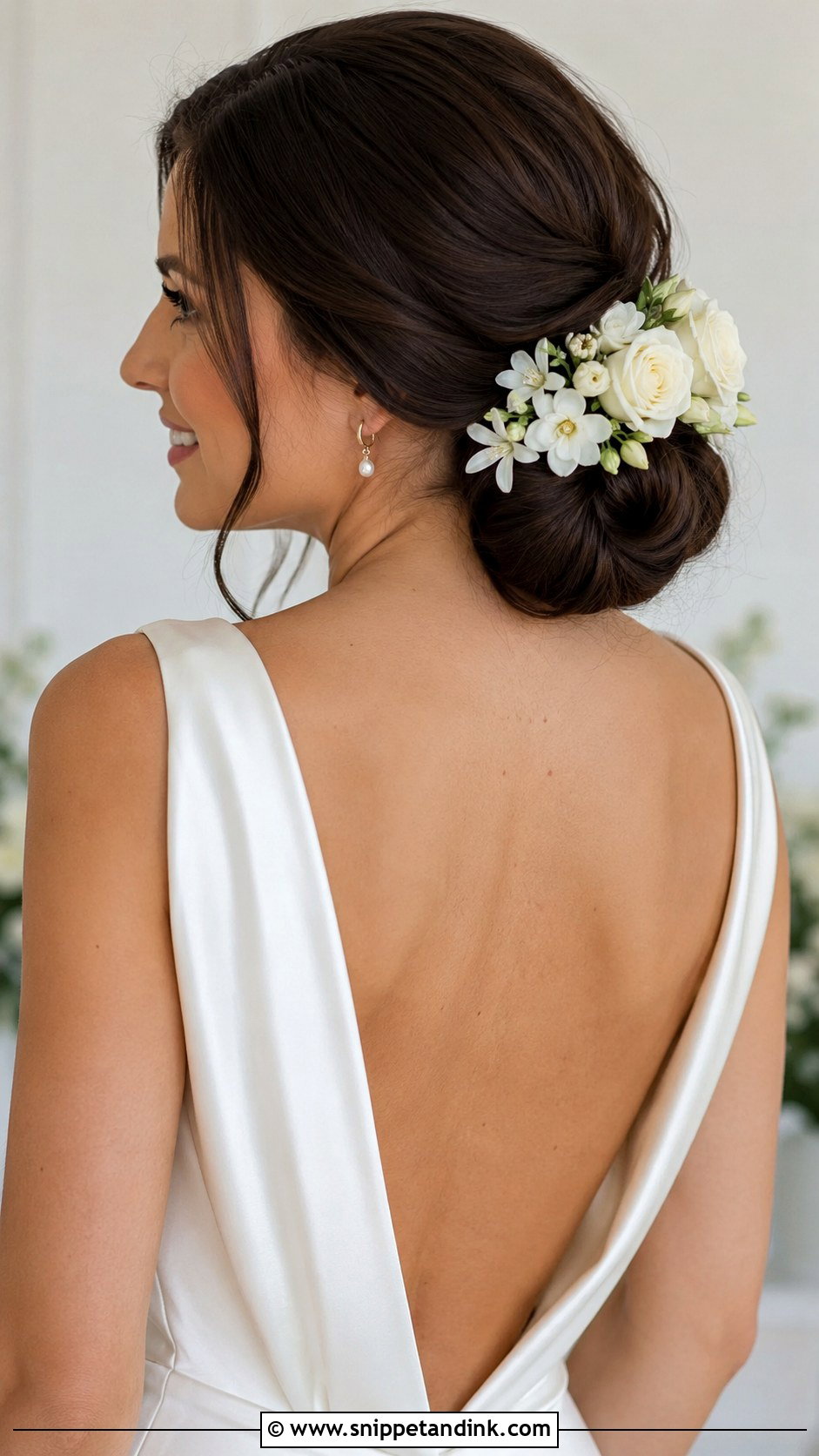
This is my answer when a bride says she wants something quiet. The chignon sits low and close to the head, shaped around the sides, and it can be rolled, twisted or gently knotted depending on length and texture. I keep the flowers to one side; a full ring of blooms turns a refined shape into a wreath. Orchids, garden roses and stephanotis all hold their form here. The silhouette stays clean from the side, which matters in the ceremony when most guests only see your profile.
8. Floral Bridal Ponytail
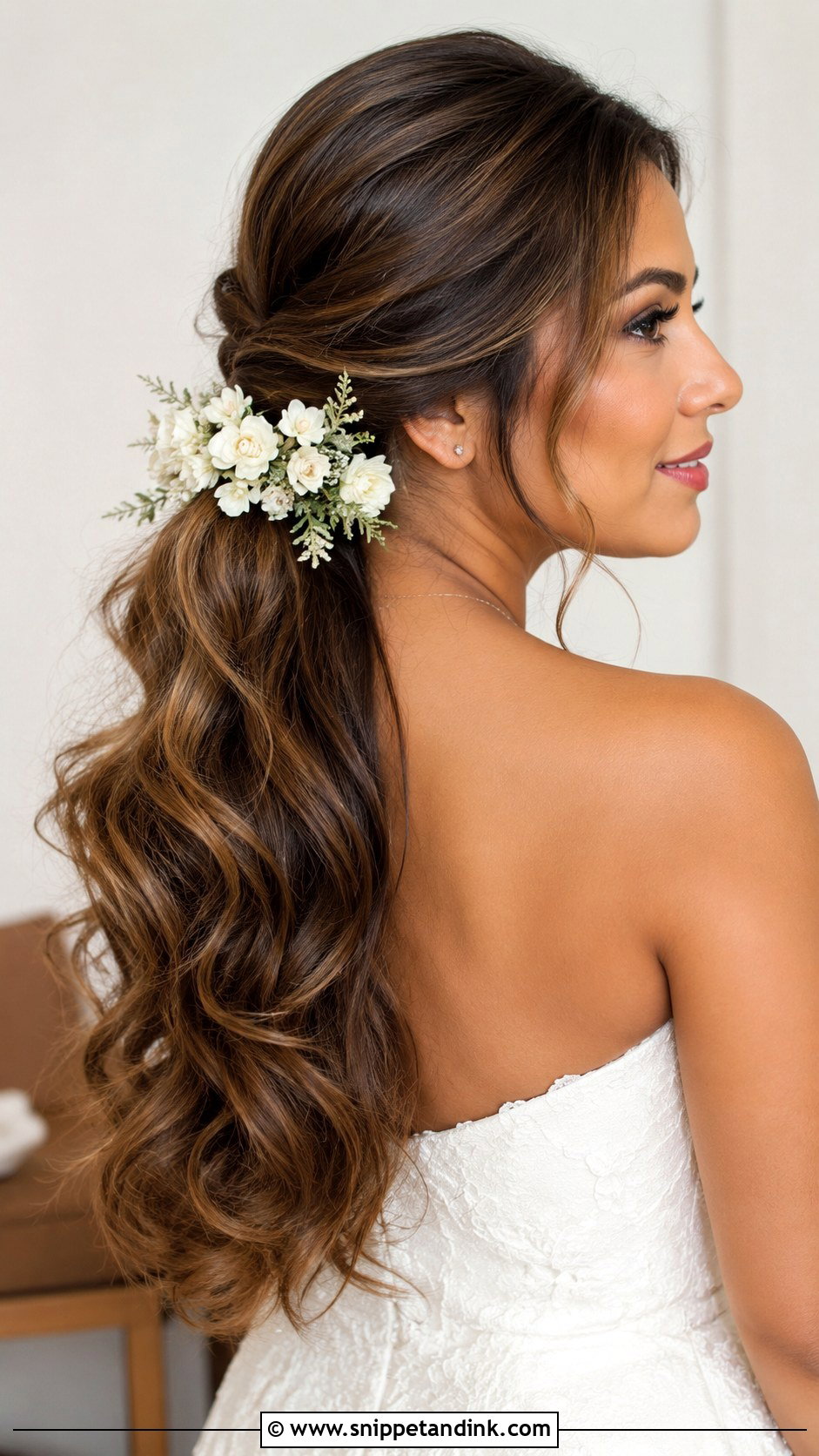
Ponytails are lighter on the scalp than an updo and easy to dance in, which is why many brides switch into one for the reception. I wrap a small section around the elastic, pin it underneath, and then place the floral cluster at the base so it covers the pins. Soft waves through the length make it look bridal rather than gym-ready. Fine hair benefits from a hidden second elastic or a few clip-in pieces to stop the tail looking thin by evening.
9. Floral Bridal Side Braid
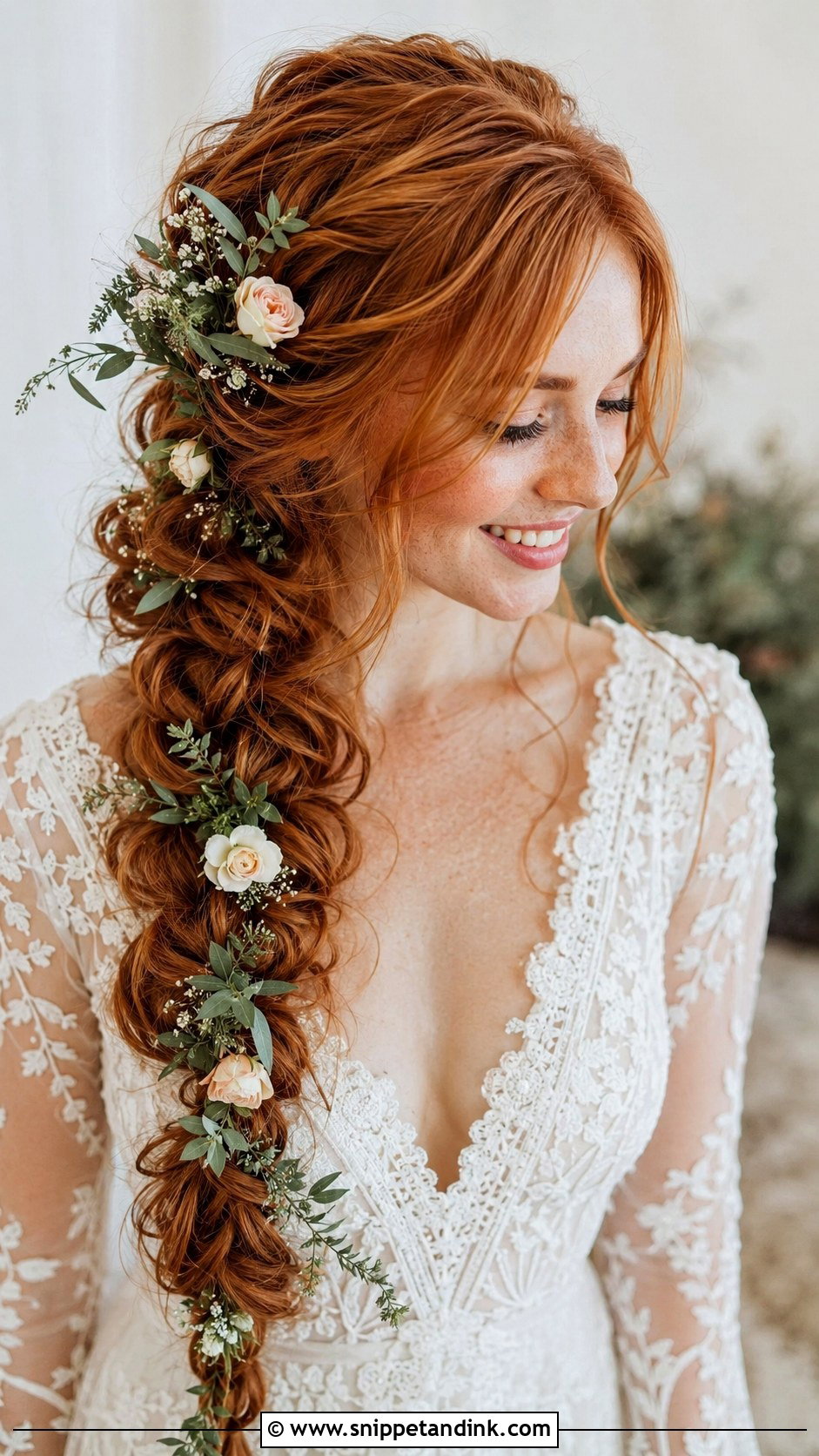
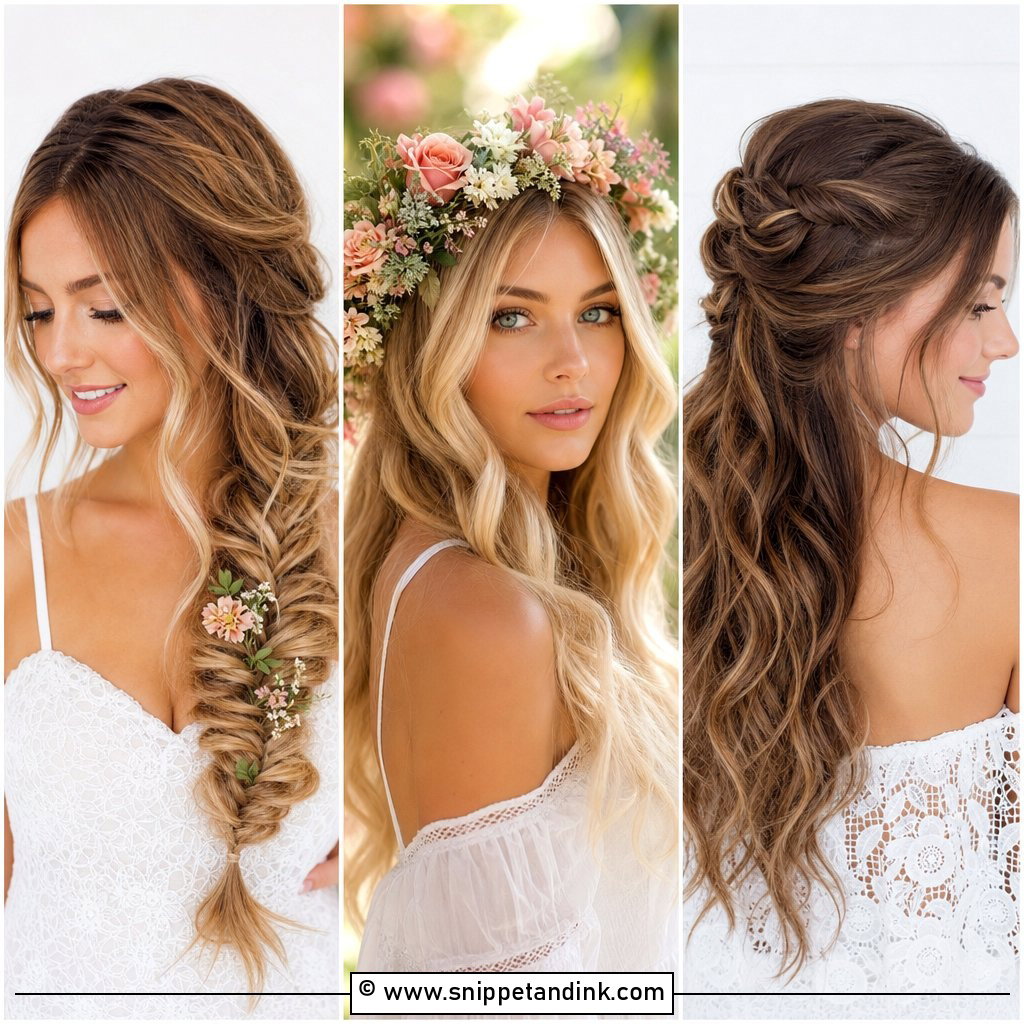
Side braids drape over one shoulder, so I always ask which side your partner stands on; you want the braid facing the guests, not hidden against your fiancé. The braid can be loose, fishtail-style or pulled apart for fullness. I put the largest bloom near the top or middle and taper smaller clusters down from it. Long, thick hair is the natural fit, since the braid controls the bulk while still showing it off, and it sits well against off-shoulder and boho dresses.
10. Floral Bridal Fishtail Braid
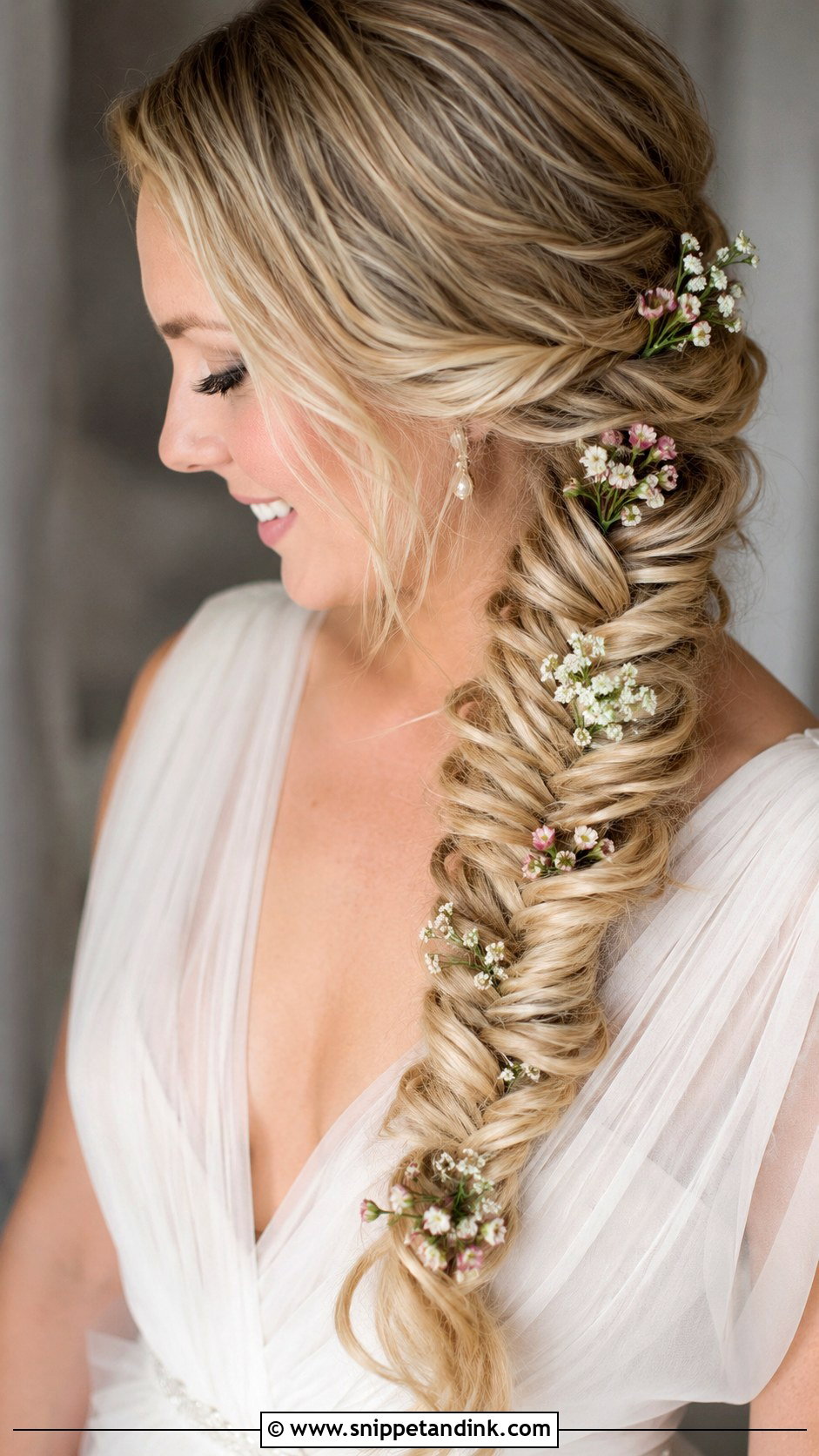
A fishtail is busy enough on its own, so I keep the flowers tiny and spaced well apart. Small roses, baby’s breath, wax flowers or sprigs of greenery work when they highlight the weave instead of covering it. Loosening the braid gently after it’s tied gives it width and more room for stems. It needs medium to long hair. Expect a fishtail to take noticeably longer to plait than a classic braid, so allow extra time on the morning schedule.
11. Floral Bridal Twisted Updo
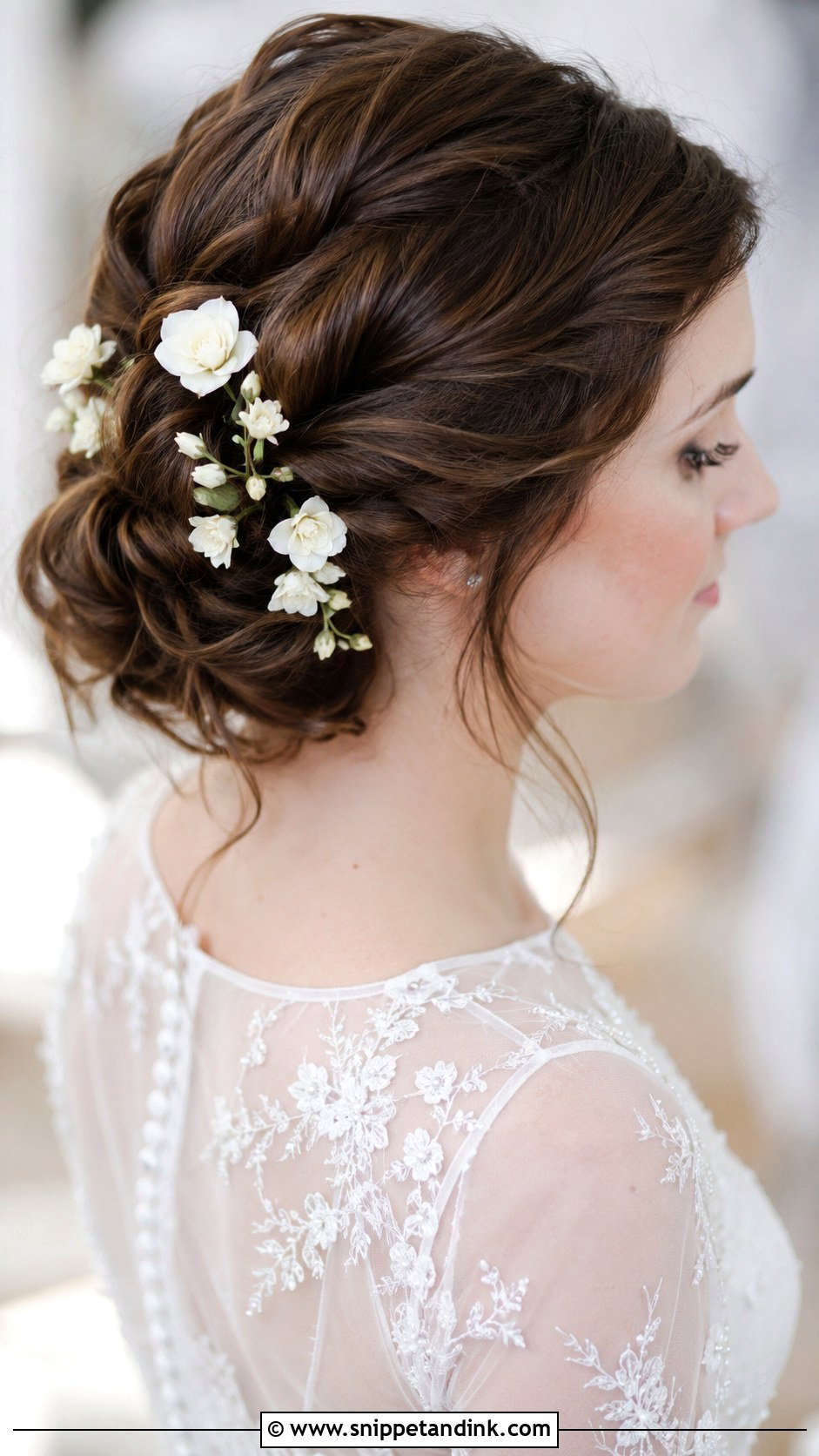
Twisted updos are generous to layered hair, because each twist swallows shorter pieces that would escape a smooth bun. The hair is shaped into sections that overlap and pin together at the back or nape, and the gaps between twists make natural pockets for flowers. That means stems look woven in rather than stuck on. I’d keep the flowers small to medium so you can still see the twist pattern. It works with veils, combs and pearl pins too.
12. Floral Bridal Hollywood Waves
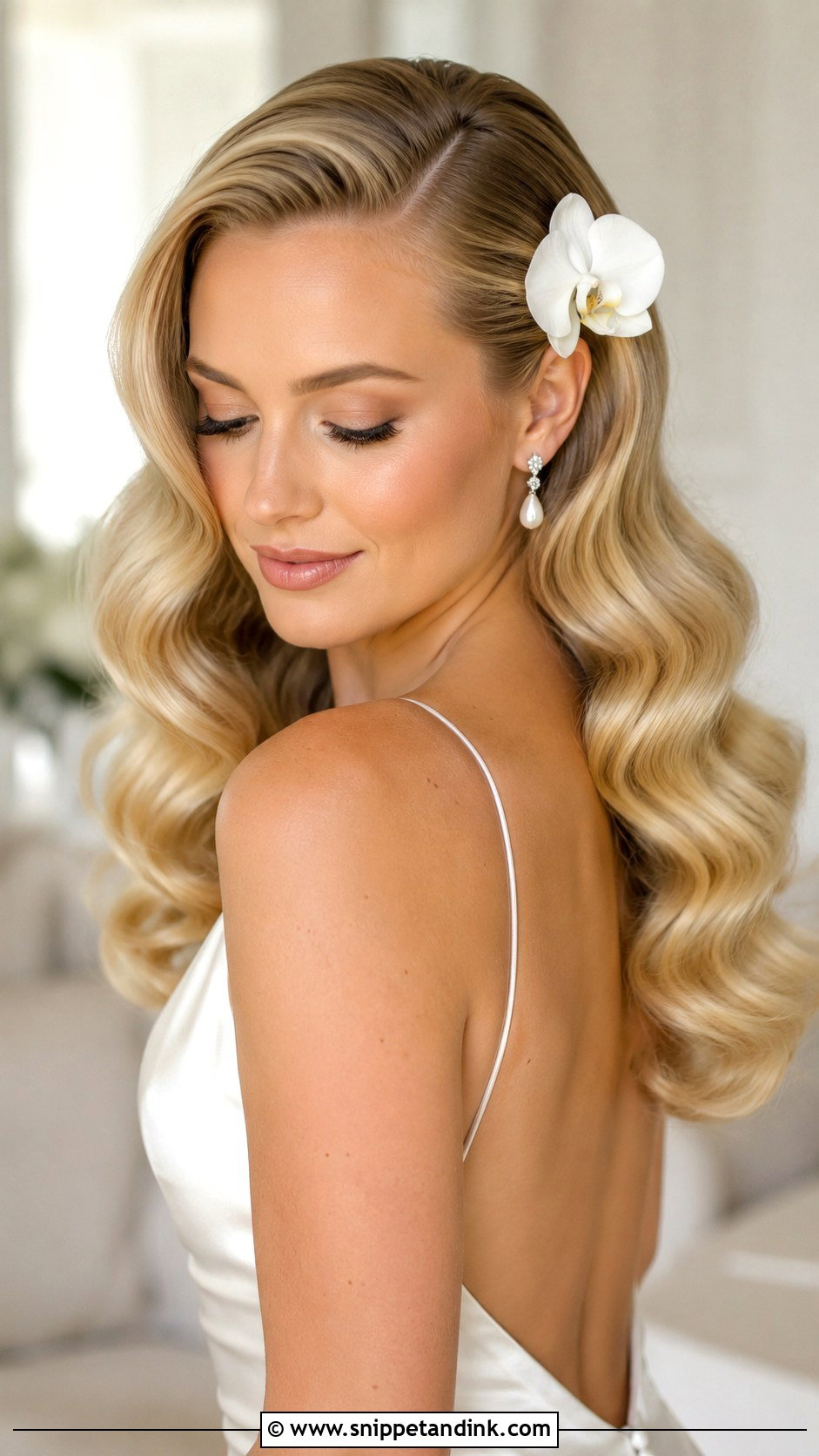
Hollywood waves are already a strong, sculpted shape with a deep side part, so flowers need to be minimal. One orchid, a single rose or a floral barrette near the part is plenty; anything more turns the look costume-like. I set these waves with shine spray and a firm hold product and clip each wave while it cools. It pairs naturally with satin, fitted gowns and a classic red lip. Humid outdoor venues are hard on it, and I’d steer you elsewhere if the forecast is muggy.
13. Floral Bridal Messy Bun
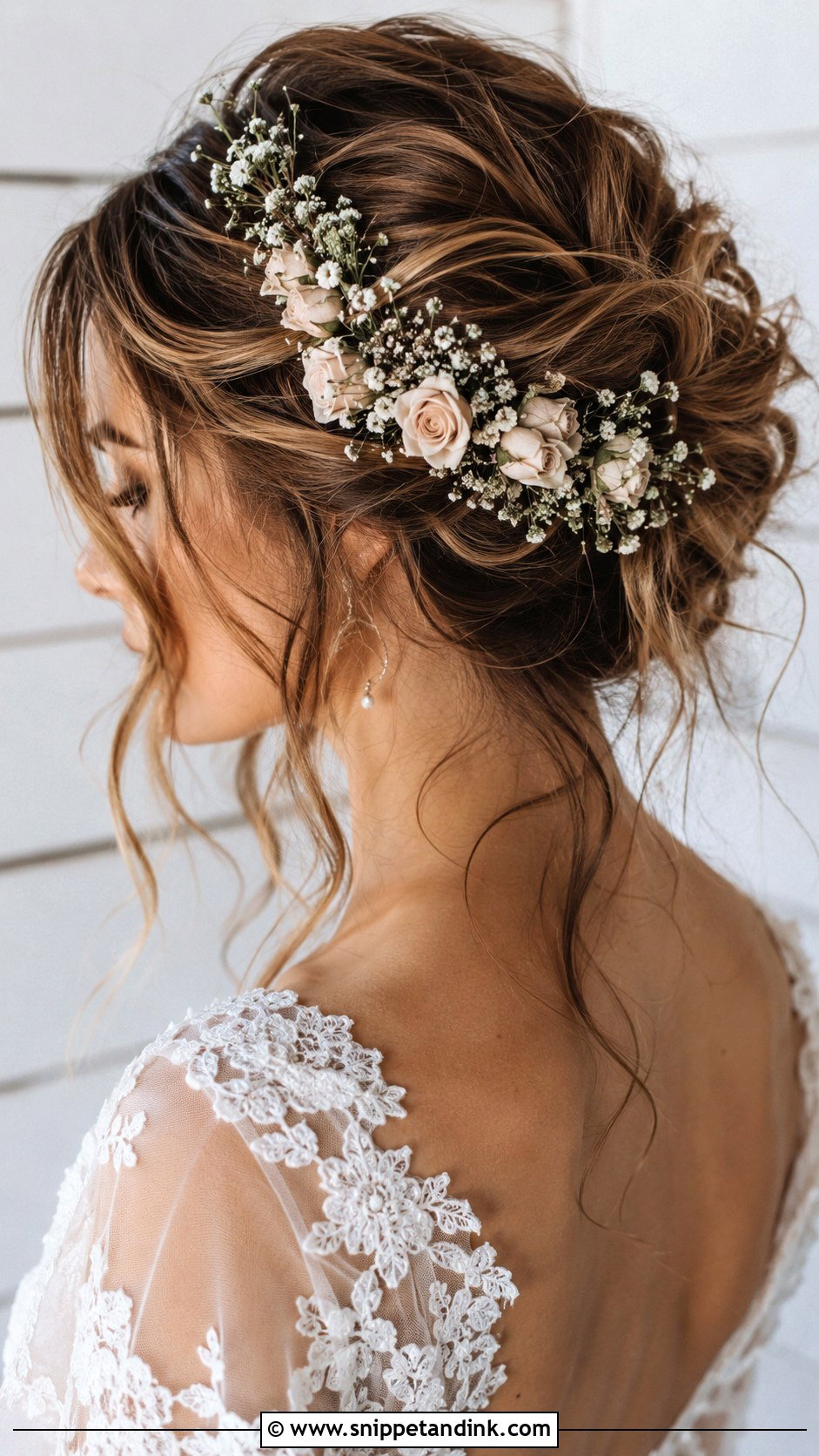
The phrase “messy bun” scares me a little, because the best ones are the most carefully built. Every loose piece is placed. I add volume at the crown, pin the bun with deliberate texture, and pull a few strands around the face last. Flowers sit in a loose crescent along one edge, using baby’s breath, small roses, dried flowers or greenery. Lace and tulle dresses suit it, and it softens a strong jawline nicely. Very fine, slippery hair may need a light texture spray first or it collapses.
14. Floral Bridal Short Hair
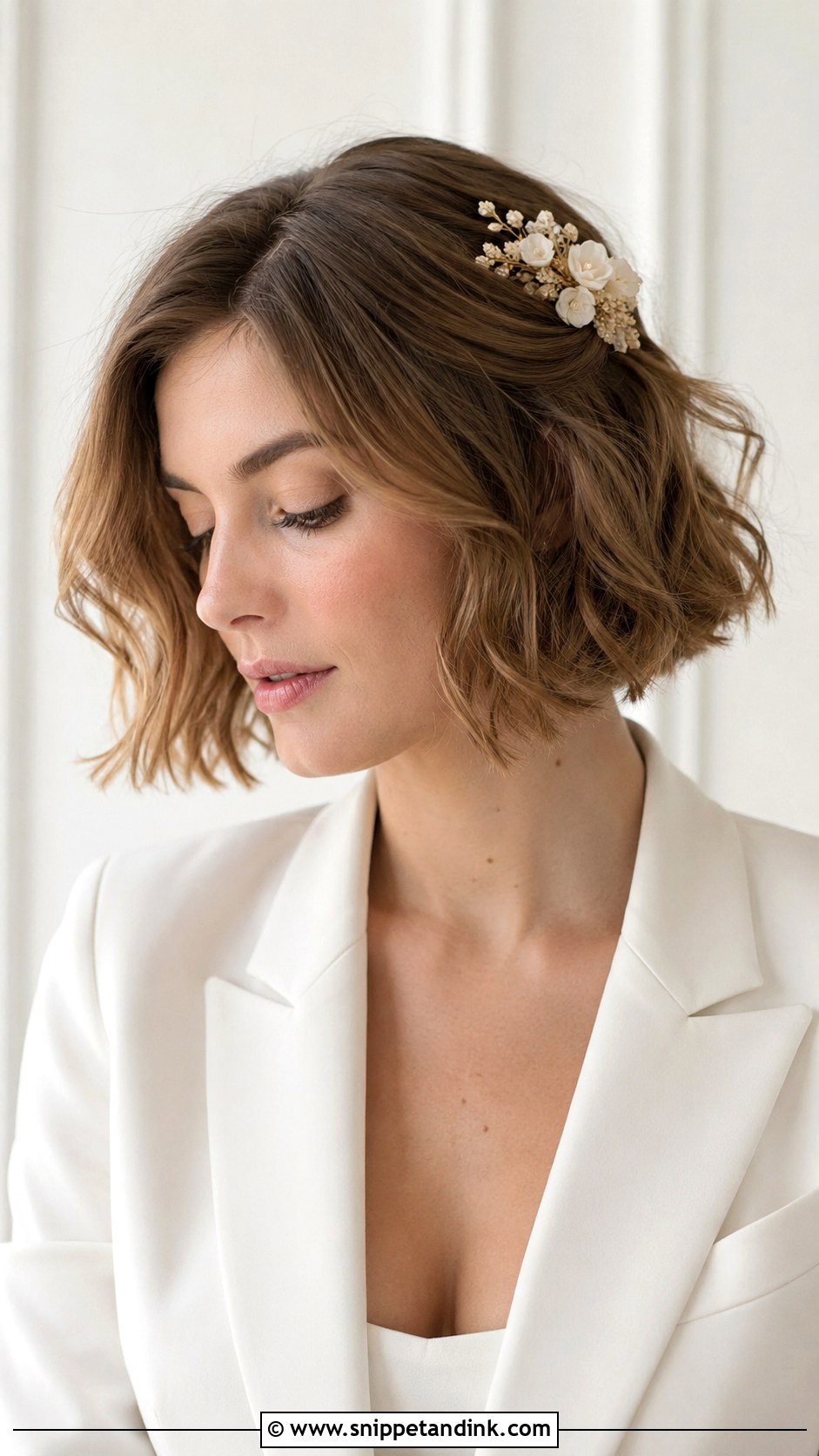
Short hair can carry flowers well; the trick is scale. A bob, lob, pixie or cropped cut has less hair to pin into, so I use a small comb, a floral barrette or a mini crown rather than loose stems. Smaller blooms flatter the cut instead of covering it. I set the comb into a backcombed base so it has something to grip. Short styles also look good with a birdcage veil or bold earrings, and you’ll still look like yourself in the photos.
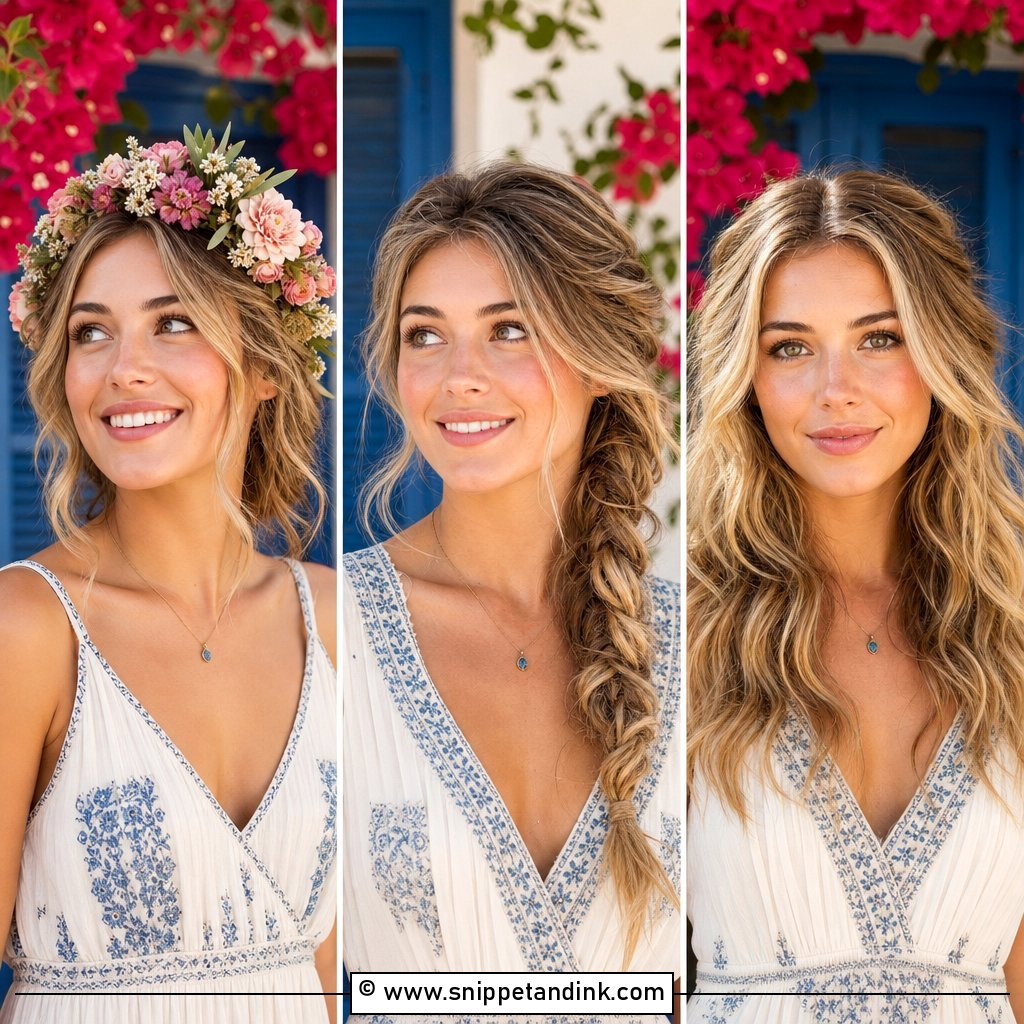
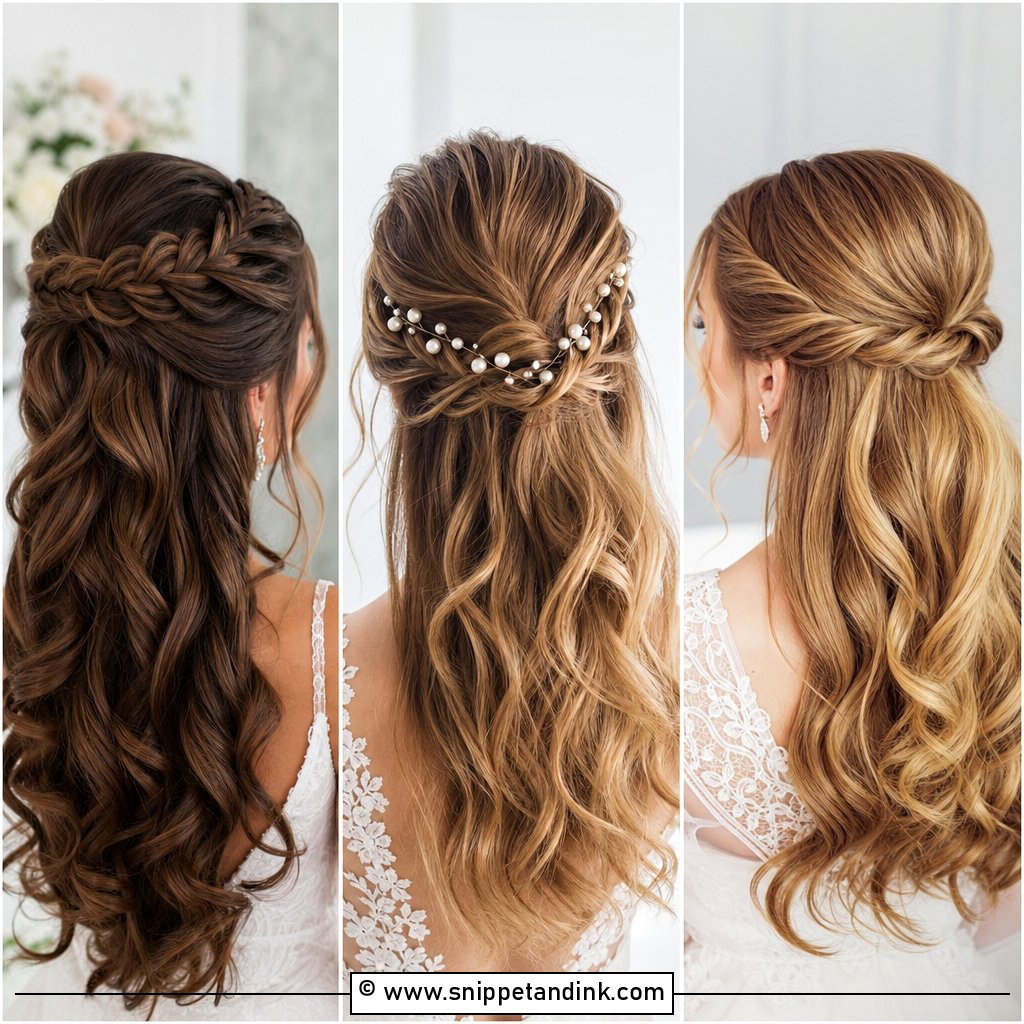
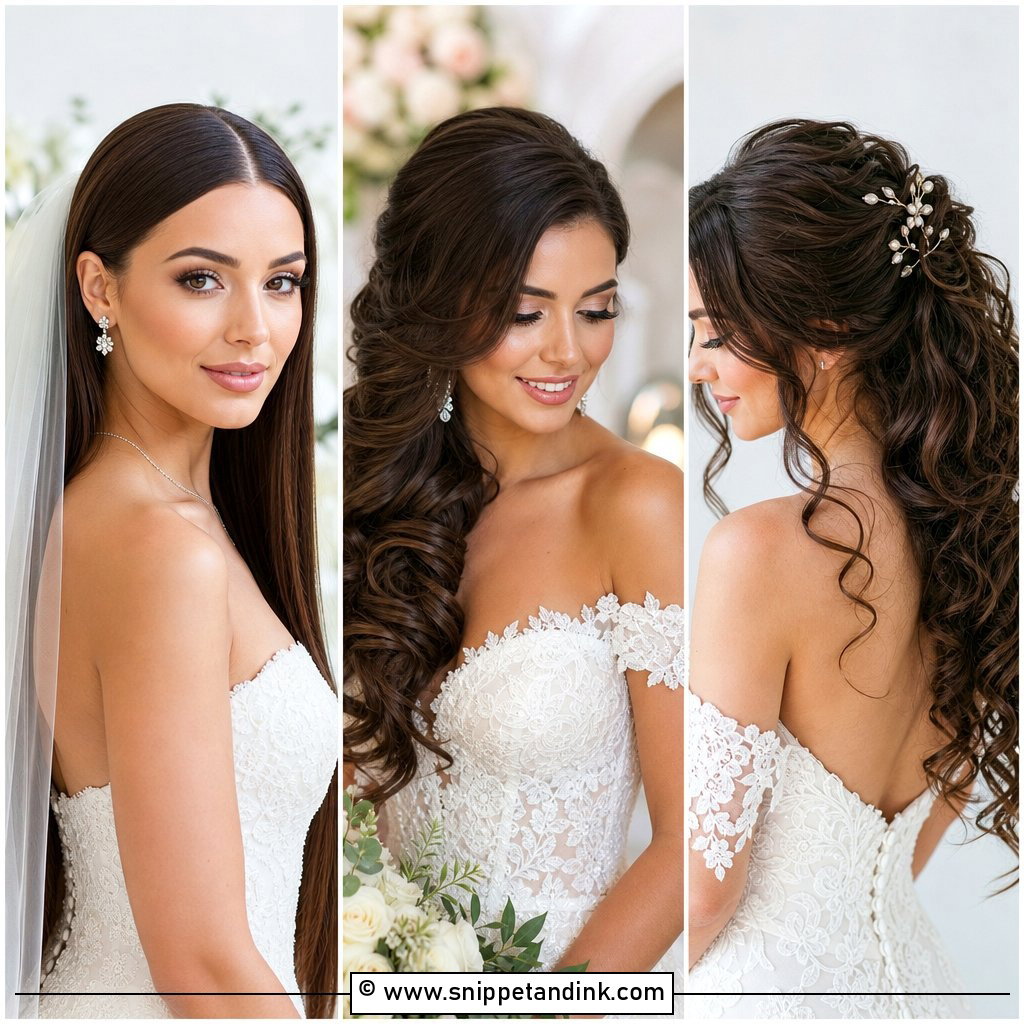
15. Floral Bridal Curly Hair
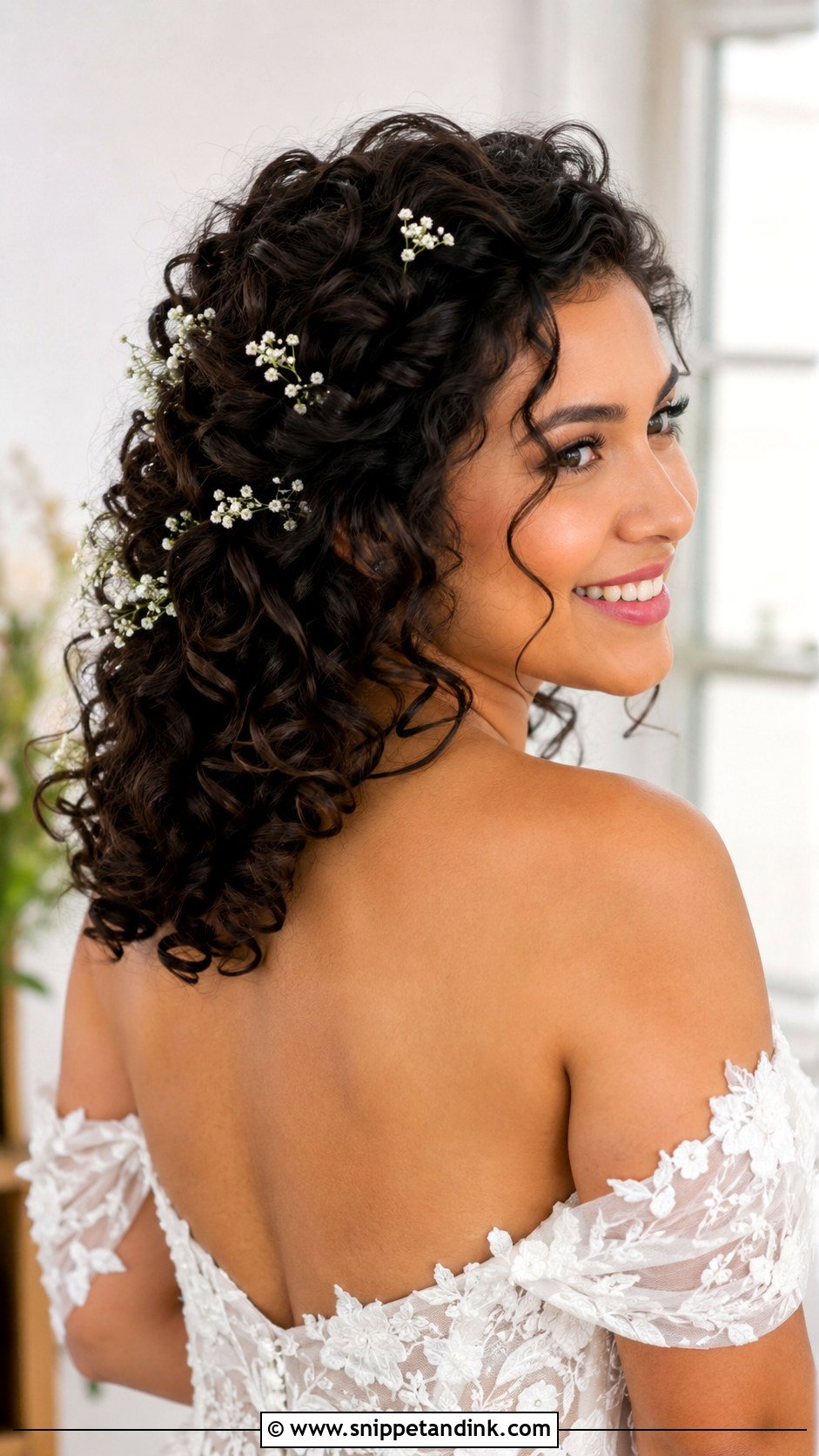
Curly hair needs the flowers to work with the curl pattern, not flatten it. Worn down, half up, swept to one side or set in a soft updo, the curls do the decorating and the blooms sit in the gaps between them. I place floral pins rather than wired stems so I’m not dragging through defined curls. Hydration prep matters a lot here; dry curls frizz under bobby pins. Start your usual moisturising routine a few days early so the definition holds.
16. Floral Bridal Natural Hair Updo
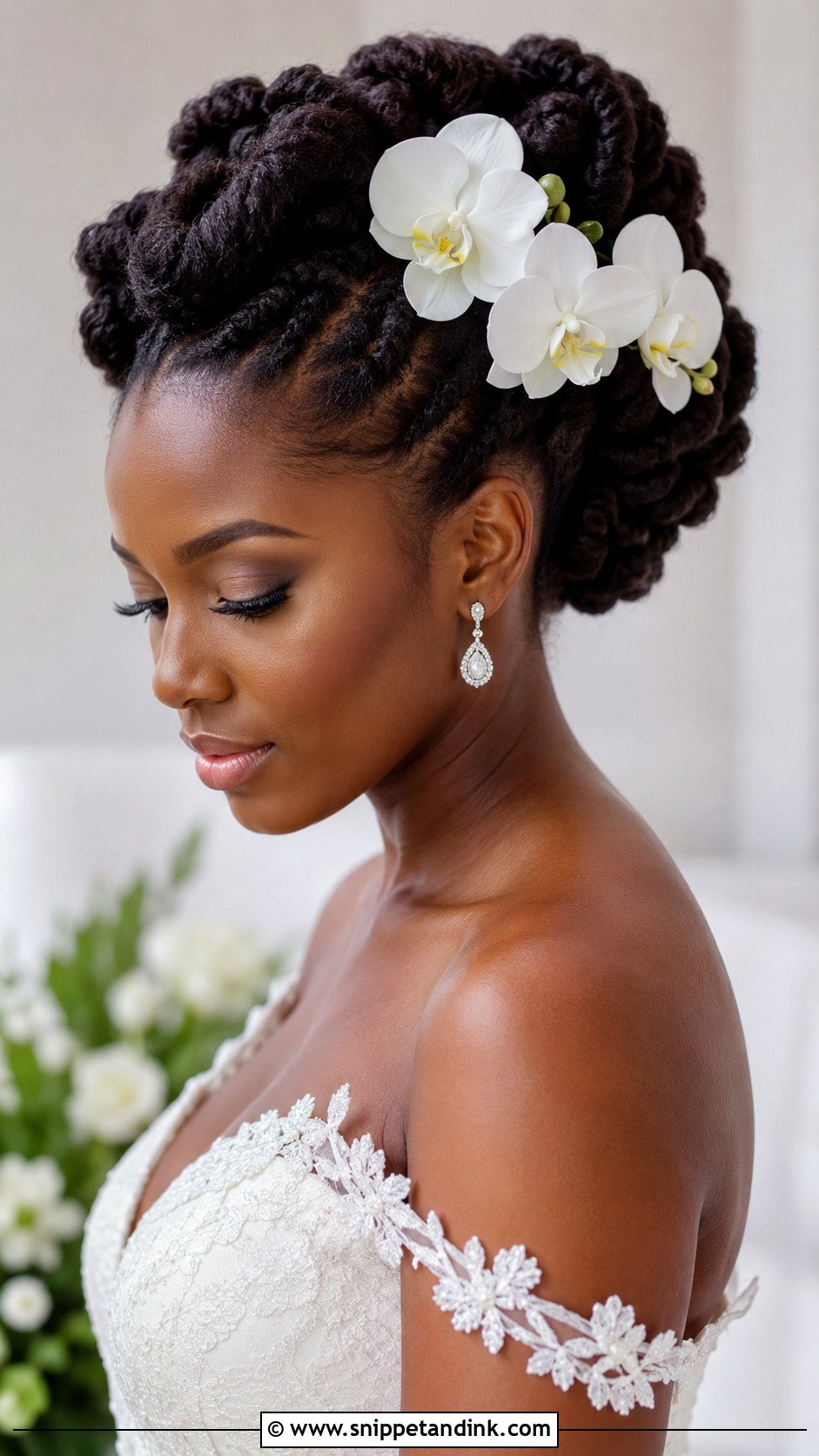
Natural hair updos are protective and hold their shape through heat and long ceremonies better than most styles. The hair can be shaped into a puff, a twisted crown, a braided updo, a rolled bun or a sculpted pinned design. I frame the structure with flowers at the base, side or crown so they outline the shape. Fresh orchids, roses, baby’s breath and silk blooms all work. Tell your stylist if your edges are fragile; I avoid pinning heavy stems near the hairline to prevent tension.
17. Floral Bridal Long Braid
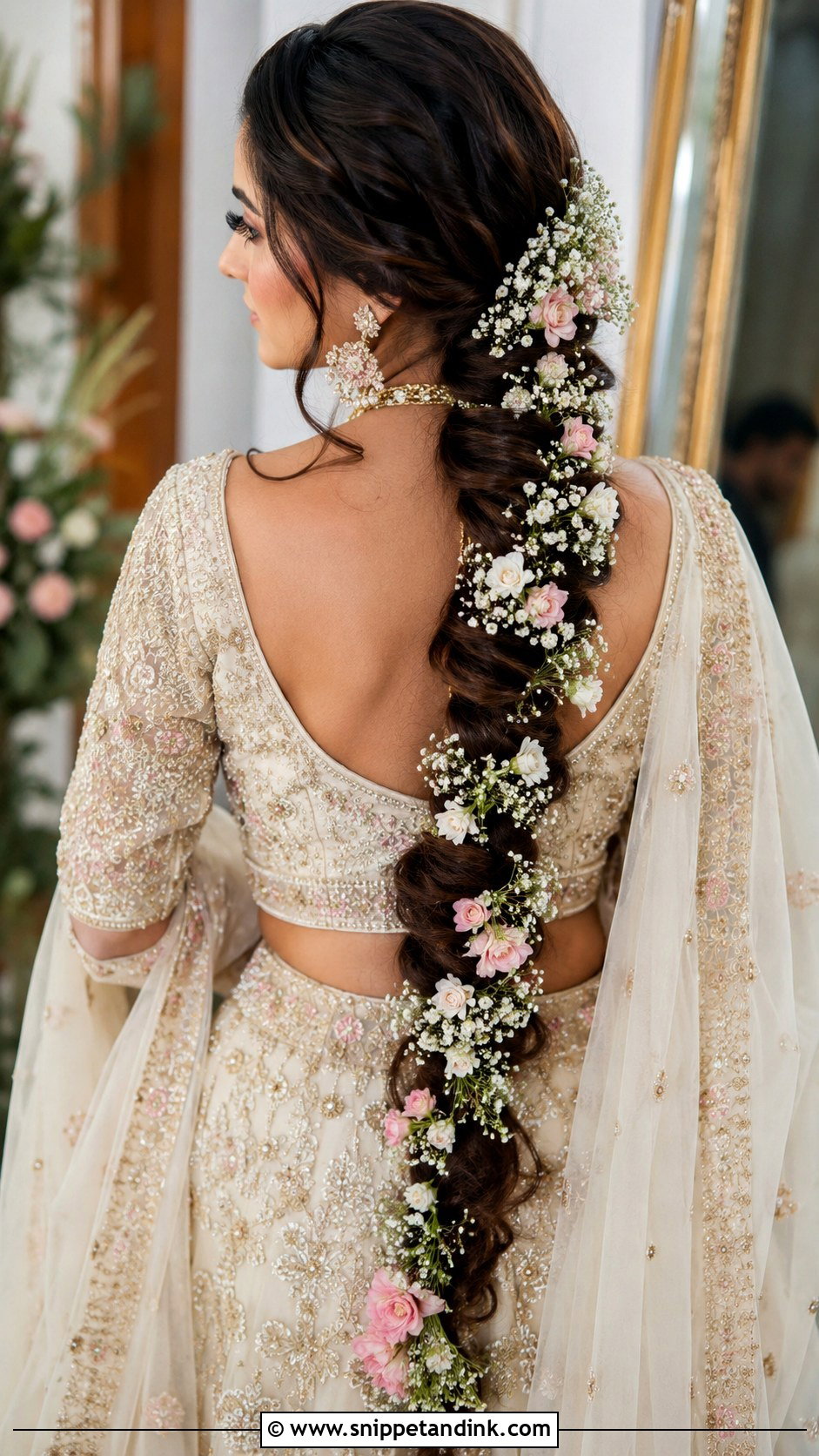
A long braid shows off length while keeping it under control, especially with thick hair, extensions or waist-length hair. The braid can be classic, Dutch, bubble-inspired, rope, or loosely textured. I run flowers from the crown down through the braid so it looks finished from the back during the vows. Balance matters: a few large blooms swallow the braid, while smaller ones let the length do the talking. Many cultural ceremonies feature this style, and it handles a long day of sitting and bowing well.
18. Floral Bridal Veil Hair
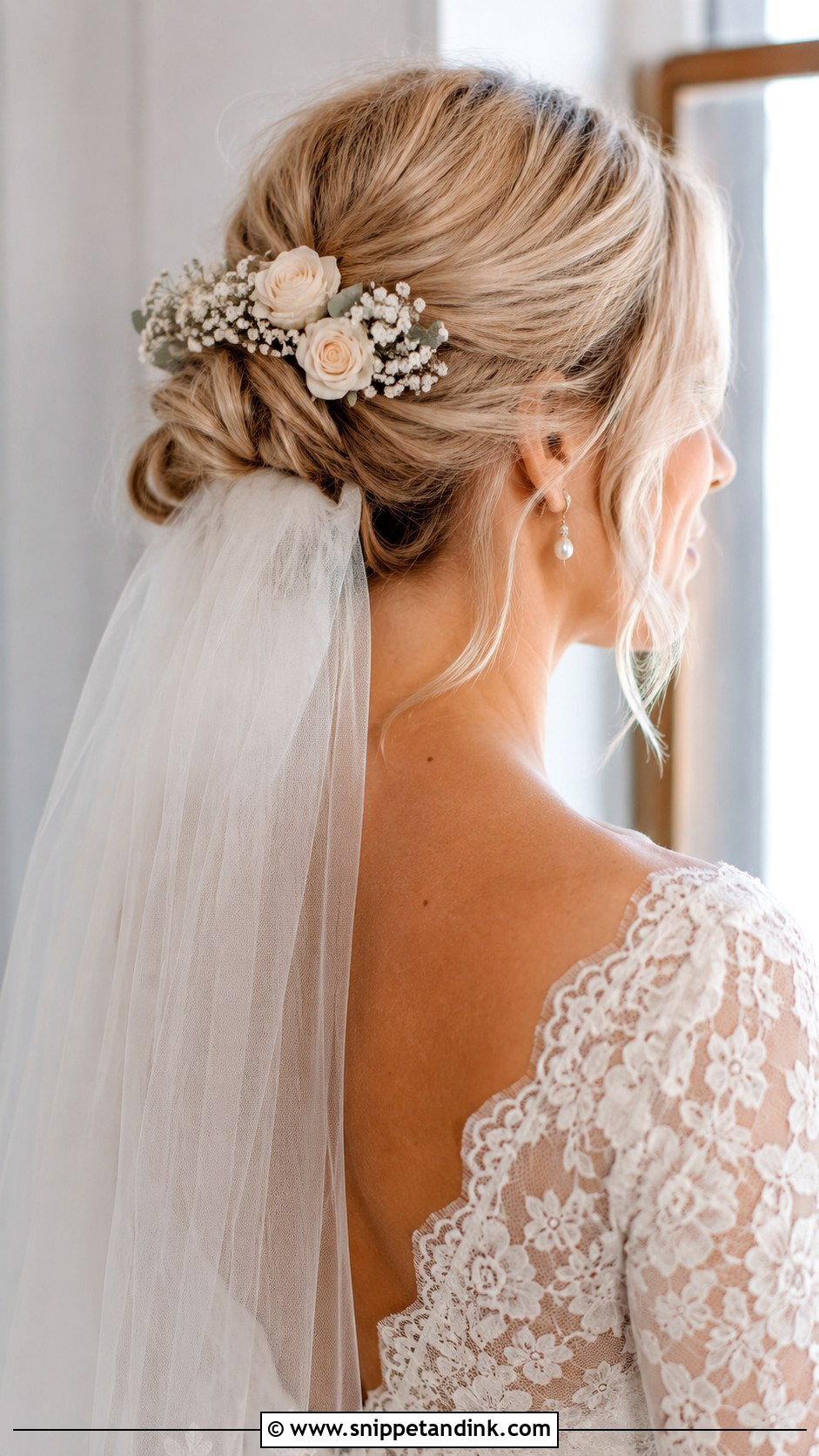
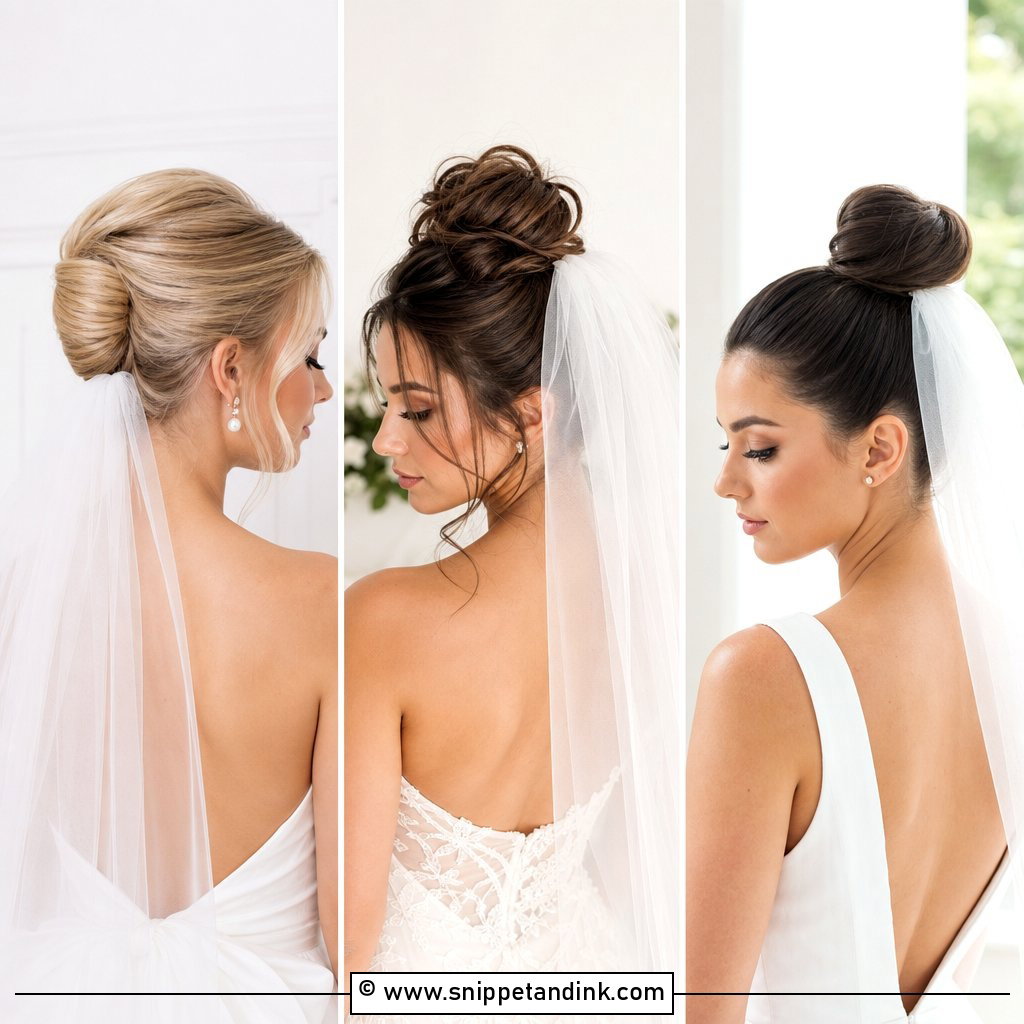
Plan the veil before a single flower goes in. I place the veil comb first at the trial, then decide whether florals sit above it, below it or off to one side. Doing it in the wrong order is how hair ends up crowded and the veil sits crooked. The base can be a low bun, half up style, chignon or soft waves. Small flowers are usually safest because they don’t compete with lace, beading or embroidery on the veil edge. Bring the actual veil to your trial, not a stand-in.
19. Floral Bridal Hair Vine
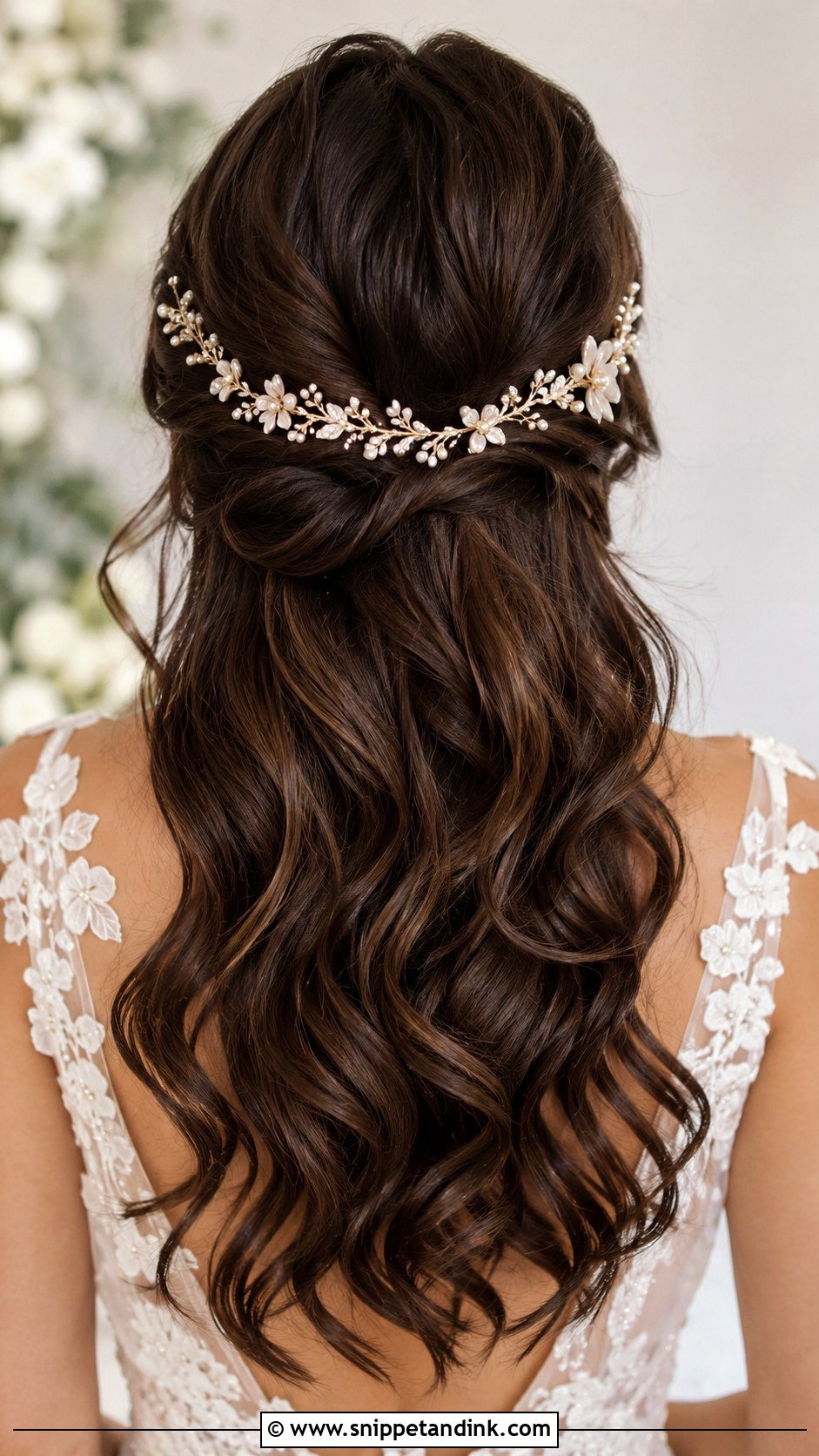
A floral bridal hair vine bends to fit almost any shape. I weave it through a braid, wrap it around a bun, lay it across a half up style or curve it along loose waves, then anchor it with small hidden pins every few centimetres. Most vines mix tiny flowers with pearls, leaves or crystals, so they suit many dresses and never wilt. The hair needs enough texture for the wire to grip but enough structure to hold it. Sleek, freshly washed hair is the hardest base for a vine.
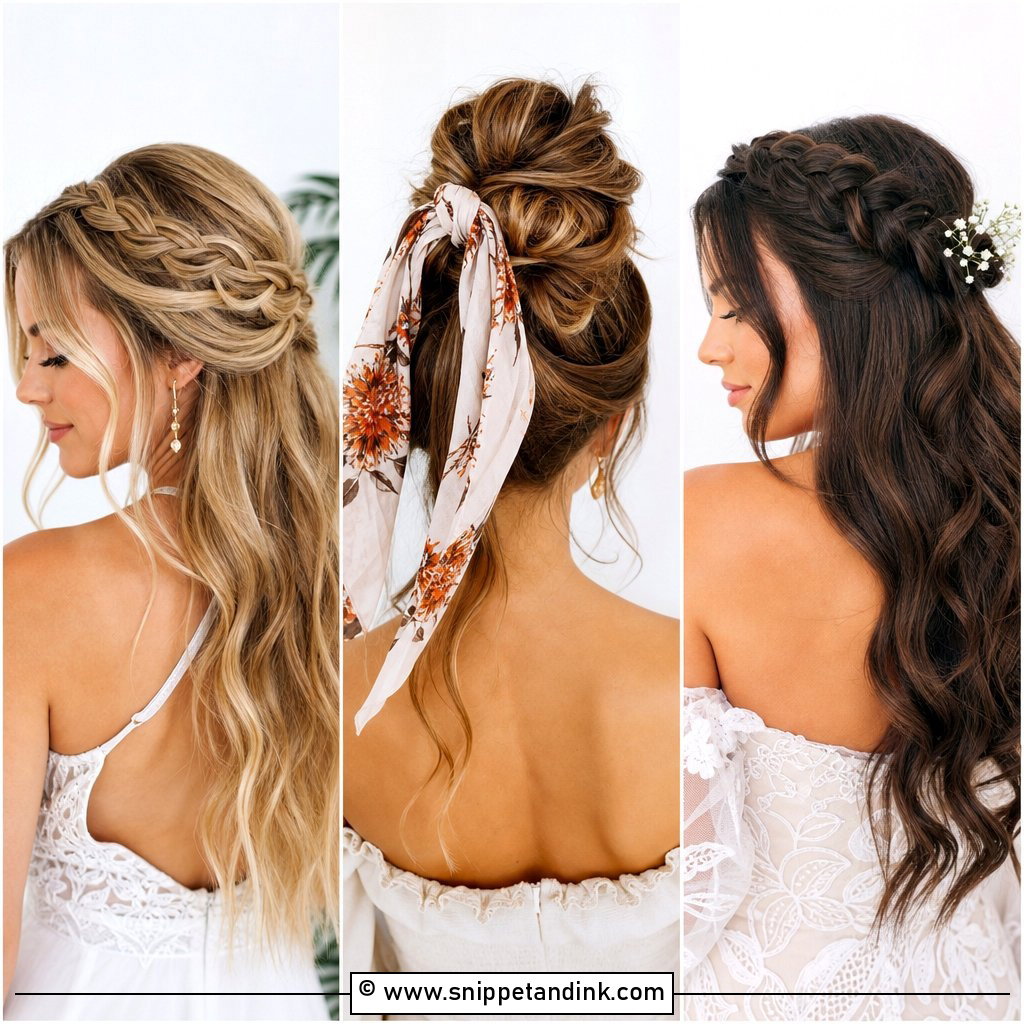
20. Floral Bridal Flower Crown
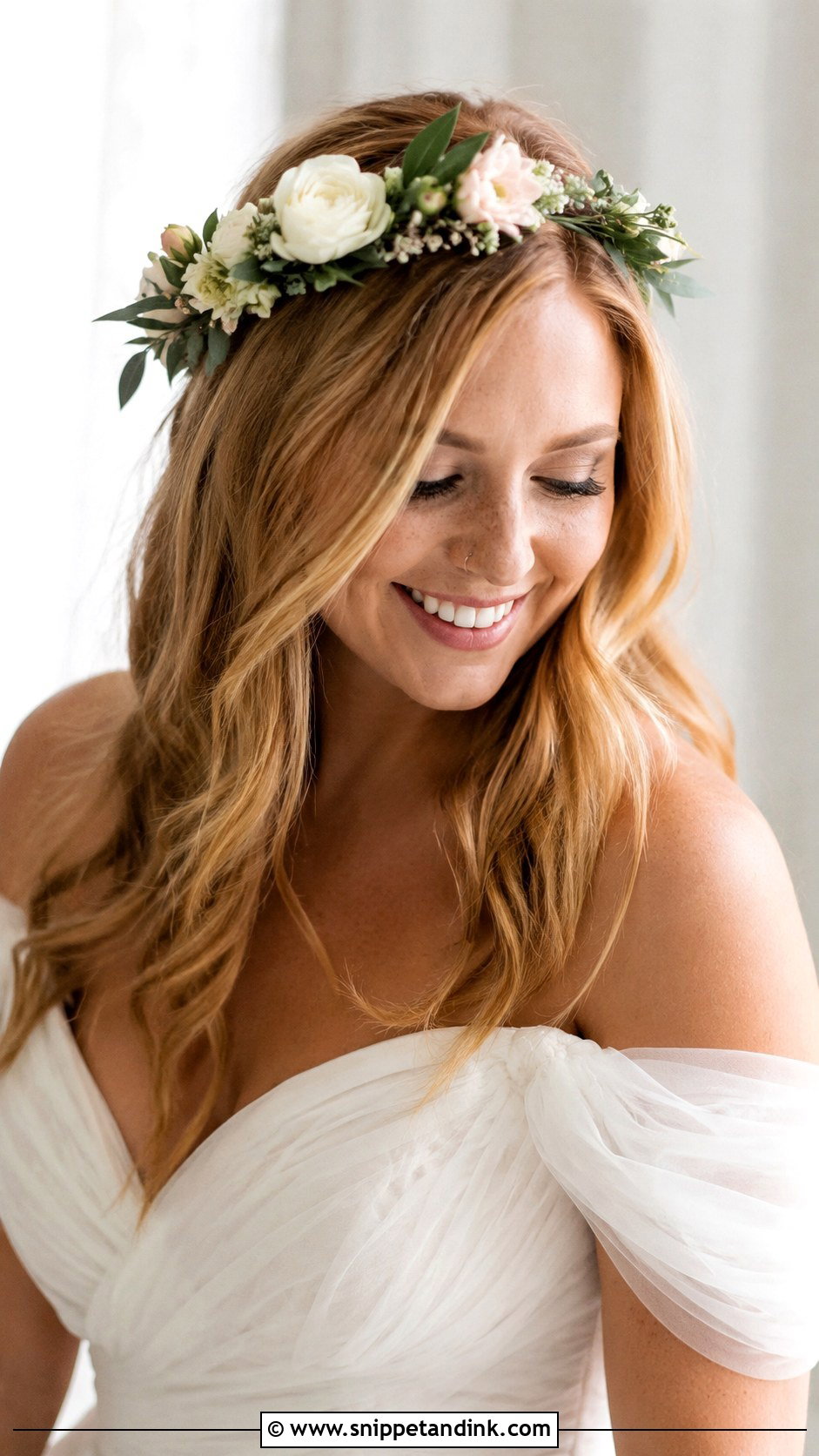
A flower crown changes the whole outline of the head, so I treat it as the main accessory rather than an extra. Slim crowns suit petite brides and detailed dresses; full ones need a simple gown and plenty of hair beneath. Loose waves, textured curls, braided updos and half up styles all sit well under one. Greenery with small blooms reads soft, while larger roses or orchids give more impact. I secure a crown with bobby pins crossed through the wire at four points, otherwise it creeps backward as you hug guests.
Getting the Florist and the Hairstylist on the Same Page
Most flower trouble on the morning comes from two vendors who never spoke. The florist assumes the stylist will cut stems; the stylist assumes the flowers arrive ready. Sort this out a few weeks before. Ask your florist to supply the hair flowers already wired and taped onto short stems or onto bobby pins, plus a few spares in case one breaks.
- Ask for delivery about an hour before hair finishes, not at the start of the morning, so the flowers spend less time out of the cooler.
- Keep them in a sealed container in the fridge, away from fruit, which speeds up wilting.
- Send your stylist a photo of the bouquet so the hair flowers echo it in colour and size.
- Tell both of them your veil style, because it decides where the flowers can physically sit.
If a flower droops halfway through
Give a bridesmaid two or three spare wired stems and a handful of bobby pins in a small bag. Swapping a tired bloom takes under a minute. A light mist of water before photos refreshes most fresh flowers, but keep it off orchids and away from your makeup.
Testing Your Flowers Before They Go Anywhere Near the Aisle
Floral hair can lean classic, modern, boho or formal, and the hairstyle underneath decides which. Start from your texture, neckline, venue, weather and veil plan, then let the flowers finish the shape. Smaller blooms are easier to secure and kinder to wear for hours; larger ones photograph boldly but need a stronger base. Test the exact flowers, fresh or faux, at your trial and wear them for a few hours afterward so you know how they hold and how heavy they feel by the reception.
You'll Like These Ideas:


Leave a Reply