
I like braiding brides because a braid is structure you can see. It gives pins something solid to grip, it anchors a veil, and it can be loosened into something soft without losing its shape. The 25 braided styles below range from tight cornrows to loose fishtails, and I’ve added what I look at when a bride shows me each one: the hair length it needs, where it sits against the dress, and how it holds up after hours of hugging and dancing. Keep the ones that suit your hair and bring them to your stylist consultation.
Necklines Decide Where a Braid Should Sit
When a bride shows me a braid she loves, the first question I ask is about the dress. The braid and the neckline are seen together in nearly every photo, so where the braid lands matters as much as how it’s woven.
- Backless and low-back gowns: a braid that runs down the back of the head into a low bun leads the eye down to the open back. Cornrows and Dutch braids are strong here.
- Off-shoulder and strapless: a side-swept braid fills the bare shoulder on one side and keeps the neckline visible on the other.
- High necks and lace collars: put the braid up and off the neck, like a crown braid or top knot. Hair resting on lace snags and looks messy.
- V-necks: a half-up braid with loose curls follows the line of the V without covering it.
Then think about the veil. A cathedral veil needs a firm base, like a braided bun, while a crown braid or halo braid usually looks best without one. If you know you want both a veil and a crown braid, tell your stylist early so she can plan a spot for the comb.
1. Fishtail Braid Wedding Updo
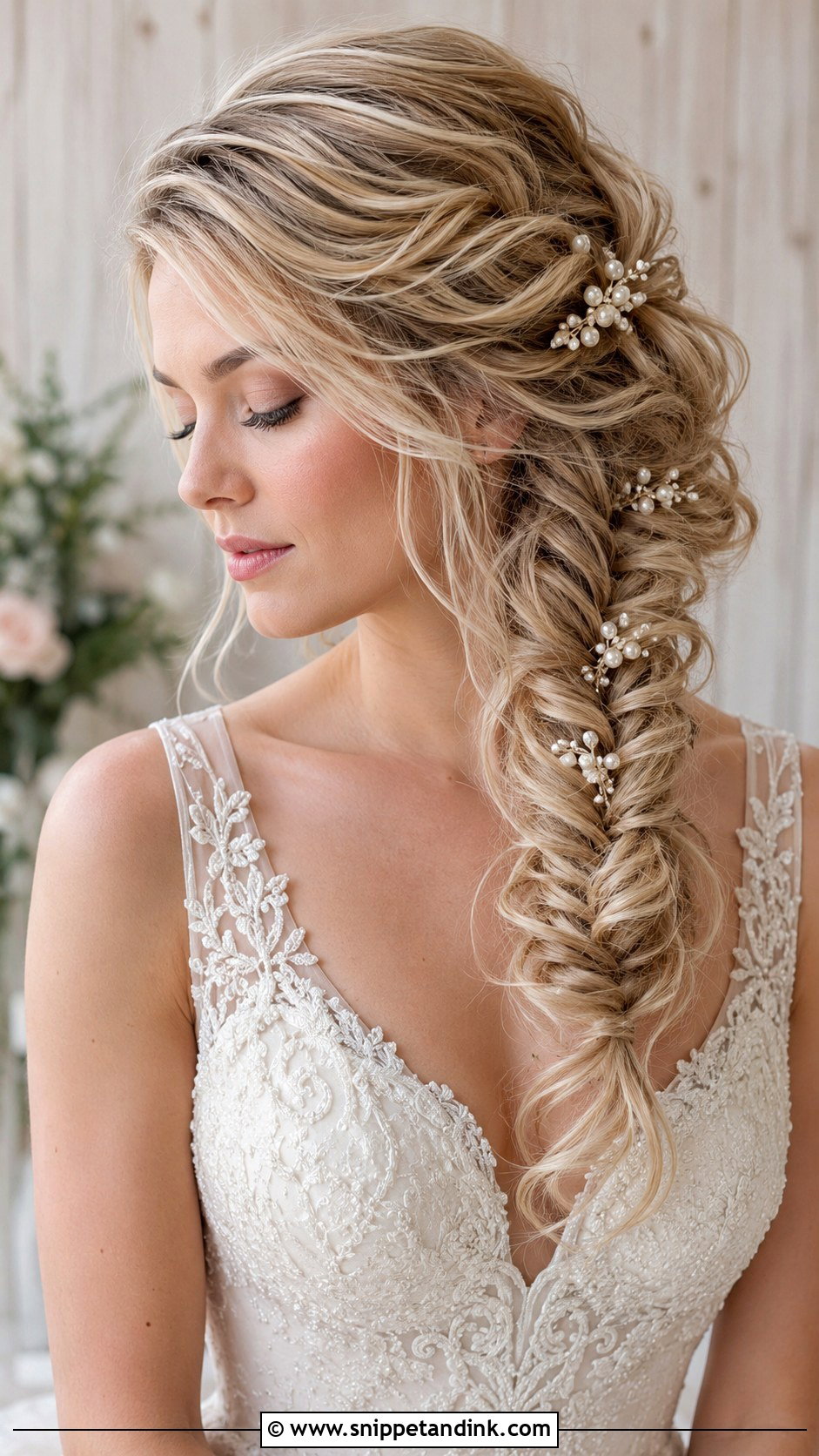
The fishtail’s herringbone pattern comes from crossing very thin pieces from one side to the other, and that detail is why it shows so well close up. Once it’s tied off, I pull the outer edges gently to widen it. Worn over one shoulder or tucked into a low updo at the nape, it suits a beach ceremony as much as a ballroom. Small pearl pins or fresh baby’s breath tucked between the strands sit securely in the tight weave. You need long hair for this one; on shoulder-length hair the pattern runs out before it gets going.
2. Waterfall Braid With Loose Curls
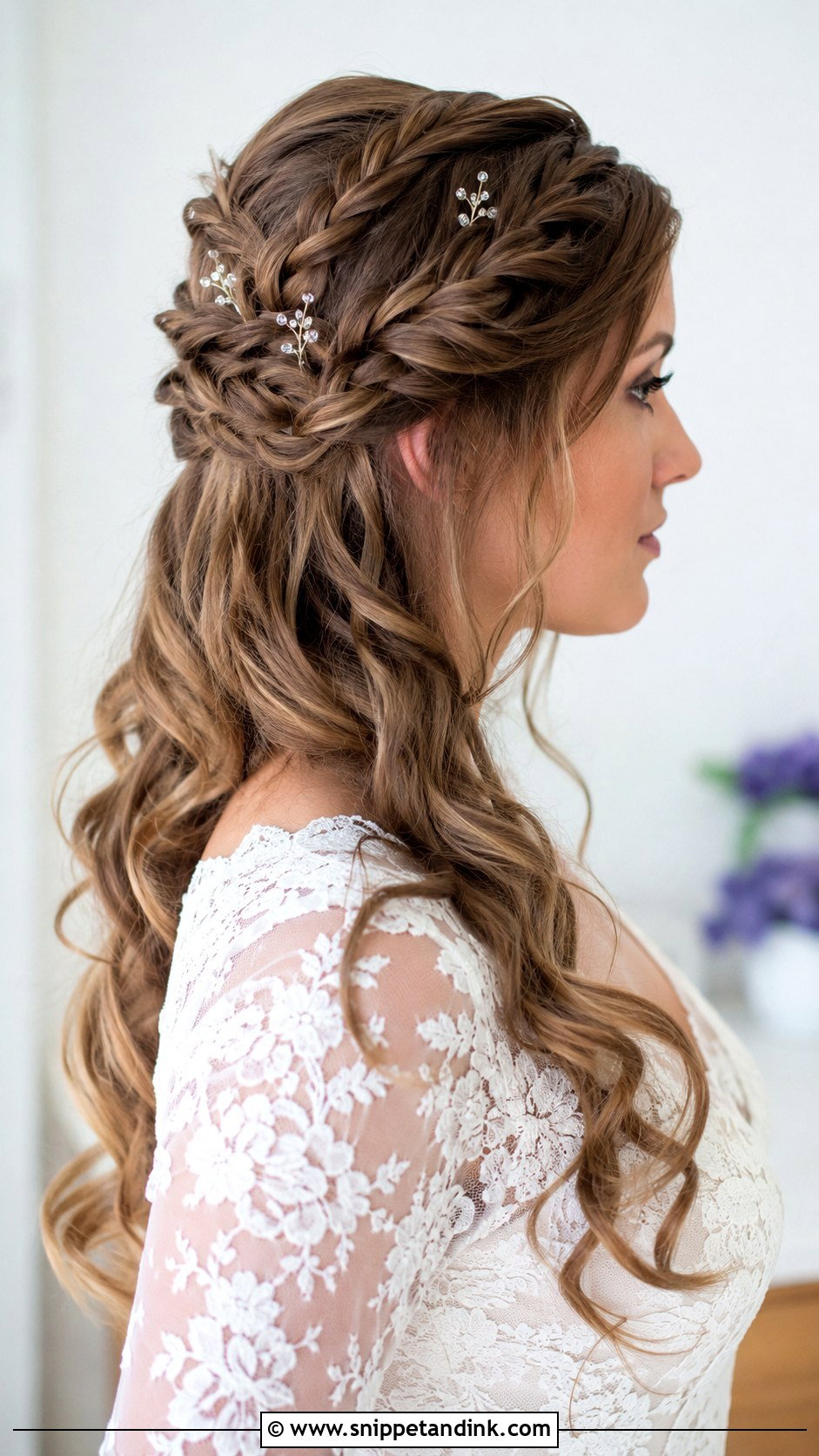
The waterfall braid runs across the crown and drops a strand at each stitch, so the curls underneath fall through it. Most of the look depends on those curls. I curl with a medium barrel, pin each curl to cool, and only braid once the set has fully cooled, otherwise the curls lose shape by the first dance. It sits nicely under a veil comb or a floral crown, and crystal pins along the braid line catch light.
3. Crown Braid Halo Updo
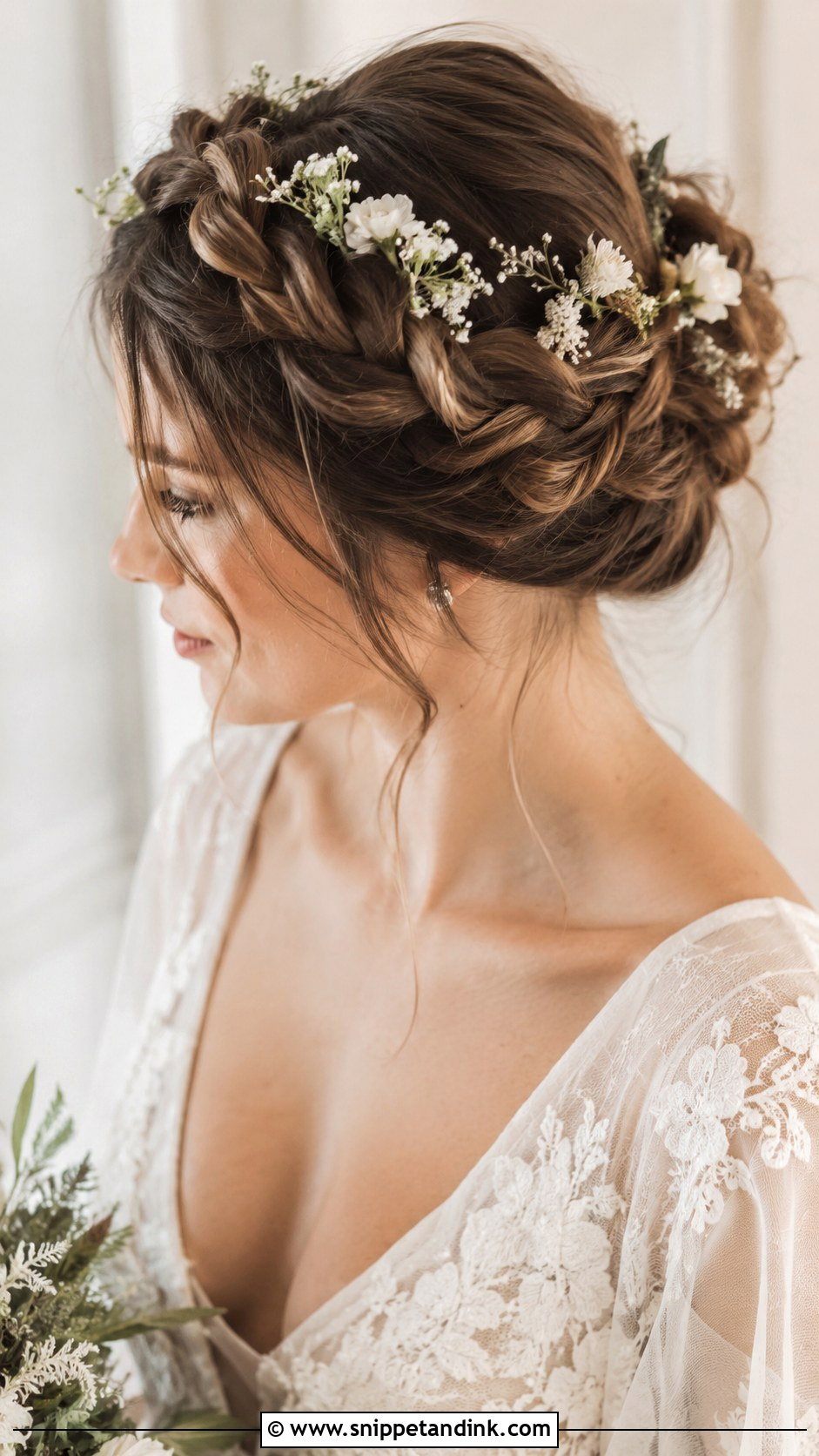
A braid wrapped like a halo is about as regal as braided hair gets. I pin it flat so it doesn’t add bulk, and I usually skip the veil with this style, because a comb pushed into a crown braid distorts the circle. Tight and polished reads formal; loose and pulled apart reads boho. Medium to long hair works, and it keeps everything off the neck, which matters at an outdoor summer wedding.
4. Dutch Braid Low Bun
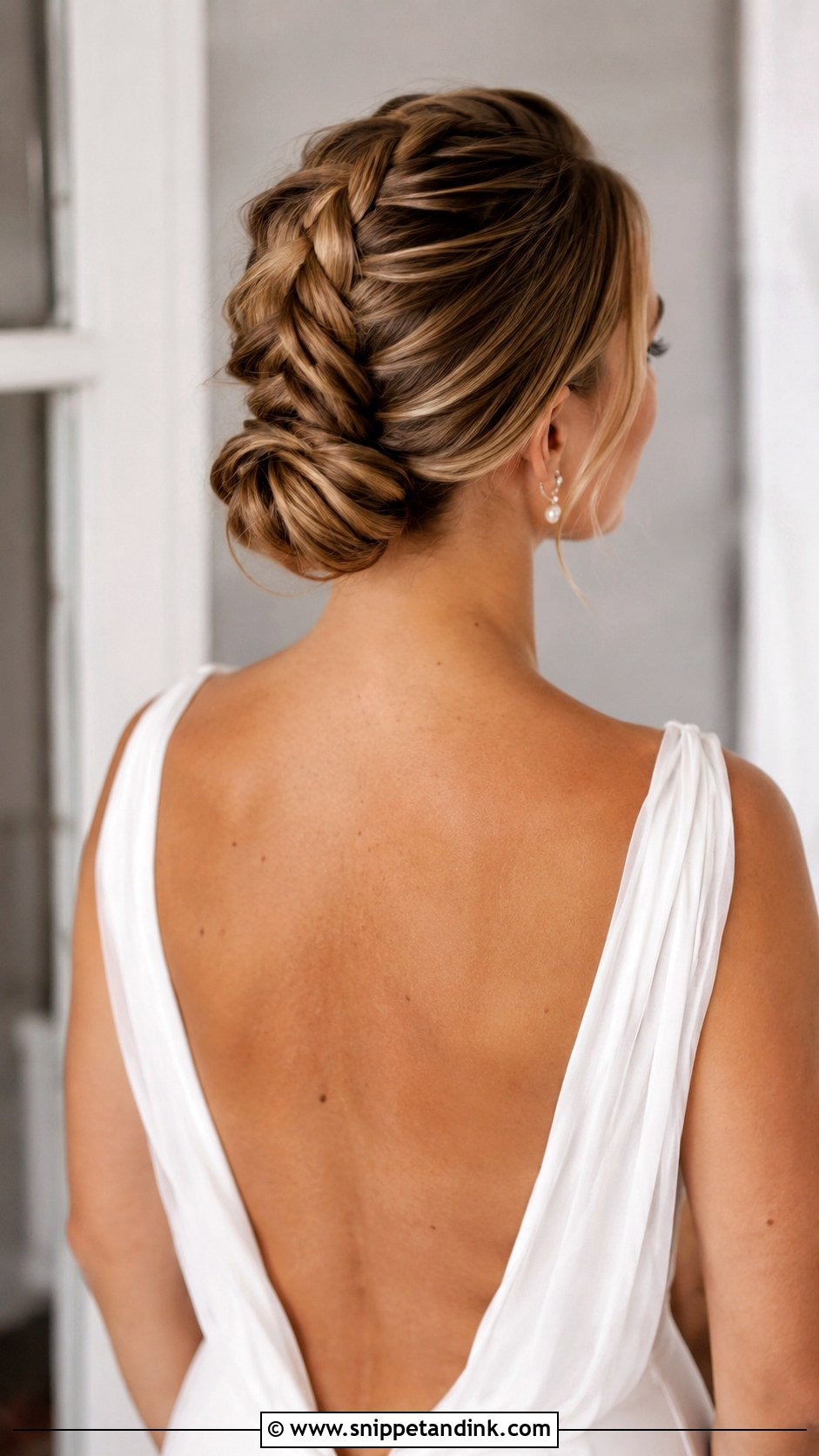
Dutch braids cross under, not over, which is why they stand up from the head instead of lying into it. Here a single Dutch braid runs from the hairline into a low twisted bun. I’d put this with a backless gown: the raised braid carries the eye down the back of the head into the bun, and that line shows up in every photo taken from behind. Pancake it slightly if your hair is fine. It holds well into the evening.
5. Milkmaid Braid Hairstyle
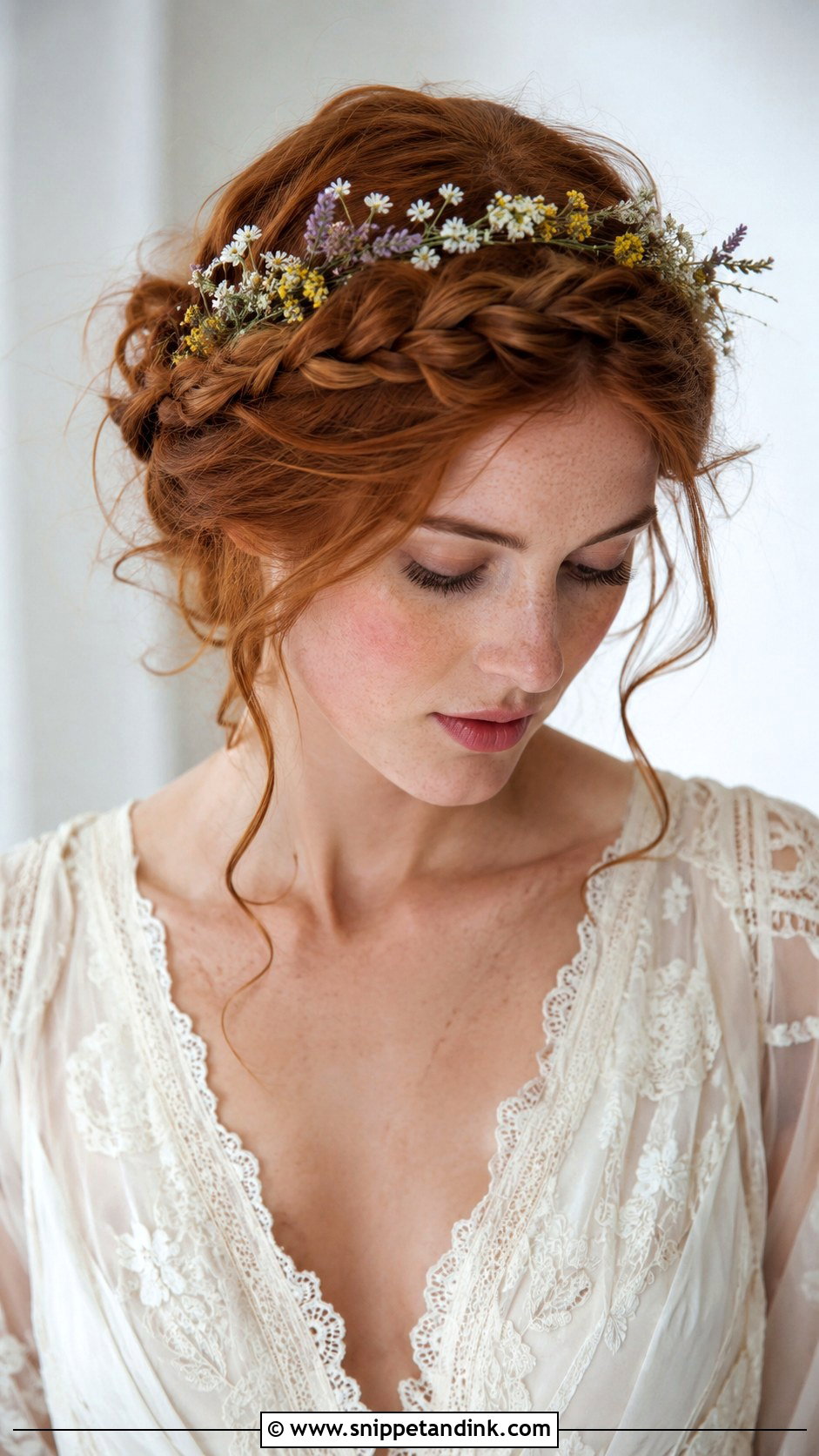
A milkmaid braid is two braids, one from each side of a center part, crossed over the crown and pinned. It keeps everything off the neck for a warm wedding. The trick I use is to pin where the braids overlap first, then work outward, so the weight is supported at the top and doesn’t slide backward. Wildflowers suit it, and it’s comfortable enough to dance in. It needs medium to long hair; if the braids don’t meet, I add a small clip-in braid to bridge the gap.
6. Side Swept Braid With Flowers
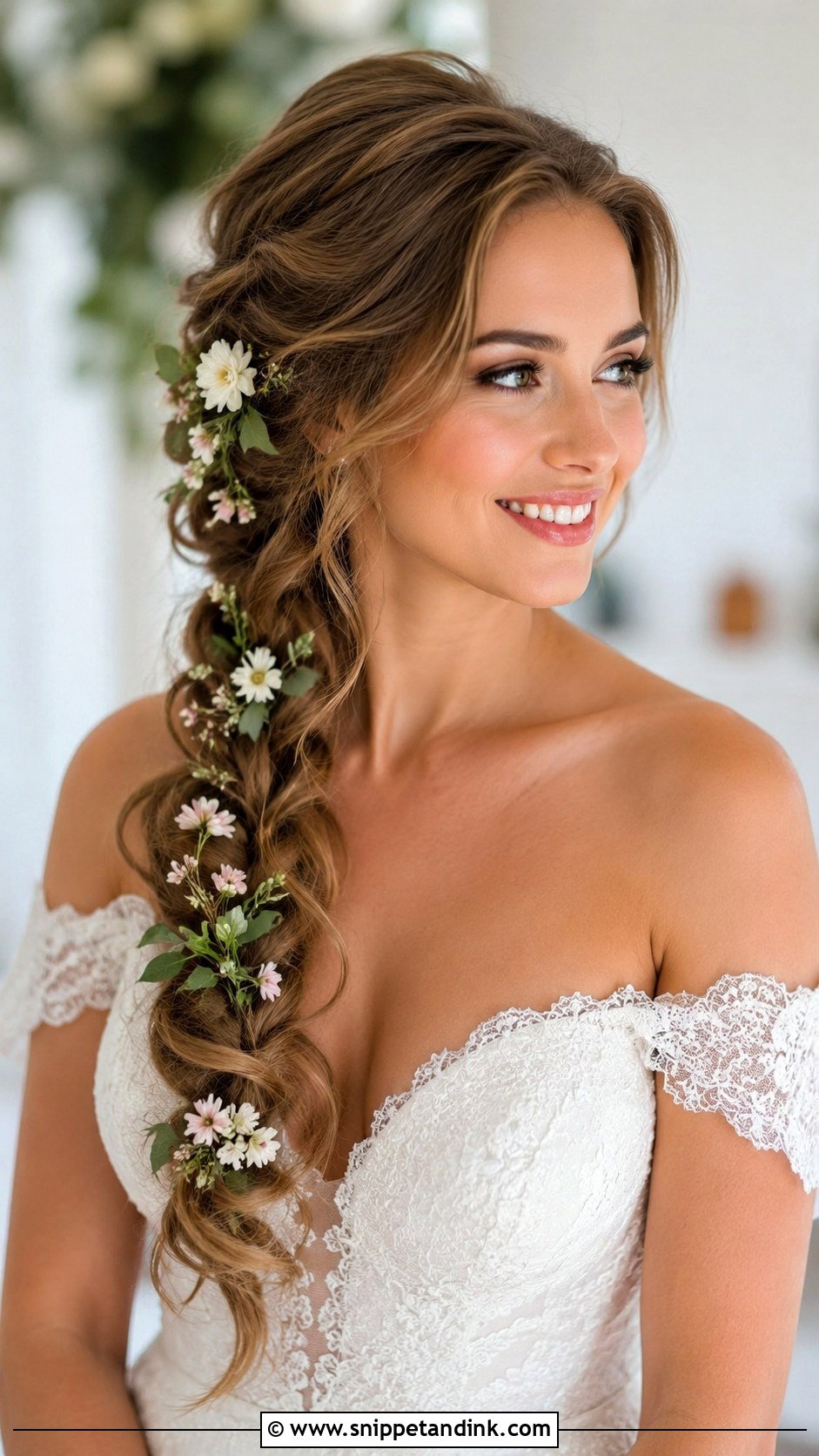
Off-shoulder and sweetheart necklines leave a lot of bare skin, and a side-swept braid fills that space without hiding the dress. I keep the braid loose and weave the flowers in as I go rather than adding them after, because flowers pushed into a finished braid tend to fall out. Pin the start of the braid firmly behind the ear. That’s what stops it from sliding round to the back of your head by the reception.
7. Braided Half Up Half Down
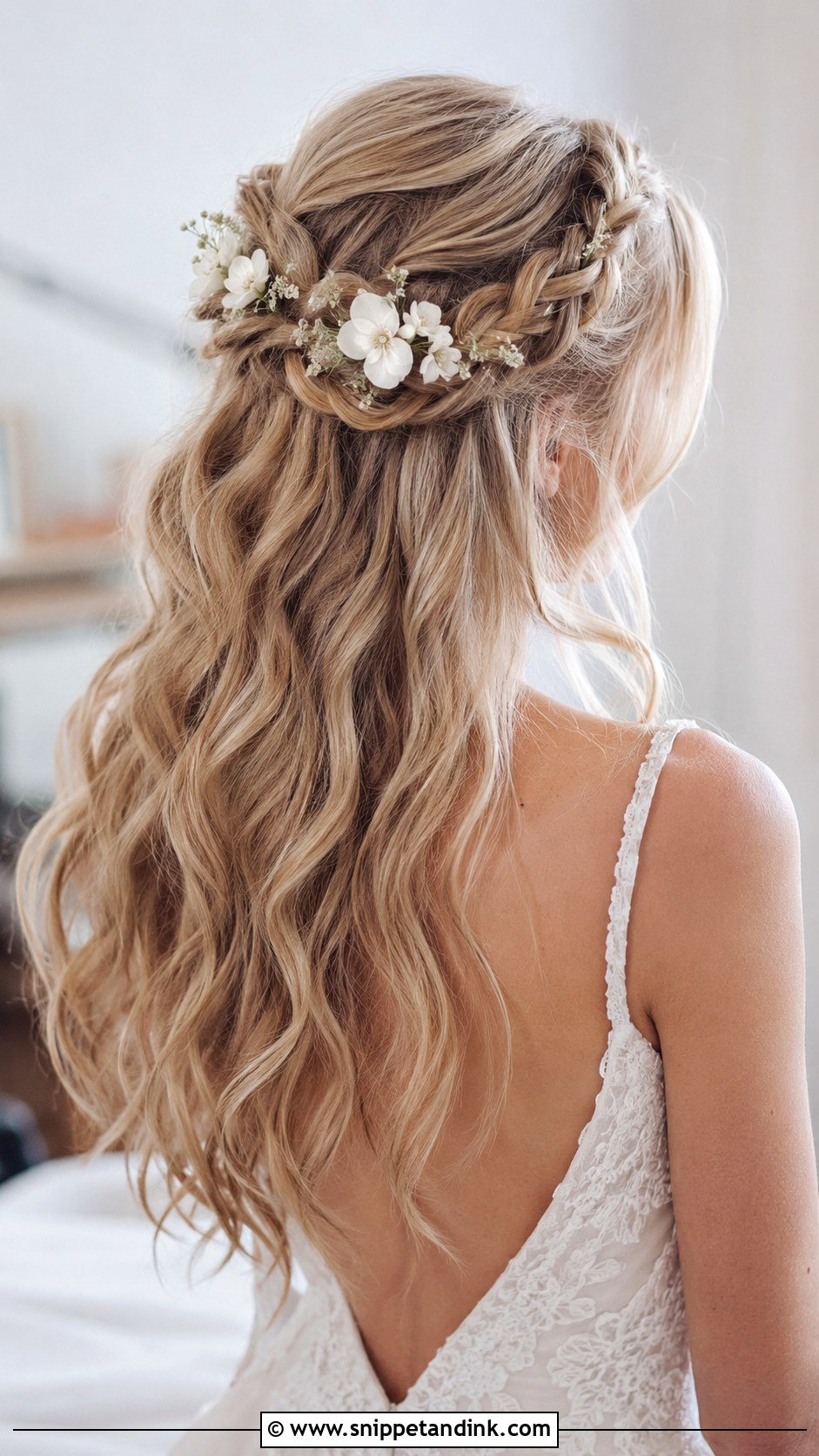
A braided half-up style leaves your length down while the top is braided back and pinned. It’s flexible: it works with most gowns, a veil, or flowers. On very fine hair I’d add a little backcombing under the braid so it doesn’t sit flat, and on very thick hair I braid in smaller sections so the top isn’t too heavy. It suits most textures, and it holds better than a full down style because the top section is locked in place.
8. Boho Braided Updo
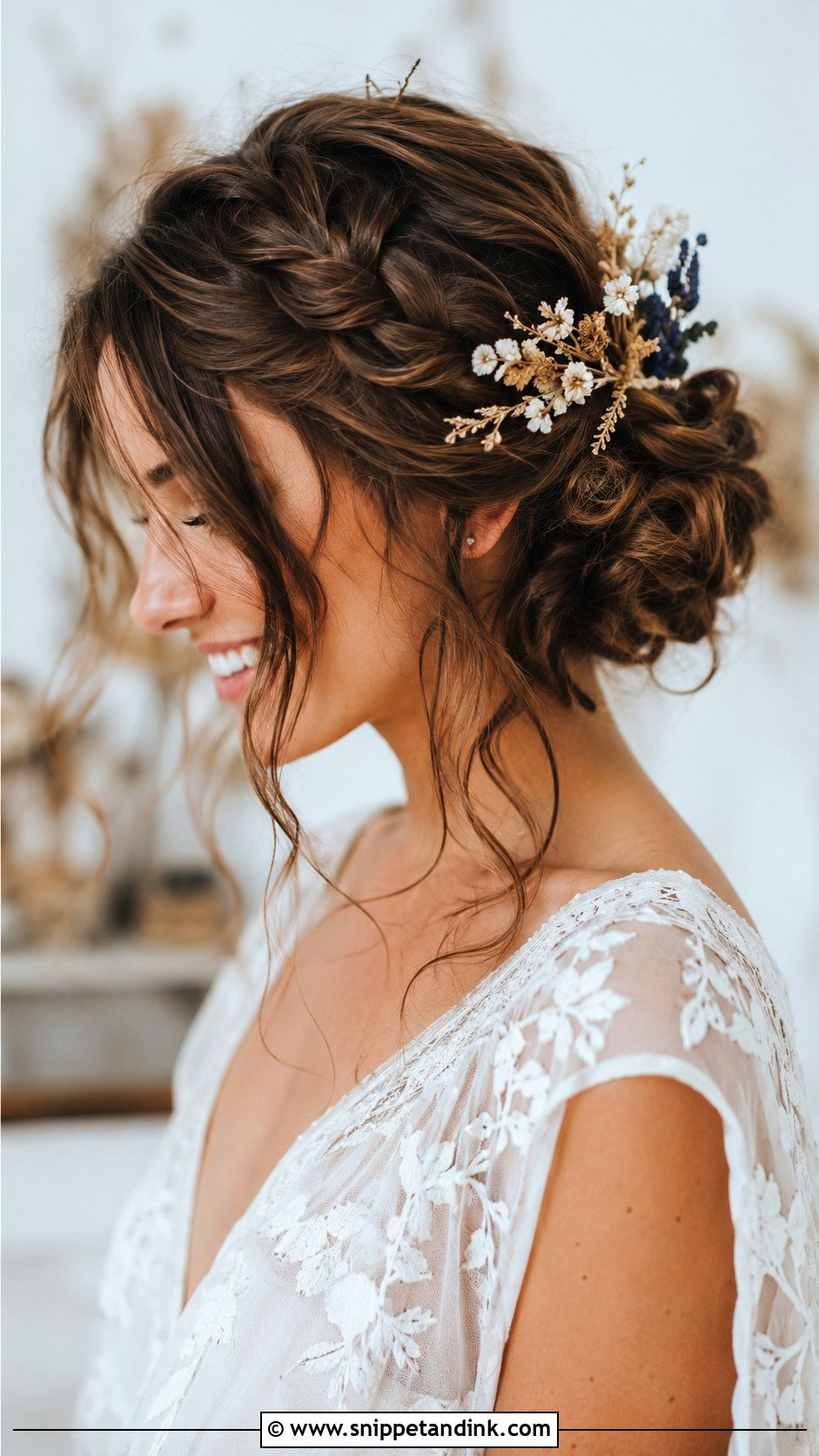
A boho braided updo is supposed to look slightly messy, but it isn’t random. I still build it on a solid base, usually a low pinned ponytail, and then wrap loose braids and twists around it. Dried flowers last longer here than fresh ones, and gold pins add a warm note. Face-framing pieces should be curled and loose. It works with long, wavy hair and flowing gowns, and if your hair tends to frizz, the messy texture hides it well.
9. French Braid Updo
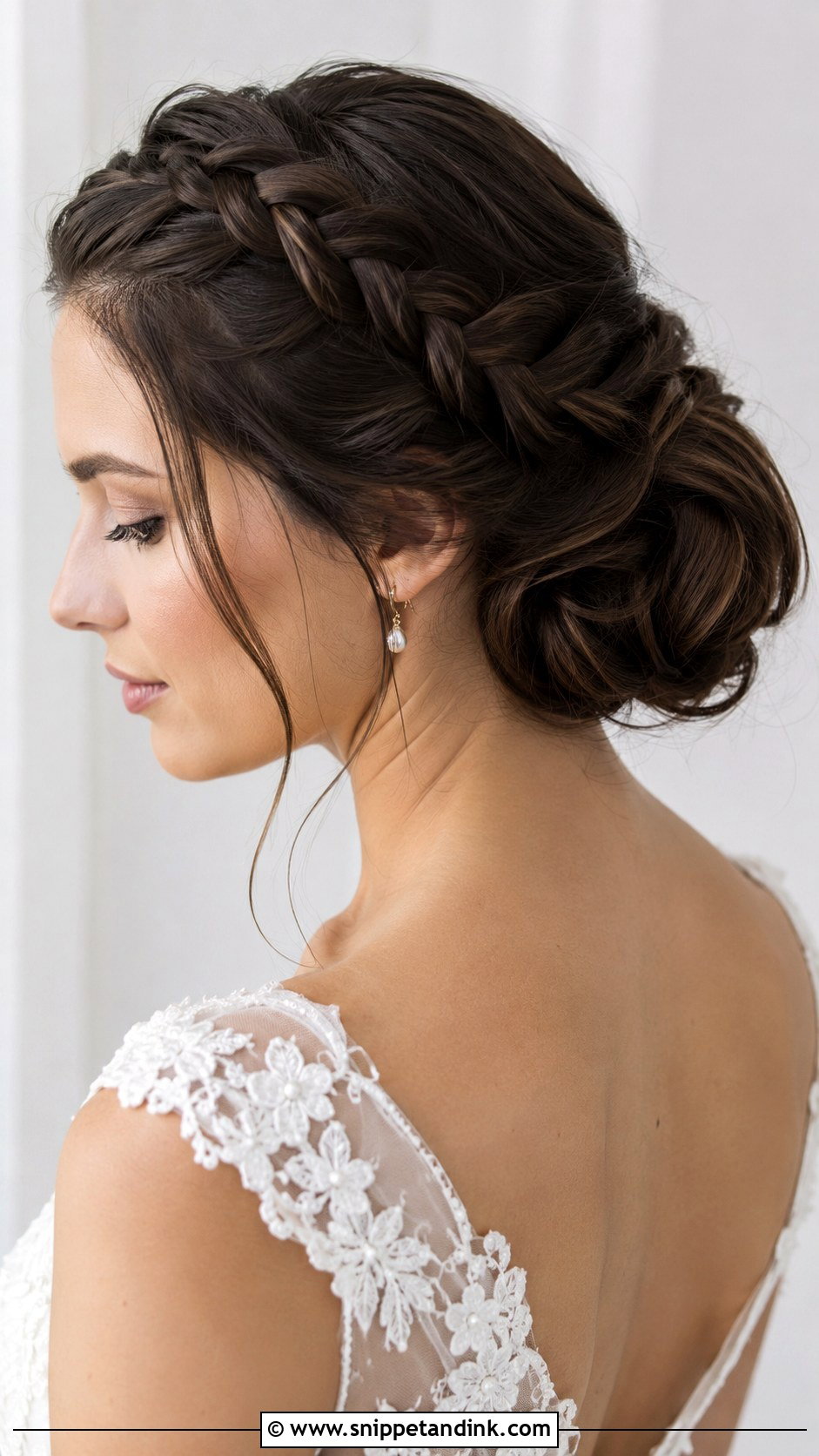
Braid from the hairline down, then twist the length into a low knot or chignon. That’s the French braid updo, and it is the most reliable style on this page. Every section is secured as the braid travels, so it survives a long day. It suits veils, tiaras and statement earrings, and it works on medium to long hair. My advice: keep it neat on top and loosen only slightly. Pulled too far apart, French braids lose the clean line that makes them look classic.
10. Braided Chignon
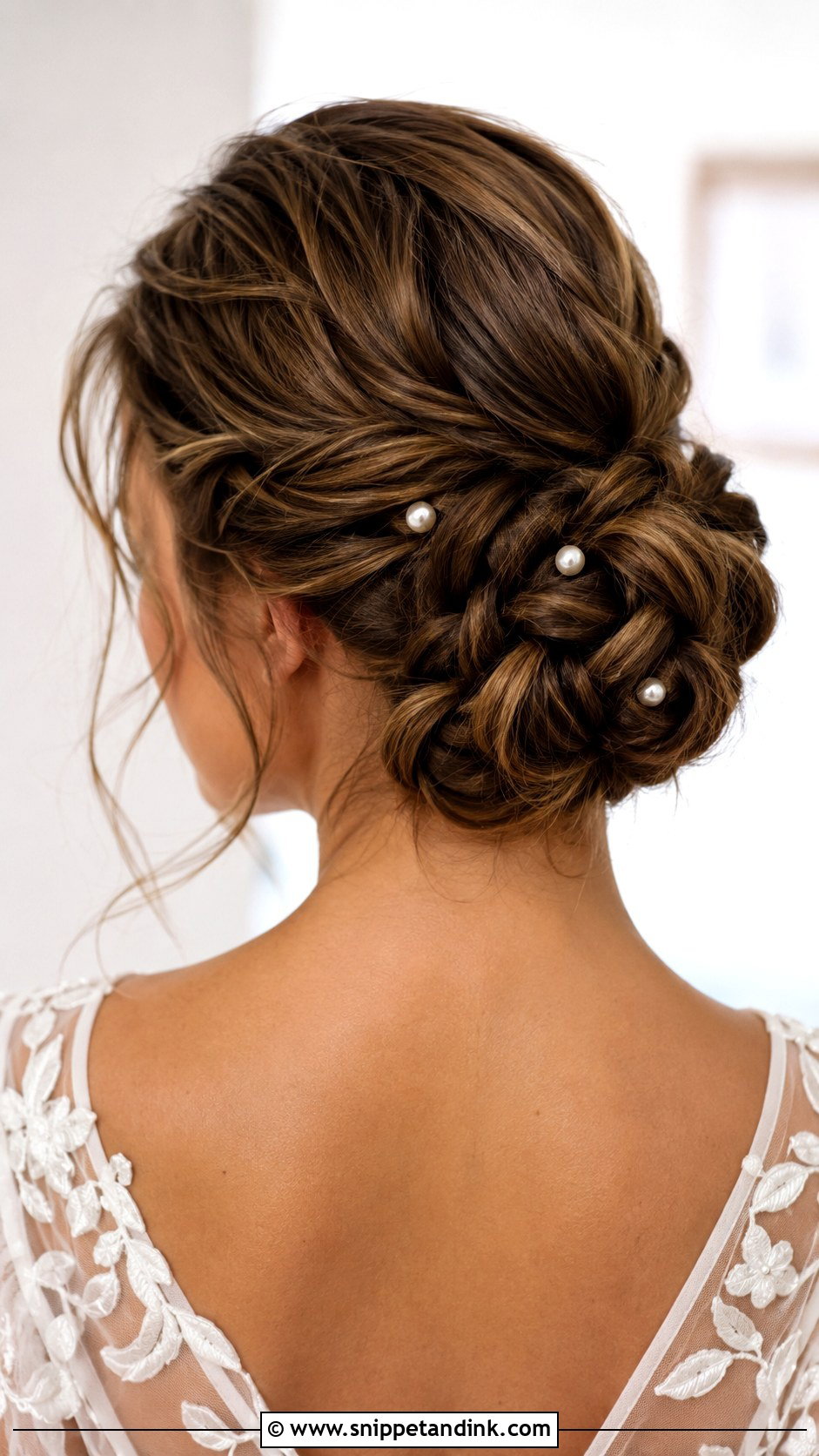
For a braided chignon, I braid several sections, then coil and pin them into a knot at the nape. The braids add texture a plain bun doesn’t have, and that texture catches light. Pearls or crystal pins work well here. It suits medium to long hair and sits under a veil without any trouble. If your hair is very thick, I split it into more braids than you’d expect; one fat braid coiled at the nape becomes heavy and pulls.
11. Fishtail Braid Crown
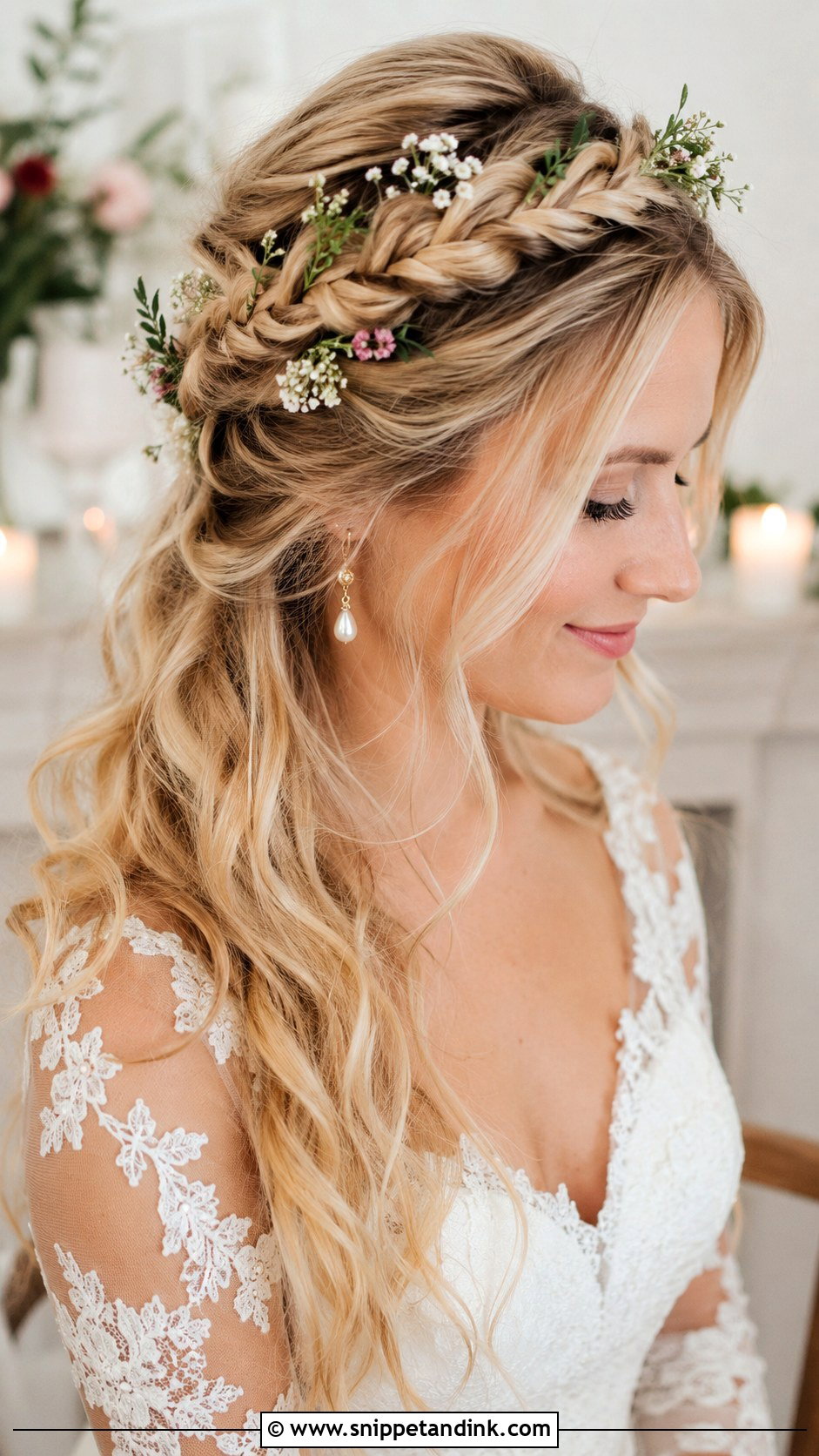
Here a fishtail braid is wrapped across the crown, combining the herringbone texture with a halo shape. It’s a long-hair style; the braid has to travel far enough to reach over the head. Since it’s the focal point, I’d skip the veil or wear one that sits low, below the braid. Small flowers along the weave suit garden and vintage weddings. I loosen it slightly so it looks full, but not so much that the pattern blurs.
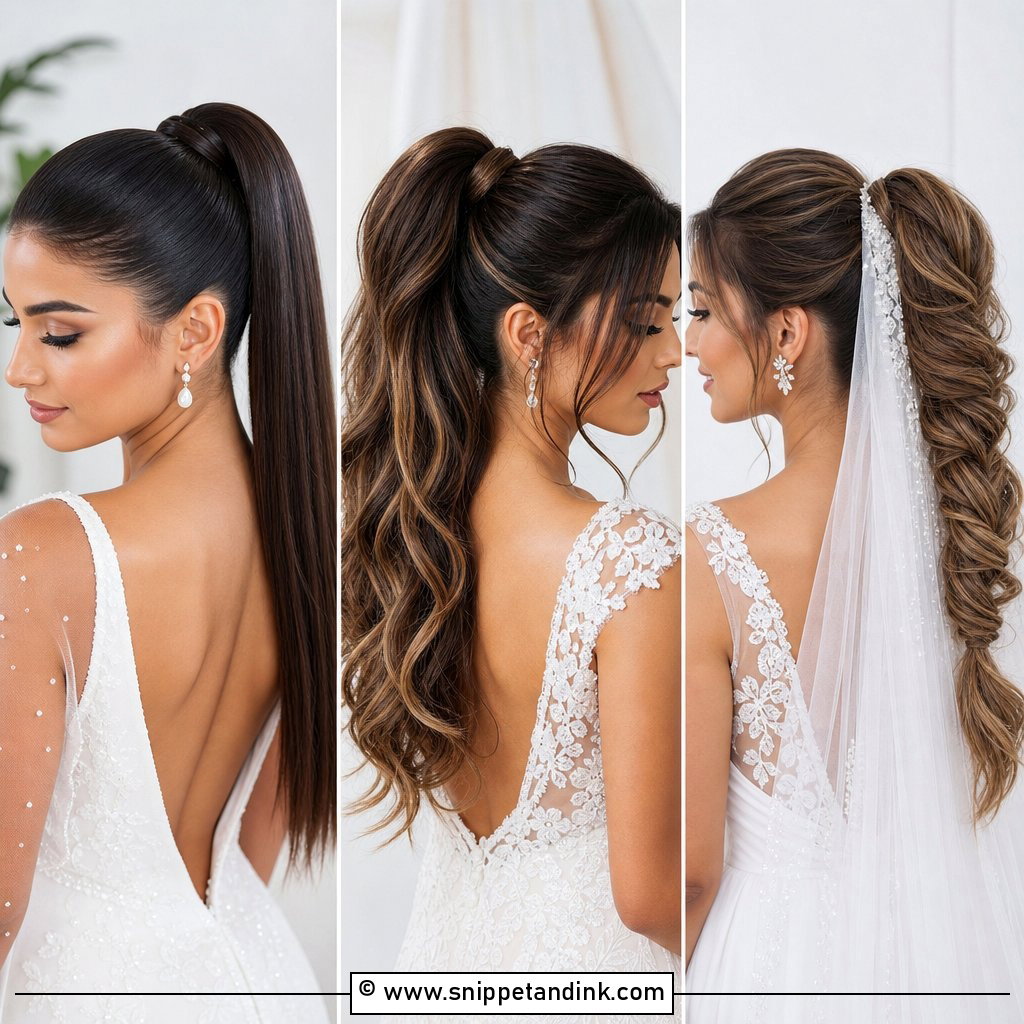
12. Loose Braided Low Ponytail
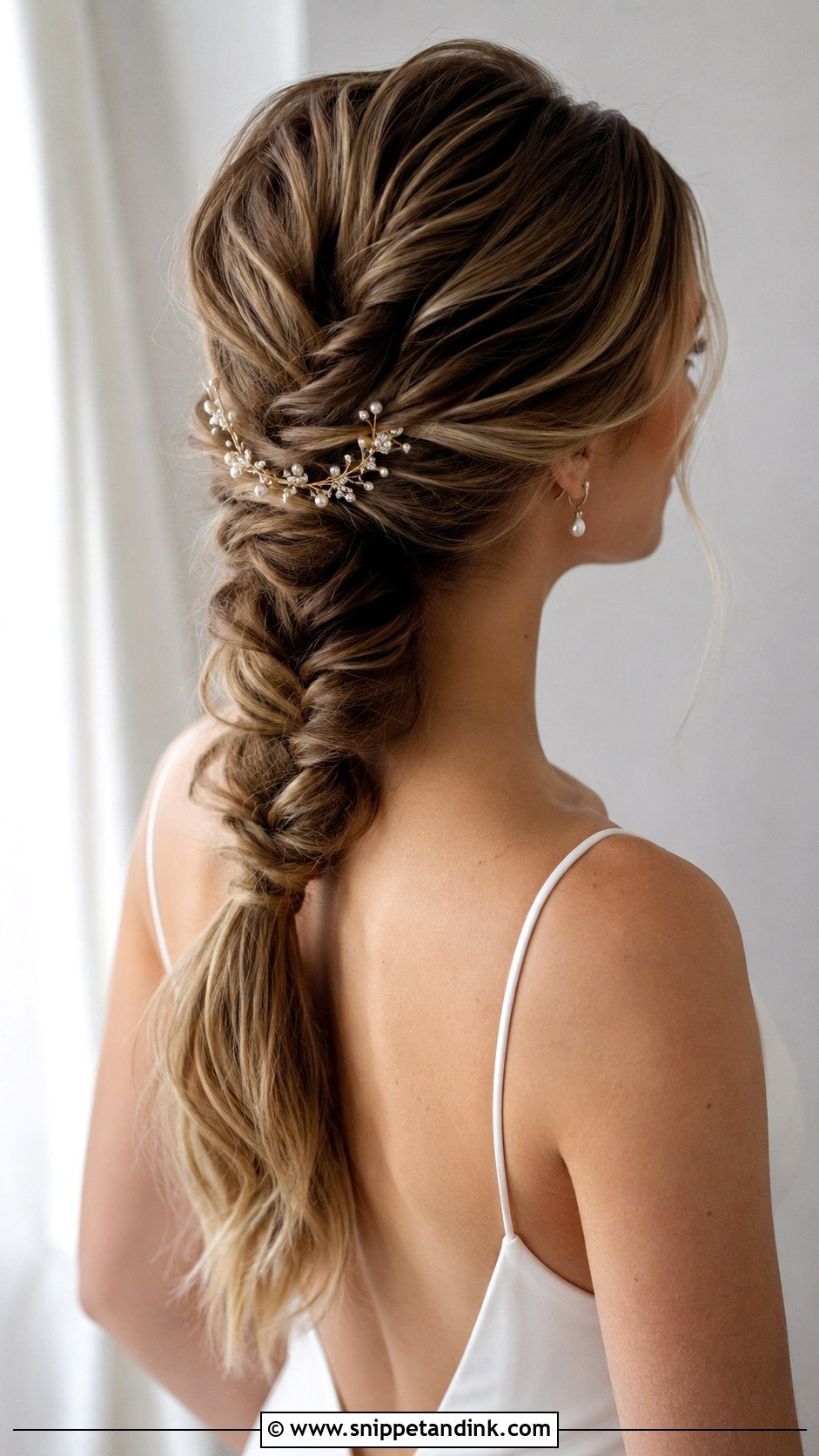
A loose braided low ponytail is the simplest style on this list. I gather the hair low, braid the length loosely and pull the stitches apart for fullness. A strand wrapped around the base hides the elastic. Small pins or flowers along the braid add detail. It suits long hair and both modern and classic gowns, and it’s comfortable for a long day.
13. Braided Bun With Veil
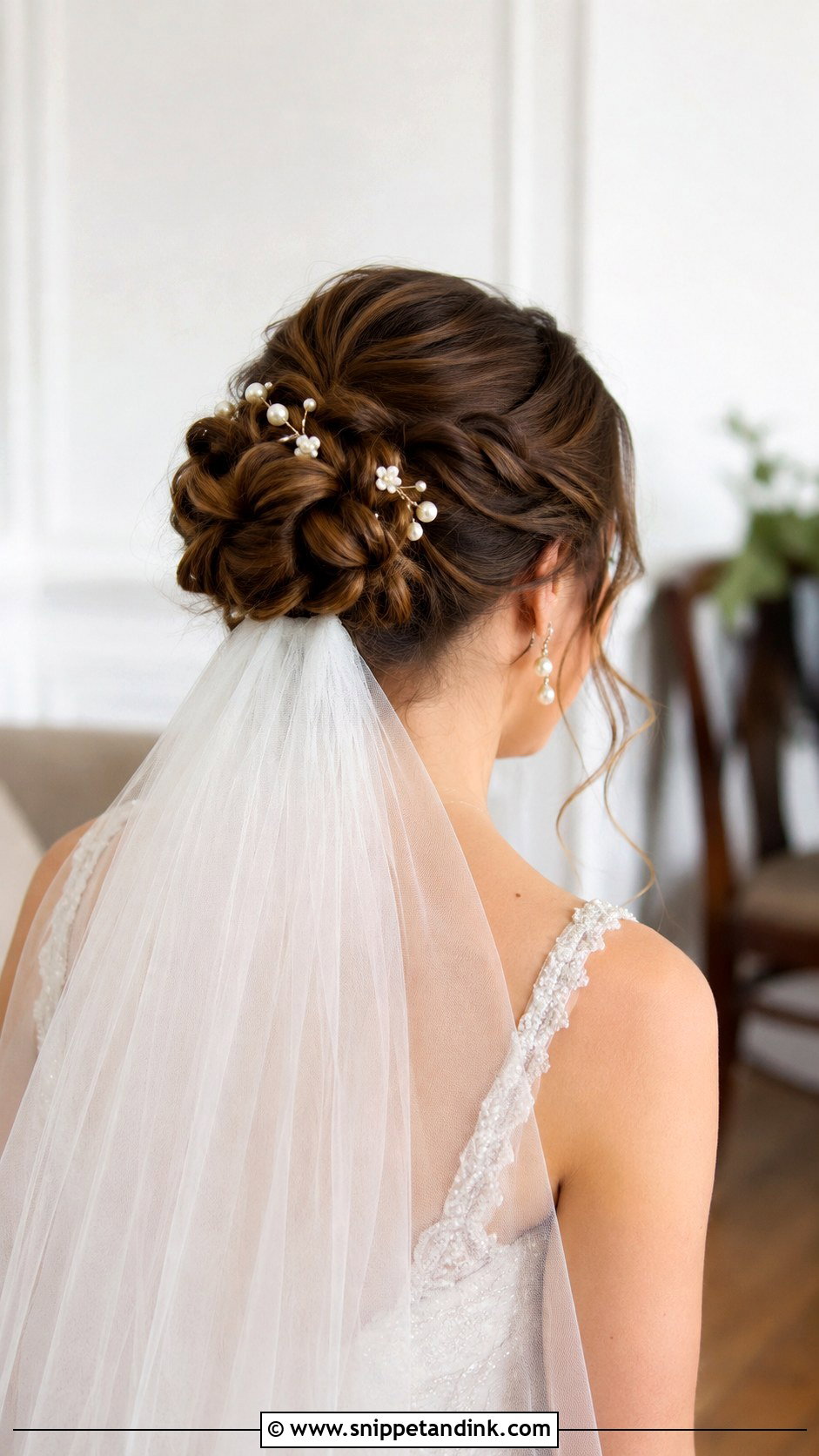
If you’re wearing a veil, the braided bun gives it something to hold onto. I build the bun with braided sections and then decide with the bride where the veil should sit: comb above the bun for a dramatic fall, below it for a softer look. The braided texture gives a plain bun more detail. Pearl pins finish it. It suits medium to long hair, and it handles cathedral or fingertip veils, whose weight a loose style can’t support.
14. Cornrow Braided Updo
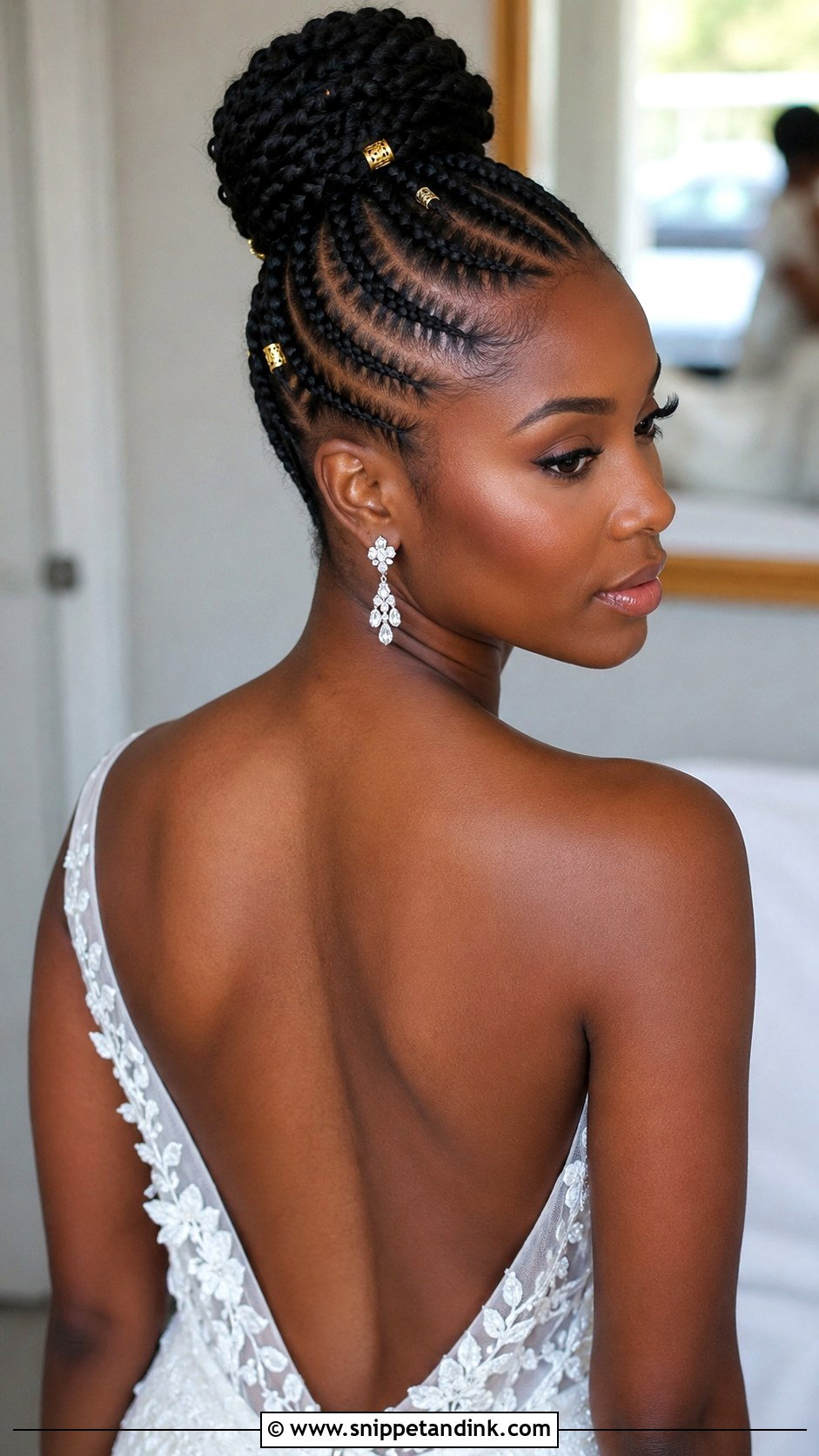
Cornrows are braided tight to the scalp in neat rows that lead back into an updo at the nape, and the clean lines suit open-back gowns especially well. Gold cuffs, beads or pins personalize them. They’re often worn on natural and coily hair, and I’d book the braiding a couple of days ahead rather than the morning of. That gives the scalp time to settle so the hairline isn’t sore in photos. Ask your braider to keep tension gentle at the edges.
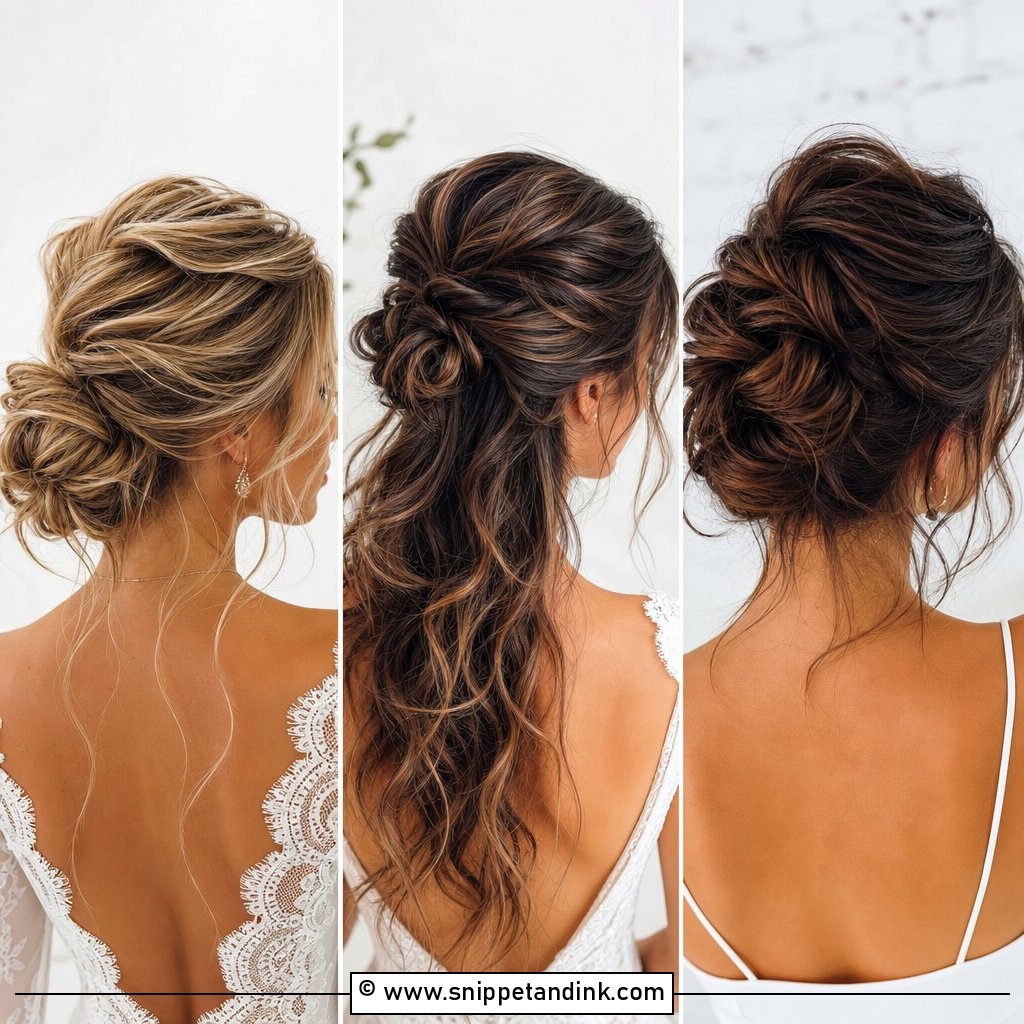
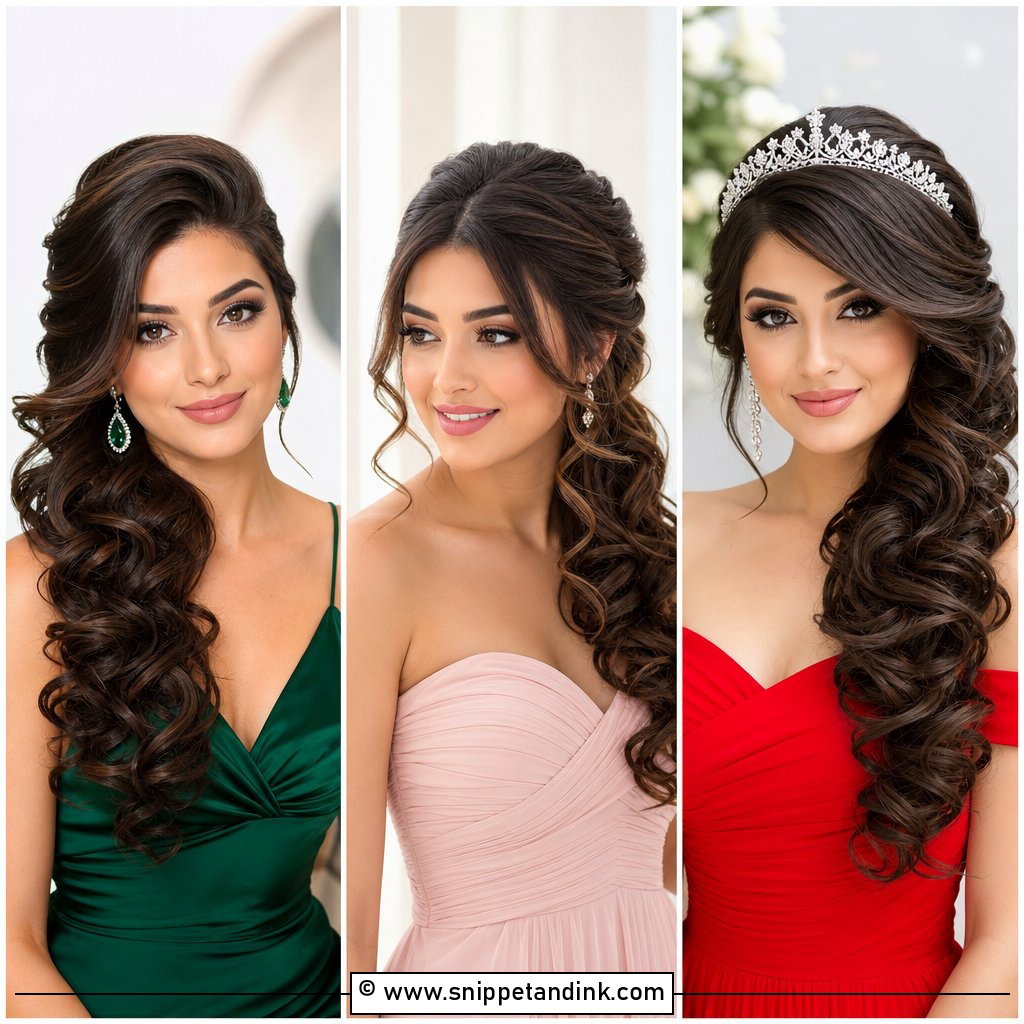
15. Braided Top Knot
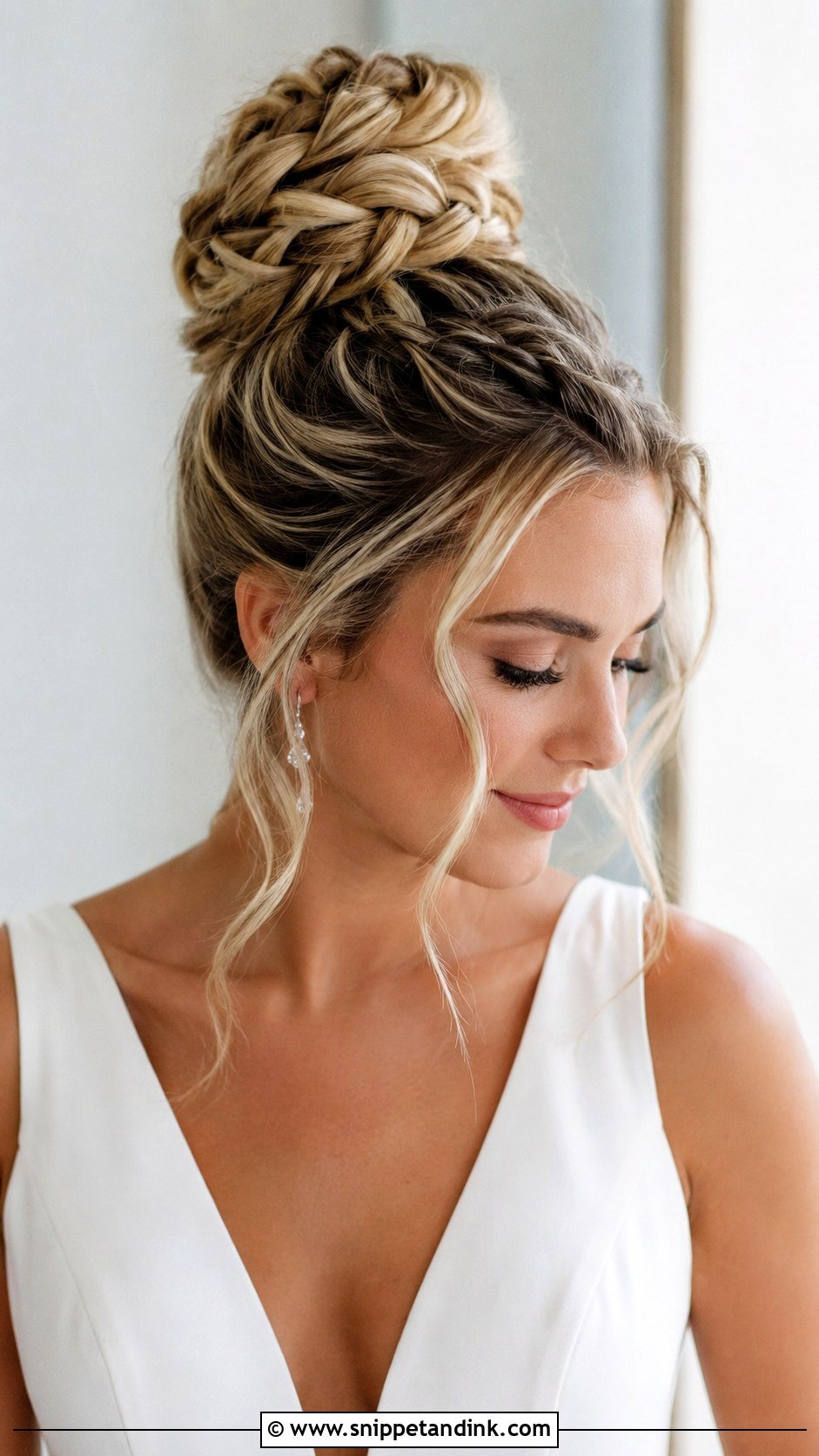
A braided top knot braids sections and then twists them into a high knot at the crown. It’s modern, keeps hair off the face and neck, and suits a warm day. I keep the knot proportional; too large and it looks like a hat in full-length photos. Pair it with statement earrings and a clean neckline, and leave a few curled pieces at the face to soften the height.
16. Braided Crown With Curls
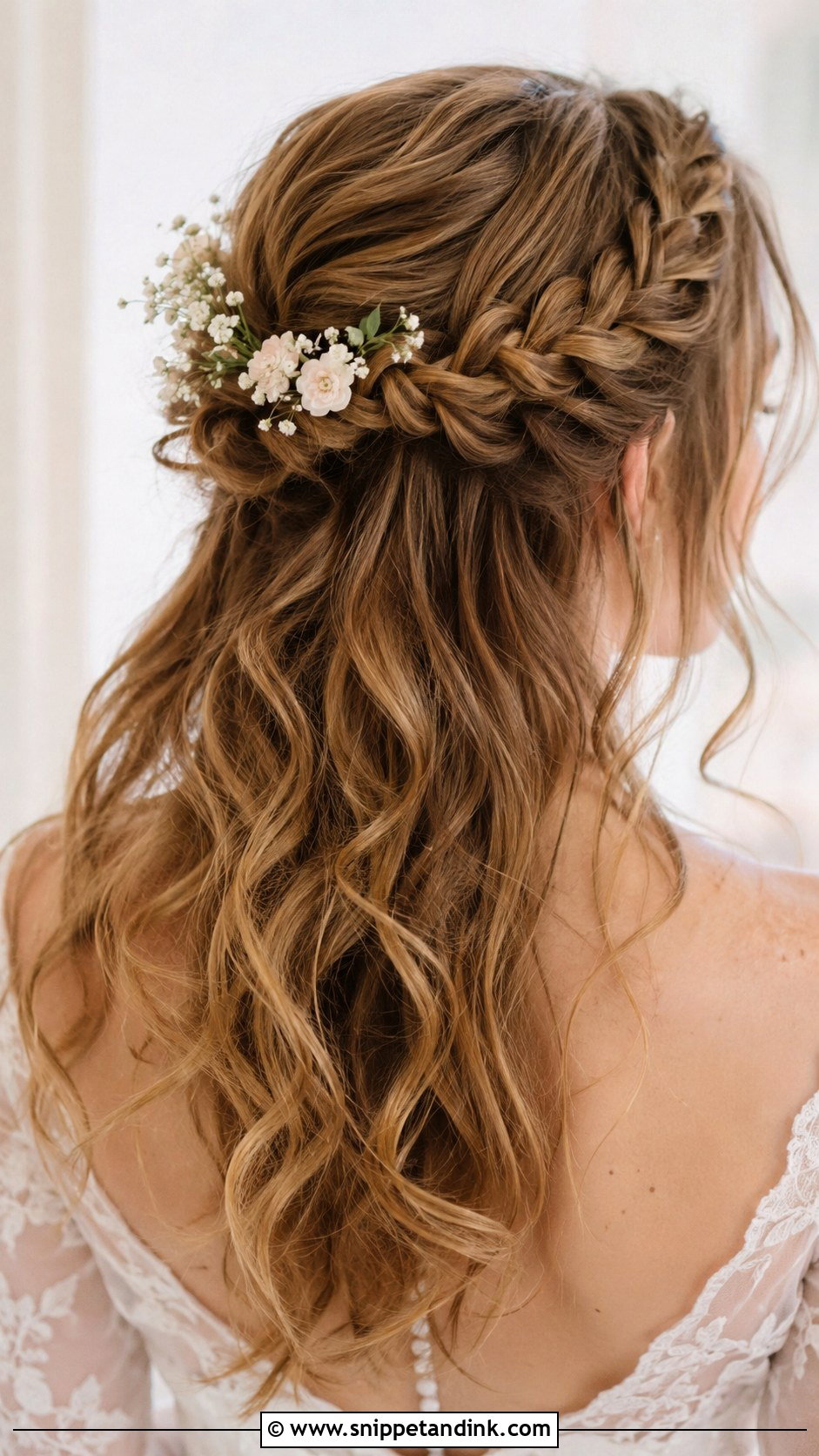
A crown braid with curls is a halo braid at the top, with the length left in loose curls below. It gives structure and softness at once. I set the curls first, braid the crown, and only then release the curls so the braid doesn’t drag them flat. Small flowers along the braid finish it. It suits long hair, and I’d skip the veil to let the braid show.
17. Twisted Braid Updo
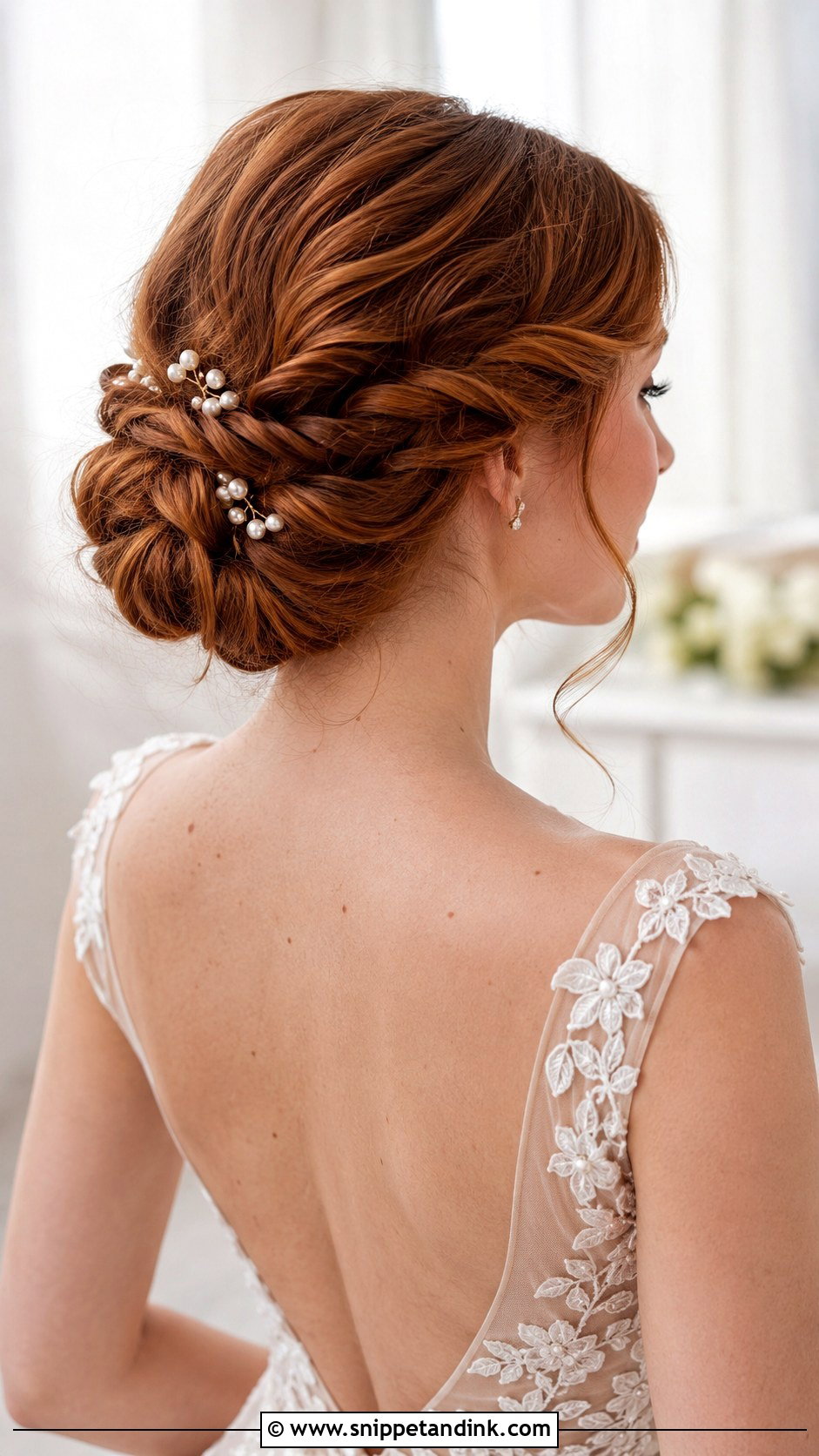
Twisted braid updos use rope-like twists rather than three-strand braids, pinned into a low shape at the nape. Twists are faster to make, but they also loosen faster, so I spray each one before pinning. This style works with veils, tiaras and other accessories. It suits medium to long hair and works for most wedding styles.
18. Pearl Embellished Braid
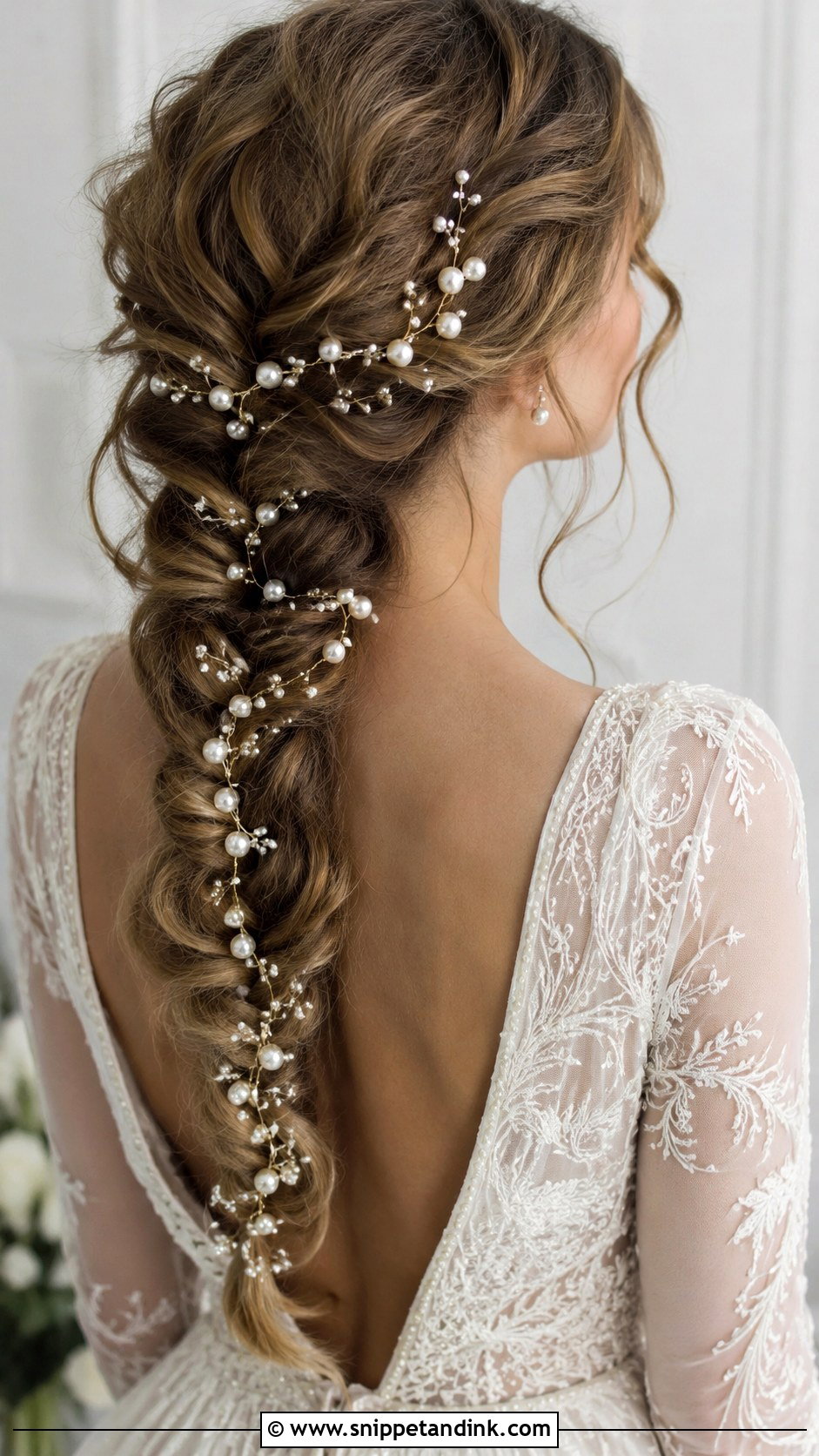
Pearls are the easiest way to make any braid look bridal. I use pearl pins pushed into the braid at an angle so they grip the stitches, rather than pearls glued to clips, which slide. On a fishtail they sit between the crossings, on a French braid along the center line. Evenly spaced pearls read classic; a cluster gives a focal point. Match them to your earrings and the whole look comes together, and pearl-adorned braids suit both vintage and modern weddings.
19. Messy Braided Bun
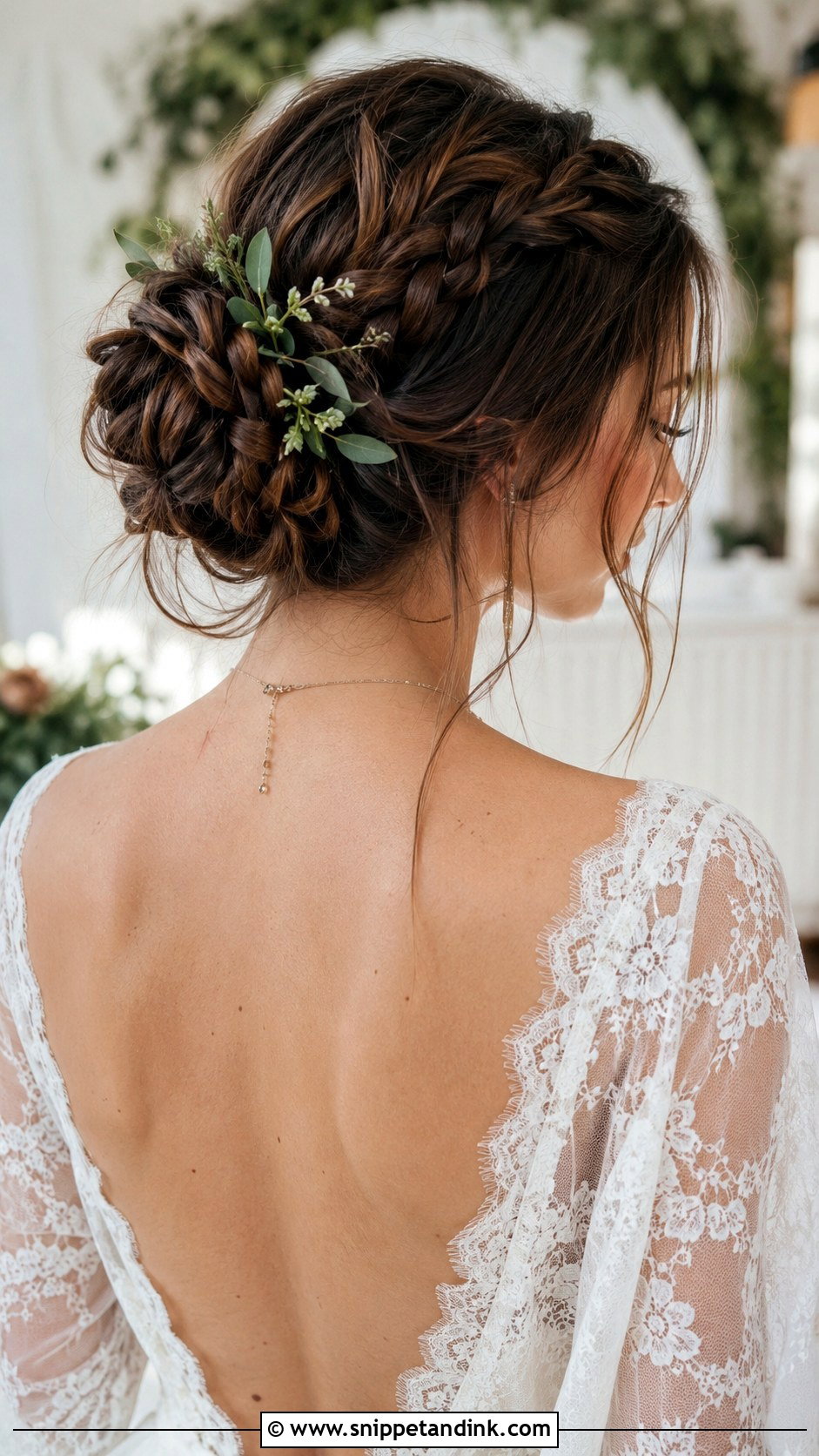
A messy braided bun is loose braids twisted into a soft knot at the nape. It looks relaxed, but I still pin it securely underneath so only the surface looks undone. Greenery, dried flowers or simple pins suit it. It works best on long, wavy hair, and it’s the style I’d suggest for a rustic or barn wedding where you’ll be on your feet all evening.
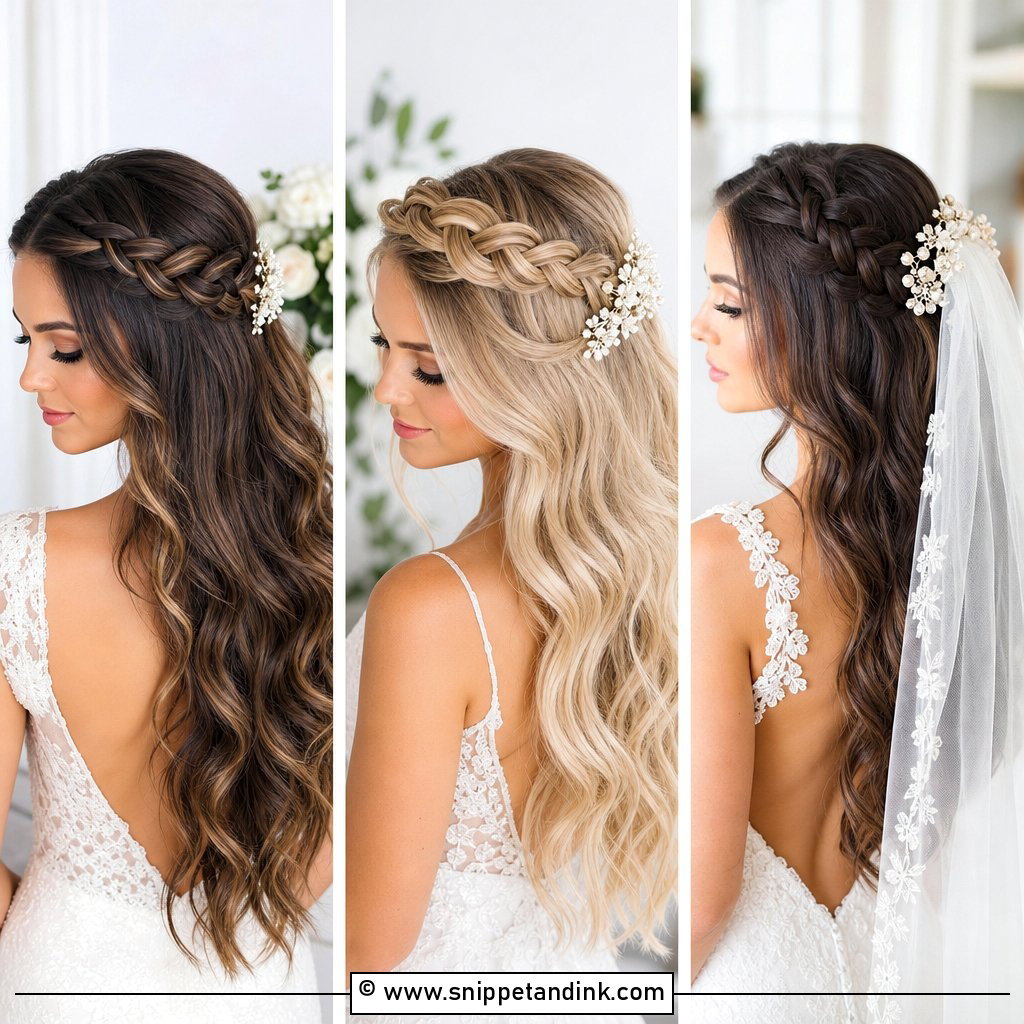
20. Braided Updo With Greenery
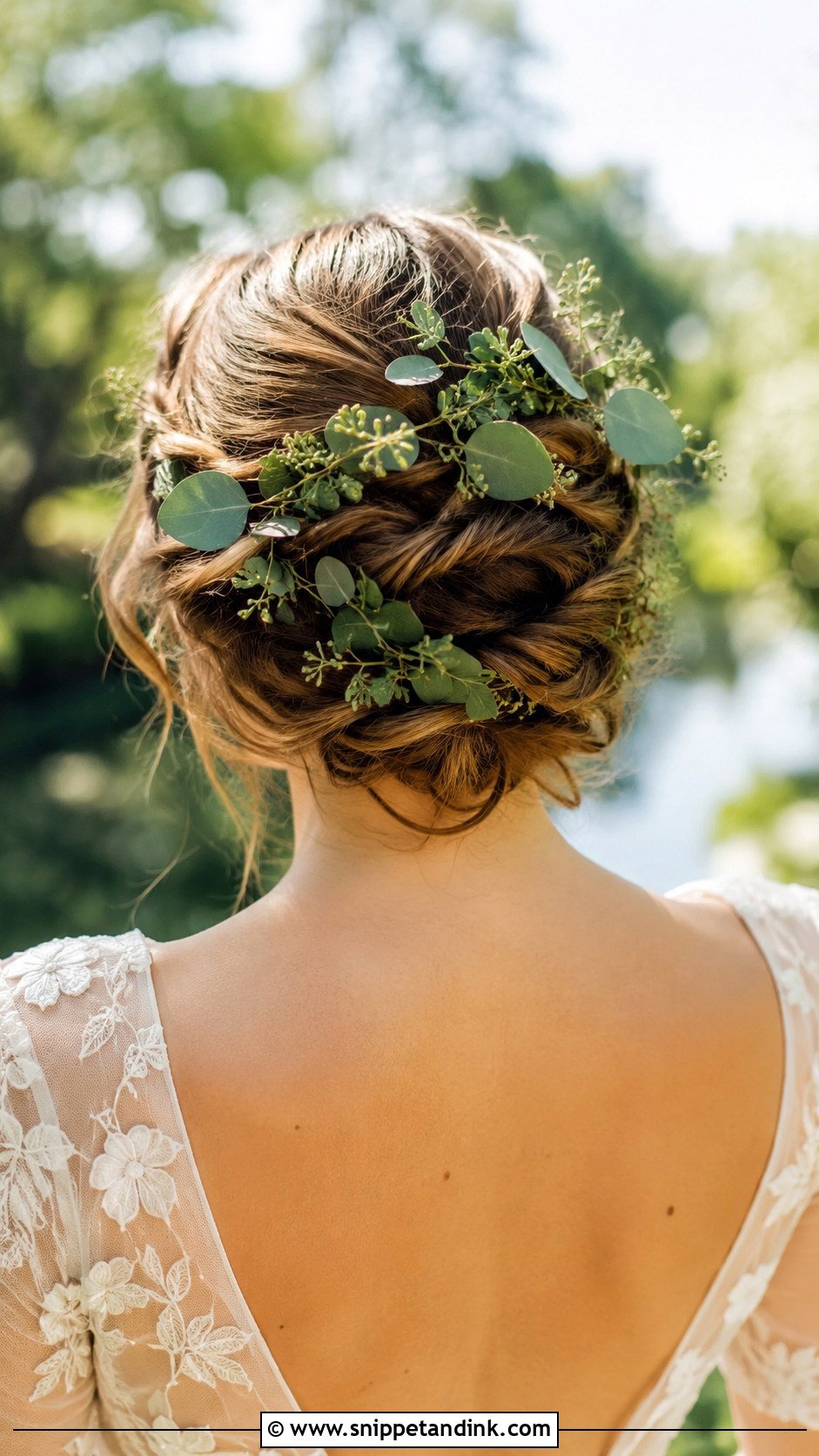
A braided updo with greenery weaves eucalyptus, ferns or small vines through the braids. Eucalyptus is my first choice, because it’s sturdy and stays fresh for hours; ferns can curl up in heat. I build the updo first and add greenery last. It suits outdoor and garden weddings, medium to long hair, and looks best without a veil.
21. Side Fishtail Braid
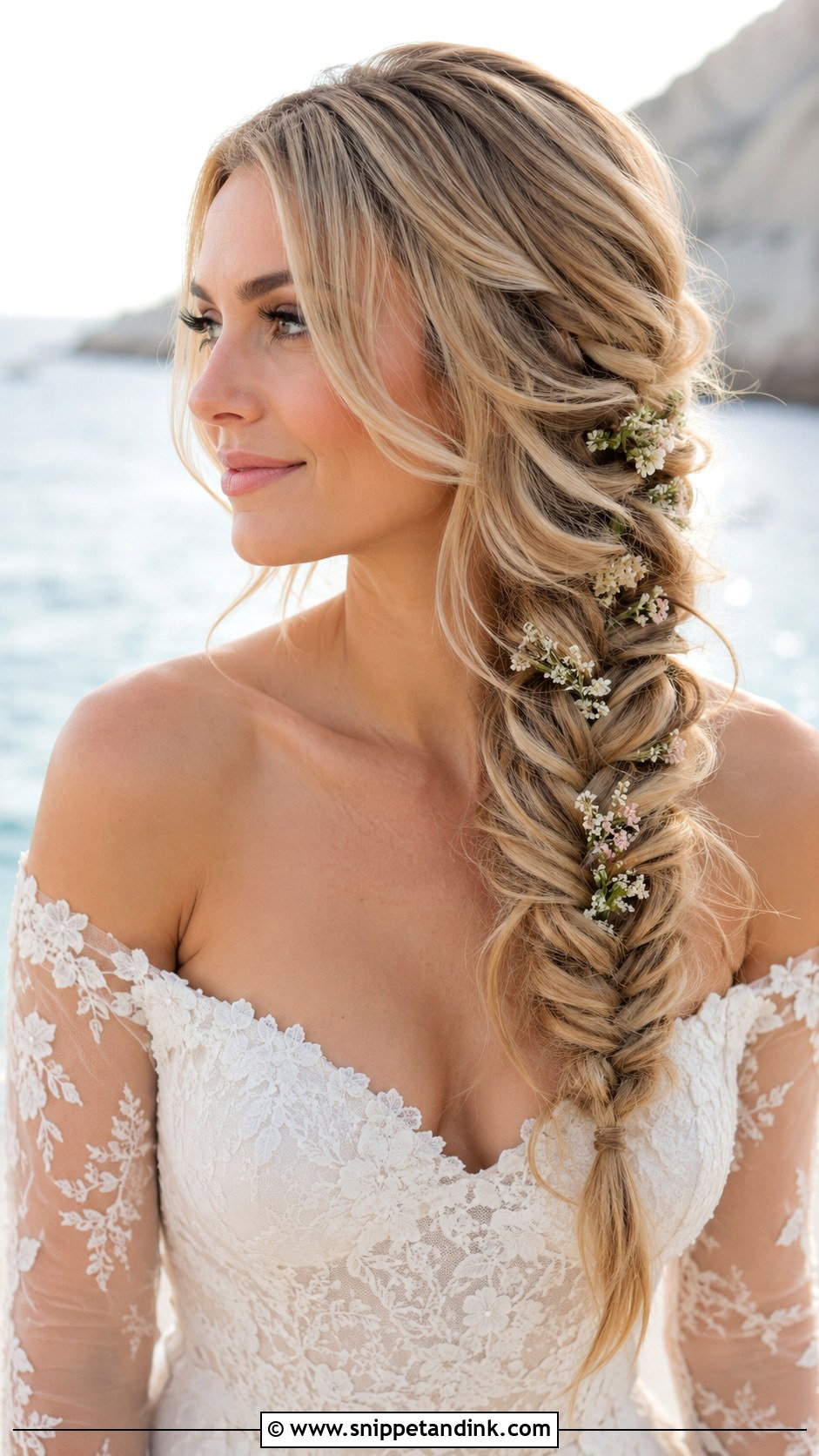
A side fishtail drapes over one shoulder, with the herringbone weave falling toward the collarbone. It draws attention to the neckline and earrings. I loosen it gently for a relaxed feel and add small flowers or pearl pins. It suits long hair and off-shoulder gowns, especially for beach and garden weddings. Fishtails don’t unravel much, so it holds its shape even after a long day of moving around.
22. Double Braided Updo
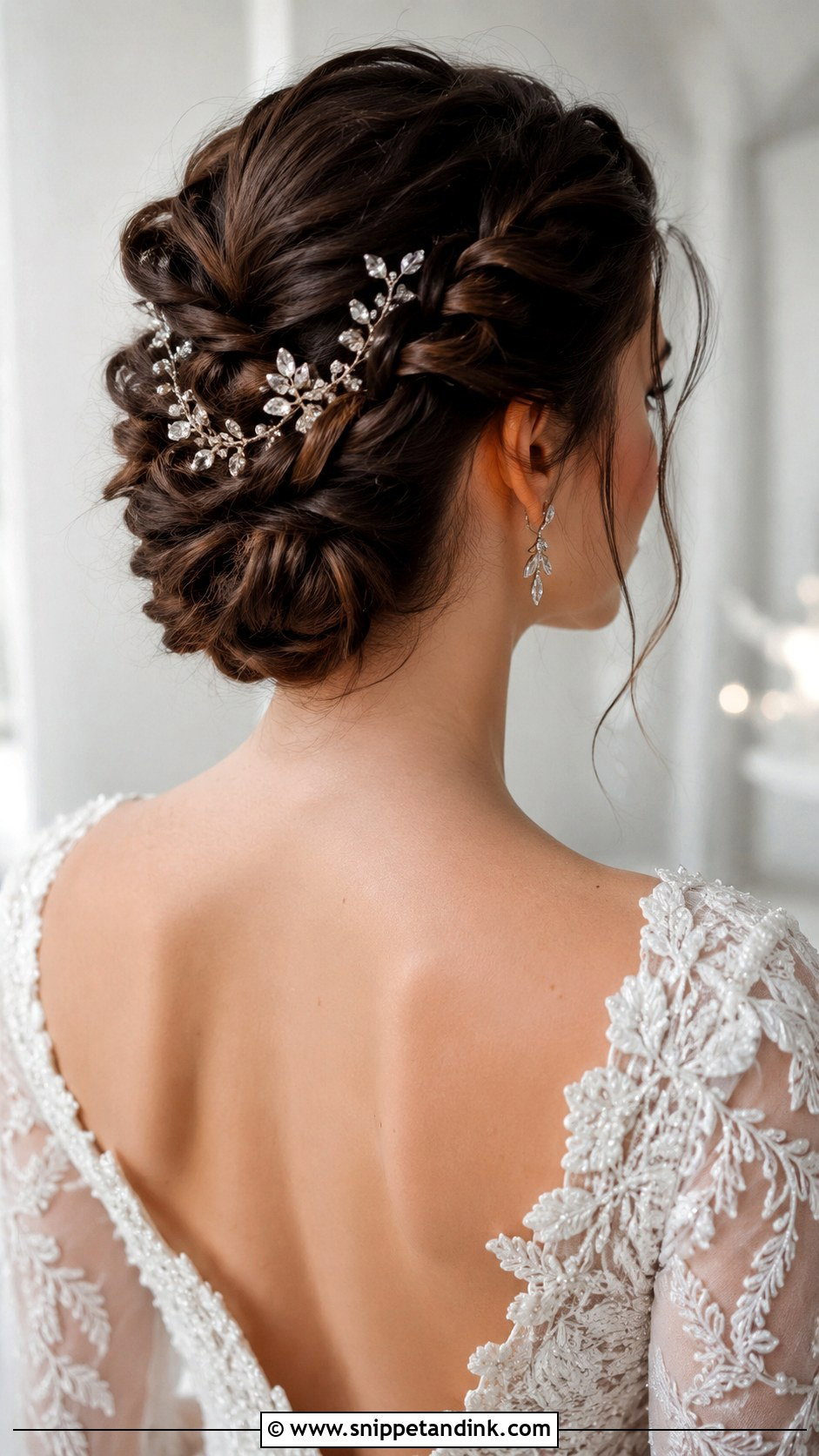
A double braided updo combines two braids pinned into one shape at the nape or crown. The doubled texture adds depth. Pearls, crystals or small blooms work here. It suits long, thick hair best; on fine hair two braids can look thin, so I’d add a clip-in piece before braiding. It works with veils and statement accessories and stays secure all day.
23. Braided Headband Style
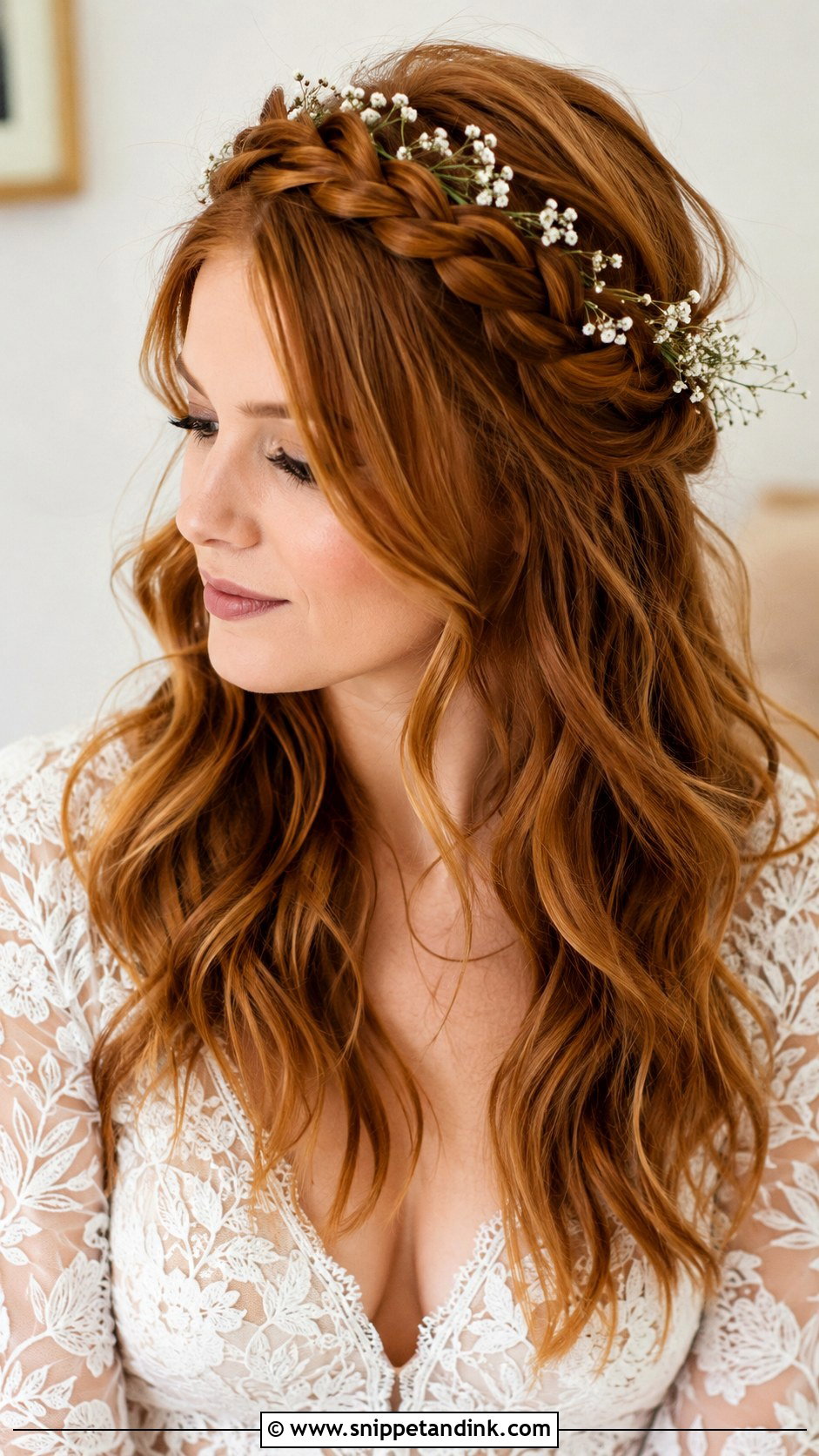
A braided headband is a thin braid across the top of the head that frames the face. The rest of the hair can be curled, waved or put into a soft updo. I start it behind one ear and pin the end behind the other, hidden under the hair. Small flowers along the braid add a romantic touch. It suits medium to long hair, and it’s a good way to keep shorter layers off the face.
24. Low Braided Bun With Face Framing Pieces
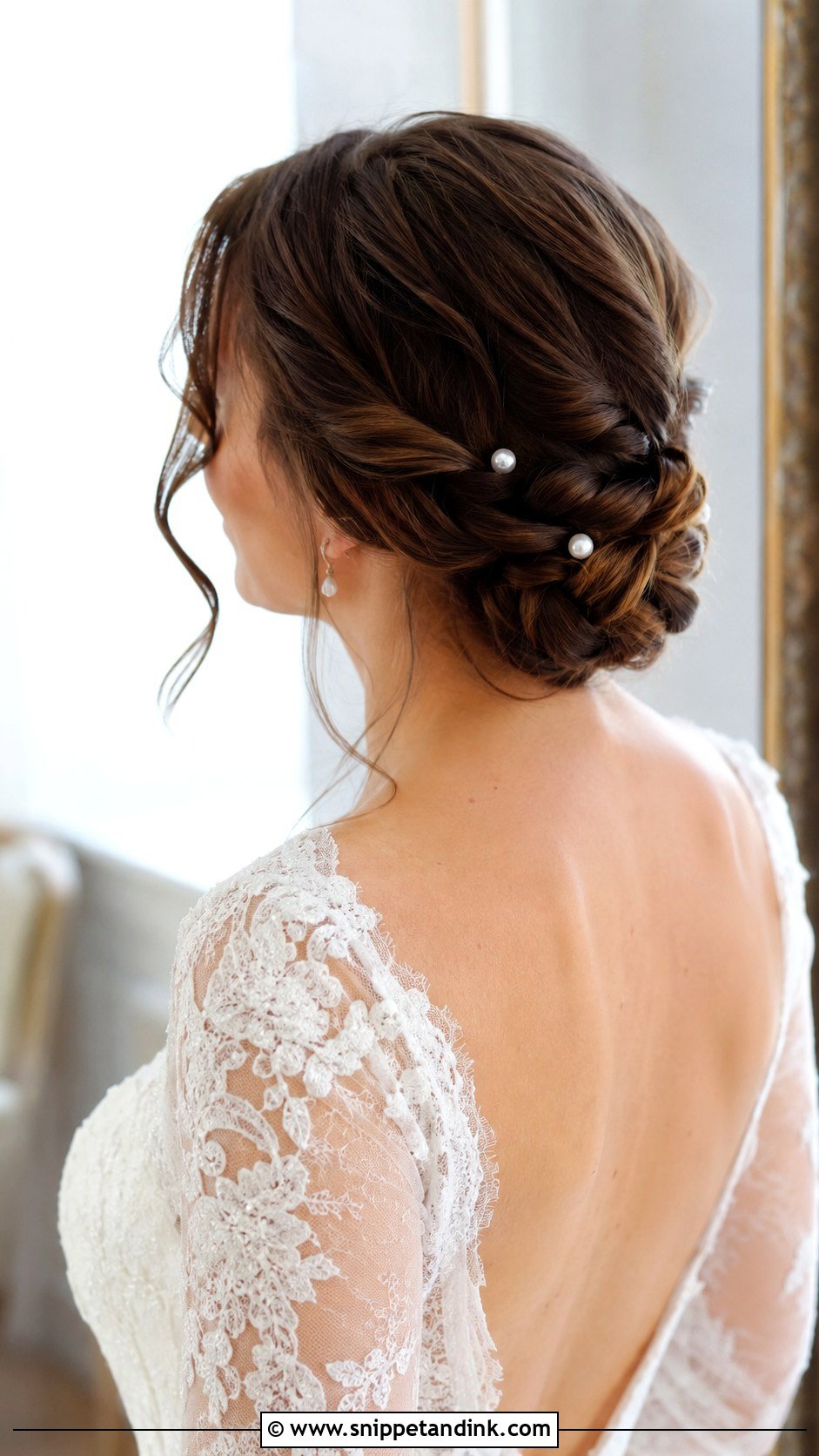
A low braided bun with face-framing pieces combines a polished knot at the nape with a few loose curls around the face. The trick is to pull out the face pieces before building the bun, so they’re not stray hairs pulled loose afterward. Curl them in different directions. Pearls or small flowers in the bun add detail. It suits medium to long hair and pairs with veils and statement earrings.
25. Braided Ponytail With Curls
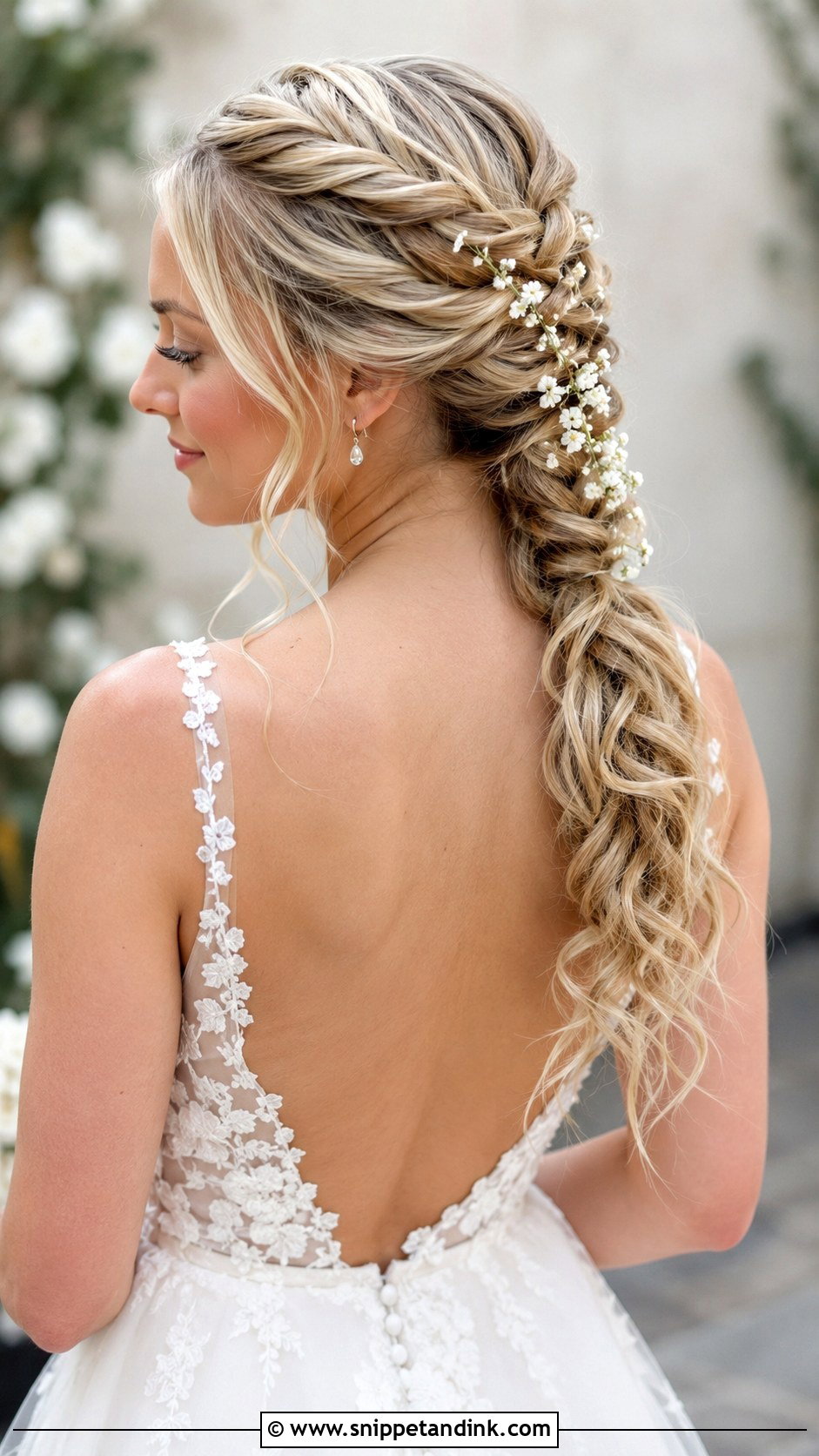
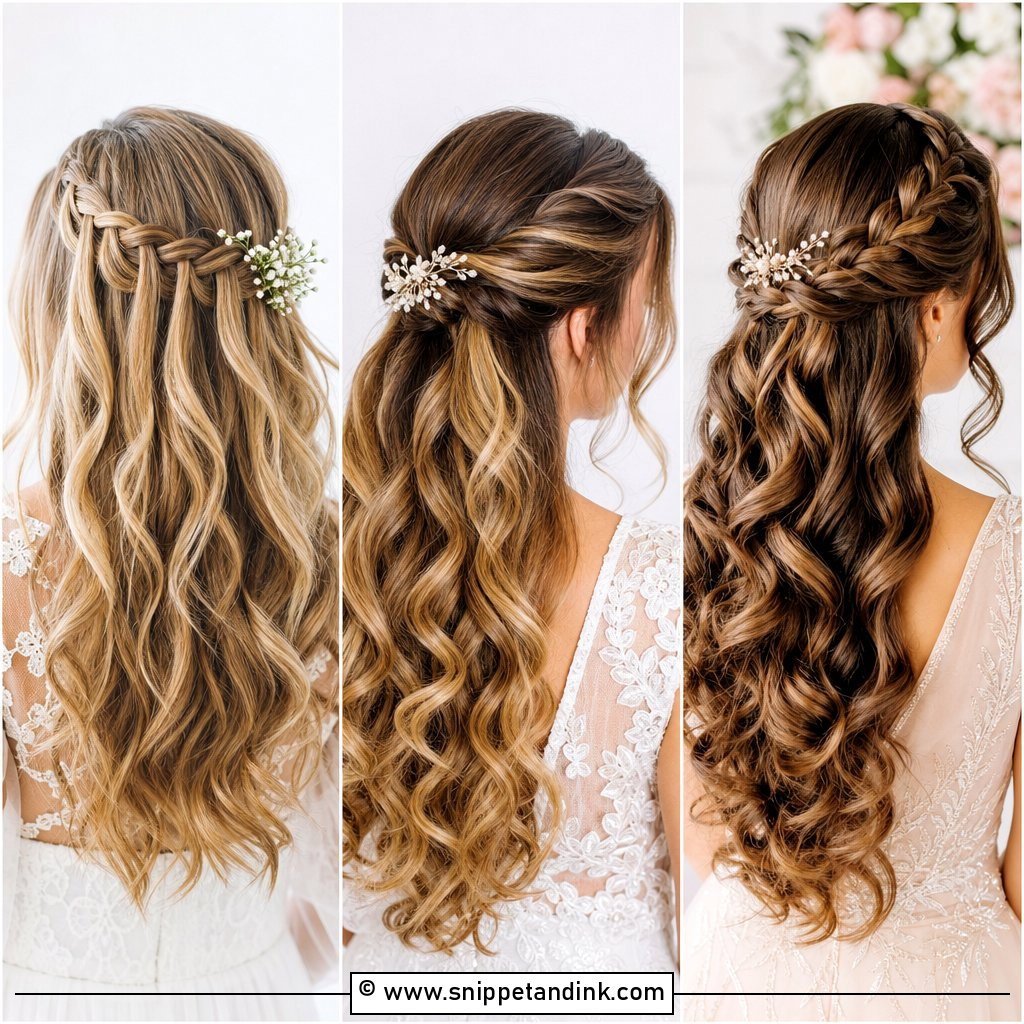
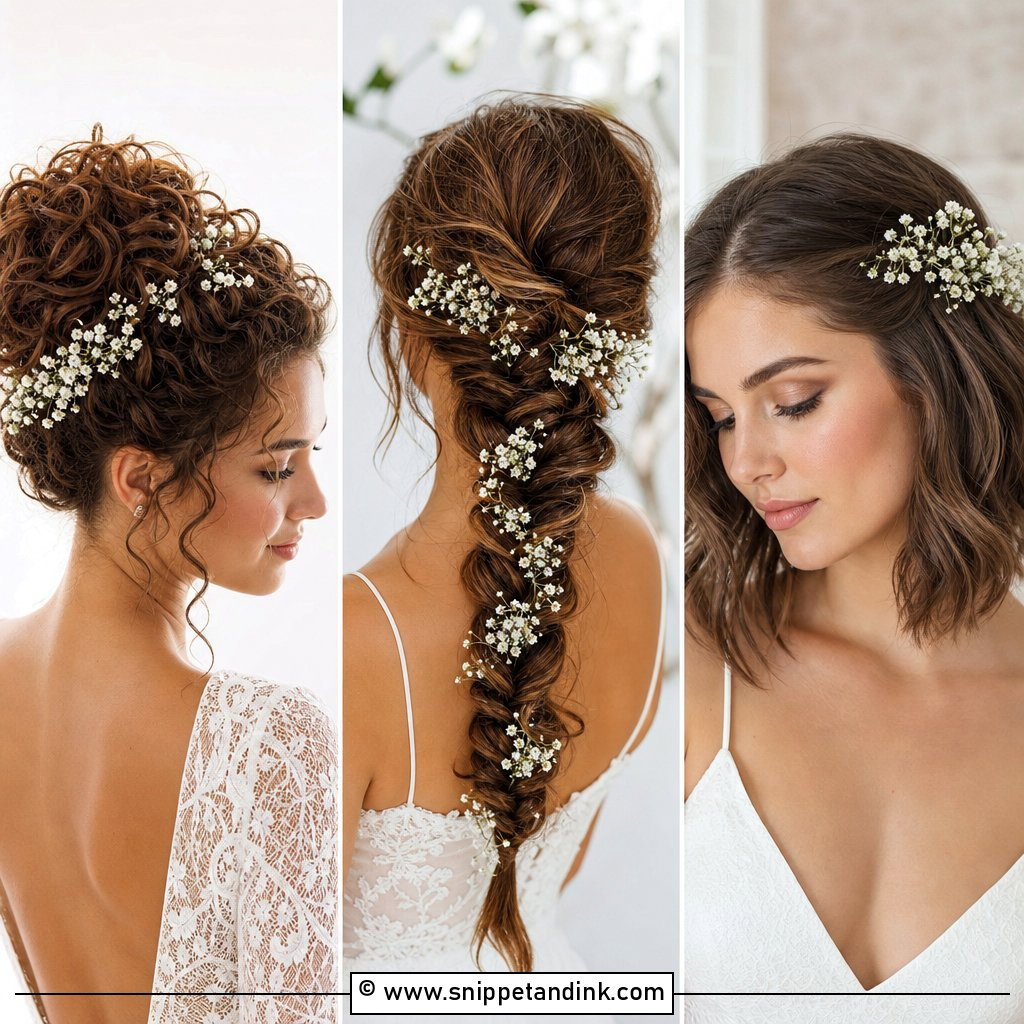
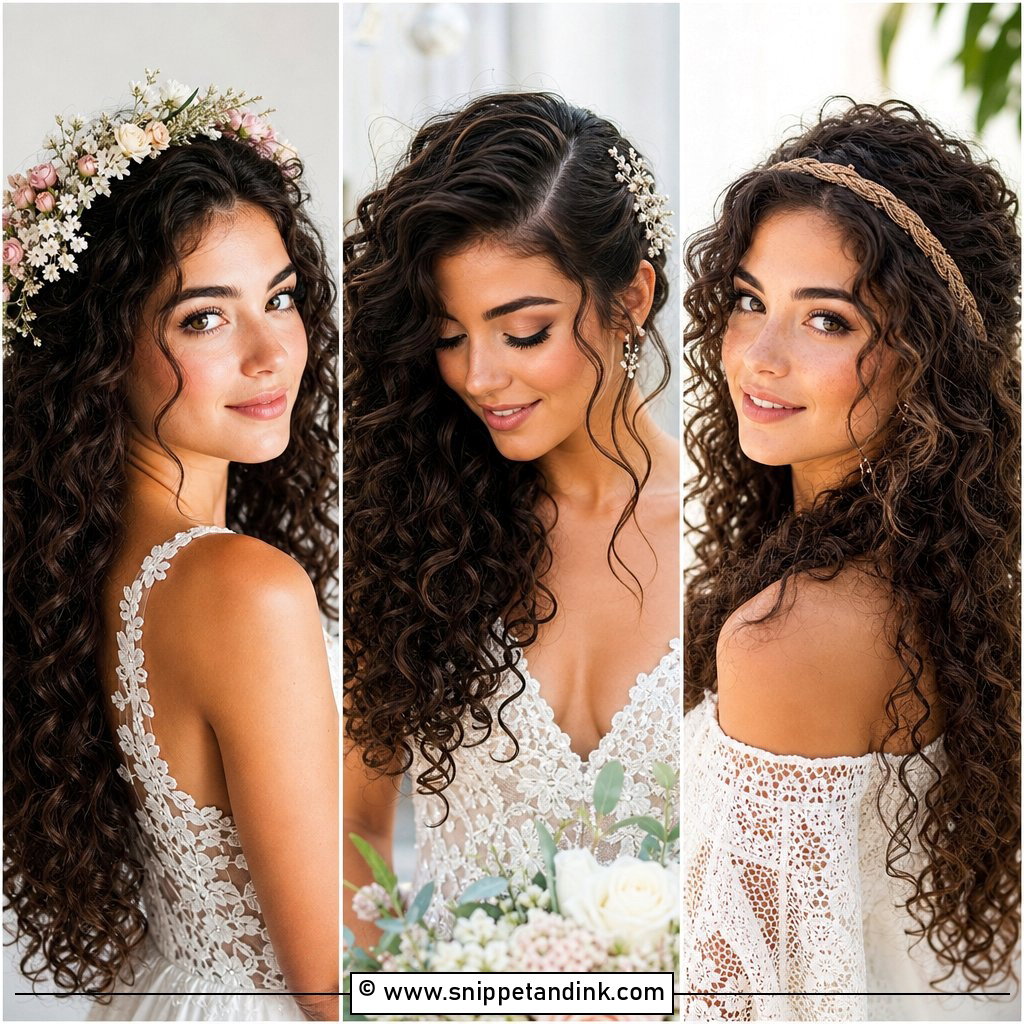
A braided ponytail with curls gathers hair into a ponytail, braids part of the length and leaves the ends curled. A strand wrapped around the base hides the elastic. It feels fresh and young, and it moves well in photos. I’d only suggest it for long hair. Curls at the ends should be set firmly, because they carry the weight of the braid above.
Do You Need Extensions for a Fuller Braid?
A lot of the braids you see in inspiration photos are made with extra hair. Braiding takes up length, and pancaking takes up thickness, so a braid that looks huge in a picture may need more hair than you have.
I usually suggest clip-in extensions when your hair is shorter than your shoulder blades and you want a crown braid, milkmaid braid or long side braid, or when your hair is fine and you want a full fishtail. Buy them in a shade matched to your mid-lengths, not your roots, and bring them to your trial so your stylist can blend and cut them. Clip-ins come out at the end of the night, and you don’t need to sleep in them.
Pearls, Greenery and Fresh Flowers Woven Through Braids Over Eight Hours
Not every accessory lasts the whole day. Here’s what I see happen to each one from the morning to the reception.
- Pearl pins hold well if pushed into the braid at an angle. They don’t wilt, and they work for any season.
- Eucalyptus and sturdy greenery stay fresh for hours; delicate ferns can curl in heat or direct sun.
- Baby’s breath and waxflower are hardy; garden roses and peonies bruise and droop.
- Dried flowers don’t wilt, but they’re fragile, so pin them gently and keep a few spares.
- Silk flowers last all day and are the safest choice for a hot outdoor ceremony.
I add fresh flowers last, as close to the ceremony as possible, and I ask the florist to wire them for hair so they don’t slide out of the braid.
Bring Your Neckline and Veil to the Consultation
Before you settle on a braid, know your neckline and whether you’ll wear a veil, because those two details rule out half of this list straight away. Book a trial with your stylist and bring photos of the dress, not just the hair. Wear the braid for a few hours afterward and see how it feels. A good braid should still be comfortable at the end of a long day.
You'll Like These Ideas:


Leave a Reply