
Waves are the bridal finish I’m asked for most, and the word covers a lot of ground. A brushed-out bend on long layers, a sculpted old-Hollywood S-curve and your own natural pattern all count as waves, and each one needs different tools, prep and hold. Which suits you depends on your length, your neckline, the veil and, more than people expect, the weather at the venue. A beach ceremony suits airy, open waves; a ballroom can carry something sculpted and glossy. The fifteen ideas below are complete hairstyles rather than small details, with notes on what each wave needs to last, so you can save the ones you like and bring them to your trial.
Telling Your Stylist Which Wave You Actually Mean
Wave is one of the vaguest words in a bridal consultation. One bride means a loose bend through the ends, another means glossy sculpted ridges, and a third wants her own texture with less frizz. Photos help, but the same picture can mean different things to two people, so describe what you like about it.
- Say where the wave should start: at the root, around the cheekbone or only through the last few inches.
- Say whether you want the pattern uniform or slightly broken up. Uniform waves read formal; mixed directions read relaxed.
- Mention whether the waves should turn away from your face. Most brides prefer that, because it opens the face to the camera.
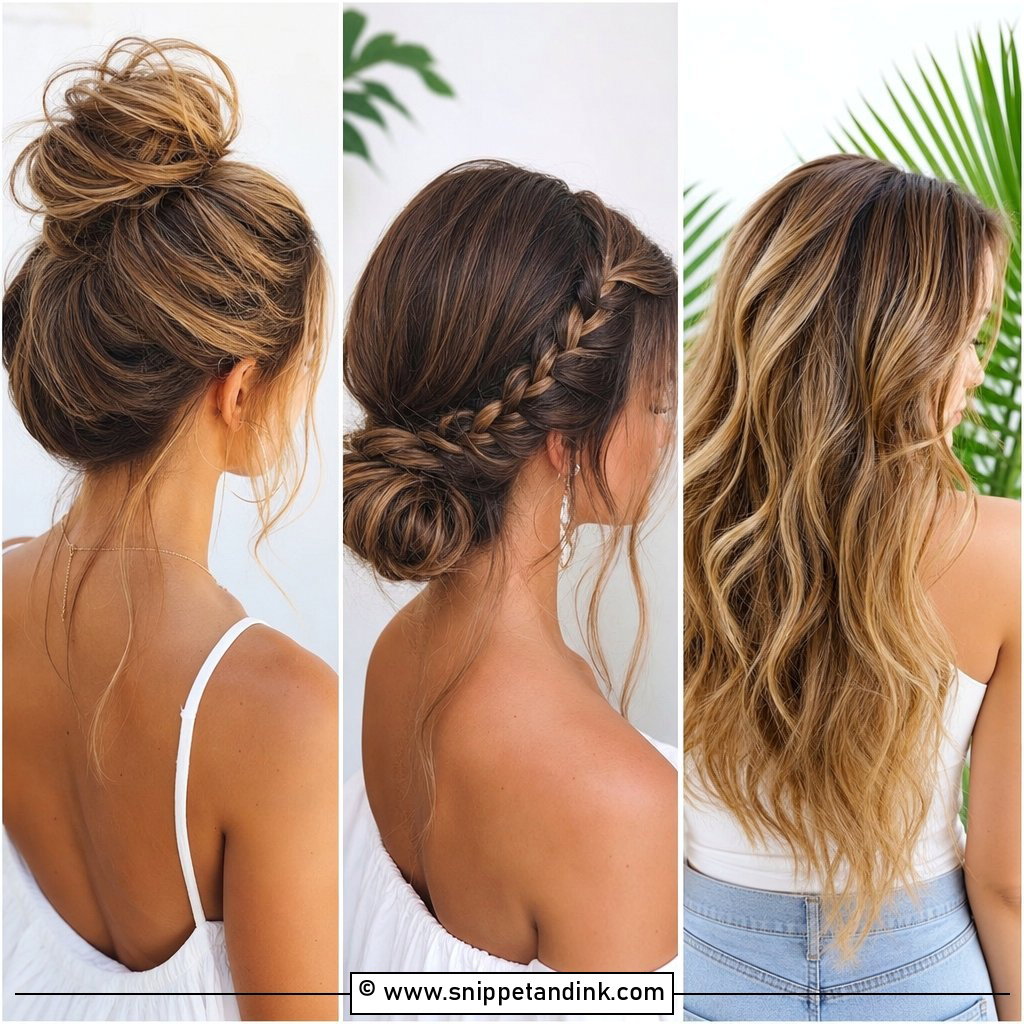
- Tell us how your hair behaves after curling at home. If a curl is gone by lunchtime, that matters more than any photo.
At a trial I photograph the style straight after finishing and ask the bride to send me another picture about six hours later. That second photo shows the wave you’ll actually have at the reception, and it’s the one we adjust from.
1. Hollywood Wave Wedding Hair
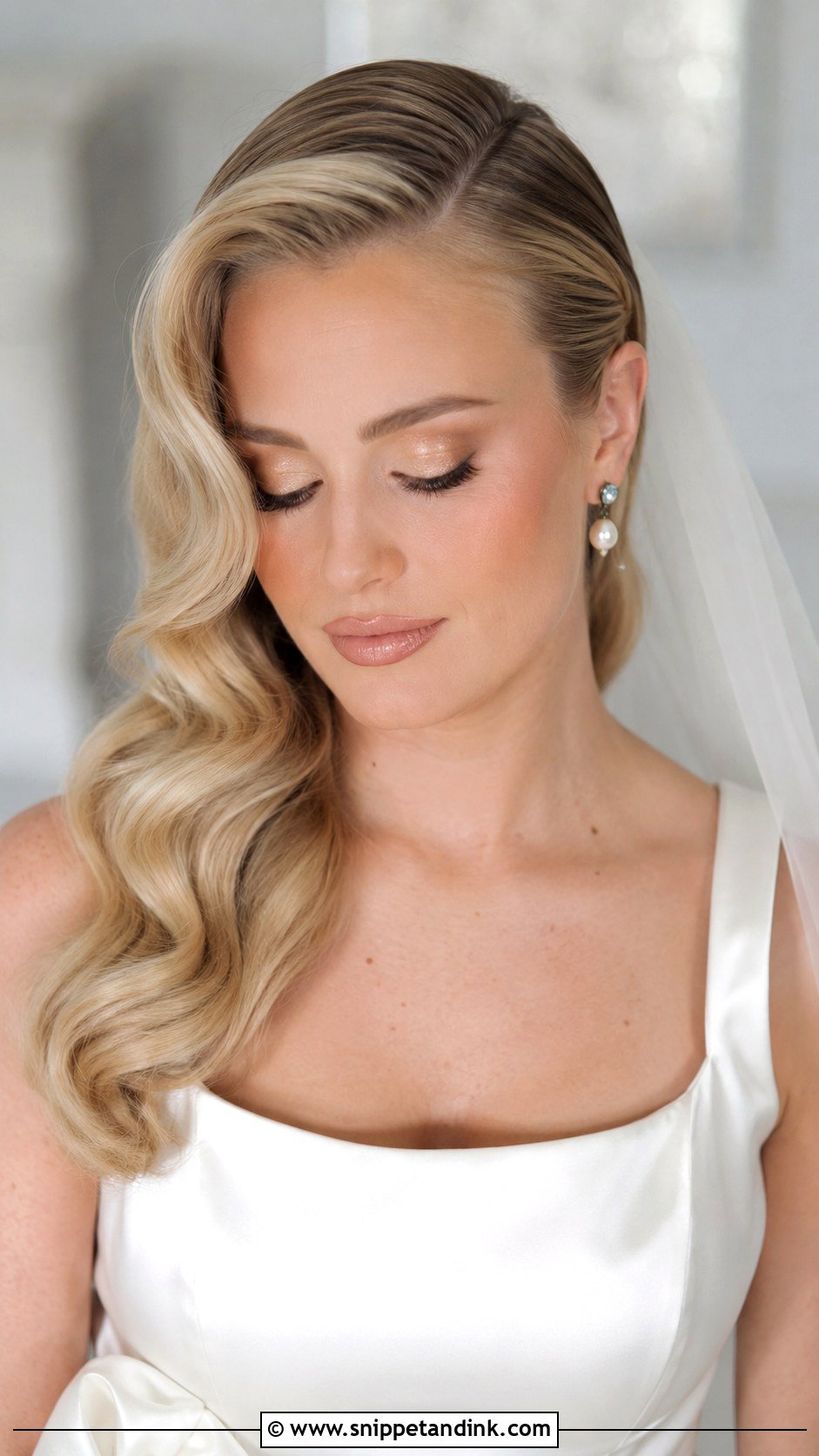
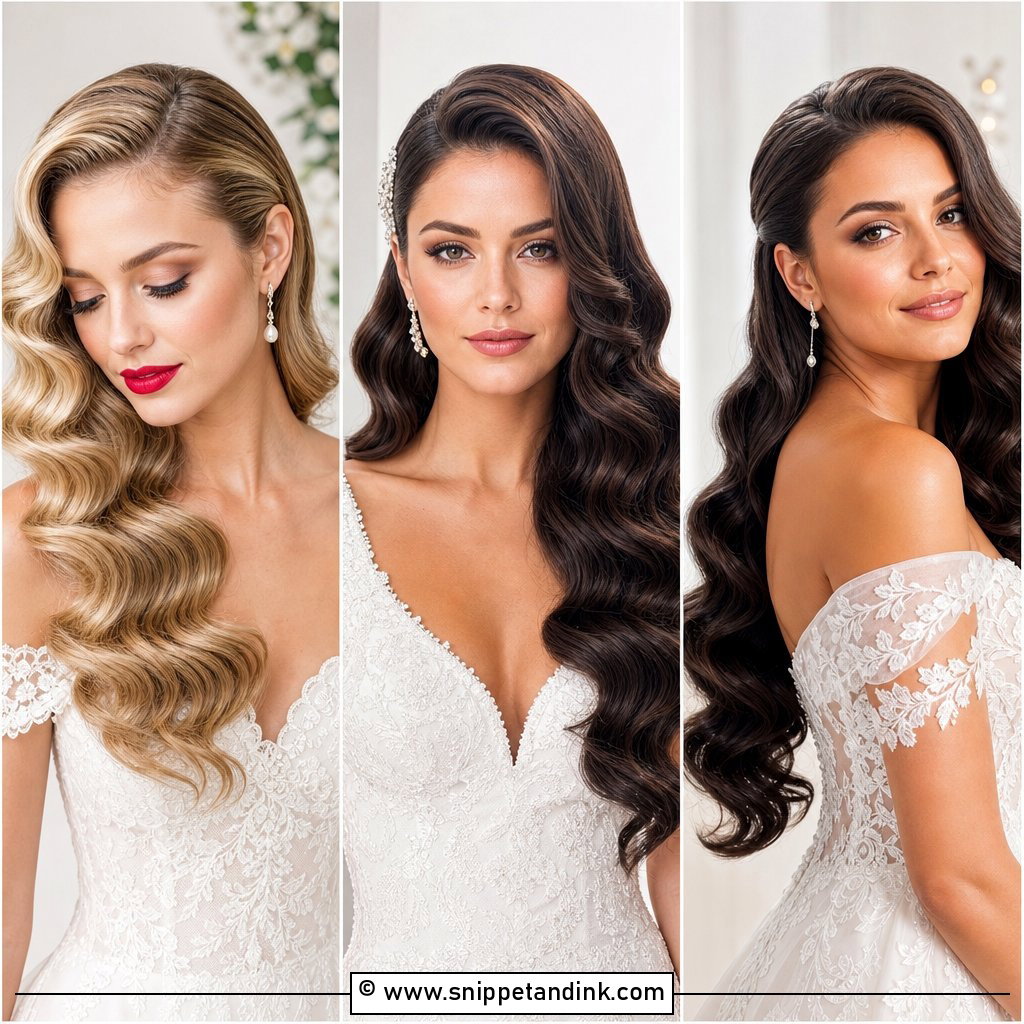
This is the most disciplined wave there is. Every section is curled in the same direction, left to set, then brushed until the waves join into one continuous S down a deep side part. Strapless gowns, satin and pearl earrings suit the clean shape. Hair needs to reach below the collarbone; on shorter lengths the pattern runs out before it can show. I finish with shine spray and slip two or three hidden pins under the heavy side so the part doesn’t collapse into your face by the speeches. Of all the waves here, it’s the one least likely to look dated when you look back at the photos.
2. Soft Wave Wedding Hair Down
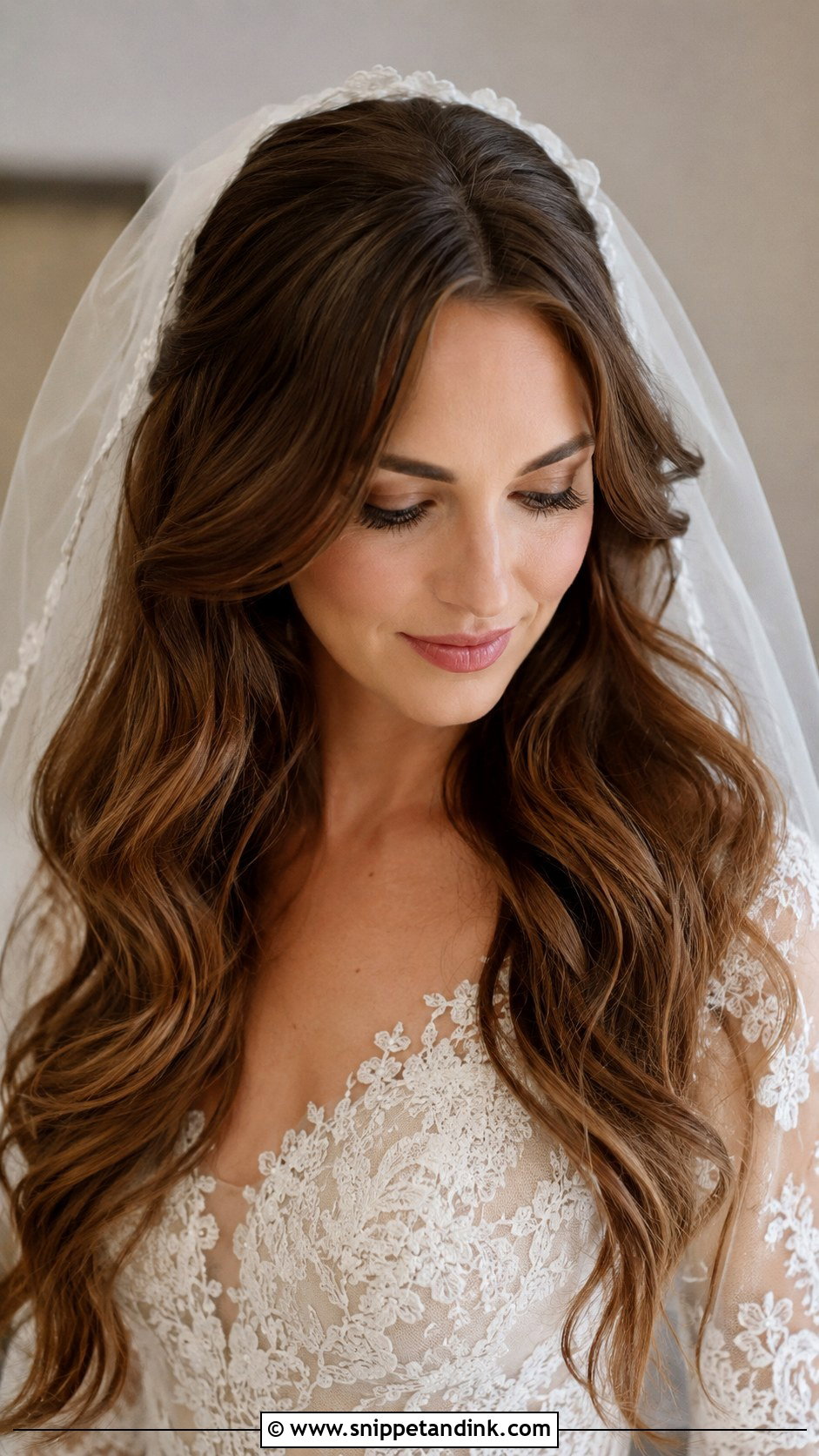
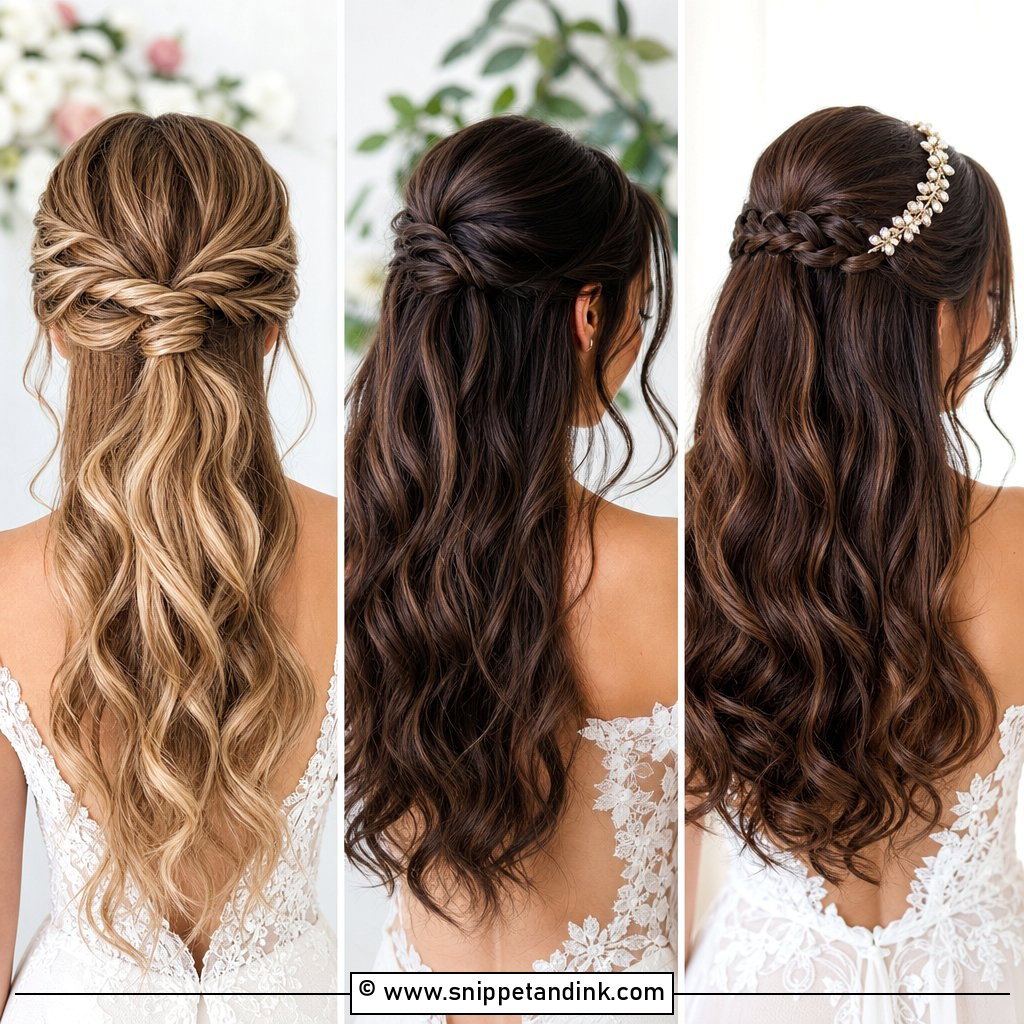
Loose waves worn down are the easiest to wear and, honestly, the hardest to keep. Instead of tight curls, I set larger sections and break them up with my fingers so they move when you do. Long layers show it best because the movement falls around the face and shoulders, and lace gowns, garden venues and simple veils all sit well with it. What makes it look bridal rather than everyday is a smooth crown and defined ends; without those, by evening it just reads as a good blow-dry. Fine hair needs a firmer set than you’d think, because it relaxes fastest.
3. Half Up Wave Wedding Hair
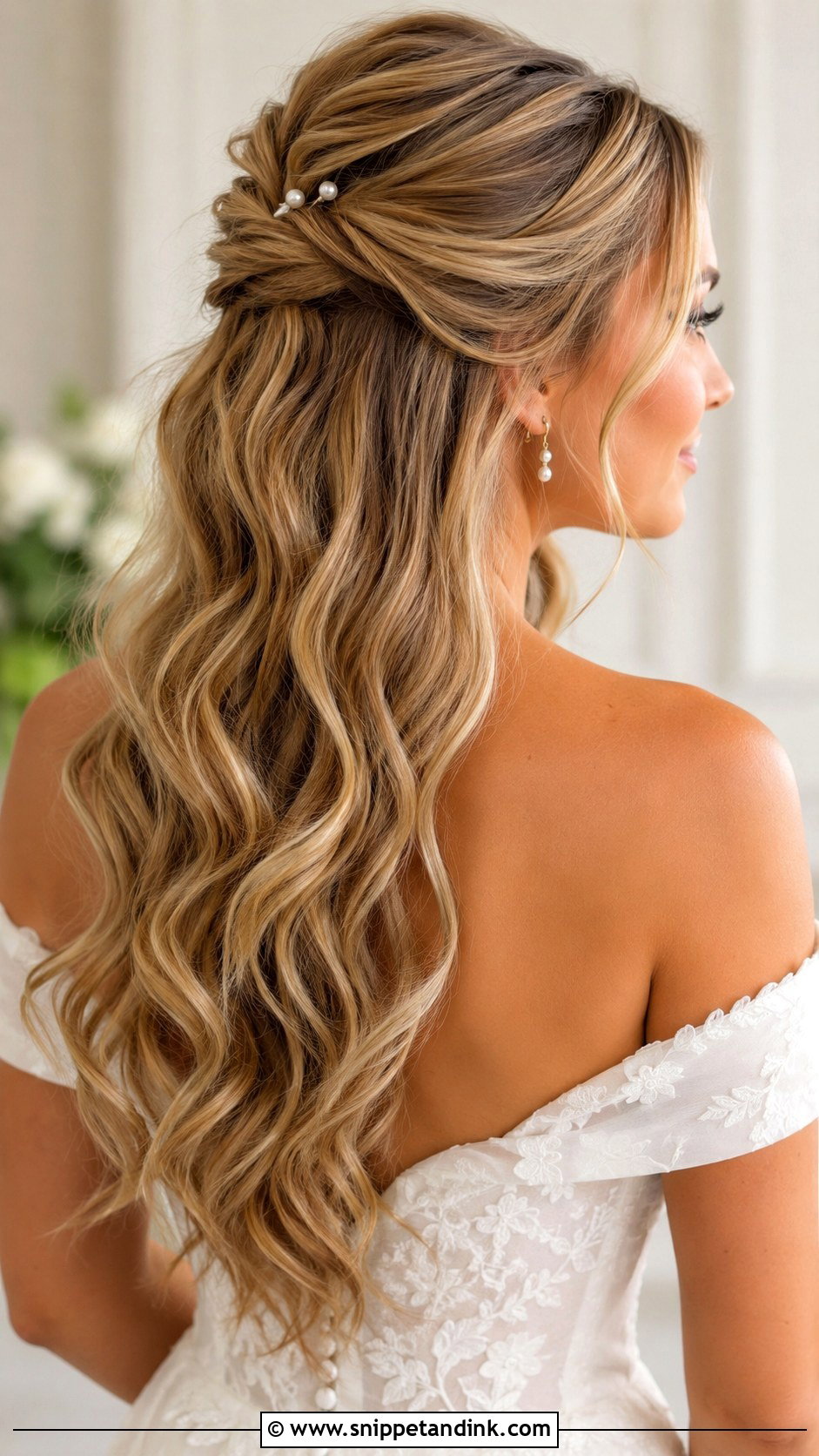
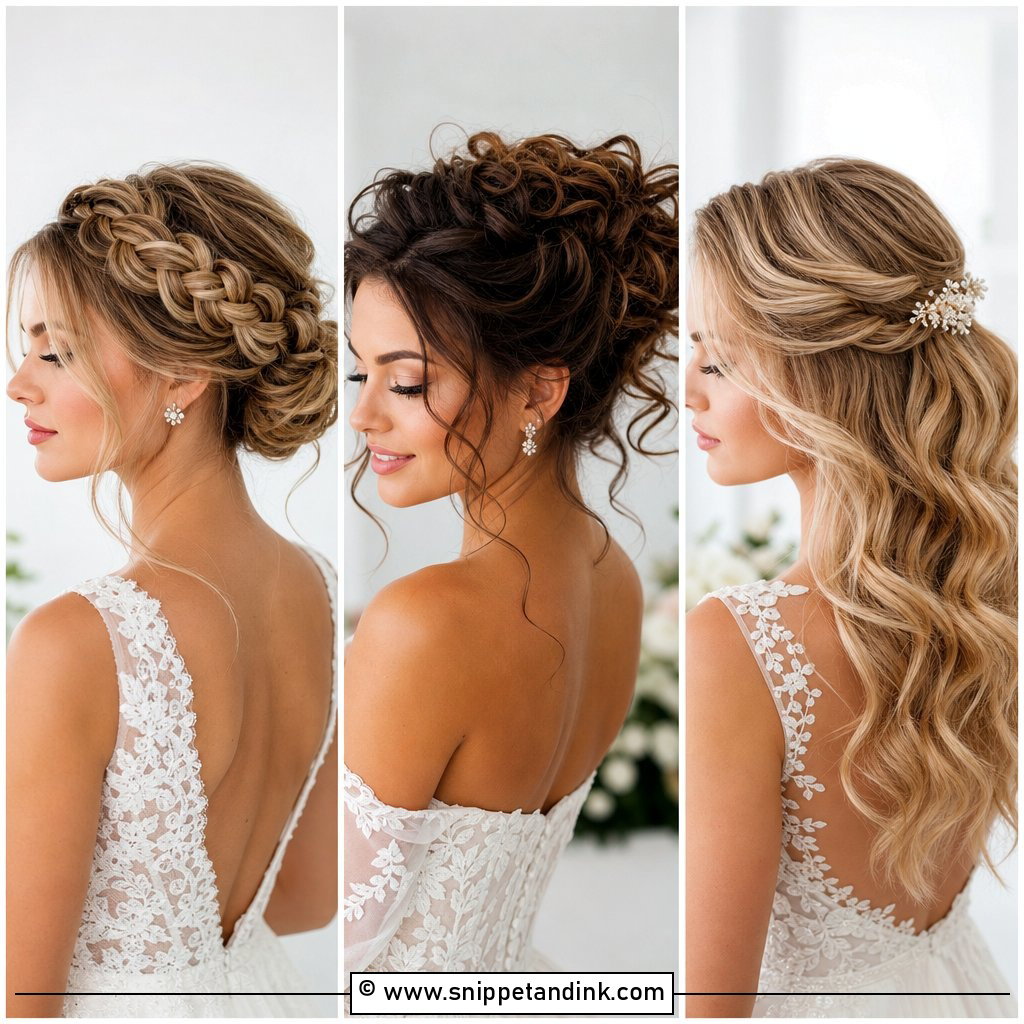
Pulling the top section back is my usual answer for a bride who wants her hair down but hates it in her face during the vows. The top can be twisted, braided or simply pinned, while the lengths fall in loose waves. What I like most as a stylist is the anchor it creates: a veil comb, a hair vine or floral pins all have something solid to grip. Medium and long hair both work, especially with a few face-framing pieces left out. Outdoors it’s the safer choice, since the wind can only move half your hair.
4. Side Swept Wave Wedding Hair
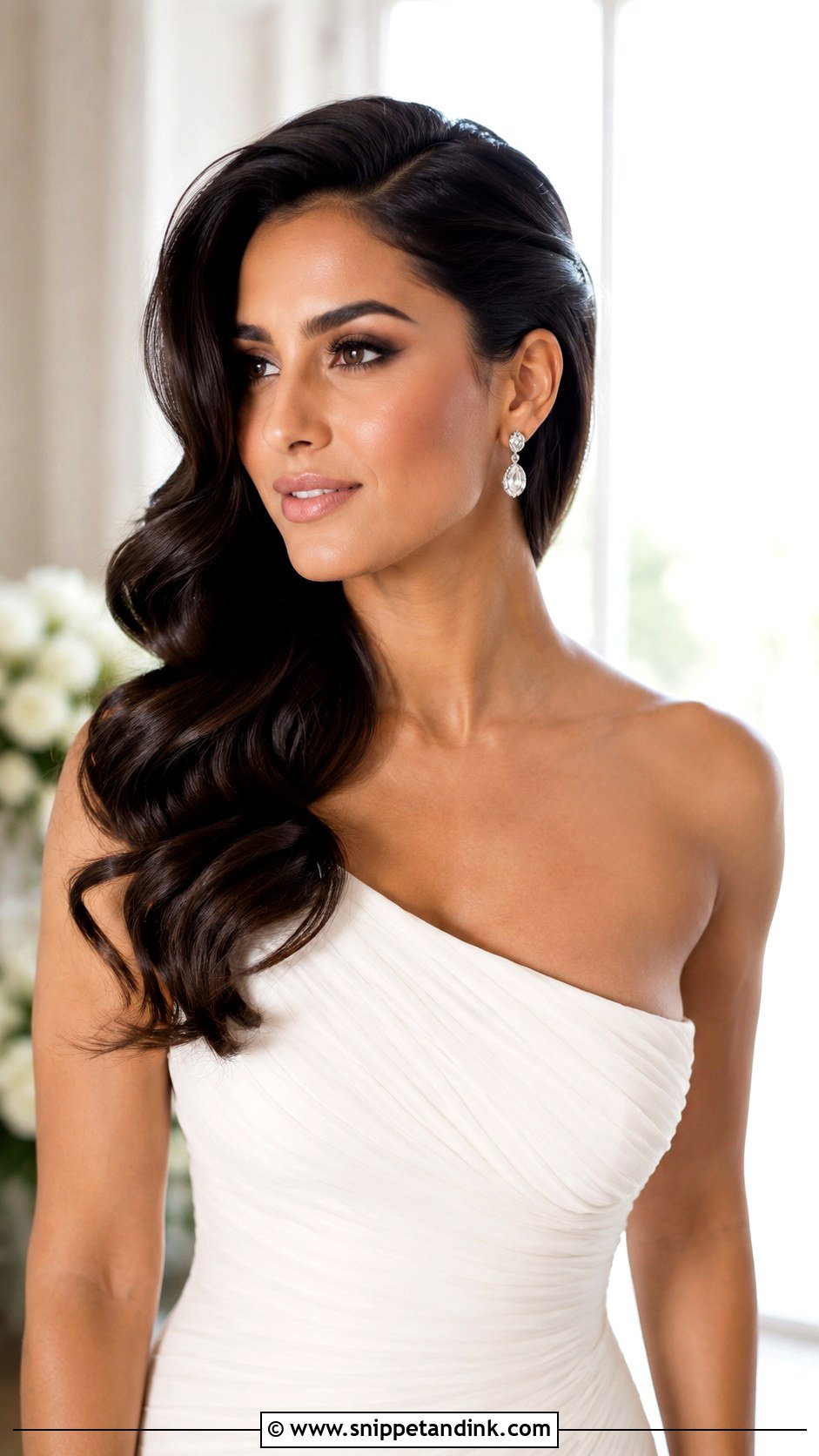
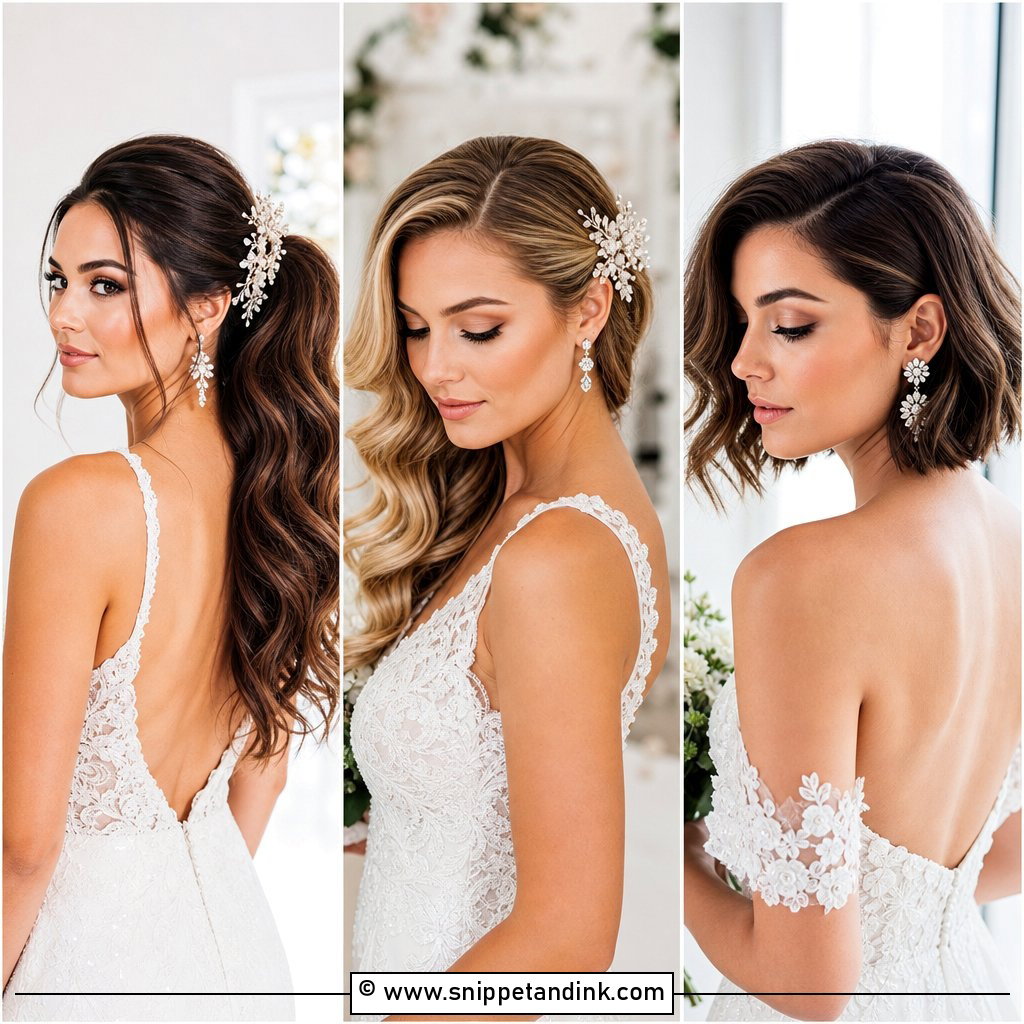
Sweeping waves over one shoulder gives you drama without the commitment of an updo. The hair is parted deep, waved through the lengths and pinned behind the ear on the far side. One-shoulder and off-the-shoulder gowns suit it, along with a statement earring on the open side. The hidden work is a column of crisscrossed pins behind that ear, because that’s where hugs pull it loose first. I’d steer you away from it if your dress has a heavy strap or bow on the same shoulder as the hair; the two compete and the waves get crushed.
5. Loose Wave Bridal Ponytail
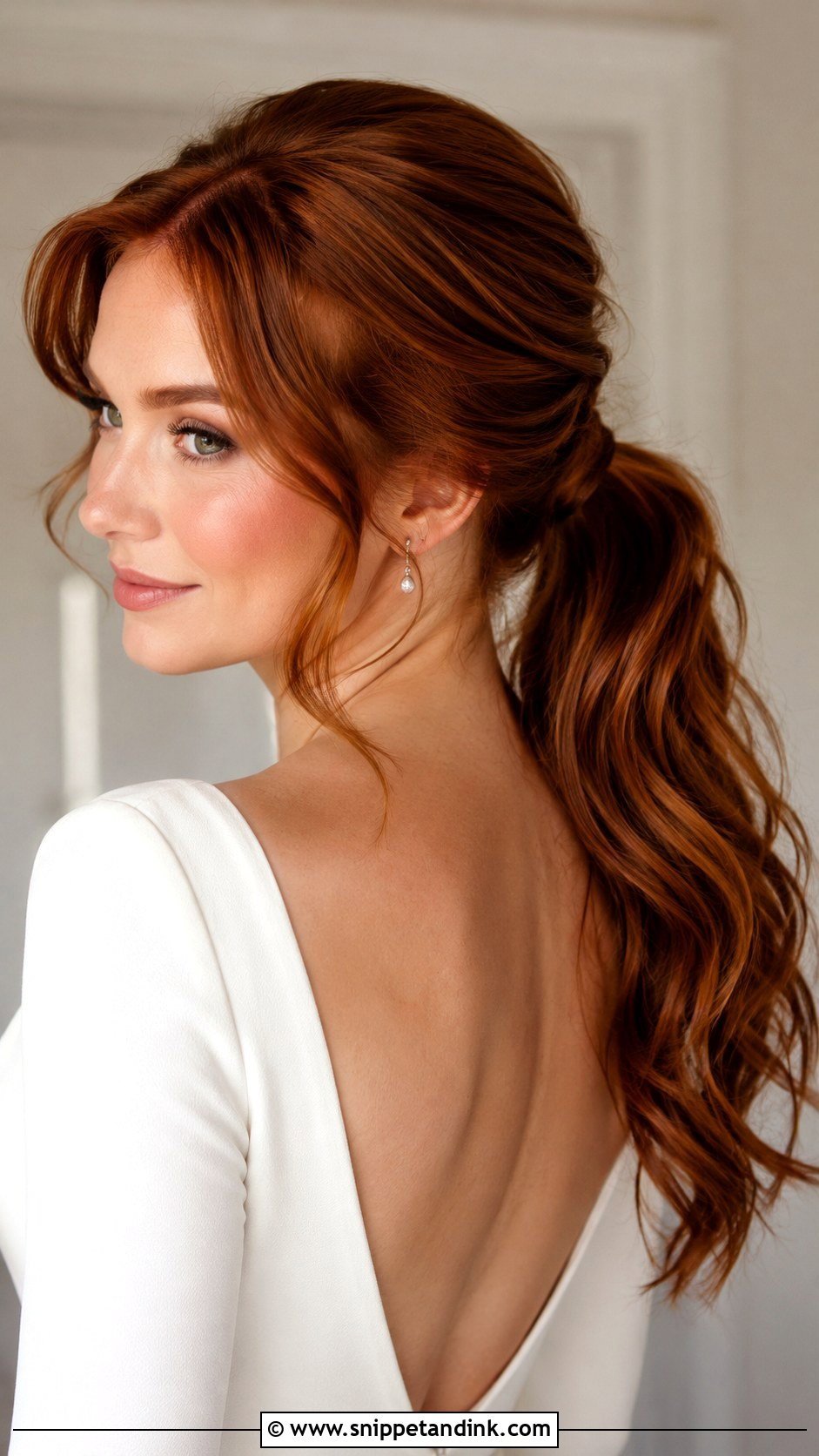
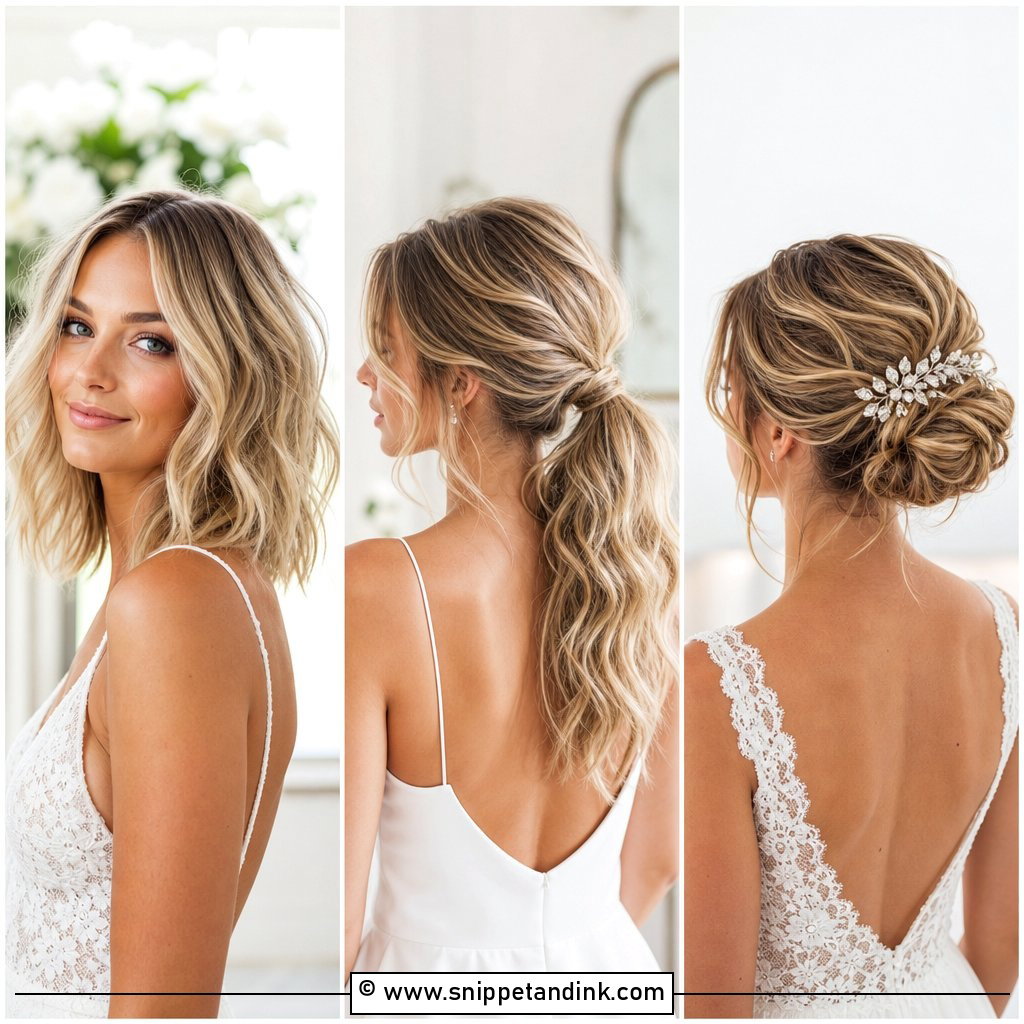
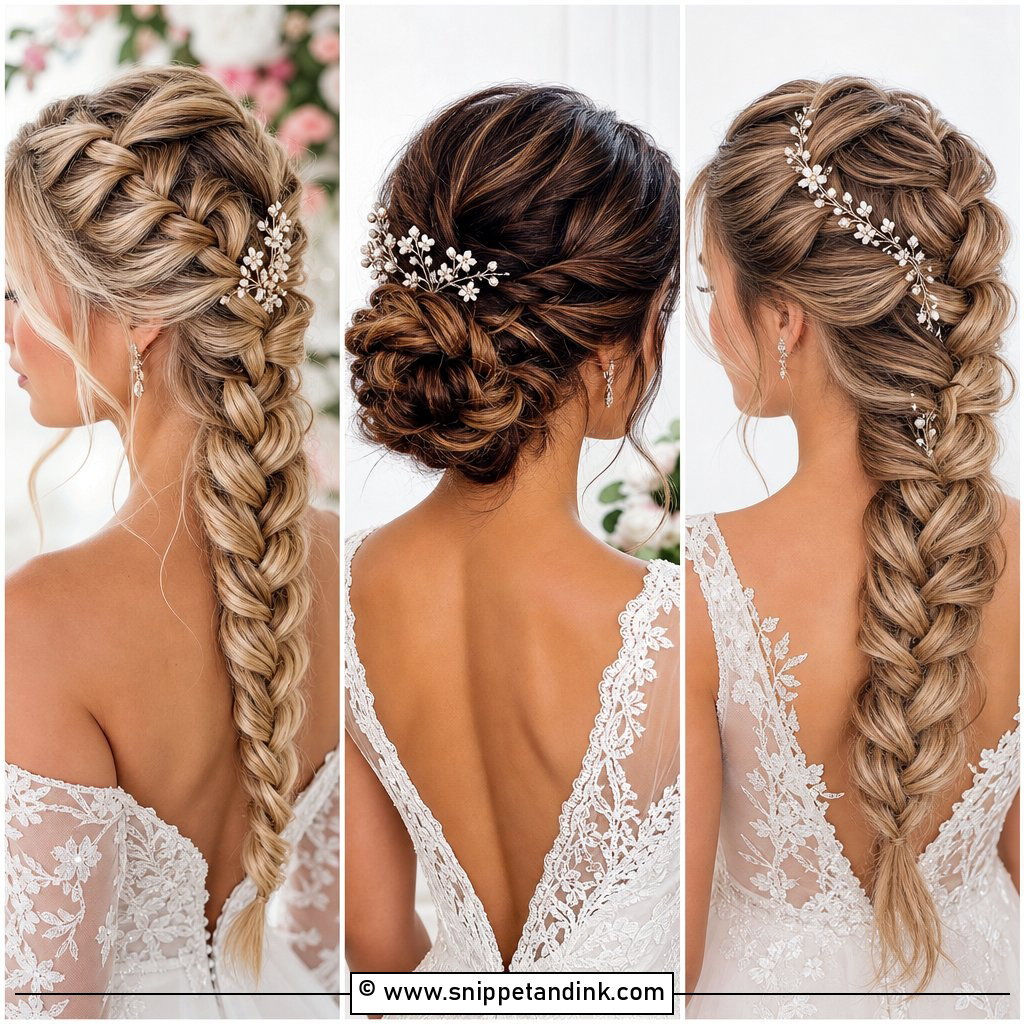
Gathering waved hair into a ponytail keeps your neck clear in the heat while still showing length in photos. It can sit low, mid or high, though with a veil I usually suggest low or mid, because a high pony leaves nowhere tidy for the comb. Wrapping the base with a small strand of hair makes it look finished, and a few face-framing pieces keep it soft. Backless gowns, high necklines and warm-weather weddings all suit it. Thick hair can ache pulled into one elastic, so I stack two hidden elastics to spread the weight. Pearl pins or a bow add the bridal note.
6. Low Wave Wedding Bun
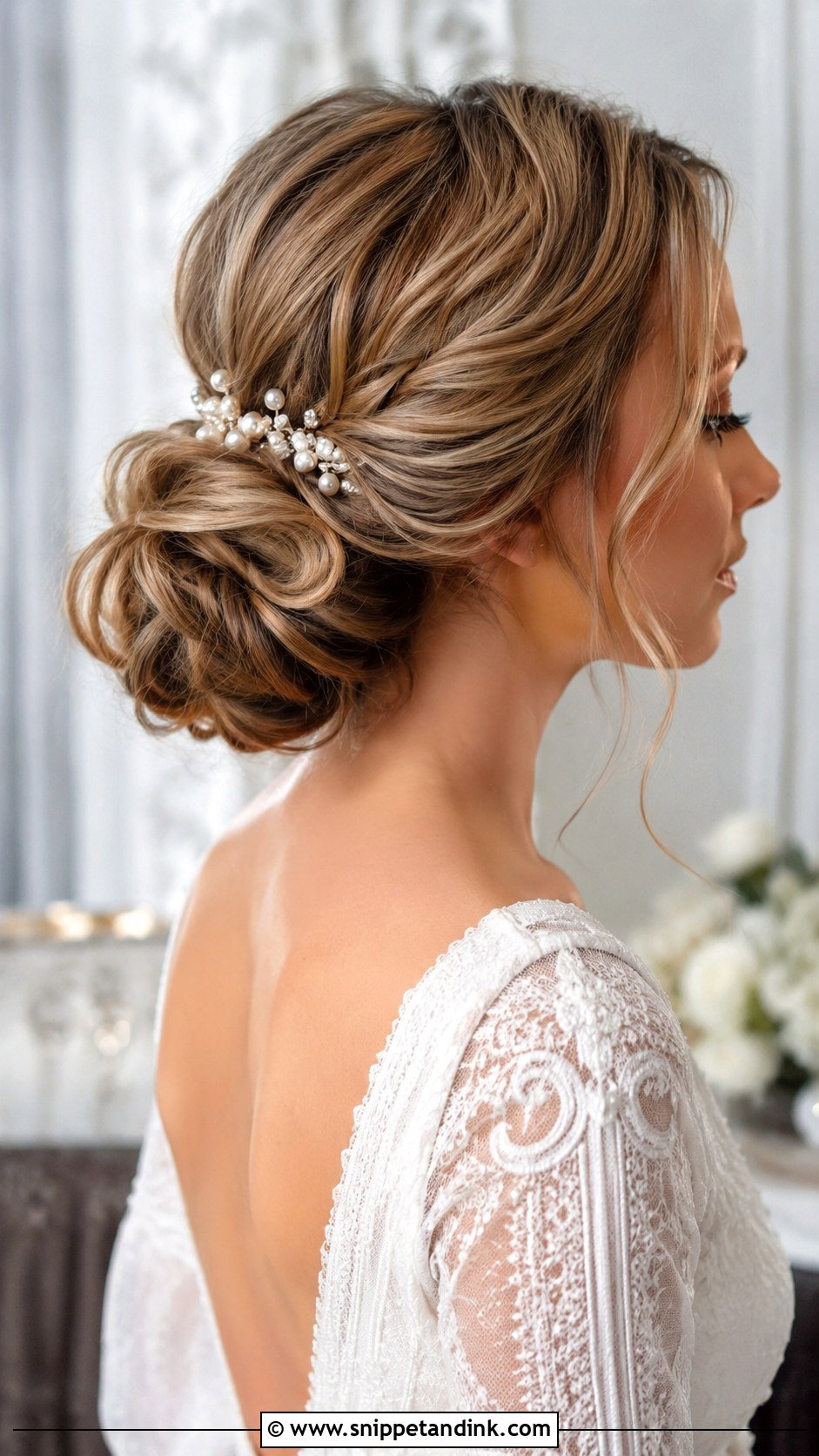
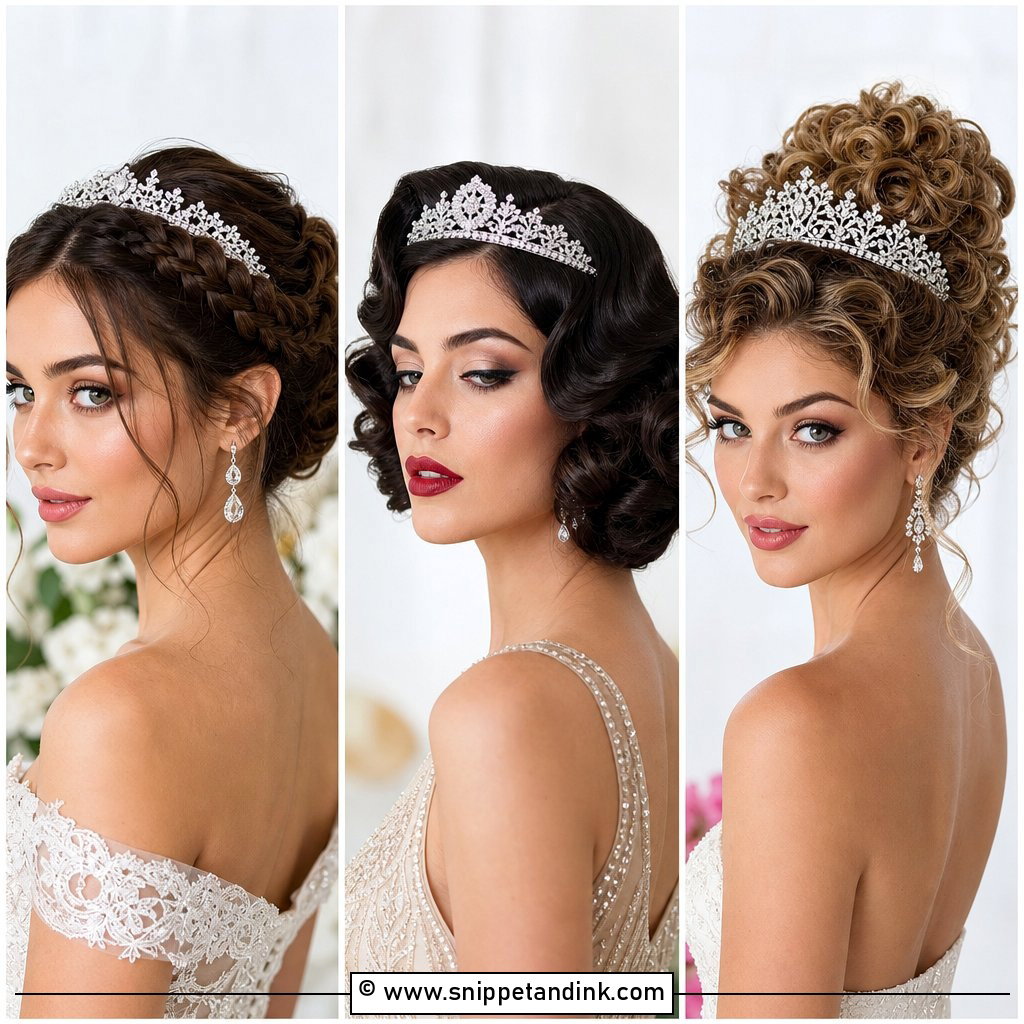
Waving the hair before it goes up is what gives a bun depth instead of a flat, sleek finish. The texture shows through the crown, the sides and every pinned section. It suits veils, classic gowns and formal venues, and loose pieces at the face keep it from feeling strict. I place the bun by looking at your profile in the mirror rather than following a rule: a strong jaw often suits it a little higher, while a long neck can take it right at the nape. Secure is the goal, stiff is not, so I hold the shape with pins rather than heavy spray.
7. Wavy Bridal Updo
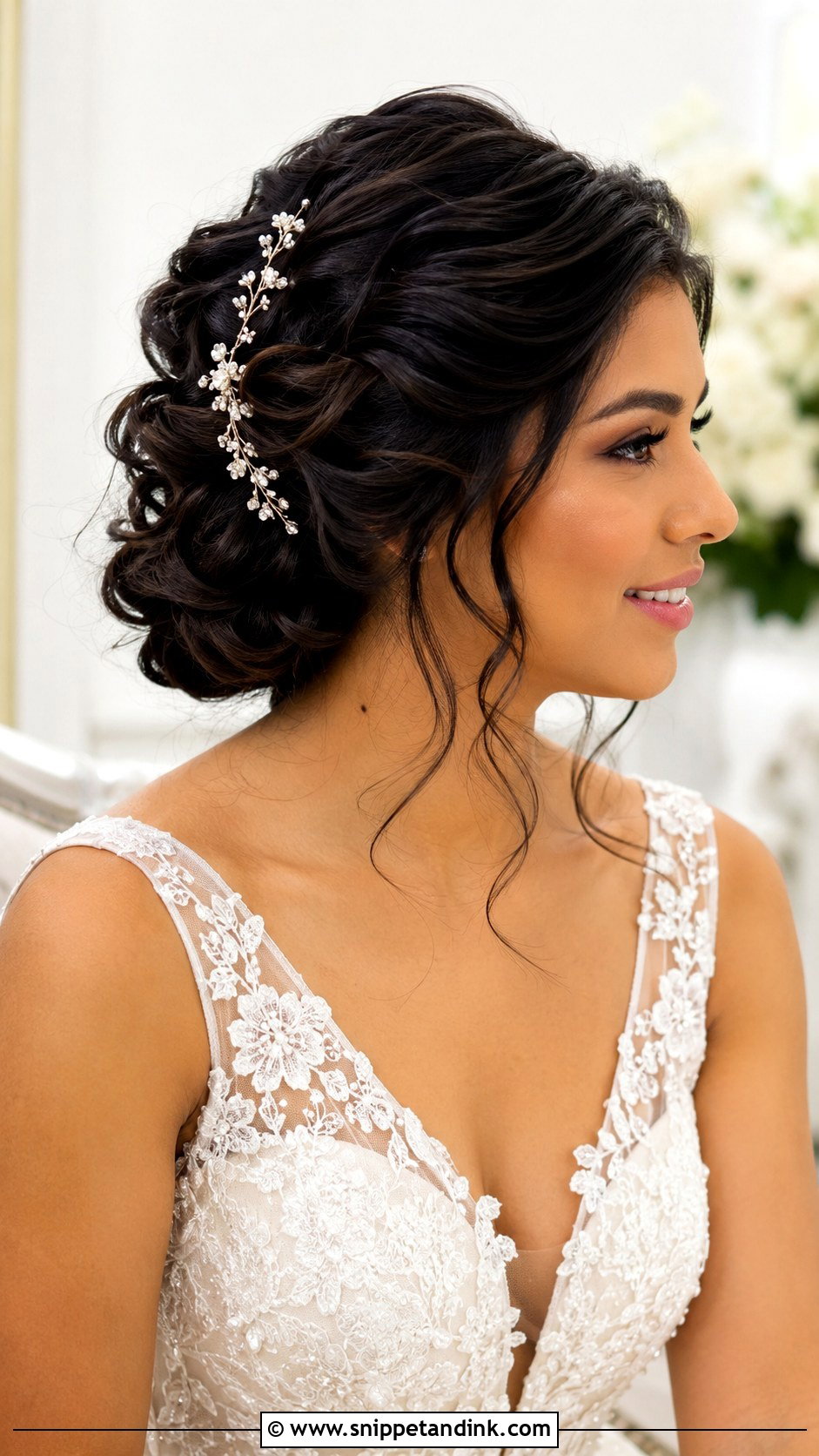
An updo built from waves keeps its shape and still looks as if it moves. The waves are pinned into a soft form at the back, with enough texture left that it looks full from every side. Thick hair is the easy case, because the updo absorbs all that volume. Fine hair needs more prep, usually a texture spray at the roots and some padding or a clip-in weft, or it shrinks to the size of a walnut once pinned. Veils, hair vines and detailed dress backs suit it, and it’s the most reliable wave style here for a long day with dancing.
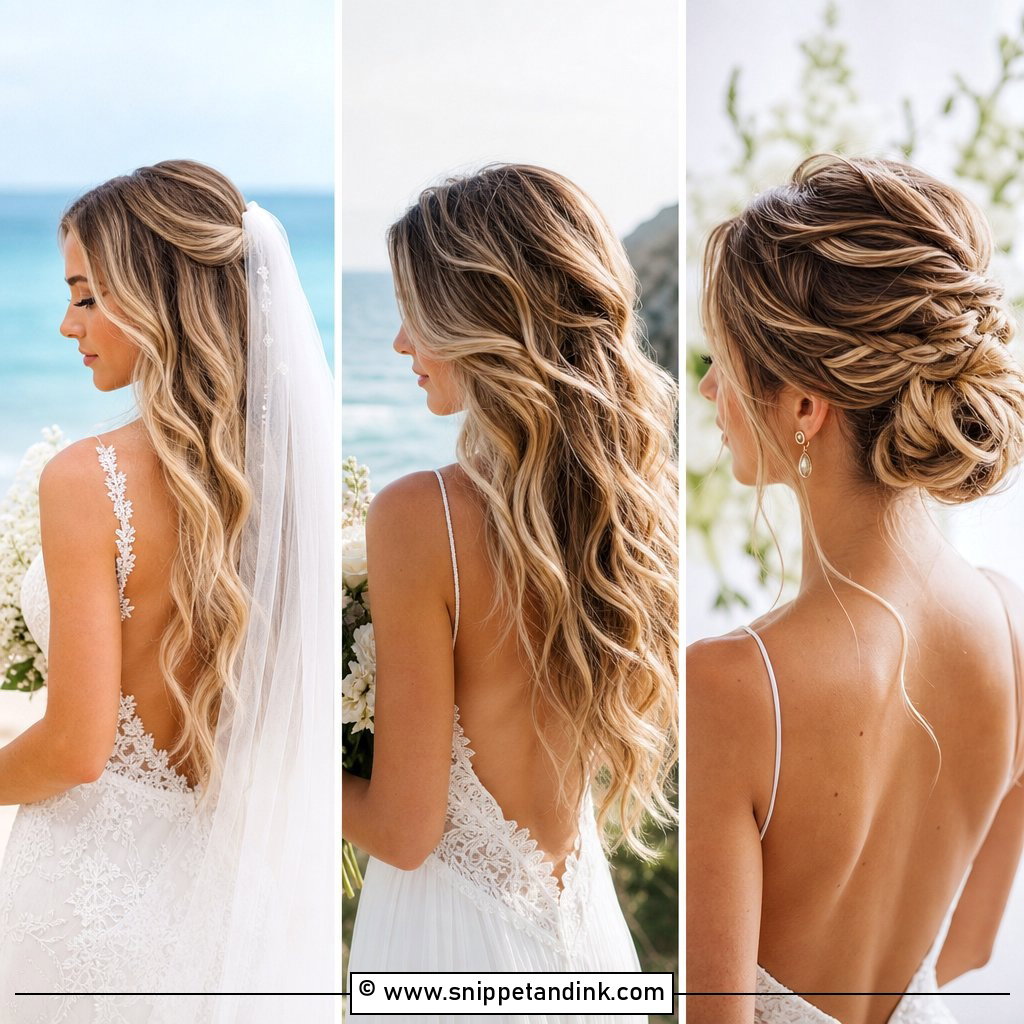
8. Beach Wave Wedding Hair
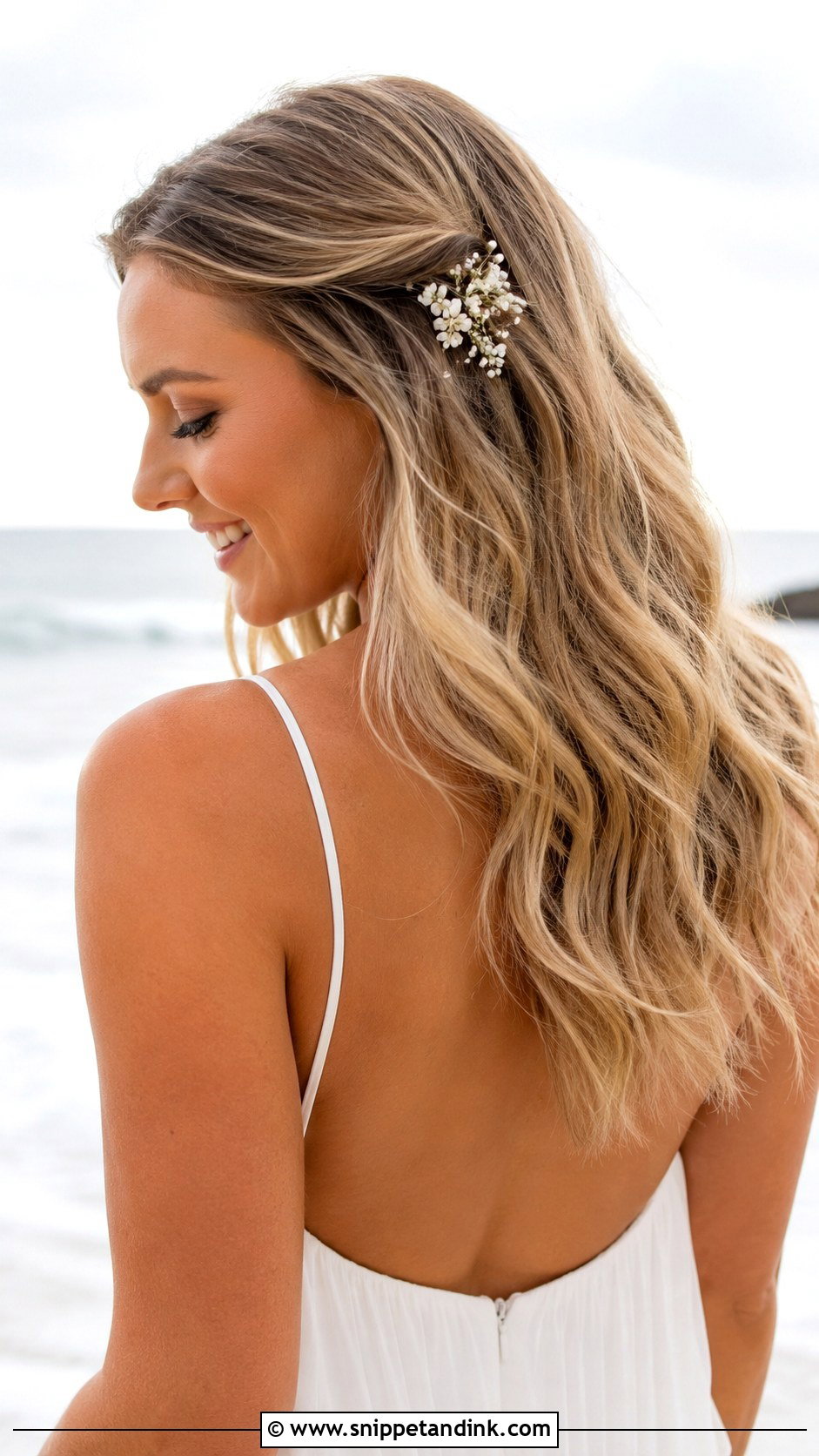
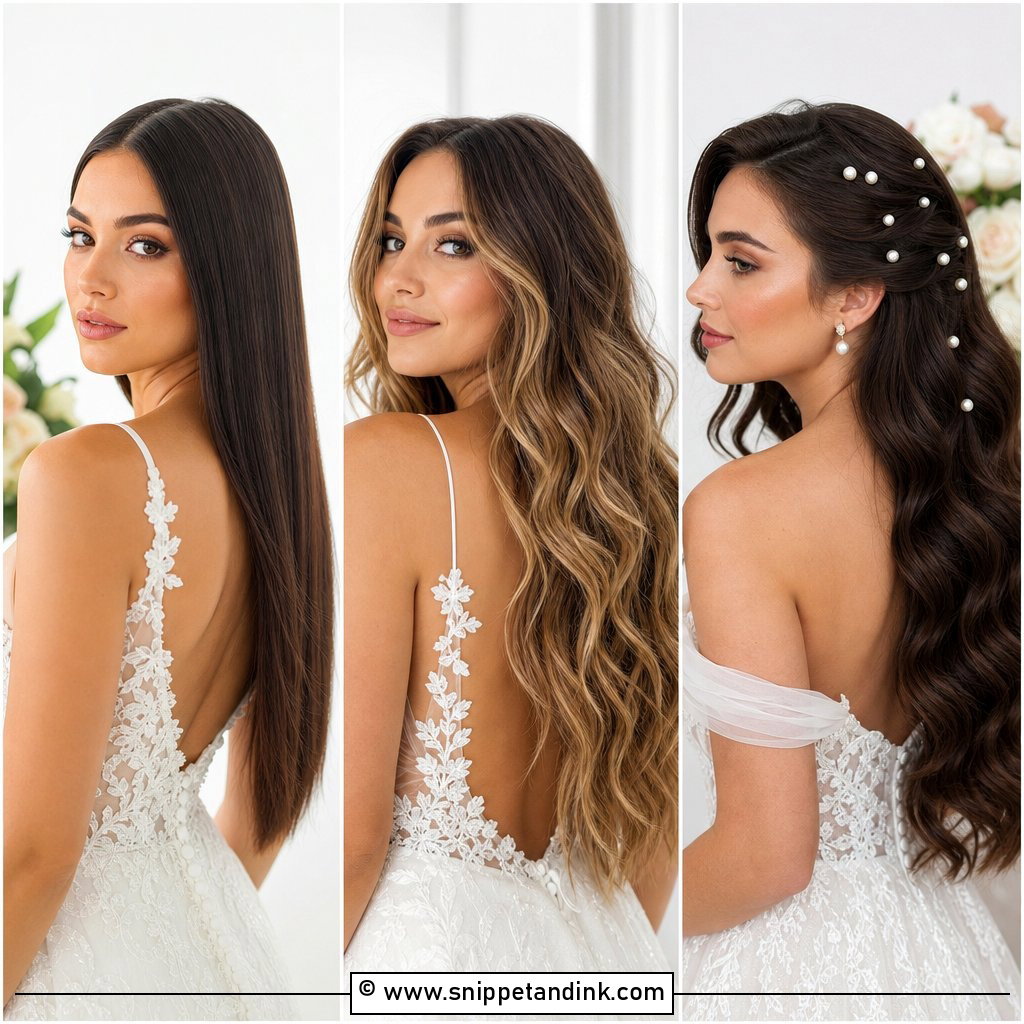
These are looser, slightly undone and deliberately less uniform than Hollywood waves. Beach wave wedding hair suits coastal ceremonies, backyard weddings, boho dresses and light veils, but it slides into looking unfinished very easily. I keep the crown smooth, the ends shaped and some shine through the lengths. Layered hair gives the texture somewhere to move. On the sand itself, salt air and wind work against any wave, so I’d add a simple barrette or a few tiny flowers that also hold one section back from the face.
9. Vintage Wave Wedding Hair
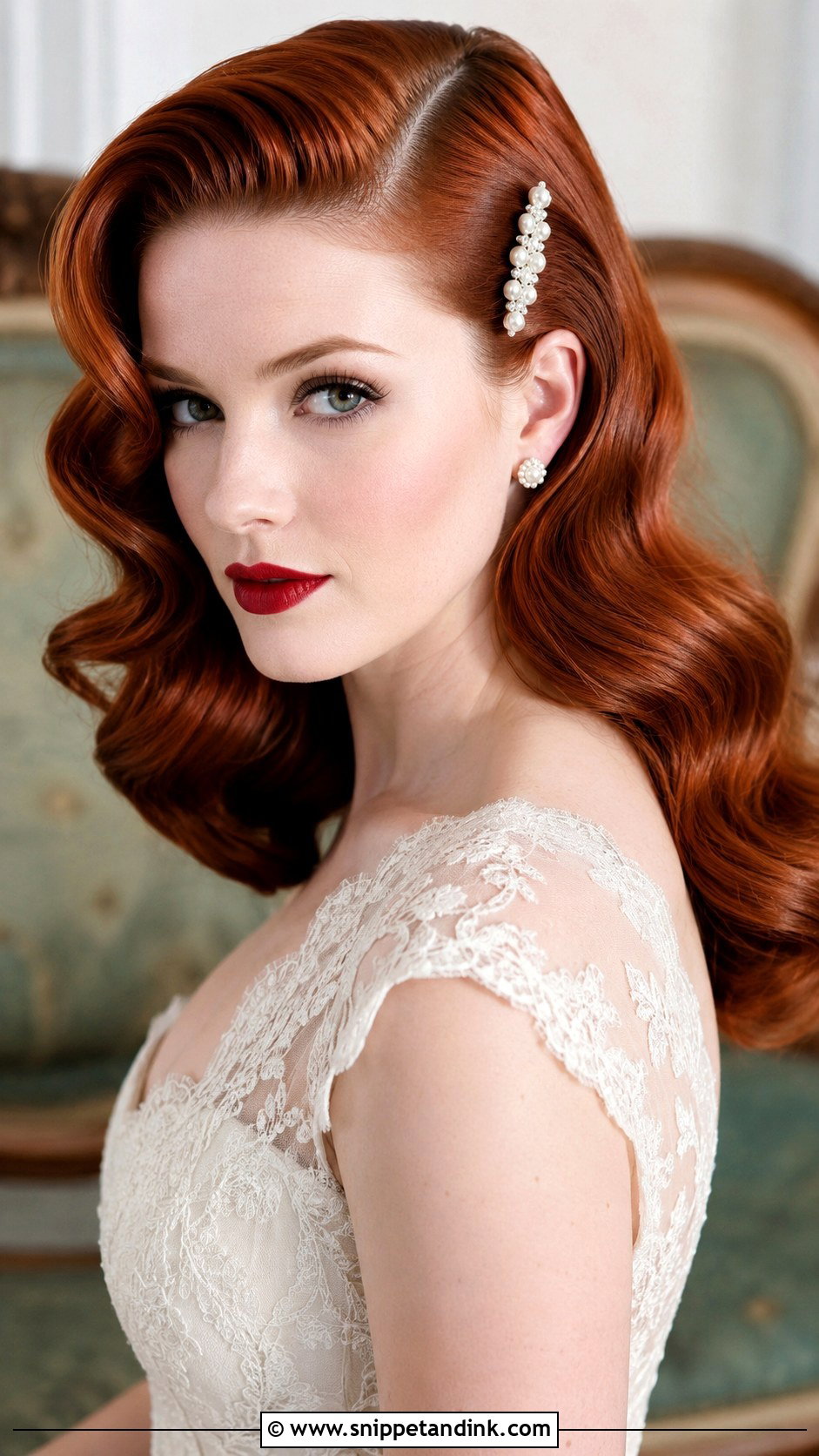
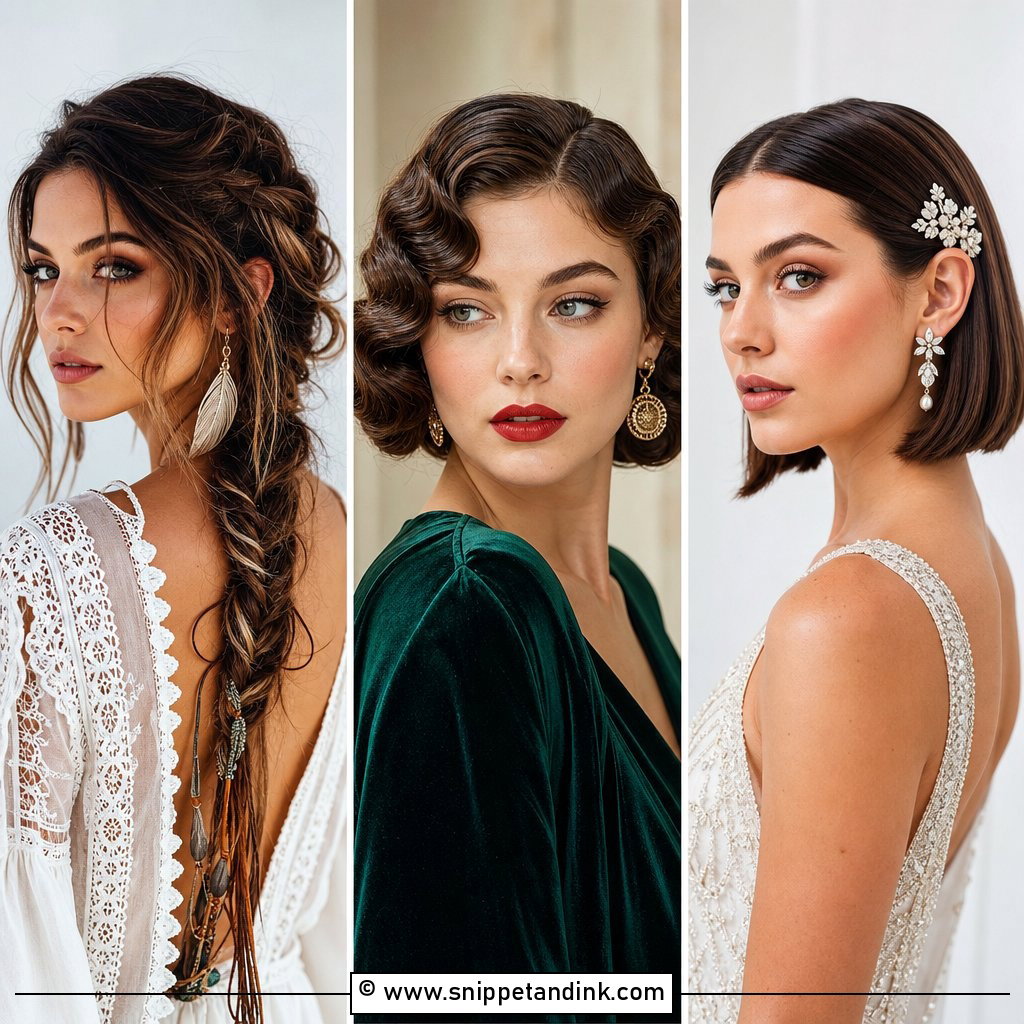
Vintage waves sit between beach waves and full Hollywood: sculpted close to the head, with smooth roots and a side part, framing the cheekbones. Vintage lace, tea-length dresses, pearls and a classic red or berry lip all suit them. Short, medium and long hair can each wear a version. On a bob I set them in pin curls and let them cool completely before brushing, which is how the original look was made. The line between refined and costume is thin, and a glossy finish with slightly softer ends keeps you on the right side of it.
10. Long Wave Wedding Hair
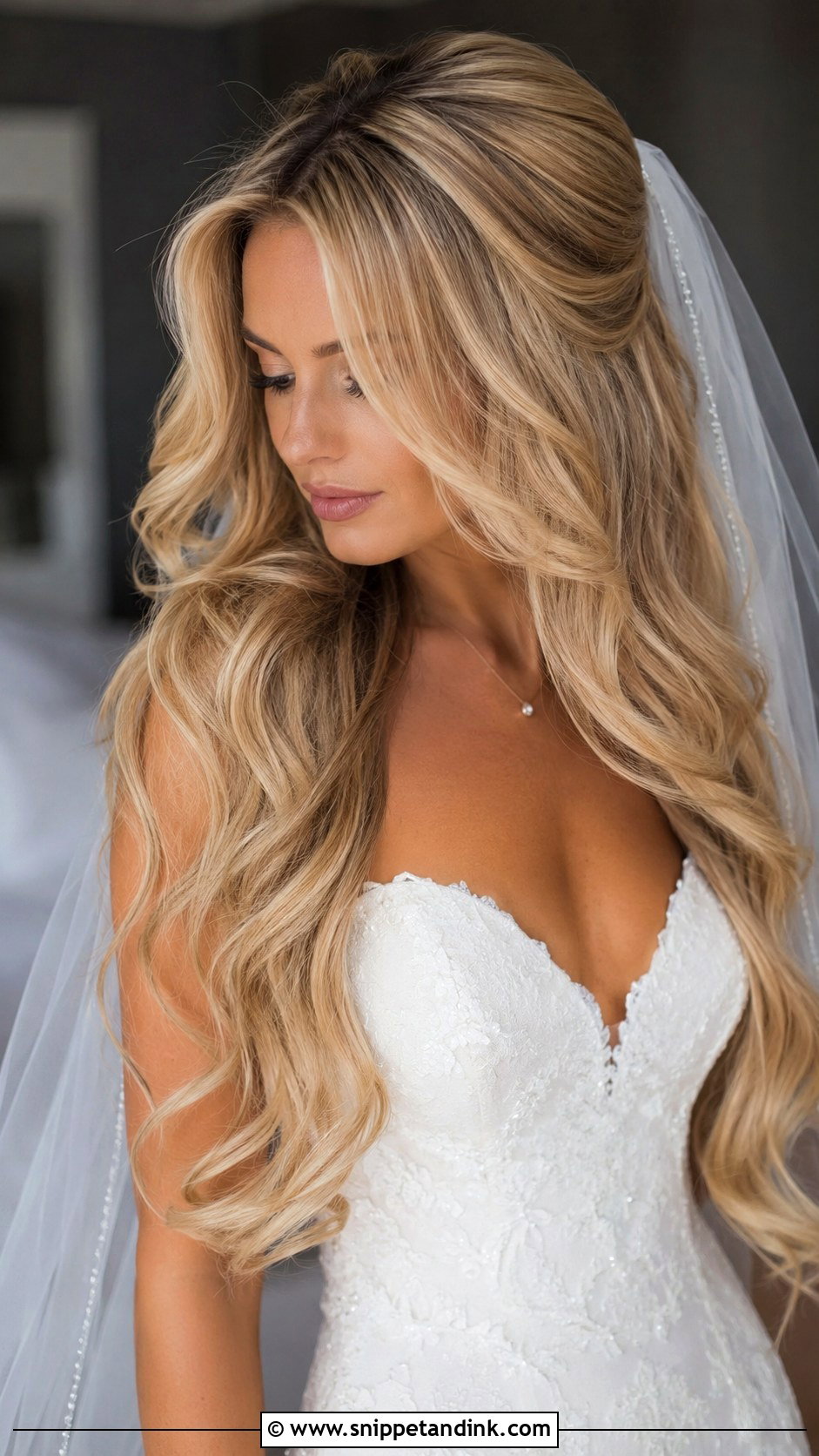
Length lets waves flow down the back, around the shoulders or over one side, which is why this look is requested so often. Extensions blend in well if you want more fullness for photos, and they often hold a wave better than very long, heavy natural hair. Weight is the real problem with long hair, since it pulls the pattern out from the top down. I give it lift at the roots, keep the top smooth and set the ends a little tighter so there’s still shape left at the end of the night. Veils, crowns, floral pins and simple gowns all sit well with it.
11. Medium Wave Wedding Hair
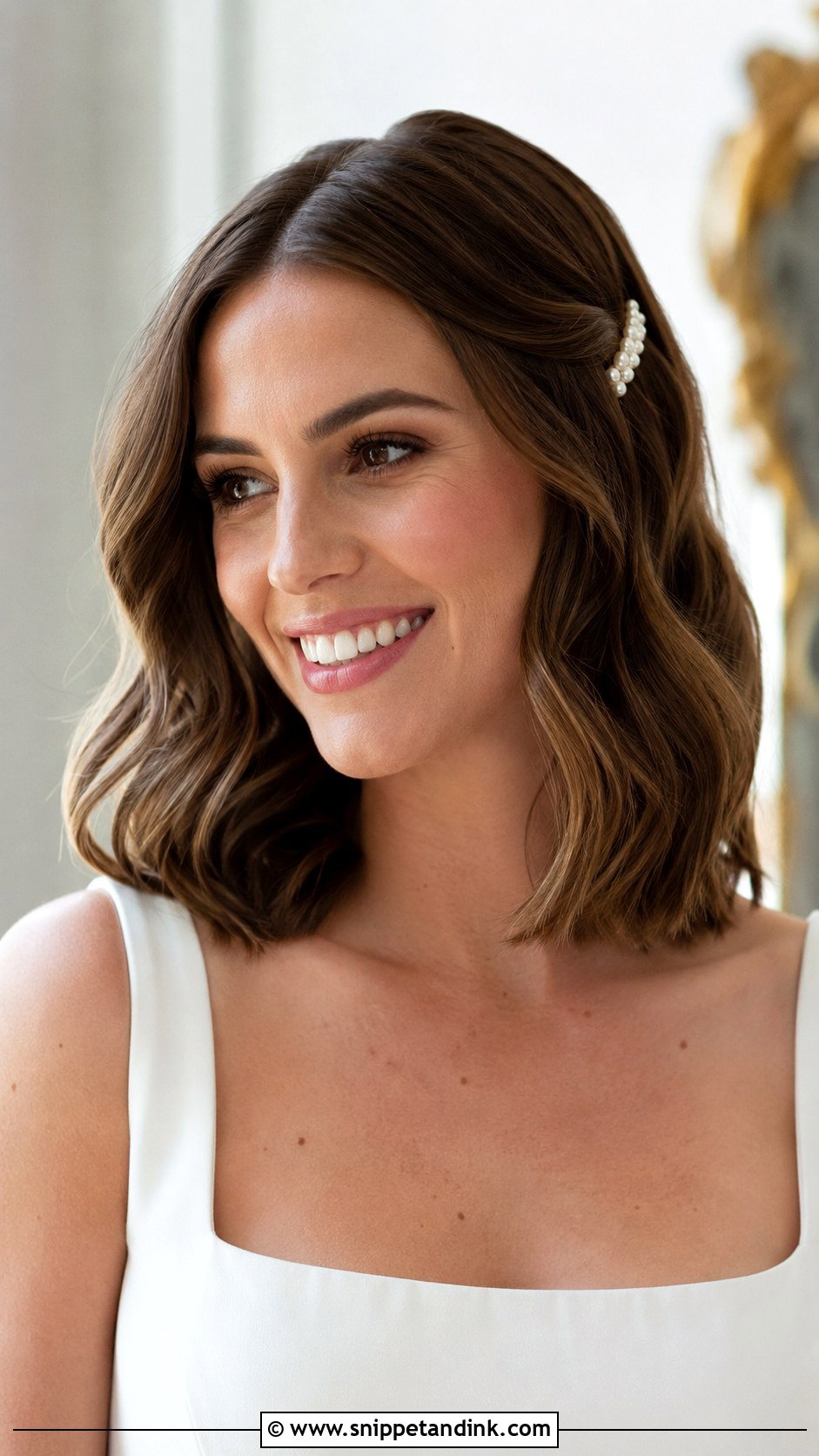
Shoulder-length cuts, lobs and collarbone layers wear waves well, and they hold them longer than long hair because there’s less weight dragging the pattern down. I go for soft bends rather than curls on this length; a tight curl springs up and suddenly the hair looks a few inches shorter. A center part, a deep side part, a small half-up twist or a pin on one side all work. A small comb, a pearl clip or a mini veil adds the bridal touch.
12. Short Wave Wedding Hair
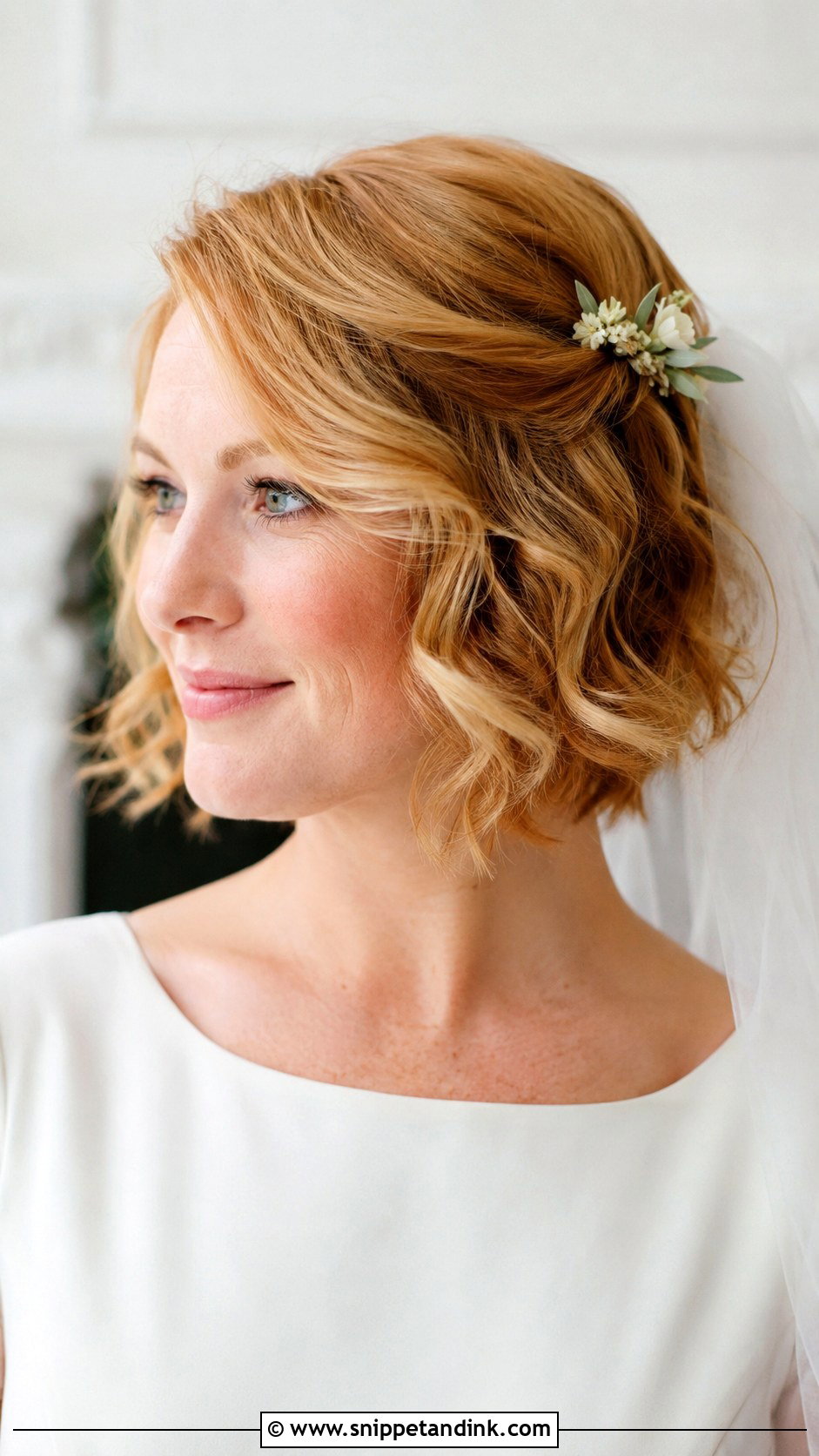
On a chin-length bob or cropped lob, waves add texture and shine without needing any length at all. A side part reads elegant; a center part looks cleaner and more modern. I use a smaller iron or a flat iron here, because a large barrel barely catches short hair and leaves it looking merely blow-dried. Accessories show much more clearly on short hair, so pick one with care, such as a pearl barrette, a small floral clip or a delicate headband. Smooth ends are what make the waves look deliberate.
13. Wavy Bob Wedding Hair
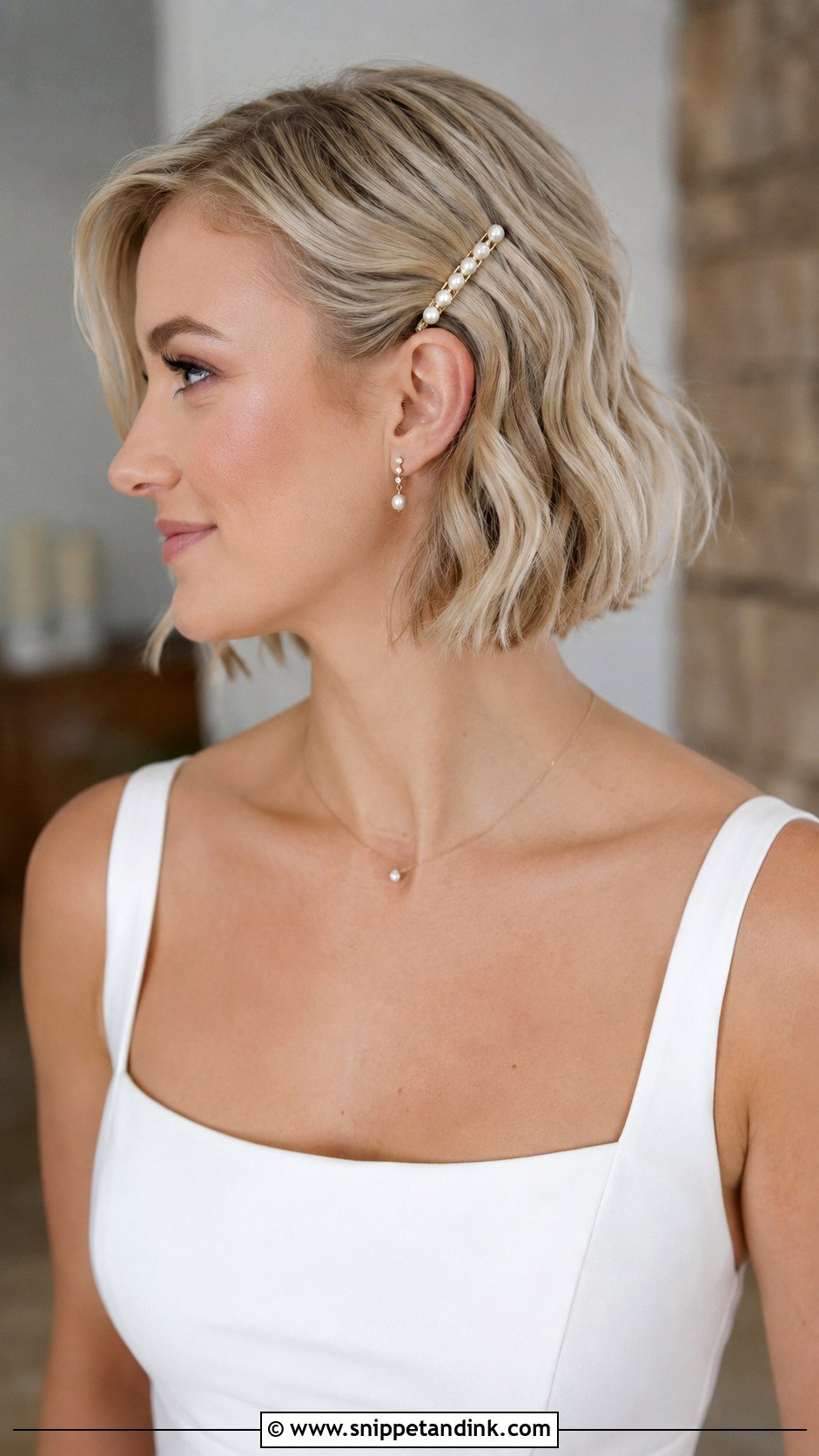
A sharp bob can be part of the bridal look in its own right. Wavy bob wedding hair works at chin length, jaw length or slightly longer, with the waves shaping soft volume around the face. Simple dresses, square necklines and modern accessories suit it. The main risk is too much curl, which shrinks a bob and rounds it into a helmet. Soft bends, straight ends and some shine keep the line of the cut visible. Tucking one side behind the ear with a clip or comb gives you a place for a bridal detail.
14. Natural Wavy Wedding Hair
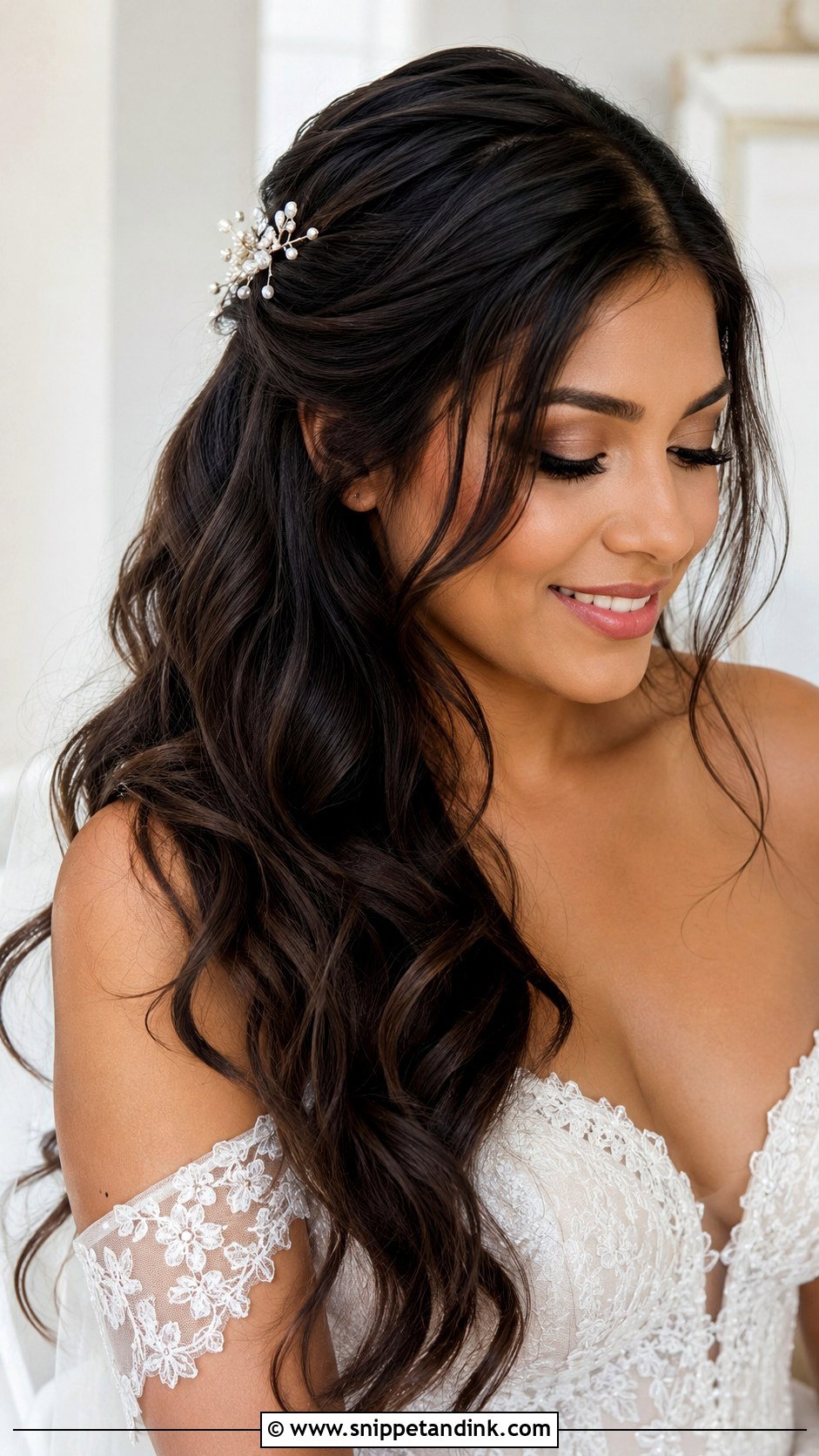
If you already have a wave pattern, I’d rather enhance it than iron it into something else. Natural wavy wedding hair is built by defining the waves with a cream or mousse, controlling frizz and shaping the front pieces so the whole head looks polished. Loose, thicker and mixed patterns all work. A trial isn’t optional here, ideally on a day with similar weather, because natural texture reacts to humidity, products and even a change of water. Washing the night before and letting it dry undisturbed usually gives the most even pattern.
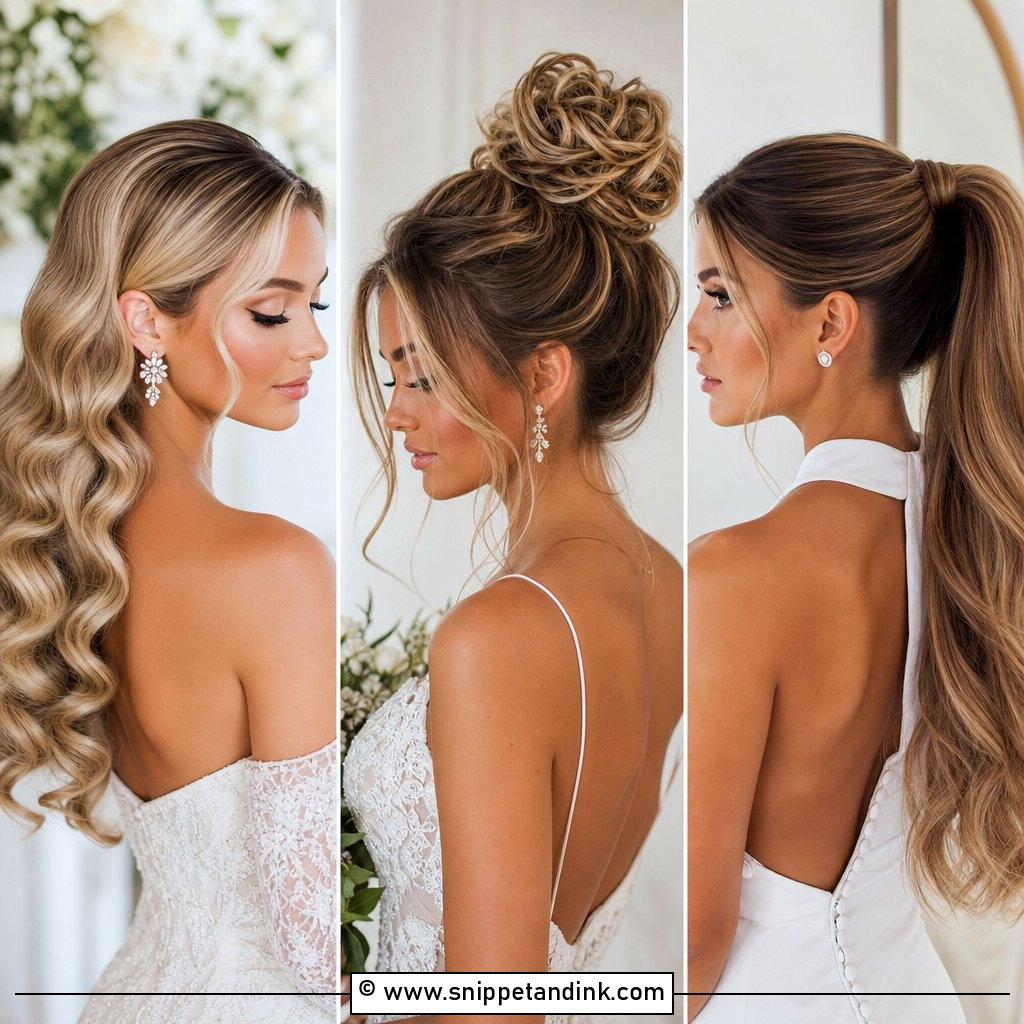
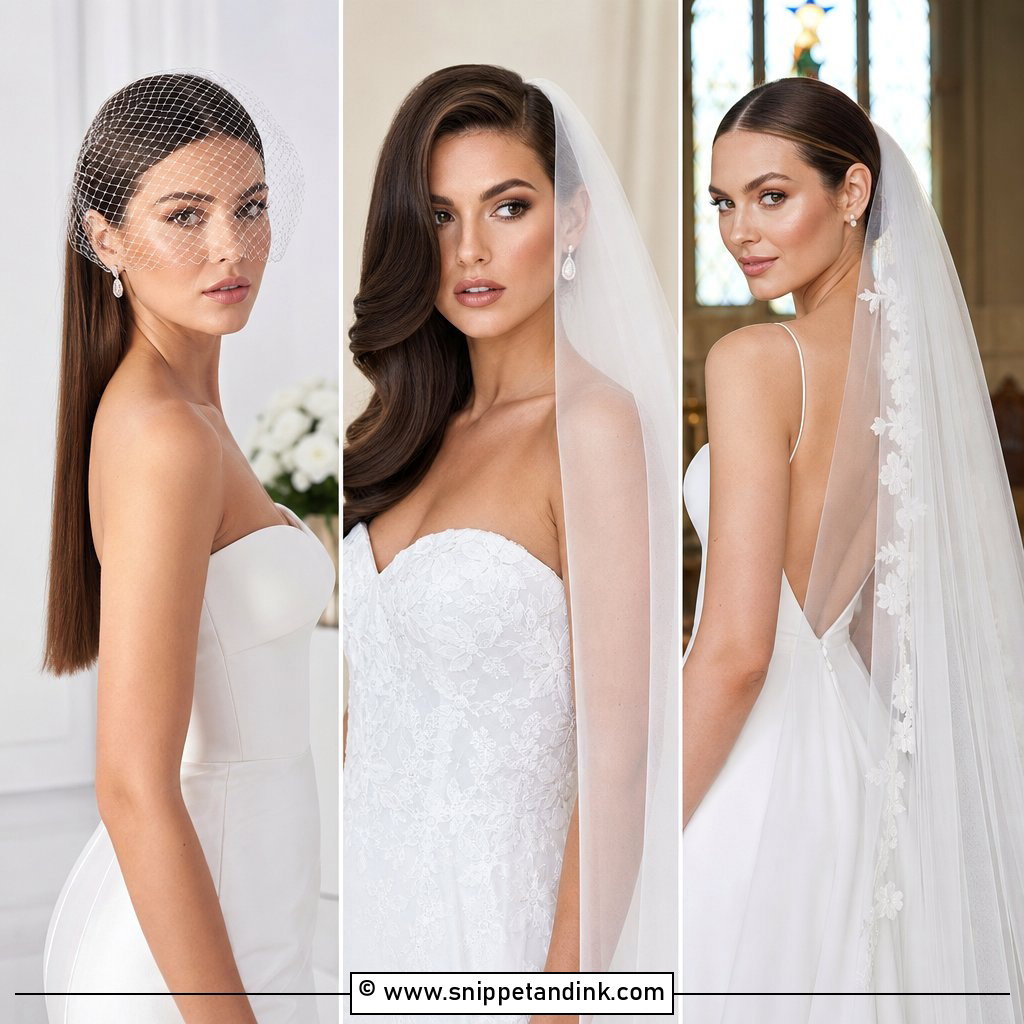
15. Wave Wedding Hair With Veil
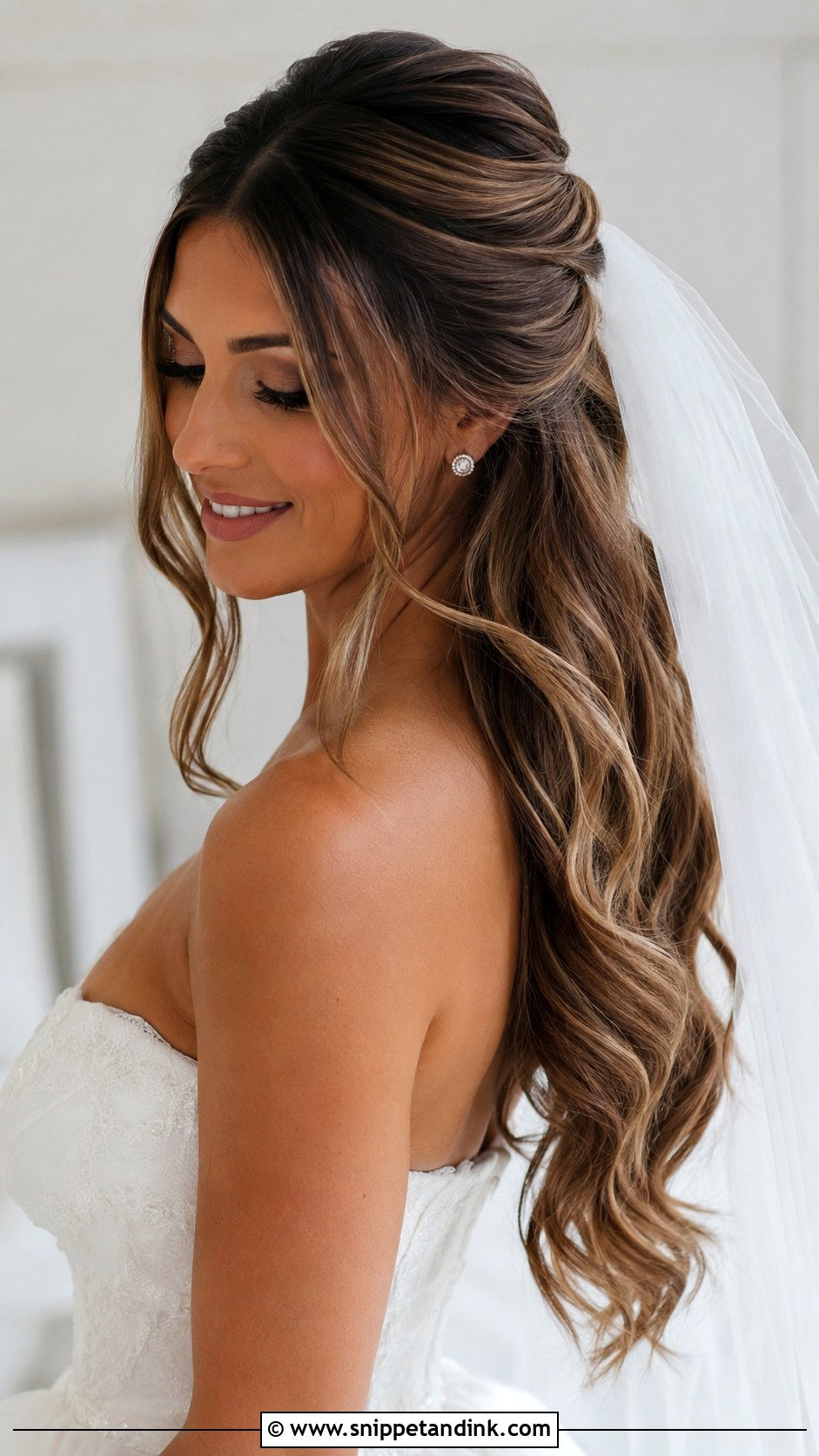
Waves soften the hard edge of a veil, which is why the two look so natural together. The veil can sit at the crown, under a half-up section, above a low bun or tucked into the back of loose waves. Where it goes depends on your hairstyle, the dress and whether it comes off after the ceremony. On loose waves, I backcomb a small hidden section, lock the comb into it, then arrange the waves around it. Half-up styles and updos give pins a ready anchor. If the veil is coming out before the reception, tell your stylist, so she places it where removing it won’t pull the waves apart.
What Pulls a Wave Out Before the First Dance
A heat-set wave holds because the hair is reshaped while hot and locked into place as it cools. Moisture undoes that lock, which is why a style that lasts all evening indoors can drop within an hour beside the sea. These are the usual culprits I plan around.
Silky, just-washed hair
Hair washed that morning with a rich conditioner lets a curl slide straight out. I prefer it washed the evening before, with a light conditioner on the ends only and no oil or serum on the day.
Humid air and outdoor ceremonies
Damp air gets to fine and naturally wavy hair first. I set the waves tighter than the final look, finish with a humidity-resistant spray and brush out later than usual, so there’s something held in reserve.
Hands, hugs and veil combs
Running fingers through waves separates them into frizz, and a veil comb rubs the same patch all through the ceremony. Keep your hands off the lengths and give your maid of honor a small brush, a few pins and a travel spray. A quick re-curl of the two front sections before reception portraits fixes most of what the day has done.
Bends, Sculpted Curves or Your Own Texture?
Waves can be soft or sculpted, modern or vintage, and that range is why so many brides land on them. Before you settle on one, think through your neckline, the veil, the venue and the forecast, and how much movement you can live with. Bring clear photos to the trial, then listen when your stylist tells you what your texture and length will really hold. Hollywood waves, a wavy ponytail, a textured bun and your own natural pattern each suit a different bride. The right one is the style you stop thinking about after the first hour.
You'll Like These Ideas:


Leave a Reply