
Long hair gives a bride the widest choice of any length, and also the most weight to manage. Everything from soft cascading waves to intricate braided updos is possible, but each one behaves differently once that length has hung off your head for ten hours. I plan long-hair styles around three things: your dress, especially its back; your veil; and how much hair the style has to carry. Below are twenty looks I’d build for long hair, with honest notes on what holds, what drops and what to bring to your stylist.
The Weight Problem Nobody Mentions About Long Hair
Long hair is heavy. Below the shoulder blades, the length itself pulls on everything: curls lengthen, buns sag, and a high ponytail slides down. None of that is a reason to cut your hair before the wedding. It just changes how I build the style.
- Curls are set tighter than the final result, because the weight will loosen them.
- Big buns are split into two folded parts instead of one dense coil.
- Pins go in crossed pairs and are spread across the head, so no single spot carries the load.
- Very heavy updos are checked for comfort after half an hour, before you dress.
If you get headaches from tight ponytails in daily life, mention it at your trial. I’d steer you toward a half up style or a braid that spreads the weight.
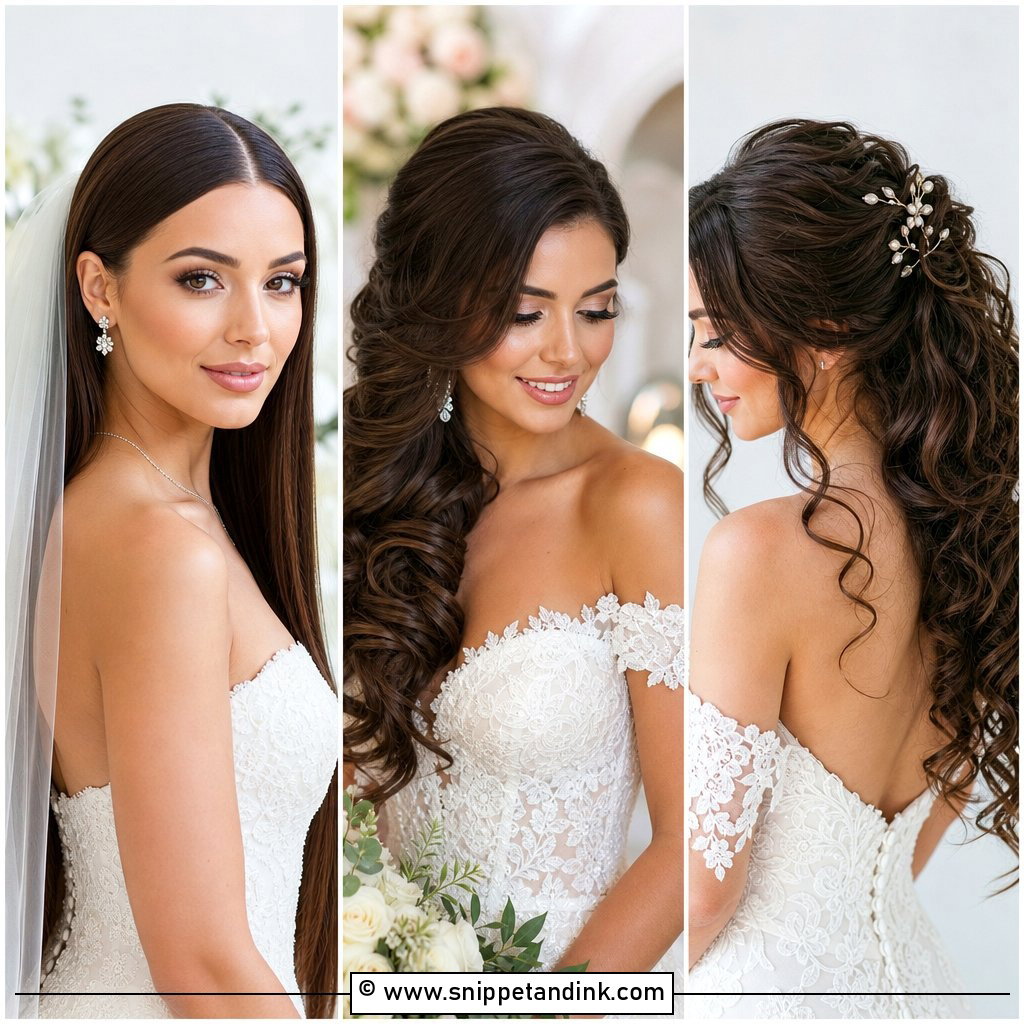
1. Half Up Half Down With Loose Waves
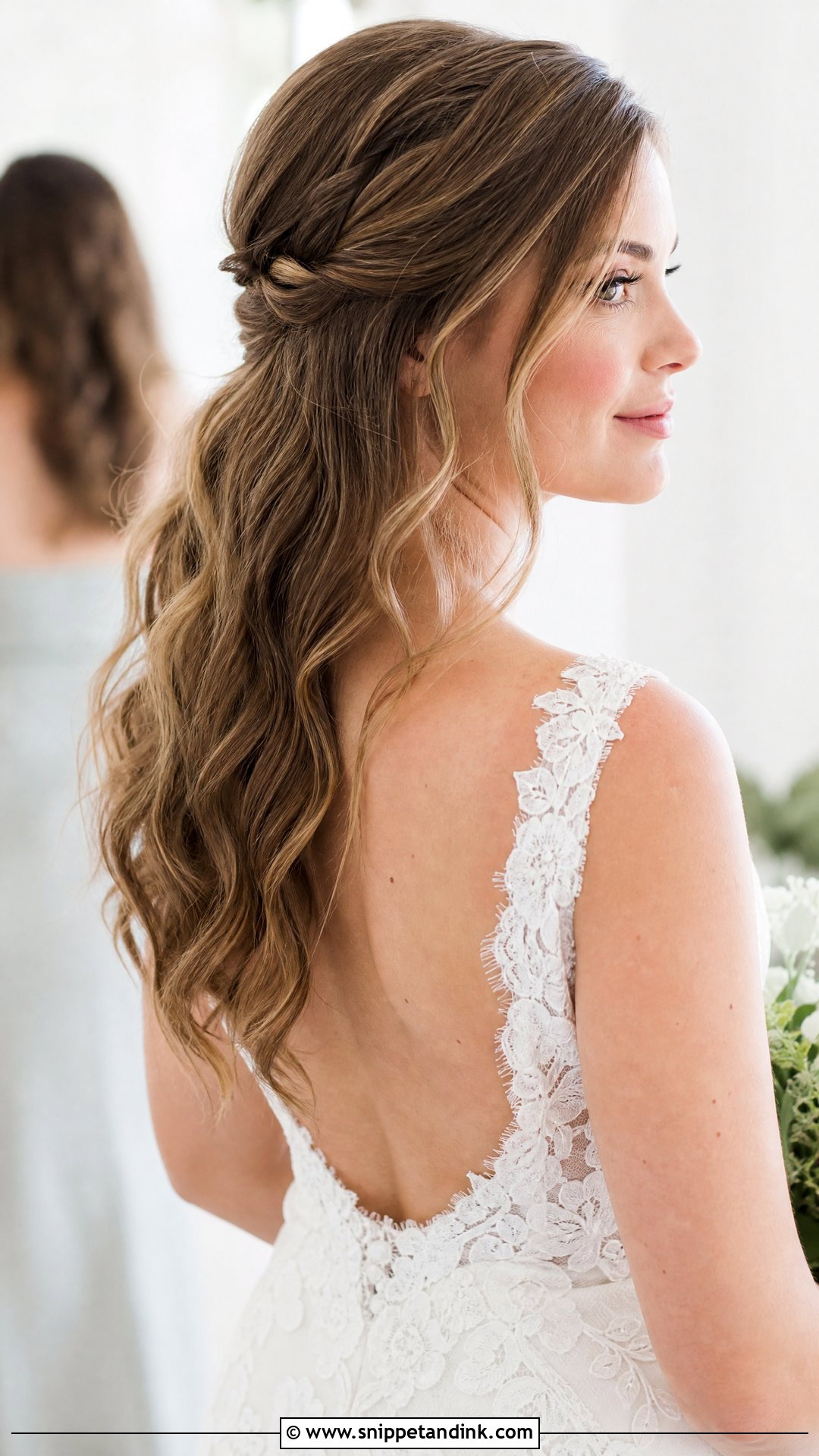
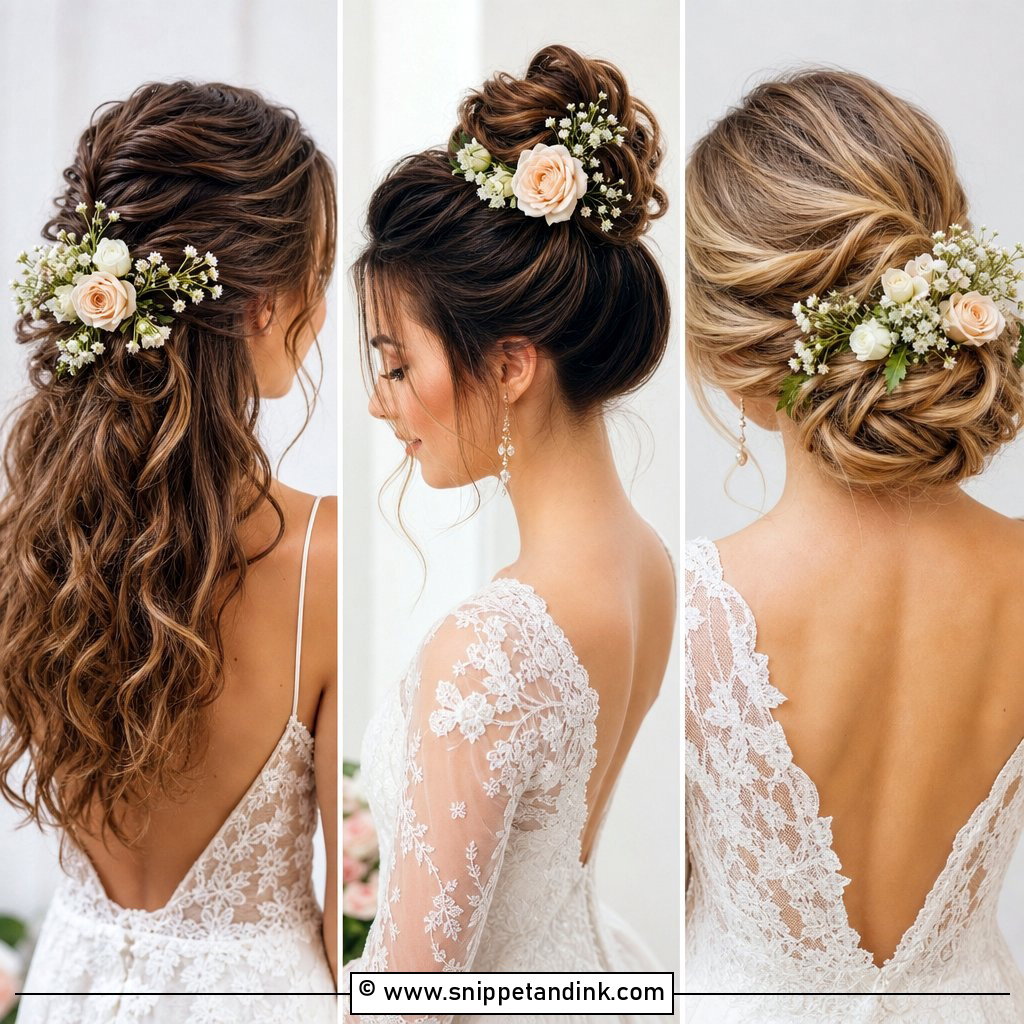
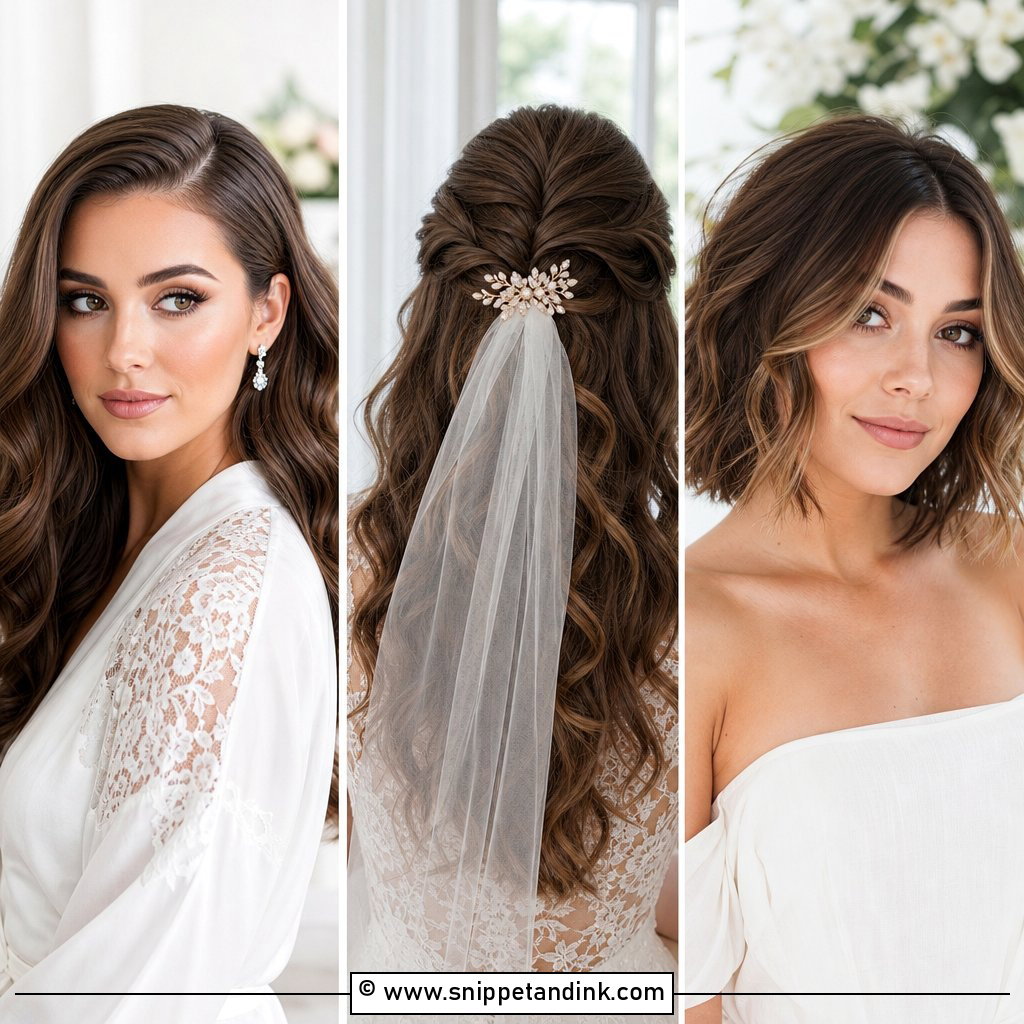
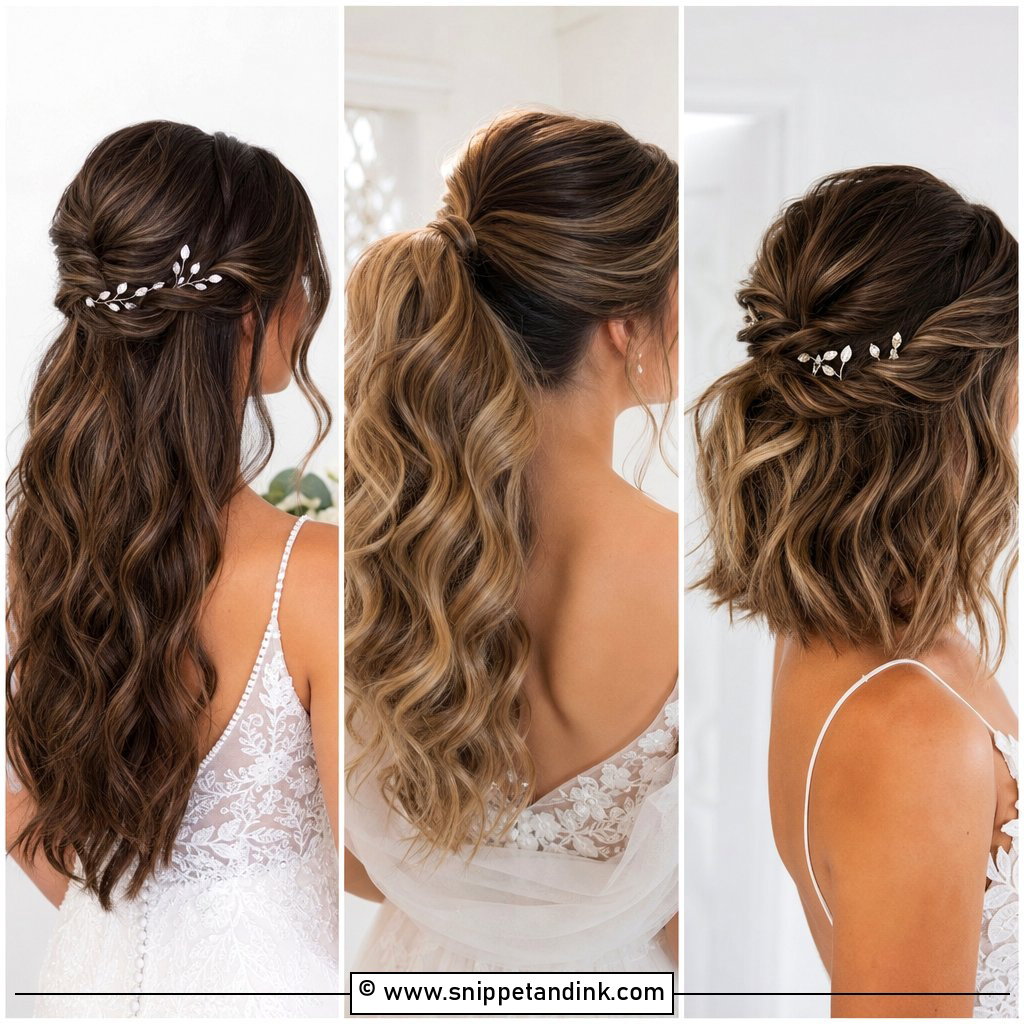
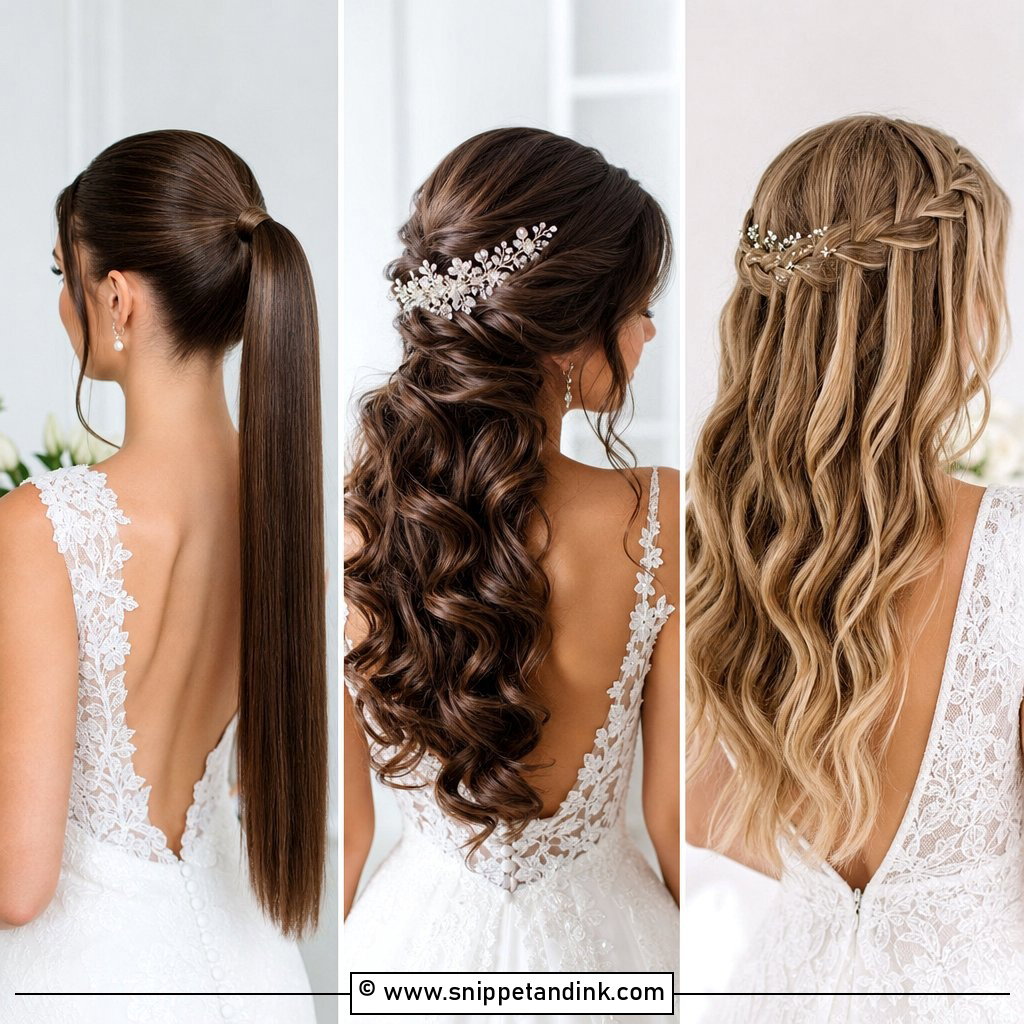
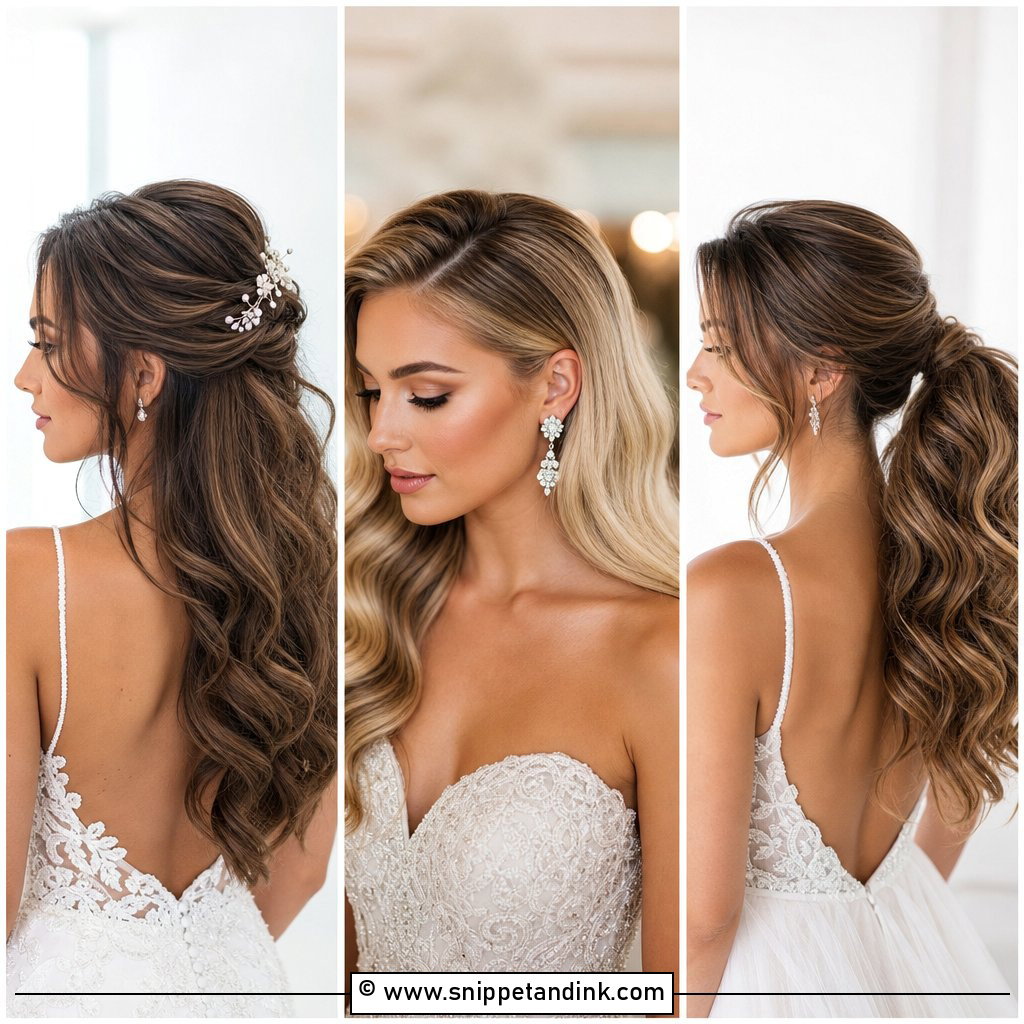
Half up is the answer for brides who can’t pick between up and down. I twist or pin the top section back softly and wave the rest. On long hair, the twist has to be anchored with crossed pins underneath, because the weight of the lengths below will tug it loose by the evening otherwise. Tight glamorous waves or loose beachy ones both suit it; the dress and venue decide. A small clip or a few tiny flowers over the twist hide the pins.
2. Low Bun Chignon
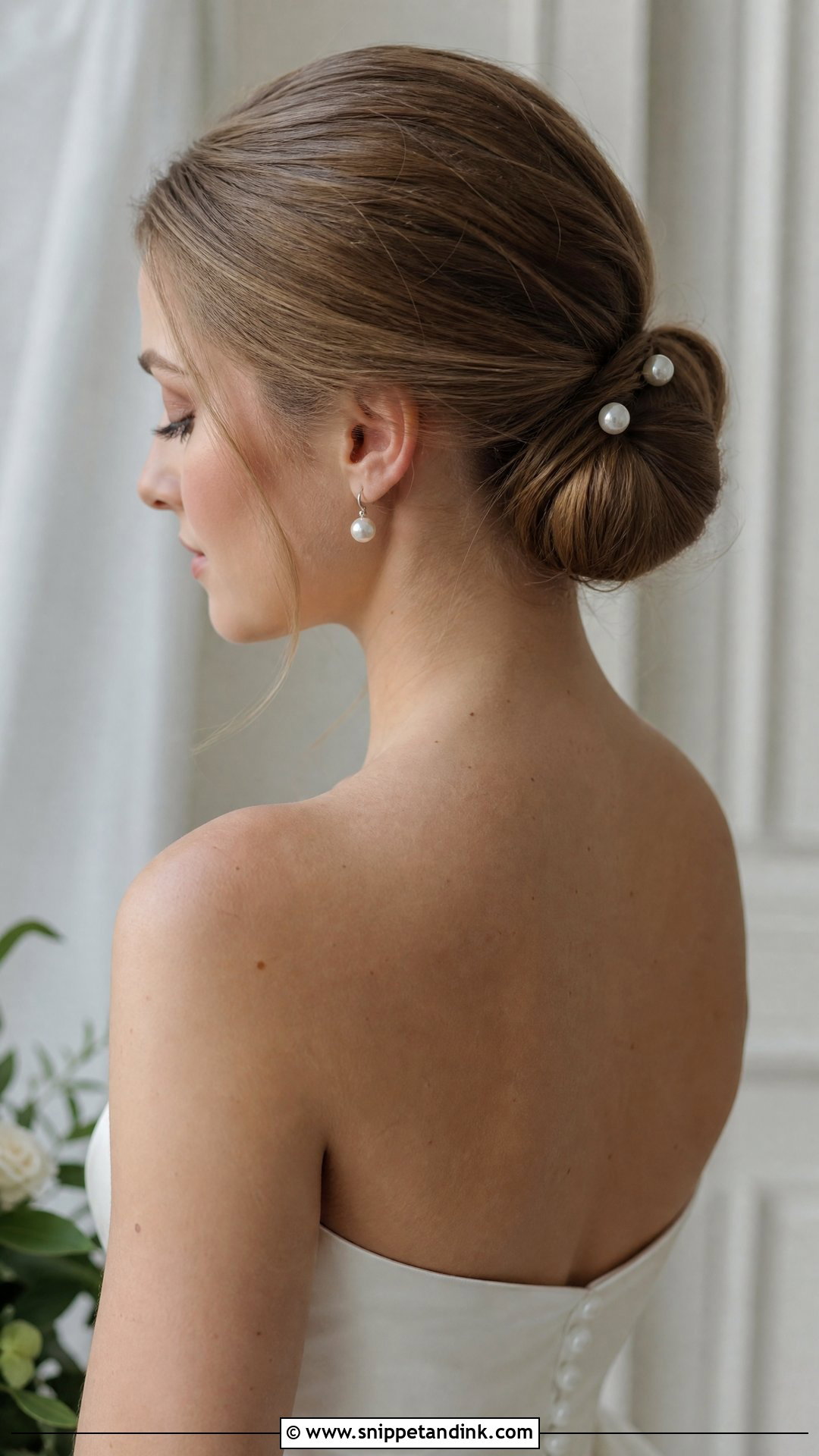
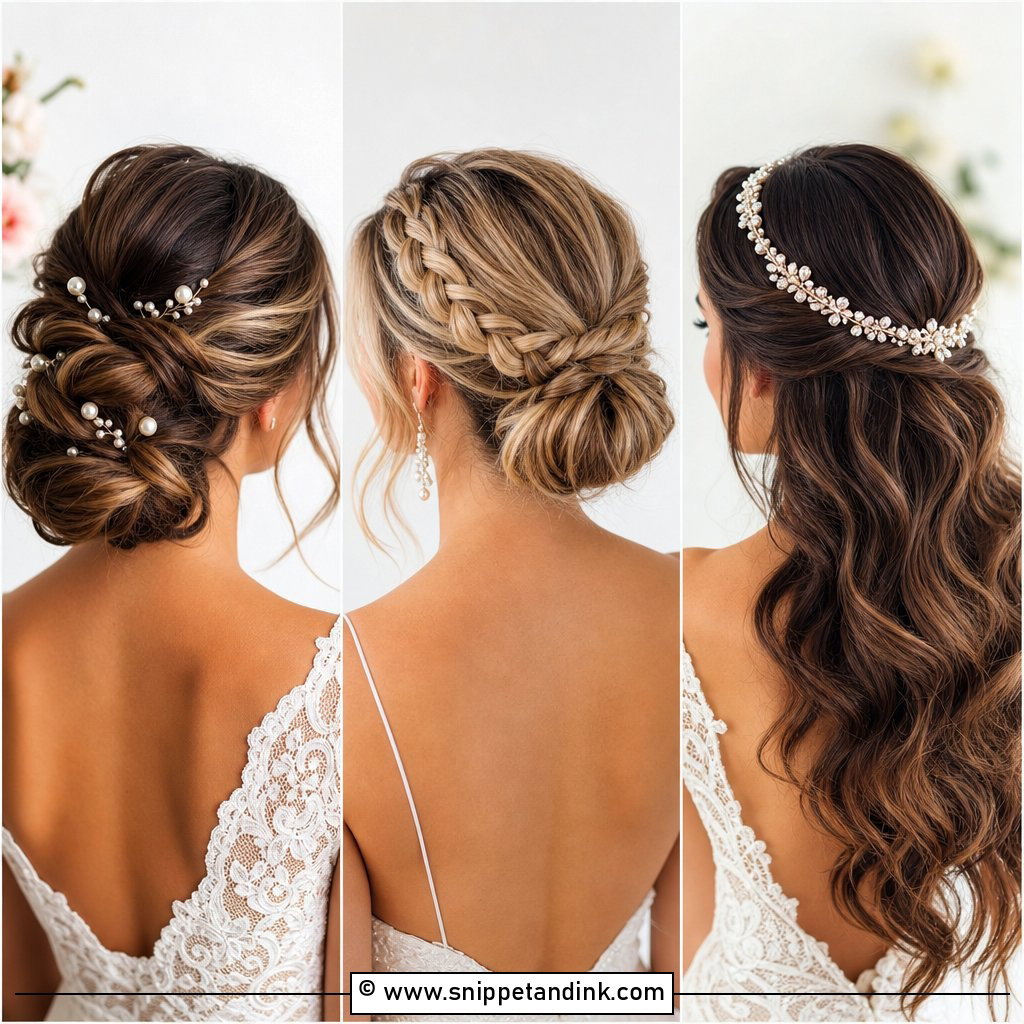
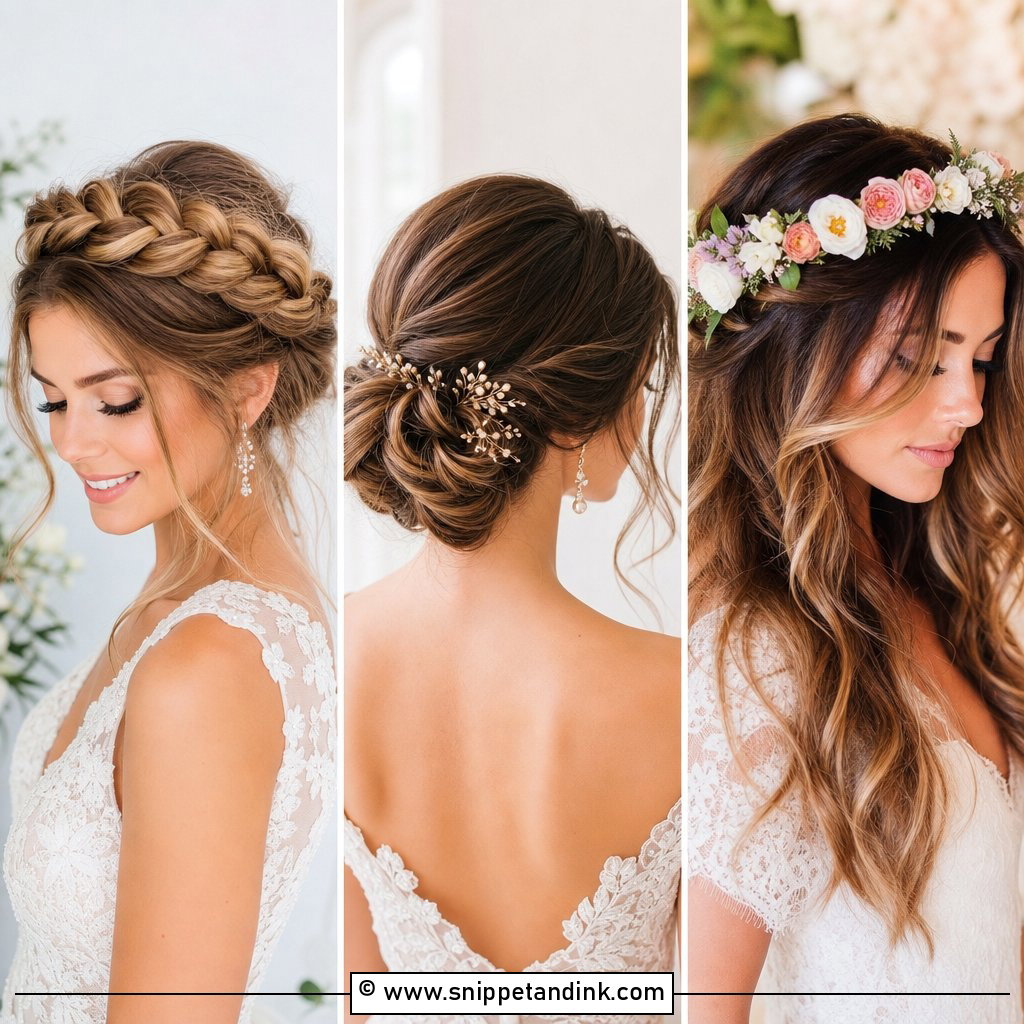
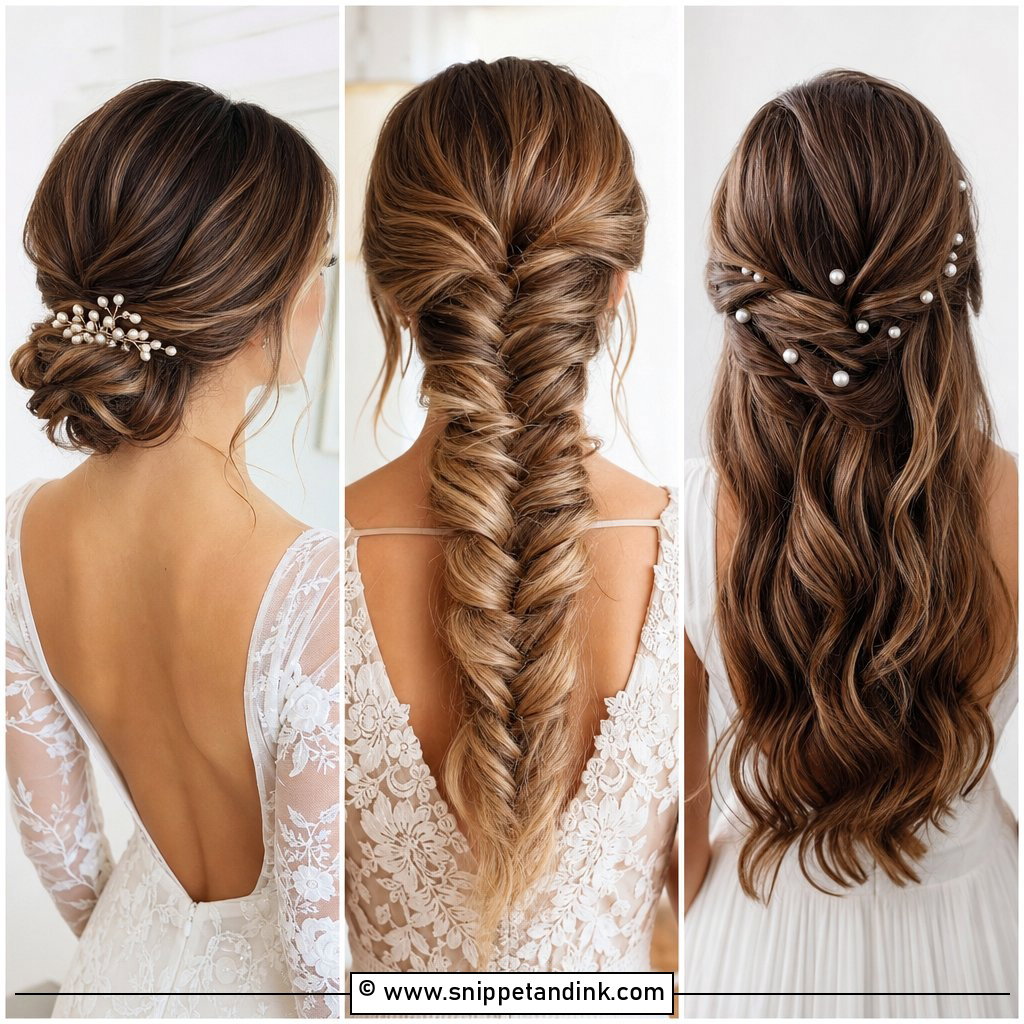
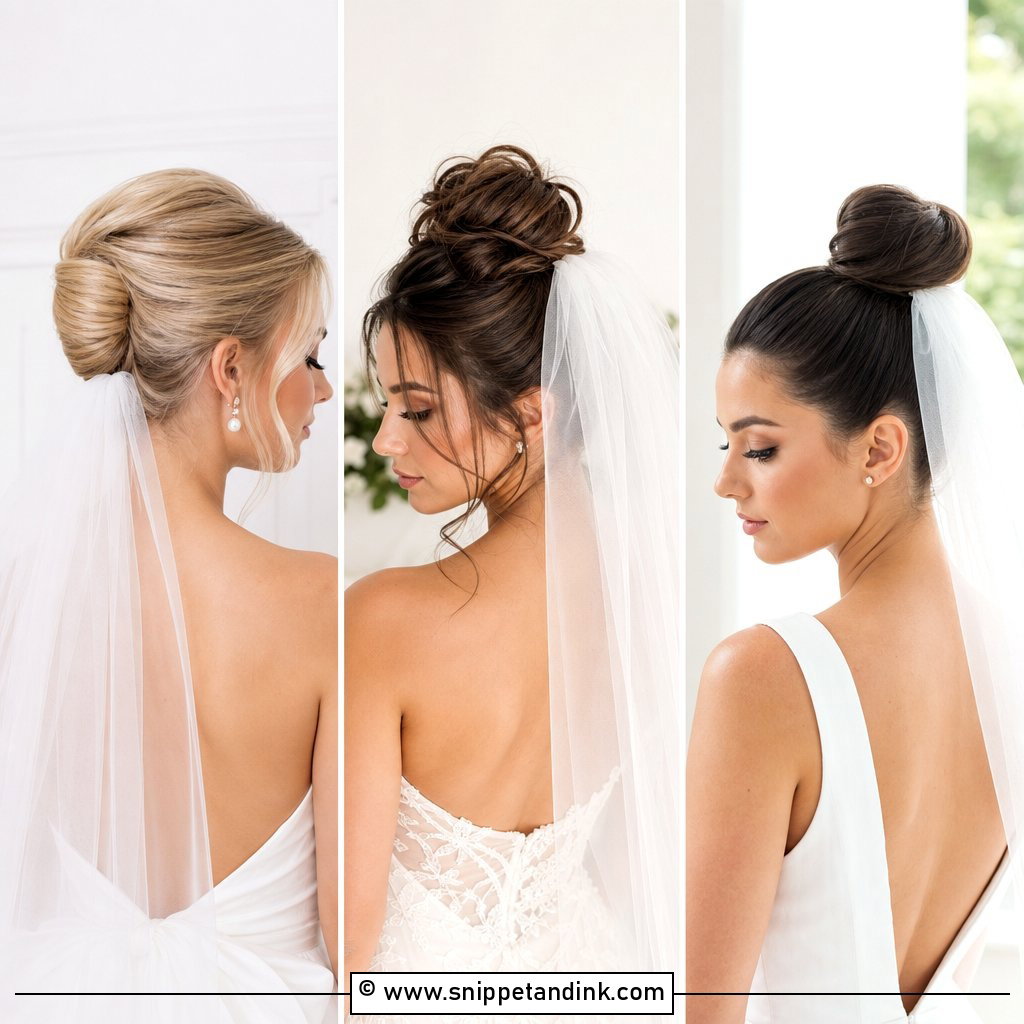
A low chignon sits at the nape and leaves the shoulders bare, which is why it pairs so well with strapless and off-shoulder gowns. Sleek suits a ballroom; a few loosened pieces soften it for a garden. Long hair makes a big chignon, so I often split the length and fold it in two parts rather than coiling it all into one heavy knot. The bun gives a veil comb a firm base, and it reads as classic in photos decades later. One pearl pin or a jeweled comb is enough.
3. Grecian Goddess Braid
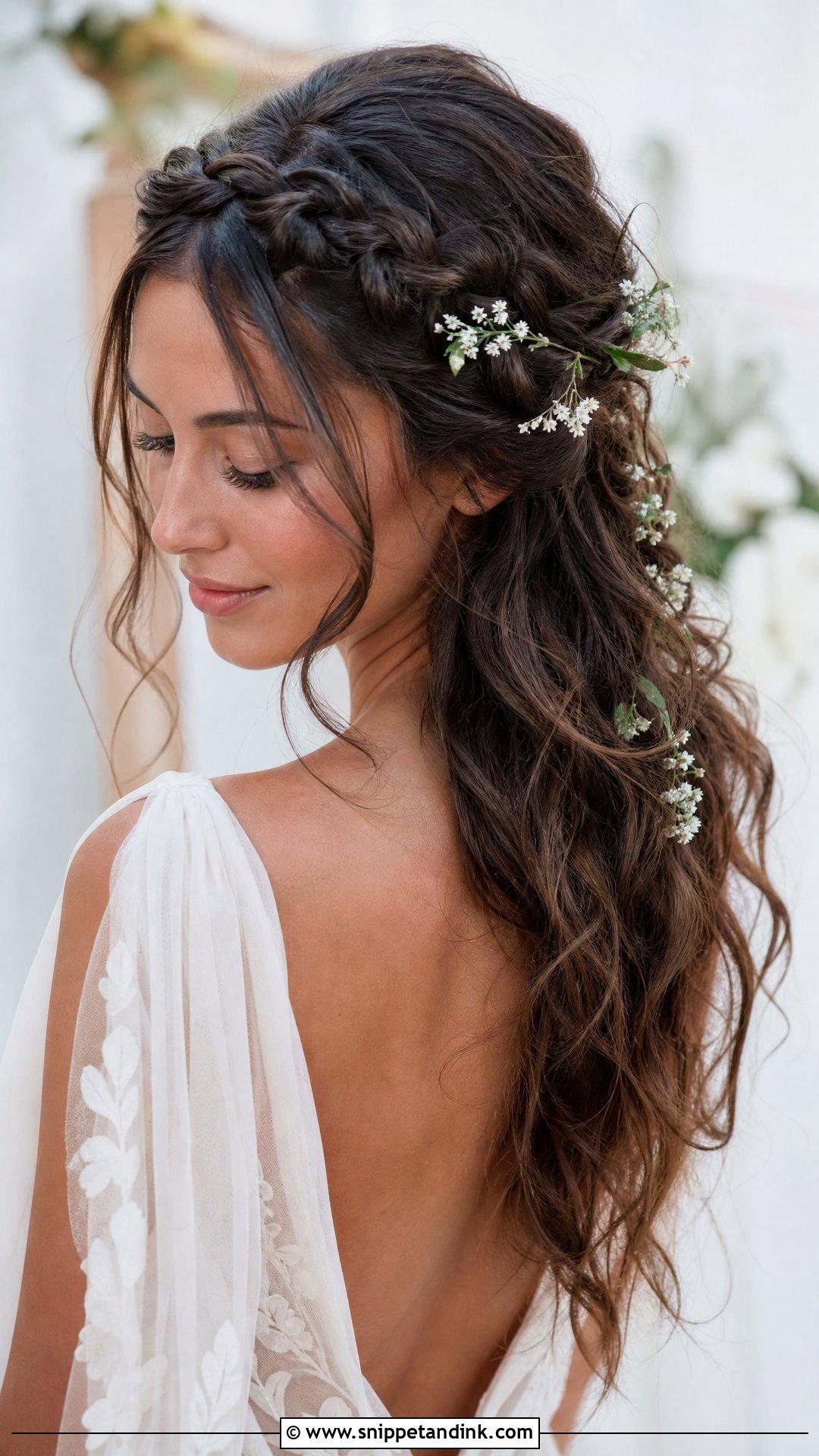
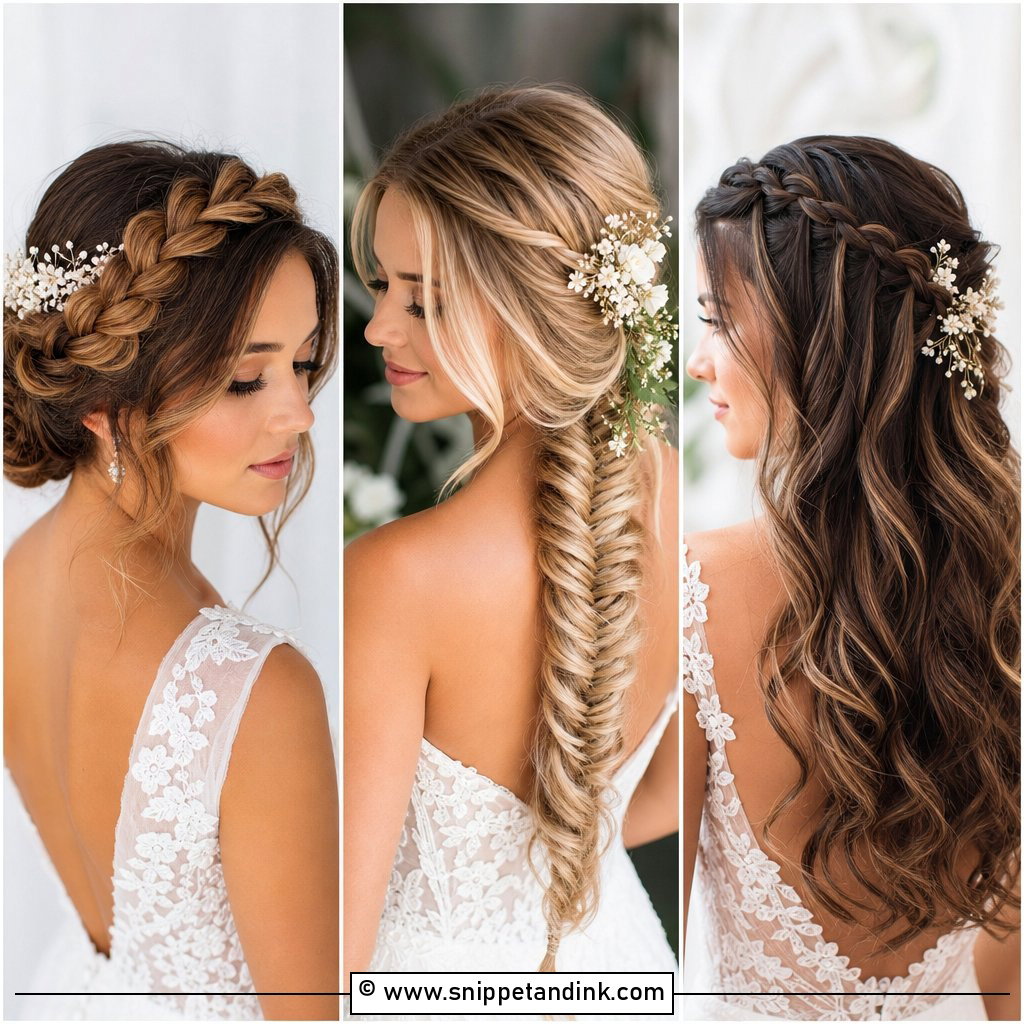
The Grecian goddess braid wraps the head like a soft crown and drapes loose curls along one side. It’s comfortable because the weight is spread around the head instead of hanging off one point. Long, thick hair looks fullest in it. I curl the hair first, then braid loosely and pancake the edges, so it stays relaxed rather than schoolgirl neat. Wispy face pieces and a few tiny blooms suit a flowing dress at an outdoor or boho wedding.
4. Sleek Low Ponytail
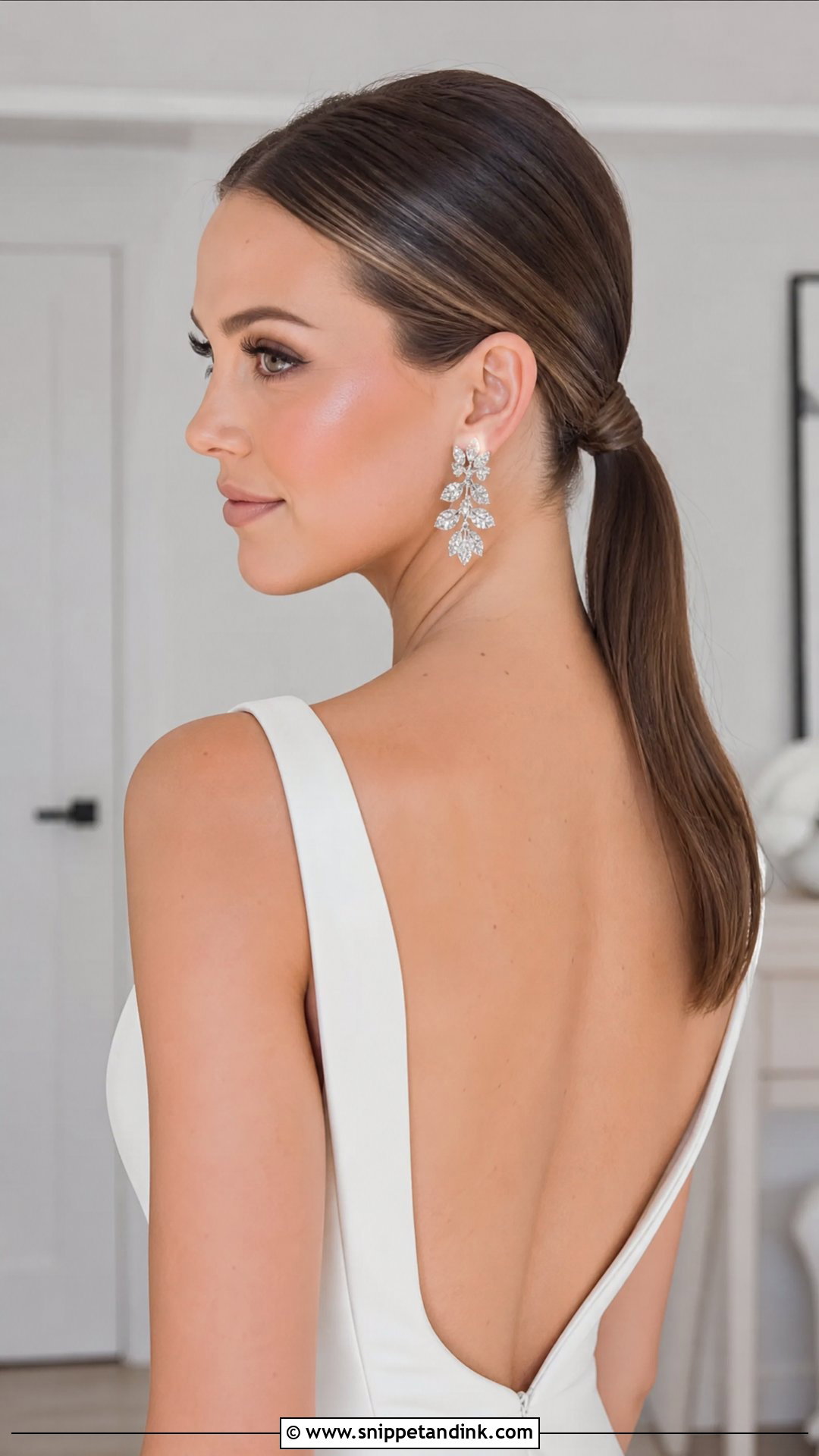
Sleek and low is the most minimal long-hair look, and it rewards a perfect finish. Everything goes smoothly back to the nape and is secured, then a piece of hair wraps the elastic so nothing shows. Statement earrings and a minimal gown suit it. It also gets through ceremony and reception without any fuss. My one warning: with very long, heavy hair, the base can sag after a few hours, so I tie it with two elastics, one tight and one over it, and pin the wrap firmly underneath.
5. Waterfall Braid
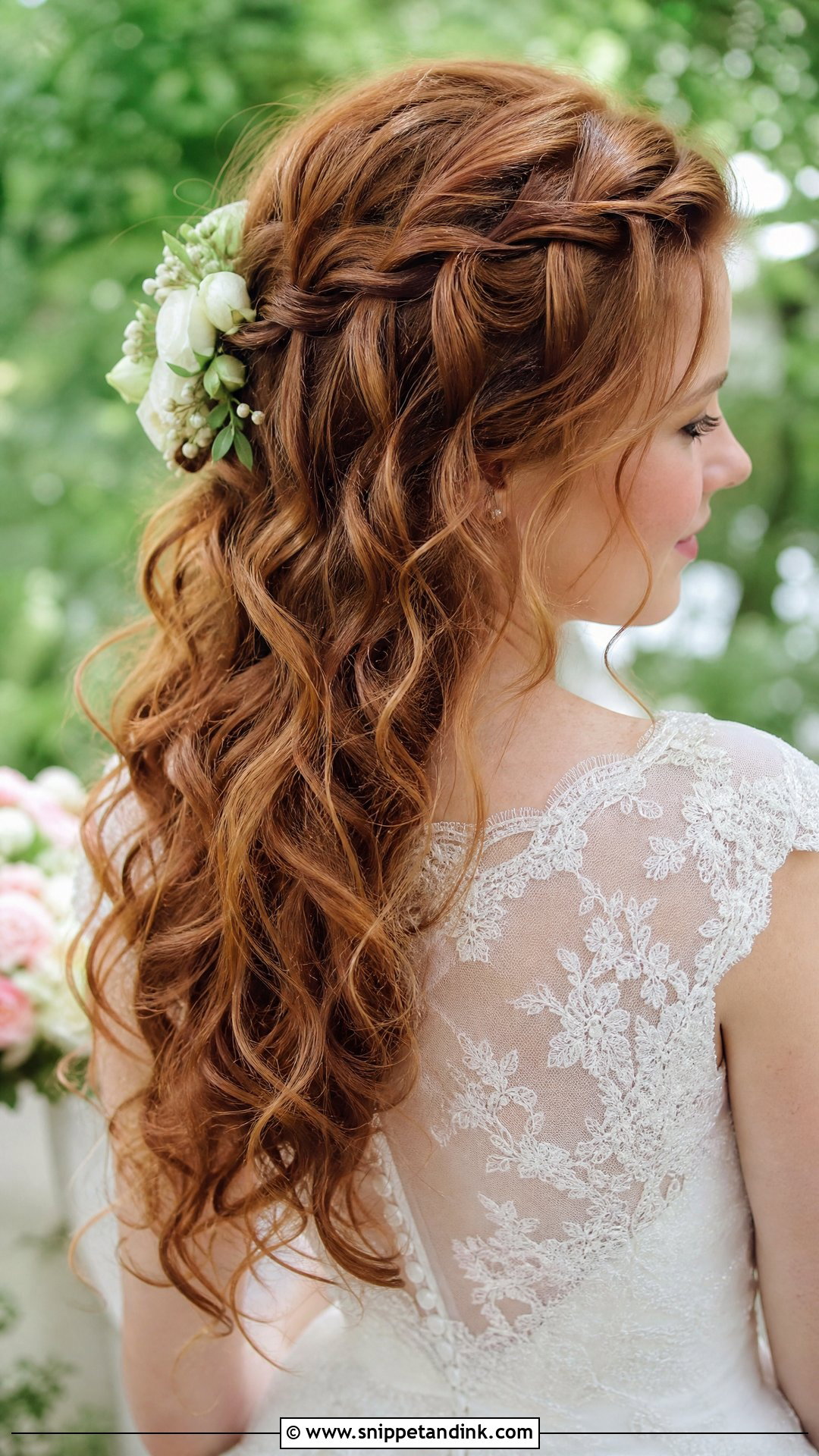
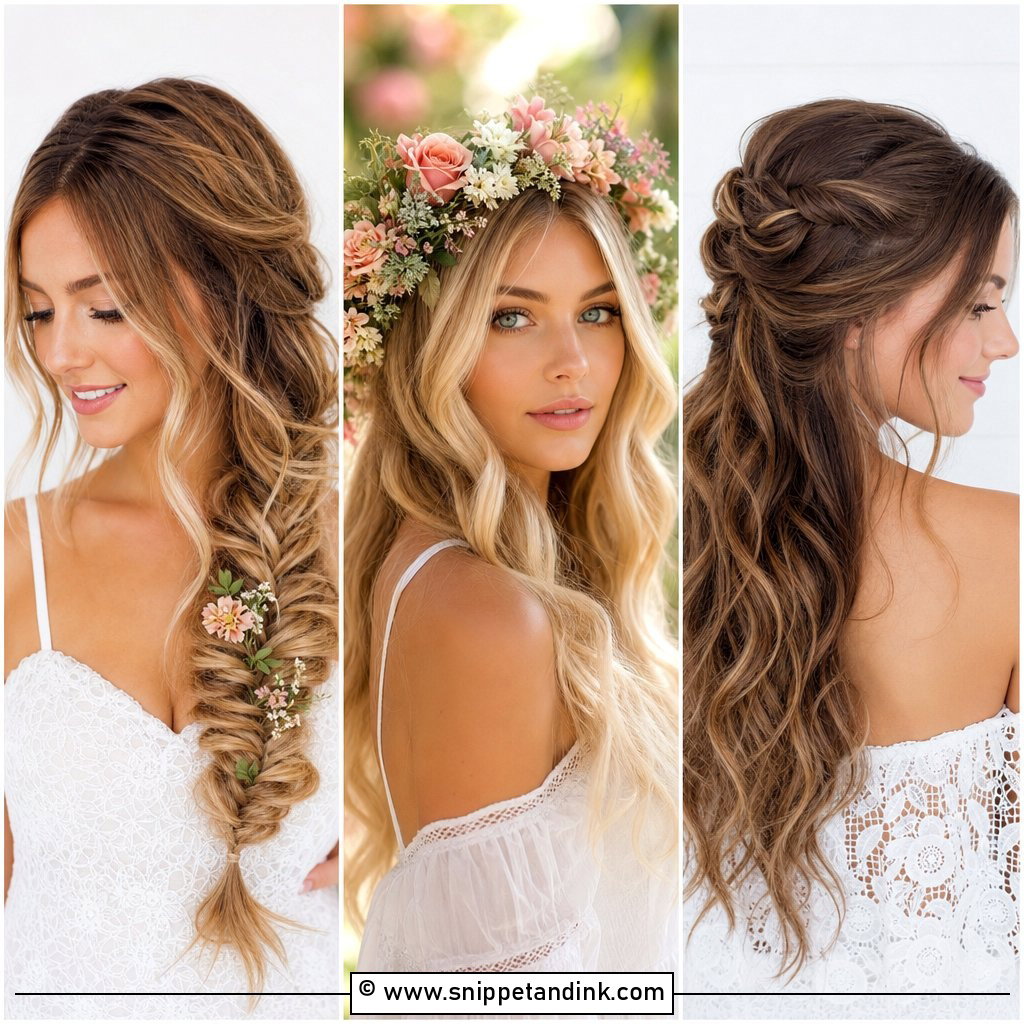
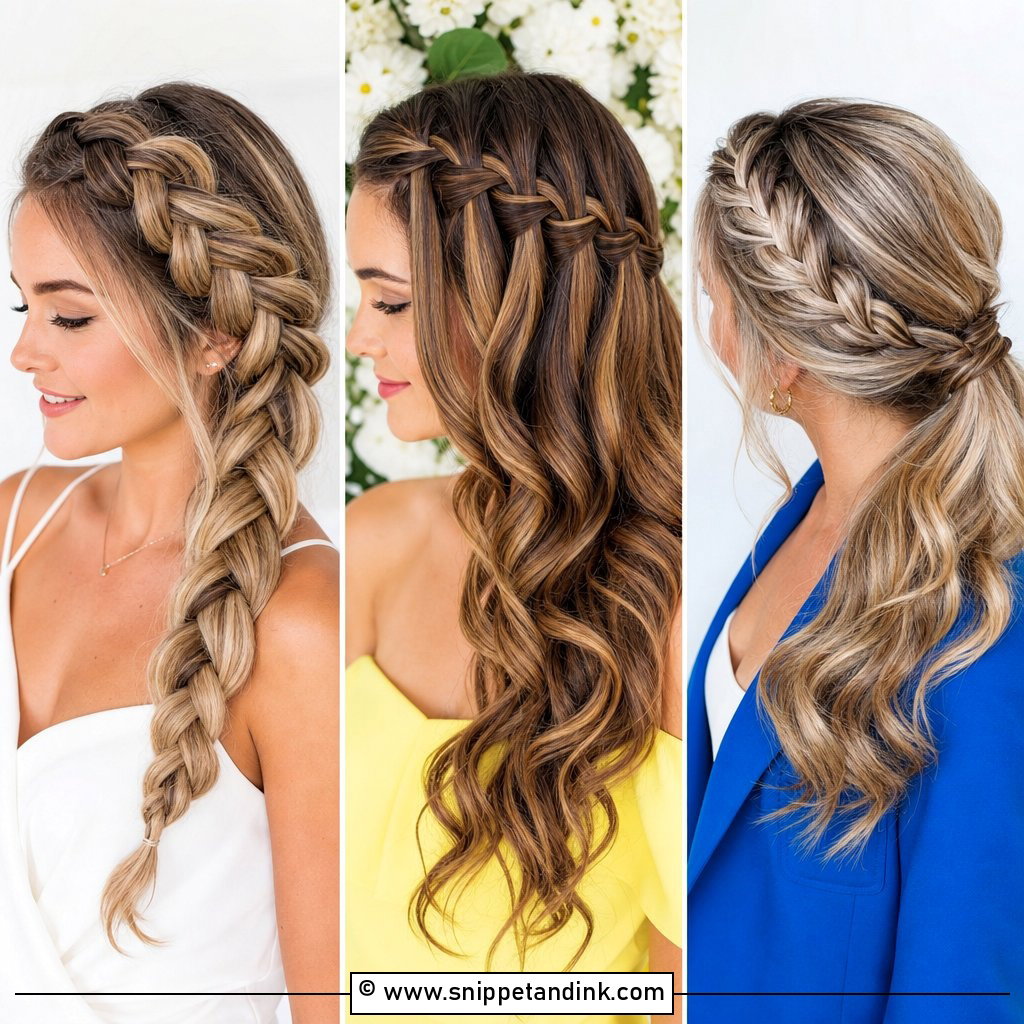
A waterfall braid drops sections out of the plait as it travels, so hair seems to pour through it. It keeps the front neat while the lengths flow down in waves. Thick hair shows the pattern most clearly; on fine long hair I’d use slightly bigger sections so the dropped pieces don’t look sparse. It can be worn half up or wrapped all the way around the head. Curl the lengths underneath before braiding, never after, or the iron will pull the braid apart.
6. Romantic Curls All Down
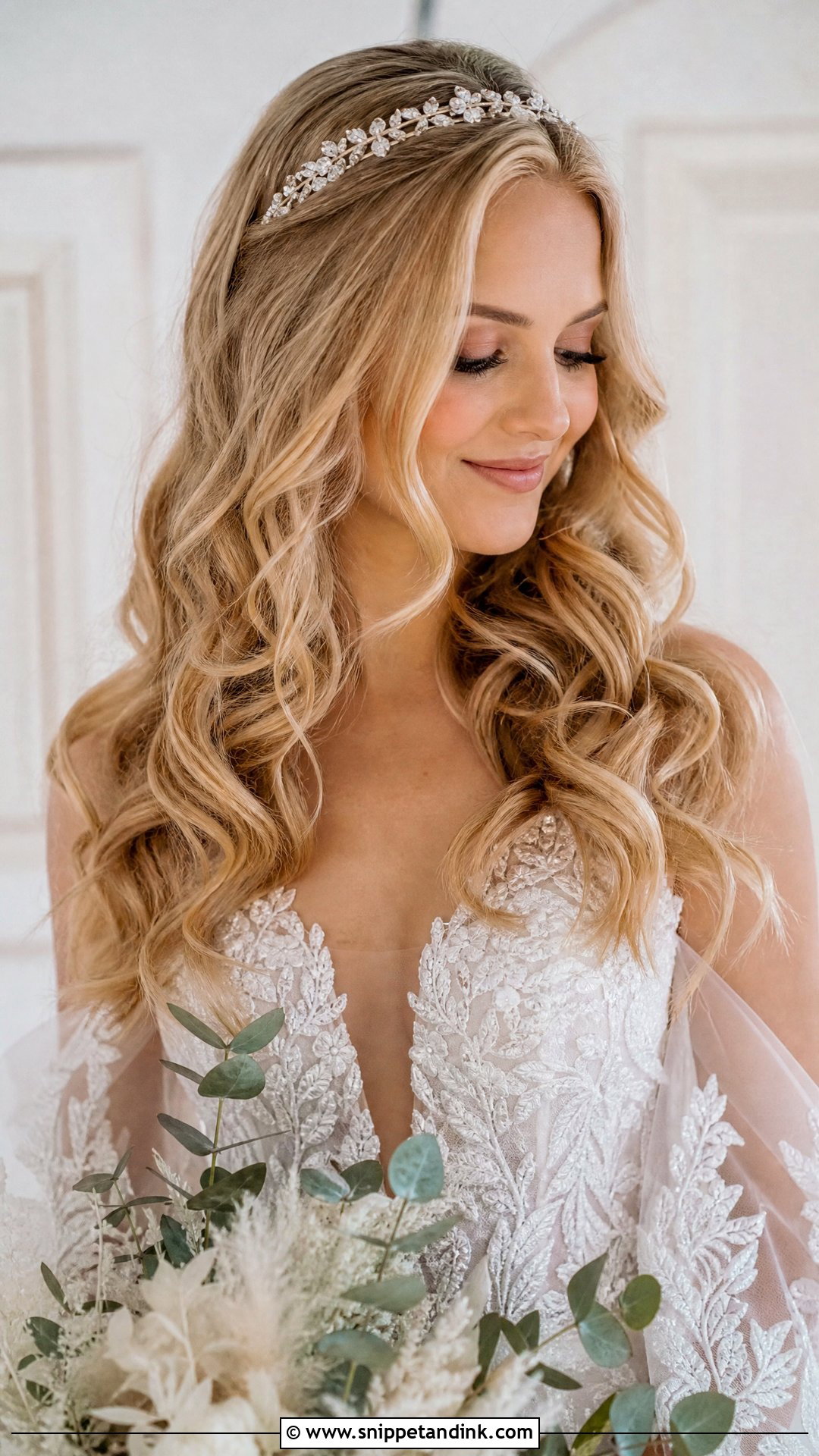
All down is the style long hair is most often grown for, and the hardest to keep through a dance floor. Weight is the enemy: long curls slowly pull themselves straight. I set curls smaller than the result you want, pin each one while it cools, and brush them out just before you dress. A center part reads classic; a deep side part is more dramatic. A few hidden pins behind the ears stop the hair falling forward over your face in photos. A delicate headband can add a bridal touch.
7. Braided Crown Updo
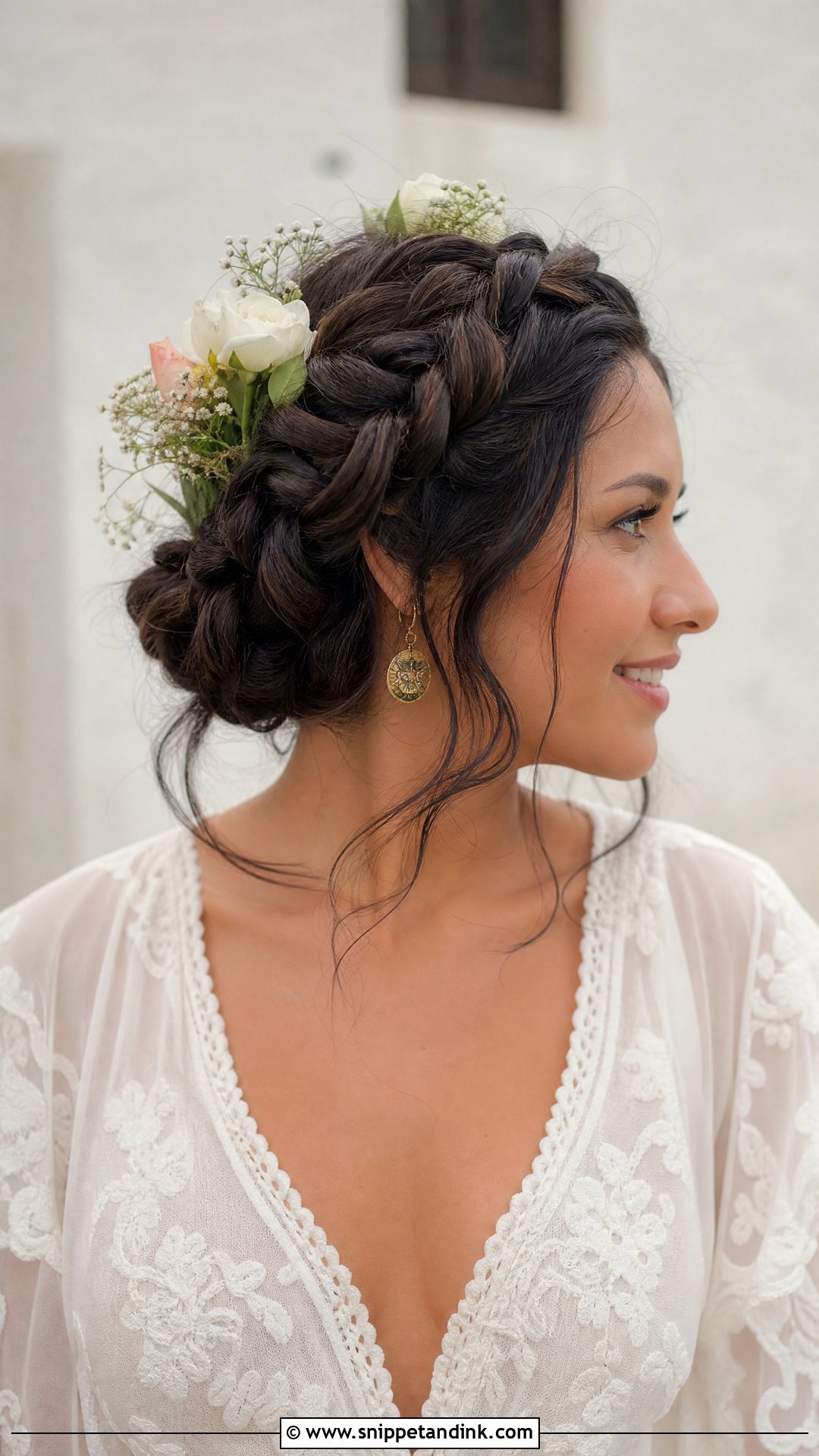
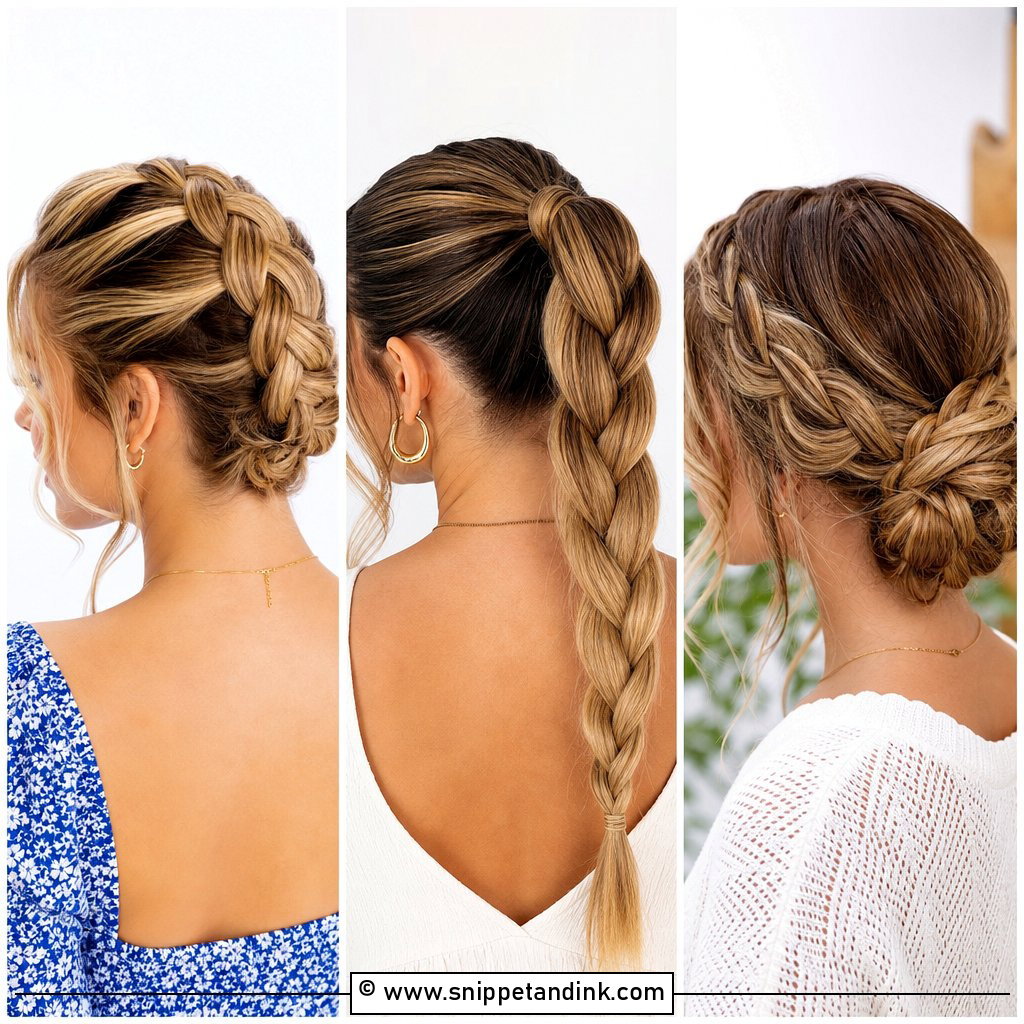
A braided crown tucks all your length into woven braids around the head, so nothing touches your neck. That matters at a warm-weather wedding. With very long hair, I braid two plaits and wrap them in opposite directions, which spreads the weight evenly. Fresh flowers tucked between braids suit boho and rustic themes. Tight and polished or with a few loose strands, it stays comfortable for hours if the pins aren’t digging into the scalp, which I check before you leave the chair.
8. Twisted Side Swept Style
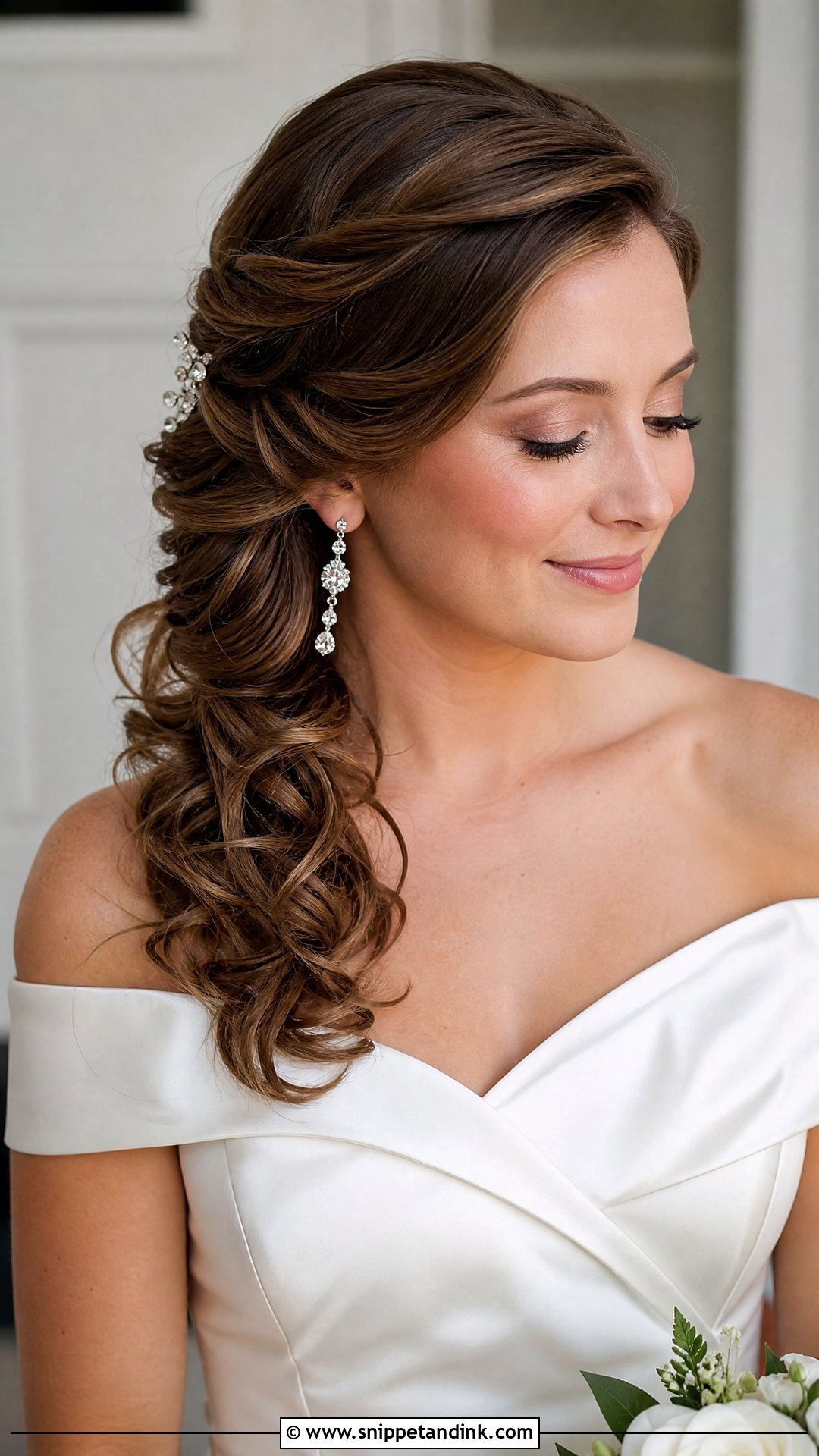
Gathering the hair over one shoulder with soft twists makes an asymmetrical shape that suits a strong neckline or statement earrings. The twists give the side some texture so it doesn’t look flat. On long hair I pin the twists down behind the ear on the far side, because the lengths otherwise swing back over the shoulder every time you turn. Add a sparkling clip where the twists gather. Loose for a relaxed look, neatly pinned for more structure.
9. Boho Loose Braid
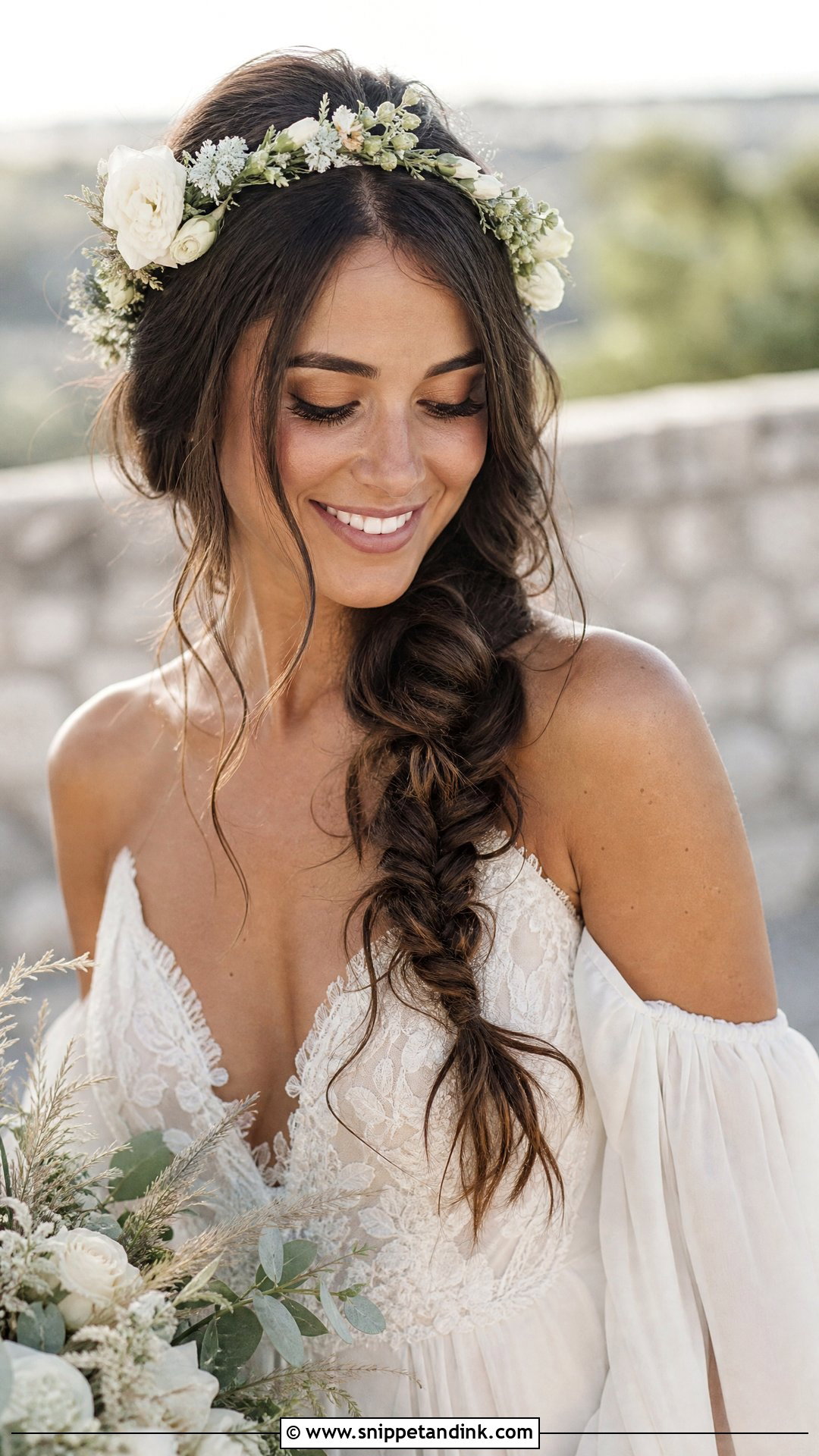
A loose braid over one shoulder is about the most comfortable style here. It’s slightly undone, with face pieces left out, and it pulls apart easily for more fullness. Flower crowns and flowing gowns suit it, as do outdoor and beach ceremonies. The one thing I’d plan around: a braid that rests on the front of a lace or beaded bodice for hours can snag. If your dress has heavy detail at the front, I’d move the braid slightly back.
10. Classic French Twist
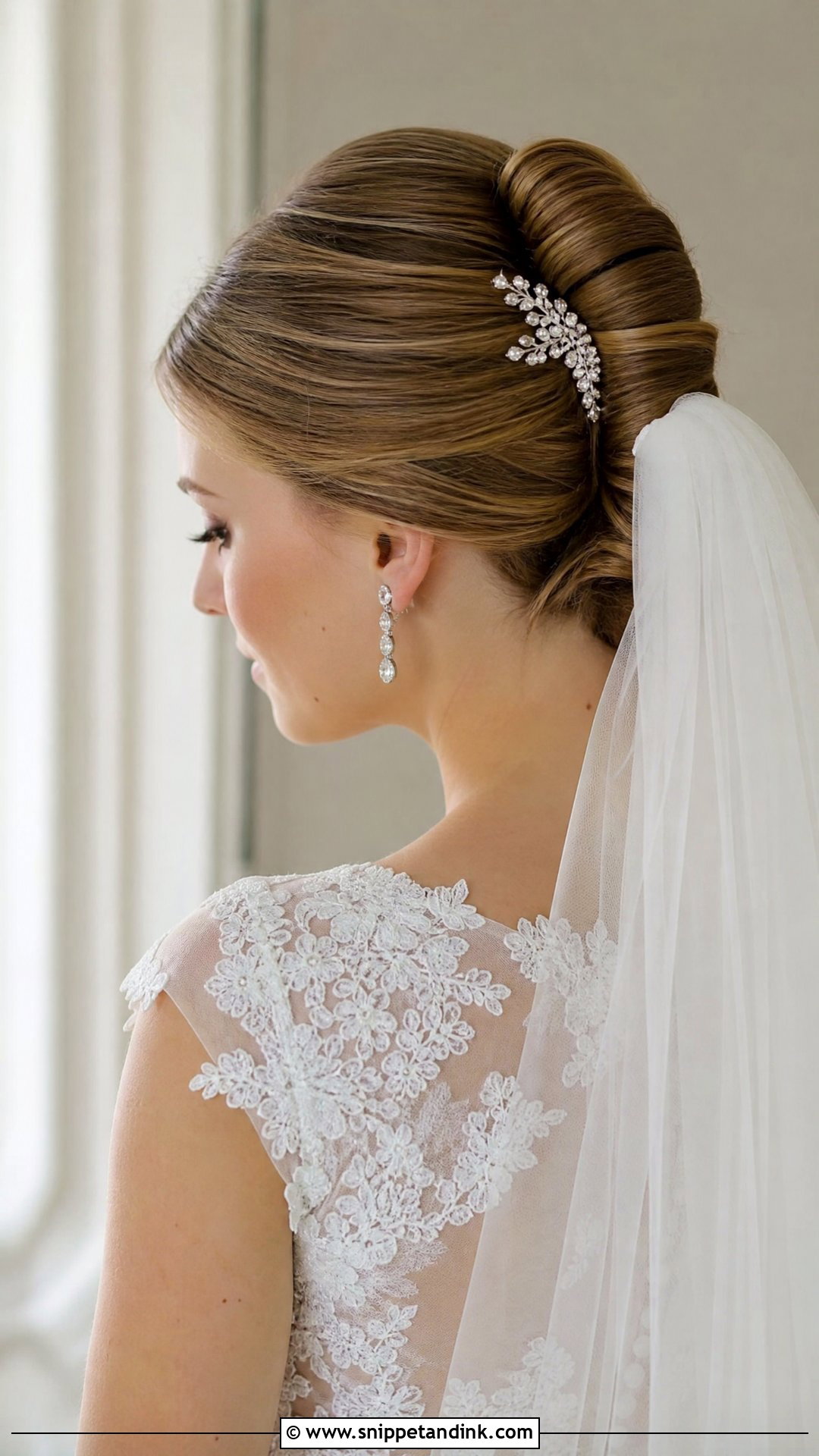
The French twist folds the hair vertically up the back of the head into a smooth seam. It keeps the neckline visible and takes a veil beautifully placed just beneath. Long, thick hair can make a French twist bulky; I tuck the ends in and keep the fold flat, or the shape turns into a ridge. Sleek suits formal and traditional weddings; soft volume at the crown makes it look more current. Decorative pins along the seam add detail without changing the shape.
11. Half Up Braided Crown
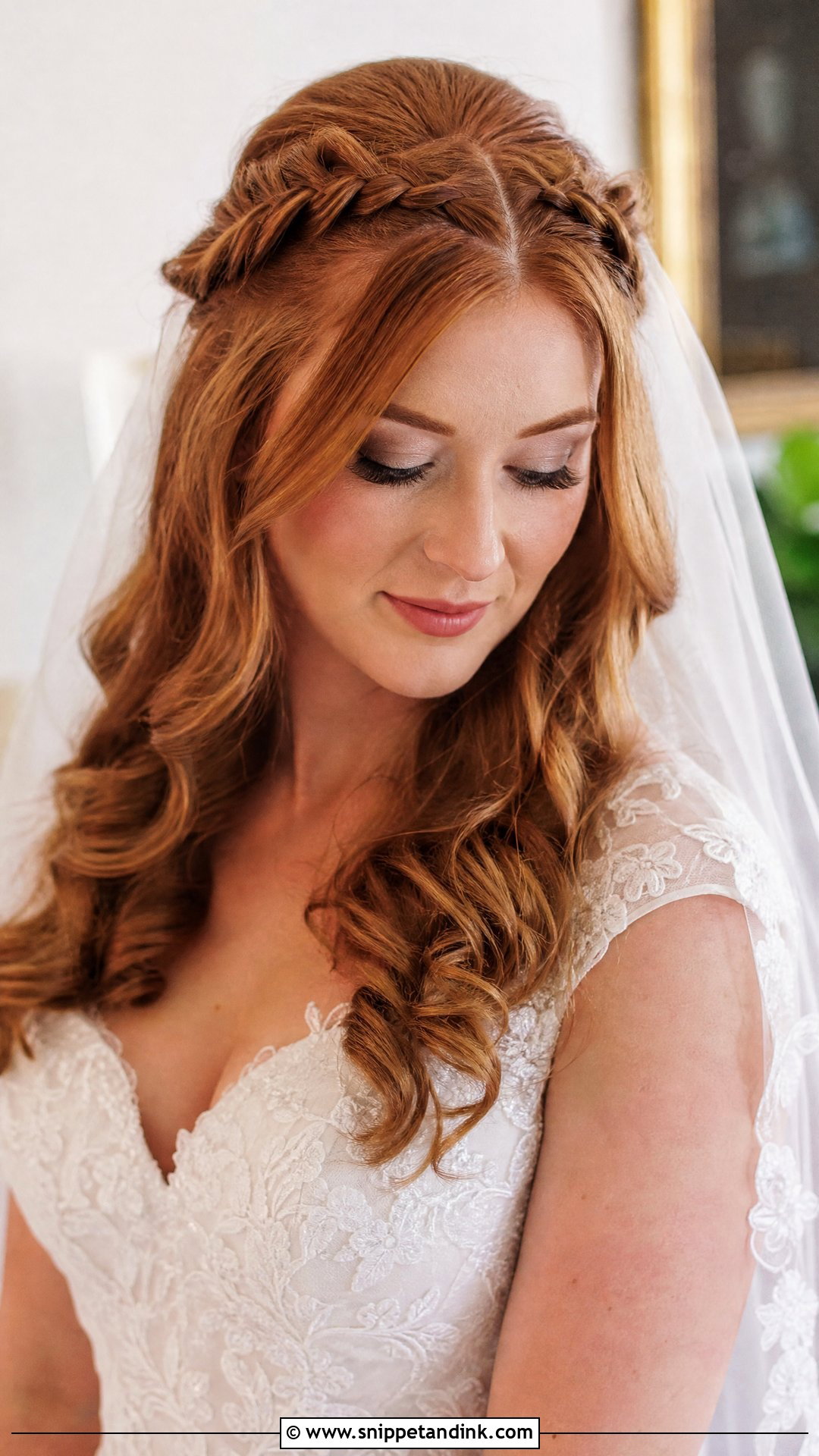
Here, two front sections braid back and meet at the back of the head while the rest of the length falls in waves. It keeps hair off the face and still shows how long it is. Thick braids look bold; thin ones read delicate. I join the braids with an elastic, hide it under the waves, and place the veil comb just above that join, which is the firmest point on the head. Veils and flowers both suit it, from a barn to a ballroom.
12. Voluminous Hollywood Waves
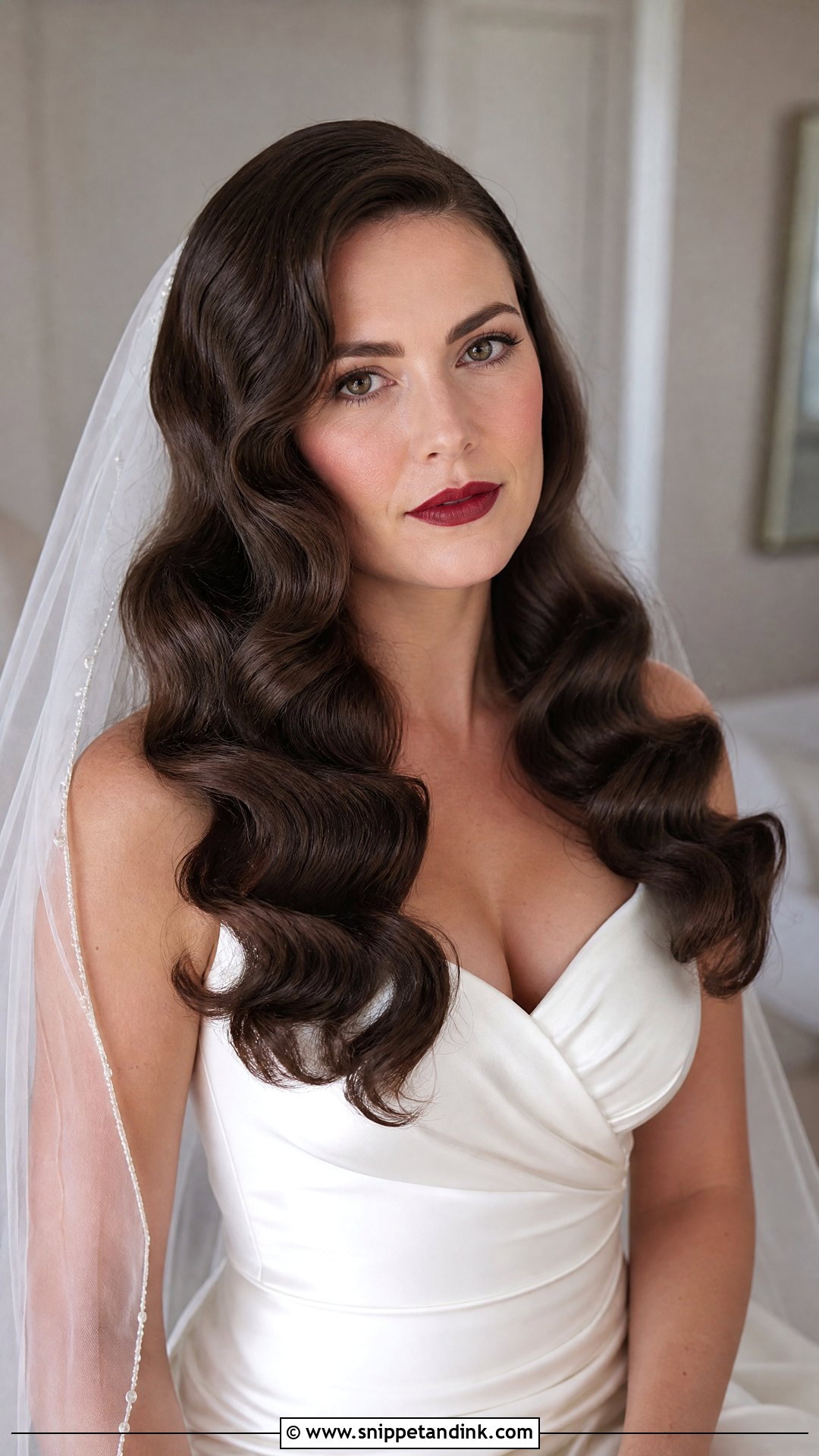
Hollywood waves on long hair need more planning than on shoulder-length hair, because the S pattern has to stay even all the way to the ends. I curl every section in the same direction, clip it to cool, then brush it into one wave and set the ridges with clips while I spray. Satin gowns and a bold lip suit it. All down gives full impact; one side pinned back reads vintage. Long, heavy hair loosens a wave faster than short hair, so it’s worth carrying a small brush for evening touch-ups.
13. Messy Bun With Face Framing Pieces
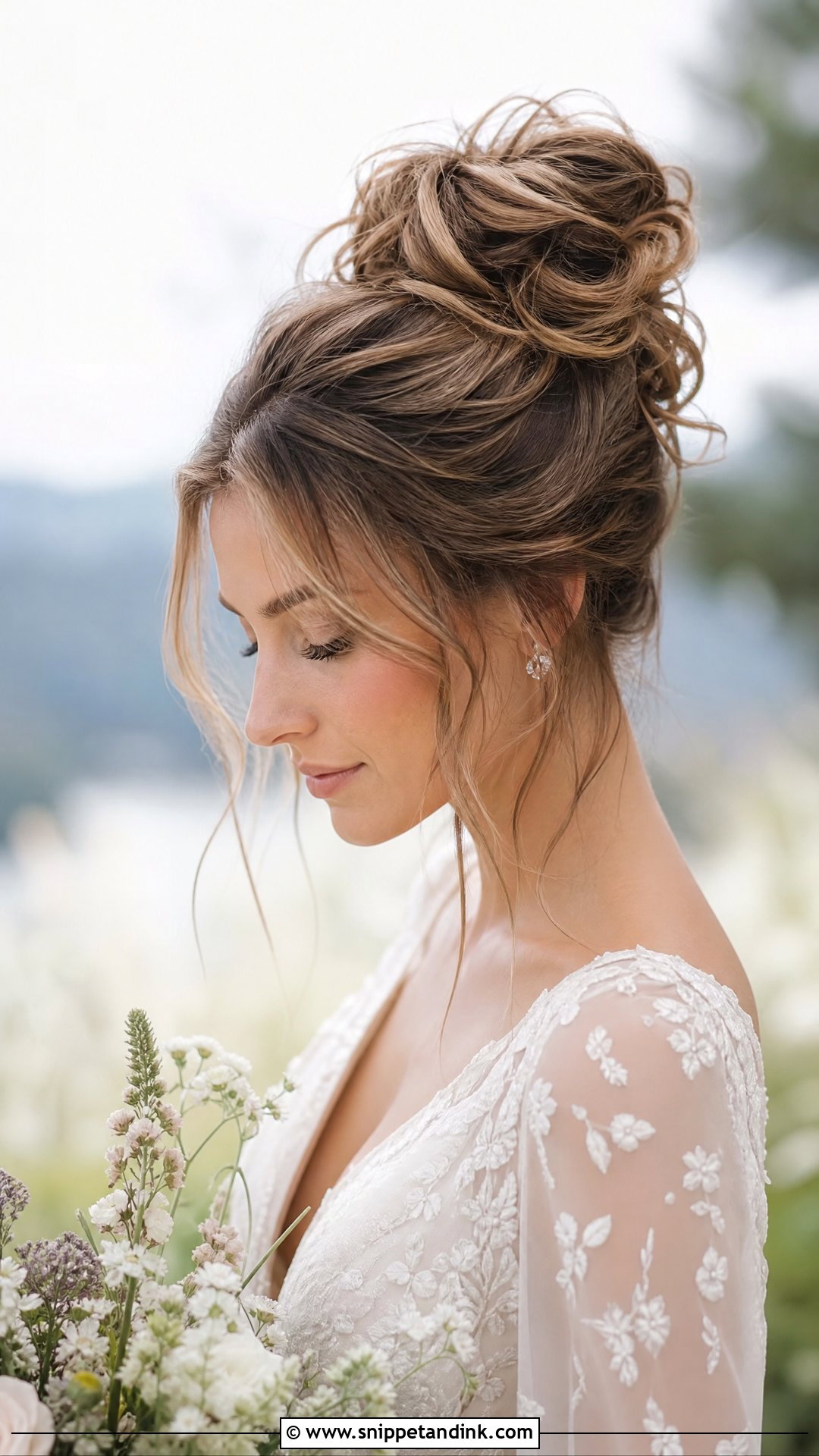
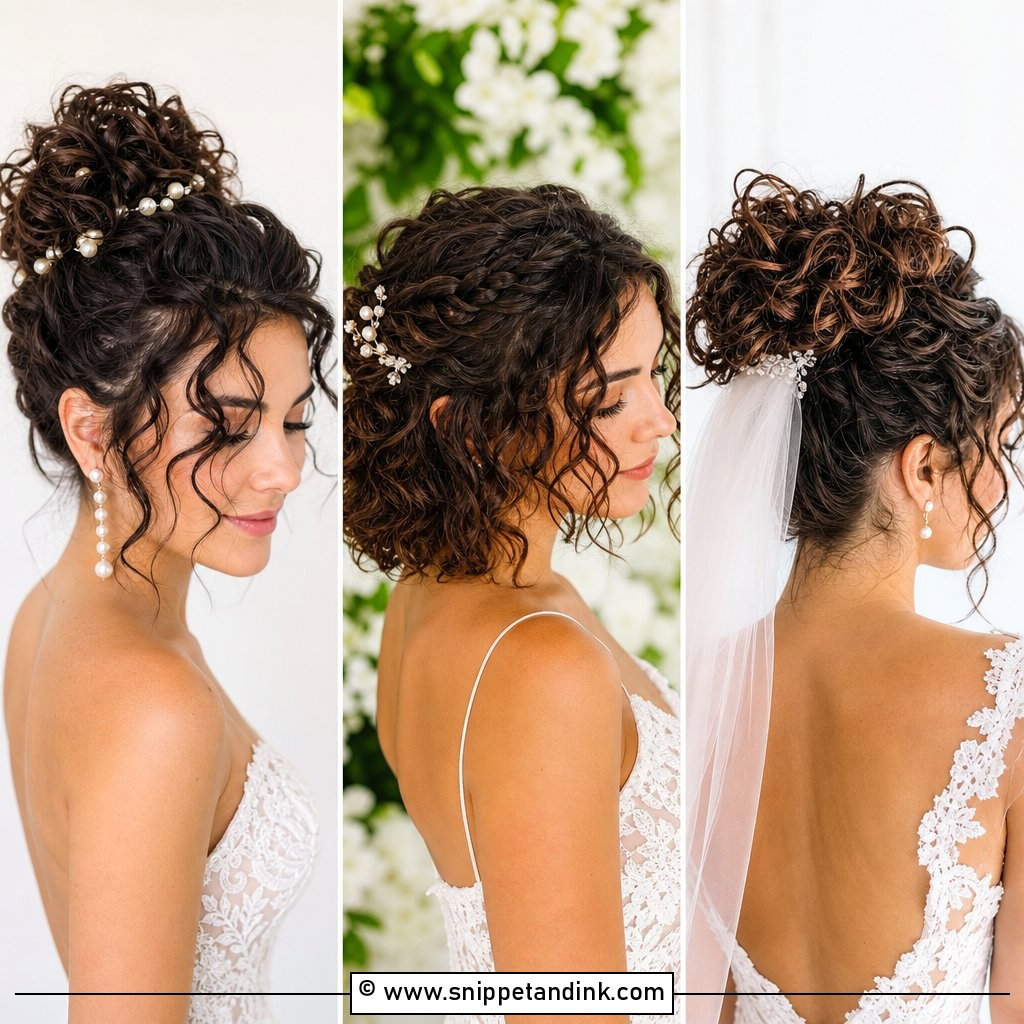
A messy bun looks easy, but on long hair it’s a lot of material to arrange. I gather the length loosely at the back, loop and pin it in sections, and leave soft tendrils at the face. It’s comfortable to dance in, and the undone texture suits outdoor themes. Tiny flowers fit easily in the loops. The detail people miss: tendrils on long hair should be cut from the front layers, not pulled from the bun, or the bun gets holes.
14. Fishtail Braid Updo
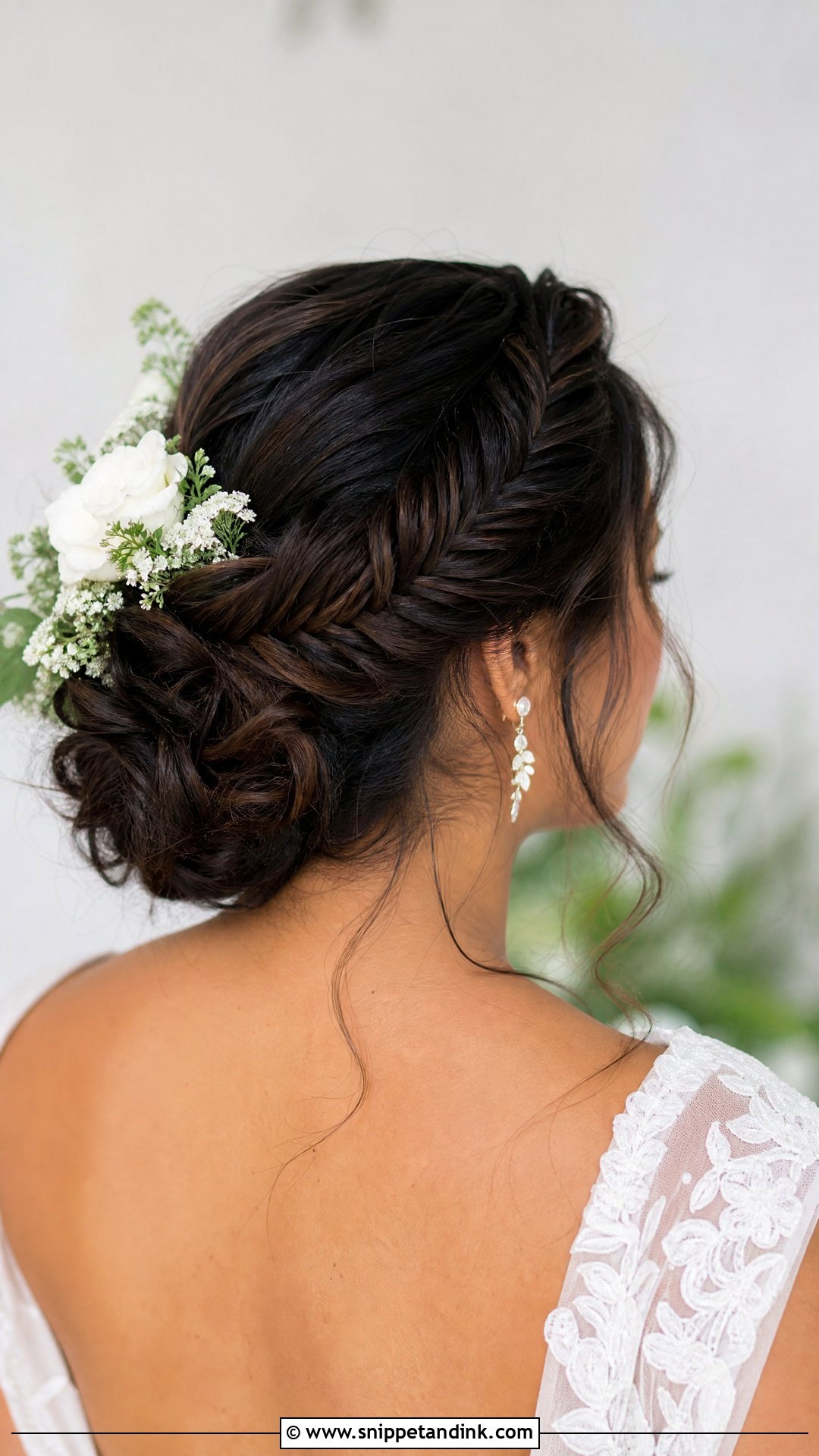
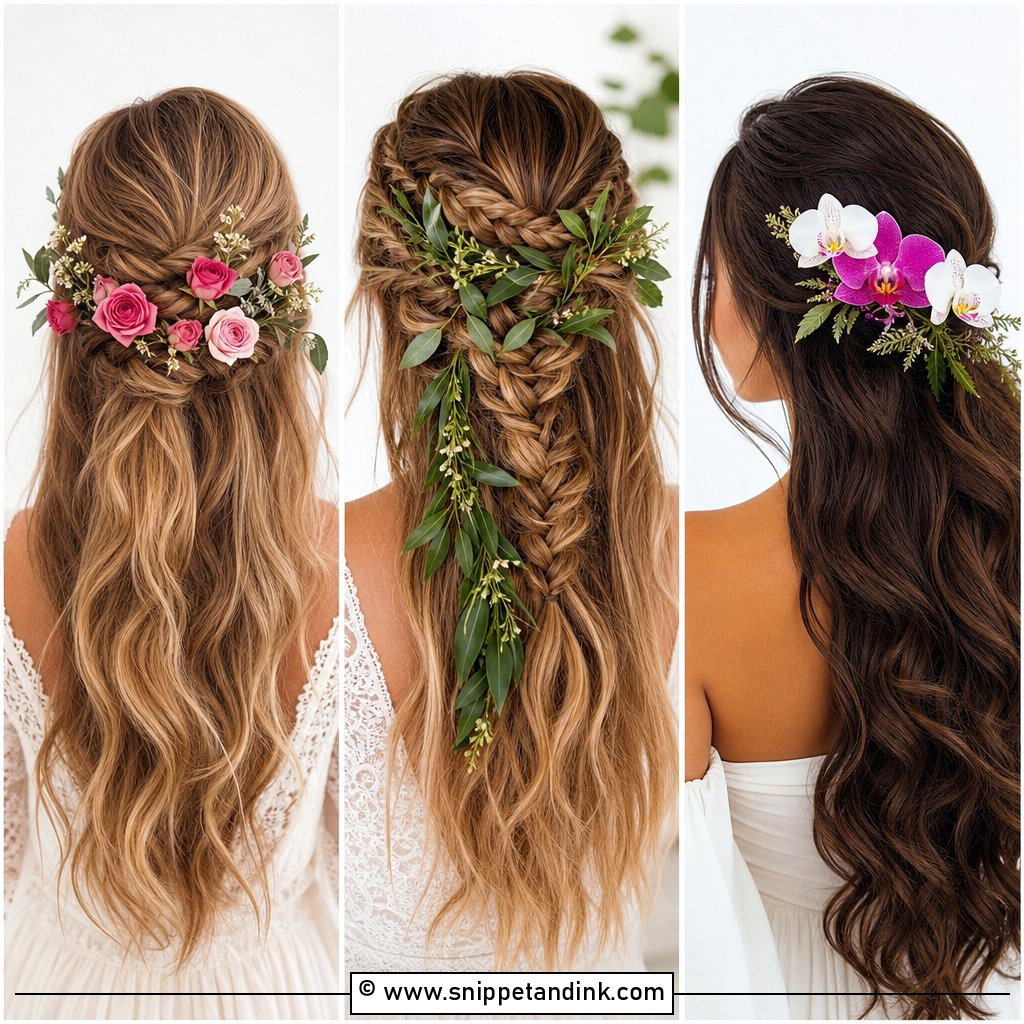
A fishtail looks more complex than it is, and twisted into an updo it gives structure with plenty of texture. It holds well through long celebrations because each tiny section grips the next. Long, thick hair makes the fullest braid. Pull the edges loose for a softer look. A few flowers tucked into it suit boho and rustic weddings. It takes time to braid long hair this finely, so I build it into the schedule first.
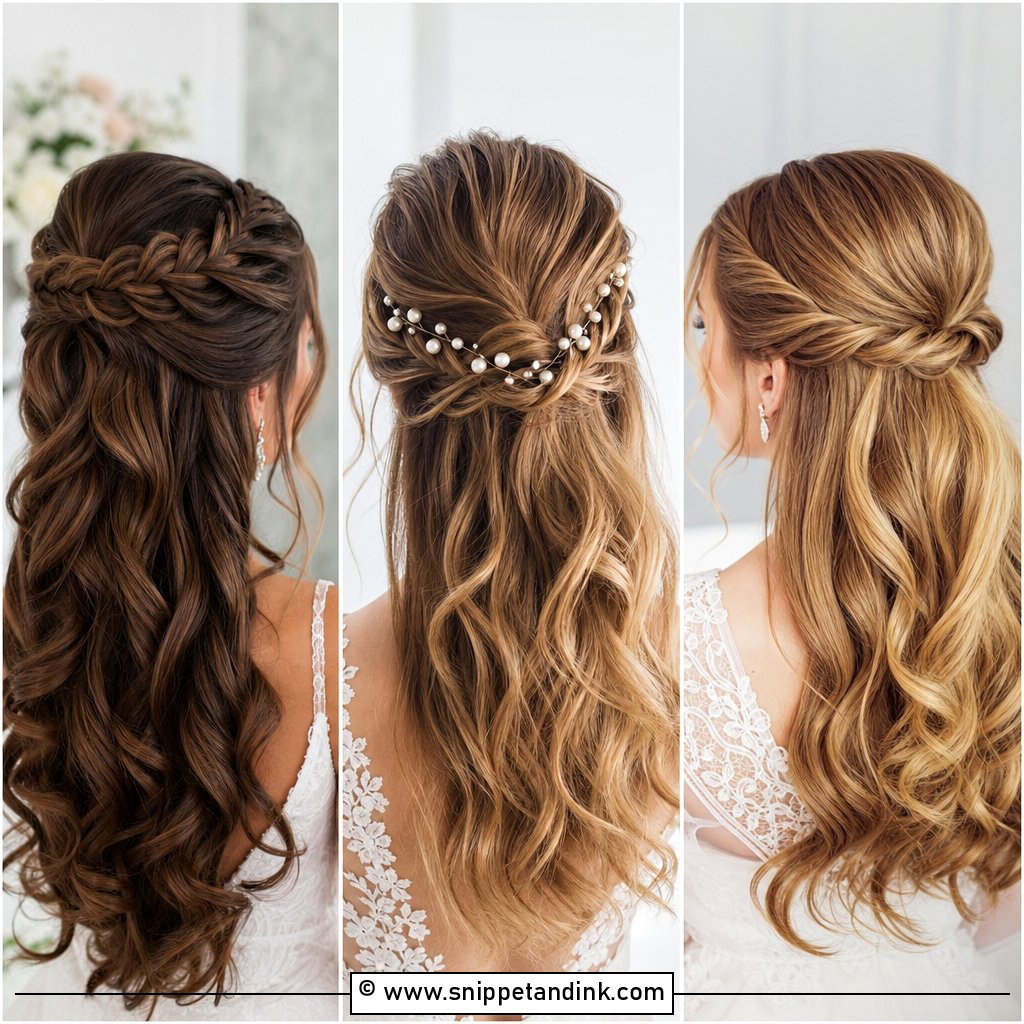
15. Sleek Straight Hair Down
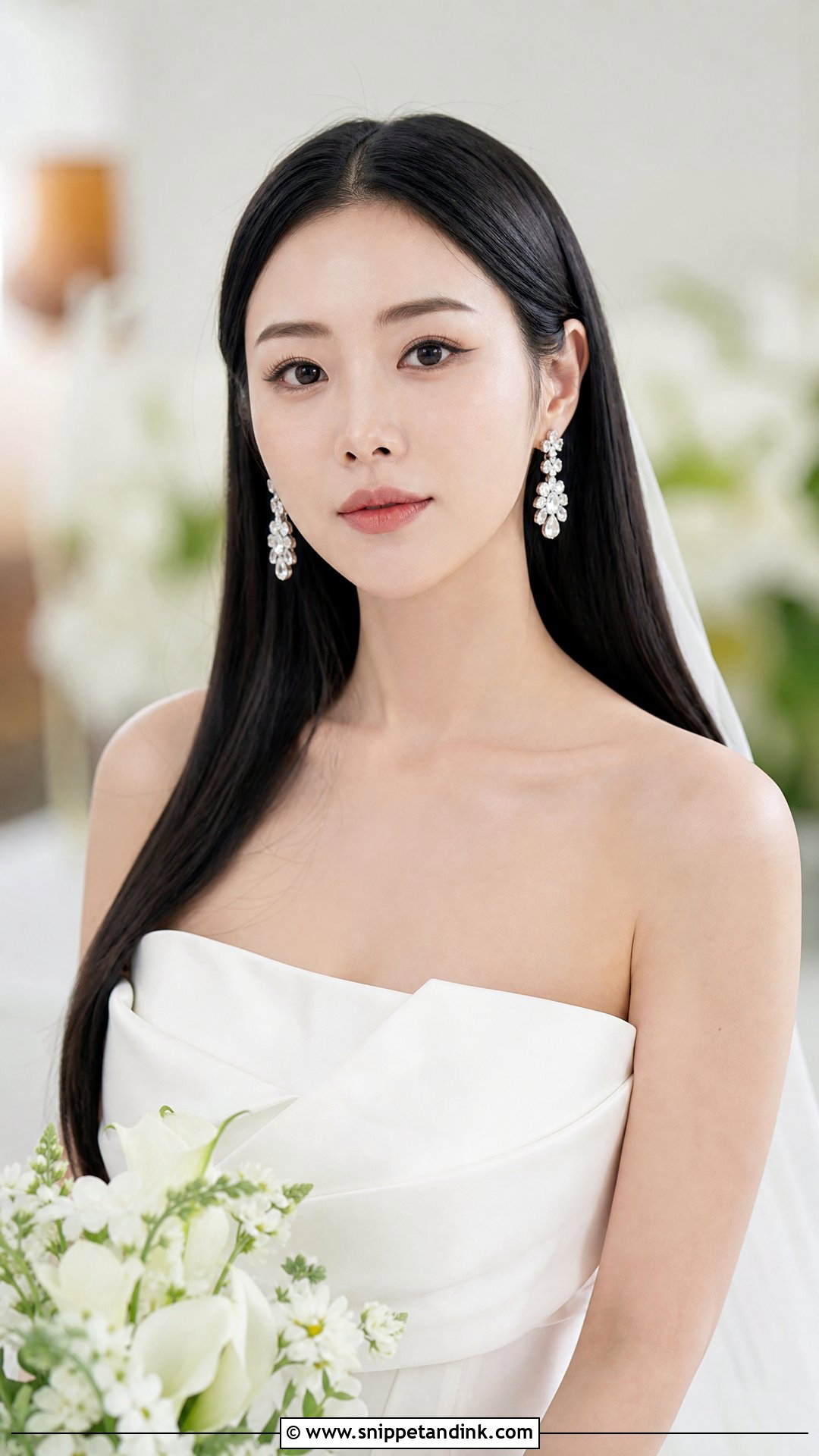
Straight hair worn down is the most modern look on this list, and the least forgiving. Every kink and flyaway shows. I smooth it with a flat iron in thin sections, then finish with a light shine serum on the ends only. Clean structured gowns and bold accessories suit it. Center part reads fashion-forward; a deep side part is softer. Humidity is the risk: in damp weather straight hair puffs up quickly, so I’d keep this one for indoor or dry-climate weddings.
16. Twisted Low Bun With Tendrils
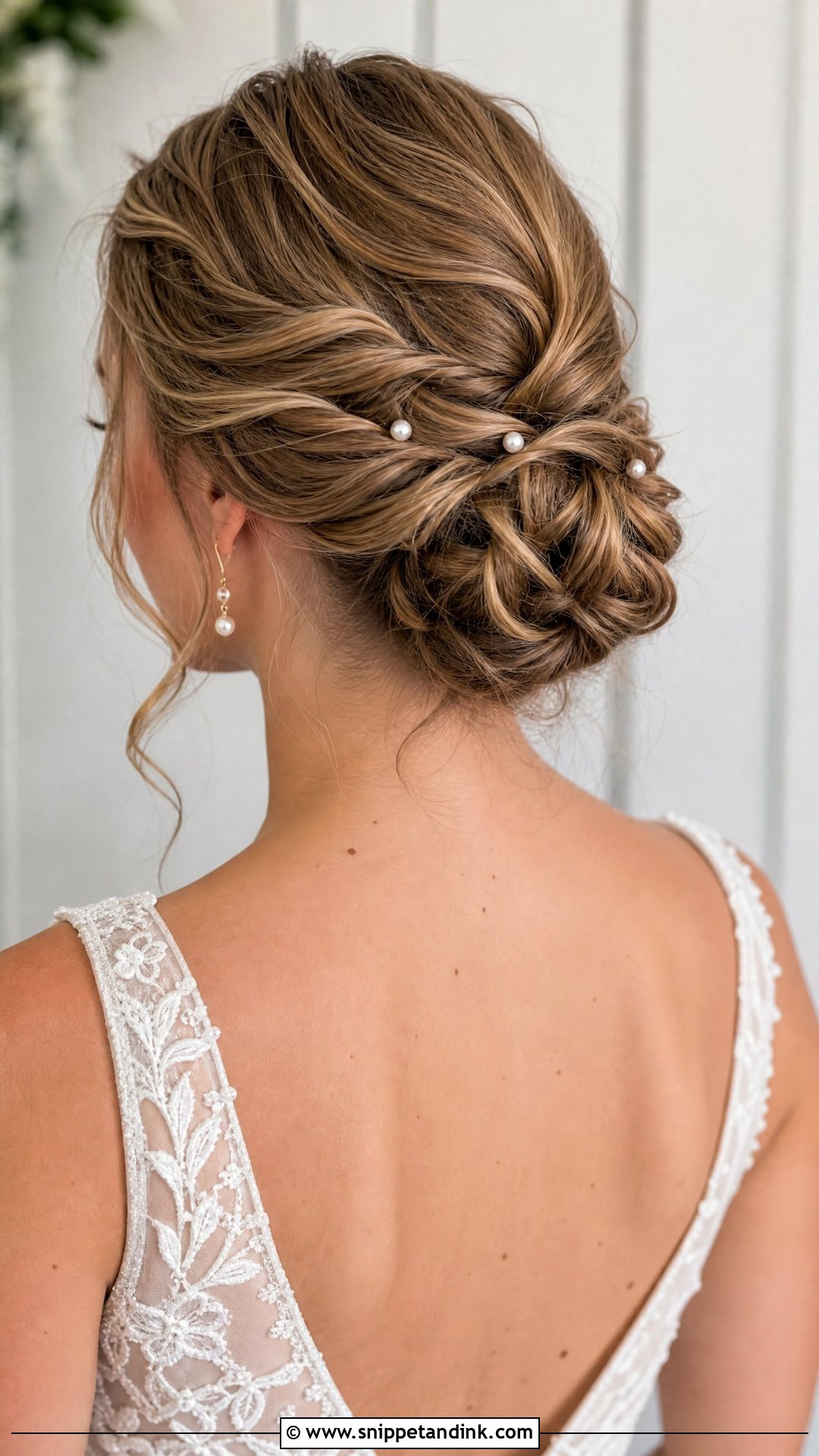
A twisted low bun gathers the hair in soft twists that wrap into a bun at the nape, with tendrils at the face. The twists give texture so the bun doesn’t look flat. On long hair, two or three twists coiled together spread the weight better than one rope, and they’re easier to pin. Pearl pins or a delicate comb add sparkle. It works with modern and classic gowns, indoors or out, and it stays comfortable for hours.
17. Crown Braid With Flowers
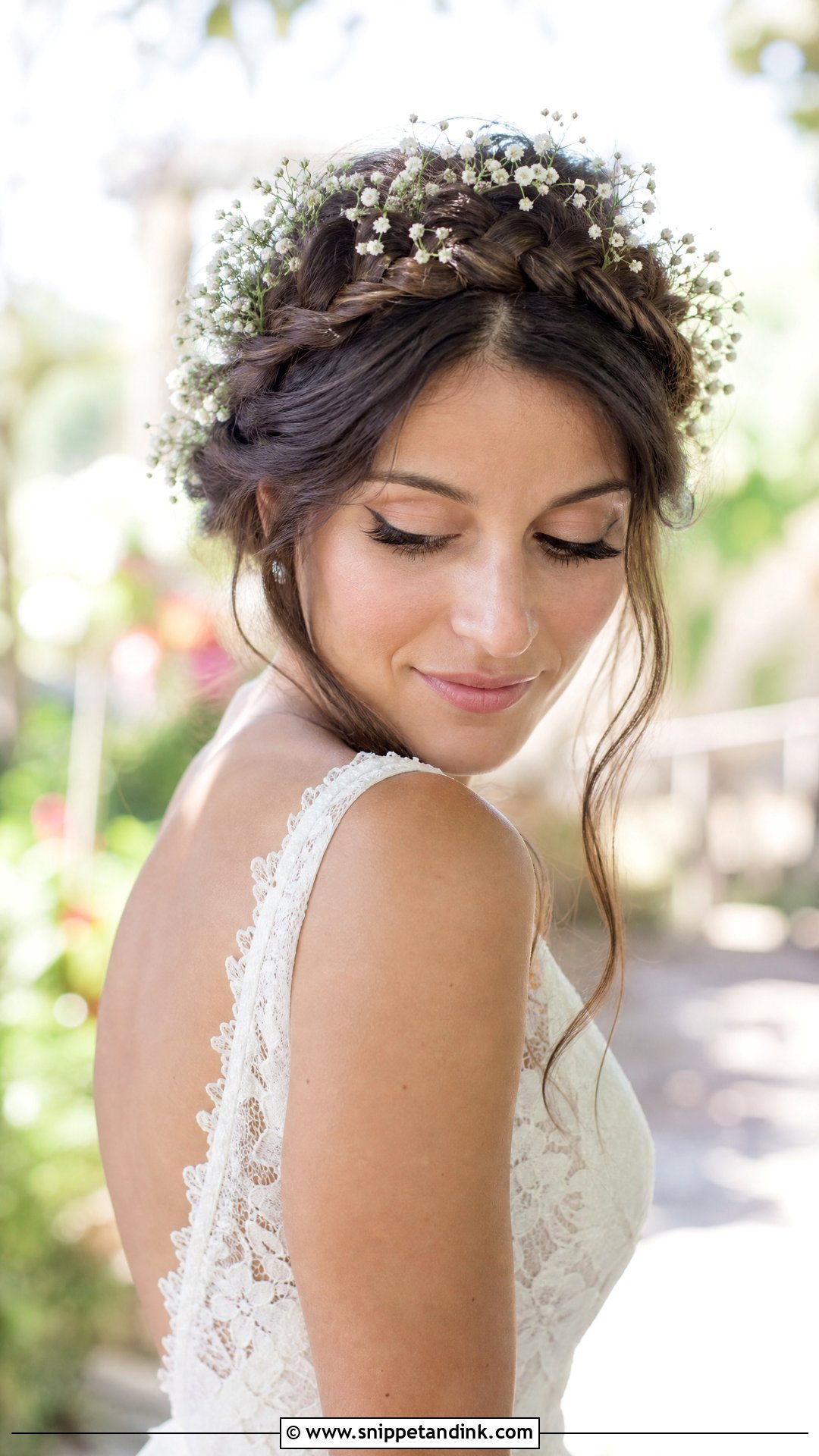
A crown braid with fresh flowers weaves the hair into a braided halo and tucks blooms into its gaps. Garden and boho weddings suit it best, and matching the flowers to your bouquet ties everything together. Baby’s breath reads soft; colourful blooms are bolder. The braid does the work of holding everything in, so even delicate flowers stay put. Ask your florist for wired stems, not loose cut flowers, which slip out of a braid within the hour.
18. Side Braid With Curls
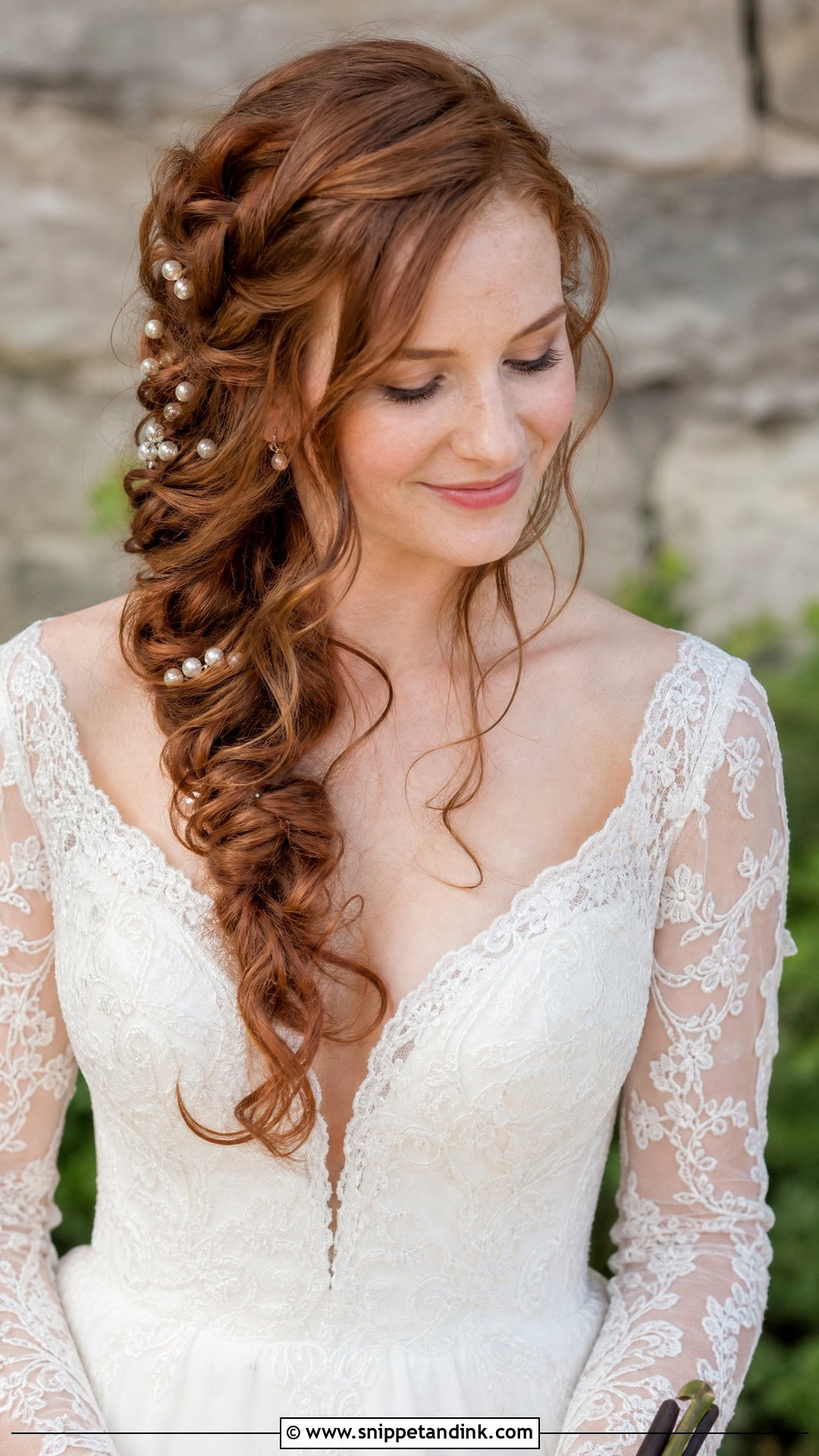
A side braid with curls blends structure and softness. A loose braid over one shoulder runs into waves at the ends. It shows off length while keeping hair to one side. Thick braids look bold; thin ones delicate. Face pieces left out soften it, and small flowers or pearl pins tucked into the braid make it personal. In natural light, the texture shows well, which is why I suggest it for outdoor and bohemian weddings.
19. High Ponytail With Volume
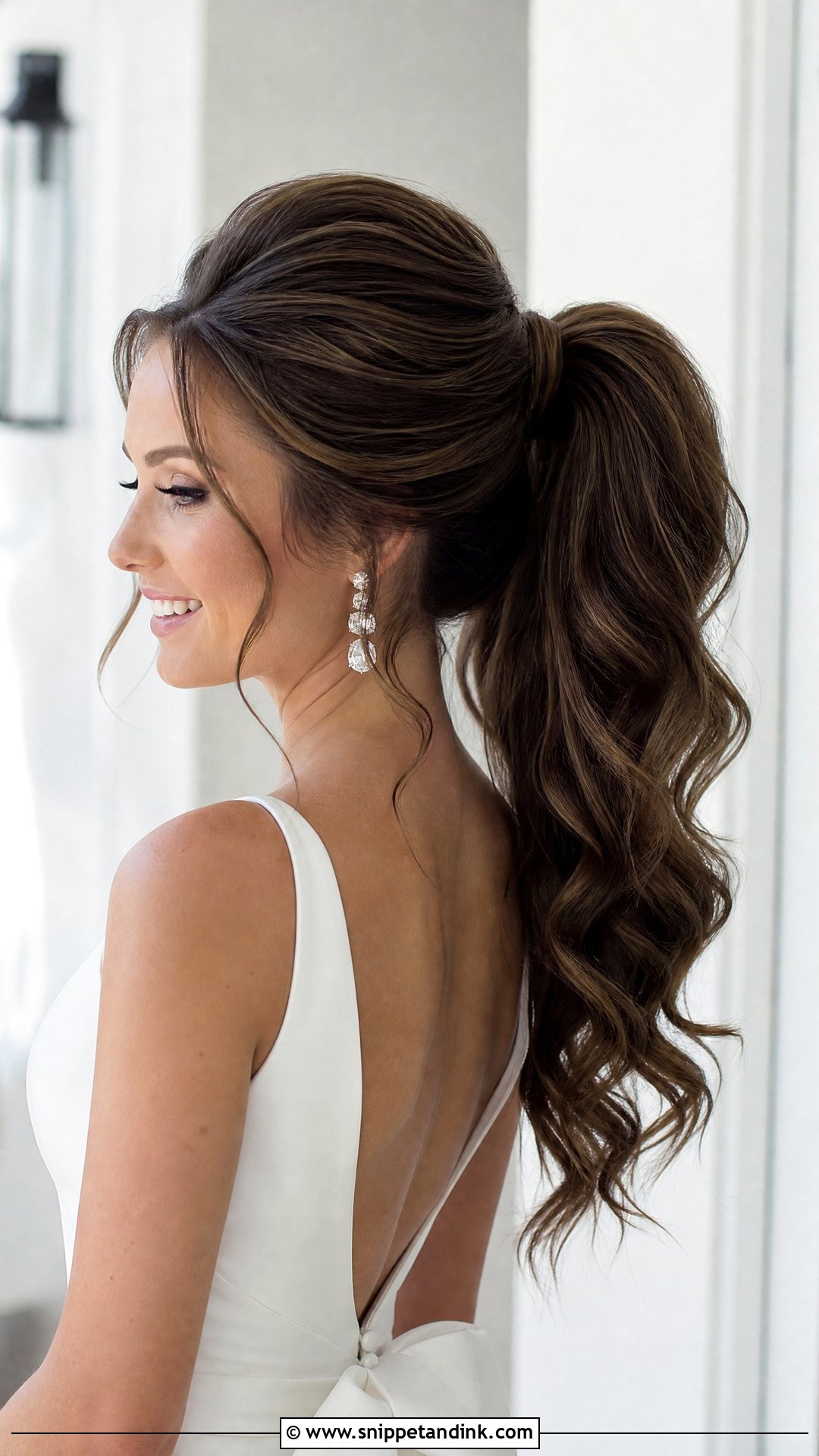
A high ponytail gives height and movement, and long hair makes it swing. It suits sleek gowns and statement earrings. Sleek or curled, the base must be strong: long, heavy hair drags a high pony down within a couple of hours if it’s held by one elastic. I tease the base and use two, then wrap a strand around to hide them. It also keeps hair off the neck, which is worth a lot on a hot day. Expect a slight pull at the scalp by evening if you’re not used to wearing it high.
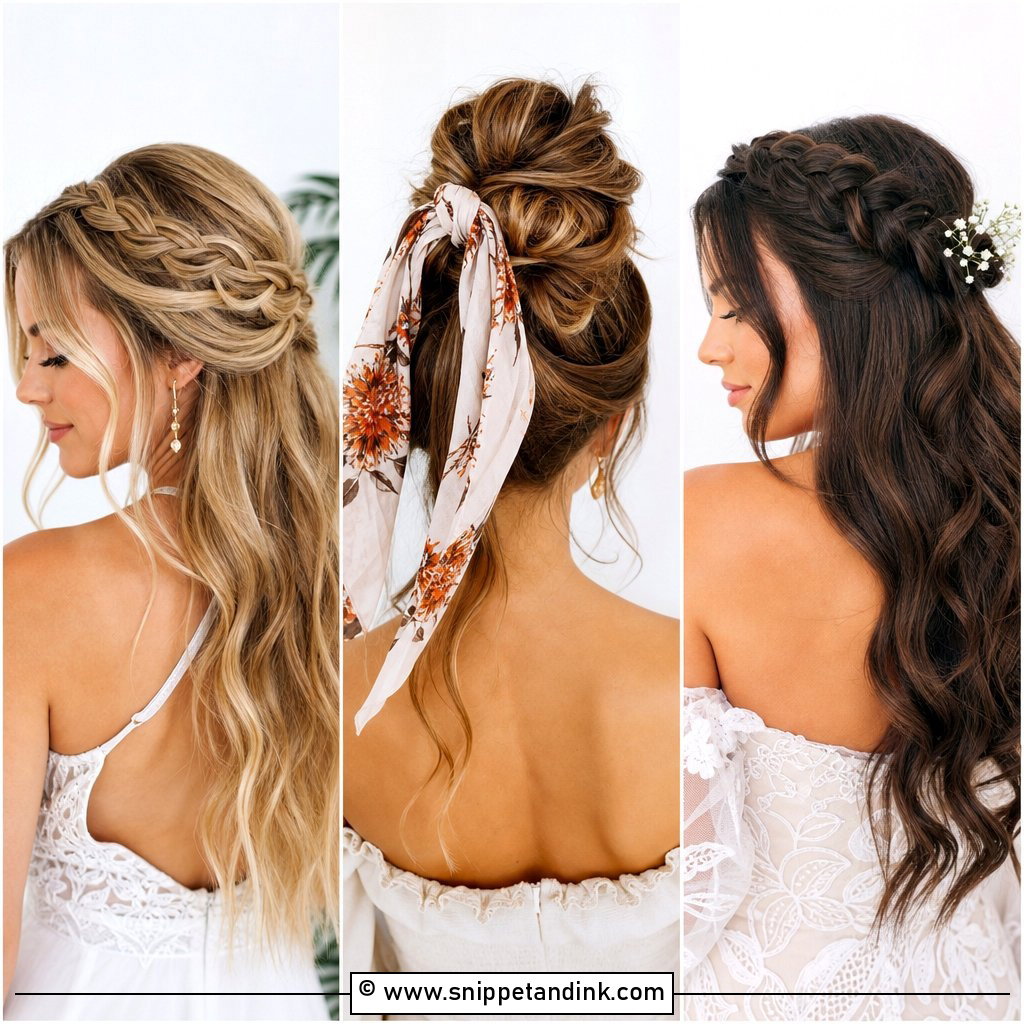
20. Vintage Finger Waves Updo
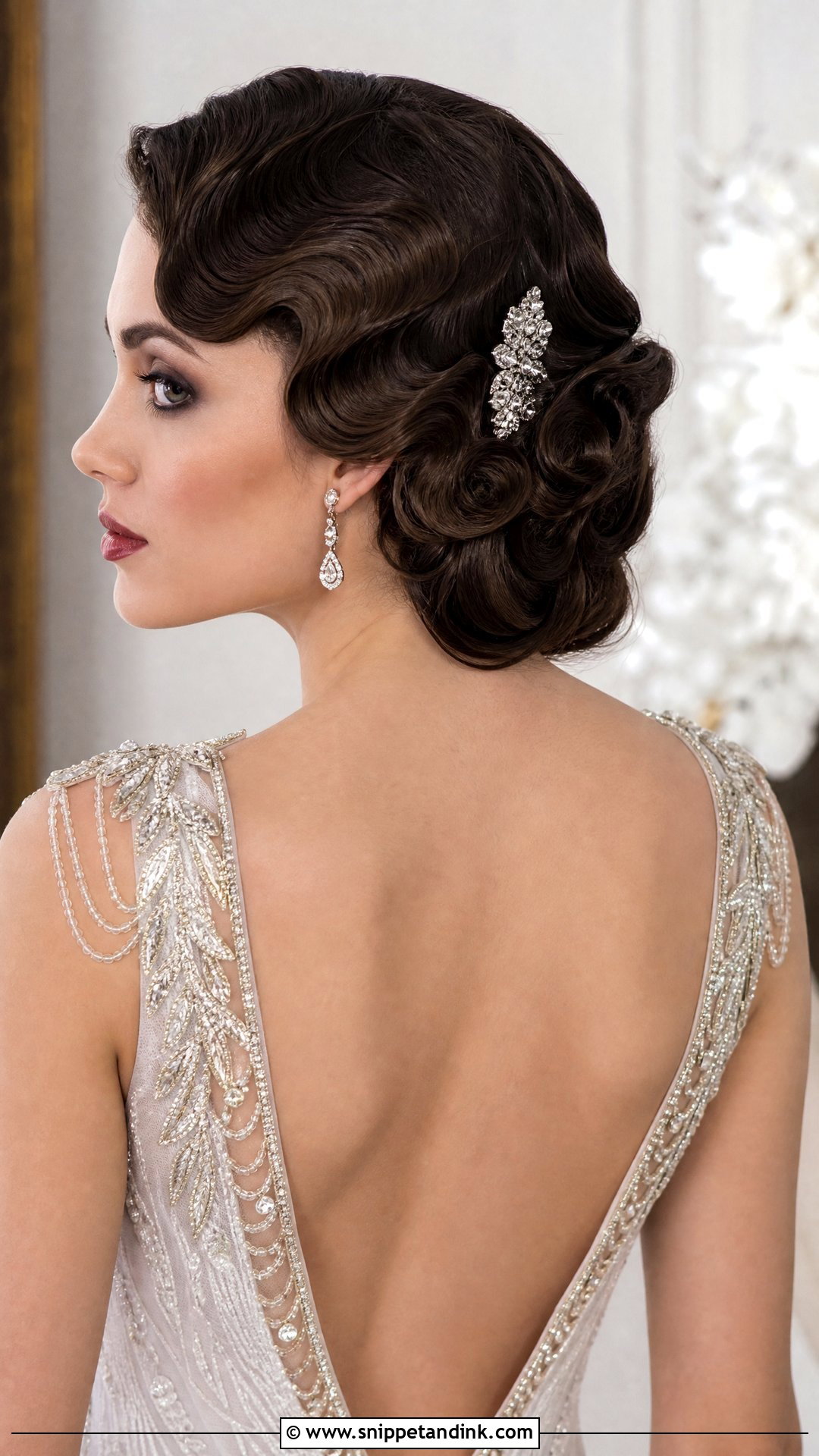
A vintage finger wave updo sculpts waves close to the head at the front and gathers the length into a twist or bun at the back. It suits retro and art-deco themes. On long hair, the waves have to be set with a strong setting lotion and left to dry completely, otherwise the weight of the bun behind them flattens the ridges. Add a jeweled hairpiece or sparkling comb. Structured gowns and bold makeup suit it.
Lace Backs, Buttons and Beading Catch Long Hair
Long hair worn down rests on the back of your dress for hours. On a satin or crepe gown that’s fine. On lace, beading or a row of buttons, the ends catch and tangle every time you turn, and the hair also covers the detail you chose the dress for.
If your dress has a detailed back, I’d suggest a half up style, a side sweep or an updo. If you want it down, ask your stylist to finish the ends with a smoothing cream so they glide rather than grip, and practise sitting and standing in the dress at the trial.
Clocking the Morning When Your Hair Takes the Longest
Long, thick hair takes longer to curl, braid and pin than anyone else’s in the bridal party. An intricate braid or a full set of curls on waist-length hair can easily take well over an hour, and timings vary with thickness. Tell your stylist your length when booking so the schedule accounts for it.
Arrive with clean, completely dry hair, ideally washed and blow-dried the evening before. Drying long hair on the morning can eat half an hour that should go to styling.
Wear Your Trial Style Home Before You Commit
The style that suits you is the one that matches your dress, venue and personality, whether that’s flowing waves, an intricate braided crown or a sleek ponytail. Long hair gives you lots of options, so try something new at your trial if you’re curious. Bring your favourite photos, then wear the trial style for the rest of the day: notice whether it pulls, drops or tangles with your clothes. Think about the veil and accessories too. That afternoon tells you more than any photo, and you’ll walk into the wedding morning knowing exactly how your hair will behave.
You'll Like These Ideas:


Leave a Reply