
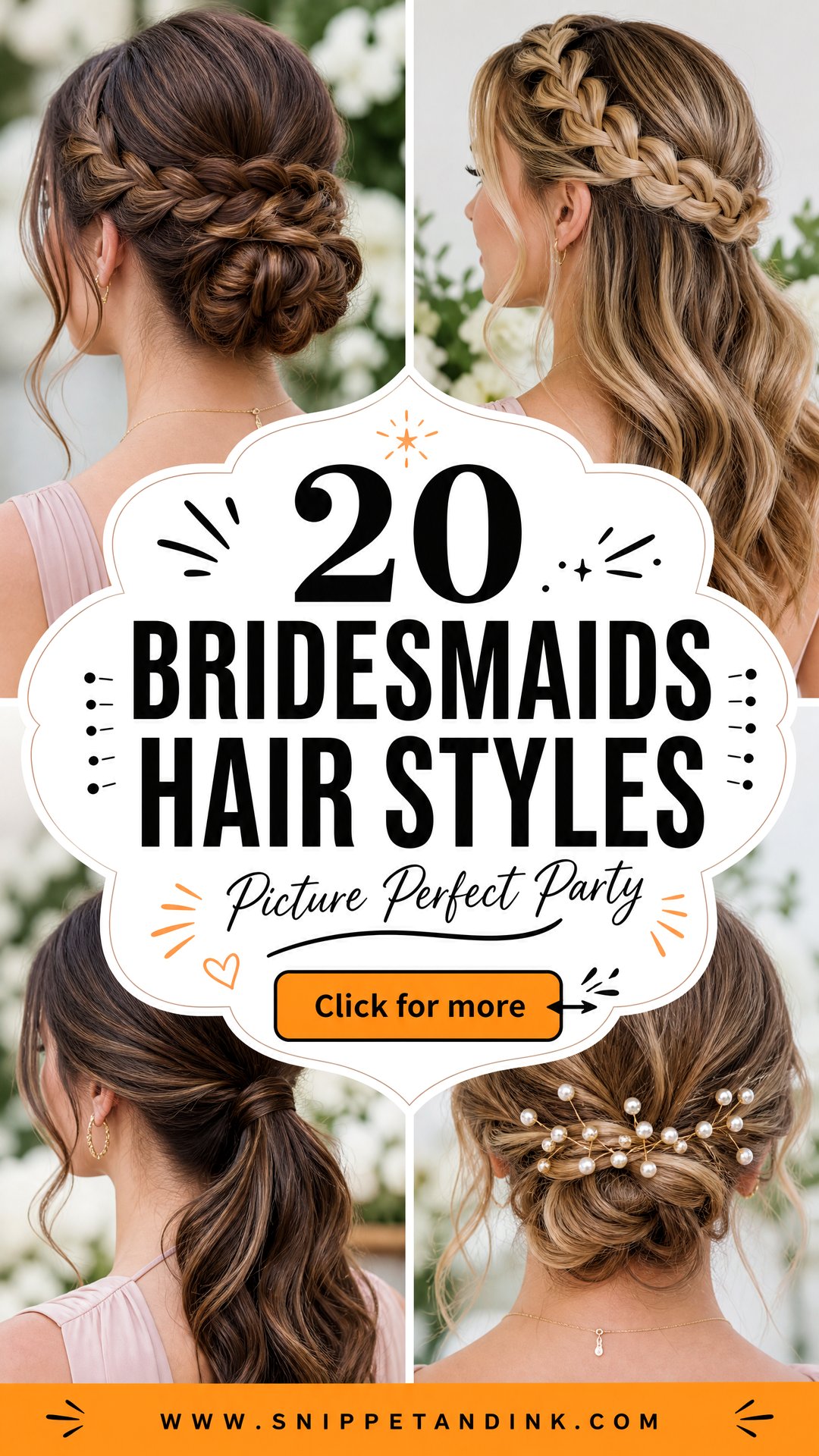
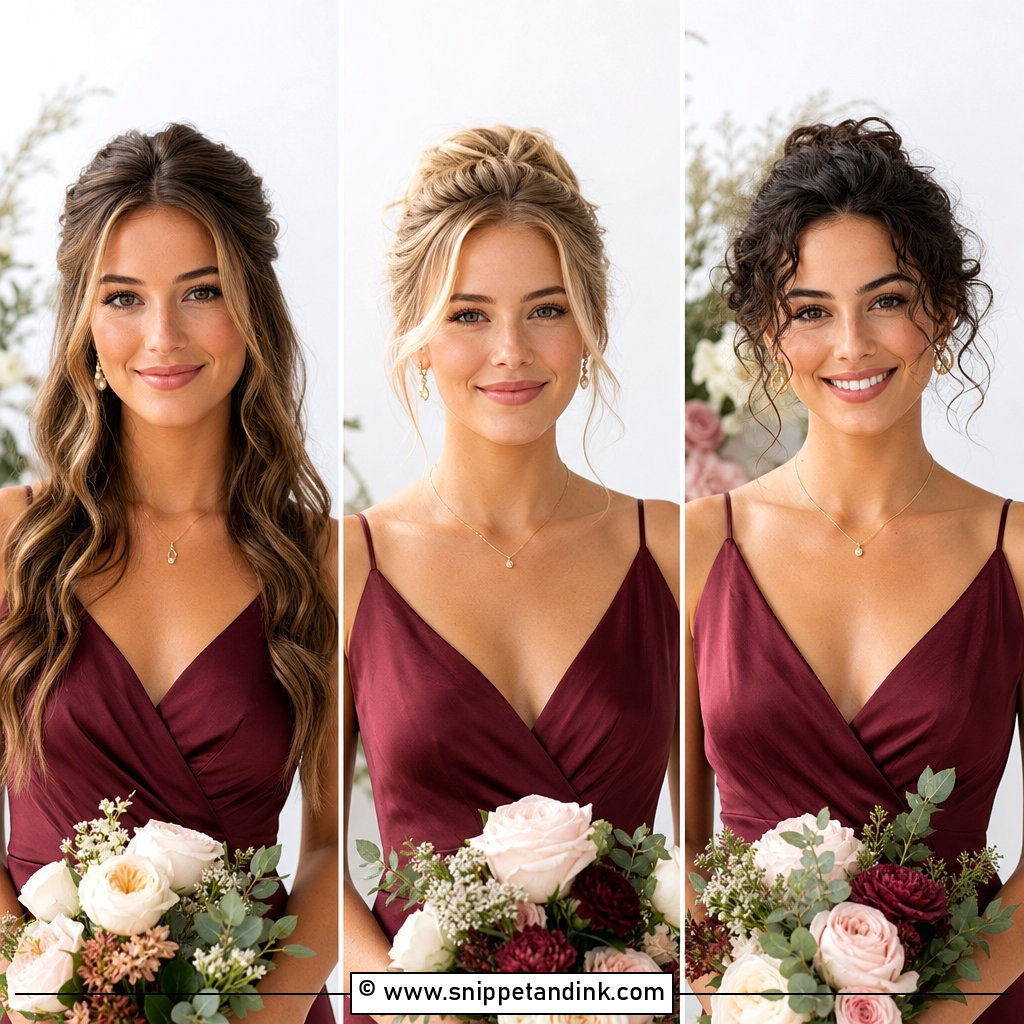
A bridesmaid’s hair has a harder job than the bride’s in one way: it has to look good next to five or six other heads in every group photo, and usually with less time in the chair. What I see working right now is soft but secure. Low buns, half-up waves, sleek ponytails and braided details, all with texture rather than stiff curls and face-framing pieces that are cut and set to stay put. Below are twenty styles for every wedding party, each with the detail I’d pay attention to if I were doing it.
Reading the Back of the Dress Before Picking a Style
Brides tend to choose bridesmaid hair from the front, but half the ceremony photos are taken from behind, while everyone faces the couple. So the first thing I ask for is a photo of the back of the dress.
- Open or low backs look best with hair up or swept to one side, so the cut of the dress is visible during the ceremony.
- Halter necks and high necklines crowd a low bun; a mid-height bun or a high ponytail clears the fabric.
- Bows, ties or buttons down the spine get hidden by long loose hair, which wastes the detail the bride chose.
- Plain, closed backs give you the most freedom, and this is where loose waves and half-up styles make the most sense.
If the bridal party wears mismatched dresses, base the decision on the most detailed back in the group and build outward from there.
Veils and hair accessories on the bride count too. If she’s wearing a cathedral veil anchored low, bridesmaids in low buns echo that line nicely in the wide ceremony shots.
1. Bridesmaid Low Bun
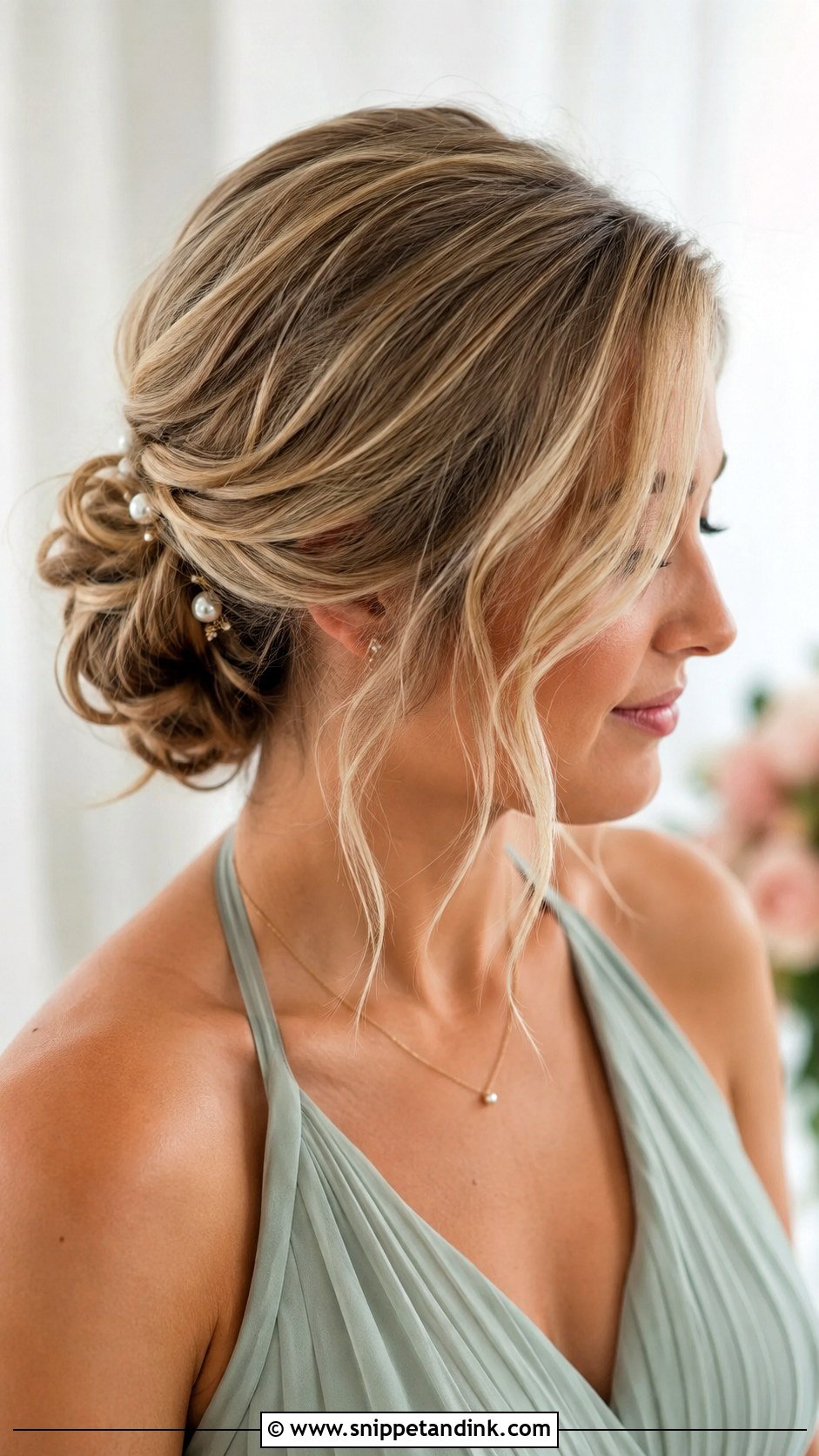
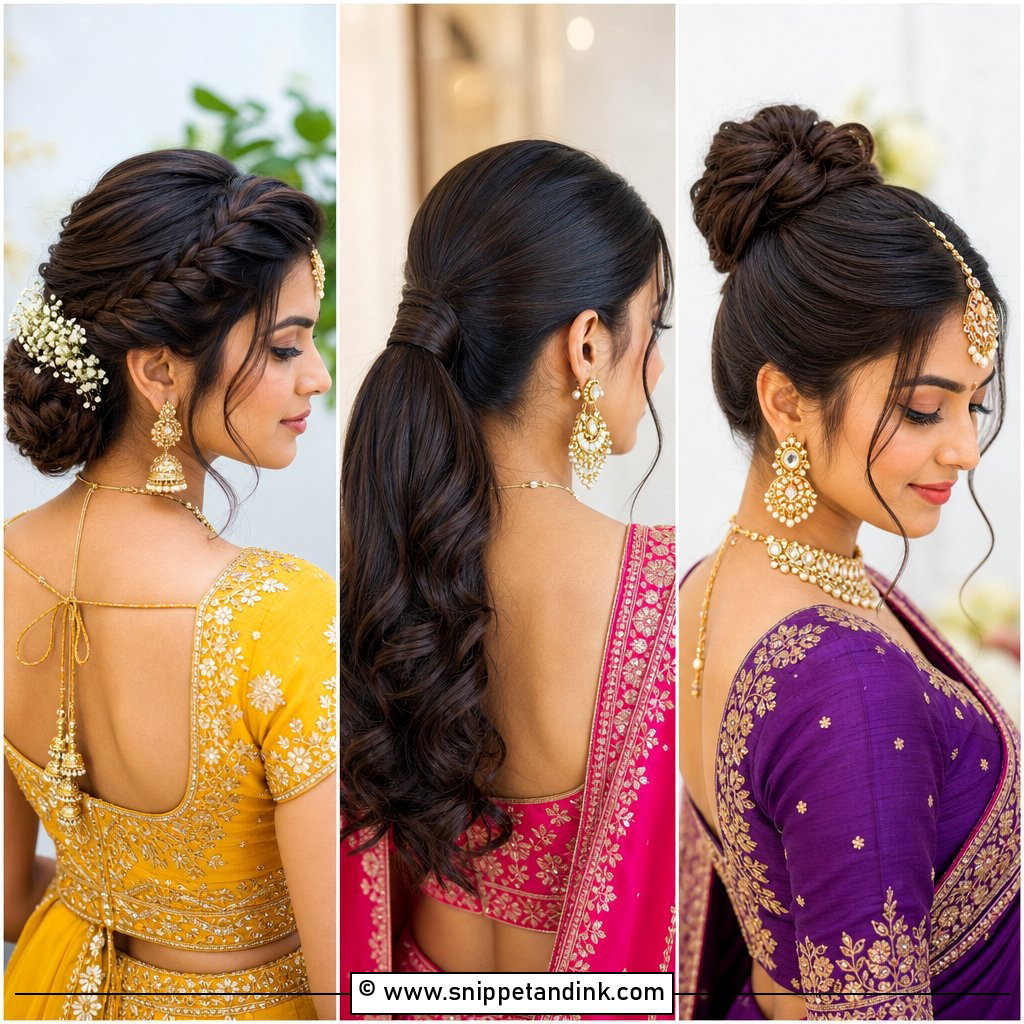
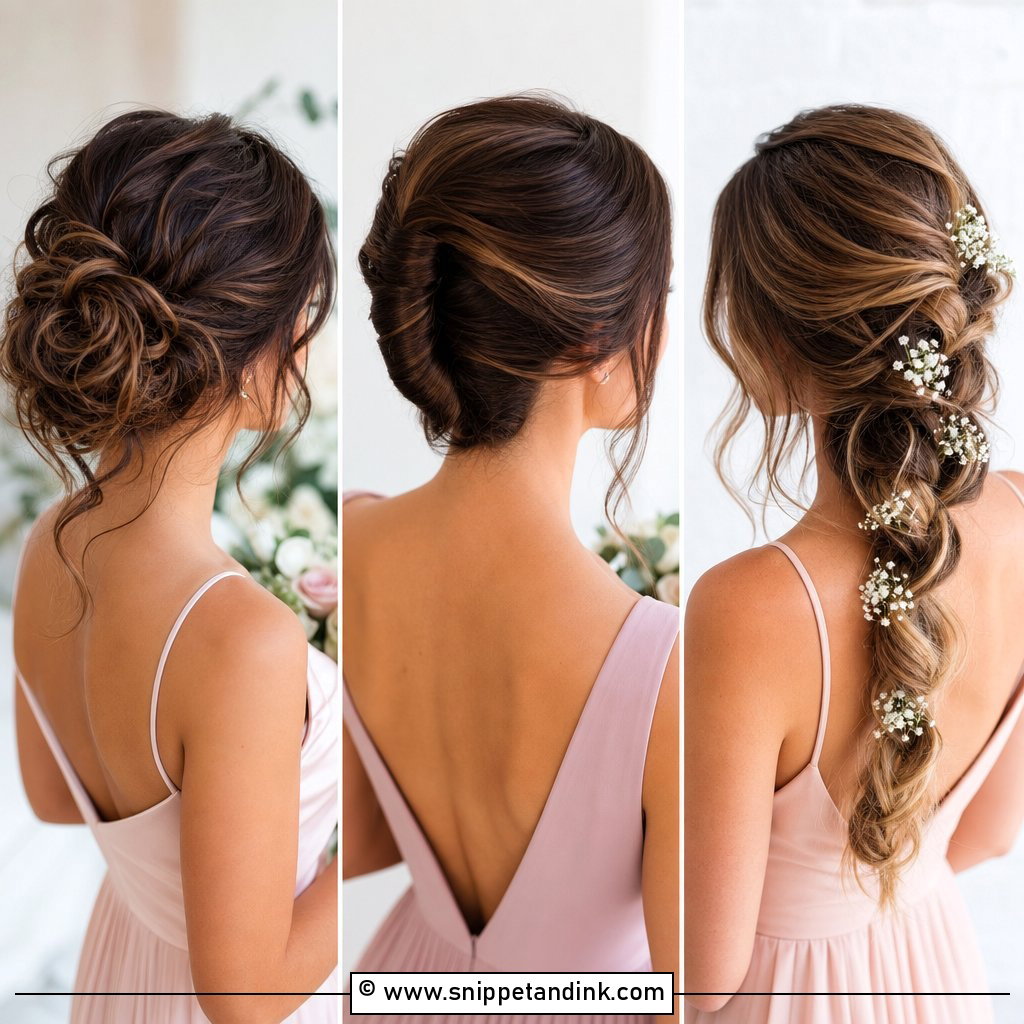
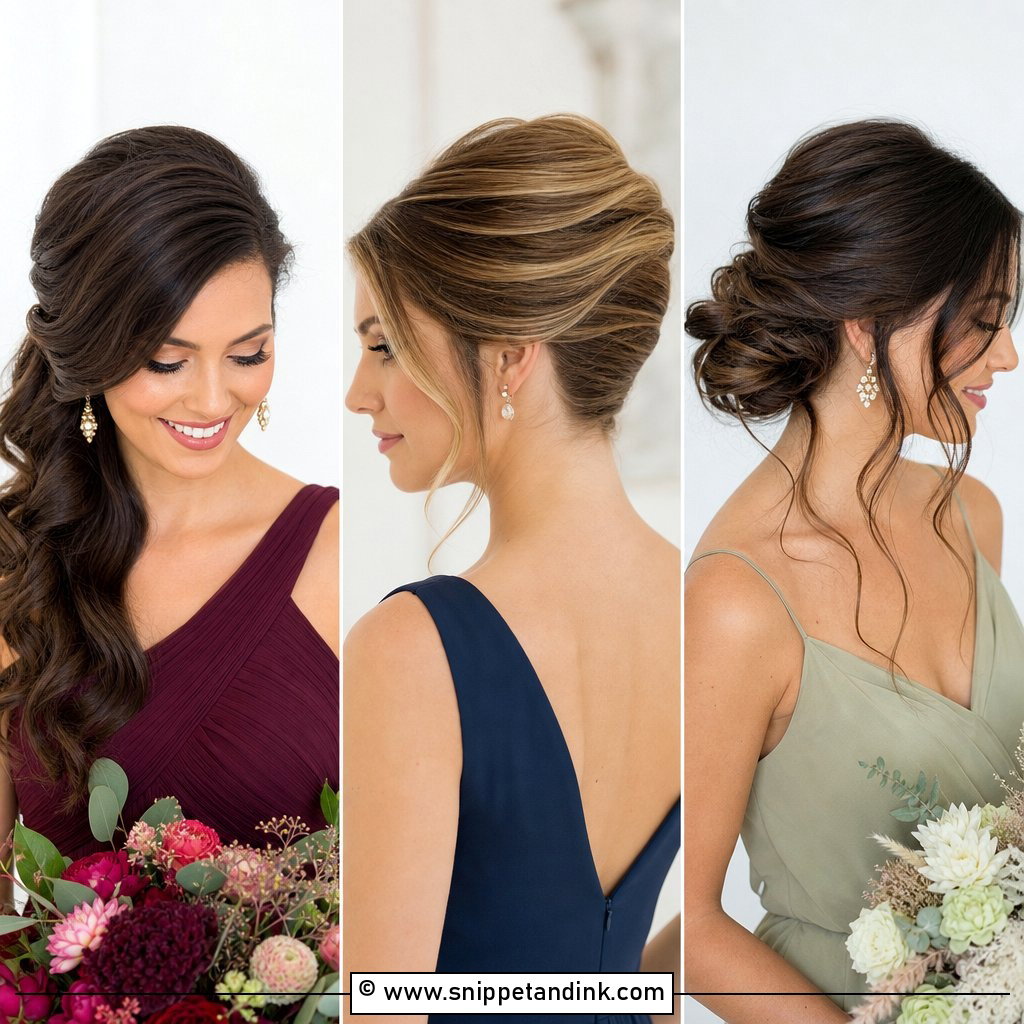
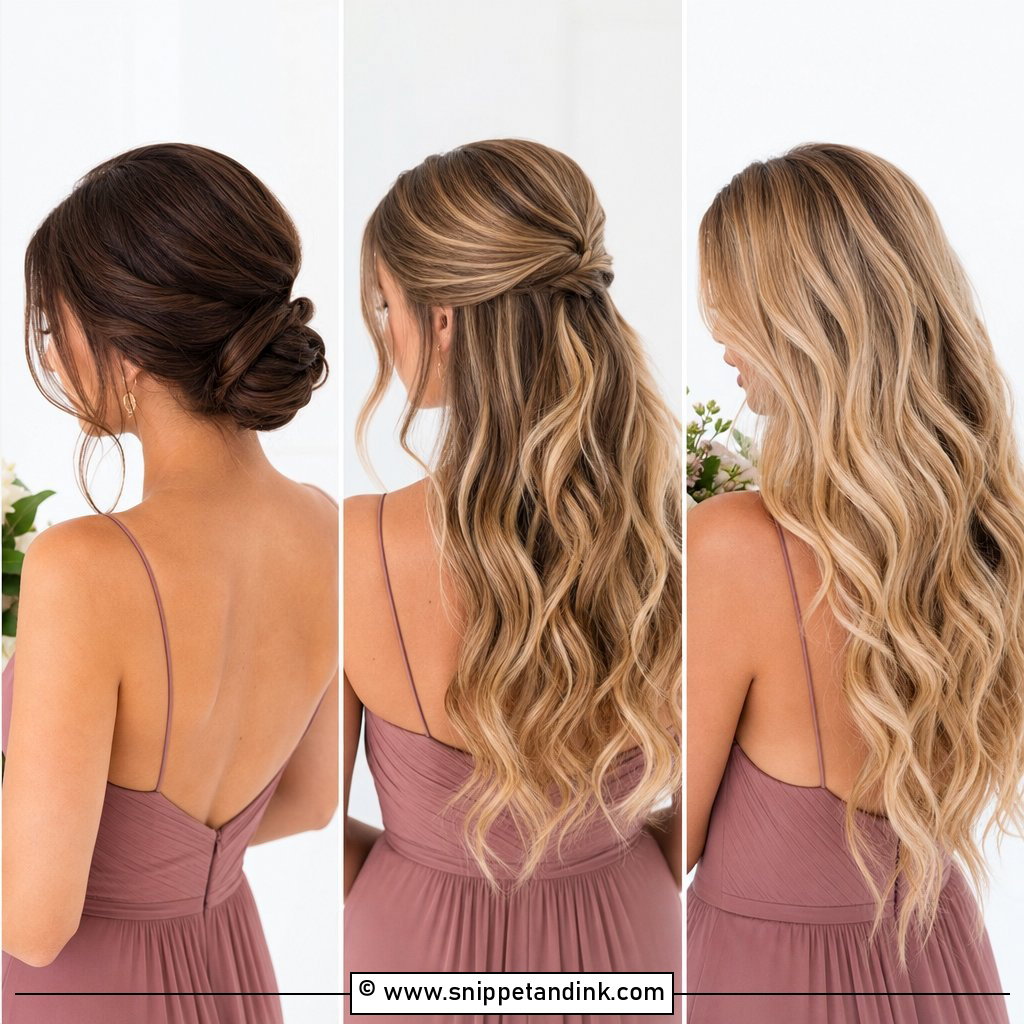
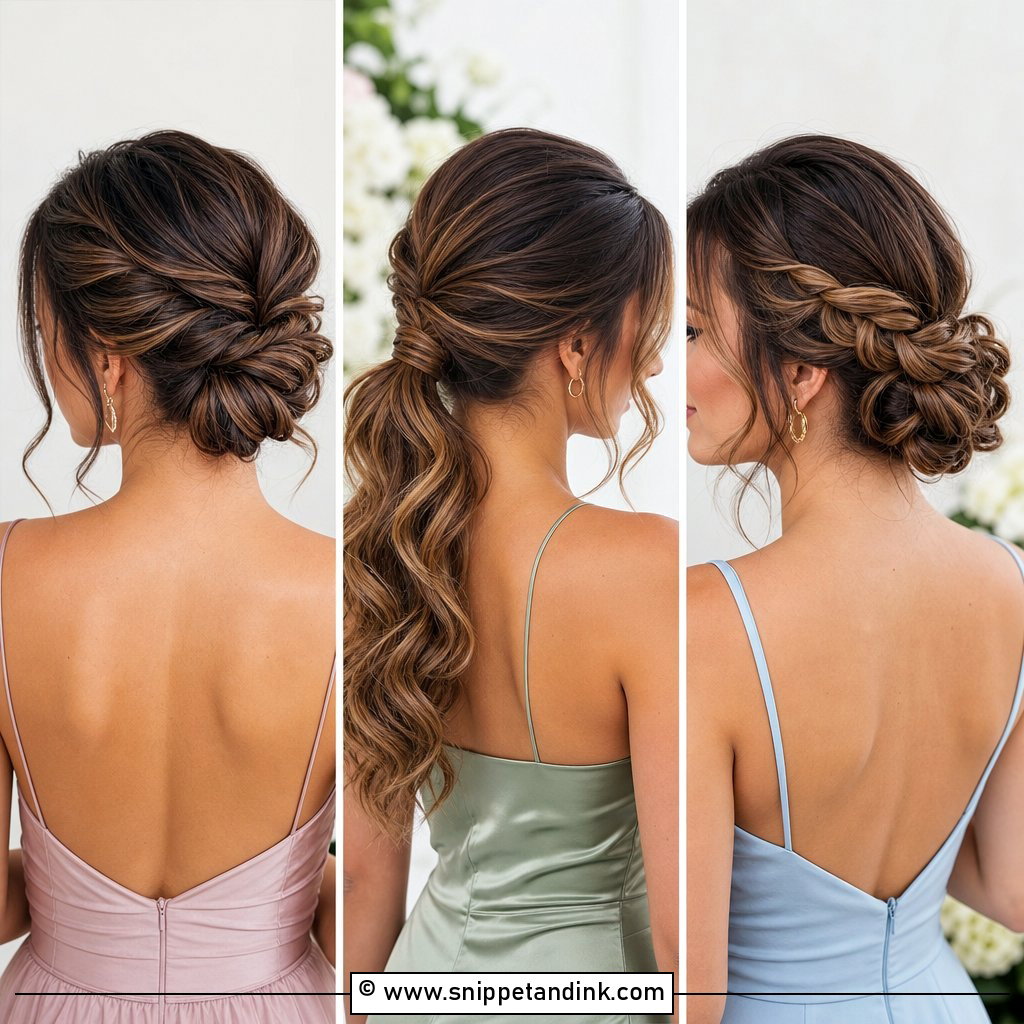
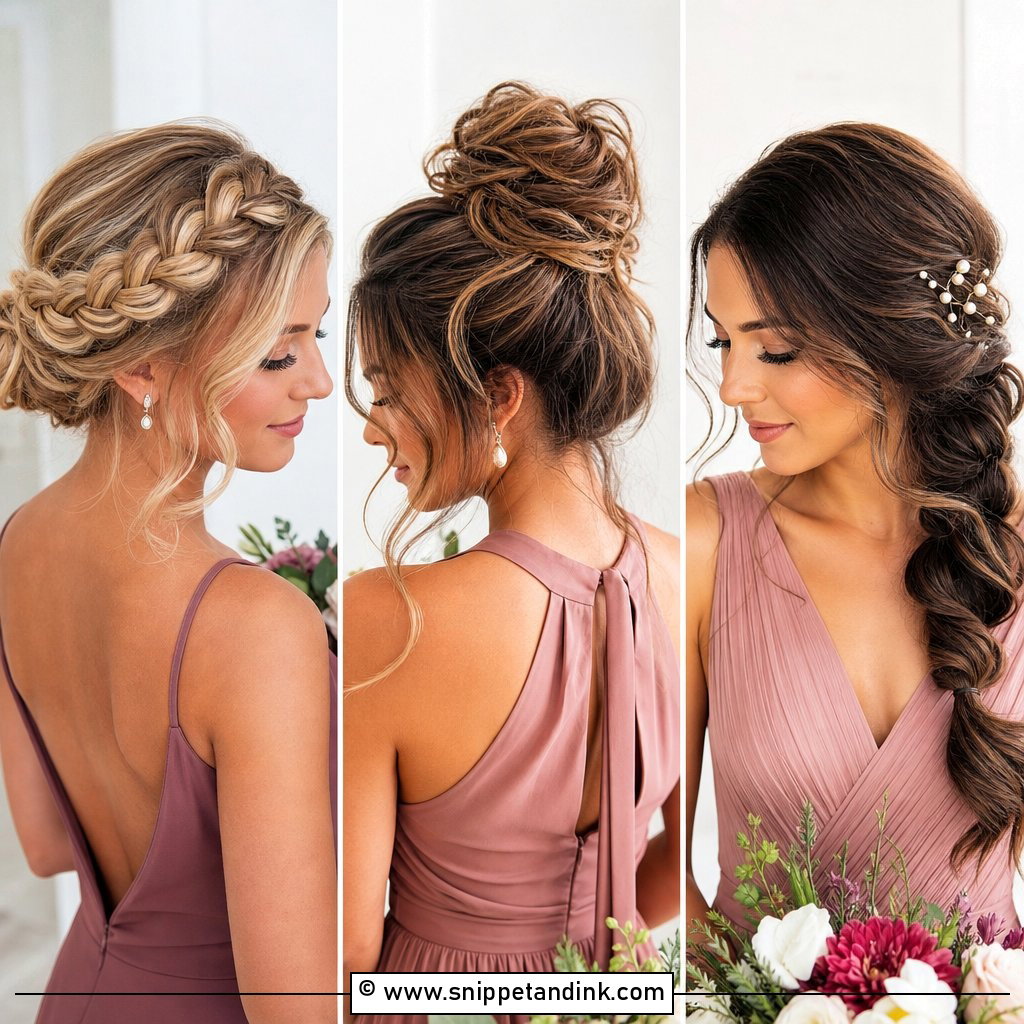
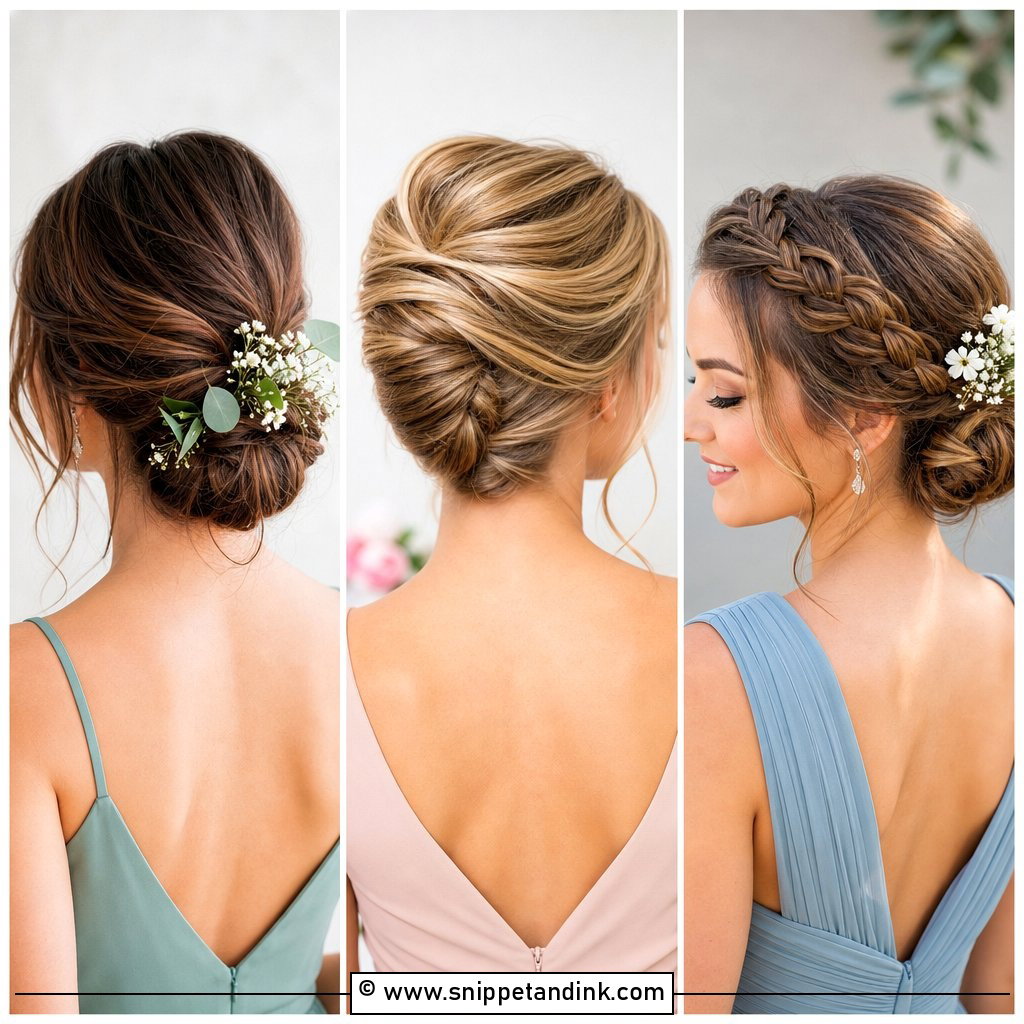
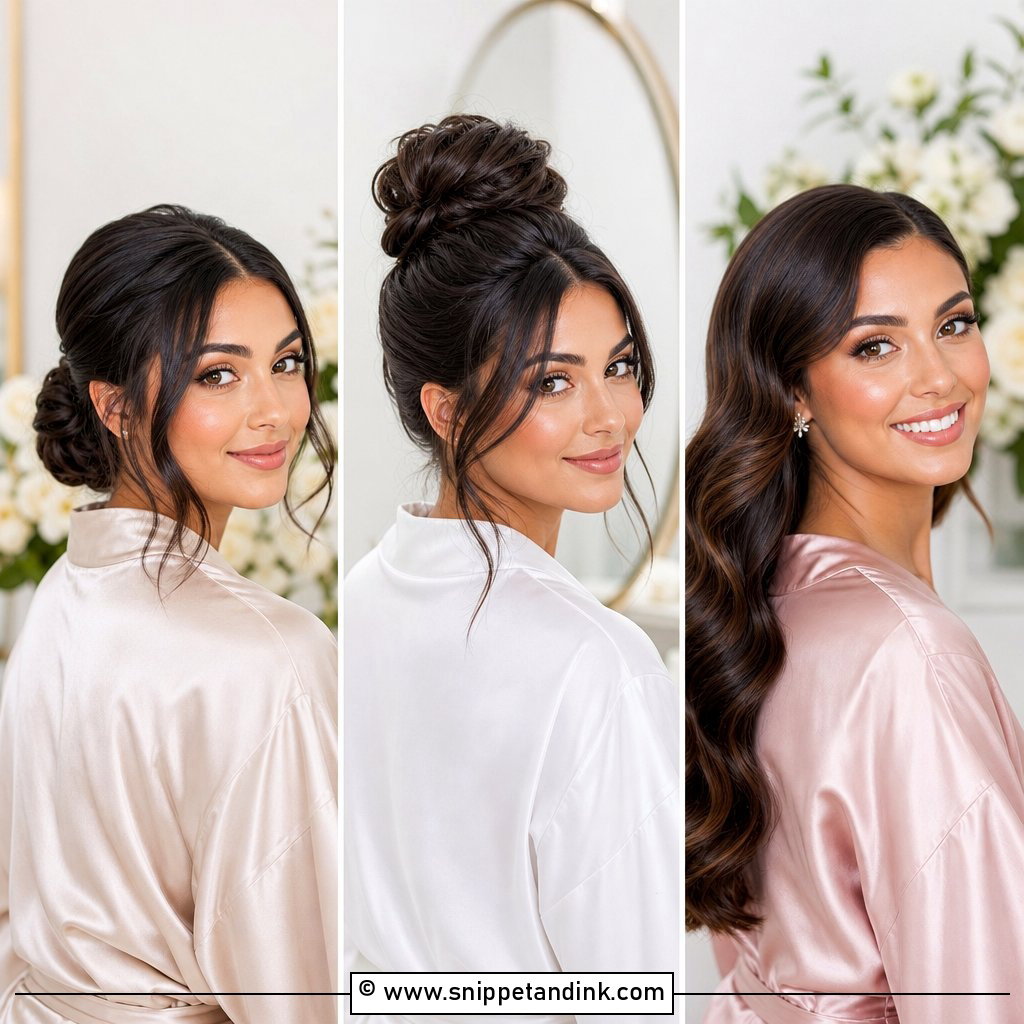
The low bun is my default recommendation when a bride tells me she just wants everyone to look neat. Sitting at the nape, it clears one-shoulder, square and halter necklines and shows off earrings. The balance is in the tension: too tight looks severe in profile, too loose and it drops after the ceremony. I give a little lift at the crown, keep the sides smooth and leave two fine pieces near the cheekbones. A few pearl pins or a shine mist finish it.
2. Bridesmaid Half Up Half Down Hair
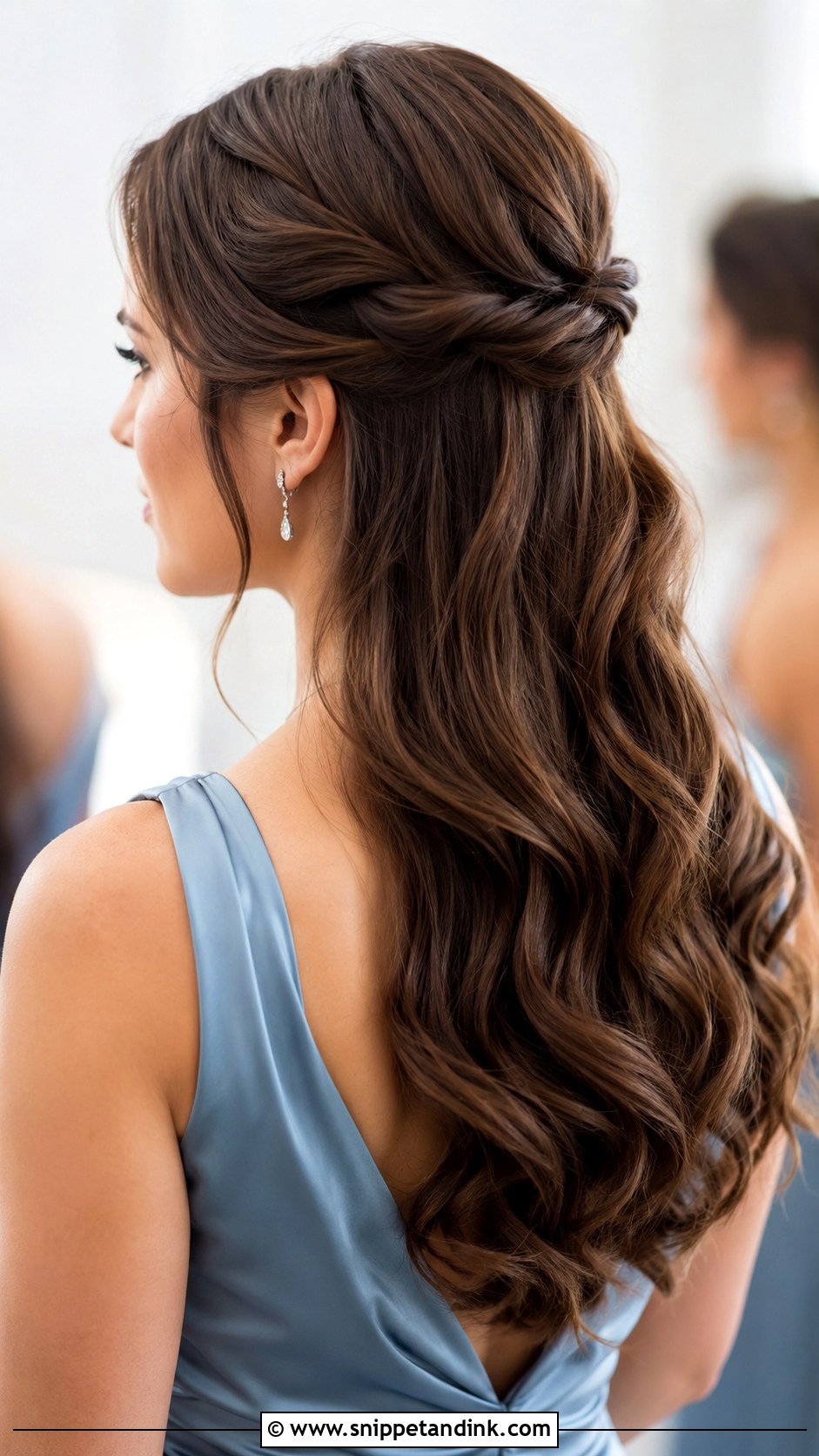
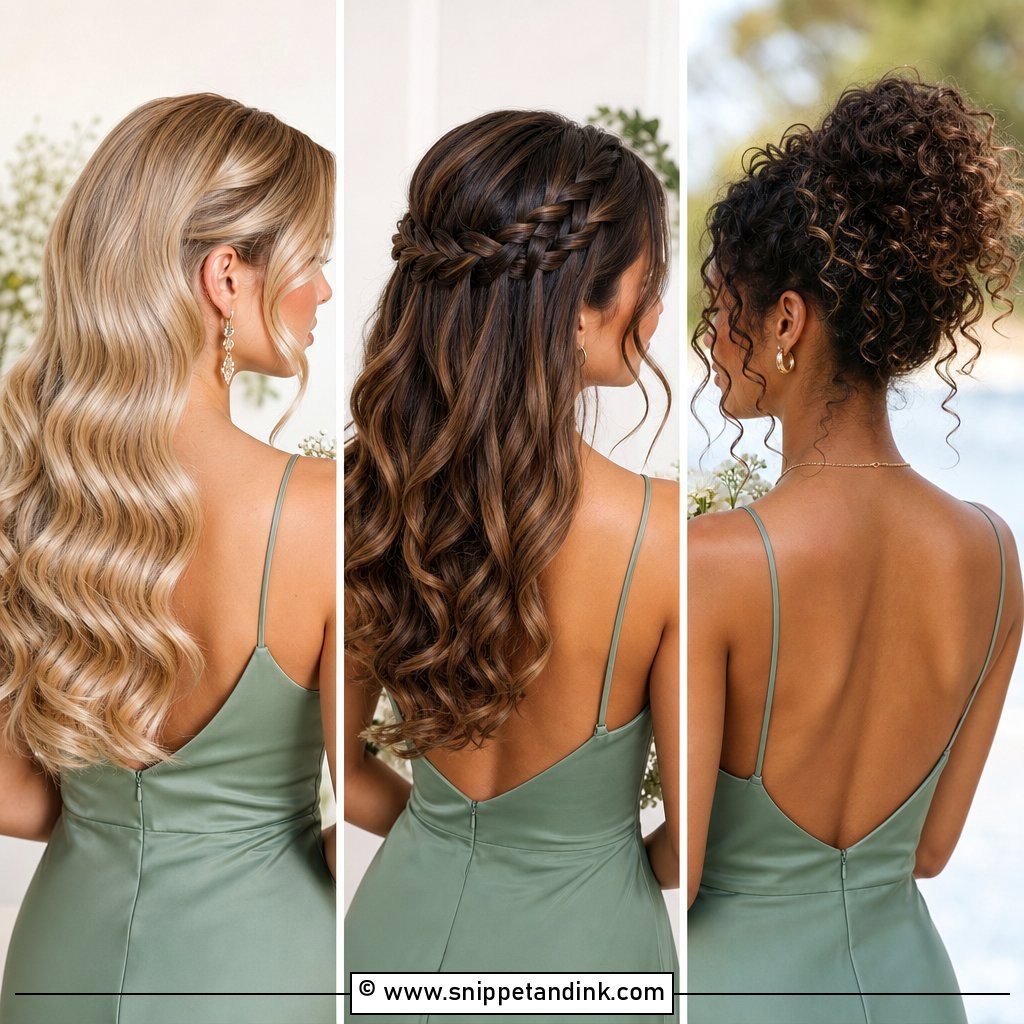
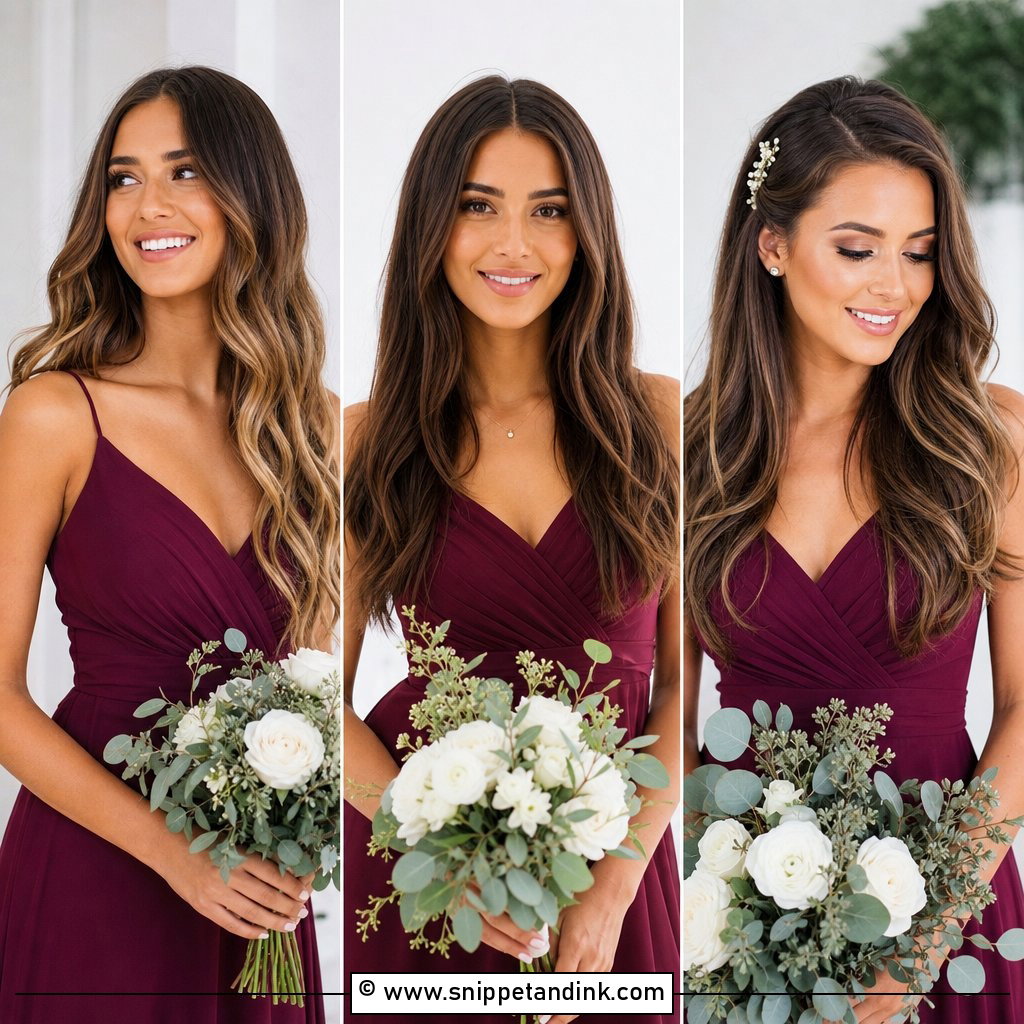
Half up, half down gives the movement of loose hair while keeping strands out of the face during the vows. The top can be twisted, braided or simply pinned back. Underneath, brushed-out curls hold up better than tight ones. For a group, I keep the half-up shape identical and let the curl size change to suit each bridesmaid’s texture, which looks coordinated without forcing anyone’s hair to do something it won’t.
3. Bridesmaid Loose Waves
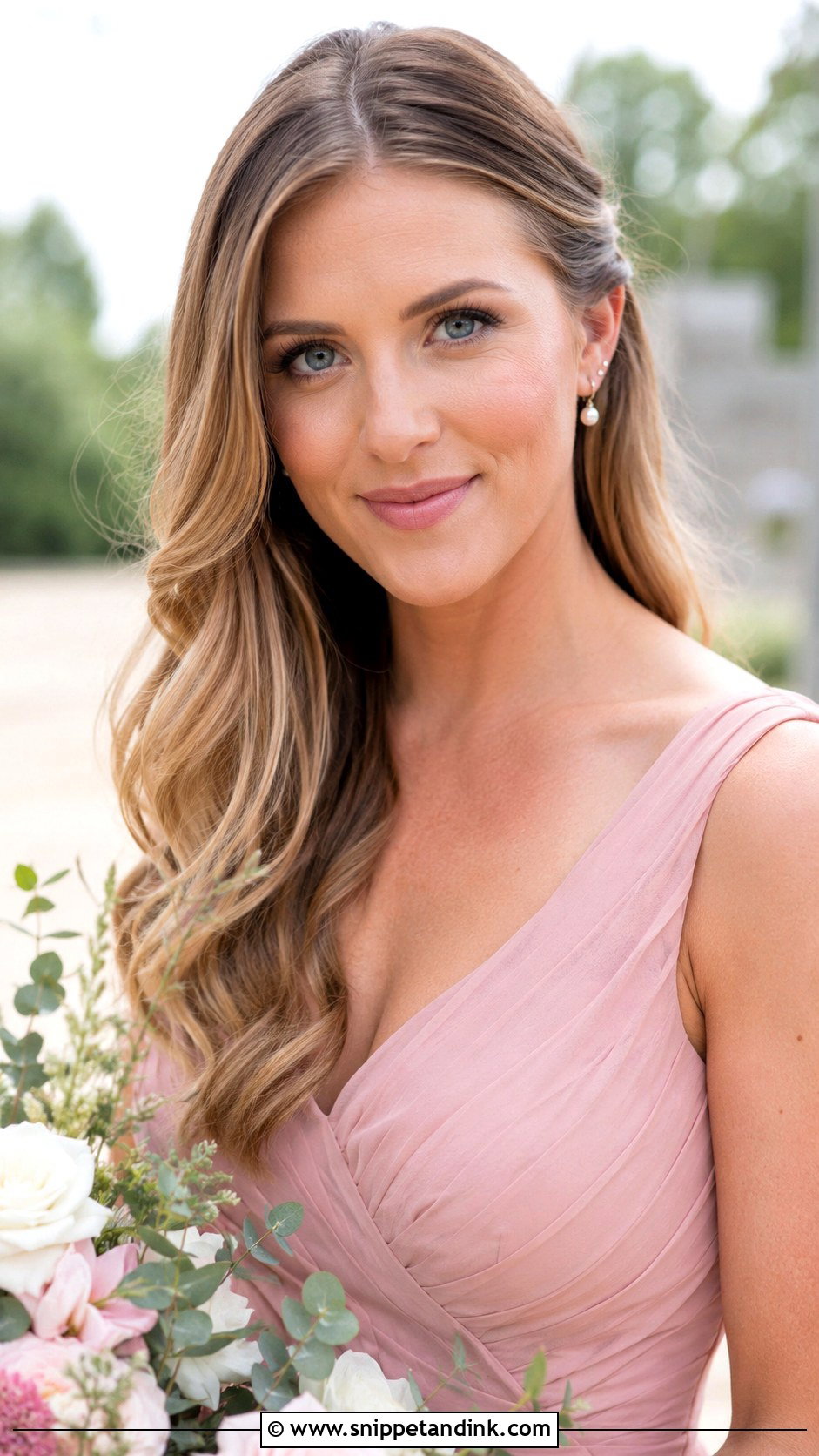
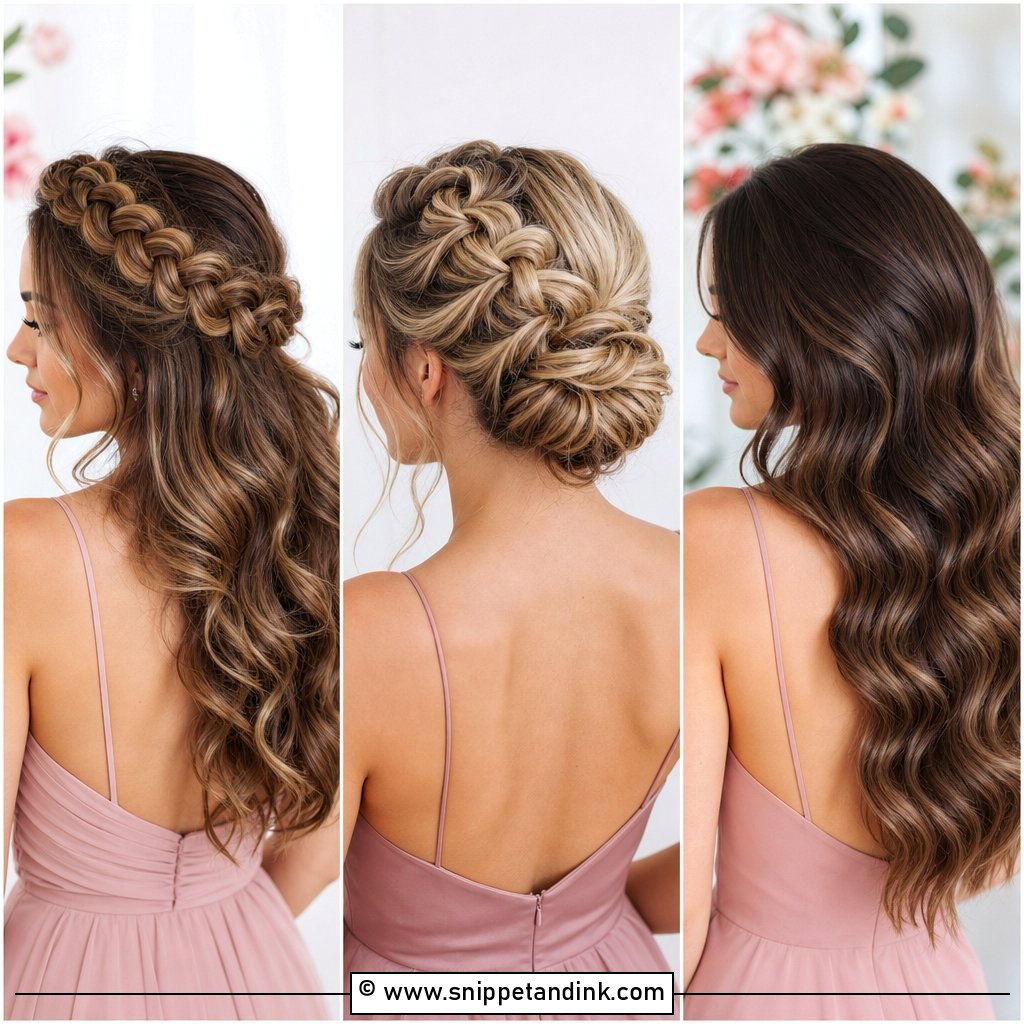
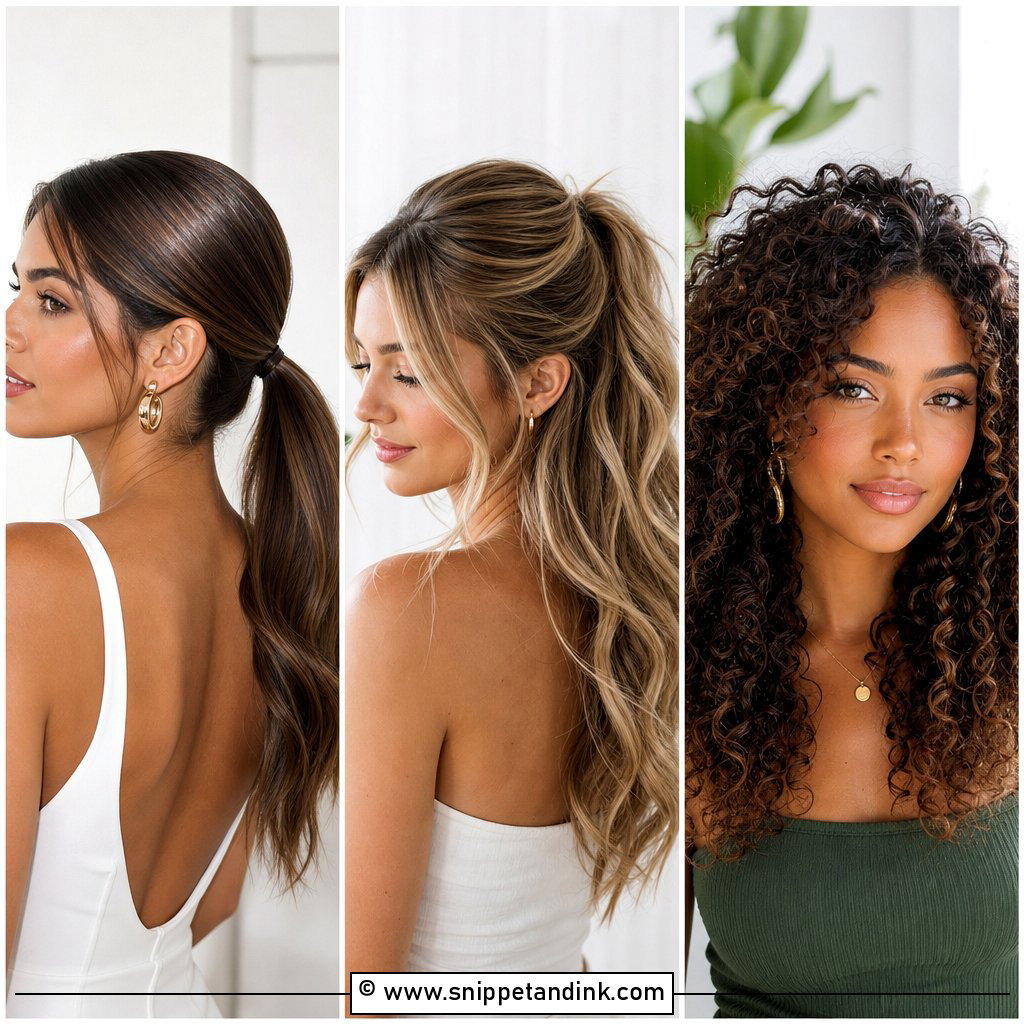
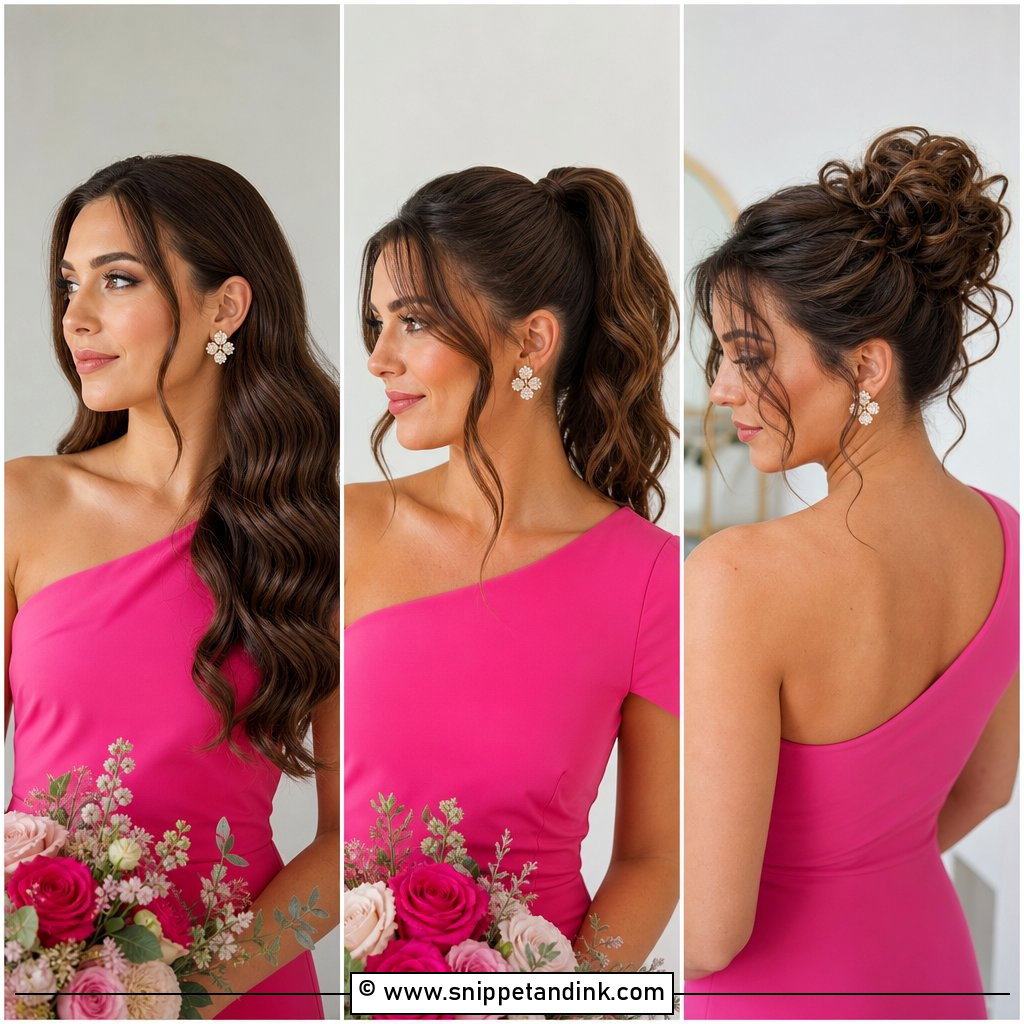
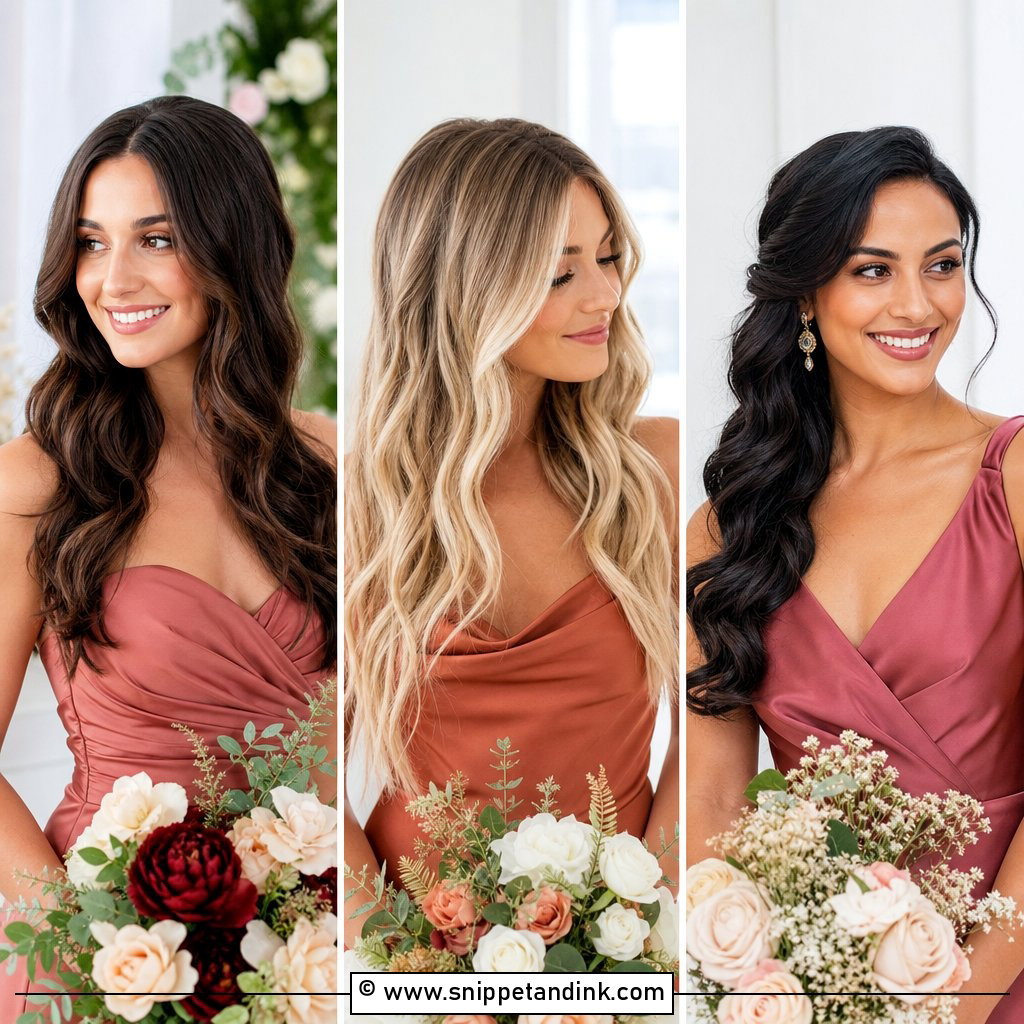
Loose waves are simple to repeat across a whole party. I use a large barrel, heat protectant first and a flexible spray to finish. They suit satin, chiffon and floral bridesmaid dresses. Fine hair gets root lift and texture spray before curling, otherwise it’s straight by dinner. Thick hair can be brushed smoother. Tucking one side behind the ear gives the face a clean edge in close-ups.
4. Bridesmaid Sleek Ponytail
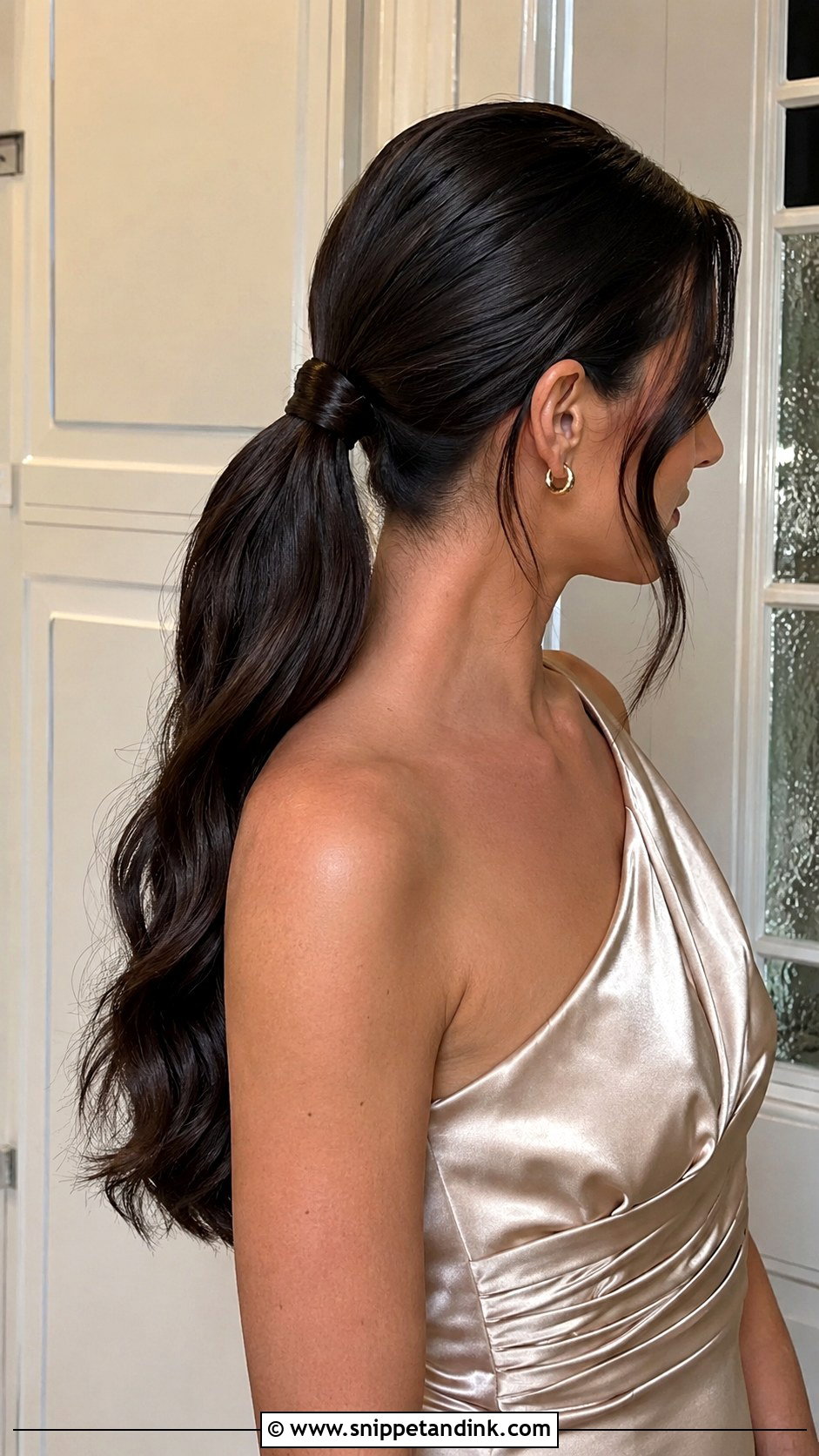
Sleek ponytails reward preparation. Any bump at the crown shows instantly, so I smooth the hair with a boar bristle brush while it’s still warm and secure it before it cools. A strand wrapped around the elastic hides the band. Low at the nape is quieter; high near the crown is more dramatic and suits strong necklines and city venues. It’s one of the best styles for humid days because the front is locked down. Anti-frizz cream goes on before blow-drying, not after.
5. Bridesmaid Braided Bun
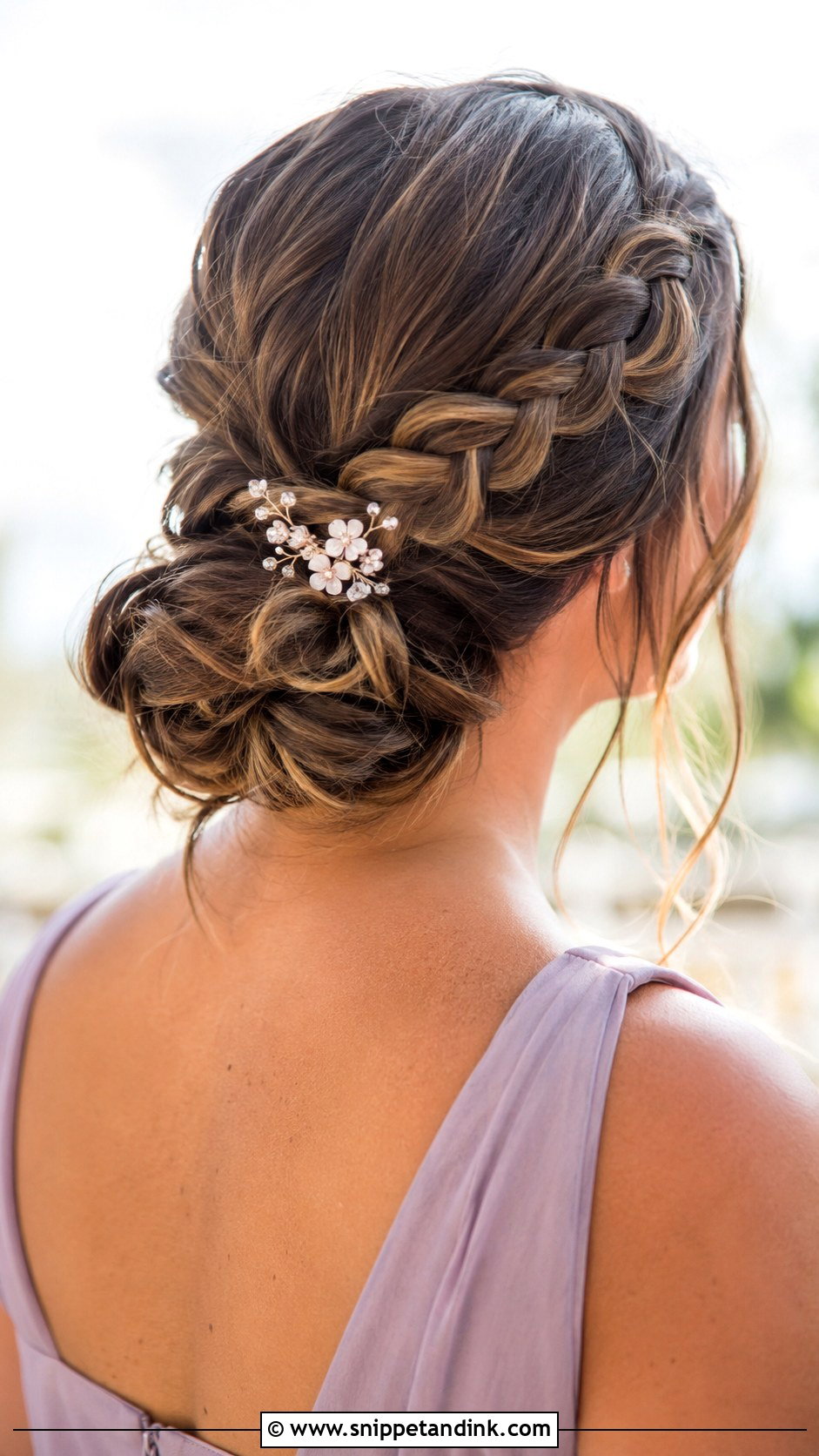
Braided buns have texture without fuss. I’ll start with a side braid, a crown braid or two small braids feeding into a low bun. Highlighted or balayage hair looks especially good here, since the weave shows off the color. I keep the bun a little loose so the braid stays full. Garden and rustic weddings suit it. Small flowers or pearl accents can sit in the bun, but secure the braid with its own pins first.
6. Bridesmaid High Bun
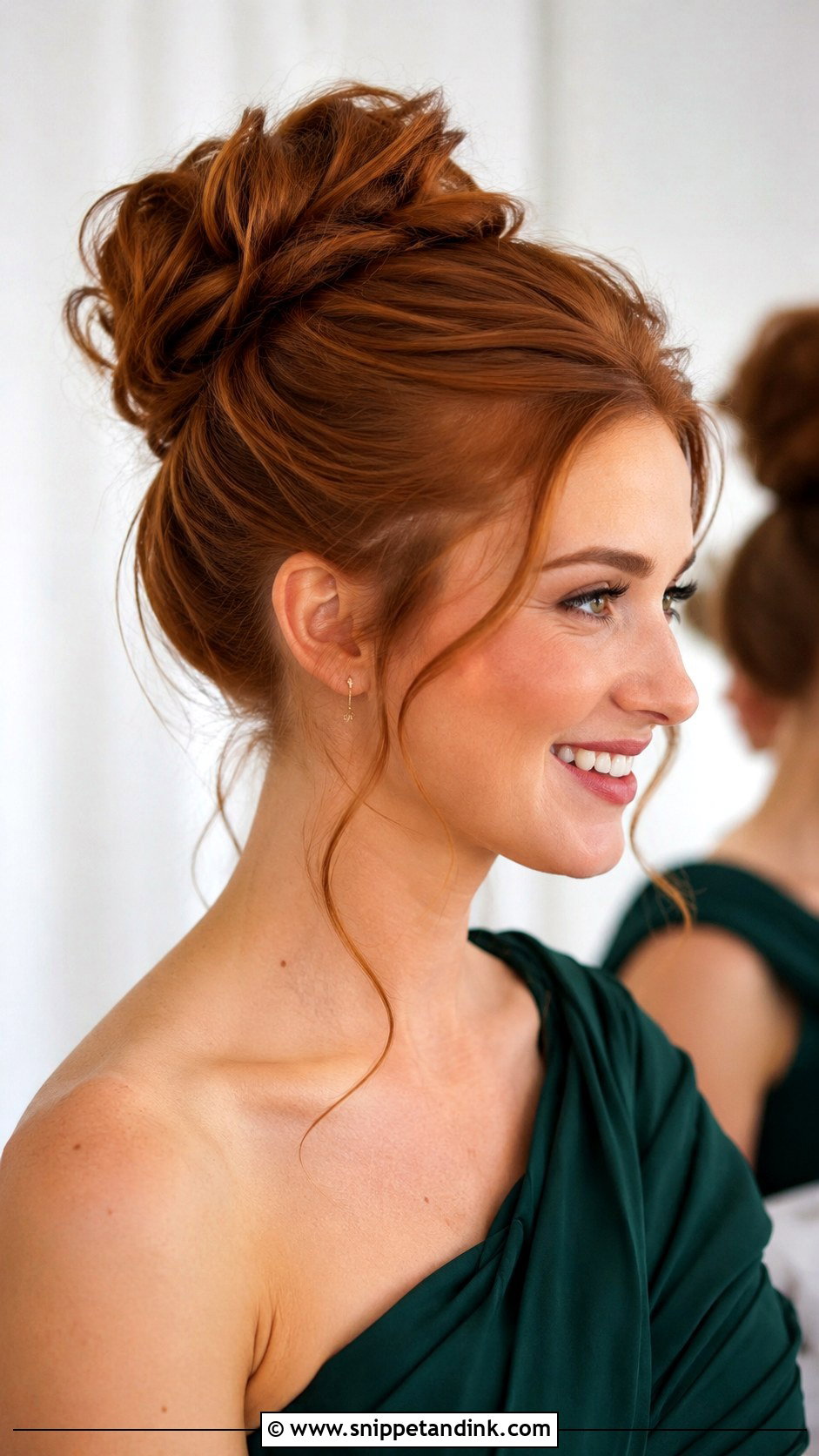
A high bun lengthens the neck and works for summer, formal venues and dresses with detail at the back. Smooth and round is classic; textured is softer. The base has to be solid, so I prep with mousse, tease lightly at the root and pin the bun into that base. High buns can look harsh on some faces, which is why I leave face-framing pieces. They also leave room for statement earrings.
7. Bridesmaid Side Swept Curls
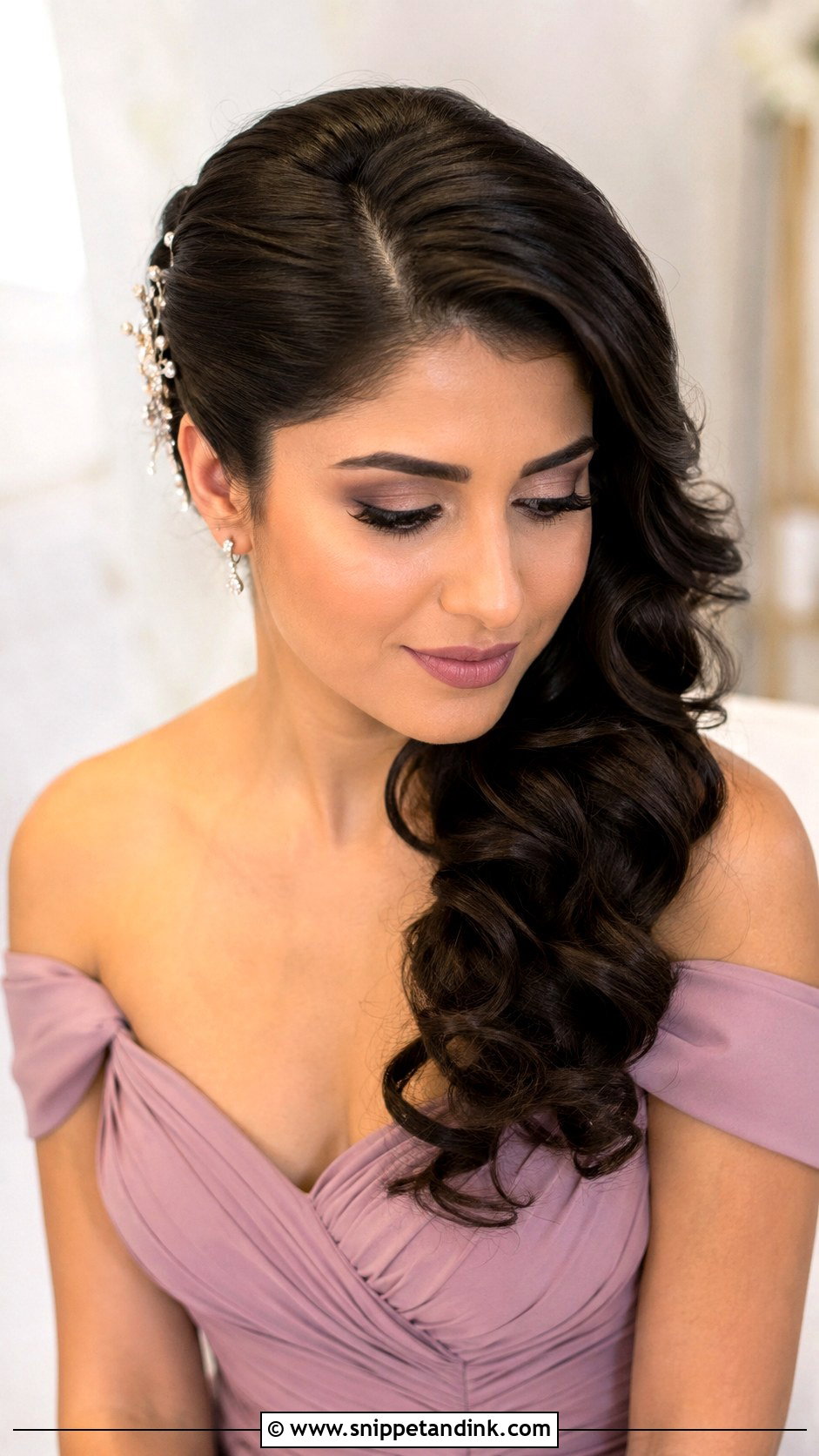
Side-swept curls gather everything over one shoulder, so the full length shows from the front. They suit strapless, sweetheart and off-shoulder dresses best. The weight all sits on one side, so the pinned side needs crossed pins behind the ear, ideally anchored into a small elastic hidden underneath. Medium to long hair works; extensions can add fullness. One honest drawback: in group photos, everyone’s curls should fall over the same shoulder, so plan which side before the morning.
8. Bridesmaid French Twist
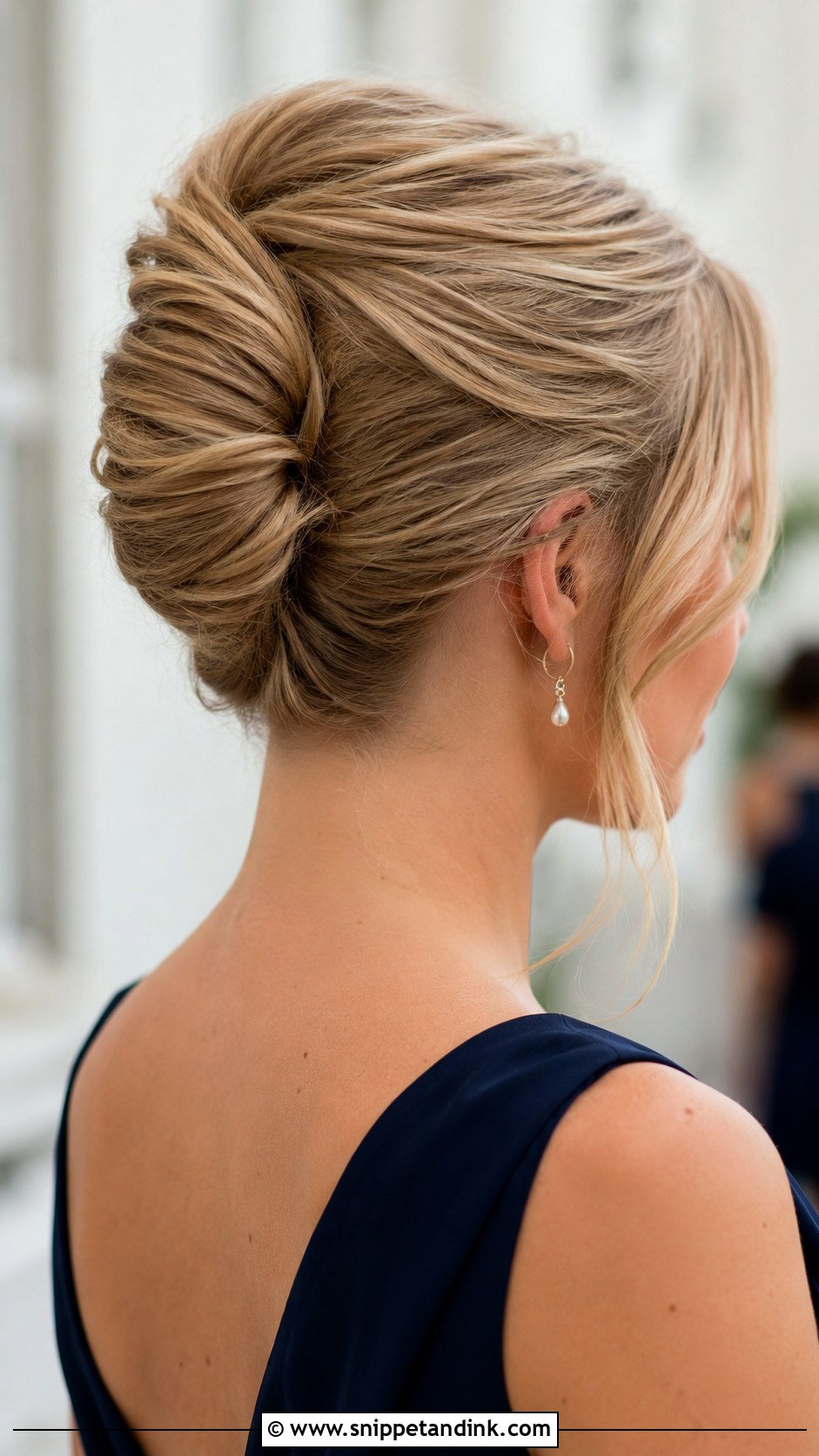
The French twist is the most formal style here and suits satin dresses and indoor venues. Modern versions are softer than the old lacquered shell, with volume at the crown and a slightly relaxed hairline. Medium-length hair works because the twist folds back on itself rather than needing extreme length. The ends can be tucked in neatly or left in a soft bend at the top. I lock the vertical twist with long hairpins rather than bobby pins, since they grip the fold without making it bulge.
9. Bridesmaid Chignon
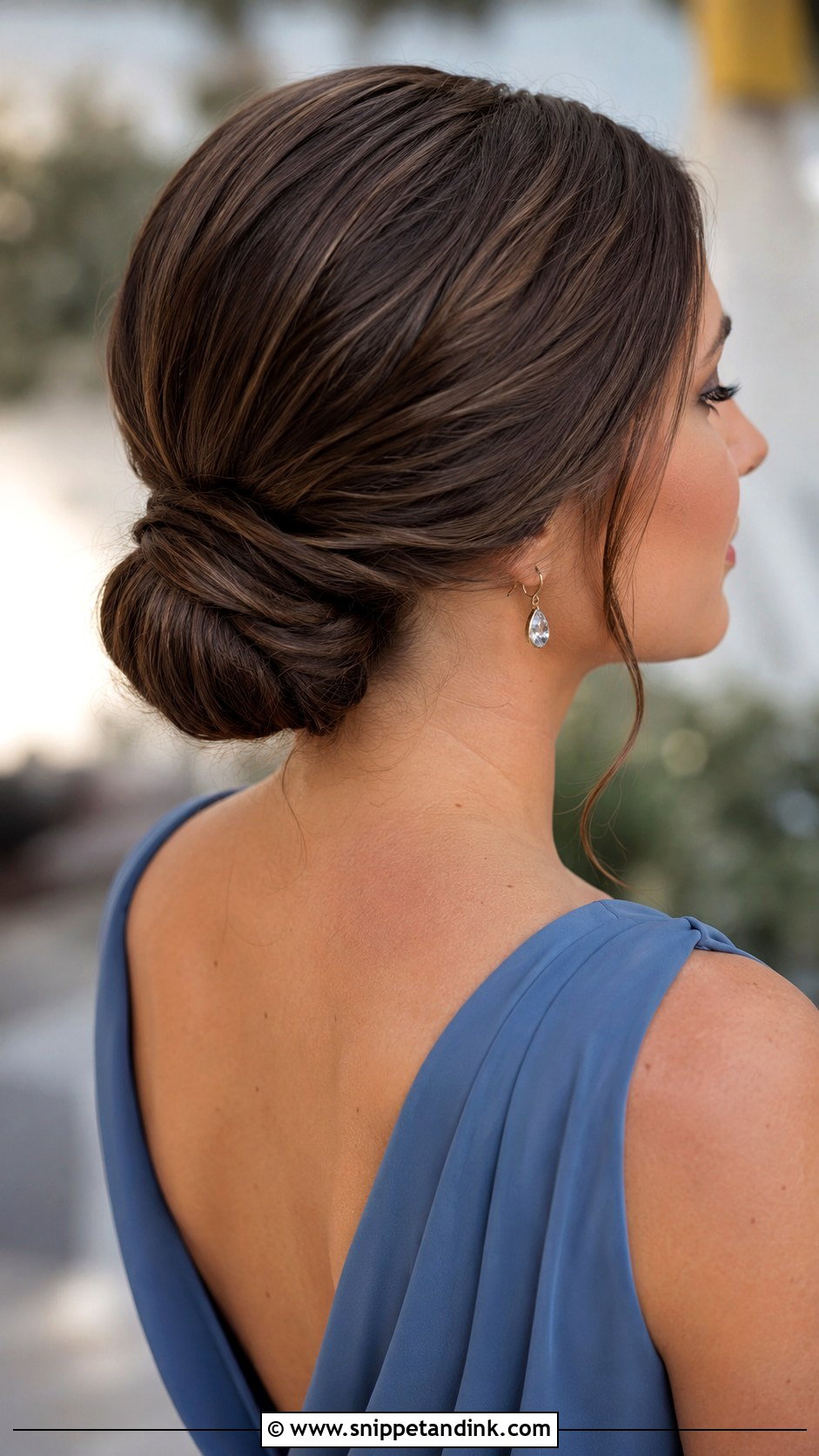
A chignon is a low, polished knot at the nape or slightly to one side. It falls between a messy bun and a strict formal updo, and it suits middle parts, side parts and swept-back fronts. Thick hair builds a fuller chignon on its own. Fine hair needs help: I use texture spray or a small padding piece hidden inside the knot. Pins that match the hair color disappear into it.
10. Bridesmaid Bubble Ponytail
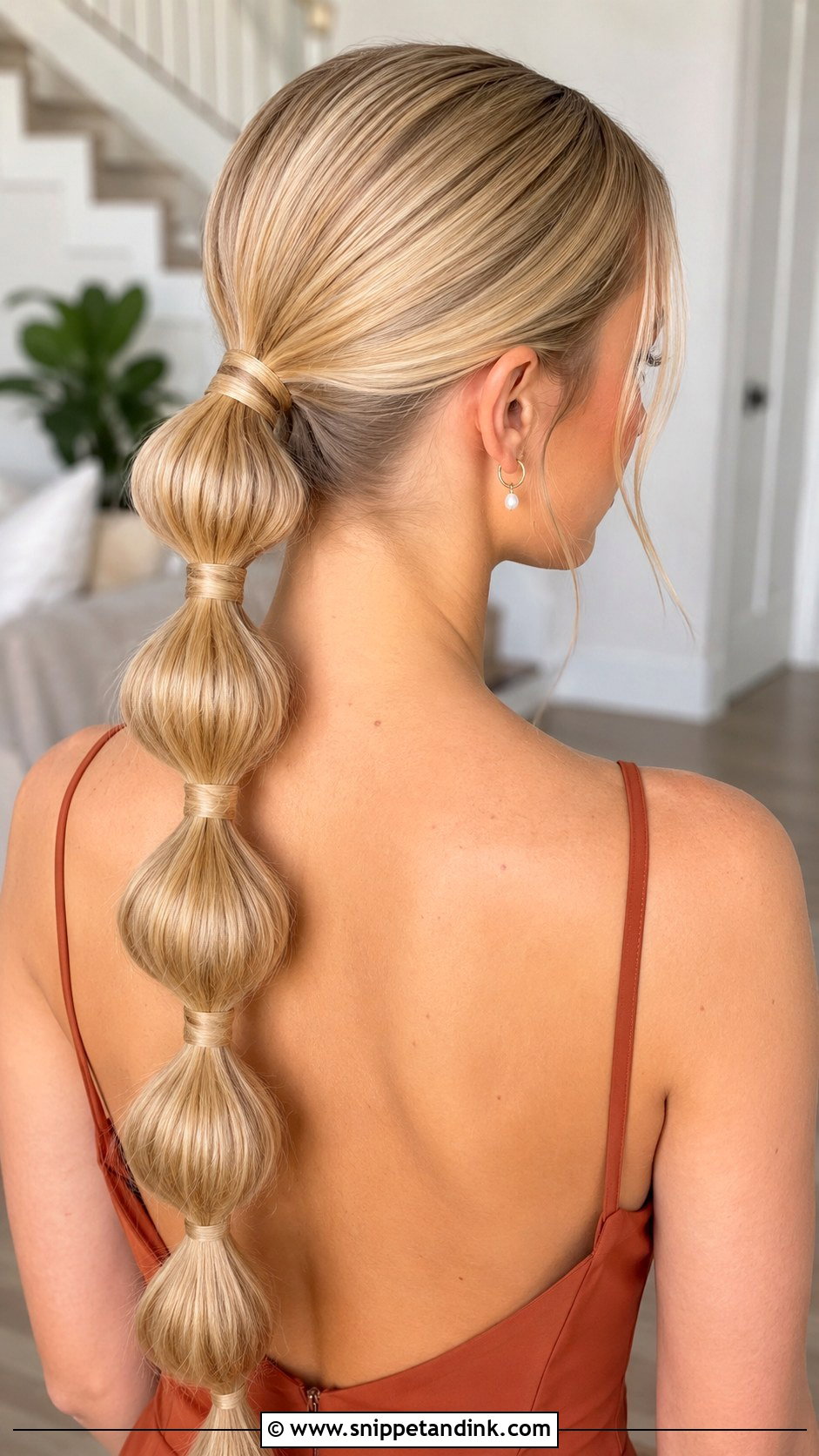
A bridesmaid bubble ponytail starts as a smooth ponytail, with small clear elastics spaced down the length and each section gently pulled wider. It reads playful but still finished, and it suits modern or outdoor weddings. Long hair works best; clip-in extensions can add length. I space the elastics evenly with a comb as a guide, since uneven bubbles are what make it look homemade. A ribbon or wrapped elastics makes it more formal.
11. Bridesmaid Waterfall Braid
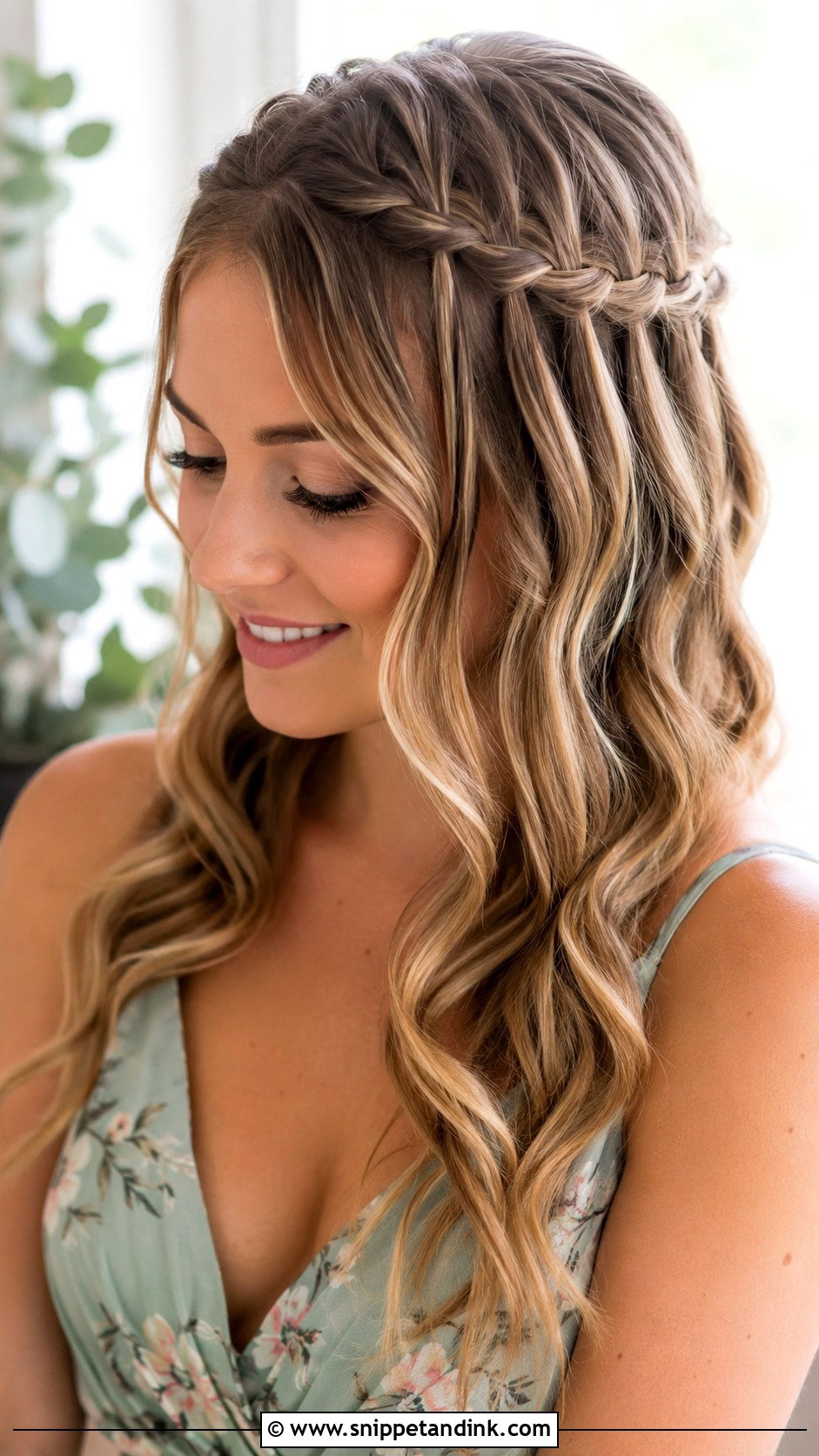
A bridesmaid waterfall braid runs across the crown while strands drop through it into the loose waves below. It needs enough length to show both the braid and the curls. Balayage hair shows the pattern well. The dropped strands are the weak point, because they can tangle into the curls, so I curl them separately after braiding and brush them out last. A light spray holds the braid without stiffness.
12. Bridesmaid Crown Braid
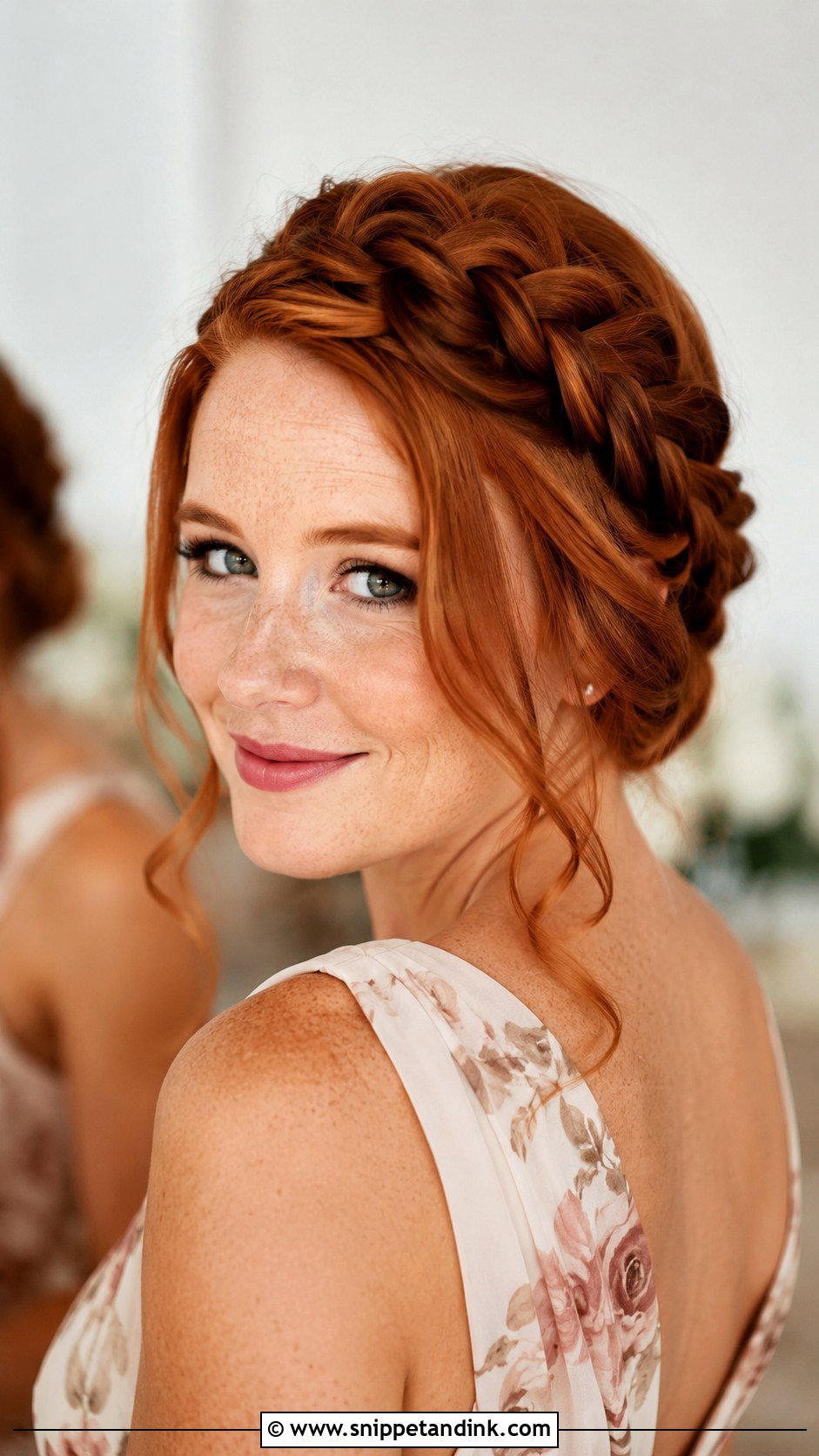
A crown braid wraps around the head and keeps the neck clear, which makes it good for a hot day. Polished, it looks classic; pulled out and textured, it looks boho. Loose pieces at the temples stop it looking severe. Medium to long hair braids easily. Shorter hair can still get the effect by braiding several smaller sections and pinning them so they meet into a continuous band.
13. Bridesmaid Hollywood Waves
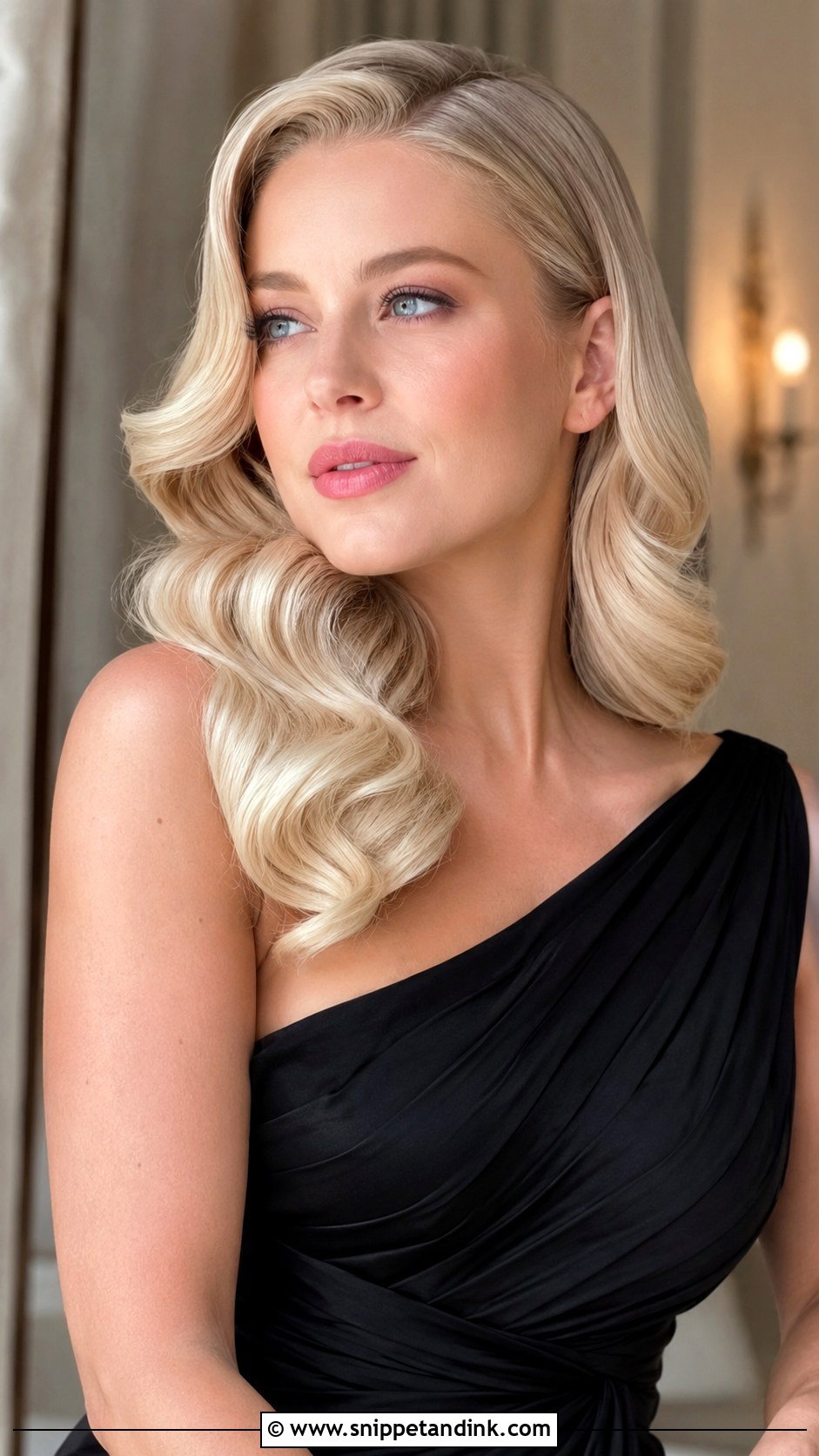
Hollywood waves are sculpted, glossy and suited to black-tie or evening weddings and vintage-feel dresses. Every section curls in the same direction, then gets clipped flat to cool before brushing. That cooling stage is not optional; brush too early and the pattern falls apart. A deep side part and surface shine spray finish it. If the reception is humid, I’d think twice, since this style shows drop more obviously than any other.
14. Bridesmaid Messy Bun
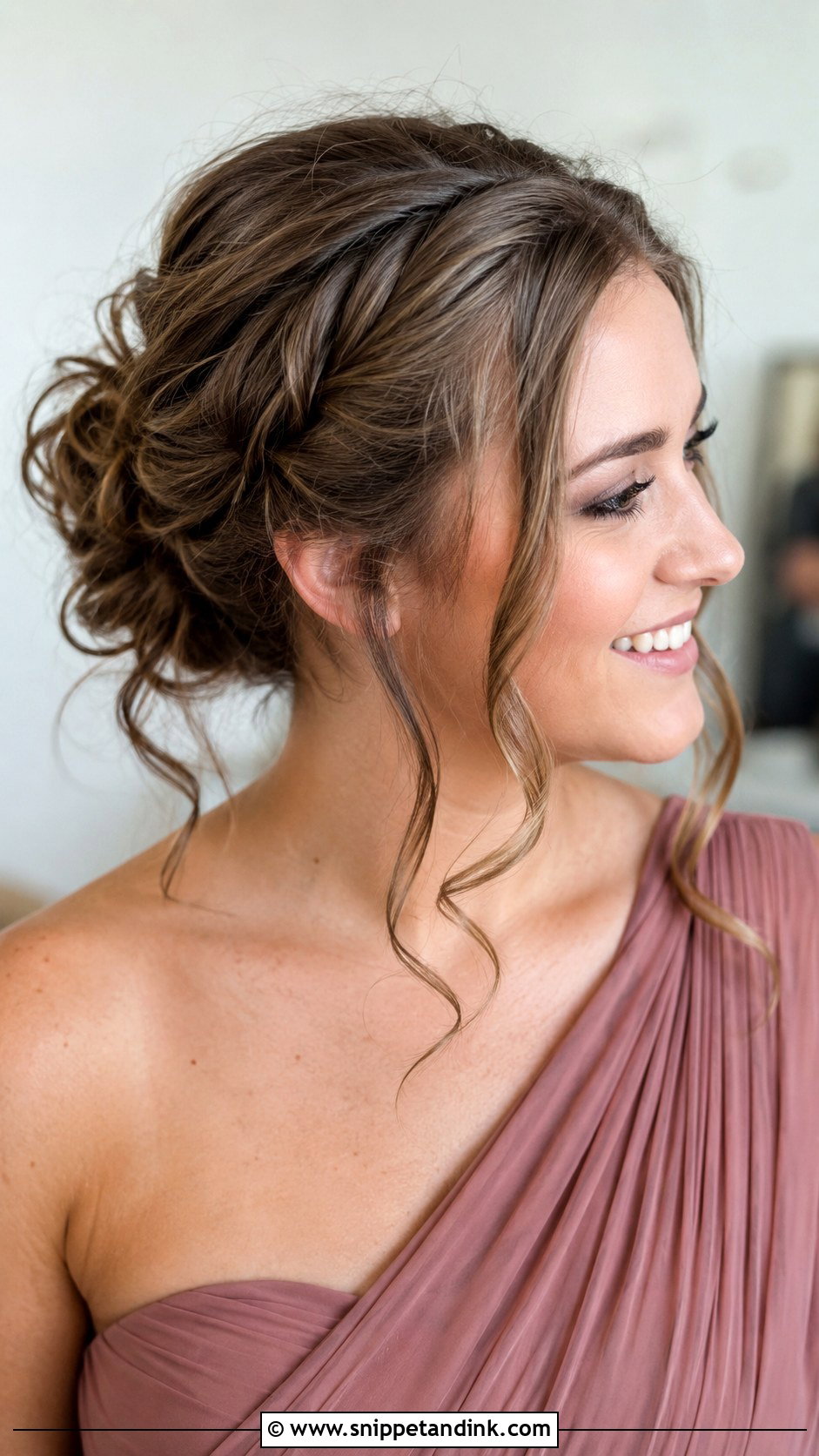
A messy bun should look relaxed, not rushed, and the difference is planning which pieces fall out. I place the loose pieces deliberately around the face and nape rather than letting them escape on their own. It’s forgiving across textures and suits outdoor weddings with flowing dresses. Texture spray gives pins something to hold. Only add accessories if the dress is simple; on a busy dress, the bun already supplies enough texture.
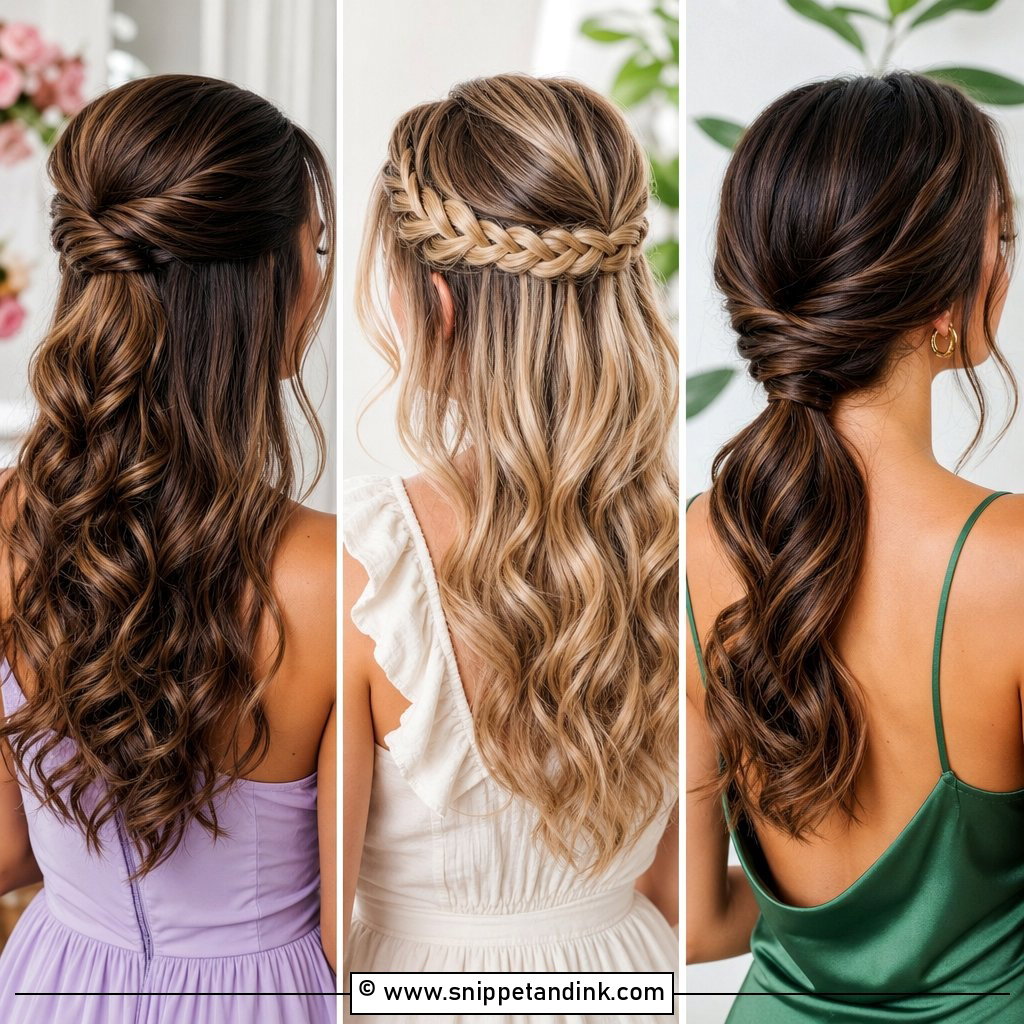
15. Bridesmaid Twisted Updo
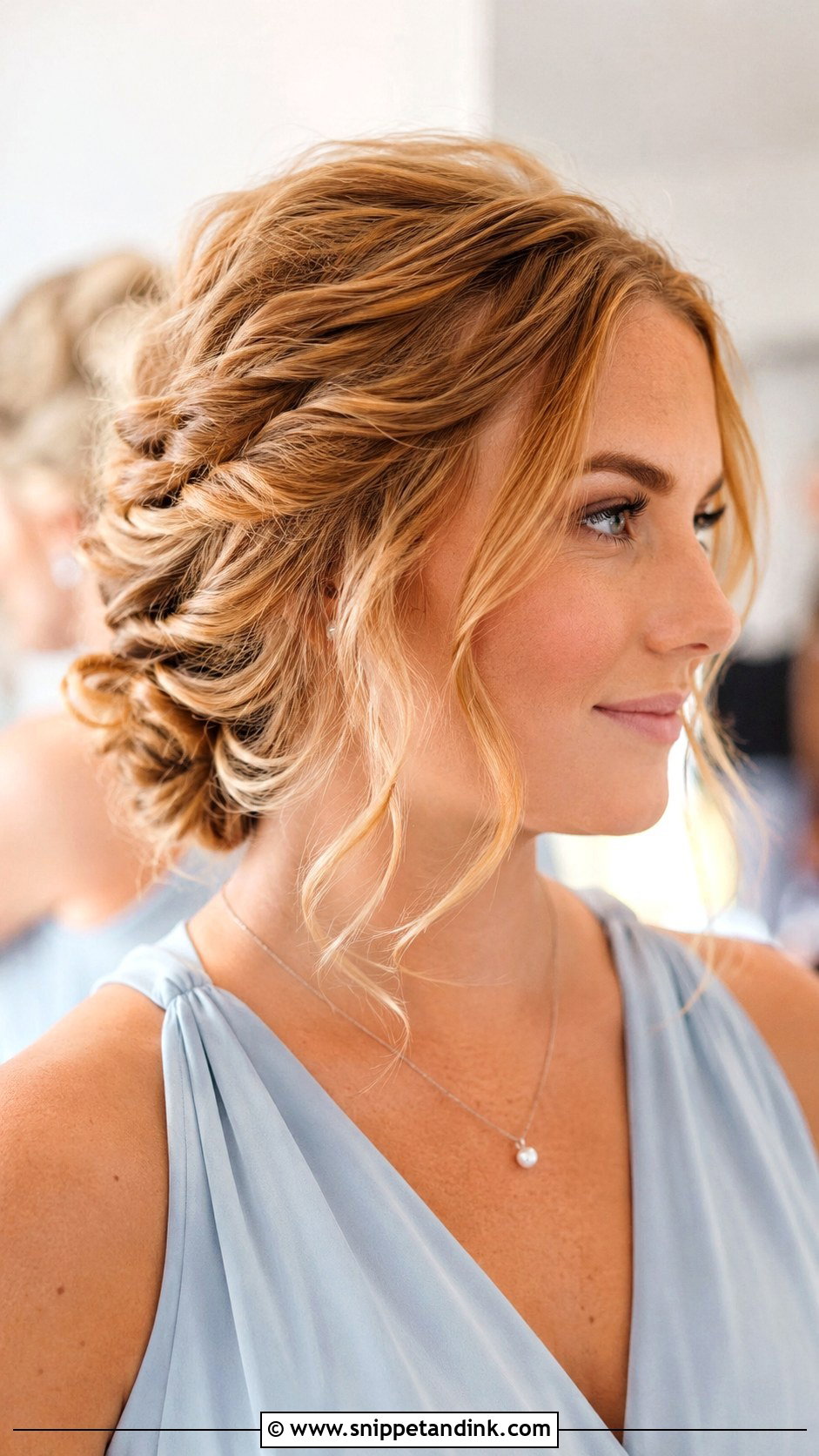
A twisted updo is a softer alternative to braids. Sections get twisted back and pinned into a low or mid-height shape, and I can place twists exactly where a face needs volume, near the crown or at the sides. It holds best on hair that was curled before twisting, because the curl gives the twist body. It blends well with face-framing layers. A subtle shine spray catches the light on each twist.
16. Bridesmaid Low Ponytail
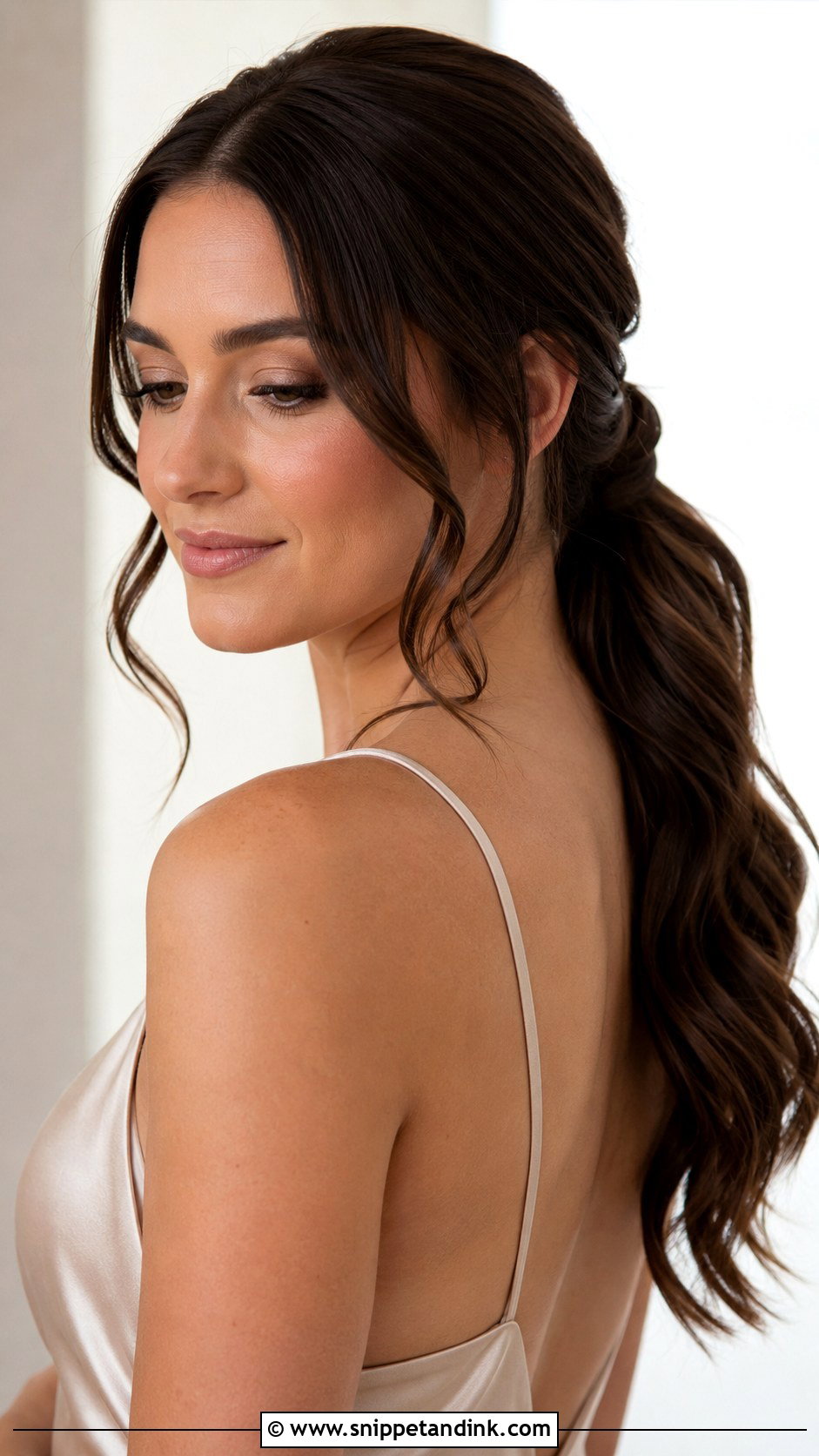
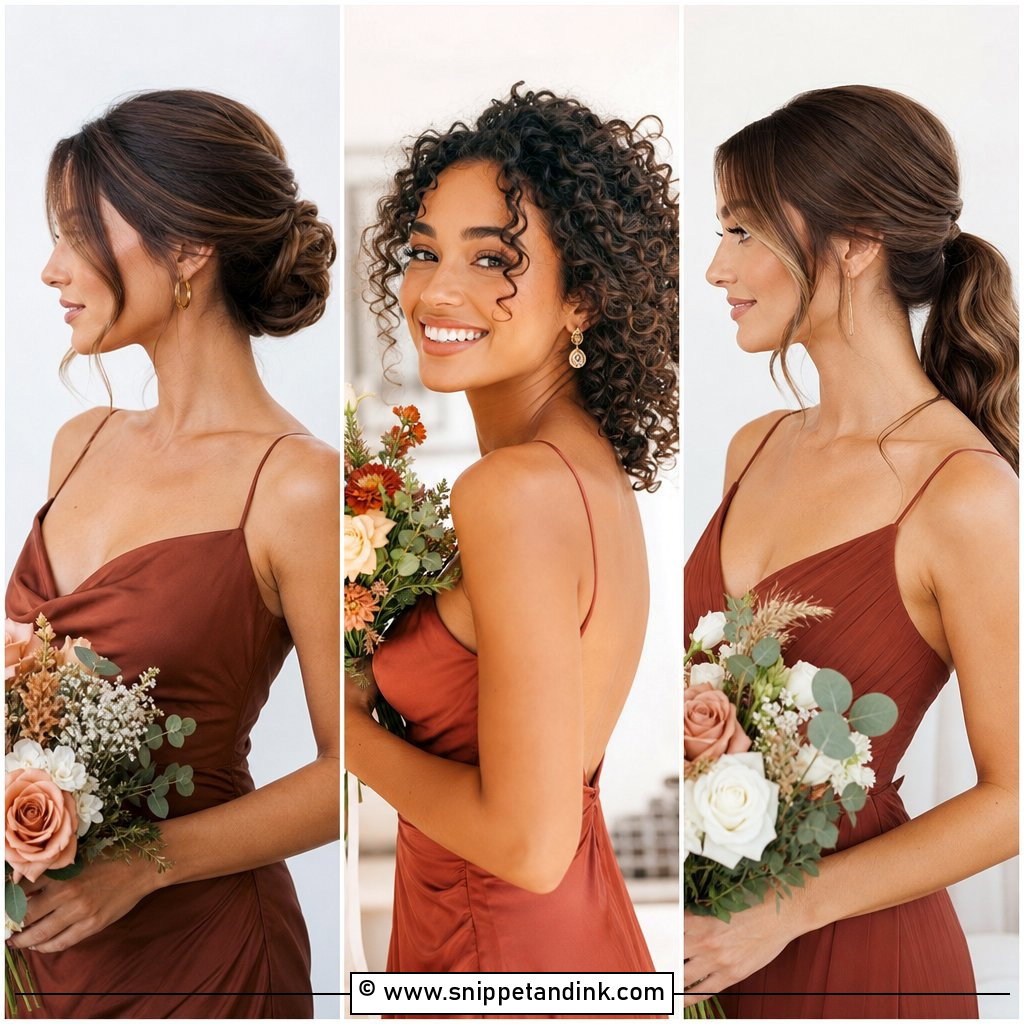
A bridesmaid low ponytail is the style I suggest for bridesmaids who dislike updos but need their hair controlled. It sits at the nape, sleek or waved through the tail. A wrapped base makes it look finished. It pairs well with open-back dresses and high necklines. Leaving two light pieces at the face softens it, while a smooth part and both sides tucked back looks more polished.
17. Bridesmaid Short Bob Waves
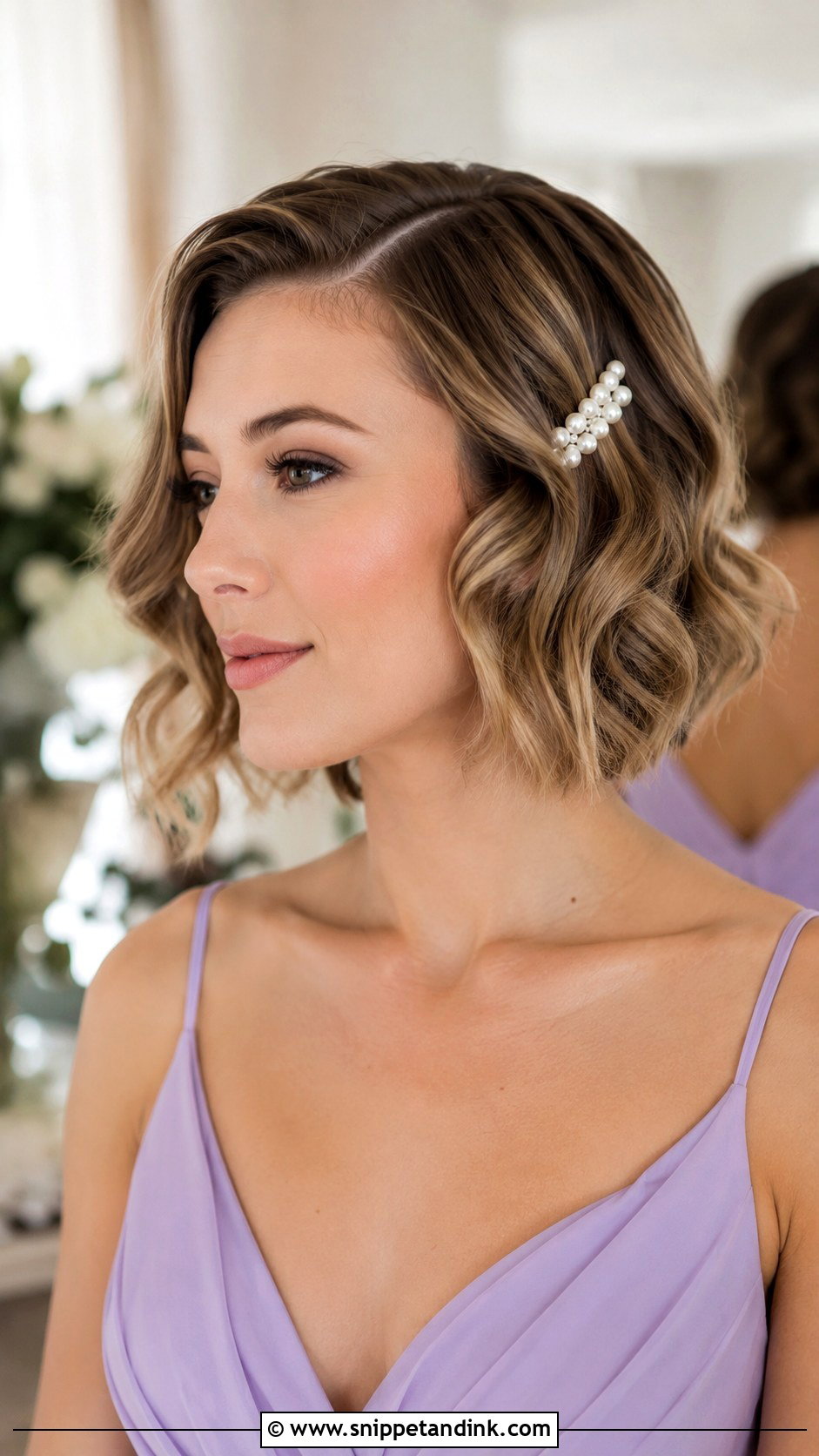
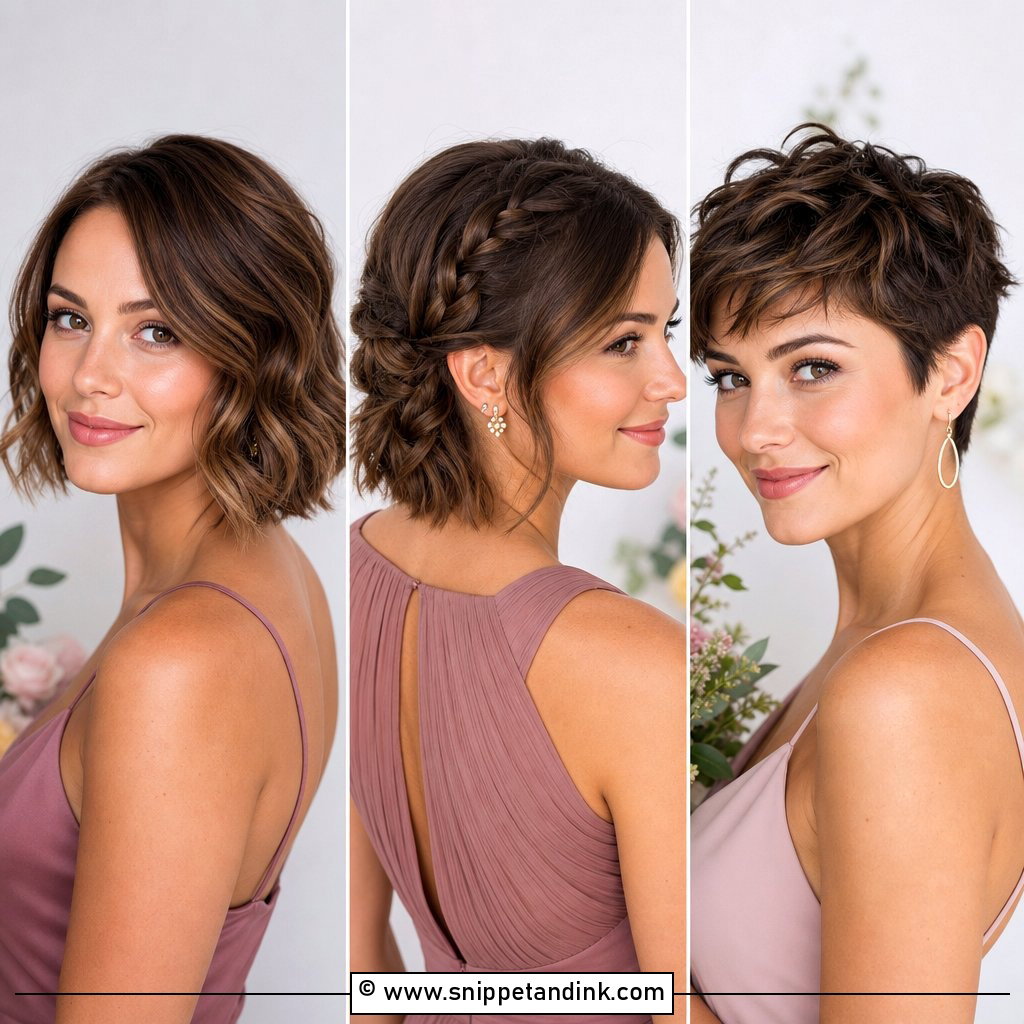
Short bob waves suit chin-length and shoulder-length hair, and I’m firmly against forcing a bob into a tiny updo that looks strained. The waves stay controlled so the cut keeps its shape. I use a small iron or flat-iron bends, then loosen them with my fingers. A deep side part or a decorative clip on the tucked side adds occasion. A light shine spray keeps the ends from looking dry.
18. Bridesmaid Curly Updo
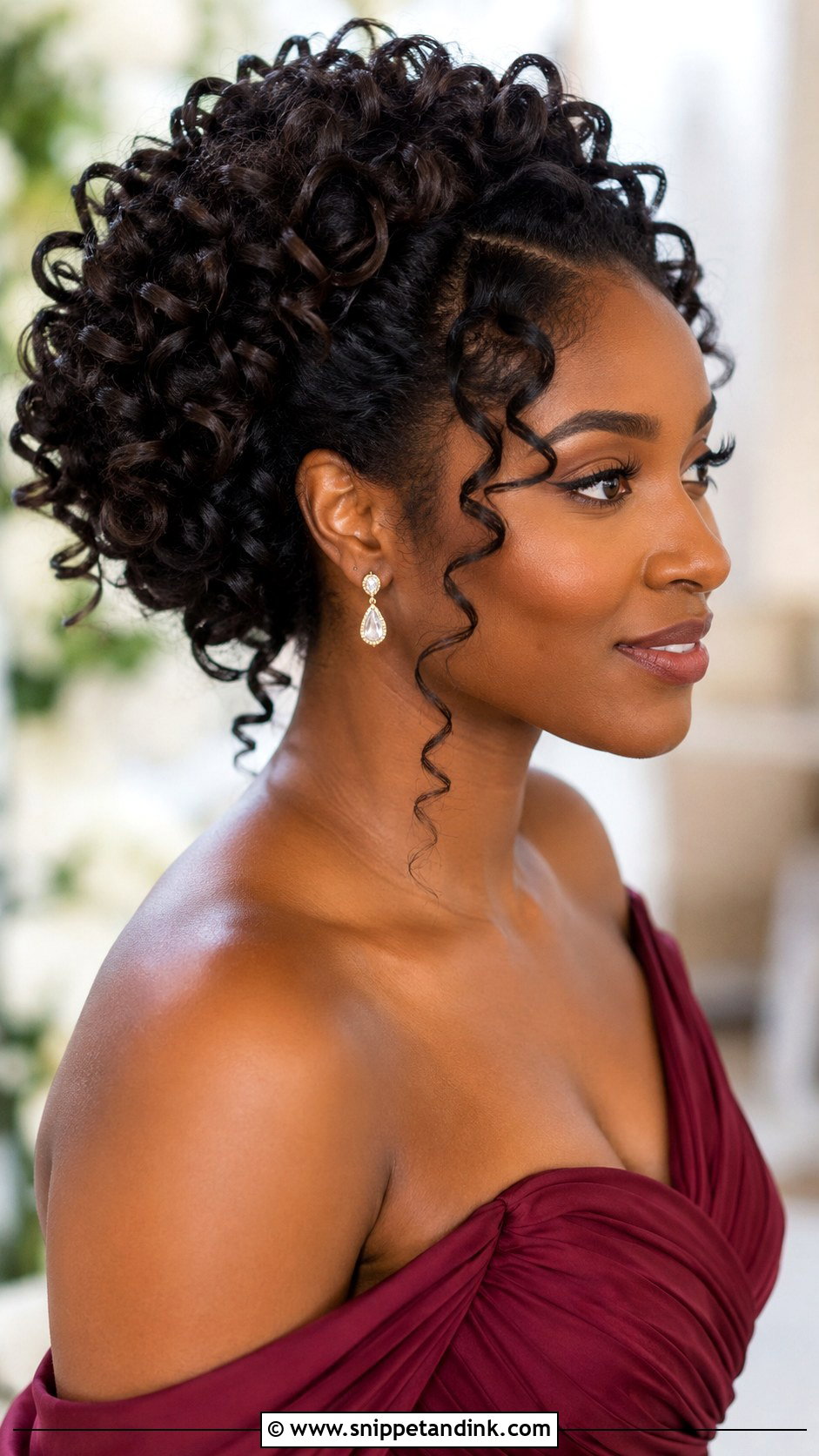
A curly updo keeps natural texture visible while securing the hair. I pin curls loosely into a low bun, gather them at the crown or build a soft shape with volume. Hydration first: curl cream or leave-in conditioner before styling. Pins go under the curls so they support without squashing the pattern. The front can have soft tendrils or a clean side part. It should feel comfortable, not tugged.
19. Bridesmaid Fishtail Braid
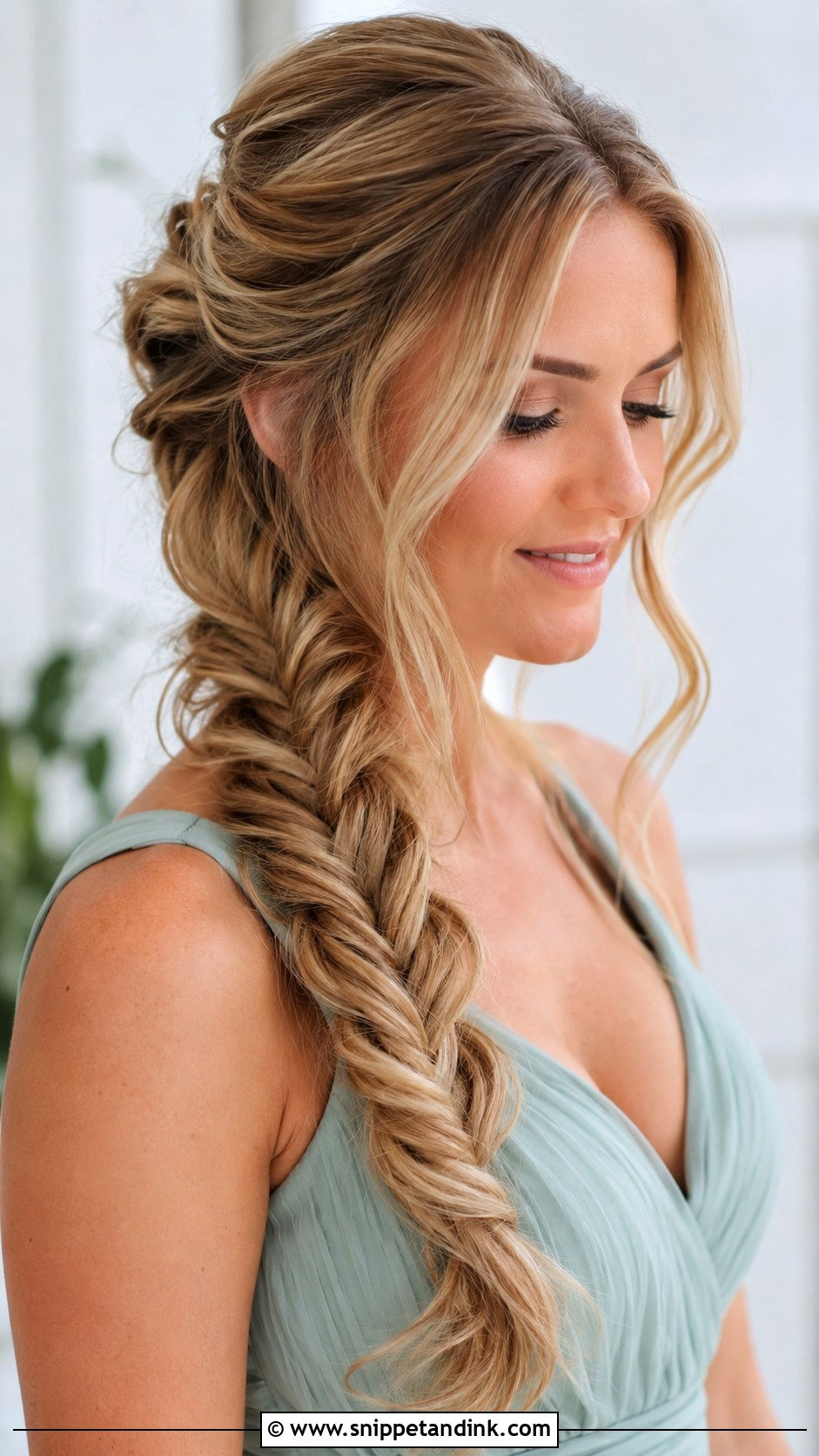
A fishtail braid looks intricate but holds hair together better than loose waves, which makes it practical outdoors. It can sit over one shoulder, down the back or inside a half-up style. I gently pull it apart for fullness. Long, highlighted hair shows the pattern best. Keep the crown slightly lifted and the front pieces curled, or the braid can make the face look bare.
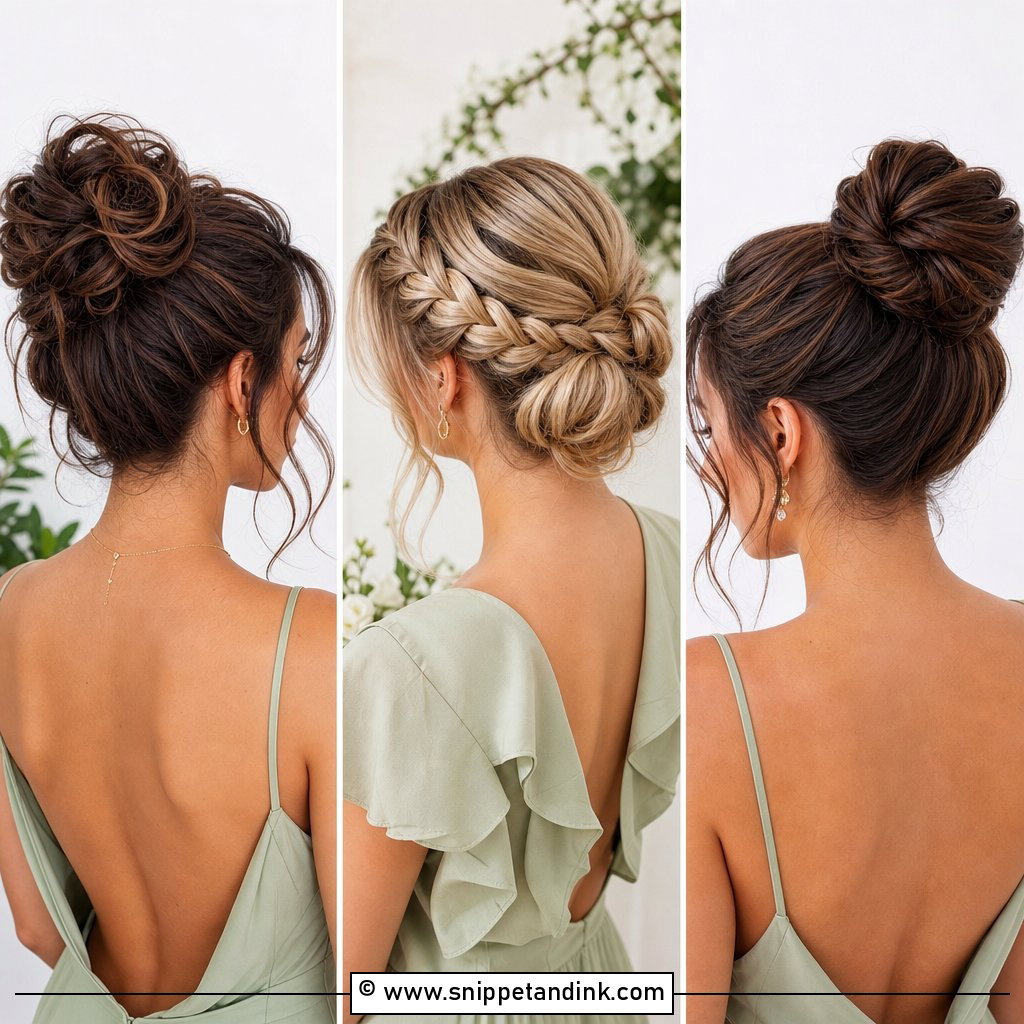
20. Bridesmaid Pearl Pin Hair
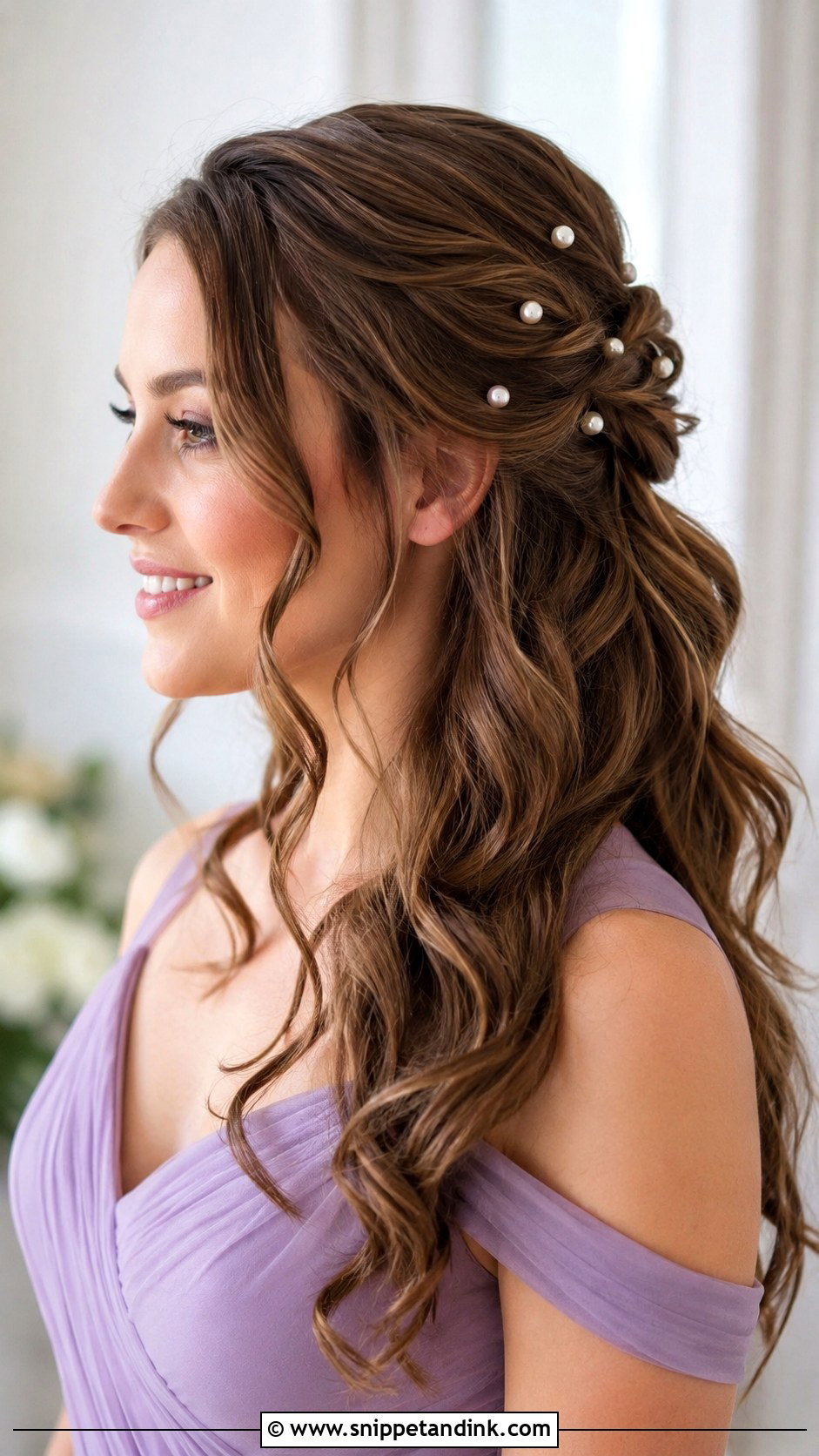
Pearl pins dress up any base style. On a low bun I place them along one side or around the twist. On loose waves, one side tucked back with a few pins near the ear. On half-up hair, along the pinned line. The problem is always quantity: a few well-placed pins look considered, a scattering looks crowded. Almost every dress and hair length works with them.
Running the Hair Schedule So Nobody Is Late for Photos
The style you choose decides how long the morning takes. As a rough guide, and it varies with hair length and thickness, waves or a sleek ponytail take less chair time than a braided updo or a French twist. Multiply that by six bridesmaids and the difference can be an hour or more.
A few things I plan around every time:
- Updos go first, because pinned styles barely change over a few hours.
- Loose curls go last, as close to photos as the timeline allows, because they relax from the moment they’re set.
- The bride sits in the middle or near the end, never last, so there’s a buffer if anything runs over.
- Every bridesmaid arrives with clean, fully dry hair. Wet hair at the start of the day is the most common reason a schedule slips.
If you’re on a tight timeline with a large party, ask your stylist whether bringing a second stylist is worth it. Two people working side by side often costs less stress than one stylist rushing the last three heads.
Is Your Group Wearing It Up, Down or Somewhere Between?
Bridesmaid hair has to last the full day and stay comfortable, so sort the options by how much hold you need. Low buns, chignons, sleek ponytails and French twists suit polished, formal weddings. Loose waves, half-up hair, waterfall braids and side-swept curls feel softer. Crown braids, fishtails, bubble ponytails and pearl pins add personality. Settle on a direction with the bride, then a short trial or a clear photo for each bridesmaid makes the morning easy.
You'll Like These Ideas:


Leave a Reply