
Bridesmaid hair has a different brief from bridal hair. It has to look right next to several other heads in a row, last the same long day as the bride’s, and still leave the bride as the one people look at. Most of the time the simpler styles do that best. These wedding bridesmaid hairdo ideas run from low buns and ponytails to braids, curls and short bobs, and for each one I’ve added what I’d tell a bridesmaid sitting in my chair: who it suits, what tends to go wrong, and where it needs extra help.
Working Out the Morning Queue for Bridesmaid Hair
Every bridesmaid is a slot in the stylist’s morning. As a rough guide, a down style or half-up takes me 30 to 45 minutes, and an updo closer to an hour, though thick or very long hair always runs over. Multiply that by the whole party and the start time can land surprisingly early. For bigger parties, many stylists bring an assistant so two chairs run at once, so ask about that when you book.
I usually do the bride near the end, but not last, so there’s a buffer before the photographer arrives. Whoever goes first needs her style to hold the longest, which makes the early slots a better fit for buns and braids than for loose waves.
What each bridesmaid should bring to her slot
- Hair washed the night before and fully dry, unless it’s very oily or fine.
- A button-front shirt, so nothing gets pulled over a finished style.
- Her own clip-ins or hairpiece, if she wears them, already color-matched.
- A photo of her dress neckline and the earrings she plans to wear.
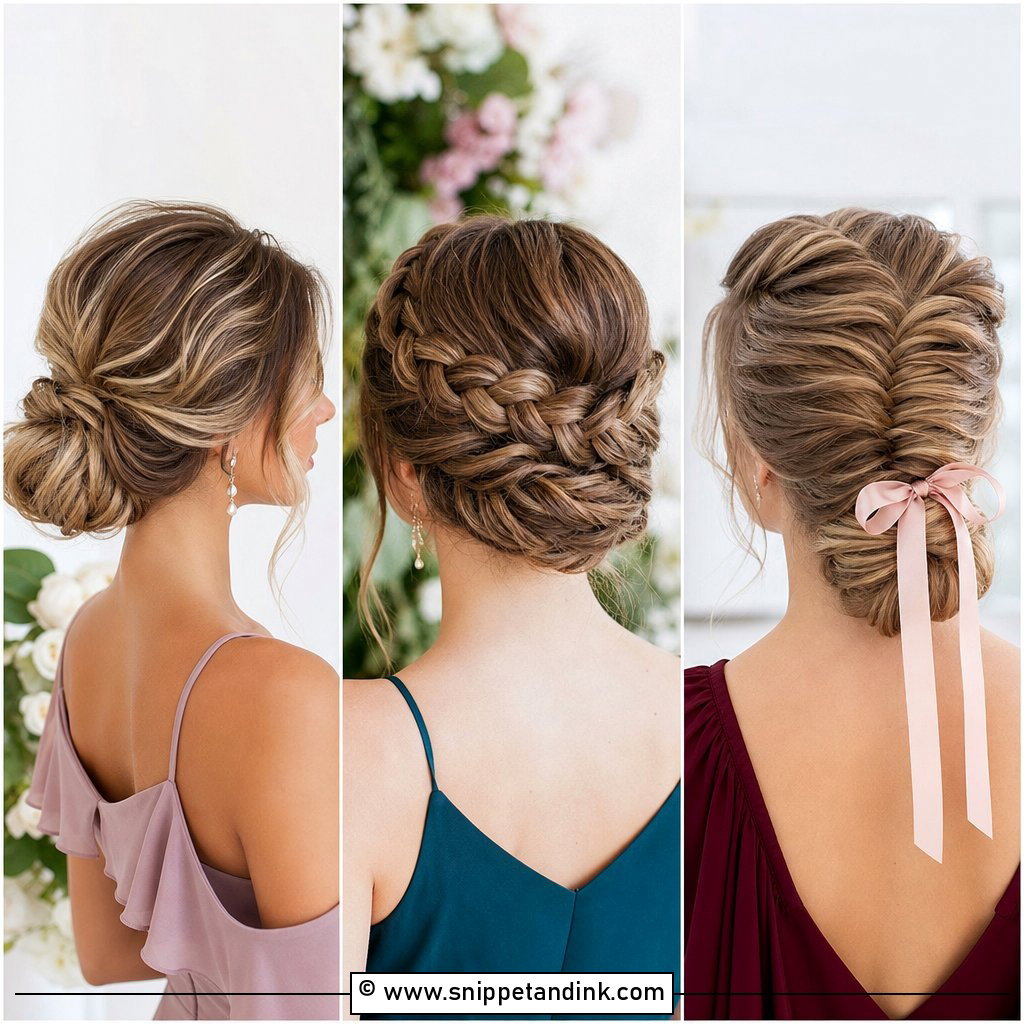
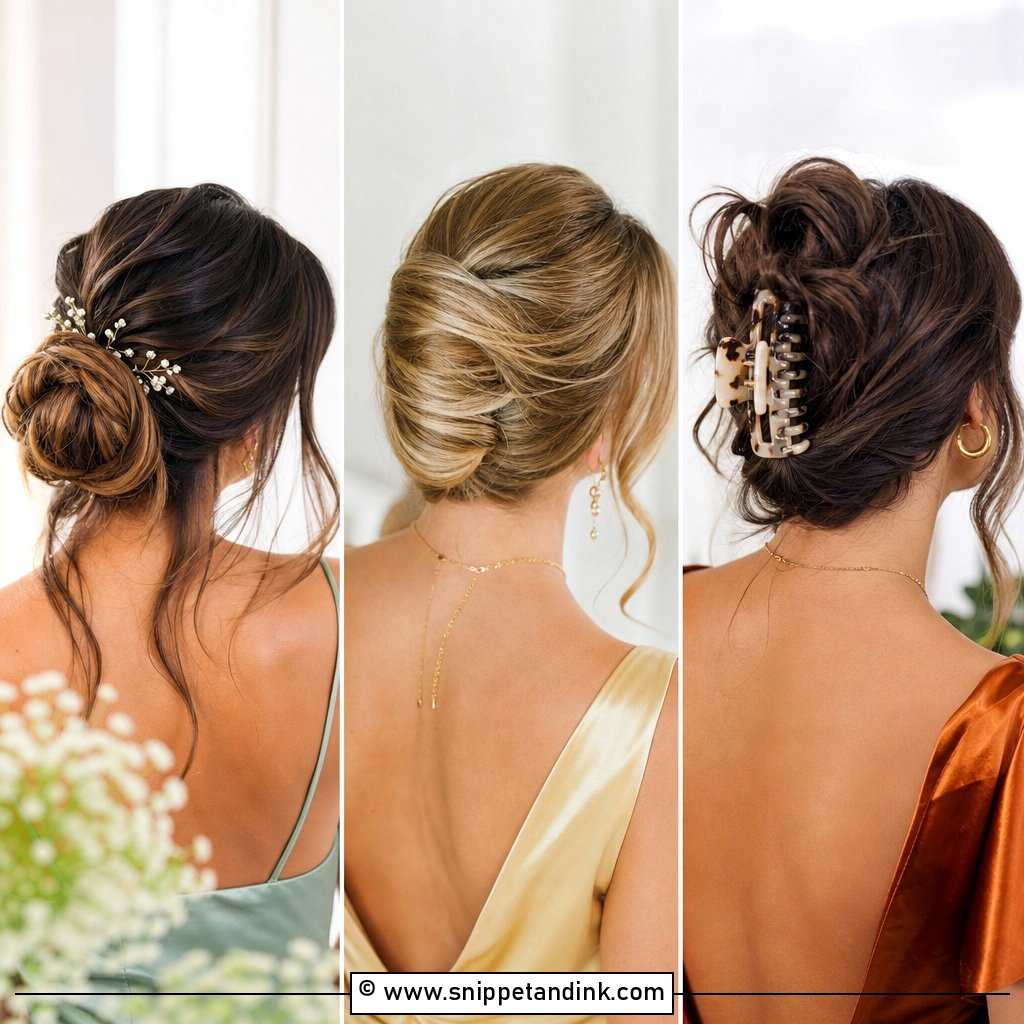
1. Bridesmaid Low Bun
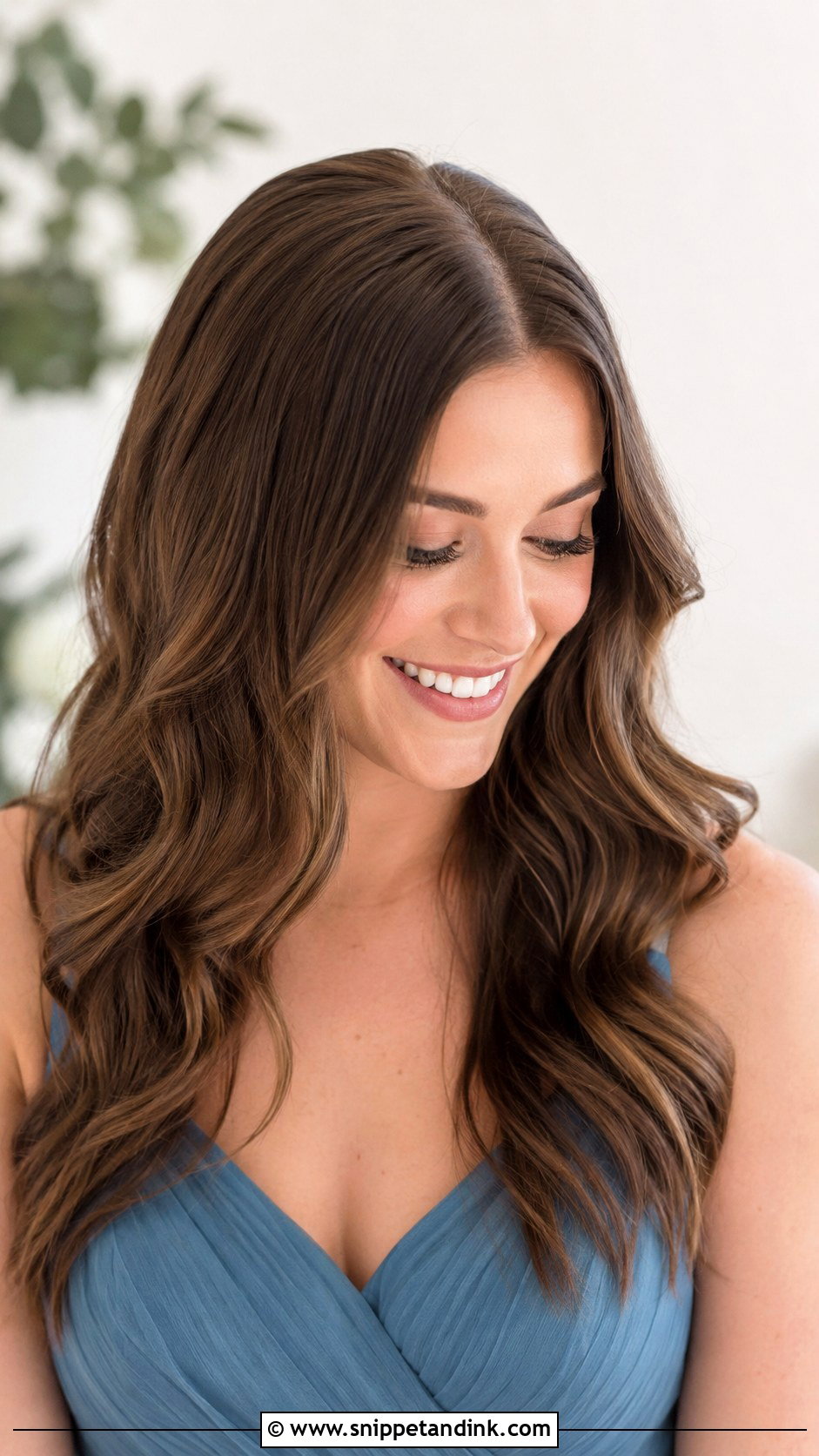
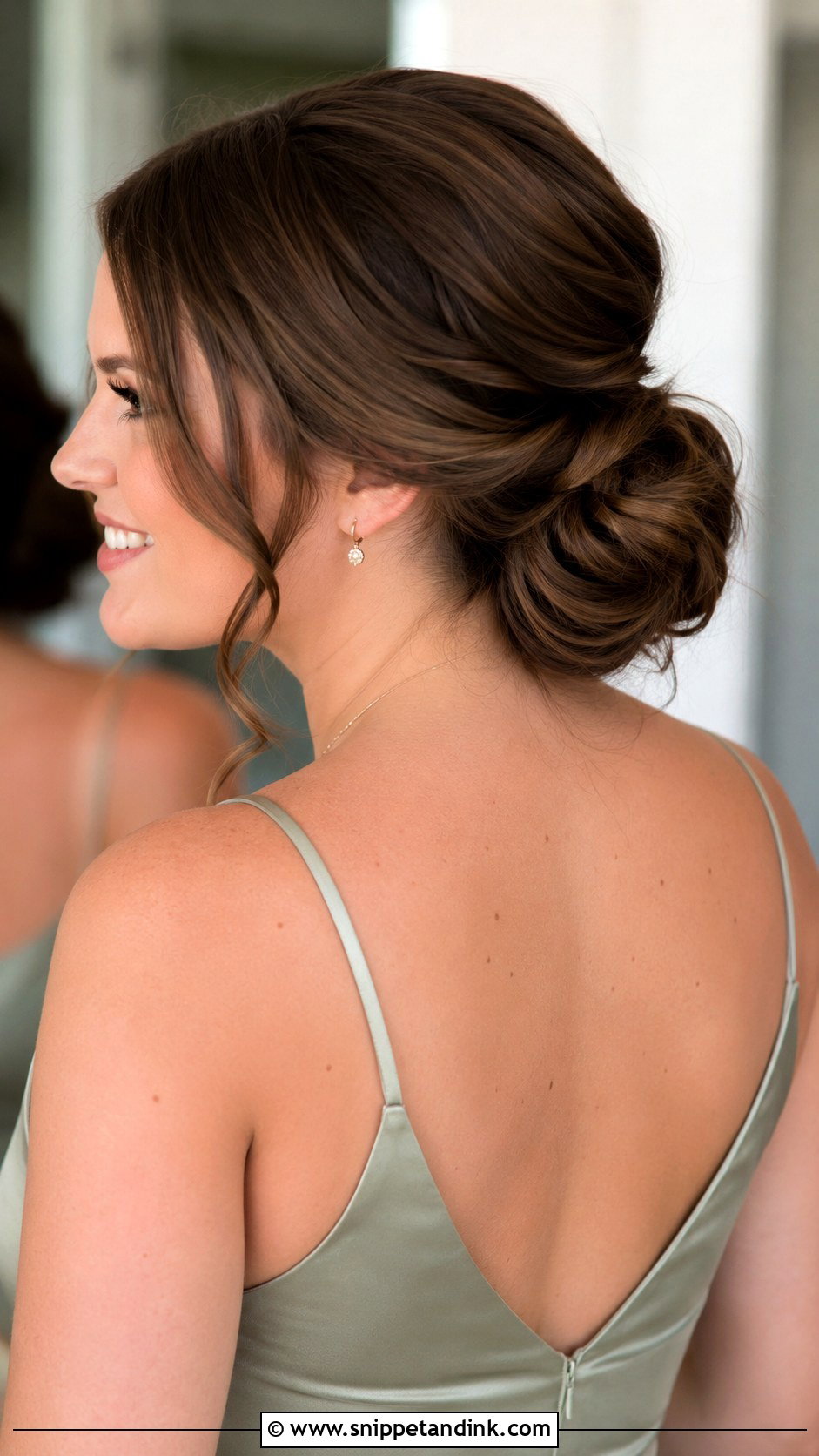
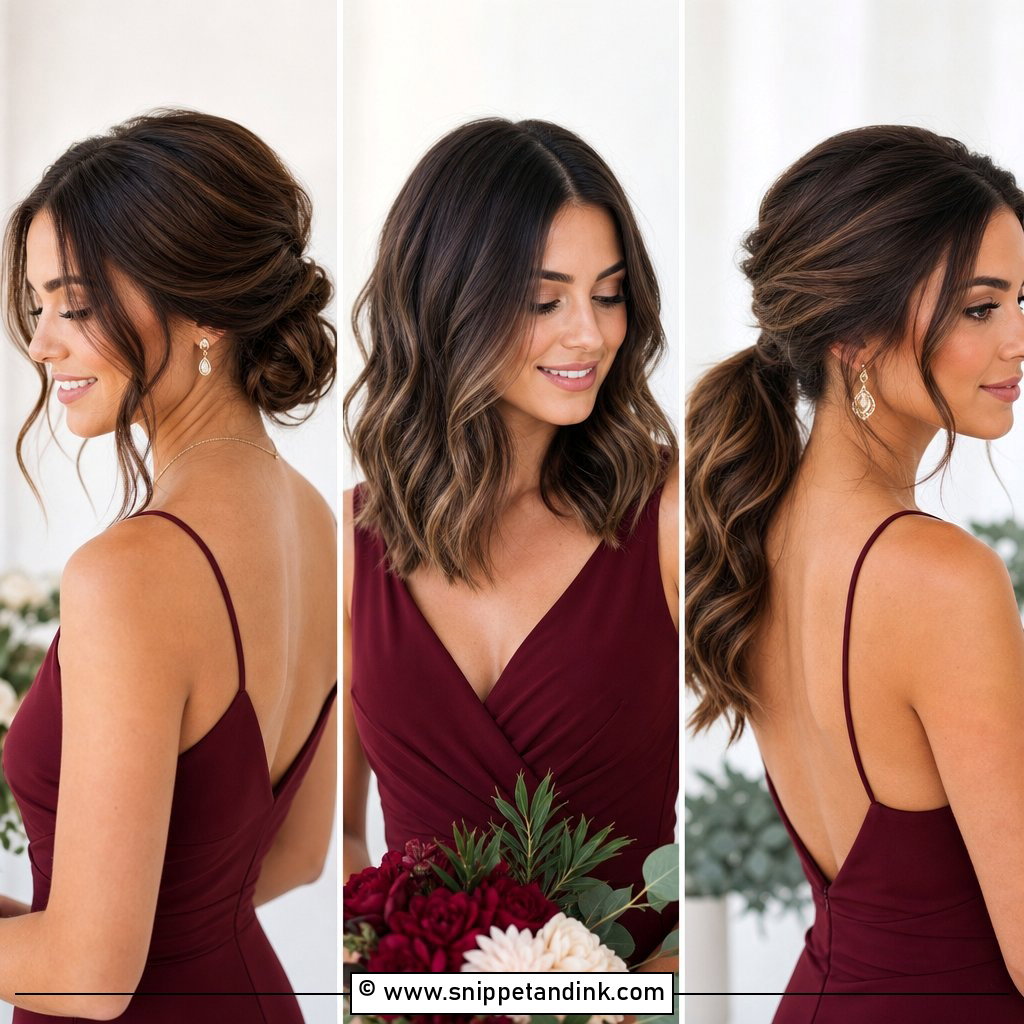
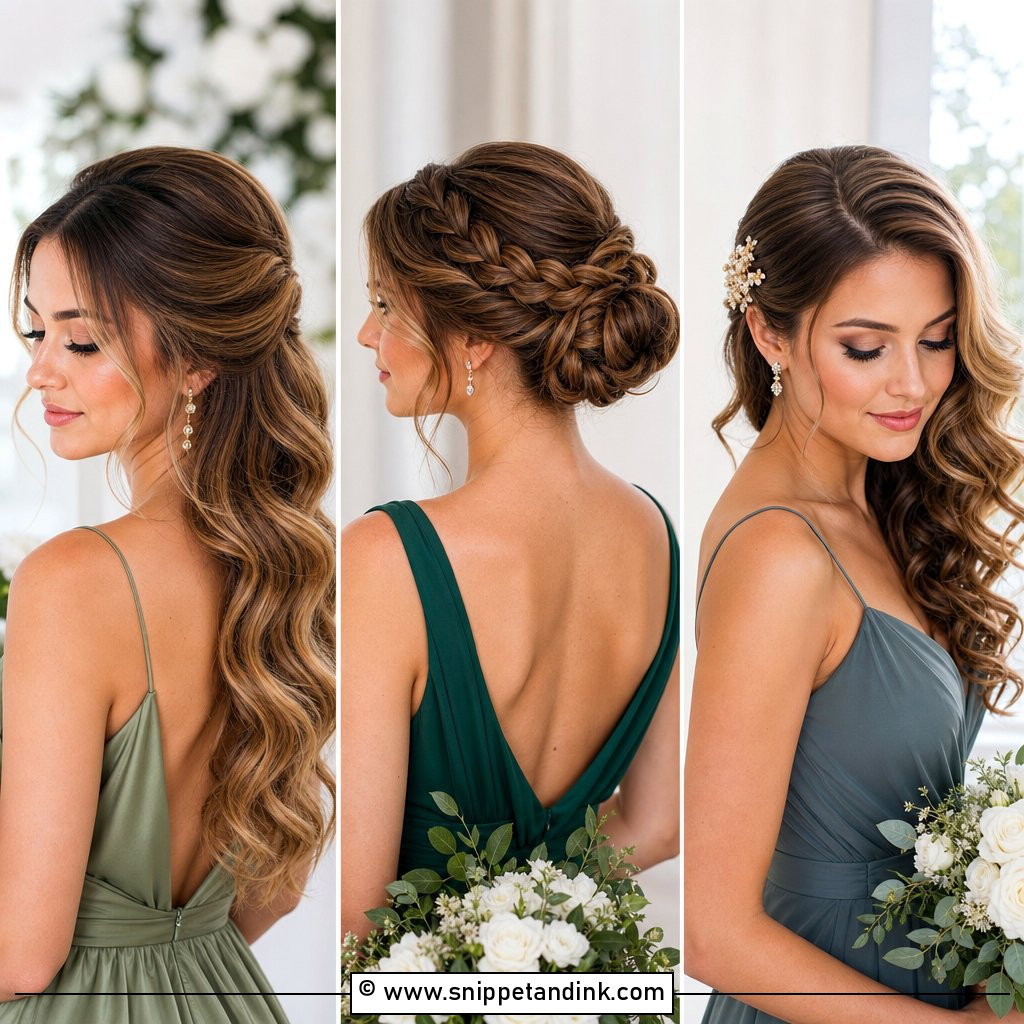
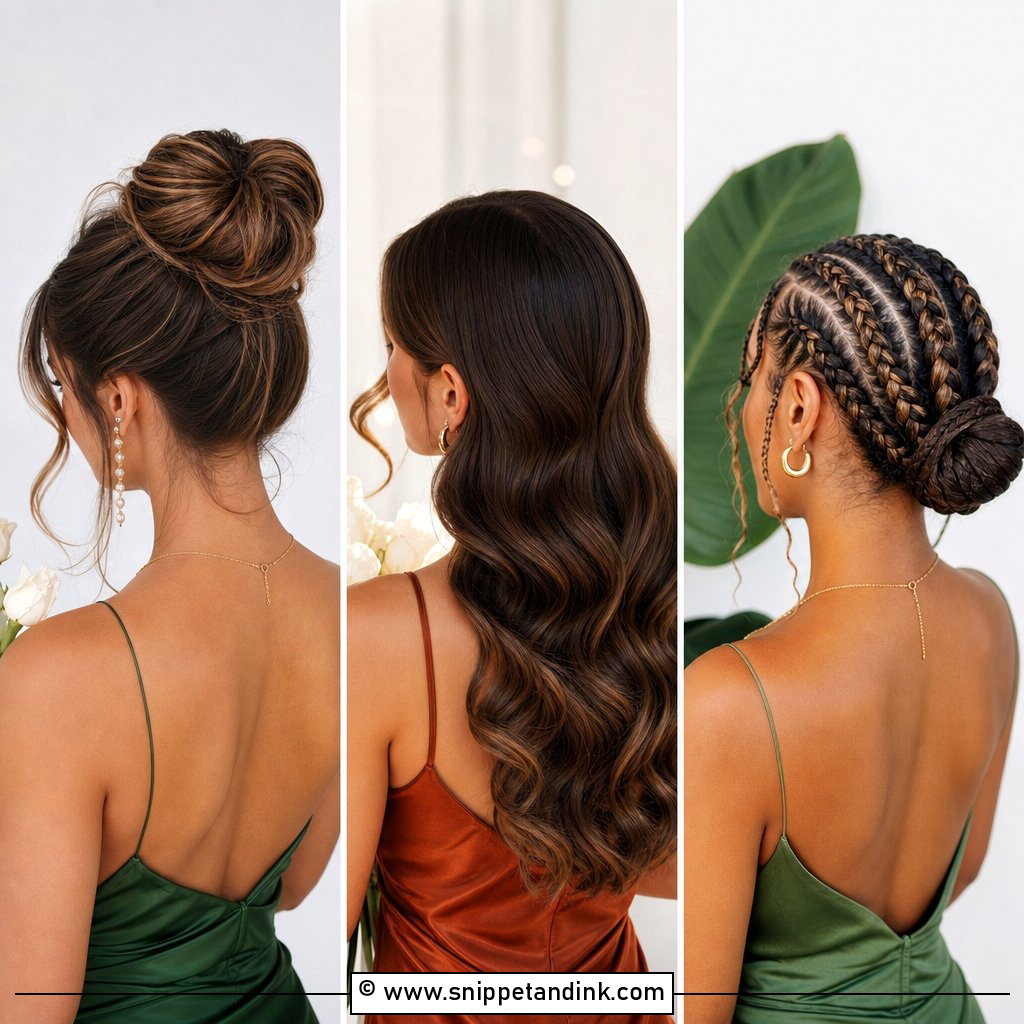
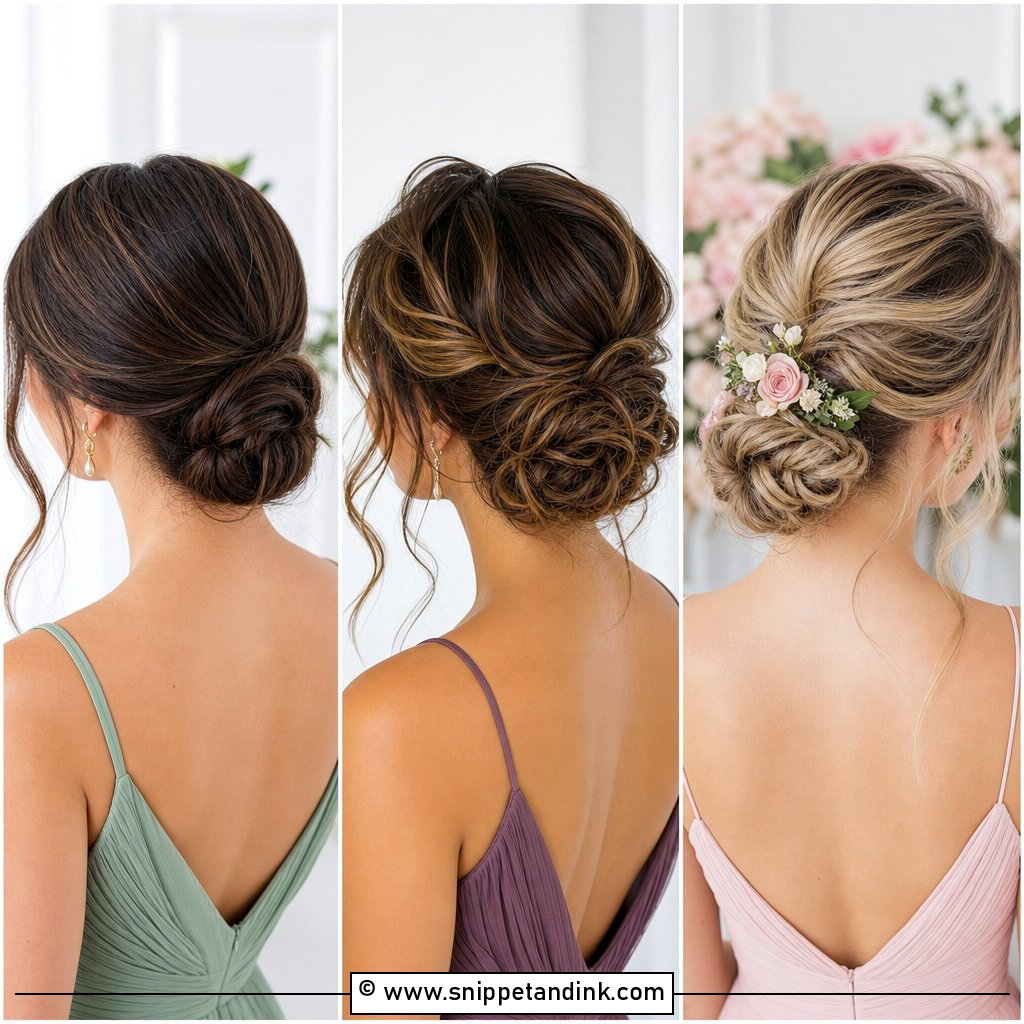
When a bridal party can’t agree on anything, I suggest a bridesmaid low bun. It works with nearly every neckline and keeps hair away from earrings and dress details. Smooth, it suits a ballroom; loosely textured, it suits a garden. Fine hair needs help to make a bun worth looking at, so I tuck a little padding or a clip-in piece inside where nobody sees it. In humid weather, this is the shape that holds longest.
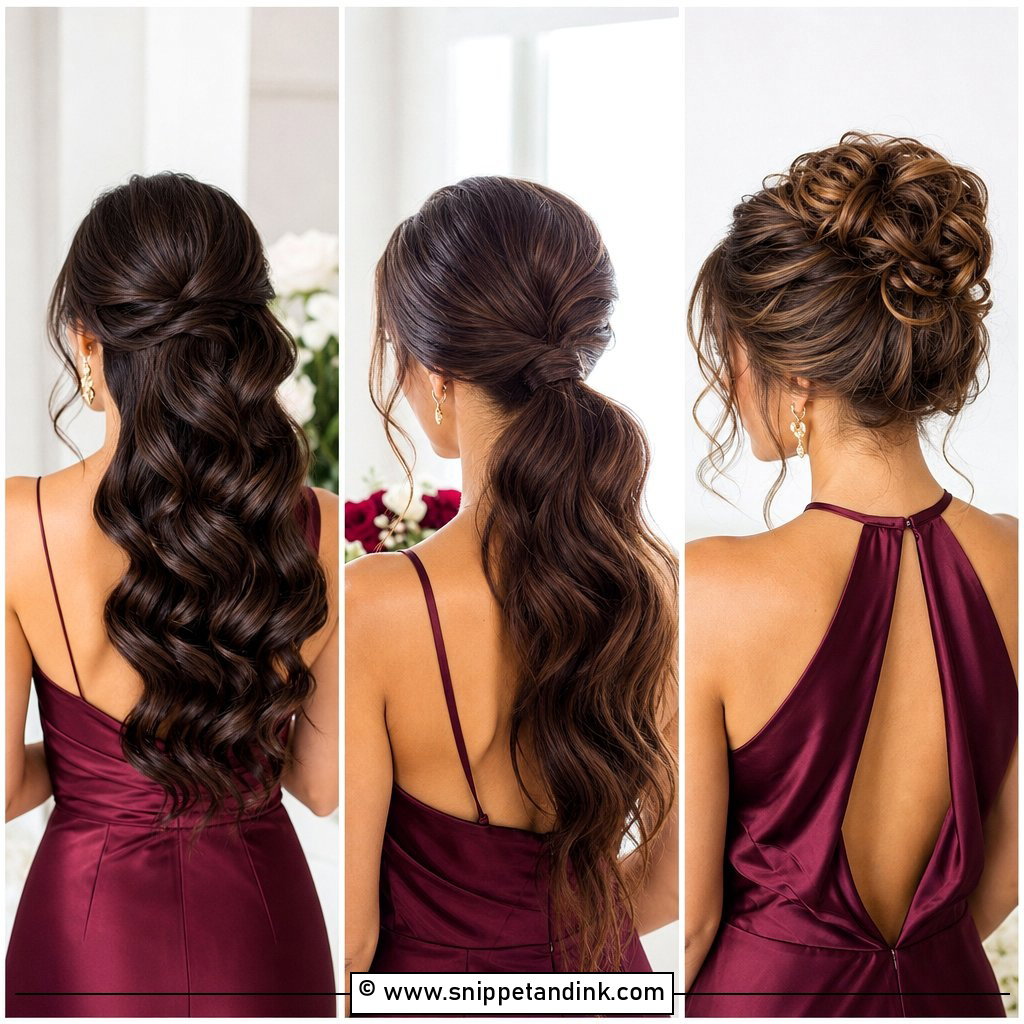
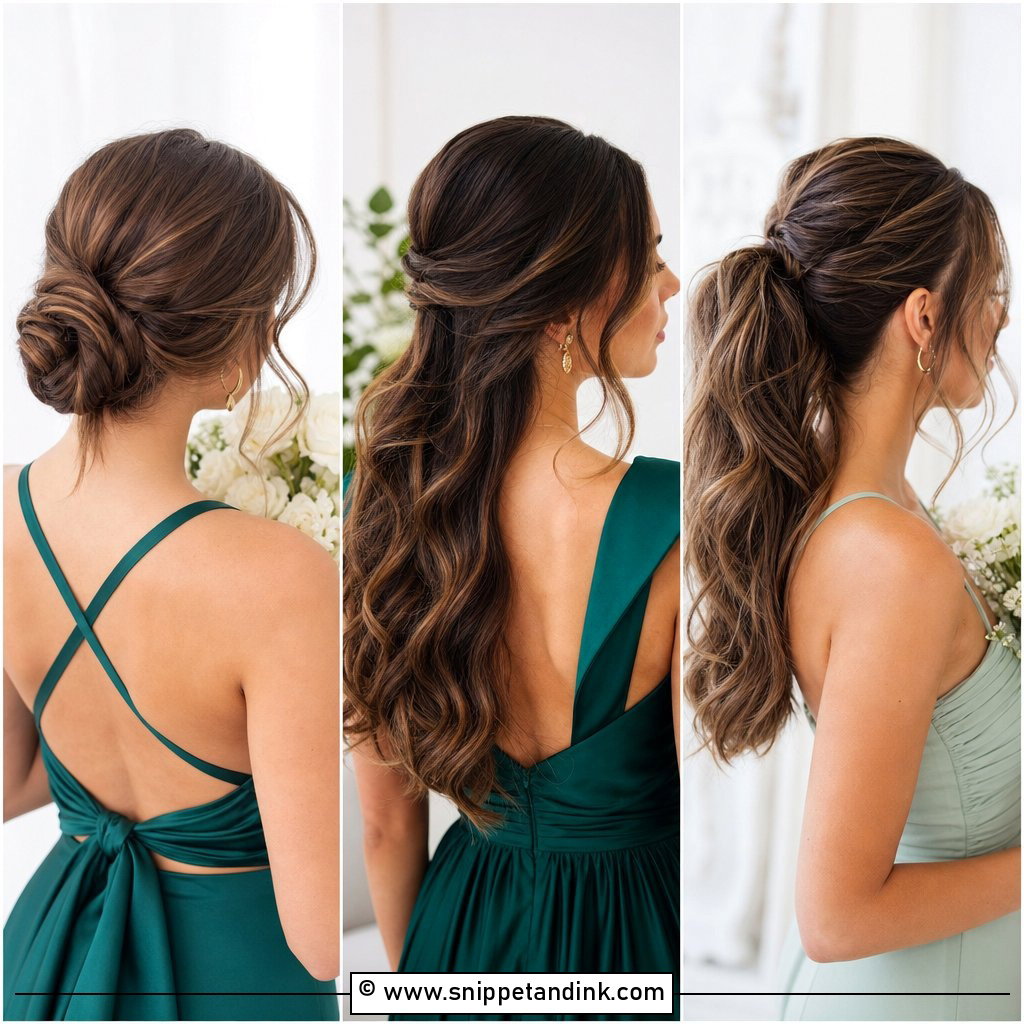
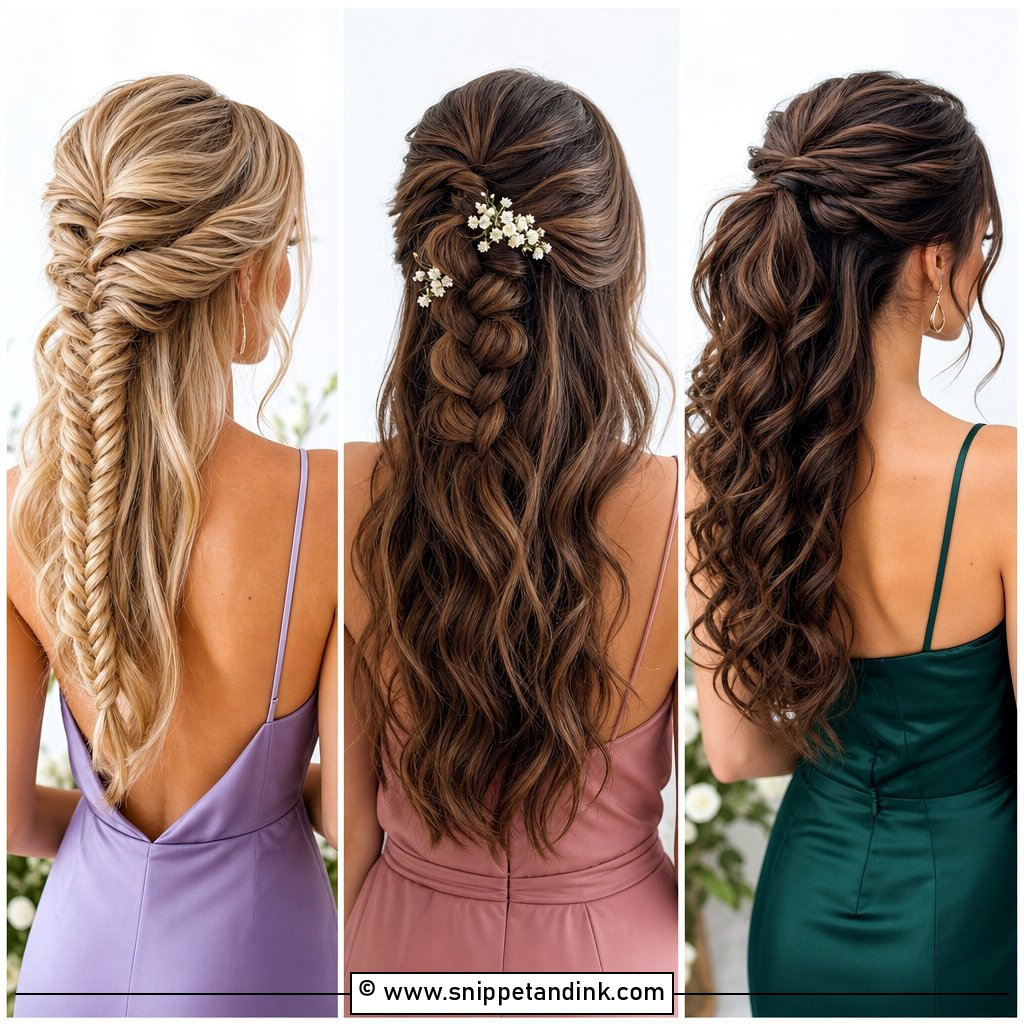
2. Bridesmaid Half Up Half Down Hair
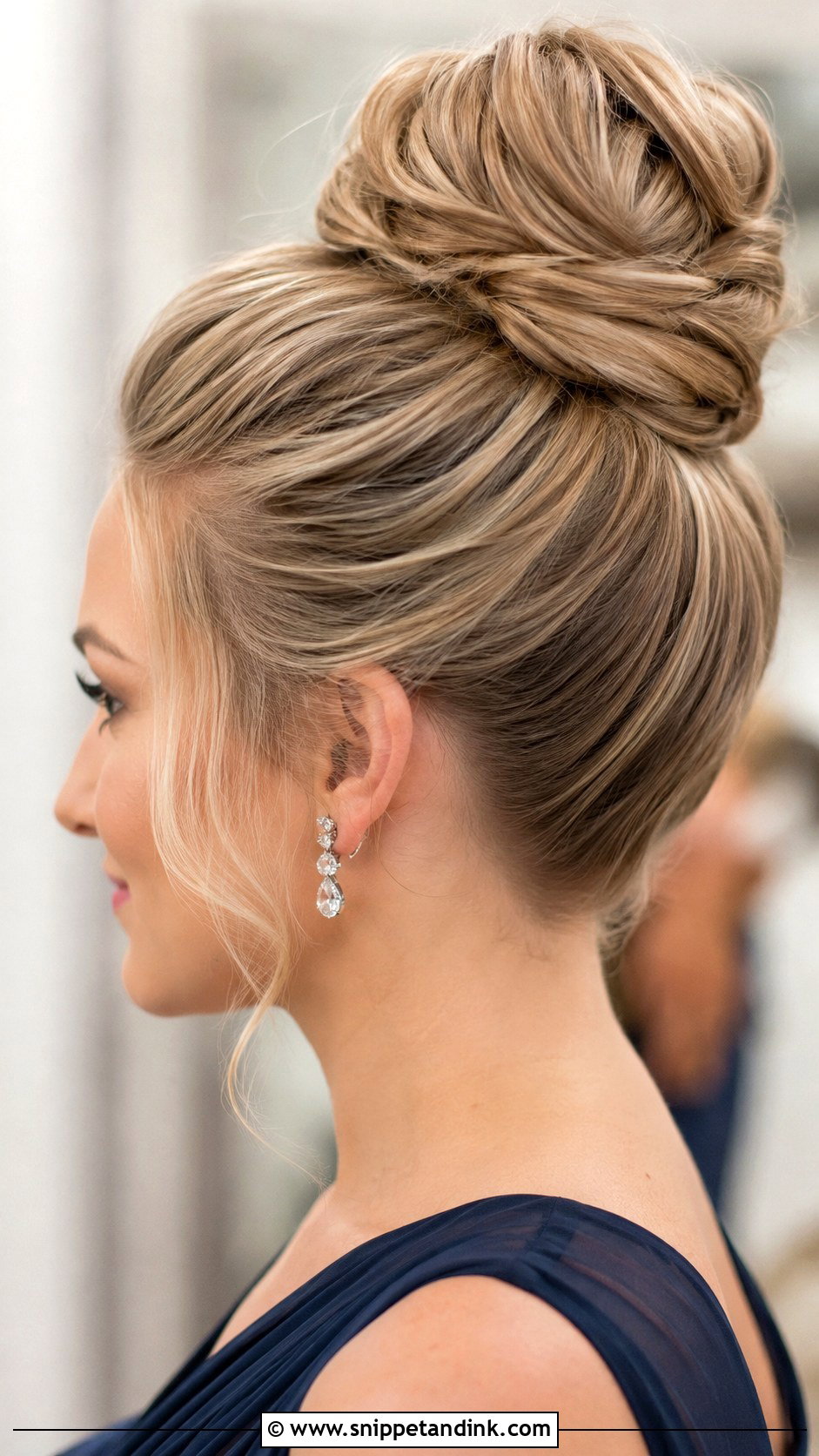
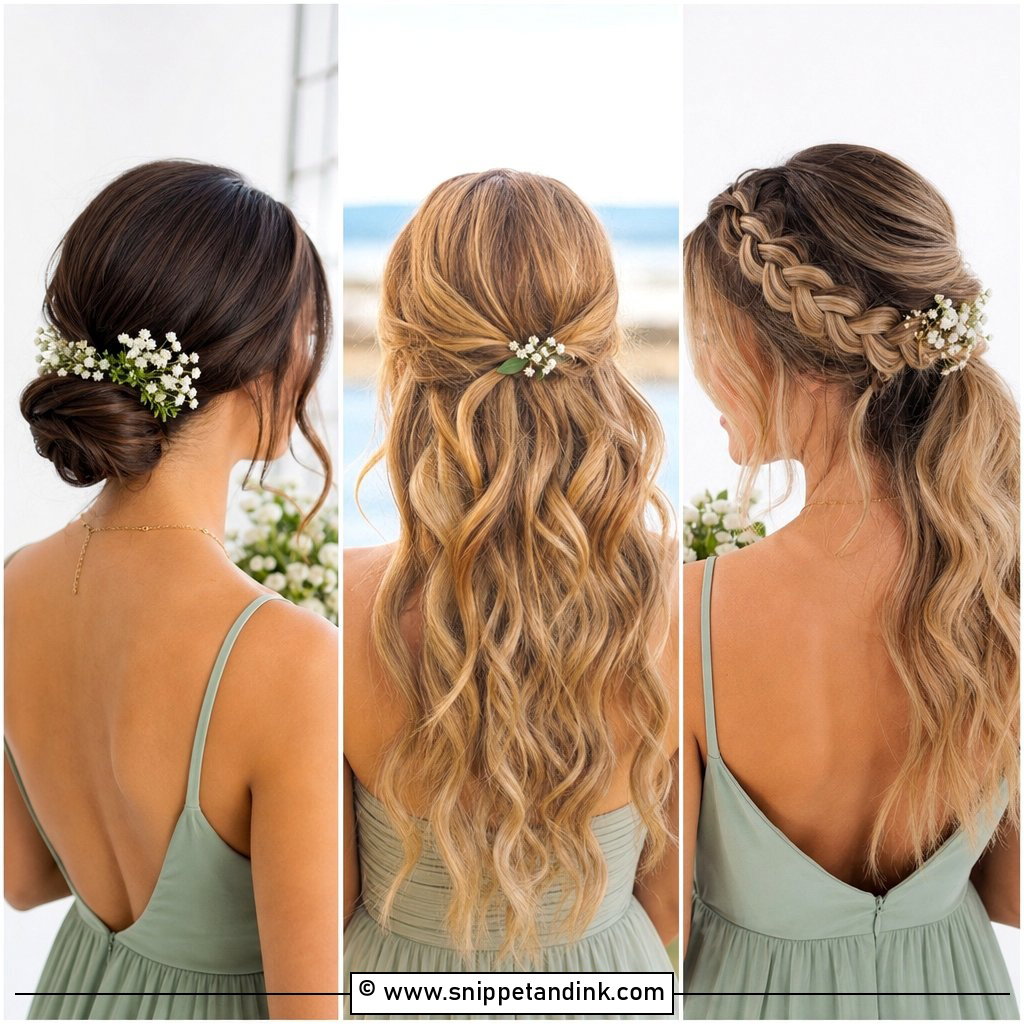
Half-up hair suits medium and long lengths, because the waves underneath show off the length. The top section is pinned back off the face, and a small twist or braid at the back makes it read as wedding hair rather than a nice office day. The weak spot is the loose bottom half, which flattens against a dress and drops in heat. I set the waves firmly, brush them out, then use a light spray so they still move. Strapless, sweetheart and V-necks leave room for them to fall.
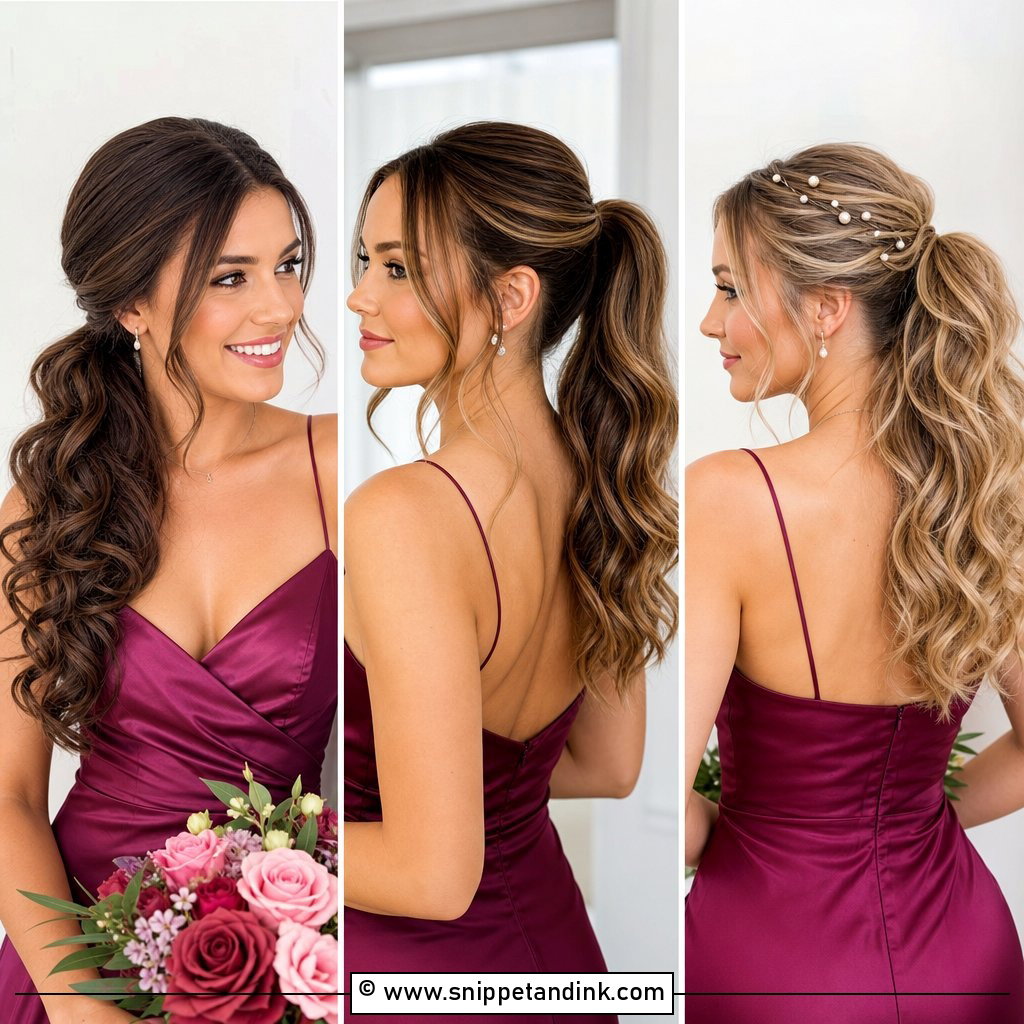
3. Bridesmaid Sleek Ponytail
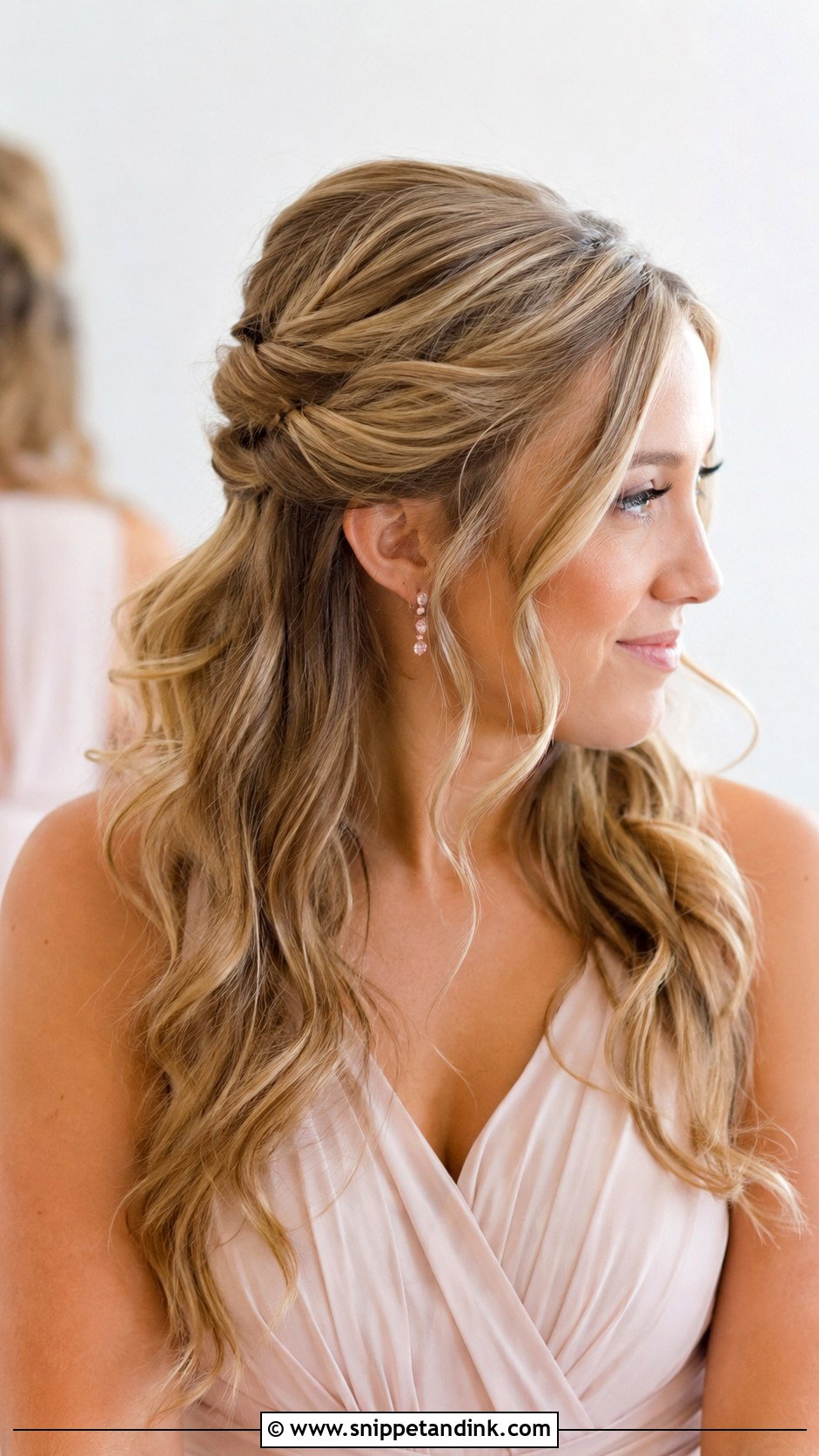
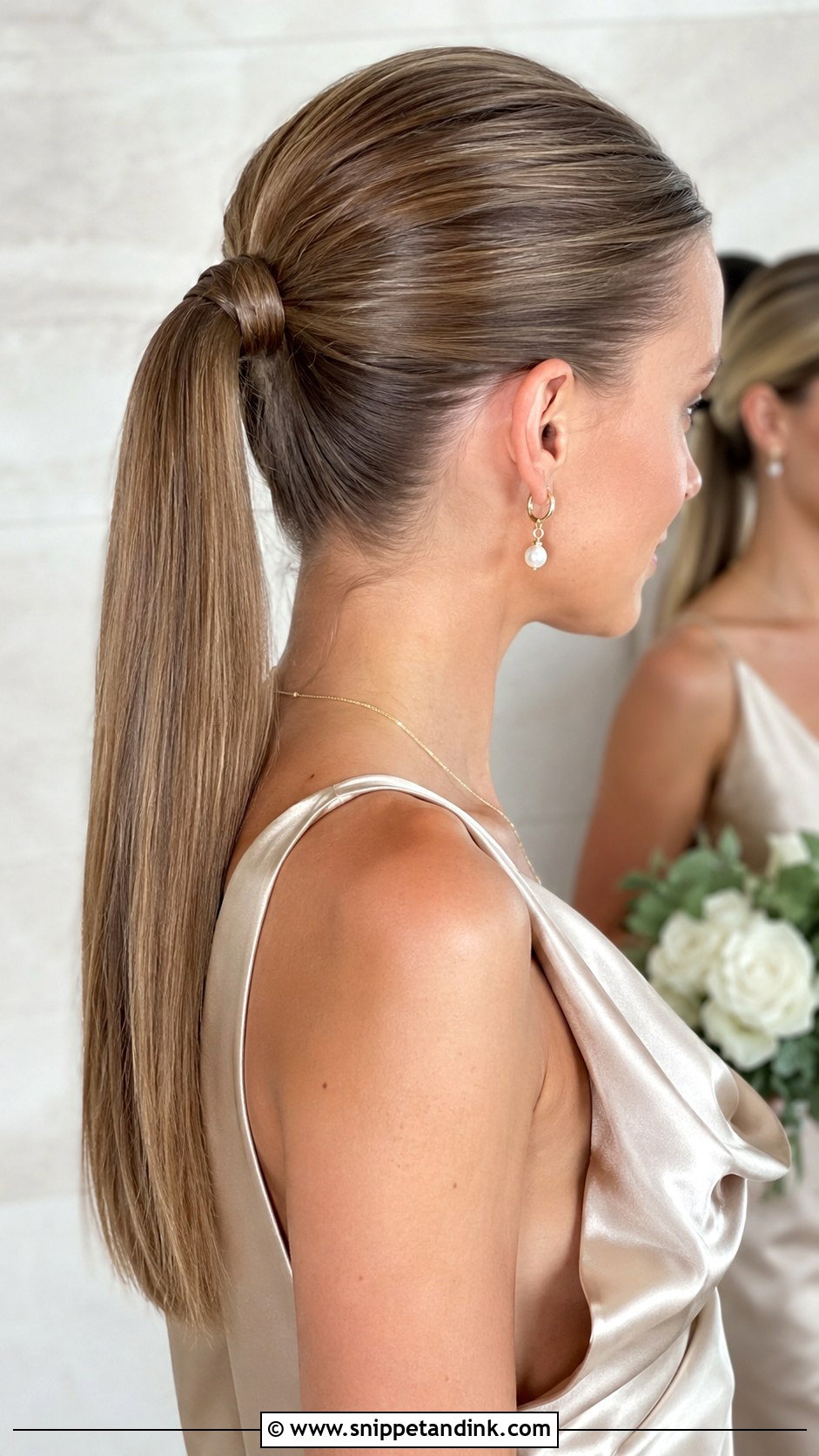
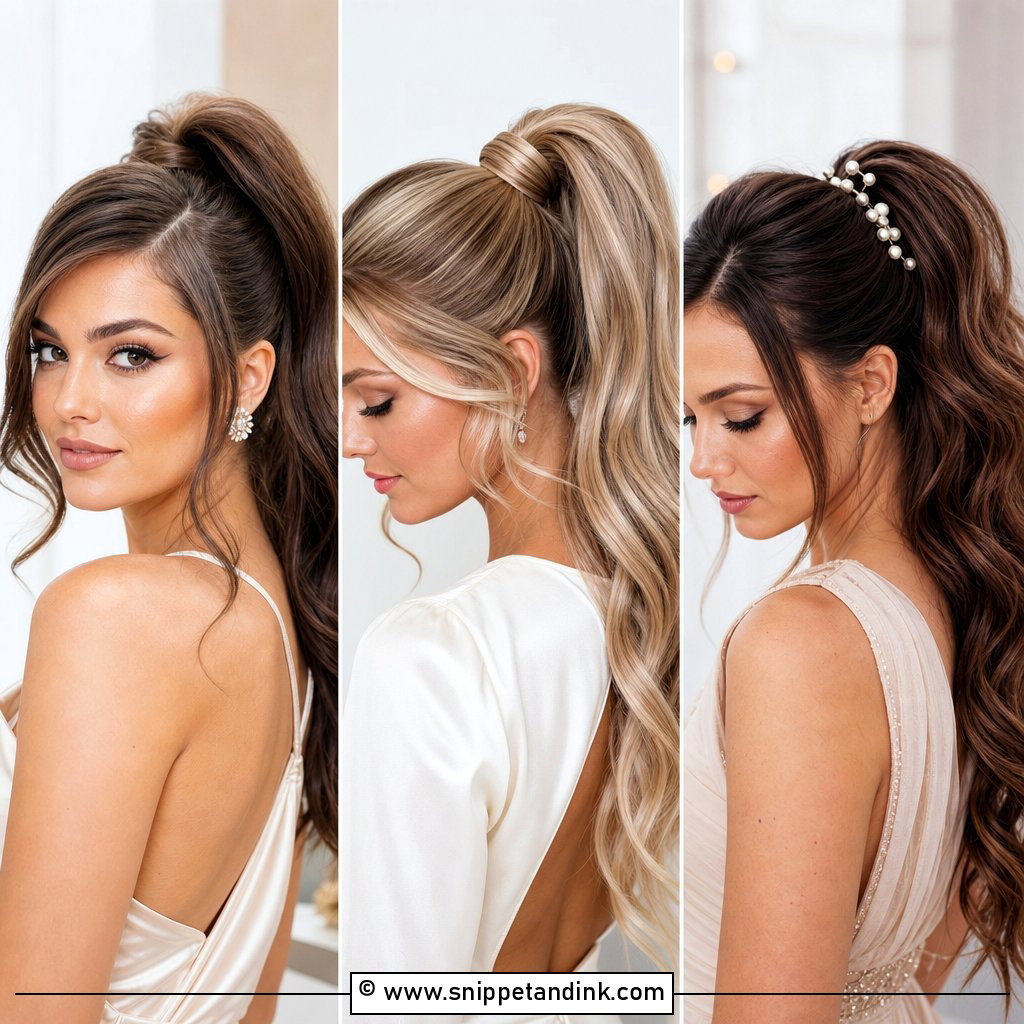
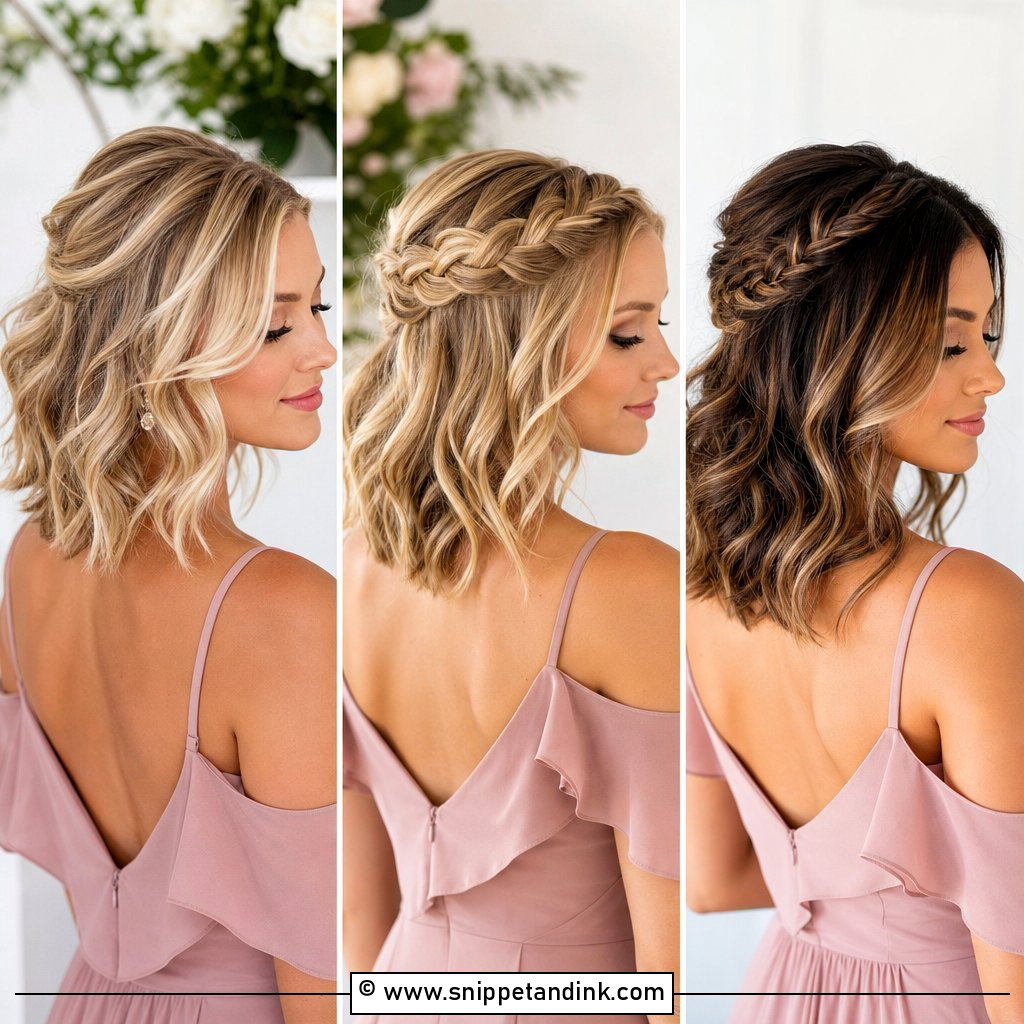
A sleek ponytail depends more on the crown than on the tail. I smooth the top with a firm brush and a gel or cream, then wrap a strand of hair around the elastic to hide it. Low reads elegant and high reads glamorous, but a high pony on thick hair gets heavy after a few hours. It suits black-tie, city venues and minimal dresses. Short layers around the face will pop out by evening, so whoever has them should carry a couple of small clips.
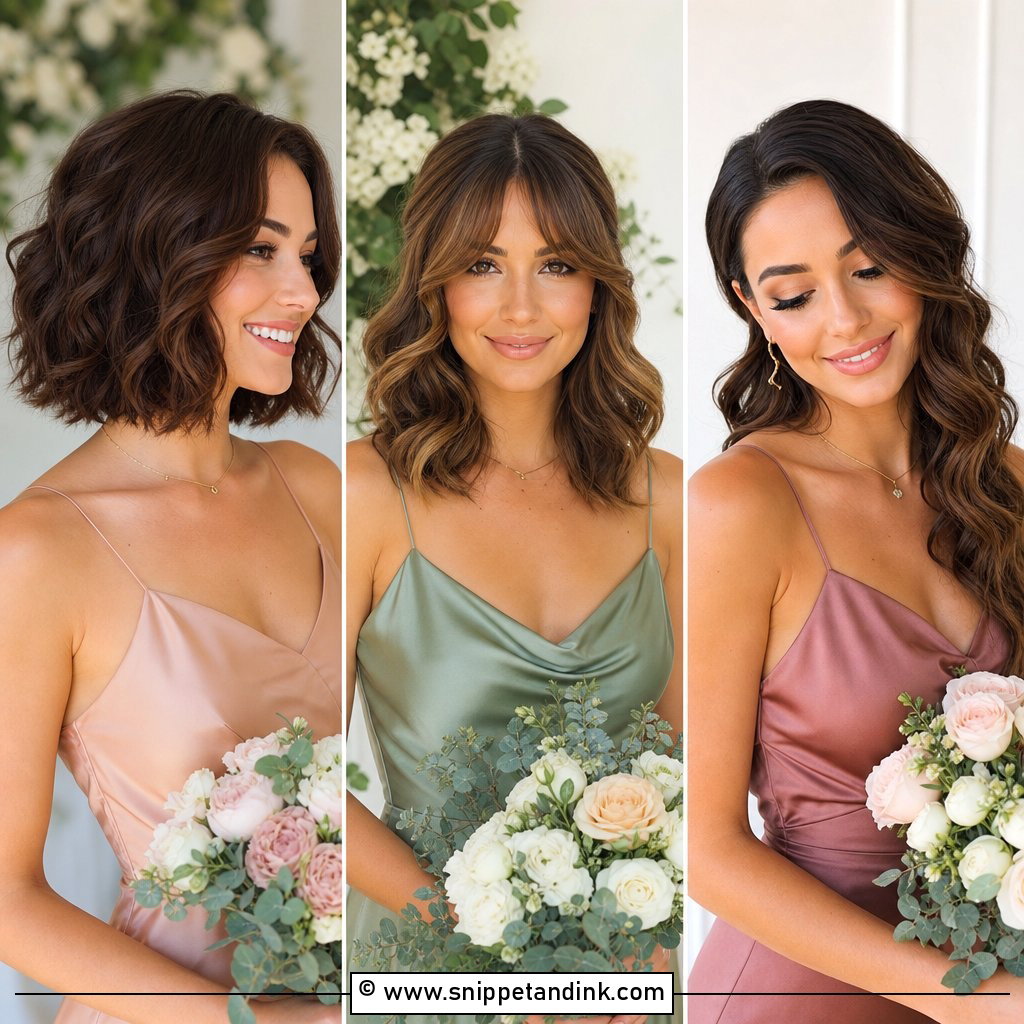
4. Bridesmaid Loose Waves
Ask for loose waves and you could get anything from beachy bends to tight ringlets, so be specific: soft bends through the mid-lengths and ends, roots left smooth. Fine hair needs texture spray before the iron or the waves fall within the hour. Thick hair needs smoothing cream first or it puffs. Waves are the easiest look to match across a party, since everyone keeps her own length and parting. Just accept that a beach breeze or a humid barn will relax them a little.
5. Bridesmaid Braided Bun
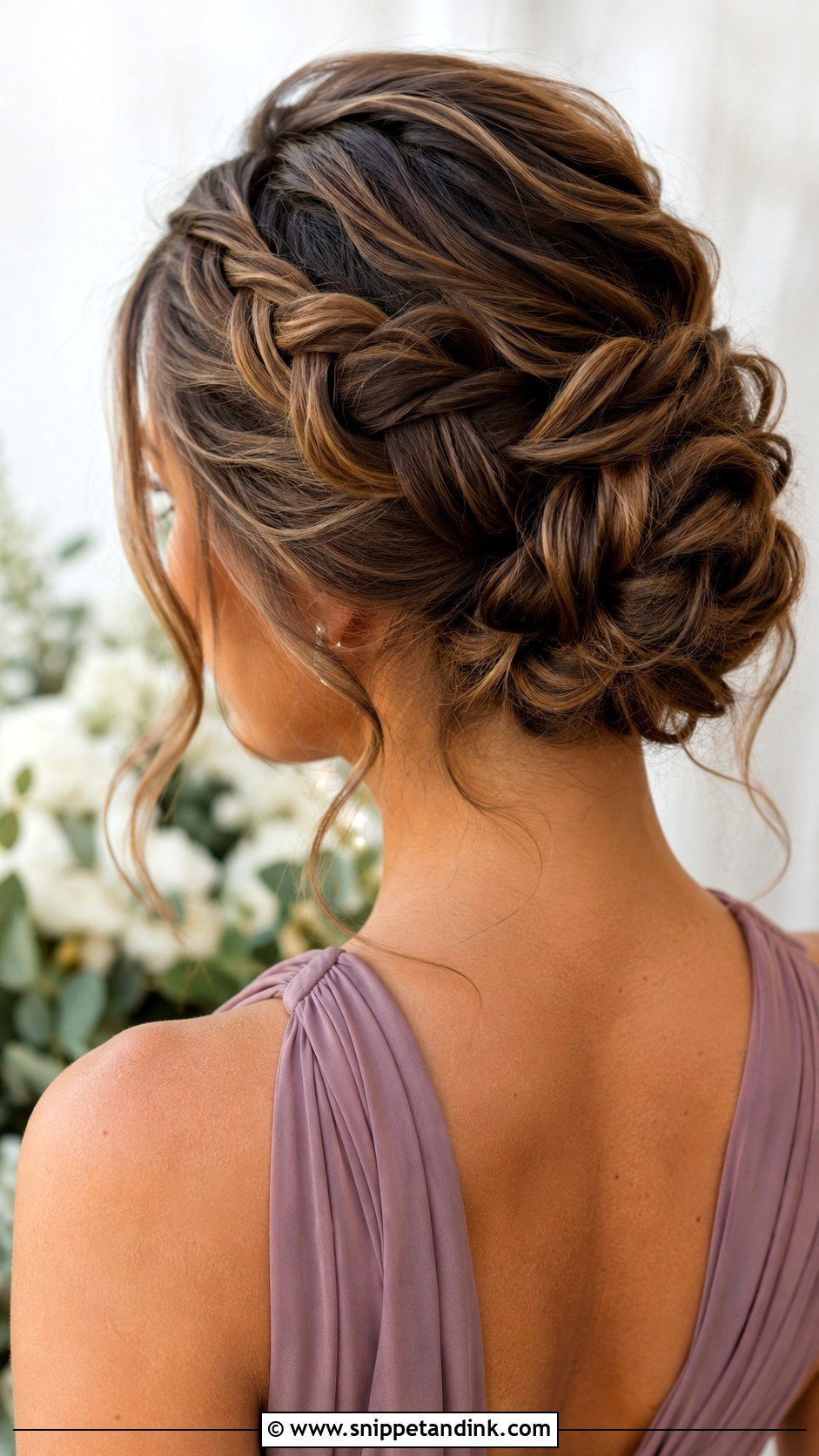
Braided buns are a good middle ground for the bridesmaid who finds a plain bun dull. The braid can wrap the bun, cross the crown, or start at one side for an asymmetric shape. Highlighted hair looks best here, because each braid loop catches a different tone. I loosen the braid slightly after pinning, never before, or it loses its grip. In warm weather it keeps the neck clear.
6. Bridesmaid Side Braid
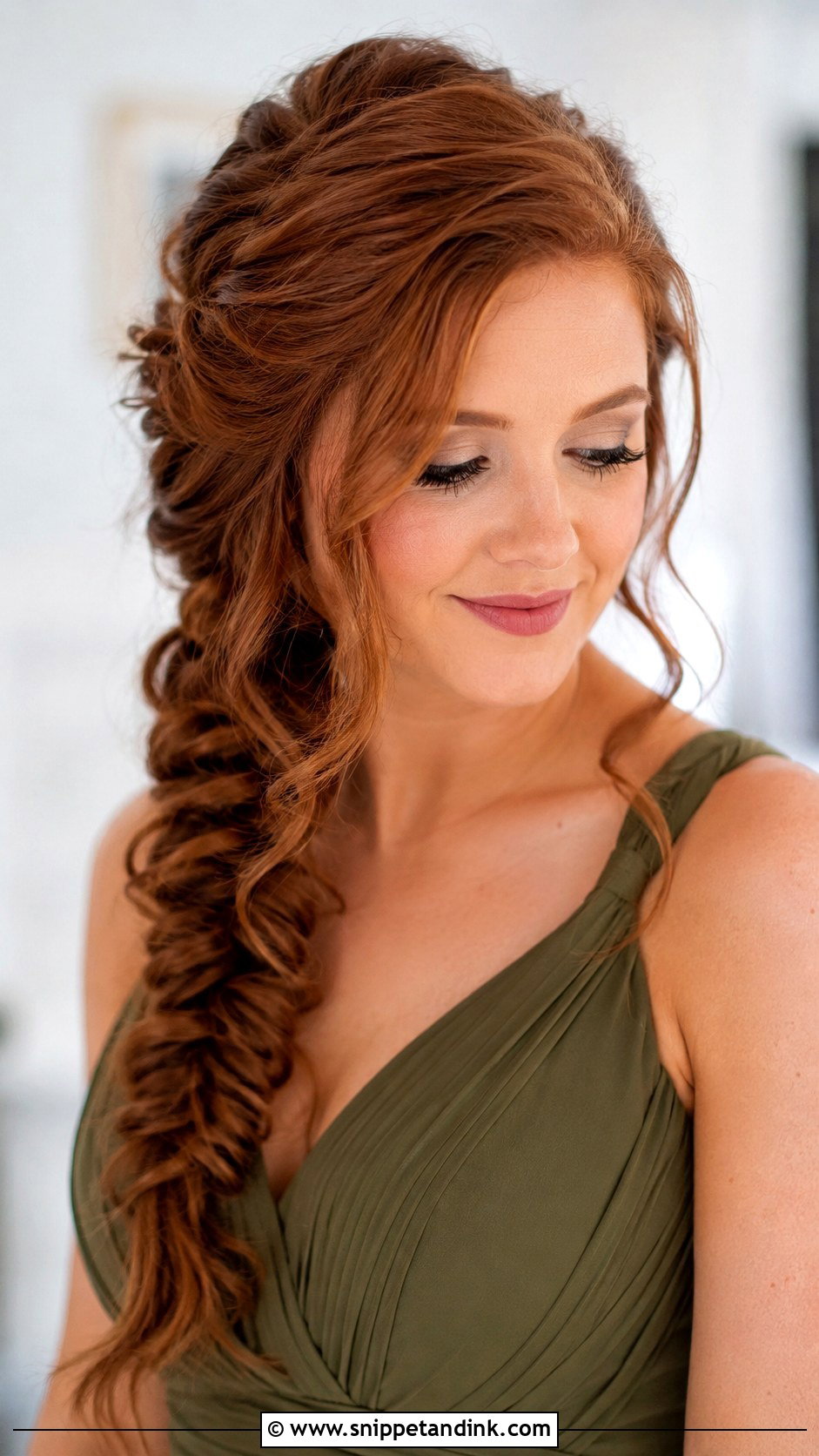
Bringing the hair forward over one shoulder means the braid is what the camera sees. A loose fishtail, a Dutch braid or a soft three-strand braid each gives a different texture, and long hair shows any of them best. Pull a few soft pieces out around the face before the final spray. I’d hold back on accessories: one or two small pins or flowers, and only if they echo the wedding’s own flowers or jewelry.
7. Bridesmaid Twisted Updo
Twists are my quiet favorite for medium hair. Sectioning the hair and twisting each part into a low shape makes it look thicker than it is, and layers tuck into twists far more neatly than into a single bun. It sits well with off-the-shoulder, halter and high necks. Ask for a little lift at the crown; without it, a twisted updo can look flat from the side in group photos.
8. Bridesmaid Curly Updo
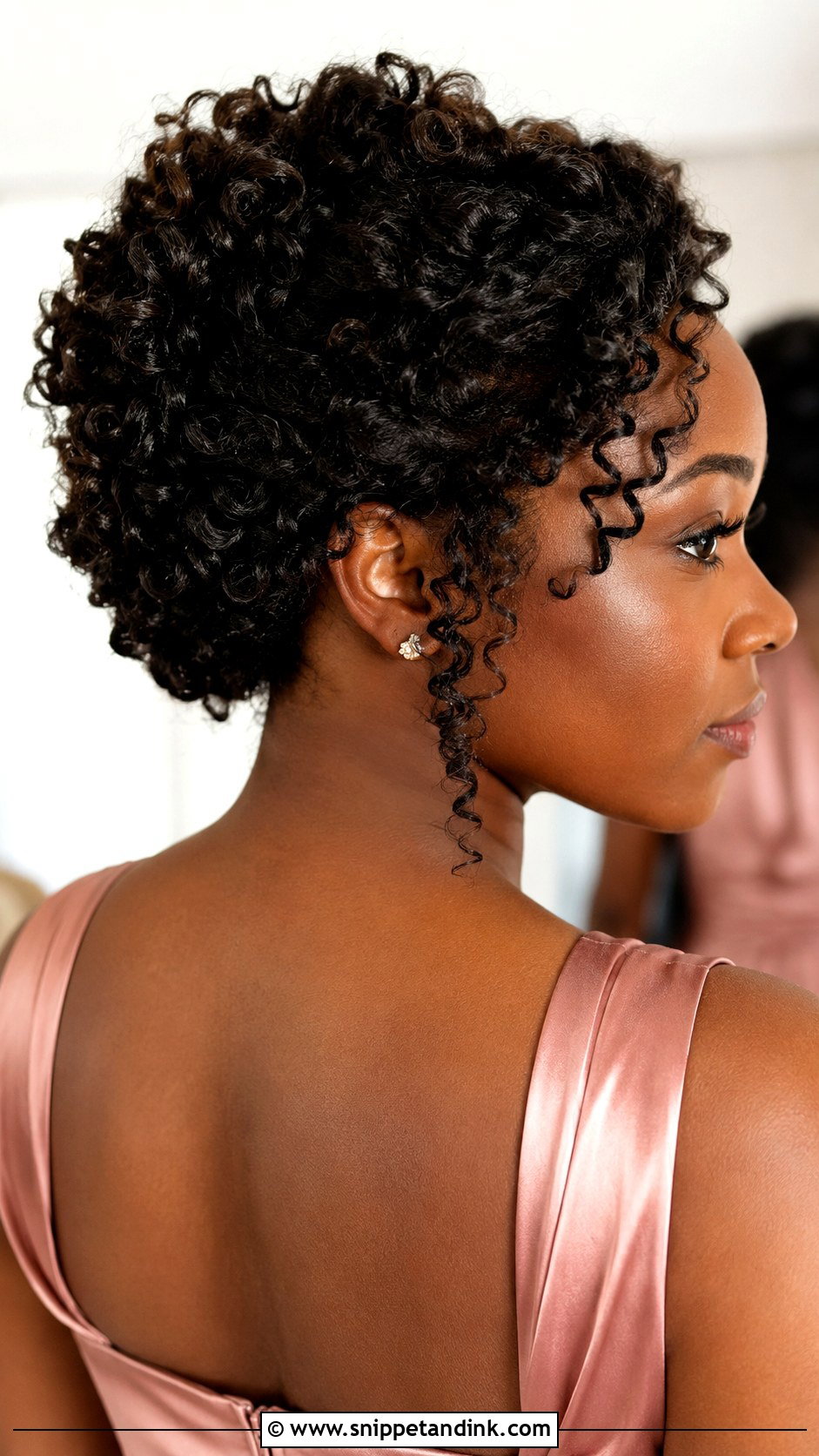
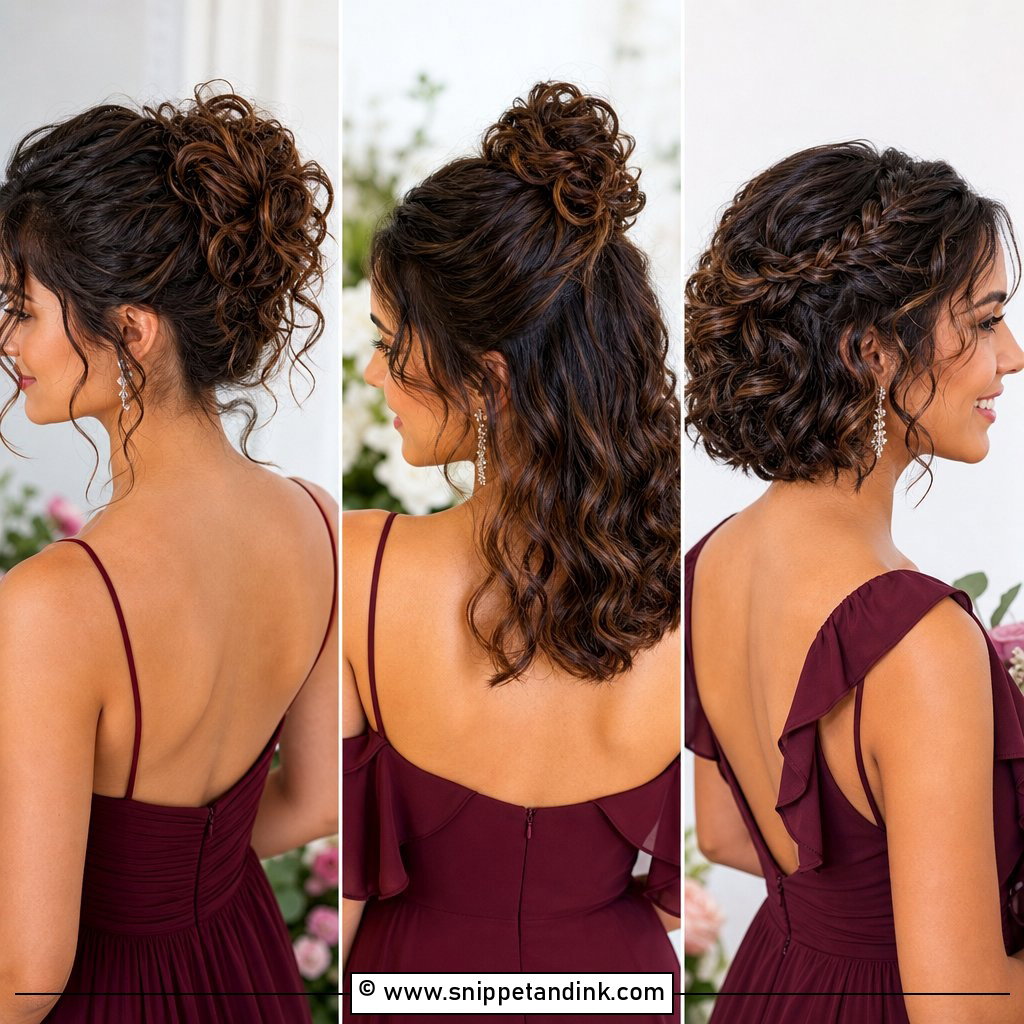
For curly and coily bridesmaids, the goal is shaping curls, not flattening them. A soft bun, a puff or a pinned updo all keep the definition. Prep matters more than styling here: a moisturizing leave-in, a curl cream or gel, and no brushing once the pattern has set. Large pins hold better than bobby pins in coils. Next to all that texture, a simple dress looks richer than it is.
9. Bridesmaid High Bun
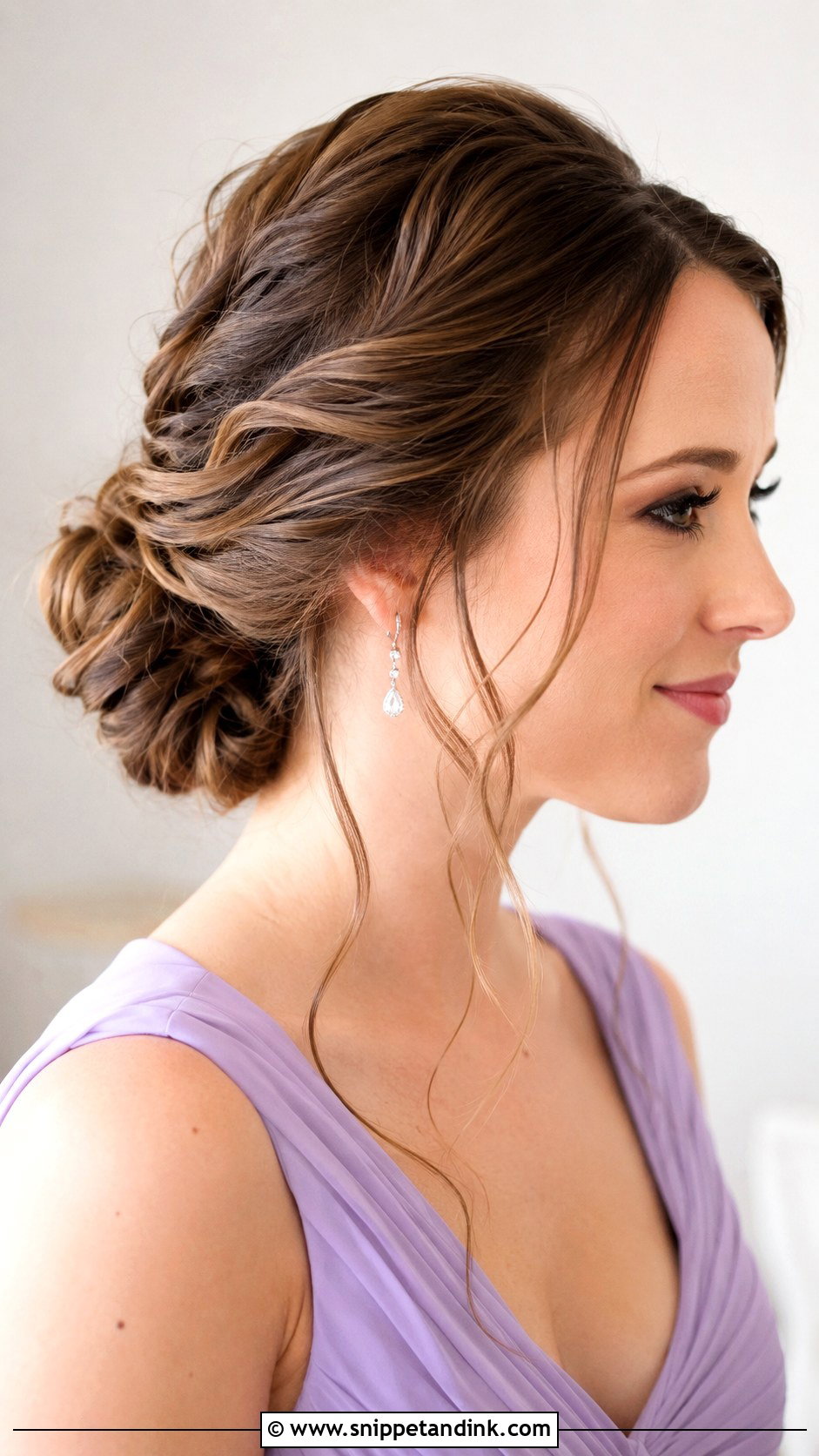
Placement makes or breaks a high bun. Right on top of the head can look casual, almost gym-like, while a spot just below the crown looks graceful from the side. It keeps the neck completely clear, which is a relief in hot weather, and suits formal gowns and statement earrings. Fine hair needs a bun form to reach any size. Long, thick hair can make a full bun alone, but it gets heavy, so I anchor it twice with strong pins and finish with a flexible spray.
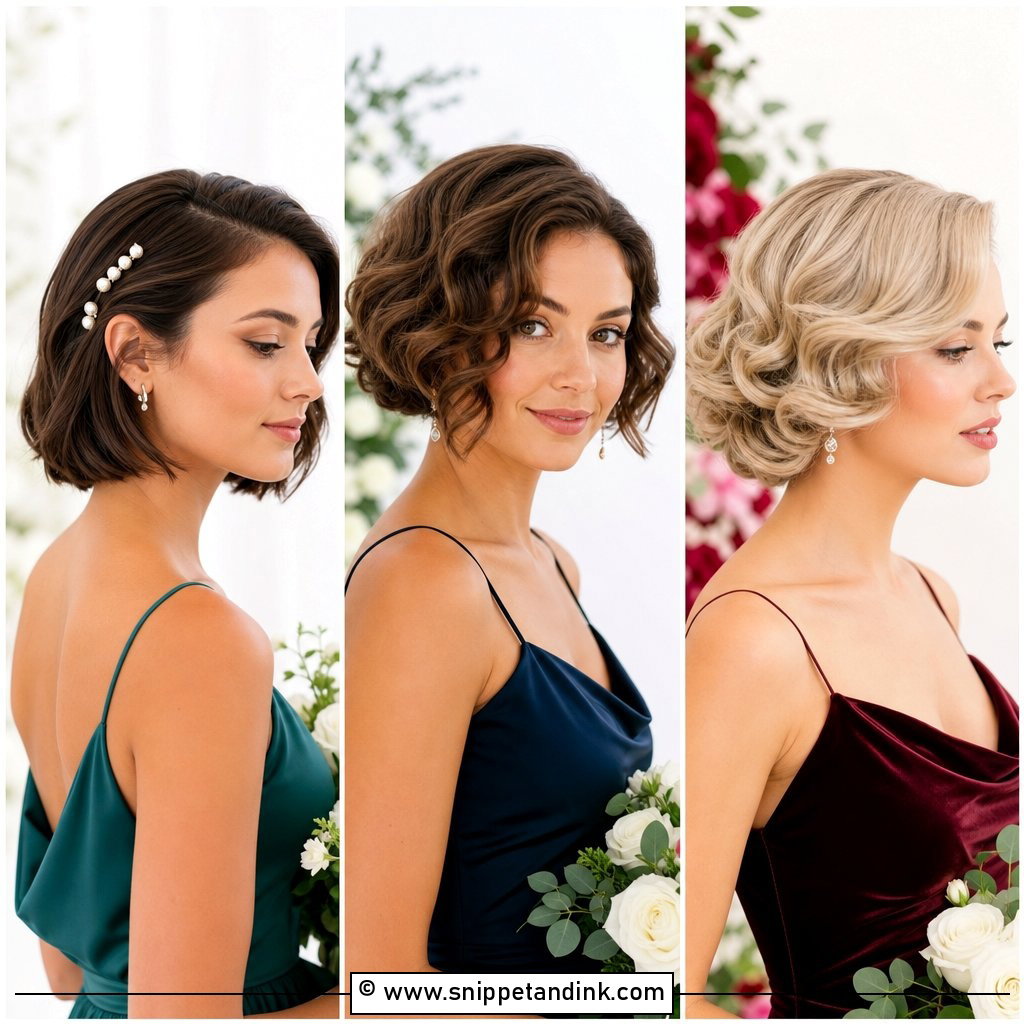
10. Bridesmaid Hollywood Waves
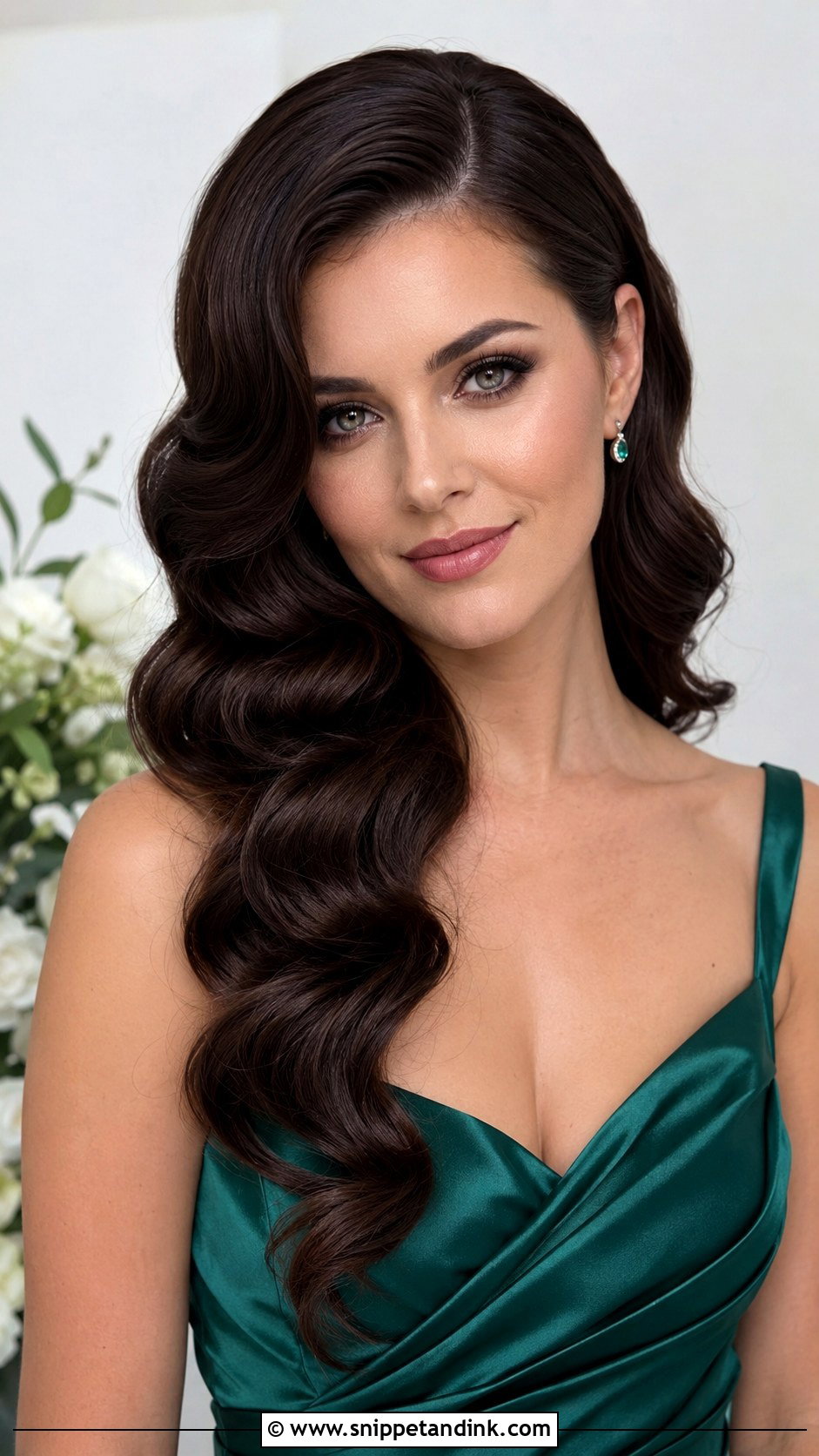
Hollywood waves are a brushed-out set, not a loose curl. Every section is curled in the same direction, pinned to cool, then brushed until the curls join into one smooth wave, usually off a deep side part. You need medium to long hair and a good smoothing product beforehand. Satin dresses and evening weddings suit it best. Humidity softens the waves and dulls the shine, so I’d put a small brush and a shine spray in someone’s bag.
11. Bridesmaid Messy Bun
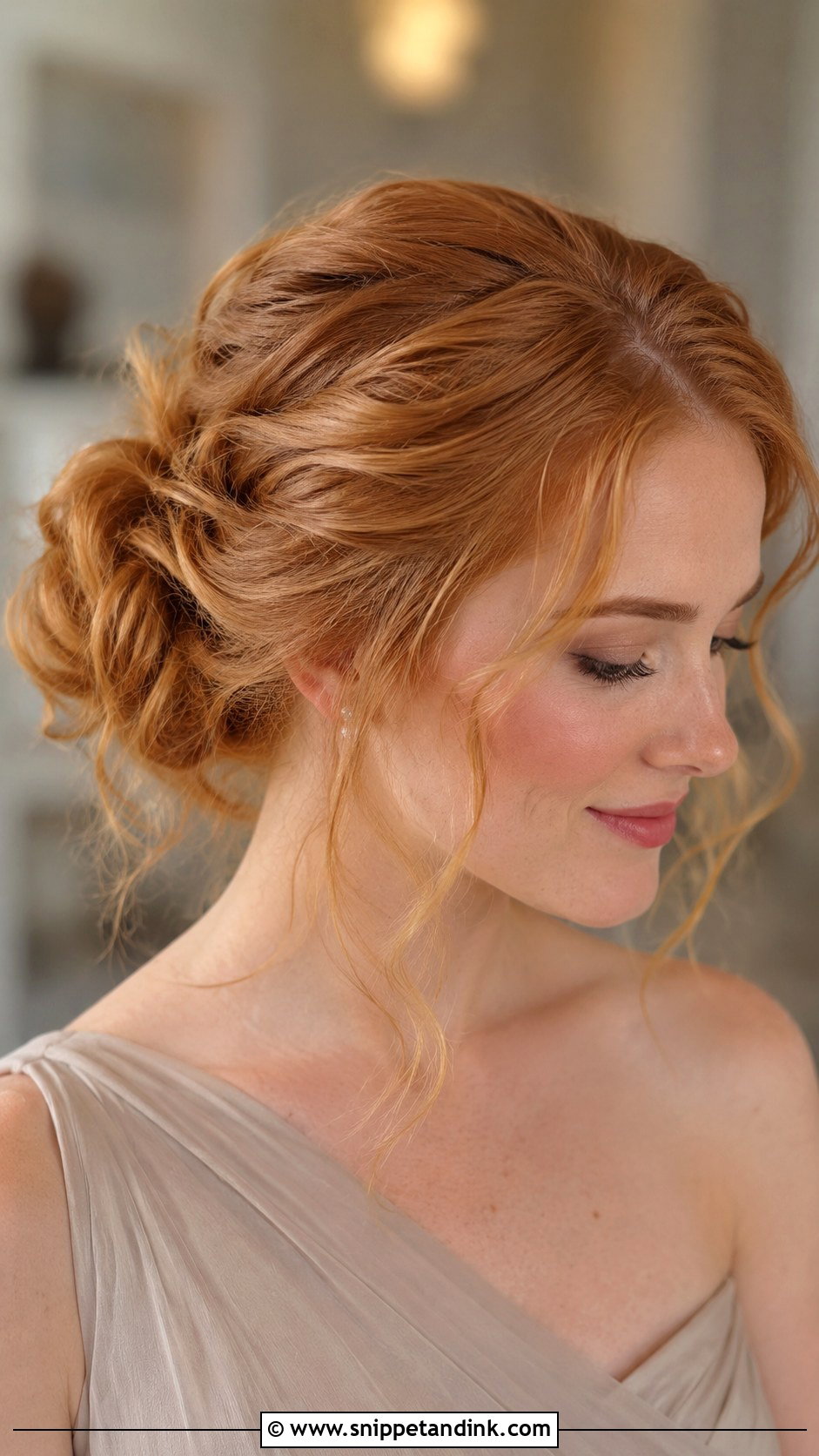
A messy bun has to look intentional, and that’s harder than it sounds. Wavy or curled hair gives the bun something to hold onto; straight, silky hair gets curled first or the pieces slide out. I build volume at the crown, place the loose pieces around the face on purpose, and hide every pin. Boho and garden weddings suit it, and it softens a very plain dress. Keep the spray light so it still looks touchable up close.
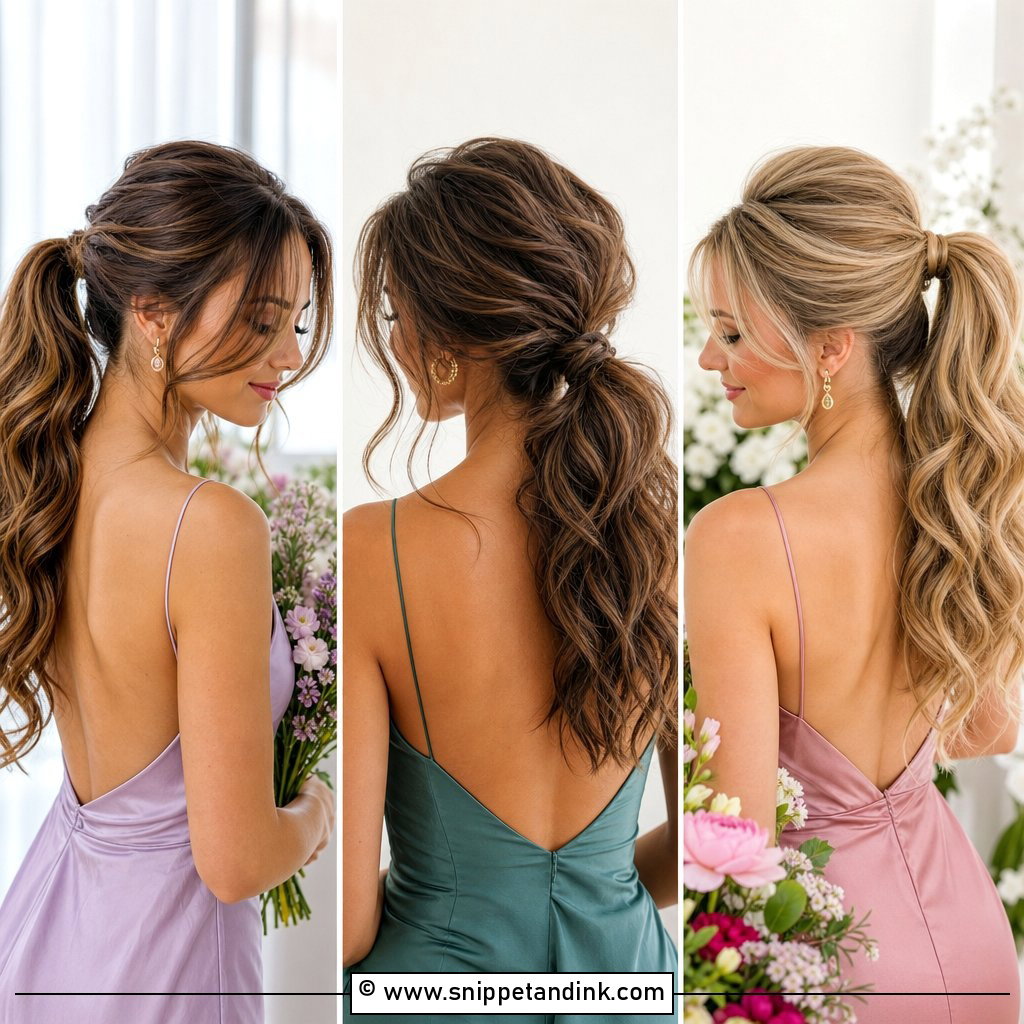
12. Bridesmaid Low Ponytail
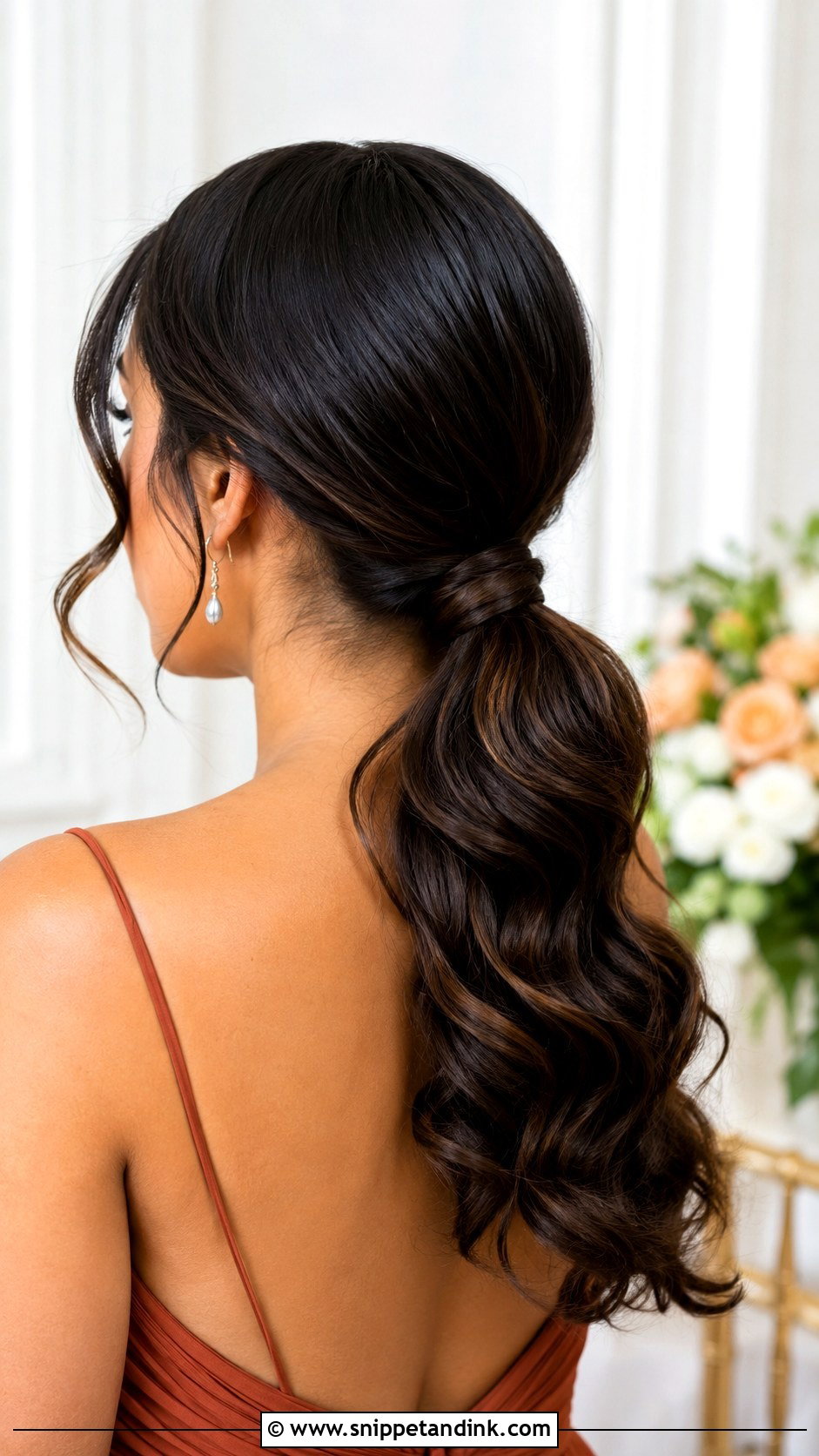
For bridesmaids who hate the pull of an updo, a low ponytail is the comfortable answer. Sitting at the nape, it doesn’t tug, and it shows well against open backs, halters and high necks. A wrapped base and a touch of crown volume stop it looking like an everyday ponytail. Frizz is its enemy, so anti-frizz spray goes on after styling. Very straight, slippery hair may slide down slightly over the evening; an extra elastic hidden under the wrap helps.
13. Bridesmaid Crown Braid
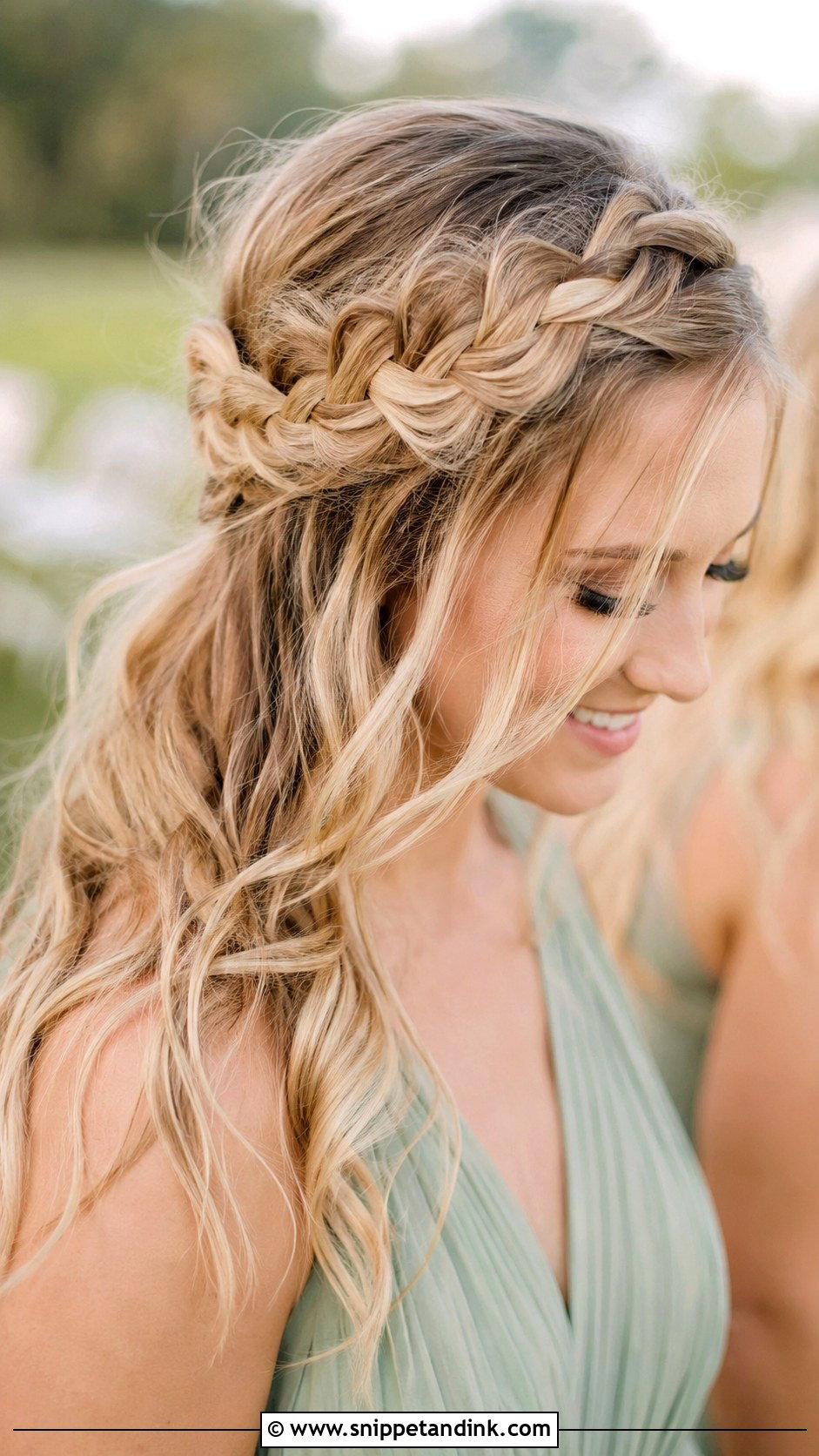
The braid wraps the head or follows the line of the crown, then blends into a bun, a ponytail or loose waves. I gently pull each loop wider after braiding so it looks full and soft rather than tight. Thick hair makes a bold braid on its own. Fine hair often needs texture spray, and sometimes a clip-in piece braided in, to reach all the way around. Since the braid is the feature, I’d skip extra accessories.
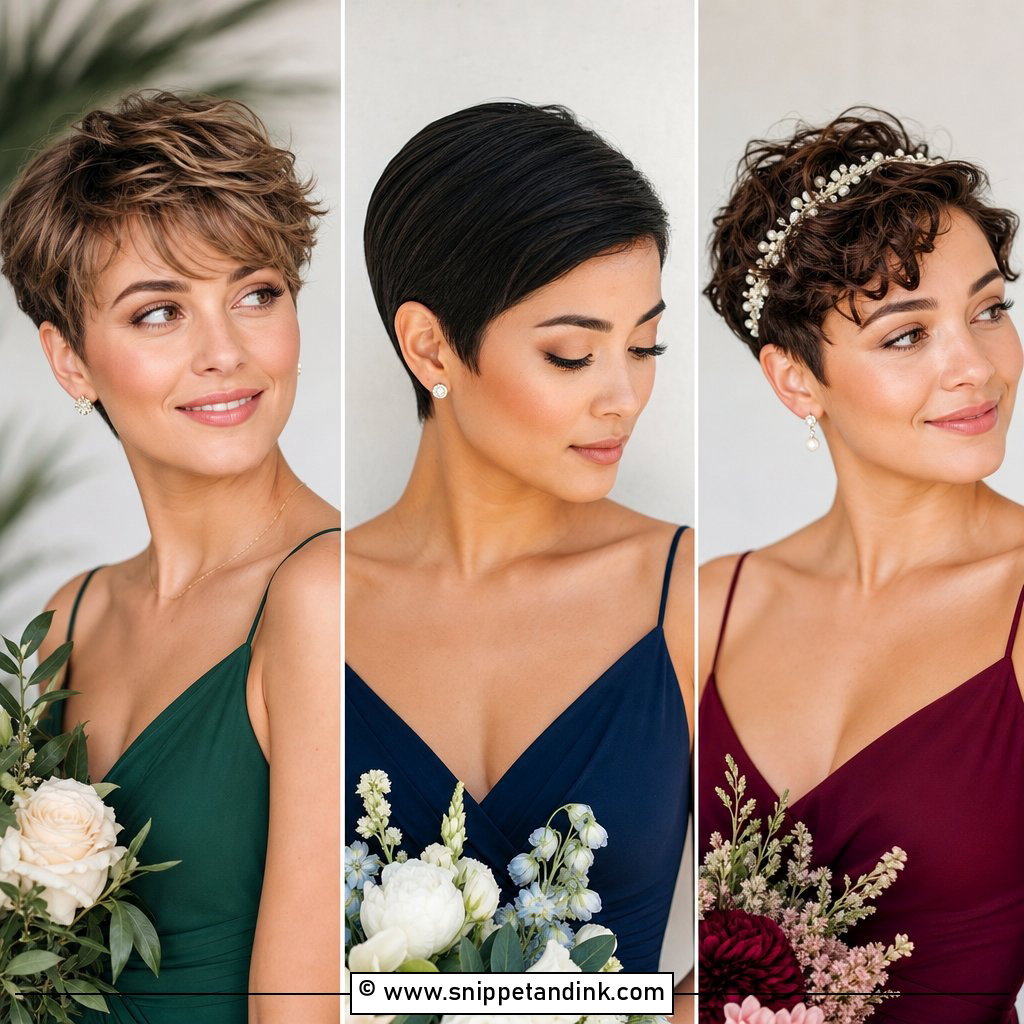
14. Bridesmaid Short Bob Hair
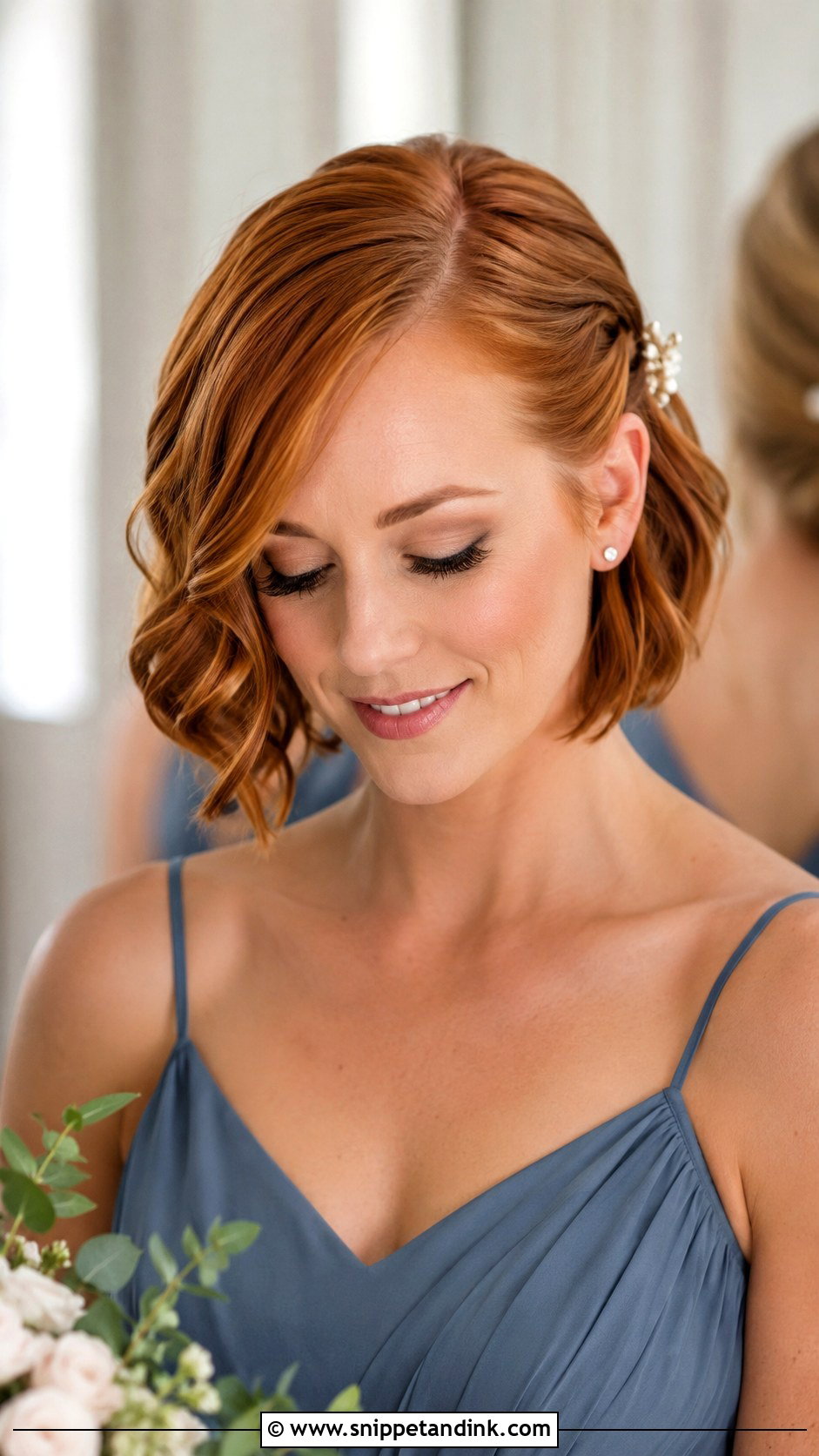
A bob can look every bit as dressed up as long hair. Soft waves, a deep side part with one side tucked behind the ear, or a polished blowout all work, and nobody has to wear clip-ins she’ll hate. I’d add one jeweled clip or pearl pin at the tuck rather than several. What a bob needs most is shape, so a fresh trim a week or two before the wedding does more than any styling product.
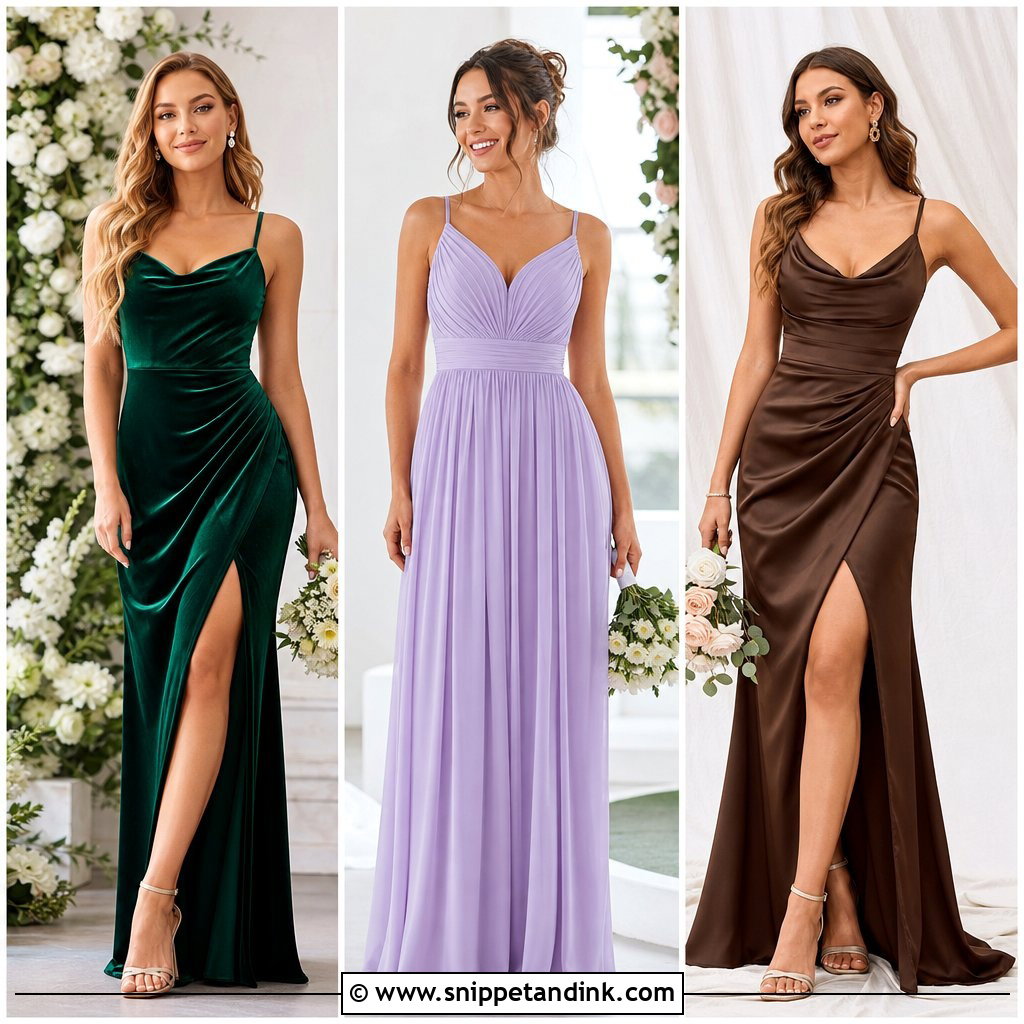
15. Bridesmaid French Twist
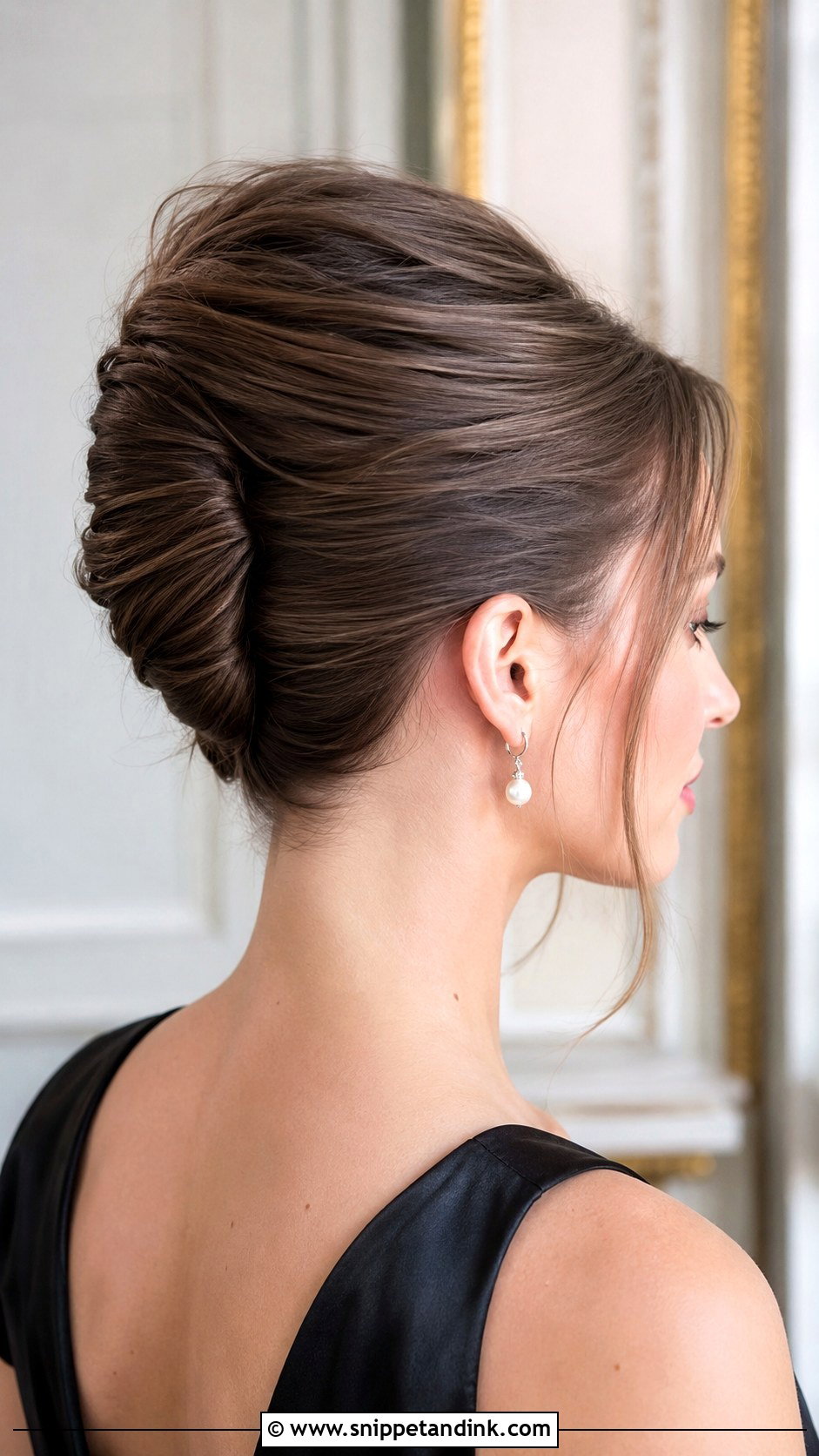
The hair is swept up and tucked into a vertical roll, which lengthens the neck and looks right with high necks and bateau necklines. Smooth suits a traditional wedding; slightly loosened looks more modern. Medium and long hair work, and shorter layers can be pinned in, though they’re the first thing to escape during dancing. Built on a proper pin base underneath, a French twist stays put through dinner and the reception. A little shine spray finishes it.
16. Bridesmaid Bubble Ponytail
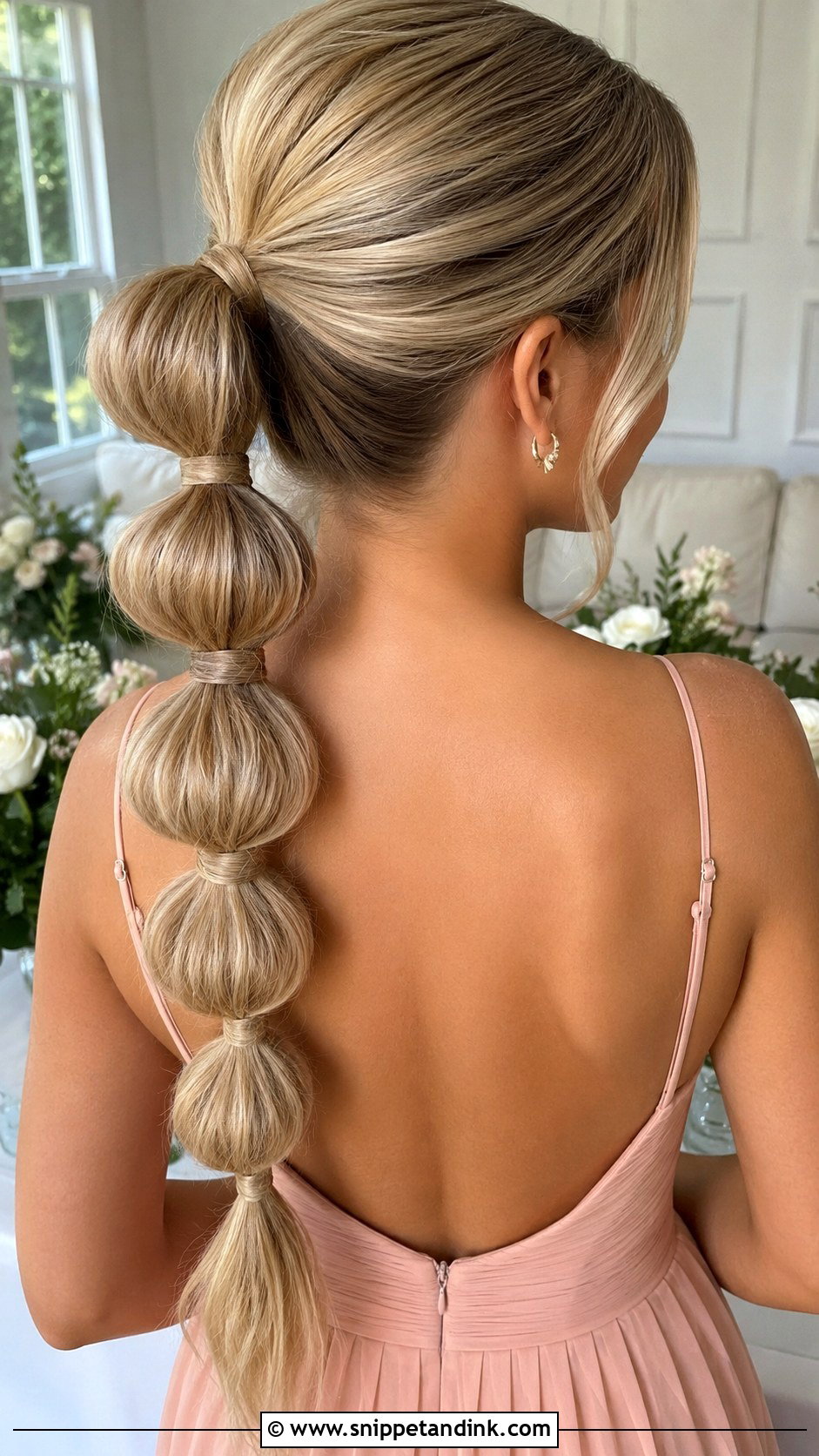
This is the fun one. A bridesmaid bubble ponytail starts as a regular ponytail, then small clear elastics section it into rounded bubbles down the length. The trick is pulling each section out evenly; if one bubble is smaller than the rest, the whole thing looks lopsided in photos. Long hair or extensions suit it best. Against a plain dress, the ponytail becomes the feature, and wrapping thin strands over each elastic finishes it neatly.
17. Bridesmaid Waterfall Braid
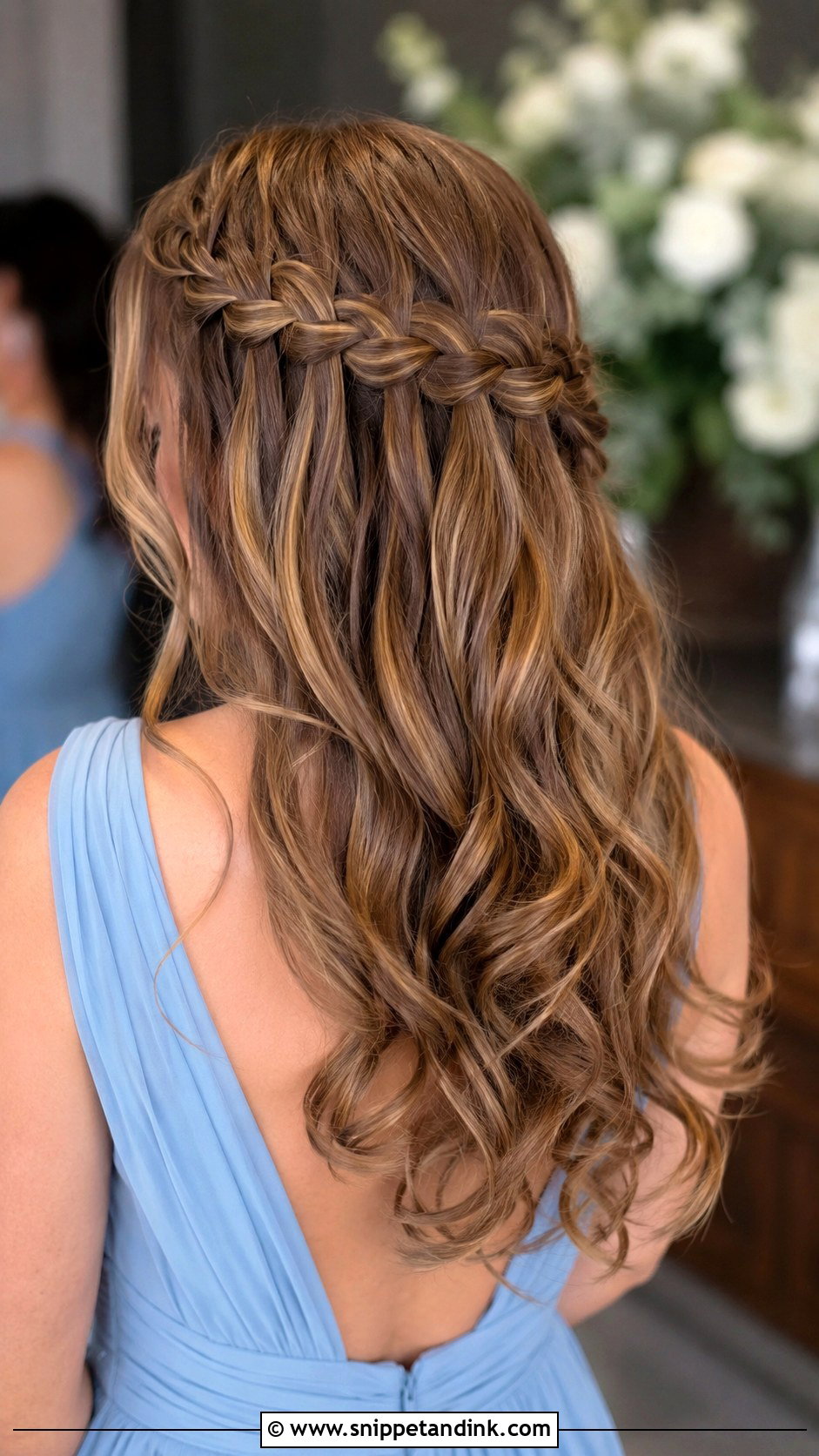
If you want your hair down with a bit of detail, a bridesmaid waterfall braid runs across the back or side of the head while loose strands drop through it like ribbons. Curled or waved hair blends into it best. It is delicate, though. The braid is thin, so I secure each end with pins hidden underneath; otherwise a few enthusiastic hugs pull it loose. Garden, beach and spring weddings suit it.
18. Bridesmaid Textured Ponytail
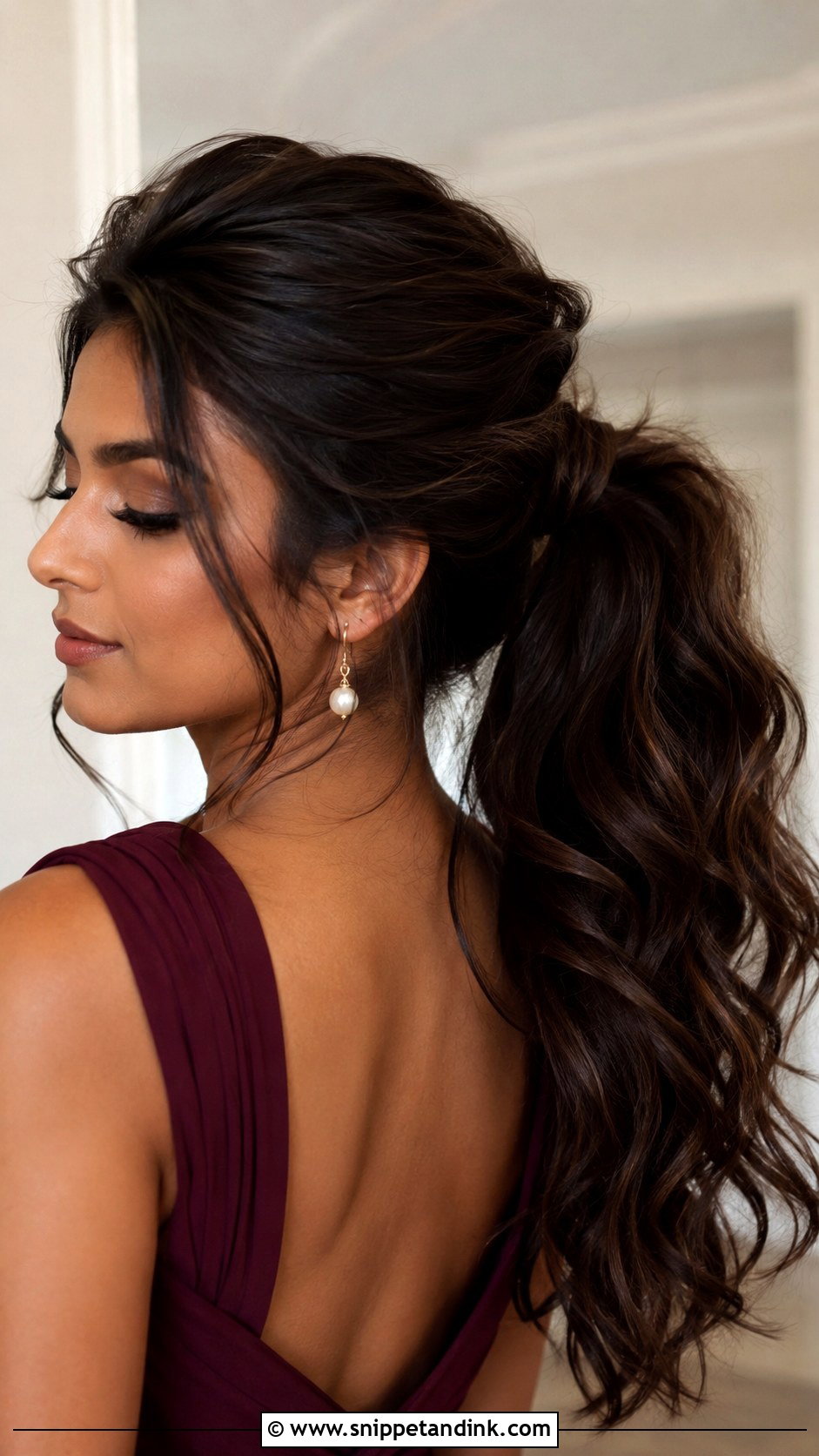
A textured ponytail sits between a sleek pony and a full updo. I tease the crown softly, curl the length, shape the front pieces, then hide the elastic under a wrapped strand. Texture spray gives fullness that lasts. Medium and long hair suit it, and it goes well with one-shoulder and square necklines. If the bride is wearing a sleek ponytail, this gives her bridesmaids a relaxed version of the same shape.
19. Bridesmaid Natural Curls
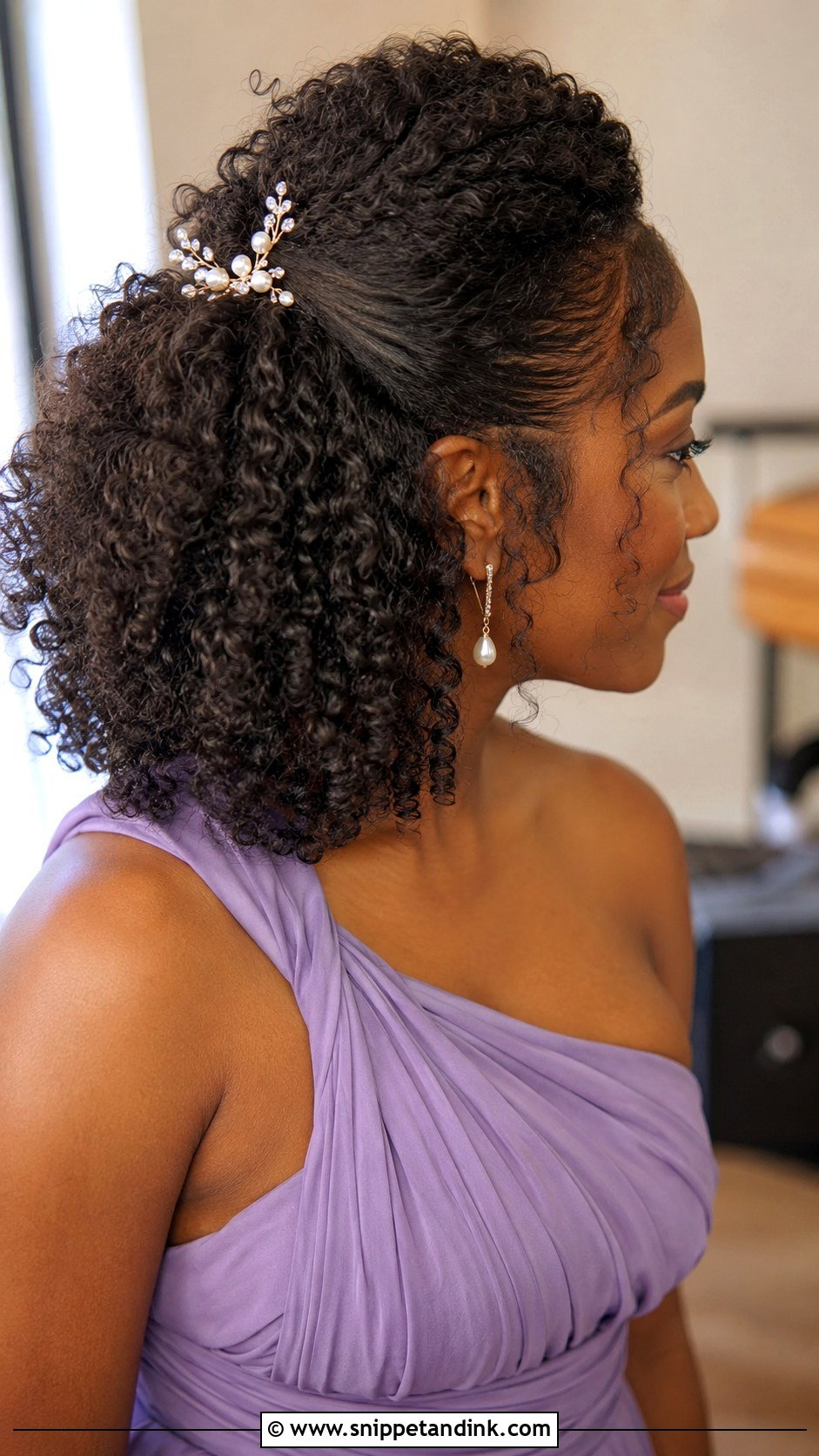
Nobody in a bridal party should have to blow out her curls. Bridesmaid natural curls look their best hydrated and defined, not stretched. Curl cream and gel, then diffusing or air drying, set the pattern so it lasts all day. Worn down, half up, pinned to one side or gathered into a soft ponytail, curls let each bridesmaid look like herself. A small clip adds polish without disturbing the shape. Once the curls are dry, I stop touching them, because that’s when frizz starts.
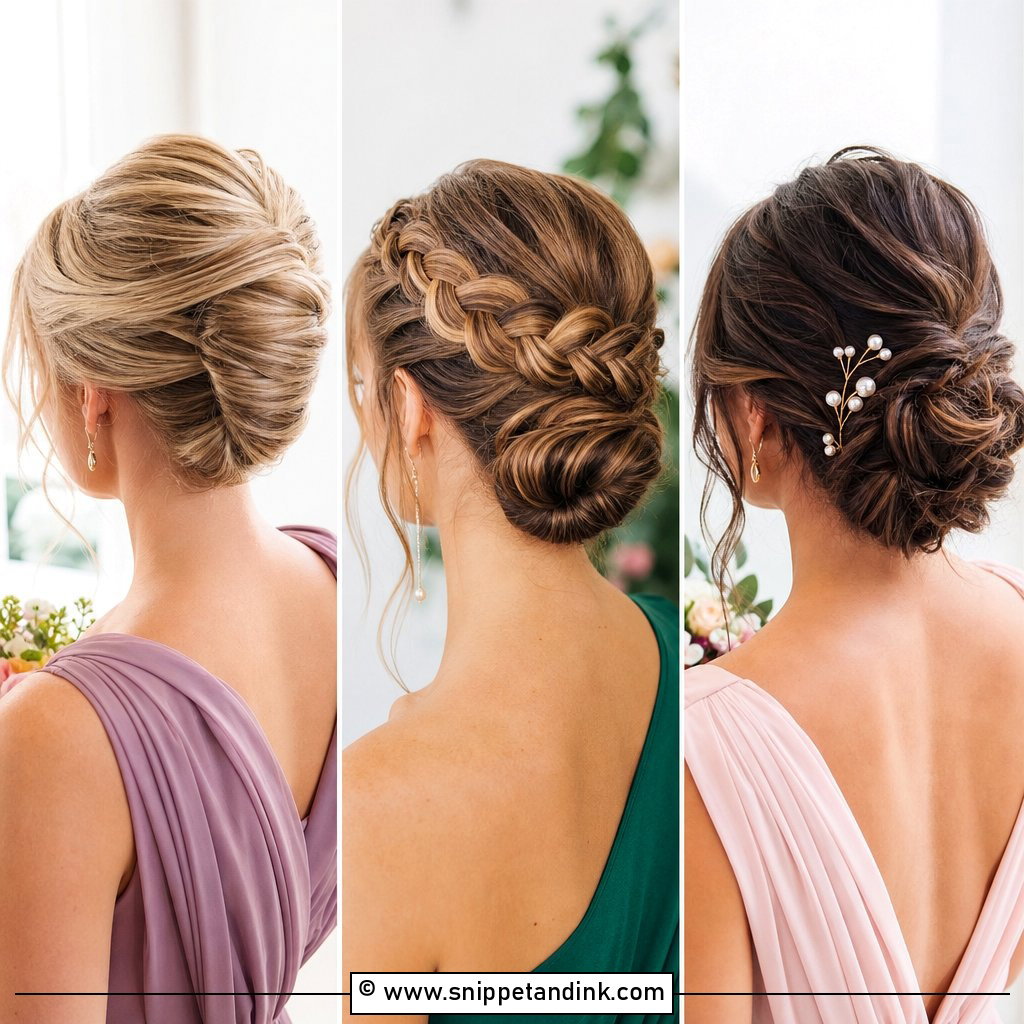
20. Bridesmaid Side Swept Hair
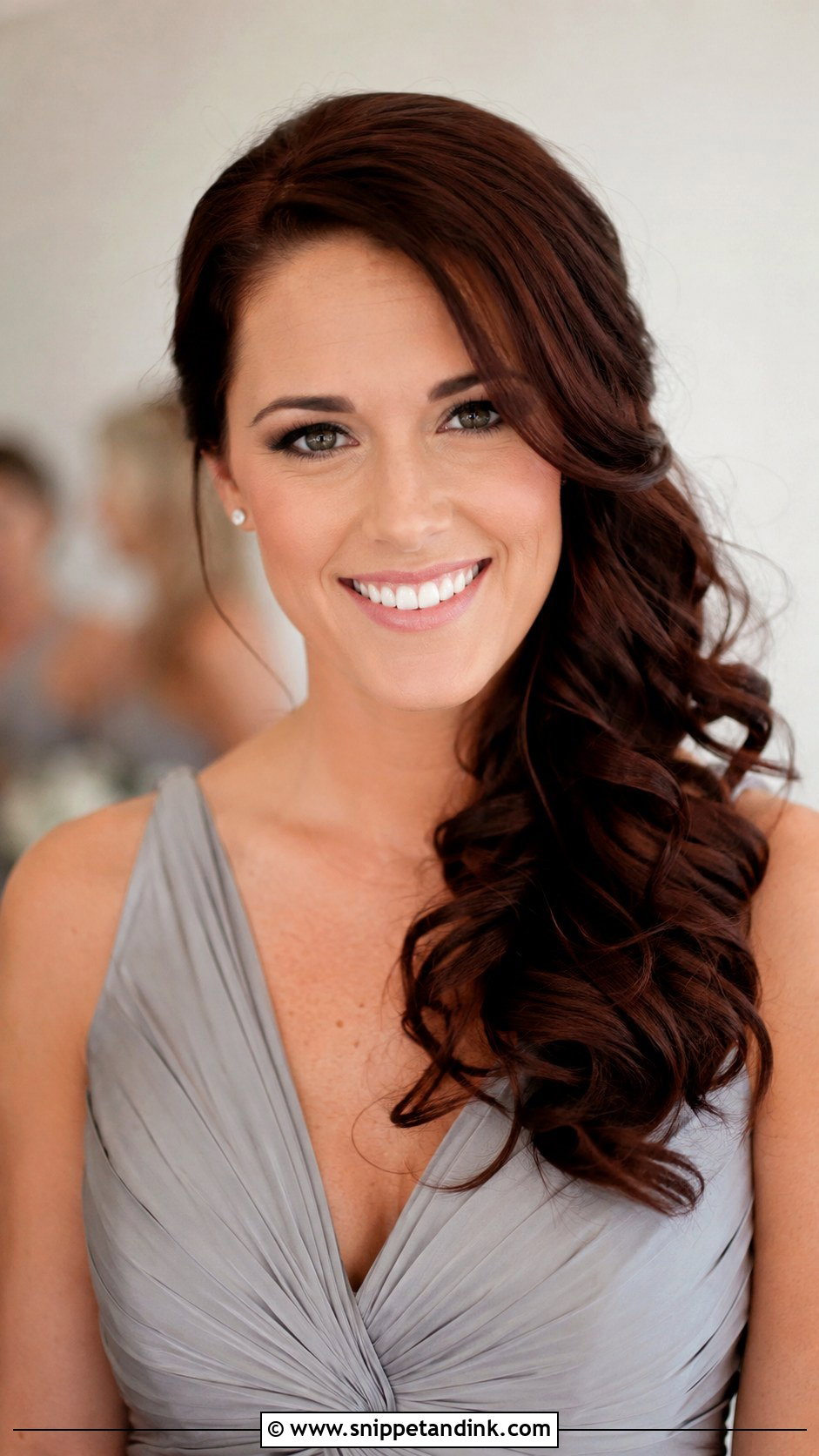
For side-swept hair, I curl the whole head, gather it over one shoulder and hide the pins on the other side, behind the ear. One-sided styles need more support than they appear to, because all the weight drags toward that shoulder, so I criss-cross pins along the back. The pinned side can carry a twist, a small braid or a smooth tuck. It flatters strapless, one-shoulder and sweetheart dresses. In group photos, agree on which shoulder everyone sweeps to, or the line looks uneven.
A Shared Rule Beats Identical Hair
Trying to put the same updo on a bridesmaid with coily hair, one with a pixie and one with hip-length hair rarely works. It looks forced, and someone ends up uncomfortable all day. What reads as coordinated in photos is a shared rule: everyone parts on the same side, everyone wears her hair up, or everyone has the same small gold pin.
Height is the rule I’d pick for a ceremony lineup. If every style sits at roughly the same level, say a low bun, a low ponytail and low twists, the row looks calm from behind while the bride is at the front. Mixing high buns with low ones creates a zigzag that pulls the eye away from her.
Settle the practical side early as well. Bridesmaids often pay for their own hair unless the bride offers, so say plainly who is covering it. Anyone doing her own hair should get the same rule and a couple of reference photos, so she isn’t guessing on the morning.
Letting Each Bridesmaid Still Look Like Herself
A bridal party doesn’t need identical hair to look like a group. Agree on one shared finish, like the same part side, soft waves or a polished low bun, then let each bridesmaid adapt it to her hair type and dress. Send your stylist reference photos and the dress neckline ahead of time. Build in extra hold for weather, dancing and long photo sessions, so the hair at the last dance still matches the hair at the aisle.
You'll Like These Ideas:


Leave a Reply