
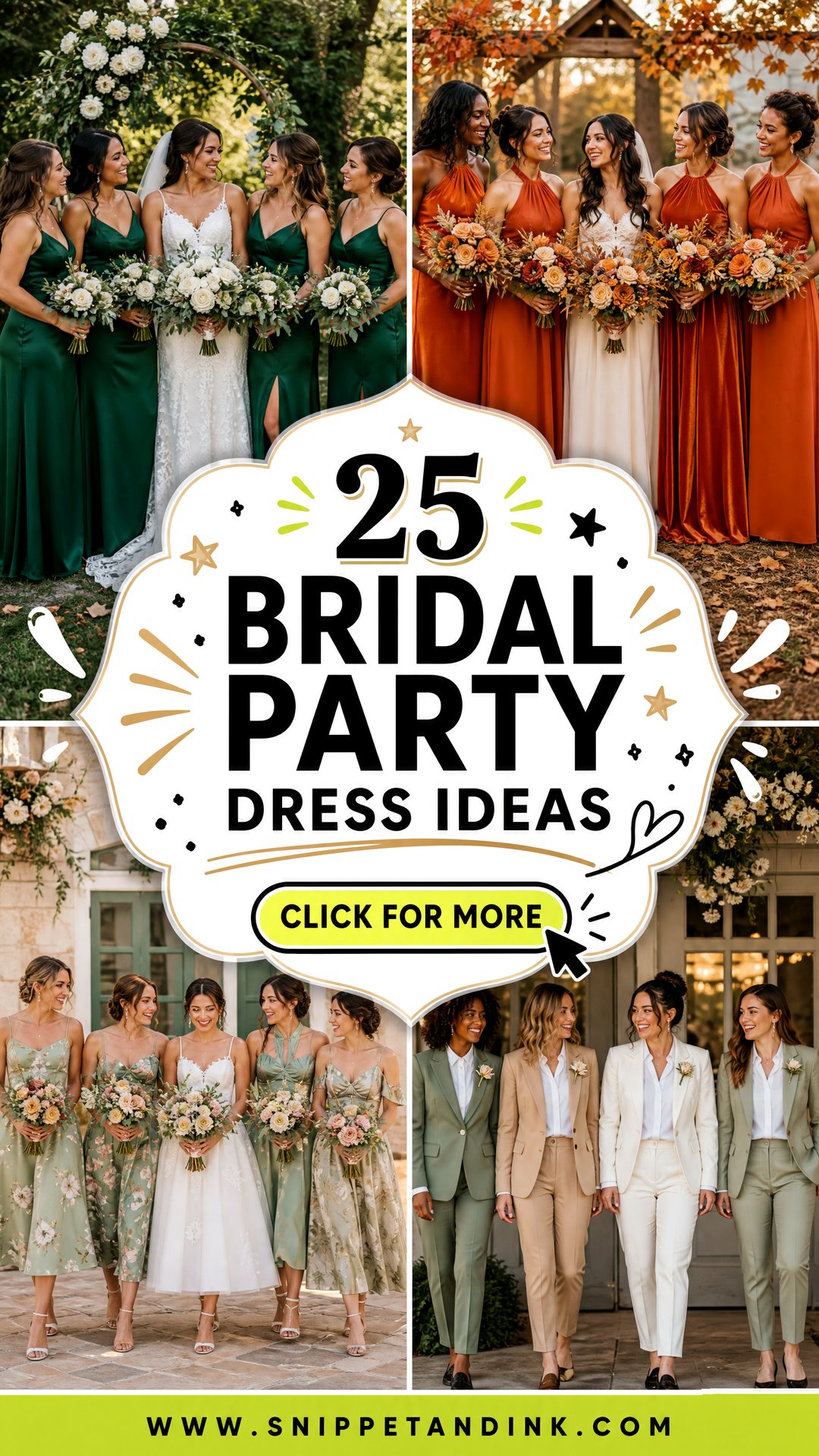
Dressing a bridal party is mostly a logistics job wearing a pretty disguise. When I put together bridal party dresses, the colour is usually the easy part; the hard part is getting six or eight different bodies, budgets and opinions into fabric that still looks right at the end of the night. Satin, soft neutrals, black gowns, prints, convertible cuts and mismatched palettes all have a place, and each one solves a different problem. Below are the lineups I’d actually suggest, with notes on where each one tends to struggle, followed by how I order and fit a group so nobody is pinned into a dress on the morning of the wedding.
Ordering for Eight Different Bodies Without a Fitting Room Panic
Most bridesmaid problems I see start with the order, not the dress. Many bridesmaid lines are made to order, and production can take three to four months before alterations even begin, so I count backwards from the wedding and aim to have every order placed about six months out. Rush options exist, but they cost more and limit colour choices.
- Order fabric swatches first and look at them in daylight and under warm indoor light. Shades shift a lot between the two.
- Have every bridesmaid measured properly, ideally by a seamstress, rather than guessing from her usual clothing size. Bridal sizing often runs smaller than high street sizing.
- Order to the largest measurement (bust, waist or hip). A seamstress can take a dress in; letting it out is often impossible.
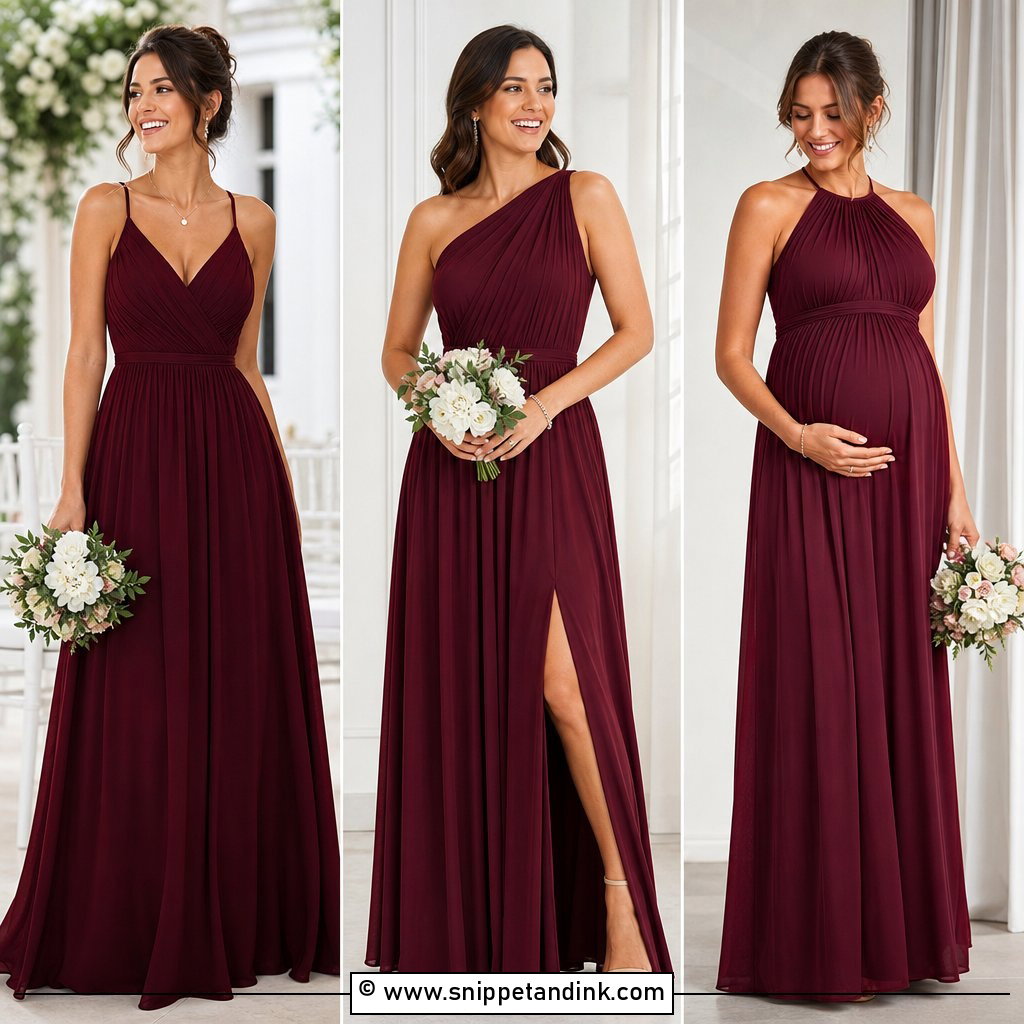
- If one bridesmaid is pregnant or expects her size to change, tell the retailer. Some lines offer maternity cuts in the same dye lot.
- Book alterations for four to six weeks before the wedding, with a final try-on in the actual shoes and undergarments.
Dye lots matter more than people expect. Dresses ordered weeks apart from the same label can arrive a shade different, so I ask the whole group to order within the same few days, and on one shared order where the retailer allows it.
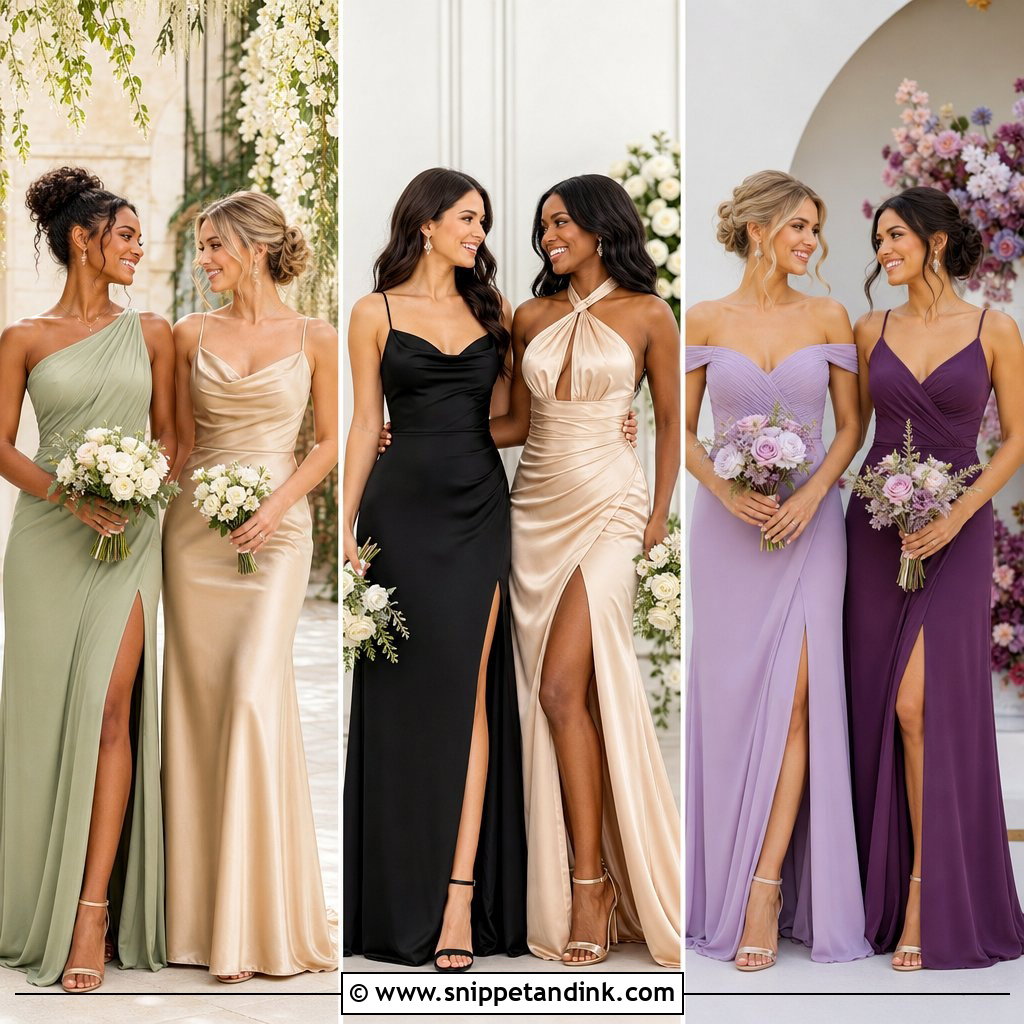
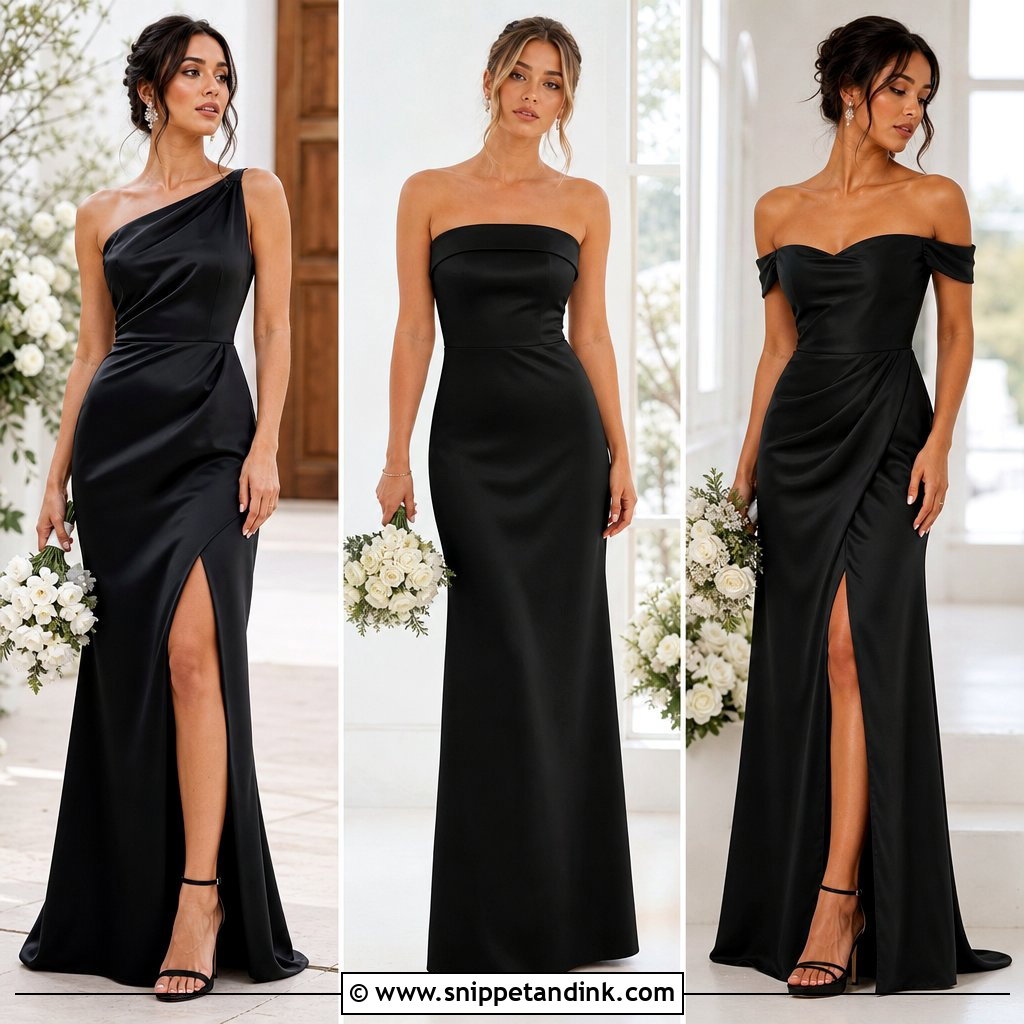
1. Black Satin Bridal Party Dress
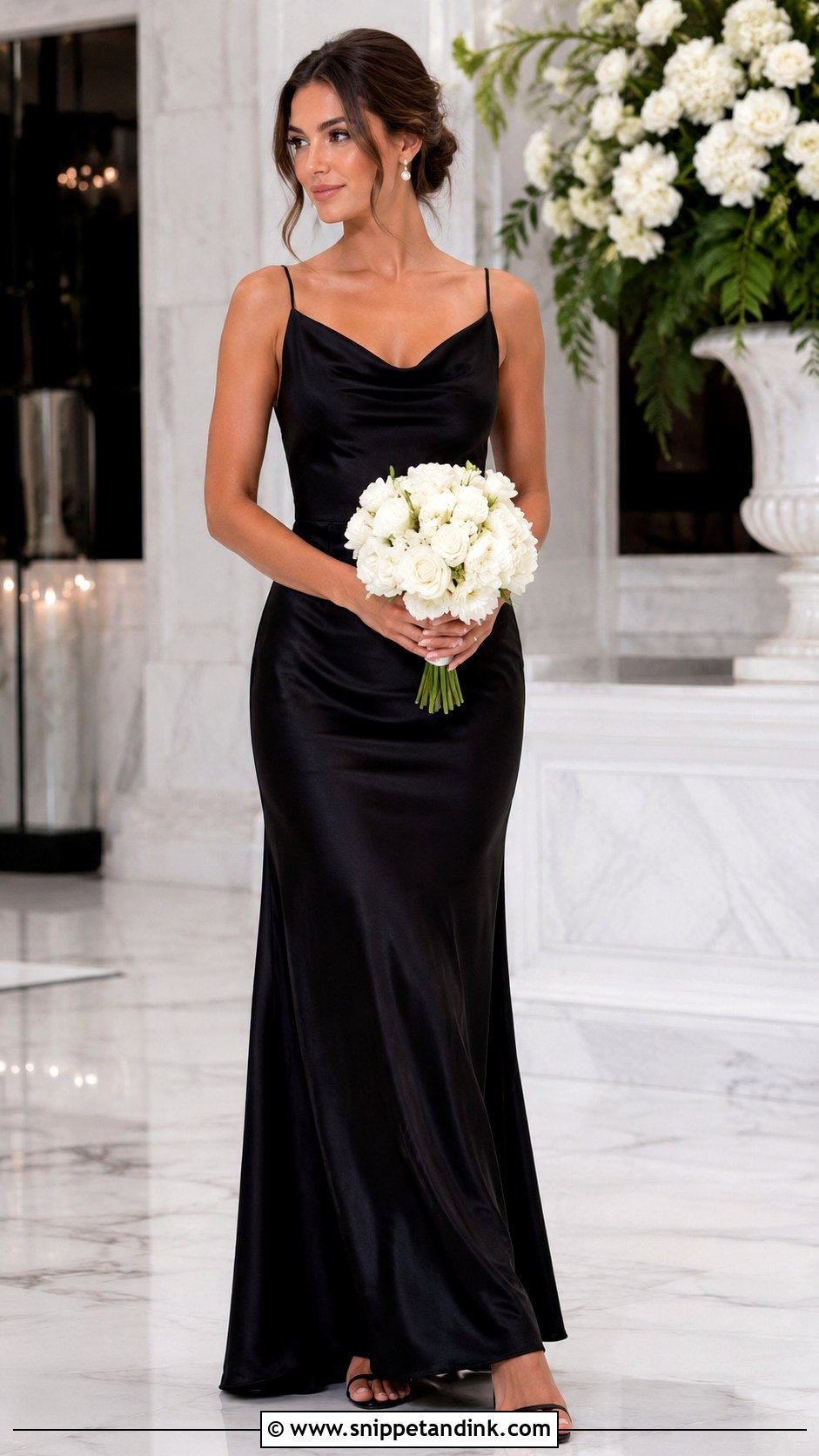
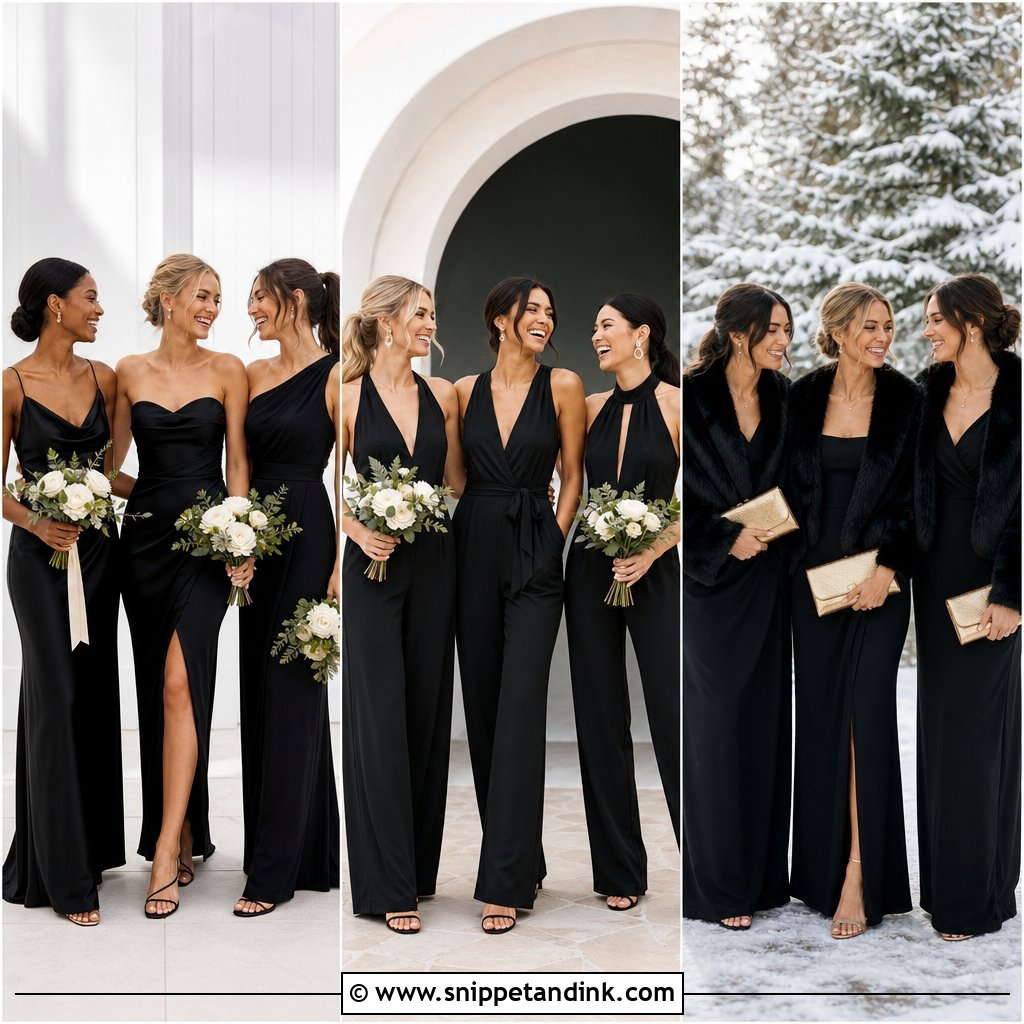
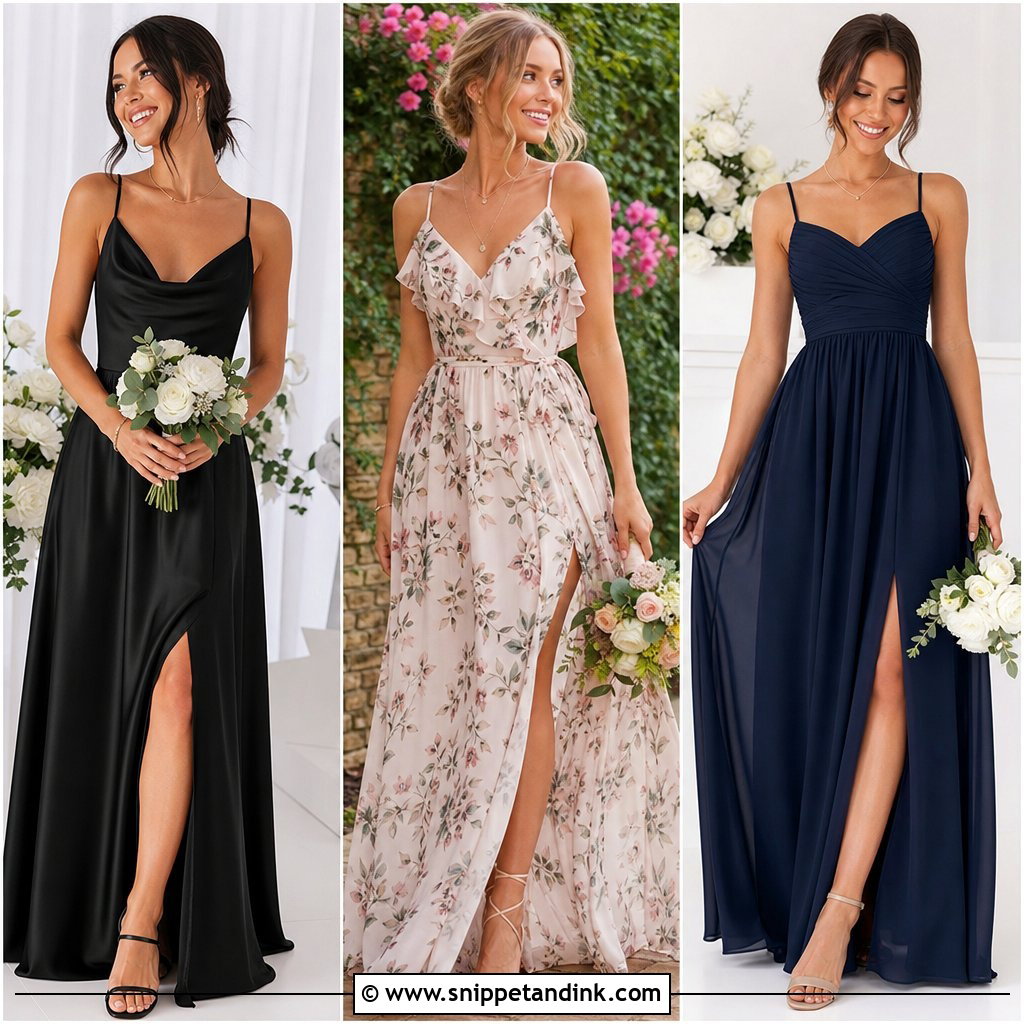
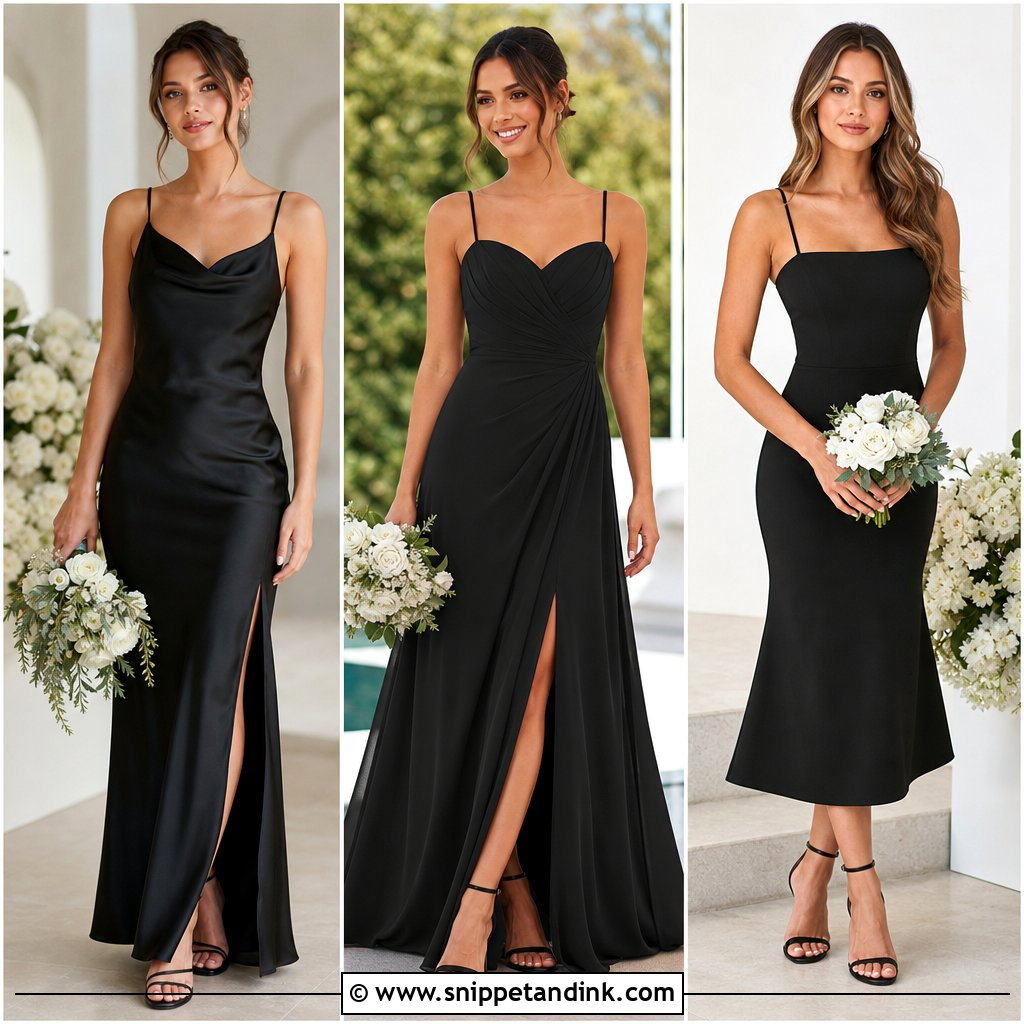
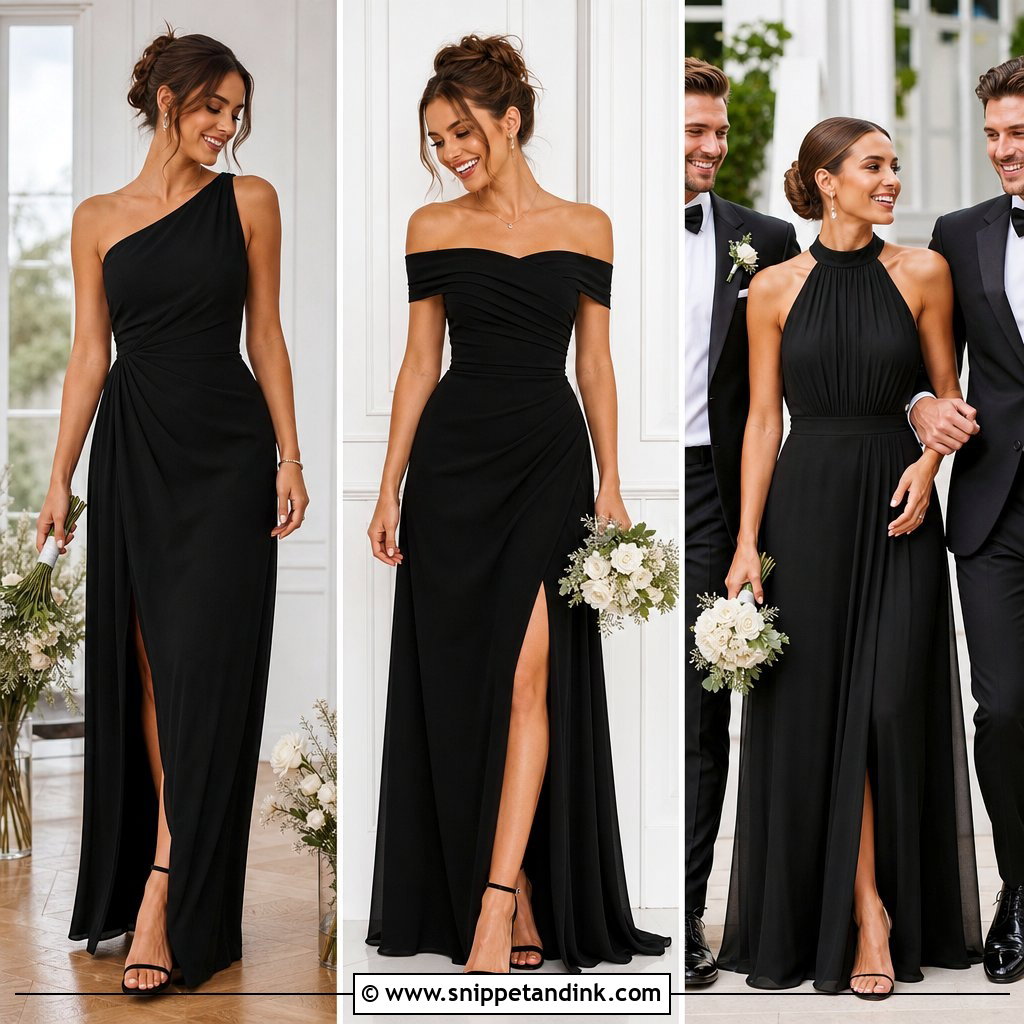
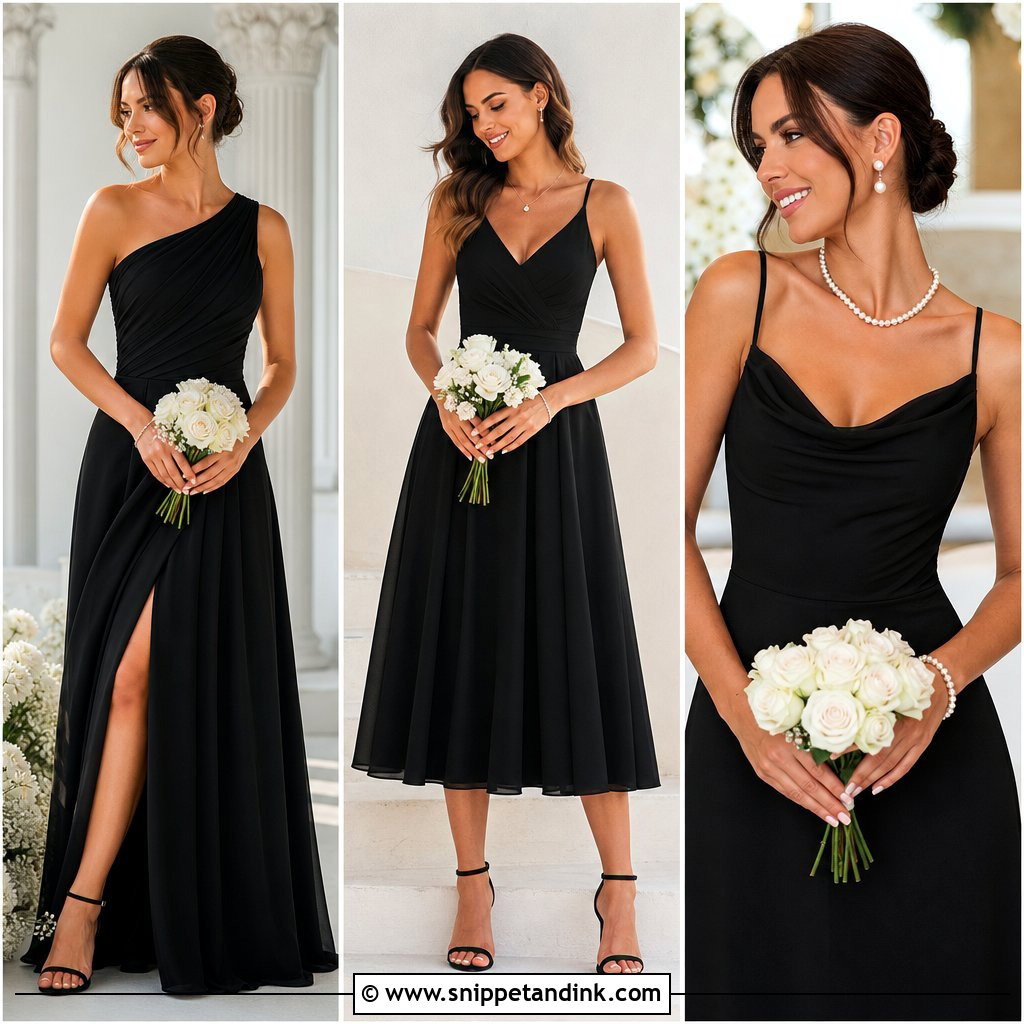
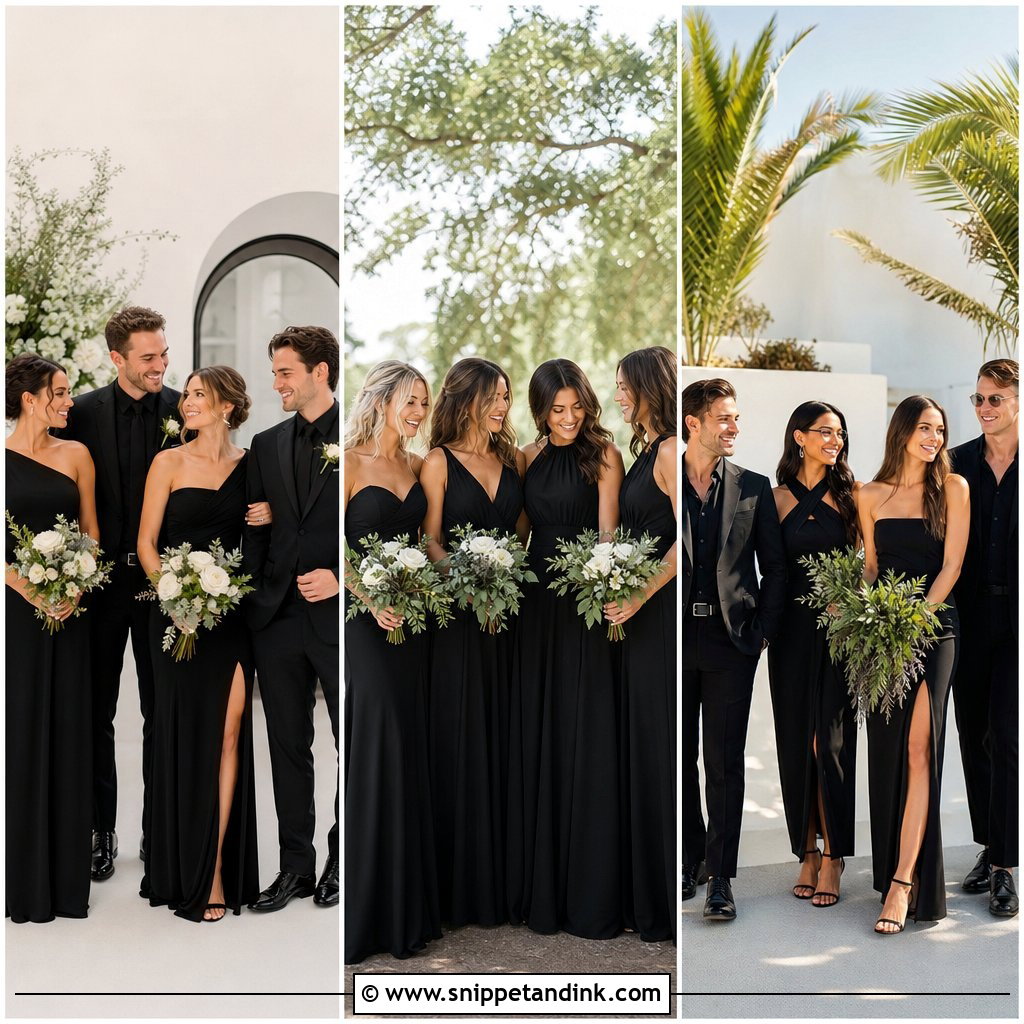
Black satin is the lineup I reach for when the reception is in the evening and the venue has dark wood, stone or city views behind it. Satin shows every pull at the seams, so I let each bridesmaid choose her own neckline (cowl, halter, one-shoulder, strapless) but insist on the same satin weight from one maker; two blacks from different mills rarely match under flash. Black or metallic heels, small drops and a cream or blush bouquet do the rest. The one warning I give: black satin picks up lint and pet hair like a magnet, so a roller goes in the getting-ready kit.
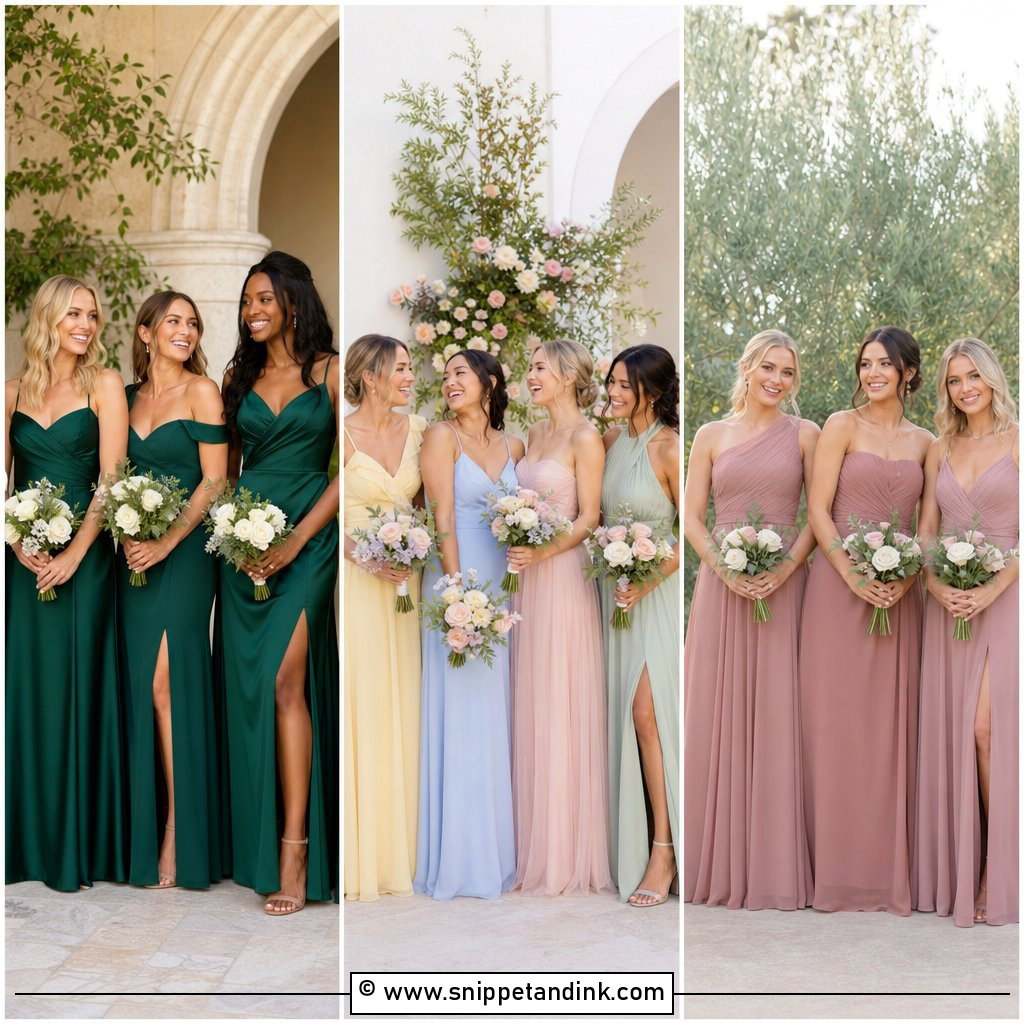
2. Mismatched Sage Green Bridal Party Dress
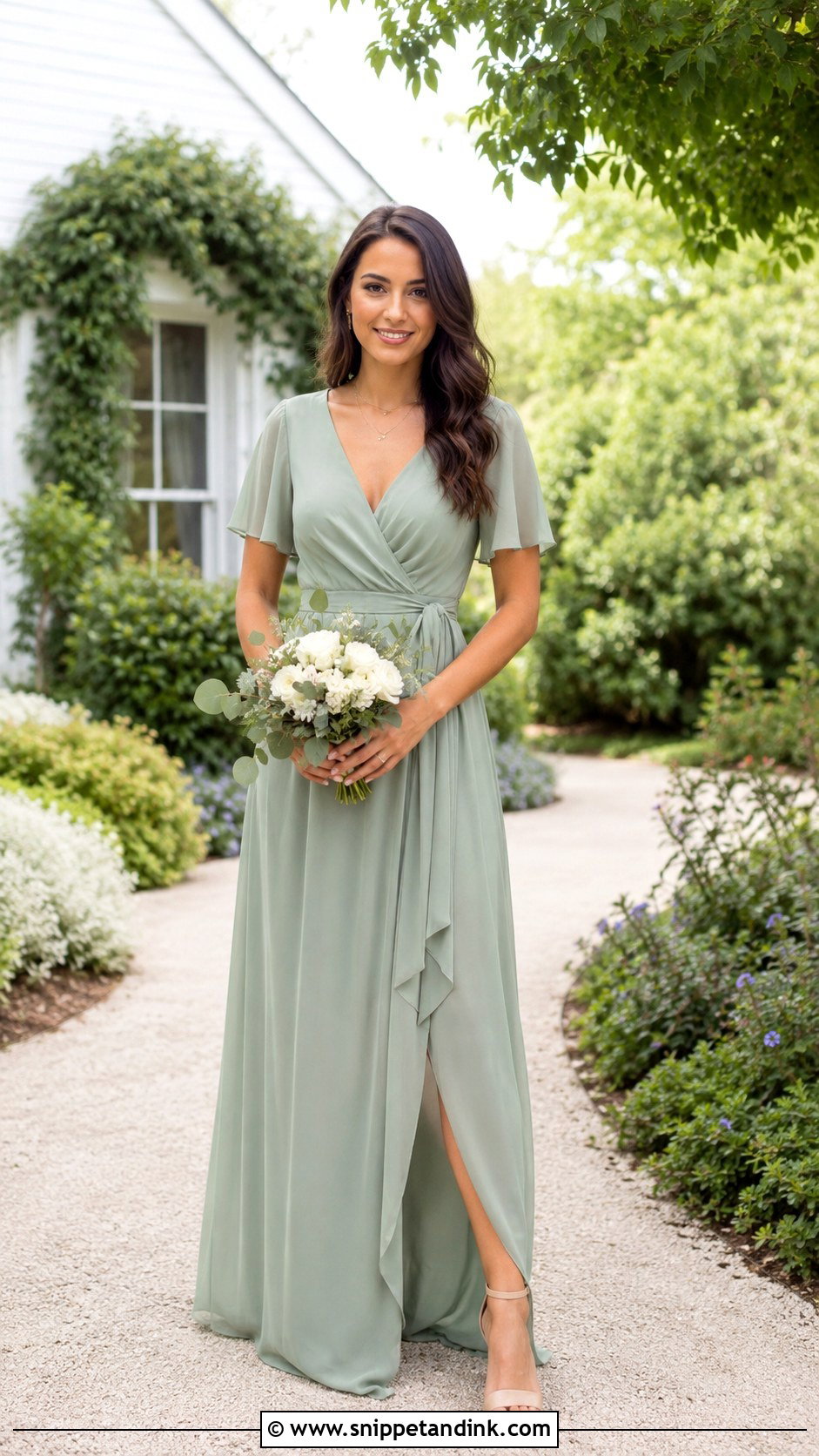
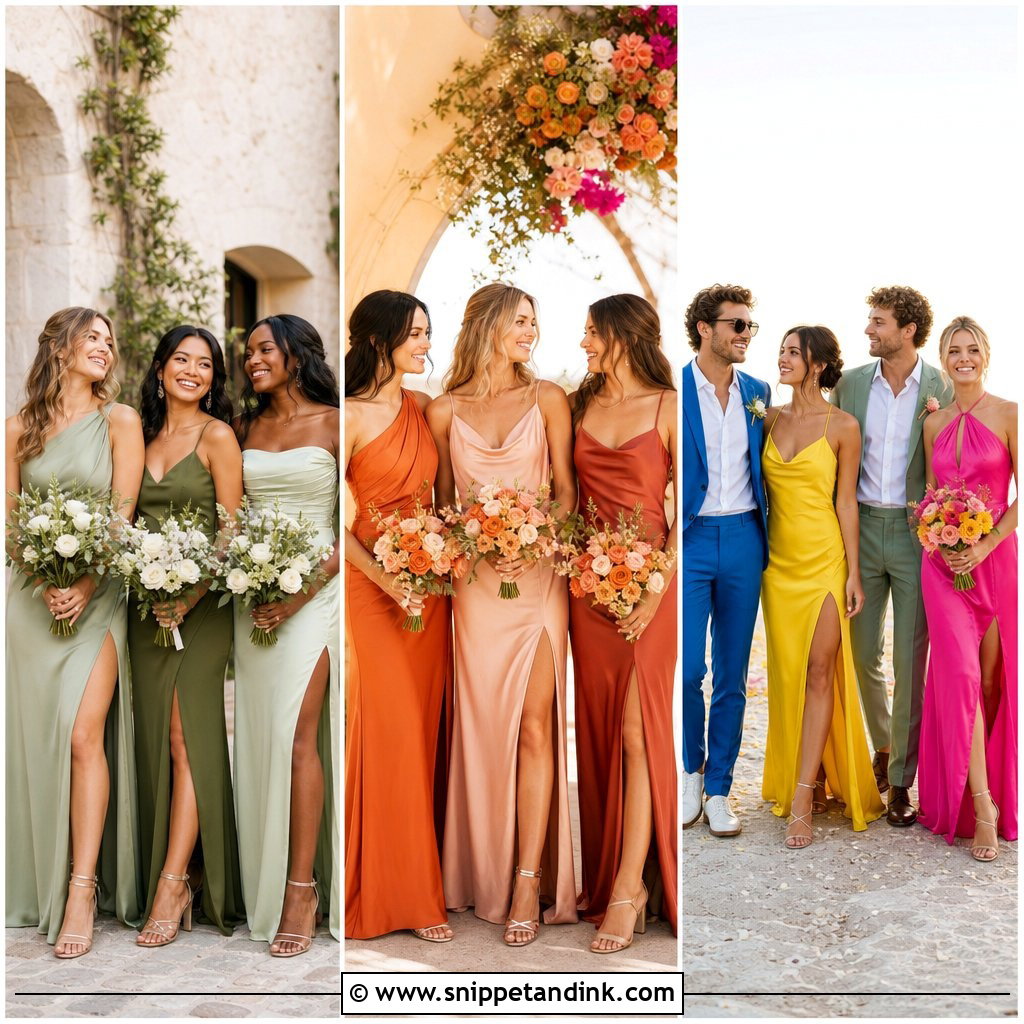
Sage is forgiving, which is why it’s my default suggestion for a mismatched sage green bridal party dress lineup. The trick is keeping the shades within one family while the shapes vary: a chiffon wrap on one bridesmaid, a satin slip on another, an A-line with flutter sleeves on a third. I pin all the swatches to one card before anyone orders, because “sage” from one label can read mint and from another reads olive. Nude heels and small gold pieces keep it light, and white flowers with a hint of peach sit well against it.
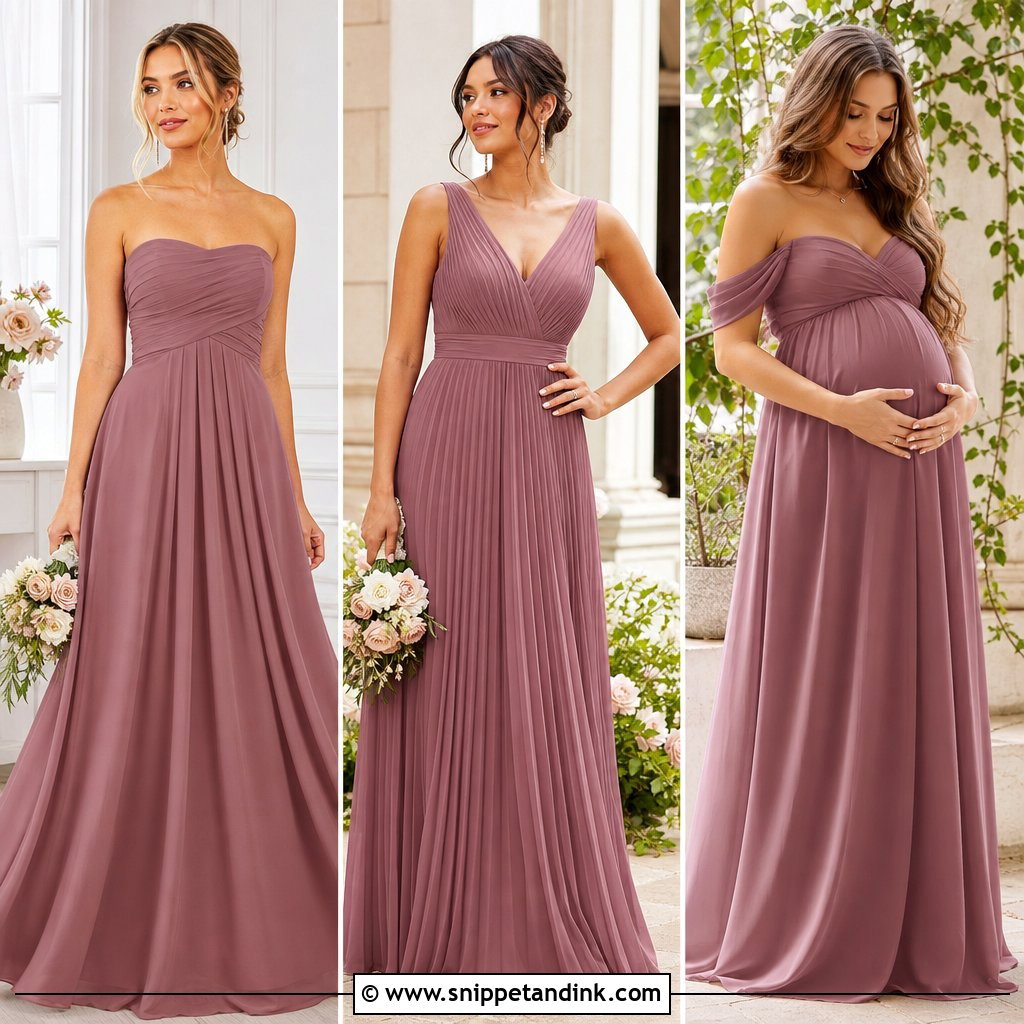
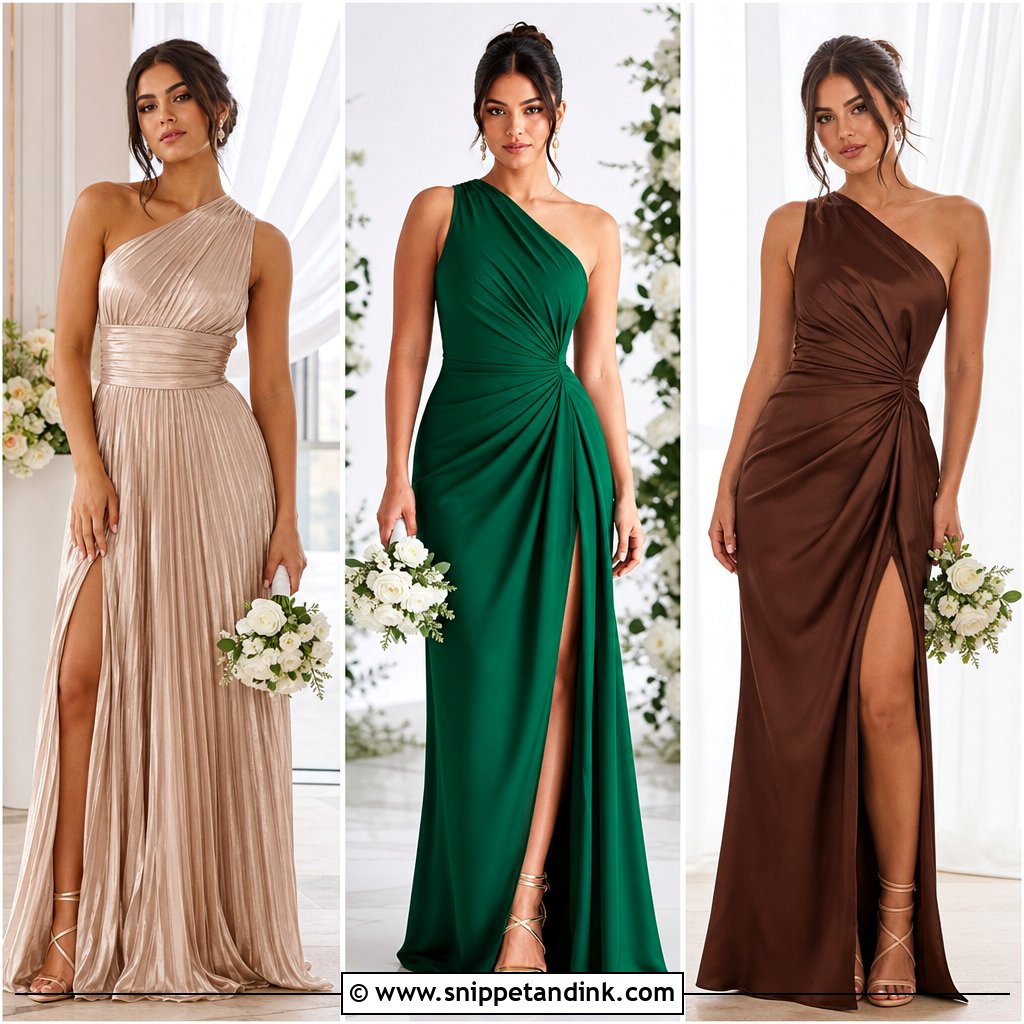
3. Champagne Satin Bridal Party Dress
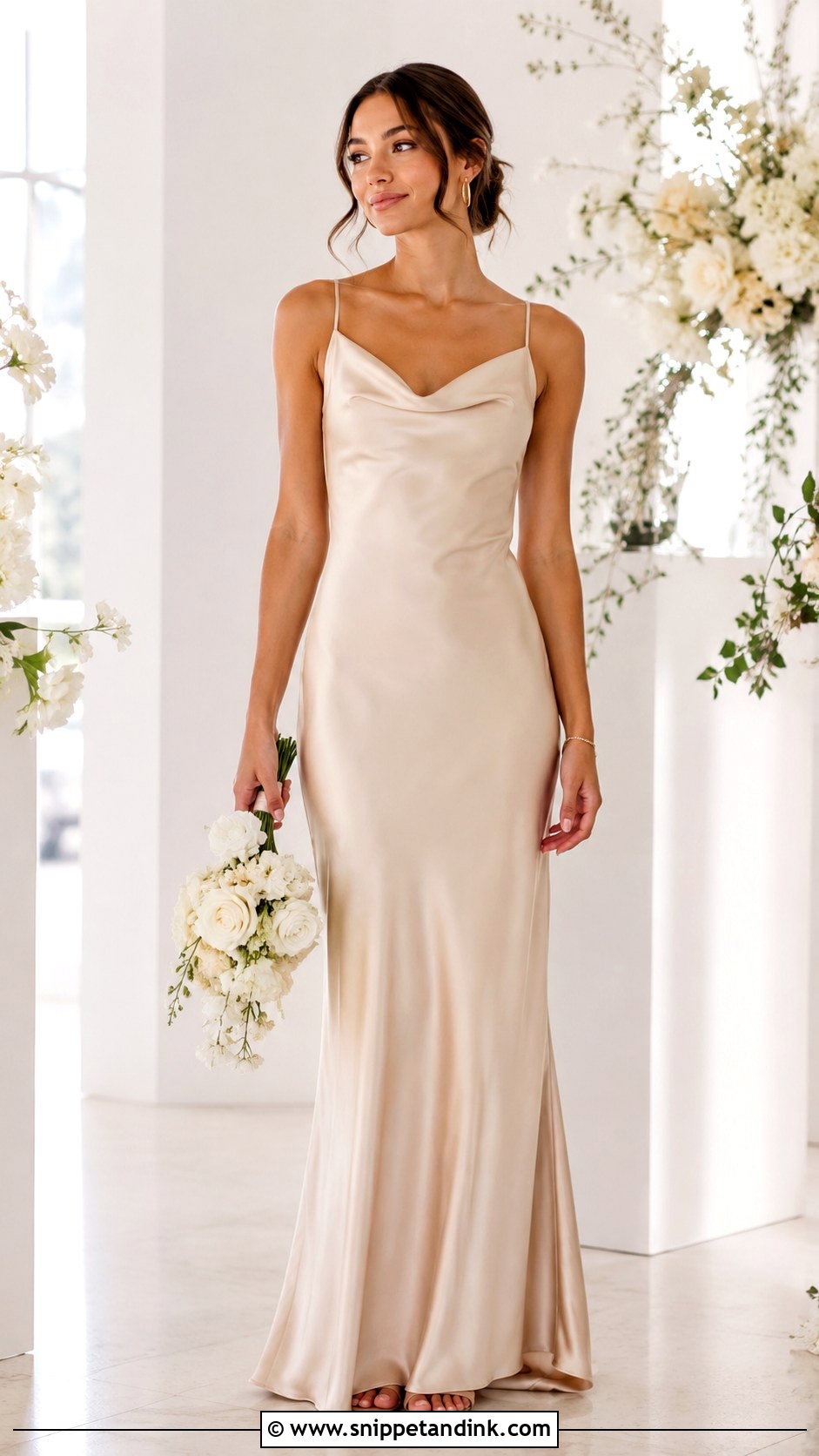
Champagne glows under warm reception lighting, and it rarely competes with an ivory gown as long as it leans beige rather than gold. Skin tone is where it gets tricky. On fair skin a pale champagne can wash out to nothing, while on deeper skin a rosier or more golden champagne looks richer, so I order three swatches and hold each one against the face in daylight before deciding. A long satin cut with a soft drape, nude sandals, gold hoops and a small clutch keep it understated next to white flowers and ivory decor.
4. Dusty Blue Bridal Party Dress
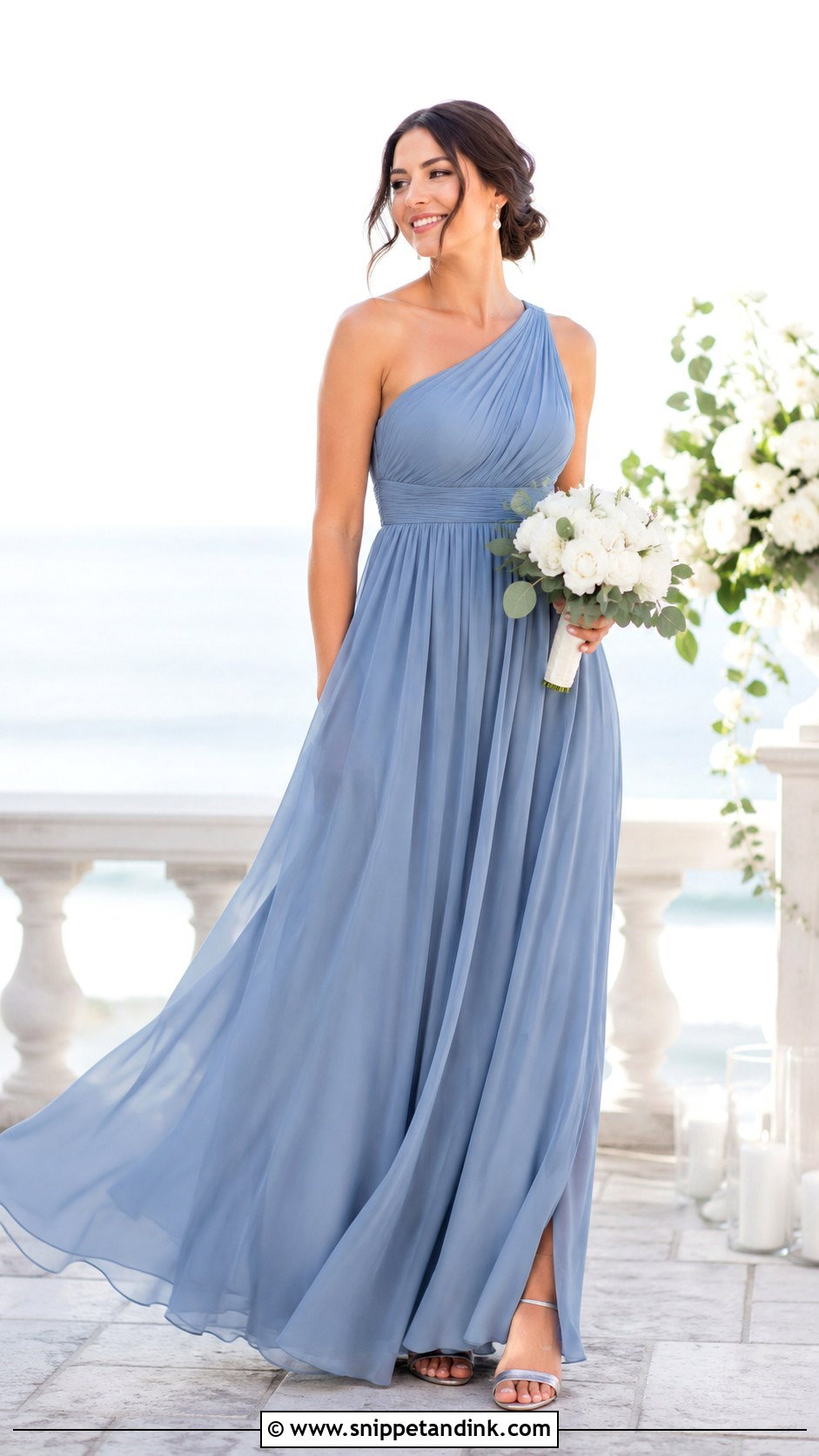
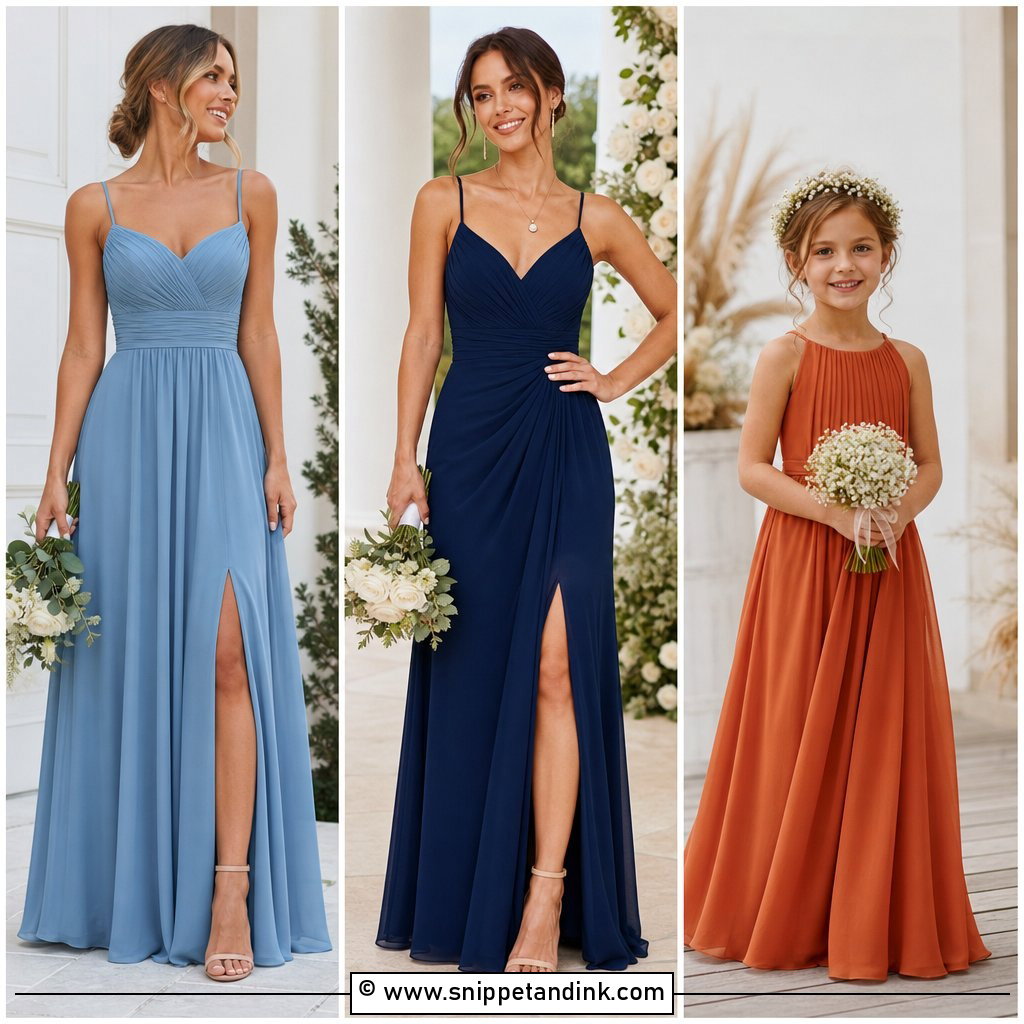
Dusty blue sits between baby blue and navy, and that middle position is exactly why it suits coastal, garden and church weddings alike. I prefer it in chiffon for daytime because the greyed tone looks flat in shiny satin under strong sun. Silver heels and pearl studs are enough jewellery. If the lineup feels too uniform, keep the fabric identical and let the necklines change. It sits comfortably beside grey suits and cream flowers.
5. Floral Bridal Party Dress
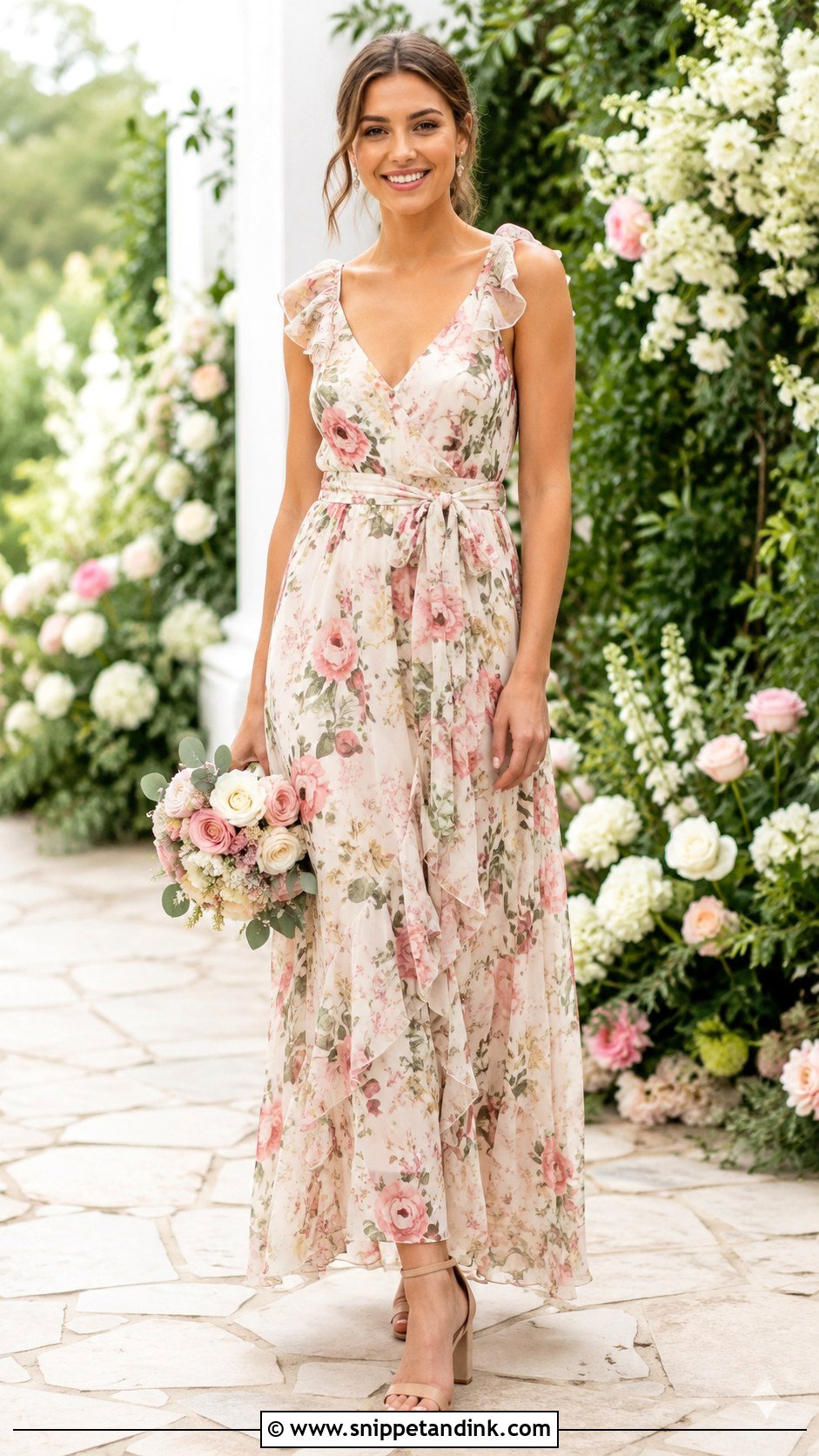
Prints are where I slow the couple down. One floral print on the whole party can look busy in group photos, so I often suggest putting it only on the maid of honor and dressing everyone else in solids lifted from the pattern. A floral maxi with a soft waist and block heels belongs at a garden or estate wedding. Keep the jewellery tiny and the bouquets quieter than the print, otherwise the flowers in hand and the flowers on the dress fight each other.
6. Blush Pink Bridal Party Dress
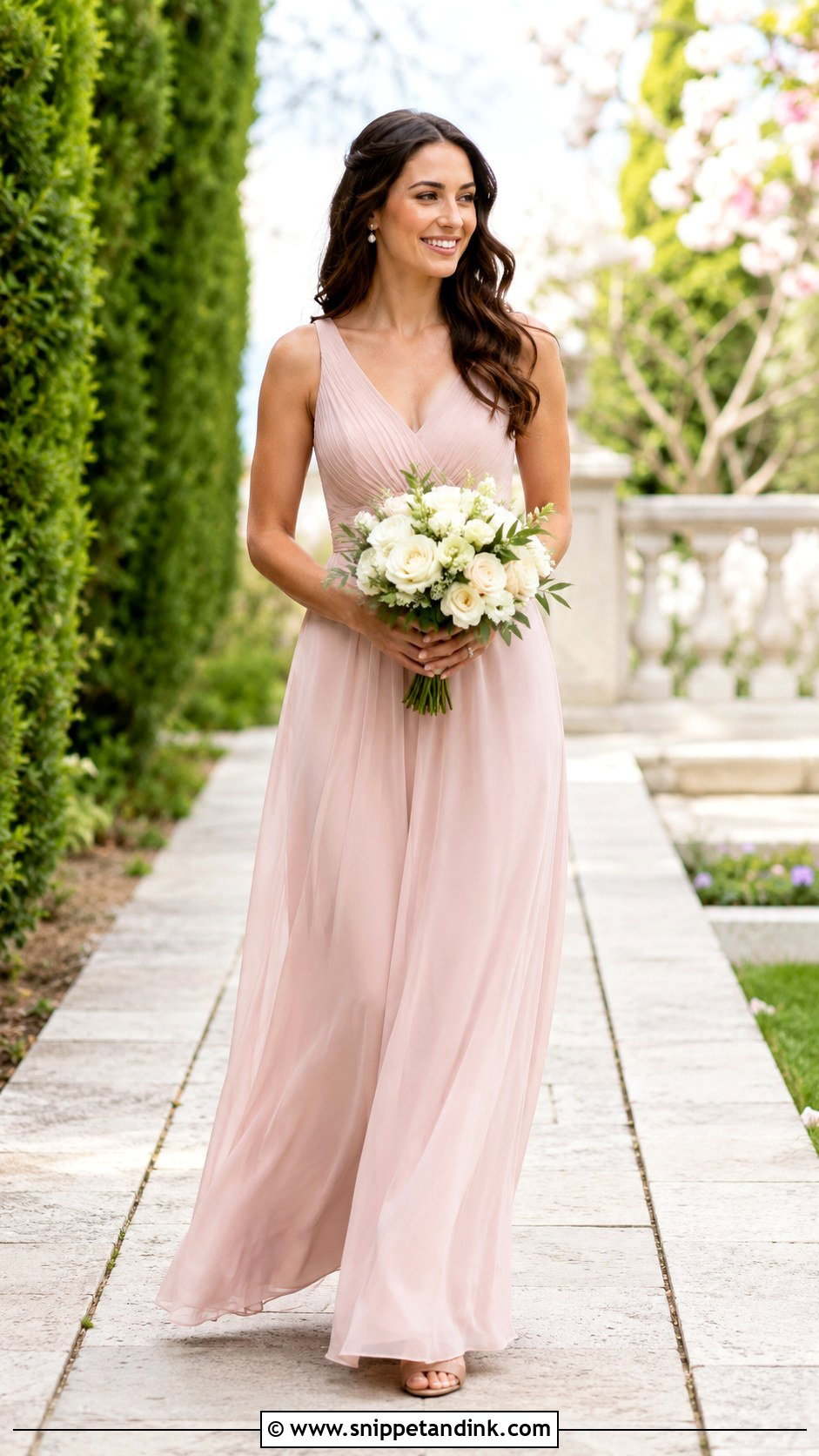
Blush flatters most skin tones, which is why it keeps coming back, but it’s also the colour most likely to look like the bride’s gown in a backlit photo. I avoid that by choosing a blush with visible warmth and keeping it a clear step away from her ivory. Floor-length chiffon, crepe or satin all work; nude heels, pearl studs and loose waves finish it. Mixing in rose and mauve adds depth, provided the lengths stay identical so the eye reads one group.
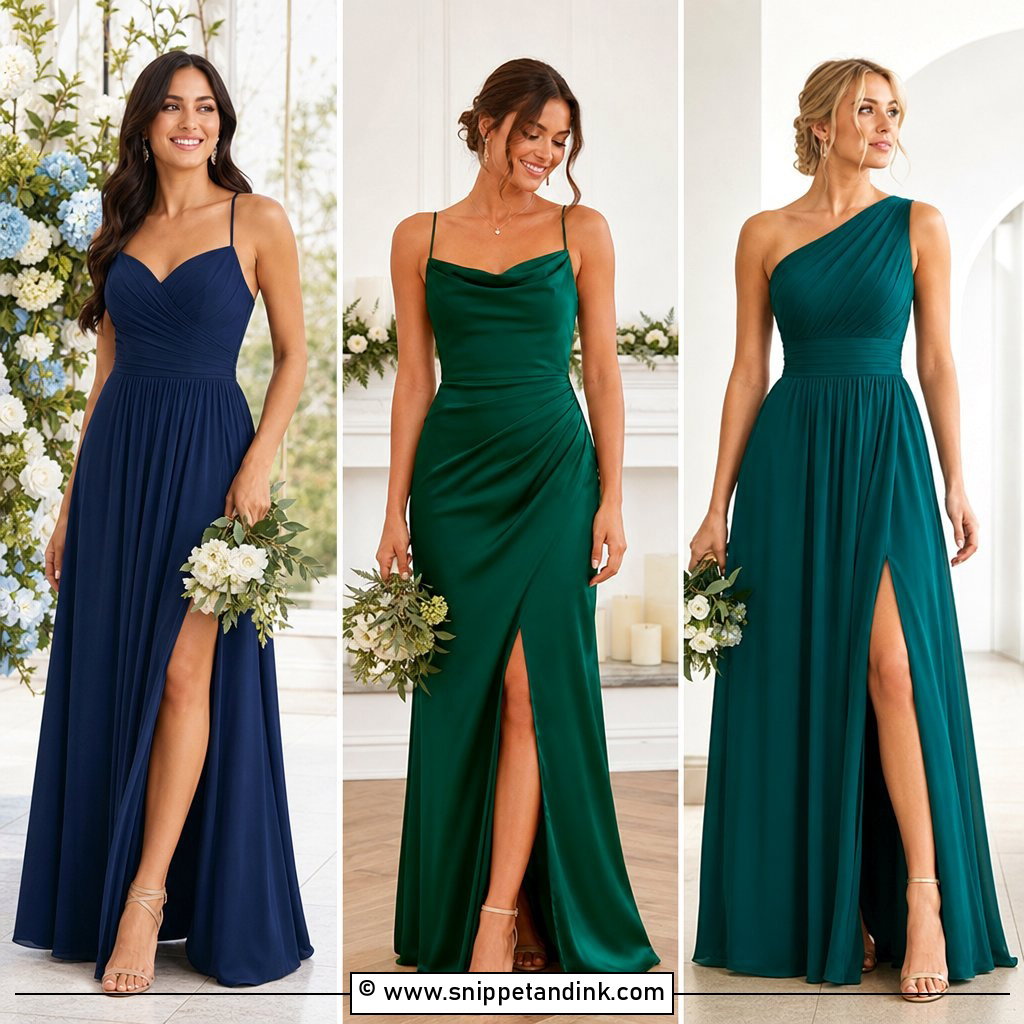
7. Emerald Green Bridal Party Dress
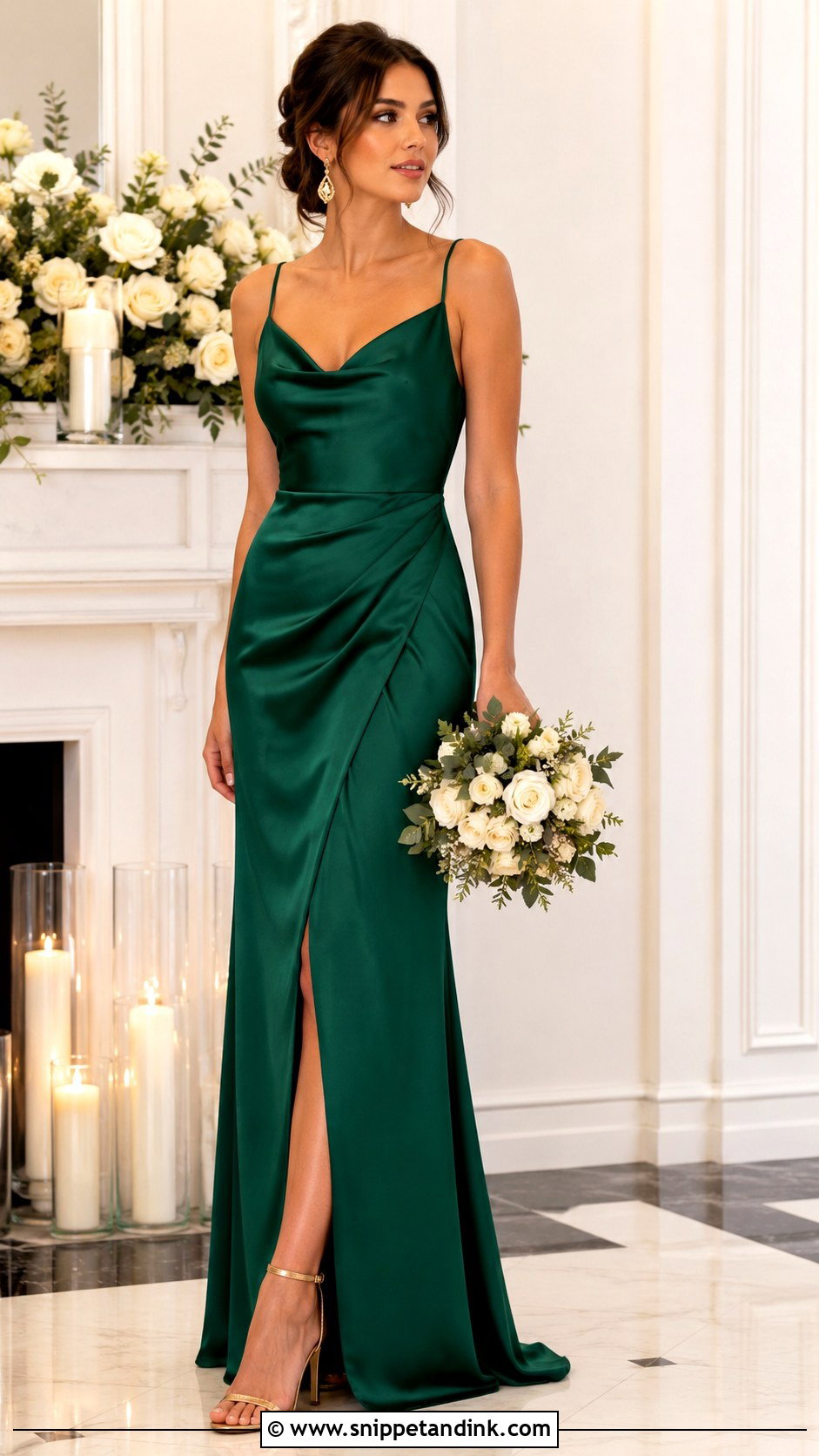
Emerald is a confident colour for autumn, winter and black-tie evenings. In satin it reflects light; in velvet it absorbs it, so I decide on fabric before I approve the exact shade. A clean neckline, gold heels and gold drops are enough. White flowers with a little greenery lift it, and it holds its depth against neutral venue walls and darker suits. Unlike a fashion shade of the season, emerald still looks considered in photos years later.
8. Terracotta Bridal Party Dress
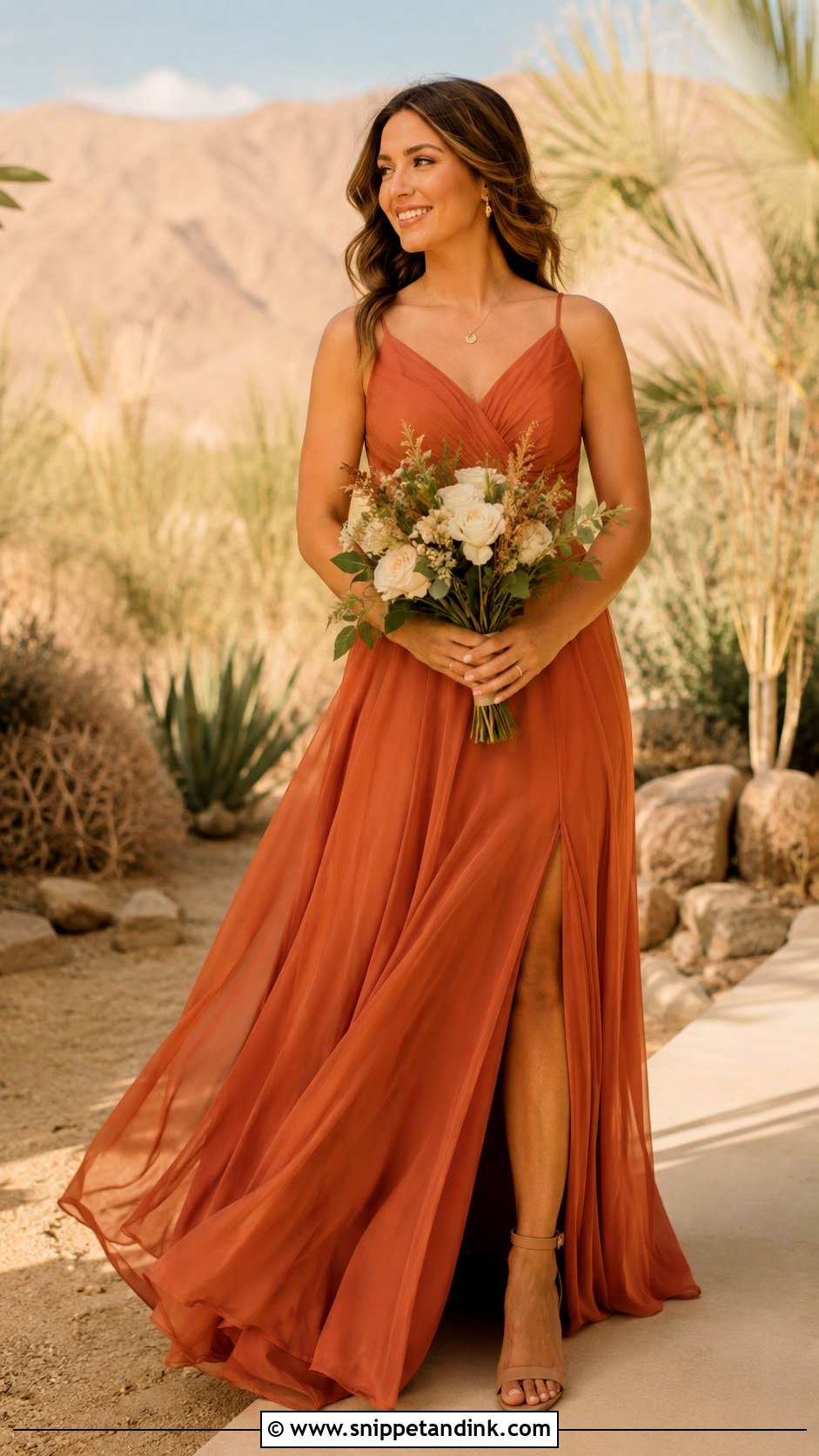
Terracotta bridal party dresses sit between clay, rust and burnt orange, and they come alive in late-afternoon light at desert, rustic or autumn venues. I’d steer away from terracotta for a fluorescent-lit indoor reception, where it can turn muddy. Flowing chiffon or satin, tan block heels and gold jewellery suit it, and bouquets with cream flowers, grasses and dried stems pick up the earthiness. Mixing in cinnamon, copper and soft rose gives a layered lineup without losing warmth.
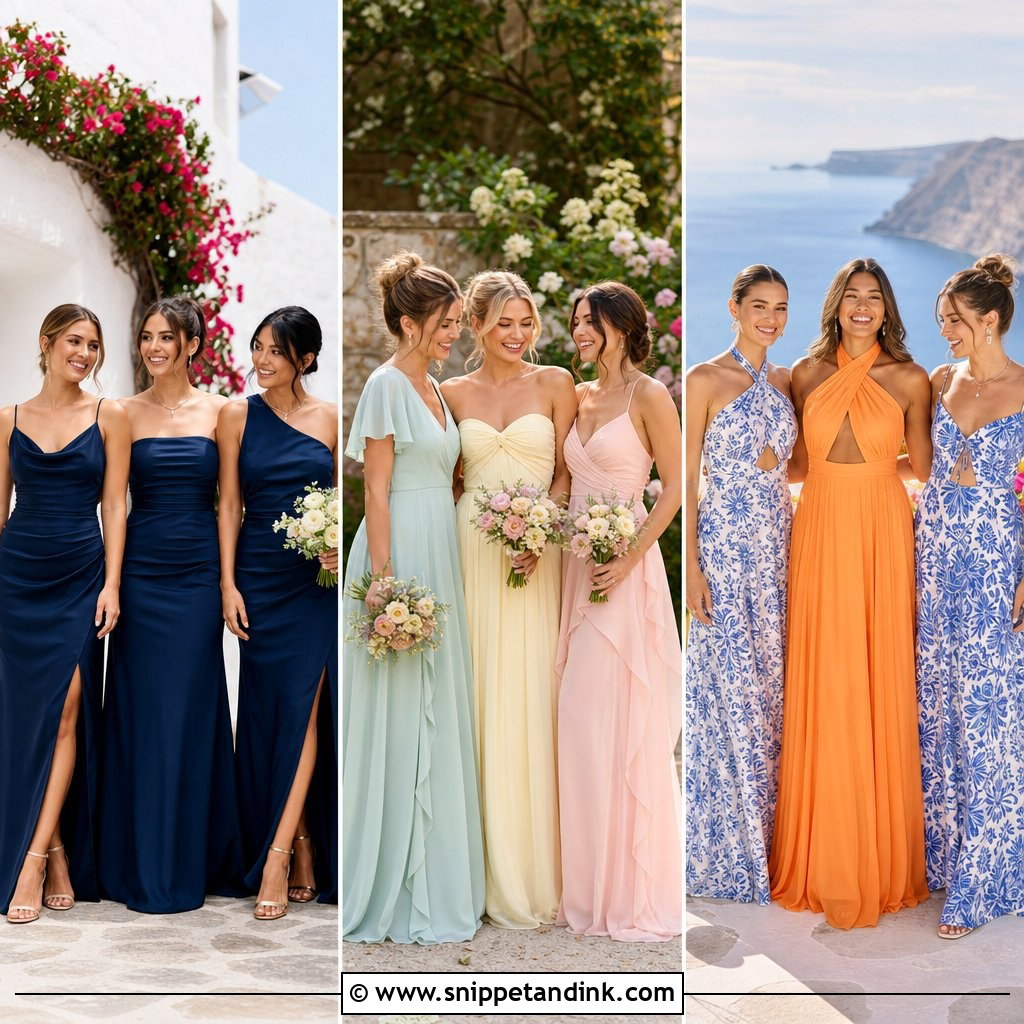
9. Navy Blue Bridal Party Dress
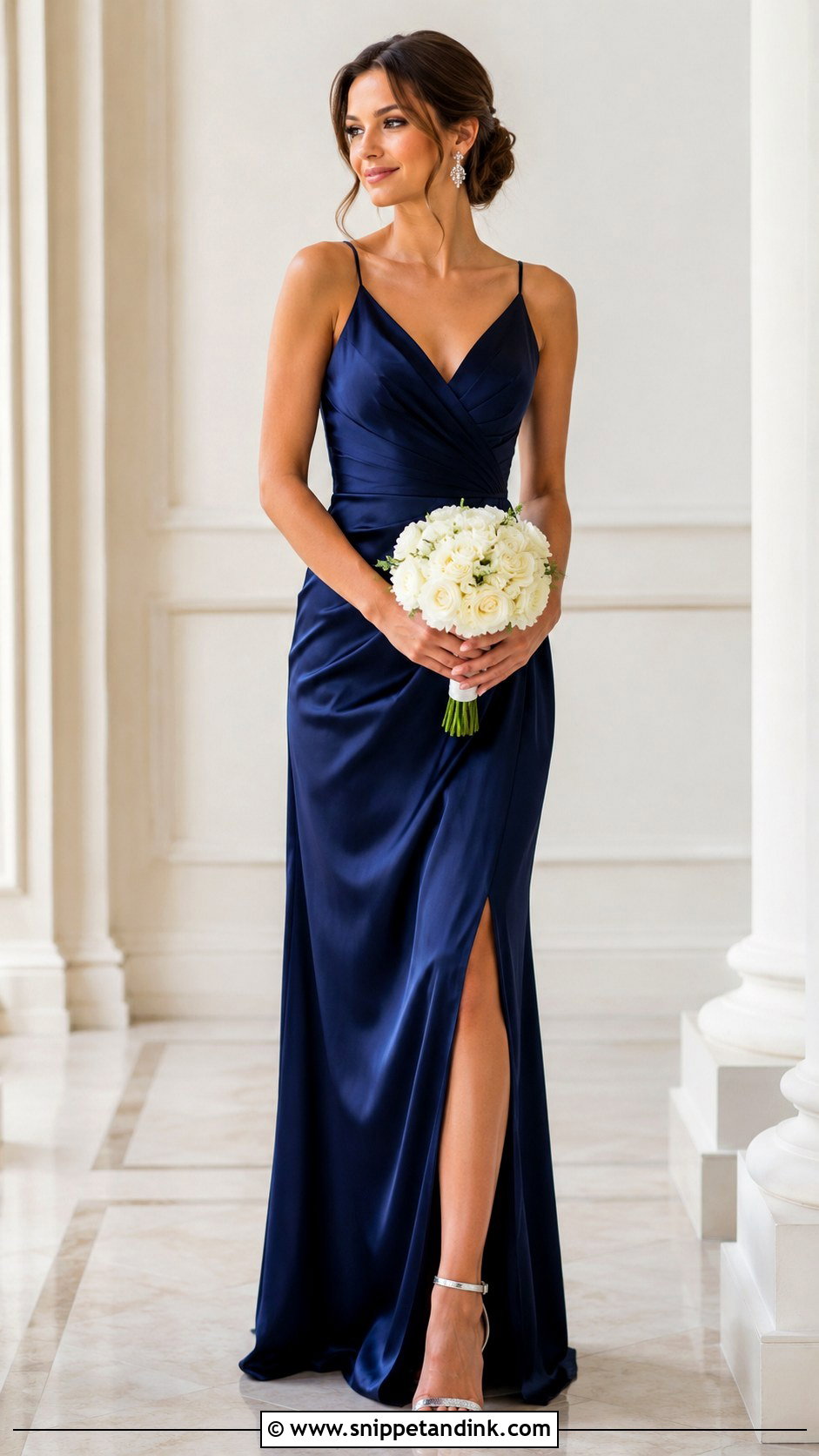
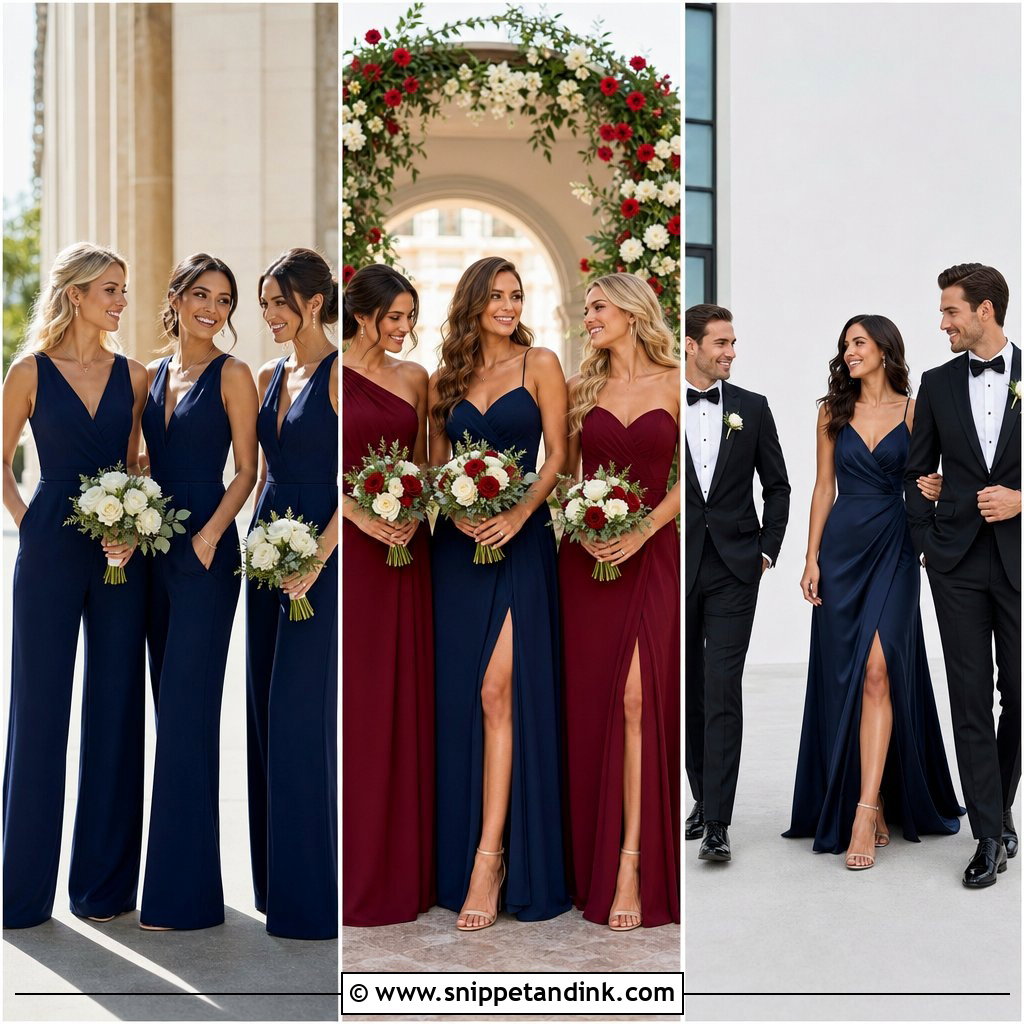
Navy is the colour I suggest when a bridal party has very different budgets, because almost every label makes a good one and bridesmaids genuinely wear it again. For evening I style it with silver heels, crystal earrings and a low bun; for daytime, block heels and almost no jewellery. White bouquets with pale blue accents keep it fresh. Check navy swatches against black suits in daylight before committing, since some navies look black beside them.
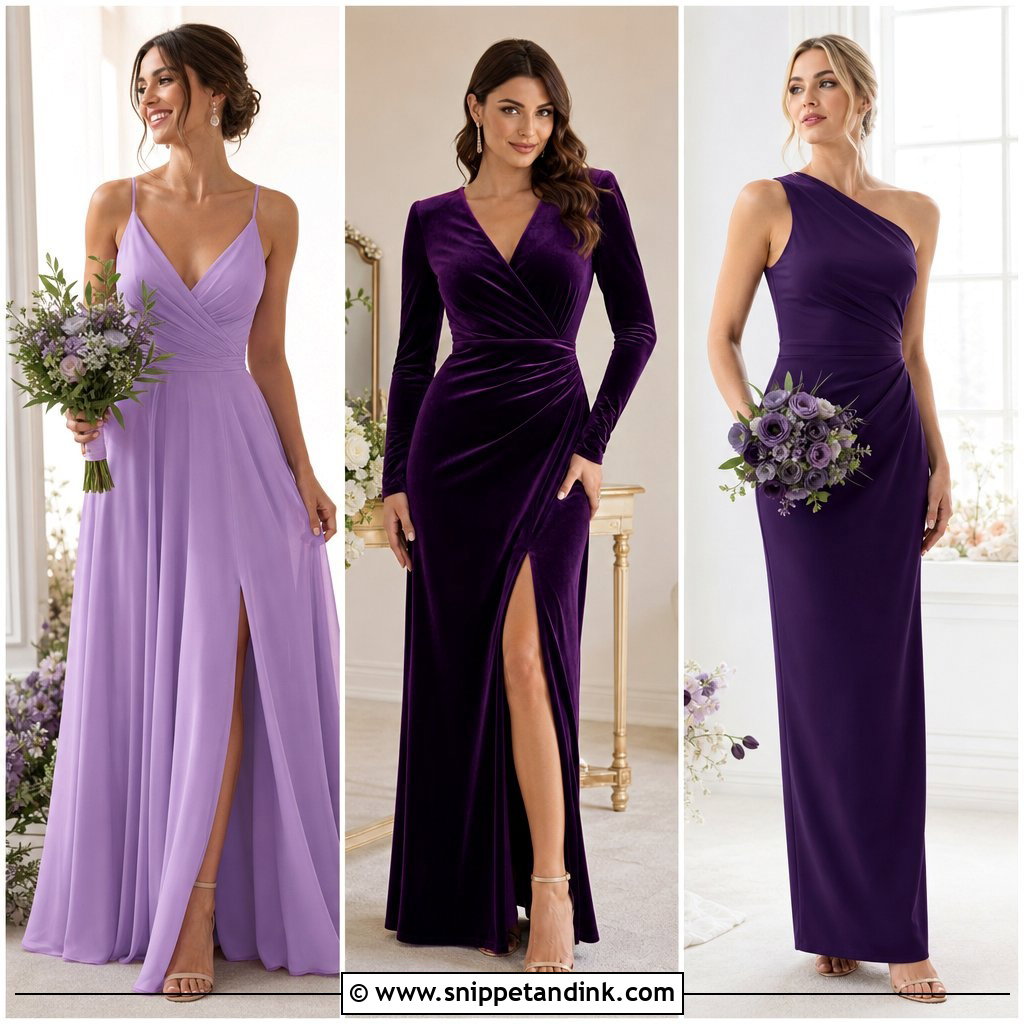
10. Lavender Bridal Party Dress
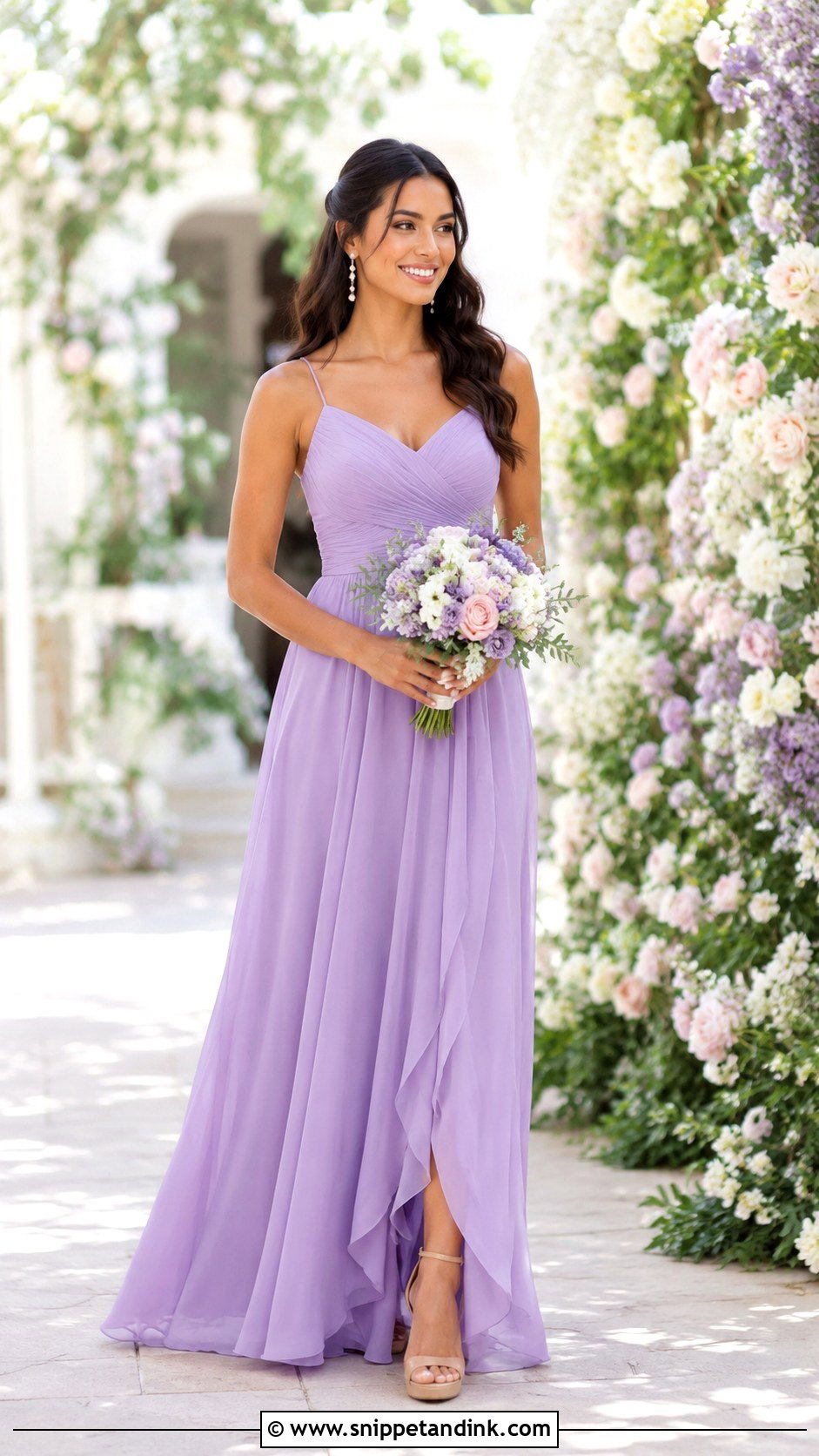
Lavender has a habit of shifting colour in photos. Under cool shade it can drift blue, and under warm lamps it can go grey, so I always test a swatch in the venue’s light if I can. Once it’s right, a flowing chiffon skirt with nude or silver heels and soft curls suits spring gardens. Lilac, orchid and dusty purple mix well for a tonal effect, and bouquets should stay pale so the purple doesn’t pile up.
11. Burnt Orange Bridal Party Dress
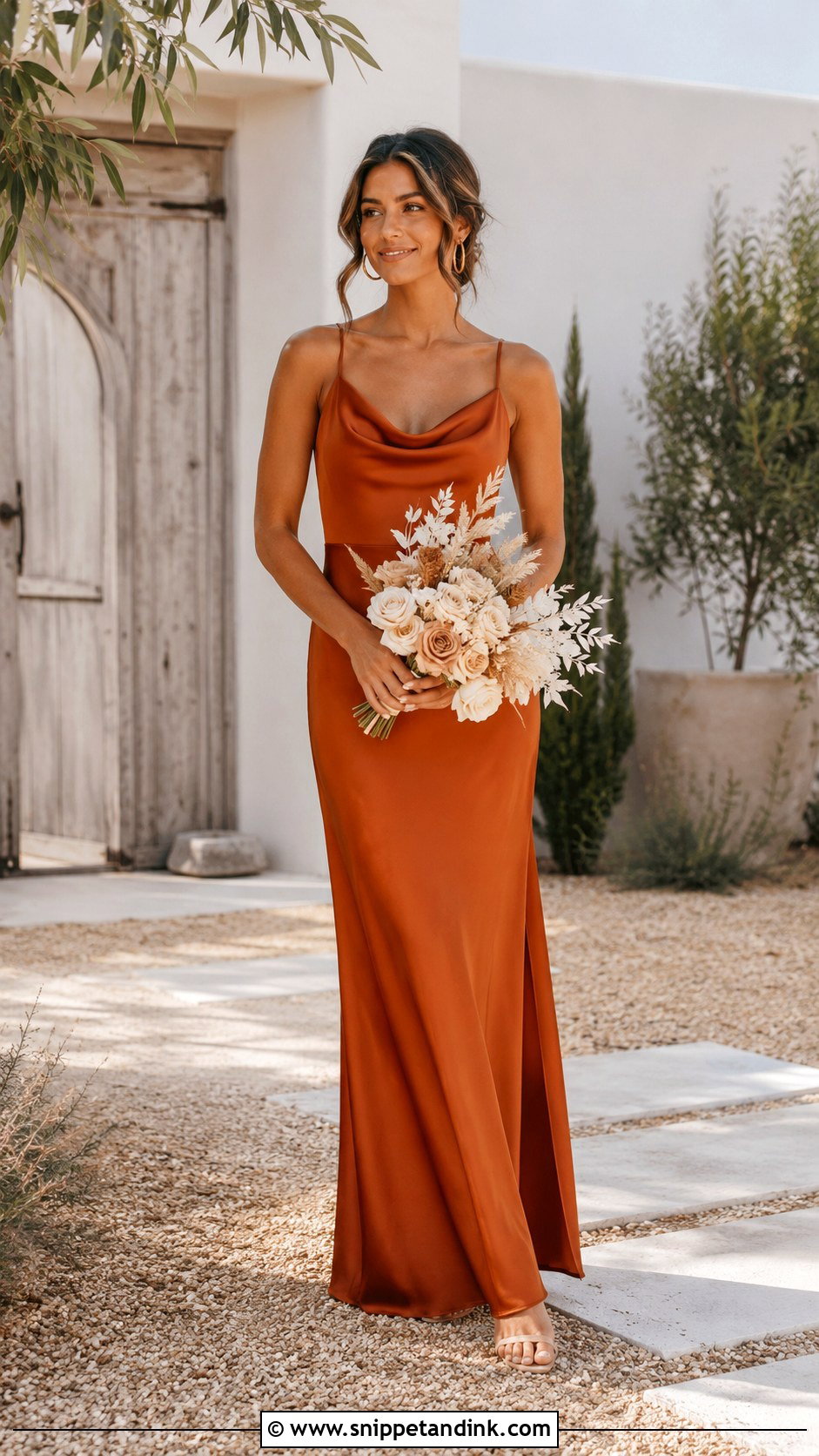
Burnt orange is a commitment colour. It’s warm and rich for an autumn wedding outdoors, but I’d ask every bridesmaid to see it against her own skin before the group commits, because it flatters some complexions far more than others. Satin or crepe maxis, nude sandals and gold hoops are plenty. Cream and beige flowers calm it down. Rust, bronze and deep peach can join the lineup if the strong colour feels too uniform.
12. Dusty Rose Bridal Party Dress
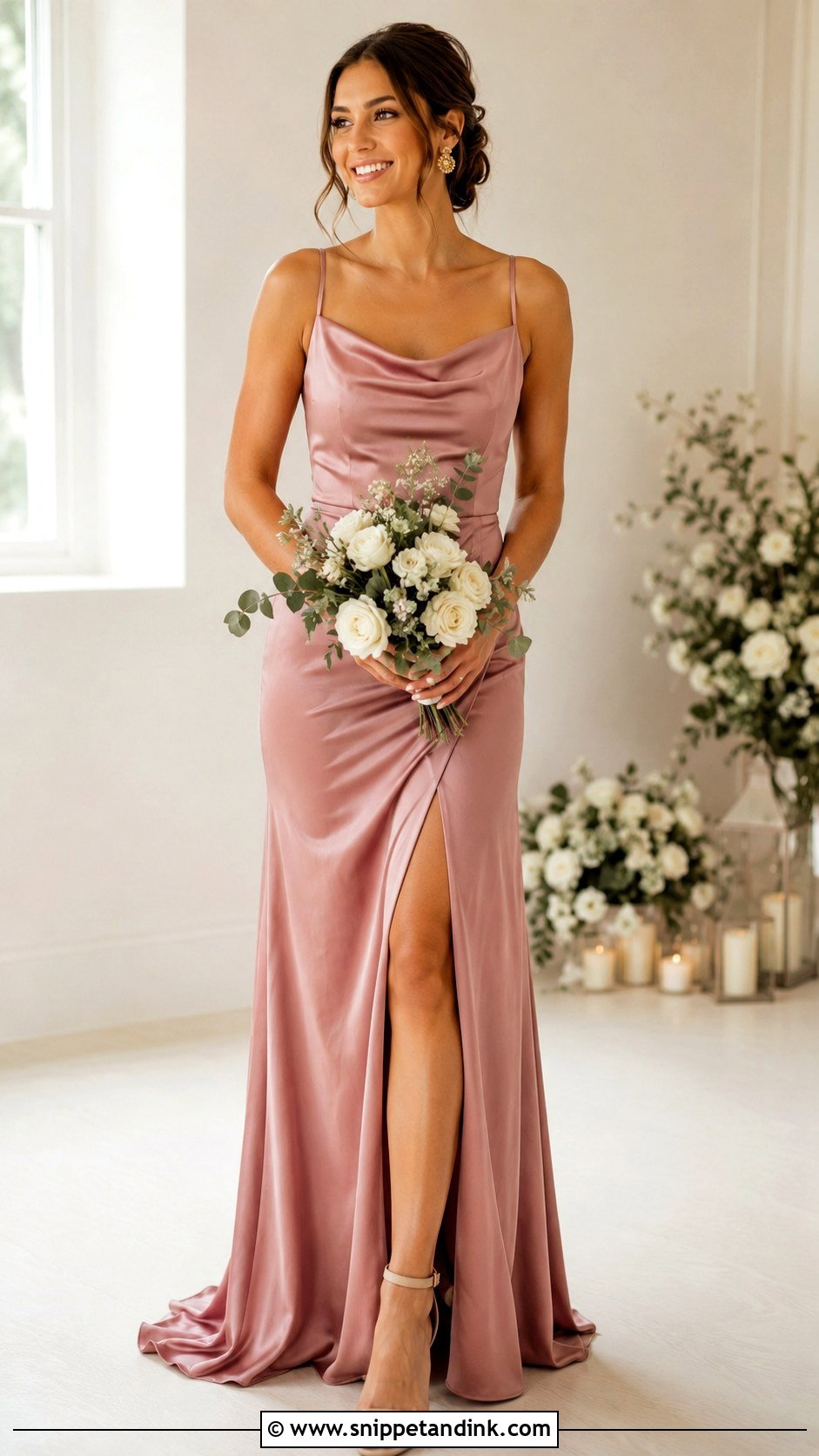
Dusty rose is pink with the sweetness taken out. It works indoors and out, in most seasons, and it sits comfortably next to an ivory gown. I keep makeup fairly natural with it, because heavy pink lipstick against dusty rose fabric can look like a costume. Mauve, rosewood and blush mix well for a graded lineup, with nude heels, gold jewellery and soft neutral bouquets.
13. Burgundy Bridal Party Dress
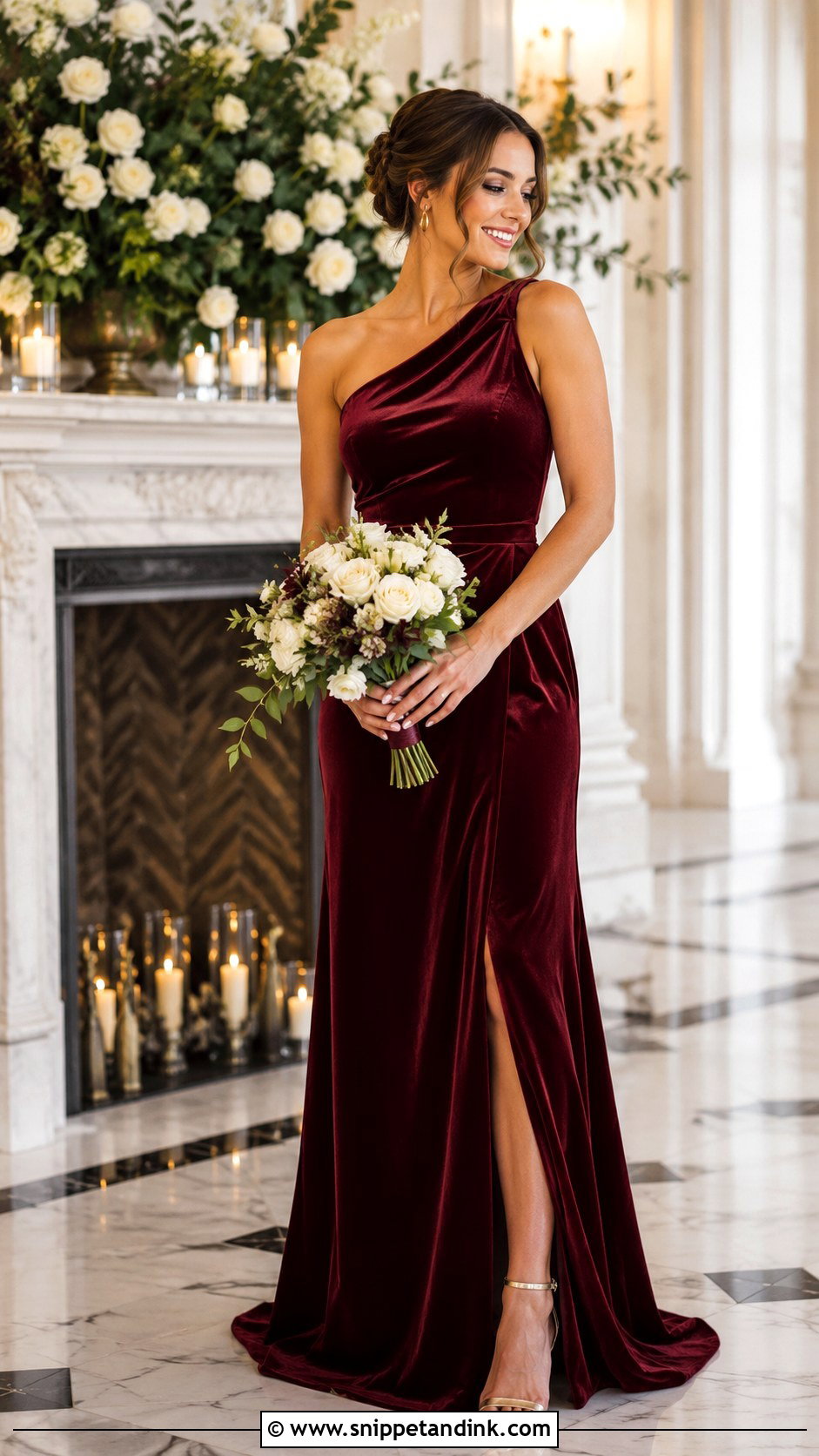
Burgundy reads differently depending on fabric. In velvet it’s deep and almost black at night; in satin it’s brighter and more festive; in crepe it’s the most forgiving for anyone worried about cling. I balance it with cream flowers or soft pink accents so the group photos don’t feel heavy. Black or nude heels and gold earrings complete it. It also sits well beside both black and navy suits.
14. Convertible Bridal Party Dress
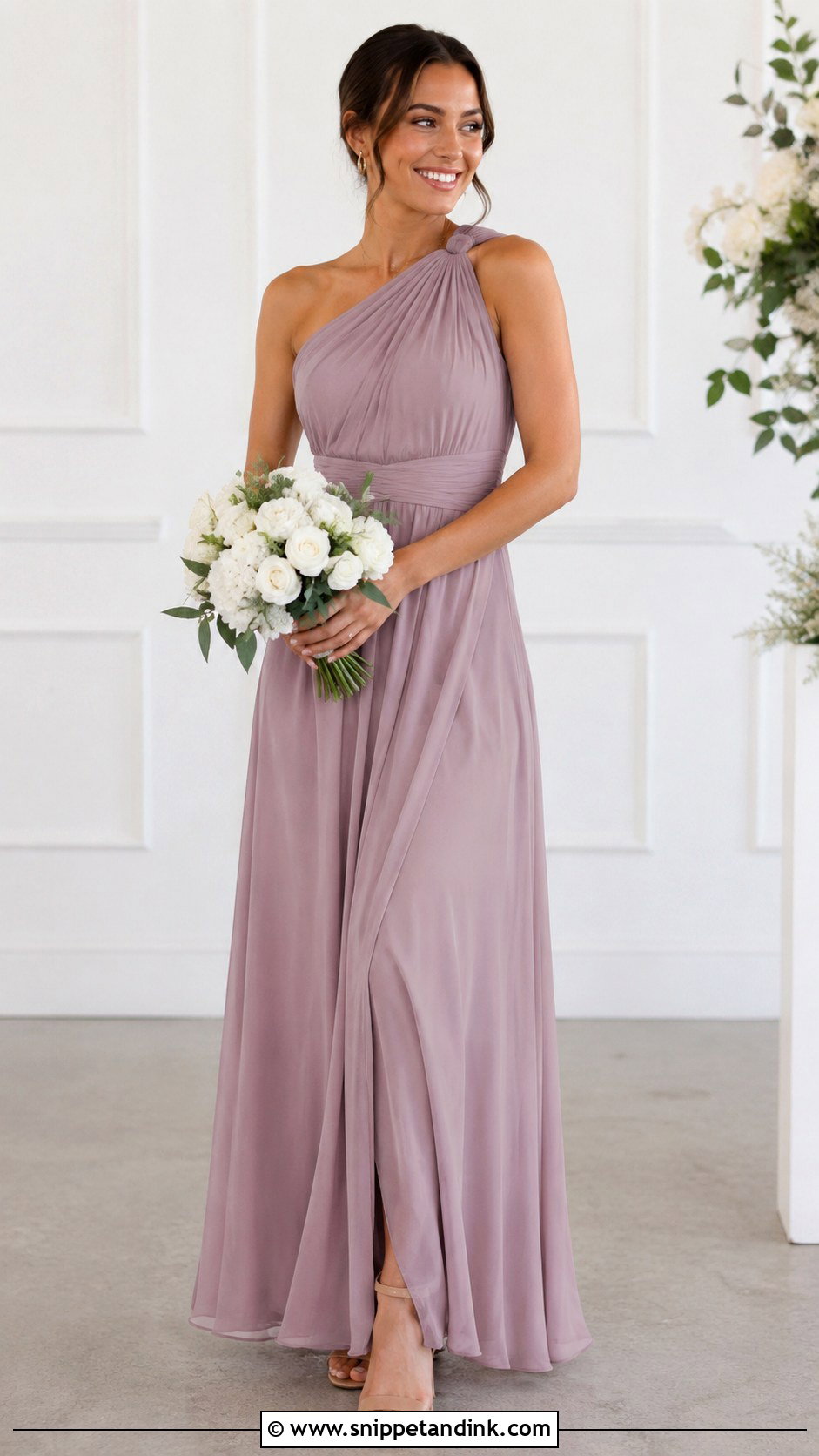
Convertible dresses solve a real problem for large parties and destination weddings: one order, one colour, and each bridesmaid ties it as a halter, a one-shoulder or a cap-sleeve wrap. The catch is that the straps need practice. I ask everyone to try their chosen wrap at home twice before the day and photograph it, because tying it fresh in a crowded hotel room never goes as planned. Jersey and stretch chiffon in one colour, with matching heel tones, keep the group tidy.
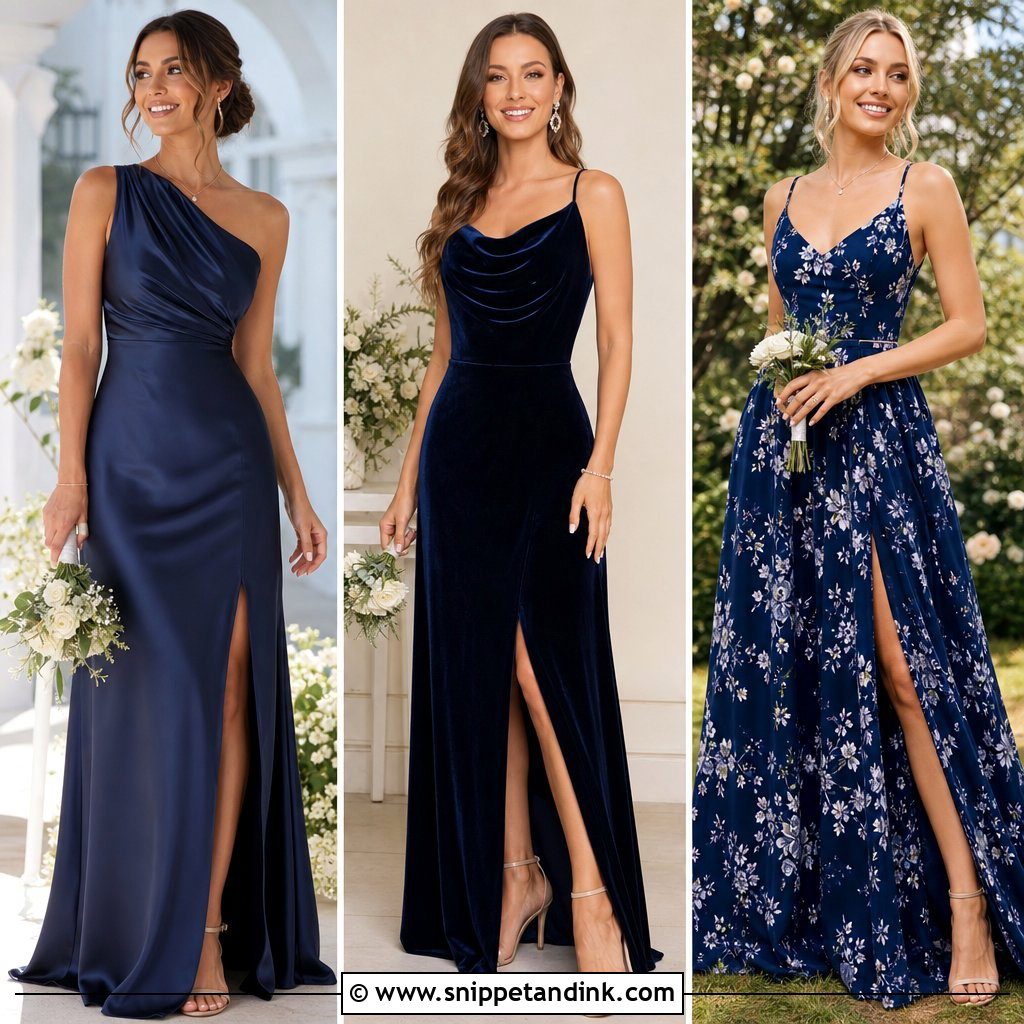
15. Slip Bridal Party Dress
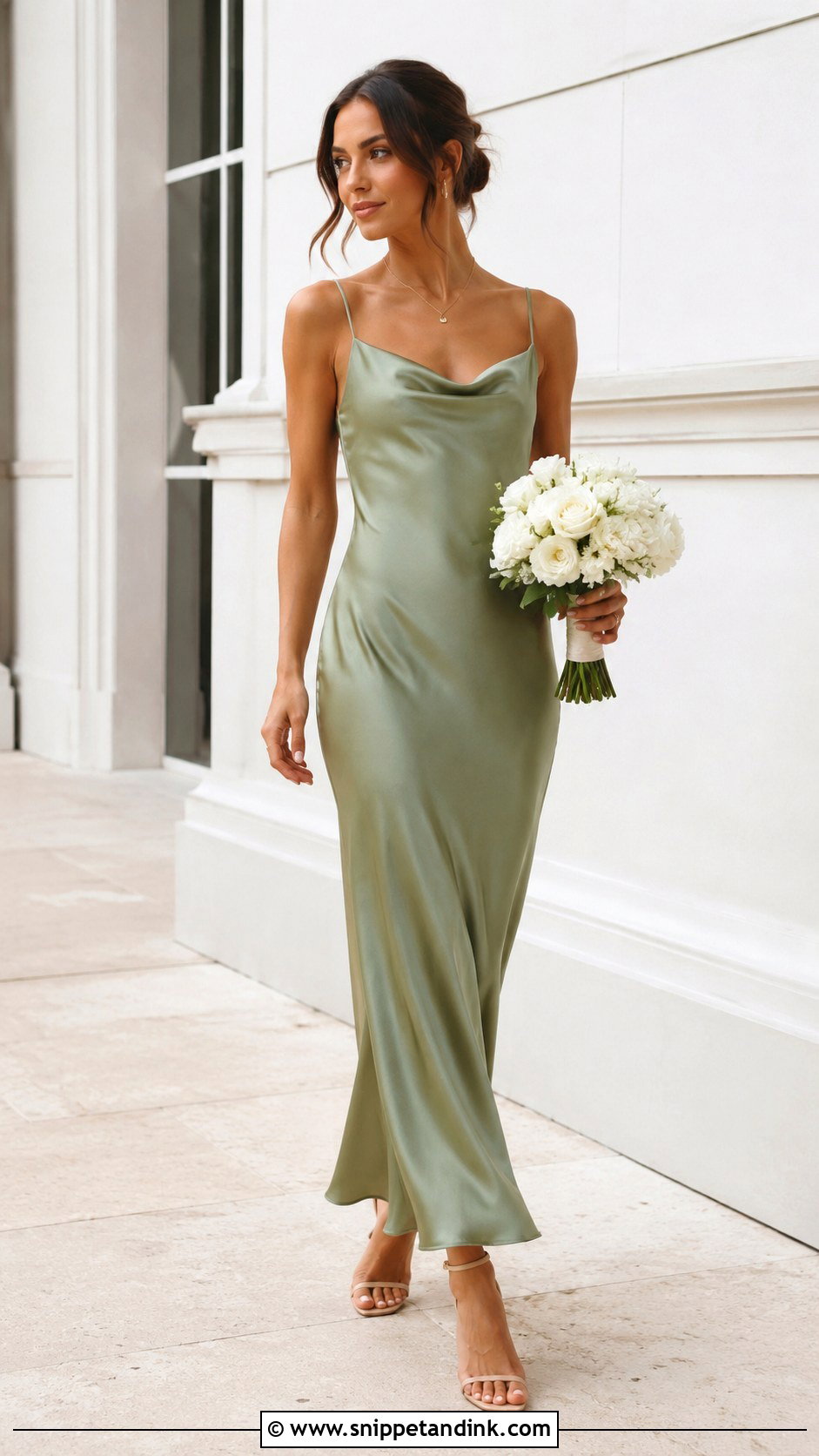
The bias-cut slip is honest about fit, and that’s its weakness. It skims the body and shows every seam and undergarment line, so I only suggest it when the group is comfortable with that and has time for alterations. In champagne, black, sage, dusty blue or chocolate brown it suits rooftops and modern evening venues. Strappy heels and fine necklaces keep it minimal; a matching wrap covers cool ceremonies. Cheap satin slips crease badly when seated, so this is one place I’d spend more on fabric.
16. Velvet Bridal Party Dress
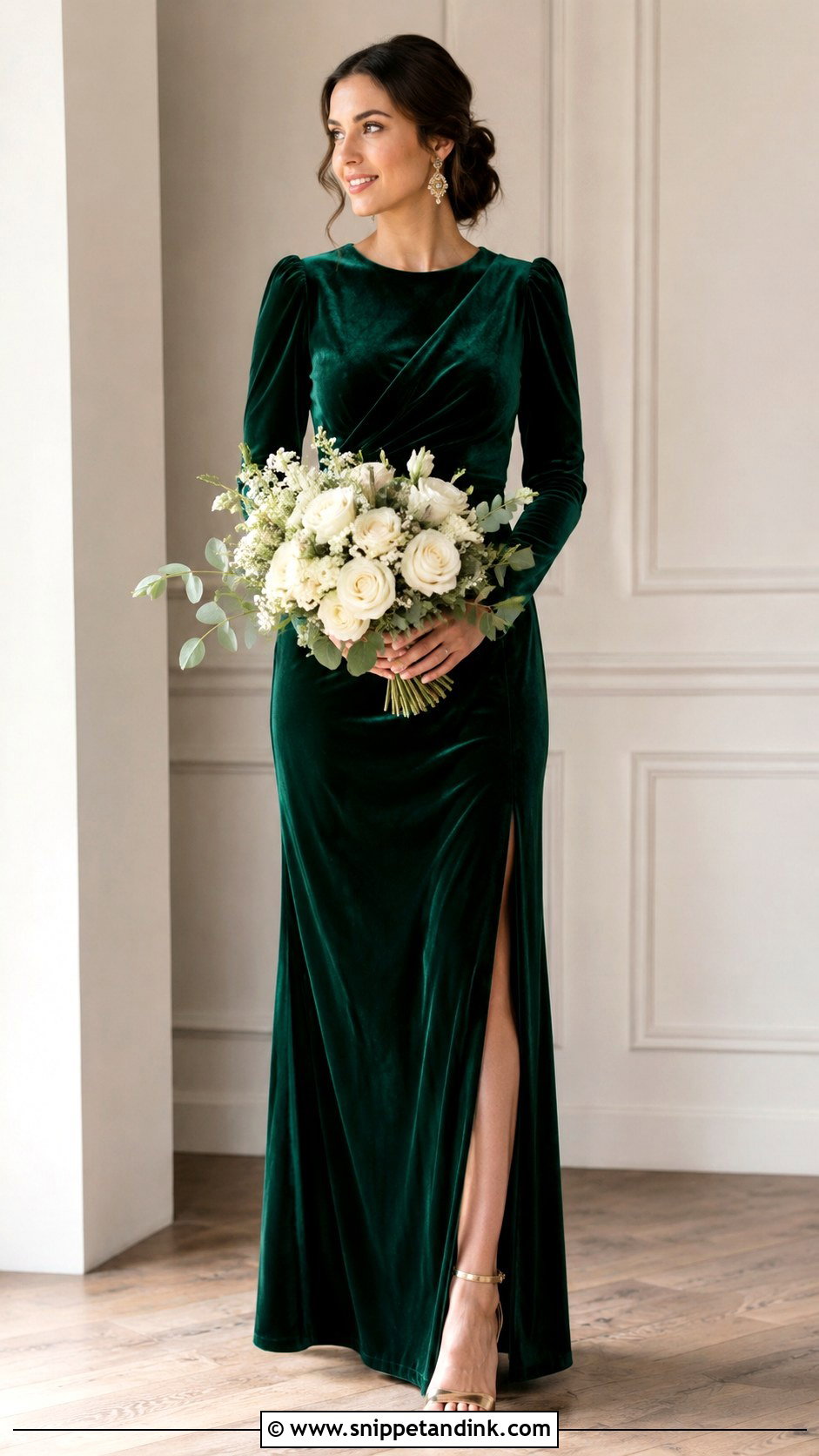
Velvet gives texture and warmth for winter and candlelit evenings, but I’d never put it in a summer garden; it’s hot and it crushes where you sit. A long velvet gown in emerald, navy, burgundy, black or chocolate brown needs very little jewellery because the fabric already does the work. Metallic heels and one pair of statement earrings are enough. Keep bouquets lighter in colour, and steam velvet from the inside, never press it flat.
17. Chiffon Bridal Party Dress
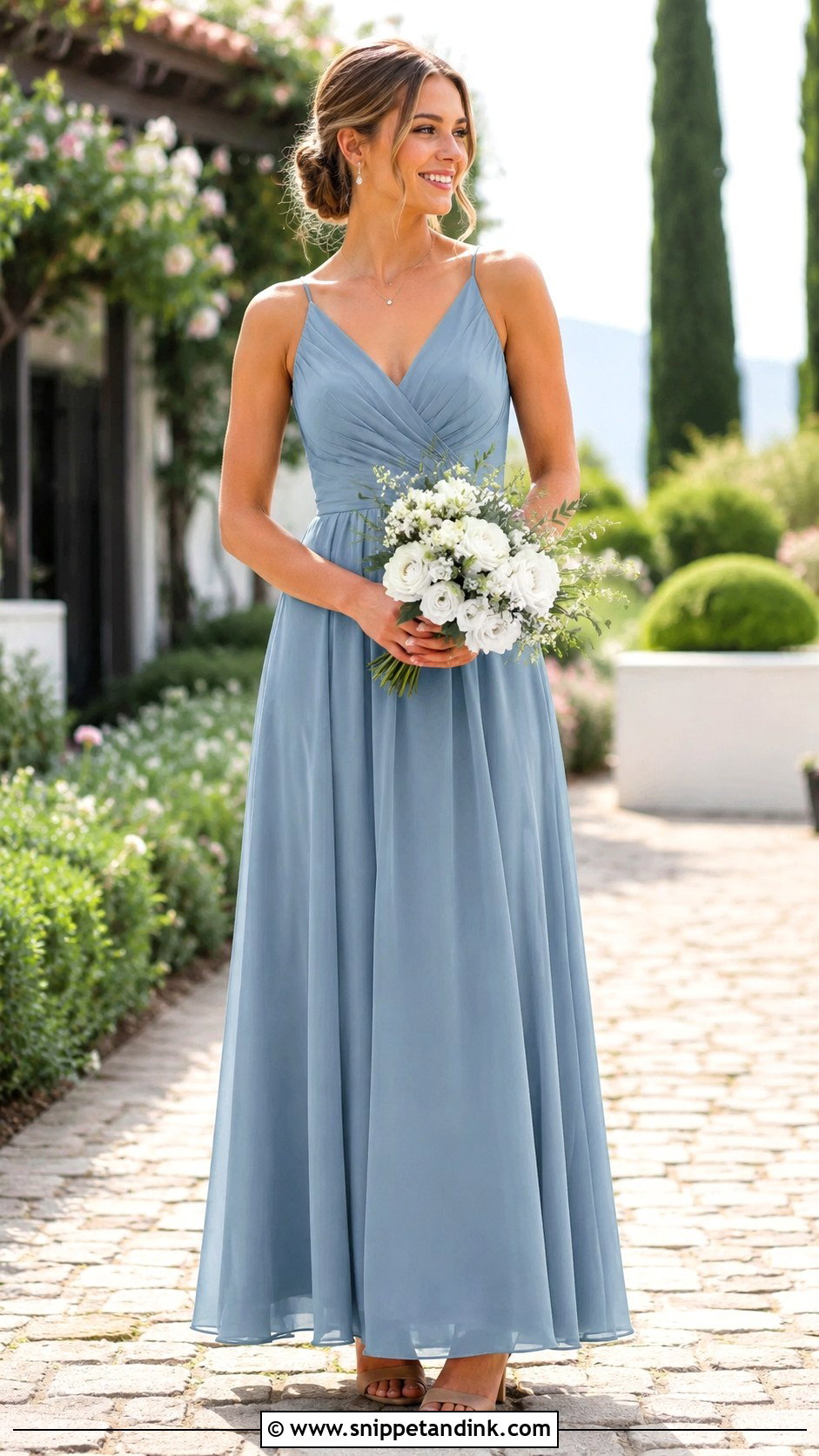
Chiffon is the fabric I recommend most for outdoor ceremonies. It moves in a breeze, it breathes, and it forgives small fit differences across a group. The downside is snagging: brush, bark and rough stone can pull threads, so I warn bridesmaids at woodland or meadow venues to lift the hem when they walk. Blush, lavender, sage, dusty blue and mauve all suit it. Same colour and same length, with each person choosing her neckline, is a reliable formula.
18. One Shoulder Bridal Party Dress
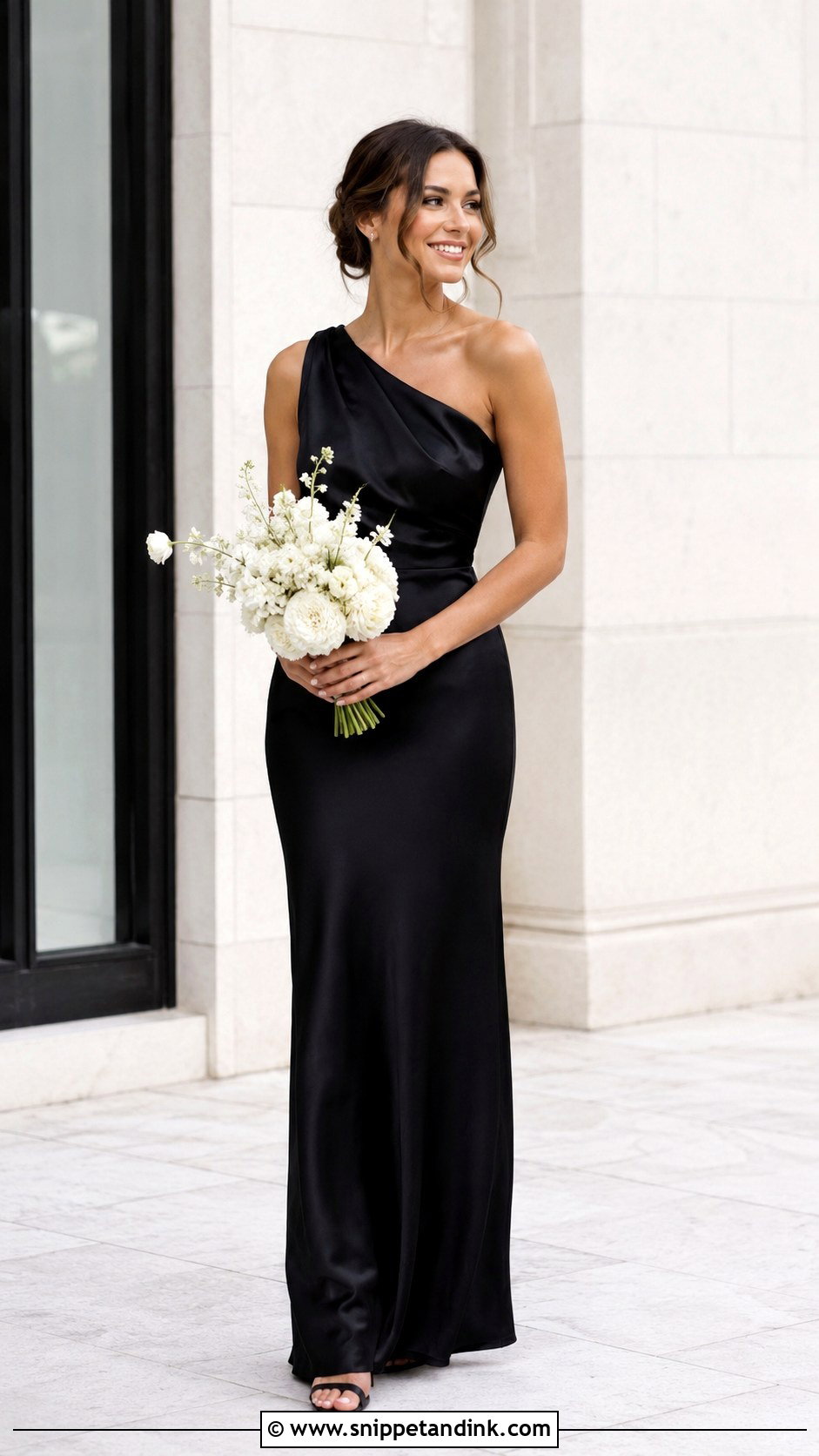
A one-shoulder neckline does the decorating, so I keep the neck bare and put the jewellery on the opposite wrist and ears. Satin, crepe or chiffon all hold the line, though satin shows any strain across the bodice. The shape is strongest in black, emerald, champagne, navy or dusty rose. Hair swept to the bare-shoulder side balances it. It’s not ideal for bridesmaids who need a strapless-style bra solution they haven’t tested, so I ask about that early.
19. Halter Bridal Party Dress
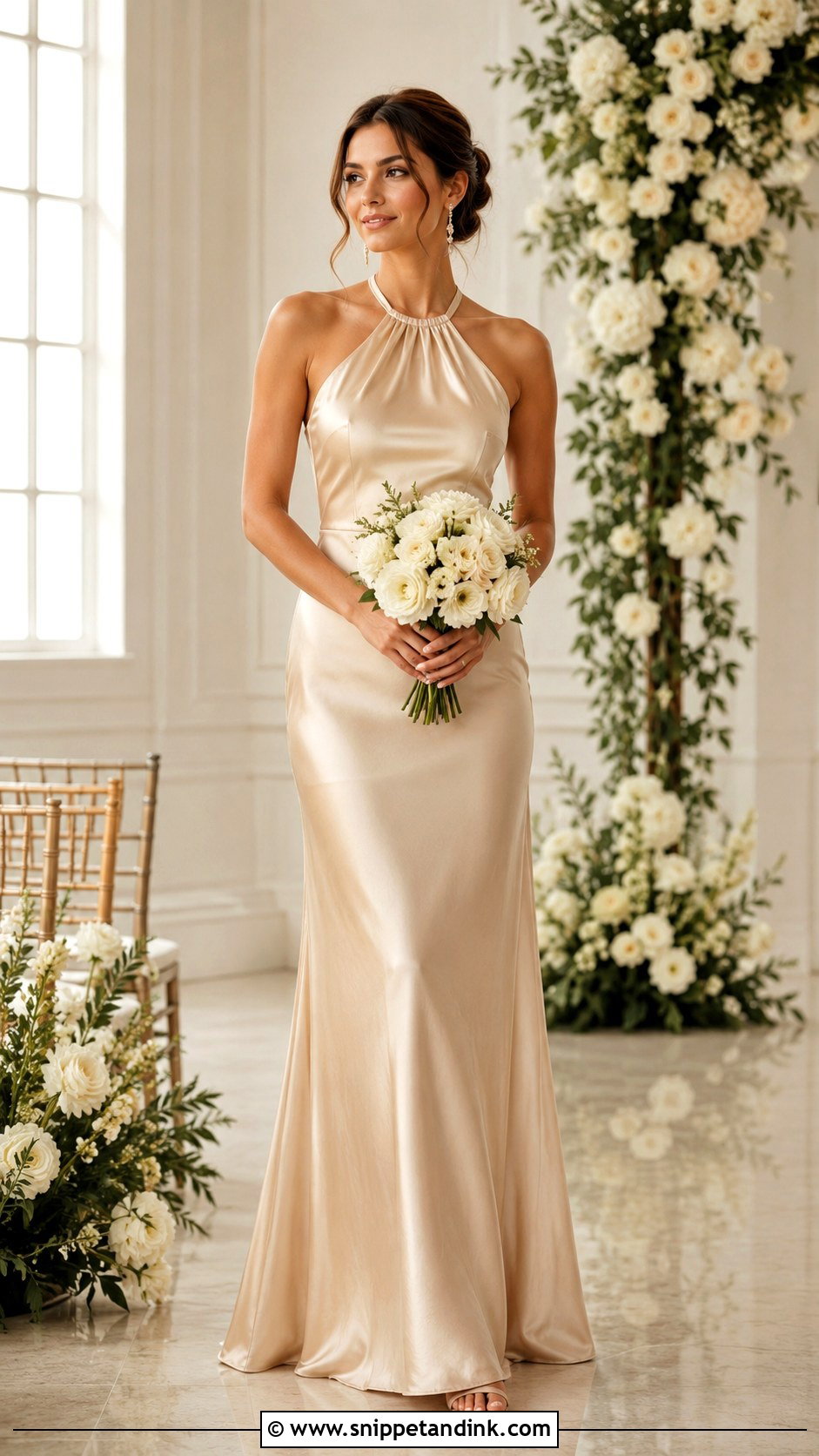
Halters give a lot of support across the bust and draw the eye up toward the face, which makes them a favourite for warm-weather weddings. The neckline asks for an updo and drop earrings; a necklace just clutters it. Satin or chiffon in blue, sage, black or champagne needs little else. My one check: a halter strap can rub the back of the neck over a long day, so I like a wider strap or a soft lining there.
20. High Neck Bridal Party Dress
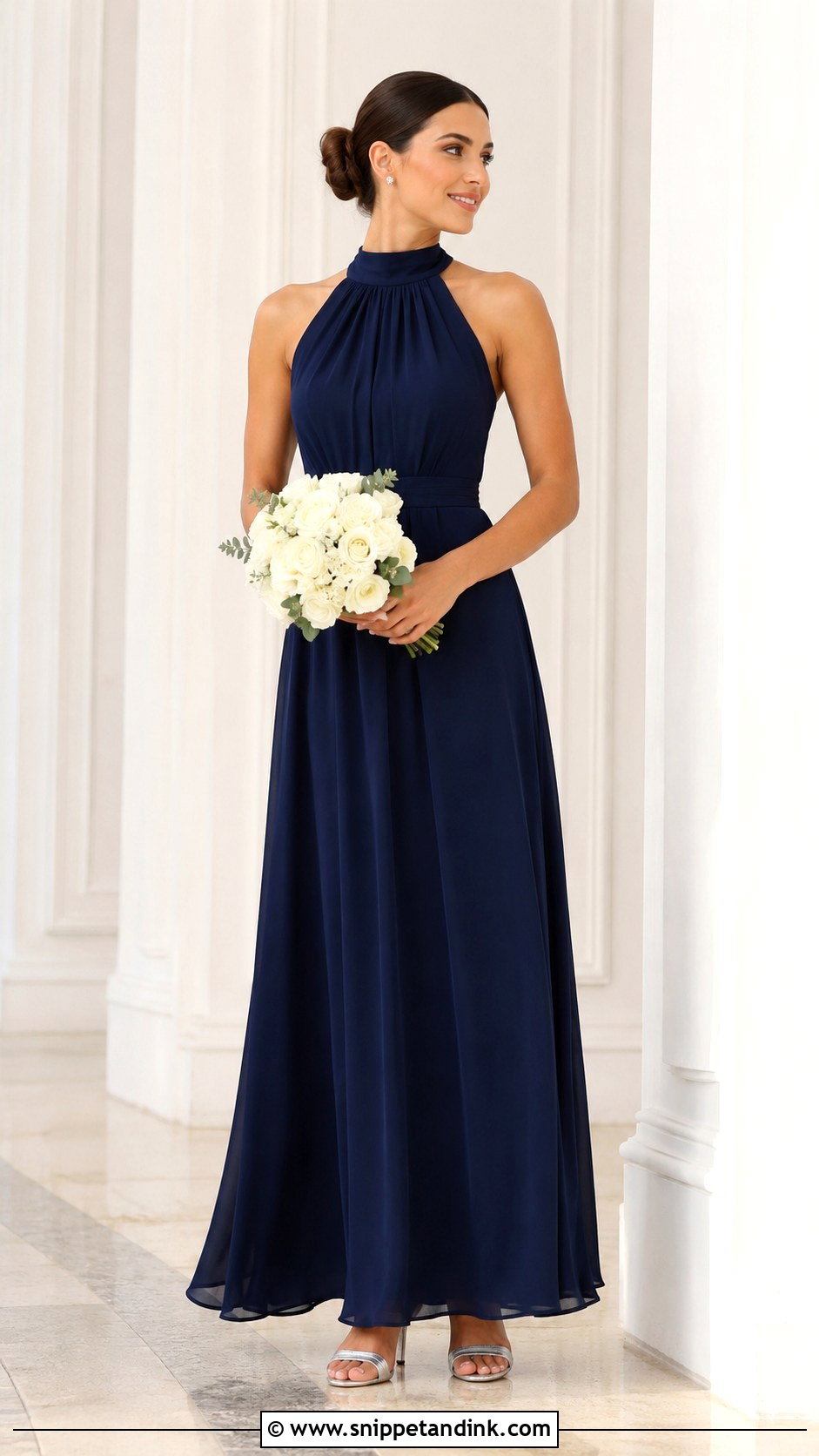
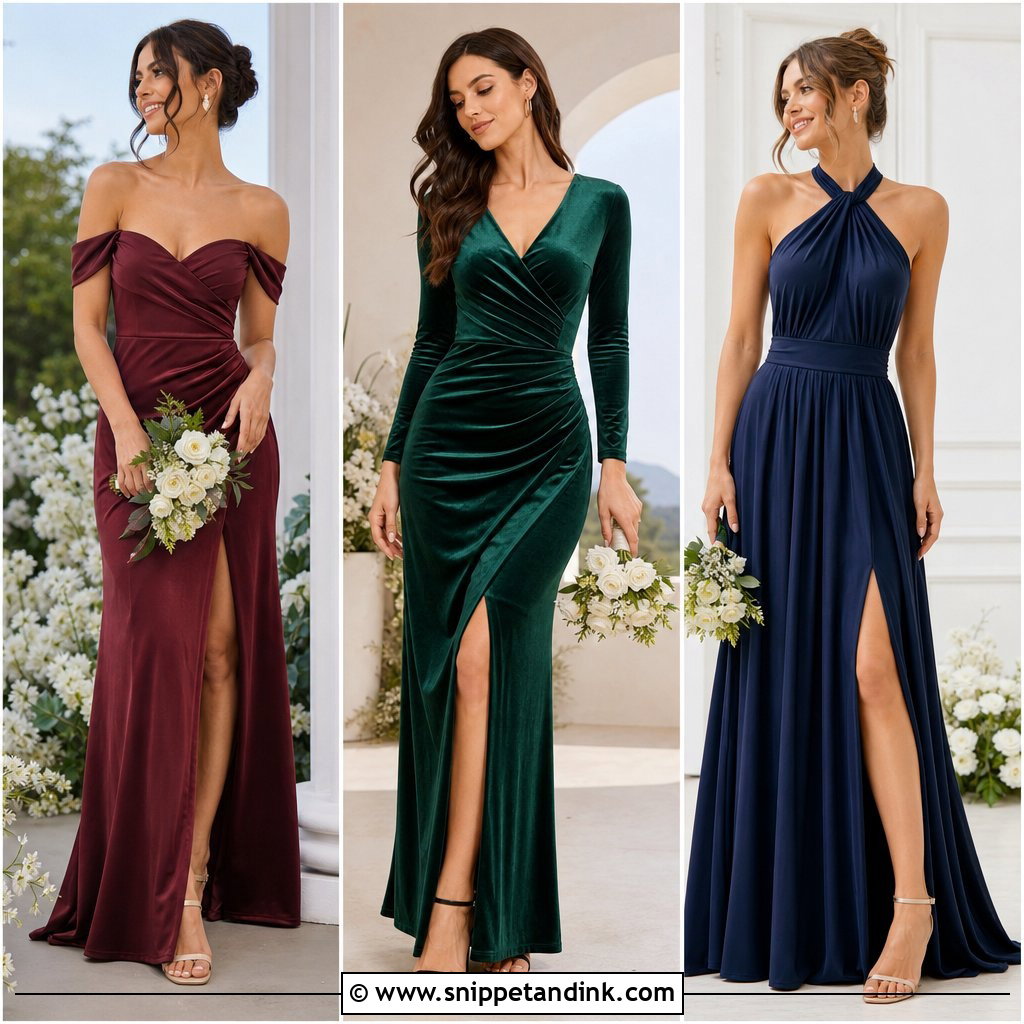
High necks suit formal venues, cooler months and bridesmaids who simply prefer coverage. Because the neckline covers the collarbone, I put the attention on tailoring and keep jewellery to studs and a sleek bun. Navy, black, champagne, emerald and mauve all look considered in this cut. For an outdoor summer wedding, choose chiffon over heavy satin, since a closed neckline in a dense fabric gets warm quickly.
21. Off Shoulder Bridal Party Dress
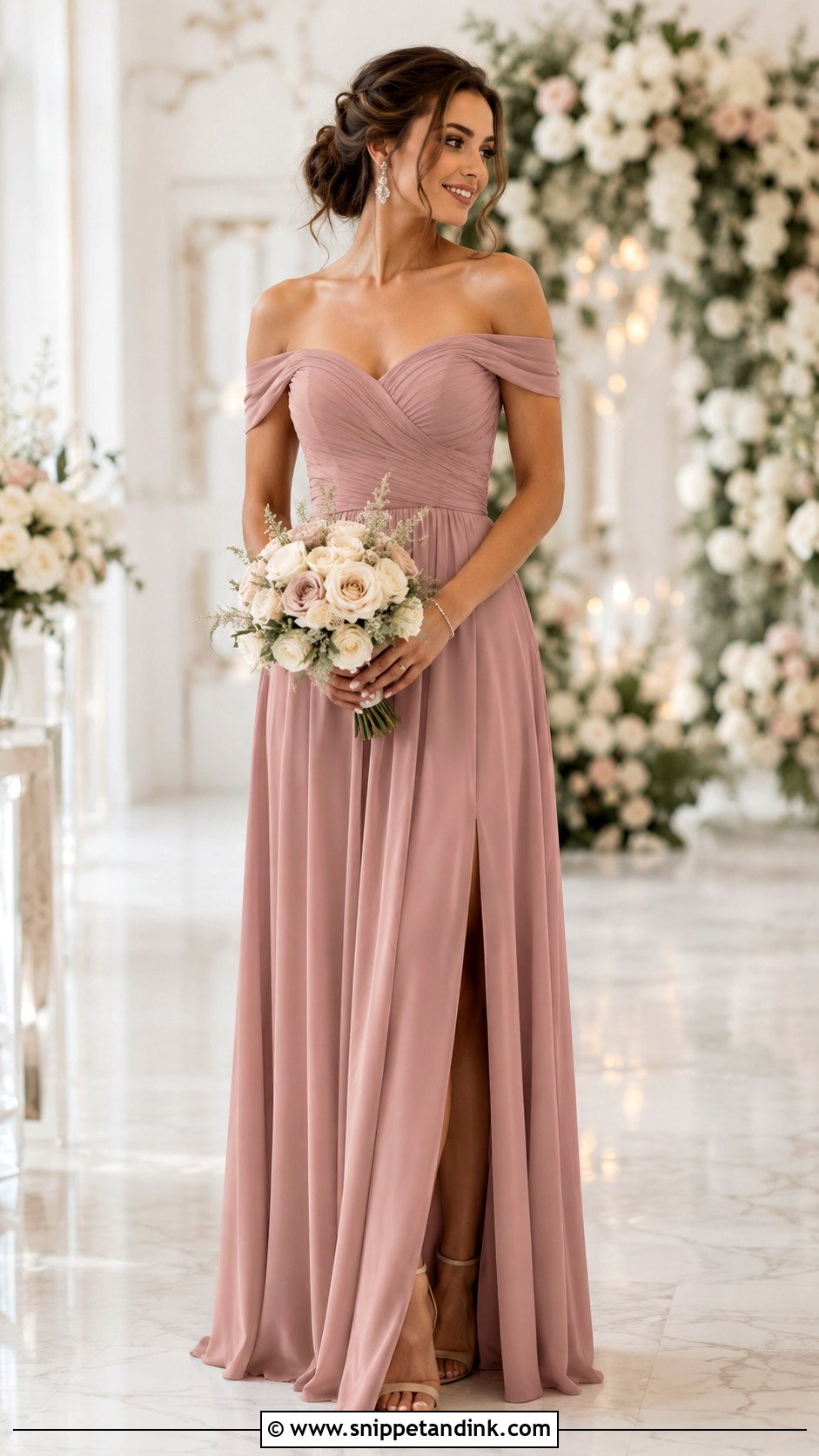
Off-shoulder bodices frame the collarbones and suit garden and ballroom weddings, but they only work if the fit is secure. I have each bridesmaid lift her arms and hug someone at the fitting; if the neckline slides, it needs boning or silicone grip tape added by the seamstress. Chiffon, satin and crepe all suit the shape, in dusty rose, sage, lavender, champagne or navy. Drop earrings, a fine bracelet and no necklace.
22. Tea Length Bridal Party Dress
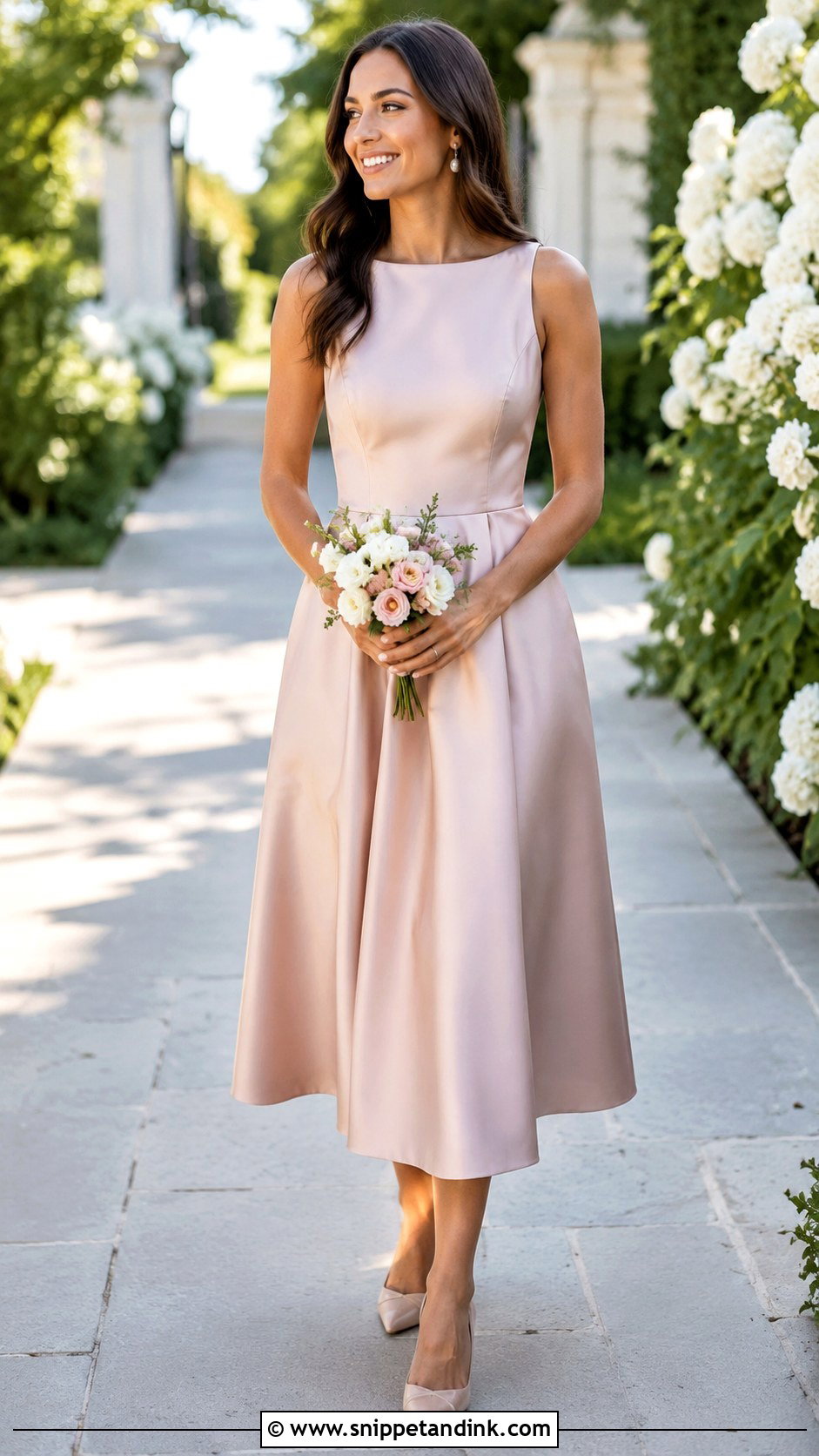
Tea length falls between the knee and the ankle, which shows the shoes and gives a slightly vintage line. It’s the length I suggest for daytime garden weddings and for bridesmaids who dislike floor-length hems on stairs or grass. Satin, tulle or chiffon all work; block heels, pointed flats or low slingbacks suit it. With pearl earrings and a soft updo it looks finished. Mixed with floor-length gowns, though, it can look accidental, so I keep the whole group at one length.
23. Bridal Party Jumpsuit
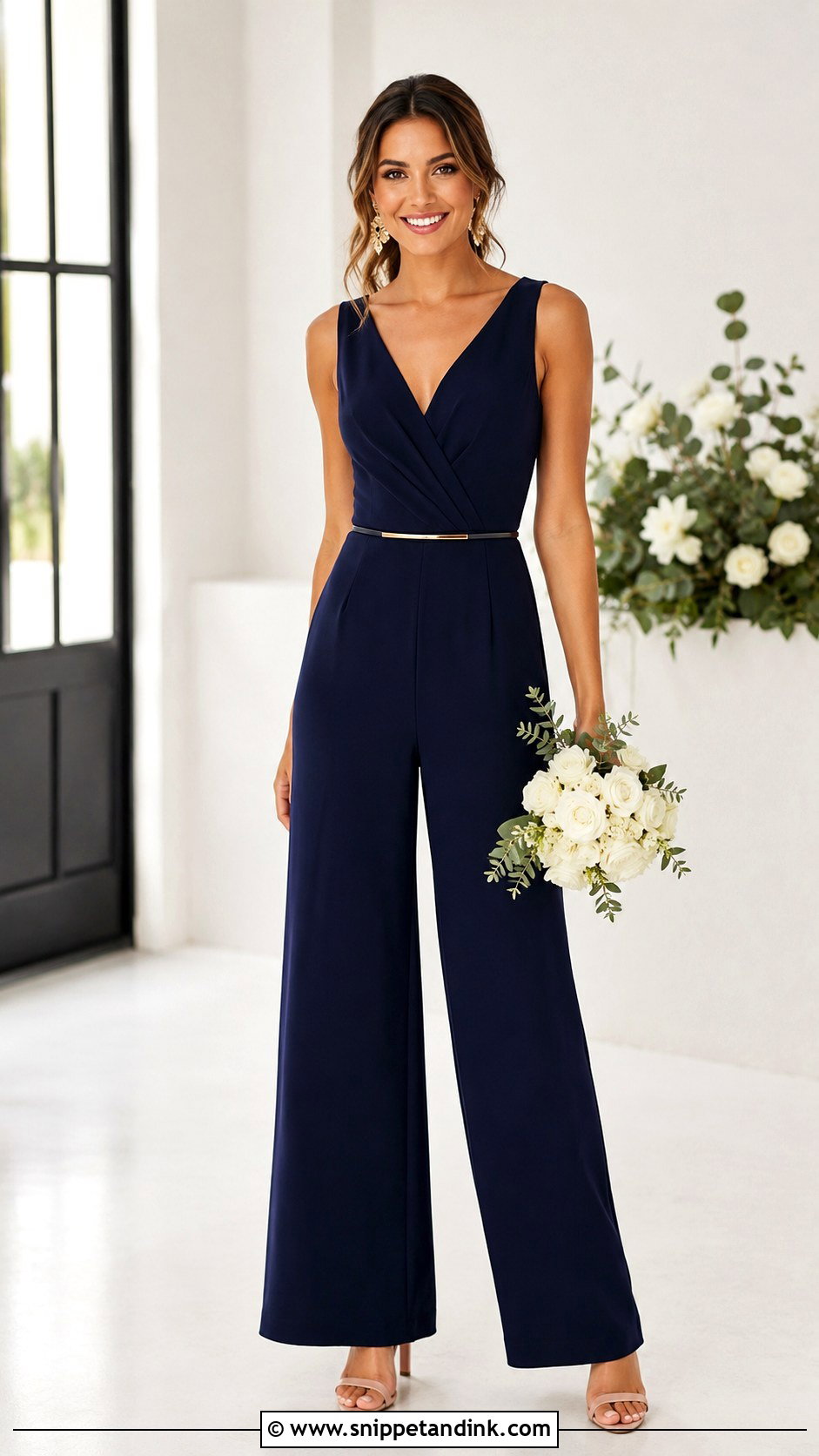
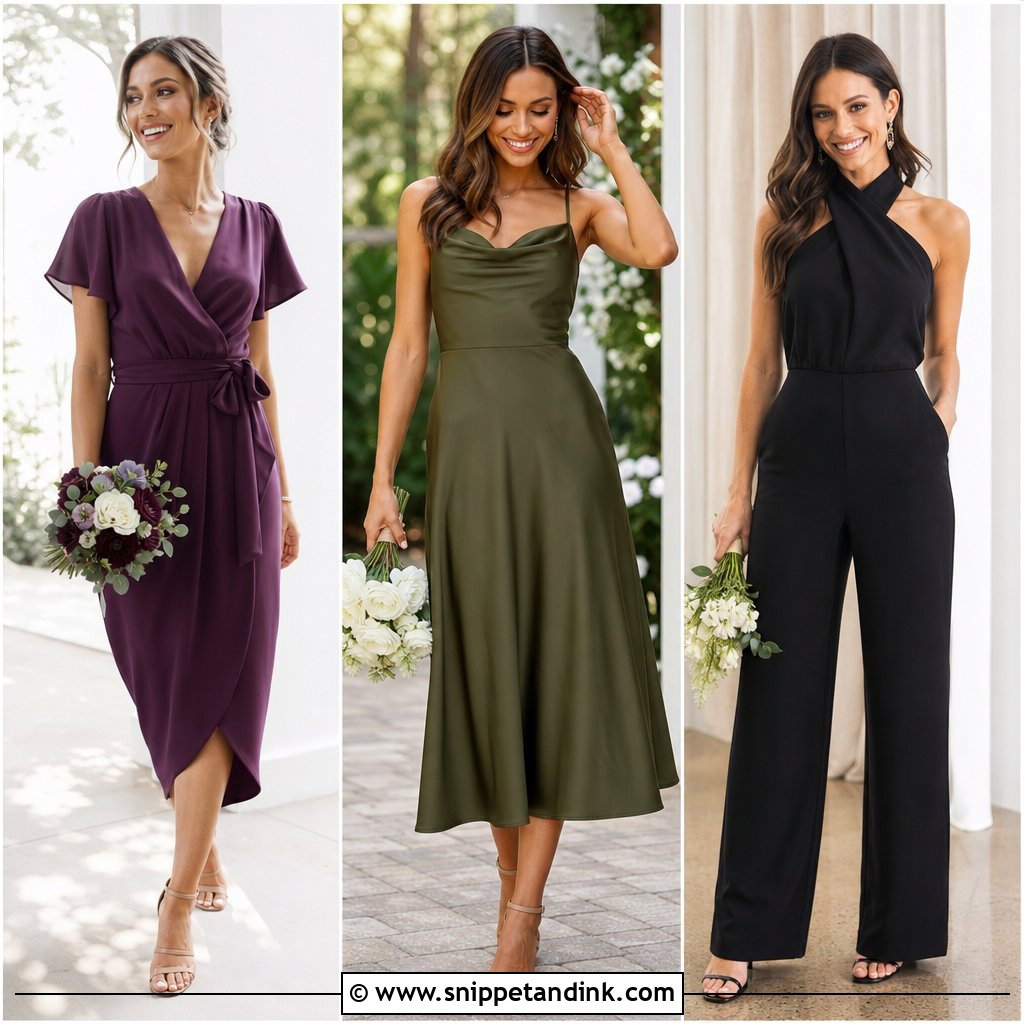
Jumpsuits suit bridesmaids who’d rather wear trousers, and they move well on a dance floor. A wide leg in crepe or satin looks the most formal; a cropped leg can look like office wear. I check the length with the actual wedding shoes on, since a wide hem should just brush the floor. Black, navy, champagne, sage and dusty rose all work. Heeled sandals, statement earrings and a slim belt finish it. In mixed parties, jumpsuits and dresses sit together when the colour and fabric match.
24. Bridal Party Suit
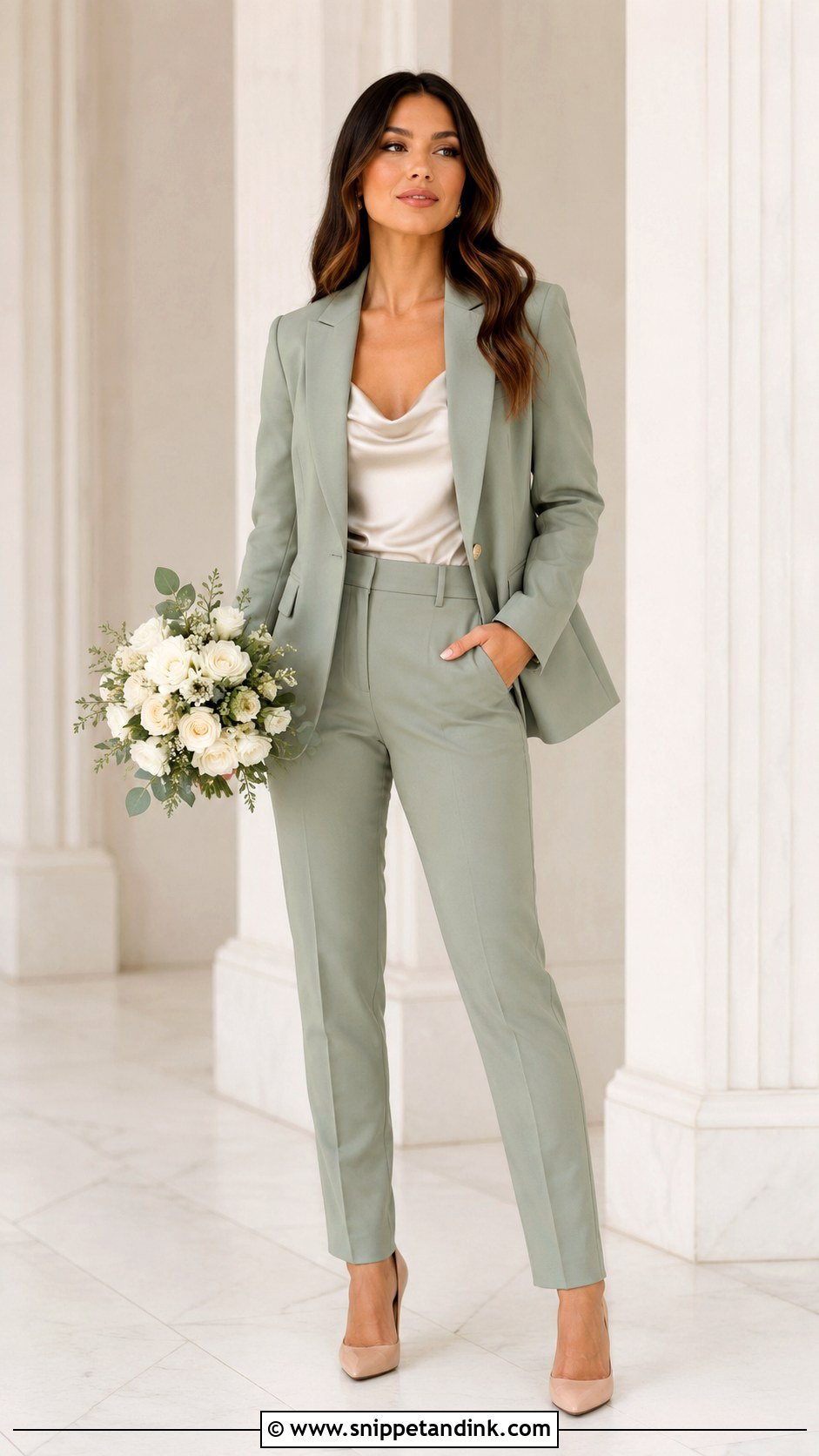
A suit only looks intentional when it’s tailored, so I budget alterations for the trouser hem and sleeve length the same way I would for a gown. Black, sage, navy, soft pink or a beige that isn’t close to ivory all work. Underneath, a satin camisole or simple shell keeps it bridal rather than corporate. Pointed heels, loafers or block sandals depend on how formal the day is, and a floral pin or matching bouquet ties the suit to the rest of the party. It suits courthouse ceremonies and modern weddings well.
25. Floral And Solid Bridal Party Dress
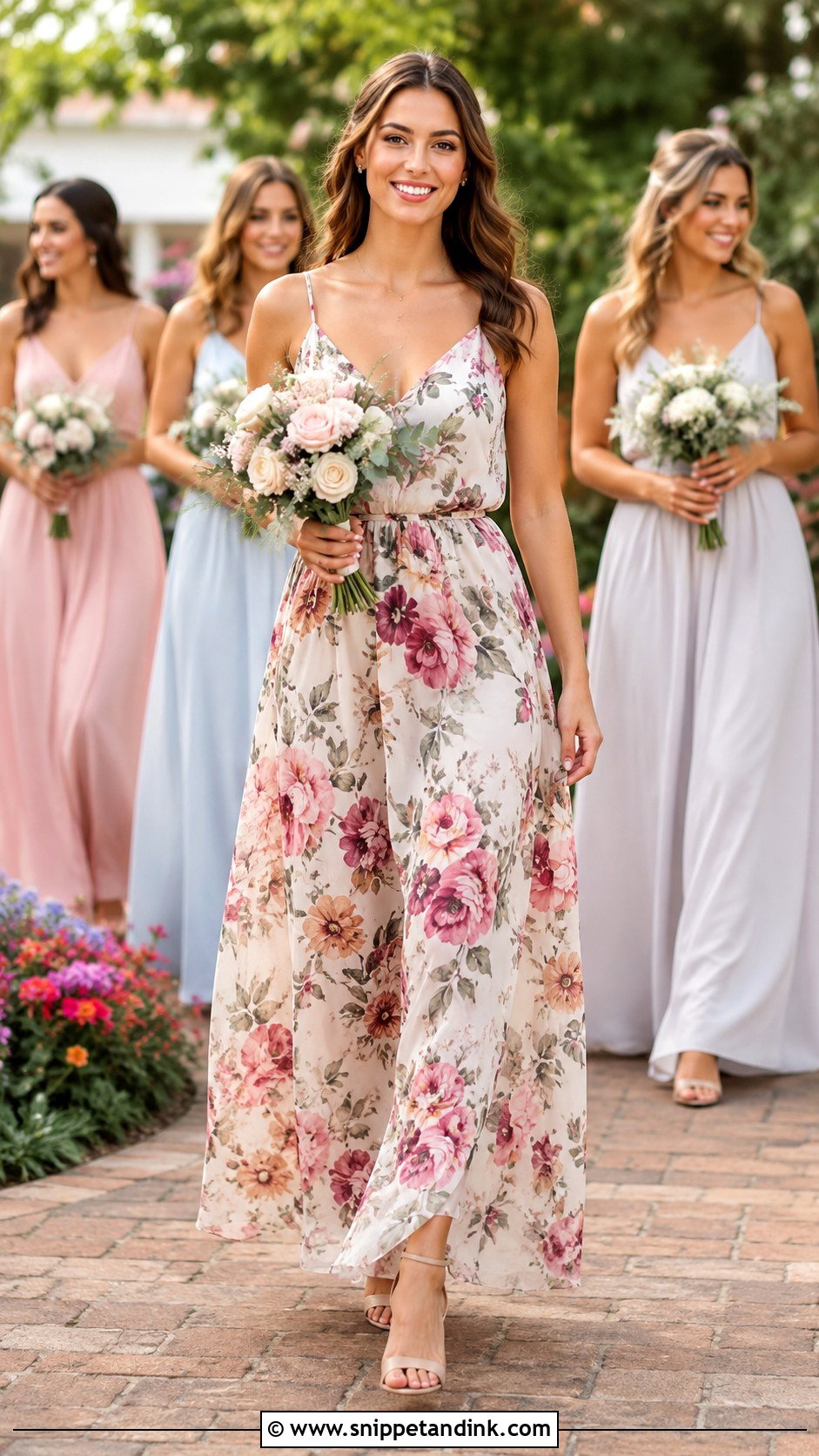
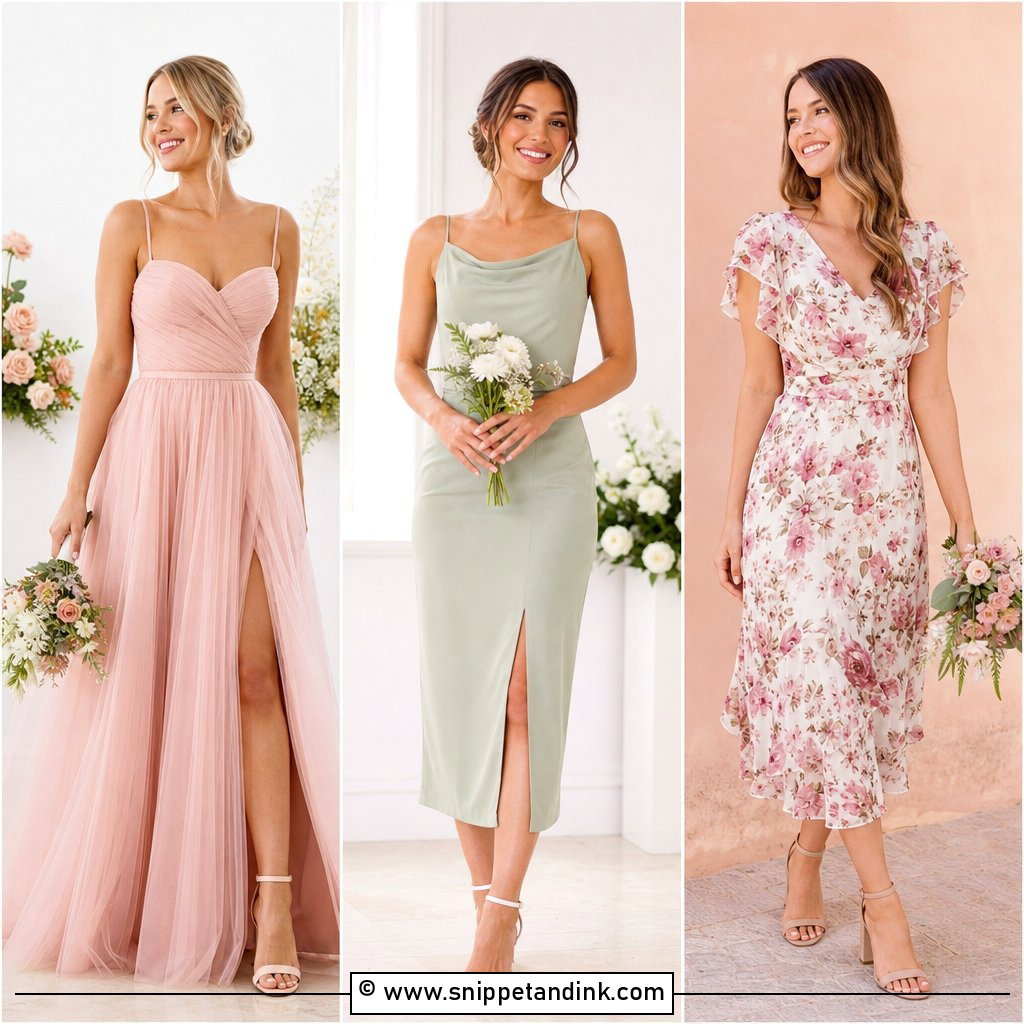
A floral and solid bridal party dress lineup is the easiest way to make mismatching look planned. I start with one print that contains the main wedding colours, then pull each solid directly from it: sage, blush, mauve, blue or terracotta. Length and formality must match, otherwise the group looks like it dressed for different events. Coordinated shoes, small jewellery and bouquets echoing the print hold it together, especially at spring and garden weddings.
Satin Creases, Chiffon Snags and Velvet Gets Hot
Every fabric in this list has a weakness that shows up around hour six, and I’d rather a bridal party knew it in advance.
Satin
Satin creases across the lap the first time anyone sits for the ceremony, and lighter shades show sweat marks at the underarm. A handheld steamer in the getting-ready room and dress shields sewn into the bodice solve most of it. Darker satins hide both far better than champagne or blush.
Chiffon and Crepe
Chiffon barely creases, but it catches on rough surfaces and jewellery clasps. Crepe is the most forgiving fabric for a long day: it drapes, it resists wrinkles and it doesn’t show marks. If a bridesmaid is anxious about cling or about sitting through a long dinner, crepe is what I point her toward.
Velvet
Velvet crushes where it’s pressed and holds heat. It’s fine for a winter evening, but in a warm room with dancing, I’d plan for a cooler fabric or at least a breathable lining. Steam it from the inside and never fold it flat for travel; roll it or hang it in a garment bag.
Whatever you choose, ask each bridesmaid to sit, raise her arms and walk a flight of stairs in the dress at her final fitting. Those three movements show me almost every problem the day itself will find.
Matching the Lineup to Your Venue and Your People
A matched lineup gives you calm and polish; a mismatched one gives you personality, as long as colour, fabric weight and formality stay connected. Before deciding, I’d stand in the venue at the time of the ceremony, think about how long everyone will be standing, sitting and dancing, and ask each bridesmaid what she can realistically afford. Shoes, wraps, jewellery and hair matter almost as much as the dress, because they’re what makes eight separate outfits read as one group in the photos.
You'll Like These Ideas:


Leave a Reply