
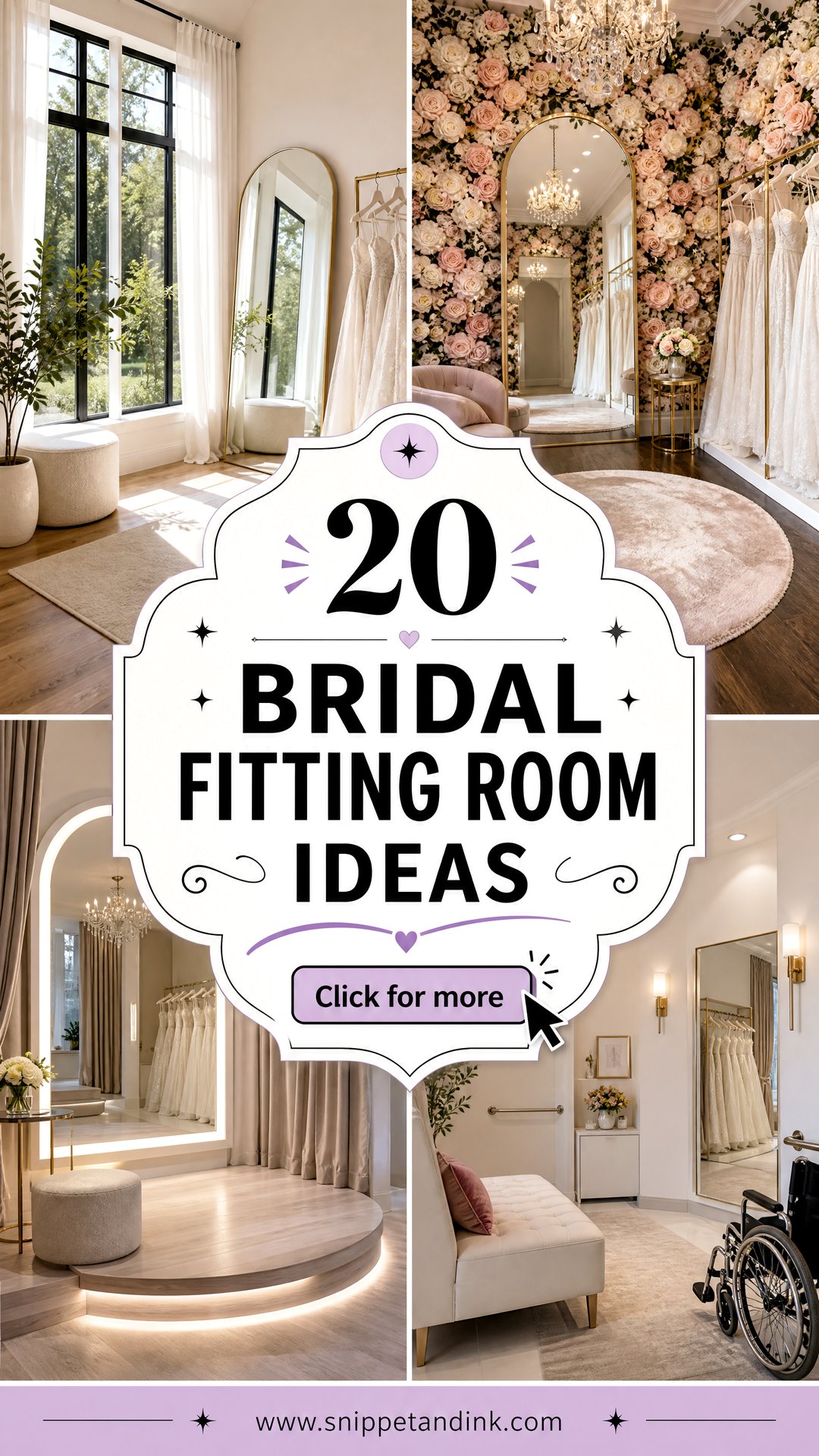
I spend most of my working day inside fitting rooms, and I can tell within a minute whether one was planned by someone who has zipped a bride into a ball gown. The good ones share a short list: a mirror that doesn’t distort, light that shows ivory as ivory, enough clear floor for a train, somewhere for the mother of the bride to sit, and a hook for every single thing. Everything else is mood. Whether you are opening a bridal salon or redoing a tired suite, the room should carry your brand without getting in the way of the dress. The twenty rooms below range from neutral luxury to wallpapered and black-and-white, and with each one I’ve noted what I’d keep, what I’d change and where it tends to cause trouble during a real appointment.
Measuring a Room Against a Cathedral Train
Before thinking about paint, I’d stand in the empty room and picture the biggest gown the boutique sells. A full ball gown skirt can be well over a metre and a half across, and a cathedral train extends far behind the bride. She needs to turn around in that, the stylist needs to kneel beside her, and she needs to step back far enough to see the whole silhouette in the mirror.
- Mark out the largest skirt on the floor with tape and walk round it as the stylist would.
- Leave enough clear distance between mirror and bride for her to take a few steps back. Seeing a gown from too close makes every bride fuss over details.
- Keep the door swing, cabinet doors and furniture outside the skirt zone.
- Plan the changing area as a separate spot, so the bride isn’t stepping into a dress in the middle of the reveal floor.
If the room can’t fit all of that, it’s a better changing room than a reveal room. Many boutiques change in small rooms and reveal in one shared space with a platform, which is often the smarter use of square footage.
1. Neutral Luxury Bridal Fitting Room
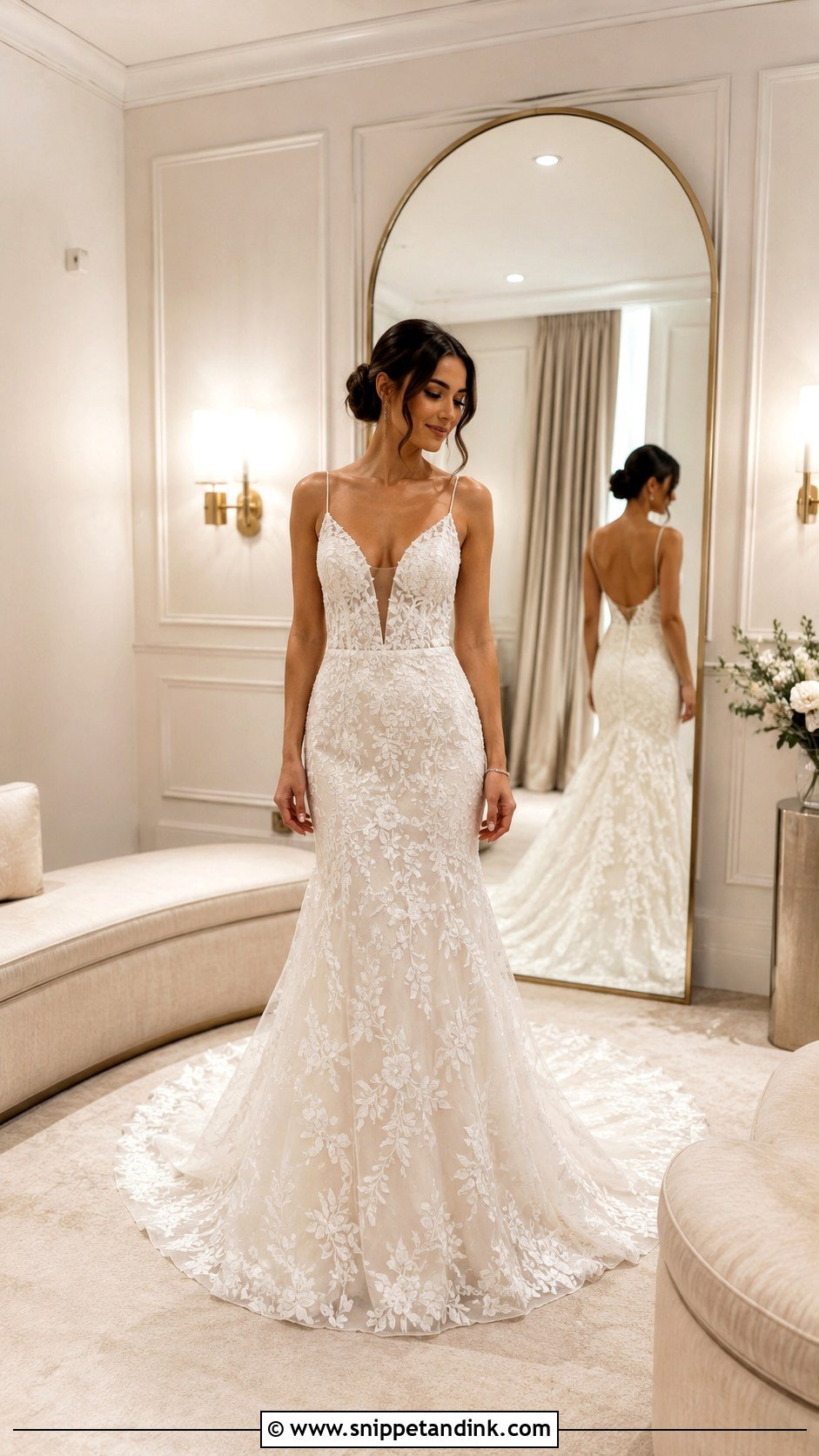
Neutral luxury is the safest backdrop because nothing in the room argues with the gown. Ivory, soft beige, light taupe or creamy white walls, then a large frameless mirror, a cushioned bench and a pale rug with a low, tight pile. Loose loop rugs catch beading and tulle hems; I’ve learned to check the pile before anything else. Brushed brass sconces add warmth. Put in more hooks than you think you need, for gowns, veils and the bride’s own coat, and a small pedestal table for clips, jewelry and notes. Subtle molding, linen curtains and one restrained floral arrangement finish it, and the dress stays the focus.
2. Blush Pink Bridal Fitting Room
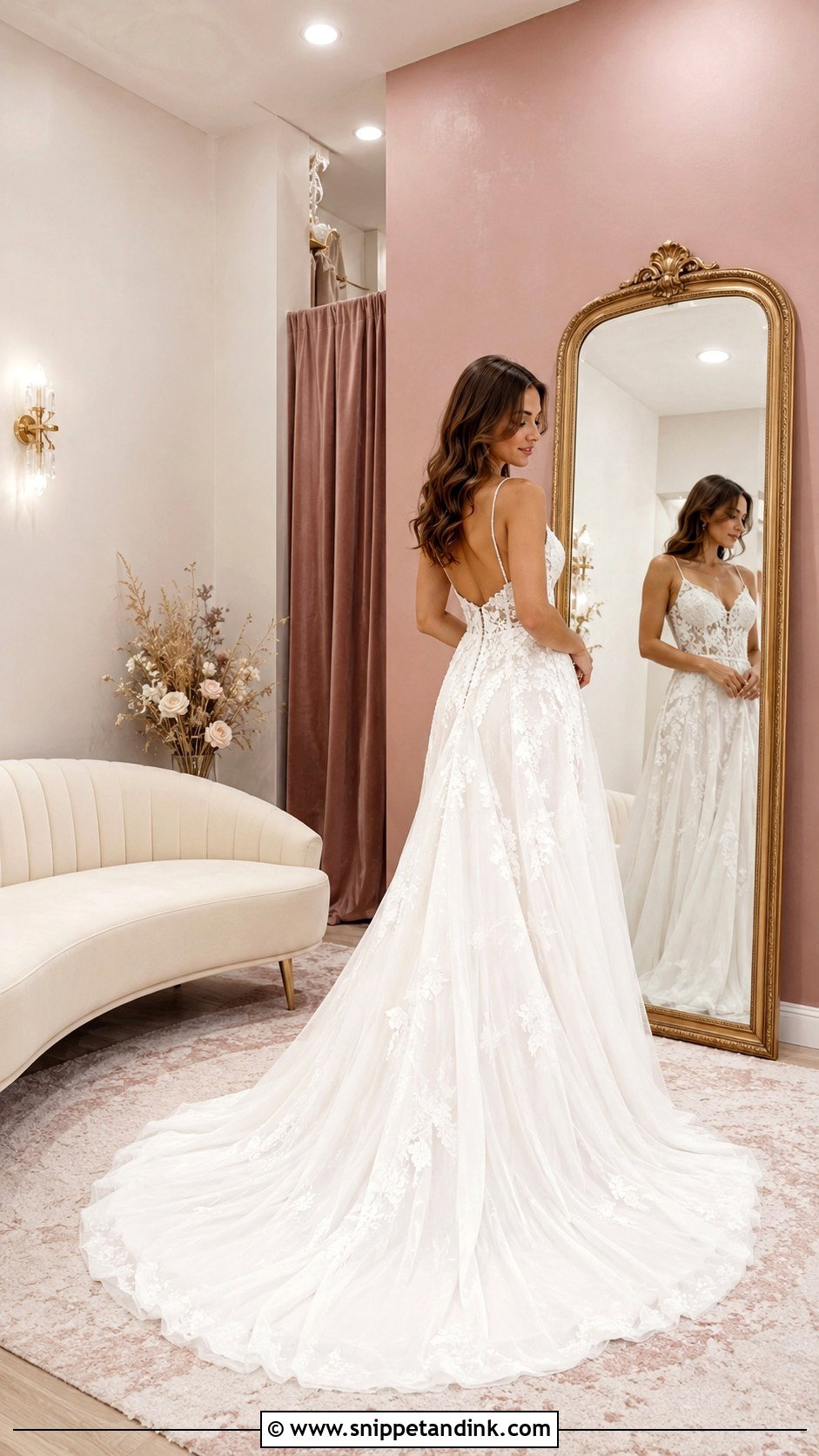
Blush is flattering on skin, which is the real reason it works in a bridal room. One accent wall in dusty blush, with warm white elsewhere, pale flooring and neutral furniture, is enough. I’d keep the pink off the wall behind the mirror, though, because a strong color reflecting onto a white gown can tint it slightly pink and mislead the bride about the shade. A curved cream sofa seats her guests, a gold-framed mirror and matching sconces tie the finishes together, and velvet curtains add privacy with a bit of texture. A blush rug, a dried arrangement and a small side table are usually all it needs before it starts to feel themed.
3. Modern Minimalist Bridal Fitting Room
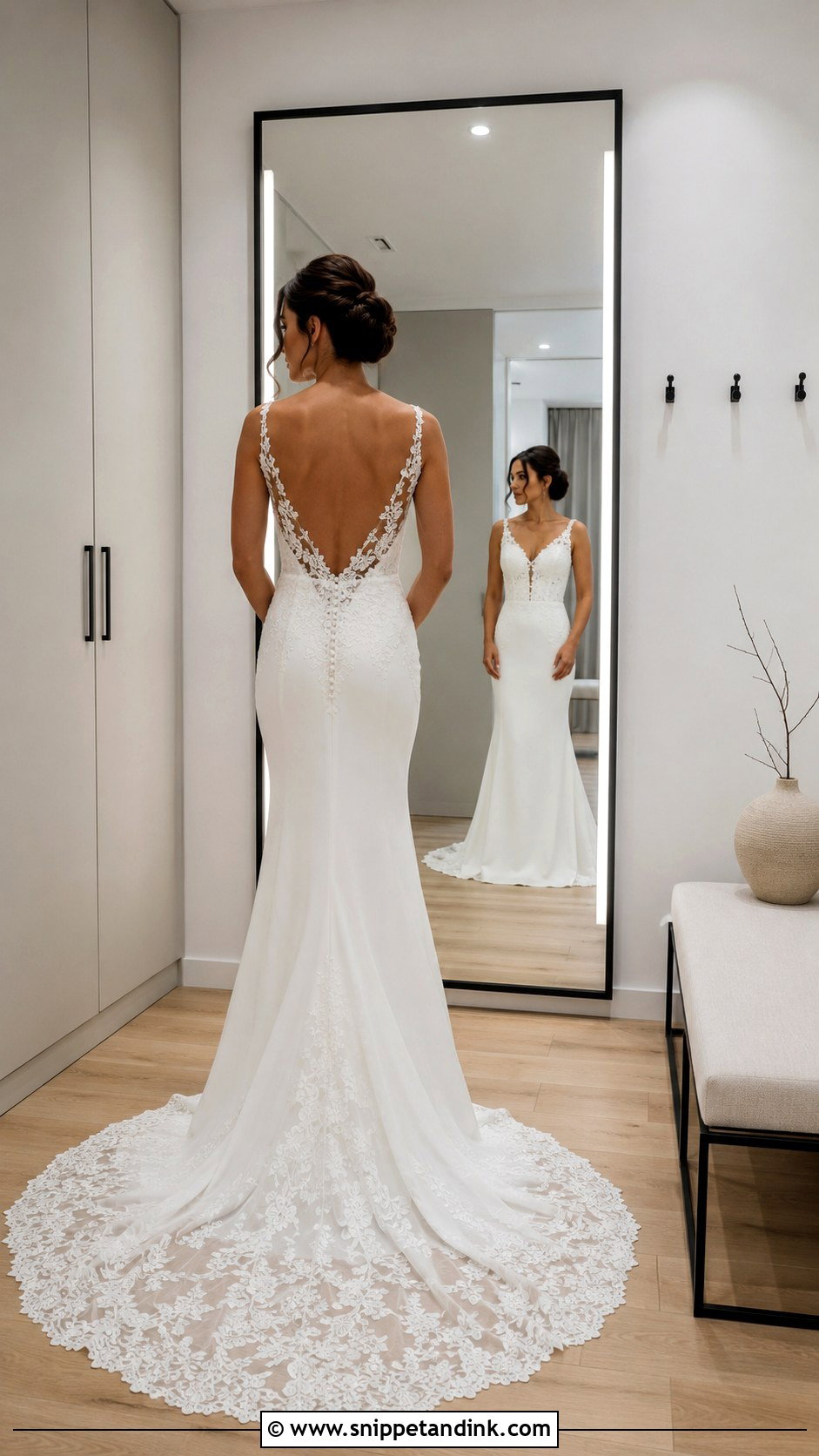
Minimalism helps the stylist as much as the bride. With smooth white walls, light oak floors and simple black or brushed metal accents, there’s nothing to snag and nothing to tidy between appointments. Use a tall, distortion-free mirror lit by narrow vertical lights on both sides; side lighting at face height is what removes the shadows under the bust and the eyes. A slim bench gives the bride a seat without eating floor space. Concealed cabinets hold clips, shapewear, spare hangers and fitting supplies, and one sculptural vase or neutral print is the only decoration I’d allow. Hide every cord and garment bag. The room should look like nobody has worked in it yet.
4. Vintage Bridal Fitting Room
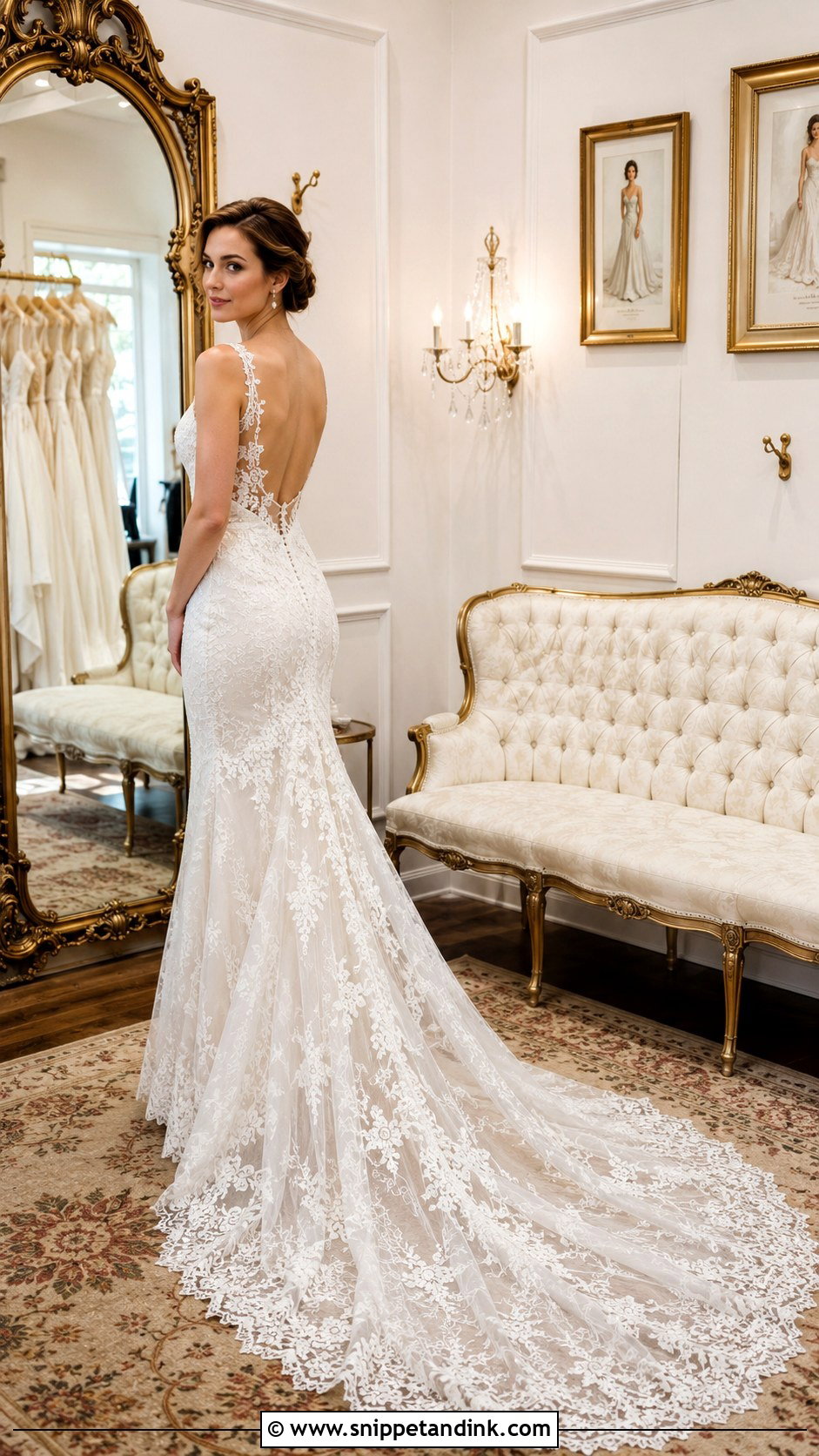
Vintage rooms tend to fail on furniture, not style. Antique settees and heavy side tables look right in photos but leave a bride in a cathedral train with nowhere to turn. Keep the character in the walls instead: soft ivory paint, decorative molding and an antique-style full-length mirror. Then add one tufted settee, a small wooden side table and a traditional rug in muted cream, rose or faded blue. Glass or crystal-style sconces give a warm glow, and brass hooks handle gown storage. A few framed bridal illustrations or black-and-white wedding photographs carry the period feel. Put modern lighting and storage underneath it all, and nothing fragile within reach of a swinging skirt.
5. Boho Bridal Fitting Room
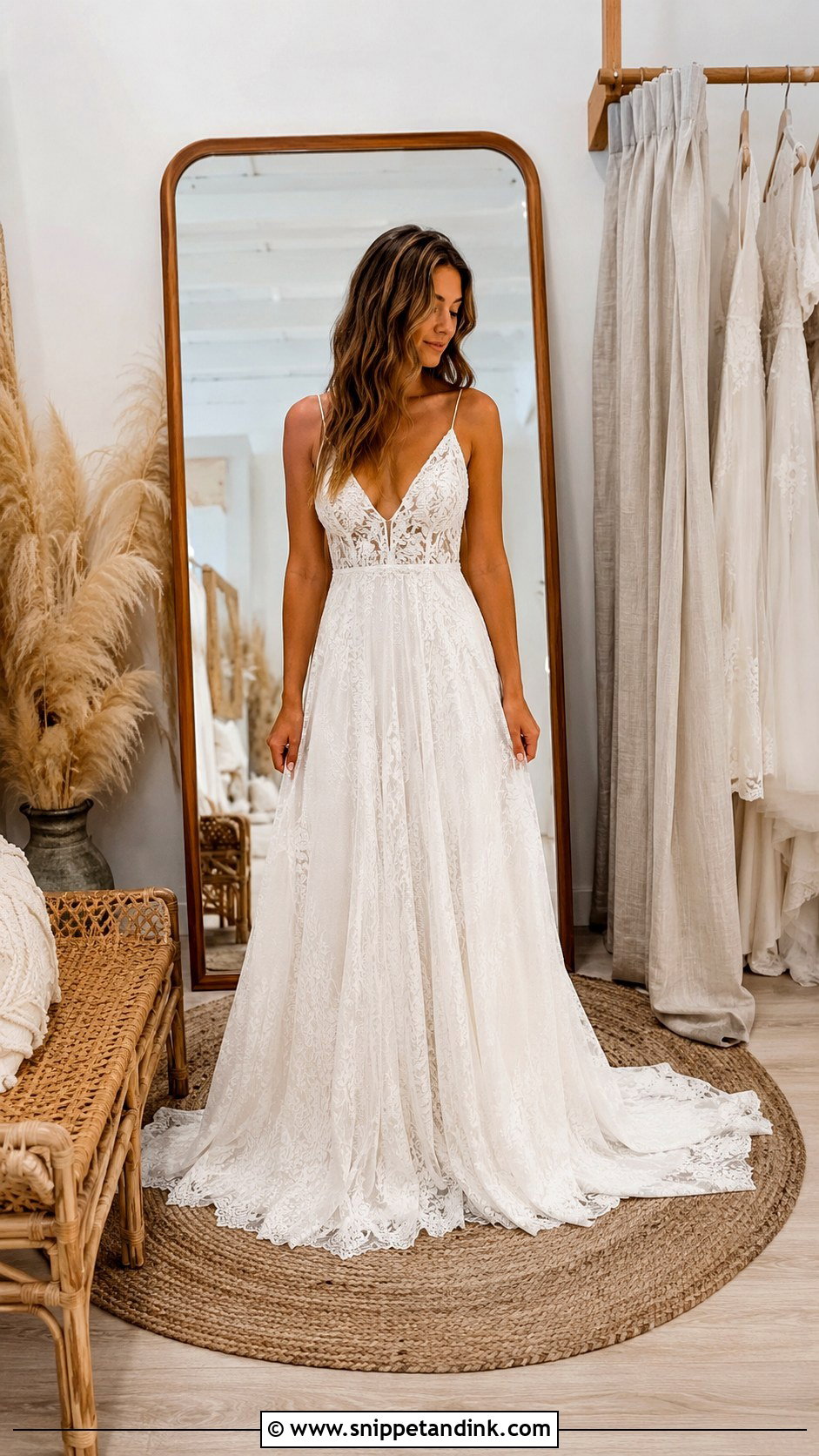
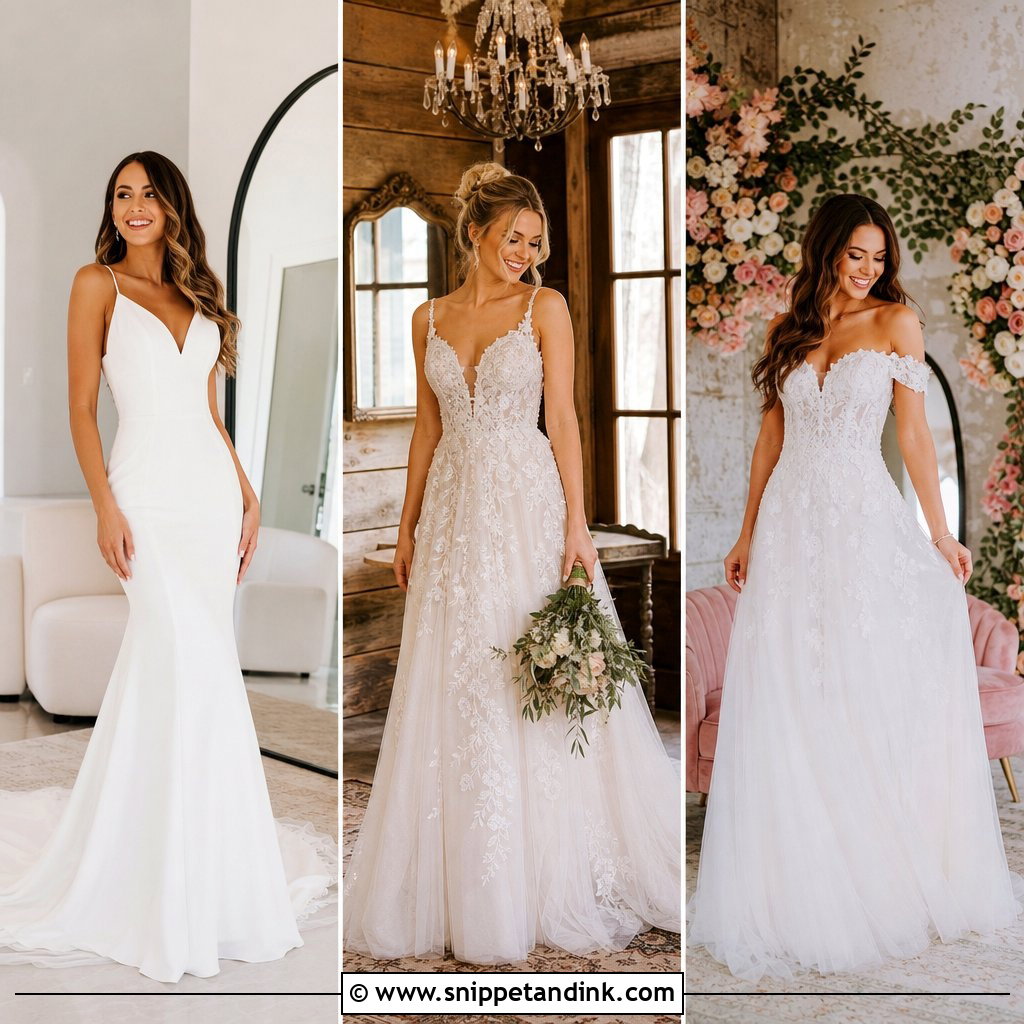
A boho room suits boutiques that carry lace and soft, flowing gowns, because the natural textures echo the dresses. Warm white walls, light wood flooring, a woven rug and a rattan or oak bench set the base. Check rattan edges carefully; split cane is one of the worst things for snagging fine lace. Frame the main mirror in pale wood with soft wall lights either side. Pampas grass, dried flowers or a single leafy plant add an organic note, but dried arrangements shed, so keep them away from the changing area. A wooden gown rail or decorative hooks display veils, and linen curtains in cream or light sand keep the airy feel.
6. French Bridal Fitting Room
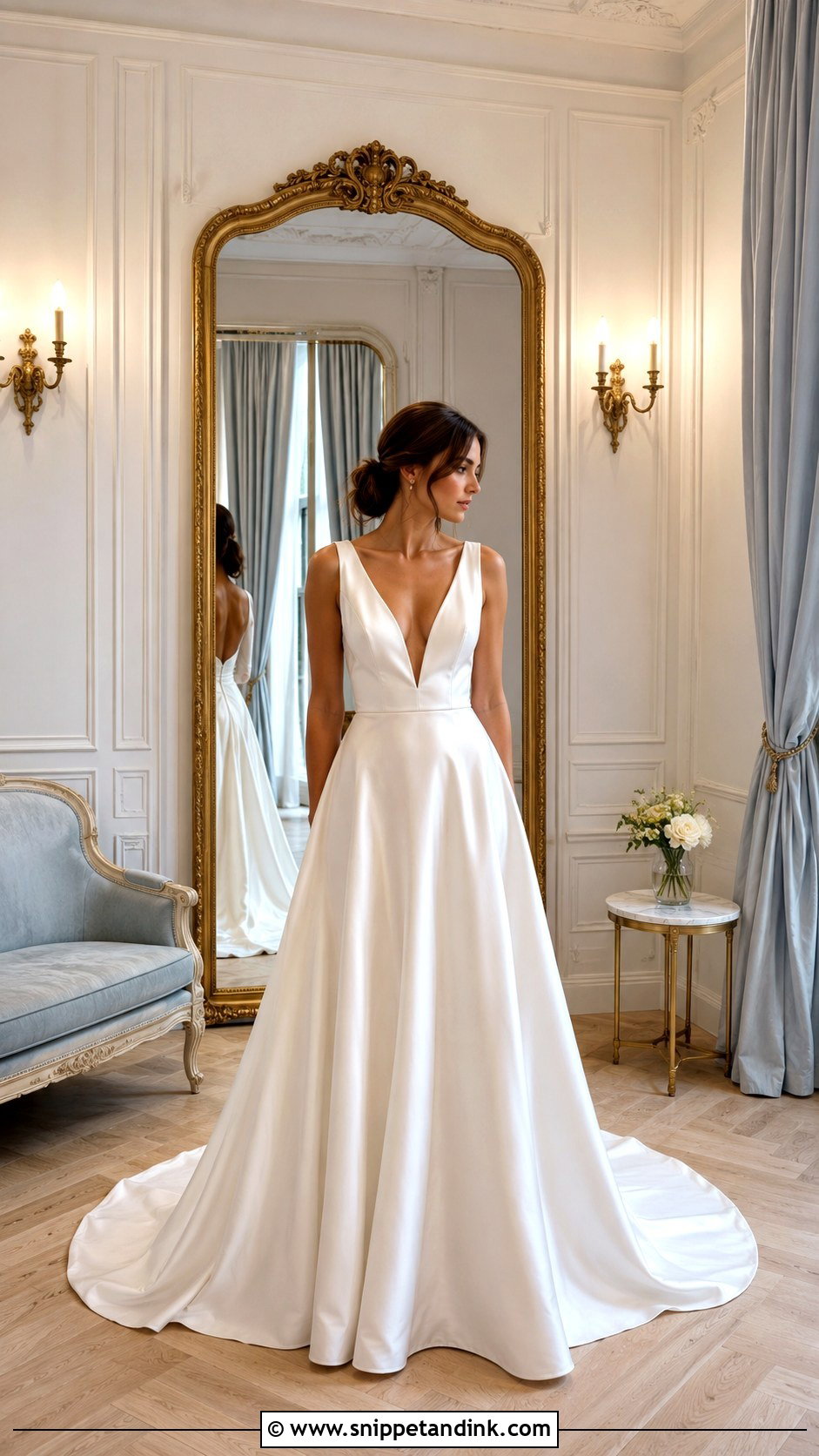
French-inspired rooms rely on architecture rather than objects. Creamy walls, delicate panel molding and light herringbone flooring do most of the work, with an ornate gold mirror and slim brass sconces as the focal point. A small upholstered settee gives guests a place to sit. Soft blue-gray, pale blush or muted sage accents stop the room tipping into formal, and a marble-look side table holds accessories and consultation notes. Long curtains bring privacy and soften the walls. I’d hold back on ornament after that. Both a traditional lace gown and a clean modern crepe look at home against this backdrop, which is its real strength.
7. Glam Bridal Fitting Room
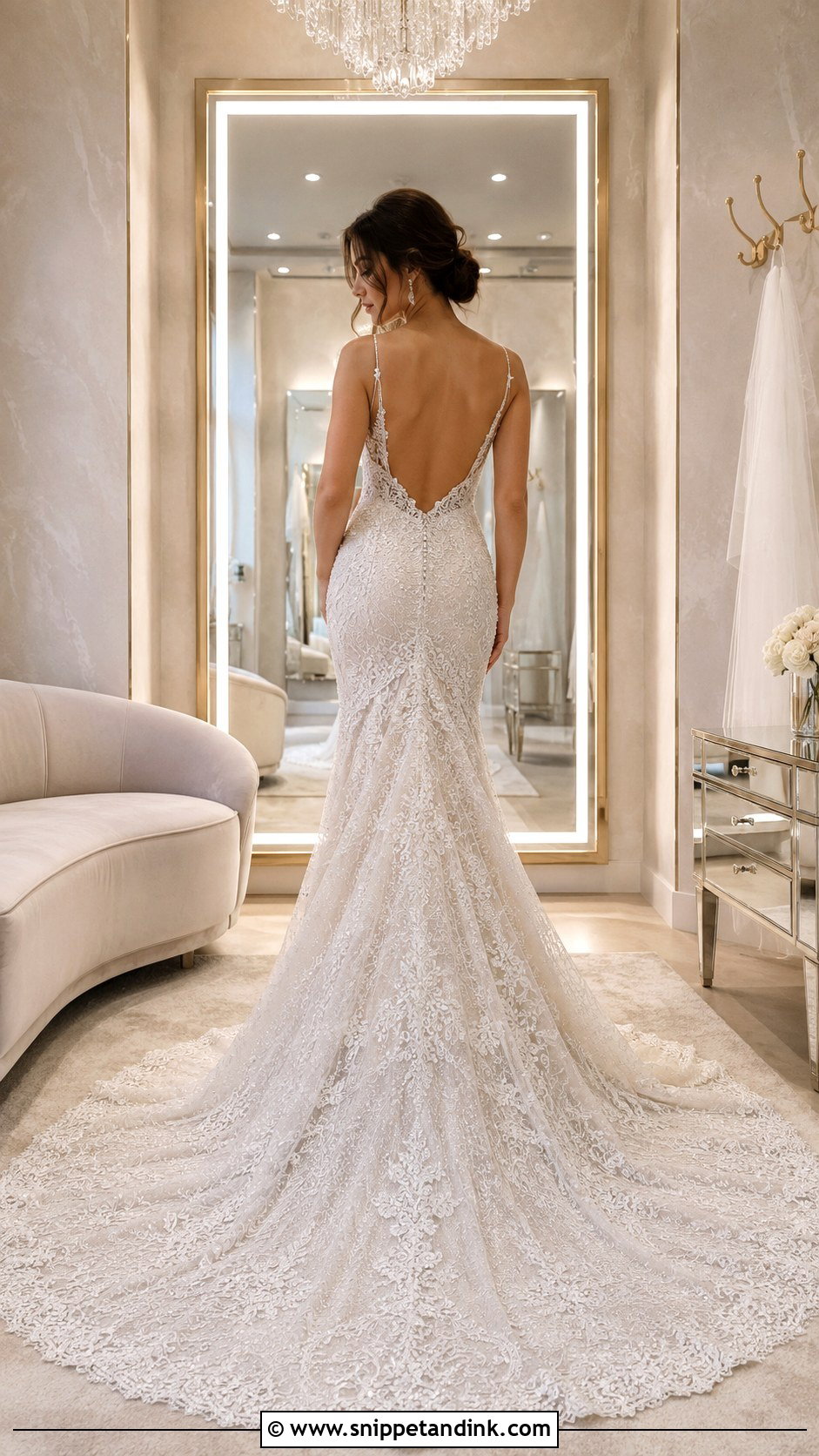
Glam is fine as long as the gown is still the brightest thing in the room. Start with warm white walls so fabrics keep their true color, then a large gold or champagne mirror framed in vertical lighting and a curved velvet sofa for guests. A crystal-style ceiling fixture can be the decorative note, but it can’t be the working light; overhead light alone casts shadows down the face and bodice. Back it up with wall lighting at mirror height. Mirrored side tables and brass hooks complete it. Too much sparkle competes with beaded dresses, so I’d balance every glossy surface with something soft.
8. Small Bridal Fitting Room
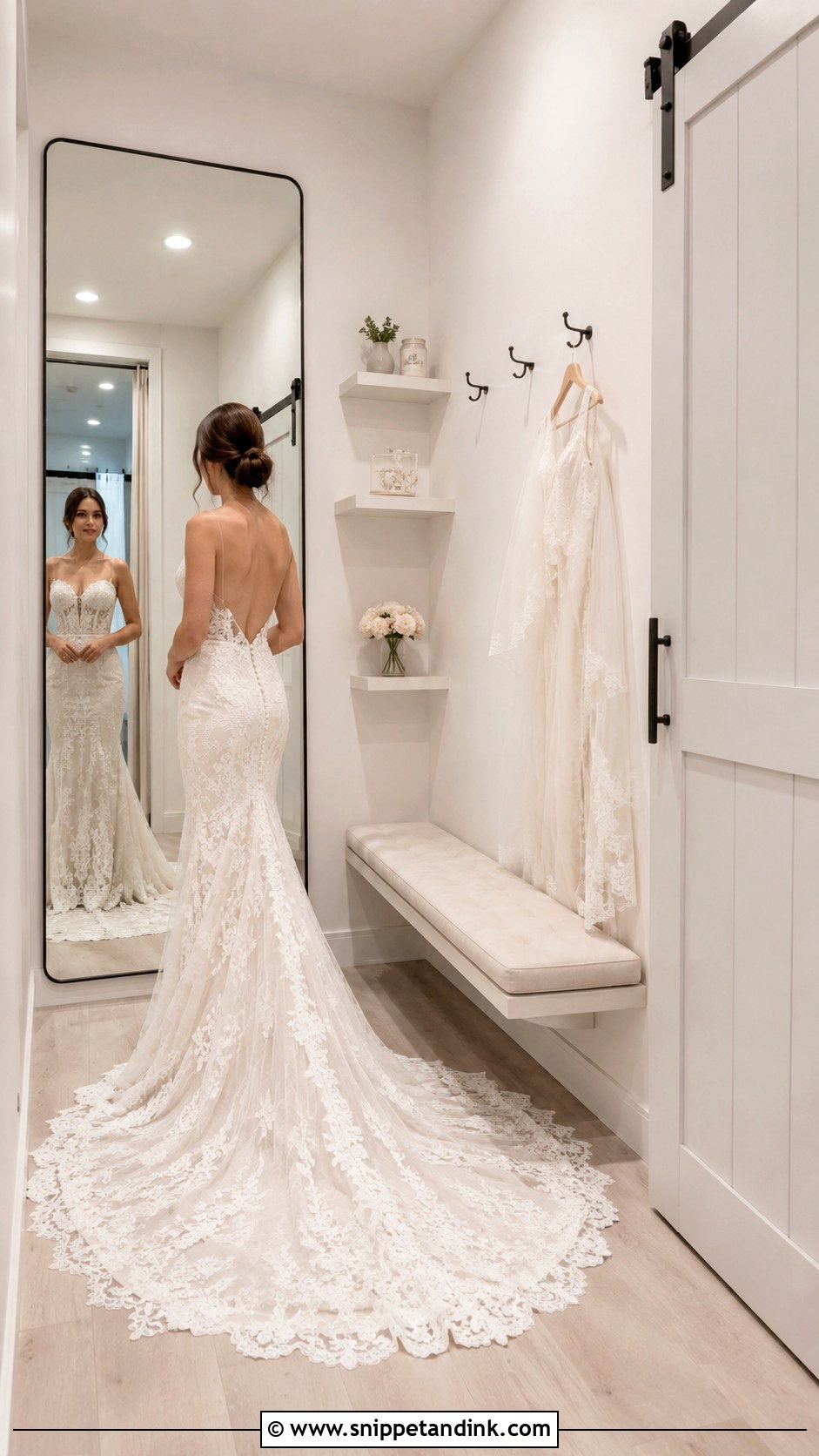
Small rooms are workable if the floor stays empty. Light walls, a tall mirror and slim furniture open things up visually, but the real gain comes from getting everything off the ground. A narrow wall-mounted bench, hooks at several points instead of a bulky rack, and recessed shelves or shallow cabinets for tools. Where the layout allows, use a sliding door or one that opens outward, so the door swing doesn’t steal the space a skirt needs. Light it brightly and evenly, since dark corners shrink a room further. A smooth floor matters more here than anywhere: in a tight space the train is always touching something.
9. Private Bridal Fitting Suite
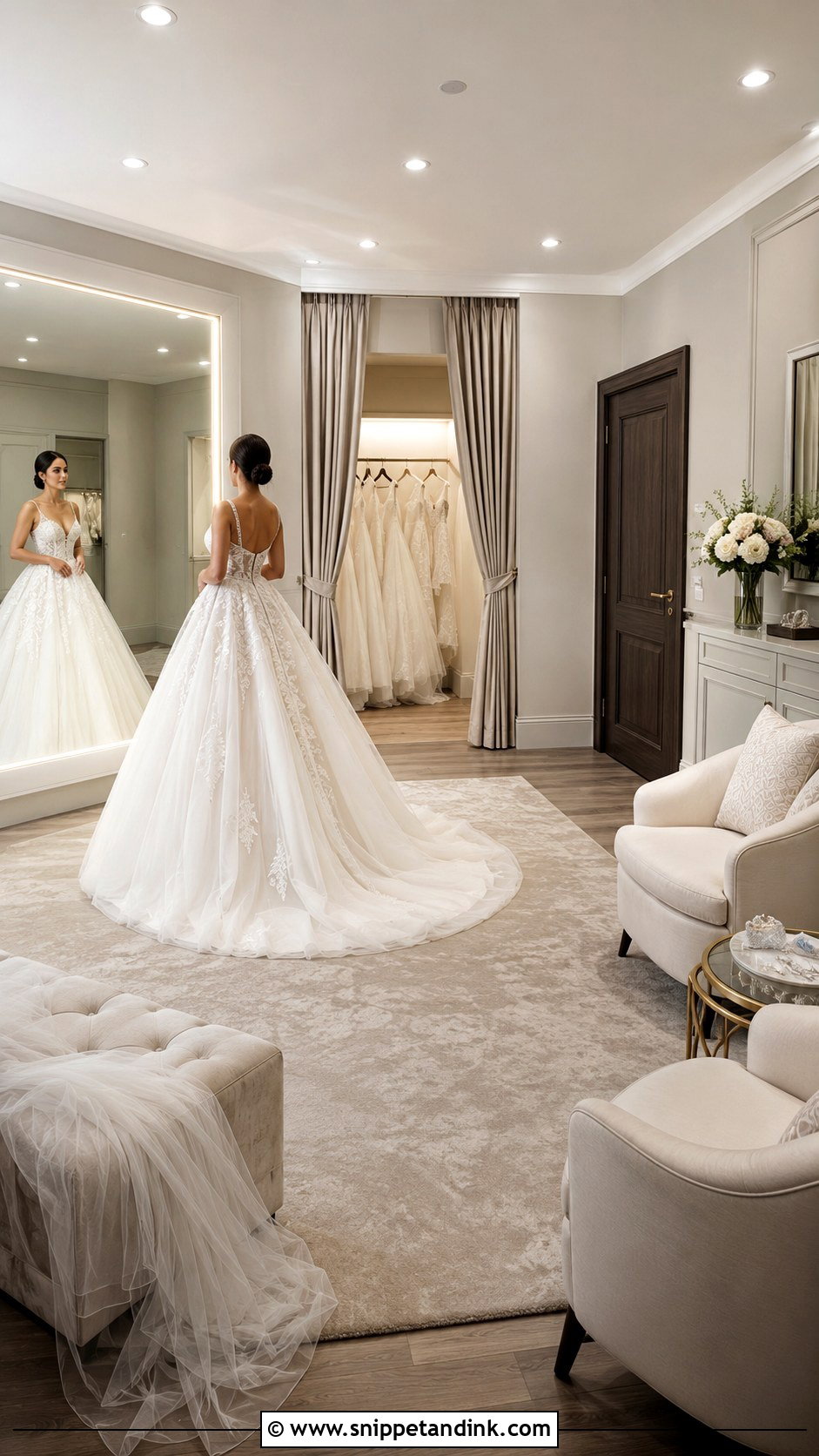
A private bridal fitting suite changes the pace of an appointment, and brides relax noticeably when they aren’t hearing the next group outside. I divide the space into three zones: changing, mirror and a small guest lounge. A solid door or a fully closing curtain protects privacy, and an internal rail keeps the shortlisted dresses in order. Put the main mirror where the bride can step back several paces and see the whole silhouette. Armchairs or a compact sofa should give family a clear view without sitting in the stylist’s path. A small cabinet for personal items, shoes, clips and drinks keeps clutter off the floor, and upholstered seating and curtains soak up sound so conversations stay discreet.
10. Three-Way Mirror Bridal Fitting Room
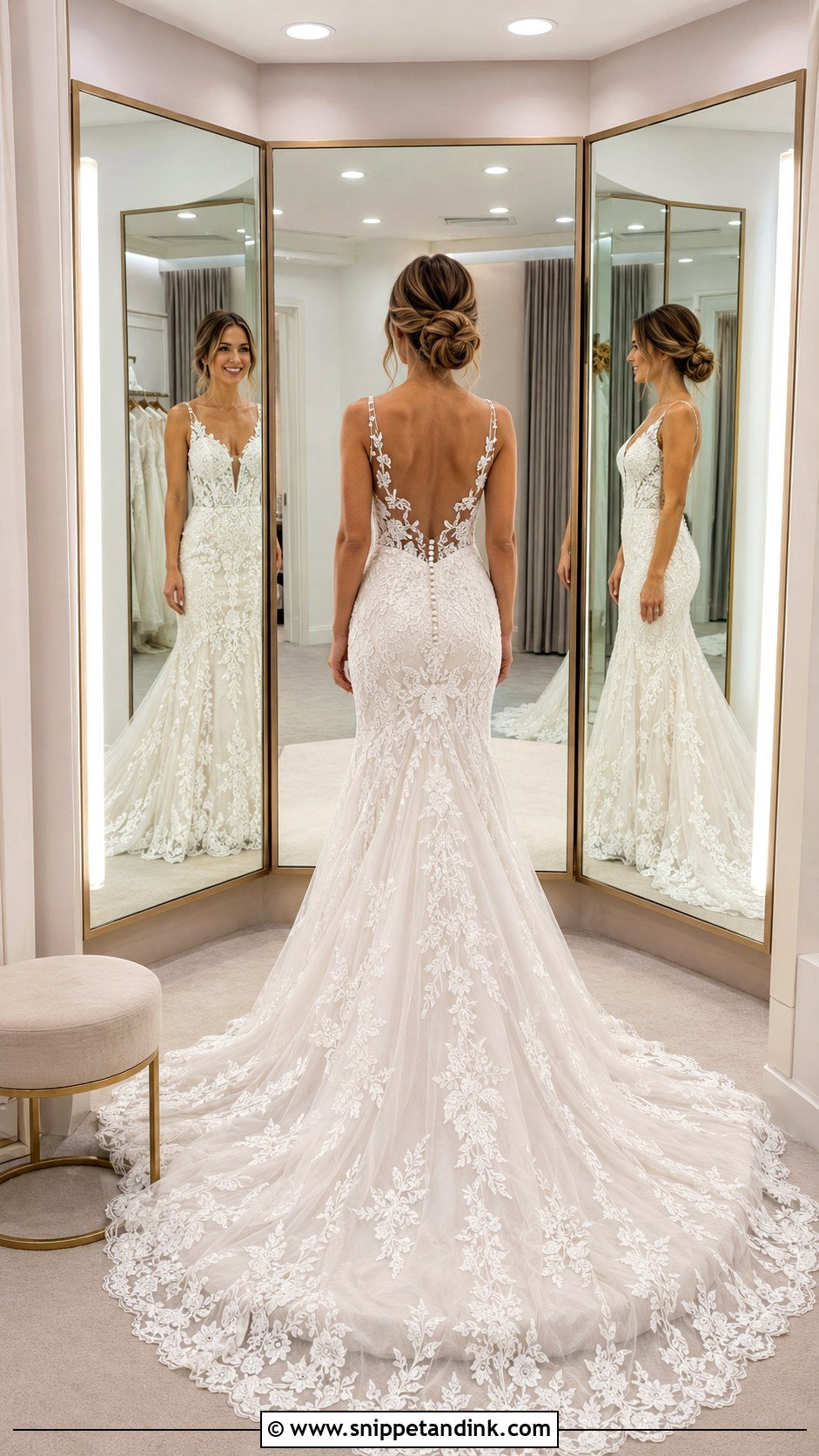
A three-way mirror saves the bride from twisting to see her back, which matters because twisting changes how a bodice sits and makes a good fit look bad. Put it in the main reveal area with open floor all round for ball gowns and long trains. Vertical lights beside the mirror panels cut the shadows and show fabric detail evenly. If the ceiling height and layout allow it safely, add a low platform. Keep the surrounding walls neutral so the reflections stay clean, and leave a stool nearby for the stylist to pin hems or swap shoes. Brides look hardest at the train, the buttons and the lace placement at the back, and this mirror lets them do it standing naturally.
11. Natural Light Bridal Fitting Room
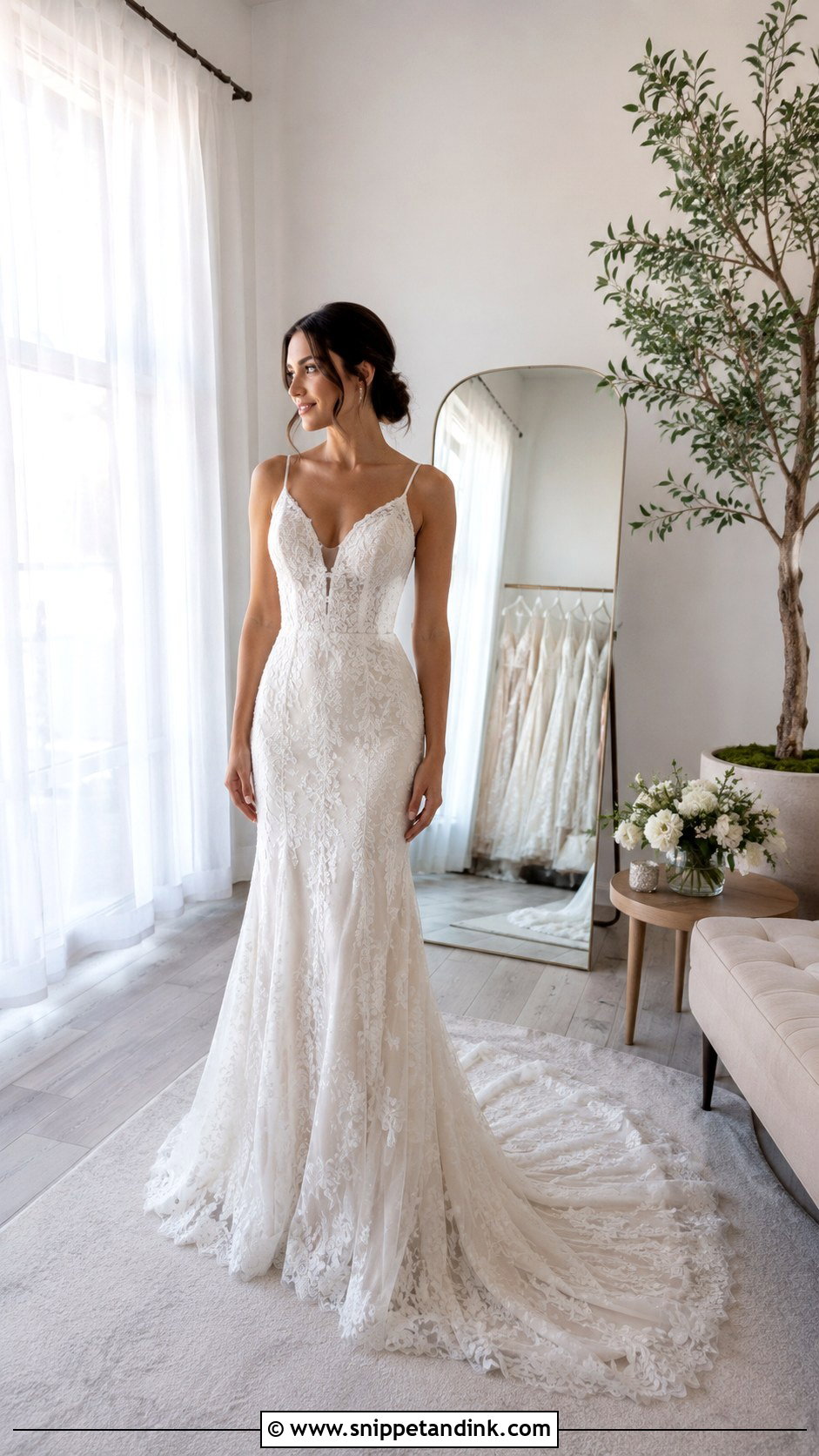
Daylight is the truest light for judging white fabric, which is why I love a window in a fitting room. The trick is placement. Let the light come from the side; a mirror facing a bright window throws glare back at the bride and silhouettes her. Frosted film, adjustable shades or sheer curtains handle privacy. Pale floors and soft neutral walls spread the light around, and an upholstered bench, an indoor tree and a light wood side table keep it fresh. Daylight changes by the hour, though, so put in good artificial light for cloudy days and evening appointments, matched as closely as you can to the warmth of the window.
12. Wallpaper Bridal Fitting Room
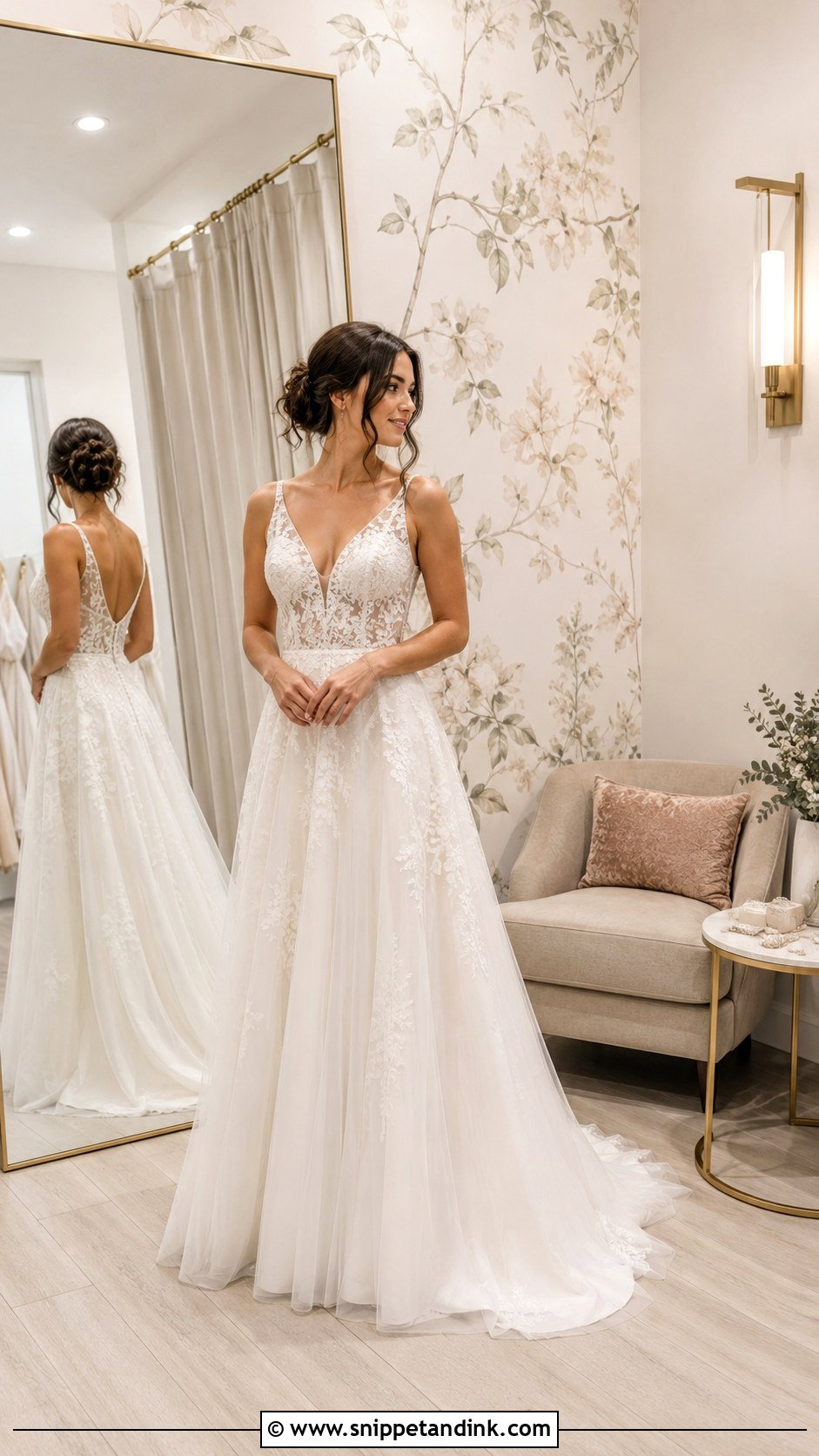
Wallpaper gives a plain bridal fitting room an identity, but placement is everything. Never put it behind the main mirror. The bride sees the pattern reflected right around her body, and a busy print makes a clean gown look fussy. Use it behind the seating instead, in a soft-scale design such as pale botanical branches, fine line drawings or a quiet texture. Pair it with plain curtains, a neutral bench and simple metal fixtures, and choose a washable paper; walls get touched and marked in a busy shop. Keep the other walls light. Done like this, it gives brides something distinctive in their photos without interfering with how they see the dress.
13. Floral Wall Bridal Fitting Room
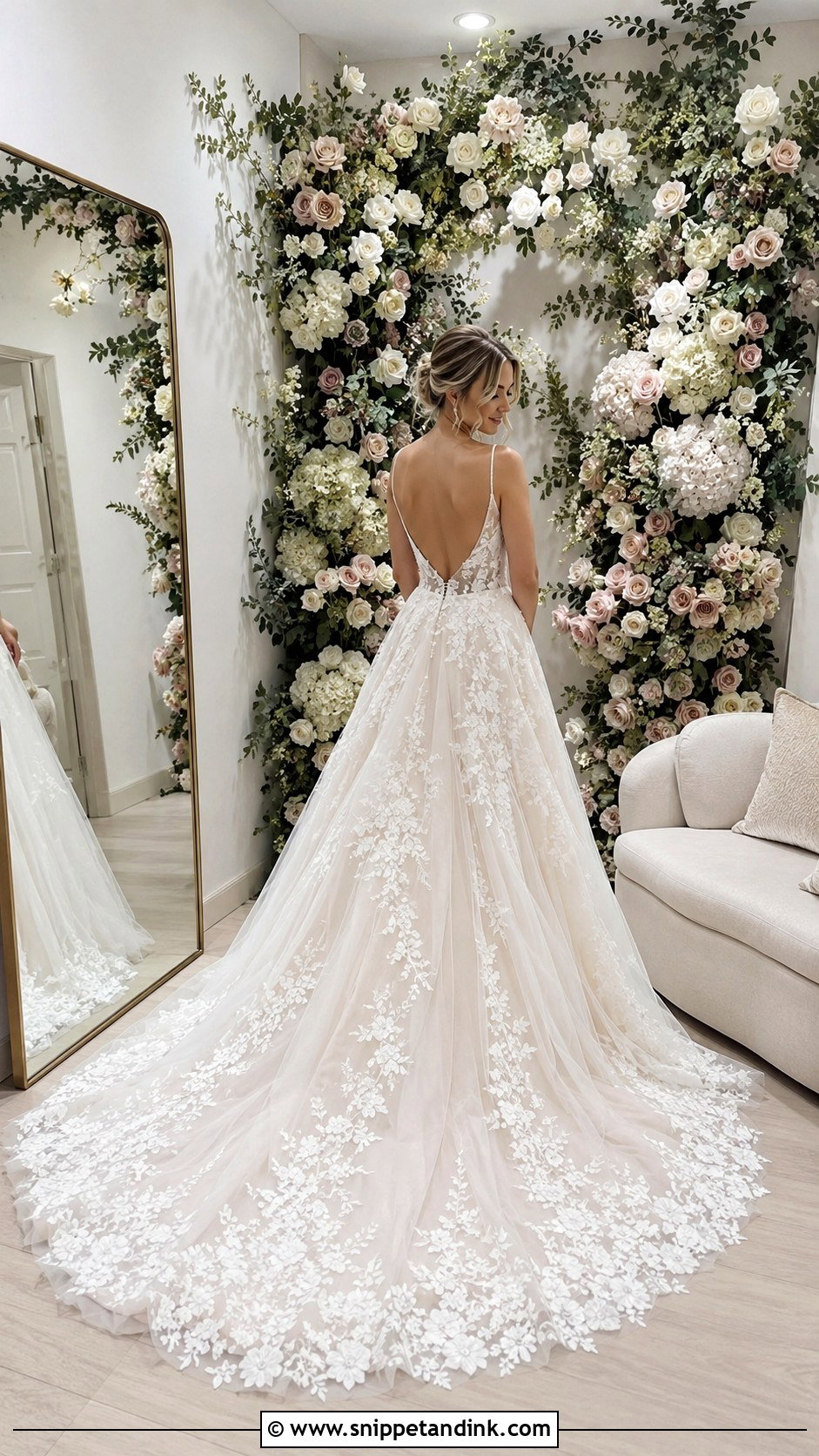
Brides will photograph themselves in front of a floral wall whether you plan for it or not, so plan it. Realistic silk flowers, preserved greenery or a refined botanical installation in white, cream, blush and muted green, placed behind the viewing platform or beside the main mirror where it doesn’t cost changing space. Mount it securely and choose stems that can be dusted, because preserved arrangements collect dust fast and shed onto hems. Keep the walls, sofa and lighting plain around it. A small logo can sit within it if it stays tasteful, and the wall then works as a branded spot for every gown photo.
14. Platform Bridal Fitting Room
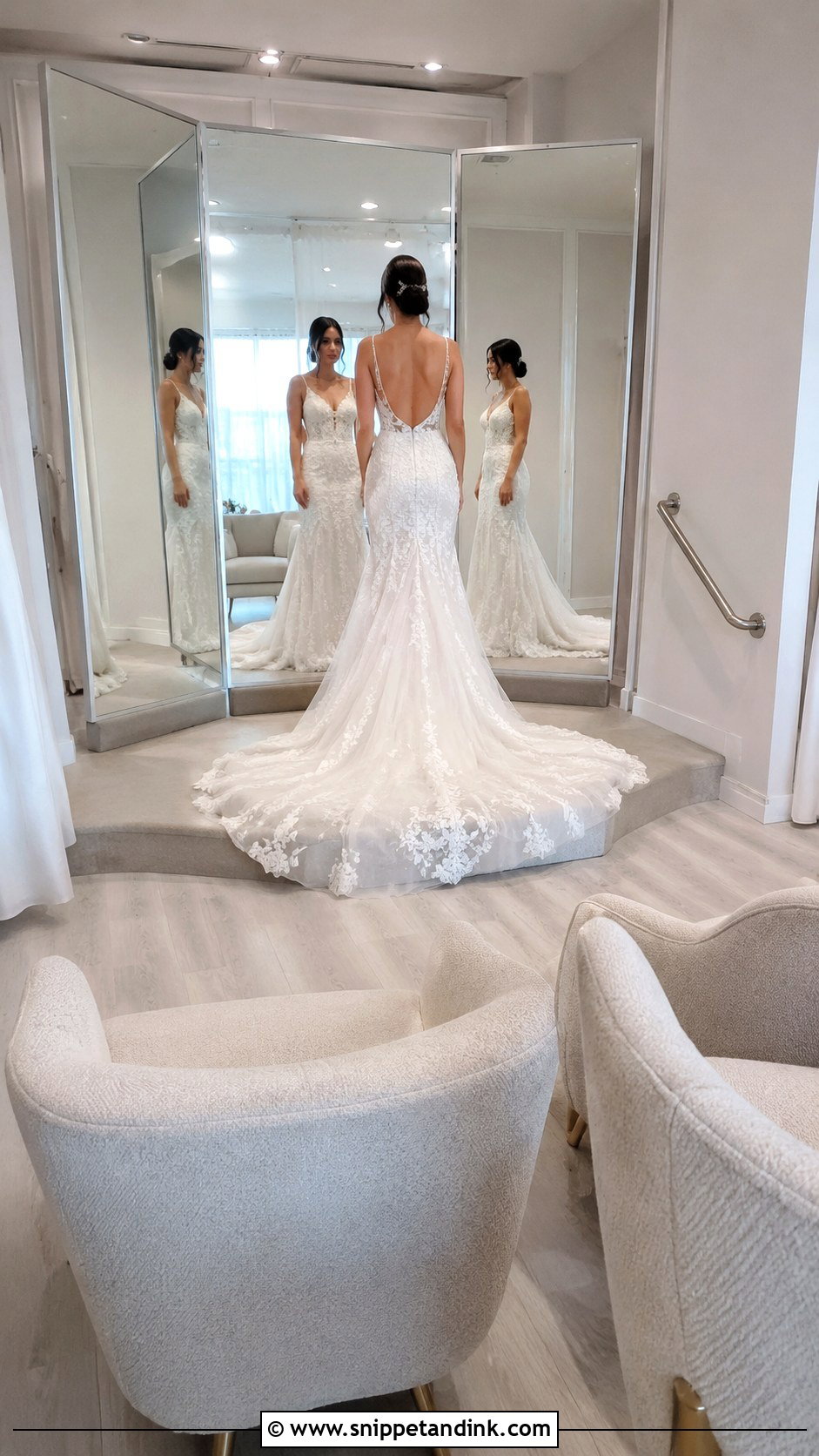
A platform matters more than people think. Standing on a flat floor, a bride sees her skirt pooling at her feet and the train bunched behind her; raised up, the fabric drops straight and she sees how the gown will hang as she walks. Put it right in front of a full-length or three-way mirror, with clear space round the edges for the stylist to kneel. It has to be low, stable, non-slip and have a visible edge, because brides step down without looking while holding a skirt. A handhold nearby helps. Match its color to the floor. With guest seating facing it, the reveal happens on its own, and hems, proportions and accessories are far easier to judge.
15. Lounge Bridal Fitting Room
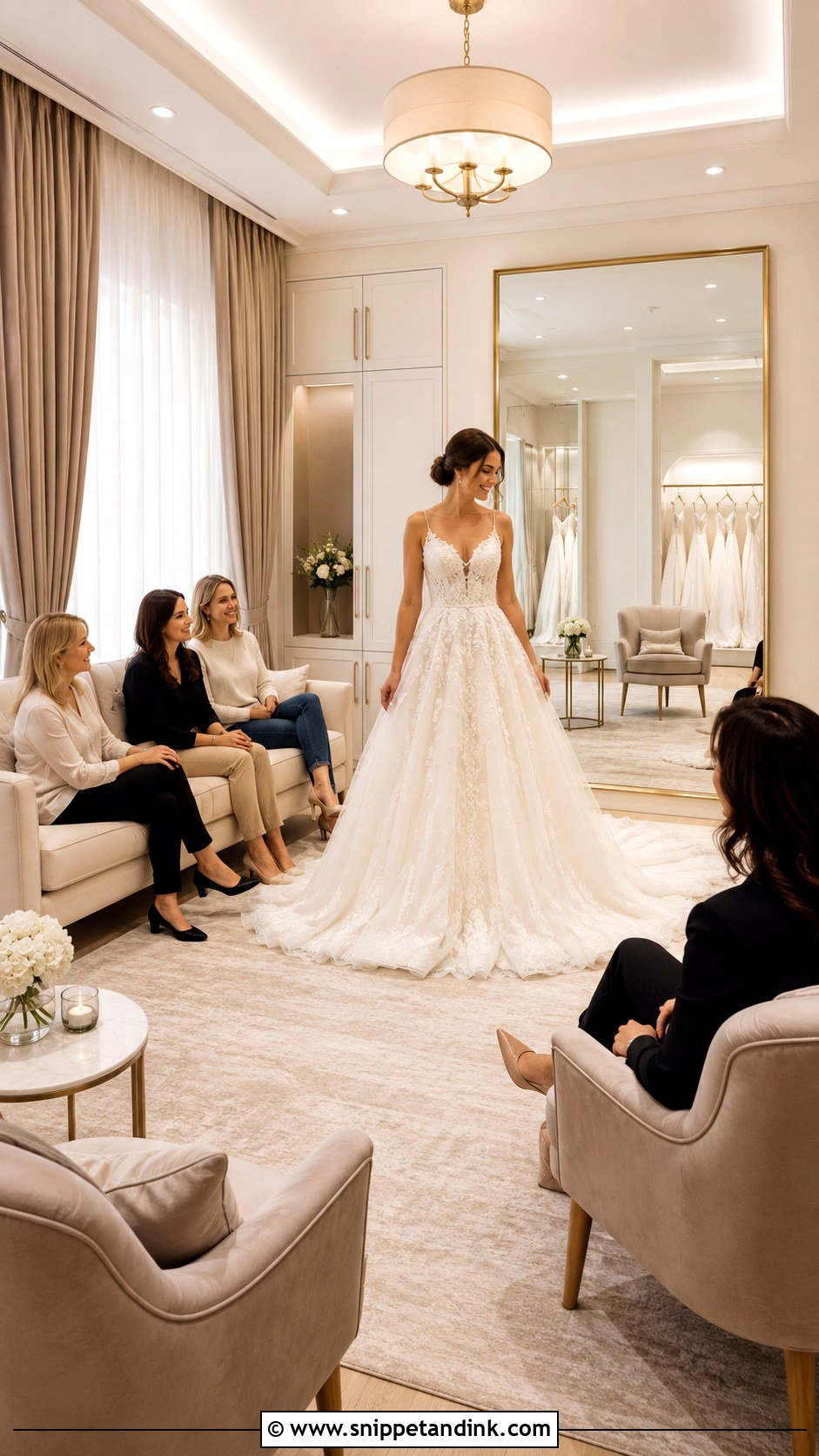
Appointments run long, and a guest who’s comfortable gives better feedback than one perched on a stool. Put a sofa or two compact armchairs opposite the main mirror and keep the center clear. Durable upholstery in cream, taupe, blush or light gray copes with makeup and spilled drinks better than you’d expect, especially with a protective finish. A small round table holds notes, accessory trays and handbags. Soft curtains, layered lighting and a simple rug add warmth. Seating must give a clear view without crossing the stylist’s working path, and this only really works in larger suites where changing and viewing can stay separate.
16. Accessible Bridal Fitting Room
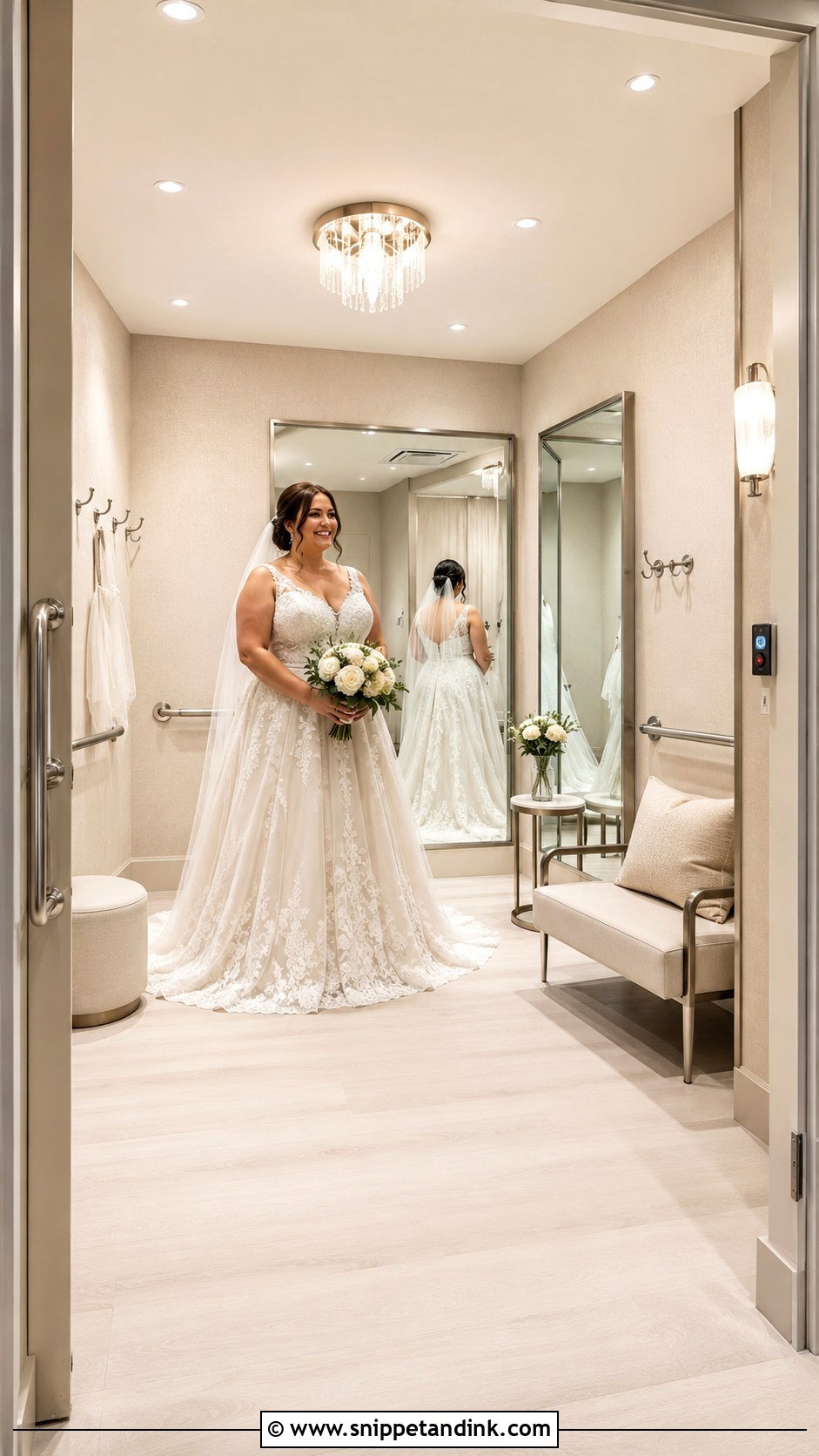
An accessible room needs space more than anything else. Plan a wide, unobstructed route, with no loose rugs, raised thresholds or decorative furniture narrowing the floor. Place mirrors so a bride can see herself fully while seated as well as standing; most mirrors are hung too high for a seated view. A stable bench with supportive arms makes changing easier, and hooks at varied heights help everyone. Choose doors and handles that open easily and put light switches within comfortable reach. None of this has to look clinical; the same finishes and décor as your other rooms work here too. Before building, confirm dimensions, fixtures and clearances against the accessibility rules where you are, with a local design professional who knows them.
17. Built-In Storage Bridal Fitting Room
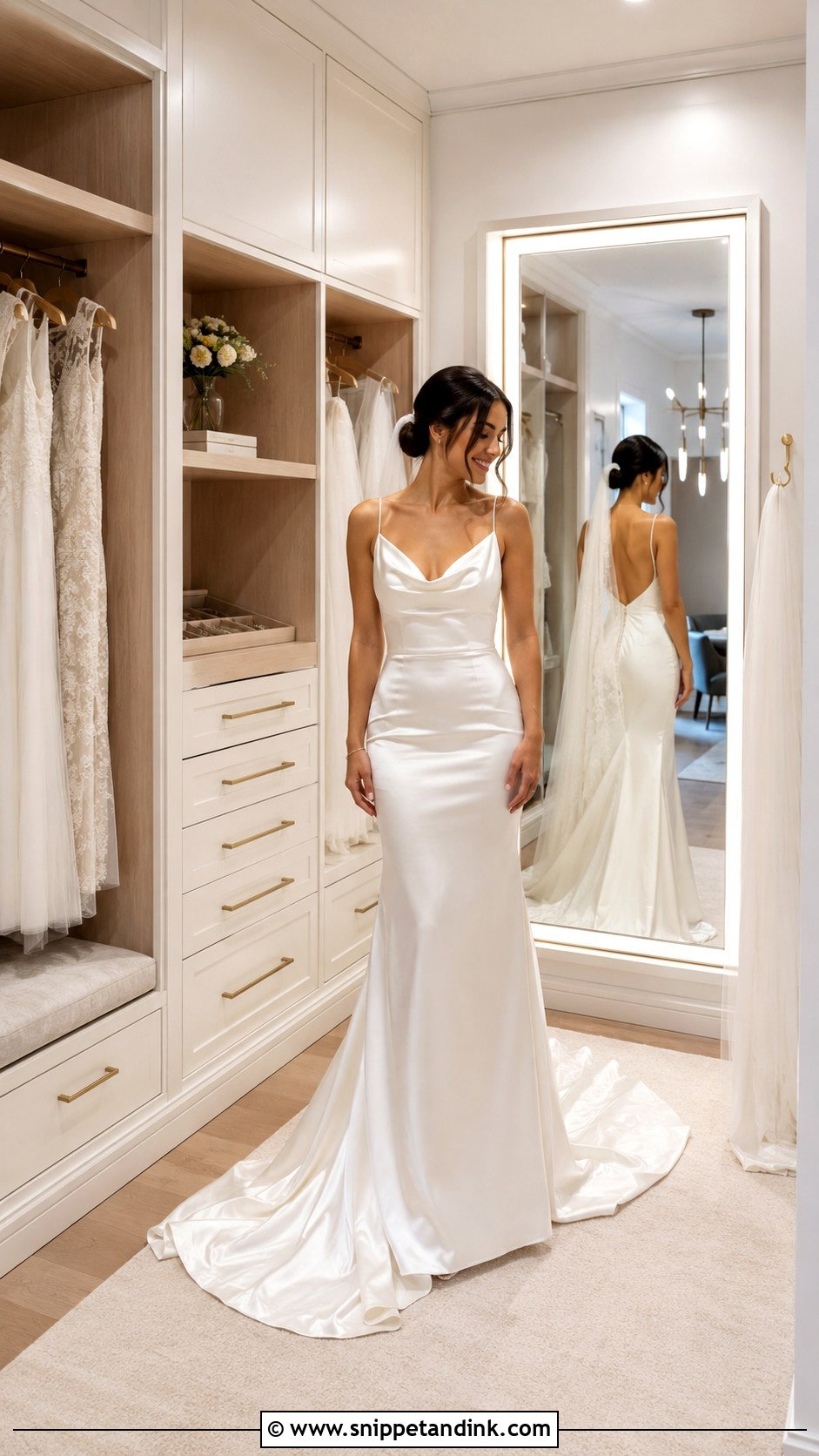
Storage is what keeps a fitting room calm on a busy Saturday. Use tall cabinets for garment bags, open rails for the dresses currently being tried, and shallow drawers for clips, modesty panels, shapewear and styling tools. A storage bench can hold shoes and personal belongings so no extra furniture is needed. Put sturdy hooks near the changing area for veils and gowns. Check cabinet doors swing clear of where the bride stands; a door brushing a tulle skirt will snag it eventually. Choose handles with smooth, rounded edges. Match cabinetry to the walls or use light wood for gentle contrast. When every clip has a drawer, the stylist never leaves the bride to fetch something.
18. Photo-Ready Bridal Fitting Room
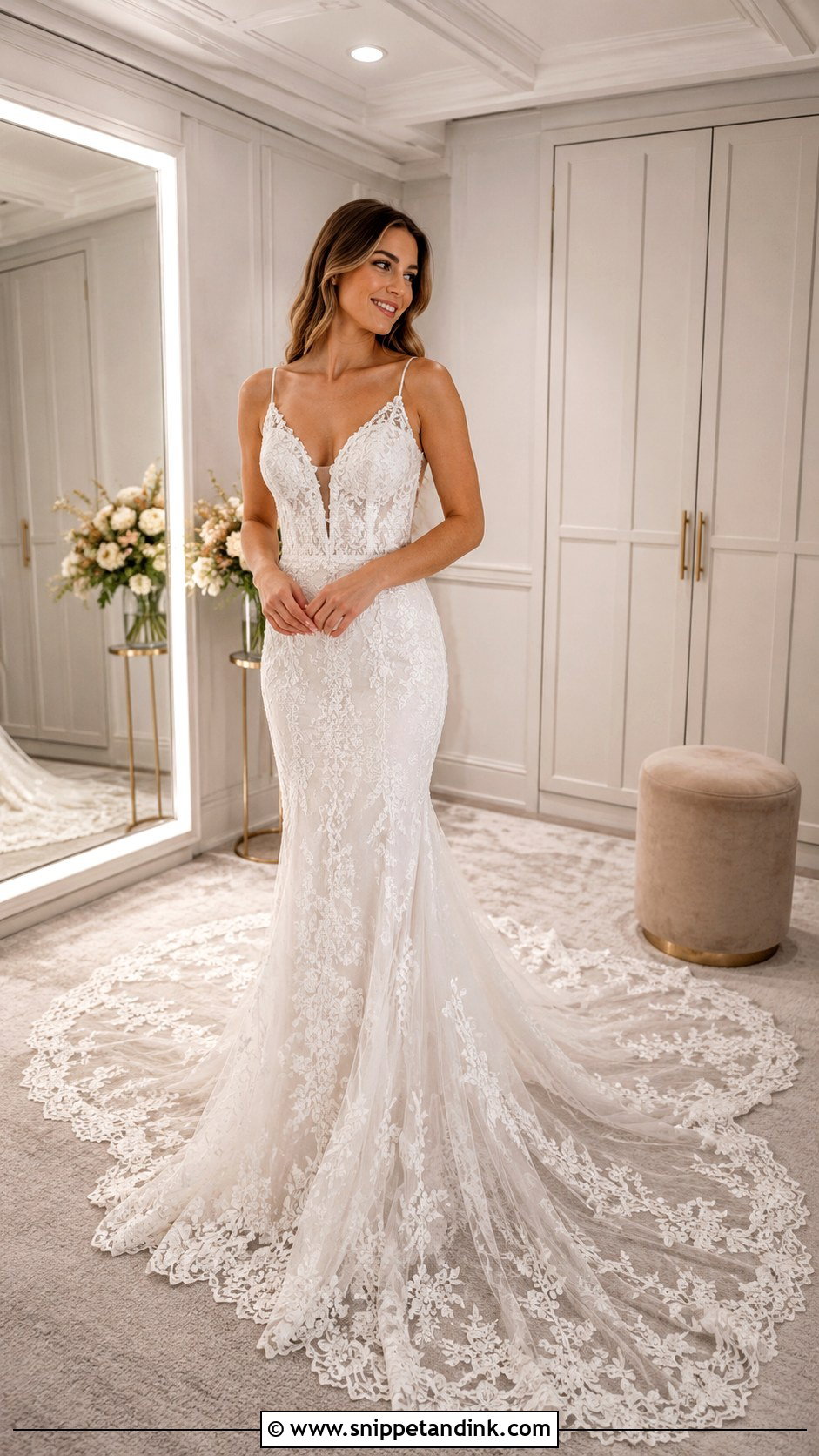
A photo-ready room is mostly about what isn’t in the frame. Start with a clean background, flattering white light and a large full-length mirror. A subtle logo, floral arrangement or architectural paneling makes the space recognizable when brides share their pictures. Keep cords, garment bags and fitting supplies behind closed doors. Position the reveal so a phone held at the doorway catches the whole gown, train included, without a cluttered corner. A movable stool or side table lets staff clear the scene in seconds. Avoid glossy surfaces near the mirror, as they bounce glare into photos. The photo spot still has to work as a fitting area, with room to pin and adjust.
19. Black And White Bridal Fitting Room
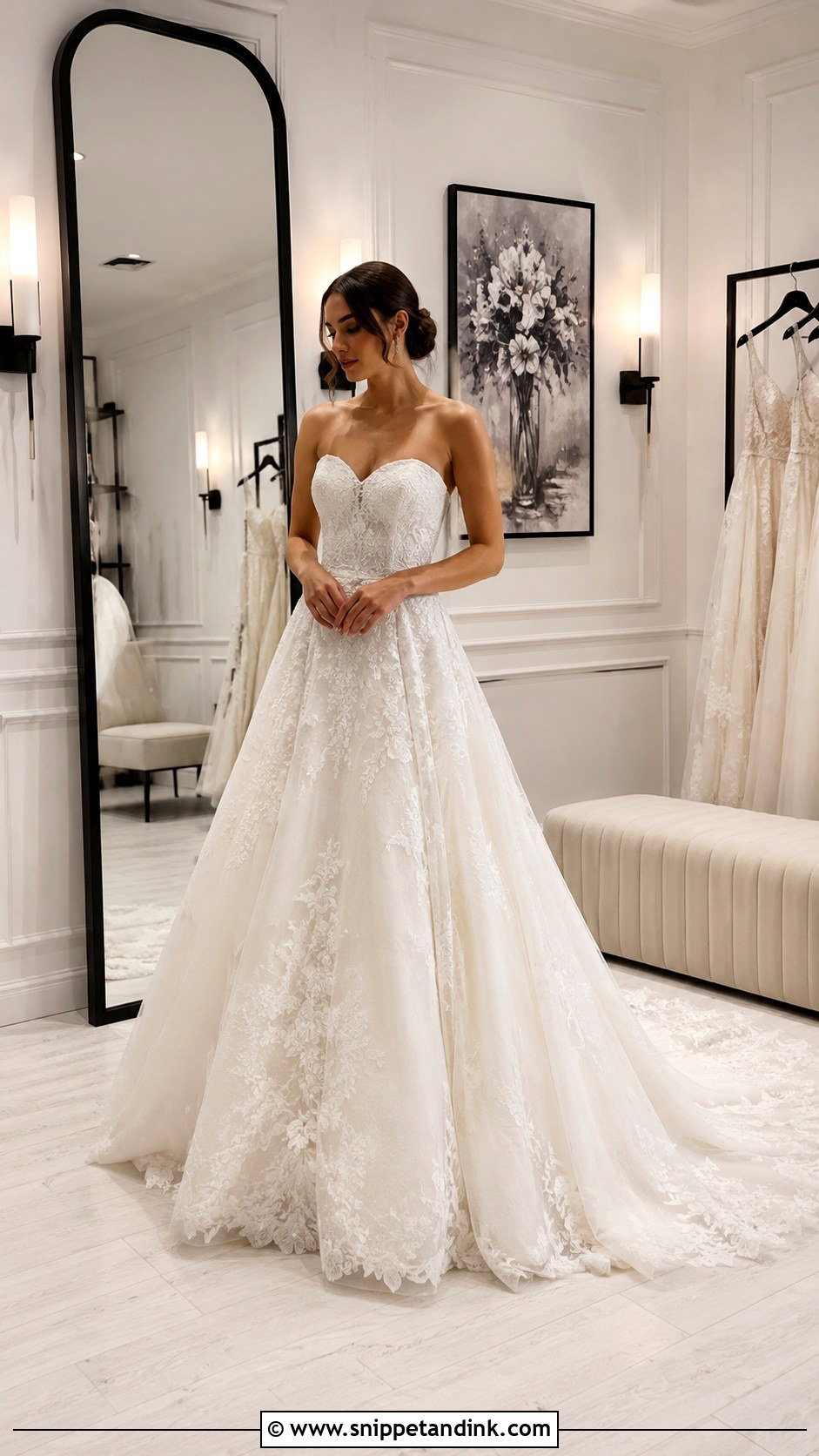
Black and white is the most graphic option here, and it needs restraint to work. Keep soft white as the main background and bring black in through mirror frames, door hardware, sconces or a narrow garment rail. Large black surfaces shrink a room and soak up light. A cream bench and pale floor soften the contrast, and fine black line artwork or simple paneling suits it better than bold pattern. Light it brightly and neutrally. Against stark white walls, ivory, champagne and blush fabrics can look dingy, so good light is what lets a bride see those shades for what they are. It suits boutiques with modern branding rather than romantic décor.
20. Sustainable Bridal Fitting Room
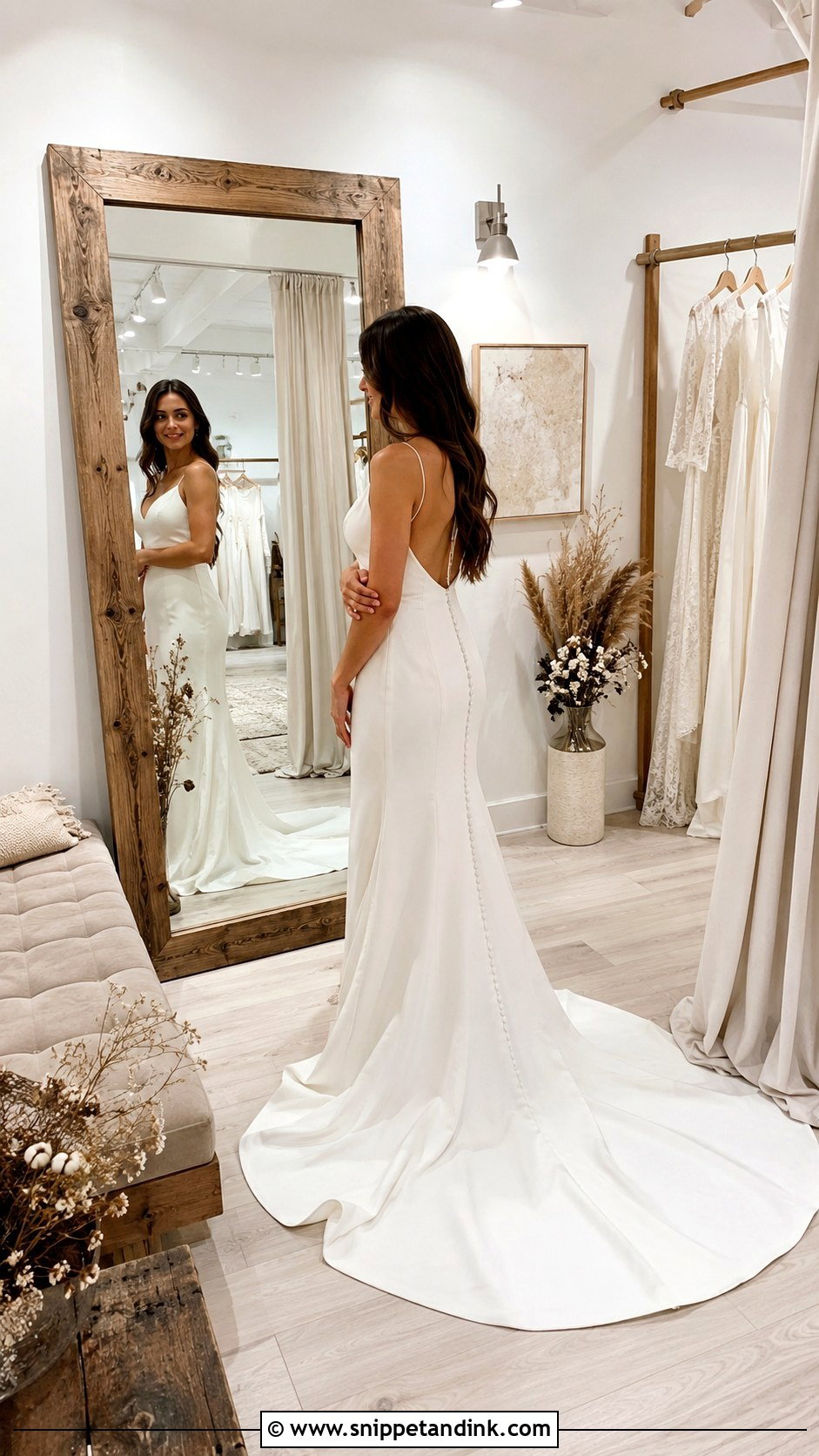
Sustainability in a fitting room mostly means buying once. Durable flooring, low-maintenance wall finishes, energy-efficient lighting and well-made furniture that won’t need replacing in two years. Reclaimed wood works for a mirror frame, bench, display shelf, or garment rail, provided it is sanded smooth and sealed, since rough grain catches lace. Washable curtains and upholstery in neutral colors outlast trend shades. Restored vintage seating can work if it’s sturdy and professionally cleaned. Choose a few meaningful pieces, such as local artwork or a reusable dried arrangement, instead of decorative clutter. Comfort, easy cleaning and daily reliability should still come first.
Light That Can Tell Ivory From Diamond White
The most common complaint I hear after a purchase is that the dress looked a different color at home or in photos. That’s almost always the lighting in the shop. Very cool light makes ivory look yellow next to a bright white gown, and very warm light makes everything look cream.
- Choose bulbs with a high color rendering rating, ideally 90 or above, so fabrics show their real shade.
- Keep every fixture in the room the same color temperature. A neutral warm white suits most skin and most gowns.
- Light the bride from the sides at face height, not only from above.
- Keep a small window or daylight bulb area where a bride can check shades side by side.
Wear and Tear a Bridal Room Has to Absorb
Gowns get tried on dozens of times before one sells, and the room either protects the samples or quietly damages them. Foundation on necklines and dust on hems are the two things that shorten a sample’s life.
Keep makeup wipes and fabric hoods by the mirror so brides can cover their faces while dresses go over their heads. Vacuum the floor between appointments, not just at closing, because grit grinds into tulle. Wipe the mirror often; smudges show in every photo. Steam samples away from upholstery and curtains. And give staff a spot for a sewing kit, pins and stain remover that’s always restocked, since the room is only as good as what’s in its drawers.
The Room Should Disappear Once the Dress Is On
When a fitting room is right, nobody remembers it; they remember the dress. Get the basics down first: an accurate mirror, balanced light, privacy, open floor, seating and organized storage. Color, furniture, wallpaper, floral walls and branded details come after. Small rooms need streamlined layouts, while larger suites can add a platform, a guest lounge and a three-way mirror. Build accessibility in from the start rather than adapting later. Match the concept to your gowns, your space and the brides you serve, and the room will quietly do its job for every appointment.


Leave a Reply