
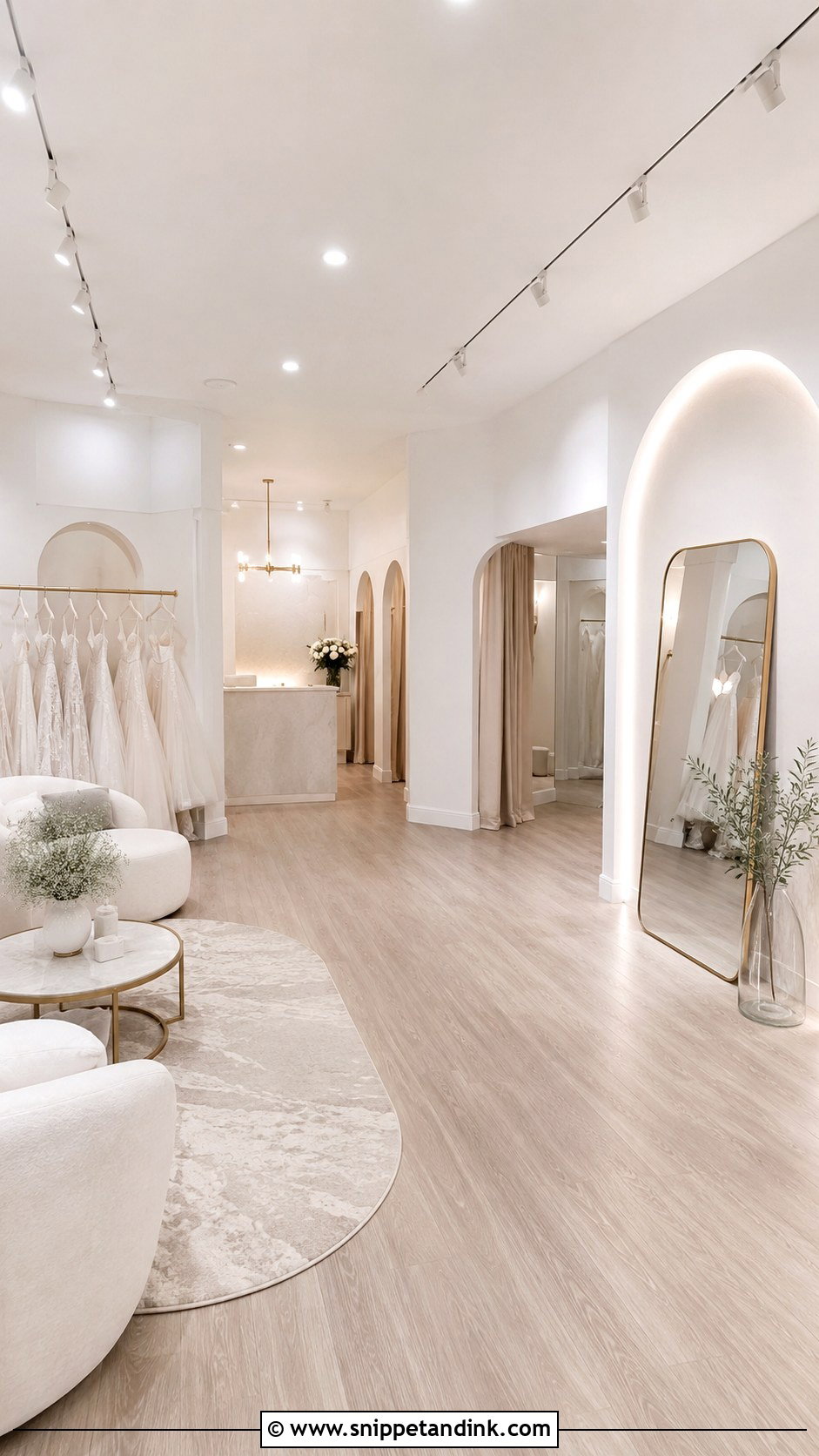
I’ve spent a lot of hours on bridal shop floors, and the room does half the selling before a consultant says a word. A bride decides within minutes whether she feels relaxed, and that comes from light that flatters her, a fitting room with space for her mother and best friend, displays she can read at a glance and a path that doesn’t make her squeeze between rails. The same layout has to let stylists fetch gowns quickly and keep fragile samples safe from makeup and sunlight. If you’re opening a boutique or refreshing a shop you’ve run for years, here are twenty salon directions, each with the practical notes I’d want in place before the first appointment.
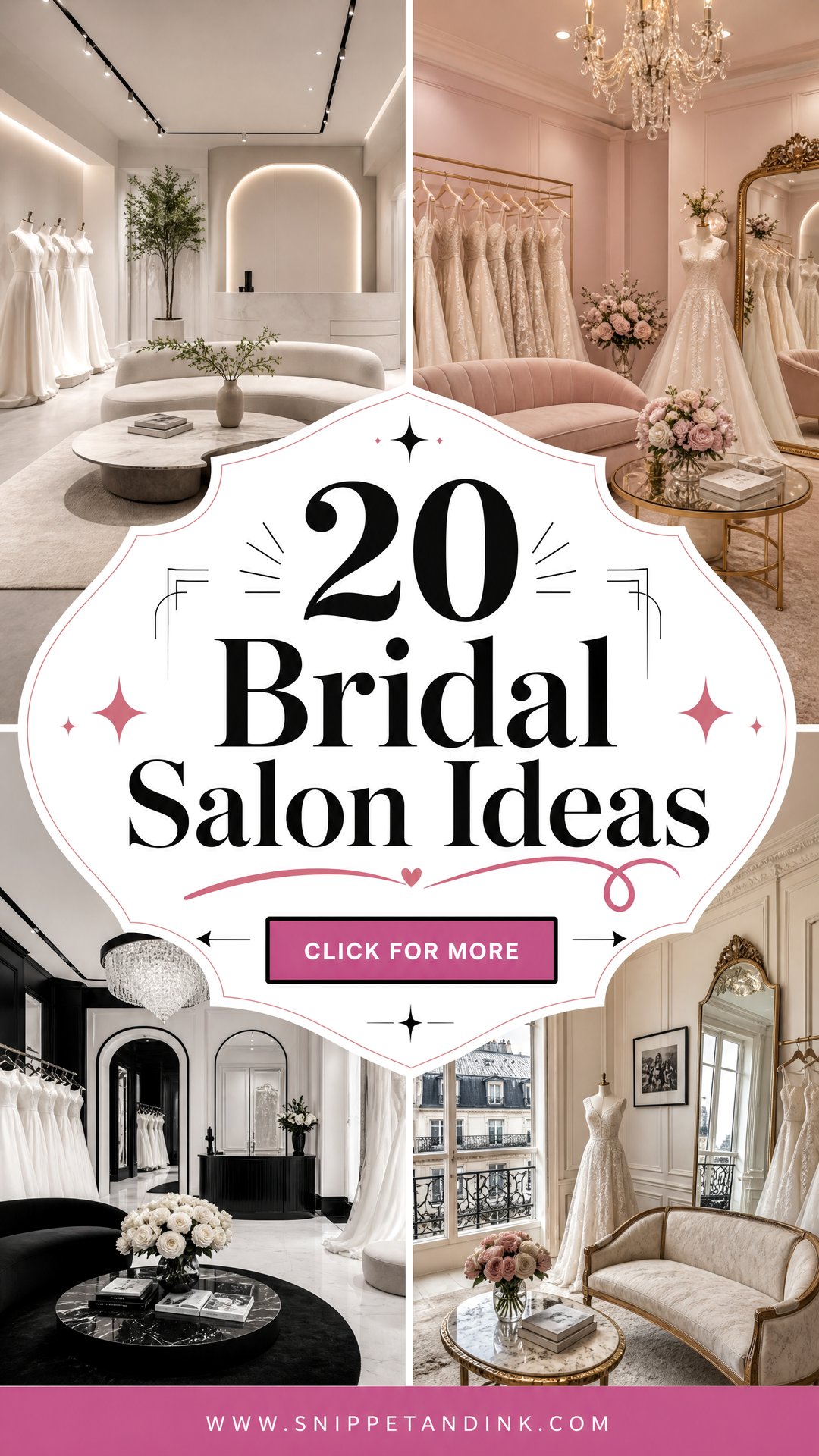
Light, Mirrors and a Platform Before Any Decor
Whatever style you choose, the fitting suite has to show a gown honestly. Brides compare ivory against diamond white and champagne against blush, and the wrong light makes those differences vanish or exaggerates them. I’d get these right before spending anything on furniture.
Lighting that tells the truth
- Choose neutral white bulbs, roughly in the 3500K to 4000K range. Warm bulbs turn white gowns yellow; very cool ones make skin look gray.
- Look for a high color rendering rating, ideally 90 or above, so fabric shades read accurately.
- Light the bride from the front and both sides, not just from overhead. Ceiling-only light casts shadows under the eyes and across the bust.
Mirror and platform space
A three-way mirror lets the bride see her back without twisting. Leave enough floor behind the platform for a cathedral train to lie flat, and enough distance in front for her to see herself from head to hem. Keep the platform low and wide, with a step or a hand to hold, because brides step up in borrowed shoes and long skirts.
1. Modern Minimalist Bridal Salon
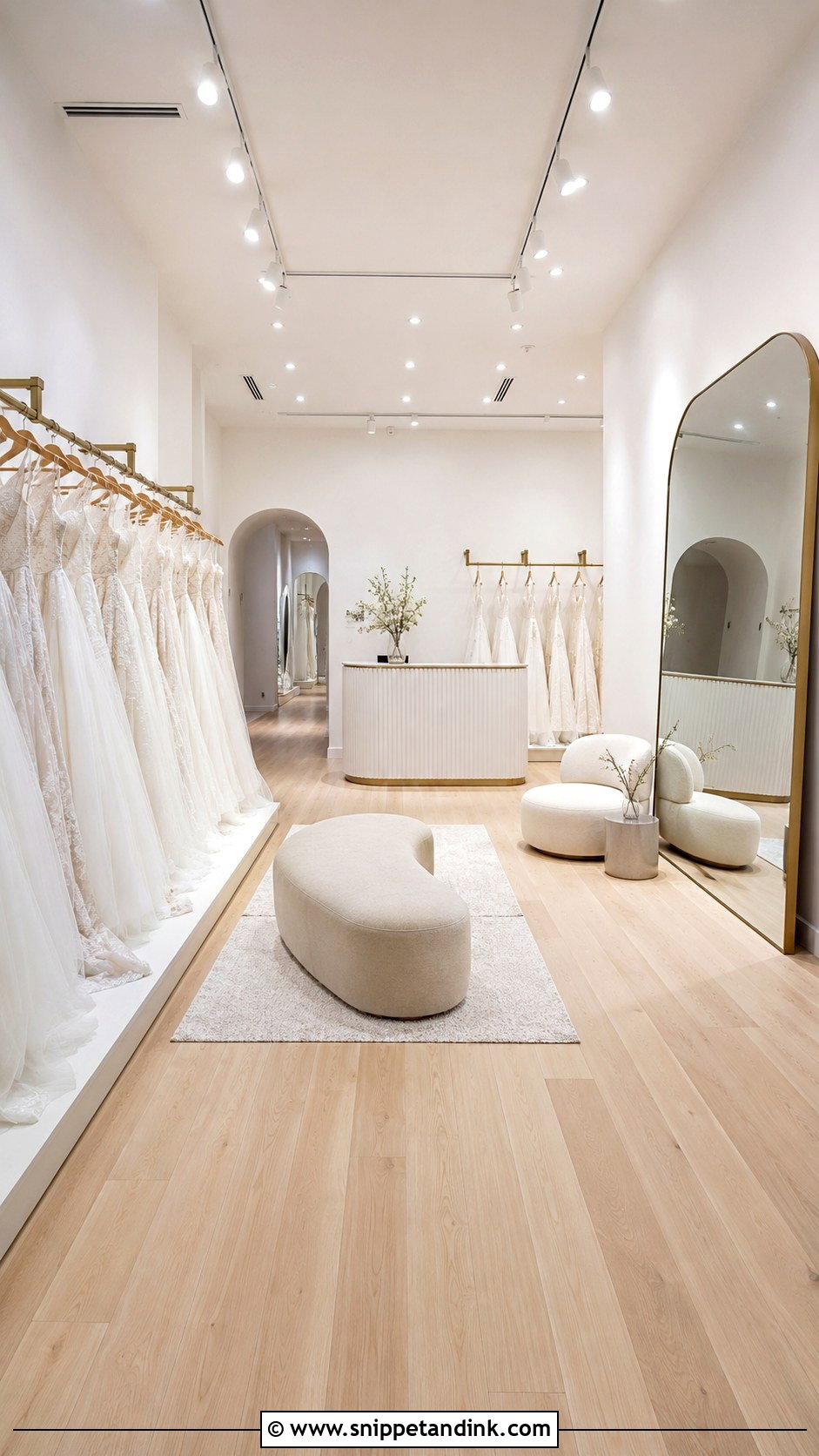
Minimal salons let the gowns speak, but only if the rails aren’t crammed. I’d leave a hand’s width between hangers so each skirt can hang in its true shape, rather than squashing the tulle flat. Greige or white walls, pale wood floors, brass or matte black rails. Keep the desk small and put storage behind closed doors, because a minimalist room falls apart the moment a box of clips sits in view. This look suits contemporary crepe gowns and separates; heavily beaded ballgowns can look out of place in it.
2. Luxury Bridal Salon With Private Suites
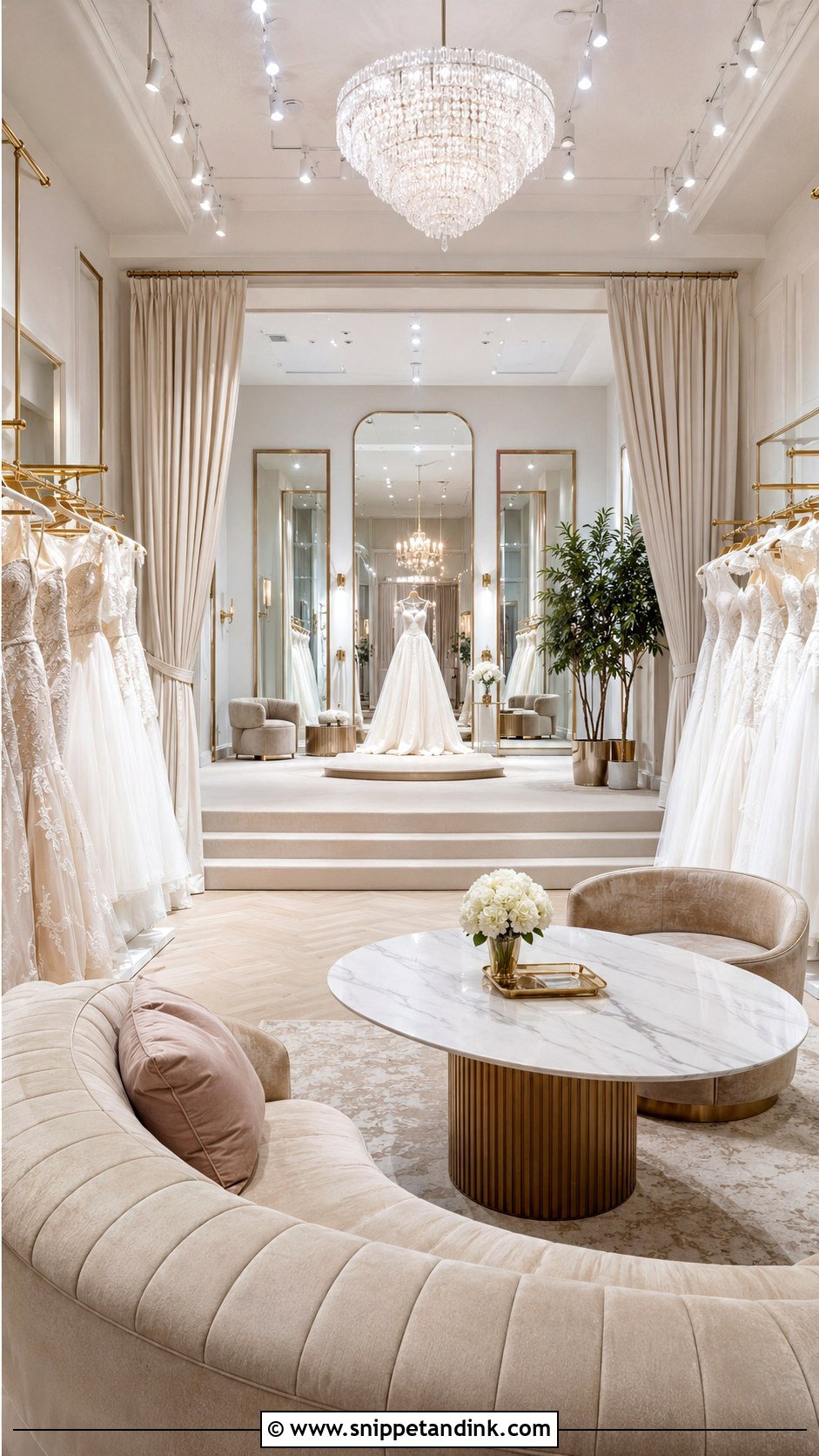
Private suites change how an appointment feels. Brides undress in front of strangers during a fitting, and a curtain that doesn’t fully close makes that harder than it needs to be, so I’d always choose solid doors or properly lined curtains. Each suite wants a changing area, a raised platform, full-length mirrors and real seating for guests. A small table lets the stylist talk through measurements, alteration costs and ordering dates without standing in a doorway. Marble-look surfaces and brushed brass give the premium finish, but privacy is what brides remember.
3. Small Bridal Salon Layout
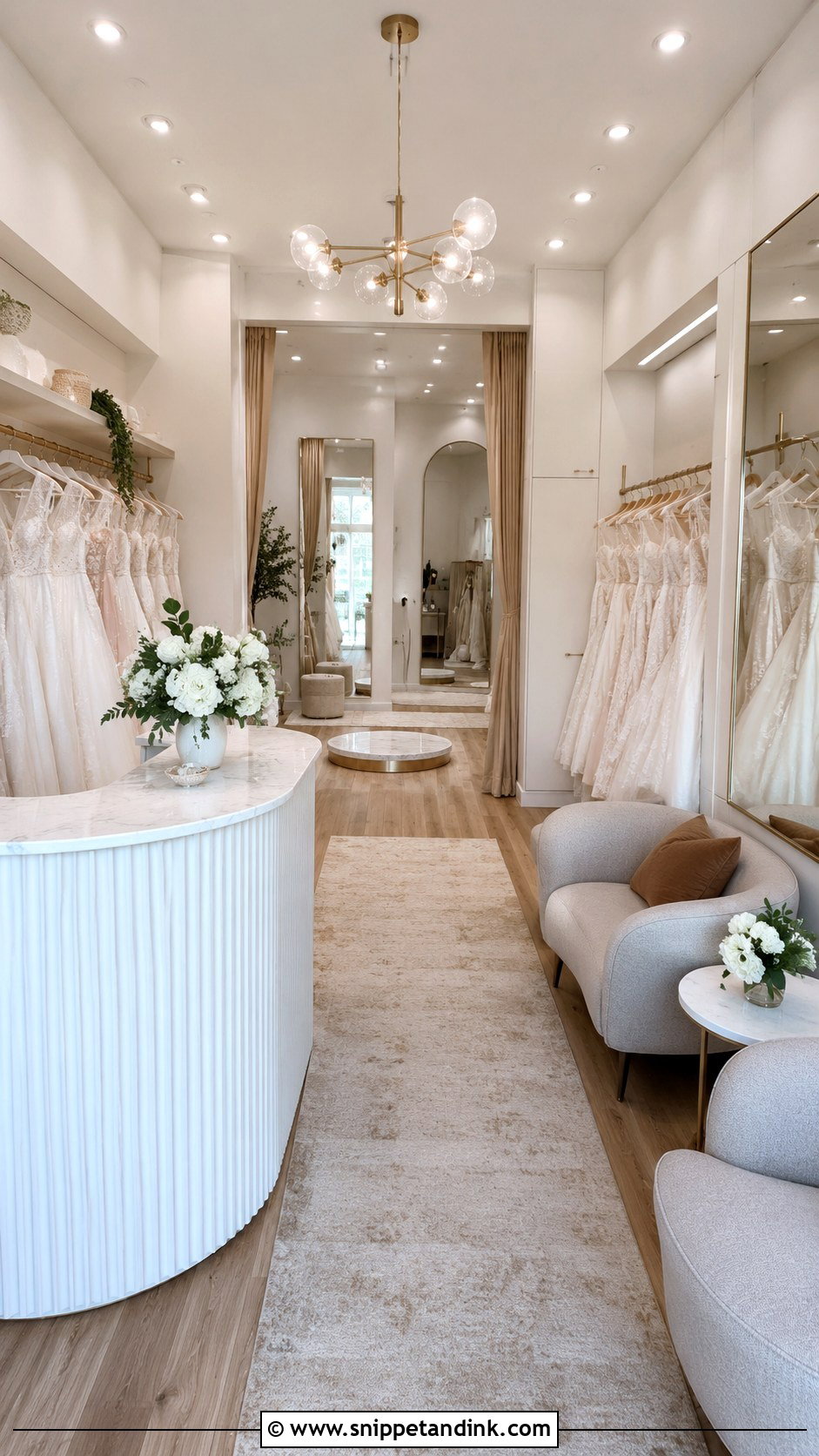
In a small shop, I’d choose one generous fitting suite over three cramped ones. A full ballgown needs room to be lifted over the head and fluffed, and two guests need somewhere to sit, so one larger private suite works harder than a row of cubicles. Reception at the front, wall-mounted rails along the sides, the suite at the back. A movable pedestal can come out for appointments and slide away after. Vertical storage keeps the floor clear, and big mirrors make the room feel twice its size.
4. Romantic Blush Bridal Salon
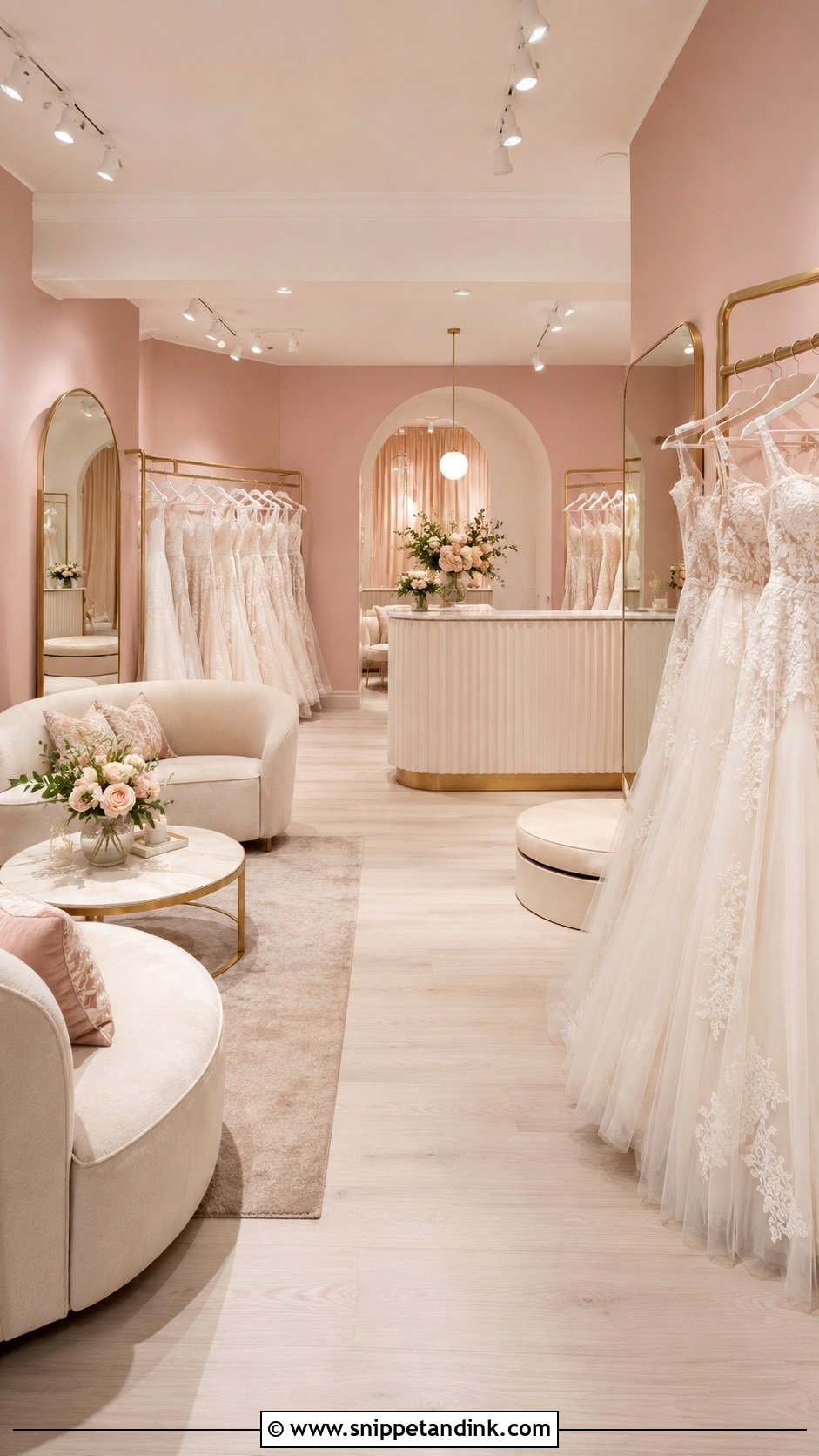
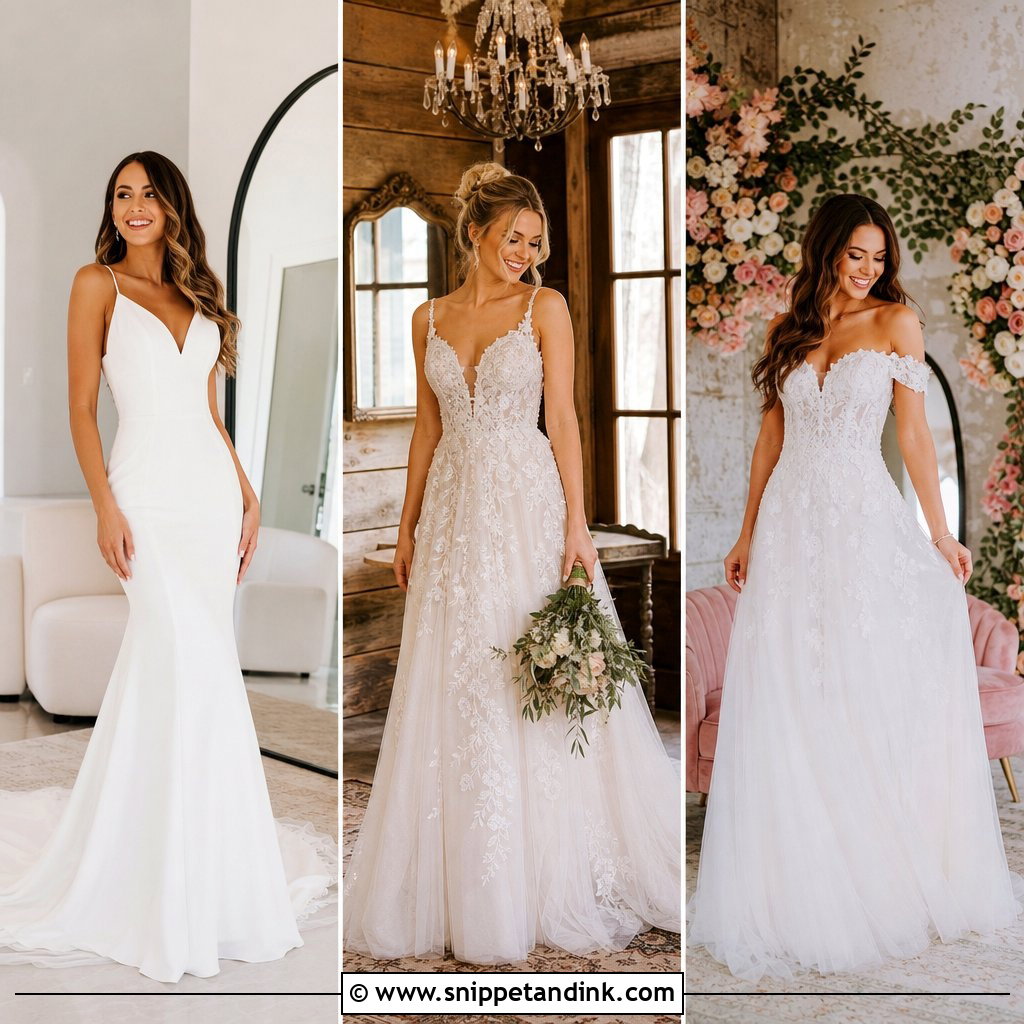
Blush is welcoming, but pink light bouncing off pink walls warms everything near it, including the gown. Ivory can read as champagne next to a dusty pink wall. That’s why I’d keep the color away from fitting mirrors and use neutral white light on the bride from several angles. Curved sofas and rounded mirrors suit the mood, and brushed gold adds warmth without tinting. It fits a shop stocking lace, tulle and floral appliqué ballgowns.
5. Black And White Bridal Salon
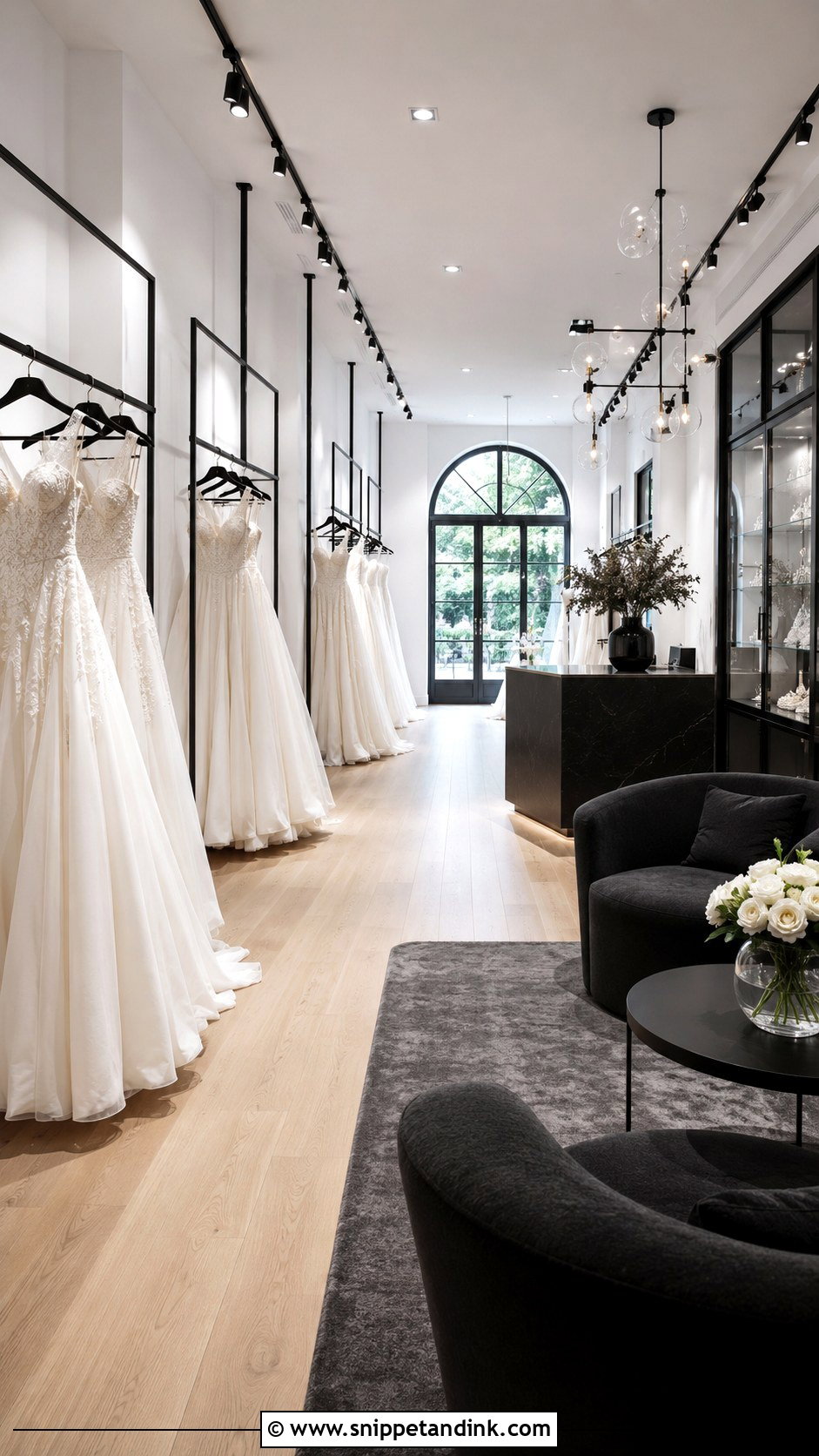
Black and white feels editorial and photographs crisply. The trick is keeping the walls white where gowns are viewed, so beading and lace stay visible, and using black only for frames, rails, signage and mirror borders. Charcoal seating works in the suites. A black reception desk makes a strong first impression. I’d soften it with light oak flooring; an all-black-and-white floor can feel cold and harsh on camera. Glass cabinets keep veils and shoes tidy within the theme.
6. Vintage Bridal Salon Interior
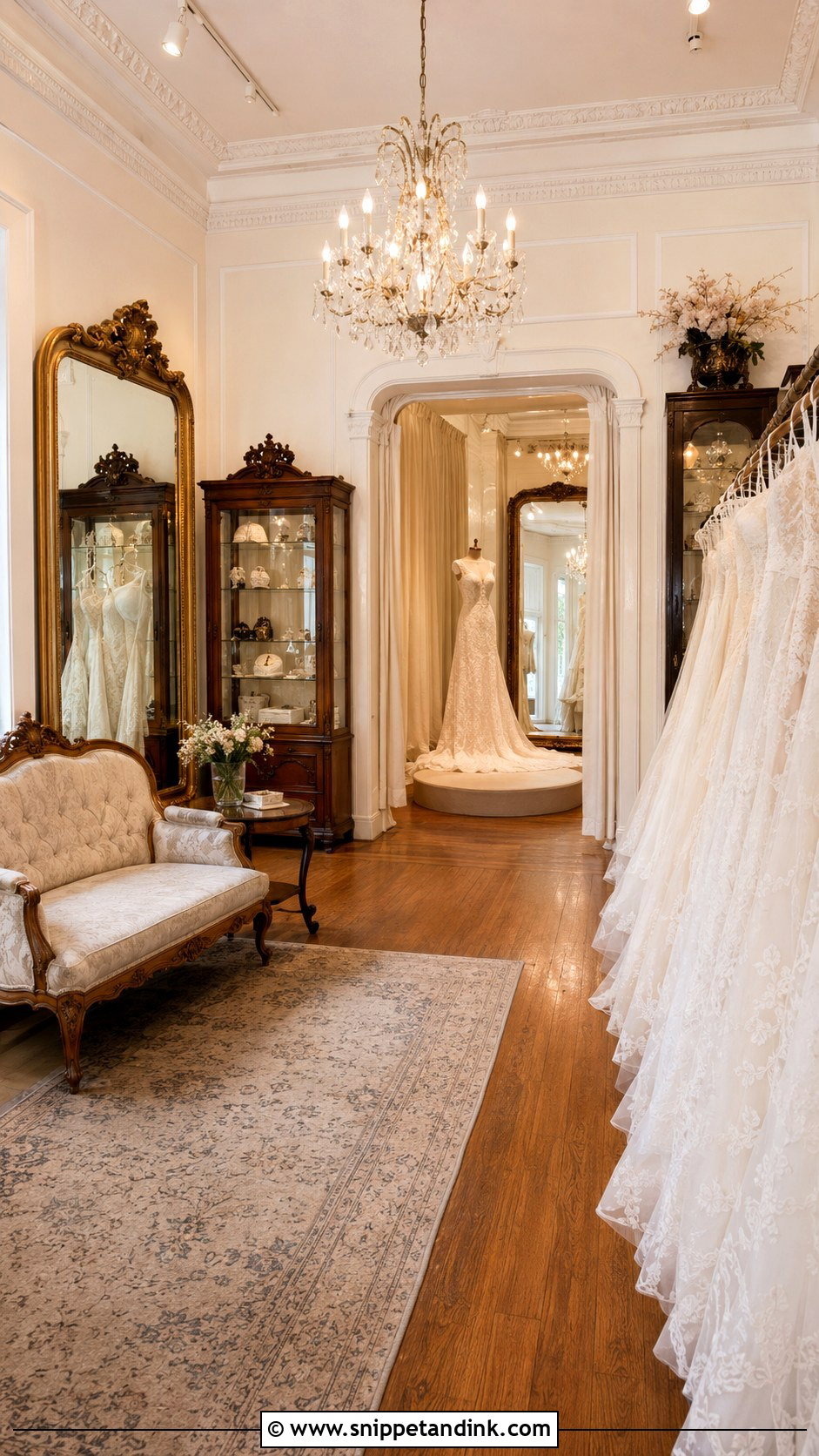
Vintage done well feels collected. Done badly, it feels like a dusty attic, and brides notice. Pick one or two real pieces, a restored settee or an old glass cabinet, and pair them with modern lighting and plain sturdy rails. Muted cream, sage or faded blue suit it. The fitting suite should still be fully modern in function: bright light, a good mirror, a stable pedestal. This setting suits lace, corsetry and heirloom-style gowns particularly well.
7. Industrial Bridal Salon
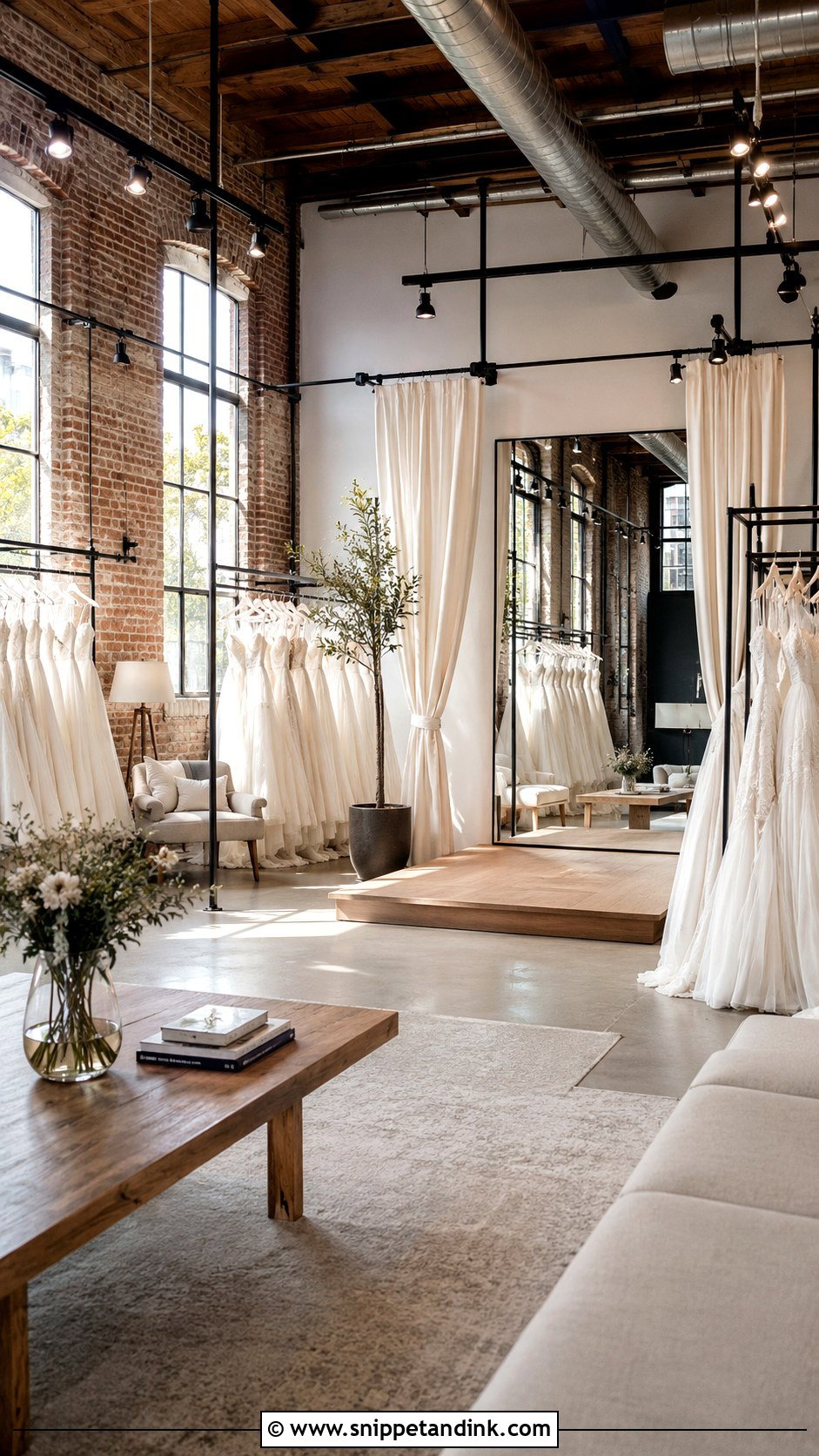
Industrial spaces have character, and they also echo. Brick, high ceilings and hard floors carry every conversation across the shop, which is a real problem when one bride is crying in a suite and another is hearing about her budget at the desk. Acoustic panels, rugs and heavy curtains fix it. Keep the walls around viewing areas neutral and bright, and build a proper viewing nook with a platform rather than leaving the bride in the middle of an open loft. Structured modern gowns look right against this backdrop.
8. Boho Bridal Salon
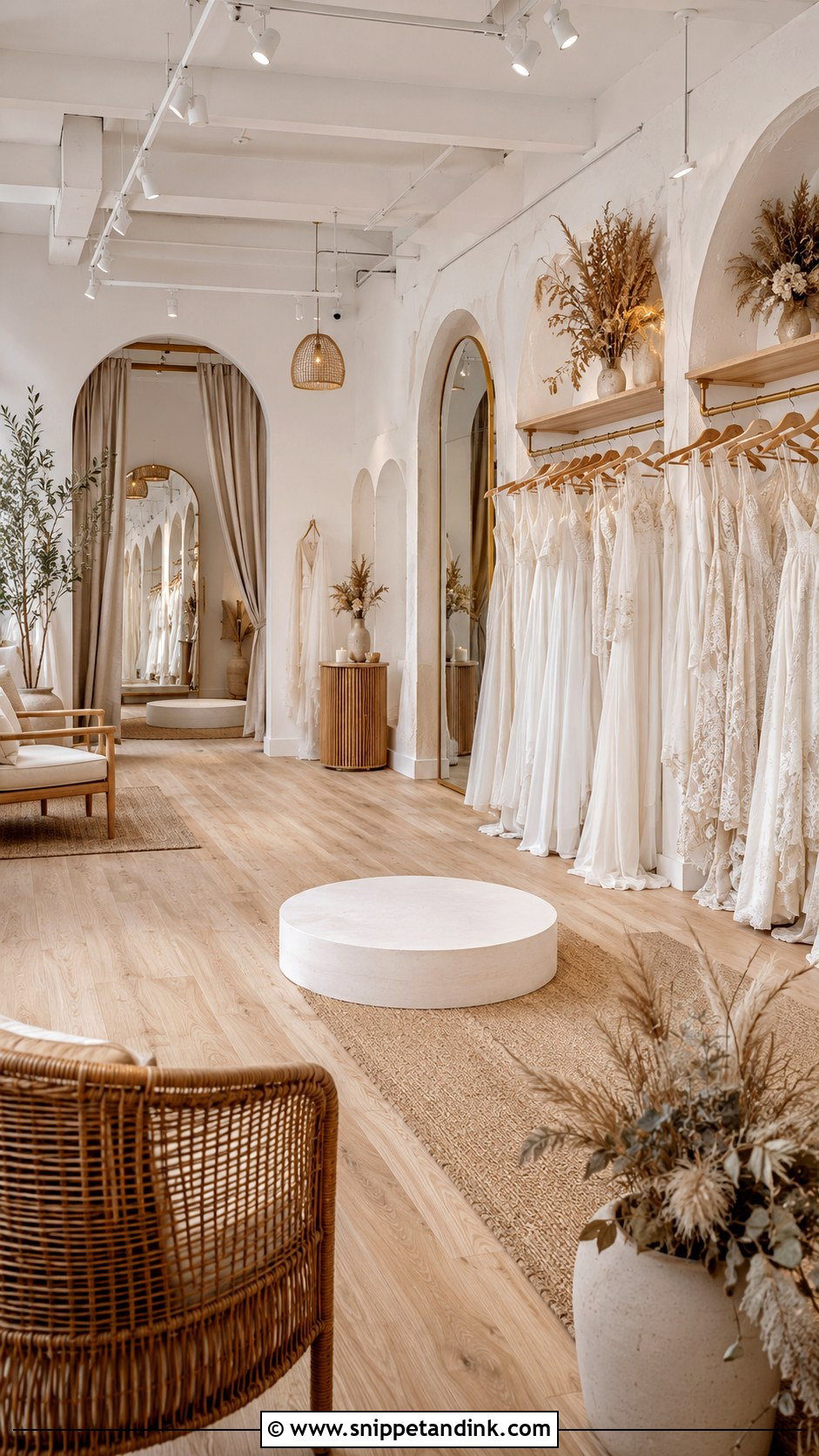
Boho salons tempt owners into too many baskets and plants, and that clutter catches hems and sheds dried petals onto samples. I’d keep natural texture to a few places: woven seating, linen curtains, an arched mirror. Ivory, sand and muted clay keep the gowns looking their true color. Wooden or brass rails with breathing room between dresses. The style sits naturally beside flowing chiffon, relaxed lace, bell sleeves and destination collections.
9. Parisian Bridal Salon
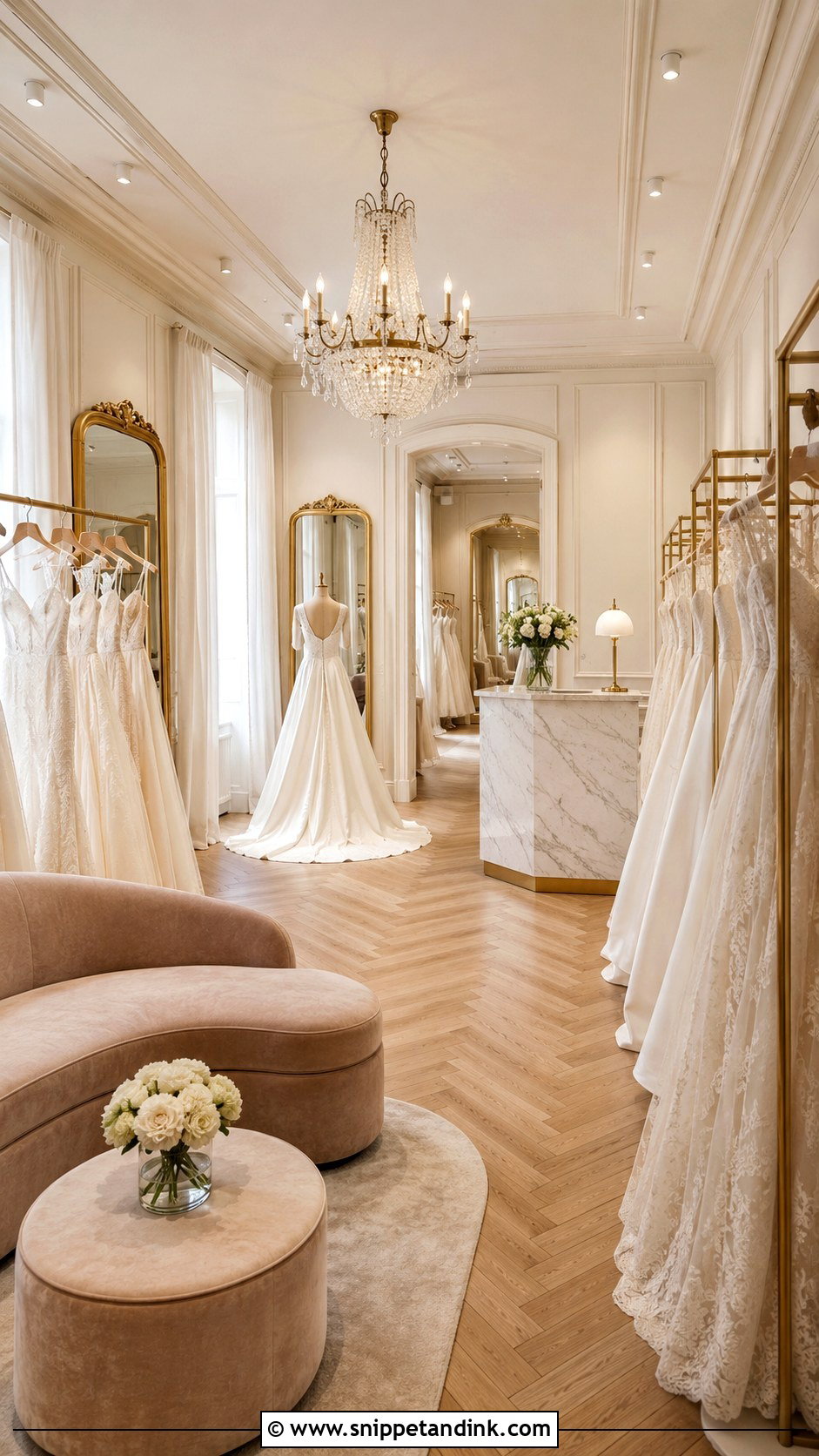
Parisian style is about molding, mirrors and restraint. Creamy paneled walls, herringbone floors, a curved velvet sofa and small brass accents. Hang dresses between the architectural details rather than covering every wall, so the room still reads as a salon and not a stockroom. In the main suite, a large gilded mirror is lovely, but the light must still be bright and neutral, because a soft romantic glow hides how a fabric really looks. Sheer curtains diffuse daylight and keep passers-by from seeing in.
10. Coastal Bridal Salon
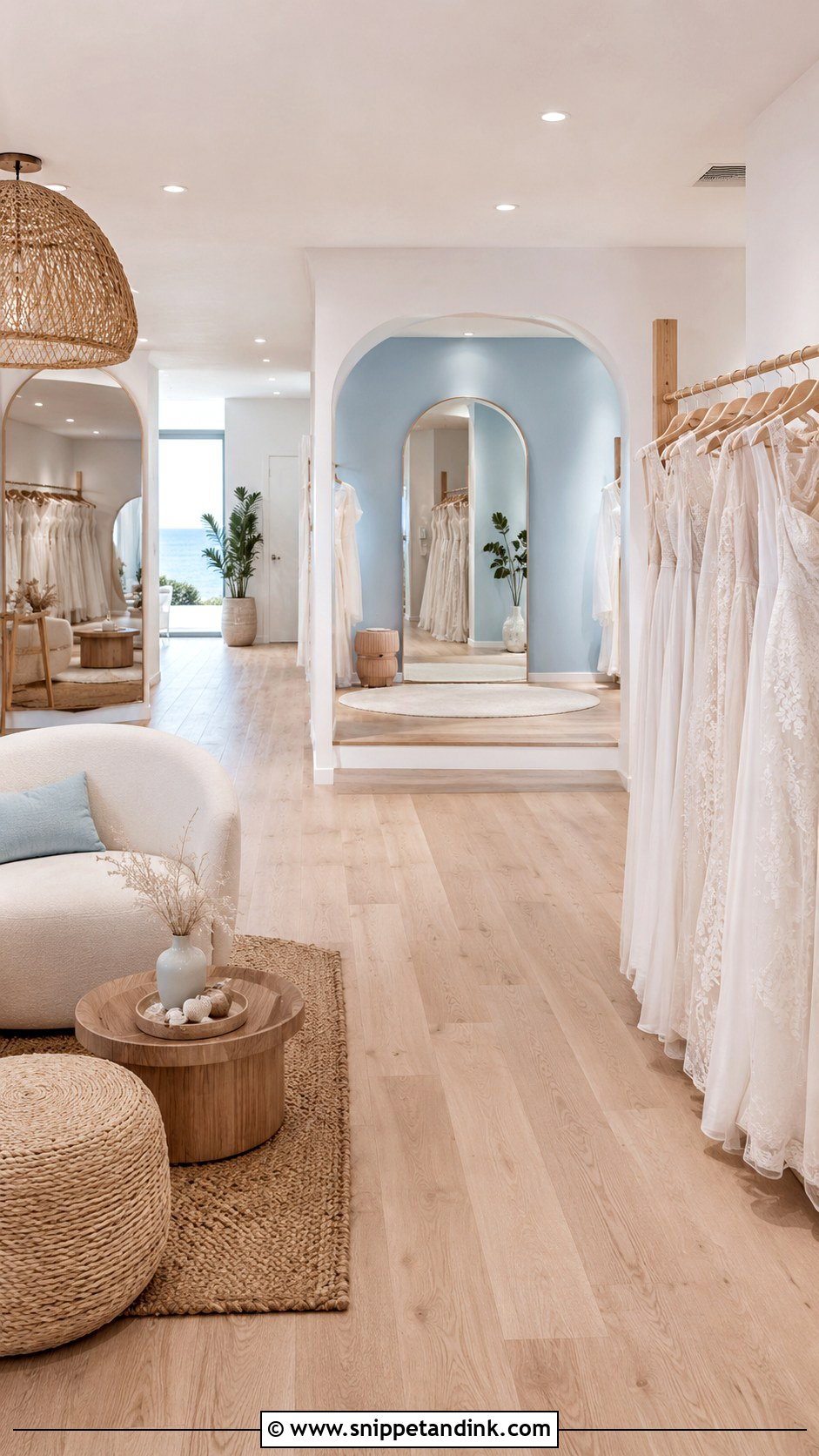
Coastal salons get beautiful light and one real hazard: sun fades fabric. Silk, satin and some synthetics yellow or lose color on the side facing a window, so gowns near glass need sheer UV-filtering shades or regular rotation. White oak, linen upholstery and sea-glass hints keep it airy without nautical props. Bright white interior lighting lets brides compare ivory and pure white properly. Lightweight destination gowns suit the setting.
11. Rustic Bridal Salon
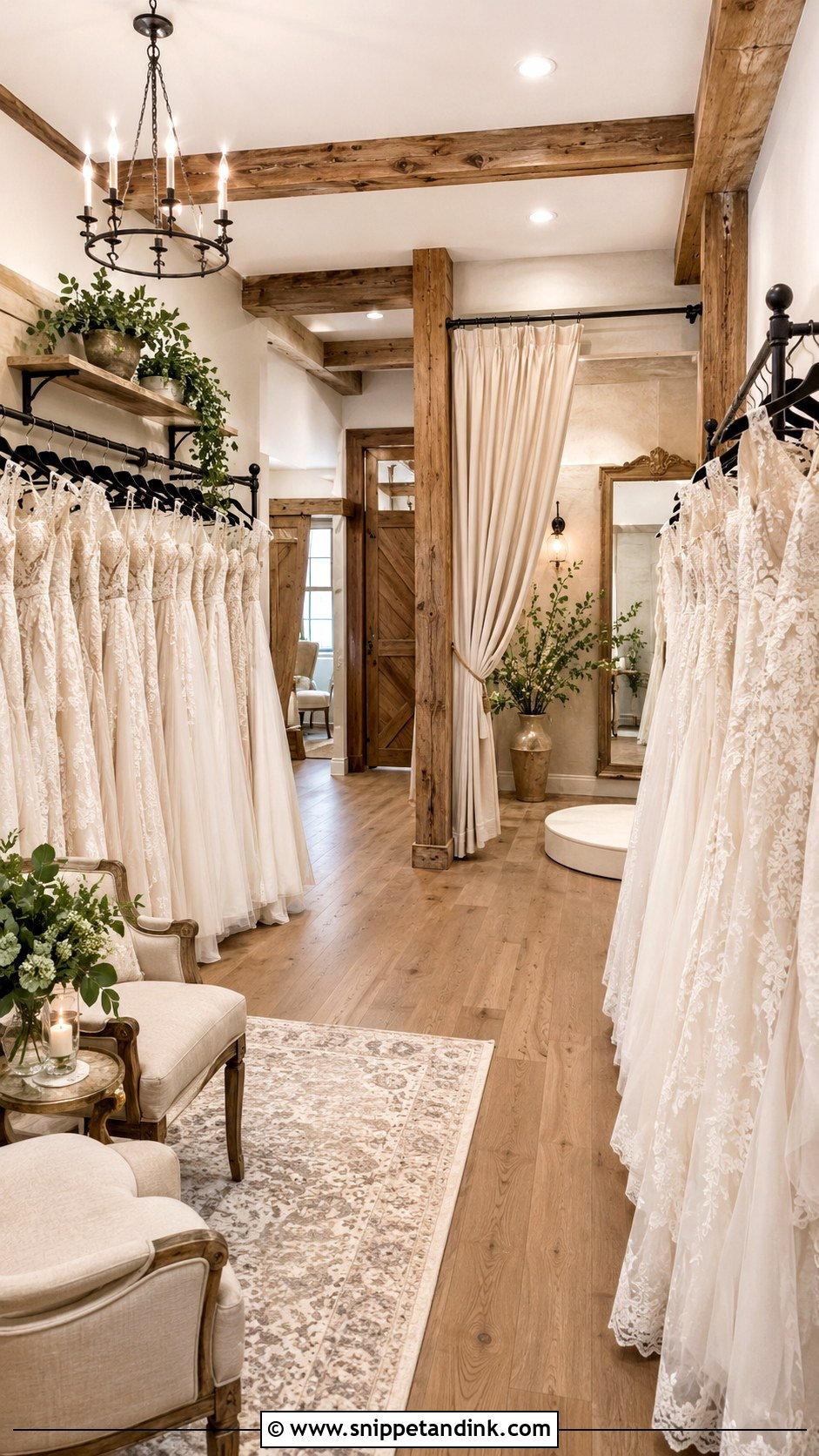
Rustic works in converted barns and old storefronts, but heavy brown wood soaks up light. I’d balance it with cream walls, plenty of bright lighting and lighter surfaces near the gowns, or every dress starts to look a little dingy. Sort gowns by silhouette or designer so the rails don’t look like storage. A sturdy pedestal, an ivory curtain and a framed mirror complete the fitting area. A few touches of greenery are enough.
12. Glamorous Bridal Salon
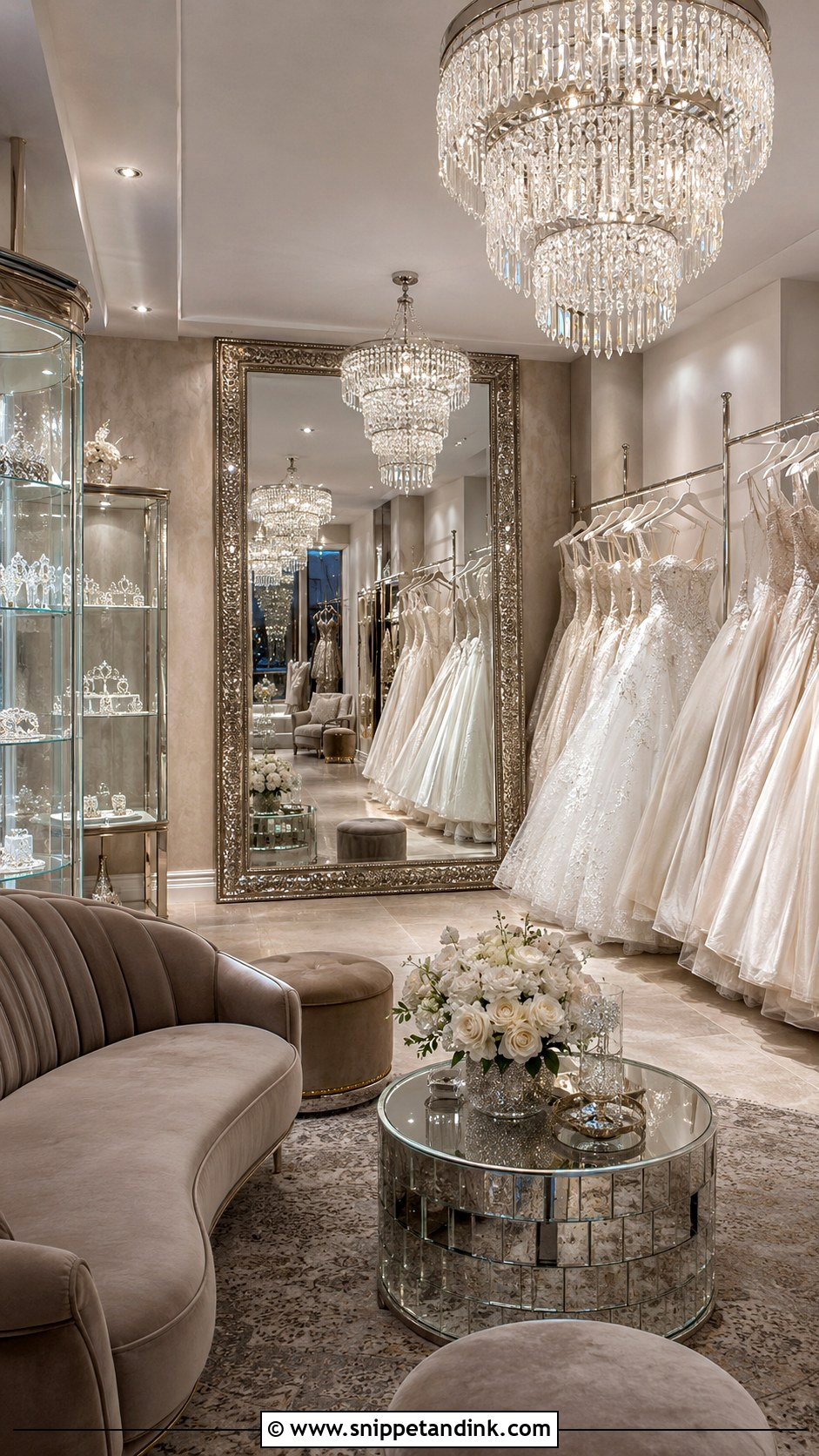
Glamour comes from light and reflection, and it can tip into chaos fast. Crystal chandeliers and mirrored tables against a neutral backdrop look rich; add sparkle on every surface and the beaded gowns get lost. In the suite, layered lighting from the front and sides avoids the harsh shadows a single chandelier casts under the eyes. Champagne, ivory and soft gray suit it. Keep jewelry and beaded veils inside cabinets. This works for shops selling embellished ballgowns and formal accessories.
13. Bridal Salon With A Statement Arch
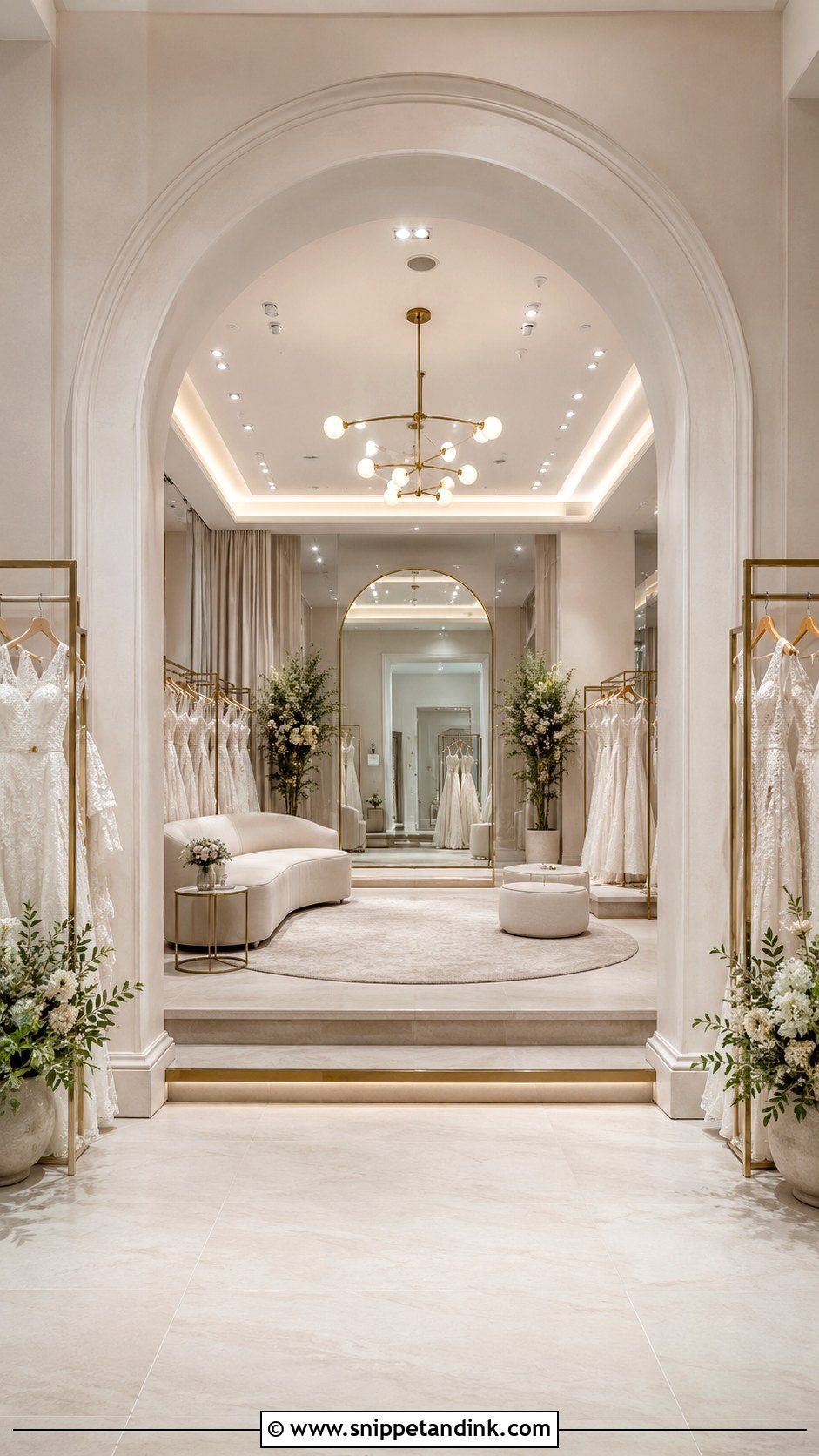
A wide arch frames whatever sits behind it, so I’d put the main fitting platform there. It gives every bride the same flattering frame and a recognizable photo background. Plaster, painted wood or subtle paneling all work; repeat the curve in mirrors or seating. Behind the arch, bright white light and a full-length mirror that shows the whole train. Arches are useful in larger boutiques too, because they mark zones without building walls.
14. Bridal Salon With A Floral Installation
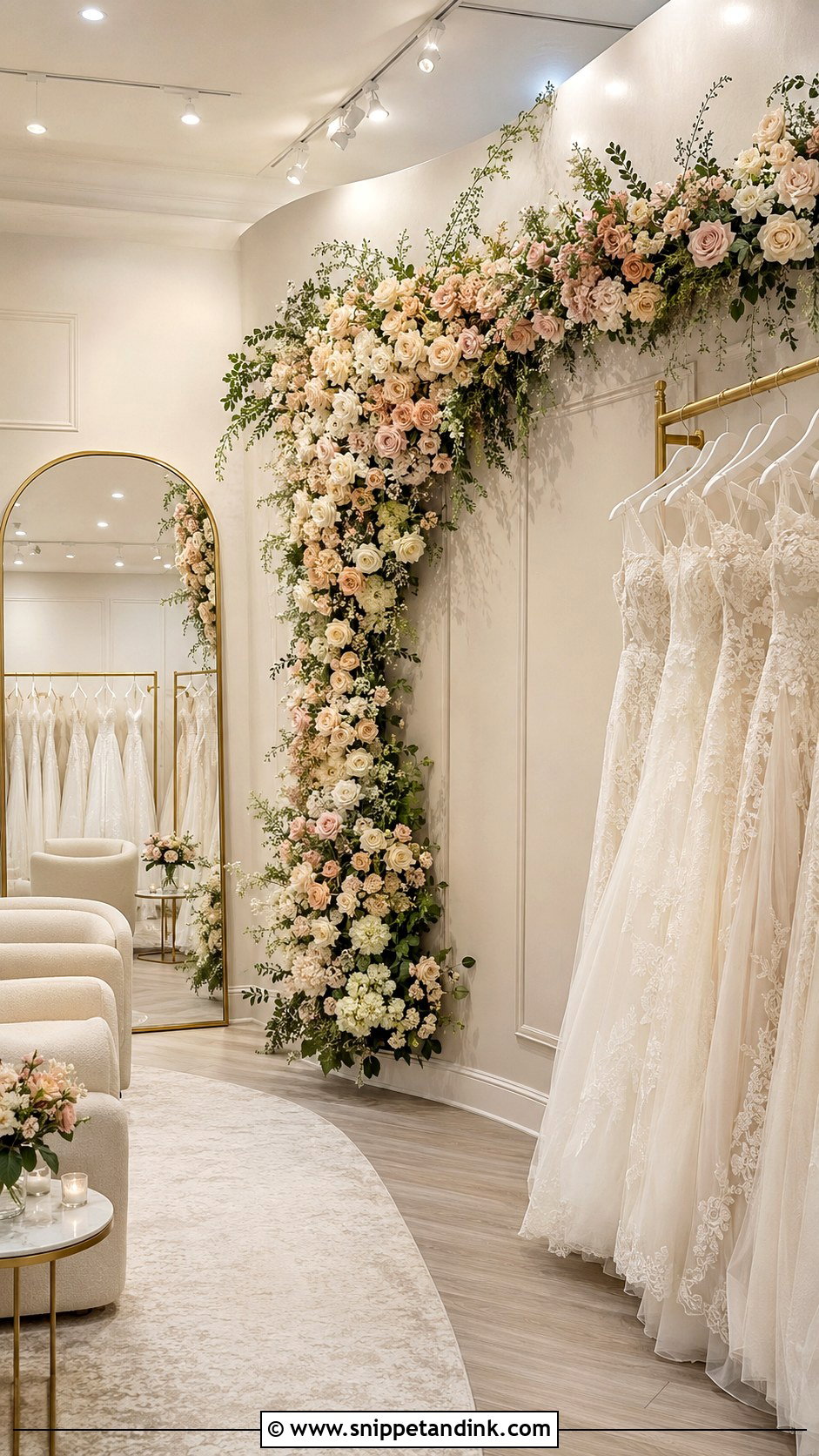
Flowers make a salon memorable, but fresh arrangements drop pollen and petals, and lily pollen in particular can stain fabric. I’d keep anything shedding well away from rails and platforms, and lean on good silk or dried flowers near the gowns. Place the installation over the reception desk, around an arch or along one wall. Ivory, green, blush and pale peach sit quietly next to white dresses. Keep everything else simple so the flowers look intended.
15. Inclusive Bridal Salon
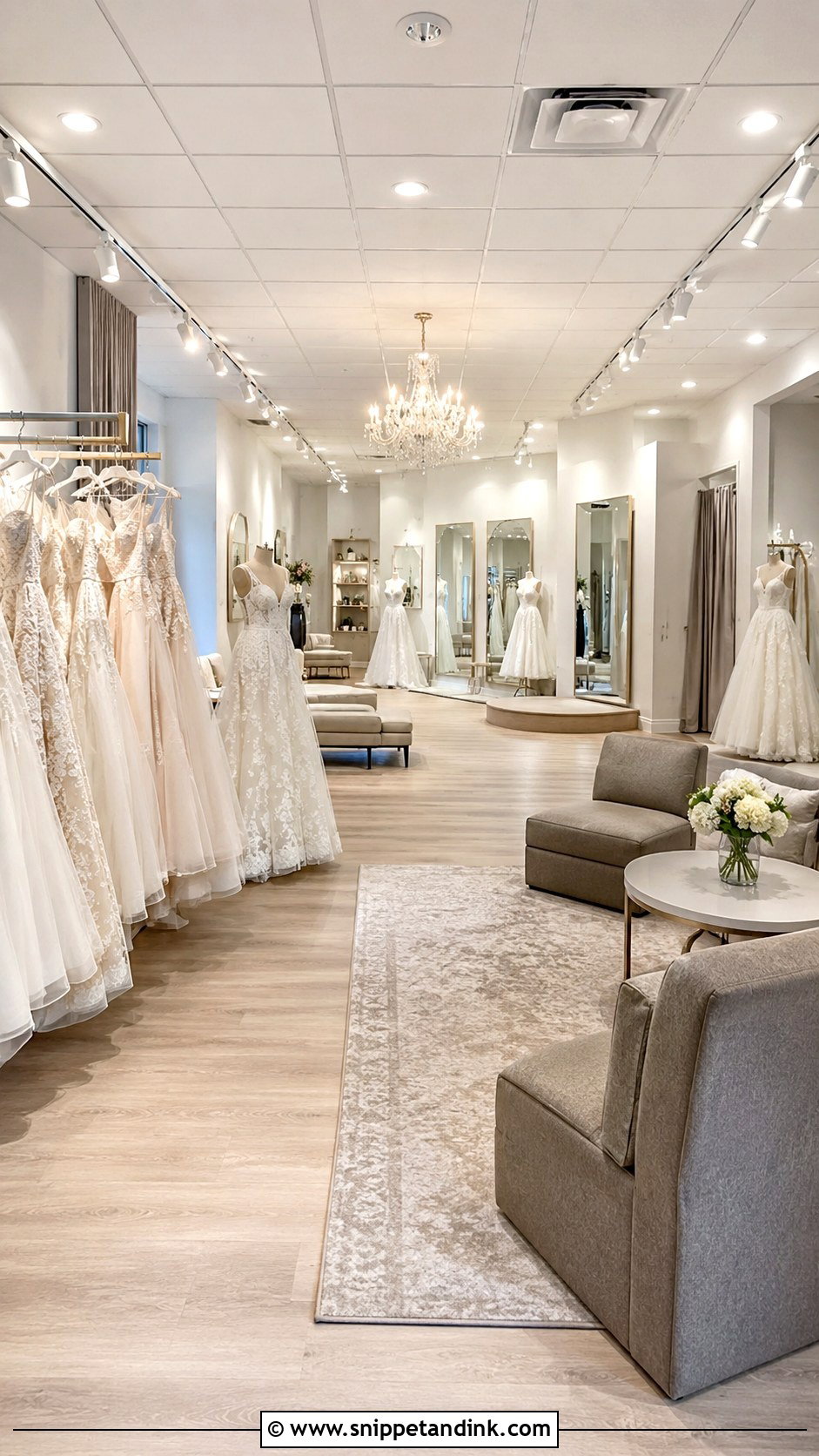
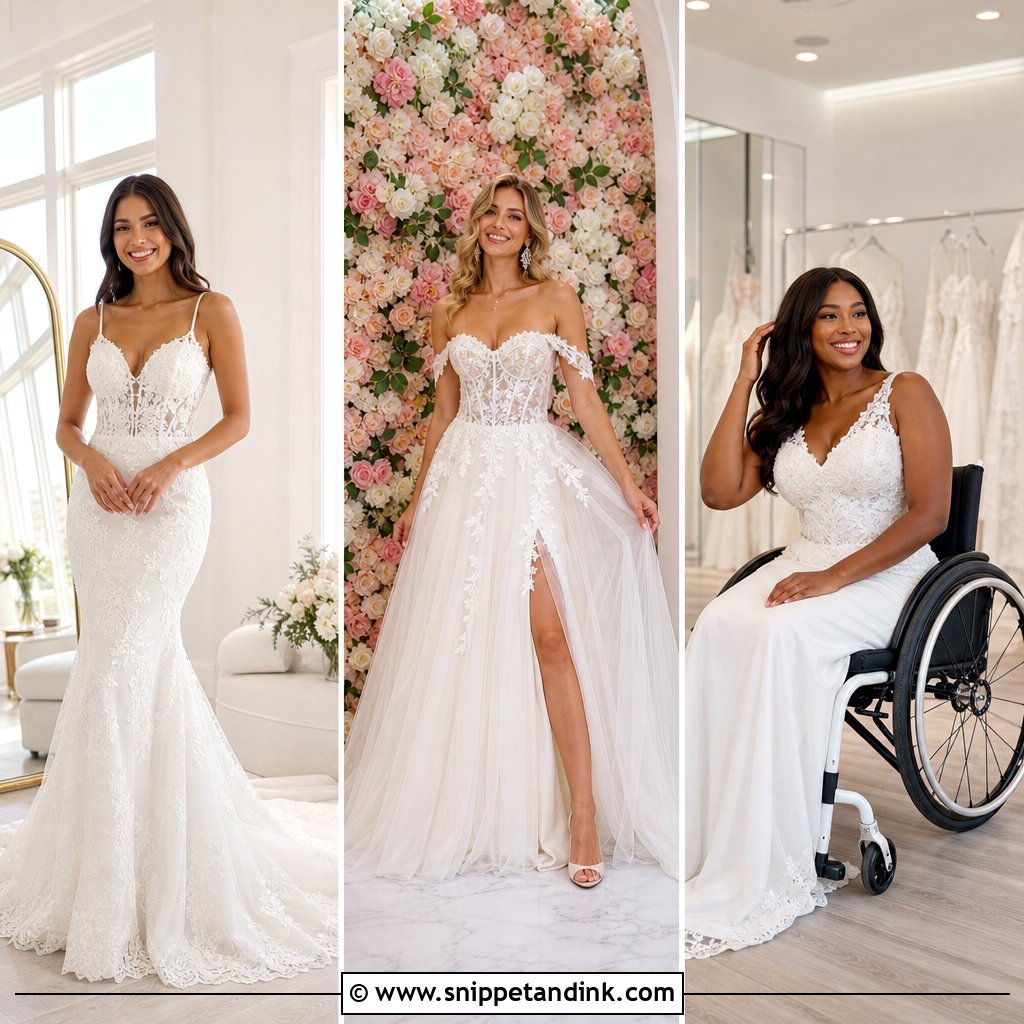
Inclusive design is mostly practical decisions. Wide pathways, a fitting room that fits a wheelchair and guests, sturdy armless chairs, rails at reachable heights, and a platform that can be removed or approached with a ramp. Stock samples across a real size range and hang them with the same care as every other gown, not on a separate rail at the back. Mirrors should work for a seated bride too. A private corner for talking about fit, alterations and budget lets every customer speak freely. Brides notice quickly whether a shop was planned with them in mind.
16. Bridal Salon With A VIP Lounge
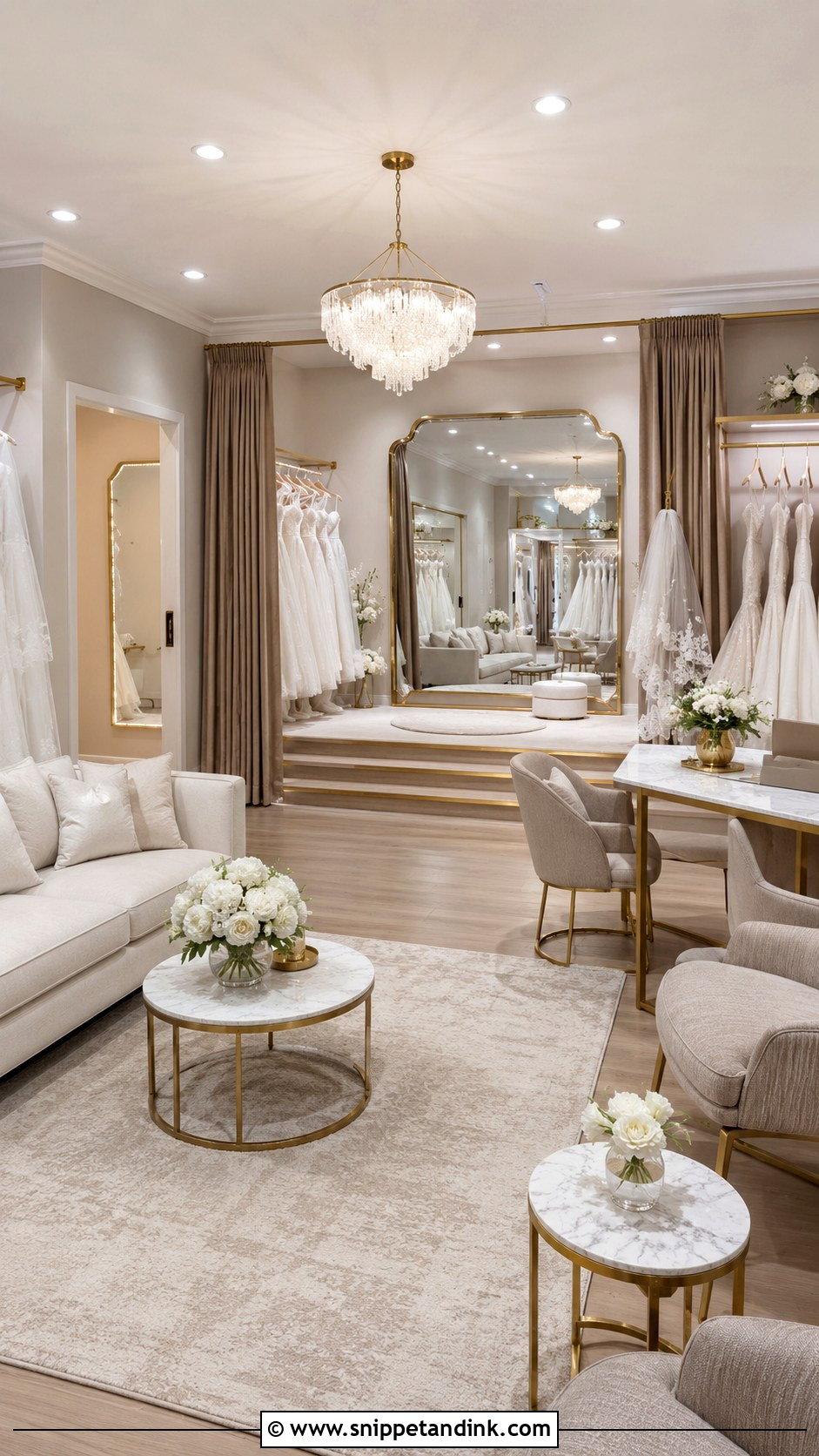
A VIP lounge works for long appointments, designer previews and second visits with family. It should be a full private suite: changing room, platform, large mirror, sofa, side chairs and a consultation table. Hidden storage within reach holds clips, shoes and veils, so the consultant doesn’t leave the room mid-fitting. A spot for coats and bags and a charging point keep guests settled. On refreshments, I’d serve water and clear drinks only near the dresses. Red wine and colored juices are how samples get ruined.
17. Sustainable Bridal Salon
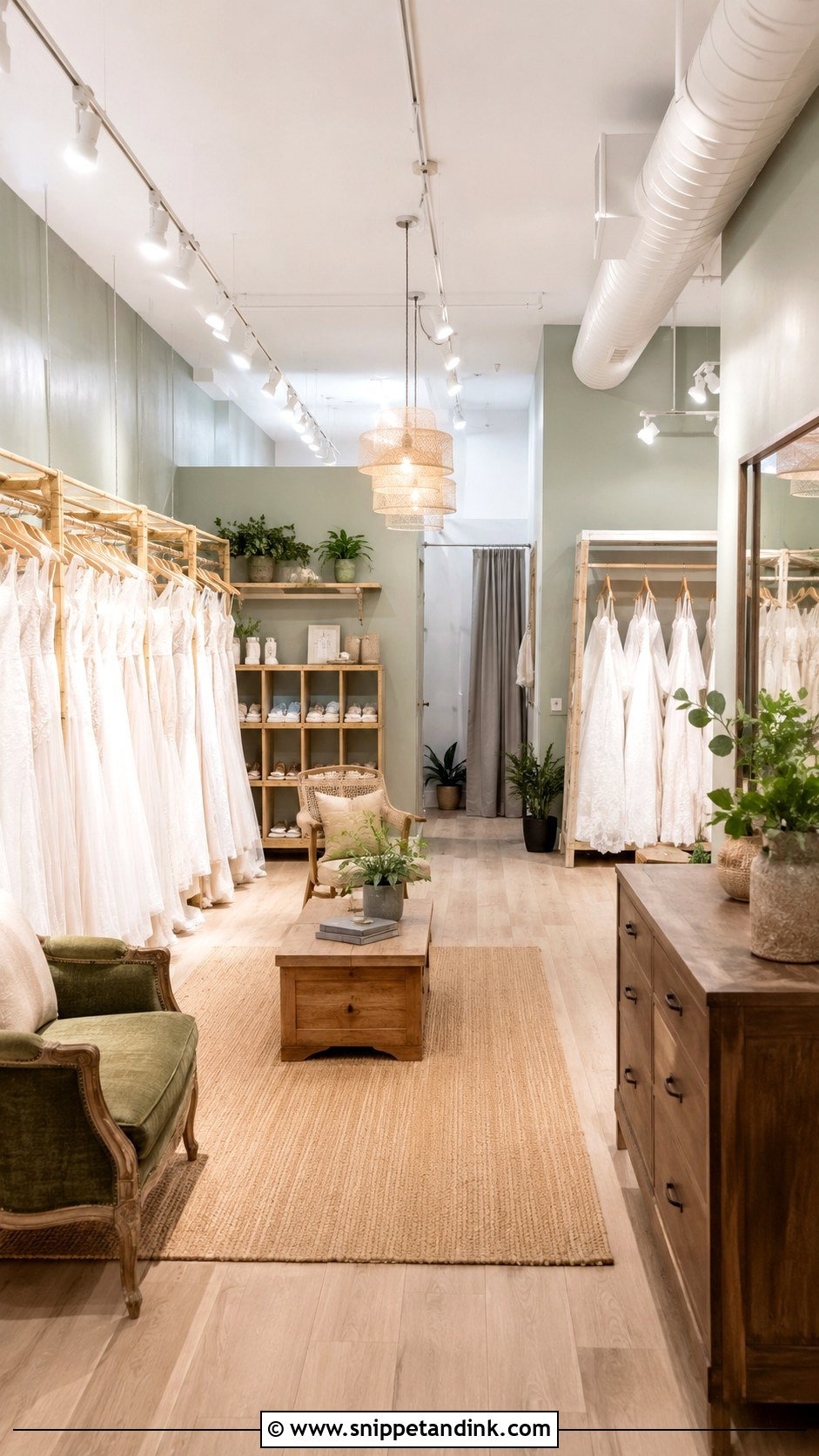
Sustainability shows best in choices that last. Low-VOC paint, LED lighting, secondhand furniture, modular rails and cabinets that adapt when collections change, and flooring durable enough not to need replacing. White, stone, sage and pale wood keep the gowns looking true. A corner for sample-sale dresses, consignment pieces or preservation advice suits this kind of shop. Make sure the eco details don’t cost comfort: brides still expect privacy and good light.
18. Bridal Salon With Designer Display Zones
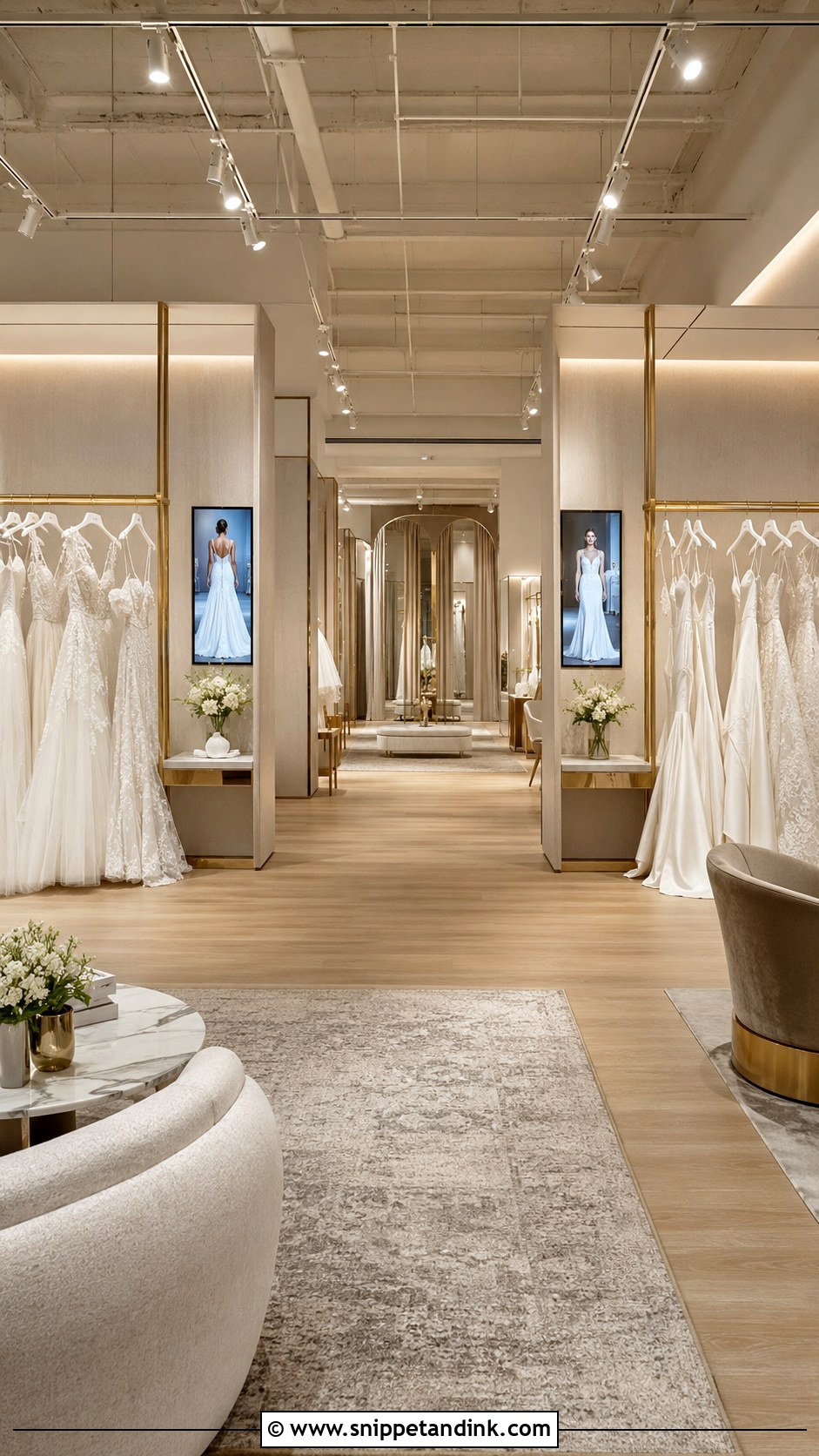
Designer zones save stylists time. Give each label its own rail, a small sign and one featured gown, and pull selections before the bride arrives. Matching hangers and consistent spacing make the showroom feel calm even when designers clash in style. Keep accessory tables beside a collection only where they genuinely go together. An open central path from reception to consultation to fitting stops brides browsing in circles. A small screen or lookbook can show gowns available to order. Calm, organized rails are much of what separates a boutique from busier bridal shopping environments.
19. Bridal Salon With An Accessory Bar
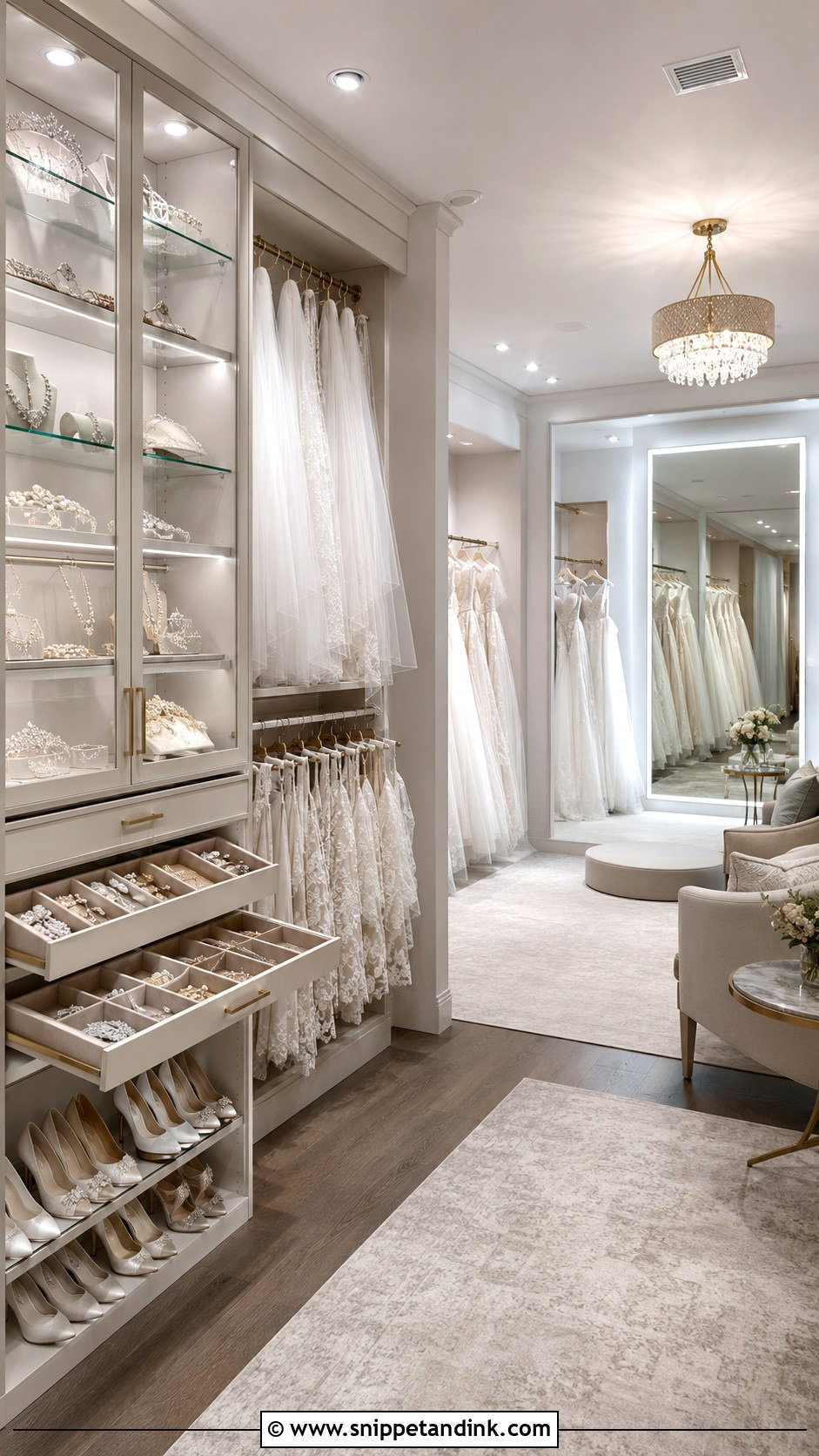
Accessories sell best once a bride has chosen her gown, so the bar belongs next to the fitting suites, not at the entrance. Veils, headpieces, belts, jewelry, shoes and detachable sleeves in glass cabinets, labeled trays and drawers, with veils on vertical hooks so they don’t crease. A full-length mirror nearby lets her see the whole look. Keep the lighting neutral; tinted bulbs change how crystal and ivory tulle read. It also keeps small, pricey pieces from wandering onto the reception desk.
20. Bridal Salon With A Content Corner
Nearly every bride wants a photo once she’s found the dress, so give her a proper place to take it. A neutral wall, a full-length mirror, clean flooring and enough depth to fit head to toe in frame. Even white light keeps skin and fabric true. Set it away from occupied changing rooms so nobody is caught in the background half-dressed. Explain your photography policy at the start of the appointment, since some designers restrict images. A discreet logo is plenty.
Protecting Sample Gowns From Makeup, Steam and Sun
Samples get tried on many times before they’re sold, and the room can extend their life or shorten it. Foundation and lipstick are the biggest threat, so I’d keep a basket of fabric face covers in every suite and slip one over each bride’s head before a gown goes on or comes off.
- Stock a small set of strapless bras and plain heels in common sizes, so brides don’t try gowns barefoot on carpet or with dark straps showing.
- Hang heavy gowns by their inner hanging loops, not the shoulders, so the weight of the skirt doesn’t stretch the bodice.
- Set up a steaming station on a hard floor, away from rails, with its own outlet and a drip tray.
- Rotate gowns away from windows and check the window side for fading every season.
- Keep sharp clips, pins and tape in a closed drawer; a stray pin on the floor tears tulle.
None of this shows in a photo of your shop, but it’s what keeps samples saleable long enough to pay for the decor around them.
Start With the Fitting Room, Then Add the Theme
Every one of these directions works only if the basics underneath are right. Walk the route a bride takes, from the door to the desk, the rails, the suite and the checkout, and fix every point where she’d feel cramped, rushed or exposed. Then choose one interior style that suits your gowns, your prices and your own taste. Neutral bright light, space to move, comfortable seating, organized storage and honest mirrors come first in every theme. Arches, flowers, lounges and content corners are what you add once the room already makes brides feel looked after.


Leave a Reply