
Brides often ask me what to do with the dress once the wedding is over, and more of them now want it on show rather than sealed in a box under the bed. A gown can be the most personal thing in a dressing room, provided the display protects it as well as presenting it. Below are twenty closet setups, from glass cabinets and framed enclosures to mannequin displays, accessory arrangements and compact solutions for small spaces. Light, dust, heat, damp and poor support all damage fabric over time, so each idea comes with the protective detail I’d insist on. Delicate, heavily beaded or bias-cut gowns may need professional mounting rather than an ordinary hanger.
Is Your Gown Strong Enough to Be on Show?
Before anyone designs a cabinet, I’d look honestly at the dress. A display puts years of gravity, light and air on fabric that was made to be worn for one day, and some gowns cope far better than others.
- Lift it by the waist. If it feels heavy, the beading or layers will pull on a hanger, and it needs a dress form or a flat mount.
- Look at the hanging loops. They’re sewn in for the shop, not for years of weight, and they often tear the waist seam over time.
- Check the cut. Bias-cut silk and stretch crepe drop and lengthen when they hang for months.
- Find every mark. Sweat at the underarms and invisible sugar from champagne turn yellow or brown later, so the gown should be professionally cleaned before it goes on display, not after.
- Feel the fabric. Silk is more sensitive to light than polyester satin, and very fine tulle or Chantilly lace tears easily on a form that’s slightly too big.
A sturdy polyester gown without heavy embellishment can usually sit on a well-padded form for long stretches. An heirloom silk gown with hand beading is a candidate for short display periods and careful storage the rest of the year.
1. Glass Wedding Dress Display Case in Closet
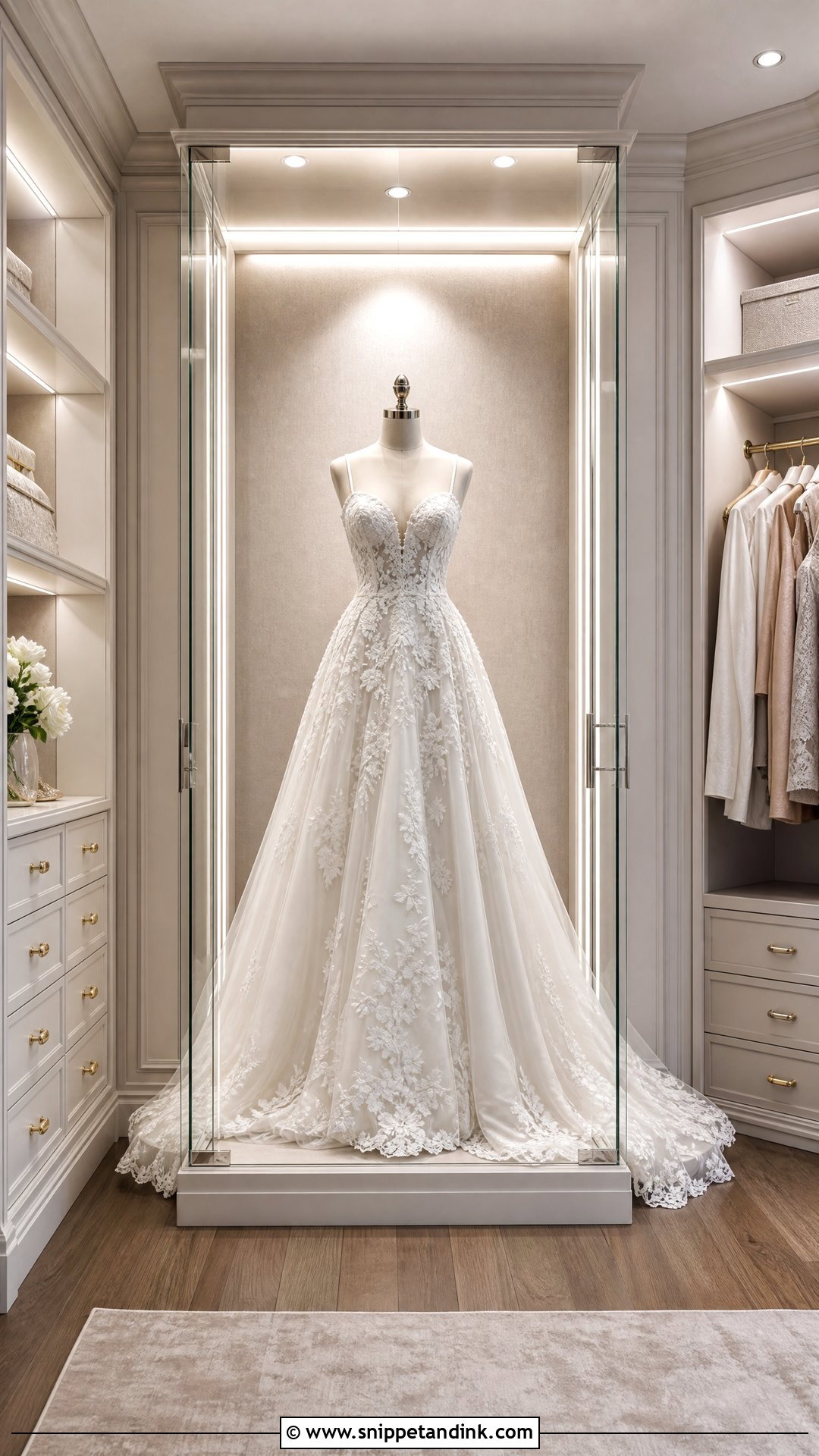
A full-length glass case turns the gown into the centerpiece of a walk-in closet. Build it deep enough that the skirt, sleeves and train never touch the glass, because fabric pressed against glazing picks up condensation marks and flattens permanently. A custom dress form supports the bodice, and a concealed platform lifts the hem off the floor. I always ask for UV-filtering glazing and keep the case away from windows. Unfinished wood shouldn’t touch the fabric, so line the interior with a stable, garment-safe material. A soft light on its own switch lets you see the dress only when you choose. Set between matching closet cabinets, the case looks built in rather than like extra furniture.
2. Built-In Wedding Dress Display Above Dresser
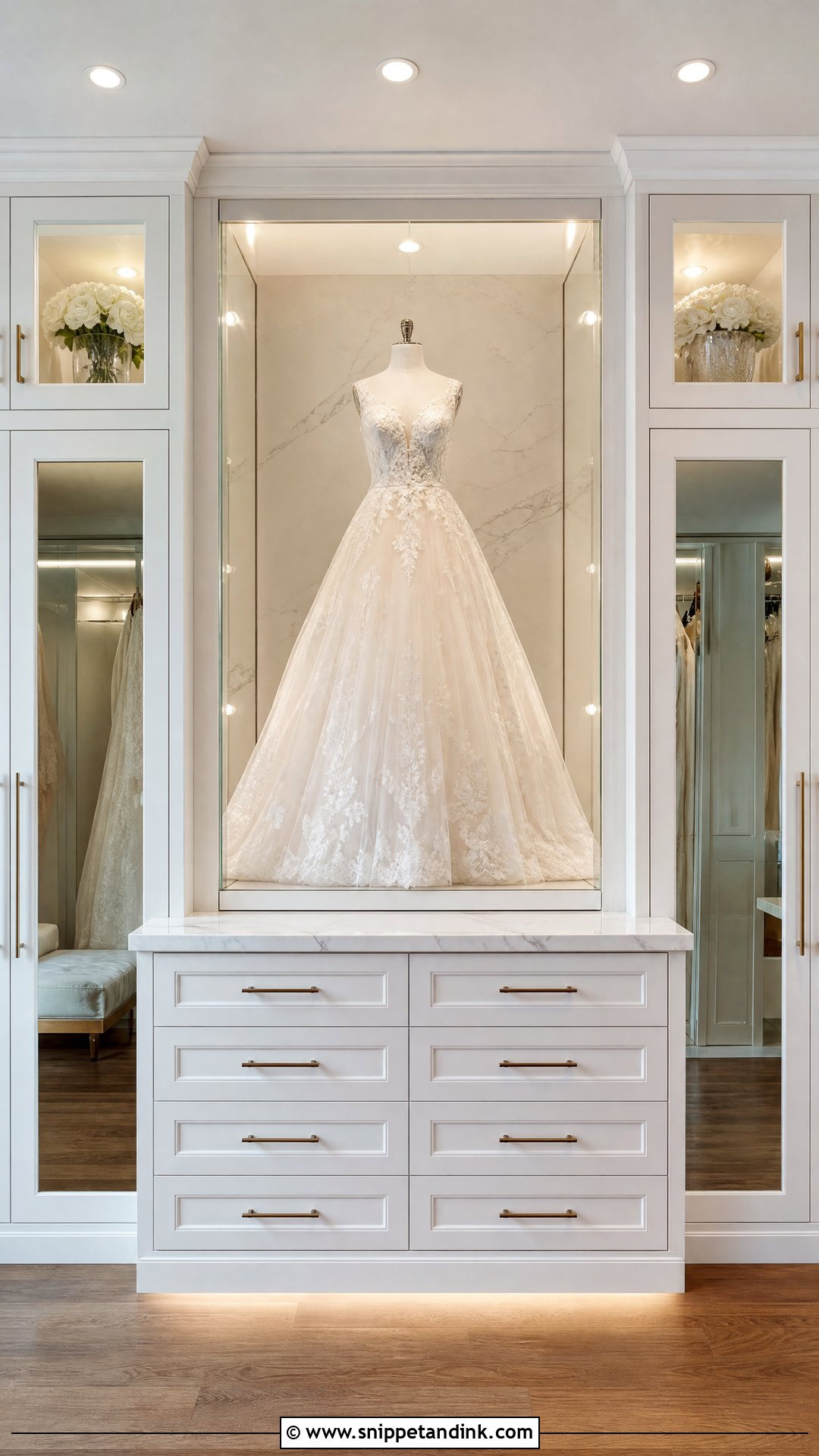
A wide closet wall with a built-in dresser has room for both storage and a display. The drawers below can hold the veil, photographs, preservation supplies and other keepsakes. Above them, a tall recessed enclosure with a glass front gives the gown its own vertical space. Use a fitted mannequin or a properly padded support so the weight spreads across the body rather than hanging from the shoulder seams, which is where an unsupported gown starts to stretch. Frame it in the same cabinetry as the rest of the closet. Small directional lights pick out lace or embroidery, but keep them off when nobody is looking. You lose no hanging space on either side.
3. Wedding Dress Display With Mannequin
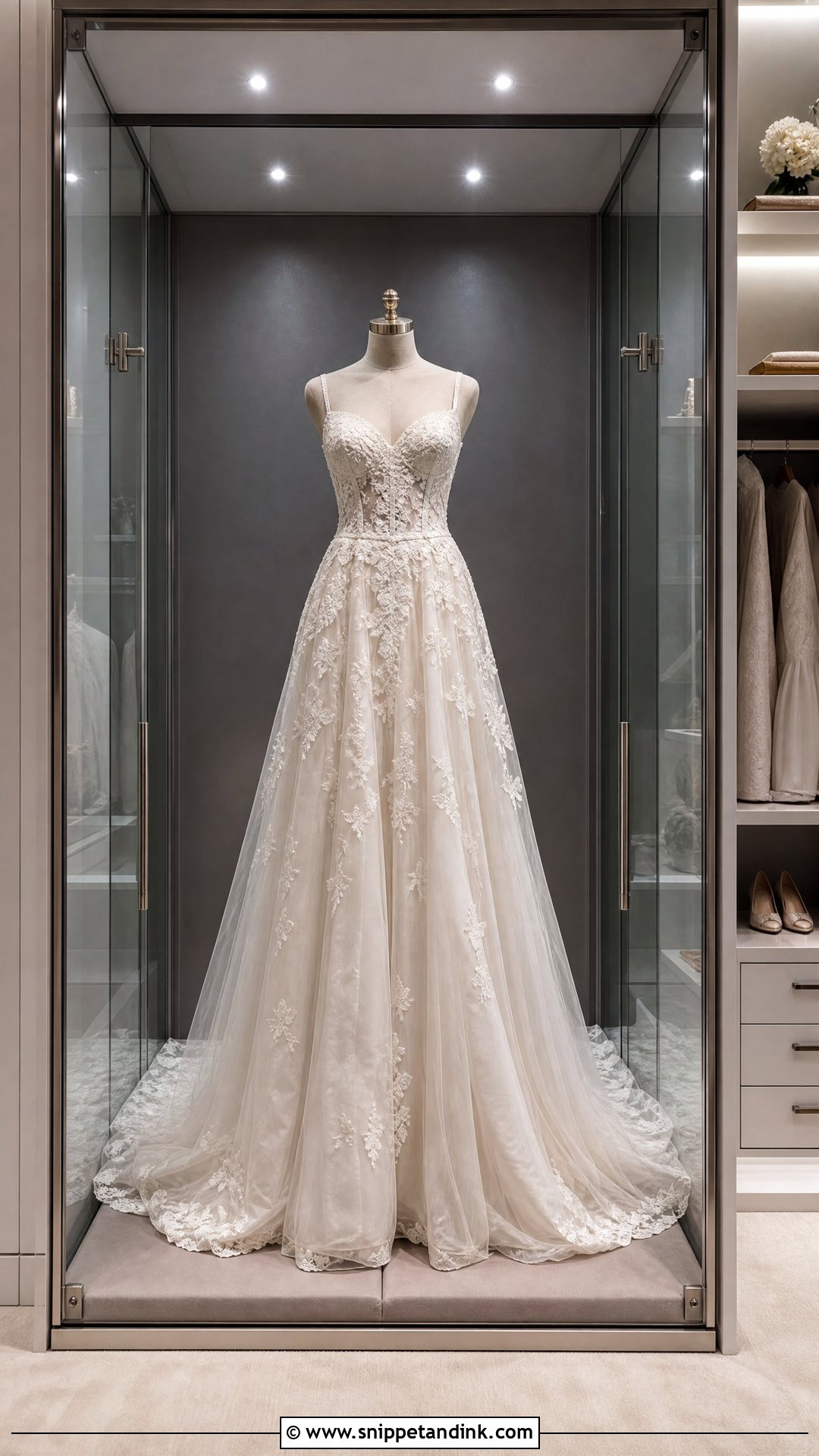
Dramatic necklines and structured bodices show far better on a form than a hanger, which collapses them. The first thing I check is the form: it should be sized to the gown so it fills the bodice, waist and sleeves without stretching anything; a form that’s too big strains seams, and one that’s too small lets the bodice sag. Padding can build a standard form up to size. Stand it inside a glass-front cabinet or a protected niche, and spread the train on a wide padded platform in soft folds. Keep jewelry off delicate lace unless each piece has its own support. A plain painted backdrop lets the beading lead. For a valuable or fragile gown, ask a textile conservator about the internal support before mounting.
4. Wedding Dress Shadow Box in Walk-In Closet
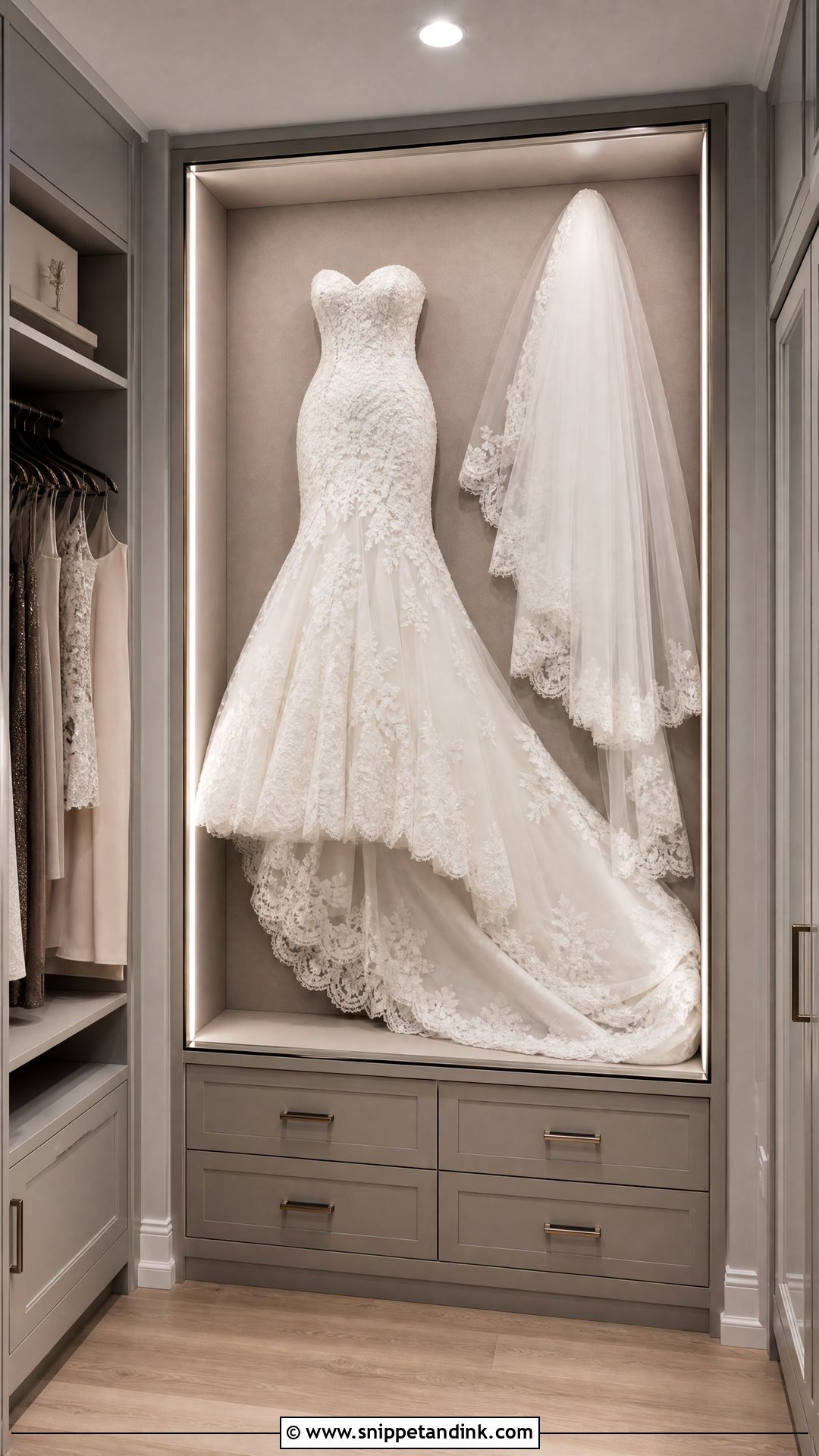
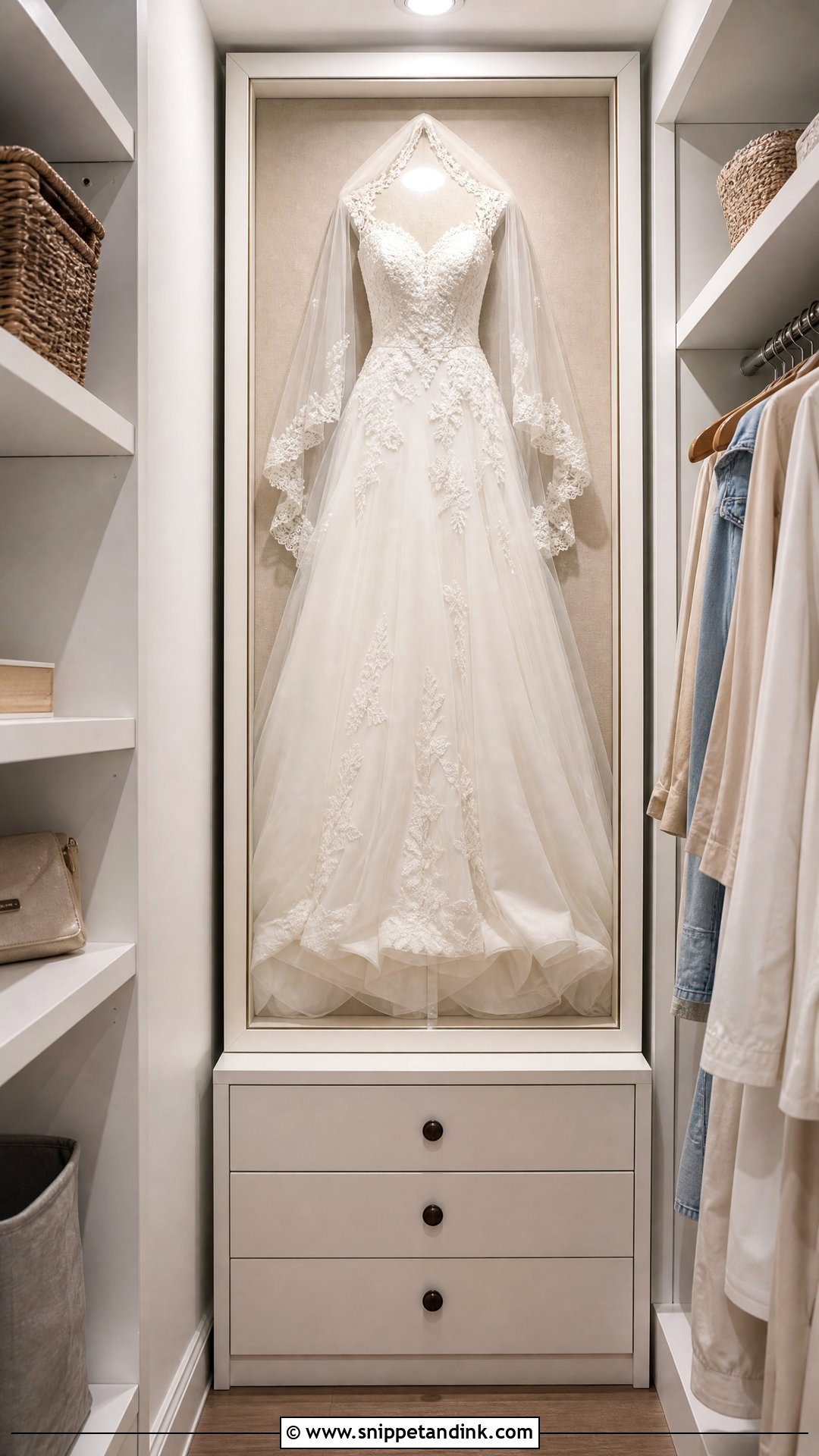
When a closet lacks depth for a freestanding form, a full-size wedding dress shadow box is the answer. The gown is arranged against a fabric-covered archival board, giving a flatter presentation that still shows the silhouette. The frame must be deep enough that the glass never presses on lace, beads or fabric flowers. An ivory, soft gray or pale taupe backing keeps a white gown visible. The veil can sit above the shoulders, with the train laid in broad supported folds below. Mount it above drawers or between wardrobe towers. Have it professionally mounted, because staples, tape, nails and permanent adhesives all leave lasting damage on fabric.
5. Wedding Dress Display Behind Glass Closet Doors
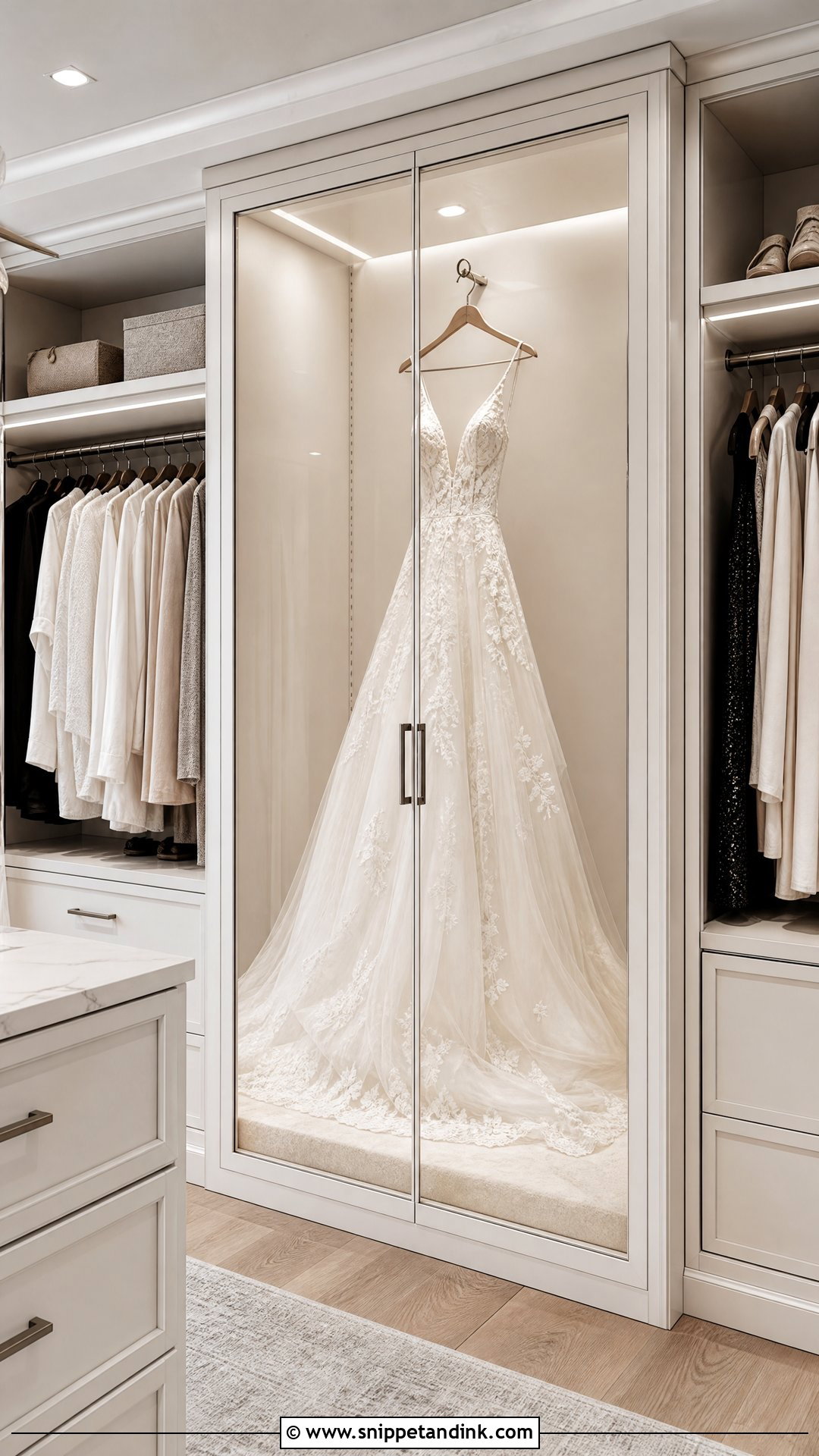
Glass closet doors are a simpler alternative to building a separate case. Give one tall cabinet to the gown and fit it with clear or UV-filtering doors that match the rest of the wardrobe. Inside, use a padded hanger only if the dress is light and well constructed. Heavy skirts, dense beading, weak seams and bias-cut fabric all belong on a fitted form, because hanging pulls them out of shape over months. Leave space on every side so neighboring clothes can’t rub against it. A solid back and a lined base for the train finish the cabinet, and the doors open easily for checks.
6. Wedding Dress Display With LED Lighting
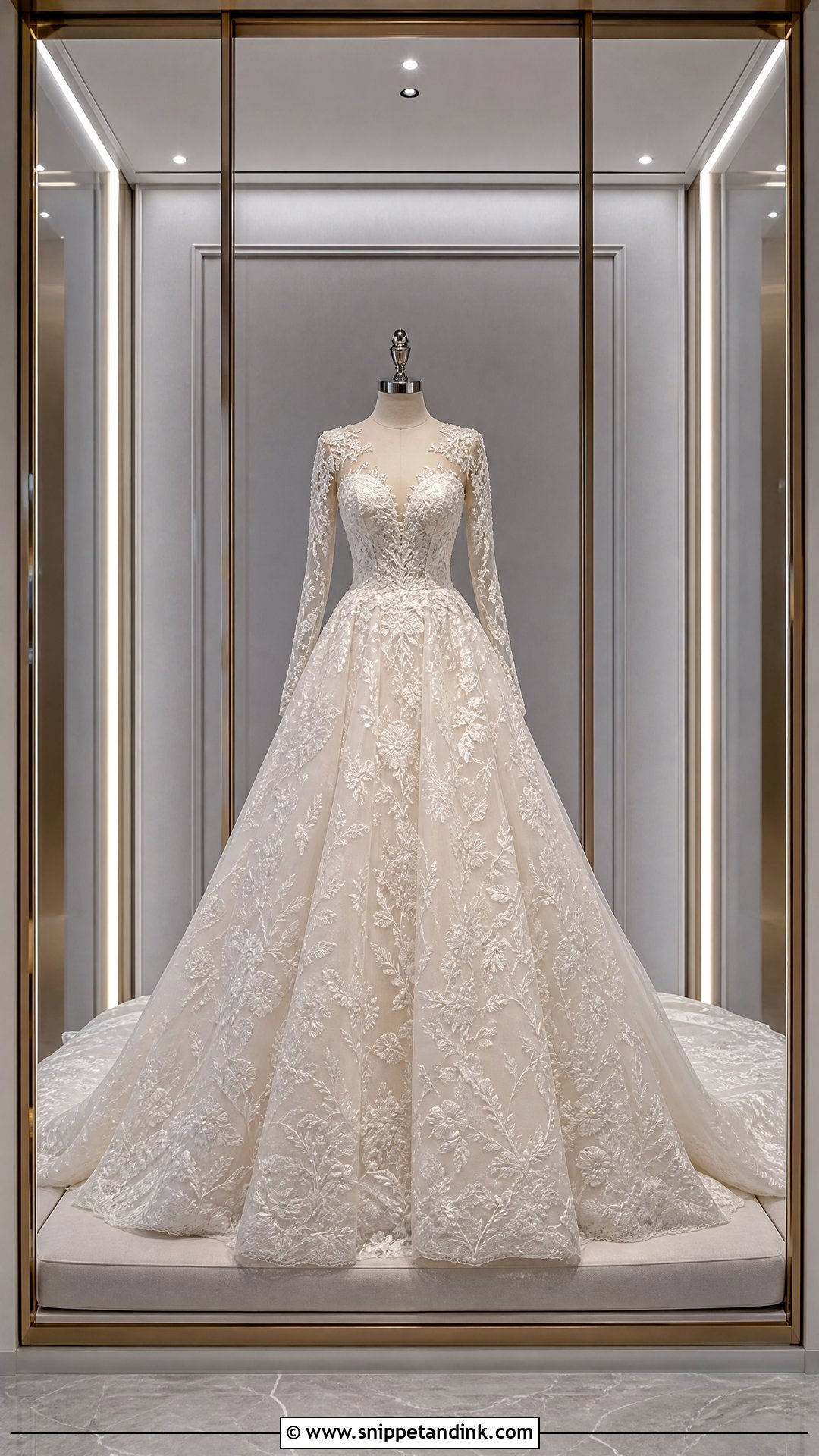
Lighting is the part of a gown display I’d be most cautious with. Low-heat LED strips along the top inside edge of an enclosed cabinet, with diffusers to soften bright points, give an even glow without warming the fabric. Neutral white shows the true color, while warm bulbs make ivory look yellow. Put the lights on a separate switch, a timer or a motion sensor so they run only while you’re looking. Light causes fading and fiber damage that can’t be reversed, and it accumulates, so short viewing periods matter more than the type of bulb. Pale cabinetry and simple hardware keep the closet bright even with the lights off.
7. Wedding Dress Display in Closet Alcove
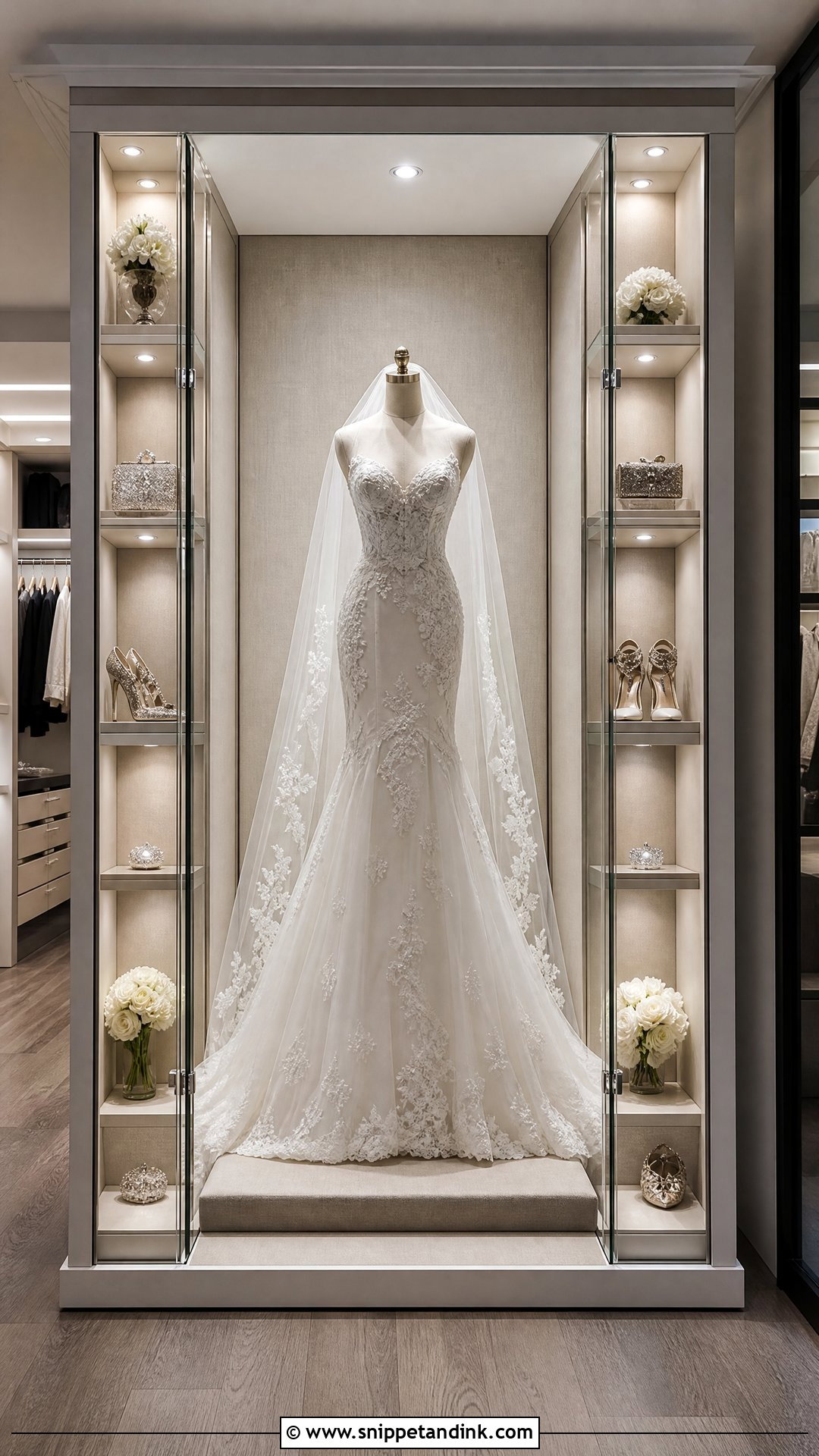
An unused alcove can house the gown without reworking the whole room. Measure the dress from neckline to hem first, then measure its fullest point, and allow room on top of both; brides are often surprised how much depth a skirt needs. Line the alcove with a smooth neutral backdrop and install a dress form or padded mount. A fitted glass panel or door keeps out dust and everyday knocks. For a long train, build a raised, fabric-covered base where it can rest in loose folds. Narrow shelves alongside can hold boxed accessories. At the end of a closet aisle, the alcove becomes a natural focal point.
8. Wedding Dress Display With Mirrored Back Wall
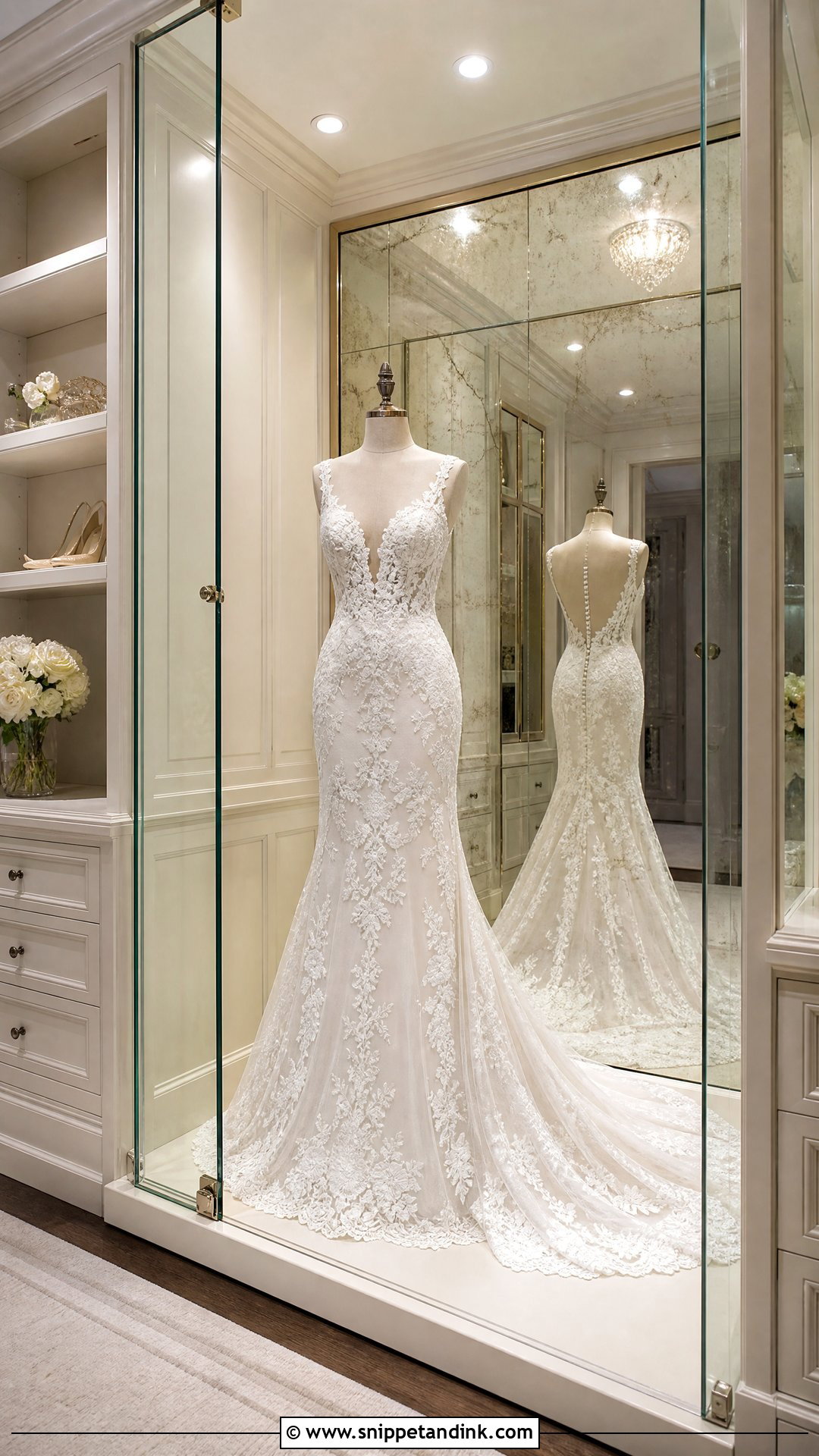
If the back of your gown is the best part, a mirrored back wall lets you see it from the front. Corset lacing, covered buttons, lace panels and bows all reward it. Mount the gown on a supported form inside an enclosed cabinet, with a clear gap between fabric and mirror so nothing ever touches. A lightly antiqued or tinted mirror reduces glare. Everything reflected in it becomes part of the display, so keep the rest of the closet tidy. Light the cabinet from the sides rather than from above, since a spotlight bounces straight back off the glass.
9. Wedding Dress Display With Black Frame
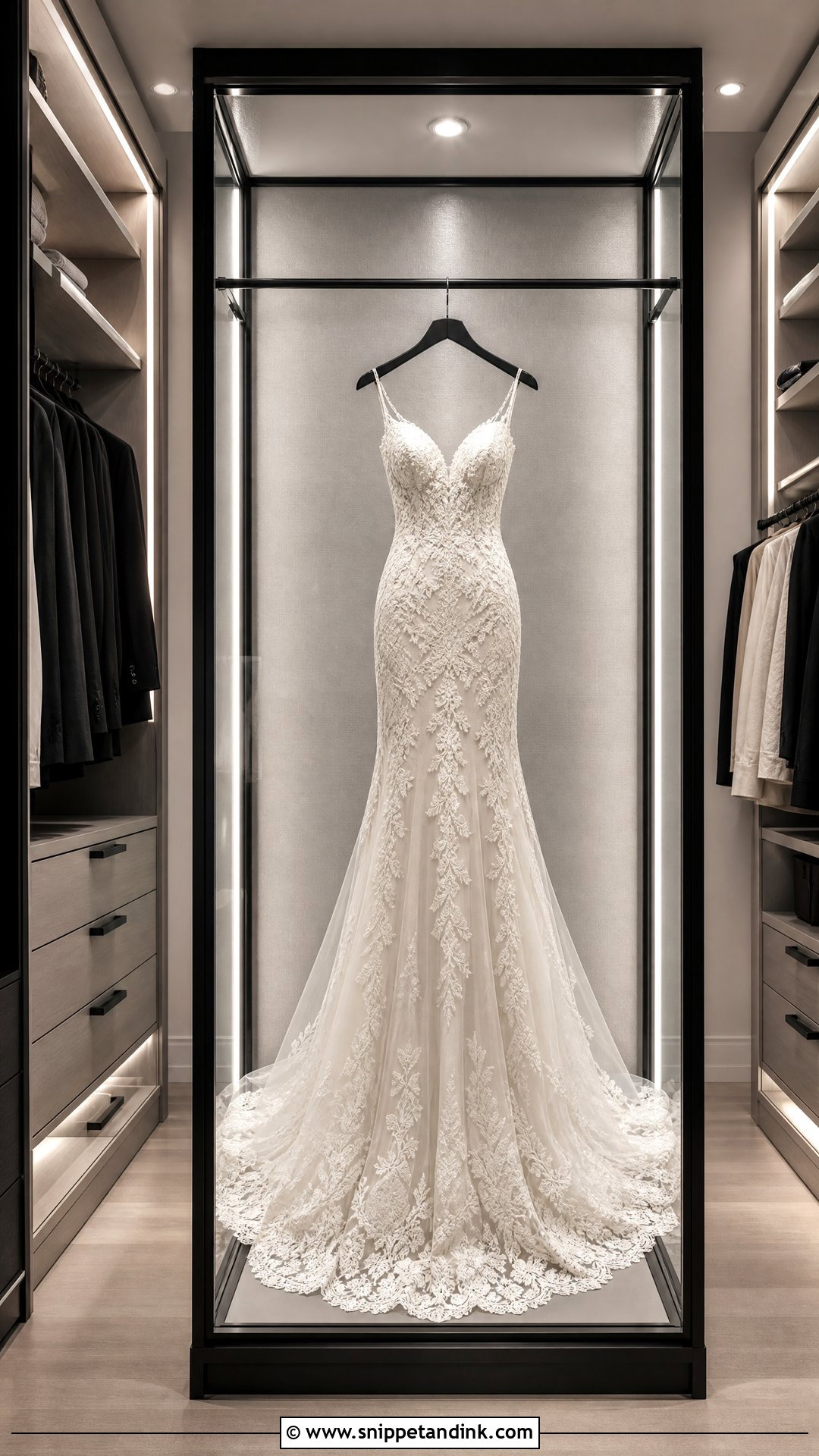
A slim black frame gives definition in a white or pale wood closet. Use it as an outline around the glass doors rather than adding decoration. Inside, an ivory or pale gray backing keeps the gown distinct. Black works for clean modern gowns and also sharpens intricate lace and layered tulle. Repeat the finish in drawer pulls, rails or mirror edges to tie the display into the room. One thing I watch for: a dark fabric directly behind transparent lace swallows the finer pattern, so keep the backing light even when the frame is dark.
10. Wedding Dress Display With White Cabinet
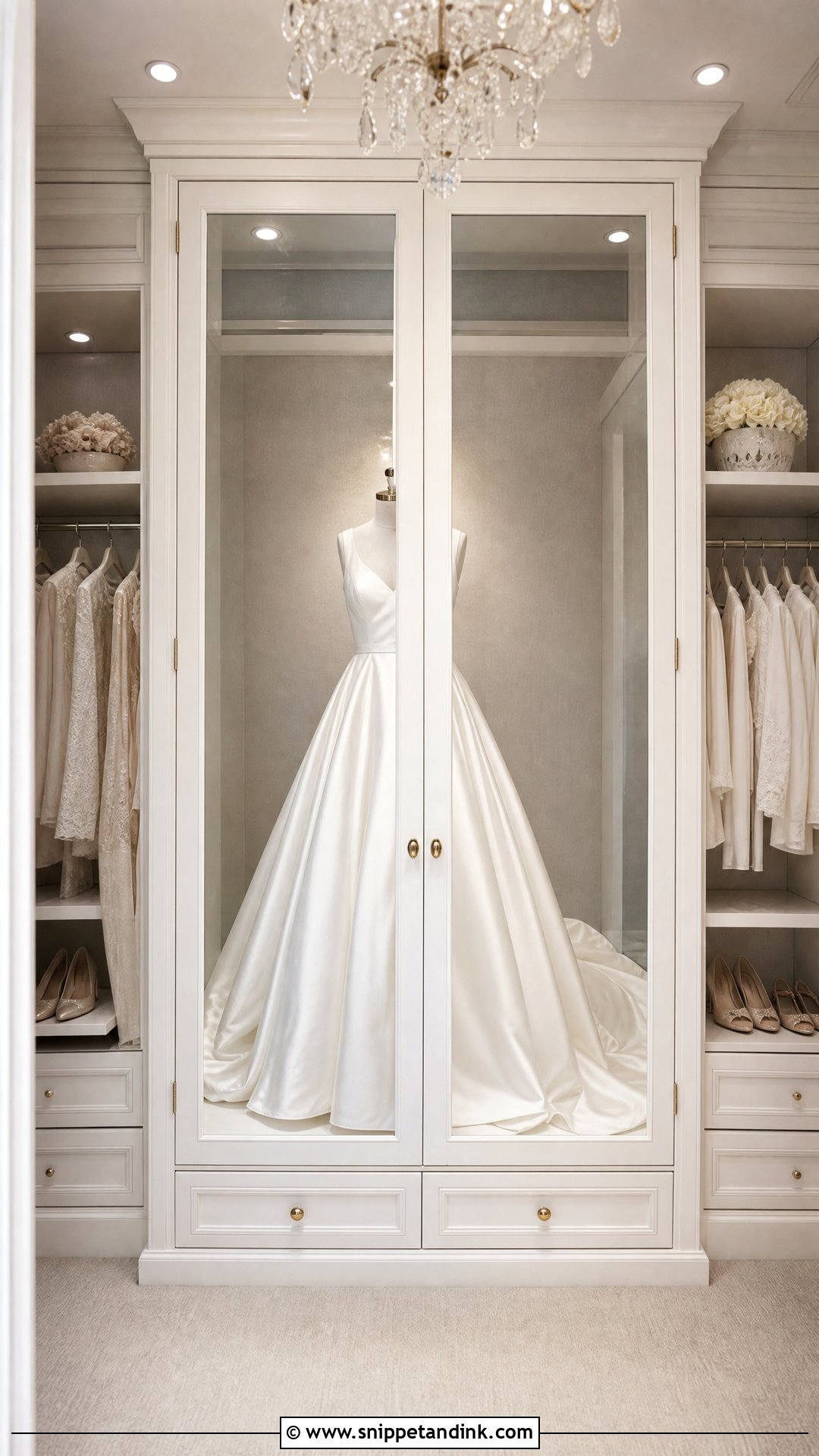
White cabinets give a soft, unified setting and suit both traditional and contemporary closets. The risk is the gown vanishing against its background, so choose an interior a shade away from white, such as pale greige, cool beige or very light gray. Glass-front doors keep it open to view while protecting the dress. Decorative trim suits a classic closet; flat fronts look cleaner. Put the gown on a properly fitted support with the train on a broad padded base. Closed drawers underneath can hold the veil, gloves, detachable sleeves and other keepsakes. The quiet palette lets the embroidery and silhouette carry the display.
11. Wedding Dress Display With Velvet Curtains
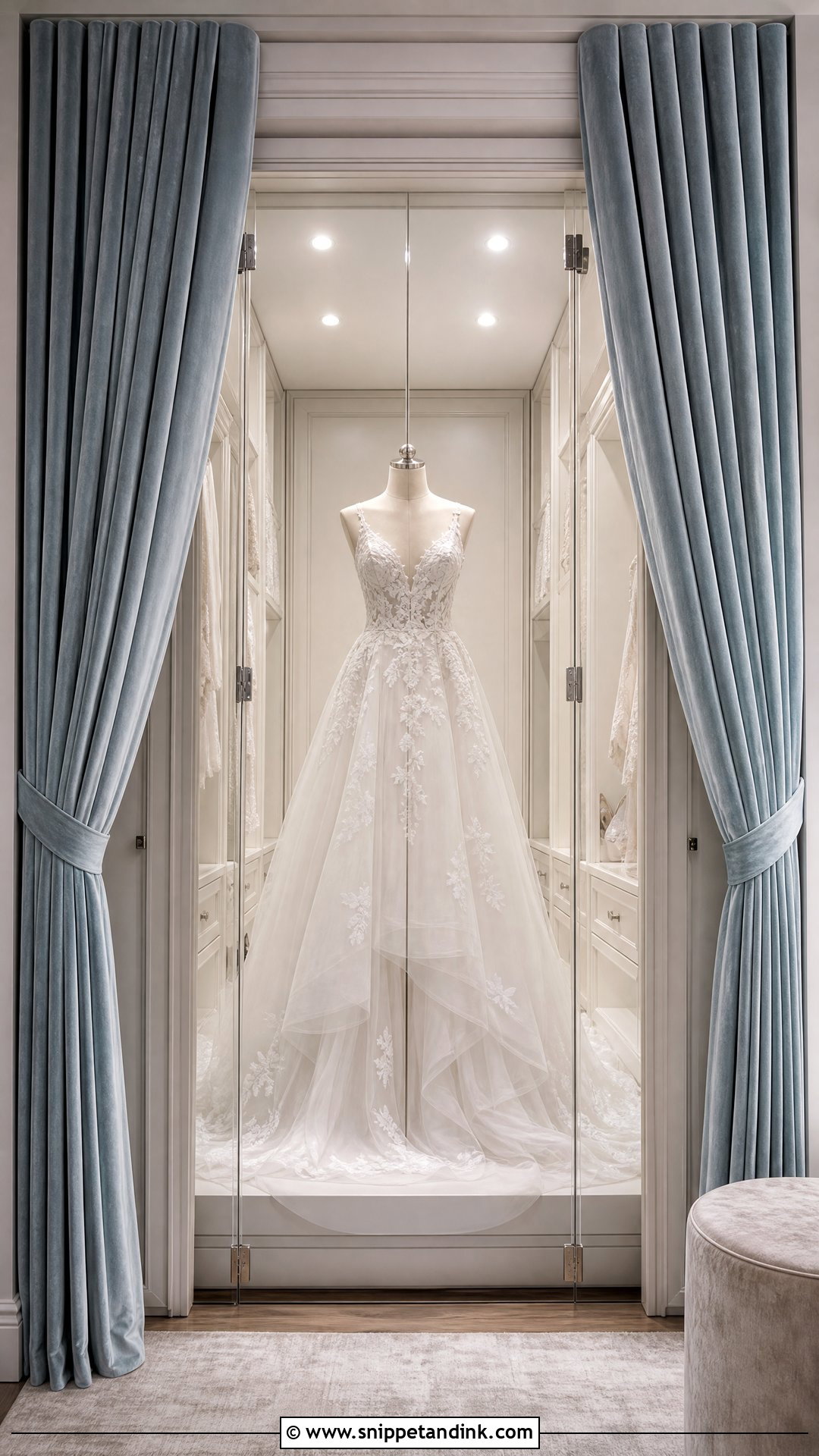
Velvet curtains add theater and give you an easy way to cover the gown when you aren’t looking at it, which also cuts down its light exposure. Hang them outside a glass-front cabinet, never touching the dress, since velvet sheds fibers and can transfer dye. Soft gray, dusty blue or muted green frame a white gown without harsh contrast. A ceiling track lets the panels glide and stack neatly at each side. Inside, a custom form supports the silhouette and a raised platform holds the train. It suits a dressing room that mixes practical storage with a sense of occasion.
12. Wedding Dress Display With Bridal Accessories
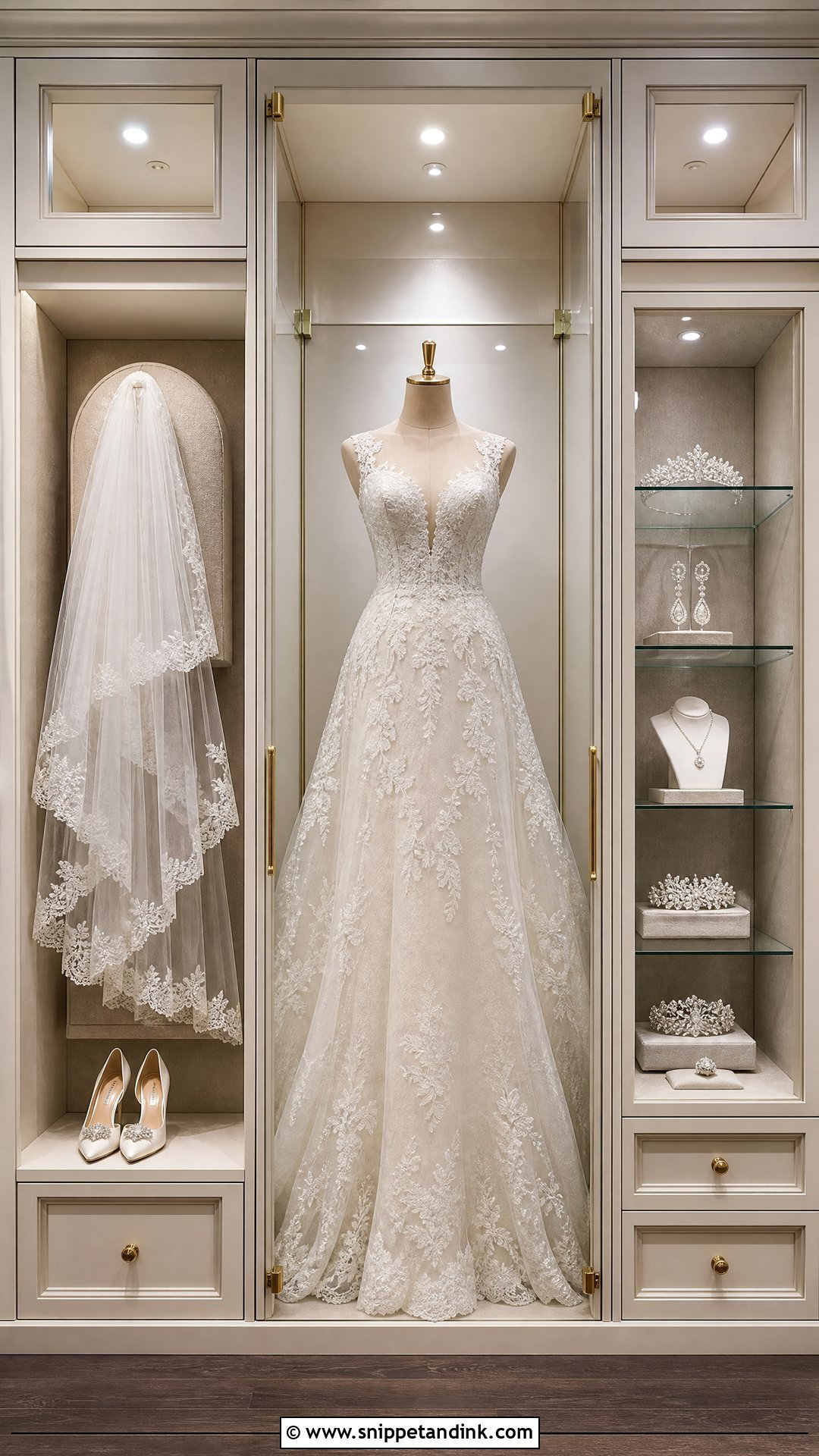
Recreating the whole wedding look, with veil, shoes, headpiece and jewelry, is tempting, and it works if every item has its own support. Keep the gown at the center on a fitted form. Give the veil a separate padded mount so its comb doesn’t drag on the bodice. Shoes sit on a low shelf beneath, and jewelry belongs in a small closed compartment beside the dress. I never pin anything to the gown itself, even to copy how it was worn, because pins leave holes and can rust. Matching trays or fabric-covered mounts make it look considered. Leave enough room to lift any piece out without brushing the dress.
13. Wedding Dress Display With Wedding Photos
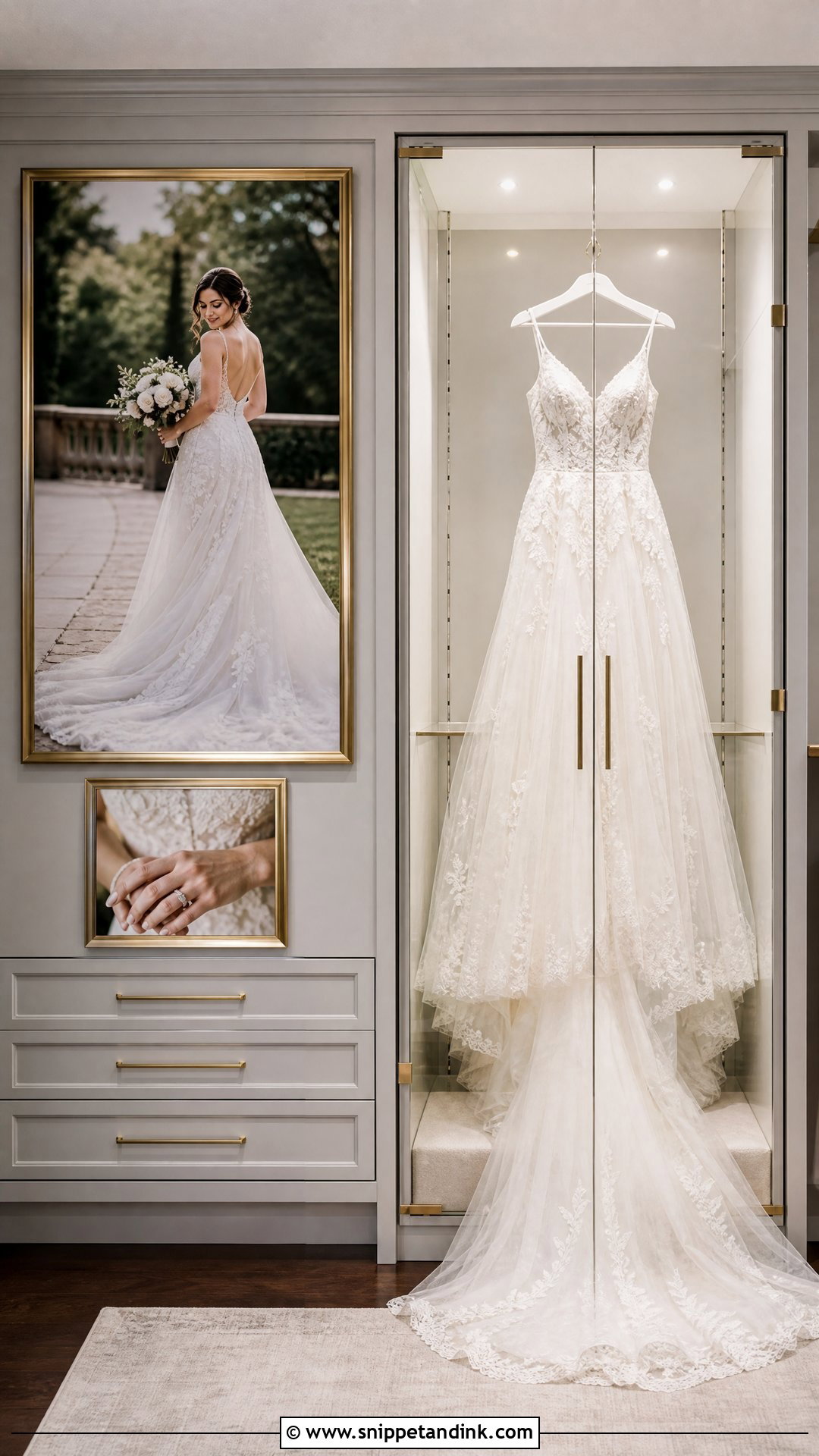
A photograph shows the gown as it looked on the day, which adds a lot of meaning to a closet display. One or two pictures are plenty. A large portrait beside the dress and a small detail shot on the drawer top below work well together, for instance a full-length image paired with a close-up of the lace. Keep the photos outside the gown’s enclosure so each gets suitable mounting and the dress stays uncluttered. Frames that match the closet hardware tie everything together.
14. Wedding Dress Display in Small Closet
Small closets need the display planned vertically. Skip the deep freestanding cabinet and use a shallow shadow box or a glass-front wall enclosure above a low drawer unit. The gown may need arranging on a padded flat support, with folds supported by rolled acid-free tissue so they never crease sharply. That still shows the bodice, skirt and key embellishment in a small footprint. Alternatively, display just the veil, an overskirt or a preserved section and keep the full gown in an archival box nearby. Closed shelves around it, a light backdrop and concealed lighting stop a compact display from looking cramped.
15. Corner Wedding Dress Display in Walk-In Closet
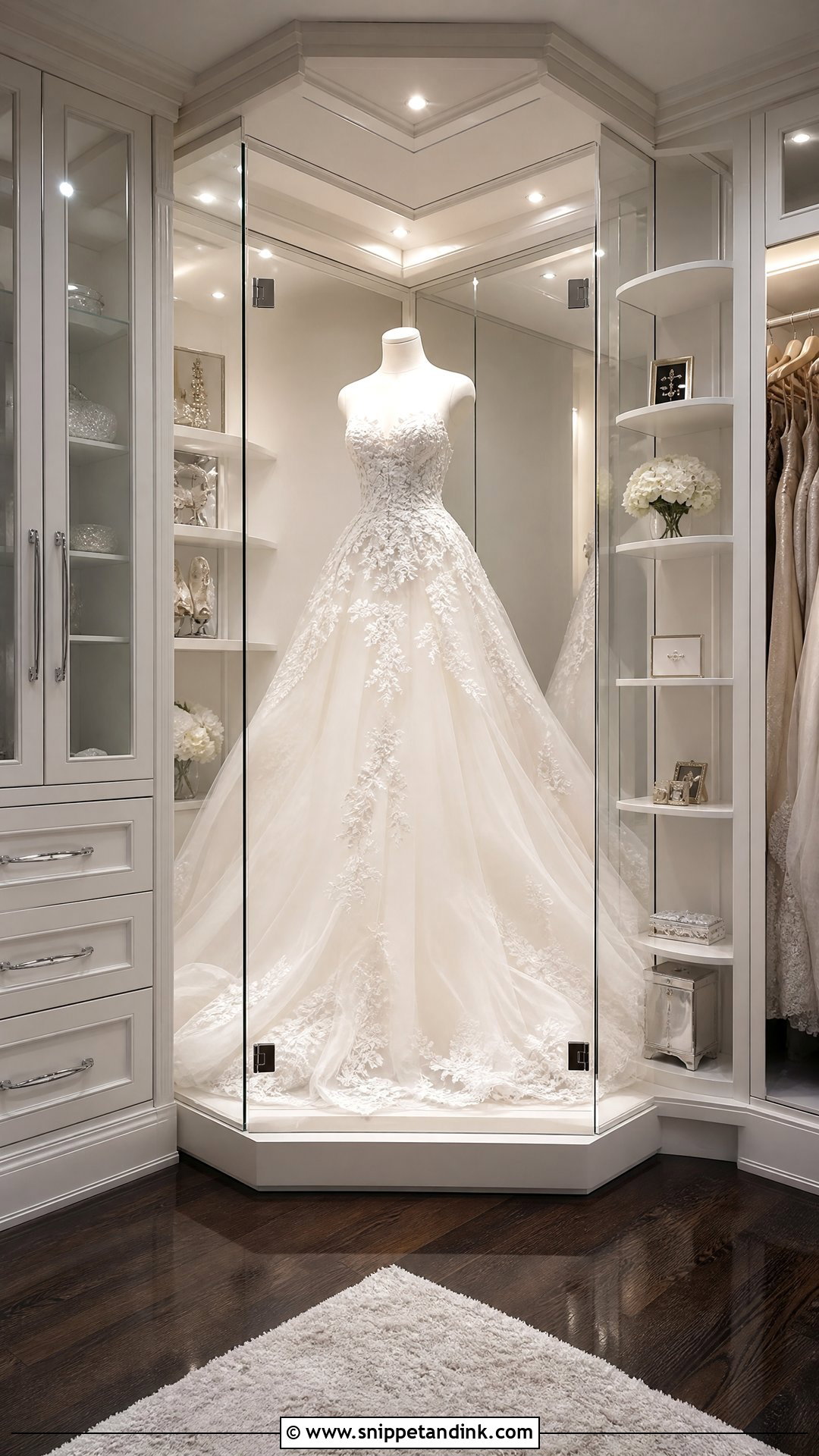
Awkward closet corners are wasted space in most walk-ins, and a diagonal enclosure turns one into a focal point. Run a glass-front cabinet across the corner so the gown faces the entrance or the central island. The angle often gives more interior depth than a flat wall cabinet, enough for a dress form and a fuller skirt. Curved or stepped shelving on each side connects it to the rest of the storage. A raised base keeps the train clear of the mannequin stand. Leave the background plain, since the diagonal already adds interest. Square walk-ins, where the corner is hard to reach anyway, benefit most.
16. Floor-to-Ceiling Wedding Dress Display
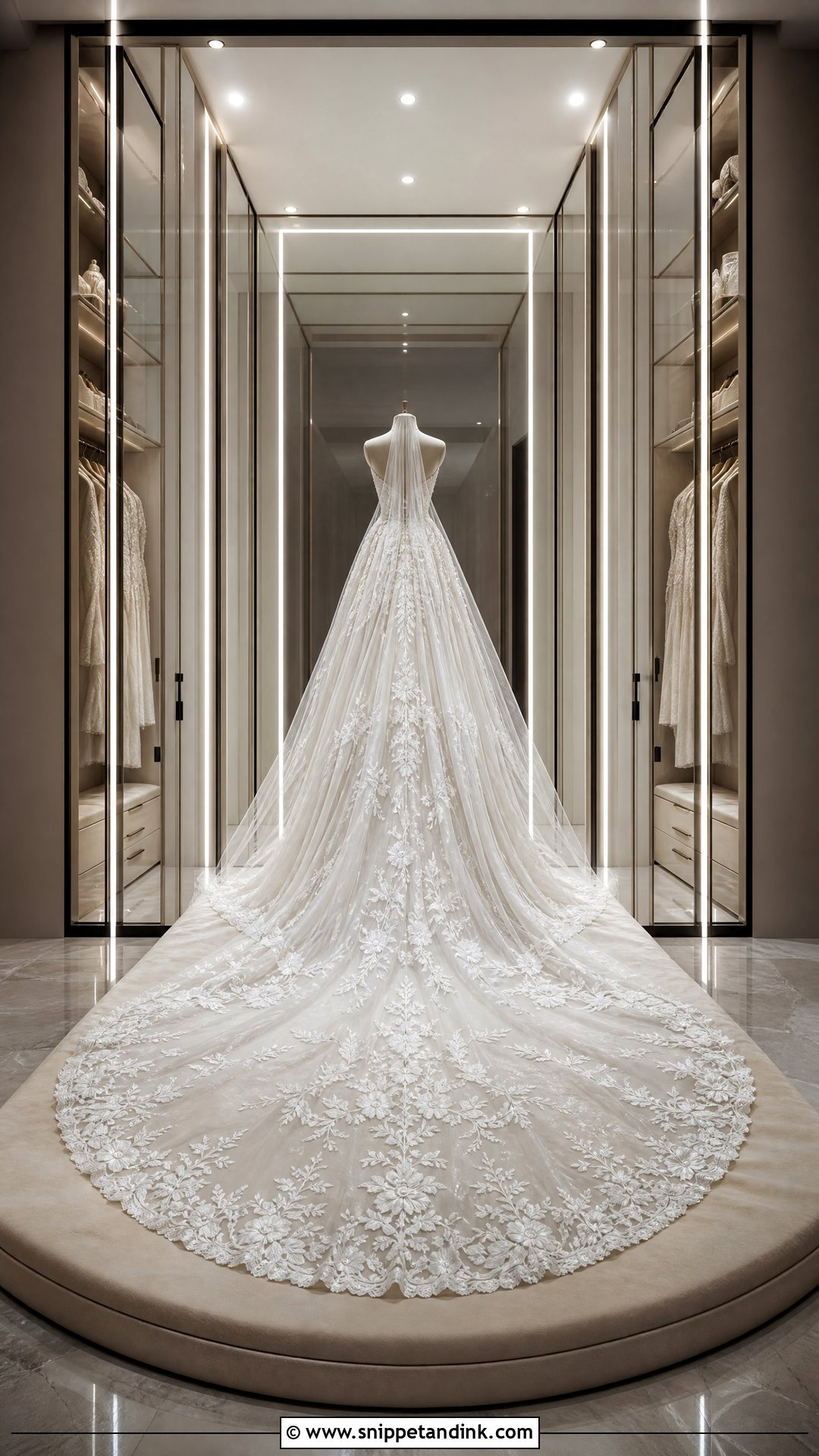
Cathedral trains, layered ball gowns and long veils need height, and a floor-to-ceiling enclosure gives it without compressing anything. Build a narrow vertical cabinet with glass doors, a solid top and a raised interior floor. A supported form shows the bodice and sleeves while the skirt falls onto a wide padded platform. A very long veil is better mounted separately above and behind the shoulders, because hanging its whole weight from the comb stretches the tulle over time. Tall side lighting covers the full length more evenly than one ceiling fixture. Match the cabinet height to the neighboring wardrobe towers.
17. Vintage Wedding Dress Display Cabinet
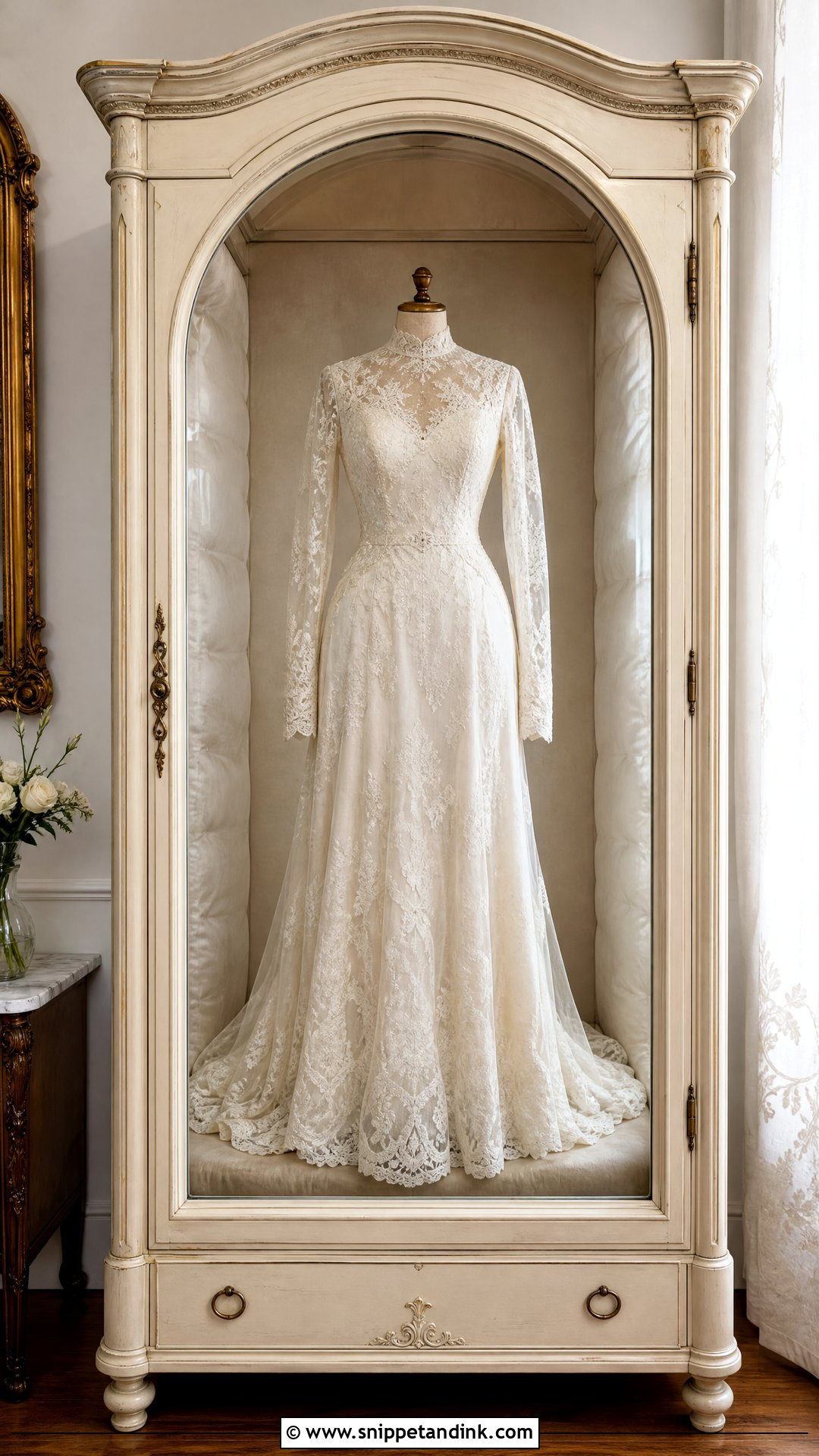
An antique-style cabinet suits a vintage gown or warms up a traditional dressing room: arched doors, restrained molding, aged brass hardware and a painted or sealed wood finish. Old furniture can be rough, acidic or unstable inside, so build a separate garment-safe lining before the gown goes in. Display the dress on a custom form with the train over a padded platform. A small framed wedding portrait or a fabric-covered accessory box belongs outside the main enclosure. Keep scented liners, old paper and dried flowers away from the fabric, since all of them can stain or attract insects.
18. Minimalist Wedding Dress Display in Closet
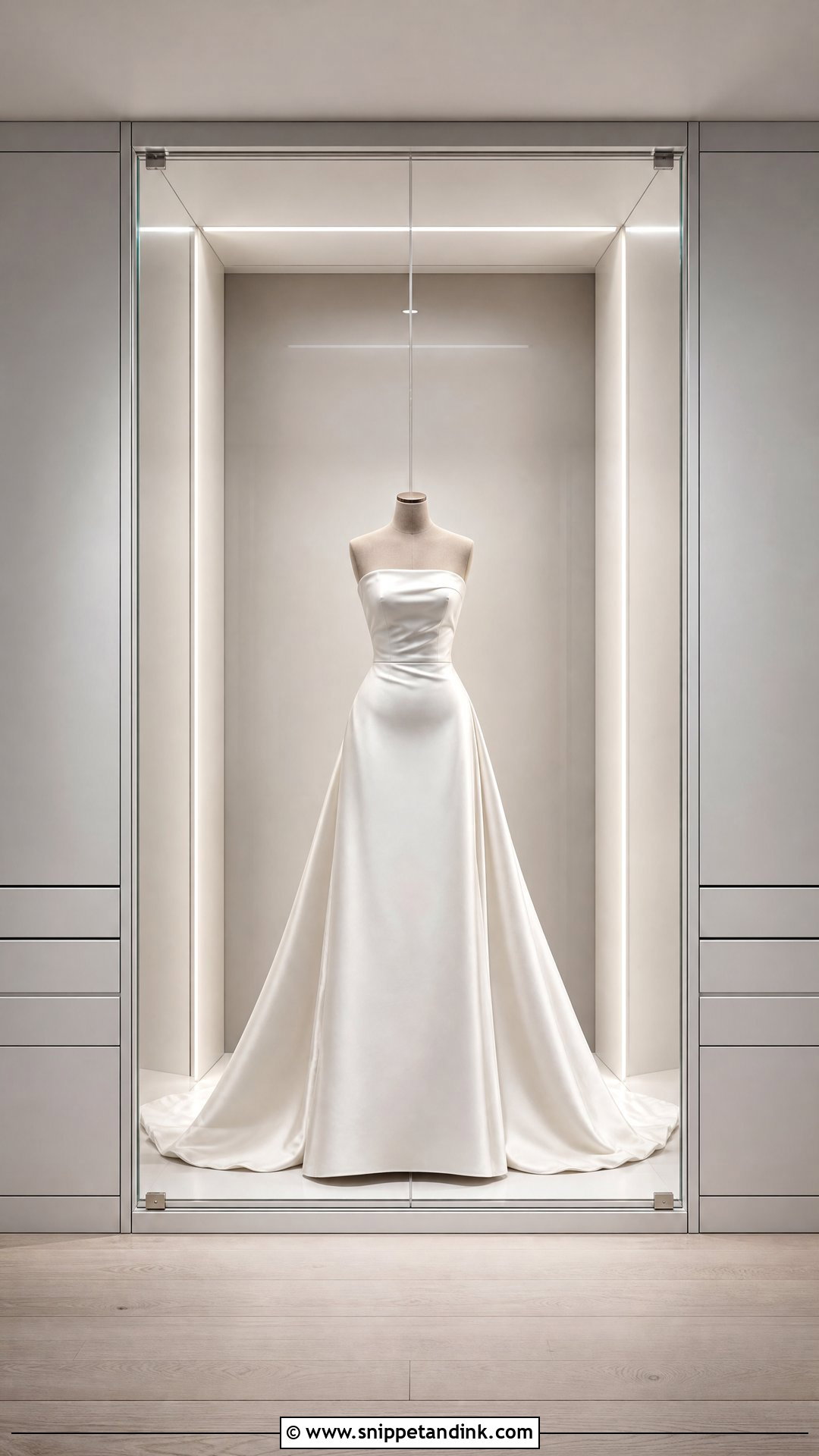
Clean lines make an elaborate gown look even more striking. A frameless or slim-framed glass enclosure with a plain backdrop, hidden hinges and almost no visible hardware holds the gown and its support, nothing else. Photographs, shoes and other keepsakes go into closed drawers. Soft white or light gray behind the dress suits most bridal fabrics; a slightly deeper neutral defines a plain satin silhouette. Use concealed side lighting on its own switch rather than a chandelier. Repeat the same restrained finishes across the closet so the gown reads like a single piece of art.
19. Luxury Boutique Wedding Dress Display
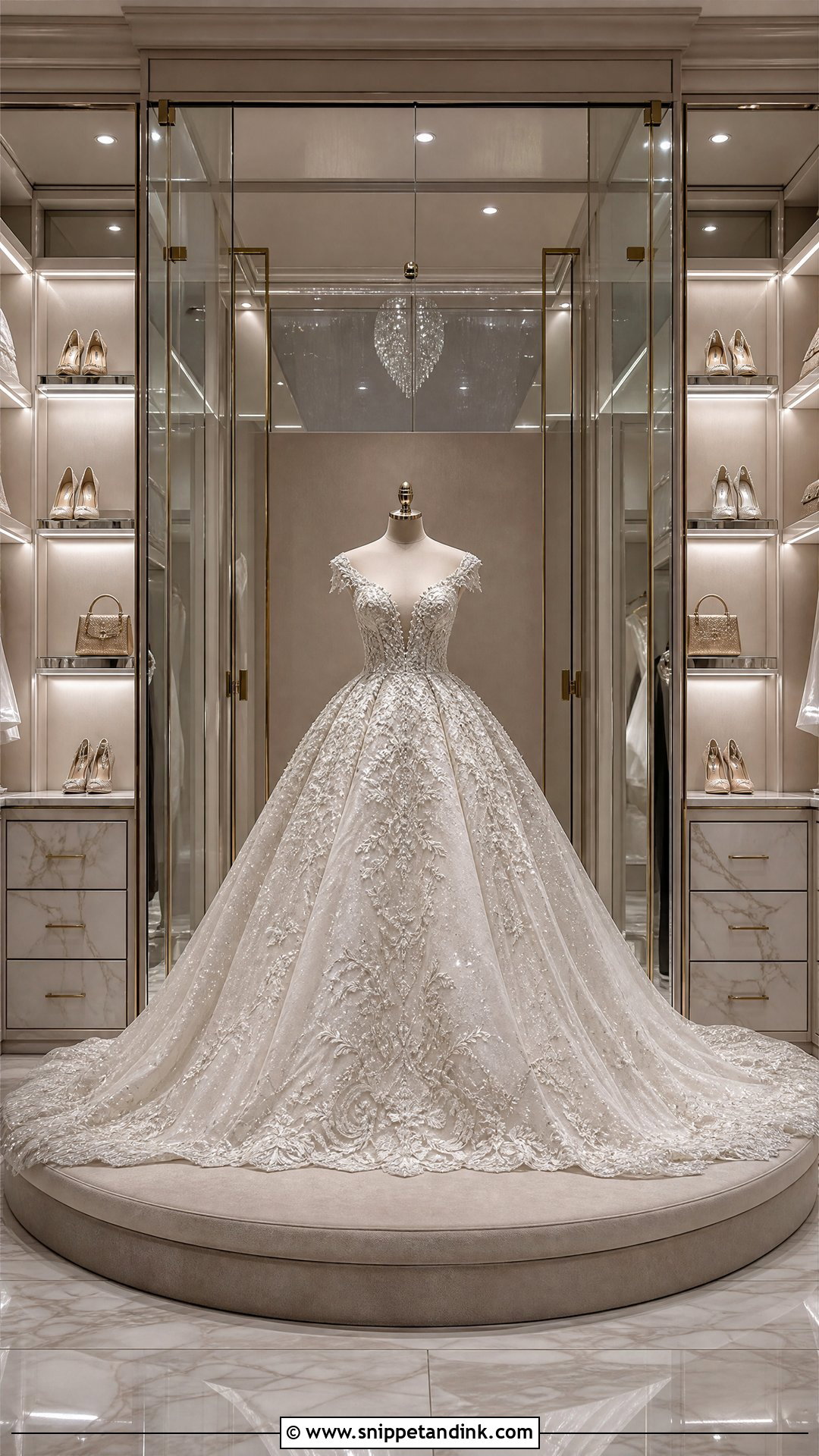
Boutique-style displays rely on symmetry and restraint. Put the gown in a central glass enclosure and frame it with matching shoe shelves or handbag cabinets on each side. A marble-look drawer top beneath can hold a closed jewelry case or one framed photograph. A fitted mannequin keeps the neckline and waist in shape, with the train on a broad upholstered platform. Mirrored side panels add depth. Repeat one cabinet color and metal finish across the island, hardware and display frame. Leave clear space between the gown and everyday items, or it starts to look like a crowded shop window.
20. Rotating Wedding Dress Display and Storage
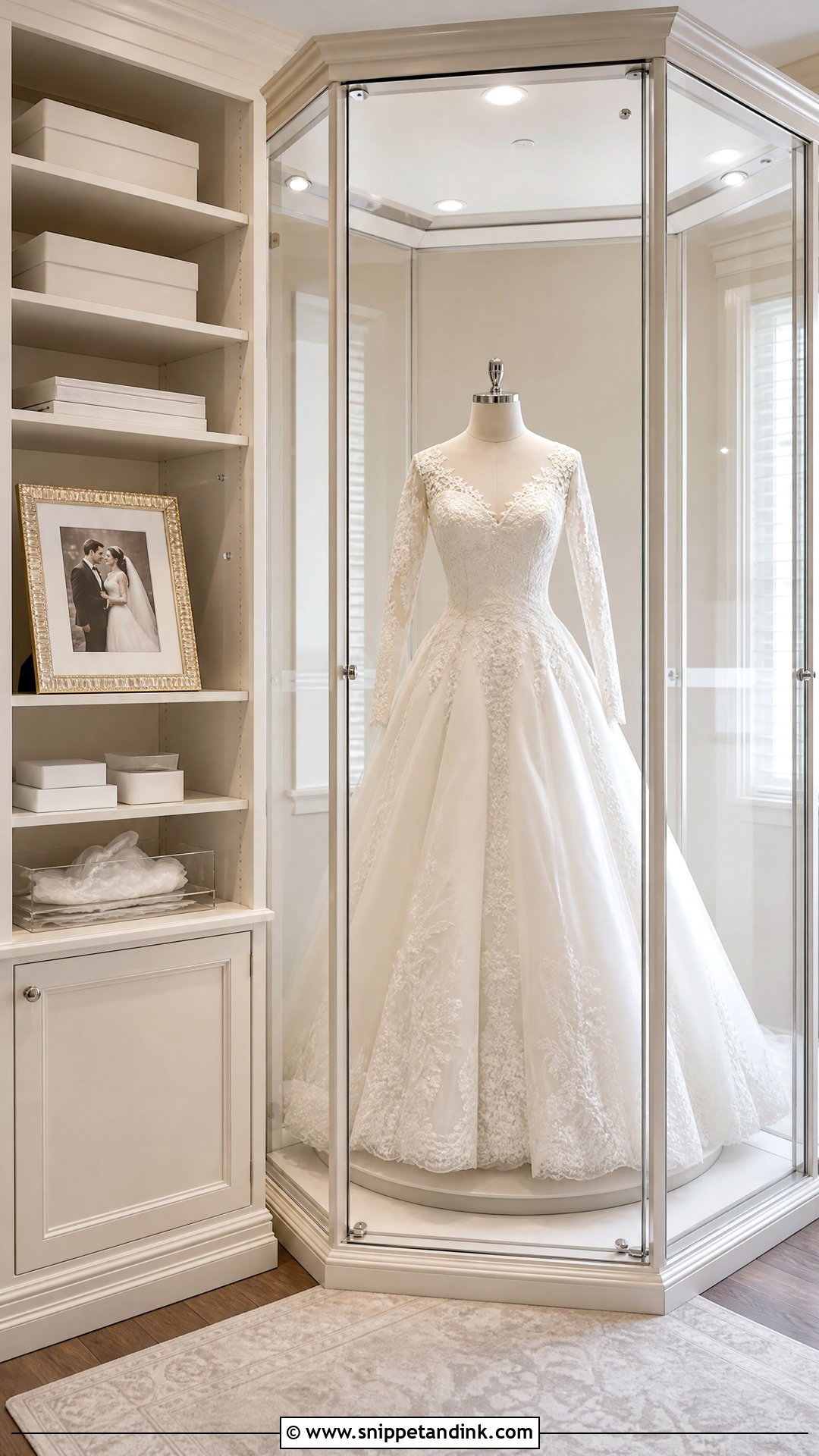
If I had to pick one approach for a gown you want to keep for decades, it would be rotation. Keep the preserved dress in a large archival box with protected storage for most of the year, folds padded with acid-free tissue so creases never set sharply. Bring it out onto a custom form inside an enclosed display for an anniversary or a few weeks at a time. While it’s away, the cabinet can show a portrait, the veil or a bridal hanger. Flat, supported storage with limited display time is the gentlest treatment for delicate fabric, since it cuts both light exposure and the slow stress of hanging.
The Closet Itself Matters as Much as the Cabinet
The most carefully built case can’t protect a gown from the room around it. A closet on an exterior wall swings with the seasons, and one beside an en-suite bathroom gets steamy every morning. Fabric does best somewhere cool and steady, away from radiators, hot water pipes and direct sun. Very damp air encourages mold and foxing, and very dry air makes old silk brittle, so aim for a moderate, stable level rather than extremes.
Materials that quietly damage fabric
Fresh paint, varnish and many engineered woods give off fumes as they cure, and those can discolor fabric sealed in alongside them. Let a new cabinet air for several weeks before the gown goes in, and line any wood surface the dress could touch with a barrier fabric such as washed, unbleached cotton.
A twice-yearly check
Open the case a couple of times a year. Look for tiny holes or casings that suggest moths or carpet beetles, new spots or yellowing, and seams pulling at the shoulders or waist. Shift the folds of the train slightly each time so the same lines never stay under pressure for years.
Let the Fabric Decide How Your Gown Is Shown
A treasured gown can live in a working dressing room, as long as the display serves the dress first. A glass cabinet makes a polished centerpiece; shadow boxes and shallow wall enclosures suit smaller closets. Forms, padded supports, controlled lighting and closed doors improve both how it looks and how it lasts. Still, the gown’s condition, fabric, construction and weight should shape the final design, and a fragile, heavily beaded or historically valuable dress deserves a conservator’s advice before mounting. Leave space around it, use garment-safe materials and keep the lights off most of the time.
You'll Like These Ideas:


Leave a Reply