
I’ve spent a lot of hours on boutique floors, and the shops brides remember are rarely the biggest ones. They’re the ones where the stylist knew the venue before the first gown came off the rack. The concepts below run from luxury salons and inclusive boutiques to rental stores and online-first showrooms, and each can be scaled to a single room or a larger destination store. Before you commit to one, shop your local market as a bride would. Book appointments at the nearby stores and note what they make hard: no larger samples, no prices on tags, a three-week wait for a slot. That gap is usually your concept.
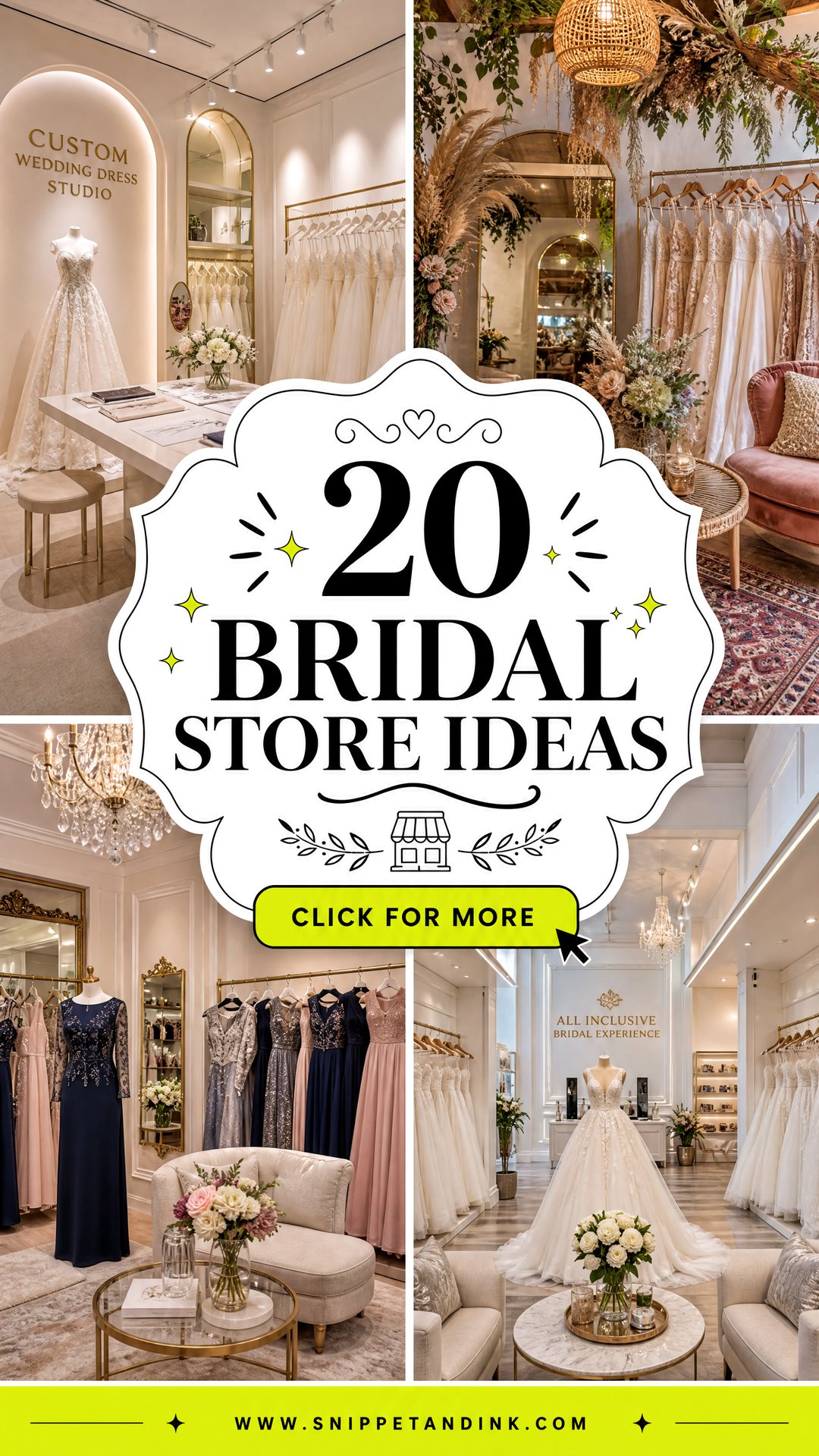
What a Bride Notices Before She Tries On a Single Gown
Most brides decide how they feel about a shop long before the first zip. The concept you choose matters less than whether those early moments match it. A luxury salon with a clumsy booking form, or an inclusive boutique whose website shows only one body type, has already broken its promise.
These are the points I’d walk through as if I were the customer:
- The website: can she see a price range and the sample sizes you carry without emailing to ask?
- The booking: does the confirmation tell her how long the appointment runs, how many guests she can bring and what to wear underneath?
- The arrival: is someone free to greet her by name, or is she standing by the door while staff finish another fitting?
- The first rack: does it reflect what she told you, or is it the same twelve bestsellers every bride sees?
- The mirror: is the light warm enough that ivory looks like ivory?
Fix these before you spend on decor. A plain room with a stylist who has read the questionnaire beats a beautiful room where nobody has.
1. Luxury Bridal Boutique
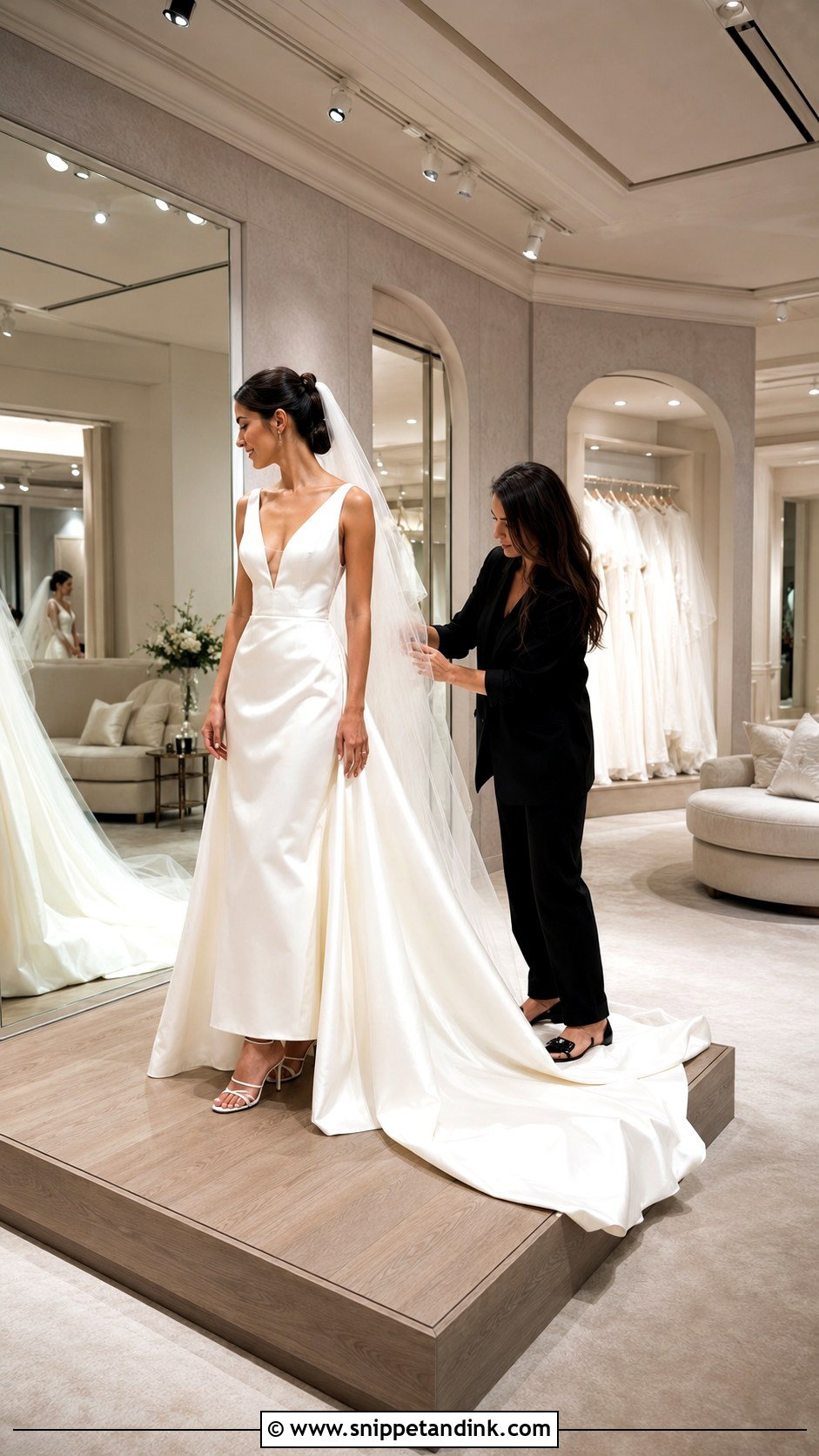
A luxury bridal boutique lives or dies on pace. The bride should never hear another appointment through the curtain or feel the clock running. Carry fewer designer gowns, chosen for fabric and construction she can feel: a structured mikado, a hand-beaded bodice, a design the label will customize. I pull a rack before she arrives using her venue, budget and the silhouettes she has saved, so the first dress on is a real contender instead of a warm-up. Follow-up fittings, pressing and delivery belong in the service. So does plain talk about money. State the appointment fee, the alteration estimate and the order timeline at the start, because a bride who discovers a rush charge at the deposit stage stops trusting everything else in the room.
2. Modern Minimalist Bridal Store
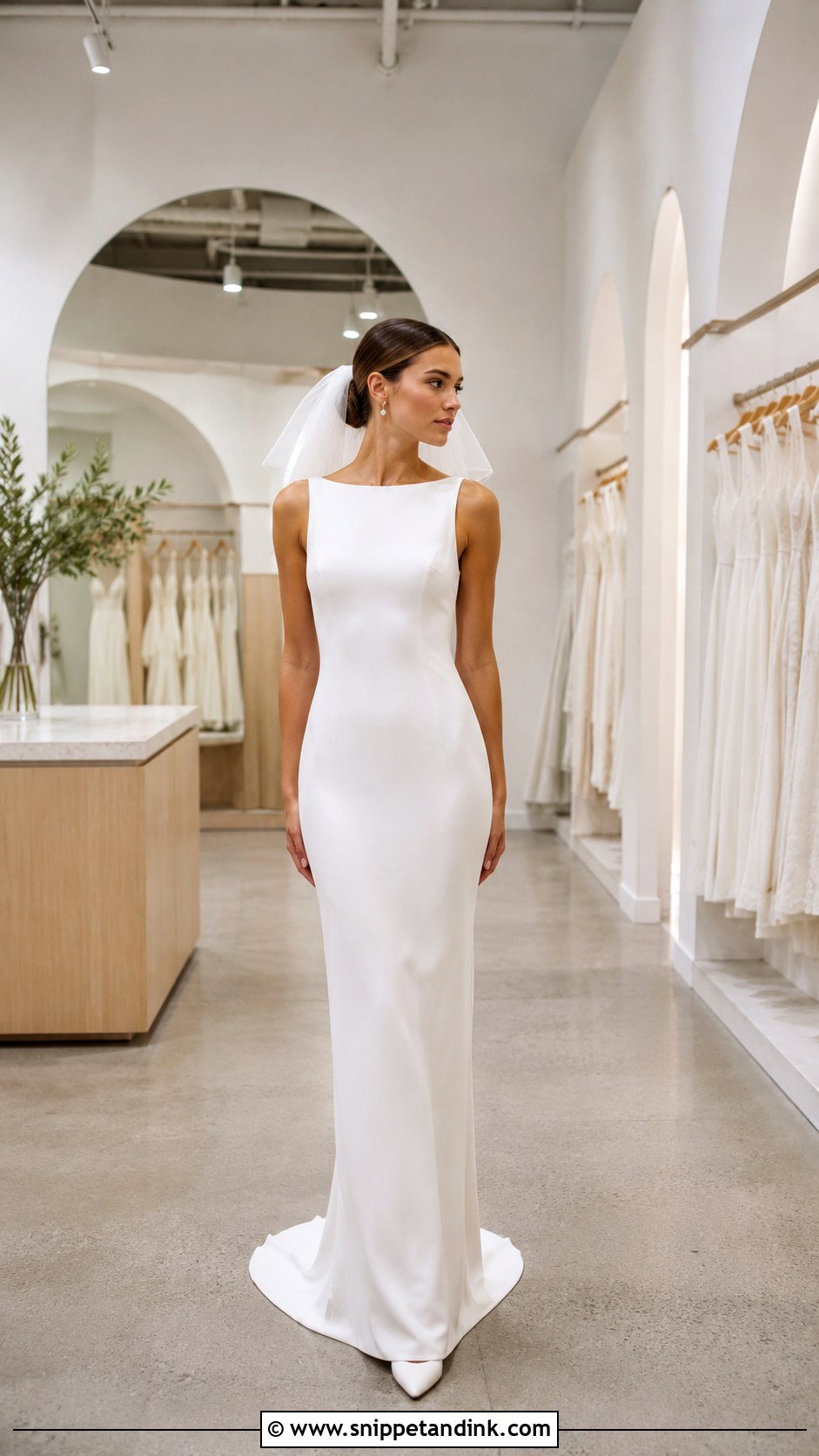
Minimal stores are harder to run than they look, because every gown on the floor has to sell itself. Edit hard: column dresses, structured crepe, slip silhouettes, tailored separates. Then make sure the edit still spans necklines, sleeve lengths and price points, or the room reads as empty rather than considered. White walls and pale wood help, but test the lighting before you open. Cool LEDs make ivory crepe look dingy, and on a plain gown there’s no beading to distract from it. The stylist’s job here is pointing out what a bride might miss at first glance: where a seam sits on the hip, how a bias-cut slip moves when she walks, whether a cropped jacket changes the whole outfit.
3. Plus Size Bridal Boutique
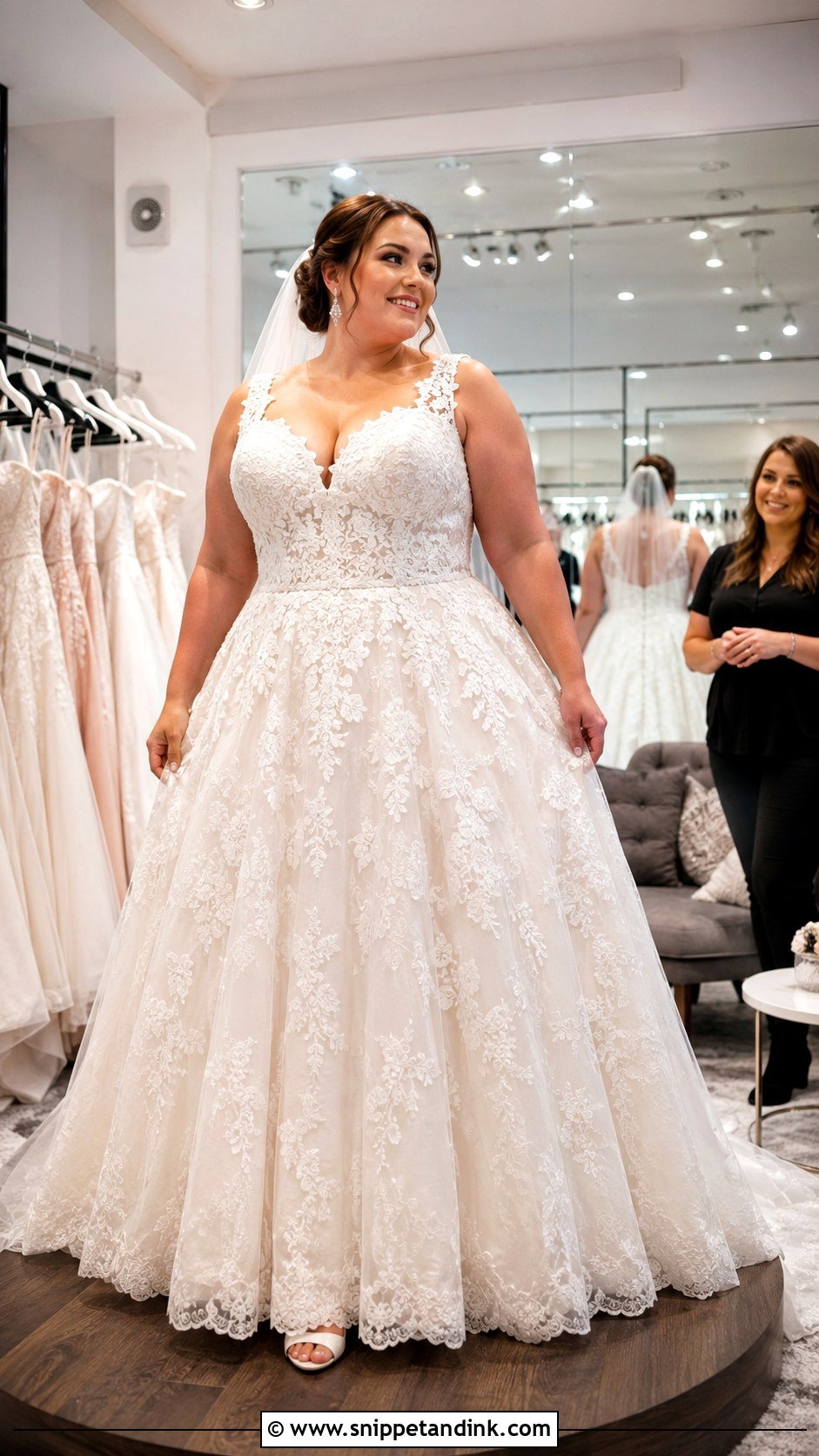
The most useful thing a plus size boutique can do is carry samples brides can actually zip into. In many shops the samples sit in a narrow middle range, and a larger bride ends up clamped together at the back, trying to imagine the fit. That is a miserable appointment. Stock supportive bodices with boning built in rather than added later, and silhouettes from fitted to full ball gown, hung on the same racks as everything else. Fitting rooms need space for a bride and a stylist to turn around, a wide steady platform and chairs without arms. I never open by talking about what to hide. I ask what she wants to show off, then we talk about support. Put real bodies in your marketing and publish sample size ranges online so nobody arrives guessing.
4. Affordable Bridal Outlet
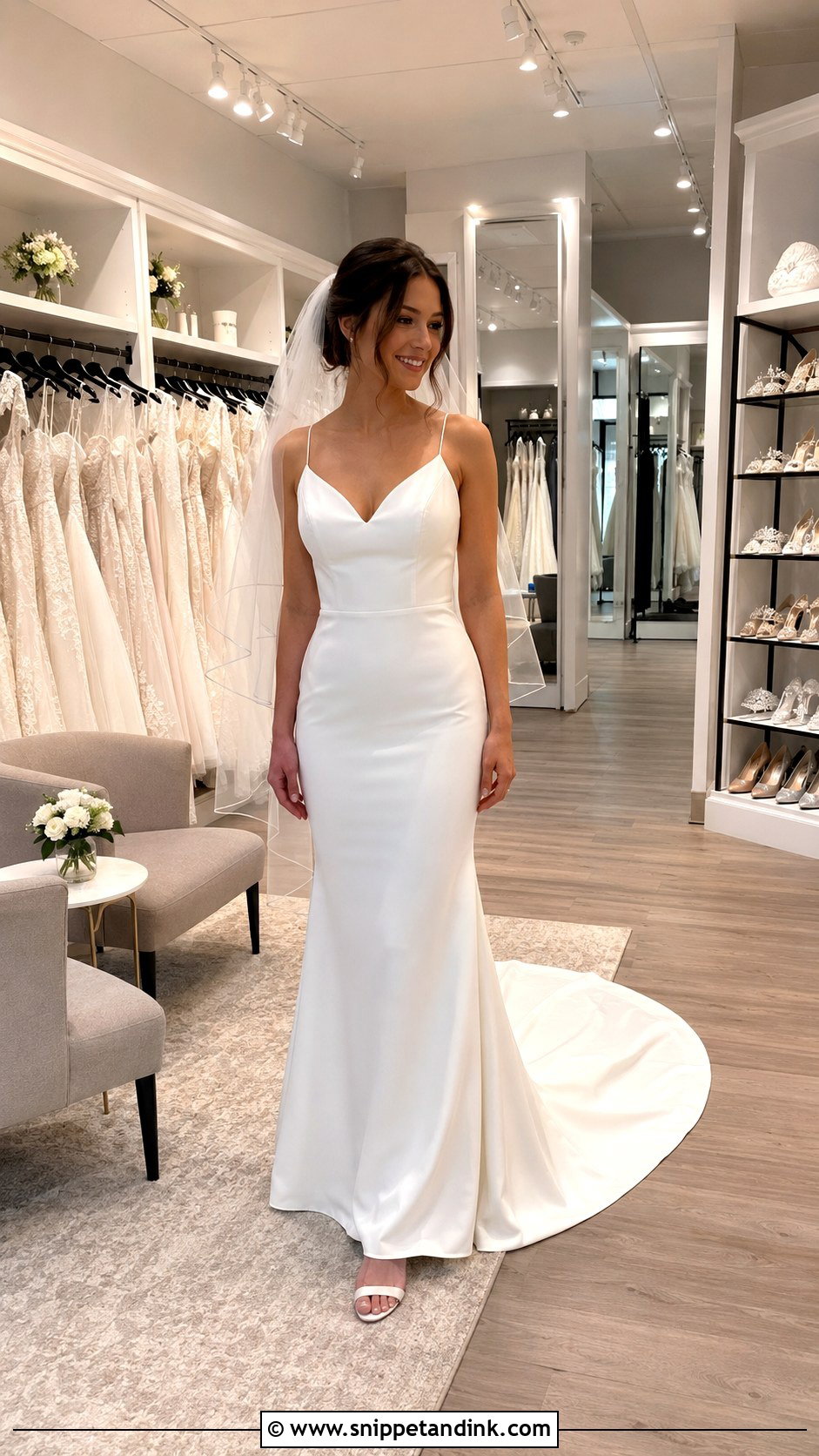
An outlet earns its reputation on honesty about condition. Discontinued styles, overstock, samples and ready-to-wear gowns can share the floor, sorted by size and then price so a bride sees at a glance what’s possible for her. Samples have been tried on many times, so I check underarms, hems, zippers and bustle loops before anything gets a tag, and the tag says what I found. Off the rack usually means final sale, so put the policy where she’ll read it before she falls for a dress. Keep a seamstress list ready, or alter in-house, because a sample in the wrong size is only a bargain if it can be taken in. Bright fitting rooms and a proper mirror moment keep it feeling like bridal shopping, not a clearance bin.
5. Vintage Bridal Store
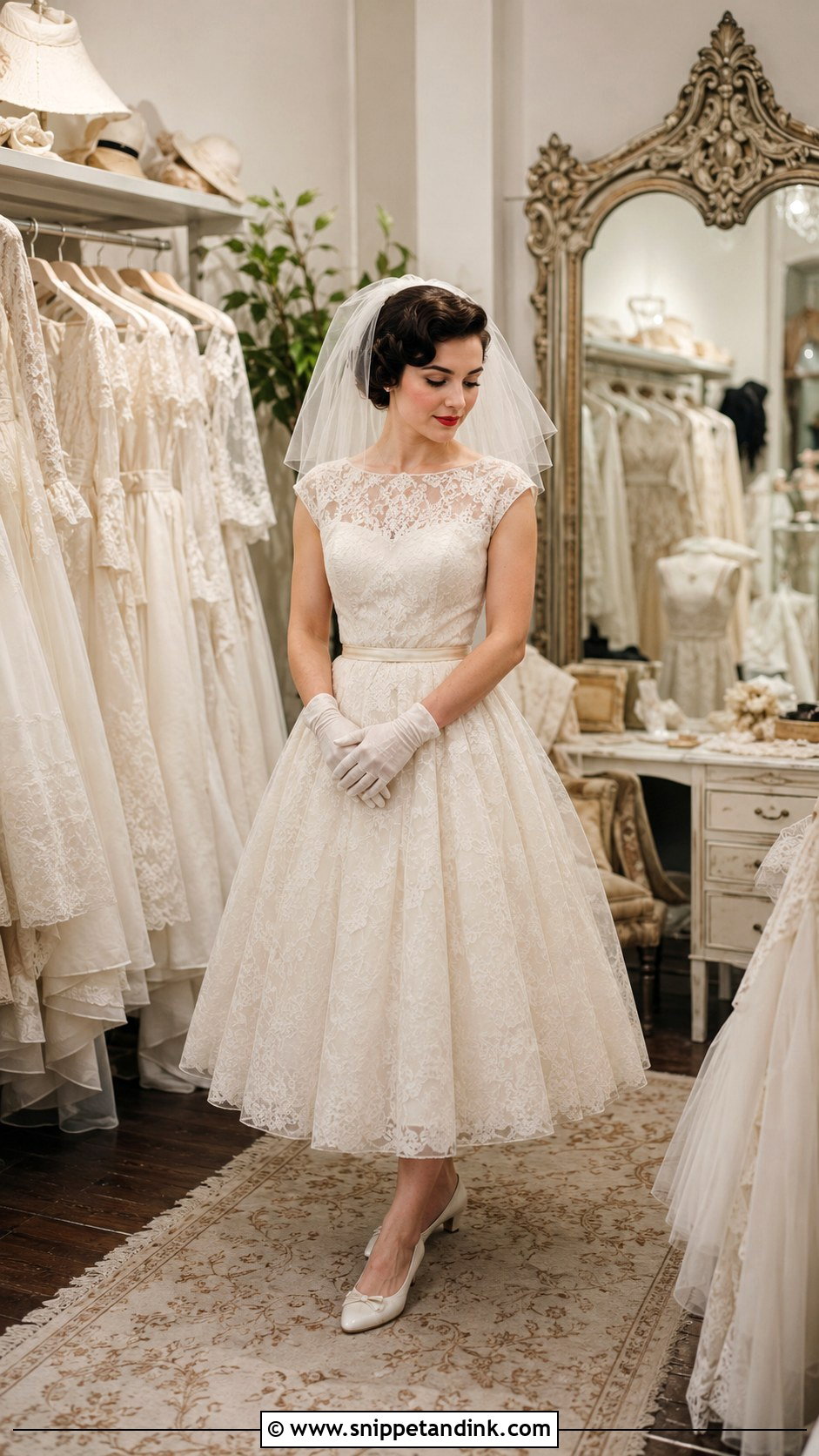
Vintage asks the most of a stylist’s hands. Older silk and rayon can split along a seam if you pull it on the way you would a modern gown, so I step brides into these dresses instead of lowering them over the head, and I test every fastener first. Inspect for yellowing at the bust and underarms, perished elastic, shattering silk and missing buttons, and write what you find on the tag with the approximate decade. Carry some vintage-inspired gowns as well, since sizing from earlier decades runs small and plenty of brides love the look without fitting an original. Gloves, a birdcage veil or period earrings finish the outfit, but stop before it turns into costume. A specialist alteration partner isn’t optional; a general seamstress may refuse to cut into a fragile old bodice.
6. Sustainable Bridal Boutique
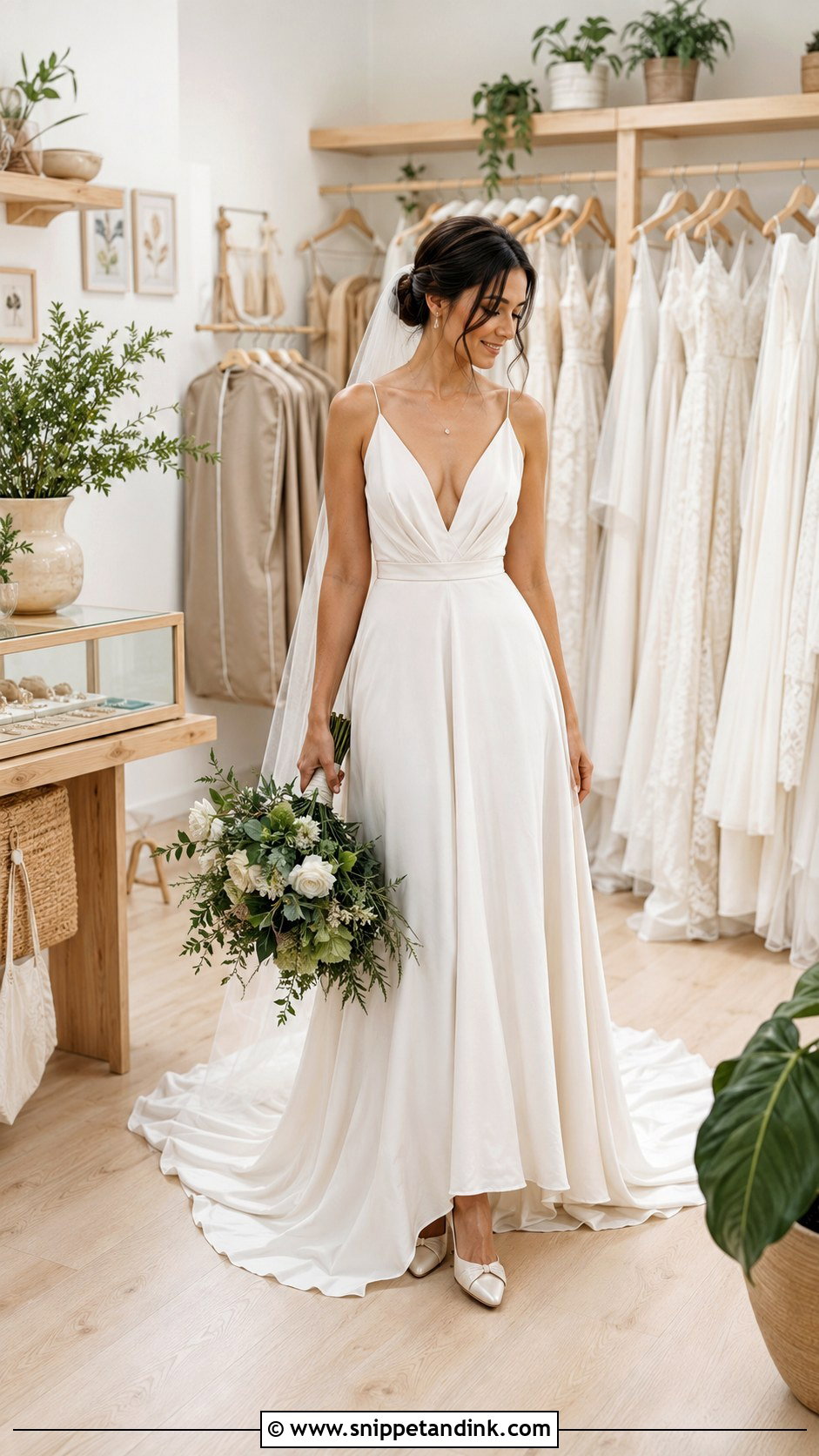
Sustainability claims in bridal get vague fast, and brides notice. Name what’s actually different about each line: made to order instead of mass-produced, sewn by a local maker, recycled tulle, a resold or vintage gown. If a label can’t tell you where its fabric came from, I wouldn’t put a green tag on it. The services matter as much as the stock. Repair, cleaning, resale and take-back keep a dress in use after the wedding and give a bride a reason to come back. Carry a real range of sizes and silhouettes, because nobody should settle on fit to shop responsibly, and keep the messaging on a wall card rather than in the fitting room conversation.
7. Custom Wedding Dress Studio
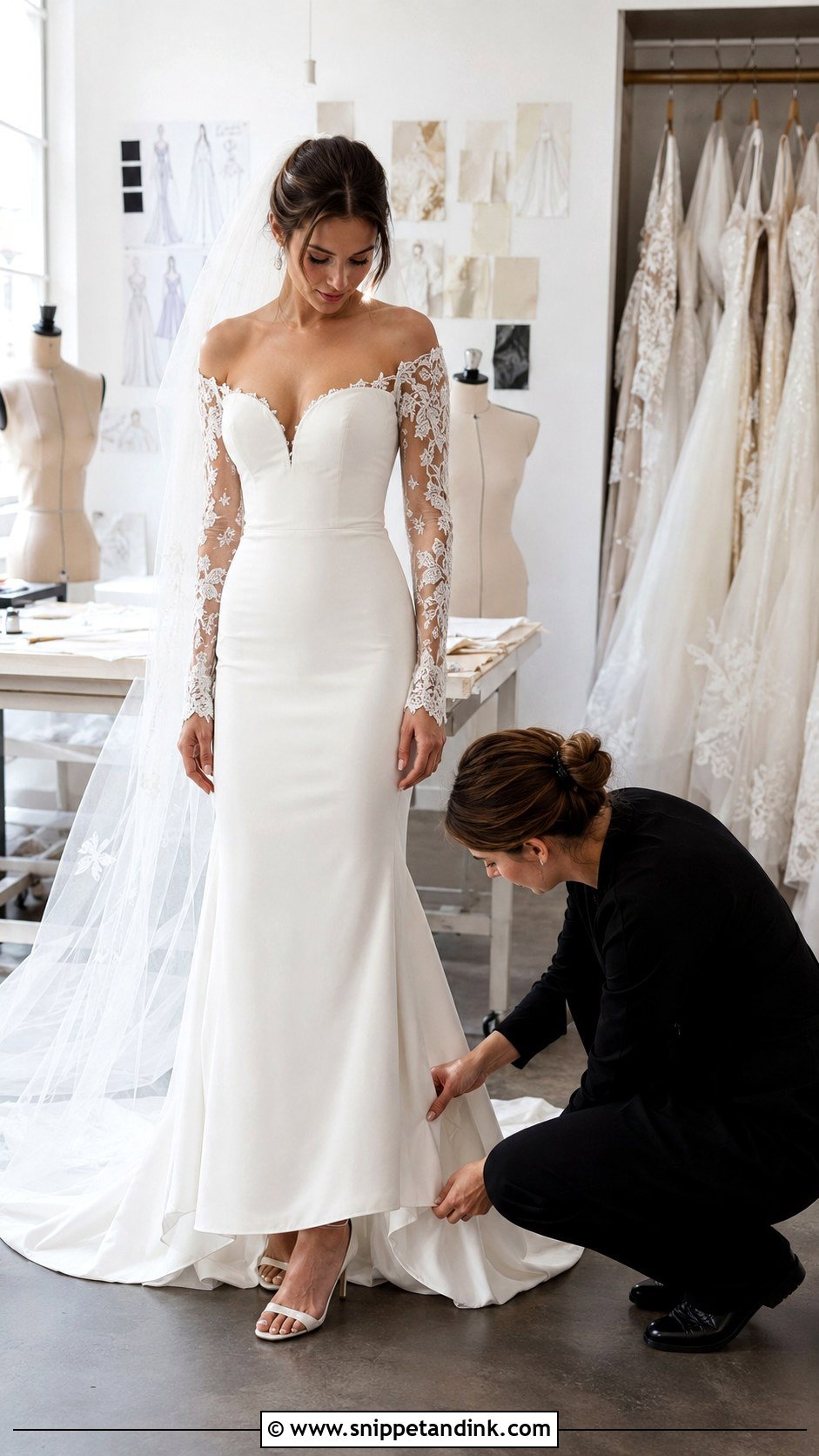
Custom is where timelines go wrong most often. A gown built from scratch typically needs several months between the first consultation and the final fitting, longer with handwork, so the studio’s first question should be the wedding date, not the inspiration board. After that come coverage, movement, fabric and budget. Show sketches and swatches, then build a toile in plain muslin so the bride can judge proportion before anyone cuts the real fabric. Every design change gets written down and signed off, and payments are tied to stages. Keep a small wall of finished work: sleeve options, a sample bodice, trims. Brides trust a construction detail they can touch far more than a mood board.
8. Boho Bridal Boutique
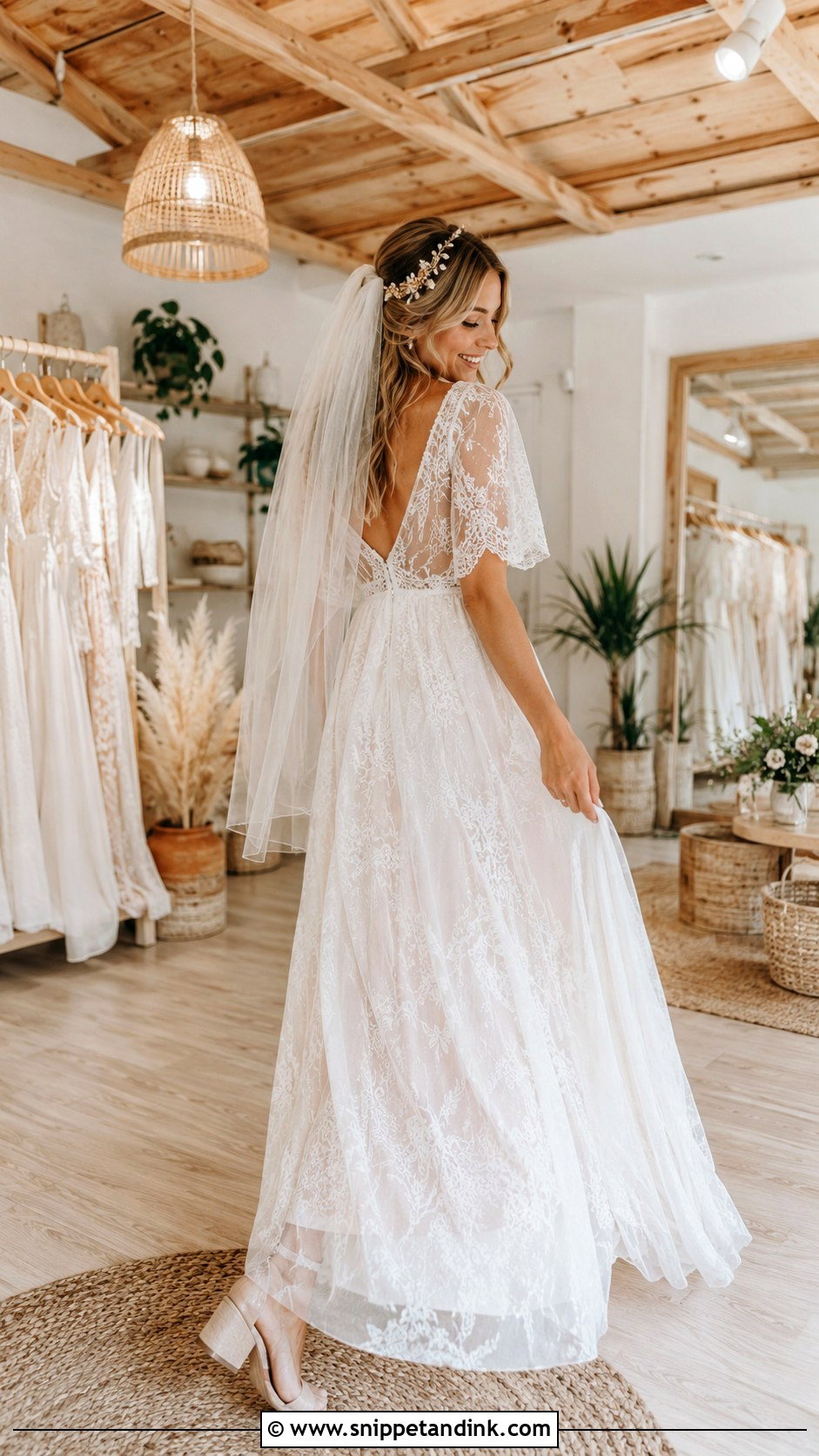
Boho brides are usually marrying outdoors, and that changes how I fit. I ask about the ground first. Sand drags at a long train and fills open lace, grass marks a hem before the portraits are done, and gravel snags loose tulle. Stock lightweight lace, soft tulle, flutter sleeves and separates that don’t need a heavy slip, and dress the room in pale wood and woven texture without letting it go dark. A simple veil, a cape or a light cover-up completes the outfit. Film every gown moving outdoors, because a flowing dress that looks flat on a hanger can be a different garment on someone walking.
9. Modest Bridal Store
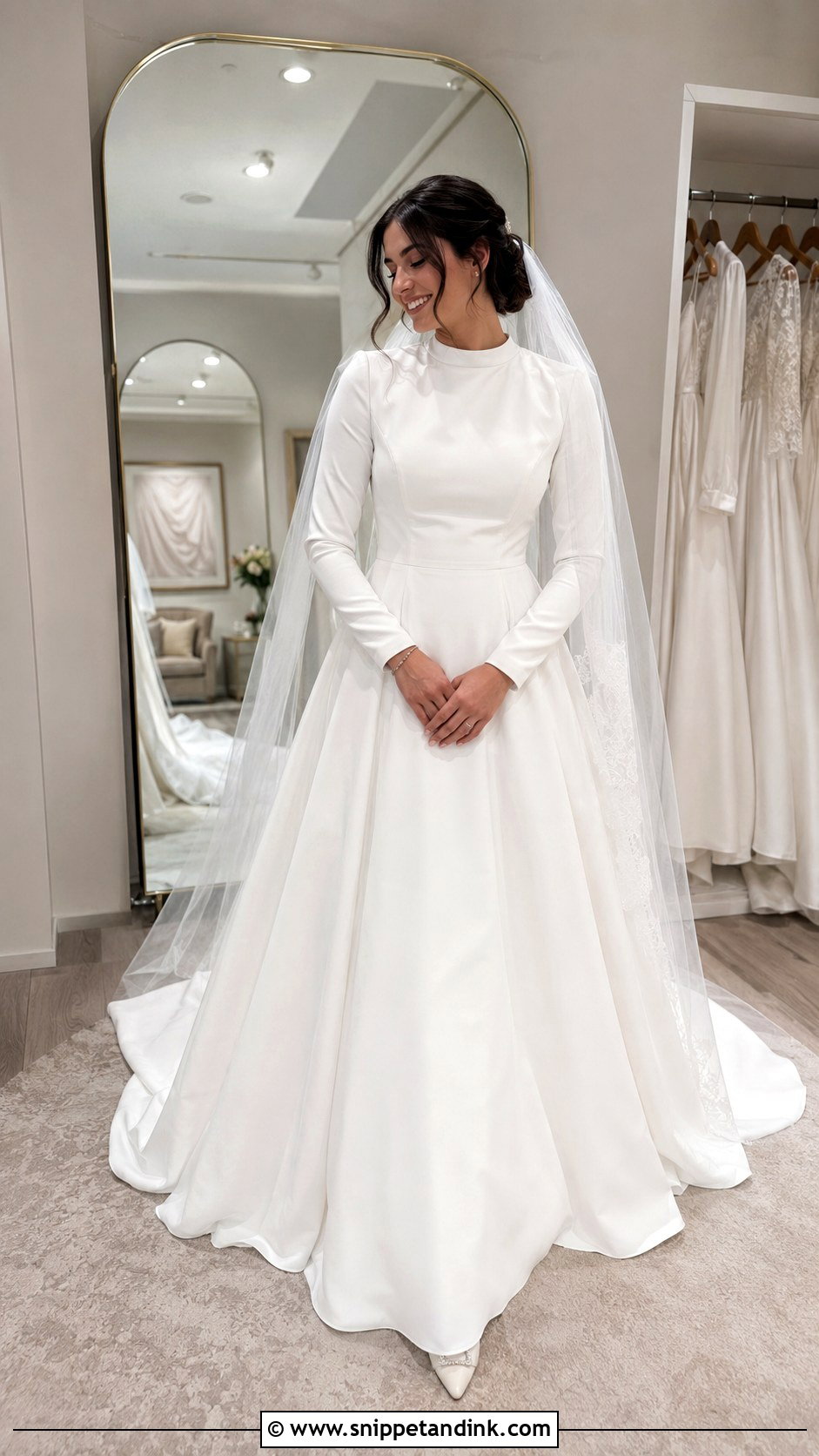
Coverage should never feel like an afterthought bolted onto a strapless gown. A modest bridal store carries higher necklines, lined bodices, full backs and long sleeves as designed features, across fitted, A-line, tea-length and ball gown shapes, with detachable sleeves, toppers and lined overlays for flexibility. I ask what coverage the bride needs and for which part of the day, since the ceremony can call for more than the reception, and I never assume it from her name or family. Private suites matter. So does a seamstress who can match lace exactly when adding a sleeve, because a mismatched lace motif is the first thing that shows up in close-up photographs.
10. Destination Wedding Bridal Shop
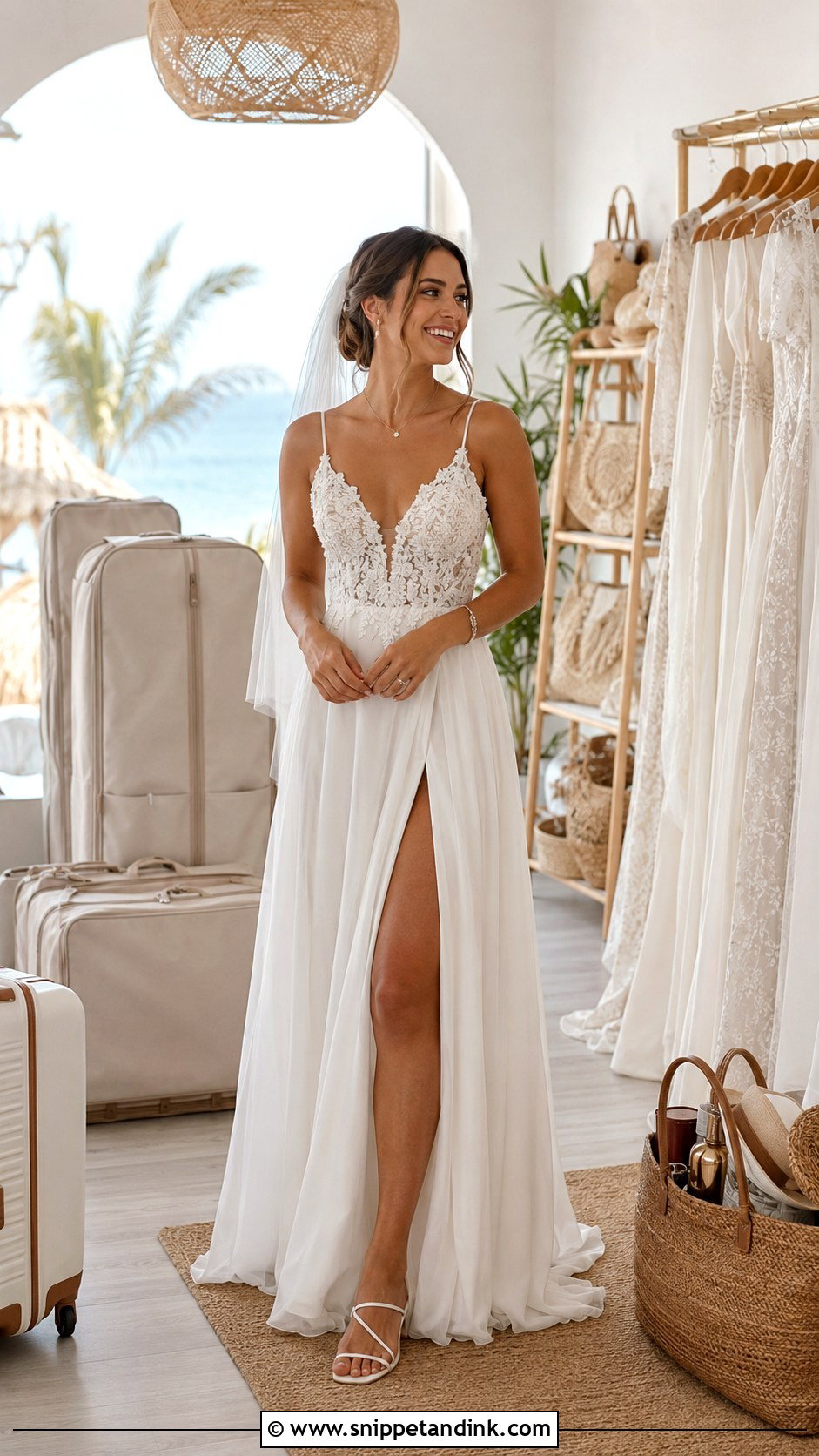
Travel-friendly gowns are the stock, but travel advice is the real product. Lightweight crepe, chiffon and soft lace survive a suitcase better than heavy satin, which holds every fold, and a simpler silhouette is easier to get into in a hotel room without help. Sort the collection by climate and setting, then ask about humidity, the airline’s carry-on rules and whether the venue has a steamer. I send every destination bride home with written notes on folding the gown in tissue, hanging it on arrival and holding the steamer away from the fabric. Sell garment bags and travel steamers at the counter, and partner with destination planners who meet these brides months before you do.
11. Bridal Accessories Boutique
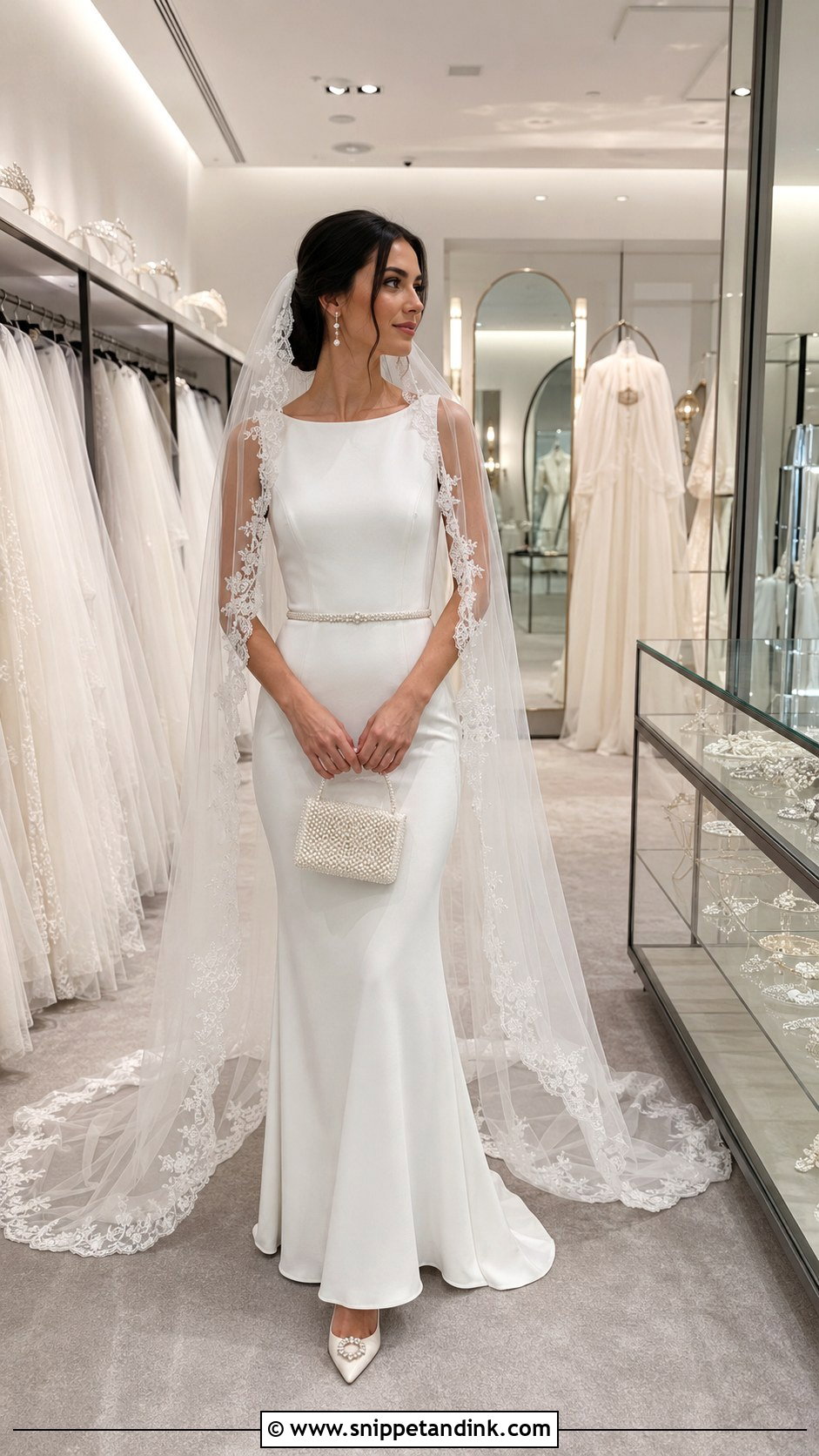
Not every bridal business needs racks of full-length gowns. An accessories boutique sells the decisions brides leave until last: veils, combs, earrings, belts, gloves, capes, shoes, arranged by look rather than crammed into glass cases. The most useful thing on the floor is a set of sample veils in several lengths and in white, ivory and champagne, because a veil a shade off the gown reads grey beside it in photographs. I ask for a photo of the dress and the planned hairstyle before the appointment. A cathedral veil anchored at the crown behaves very differently from one tucked under a low bun. Keep a plain sample gown for try-ons, offer custom lengths and heirloom restyling, and build referrals with nearby dress shops that don’t stock accessories in depth.
12. Bridal Party Store
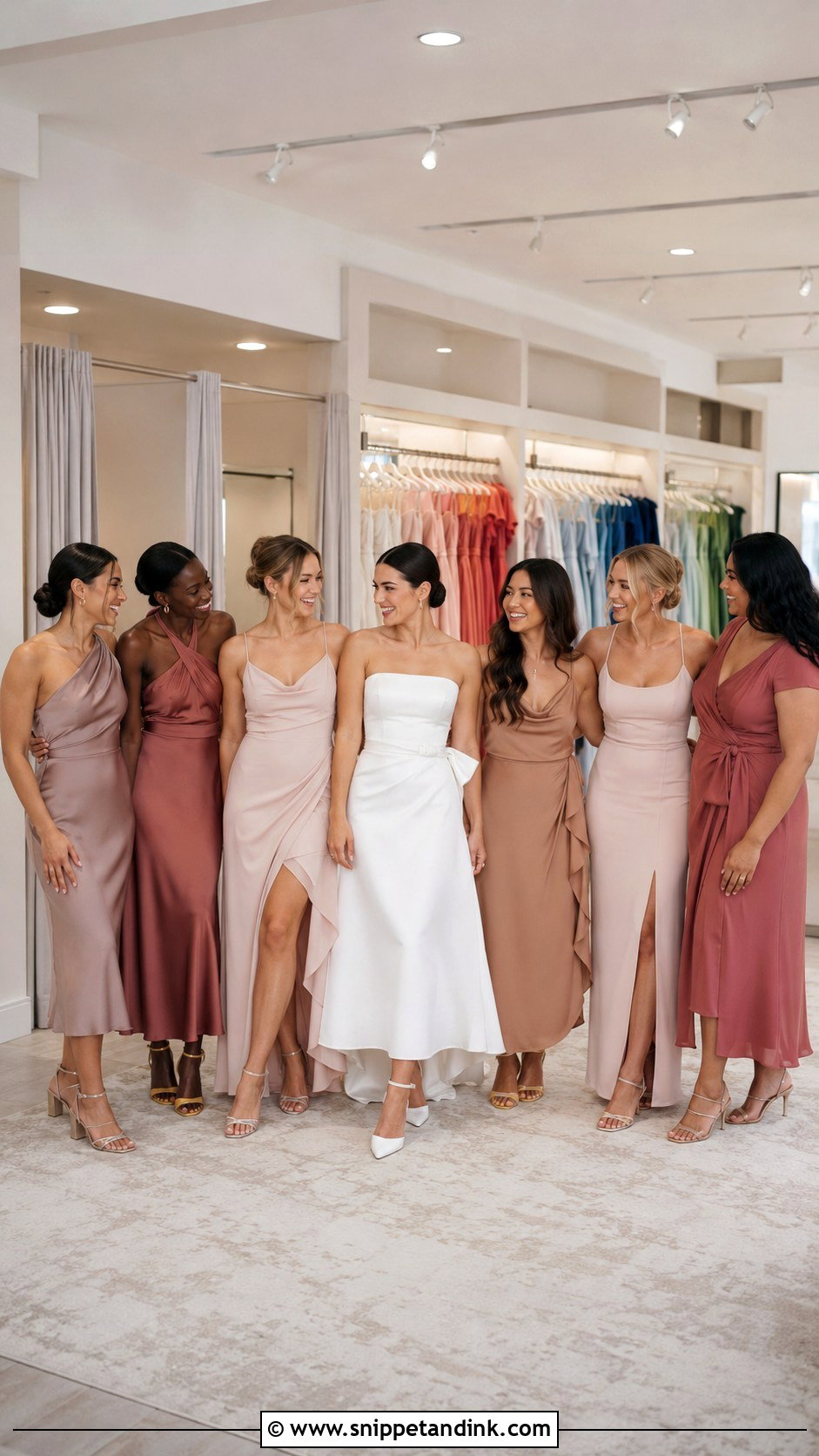
Bridesmaid orders are logistics with fabric attached. Carry dresses, separates, junior attendant outfits and options across a wide size range, then confirm the wedding date and ordering deadline before anyone tries anything on. Dye lots are the trap. The same color ordered weeks apart can come from different batches and not quite match, which is why I push groups to place a single order together. Track each attendant’s measurements, shade, payment and delivery in one profile, especially when half the party lives elsewhere. Mix-and-match collections let everyone choose a neckline that suits her without breaking the palette.
13. Mother Of The Bride Boutique
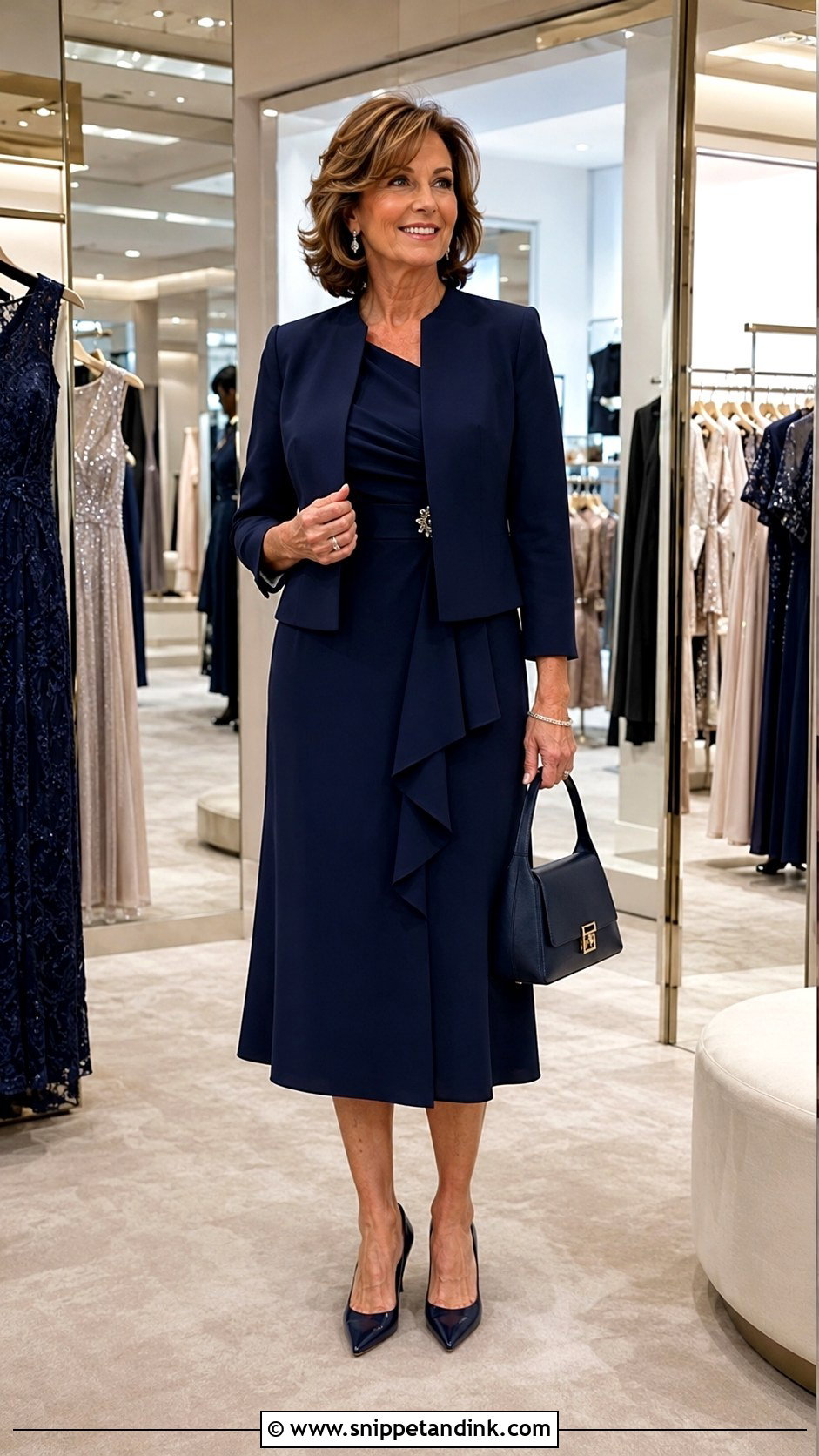
Mothers often arrive more anxious than the bride, usually about arms, the midsection or looking older than they feel. A boutique for them needs dresses, pantsuits, jumpsuits and jackets in real sizes and in colors beyond navy and champagne. I ask for the palette and dress code, then ask what she wore to the last formal event and liked. That answer tells me more than any style quiz. Show finished outfits with shoes, a wrap and jewelry, and offer alterations for sleeves, hems and jacket fit, since off-the-rack eveningwear nearly always needs a hem. A private appointment gives her the focused attention a department store floor rarely does.
14. Bridal Gown Rental Store
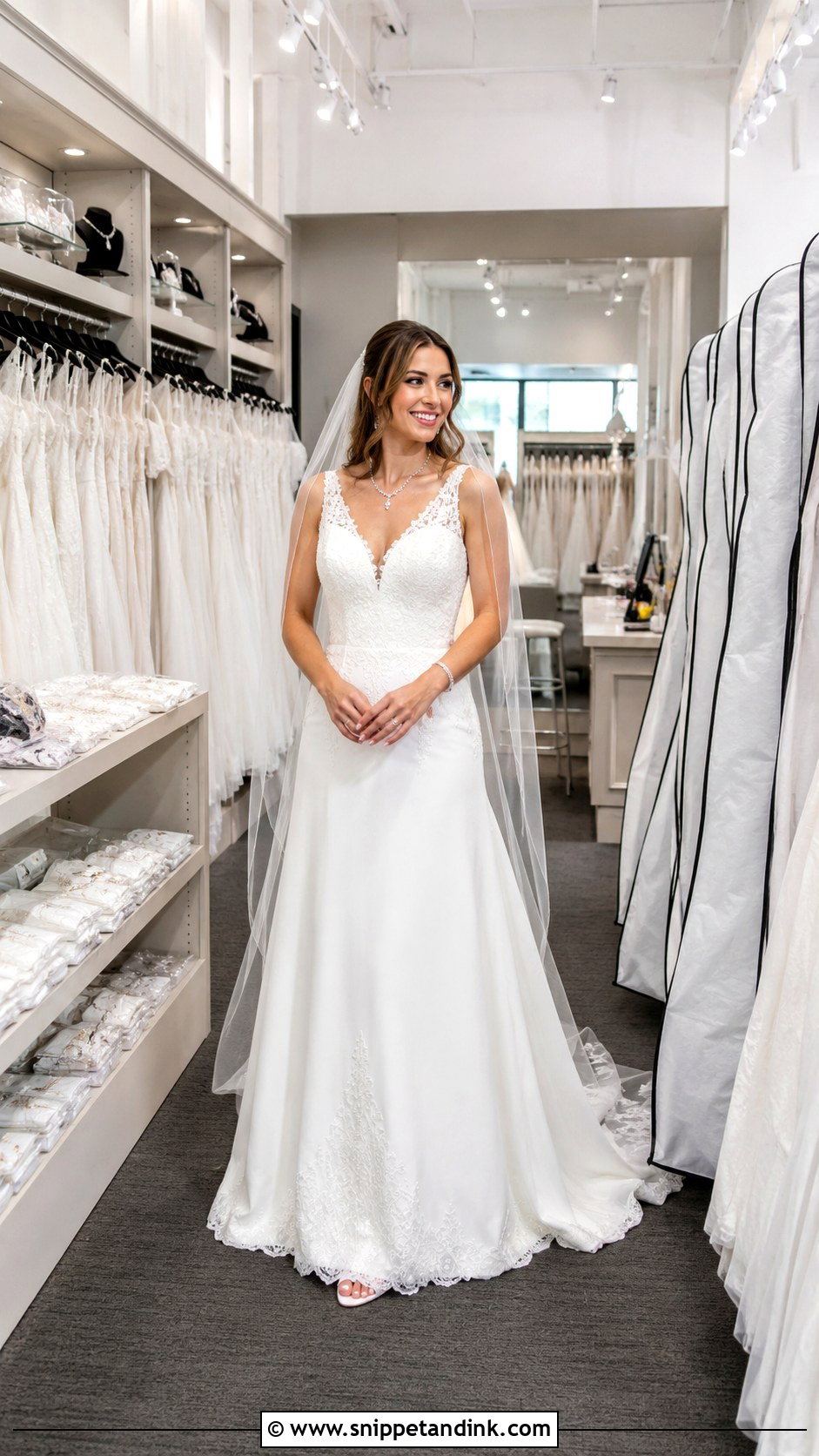
Rental only works with ruthless inventory control. Each gown is inspected and professionally cleaned after every hire, minor repairs are finished before it goes back on the floor, and the contract spells out deposit, damage, cleaning and late fees in plain terms. Choose fabrics that can take it. Crepe and structured satin survive repeated wear and cleaning far better than delicate tulle or silk chiffon, which snag and fray. Package a dress with a veil and a reception accessory for one clear price. Schedule the final fitting close to the date, and keep a backup in the same size in case a gown comes back damaged the week before. Booking software that blocks out cleaning days is what prevents double bookings.
15. Sample Sale Bridal Store
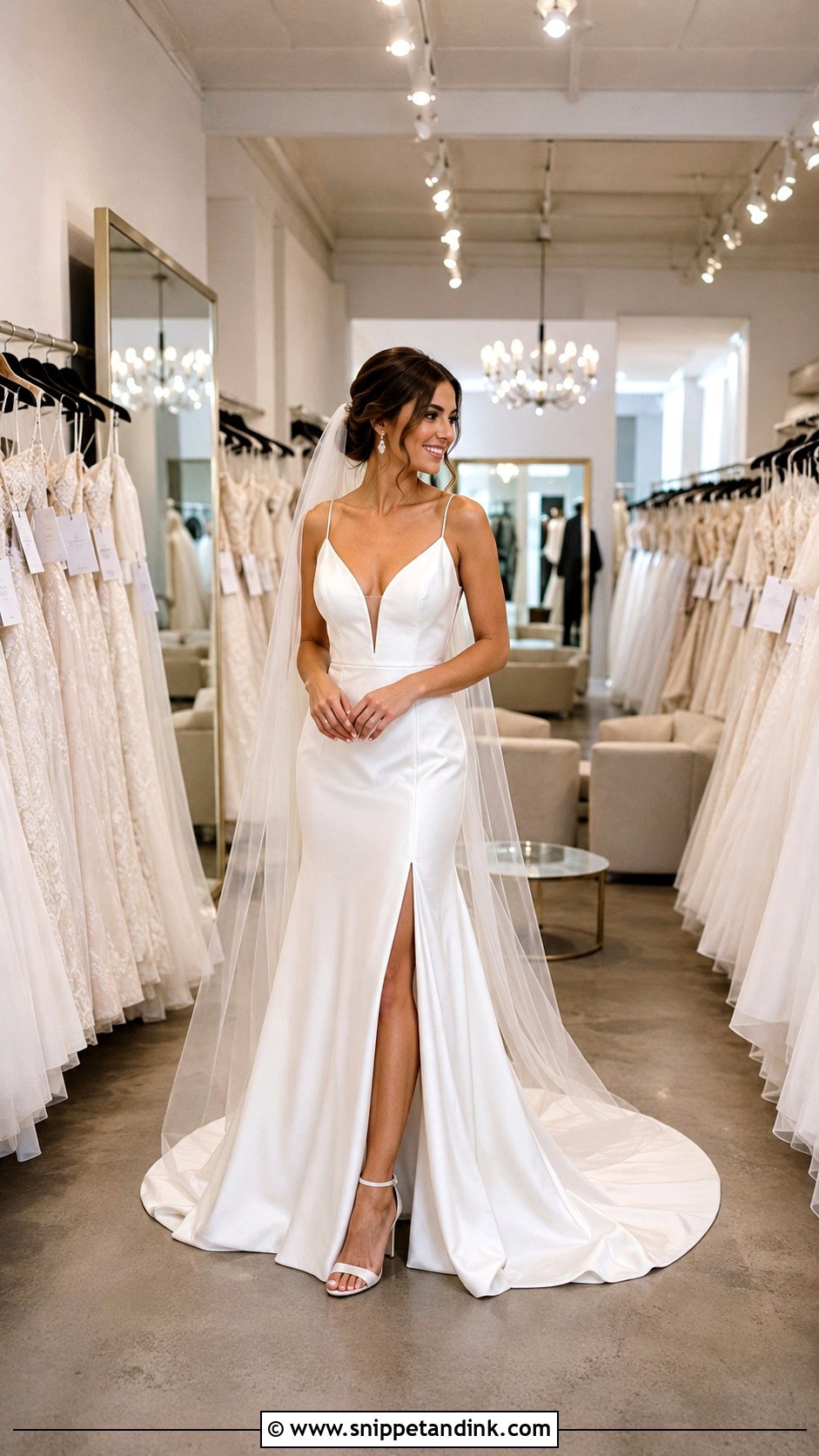
Brides on short timelines and tight budgets come to a sample sale bridal store because they can leave with the dress that day. Stock floor samples, discontinued designs and canceled orders, and tag each one with size, price, condition and any known flaw. Don’t overpack the racks. Crushed tulle and caught beading are how samples lose their value. Designer sizing varies widely, so the number on a label means little until she tries it on, and staff should tell her honestly whether a gown can come in two sizes or not at all. Make final sale clear before the fitting room. Timed shopping sessions keep crowds down and give each bride space to look properly.
16. Online First Bridal Showroom
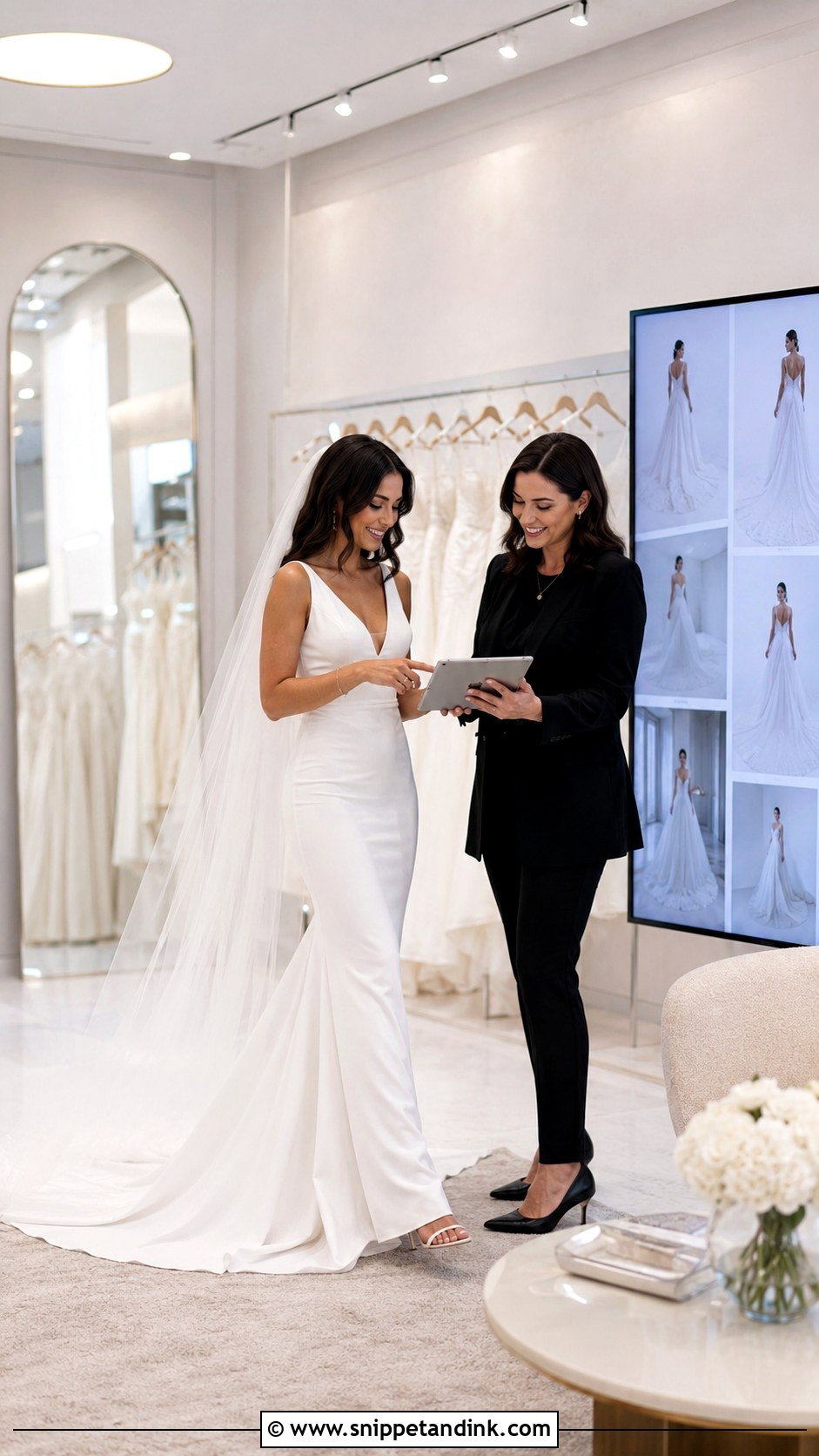
Here the browsing happens at home, so the appointment can be short and decisive. Each gown page in an online-first showroom needs price, sizes, fabric, a walking video and an honest delivery estimate. She saves favorites, books a slot and arrives to find those gowns already steamed and waiting. That’s the whole promise, and it collapses if the online photos are retouched beyond what the fabric looks like in the room. Record preferred silhouettes and measurements in her profile so a second visit picks up where the first ended. Virtual consultations help brides who live further away. Keep the showroom visually consistent with the site so she recognizes it the moment she walks in.
17. Private Appointment Bridal Salon
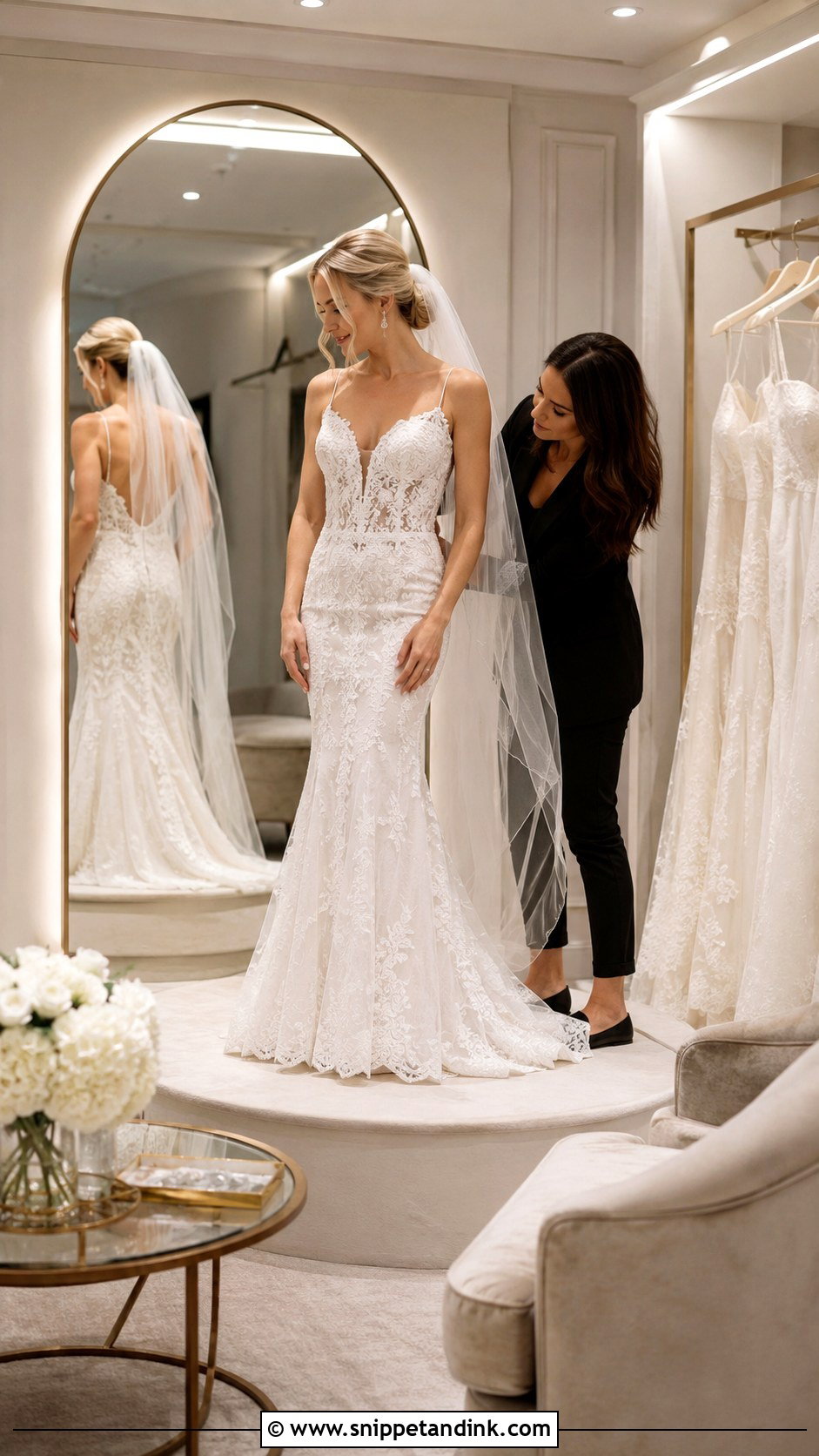
A private salon trades volume for attention, and the pre-appointment questionnaire does most of the work. I want her size, budget, venue, timeline, how many people she’s bringing and which gowns she has already tried elsewhere. With that, I can pull a rack that doesn’t waste her first hour. The room needs good seating, bright warm light, a large mirror and a changing area big enough for two people and a ball gown. Offer tiers, from a standard fitting to a longer styling session with accessories. Put the booking fee and cancellation rules in the confirmation email so nobody discovers them at the door.
18. Mobile Bridal Boutique
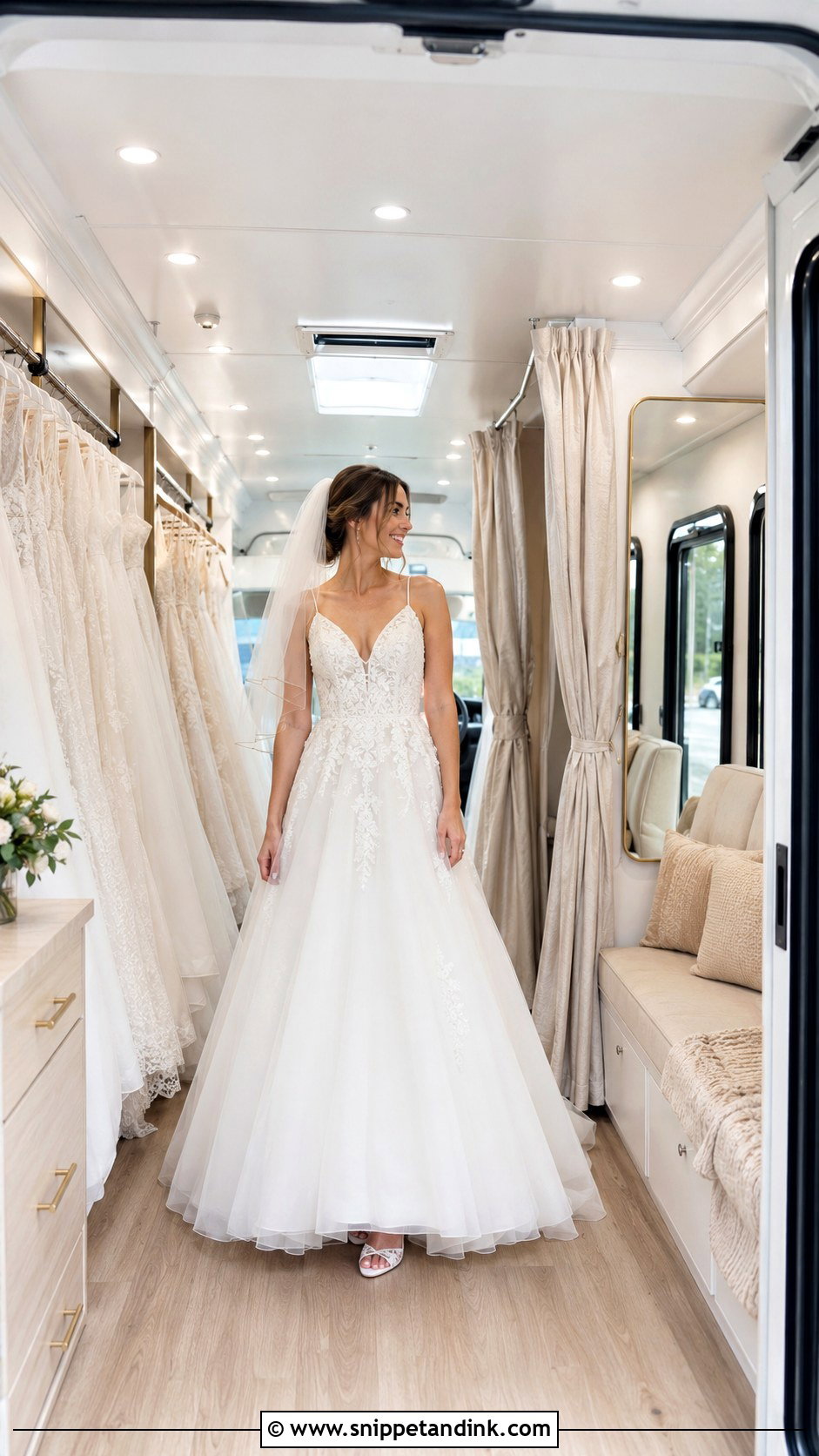
A mobile bridal boutique takes gowns to venues, wedding fairs and towns with no bridal shop nearby. The vehicle needs locked racks, climate control and a real fitting area behind privacy screens, because heat and condensation inside a parked van can crease and mark a sample quickly. Carry versatile samples only and let brides choose online which gowns come to their appointment. Publish a service area with travel fees, parking needs and a bad-weather plan. Every gown travels hung in a breathable bag, never folded, and is logged on and off the vehicle. Pop-ups at hotels and partner salons build visibility, and a clean, recognizable exterior advertises on every drive.
19. Wedding Weekend Fashion Store
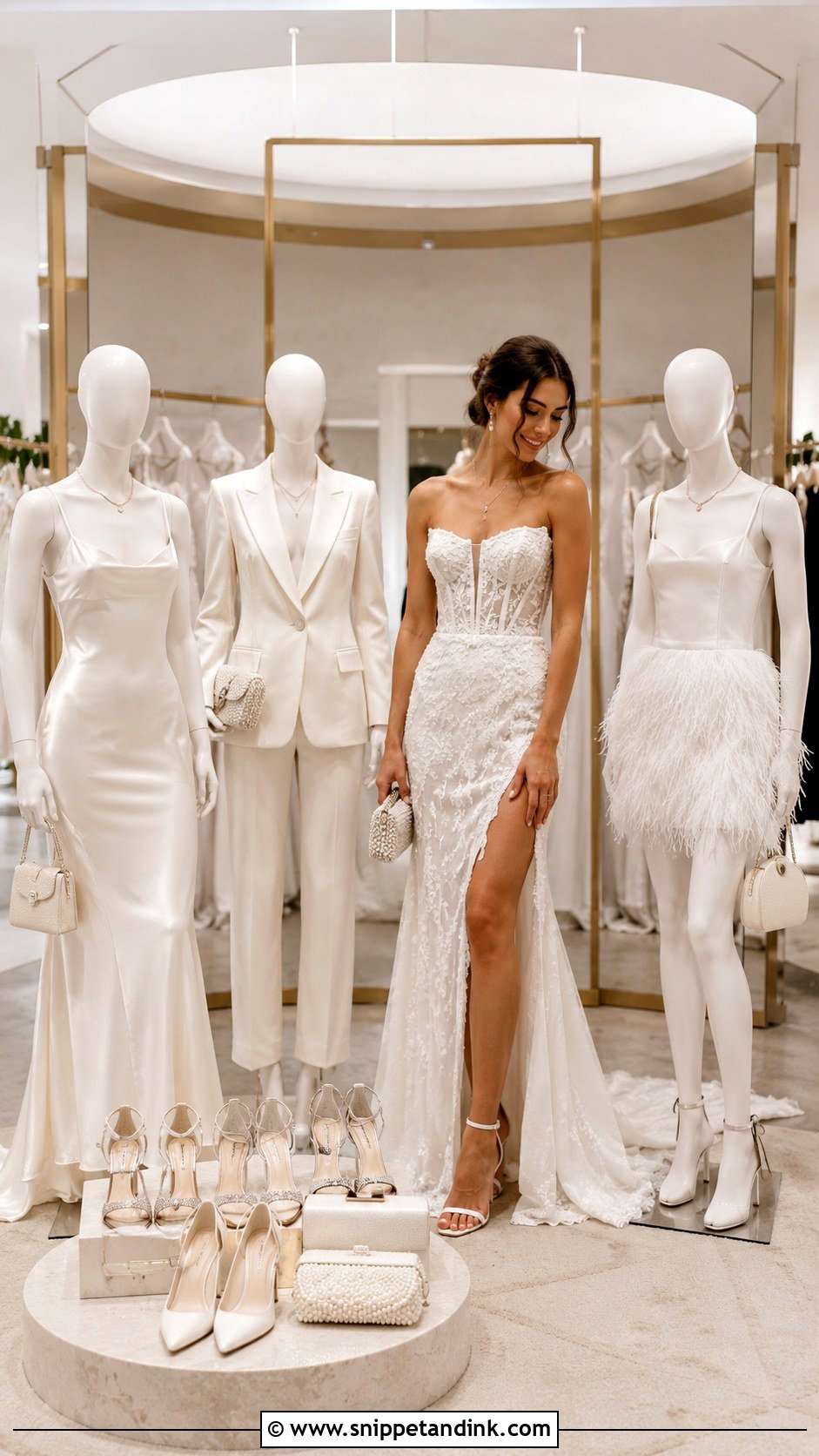
Many brides now need three or four outfits across a celebration, and a wedding weekend fashion store dresses all of them in one visit: welcome drinks, rehearsal, ceremony, reception, farewell brunch, a civil signing. Organize the floor by event. I lay the schedule out on paper with the bride and plan contrast on purpose, so a column mini at the welcome party doesn’t echo the ceremony gown’s neckline. Each event has its own weather and venue to account for. Budget stretches more easily too: most of it goes into the ceremony look, with simpler pieces she’ll wear again for the rest.
20. All Inclusive Bridal Store
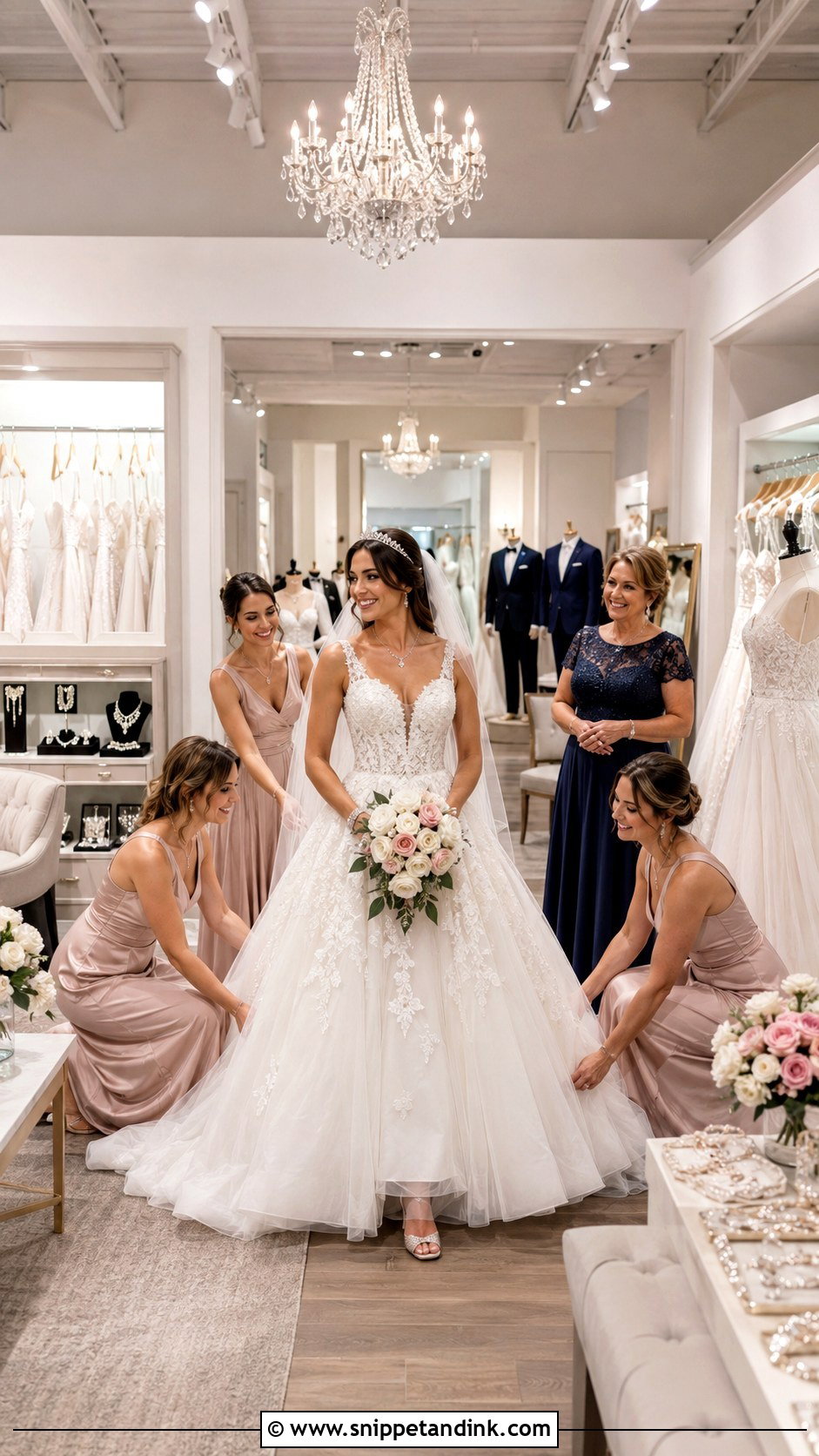
One roof for gowns, bridesmaids, family formalwear, alterations, steaming and storage sounds convenient until three orders for the same wedding sit with three different staff members. This concept depends on a single lead contact per wedding party who tracks every order, payment, fitting and alteration date. Separate the quiet bridal suites from the louder group fitting area and the tailoring room. Package pricing helps, but let customers book individual services too. Referral partnerships with hair, makeup, photography and planning keep the store connected without pulling it away from attire and fit.
Sample Sizes, Lead Times and the Unglamorous Floor Decisions
Two numbers shape a bridal shop more than any mood board: the sizes your samples come in, and how long your gowns take to arrive. Get either wrong and the concept stops working.
Sample range
If every sample sits in the same middle sizes, a good share of brides will spend the appointment clamped and pinned. Even a few gowns in each silhouette at the smaller and larger ends changes the whole experience. Samples also wear out. Hems fray, zippers loosen and white goes slightly grey under the arms, so plan to retire and replace them rather than treating stock as permanent.
Ordering windows
Made-to-order gowns commonly take several months from deposit to delivery, and the exact window varies by designer. Alterations usually start a couple of months before the wedding. Put both on paper at the first appointment and work backwards from her date, so a bride who walks in late is told about rush options and their cost straight away instead of at the deposit.
Storage on the floor
Heavy gowns should hang from their inner hanging loops on padded hangers, not from the shoulder straps, or the bodice slowly stretches out of shape. Breathable covers keep dust off between appointments, and rotating what’s on display stops the same gowns from being handled to death.
Running a Trunk Show to Test the Idea
Before you sign a lease around one concept, borrow a designer’s collection for a weekend trunk show in a rented room or a partner venue. You’ll learn which sizes get asked for, what price range brides actually book at, and whether your local market wants the boho rack or the minimalist one. It costs far less than finding out with a full season of stock on the floor.
The Customer Comes Before the Concept
Pick one customer you can serve better than anyone nearby, and build every decision around her. A luxury salon, a rental shop and an outlet need different stock, rooms and staff, but each one needs posted prices, orders that arrive on schedule and stylists who listen before they pull a gown. Start narrow. Accessories, alterations, bridesmaids and event wardrobes can follow once demand shows up. A bride who felt informed and respected will send her sister and half her bridal party through your door.


Leave a Reply