
A wedding dress is built from fragile fabric, internal structure and handwork that ordinary wardrobe storage was never meant for. When brides ask me how to keep a gown safe, I start with two questions: what is it made of, and how heavy is it? A beaded ball gown belongs flat in a box, while a light crepe sheath can hang for a few weeks with proper support. Whatever the dress, the enemies are the same: light, heat, damp, crowding and anything that can leach acid or dye into fabric. Below are twenty ways to store a gown, from sending it to a preservation specialist to fitting a box into a studio flat.

The First Two Weeks Decide How Well the Dress Ages
Most of the damage I see on stored gowns started on the wedding night, not in the box. A dress that comes home in a heap, damp at the hem and spotted with drinks, is already oxidizing before anyone thinks about storage. Here is the order I give brides, and it’s simple enough for a partner or maid of honor to follow while you’re away.
- On the night, hang the gown from its inner loops or lay it over a clean sheet. Don’t stuff it into the plastic bag it came in.
- If the hem is wet or muddy, let it air dry fully before anything else. Don’t scrub mud while it’s wet; dried dirt lifts more cleanly.
- Write a quick list of every spill you remember: champagne at the toast, a lipstick smudge, grass on the train. Clear drinks matter most because you won’t see them later.
- Don’t dab stains with soda water, wipes or stain pens. They can set a mark or leave a ring that a cleaner then has to fight.
- Get the dress to a specialist within a couple of weeks, with your stain list and any loose beads in a labeled envelope.
If you’re traveling straight after the wedding, ask someone to drop the dress off for you. A few weeks of waiting is fine for a clean gown. A stained one keeps changing the longer it sits.
1. Professional Wedding Dress Preservation
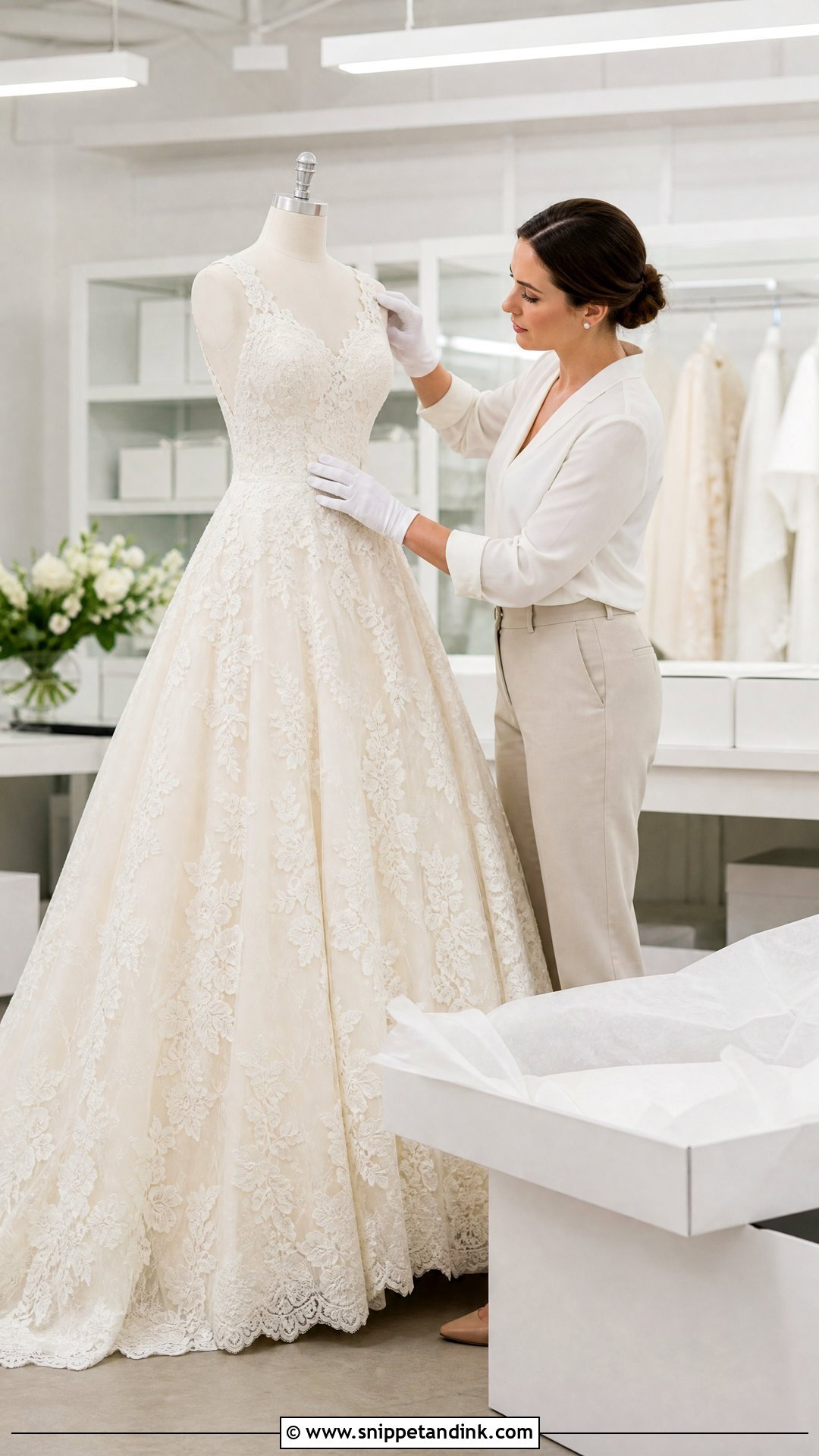
For an expensive, vintage, heavily embellished or fragile gown, I’d send it to a preservation specialist rather than handle it at home. A good one inspects the dress, finds the stains, cleans each fabric with a method suited to it, makes small repairs and packs it in archival materials. Ask exactly which cleaning process they’ll use and how they treat glued trims, since some solvents dissolve adhesive and beads drop off. Confirm the box and tissue are acid-free, and read the warranty, because some are void the moment you open the box yourself. This is more than dry cleaning: the cleaning and the packing protect the gown together.
2. Acid-Free Wedding Dress Storage Box
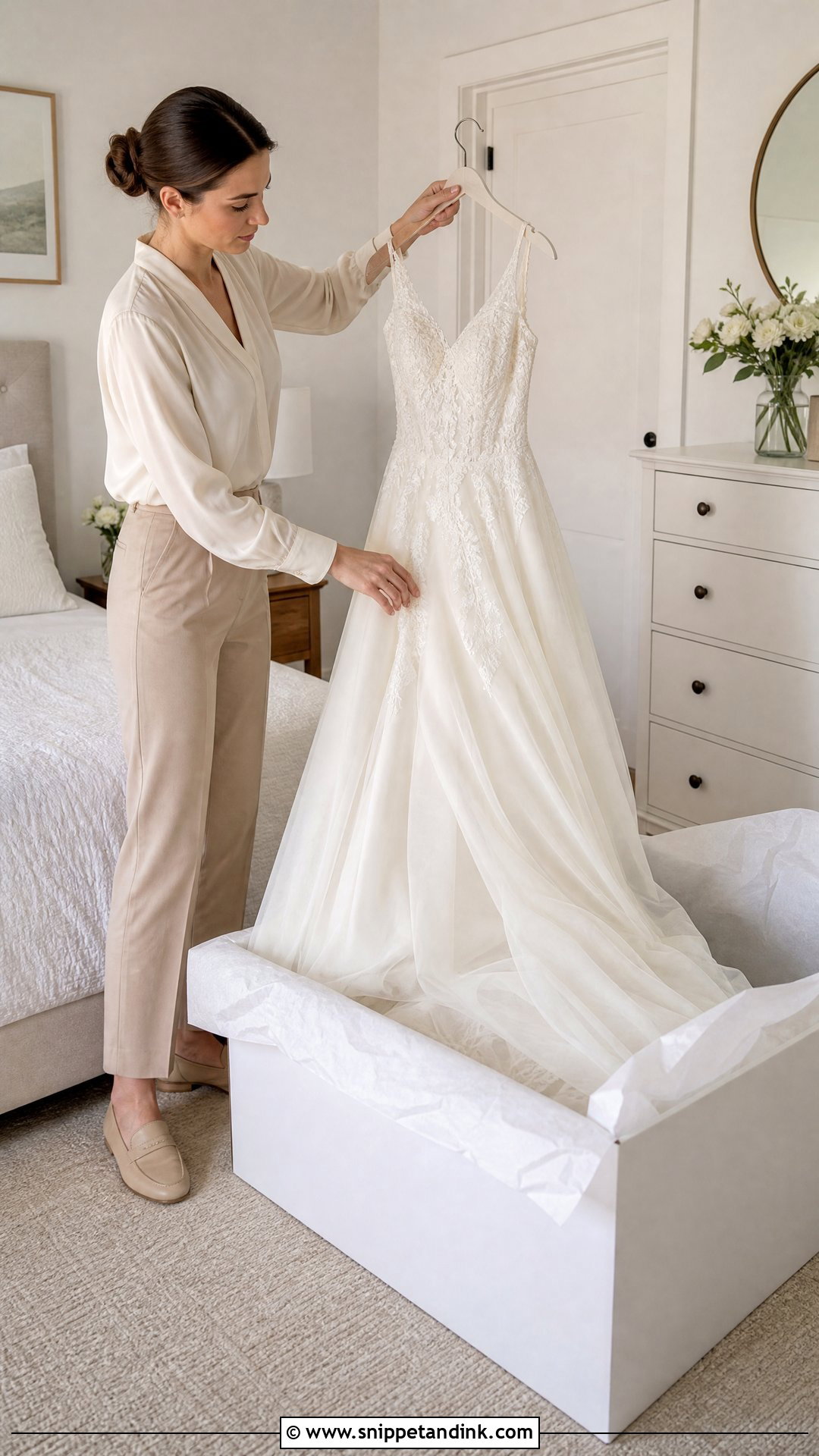
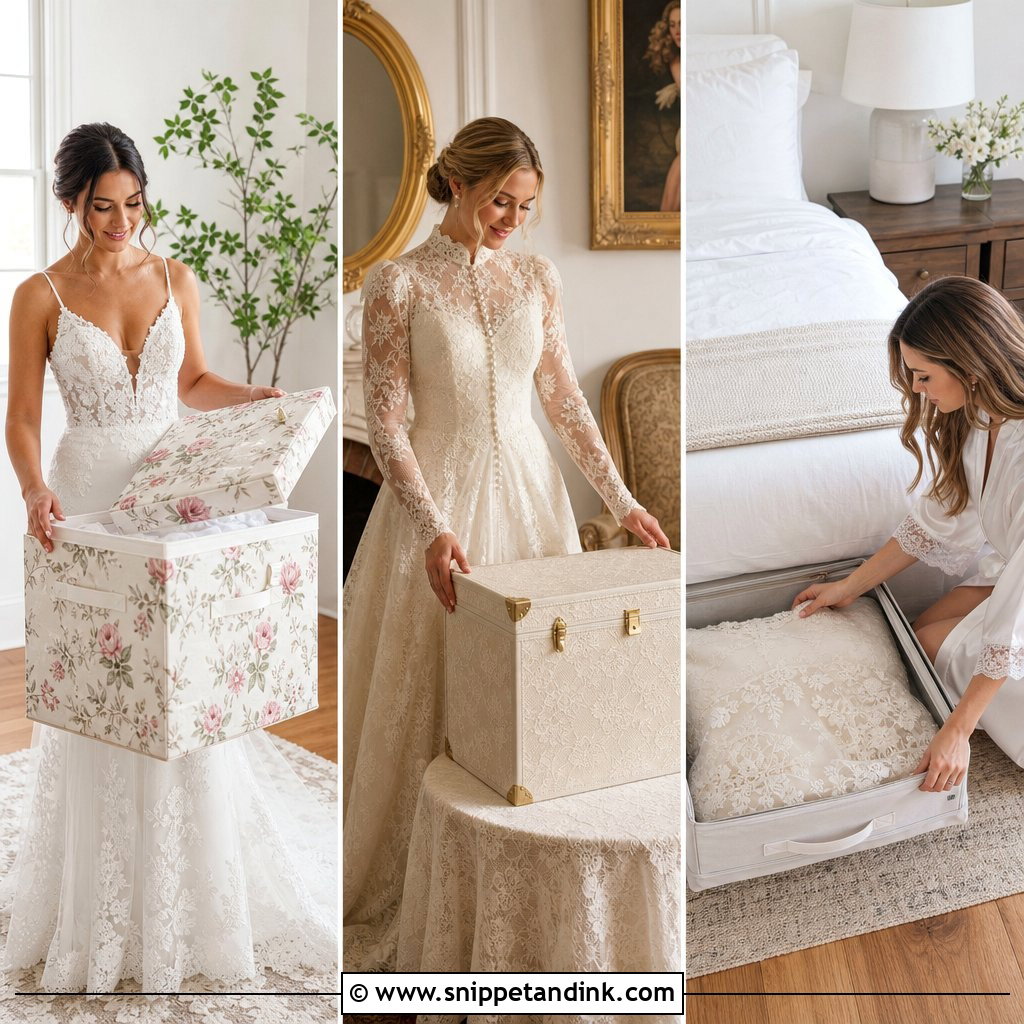
An acid-free archival box keeps the gown away from the acids in ordinary cardboard and wood, which slowly yellow fabric where they touch it. Pick a box large enough that the dress folds loosely, with no crushing. Line it with uncolored acid-free tissue, then pad between layers, inside sleeves, under the bodice and in every skirt fold. That padding spreads the pressure so you don’t get permanent crease lines. Write the label on the outside of the box, never on paper tucked against the dress, since ink can transfer. Once closed, the box lives flat, in the dark, with nothing heavy stacked on it.
3. Under-Bed Wedding Dress Storage
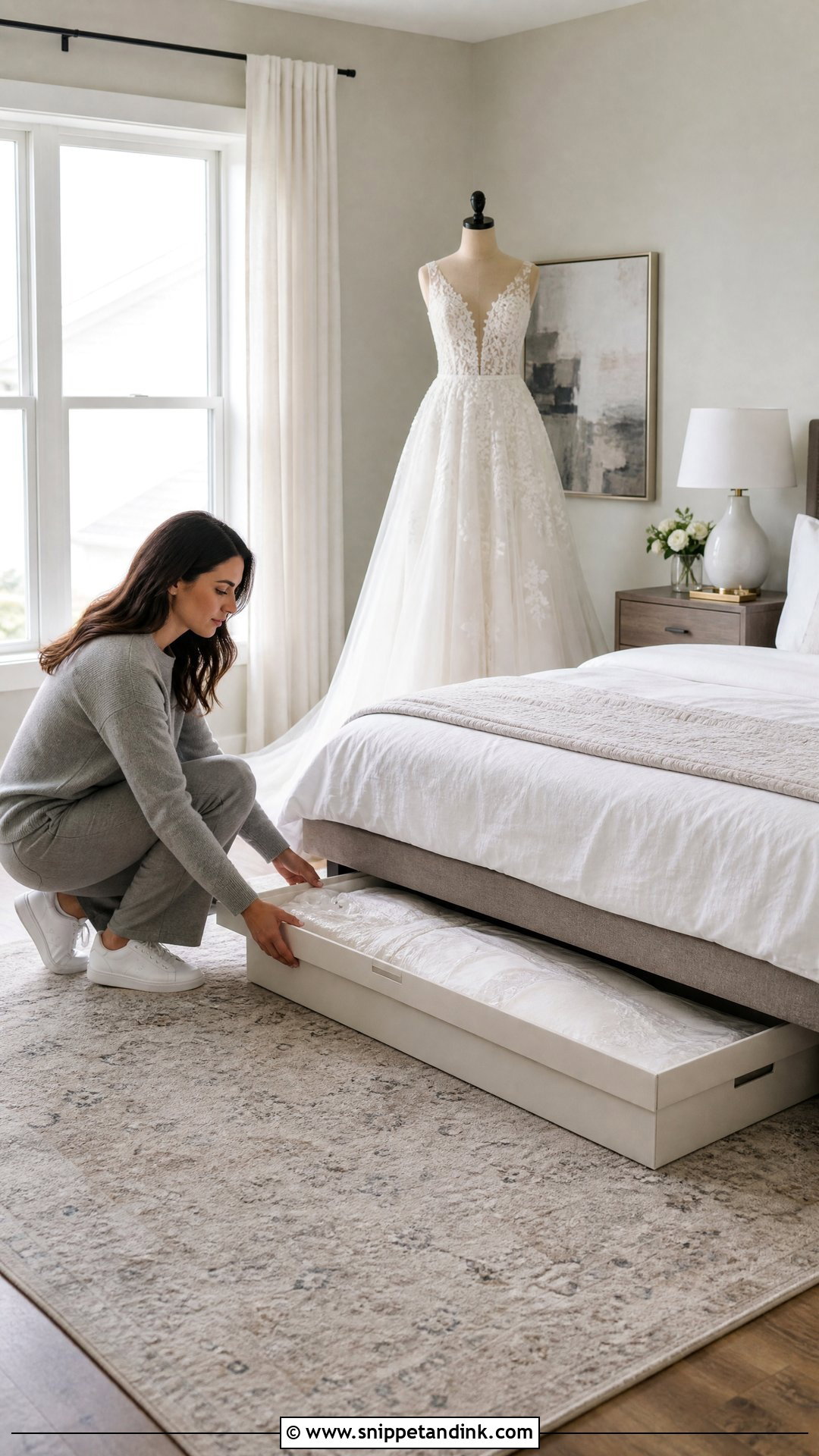
Under the bed is a good spot if the bedroom stays cool, dry and clean year round, and it’s often the only option in a flat without a large closet shelf. Use a low archival dress box, not a plastic bin or fabric organizer. Measure the clearance first; you want to slide the box out level, not tilt it and shift the folds. If there’s any chance of a leak or a spill, raise it a little off the floor on slats. I’d avoid a bed beside a sunny window, a radiator or a damp outside wall. Flat, out of the way and easy to reach for a yearly check is exactly what you want.
4. Wedding Dress Storage On A Closet Shelf

A deep bedroom closet shelf works when the box can sit fully on it, nothing hanging over the edge. Choose the highest shelf you can reach without wrestling the box down, since tipping it is how folds slide and beads rub. Clear everything off the top: luggage, shoe boxes and bins add weight that slowly flattens the tissue. Check what’s behind the wall. Plumbing and heating runs bring damp or warmth, and both age fabric faster. Leave enough room to pull the box forward without catching a bracket.
5. Climate-Controlled Wedding Dress Storage

If your home has no spot that stays cool and dry through the seasons, a climate-controlled storage unit is worth considering. Climate control only steadies the air; the gown still needs an archival box. Put that box on sturdy shelving, never on the unit floor, and keep it away from the door, outside walls and overhead pipes. Visit every so often to look for water marks, droppings or a musty smell. Leave a clear path to the shelf so the dress never ends up buried behind furniture you’d have to move to reach it.
6. Breathable Wedding Dress Garment Bag

A breathable garment bag is a short-term solution, for the weeks before alterations, a trip or a visit to the preservation specialist. Choose undyed cotton, muslin or an archival bag long and wide enough that the skirt hangs freely. The thin plastic from a dry cleaner is the one to throw away; it holds moisture against the fabric and can yellow it. Zip the bag fully against dust, keep it in a roomy closet away from sun, pets and sprays, and remember that light gowns handle temporary hanging far better than heavy ones. Always hang from the inner loops, never the shoulder straps.
7. Padded Hanger Wedding Dress Storage
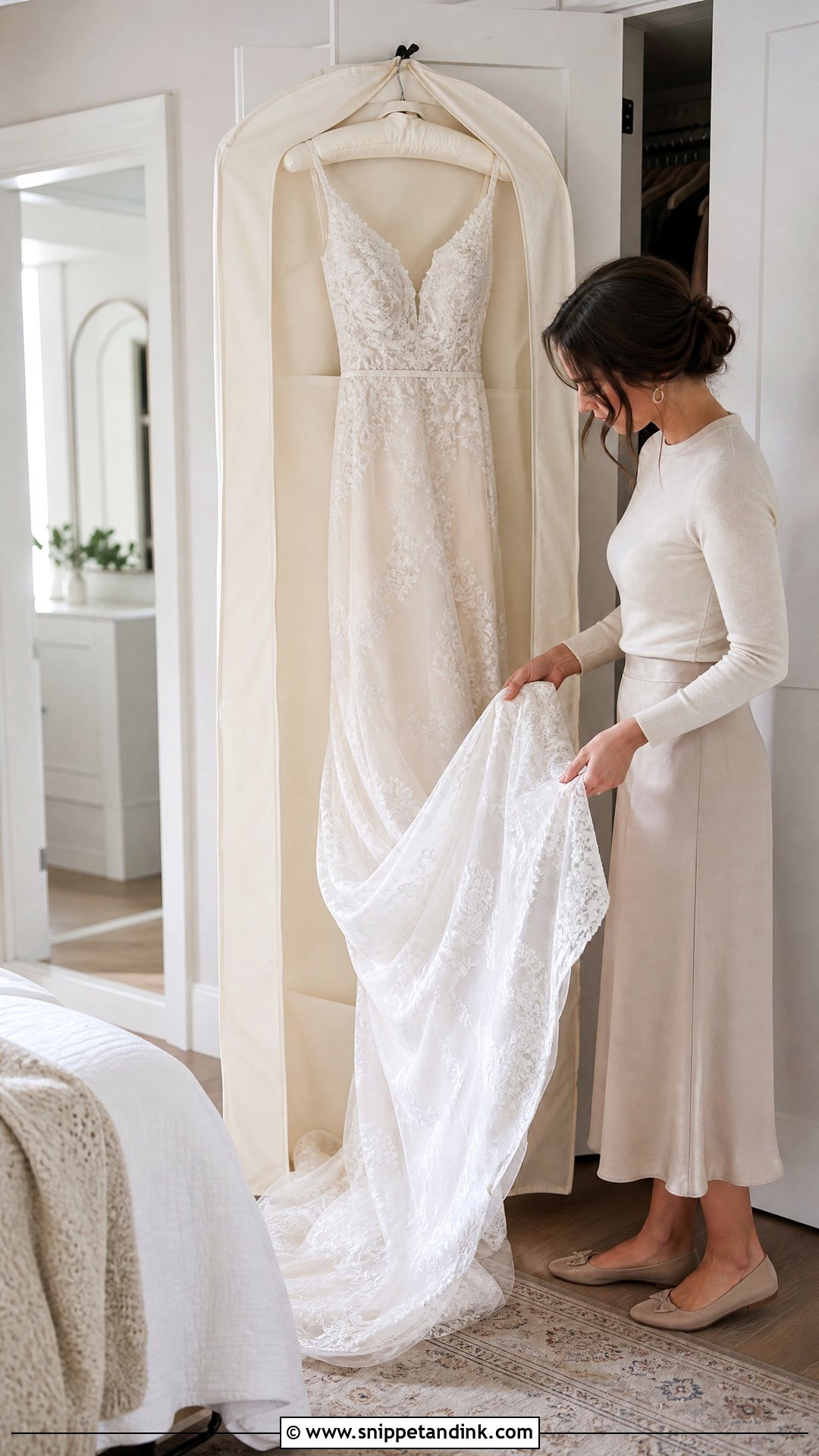
Wire hangers leave a peak in the shoulder that can take weeks to relax, so when a dress must hang, I use a broad padded one. Hook the gown by its internal loops, which are sewn into the waist seam to carry the weight, and let the straps and neckline rest without load. Settle the skirt and train inside a roomy bag and check nothing is caught in the zip. Make sure the rail can bear it; a layered, beaded gown can be surprisingly heavy. Hanging is fine for a few weeks. For years, a heavy gown stretches at the seams, and it belongs flat in a box.
8. Flat Wedding Dress Storage
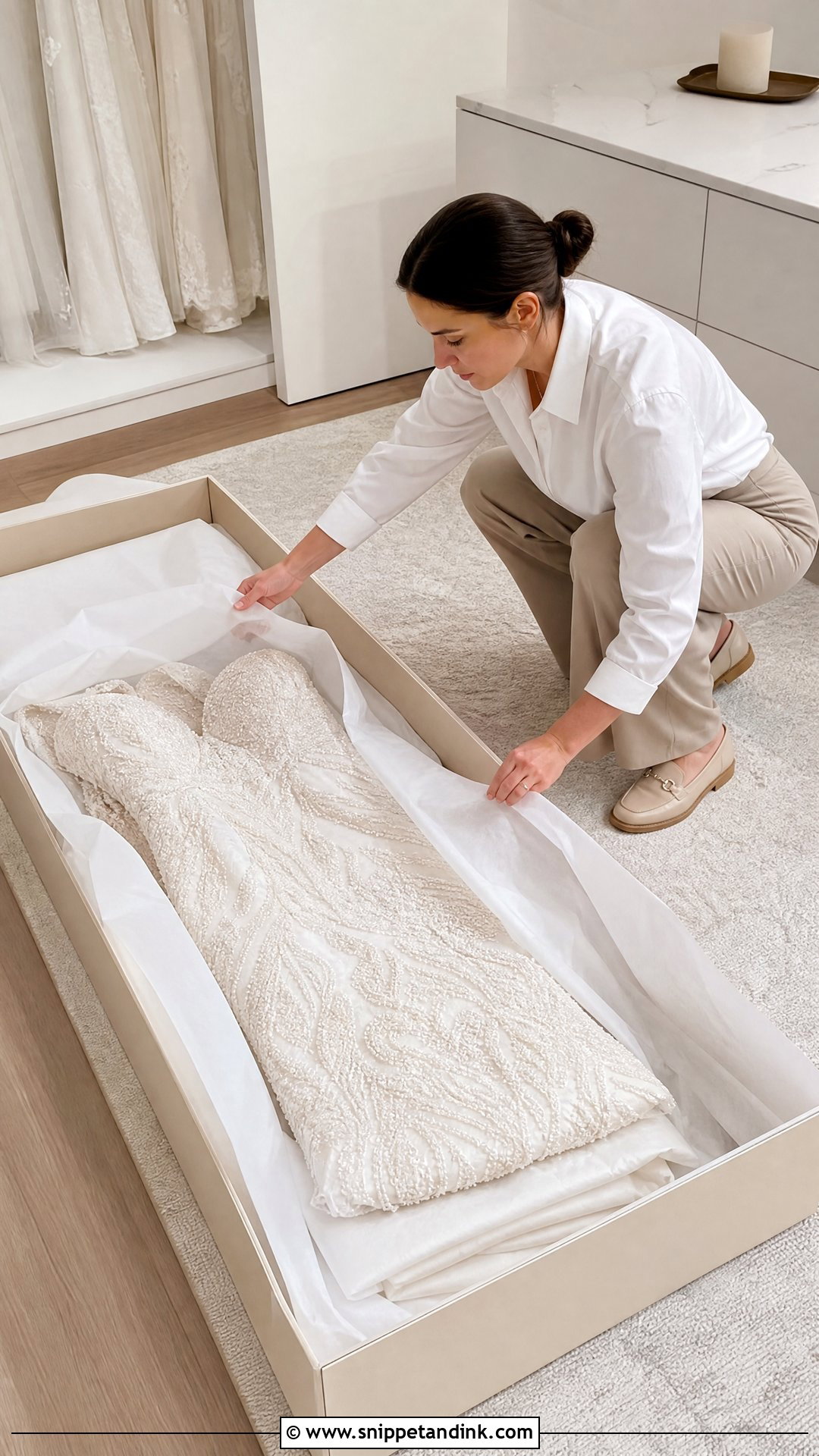
Gravity never rests, and a hanging gown carries its whole weight on its shoulders and seams. Flat storage removes that strain, which is why I recommend it for beaded dresses, layered ball gowns and bias cuts, which grow longer on a hanger. Lay acid-free tissue in a clean box, then fold the dress in wide, soft folds that follow the natural seams. Put a roll of tissue inside each fold instead of pressing it flat to save space. Pad the bodice, sleeves, train and any raised decoration. The lid should close without force, and the box must stay horizontal; stood on end, the dress slides into a heap.
9. Silk Wedding Dress Storage
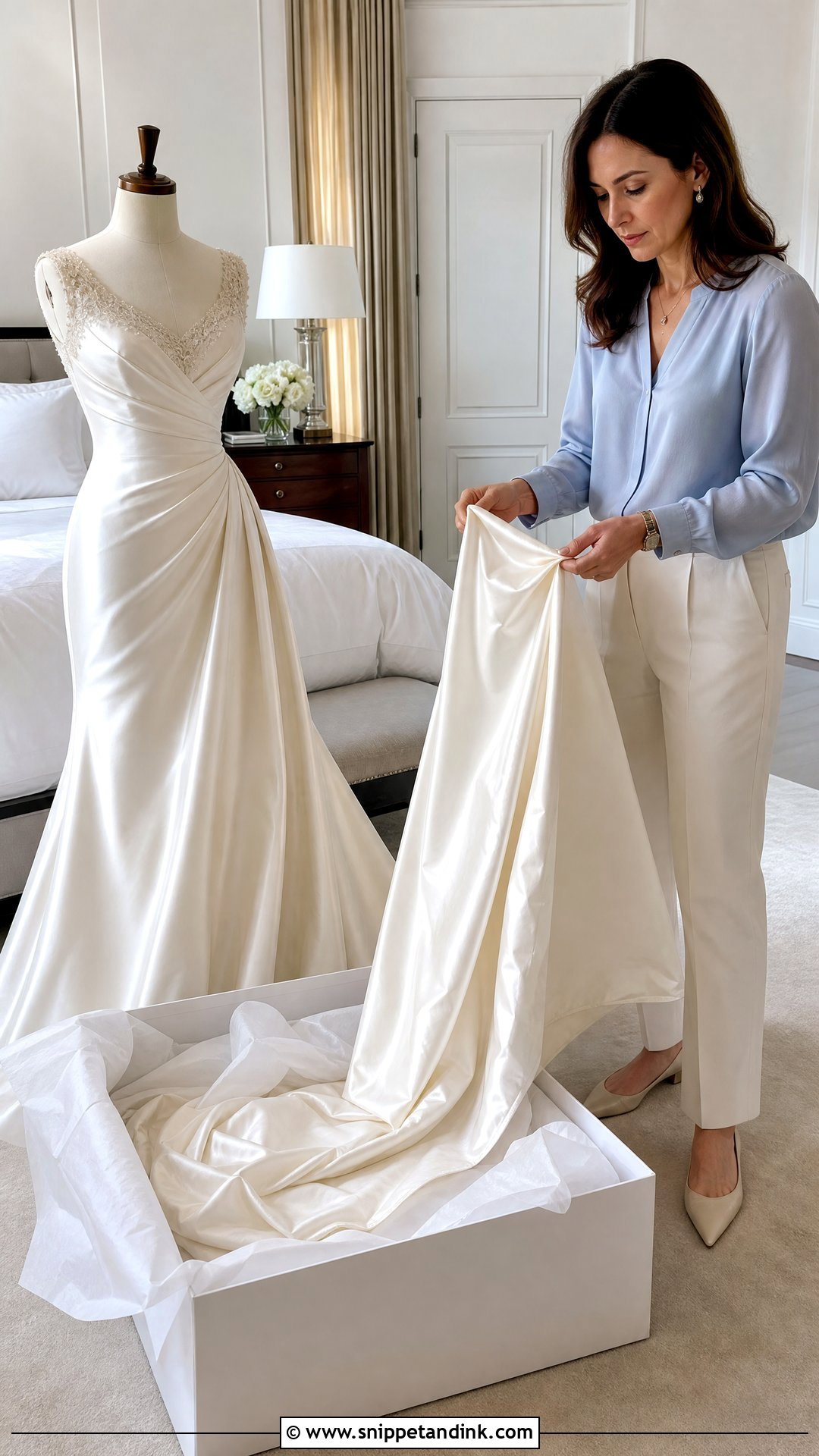
Silk weakens and changes color with light, damp and the wrong cleaning, so a silk gown goes to a cleaner who knows that weave and its trims. For packing, use unbuffered acid-free tissue. Buffered tissue contains an alkaline reserve that is fine for cotton but can harm protein fibers like silk. Fold loosely and pad each bend, since silk holds a sharp crease. Keep metal hooks, colored paper and printed labels away from the fabric. Store the box in a dark, steady bedroom or closet, never the attic or basement, and never wrap silk tightly in plastic.
10. Lace Wedding Dress Storage
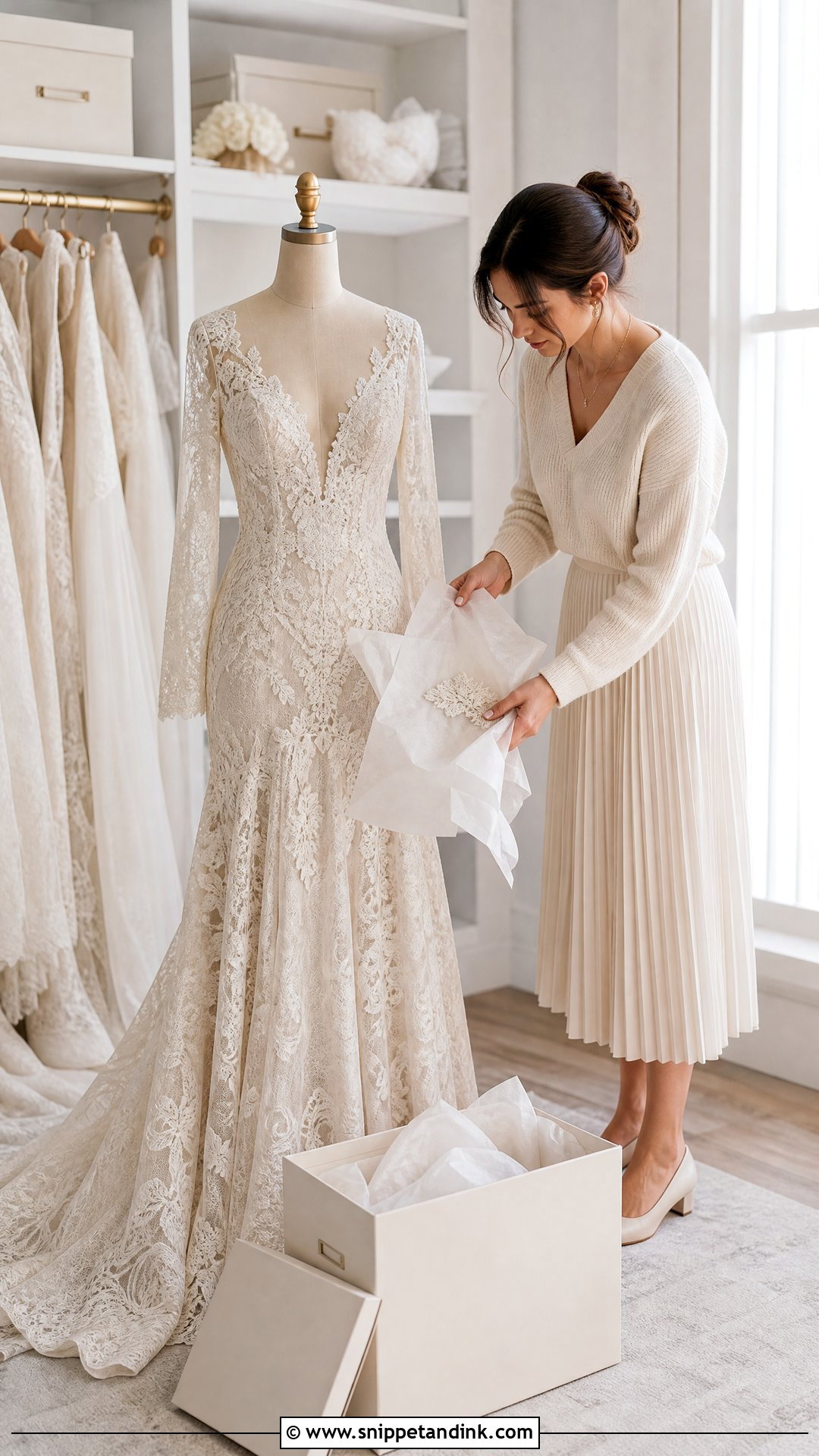
Lace snags and flattens easily, and an open seam you overlook now will be a hole later. After cleaning, I go over the dress in good light looking for loose threads, lifting appliqués and frayed edging, and get those mended before packing. Cover hooks, clasps, buttons and any rough beading with tissue so they can’t scrape the lace. Lay tissue between the sleeves, bodice and skirt folds so textured surfaces never press together. Don’t overfill the box. A long lace train folds broadly along its construction lines, and the box lives flat in a quiet interior space.
11. Beaded Wedding Dress Storage
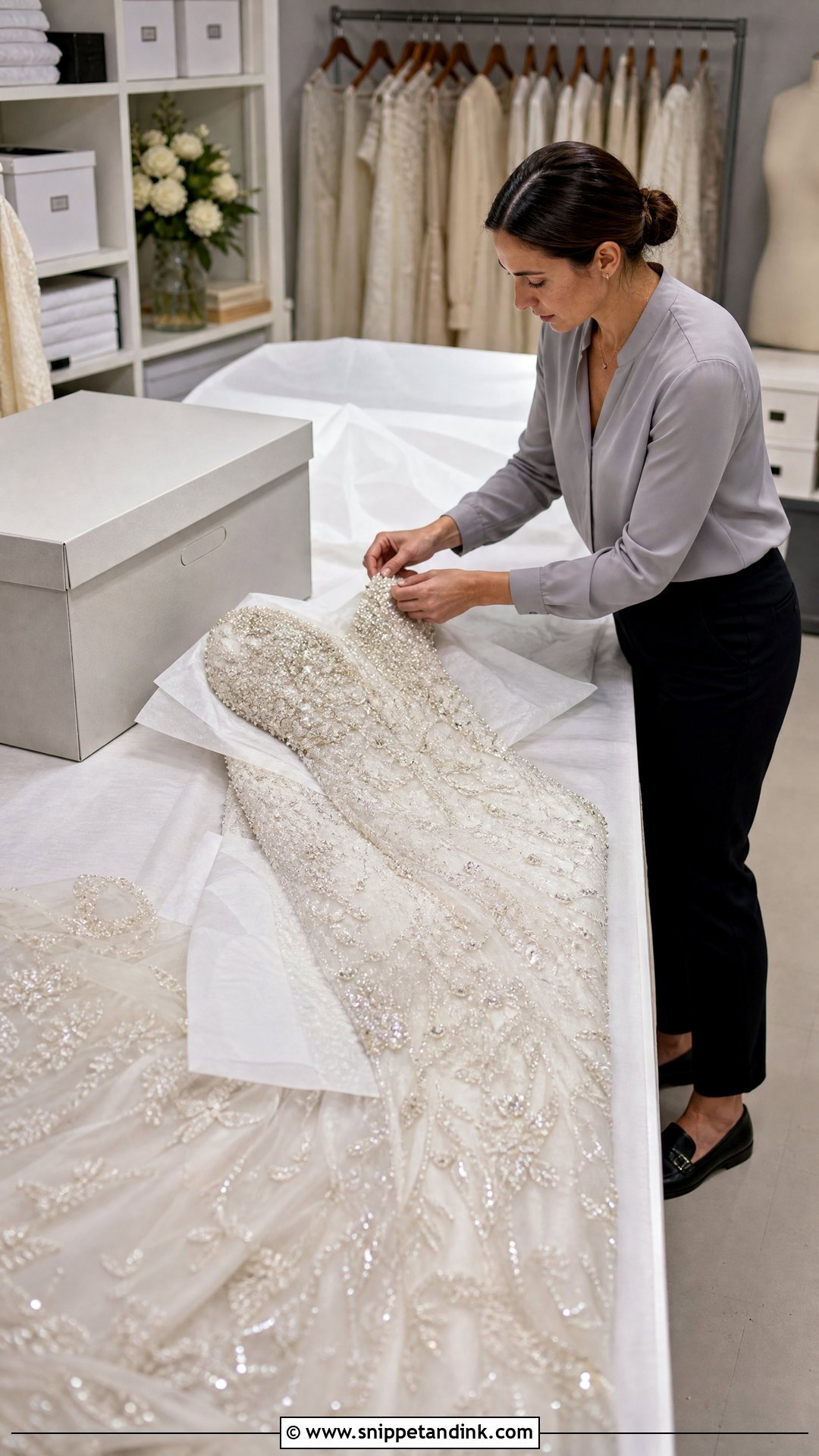
Beads are heavy, and on a hanger they drag the fabric down until the seams pull and the hanger loops tear. Store a beaded gown flat. Under bright light, check for loose beads, sequins, pearls and stones after cleaning, and have them secured before packing. Choose an oversized box so the beaded sections never sit stacked tightly on each other, and slip tissue under concentrated beadwork. Avoid folding through dense panels if the construction allows another fold. Take off belts, brooches and anything hard, wrap them separately, and keep the box away from knocks and frequent moves.
12. Ball Gown Wedding Dress Storage
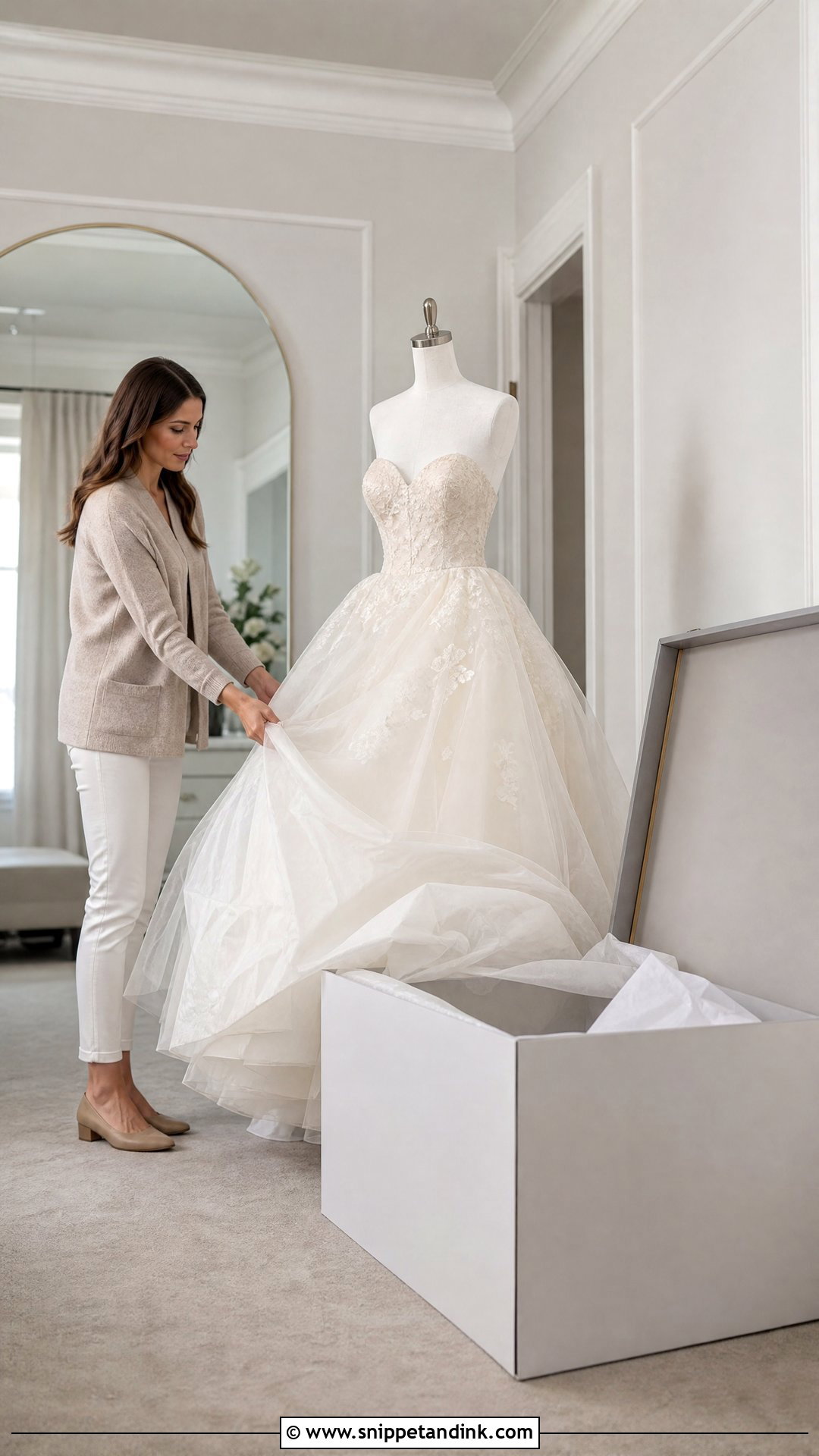
A ball gown needs the largest archival box you can find. Fill the bodice and sleeves loosely with tissue so they keep their shape, then lay the skirt in wide folds with tissue between every layer. Let tulle and netting sit naturally; crushed net creases in a way steaming can’t fully undo. Hoops, removable padding and detachable underskirts are best packed separately, so ask your preservation specialist. Never force the lid or stack anything on it. A wide under-bed space, deep shelf or climate-controlled unit gives the box the flat room it needs.
13. Wedding Dress Storage With Acid-Free Tissue
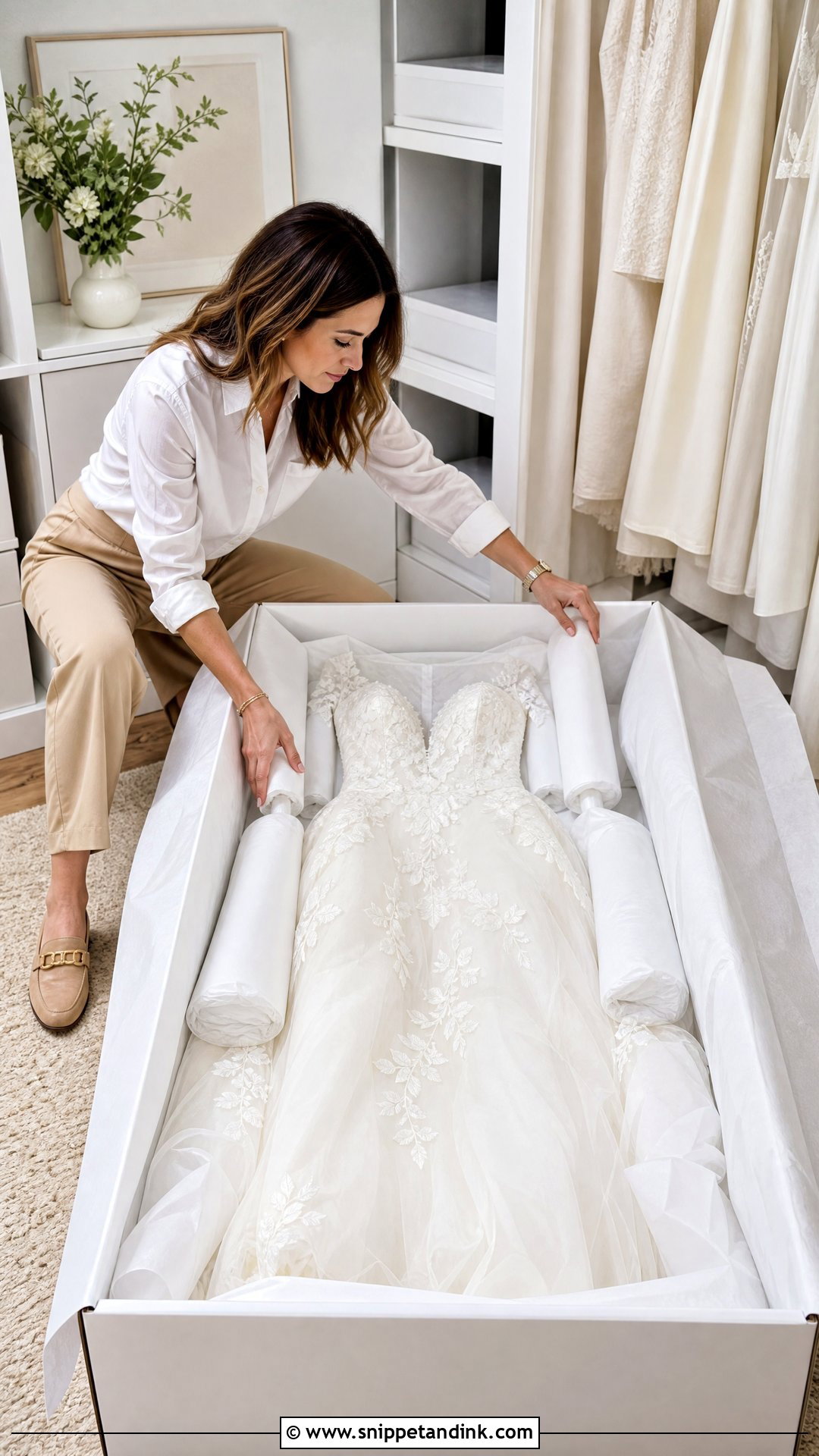
Acid-free tissue does most of the real work inside a gown box. Buy plain white tissue from a preservation supplier; gift tissue often carries dye and additives. Line the box, place tissue under and over the clean dress, then roll soft tubes to support the sleeves, neckline, bodice and curved parts of the skirt. Add a sheet wherever fabric folds or two decorated surfaces meet. Cushion, don’t stuff: packing too tightly strains seams just as badly as having no support. Tissue settles over time, so expect to fluff it at each check. Use unbuffered tissue for silk.
14. Wedding Dress Storage With Muslin Wrap
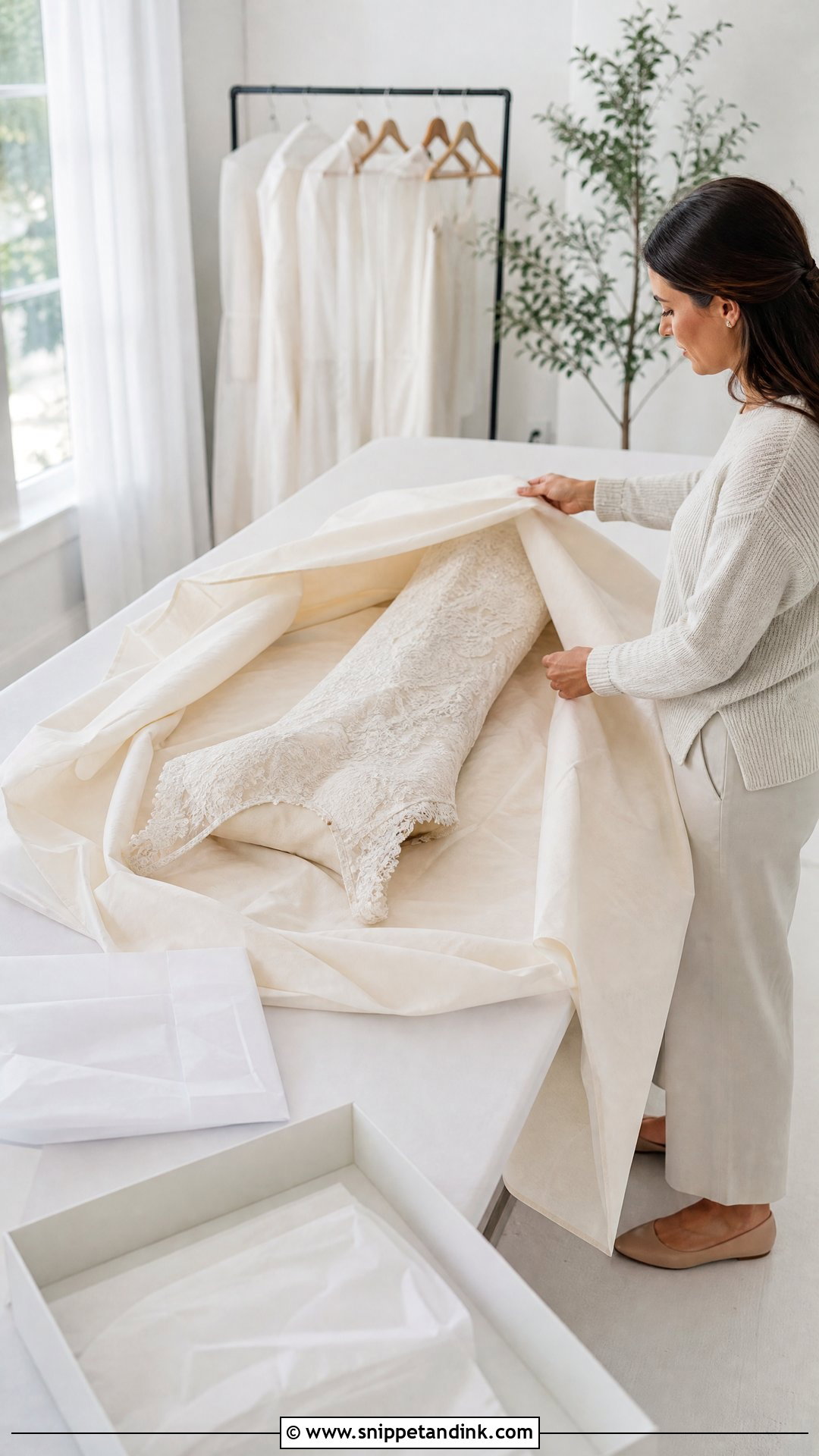
Clean, undyed cotton muslin makes a breathable dust layer around the gown before it goes into the box. Wash it first with no fragrance, softener, bleach or colored products, rinse well and let it dry completely. Lay the muslin out, add tissue between it and any delicate folds or decoration, and wrap the dress loosely, without ties. Muslin also gives you something to lift by when you open the box. It doesn’t replace an acid-free container or a stable room, though, and it collects dust itself, so rewash it every so often.
15. Small-Space Wedding Dress Storage
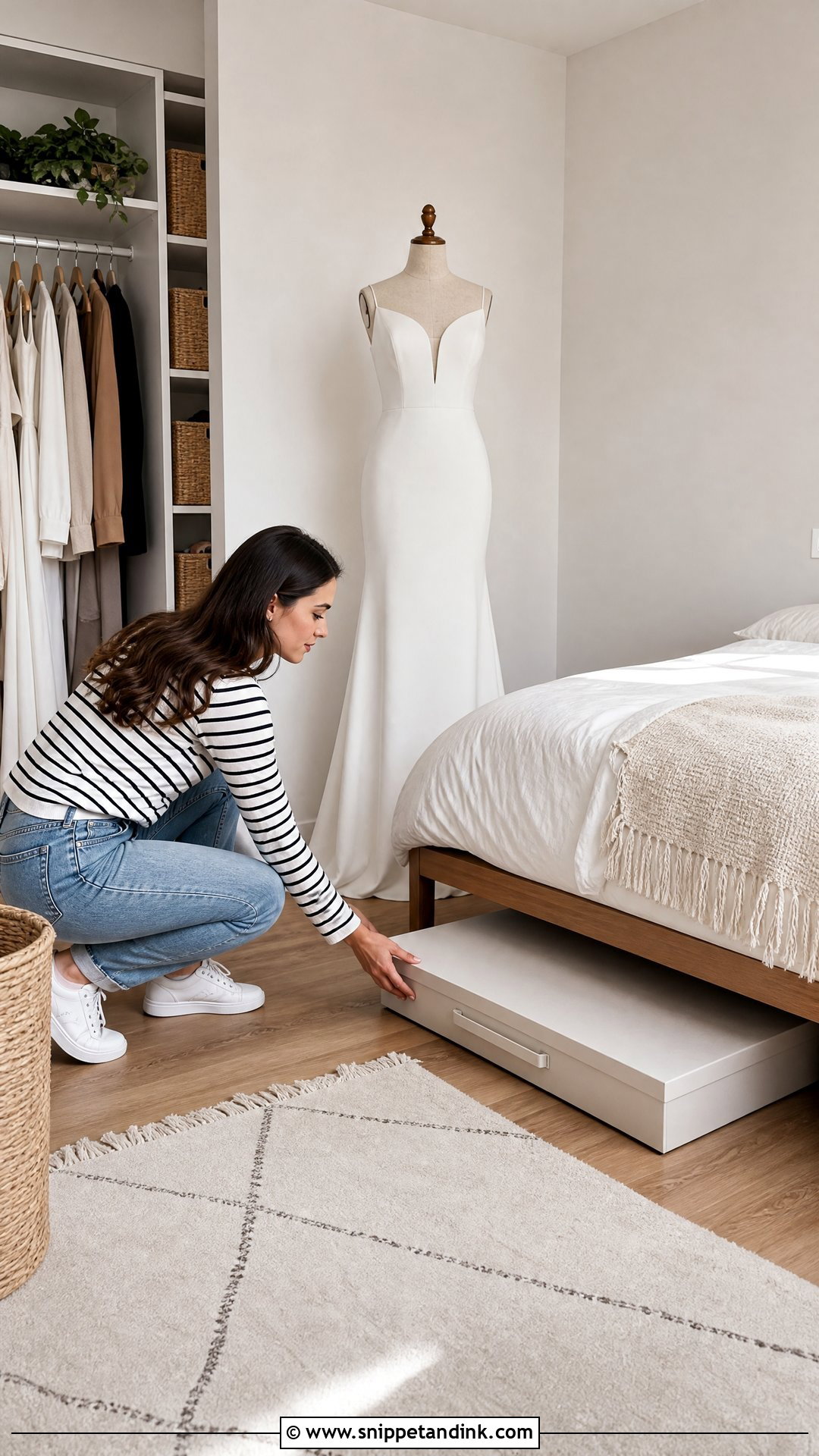
Small homes tempt people into small boxes, and that’s where gowns get hurt. Measure the under-bed clearance, shelf depth and any spare floor area, then buy the largest archival box that fits safely; wider folds mean less stress on the fabric. Under the bed usually beats a crowded closet rail, especially for a heavy dress. If you use a shelf, give the whole shelf to the gown. Keep the veil, shoes and accessories elsewhere if adding them would press on the dress, and label the box clearly so nobody mistakes it for spare bedding.
16. Wedding Dress Storage Before The Wedding
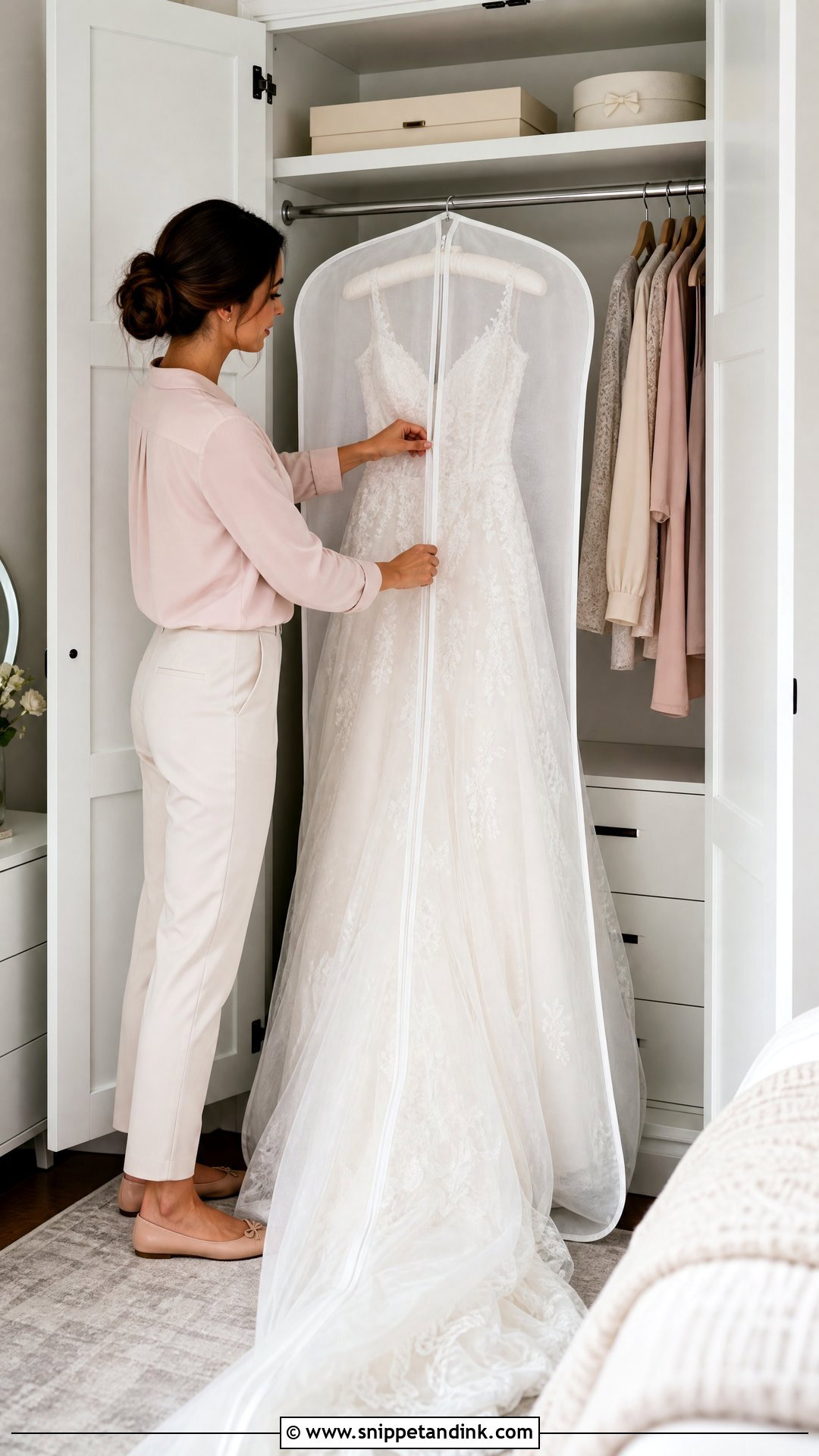
Between the last fitting and the wedding, the risks are mostly domestic: dust, sun, pets, kitchen smells, makeup and too many people wanting a peek. Keep the gown in the salon’s breathable bag, or swap any plastic cover for a roomy cotton one. Light dresses hang from their inner loops on a padded hanger; ask the salon whether a heavy or beaded one should lie flat instead. If the shop will hold the gown until alterations are done, let it. A few days out, follow the designer’s or boutique’s steaming advice, and never try an iron or a stain remover on bridal fabric you don’t know.
17. Wedding Dress Storage After Cleaning
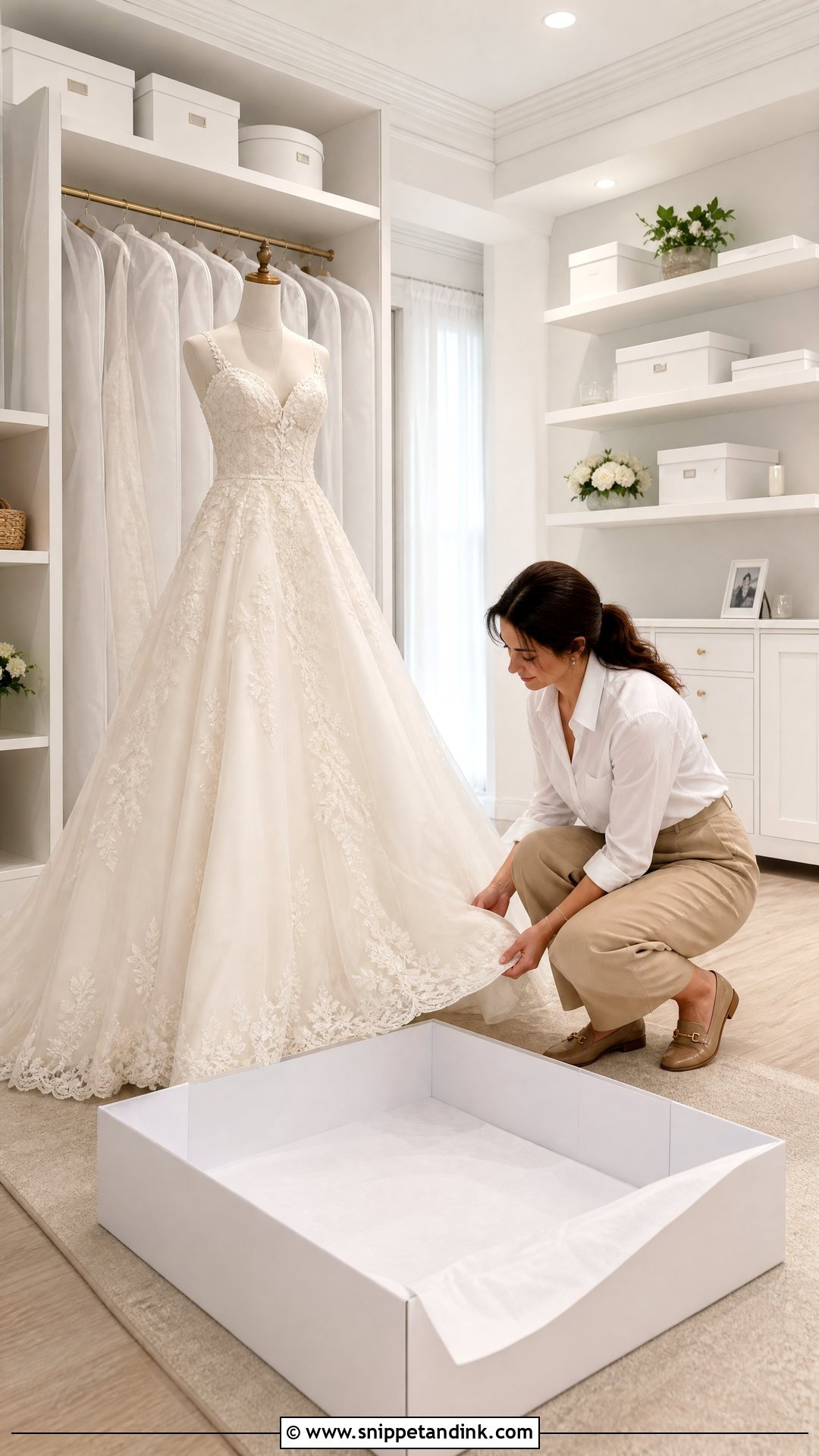
A gown must be fully clean and dry before it goes into storage. Sugar from champagne or white wine, sweat, body lotion and makeup can be invisible on the day and then oxidize into brown or yellow marks months later. Book cleaning soon after the wedding and tell the cleaner about every spill, mark and repair you know of. When the dress comes back, read the cleaning and packing notes before storing it. If it isn’t boxed, handle it with clean, dry hands, and never box a damp gown, even for a night; trapped moisture invites mildew. Then it goes into a cool, dark interior room.
18. Wedding Dress Storage With Separate Accessories
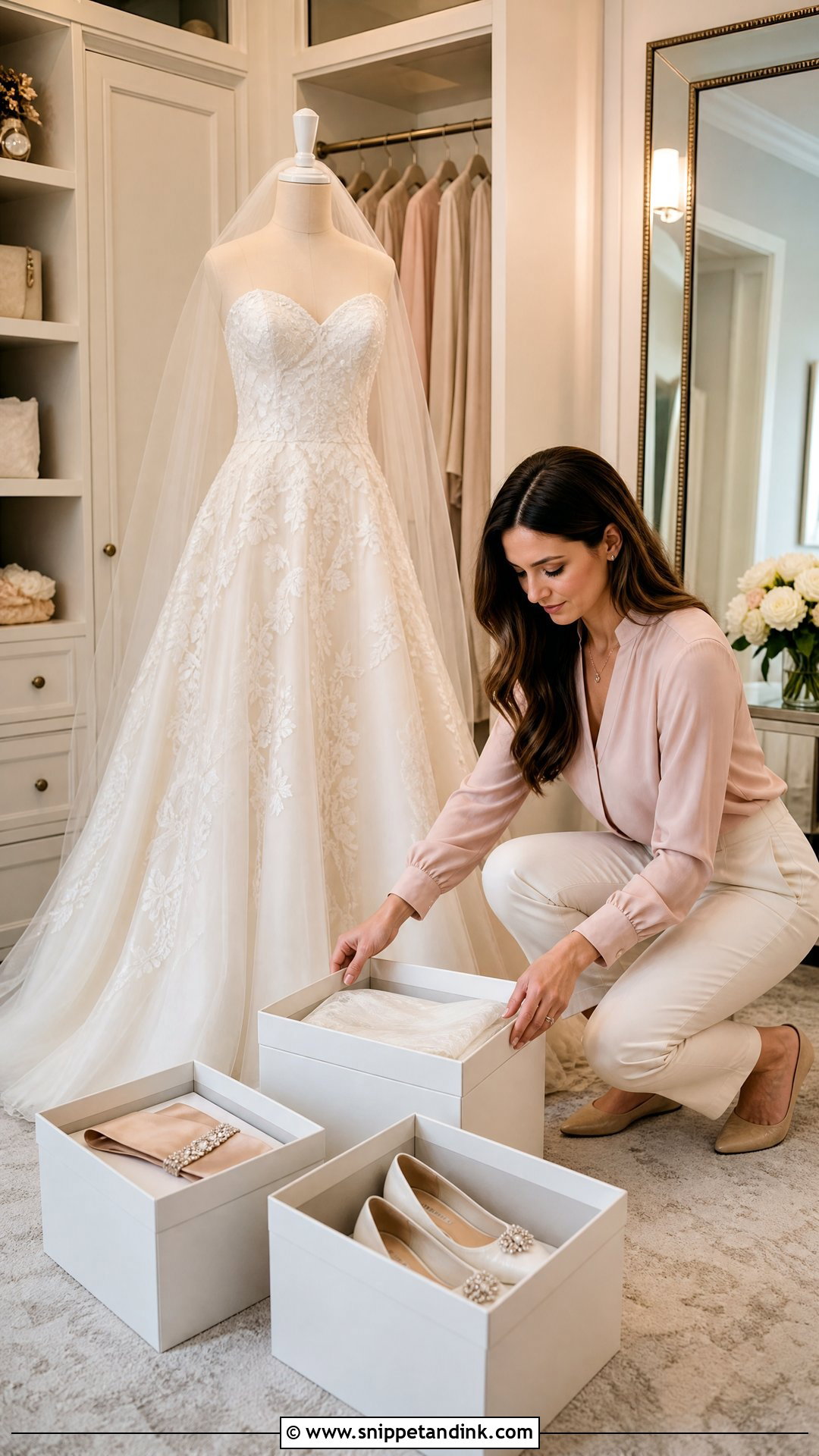
Accessories do more damage packed inside the dress box than people realize. Metal brooches can rust, shoe soles carry grit and their rigid shape dents the skirt, and dried flowers break down and attract insects. Remove belts, pins, jewelry, hangers and floral pieces before packing. A fabric sash or veil can go in its own acid-free tissue and labeled box, and shoes need a separate container. Photograph and list everything before closing the lids. If you’d really like them stored together, ask your preservation specialist what’s safe first.
19. Wedding Dress Storage With Annual Inspection
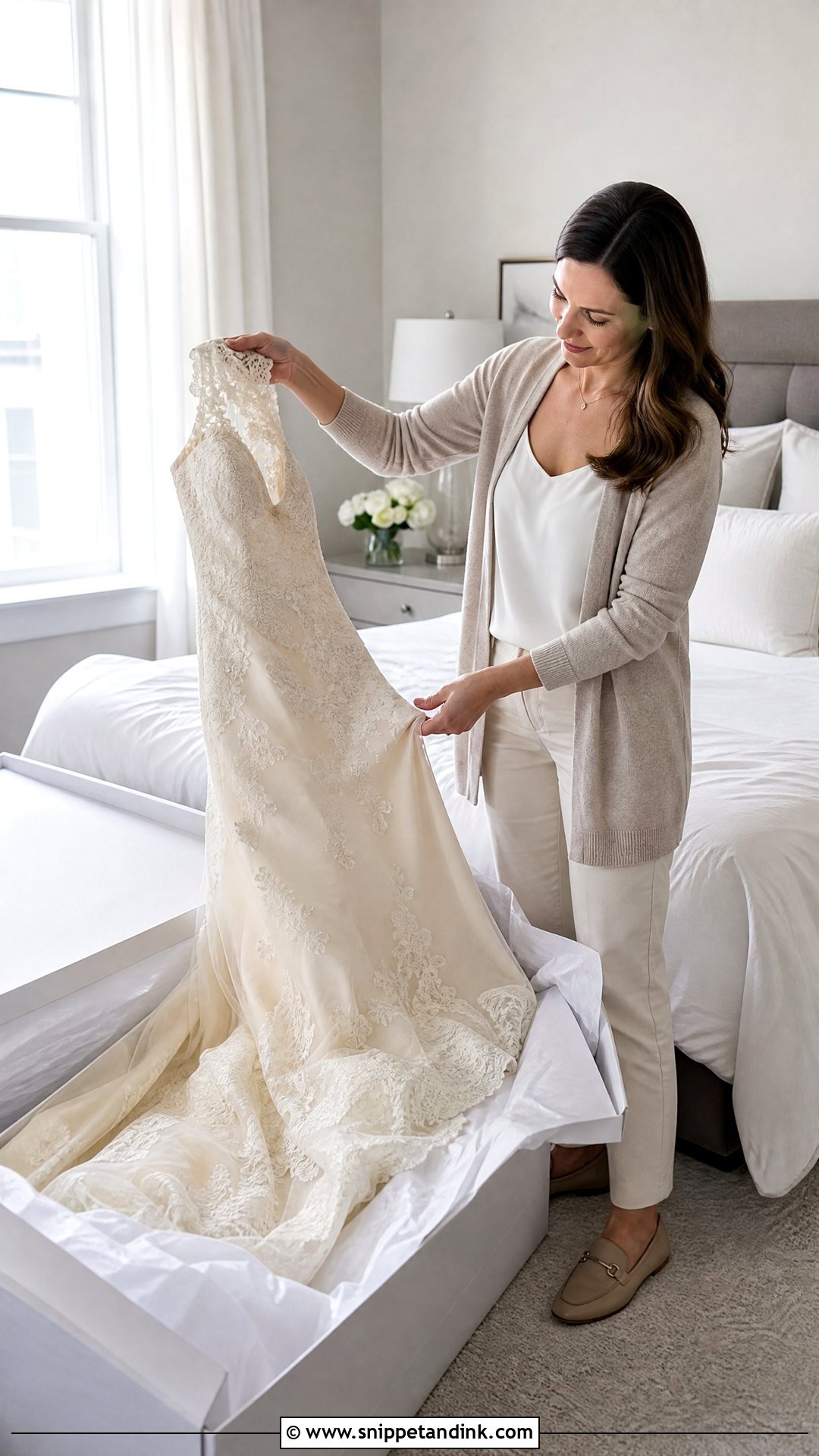
A yearly look catches damp, insects, shifting folds and discoloration before they spread. First, read your preservation warranty; some sealed boxes must stay closed or the guarantee is void. For a box you can open, check the outside each year in a clean, bright room for stains, soft corners, cracks or a musty smell. If opening is allowed, wash and dry your hands, take off rings, and lift the gown with care. Replace any tired tissue and refold the dress along slightly different lines, so no single crease carries the strain for years. Note the date and condition, then return the box flat to its spot.
20. Heirloom Wedding Dress Storage
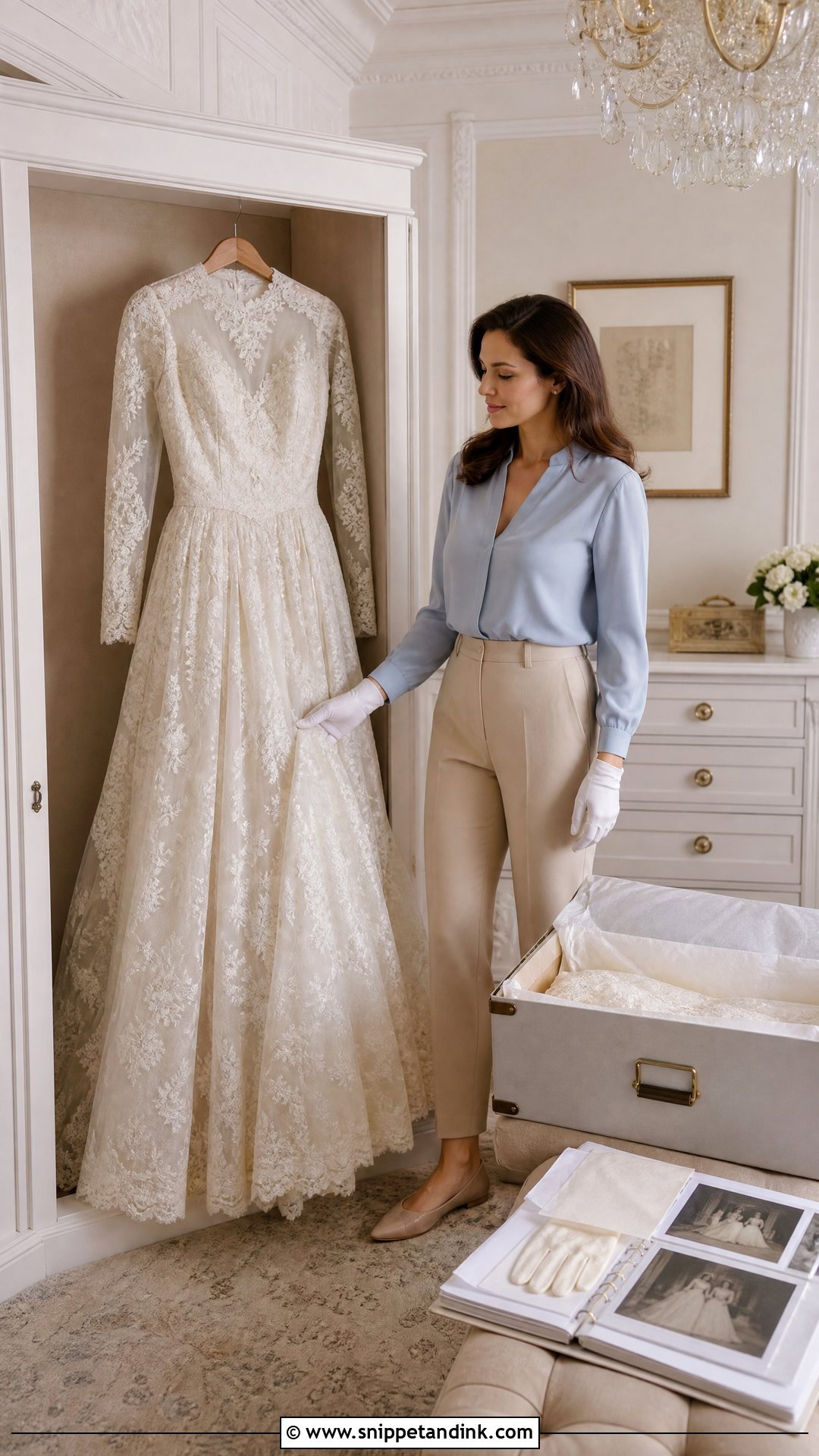
An heirloom gown needs a record that a daughter or niece could pick up in thirty years and understand. After cleaning and repairs, photograph it and write down the designer, fabric, alterations, wedding date and preservation service. Keep those notes in a separate archival envelope or a digital file, not loose against the dress. Pack it in a properly sized archival box with acid-free tissue and clear outside labels, and write down where the box is kept and how to handle it. It should live in the heated, lived-in part of the house, never the attic, garage or basement. For storage measured in decades, a professional check every few years is worth arranging.
Storage Shortcuts That Quietly Ruin a Gown
Every few months someone shows me a dress that was put away carefully, just in the wrong thing. These are the habits I’d talk any bride out of.
Vacuum Bags
They save space by crushing everything flat, which presses permanent lines into silk and satin, flattens tulle and pushes beads into the fabric beneath them. The sealed plastic also traps whatever moisture was in the dress.
Plastic Storage Tubs
Many plastics release vapors over time that can yellow white fabric, and a lidded tub sitting in a warm room becomes a small greenhouse. If plastic is your only option for a few weeks, line it with clean cotton and leave the lid slightly open.
The Attic, the Garage and the Basement
They’re out of the way, which is exactly why gowns end up there. Attics bake in summer and freeze in winter, garages carry fumes and insects, and basements are damp. The safest place is an inside wall of a room you actually live in, where the conditions are ones you’d be comfortable in yourself.
Mothballs and Cedar
Mothballs leave a smell that is very hard to remove, and cedar oil can stain pale fabric where wood touches it. A clean dress in a sealed archival box, checked once a year, is a better guard against insects than either.
What a Gown Needs to Last Decades in a Box
Good storage comes down to a clean dress, safe materials, gentle support and a steady room. For heavy, beaded, silk, lace or full gowns, an acid-free box stored flat is the strongest long-term choice. Garment bags and padded hangers are for light dresses and short stretches of time. Keep the gown away from sun, damp, heat swings, ordinary cardboard, crowded rails and long contact with plastic. Pack accessories separately, follow any warranty rules and open the box once a year if you’re allowed. Done that way, the dress stays ready for a daughter’s fitting, a vow renewal or simply a quiet look back.
You'll Like These Ideas:













Leave a Reply