
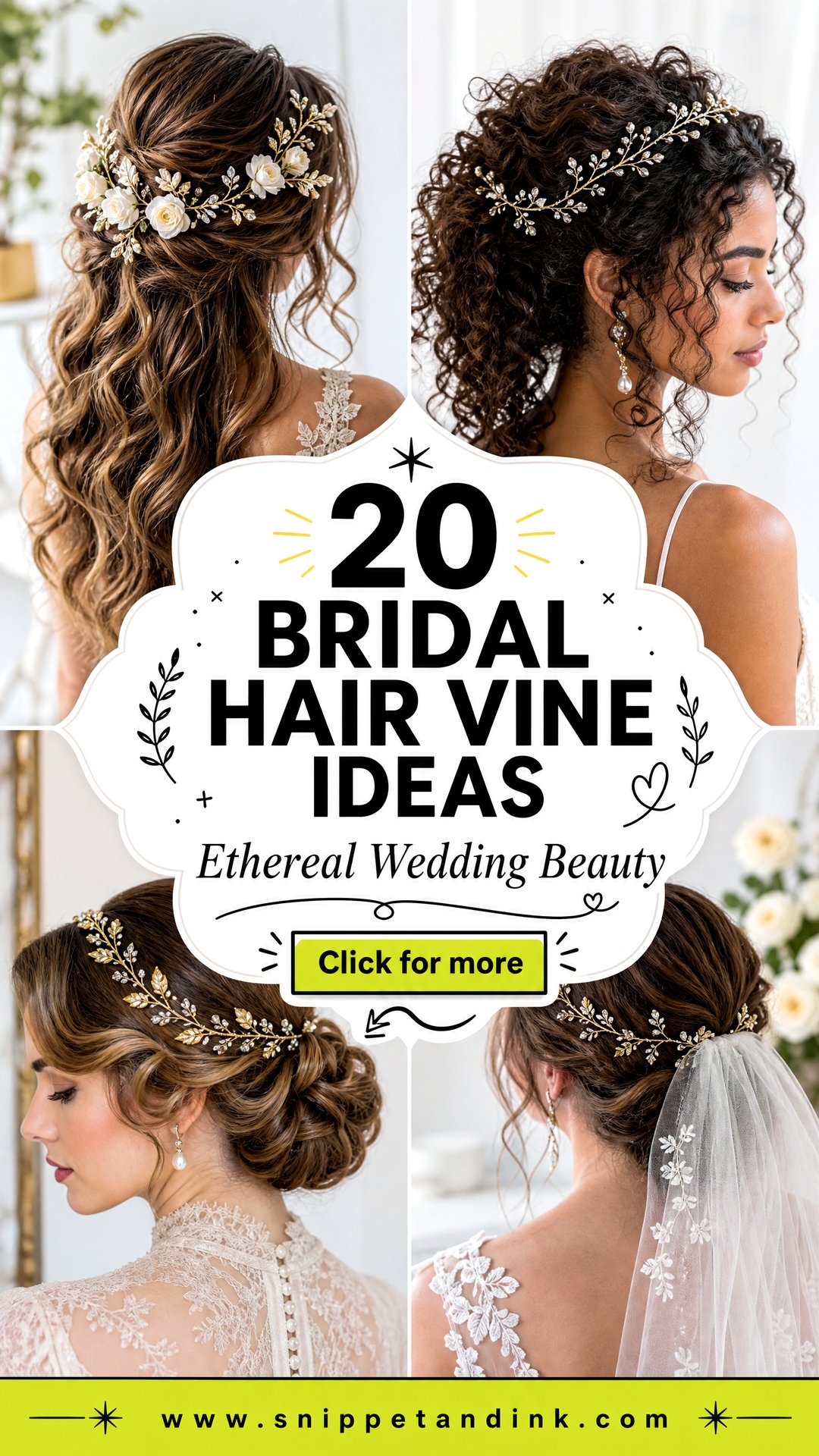
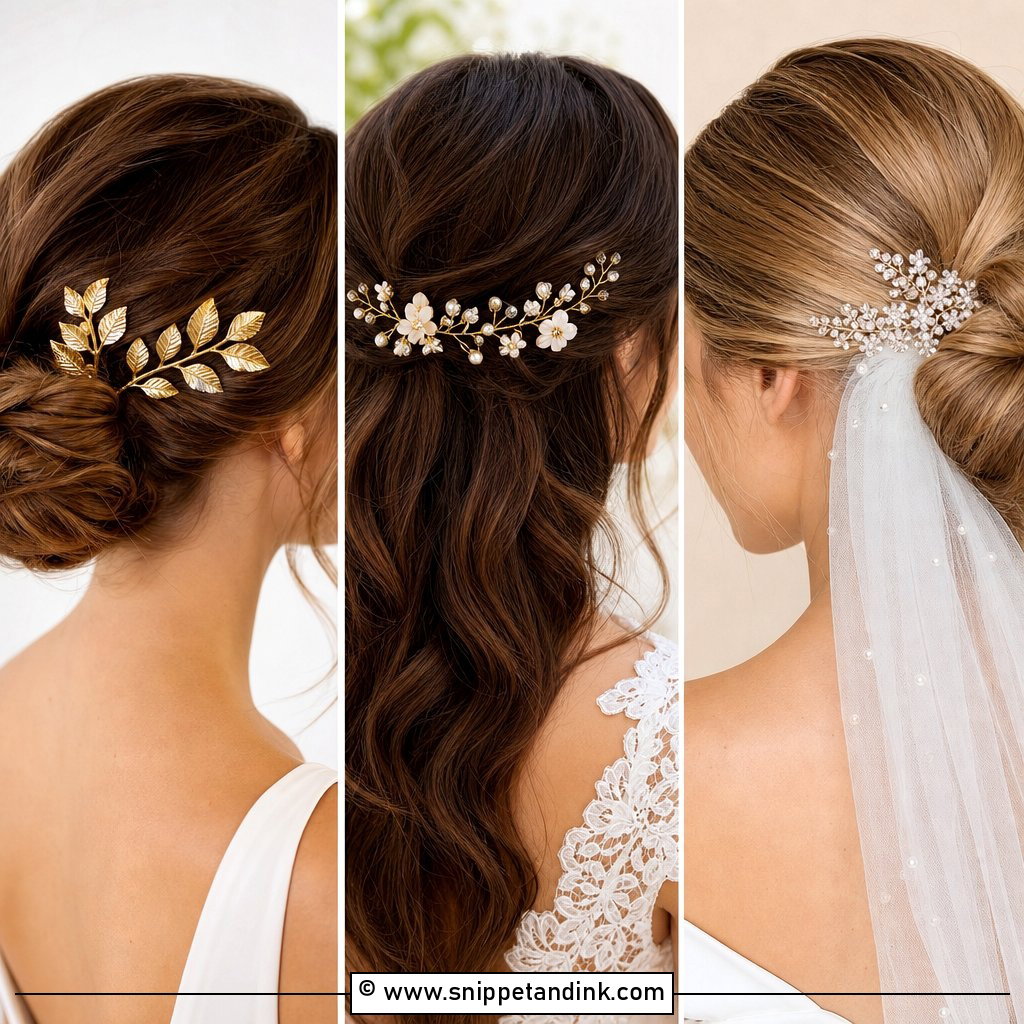
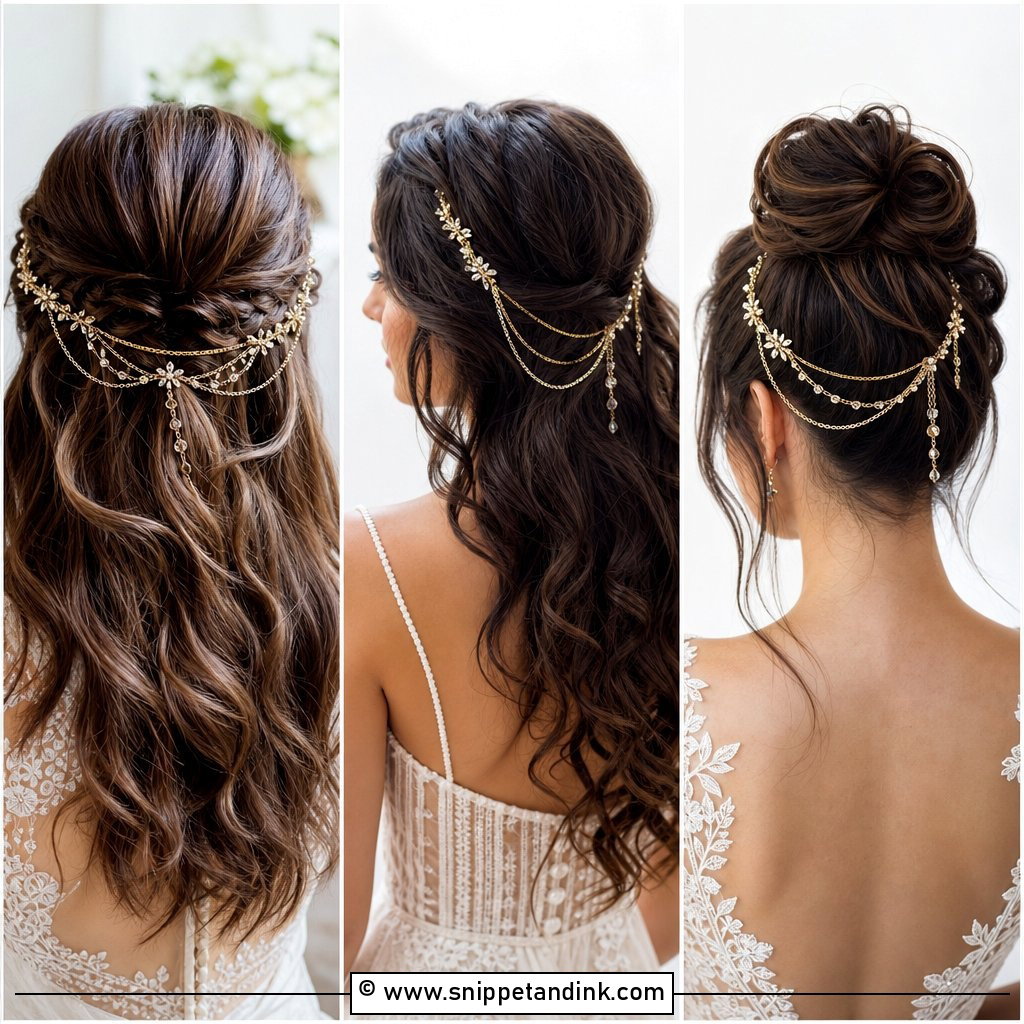
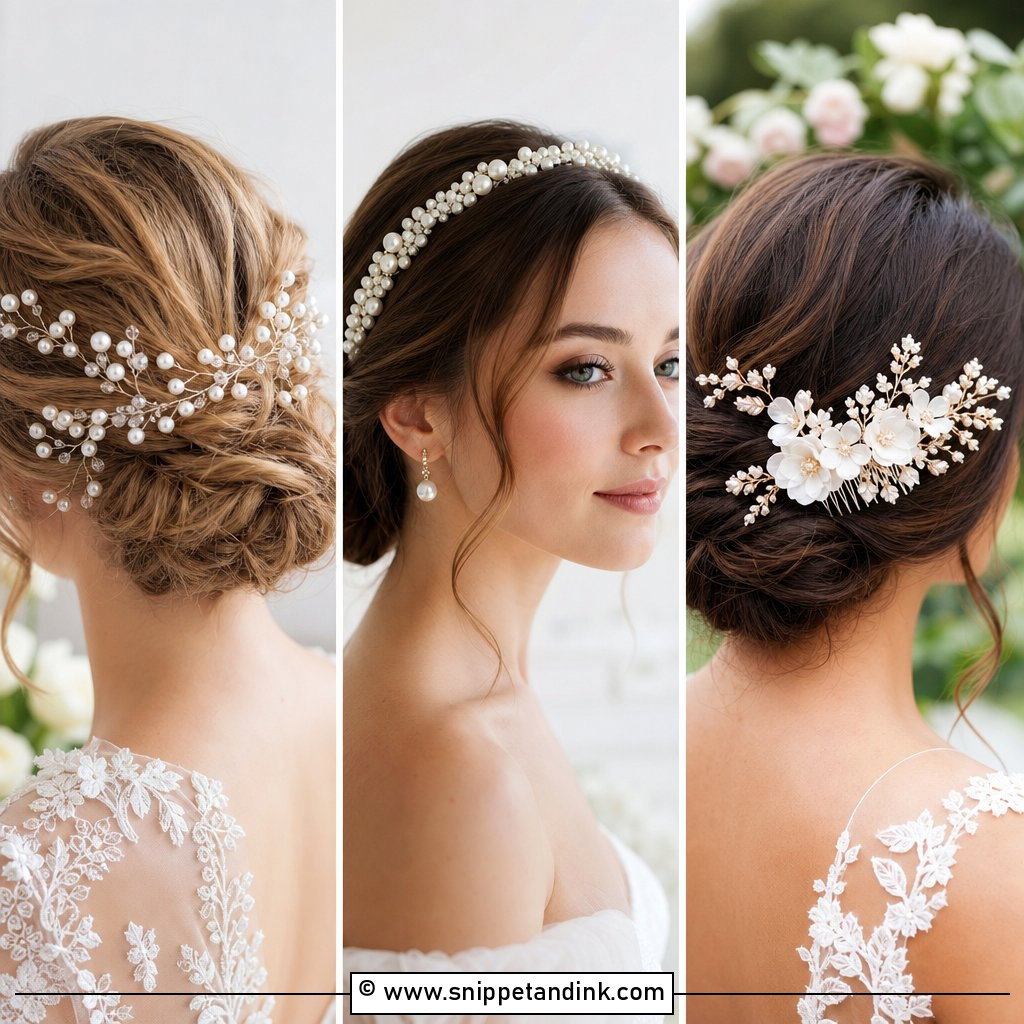
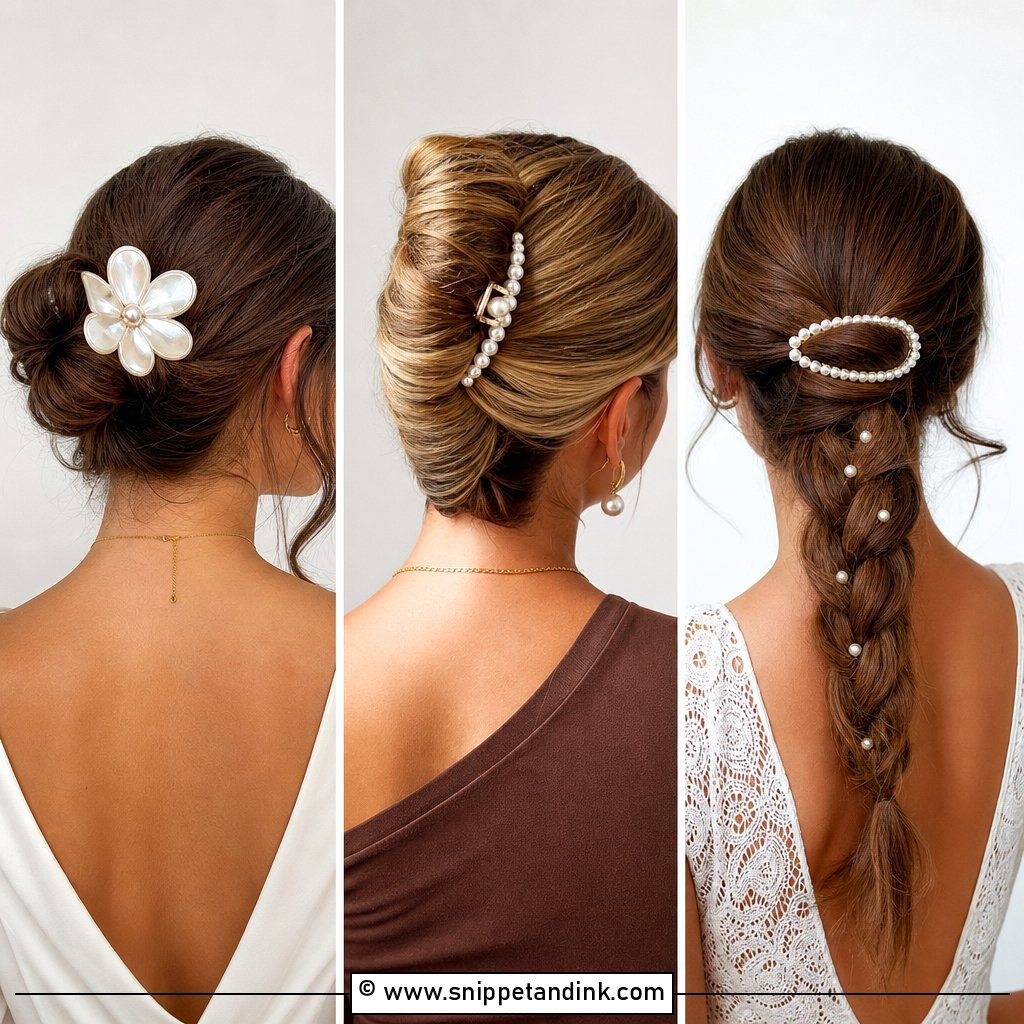
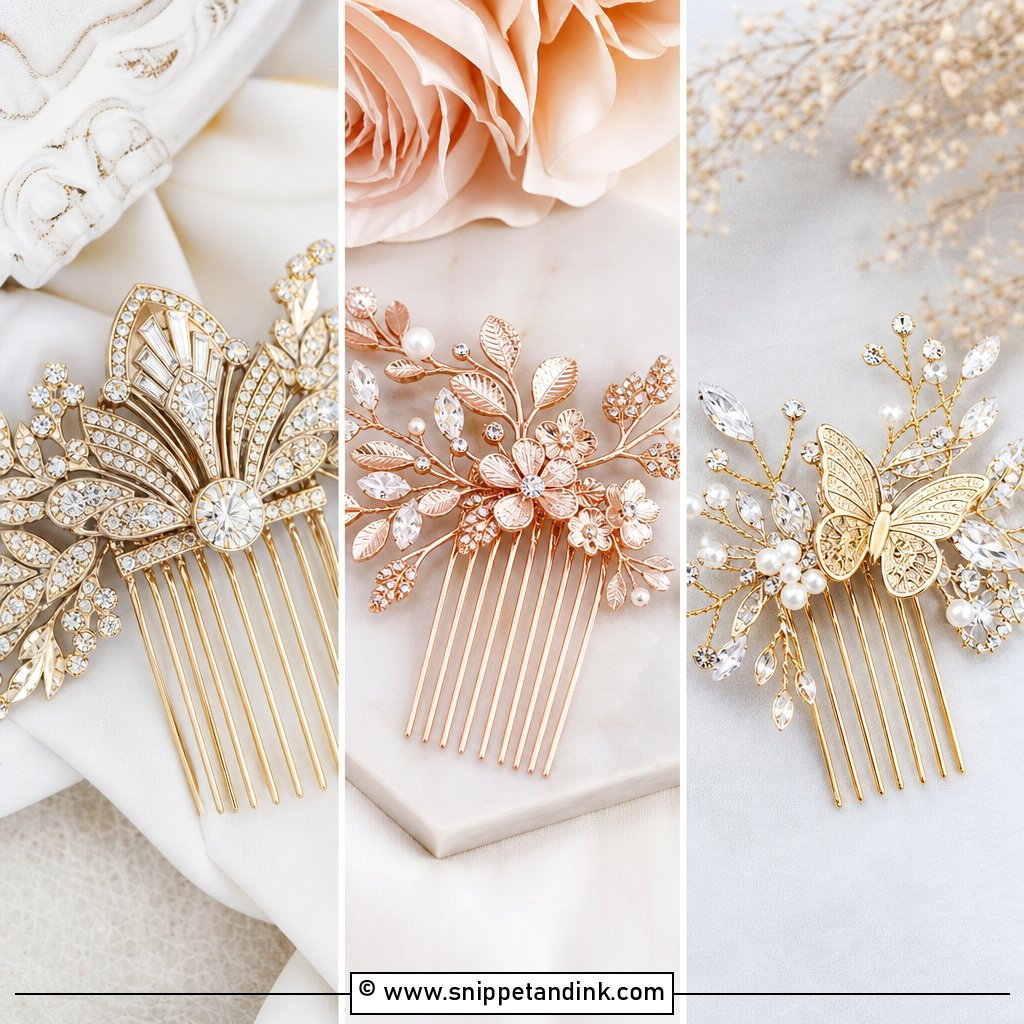
A hair vine is a length of fine wire strung with pearls, crystals or small enamel and fabric flowers, and it’s the accessory I reach for when a bride wants something softer than a comb but more personal than a tiara. Because the wire bends, I can shape it around a bun, lay it across a half-up section or thread it in and out of a braid, which is why it turns up in so many different hairstyles below. The catch is that a vine only looks as good as the way it’s anchored, and that depends on your hair’s texture and the style underneath it. Here are 20 ways I’d wear one, with notes on what each style asks of your hair and of the vine itself.
Wiring a Vine Into Hair So It Lasts Past the First Dance
Every vine I pin comes down to the same three things: a solid base, the right pins and the order of work. Get those right and even a delicate floral strand survives a day of hugging, dancing and leaning back in chairs.
Bend it the day before
Shape the wire into roughly the curve you want while you’re relaxed at home. Forcing it into shape against your head while the photographer waits leads to kinks, and a kinked wire never lies quite flat again.
Pin through the loops, then along the length
- Slide a bobby pin through each end loop and cross a second pin over it in an X. Those two crosses carry most of the weight.
- Add small U-pins or bobby pins every few centimetres along the wire, pushing them in against the direction the vine runs so they lock into the hair beneath.
- Choose pins that match your hair colour, not the vine, so any that peek out simply vanish.
- On freshly washed or very fine hair, mist texture spray or dry shampoo underneath first. Clean, silky hair pushes pins back out.
Finish your hairspray before the vine goes in, or cup a hand over it while you spray. A heavy coat dulls the finish on faux pearls and leaves a film on crystals that shows up in close-ups.
1. Pearl Hair Vine With Low Bun
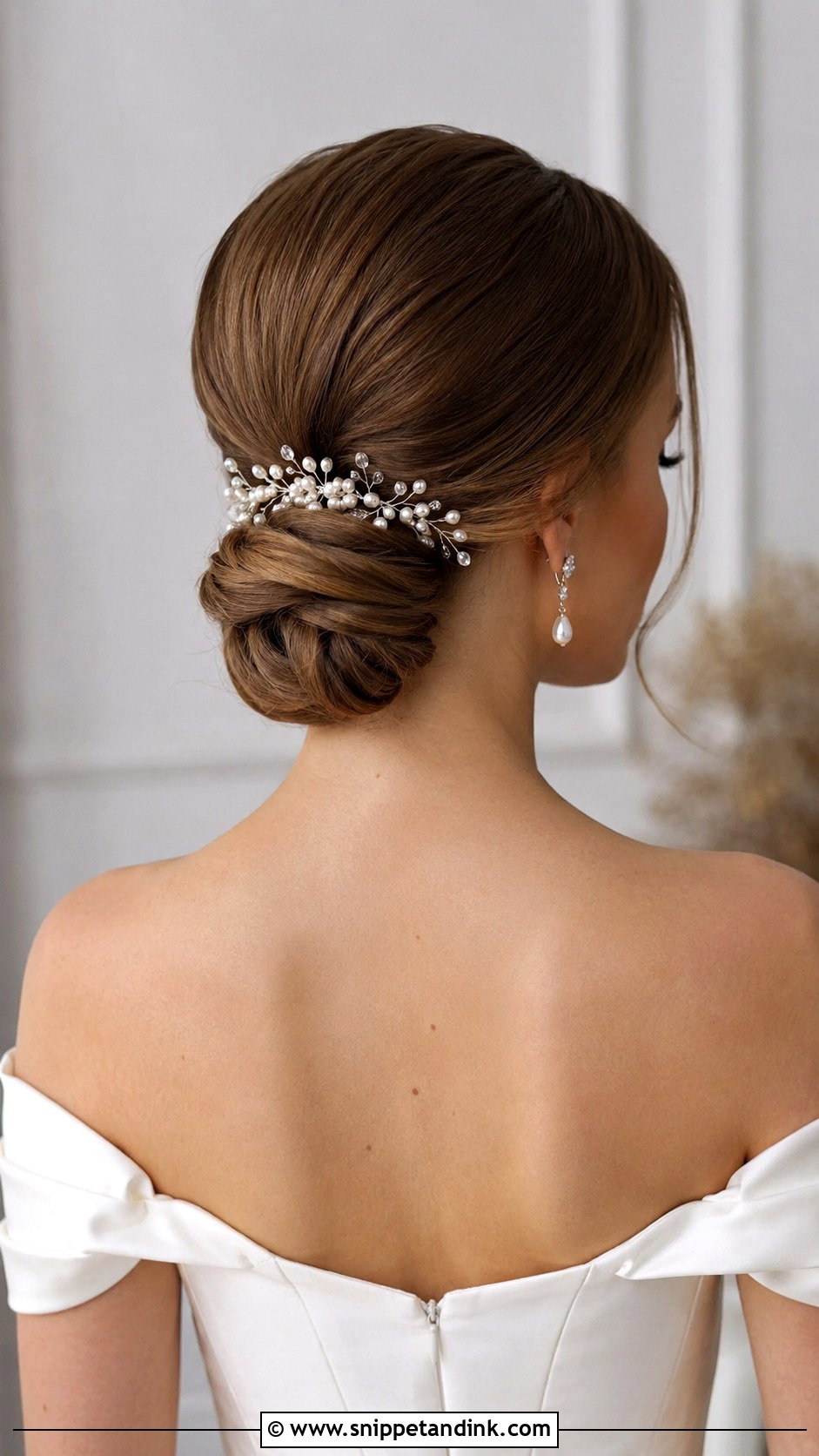
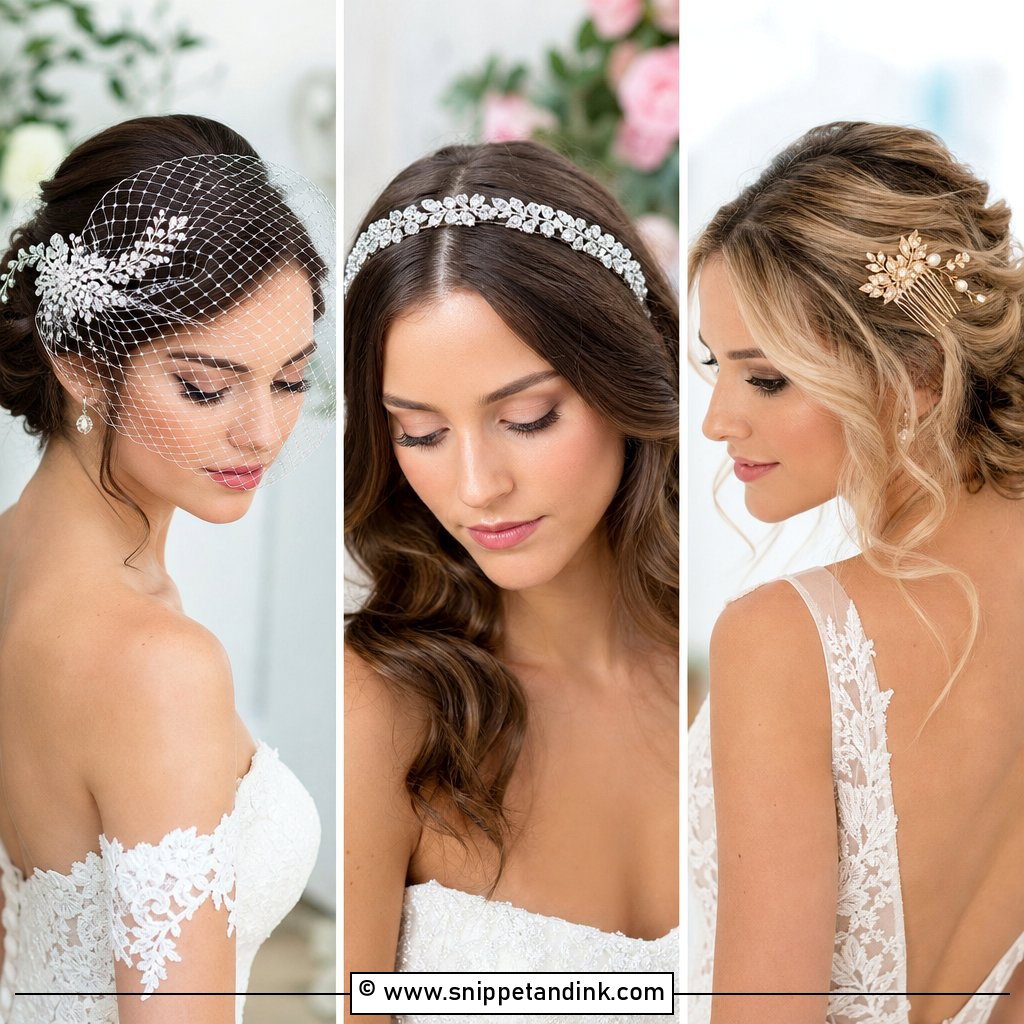
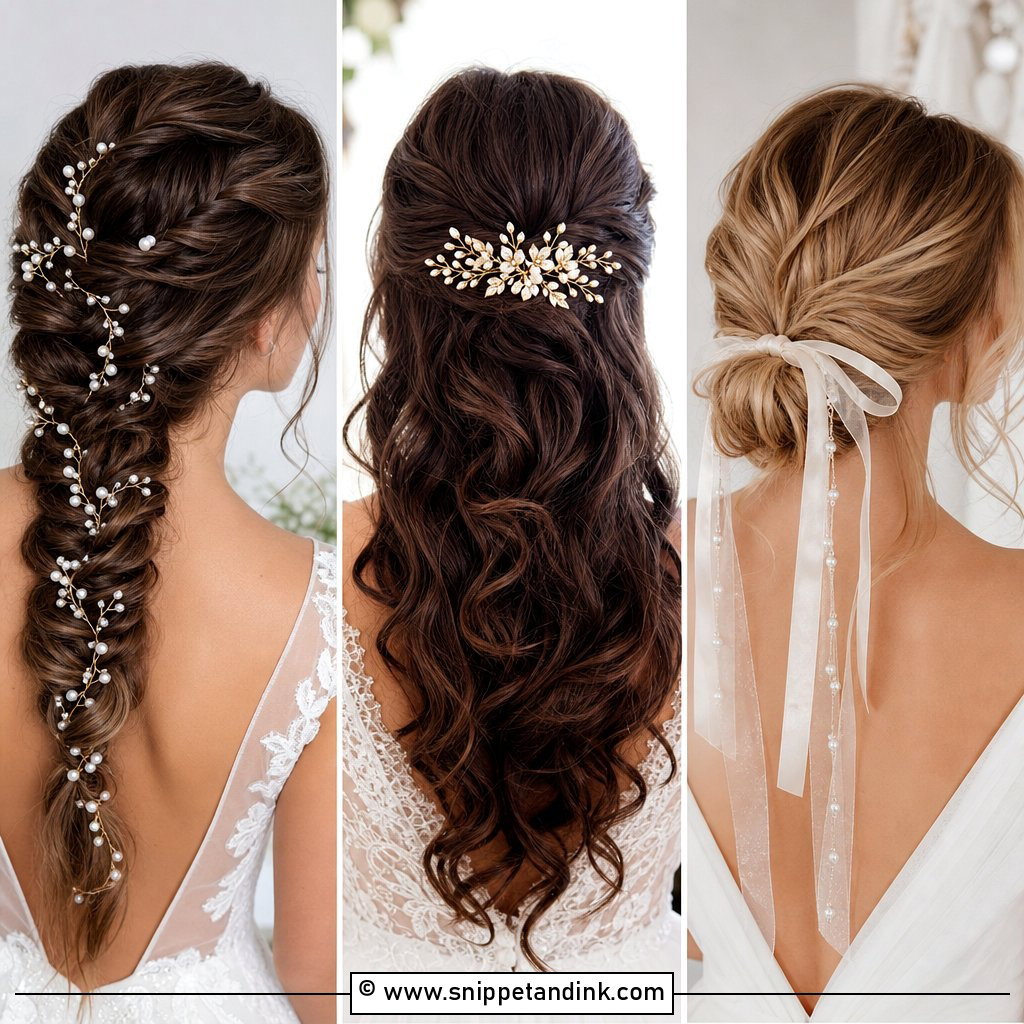
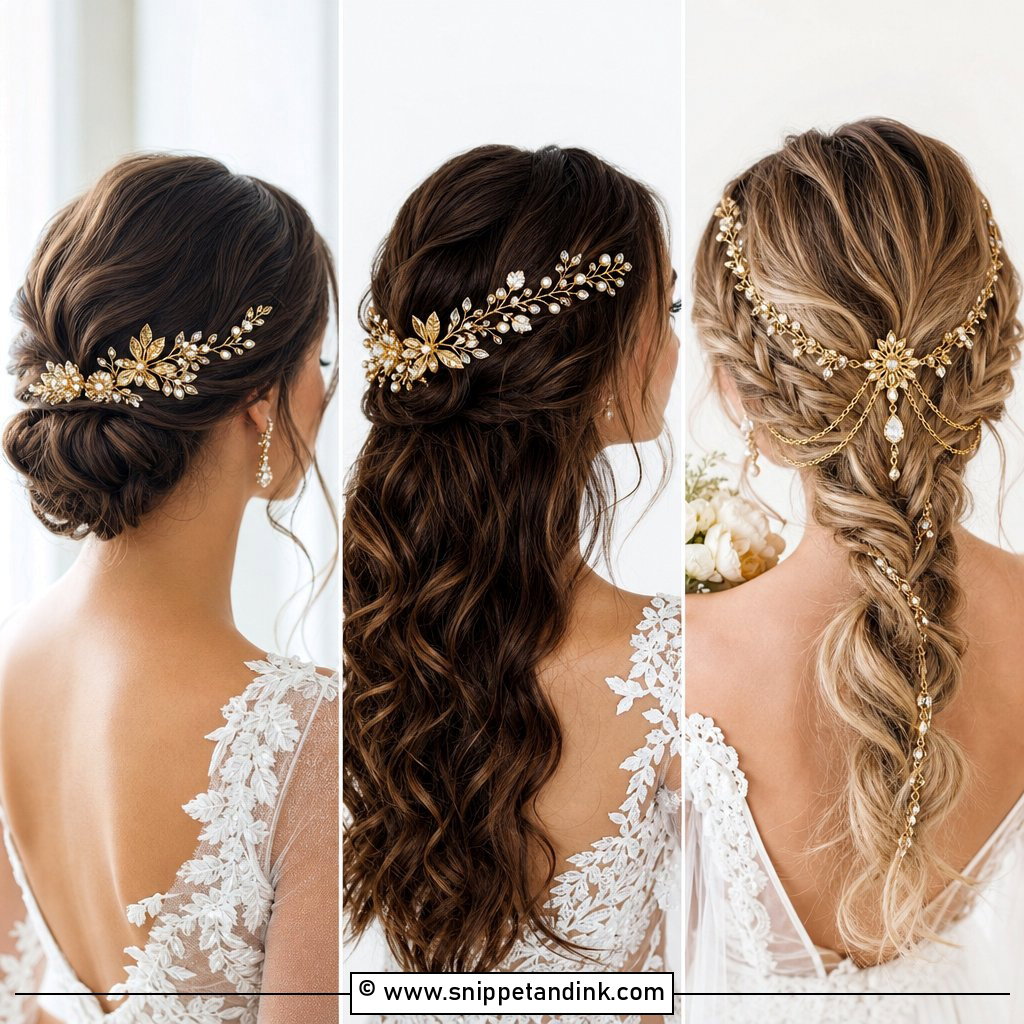
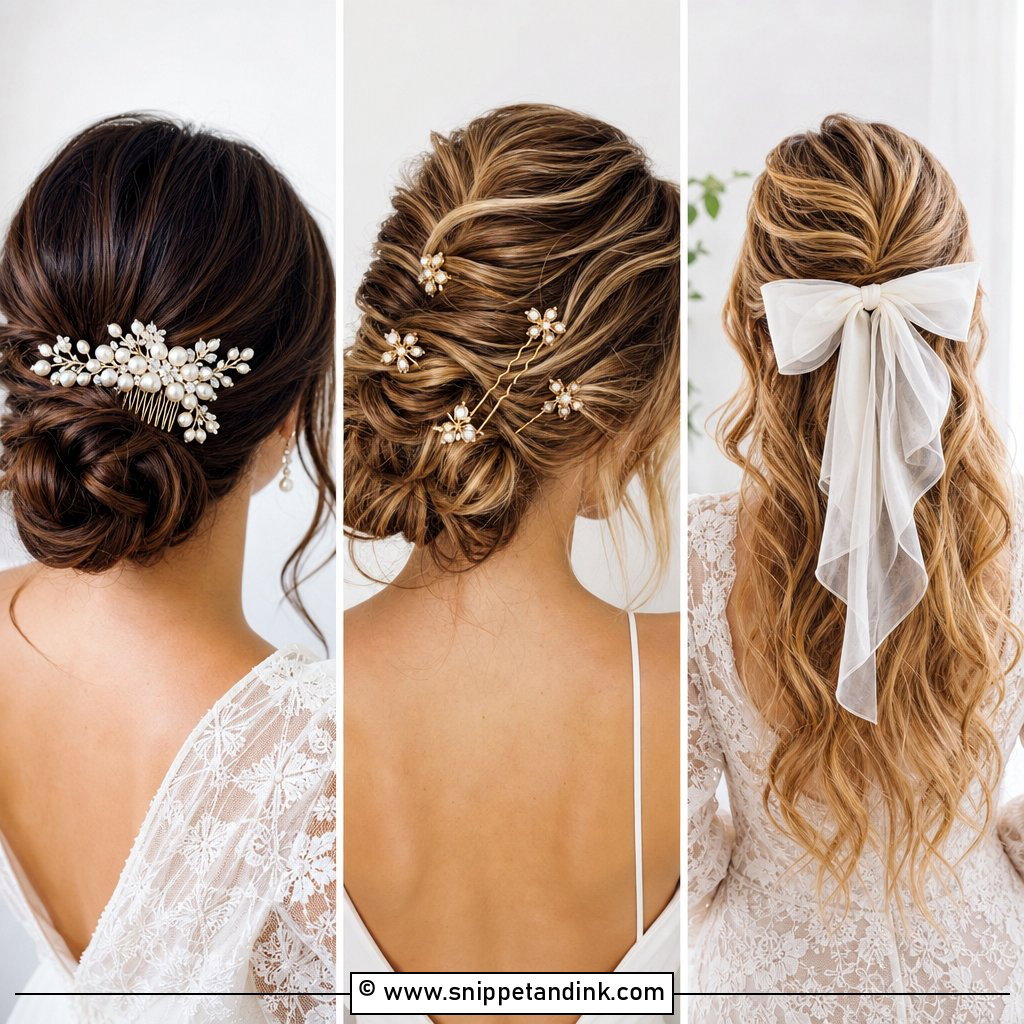
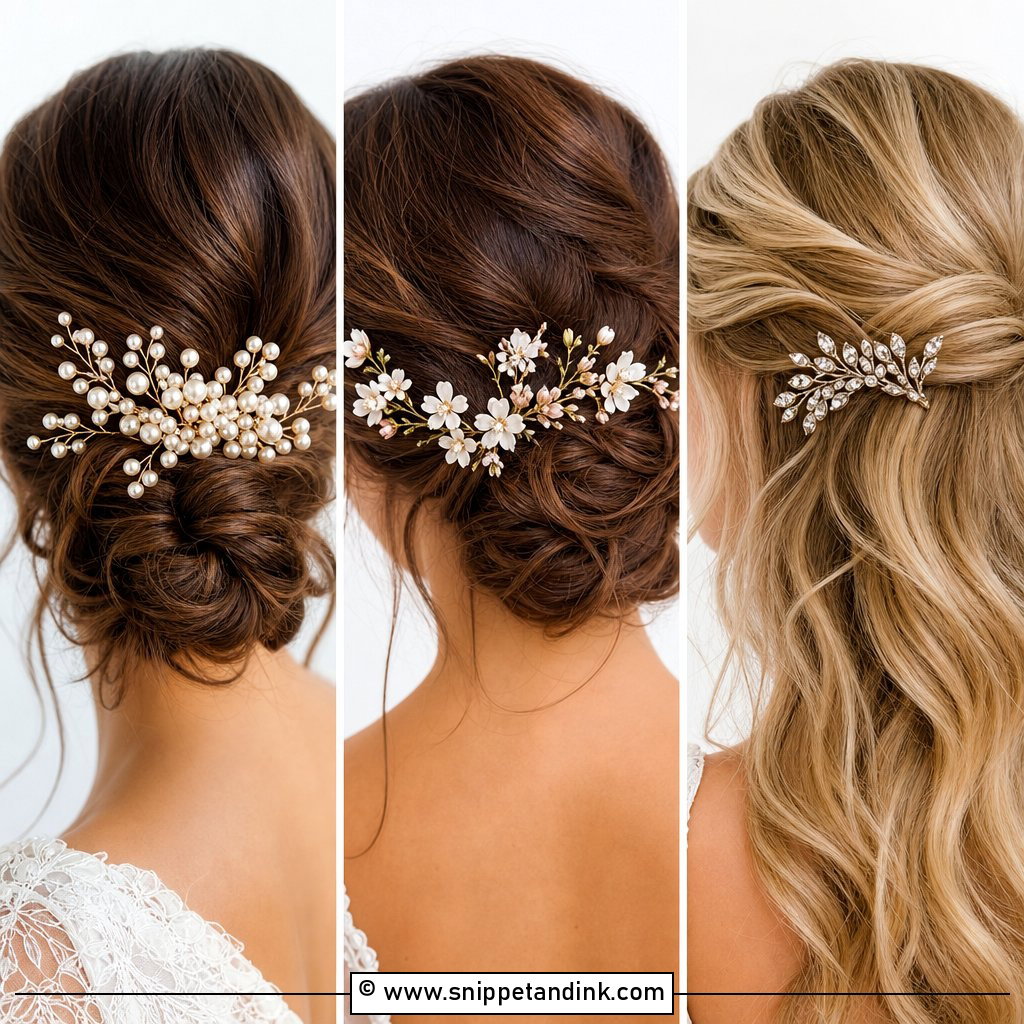
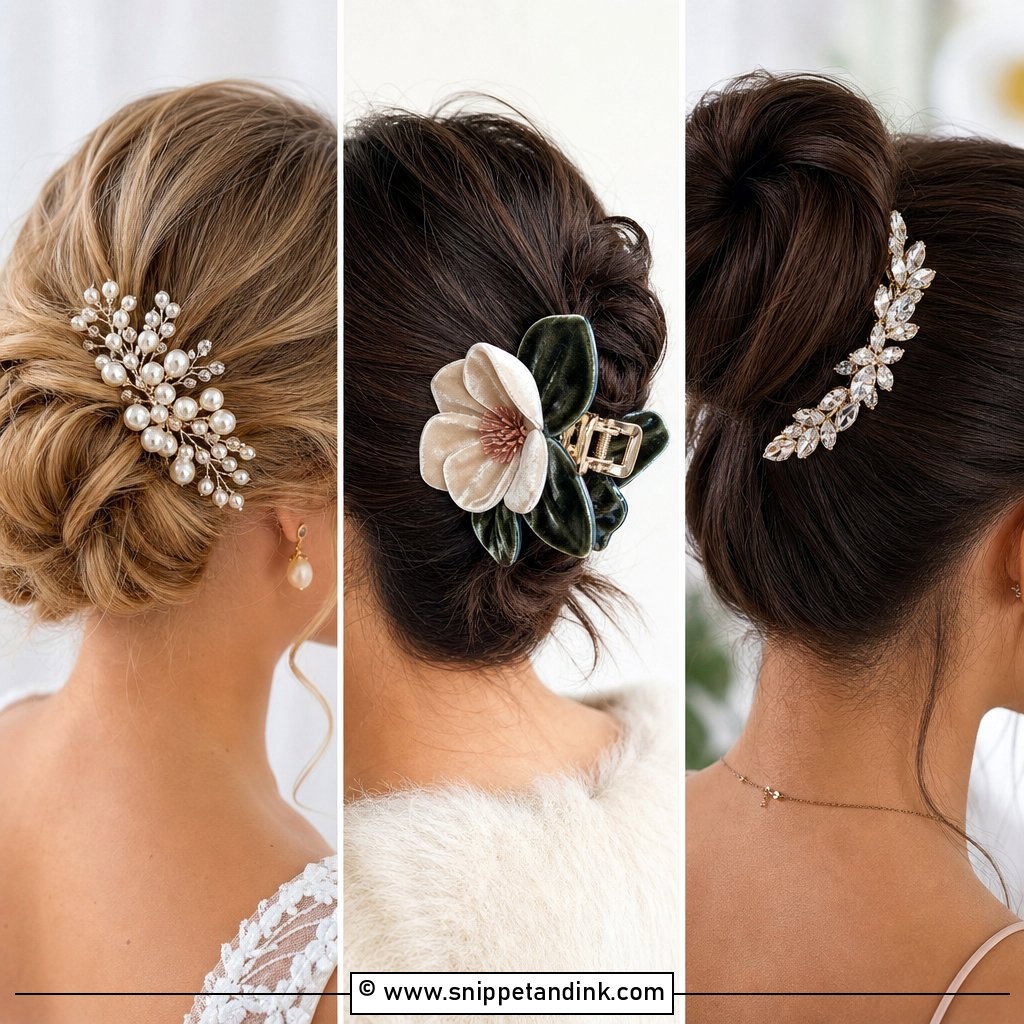
This is the pairing I suggest most often to a first-time vine wearer, because a low bun gives the wire a firm base to bite into. I wrap the pearls around the outer edge of the bun rather than across its centre, so the strand follows the curve instead of sitting flat like a bandage. The pinning happens on the underside, where nobody looks. Pearls read warmer against ivory and champagne than against stark white, so I like to hold a fabric swatch of the dress beside them at the trial. Leave one or two face-framing pieces loose if the bun feels severe on you.
2. Crystal Hair Vine With Half Up Half Down
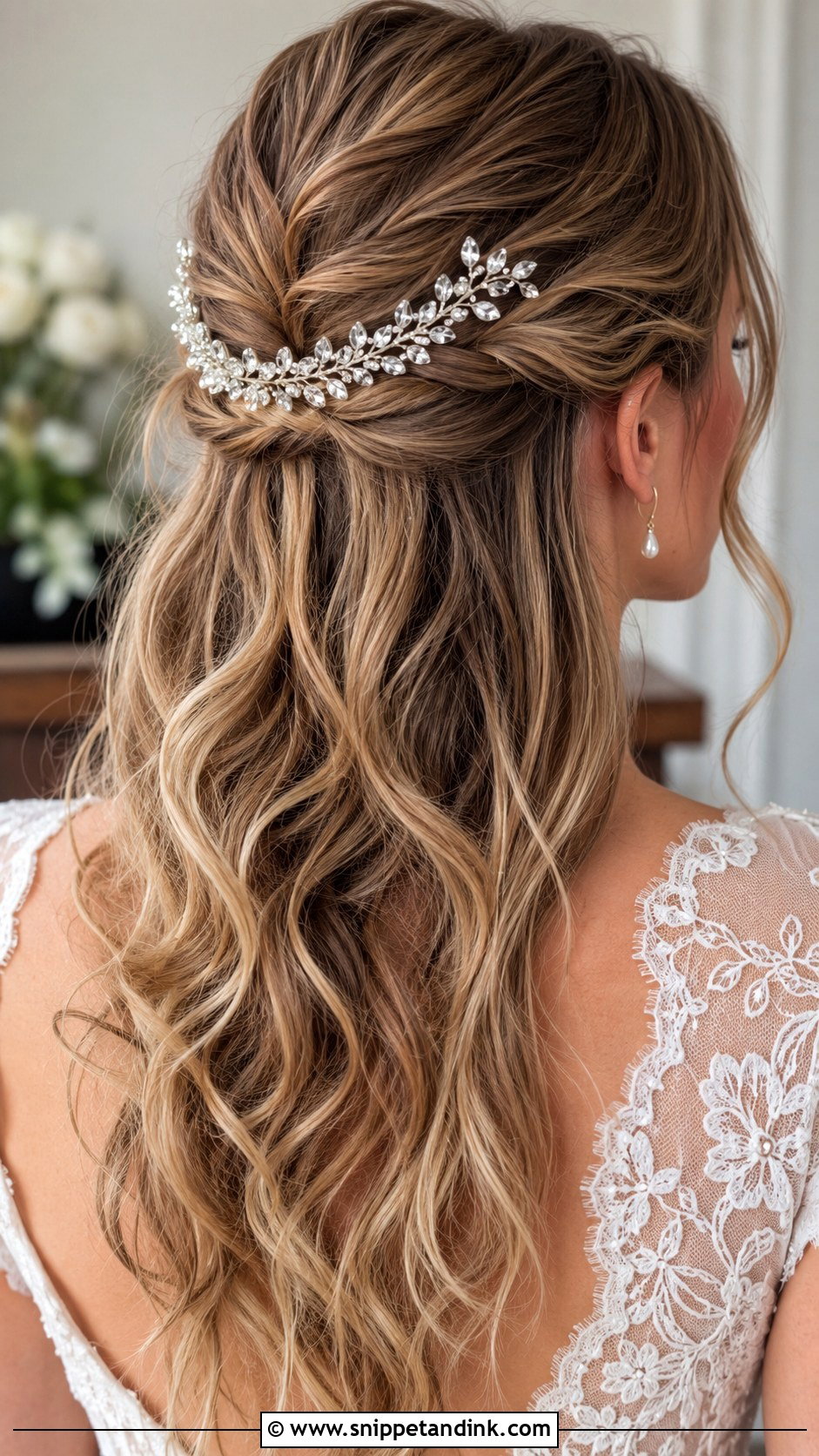
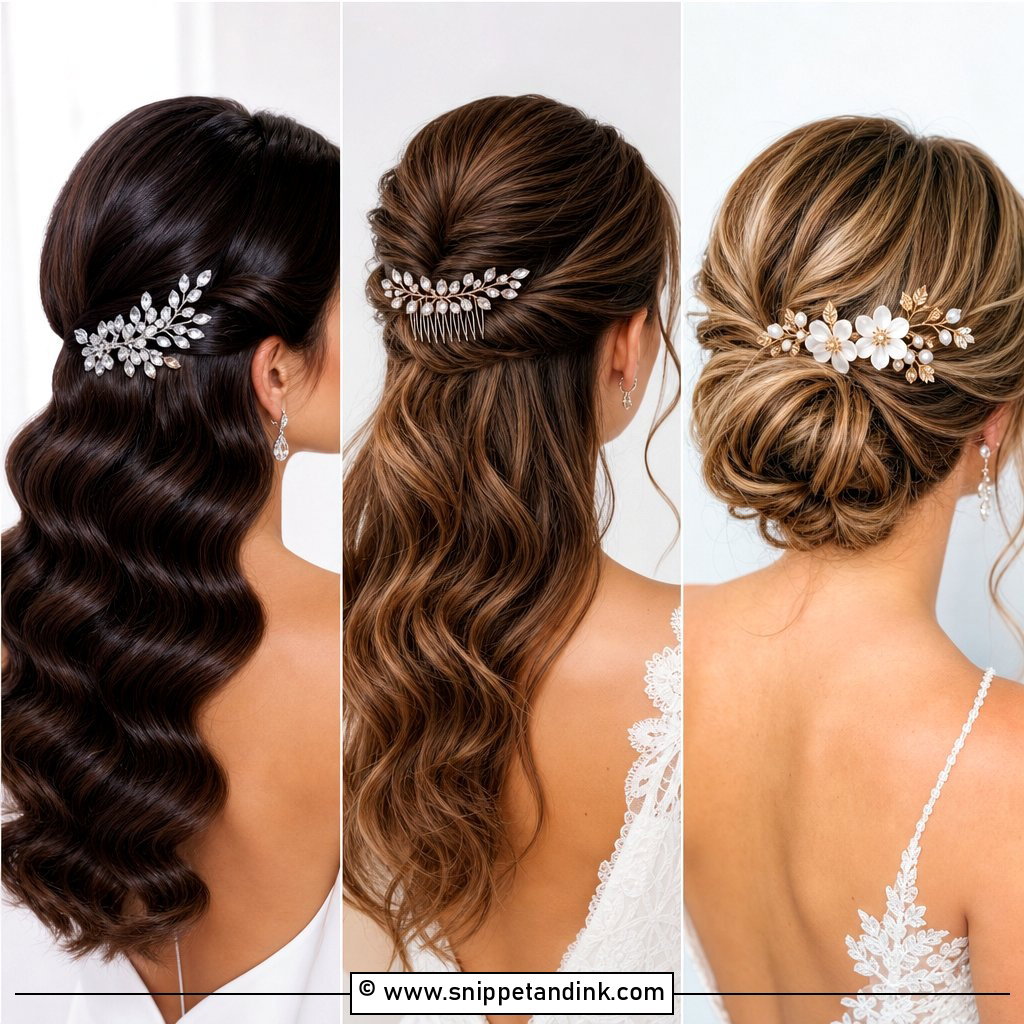
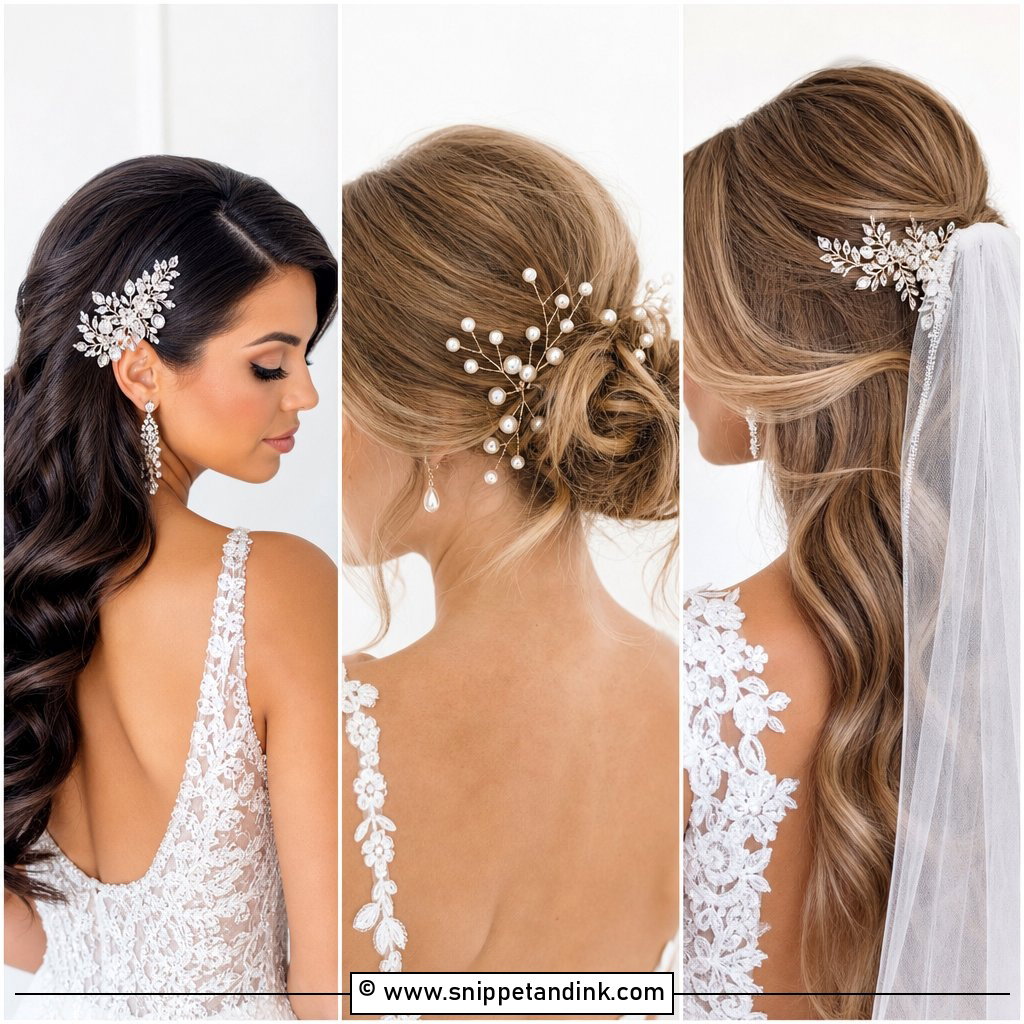
A half-up style is really two jobs: a secure back section and loose lengths that have to keep their curl. The vine rides across the seam where the two meet, almost like a headband set further back. I build that top section on a small hidden ponytail or a pair of crossed pins first, because a vine pinned straight onto loose hair slides down within the hour. Crystals throw more light than pearls under reception lighting, so this one reads bright in evening photos. On very fine hair, twist the pieces you pull back before pinning; the twists give the pins something to grab.
3. Floral Hair Vine With Loose Waves
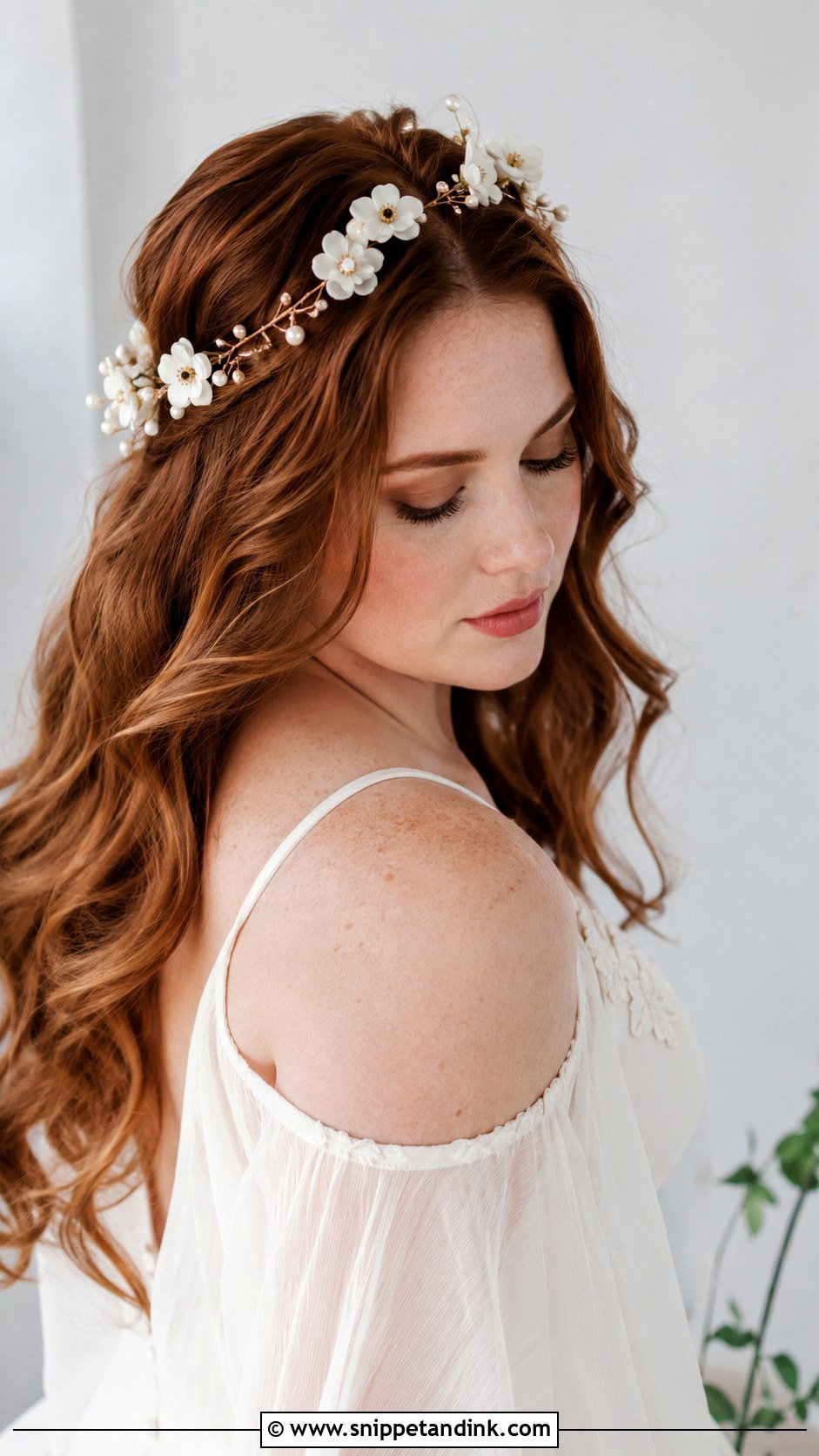
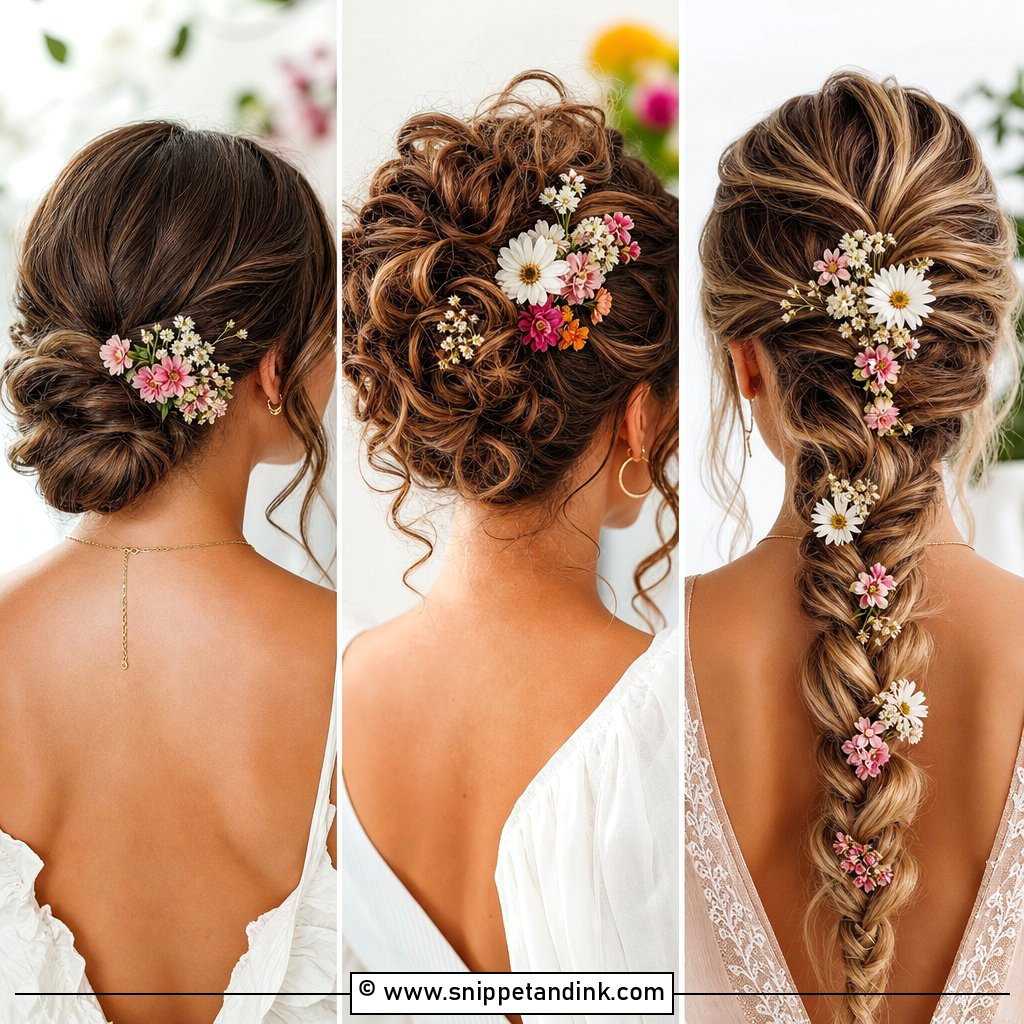
Floral vines are usually the lightest type, which matters on loose waves because there’s no updo underneath to hold them. Ceramic petals are rigid and keep their shape all day. Fabric blooms crush if you lean back against a chair or a shoulder, so I fluff them at every touch-up. I secure the vine just behind the hairline or across the crown, hiding the pins under a small section of hair lifted from above. Waves drop over a long day, especially in humidity, so I set them firmly and brush them out only once they’ve fully cooled. This one sits far better with chiffon than with structured satin.
4. Gold Leaf Hair Vine With Braided Updo
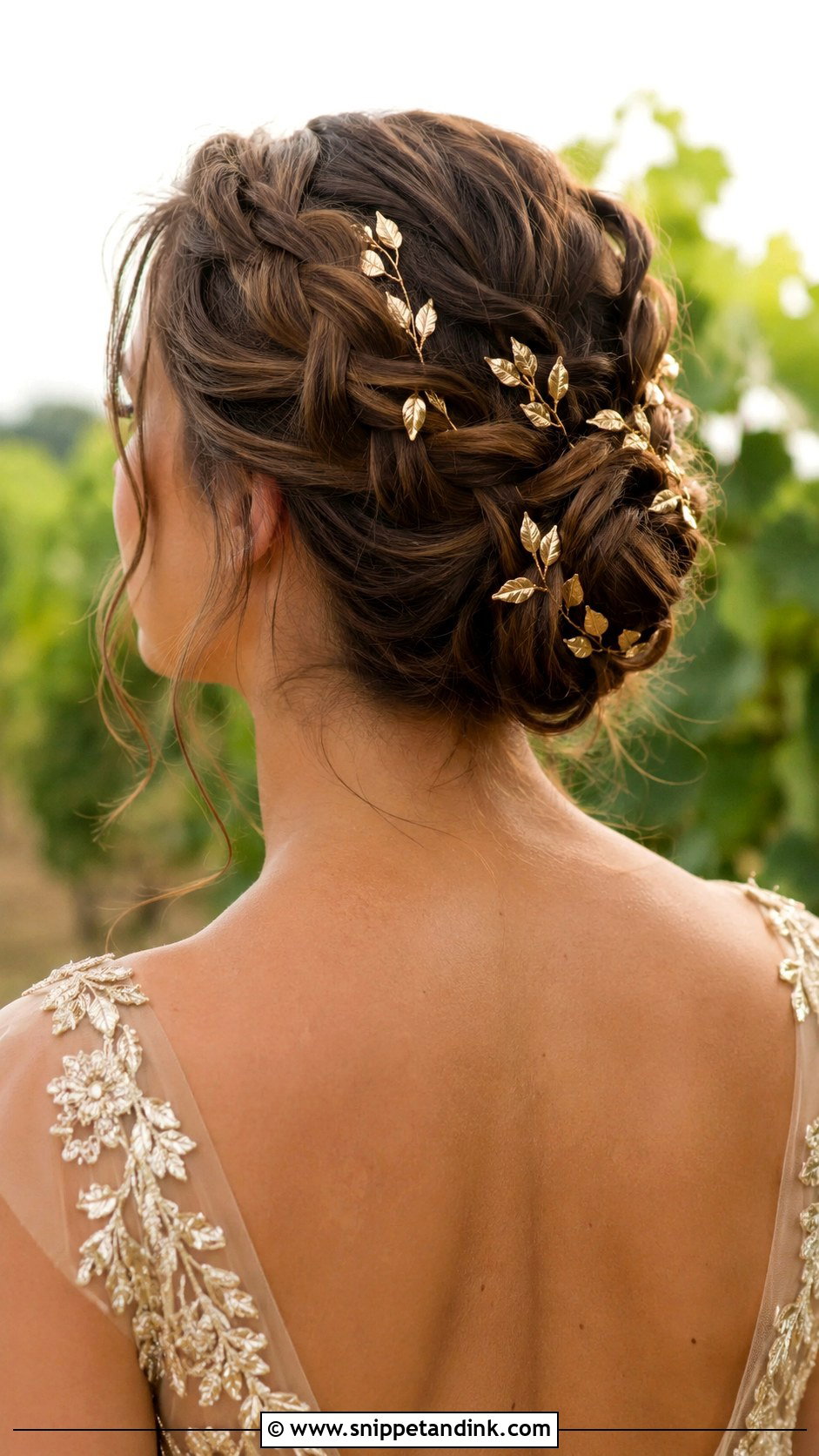
Gold leaf vines carry the most texture of any style here, and a braided updo shows it off best because the leaves tuck between plaits rather than lying on top. Braids also grip wire better than smooth hair, so this is one of the most secure combinations on the list. I’d steer you toward it if your hair is medium to thick; on very fine hair the leaves can look heavier than the braid supporting them. A fishtail, Dutch or rope braid all work, and I thread the vine in while pancaking the braid, not afterwards. The warm metal sits nicely against ivory and blush, and late-afternoon sun catches the leaf edges.
5. Boho Hair Vine With Flower Crown Effect
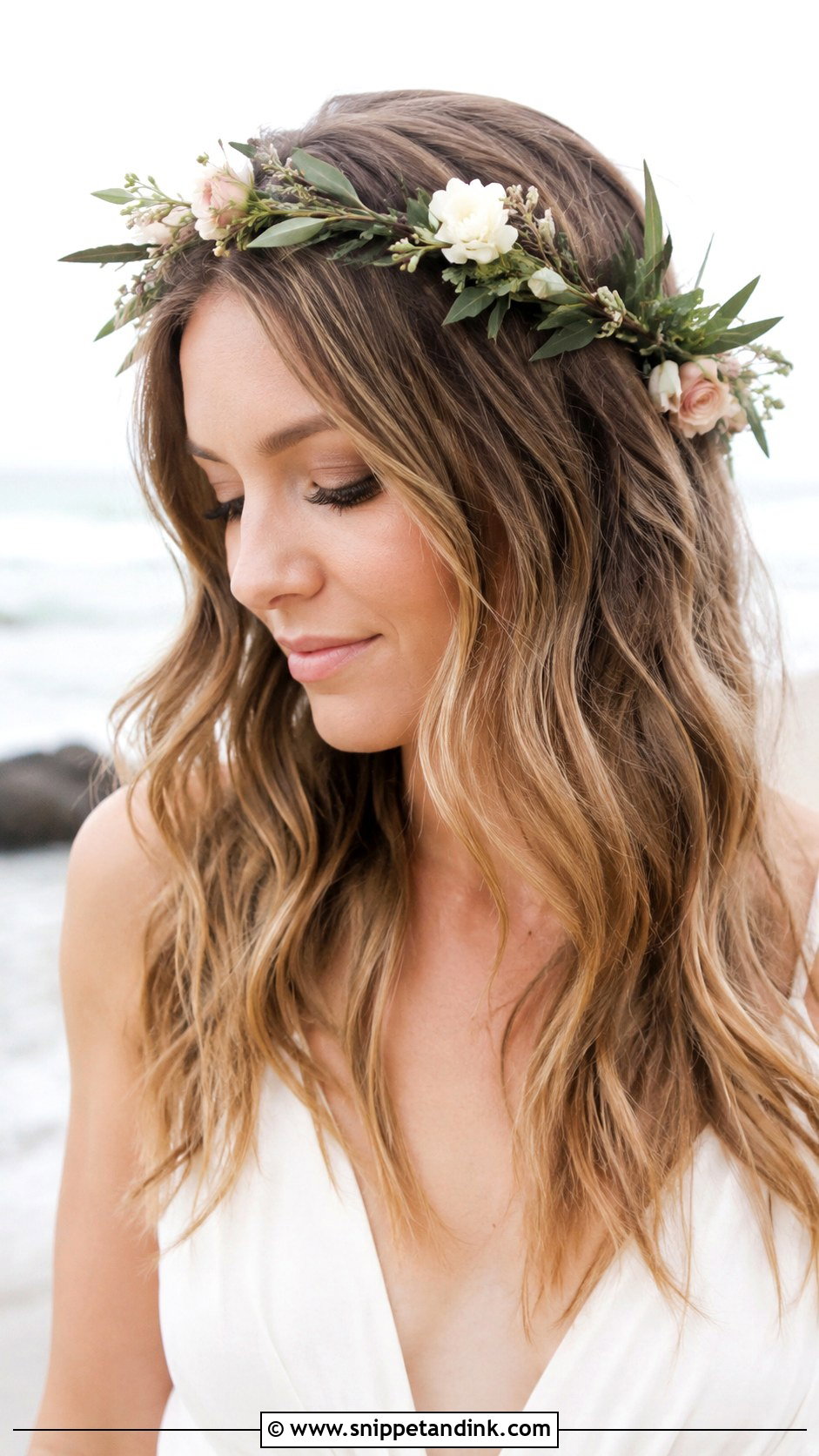
Worn all the way round the head like a halo, a vine takes the place of a flower crown without the bulk or the wilting. I measure the bride’s head before she orders, because a vine that’s too short leaves an obvious gap at the back. The wire sits just behind the hairline at the front and lower at the back, tucked under a section of hair so the ends disappear. Loose waves or a relaxed braid suit it; a sleek style makes the halo look stuck on. Mixing a few pearls into the greenery keeps it romantic and ethereal rather than costume, and it copes with a breezy beach far better than fresh flowers will.
6. Silver Hair Vine With Sleek Chignon
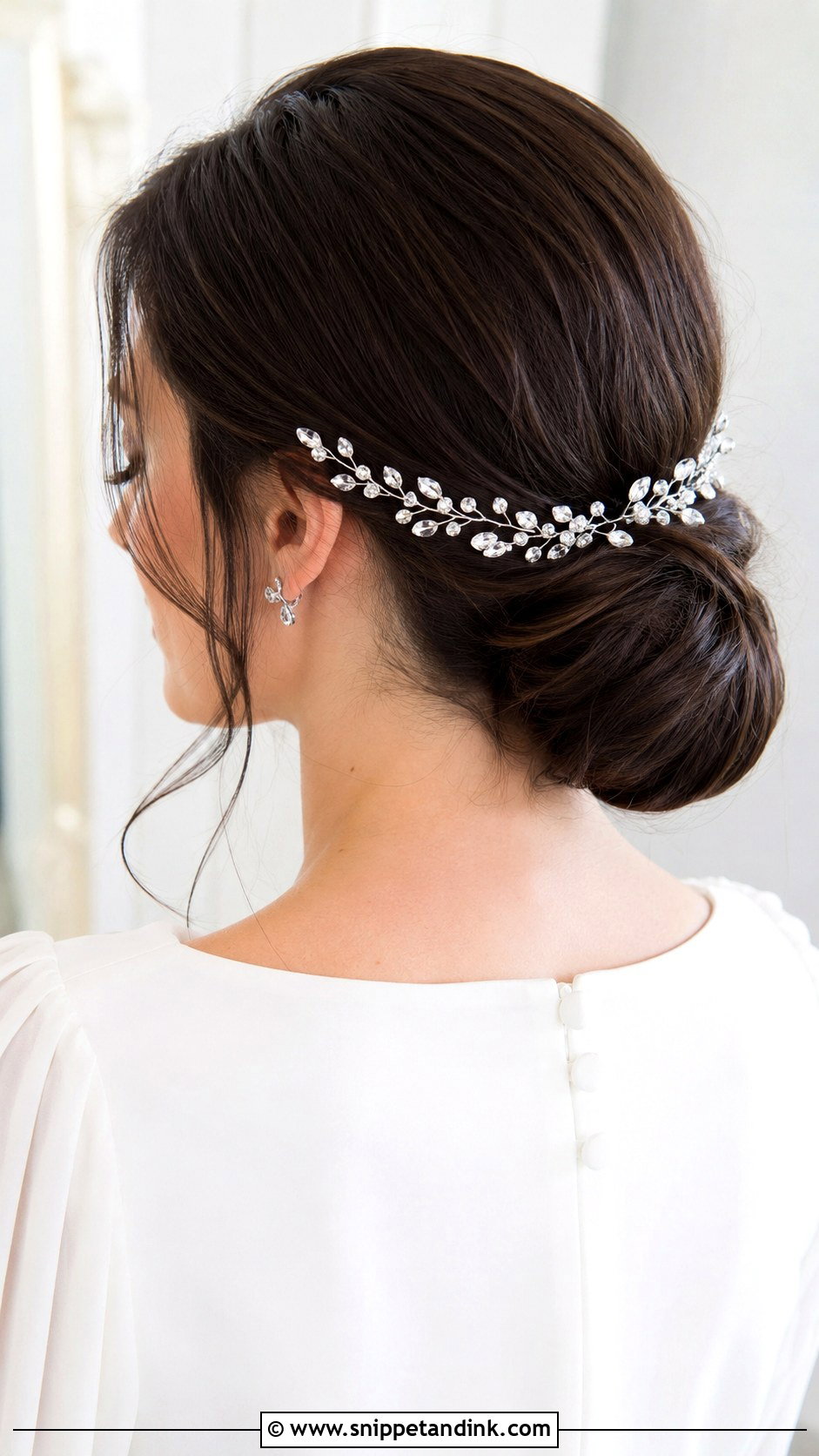
A sleek chignon is the trickiest base for a vine, because polished hair is slippery. I prep with a little texture spray on the inside of the bun before smoothing the outside, which gives the pins grip nobody sees. The vine then goes around the chignon in a single clean line. One wrap, not three, or the sleekness is lost. Silver and rhodium suit a bright white gown and cool undertones, and they sit well beside platinum or white-gold rings. This is my pick for city venues and evening receptions where the dress is doing most of the talking.
7. Rose Gold Hair Vine With Romantic Updo
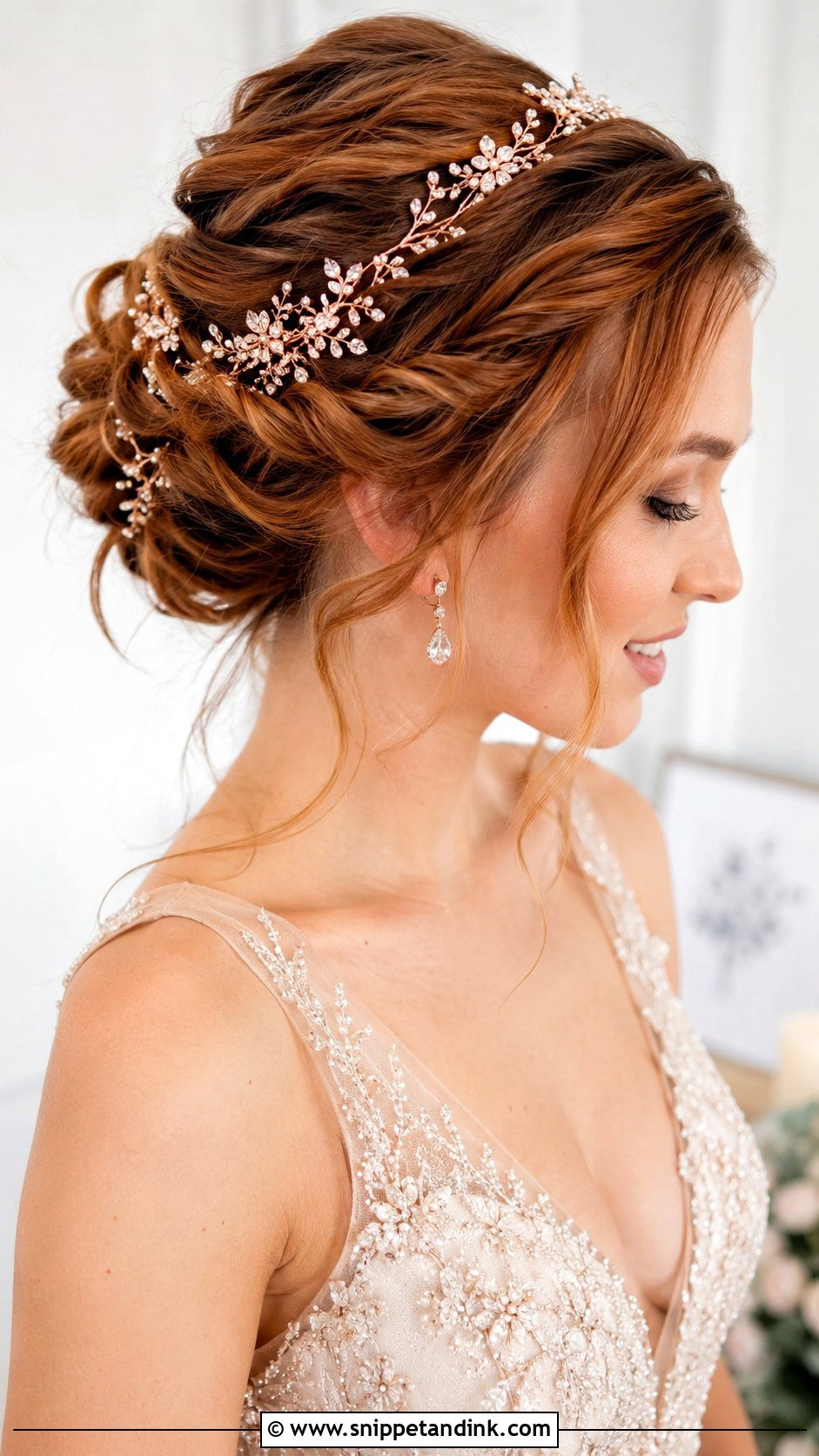
Rose gold sits between gold and silver, so it’s the safest metal when a bride’s jewellery is mixed or her skin tone falls in between. In a romantic updo I weave it through the twisted sections so it disappears and reappears, which looks more natural than one long visible run. Check the plating before you buy: inexpensive rose gold can fade toward brass after a lot of handling, and the trial is where you’ll find out. Keep a few soft tendrils loose at the face. At a spring or summer wedding full of flowers, the blush tone links your hair to the bouquet without copying it.
8. Hair Vine With Fishtail Braid
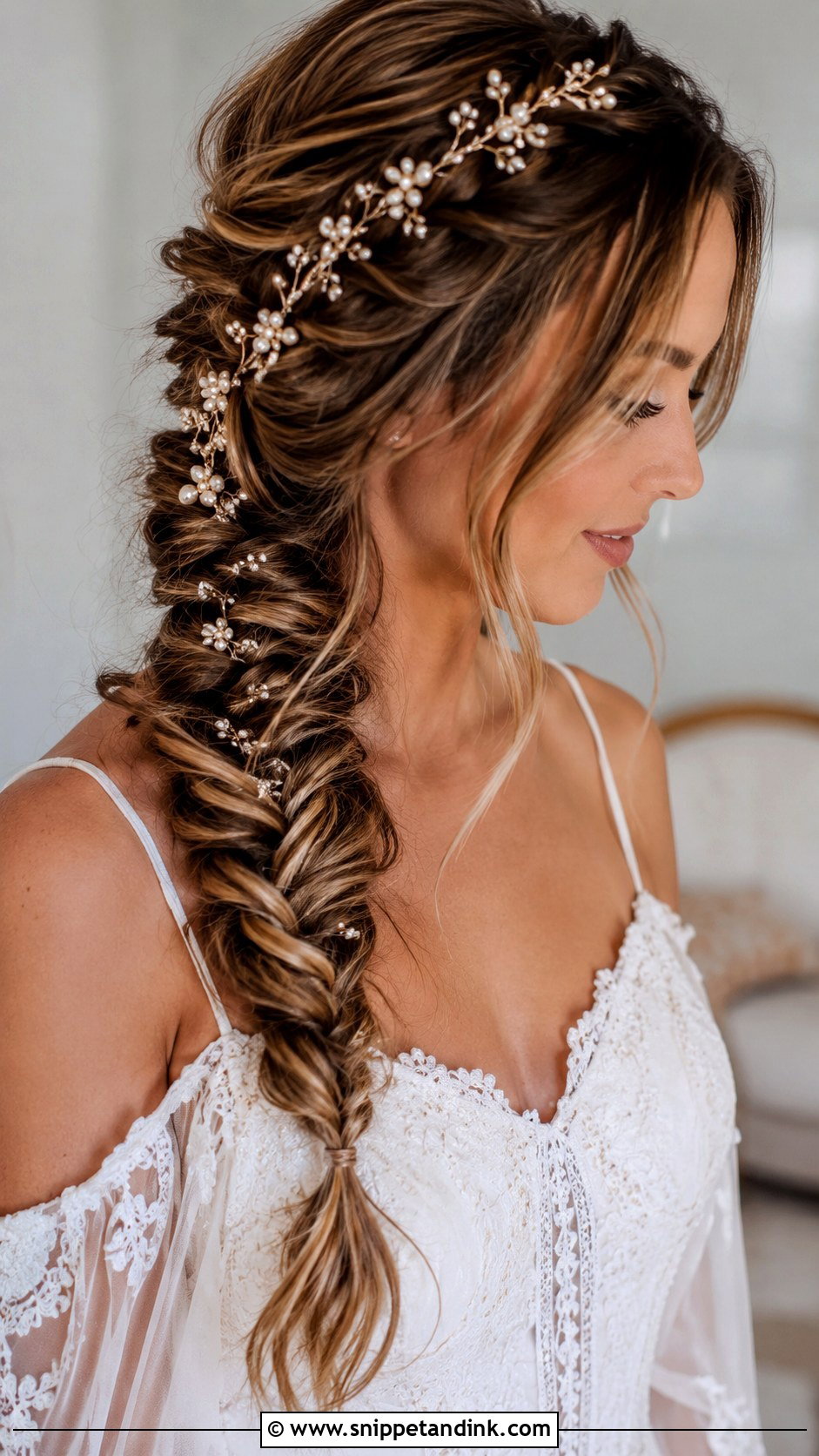
A fishtail has dozens of tiny crossovers, so a vine threads through it almost like a ribbon. I braid first, then feed the wire through the outer loops and pull them gently wider so the stones sit inside the pattern. You need real length for this, roughly to the shoulder blades, or the braid runs out before the vine does. Wear it over one shoulder if your dress has a back worth showing. Expect it to loosen a little by evening. On a fishtail, that softness usually looks better than the morning version.
9. Hair Vine With Hollywood Waves
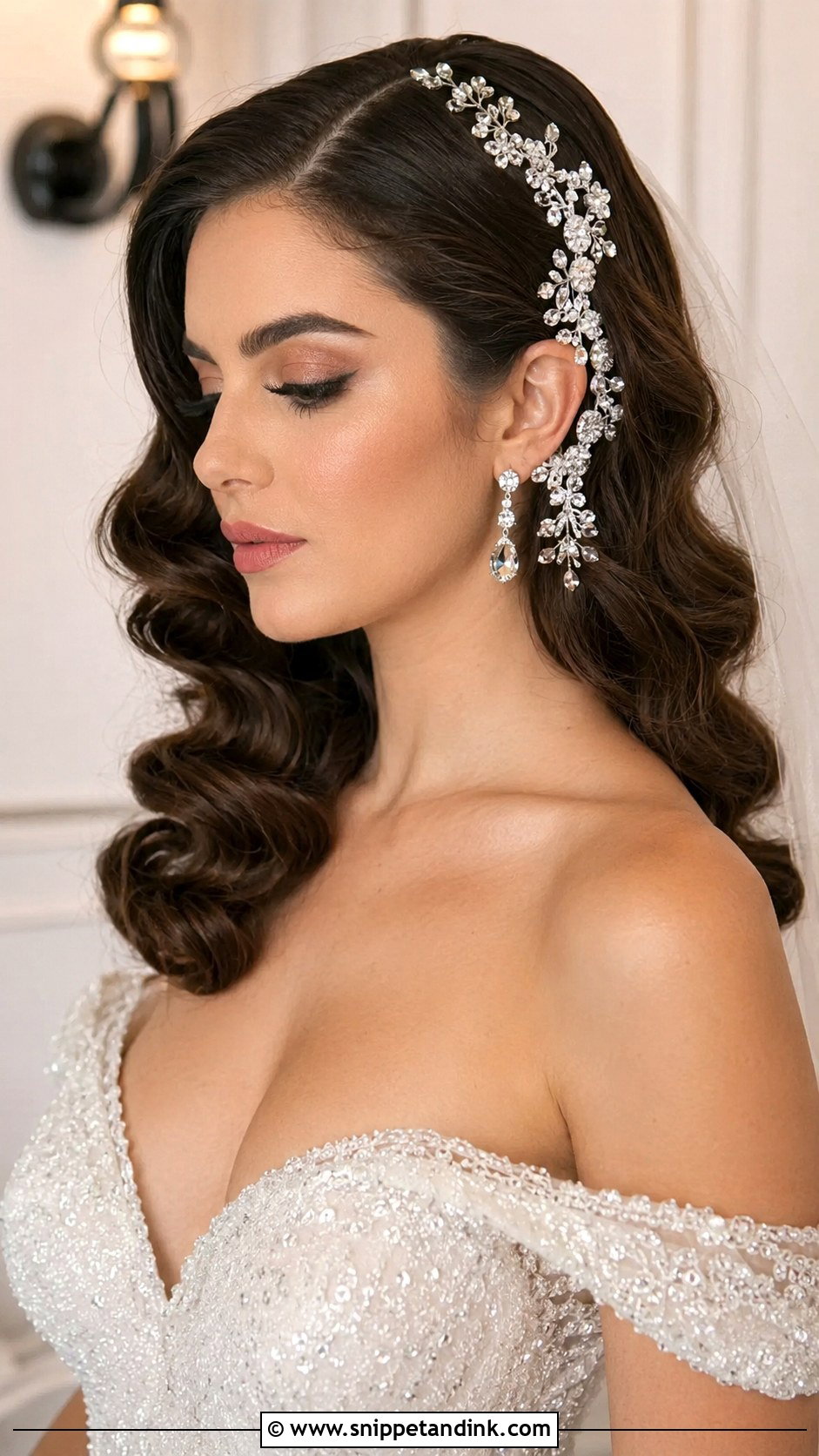
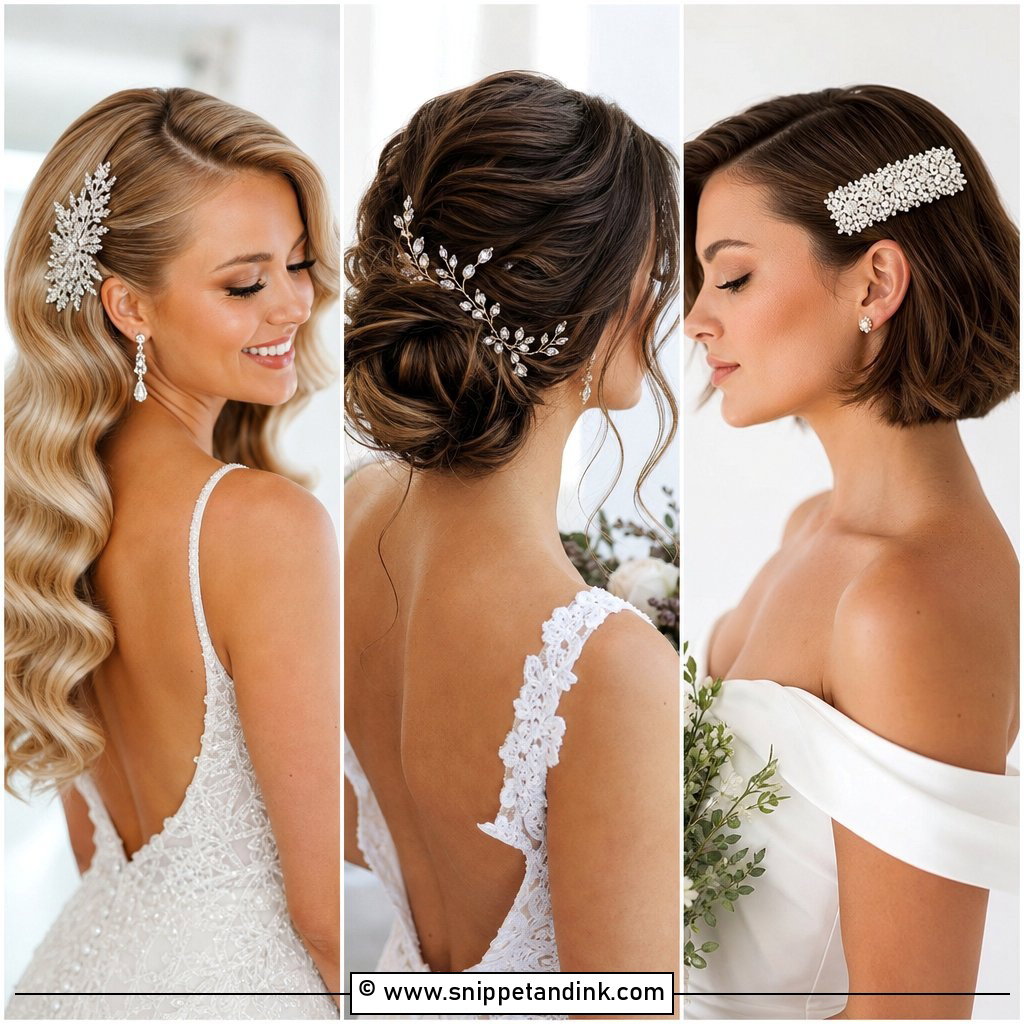
Old Hollywood waves depend on a deep side part and an unbroken S-shape, so I’m careful about where the vine goes. The safest spot is just above the ear on the heavier side, pinned under a wave so the wire follows it instead of cutting across. Brush out the set before placing anything, because once a vine is in, you can’t brush through it. Crystal suits this far better than florals, since the whole look is about shine and structure. Strapless and off-shoulder necklines show the full sweep of the waves, which is where this style pays off.
10. Delicate Hair Vine With Side Swept Hair
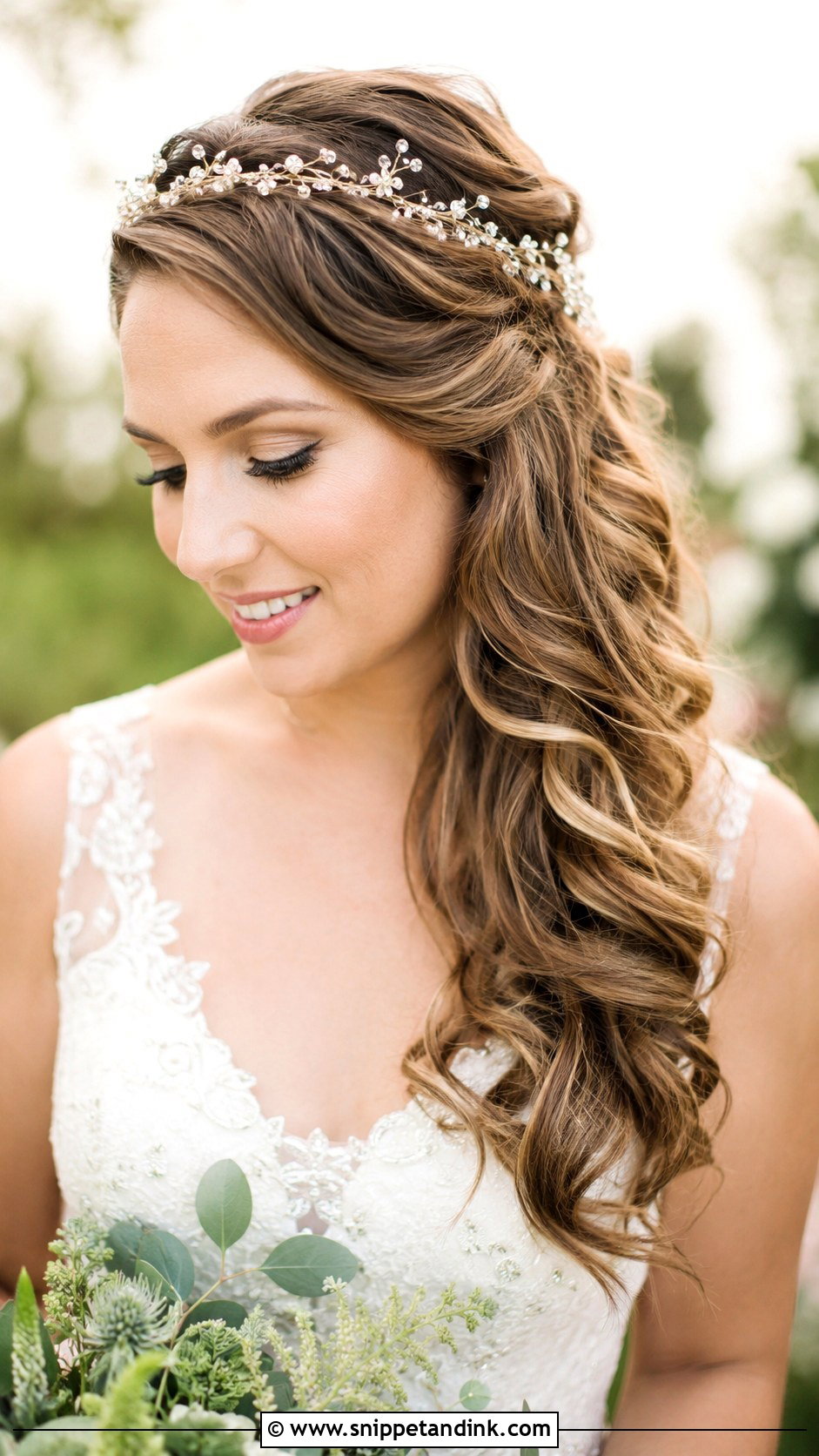
Side-swept hair gathered over one shoulder and accented with a delicate hair vine asks very little of the stylist, which is why it suits a bride getting ready in a small room or doing her own hair. The real work is hidden: crossed pins behind the opposite ear holding the weight of all that hair. Skip them and the style creeps back to centre by the speeches. I lay the vine along the part on the side that faces your partner during the ceremony, since that’s the side guests photograph. Soft curls hold the sweep better than straight hair.
11. Hair Vine With Twisted Low Ponytail
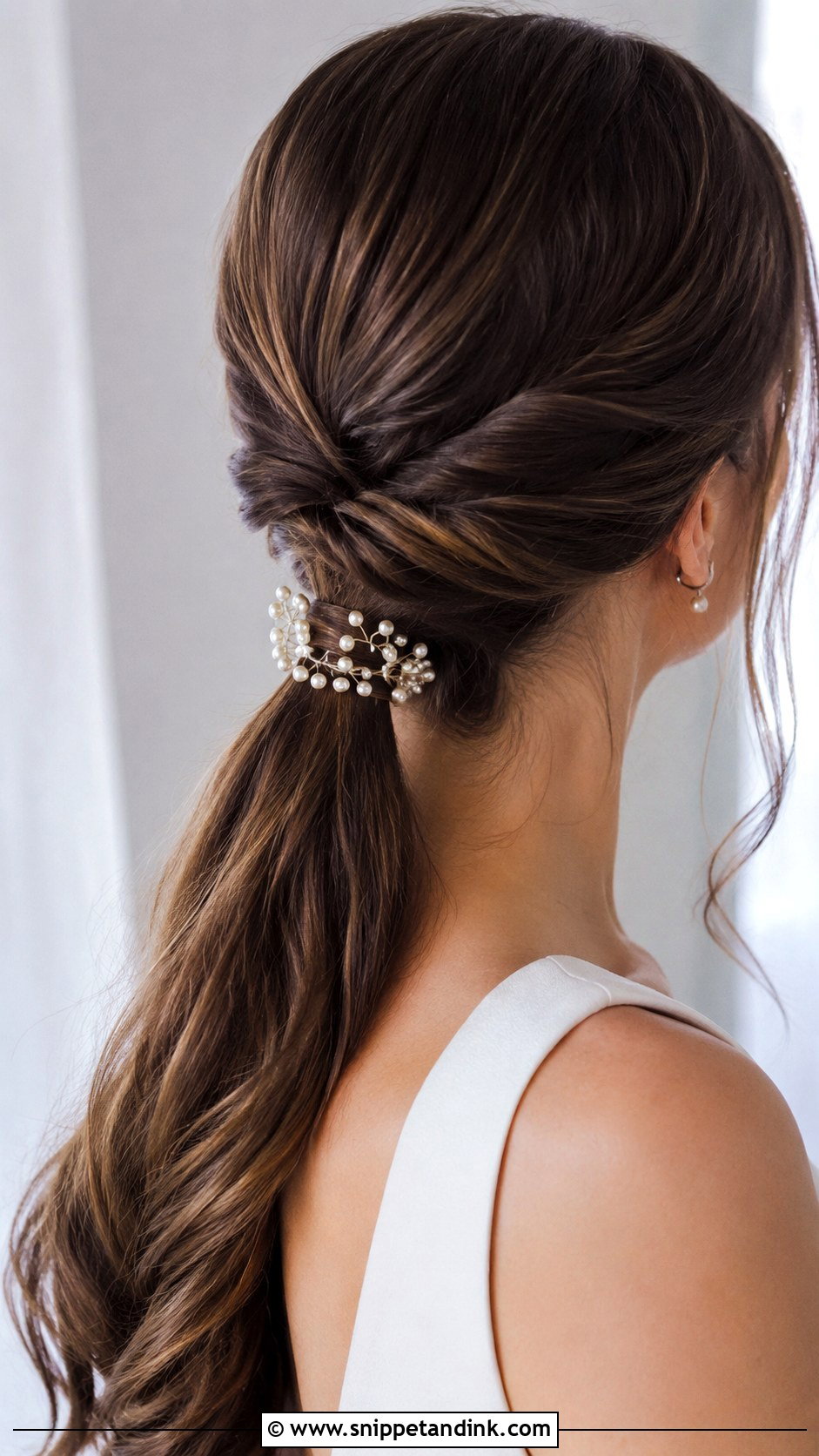
Coiling a vine around the base of a low ponytail is the neatest way I know to hide the elastic, and it’s quicker than wrapping a section of hair. I secure the ponytail with a clear elastic, twist two sections around it, then coil the vine over the top and pin each end underneath. Ponytails are comfortable for a long day and handle dancing better than most loose styles. They’re less forgiving on thin lengths, where the tail can look sparse; a couple of clip-in wefts fix that if you’re open to them.
12. Hair Vine With Messy Bun
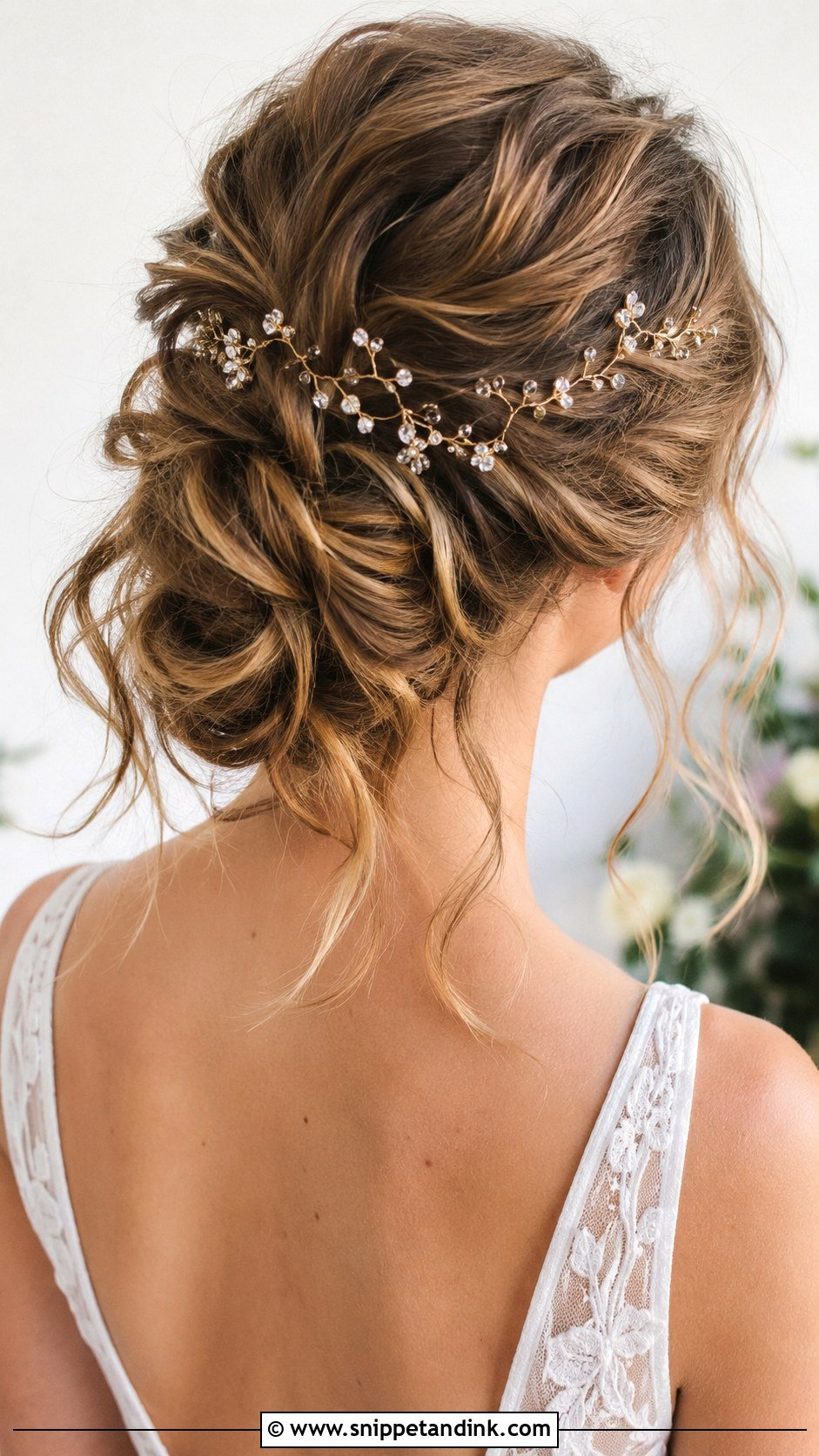
A messy bun only looks undone. Underneath, it’s pinned as firmly as a sleek one, because loose texture plus a wire accessory is a recipe for drooping. I build the bun, pin it, pull pieces out, and only then weave the vine through the textured top layer. Fine vines suit this best; a chunky crystal one fights the casual shape. The upside is that a slipped piece goes unnoticed, which makes this a sensible style for outdoor ceremonies and long receptions.
13. Hair Vine With Boho Braided Crown
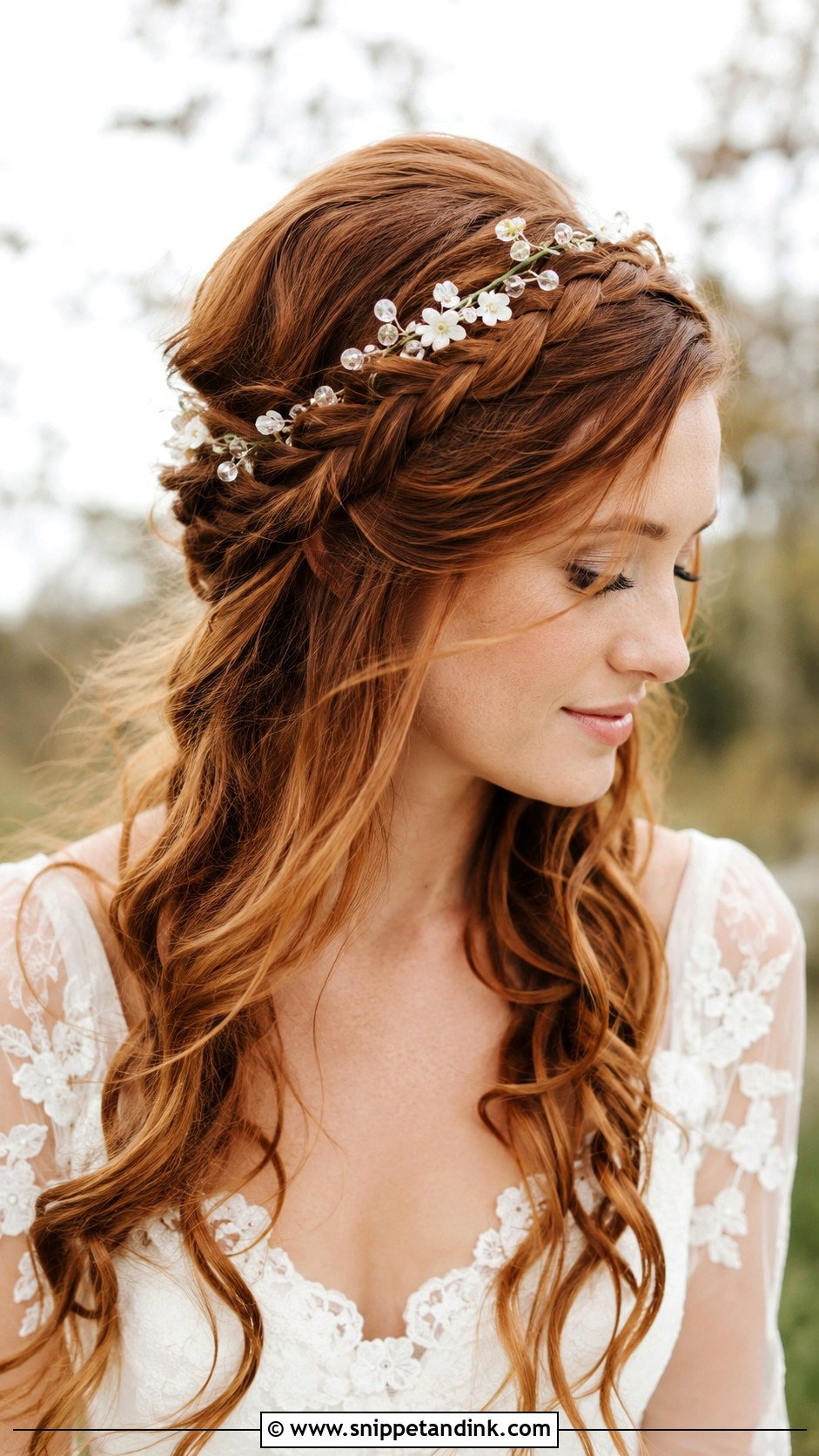
A braided crown is two plaits pinned over the top of the head, and the vine follows the line where they meet. The braids form a natural halo, so the vine doesn’t need to do any framing; it simply adds light. I tuck the wire into the braid’s outer edge so it stays put when you’re hugging people. On long, thick hair this takes noticeably longer than most styles here, so allow extra chair time on the morning. It suits woodland and garden settings, with loose lengths underneath or everything gathered.
14. Hair Vine With Curly Hair
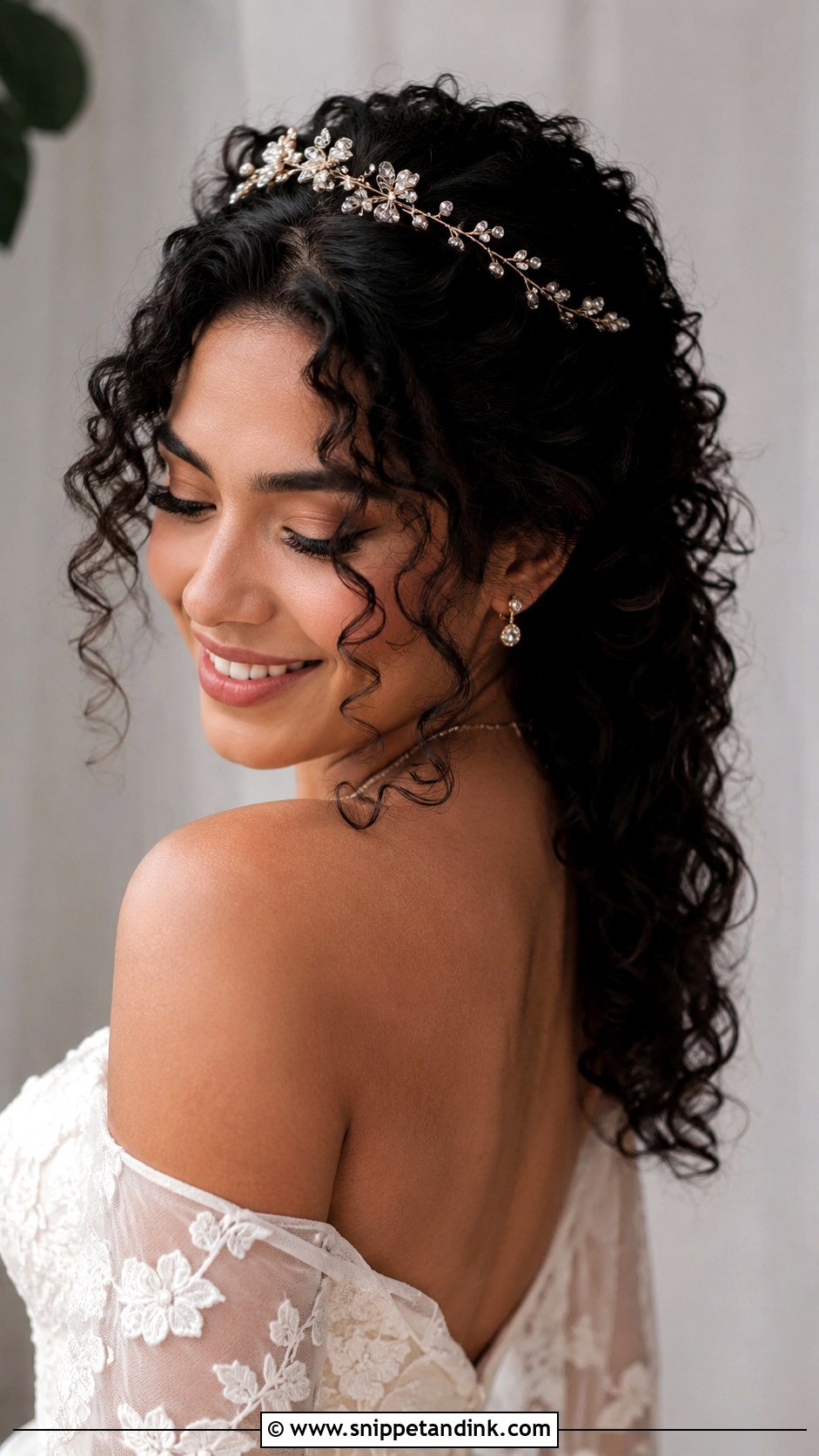
Curls grip a vine better than any other texture, so curly brides often have the easiest time keeping one in place. The mistake I see is brushing curls out to make room for the accessory, which flattens the pattern and invites frizz. I set the curls with the bride’s usual leave-in or gel, let them dry completely, then slide the wire between coils and pin at each end. Tight curls hide fine wire and small beads, so choose a vine with larger pearls or stones that will still show. Down, half up or gathered, it keeps your own texture at the centre of the look.
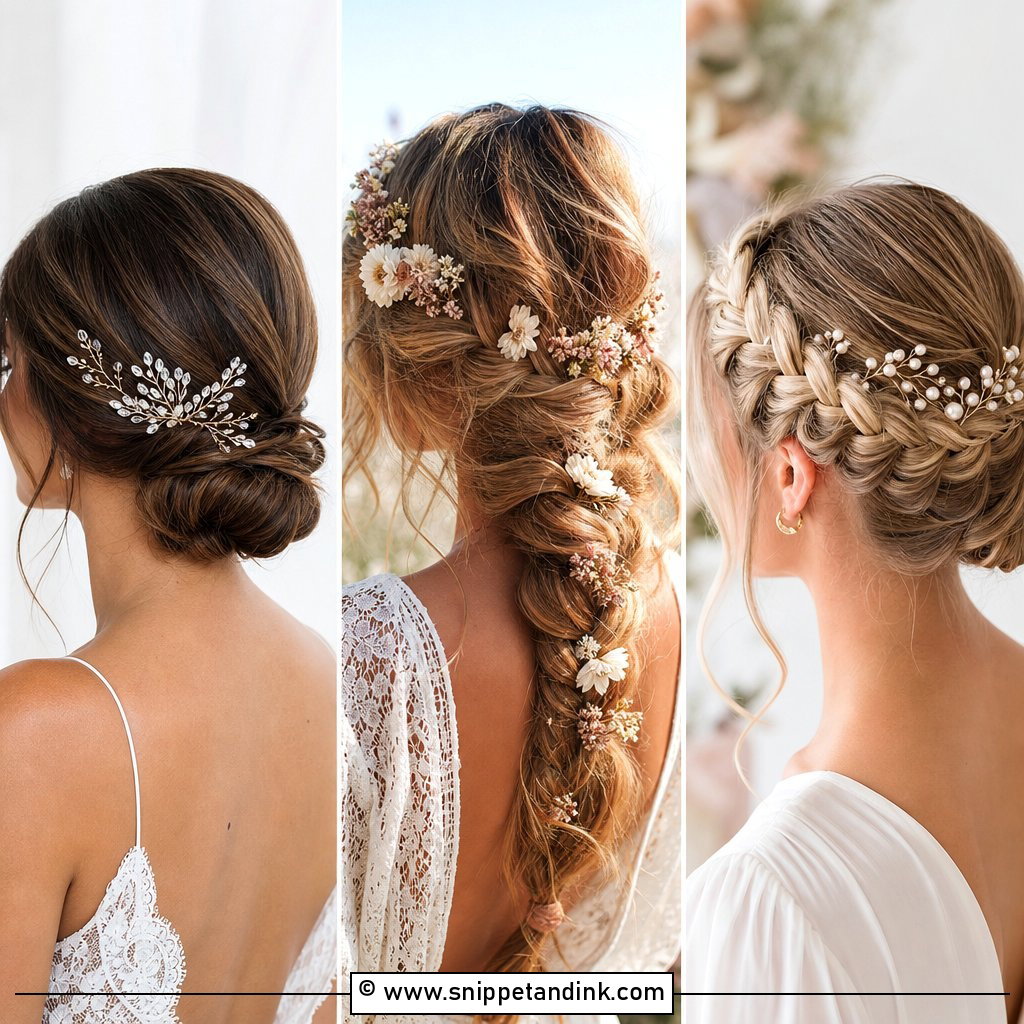
15. Hair Vine With Sleek Straight Hair
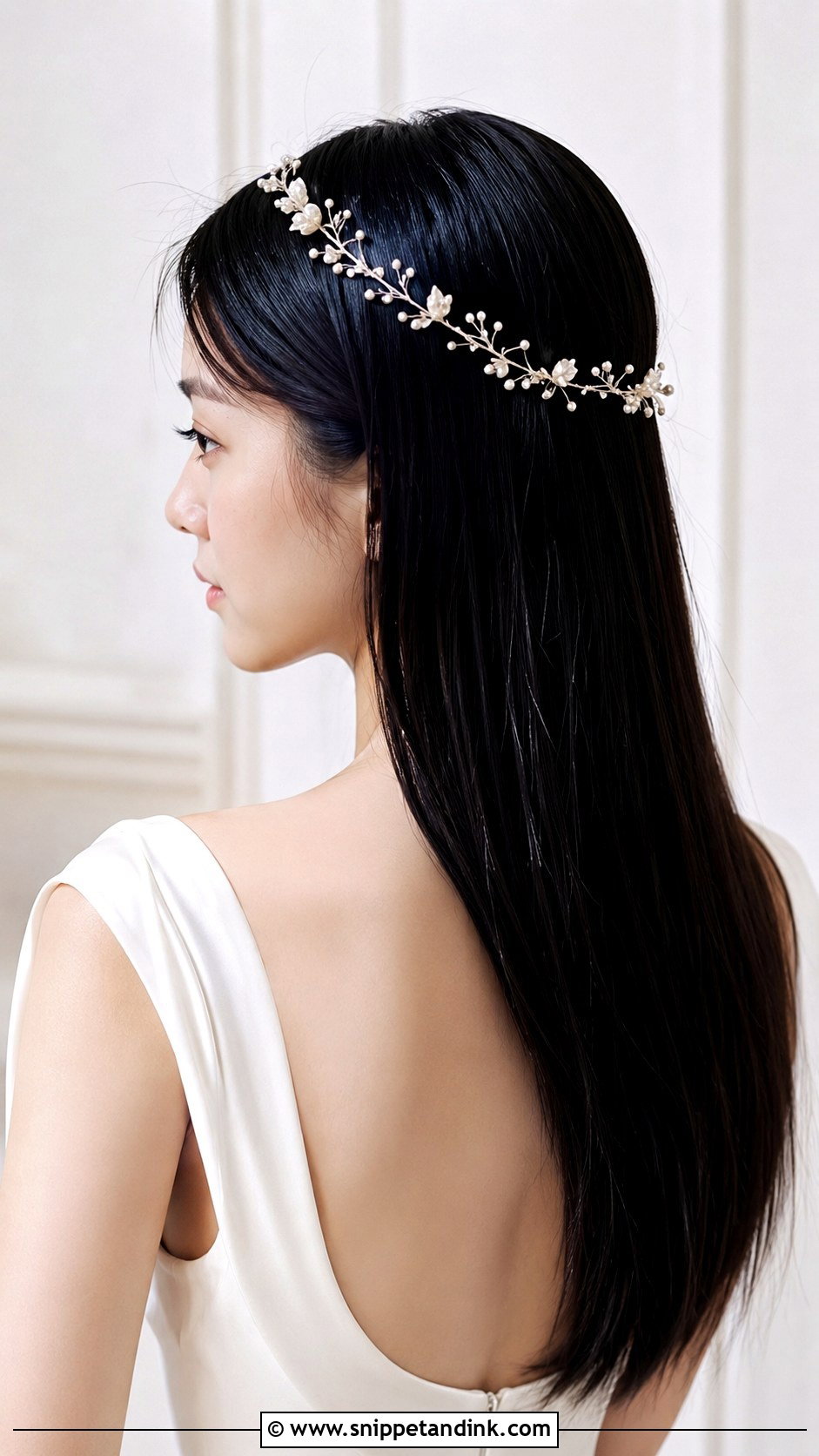
Straight, glossy hair leaves nowhere to hide a pin, so placement has to be exact. I part cleanly, lay the vine across the crown, and secure it with pins matched to the hair colour, slid in against the direction of the wire so they lock. A light touch of dry shampoo at the roots underneath helps everything grip. Keep the vine fine. On smooth hair every bead is visible, and a thick one looks heavy. Paired with a minimal gown, it reads quietly modern.
16. Hair Vine With Vintage Updo
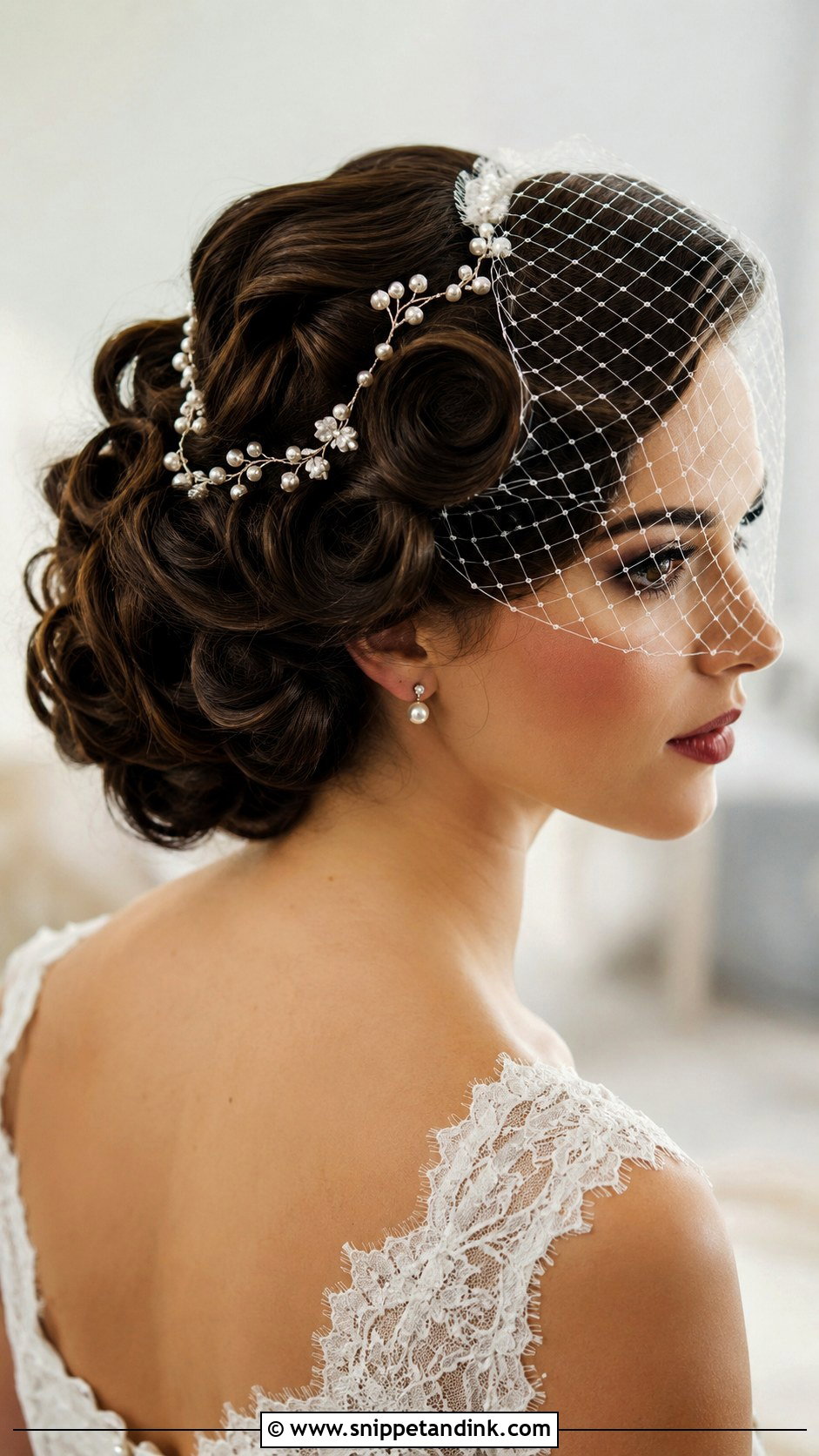
A structured vintage updo is built from pin curls or rolled sections, and the vine looks best tracing one roll rather than crossing several. I set the curls with heated rollers in the morning and let them cool fully, because a vintage shape needs a strong set to keep its edges. Pearls feel right for the era; heavy crystal can look too modern. If you’re adding a birdcage veil, place the vine on the opposite side from the veil comb so the two don’t crowd each other. Historic venues and formal evening weddings are where this one belongs.
17. Hair Vine With Short Hair
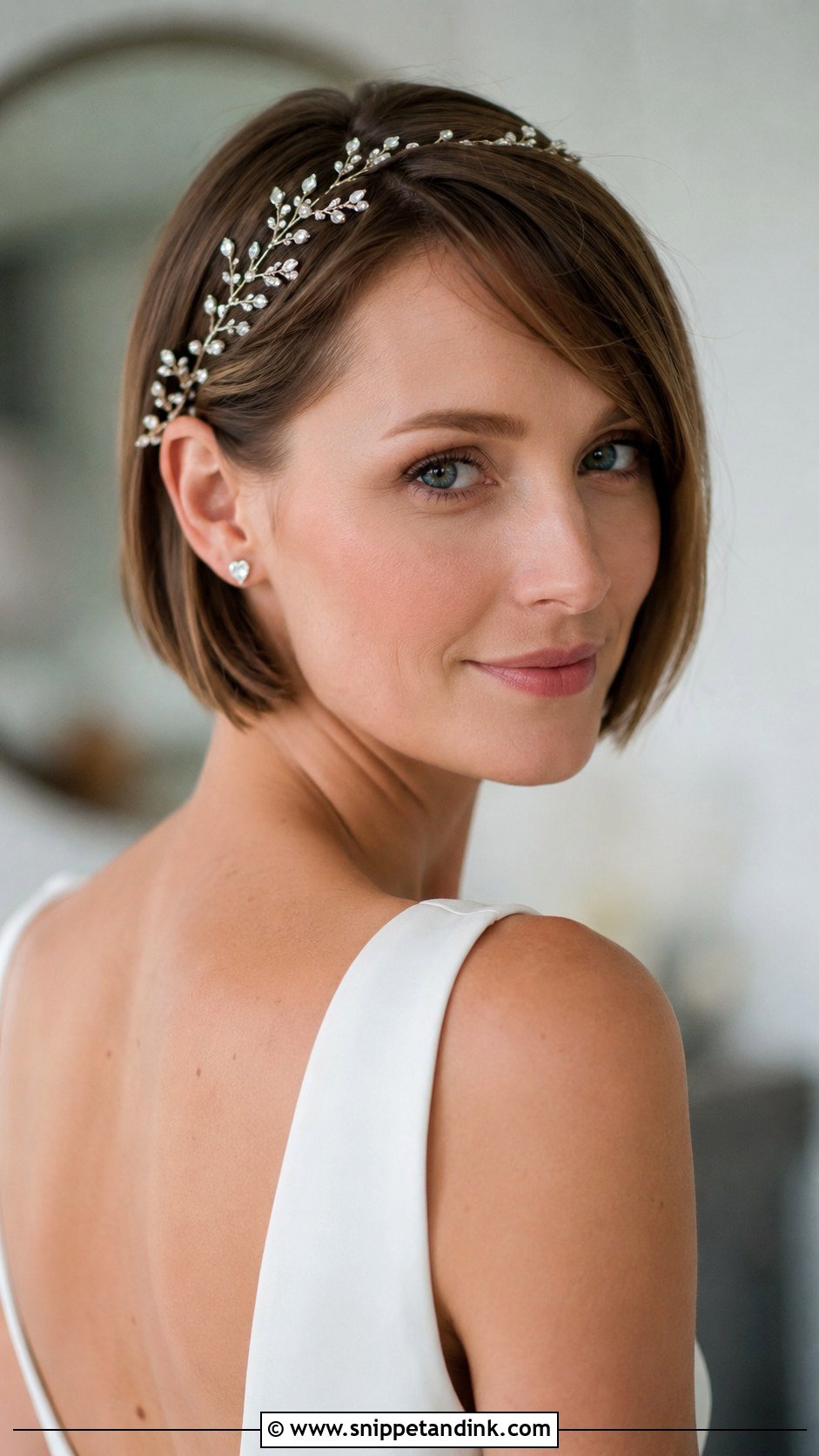
Short hair can absolutely wear a vine; it just needs a shorter, lighter one. On a bob I run it along a deep side part or across the crown, and on a pixie I usually pin it behind one ear as a small curved accent. Most vines finish in a loop at each end, so I bend any excess back on itself and hide it rather than cutting the wire. Pins hold far better in day-old short hair or after a mist of texture spray, because freshly washed short hair pushes them straight back out. It’s an unexpected touch, and one of my favourite uses for the accessory.
18. Hair Vine With Veil
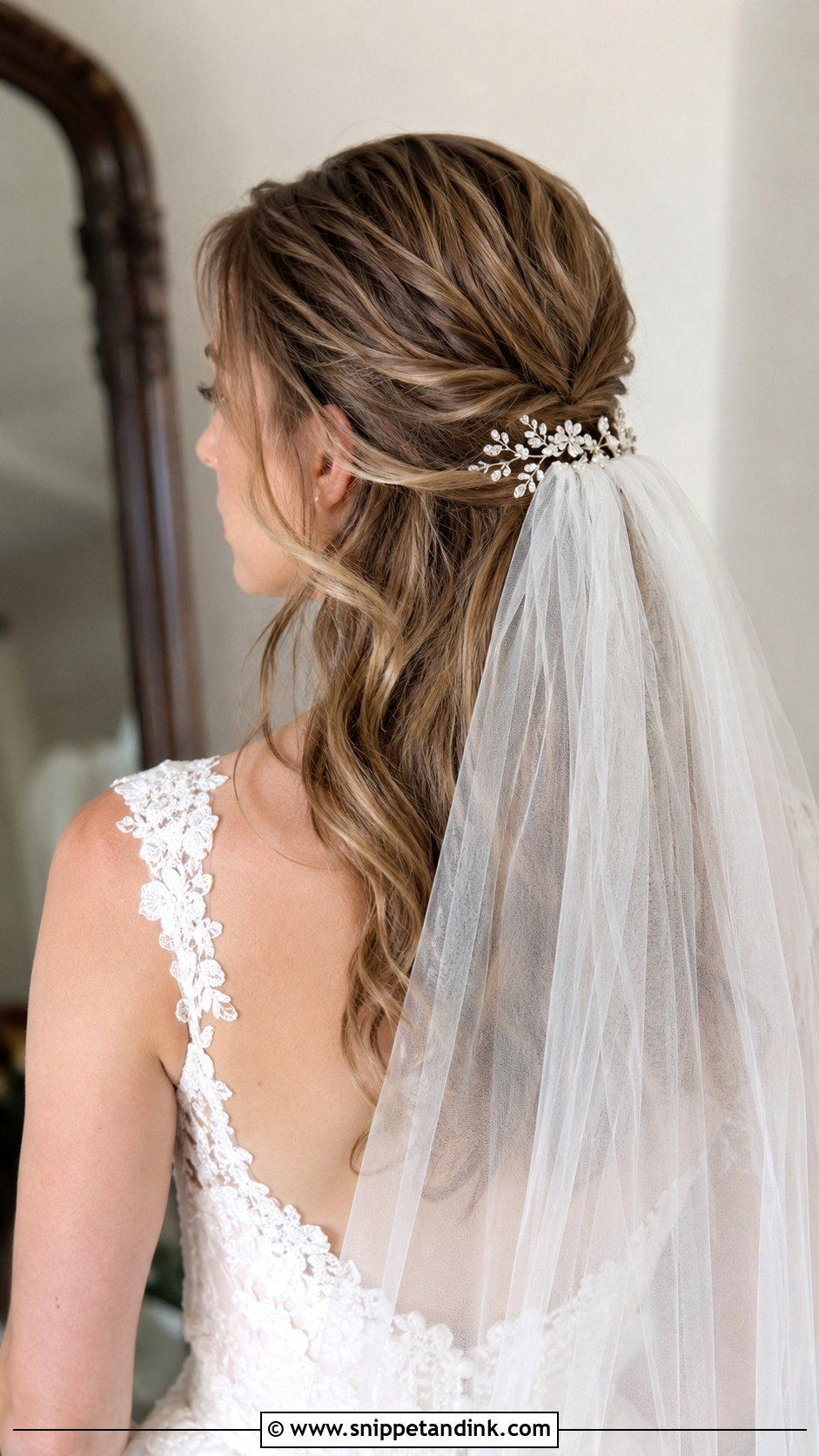
A vine and a veil can share the same spot, but they need a plan. The veil comb goes in first, into a firm anchor such as a bun or a pinned section, and the vine sits just in front of it so the comb’s edge is covered. Never rely on the vine to hold the veil; the wire isn’t built to carry fabric weight and will drag out. When the veil comes off for the reception, slide the comb out gently from underneath so the vine stays where it was. Any style works here as long as it has that anchor.
19. Hair Vine With Dutch Braid
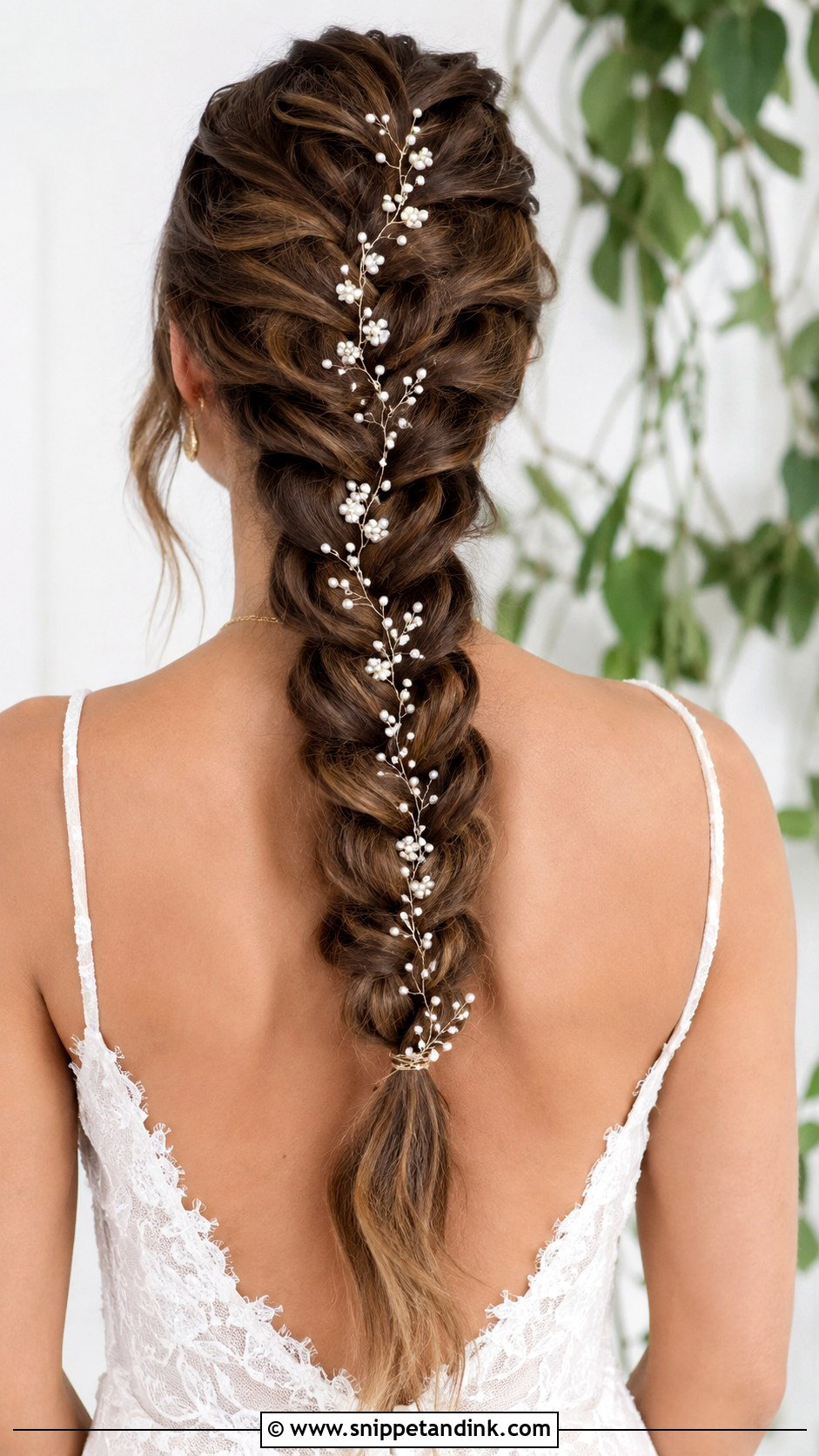
A bold Dutch braid sits raised on the head, which makes it the sturdiest base on this list. I thread the vine into the outer loops while I’m pancaking, so it sits within the braid instead of on top of it. A single braid down the back works, and so does one wrapped round as a crown. Dutch braids are tight at the root, so tell your stylist if your scalp is sensitive. A slightly looser tension still holds the vine perfectly well.
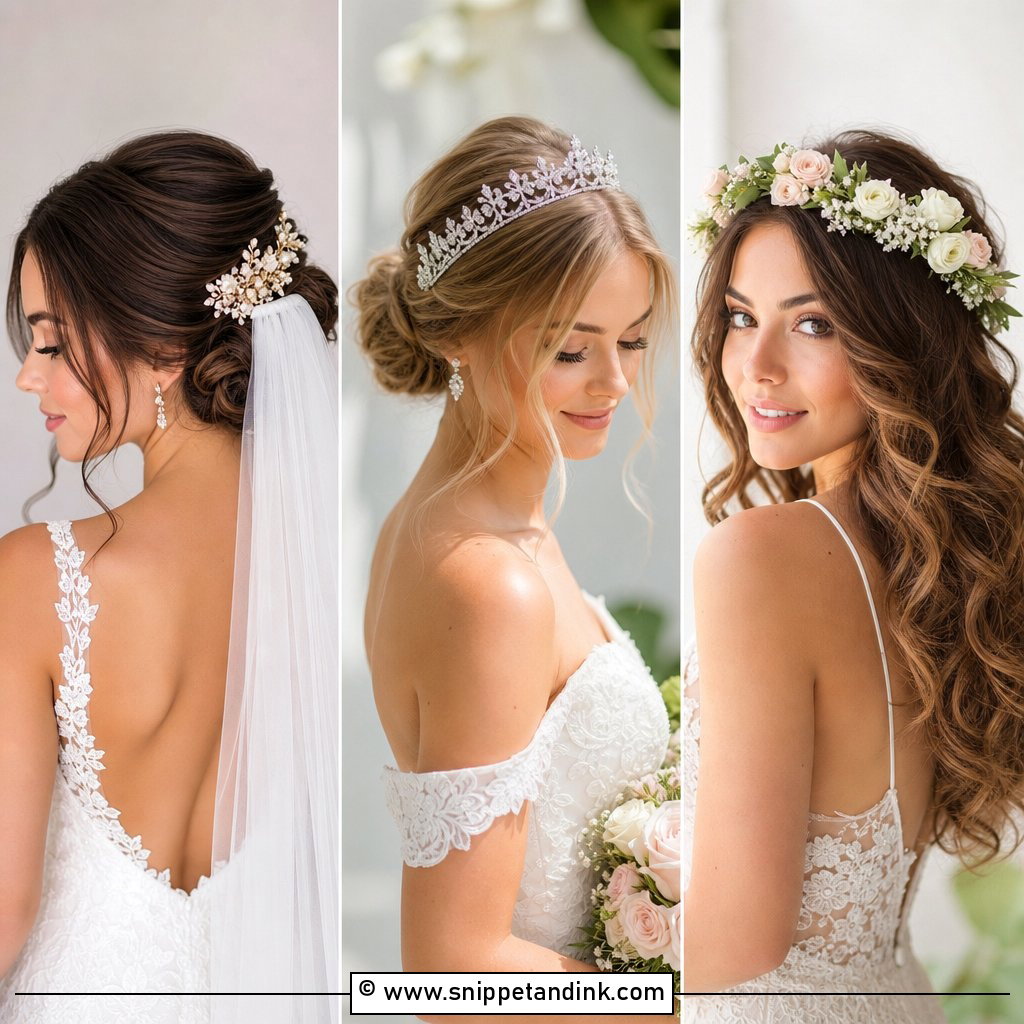
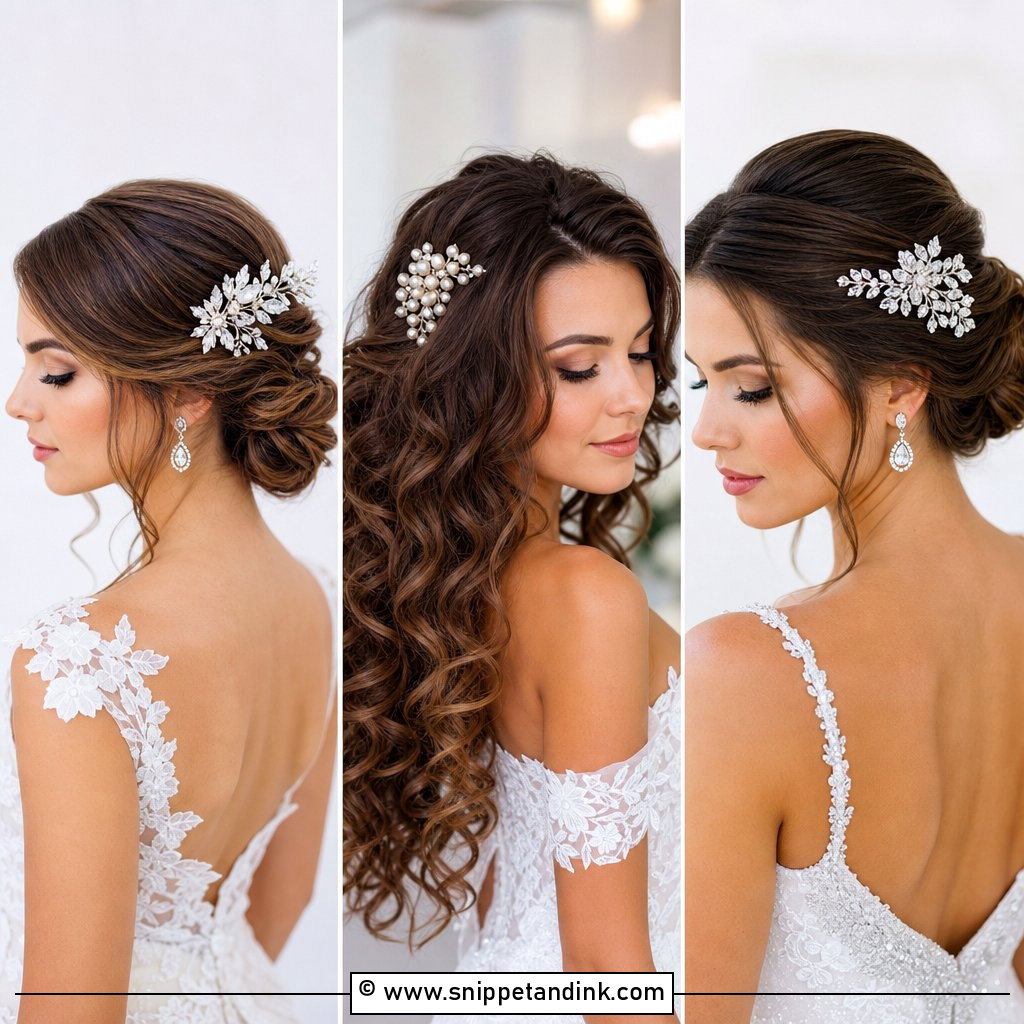
20. Hair Vine With Twisted Half Updo
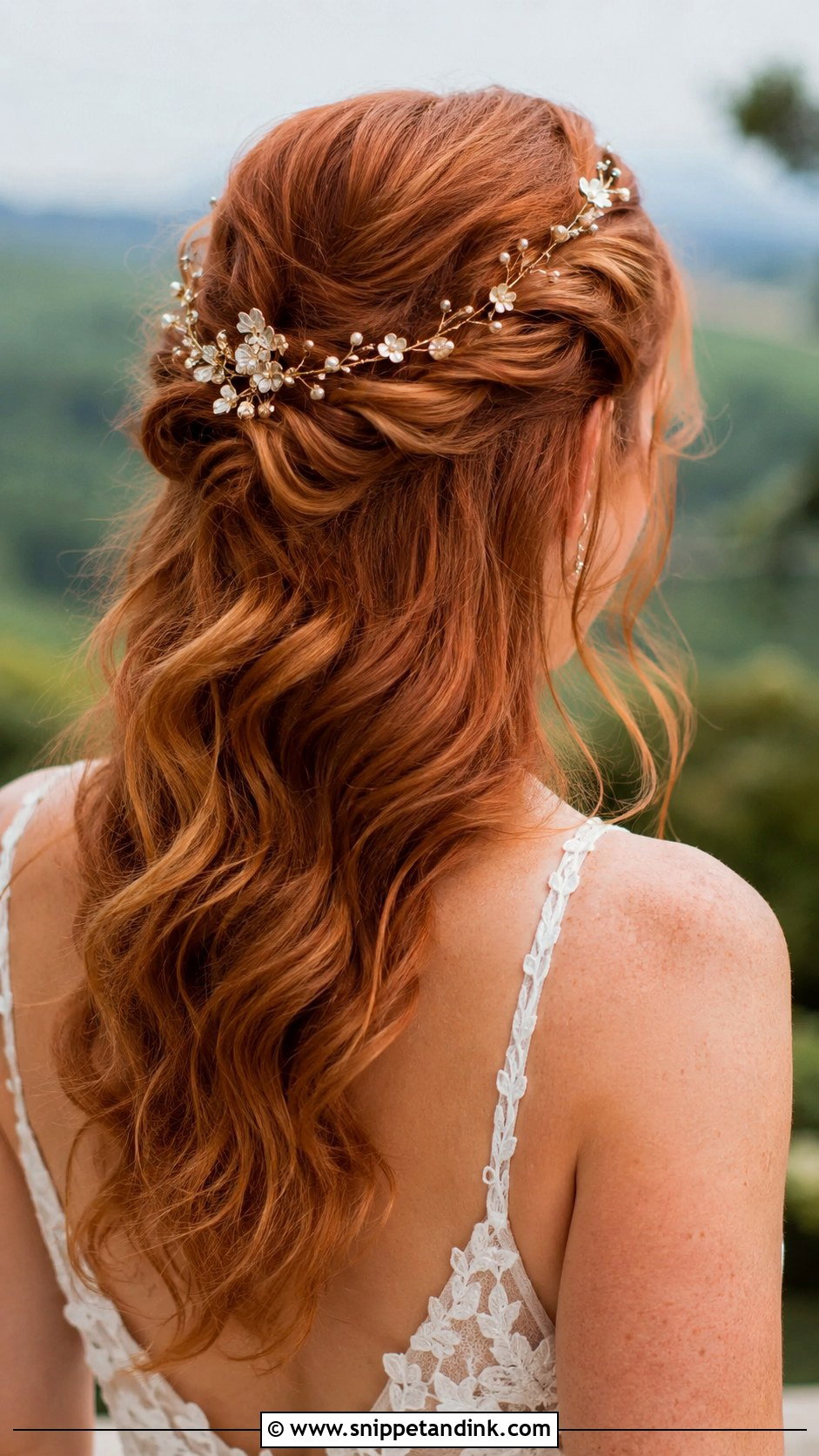
Twists hold better than plain pinned sections, which is why I prefer a twisted half updo over a flat half-up whenever a vine is involved. Each twist gives the wire a ridge to rest against. I take two rope twists from the temples, cross them at the back, pin them, and weave the vine across the crossover point. The lengths below stay loose, so they need a good curl set. Because the sides stay lifted, it’s flattering on most face shapes, and the softness fits a garden or vineyard ceremony.
Why Pale Pearls Vanish in Blonde Hair and Glow in Brunette
Contrast is what makes a vine show up in photos, and it depends on hair colour far more than most brides expect. A fine strand of small pearls that glows on dark brown hair can almost disappear into pale blonde, while a gold leaf design that looks rich on auburn melts into golden blonde.
- Dark brown and black hair: pearls, silver and clear crystal all stand out, even in a slim strand.
- Blonde hair: silver, rhodium or crystal with a faint colour cast reads better than pale gold or ivory pearls.
- Red and auburn hair: gold and rose gold glow against it, while very pale pearls can look washed out.
- Grey and silver hair: gold or rose gold gives the contrast that a silver vine lacks.
Bead size matters as much as colour. Thick or tightly curled hair swallows wire and small stones, so go a size up. Fine hair shows every bead and every pin, so a slimmer vine looks cleaner and feels lighter on the scalp by the end of the night.
Taking It Out at Midnight and Putting It Away
Removal is where most vines get damaged. Sit down, find the end loops first, and draw each pin out the way it went in instead of tugging the wire. If hair has wound itself around a bead, unwind it with the tail of a comb; yanking bends the wire and can loosen glued crystals.
Once it’s out, lay the vine flat or in a loose curve, never coiled tight, and wrap it in acid-free tissue inside its box. Keep it out of the steamy bathroom, and tuck in an anti-tarnish strip if the metal is plated. Stored that way, it’s ready to lend to a sister or wear again for an anniversary dinner.
Your Hairstyle Decides the Vine, Not the Other Way Round
Your hairstyle decides how a vine behaves. Braids and curls grip it easily, sleek styles need prep, and loose hair needs a hidden anchor before anything decorative goes in. Let your dress shade and your jewellery guide the metal, and bring the actual vine to your trial so your stylist can bend and pin it on your own hair. Save the styles you keep returning to and take them to that appointment; seeing the real vine on your real hair tells you more than any photo can.
You'll Like These Ideas:


Leave a Reply