
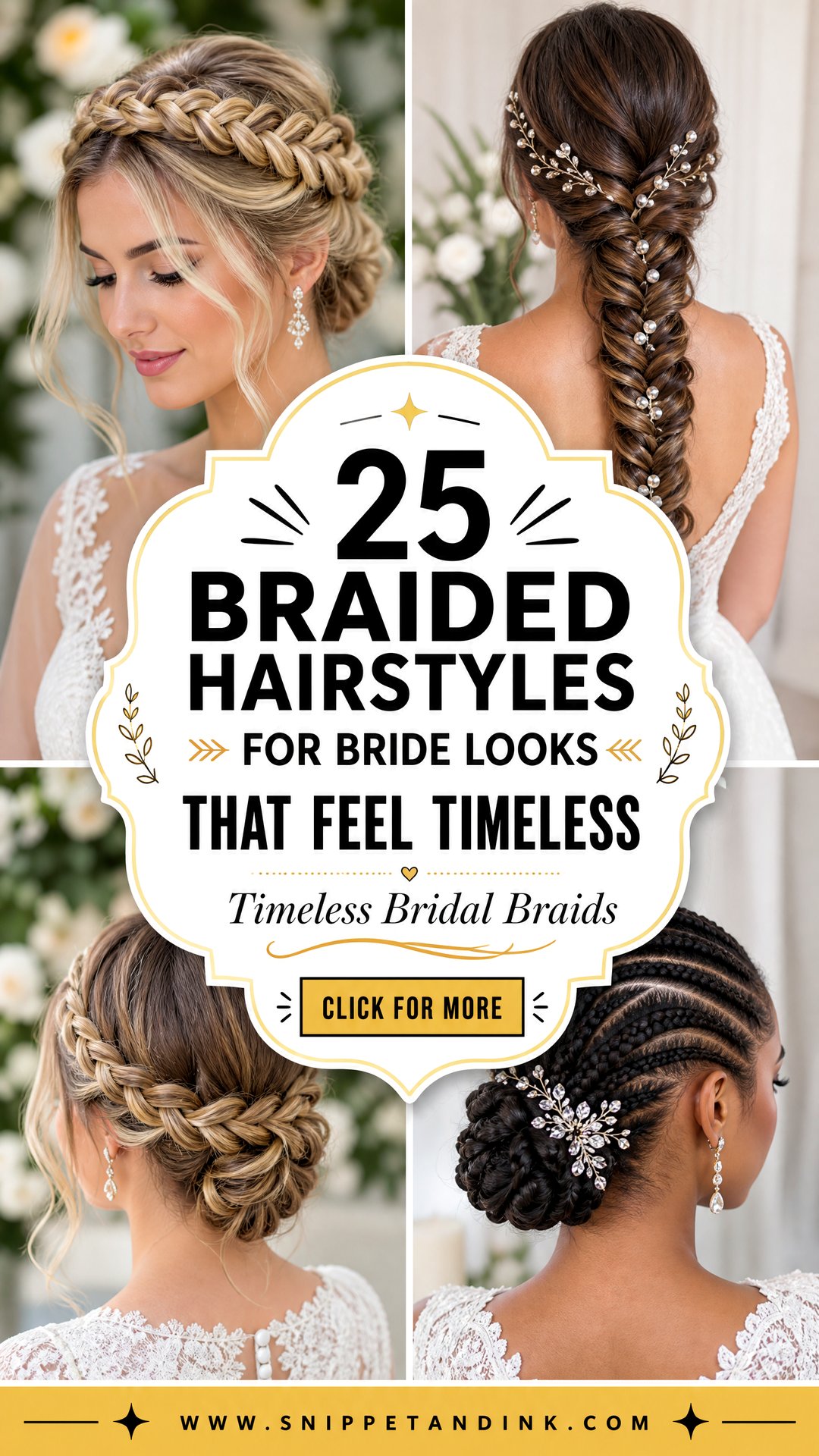
Plaits have been on brides for centuries, and they still earn their place for a practical reason: a braid is structure you can see. It keeps a style locked through hugs and dancing, gives pins and combs something solid to grip, and adds detail at the back of the head, which is the side guests stare at during the ceremony. Ballroom or garden, straight or coily, short-ish or waist length, there is a braid that suits. Below are 25 braided bridal styles, from French braid updos to cornrows and mermaid plaits, with what I watch for when I create each one.
Haircuts, Colour and Extensions in the Run-Up to a Braided Style
Braids show every section of hair, so the condition and length you arrive with matter more than with loose curls. A few decisions made weeks ahead save a lot of stress on the morning.
- Trim about four to six weeks out, not the week before; a fresh, blunt cut can make braid ends look choppy.
- Avoid adding short layers before the wedding if you want a braid. Layers escape plaits.
- Colour two or three weeks out so it settles; very fresh colour can feel slippery.
- If you want a fuller braid, buy clip-in extensions that match your colour and bring them to the trial so your stylist can blend them in.
I’d also suggest a deep conditioning treatment in the weeks before, but not the night before. Heavy conditioner right before styling makes hair too soft to grip pins.
1. Classic French Braid Updo
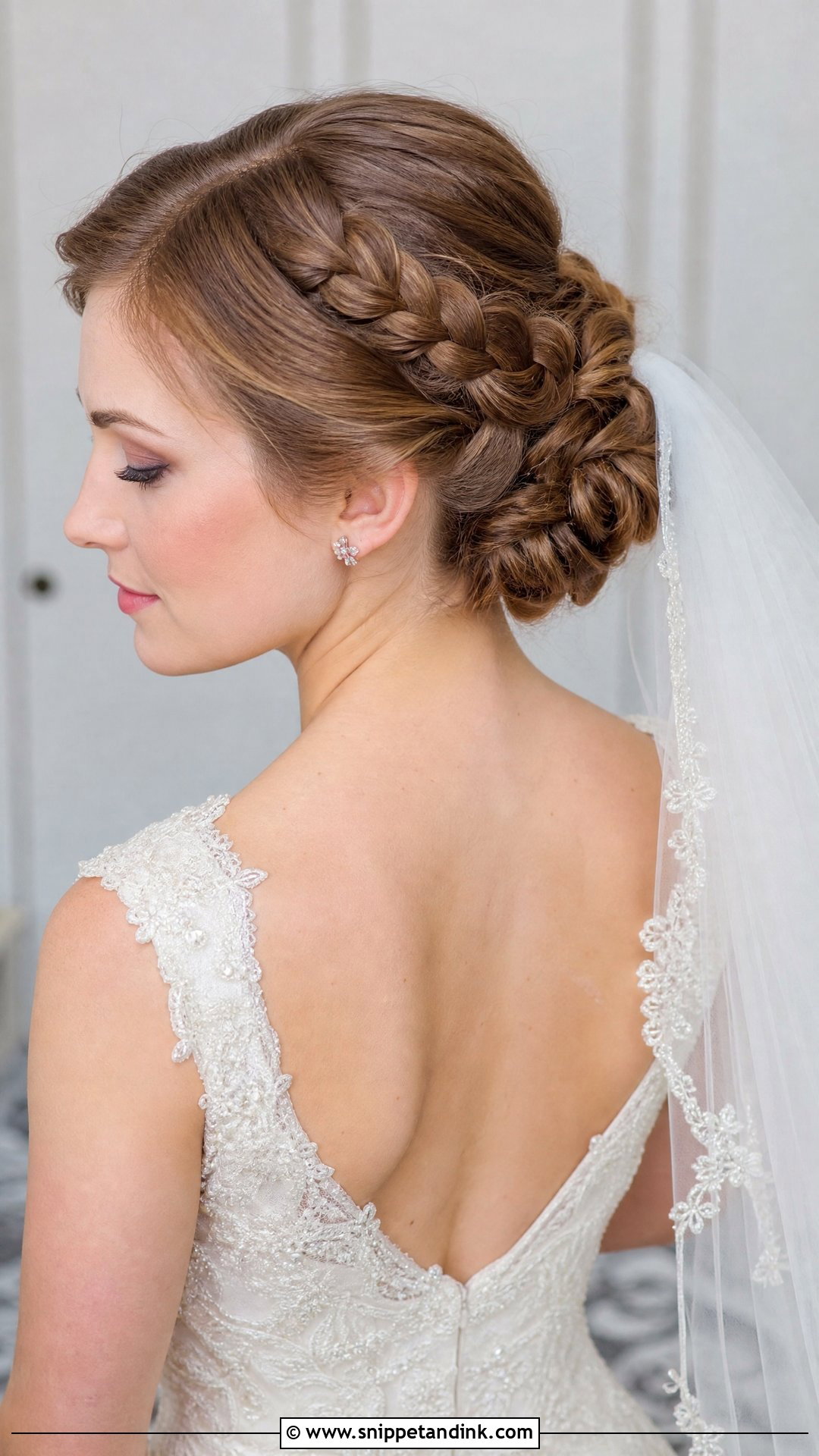
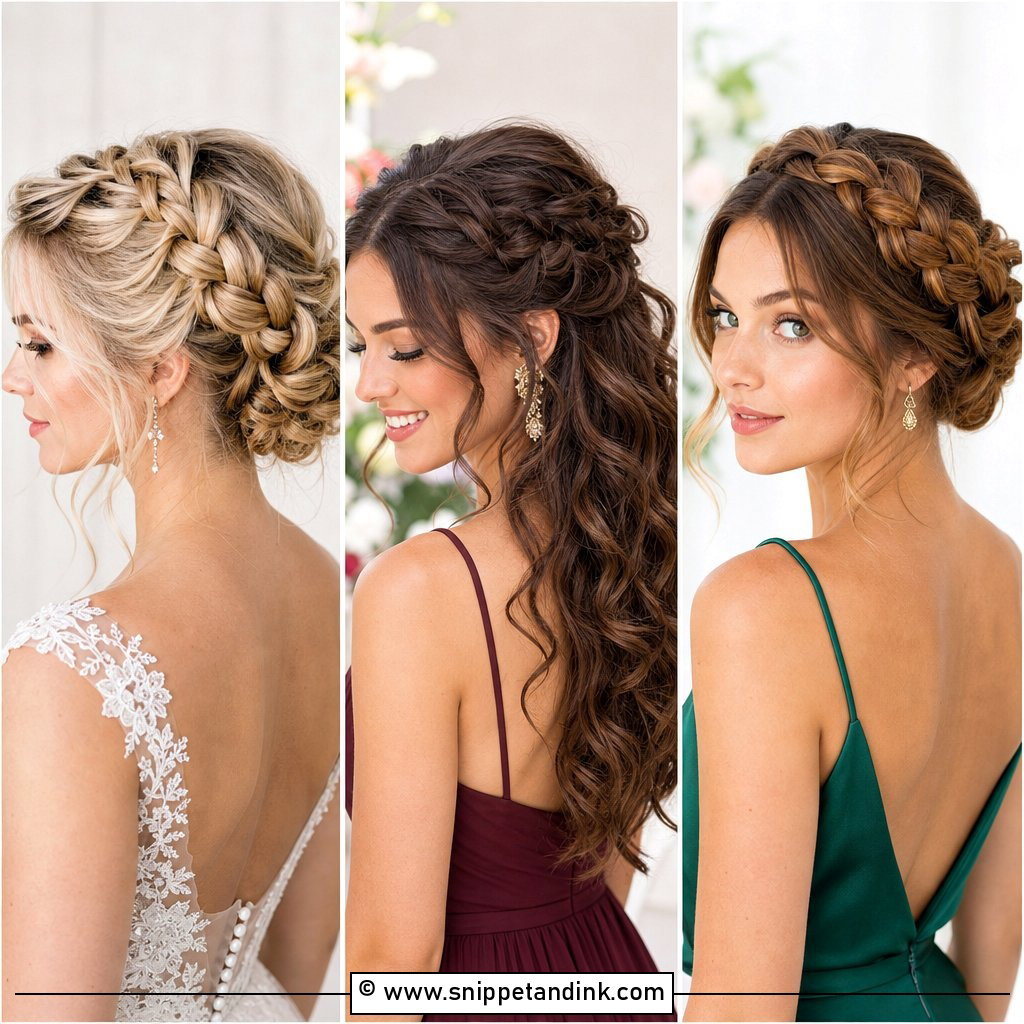
Quiet and reliable: the French braid updo is the style I’d pick for a long church ceremony followed by a busy reception. The braid starts at the crown, travels down and tucks into a sculpted bun at the nape, so there’s nothing loose to drop. Its clean lines suit a veil, a tiara or small jewelled pins. Fine hair gains structure from the braid; thick hair gains a smaller, neater bun because the braid uses up length. Pull a few strands free at the end only if you want it softer.
2. Loose Boho Side Braid
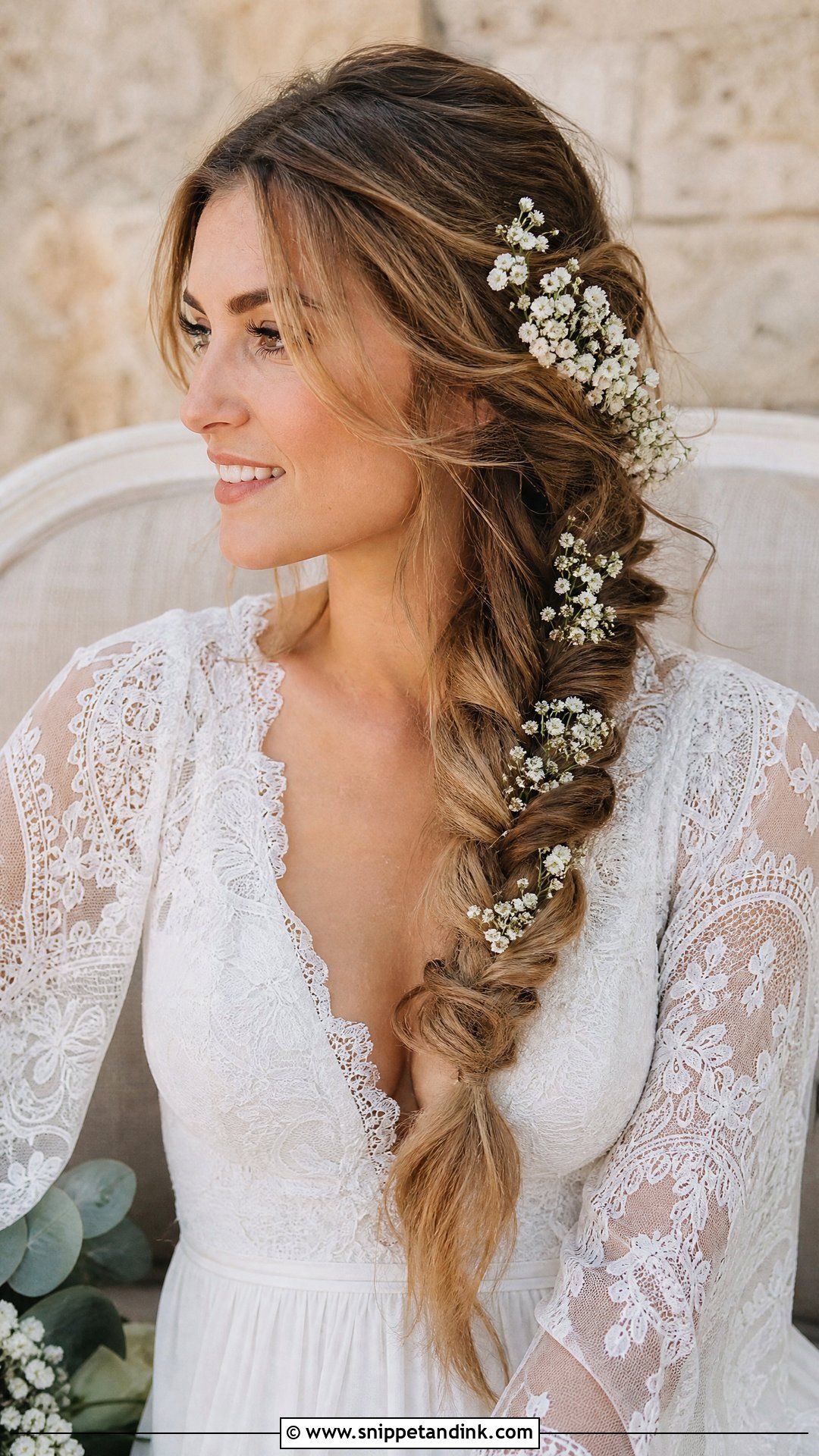
Undone, wide and draped over one shoulder, the loose boho side braid suits a rustic or outdoor wedding. I braid it firmly first, pin the top behind the ear, and only then tug the plait wider, because a braid loosened before it’s secured slides apart. Wavy or naturally textured hair holds this best; very silky hair needs texture spray. Wildflowers or baby’s breath tucked in along the plait suit it, and so does a flowing gown and a barefoot ceremony.
3. Crown Braid Halo
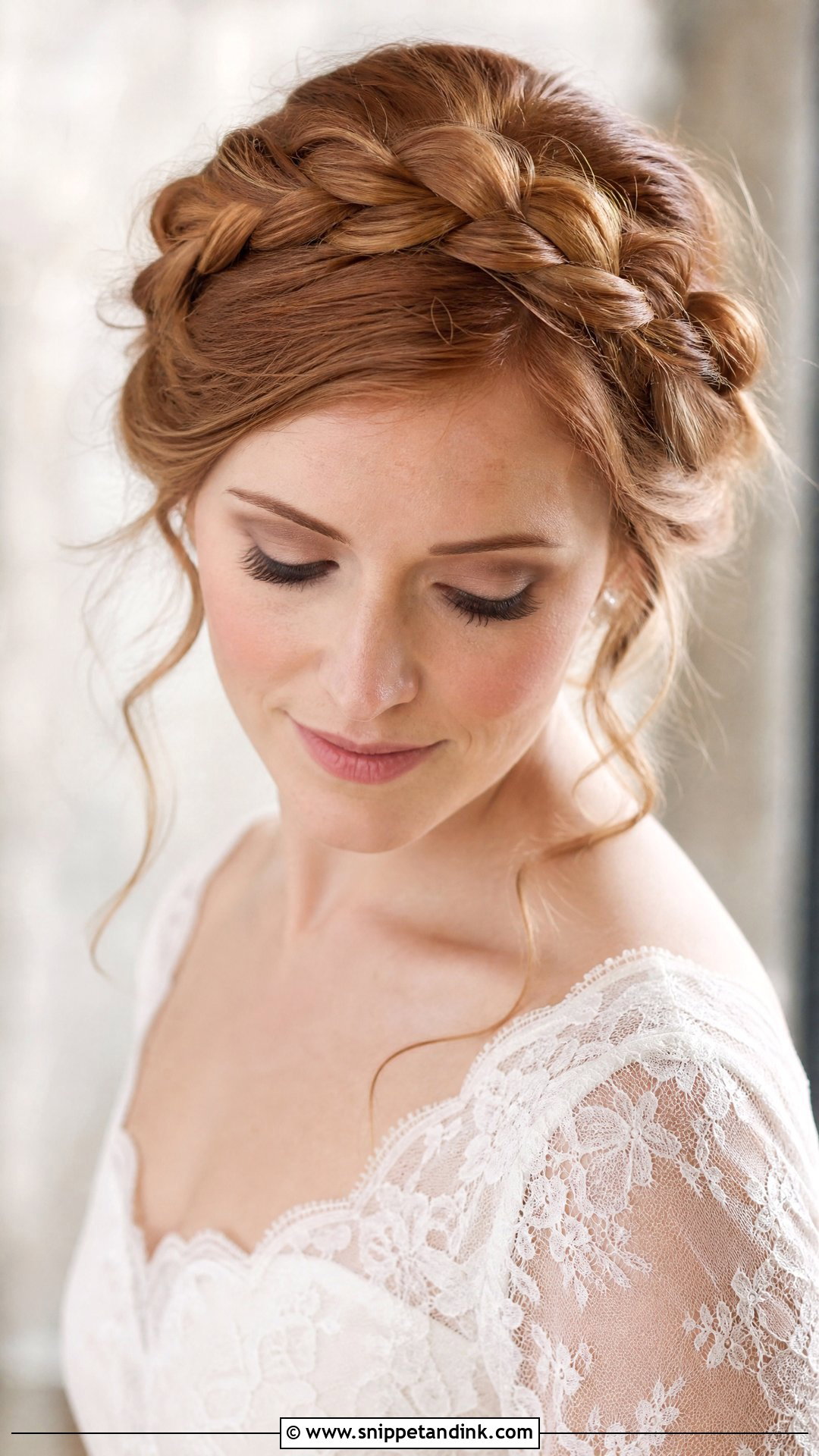
A braid circling the crown has a quiet regal quality that hasn’t dated in generations. It lifts all the hair off the neck, which matters in summer heat. I check the length first: if the hair doesn’t reach around the head, I use two braids and hide the join. Sleek or softened with a few tendrils near the ears, this halo of plaits suits vintage lace as well as a minimalist gown, and fresh blooms tuck neatly into the weave.
4. Fishtail Braid With Pearls
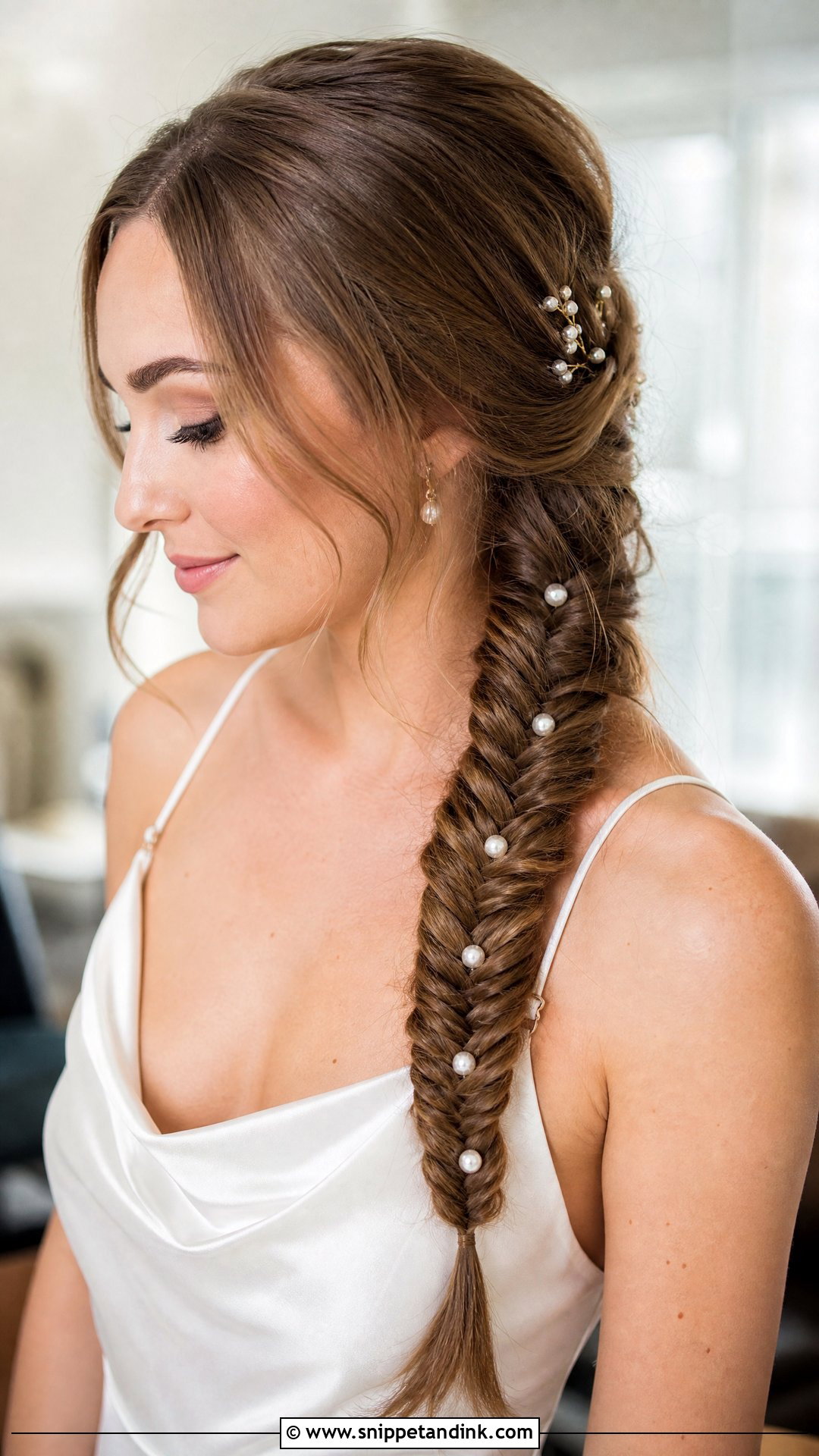
Pearls in a fishtail are one of the most bridal details I know. The fishtail’s tight, repeating weave gives each pearl pin a secure place to sit, so I slide them in along the braid’s direction where they won’t fall out. Down the back or over one shoulder, it catches the light in photos. Keep it tight for a polished look or loosen it slightly for softness. It does need long hair; on shorter lengths the weave ends before it has room to show.
5. Braided Bun Updo
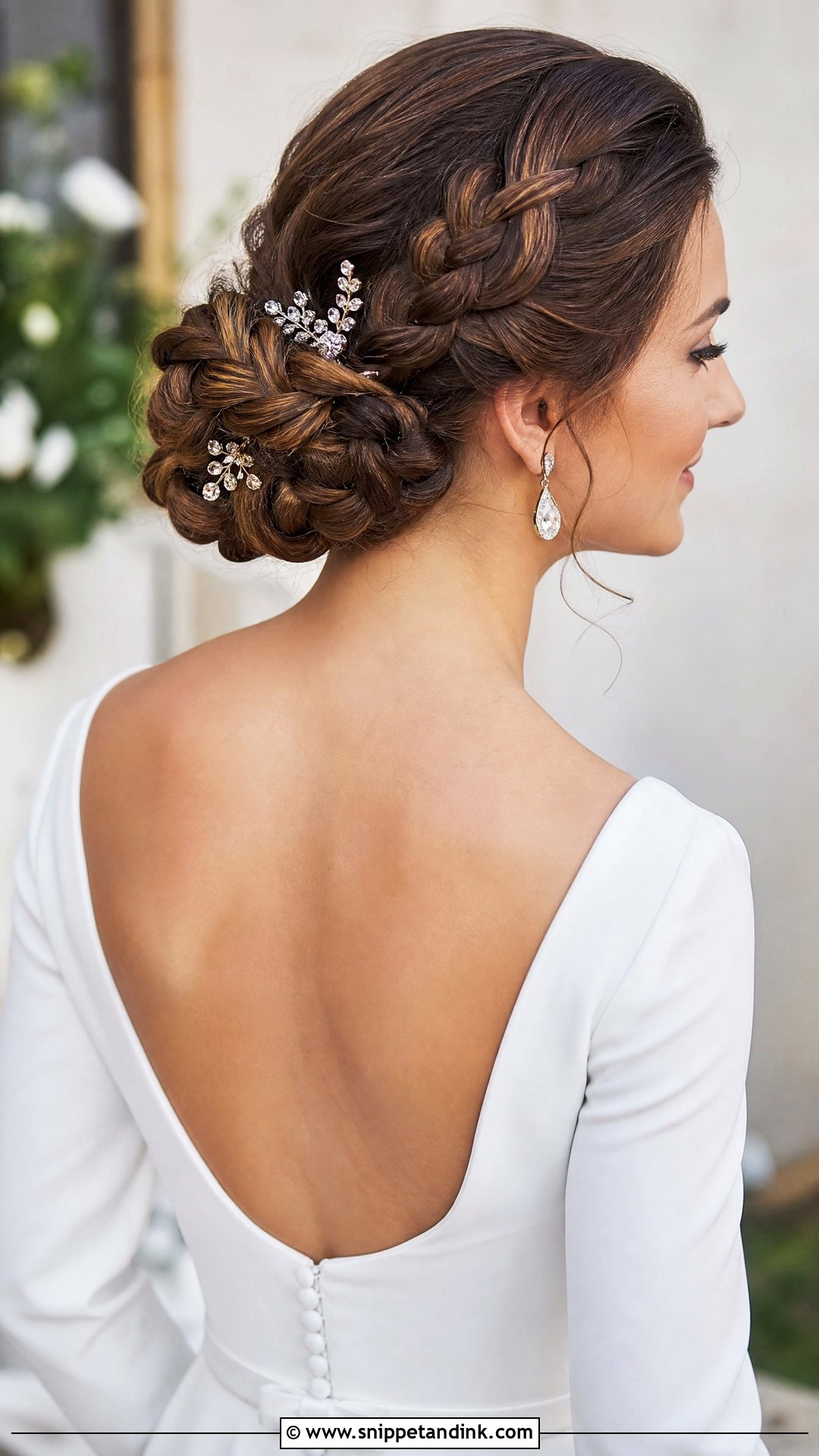
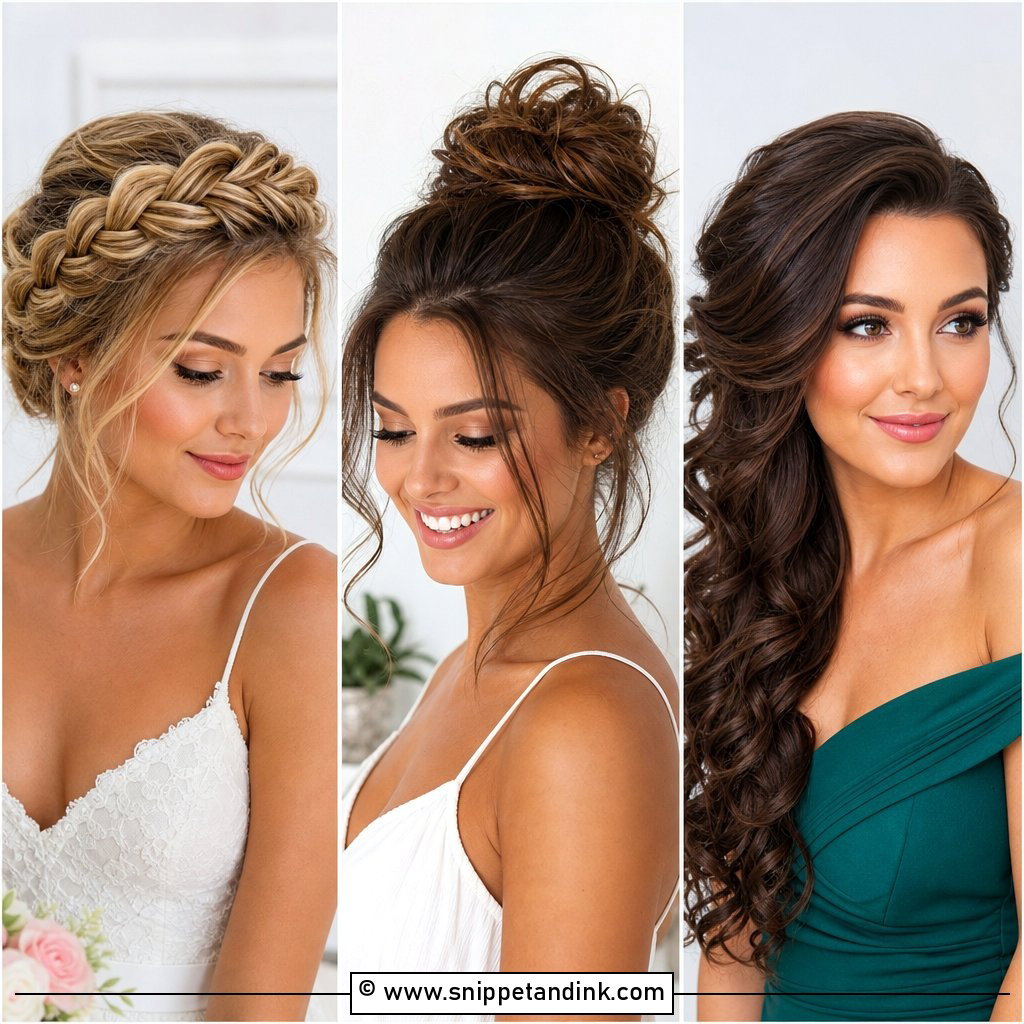
A braided bun is all the hair gathered into one structured, textured shape. Low at the nape is classic; higher is modern and shows off the neck. The braids give a plain bun visible detail and help it keep its shape from ceremony to last dance. Decorative pins, combs or fresh flowers slot neatly into the weave. On very thick hair the bun gets large, so I sometimes thin out the underneath section before braiding.
6. Waterfall Braid Half Updo
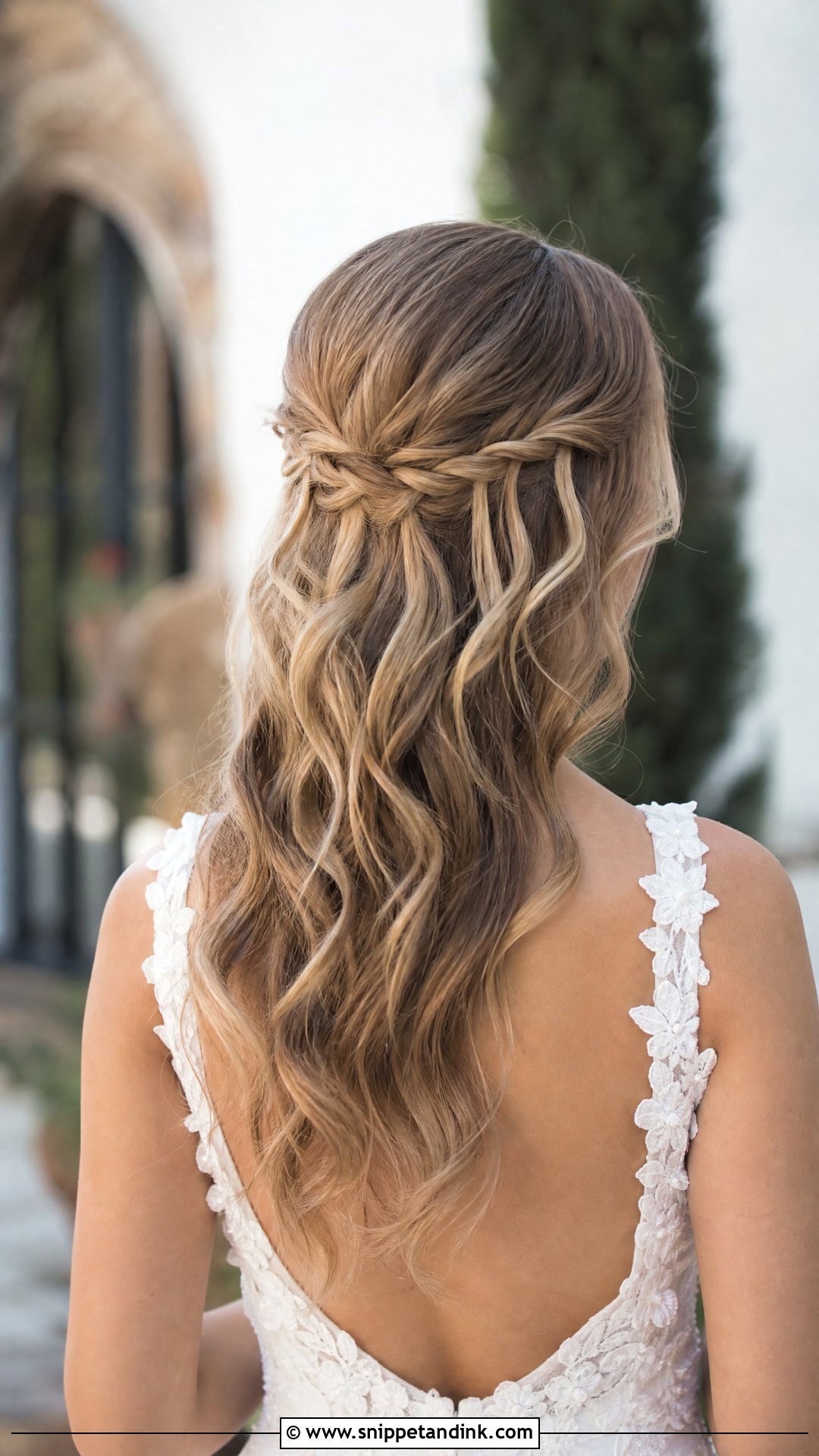
Light through a waterfall braid is one of the prettiest things to photograph outdoors. The braid crosses the head and drops a section at each pass, so the lower hair hangs free in curls. It suits brides with long, wavy hair best. My trick is to curl the dropped sections separately and pin them to set, because they’re the part that carries the whole look. It’s delicate, so it’s better for a calm day than a windy clifftop.
7. Dutch Braid Low Bun
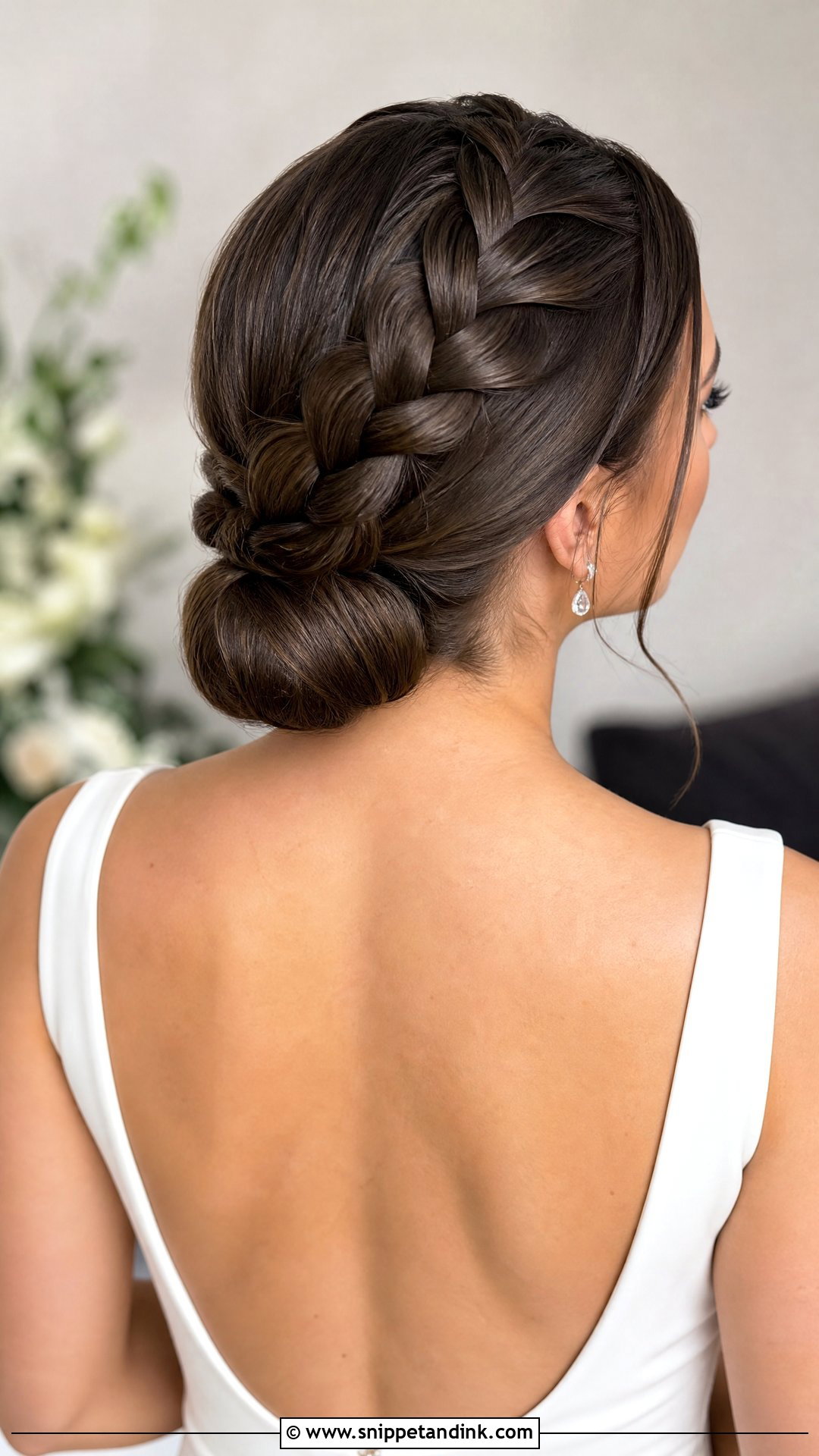
Raised Dutch braids show more than French ones because they’re worked under rather than over. Feeding one into a low bun gives a structured bridal look with clear detail at the back. It holds firmly through dancing and hugs. Pull the edges gently for a softer look; I stop before the braid loses its raised outline. A jewelled comb near the bun is a natural finish.
8. Milkmaid Braid Style
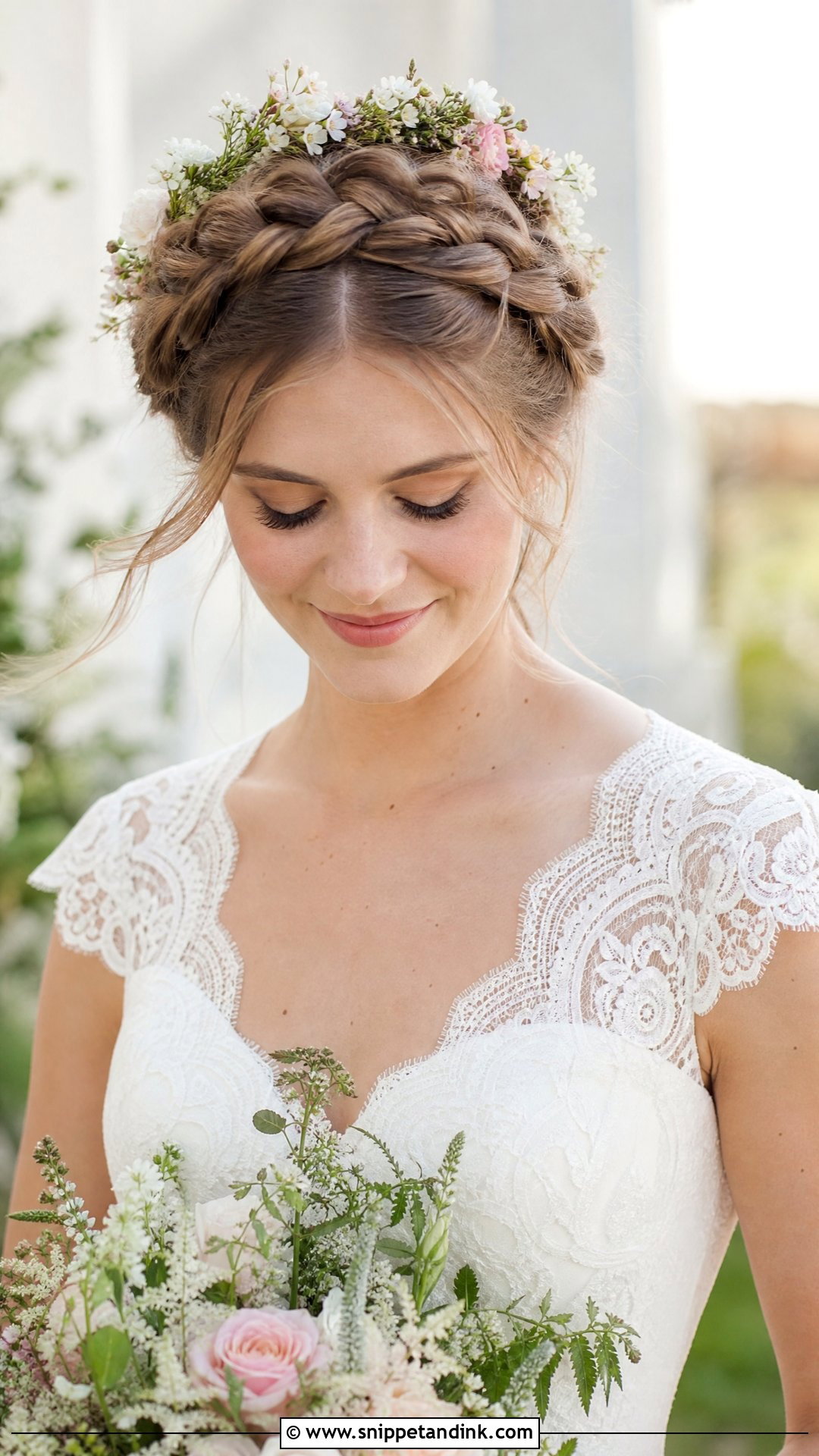
Two plaits wrapped over the top of the head make the milkmaid braid, a vintage style that keeps hair completely contained. It’s practical for summer ceremonies and active outdoor days, and it shows off the neckline and earrings. I braid from behind each ear, lift the braids up and over, and pin them along their whole length with pins that disappear into the weave. Long hair suits it; a floral crown sits well on top.
9. Braided Crown With Veil
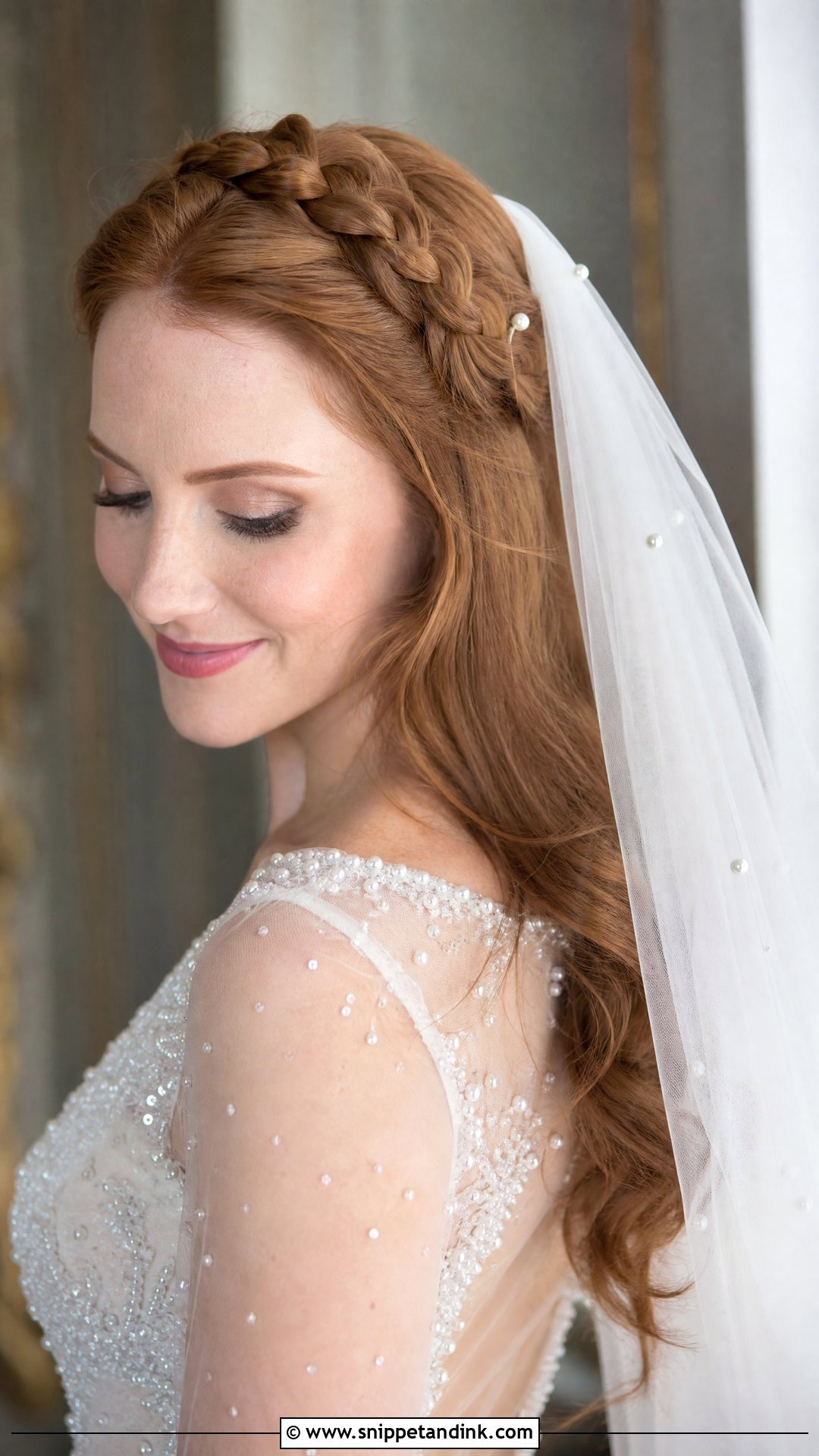
A braided crown and a veil support each other. The braid gives the veil comb something firm to grip, so it stays in place during the ceremony and doesn’t drag the hair. Sheer fabric over braided texture is lovely in photos. I place the comb either at the crown, just inside the braid, or lower at the nape, depending on the gown. Pearl pins or fresh flowers can sit along the braid where the veil doesn’t cover them.
10. Boho Braided Half Up
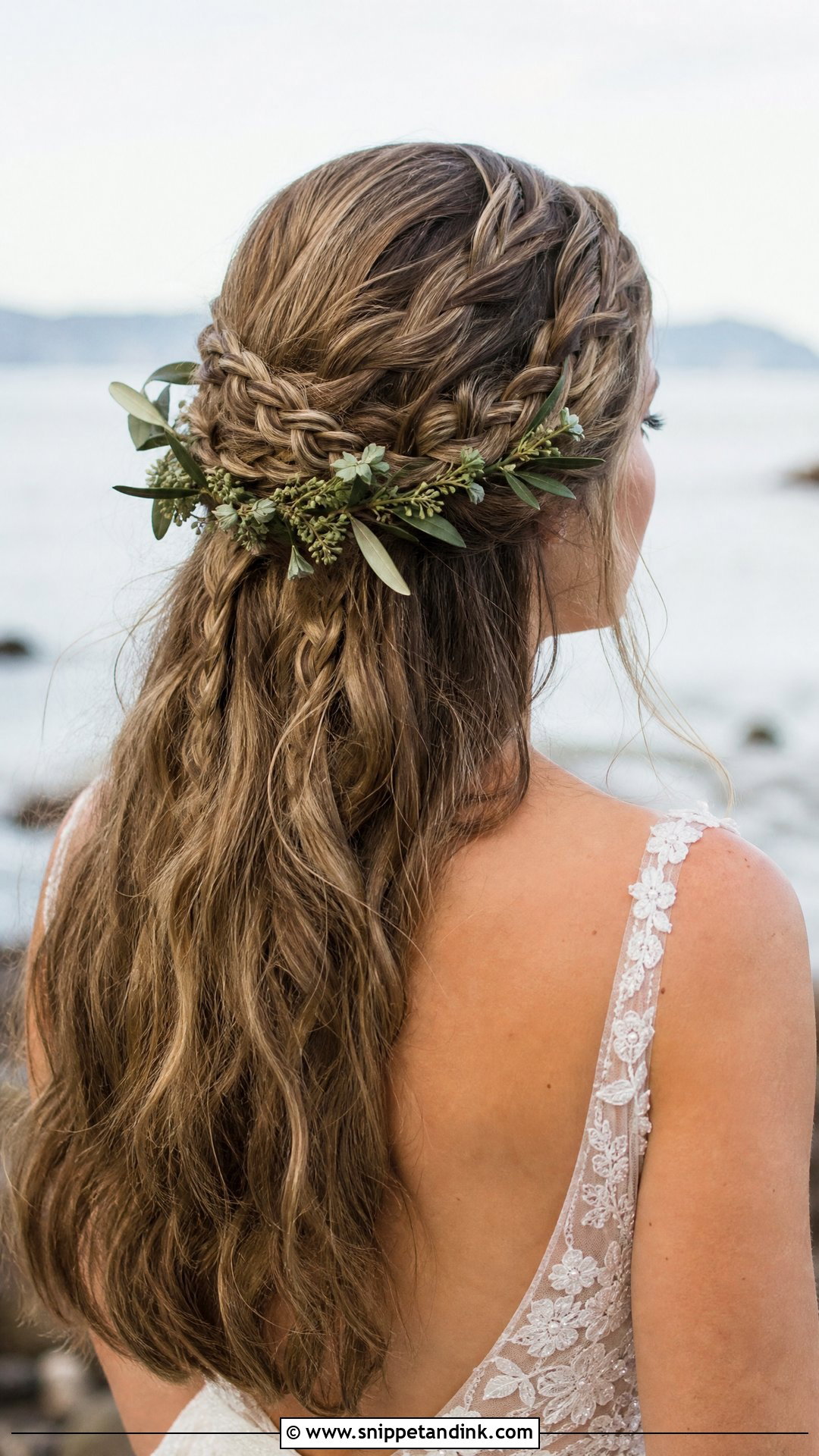
Several small braids gathered loosely at the back, with the rest of the hair down in waves: that’s the boho half-up. It’s comfortable, light and suits beach, festival and garden weddings. The small braids are the anchor, so I make them before curling. Wavy or textured hair holds it best. A few blooms or some greenery tucked where the braids meet finish the look.
11. Twisted Rope Braid Updo
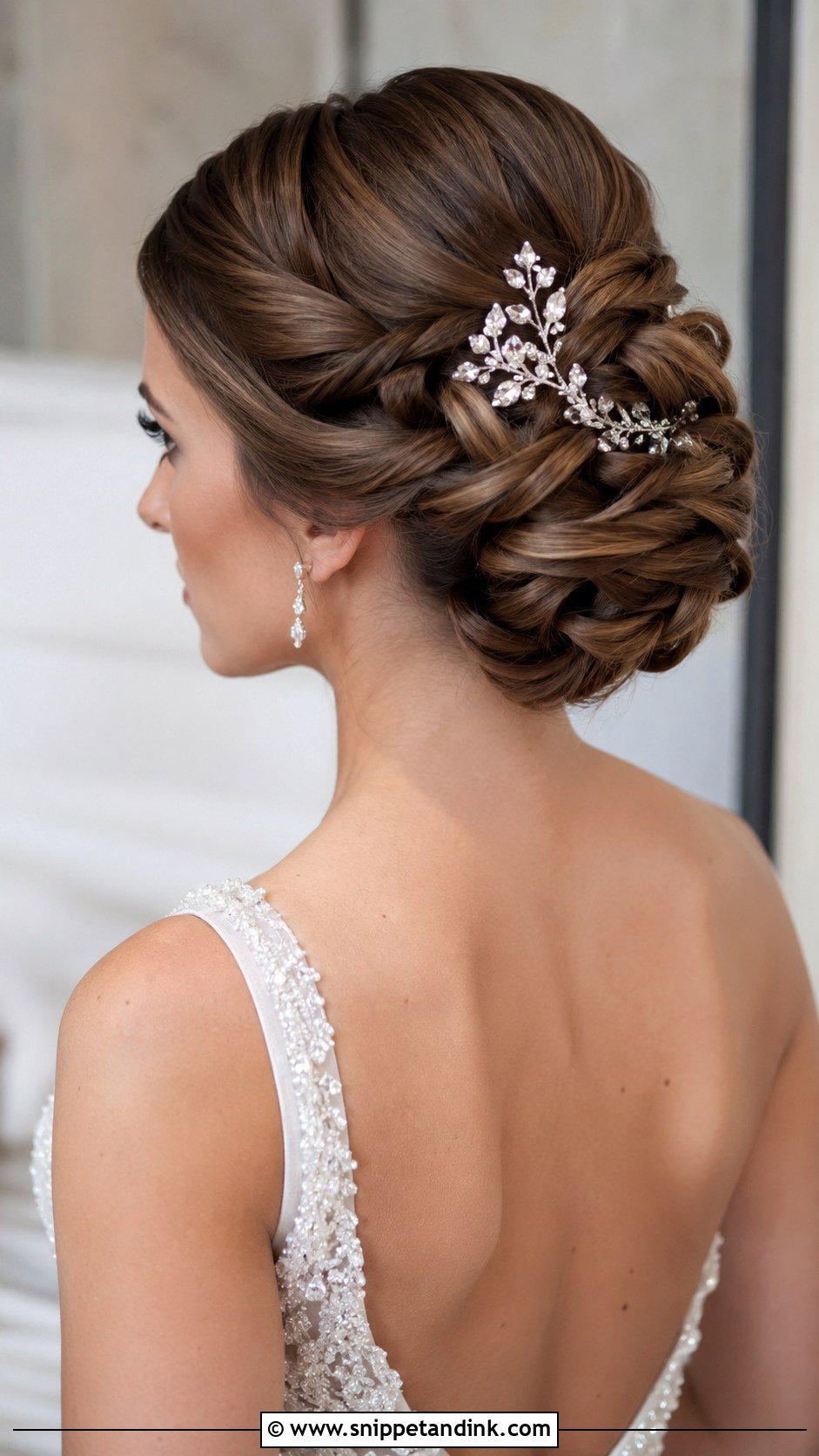
Rope braids are twisted, not plaited. Two sections twist around each other into a smooth, shiny rope that looks intricate without being busy. Gathered into an updo, it suits formal evening receptions. Twists unwind easily, so I twist each section one way and wrap them the other way to lock the rope. Medium to long hair suits it. A jewelled comb or decorative pins complete it.
12. Fishtail Crown Braid
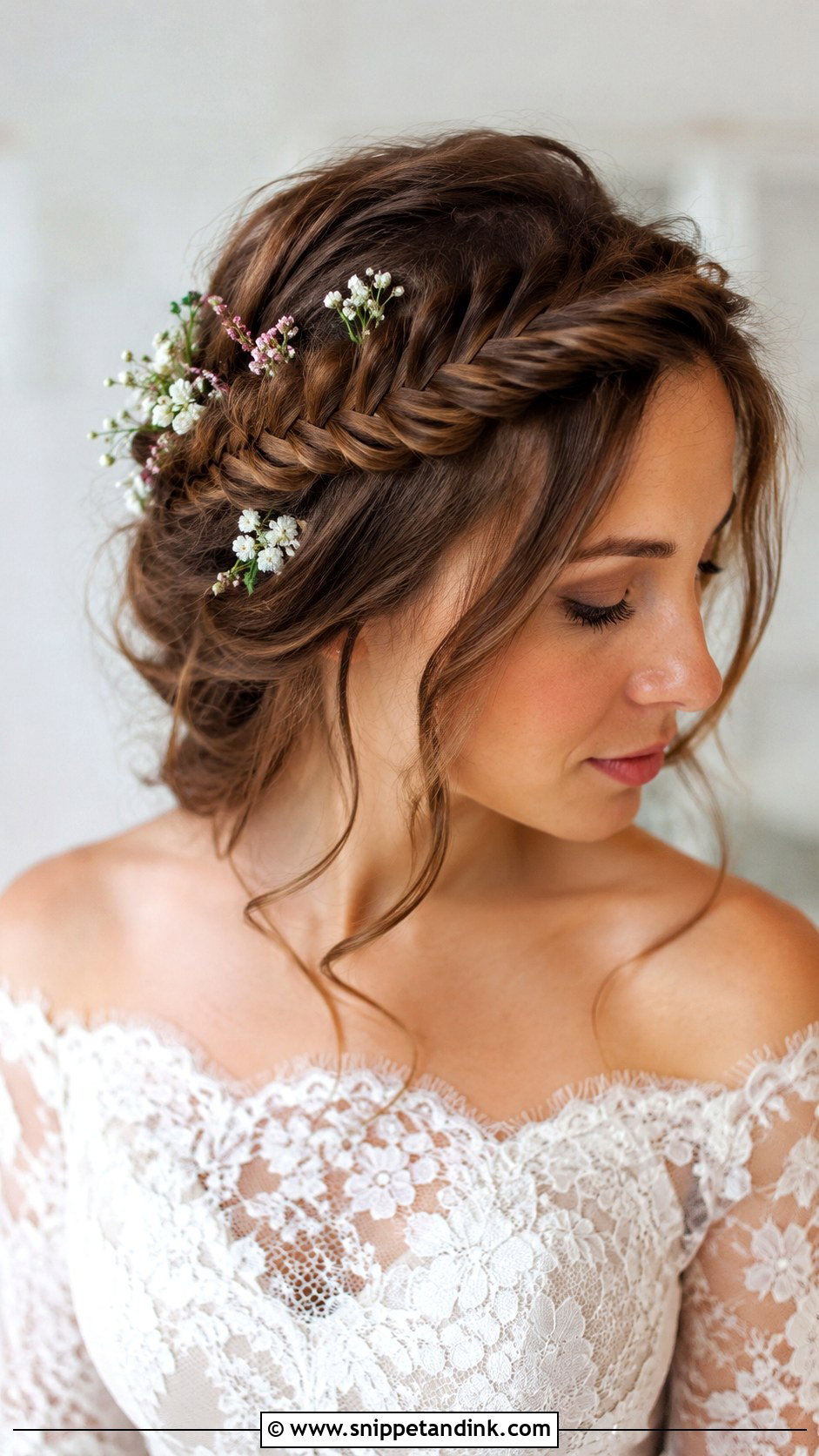
A fishtail wrapped around the head gives a halo with much more texture than a regular crown braid. It takes longer to create and needs long, thick hair to go the full way around. It keeps the neck clear for warm days. I pull the edges gently for an airy finish, then add small flowers or pearl pins. Expect it to read as fairytale rather than minimal.
13. Braided Ponytail Style
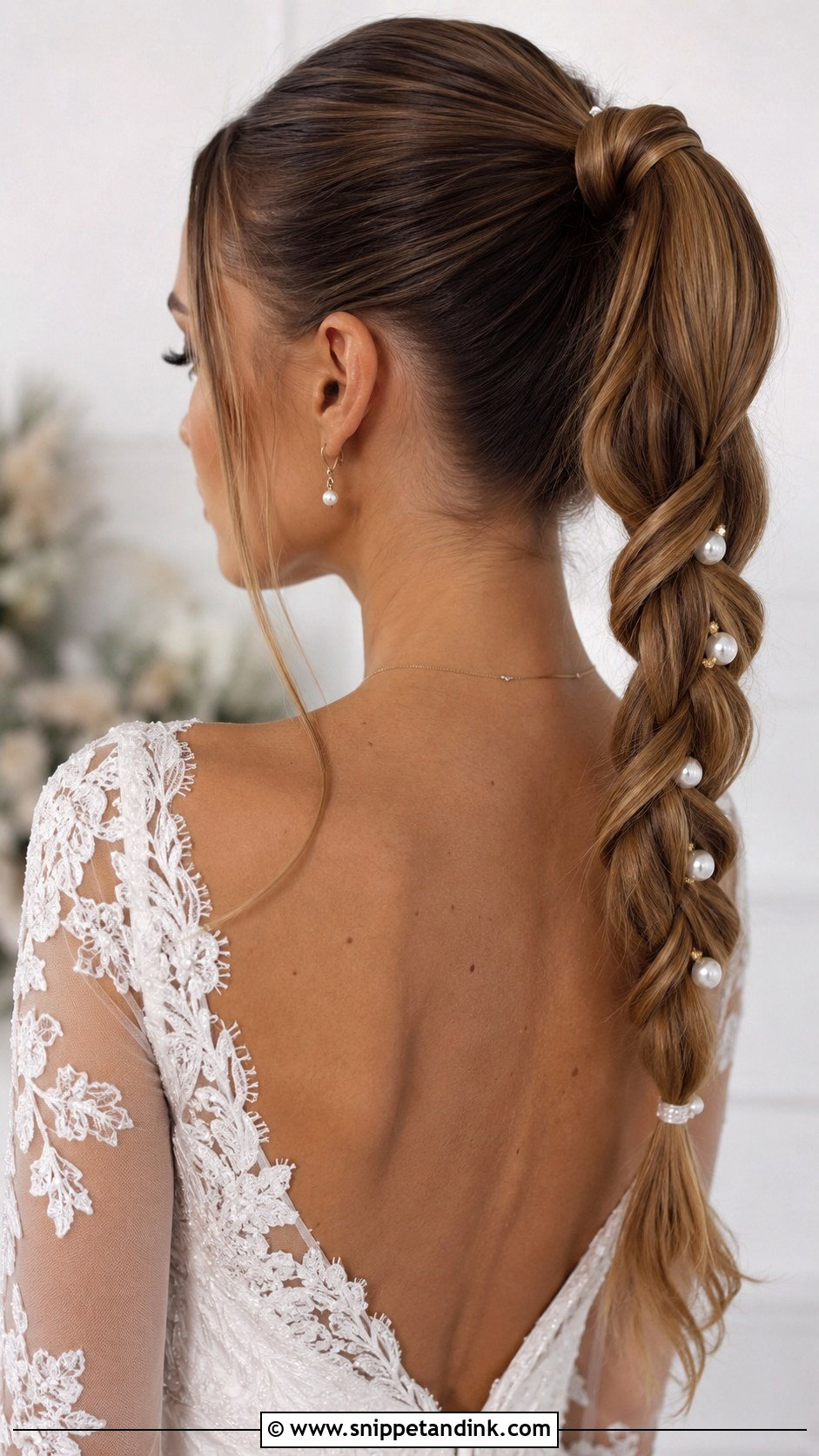
A braided ponytail mixes energy and polish. The hair goes into a ponytail first, sleek or soft, then into a braid down the back. High placement is dramatic, low is calmer. A braided pony moves when you walk, which is lovely in video. I wrap a strand around the base and use a second elastic halfway down to stop it sagging. A wrap or pearl pins add bridal detail. Long hair suits it.
14. Side Swept Braid With Curls
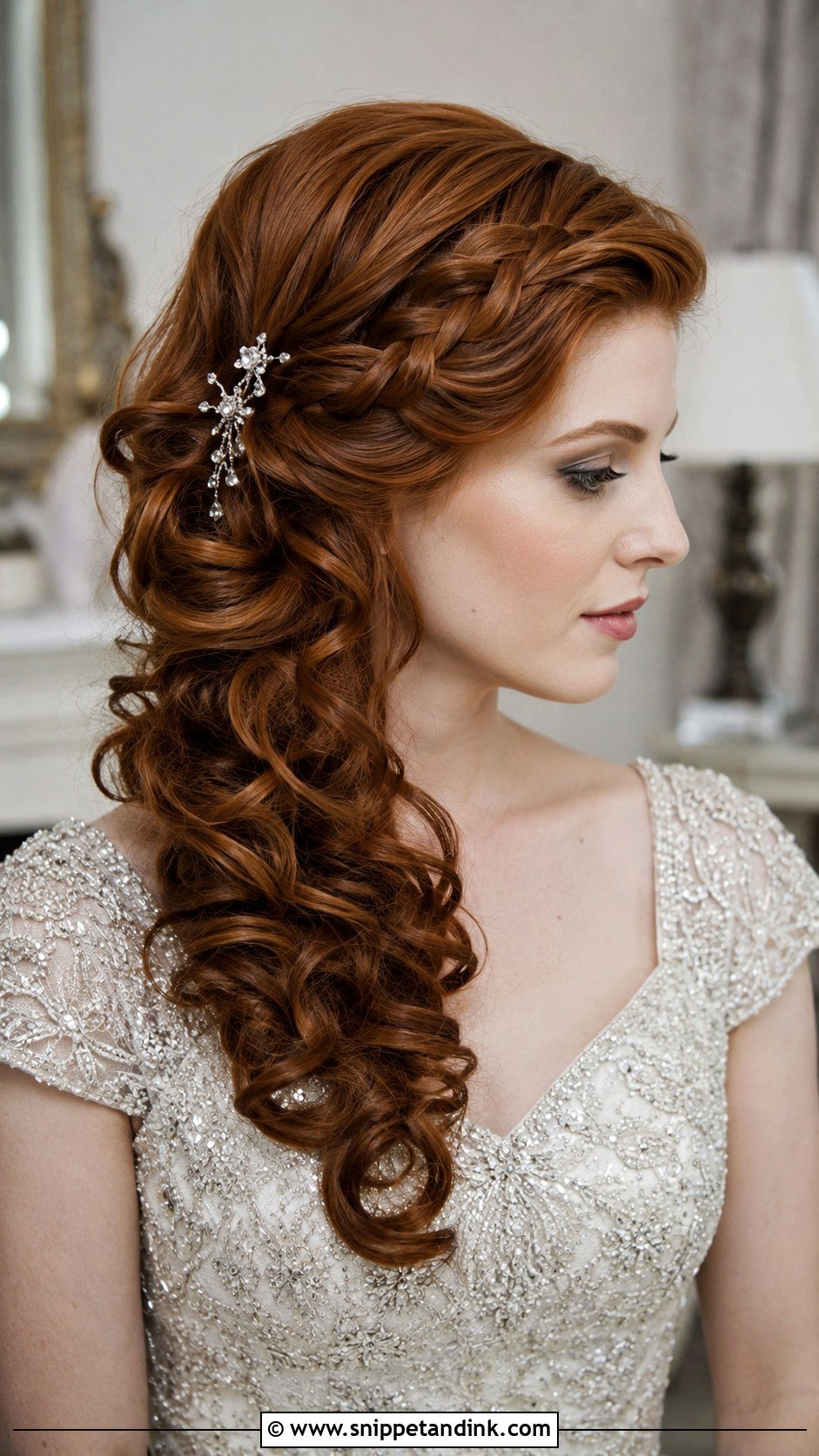
Curls swept to one side, held by a braid on the other, give a balanced old-Hollywood shape. The braid frames one side of the face while curls fall over the opposite shoulder. I set the curls first, braid the opposite side tightly against the head, and pin the curls over so the braid takes the weight. A sparkling clip or a single bloom near the braid adds detail. It needs long hair to carry the curls.
15. Braided Low Chignon
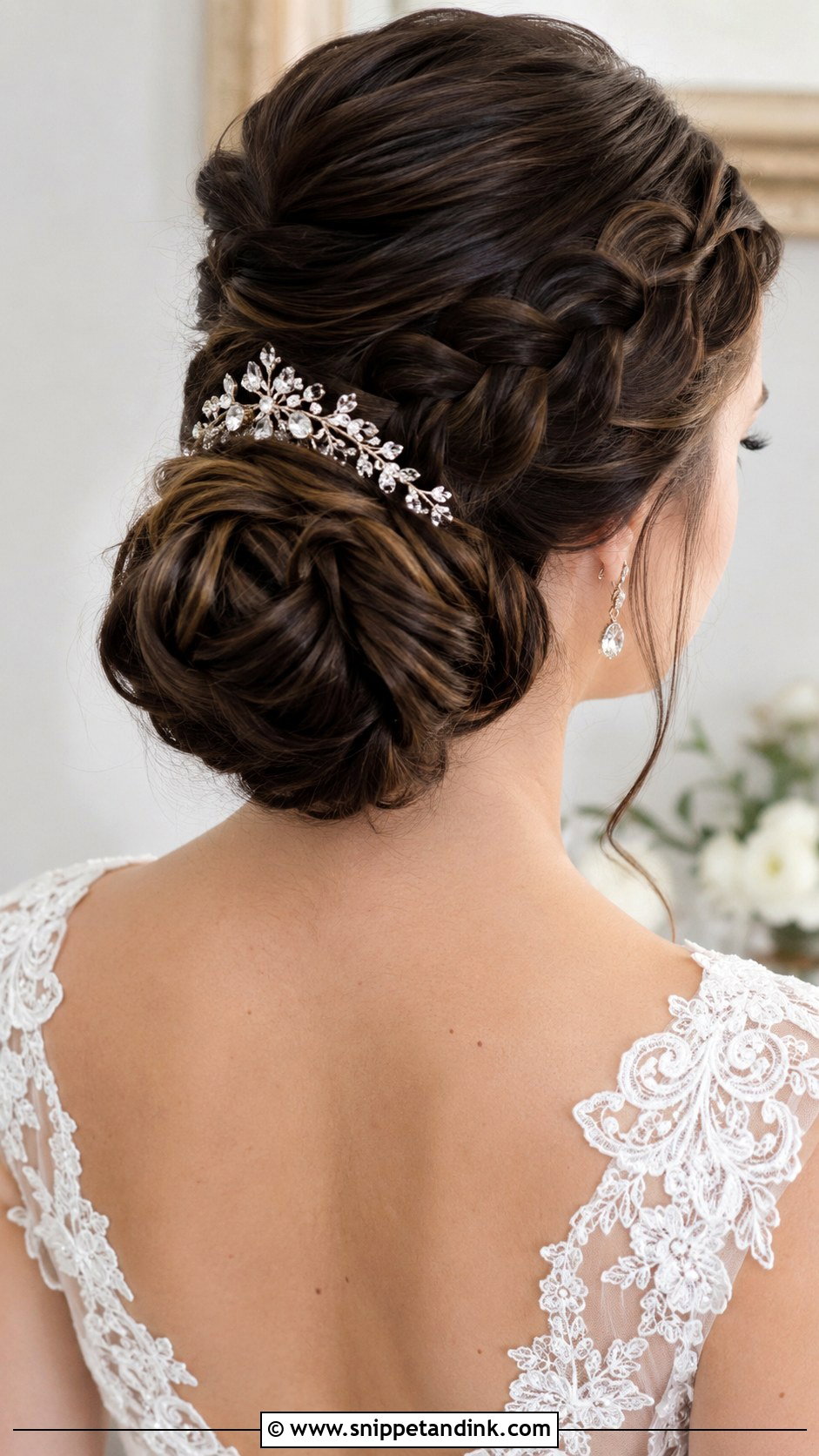
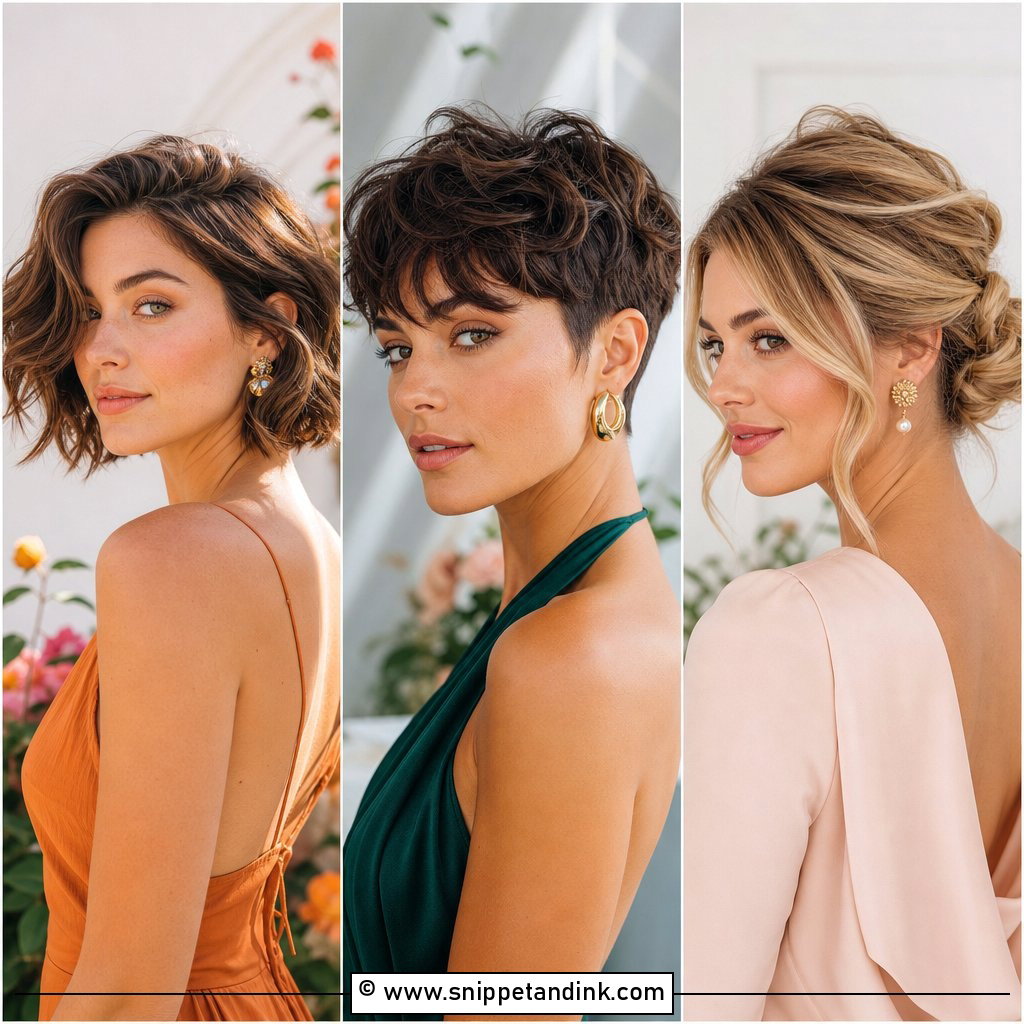
A plain low chignon gains detail and grip once braids are worked through it. It sits at the nape, which suits classic weddings, veils, tiaras and statement earrings. The braids make a simple chignon look considered, and they hold the pins securely. Sleek or with soft face-framing strands, it suits medium to long hair, and pearl pins or a jewelled comb tuck neatly into it.
16. Halo Braid With Flowers
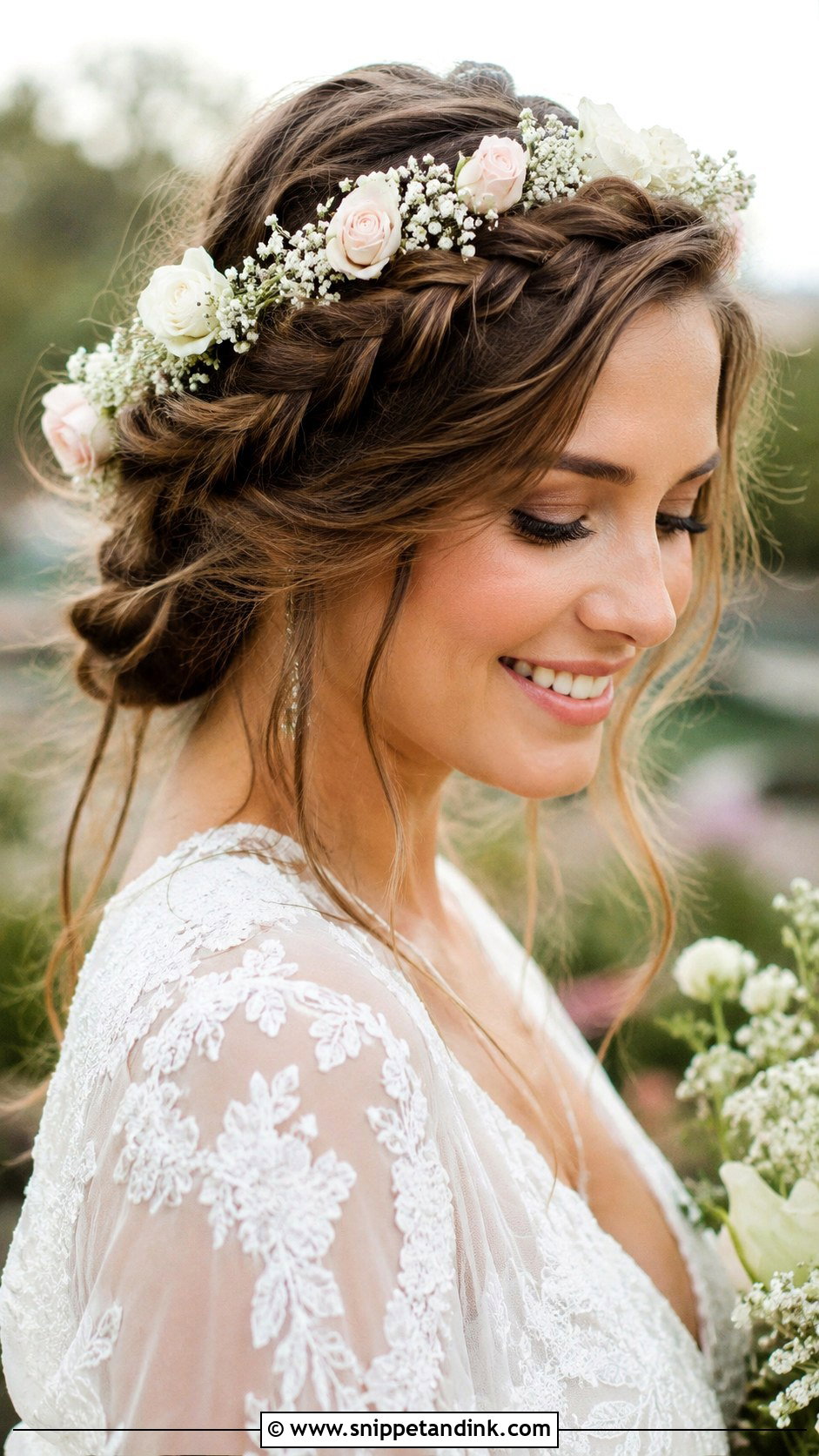
A halo braid with flowers feels storybook. Blooms tucked into the weave, baby’s breath for an airy look or roses for richer colour, tie your hair to your bouquet. It suits garden and vineyard weddings. The halo keeps hair off the neck and frames the face. I’d pick sturdy flowers, since a halo sits right in the sun and delicate petals wilt quickly against a warm head.
17. Double Dutch Braid Updo
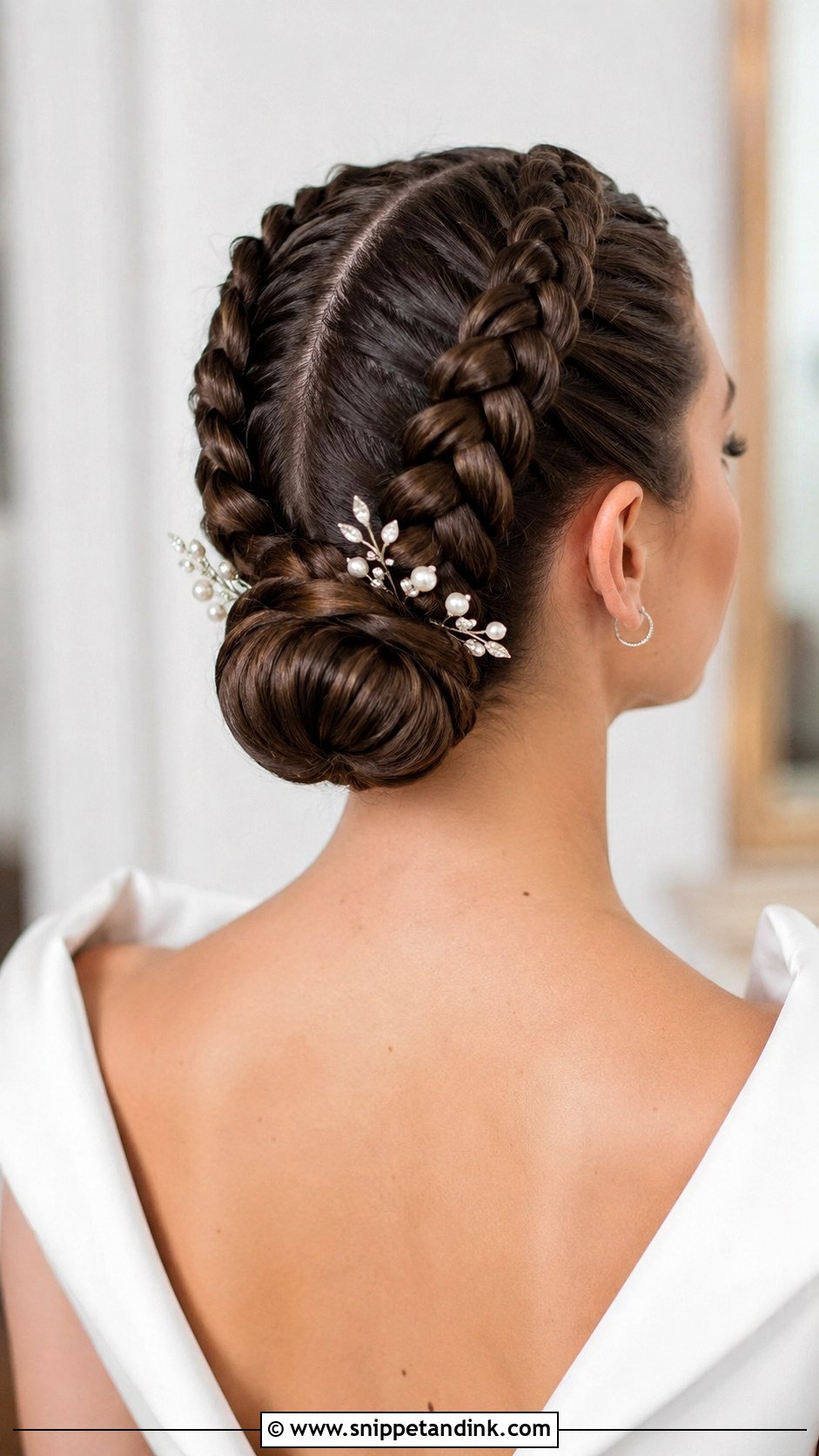
Two Dutch braids side by side make a symmetrical, bold base, and gathering them into a bun or twist at the back turns that into an updo. The raised braids add clear dimension. I part the hair dead centre first; with two braids, any wobble in the part shows. It holds through dancing and hugs. Thick or medium hair suits it best; on fine hair I braid smaller and pull the edges out more.
18. Loose French Braid Down
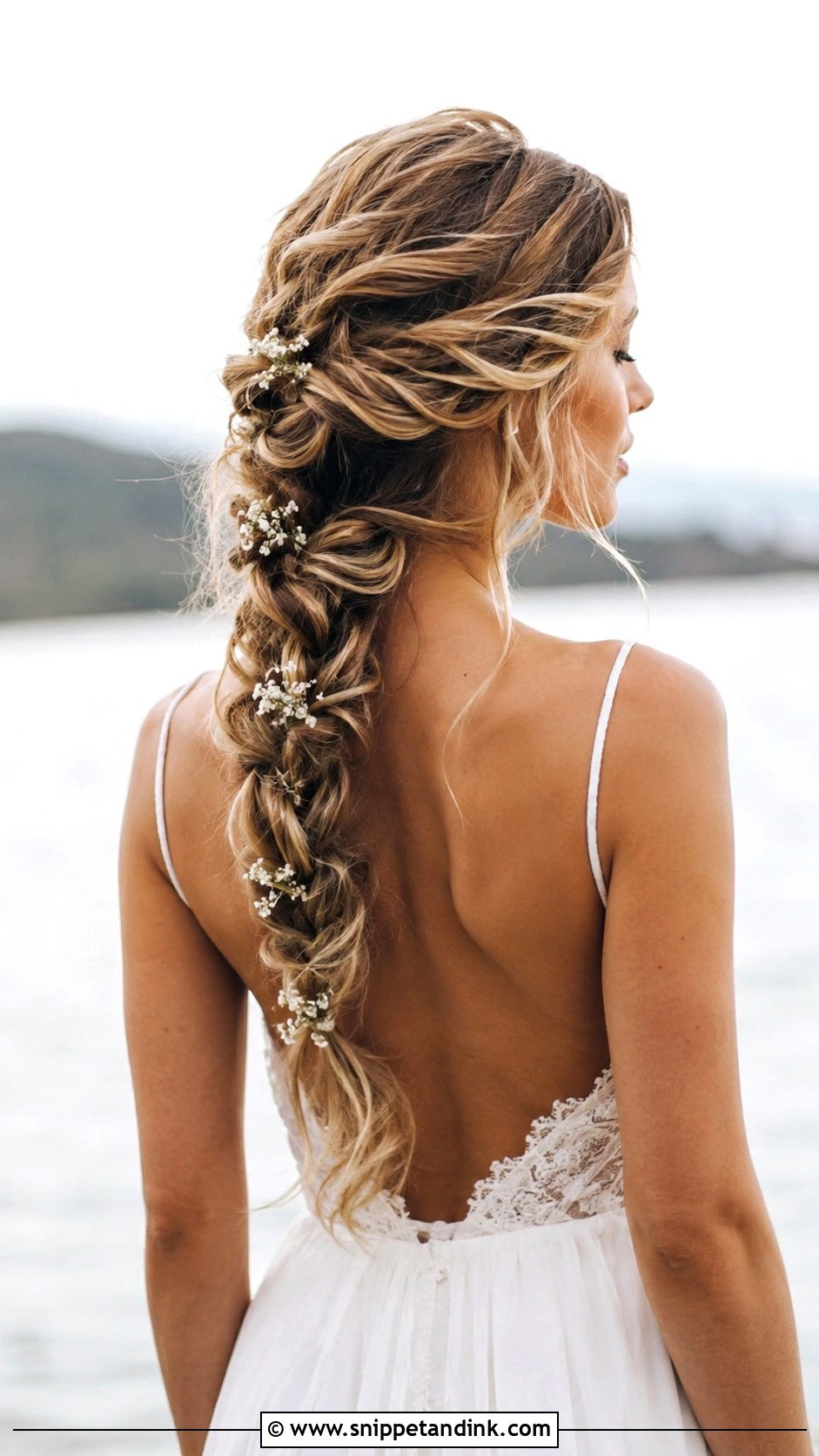
A loose French braid down the back is soft and relaxed: started at the crown, woven to the ends and pulled wider for volume. Wispy strands around the face add softness. It’s comfortable for outdoor, beach and bohemian weddings. Small flowers or pearl pins add bridal detail. Long, wavy hair suits it best. The ends of a braid fray as the day goes on, so I curl the tail slightly to hide that.
19. Braided Updo With Tendrils
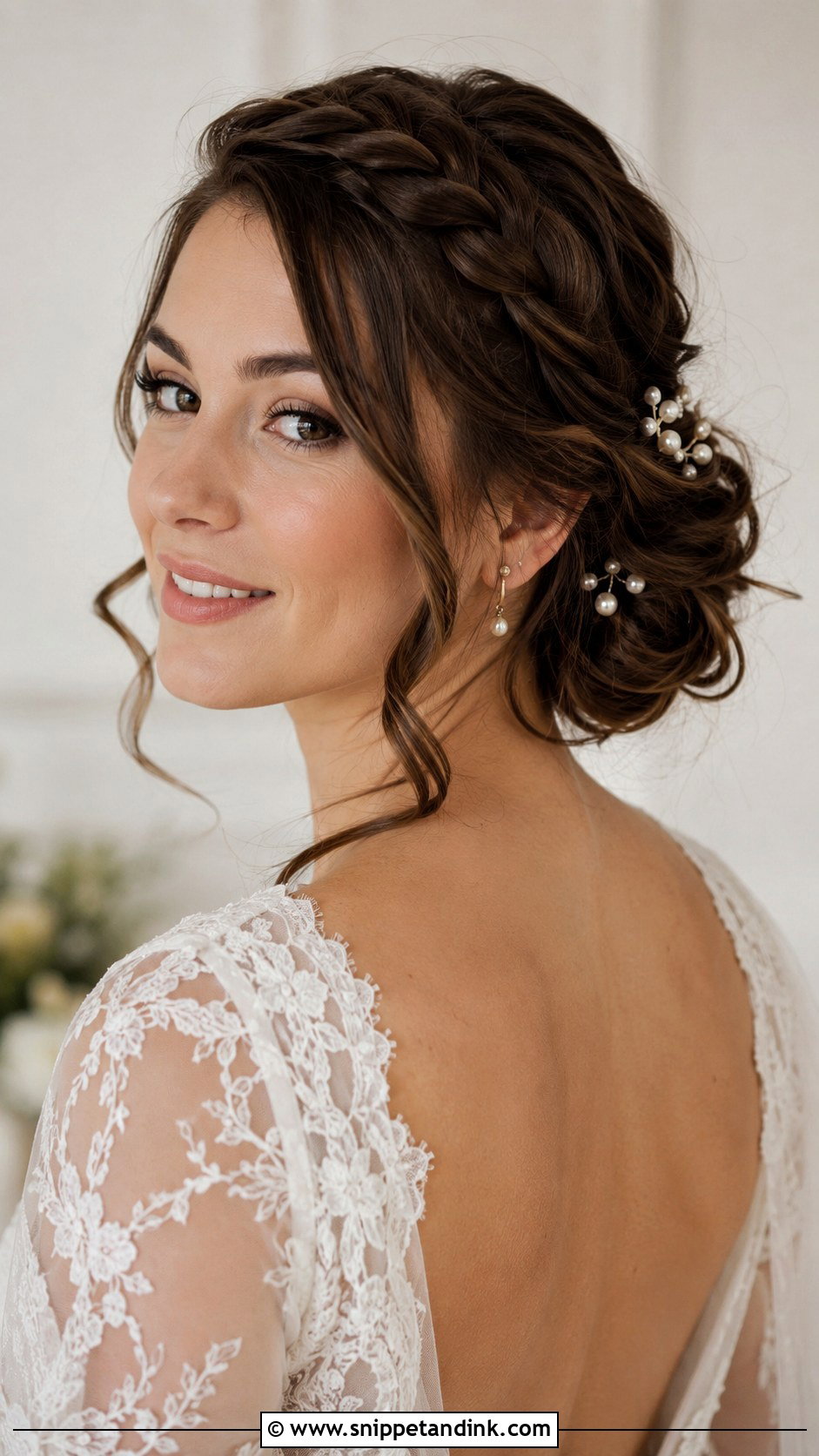
Tendrils change a braided updo from formal to tender. The braids gather at the back, and soft strands fall around the cheeks and neck. The common mistake is leaving them too long or too many; I keep two or three short pieces per side and curl them so they don’t hang flat. Straight tendrils suit a modern look. It suits formal and semi-formal weddings and medium to long hair.
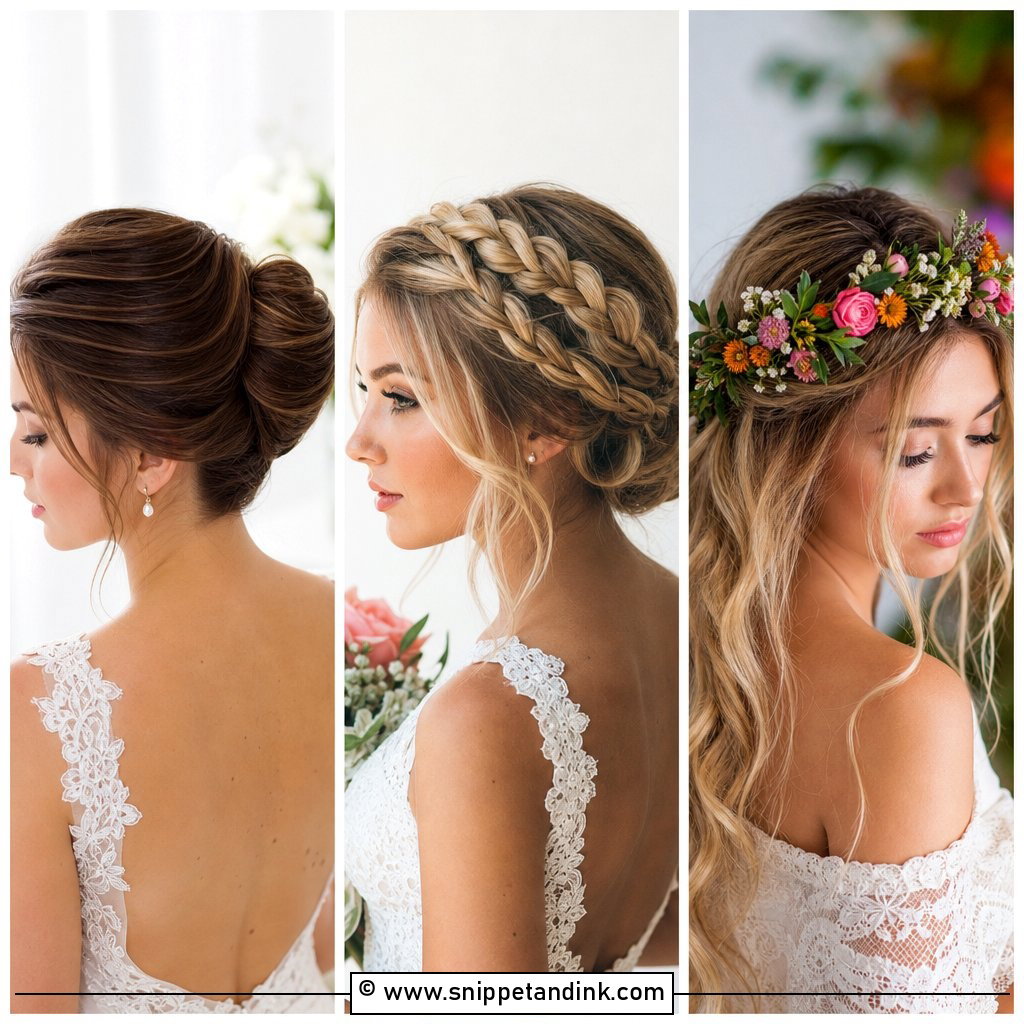
20. Grecian Goddess Braid
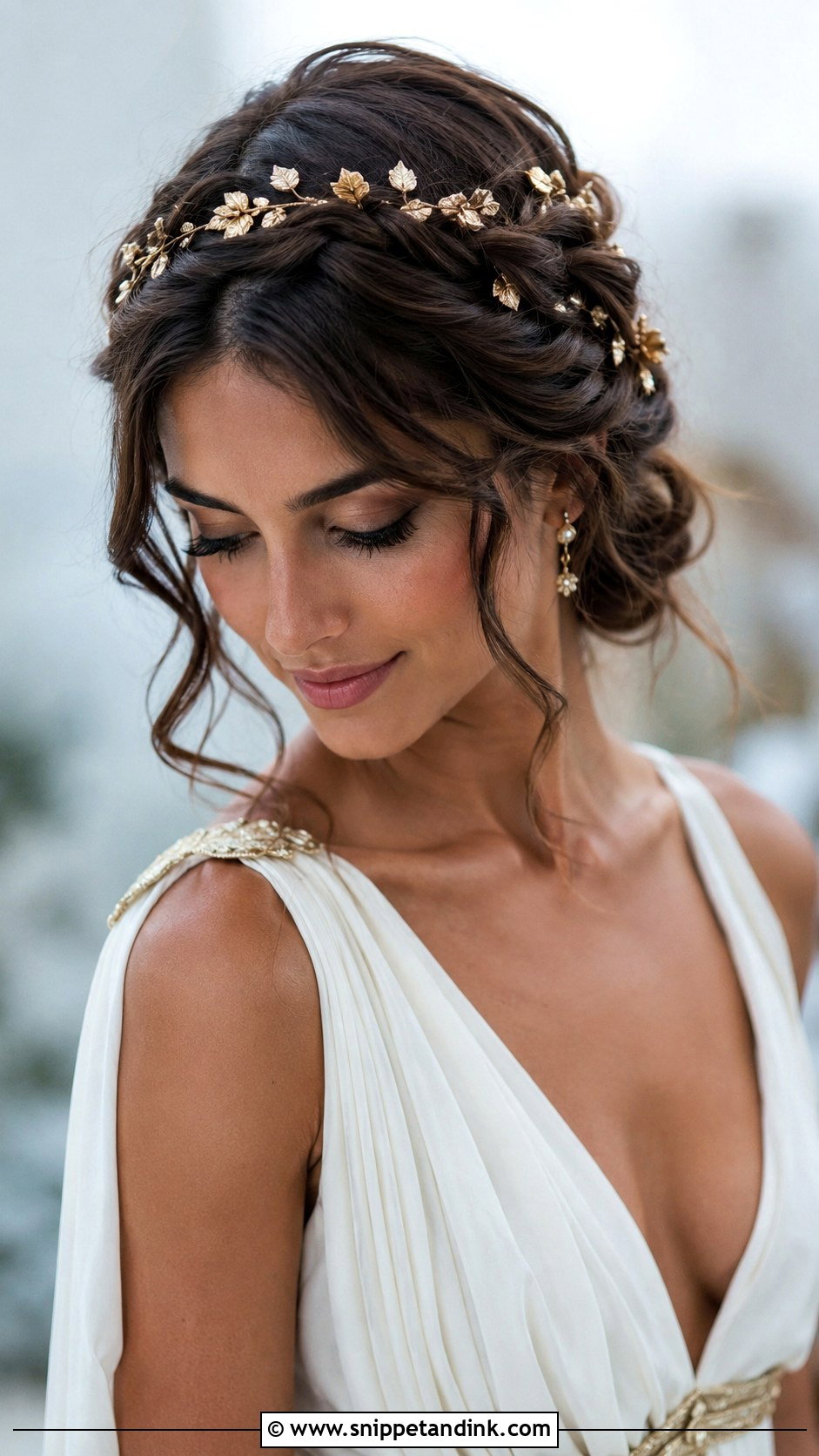
The Grecian goddess braid drapes plaits around the head and gathers them low, often over a thin headband or elastic that sits hidden under the braid. It looks sculpted and flowing at once, and pairs naturally with Grecian-style gowns and sunny outdoor ceremonies. Soft tendrils and waves complete it. Gold accents or fresh flowers can be added. Long hair carries it best.
21. Braided Bun With Veil
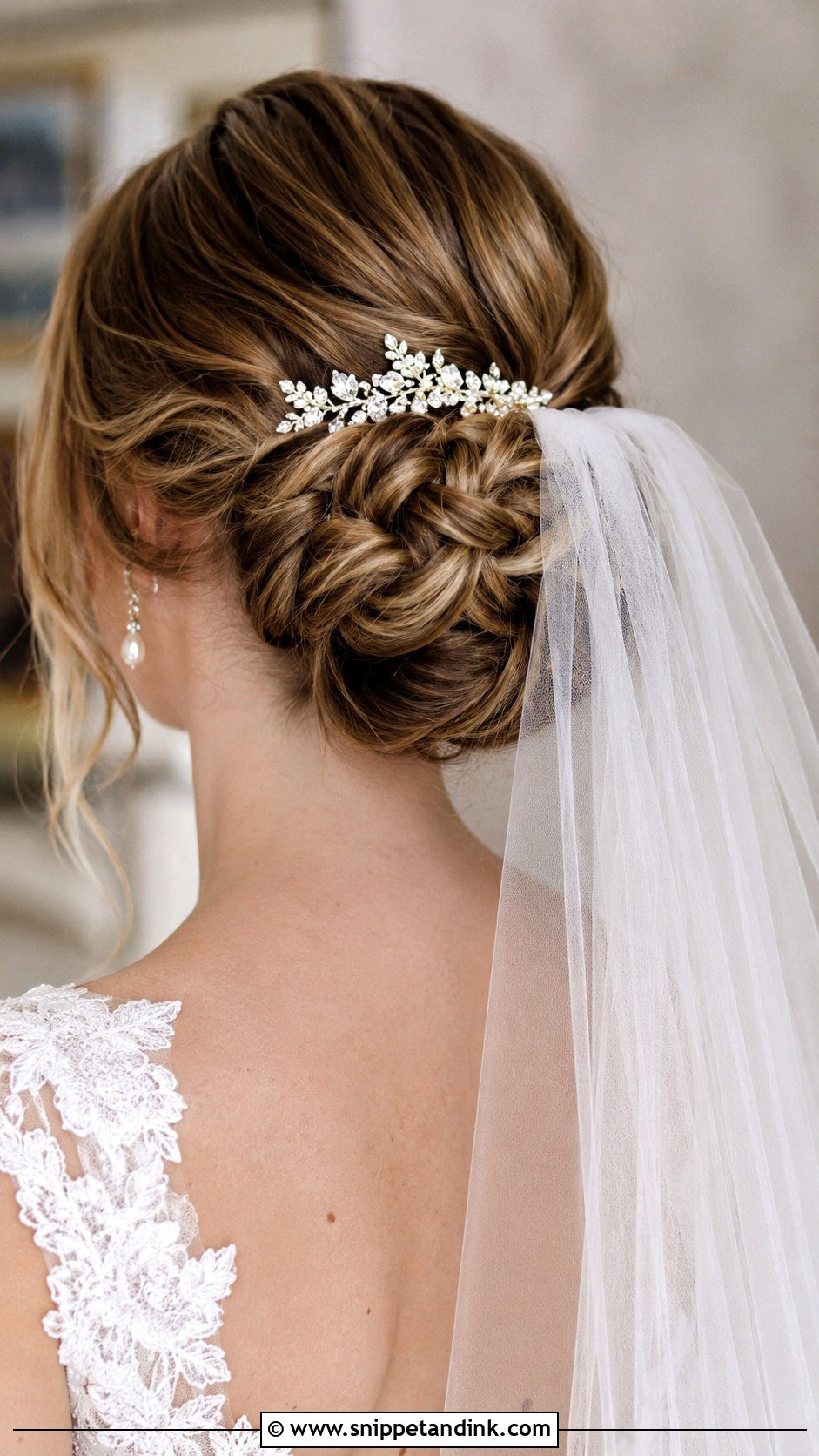
A braided bun gives a veil a firm anchor. The woven texture grips the comb, so the veil stays put during the ceremony and through hugs afterwards. Low at the nape suits a cathedral veil; higher suits a shorter, modern veil. I slide the comb in at an angle against the braids rather than into the loose hair. Pearl pins or a jewelled comb can add detail. Medium to long hair works.
22. Cornrow Braided Updo
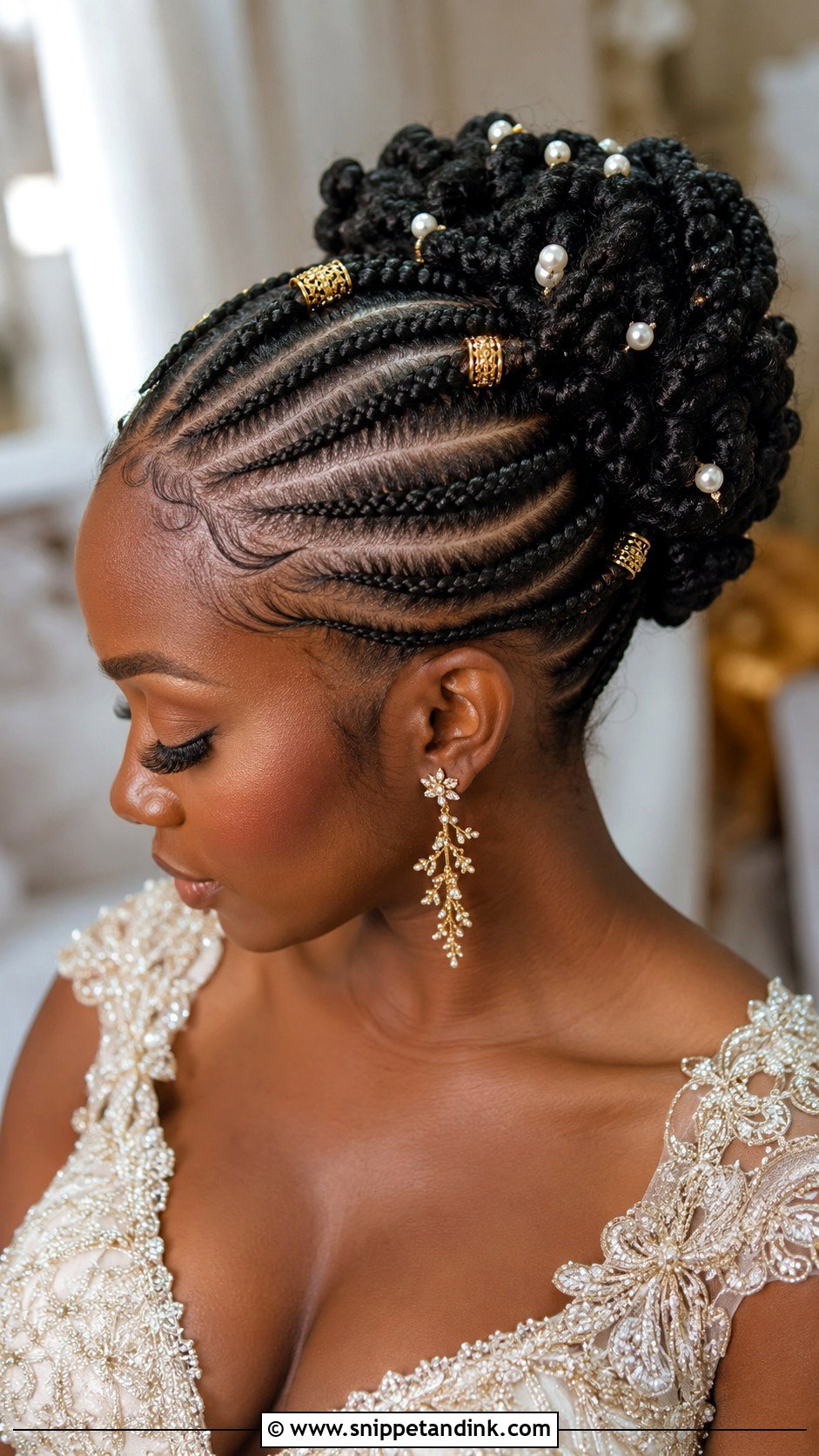
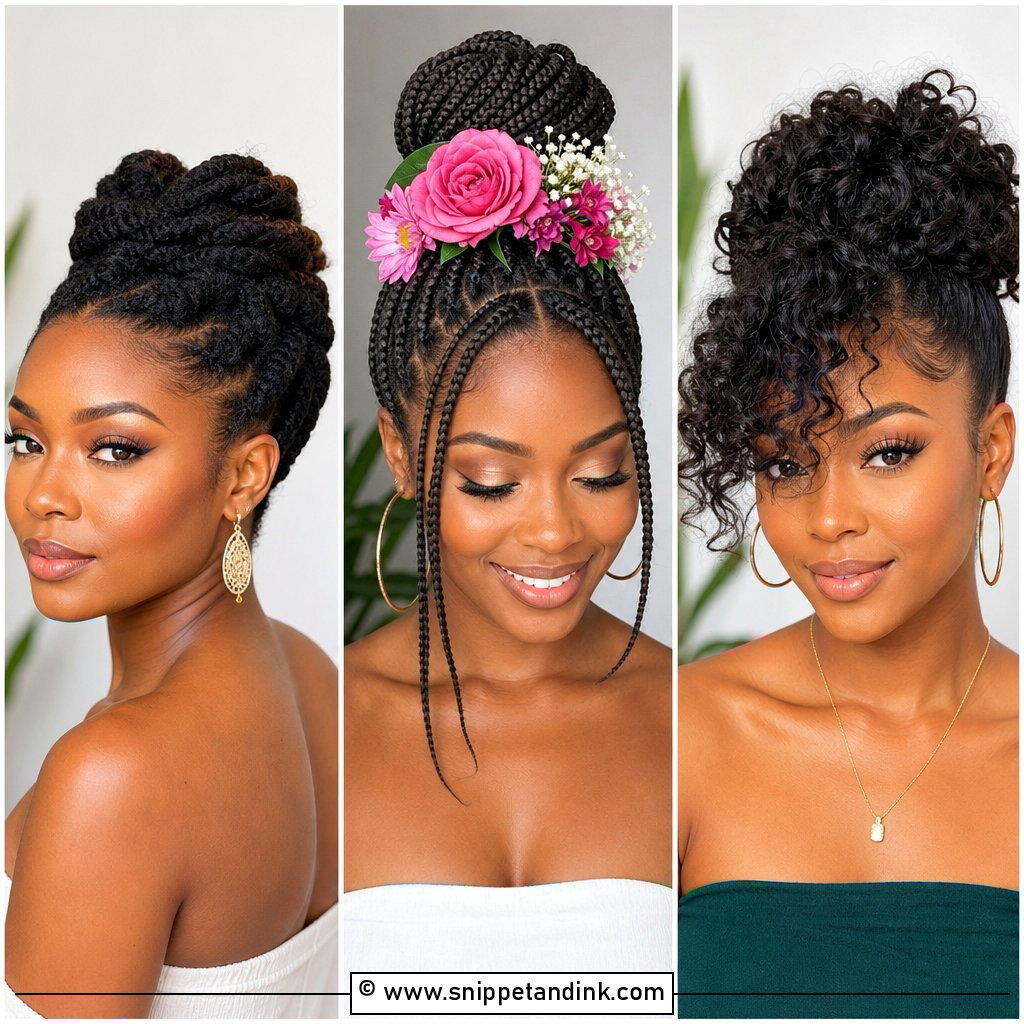
Cornrows are braided close to the scalp in defined lines, and gathered into an updo they show off precise, artistic patterns. They hold firmly for days, not just hours, through dancing and hugs. This style is usually done by a specialist braider the day before, since it takes time. Pearl pins, gold cuffs or fresh flowers suit it, as do formal and cultural weddings. Ask your braider about tension at the hairline so the style is comfortable.
23. Twisted Halo With Braids
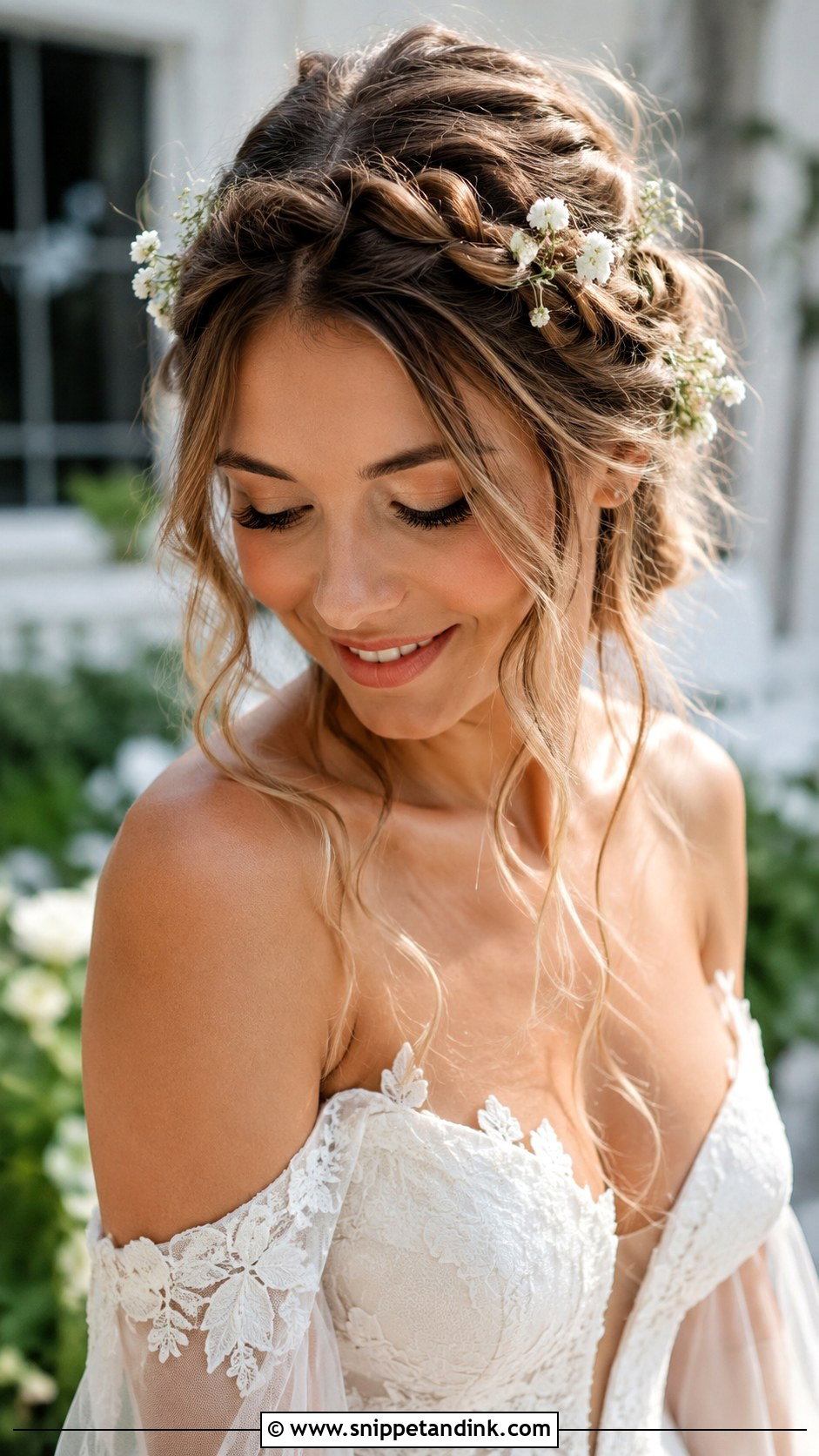
Gentle twists combined with small braids create a soft halo with layered texture. It suits boho, garden and outdoor weddings and keeps hair off the neck. I gently pull the twists and braids for volume after pinning. Small flowers, pearl pins and wispy tendrils near the face complete it. Medium to long hair suits it.
24. Braided Mermaid Style
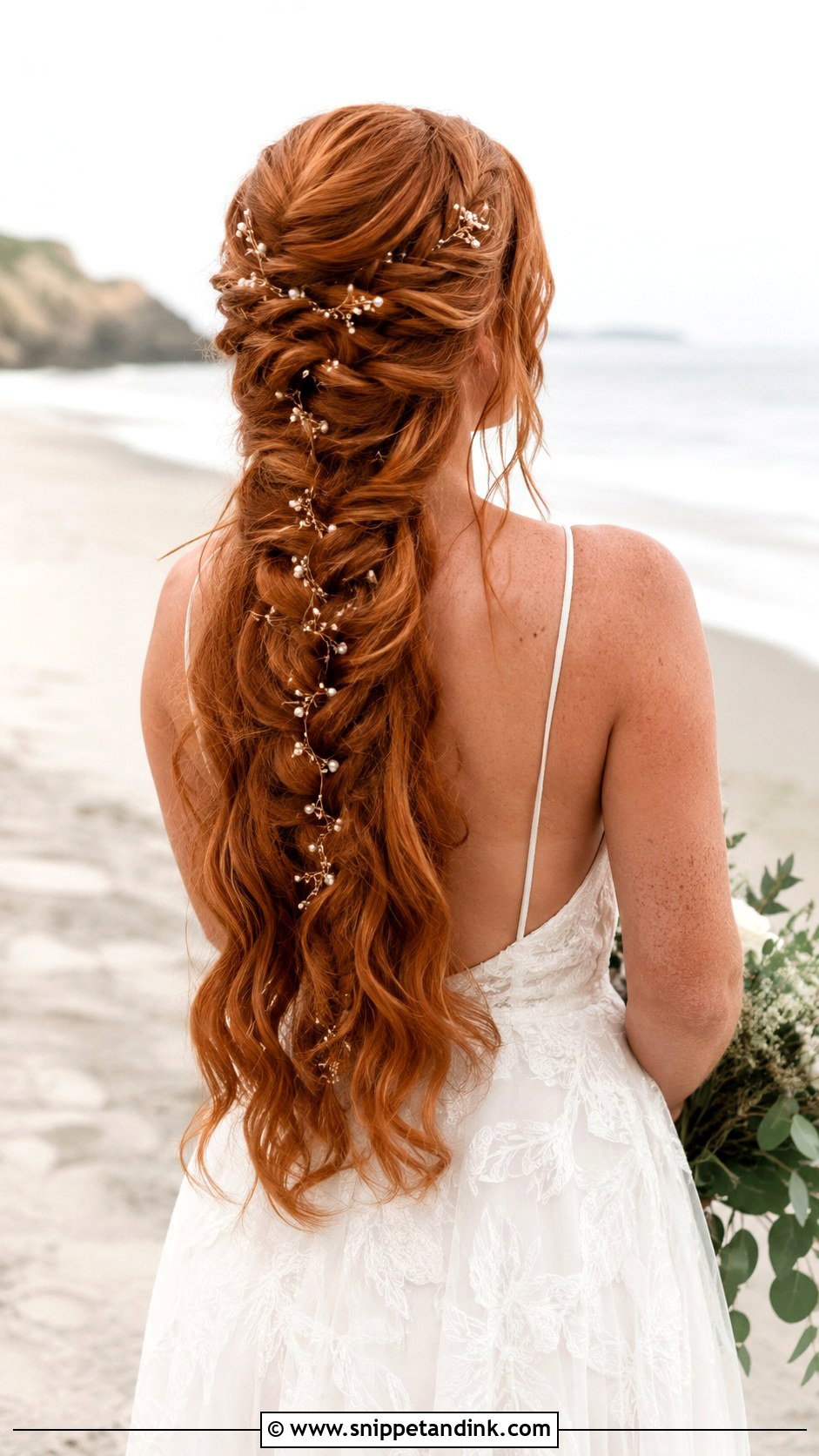
The braided mermaid style flows long down the back, mixing loose waves with knotted or woven plaits. It celebrates length and movement. I braid sections loosely and let them merge into curls, pinning underneath so the shape stays together. Pearls, flowers or sparkling pins add glamour. It suits beach, garden and bohemian weddings, especially for brides with plenty of length. Extensions are common for this one if you’d like more volume.
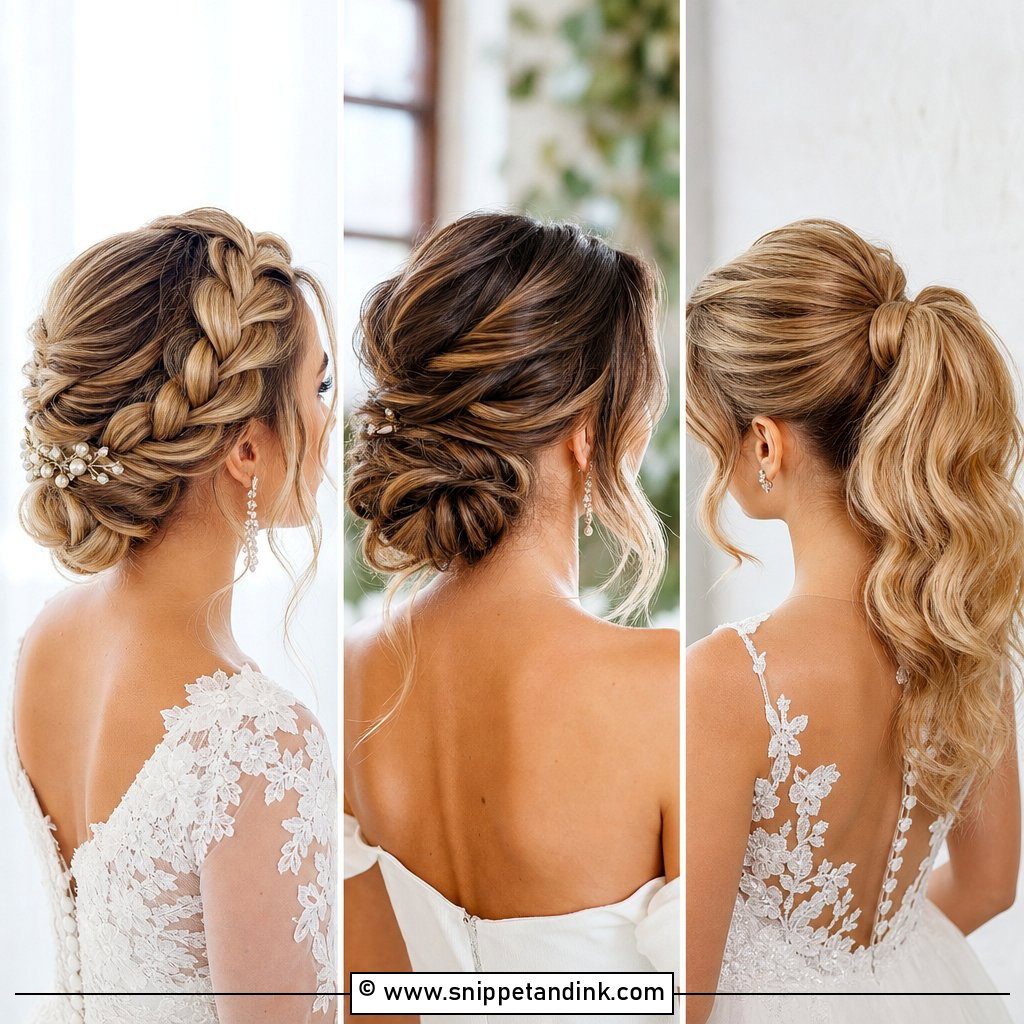
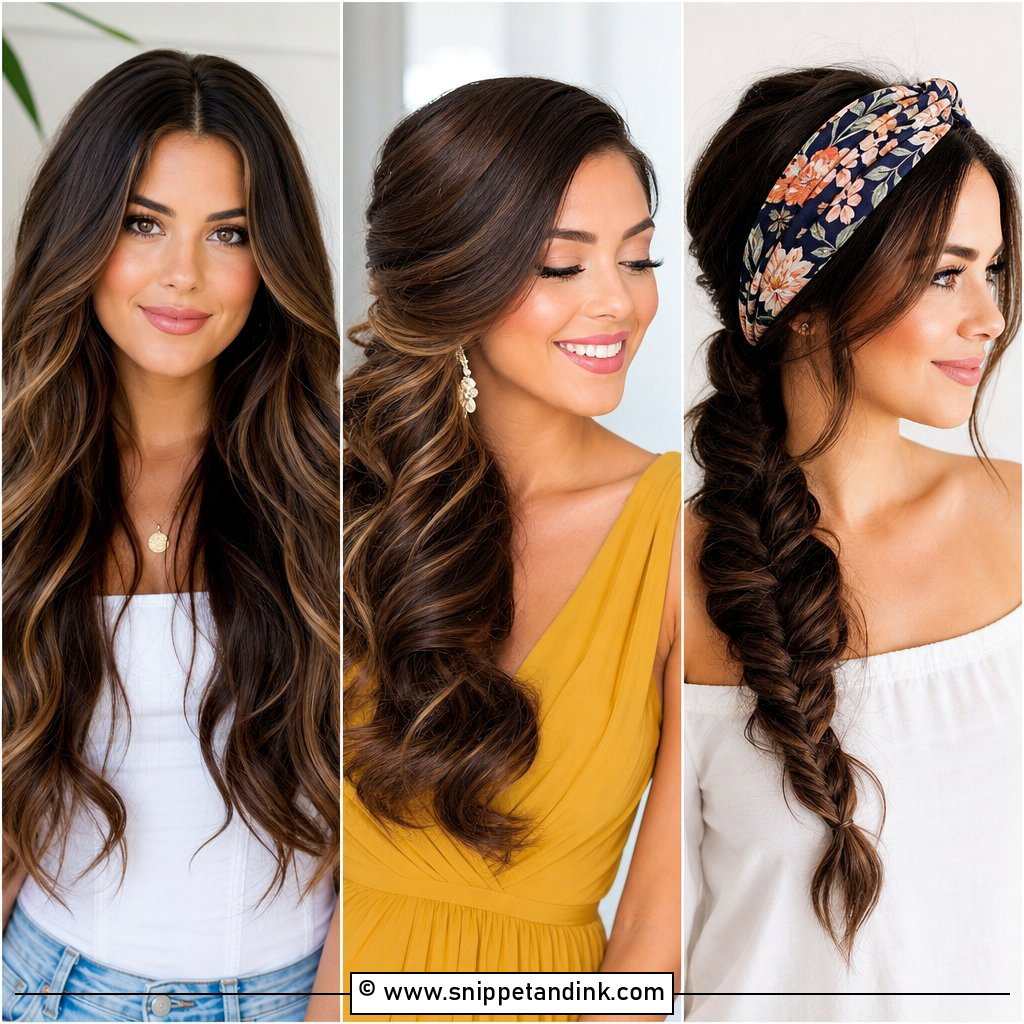
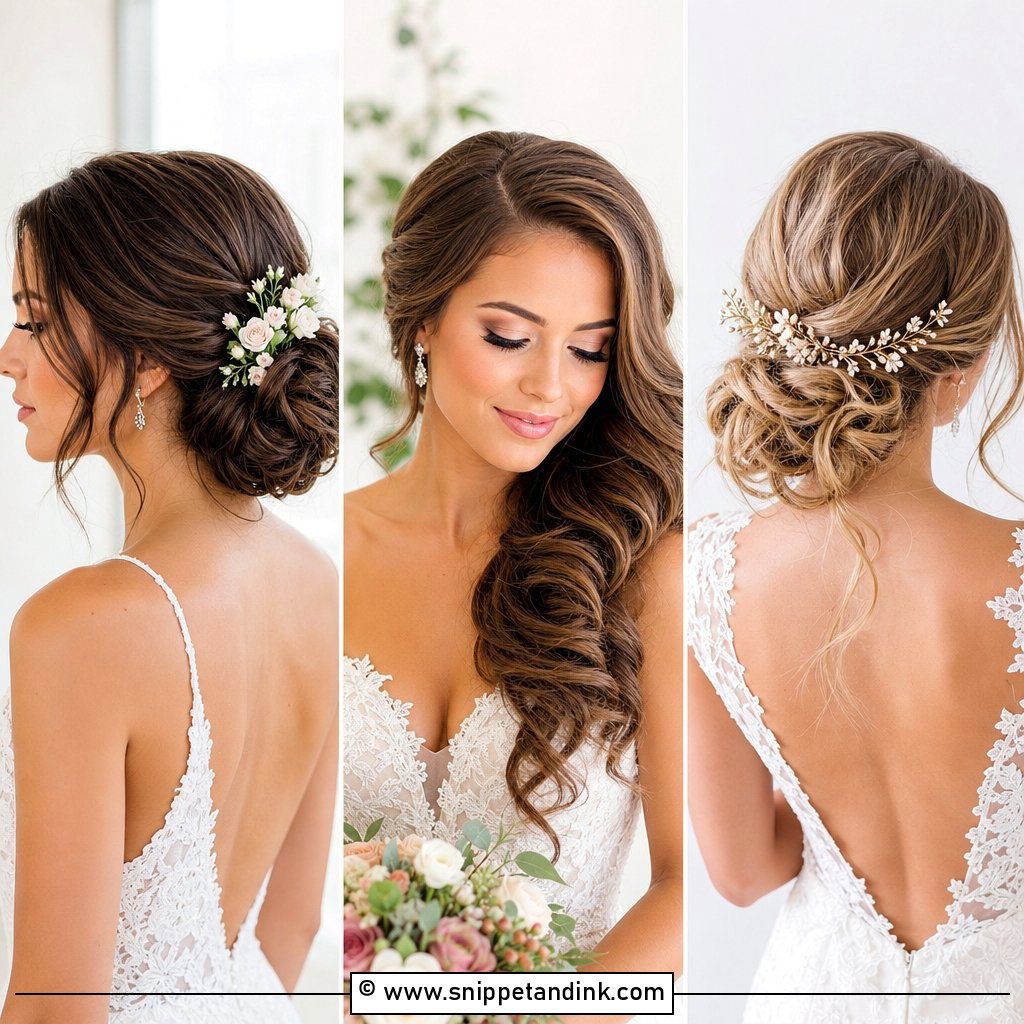
25. Accented Braid With Hair Vine
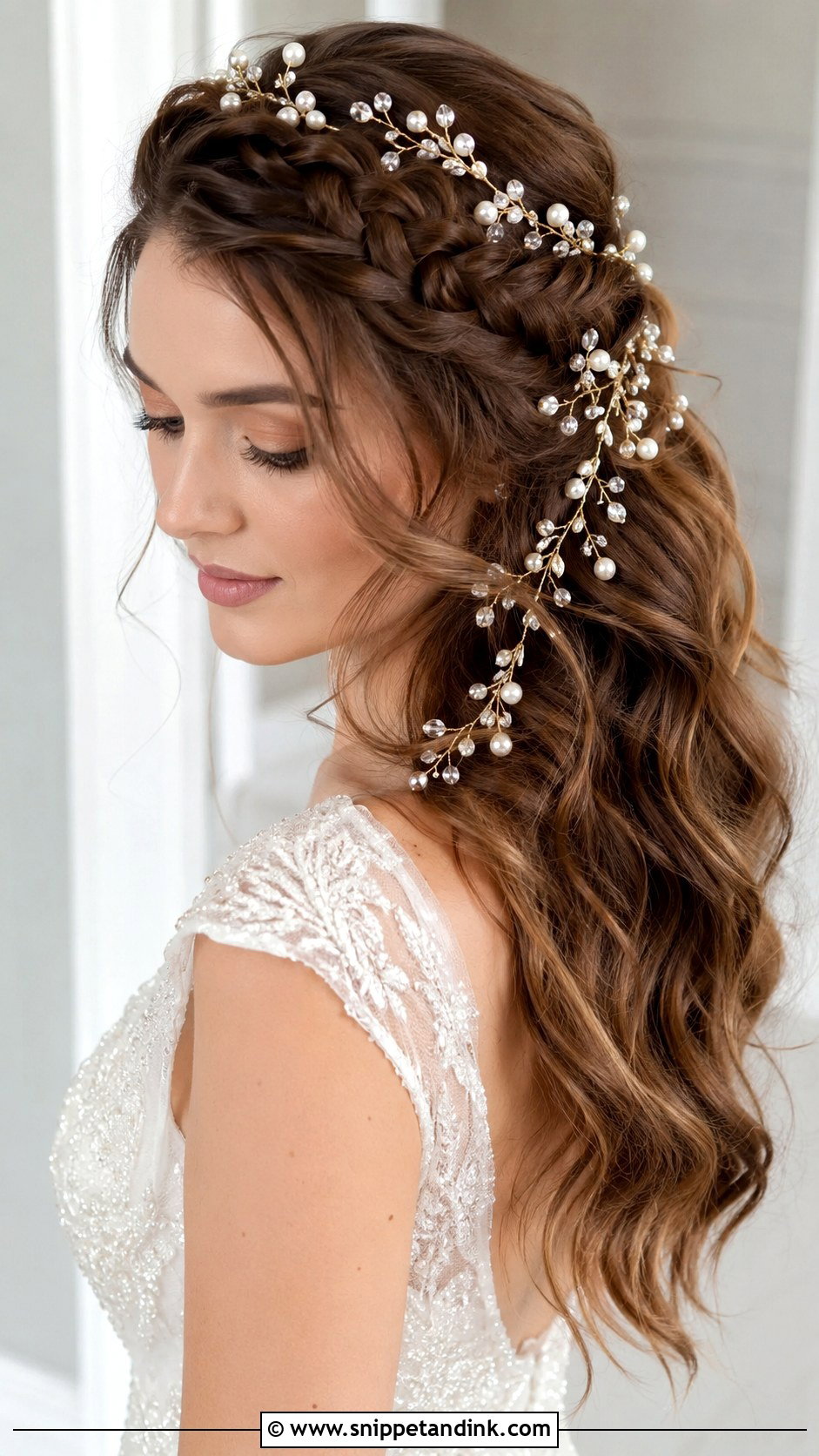
A hair vine threaded through a braid adds sparkle without a tiara. The accented braid with hair vine mixes woven texture with metallic or pearl detail. I weave the vine into the braid as I go, not on top afterwards, so it can’t slide. As a crown, a side sweep or down the back, the vine can echo your jewellery and gown. Medium to long hair suits it.
Undoing a Braided Updo at Midnight Without Breakage
After a long day, it’s tempting to tug everything out at once. That’s how hair snaps. A braided updo can have dozens of pins in it, and they need to come out gently, in the reverse order they went in.
- Remove accessories and the veil first.
- Find the pins by feel and slide them out in the direction they went in; don’t pull them against the braid.
- Undo the braids from the bottom up with your fingers, not a brush.
- Brush out gently from the ends, working upward, with a wide-tooth comb if there’s lots of hairspray.
- Wash and condition the next day.
A sore scalp after a tight updo is normal, and it usually eases within an hour or so once the pins are out and the hair can move. A gentle scalp massage with your fingertips helps. If you know you have a sensitive scalp, tell your stylist at the trial so she can use fewer pins and looser braids at the crown, where tension is felt most.
Ask a friend or your partner to help with the back. Cornrows and specialist braids are a separate case: leave them in until your braider or a calm day to take them down properly.
Which Braid Will Your Hair Really Hold?
From regal crowns to flowing mermaid plaits, braids give you texture, structure and a style that lasts. Your hair type, dress and venue narrow the field quickly. Personal touches like fresh flowers, pearl pins or a hair vine make it yours. Save the few you like most, share them with your stylist, and let a trial show which ones your hair holds best.
You'll Like These Ideas:


Leave a Reply