
A bridal face has three jobs at once: it has to look like skin across a dinner table, read clearly in a photograph taken from ten meters away, and still be in place after crying, kissing and dancing. Most of the styles I do now start from real-looking skin and build out from there. Some brides want a barely-there glow; others want sculpted cheeks, smoky eyes or a strong red lip. Your dress, venue, season and skin type all narrow the field. Below are twenty directions, with the detail I’d adjust for each so you can see which ones genuinely fit you.
Your Ceremony Light Narrows the List Quickly
Before a bride shows me a single photo, I ask where and when she’s getting married. Light changes makeup more than anything else, and it rules out half of these styles before we start.
Bright midday sun outdoors is harsh: it shows texture, flattens soft shadow and turns heavy foundation cakey. Natural, dewy, peach and boho styles cope with it best. A church or a dim barn needs more definition than you’d think, because low light swallows soft eye makeup. A candlelit or evening reception lets you go further with smoke, gold and full glam, and that’s also where flash photography does the most damage to a base with the wrong powder.
Then think about the dress. A heavily embellished or strongly structured gown can carry a stronger face. A plain slip or a very soft, floaty dress usually looks best with a quieter one. If your hair is coming down in loose waves, a strong lip and soft eyes balance it; a sleek updo leaves room for a sharper liner.
1. Natural Bridal Makeup
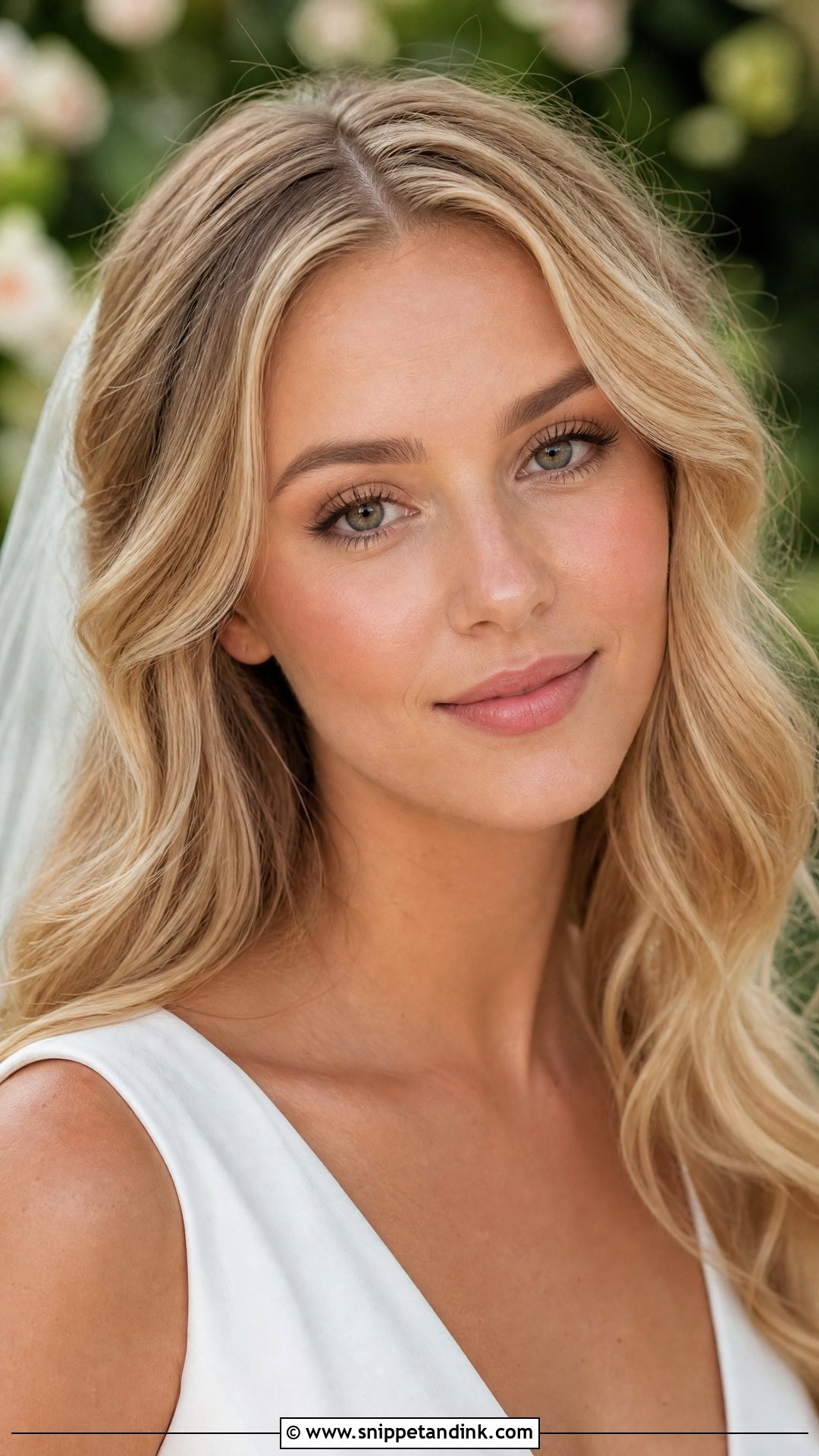
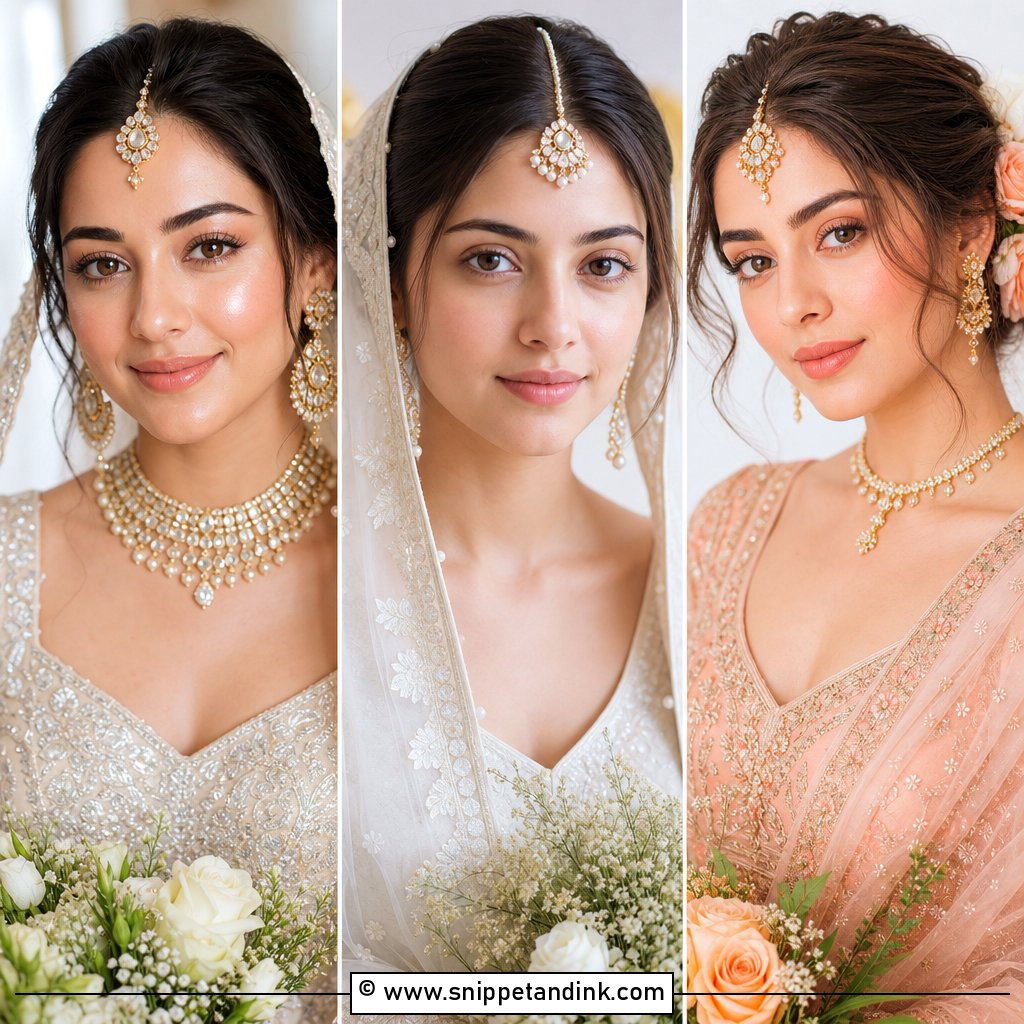
Natural doesn’t mean less work; it means the work is hidden. I spot-conceal redness, blemishes and under-eye shadow rather than covering the whole face, so real skin shows through. Brown mascara, brushed-up brows, a peach or pink cream blush and a satin nude lip. A touch of champagne highlight on the cheekbones gives glow without shine. Brides who rarely wear makeup feel most like themselves in this, but it needs the most careful prep and a good setting spray, because there’s no heavy base to hide wear later in the day.
2. Soft Glam Bridal Makeup
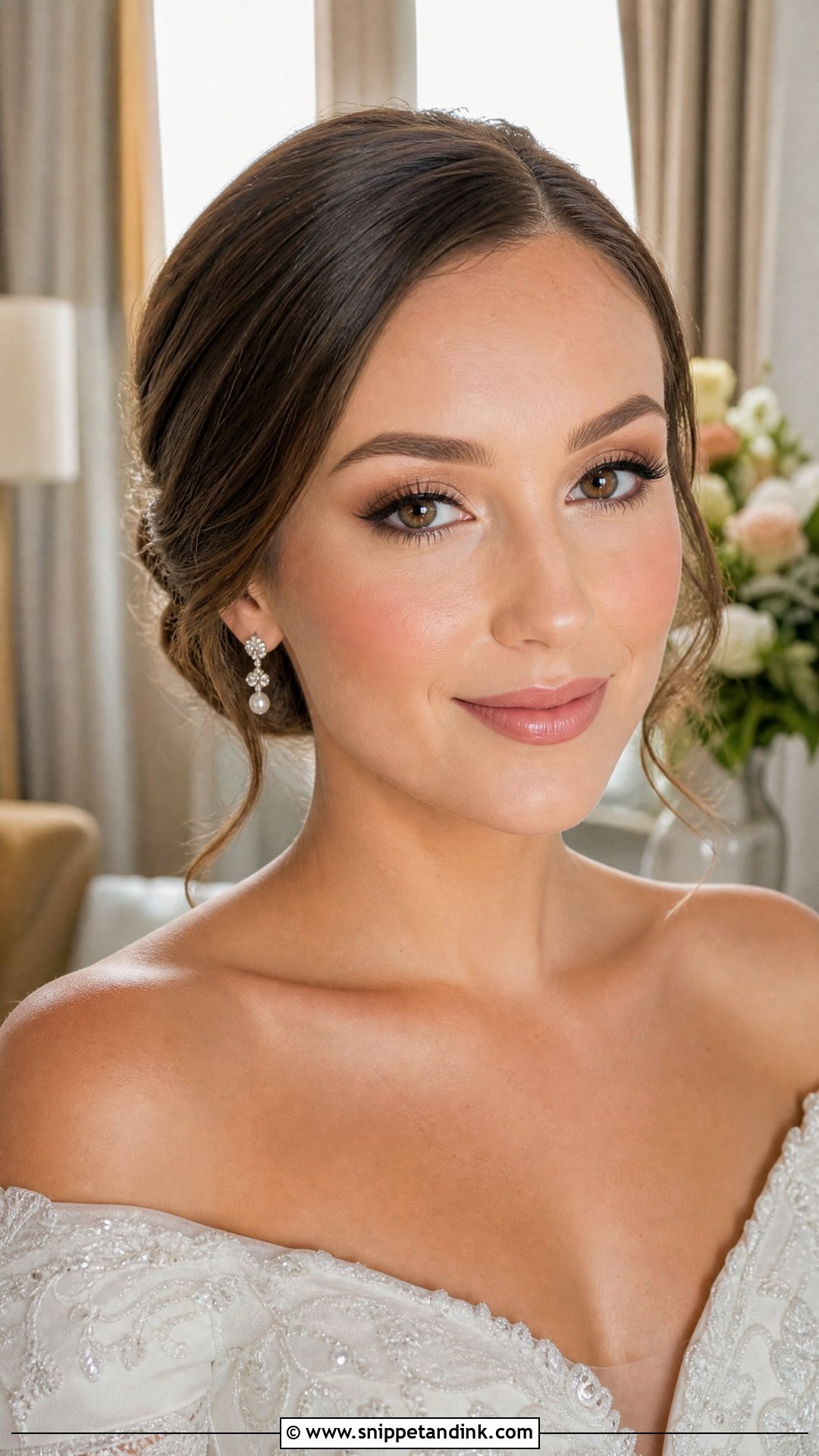
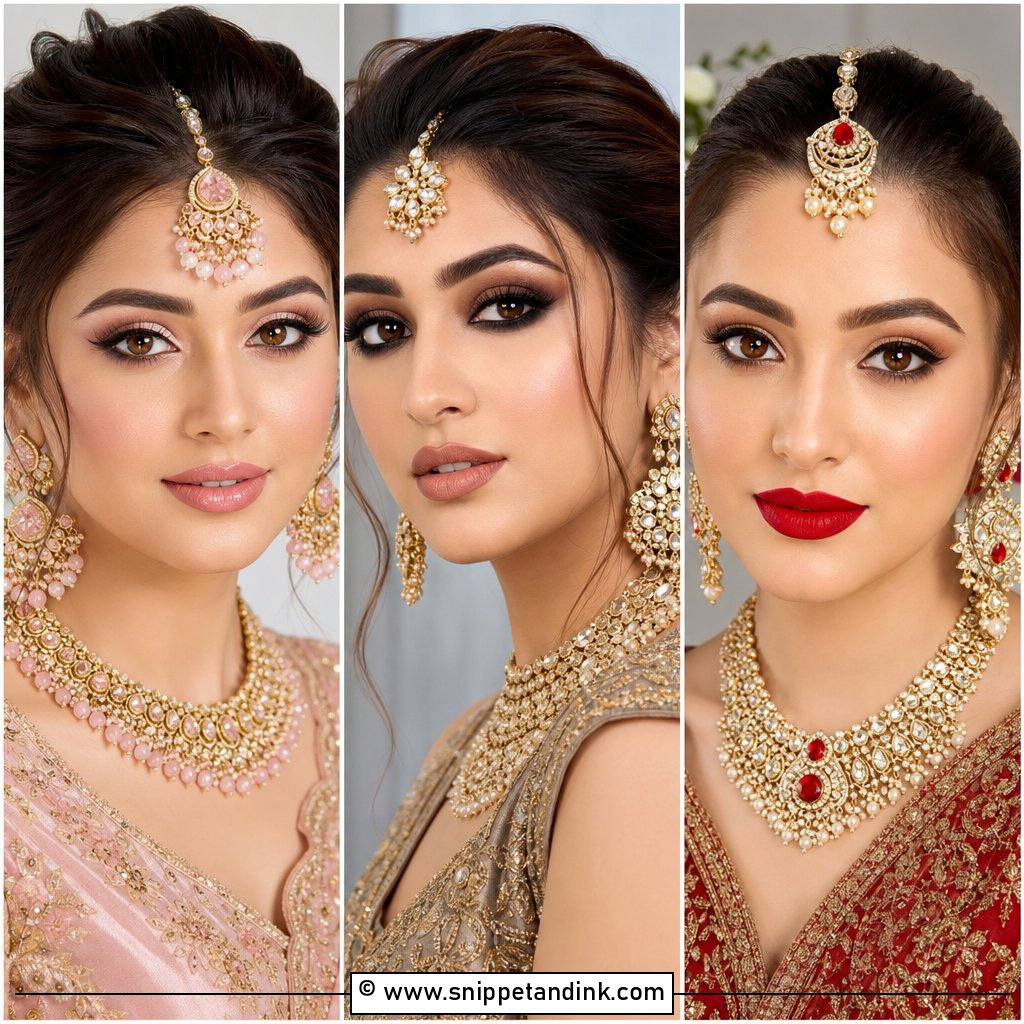
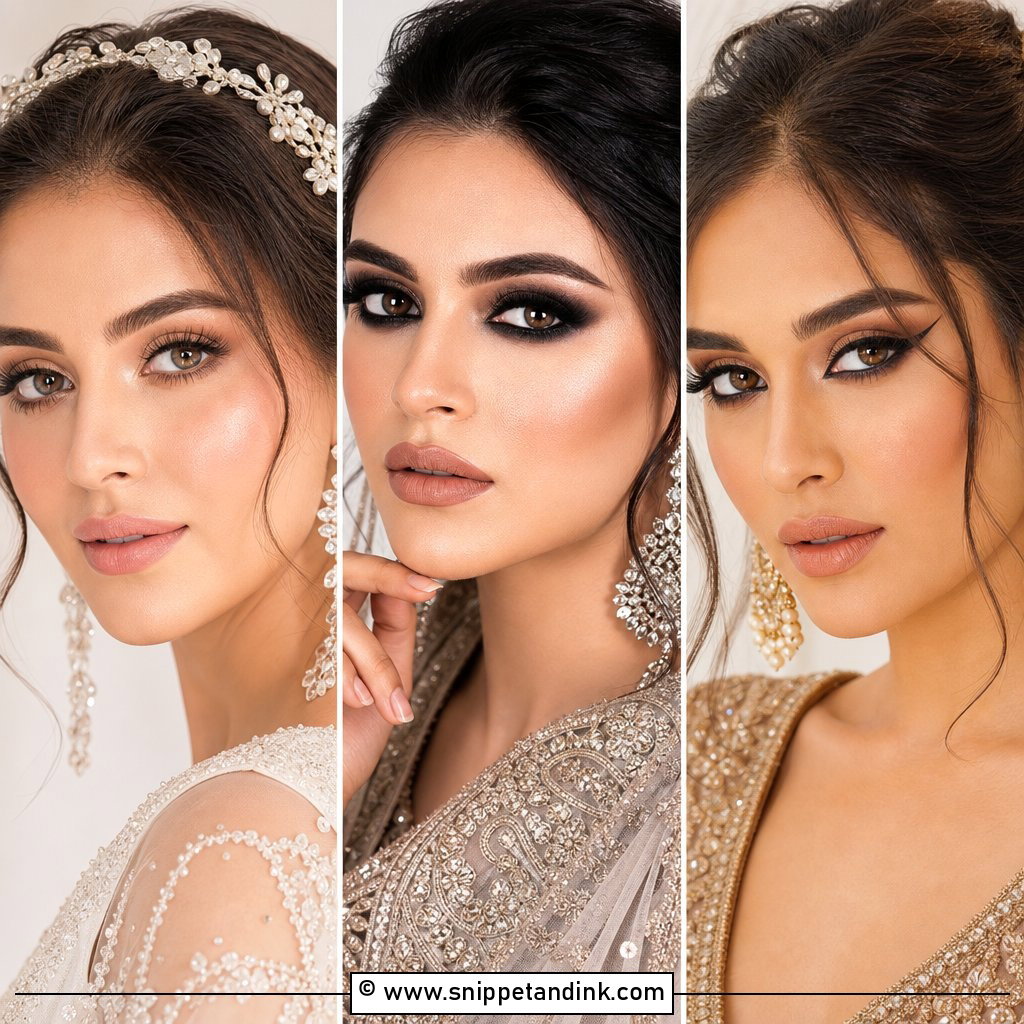
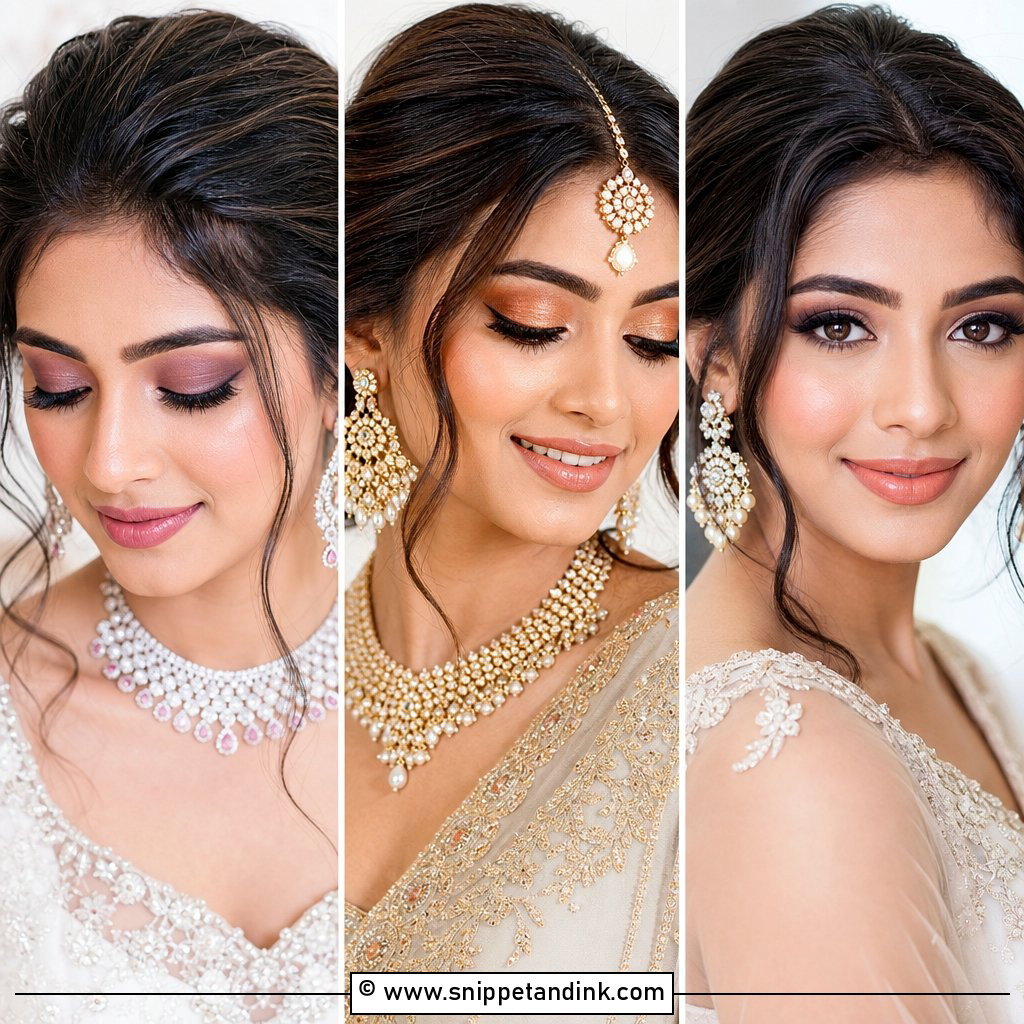
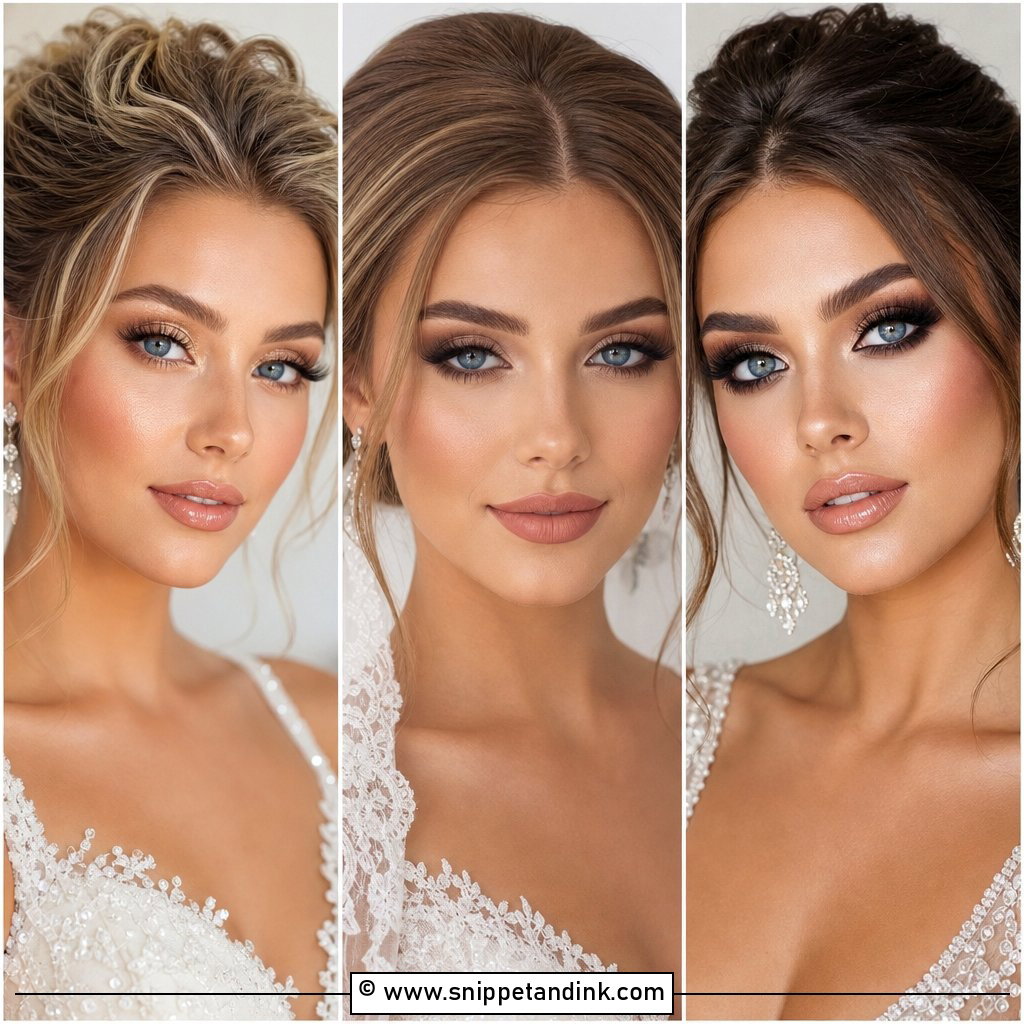
If I had to name the look I’m booked for most, it’s this one. Neutral shadow, blended liner, fluttery lashes, softly sculpted cheeks and a nude or rosy lip, over skin that’s satin or softly dewy depending on skin type and season. It reads well on camera because every feature gets a little more than daily makeup without any one shouting. Where it goes wrong: shimmer that’s too chunky, contour that’s drawn rather than diffused, and lashes so long they shade the eyes. Keep those three restrained.
3. Dewy Bridal Makeup
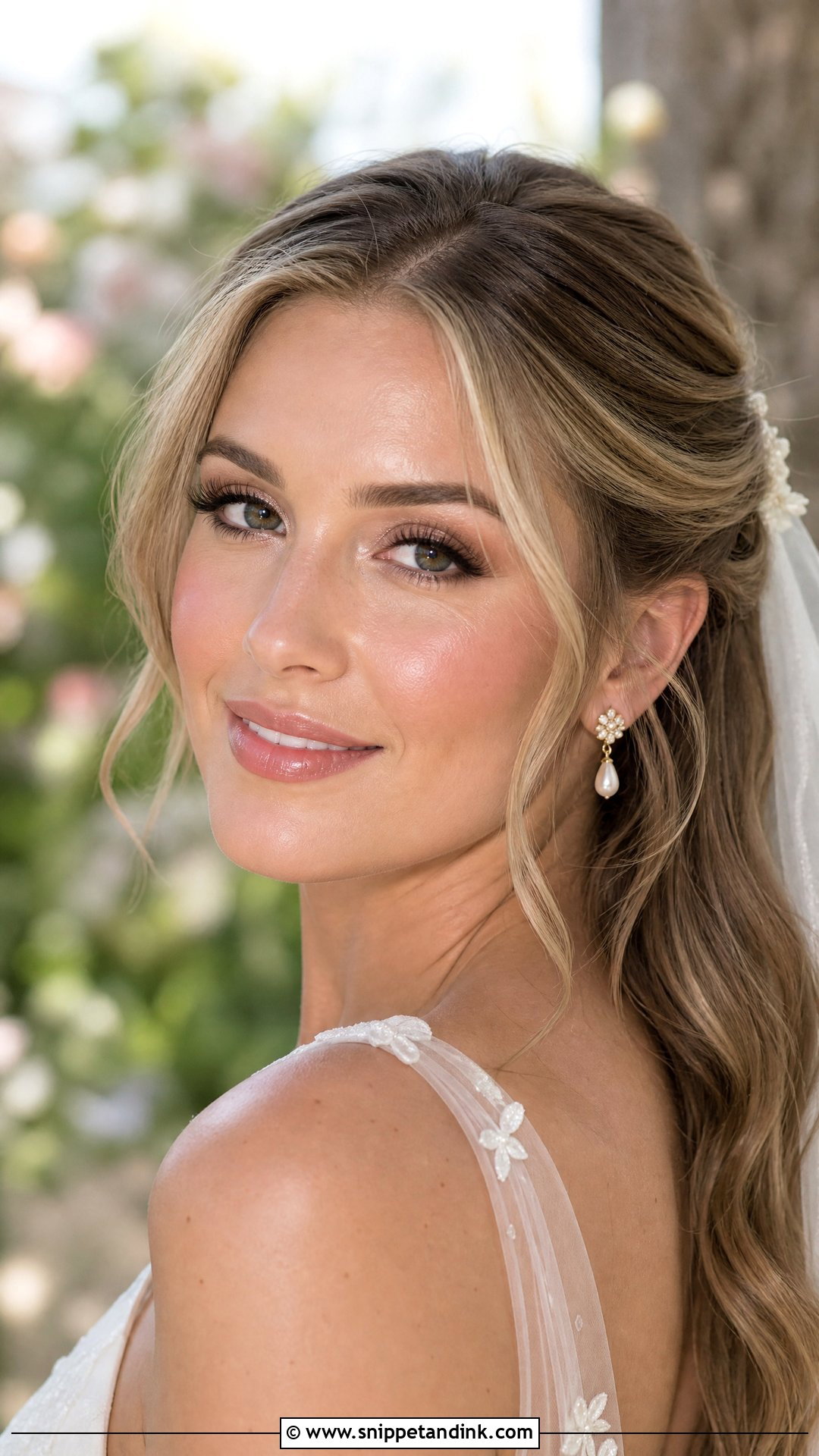
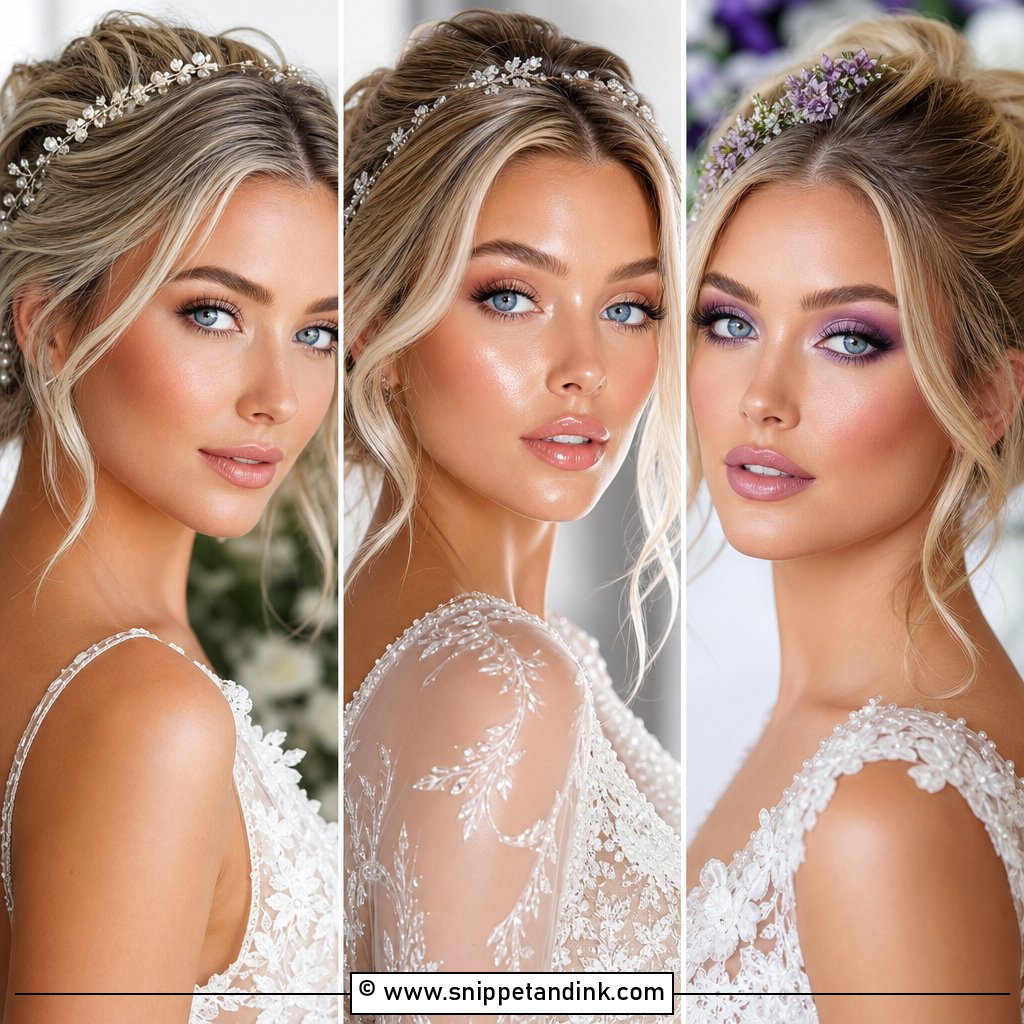
Dewy is controlled radiance, and the word to remember is controlled. I start with hydrated skin, a luminous primer and a foundation thin enough to let texture show, then tap liquid highlighter only on the cheekbones. Cream blush in pink, peach or rose. Eyes stay soft in taupe, champagne or warm brown with wispy lashes, and a glossy nude or pink lip. Spring, beach and garden weddings suit it. Oily skin, though, will look greasy by the reception unless I powder the T-zone and send you off with blotting papers.
4. Matte Bridal Makeup
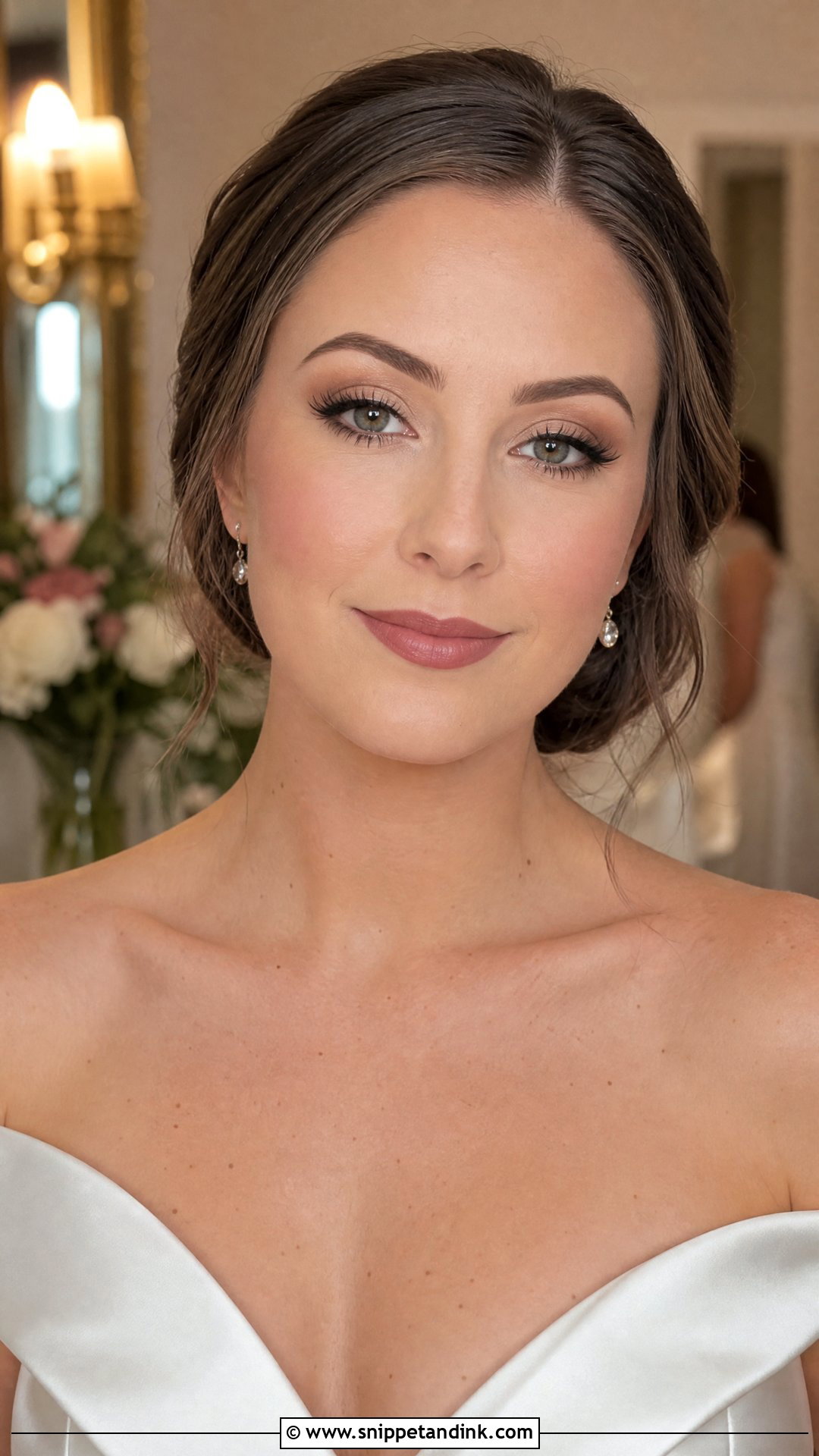
Matte is what I recommend for heat, long days and oily or combination skin. Done badly, it looks flat and dry; done well, nobody notices it’s matte at all. A soft matte foundation, smooth concealer, a finely milled powder, then dimension brought back with blush and contour. Neutral eyes in beige, taupe and brown, and a matte rose, mauve, nude or soft berry lip. I keep powder light around the smile lines, where it settles and cracks, and add a satin highlight only on the very top of the cheekbone.
5. Classic Bridal Makeup
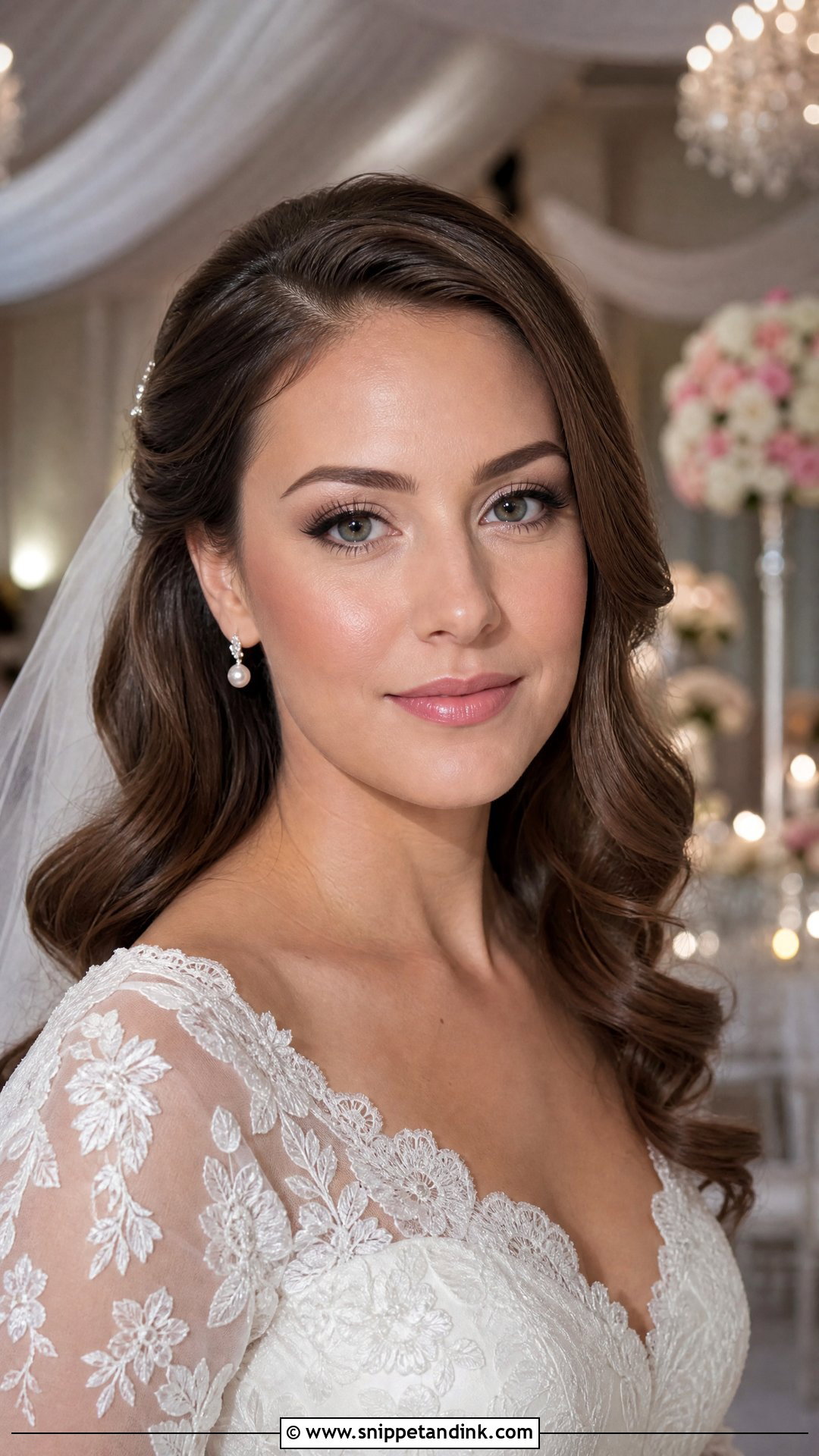
Balance is what keeps classic makeup from dating. Smooth skin, softly shaped brows, neutral shadow, clean liner and a polished lip that doesn’t pull focus. Satin foundation, soft pink or rose blush, black or brown liner, natural lashes and a pink-nude lipstick. It sits comfortably with traditional gowns, veils and formal settings. I tell brides who are nervous about regretting a trend in twenty years to start here, then add one thing they love, a stronger lash or a deeper lip, so it still feels personal.
6. Full Glam Bridal Makeup
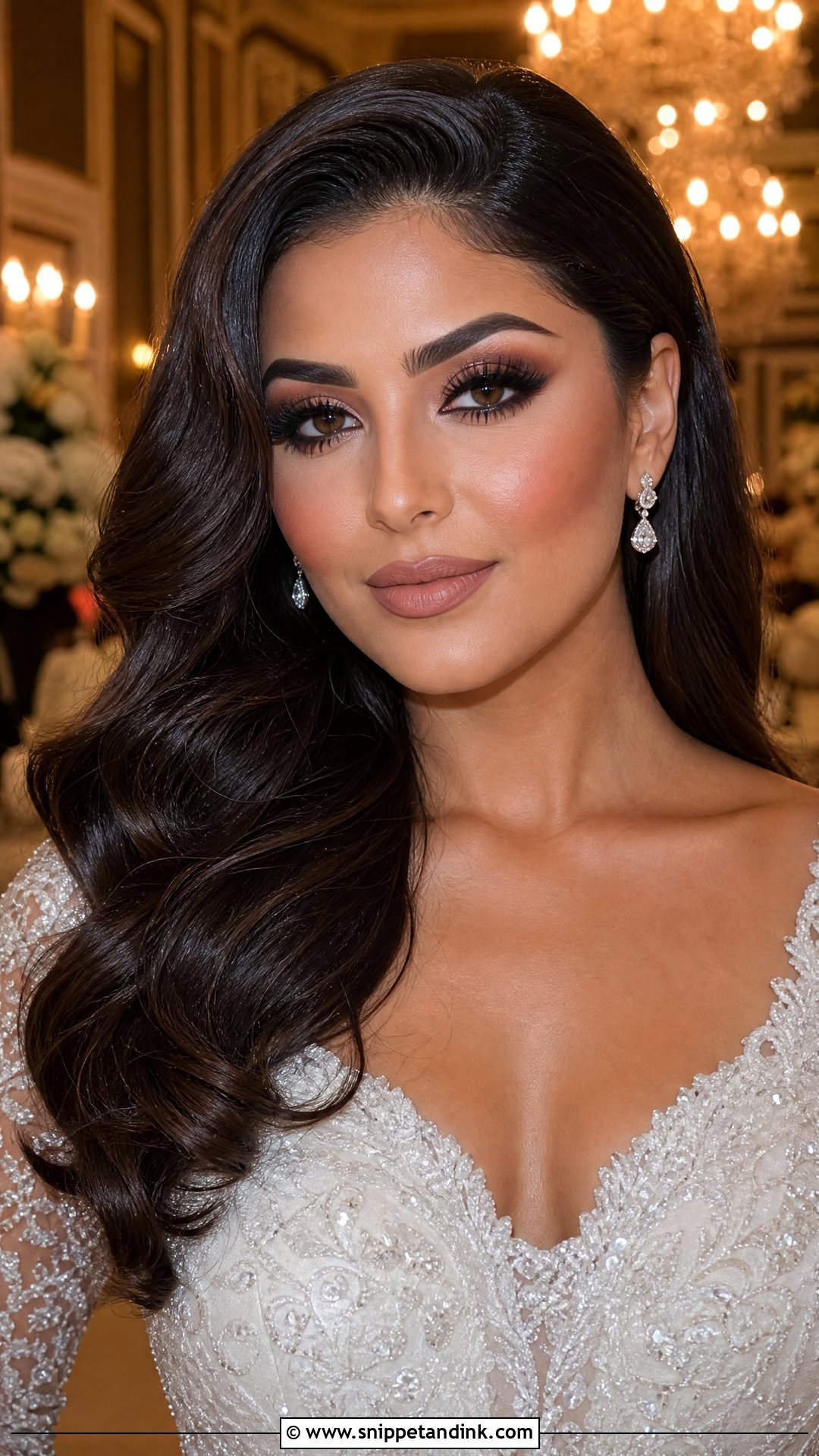
Full glam belongs to brides who already enjoy makeup and want a camera-ready finish. Fuller coverage foundation, sculpted cheeks, defined brows, layered shadow, winged or smoky liner and fuller lashes. Lips stay nude for balance or go to rose, mauve or berry. The thing I watch closest is blending, because every hard edge doubles under flash. I always photograph this look at the trial in daylight and with flash, since some setting powders contain ingredients that bounce light and leave a white cast in pictures.
7. Romantic Bridal Makeup
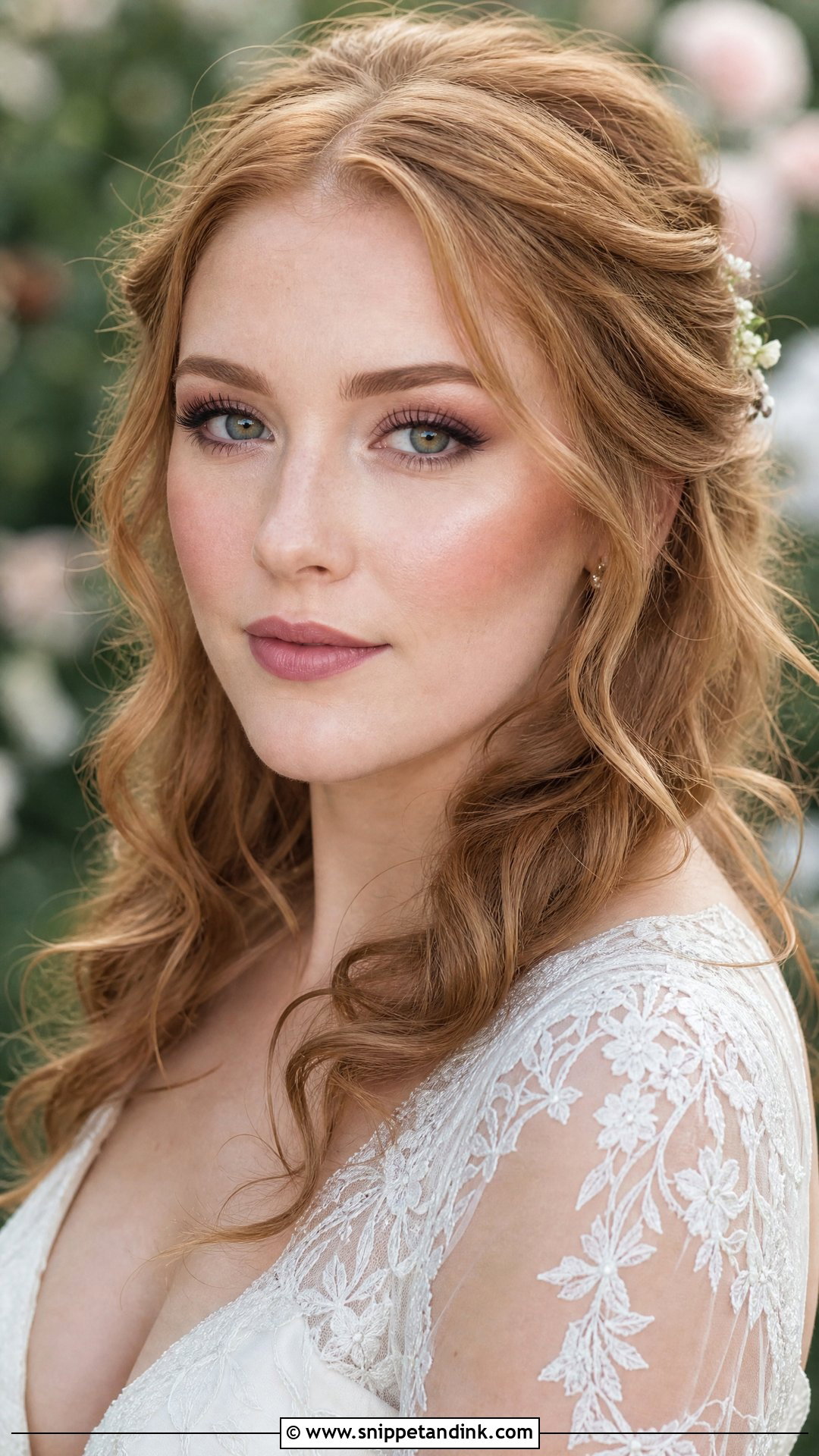
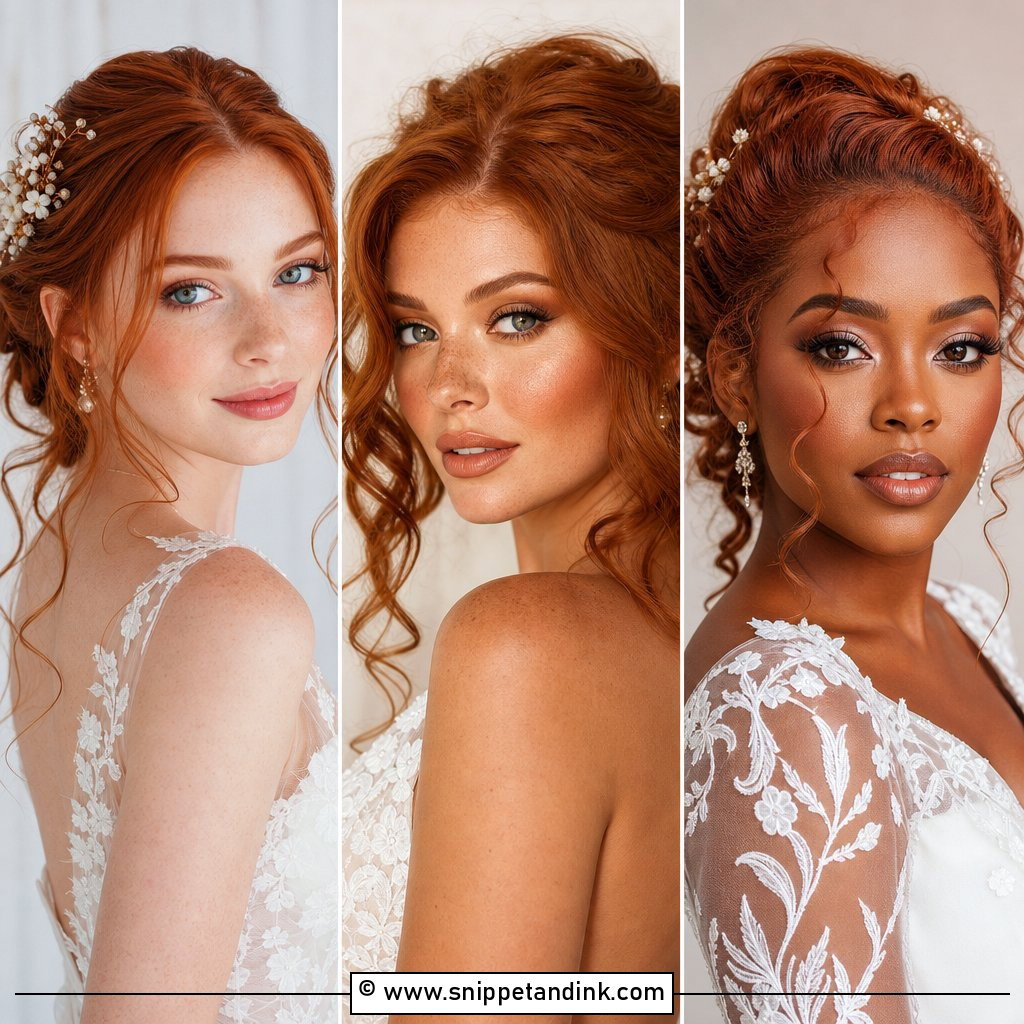
Rosy cheeks, satin skin, diffused pink or mauve shadow, curled lashes and a petal-toned lip. The edges of everything should stay airy, with no lines you can find. Lace gowns, soft waves and garden or estate venues suit it. The pink has to shift with skin tone, from pale rose on fair skin to a warm berry rose on deeper skin, or it either vanishes or looks chalky. I use a long-wearing cream blush set with a matching powder blush on top, and a lip liner close to your natural lip color.
8. Smokey Eye Bridal Makeup
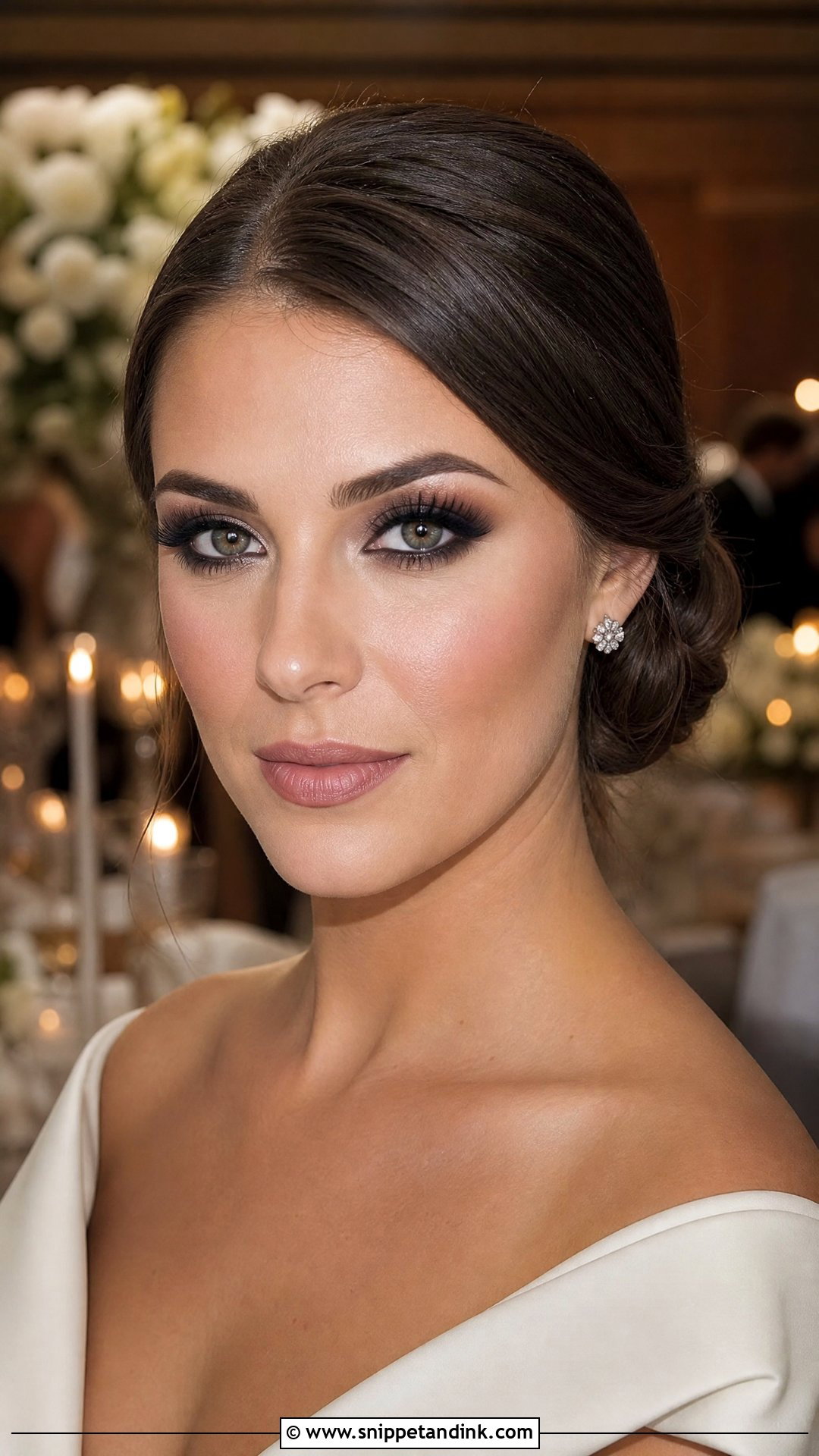
Smokey eye bridal makeup stays elegant when the color is softened. Most brides I work with prefer bronze, taupe, espresso, plum or charcoal brown to a hard black. The rest of the face stays quiet: smooth skin, soft contour, neutral blush and a nude or muted rose lip. I keep the lower lash line diffused rather than dark, since heavy smoke underneath drags the eyes down and shows every tear. Evening ceremonies and black-tie receptions are where this one makes the most sense.
9. Bronze Bridal Makeup
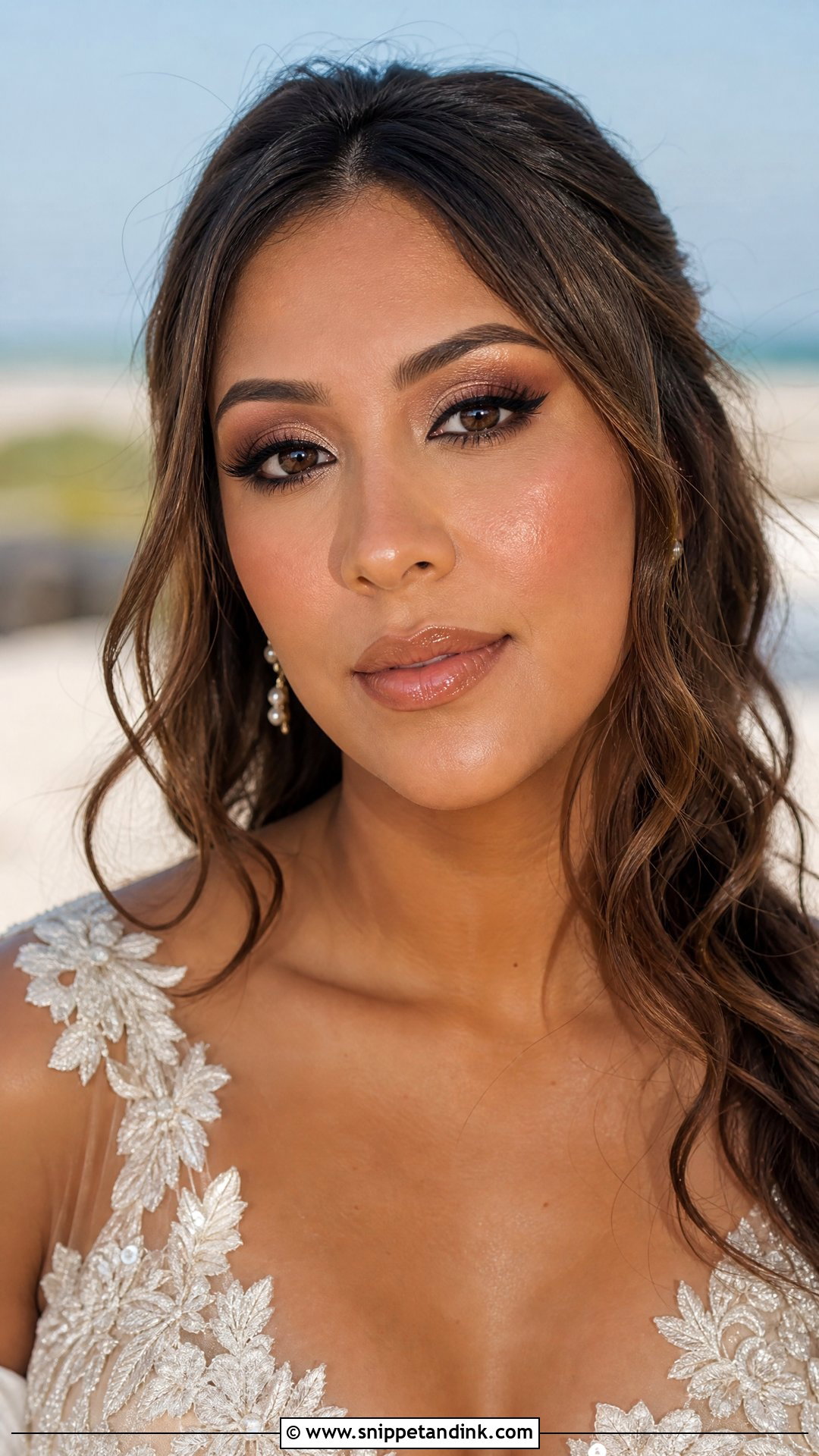
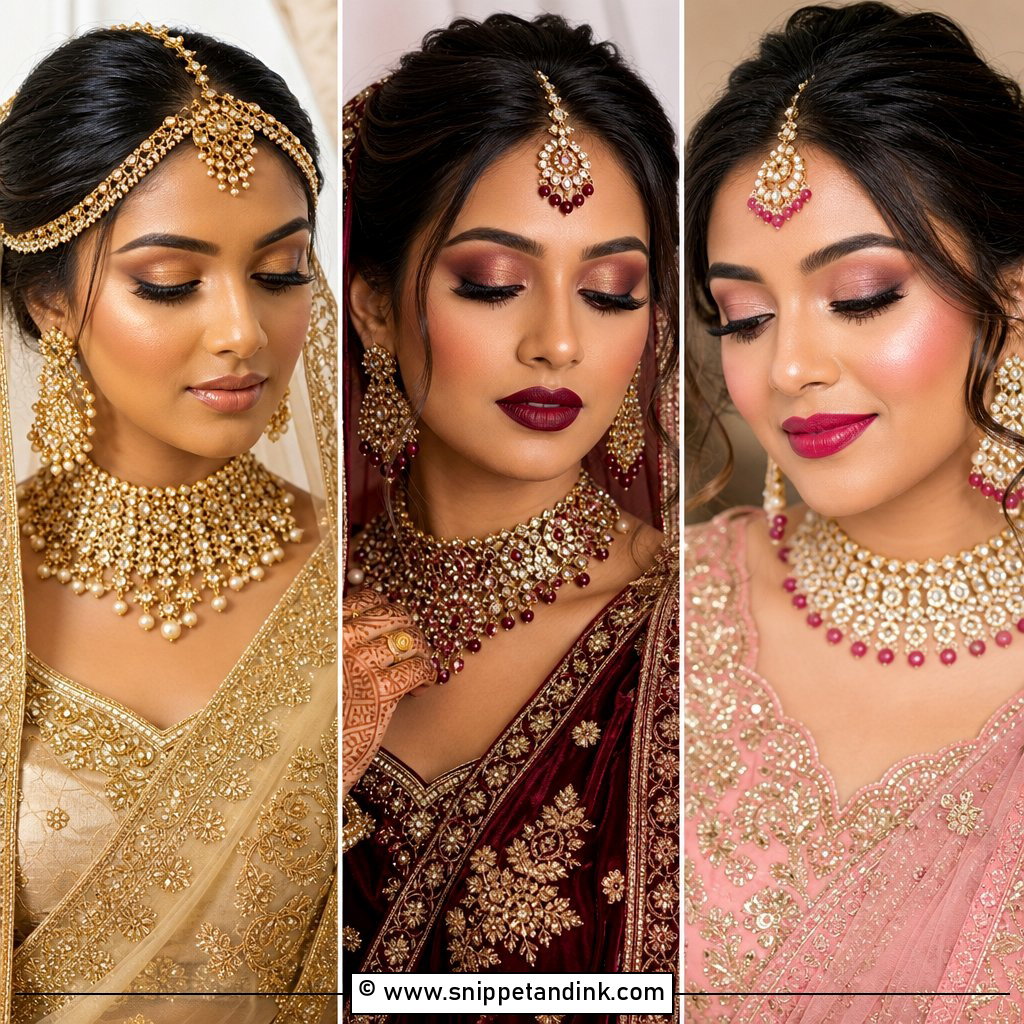
Bronze gives warmth and soft definition, and it’s my first thought for summer and destination weddings. Warm brown or bronze shadow, bronzed cheeks, peachy blush, a golden highlight and a nude peach or caramel lip, over a satin base rather than a flat matte. It flatters blue, green, hazel and brown eyes. The common mistake is orange skin: pick bronzer by undertone, not by the color in the pan, and keep it to the temples, under the cheekbones and along the jaw with a light hand. Check your neck matches before you leave the chair.
10. Pink Bridal Makeup
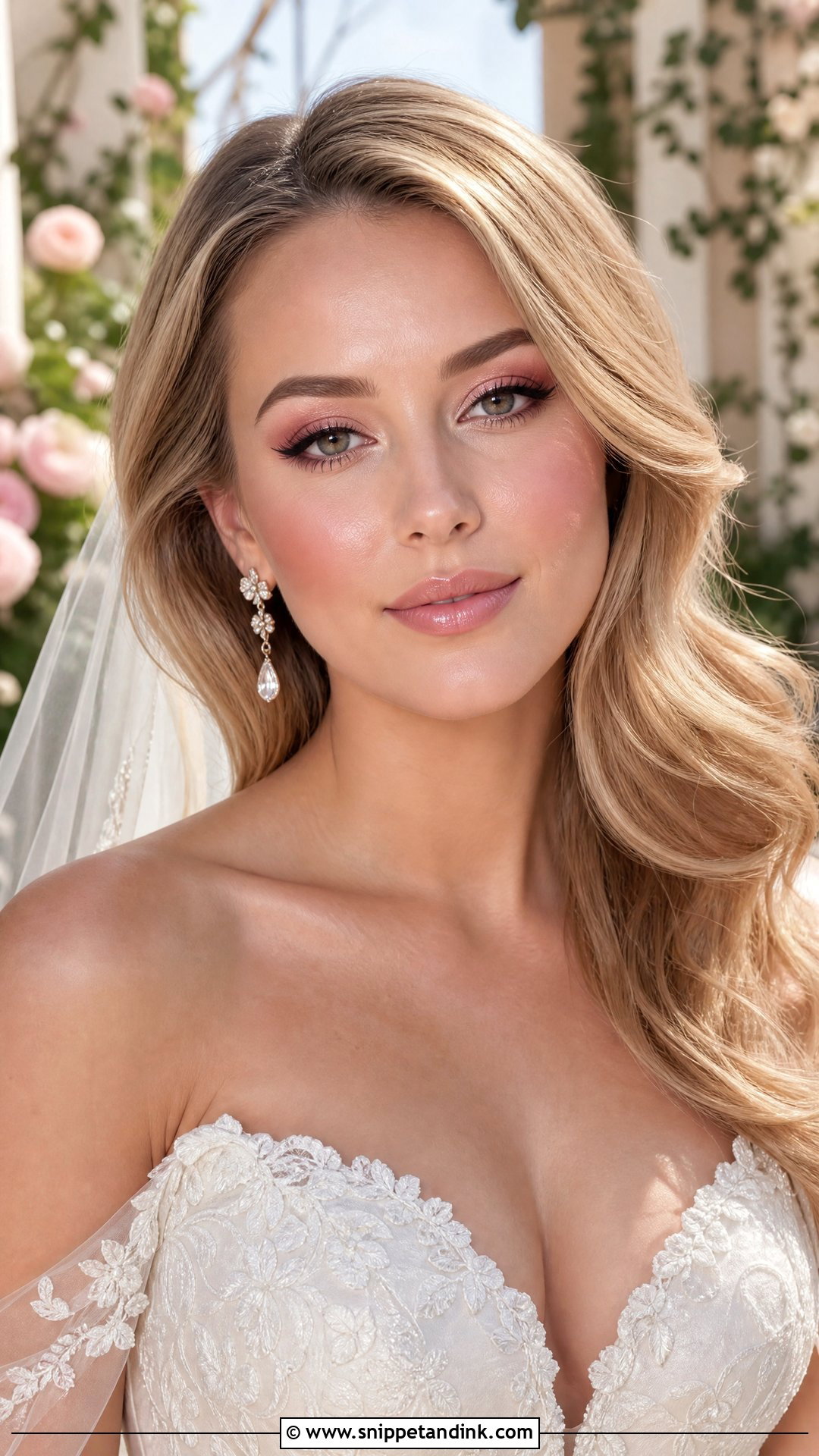
Pink can look sweet or sugary, and the tone decides which. Soft pink shadow, rosy blush and a pink-nude lip brighten the face. On fair skin I use pale rose and baby pink; on medium and tan skin, warm rose or coral pink; on deep skin, berry pink, rosewood and rich mauve-pink. Brown liner keeps definition gentle. Skin stays satin or softly dewy. Spring weddings and romantic dresses are a natural home, and the flush looks healthy rather than painted if you blend it up toward the temples.
11. Peach Bridal Makeup
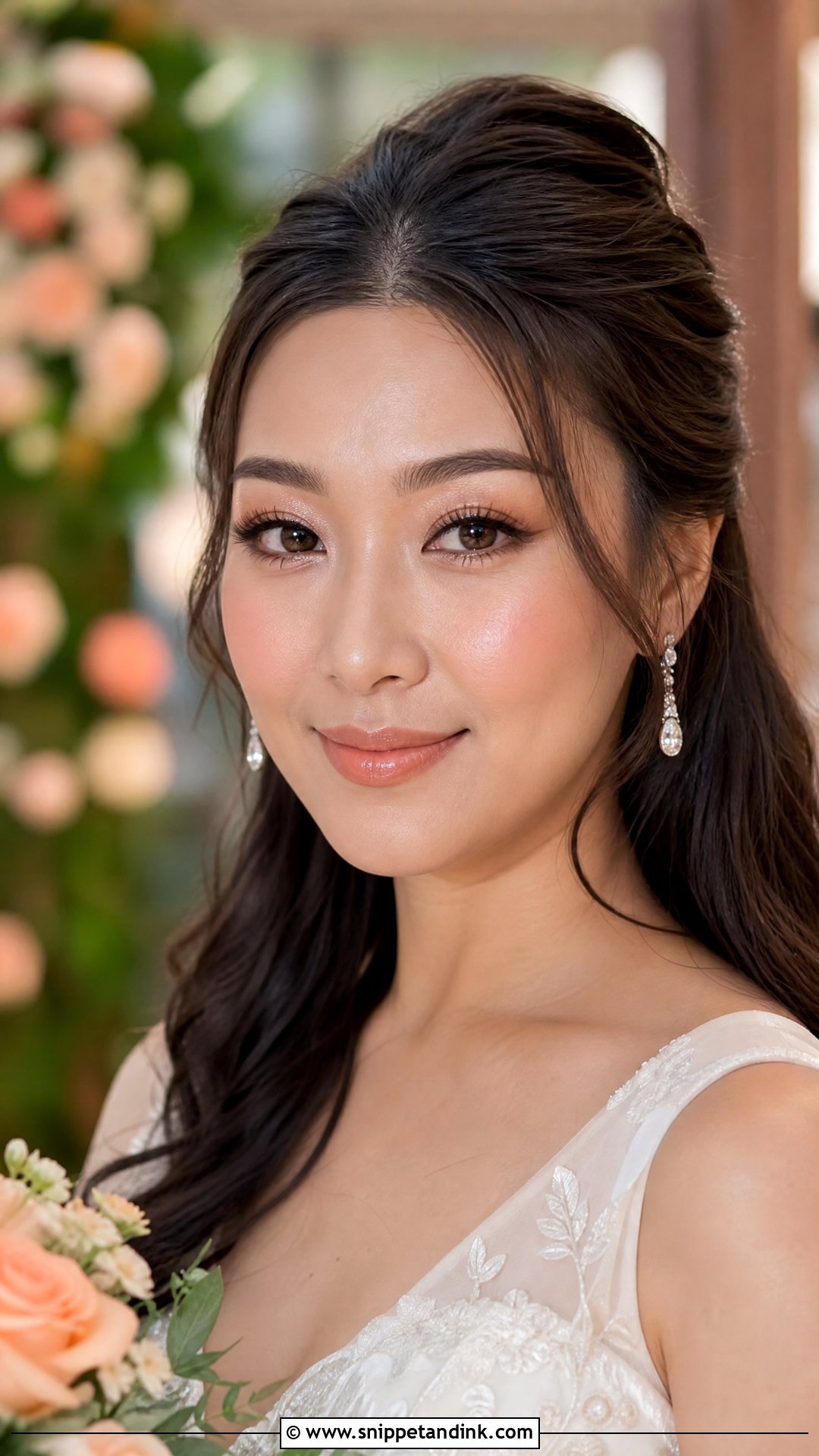
Peach is the easiest color I put on a face. It brightens without the boldness of red or the coolness of some pinks: peach shadow, apricot blush, soft bronzer and a peachy nude lip. It sits well against ivory, champagne, blush and warm-toned gowns, and makes blue, green and hazel eyes look more vivid because peach sits opposite those tones. On deeper skin I move to richer apricot, terracotta peach or warm coral. Defined lashes and softly glowing skin keep it from looking washed out.
12. Nude Bridal Makeup
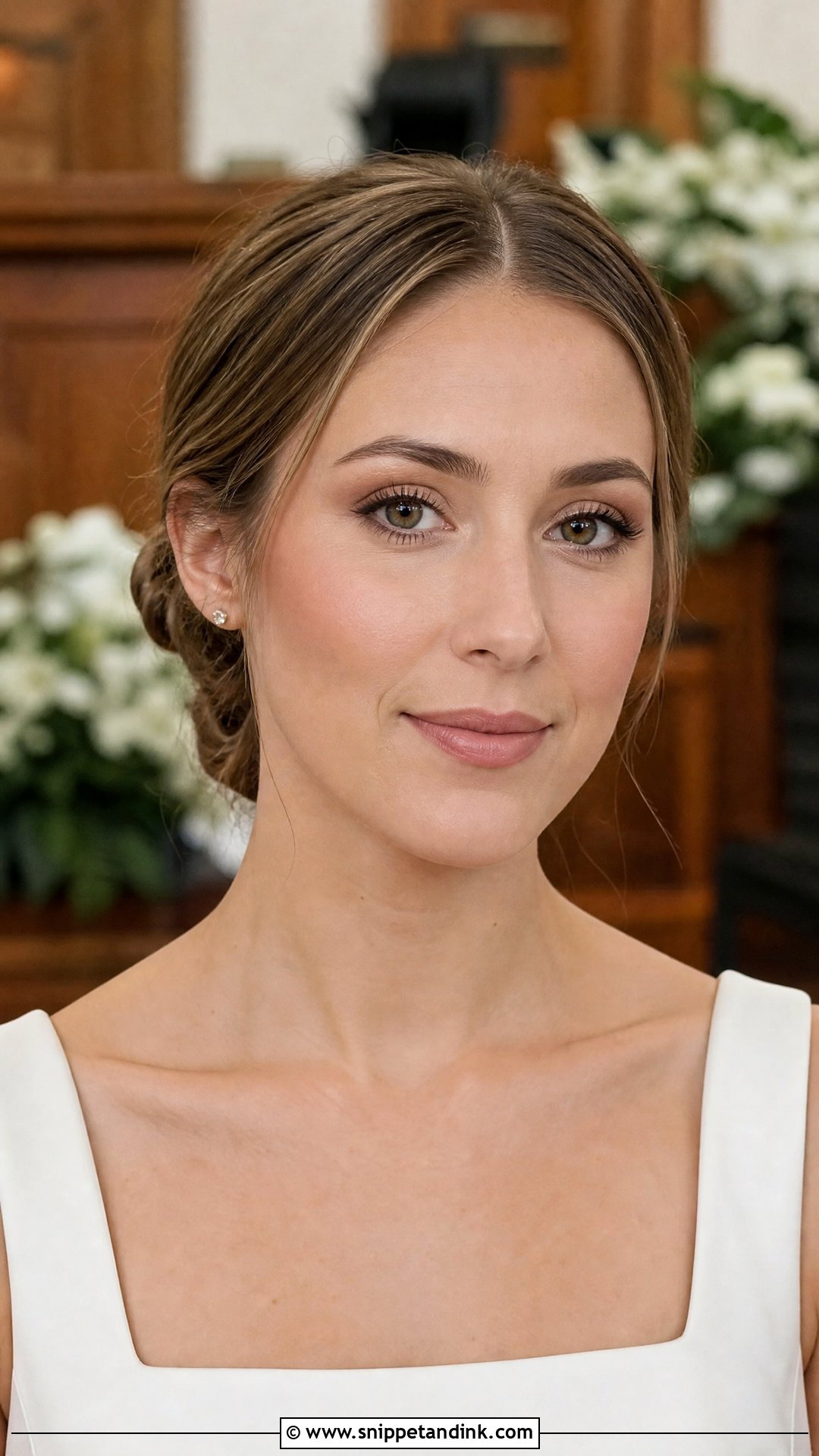
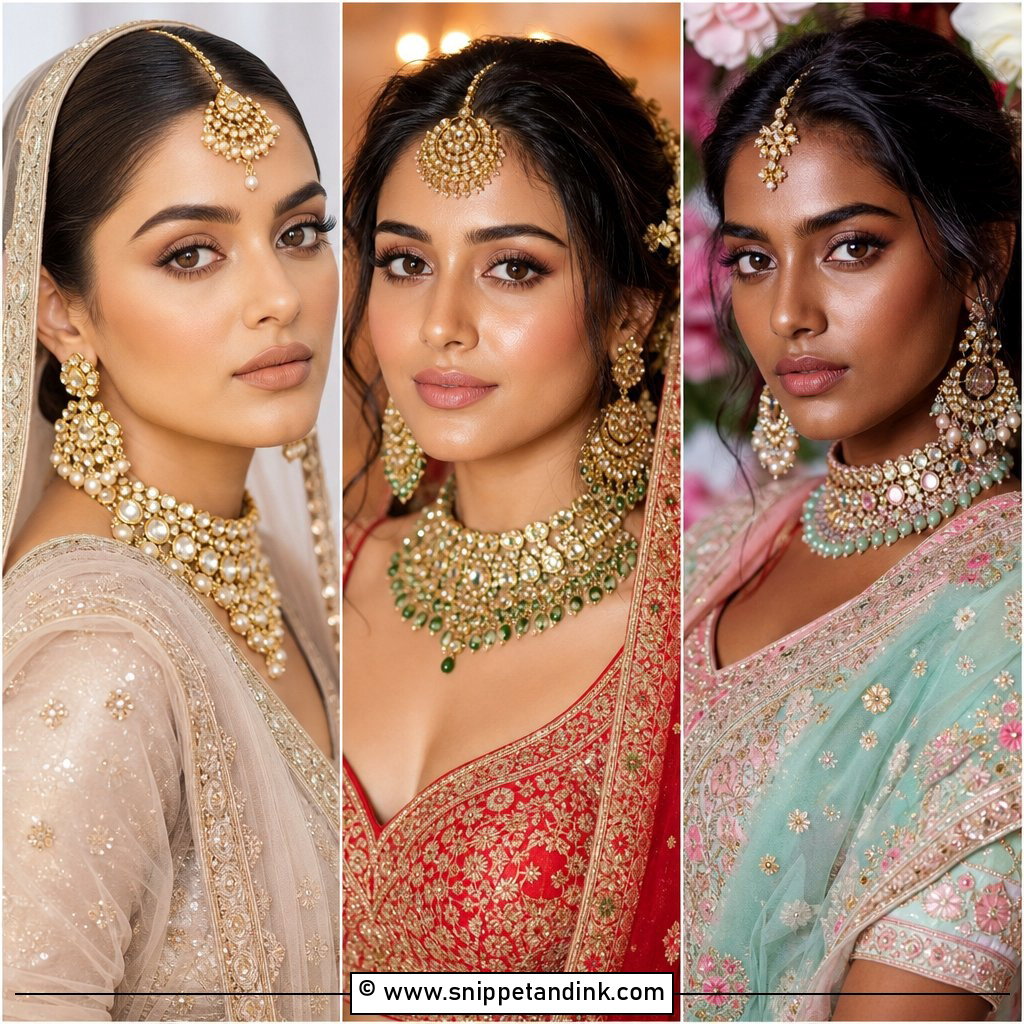
The danger with nude makeup is that the face disappears in photos, so it still needs contrast. The trick is choosing nudes by skin tone instead of one universal beige. Fair skin often needs pink-beige or soft rose; light and medium skin, peach nude, warm beige or mauve nude; tan and deep skin, caramel, cinnamon, cocoa or rose-brown. Eyes get soft definition in taupe, brown or bronze. I always add a blush that reads as a real flush. Modern gowns and simple accessories carry this best.
13. Red Lip Bridal Makeup
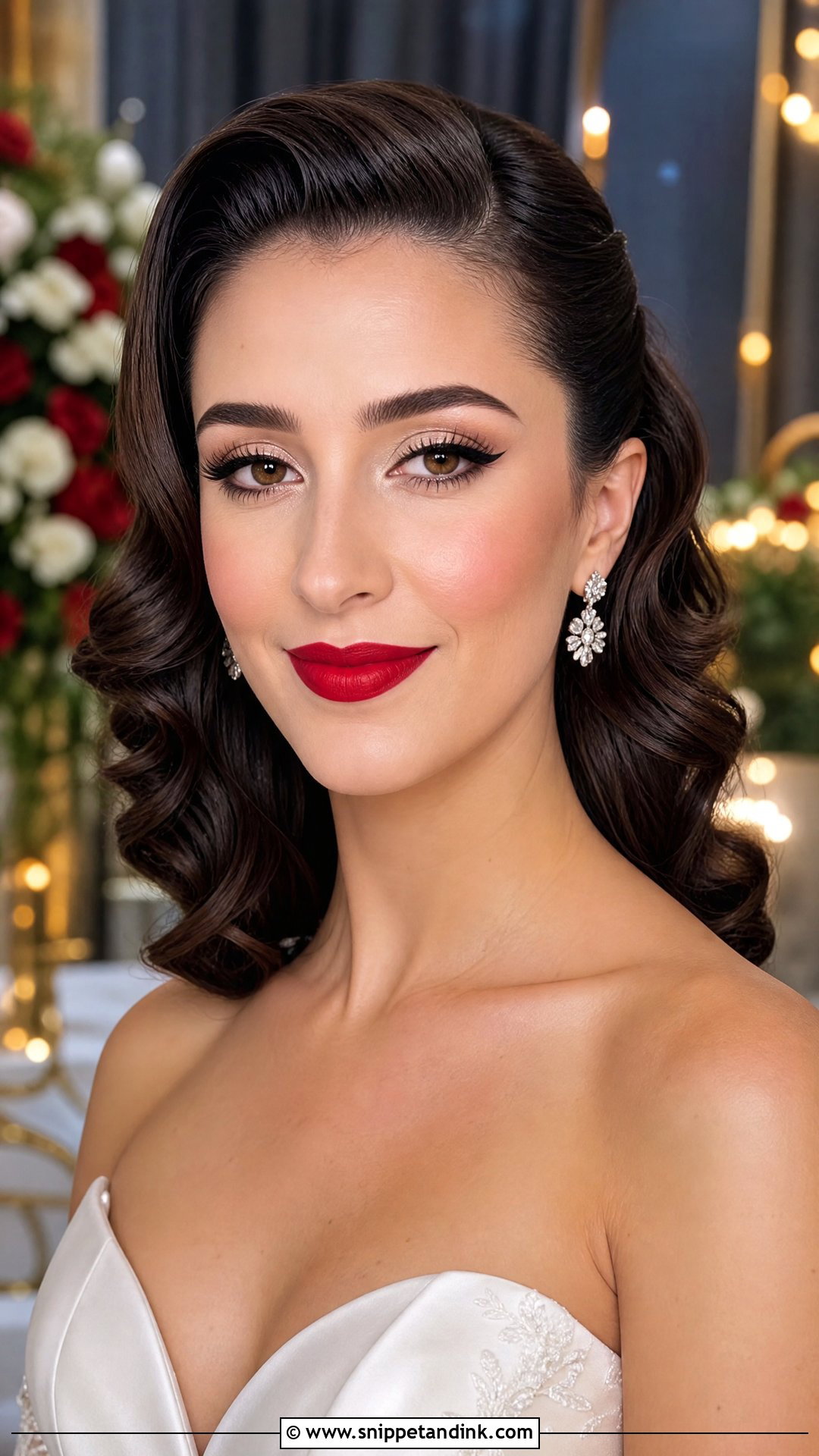
One clear statement, nothing else competing. A red lip needs clean skin, softly defined eyes and controlled cheek color, with a thin wing or tightline for structure. Blue-reds feel classic, orange-reds warm and lively, and deeper reds suit evening. Because red draws attention to the whole mouth area, the base has to be flawless and well set around it. I line the full lip, blot, apply a second layer, and give you a small kit with the liner, lipstick and a cotton bud for the edges.
14. Winged Liner Bridal Makeup
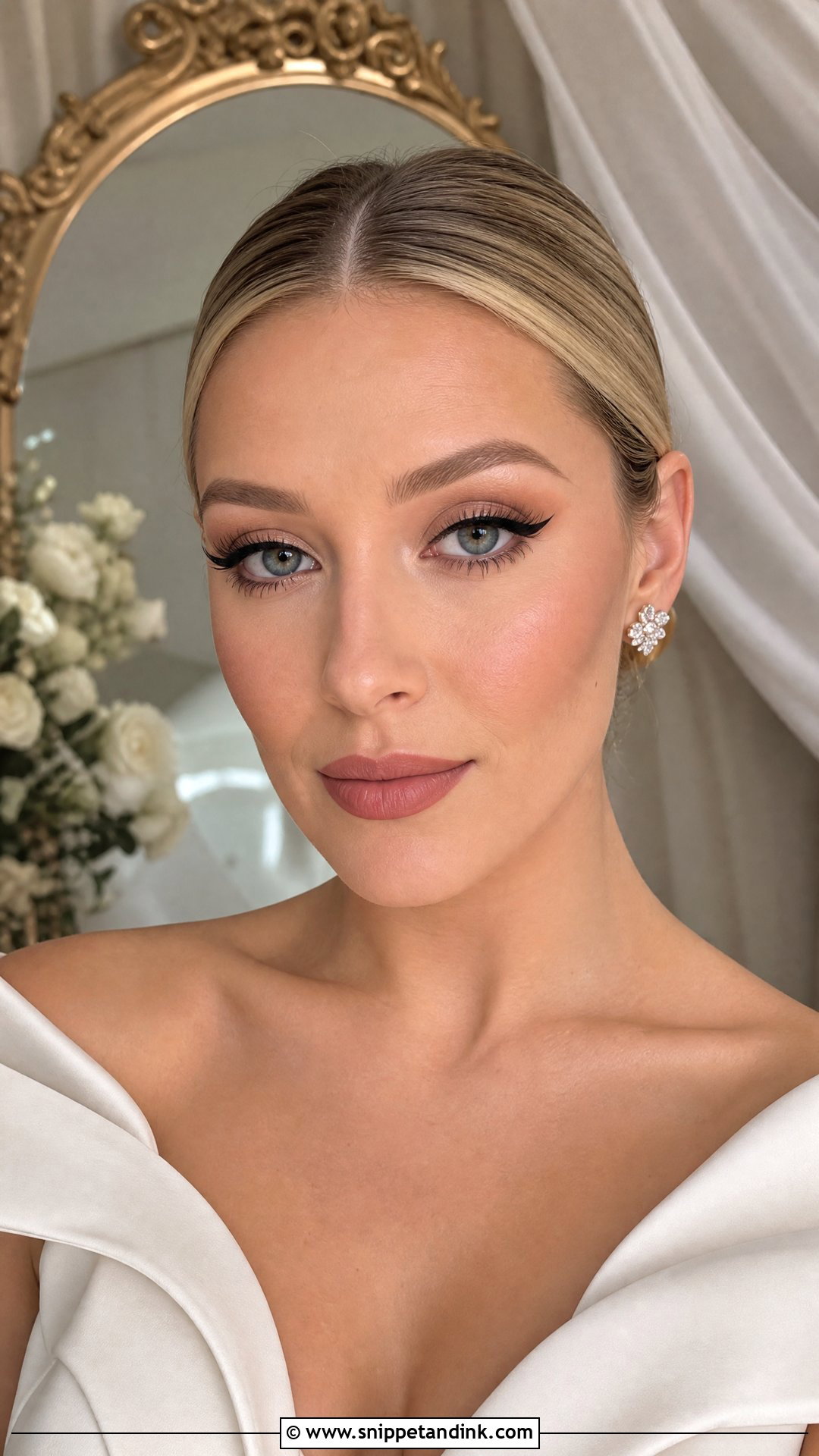
A wing lifts the eye and gives the whole face a sharper shape. Thin and delicate or slightly bolder depends on your eye shape: on hooded eyes I draw it with the eyes open so it isn’t swallowed by the fold. Soft matte or satin shadow in beige, taupe or warm brown underneath, natural or half lashes at the outer corners, and soft blush with a nude, pink or rose lip. Sleek buns, structured gowns and classic veils suit it. Use waterproof liner and test the exact wing shape at your trial, because both sides need to match in close-ups.
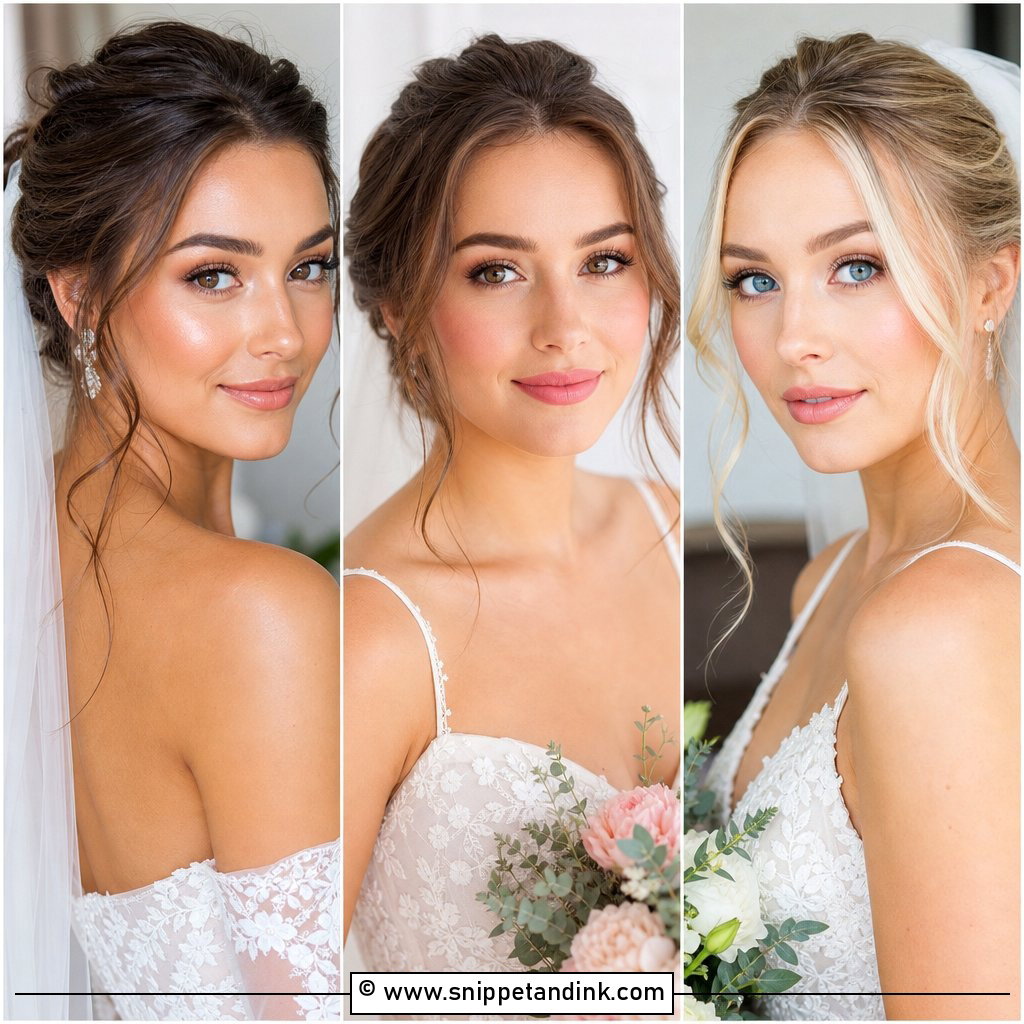
15. Brown Bridal Makeup
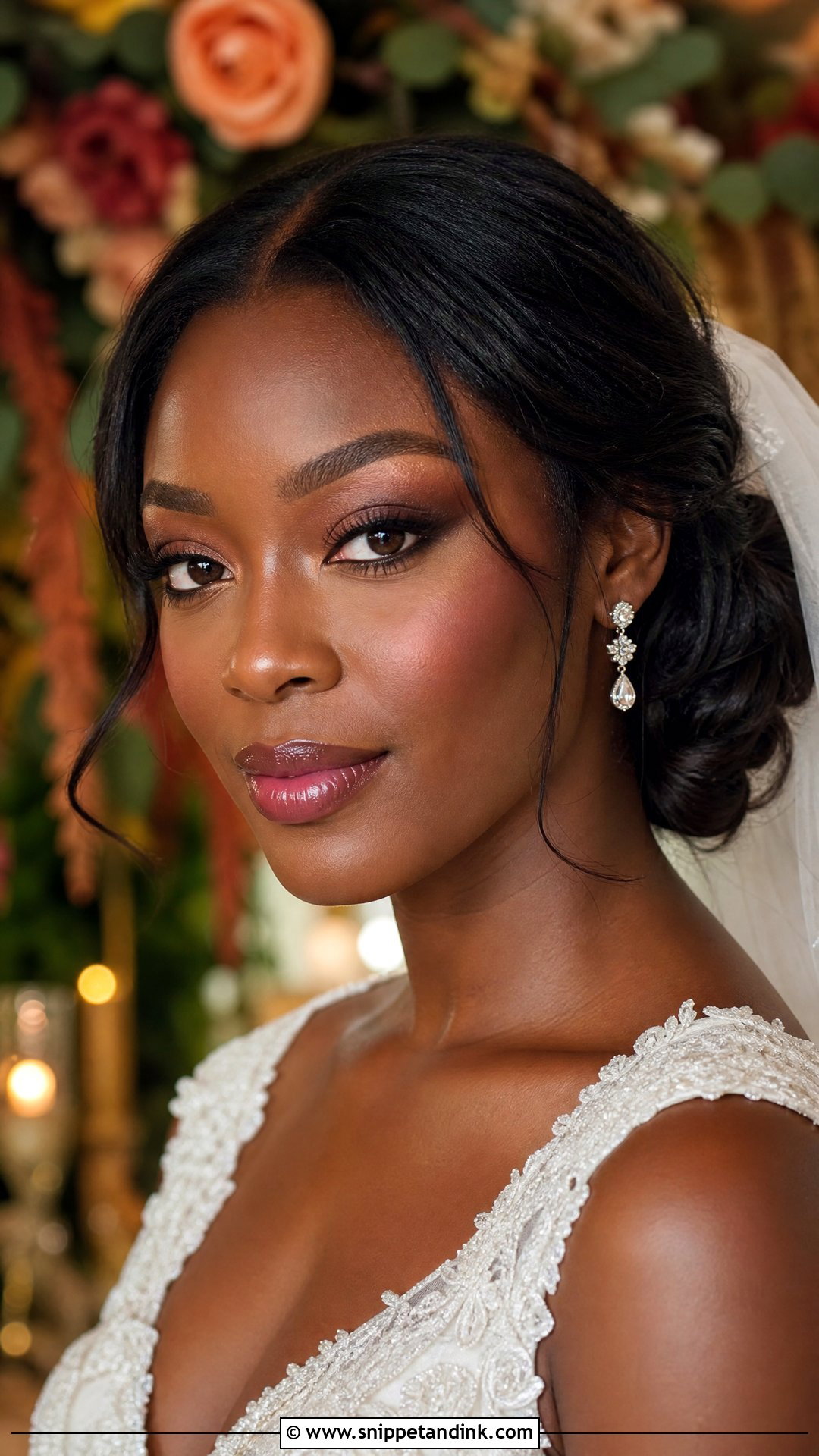
Brown bridal makeup uses one family of tones across the eyes, liner, bronzer and sometimes the lips, so the face looks pulled together. Chocolate liner is gentler than black, and brown shadow adds depth without drama. Satin skin, warm blush and a nude, caramel, rose-brown or mocha lip. It suits brides who want definition but prefer earthy colors to pink or shimmer, and it works in any season. Cooler, ashier browns flatter fair skin; richer espresso tones suit deeper skin.
16. Gold Bridal Makeup
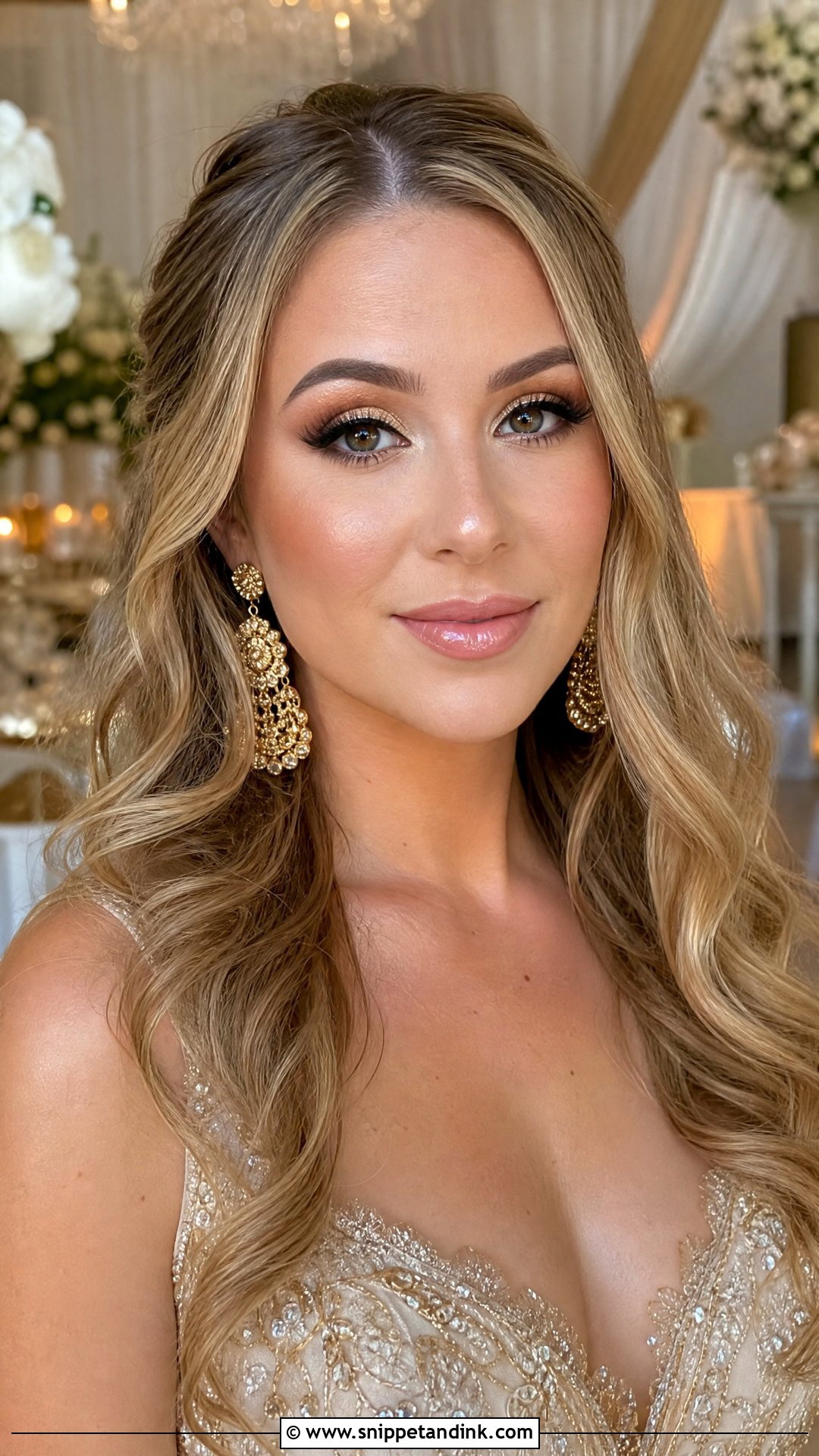
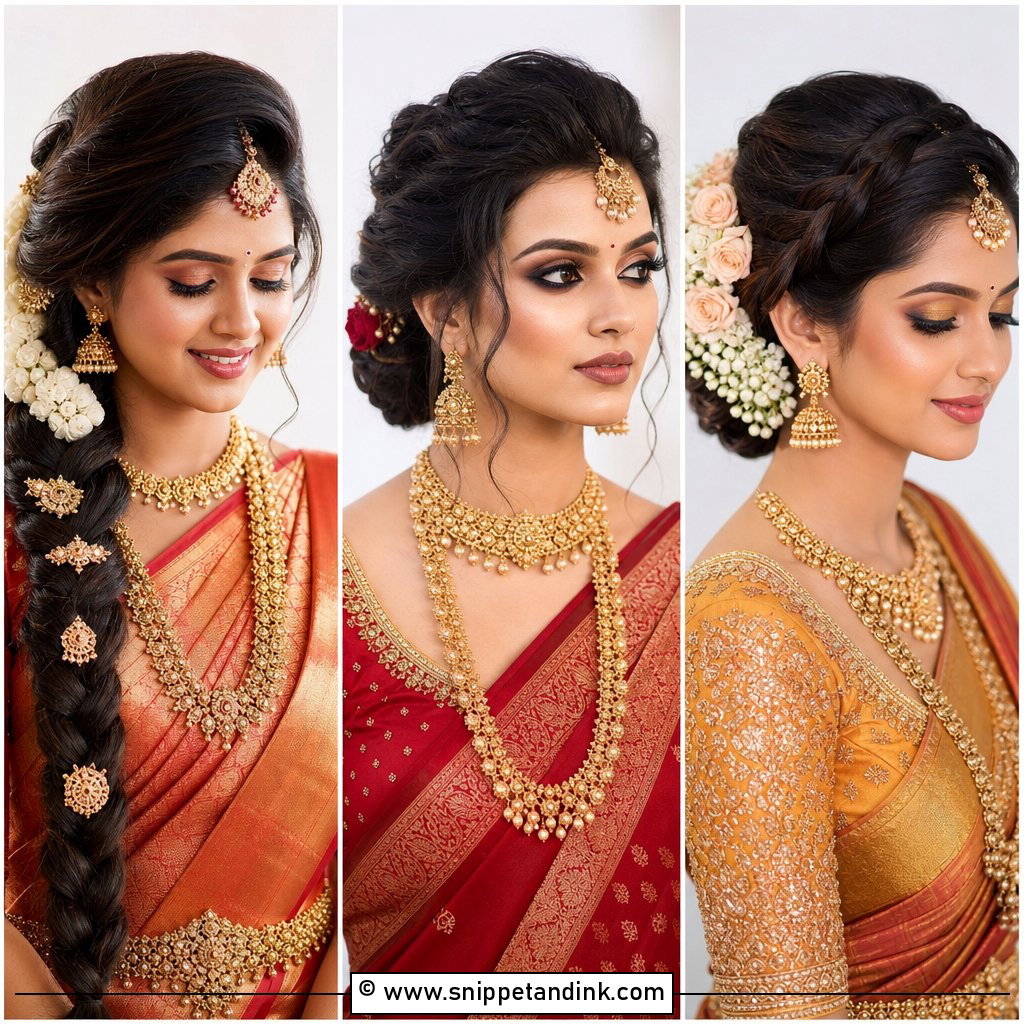
Gold puts light straight onto the eyes. The version I find most wearable is a champagne-gold shimmer on the lids, warm brown in the crease, and black or brown liner tight to the lashes. Bronzer, peach or rose blush and a highlight in the same gold family keep the skin radiant but controlled. Lips in nude peach, rosy beige or warm pink. It pairs naturally with gold jewelry, champagne gowns and evening receptions. Pick a finely milled shimmer: chunky glitter catches the flash as specks and travels onto the cheeks.
17. Rose Gold Bridal Makeup
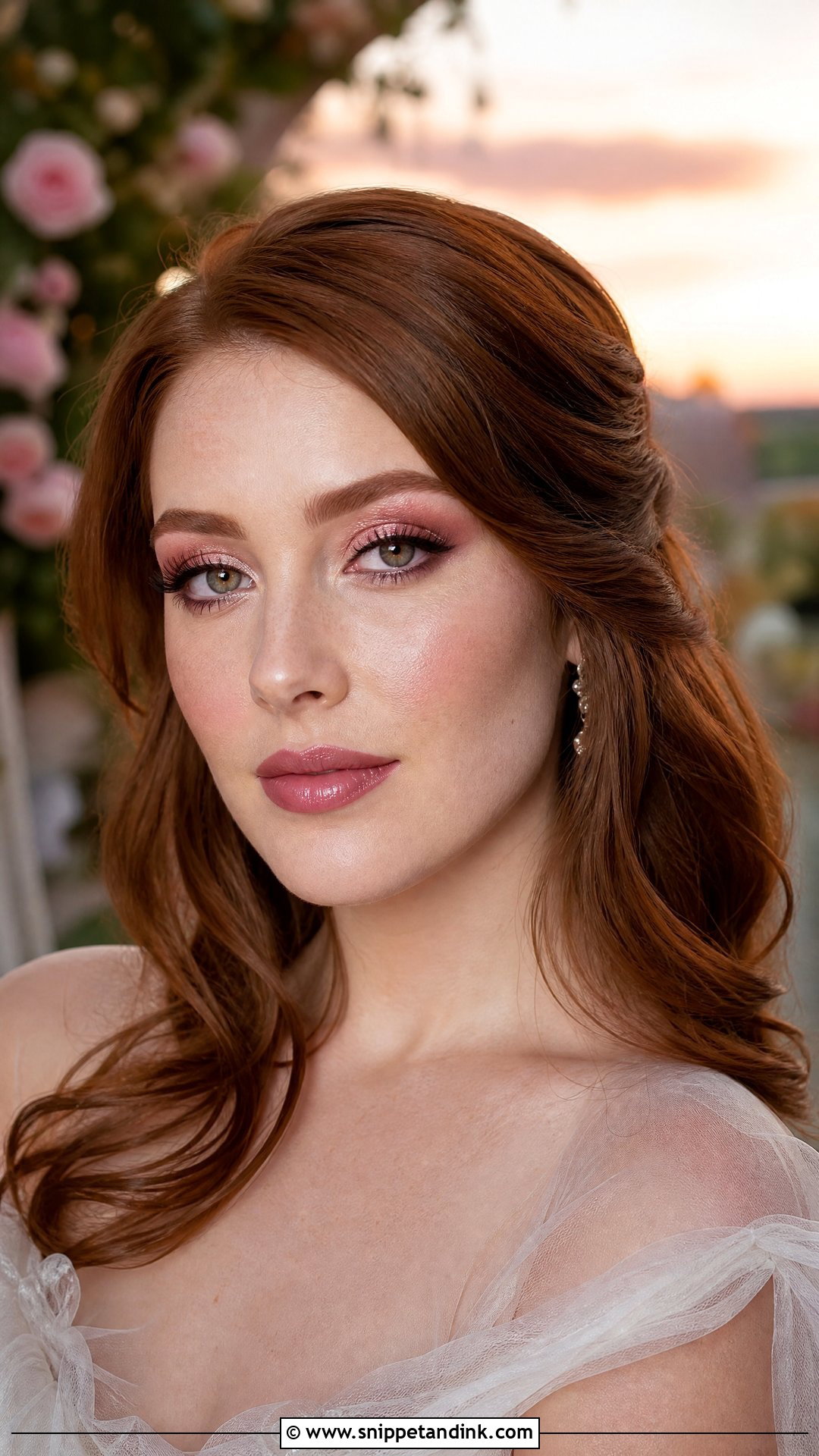
Rose gold sits between gold and silver, which is why so many brides land on it when gold feels too warm. Pink-champagne shimmer on the lids, rose-brown in the crease, fluttery lashes and softly filled brows. Cheeks stay rosy or peachy; lips go pink nude, mauve or rose gloss. The rose base softens it and the metallic adds brightness, so it flatters a wide range of skin tones. Match the highlighter to a pink or champagne shift so the cheeks and eyes don’t fight each other.
18. Vintage Bridal Makeup
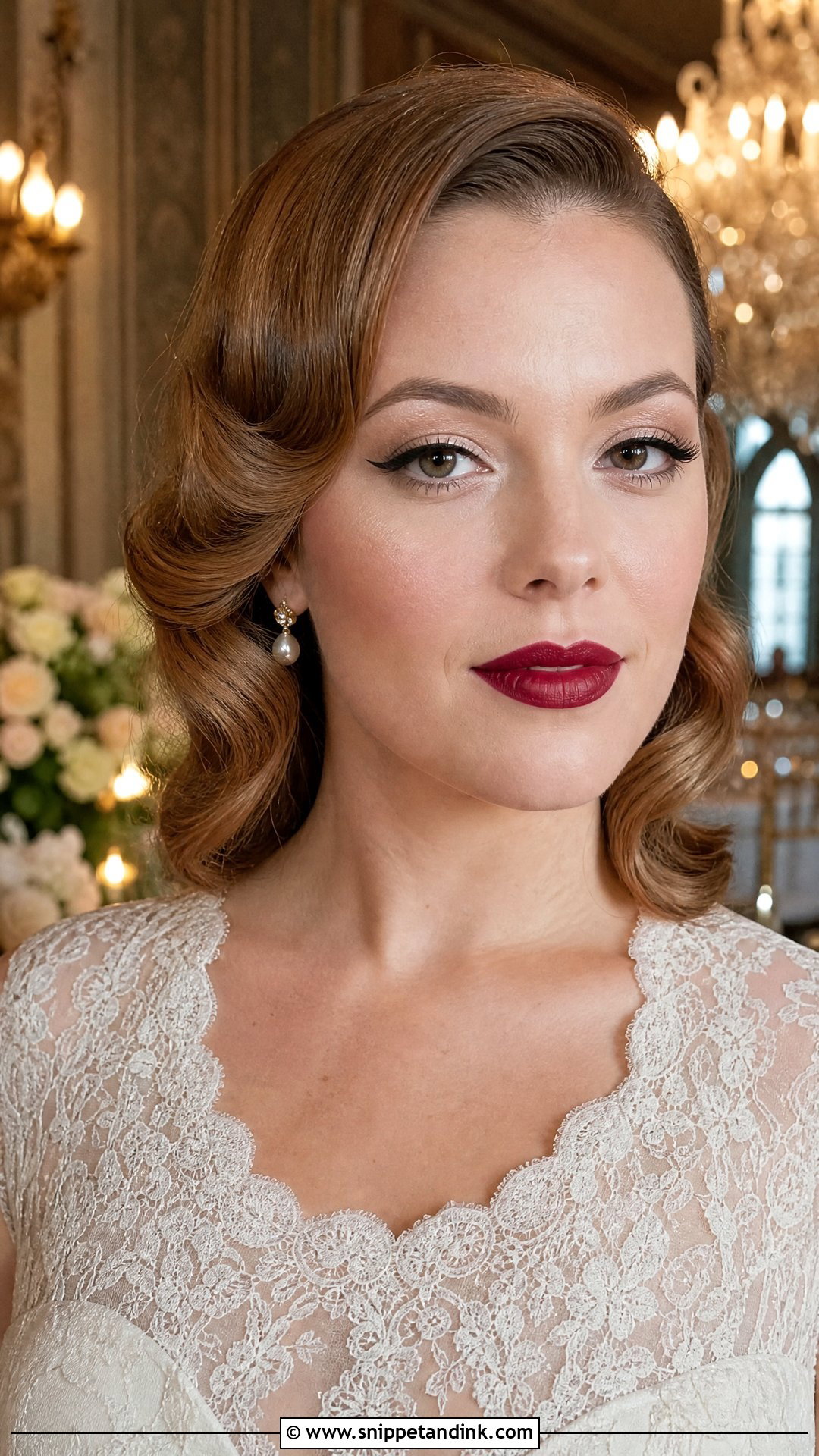
Old Hollywood gets costume-like fast, so I keep the skin modern. Satin skin, softly arched brows, winged liner, defined lashes, sculpted cheeks and a red, berry or rose lip. Make it subtle with a soft wing and muted lip, or dramatic with crisp liner and a bold lipstick. Waves, structured gowns, pearls and city venues are its natural setting. The two things that tip it into fancy dress are heavily powdered skin and over-drawn brows, so I keep both natural and let the liner and lip carry the period feel.
19. Boho Bridal Makeup
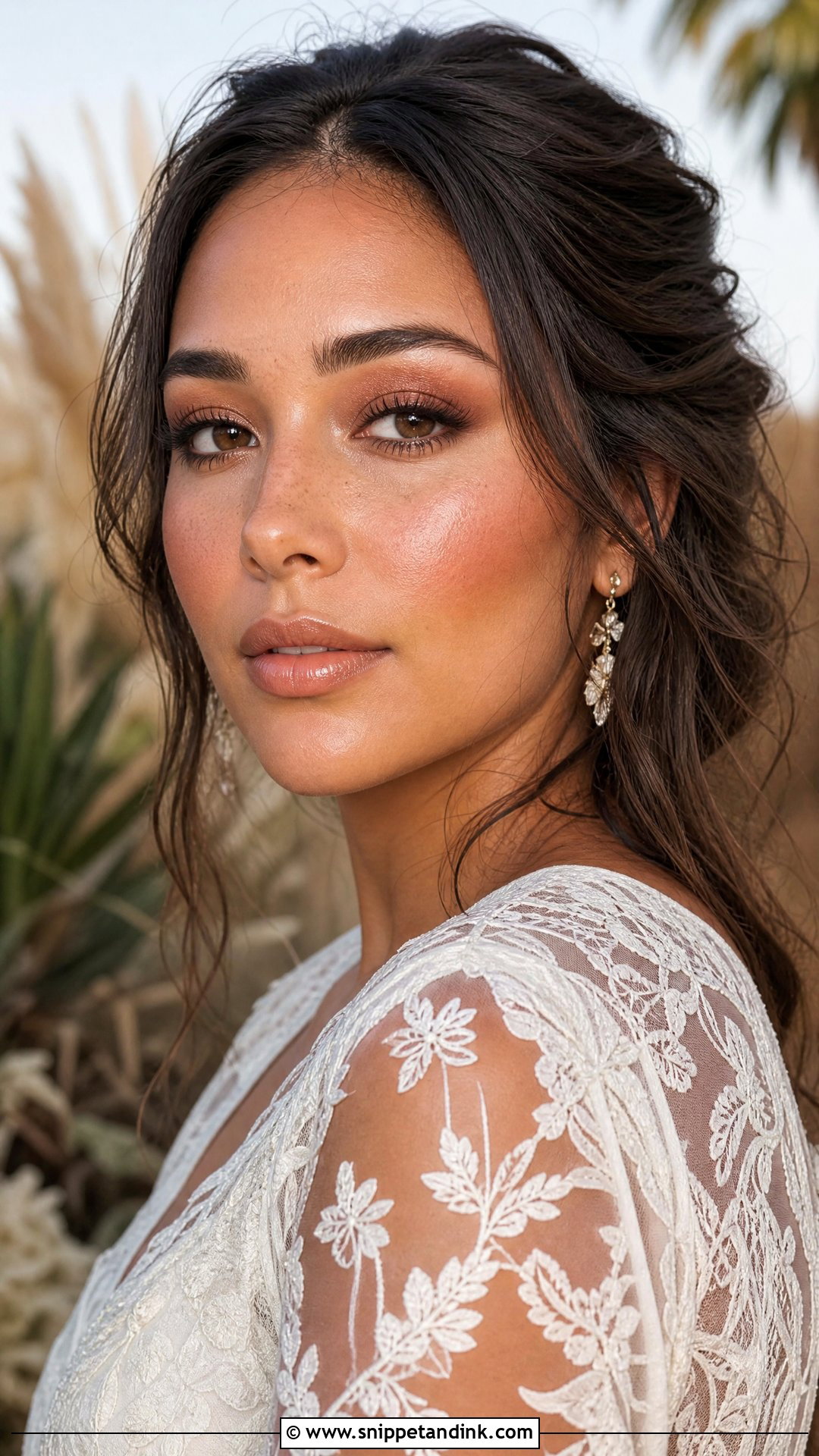
Boho makeup should look relaxed, not unfinished. A fresh, breathable base, cream bronzer, warm blush and a soft golden highlight. Bronze, terracotta, taupe or soft brown on the eyes with smudged liner and wispy lashes. Peach nude, warm rose or a tinted balm on the lips. Outdoor weddings, flowing dresses and textured waves suit it. It shouldn’t look over-sculpted, but the undone finish still needs structure underneath: waterproof mascara and a setting spray, or that soft smudge becomes a real smudge by mid-afternoon.
20. Minimal Bridal Makeup
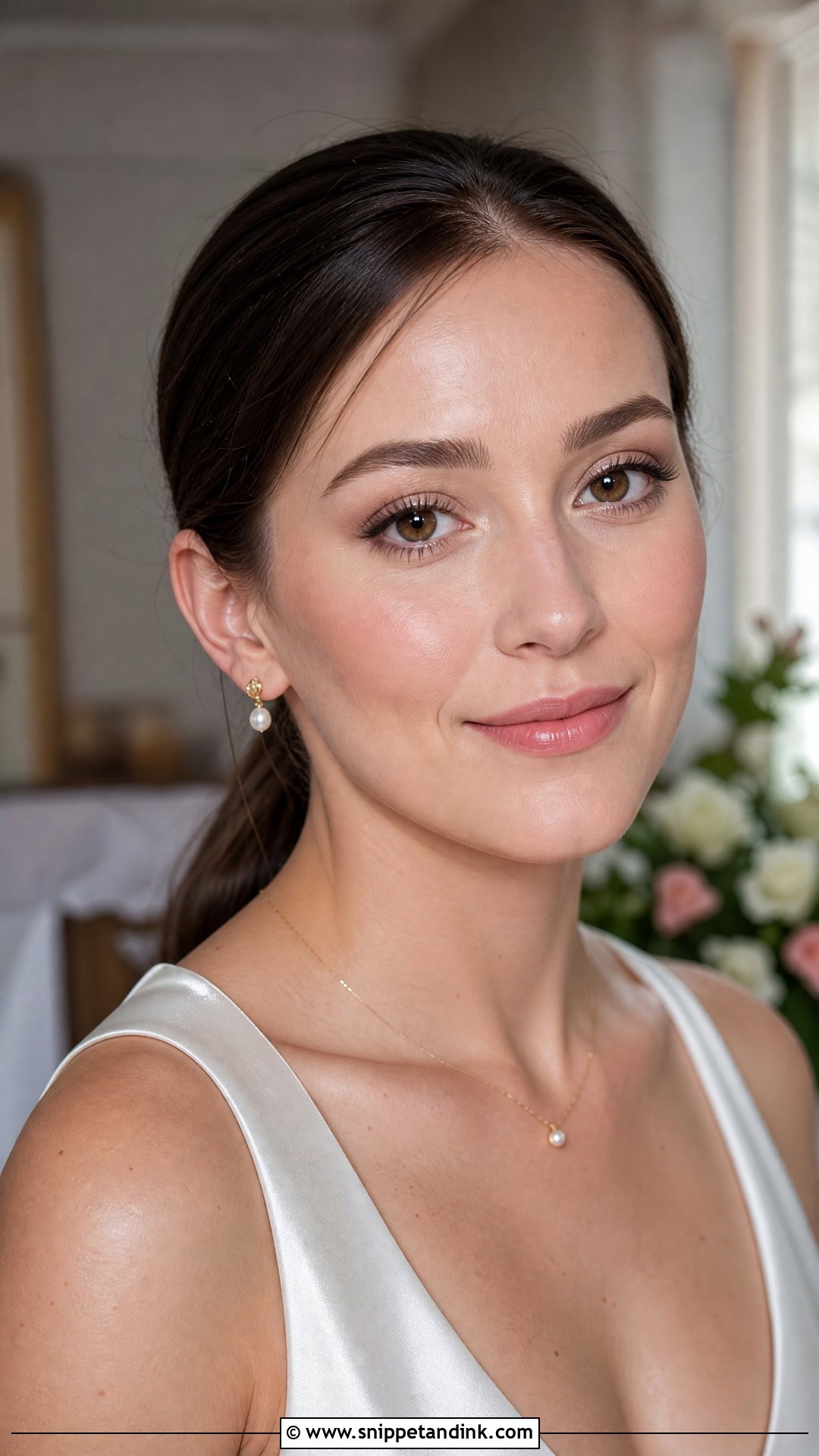
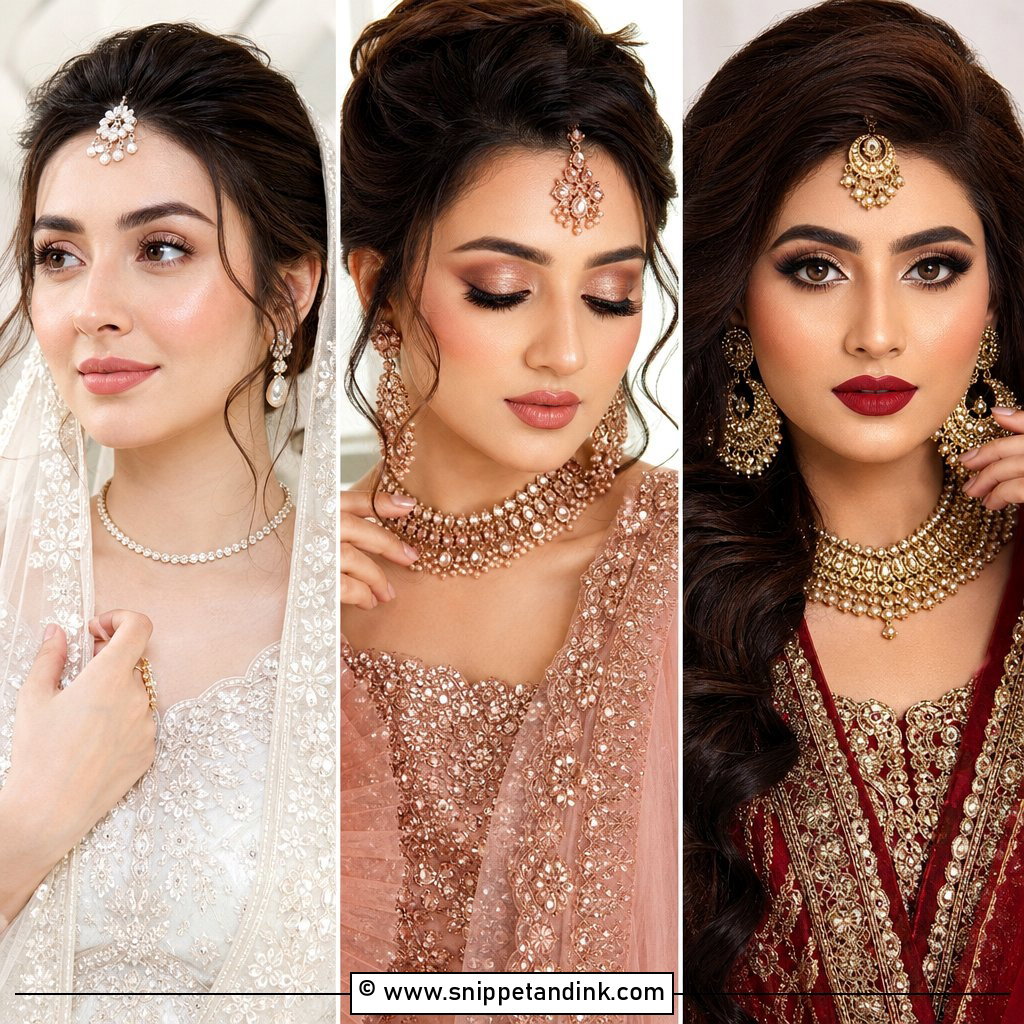
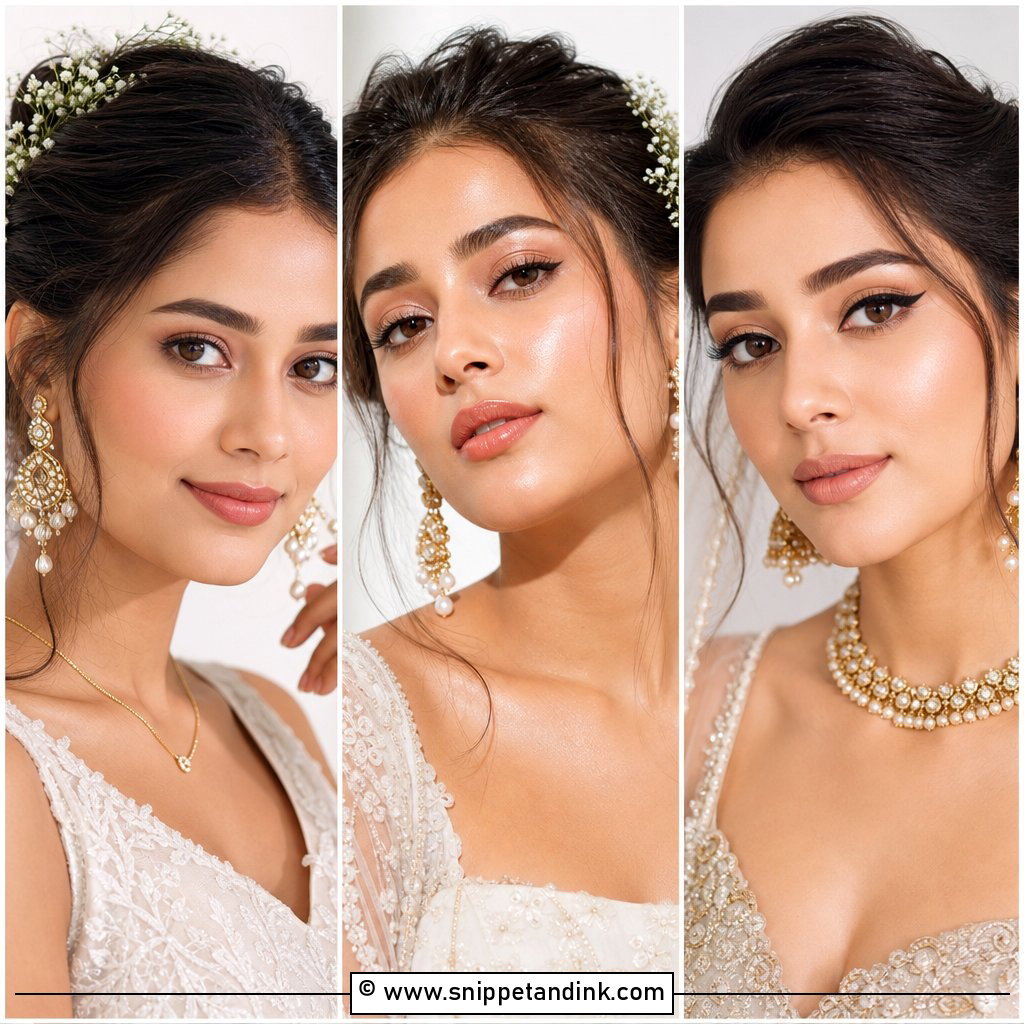
Minimal is fewer products, each one chosen. A sheer skin tint, precise concealer, brushed brows, curled lashes, cream blush and a natural lip tint. The eyes might only need soft brown shadow pressed close to the lash line and waterproof mascara. The skin should look like real skin with a little glow on the cheekbones and a blur where you need it. Courthouse ceremonies, small weddings and modern dresses suit it, and so do brides who want comfort first. Because so little sits on top, skin prep in the weeks before matters more here than in any other look.
What Your Trial Should Prove
A trial isn’t just a preview. It’s a test, and I run it like one. Book it close enough to the wedding that your skin and hair color are what they’ll be on the day, and wear something with the same neckline as your dress so you see the whole picture.
- Photograph the finished face by a window, in shade outdoors, and with a phone flash. Look for white cast under the eyes and any line at the jaw.
- Wear it for at least six hours. Eat, drink and talk. Check where it creases, shines or fades by evening.
- Rub your eyes gently and press a tissue to them, as if you’d cried. See what moves.
- Note every product used, especially the lip shade and liner, so your touch-up kit matches exactly.
If something feels wrong at the trial, say so then. A shade adjustment is simple on a Tuesday afternoon and very stressful on the morning itself.
Your Skin in the Final Month
No foundation fixes a reaction, so the last weeks are the wrong time to experiment. I ask brides not to start any new active skincare, peel or facial within about two weeks of the wedding, and to book brow shaping or tinting several days before, not the day before, so any redness settles.
Drink water, sleep, and keep your routine boring. If you plan to self-tan, do a test run with the exact product and match your trial makeup to it, otherwise your foundation shade will be wrong on the day.
The Face You’ll Recognize in Twenty Years
The right bridal style is the one where you feel confident, comfortable and like yourself. Trends are useful for ideas, but your skin, dress, season and venue matter more. Natural, soft glam, dewy, matte, smoky, bronze, pink, nude and red lip looks can all be bridal when they’re balanced. Book a trial, photograph it in different light, and wear it for several hours before you decide. Bring your inspiration, but stay open when your artist suggests a change for your features; that’s usually where the best version comes from.
You'll Like These Ideas:


Leave a Reply