
Good bridal makeup has two audiences: the people standing a few feet from you all day, and a camera that will look at your face far more closely than any guest. It should hold from the first look to the last dance and still feel like your own face. I don’t start with a trend. I start with your skin, your eye colour, the neckline and fabric of the dress, how the venue is lit and the season, because those decide what will survive the day. Right now most brides ask me for glowing skin, soft definition around the eyes, a real flush of blush and a lip that copes with hugs and tears. Some want almost nothing, some want a red lip or full evening glam. Here are twenty bridal faces, with the trade-offs I’d talk you through at a trial.
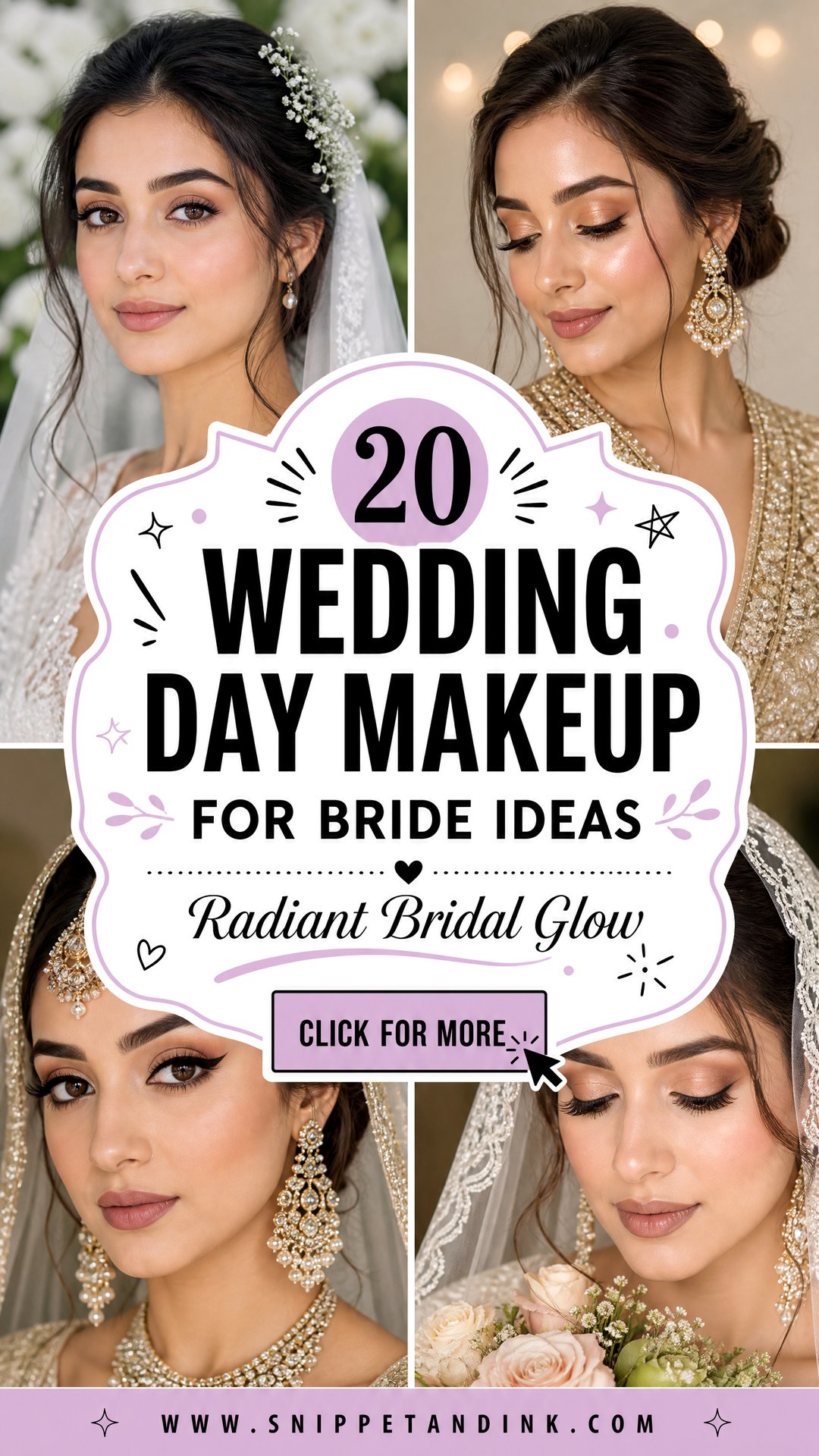
Your Skin Type Picks the Finish Before You Do
Before we talk about colour, I look at what your skin does by early afternoon. That tells me whether a dewy, satin or matte finish will still look intentional at the reception.
- Oily or shiny by midday: matte or natural-matte base, glow placed only on the cheekbones, a powder you can carry.
- Dry or flaky: hydrating prep, a satin or radiant foundation, cream blush. Heavy powder will settle into texture.
- Combination: a satin base with powder through the centre of the face. This is the most common and the most flexible.
- Sensitive or reactive: no new products in the last month, and a patch test of anything unfamiliar at the trial.
Skin type also shapes the eye. Oily lids crease shimmer and liner quickly, so they need a primer and a matte shade pressed underneath. Mature or crepey lids look smoother with satin than with heavy glitter.
1. Natural Bridal Makeup
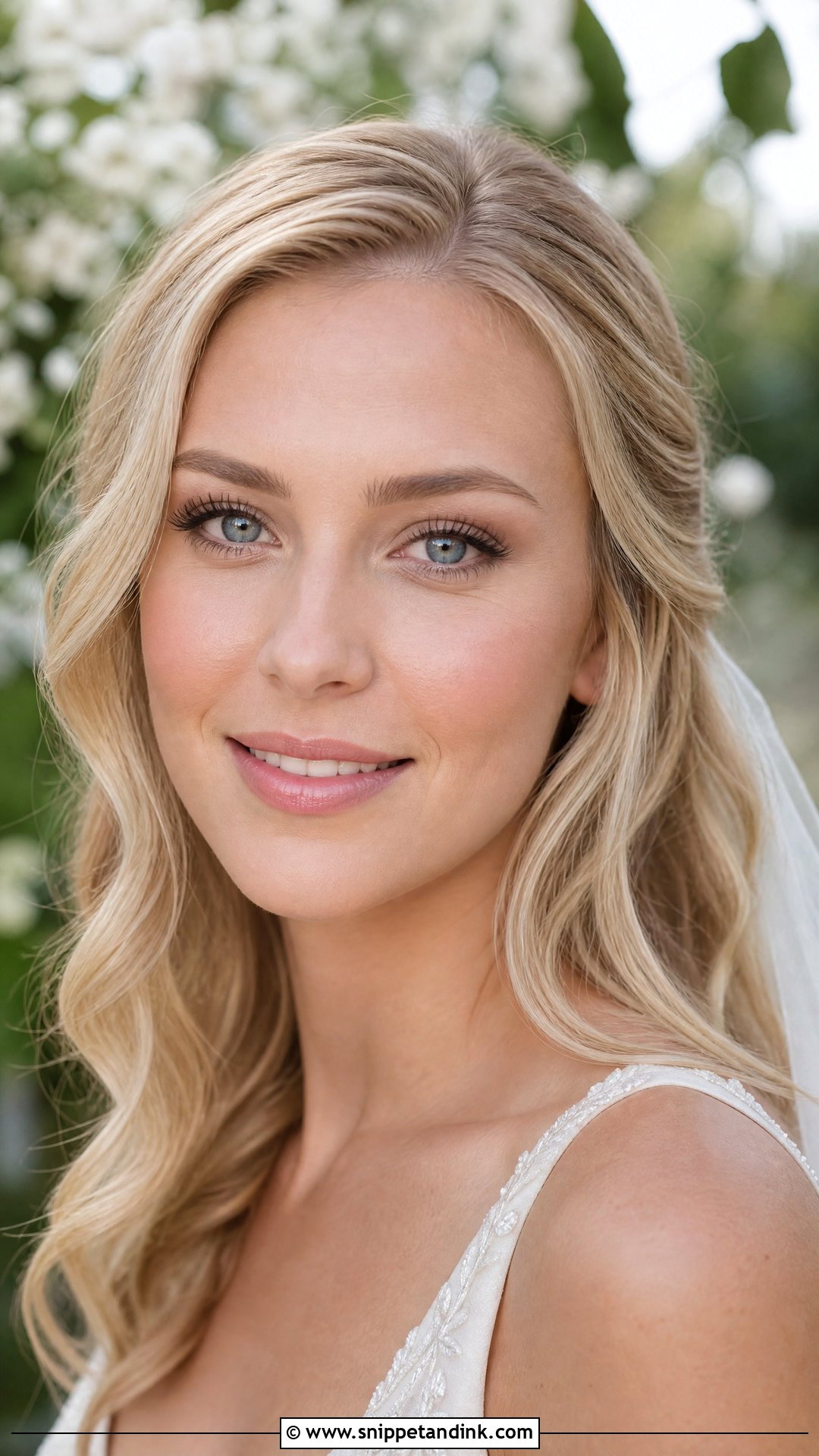
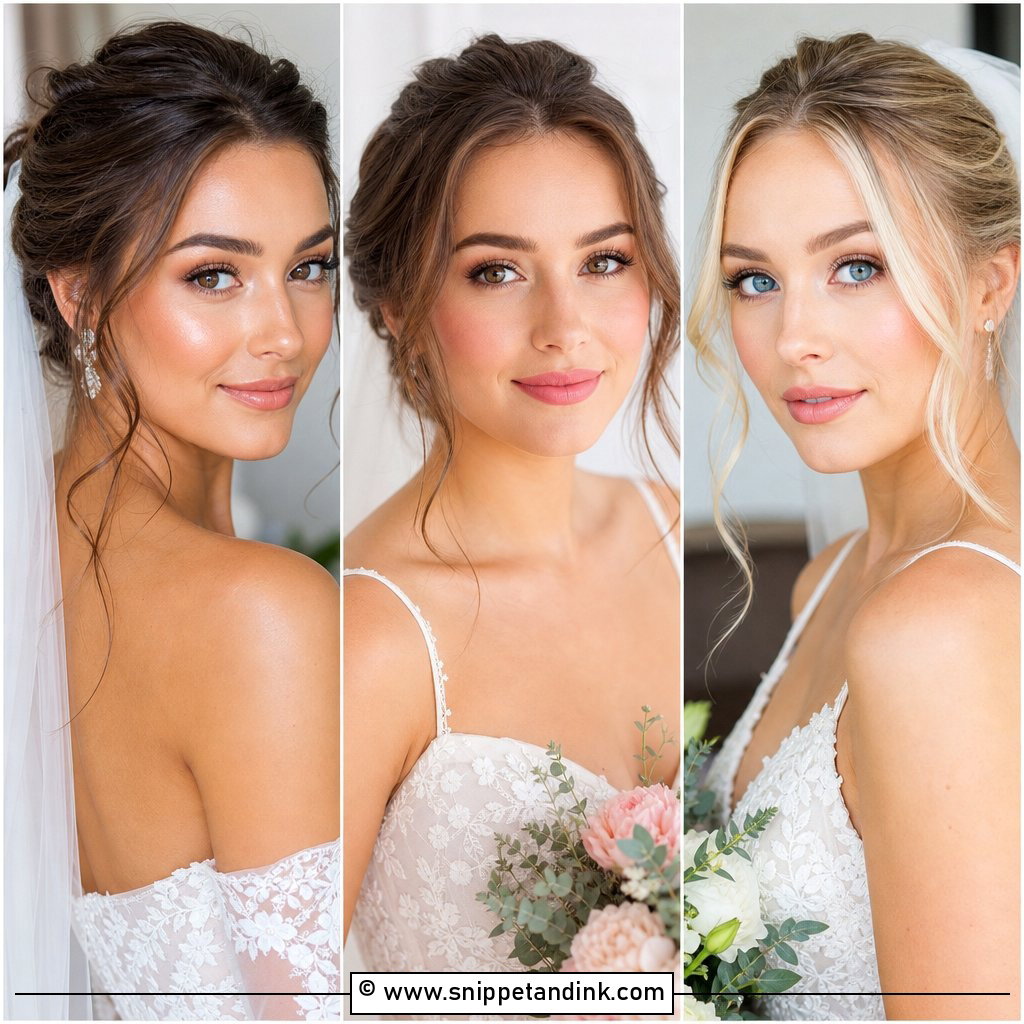
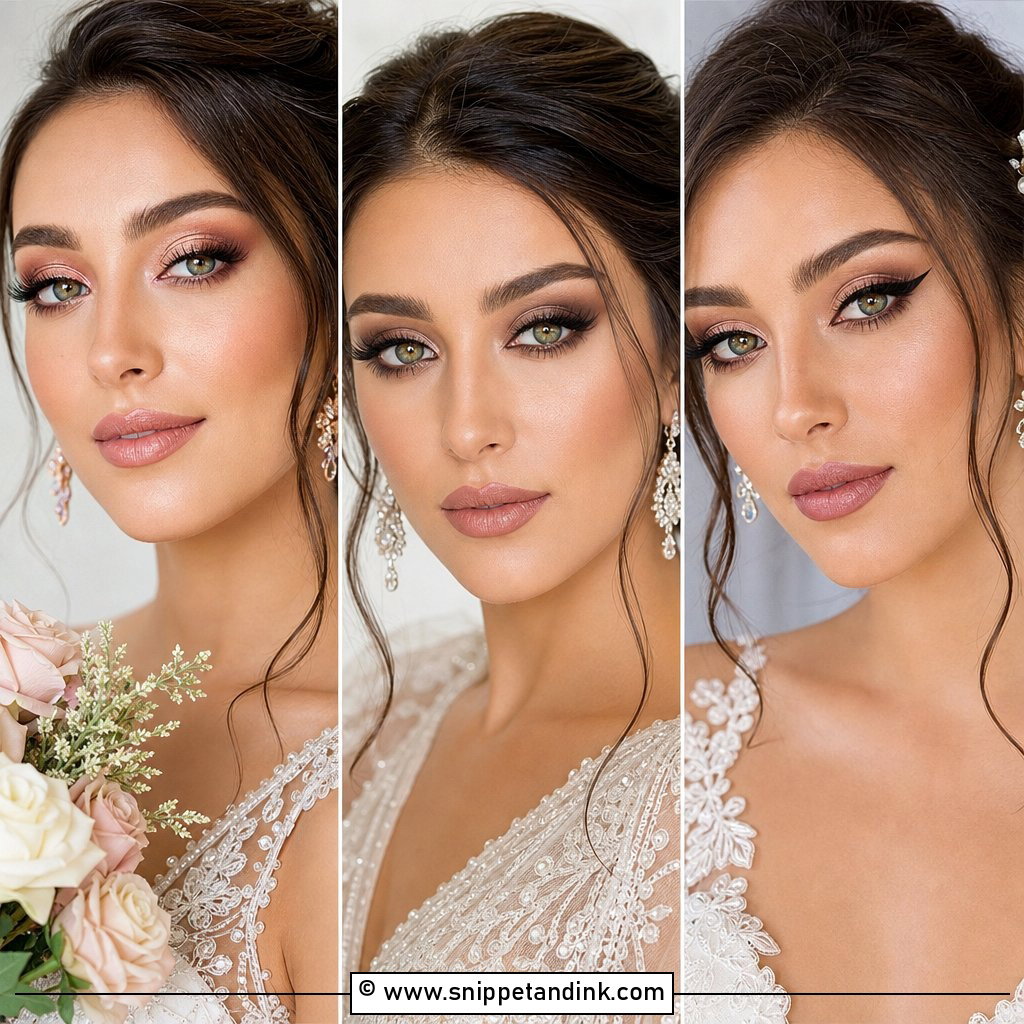
You should look like yourself after a very good night’s sleep. I use a skin-like foundation only where the skin needs evening out, a little concealer, cream blush and a soft champagne highlight on the high points. Taupe or beige on the lids, brown liner pressed into the lash roots, curled lashes with mascara and softly filled brows give the eyes enough shape for photos. A nude pink or rosy beige lip finishes it. Ask for long-wear base products and a fine powder through the T-zone, because natural makeup has no margin: if it slides, there is nothing on top to hide it.
2. Soft Glam Bridal Makeup
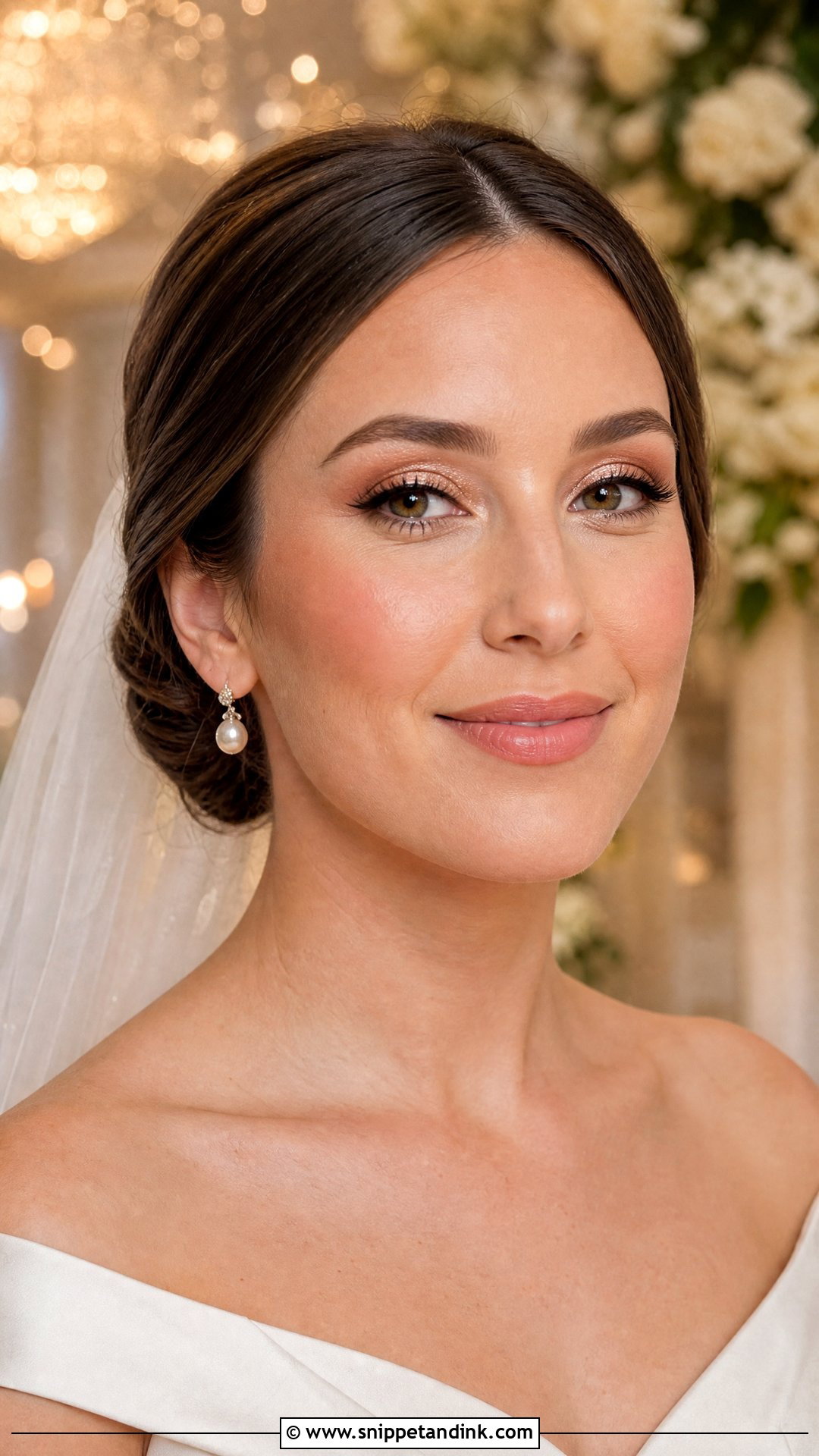
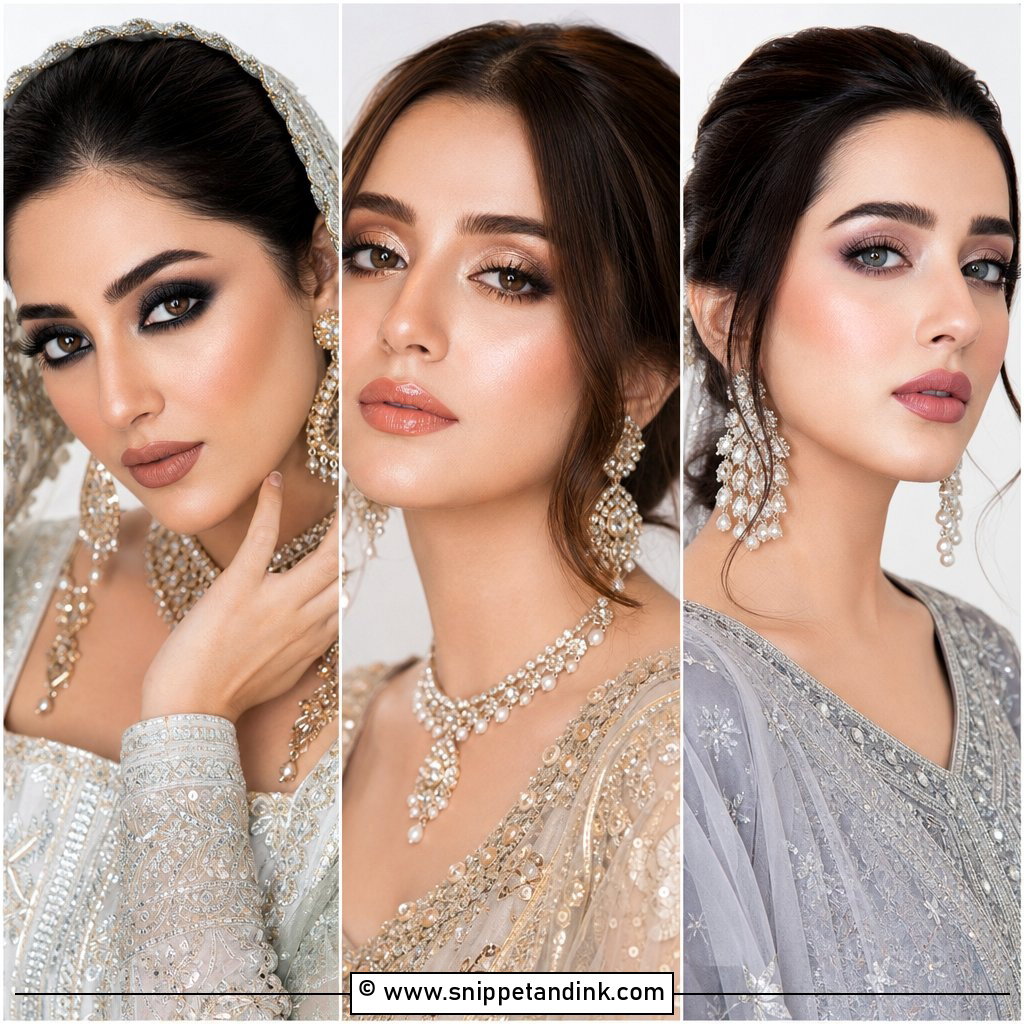
Soft glam sits one step up from natural, and it’s the face I’d suggest to a bride who can’t decide. Satin skin, warm neutral shadow with a light shimmer on the lid, medium brown in the crease and deeper brown along the lash line give the eye a clear shape from across a room. Sculpted cheeks and a flattering nude lip complete it. The blush is where I personalise most: peach on warm undertones, rose on cool, mauve on many olive skins. Keep the highlight refined rather than glittery, since glitter sits on texture and makes pores look bigger in close-ups.
3. Dewy Bridal Makeup
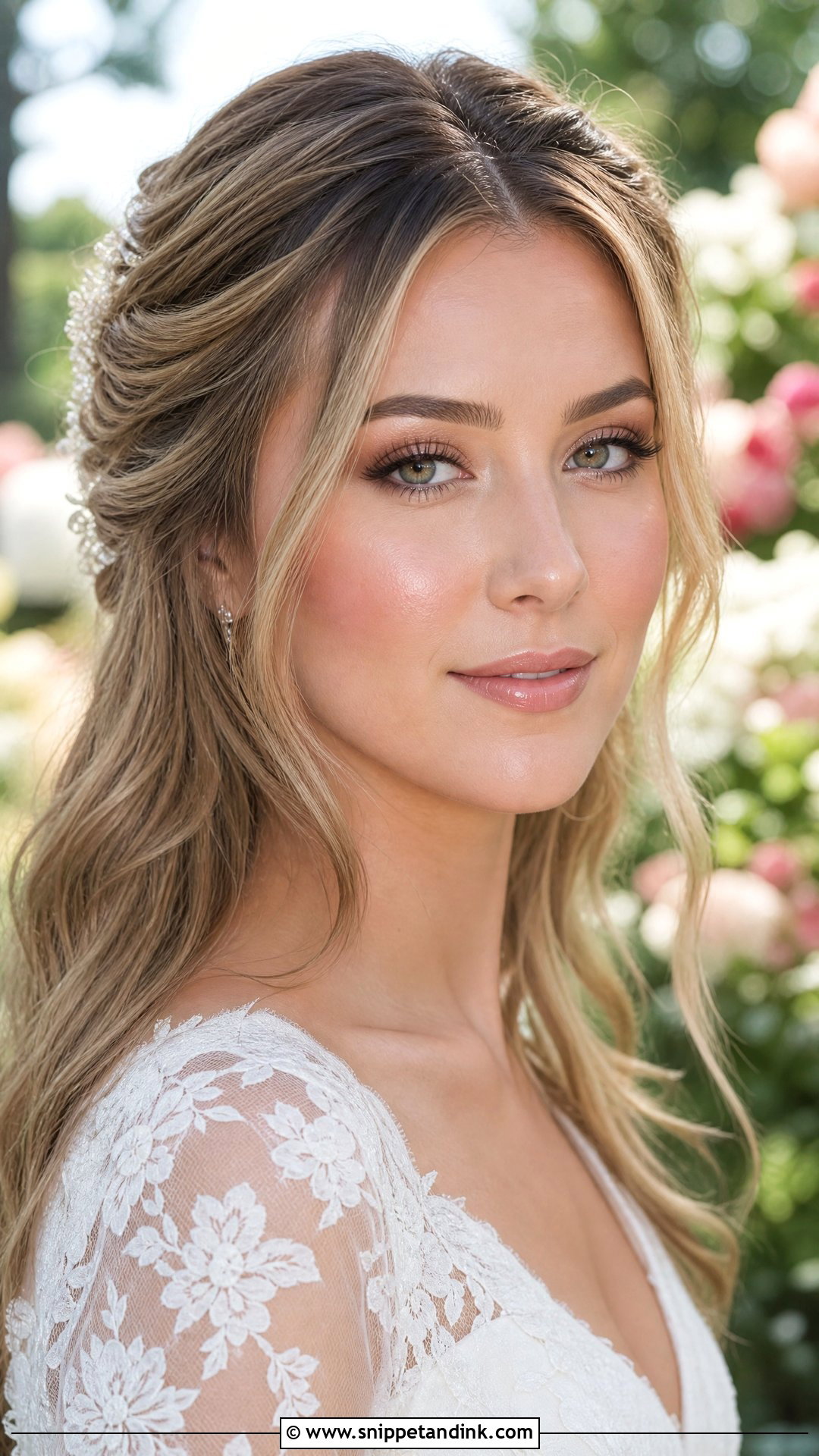
Dewy is luminous, not oily, and the difference is almost entirely prep. I hydrate the skin well, then use a radiant foundation, concealer only where needed, cream blush and a balm highlighter on the cheekbones. Eyes stay simple: champagne shadow, brown liner, fluttery lashes and brushed-up brows. A glossy rose or peach nude lip keeps it fresh against chiffon, organza or lace in a spring garden. If you have oily skin, I powder the forehead, nose and chin and leave only the cheeks glowing. Without that, a dewy face can look greasy by the speeches.
4. Matte Bridal Makeup
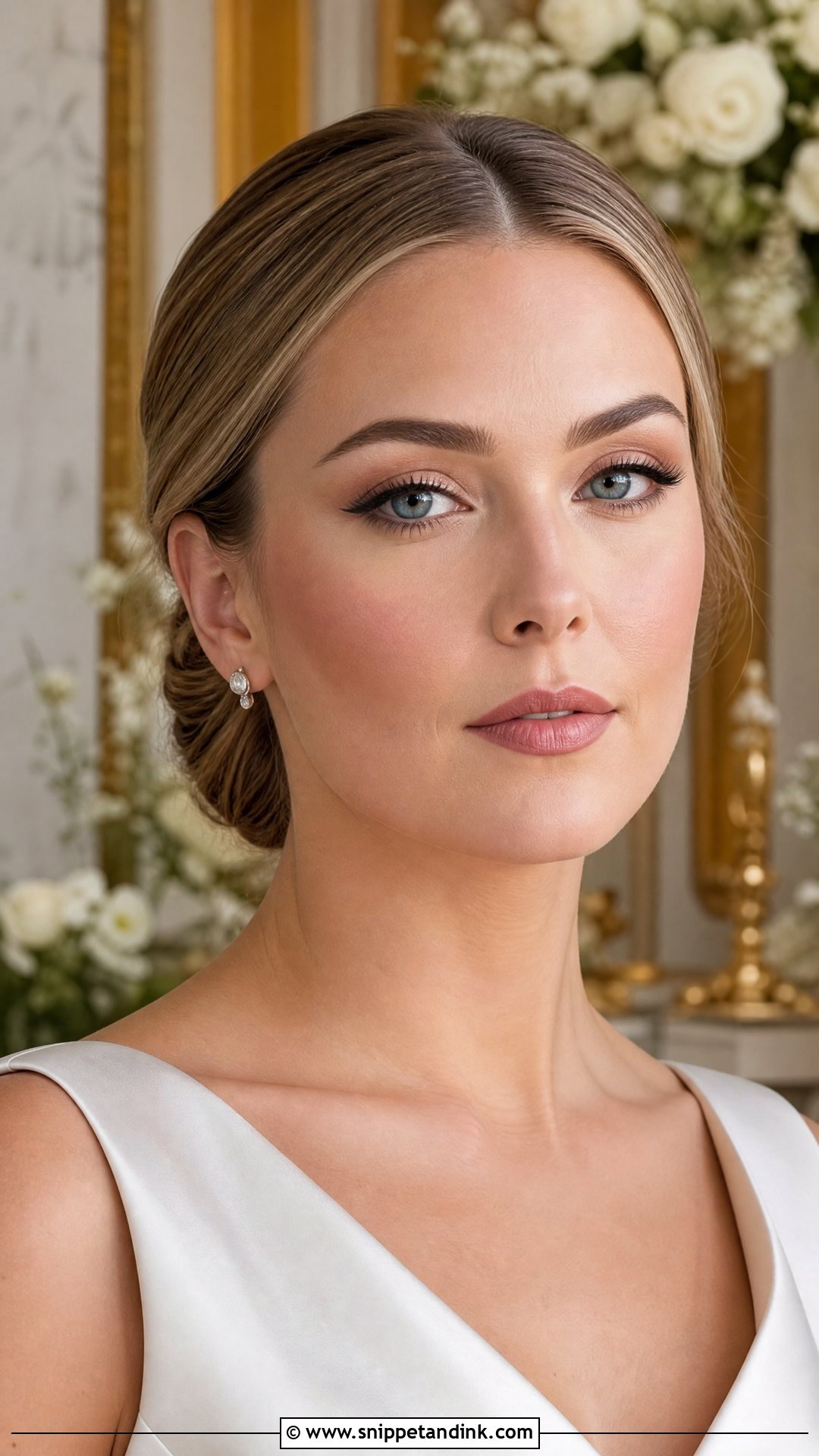
Matte is the finish I trust for heat, flash and a fourteen-hour day. It only looks flat when every layer is matte, so I build it with a natural-matte foundation, a soft contour, a blurring powder and a satin blush to keep some life in the cheeks. On the eyes, matte beige, caramel and chocolate with a thin liner and clean lashes. A soft matte lip in nude, rose or mauve won’t need constant blotting. Oily and combination skin gets the most from this. Dry skin needs a hydrating primer underneath or it will cling to every flake by evening.
5. Classic Bridal Makeup
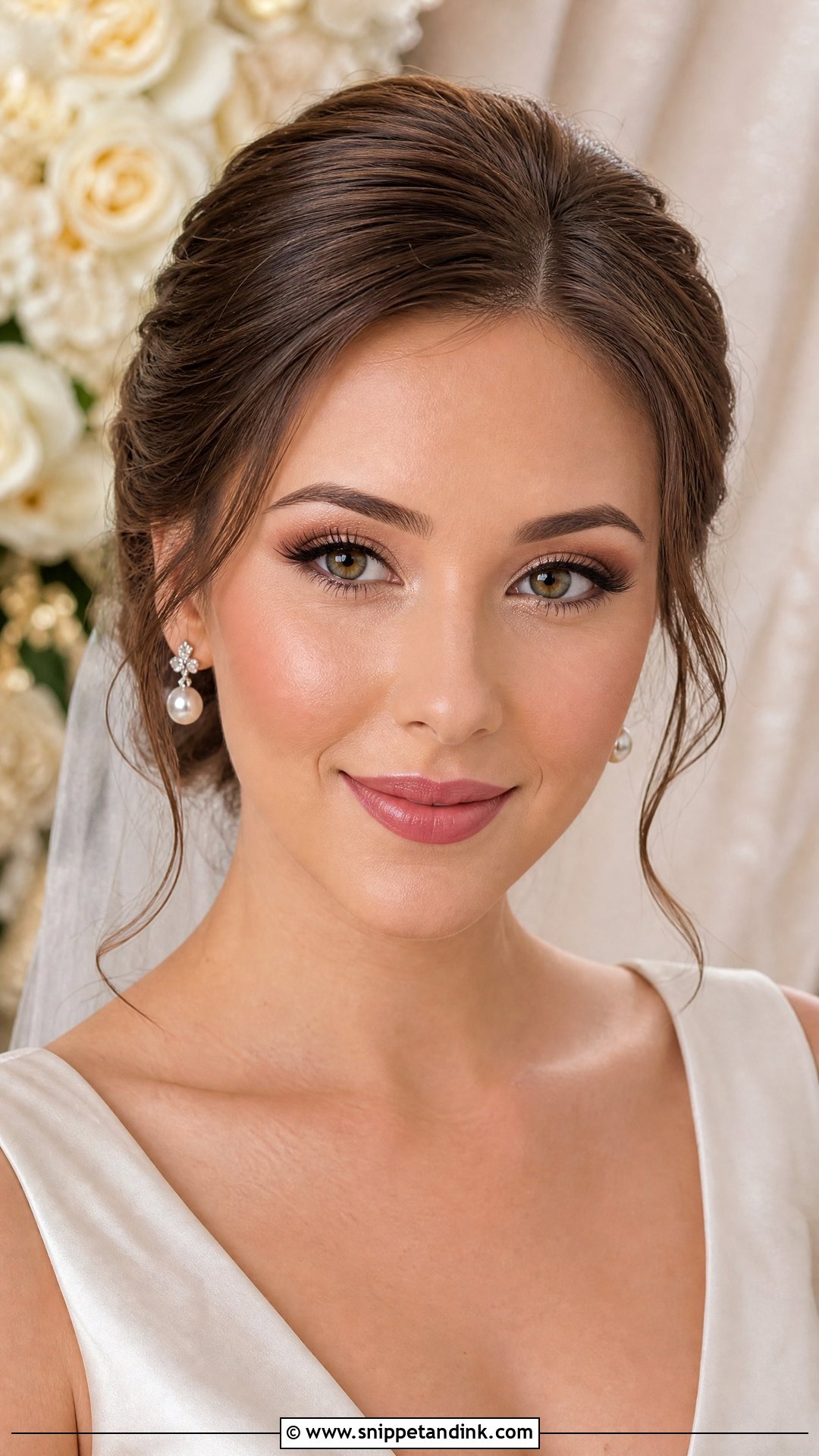
Classic makeup is the face least likely to date your photos. Even skin, softly sculpted cheeks, neutral eyes in beige, taupe, champagne and soft brown, defined lashes, groomed brows and a lip that has some colour in it. That last point matters: very pale lips make the whole face look washed out next to a white dress. A satin rose, pink nude or soft berry lipstick works best. I keep the base at medium coverage and blend it carefully into the jaw and neck, because the camera often catches you in profile against a veil or updo.
6. Full Glam Bridal Makeup
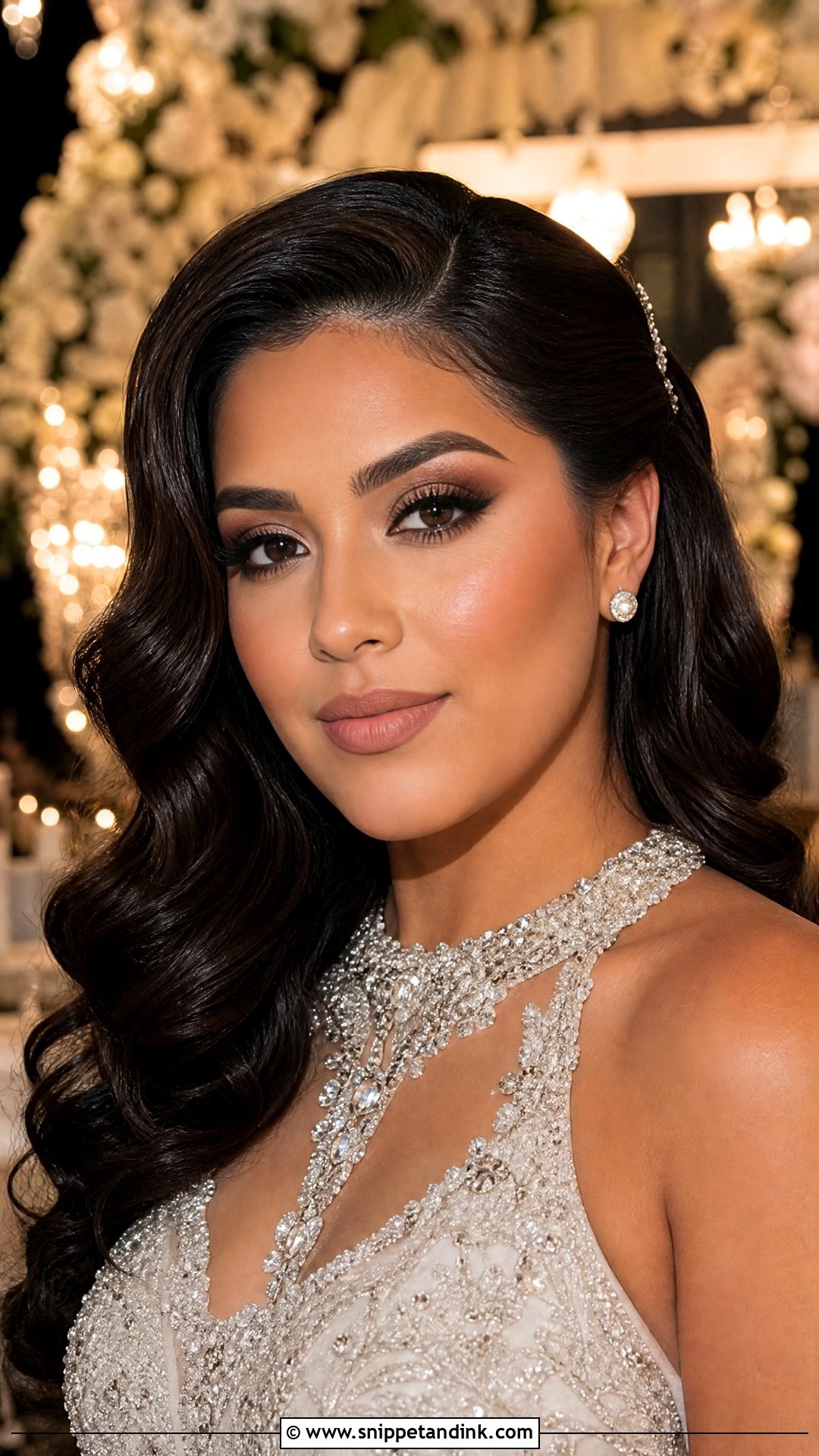
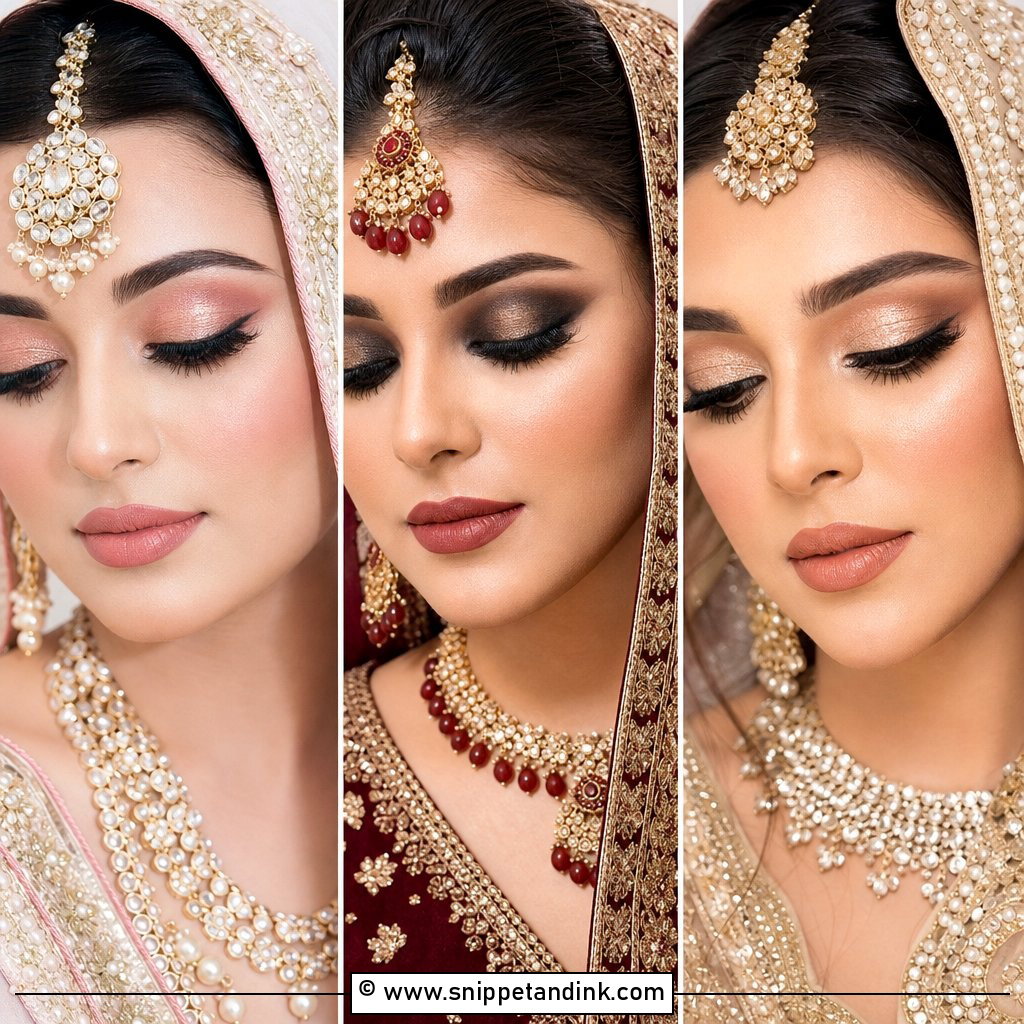
Full glam asks for the most time in my chair and gives the most definition back. The complexion is usually medium to full coverage, with contour, blush and highlight built in thin layers and set properly. The eyes carry deeper browns, bronze shimmer, winged liner, full lashes and polished brows. I usually keep the lip in nude, mauve or soft brown so the eyes lead. For black-tie evenings, bold gowns and statement jewellery it holds its own. What keeps it bridal is the blending: no harsh blocks of colour, every edge diffused so it still looks soft at arm’s length.
7. Romantic Pink Bridal Makeup
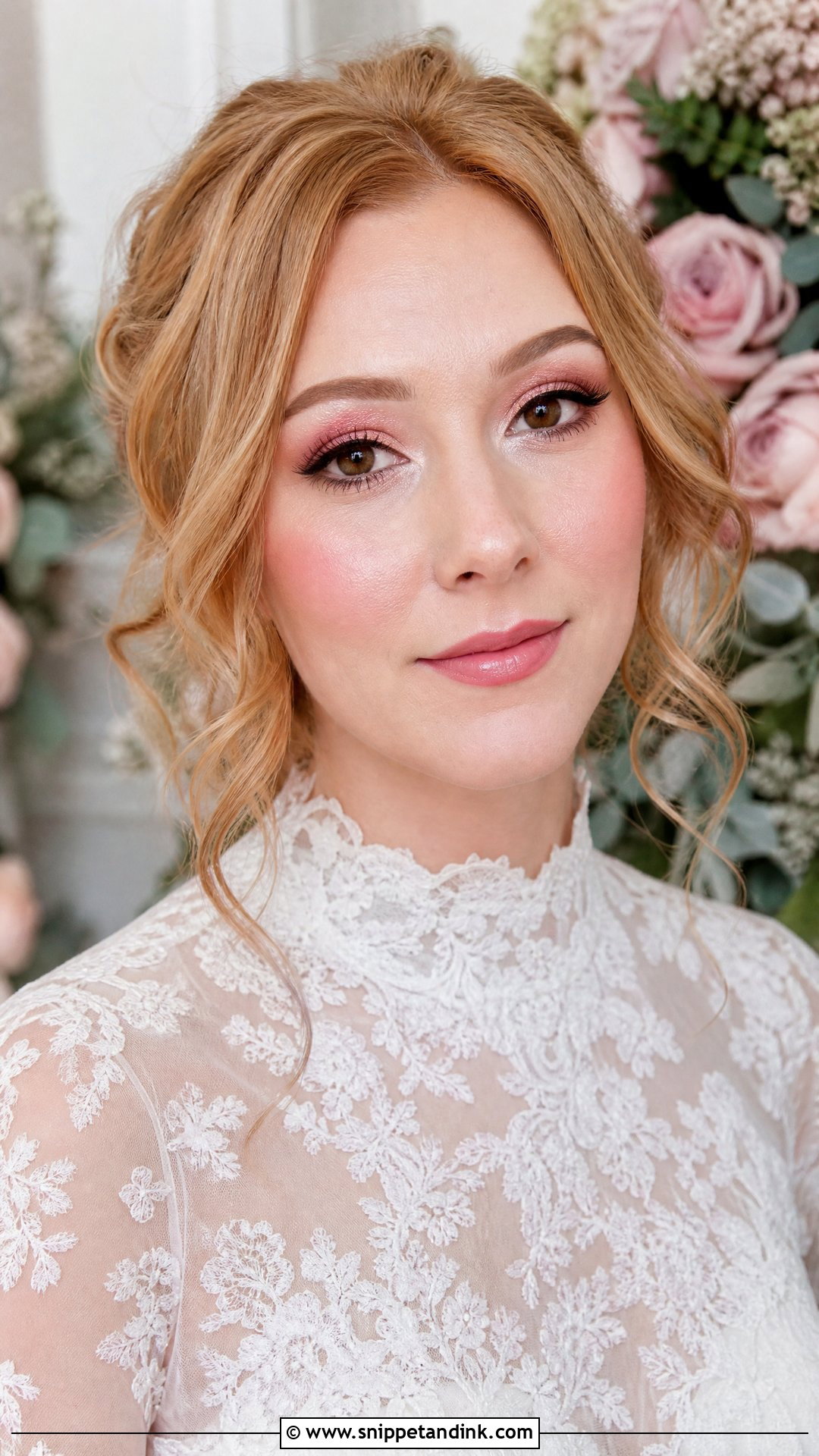
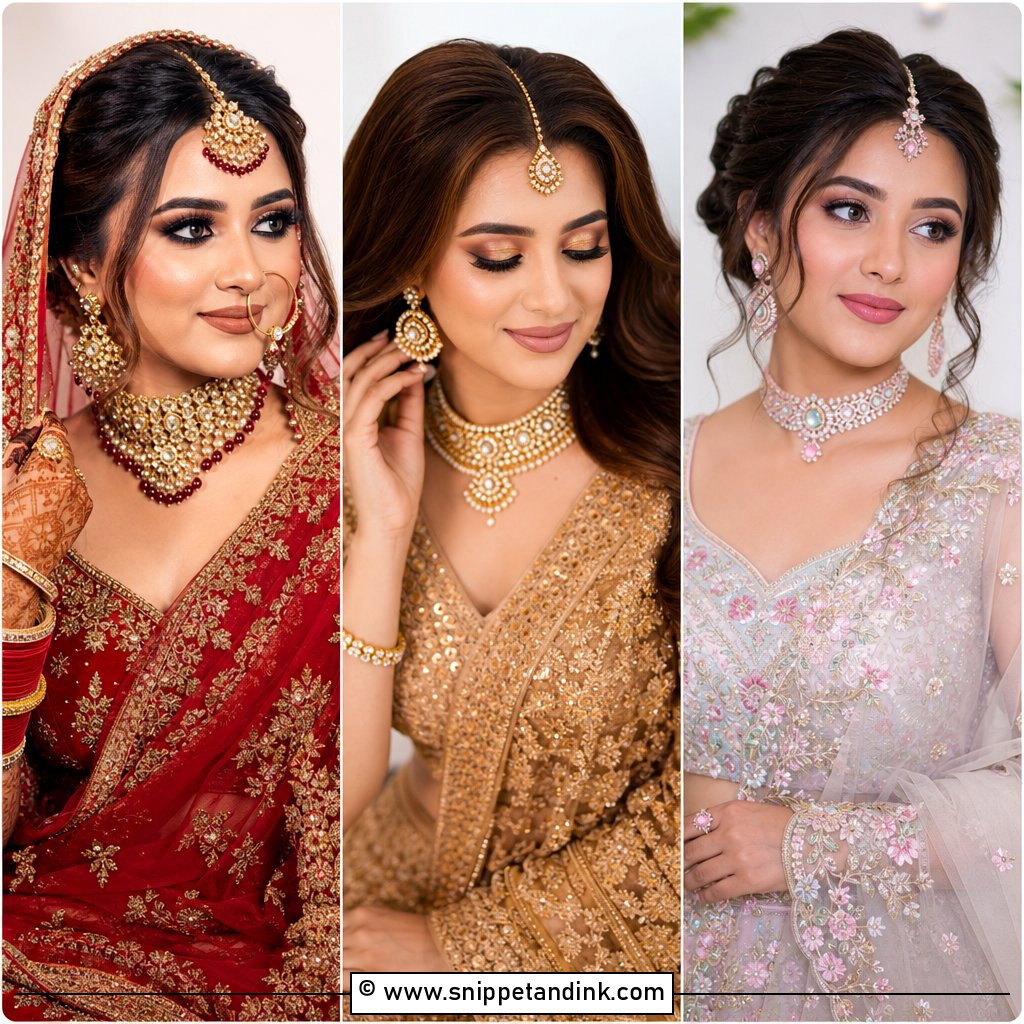
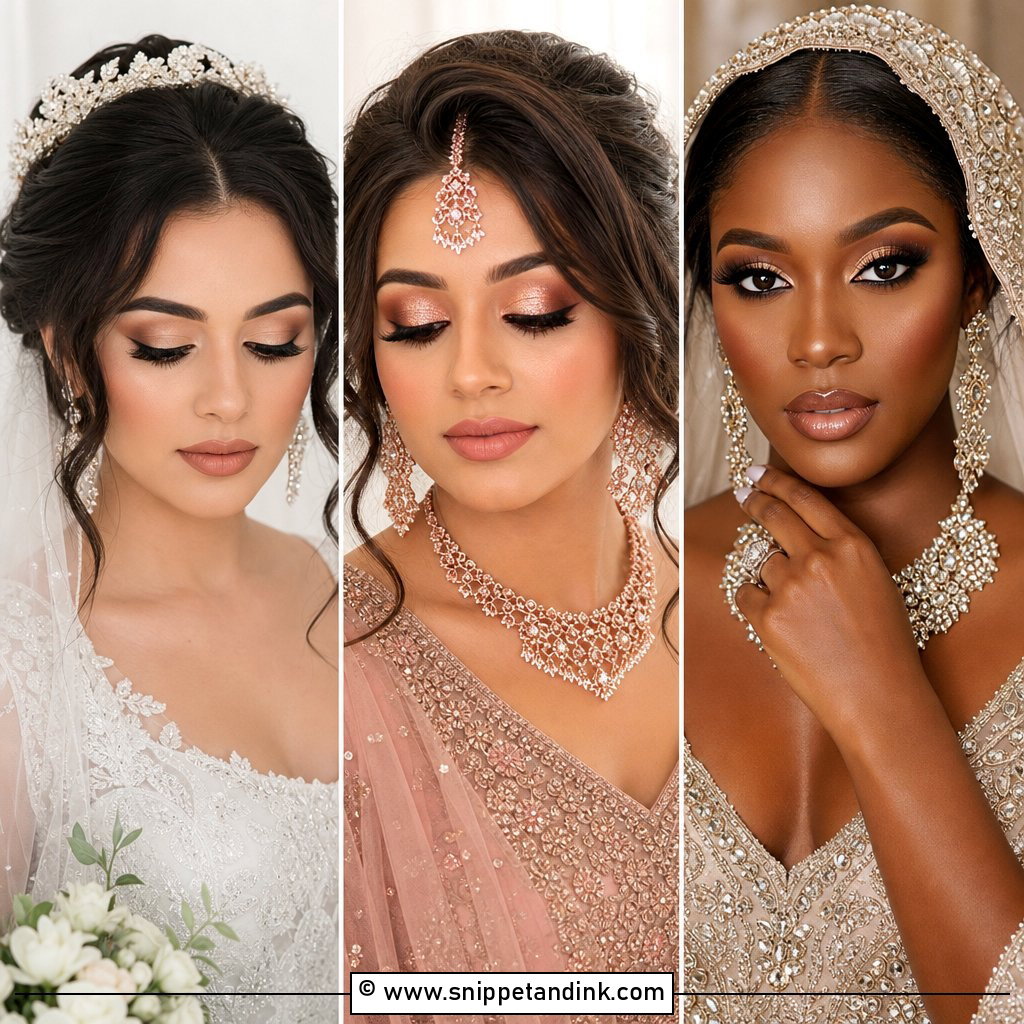
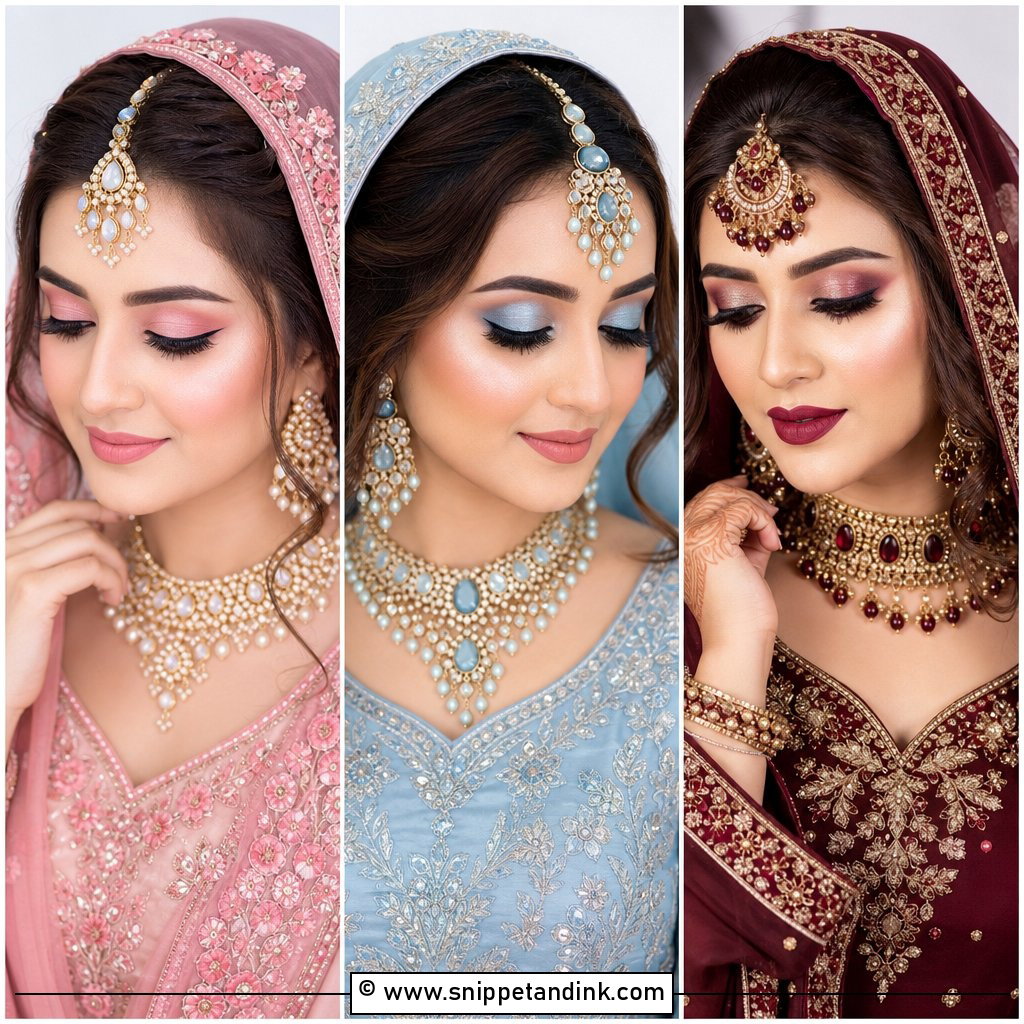
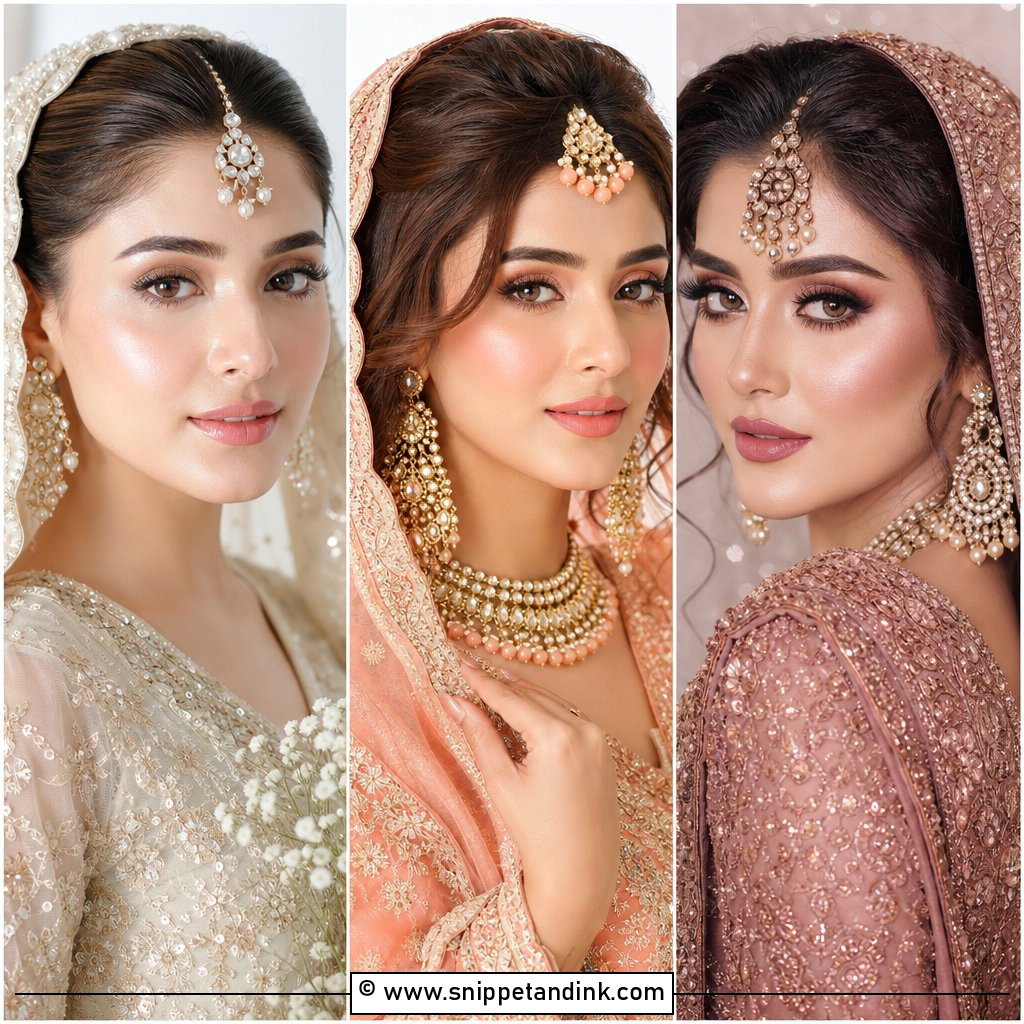
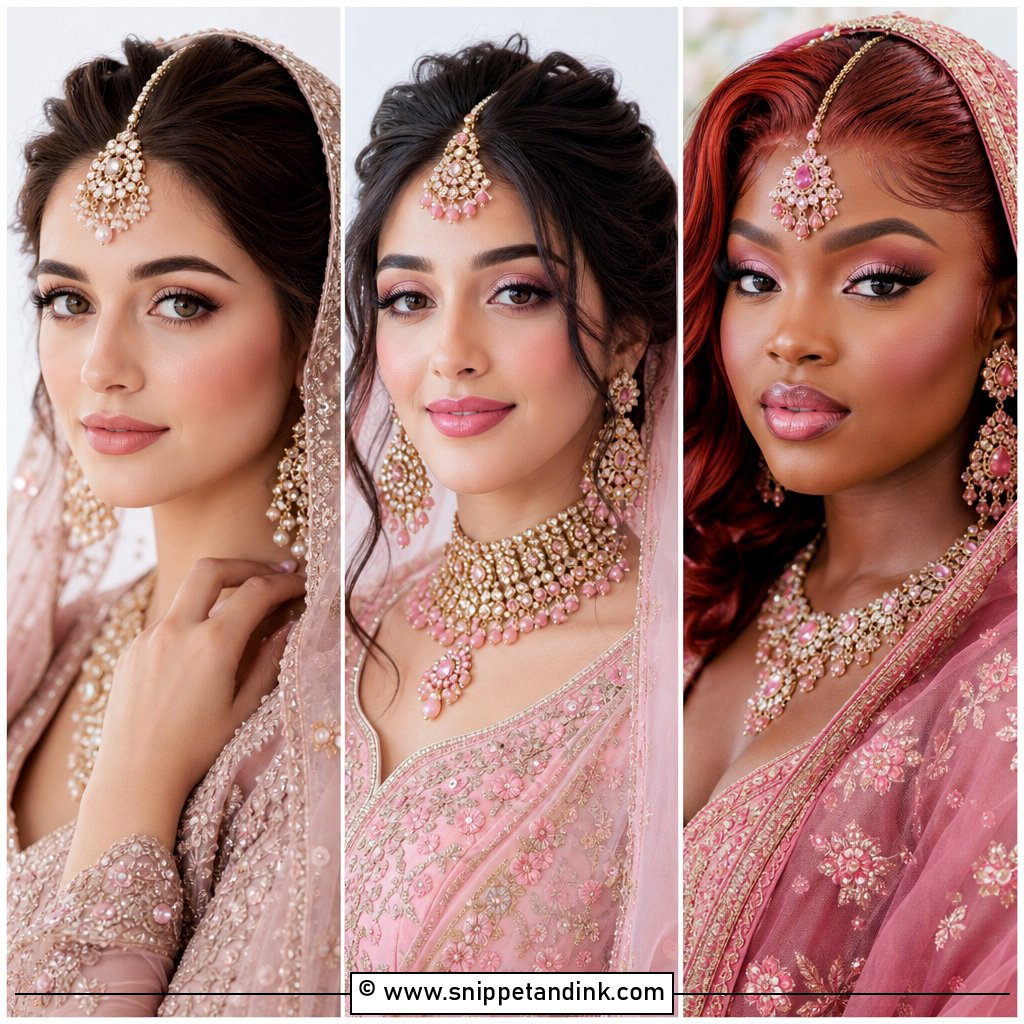
Pink is the easiest colour to get wrong on camera. Too cool or too pale, and it sits on deeper skin as a chalky film. I match the depth of the pink to the depth of your skin first, then build: pink or rose blush placed high on the cheeks, soft pink, mauve or rose-gold shadow on the lid with a brown outer corner for structure, wispy lashes and soft brows. A pink nude or petal lipstick finishes it. Blush-toned flowers, lace and soft curls all sit naturally with this face in spring and summer.
8. Peach Bridal Makeup
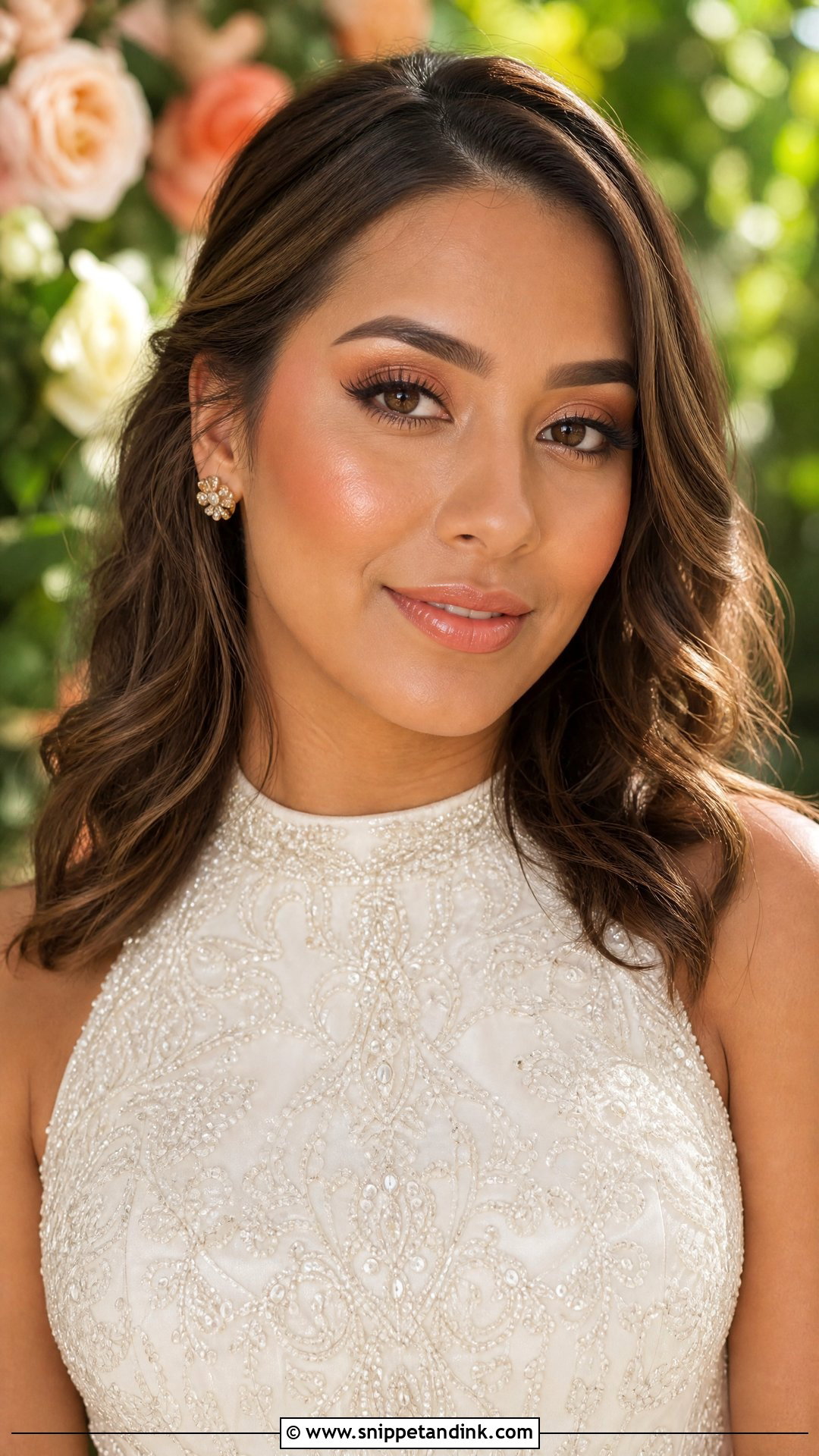
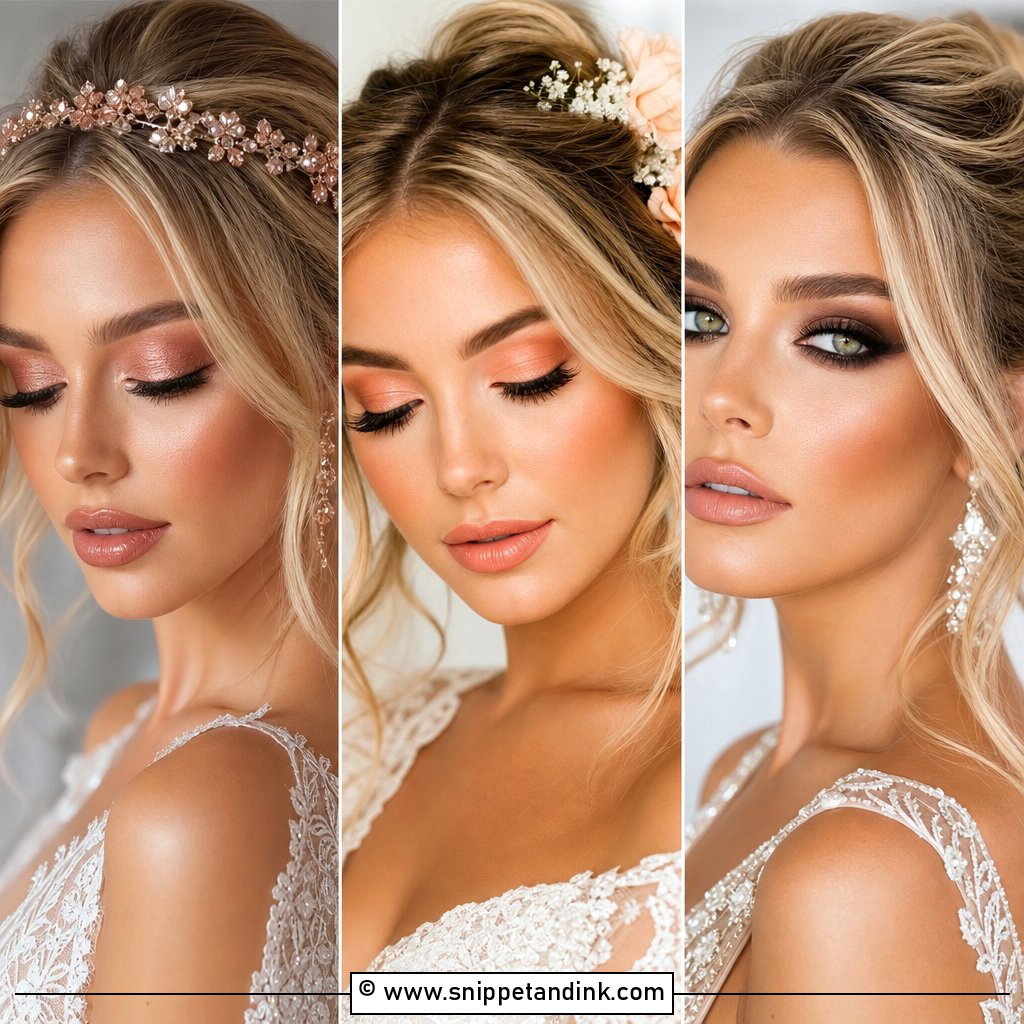
Peach gives the face warmth without leaning pink or bronze. I use a peach cream blush, a soft golden highlight and warm beige or apricot on the eyes, with brown liner rather than black to keep it soft. A peach nude or warm coral lip completes it. Ivory, champagne and warm white dresses love it, especially outdoors in daylight. On deeper skin I switch to richer apricot, terracotta peach or warm coral, since a pale peach can turn ashy and disappear under professional lighting.
9. Rose Gold Bridal Makeup
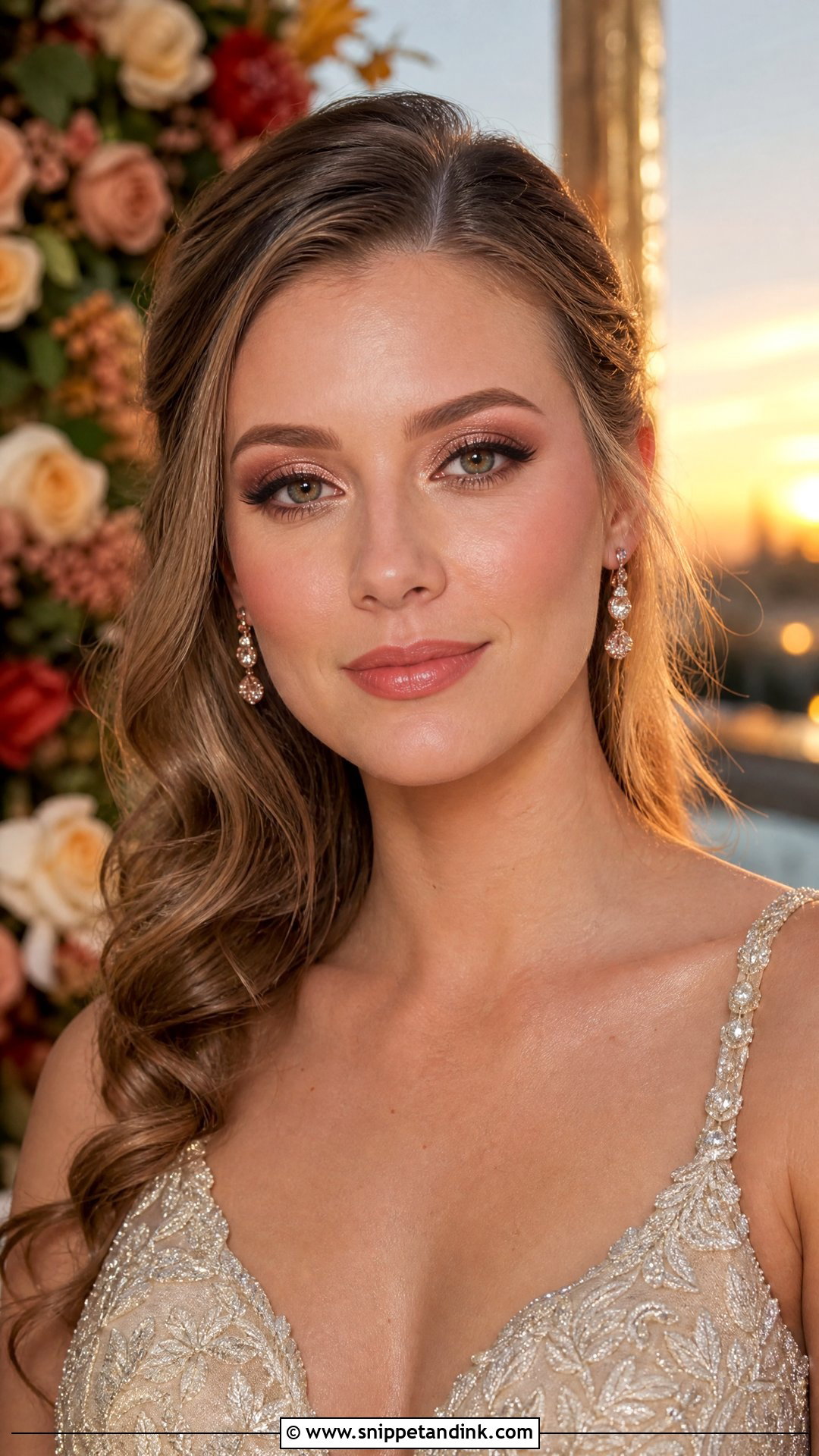
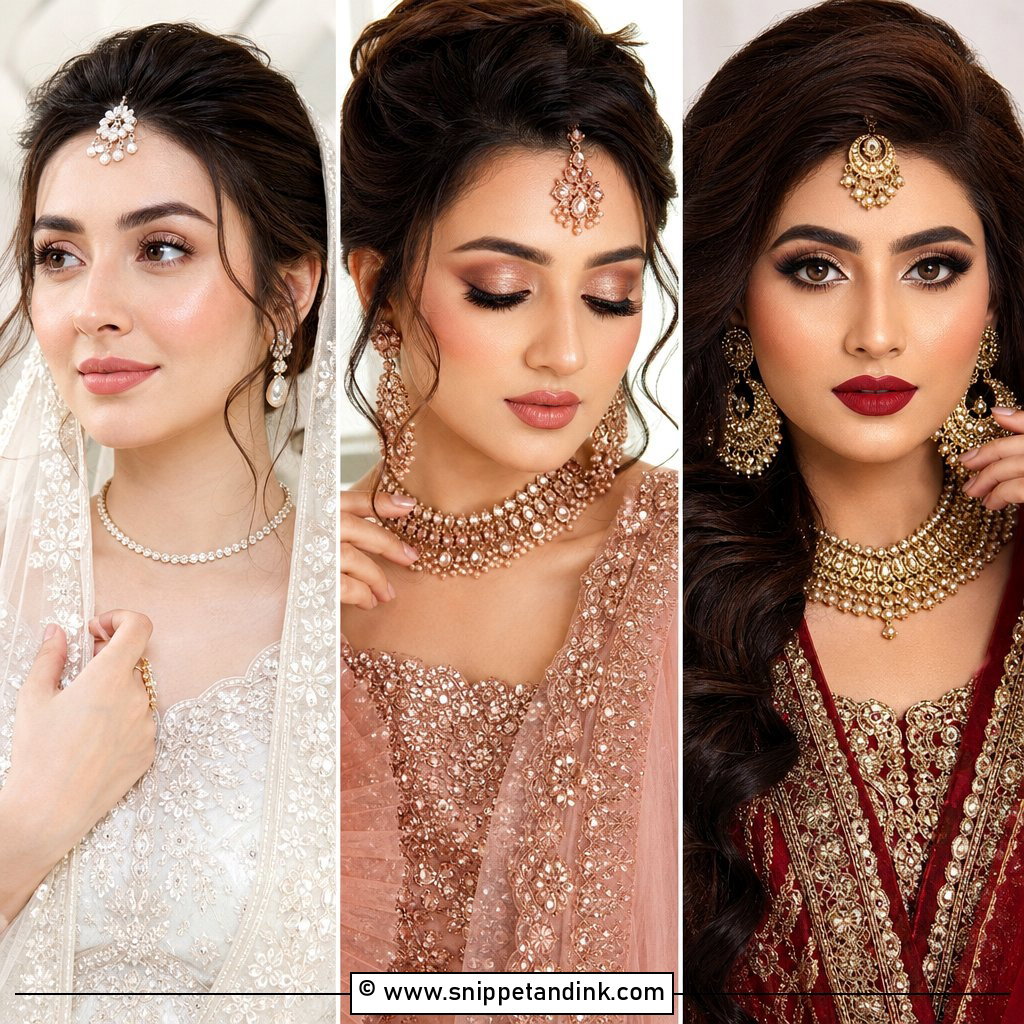
Rose gold flatters a wide range of skin tones because it borrows from both pink and gold. I put the rose-gold shimmer across the lid, warm brown in the crease and a deeper shade in the outer corner so the shimmer has shape around it. Brown or black-brown liner defines without weight. A rosy nude, pink beige or soft mauve lip balances the metallic eye. The shimmer has to be finely milled. Chunky particles fall onto the cheek during the day, and you want the lid to catch light when you look down at your vows, not sparkle on your cheekbone.
10. Bronze Bridal Makeup
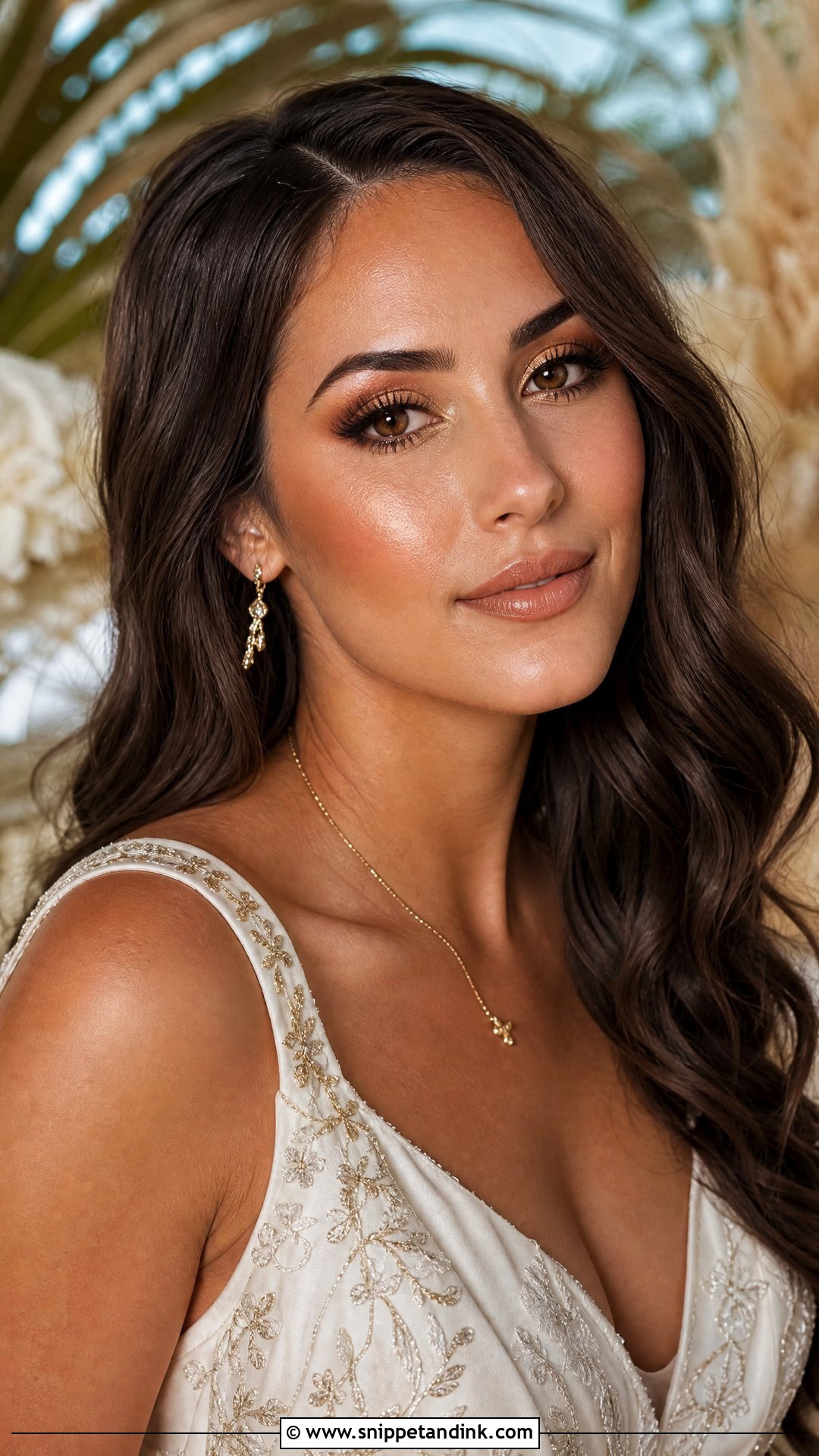
Bronze bridal makeup gives a sun-warmed finish that suits summer, destination and desert weddings. Bronzer goes around the temples, cheekbones and jaw, and I always carry it down the neck, because a bronzed face on a pale neck is obvious in every photo with a strapless dress. On the eyes, bronze, copper, caramel and chocolate add depth, with black-brown liner and soft lashes. A warm nude or caramel lip completes it. Keep the blush warm but not orange. Lash choice and liner thickness decide whether this reads soft or glamorous.
11. Smokey Eye Bridal Makeup
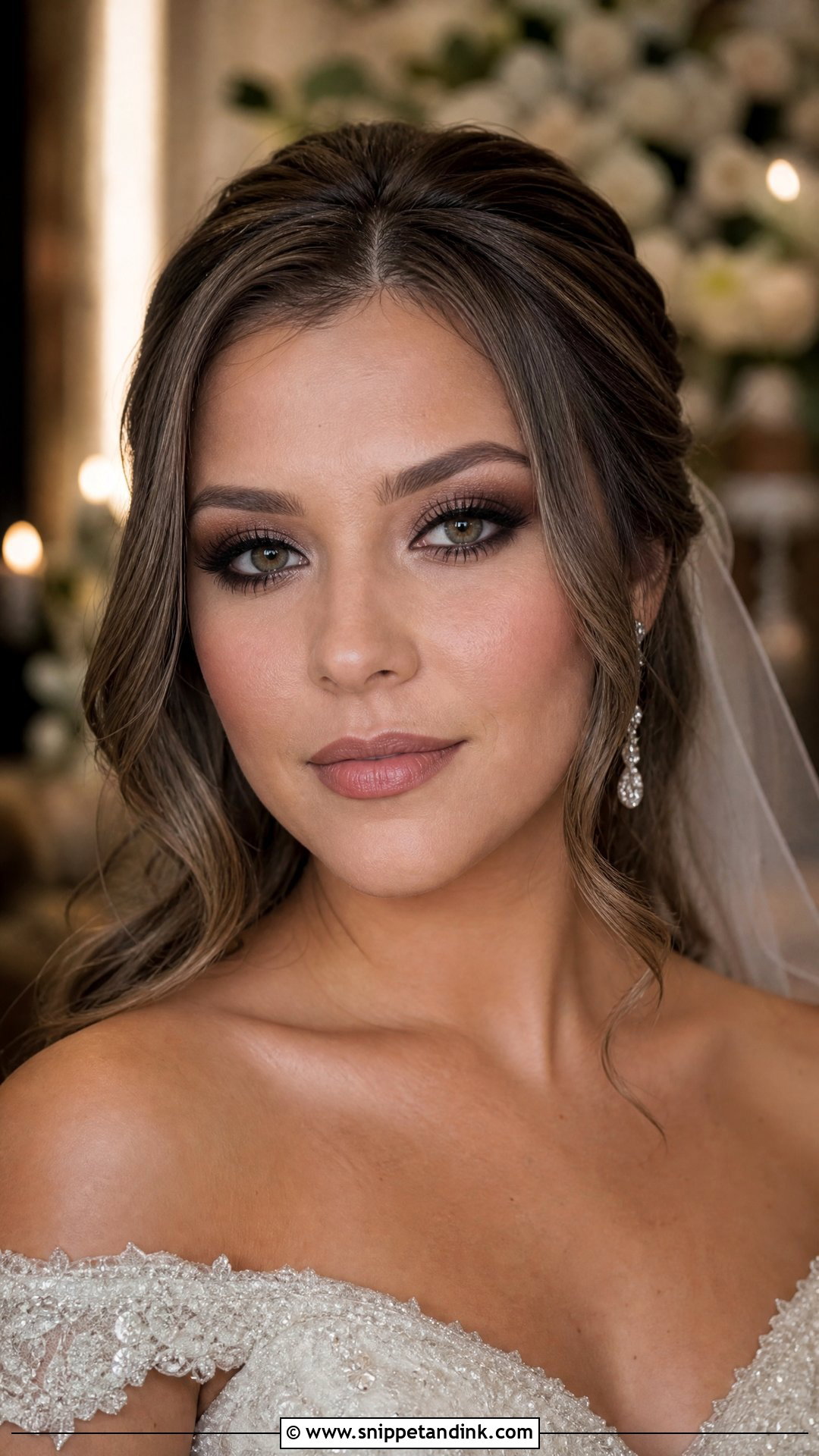
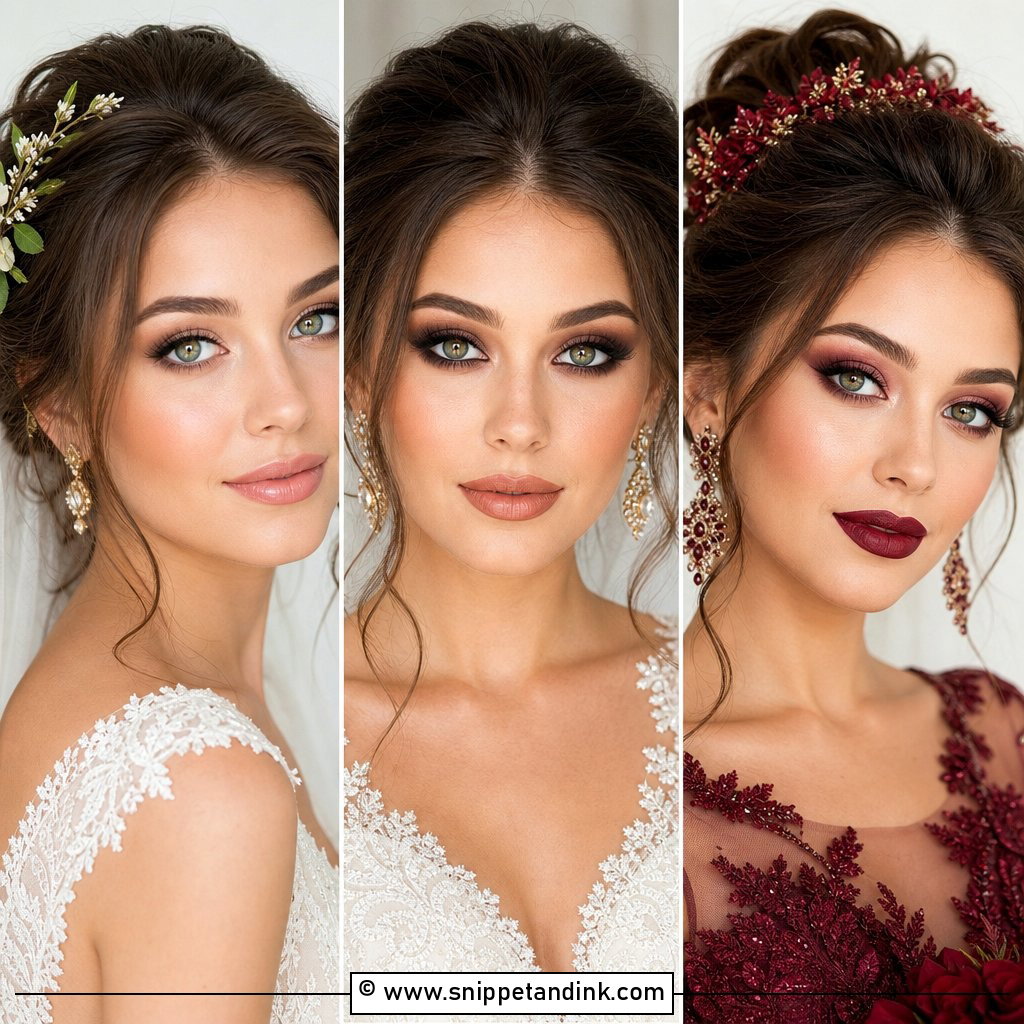
Smokey eye bridal makeup needs softer edges than an evening-out smoky eye. I choose the shade from your eyes and skin: brown, taupe, plum, bronze or charcoal rather than straight black. The deepest colour sits at the lash line and outer corner, and I blend upward into a softer crease shade until no edge remains. Perfected skin, controlled highlight, neutral blush and a nude or soft mauve lip stop it tipping into nightclub. Waterproof liner and mascara aren’t optional here. The darker the eye, the more a single tear shows.
12. Winged Liner Bridal Makeup
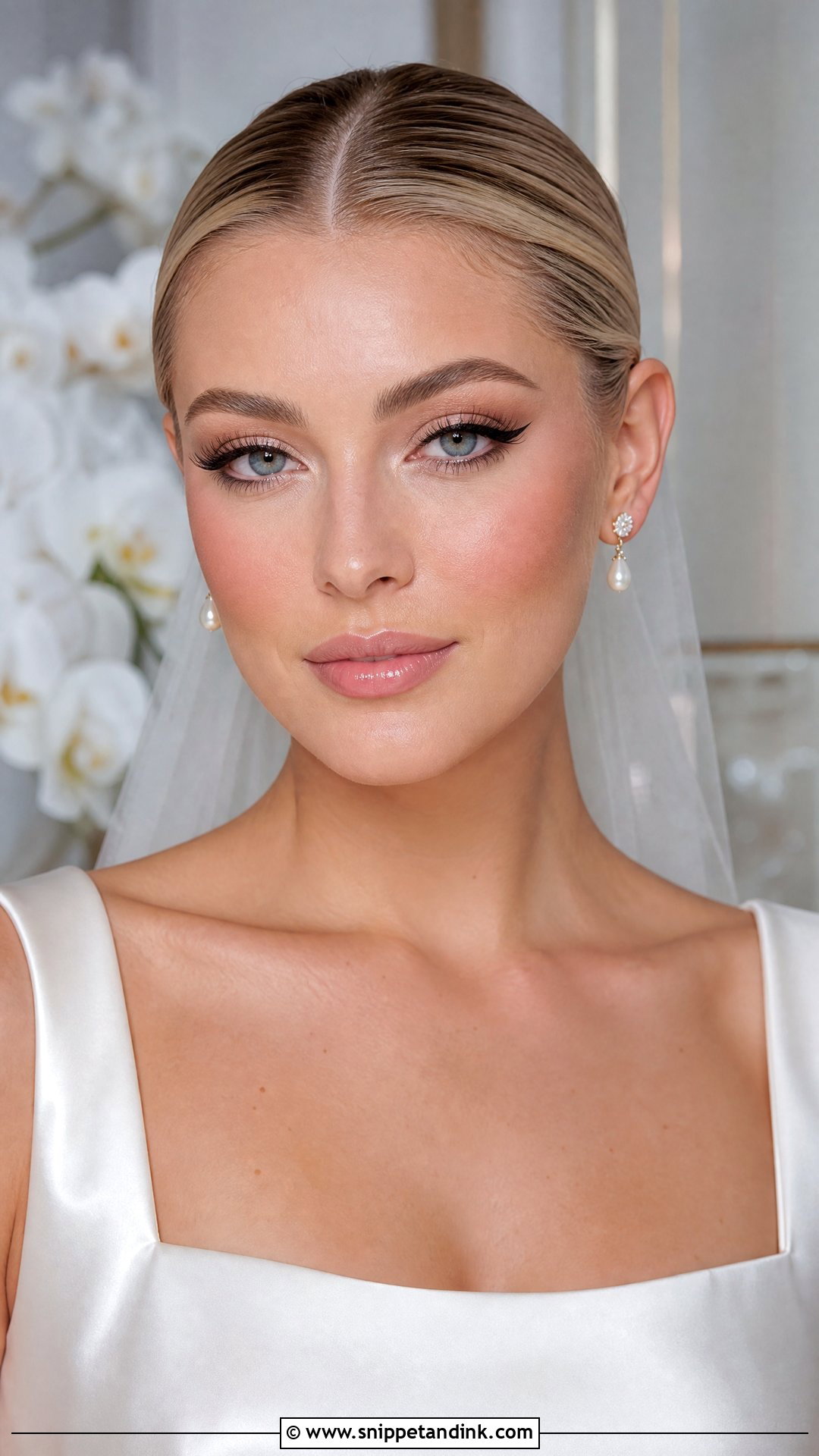
A wing should be mapped with your eyes open, looking straight ahead. Drawn with the eyes closed, it can look perfect in the chair and then fold or break on hooded lids. I keep the lid soft with matte beige, champagne or light taupe, then size the wing to your eye shape, thin for most, medium for larger lids. Polished skin, rosy or peach blush, subtle contour and a classic nude or pink lip let the liner lead. If black feels harsh, deep brown gives the same lift with softer edges. Sleek buns and minimalist gowns suit it best.
13. Red Lip Bridal Makeup
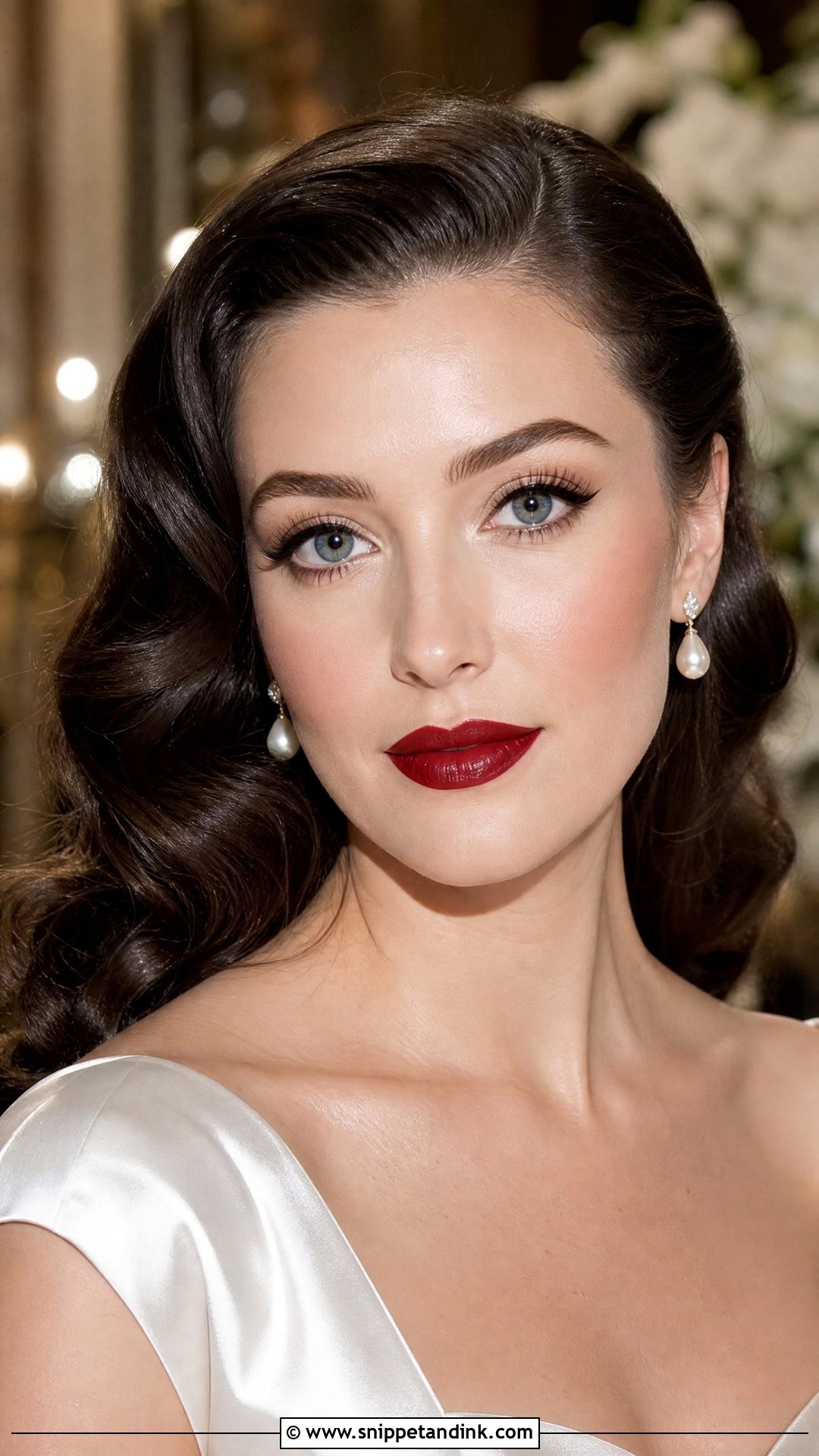
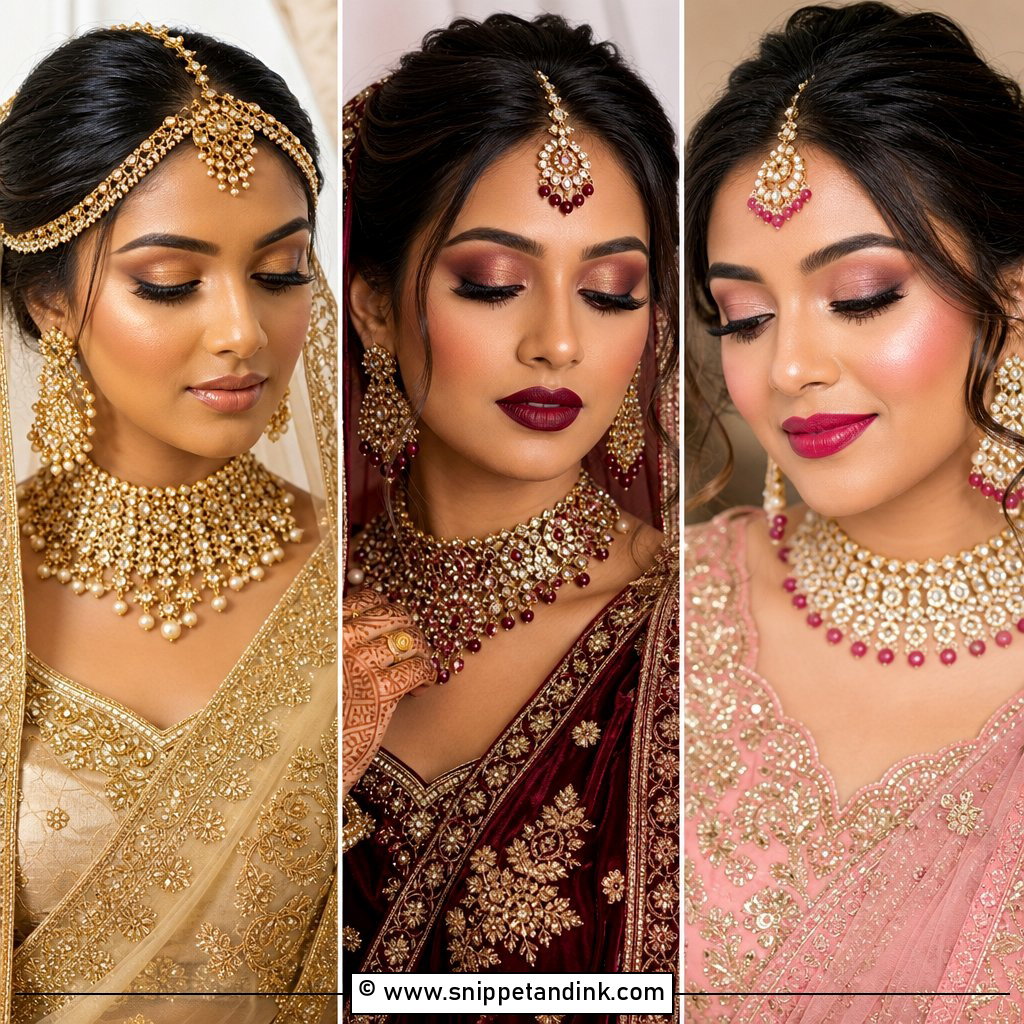
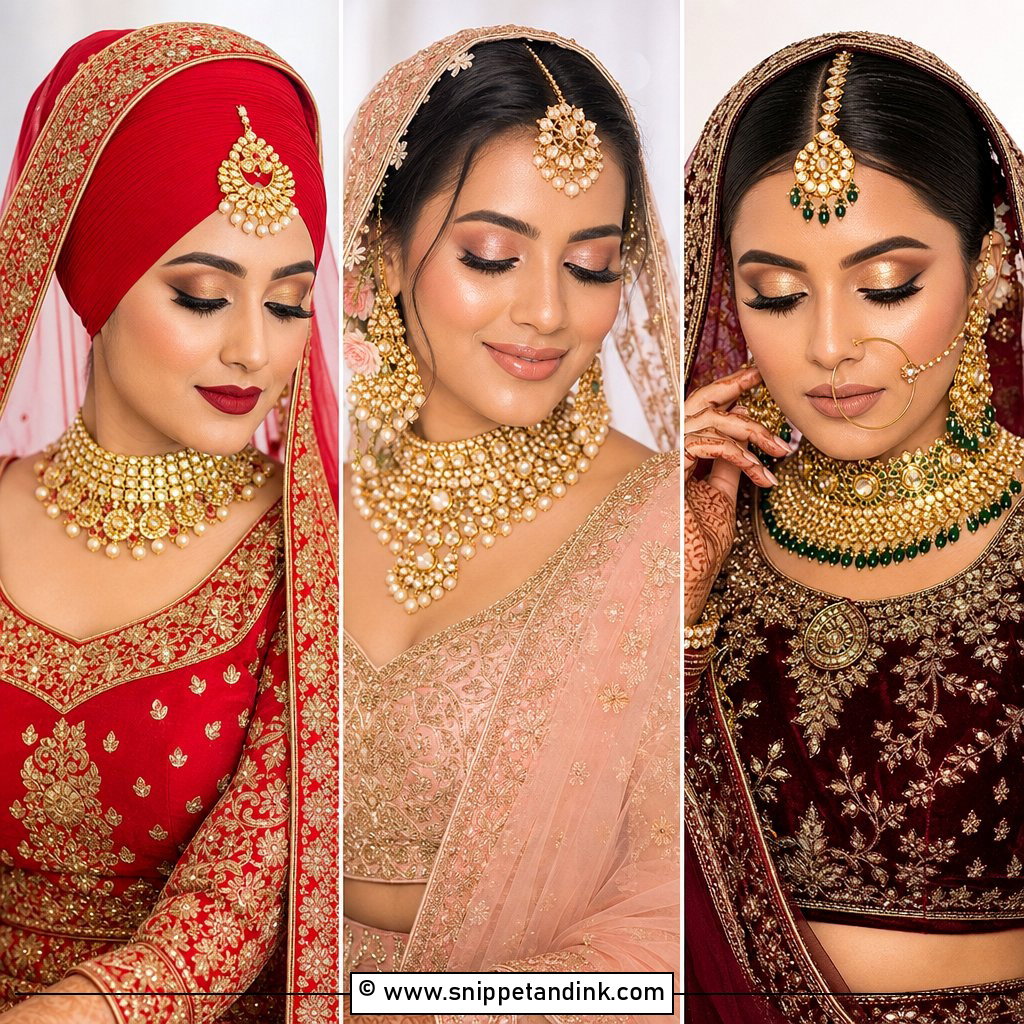
A red lip is the boldest single choice in this list, and it only works when everything else steps back. I pick the red by undertone: blue-red for cool, true red for neutral, brick or tomato for warm. The skin stays smooth, the blush soft, the eyes simple with neutral shadow, defined lashes and clean liner. A long-wearing lip liner over the whole mouth, then lipstick, keeps the edges crisp all day. I prefer a satin or velvet finish to a high gloss, which slides and smears at the first kiss. Satin gowns, vintage dresses and sleek hair suit it.
14. Nude Lip Bridal Makeup
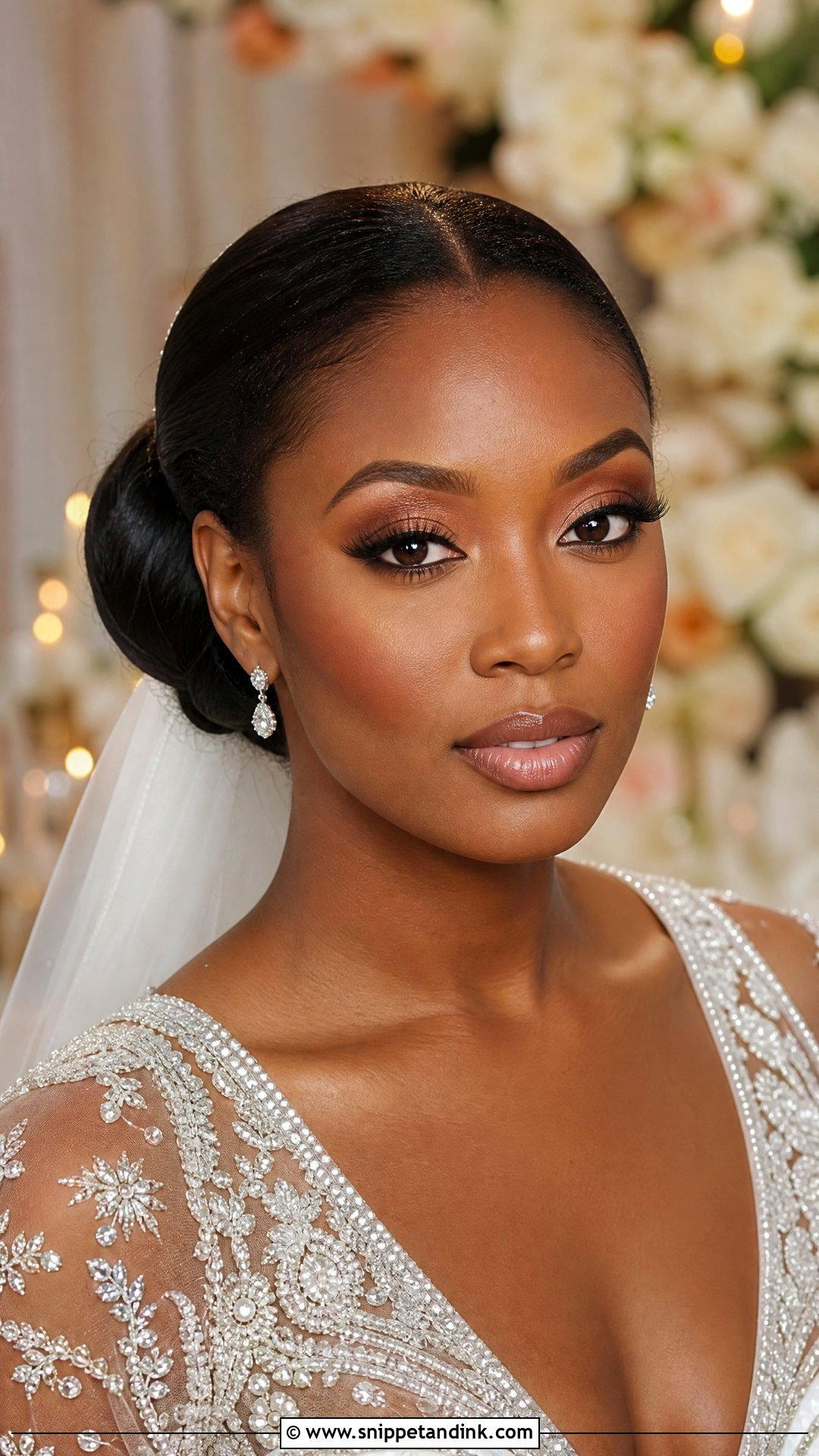
Nude lips fail in photos for one reason: the shade is too close to your skin, so your mouth disappears. I go a little deeper than your everyday nude. As a rough guide, fair skin suits pink beige, light skin a rosy nude, medium and olive skin peachy beige or caramel, and deep skin cocoa, mocha or warm brown. Pair it with softly defined eyes, fresh blush and smooth skin. A liner slightly deeper than the lipstick gives shape and means the colour fades evenly instead of leaving a ring.
15. Brown Bridal Makeup
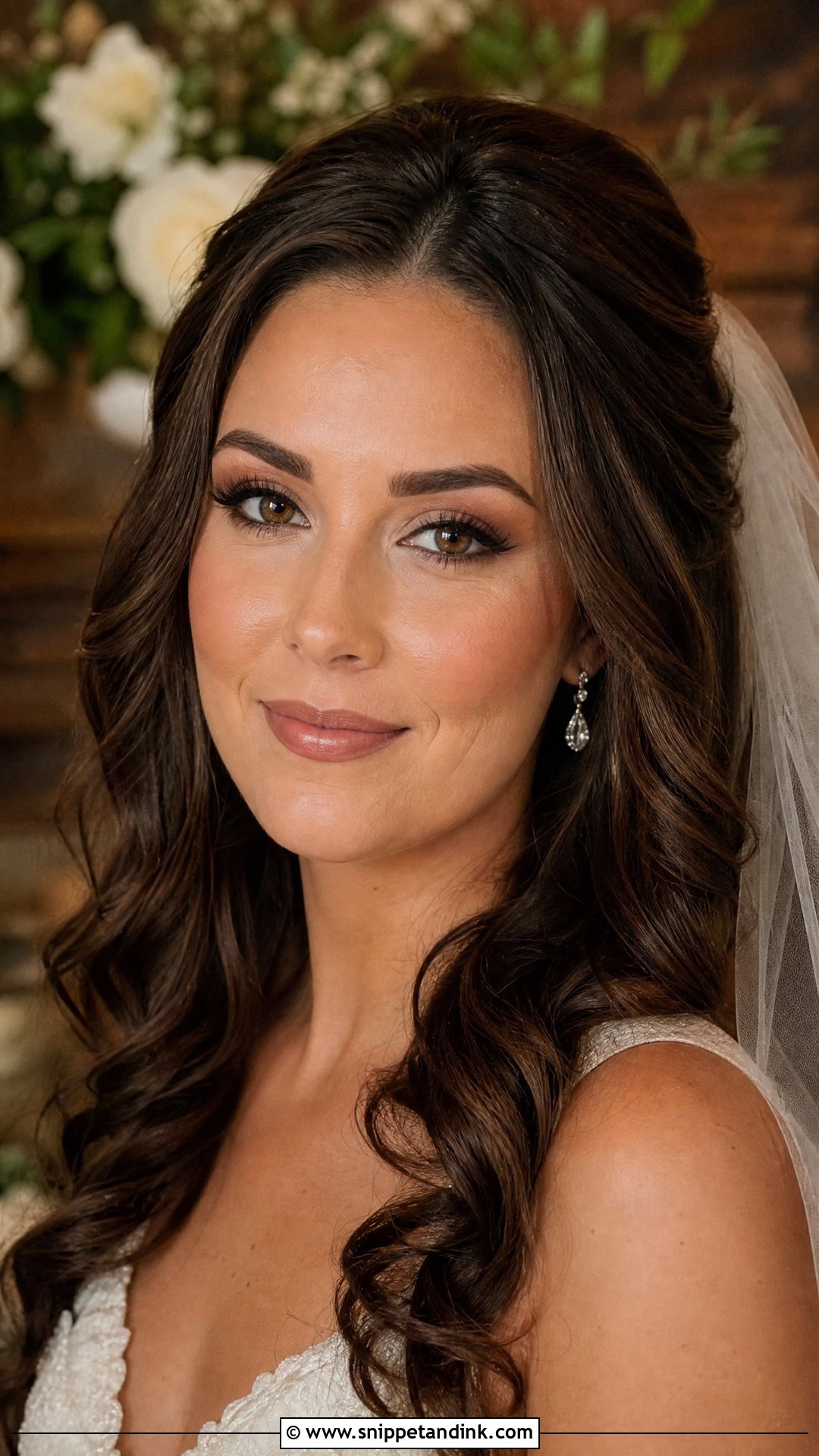
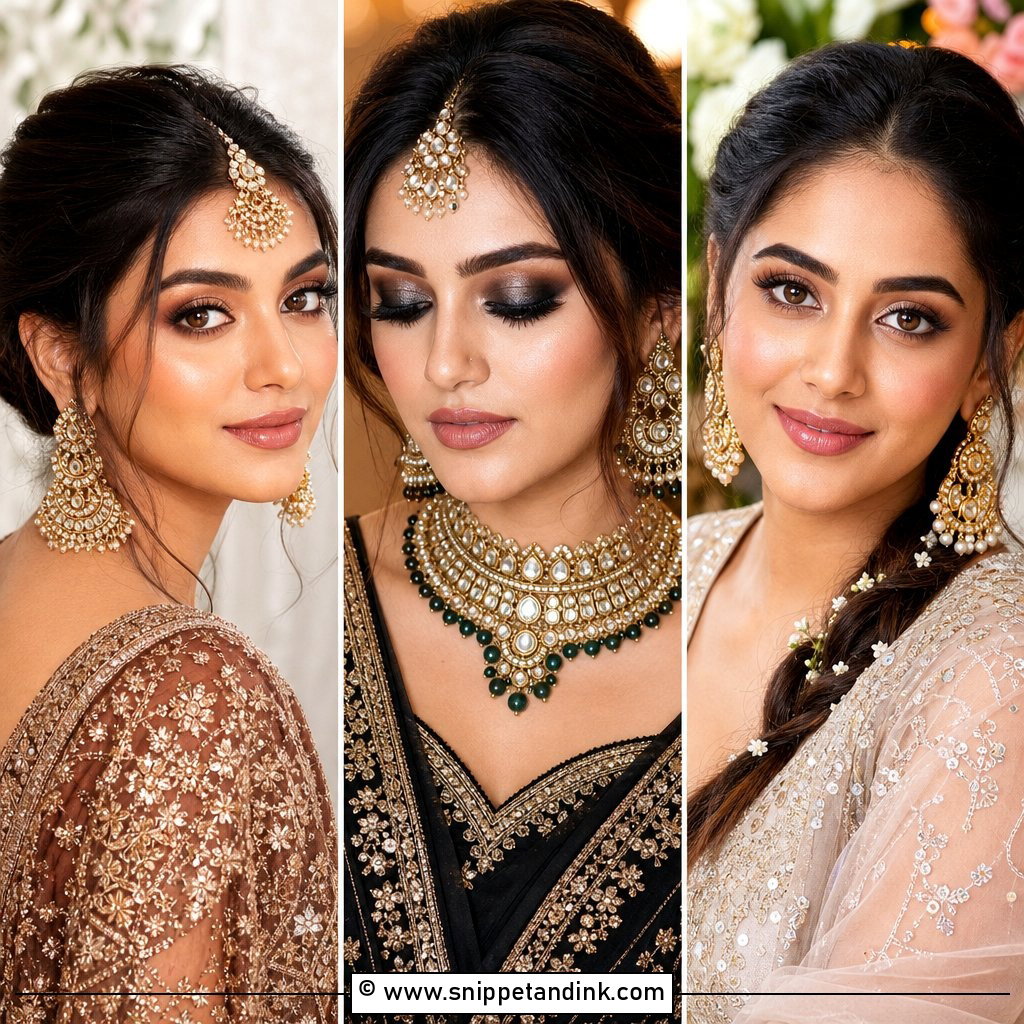
Brown makeup is richer than natural but softer than a black smoky eye. Beige, taupe, caramel, espresso, mocha and chocolate carry across the eyes, cheeks and lips: a warm brown eye with blurred liner, fluffy lashes, bronzed cheeks and a brown nude lip. It sits well with brunette hair, warm blonde hair, gold jewellery and ivory dresses, and it works in daylight and evening light. All-matte browns can look muddy, so I add a little satin shimmer on the lid or inner corner to lift the eye.
16. Mauve Bridal Makeup
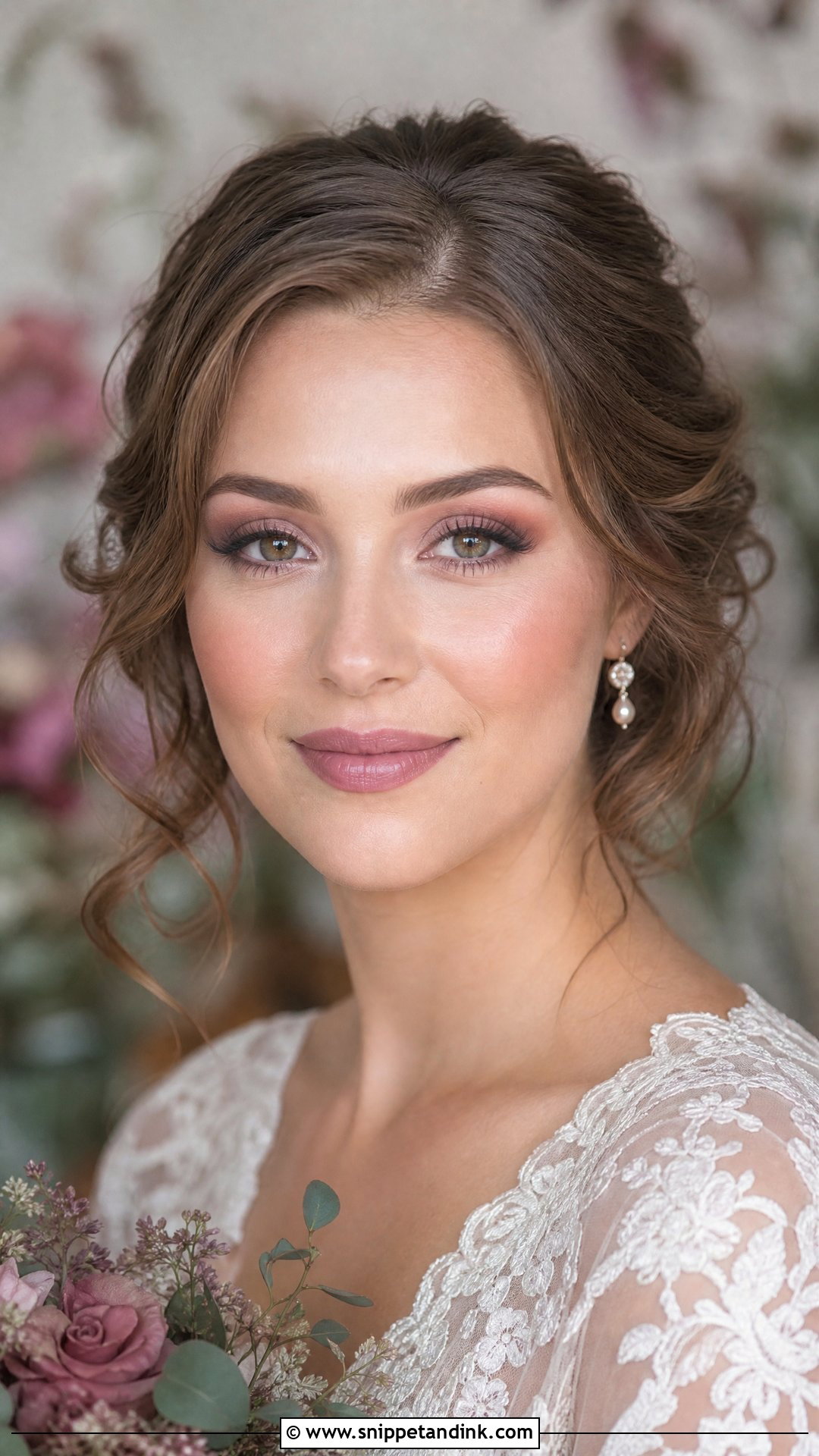
Mauve sits between pink, purple and taupe, which makes it the colour I offer brides who want something besides neutral but find pink too sweet. Mauve or dusty rose on the lids, a deeper plum-brown in the outer corner and soft brown liner give definition, with cool rose blush and a mauve nude lipstick in satin or soft matte. It sits naturally with cool whites, silver details, dusty florals and indoor autumn venues. It also brings out green, hazel, and brown eyes. Keep the skin fresh, or mauve tips into heavy.
17. Gold Bridal Makeup
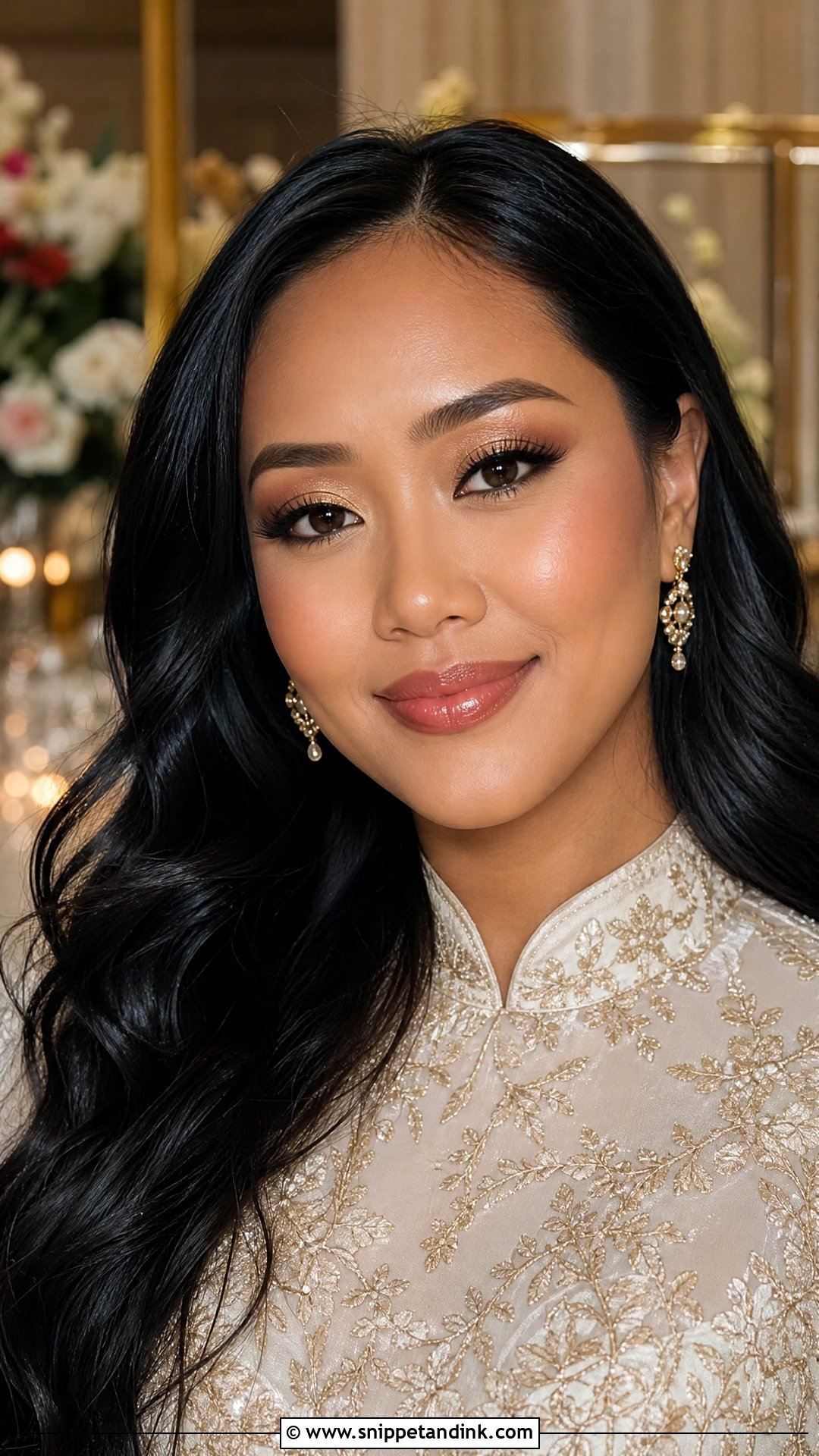
Gold feels celebratory. I use a soft metallic gold only on the centre of the lid, with warm brown in the crease and a deeper brown at the lash line, so the gold looks like light rather than paint. The skin is glowing but polished: bronzer, peach or warm rose blush, a champagne-gold highlight. A nude, caramel or soft pink lip keeps the focus up top. It pairs with gold jewellery, warm ivory gowns and embroidery, and it glows under warm venue light. Choose a fine shimmer, never chunky glitter, so the lid stays smooth in close-ups.
18. Minimal Bridal Makeup
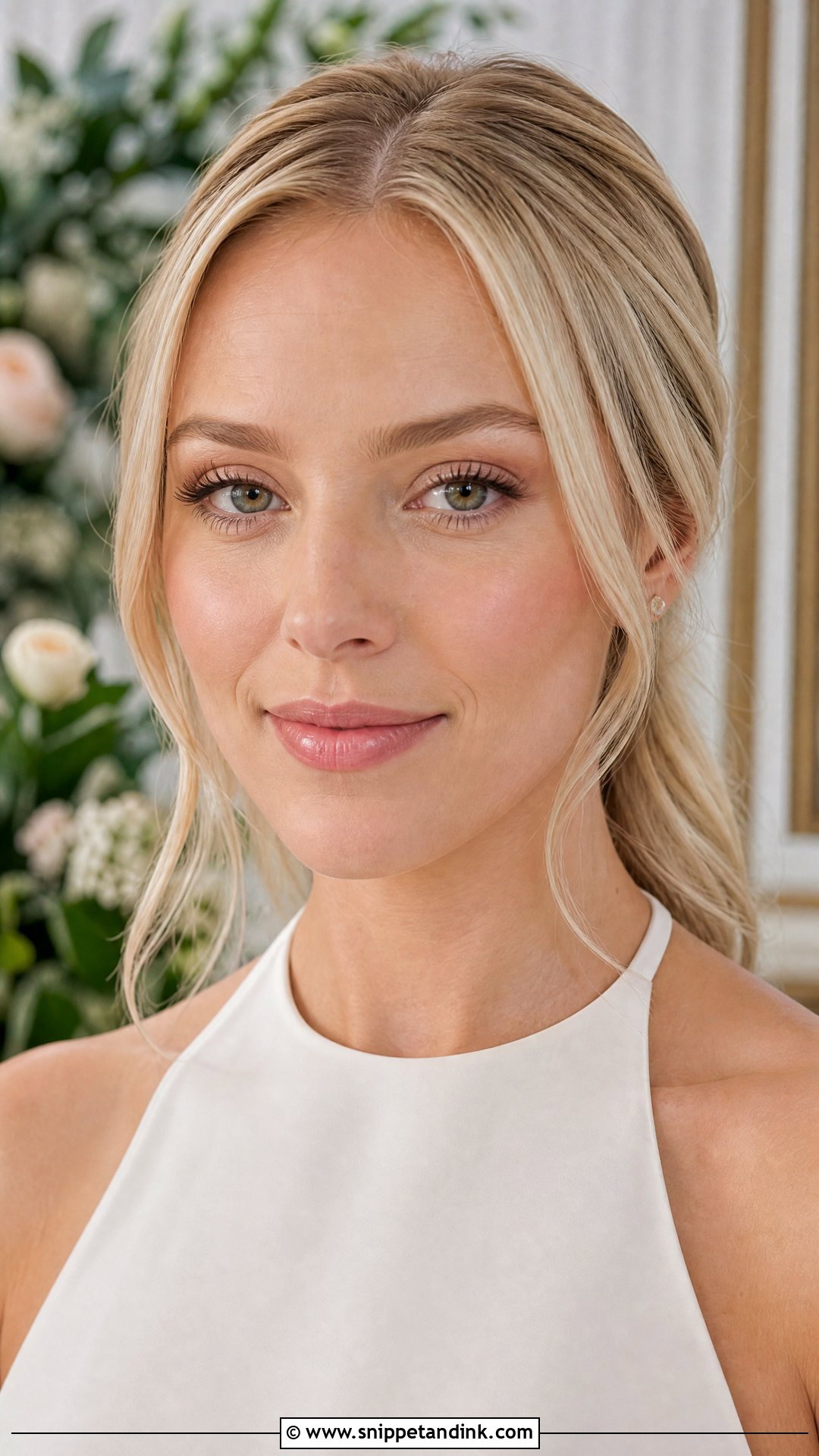
Minimal makeup is the hardest face to do well because there’s nowhere to hide. The skin needs weeks of good prep, and every product goes on in thin layers: sheer foundation only where needed, spot concealer, brushed brows, curled lashes, a soft wash of neutral shadow, cream blush and a natural lip tint. Even this face needs structure for photos, so I never skip brow shaping, blush or lash definition. Those three details are the difference between finished and tired in a picture. Courthouse ceremonies and beach elopements suit it best.
19. Vintage Bridal Makeup
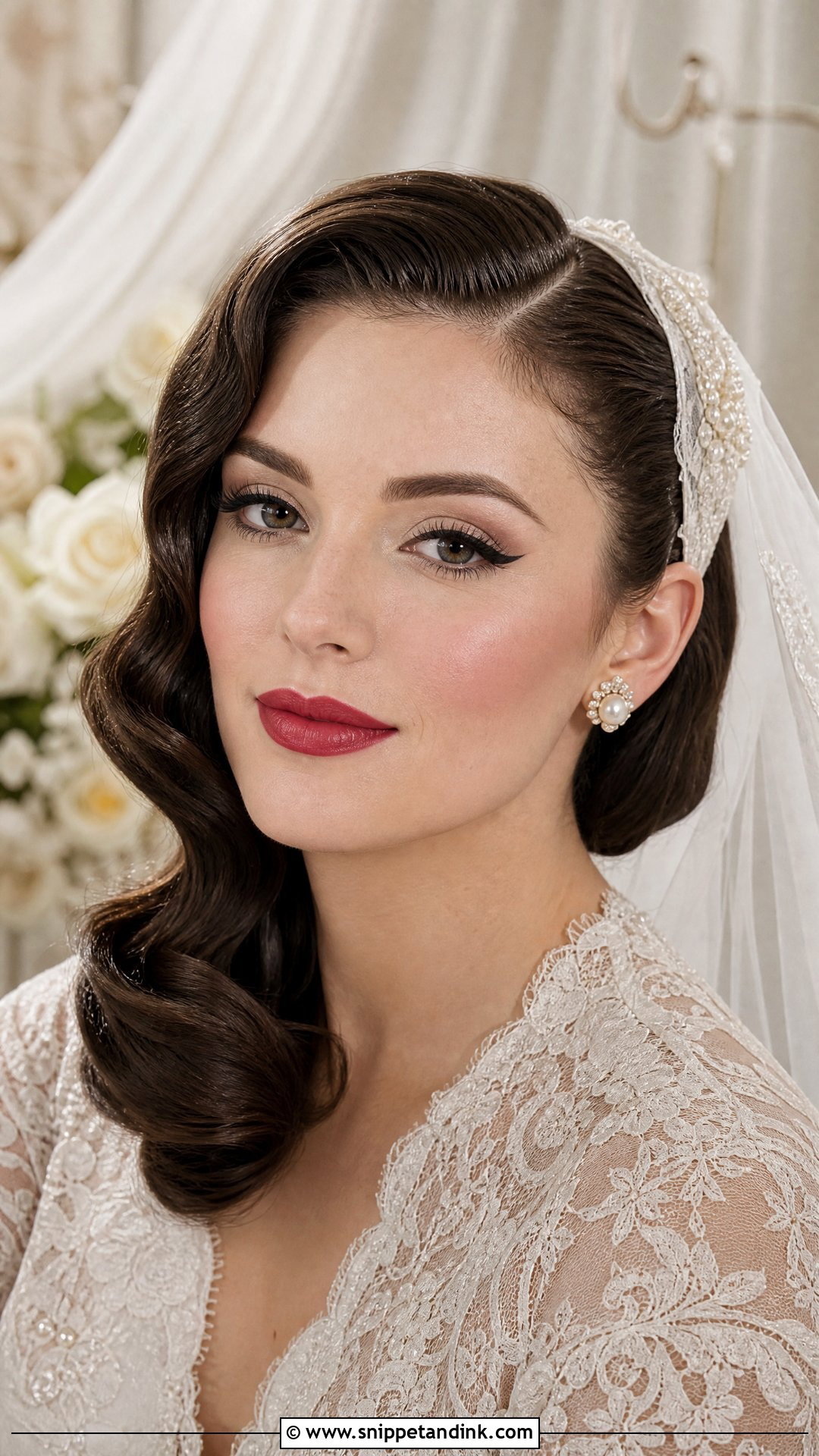
Vintage makeup should borrow from classic beauty without looking like a costume. The wearable version has satin skin, softly arched brows, neutral shadow, a winged liner, defined lashes, rosy cheeks and a red, berry or rose lip. Lean 1950s with red and liner, or keep it softer with a dusty rose mouth and brushed waves. Tea-length dresses, birdcage veils and pearls suit it. I keep the base satin rather than fully matte so it feels current. With a bold lip, carry a touch-up kit with liner, lipstick, blotting paper and a small mirror.
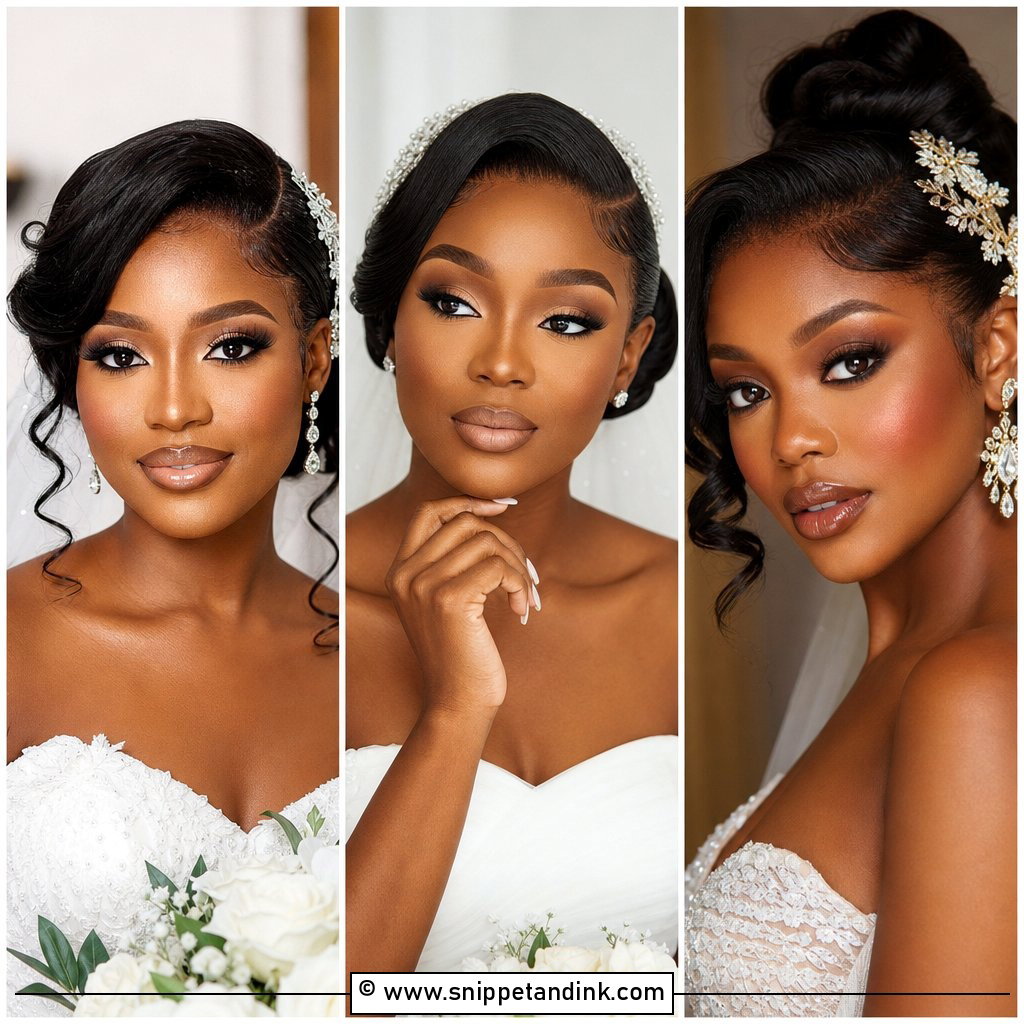
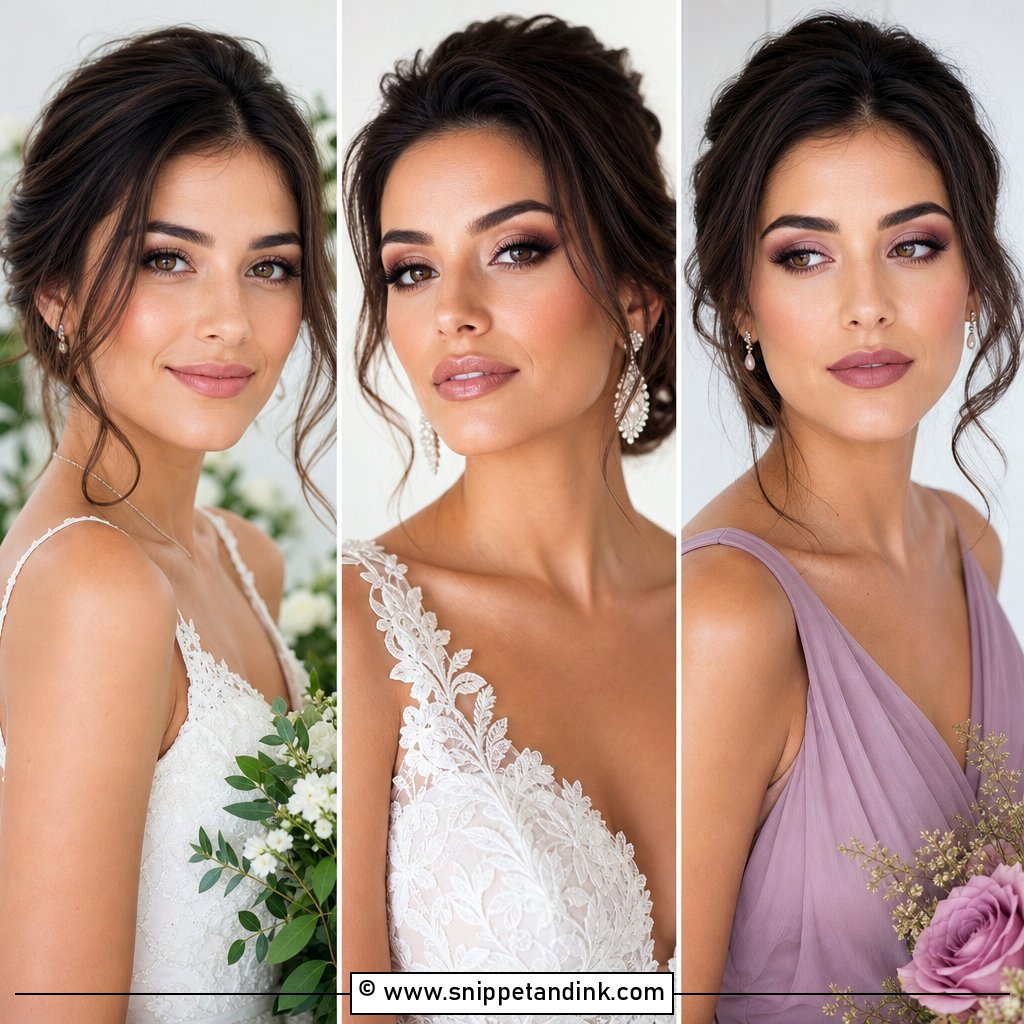
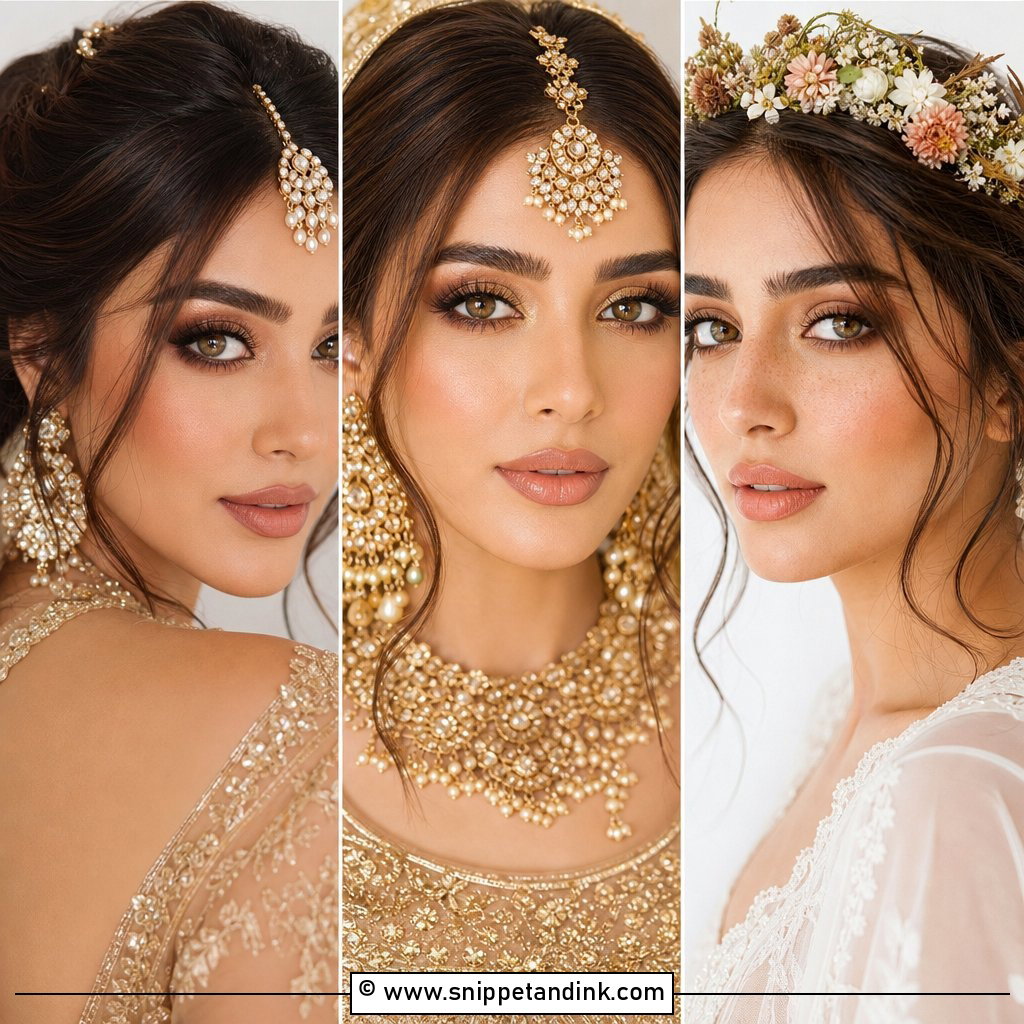
20. Elegant Bridal Makeup
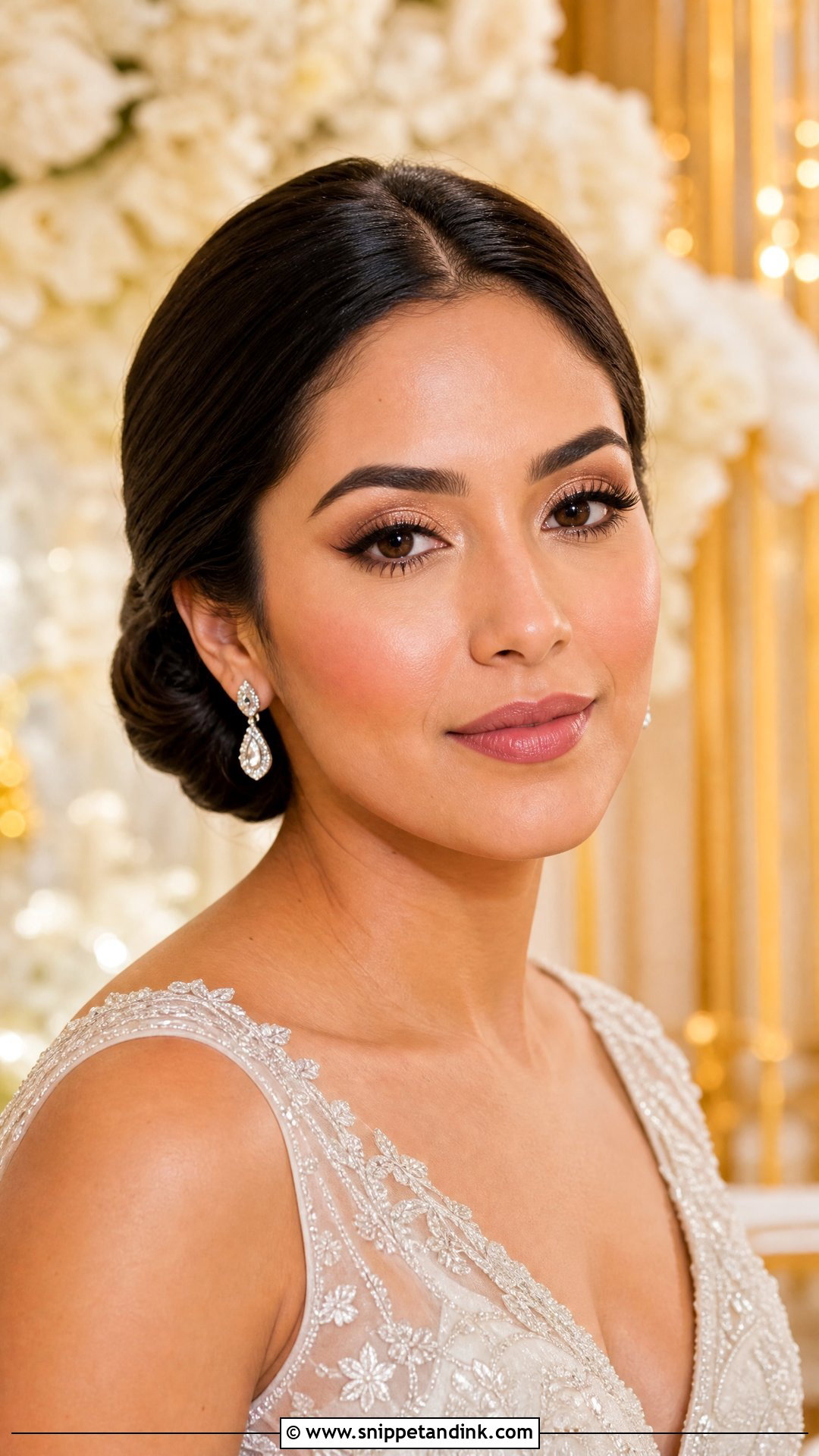
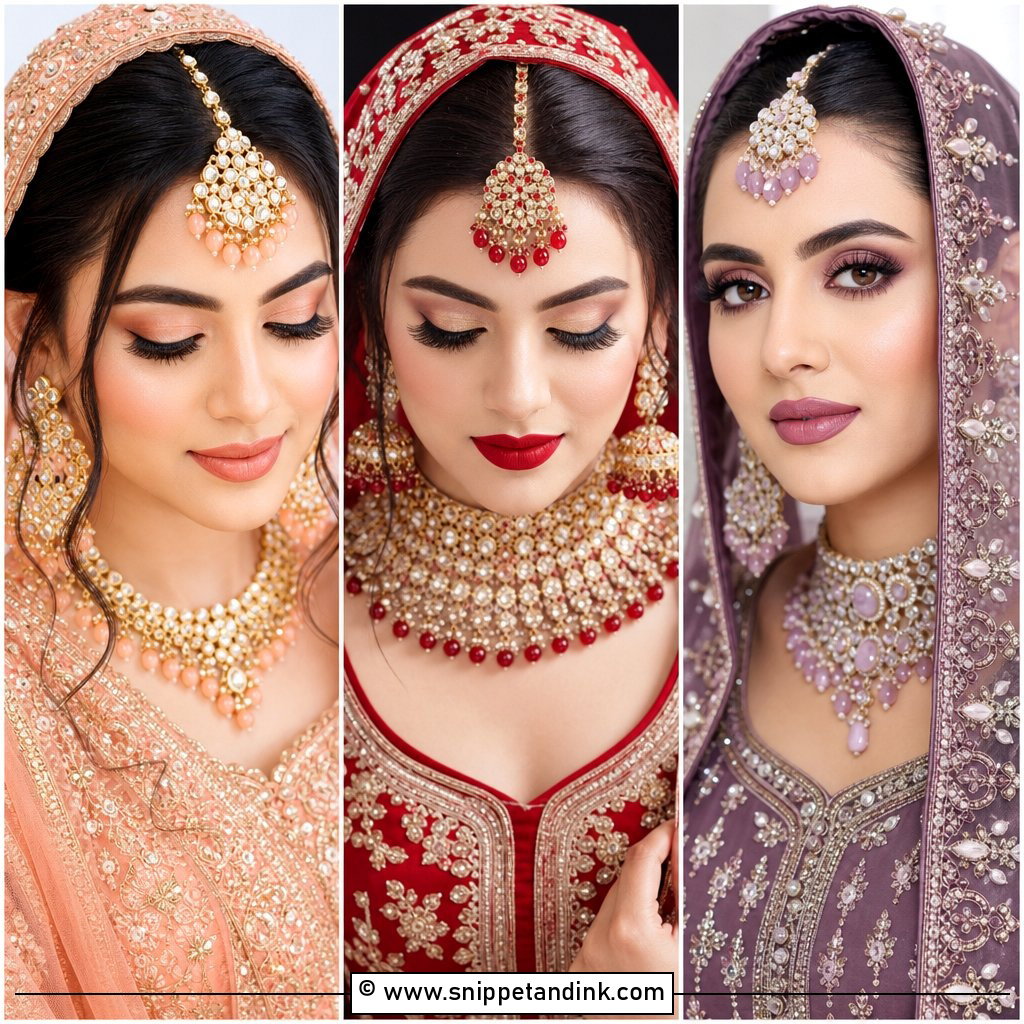
Elegance in makeup is mostly about texture. Satin skin, a soft-focus powder, contour you can’t see the edges of and well-blended shadow make a face look expensive. Nothing should be too sharp or too shiny. Cheeks lifted with natural blush, eyes defined with neutral shadow, liner and refined lashes, and a satin nude, rose or soft berry lip give enough colour without chasing a trend. Formal weddings, luxury venues and traditional gowns suit it. The test I use is simple: it should hold up close to the face and still read clearly from the back of the room.
A Month of Skin Prep, and What to Stop Doing
Makeup sits on skin, so the weeks before matter as much as the morning. What I ask brides to do is mostly about not changing things.
- Keep the skincare you know works. A new serum or acid four weeks out is the most common cause of a breakout or patch of irritation on the day.
- Book any facial or peel well ahead, not the week of. Stronger treatments can leave skin pink and peeling for days.
- Get brows shaped about a week before, so any redness has settled and stray hairs can still be tidied.
- Avoid self-tan in the final days unless you’ve tested it, since streaks and an orange edge at the hairline are hard to cover.
- Drink water and moisturise the night before. Hydrated skin takes foundation more evenly than dehydrated skin.
Chair Time on the Wedding Morning
Different faces take different amounts of time, and the schedule should reflect the one you chose. A natural or minimal face usually needs less time than full glam, which involves layering, setting and lash placement. Strip lashes need a few minutes for the glue to set before photos. If bridesmaids are also having makeup done, I’d put the bride near the end but not last, so there’s a buffer if anything runs late, and the face is still fresh for the ceremony.
An Afternoon in Your Trial Makeup Tells You More Than a Mirror
Start with how you want to feel when you catch yourself in a mirror on the day, then work backwards. Natural, soft glam, dewy, matte, smoky, red lip, nude lip and bronze can all look bridal when they’re well blended and suited to your features. At your trial, check the face in daylight and with flash, then keep it on for several hours and see what moves, creases or fades before you change anything. Bring photos of your dress, hair and flowers. Most of all, pick the face you’d be happy to see in a frame on your wall in twenty years.
You'll Like These Ideas:


Leave a Reply