
Brides used to get one formula: pink lip, brown shadow, lots of powder. Now I see everything from bare skin and a balm to sculpted full glam, and honestly most of the decision comes down to things people forget to mention at the booking stage. How oily does your skin get by 3 p.m.? Are you outside in July or in a candlelit hall in December? Do you wear mascara every day or never? Below are twenty bridal looks I’m regularly asked for, with notes on how each one behaves over a long day and who I’d gently talk out of it.
Let Your Skin Type Narrow the List First
Twenty looks is a lot to choose from. I usually cross half of them off within a minute of touching a bride’s skin, because finish matters more than colour for how the day goes.
Oily or combination skin
Matte, airbrush, soft glam and full glam all hold up well. Fully dewy will need blotting by mid-afternoon, so if you love glow, keep it on the cheekbones only.
Dry or mature skin
Dewy, champagne, natural and satin-finish soft glam suit you. Heavy powder and fully matte lips settle into fine lines and look dry in close-ups, so I’d avoid them.
Textured or acne-prone skin
Shimmer on the face highlights bumps, so I keep shine on the eyes instead and use a soft-focus finish on the skin. Matte, vintage and brown smokey work nicely. Don’t start a new skincare product in the final month; a reaction a week before the wedding is far harder to cover than the skin you know.
Sensitive eyes or contact lenses
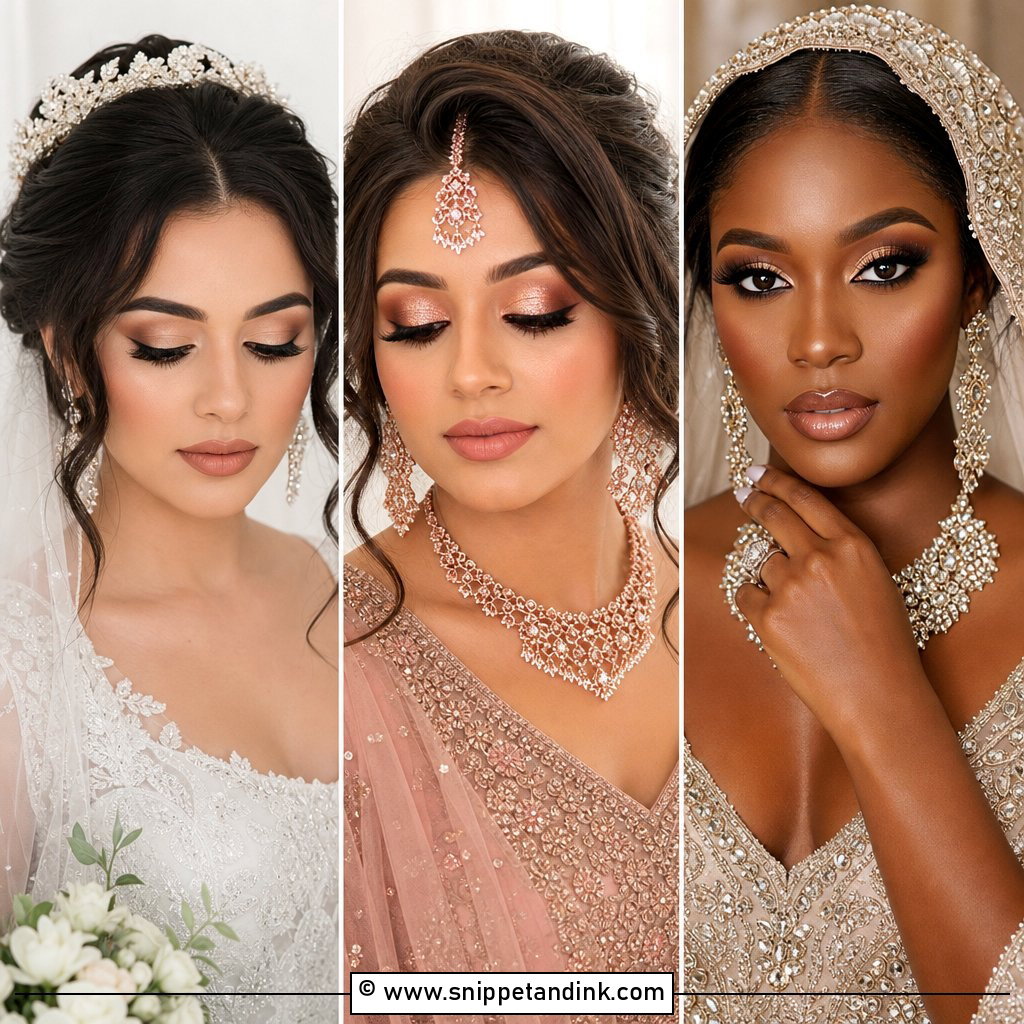
Loose shimmer and glitter can fall into the eye. Pressed shadows, a liner kept out of the waterline and individual lashes instead of heavy strips are kinder for a long day.
1. Natural Wedding Makeup
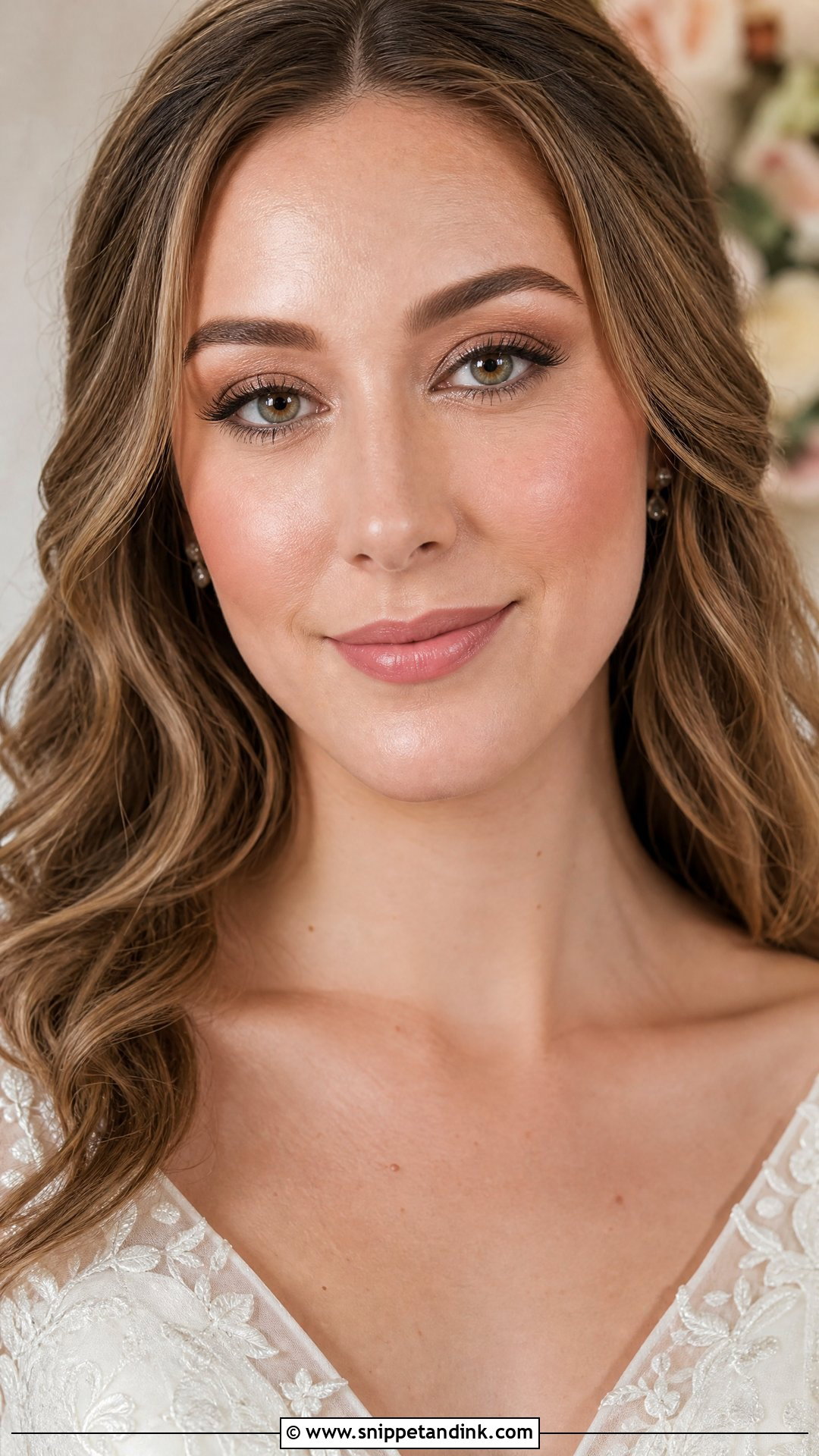
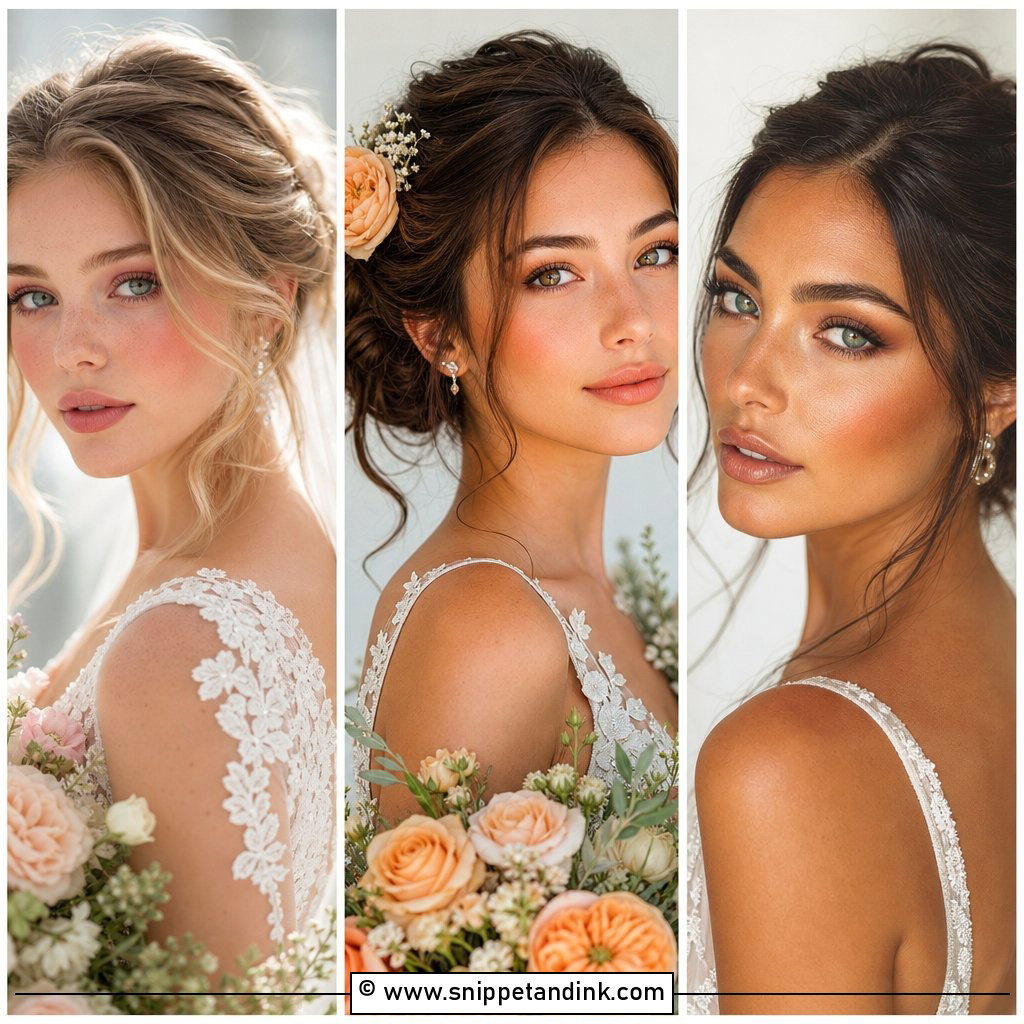
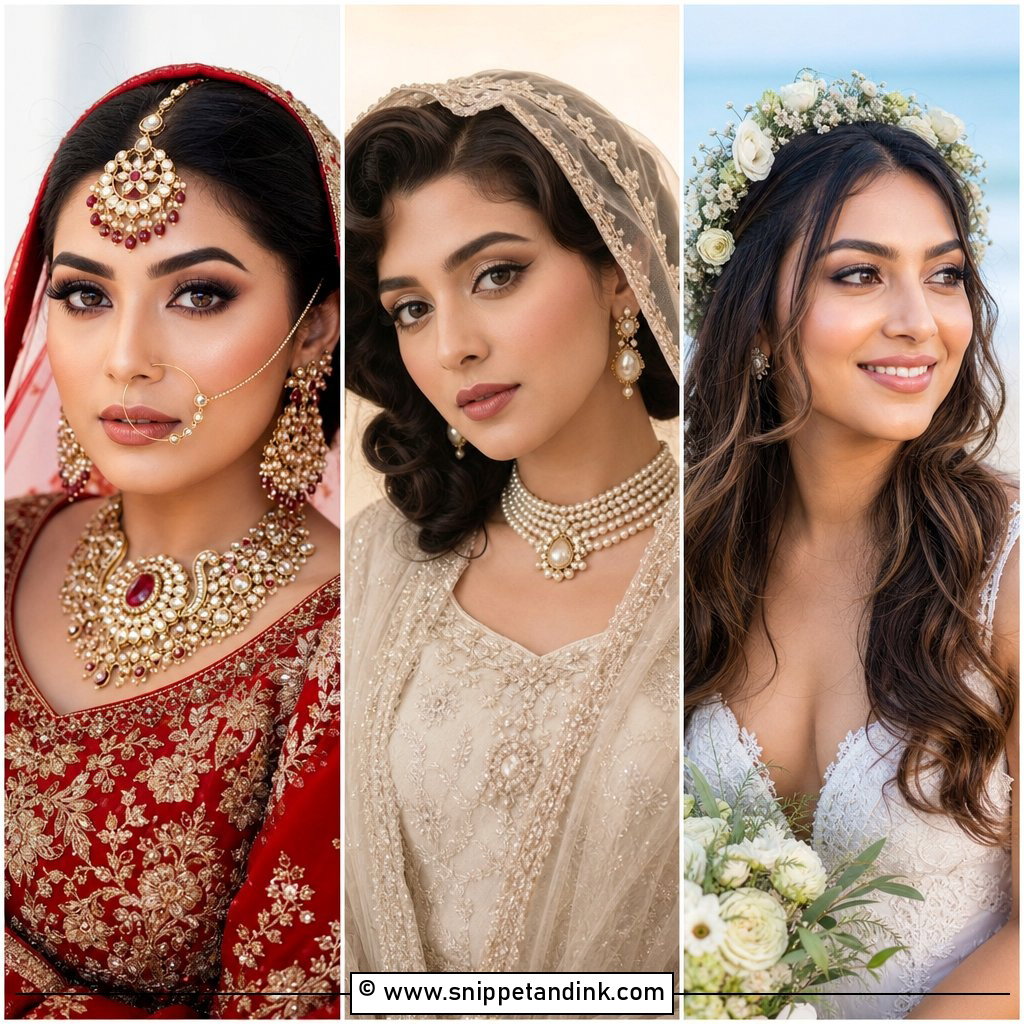
Natural makeup is the look where restraint takes the most skill. I use a skin tint or thin foundation and conceal only redness and shadows, so freckles stay visible. Peach or pink cream blush brings colour back once the base has evened things out. Beige or soft brown shadow, a thin liner pressed into the roots of the lashes, and a satin nude or rosy balm. My one warning: what reads as natural in a mirror can disappear in photos taken twenty feet away, so I always add a touch more brow and lash definition than you’d wear to brunch.
2. Soft Glam Wedding Makeup
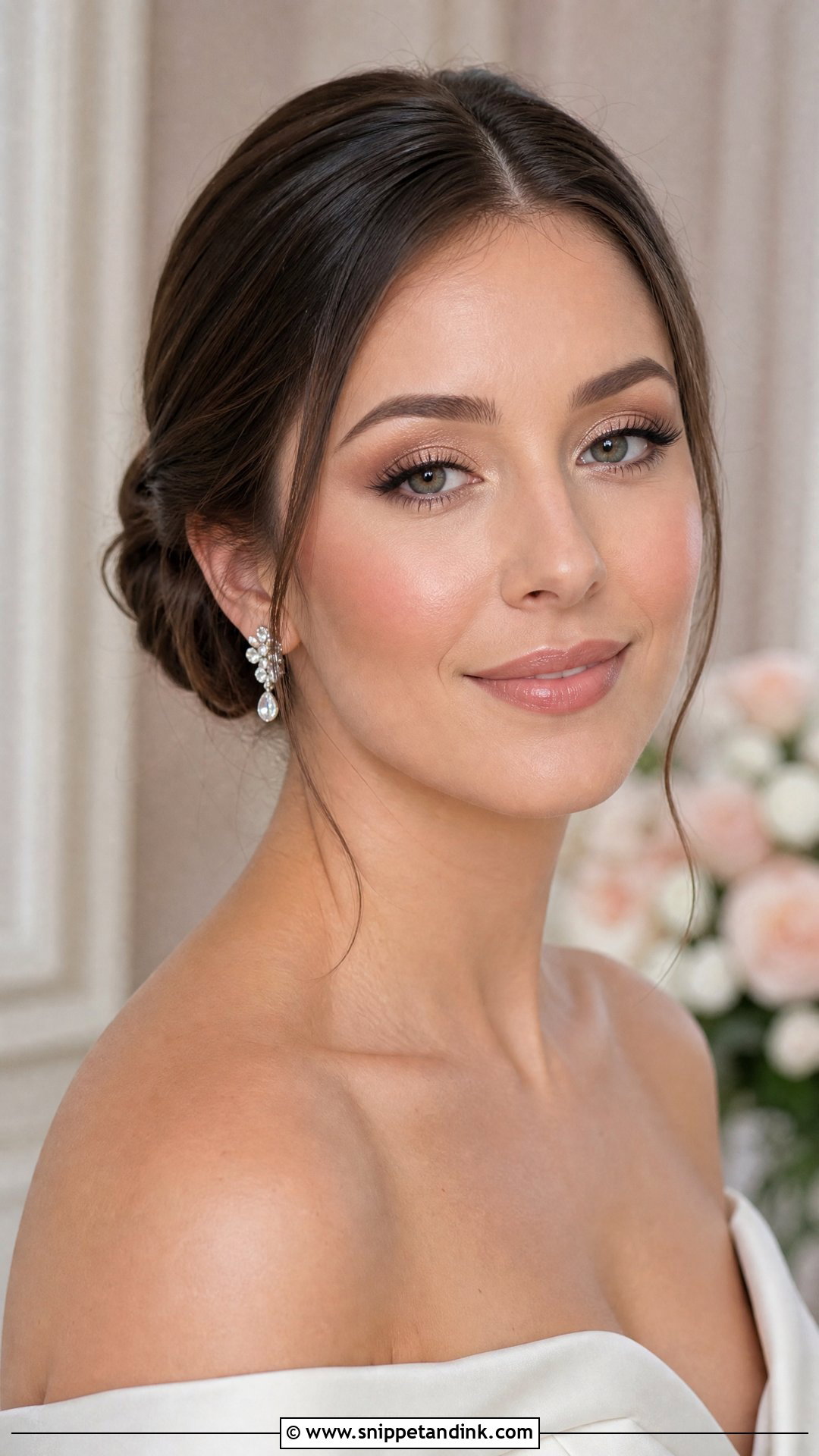
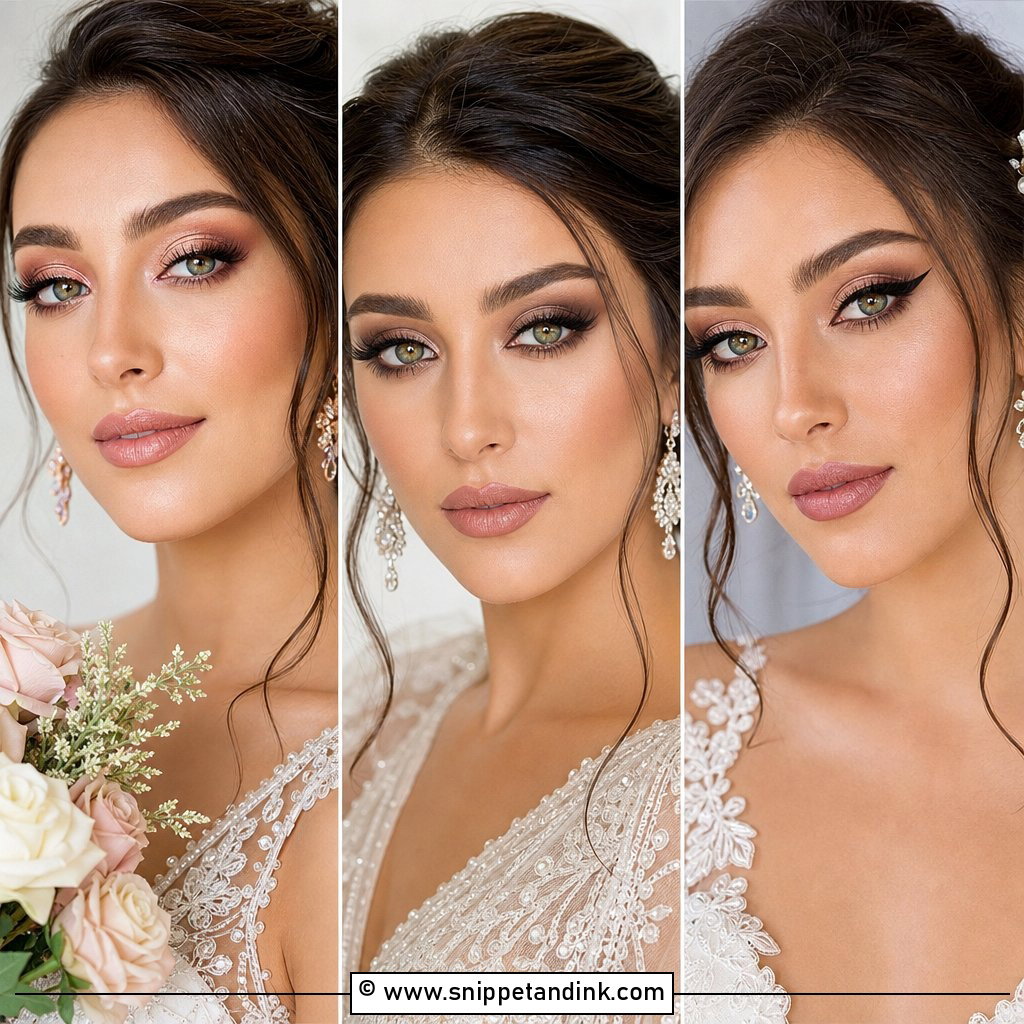
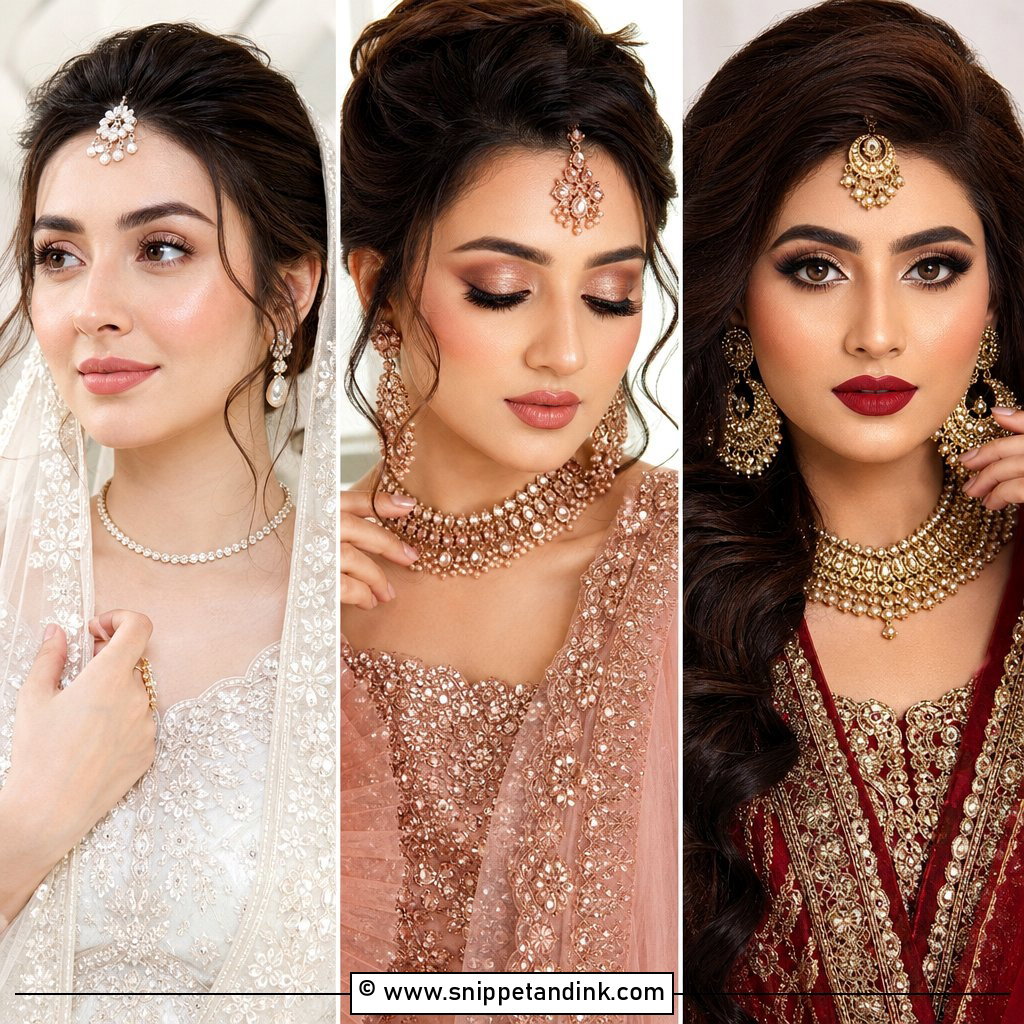
Soft glam is the look I’m booked for most, because it sits between everyday and evening. Every feature gets enough shape to show up in pictures, but nothing has a hard edge. I blend warm taupe and champagne on the lids and smudge a brown pencil into the lash line instead of drawing a sharp black wing. A soft contour sits under the cheekbones with a luminous blush just above it. The detail that makes or breaks it is blending at the edges of the crease and the jaw; a visible line there turns soft glam into something heavier fast.
3. Dewy Wedding Makeup
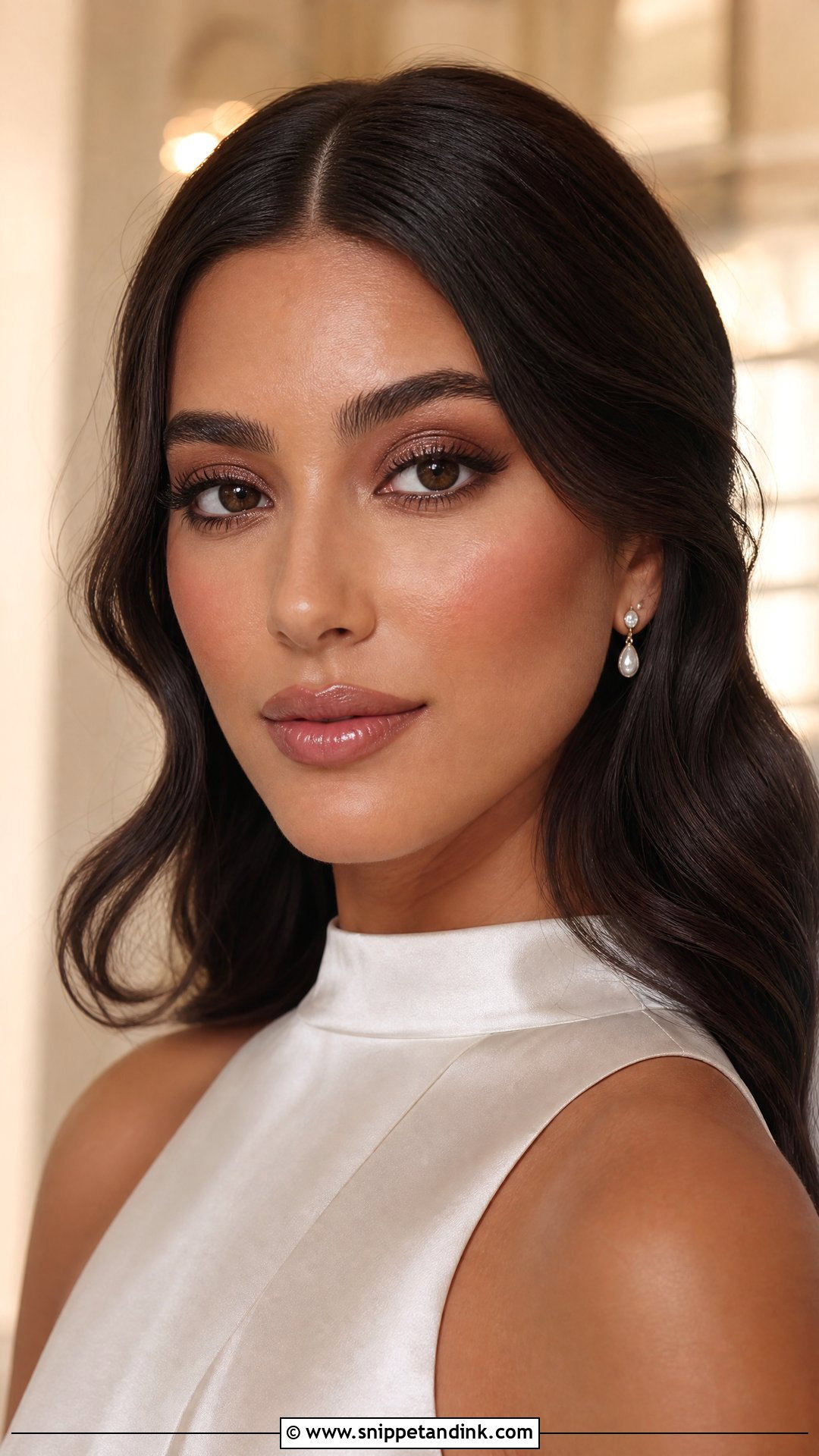
Dewy wedding makeup depends on what happens before foundation. I hydrate the skin, let the moisturiser sink in for a good ten minutes, then use a smoothing primer and a glowy foundation. Powder only goes on the centre of the forehead, the sides of the nose and the chin. Cream blush in rose or peach and a tapped-on liquid highlight give the light-catching finish. Sheer shimmer on the eyes and a glossy nude lip complete it. I’m honest with oily-skinned brides here: true dewy can turn shiny by the reception, so we usually aim for a satin glow instead.
4. Matte Wedding Makeup
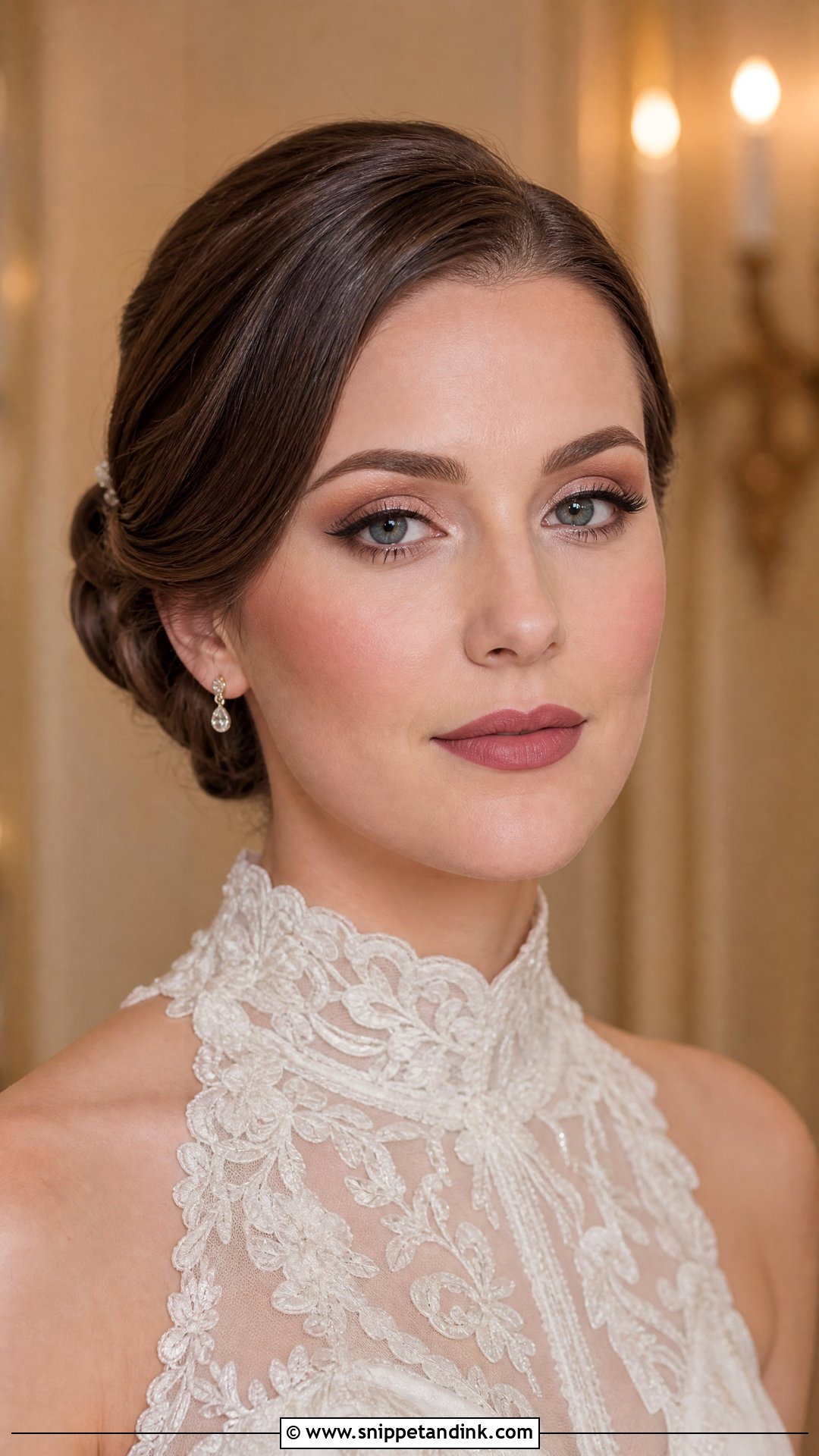
If your T-zone shines by lunchtime, matte is where I’d start. A long-wear foundation set with a finely milled powder and a setting spray holds up through heat, hugging and hours of photos. The risk is flatness, so I put dimension back with soft blush, a subtle contour and a touch of highlight only on the cheekbone tops. Matte taupe, mocha or soft mauve on the eyes. A satin lip in nude, rose or berry suits it better than a fully matte one. On dry or mature skin I’d skip a full matte base; it clings to texture and can look dusty in close-ups.
5. Classic Red Lip Wedding Makeup
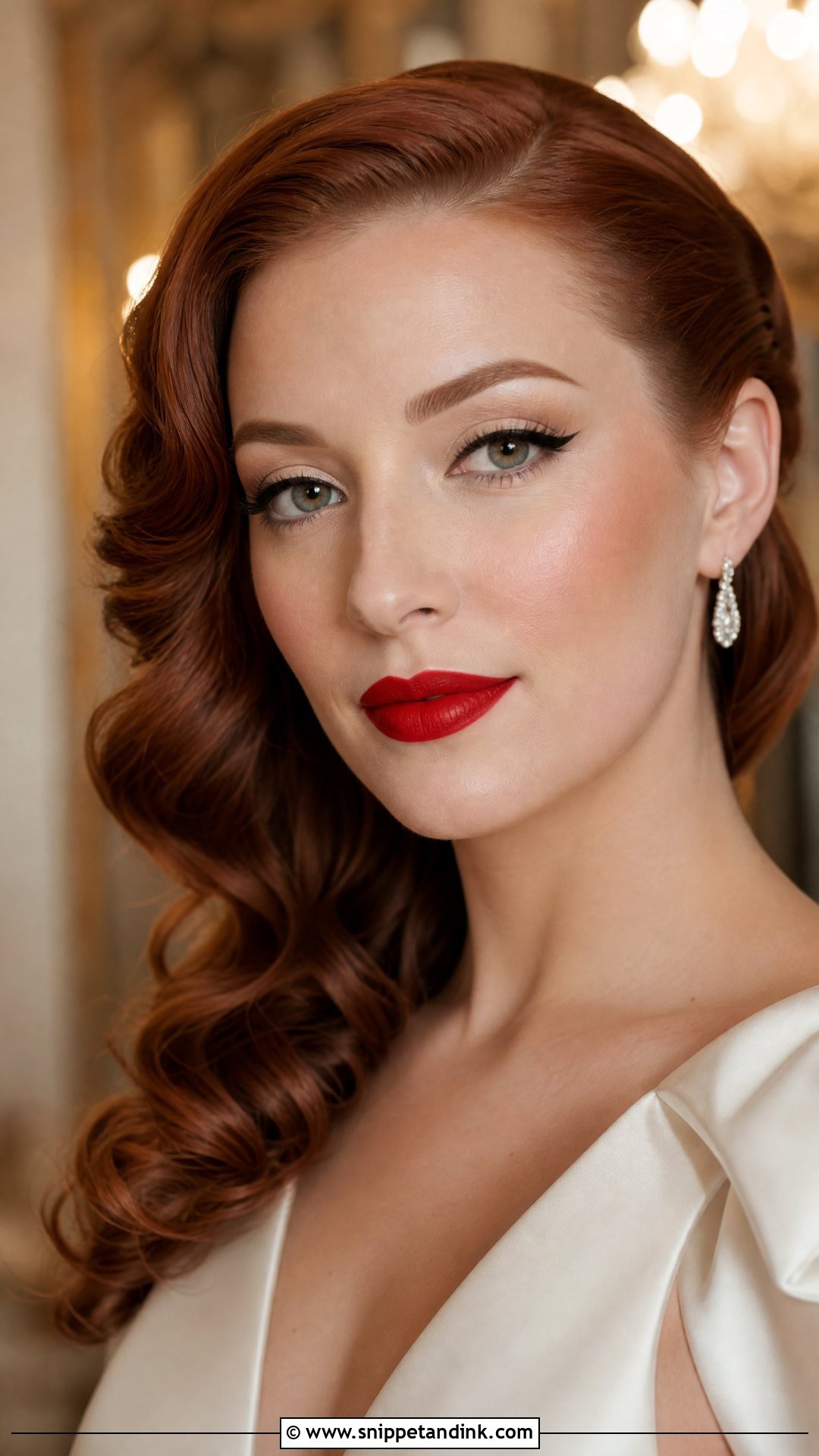
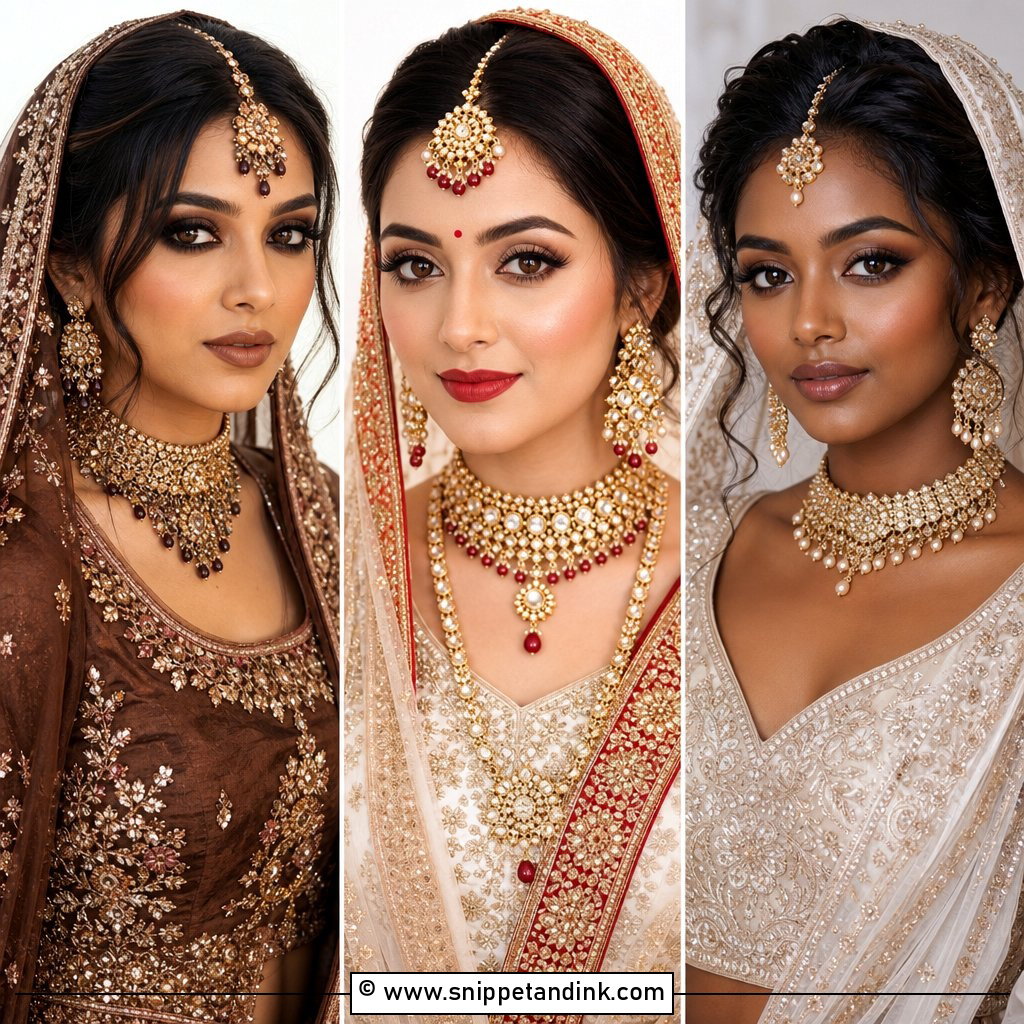
Red lips hide nothing, so the prep is where I spend my time. I line the entire lip, fill with a long-wear red, blot, apply again, and clean up the edges with a little concealer on a flat brush. Everything else stays clean: smooth medium coverage, soft contour, a neutral blush that doesn’t fight the red, champagne on the lids, a thin liner and lifted lashes. Match the red to your undertone, blue-red for cool skin and tomato for warm, with deep cherry on richer complexions. Expect to reapply after dinner; even the best formulas wear at the centre when you eat.
6. Smokey Eye Wedding Makeup
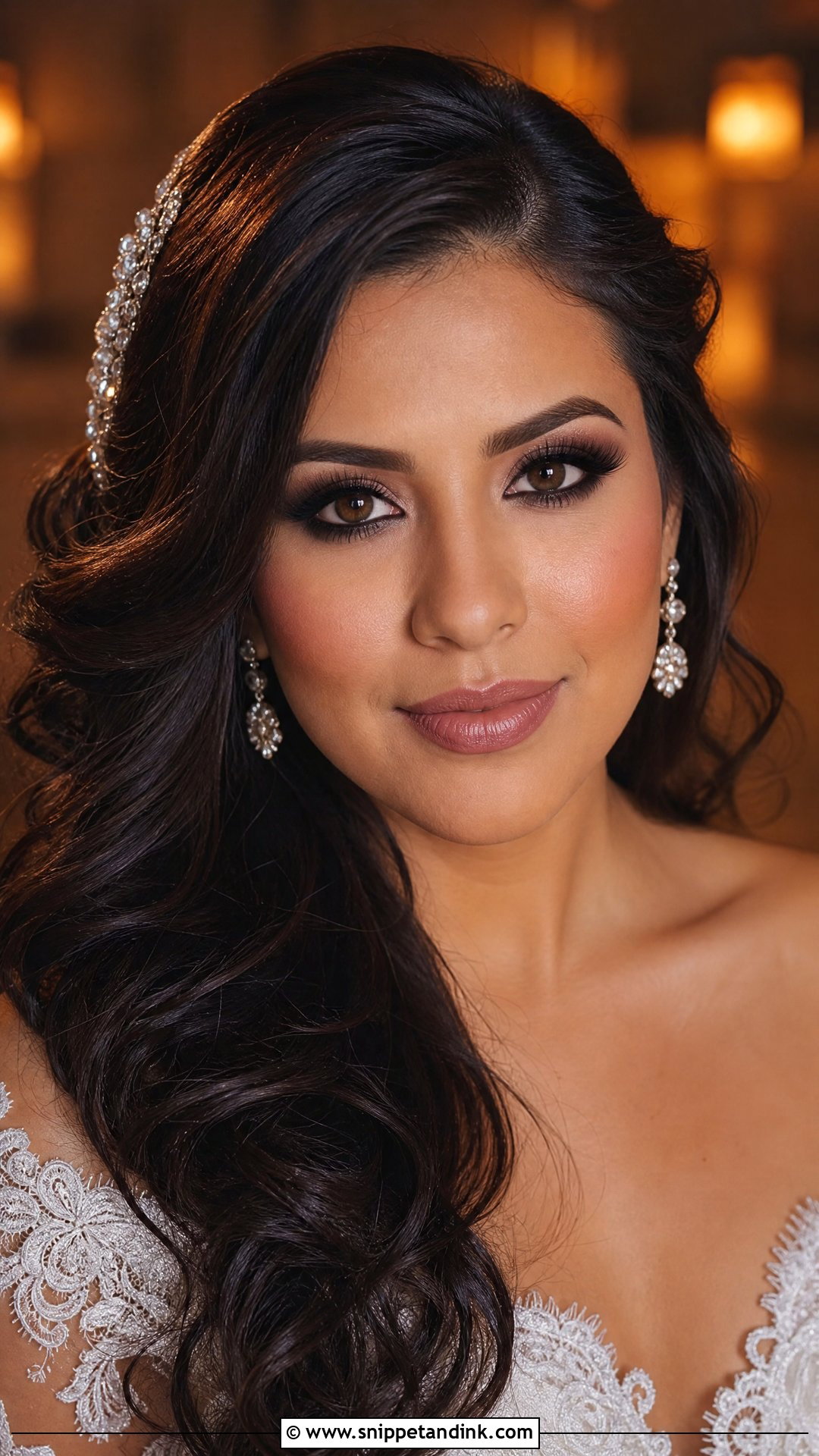
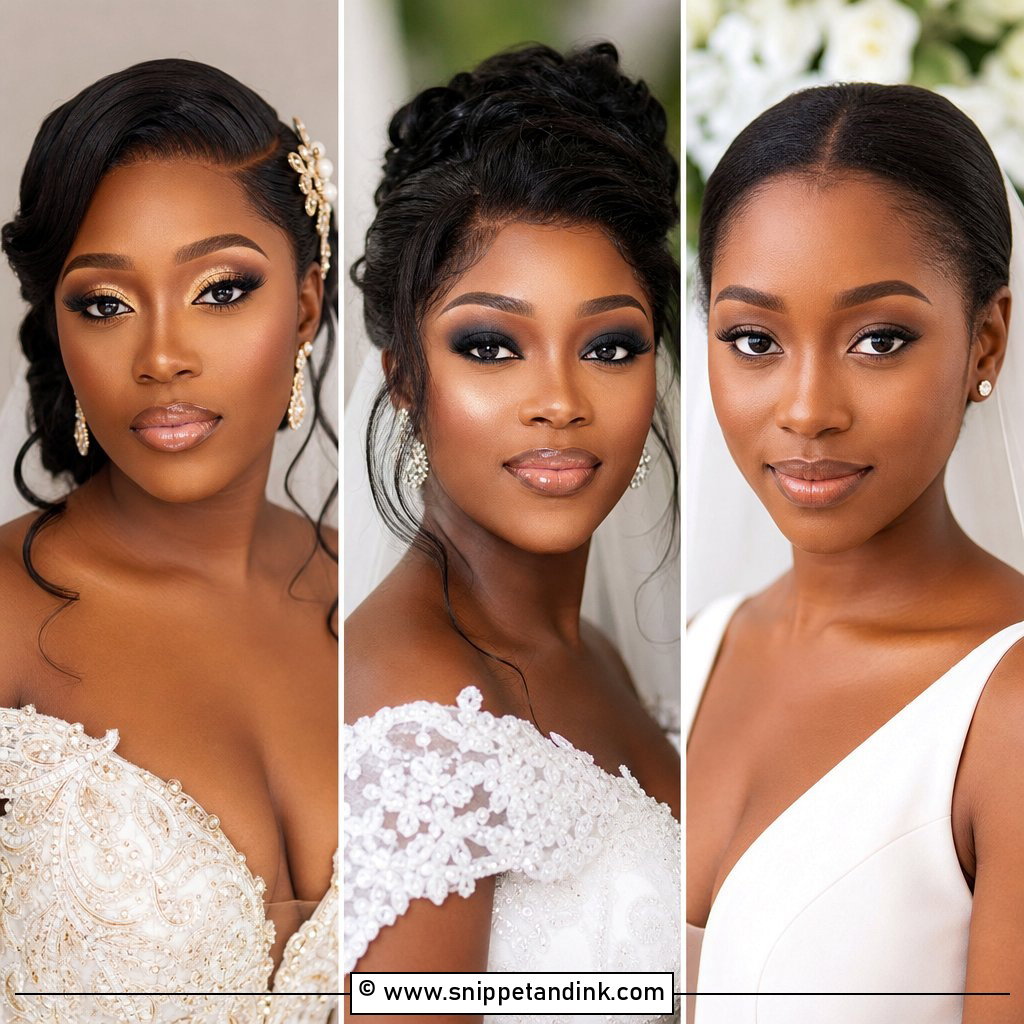
A bridal smokey eye has to be soft at the edges and dense only right at the lashes. Smokey eye wedding makeup works when I keep the darkest shade tight to the lash line and blend upward into a lighter crease colour. Shade depends on your eyes: bronze for blue, plum for green, espresso or charcoal for brown. Waterproof liner matters if there’s any chance you’ll cry, and a little brightening shade on the inner corner keeps the eye open. Keep the cheeks and lips calm. I’d hesitate on this one for a midday outdoor ceremony, where a heavy eye can look shadowy in harsh sun.
7. Bronze Wedding Makeup
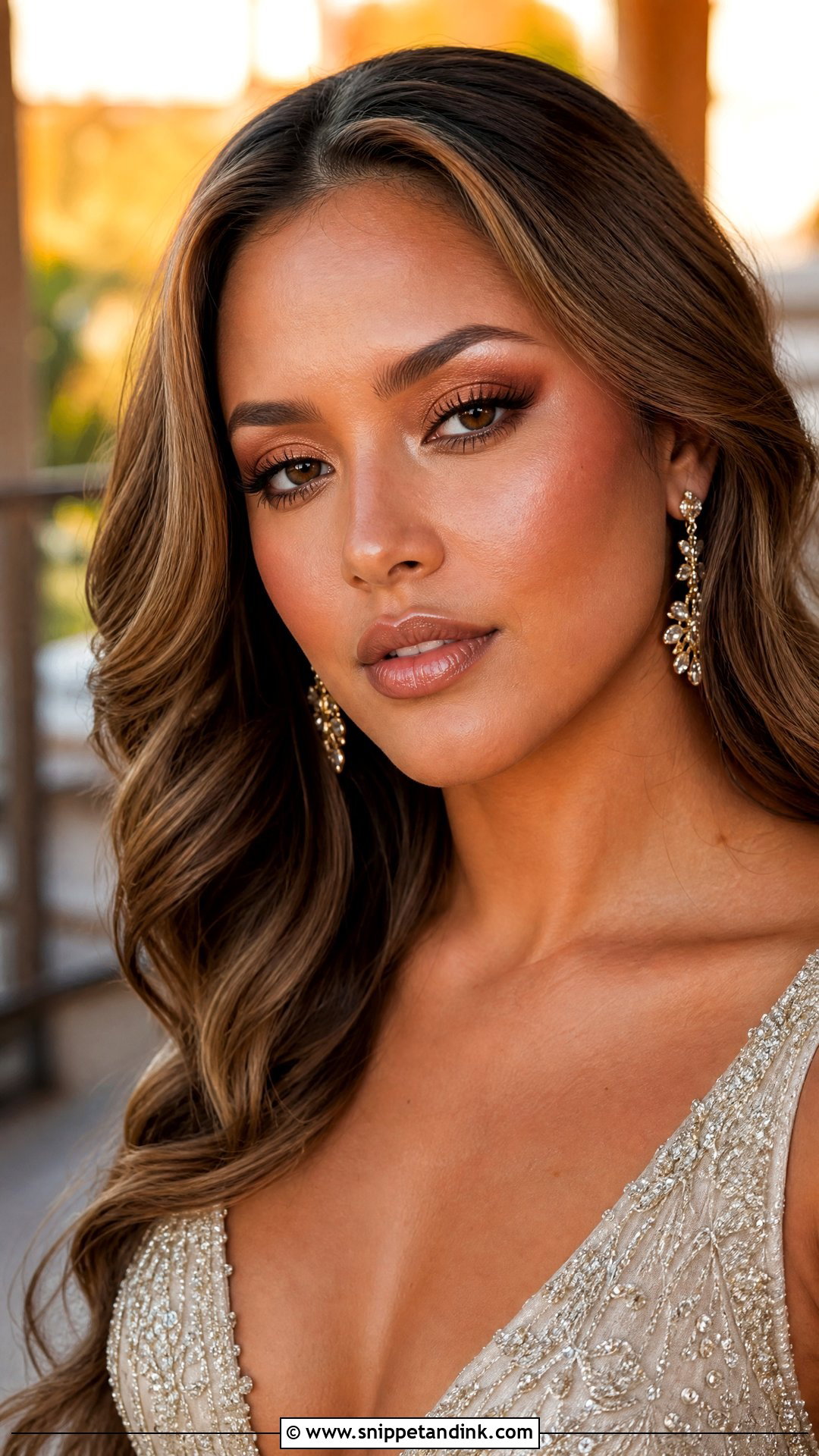
Bronze is warmth without heavy contour, and it’s what I reach for at summer and golden-hour weddings. A satin base, bronzer swept around the temples, cheekbones and jaw, then peach or terracotta blush to stop the skin looking one flat tan. Copper or caramel on the eyes with brown liner. I keep a champagne highlight on the cheekbones so it still reads bridal. Watch the bronzer shade: too orange looks muddy against an ivory gown, so I test it against the actual fabric if a bride brings a swatch.
8. Pink Wedding Makeup
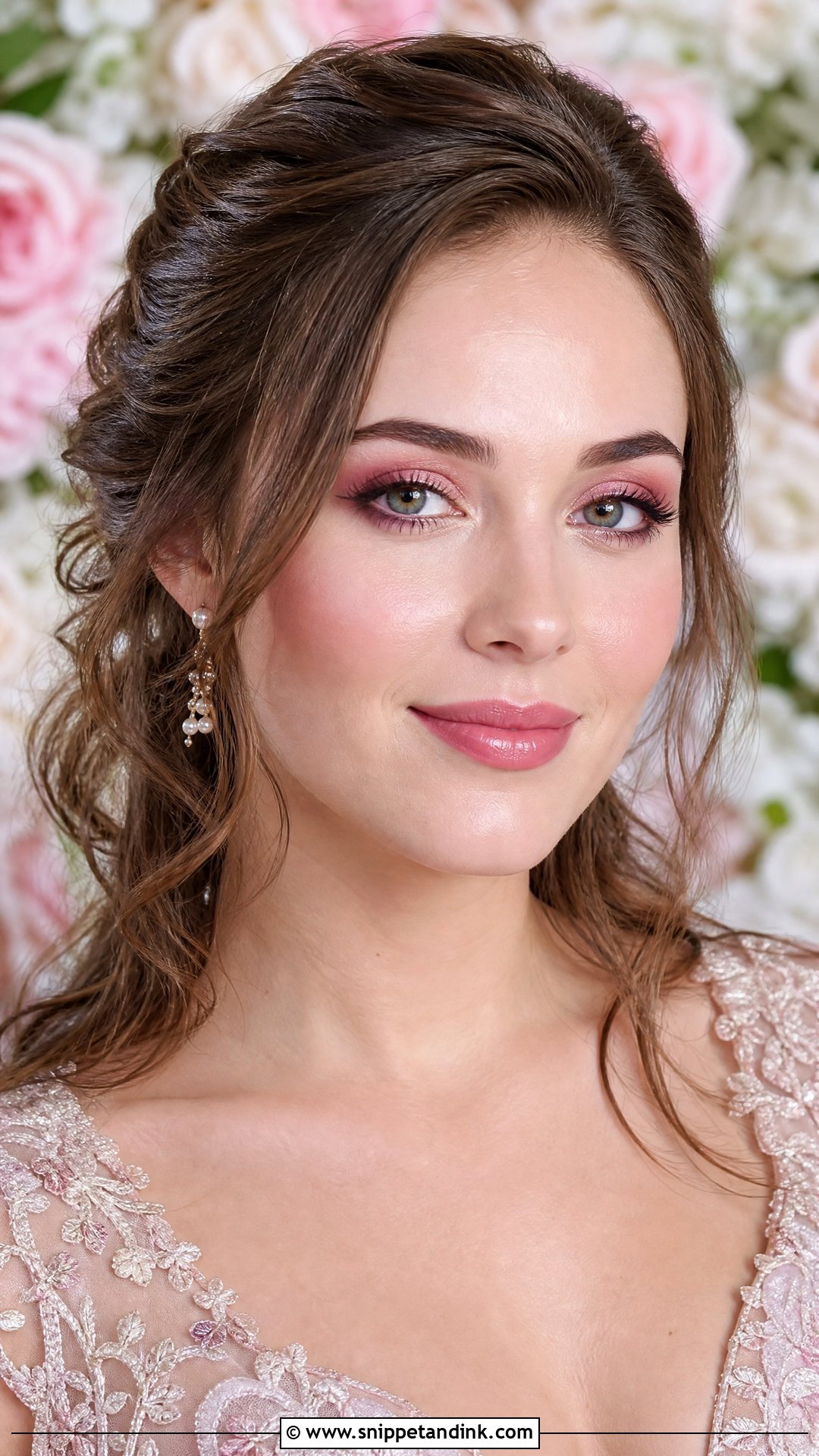
Pink comes in more versions than people think, from pale petal to cool mauve, and the right one depends on undertone. Cool skin suits blue-based rose, warm skin usually prefers a pink with a touch of coral. Blush goes softly across the cheeks, rose or dusty pink shadow on the lids with only a fine shimmer, and brown liner rather than black. A pink nude or rose gloss completes the look. The mistake I see is matching every pink exactly, which can look a bit doll-like; I keep the lip one step deeper than the cheek.
9. Peach Wedding Makeup
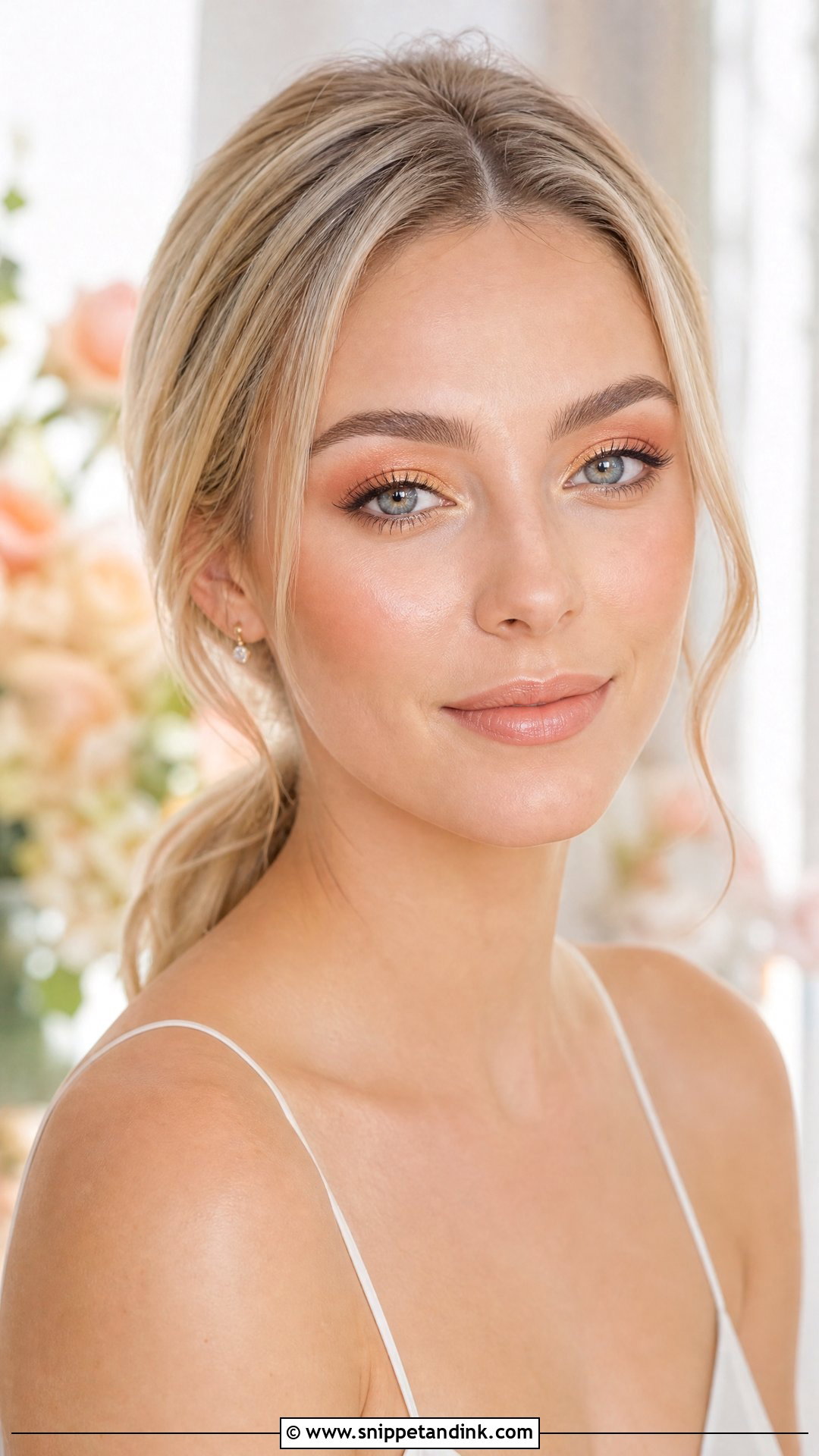
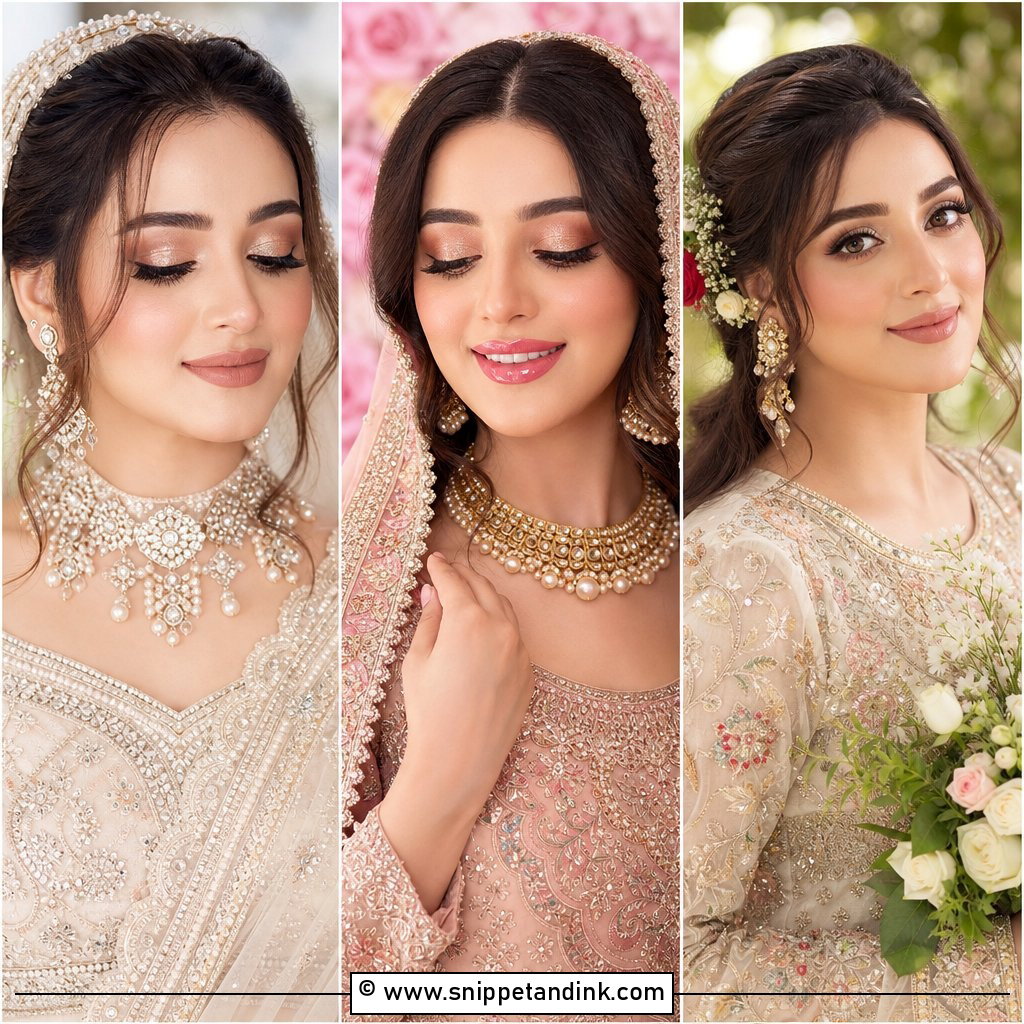
Peach wedding makeup flatters fair to deep skin as long as the depth is right; on deeper tones I go for a richer apricot so it doesn’t turn ashy. Blush goes onto the cheek and gets swept upward for lift. Champagne or soft bronze on the eyes, brown liner, a fresh, light base. A peachy nude or coral-pink lip finishes it. It reads happy and young, and it’s my default suggestion for a daytime spring wedding when the bride wants colour but isn’t sure how much.
10. Rose Gold Wedding Makeup
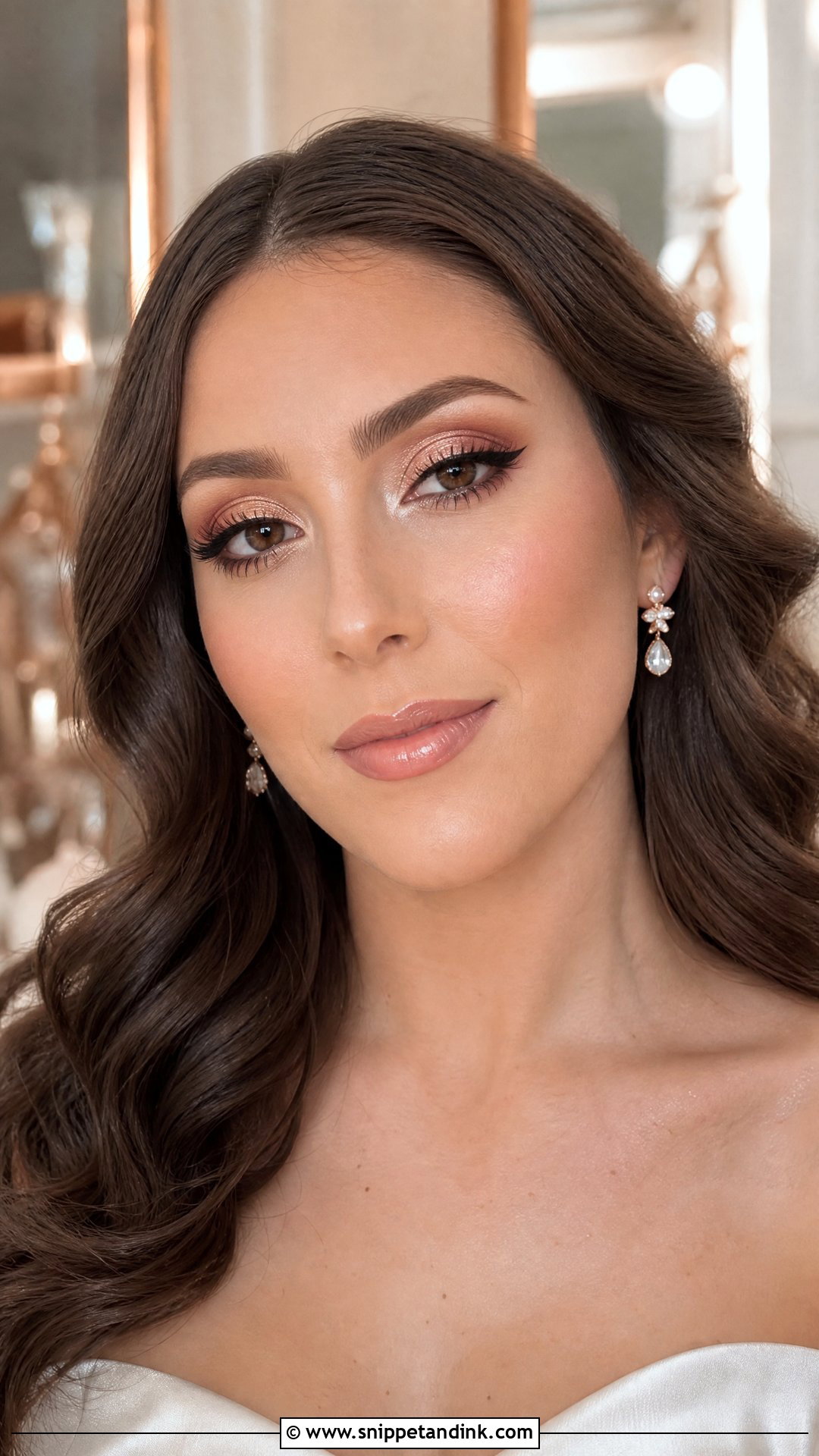
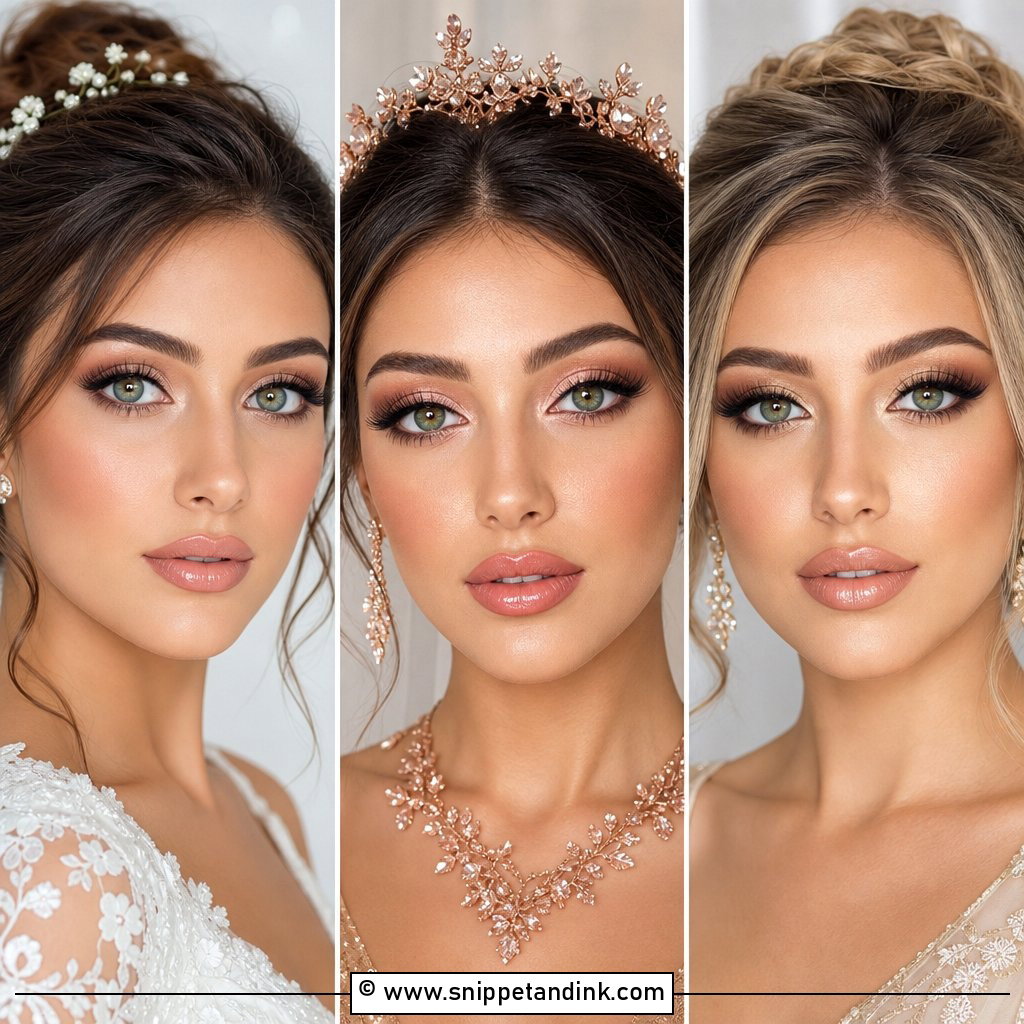
Rose gold blends pink, gold and a warm neutral, which is why it suits so many eye colours. I press the shimmer onto the centre of the lid with a fingertip, since brushes can scatter fallout onto the cheeks, then add matte taupe in the crease. Brown liner and wispy lashes keep definition without weight. Glowing skin, rosy blush and a subtle highlight. Lips in soft pink or warm mauve. With yellow gold jewellery and a champagne gown it looks pulled together without anyone noticing why.
11. Full Glam Wedding Makeup
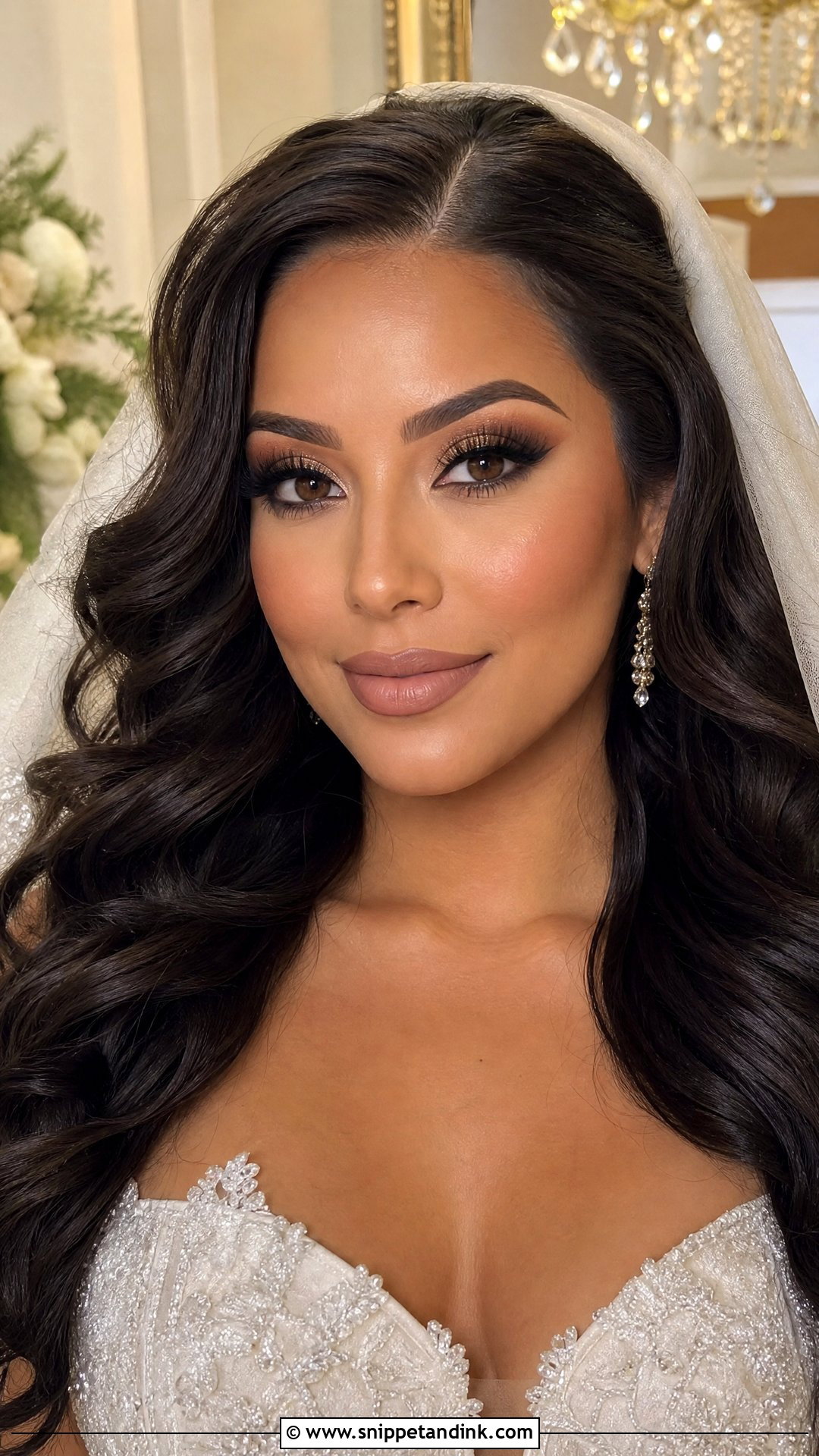
Full glam gets its reputation for heaviness from bad blending, not from the amount of product. I colour-match foundation precisely, often mixing two shades, because a mismatch at the jaw becomes obvious in profile photos. Contour and blush get built slowly so the face keeps its dimension. The eyes can carry a cut crease, a shimmer lid, a wing or deep outer-corner shading, with a nude or rose lip balancing it. It suits formal evening weddings and brides who wear full makeup regularly. If you live in a tinted moisturiser, a trial is essential before you commit, since it can feel unfamiliar on you all day.
12. Minimal Wedding Makeup
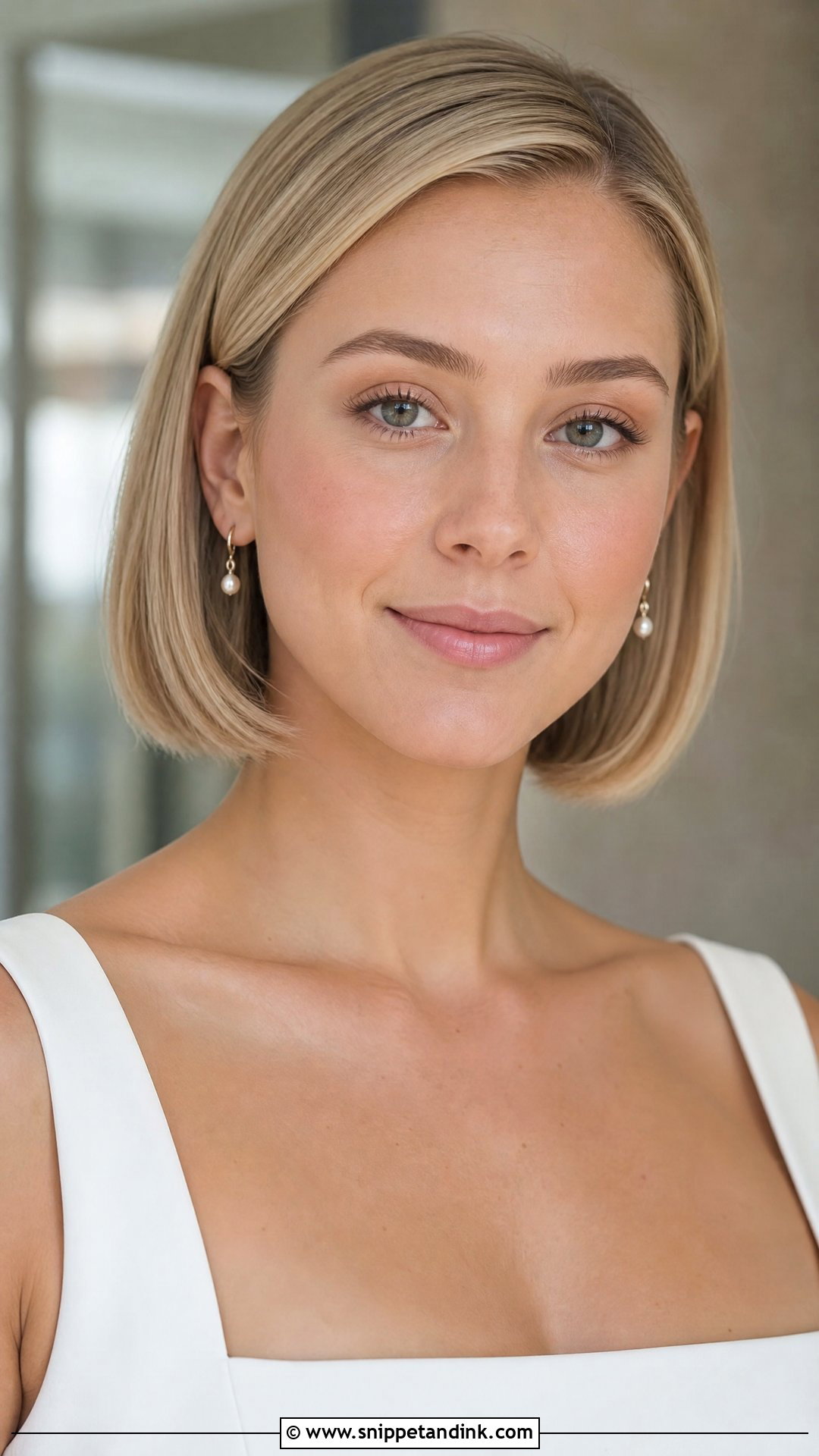
Minimal isn’t bare. It’s fewer visible layers. Sheer foundation, targeted concealer, a clear brow gel and a natural cream blush. No heavy contour, just a neutral wash on the lids and brown mascara or a thin brown liner. A tinted balm or sheer pink gloss on the lips. It pairs well with sleek slip dresses, city halls and small ceremonies. I still do a careful skin prep for this look, because without coverage to hide behind, dry patches and flakes show straight away.
13. Vintage Wedding Makeup
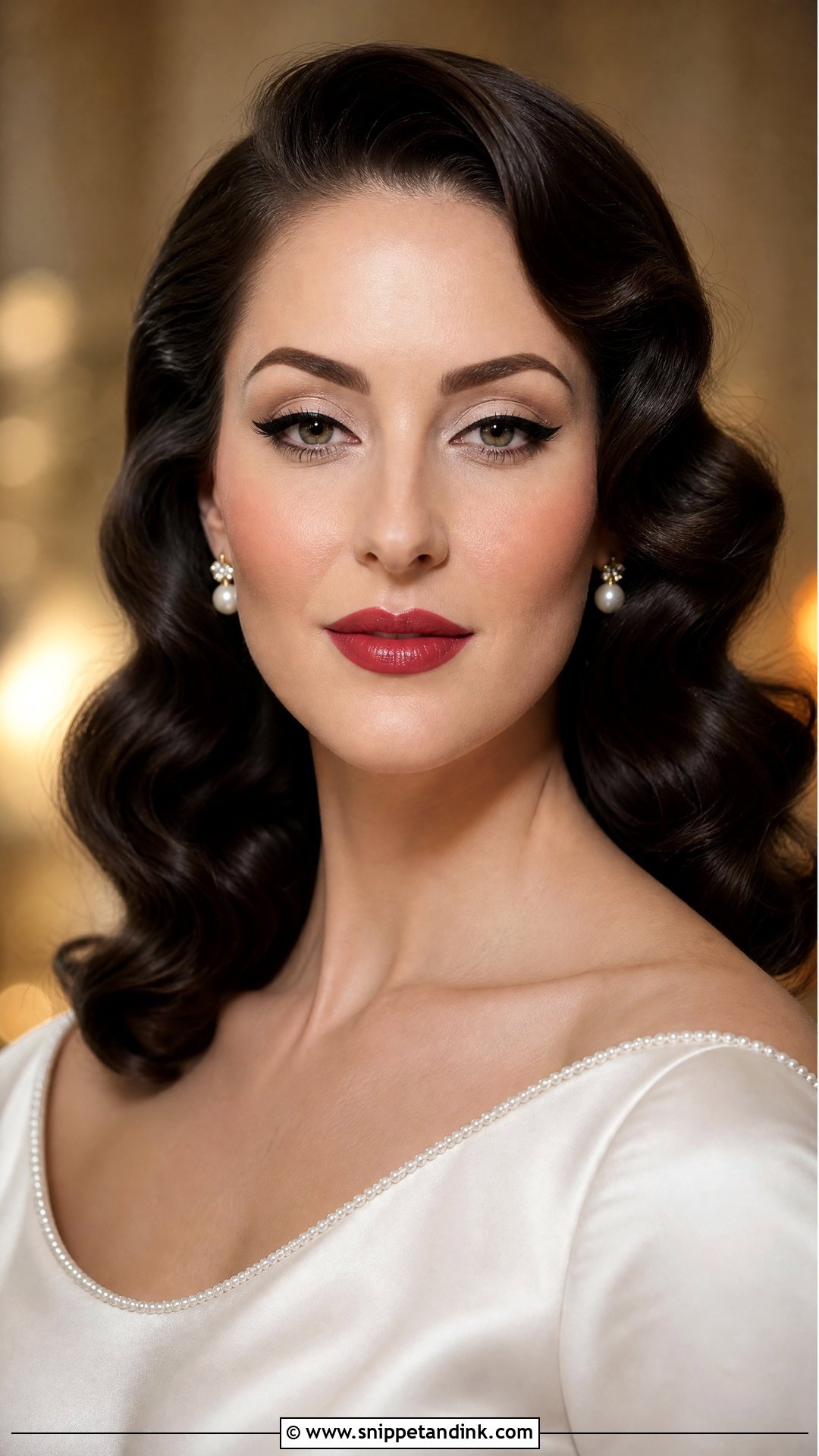
Old-Hollywood makeup works on modern brides when I soften the base. Smooth satin skin, arched brows, a black liner with a clean wing, lifted lashes and a red or berry lip. I keep contour minimal because sharp sculpting and a strong lip together can tip into costume. The lid stays matte and neutral with a slightly deeper crease. Lip shade depends on colouring: true red, cranberry, deep rose or brick. It looks most at home with satin gowns, pearls and set waves or a polished chignon.
14. Brown Smokey Wedding Makeup
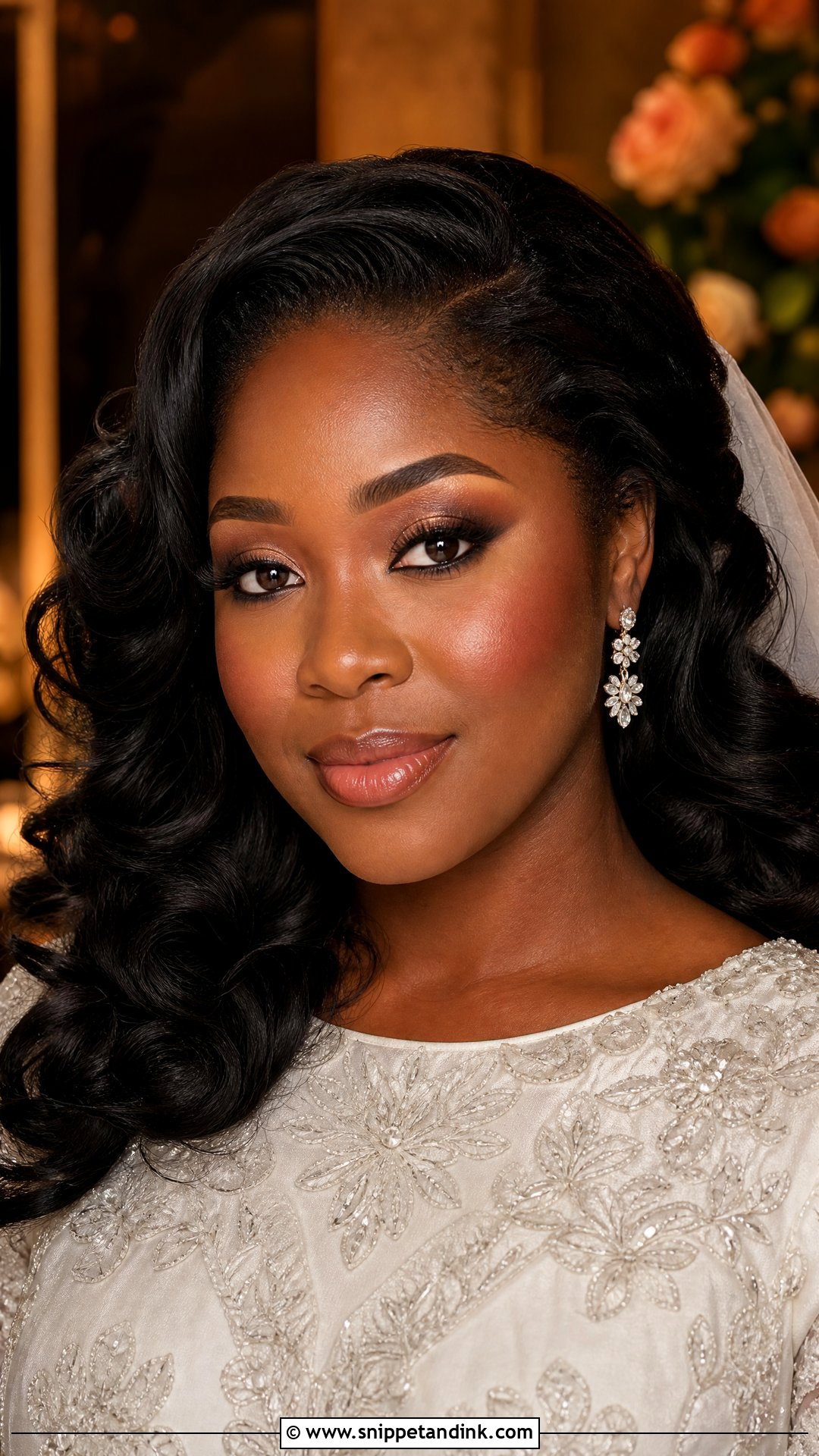
Brown smoke gives you intensity with less harshness than black, which helps in daylight. I blend cocoa and espresso close to the upper lash line and a little along the lower one, then diffuse the edges with a medium taupe. Waterproof brown-black liner and fluttery lashes add lift. The skin gets a soft bronze and the lip goes nude, caramel or rosy beige. One thing to watch: dark shadow under the lower lashes can drift by evening, so I set it with a matching powder and keep a cotton bud in the touch-up kit.
15. Gold Wedding Makeup
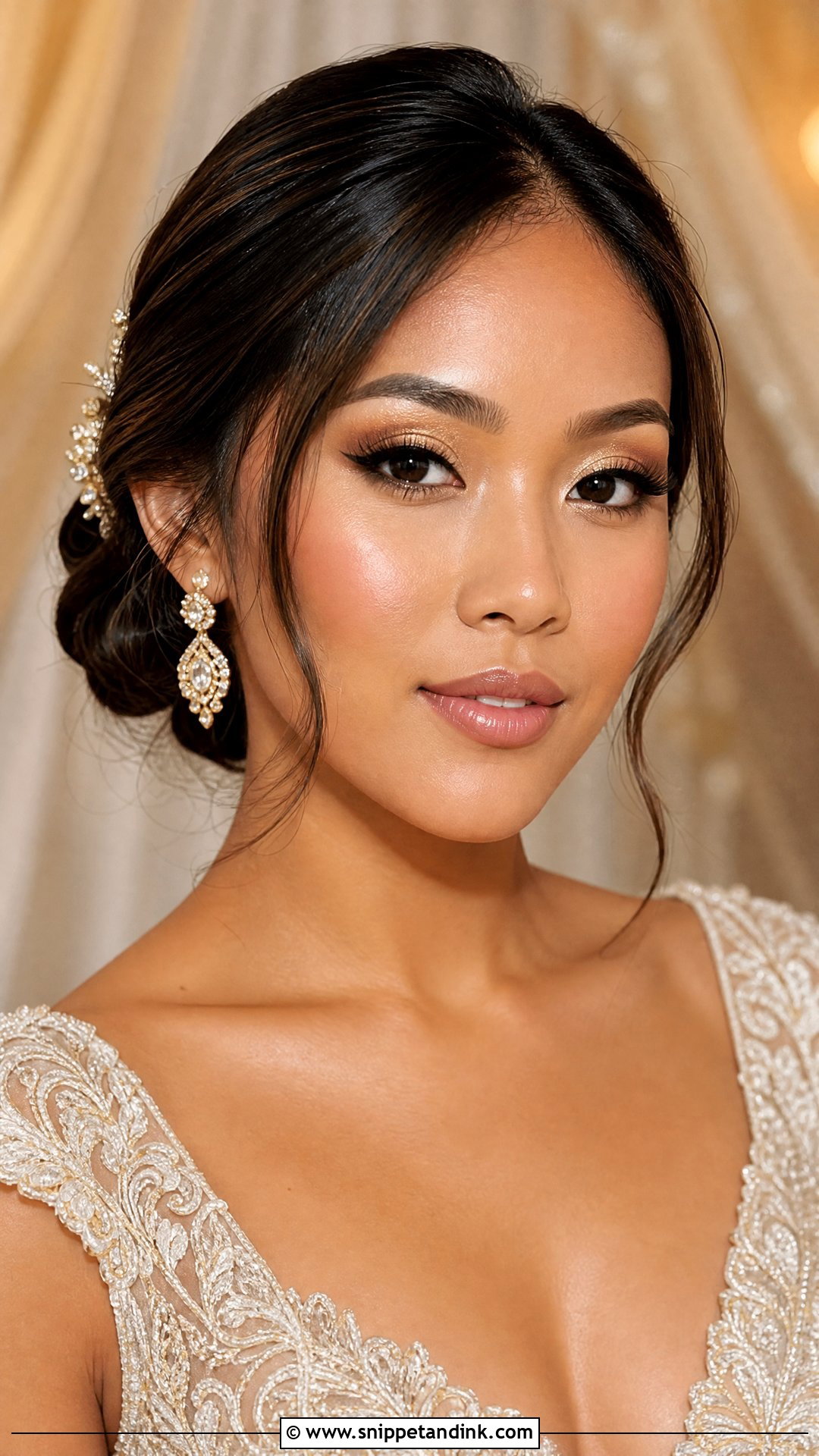
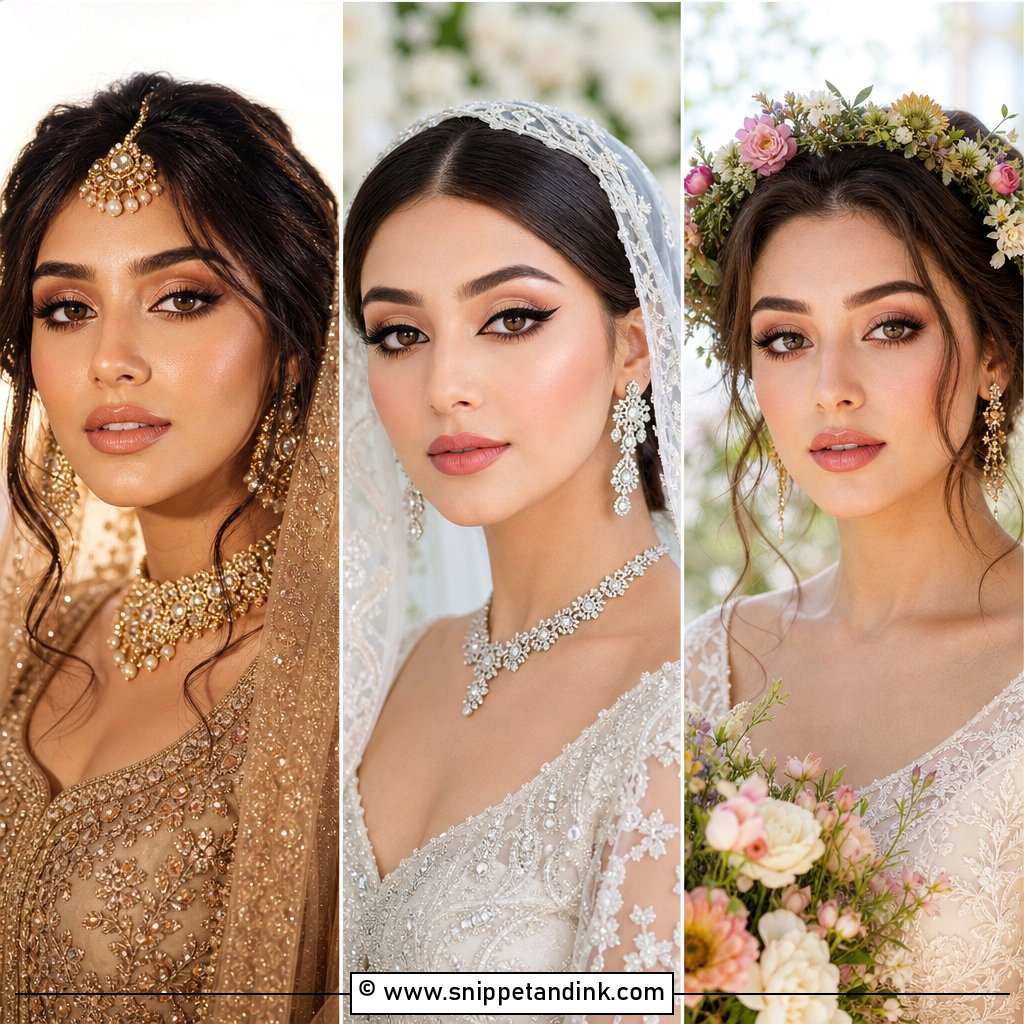
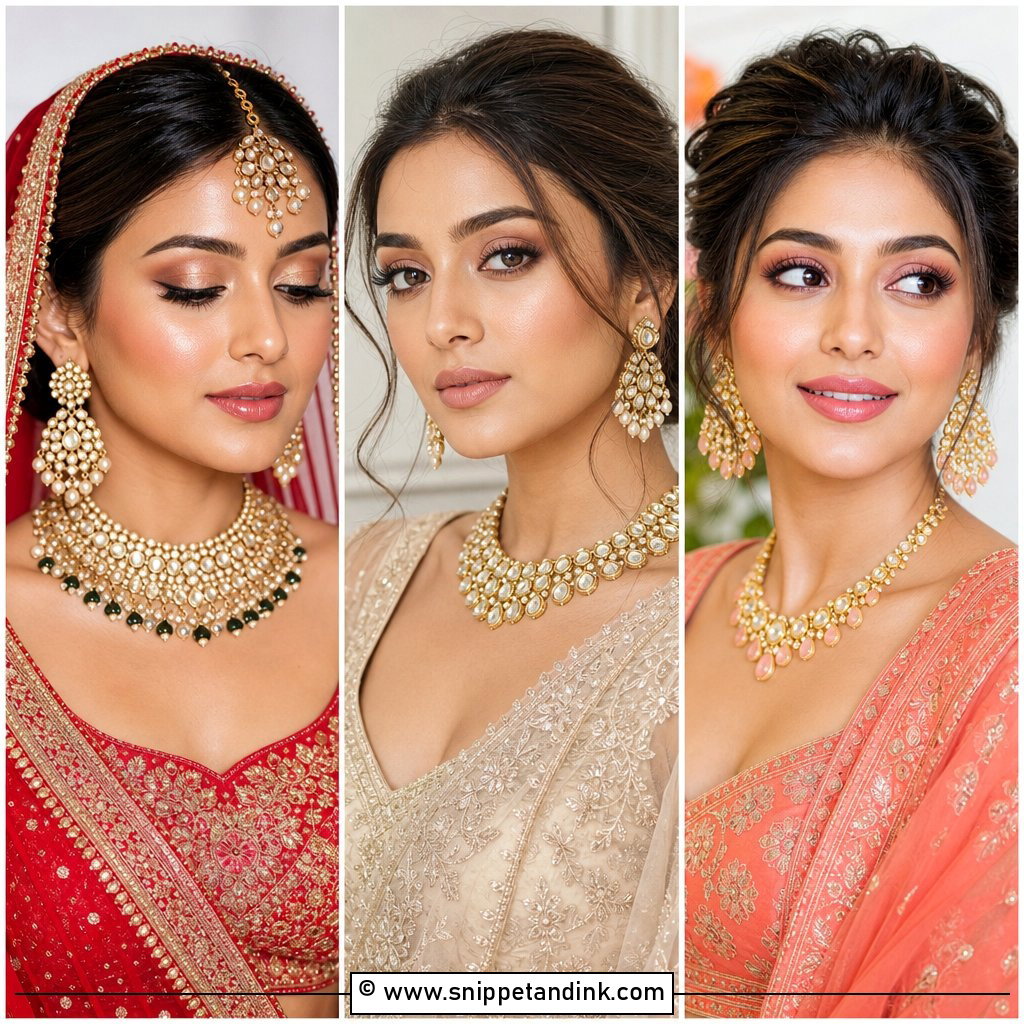
Fine-milled gold reads expensive; chunky glitter reads like a party. I choose a soft metallic or antique gold shadow on the lids, blend warm brown through the crease, and add black-brown liner and a touch of highlight on the inner corner. The skin glows but stays controlled, with bronzer, peach blush and highlight only on the high points. The lip stays nude, honey or warm rose so the eyes stay in charge. Gold flatters olive and deeper skin tones especially well.
16. Berry Lip Wedding Makeup
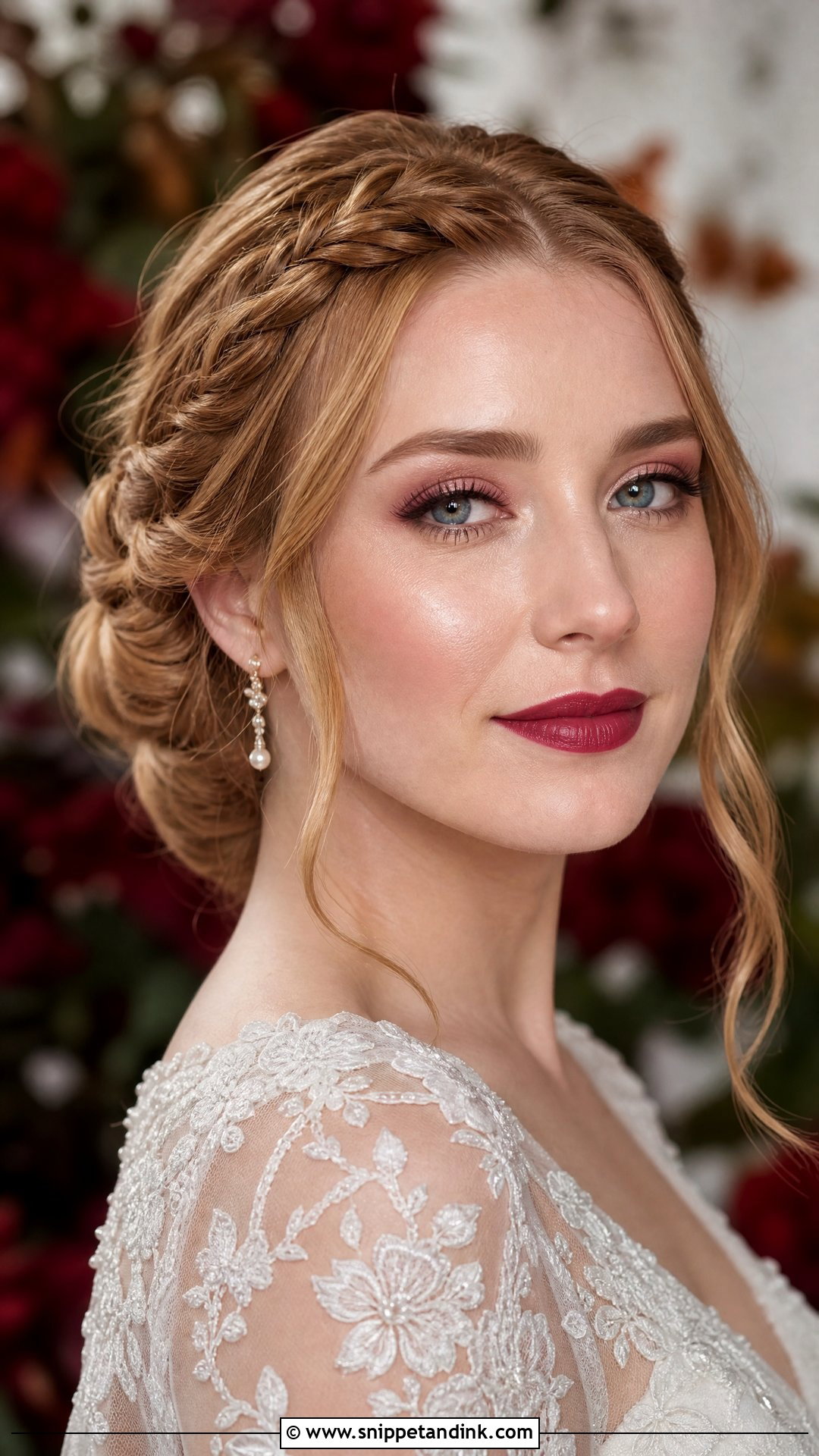
Berry lip wedding makeup is a slightly more modern alternative to red, and it suits autumn and winter weddings naturally. Sheer berry stains also work in warmer months. I keep the eyes soft so the lip leads, and I always use a matching liner because berry shades feather quickly into fine lines. The finish depends on comfort: matte lasts longest, a stain wears down most evenly. Cheeks get a whisper of the same family, plum or mauve. On a very simple gown, a berry lip gives the whole look a point of view.
17. Champagne Wedding Makeup
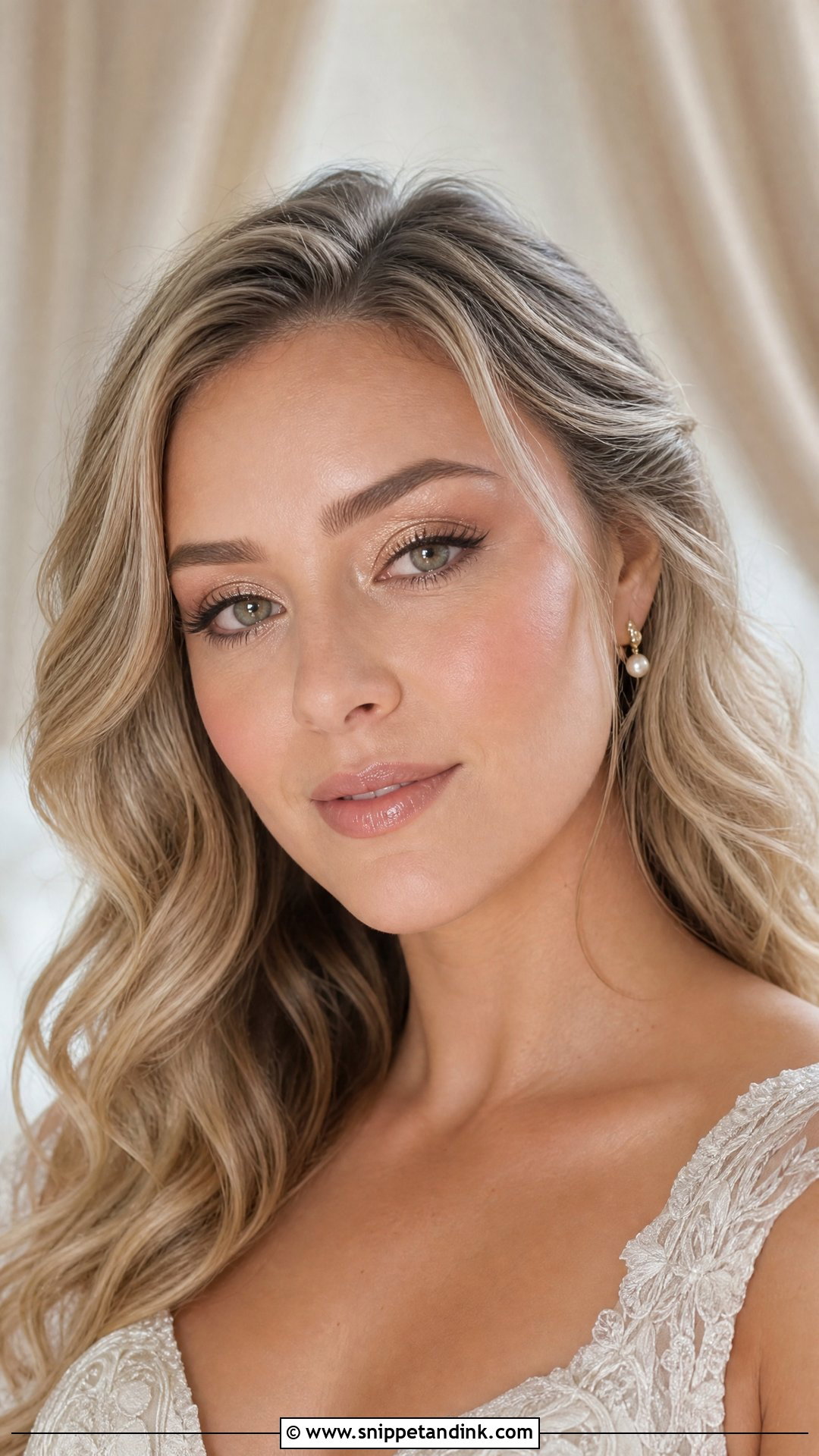
Champagne is the colour I use when a bride wants glow but doesn’t want to look made up. Shimmer on the centre of the lid and the inner corner opens the eye, and a soft brown in the crease gives shape. Thin liner and wispy lashes keep it delicate. Skin can be satin or dewy, with pink or peach blush and a subtle highlight, and lips in nude pink or rose beige. It’s one of the most reliable daytime looks because champagne flatters almost every eye colour without clashing with the dress.
18. Winged Liner Wedding Makeup
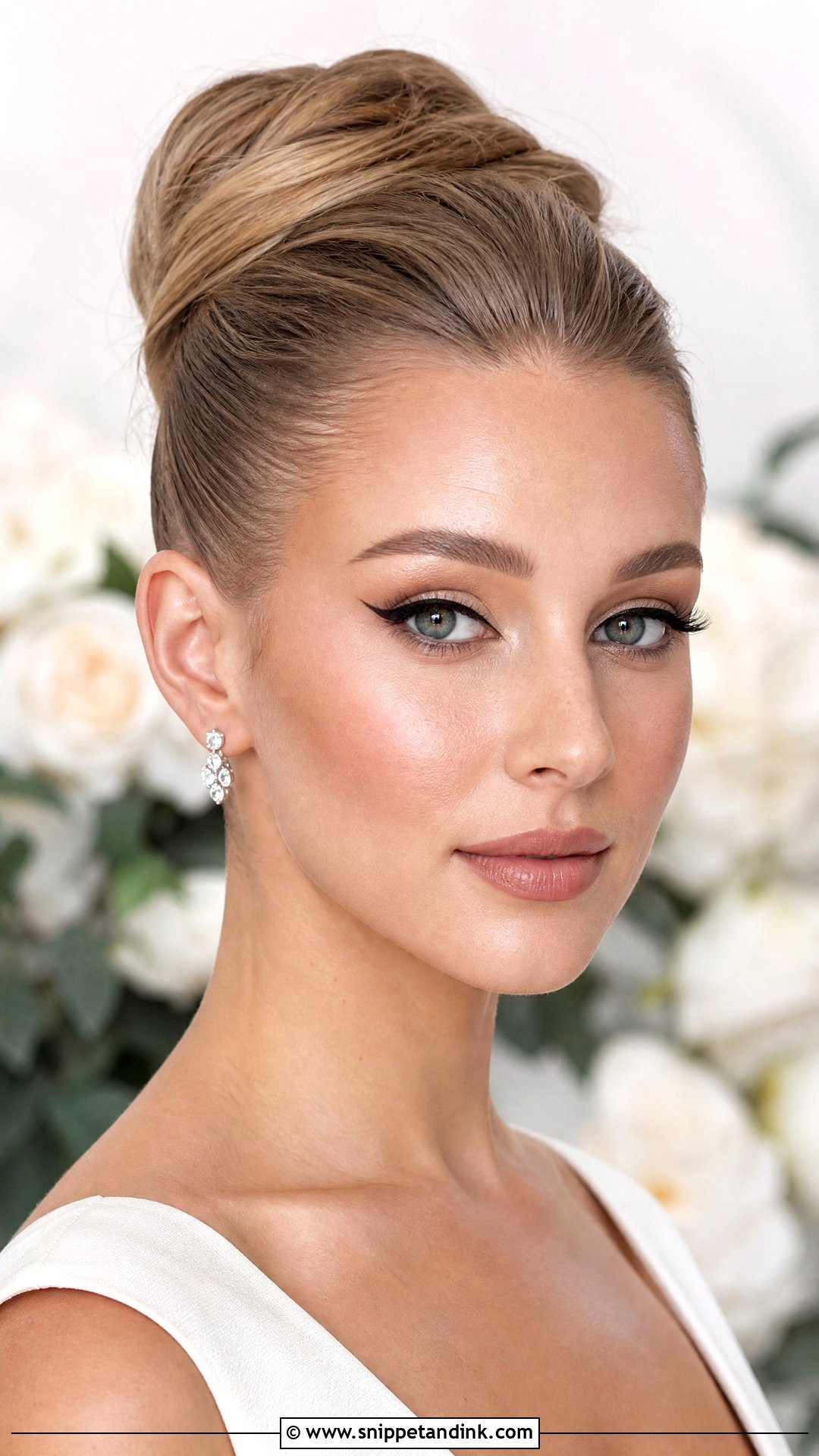
A winged liner gives shape without needing much shadow. The key is drawing it with your eyes open and looking straight ahead, because a wing drawn on a closed lid often disappears into a hood or kinks once the eye opens. I keep the lid neutral, line close to the lashes and flick upward, then add individual lashes or a fine strip lash. Smooth skin, soft blush and a little contour balance it. Lips can go nude, pink, rose or red depending on how classic you want it.
19. Airbrush Wedding Makeup
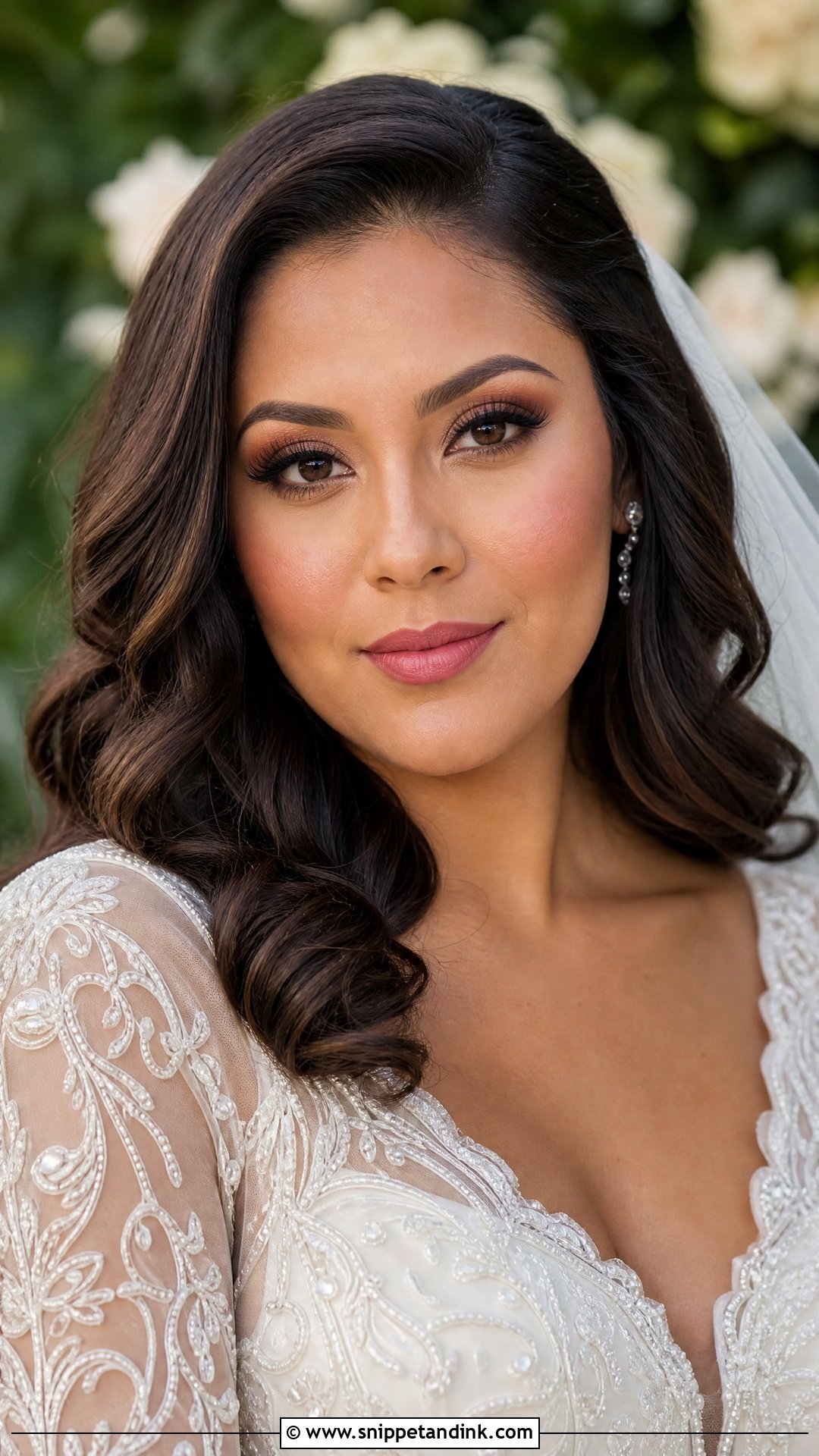
Airbrush wedding makeup sprays foundation in very fine layers, which gives a thin, even finish that holds up well in heat and humidity. It can be natural or full coverage depending on how many passes I make. What it doesn’t do is fix dry skin; airbrush sits on top of flakes and can emphasise them, so hydration still matters. I pair it with softly defined eyes, waterproof mascara, cream-to-powder blush and a transfer-resistant lip. It’s my first suggestion for outdoor summer weddings.
20. Watercolor Wedding Makeup
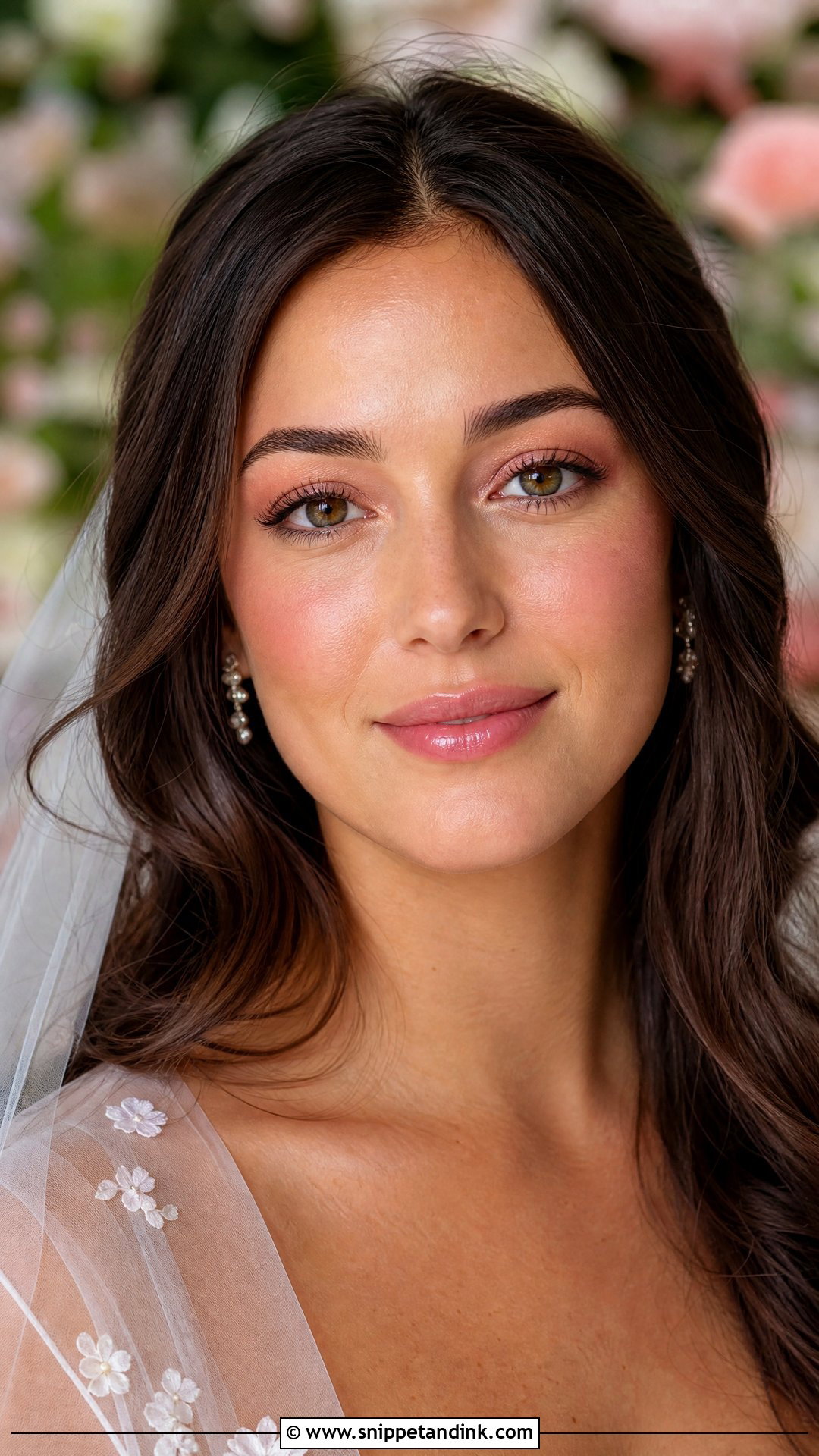
Watercolour makeup uses diffused washes of colour instead of contour, so it looks airy and a bit artistic. I pick one or two tones from the wedding palette, soft pink, peach, lavender or terracotta, and use them across the cheeks, eyes and lips in sheer layers. The base has to be light and radiant so the colour looks melted into the skin. A sheer veil of shadow, fluffy lashes, brushed-up brows and a blurred lip stain finish it. It suits garden weddings and creative brides, though if you’re unsure about colour, I’d keep it to the cheeks and lips.
Running Your Trial Like a Dress Rehearsal
A trial only tells you something if it copies the real day. Here is how I’d set one up so the result is honest.
- Book it six to eight weeks out, so there’s time for a second try if the first look isn’t right.
- Arrive with clean, moisturised skin, wearing a top close to your neckline colour. A white or ivory shirt shows how the face sits against the gown.
- Bring three or four photos of looks you like and one you don’t. The one you dislike often tells me more.
- Wear the makeup for at least five hours afterward. Check it at lunch, after a drink, and in the evening.
- Take photos in daylight, indoors and with a phone flash. Flash reveals white cast from some powders and SPF that the mirror hides.
If something bothers you, say so plainly. A good artist would rather adjust the lashes or the lip at the trial than have you feel unlike yourself on the morning of the ceremony.
Your Face, Your Dress and the Light You’ll Stand In
Trends are useful for ideas, but your skin, your gown, the light at your venue and how much makeup you normally wear should make the final call. If soft beauty feels like you, the natural, dewy, peach and champagne looks are good starting points. For more impact, look at smokey eyes, full glam, a wing or a strong lip. Whichever direction you lean, wear it for a full afternoon at your trial and photograph it in more than one light.
You'll Like These Ideas:


Leave a Reply