
Buying a wedding dress from your sofa works better than most brides expect, provided you treat the size chart as the real fitting room. Bridal collections right now lean on basque waists, corsetry, clean crepe, dimensional florals, detachable layers and shorter hems, and every one of those details behaves differently on a body than on a hanger. Before anyone I dress clicks “order”, I want four things checked: their measurements against that retailer’s chart, customer photos rather than studio shots, the fabric and lining notes, and the return terms. Leave room in the budget for alterations, proper underwear, shoes and accessories too, because together they usually cost more than people plan for. The twenty looks below are built as whole outfits, each with the online checks I’d run before buying it.
Taking Your Own Measurements When There’s No Fitting Room
Most of the online returns I hear about come down to measuring, not to the dress. Bridal sizing runs smaller than everyday clothing, often by a size or two, so ignore the label in your favourite jeans and work from a soft tape. Wear the bra or shapewear you plan to wear on the day, stand relaxed, and have someone else hold the tape. Measuring yourself pulls your shoulders forward and skews the bust figure.
- Bust: around the fullest part, with the tape level across your back.
- Waist: the narrowest part of your torso, usually a little above the navel. Breathe out normally and don’t hold your stomach in.
- Hips: around the fullest part of your seat, feet together.
- Hollow to hem: from the dip at the base of your throat straight down to the floor, wearing your wedding shoes or a pair of the same height.
Compare every number with that retailer’s own chart, never a generic one. If your measurements fall across two sizes, order for the largest. Taking a dress in at the waist is routine work for a seamstress; letting out a bodice depends on spare seam allowance that many ready-to-wear gowns simply don’t have.
Reading a listing the way a fitter would
Studio photos are clipped at the back and lit to flatter. Customer photos show the same dress in a hallway at six in the evening, which is far closer to what your mirror will show you. In reviews I look for three things: someone with measurements near yours saying it ran small or large, any mention of thin lining or see-through fabric, and how long delivery actually took compared with the promise.
1. A-Line Wedding Dress With Pearl Accessories
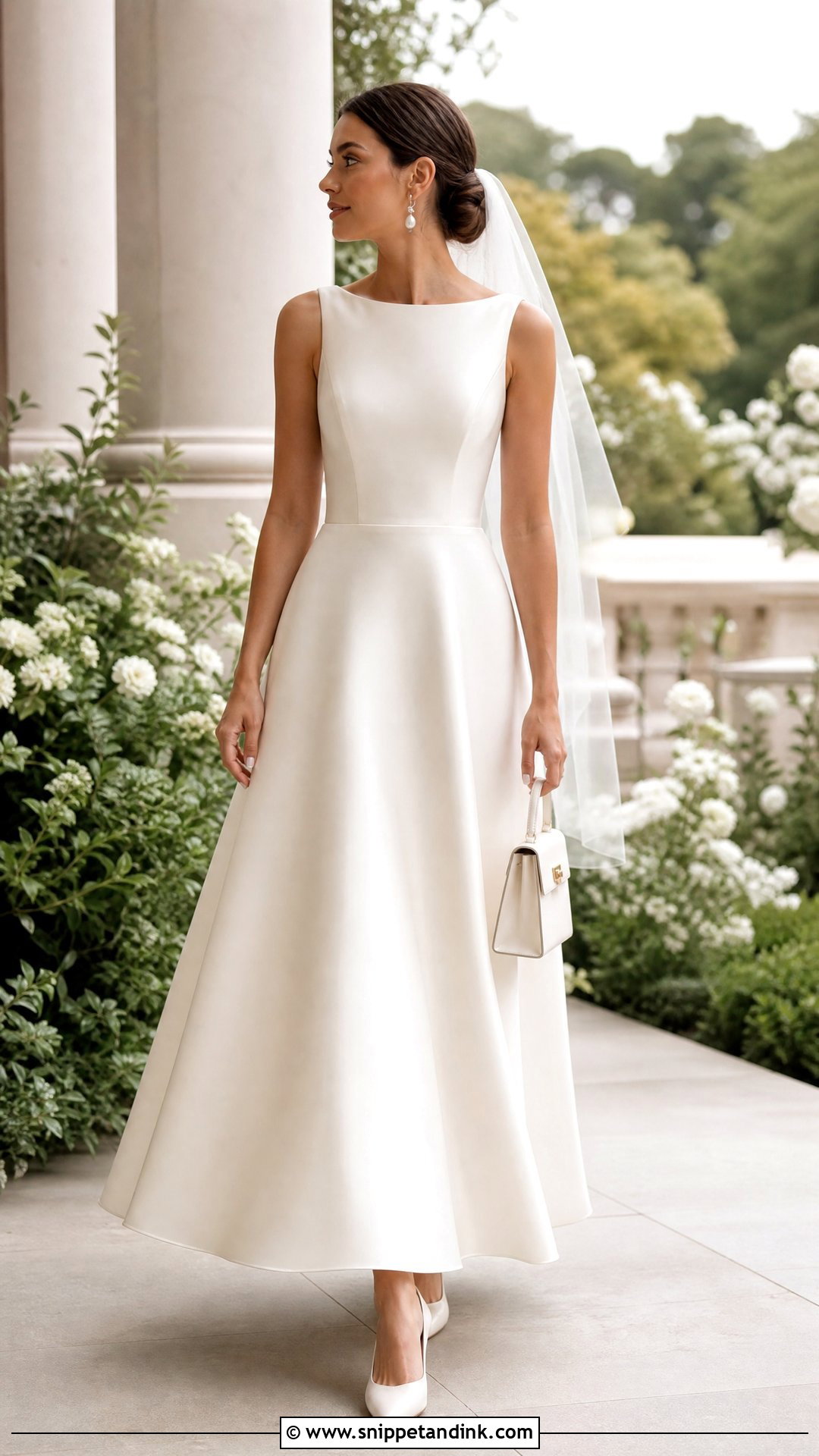
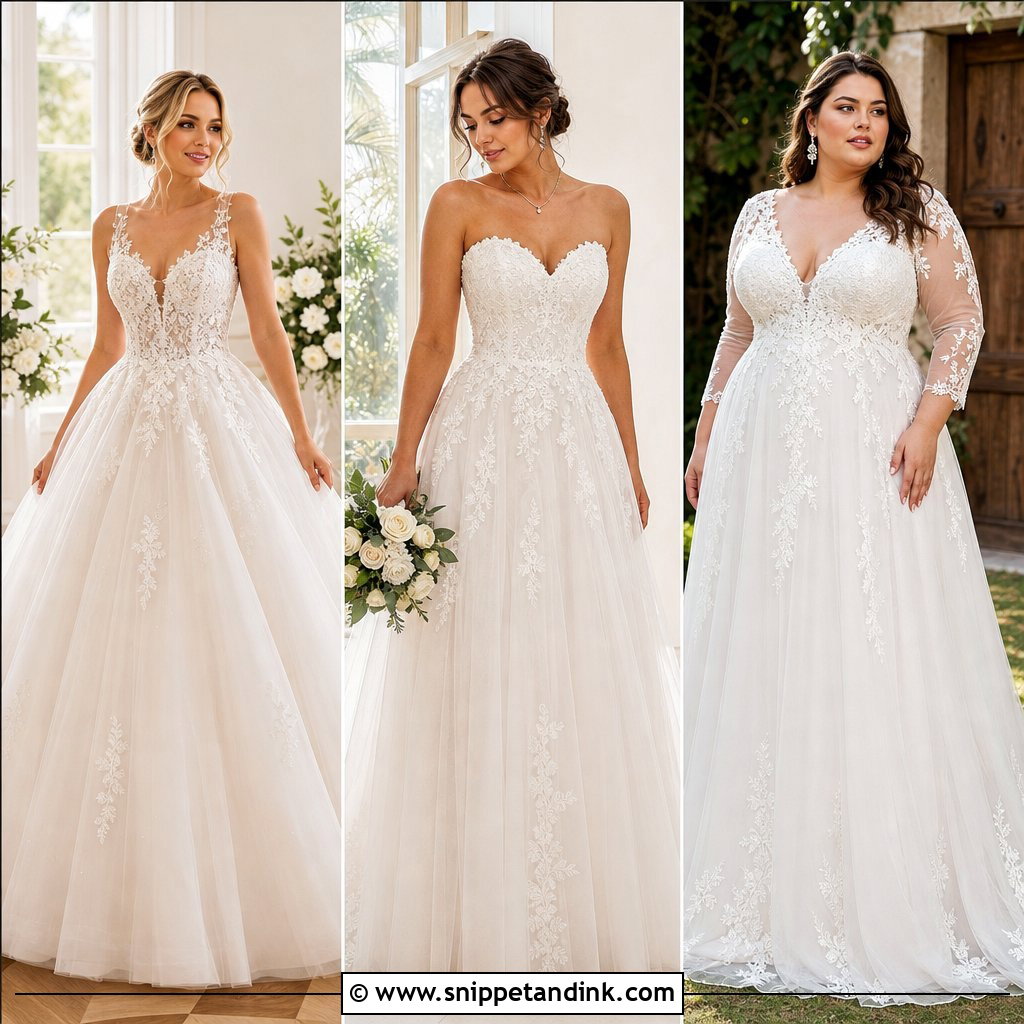
A-line is the silhouette I point most first-time online shoppers toward, because a fitted bodice and a skirt that releases from the natural waist forgives a centimetre or two at the hip that a mermaid never would. Crepe gives a clean, almost architectural line; chiffon or tulle moves more but arrives creased from the box, so plan to steam. Pearl drop earrings, a fingertip veil, pointed ivory pumps and a small structured bag finish it, and a low bun keeps the neckline readable. When shopping online, find the hollow-to-hem figure and measure your own in the heels you’ll actually wear. An A-line that’s two inches short looks unfinished in a way no styling trick fixes, and side-view photos tell you far more about skirt volume than the front shot does.
2. Satin Ball Gown Wedding Dress With Long Veil
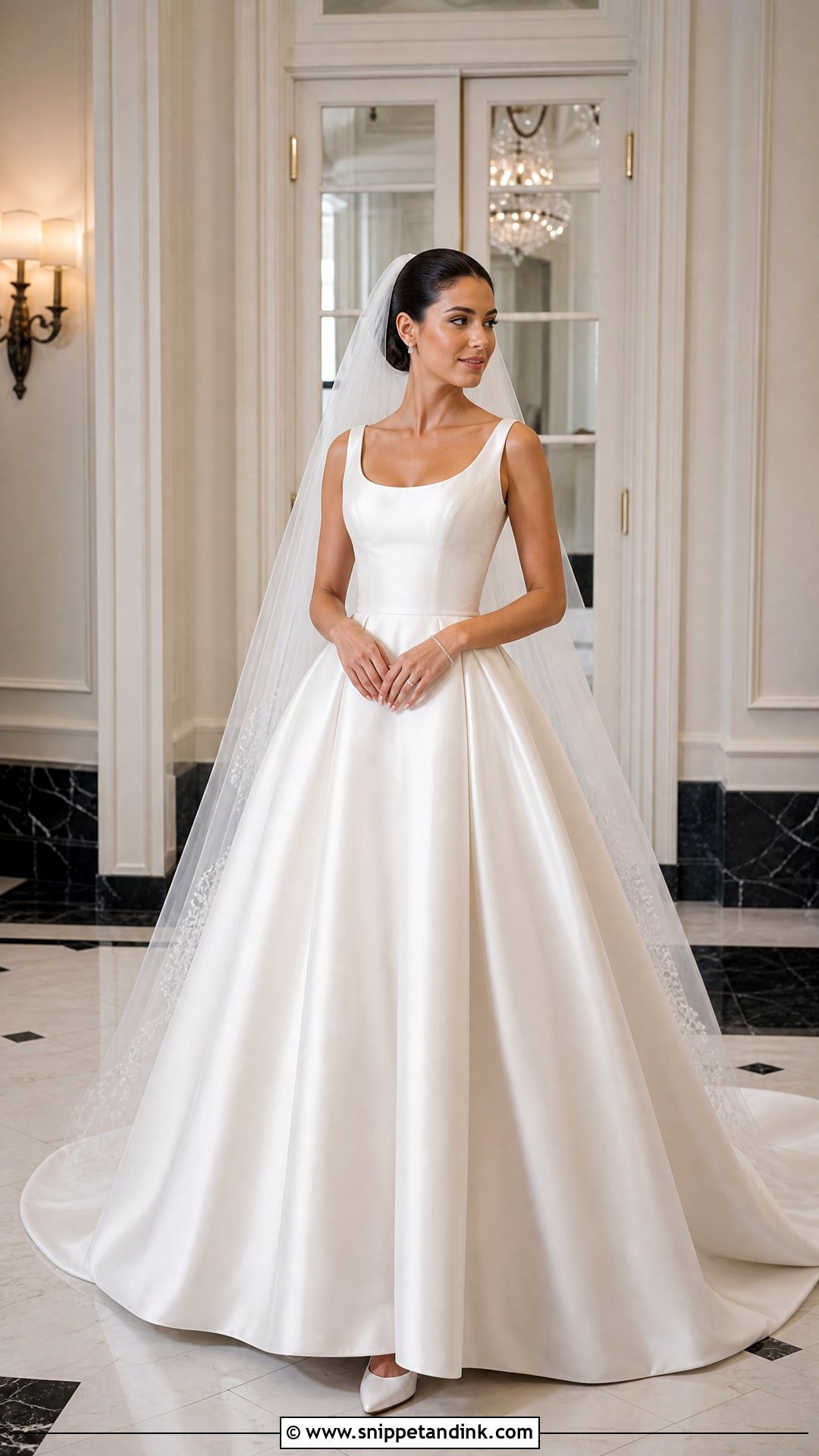
Satin ball gowns are heavy, and that’s the first thing I warn people about, because nothing on a product page tells you a skirt can weigh as much as a small suitcase. A structured bodice with a scoop or straight neckline and hidden pockets gives your hands somewhere to rest through a long ceremony. A cathedral veil, crystal studs, a fine bracelet and closed-toe satin heels are plenty. With this much volume I’d skip the necklace entirely and let a smooth chignon keep the head quiet. Ask the seller for photos of the inside: boning channels, back closure, how the train is bustled. Find out whether a petticoat is included, too, since some listings photograph the dress over one and ship it without. Formal hotels and large evening receptions are where this shape earns its weight.
3. Long Sleeve Lace Wedding Dress With Classic Pumps
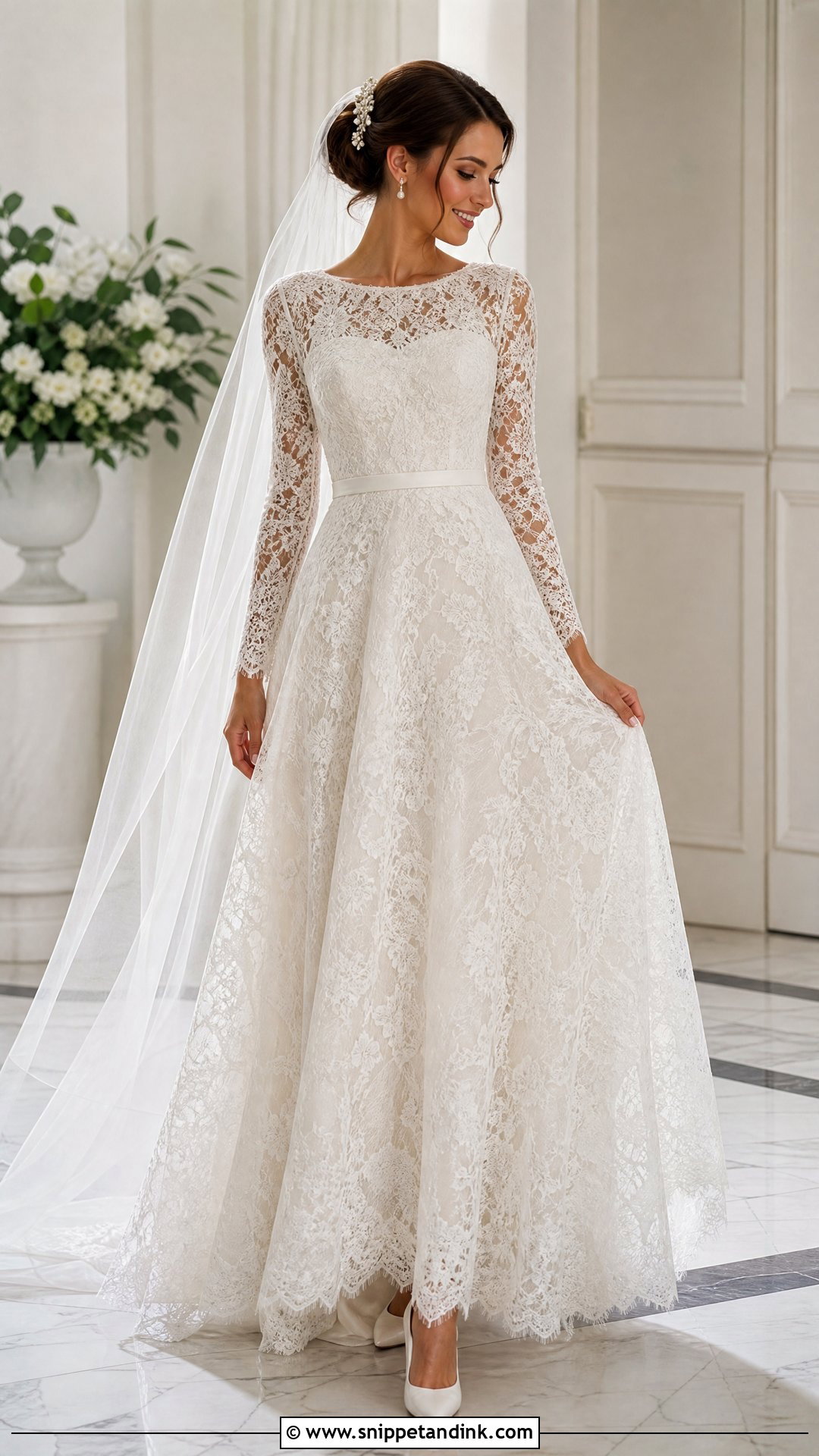
Lace sleeves are the part of an online dress most likely to disappoint. The cut at the bicep and armhole decides whether you can hug anyone, and non-stretch lace cut close looks sleek in a still photo, then binds the moment you lift your arms. I look for a lined bodice, a defined waist and sleeves with some give, over an A-line or fit-and-flare skirt that shows the pattern without distorting it. Ivory pointed pumps, pearl earrings, a single hair comb and a plain-edged veil keep the lace from looking crowded. Zoom into the fabric shots, then measure your upper arm and across the back of your shoulders and compare both to the size guide. Indoor venues from autumn through early spring suit the coverage best.
4. Square Neck Wedding Dress With Low Bun
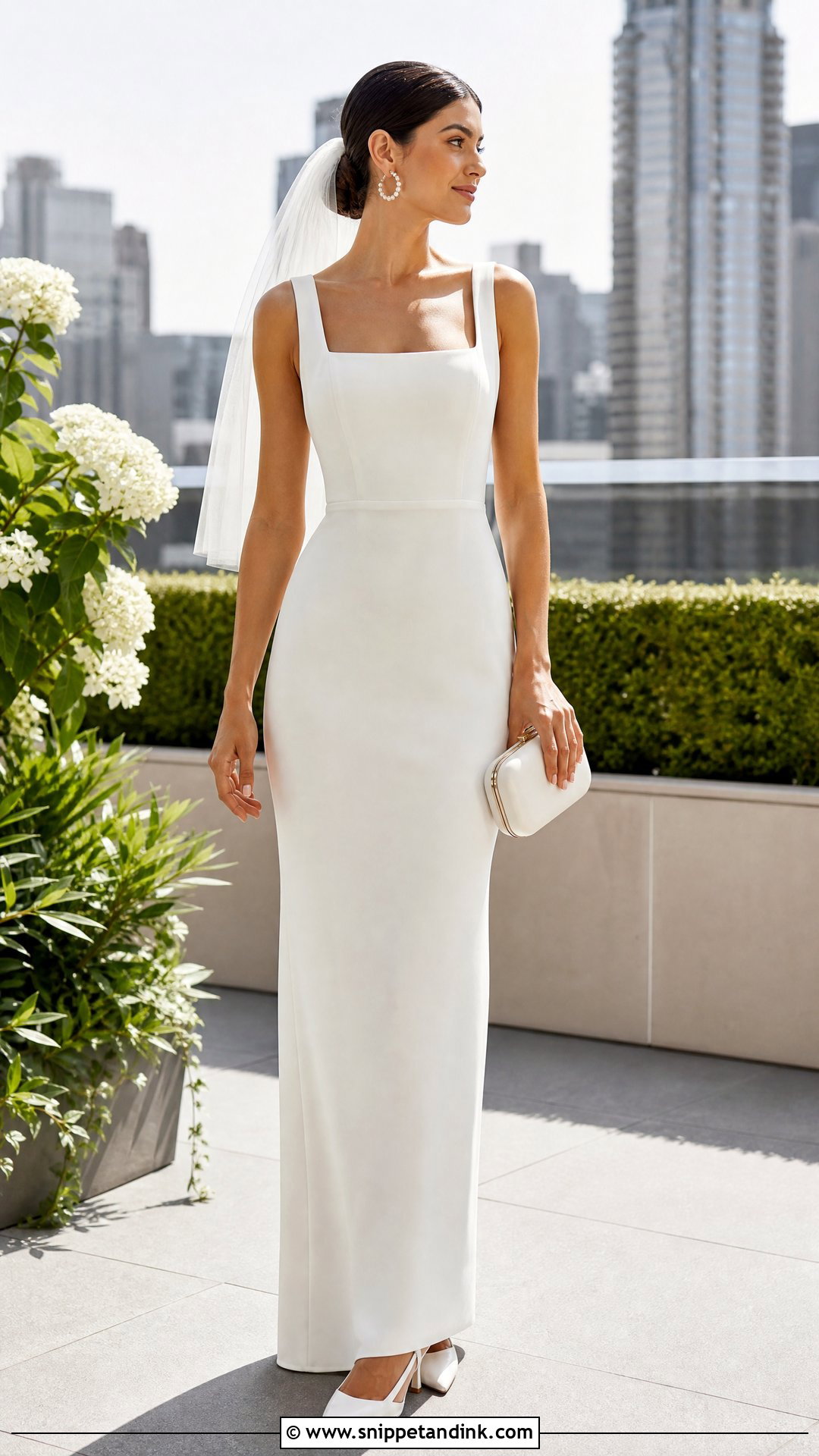
A square neckline is unforgiving about torso length, which is exactly why I double-check it on online orders. On a short torso the edge can sit almost at the collarbone; on a long one it drops lower than the photo suggests, so look for a neckline depth figure or ask the retailer for it. Fitted crepe or satin with wide straps and princess seams gives the cleanest result, over a column or a gentle A-line. A sleek low bun, small pearl hoops, a short tulle veil and slingback heels suit the strong lines, with a structured ivory clutch if you want to carry anything. If the back is open, sewn-in cups beat adhesive bras over a full day, since adhesive loosens once you get warm. Rooftops and pared-back modern venues suit this one.
5. Off Shoulder Wedding Dress With Drop Earrings
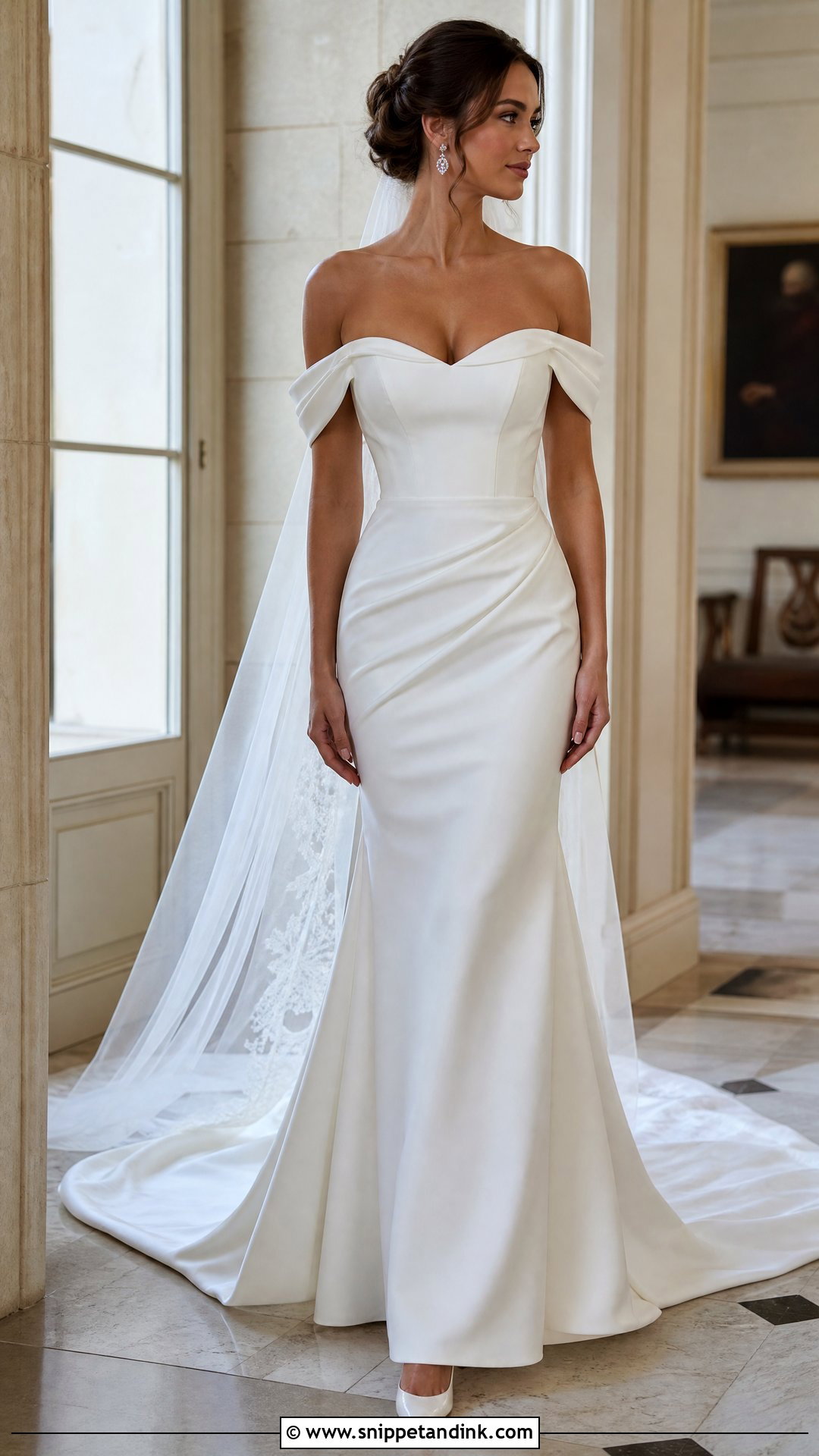
Off-the-shoulder dresses look easy and are actually the hardest neckline to judge through a screen. The sleeve band sits on your upper arm: too tight and you won’t raise your arms past chest height, too loose and it slides all evening. I want internal boning or a silicone grip strip in the bodice before I’d trust this cut. Drop earrings, an updo, a chapel veil and almond-toe heels let the folded fabric carry the look, so keep the neckline bare. Hunt for customer photos of people dancing or hugging, not standing posed, and check whether removable straps come in the box. A matching wrap is worth packing for a cool night.
6. Basque Waist Wedding Dress With Pointed Heels
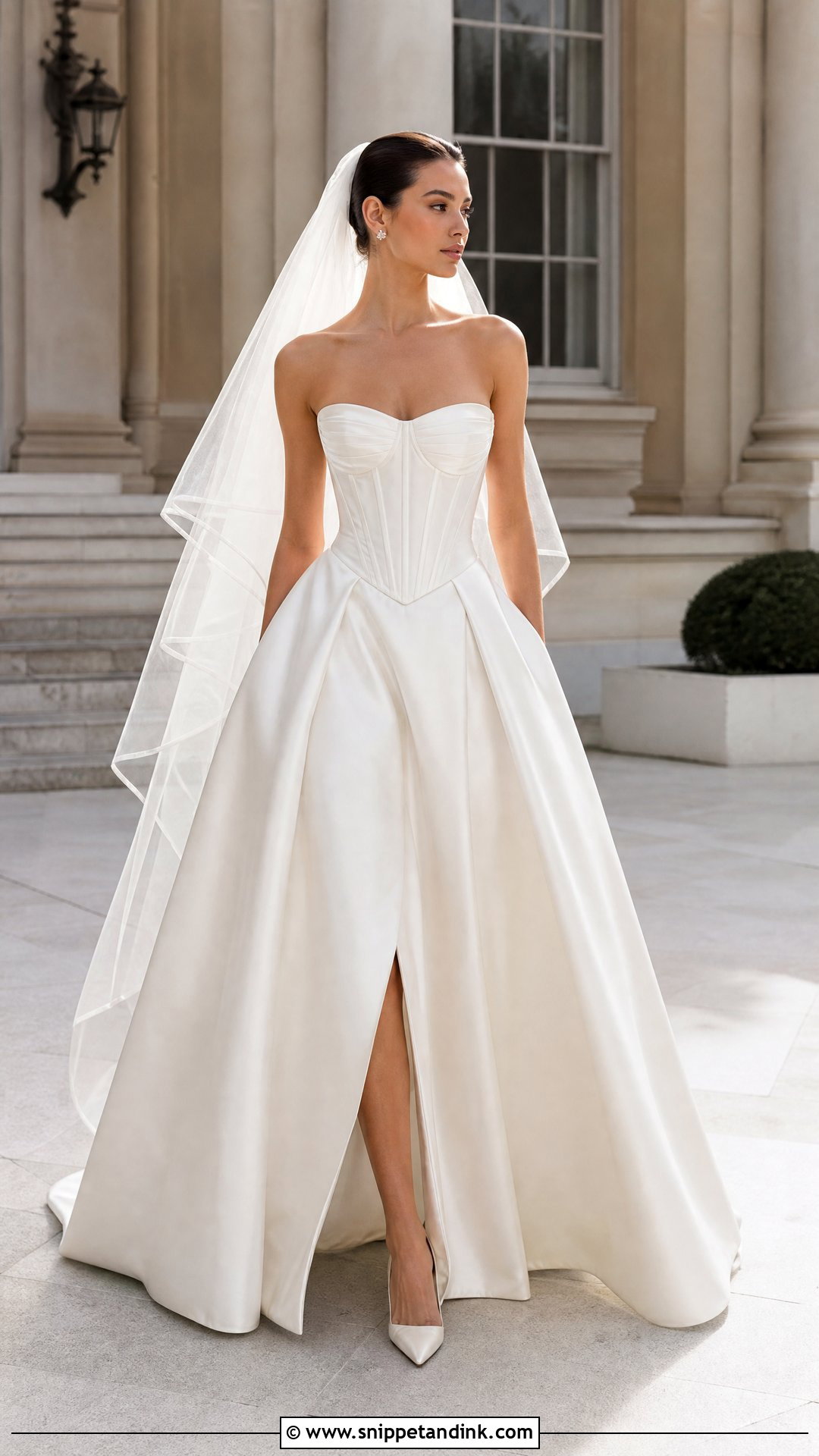
The basque waist dips into a point below the natural waist, and that point has to land in the right place on your body or the whole effect is lost. So I compare waist-to-bust and waist-to-hip distances, not just circumferences, against the chart before ordering one online. A corset-style satin bodice over a full skirt gives the drama; a softer A-line is easier to sit and dance in. Pointed ivory heels, crystal studs, a sheer chapel veil and a smooth bun are all it needs. Please don’t add a belt, which cuts straight across the line you paid for. Look for photos taken seated, because a long boned point can dig into the hips when you sit through dinner.
7. Tea Length Wedding Dress With Bow Pumps
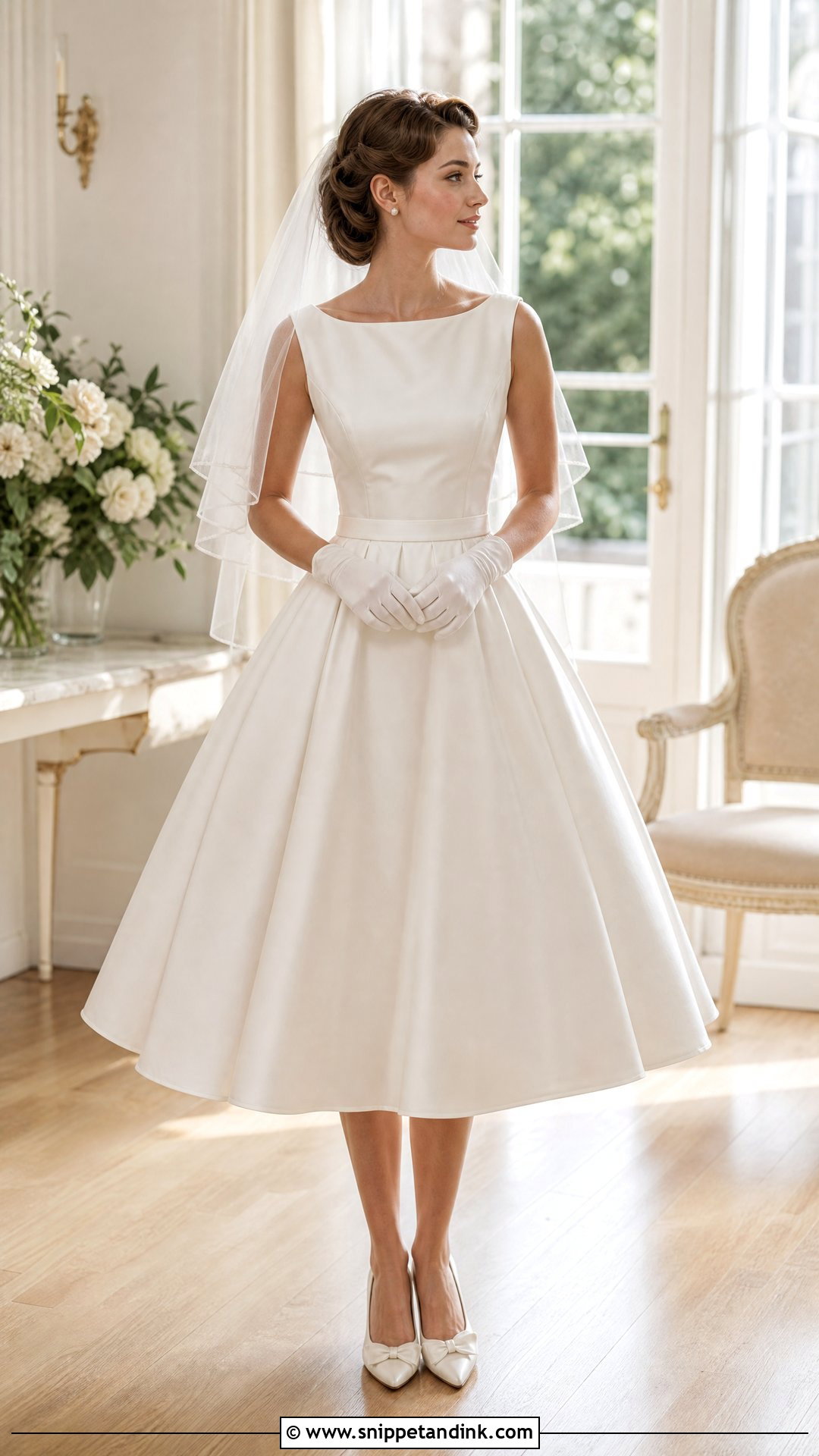
Tea length lives or dies on the exact hem measurement, which is why I’d never order one based on a model’s height. The skirt should end somewhere between the lower calf and the ankle bone, and an inch either way changes it from deliberate to borrowed. Because the hem shows your feet, the shoes deserve real thought: satin bow pumps, embellished slingbacks or an ankle strap. Pearl studs, short gloves and a birdcage or shoulder veil carry the retro reference, while a soft updo or brushed waves keep it from tipping into costume. Check what’s under the skirt. Stiff crinoline holds its shape for photos but scratches; a soft tulle petticoat moves better on a dance floor. Intimate daytime weddings are where I’d use it.
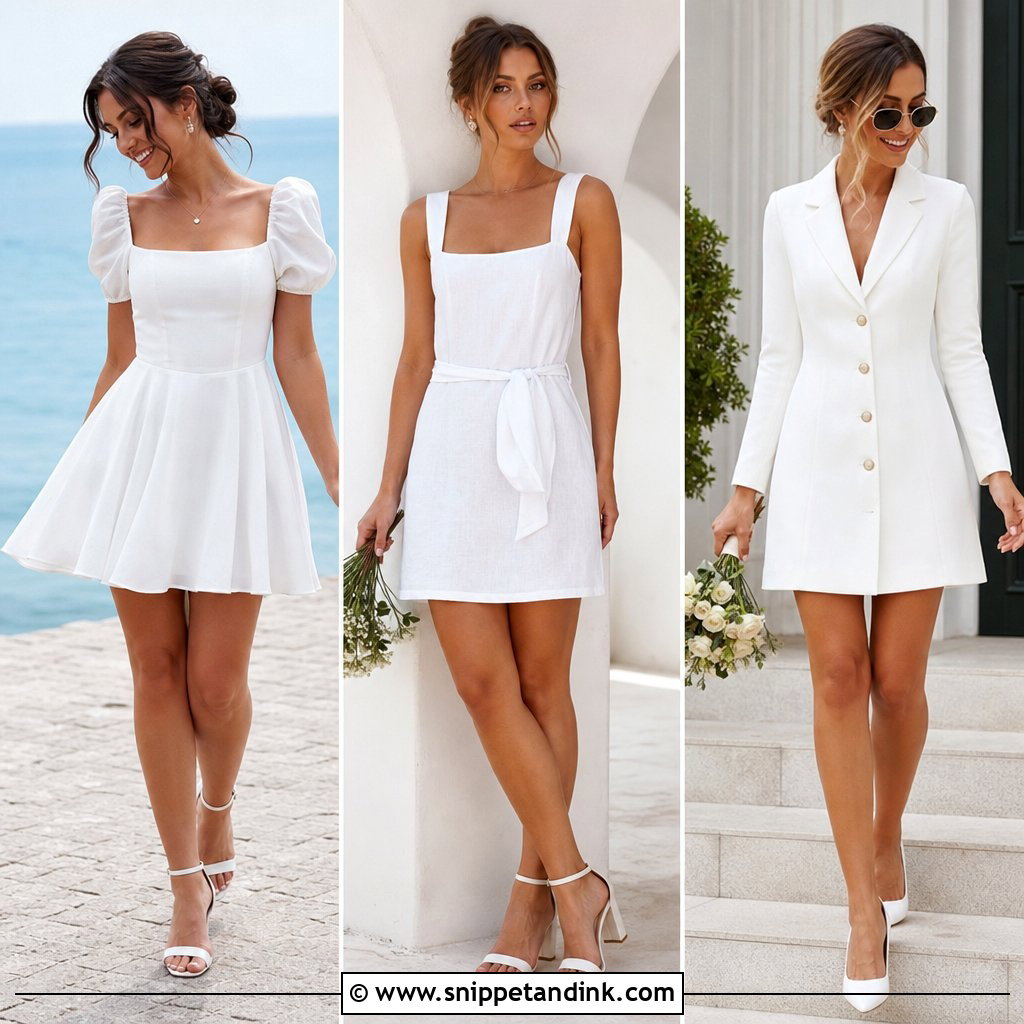
8. Mini Wedding Dress With Statement Veil
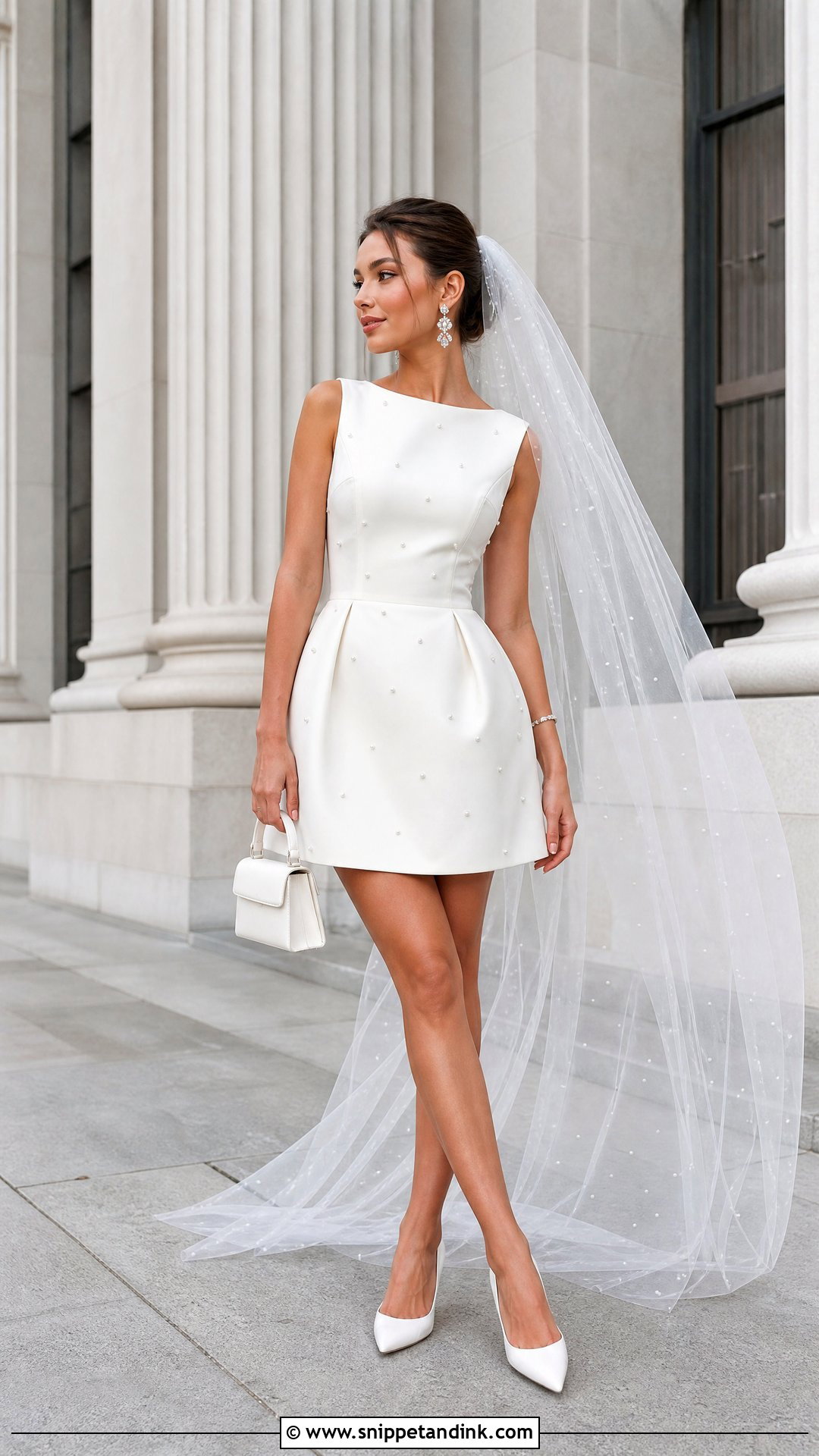
Minis are honestly the easiest bridal dress to buy online, with less fabric to misjudge. Hem length still matters, though, so measure from your waist to where you want the hem to fall and compare that with the listing instead of eyeballing a model photo. A structured shift, fitted satin, or a flared shape with a bow or pearl detail reads as bridal rather than party. Balance the short hem with a dramatic fingertip veil, pointed pumps and a little top-handle bag; sheer tights help in cooler months, and sparkly earrings with a clean ponytail keep the light near your face. Look at the back view and lining as well. Courthouse ceremonies and reception changes are its natural home.
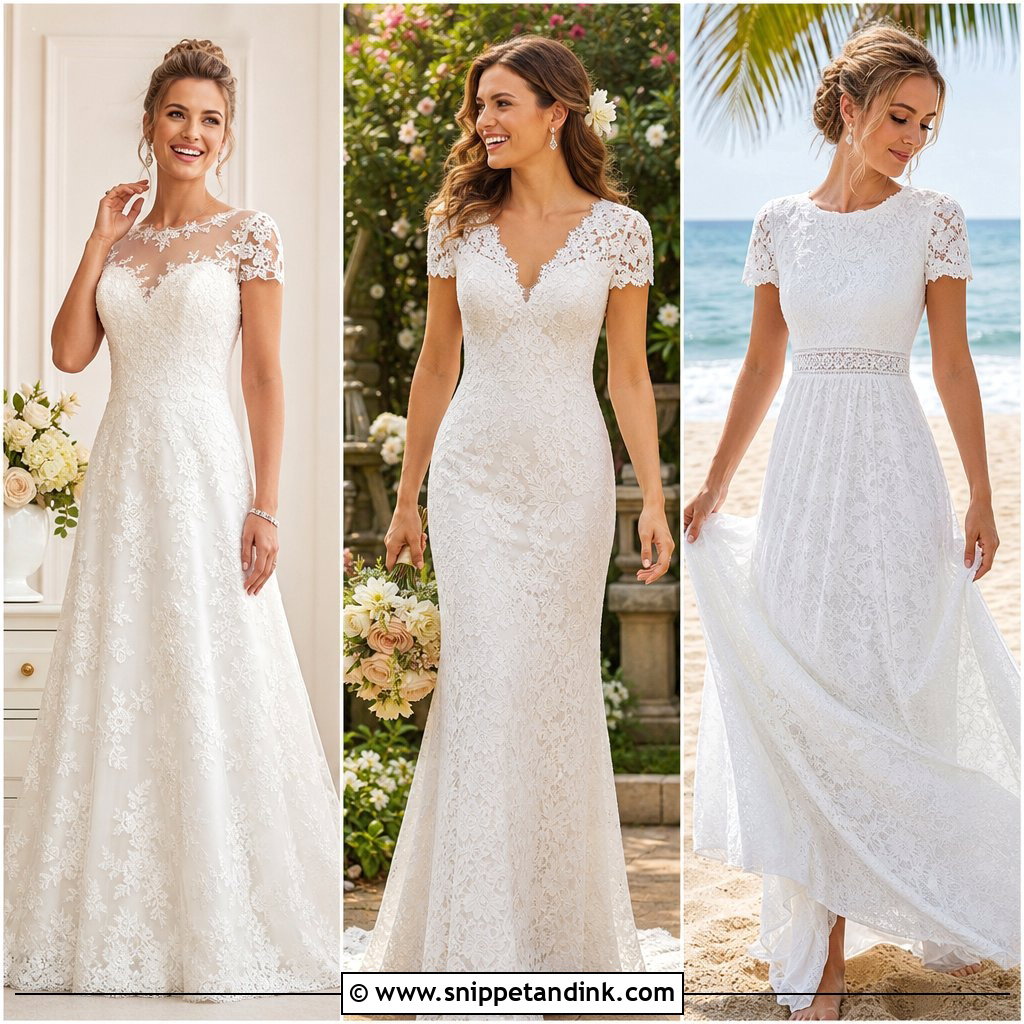
9. Boho Wedding Dress With Block Heel Sandals
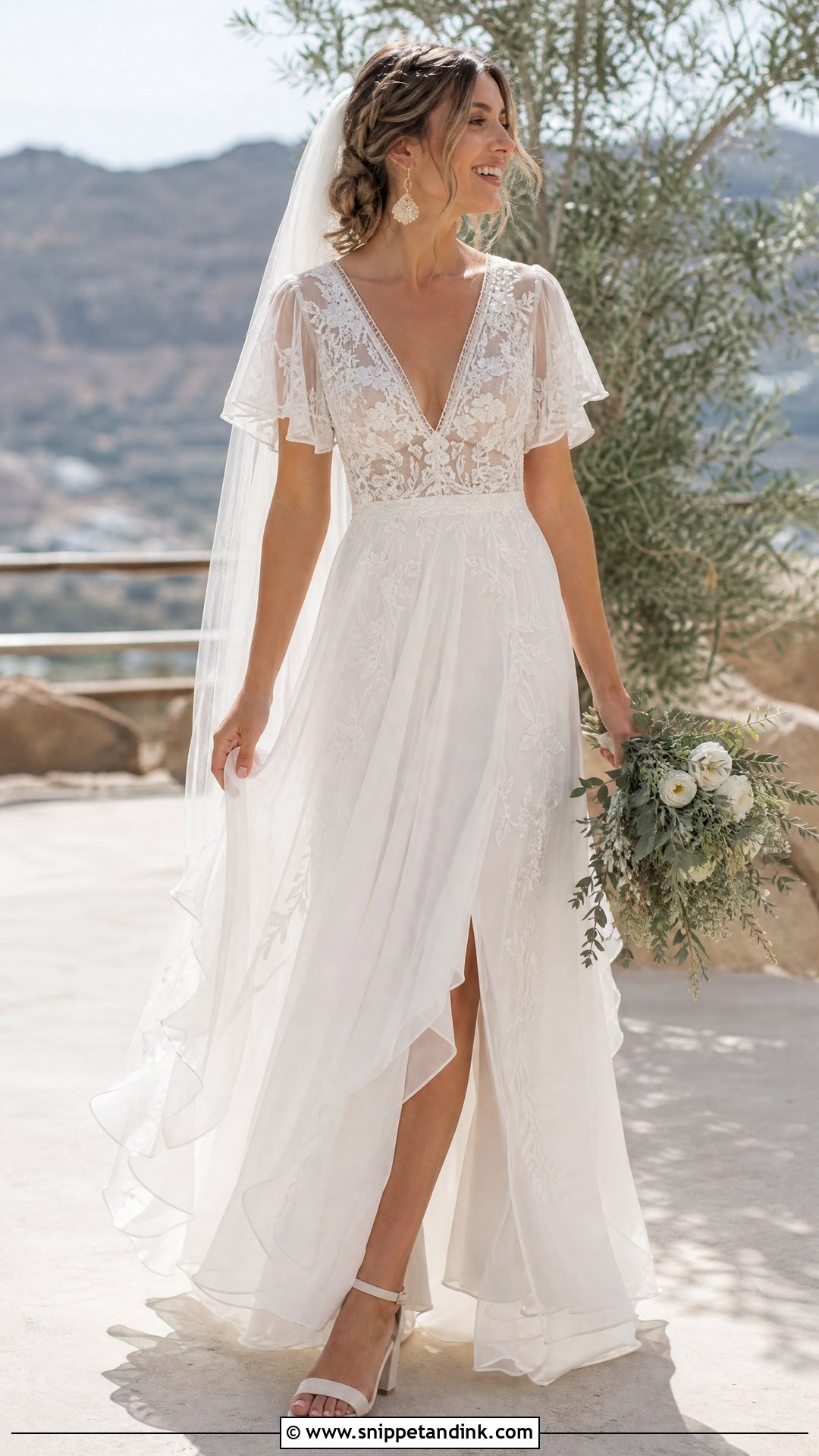
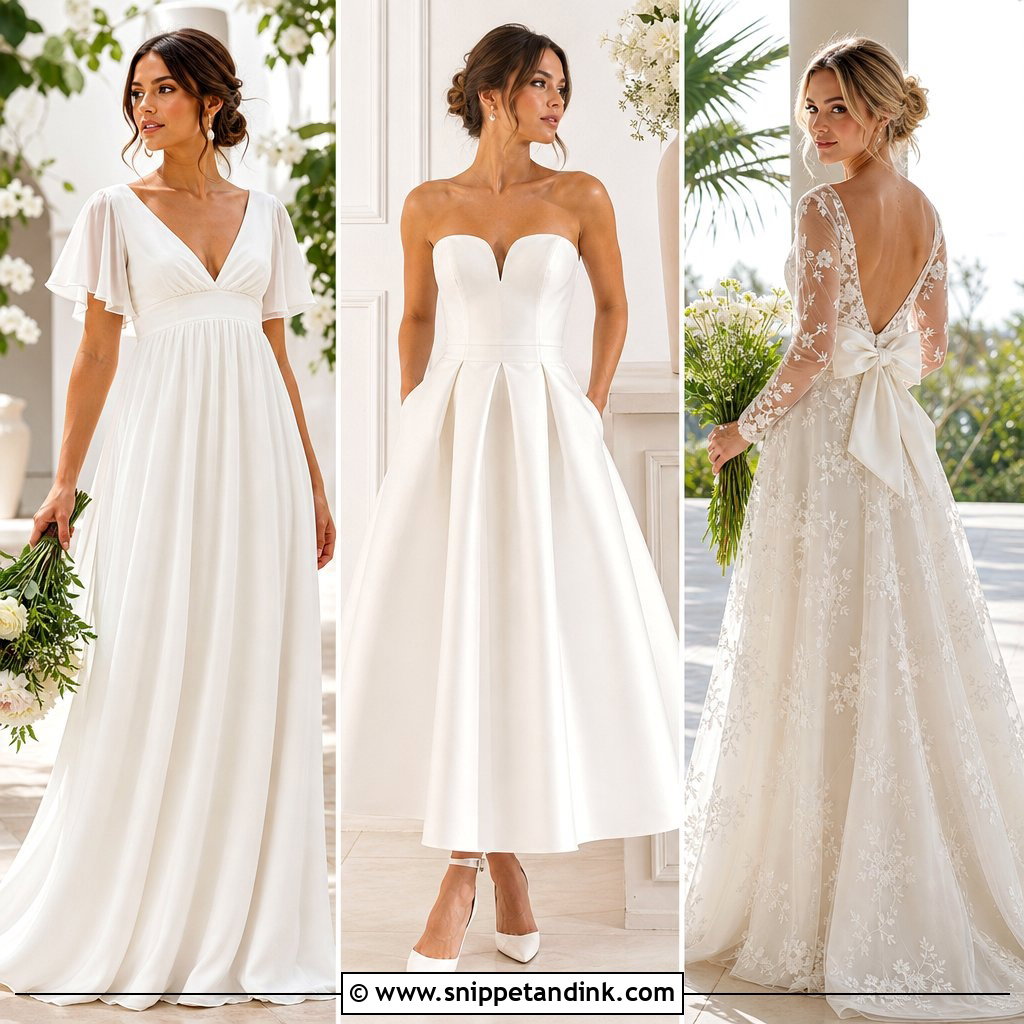
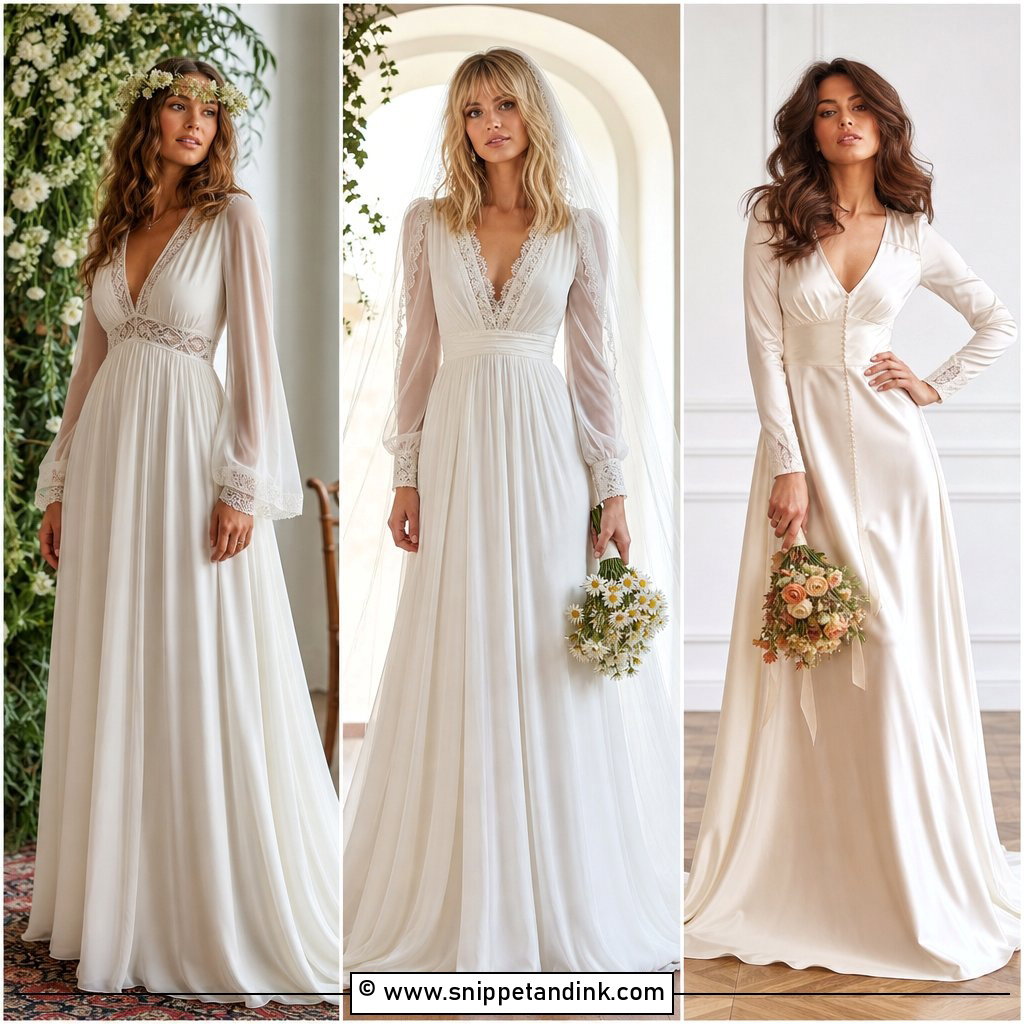
I start any boho order by asking how the lace is attached. Glued motifs peel at the edges after a day of movement, while sewn ones stay put, and listings rarely say which unless you ask. A flowing A-line with botanical lace, flutter sleeves or soft gathered panels gives the ease this style depends on. Ivory block-heel sandals handle grass and uneven ground, and textured gold earrings, a loose braided updo and either a light veil or a floral hairpiece tie it together. A small woven clutch adds texture without leaving bridal territory. Take reviews about stiff or scratchy lace seriously, since those sleeves sit against bare skin all day. Outdoor and rustic venues suit it best.
10. Beach Wedding Dress With Flat Sandals
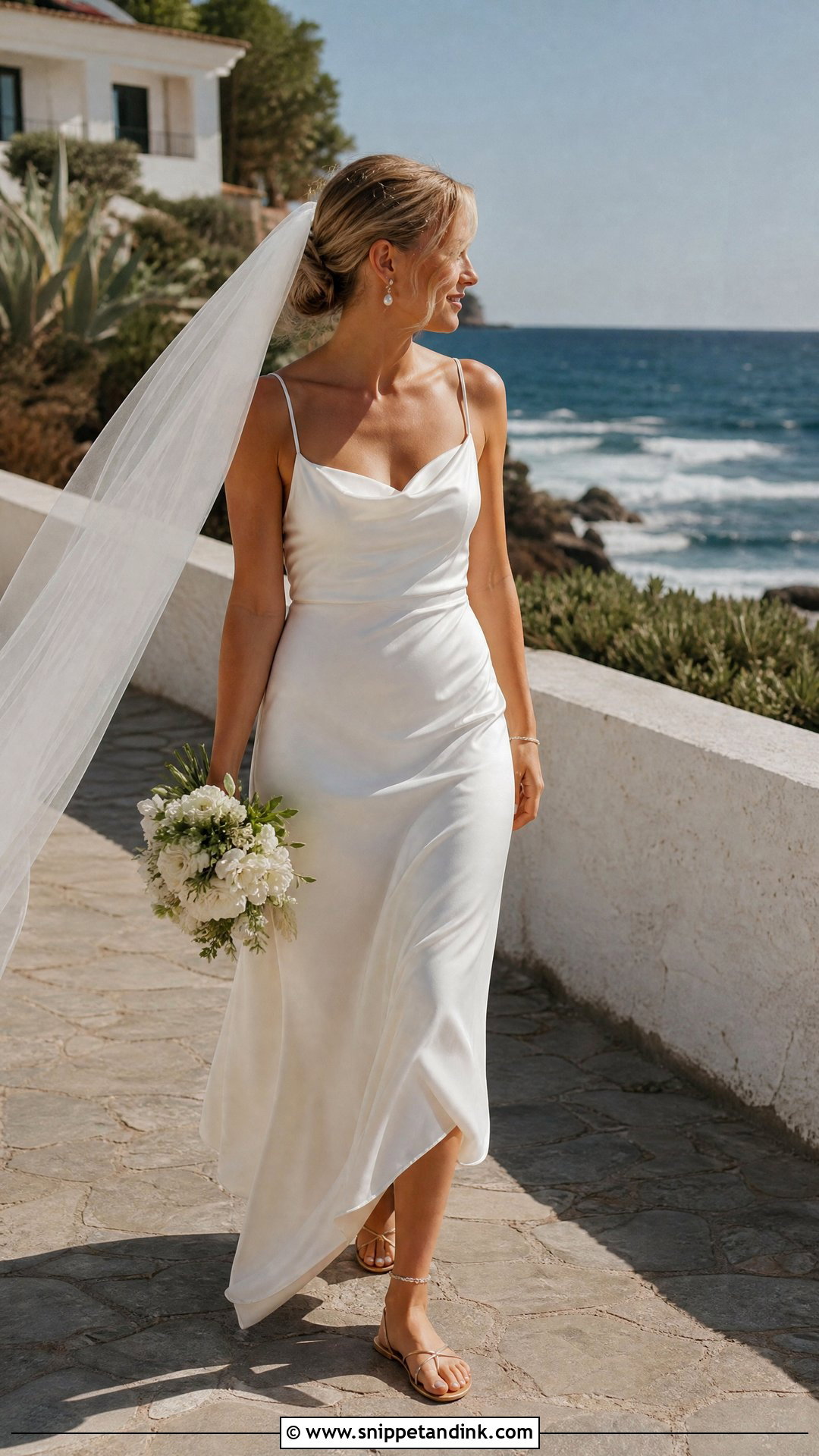
A beach wedding outfit has two enemies: sand and backlight. Skip the train, because a dragging hem collects wet sand fast and gets heavy. Lightweight chiffon, crepe or a satin slip all work, but ask whether it’s fully lined. Unlined pale fabric turns see-through when the sun is behind you, which is exactly where photographers like to put it. Flat metallic sandals, pearl earrings, a fine anklet and a shoulder-length veil fit the setting, and loose waves or a textured low bun cope with sea air far better than a set, polished style that frizzes by the vows. Pack a light wrap for after sunset.
11. Courthouse Wedding Dress With Slingback Heels
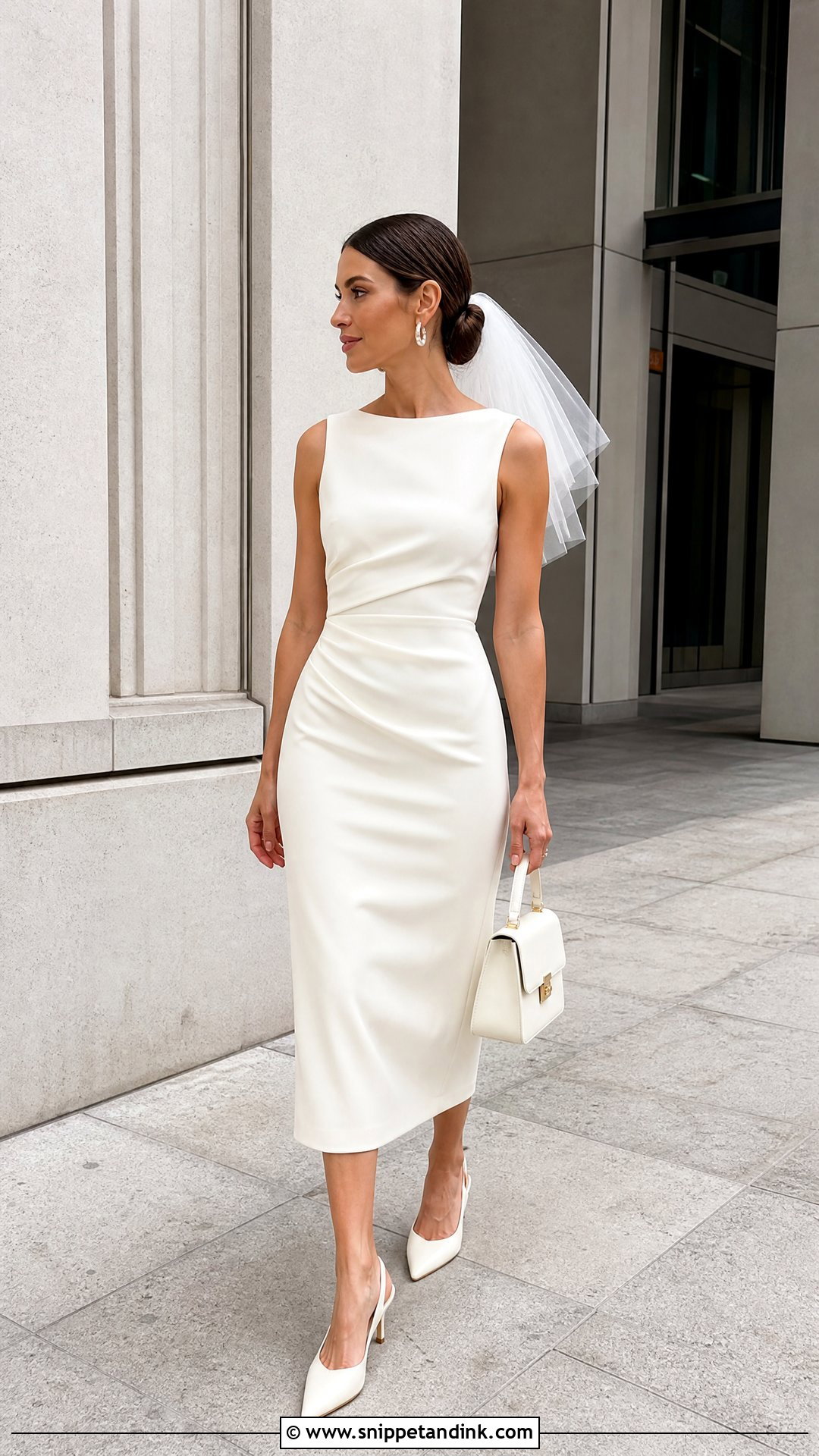
For a civil ceremony, a tailored midi in ivory or soft white does double duty from the registry office to lunch afterward. A fitted sheath, a flared midi or a blazer dress all suit the room. Slingback heels, pearl hoops, a structured handbag and a short veil or modern headband make it read as bridal, and a small bouquet with a low bun finishes the thought. The detail I check hardest online is creasing. Courthouse days involve waiting rooms, car rides and a lot of sitting, and linen blends or thin polyester crepe crumple across the lap within the hour. Customer photos taken after wear tell you more than studio shots, and the seated length matters as much as the standing one.
12. Plus Size Wedding Dress With Corset Bodice
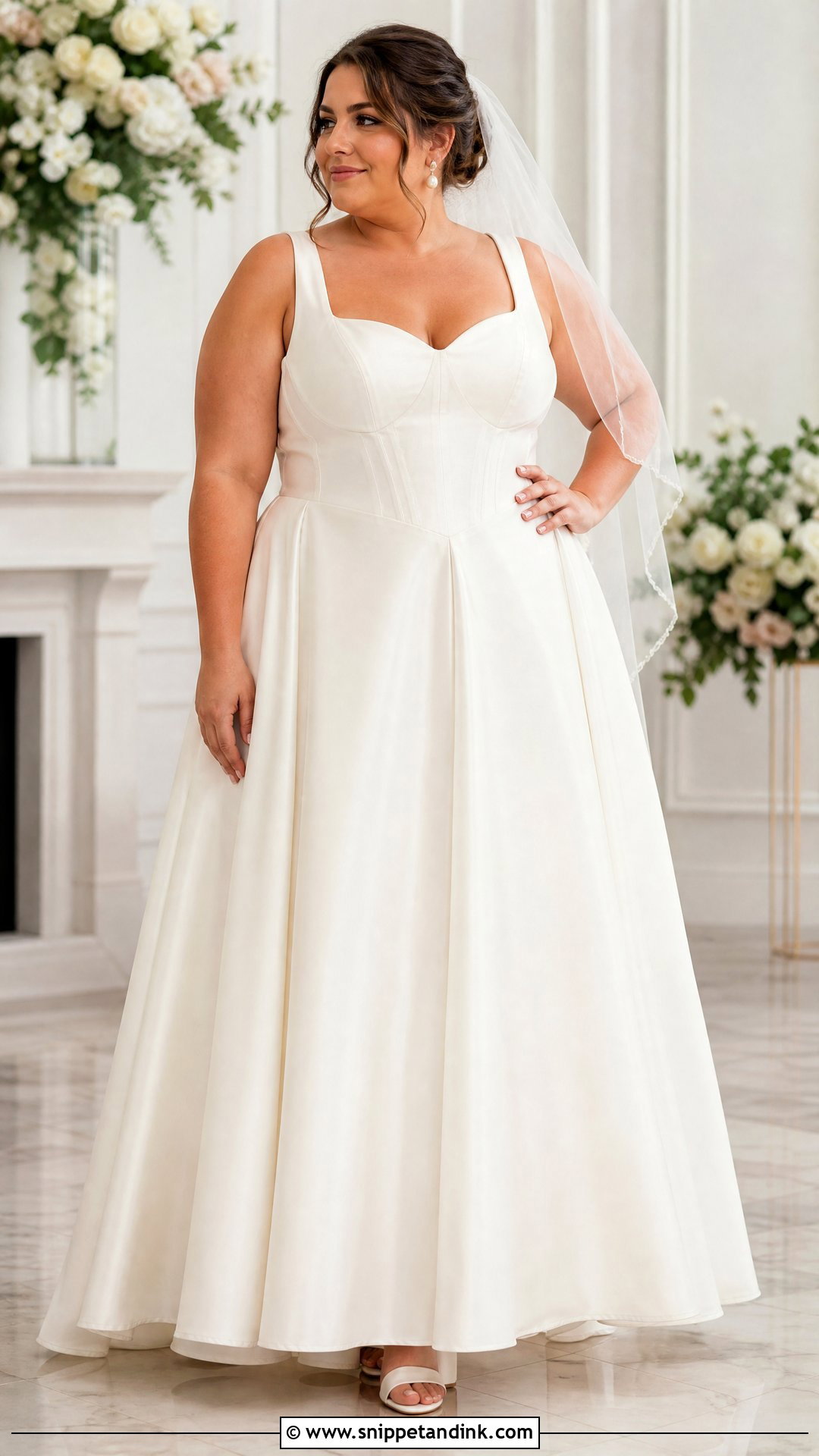
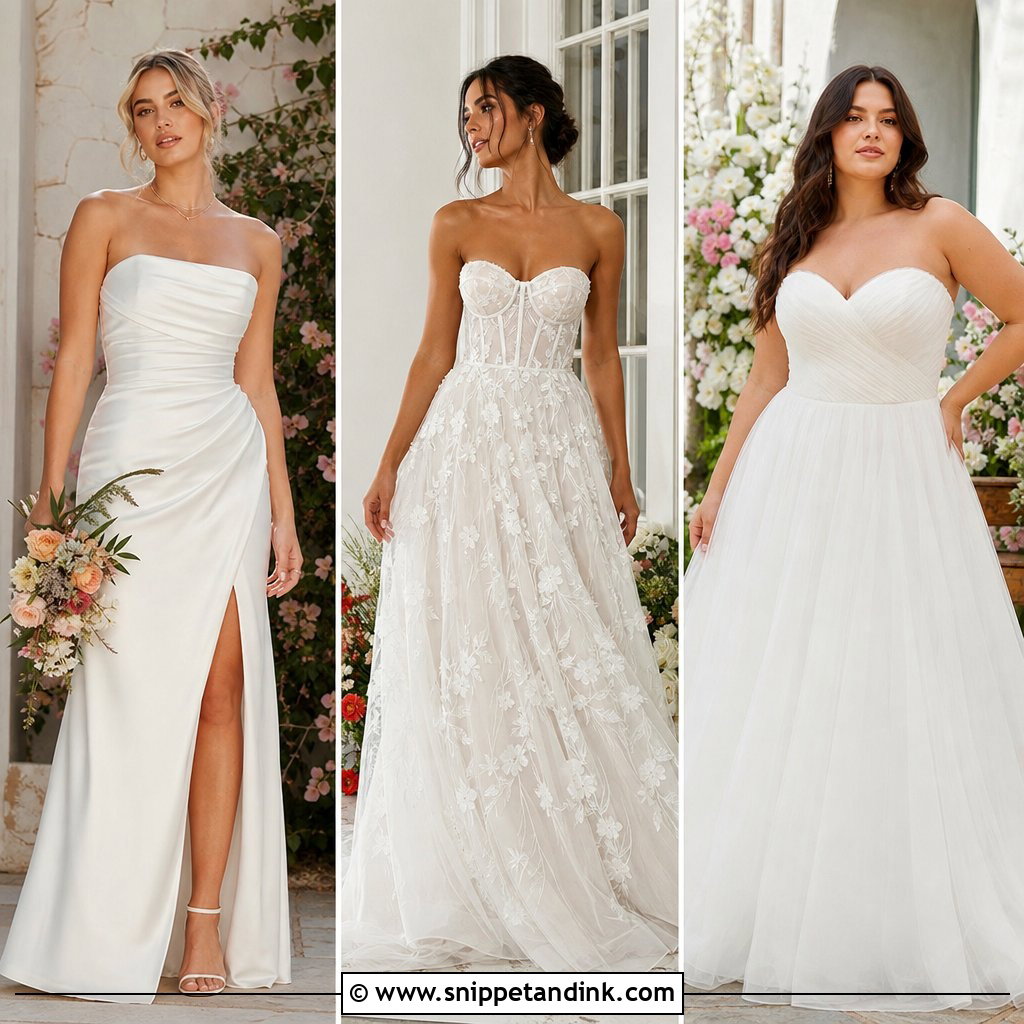
Internal boning and a lace-up back are what I look for first in a plus-size corset bodice, because they let you adjust the fit by a few centimetres on the day rather than living with a fixed zip. Wide straps and an A-line skirt that moves freely keep it comfortable for hours. Cushioned block heels, a fingertip veil, pearl drop earrings and a soft updo complete the outfit. One catch: a lace-up still has to be ordered to your largest measurement. Lacing pulls a bodice in; it can’t add fabric that isn’t there. Favour retailers that show the dress on several body types and publish garment measurements, and lean on customer photos taken outside studio light. A properly fitted corset bodice shouldn’t need restrictive shapewear underneath.
13. High Neck Wedding Dress With Pearl Hair Pins
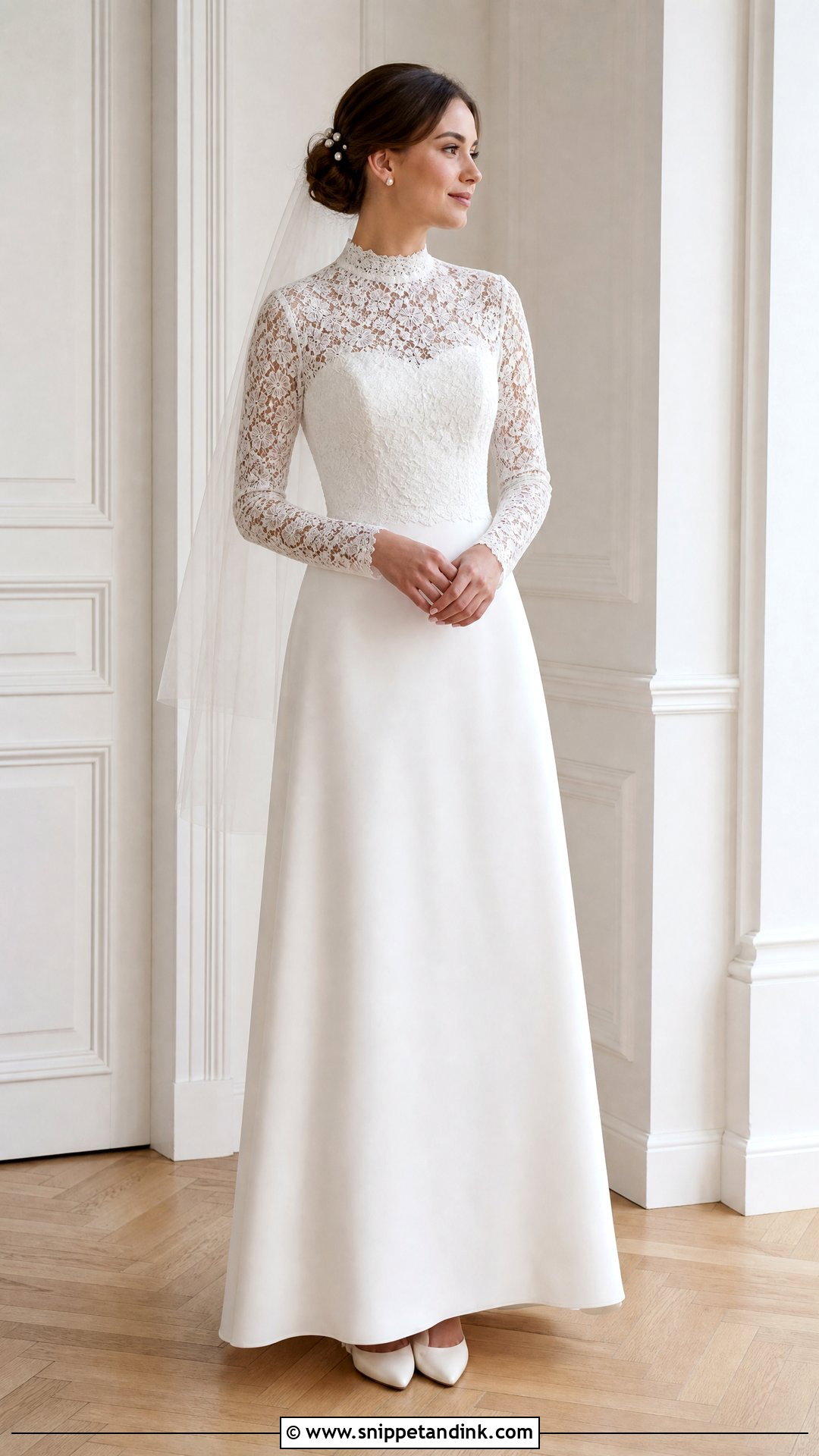
High necks fail online in one specific way: a collar cut too stiff or too close bunches when you turn your head. Before I’d recommend one, I look for photos of the model turning sideways and check that a collar measurement is listed. Lace, crepe or softly draped fabric over a fitted bodice and a clean A-line or column skirt keeps the focus at the neckline. Pearl hair pins in a low bun, small studs and closed-toe pumps are enough, and the necklace stays in the drawer. A plain tulle veil pairs well with a lace bodice, while a narrow cape can stand in for the veil on a minimal crepe dress. Confirm how the back closes, too. A row of tiny buttons means you’ll need help getting in and out of it.
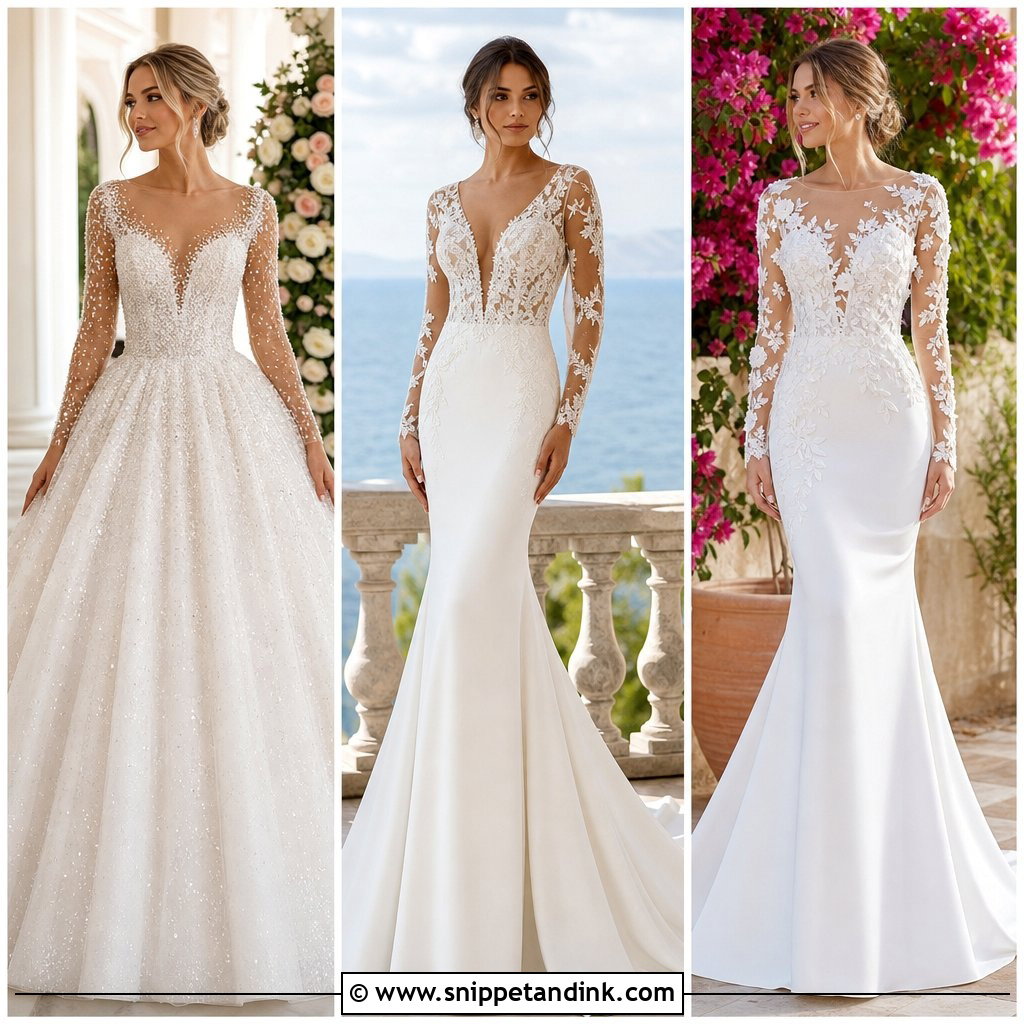
14. Floral Applique Wedding Dress With Sheer Veil
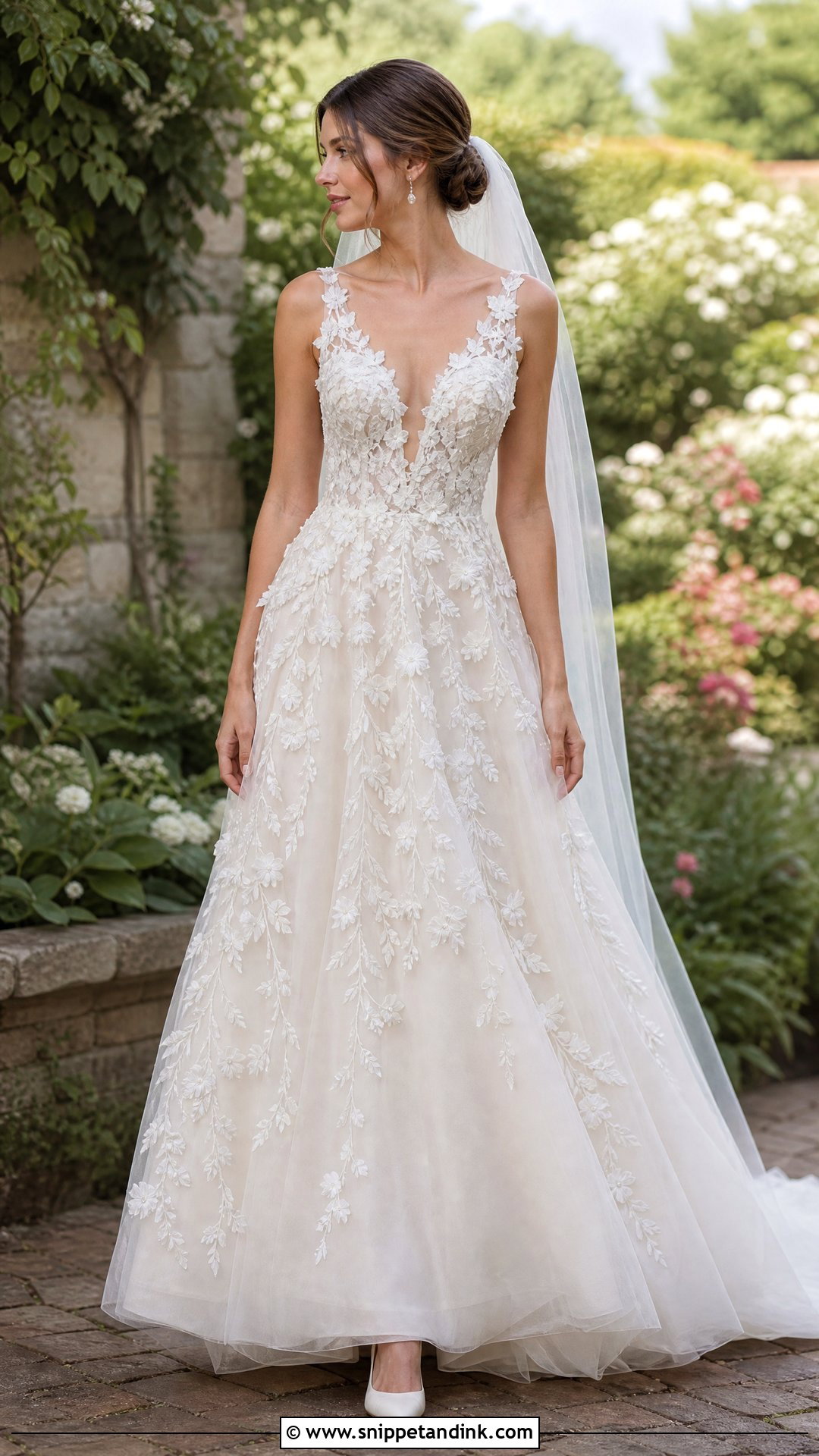
With raised floral appliqués, I want close-up photos before anything else. Embroidered, beaded and three-dimensional fabric flowers look alike from across a room and very different in your hands. The best versions cluster blooms on the bodice and let them thin out down the skirt. Check how the pattern carries across seams and onto the back, too, where cheaper dresses often just stop. A plain sheer veil, delicate drop earrings, nude or ivory pumps and a neat low bun keep the surface detail in charge; floral shoes or a beaded necklace would fight it. A fully lined bodice gives more coverage than an illusion panel. Garden weddings and spring ceremonies are the obvious match.
15. Wedding Dress With Detachable Overskirt
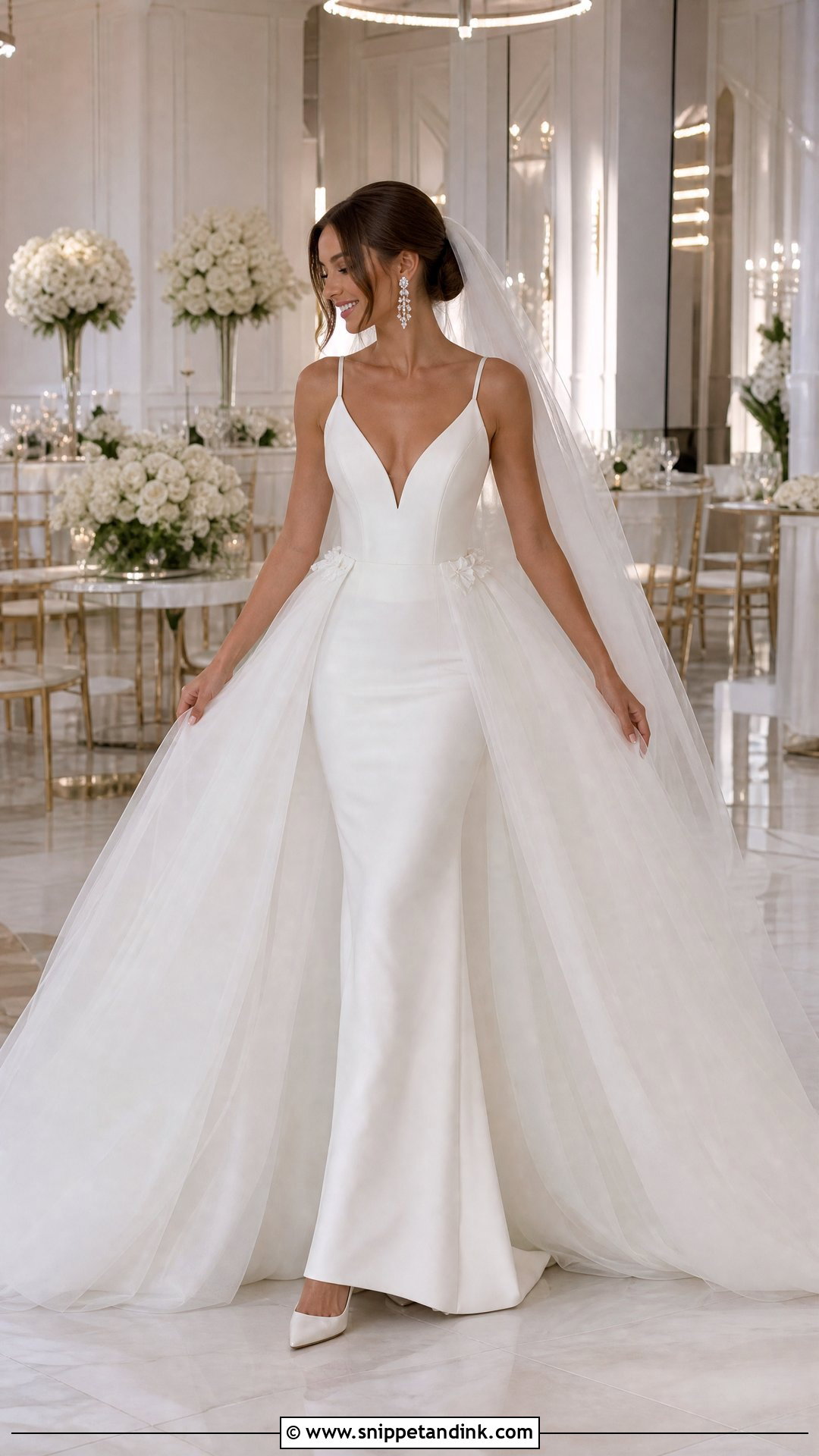
Detachable overskirts are a smart online buy if you check one thing: how the skirt fastens. Hooks on a hidden waistband come off in seconds; a row of snaps or ties needs a helper and several minutes in a bathroom. Start with a sleek column, fitted crepe or a satin mini, and add a full tulle or structured satin layer for the ceremony. Wear that version with a long veil, crystal earrings and pointed heels, then drop the overskirt and veil for the reception and add a hair bow or bolder earrings. Ask whether the overskirt is in the listed price, because some shops sell it separately, and request exact waist measurements so both pieces sit at the same point. You get two looks and only one dress to store.
16. Cape Wedding Dress With Crystal Earrings
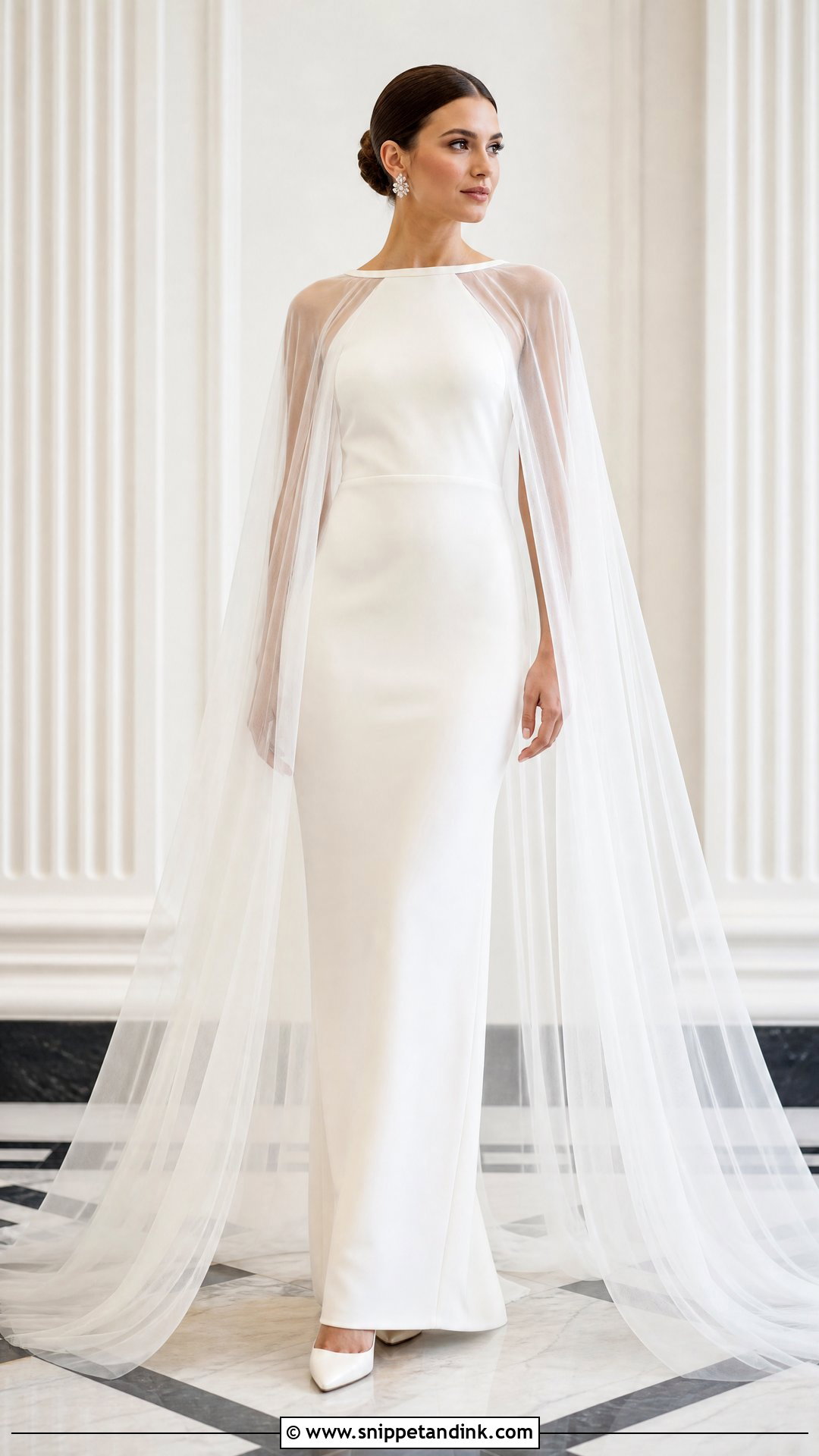
A cape adds movement to a plain dress, but it also adds weight at the shoulders, and the attachment decides whether you’ll be comfortable. Shoulder snaps are easy to remove for the reception. Neckline-attached versions can pull backward on the throat, and wrist loops keep the fabric controlled at the cost of some arm movement. Pair it with a clean column or A-line gown with minimal seams, crystal earrings, a sleek bun and understated pointed pumps. I usually drop the veil, since layering both piles a lot of fabric into the same space. Compare the cape length with the gown hem in your actual heel height before you buy. Cooler seasons and formal rooms suit it best.
17. Slip Wedding Dress With Strappy Heels
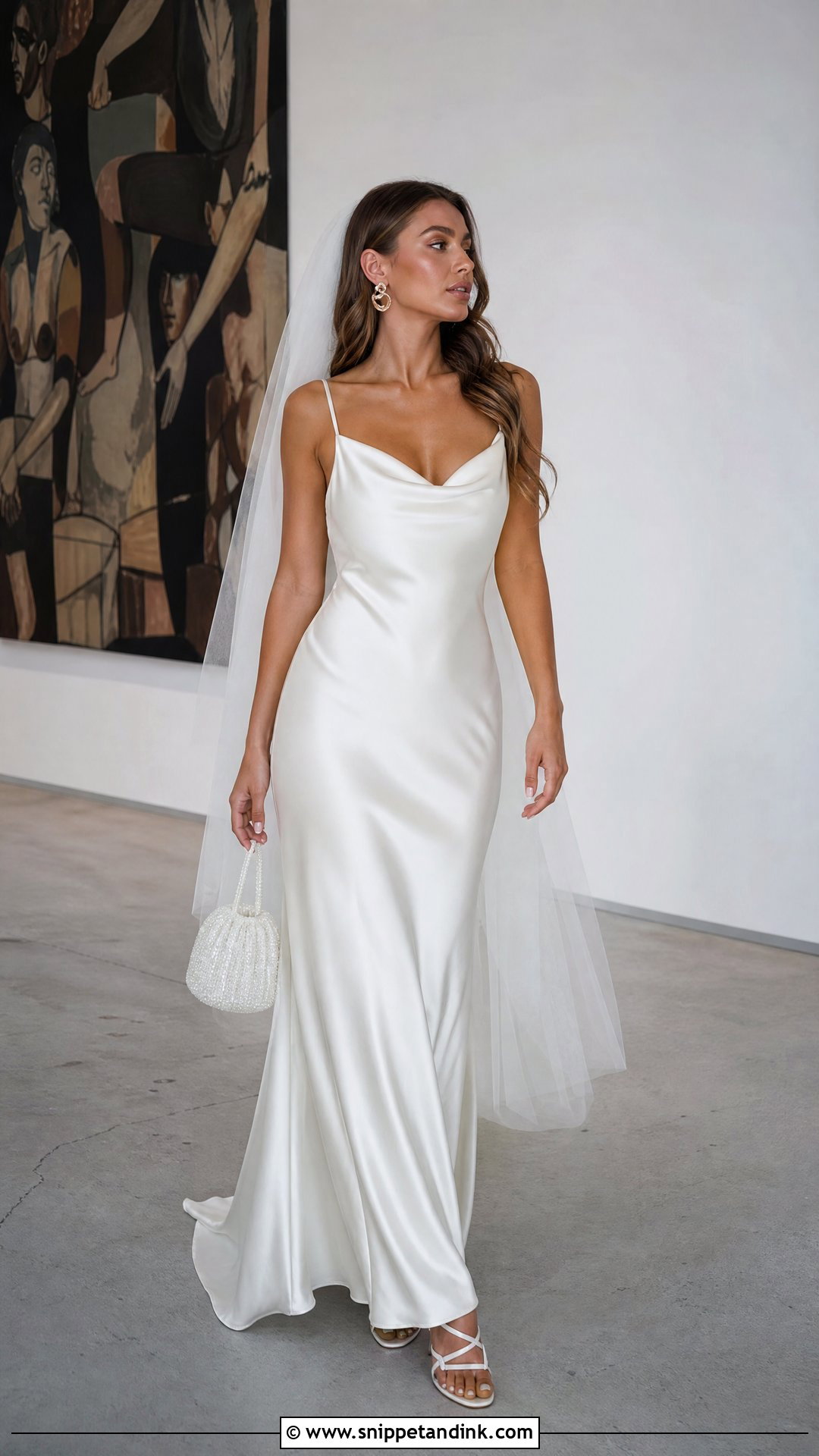
Bias-cut satin is the most honest fabric a bride can wear: it shows every line beneath it. So the first thing I sort for a slip dress is underwear, not jewellery. Smooth, no-line pieces close to your skin tone are essential, because satin catches direct light and outlines any elastic. Look for a gown with a softly draped neckline, supportive straps and some ease through the hips; bias-cut fabric clings as you move and needs room to sit. Slim strappy heels, sculptural earrings, a simple veil and a small beaded bag suit the minimal shape, with smooth waves or a polished bun. Product videos show drape and shine far better than photos. Read whether there’s any stretch, and check the hip measurement twice.
18. Puff Sleeve Wedding Dress With Mary Jane Heels
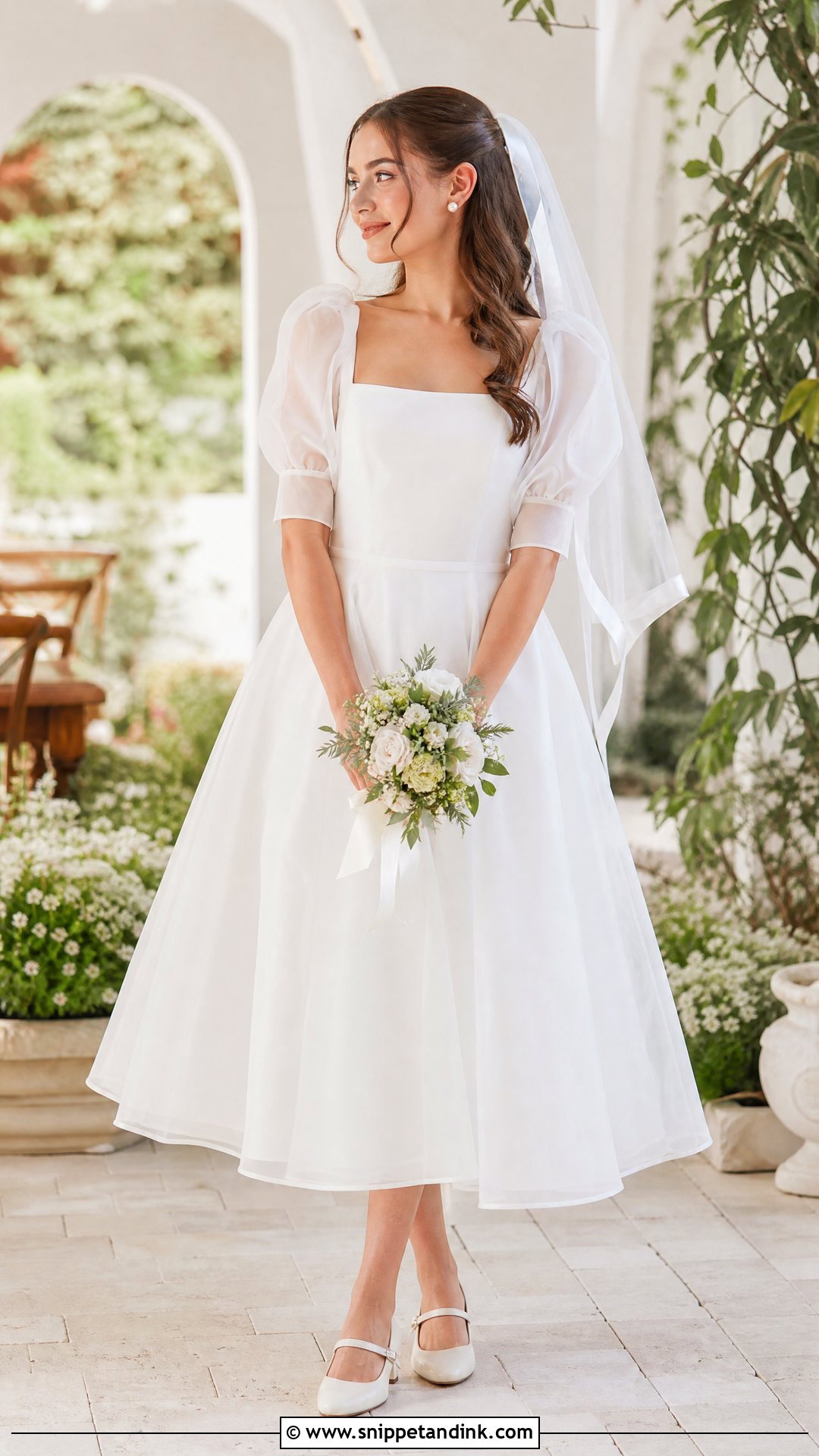
Puff sleeves eat visual space, so I keep everything else small. A square or sweetheart neckline with sheer organza sleeves and a softly flared skirt gives the vintage shape. Ivory Mary Jane heels, pearl studs and a ribbon-trimmed veil finish it, with a neat half-up style that keeps the shoulders clear. Oversized earrings or a heavily decorated bag would crowd the sleeves. Organza holds a puff well but crushes in a shipping box, so steam the sleeves from the inside when it arrives. Check the upper-arm measurement, how the cuffs close and whether the sleeves detach. Garden and historic venues suit it.
19. Empire Waist Wedding Dress With Ballet Flats
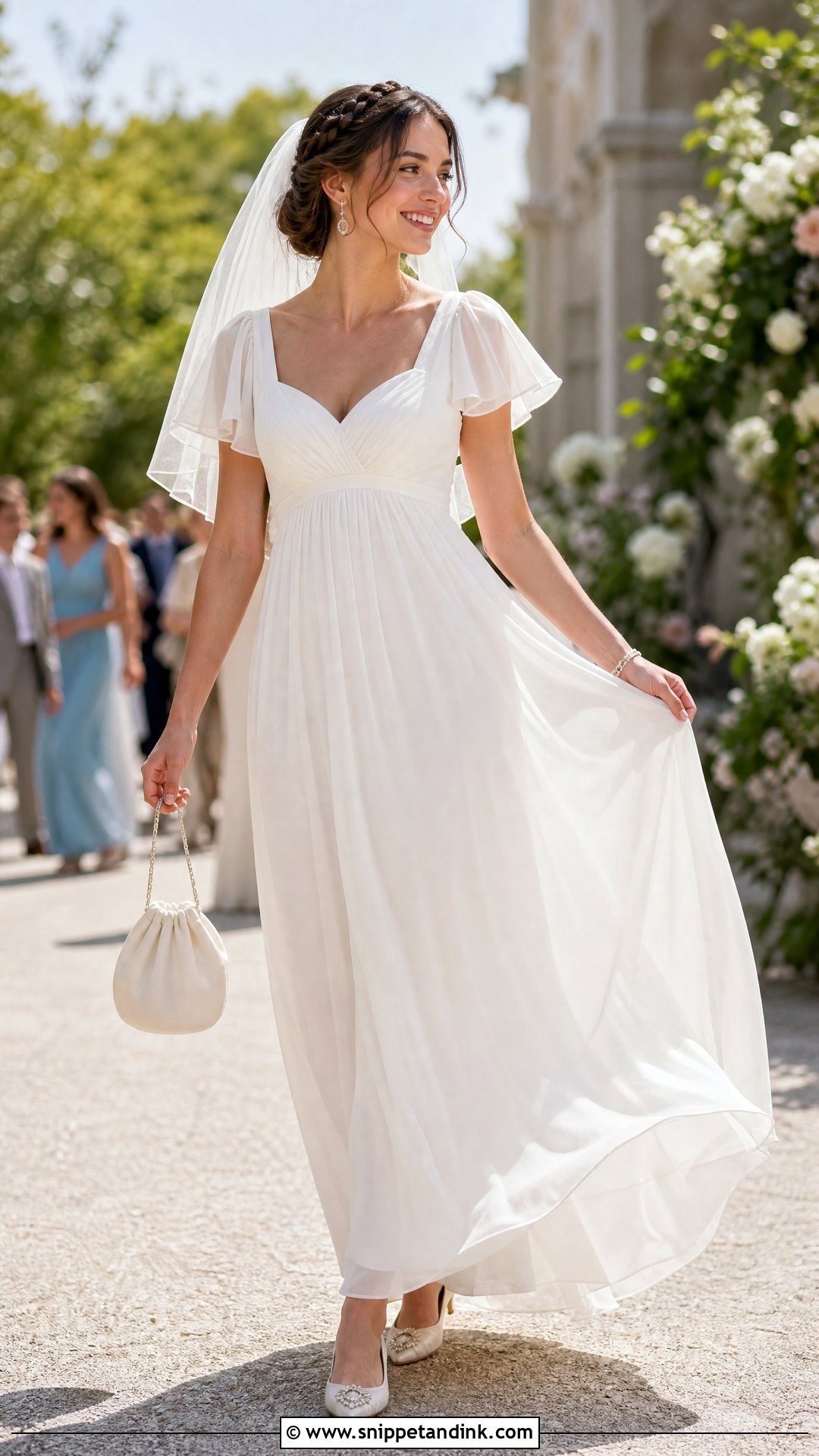
An empire-waist wedding dress seams just under the bust and falls loose from there, which is why it’s my first suggestion for pregnant brides or anyone whose measurements may shift between ordering and the wedding. Size it by under-bust measurement, not by a standard dress size, because that seam is the only part that has to fit precisely. Chiffon, georgette or light crepe with supportive straps or flutter sleeves keeps it airy. Embellished ballet flats, delicate earrings, a shoulder-length veil and a small satin bag match the easy mood, and a braided low bun adds texture. Check whether the bodice has built-in cups and whether the skirt is fully lined. Warm outdoor weddings are where it works hardest.
20. Black And White Wedding Dress With Minimal Accessories
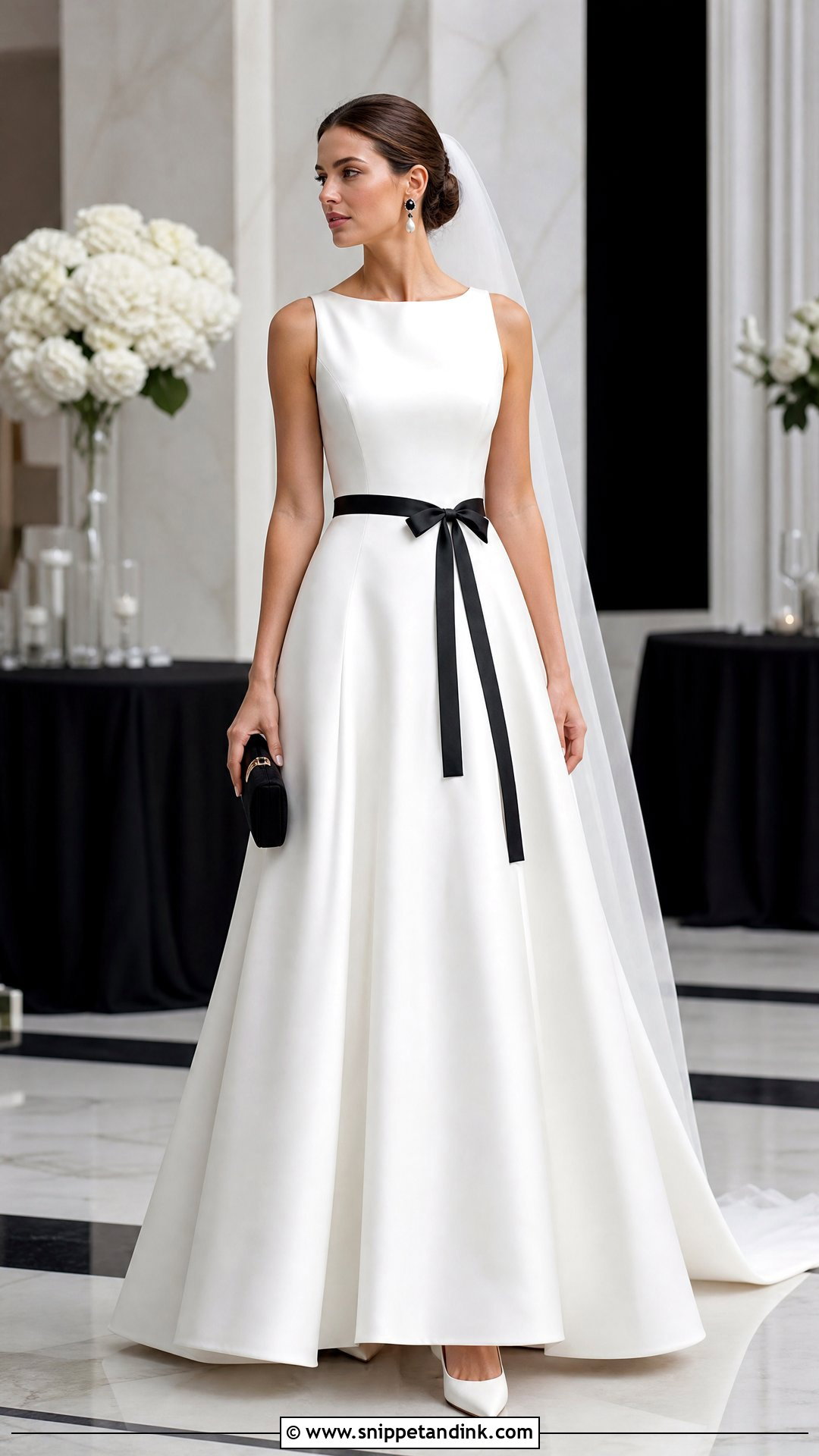
Black trim on a white dress shows every flaw, so this is one I’d only order after seeing customer photos. A black waist bow, an edged neckline or a ribbon detail on a satin A-line keeps the dress clearly bridal. White pointed pumps, black-and-pearl earrings, a plain white veil and a compact black clutch repeat the contrast without overdoing it. Keep the bouquet and hair simple so the pairing stays crisp. Look hard at whether the black edging lies flat around curves, since puckered trim reads instantly on camera. Removable bows give you a second option for the reception. Modern venues and evening weddings carry it best.
The Week Your Dress Arrives in a Box
Open it that same week, even if the wedding is months away. Return windows usually run from delivery, not from whenever you get round to trying it on, and some shops won’t take back made-to-order gowns at all.
- Wash your hands, take off makeup and fake tan, and try it on in a clean room. A foundation mark inside the neckline can cost you the return.
- Leave every tag attached and keep the original packaging flat somewhere safe.
- Inspect the zip or lacing, the lining and the inside seams before you judge the fit.
- Sit, walk, lift your arms, and take photos from the side and back.
- Write down what needs altering and book your seamstress straight away.
Shipping creases are normal and nothing to panic about. Hang the dress by its inside ribbon loops rather than the shoulders, so a heavy skirt doesn’t stretch the straps, and steam from the inside with the nozzle held a few inches off the fabric. Never put an iron straight onto satin; it leaves shiny patches that don’t come out.
Counting Backward From the Wedding Date
Ready-to-ship dresses can turn up within days, but made-to-order gowns from online bridal shops often take several months, and overseas shipping and customs can add weeks on top. Alterations then usually need two or three fittings spread over six to eight weeks. Working backward, I like the dress in a bride’s hands four to six months out, which leaves room for one exchange if the first size is wrong. Bring your wedding shoes and the underwear you’ll wear to every fitting, because a hem pinned in flats will drag once you’re in heels.
Leave Your Seamstress Time to Finish What the Website Started
Picture the full outfit, not the dress alone, and the shopping gets narrower and faster. Save a handful of looks, then hold each one against your venue, season, comfort and budget before anything goes in a basket. Measure yourself fresh rather than trusting last year’s numbers, read every fabric and lining note, and know the delivery and return terms before you pay. Above all, order early enough for alterations and a last fitting in your real wedding shoes. The right dress is the one you forget you’re wearing by the second hour of the reception.
You'll Like These Ideas:






Leave a Reply