
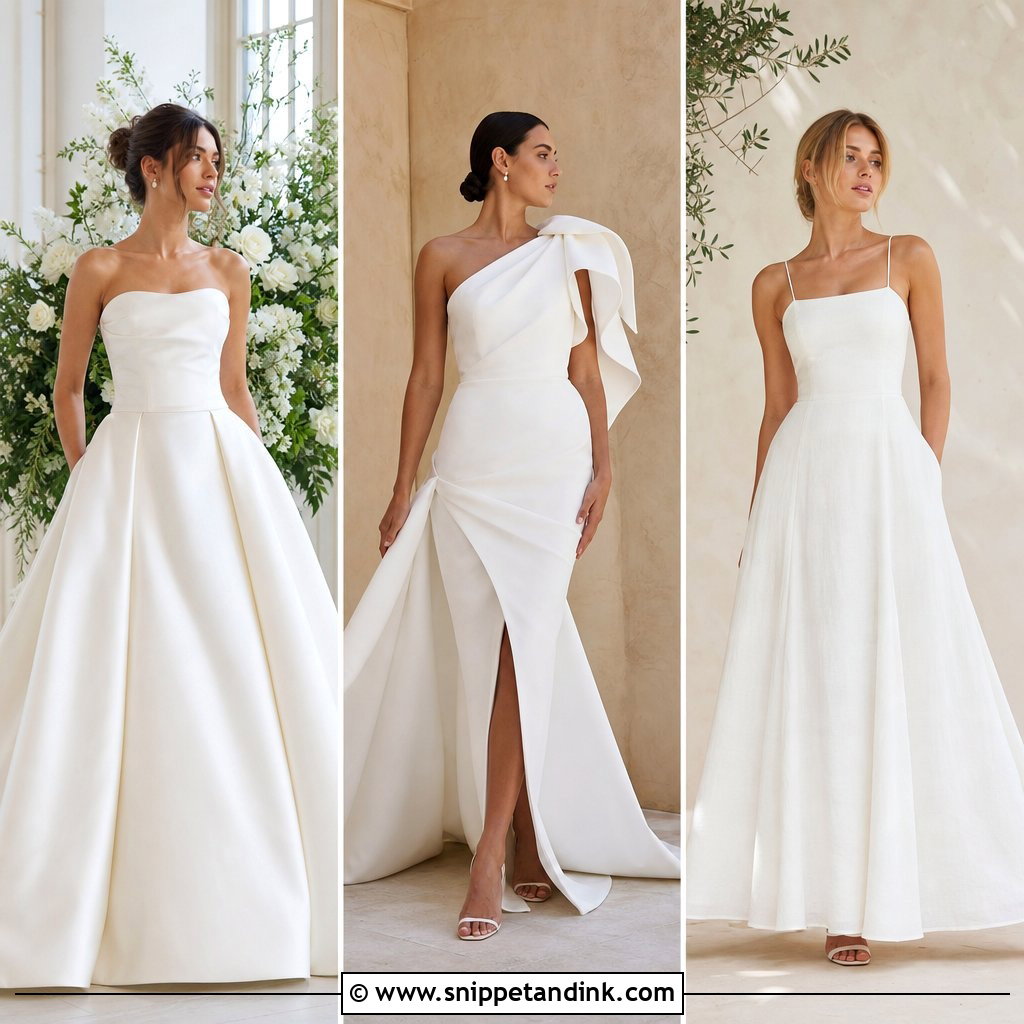
Most of the brides I dress on a tight budget end up happier than they expected, because the money that would have gone into a label goes into fit instead. An inexpensive gown reads as bridal when the hem clears your shoe correctly, the straps sit flat and the white of the dress matches the white of the veil. Below are 25 affordable directions I’d genuinely send a bride toward, from satin slips and chiffon A-lines to courthouse minis, resale gowns and plain white dresses given bridal styling. None of them has to look cheap. They have to look finished.

What the Price Tag Leaves Out
The tag is rarely the whole cost. When I help a bride compare an inexpensive dress with a pricier one, I add up what each will need before it’s wearable, because a cheap gown that needs a full rebuild can end up costing more than a mid-range one that fits nearly off the hanger.
- Alterations. A hem or strap adjustment is usually modest; taking in a lined bodice or adding a bustle costs noticeably more. Prices vary a lot between tailors and regions, so get a quote with the dress on you.
- Undergarments. A slip dress may need smooth, line-free shapewear, and a backless cut needs adhesive cups or a built-in solution.
- Cleaning or pressing. Resale and sample gowns usually need professional cleaning; new dresses still need steaming.
- The veil and shoes, which often decide whether a plain white dress reads as bridal at all.
Set a little money aside for these from the start. It’s the difference between a dress that looks bought and one that looks made for you.
1. Satin Slip Wedding Dress
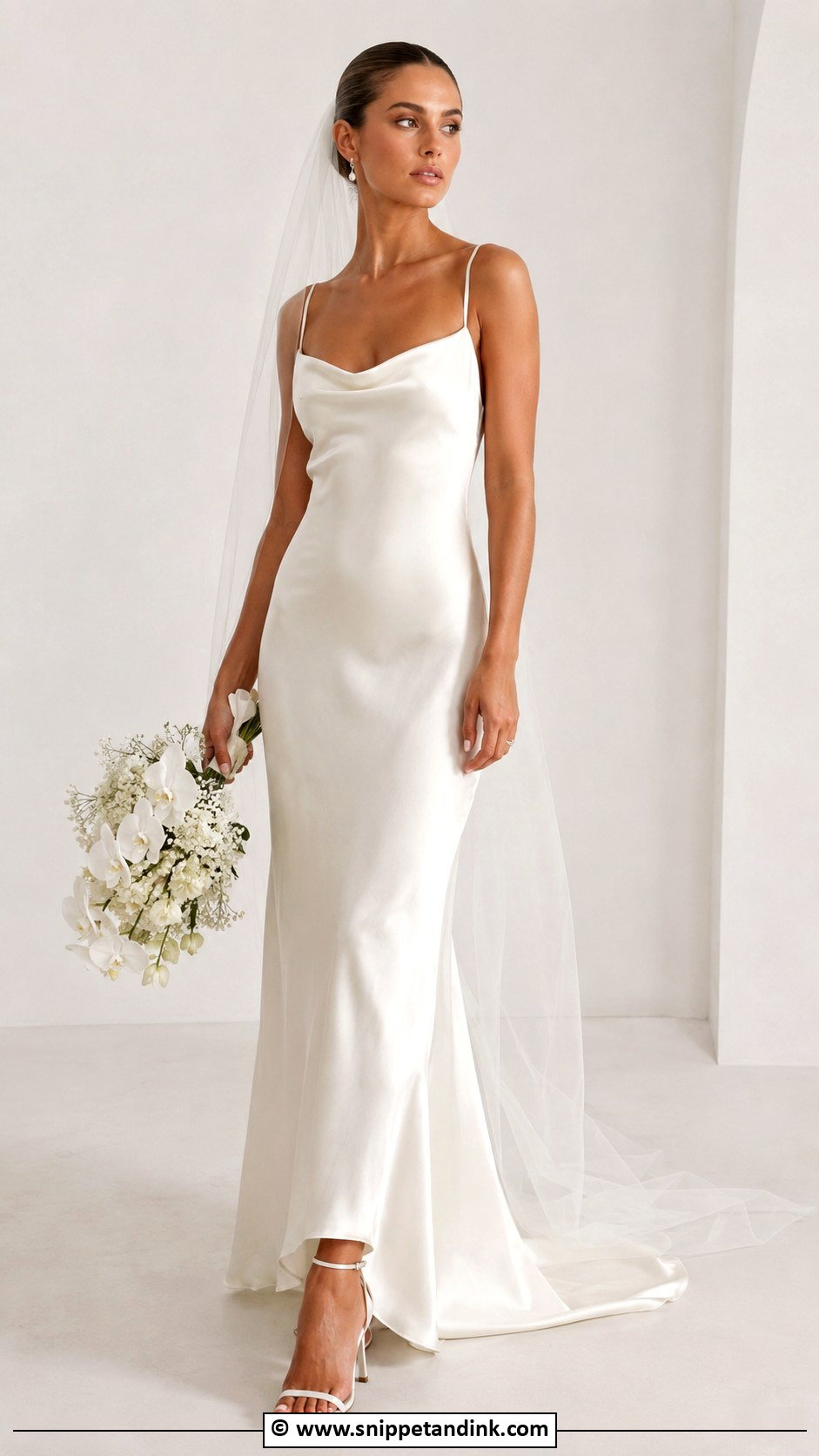
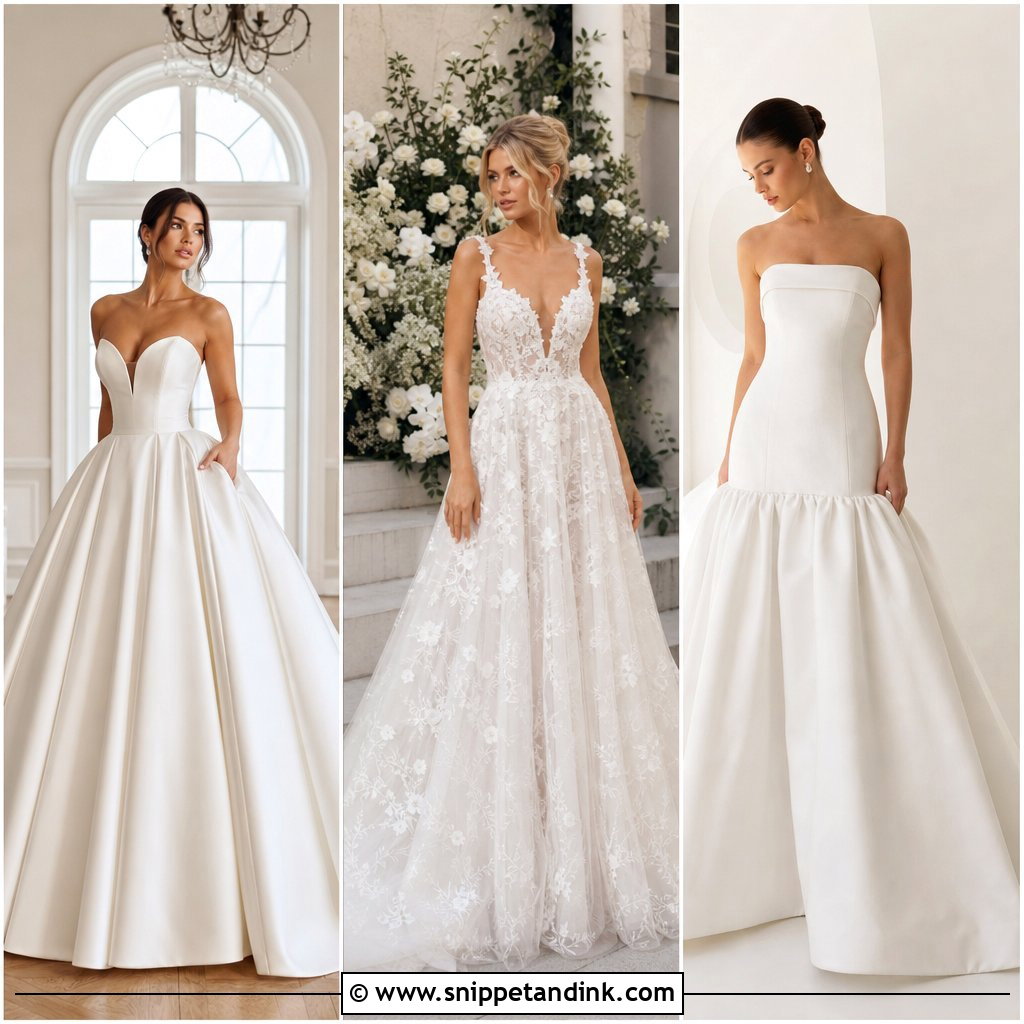
Satin slips are the easiest budget dress to make look expensive, and also the least forgiving. Bias-cut satin shows every line of your underwear and every crease from sitting, so I have brides sit for a full minute in the fitting room and then stand to check the lap. A heavier satin with a dull back and some weight in the hand hangs far better than thin charmeuse. Ivory, pearl and champagne are kinder to most skin than optic white. A hem that clears your block heels and straps shortened so the neckline doesn’t gape will do more than any accessory, and a sheer wrap covers the shoulders if the neckline feels too bare.
2. Lace A Line Wedding Dress
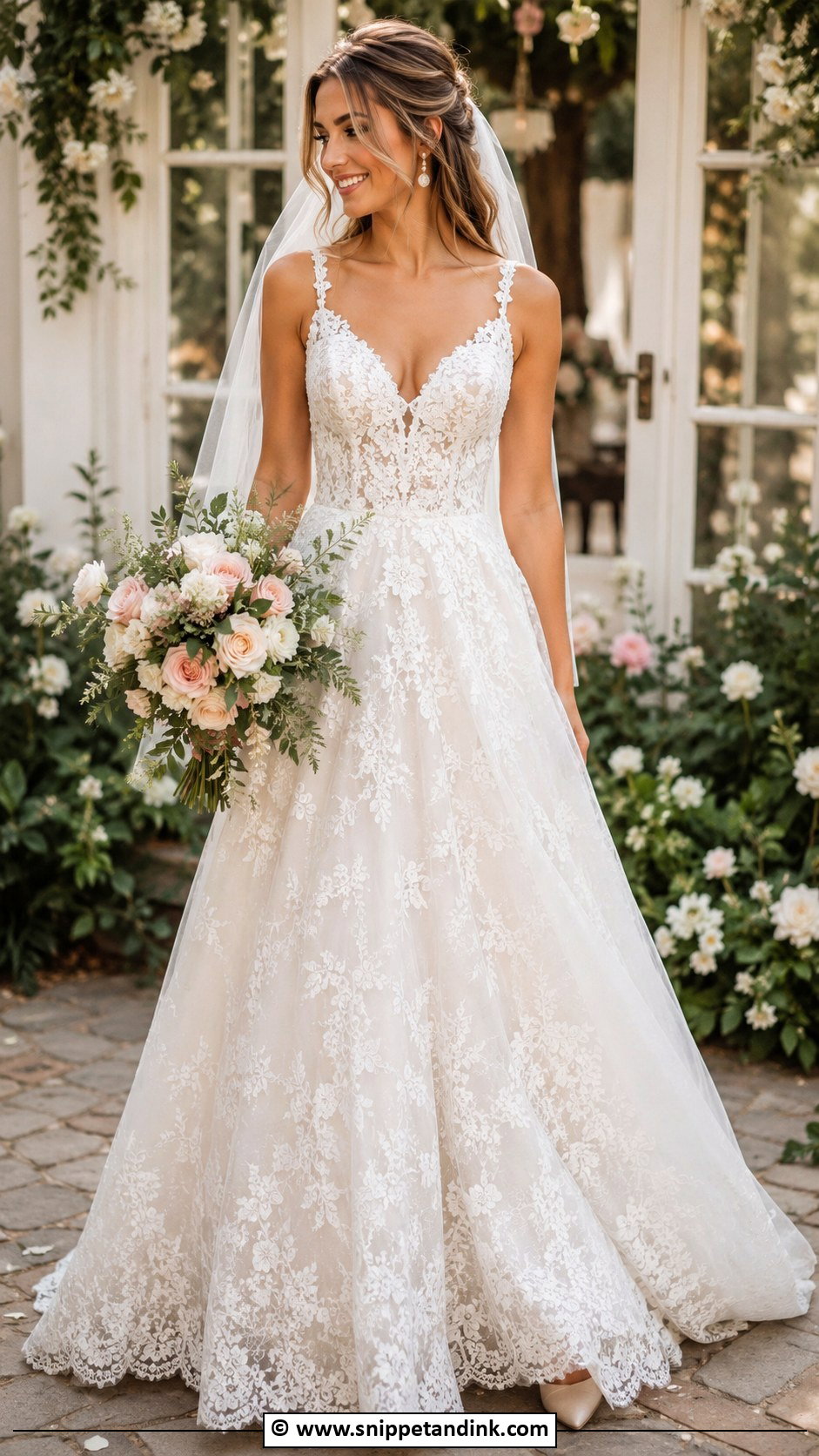
The A-line forgives a lot, which is why it’s the shape I reach for first when a bride is buying off the rack with little room for alterations. The bodice only has to fit at the bust and waist; the skirt does the rest. Feel the lace before you buy. Stiff, shiny lace catches the flash and looks plastic in photos, while a softer corded lace has depth. Cap or illusion sleeves give coverage without feeling formal, and low pearl heels with a fingertip veil keep the outfit in proportion.
3. Chiffon Beach Wedding Dress
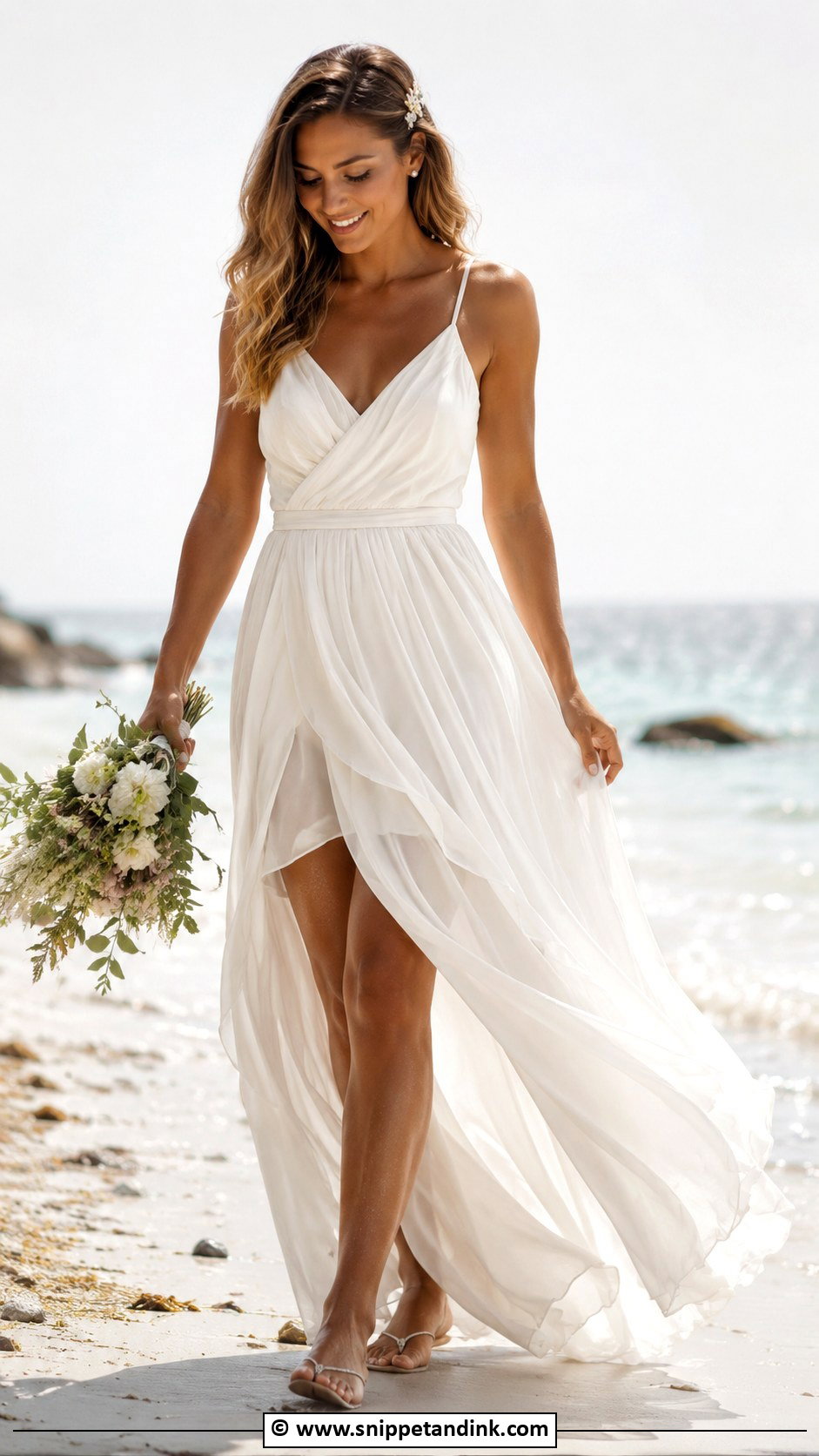
Chiffon is light, inexpensive and moves in a sea breeze, which is why a chiffon beach wedding dress is one of the safest budget buys for a shoreline ceremony. Its weakness is cling. In dry wind a single layer wraps around the legs, so I prefer two layers, or a lining cut a little shorter than the chiffon so the outer layer floats. An empire waist or halter suits it better than anything structured. Skip the train on sand; it drags wet grit up the hem and gets heavy fast. Flat sandals, pearl studs and a small comb are plenty.
4. Courthouse Mini Wedding Dress
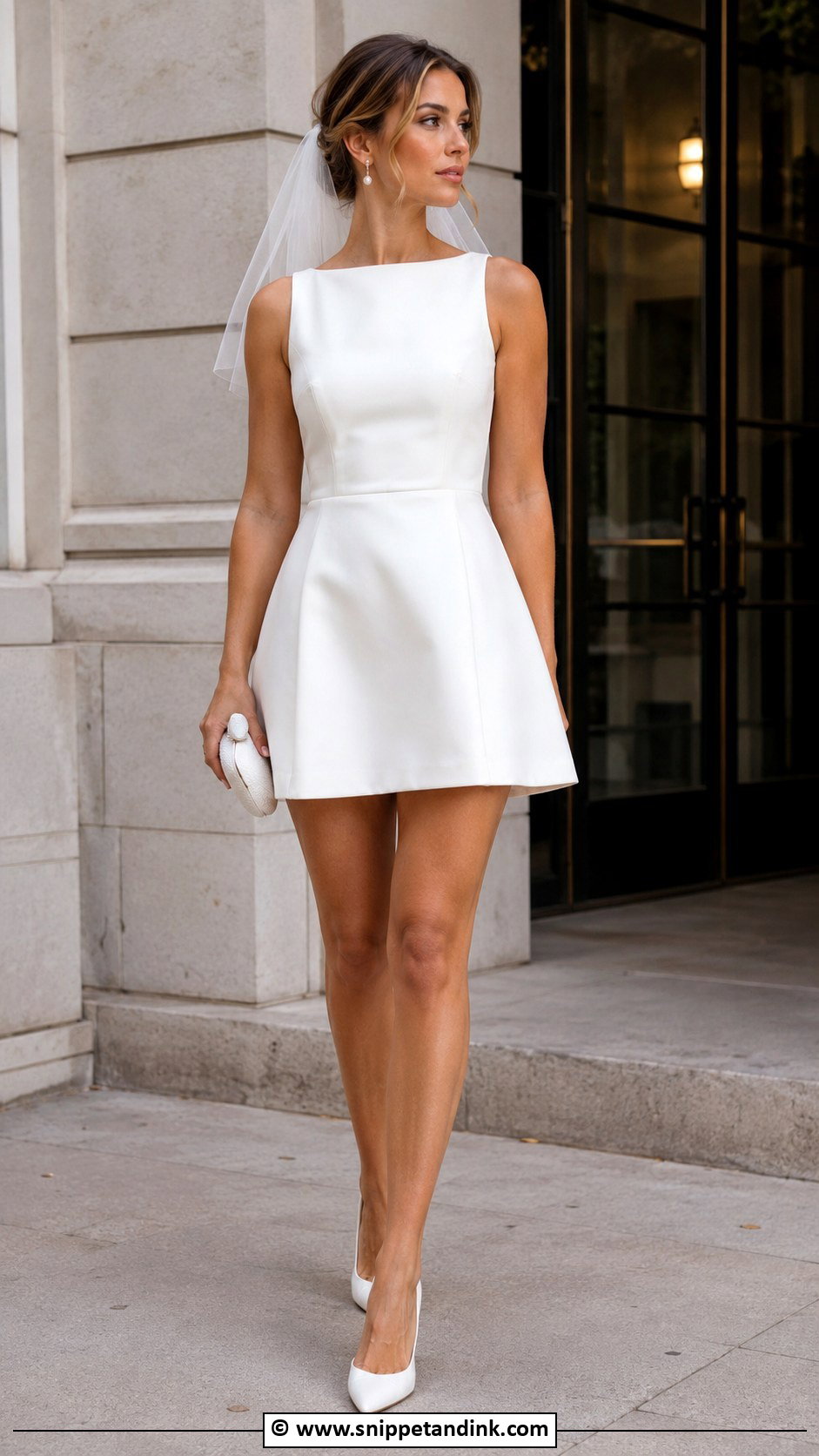
A courthouse mini wedding dress uses so little fabric that you can afford a better one: a structured crepe or heavy satin mini looks sharper than a long gown at the same price. Test it seated. On courthouse benches and in car seats a mini rides up several inches, so check the length sitting down, not only in the standing mirror. Pointed heels, a small clutch and a short veil or bow clip give it a city feel. Keep accessories few, since the dress has very little surface to balance them.
5. White Midi Wedding Dress
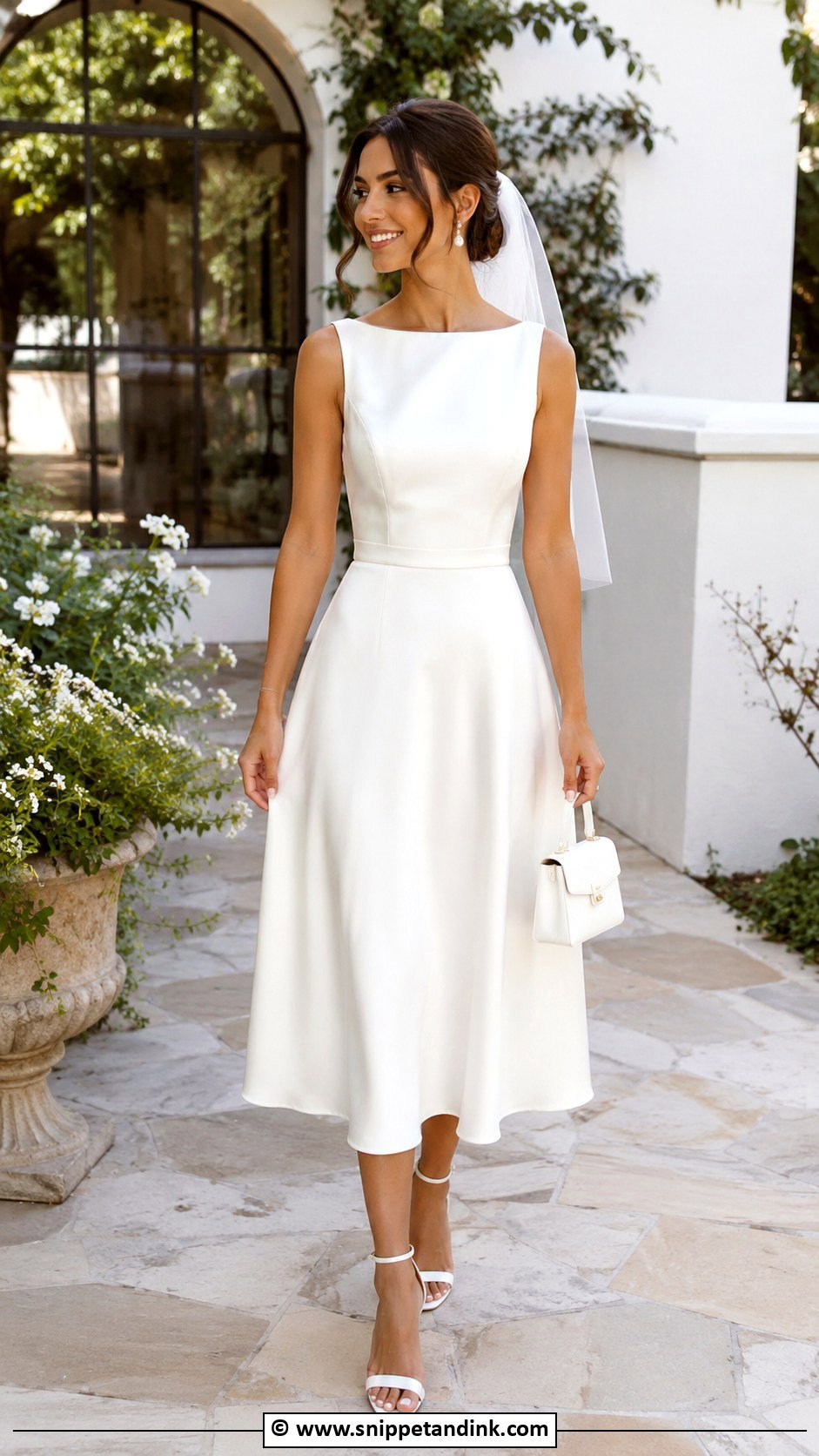
Midis sit in an awkward spot. If the hem lands at the widest part of your calf, the whole outfit looks shorter and heavier, so I aim for just below the knee or a few inches above the ankle bone. Satin, crepe, lace and cotton blends all work for smaller weddings, garden ceremonies and daytime receptions. Cotton wrinkles fastest, so steam it on the morning rather than the night before. Because the shoes show, they’re part of the look, and an ankle strap stops a heel slipping out when you stand on grass for hours.
6. Simple Crepe Wedding Dress
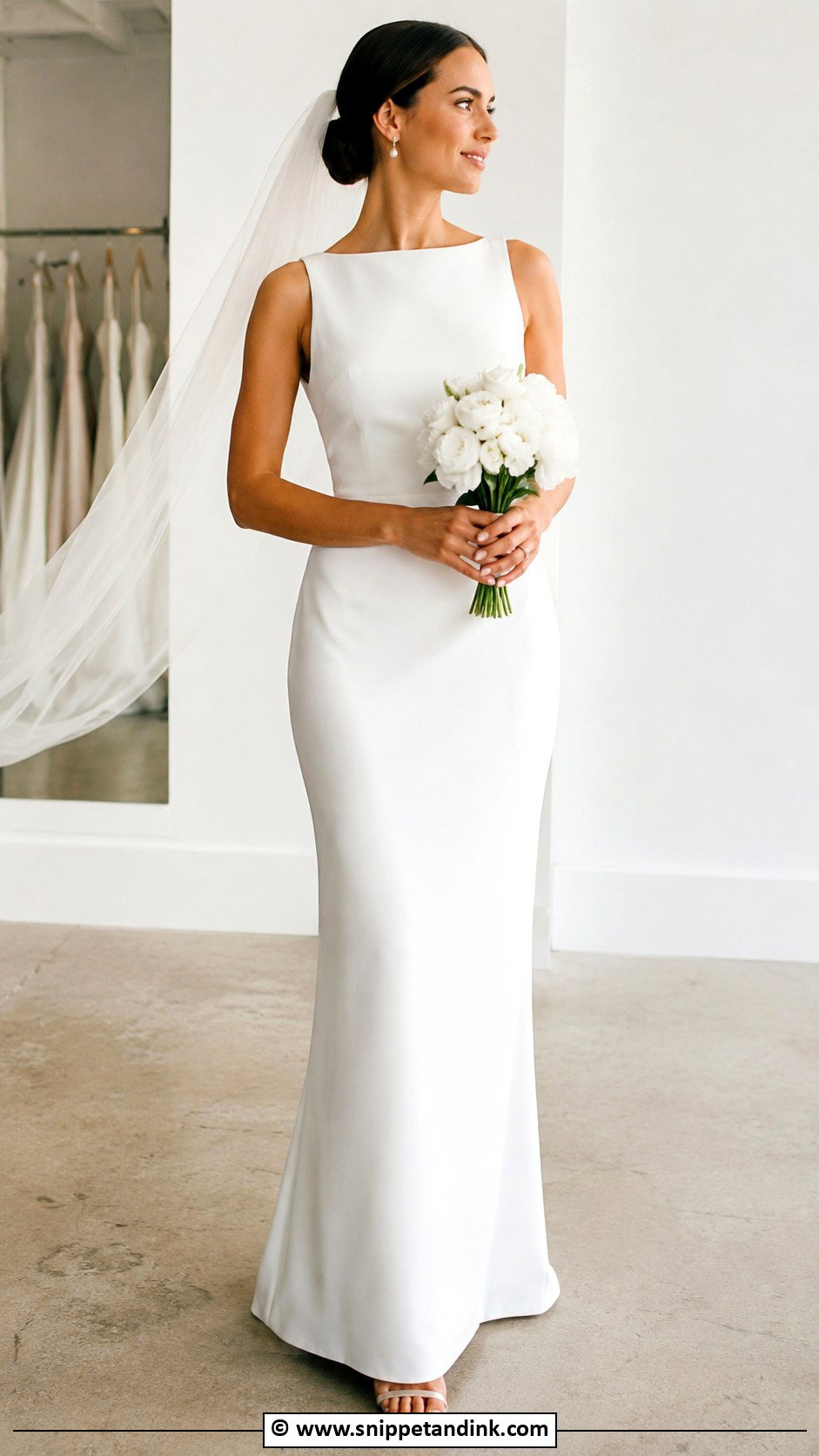
Crepe hides nothing, which is exactly why a simple crepe wedding dress looks expensive when it fits and cheap when it doesn’t. With no beading to distract the eye, a puckered seam or a rippling zip becomes the detail people notice. Spend on the tailor before the neckline. Column and sheath shapes suit a firm, heavier crepe; thin stretch crepe can show shapewear lines. A low bun and a clean veil keep the line uninterrupted and leave room for statement shoes or a bigger bouquet.
7. Tulle Skirt Wedding Dress
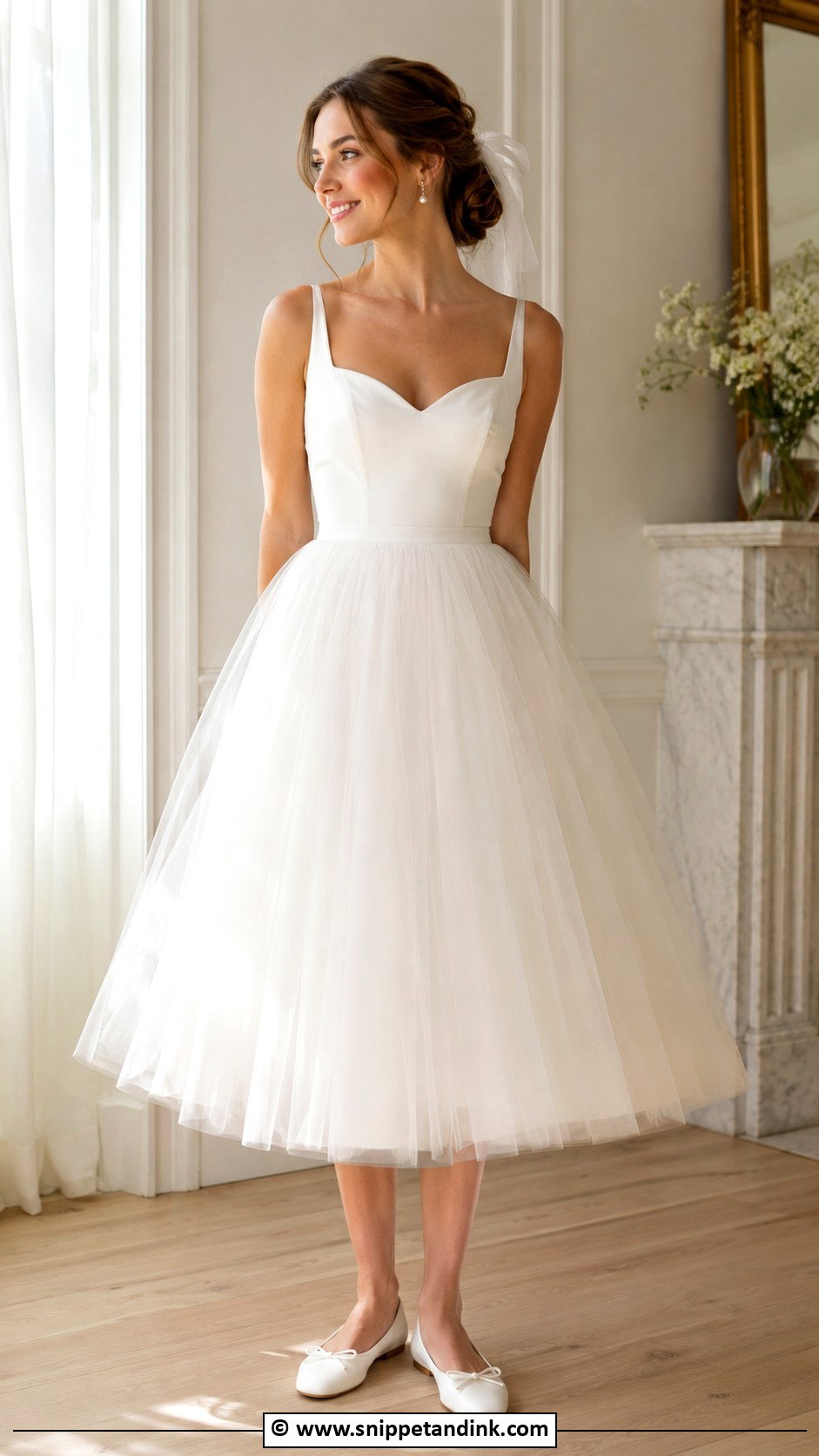
You can get ball-gown volume for a fraction of the cost by building it in two pieces: a white bodysuit or fitted top with a separate bridal tulle skirt. Each half is sized on its own, so it’s easier to fit. Watch the waistband. Inexpensive tulle skirts often use wide elastic that bunches under a fitted top, so look for a zip or a flat grosgrain band instead. Ballet flats and a ribbon in the hair keep it sweet, and tea length is far easier to dance in than a floor-length skirt you’ll step on all evening.
8. Long Sleeve Lace Wedding Dress
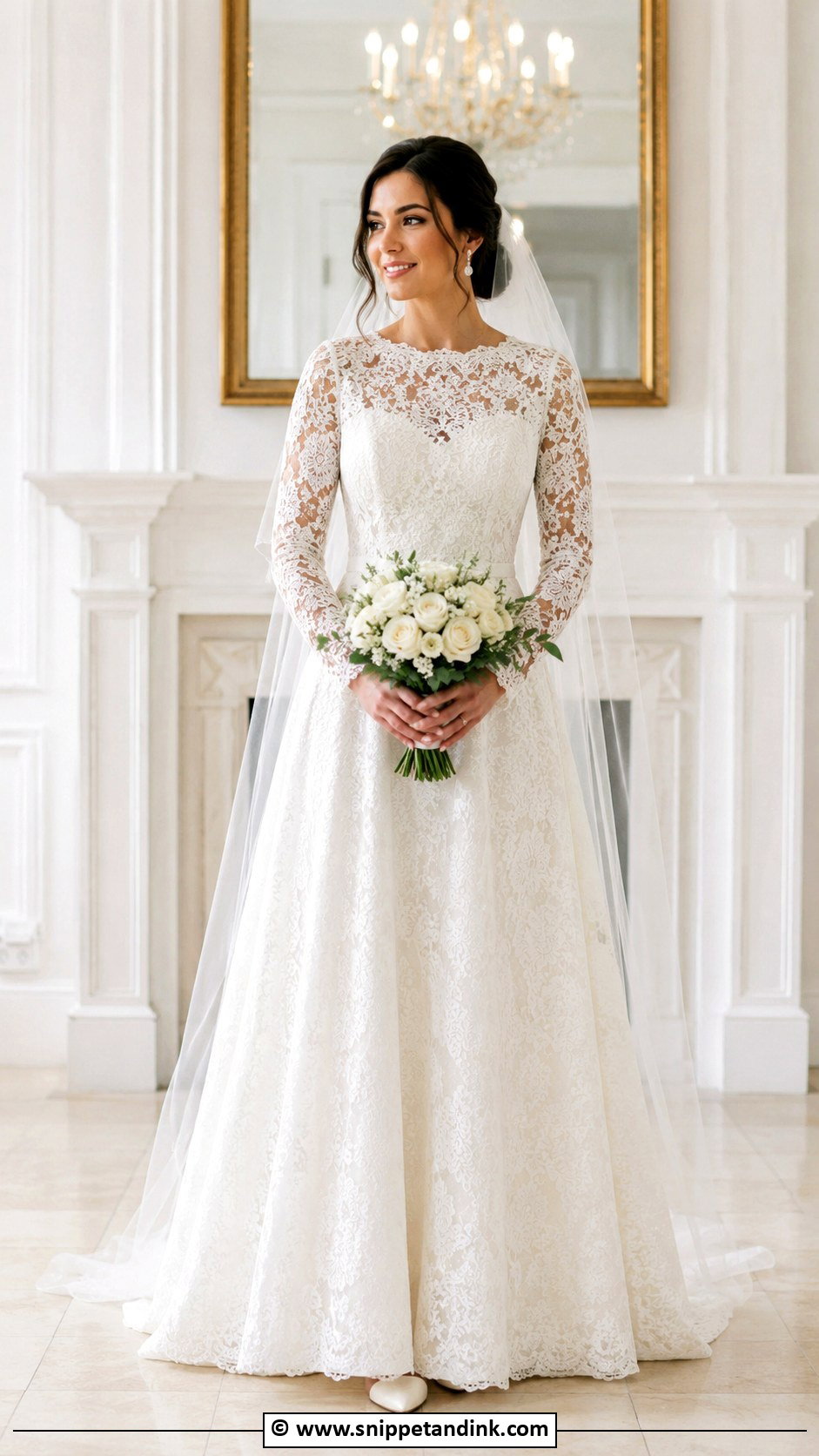
Long lace sleeves are in demand every season, so affordable brands make plenty of them and you can be picky. My check is the armhole. Off-the-rack sleeves are often cut slim with a low armhole, so I ask the bride to raise both arms as if hugging someone; if the bodice lifts with her, it will do that in every photo. Nude or ivory lining behind the lace makes the pattern show up. With a busy lace, leave the necklace off and let the sleeves carry the detail.
9. Off Shoulder Wedding Dress
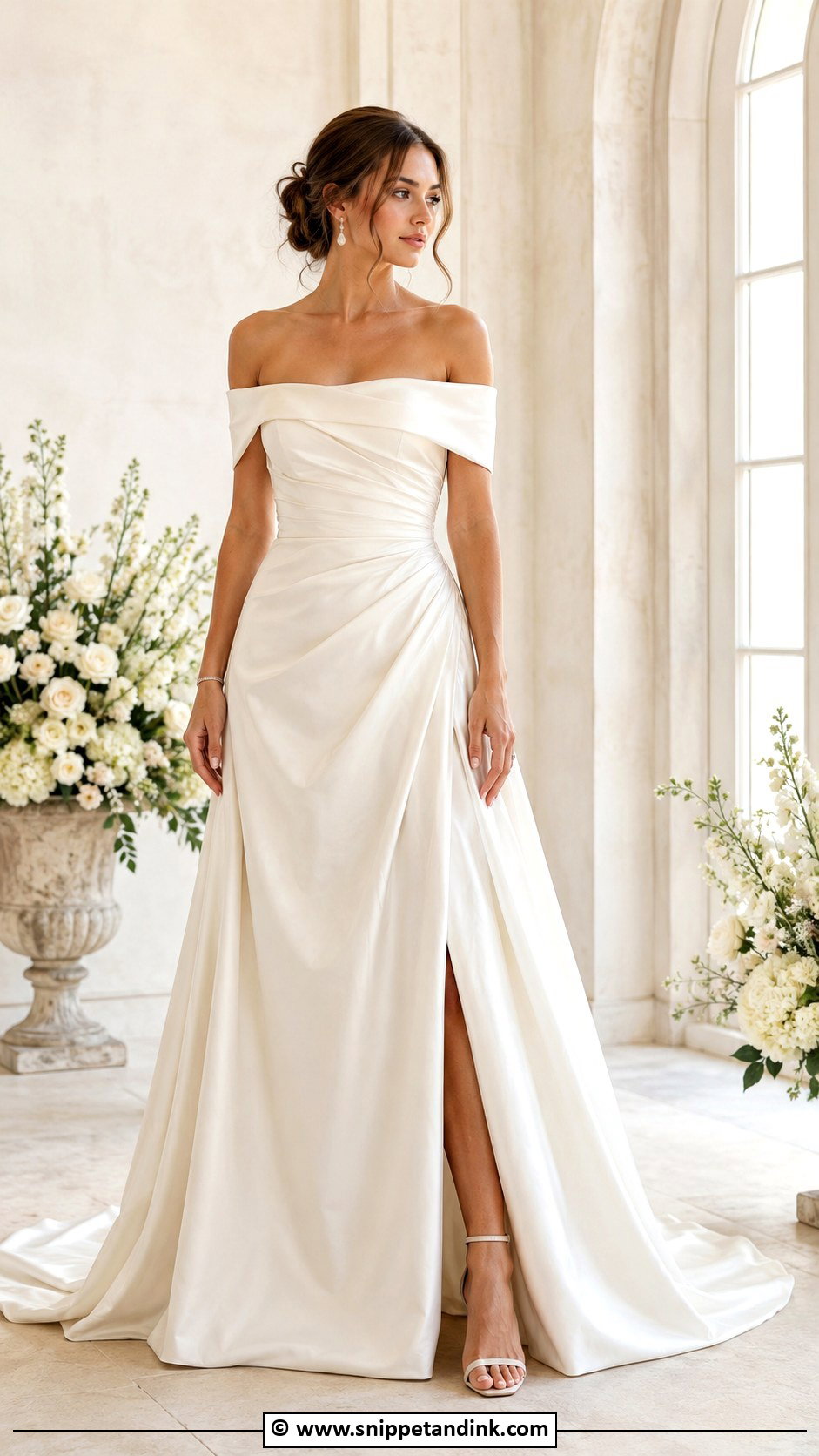
The neckline does the work here, so even plain satin or crepe looks finished. The practical problem is keeping it up. Off-shoulder bands slide when you lift your arms, and an inexpensive one rarely has any grip inside. A tailor can add silicone gripper tape to the band for very little, and I’d ask for it on any budget off-shoulder dress. A fold-over neckline gives a little more coverage than a deep cut. Drop earrings and a soft updo keep attention on the shoulders.
10. Boho Crochet Wedding Dress
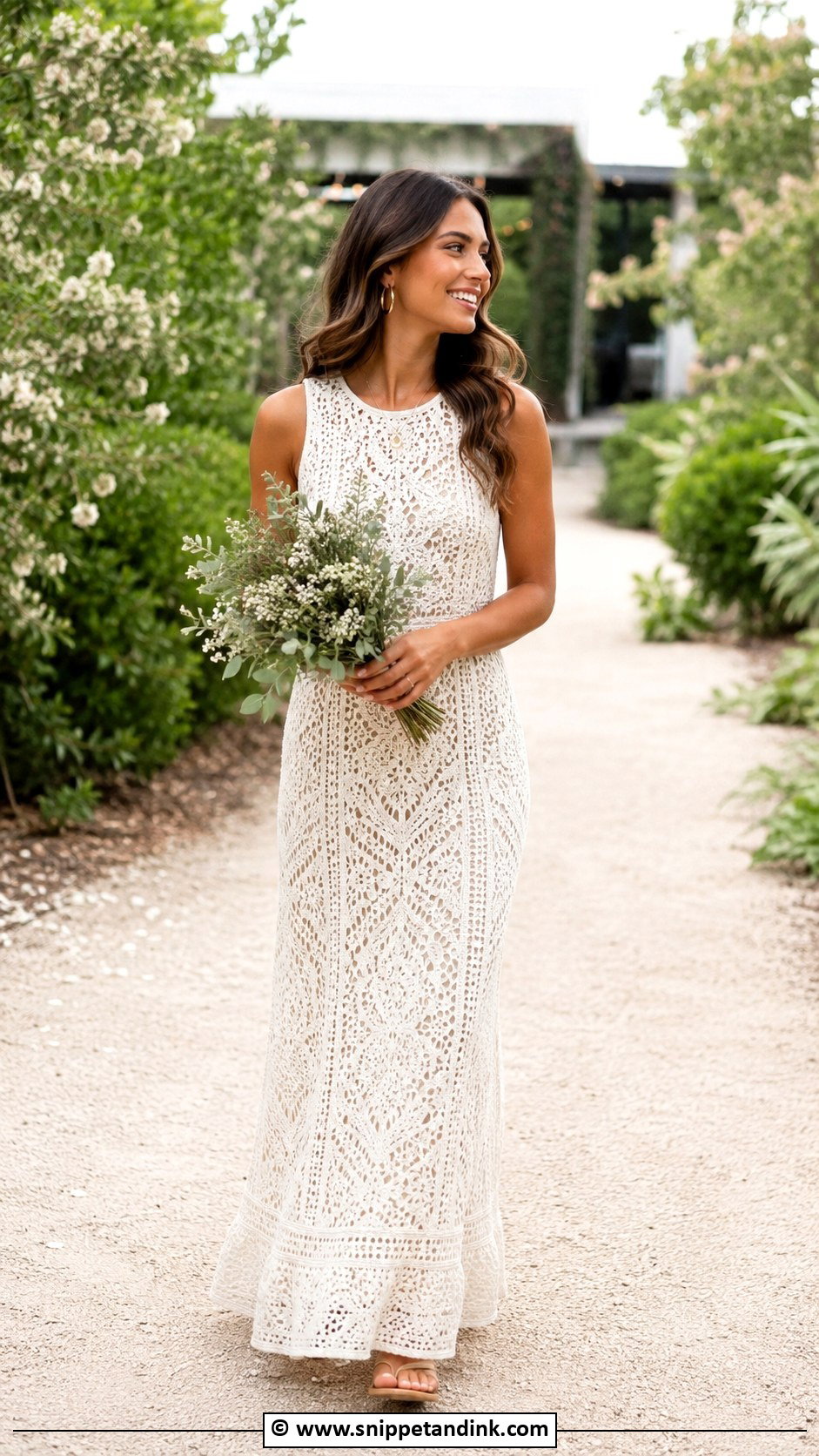
Crochet gives you texture for free, so the silhouette can stay simple: a cotton crochet maxi or a lined dress with crochet panels in ivory or cream. Stand outside in daylight before you commit. A lining that looks opaque under shop lights can turn see-through in bright sun or a backlit photo. Cotton crochet also stretches as it’s worn, so a dress that fits snugly at noon may sag by evening. Flat sandals, loose waves, gold hoops and a greenery bouquet suit a backyard or relaxed destination wedding.
11. Tea Length Wedding Dress
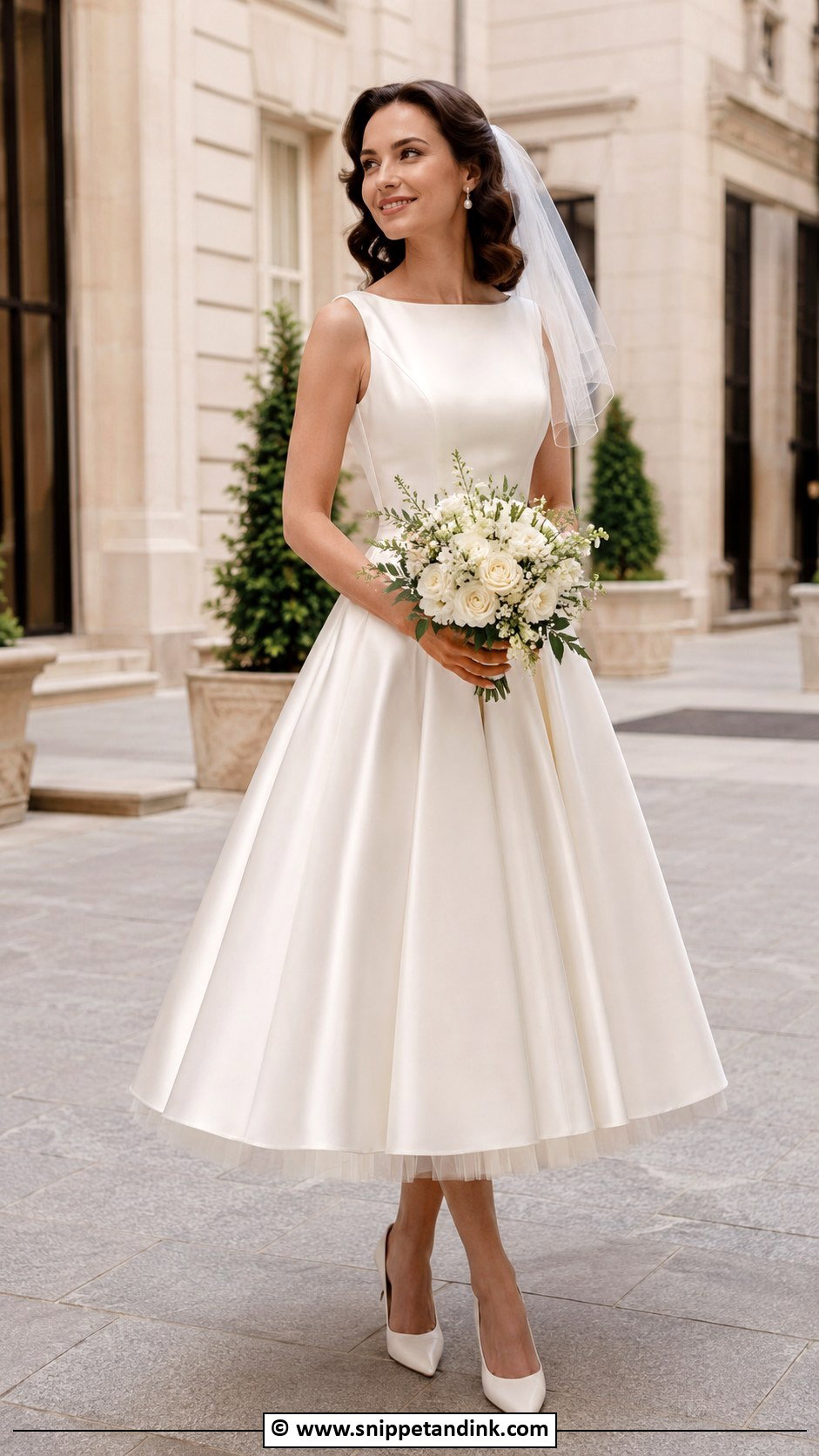
A tea length wedding dress usually costs less than a floor-length gown and less to alter, with no train to bustle and no long hem to rework. Your shoes are on show all day, so pick ones you like. Satin and organza give it a crisp vintage shape; tulle and lace soften it. Underneath, a short petticoat helps a full skirt hold its bell instead of collapsing after the first hour. Pointed heels, soft curls and a short veil finish it for a city hall or garden venue.
12. White Jumpsuit Wedding Outfit
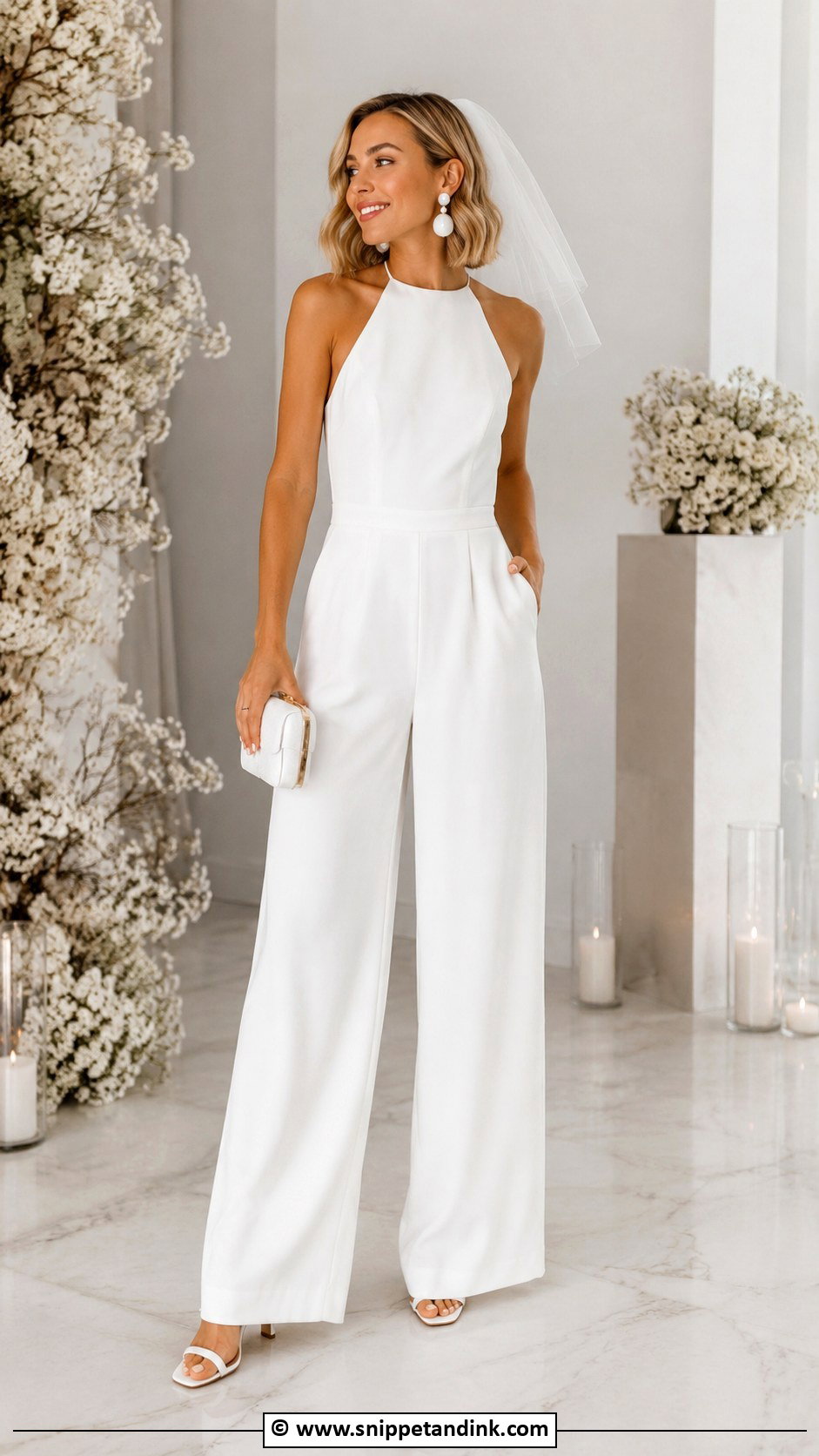
A white jumpsuit wedding outfit is usually sold as occasion wear, and that label alone keeps the price down. Fit the body length first. It can’t really be corrected afterwards, and a jumpsuit that’s short in the rise pulls every time you sit. Wide legs need the hem set while you wear the exact shoes, so the fabric just brushes the top of the foot. A cape or sheer overskirt makes it ceremonial, then comes off for dancing. Think about bathroom trips too: a back zip you can’t reach alone is a real nuisance.
13. Two Piece Wedding Dress
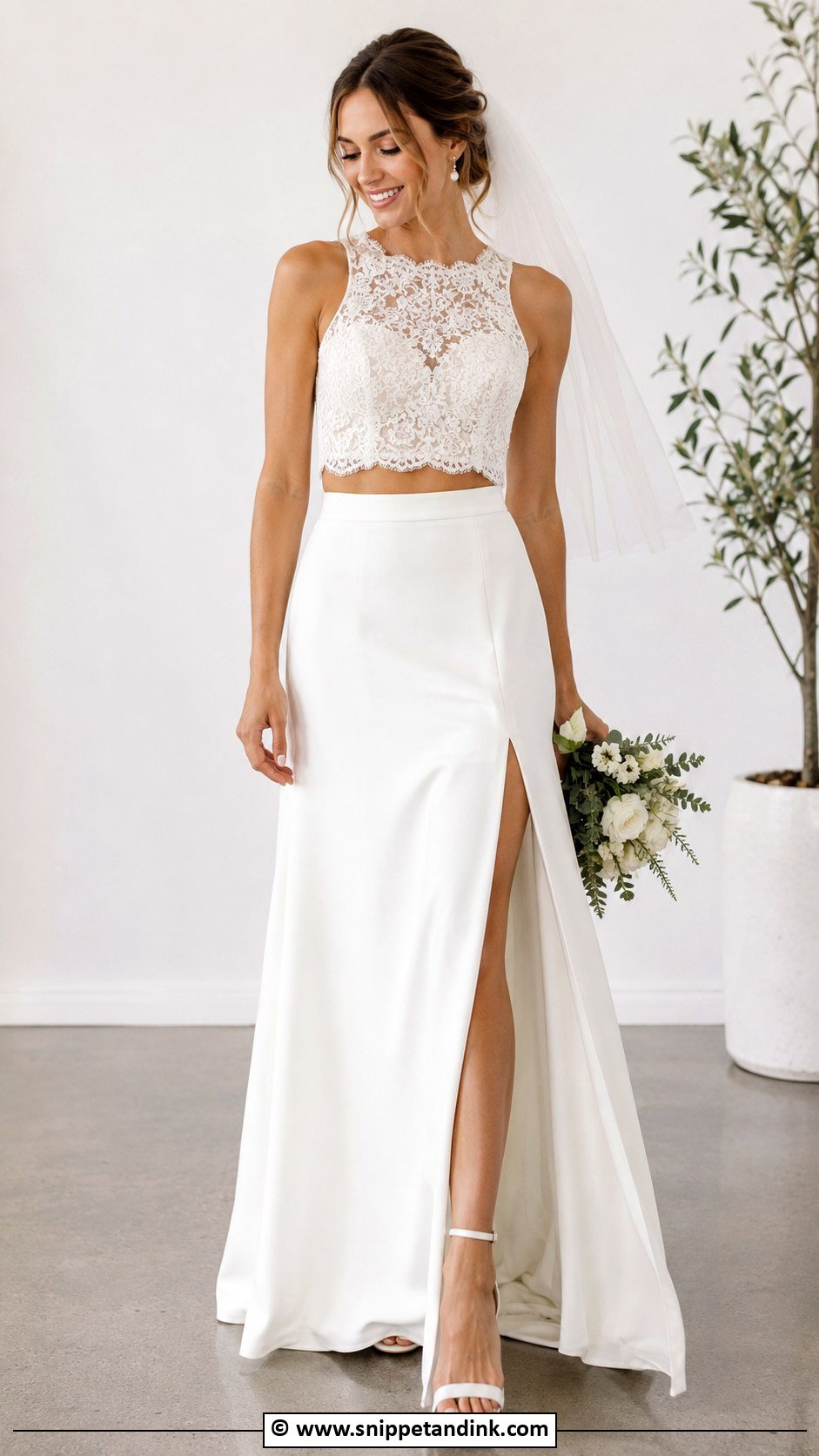
Separates let you buy the top and skirt from different shops, in different sizes. That matters more than people expect; a bride whose bust and hips are two sizes apart often finds a two-piece fits better than any single dress she tried. The risk is mismatched whites. A lace crop top and a satin skirt can be two different ivories, which shows instantly in daylight photos, so hold both pieces together by a window before removing any tags. You may wear the top or skirt again later, which makes the cost easier to justify.
14. Sample Sale Wedding Dress
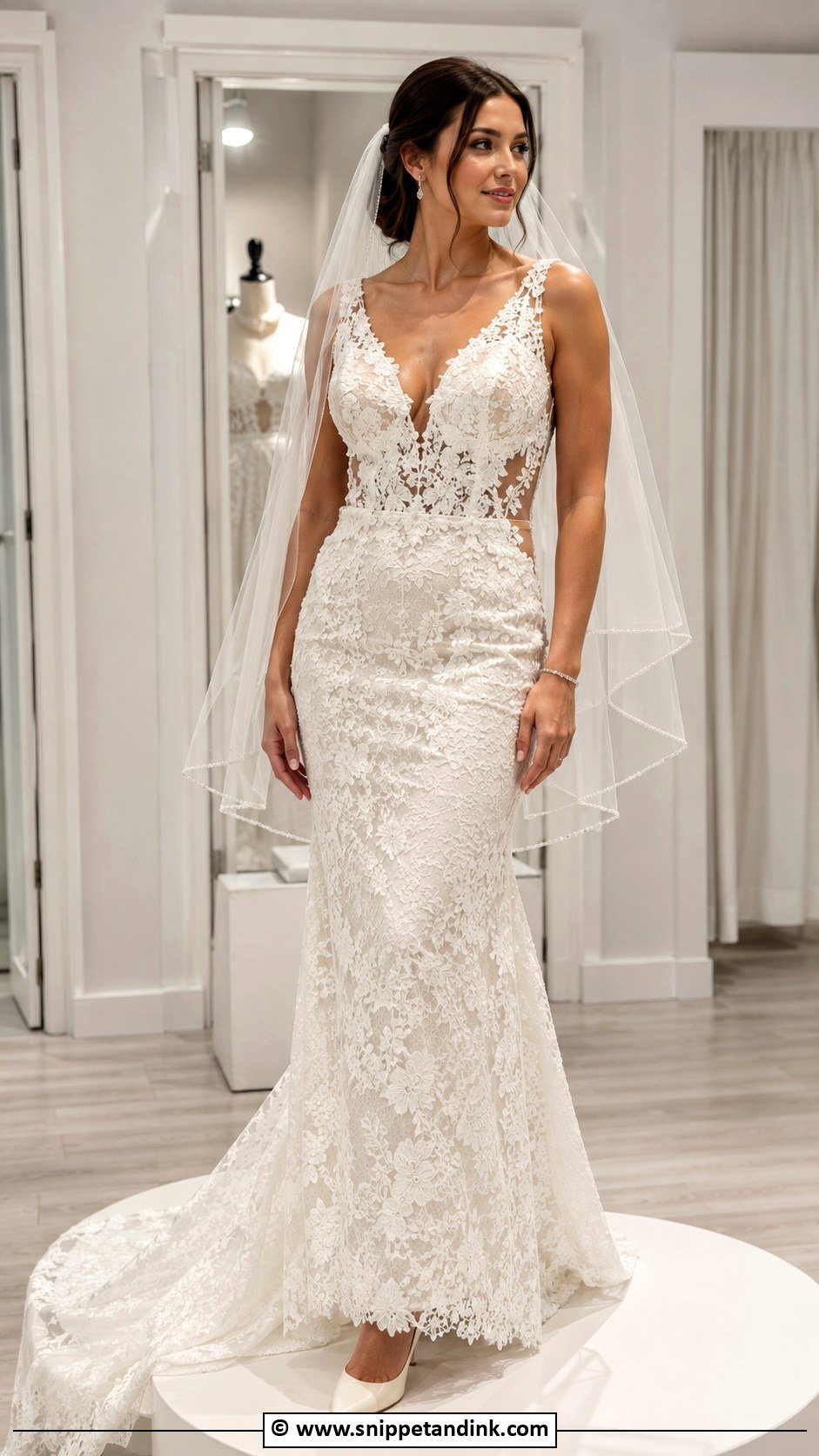
Sample sales are the best route to a better-made gown for less, but remember the dress has been tried on many times. I go over the same spots every time: the zip, the hem edge, beading along the bodice, the underarms for makeup or deodorant marks, and the inside of the waist where it may have been stretched. Then I add cleaning and alterations to the price before calling it a bargain. You’ll do best here if you can be flexible about size, designer and a detail or two.
15. Secondhand Wedding Dress
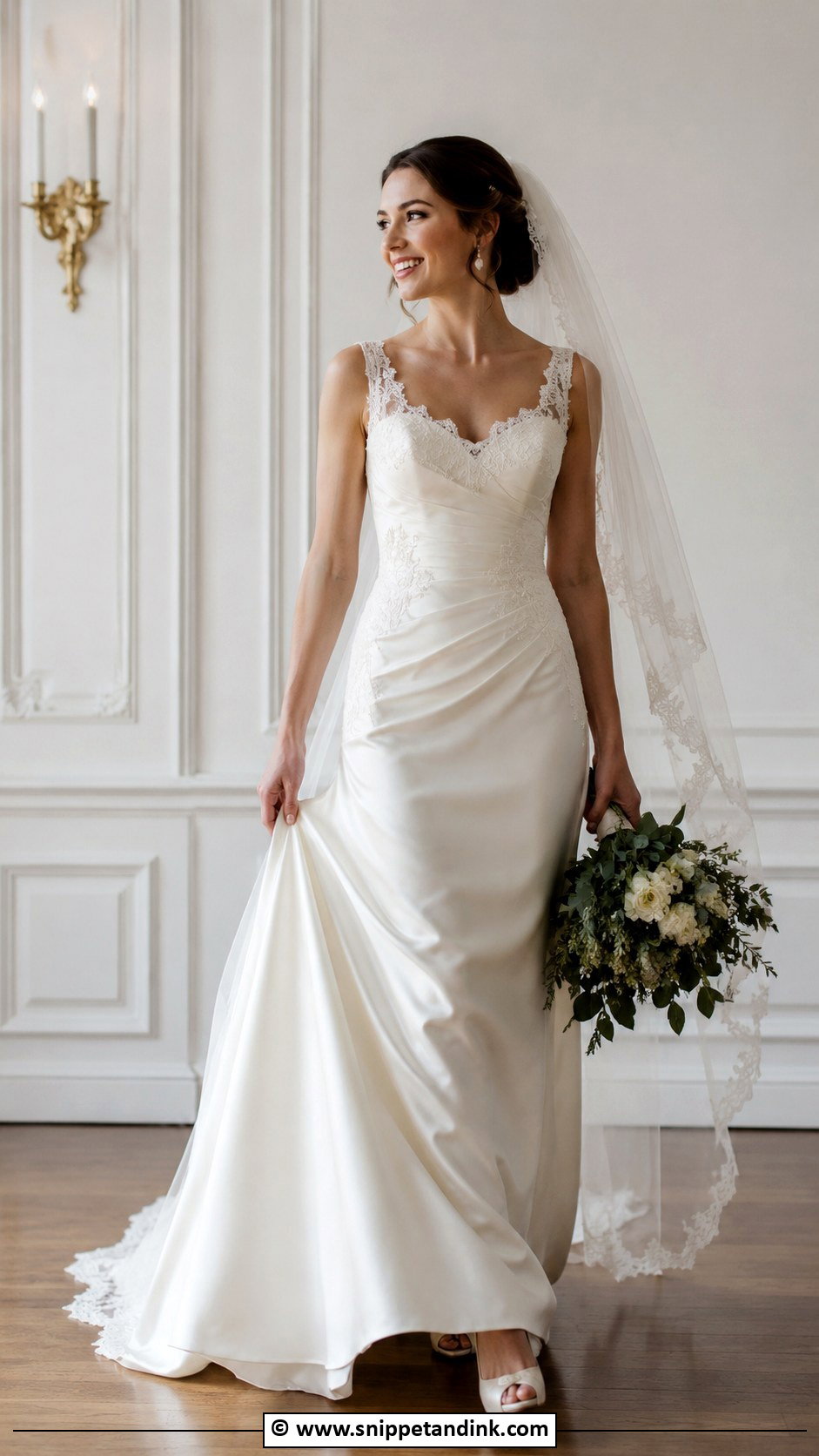
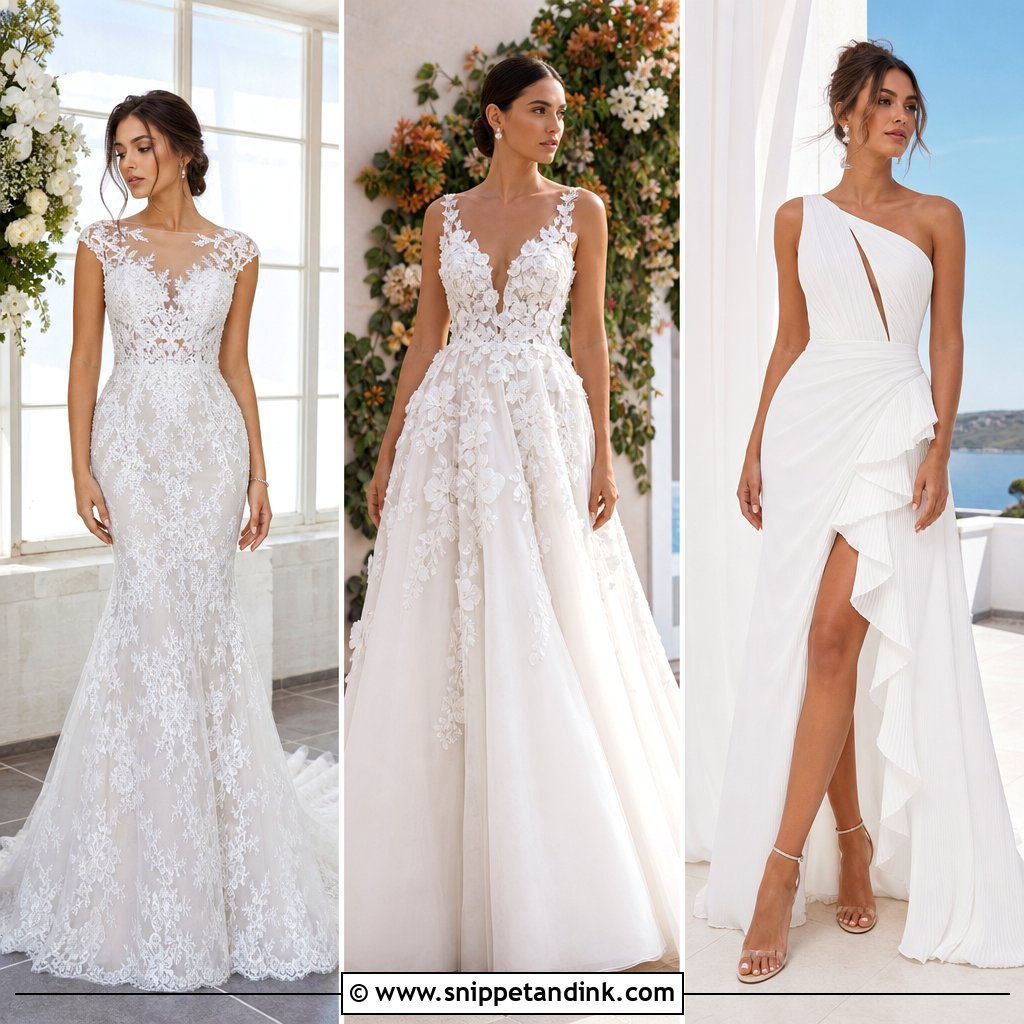
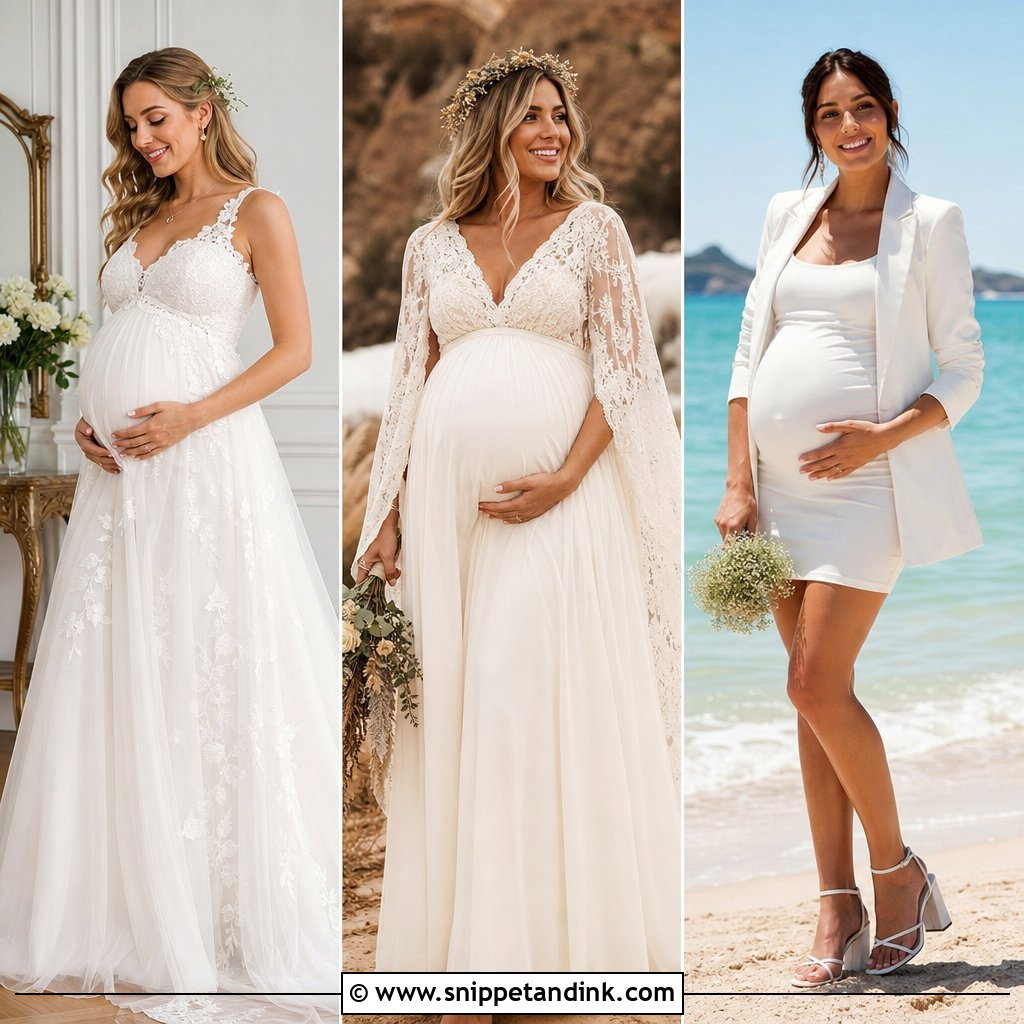
Search bridal resale sites, consignment stores and trusted marketplaces by measurements, never by label size. Bridal sizing runs small and the previous owner almost certainly had the dress altered, so the tag may no longer mean much. Ask the seller for bust, waist and hip measured flat, plus photos of the hem and inner seams. Pre-owned gowns often need cleaning and small repairs, so keep some money aside. Match the veil to the dress shade, since an older gown may have mellowed from its original white. It’s a more sustainable choice too, and a good tailor will make it fit as if it were new.
16. White Bridesmaid Dress Wedding Look
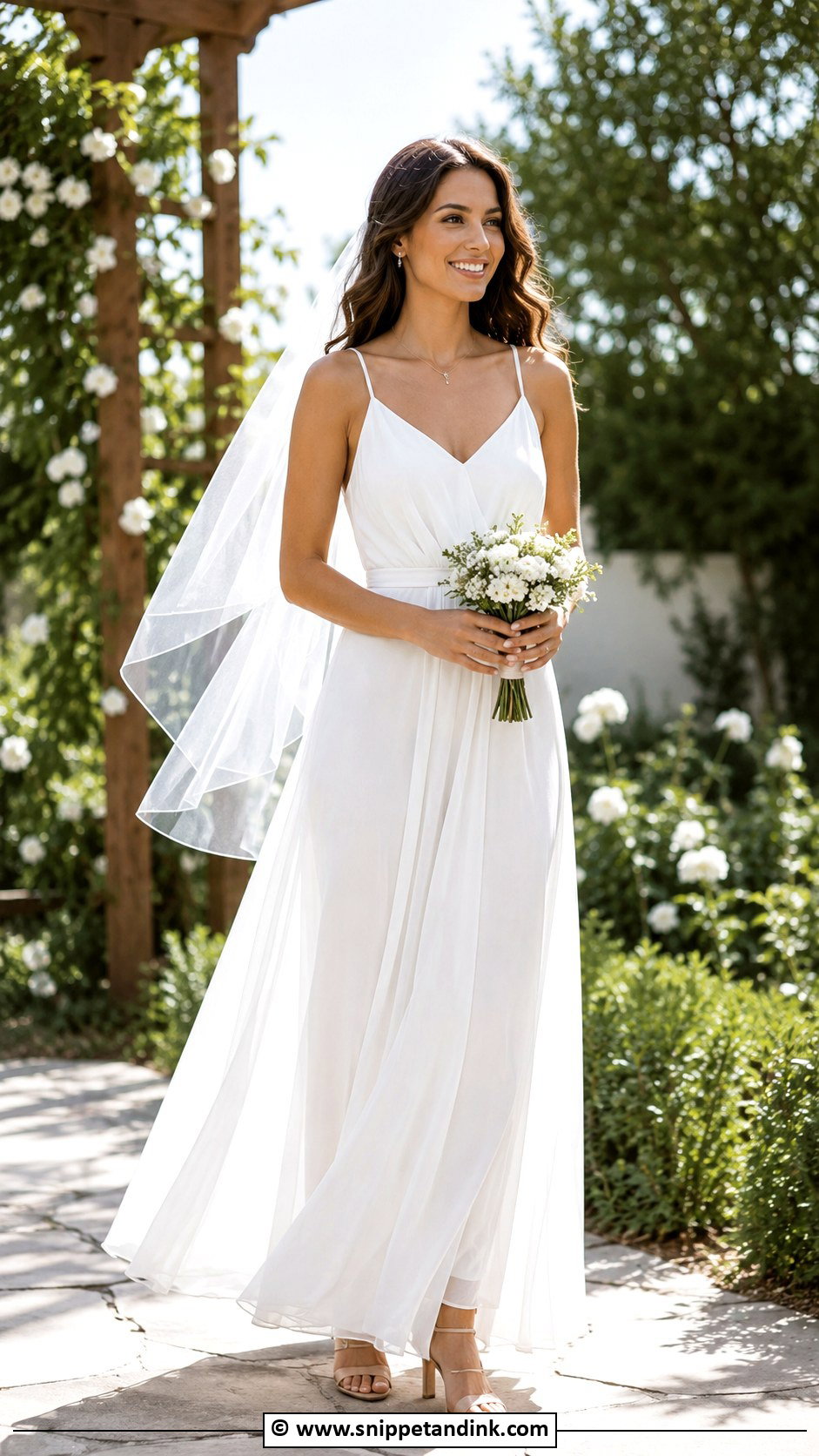
Bridesmaid collections are full of chiffon, satin and crepe in white and ivory at a fraction of bridal prices. The giveaway is usually the finishing: thinner lining, a visible zip, no bra cups. Those are inexpensive fixes; a tailor can sew in cups and conceal the zip. Pick the white for your skin (ivory and soft champagne flatter warmer skin, pearl suits cooler tones) and let the veil, bridal shoes and bouquet do the signalling. Start from a neckline and waistline you already know suit you.
17. White Prom Dress Wedding Look
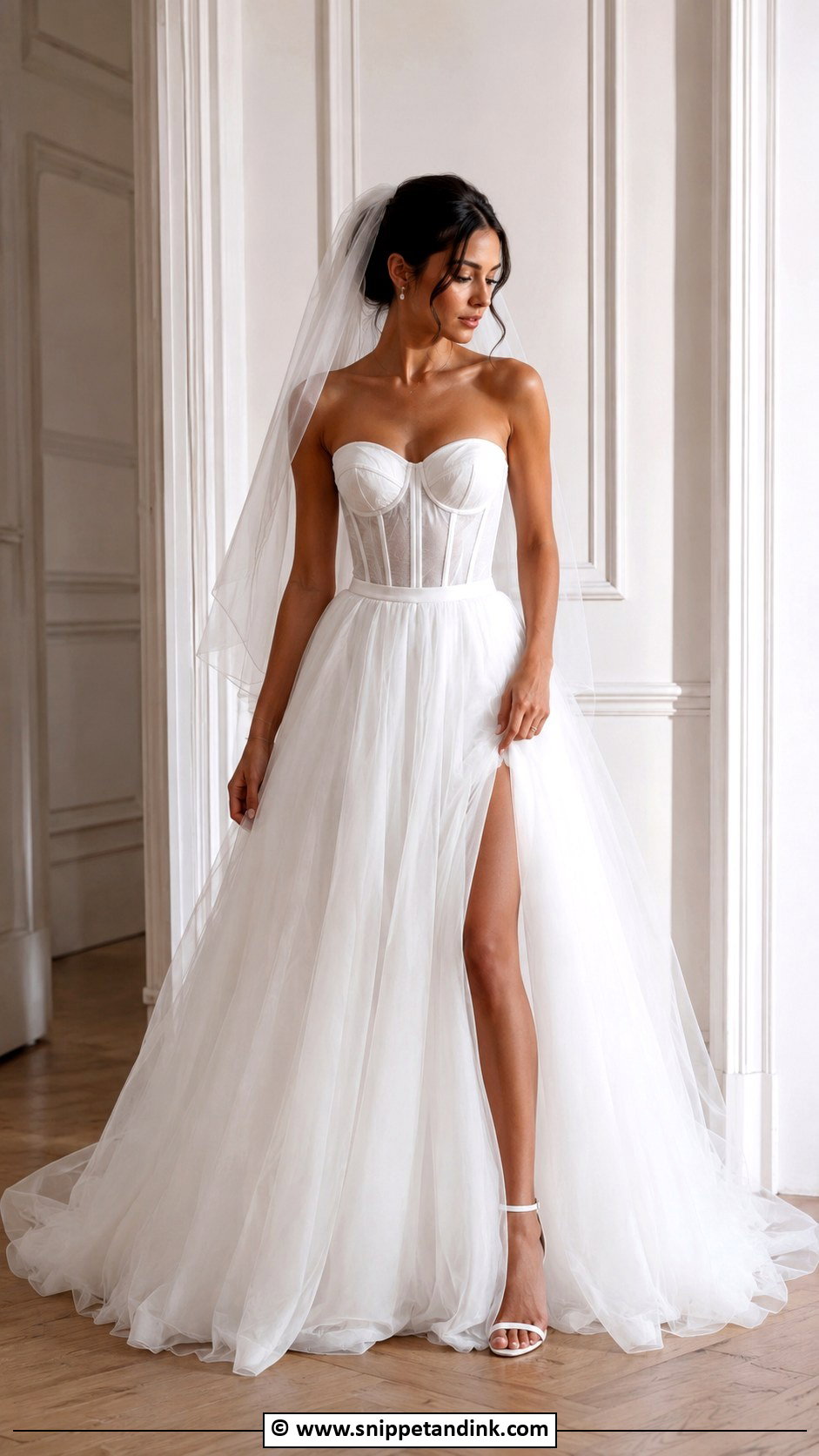
Prom racks offer corset bodices, satin skirts and beading at prices bridal shops can’t match. The danger is that some read as costume, especially glittery mesh and very high slits, so look at the fabric in daylight. Prom boning is usually plastic rather than steel and can bend after hours of sitting, which is fine for a short celebration but worth knowing for a long day. With shine on the bodice, skip the necklace and keep the earrings small. A soft veil does the rest.
18. High Street White Dress Wedding Look
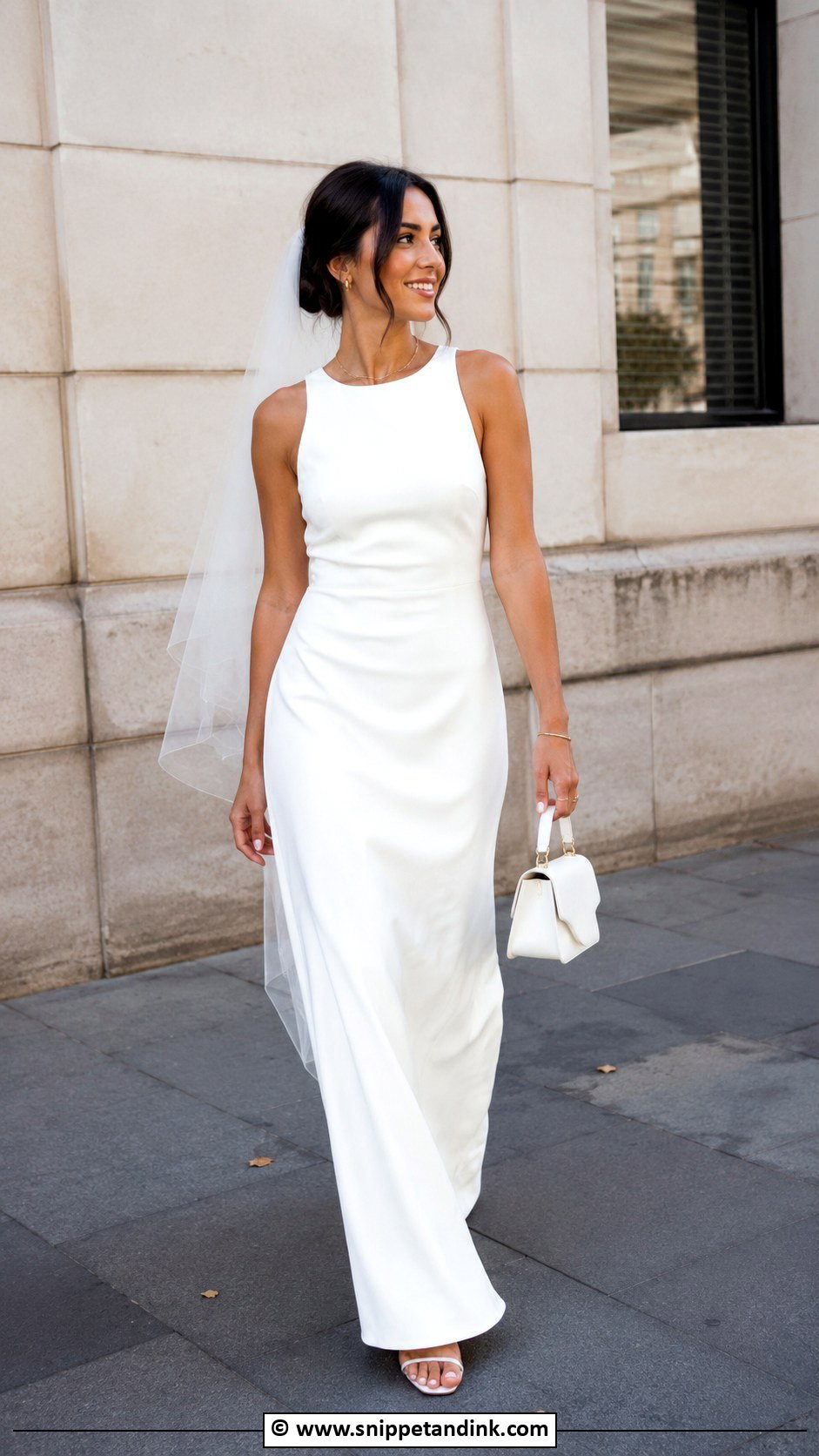
Regular fashion retailers sell white maxis, satin midis, tailored minis and evening dresses that cost far less simply because they aren’t labelled bridal. Turn the dress inside out and look at the seams, then feel the weight. Thin polyester creases quickly and goes shiny under flash. Add the bridal signals through shoes, hair, jewelry and a veil, and a structured bag with polished makeup makes a simple dress look intended. I suggest this route most for elopements, small weddings and reception changes.
19. Vintage Wedding Dress
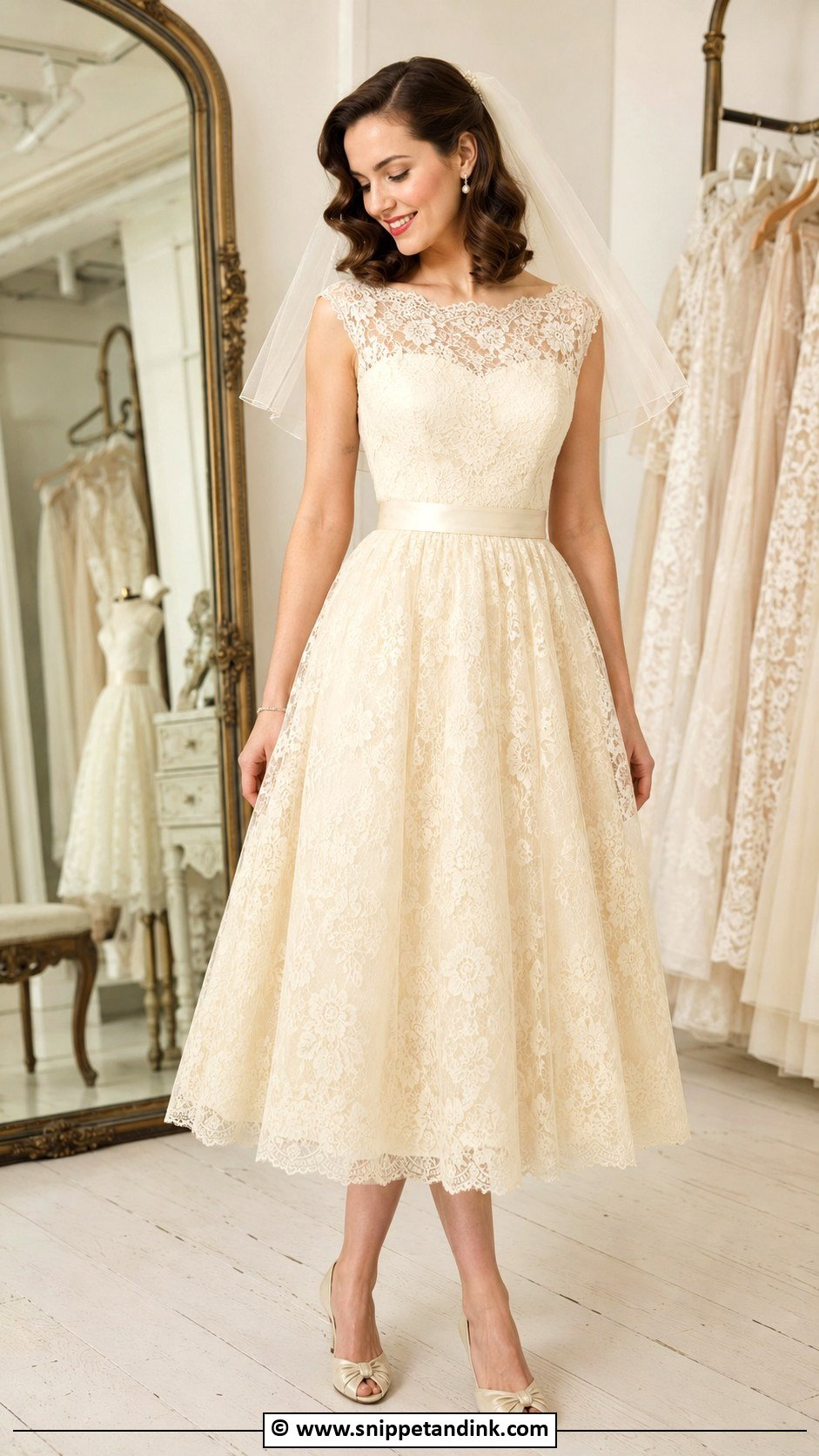
Age shows in specific places on a vintage dress. I check seams, zip and underarms first, then hold the fabric up to the light: old silk can split along the grain, and storage yellowing tends to sit along fold lines. Some pieces clean well; others need a specialist, so get a quote before buying. Tea-length lace, satin columns and puff sleeves turn up at vintage and consignment shops, but older dresses were often cut for a narrower ribcage, so try before you buy. Modern shoes and clean accessories stop it looking like a theme.
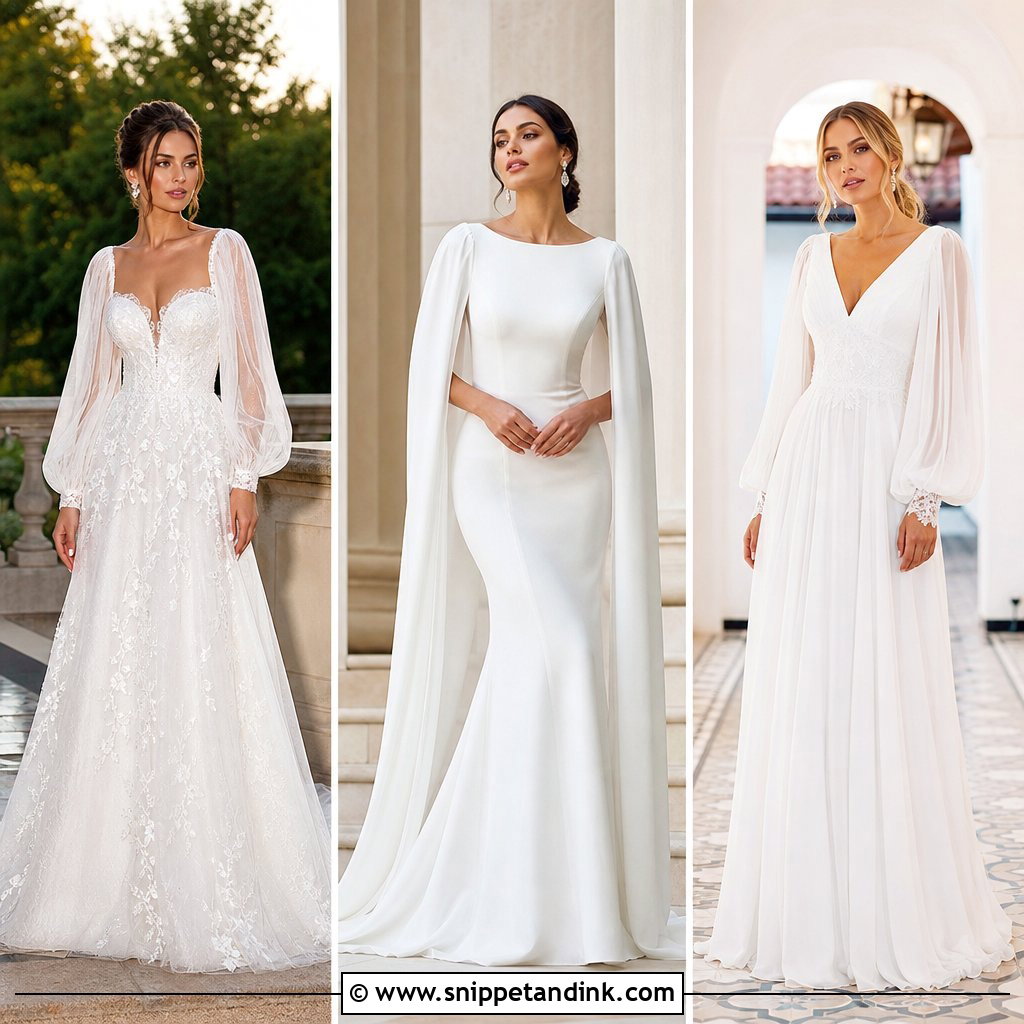
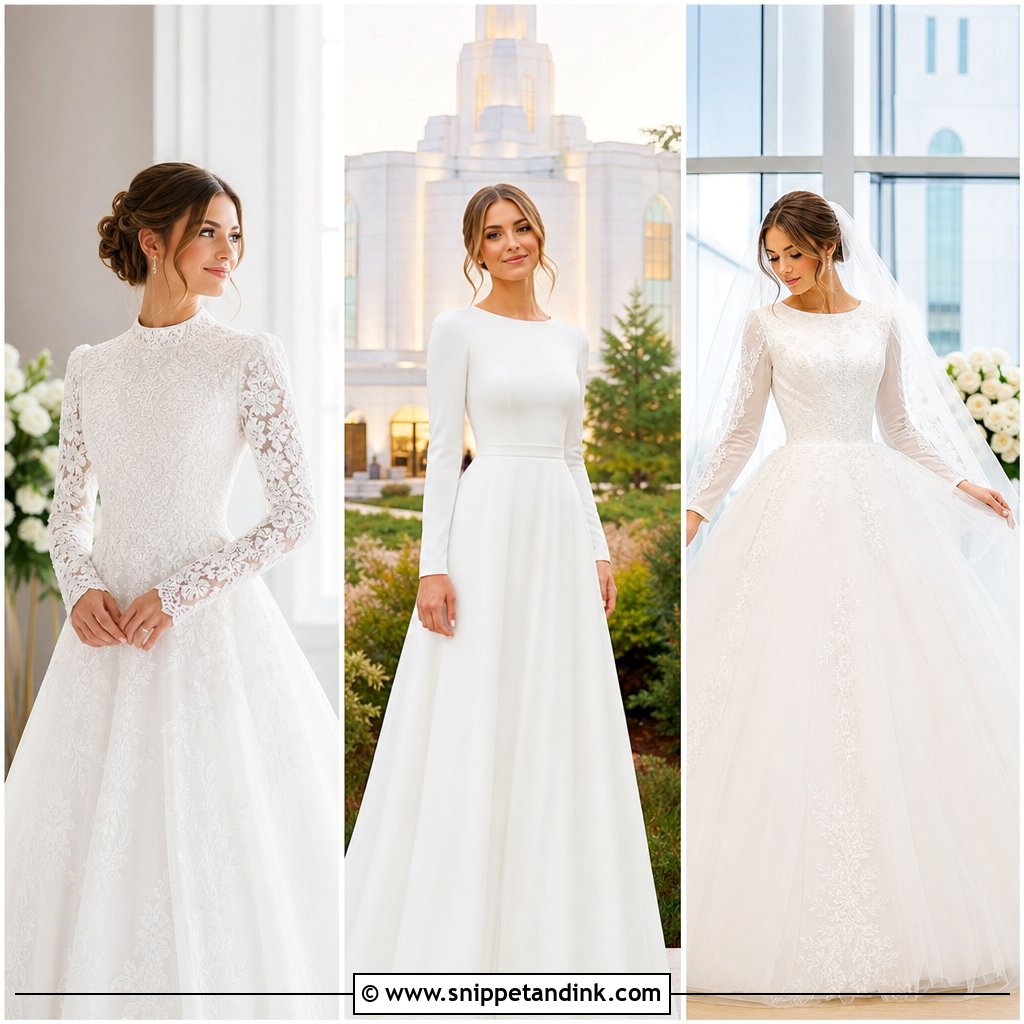
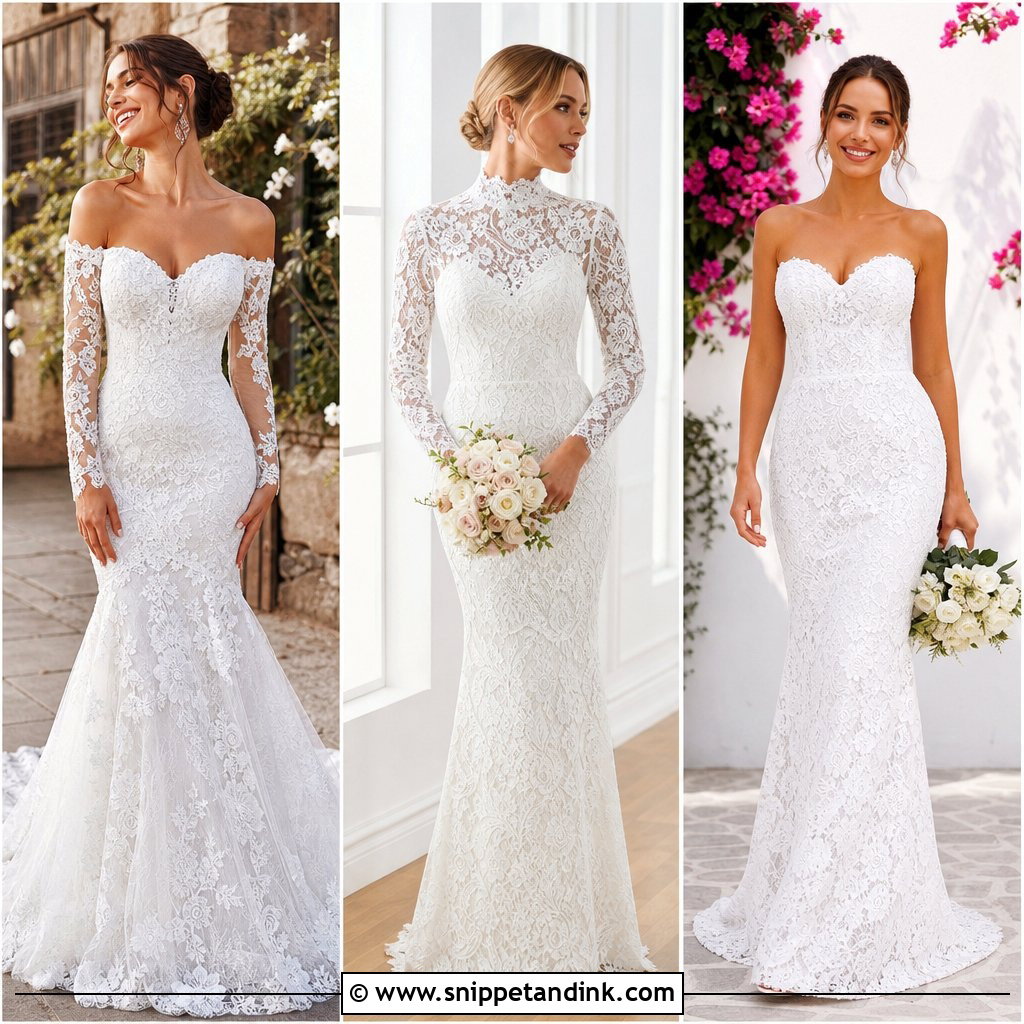
20. Short Sleeve Wedding Dress
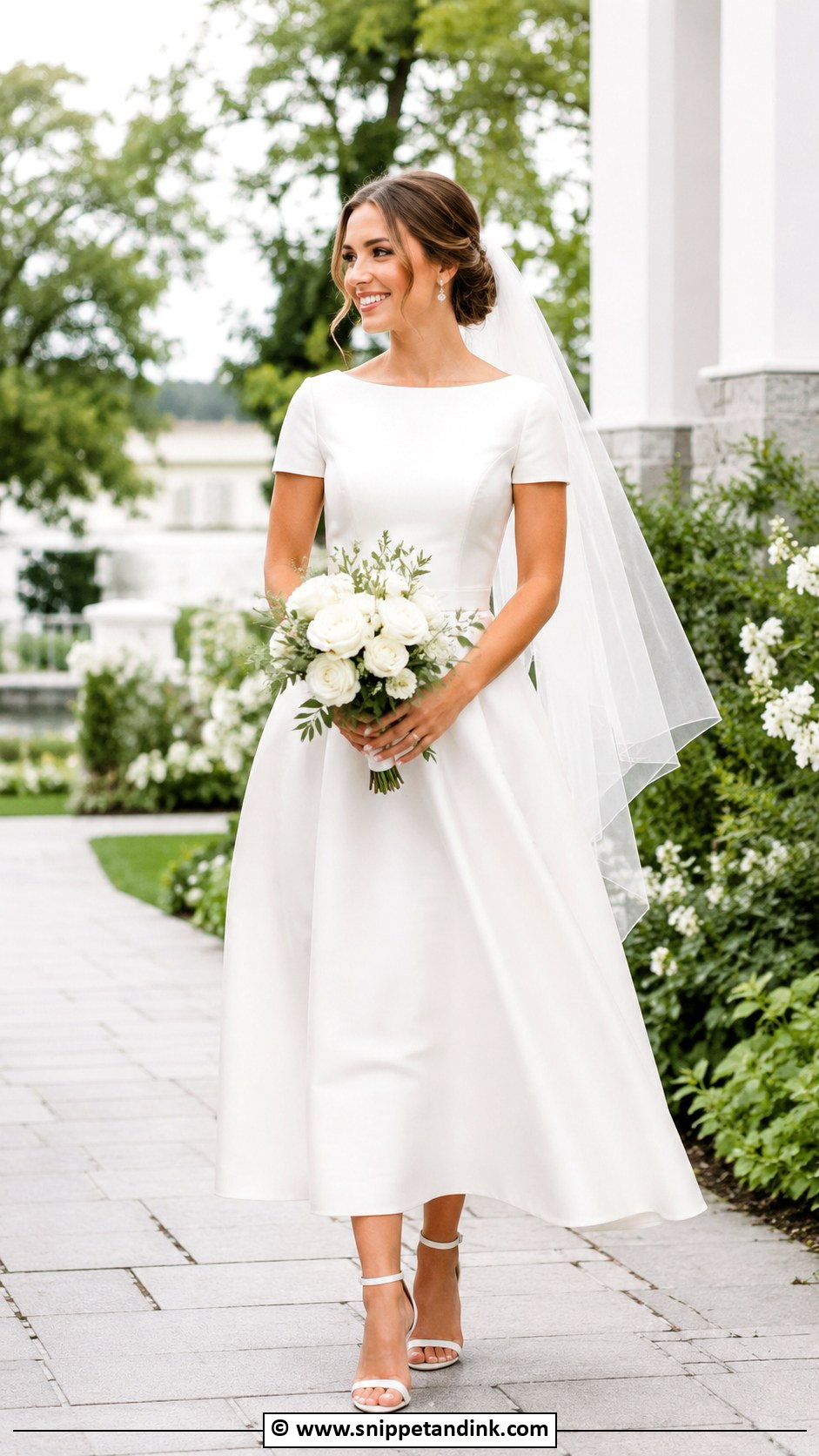
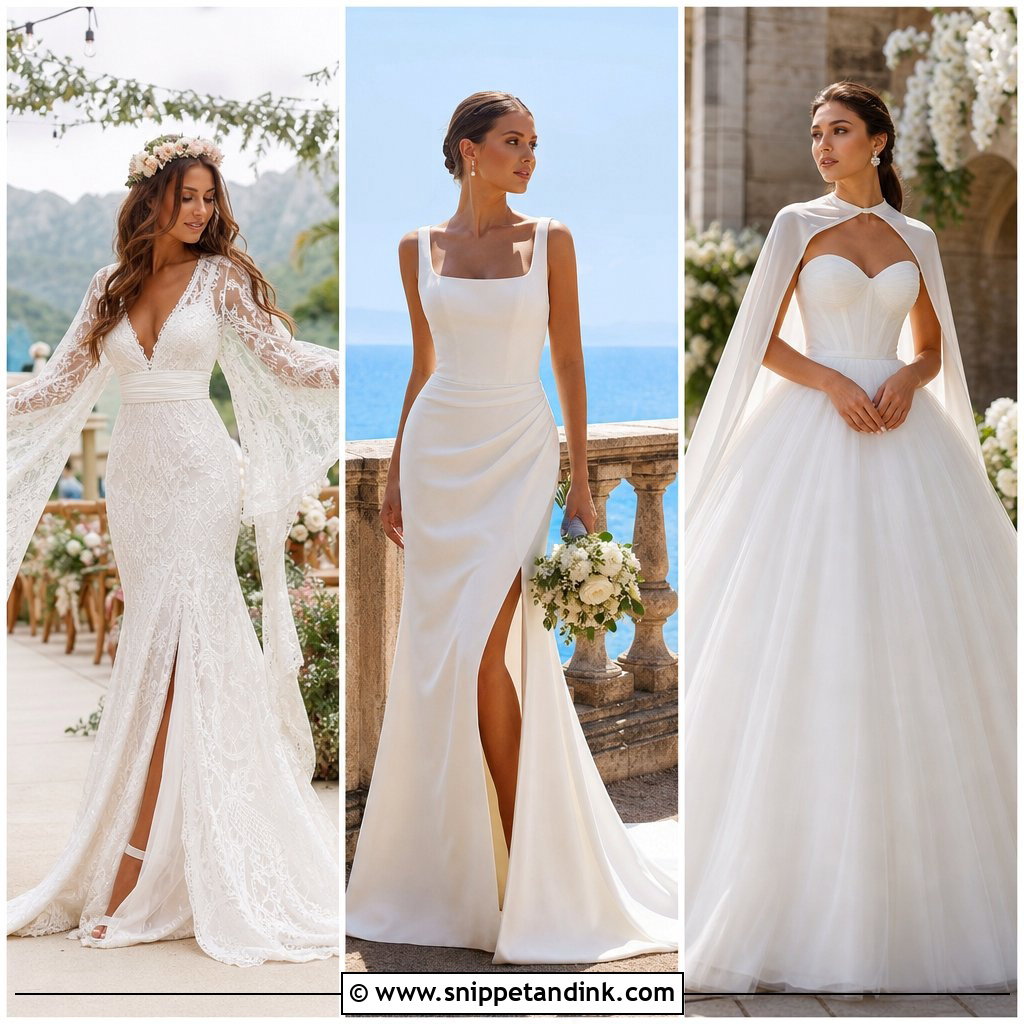
A short sleeve wedding dress covers the shoulders without the heat of long sleeves, which makes it my default for outdoor summer ceremonies. Flutter sleeves move and soften the upper arm. Cap sleeves are neater but cut in if they’re tight, so check you can lift a bouquet to chest height comfortably. Lace, flutter or crepe sleeves all work in A-line, sheath, midi and maxi lengths. The upper body already looks balanced, so ankle-strap heels, a soft veil and small earrings are enough.
21. Square Neck Wedding Dress
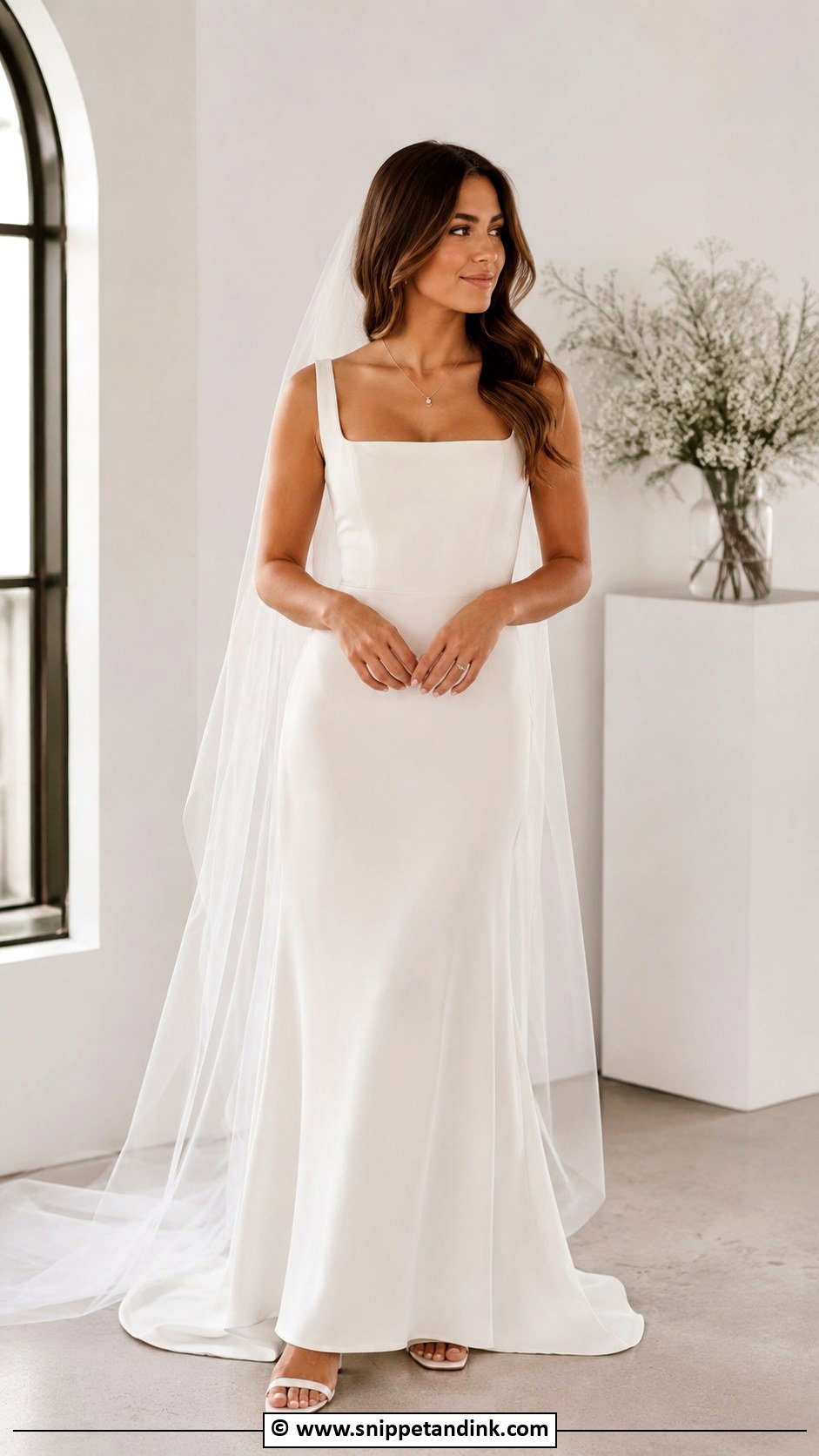
A square neck frames the collarbone and holds its shape, which makes an inexpensive dress look deliberate. The width decides it. Too wide and the straps slip off the shoulders; too narrow and it can look like a nightgown, so I have the strap position checked at the fitting. Satin looks sleek, cotton blends relaxed, crepe polished. A simple pendant sits neatly inside the neckline, and a low bun works with its geometry rather than against it.
22. Corset Wedding Dress
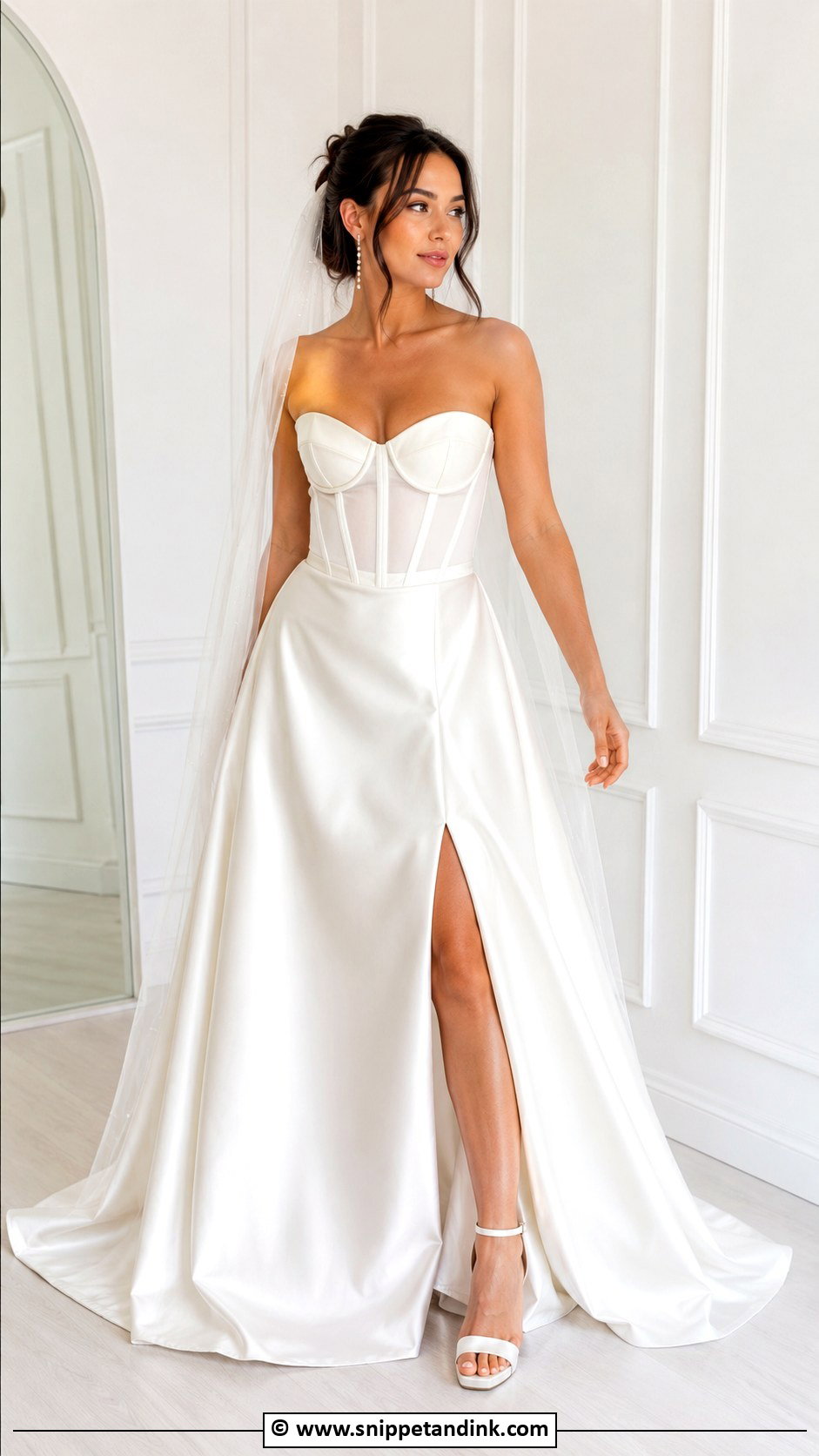
Visible boning and lace-up backs give an off-the-rack dress a fitted shape without the cost of rebuilding a bodice. Movement is the test: sit, walk and lift your arms over your head in the fitting room. If the top edge digs into your ribs, or the bodice slides down when your arms go up, it will be worse six hours later. Lace-up backs are forgiving because they adjust roughly a size either way, which helps if your weight shifts before the date. With a detailed bodice, keep the necklace minimal or skip it.
23. Puff Sleeve Wedding Dress
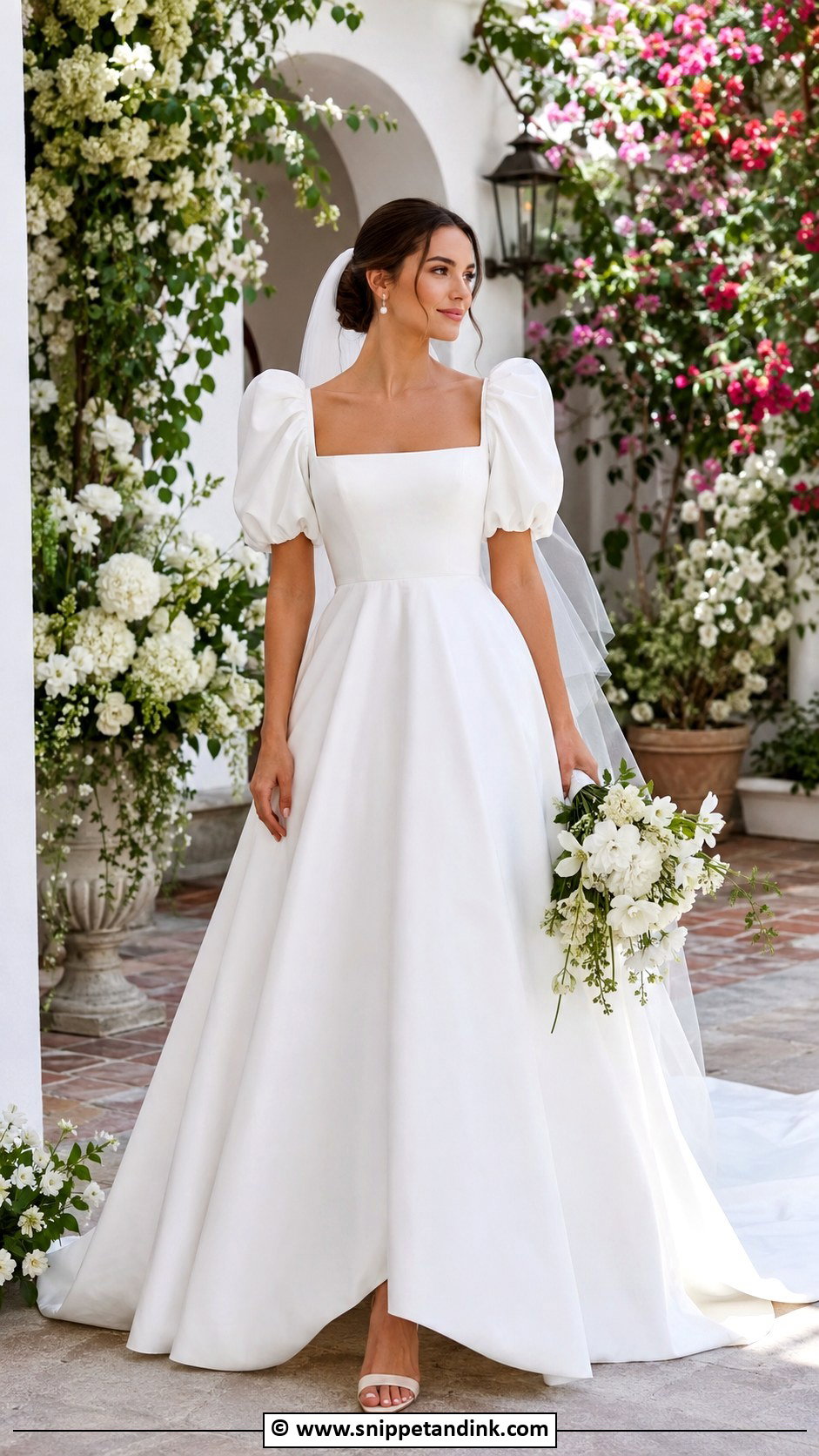
Puff sleeves add drama to a plain dress, so the rest can stay simple. Organza holds its shape best; cotton puffs flatten over a few hours and can look limp by the reception. Detachable sleeves give you two looks from one dress and come off easily for dancing. A square or sweetheart neckline balances them, and the skirt should stay slim or softly A-line so the sleeves aren’t competing with a full skirt. A hair ribbon or simple veil finishes it.
24. Floral White Wedding Dress
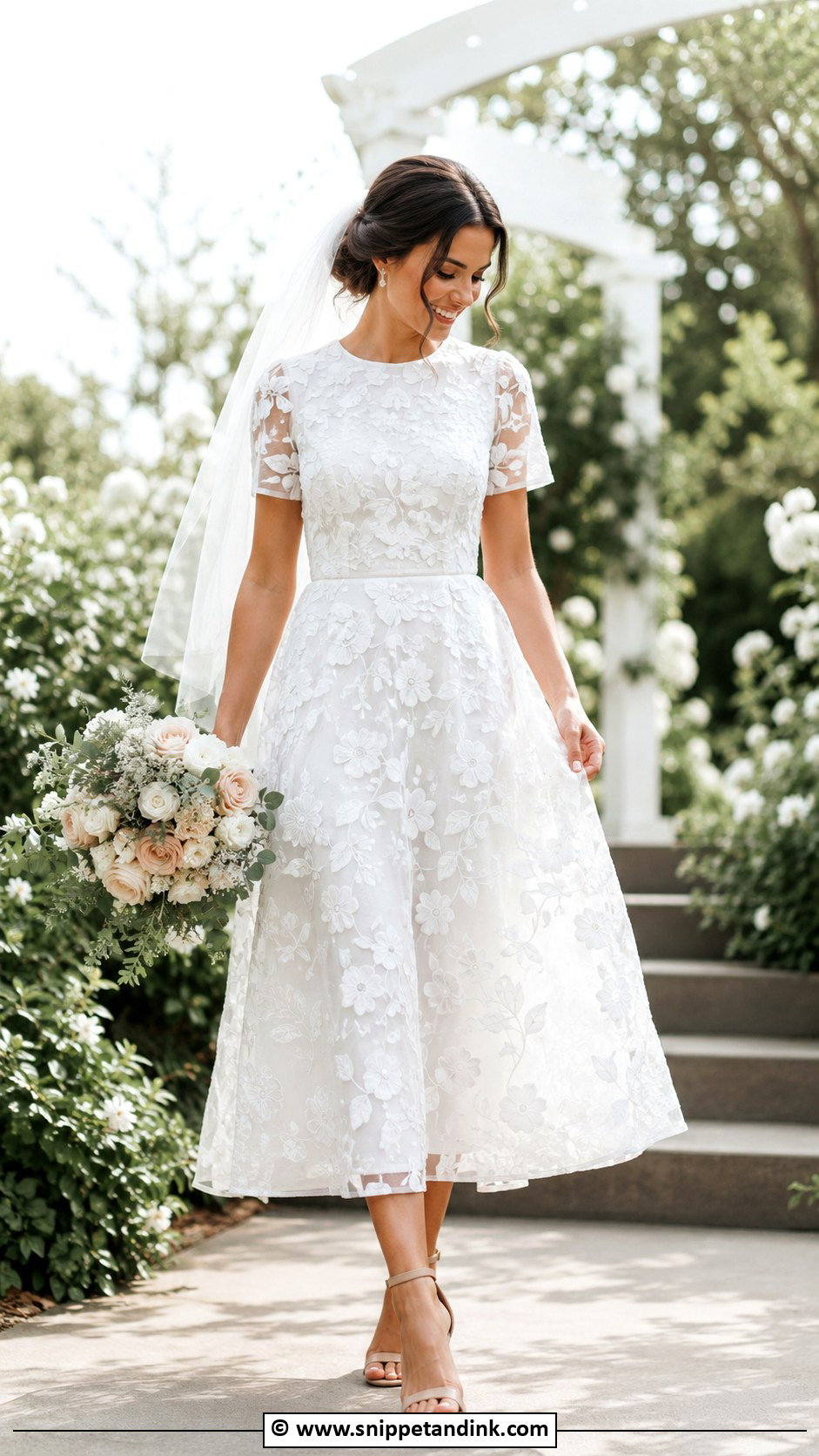
Embroidered flowers, lace florals and tone-on-tone appliqué add interest while keeping the dress clearly white. Colour is what I’d check. Coloured embroidery is pretty up close but can look busy from across a garden, and in photos small coloured flowers sometimes read as marks on the fabric. Tone-on-tone is the safer buy. With colourful florals, keep jewelry tiny and choose nude or ivory heels. These dresses suit spring and summer daytime weddings best.

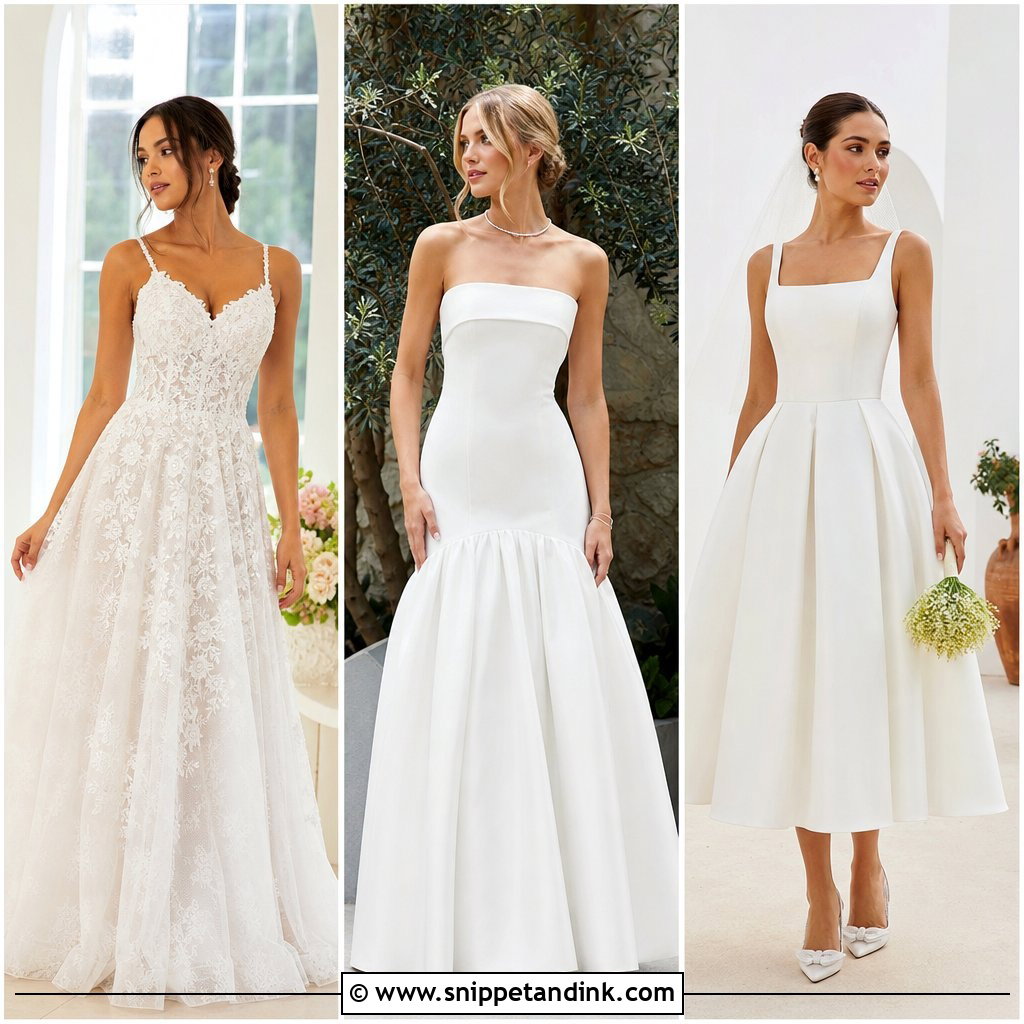
25. Reception Wedding Dress
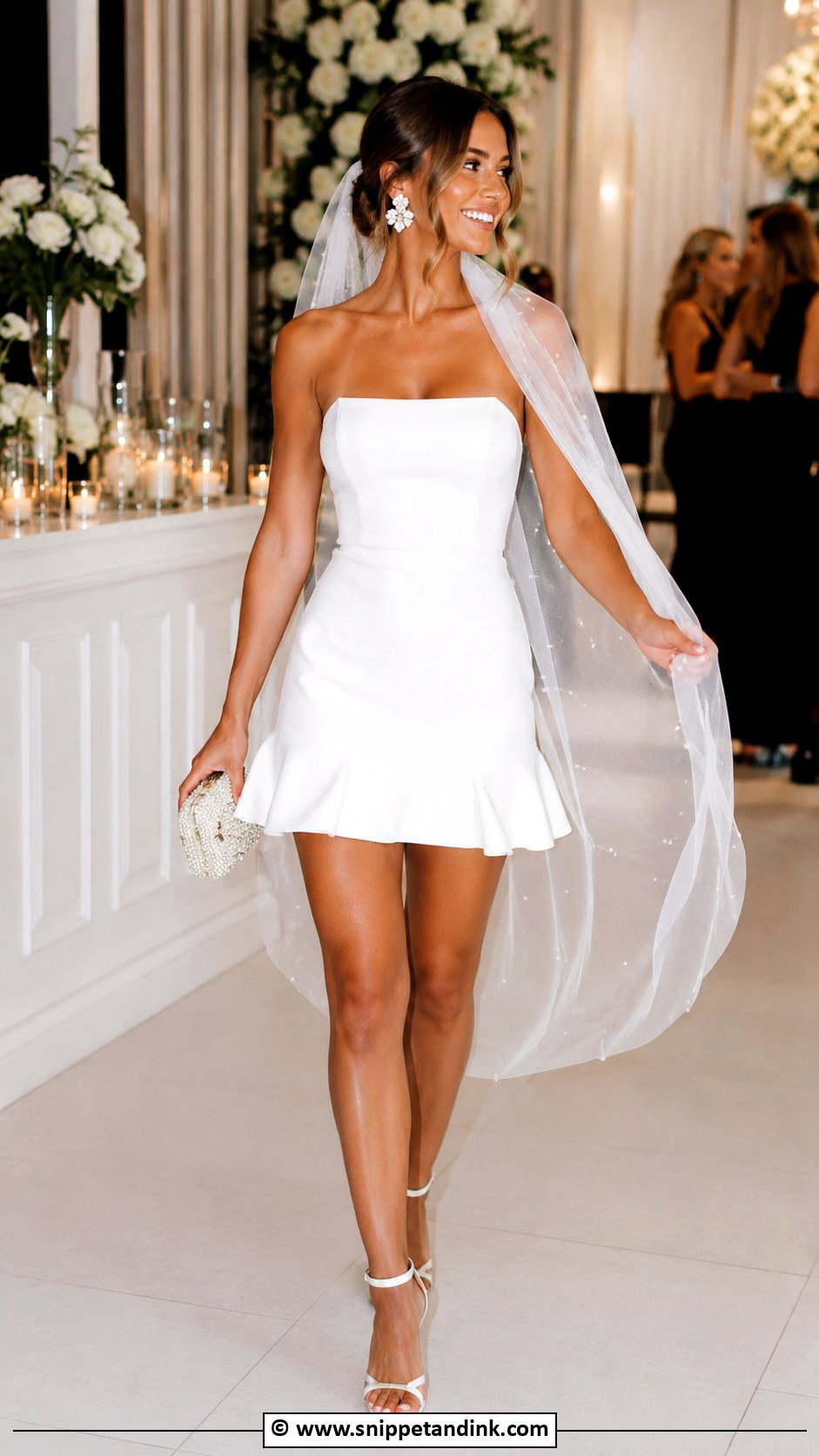
If the celebration is short, relaxed or built around dancing, a reception dress can be the main dress: a white mini, a feather-trim hem, a satin midi, a sequin maxi or a simple fit-and-flare. Sequins catch on lace and on other people’s clothes, and they can scratch the inner arm, so check the lining under the arms. Wear a veil for the ceremony and take it off later to change the mood without changing outfits. Comfortable heels, statement earrings and a small clutch are enough.
Three Fitting Room Tests I Run on Every Budget Gown
The inside-out check
Turn the dress inside out. Look for seams that are finished rather than raw and fraying, a zip that lies flat without waves, and a lining cut as its own layer. Then crush a fold of the skirt in your fist for five seconds and let go. If it stays creased, it will look crumpled after the ceremony and the car ride.
The hug and sit
Sit down, step up onto something, raise both arms and hug an imaginary guest. Straps that slip, a bodice that lifts or a hem that catches under your heel will only get worse as the day goes on.
The window test
Hold the dress beside your veil and shoes in daylight by a window. Whites from different shops rarely match exactly, and the camera exaggerates the gap.
How Inexpensive Fabrics Behave by the Evening
Cheaper fabrics usually give themselves away late in the day rather than first thing. Polyester satin creases across the lap, cotton wrinkles almost as soon as you sit, and thin chiffon picks up static. Steam the dress on the morning, holding the steamer a hand’s width away so water doesn’t spot the satin, and hang it by its inner loops rather than its straps so the shoulders don’t stretch.
Hand a bridesmaid a small pouch: double-sided fashion tape, safety pins, a needle threaded in the dress colour, white chalk for marks on ivory, and a stain pen you’ve tested on an inside seam. Most dress problems on the day are a strap, a hem or a spill, and each one takes minutes to fix when the tools are there.
Fit Is What People Remember
A dress doesn’t need a high price to mean something. What makes an inexpensive gown look right is fit, fabric weight and a few accessories that agree with each other. Shop sample sales, resale sites, high street stores, bridesmaid and prom sections and vintage shops, then put your money into the tailor rather than the label. Slip, lace A-line, courthouse mini or jumpsuit, the one you’ll be glad of is the one you can sit, hug and dance in without thinking about it.
You'll Like These Ideas:


Leave a Reply