
A wedding manicure gets looked at more closely than almost anything else you wear. Guests reach for your hand to see the ring, the photographer shoots it with a macro lens, and you spend the whole day holding flowers, glasses and other people’s hands. So when I plan a bridal set, I think about comfort and close-up detail before I think about trends. The twenty sets below run from classic French tips to pearls, chrome, lace and small hand-painted florals, on short, almond, square and oval shapes, and for each one I’ve noted what makes it work on the day and where it tends to let a bride down.
What a Macro Lens Sees on Your Ring Finger
Most brides judge their nails in a mirror or at arm’s length. Your photographer will shoot your hand from a few inches away, often with a macro lens, and that picture shows things nobody at the table would notice: dry cuticles, a lifted edge, a tiny bubble in the top coat, or a nude that turns grey next to yellow gold.
So the first things I check at a bridal consultation have nothing to do with design:
- The cuticle area. I push back and tidy it a week or two ahead, then keep it oiled every night, so it’s soft and flat on the day rather than freshly cut and pink.
- The ring metal. Yellow gold flatters warm nudes and blush; platinum and white gold sit better with cooler pinks, milky white and silver chrome. I swatch the base with the ring on.
- Shape against the stone. A wide oval or emerald cut looks balanced with almond or oval nails, while very long coffins can make a small solitaire look smaller.
- Skin on the back of the hand. A hand cream that sinks in fully the night before beats one applied an hour before photos, which leaves a shine the camera catches.
None of this needs an expensive design. A plain sheer pink on well-prepped nails photographs better than detailed art on a set with ragged cuticles.
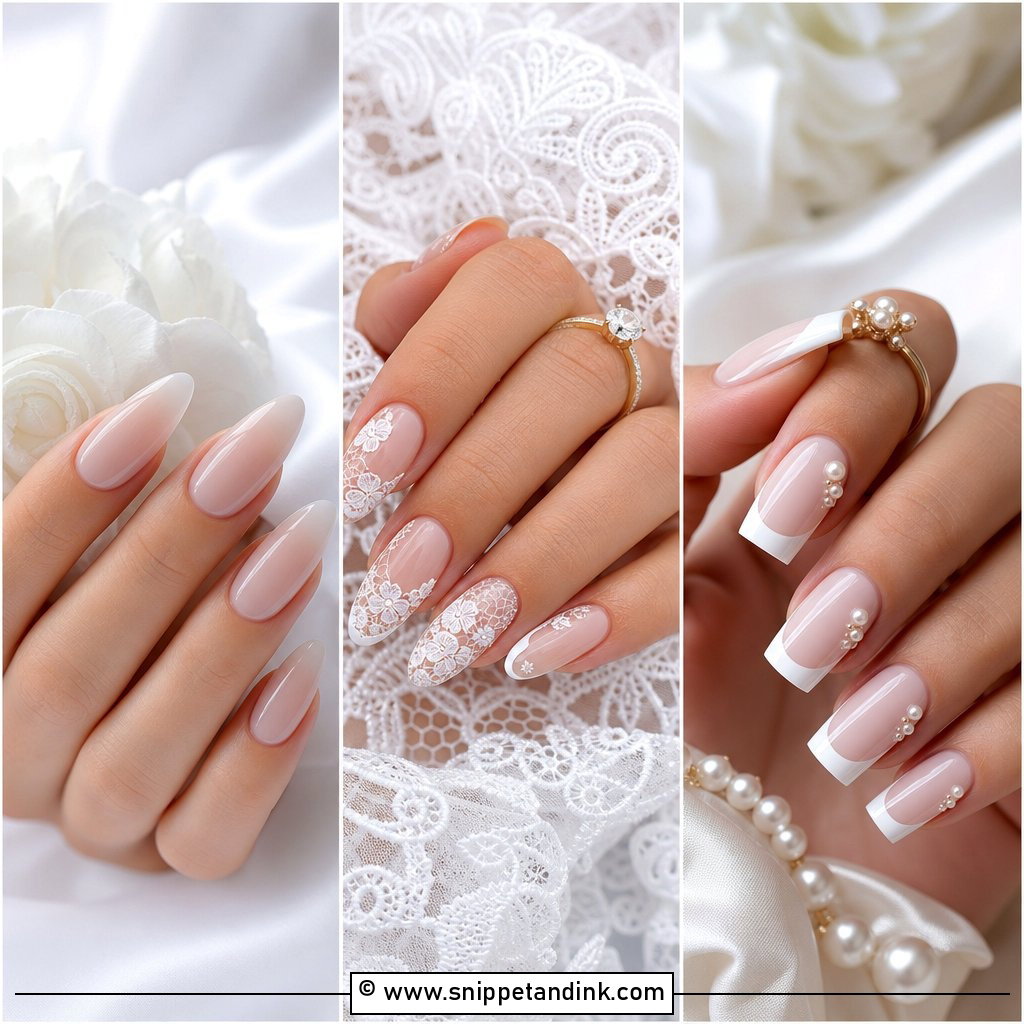
1. Bride French Tip Nails
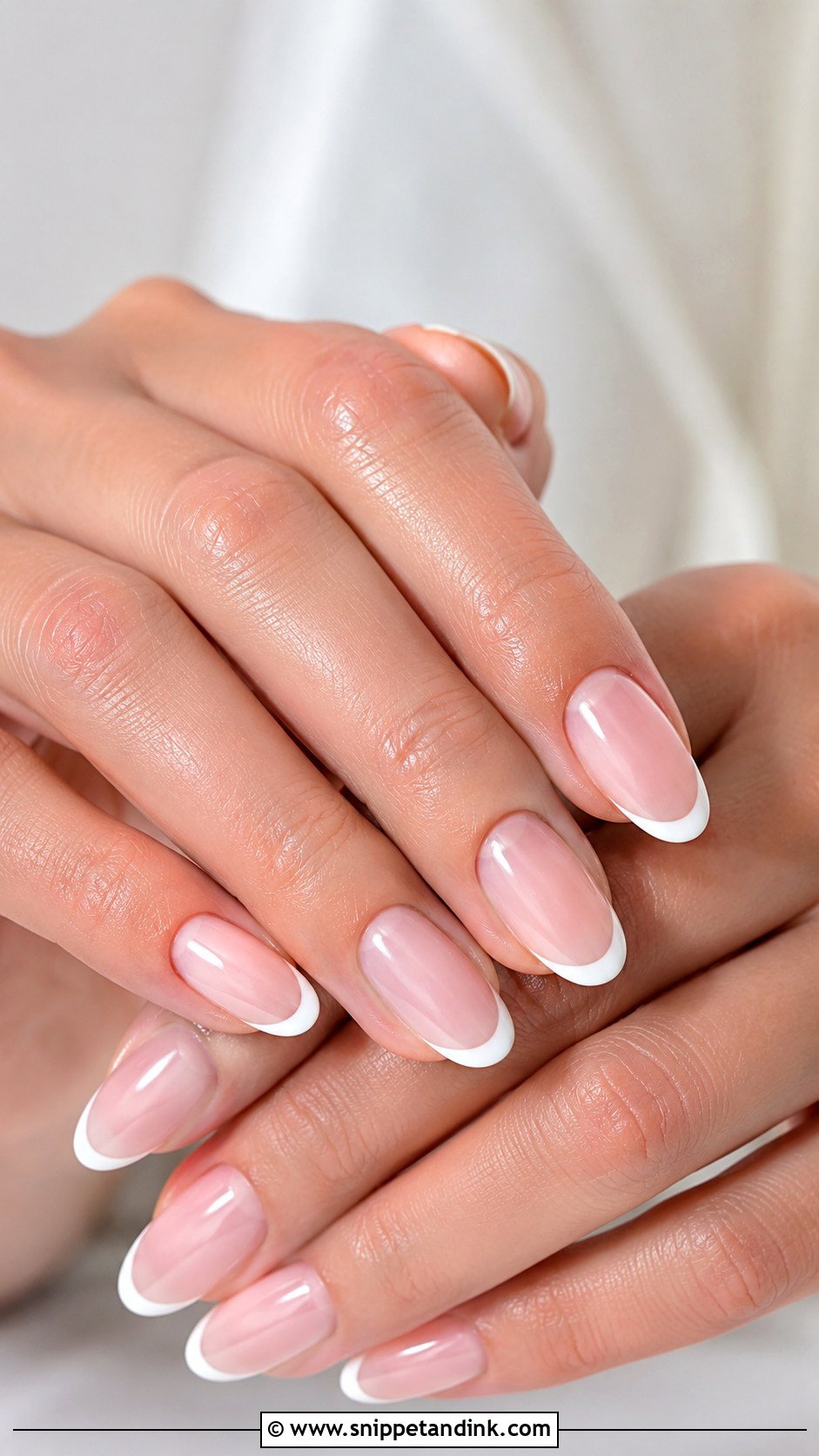
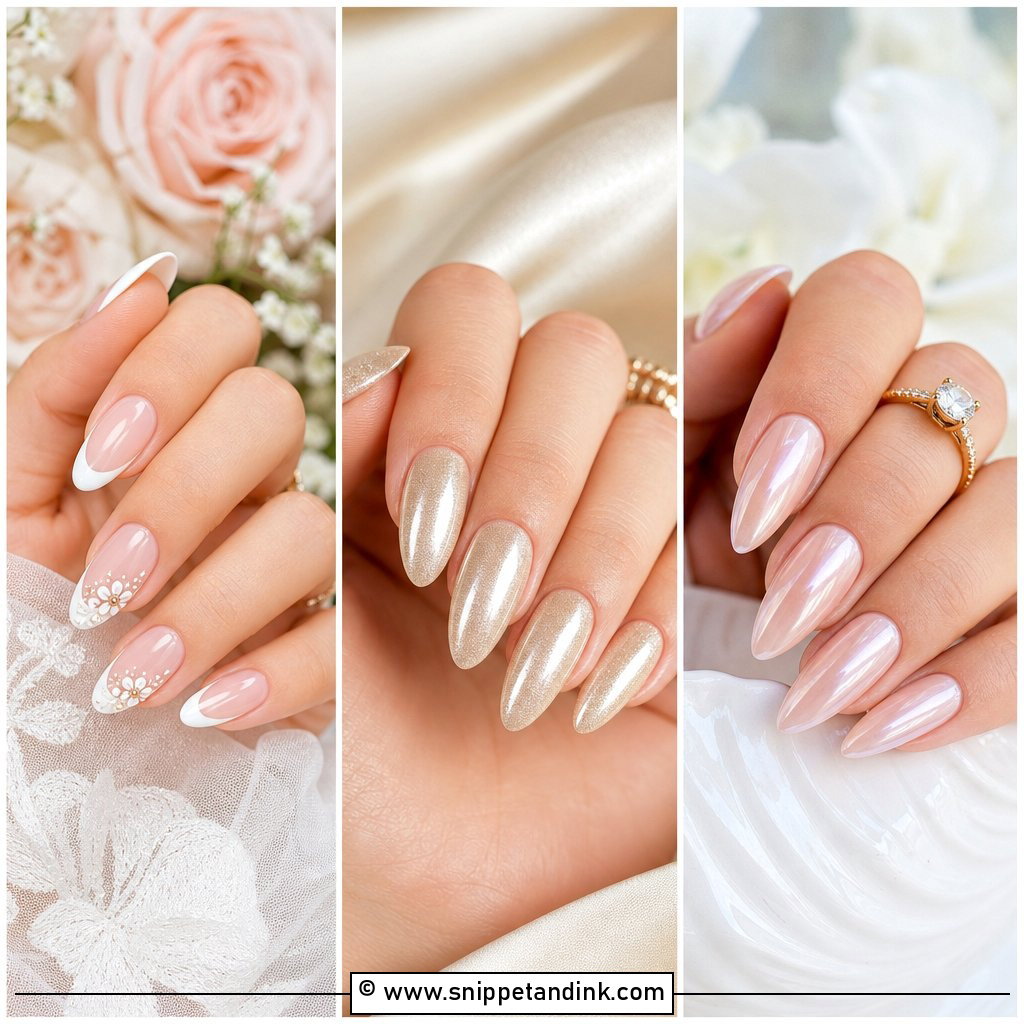
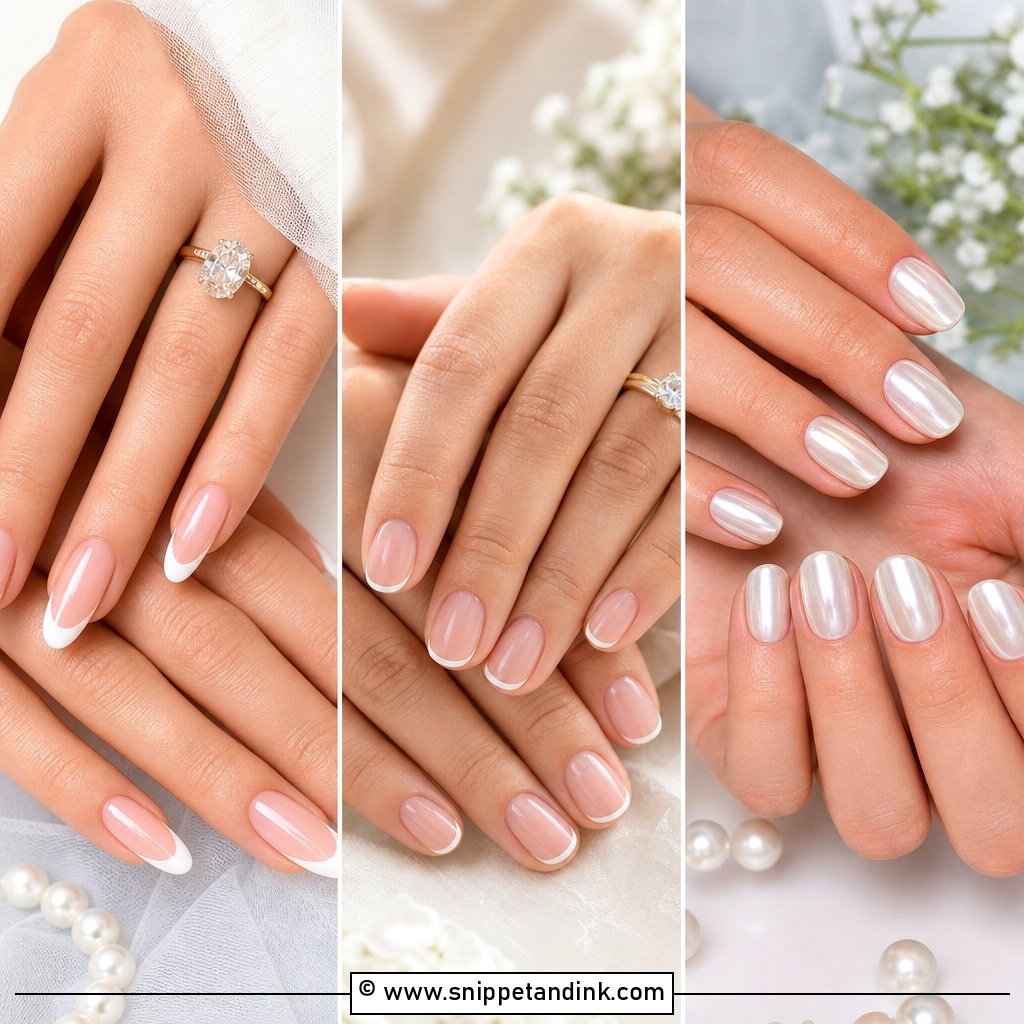
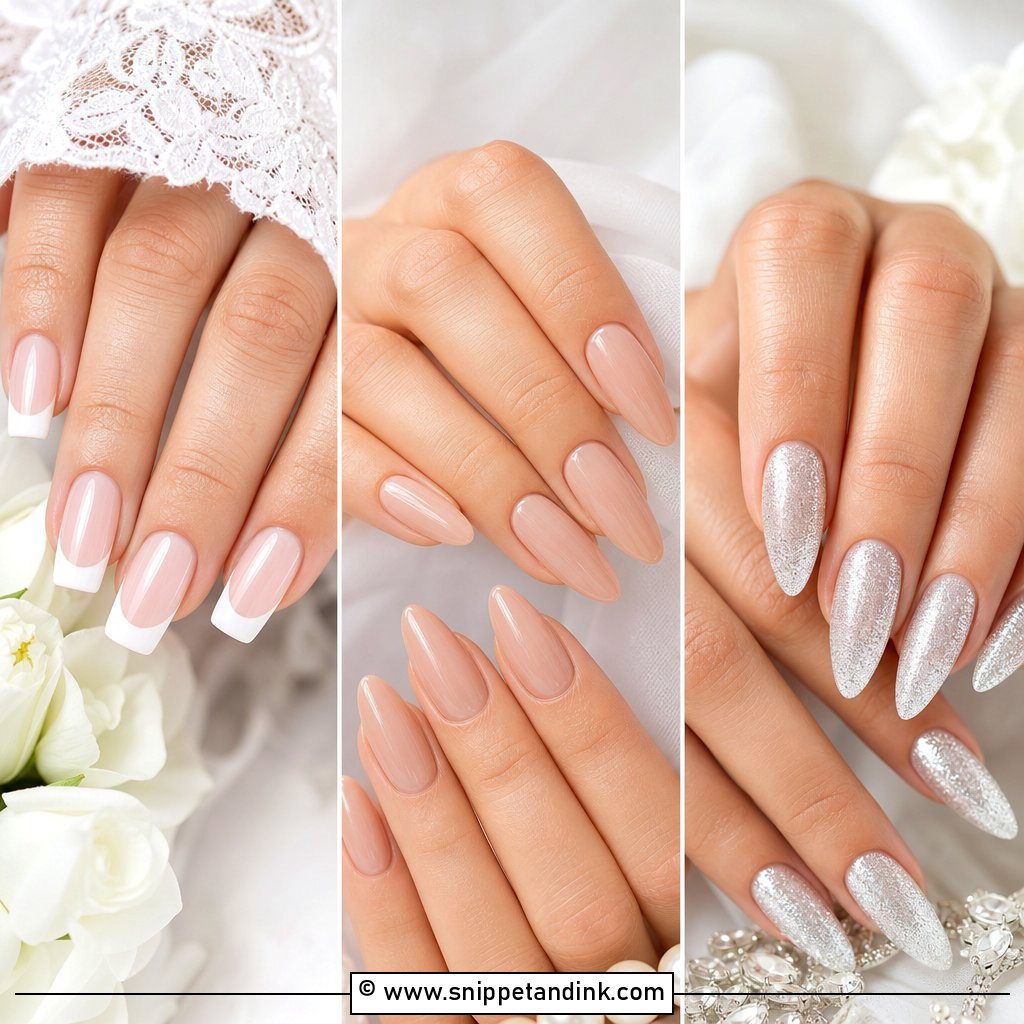
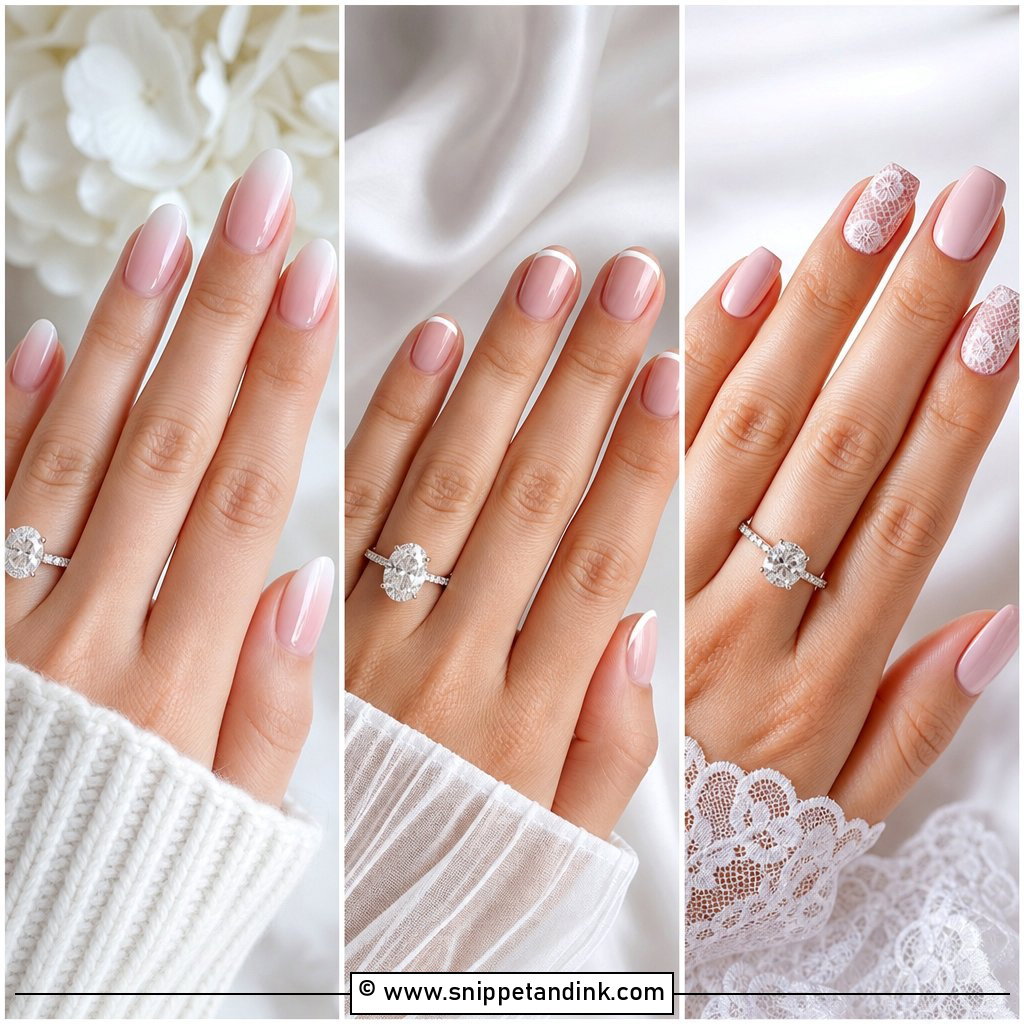
French tips have stayed the default bridal set because the pink base evens out the nail bed and the white edge makes the whole hand look tidy. What dates a French set is a thick, flat smile line. I paint the tip thinner than most people expect, following the natural curve of the free edge, so it reads as clean rather than bold in photos. It sits well on almond, oval and short square nails, and it won’t fight with a satin or minimal gown. It’s also the set that still looks deliberate a week into the honeymoon.
2. Bride Milky White Nails
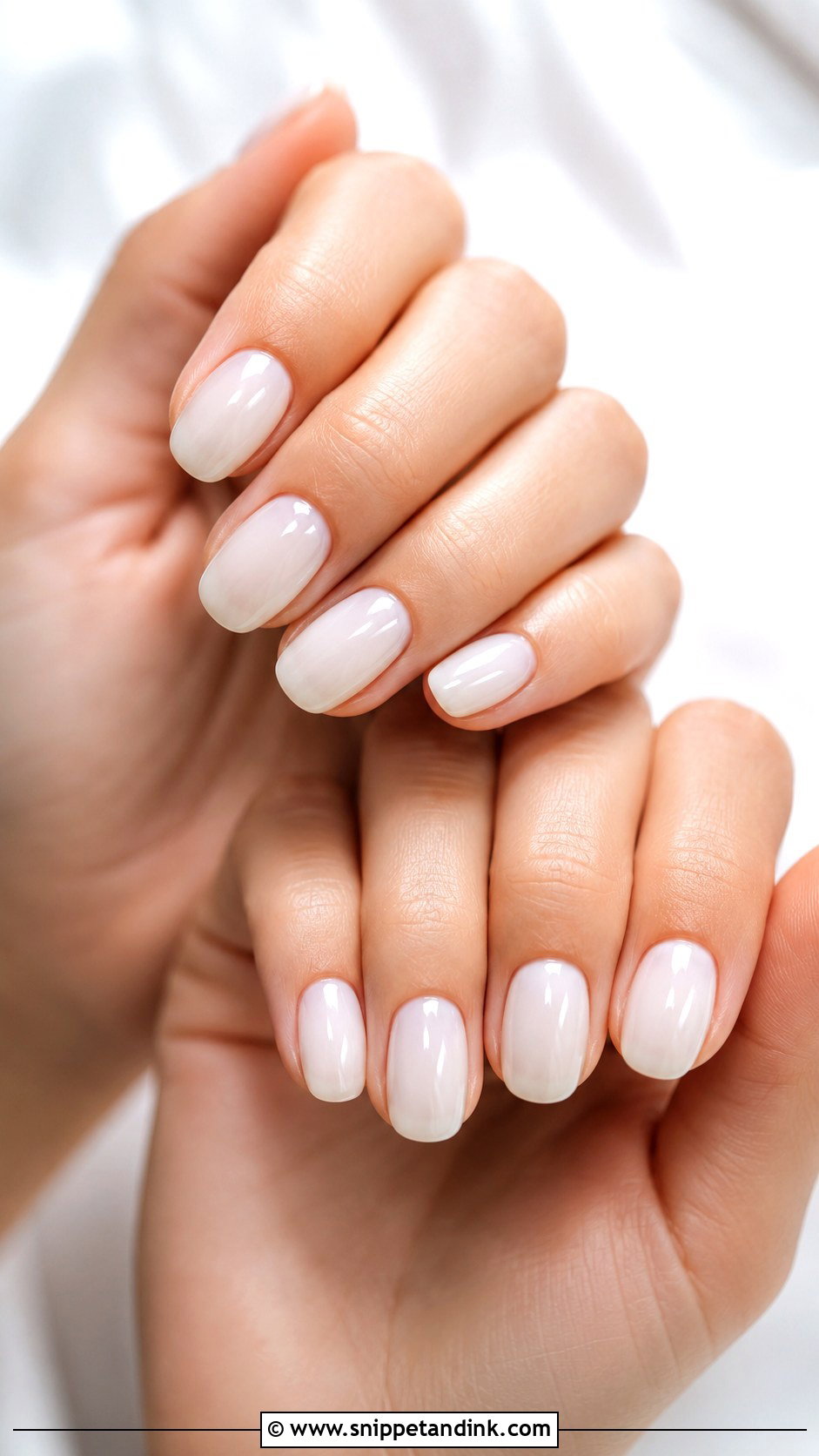
Milky white is a soft, cloudy white rather than correction-fluid white, and that difference matters next to an ivory or champagne dress, where a stark white nail can make the fabric look dingy. I build it in two or three thin sheer layers instead of one thick coat, which gives that porcelain depth and avoids streaks. On medium oval or almond nails it looks quietly expensive. The one catch: milky white shows any gap at the cuticle, so the prep has to be clean.
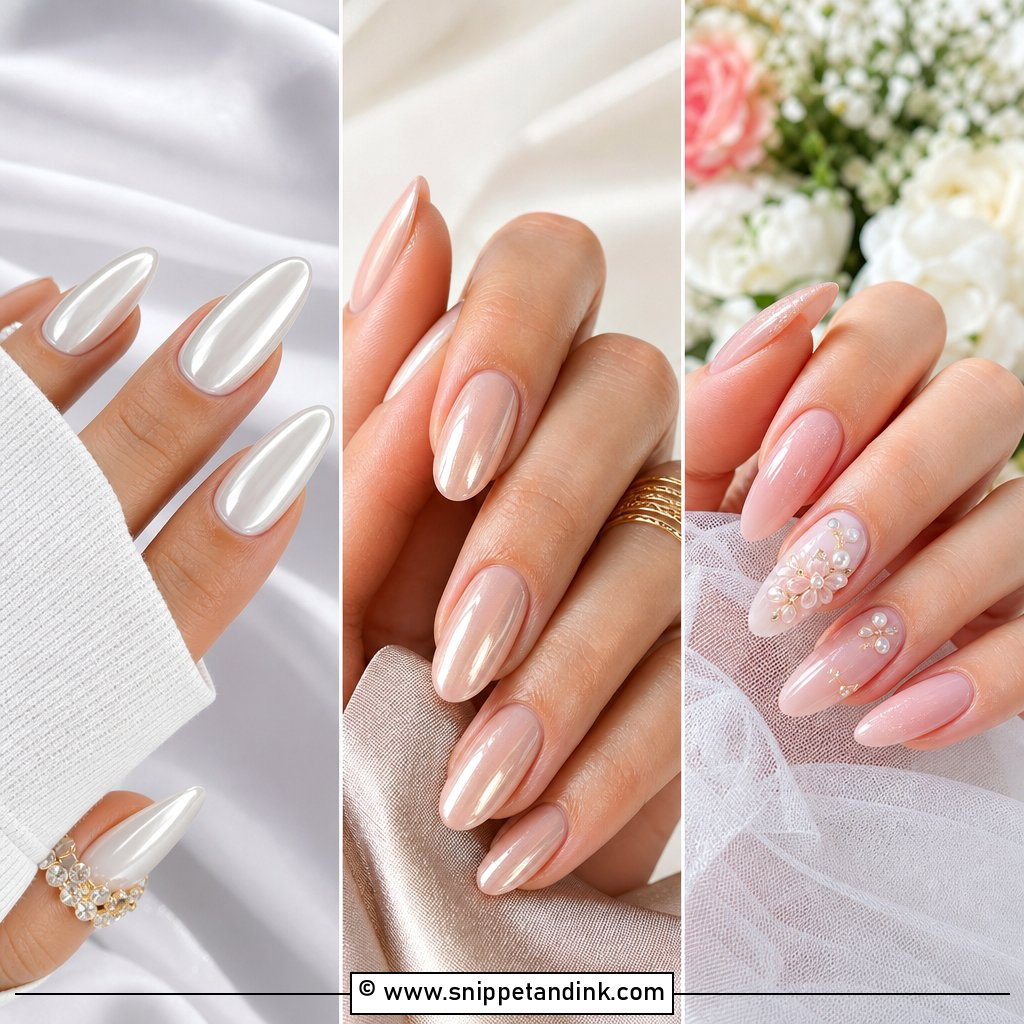
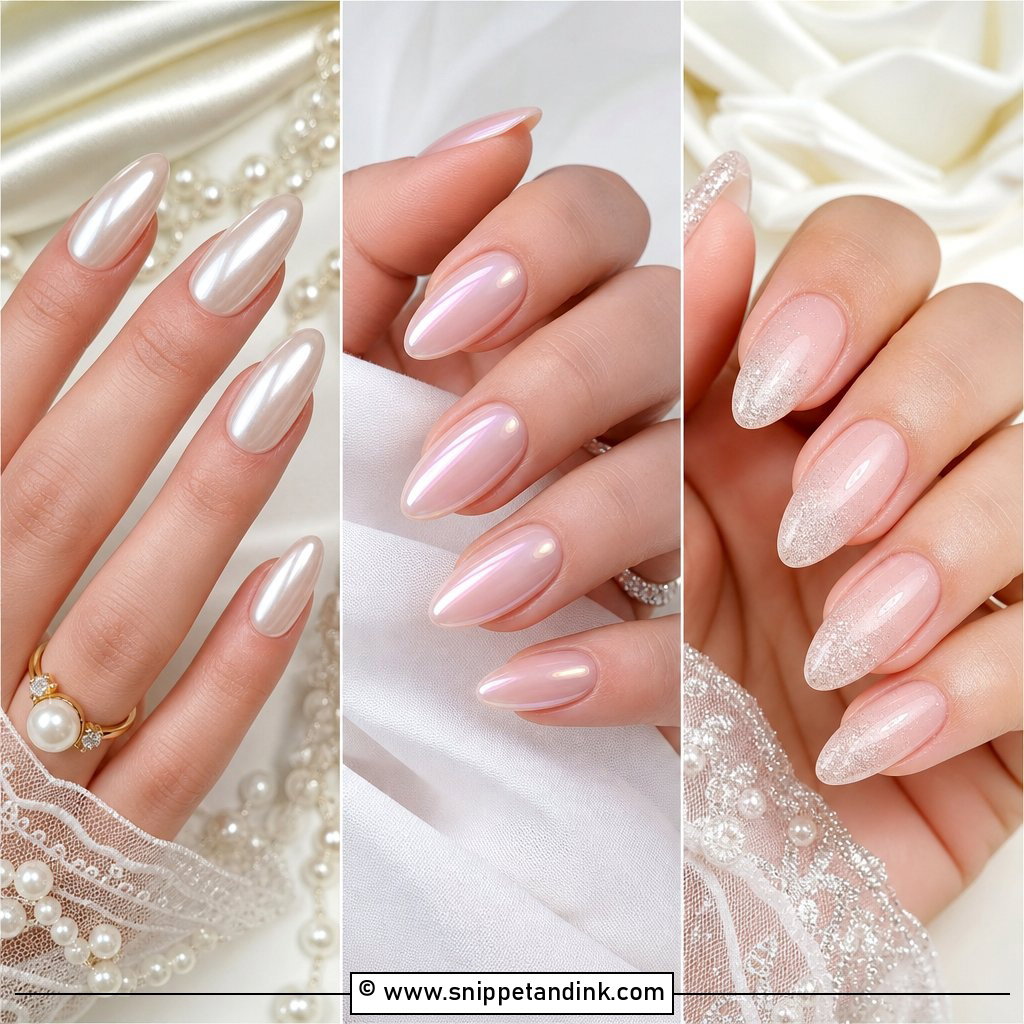
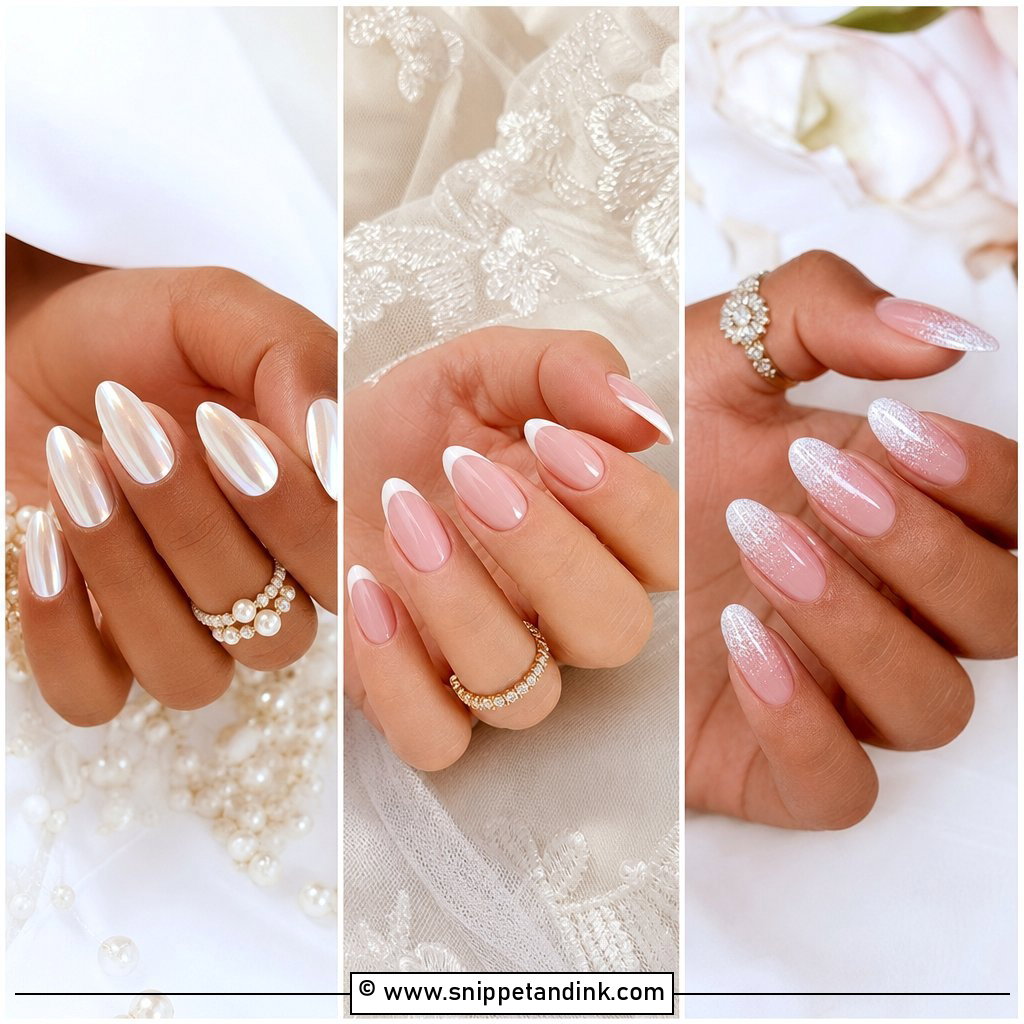
3. Bride Pearl Chrome Nails
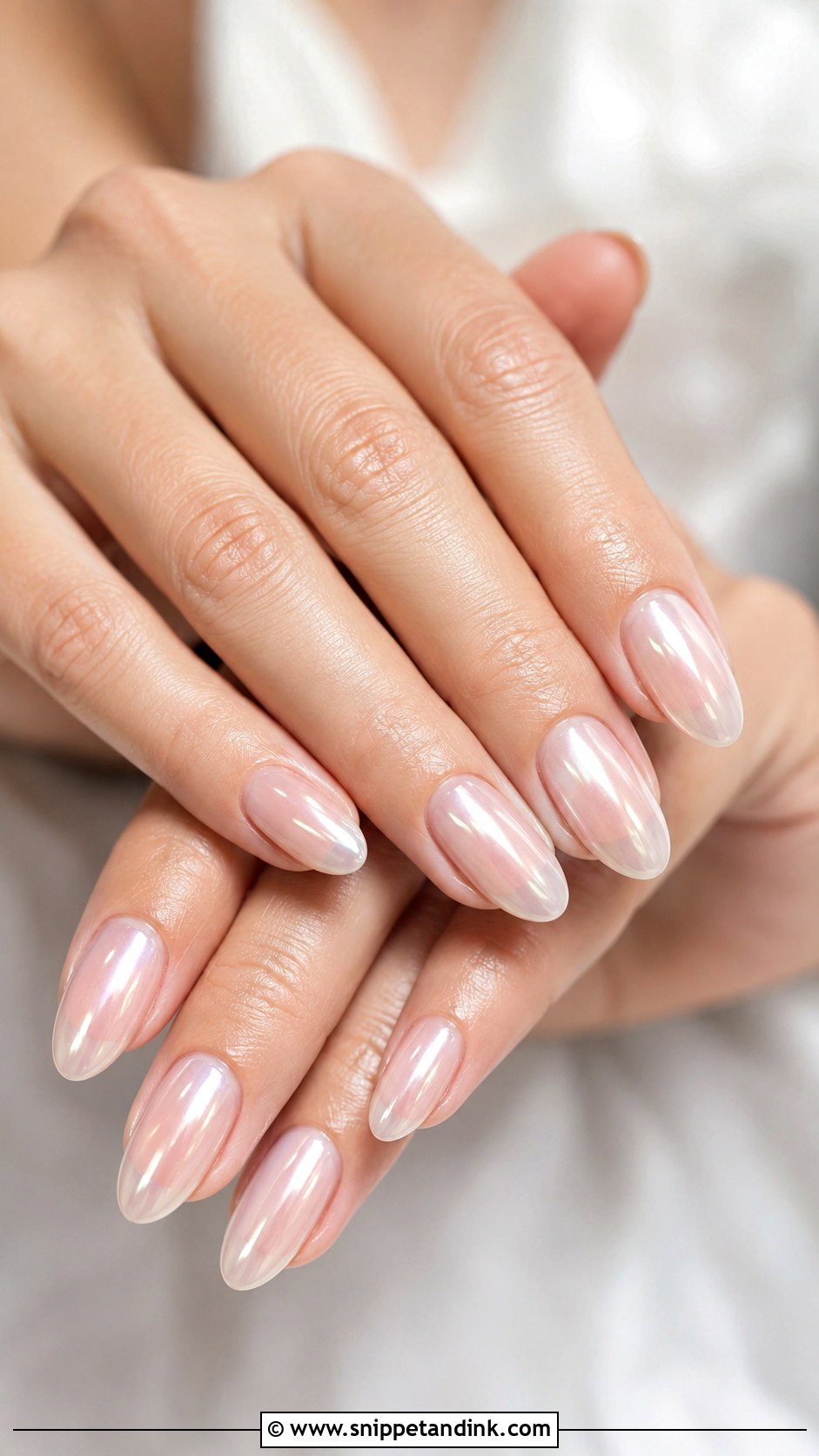
Pearl chrome is a fine powder buffed over a cured, no-wipe top coat on a sheer pink, milky or nude base. It gives a glow that shifts as the hand moves, which is why it looks so good in ring shots without reading as metallic. It goes naturally with pearl earrings, beaded veils and satin. I keep the shape simple, almond or oval, because the finish is the detail. If you want something past a plain polish but nowhere near glitter, this is where I’d start.
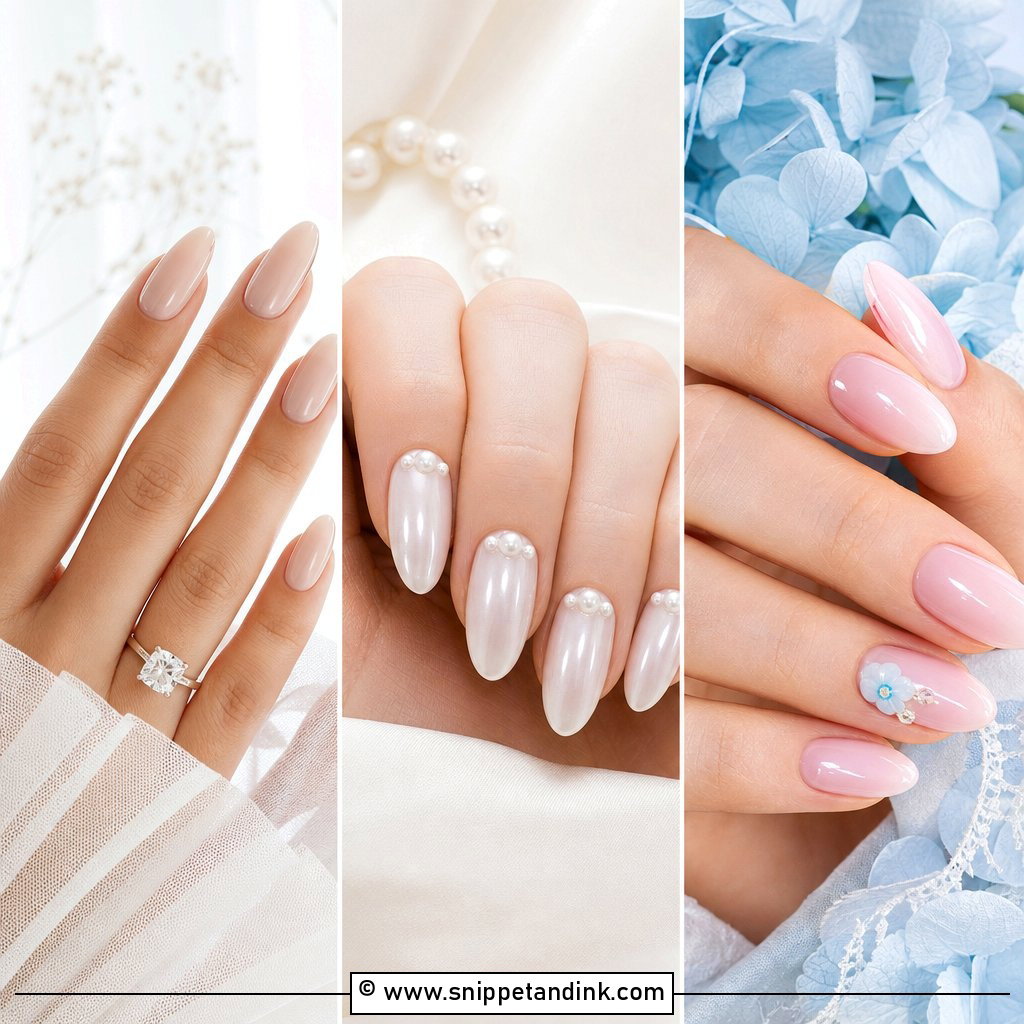
4. Bride Nude Almond Nails
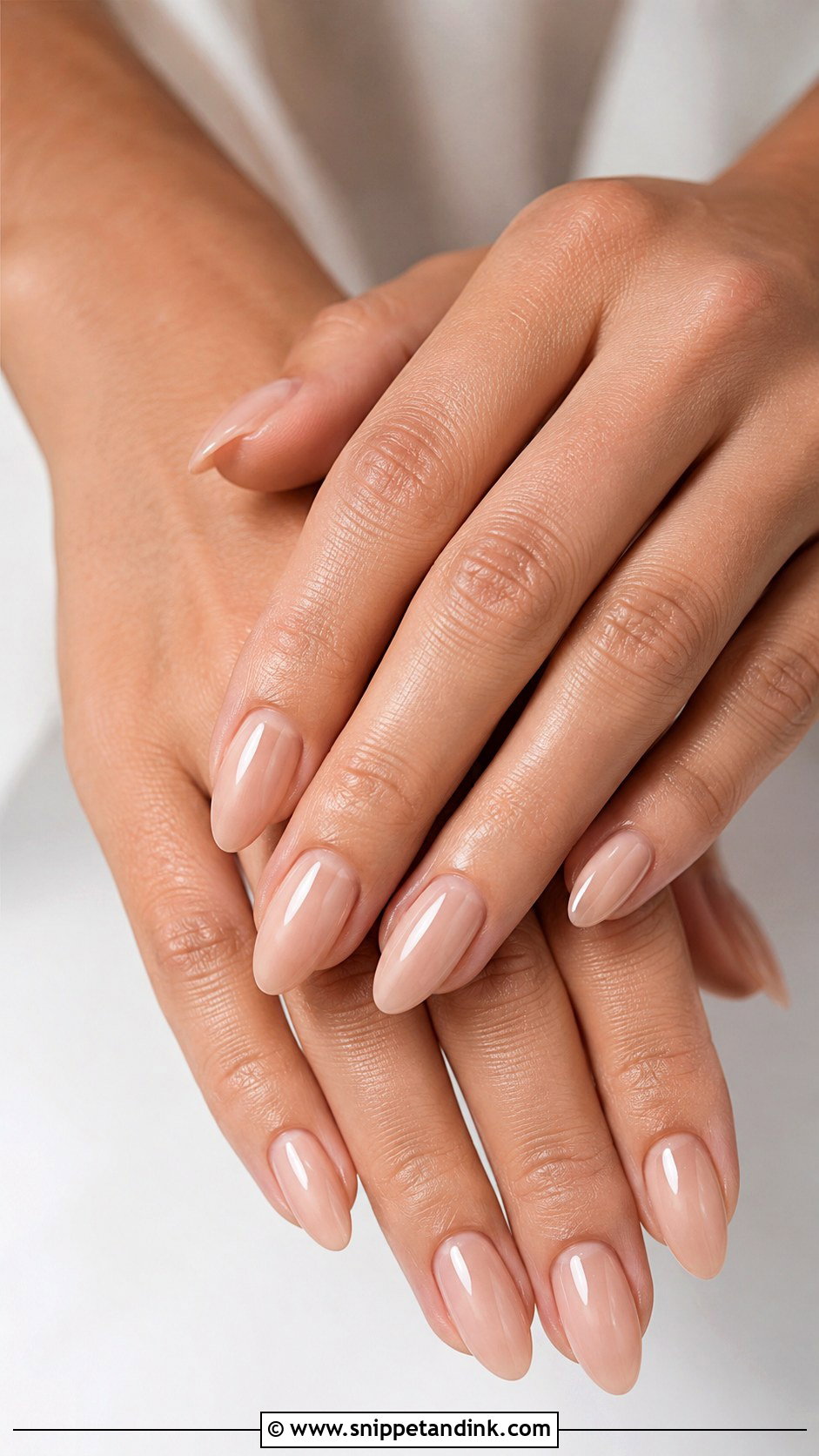
The almond shape slims and lengthens the fingers, and a nude base keeps attention on the ring rather than the nails. The real work is matching the nude to your undertone. I swatch two or three shades on the nail itself, never on a wheel: pinkish nudes suit cool and fair skin, beige sits well on neutral tones, and caramel or toffee nudes come alive on deeper skin. Pick the wrong one and the fingertips look grey or washed out. Finish with a high-gloss top coat, and add a tiny pearl or fine white line only if you really want one.
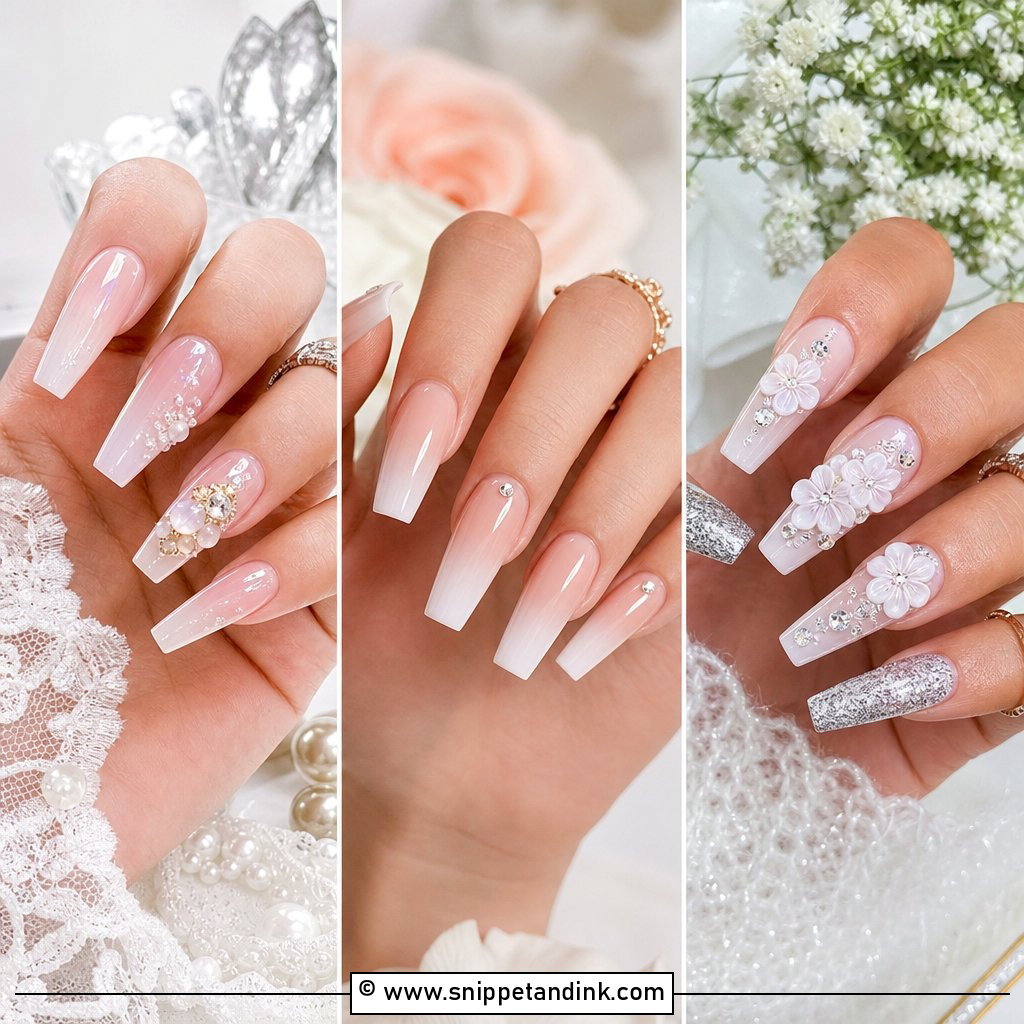
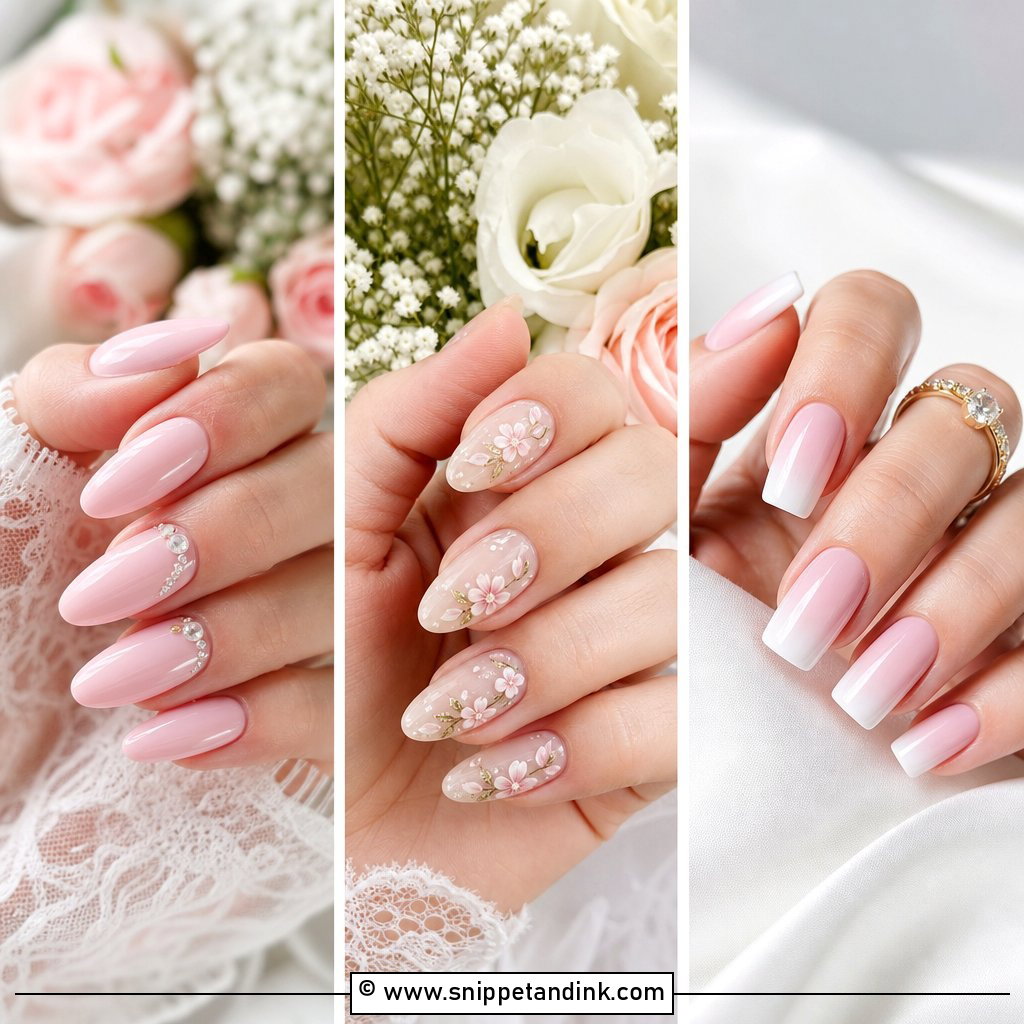
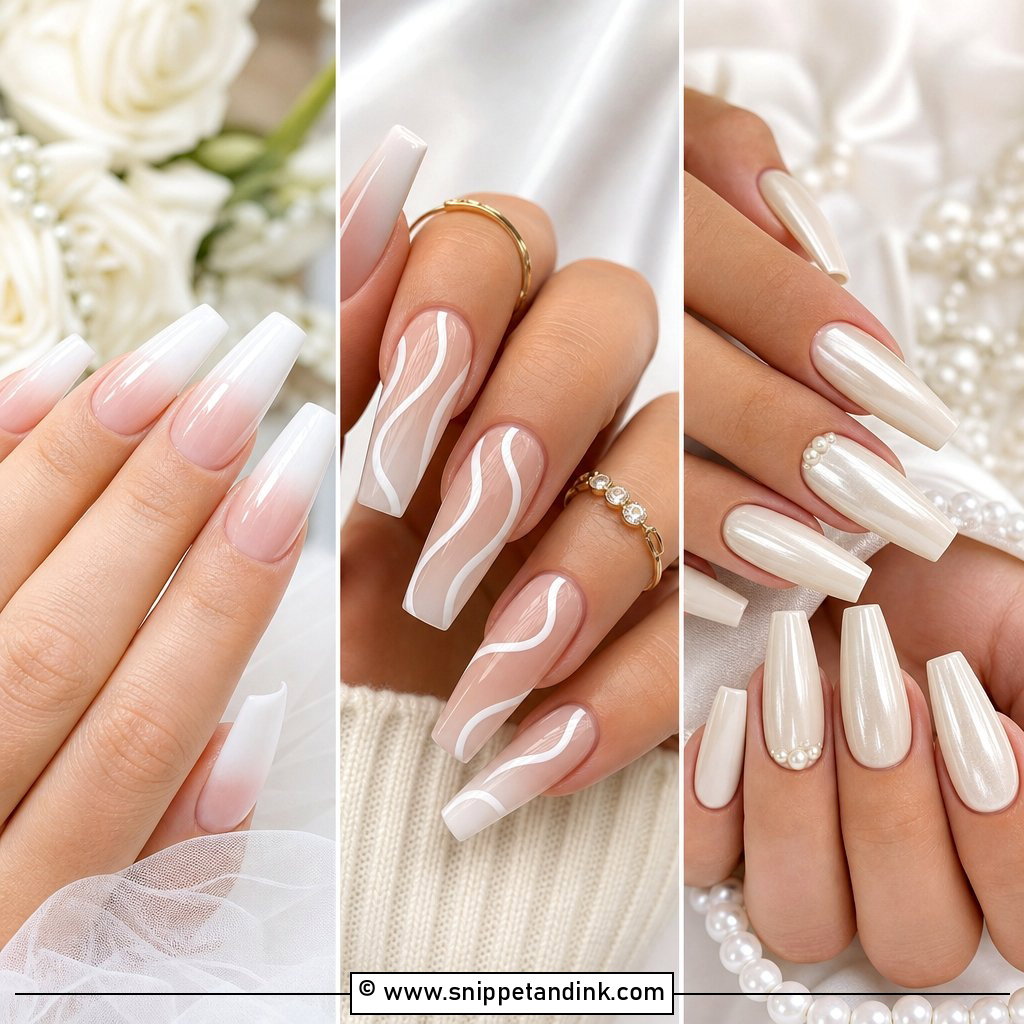
5. Bride Baby Boomer Nails
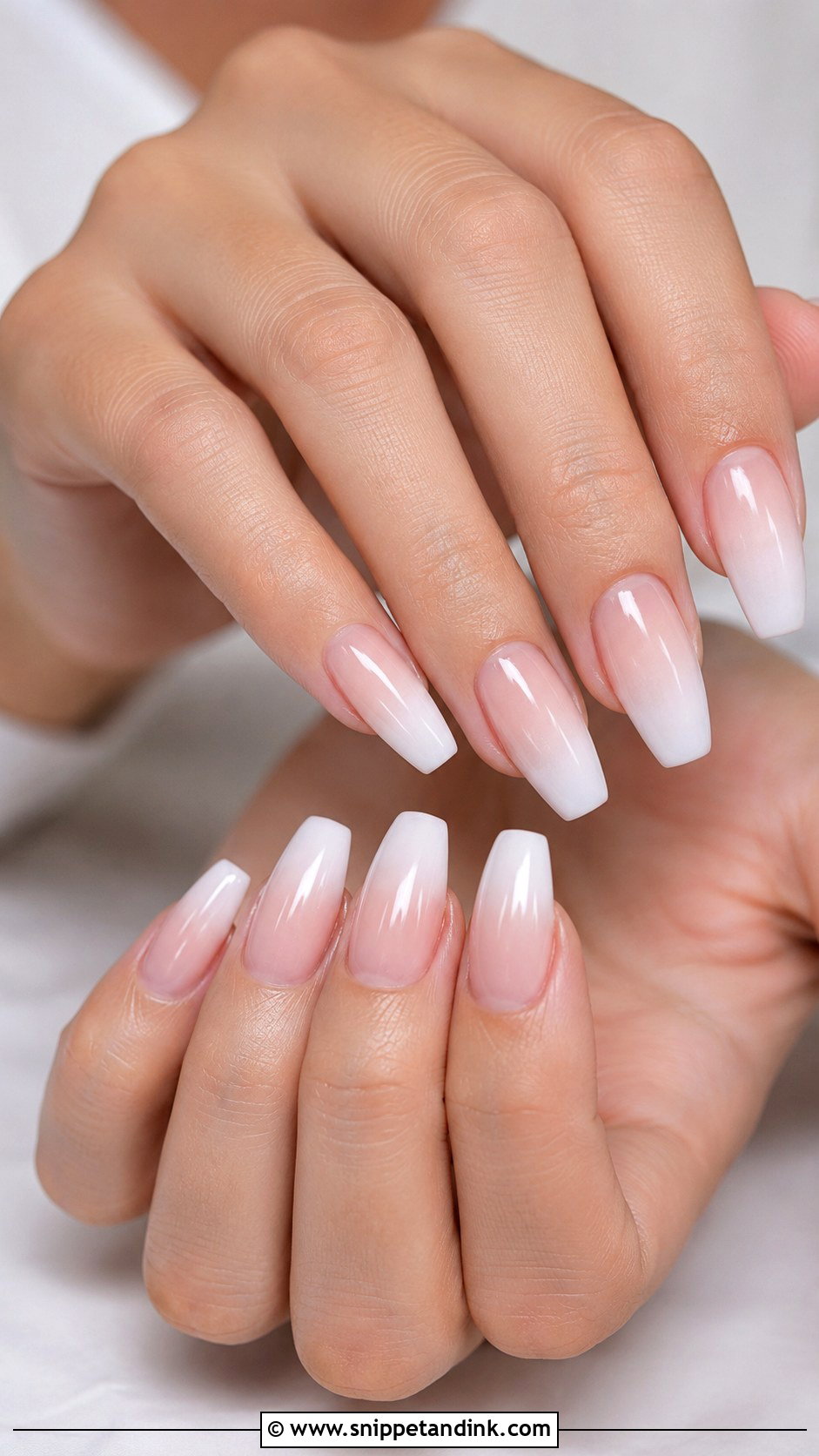
Baby boomer, also known as French ombre nails, blends a nude or pink base into a white tip with no hard line. Most of us sponge or airbrush the white on and then soften it with a sheer layer over the top, which is what stops it looking chalky. It needs some length to show the fade, so almond, coffin and oval shapes carry it best; on very short nails the gradient tends to compress into a smudge. A glossy top keeps it classic, and a pearl sheen pushes it slightly more modern.
6. Bride Glazed Donut Nails
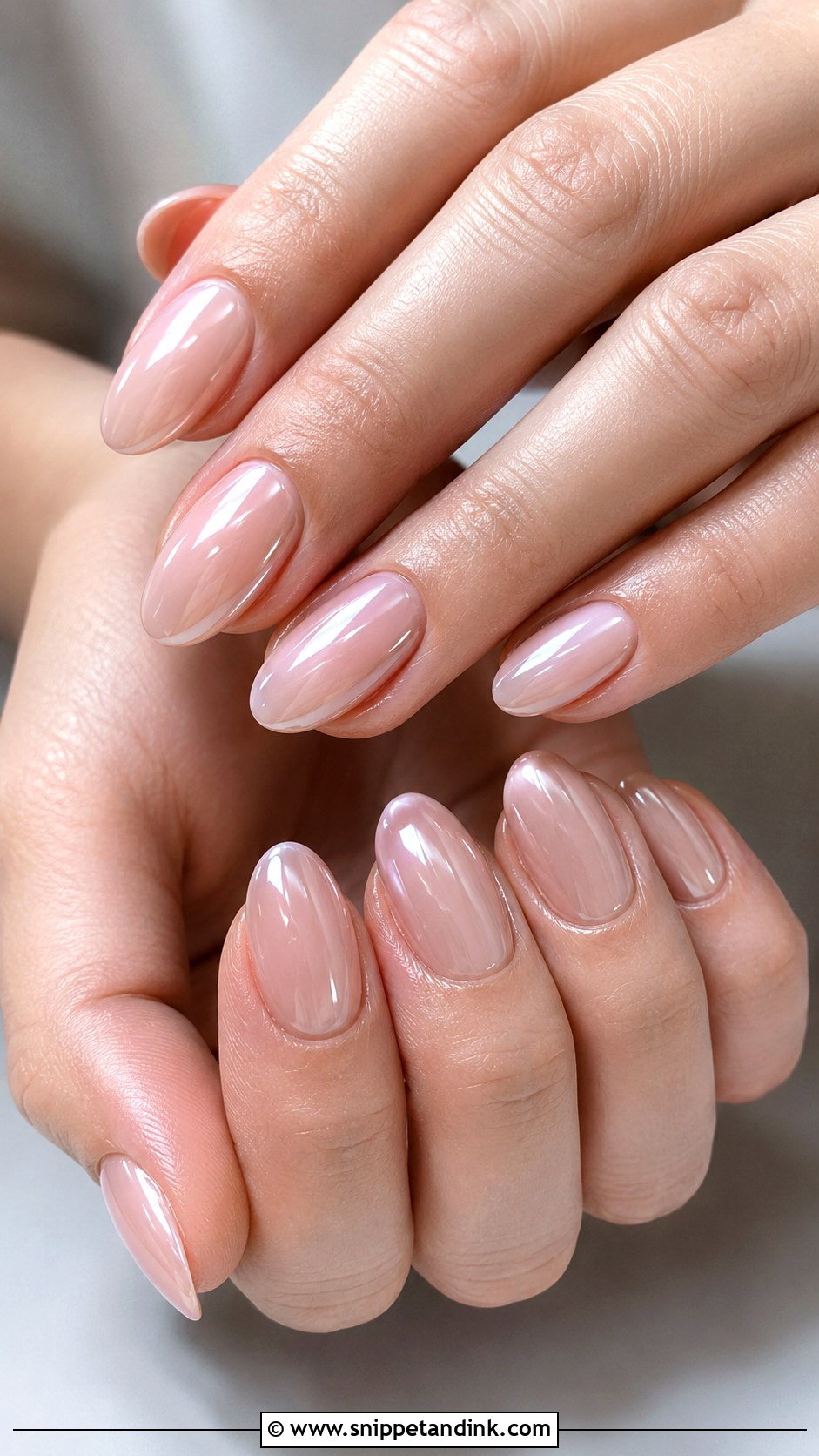
Most people now call this finish glazed donut nails. It is the same chrome technique as pearl chrome, rubbed over a sheer nude, pink or milky base until it looks like a sugar glaze, with a smoother shine than glitter and a softer one than metallic polish. I keep the base light, because chrome over a deeper color starts to look like a different, less bridal set. Rounded almond and oval shapes show the glow best. Ask your tech to cap the free edge well; chrome is the first thing to chip at the tip.
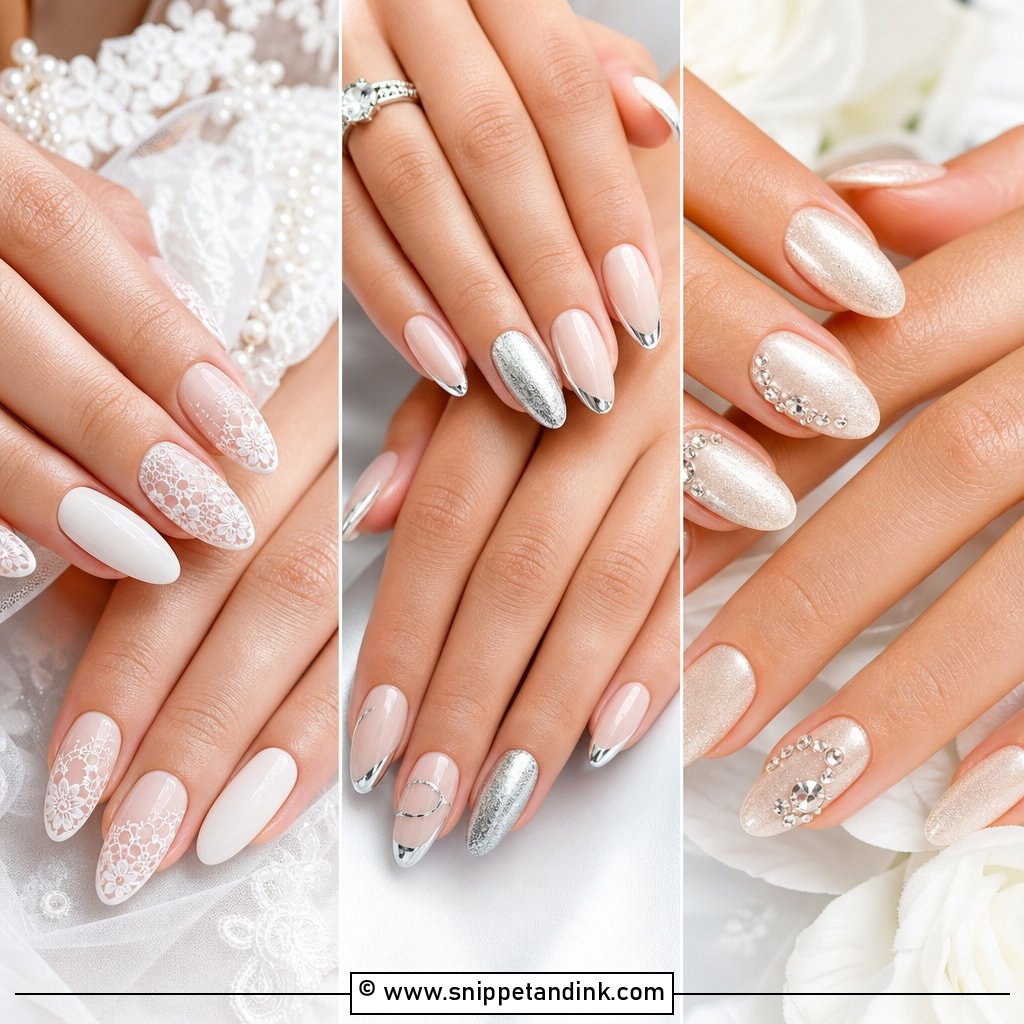
7. Bride Lace Nail Art
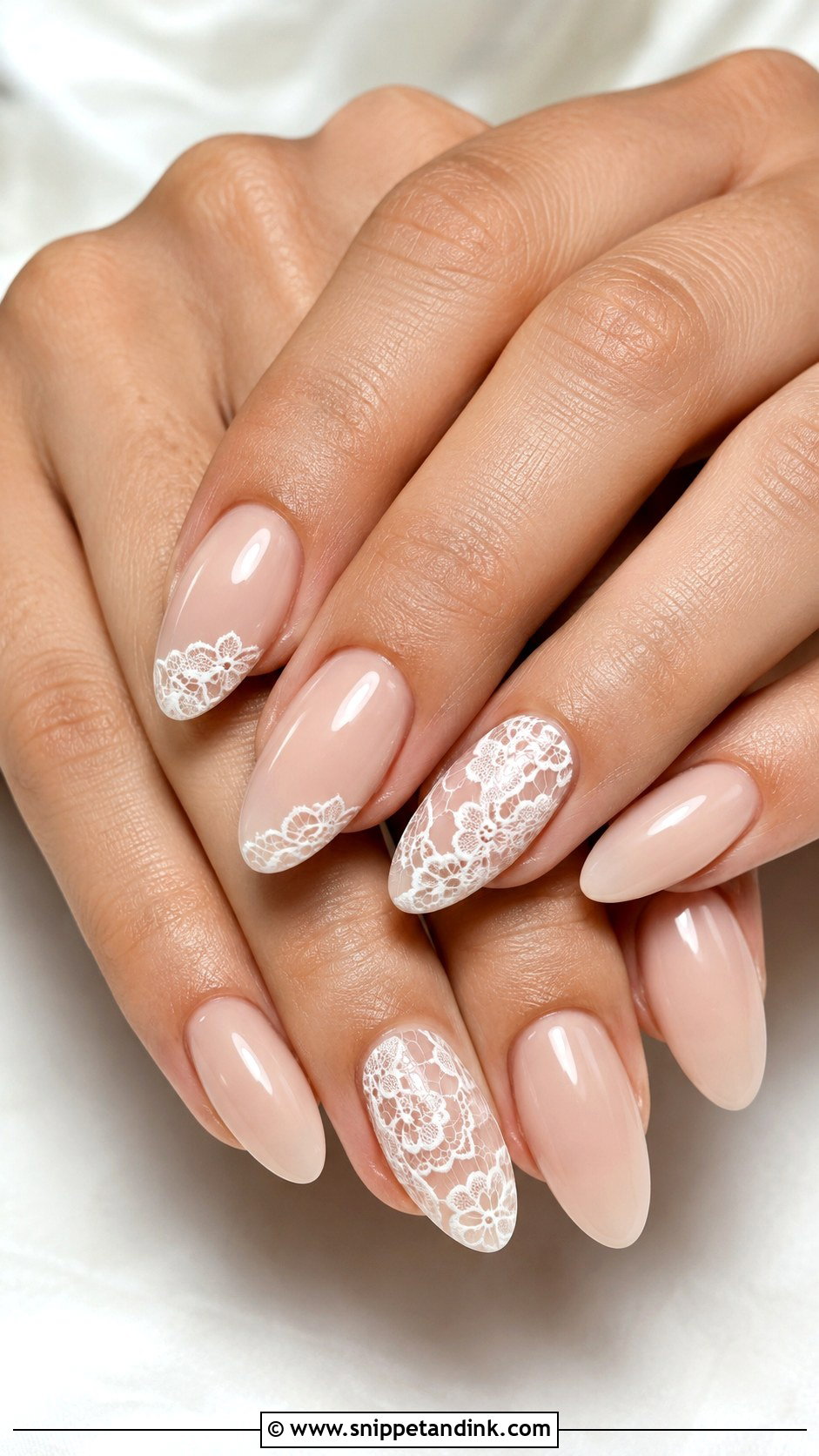
Lace nail art works when it echoes the gown and fails when every nail is covered. I usually paint fine white lace on two accent nails over a sheer nude, then leave the rest plain and glossy so the pattern has room. The brush work has to be very fine, and I’ll often use a stamping plate for a crisp, even motif that matches across both hands. It pairs naturally with lace sleeves, an embroidered veil or a vintage cut. Bring a close photo of your actual lace to the appointment, not a screenshot of someone else’s nails.
8. Bride Pearl Accent Nails
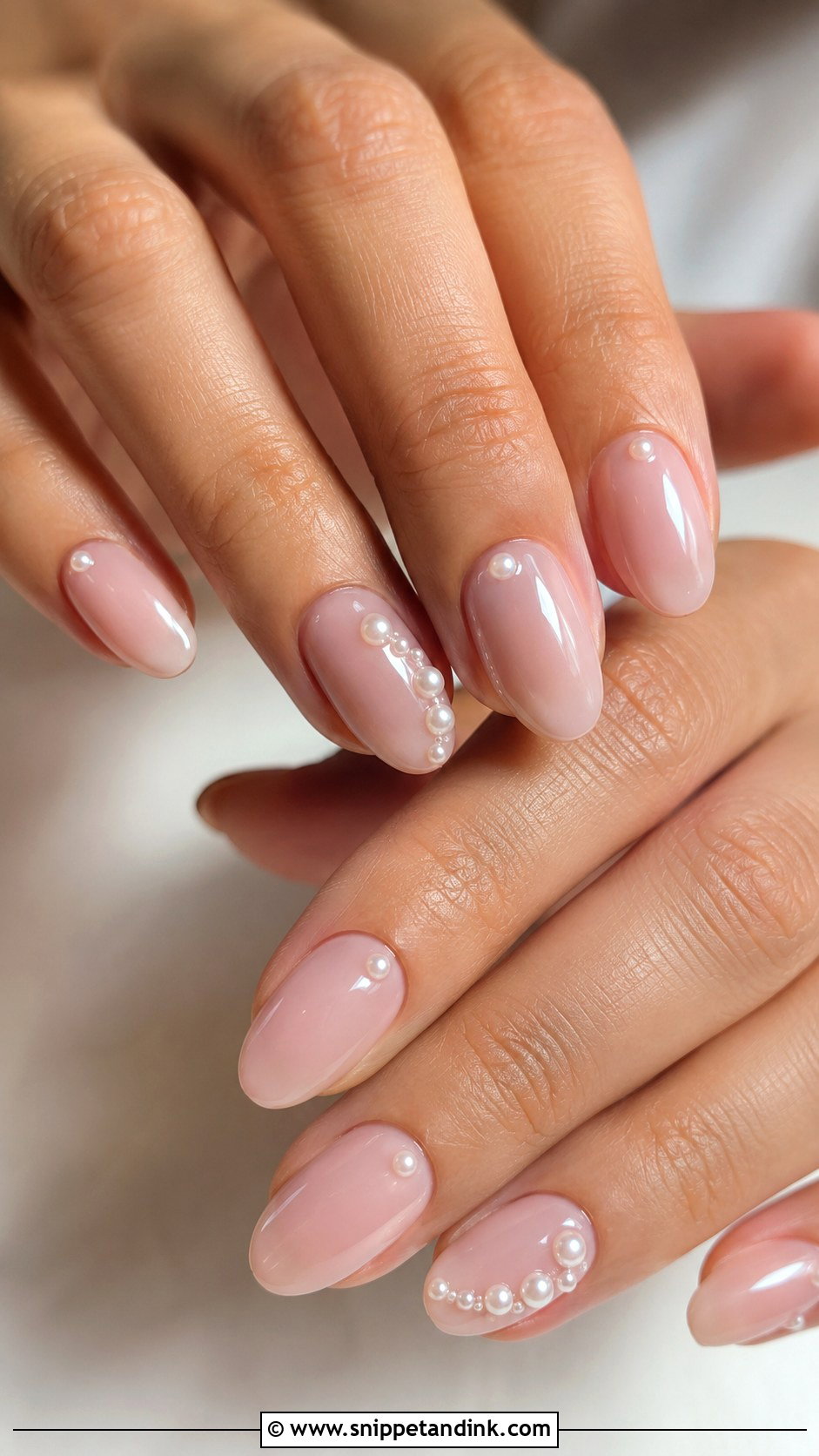
Tiny pearls can sit at the cuticle, line a French tip, or cluster on one accent nail, and the smaller and fewer they are, the more refined the result. Their weak point is that they’re glued, and anything glued can catch on veil netting or a knit wrap. I set them into builder gel and seal the edges with top coat so nothing is proud of the surface. Over a sheer pink or milky base they give texture without sparkle. If you’ll be wearing the set for more than a few days, ask your tech how they’re anchoring them.
9. Bride Short Square Nails
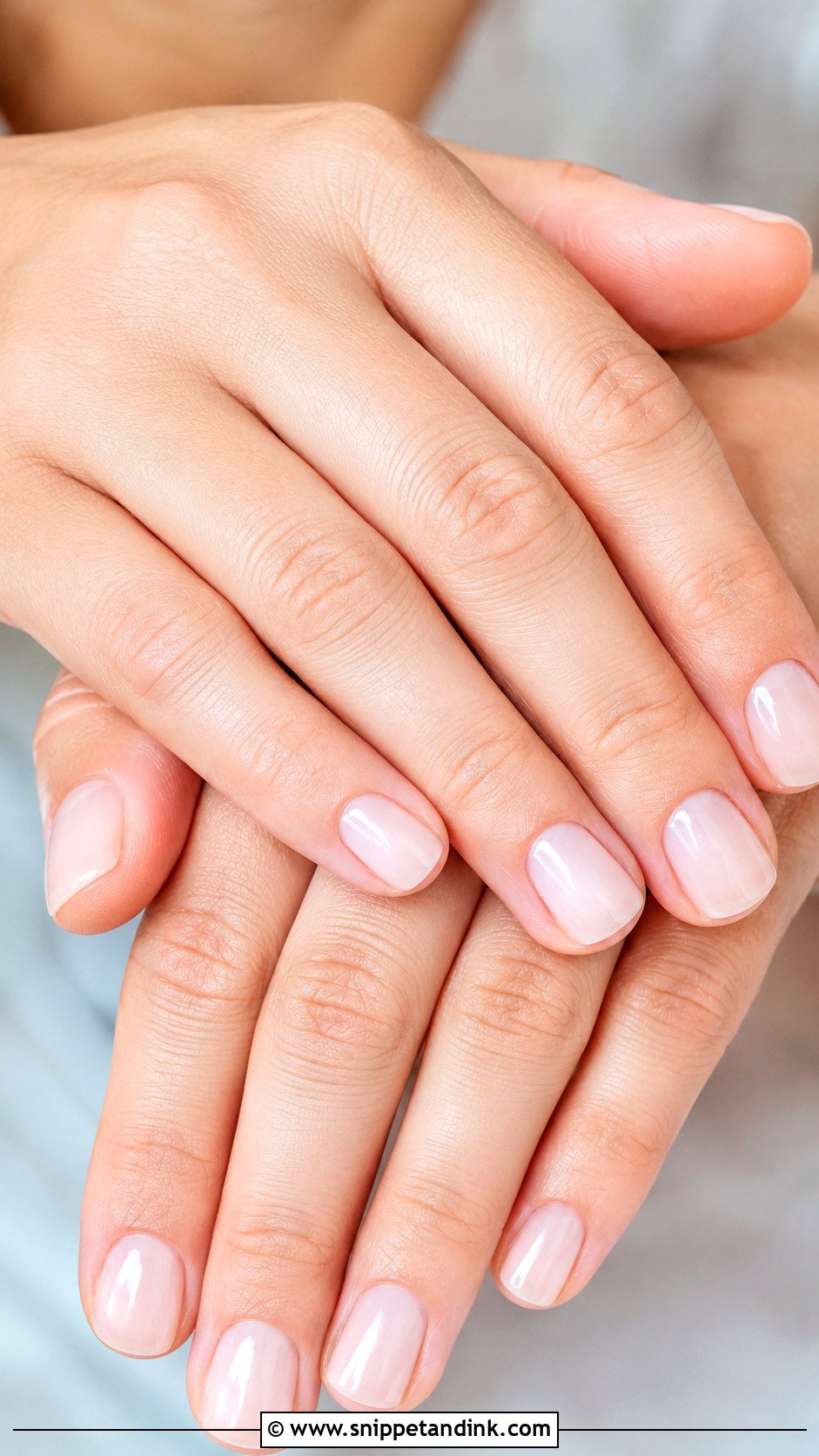
Short square nails are the most practical set here, and practical counts for a lot on a wedding day. You’ll be fastening earrings, holding a bouquet, texting your planner and doing up a bustle hook, and short nails make all of it easier if you aren’t used to extensions. I soften the corners into a squoval, because sharp square corners chip first and can snag tights or chiffon. Over sheer pink, nude, milky white or a micro French, then a thick glossy top coat, it looks deliberate rather than plain.
10. Bride Oval Pink Nails
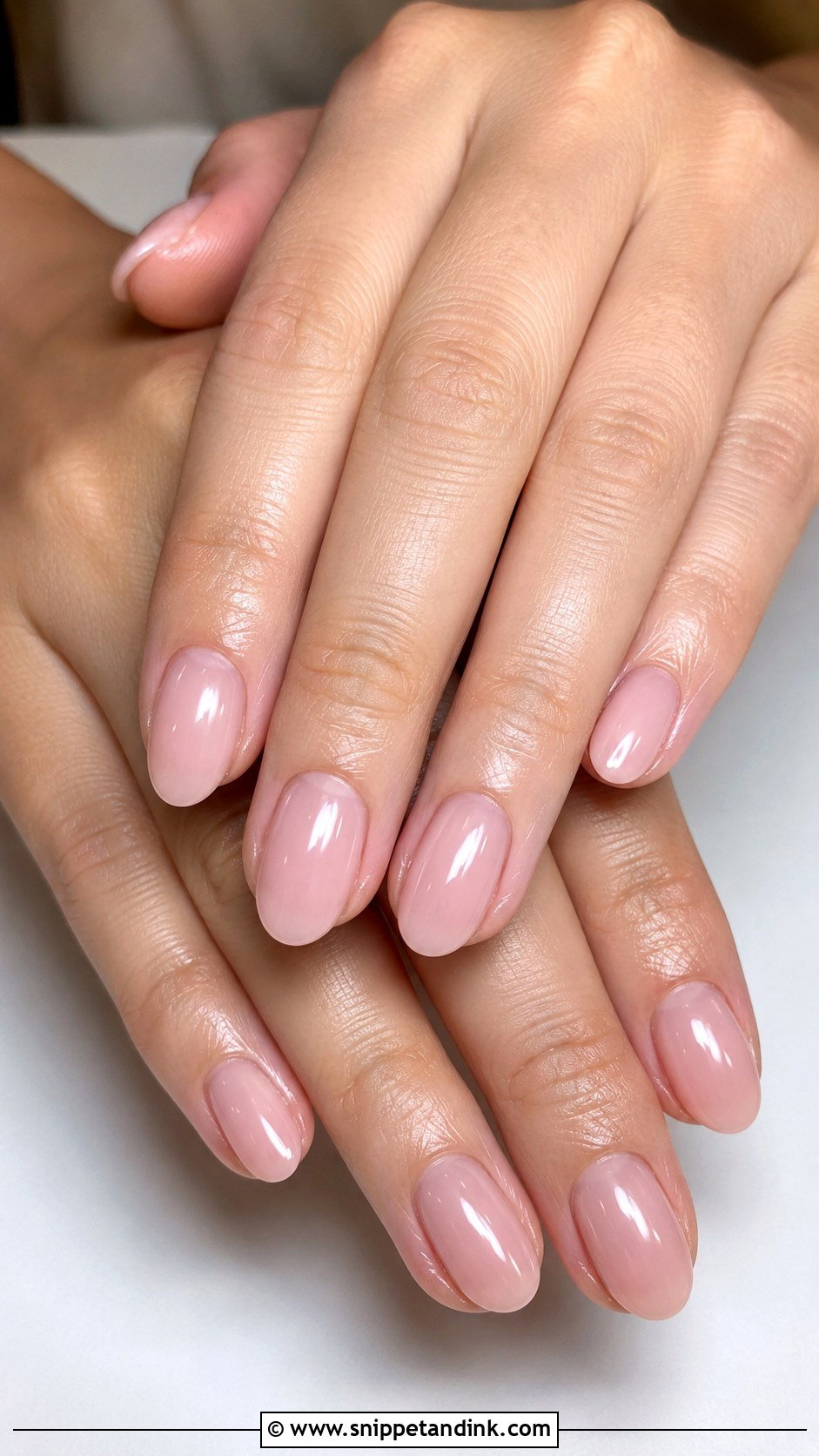
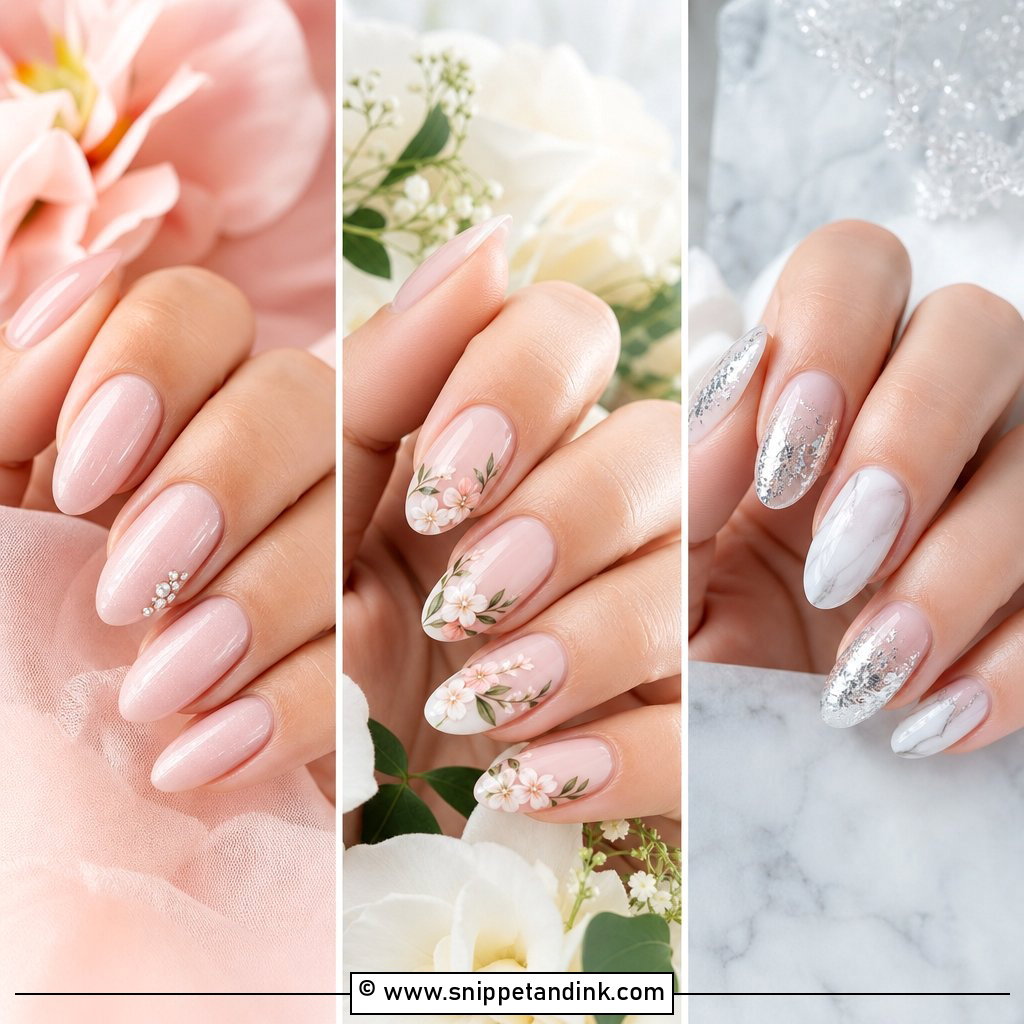
Oval follows the curve of most fingertips, which is why it flatters nearly every nail bed. A sheer pink gives the healthy, just-buffed look that suits a bride who doesn’t want obvious polish. Jelly pinks look fresh and slightly see-through; a pale blush is softer and warmer. Bridal skin often flushes during the day, so I lean towards a pink with a touch of beige in it rather than a cool candy shade that can clash with warm cheeks. Add a single fine white line or a tiny pearl if you want something more.
11. Bride White Chrome Nails
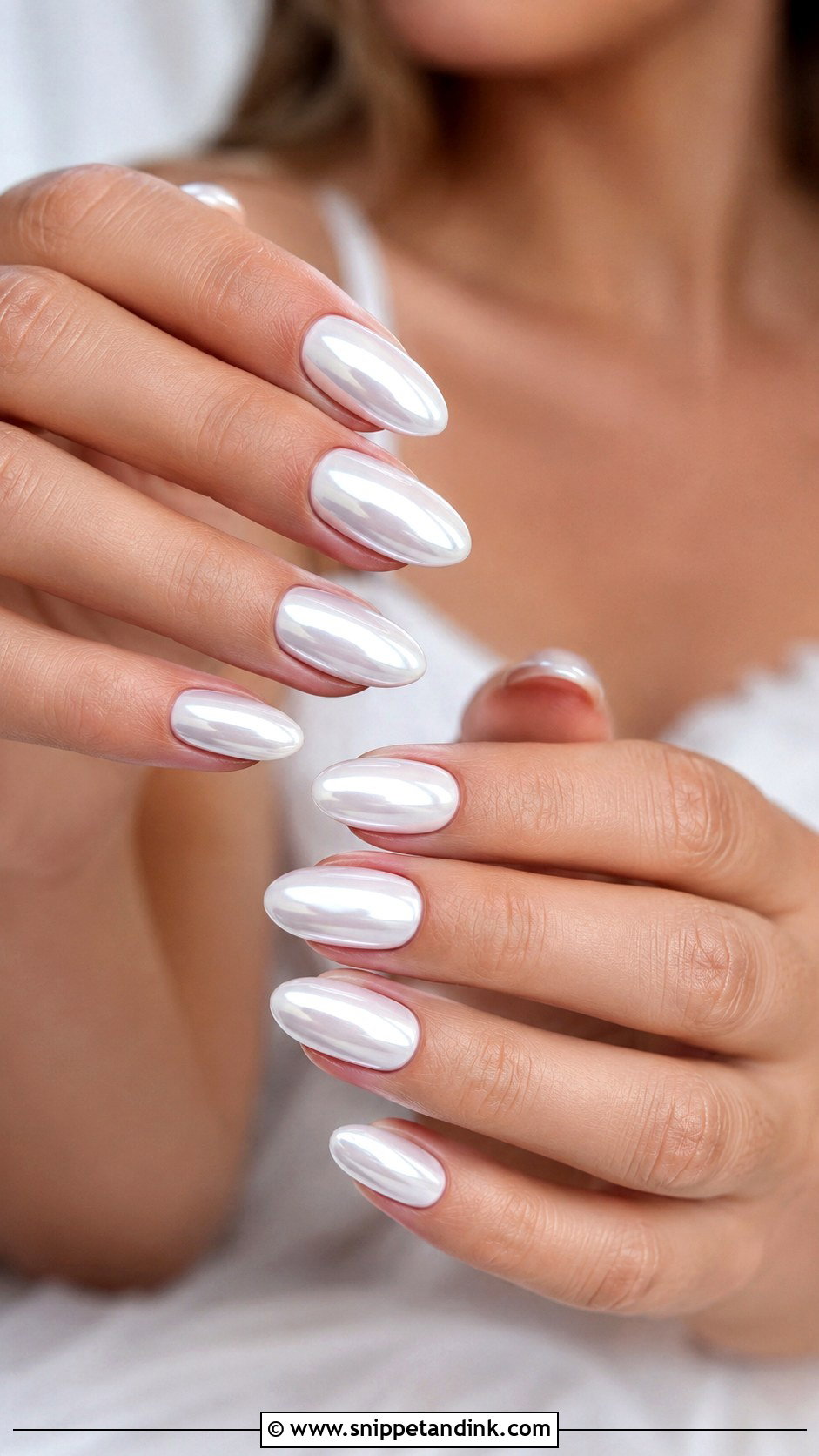
White chrome is the bolder cousin of pearl chrome: a soft white or milky base under a brighter reflective layer. It reads clearly from across a room, so it suits a bride who wants her nails noticed without using color. It sits naturally with minimalist or structured gowns and silver or platinum jewelry. Almond and coffin shapes give it clean, sleek lines. I steer clients away from fully opaque white underneath; a slightly translucent milky base keeps it from looking like plastic tips.
12. Bride Floral Nail Art
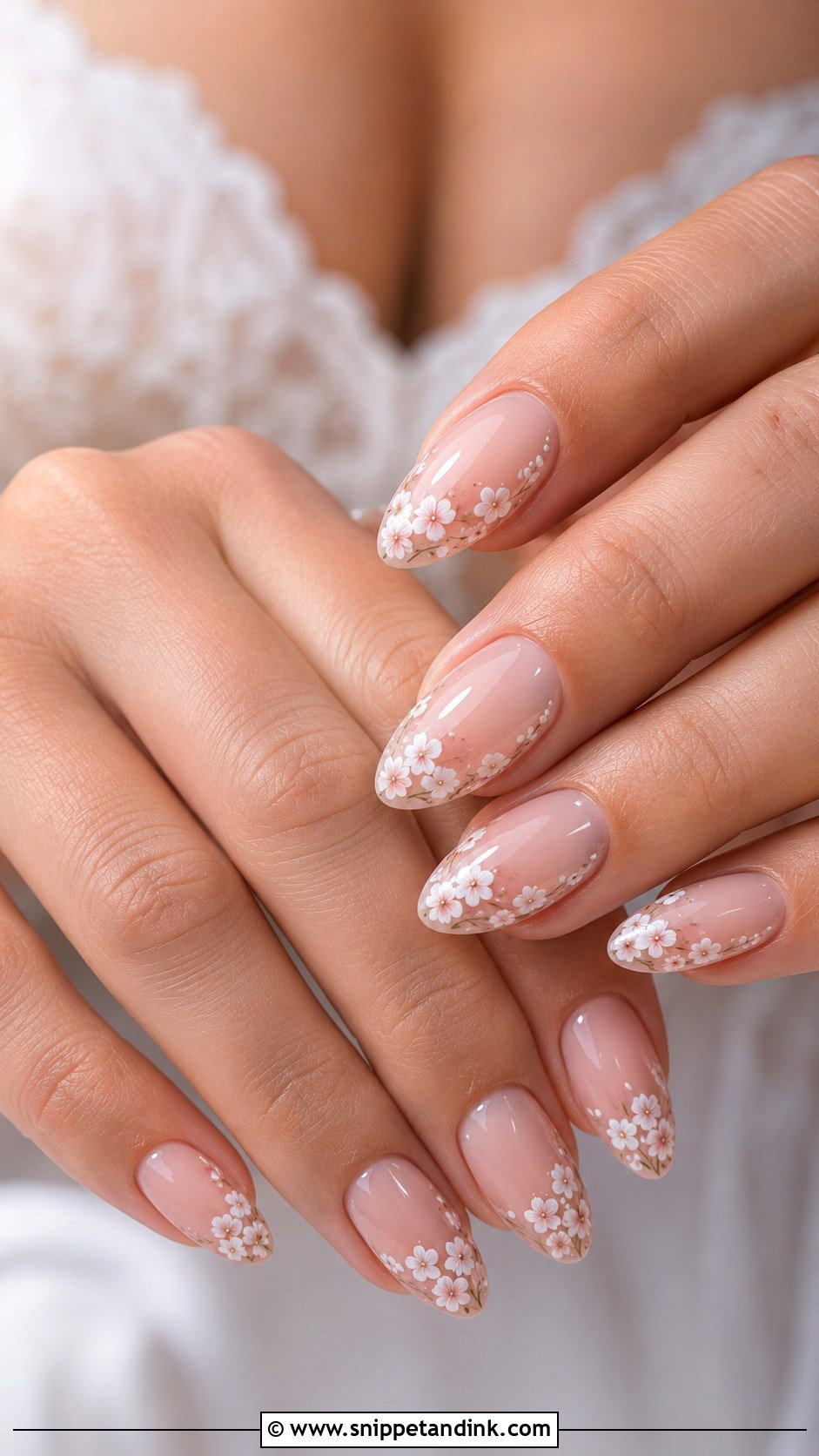
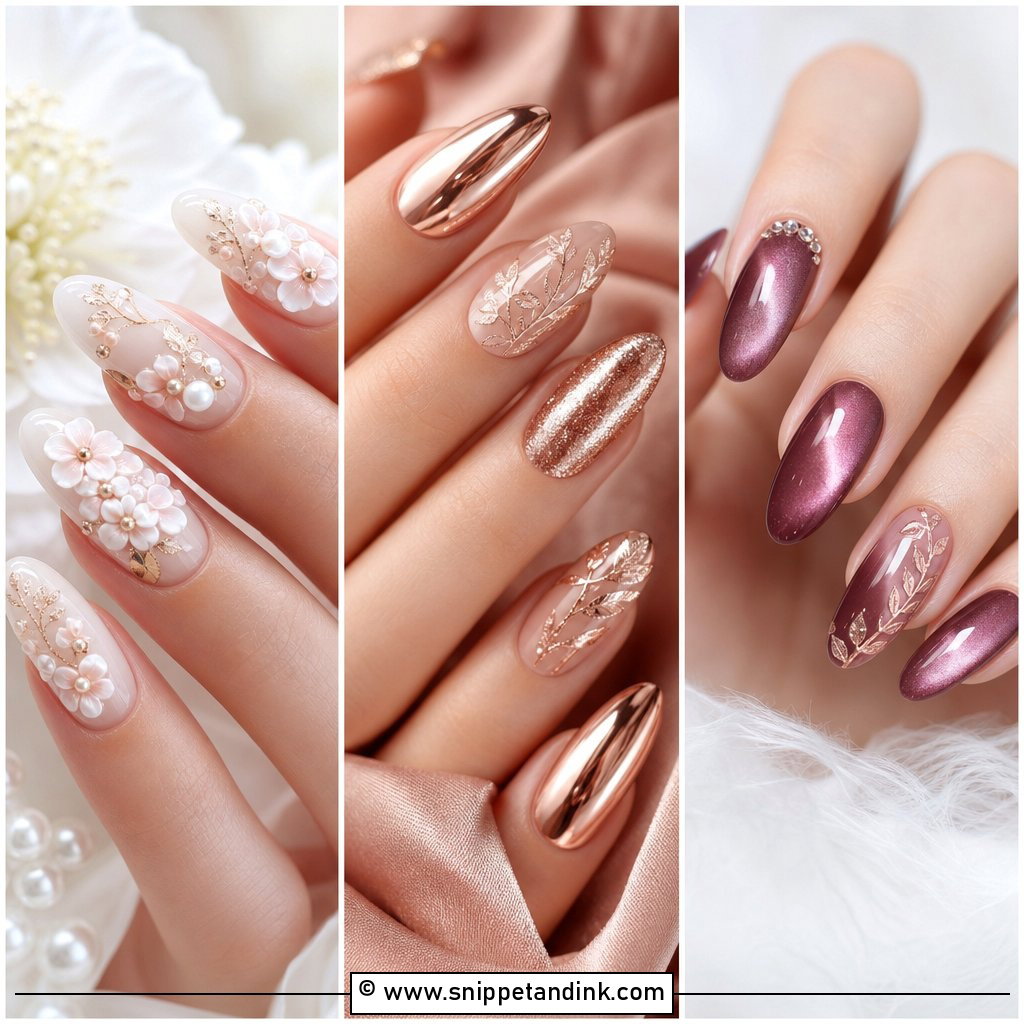
Floral art lives or dies on scale. Small white flowers or blush petals over a sheer nude look delicate; big, crowded blooms look like a kids’ sticker sheet at arm’s length. I hand-paint five-dot daisies or one-stroke petals, and if you want a raised flower I sculpt it in a thick gel so it’s sealed rather than glued on. It’s a natural fit for garden ceremonies and dresses with floral embroidery. Two accent nails or a light scatter across the set both work, on oval or almond shapes that give the artwork room.
13. Bride Micro French Nails
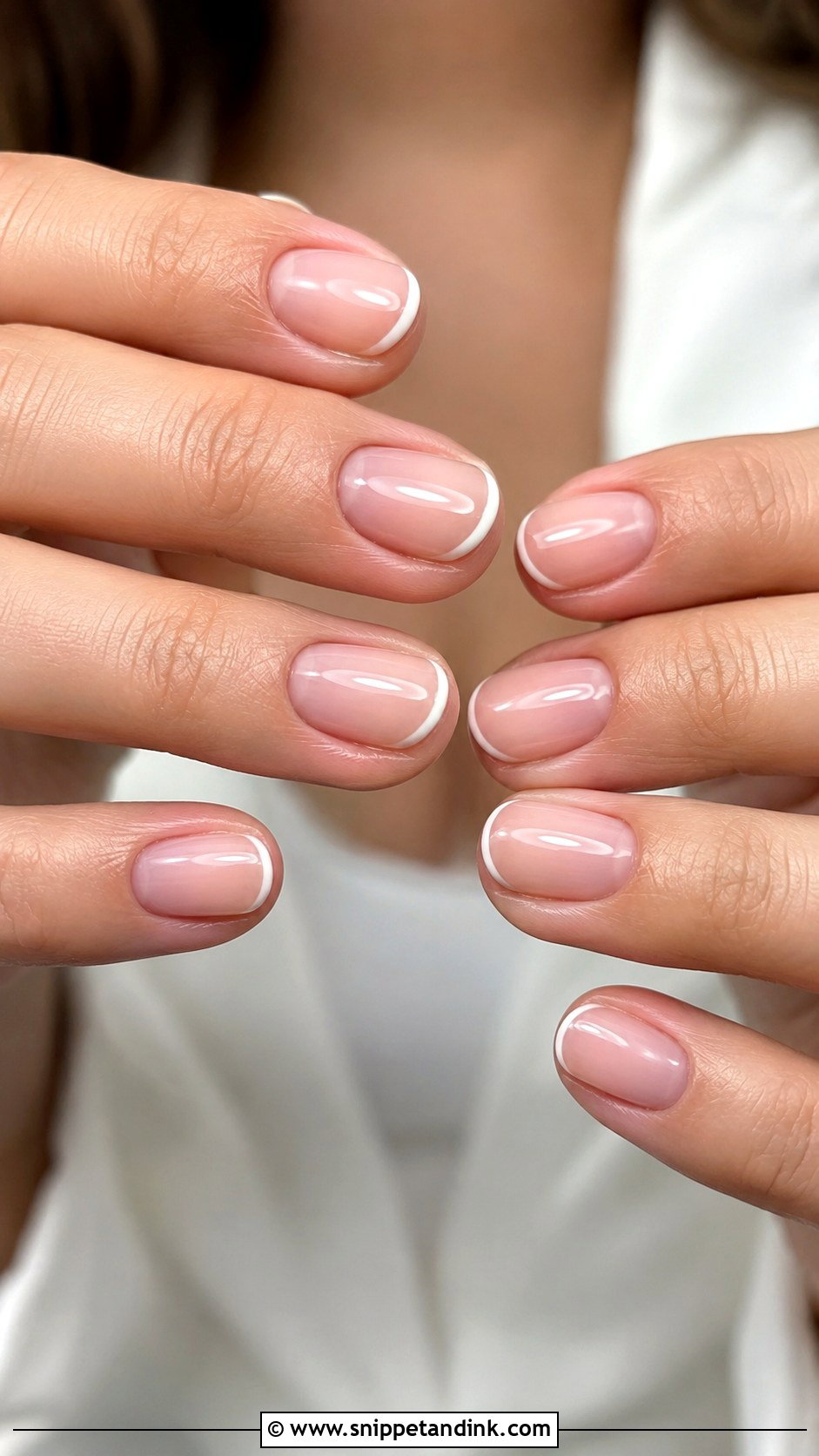
A micro French is a tip painted only a millimetre or two deep, so you get definition without a strong contrast line. It’s my first suggestion for short nails, because a full French on a short nail can make it look stubby, while a micro tip makes it look longer. A sheer pink, beige or nude base underneath, and either pure white or a pearl white on the tip. It fits a courthouse jumpsuit as easily as a cathedral train, and it grows out more gracefully than almost any other set.
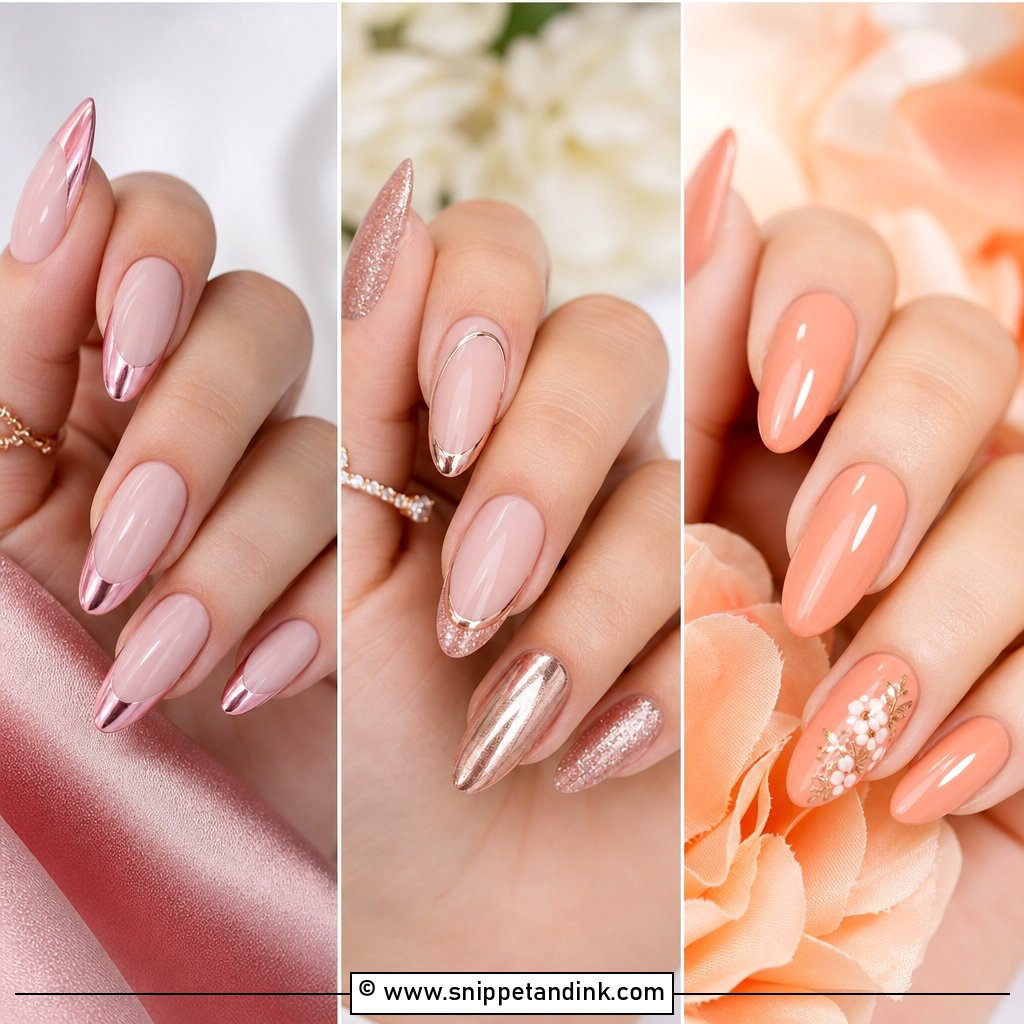
14. Bride Gold Foil Nails
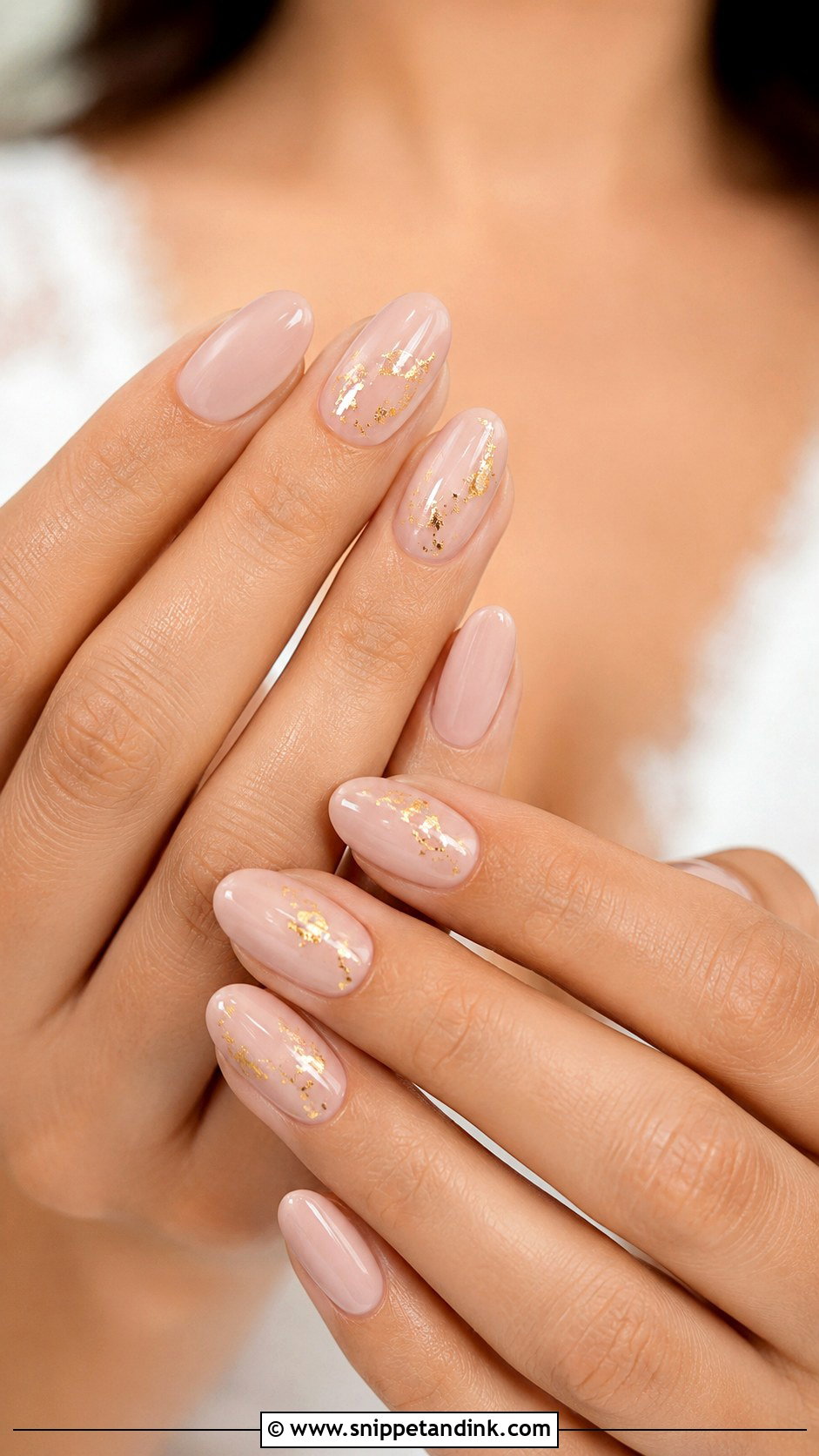
Gold foil adds warmth that suits gold jewelry, champagne fabric and candlelit receptions. Use small, broken flakes laid into a sticky gel layer and sealed under top coat; large sheets look like wrapping paper and wrinkle at the edges. I usually keep it to two or three accent nails over a nude, blush or milky base and leave the rest plain. Almond, oval and short square shapes all carry it. Foil sits slightly raised until it’s well sealed, so run a finger over the set before you leave the salon.
15. Bride Silver Glitter Ombre Nails
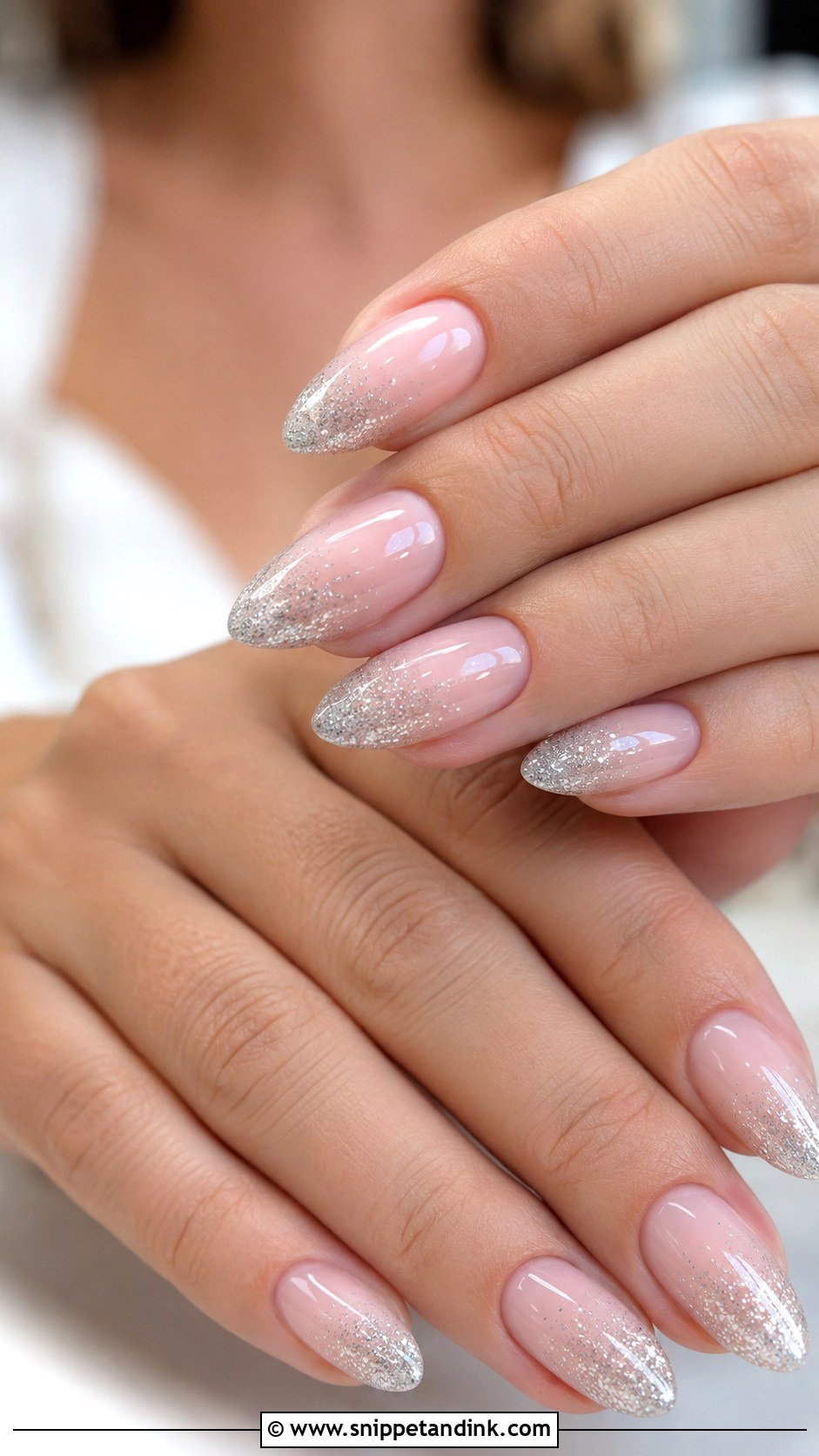
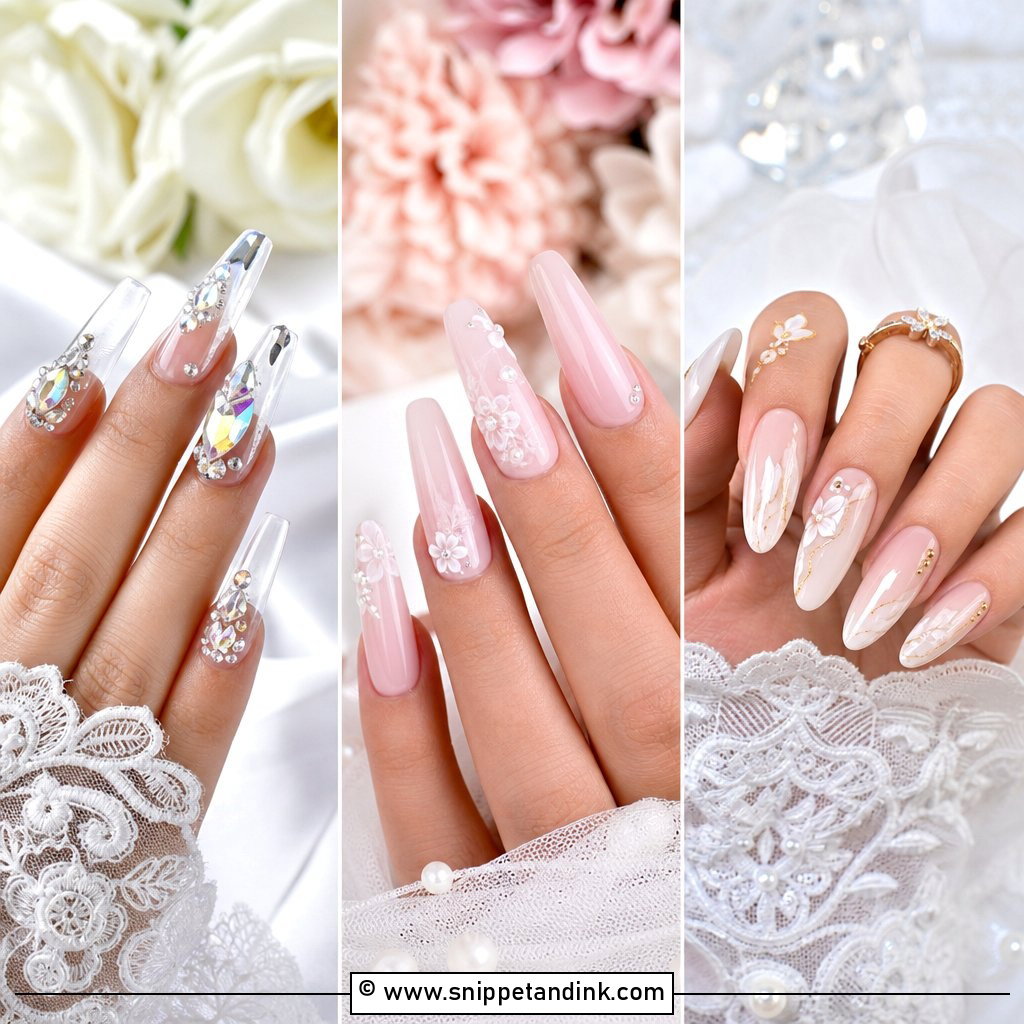
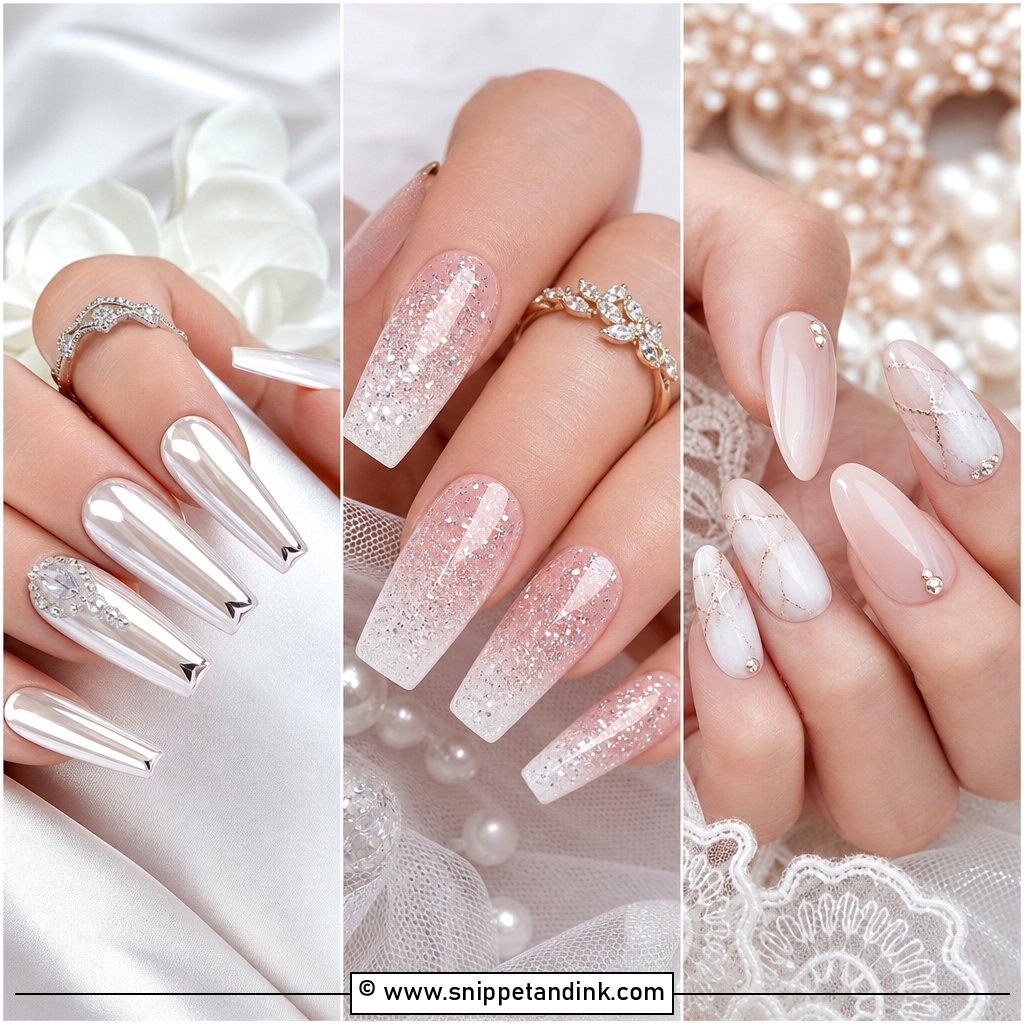
With silver glitter ombre nails, the sparkle sits in a fade from the tip or cuticle into a sheer nude or pink, which keeps it controlled. Fine glitter blends into a smoother gradient than chunky hex pieces, and it’s far easier to remove later. Silver suits white gowns, crystal accessories and cool-toned metals. Almond and coffin shapes show the full gradient; on short nails I keep the glitter to the last third of the nail. It catches flash at the reception without looking loud in the ceremony photos.
16. Bride Something Blue Nails
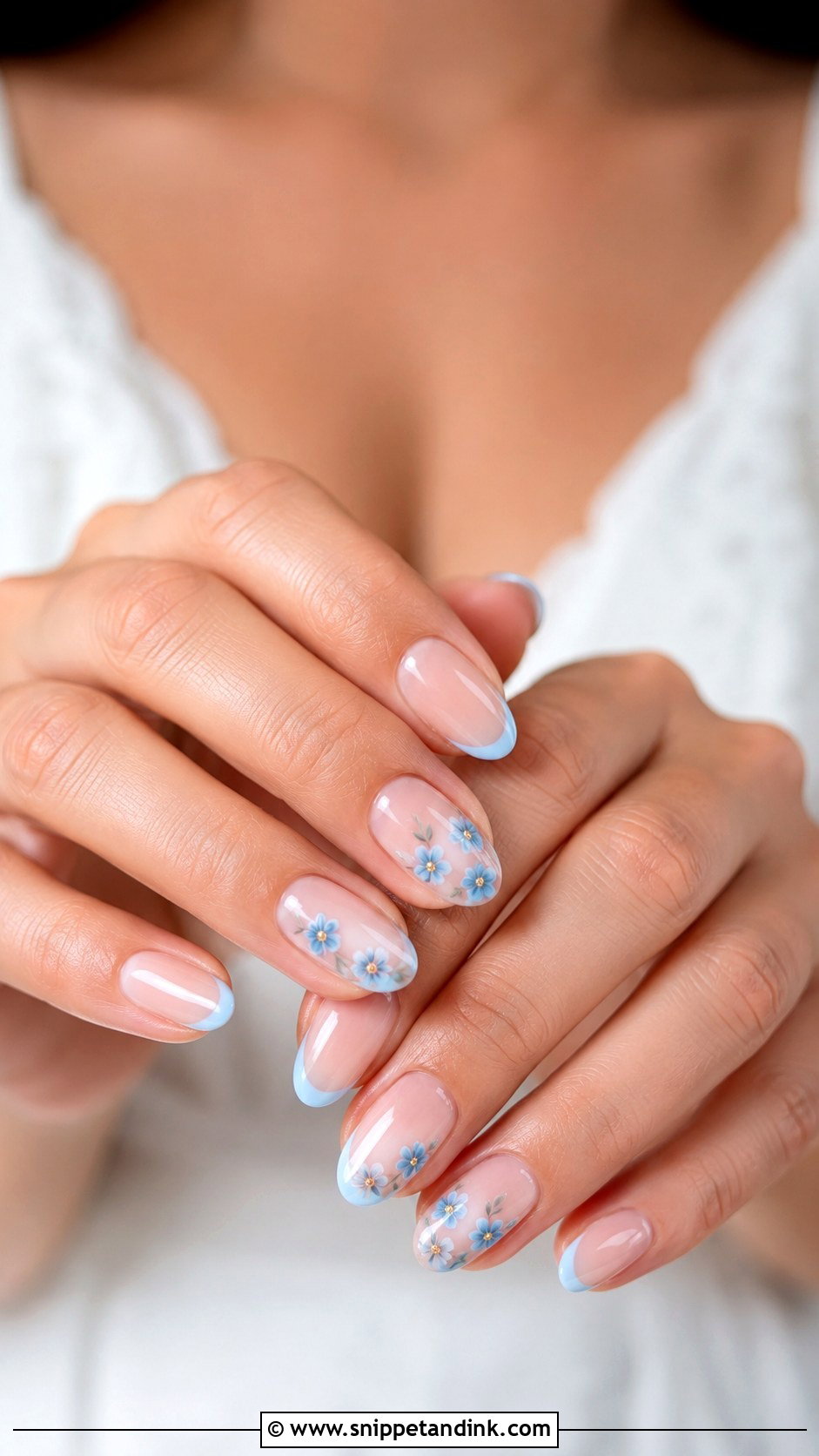
This is one of the easiest ways to carry the something blue tradition, and almost nobody notices it unless you show them. I keep the full set soft and put the blue into small details: a pale blue micro French, tiny forget-me-not dots, or one accent nail. Powder blues and cornflower shades blend in; brighter blues pull the eye away from the ring. It suits spring, coastal and outdoor weddings, or a bouquet with blue in it. Some brides put the blue only on the left ring finger so it shows in the ring shot.
17. Bride Blush Pink Nails
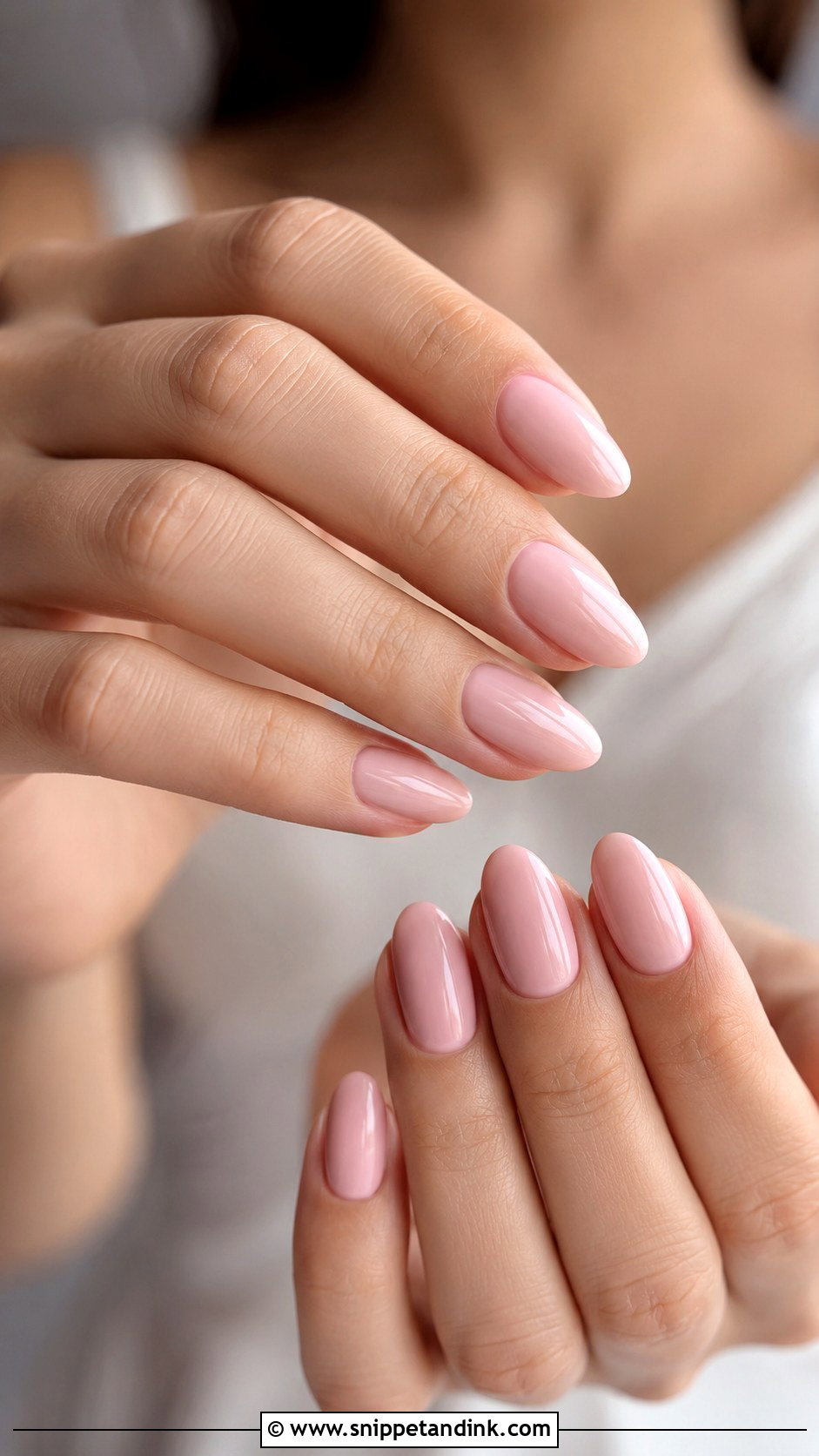
Blush pink is a step up in color from a nude, enough to look intentional while still reading as healthy nails. A glossy creme blush is the classic version; a sheer jelly blush is fresher and forgives a slightly uneven nail plate. It sits well on short oval, almond and square nails, and it picks up any pink undertone in the dress or flowers. I’d test it against your foundation at the trial, because a blush that’s too cool next to warm skin makes hands look red. Pearl chrome over the top is an easy upgrade.
18. Bride Coffin Nails
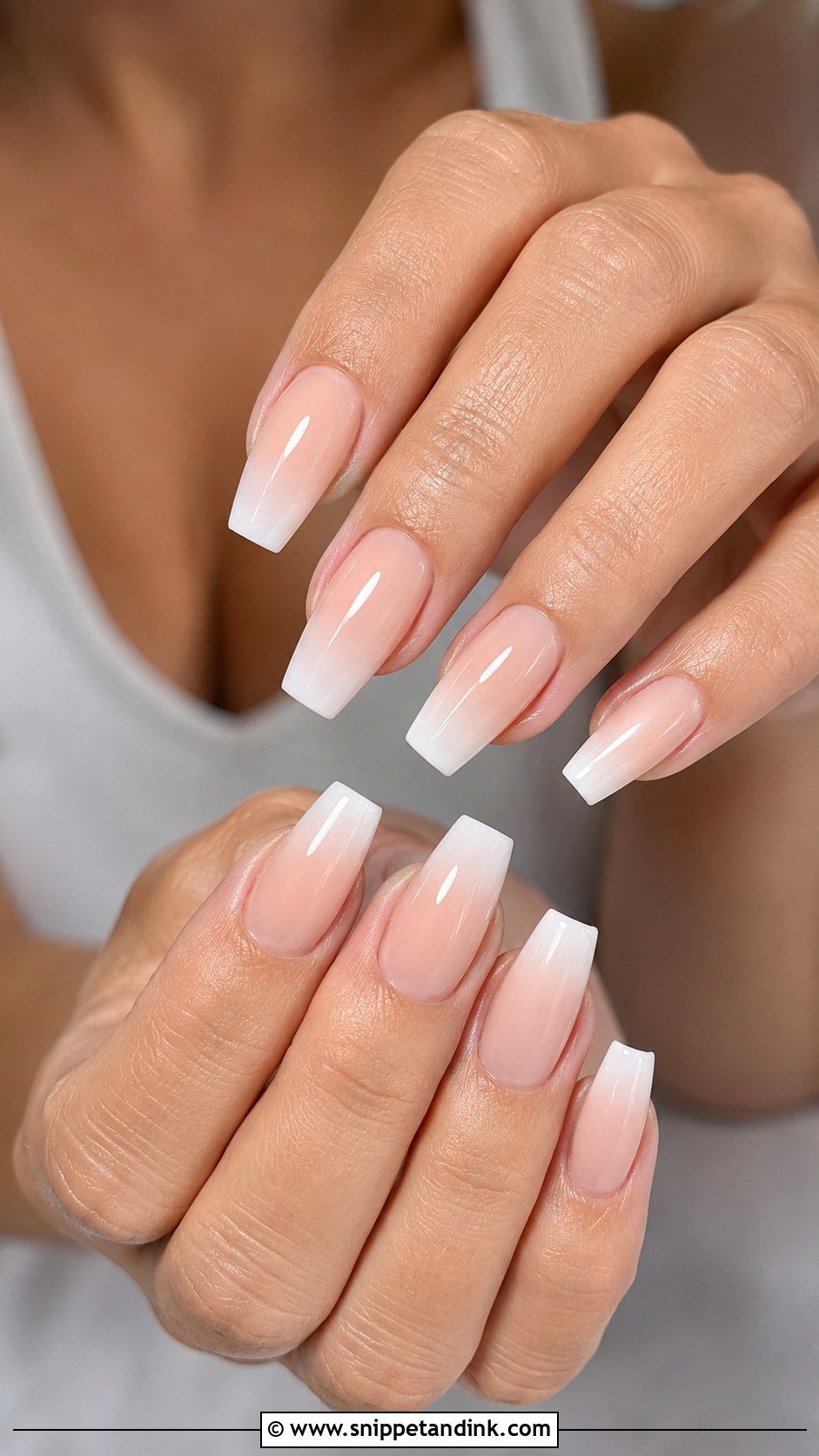
Coffin, also called ballerina, has tapered sides and a flat tip that give a longer, sharper line. Bride coffin nails need restraint, so I stick to milky white, nude, baby boomer, pearl chrome or a thin French; heavy art on long coffins starts to look like a lot of nail. Medium length is the sweet spot. Extra-long coffins are hard to manage with veil pins, bustle hooks and earring backs, and the corners of that flat tip take the knocks. Wear a medium set for a full day before the wedding if you have never had extensions.
19. Bride Cat Eye Nails
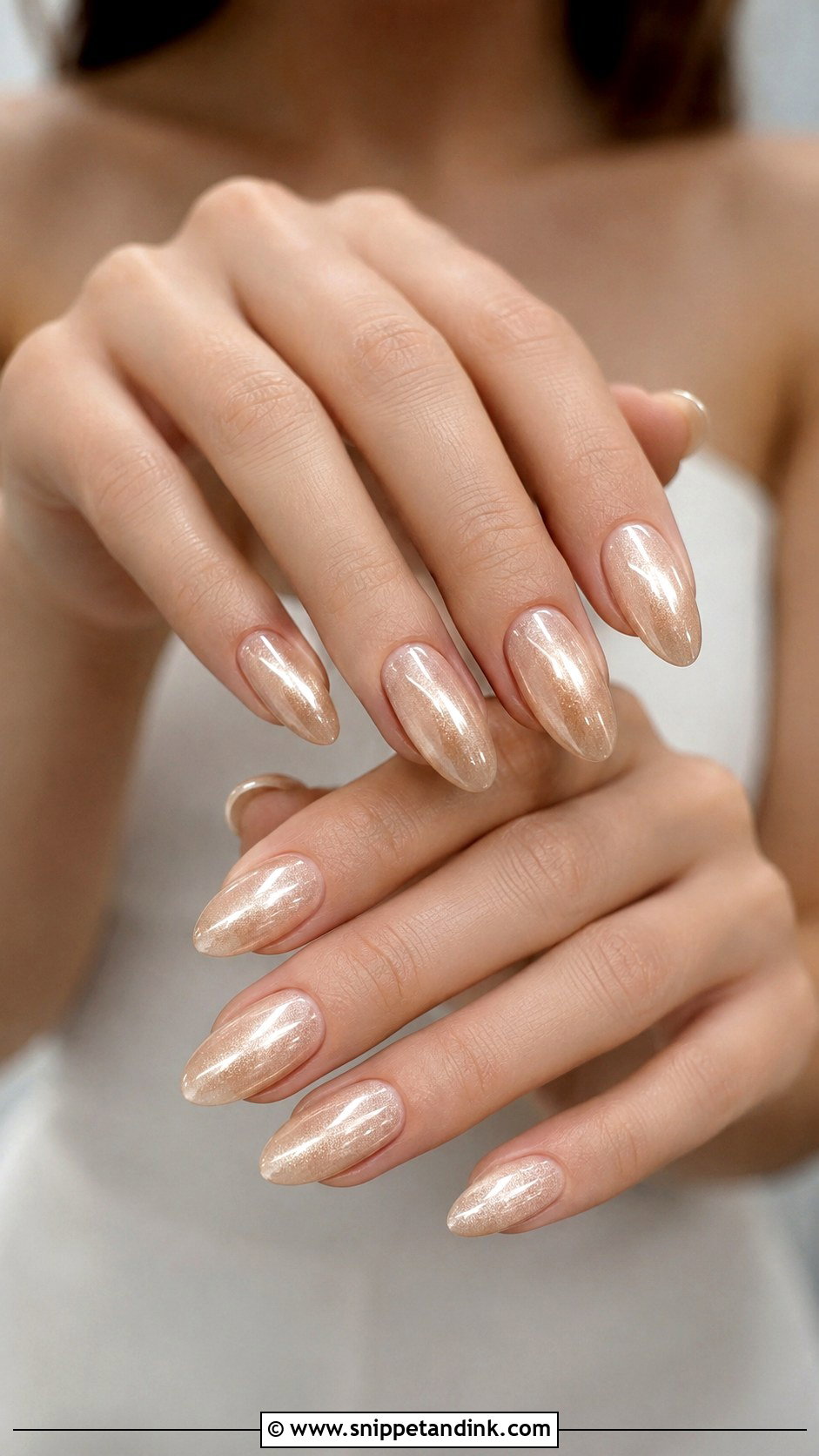
Cat eye polish has magnetic particles in it, and a magnet held over the wet gel pulls them into a band of light that moves as you turn your hand. For a bride I use pale champagne, pearl white, blush or soft nude rather than the dark shades it’s usually shown in. I also ask for a diffused, wide band rather than a sharp stripe, which can look like a scratch in photos. Almond and oval shapes let the shimmer follow the curve. It’s a modern pick that still doesn’t look out of place next to a traditional gown.
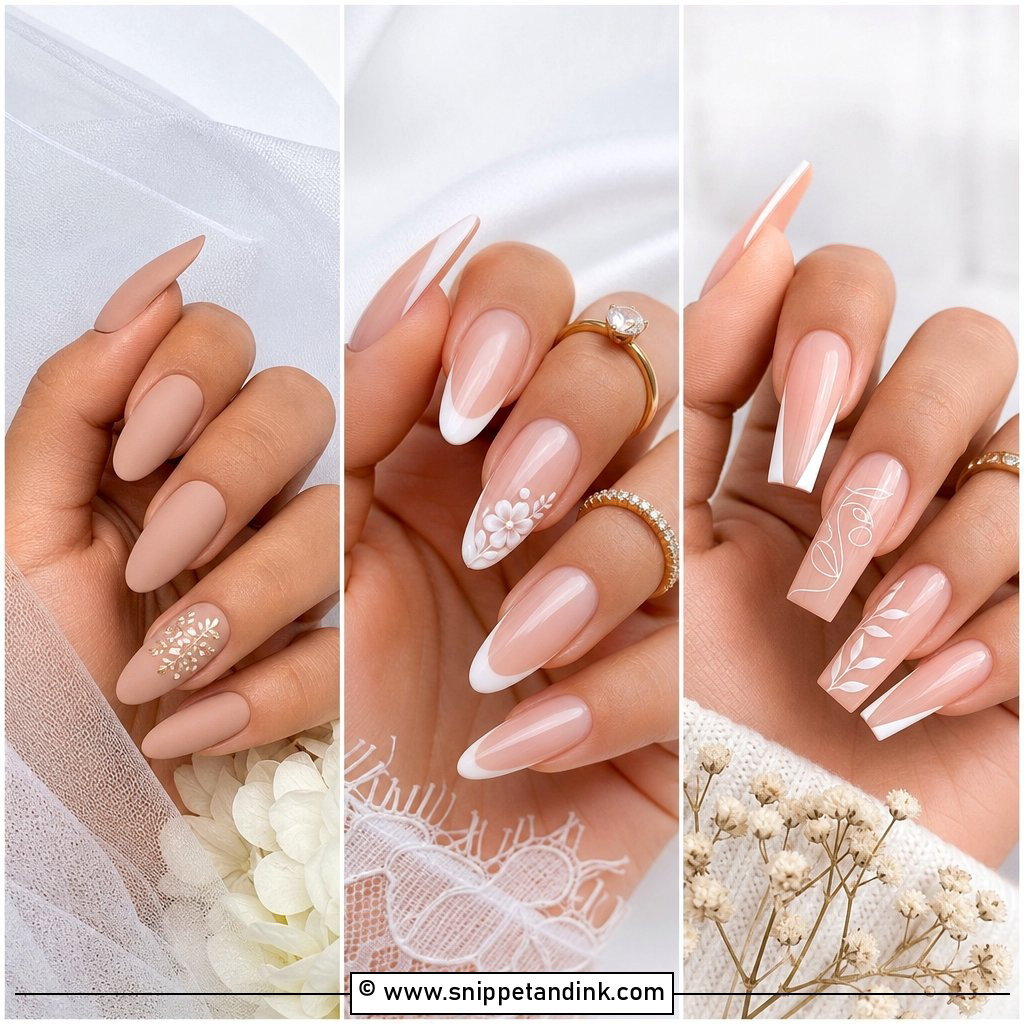
20. Bride Minimal Nail Art
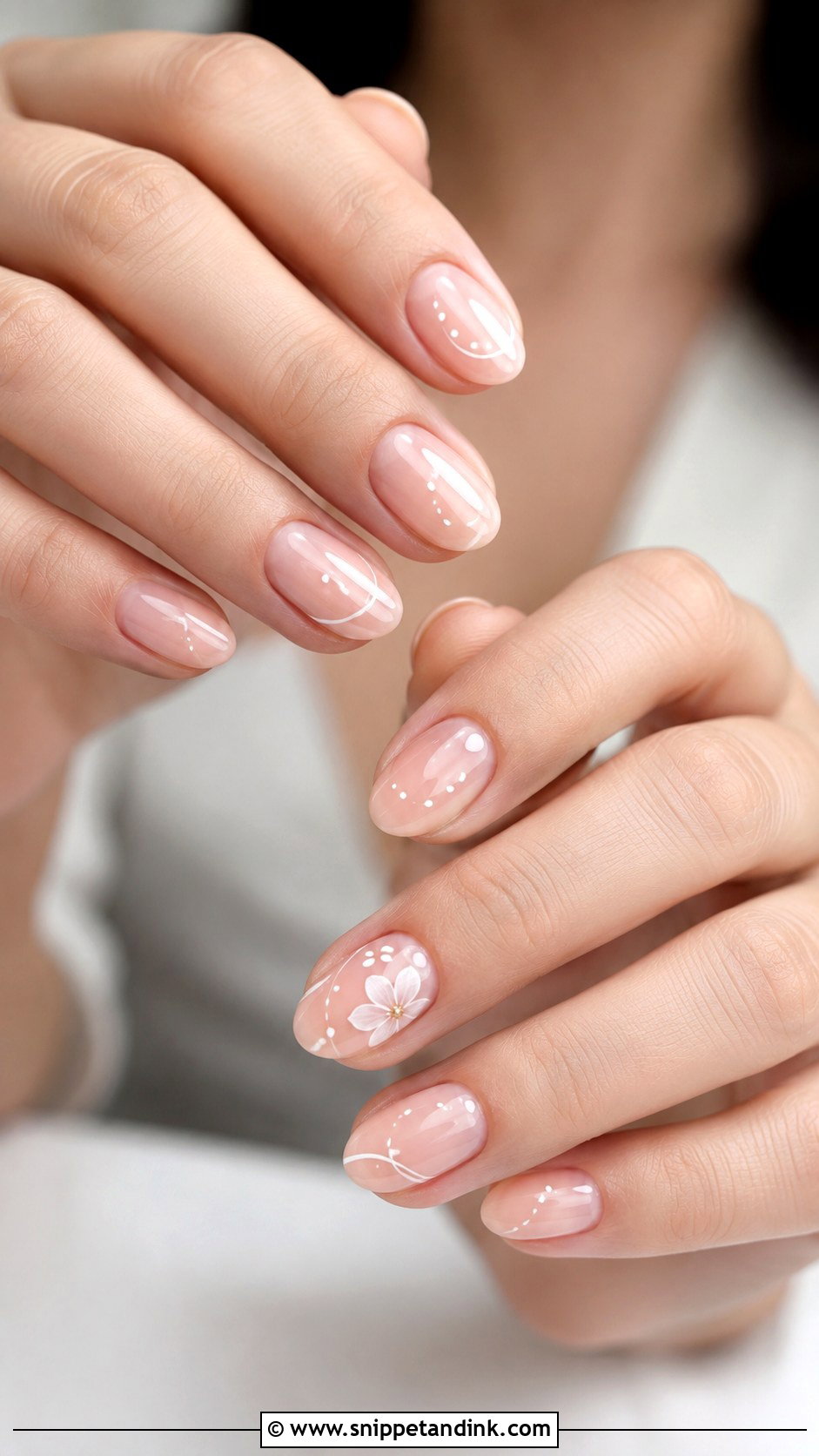
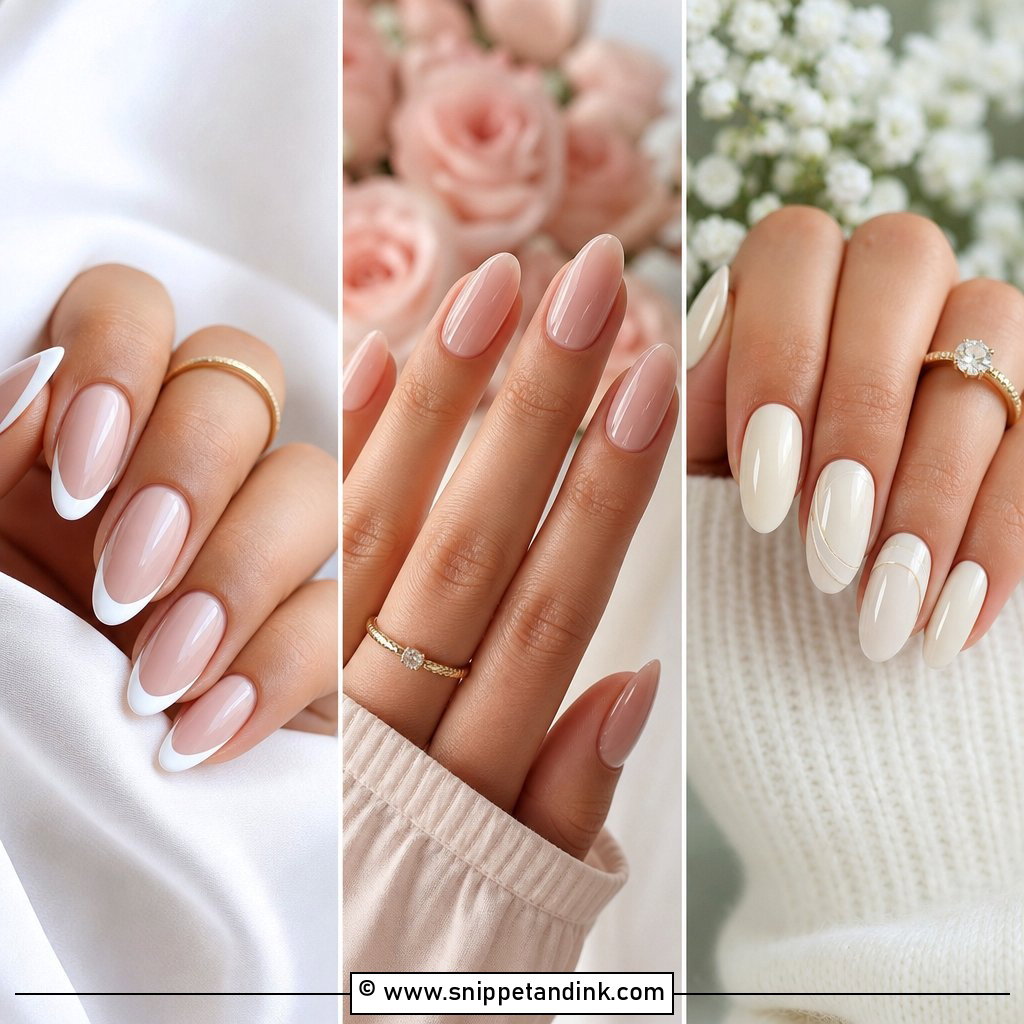
Minimal art means a sheer nude, pink or milky base with very small marks: a fine white line, a dot at the cuticle, a tiny heart, one painted bloom. Spacing is what makes it look designed rather than sparse, so I plan it across both hands before painting, often repeating one motif on matching fingers. Short and medium nails suit it, because the detail doesn’t need much room. It goes with any dress or metal, and it’s a good way to put something personal on your hands without it showing up in every photo.
Gel, Dip or Press-Ons, and When to Sit in the Chair
Gel polish is what I use for most brides: it’s cured, it doesn’t smudge while you’re getting dressed, and a well-applied set lasts about two to three weeks. Builder gel is a better base if your own nails are thin, bendy or split easily, because it adds strength under the color. Dip powder is tough but can look thicker at the cuticle, which shows in close-ups. Good press-ons are a fair backup for a bride who never wears extensions, though I’d still have them fitted and glued by a tech rather than at home the night before.
For timing, book the final appointment one or two days before the wedding. The day itself is usually too packed, and anything more than three or four days ahead leaves visible growth at the cuticle in the ring shot. A trial four to six weeks out lets you test shade, length and wear. If you’re planning a pedicure, do it the same visit or the day before, since soaking your feet the morning of can leave toenail polish soft.
If a Pearl Pops Off Between Speeches
Little things go wrong on a long day, and a small kit in your bridesmaid’s bag fixes most of them. I’d pack nail glue, a fine file, a bottle of the exact top coat shade if it’s a regular polish, cuticle oil and a couple of spare press-on tips in your size in case one nail breaks.
If a pearl or rhinestone falls off, don’t glue it back over cured gel, it won’t hold; leave the gap or press a matching spare into a dot of nail glue as a temporary fix. If an edge lifts, file it flat rather than picking at it, because pulling gel takes a layer of your own nail with it. After the wedding, oil the cuticles daily, wear gloves for washing up, and get the set professionally soaked off rather than peeled when it’s time.
The Set I’d Book if You Only Remember One Thing
Start with the parts that never go wrong: a nude matched to your skin, a shape that suits how you use your hands, and a finish you can wear for ten hours without thinking about it. French tips, milky white, blush, pearl chrome and baby boomer all meet that test. Detail is the layer on top: lace, pearls, gold foil, floral accents or a hidden touch of blue. Check it against your dress fabric and your jewelry metal, book the trial, and bring your engagement ring to every appointment. Your nails should frame the ring, not compete with it.
You'll Like These Ideas:


Leave a Reply