
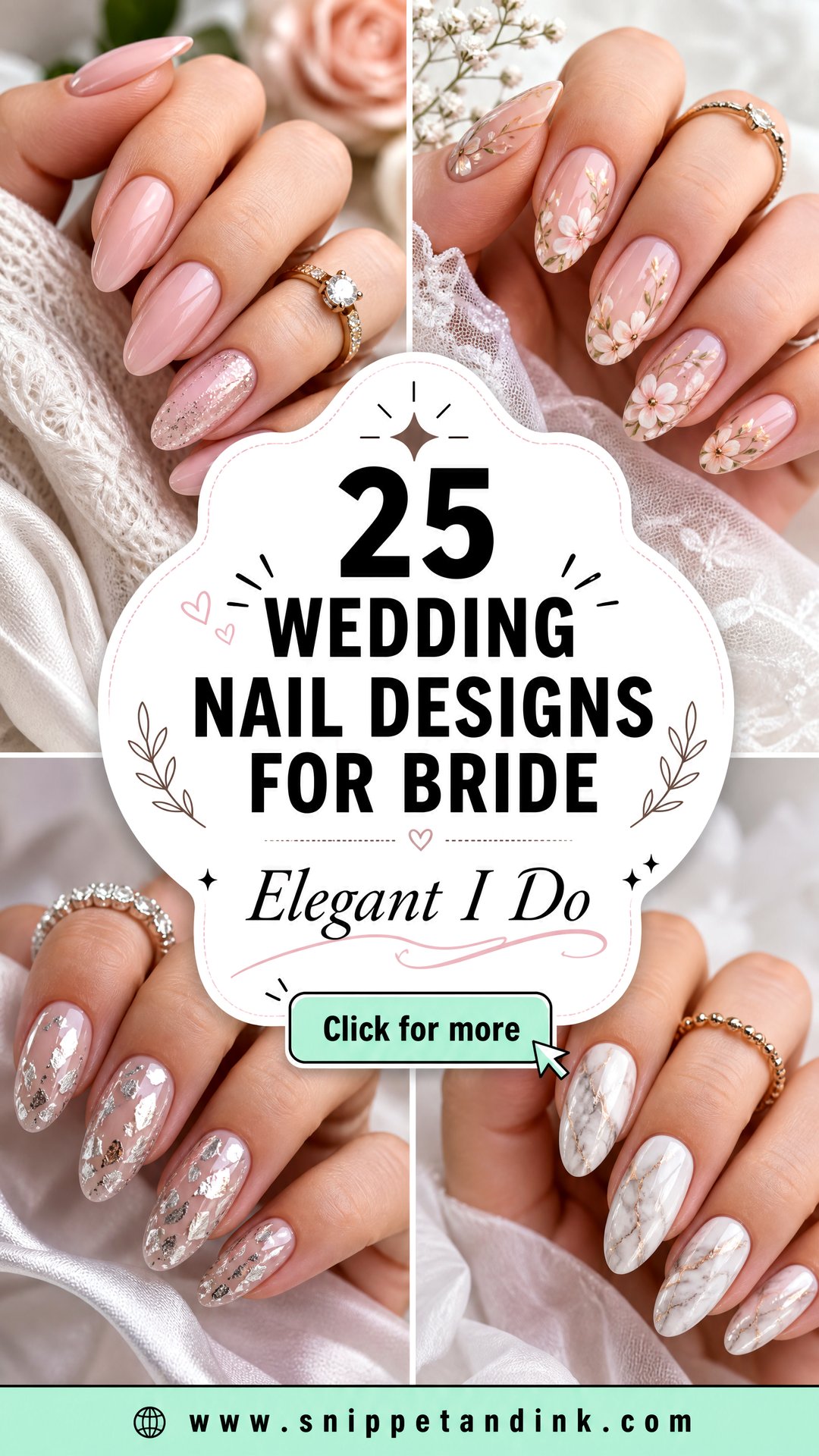
A bridal manicure has a narrow job. It has to hold up in a ring close-up, sit quietly next to the dress and still feel like your own hands. That rarely takes anything loud; a sheer pink glaze, a clean French line or one pearl can change the whole set. Shape does as much work as color. Almond lengthens, square looks crisp and modern, and short rounded nails keep everything practical. I’ve gathered the designs I paint most for weddings below, from the classic to the more modern, along with what each one needs from your natural nails and what tends to go wrong.
Showing a New Nail Tech Exactly What You Mean
Most disappointments at a bridal nail appointment come from a photo meaning different things to two people. ‘Milky’ can mean almost clear to one tech and nearly opaque to another. A few minutes of preparation saves a redo the day before the wedding.
- Bring one main photo and one backup, not a board of twenty. Point to what you like in each: the shape, the shade or the art.
- Say the length in plain terms, such as ‘just past my fingertip’, rather than a size name, because shape names mean slightly different things in every salon.
- Show your ring and, if possible, a scrap of dress fabric or a daylight photo of the gown.
- Mention anything you’ll do in the days after: swimming, travel, a lot of handwashing at a family event. It changes how I build the set.
- Ask how the design will be removed, especially with pearls, crystals or builder gel.
If you’re booking someone new for the wedding, use the trial to judge the finish at the cuticle and sidewalls up close. Clean edges there matter more in a ring photo than the art itself.
1. Classic French Wedding Nails
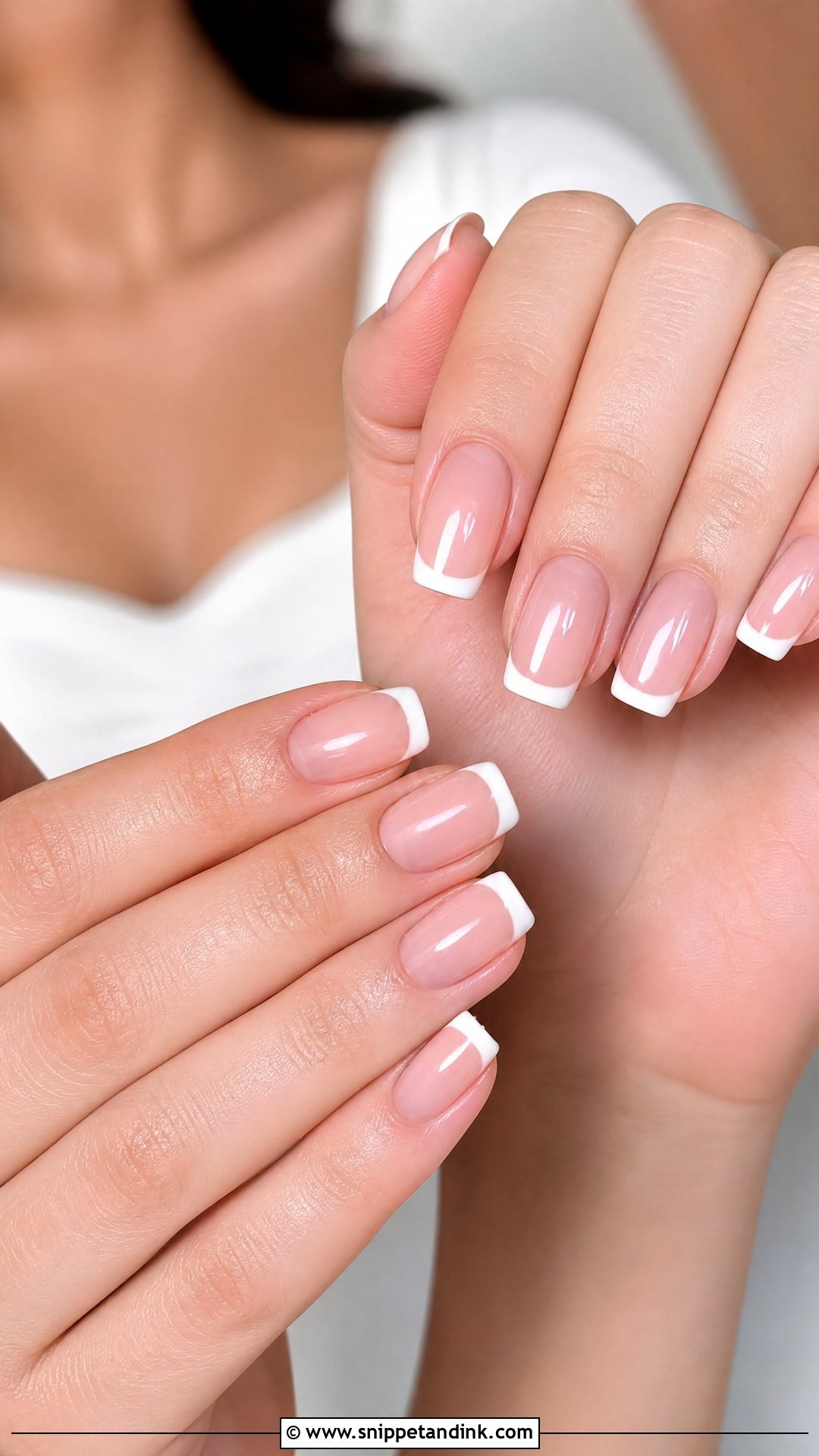
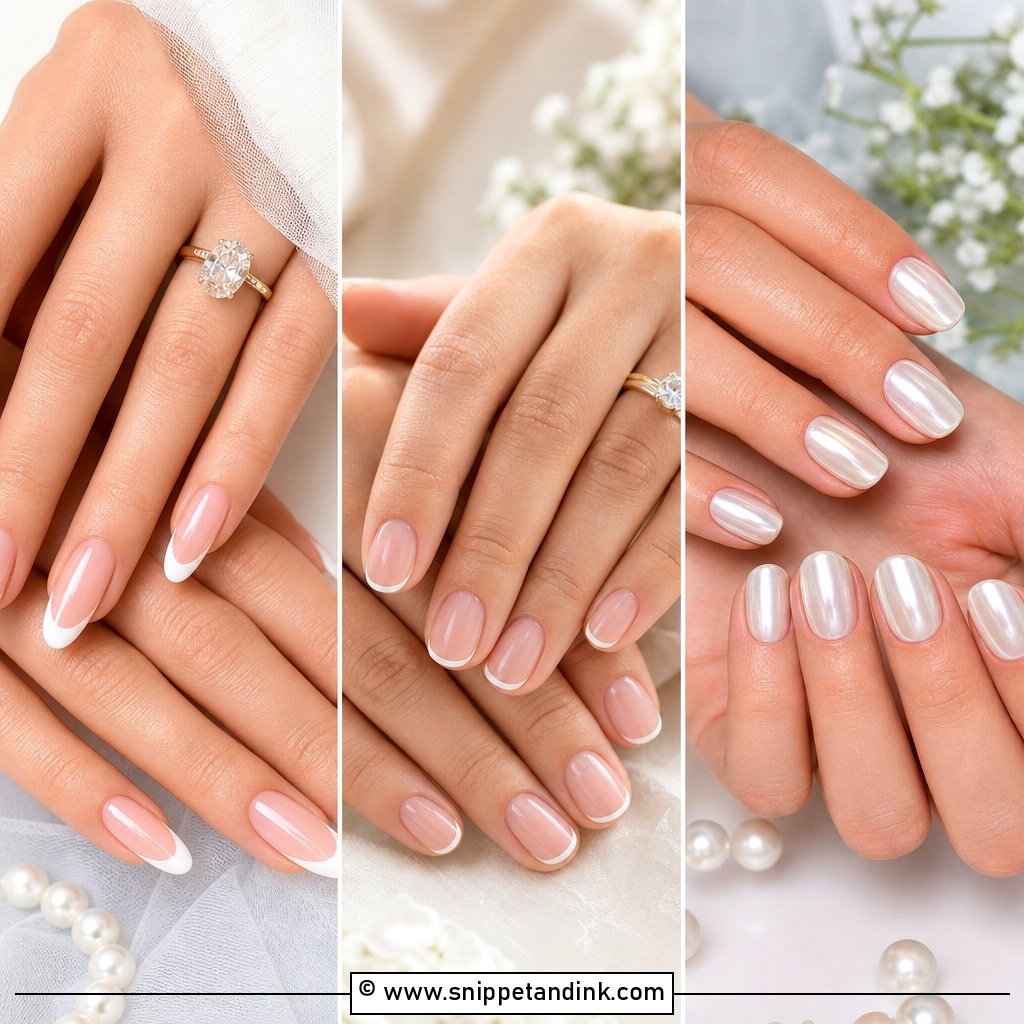
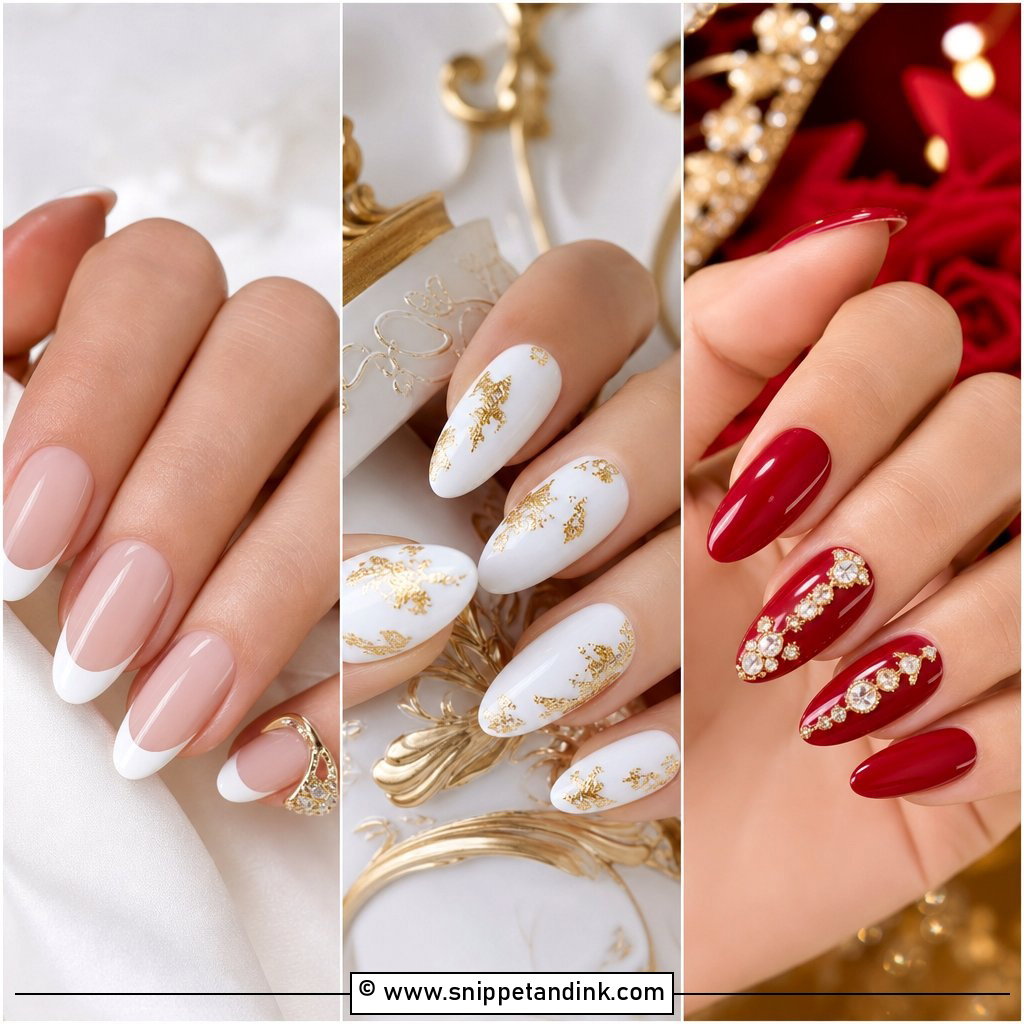
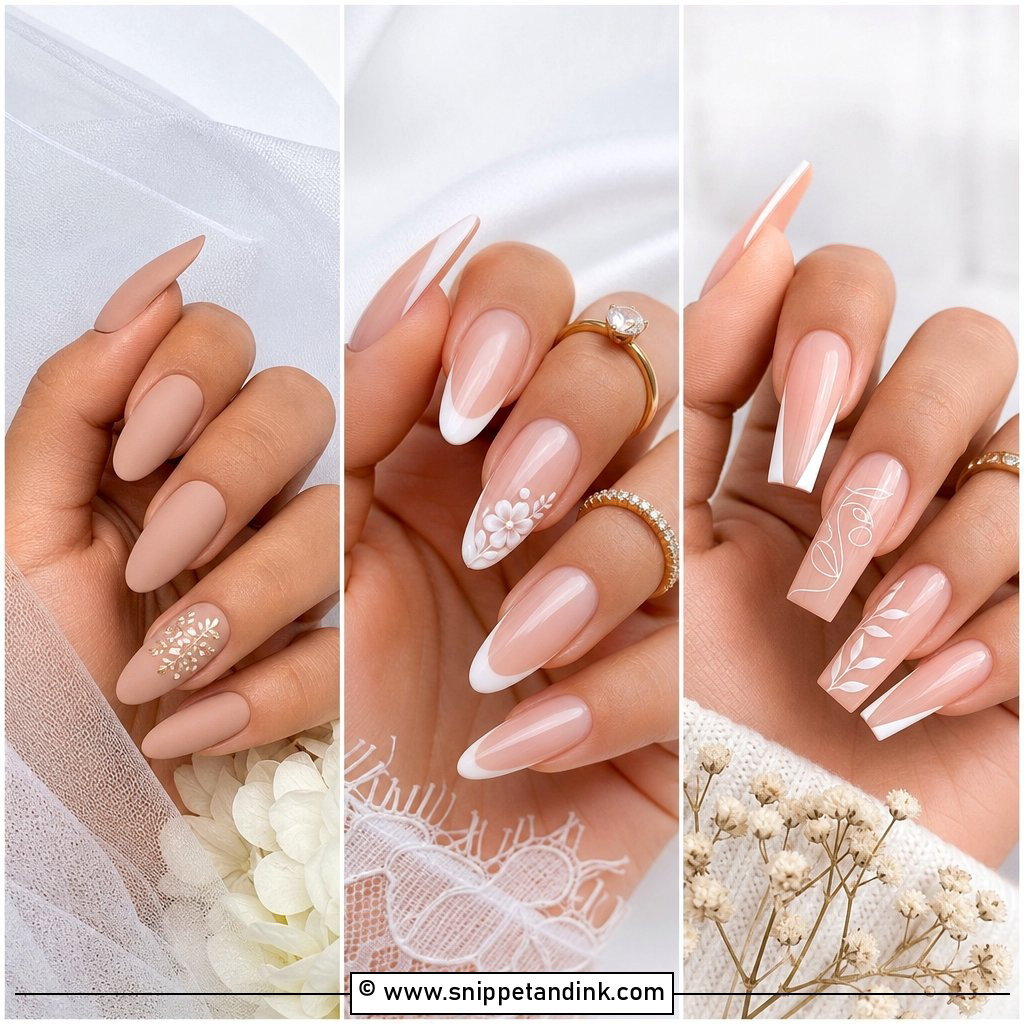
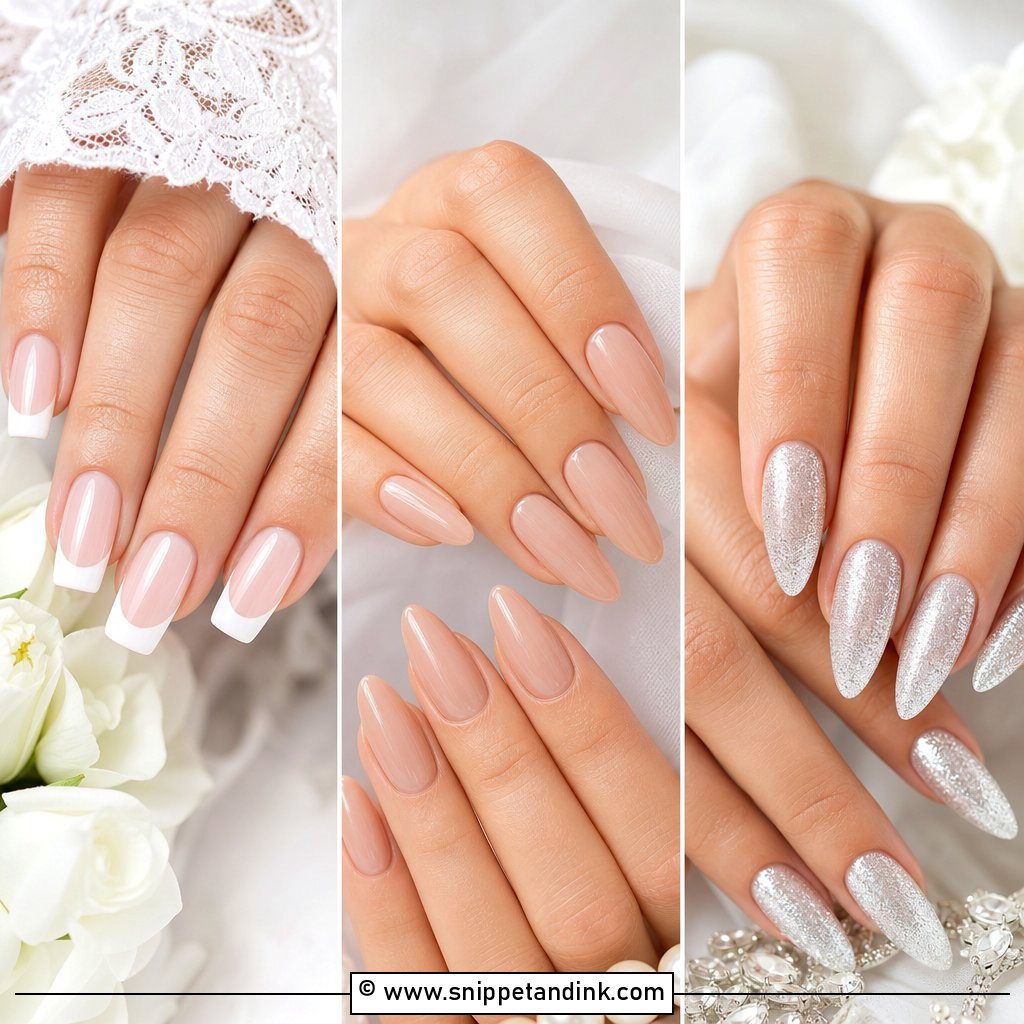
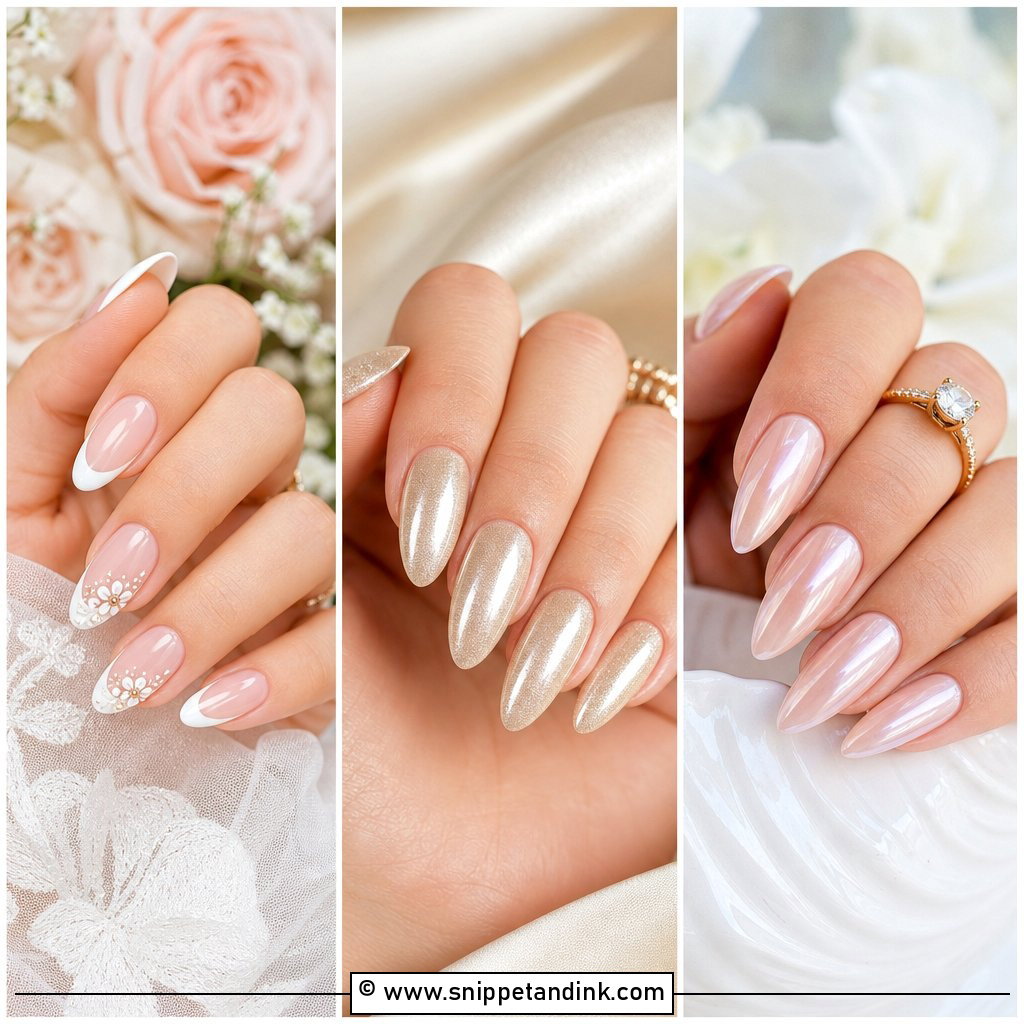
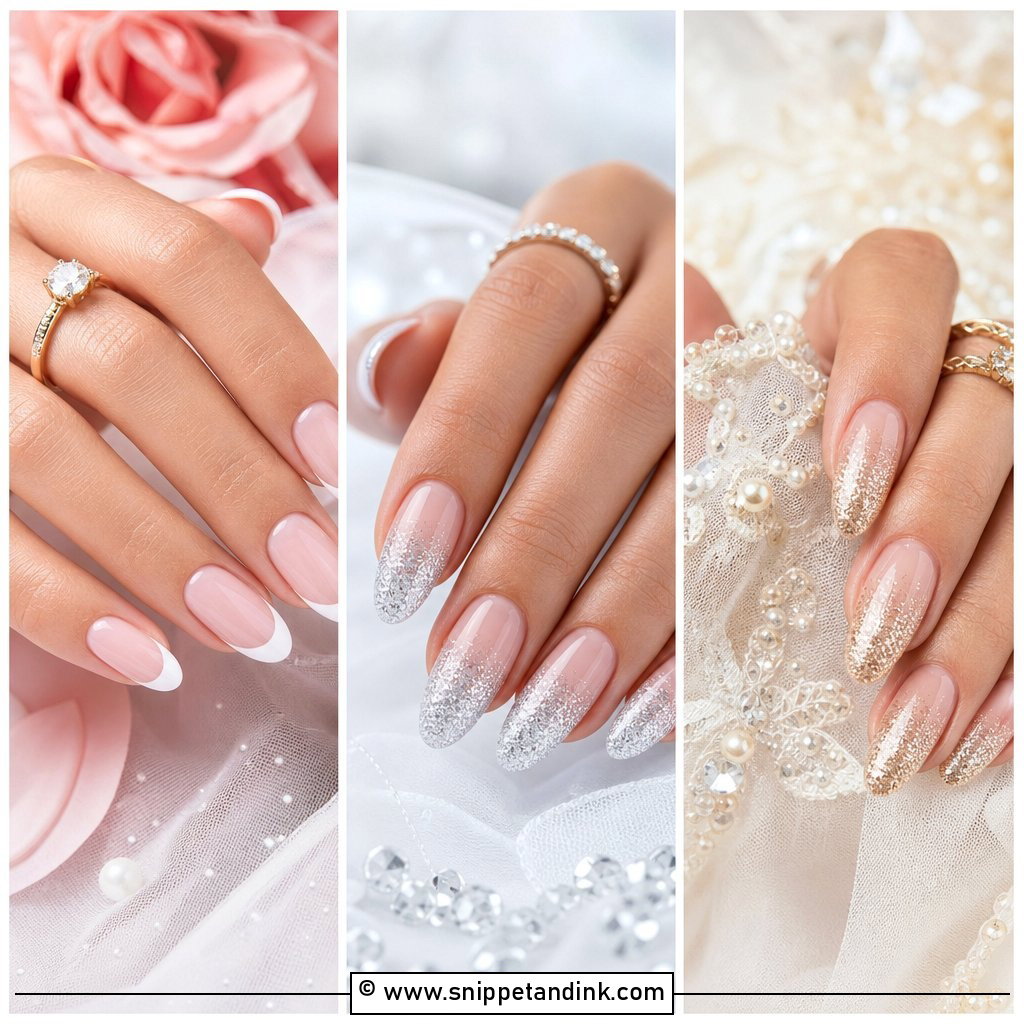
If you’re unsure, start here. A classic French is a sheer pink or nude base with white tips, and it suits structured, traditional gowns better than almost anything else. The contrast outlines the nail shape clearly, which is why it reads so well in ring photos. I’d ask for a thinner tip than you think you want and a glossy top coat; heavy white tips look dated and make the nail bed seem shorter. Almond, oval and soft square all take it well.
2. Milky White Wedding Nails
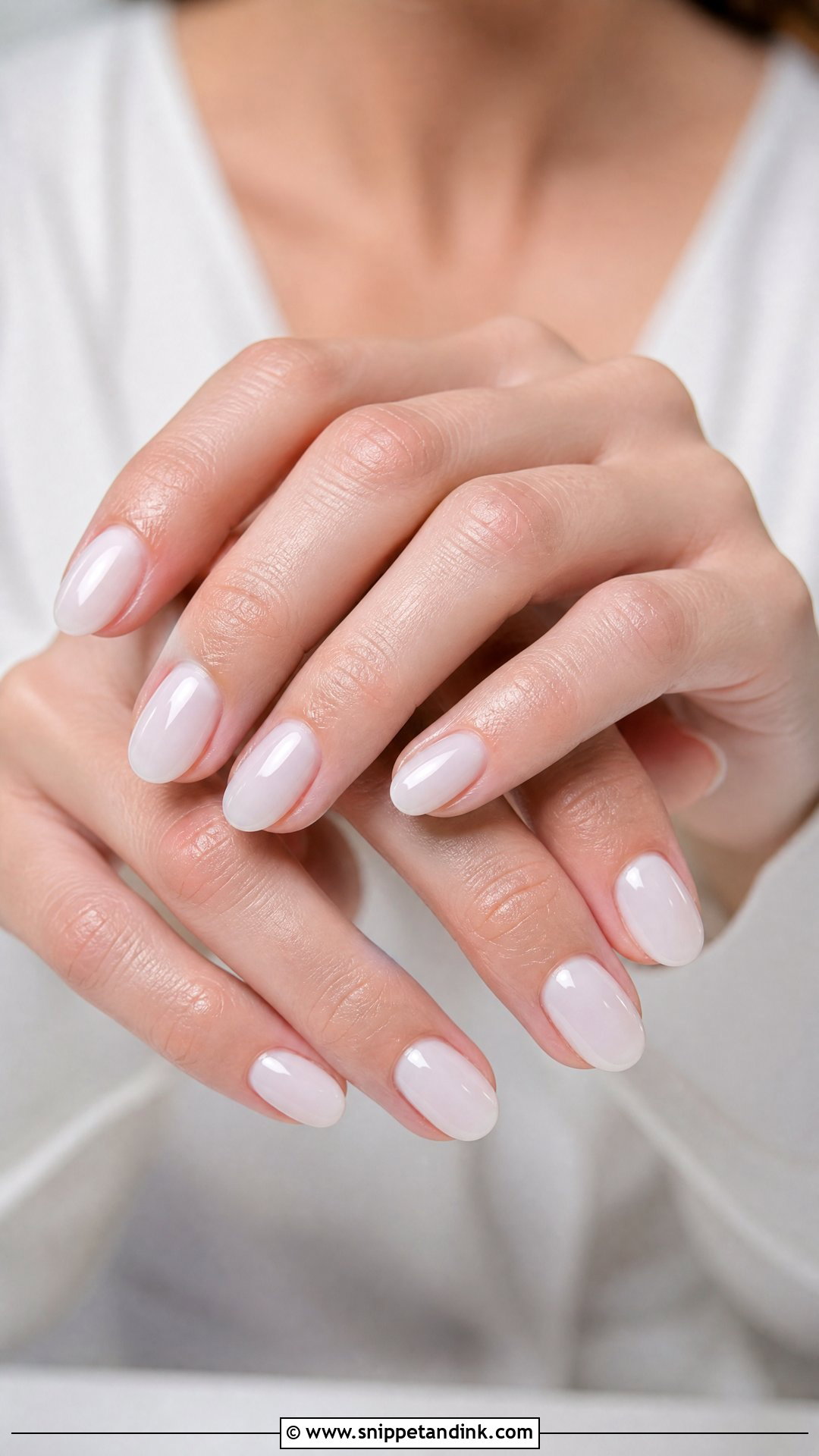
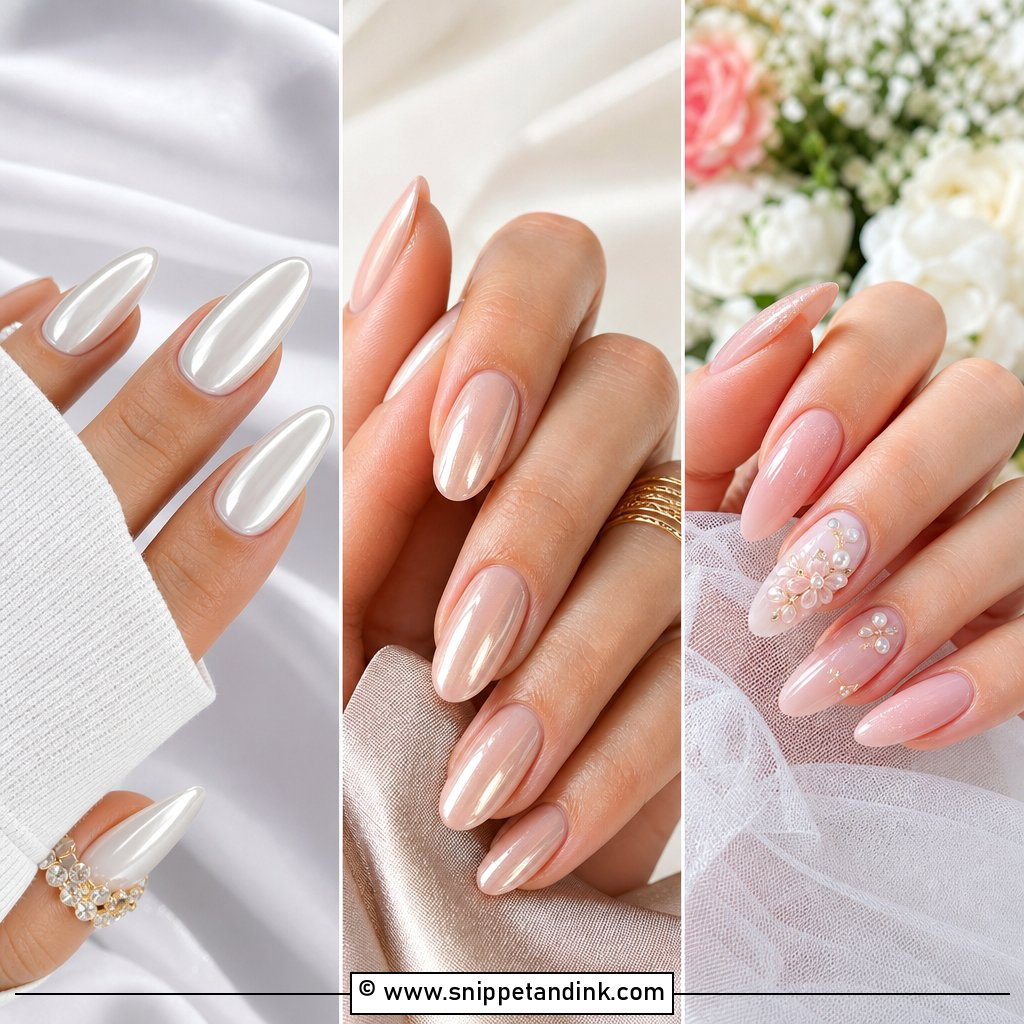
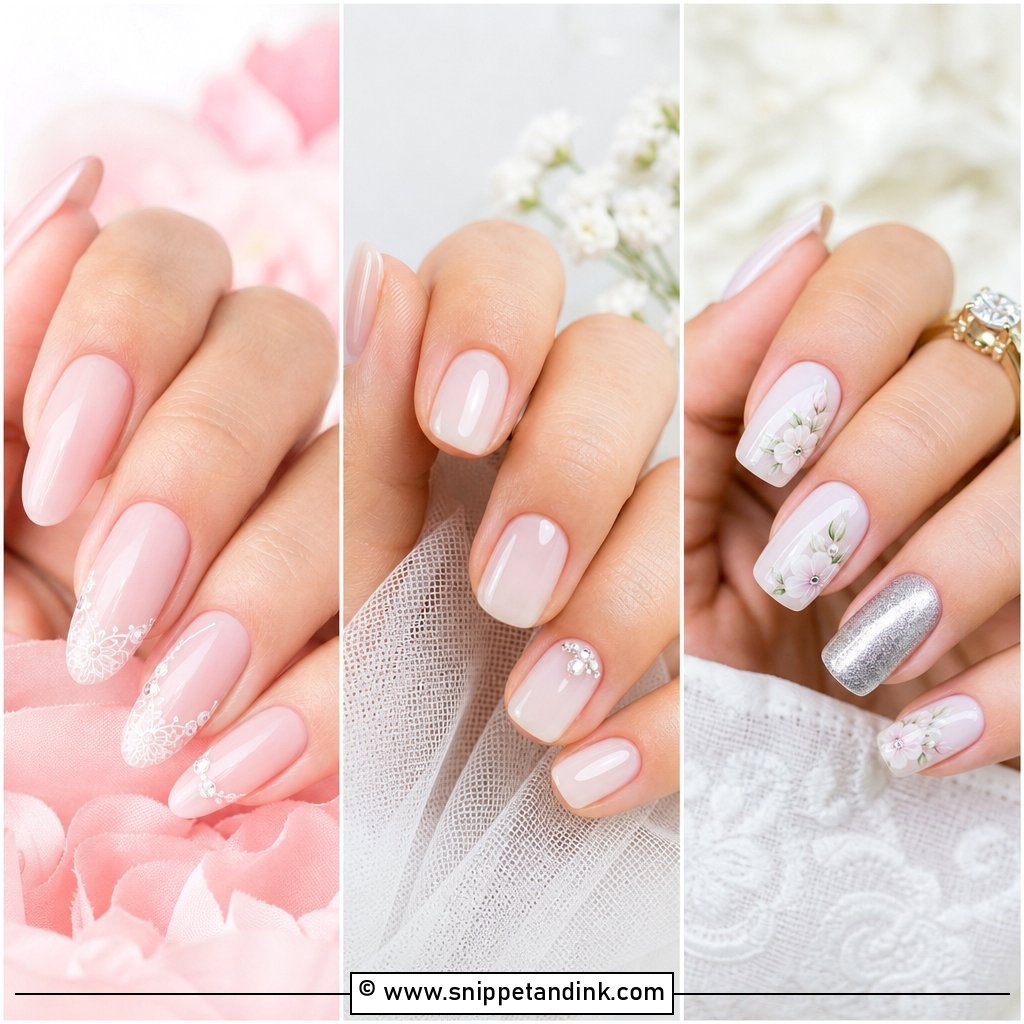
Milky white is a semi-sheer white that lets a little of the nail bed show through, so it looks softer than a flat white cream. It goes with satin, lace and chiffon alike, and with silver, white gold, pearl or diamond jewelry. Getting it even is the skilled part. Milky gel tends to pool at the cuticle and sidewalls, so I float thin coats and cure each one before the next. Short to medium length with a high gloss is the most modern version.
3. Sheer Pink Wedding Nails
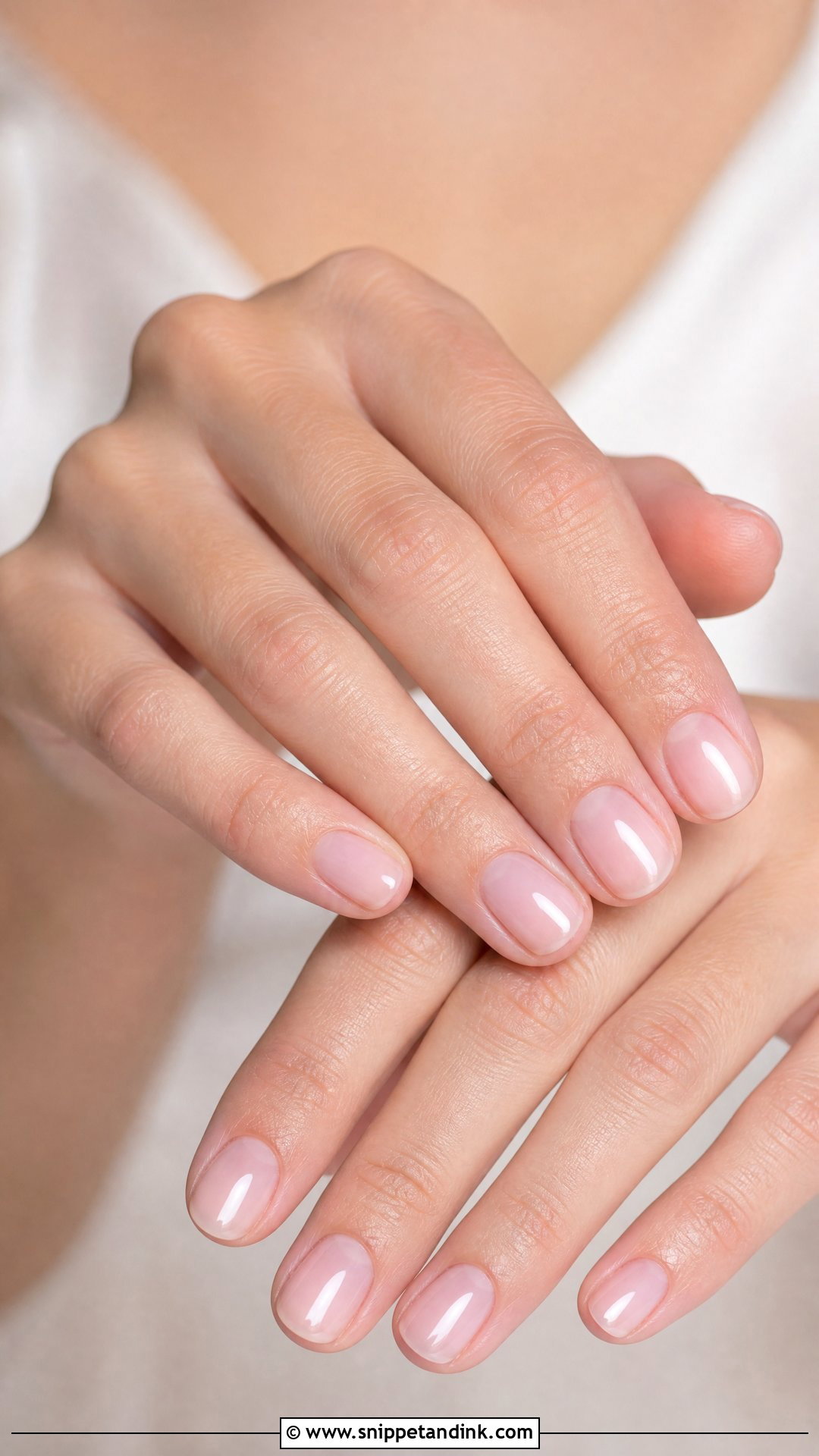
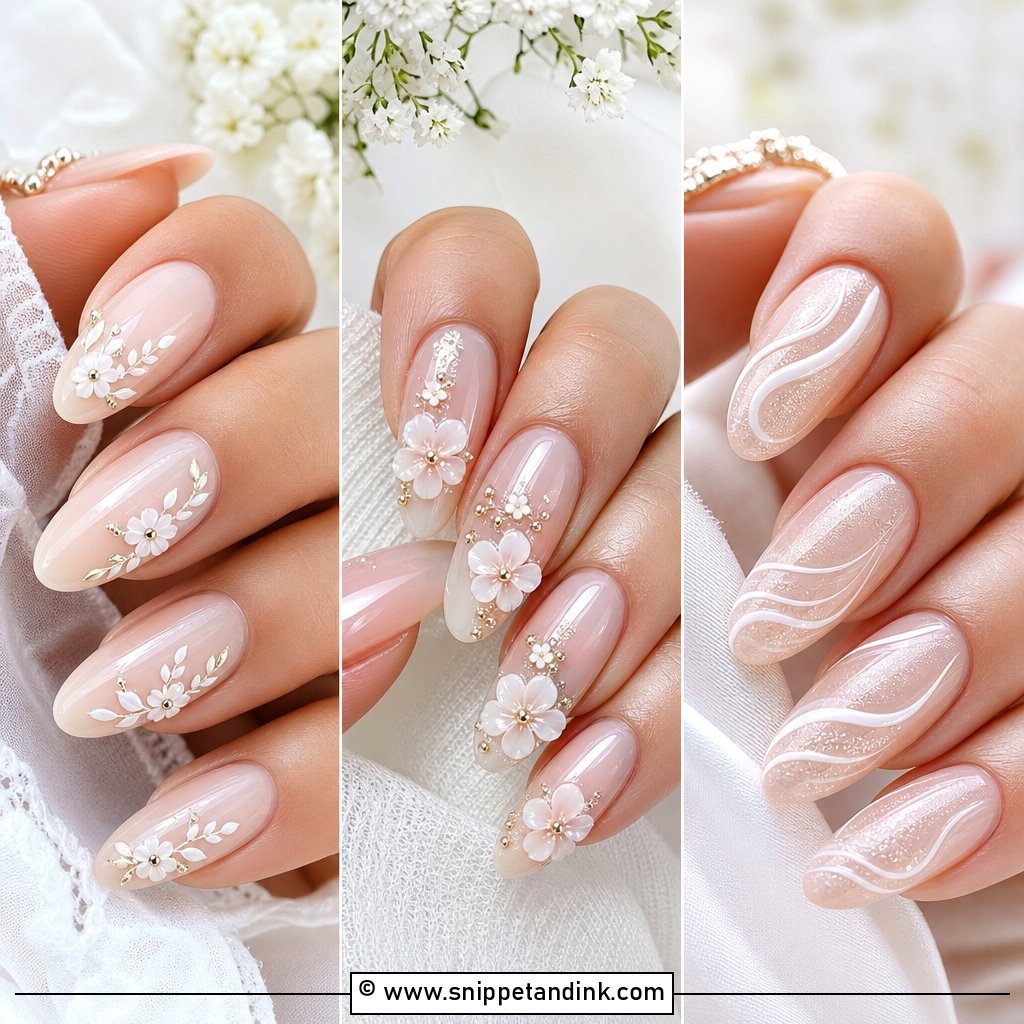
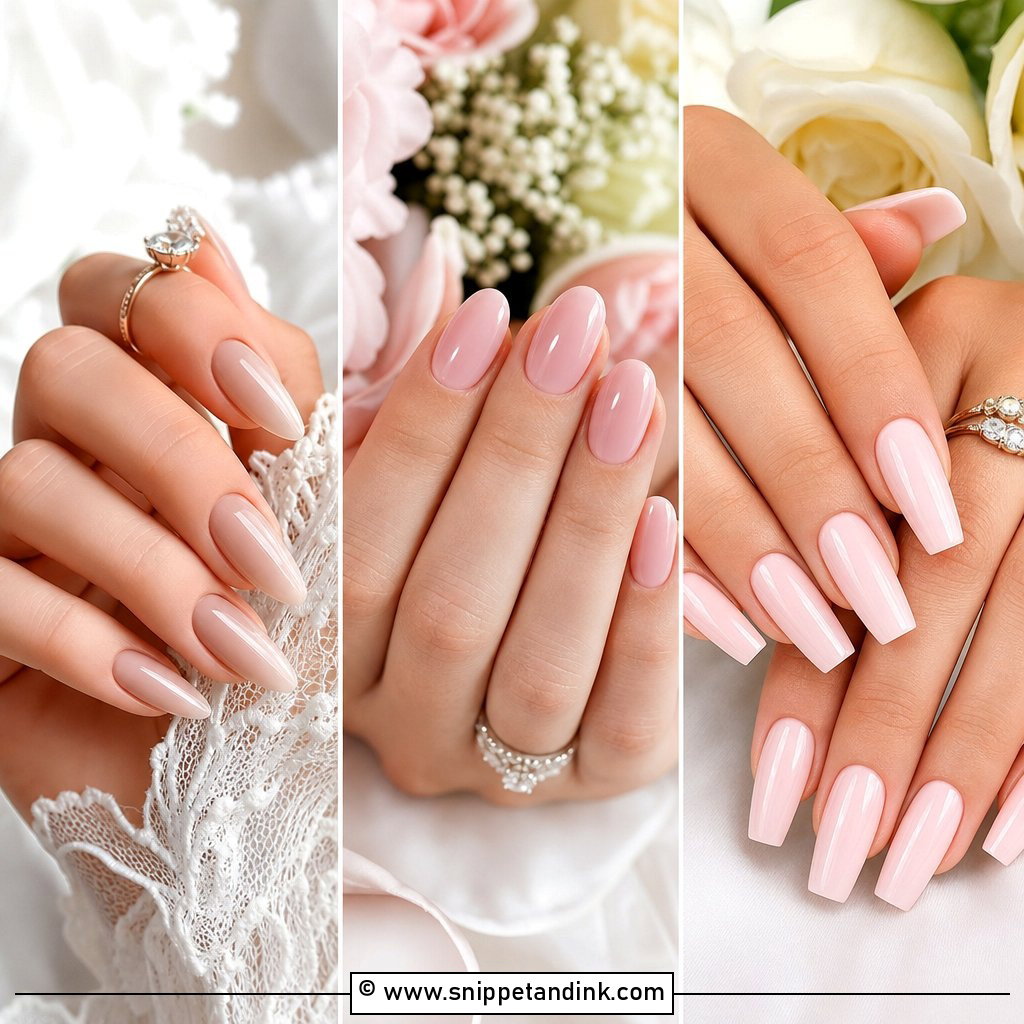
Sheer pink makes hands look rested and well cared for without looking painted. The translucent tint brightens the nail bed and hides minor discoloration, and on short nails it draws the eye along the whole nail so they look longer. I keep the surface glassy by smoothing it with a self-leveling base first, because any ridge shows through a sheer color. A very fine shimmer is the only extra I’d add. It sits comfortably with blush makeup, pink flowers and rose gold.
4. Nude Almond Wedding Nails
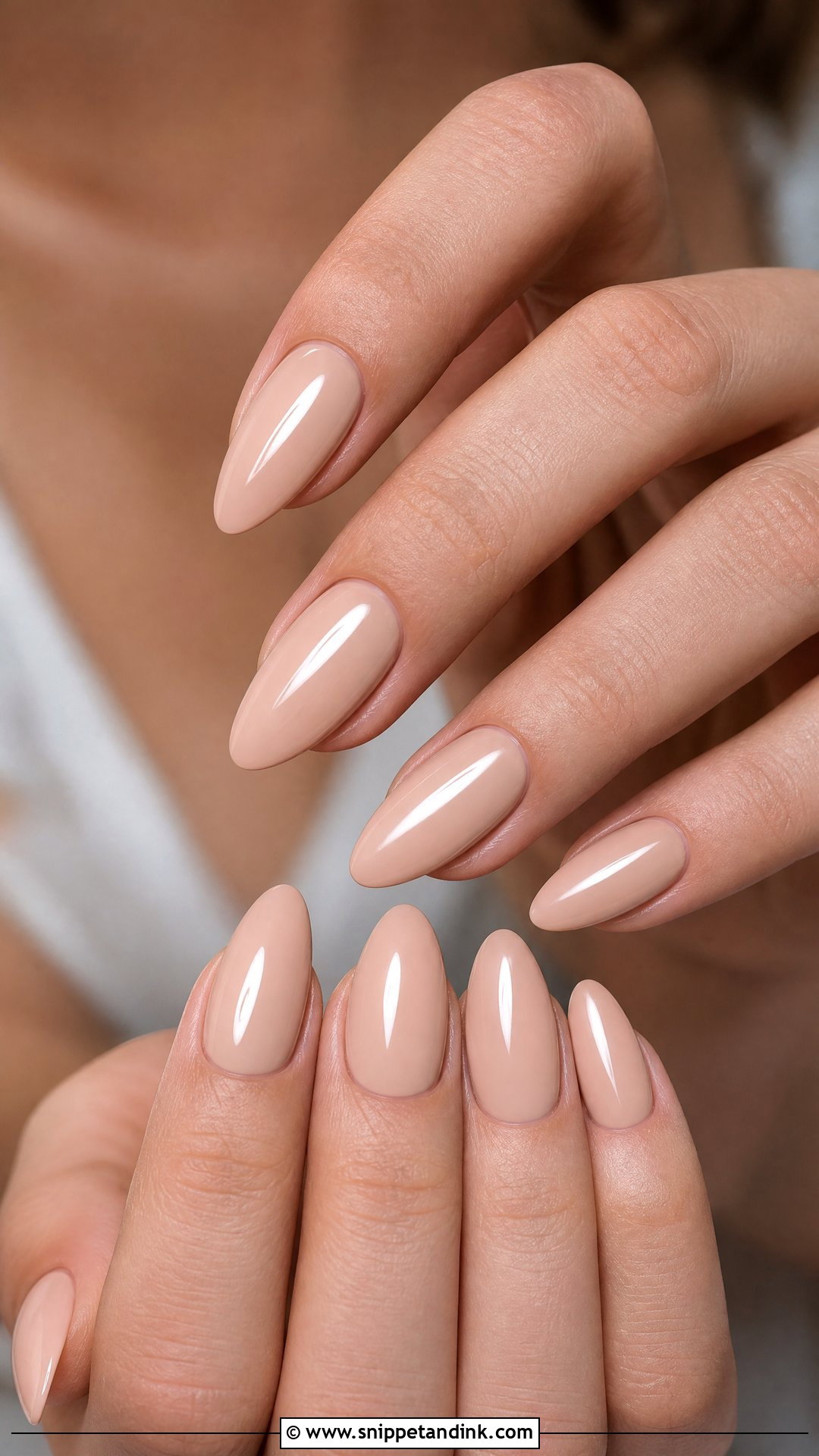
Here the shape lengthens the fingers and the color stays out of the way, which makes it a good set to wear with a heavily detailed dress or veil. Finding the right nude is the whole job. Fair skin usually suits pink-beige, medium skin peachy nudes, and deeper skin looks rich in caramel, mocha or warm beige. A nude that matches your skin exactly can make the fingertips disappear in photos, so I go one step lighter or deeper. Keep the finish glossy.
5. Pearl Chrome Wedding Nails
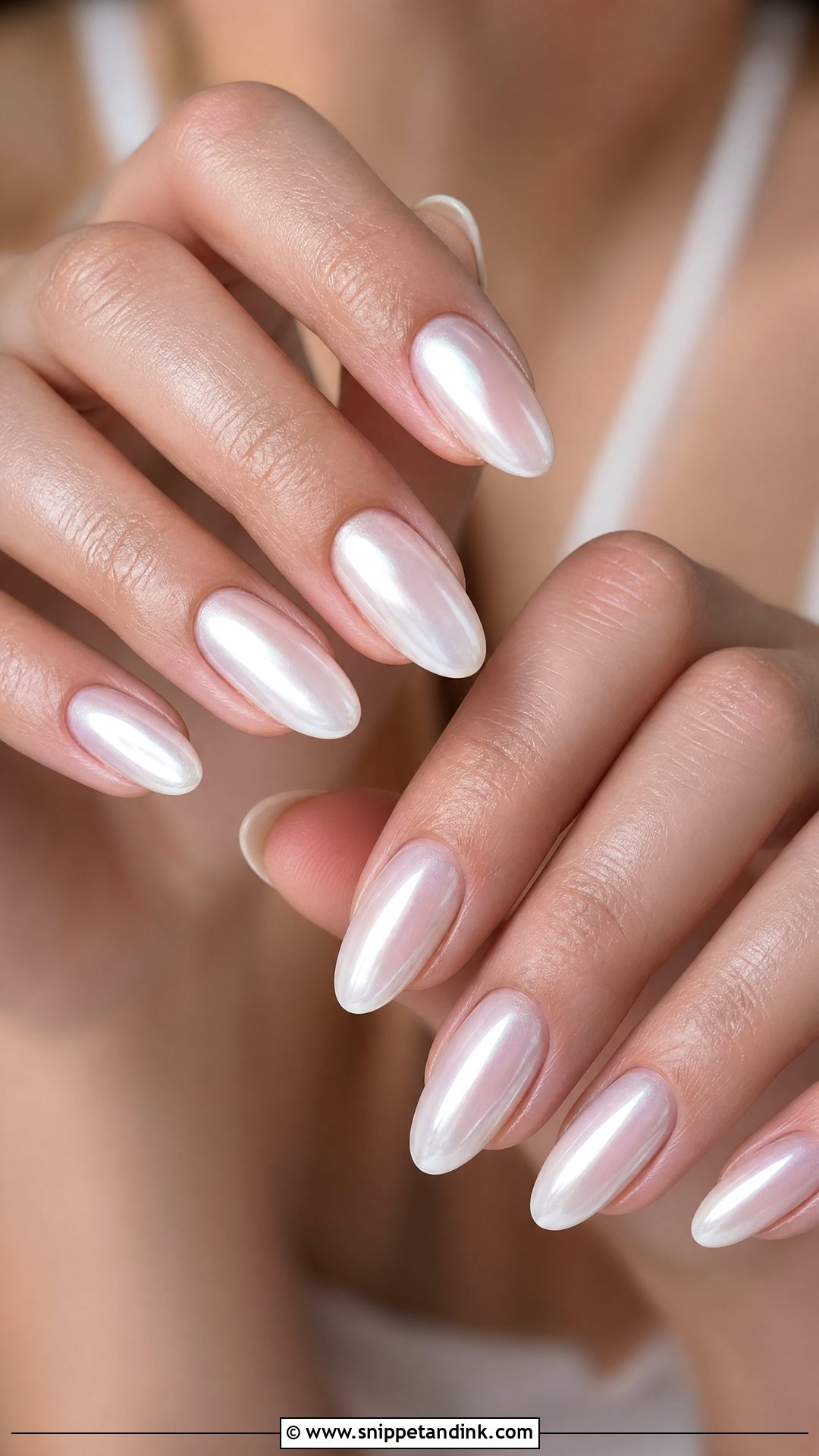
Pearl chrome wedding nails give a glazed glow without the brightness of metallic chrome. I start on a sheer white, pale pink or milky base and rub a fine pearl powder over the cured top coat, then seal it. The finish follows the curve of almond and oval nails, so the shine moves as you turn your hand. It’s the step up I suggest to brides who find a plain nude too plain but don’t want visible art. Book it close to the wedding, since chrome dulls with everyday wear sooner than a cream gel.
6. White Chrome French Wedding Nails
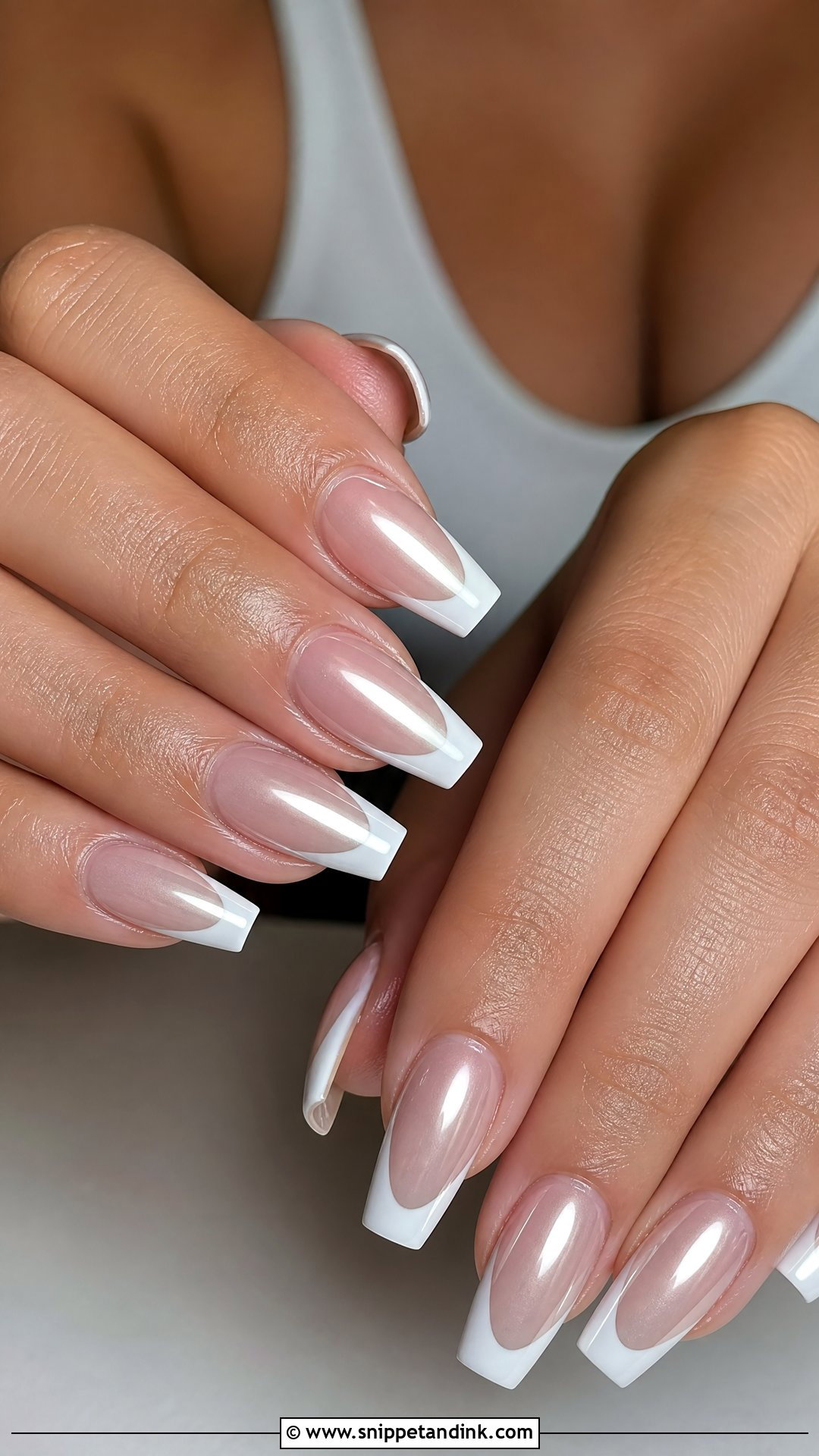
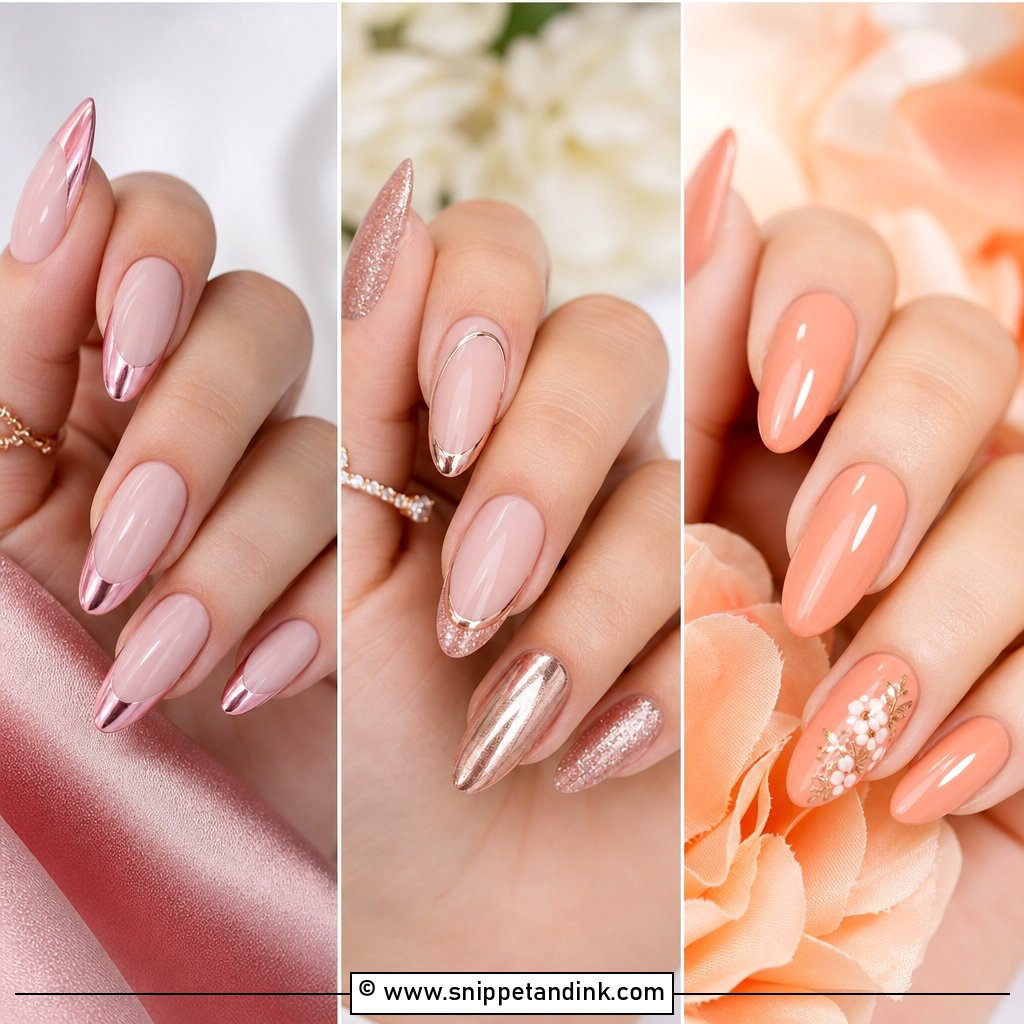
White chrome French wedding nails keep the white tip and add a pearly chrome film, over the whole nail or only the tips. Chrome over the full nail softens the line between base and tip; chrome on the tips alone keeps the French crisp. A sheer pink base reads gentler, a milky one brighter. Medium almond, coffin or square all work. It sits best with sleek dresses and very little jewelry, where the glow has nothing to compete with.
7. Micro French Wedding Nails
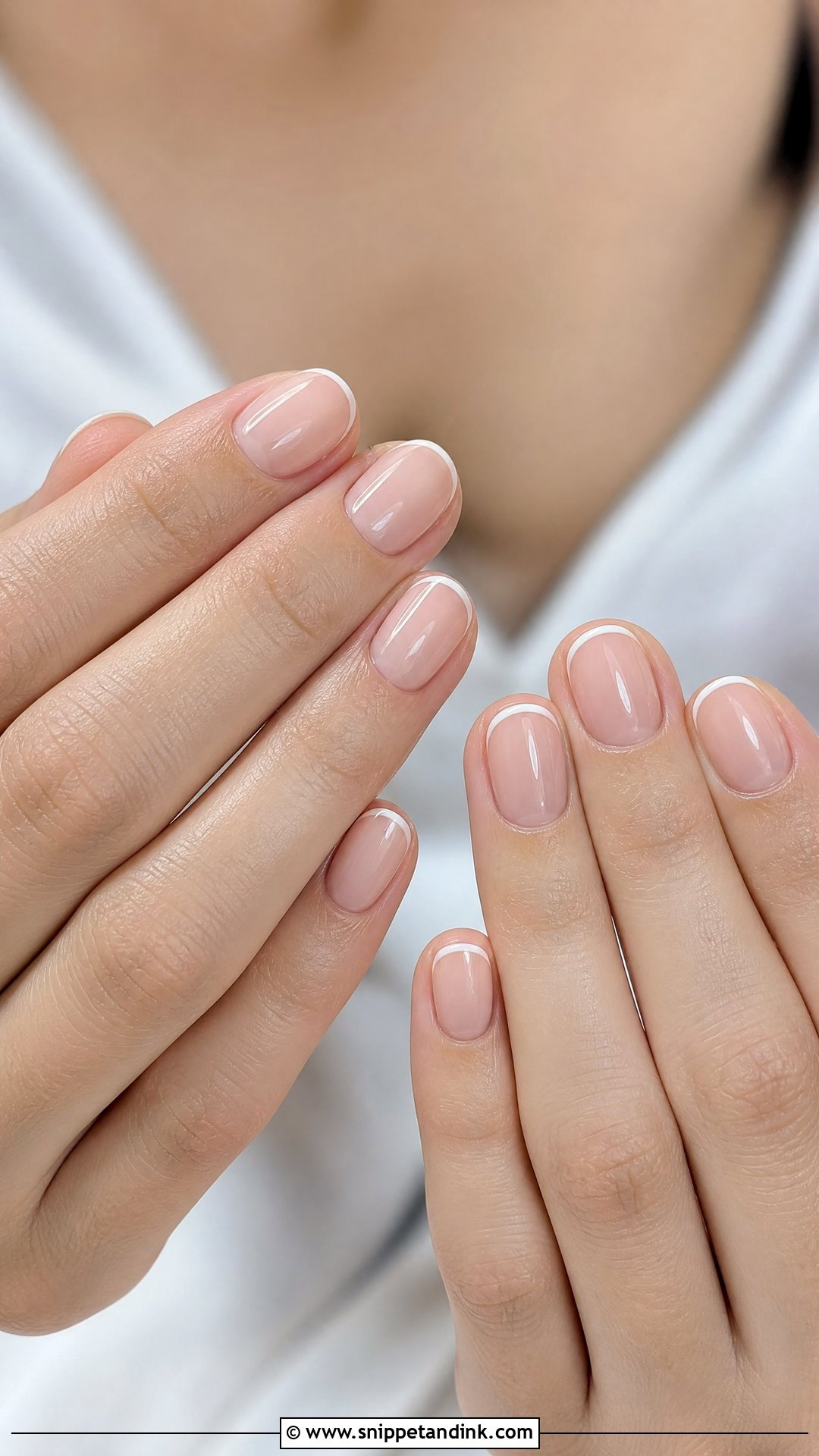
A micro French is a hairline tip, often a millimetre or two, painted along the free edge over a sheer base. Short nails suit it best of all, because a thick tip would swallow most of the nail. The line has to be precise, so I paint it with a long, thin liner brush and pull it in one stroke rather than dabbing. White looks classic; ivory reads warmer next to a cream gown. It’s a quiet set that looks as tidy at the last dance as in the first photo.
8. Ombre French Wedding Nails
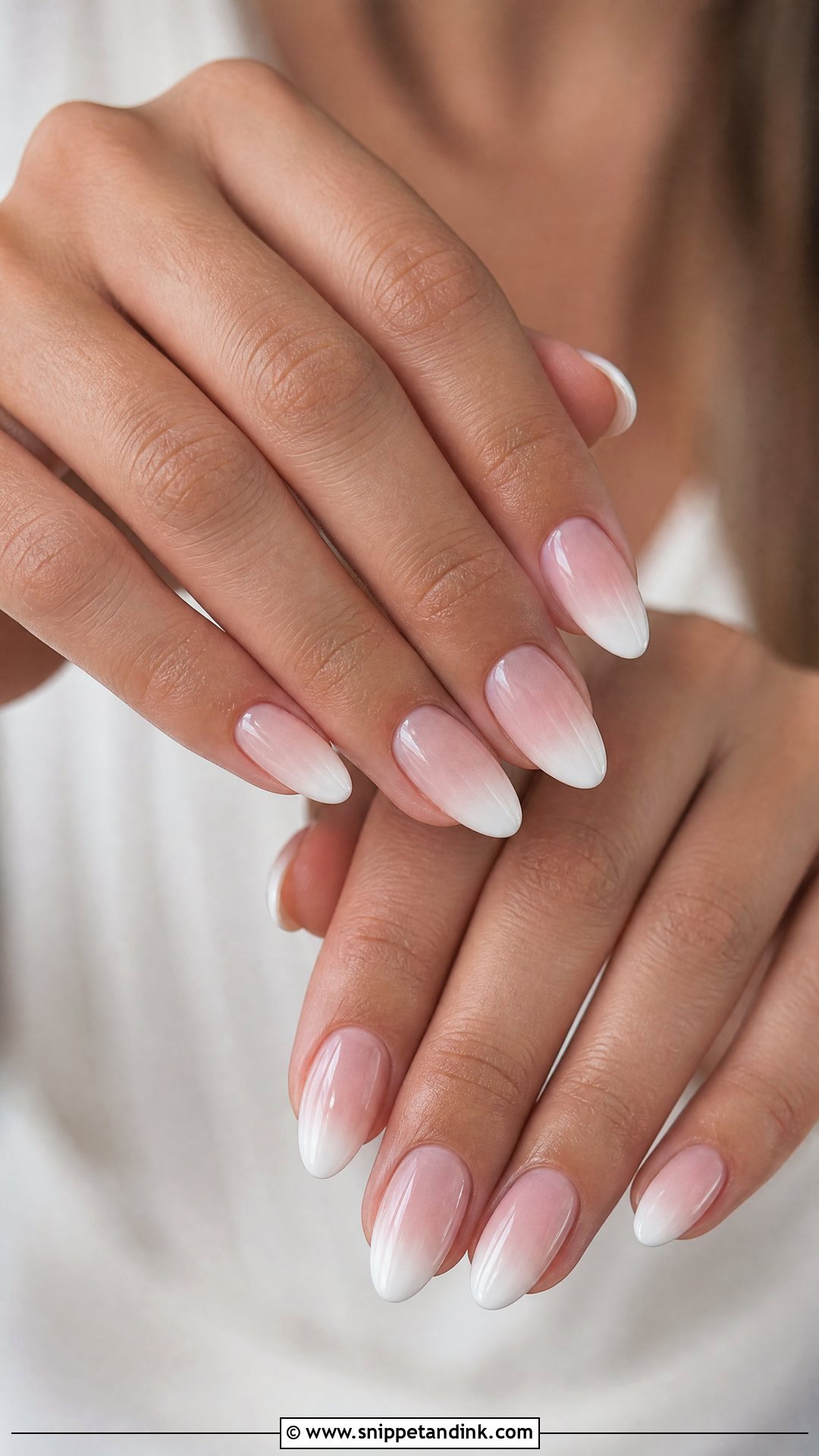
This is the French for anyone who finds a hard white line too strict. The tip blends into a nude or pink base, so there’s no edge to look chipped or uneven at the end of a long day. Almond, coffin and oval give the color enough distance to fade properly; on very short nails the gradient gets cramped. A glossy top coat keeps it clean, and a fine shimmer adds a little occasion. Neutral tones like these sit with almost any dress.
9. Blush Pink Wedding Nails
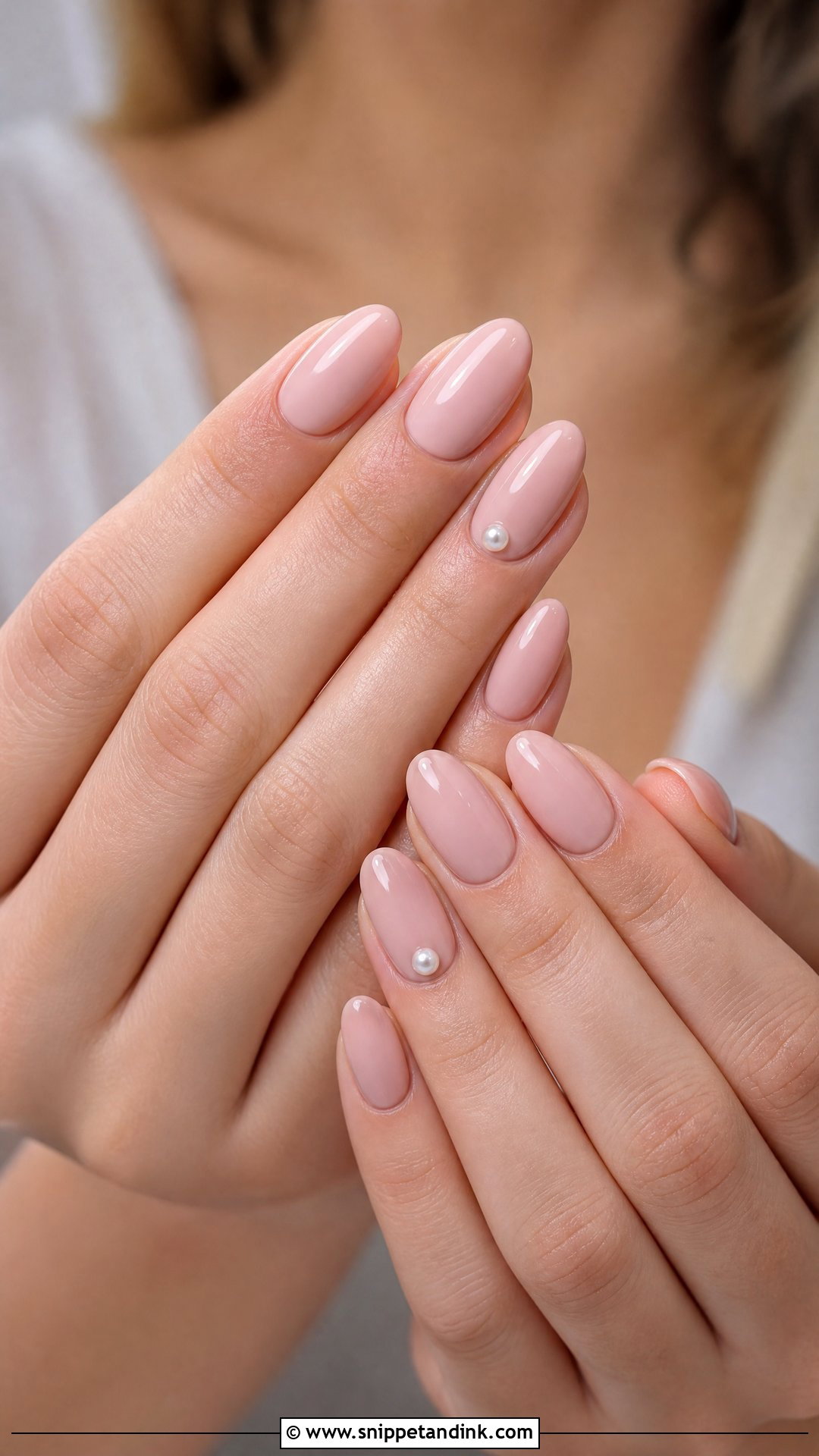
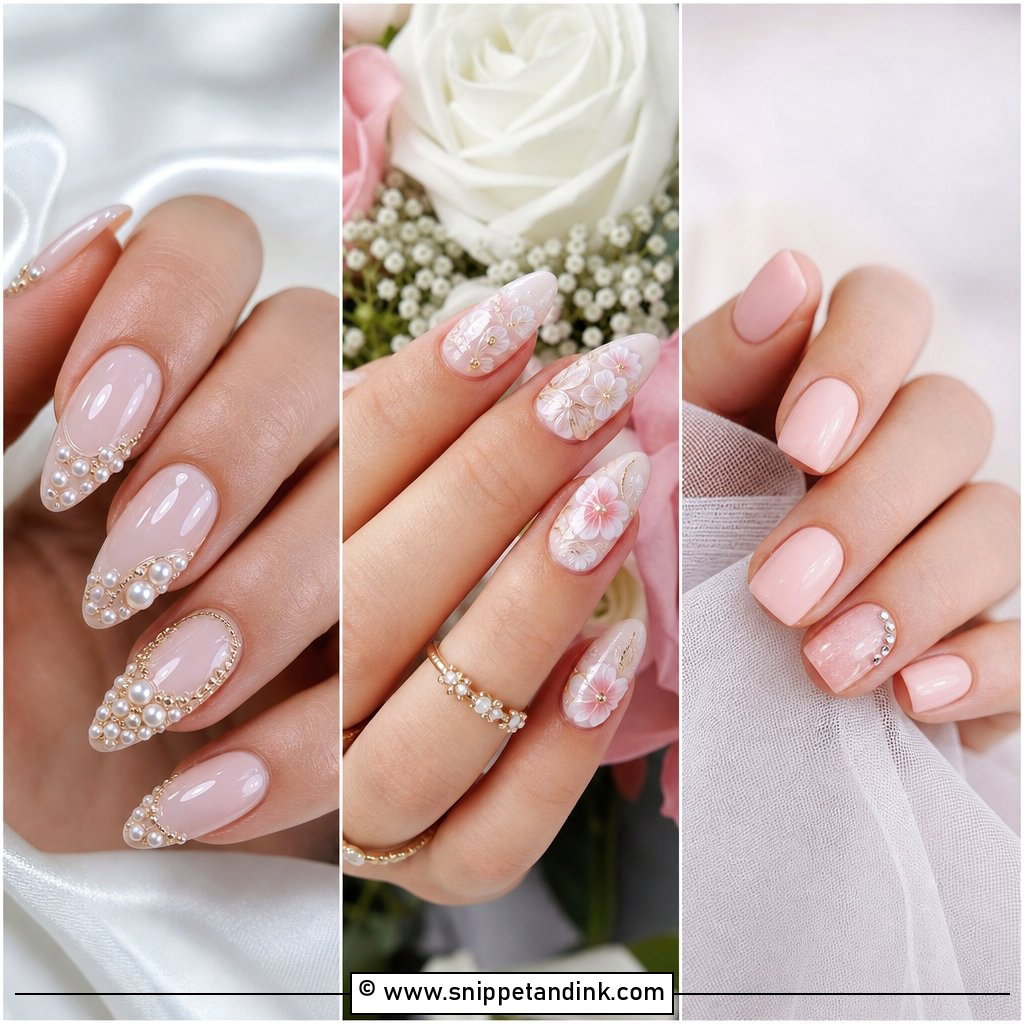
Blush pink sits between a sheer pink and a pastel, so you get more color without losing the bridal feel. It’s a natural match for rosy makeup and warm-toned accessories, and it suits spring and summer garden weddings. On short rounded nails it looks fresh; on almond it looks more dressed. One pearl on the ring finger is enough decoration. I always swatch blush in daylight, since some pinks read peachy indoors and cooler outside.
10. Baby Boomer Wedding Nails
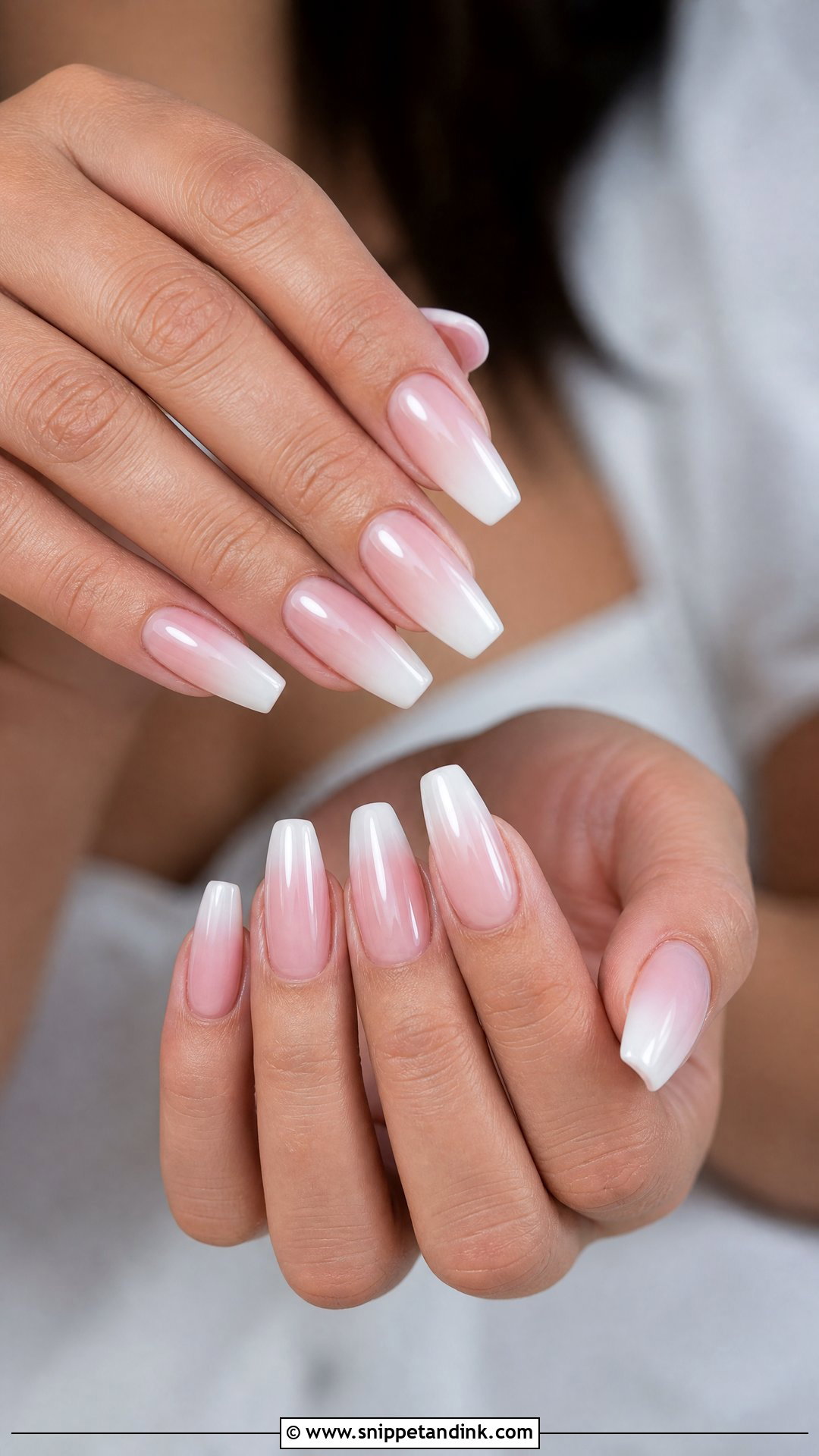
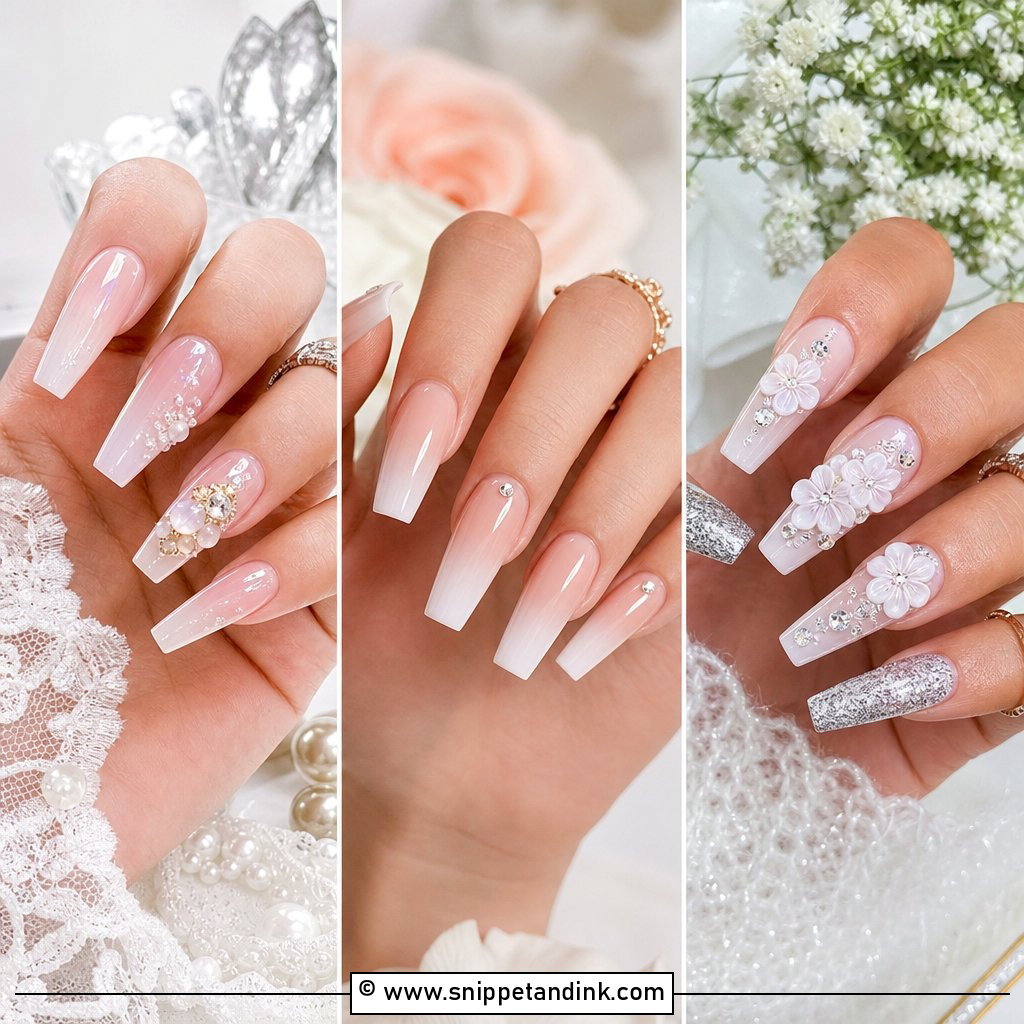
Baby boomer is the faded French: pink or nude at the cuticle blending into white at the tip. I sponge the white on in light layers and blur the transition until there’s no visible step, and that layering takes longer than people expect, so book a longer slot. The gradient makes almond, coffin and oval nails look longer. A plain gloss is the classic finish; a pearl top coat warms it up. It also hides a few days of cuticle growth better than a hard-edged French.
11. Lace Wedding Nails
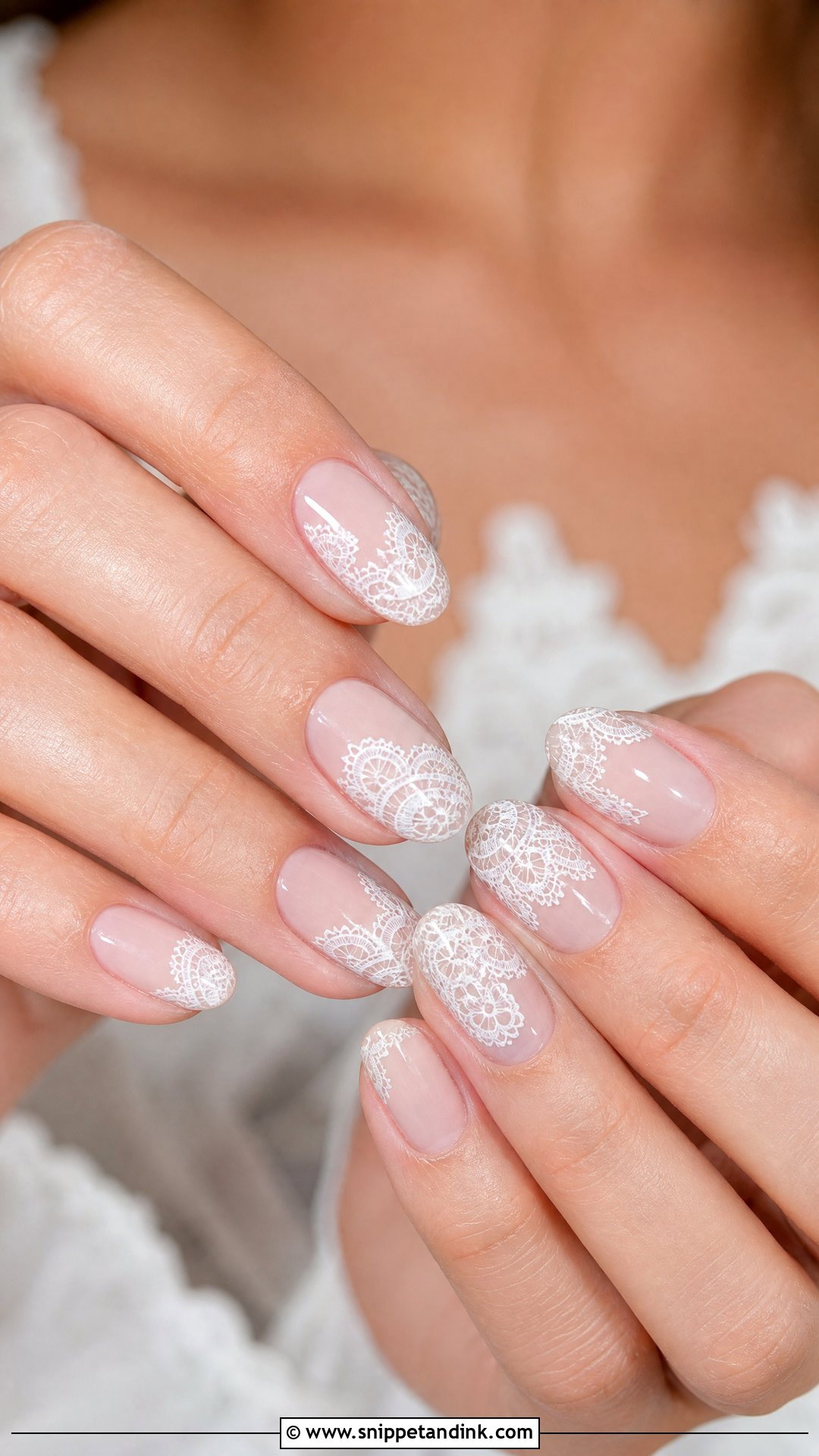
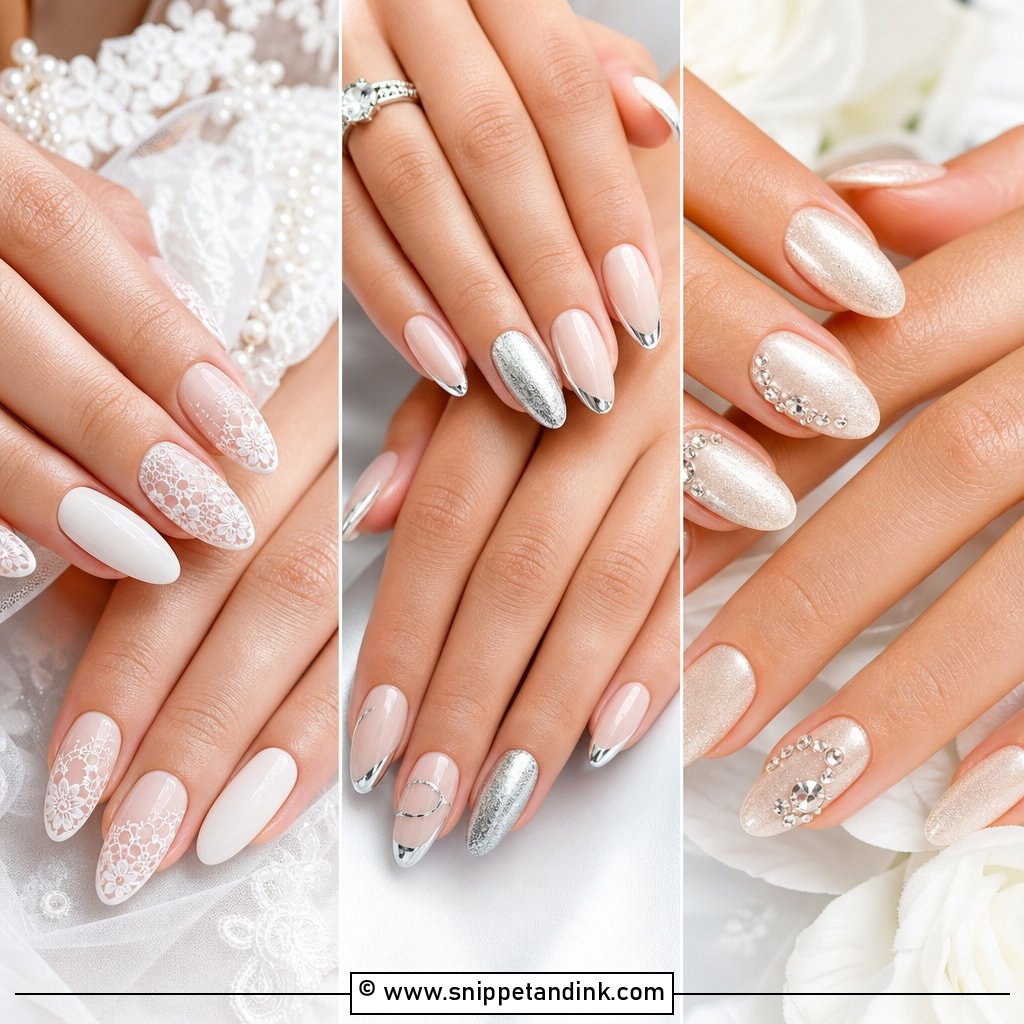
Lace nails work best when your dress actually has lace, on the sleeves, bodice or veil. I paint fine white lines over a nude, sheer pink or milky base, copying one motif from the gown photo the bride brings. Thin lines and soft color are what keep it from looking heavy, and almond or oval gives the pattern a graceful shape. Covering every nail can get fussy; two or three accent nails are usually plenty. A few tiny pearl dots can stand in for beading.
12. Floral Wedding Nails
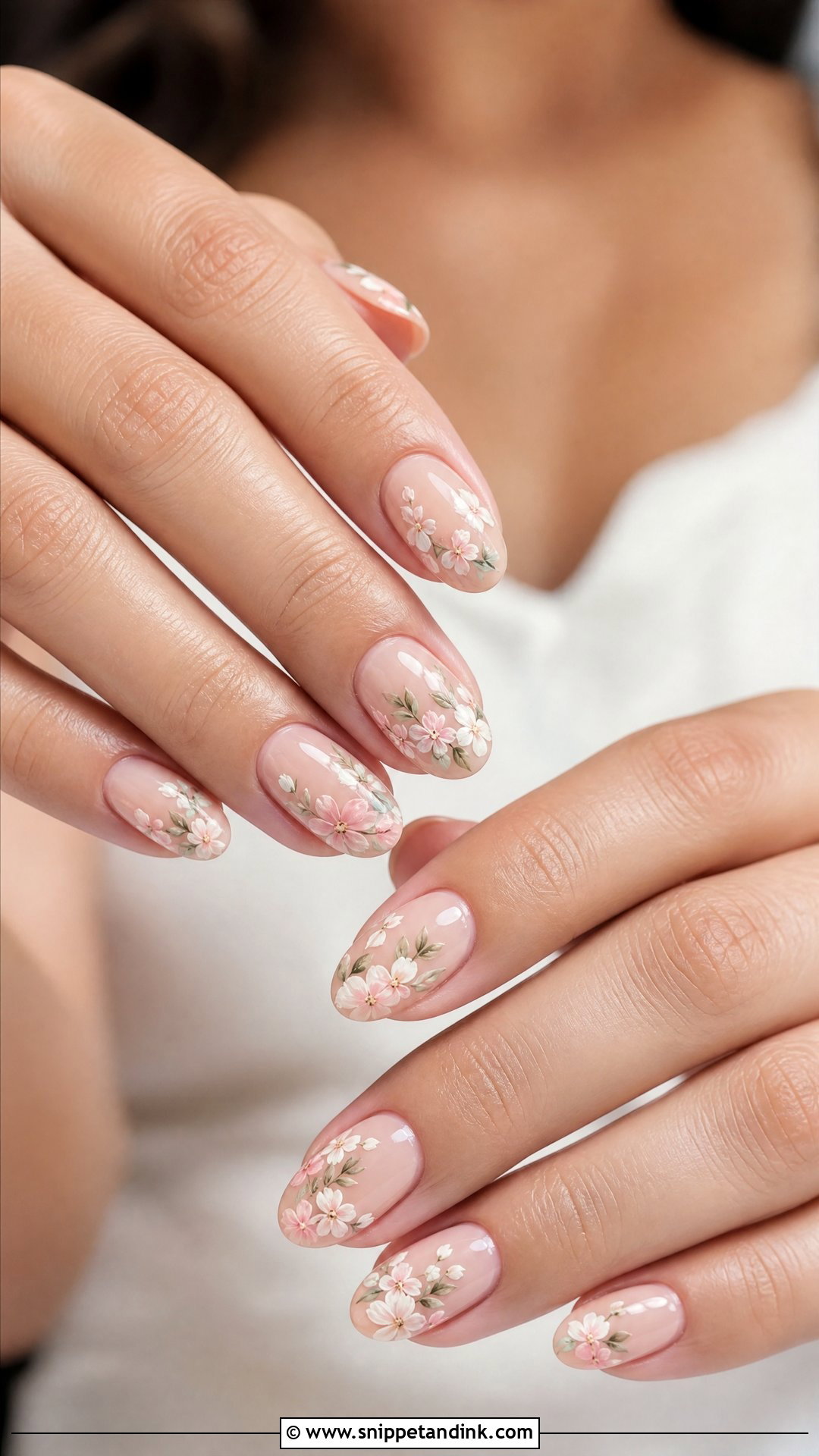
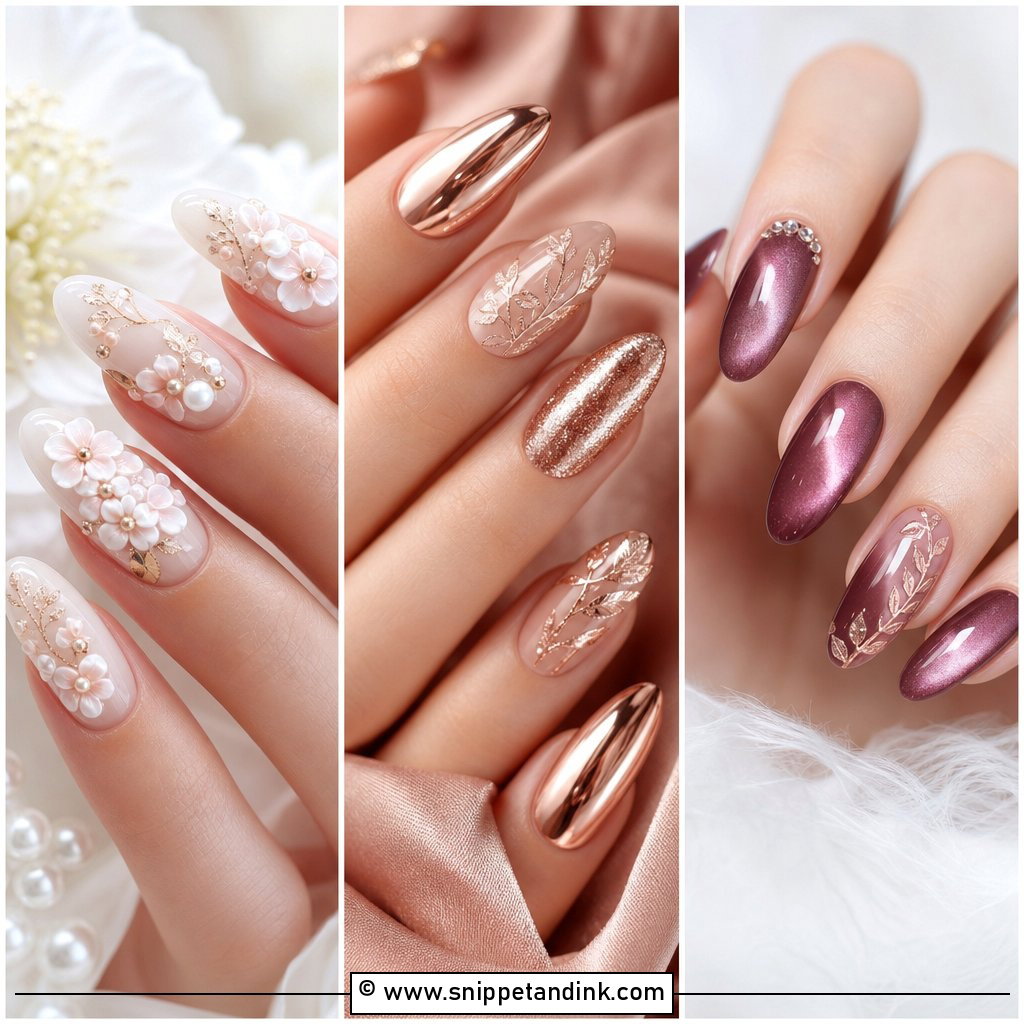
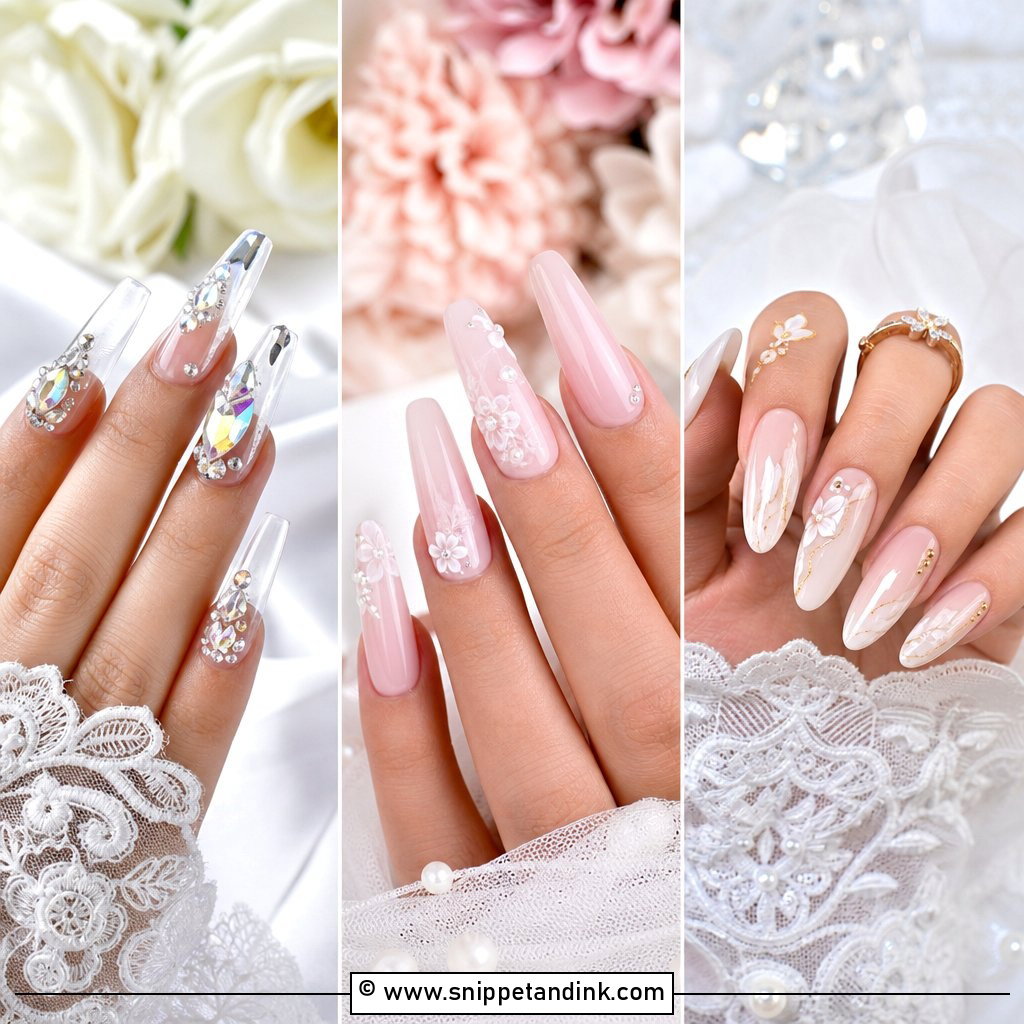
Flowers on the nails feel most personal when they echo the bouquet. Tiny white petals on a sheer base keep it minimal; adding blush, ivory and pale green makes it more of a painting. I avoid strong contrast, such as dark leaves on a pale base, because it reads more like a summer pedicure than bridal. Florals suit almond, oval and short rounded nails. Spread tiny blooms across the set or keep them to two accent nails, but don’t do both large flowers and many nails.
13. Pearl Accent Wedding Nails
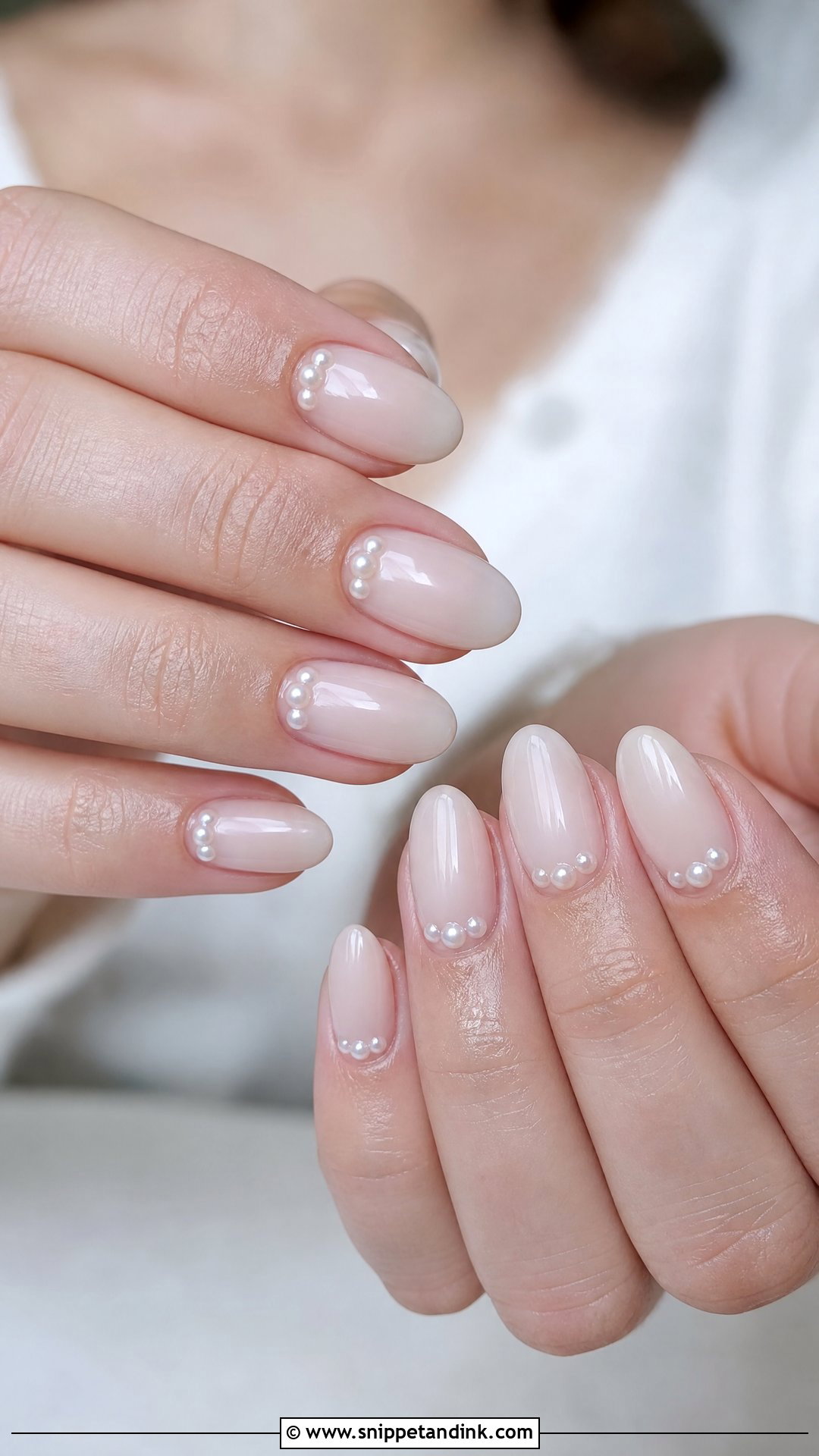
Small pearls add texture without much risk, as long as they’re fixed properly. I set flat-back pearls into a thick gel near the cuticle, along a French tip or on one accent nail, and seal around them so nothing lifts. Big pearls look bulky and snag on hair and sheer fabric. A medium almond or oval leaves room for the detail while staying wearable. Pearl earrings or a veil with pearl detail tie the whole look together.
14. Rhinestone Wedding Nails
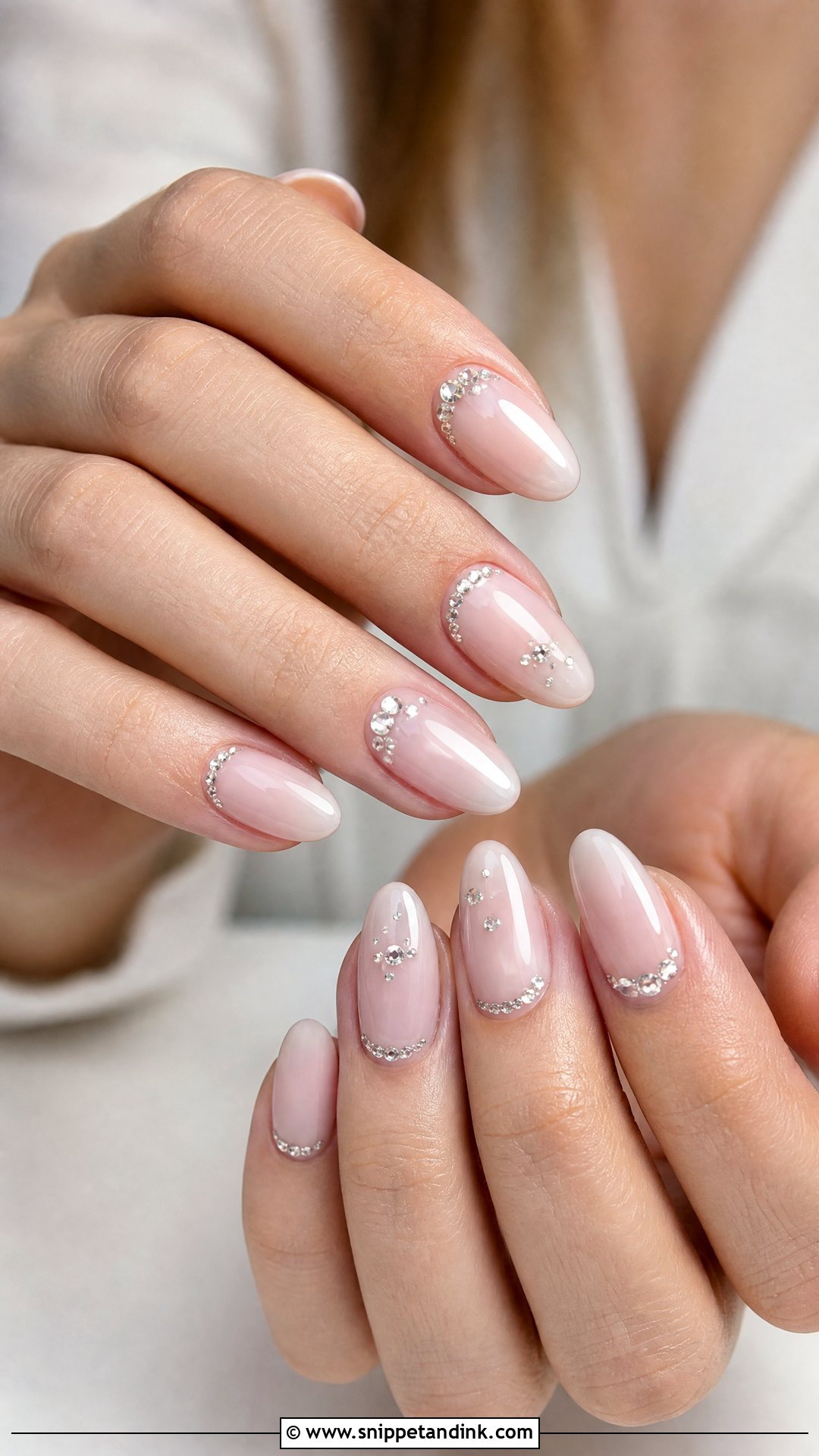
Rhinestones need restraint more than any other detail here. A few small clear or champagne stones at the cuticle, or a line on one accent nail, catch light without weighing the set down. Covering whole nails makes them heavy, scratchy against delicate fabric and quick to lose a stone. I set crystals in a thick gel and cap them so no sharp edge sticks out. They pair naturally with beaded gowns and crystal hair accessories, and almond, coffin or square all work.
15. Glitter Ombre Wedding Nails
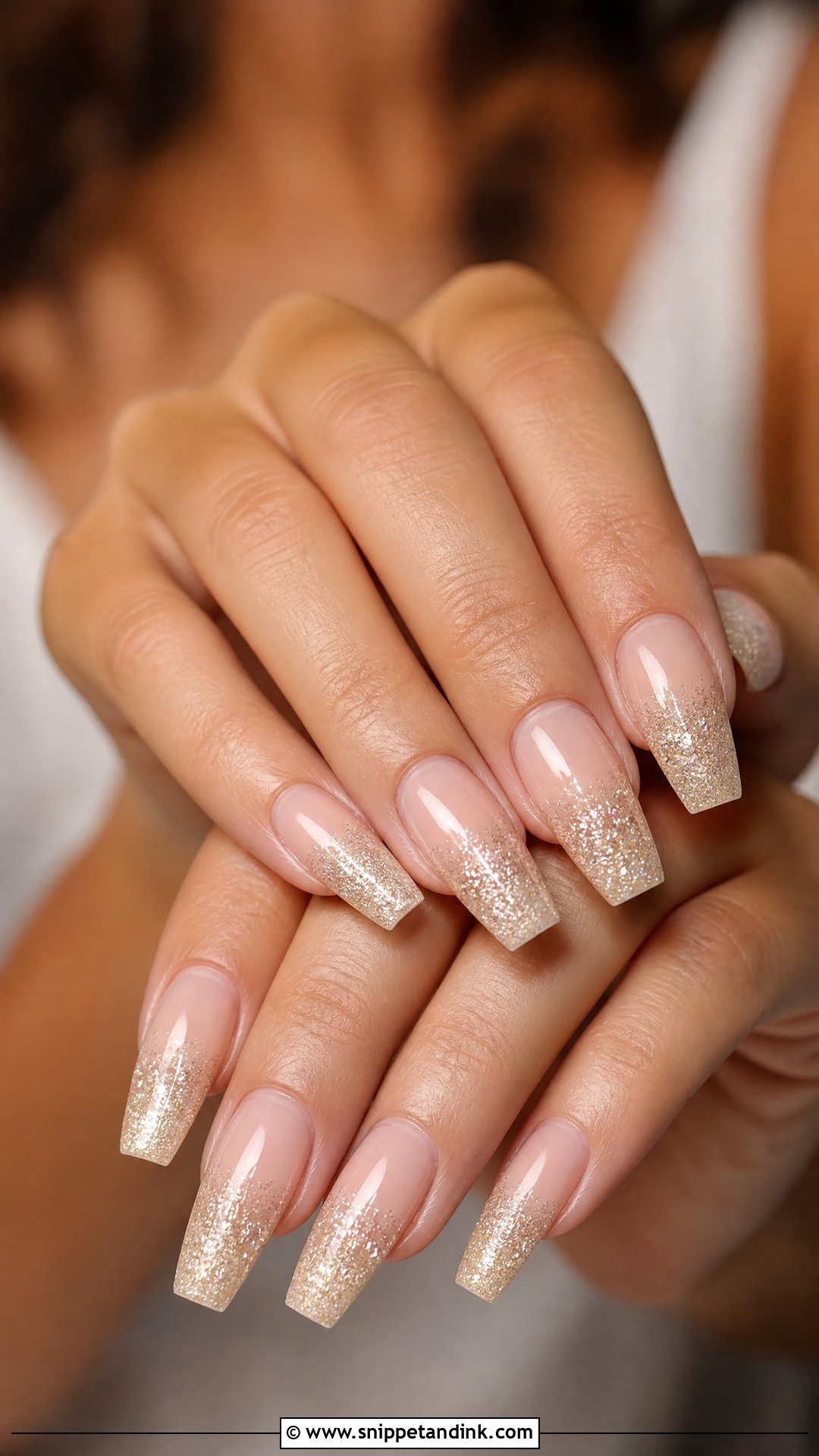
Glitter ombre wedding nails fade fine glitter from the tip or cuticle into a nude, pink or milky base. Silver, champagne, white and rose gold are the most bridal tones. Fine glitter matters: chunky pieces stand proud of the surface, need more top coat to smooth and make removal slow. Almond and coffin give the fade room to blend. It’s the middle ground I suggest when a plain manicure feels too quiet but full glitter feels like a party.
16. Gold Foil Wedding Nails
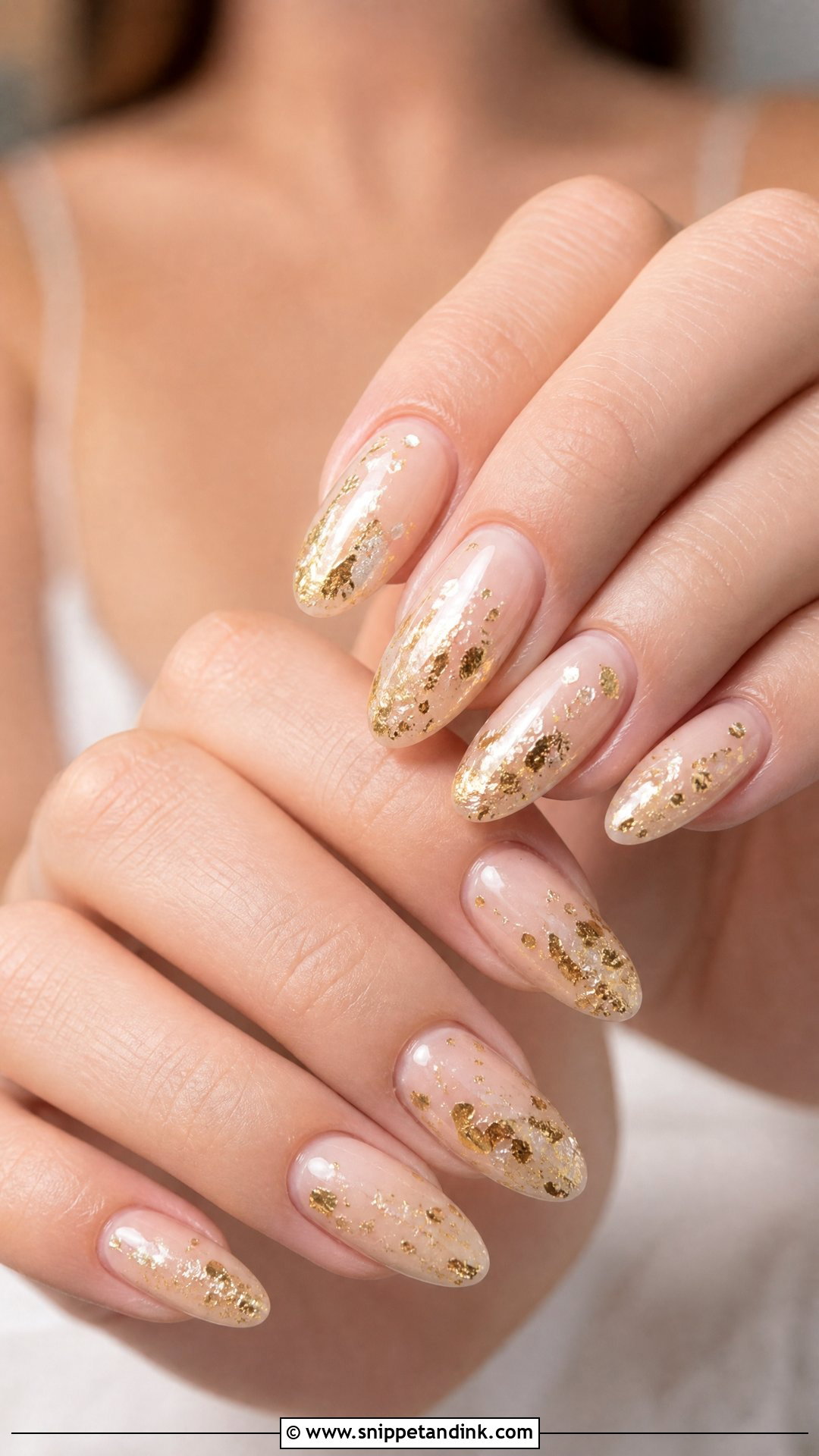
Gold foil comes as thin crinkled leaf, and I press tiny pieces onto a tacky layer so they sit flat, then seal them. The skill is in placing only a few, scattered rather than clumped, on a nude, ivory, blush or milky base. Yellow gold jewelry makes this the obvious choice. Almond and oval make it look soft; square makes it look modern. Foil that isn’t fully sealed at the edges lifts quickly, which is why I flood it with top coat.
17. Silver Foil Wedding Nails
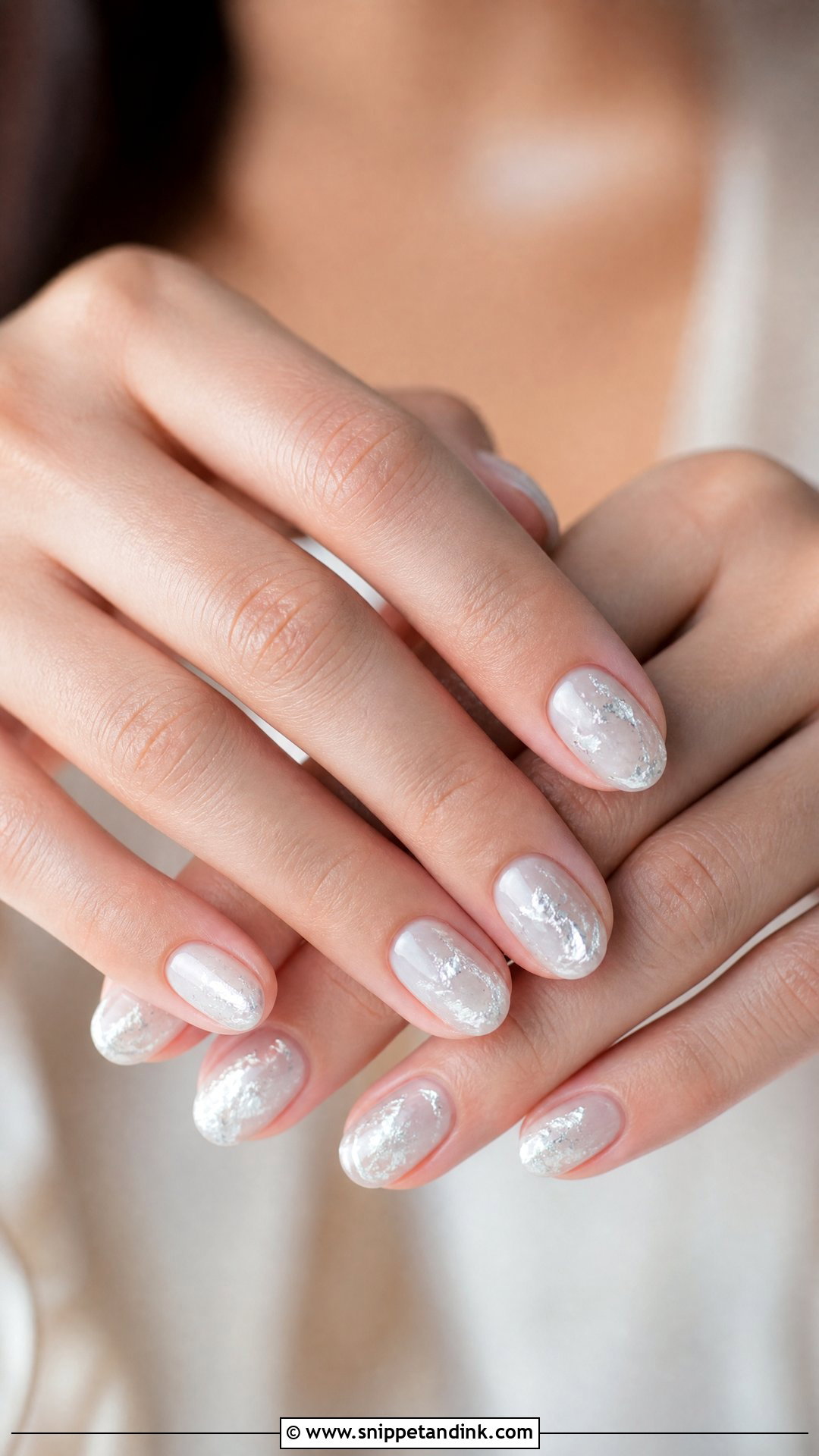
Silver foil is the cooler sister of gold foil, and it belongs with platinum, white gold and silver jewelry. I place thin pieces over a sheer pink, soft grey, nude or milky white base so they catch light here and there instead of covering the nail. It looks good on short oval, medium almond and soft square nails. Over a glossy sheer base it stays soft; next to white chrome or a muted pearl sheen it looks more modern.
18. Marble Wedding Nails
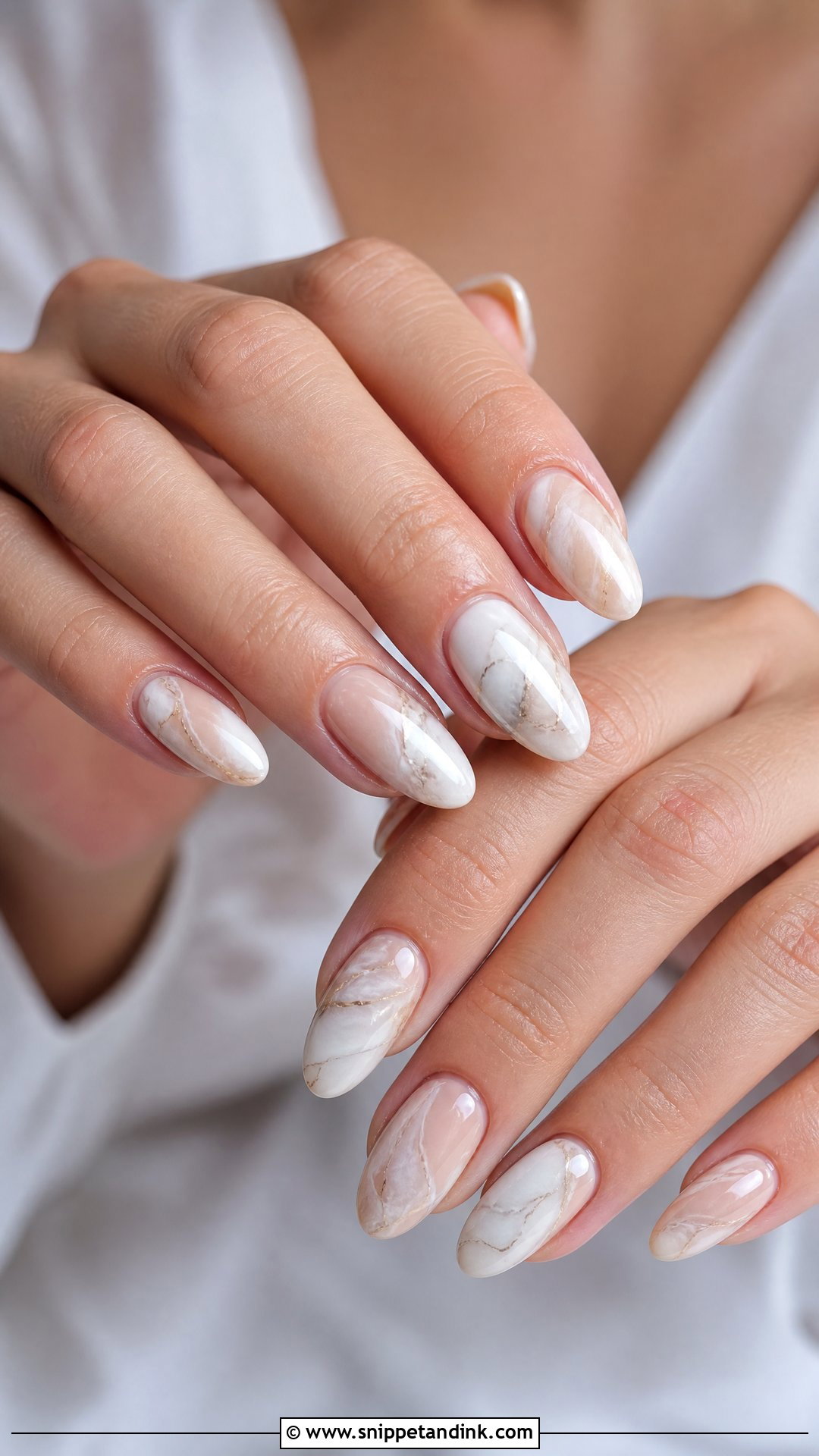
Bridal marble should look like pale stone with the faintest veining, in white, ivory, sheer pink or nude with fine grey or beige lines. Heavy veins quickly look like a bathroom countertop. You can marble the full set if it’s very subtle or use it as accents beside plain nudes. I work it wet-on-wet, so no two nails match exactly. Almond and coffin give the pattern space, and a high-gloss top coat makes the stone effect read clearly.
19. Matte Nude Wedding Nails
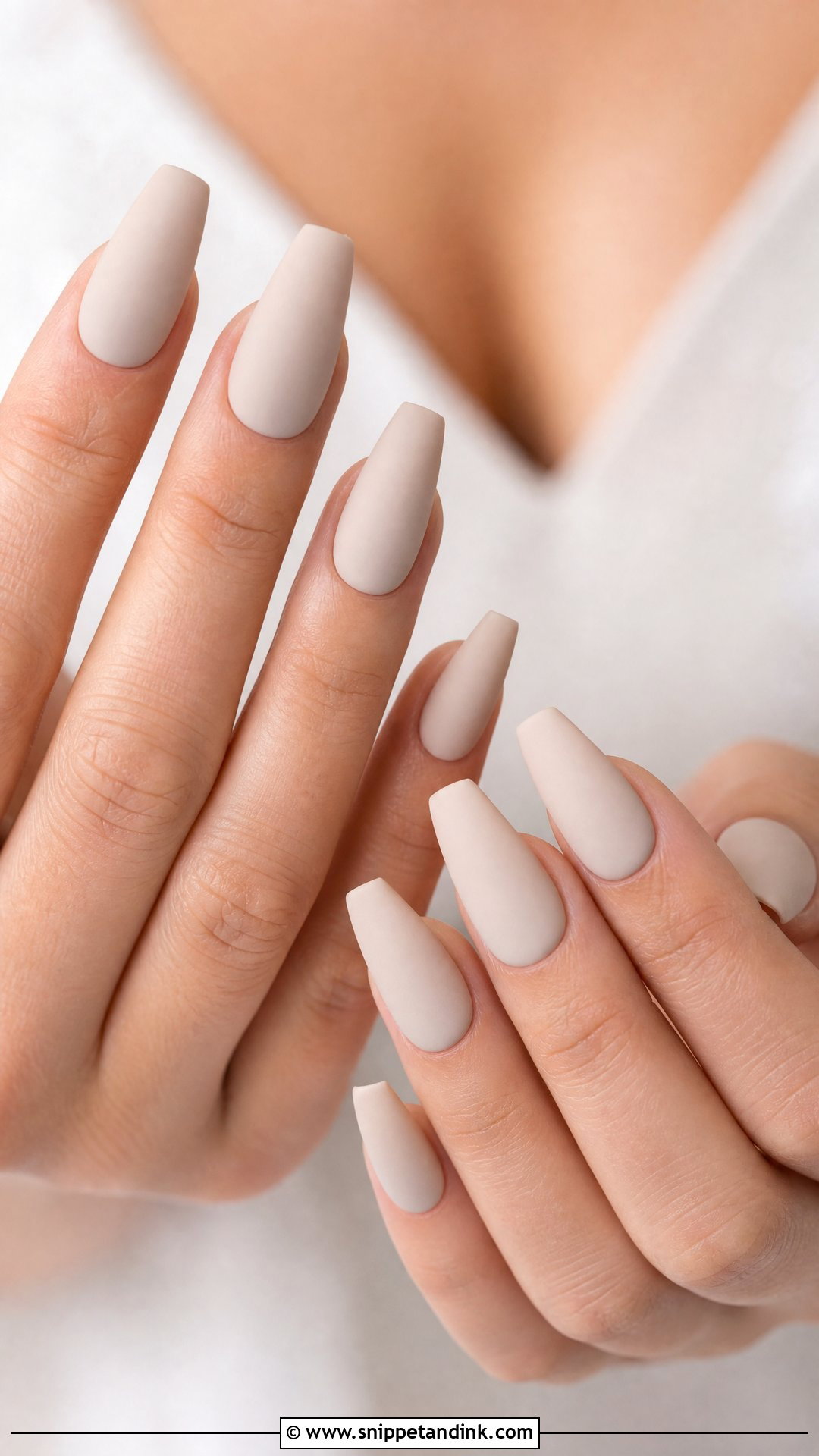
Matte nude has a velvet look that feels calm and modern, but it’s the least forgiving finish here. Matte shows every bump and ridge, so prep has to be careful, and the surface picks up makeup, self-tanner and hand cream more readily than gloss. I’d keep it to brides who don’t mind a quick wipe with a little alcohol before photos. Almond, coffin or short square suit it. A glossy micro French tip over the matte base adds a nice contrast.
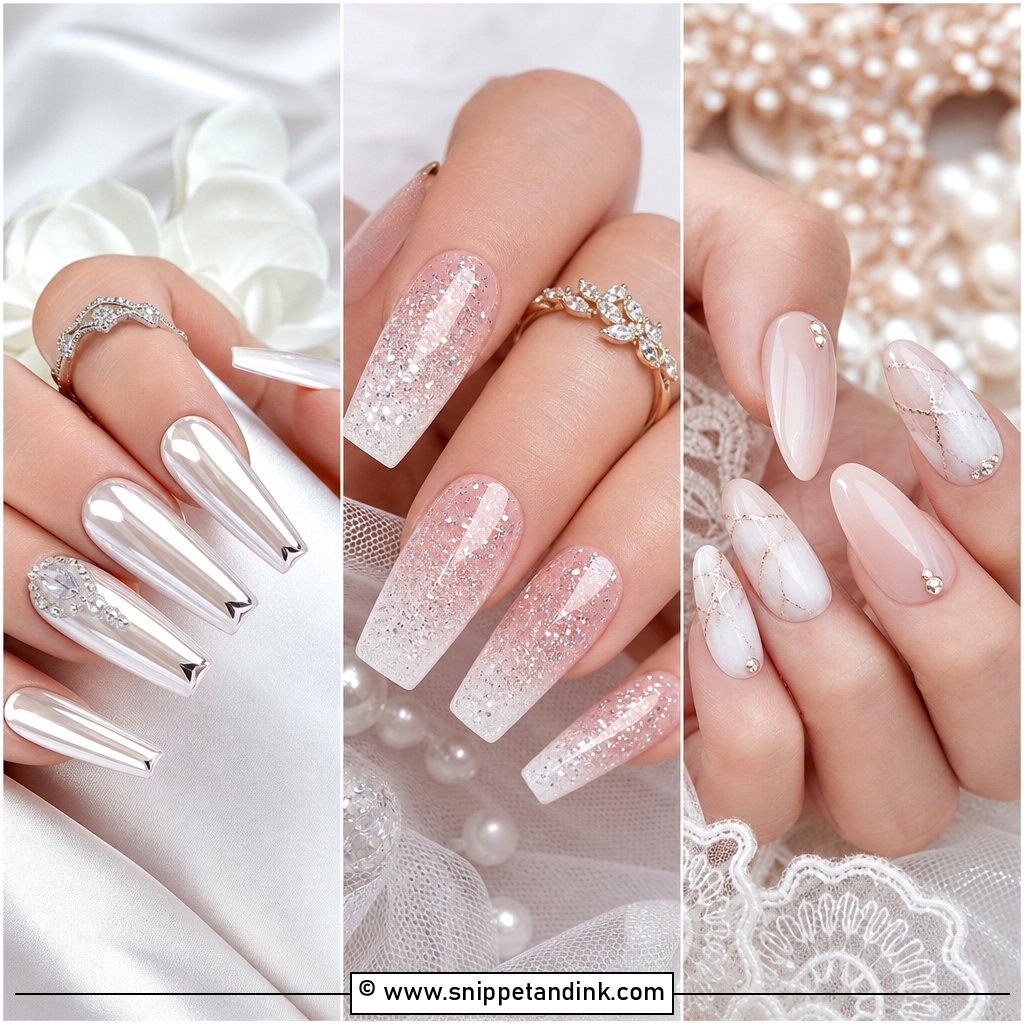
20. Ivory Wedding Nails
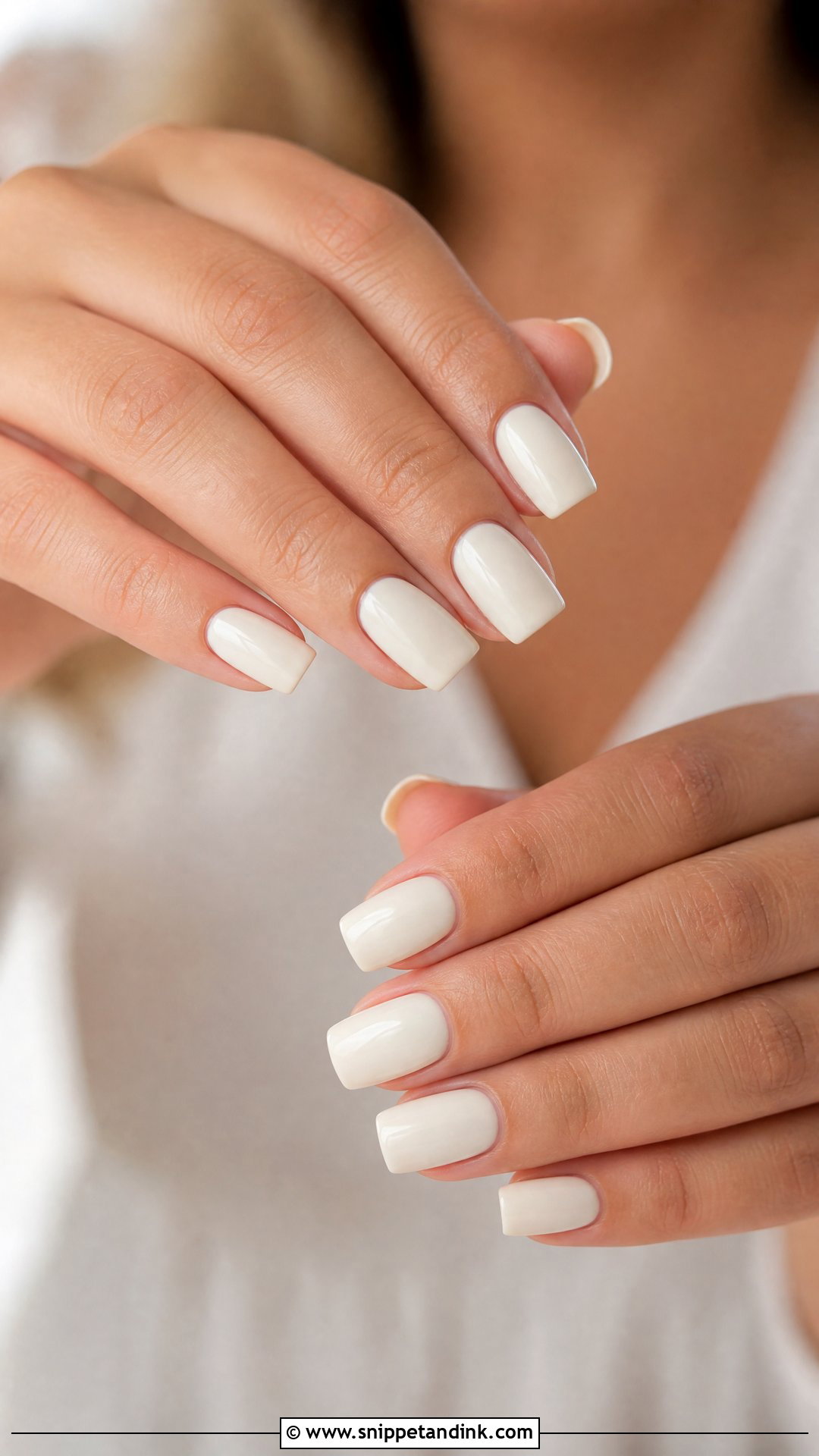
Ivory is a warmer cream than bright white, and it works with ivory dresses, champagne fabrics and gold jewelry. Wear it solid, as a French tip or as a sheer milky wash. Match it to your dress: a cool white next to a warm ivory gown makes the nails look starker than the fabric. I ask brides to bring a swatch or even a hemline photo taken in daylight. Gloss is classic; a pearl finish adds glow.
21. Short Wedding Nails
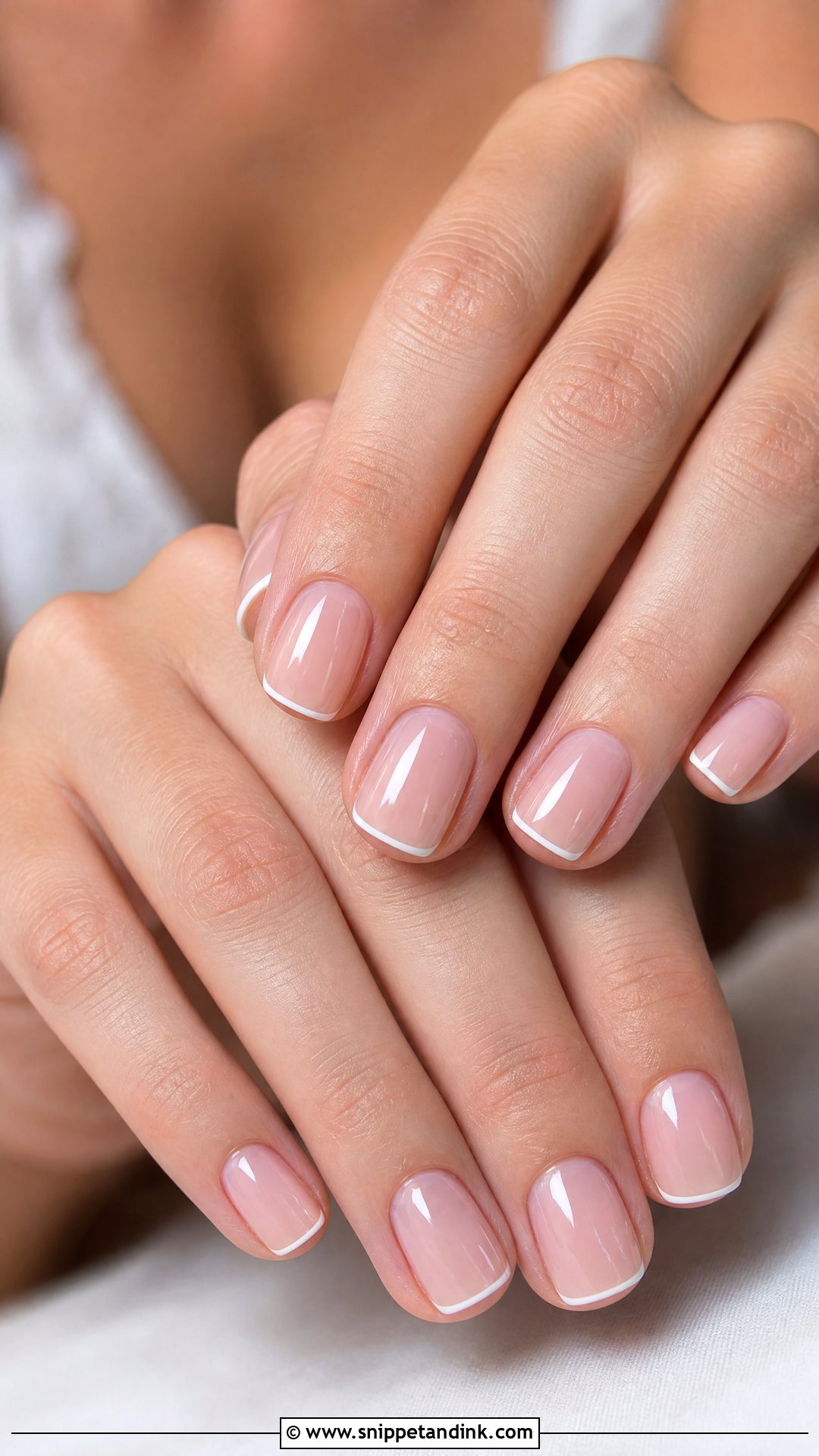
Short nails look elegant when every nail is the same length and the shape mirrors the cuticle. Rounded, oval or soft square keeps them neat. Sheer pink, milky white, nude, micro French and pearl chrome all suit shorter lengths. What I focus on is health: smooth cuticles, even sidewalls and a glossy finish make short nails look deliberate. They’re also the comfortable choice if you’ve never worn extensions and don’t want to learn on your wedding day.
22. Almond Wedding Nails
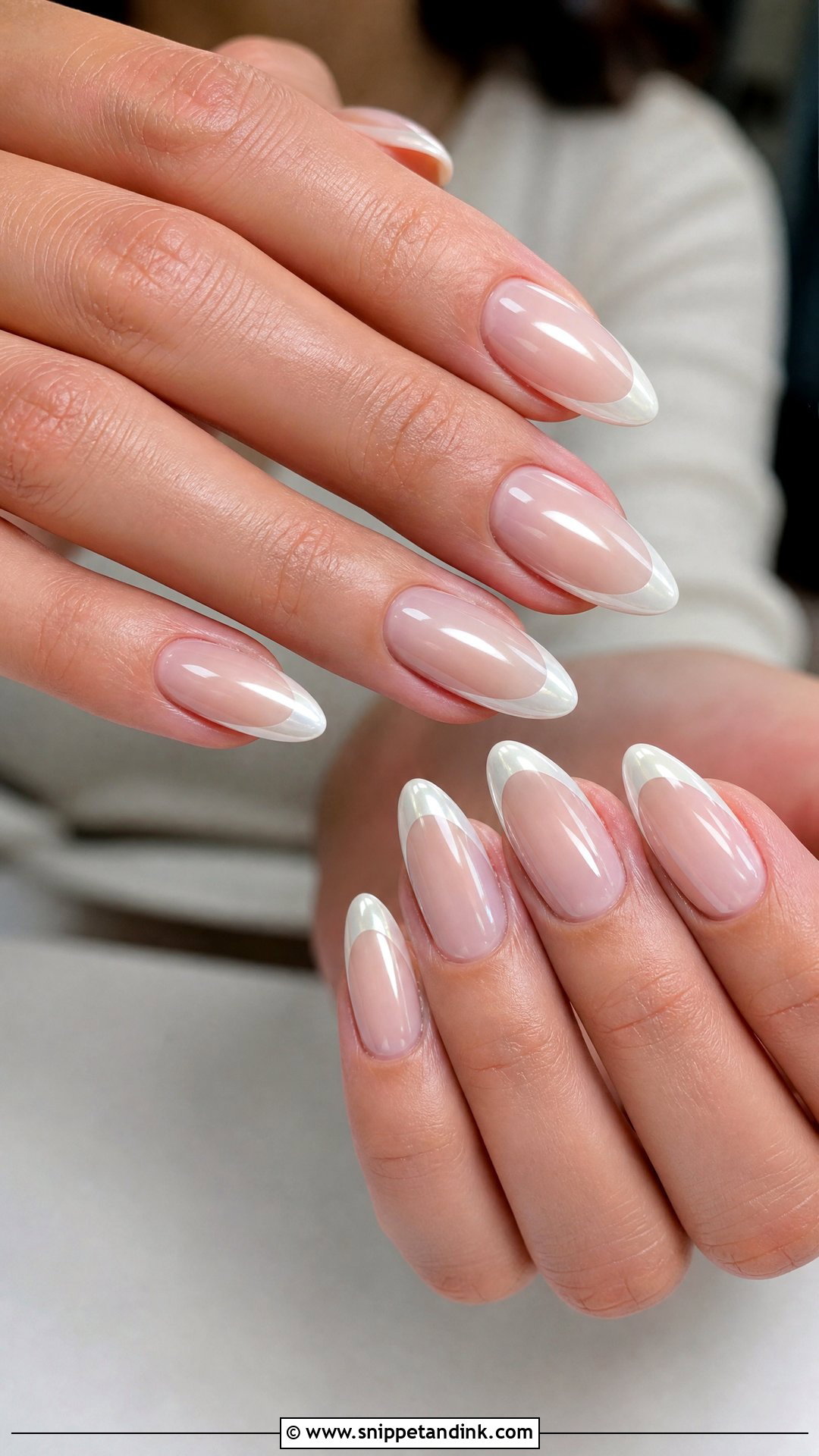
Almond lengthens the fingers and takes almost any design, from French tips to glitter fades. Medium length is what I recommend for the wedding day itself, long enough for art but short enough to manage buttons, jewelry backs and a phone. For a romantic set, think blush pink or milky white; for a modern one, chrome French or matte nude. The one shape I’d hold back on is a very long almond on soft nails, as the narrow tip can bend unless reinforced.
23. Square Wedding Nails
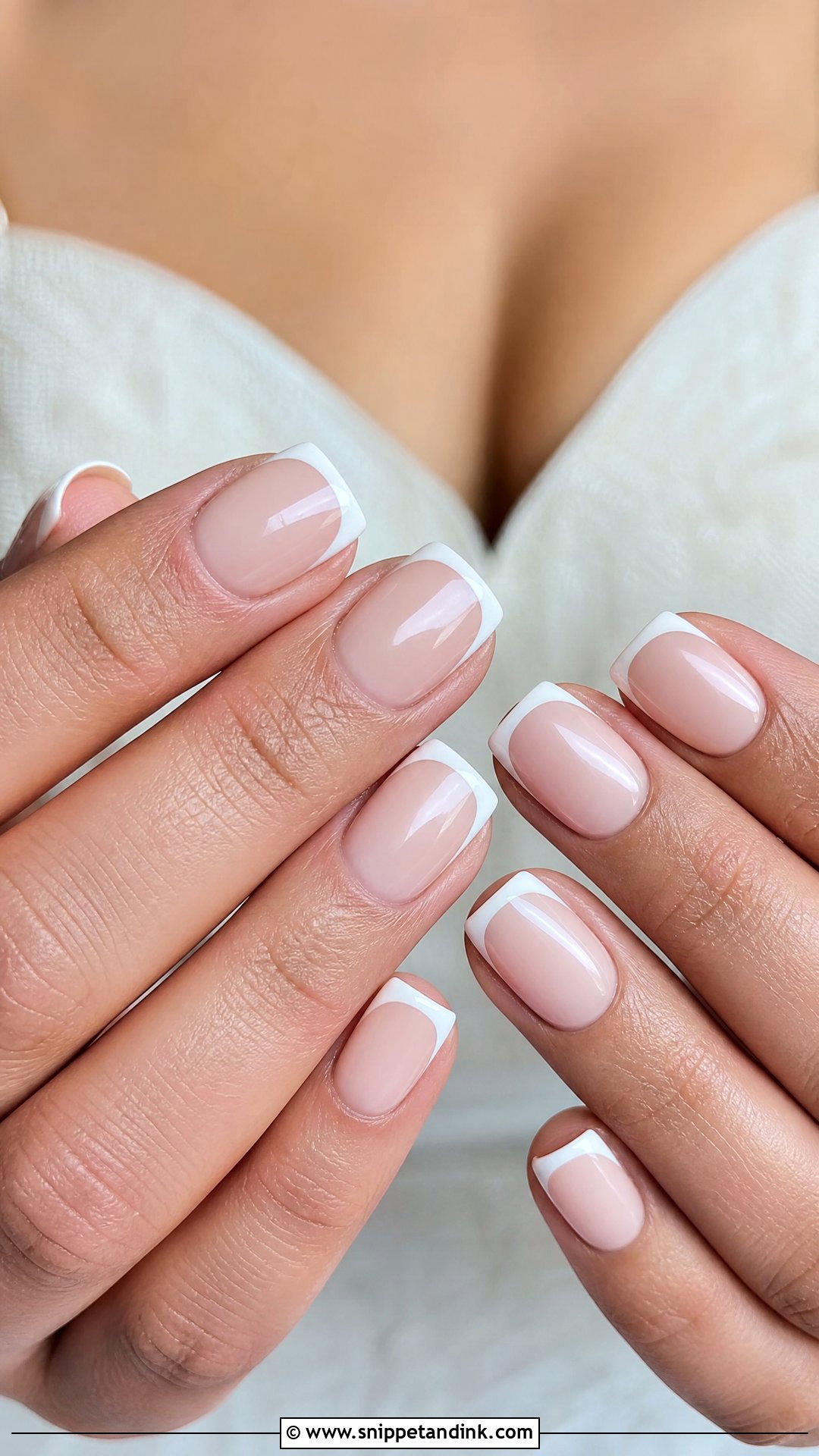
Square gives a straight tip and defined corners, the crispest outline in this list. It pairs well with classic French tips, sheer nude, micro French and milky white on short to medium nails. Sharp corners catch on fabric and chip early, so I almost always round them slightly into a soft square. The shape photographs clearly because the outline is so structured, which suits a bride who likes a neat, contemporary look.
24. Coffin Wedding Nails
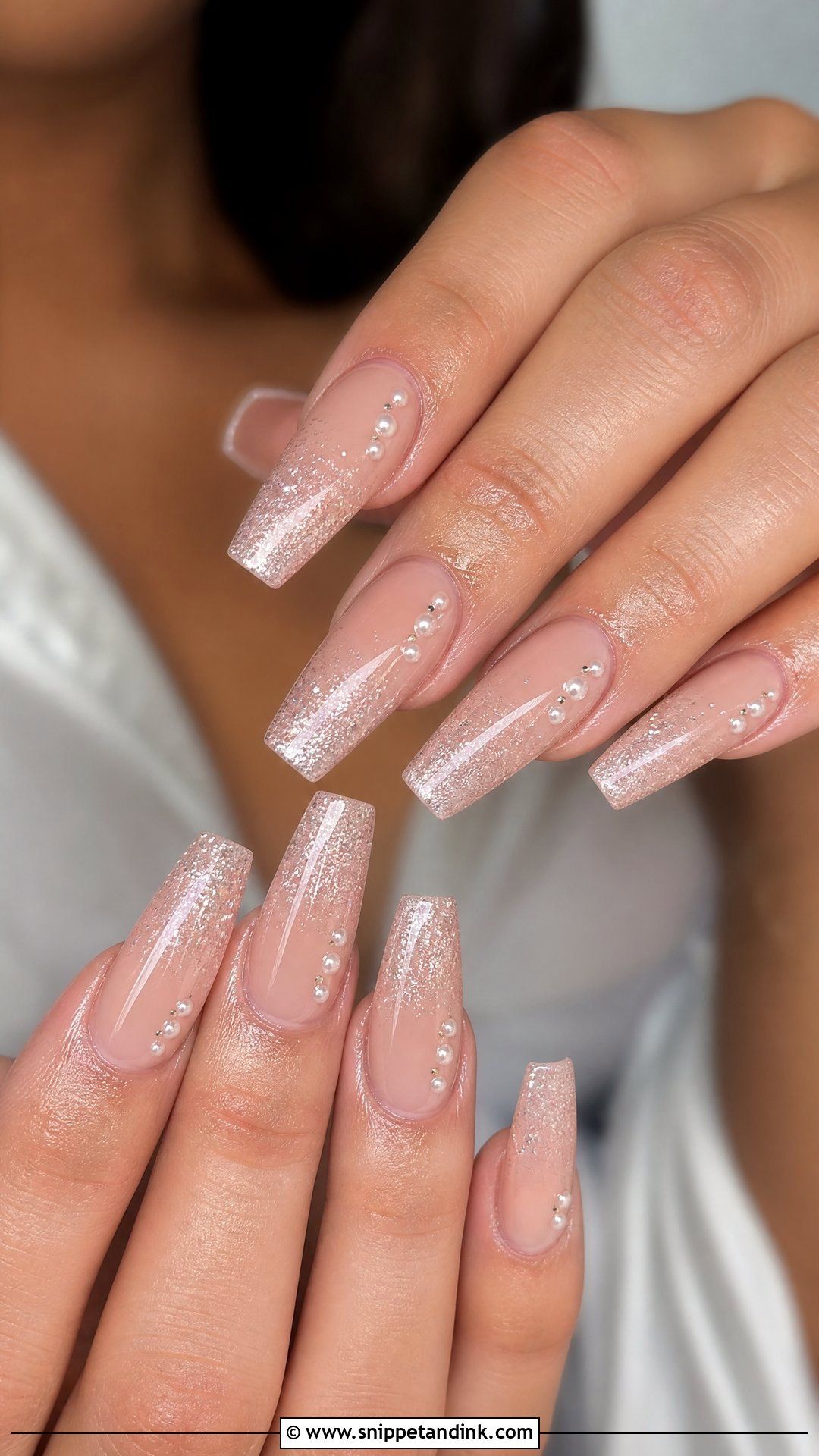
Coffin wedding nails give length and a flat-tipped outline that suits ombre French, pearl chrome, glitter fades and rhinestones. Keep the colors soft, nude, blush, ivory or milky white, and let only one feature carry the sparkle: a sheer base with fine shimmer, or a French tip with a few tiny pearls. Extra-long coffins look dramatic but are hard to live with for a whole day of hugging, eating and fastening jewelry. Medium is the length I’d book.
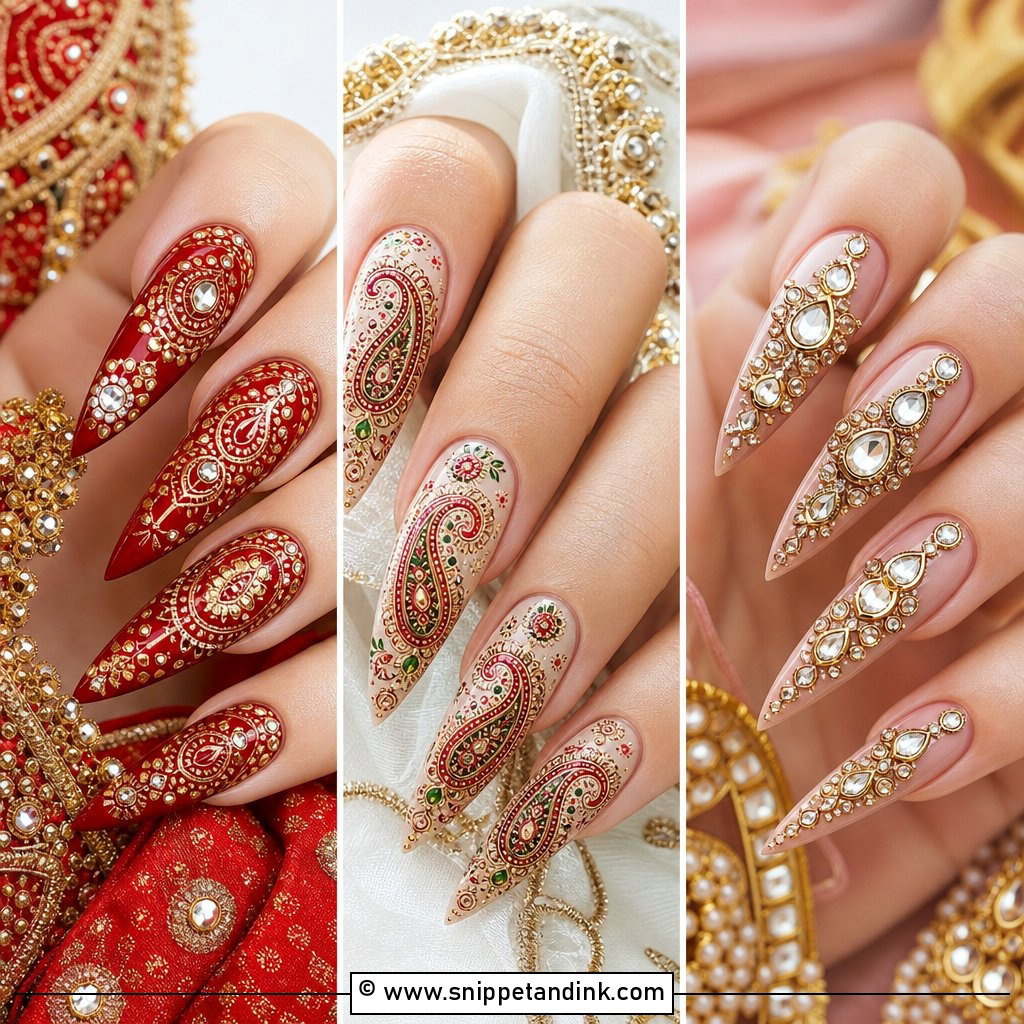
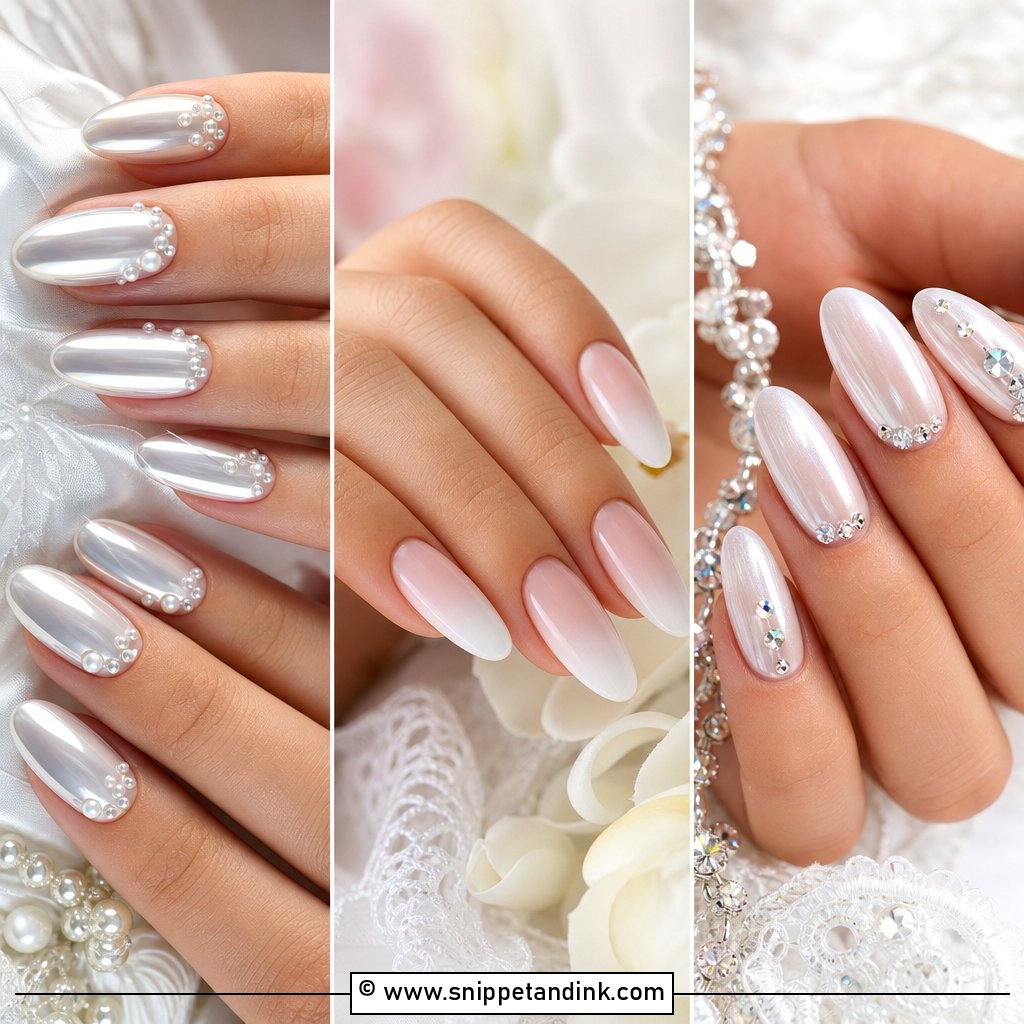
25. Something Blue Wedding Nails
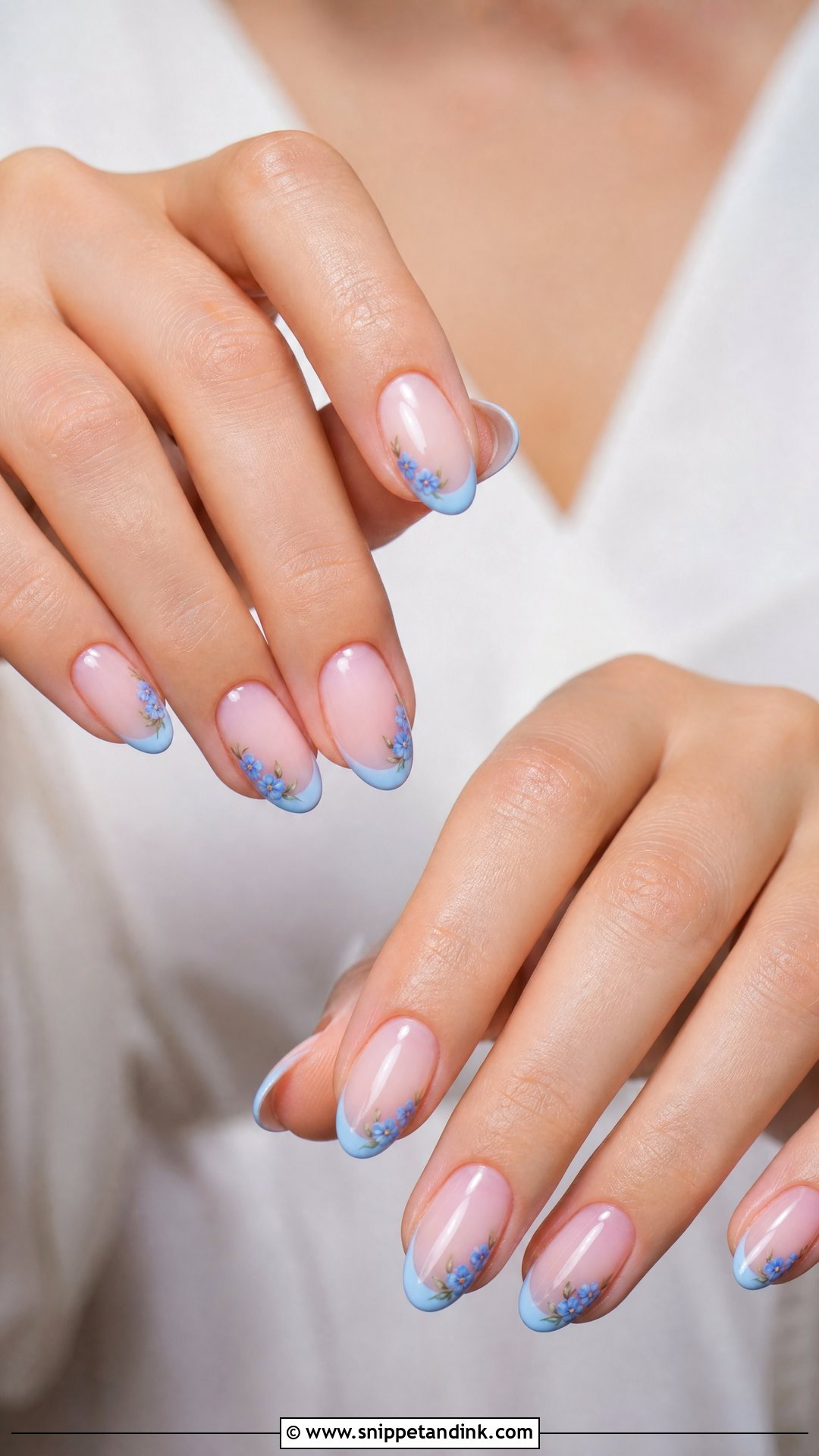
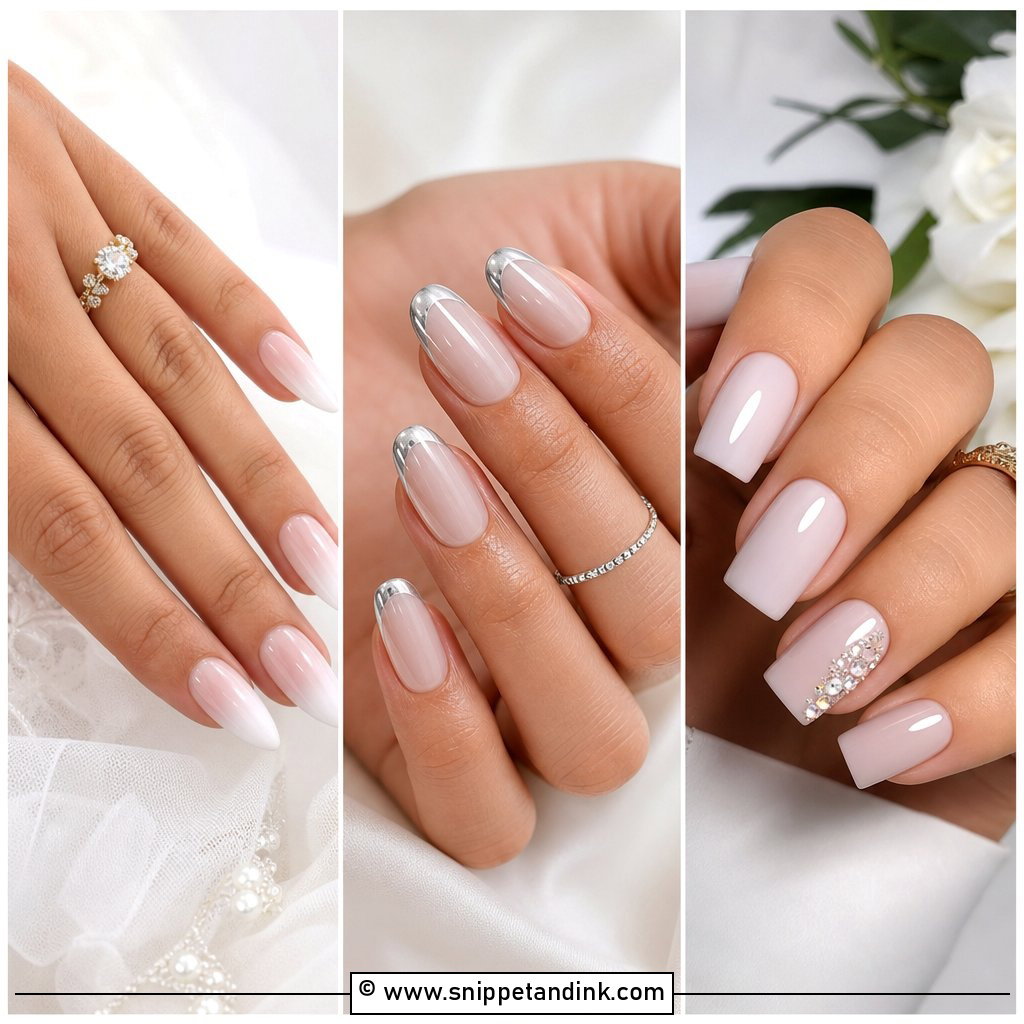
Your something blue doesn’t need to be visible from across the room. A pale blue French tip, one small blue flower, a single blue crystal or a soft blue accent on the ring finger is enough. Keep the rest sheer pink, nude or milky white so the set still reads as bridal. If your bouquet ribbon, shoes or jewelry already include blue, take a photo of that item to the appointment so the shades actually match. Almond, oval and short square all carry the detail well.
Hands, Not Just Nails, in the Month Before
A ring close-up shows knuckles, cuticles and skin texture as much as polish. Dry, ragged cuticles are the most common thing I see on a wedding week appointment, and they can’t be fully fixed in one sitting.
- Use cuticle oil every night for a few weeks; it softens the skin so I can tidy it without cutting deep.
- Avoid having cuticles cut aggressively in the final week. Small nicks can sting and look red in photos.
- Wear gloves for dishes and cleaning, as hot water and detergent dry the skin around the nails fast.
- Apply hand cream after every wash and keep a small tube in your wedding bag.
If the wedding is on a beach or by a pool
Sun, chlorine, sunscreen and self-tanner can all take the shine off a top coat and leave white or milky gel with a faint tint over a few days. For a destination wedding I’d book the set as late as travel allows, choose a sheer pink or nude that hides slight discoloration, and pack a small bottle of clear top coat to refresh the gloss.
Does Your Shortlist Pass the Arm’s-Length Test?
The wedding nail designs that work best are the ones that look right on your hands, not only in a saved photo. Before the appointment, pick two or three favorites, hold the photos next to your dress color and ring, and choose a length you can actually live with for a full day. Test the polish shade if you can. Then hold your hand out at arm’s length with the ring on; if the nails support the ring rather than compete with it, you’ve found your set.
You'll Like These Ideas:


Leave a Reply