
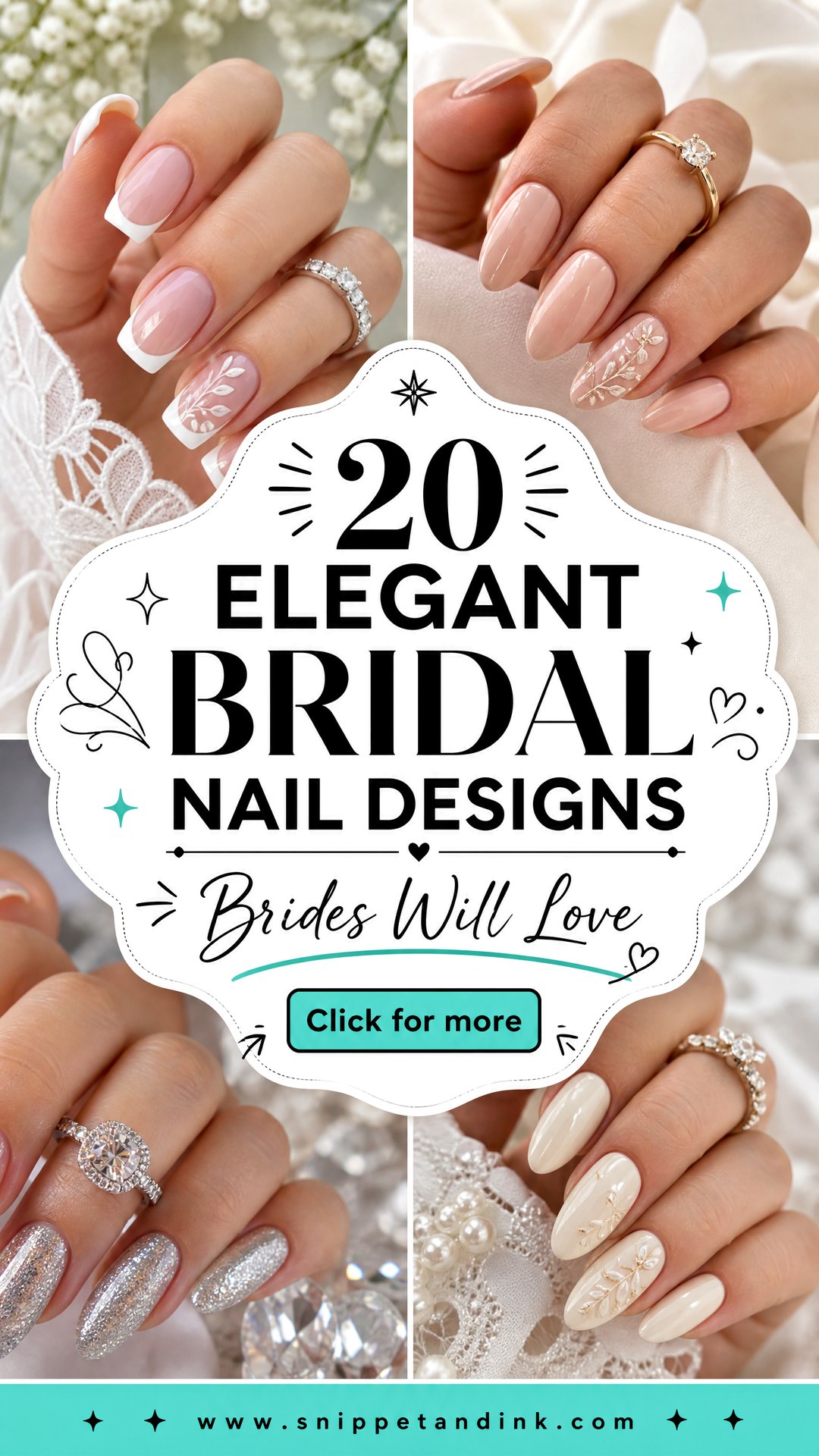
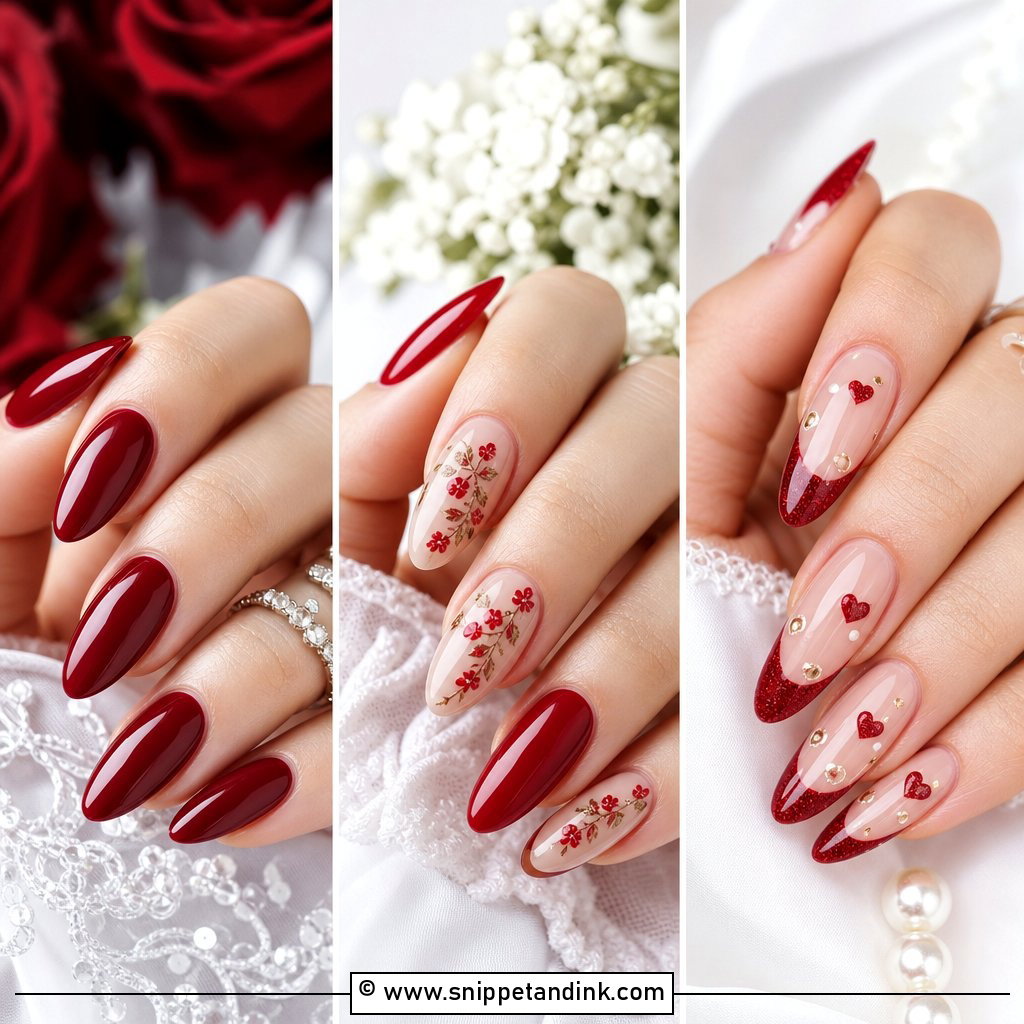
Your hands get photographed more on your wedding day than on any other day of your life: holding the bouquet, sliding on the ring, signing the register, holding a glass during the toasts. A wedding manicure has to look clean at arm’s length and still hold up in a macro shot of your ring. This year the bridal nail trends I’m doing most are quiet ones: milky whites, sheer pinks, glazed finishes, micro French tips and small pearl details on almond or squoval shapes. Below are twenty sets, with what I’d tell you at the table about each one: how it’s built, what it suits and where it tends to go wrong.
Why the Same Milky White Looks Different on Every Hand
Sheer and milky polishes are translucent, so they mix with whatever is underneath. A pink nail bed turns a sheer white rosy; a nail bed with a yellow or bluish tint pulls it the other way. That’s why a color that looked soft on a sample can look grey on you. Before any wedding set, I paint one nail on the hand you’ll wear the ring on and ask you to look at it by a window, not under salon lamps.
A few things I check before choosing the shade:
- Your undertone on the back of the hand, where the camera actually sees it
- Your dress fabric next to the swatch, since ivory and bright white make each other look off
- Your ring metal: yellow gold warms a nude, platinum and white gold cool it
- How much of your free edge shows, because a translucent color over a white tip looks streaky
If your natural nails have ridges or peeling, an opaque or builder-gel base will hide them better than a true sheer. I’d rather tell you that at the consultation than send you home with a set that shows every mark.
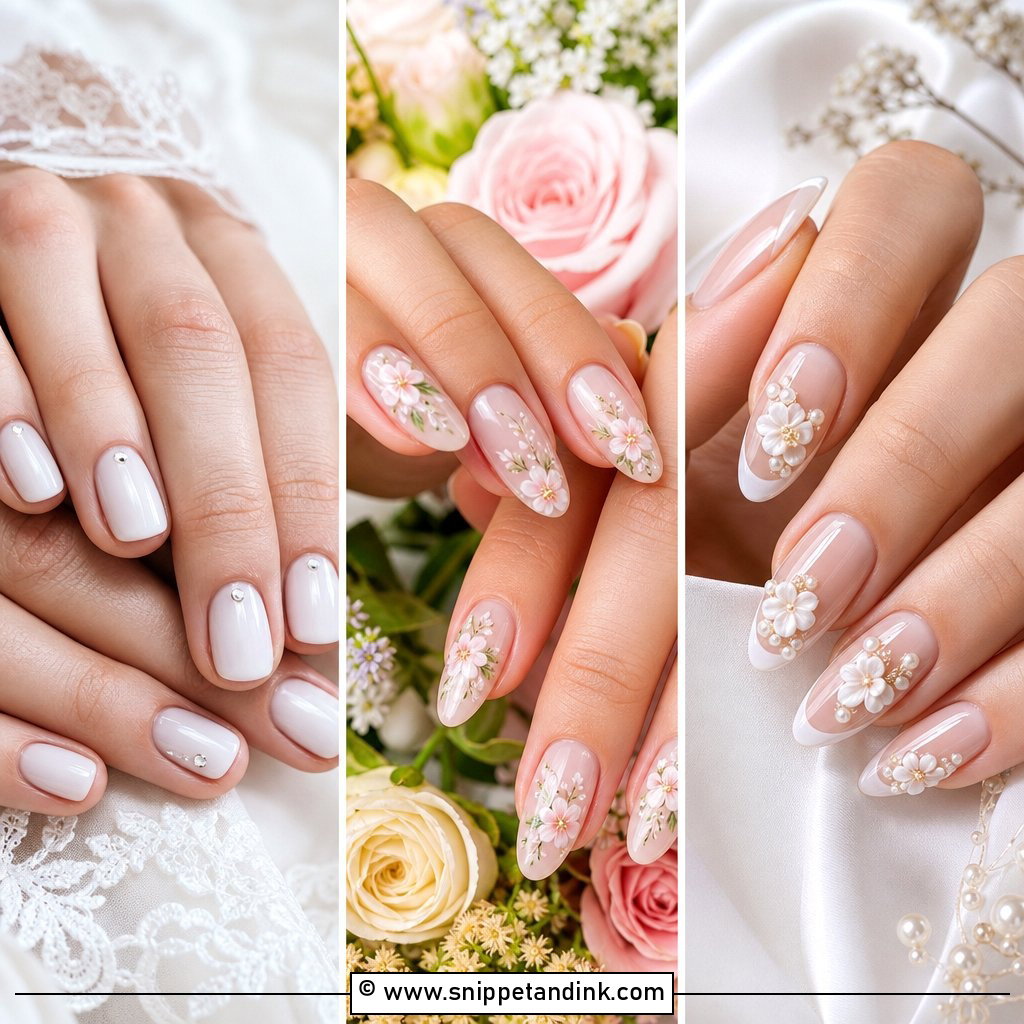
1. Milky White Bridal Nails
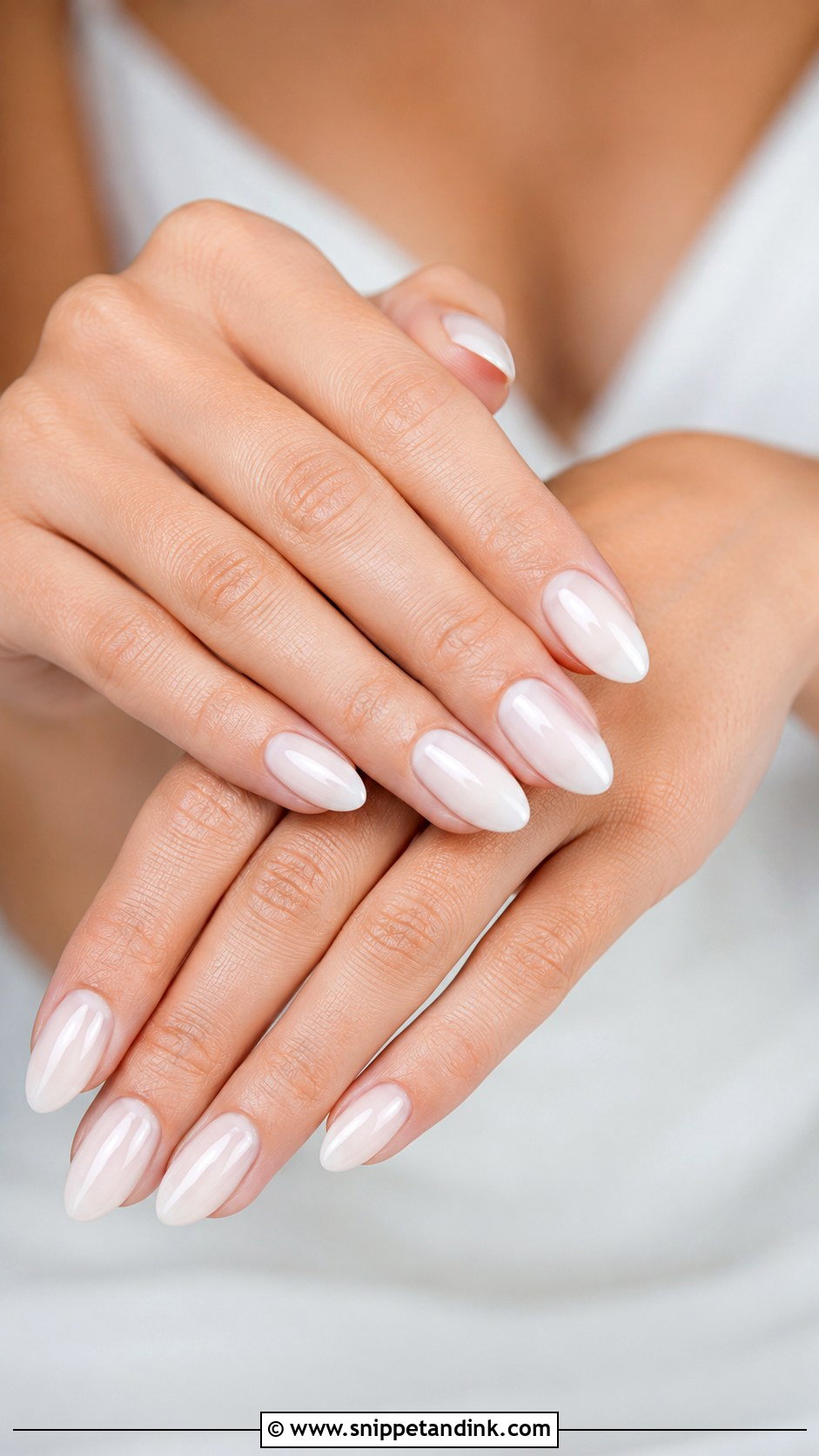
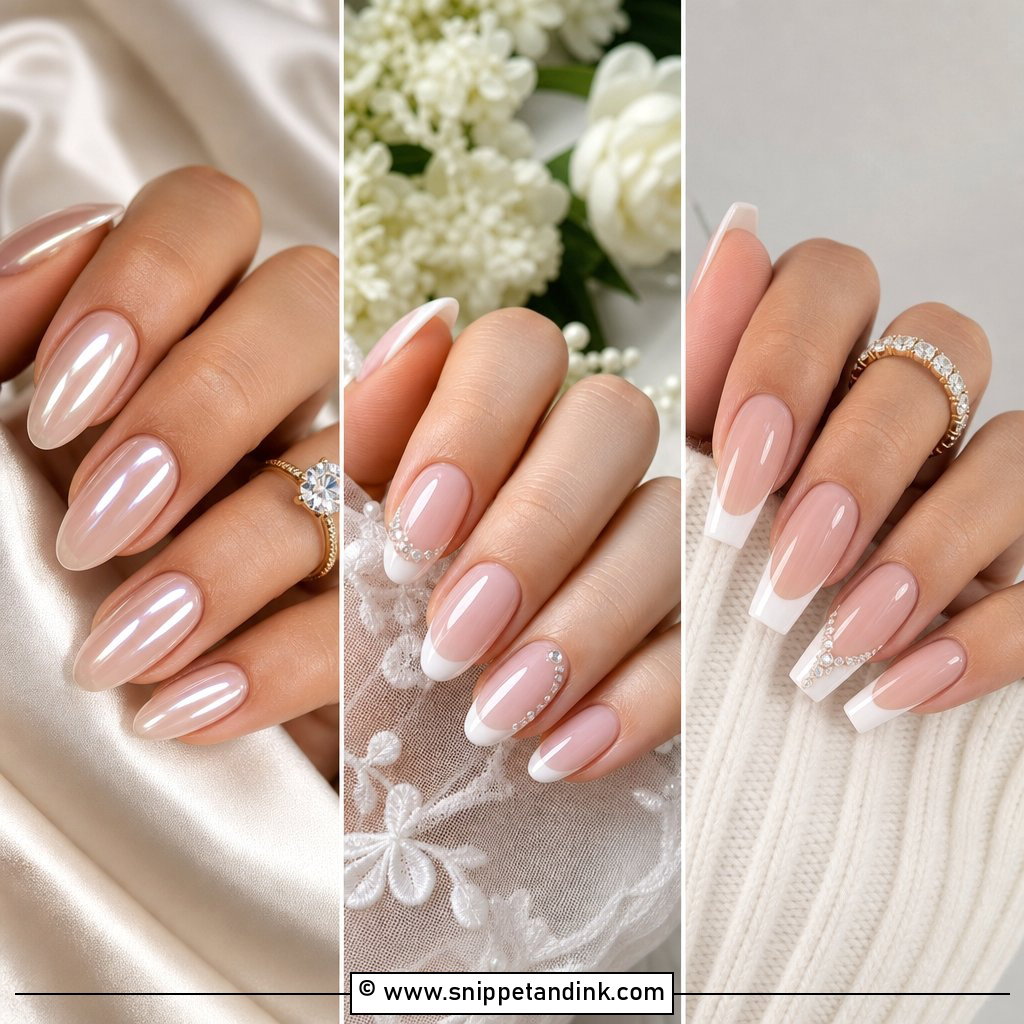
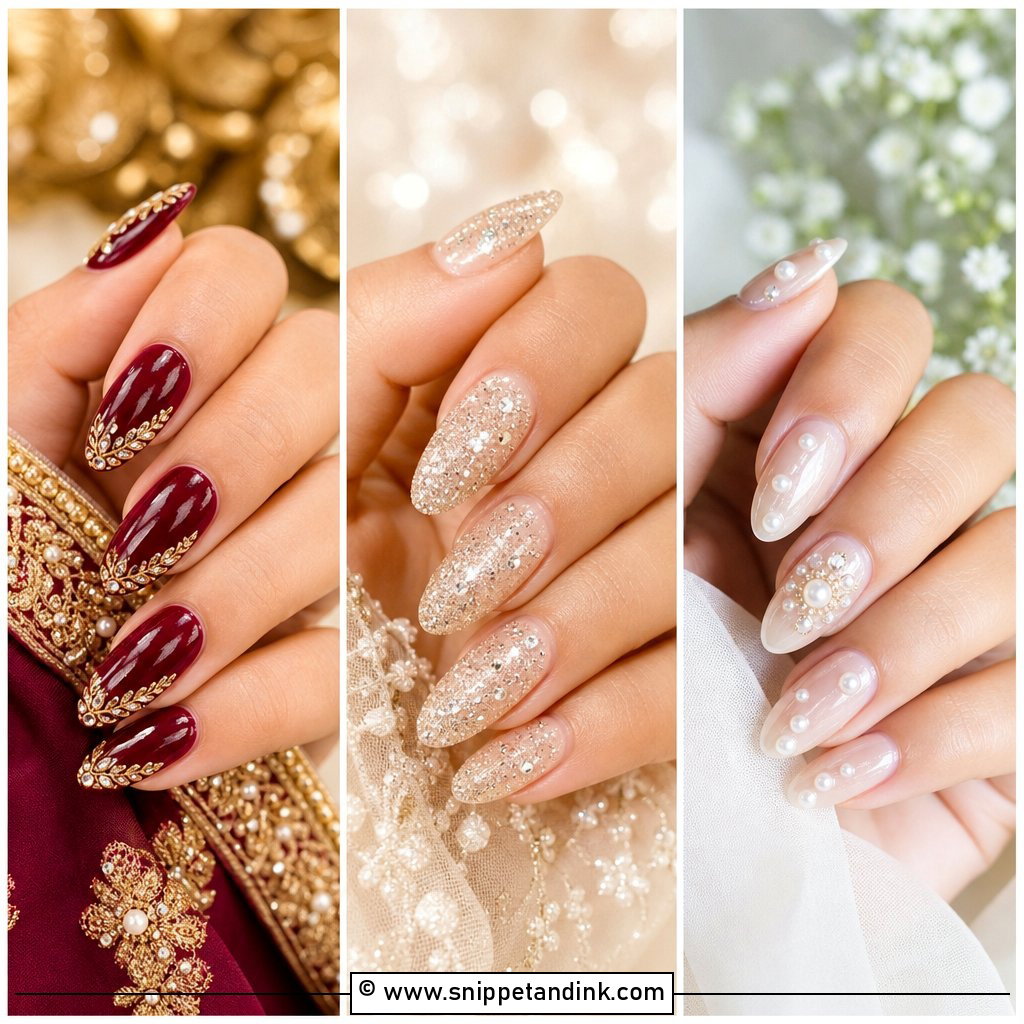
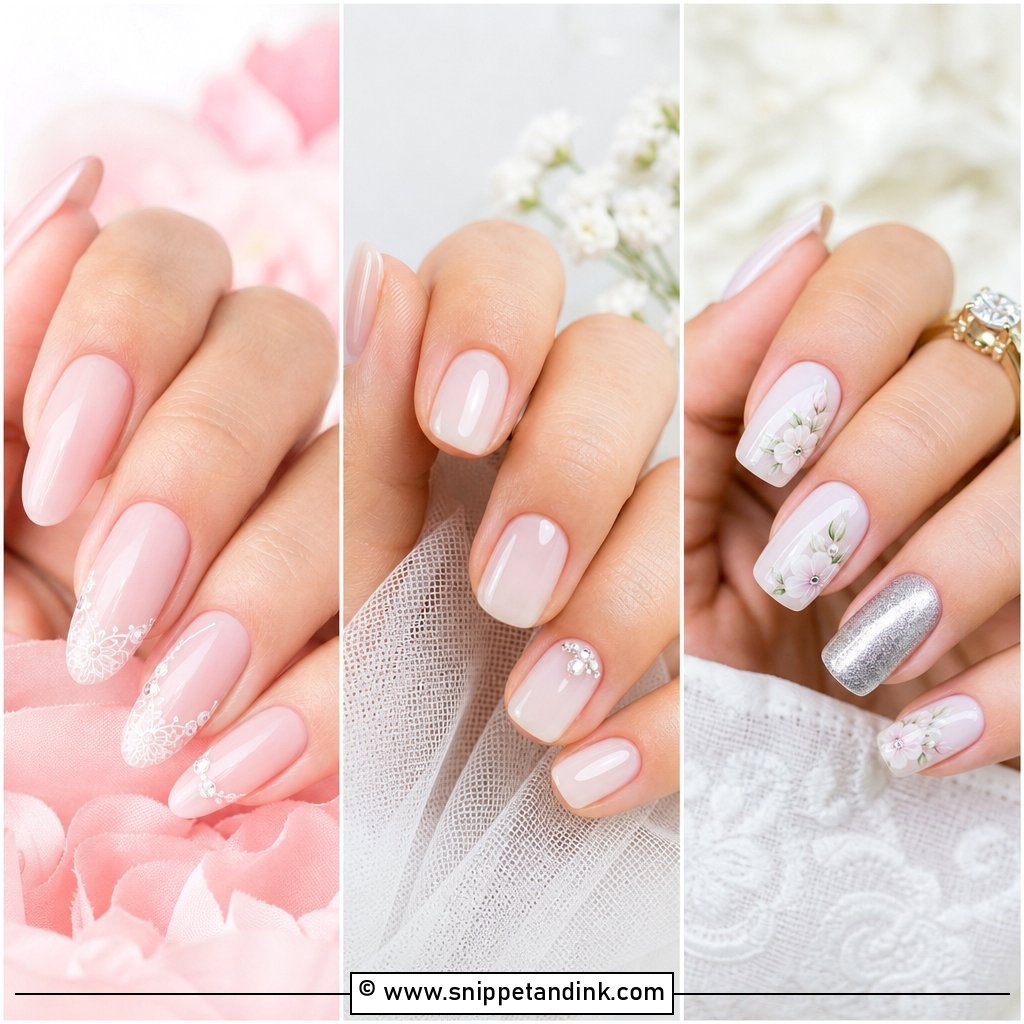
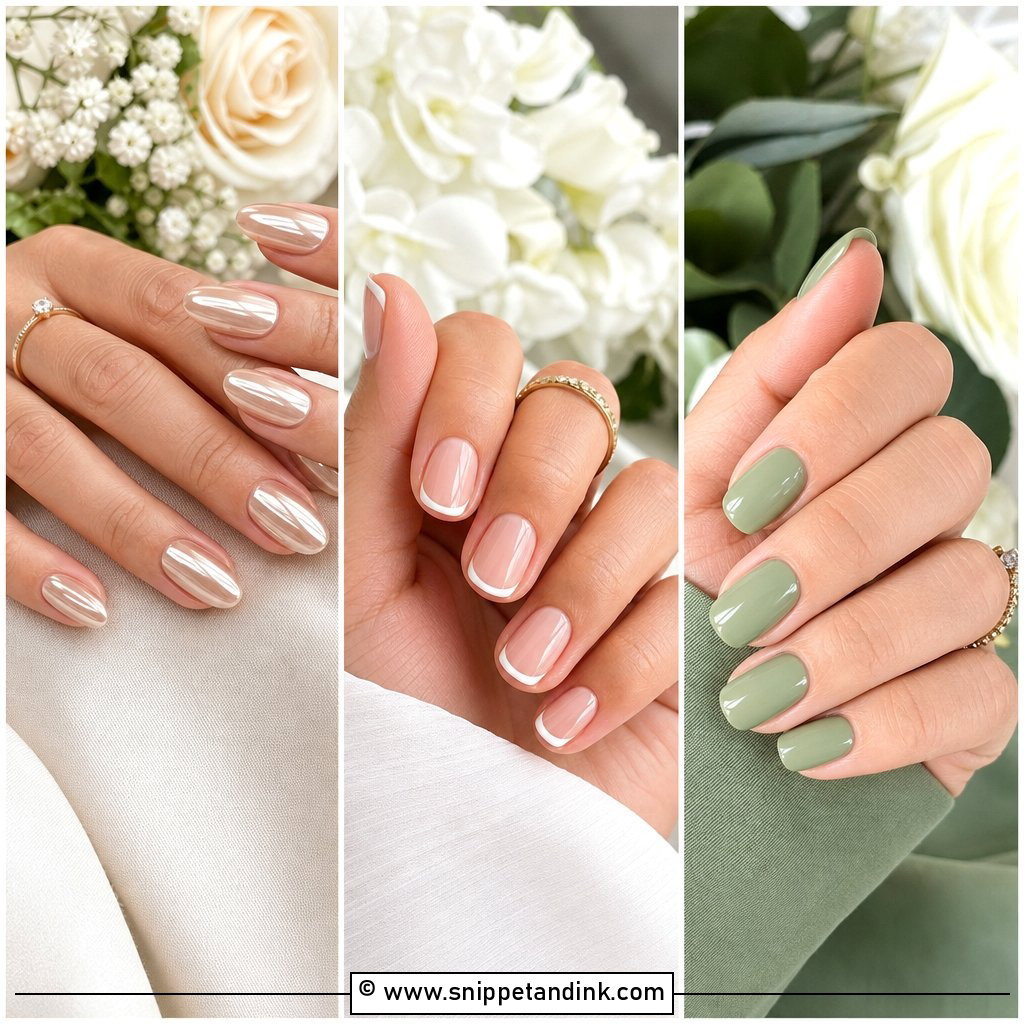
Milky white bridal nails sit between sheer white and creamy nude, so they look polished without the starkness of solid white. How opaque to go is the real decision. One thin coat over a sheer pink base gives a soft, cloudy look; two coats of a buildable milky gel gives more coverage but can look chalky on very fair hands. I always swatch it on one of your own nails before committing. It’s flattering on almond, oval and short squoval shapes, and with a glossy top coat it suits pearl jewelry and lace without any effort.
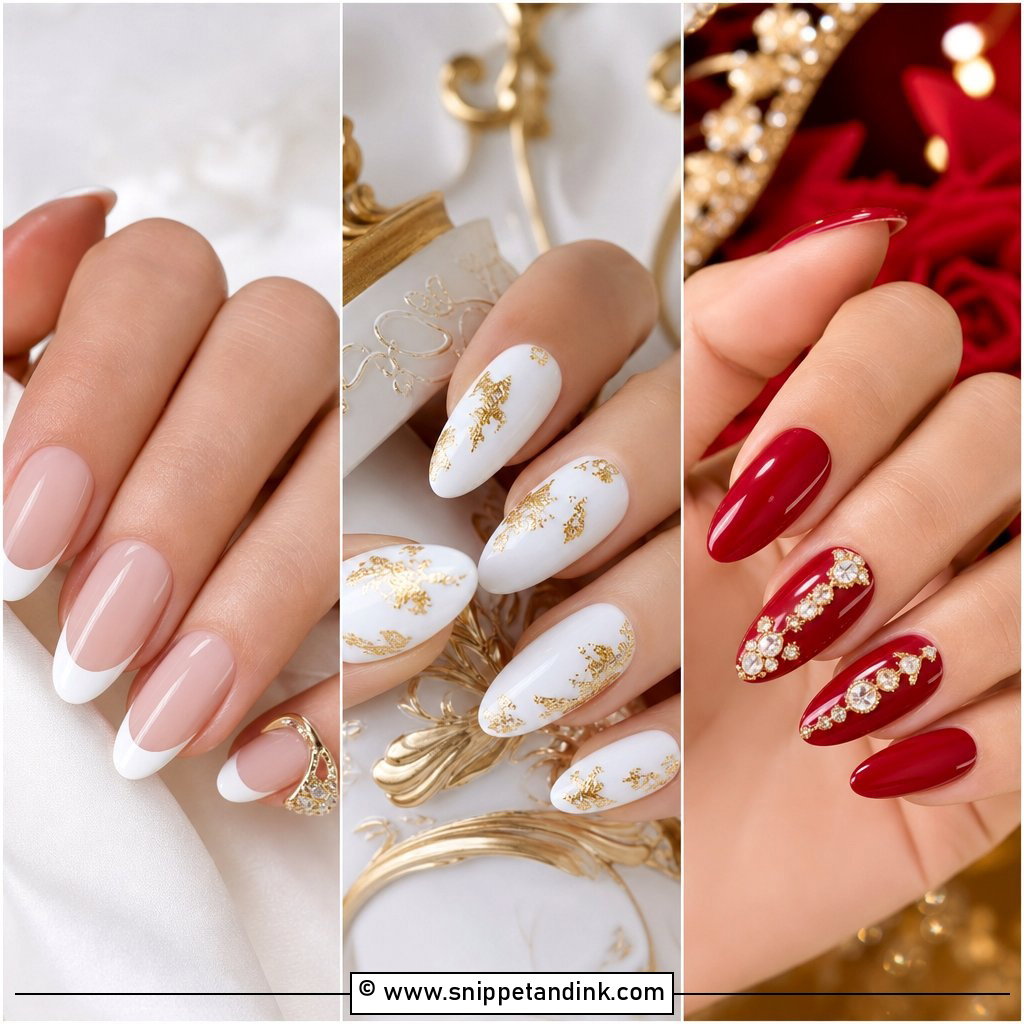
2. Classic French Tip Bridal Nails
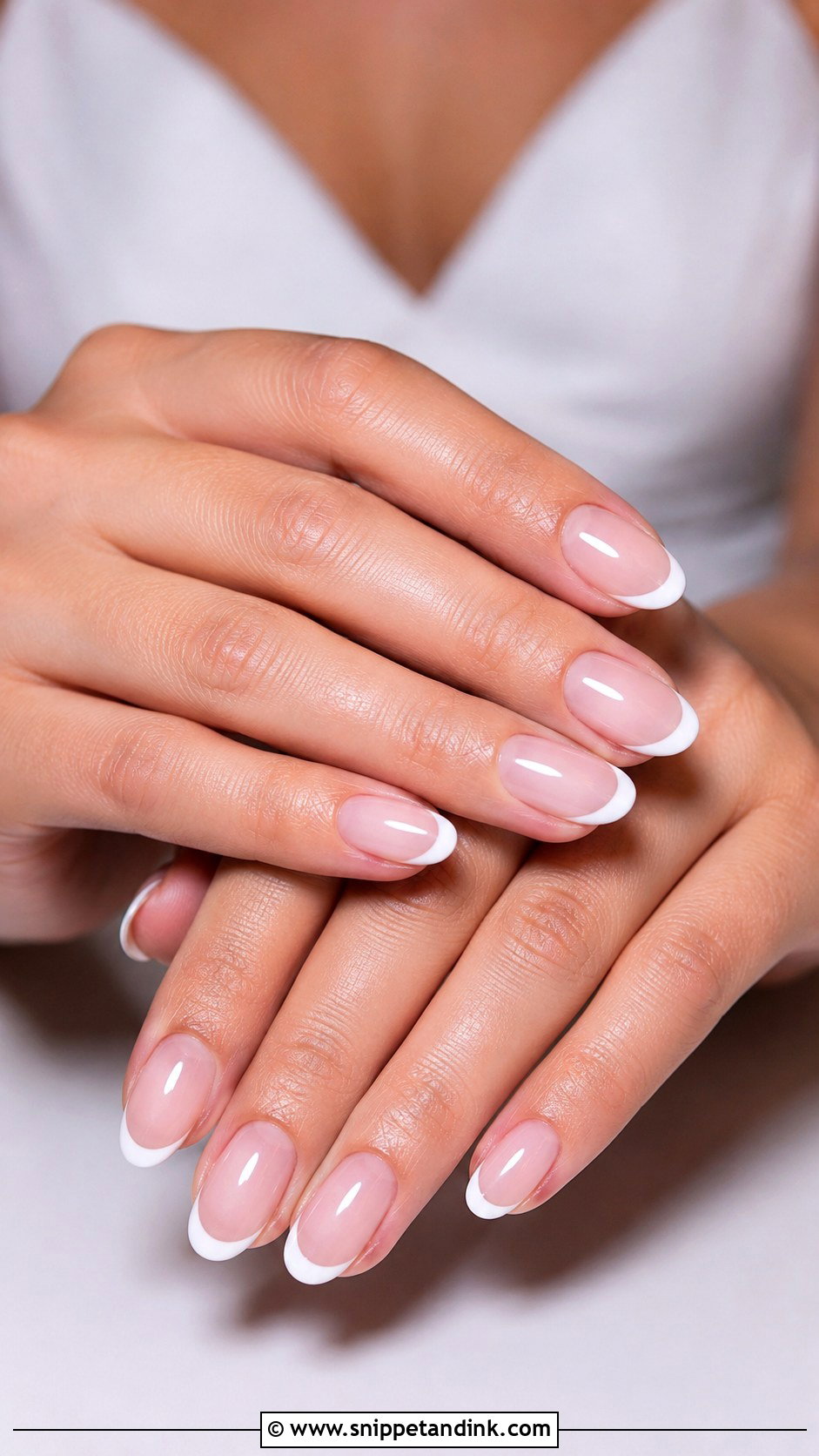
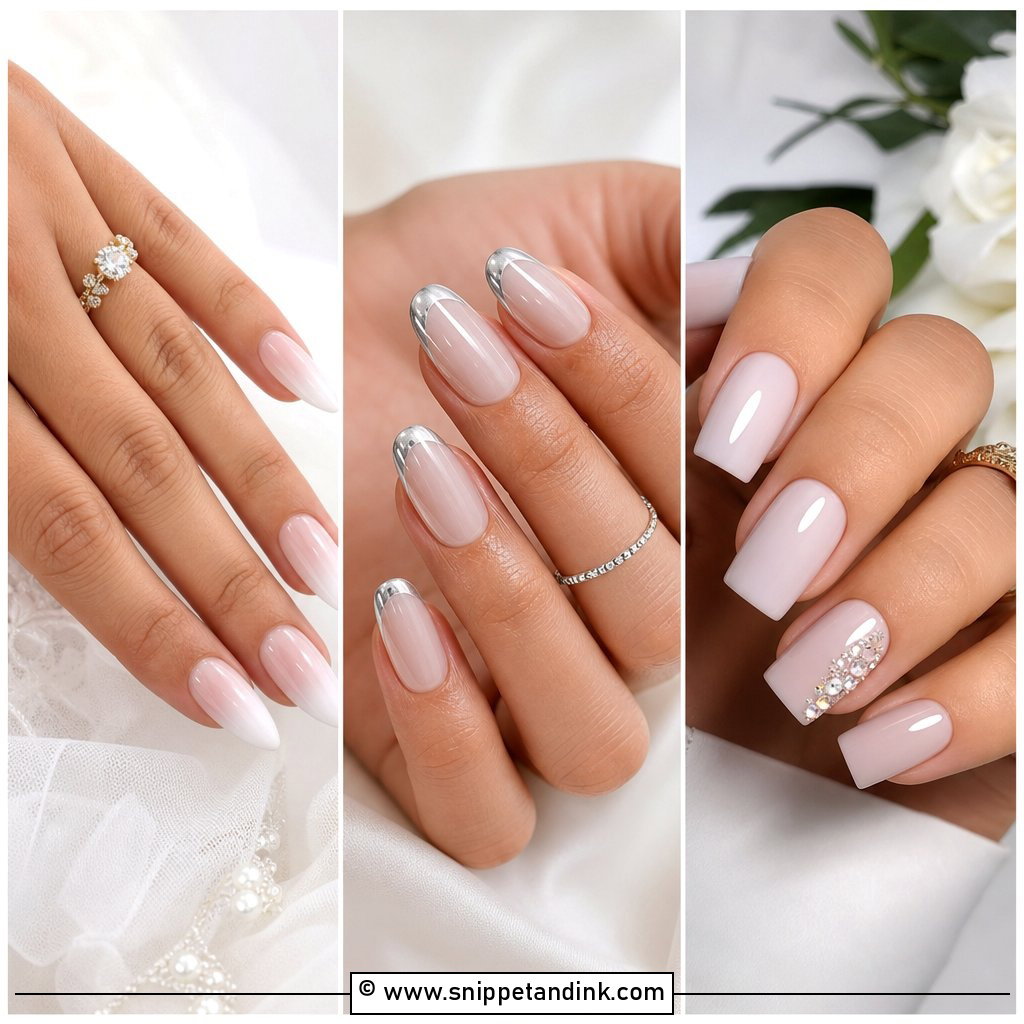
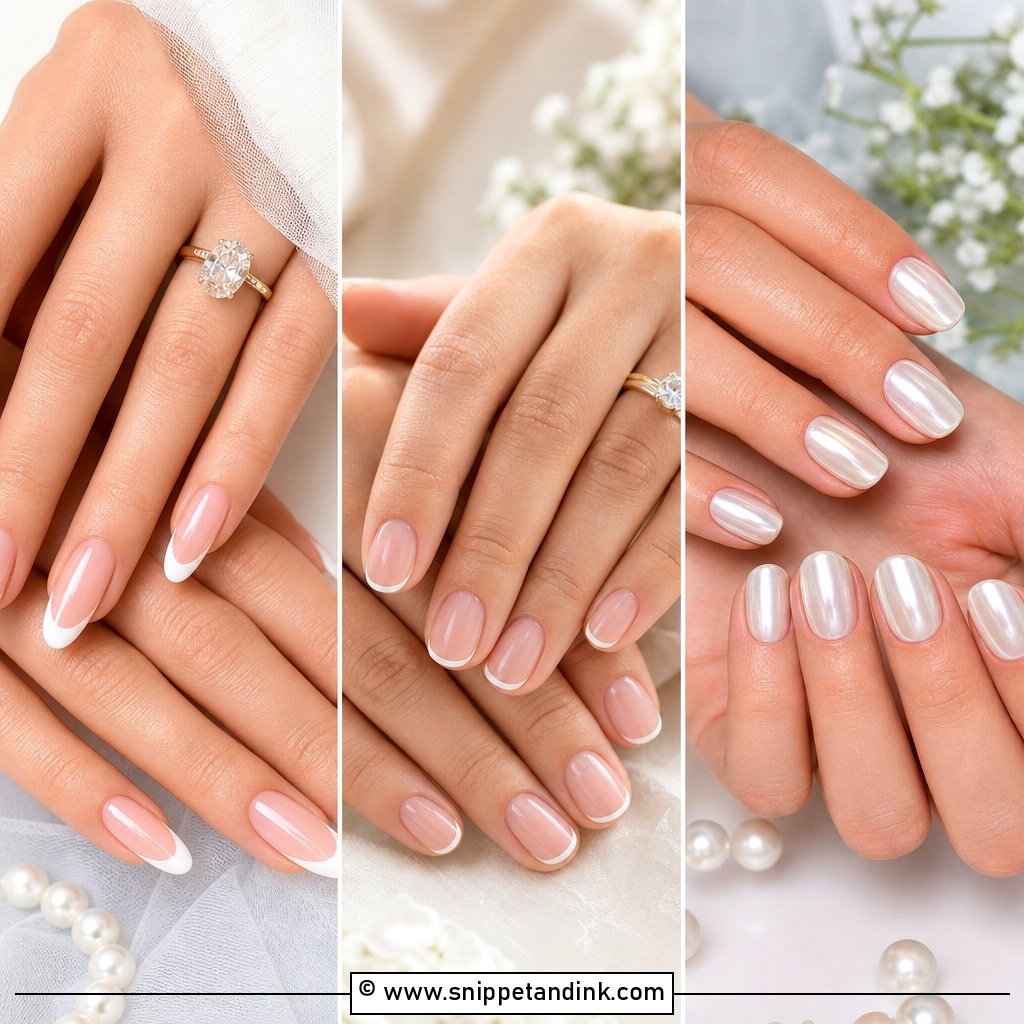
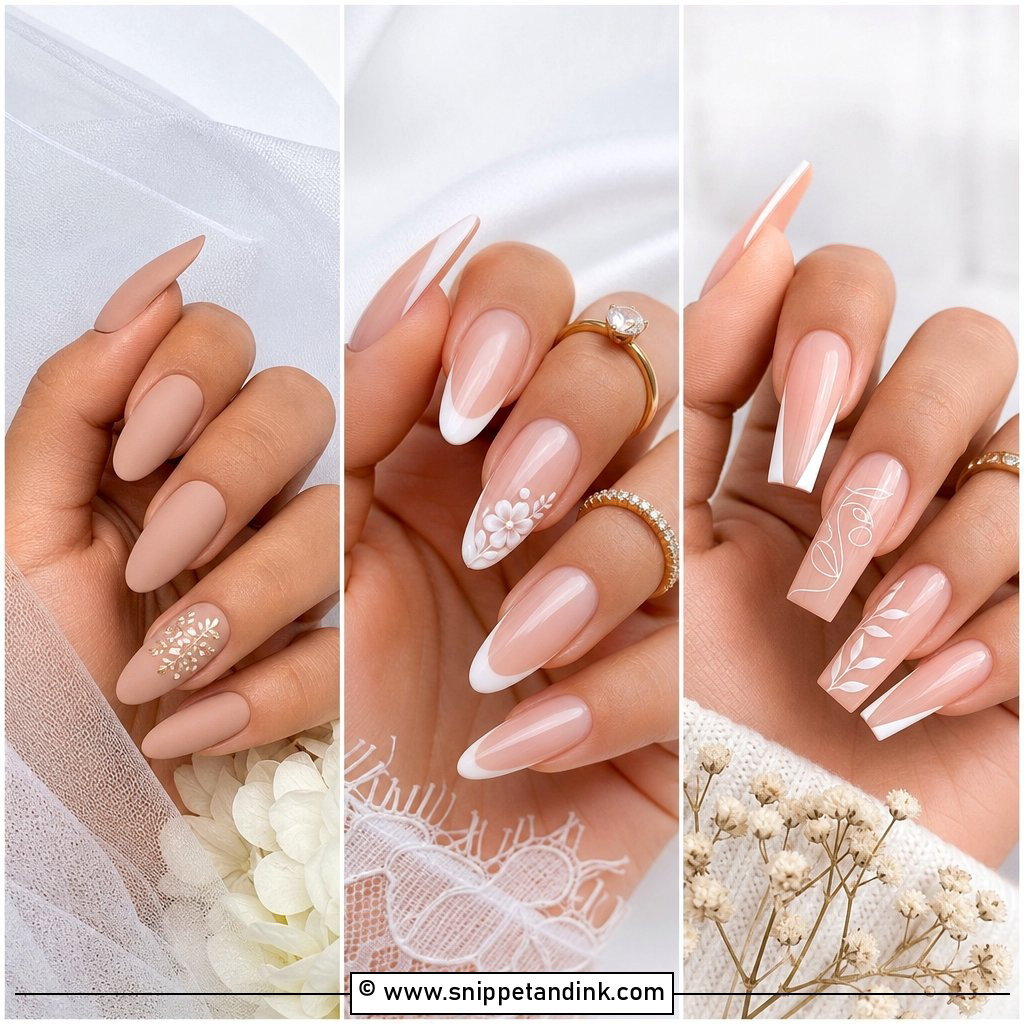
The French manicure has never really left wedding season, and the reason is practical: a pale base with a clean white edge makes every nail look the same length and shape, even if yours grow unevenly. My modern version keeps the white tip thinner than the thick ones from years ago, and I follow your natural smile line rather than drawing a straight band. Almond and oval shapes soften it, while square or squoval look more tailored. The detail that makes or breaks it is the tip line itself, so I’d always choose a tech who hand-paints it rather than relying on stickers.
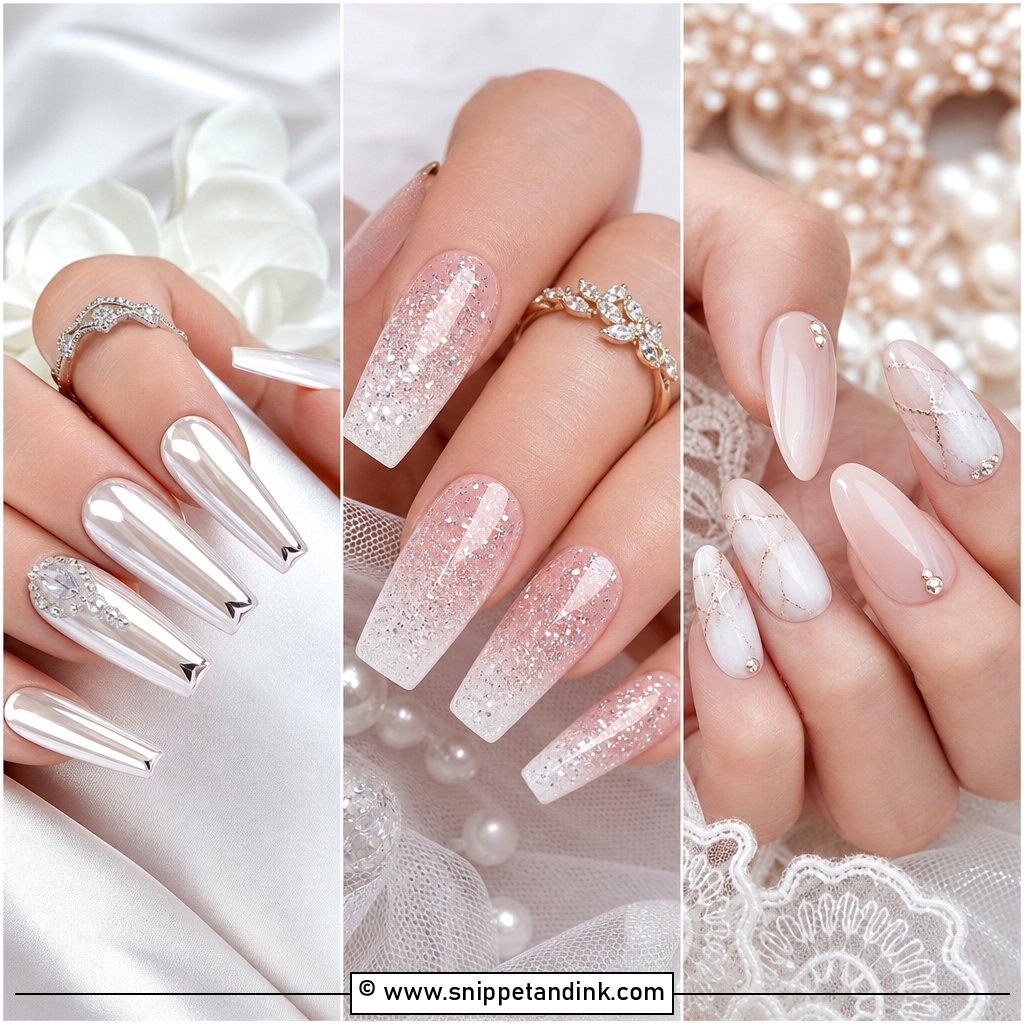
3. Pearl Chrome Bridal Nails
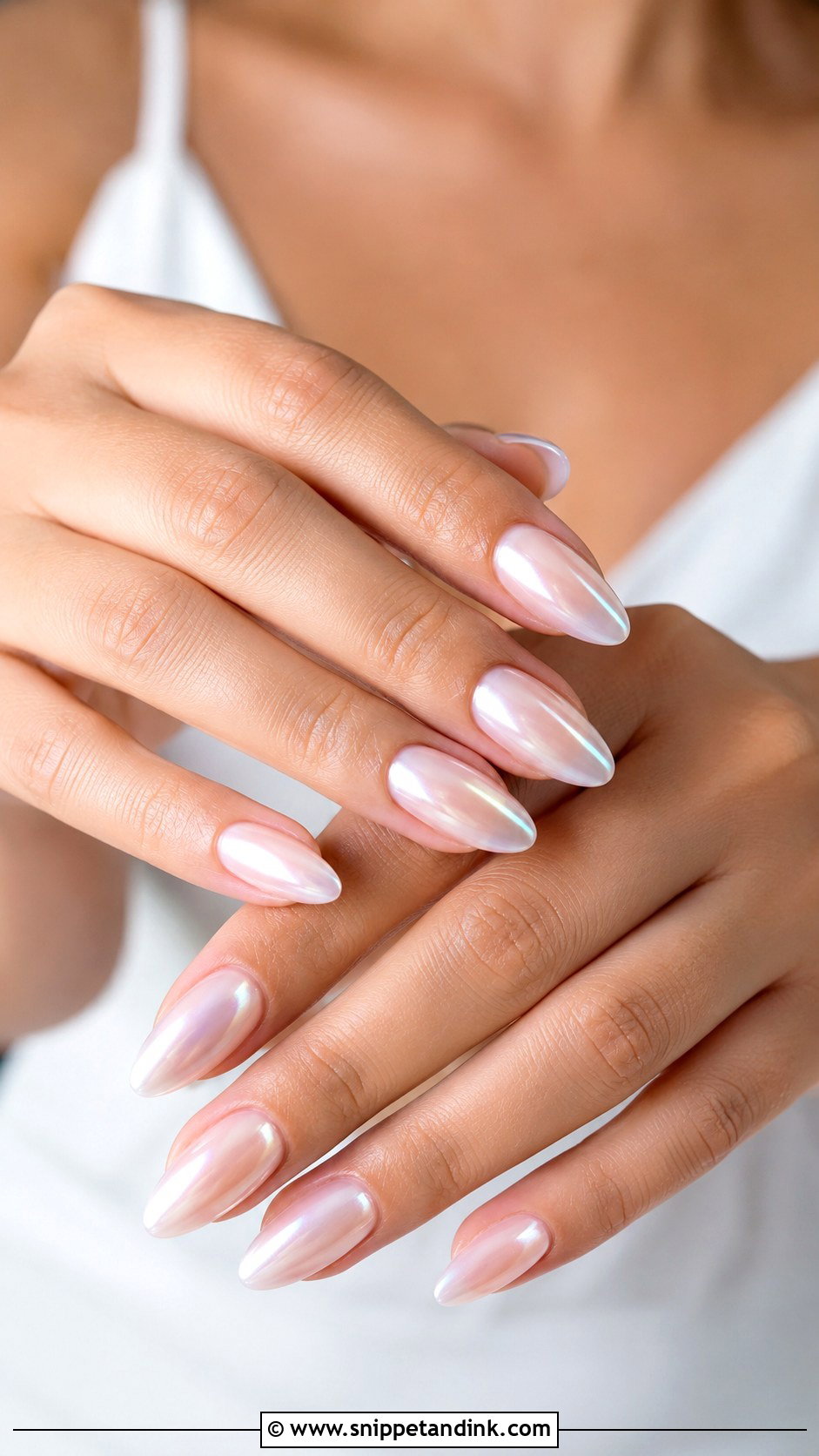
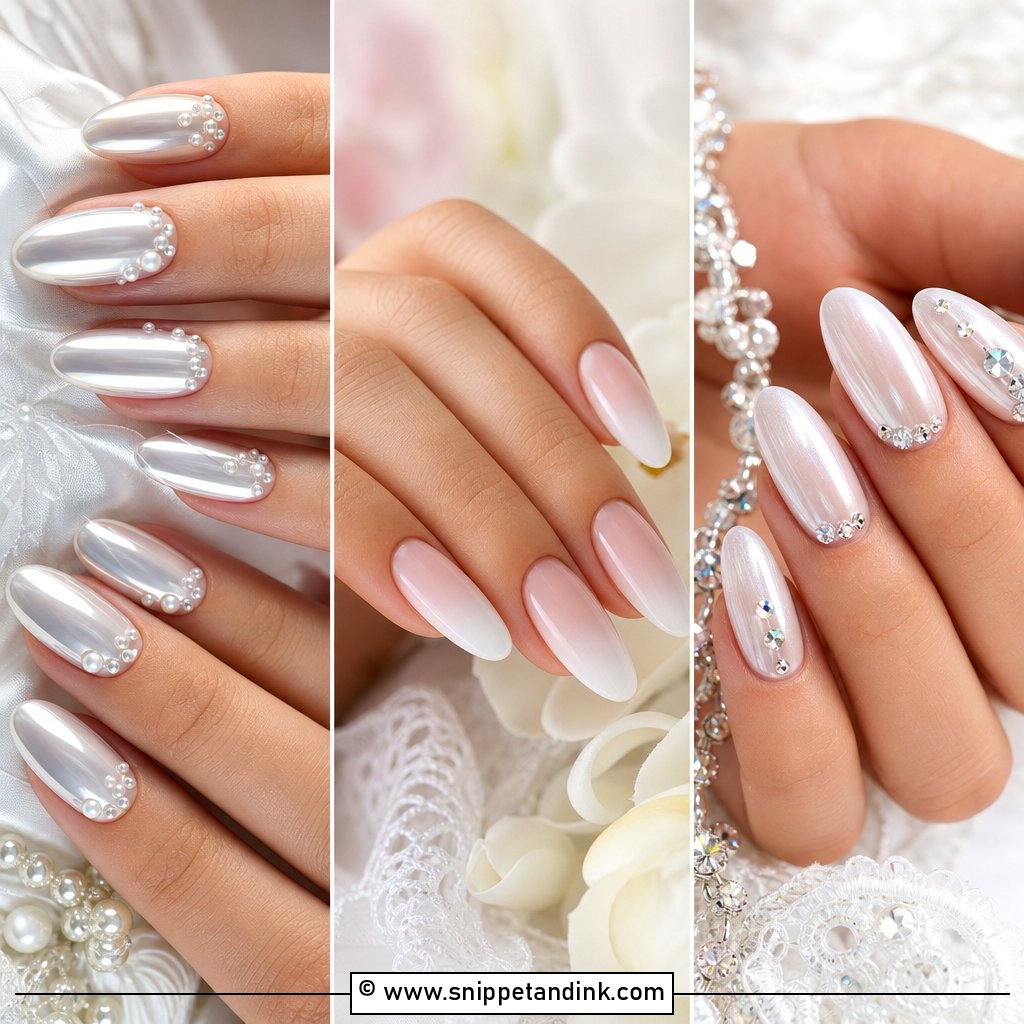
Pearl chrome starts with a sheer white, blush or nude gel base, then a very fine pearl powder is buffed onto a no-wipe top coat and sealed. It catches light gently, which is why it shows up well in bouquet and ring photos without looking metallic. Compared with bright silver chrome, it reads as soft and bridal. The thing I watch with chrome powders is the free edge: if the top coat isn’t capped over the tip, the powder can wear off there within days. Keep the shape simple, almond, oval or short squoval, and let the finish do the work.
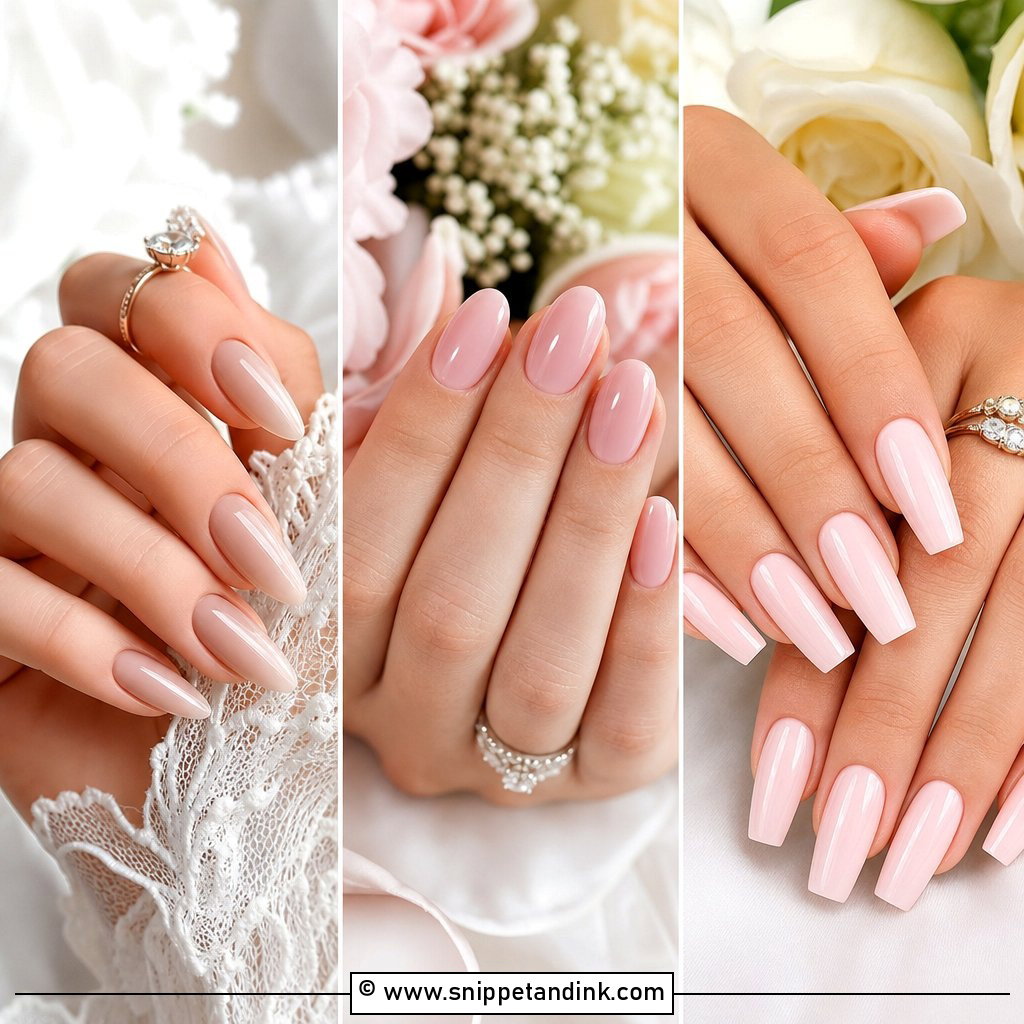
4. Blush Pink Bridal Nails
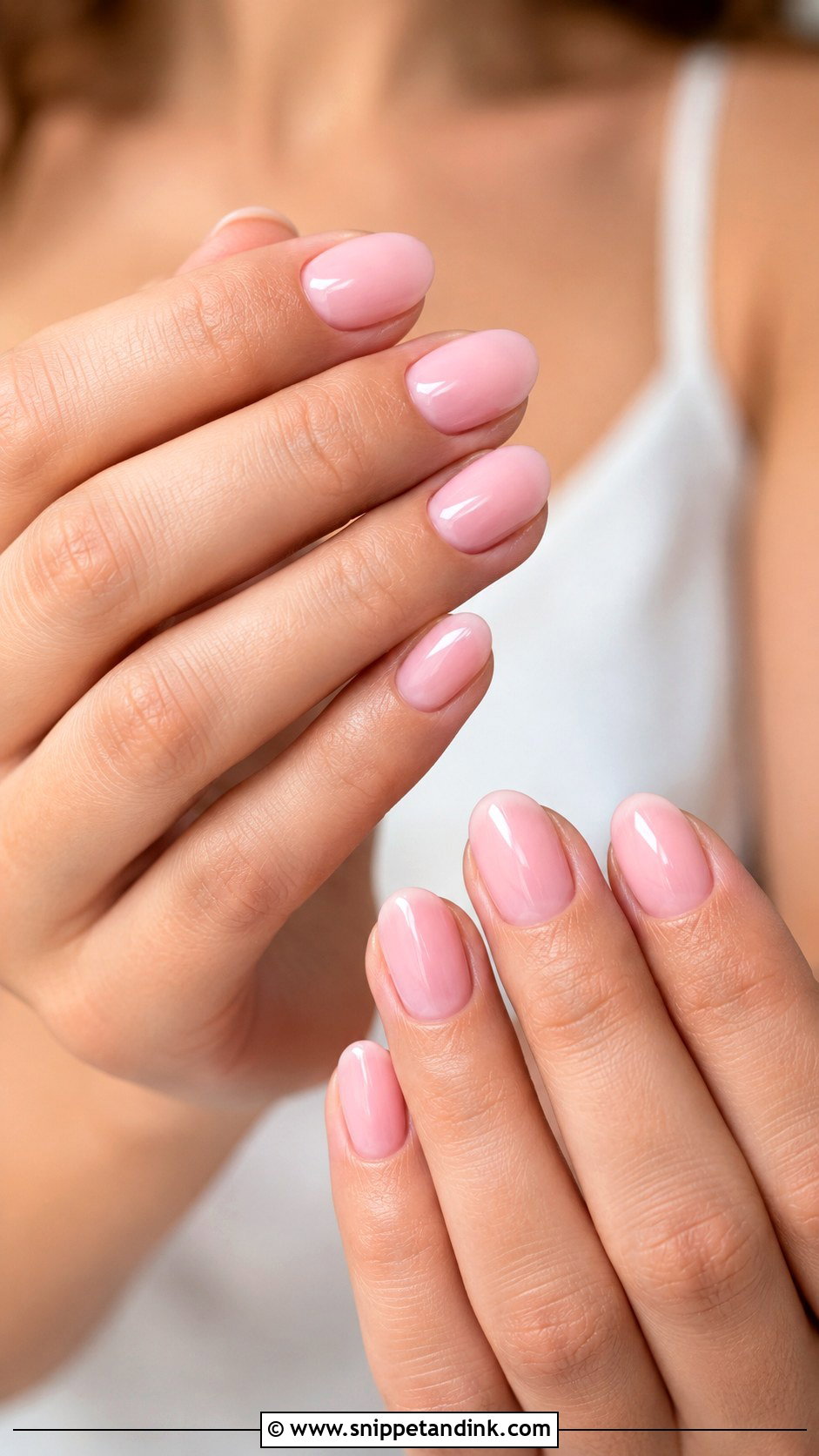
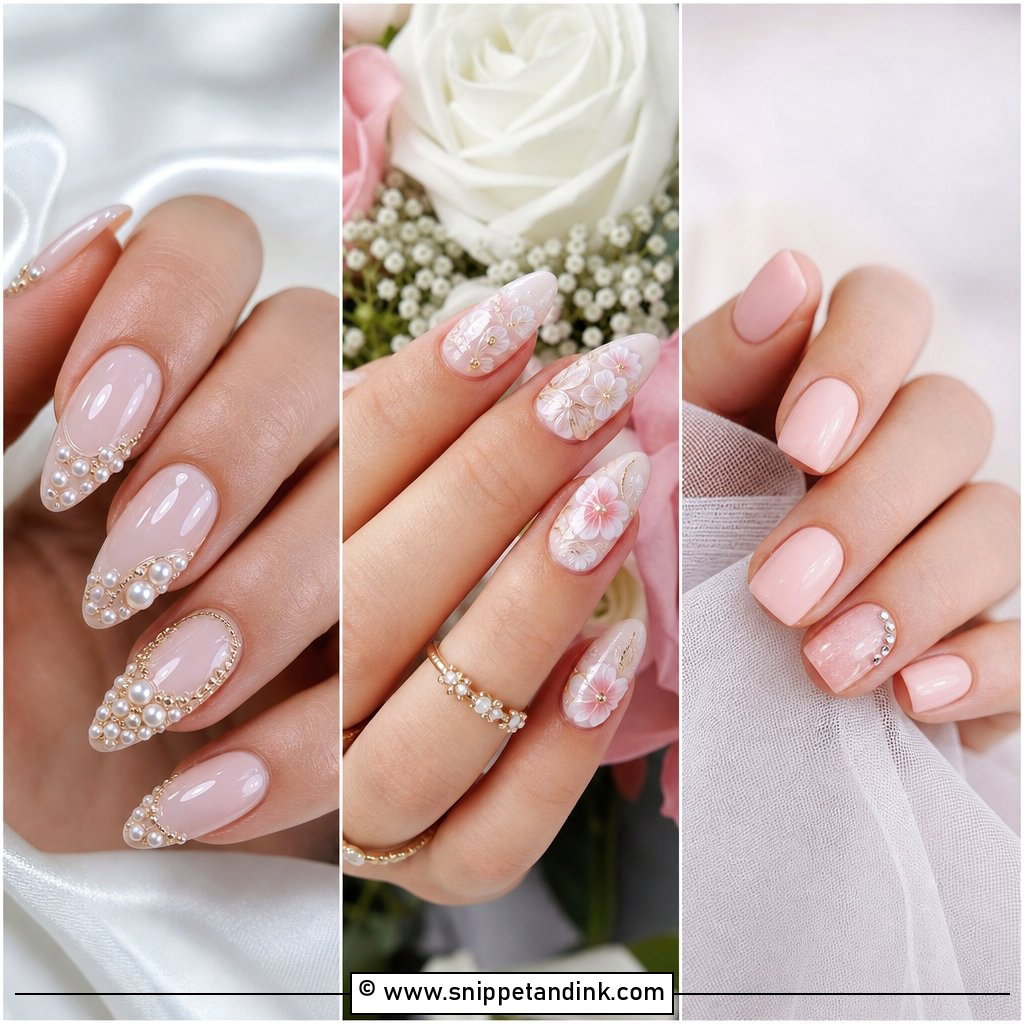
Blush pink is the shade I recommend when a bride isn’t sure what she wants, because it gives the hands a healthy look and suits most skin tones. I usually build it in a sheer builder gel or a soft pink overlay, which also adds strength if your nails tend to bend. A barely visible shimmer in the top layer is an option, but I’d keep it subtle. On short oval nails it looks natural; on medium almond nails it looks a touch more graceful. It also keeps every bit of attention on the ring, which some brides want.
5. Nude Almond Bridal Nails
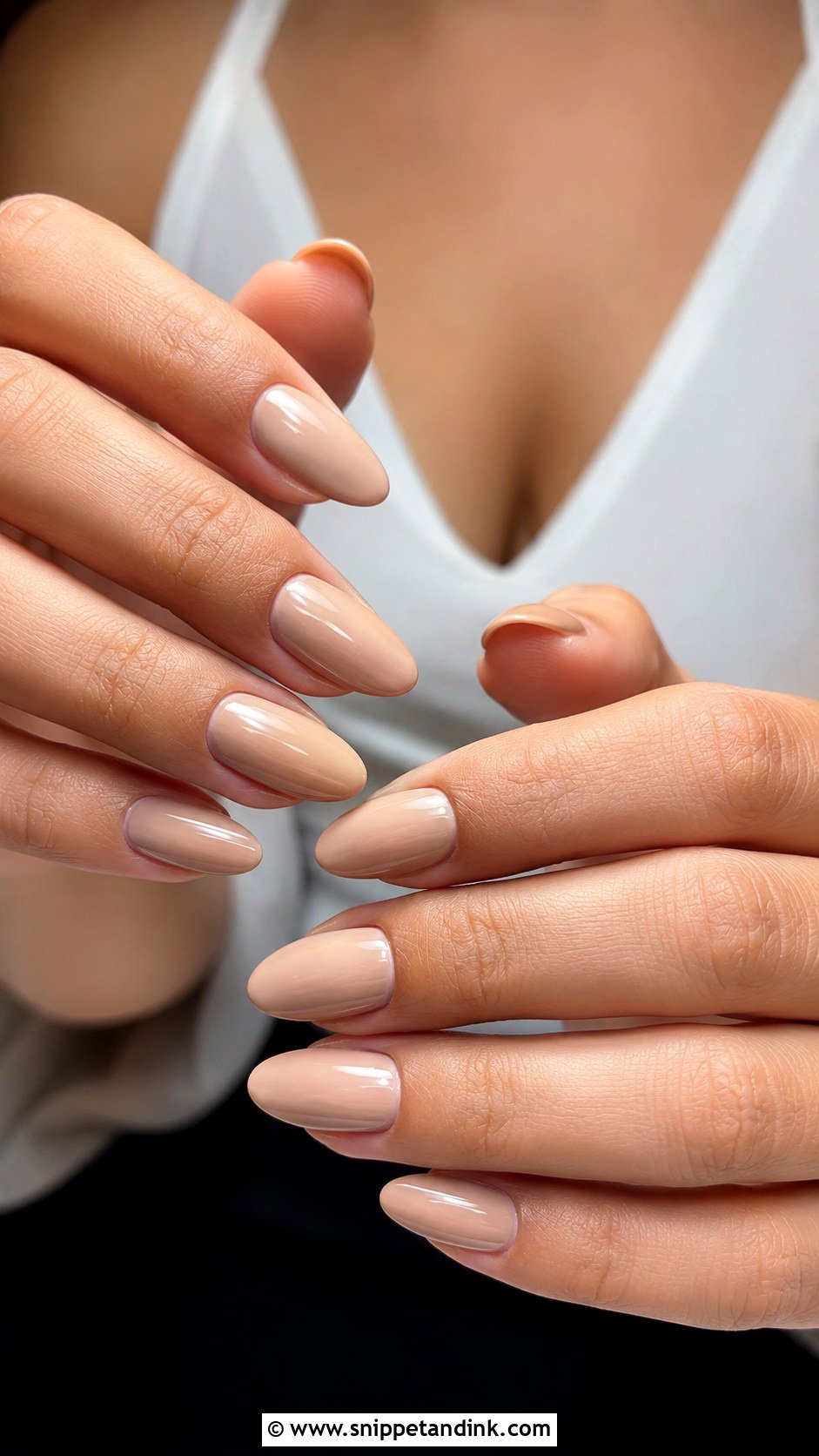
Almond is the shape that does the most for the fingers, because its soft point carries the eye past the end of the finger and makes it look longer. The challenge with a nude is getting the undertone right, and I always test against the skin on the back of your hand, not the palm. Peachy nudes suit warm skin, pink nudes suit cool skin and beige nudes suit neutral undertones. Pick the wrong one and the hand looks grey or slightly orange in photos. A high-gloss top coat is what makes a plain nude look expensive rather than unfinished.
6. Sheer Pink Bridal Nails
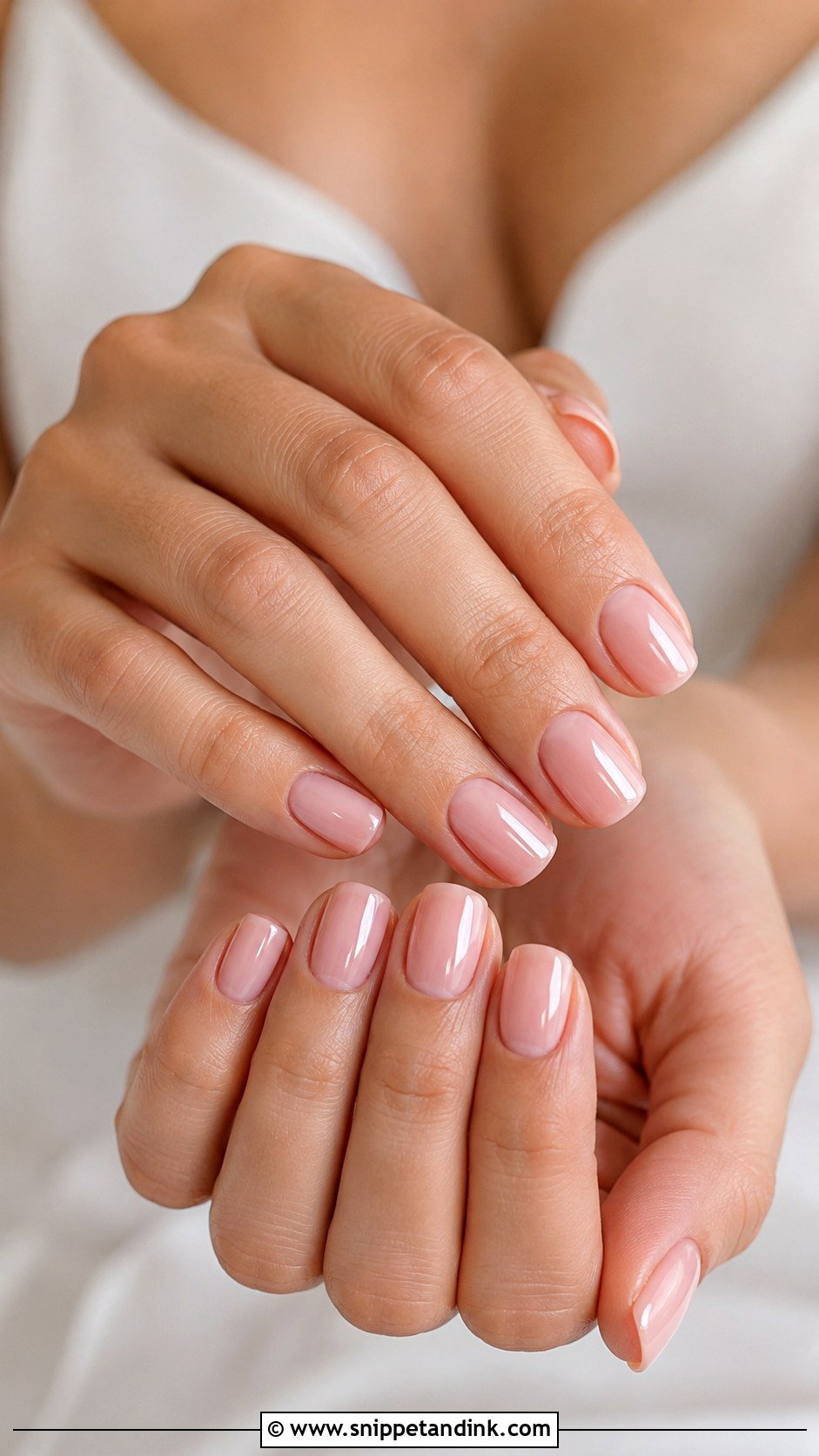
This is the “your nails but better” set. A sheer pink evens out the nail bed and hides small marks or white spots without looking painted. It’s my usual suggestion for brides who don’t normally wear polish and would feel strange in a strong color. Built in a sheer pink gel or builder base, it also strengthens soft natural nails, which helps if you’ve only just stopped biting or peeling them. Keep the length short to medium. Next to a new wedding band, glossy sheer pink looks healthy and clean, and nothing competes with the metal.
7. Micro French Bridal Nails
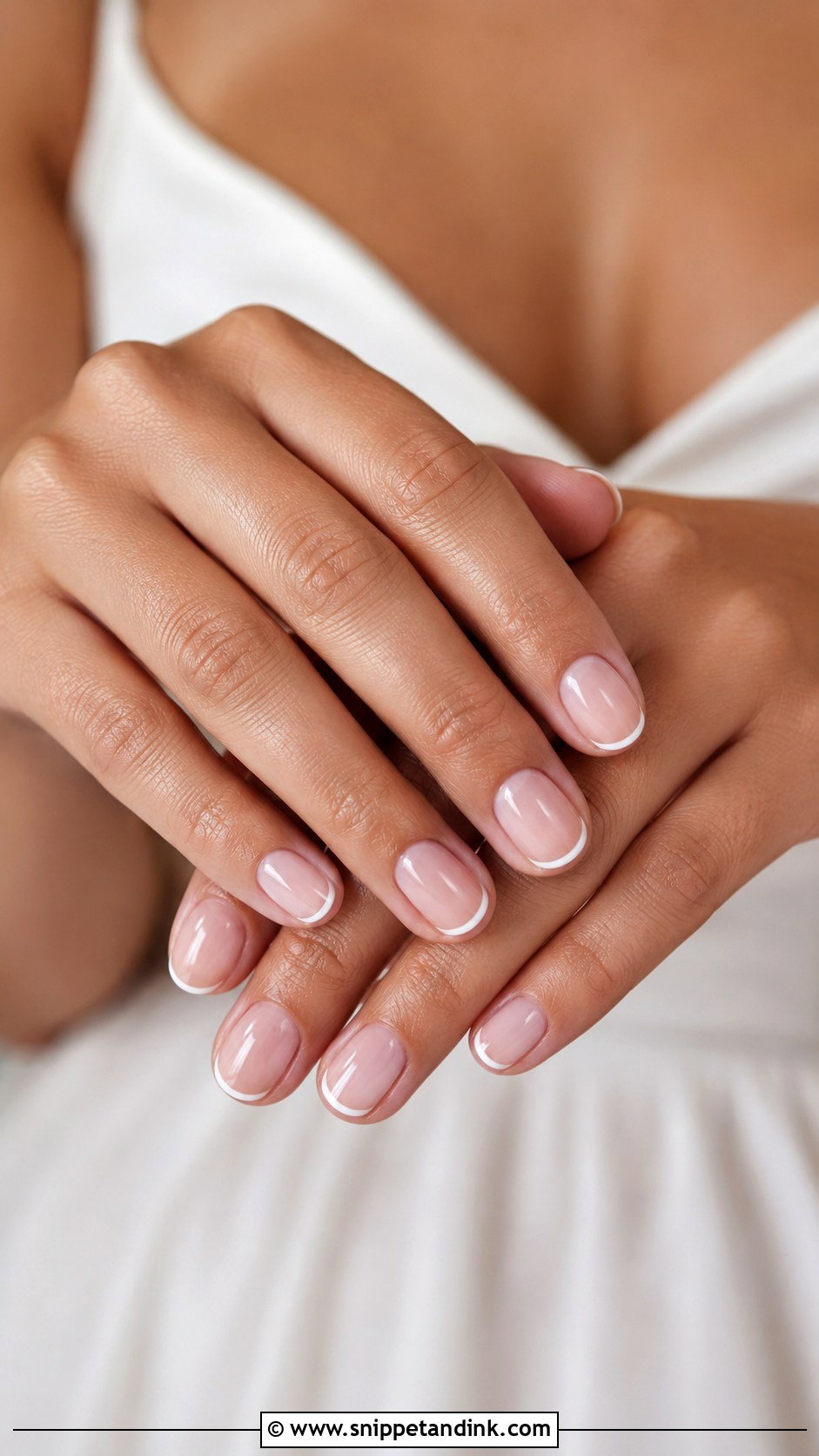
Micro French bridal nails swap the thick white band for a hairline along the very edge of the nail. It’s harder to paint than it looks, because a slightly uneven line is obvious when the line is that thin, so I use a long liner brush and paint each tip in one pass. The sheer nude or pale pink base keeps it soft. Micro French is the set I suggest most for short nails and for brides who type, garden or work with their hands, since it still looks finished on a very short length. White reads traditional; soft ivory looks warmer next to an ivory dress.
8. Ombre French Bridal Nails
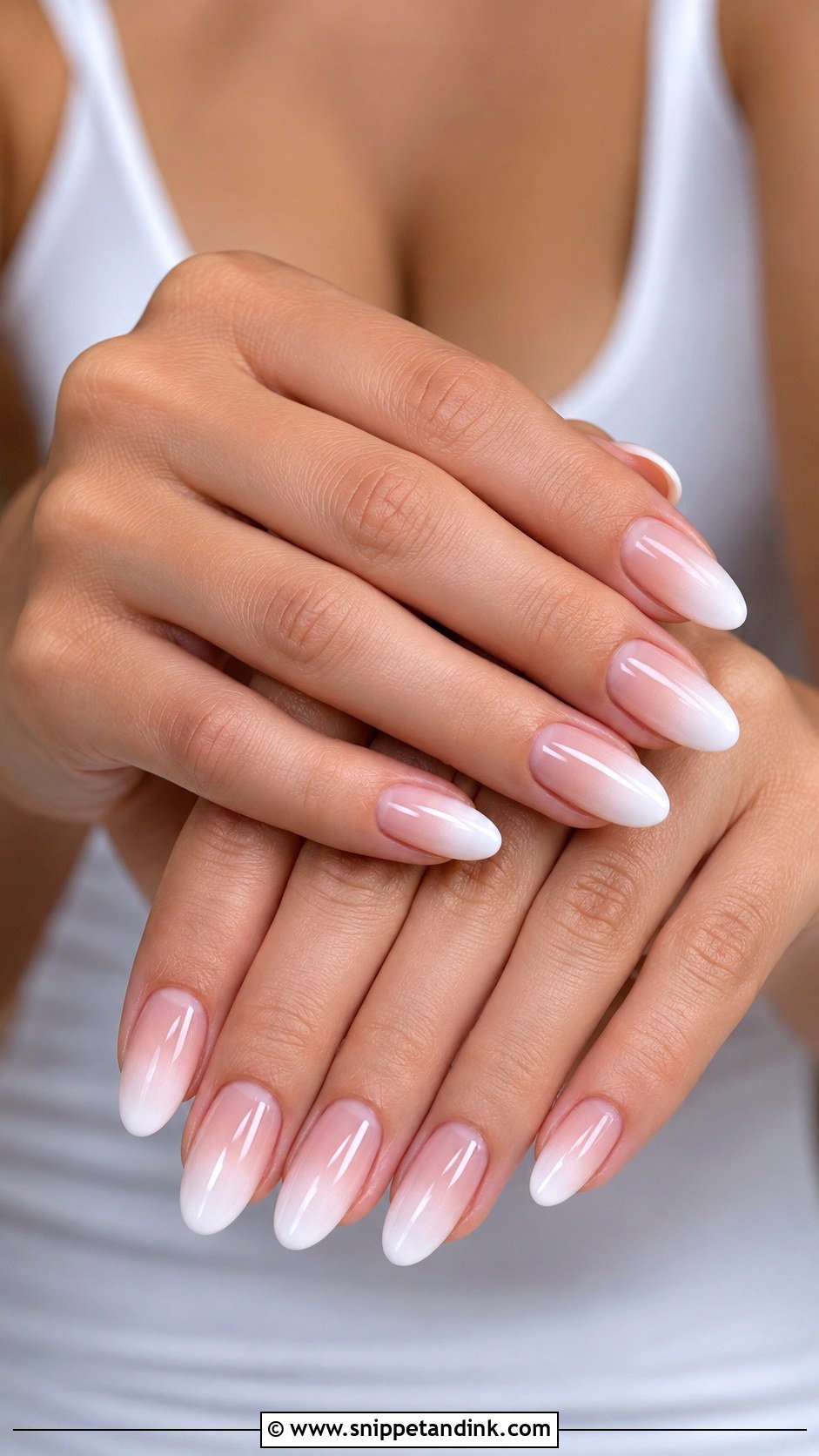
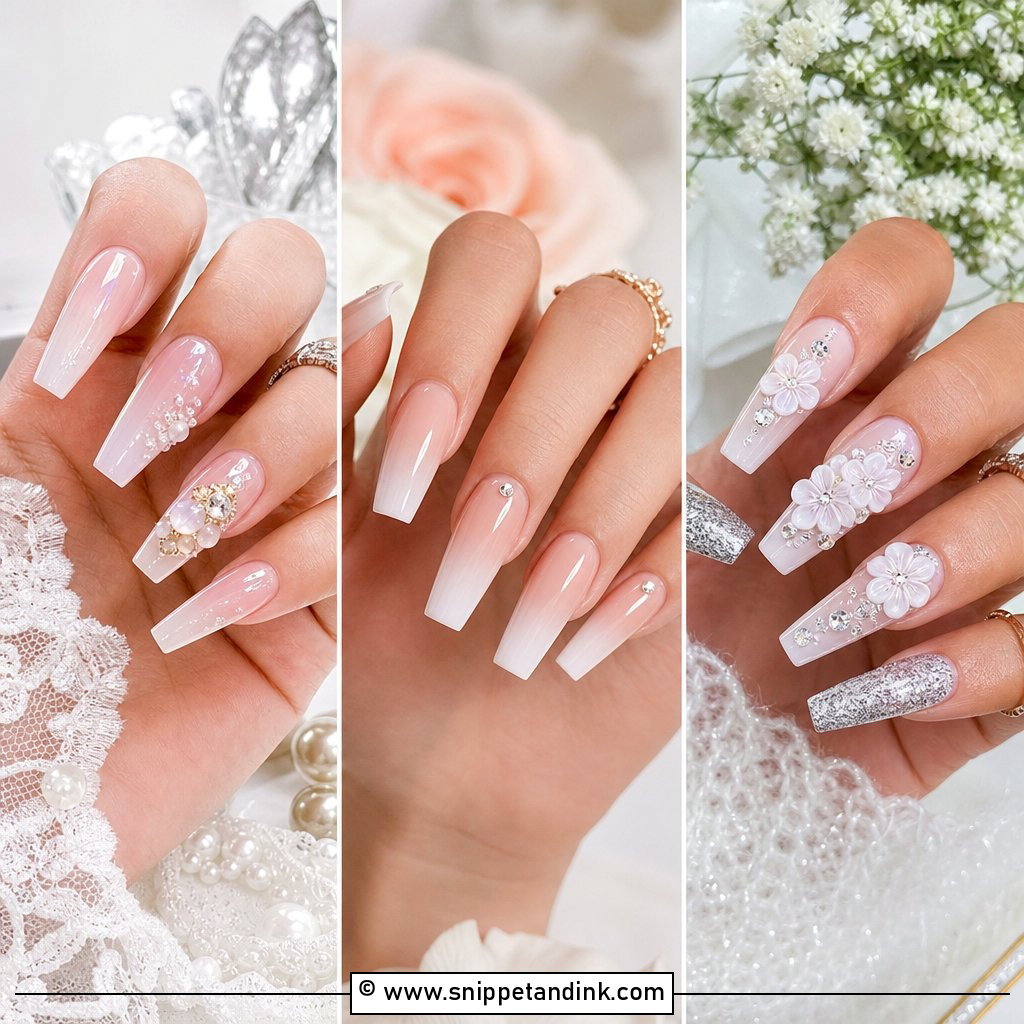
Ombre French nails, often called baby boomer nails, fade a nude or pink base into a white tip with no visible line. The gradient is usually built with a sponge or a soft brush between gel layers, and the smoothness of the blend is what you’re paying for. A patchy fade shows clearly in close-up photos. It suits almond, coffin and oval shapes, and it sits naturally beside tulle or lace. If you like the French idea but find a crisp tip too formal, this softer version is where I’d point you.
9. White Chrome Bridal Nails
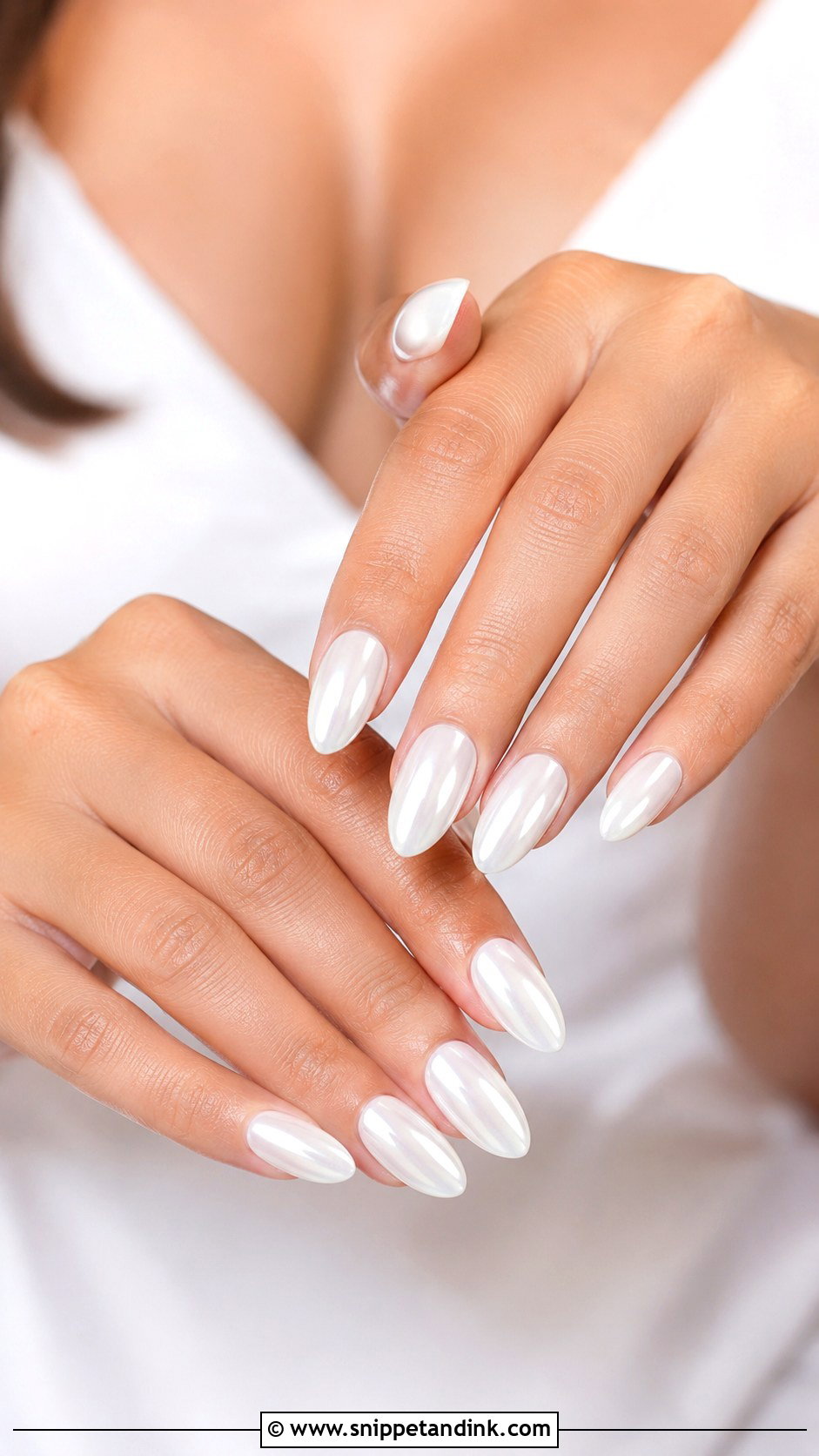
White chrome starts with a white or ivory base and gets a fine chrome powder buffed over it, giving a smooth, glassy surface. It’s a strong fit for minimalist gowns, structured dresses and modern separates, where glitter would feel out of place. I’d choose a soft white rather than a bright optic white, because optic white can look blue in outdoor light. Medium almond or short square nails keep it clean. Because chrome reflects everything, any ridge or bump in the nail plate shows, so I spend extra time on smoothing the base before the powder goes on.
10. Pearl Accent Bridal Nails
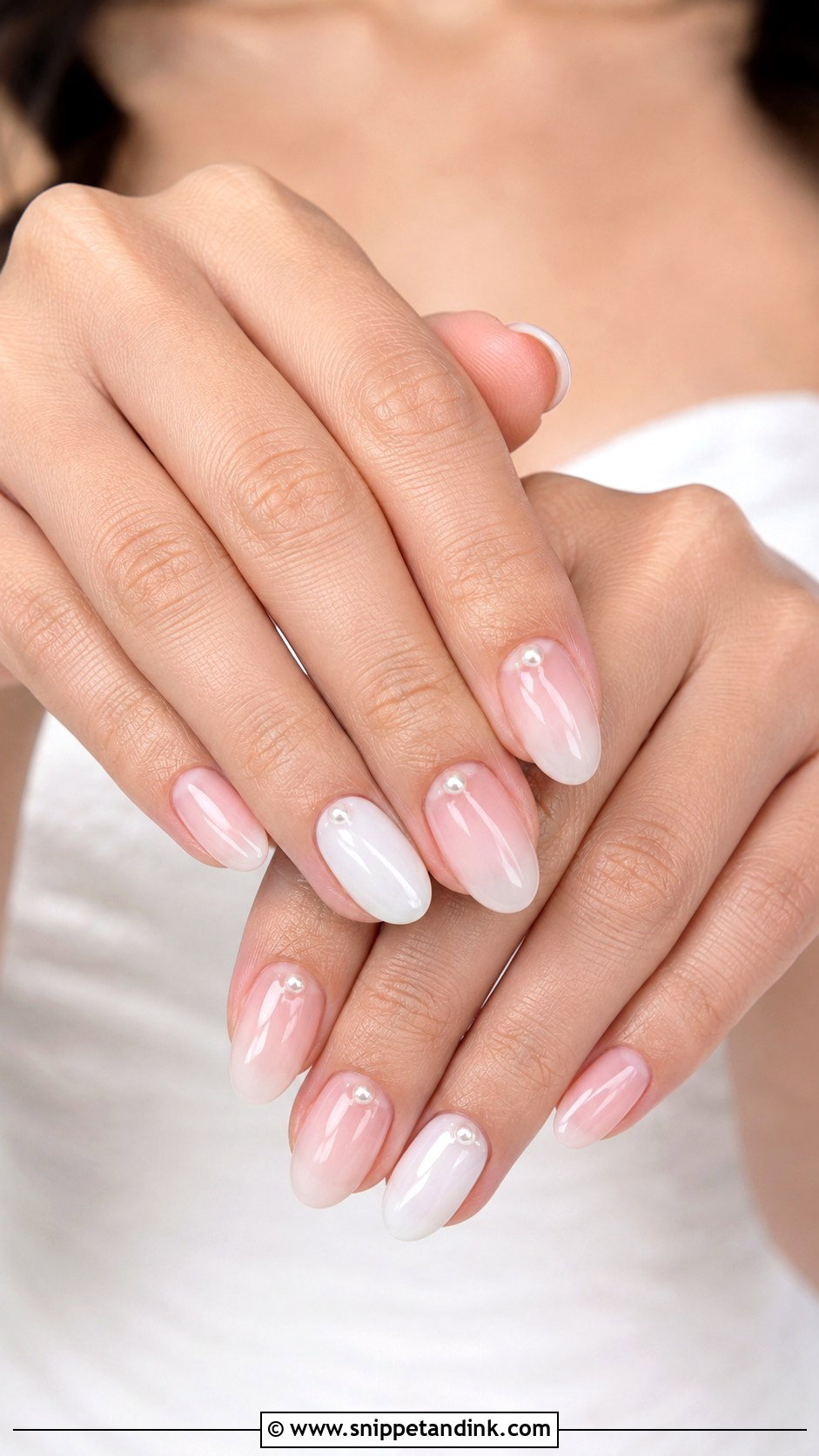
The key to pearl accents is restraint. I place tiny flat-back pearls near the cuticle, along one side of the nail or on just one or two accent nails, over a milky white, sheer pink, nude or soft French base. Too many pearls and the hand looks heavy and catches on veils and lace. Placement also matters practically: a pearl right at the free edge will snag hair and knock off within a day, so I keep them in the lower half of the nail and set them in gel before sealing. Short oval and medium almond shapes suit it best.
11. Floral Bridal Nails
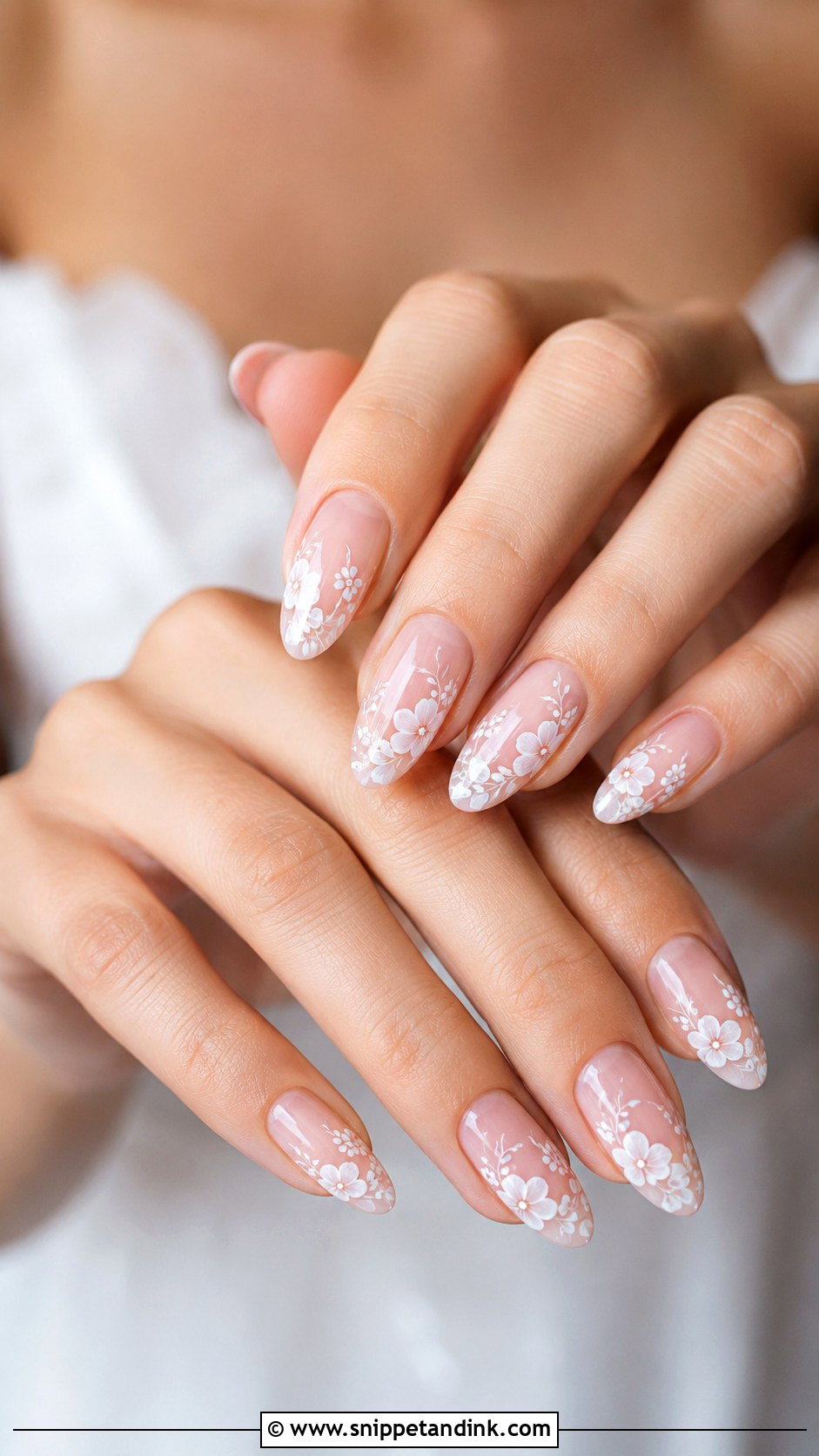
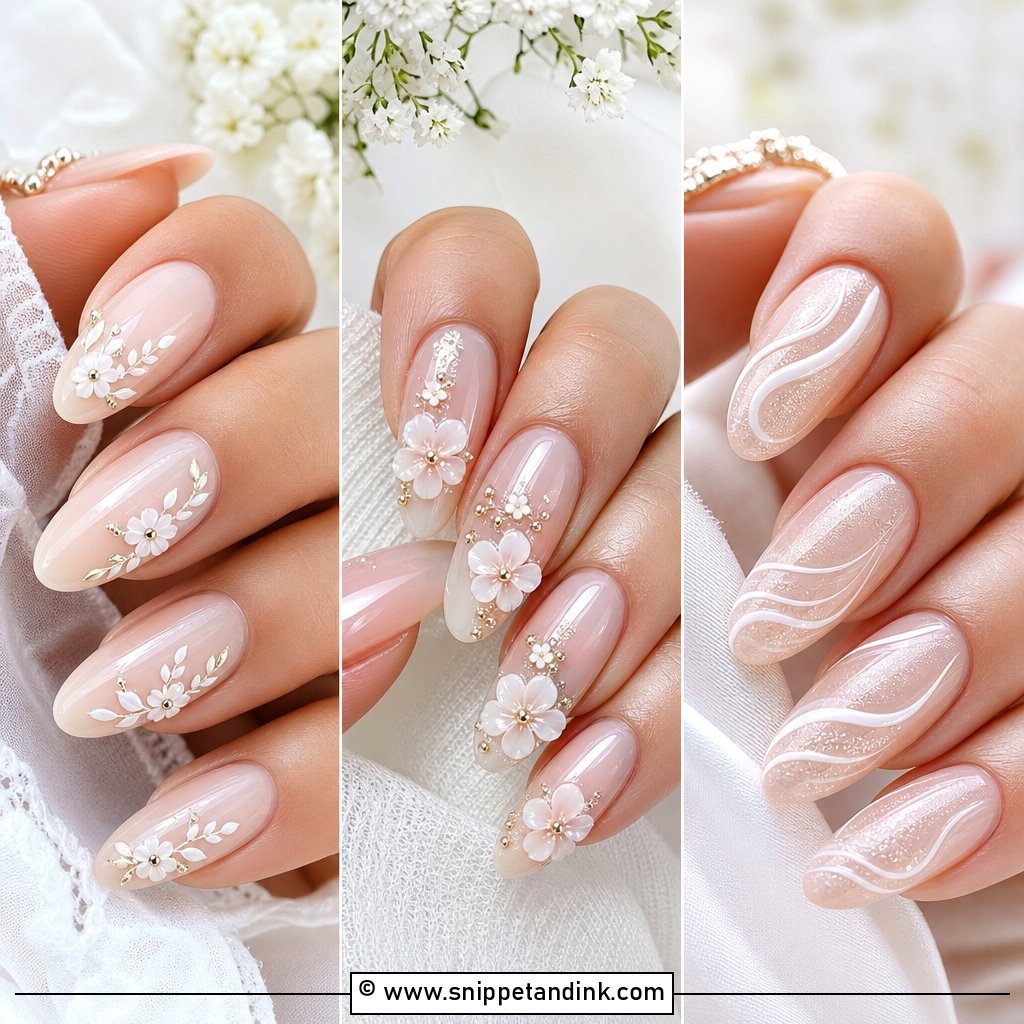
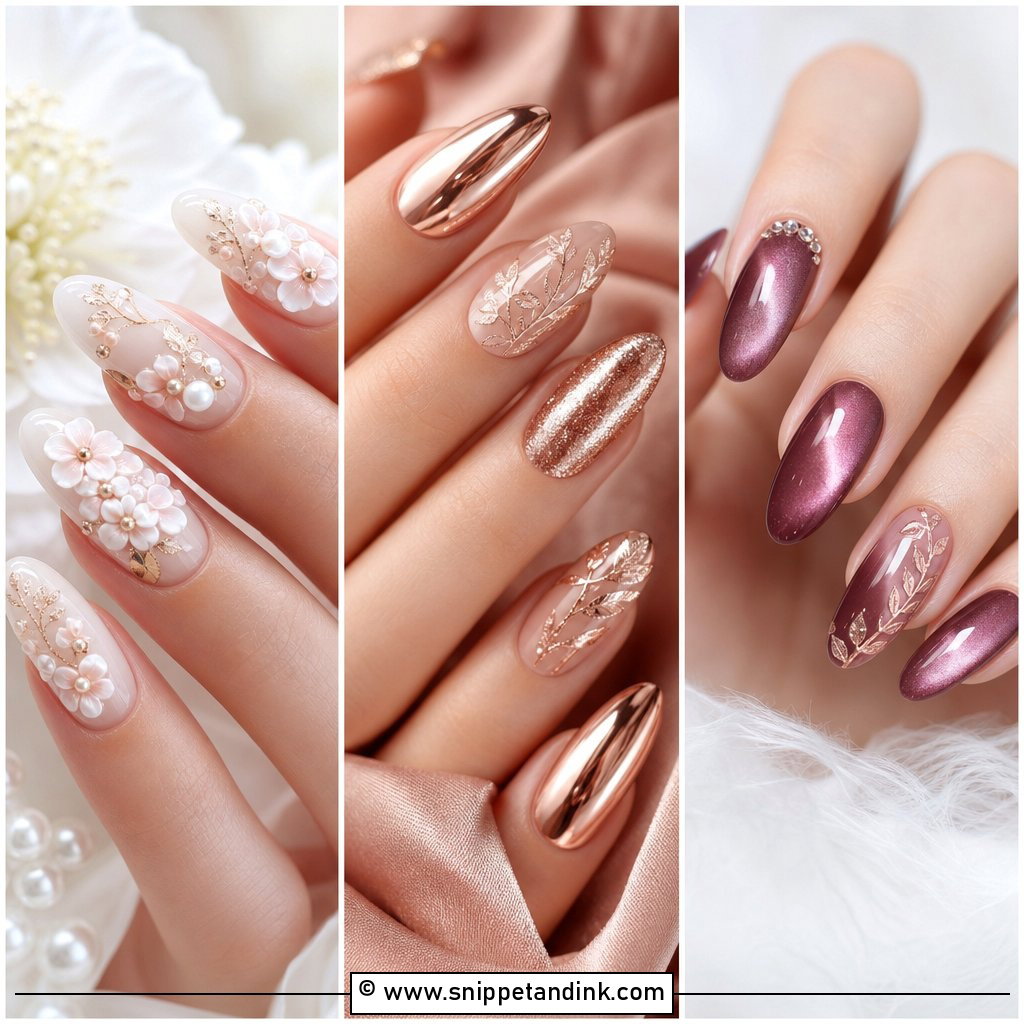
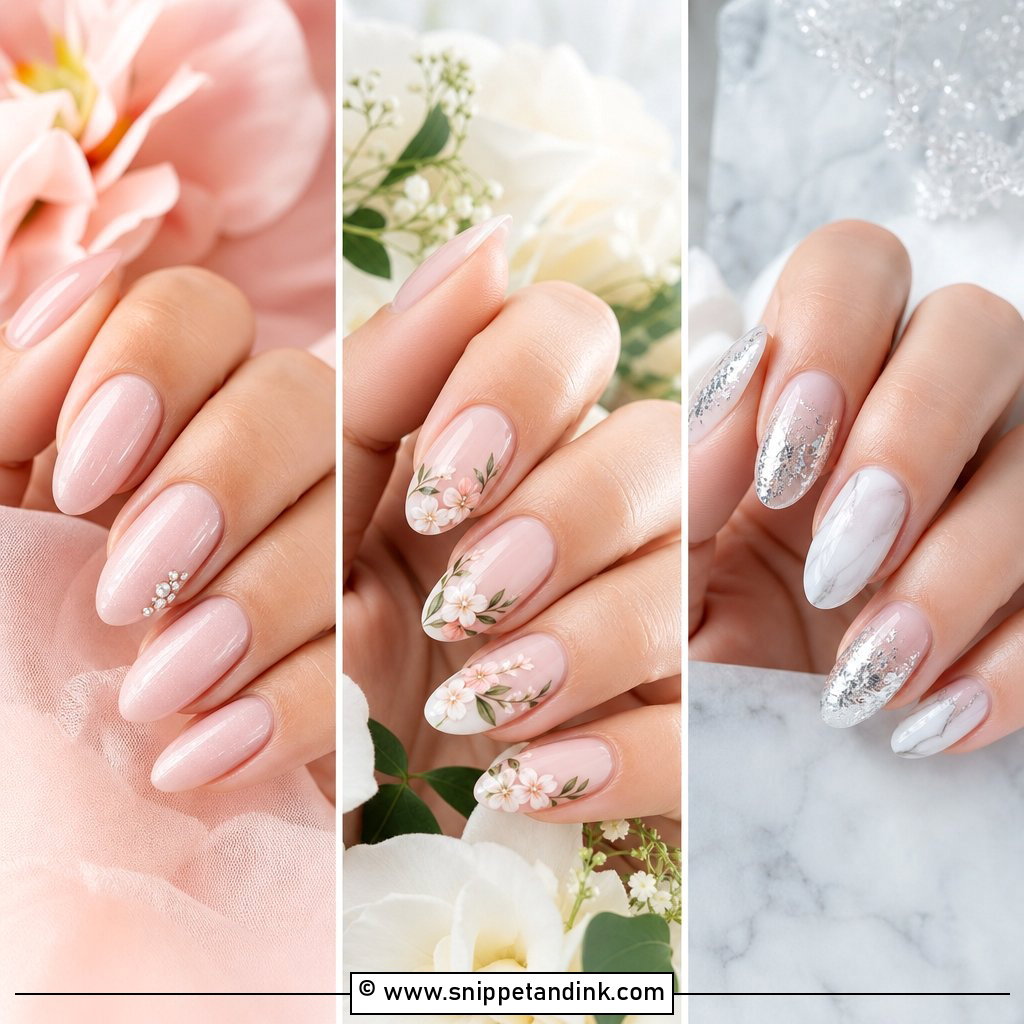
Hand-painted florals feel right for spring and garden weddings, but only when the flowers stay small. My usual approach is a sheer nude, blush or milky base with tiny white or pale pink blooms and a few fine green leaves on one or two accent nails, with the rest left plain. Once florals cover every nail, the set looks busy and starts competing with the bouquet. Oval or almond shapes give the flowers room. I’d bring a photo of your bouquet to the appointment so the petal colors can echo it rather than clash.
12. Lace Bridal Nails
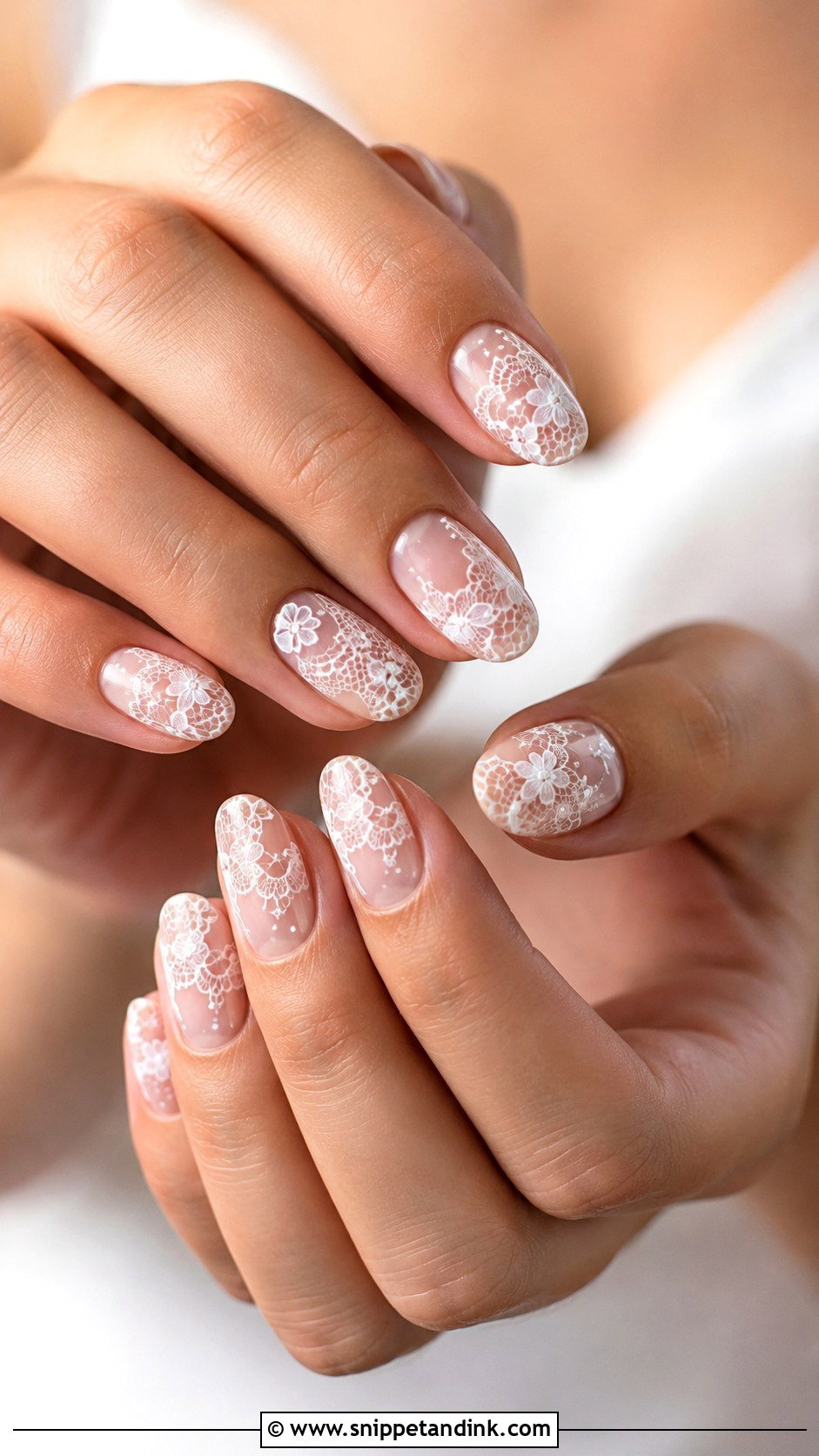
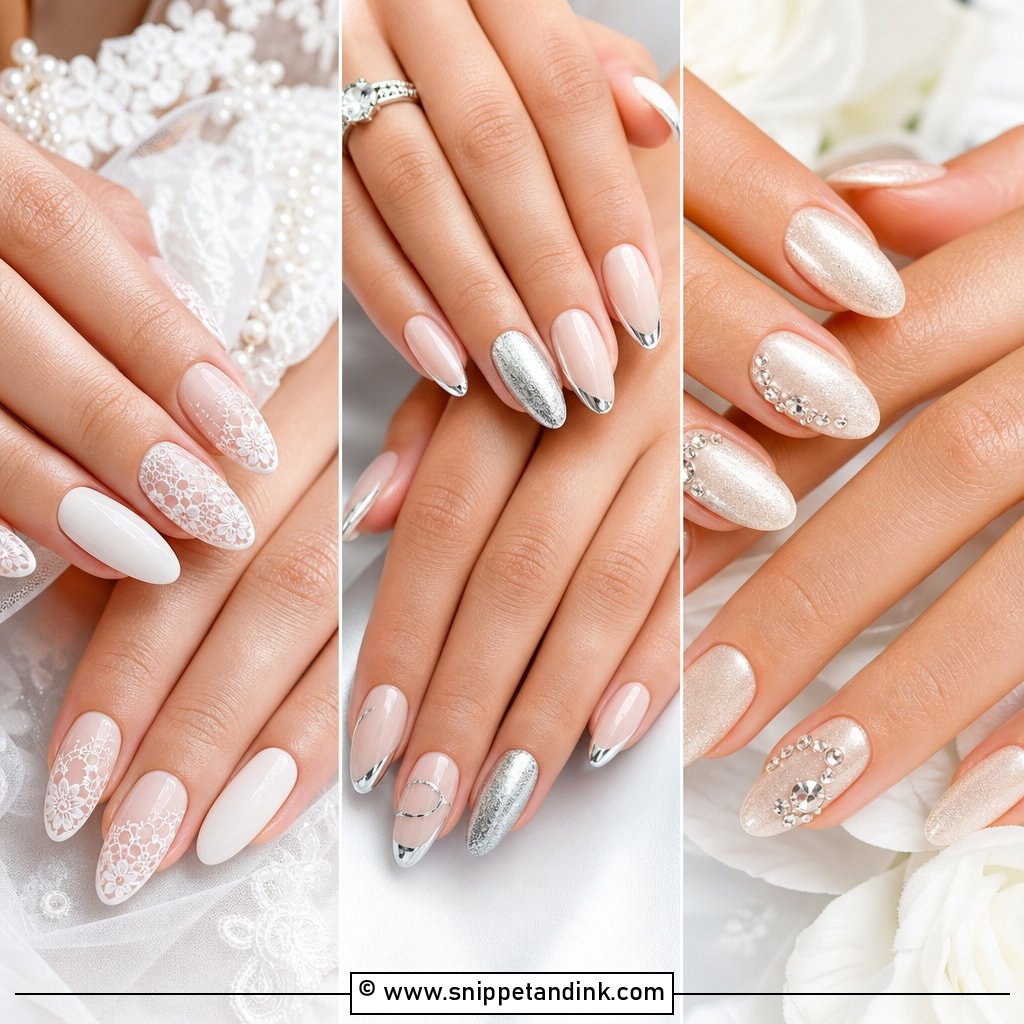
Lace nails tie in neatly with a lace gown or veil, and I use the dress itself as the reference. Fine white detailing in thin lines, small dots, floral shapes or a net pattern goes over a sheer pink, nude or milky base, usually on two or three nails only. The others stay glossy nude or soft French. If you can bring a scrap of the actual lace, or even a clear photo of it, I can pull one motif from the pattern instead of inventing a generic one. Almond and oval shapes echo the curves of the fabric well.
13. Gold Foil Bridal Nails
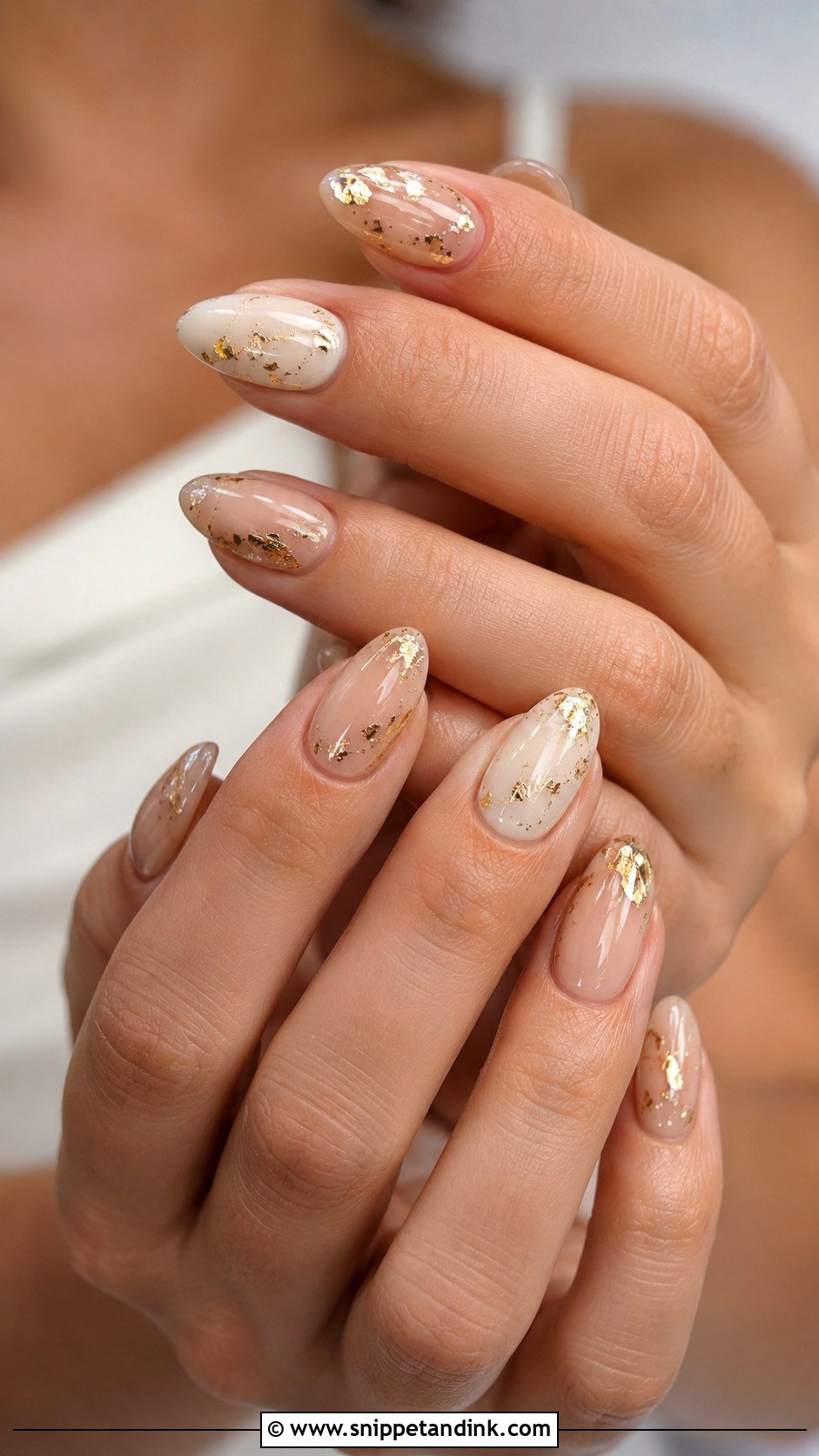
Gold foil bridal nails work when the foil is scattered and fine, never in thick chunks. I press small flakes onto a tacky layer over a sheer nude, milky white or pale pink base, then seal everything under a thick enough top coat that the edges can’t lift. Under-sealed foil catches on tights, lace and hair. It pairs naturally with gold jewelry, champagne dresses and warm ivory gowns, and it glows in candlelight at autumn receptions. Almond and oval shapes look soft; short squoval makes it feel more modern.
14. Silver Glitter Bridal Nails
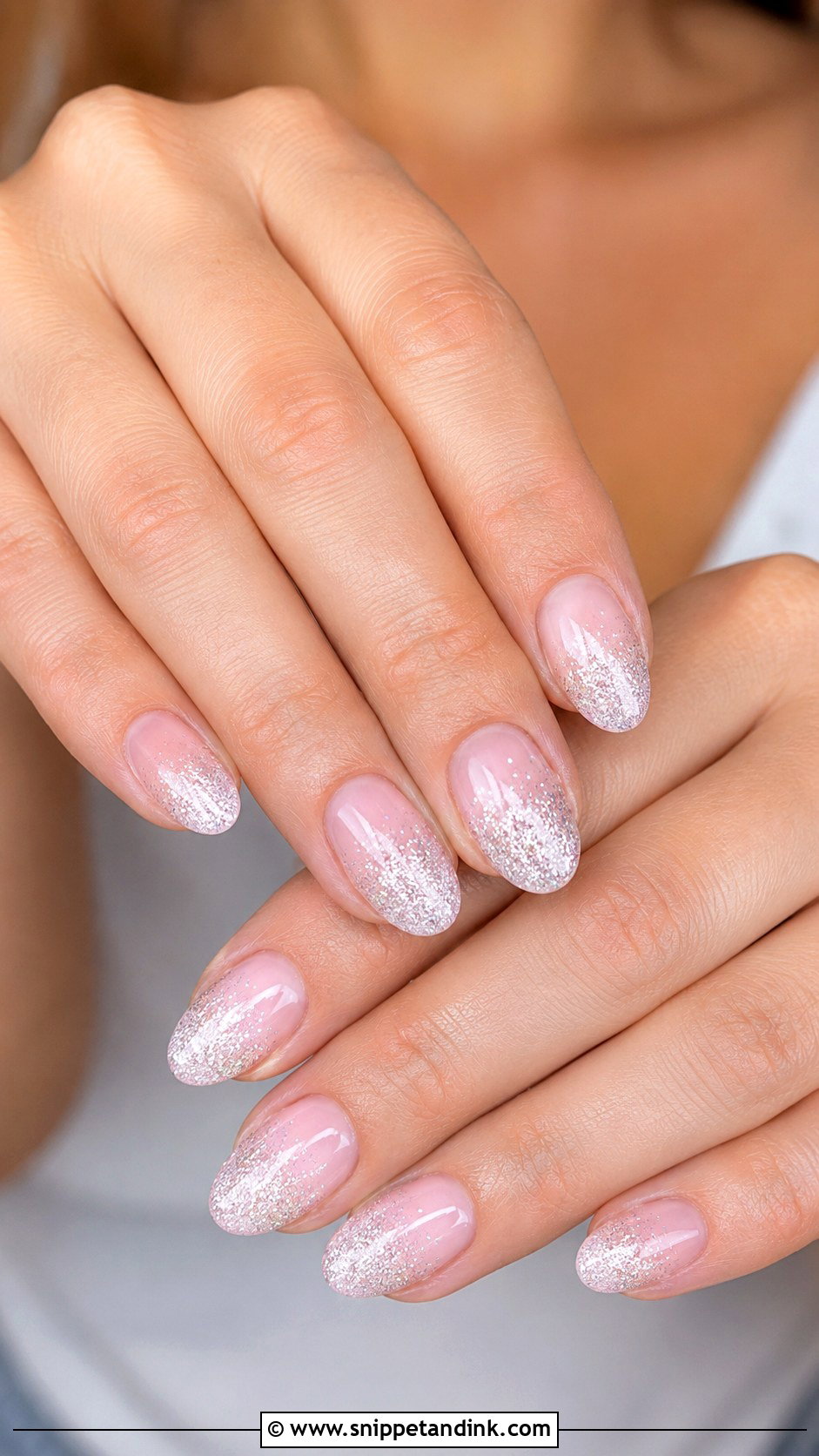
Glitter can still look refined if you control where it sits. Rather than full coverage, I fade a fine silver glitter up from the tips over a sheer nude or pale pink base, so the sparkle catches light without fighting your jewelry. A thin glitter French line is an even more minimal option. Choose fine glitter, not chunky: large pieces leave a bumpy surface that picks up hair and fabric. It suits evening and ballroom weddings, and moderate length with a soft shape keeps it celebratory rather than loud.
15. Champagne Bridal Nails
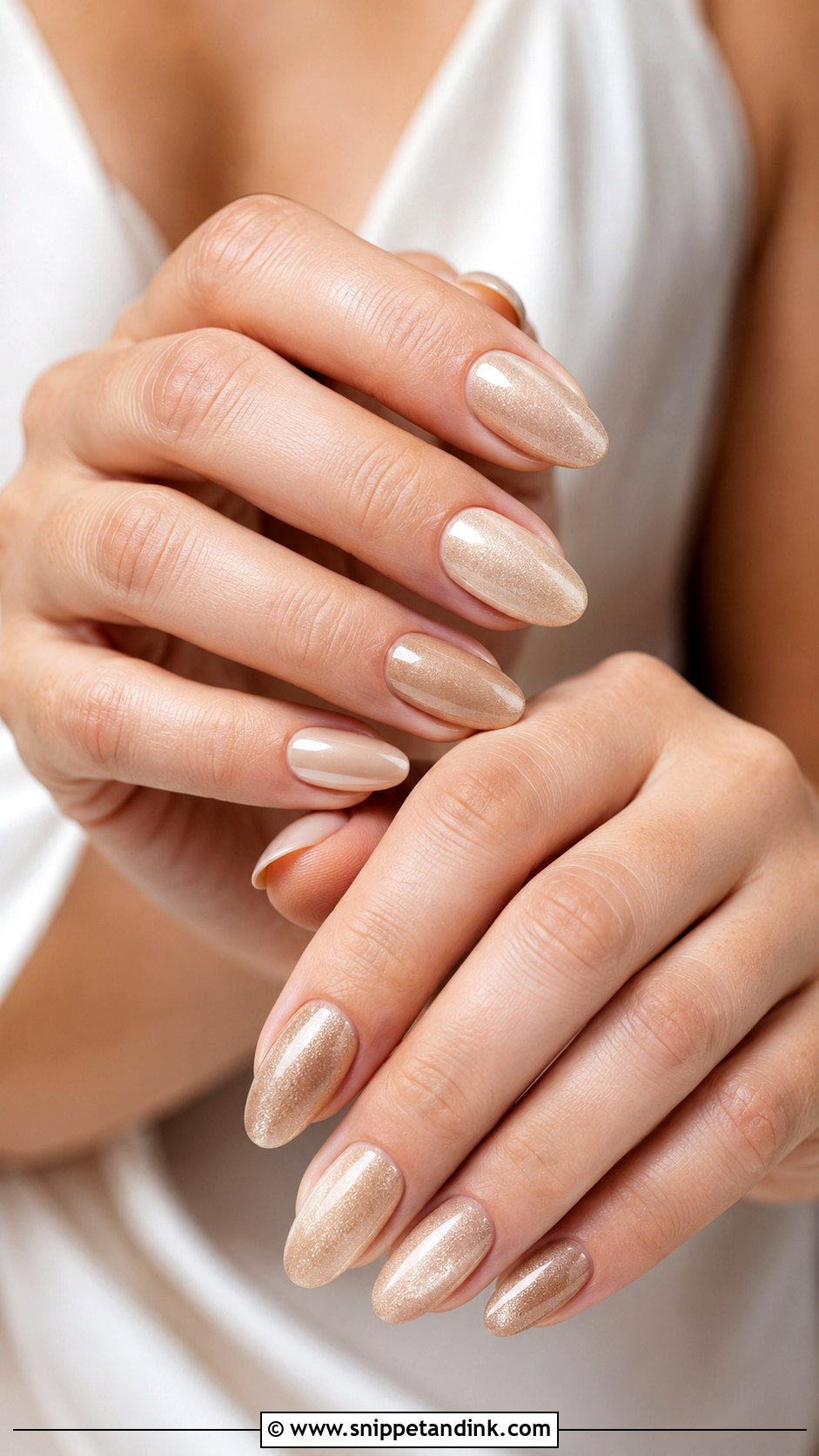
Champagne sits somewhere between nude, beige and pale gold, so it gives more dimension than a flat nude without becoming sparkly. I either wear a champagne shimmer polish alone or float it lightly over a nude base, and for a more modern look a soft chrome layer goes on top. It’s at home with ivory gowns, gold jewelry and warm-toned makeup. Almond and squoval shapes both suit it. The reason it reads as quietly glamorous is that it glows rather than glitters, which keeps it calm in close-up ring photos.
16. Glazed Donut Bridal Nails
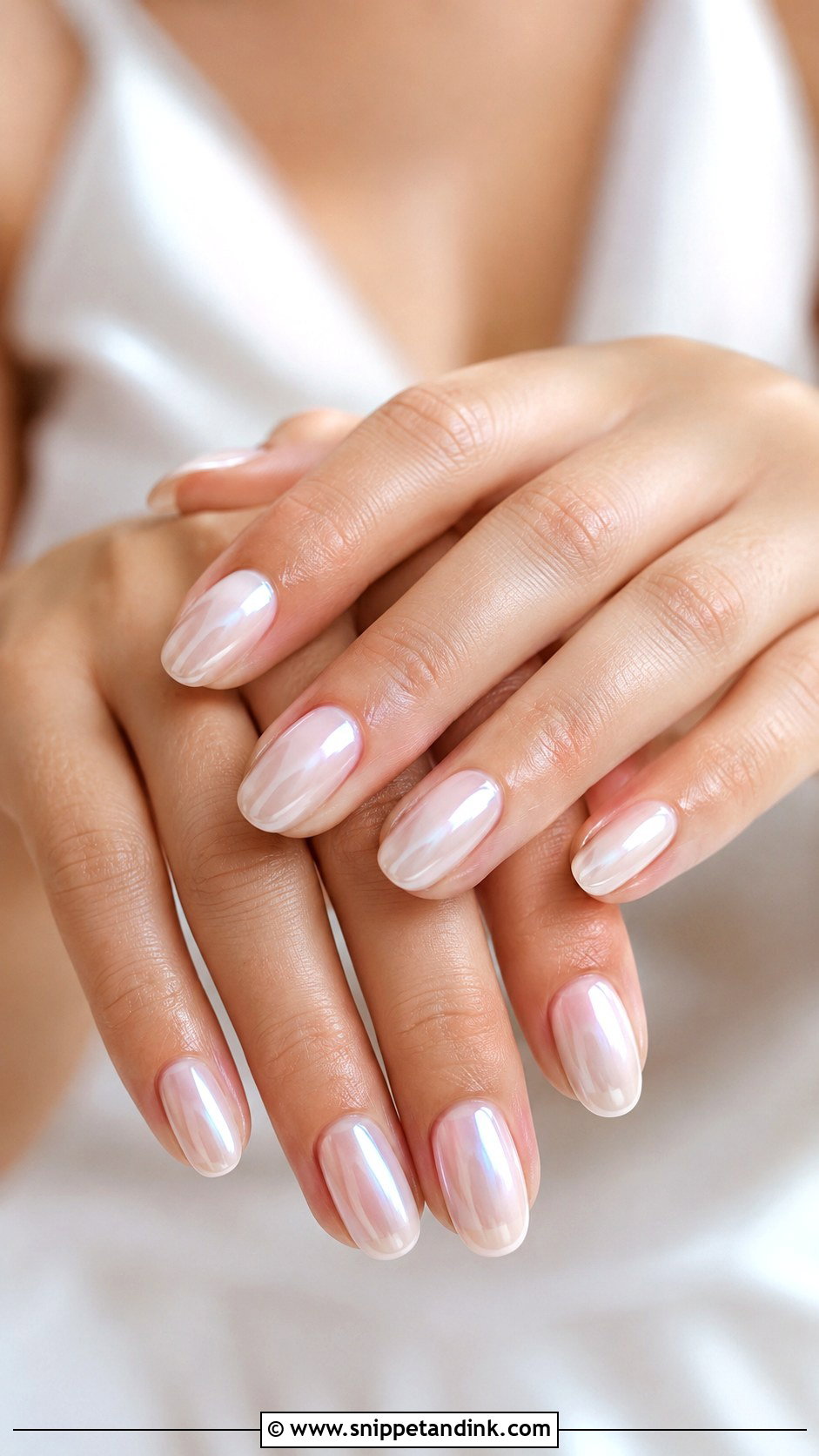
Glazed donut bridal nails combine a sheer white, nude or pale pink base with a pearly chrome layer on top. It’s close to pearl chrome but softer and more translucent, with the base color showing through. I’d ask for a light hand on the powder; a heavy application looks frosted rather than glazed. This set suits almost any dress, from a classic ballgown to a slip, and it works on both short and long nails. It’s also forgiving if a nail grows out a little before the honeymoon, because the sheer base hides the regrowth line well.
17. Soft Square Bridal Nails
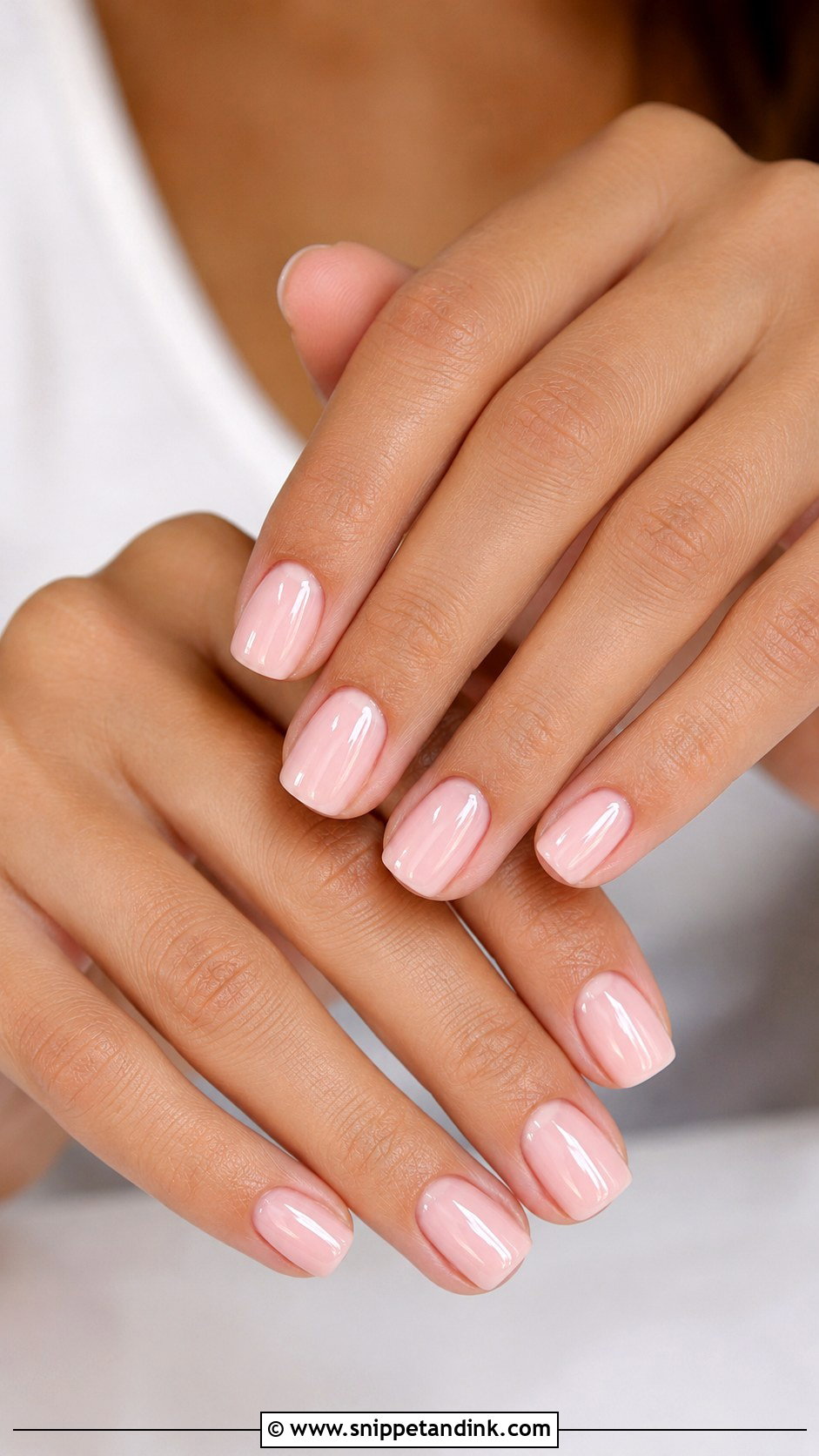
Soft square keeps straight sides with gently rounded corners, so the nails look neat without any sharp points. Practically, it’s the strongest shape for natural nails, because the full width at the tip spreads the stress when you knock a nail against something. That makes it a smart choice for shorter nails and for brides who’ll be hugging, carrying and helping set up all day. It suits sheer pink, milky white, nude or classic French. Finish it with a glossy top coat and a tidy cuticle line, and it won’t pull attention from the ring.
18. Minimal Line Art Bridal Nails
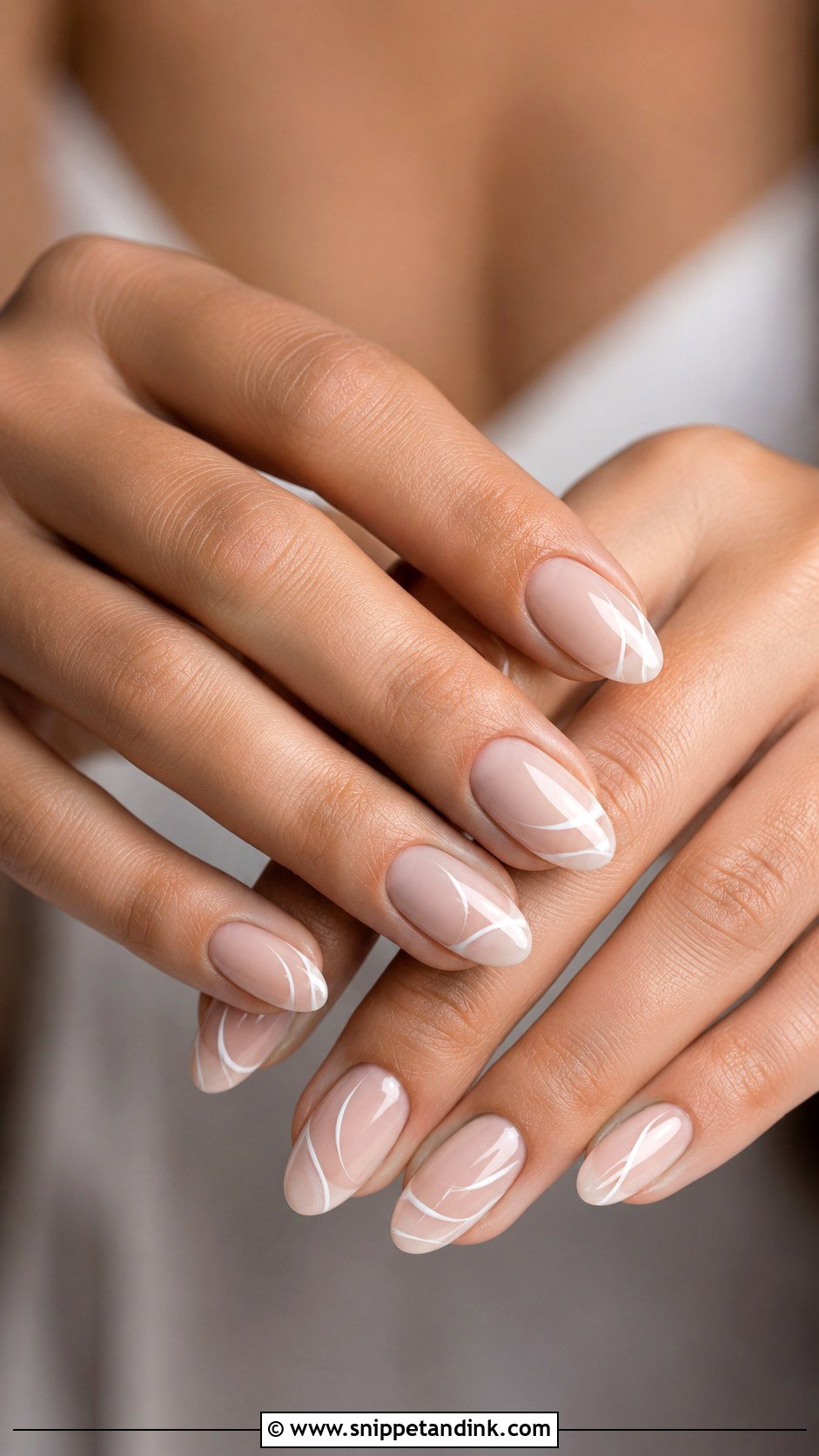
Line art adds a modern detail without committing to full nail art. Over a sheer nude, blush or milky base, I paint thin white or metallic lines that frame the nail, sweep across the tip or form a loose abstract curve. Keep it to a few nails and leave the others plain, or the set loses its calm. Thin lines need a steady hand and a liner brush; ask to see your tech’s line work before booking this one. It goes well with sleek gowns and modern jewelry, and almond or oval shapes make the curves look graceful.
19. Ivory Bridal Nails
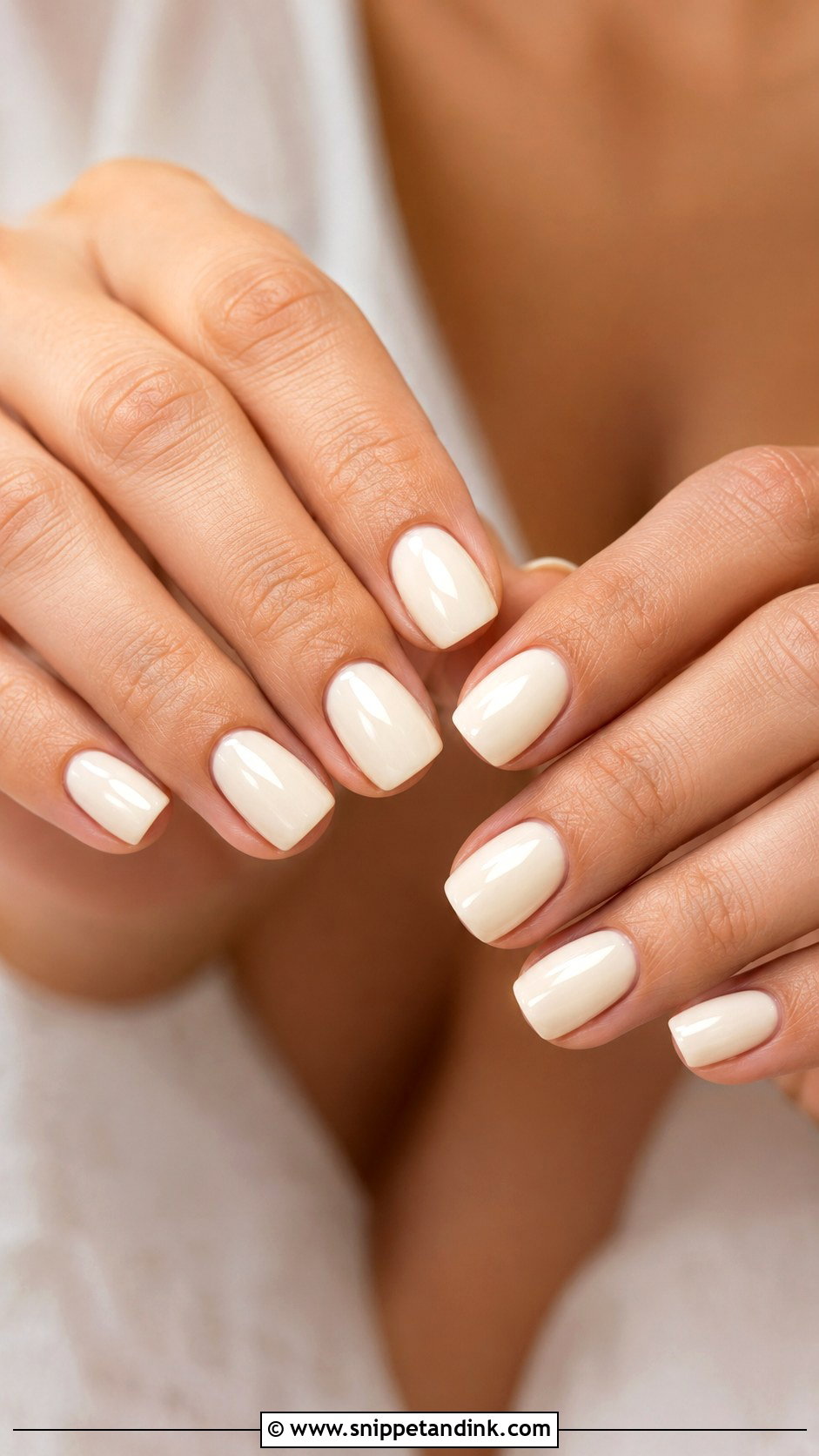
Ivory is a gentler answer for brides who find bright white too stark. Its creamy warmth sits naturally beside ivory, cream, champagne and off-white dresses, where optic white can make the dress look slightly yellow by comparison. I use ivory as a full color, a French tip or a base for pearl accents. A glossy finish keeps it classic, while a pearly top coat warms it further. Short oval, almond and squoval shapes all work. If you’re torn between white and ivory, hold both swatches against your dress fabric in daylight; the right one is usually obvious.
20. White Swirl Bridal Nails
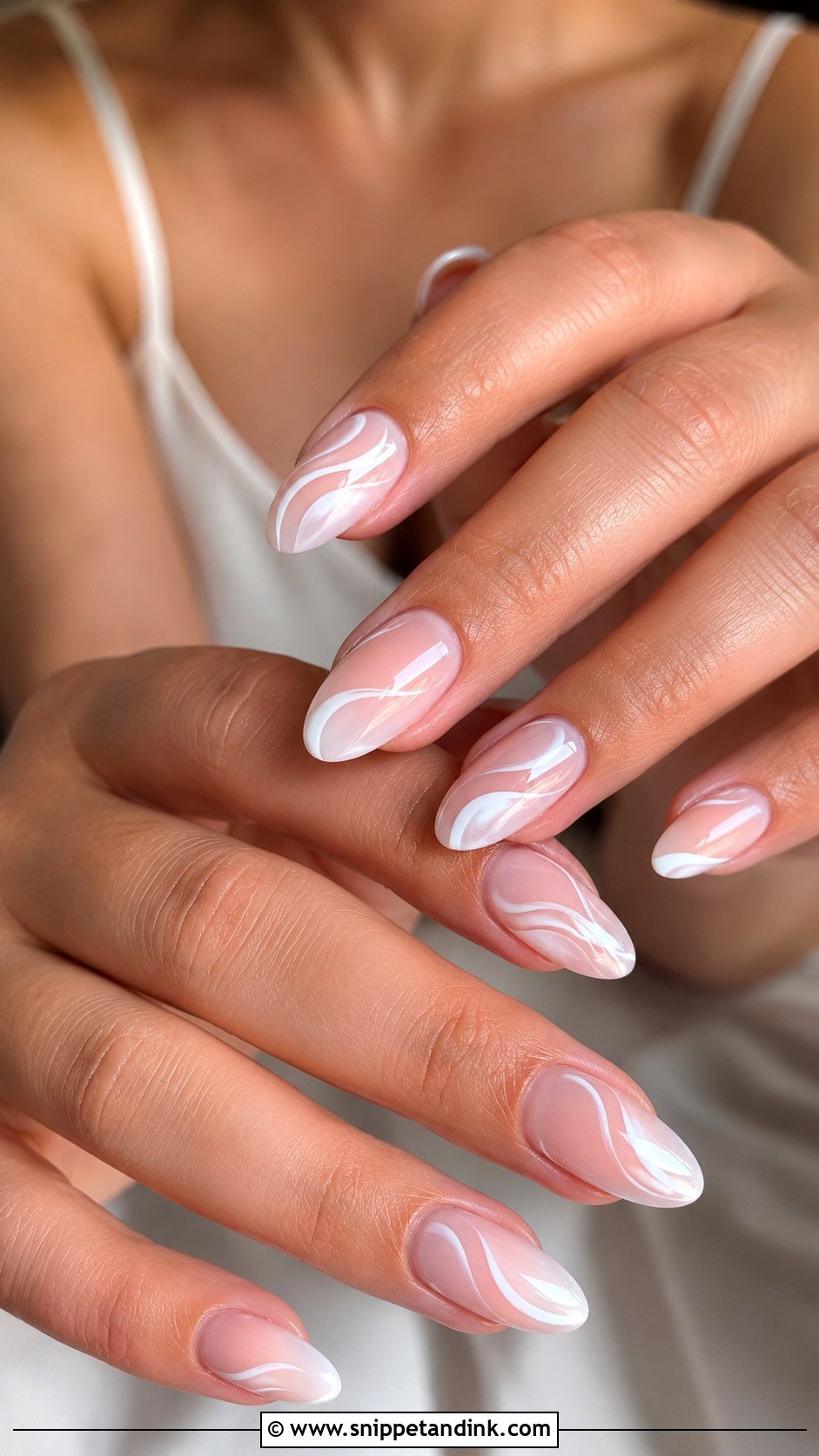
Swirls give movement to a manicure without making it busy, as long as the lines stay thin and flowing. Over a sheer nude or pale pink base, I paint white swirls across the nails like loose ribbons, varying them slightly from nail to nail so they don’t look stamped. A touch of pearl chrome adds glow; a plain glossy top keeps it cleaner. It’s a good middle ground if a plain set feels too simple but full art feels too much. Almond nails suit it best, since the curved shape echoes the lines.
A Countdown for Hands That Will Be Photographed All Day
Four to six weeks out
Start using cuticle oil every night and stop peeling off old gel. Peeling takes layers of the nail plate with it, and thin nails bend, lift and chip sooner. If you’ve been wearing gel, have it soaked or filed off properly and give the nails some time to recover. Book a trial set now; it shows how the shade wears on your nails over a couple of weeks.
The appointment itself
With gel or builder gel, I like doing the set one to three days before the wedding. That’s close enough that there’s no visible regrowth, but far enough away that a lifted edge can be fixed. Regular polish is a different story: even done the night before, it can dent under the sheets, so I’d only choose it if you have time for a touch-up on the morning.
If a nail breaks on the day
Keep a fine nail file, a small bottle of matching color and a clear top coat in your kit. A small chip near the tip can be filed smooth and touched up in five minutes. For a real break, a press-on in a close shade, shaped beforehand at the trial, can save the ring photos. Don’t try to glue a broken piece back on in a hurry; it usually lifts again within the hour.
Bring a Scrap of Your Dress to the Nail Appointment
In the end, the set that works is the one you forget about while you’re holding the bouquet. Milky whites, sheer pinks, French tips, pearl chrome and soft nudes all give a polished result without pulling focus. Before your appointment, think about your dress color, your jewelry metal, the bouquet and the nail length you can live with. Bring photos, and a fabric swatch if you can, but let your nail artist adjust shade and shape to your hands. A good bridal manicure looks right in person, photographs clearly and still feels like you when you open the album years from now.
You'll Like These Ideas:


Leave a Reply