
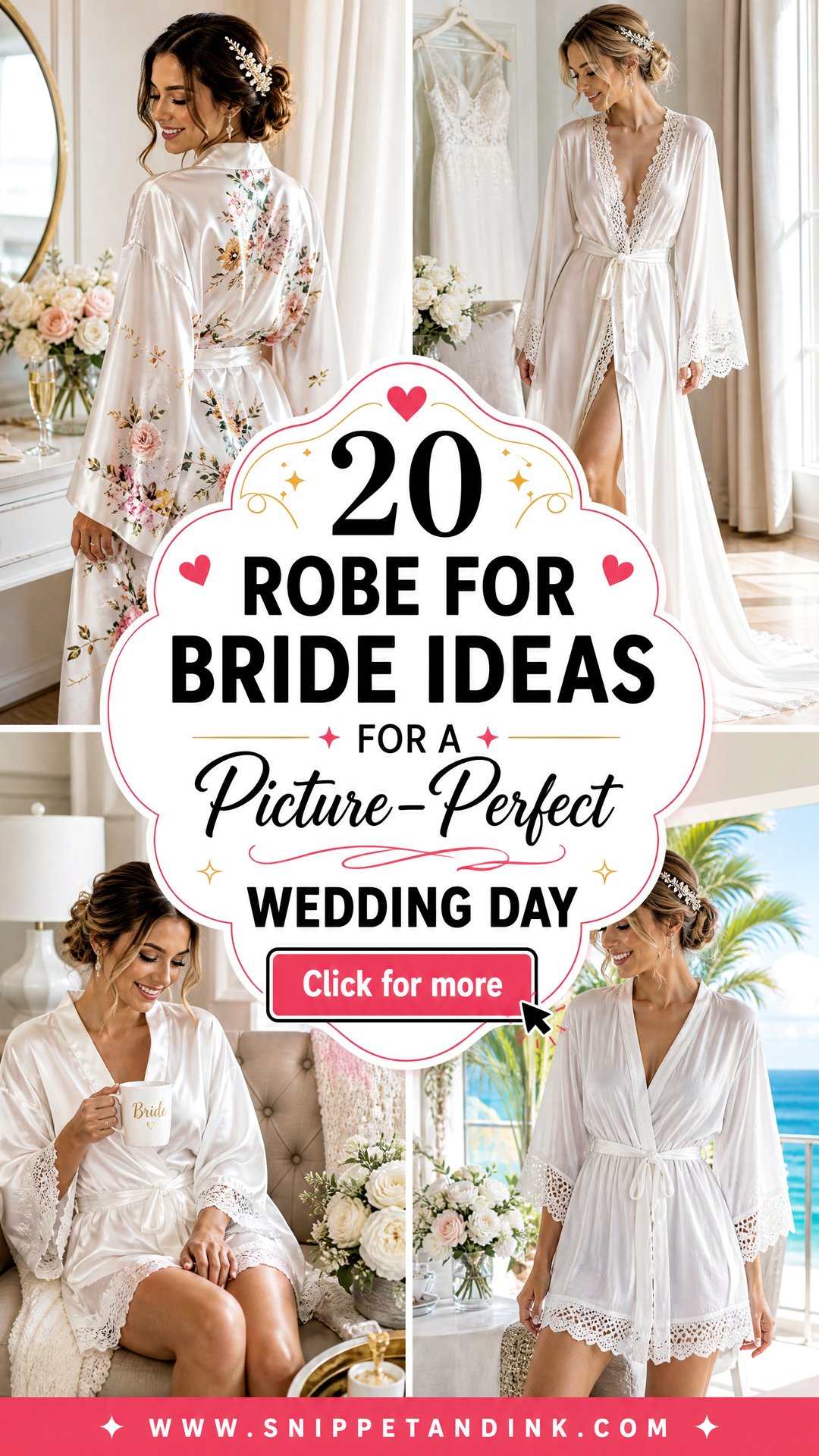
I spend most wedding mornings standing over a bride in a robe, so I have strong opinions about them. A good one opens at the front and slips off without going near finished hair or makeup, keeps you covered while three people fuss around you, and looks right in the candid photos. The ideas below run from classic satin and breathable cotton to lace, embroidery, feathers and an heirloom remake, with timeless kimono silhouettes sitting comfortably beside them. Lace trim and kimono sleeves stay popular, and plenty of these get worn long after the wedding. Think about the season, the room you’re getting ready in and how much coverage you want as you look through them.
Foundation on the Collar and Other Getting-Ready Hazards
From my side of the makeup chair, the robe matters less for how it looks and more for what it does between 8am and the moment you step into your dress. A few things I ask every bride to think about before she buys one:
- A wide, open neckline. A high collar rubs against your jaw and picks up foundation, then transfers it back onto your neck.
- Light colors forgive powder; dark velvet and navy satin show every speck of setting powder and bronzer.
- Satin stays slippery and smooth, so hair spray mist and loose powder are easy to wipe off. Fluffy knits trap both.
- A button-front top underneath, never a T-shirt. Anything pulled over your head after makeup is done will smear it.
- Loose waistbands and soft straps. Tight elastic leaves pressure marks on the skin that can still show under a fitted bodice an hour later.
If your dress needs a strapless bra or particular shapewear, wear it under the robe from the start of the morning. You won’t have to change in a crowded room later, and any marks from your everyday bra have time to fade before the photographer arrives.
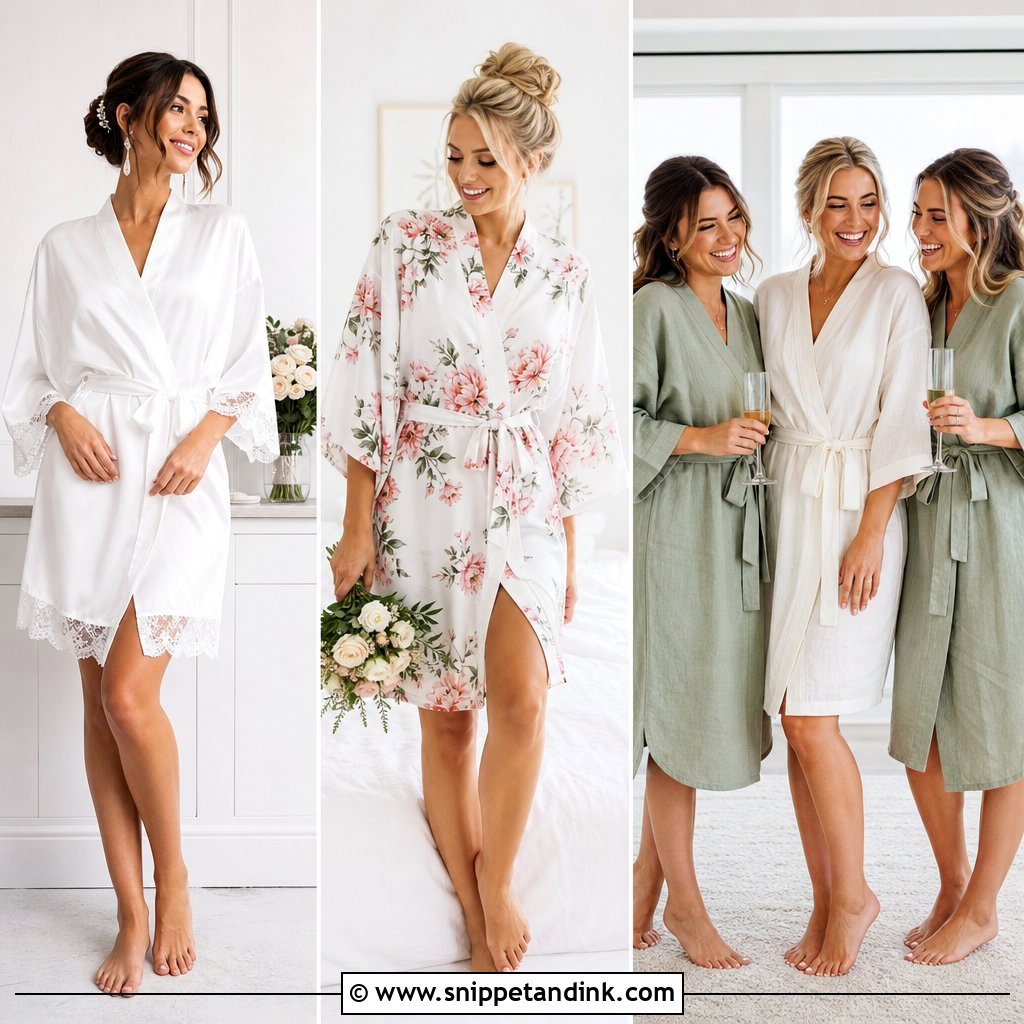
1. White Satin Bridal Robe
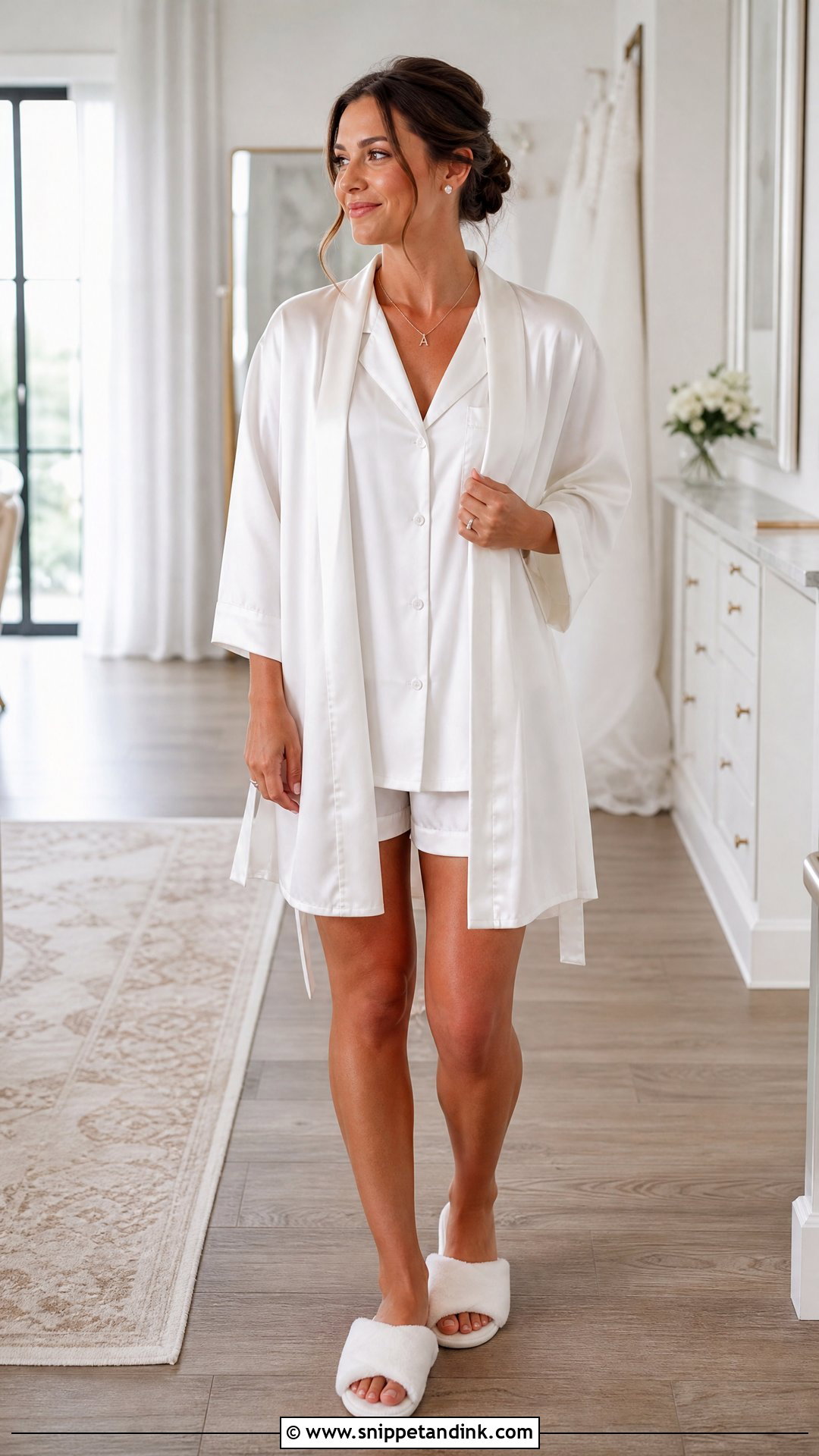
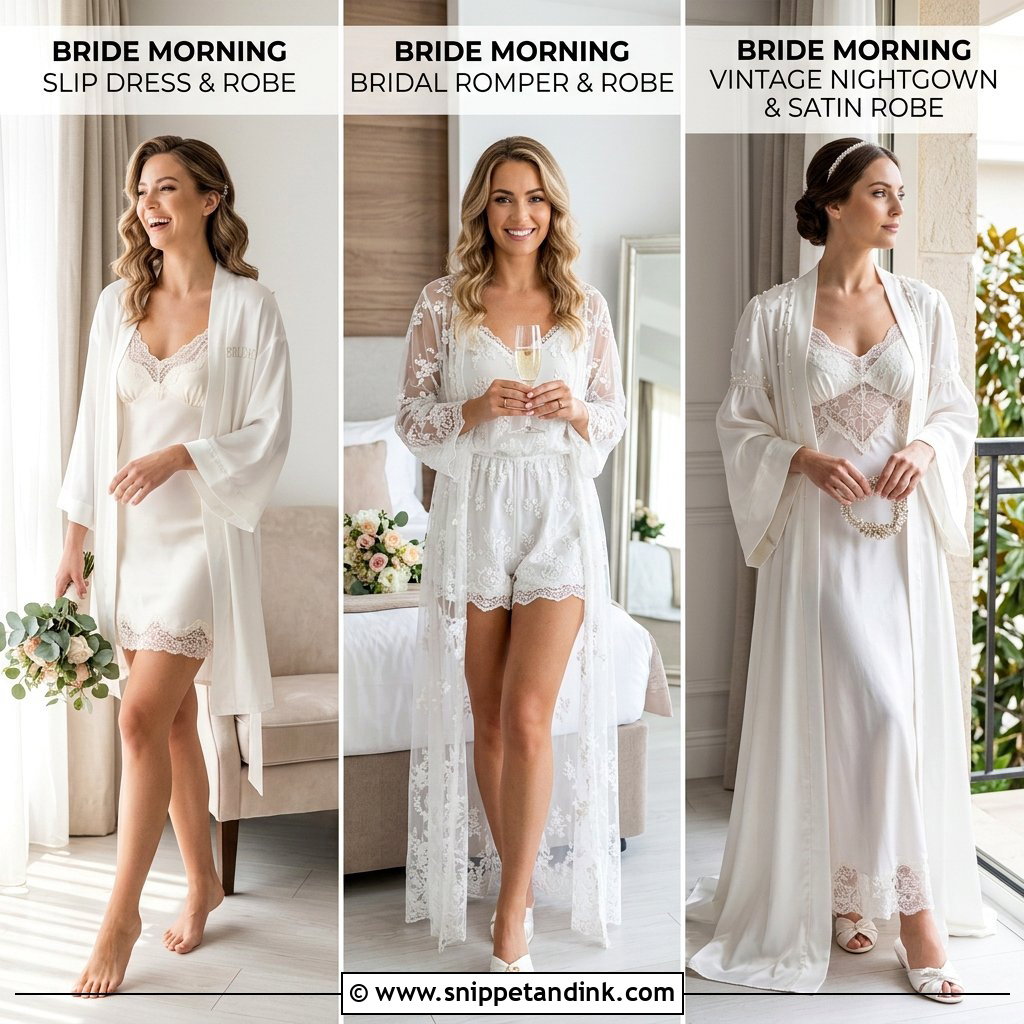
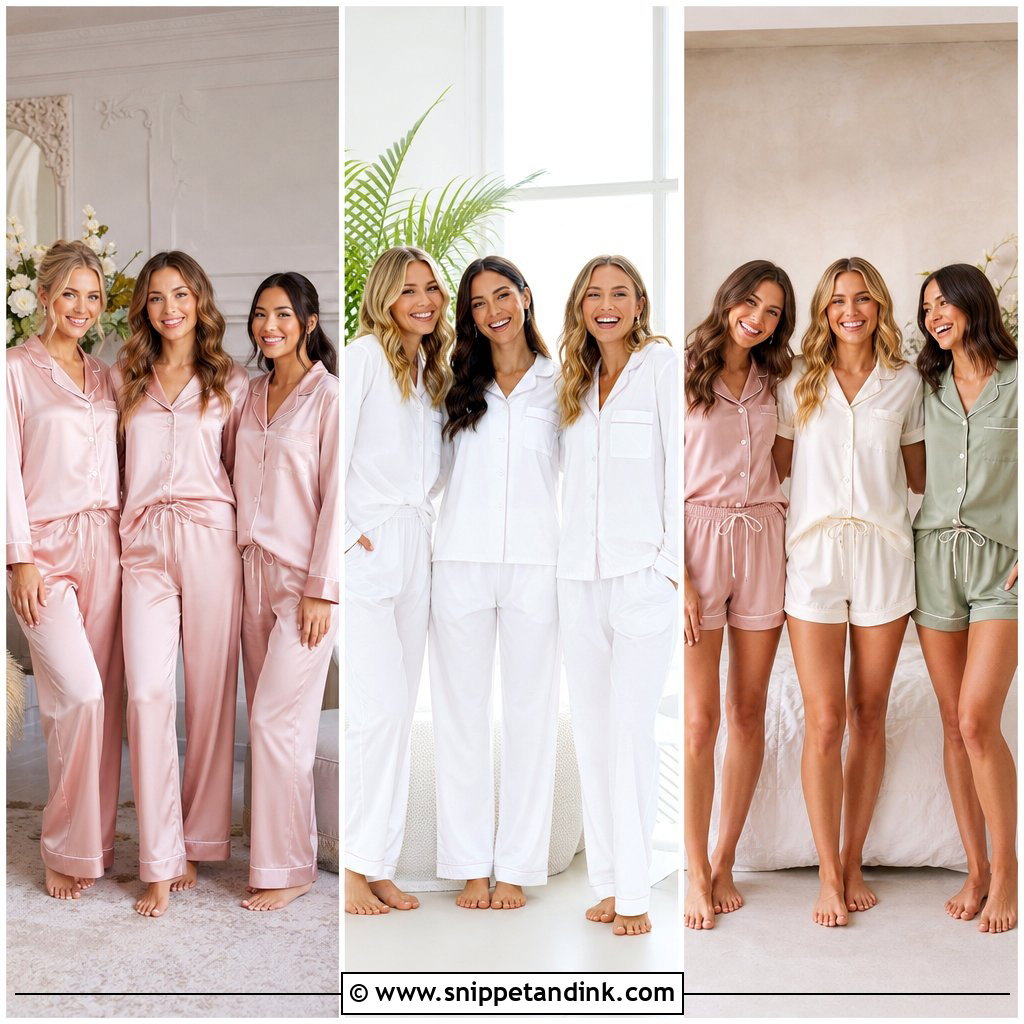
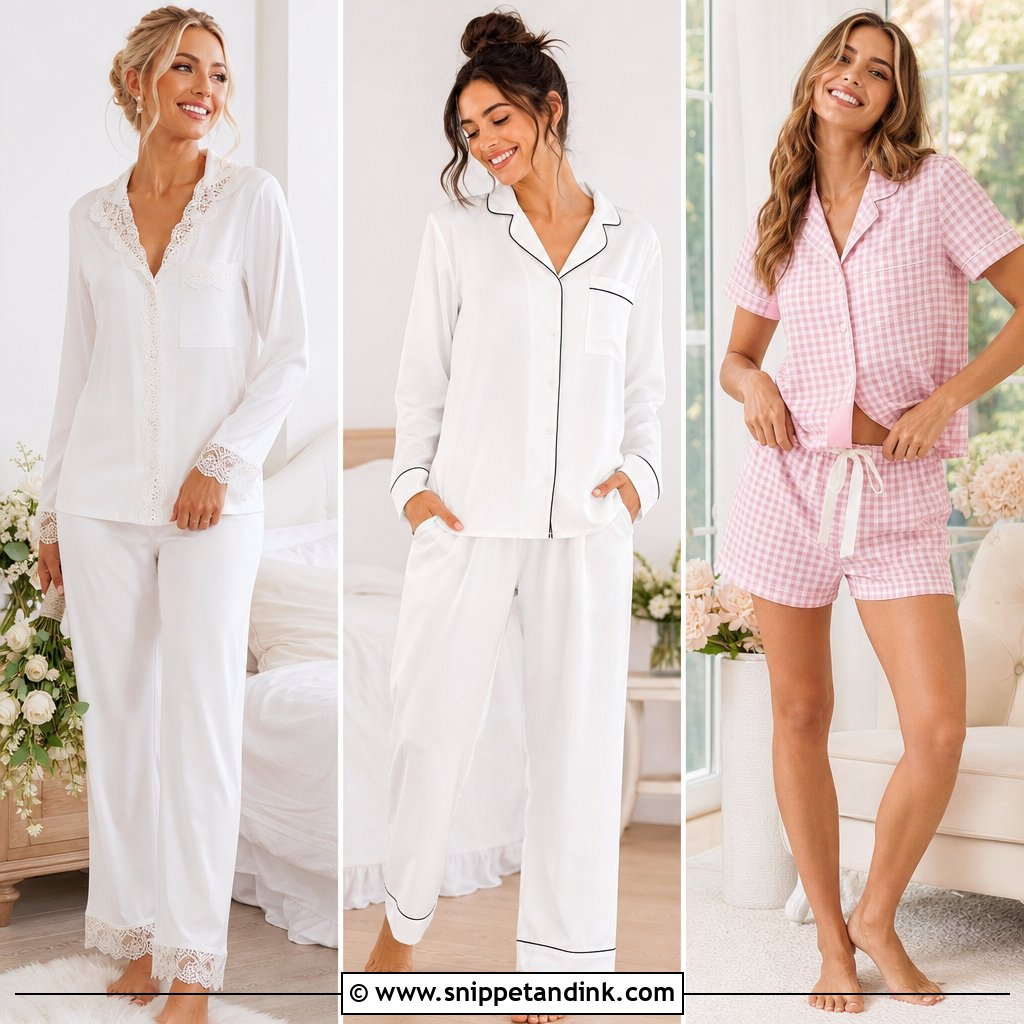
White satin catches window light and bounces it back onto your face, which is a real help in getting-ready photos. A knee-length robe with wide kimono sleeves and an inner tie keeps you covered when the outer sash slips, and a white button-front pajama set underneath, shorts or long pants depending on the season, finishes it. Steam out the packaging creases the day before. If the bridesmaids are in blush, champagne or sage, crisp white separates you from the group without anyone needing a sign on their back. Cushioned slippers, pearl studs and an initial necklace are all it needs.
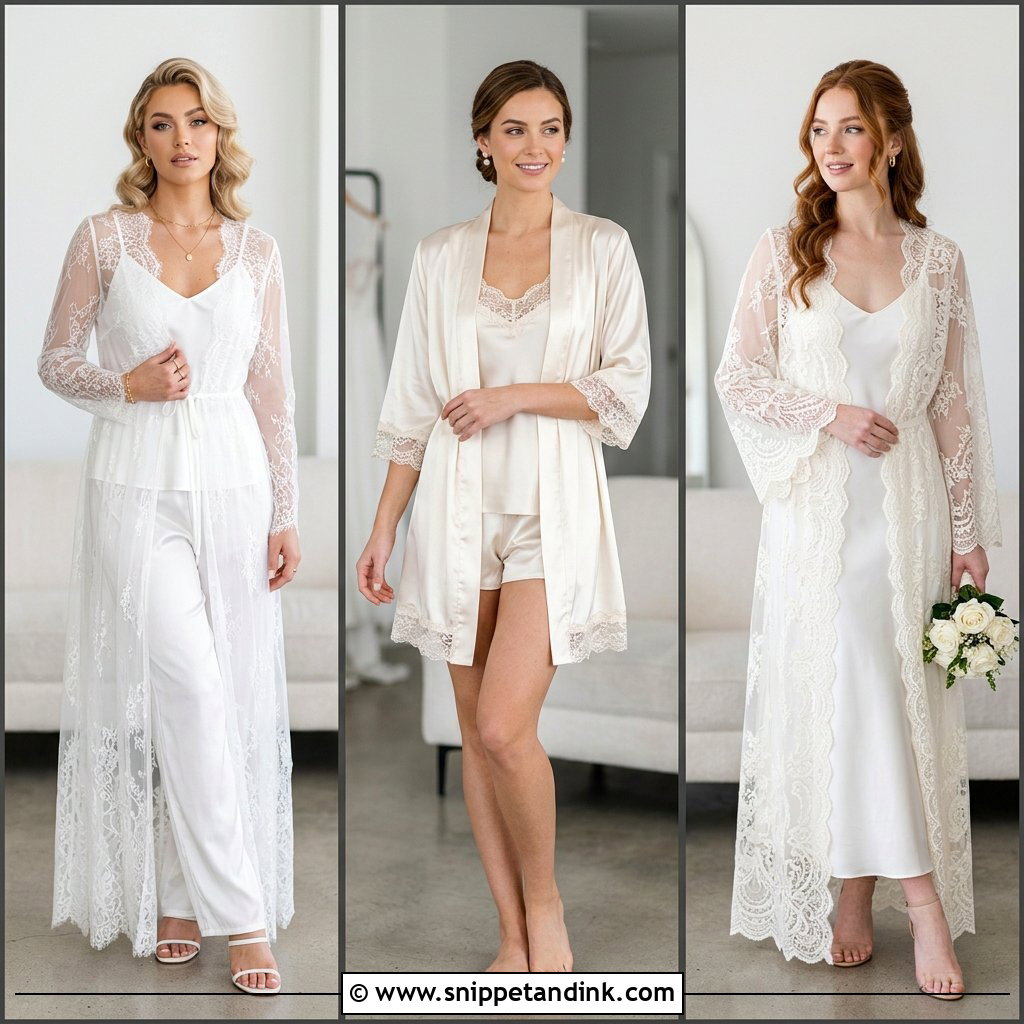
2. Lace Bridal Robe
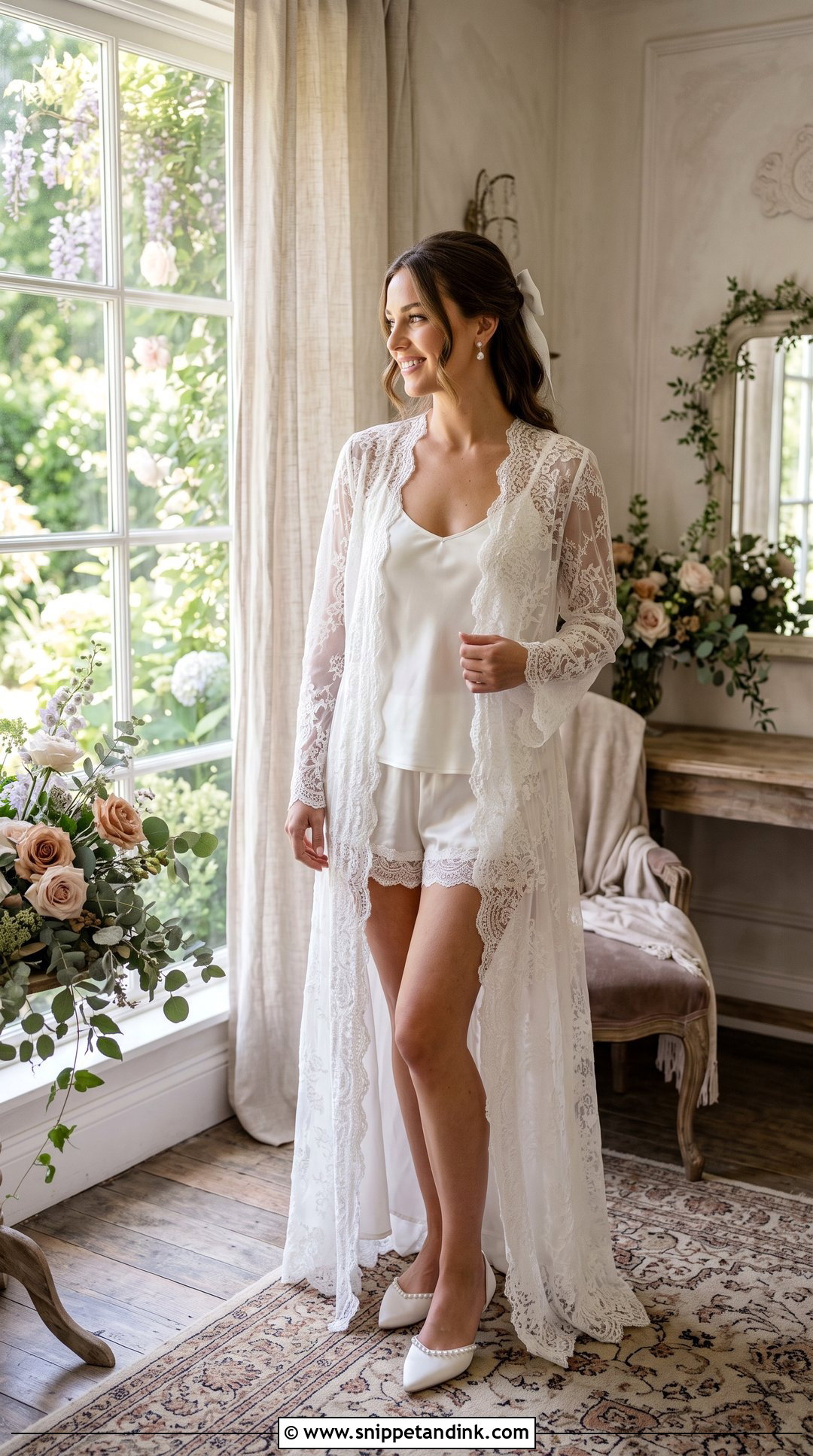
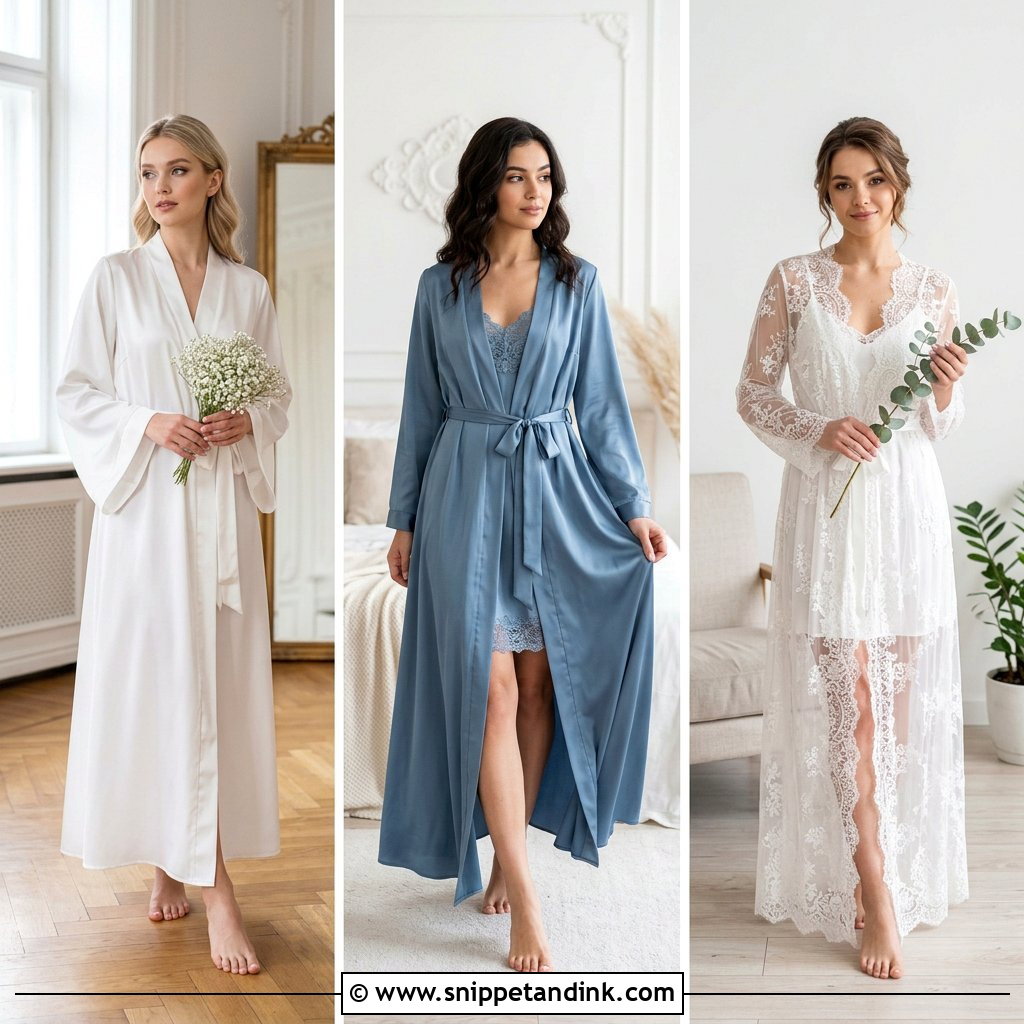
Lined lace is the version I’d pick. Fully sheer lace looks thinner on camera than in the mirror, and a lining gives you coverage while keeping the scalloped edge. Three-quarter sleeves are a practical length for me too, because they stay out of the palette while I work on your eyes. Wear it over a plain ivory tank and pajama shorts so the lace pattern stays the detail, and keep accessories to pointed satin slippers, small pearls and a slim bow. It sits naturally at garden, vintage and traditional weddings in spring or early summer.
3. Silk Kimono Bridal Robe
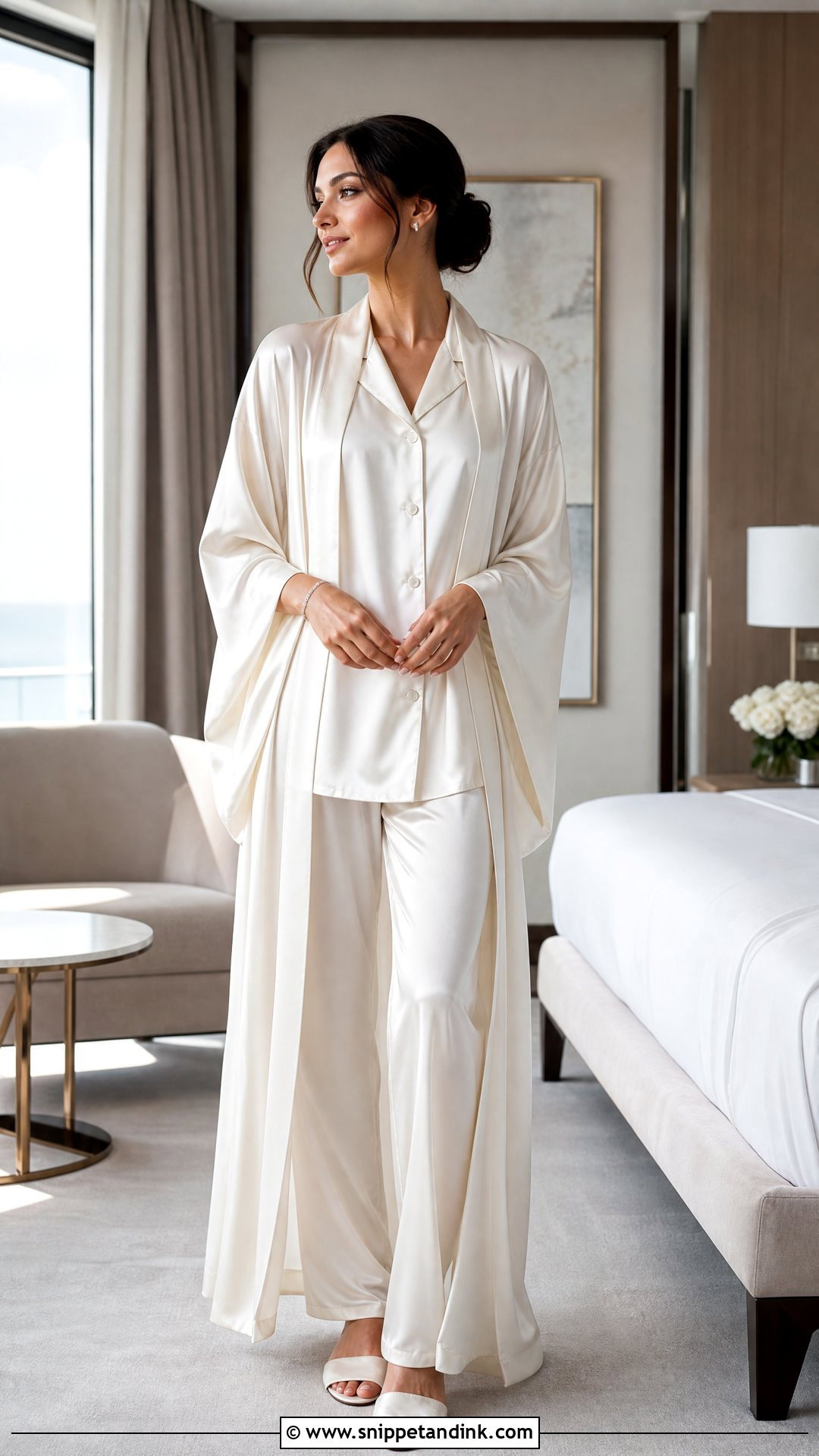
Flowing silk and wide kimono sleeves move well and feel cool on a hectic morning. Look for hip or knee length in ivory, oyster or soft white, with a wide sash and an internal closure. The catch is that silk creases easily and water-spots, so hang it on a padded hanger and steam it gently rather than ironing. Very wide sleeves also dip into whatever is on the counter. I fold them back before I start foundation. A matching button-front pajama set, minimal slippers and a fine gold bracelet suit a modern hotel or a bright minimalist home.
4. Personalized Bride Robe
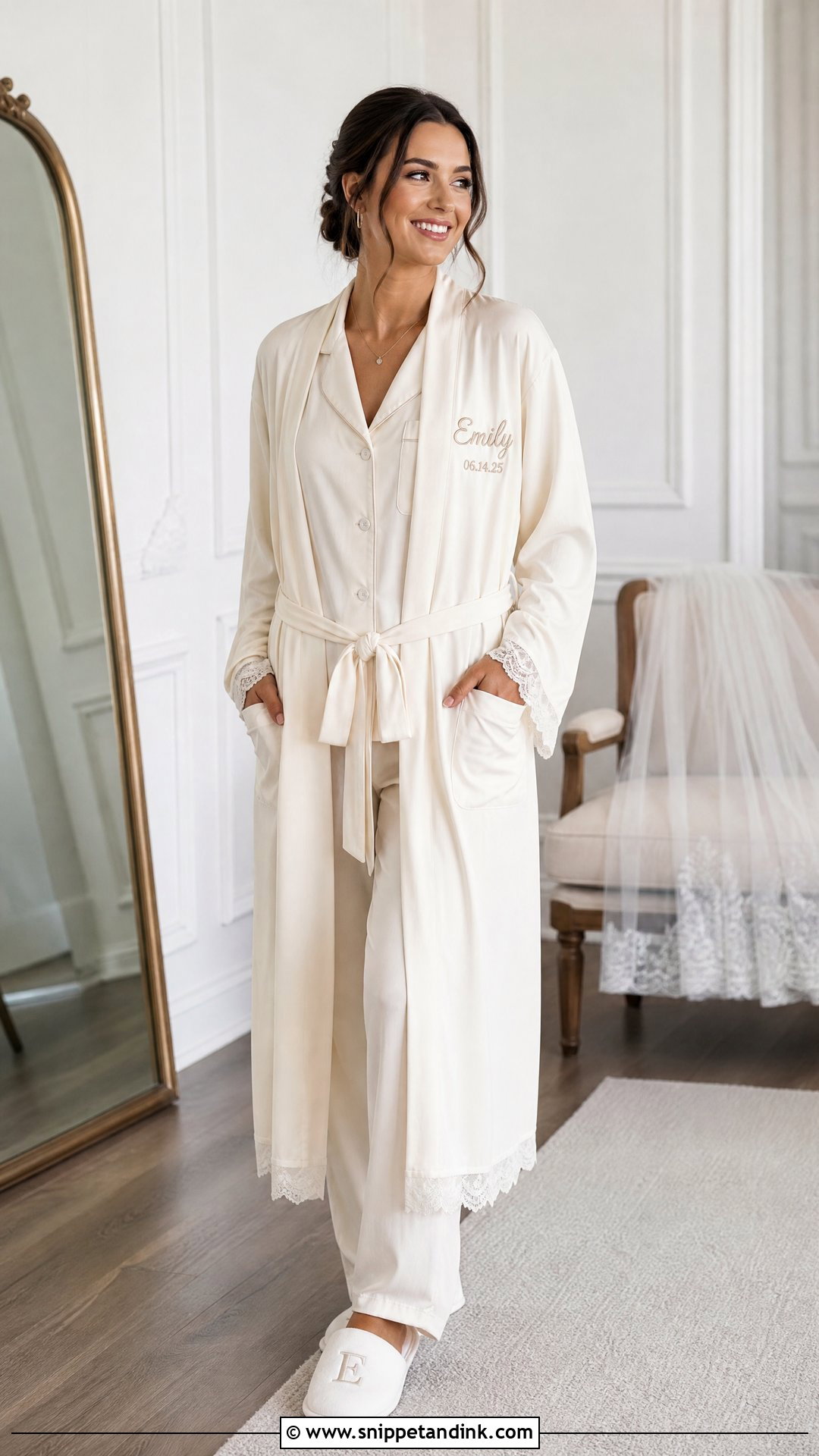
Names, initials, a new surname or the wedding date across the back or chest turn a plain satin or cotton robe into a keepsake. Contrast is what keeps lettering readable in photos: gold on ivory, white on blush. Thread close to the robe color vanishes on camera. Limit it to one or two placements rather than covering the robe in text, and match the font across the bridal party if everyone gets one. Afterwards it makes an easy honeymoon layer.
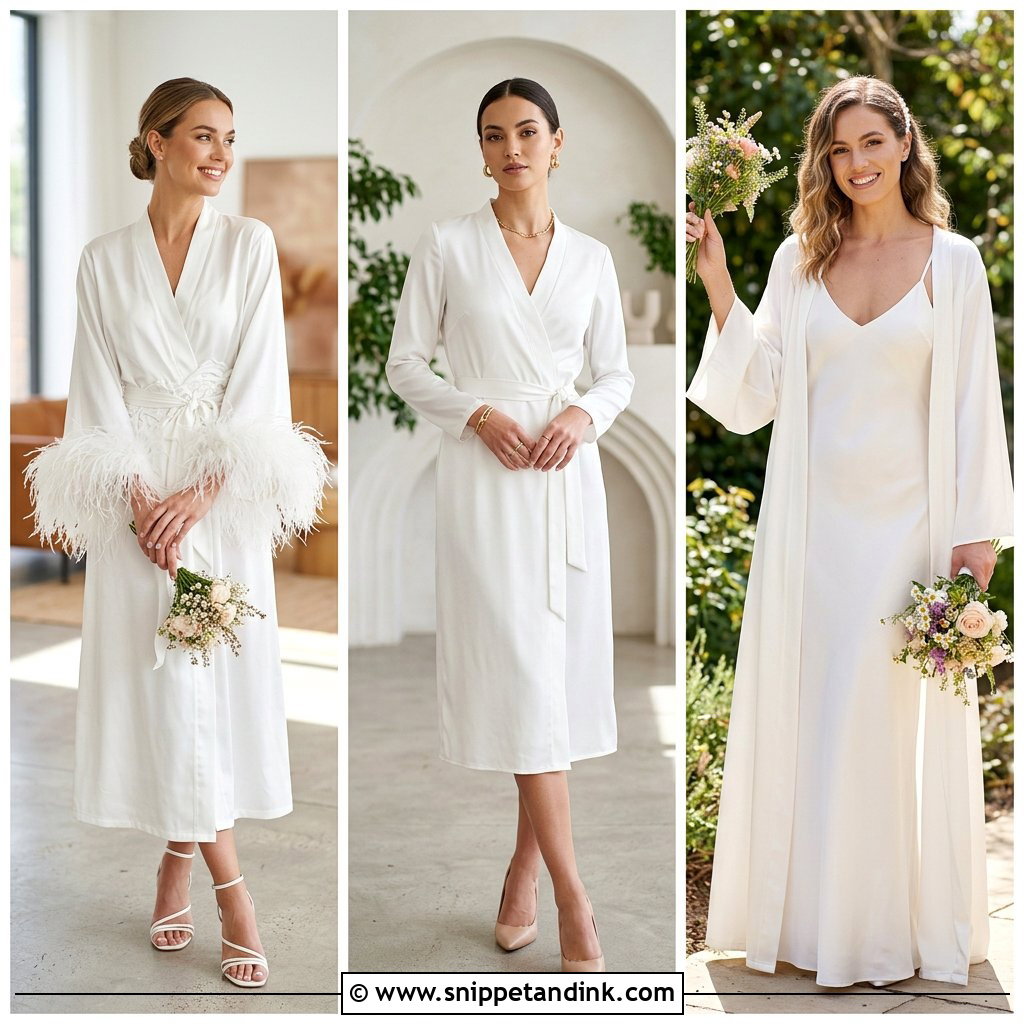
5. Feather Trim Bridal Robe
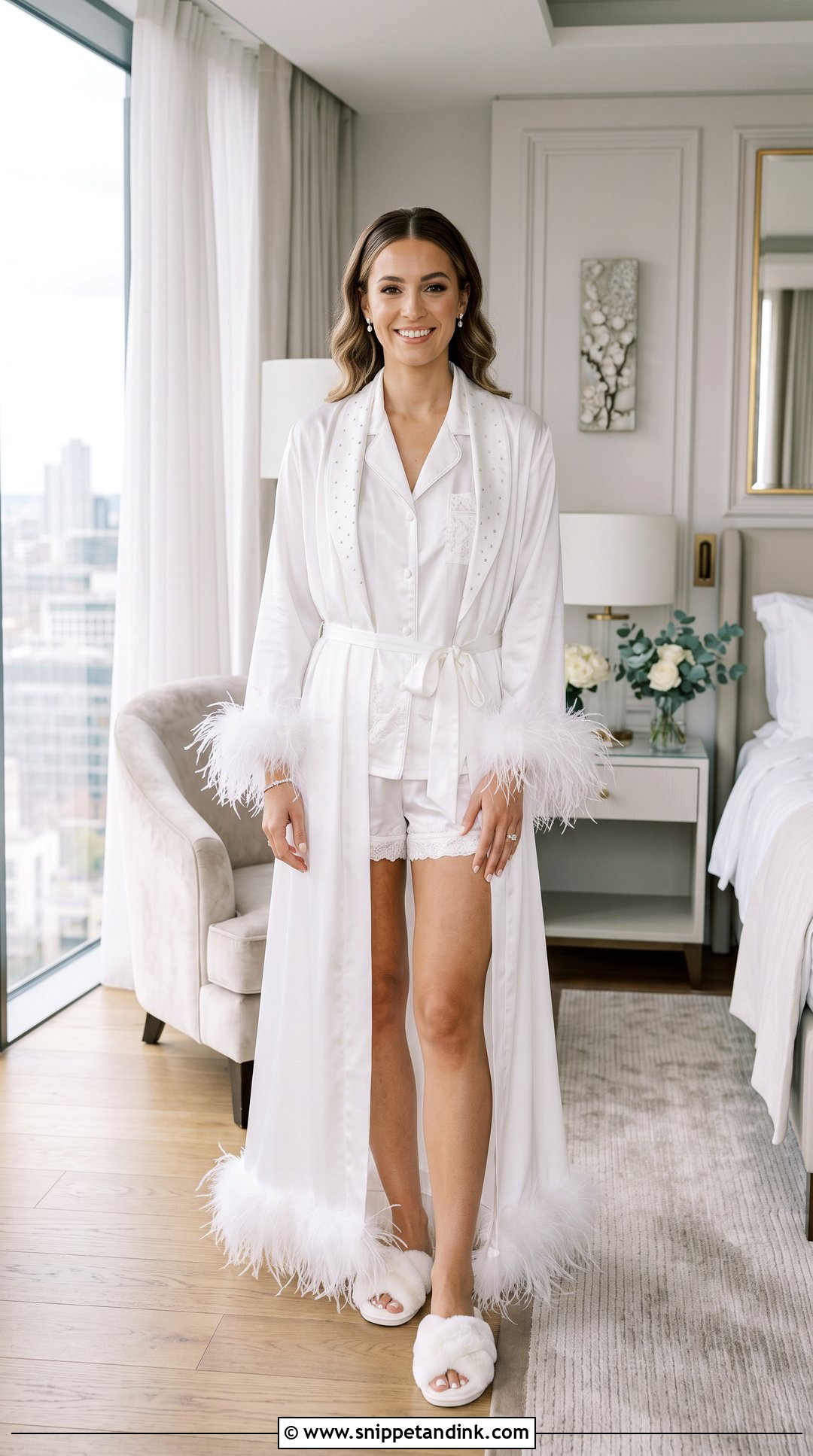
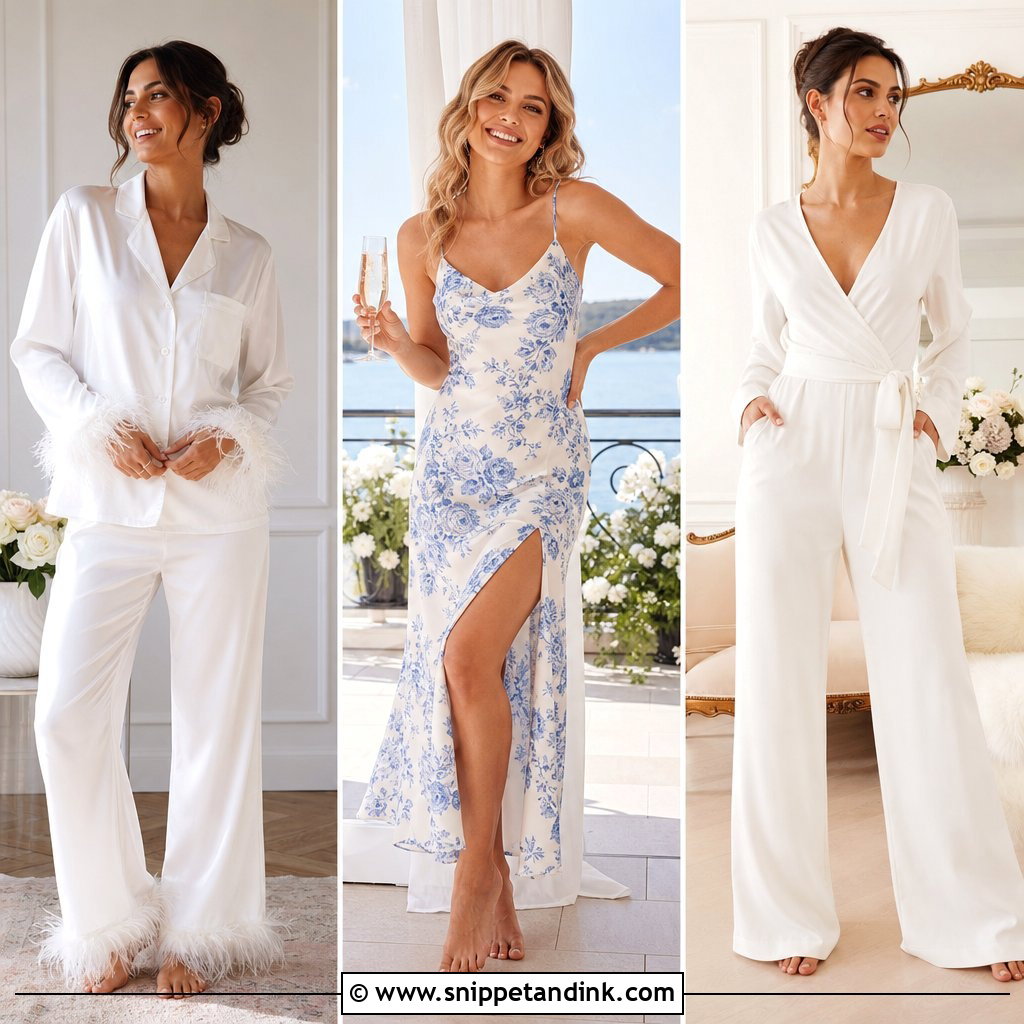
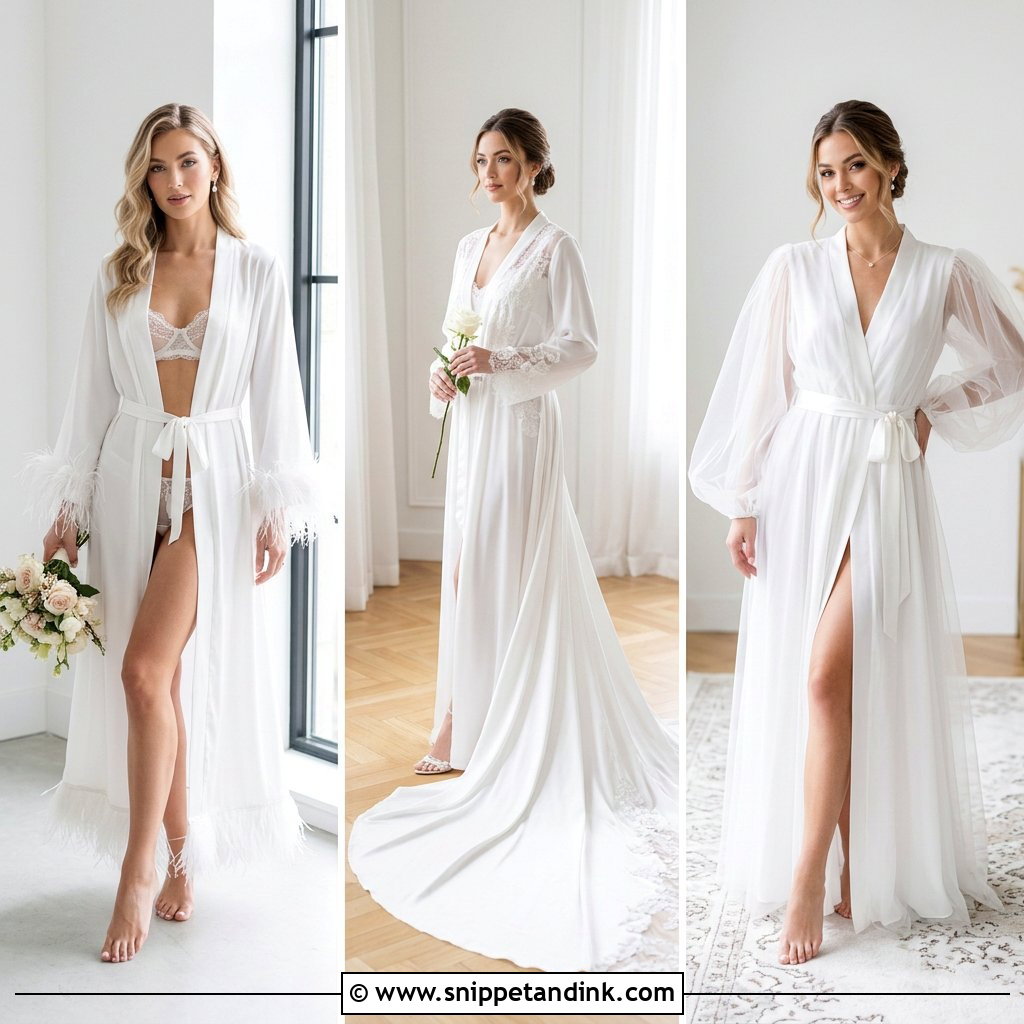
Feather trim is fun, and it sheds. Loose fibers land in wet lip gloss and stick to freshly set powder, which is why I ask brides in feather robes to change into something plain while I do their face, then put the feathers back on for portraits. Choose securely stitched trim on a white satin robe, edged at the cuffs, hem or both, with a simple white romper or tailored shorts underneath. Keep drinks, bronzer and colored powders well away from it, because a white feather can’t be cleaned once it’s stained.
6. Floral Bridal Robe
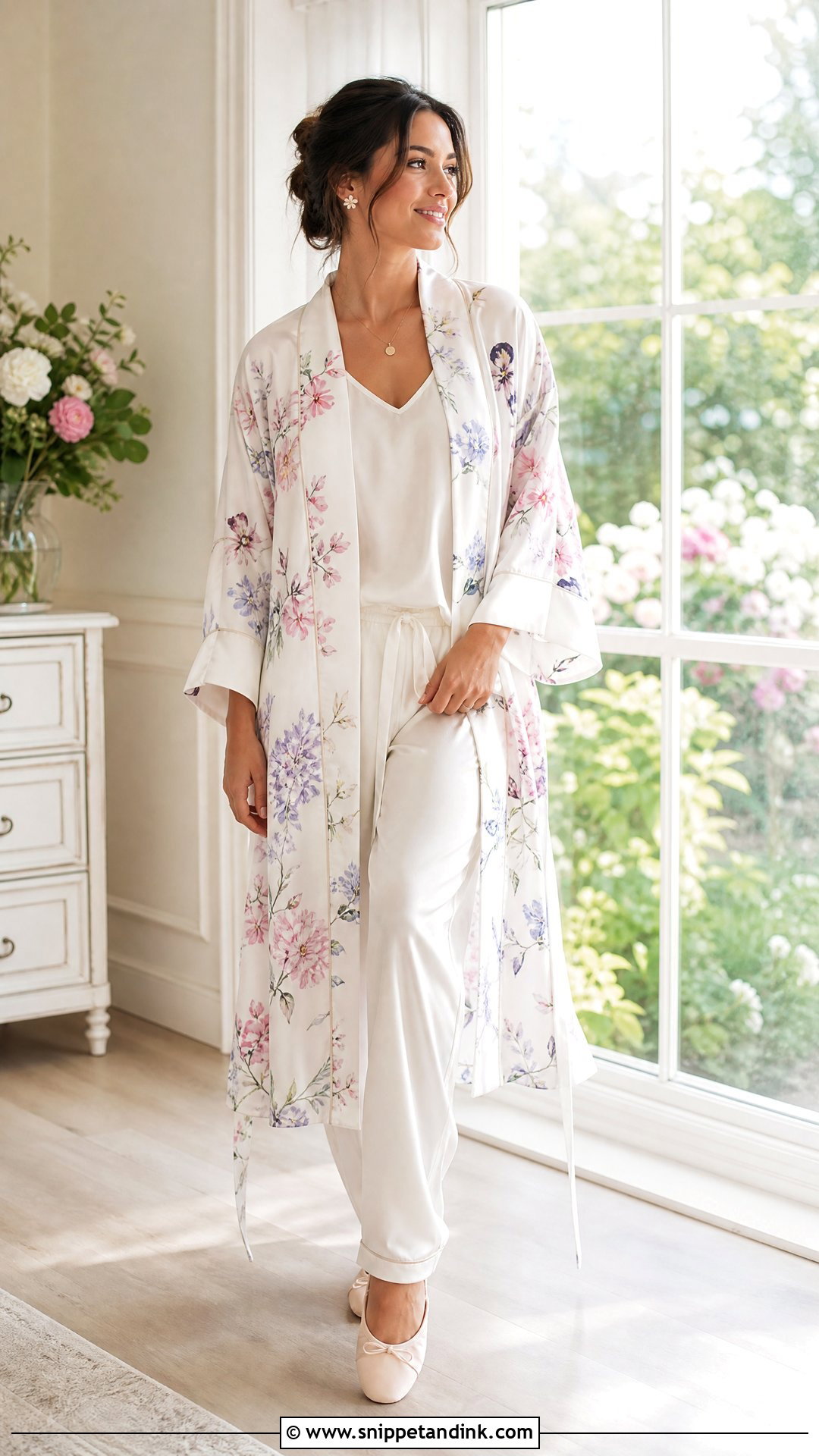
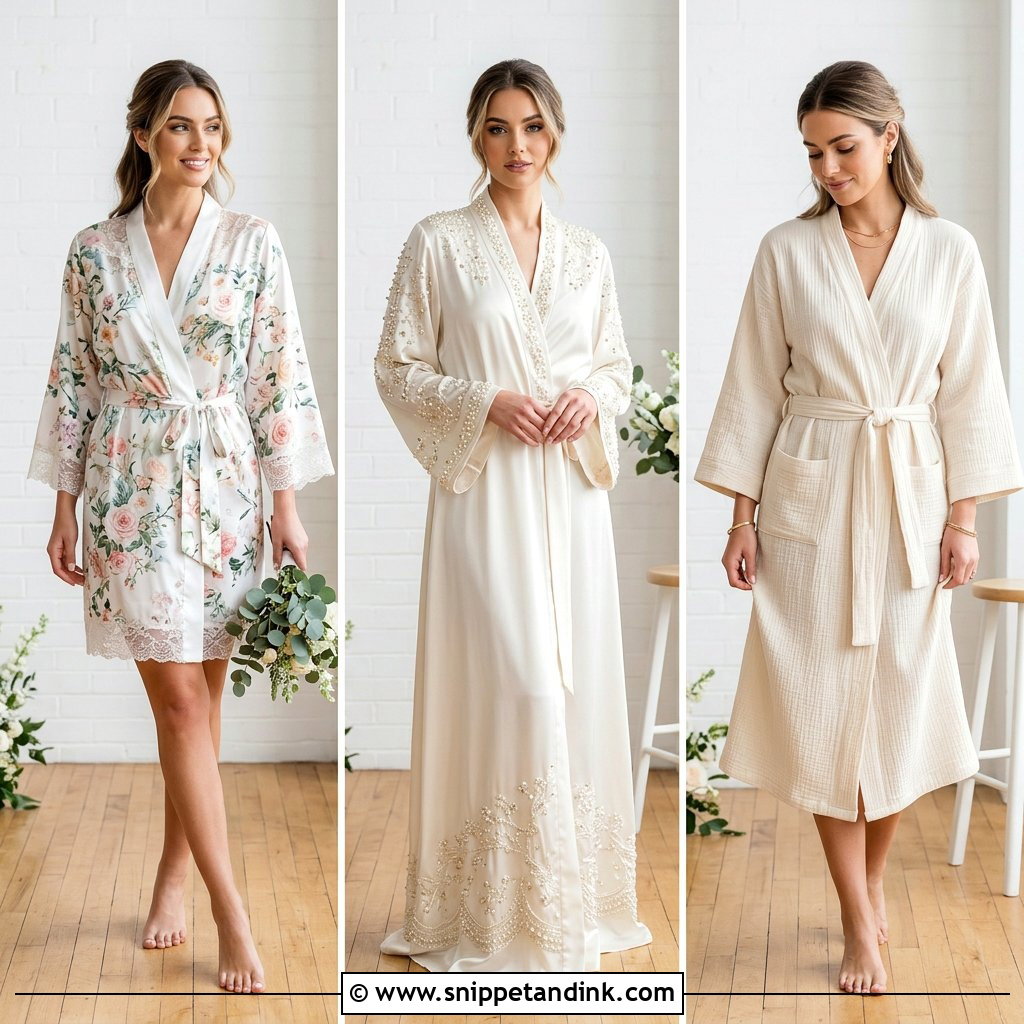
Florals bring color in without breaking the mood. A white or ivory base with watercolor flowers, small botanicals or embroidered blooms can echo the bouquet, the invitations or the bridesmaid colors, with pinks, lavenders and blues for spring and muted rust or burgundy in autumn. Busy prints near the face can throw a color cast onto the skin in close-ups, so I prefer the larger blooms toward the hem. Wear a solid pajama set underneath and let the bride be the only one in florals while attendants wear plain robes from the same palette.
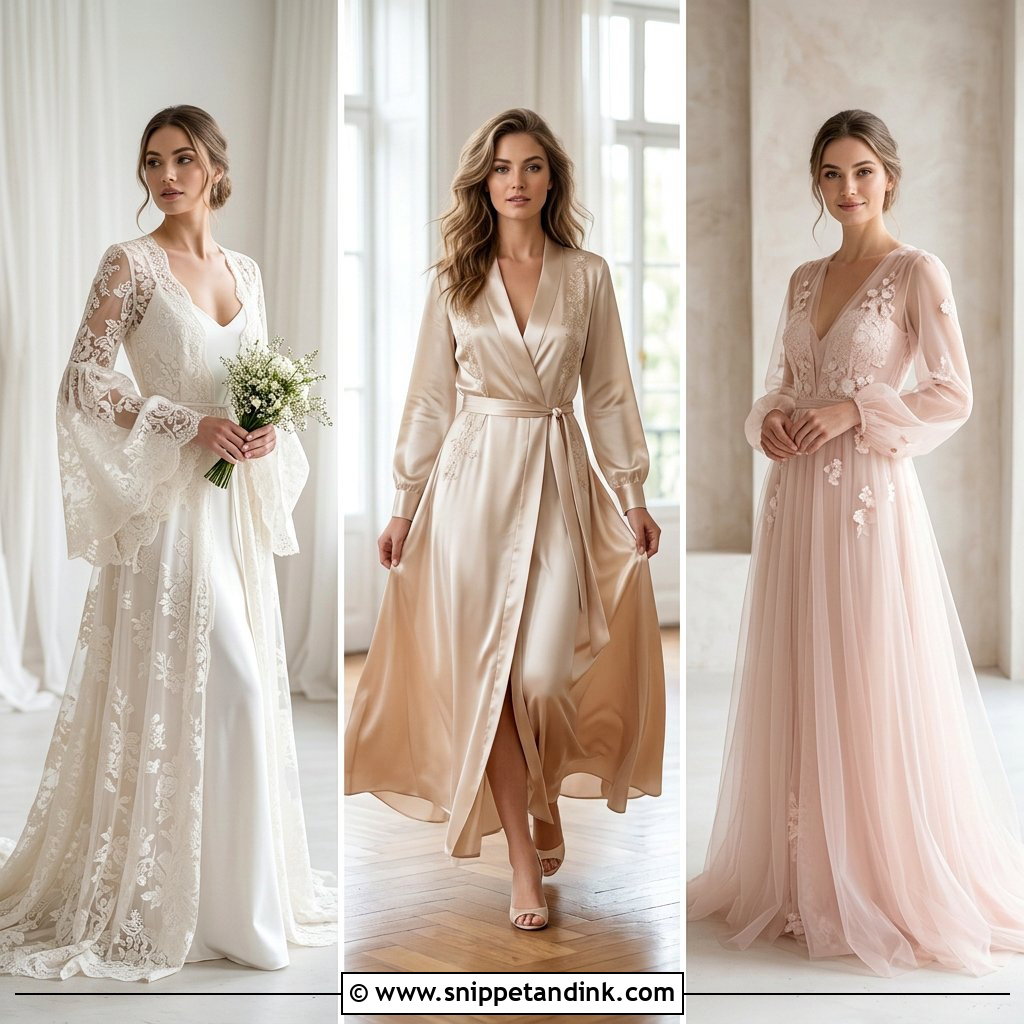
7. Long Bridal Robe
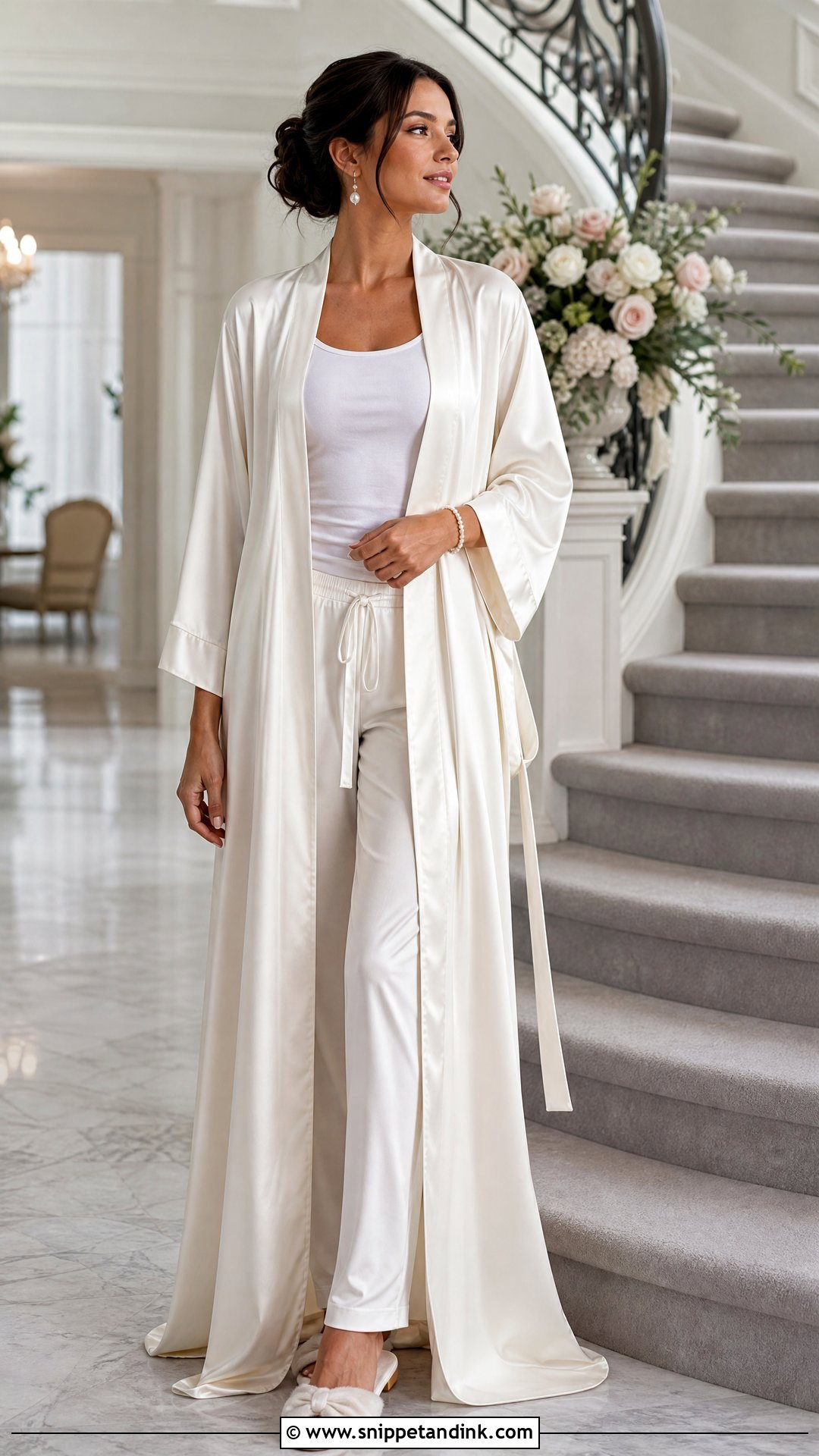
Floor length looks striking by a window or draped down a staircase. In a crowded suite, though, a long train gets stepped on, rolls over curling iron cables and drags through spilled coffee. Ankle length gives you most of the drama. Satin, silk or lightweight chiffon with a defined waist and sleeves that clear the breakfast plate work best, over a fitted white tank and full-length pajama pants. This suits formal weddings, cooler months and spacious bridal suites.
8. Short Bridal Robe
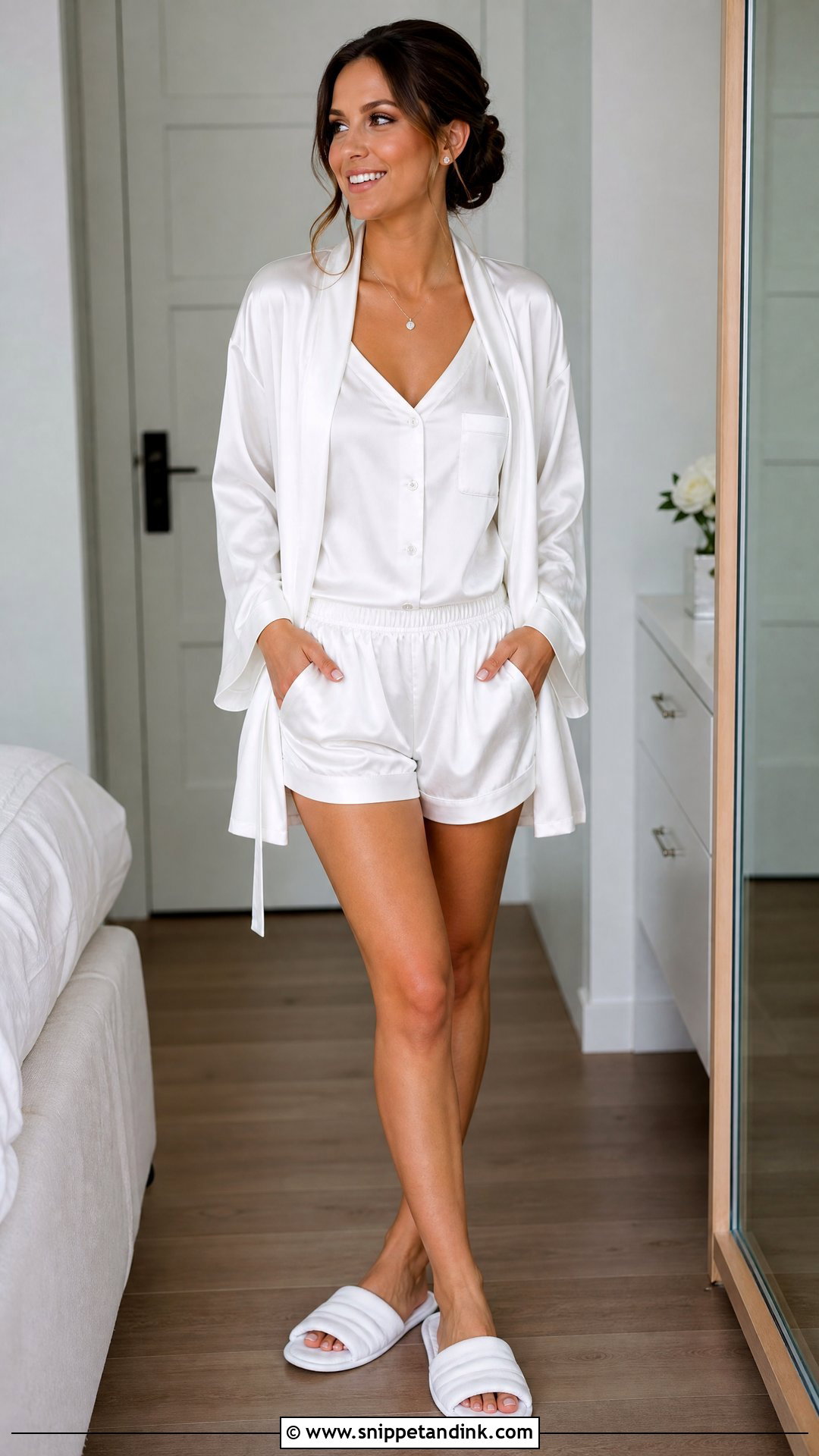
Short robes are practical in small rooms where a long hem catches on chairs, and they keep you cooler when the hairdryers are running. Choose mid-thigh or just above the knee with a secure sash and a generous front overlap. Then sit down in it. Most of the morning you’ll be perched on a tall makeup chair, and a short robe rides up there more than people expect, so pick longer pajama shorts if you want more coverage. Satin, cotton and light jersey all suit this shape.
9. Cotton Bridal Robe
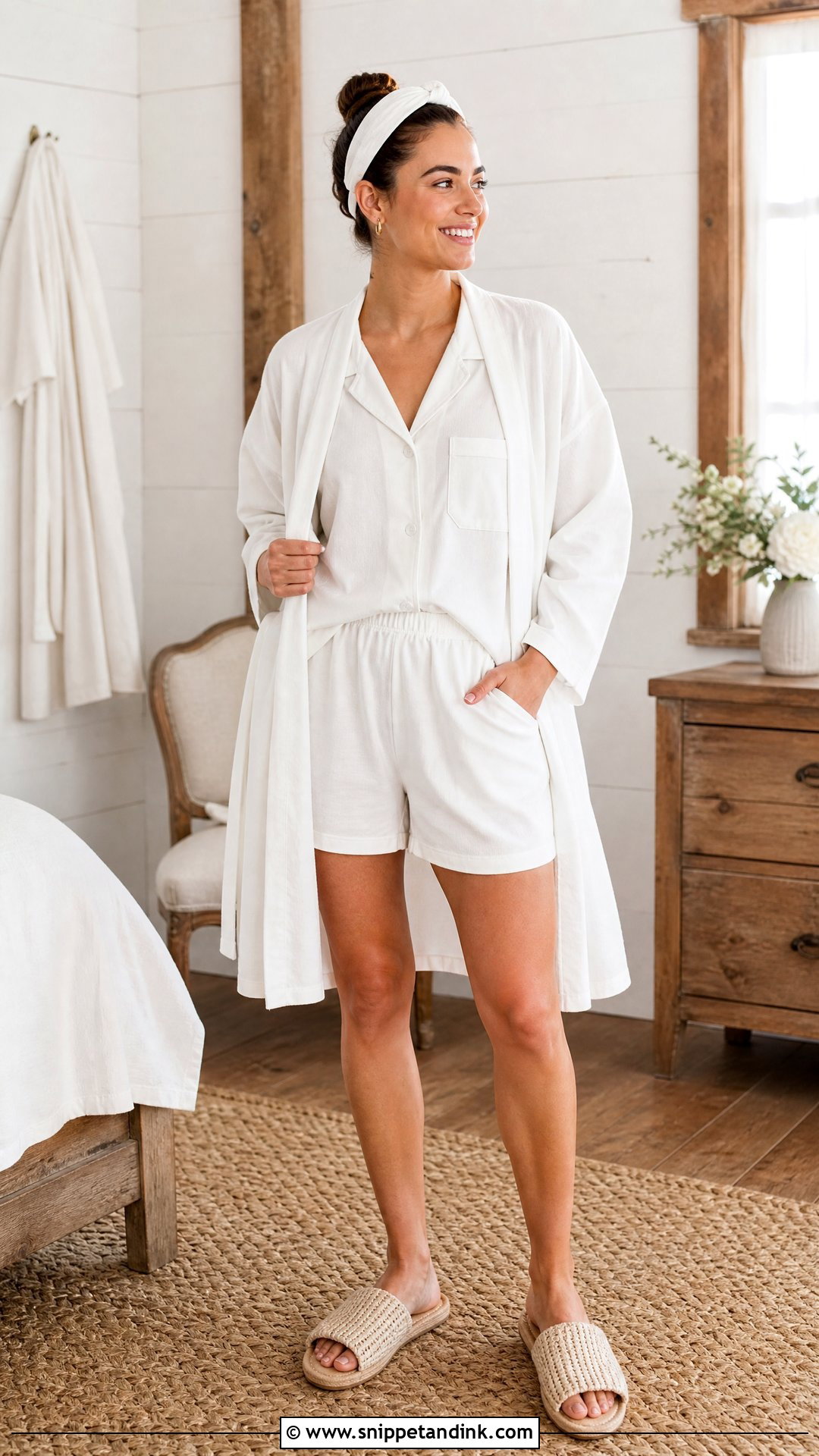
Cotton breathes, and on a hot morning with hair tools running that matters more than shine. Poplin looks crisp and structured; gauze and jersey feel softer and more relaxed. Without the reflective finish of satin, the photos read casual, which fits farmhouse venues, backyards, beach houses and relaxed destination weddings. Pair it with a matching cotton pajama set and a fabric headband before hair starts. Wash it ahead of time if the label allows, then press or steam it so it doesn’t look slept in.
10. Waffle Knit Bridal Robe
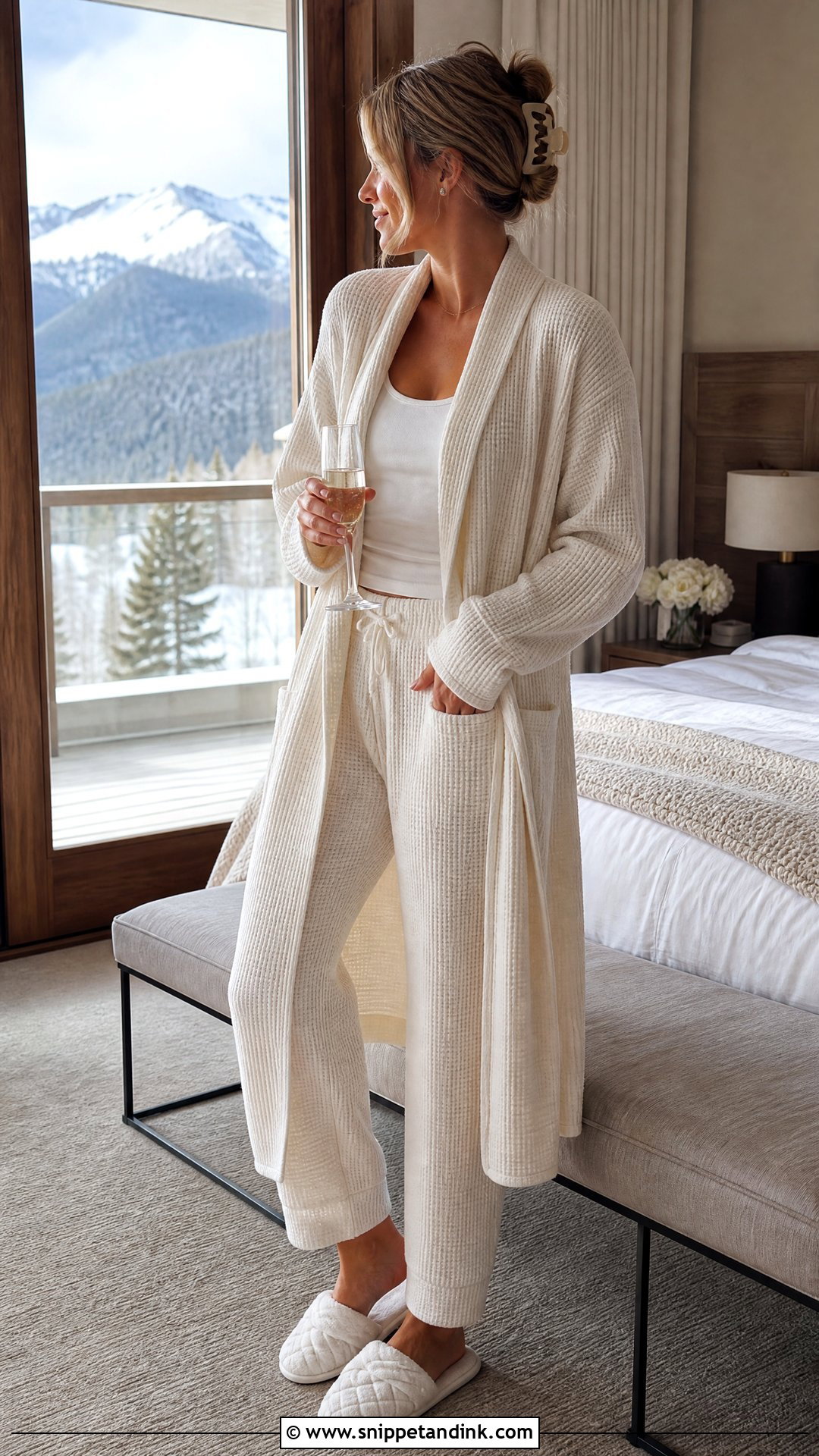
Waffle knit is cozy without the bulk of fleece, and the deep pockets are handy for lip balm and a phone. Choose a light weave with clean edges and a belt that defines the waist, since a heavy waffle can make you look swamped in photos. White, cream or pale blush over a simple tank and lounge pants works well, with cushioned spa slippers and a claw clip until your hairstylist takes over. A little embroidery on the chest adds a bridal note to a robe you’ll actually use afterwards.
11. Chiffon Bridal Robe
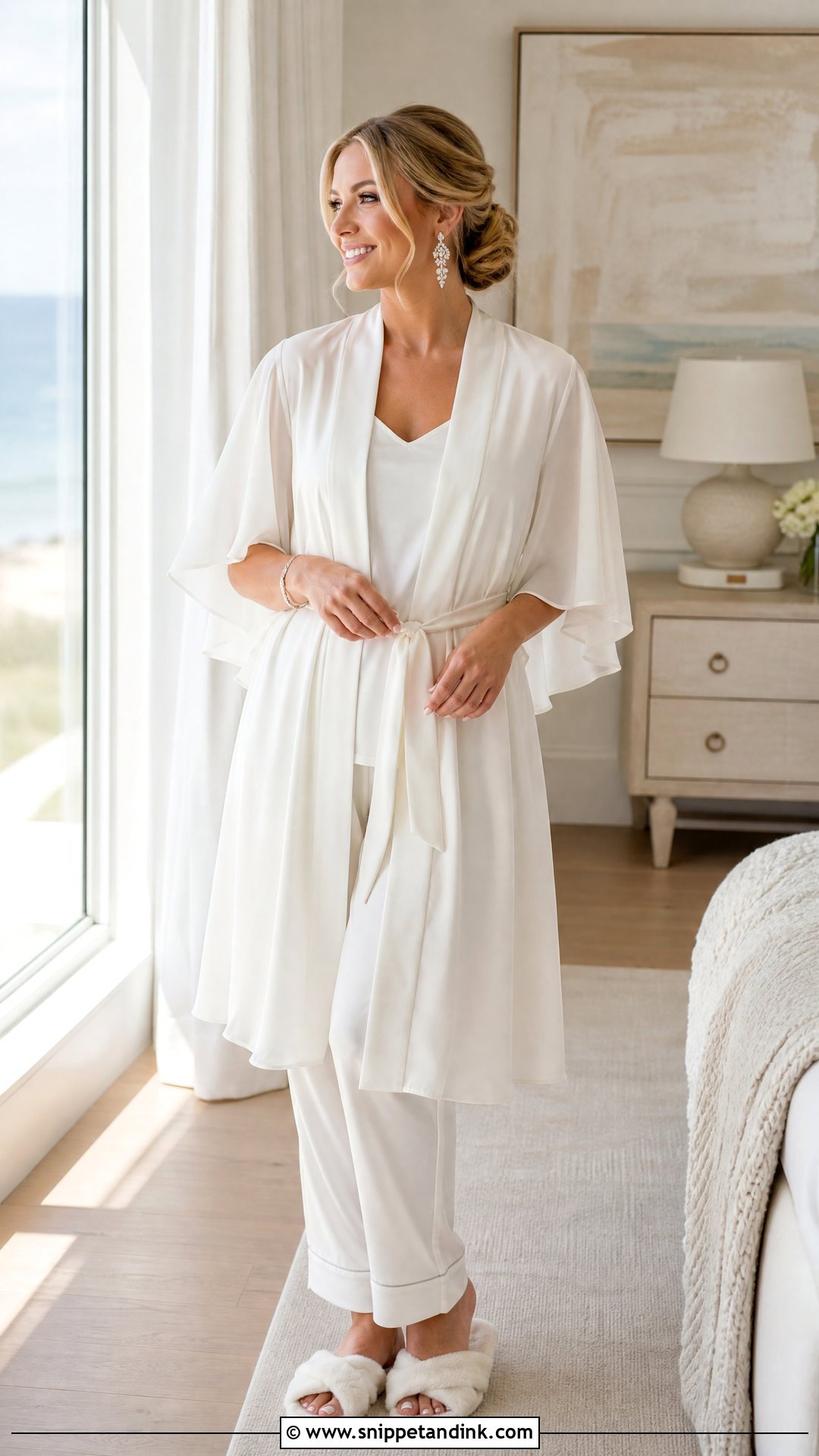
Chiffon floats and photographs softly, but it’s often see-through. Choose a lined robe or wear it over a fully covered white pajama set, ideally knee length with flutter sleeves and a wide satin sash. The fabric snags on rings, prong settings, zips and rough edges, and I’ve learned to take my own rings off before working near it. Keep the jewelry to small crystal studs and a smooth bracelet. Spring and summer, coastal venues and bright rooms suit it best.
12. Pearl Embellished Bridal Robe
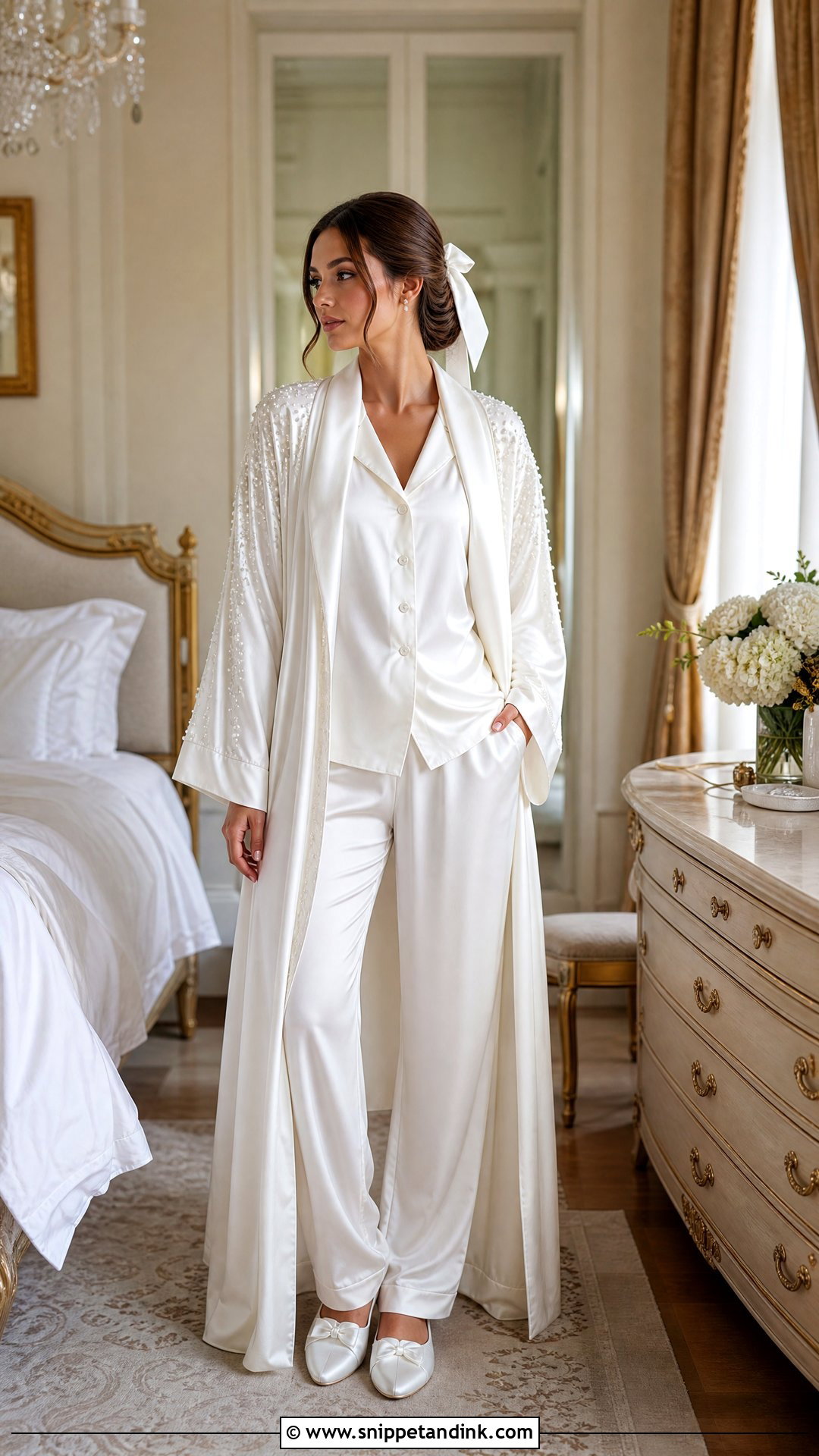
Pearls along the sleeves, shoulders or back connect the robe to the veil, shoes or dress without shouting. On satin or a tulle overlay they look classic, as long as they’re securely attached. Check every one the week before, because a pearl dropping into a palette or under a chair is a small morning annoyance. Pair it with plain white pajamas, pearl studs, satin slippers and a ribbon, and skip the beaded bag and layered necklaces. It suits formal, traditional and vintage-leaning weddings.
13. Rhinestone Bride Robe
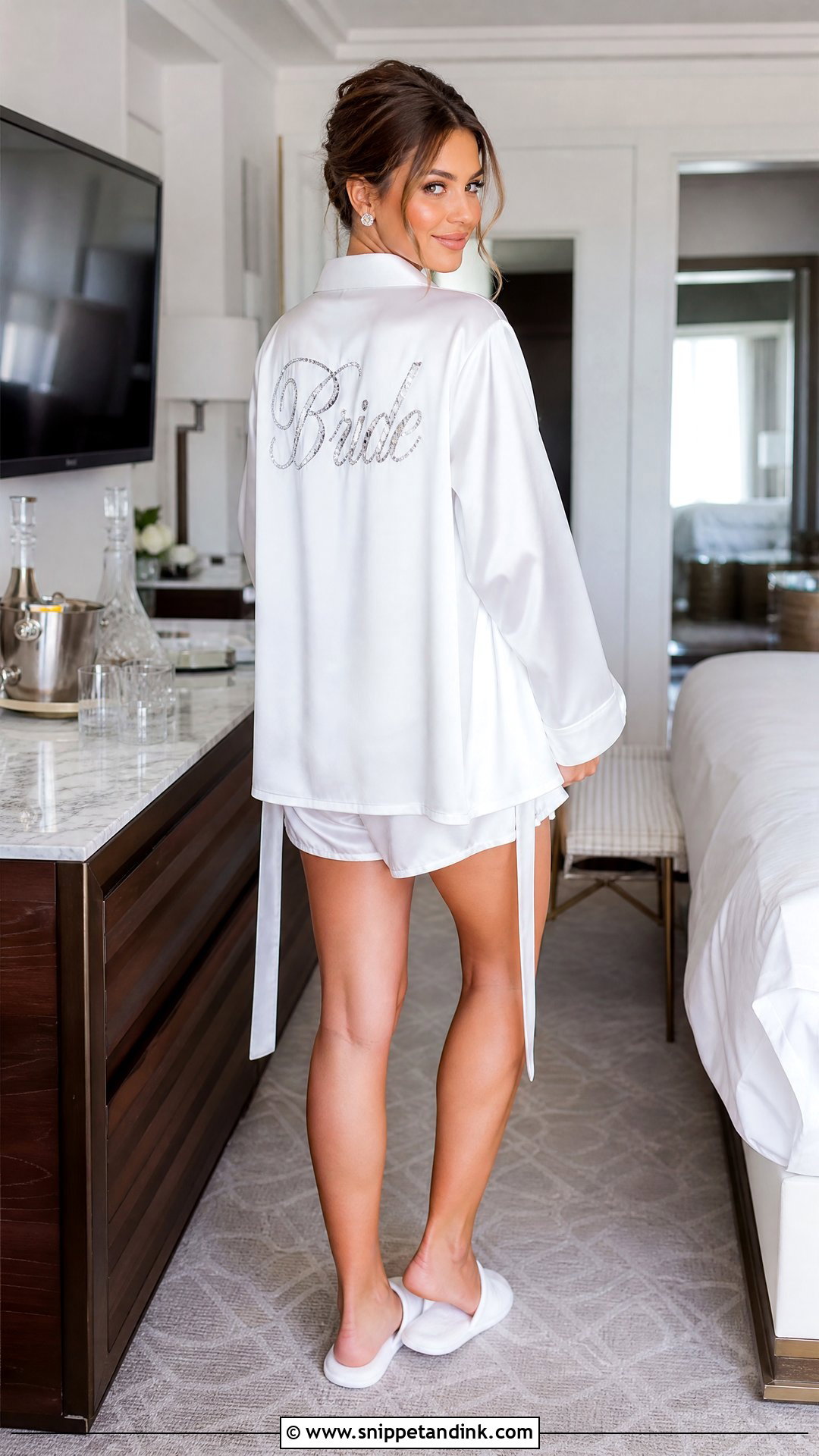
“Bride” in crystal lettering across the back is cheerful and very much a Y2K wink. Choose white satin or velour with neat, clear stones, then keep everything else plain: a button-front top, matching shorts, clean slippers and one slim tennis bracelet at most. Check that the stones are secure before packing, and fold the robe with tissue so they don’t scratch each other. Crystal lettering also catches on hair, so I keep long curls forward over the shoulder while the bride wears it.
14. Embroidered Bridal Robe
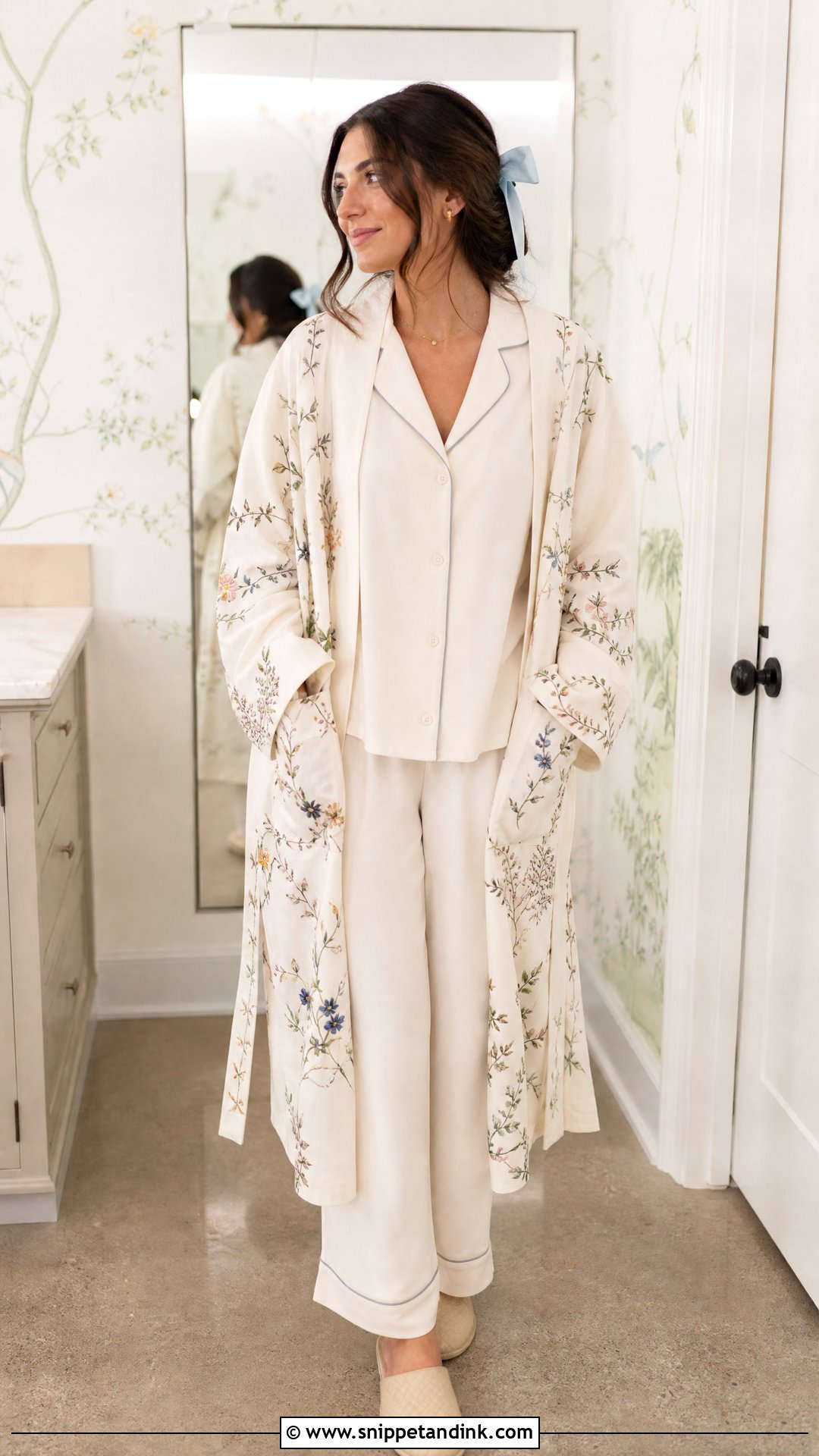
Embroidery reads as handmade, which is the point. Botanical vines, small flowers, initials or a wedding-date motif stitched onto cotton, satin or a linen blend give the robe a personal feel that lasts beyond the morning. If the thread uses several colors, pick up one of them in a small accessory, a pale blue bow or blush trim on a slipper. Underneath, a solid ivory pajama set with simple piping keeps the stitching in focus. Garden, rustic, destination and heirloom-themed weddings all suit it.
15. Vintage Bridal Robe
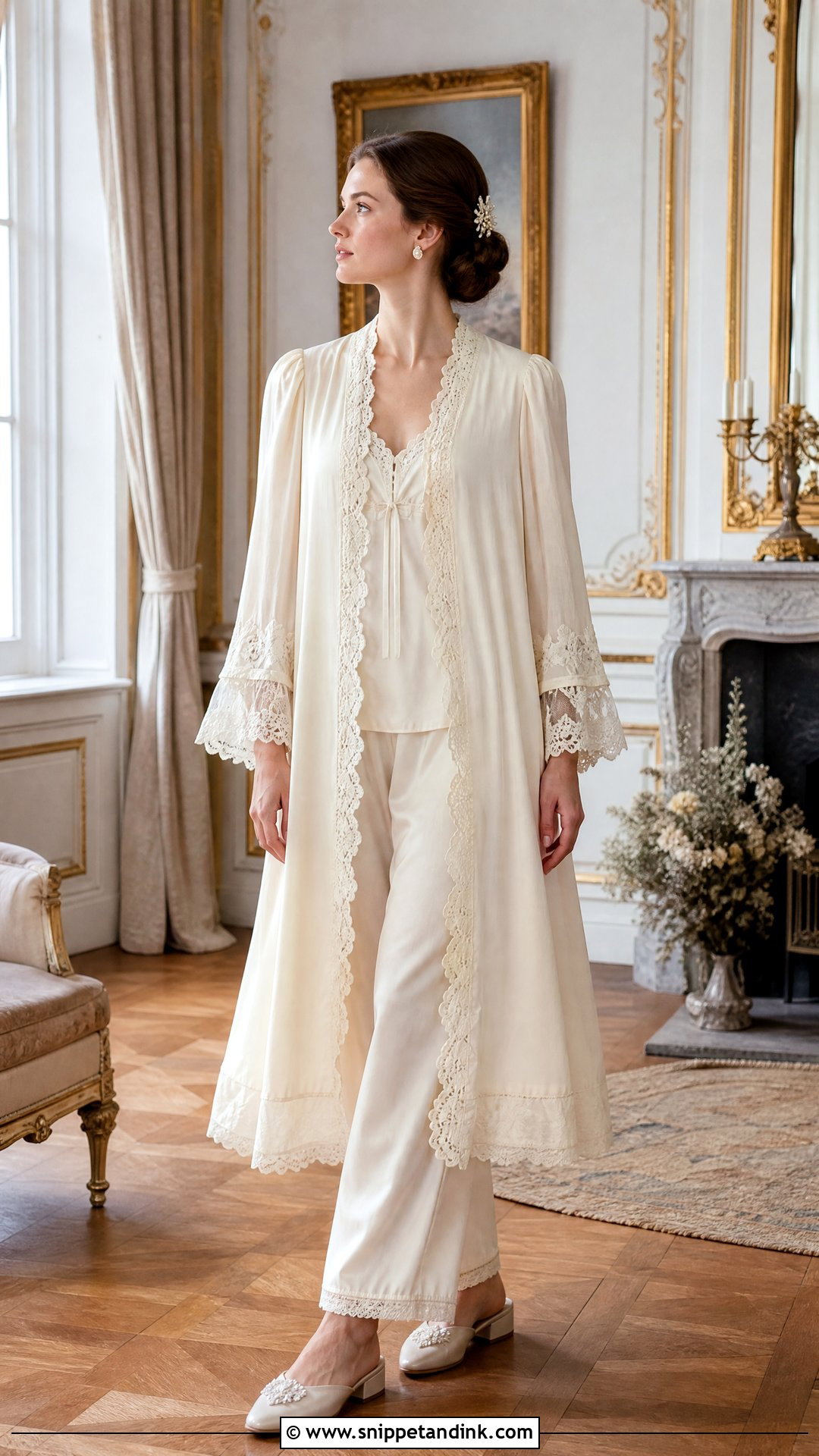
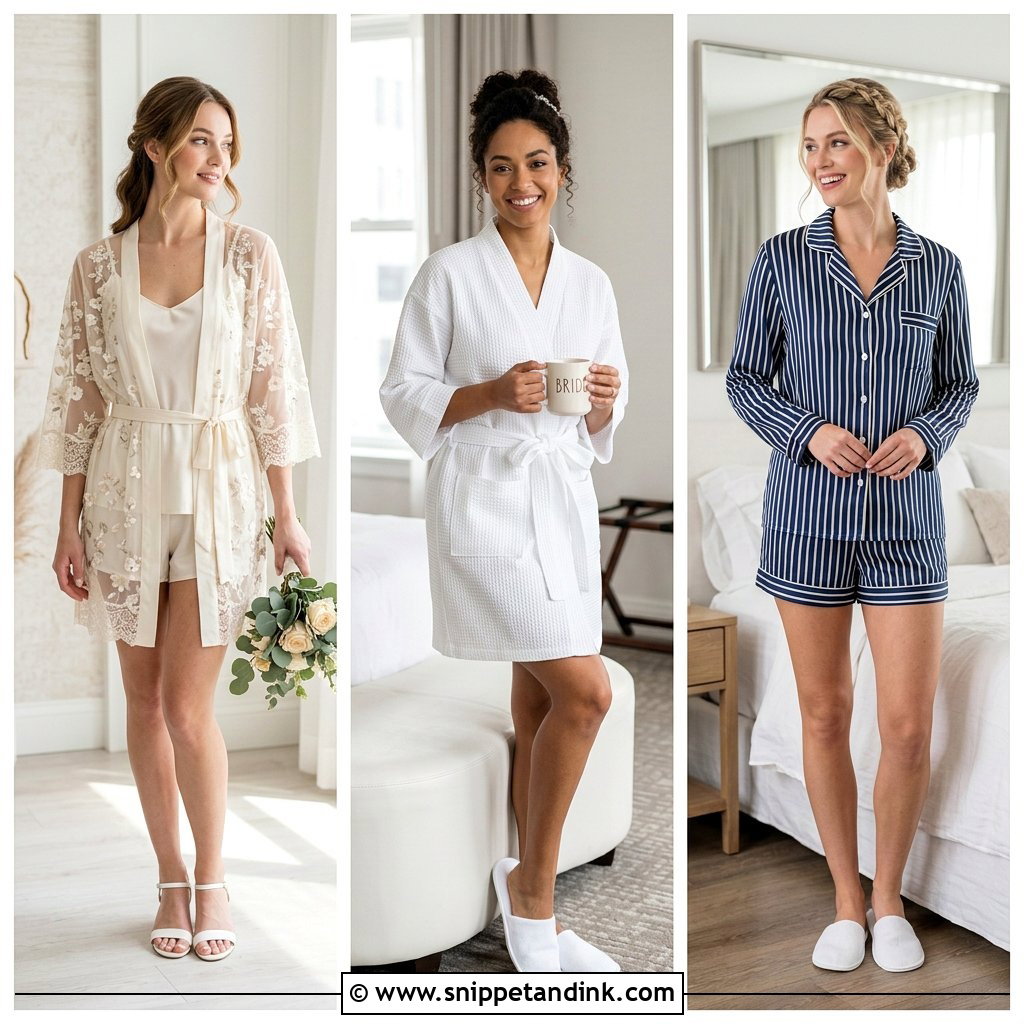
Old dressing gowns are the reference here: tea length, covered buttons, scalloped lace, embroidered cuffs, sometimes a softly puffed sleeve. Cream, antique white and pale champagne flatter more skin tones in photos than stark white and suit the period mood. With a genuine older piece, check the seams and fastenings well before the morning, because old thread gives way without warning. A newly made vintage-style robe is easier to size and wash. Low boudoir slippers, pearl clip earrings and a loosely placed comb finish it before the hairstylist starts, and it sits well in historic venues and estate weddings.
16. Boho Bridal Robe
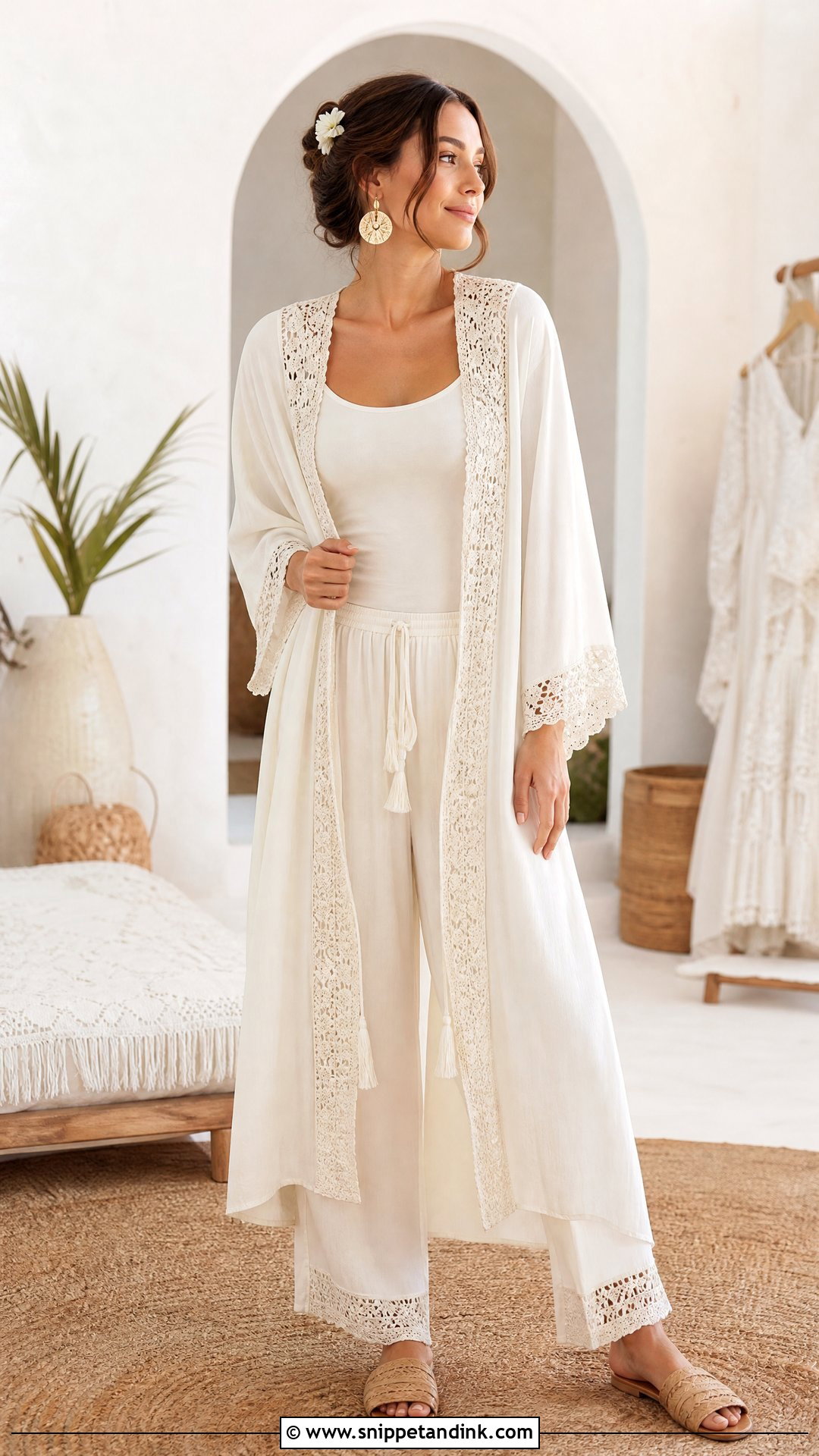
Boho robes lean on texture: lightweight cotton, crochet trim, embroidery, loose sleeves and a soft tie. Wear one over a cream tank and flowing pajama pants or a coordinated cotton shorts set, with woven slides and a small flower clip. Fringe adds movement, but keep it to the sleeve or hem. Fringe at the cuff drags straight through a makeup station. Natural ivory and sand sit easily with dried florals and greenery at desert, woodland and beach weddings.
17. Plus Size Bridal Robe
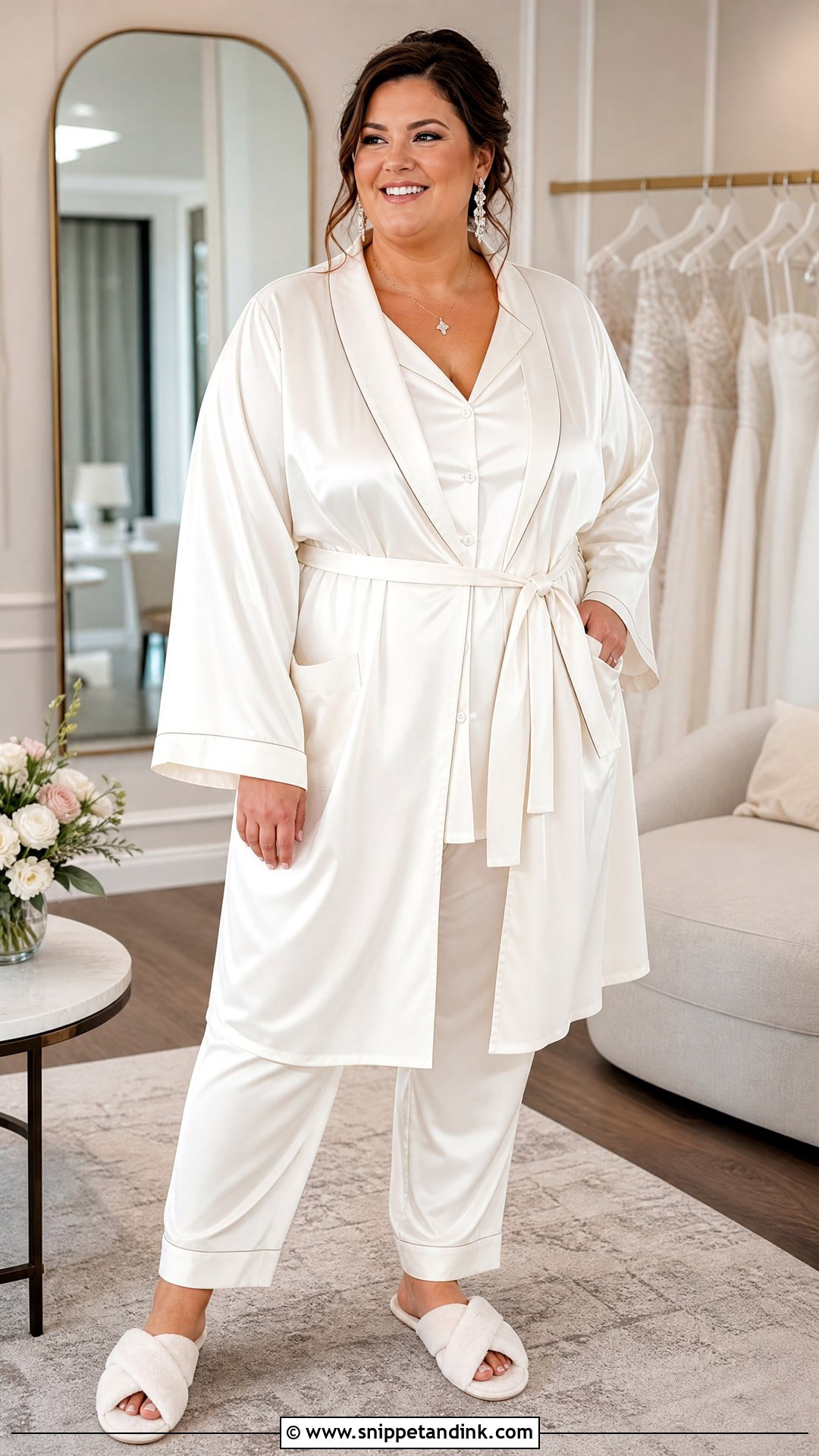
A plus size robe should stay closed without you holding it. Look for true inclusive sizing, a generous front overlap, an inner tie and sleeves roomy enough to lift your arms while I work on your brows. Measure bust, hips, upper arms and the length you want instead of relying on a standard size label, because robe sizing varies a lot between makers. A knee-length satin or cotton robe over a supportive button-front set with relaxed pants or shorts works well. If you can, sit, walk and raise your arms in it before the day.
18. Winter Velvet Bridal Robe
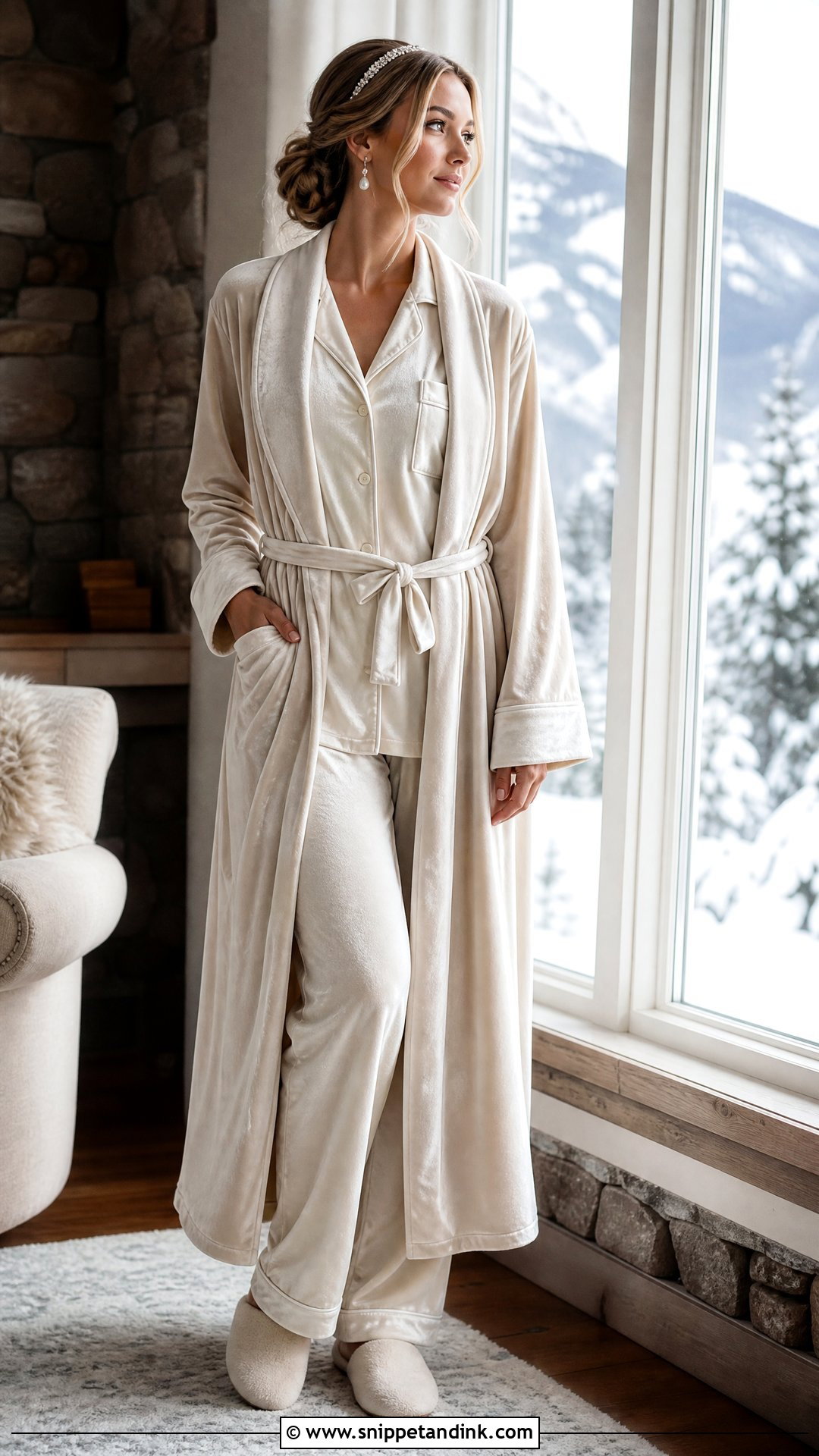
Velvet keeps you warm at a cold-weather wedding, but getting-ready rooms heat up fast once the hair tools start. Choose a lightweight stretch velvet in ivory, cream or soft champagne with a satin lining and secure inner closure, and pair it with full-length button-front pajamas and closed-toe slippers. Velvet has a nap, so steam it from the inside rather than pressing it flat. It also holds face powder visibly, which is one reason I drape a cape over the bride while I set her makeup. Mountain lodges, historic hotels and snowy venues all suit it.
19. Summer Bridal Robe
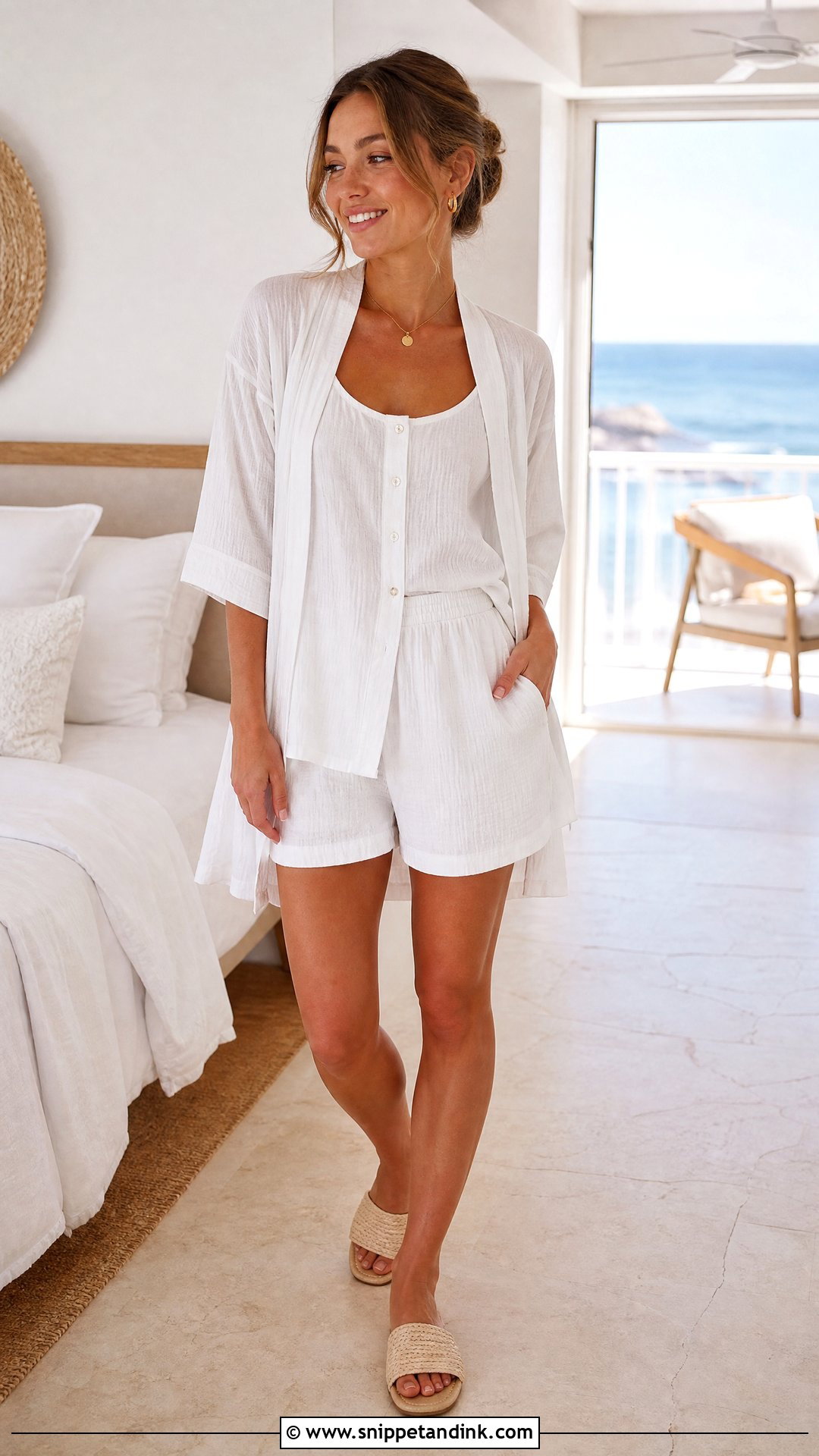
Heat is the problem a summer robe solves. Cotton voile, bamboo jersey, light satin or a linen blend in white or ivory, cut as a short kimono with elbow-length sleeves, gives coverage without trapping warmth. Skip feathers, thick lace and dense beading. If you’re getting ready by the beach or outdoors, hold the fabric up to the sun first, since thin white voile can turn transparent in bright light. A sleeveless button-front top, matching shorts and woven slides keep it simple for destination and coastal weddings.
20. Heirloom Wedding Dress Bridal Robe
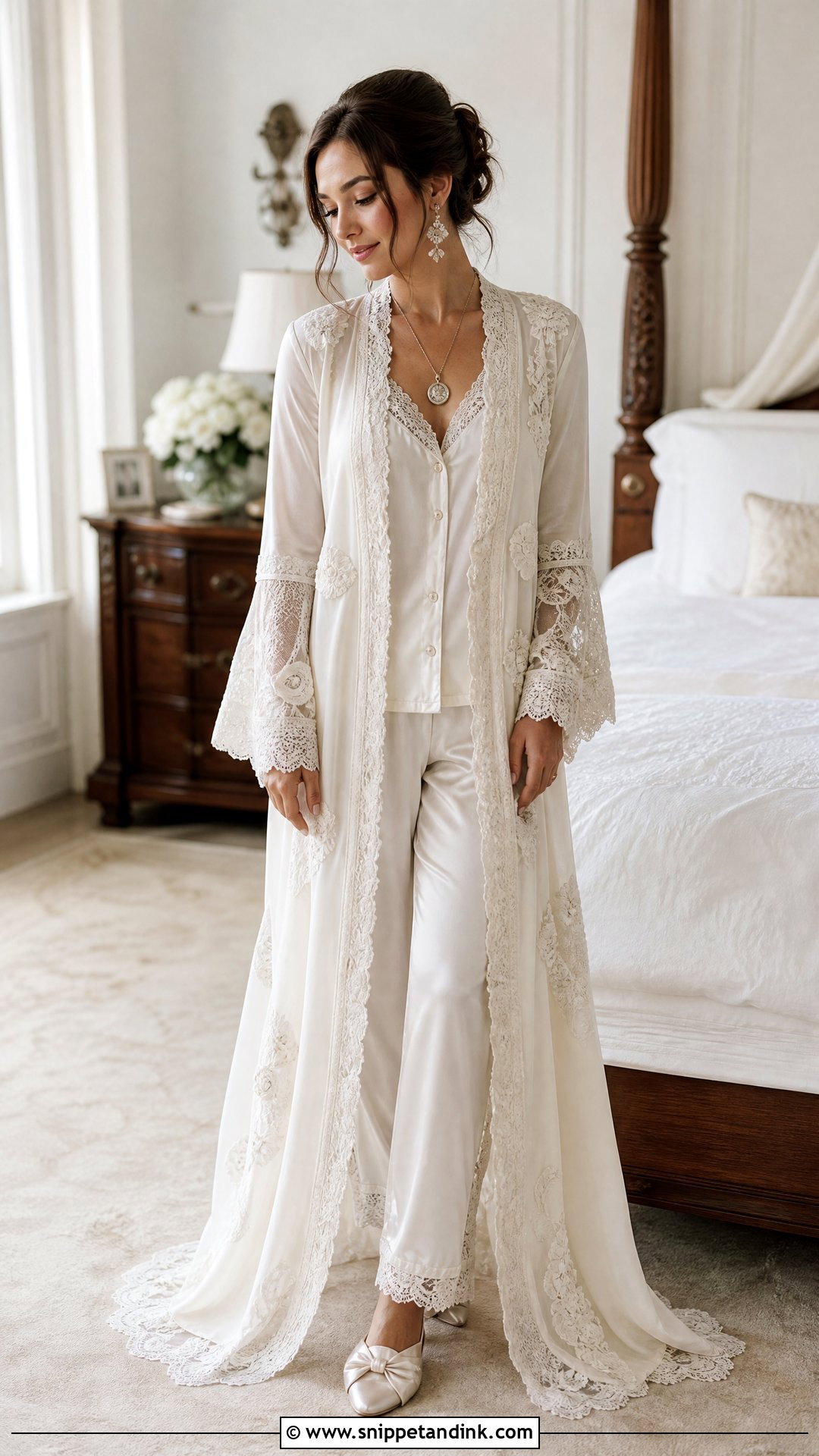
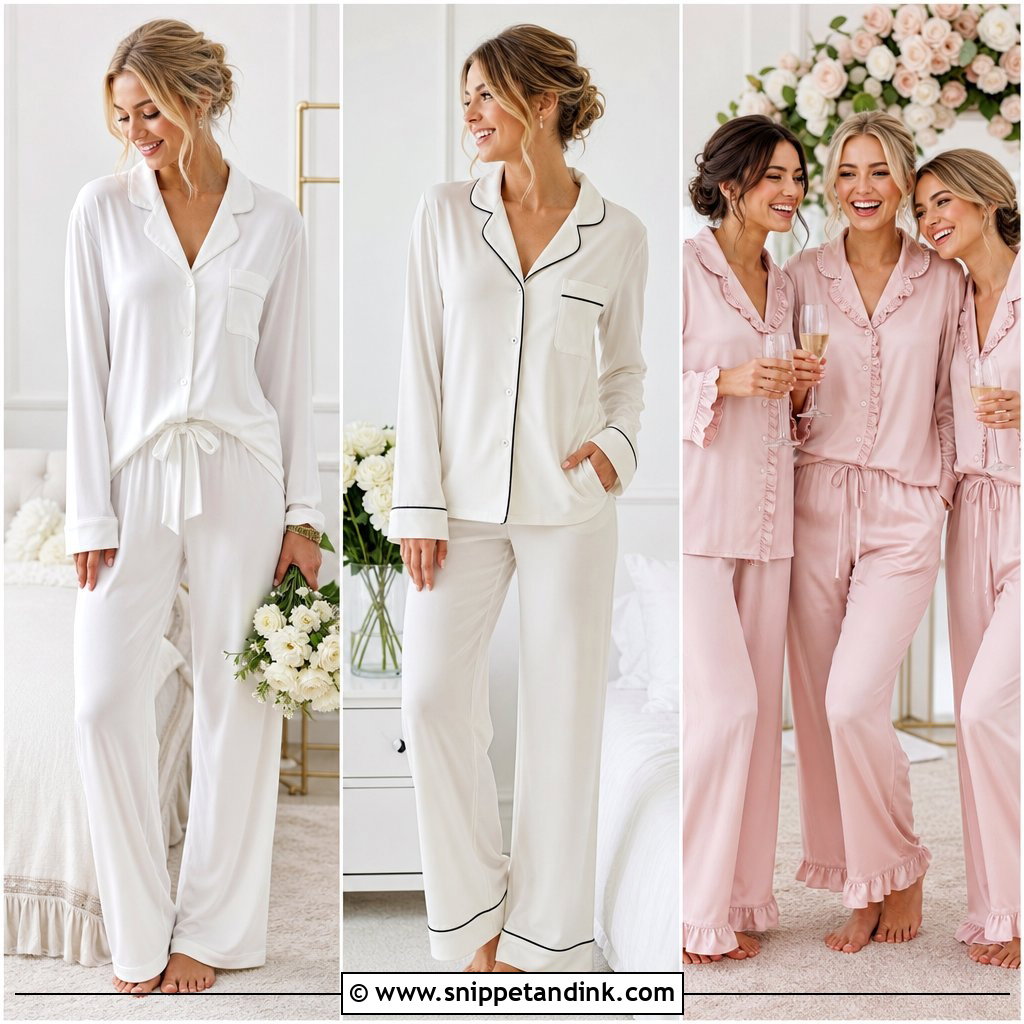
Turning a family wedding dress into a bridal robe keeps an heirloom in use. A skilled alterations specialist can rework lace, buttons, appliqués or skirt fabric while preserving the details that matter to your family. Talk through fabric condition, coverage and construction before anyone cuts, because aged silk and lace can split along old folds. Keep the leftovers for a keepsake pouch or a bouquet wrap. Over a plain ivory pajama set with a family locket, the robe needs nothing else.
Ordering Matching Robes for You and the Bridesmaids
Group robes are where small ordering mistakes become very visible in photos. Most of the problems I see on the morning could have been caught with a little lead time.
- Order early. Embroidered or rhinestone personalization often takes a few weeks to produce before shipping, and you want time to fix a misspelled name. A couple of months ahead is comfortable.
- Ask how sizing works. Many robes come in two broad sizes, such as small to medium and large to extra large, and lengths vary. Get everyone’s height as well as their usual size.
- Order every robe from the same batch. Satin dyed at different times can come out a shade apart, and that shows when everyone stands in a row.
- Check colors in daylight. Blush and champagne can look almost identical online and quite different by a window.
- Steam them all the day before and hang them in order, so nobody spends the morning hunting for the right name.
One spare plain robe in the bride’s suite is worth having too. Someone always spills coffee, and a robe in a slightly different style is less of a problem than a stained one in every group photo.
A Robe Should Come Off Without Touching Your Face
A good robe balances comfort, coverage and the feel of the morning. Satin and silk give the most polished photos, while cotton and waffle knit are easier to live in, and lace, pearls, feathers or embroidery make a plain shape your own. Whatever you pick, plan what goes underneath, check how it sits on a tall chair and make sure it comes off without touching your hair or face. Slippers and simple jewelry pull any of these together.
You'll Like These Ideas:


Leave a Reply