
A side sweep is the style bridesmaids ask me for most when they don’t want a full updo but don’t trust loose hair to last until the speeches. If you’ve been reading wedding hair trend coverage this year, you’ll have seen the same direction everywhere: deep side parts, softer texture and waves with a vintage shape. All of that lands naturally on one shoulder. What makes the sweep practical is that it moves the weight of the hair to one place I can pin properly, so it survives hugs, a breeze and the dance floor better than hair left hanging evenly. Below are twenty versions, with notes on who each one suits and where it tends to fail.
Deciding the Direction of the Sweep for Each Bridesmaid
Before I curl anything, I check which way the hair wants to go. Nearly everyone has a natural part and a crown whorl that pushes hair one direction. Sweeping against it is possible, but the root lifts back up by evening. At the trial I comb the hair through damp and watch where it falls.
Dress, earrings and where she stands
- One-shoulder dress: sweep the hair over the bare shoulder so the strap detail stays visible.
- Statement earrings: tuck the side away from the sweep so one earring is fully on show.
- Mirrored lineup: if the bride wants symmetry, bridesmaids on her left sweep one way and those on her right sweep the other, so the group frames her. Settle this before the trial, not on the morning.
- Strong cowlick at the front hairline: let her natural part win and adjust the symmetry plan around her.
A sweep against the grain is the most common reason a style looks flat in the evening photos, and it’s entirely avoidable with five minutes of checking.
1. Side Swept Curls Bridesmaid Hair
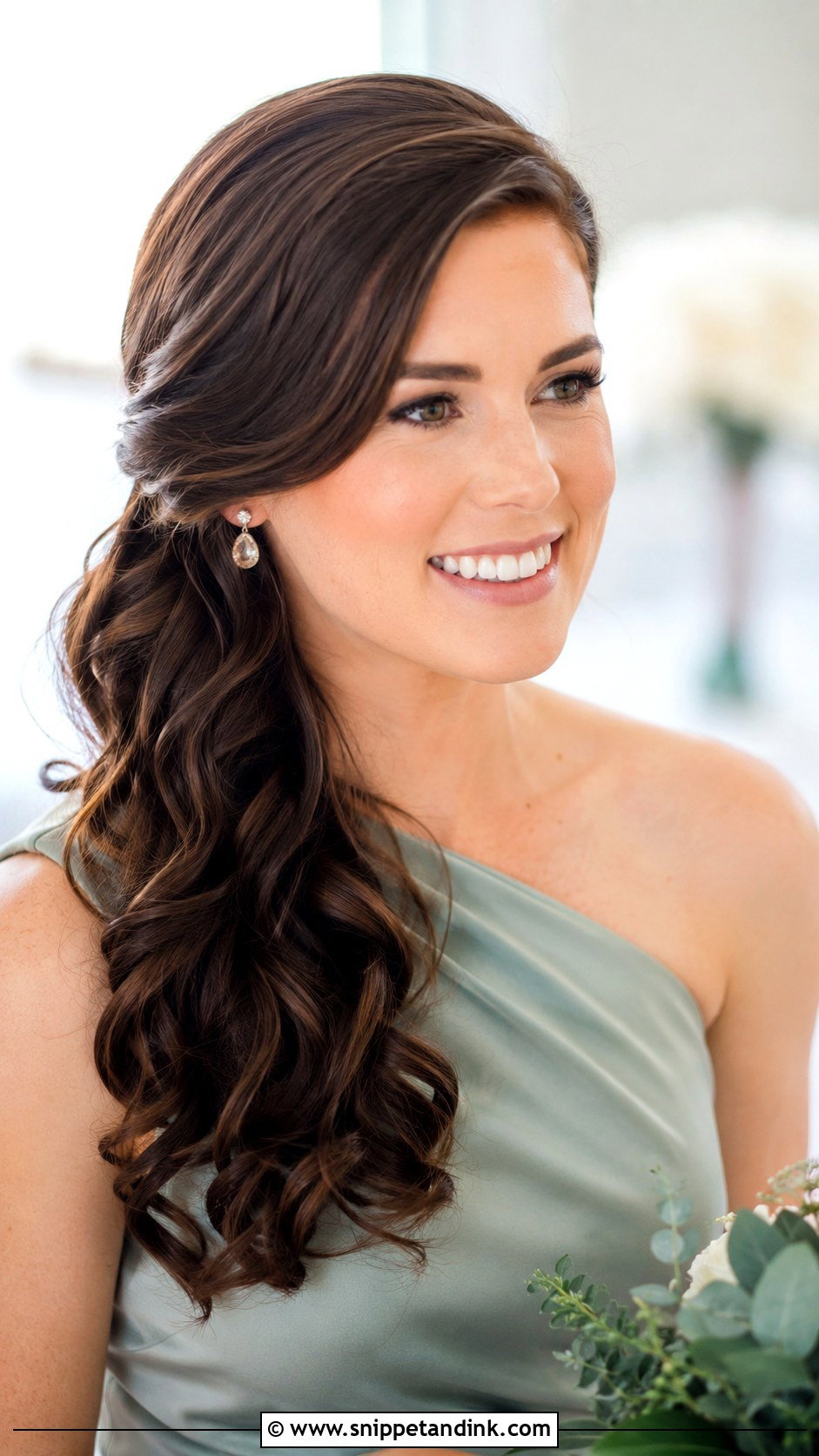
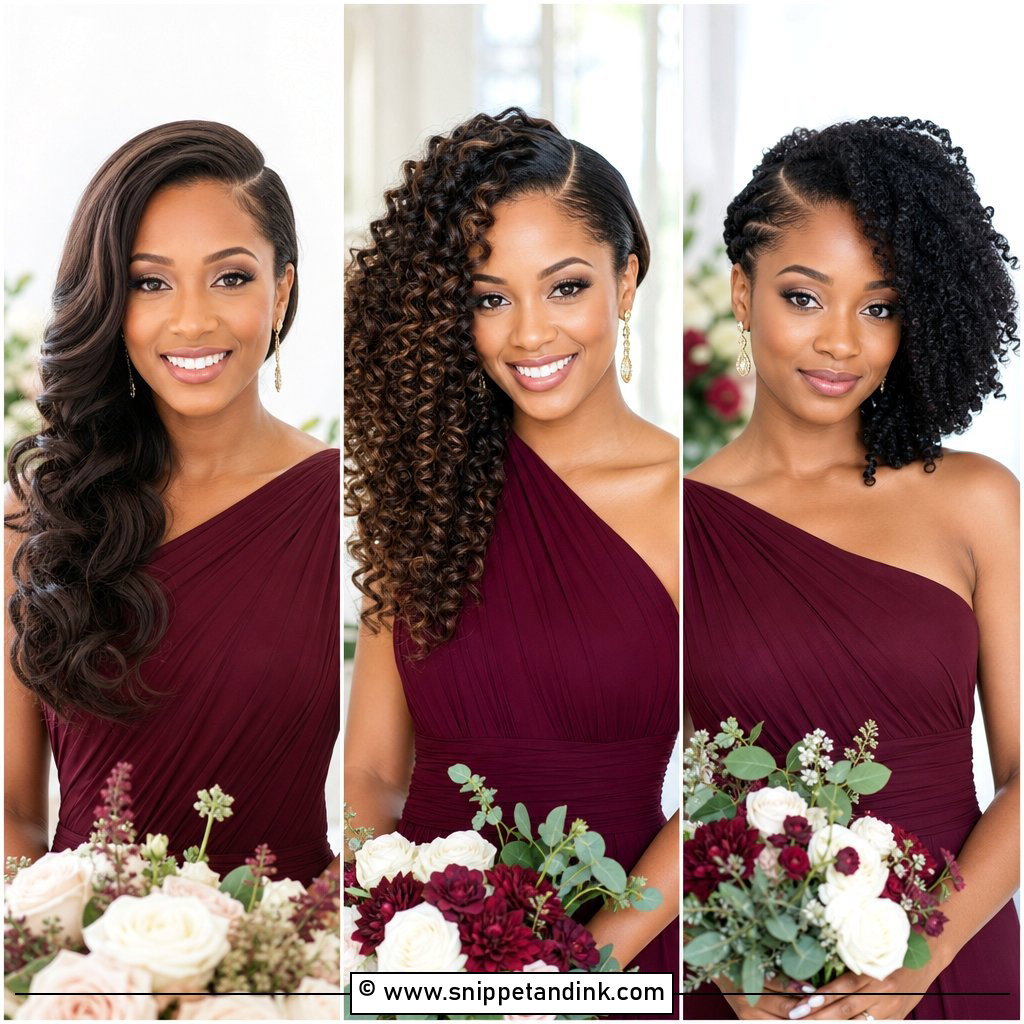
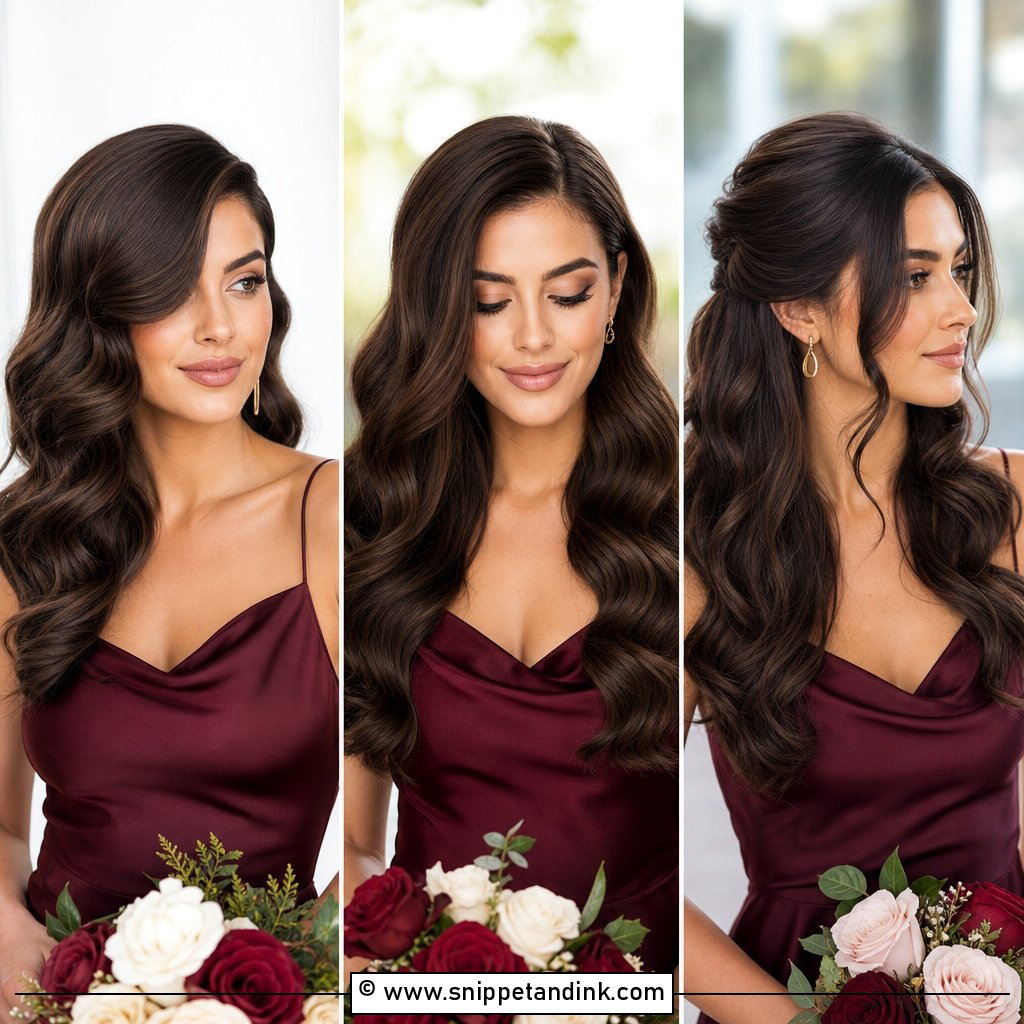
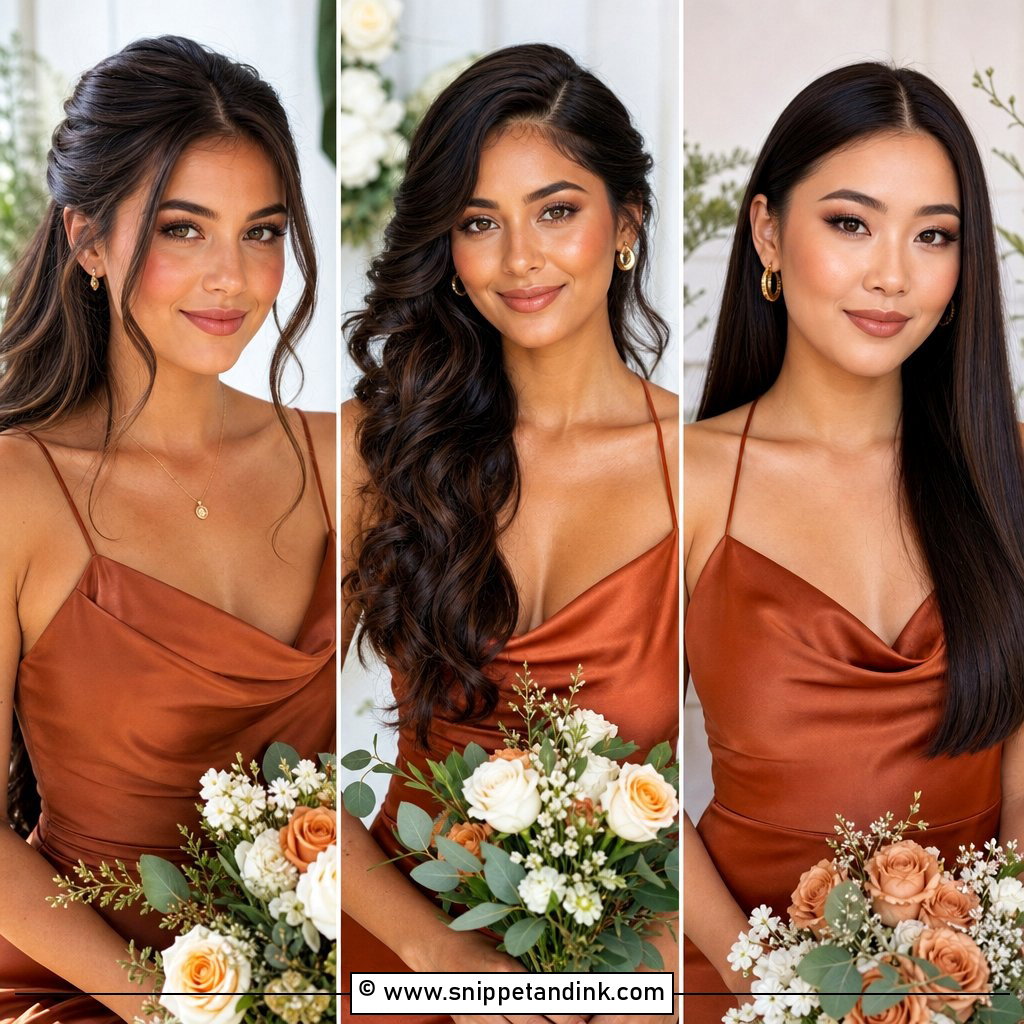
I put this on a bridesmaid who wants to look dressed up without feeling like she’s wearing an updo. I set a deep part, curl in sections about an inch wide, let each curl cool completely, and only then gather them over one shoulder. Medium to long hair shows the curl pattern; on hair above the collarbone the curls just bunch at the jaw. The pins do the real work here. Two crossed bobby pins hidden at the nape on the sweep side stop the whole mass sliding back toward the centre by the first dance.
2. Side Swept Waves Bridesmaid Hair
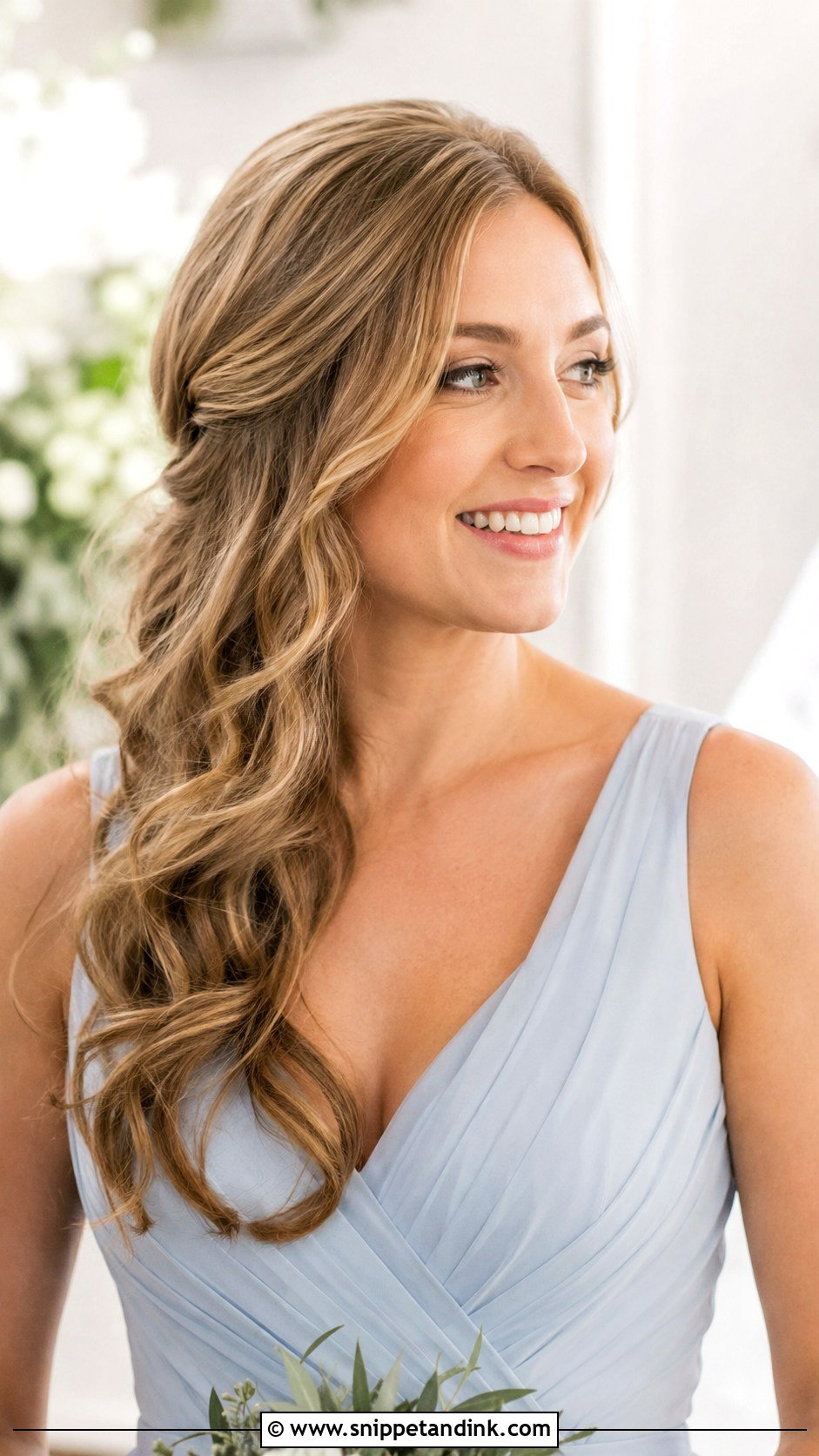
Waves are the forgiving option. They start out defined and relax as the day goes on, so by evening they look brushed out on purpose rather than fallen. I like them when the bride wants a matched group without identical heads, because each bridesmaid’s texture changes the wave slightly. On fine hair I back-comb lightly underneath the part line so the front lift doesn’t collapse before the ceremony. Outdoors they’re my safest bet: wind moves them, but there’s no structure to break.
3. Side Swept Hollywood Waves Bridesmaid Hair
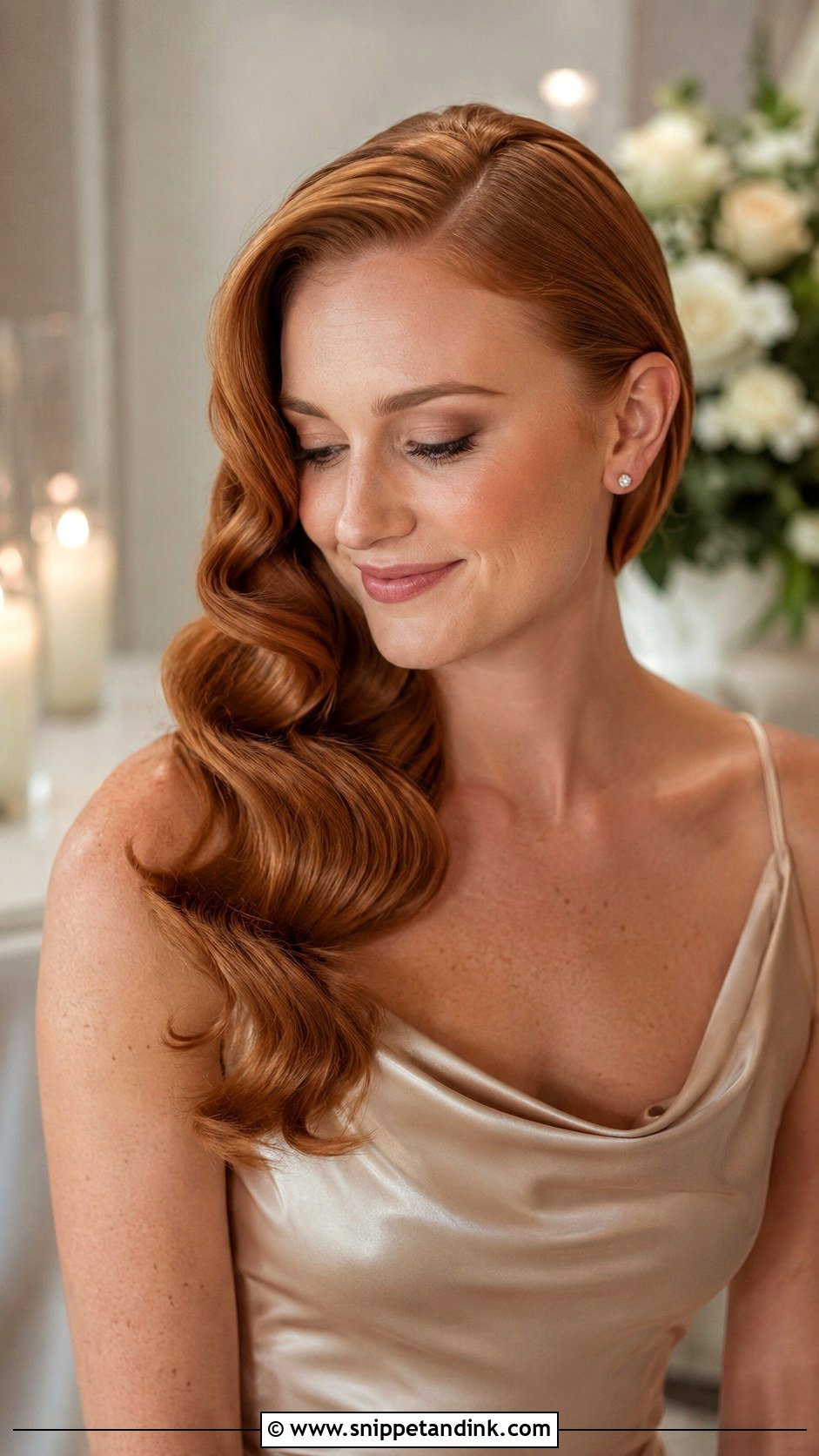
Hollywood waves are the least forgiving style on this list, and the most dramatic when they’re right. Every section has to be curled in the same direction around the same barrel, then brushed out with a boar bristle brush until the curls join into one continuous S-shape. Skip the brushing and you get separate ringlets instead of a wave. I set the dips with flat clips while the spray dries, then tuck the opposite side behind the ear so a statement earring has room. Humidity undoes this faster than any other style, so in a damp climate I’d point a bridesmaid toward the sleek ponytail instead.
4. Side Swept Braid Bridesmaid Hair
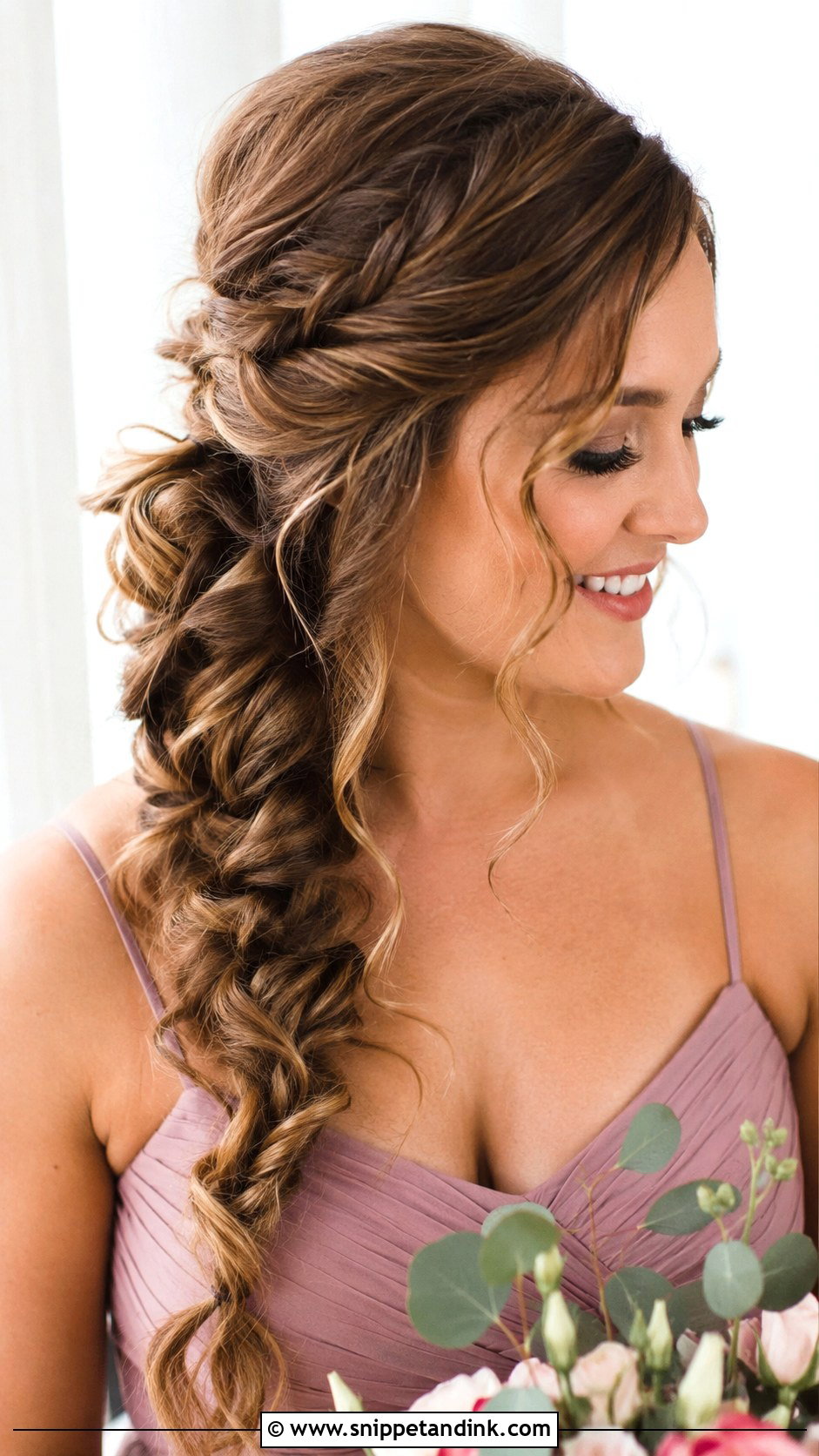
A braid is how I give movement to hair that refuses to hold a curl. Starting near the crown and sweeping across the back to fall over one shoulder, the plait carries the weight, so even slippery hair stays put in the heat. I braid firmly, then pull each loop out a few millimetres at the edges. That makes it look fuller in photos without loosening its grip. Long, thick or layered hair suits it; very short layers poke out of the plait unless I pin them in. I leave a couple of face-framing pieces loose at the cheekbone.
5. Side Swept Fishtail Braid Bridesmaid Hair
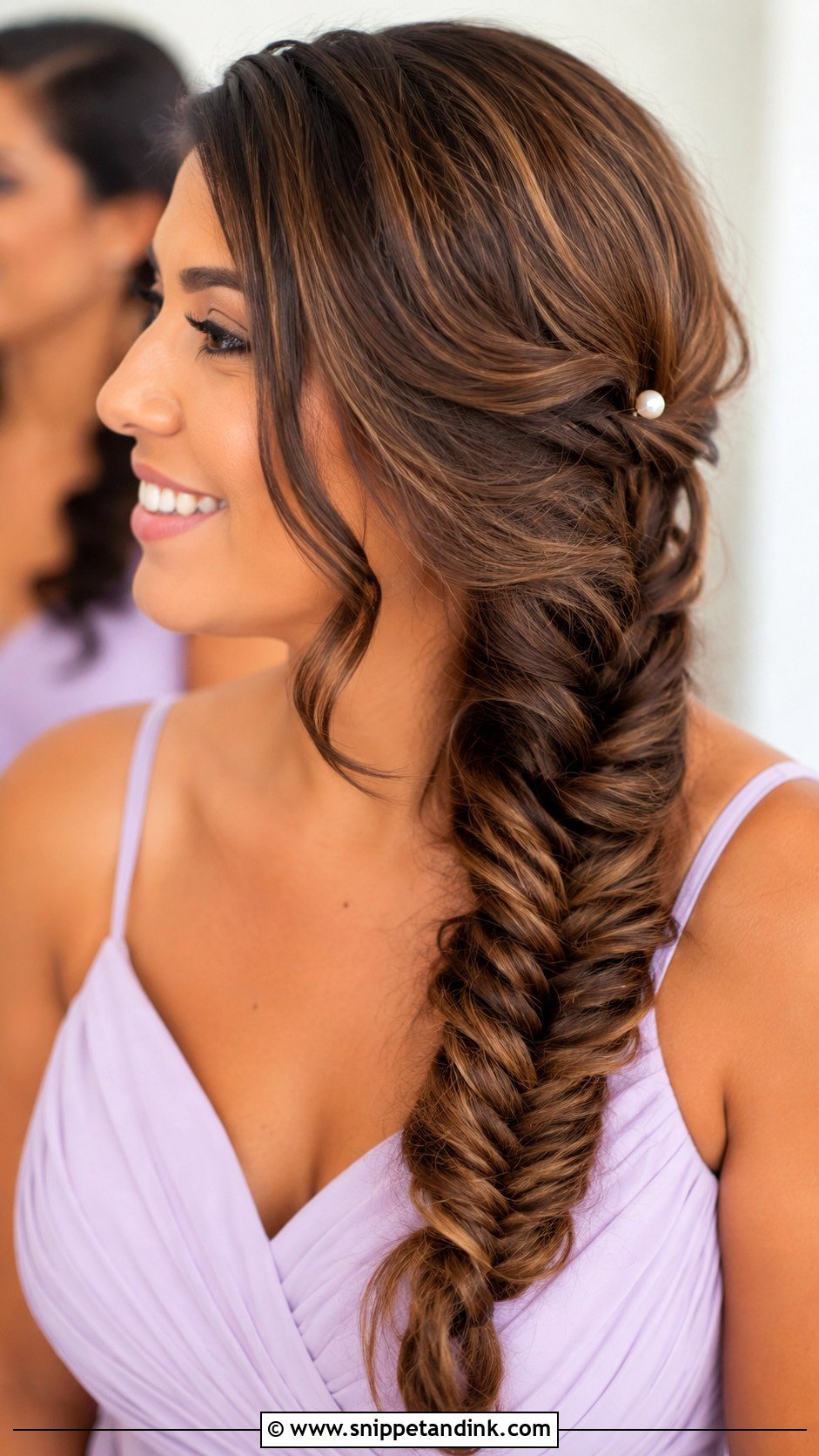
Fishtails read best up close, which is why they show so well in detail shots. The narrow weave only looks wedding-ready once it’s loosened; pulled tight, it can look like a gym plait. Colour matters more here than with any other braid. Highlights, balayage or dimensional brunette color make each crossover visible, while one solid dark shade can flatten the pattern in pictures. I keep a little lift at the crown and add a single pearl pin at the base rather than dotting several down the length.
6. Side Swept Dutch Braid Bridesmaid Hair
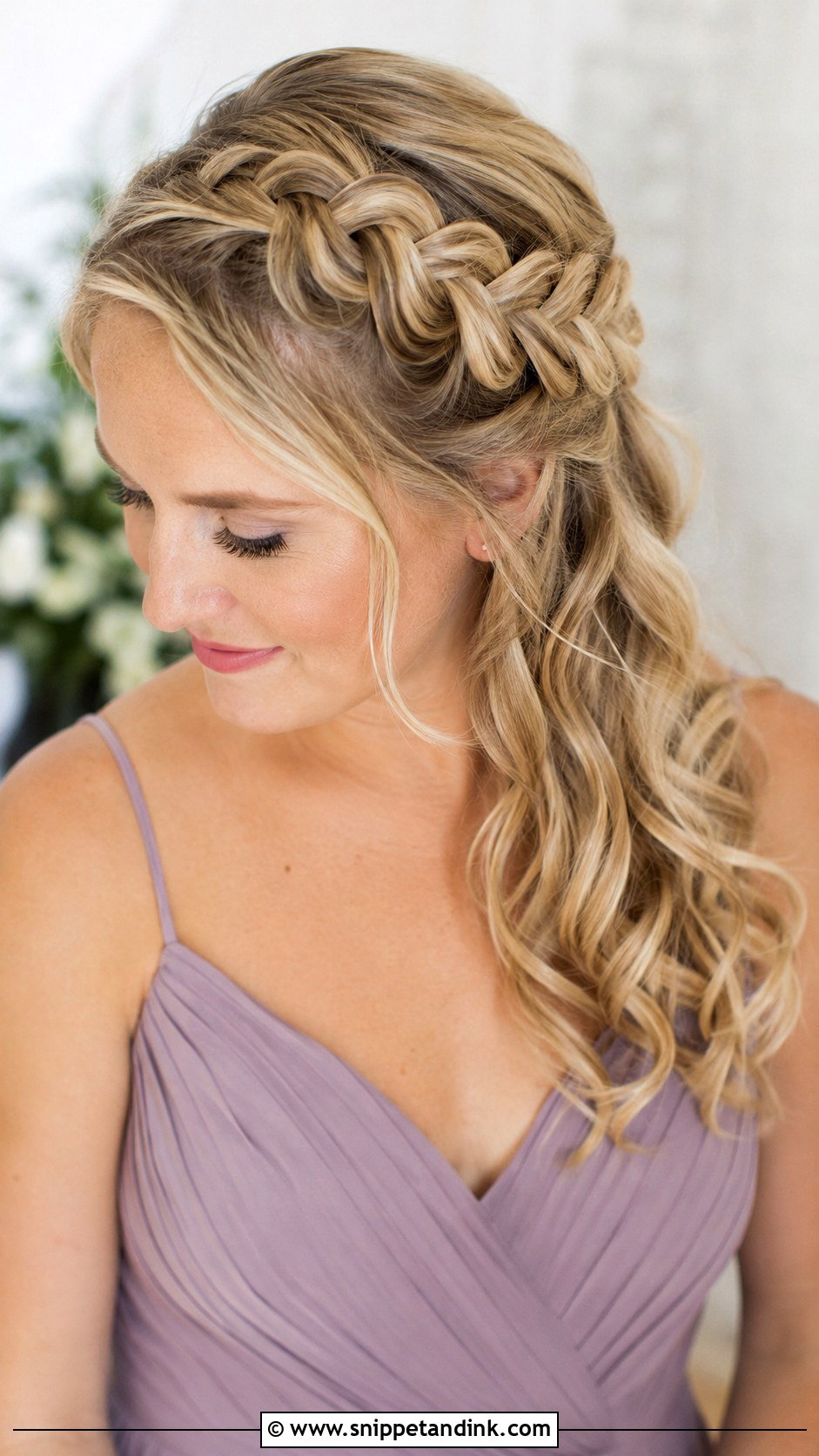
Side swept Dutch braid styles sit on top of the hair rather than inside it, because each section crosses under instead of over. That raised plait frames the sweep, and it’s my first suggestion for thick or textured hair that needs real support. I curve it from the opposite temple down behind the ear, lock it there with pins pushed into the braid itself, then let the length fall into waves. Fine hair can wear it too, but I’d add a clip-in weft first so the braid doesn’t look skinny.
7. Side Swept Low Bun Bridesmaid Hair
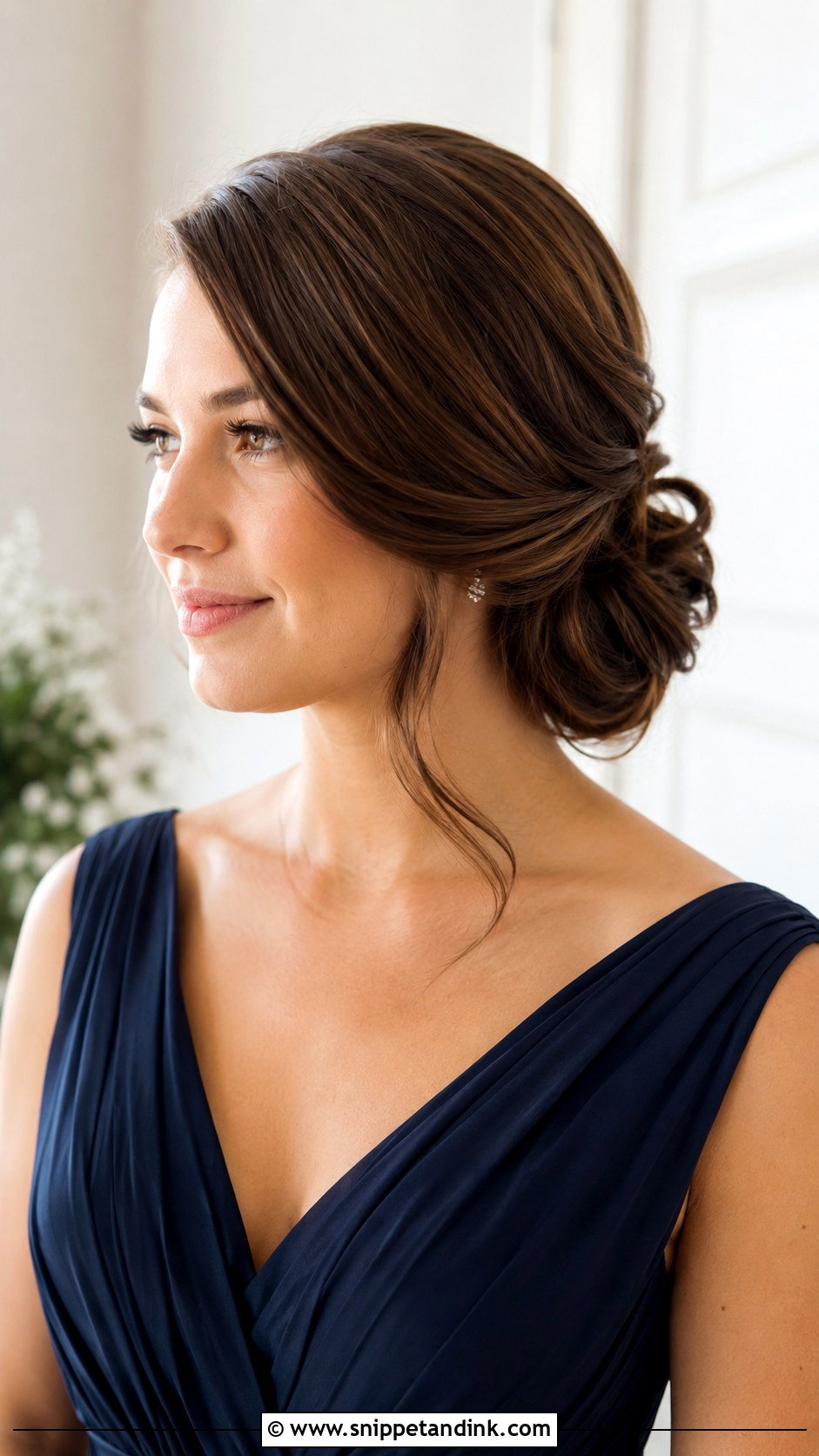
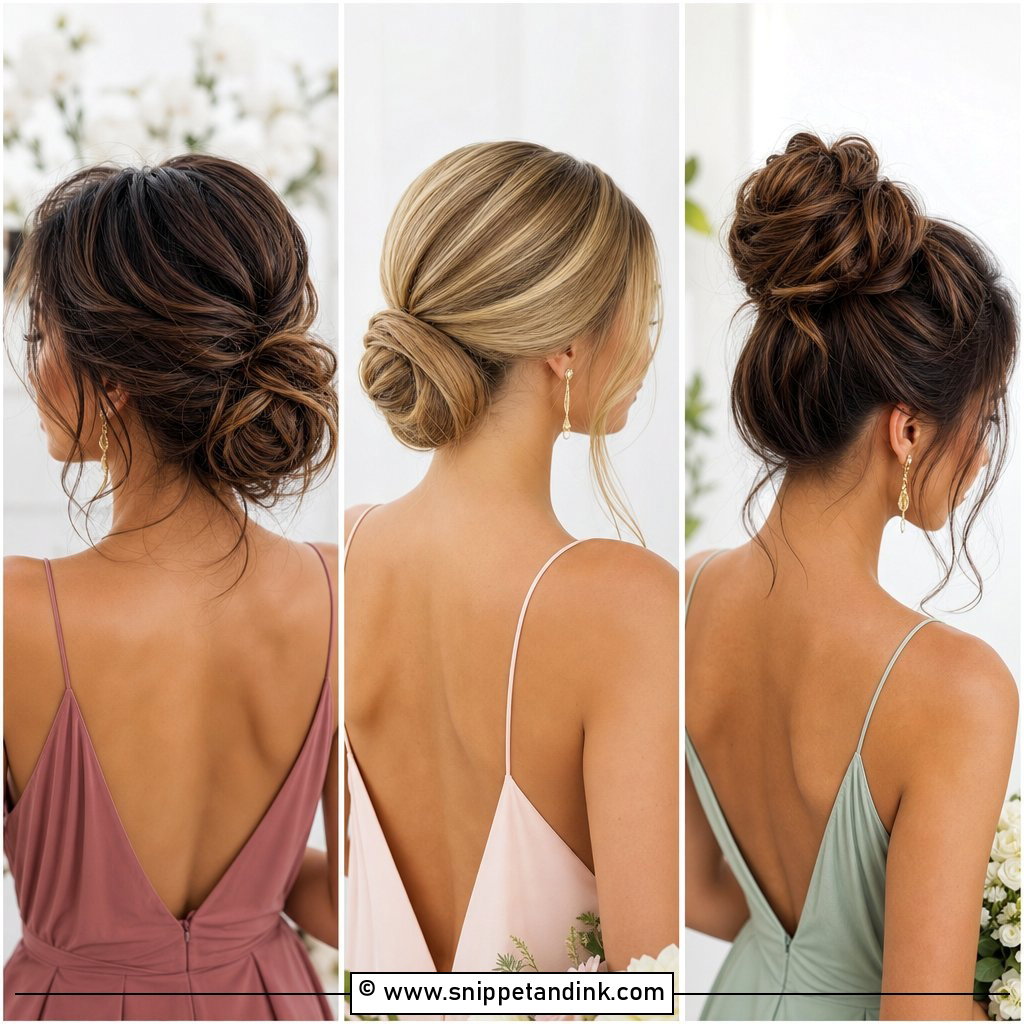
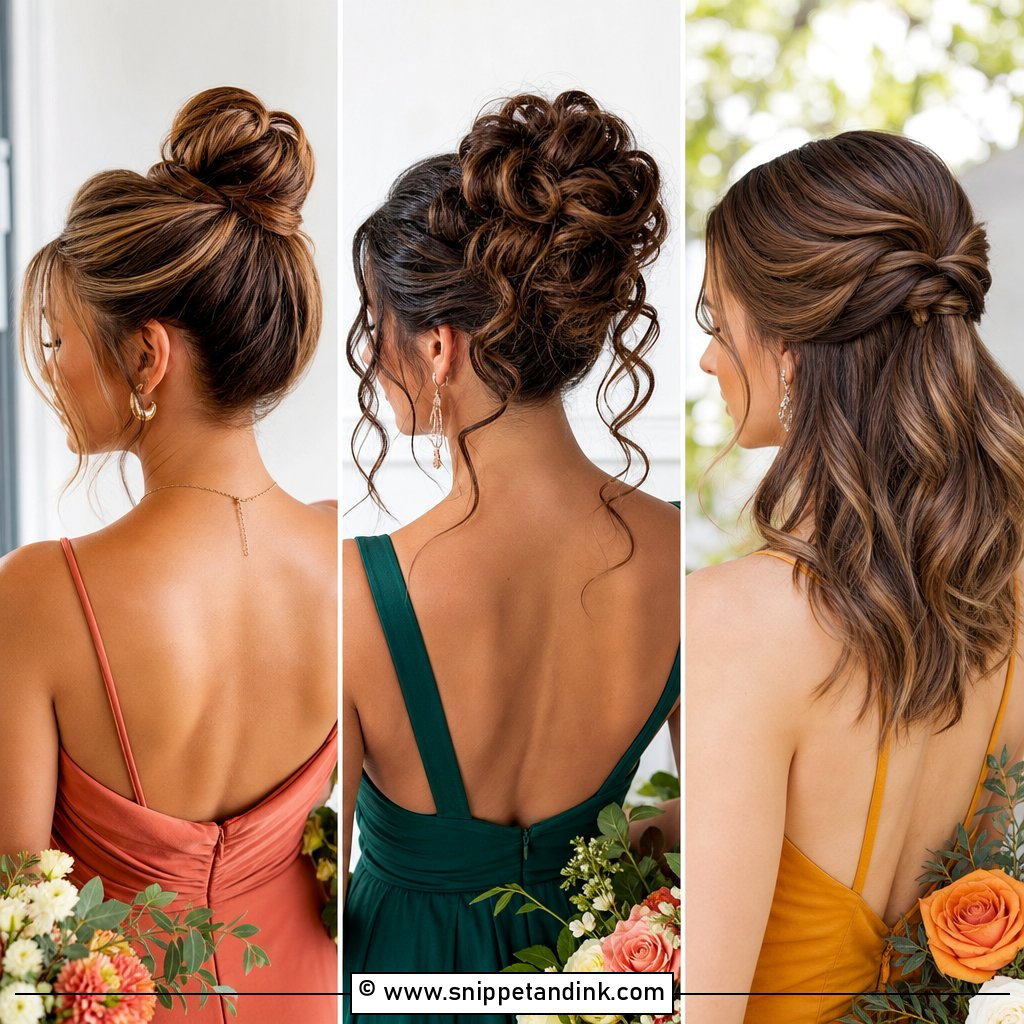
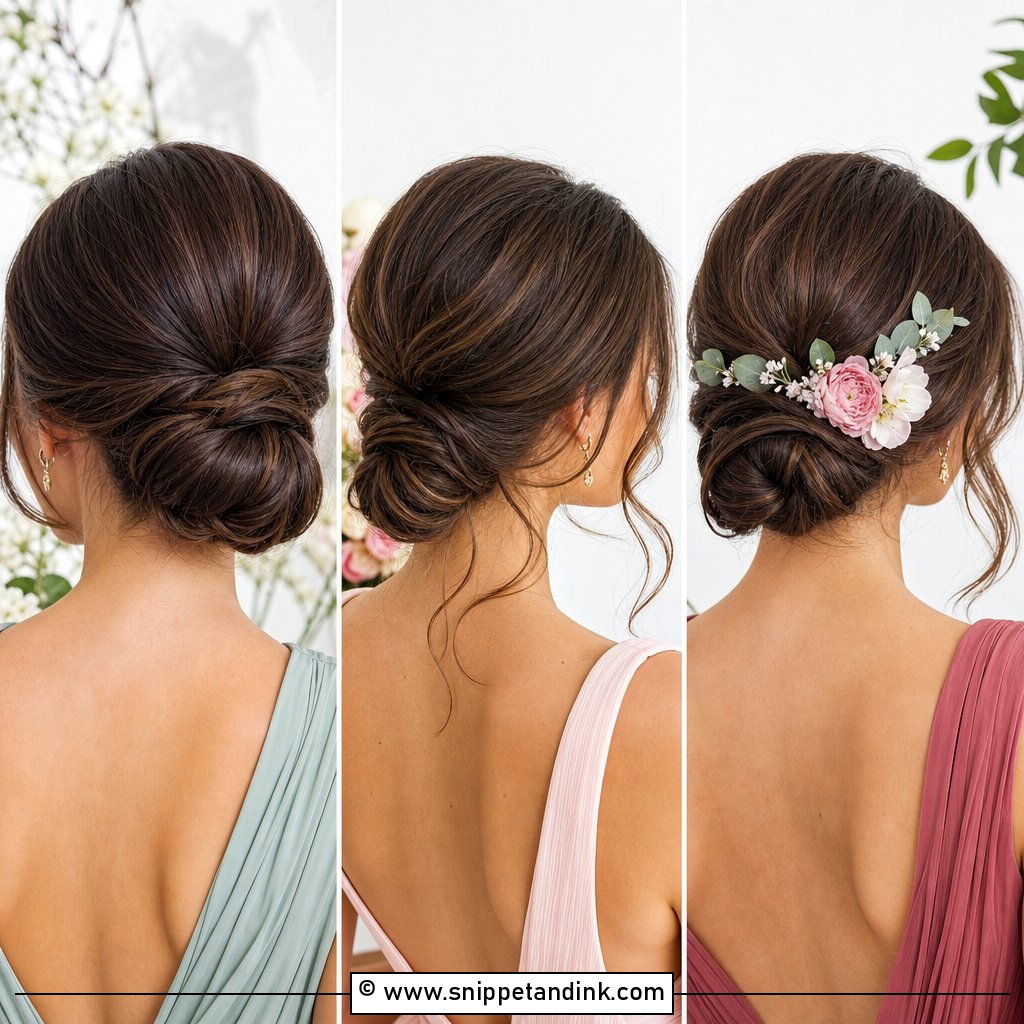
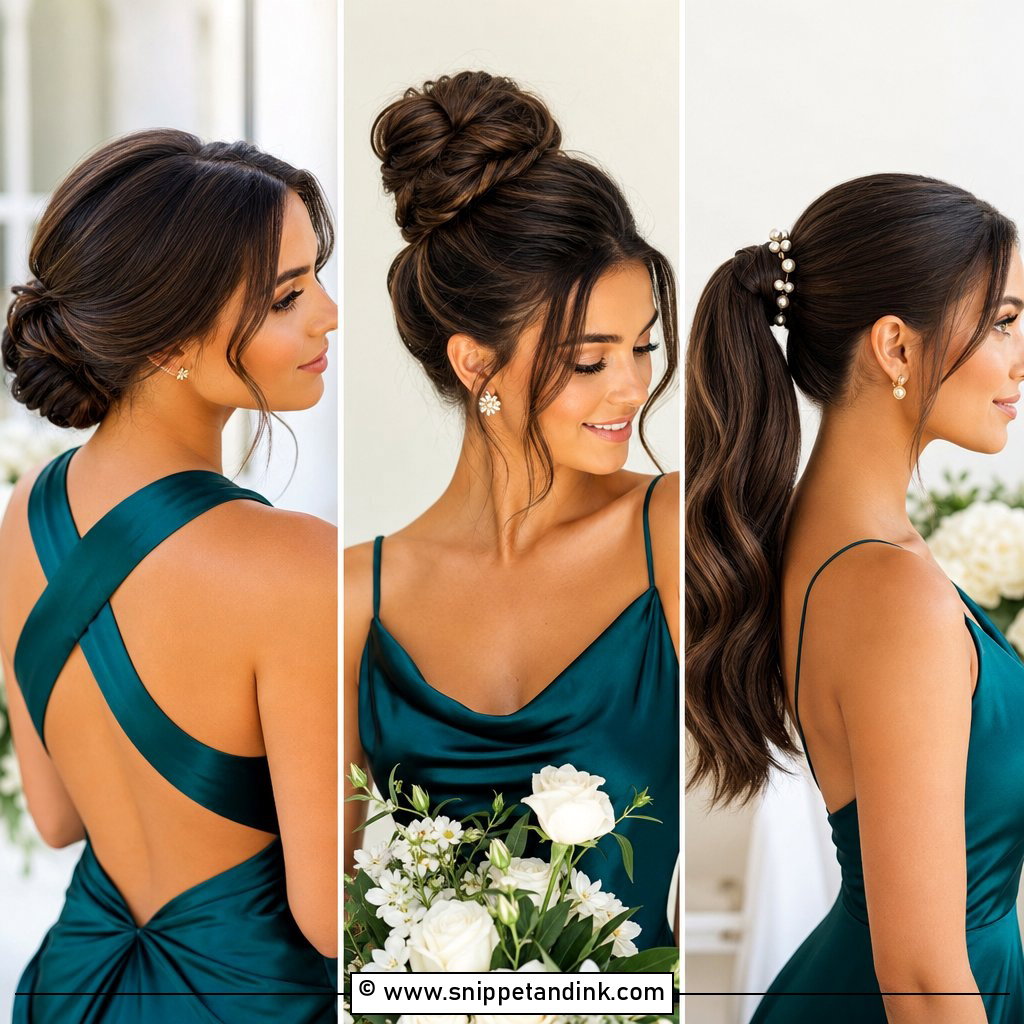
Of everything here, a low bun pinned off-centre is the hardiest. I part deeply, sweep across, and build the bun just behind the ear on the opposite side, which reads well from the side and the back, where guests spend most of the ceremony looking. Sitting low, it doesn’t fight high-backed chairs or a bouquet held close to the chest. Smooth suits sleek fabrics; with lace I loosen the surface a little. A couple of tendrils stop it looking severe, but curl them, or they hang limp by dinner.
8. Side Swept Chignon Bridesmaid Hair
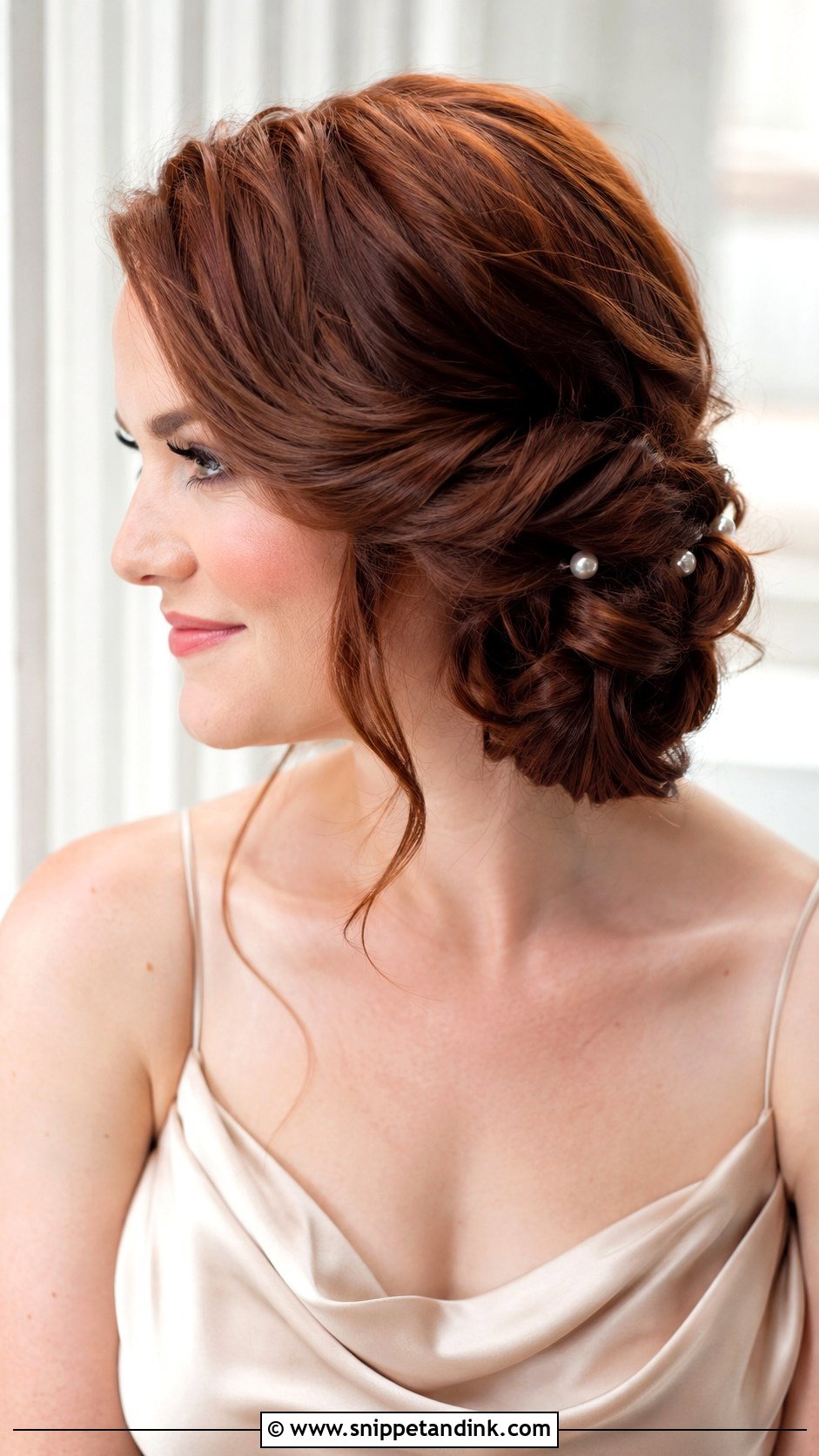
For a summer wedding in a formal venue, this is my usual answer: hair off the neck without looking scraped back. What separates a chignon from a plain bun is the shape. It’s rolled or twisted so it sits as a slightly oval knot off to one side. Shorter lengths can only twist, not roll, so I check length at the consultation. On thin hair I pad the inside with a small bun form matched to the hair colour, and pearl pins look neat lined along the sweep side.
9. Side Swept Updo Bridesmaid Hair
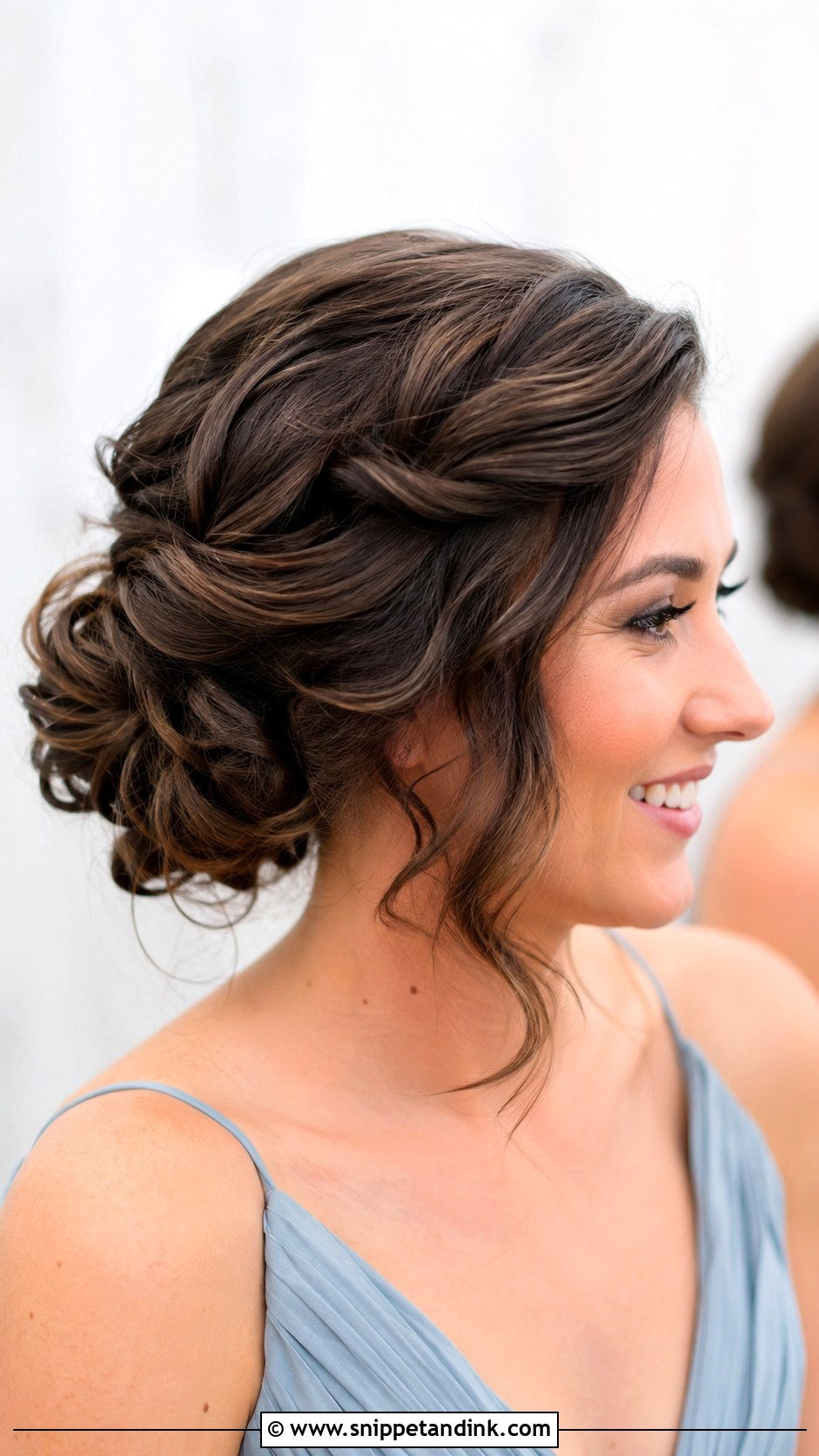
Side swept updo bridesmaid hair differs from a standard updo at the front. Instead of pulling everything back, I sweep the front section across the temple and pin it into the back, so it frames one side of the face. I suggest it for dresses with open or detailed backs, since nothing hides the fabric. Spray in thin layers rather than one heavy coat. The hair stays touchable, and if a piece falls during the reception I can re-pin it without fighting crunchy hair.
10. Side Swept Half Up Bridesmaid Hair
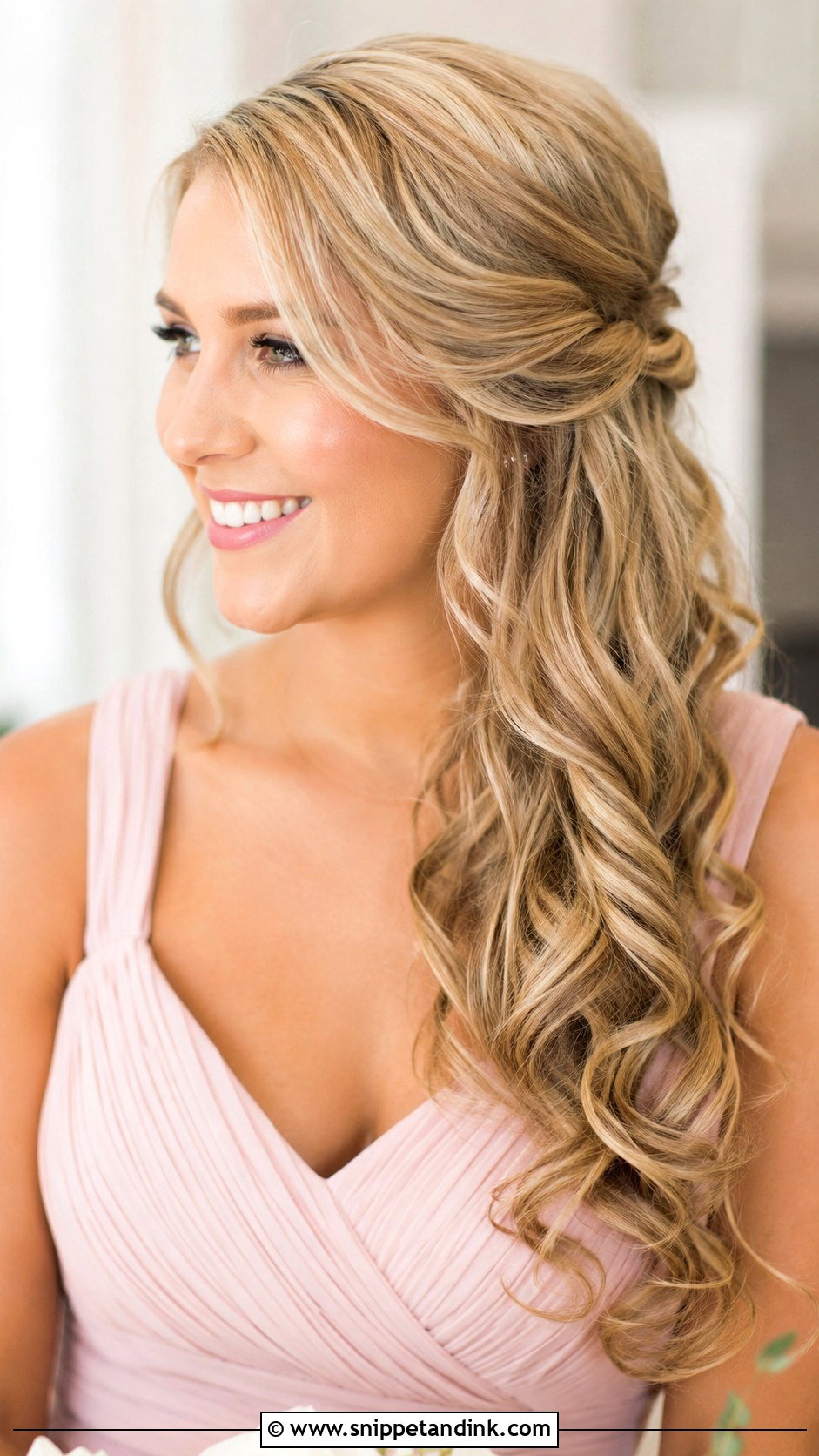
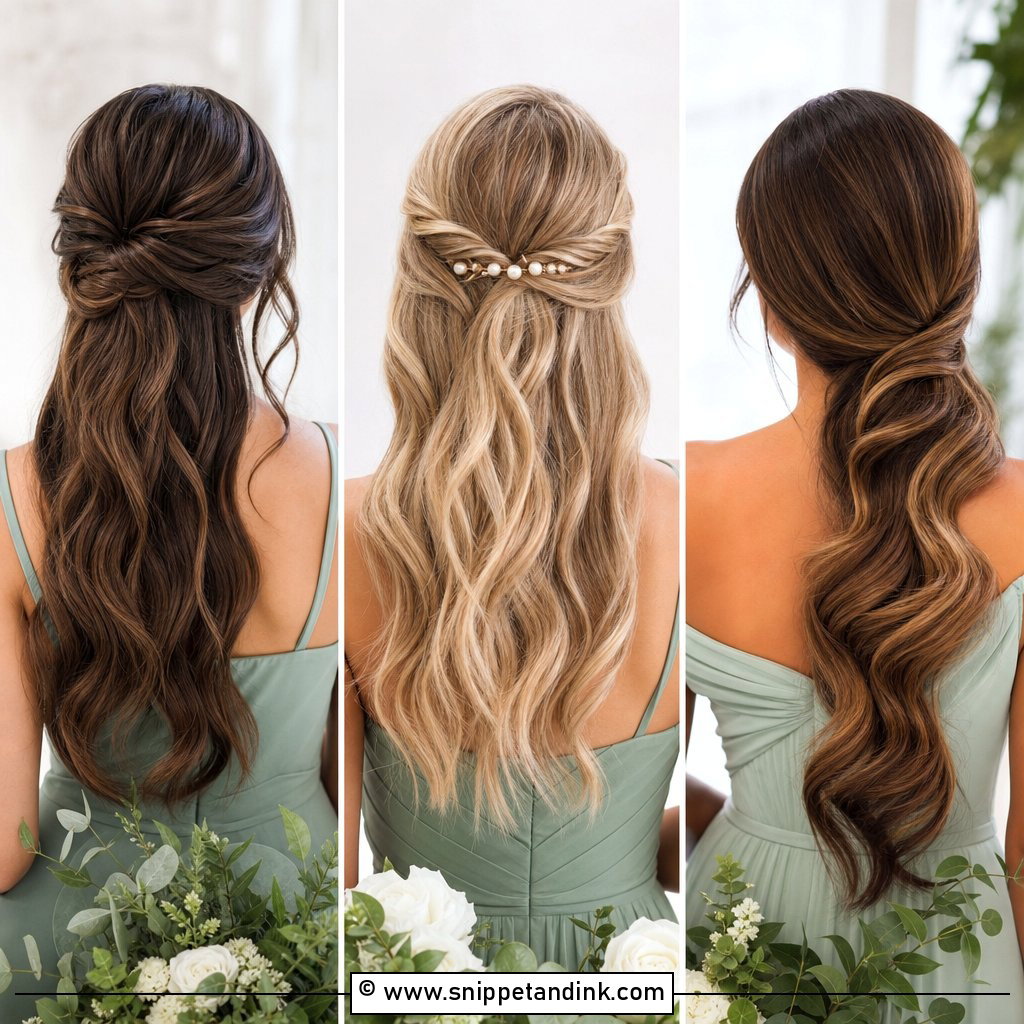
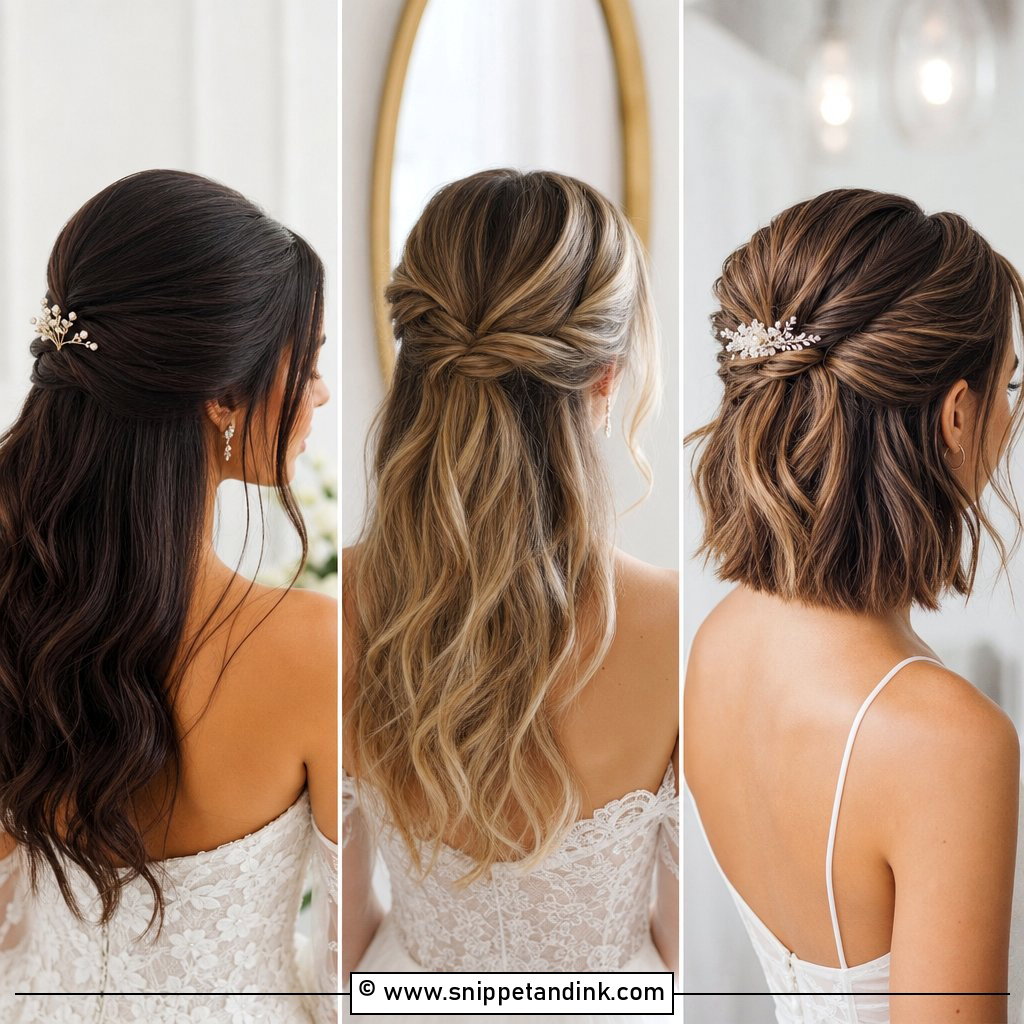
Half up is a good compromise, provided the pinned section is anchored. I take the top section, twist it toward one side, and lock it with crossed pins onto a small hidden base of back-combed hair. Without that base the twist slides down within a couple of hours. The rest falls in curls over one shoulder, ends curled away from the face. Bridesmaids who like height at the crown are usually happiest here.
11. Side Swept Ponytail Bridesmaid Hair
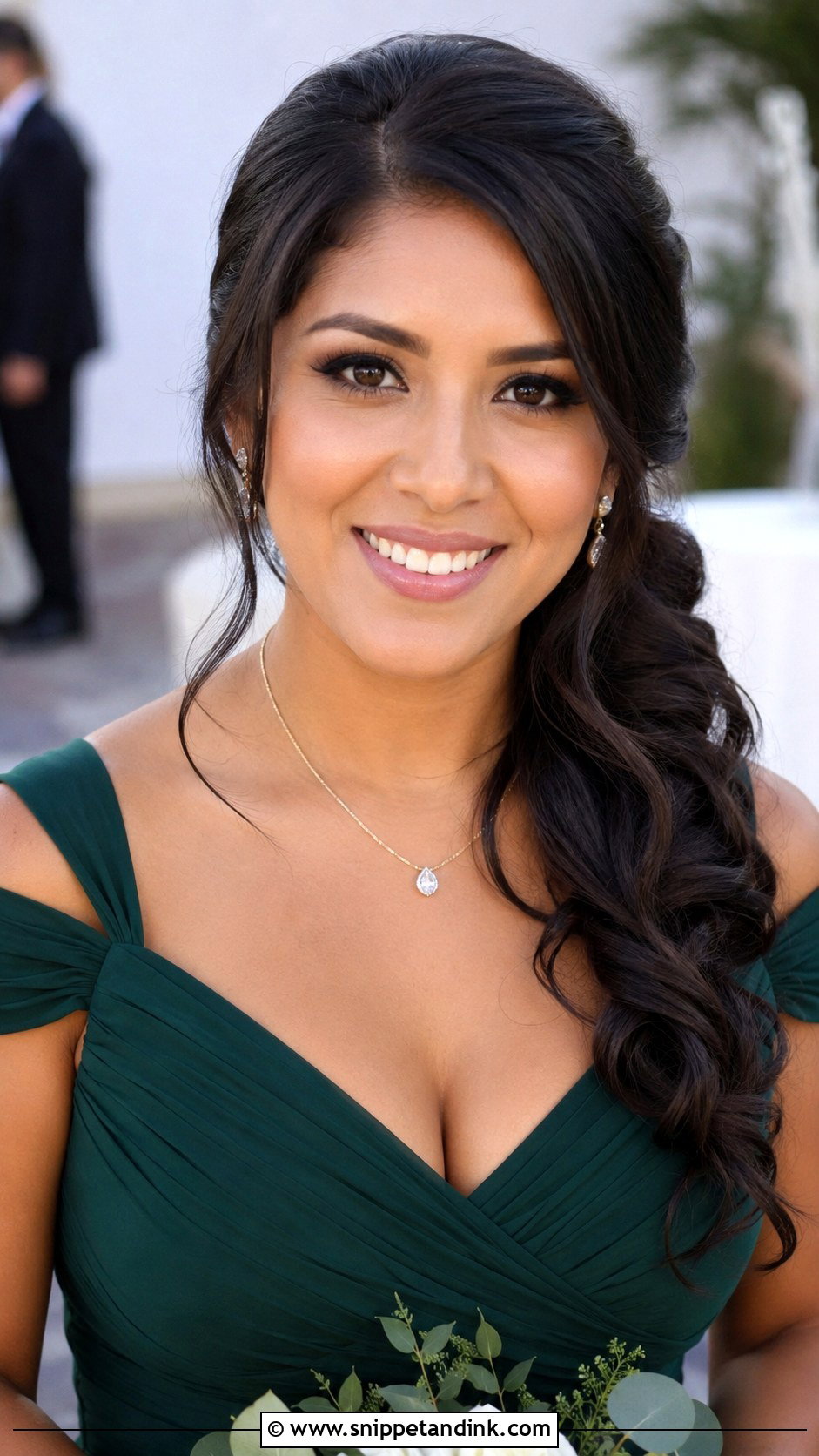
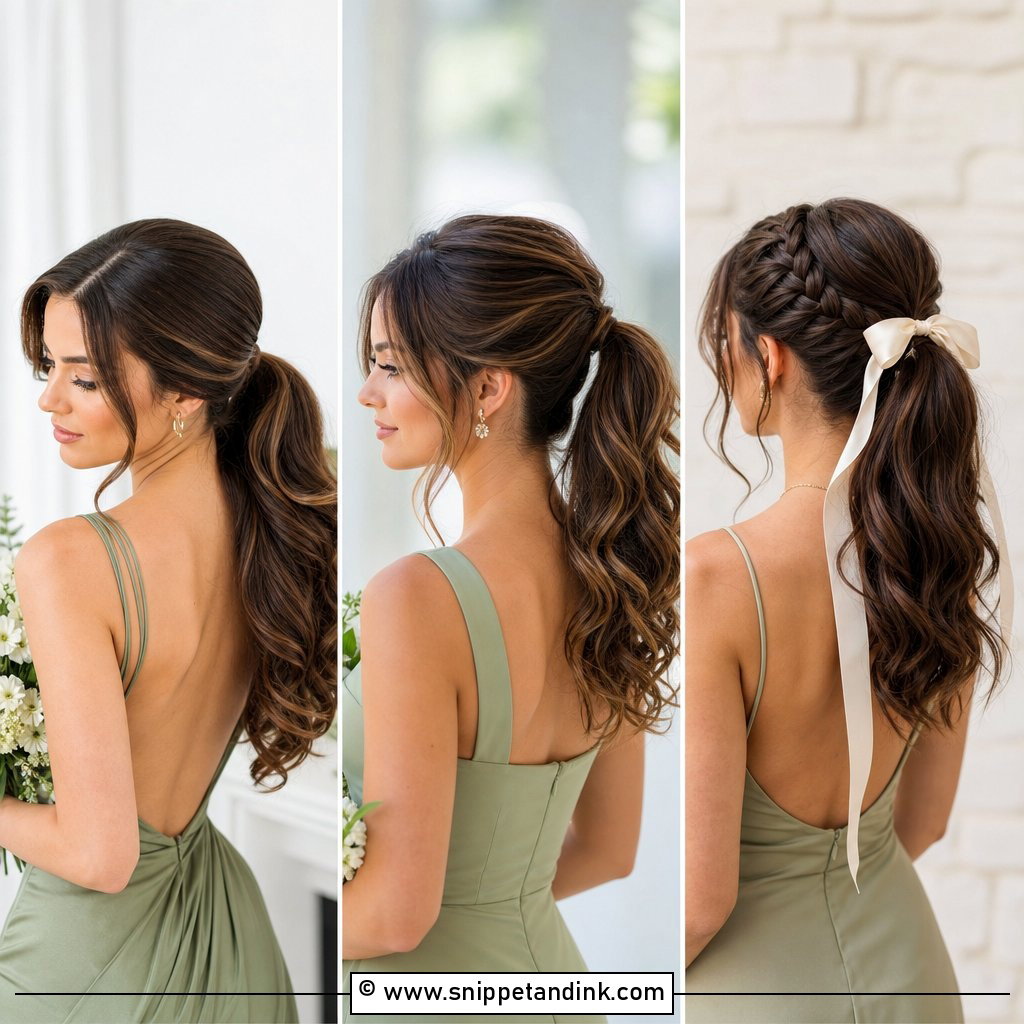
I offer this to bridesmaids who hate pins near the scalp. The ponytail sits low or mid-height and drapes over one shoulder, and the step that makes it look finished is wrapping a strand around the elastic and pinning it underneath. If the dress is plain, I build volume at the crown; if it’s beaded or ruffled, I keep the top smooth so the two don’t compete. It copes well with heat and can be fixed in any bathroom mirror.
12. Side Swept Sleek Ponytail Bridesmaid Hair
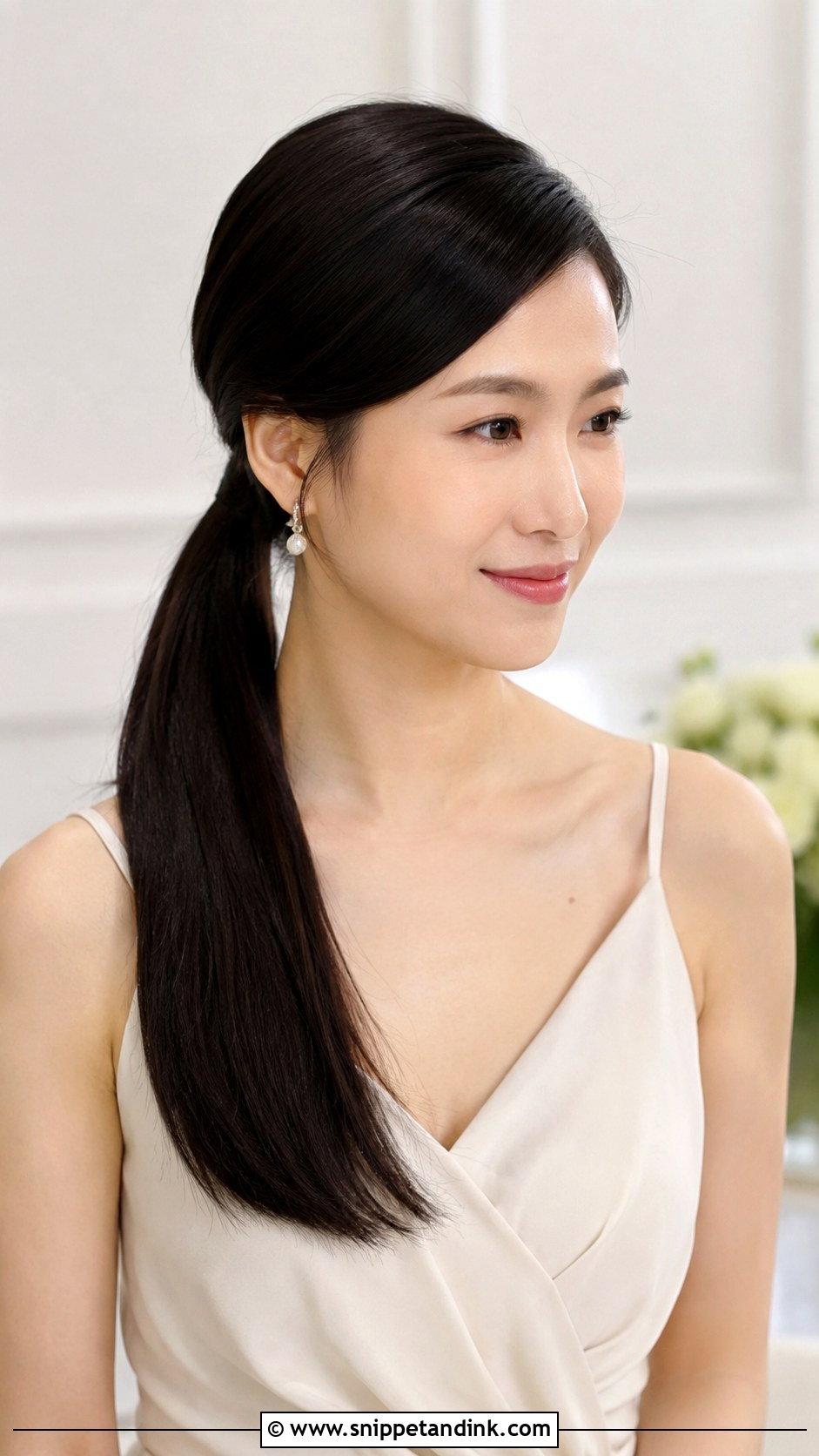
The sleek version depends on hair that’s already straight or lightly waved. On curly hair it means a long blow-dry and a fight with humidity all day, so I’m honest about that at the trial. I work a small amount of smoothing cream along the hairline, brush the part flat, and gather it low so it drapes. The line between polished and greasy is thin, which is why I mist shine spray from a distance and never straight at the roots. A couple of hidden pins on the sweep side stop the ponytail rolling back to the middle.
13. Side Swept Curly Ponytail Bridesmaid Hair
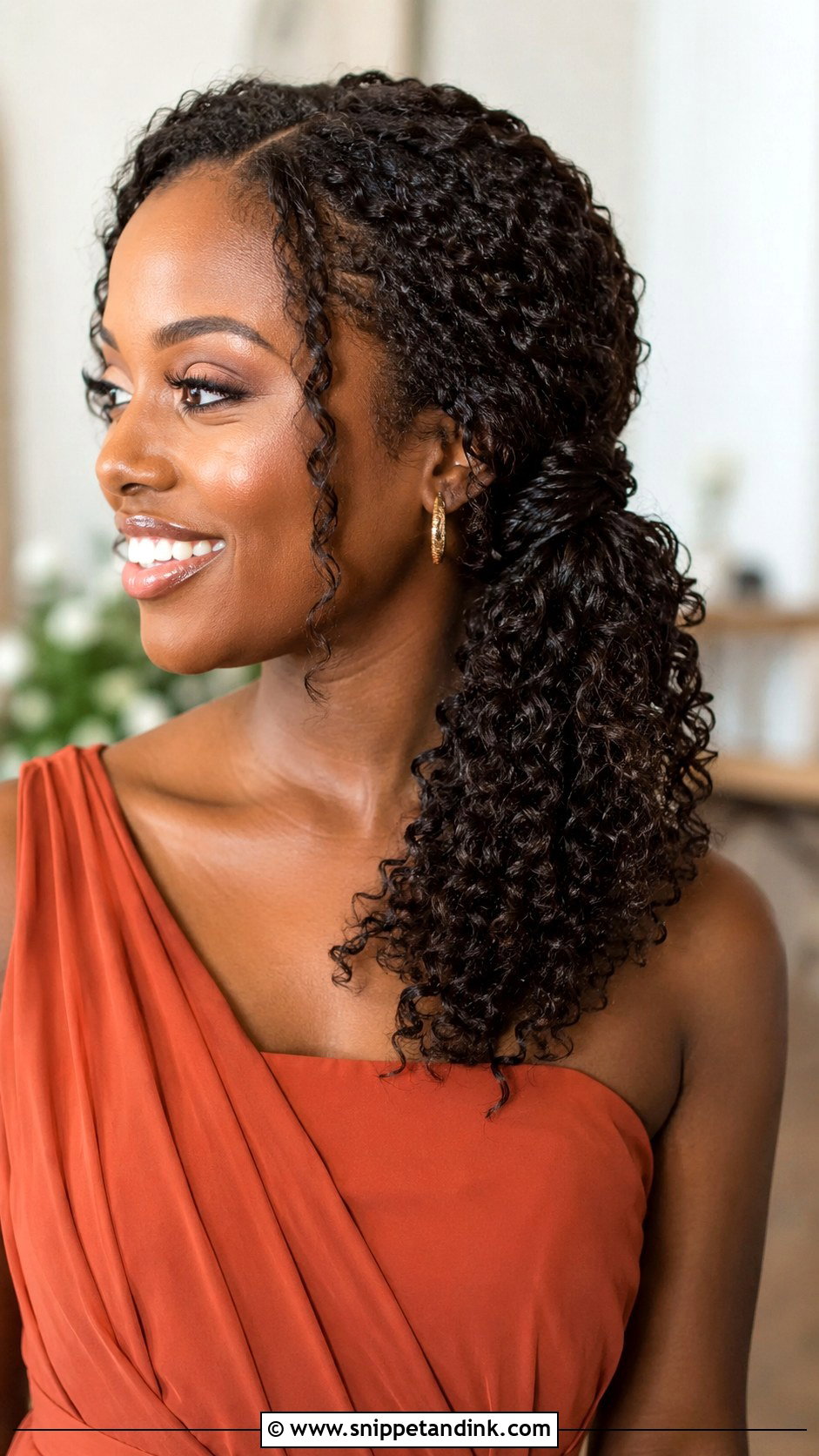
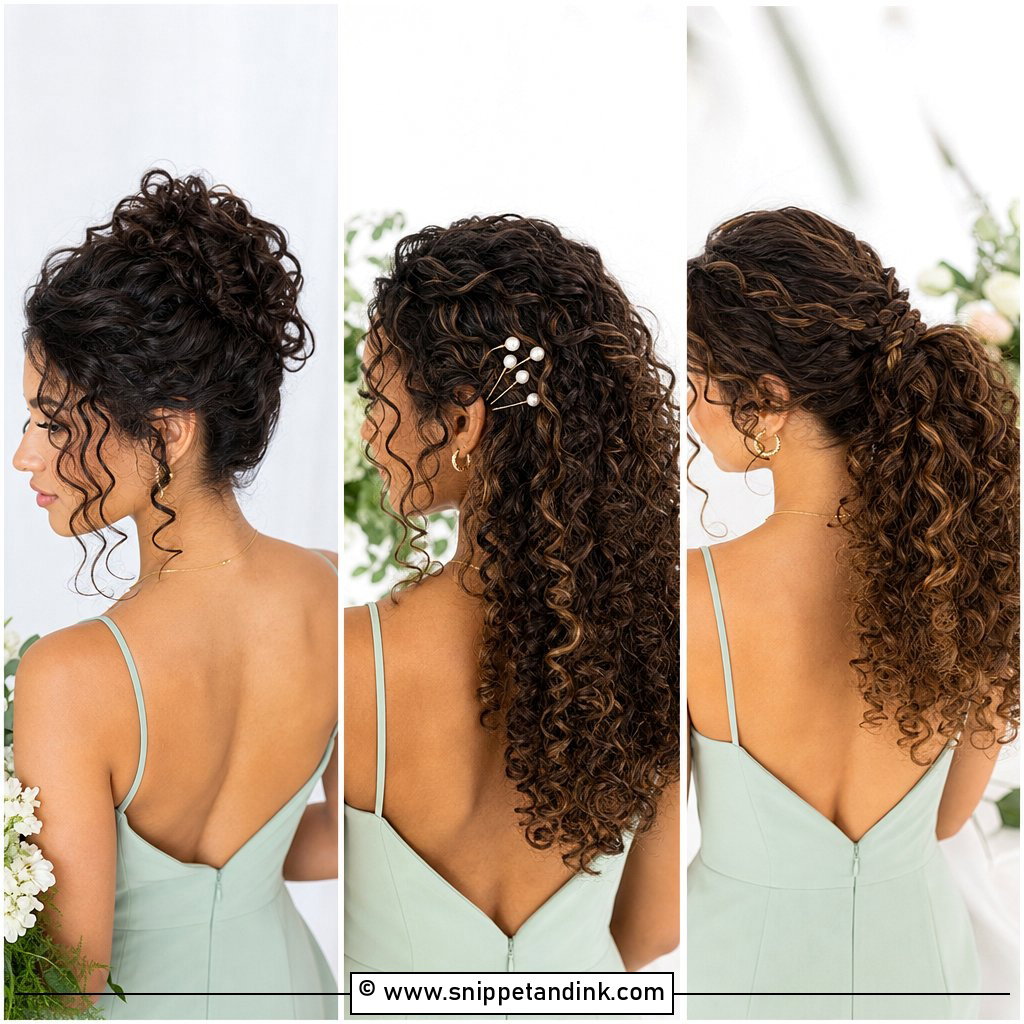
Natural curls make the easiest base for this. I gather them low near the nape and let the volume fall over one shoulder rather than smoothing anything flat. Straight hair can do it after curling, though it loses fullness faster. Slicking the crown tight against big curls looks unbalanced, so the top stays softly shaped. A small braid or twist at the side, pinned into the base, keeps the ponytail from swinging behind the shoulder.
14. Side Swept Short Hair Bridesmaid Hair
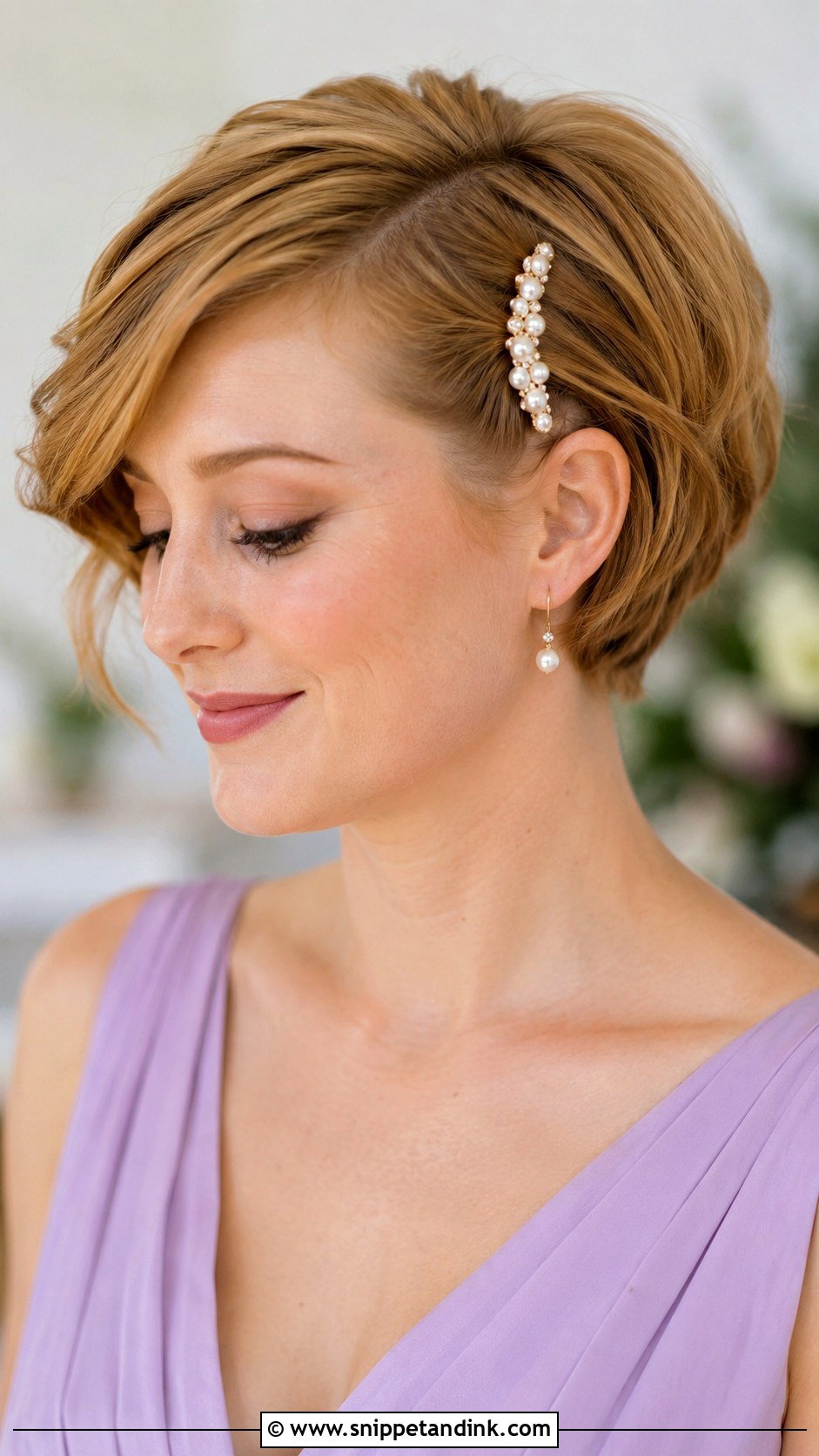
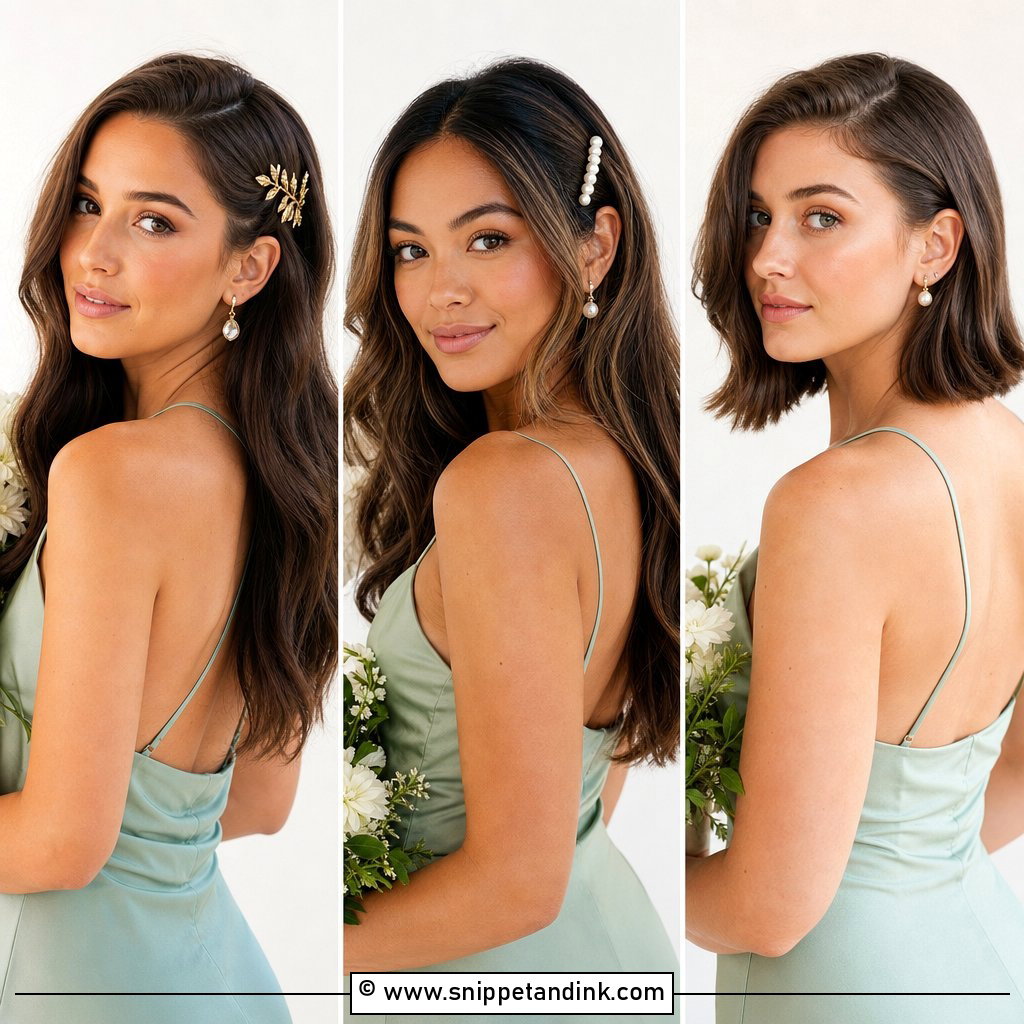
Short hair can carry a formal sweep, it just needs a different approach. A bob, lob, or cropped cut gets a deep side part and bends through the front, then I tuck the shorter side behind the ear under a clip or small comb. On a very short crop there’s nothing to curl, so I concentrate on shine and lift at the crown. The first thing I check is whether the tucked side will stay. Cuts with a lot of weight underneath tend to spring forward, so I hide a pair of crossed pins beneath the accessory.
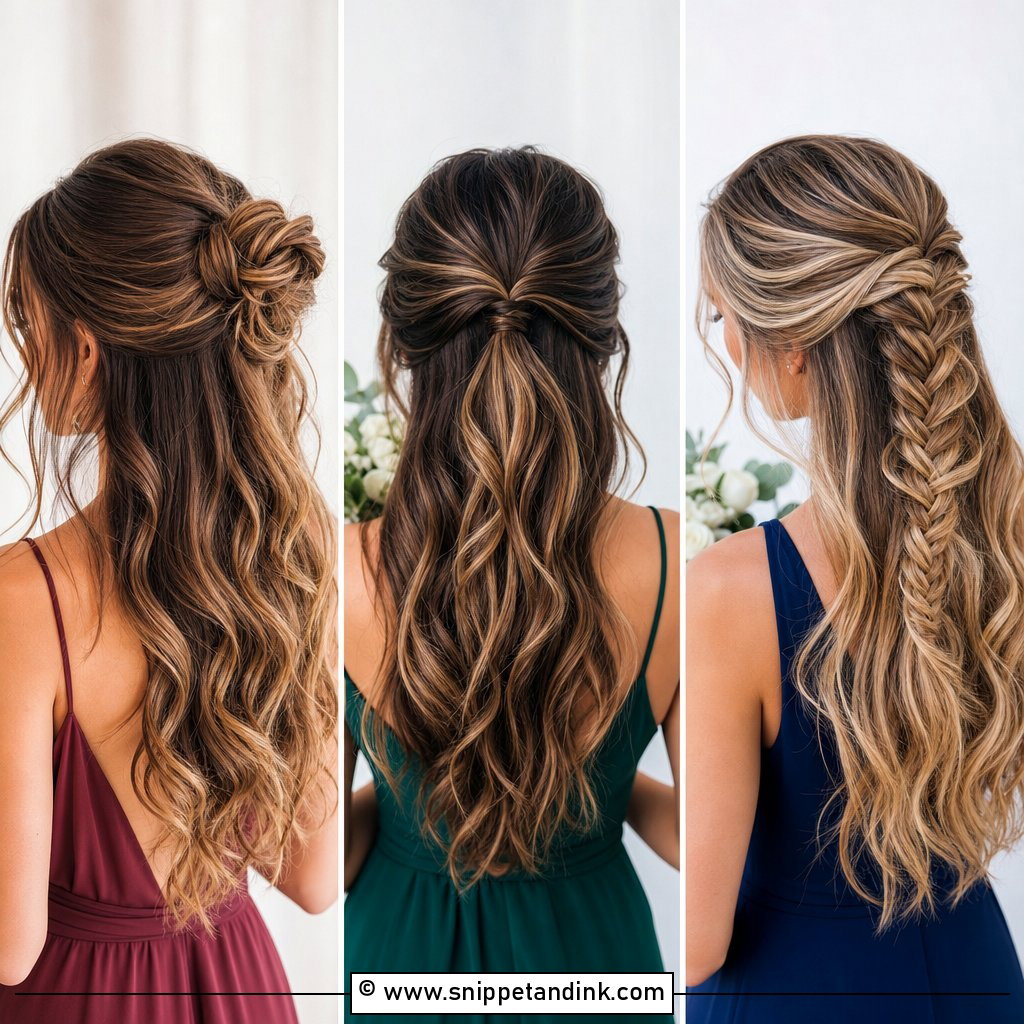
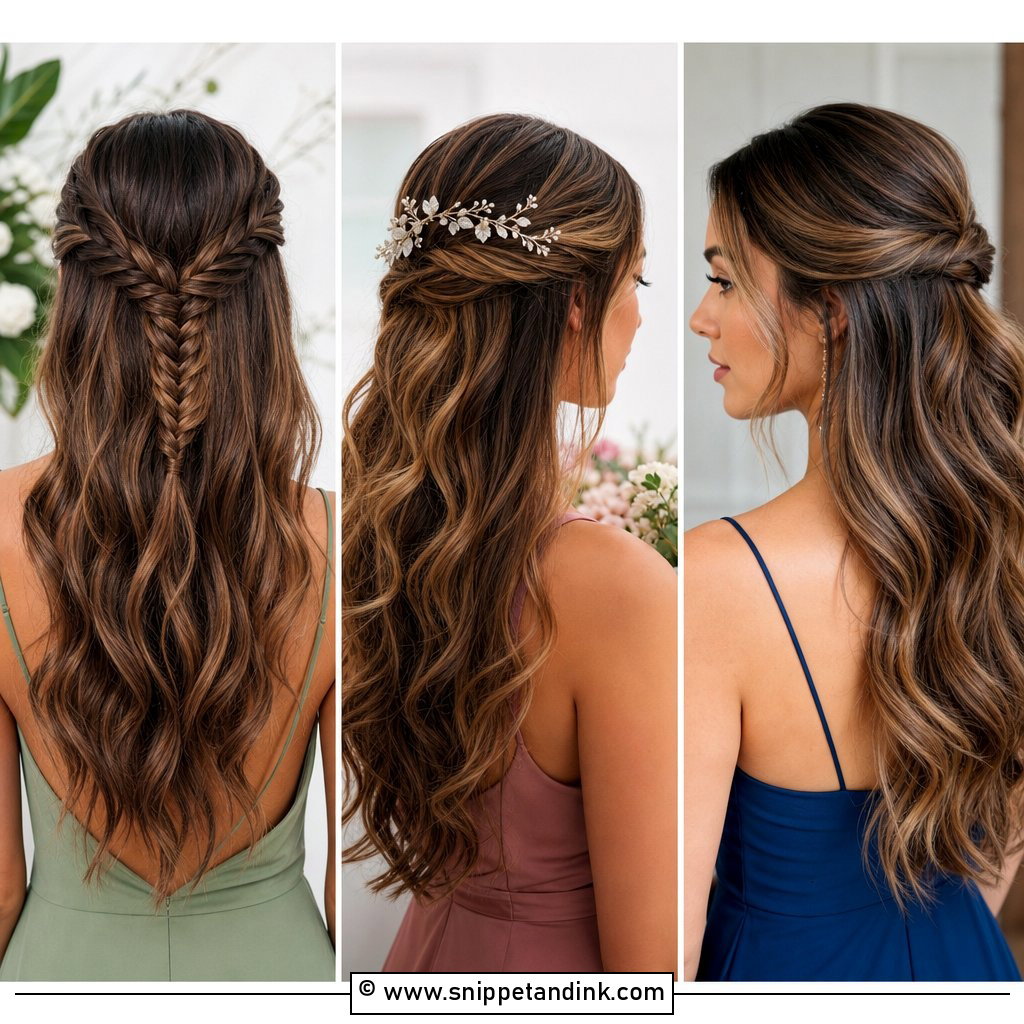
15. Side Swept Bob Bridesmaid Hair
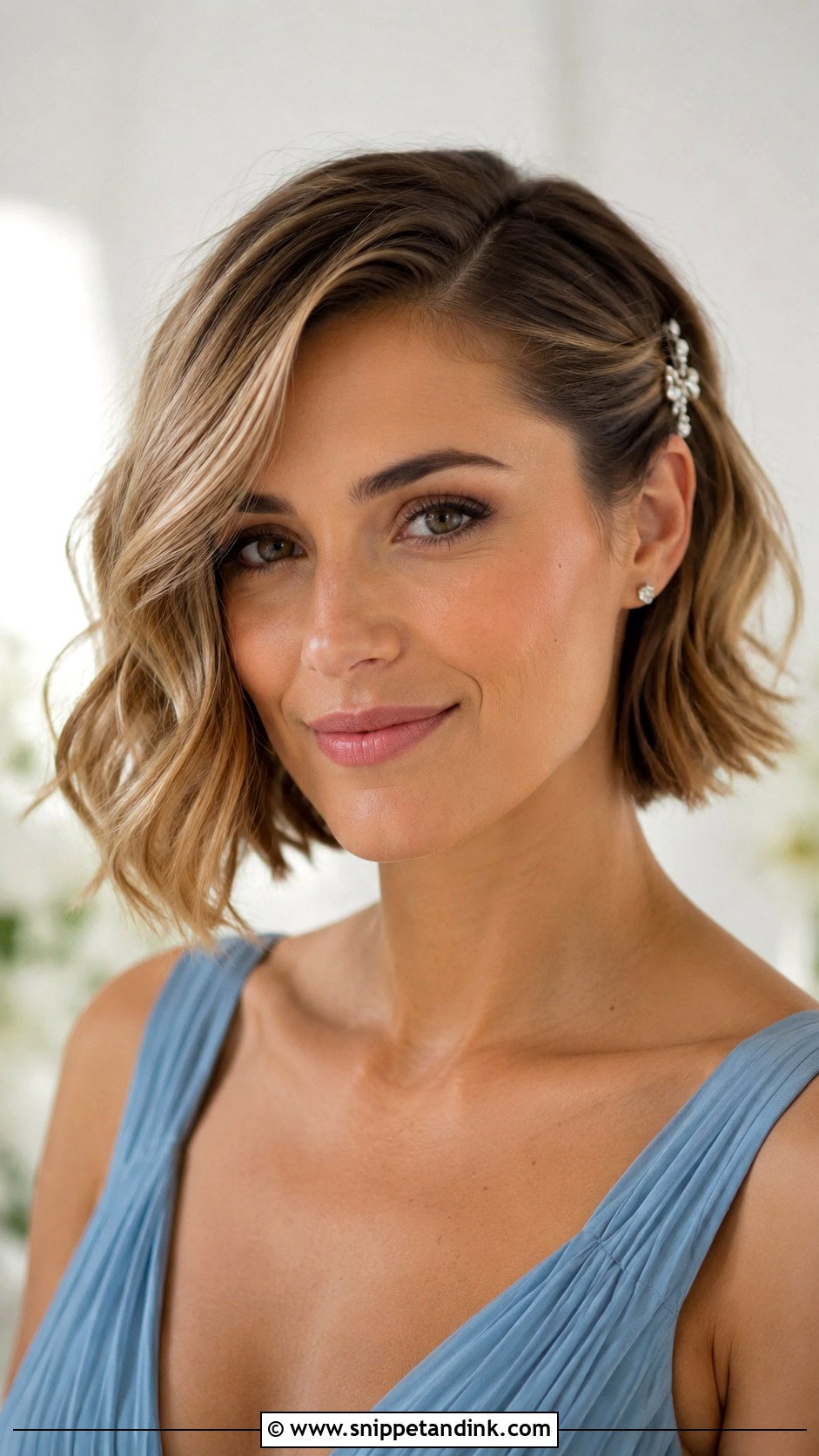
A side swept bob needs less than you’d think: a deep part, soft bends made with a flat iron, and one tucked side. I use the flat iron rather than a curling iron on chin-length cuts because the bends sit flatter and don’t bounce up into a 1960s flip. Ends can bevel under or flick out depending on how the cut was shaped. No extensions, almost no pins, and touch-ups need only a small comb.
16. Side Swept Long Hair Bridesmaid Hair
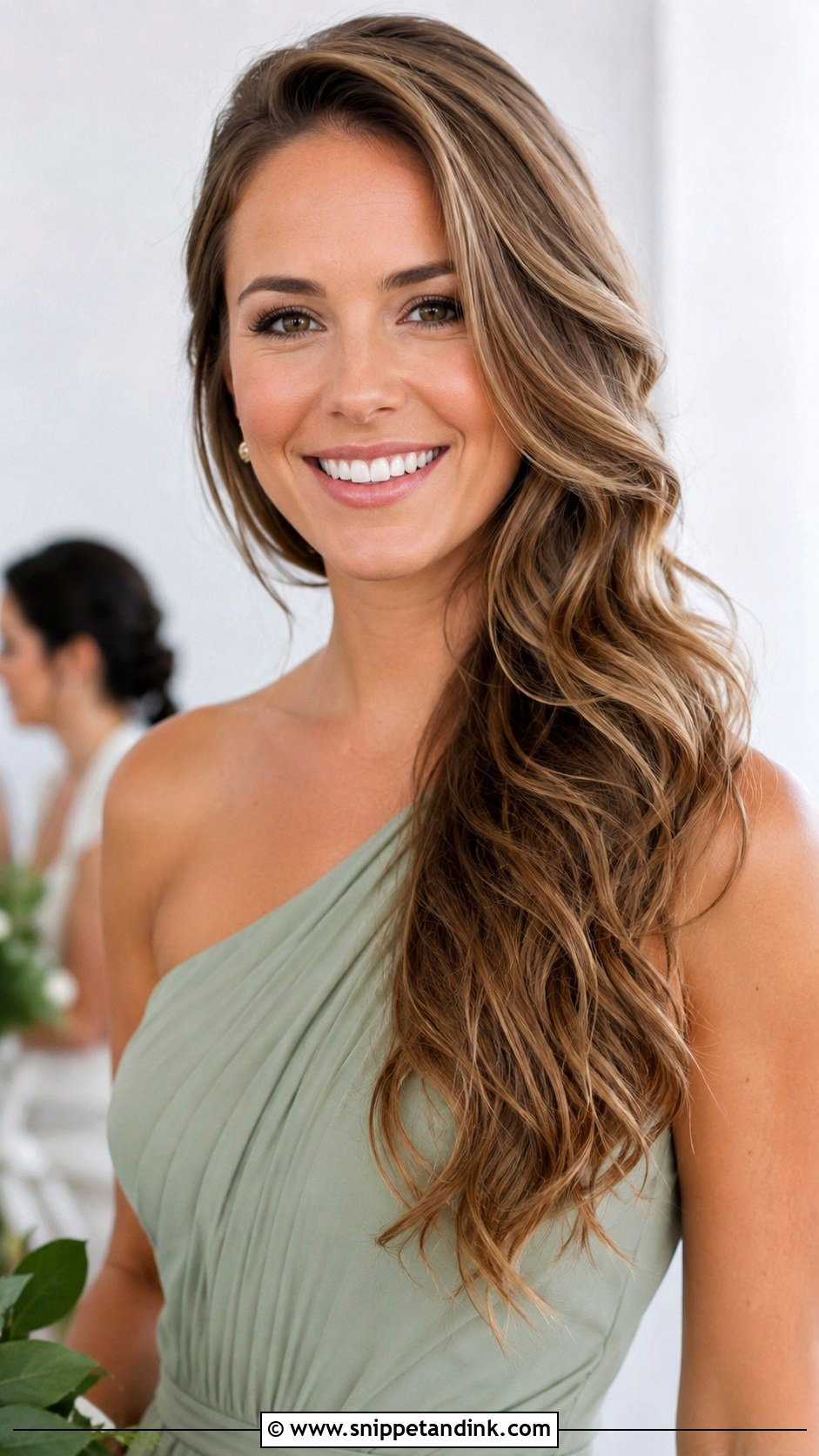
Very long hair is heavier than people realise. Swept over one shoulder, it drags the part flat within an hour unless the roots are prepped. I put root spray or a little volume powder at the part before curling, and curl the ends in alternating directions so they don’t clump together. Layered hair is easier, since the shorter pieces frame the face on their own. The anchor is a row of crossed pins behind the ear on the sweep side, so the hair looks loose but can’t migrate.
17. Side Swept Natural Curls Bridesmaid Hair
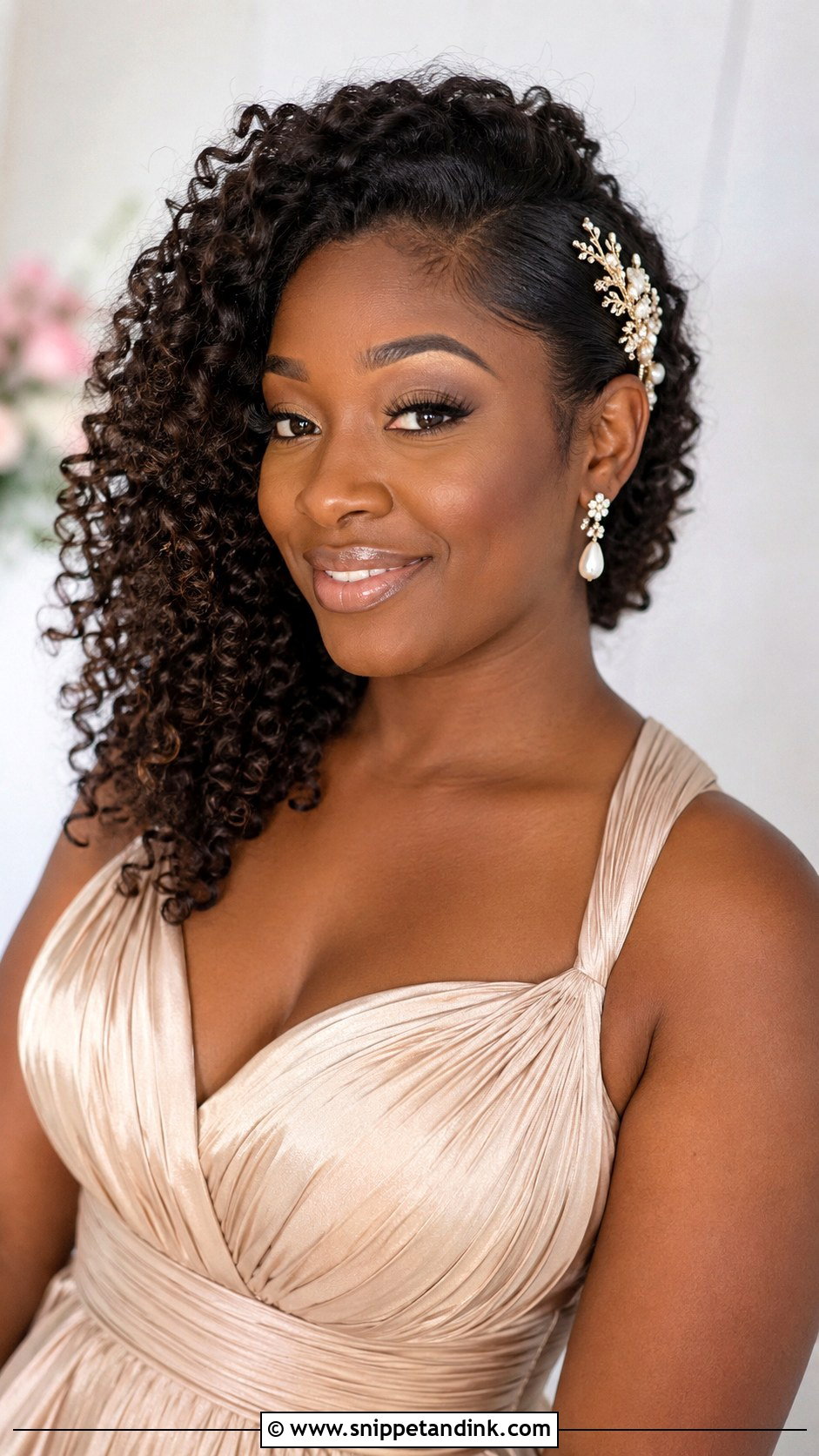
Here the curls are the style, so I work with the bridesmaid’s own pattern instead of re-curling it. Curl cream and gel go on damp hair on the morning, or I refresh second-day curls with water and product, then shape the volume to one side and pin or tuck the other side flat. Coils and tight ringlets give the fullest shape. Shrinkage needs planning, so I judge length on dry curls, never wet. A comb or clip grips best on the smoother side, where it has something flat to hold.
18. Side Swept Hair With Pearl Pins Bridesmaid Hair
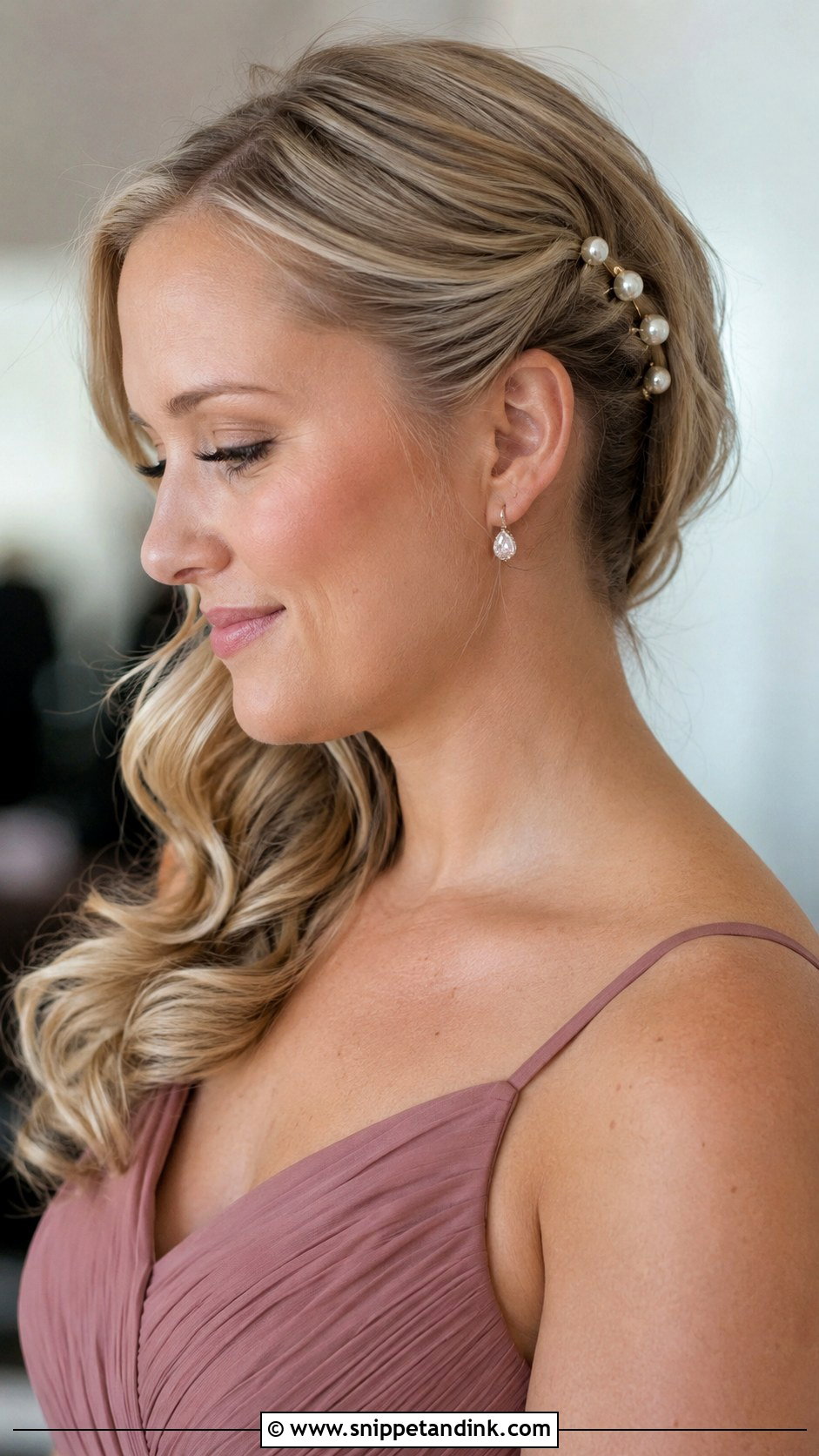
Pearl pins dress up any base in this list. I place them where the hair changes direction: along the tucked side, around a twist, or circling the base of a low bun. Spread too widely, they look scattered. Clustered at one point, they look like a deliberate detail. They sit happily against neutral, blush, sage, champagne or black dresses, but keep the texture around them soft, because pearls on glossy, sleek hair can feel stiff at a garden wedding.
19. Side Swept Hair With Flower Clip Bridesmaid Hair
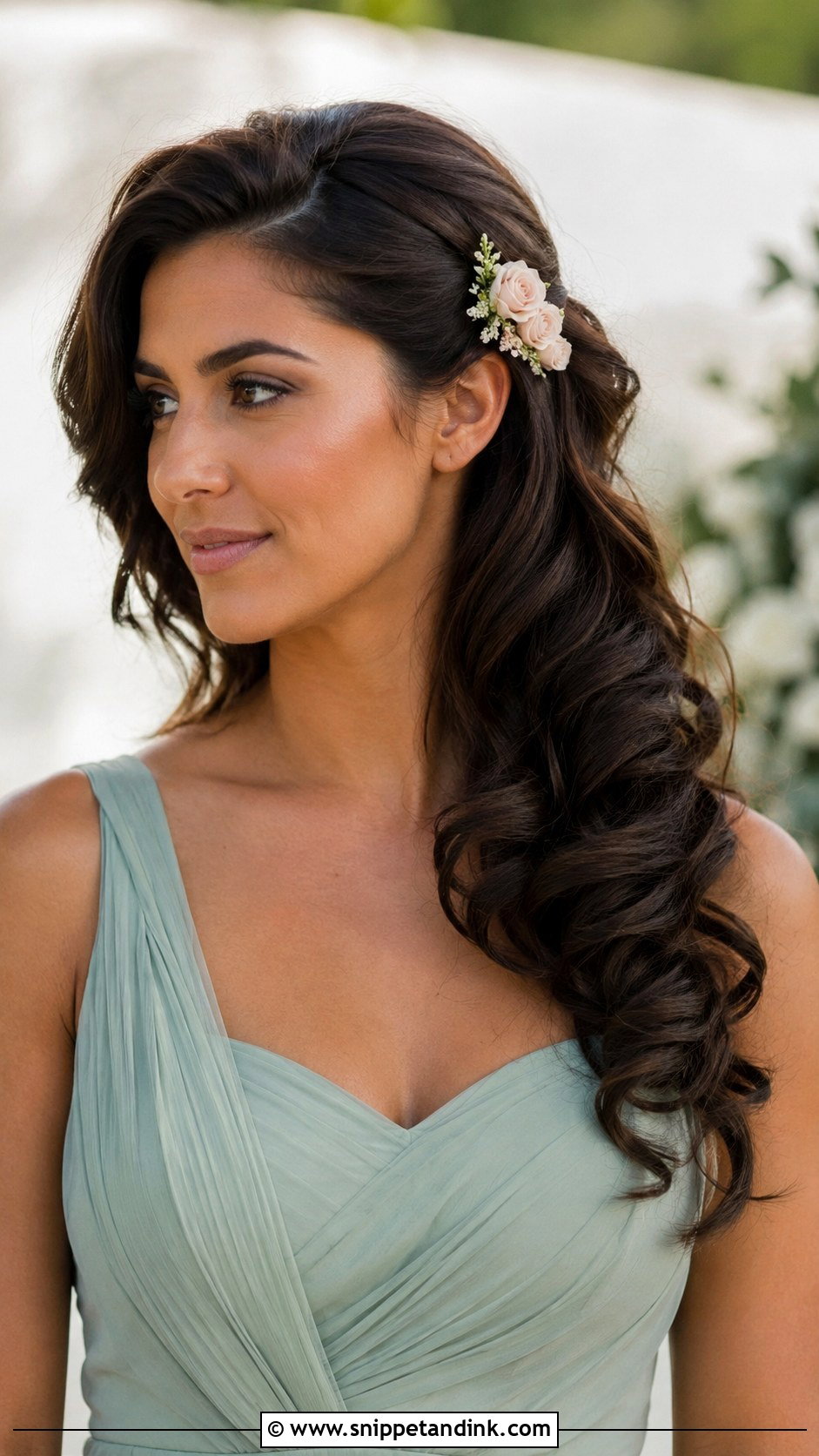
A flower clip ties the hair to the setting without the bulk of a crown. It can sit above the ear, beside a side braid, or at a low bun, and I always clip it onto a pinned section rather than loose hair, because a clip on loose waves slides down within the hour. If the florist is supplying fresh blooms, ask for sturdy ones such as spray roses; delicate flowers wilt fast once they’re out of water. Match the colour to the bouquet or the dress, and place it on the side that faces the guests in the lineup.
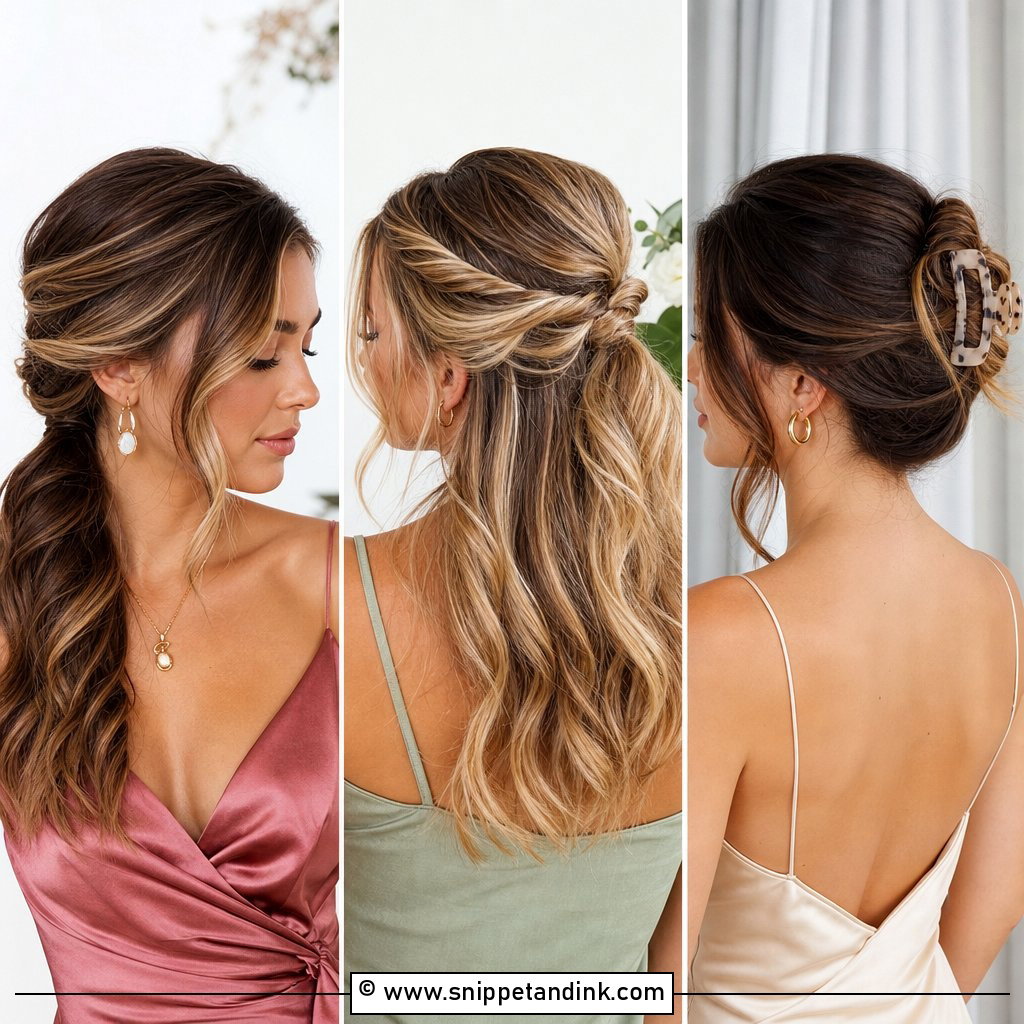
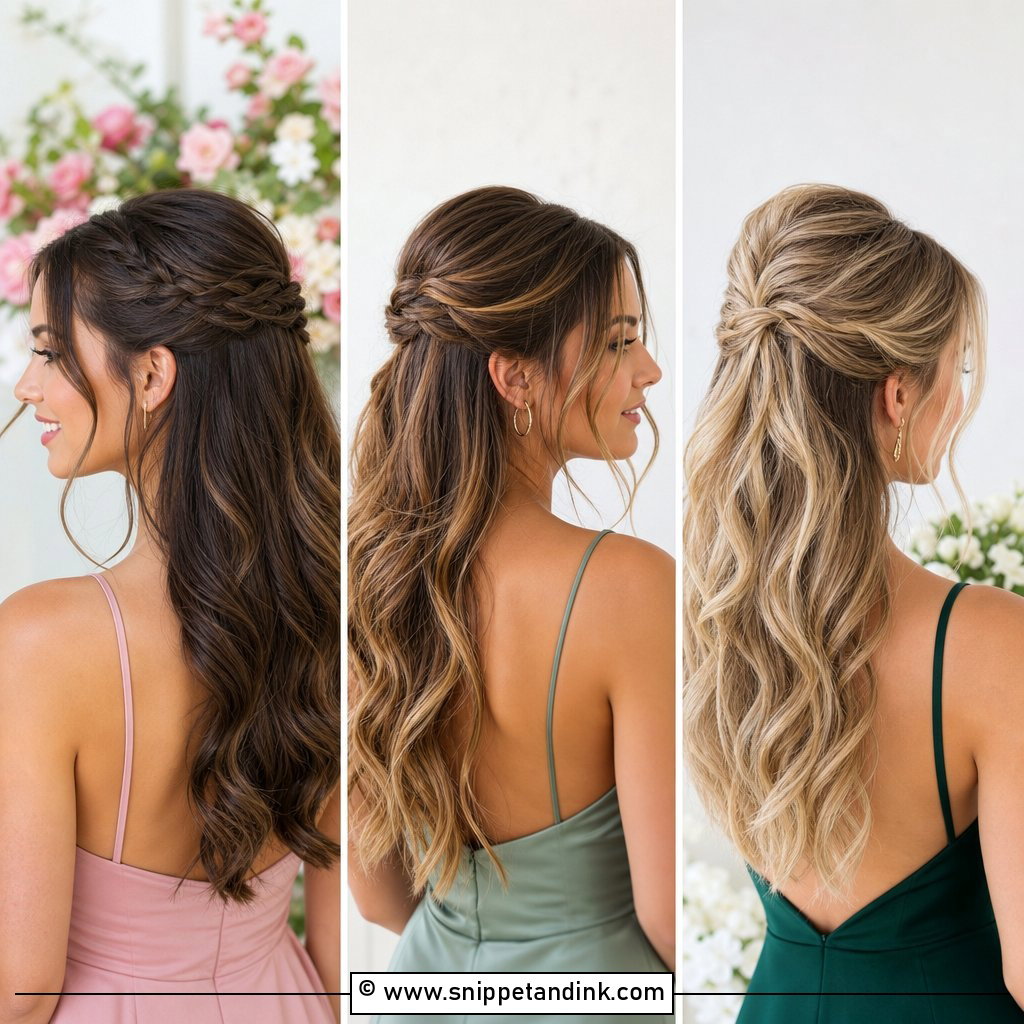
20. Side Swept Hair With Side Bangs Bridesmaid Hair
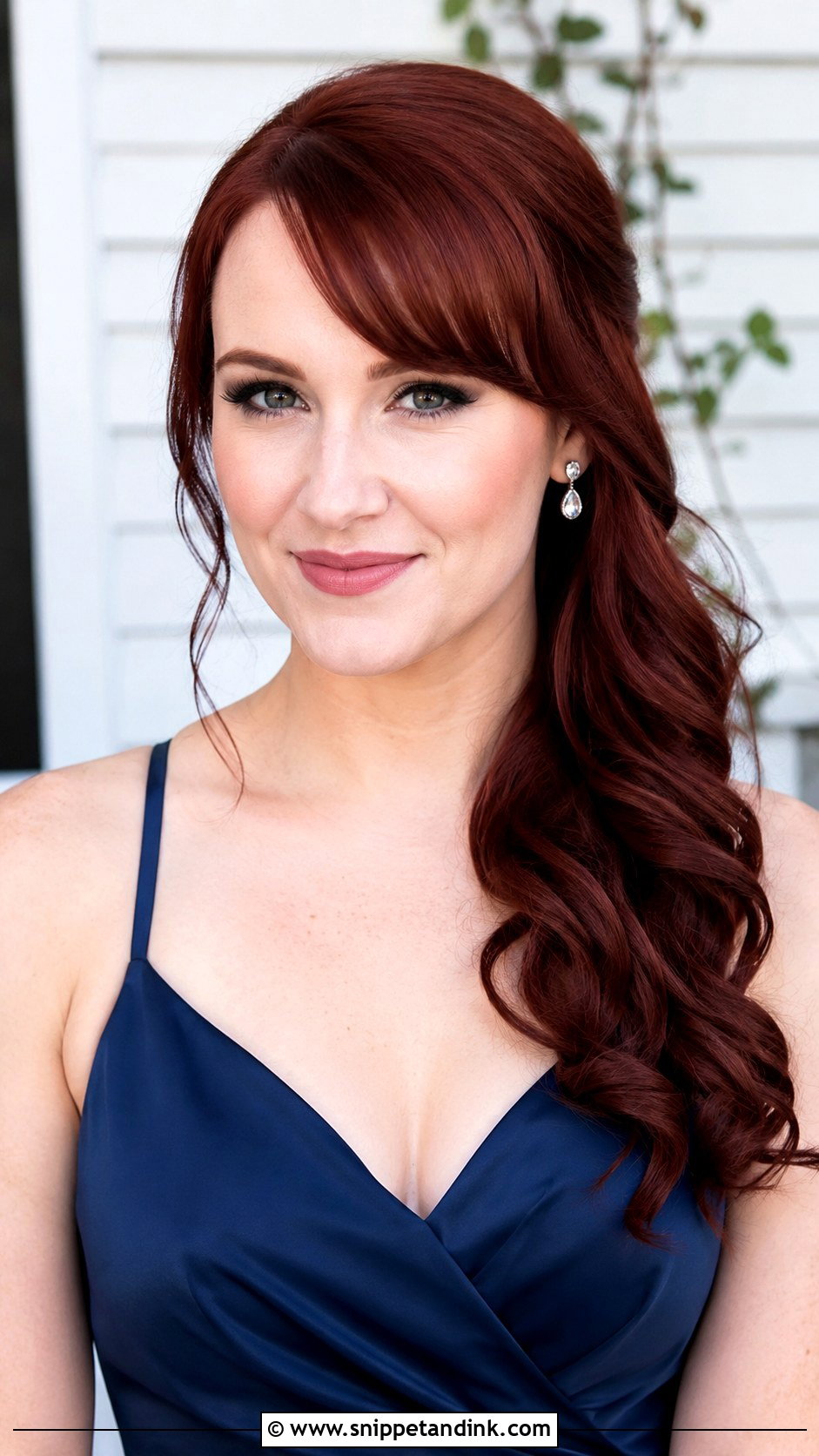
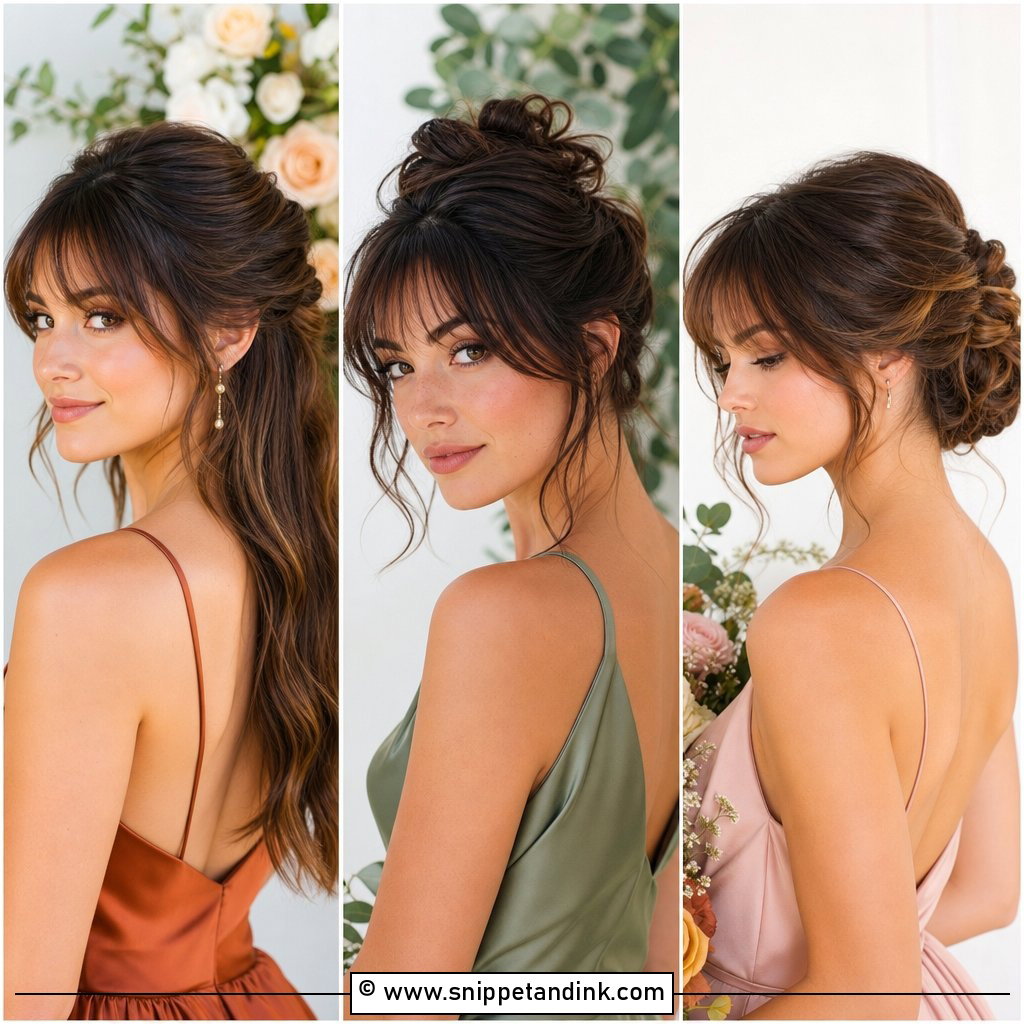
Side bangs frame the face while the rest stays formal, and they blend into waves, a ponytail or a low bun. This works when the bridesmaid already has a fringe or face-framing layers. I wouldn’t cut one in for the wedding, since a new fringe takes a few weeks to fall naturally. I blow-dry the bang with a round brush in the direction of the sweep so it curves instead of splitting. A light mist of spray and a small brush in the clutch handle the touch-ups.
How I Pin a Sweep So It Lasts Until the Last Dance
In a side style, all the weight sits on one side of the head, and gravity spends the whole day pulling it back toward the centre. Hairspray alone won’t stop that. The hold comes from structure underneath.
- Arrive with hair washed the night before, or add a texture spray if it was washed that morning. Freshly conditioned hair lets pins slide straight out.
- Set the part first, with a little back-combing beneath it, and let curls cool fully before any brushing.
- Build a small anchor behind the ear on the sweep side, either a twist or a flat pinned braid, and secure the rest of the hair to it.
- Cross bobby pins in X-shapes, ridged side down, so they lock into each other.
- Spray in thin layers from arm’s length and finish with fingers, not a brush.
Heat and damp air drop curls faster than anything else. If the forecast is humid, I’d lean toward the braids, the low bun or a ponytail over loose curls, and I’d tell the bride that at the trial rather than on the day.
One Bridal Party, Very Different Heads of Hair
Bridesmaids rarely share a hair type, and the sweep earns its place because it adapts. Rather than forcing one identical style, I keep two things consistent: the direction, and the level of finish. Everyone sweeps the same way (or mirrors, as planned), and everyone is either polished or soft, not a mix of both.
- Fine hair: a braid or a half up twist, with a clip-in weft if it needs body.
- Thick or coarse hair: the Dutch braid or the low bun, since loose curls get heavy and drop.
- Natural curls and coils: keep the texture and shape it to one side. Straightening to match the group costs hours and rarely survives humidity.
- Short cuts: a tucked side wearing the same accessory as everyone else ties her into the group.
Most of these take me somewhere around 45 minutes to an hour per person, longer for Hollywood waves or very thick hair, though timings vary from stylist to stylist. For a large party, ask whether a second stylist is needed so nobody is finished three hours before the ceremony.
The Pins Nobody Sees Hold the Whole Look Up
Most of what makes a side sweep last happens out of sight: a part set early, pins crossed at the nape and behind the ear, and products that hold without setting hard. Get those right and any of the twenty styles above, from the fishtail to the short bob, will look the same in the late photos as in the first ones. Start with each bridesmaid’s length and texture, then think about the dress, and the party will look matched without looking copied.
You'll Like These Ideas:


Leave a Reply