
Bridesmaid hair has a harder job than the bride’s in one respect: it has to hold while the person wearing it carries a bouquet, fixes a train, chases a flower girl and then dances. When I plan a bridal party, I’m thinking about eight or more hours of wear, several hair lengths and textures in one room, and photos where everyone stands shoulder to shoulder. The ideas below run from low buns and braids to ponytails and short cuts, and for each one I’ve written down what I actually watch for when I build it. Use them to find the style that suits your own hair, your dress and the length of your day.
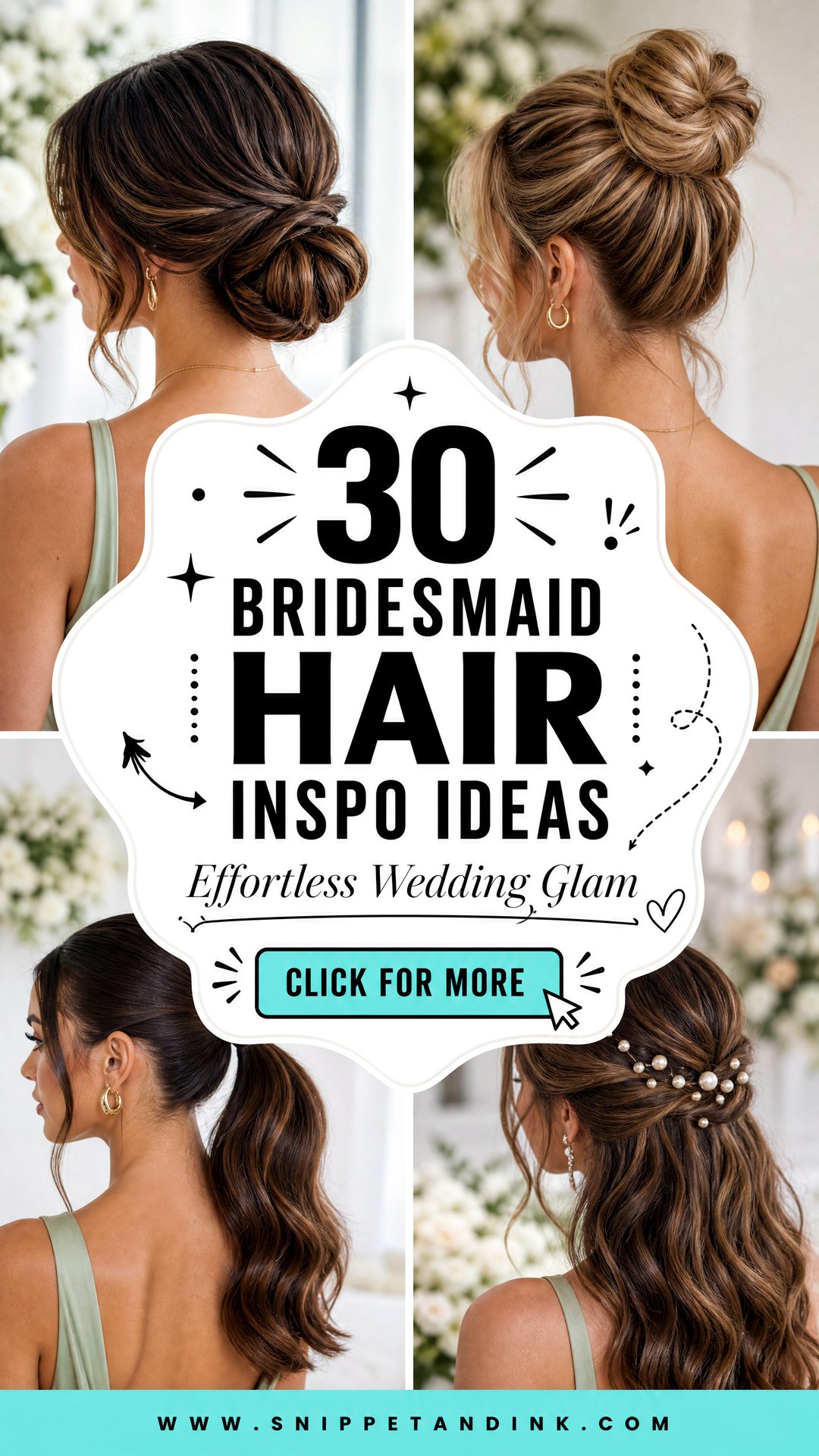
Five Bridesmaids, One Stylist and a Fixed Start Time
Bridal party hair is planned backward from the ceremony. A sleek ponytail or a low bun is one of the quicker styles to build, while Hollywood waves, braided crowns and fishtails take noticeably longer, especially on thick hair. Working times vary with hair density and with the stylist, but the pattern holds: if every bridesmaid chooses the most involved style, the morning runs late and the bride’s photos get squeezed.
When I build the schedule, the most secure styles go first and anything worn down goes last, because waves curled at eight in the morning have lost much of their shape by a mid-afternoon ceremony. The bride usually sits second to last, which leaves a buffer before she gets dressed.
Sorting the party by hair type, not by wish list
- Fine, slippery hair: low bun, sleek ponytail or braided crown, which hold with the least product.
- Thick or very long hair: high bun, twist updo or bubble ponytail, where the weight is spread out or carried higher.
- Short layers and bobs: short waves, side-swept hair or a half up braid, nothing that depends on long lengths being pinned.
- Natural curls and coils: a curly or natural hair updo, planned with a stylist who works with that texture regularly.
Send your stylist each bridesmaid’s photo from the back and the side along with the style she likes. A good stylist can tell you quickly who needs a different plan.
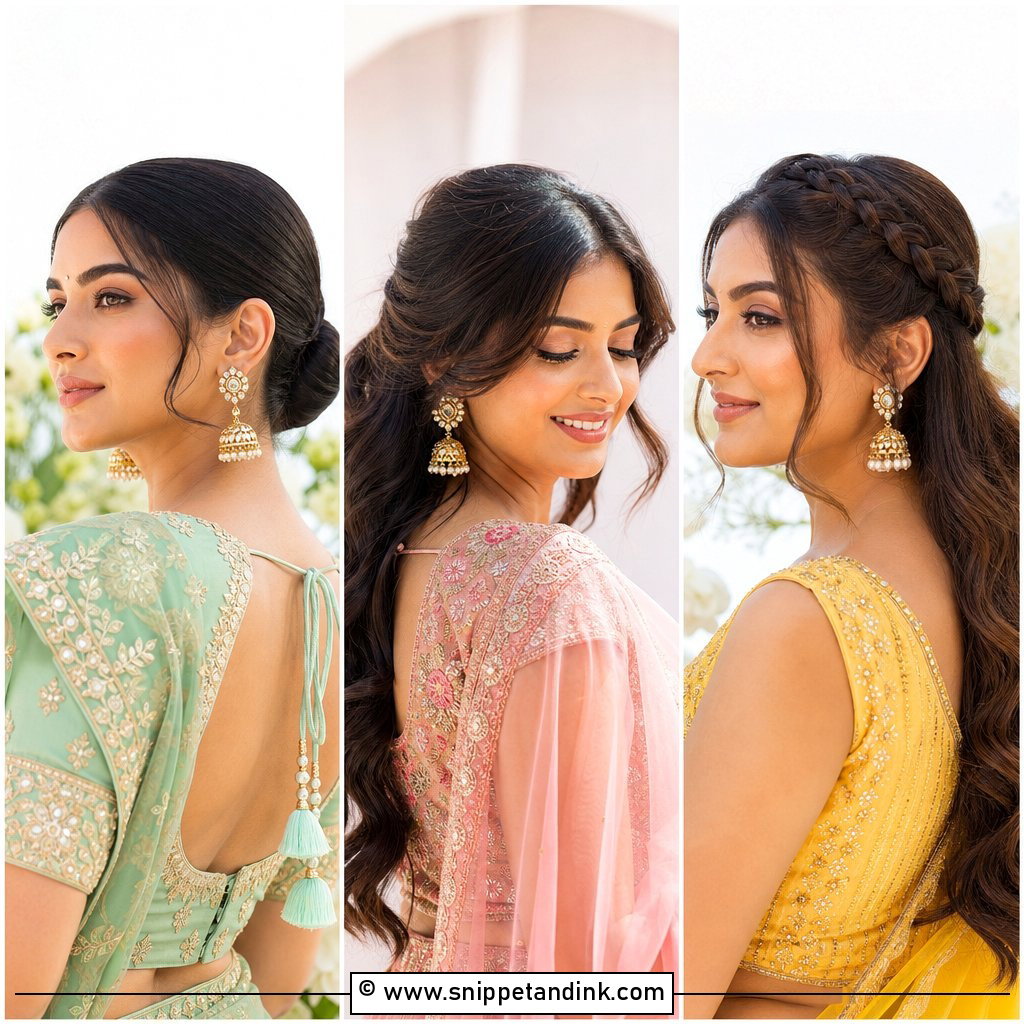
1. Bridesmaid Low Bun
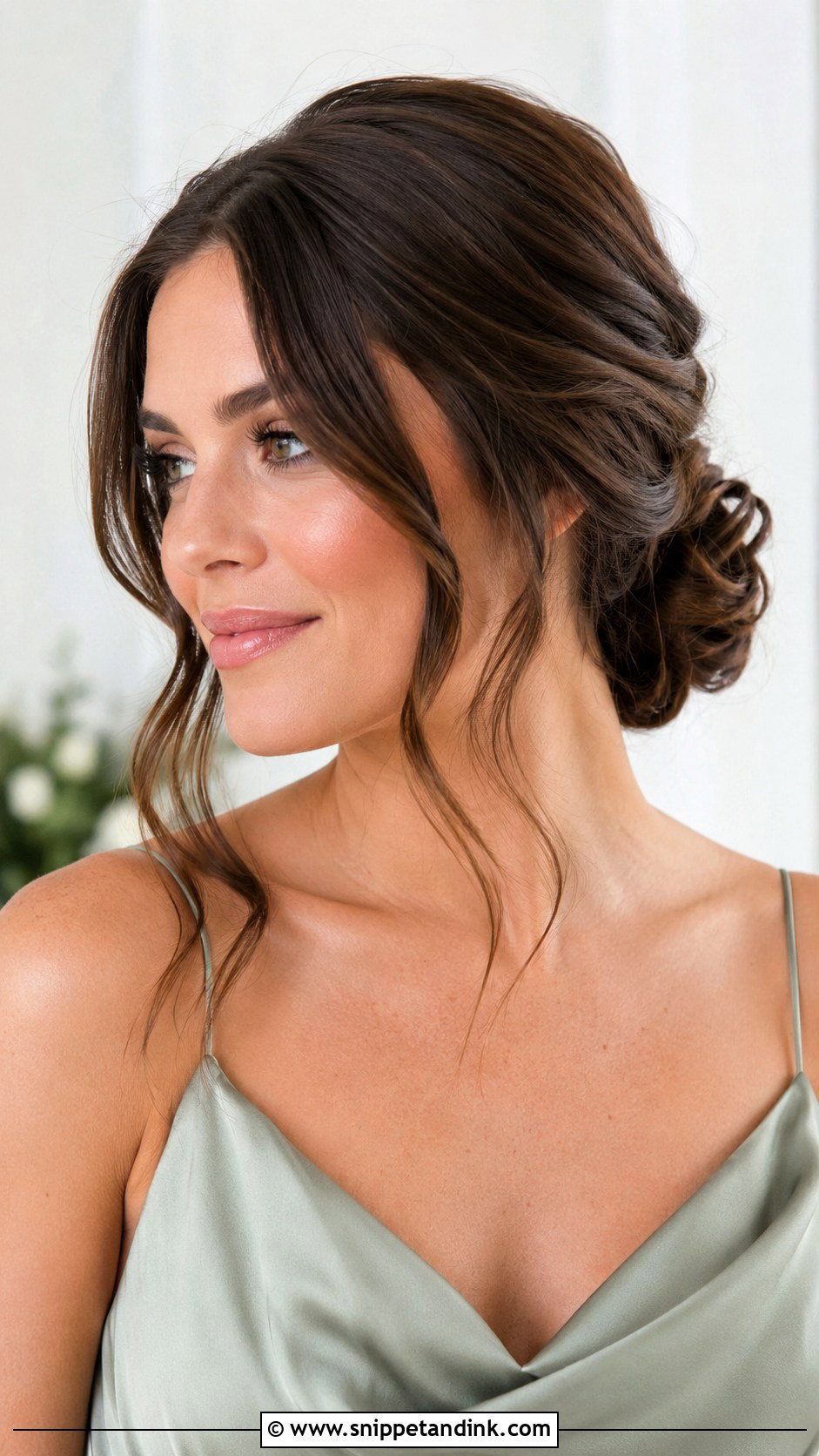
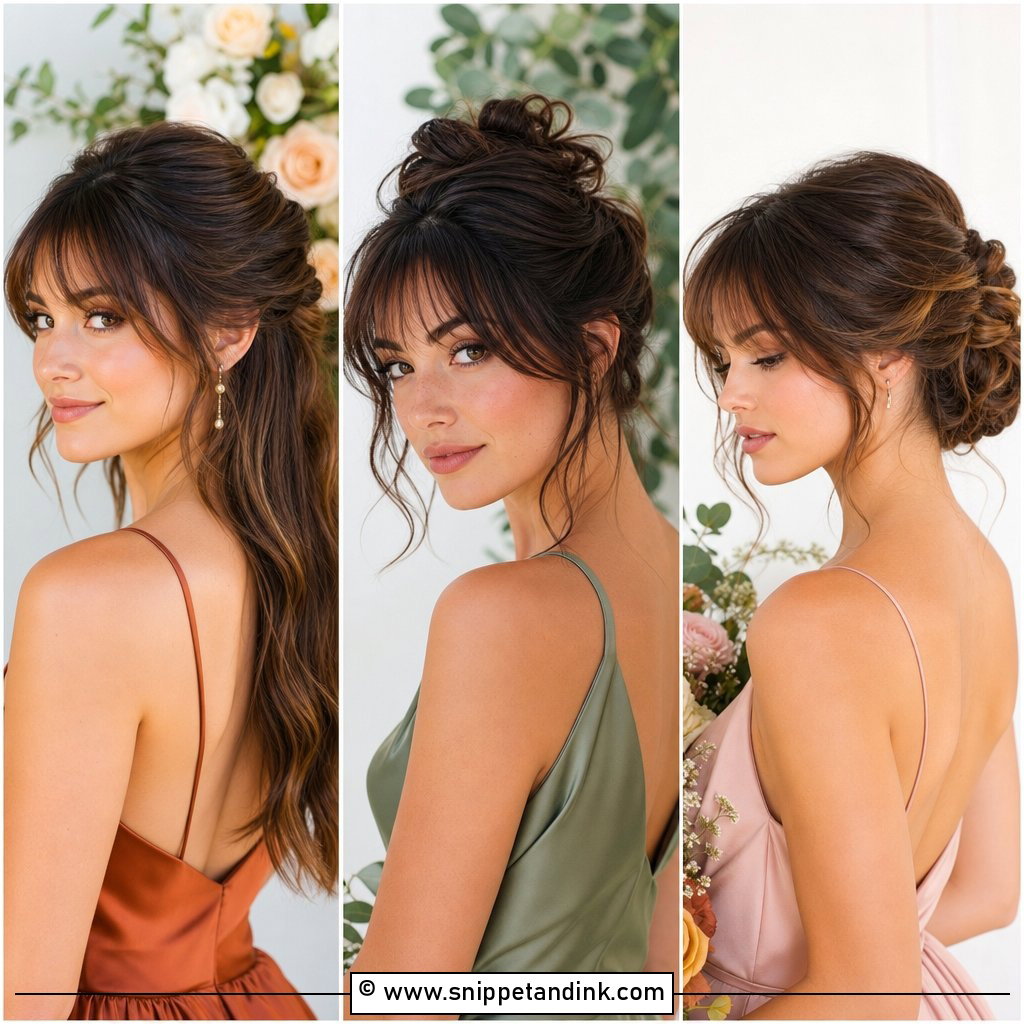
This is the style I give a bridesmaid when I’m worried about her hair, because it rarely fails. Sitting at the nape, it stays clear of high necklines and off-the-shoulder straps alike, and it never competes with the bride in group shots. I set the base with a small ponytail before wrapping, which stops the bun sagging by the reception. If she wants face-framing pieces, I cut them finer than she asks for; in humidity a thick strand goes limp and stringy within an hour.
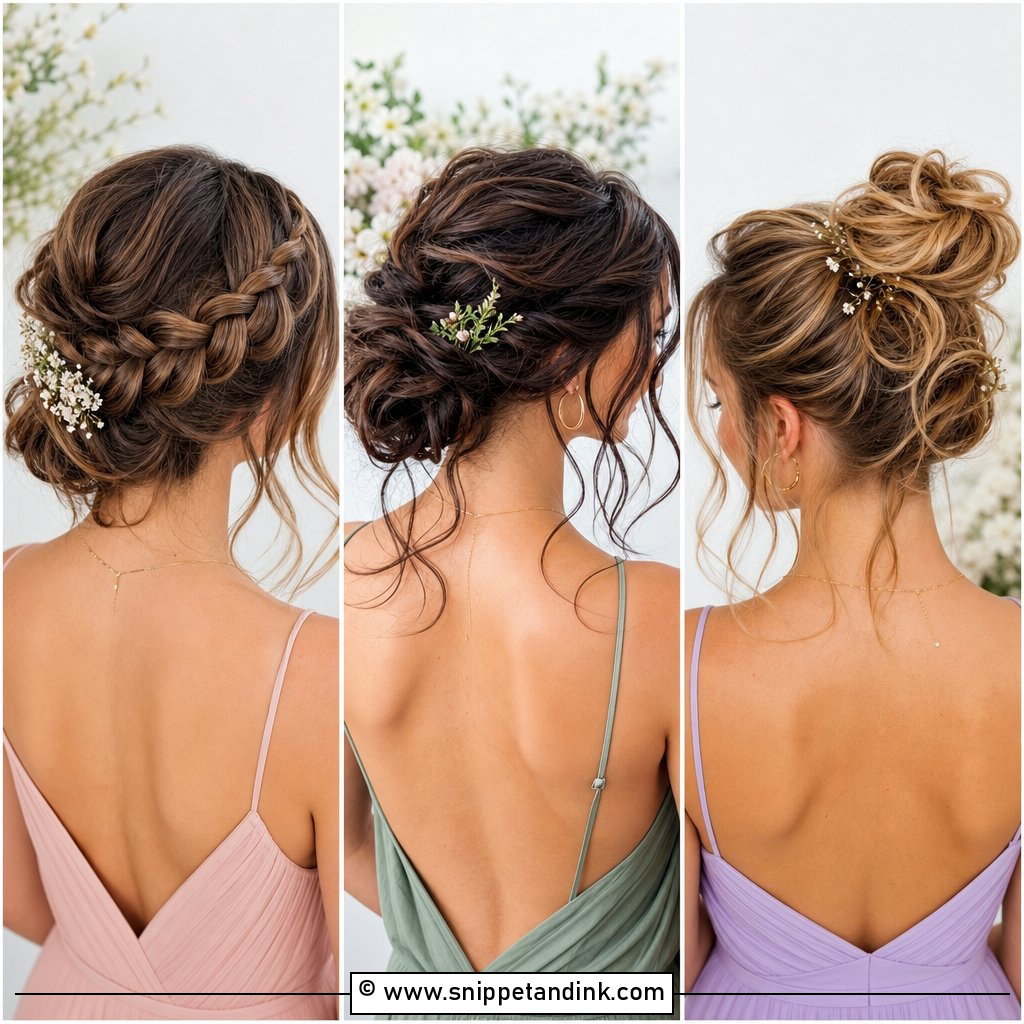
2. Bridesmaid Textured Bun
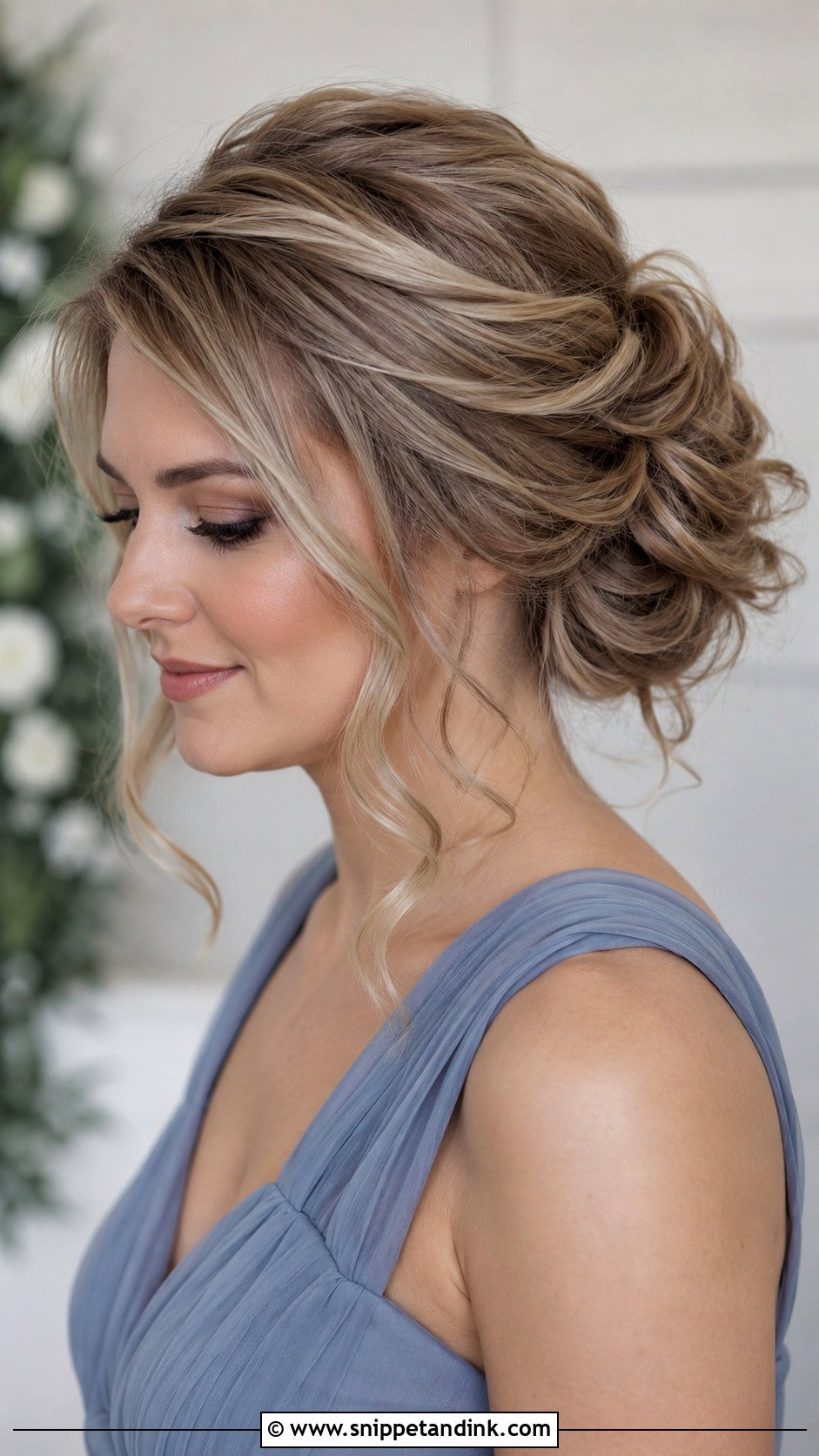
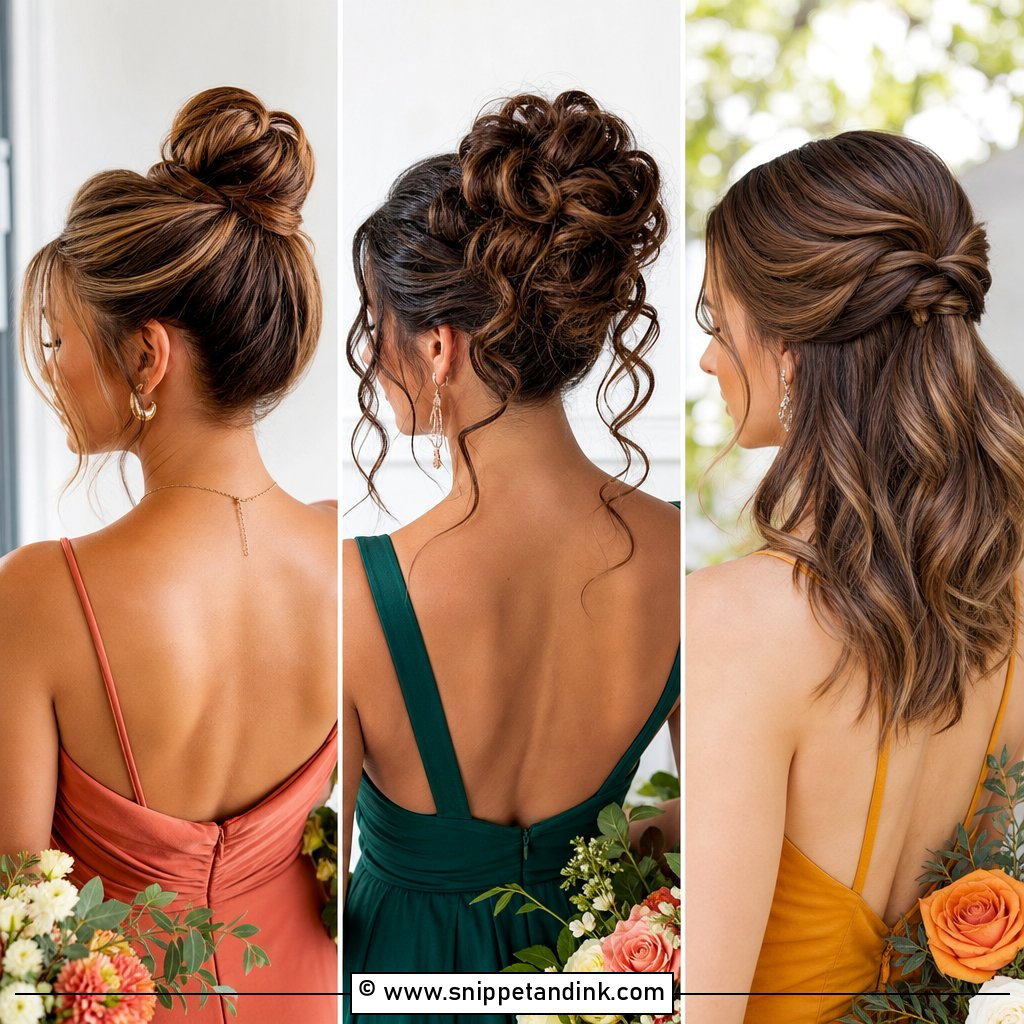
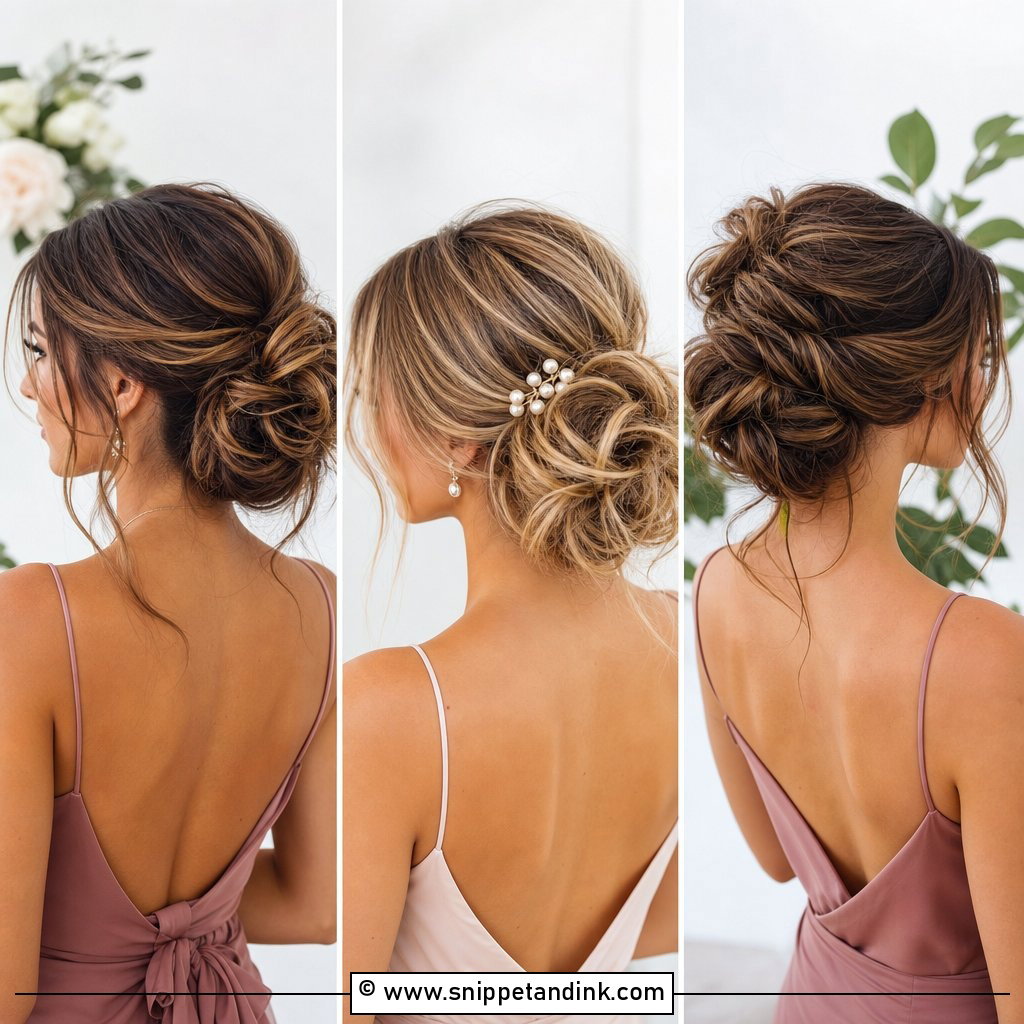
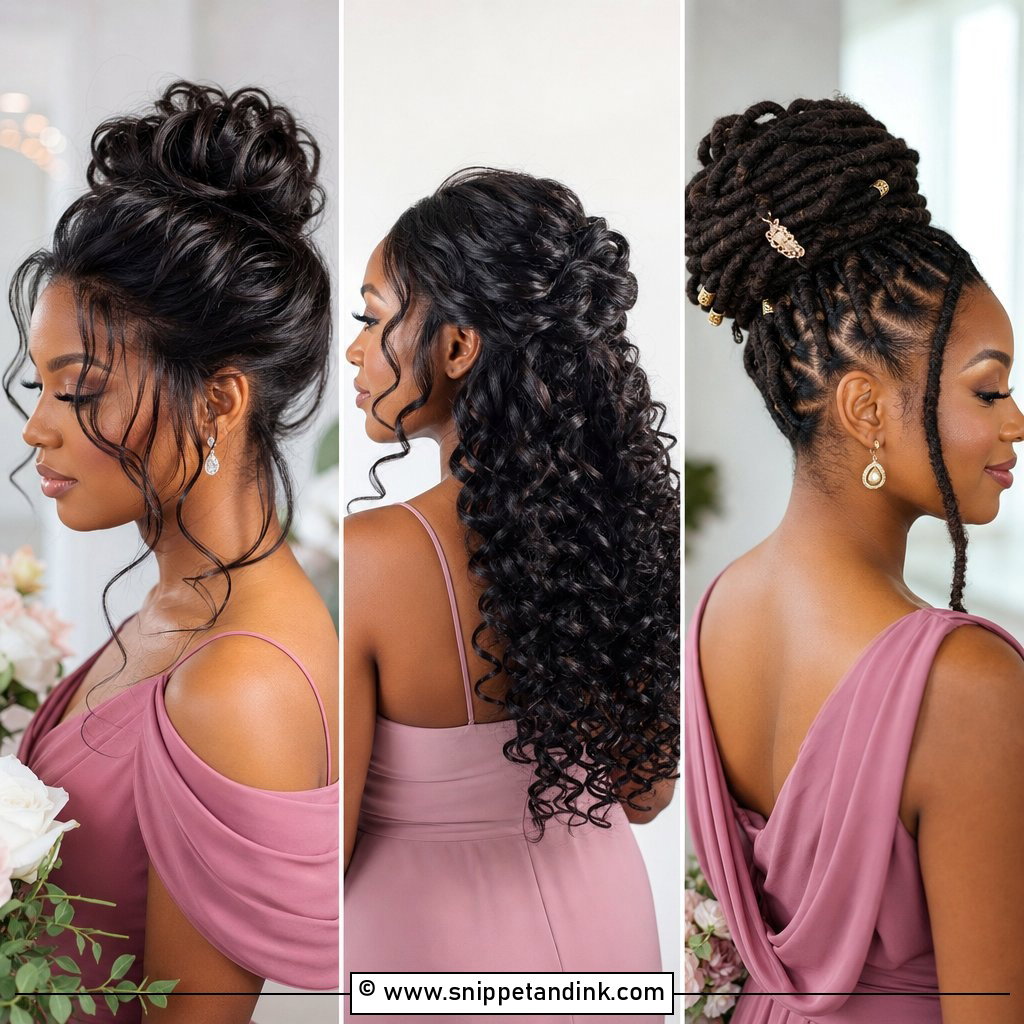
A textured bun is built, not twisted. I curl the whole head first, let every section cool, then pin the bends into place one at a time so the shape looks loose but can’t actually move. Highlighted or balayaged hair shows it off best, since each bend catches a different tone. The risk is the thin line between relaxed and unfinished, so I check it from both sides and re-pin anything that looks accidental. On hair shorter than the collarbone there usually isn’t enough length for the loops, and I’d suggest the twist updo further down instead.
3. Bridesmaid Sleek Bun
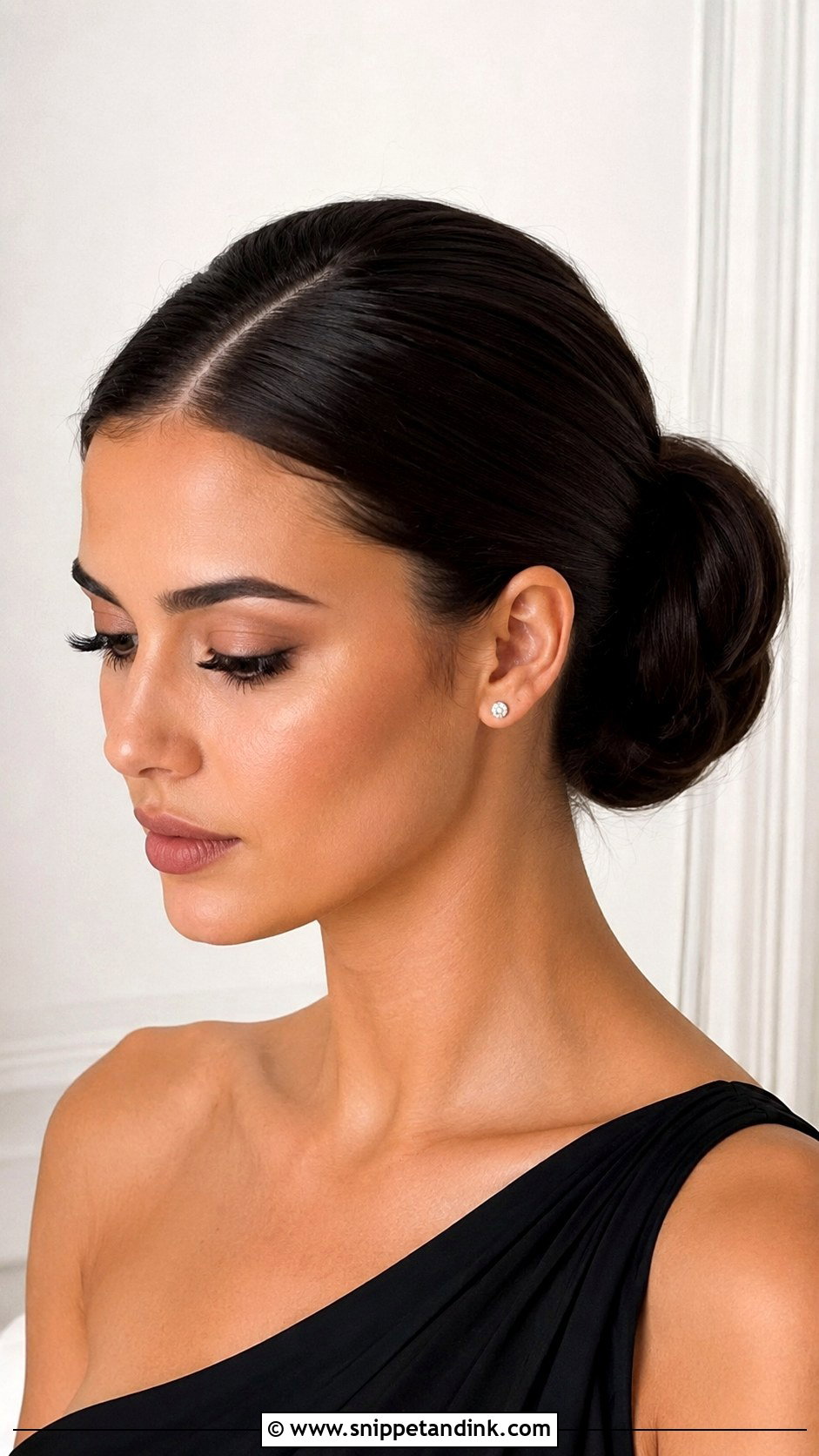
Sleek buns look simple and are the least forgiving style here. Every bump at the crown shows, so I brush the hair back while it’s slightly damp with a smoothing cream, dry it in that direction, and only then secure the bun. Minimalist gowns, black-tie venues and strong necklines all suit it, and in hot weather the bridesmaid will be glad her neck is clear. Go light on shine products, because too much reads as greasy under a flash. I’d steer very fine hair with a visible scalp at the part toward a softer version with a little lift at the roots.
4. Bridesmaid Chignon
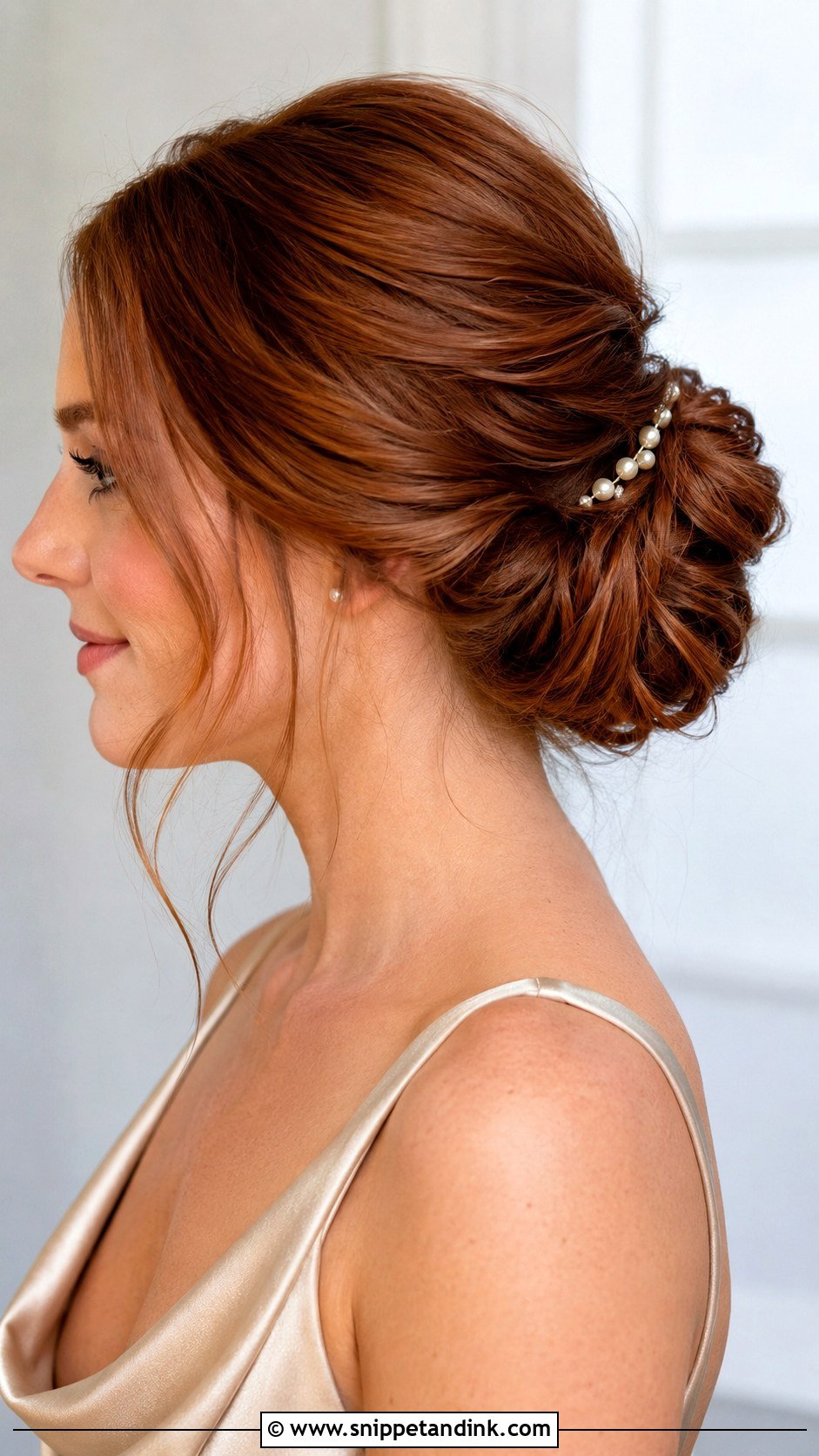
A chignon is a low knot that’s shaped rather than wrapped, and the shaping is where the skill goes. I usually roll and tuck the lengths over a small padded base, which lets it keep its size through a long formal portrait session. An open-back dress is the best partner for it because the line from nape to spine stays uninterrupted. Pearl pins or a small comb sit neatly in the folds. If your hair frizzes easily, skip the curled pieces at the temples; they’re the first thing to go fuzzy.
5. Bridesmaid High Bun
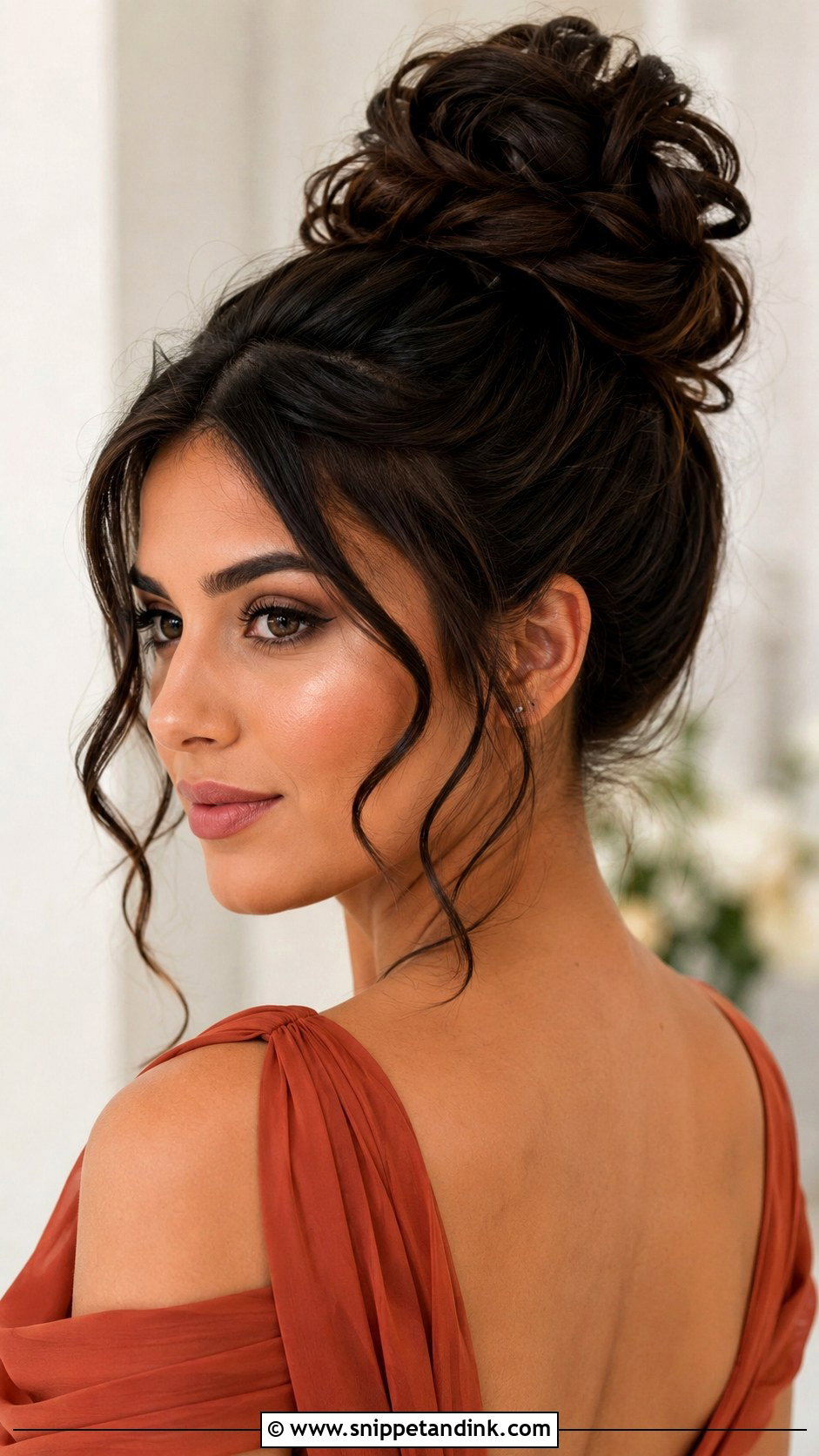
A high bun lifts the whole silhouette, which is why I reach for it with halter and one-shoulder dresses that need the neck on show. It’s also my answer for very long, heavy hair, because weight carried on top of the head drags less than weight hanging at the nape. Placement matters more than shape. Too low looks unplanned and right on top of the crown looks like gym hair, so I tilt her chin up and follow the jawline back to find the spot. On extremely thick hair I spread the pins in an X pattern so the pull isn’t all in one place by evening.
6. Bridesmaid Half Up Half Down Hair
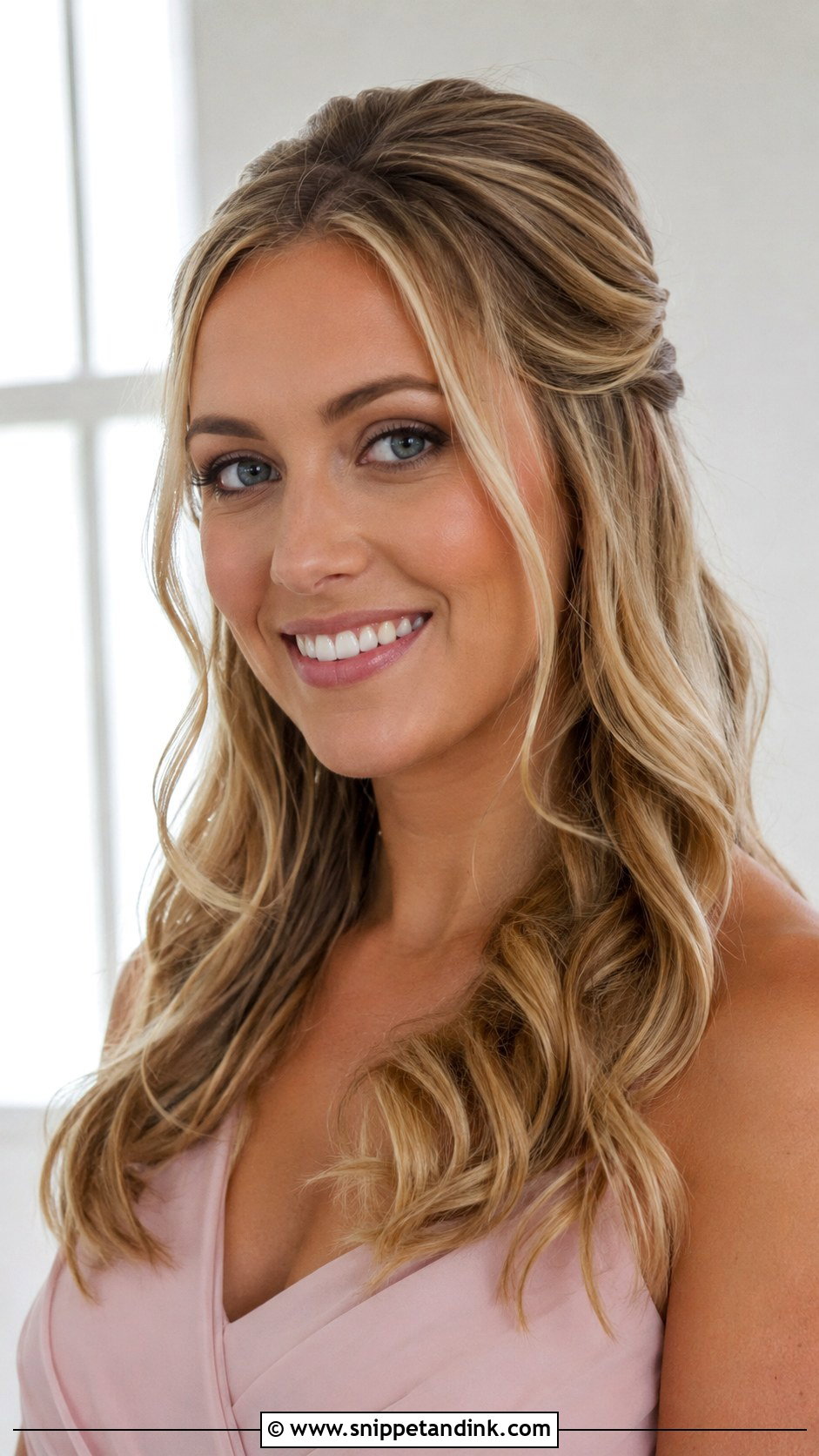
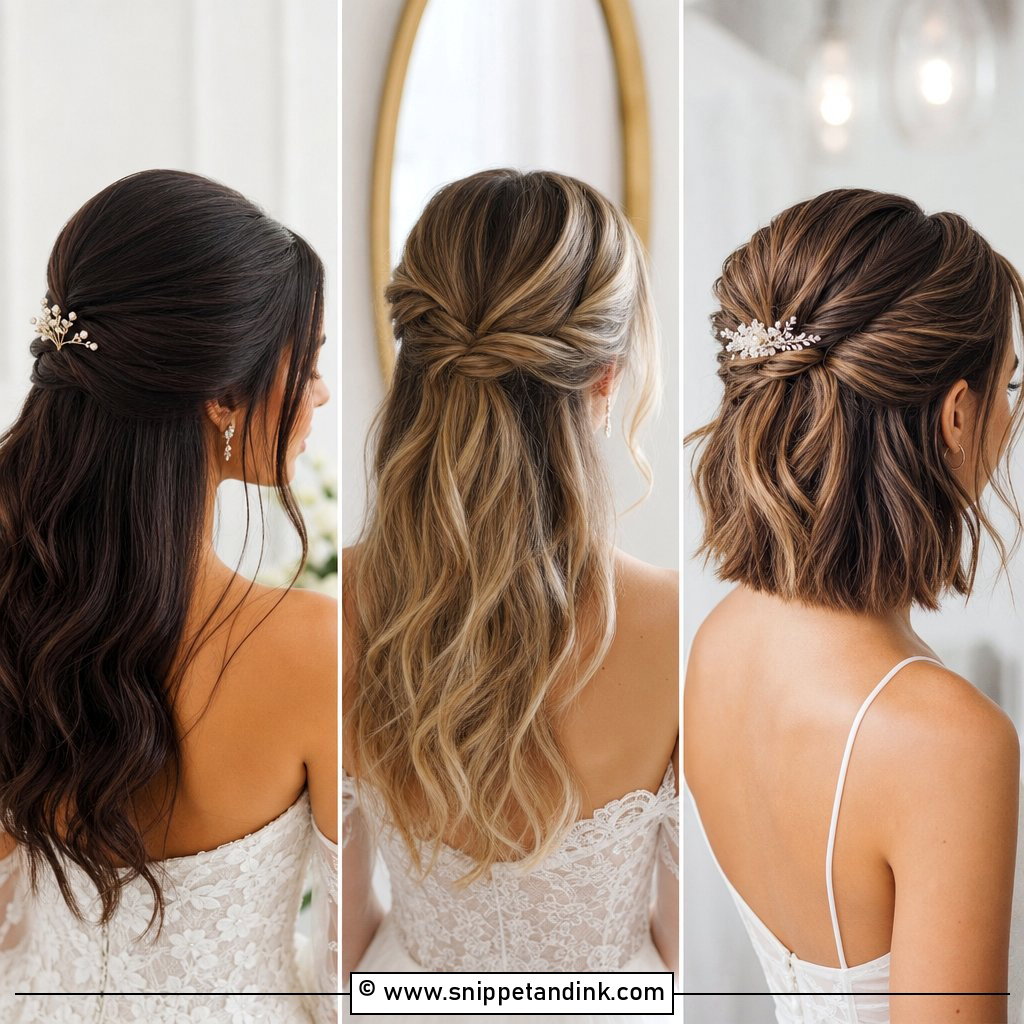
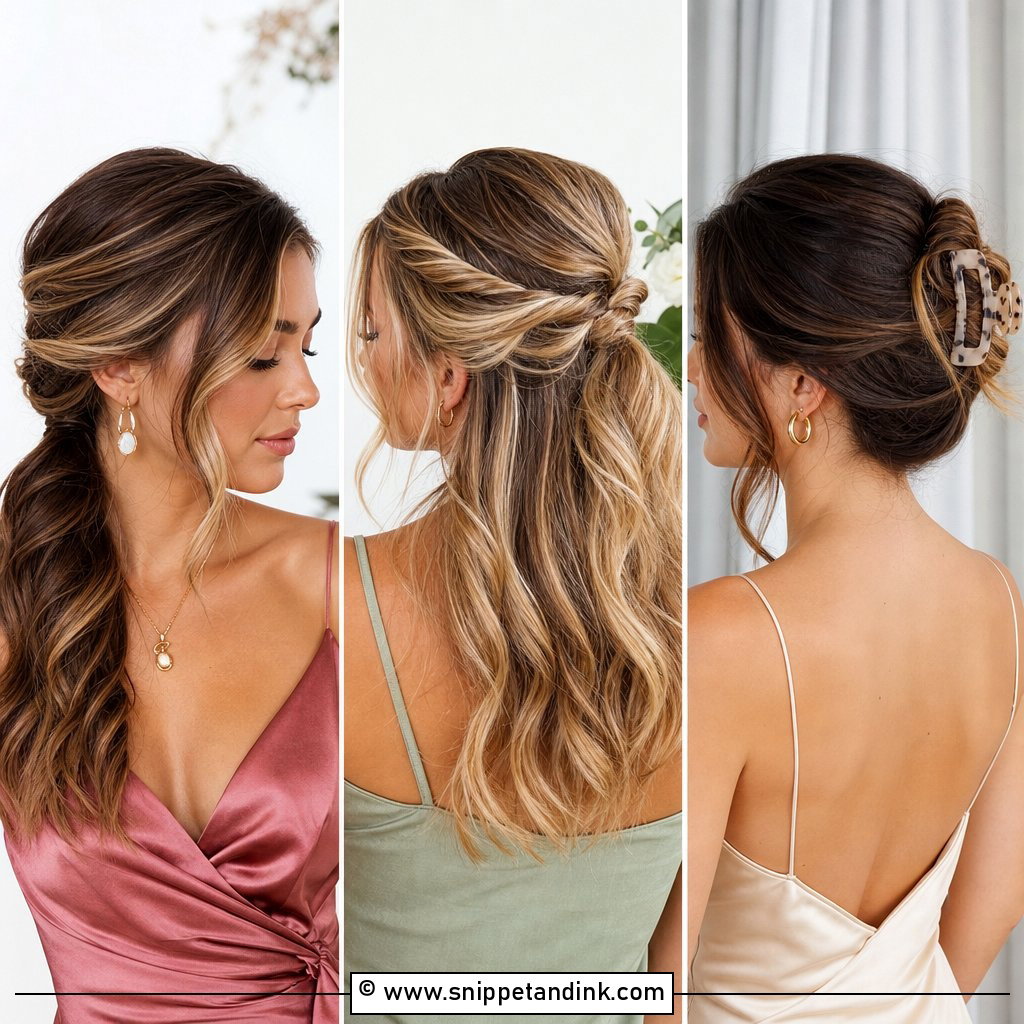
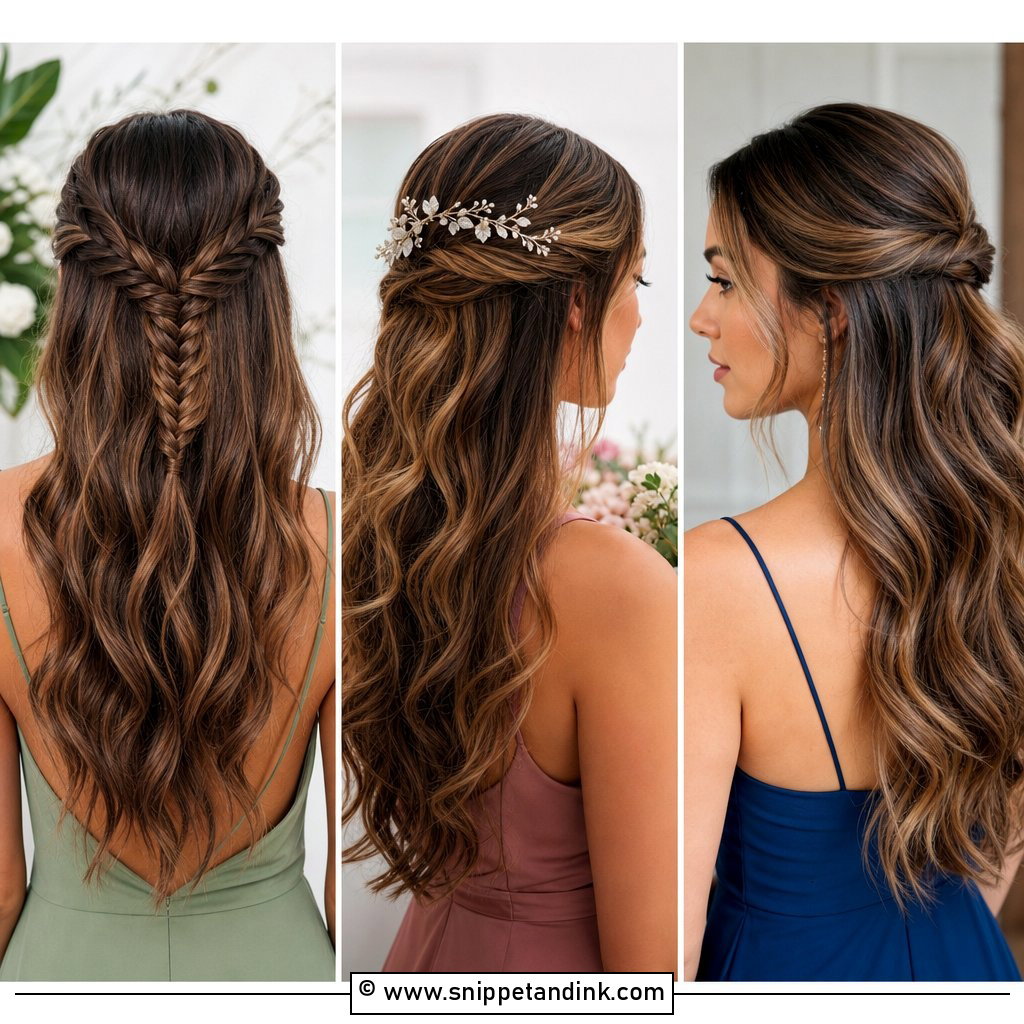
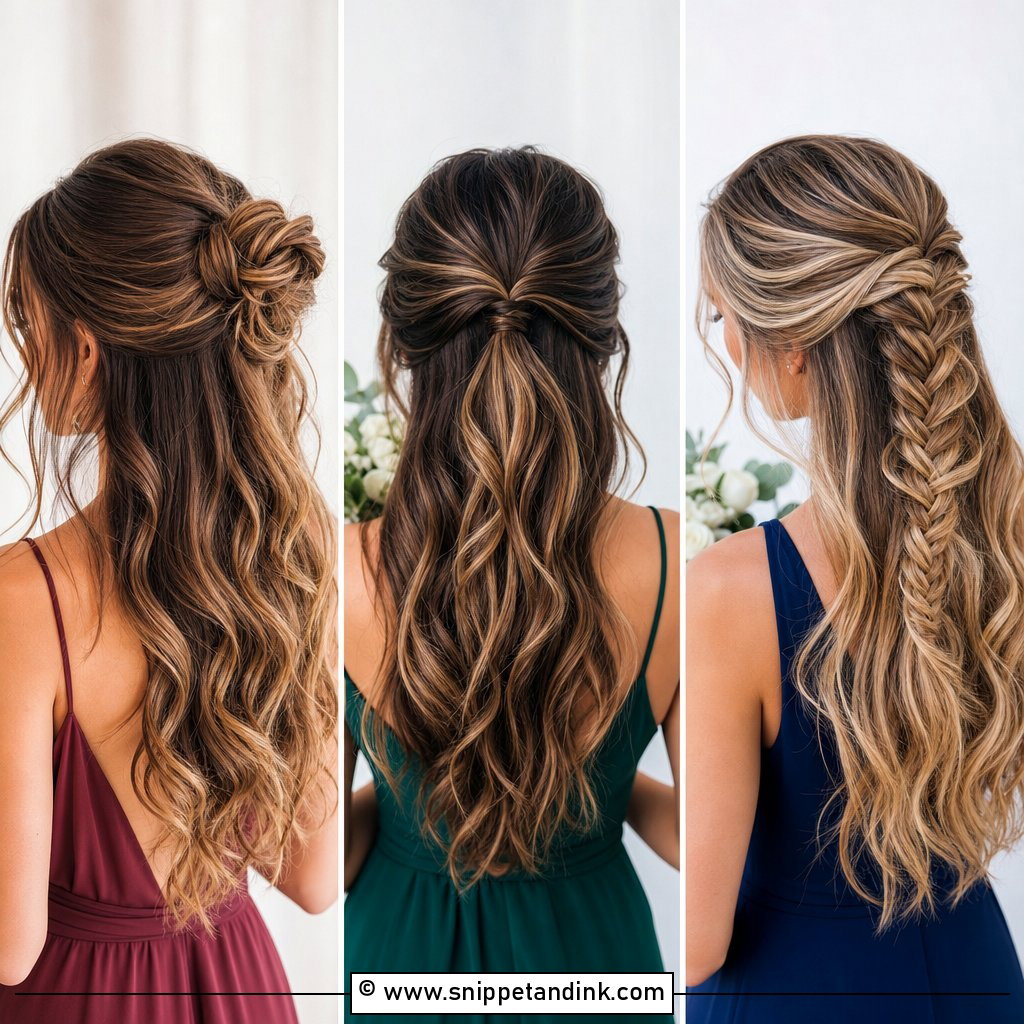
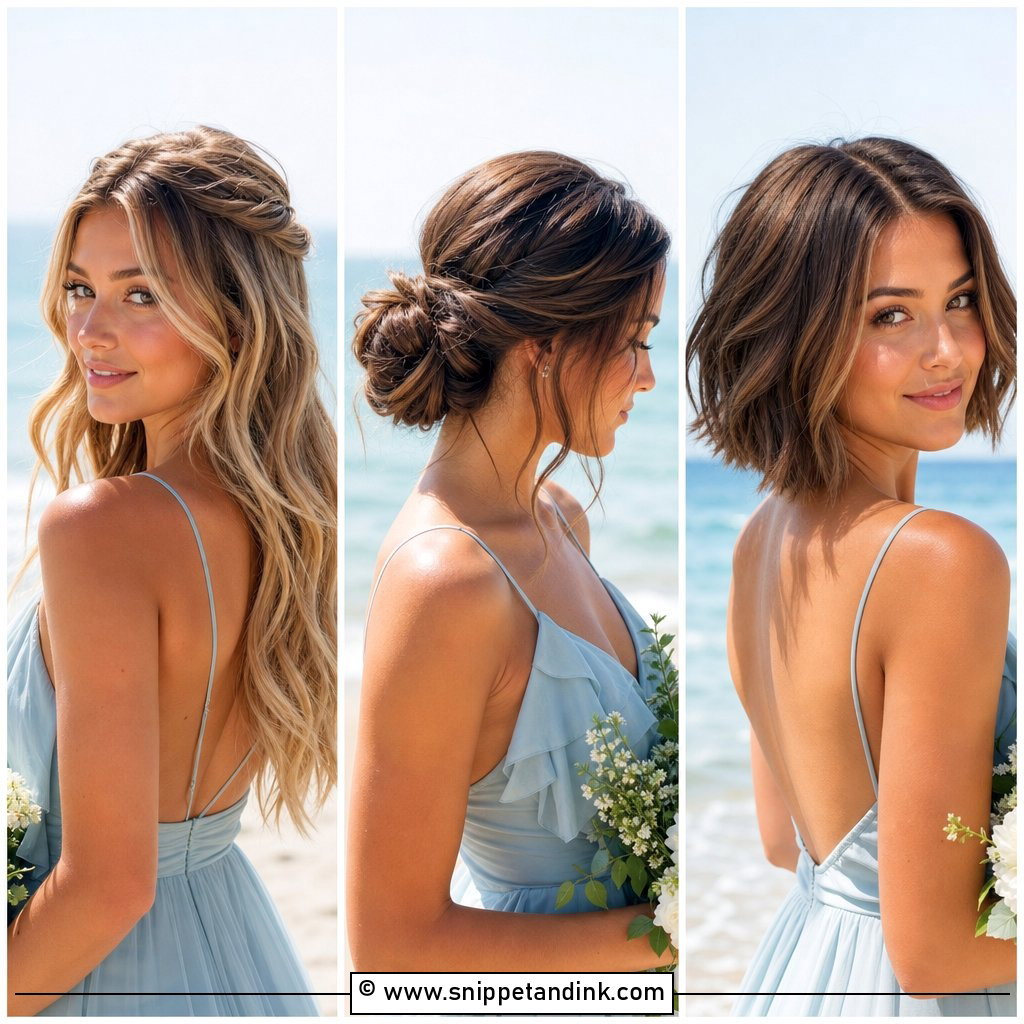
Bridesmaid half up half down hair is the style most bridesmaids ask me for, usually because they don’t feel like themselves with everything pinned away. The top section keeps hair off the face for ceremony photos while the lengths stay soft. Its weak spot is the down section, which drops first, especially outdoors. I curl all the lengths in one direction, let them set, and brush them into a single pattern rather than separate ringlets, because one connected mass holds its shape longer. Clip-in extensions blend easily here since the pinned crown hides the wefts.
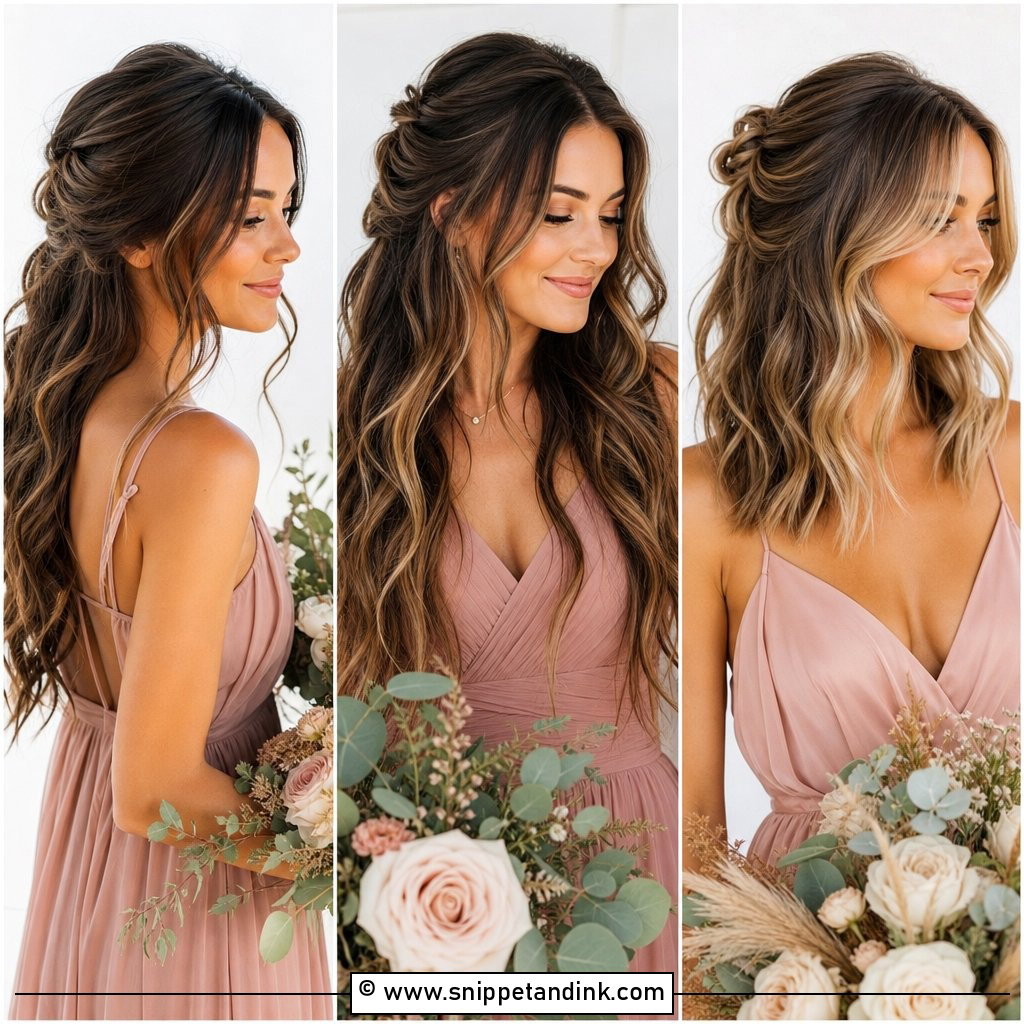
7. Bridesmaid Half Up Waves
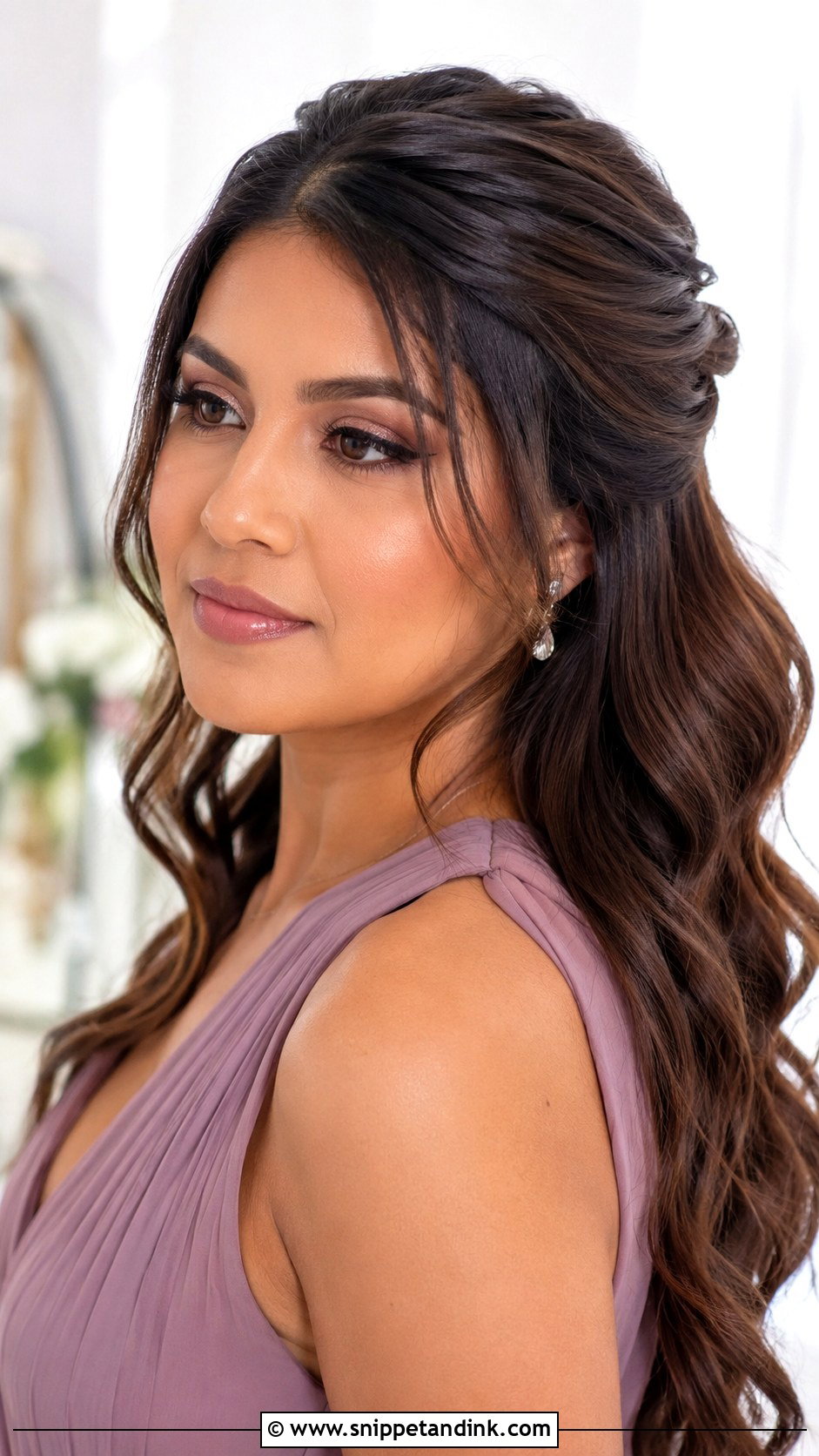
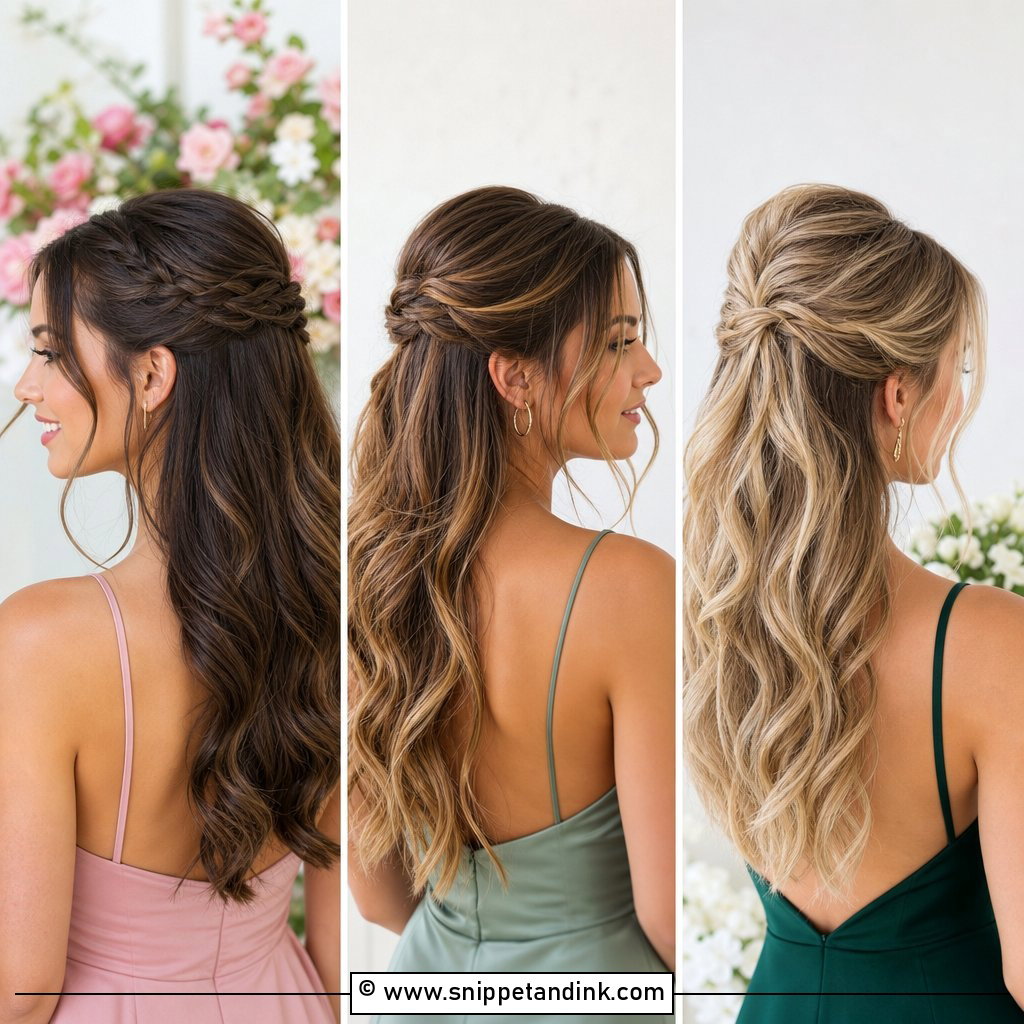
When everyone in the party has a different length, half up waves are the easiest thing to coordinate. I keep the wave pattern identical on each bridesmaid, so the group reads as matched even when one has a lob and another wears extensions to her waist. Volume at the back of the crown should come from light backcombing underneath with the top smoothed over it; brushed-in volume collapses within the hour. A small velvet bow over the pinned section is enough if the bride wants a detail.
8. Bridesmaid Half Up Braid
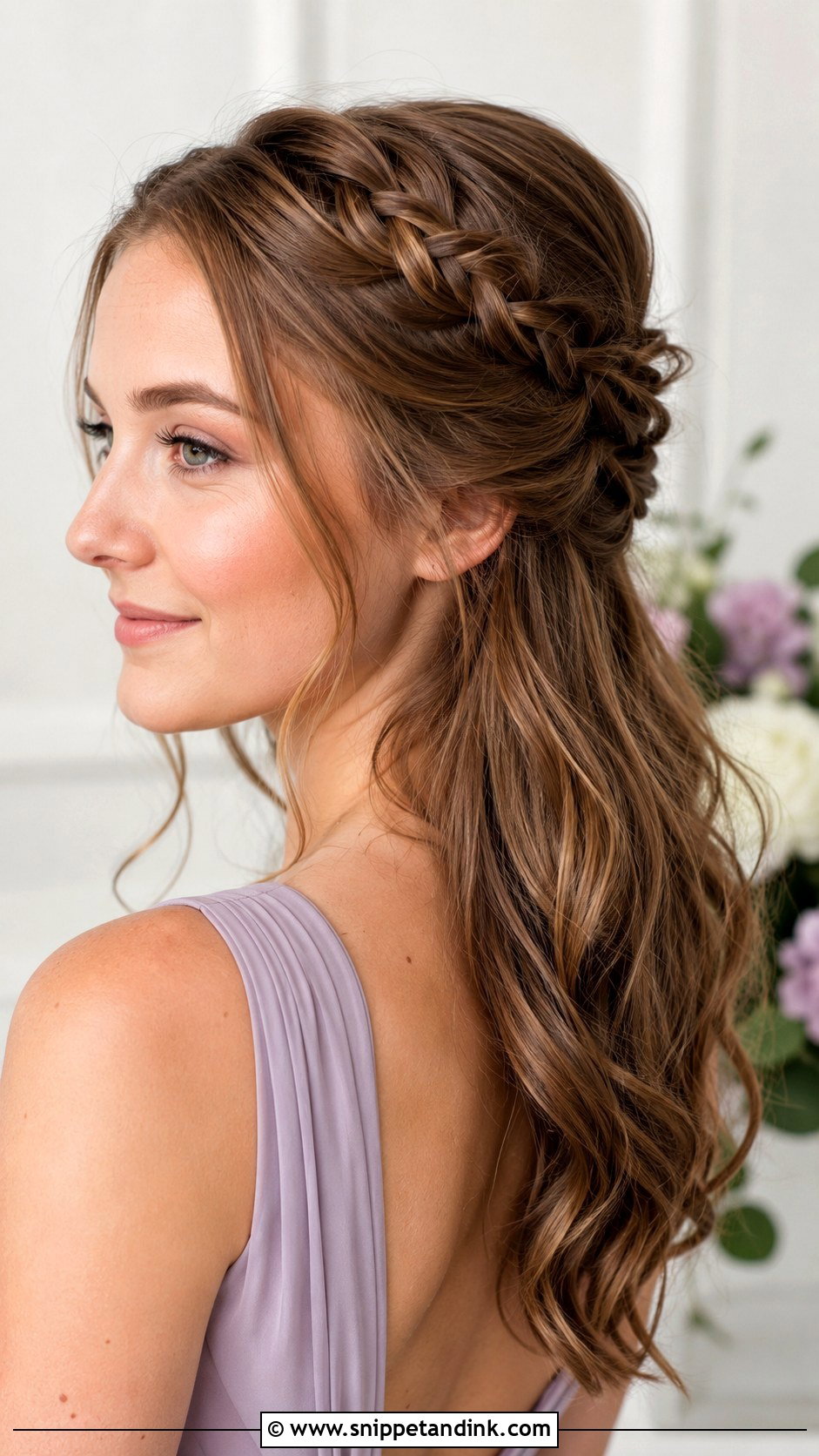
The braid in this style earns its place by doing a real job: it holds short front layers that would otherwise slip out of a simple twist. I braid back from each temple and join the two at the back, then gently widen the braid so it looks fuller on camera. Don’t stretch it too far. An overworked braid shows gaps by mid-afternoon, especially on fine hair.
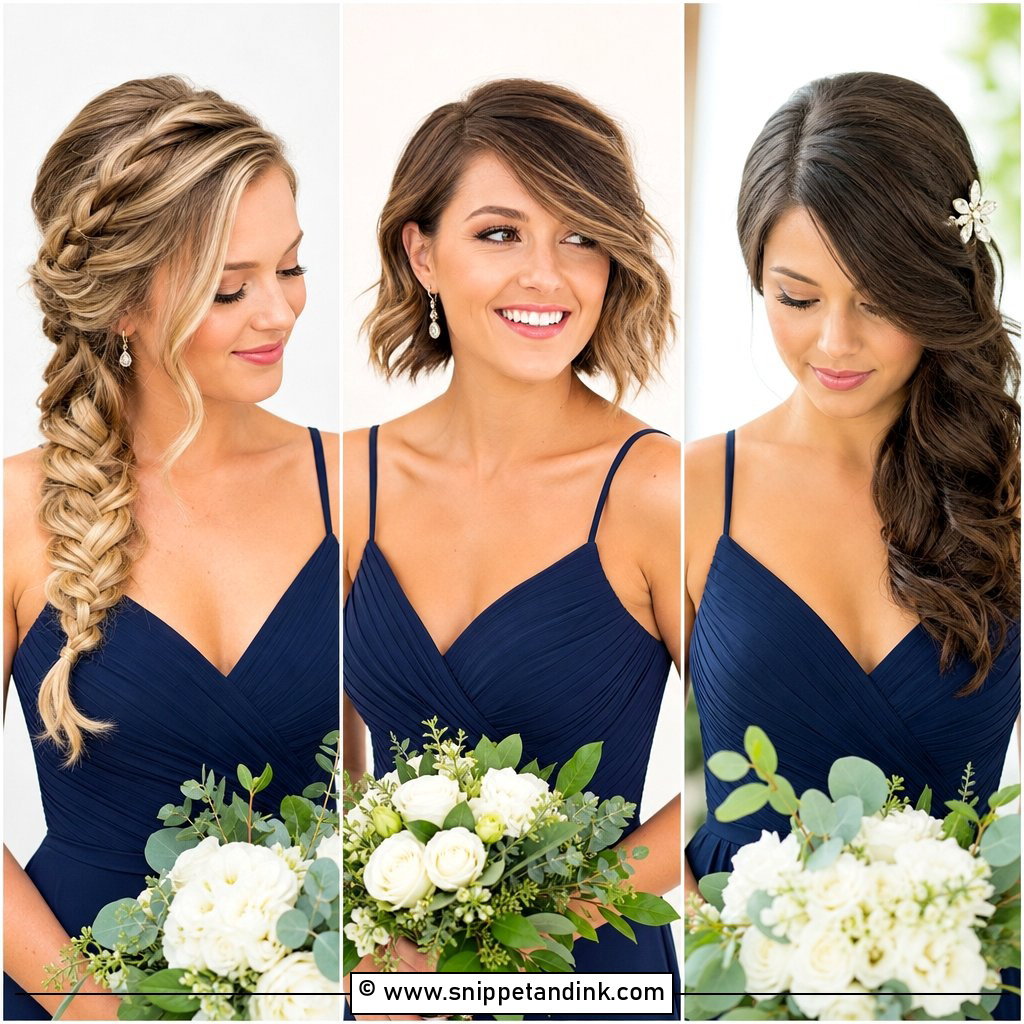
9. Bridesmaid Fishtail Braid
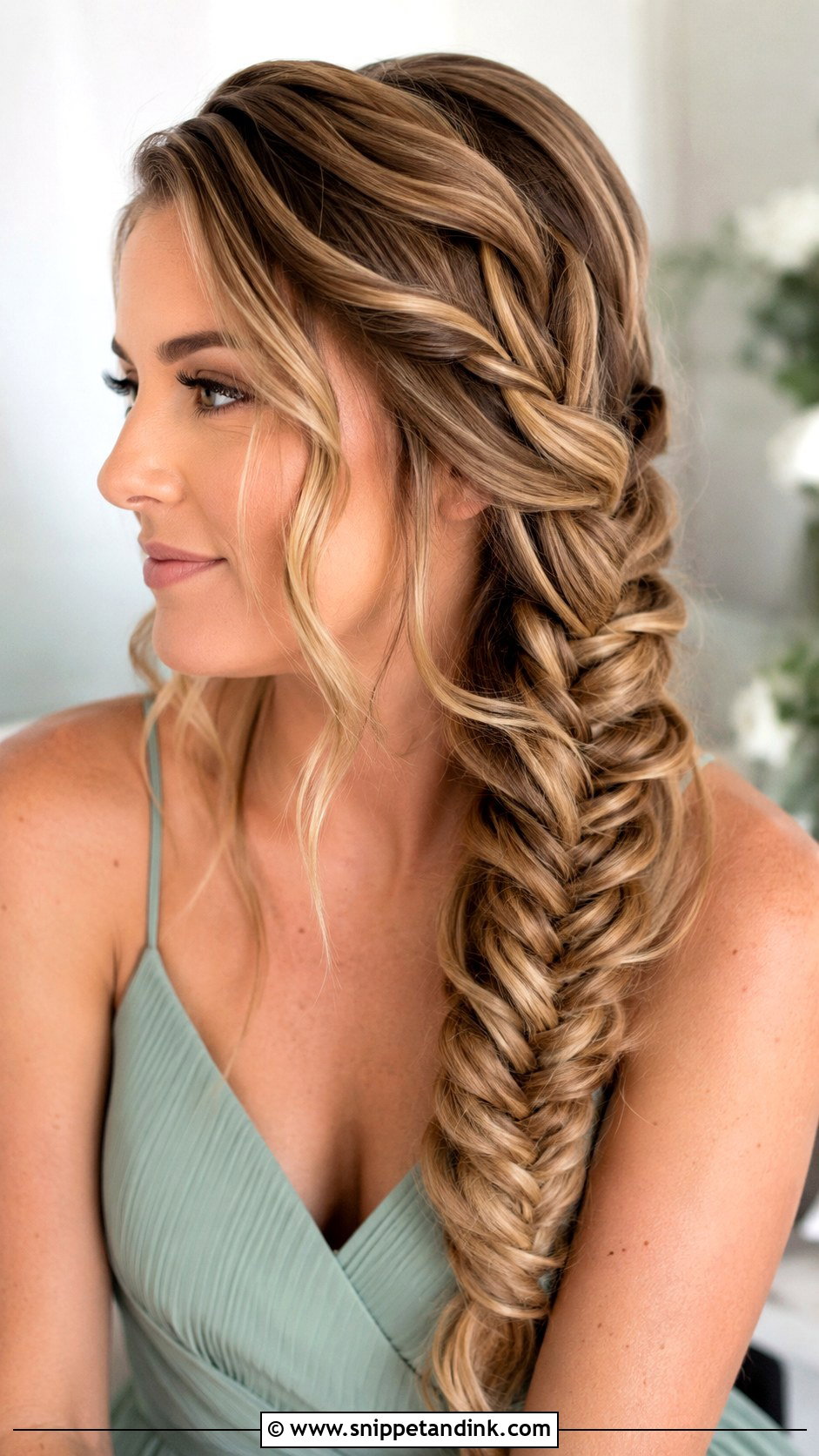
A bridesmaid fishtail braid takes noticeably longer than a three-strand braid, so I schedule extra time for whoever chooses it. The tiny crossover sections show every highlight and lowlight, which makes it a strong pick on dimensional color and a weaker one on very dark solid shades, where the pattern disappears in photos. It suits the bridesmaid who wants her hair contained but dislikes buns. I always band the end before I pull the edges out, never after, or the bottom unravels.
10. Bridesmaid Side Braid
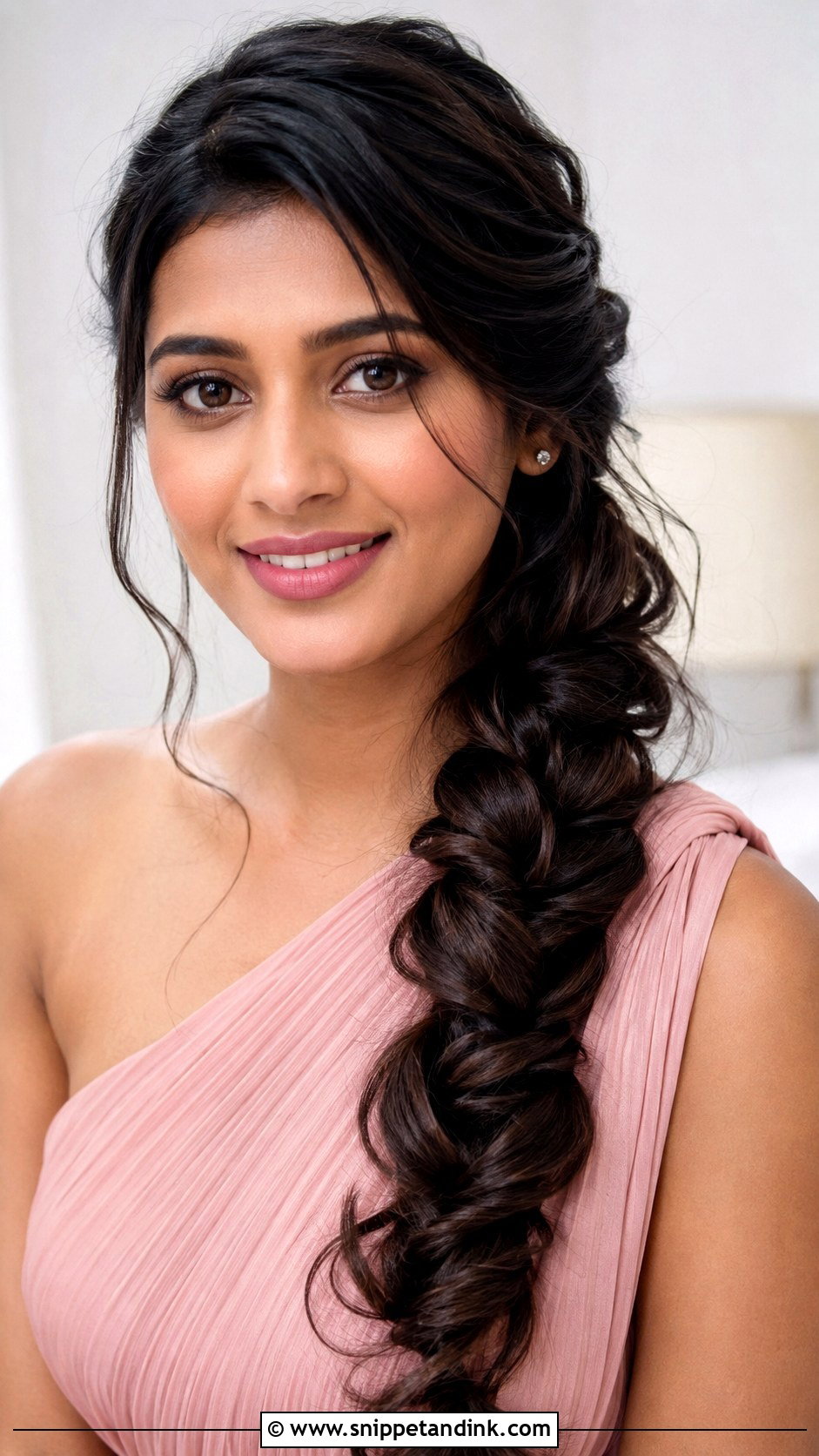
Bringing a braid over one shoulder puts all the detail at the front, where the camera actually is, so I like it when the dress has a plain back. The catch: a bridesmaid spends the day leaning, hugging and lifting a train, and the braid slowly slides toward the middle of her chest. I anchor it behind the ear with two crossed pins before letting it fall forward. A little lift at the crown keeps it from looking flat next to fuller styles in the lineup.
11. Bridesmaid Braided Crown
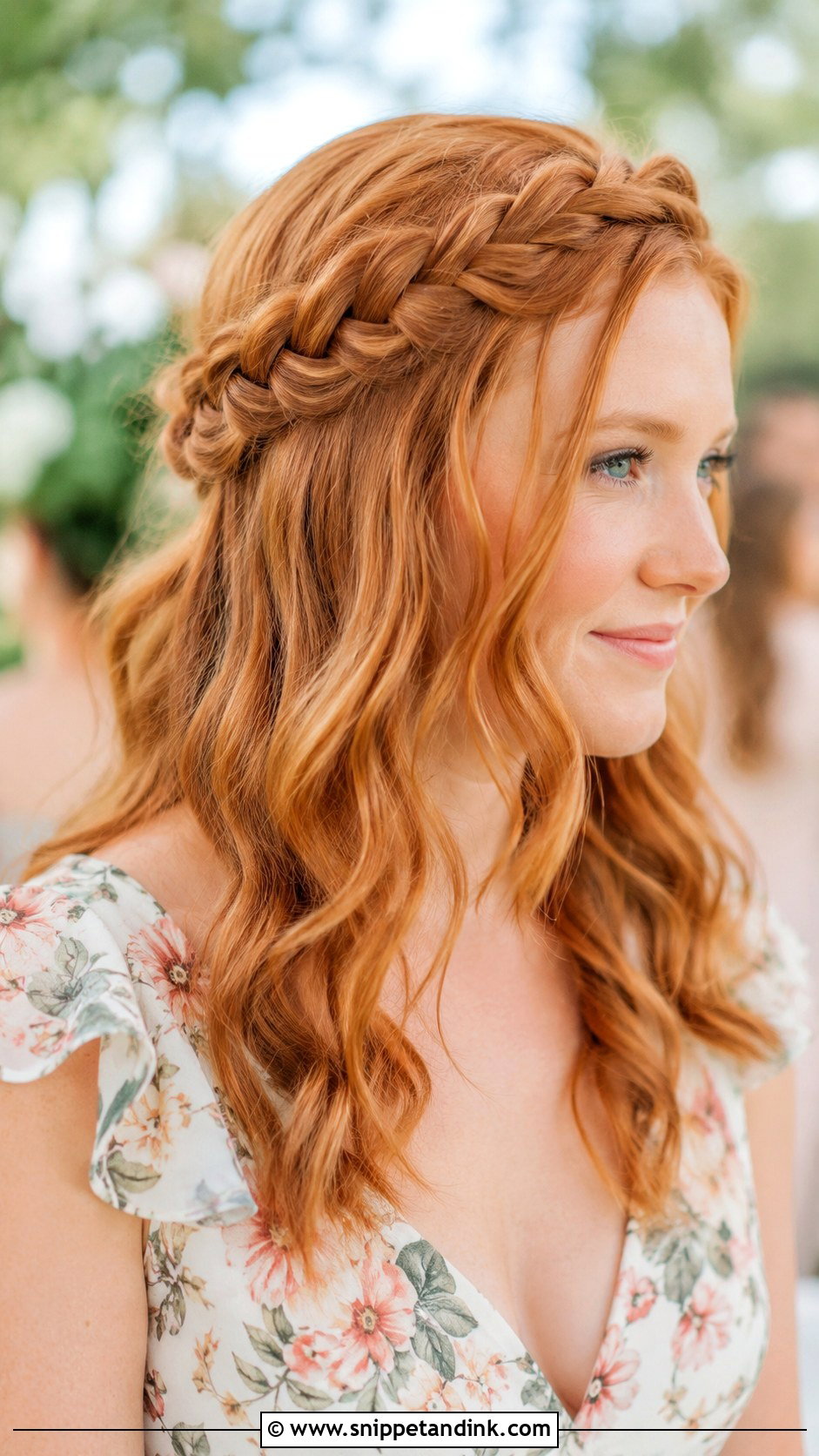
One of the most secure styles I do, because the braid itself becomes the anchor for everything else. It wraps around the head or sits across the top like a halo, and I pin it every inch or two, hiding the pins under the woven sections. Brides like it as a way to tie a party together without identical hair: the crown can sit over loose waves on one bridesmaid and a low bun on another. Layered hair is trickier, so I work a little texture spray through first to help the short pieces grip.
12. Bridesmaid Waterfall Braid
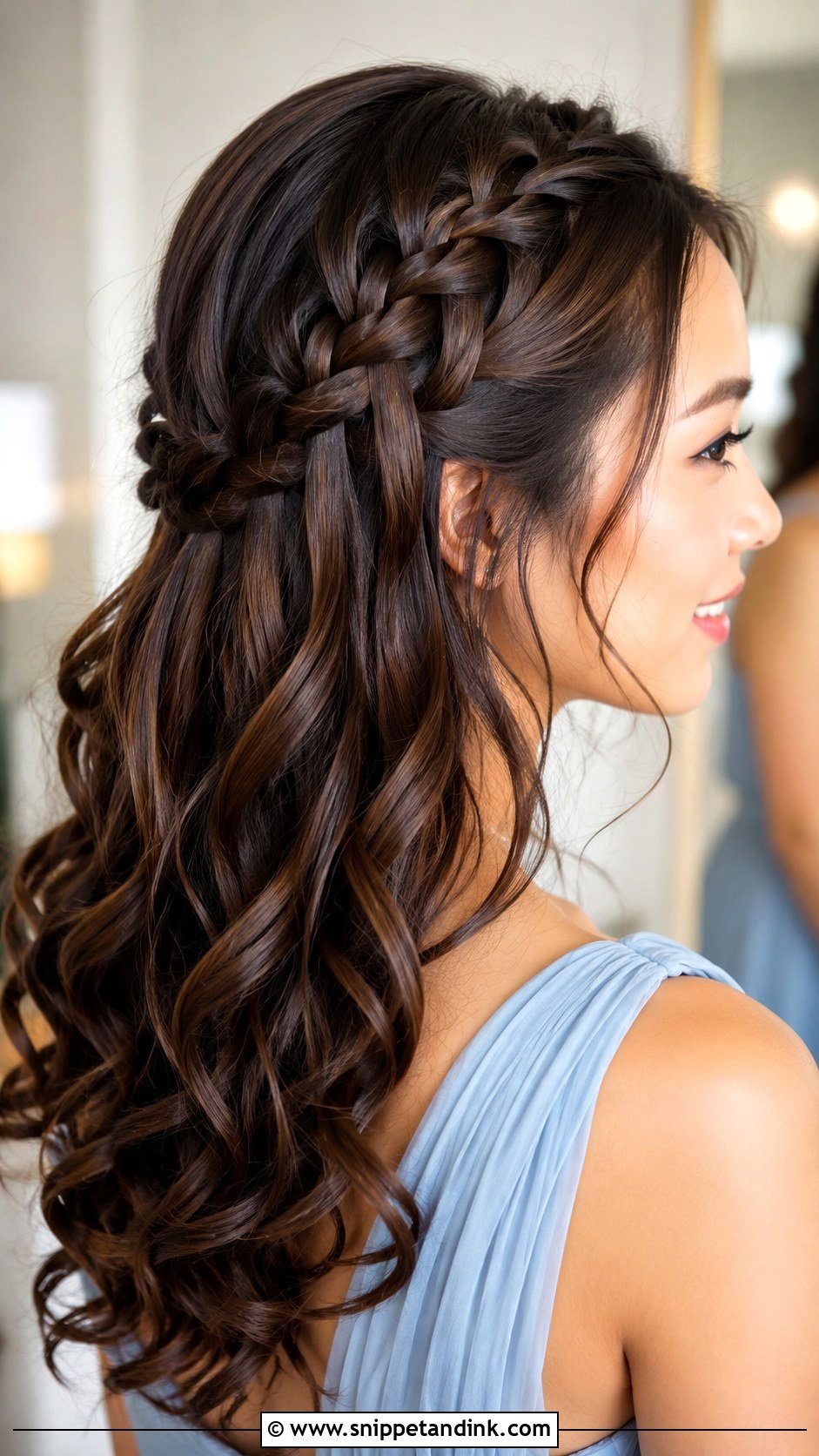
A bridesmaid waterfall braid drops strands through the braid as it crosses the crown, so the loose hair and the braid read as one piece. You need at least shoulder-length hair for it to look like a waterfall and not a few stray strands. I curl the hair before braiding, not after. Curling afterward drags the braid apart.
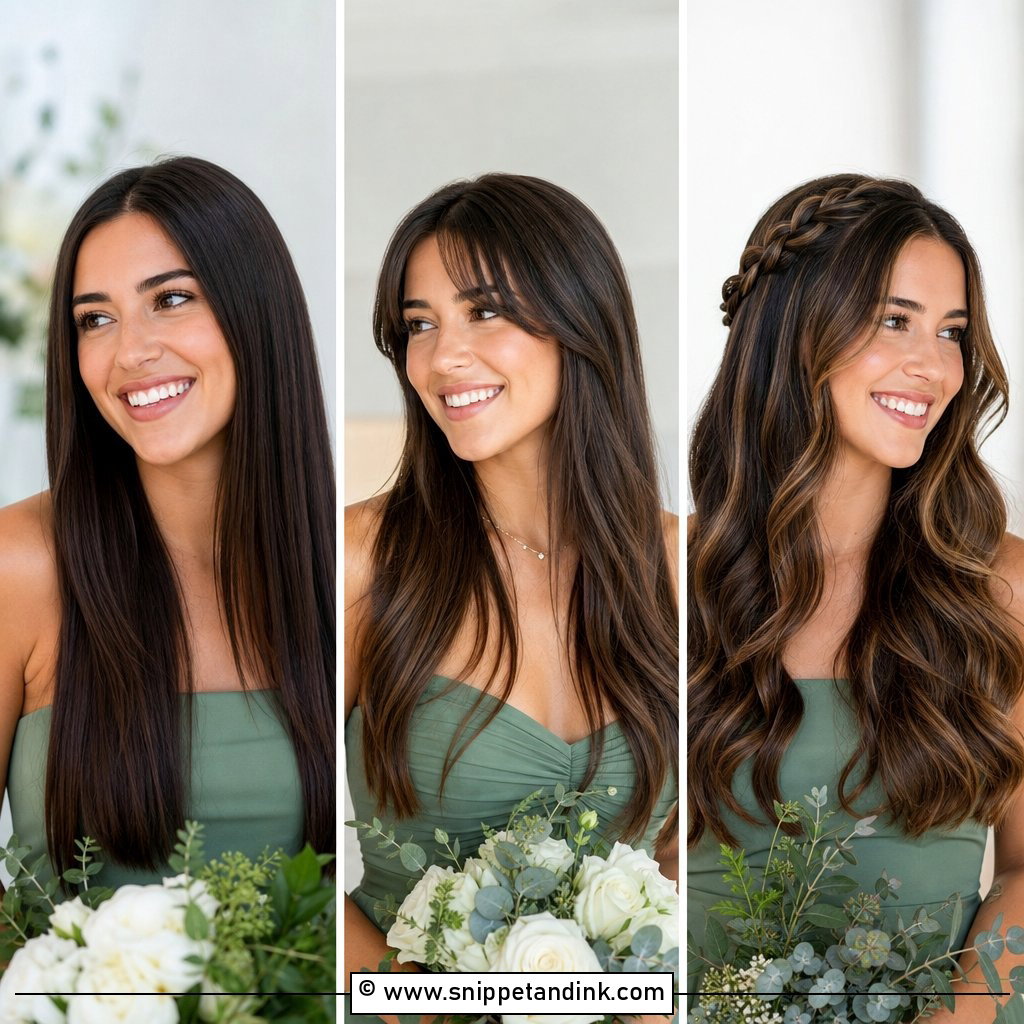
13. Bridesmaid Loose Waves
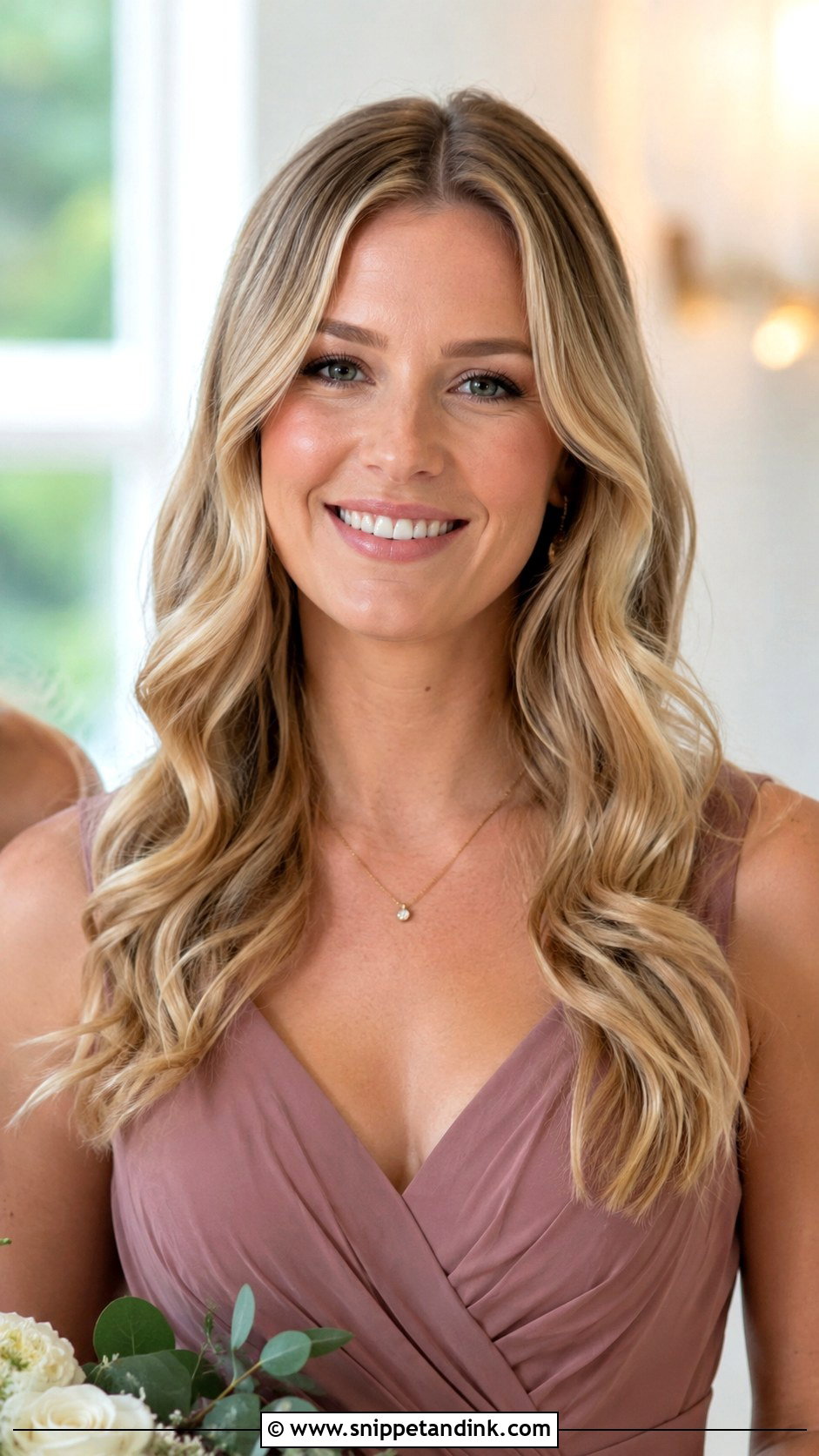
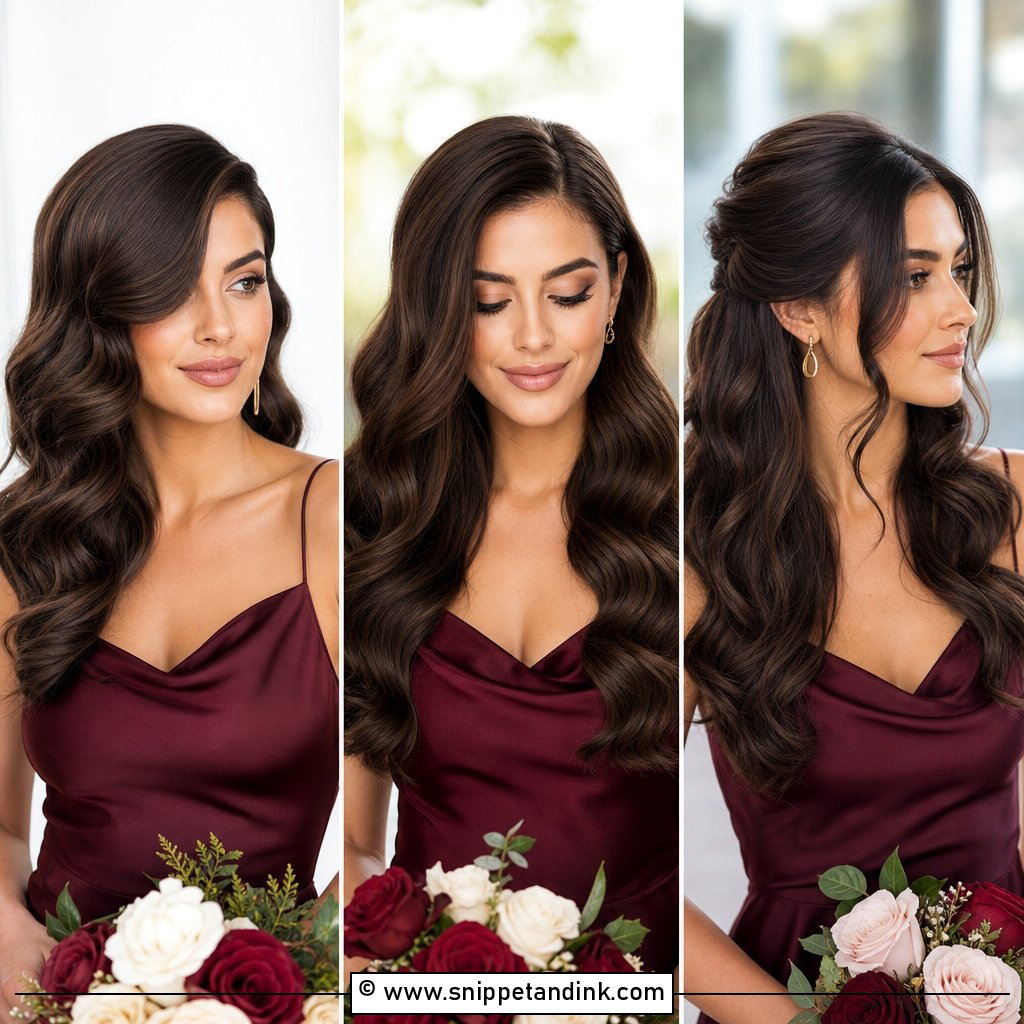
Loose waves sound like the easy option and tend to fall out first. What separates wedding waves from weekend waves is the set: I curl, let each section cool completely in a pin curl, then brush it out and hold-spray it. Skip that cooling step and the bend is gone before the speeches. Because the same wave adapts across lobs, long layers and extensions, I often use it as the shared look for a party with mixed lengths.
14. Bridesmaid Hollywood Waves
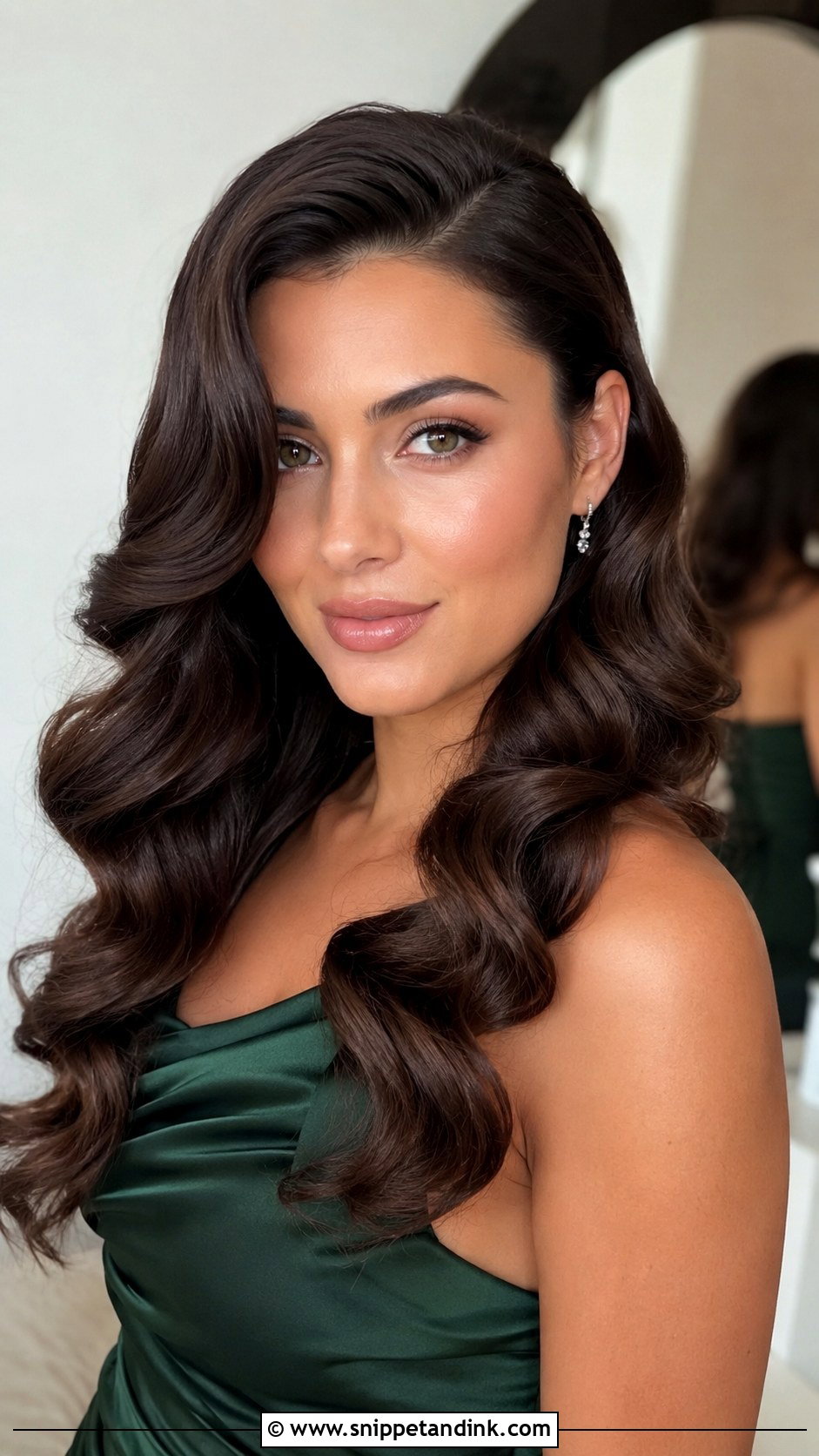
Hollywood waves are a commitment, in the chair and on the day. I curl the hair in uniform sections all going one way from a deep side part, brush it into an S-pattern and clip each ridge while it sets. Plan on more time per head than you would for a bun, and know that fine hair often needs clip-in wefts to carry the shape across the back. Keep accessories minimal, since the pattern is the detail. Dancing and humidity soften this one faster than any updo.
15. Bridesmaid Soft Curls
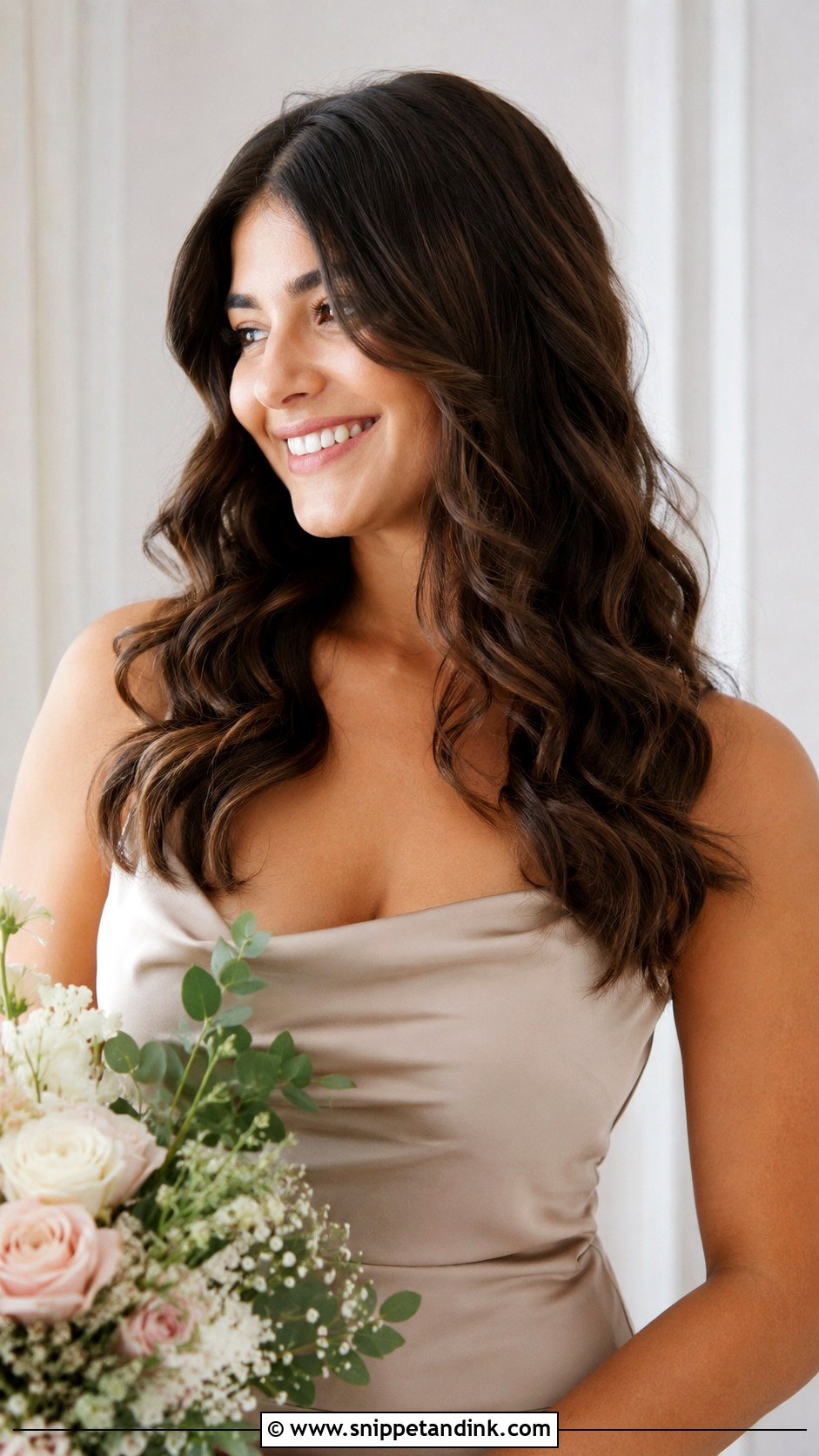
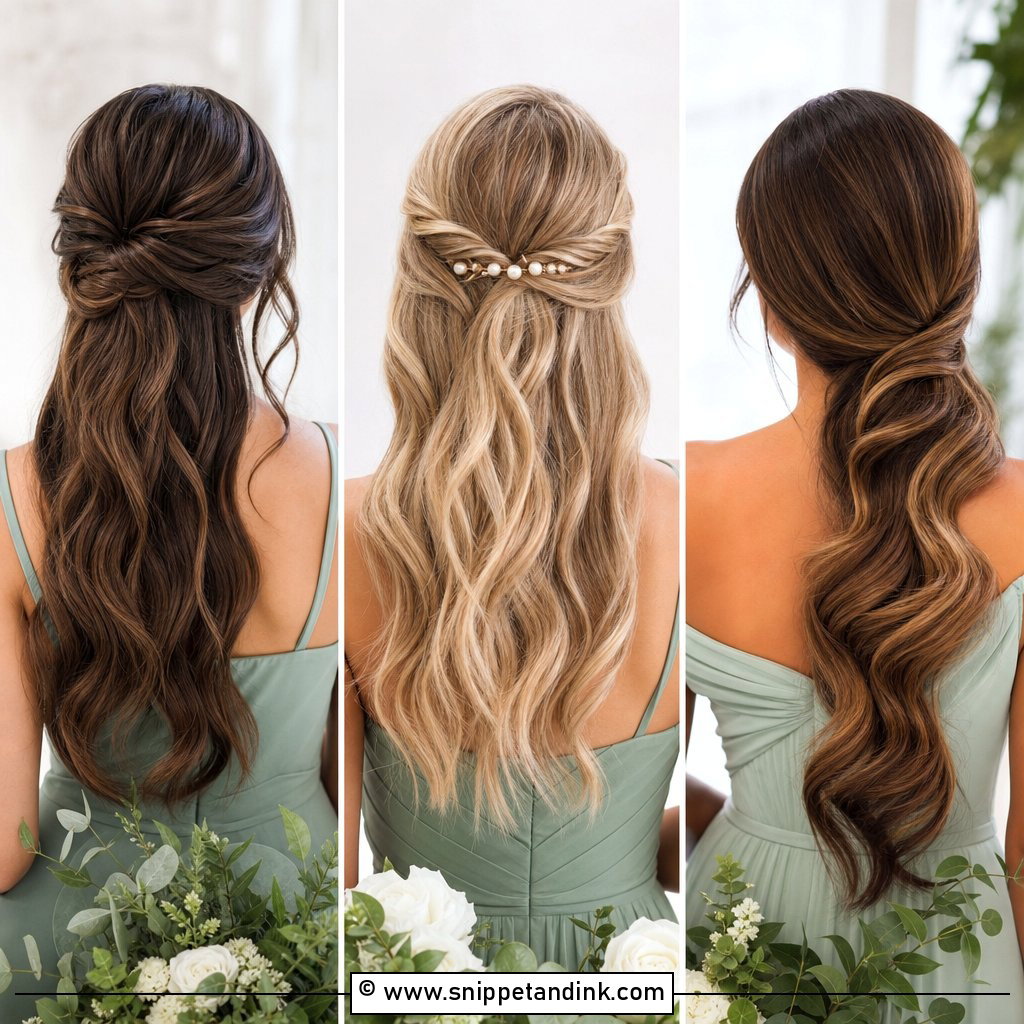
Soft curls sit between loose waves and Hollywood structure. I prep with a mousse or heat protectant that has some hold, curl smaller sections than I would for waves, and leave them pinned until just before photos. The hair I’m careful with is the kind that frizzes in heat: the curl expands, loses definition and starts to look like a different style altogether.
16. Bridesmaid Curly Updo
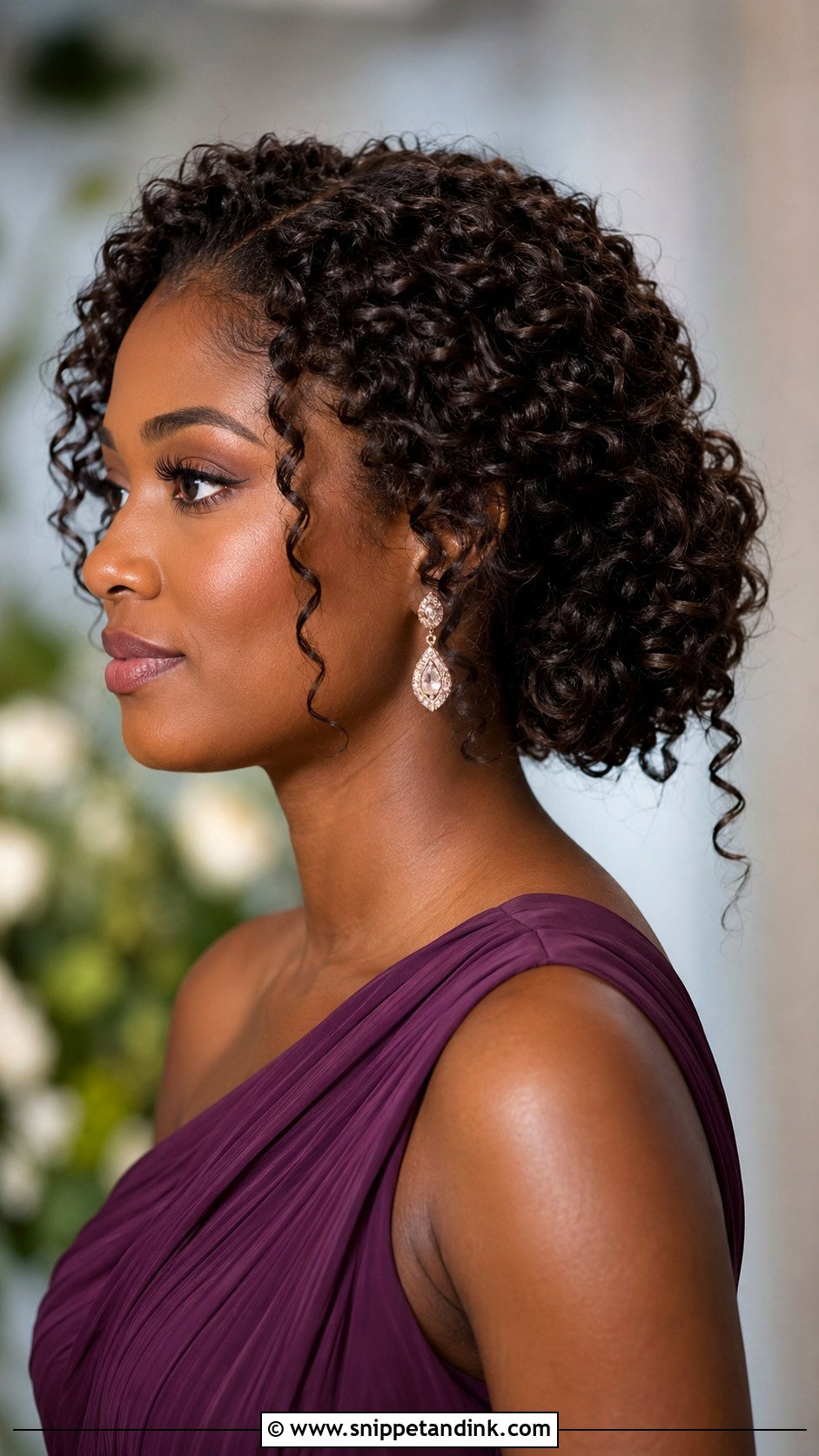
With naturally curly hair I don’t fight the texture; I build with it. Each curl gets defined with cream while the hair is still damp, then I gather and pin sections by hand instead of brushing, which would turn the pattern to frizz. The shape can sit low, at the crown or in a loose bun. Humidity is far less of a threat here than to a smoothed style, because there’s no straightened finish to revert. I keep the spray flexible so the curls still move.
17. Bridesmaid Natural Hair Updo
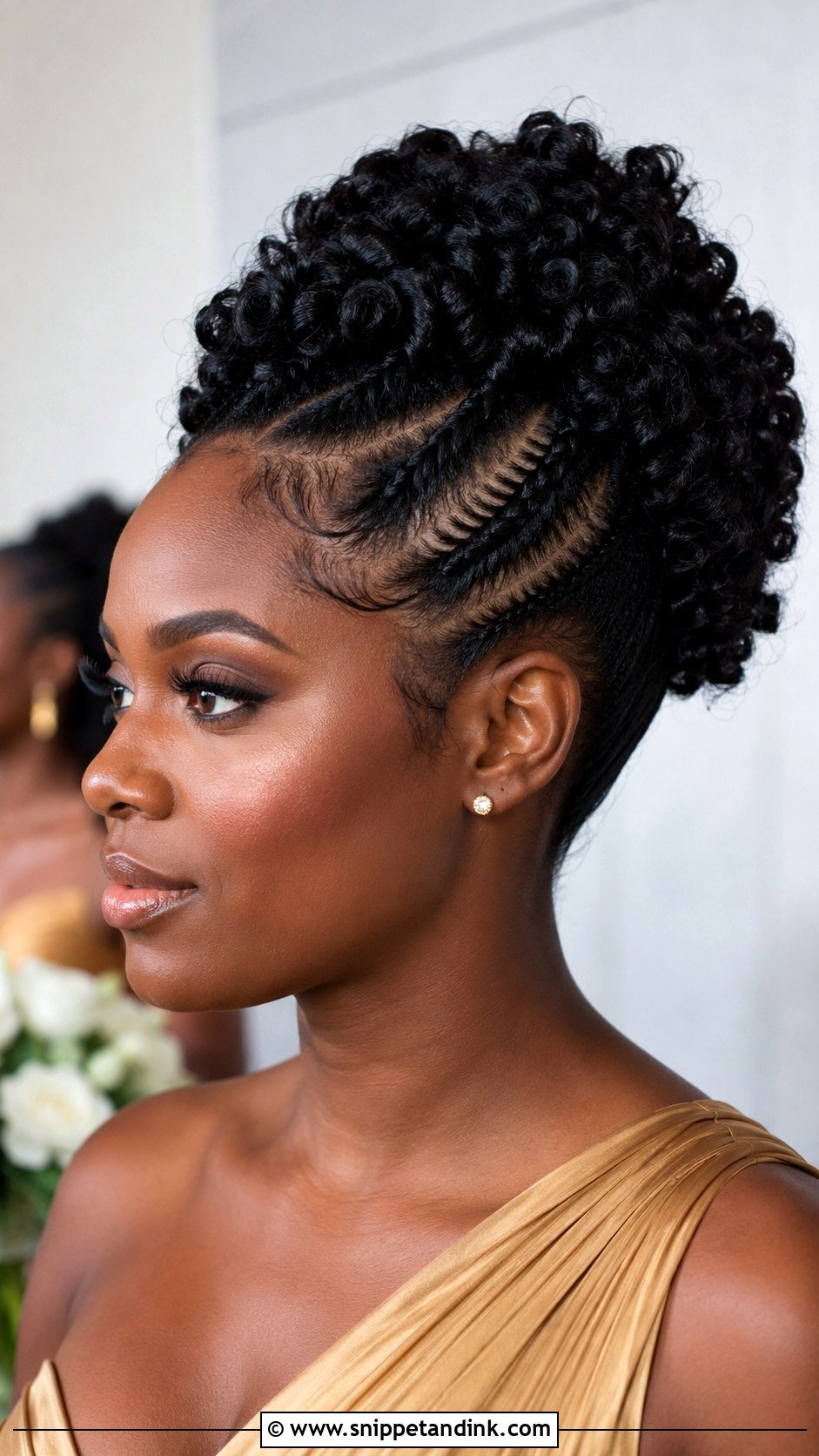
I plan a natural hair updo around the person’s own hair, not around a photo. Depending on length and curl pattern, the base might be flat twists, a puff, pinned curls or a braided foundation. Moisture goes on first and edge control last, and I keep both light so nothing looks stiff or flaky by evening. If the stylist booked for the party doesn’t regularly work with textured hair, ask for a trial before the wedding rather than finding out in the chair.
18. Bridesmaid Twist Updo
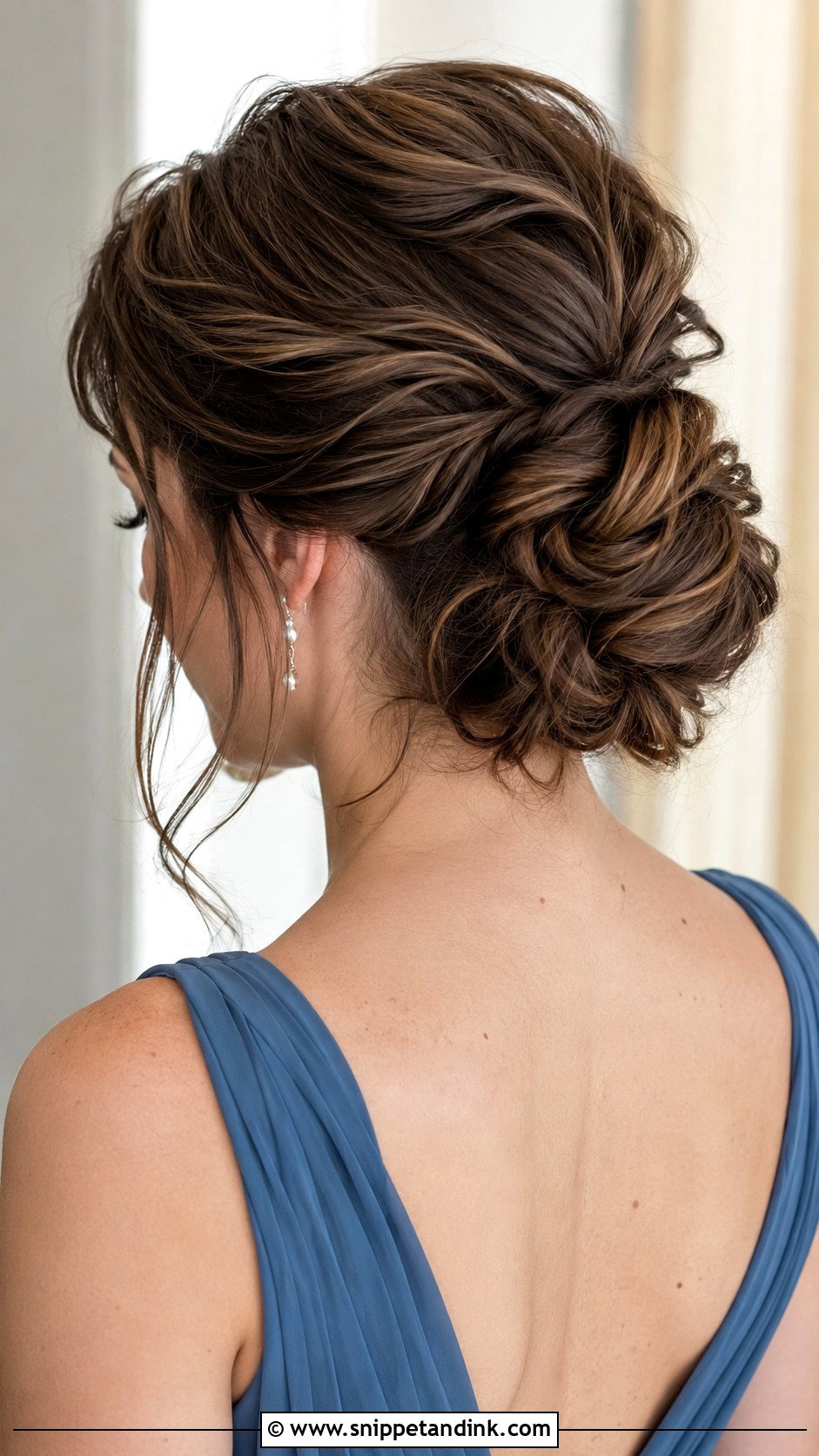
Twists can do what braids can’t for medium hair. A rope twist pinned back gives the impression of more length and fullness than the hair really has, and short layers tuck into the twist instead of poking out. I twist away from the face and pin each twist where it meets the next, so the whole structure locks together. Smooth the crown for a formal wedding; a touch of backcombing there relaxes it.
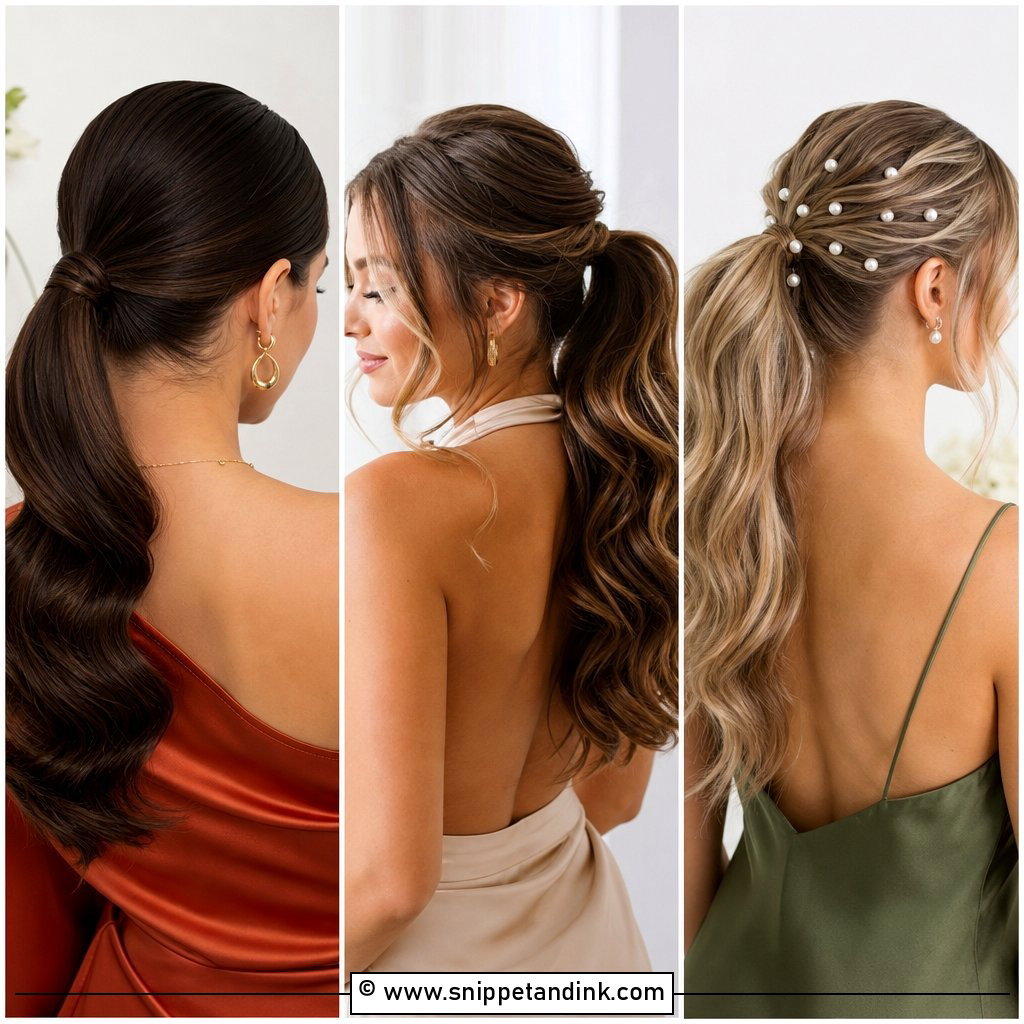
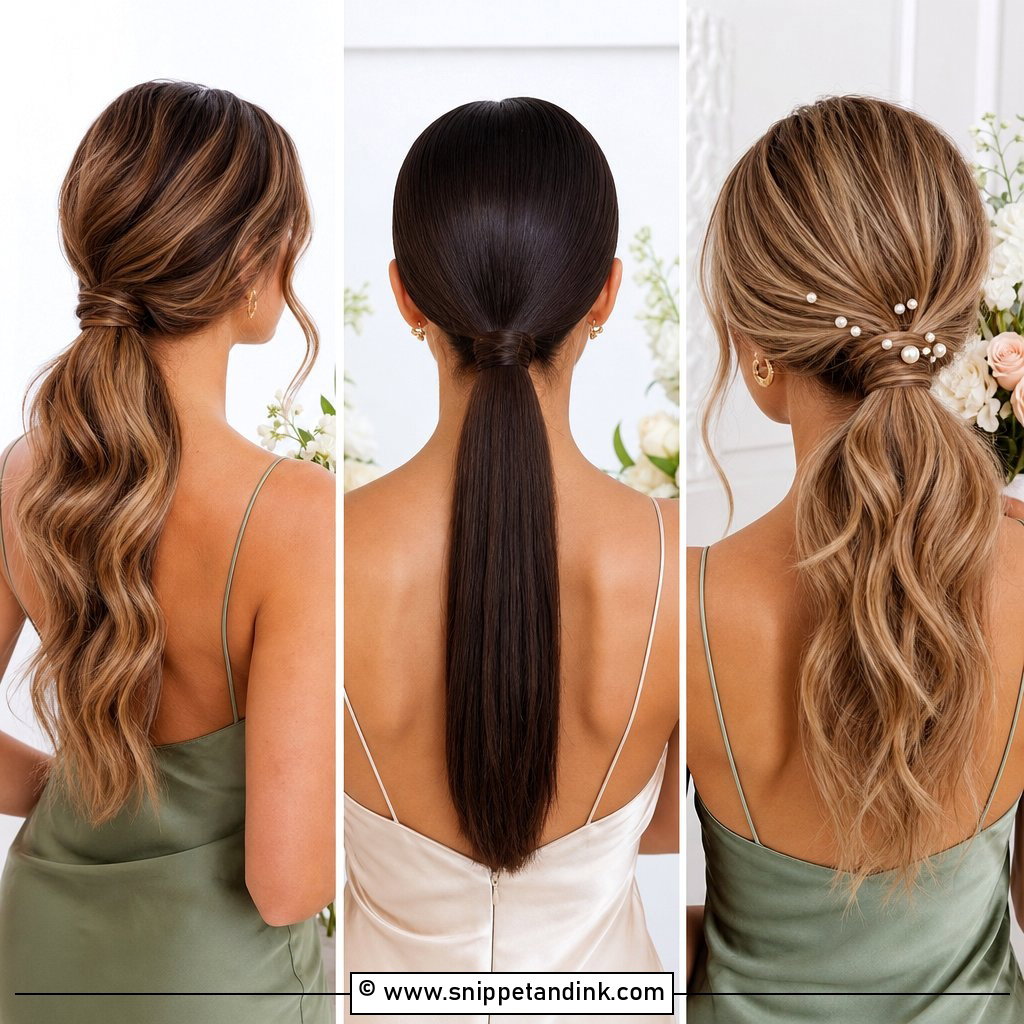
19. Bridesmaid Low Ponytail
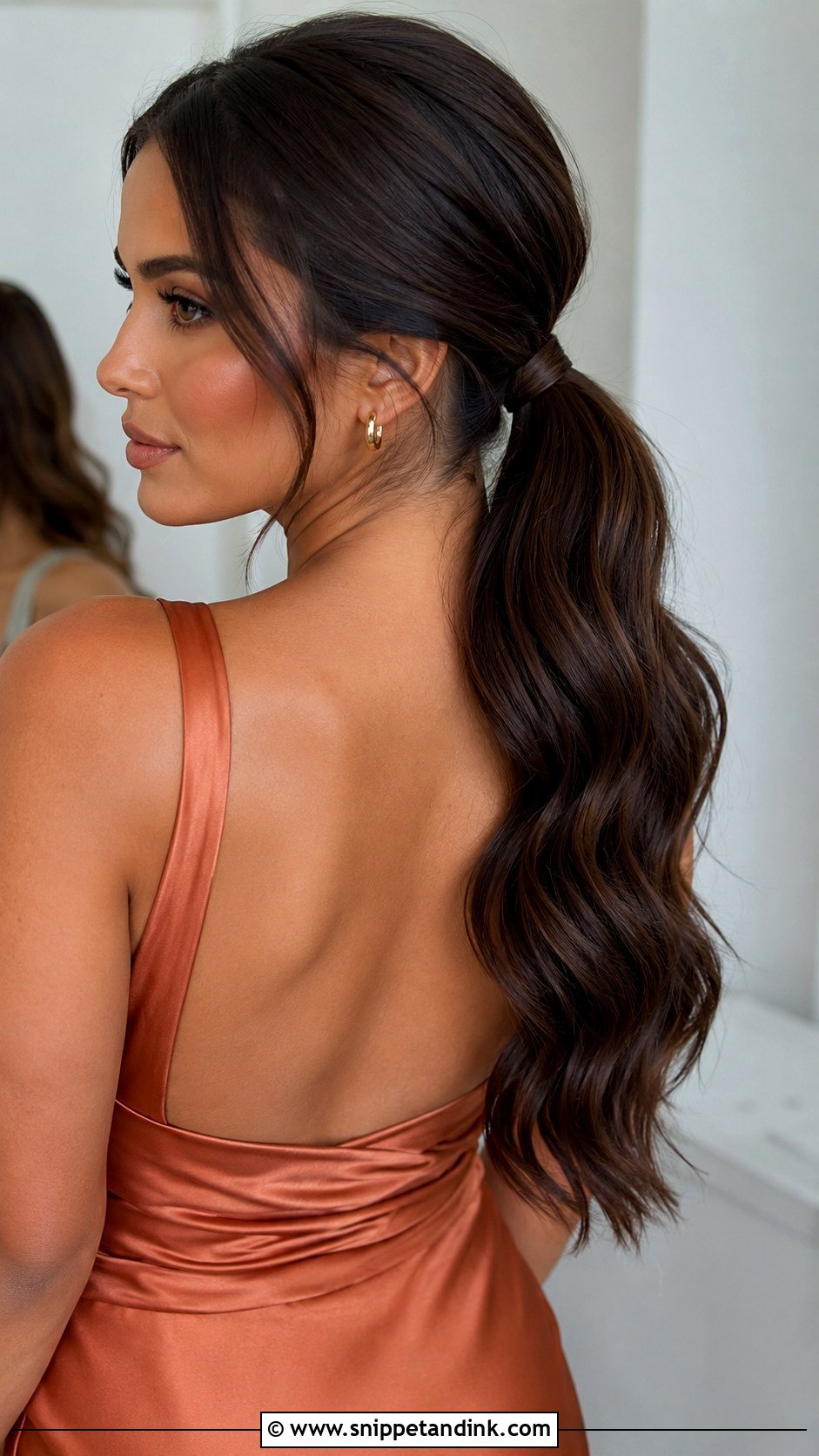
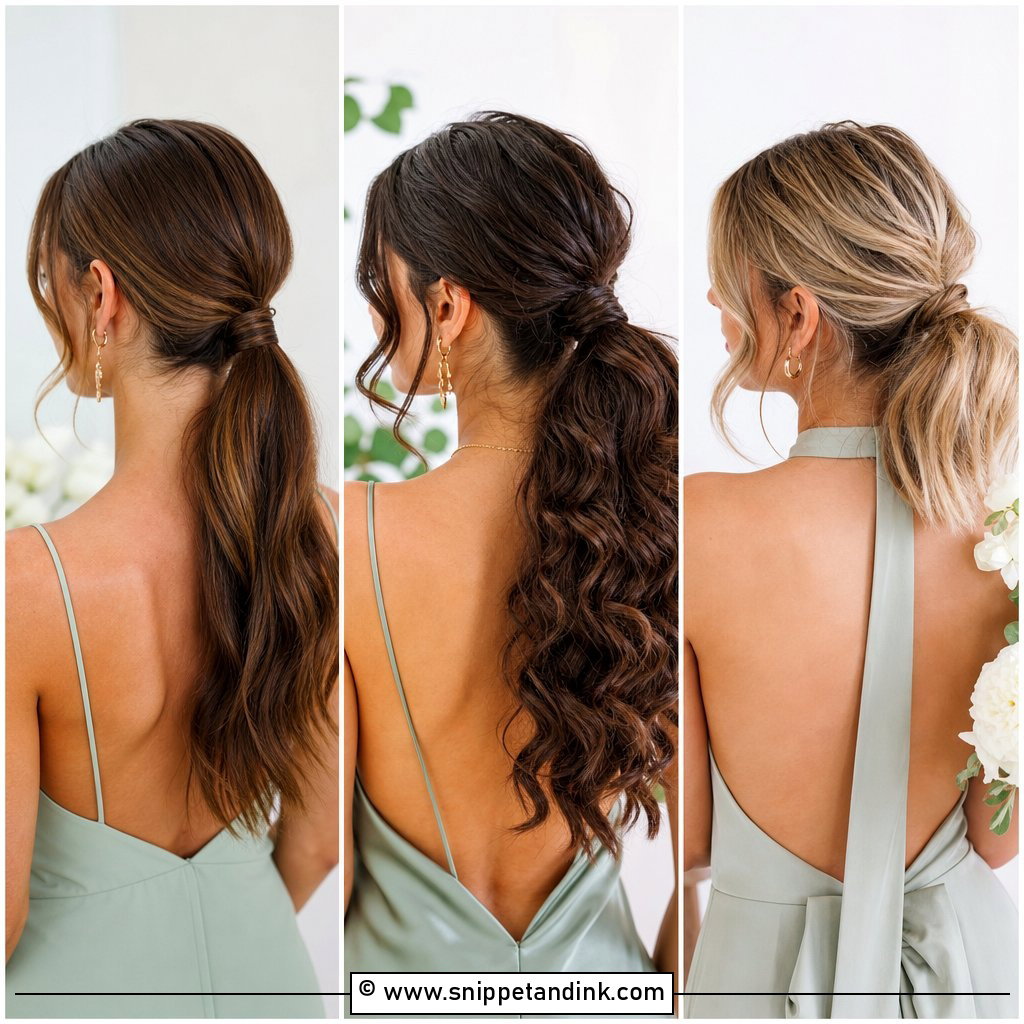
Low ponytails look like the simplest choice and need the most care at the base. I tie it, wrap a strand of hair around the elastic and pin it underneath, so no band shows in profile shots. Square necklines and modern gowns suit it, and plenty of bridesmaids find it more comfortable than an updo because nothing is pulling on pins. If your hair is fine, curl the tail. A straight, fine tail looks thin standing next to fuller styles.
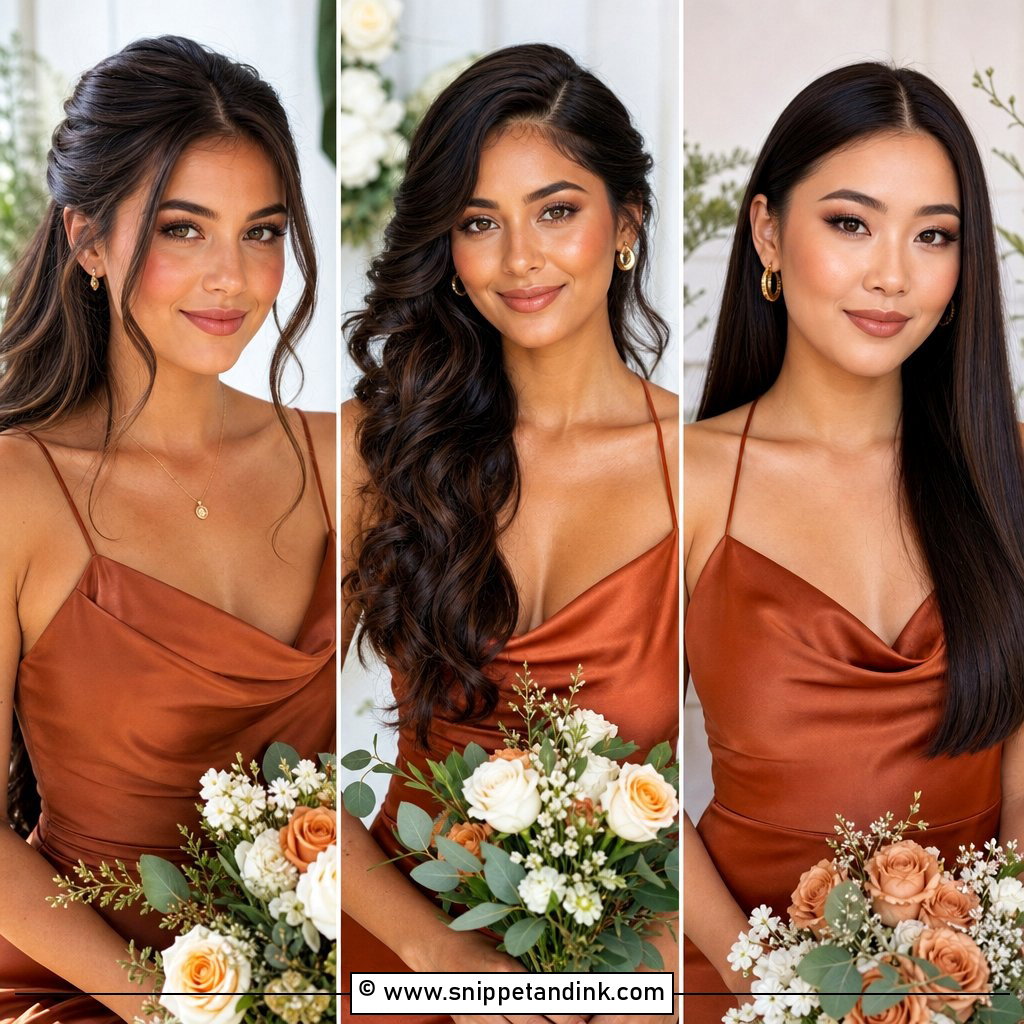
20. Bridesmaid Sleek Ponytail
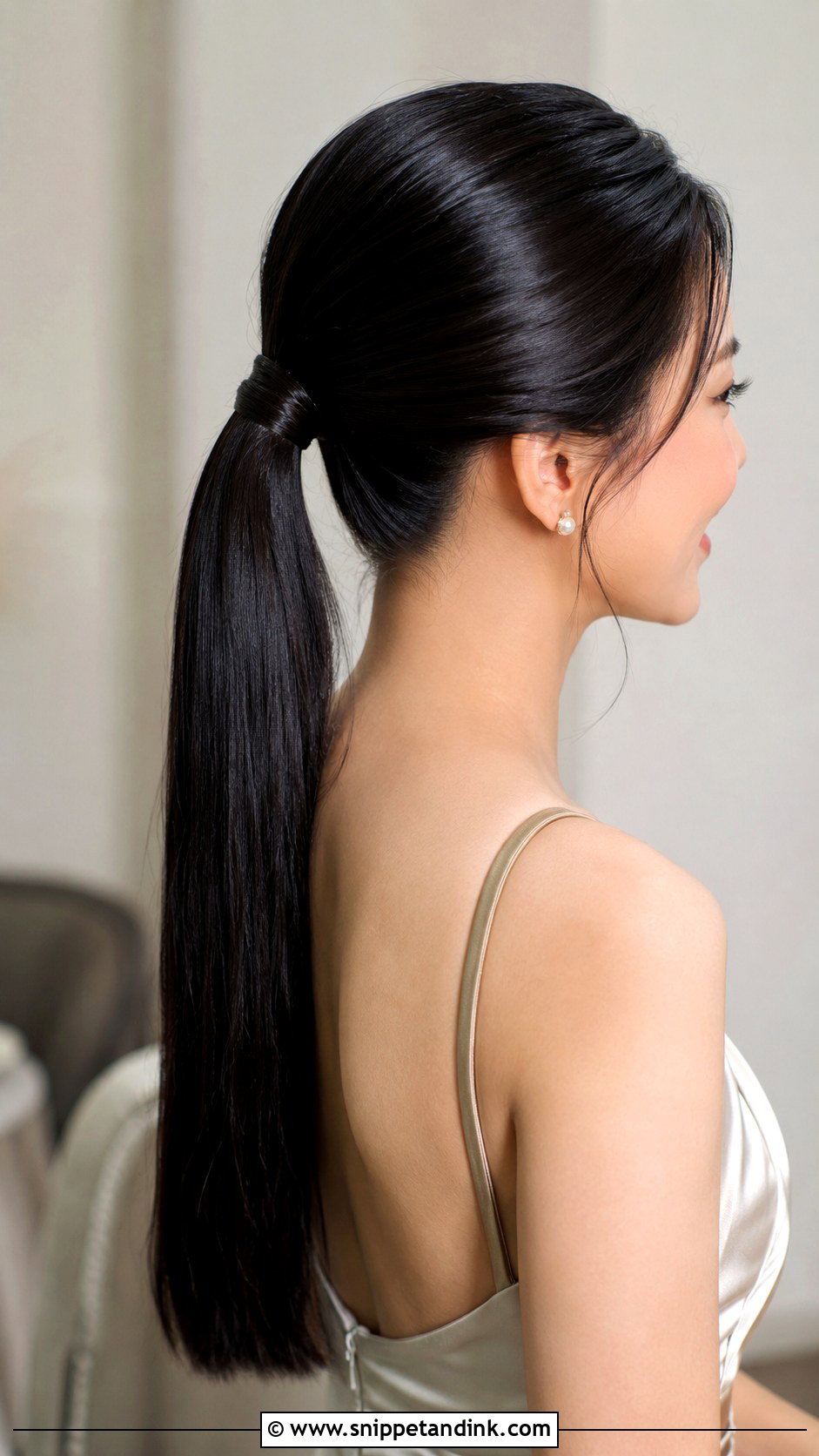
The hard part of a sleek ponytail is the hairline, not the tail. I smooth the front with a boar bristle brush and a little cream, then set the baby hairs with a tiny amount of edge control. Height is a choice: low for a classic gown, middle for something structured, high for energy. A strong elastic with a hidden hair wrap stops it slipping, and the clear outline reads well in group photos.
21. Bridesmaid High Ponytail
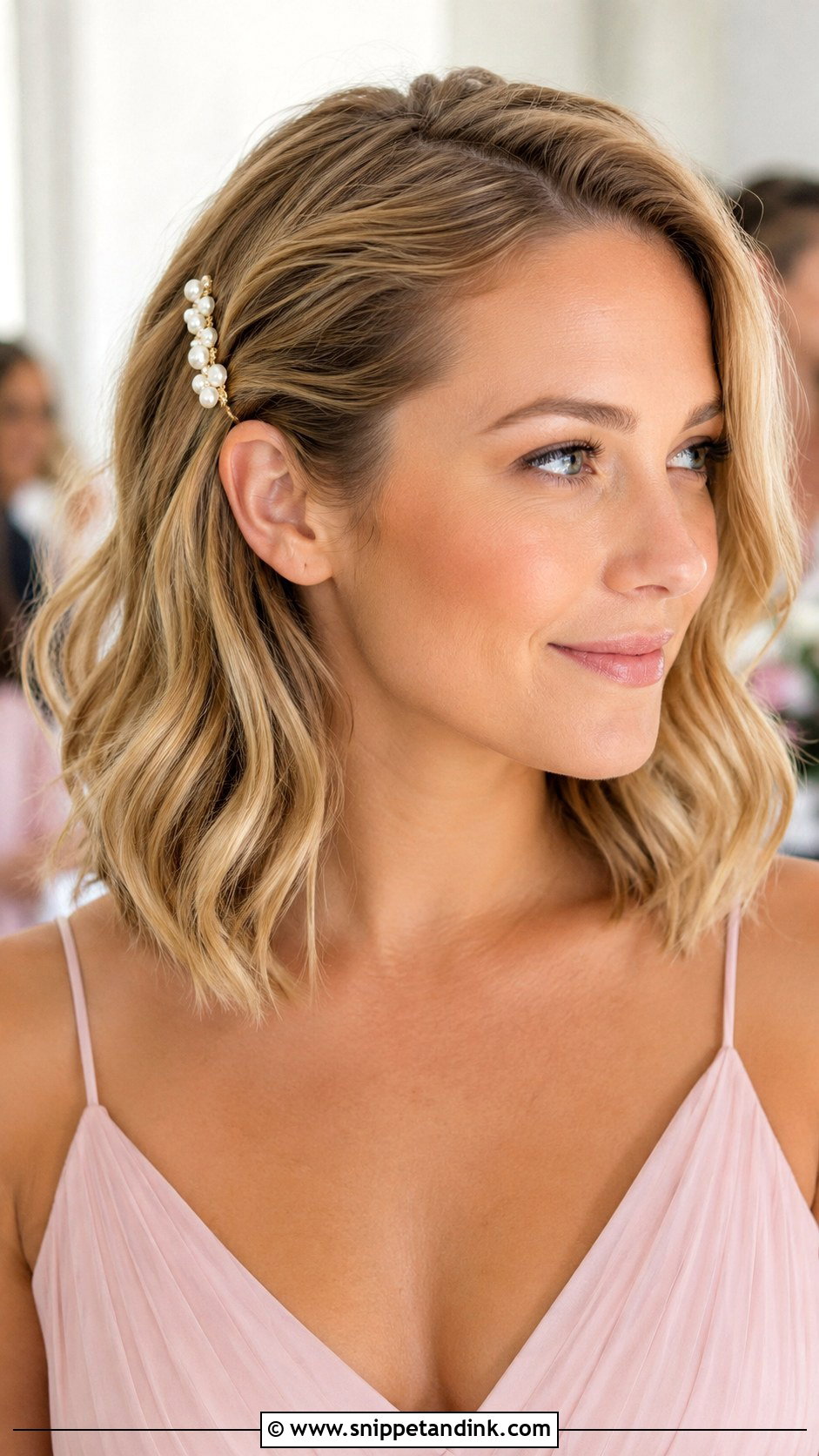
A high ponytail gets heavy over a long day, so I build it on two elastics: one to fix the position and a second just below it to take the weight. Long hair or extensions give it the swing that shows up in movement shots, and strapless or one-shoulder dresses leave room for it. Curl the ends. A dead-straight high pony with a simple dress can tip over into looking sporty.
22. Bridesmaid Bubble Ponytail
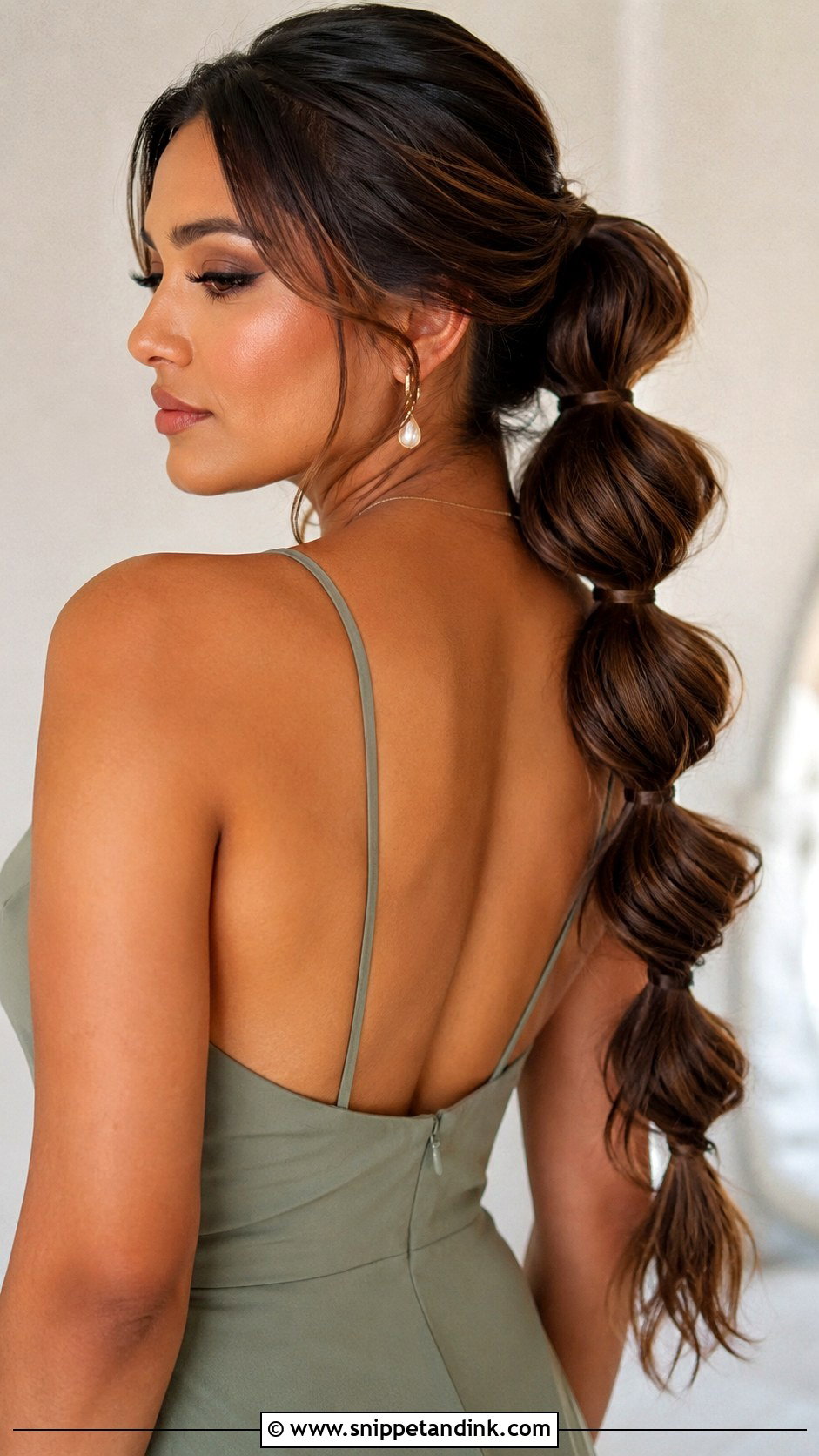
A bridesmaid bubble ponytail is mostly a length question: without enough hair or extensions for at least four bubbles, it looks unfinished. I space small hair-matched elastics evenly down the tail, then ease each section out from both sides so the bubbles stay round. Outdoors it handles wind far better than loose hair. Wrap every elastic with a thin strand so the finish looks deliberate.
23. Bridesmaid Claw Clip Updo
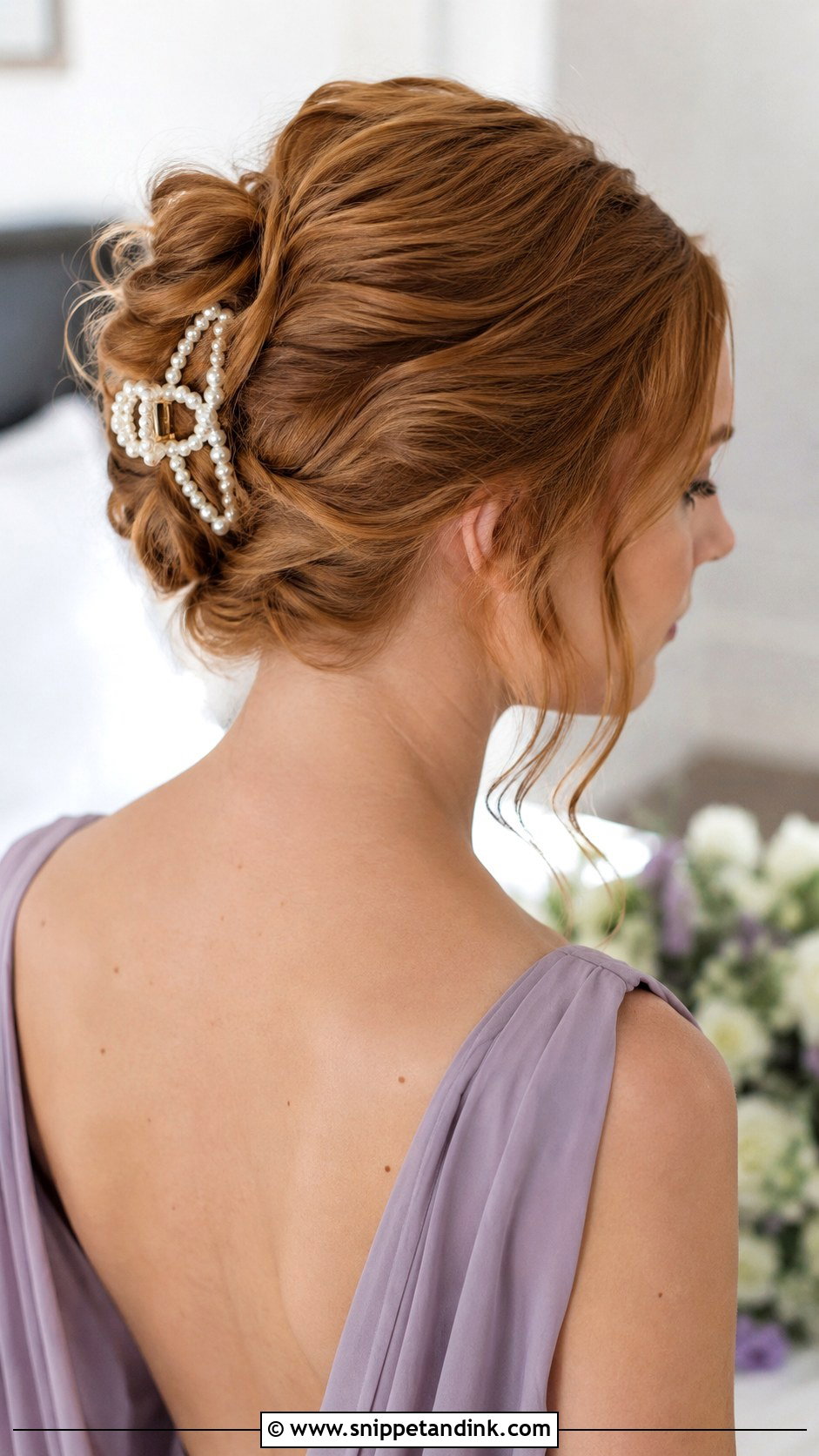
A claw clip at a wedding only works if the hair underneath is properly done. I curl or smooth the lengths first, twist them up, pin the twist securely, and only then add the clip as decoration and a last bit of hold. It should never be the only thing keeping the hair up. Comfort is the honest reason bridesmaids pick it, since she can loosen and redo it herself at the reception. Keep the front polished or it starts to read as an everyday errand twist.
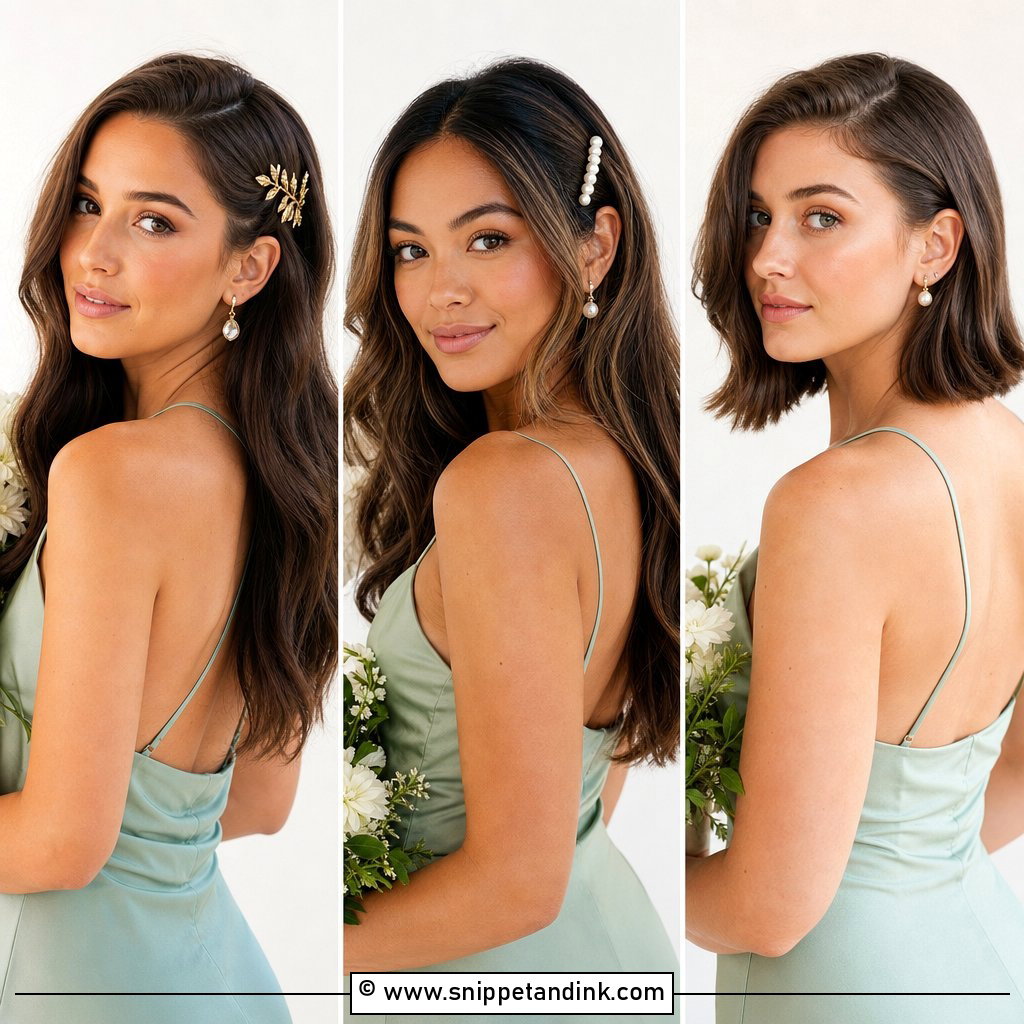
24. Bridesmaid Short Hair Waves
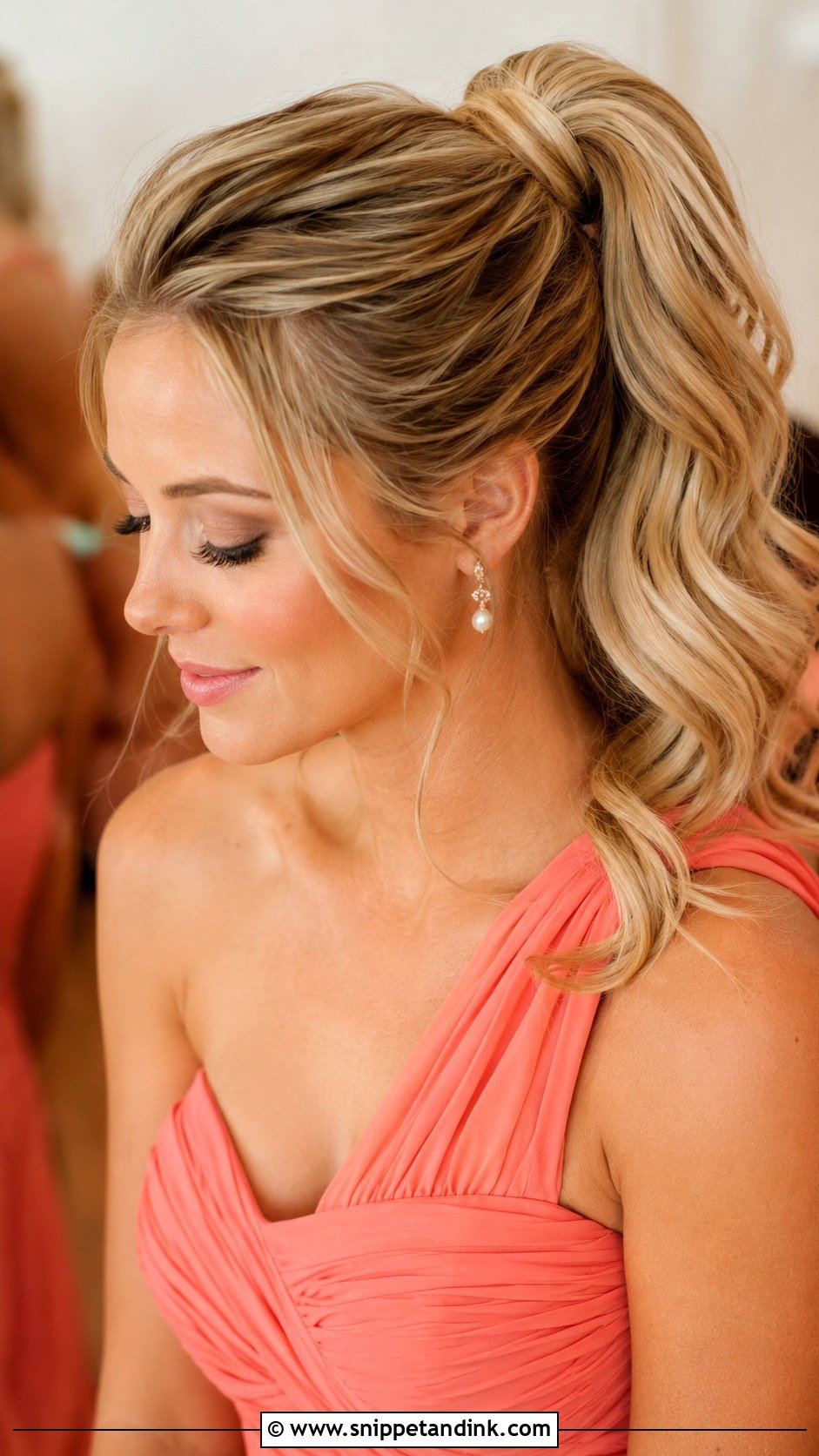
Short waves are what I suggest when a bob or lob is about to be forced into an updo that won’t hold. Short layers work loose from pins within a couple of hours, while a wave set suits the cut and stays put. On fine hair I spray texture at the roots before curling so the wave has something to grip. Statement earrings get room to show at this length because the hair stops above them.
25. Bridesmaid Bob Hair
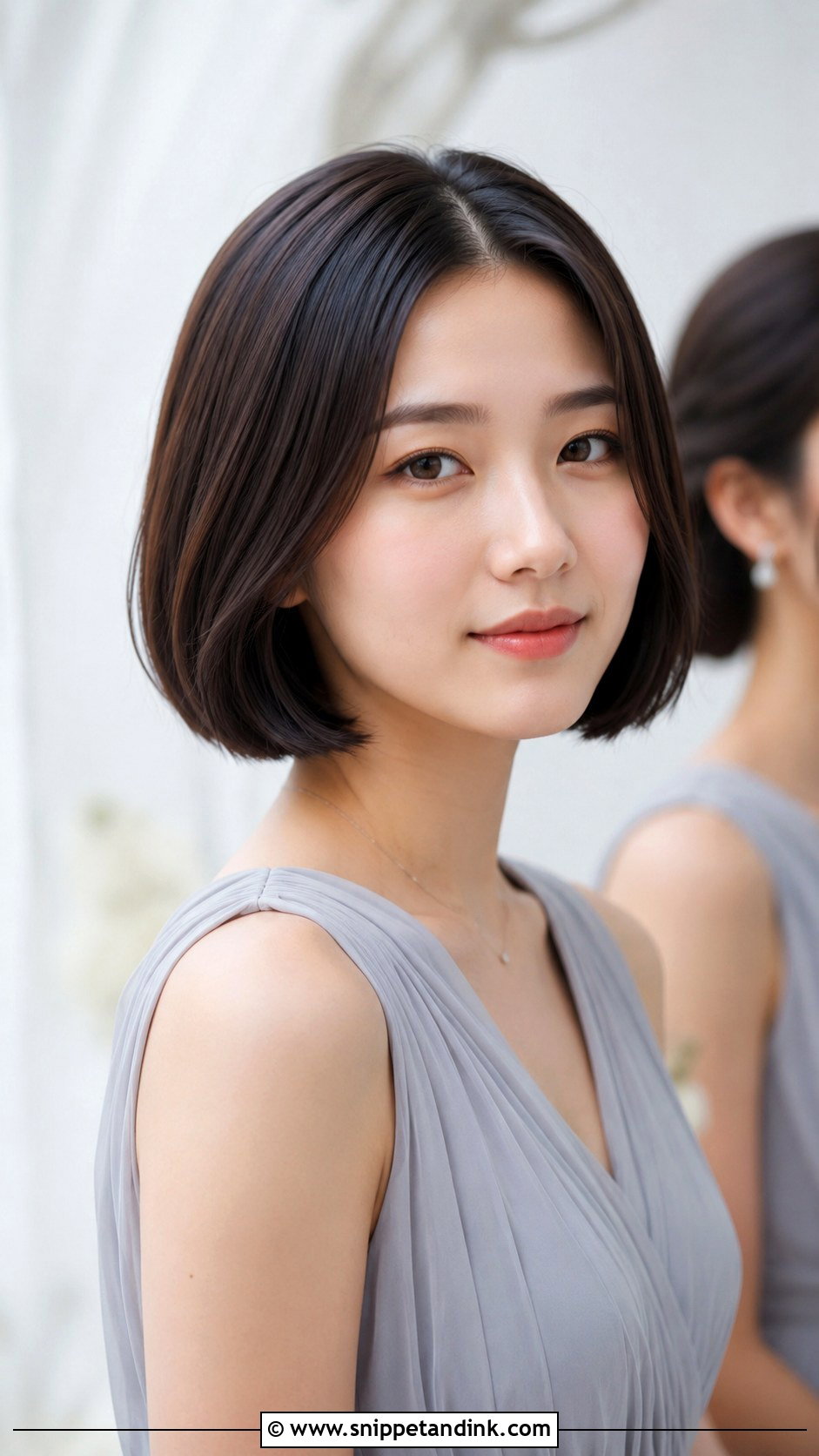
Bridesmaid bob hair mostly needs to look like a fresh cut, so book a trim a week or two before the wedding rather than the day before, when the ends can look blunt and harsh. Let the cut decide the part and the finish instead of choosing from a photo. A small barrette on one side is all the wedding detail it needs. Extensions and heavy pinning just fight the shape.
26. Bridesmaid Pixie Hair
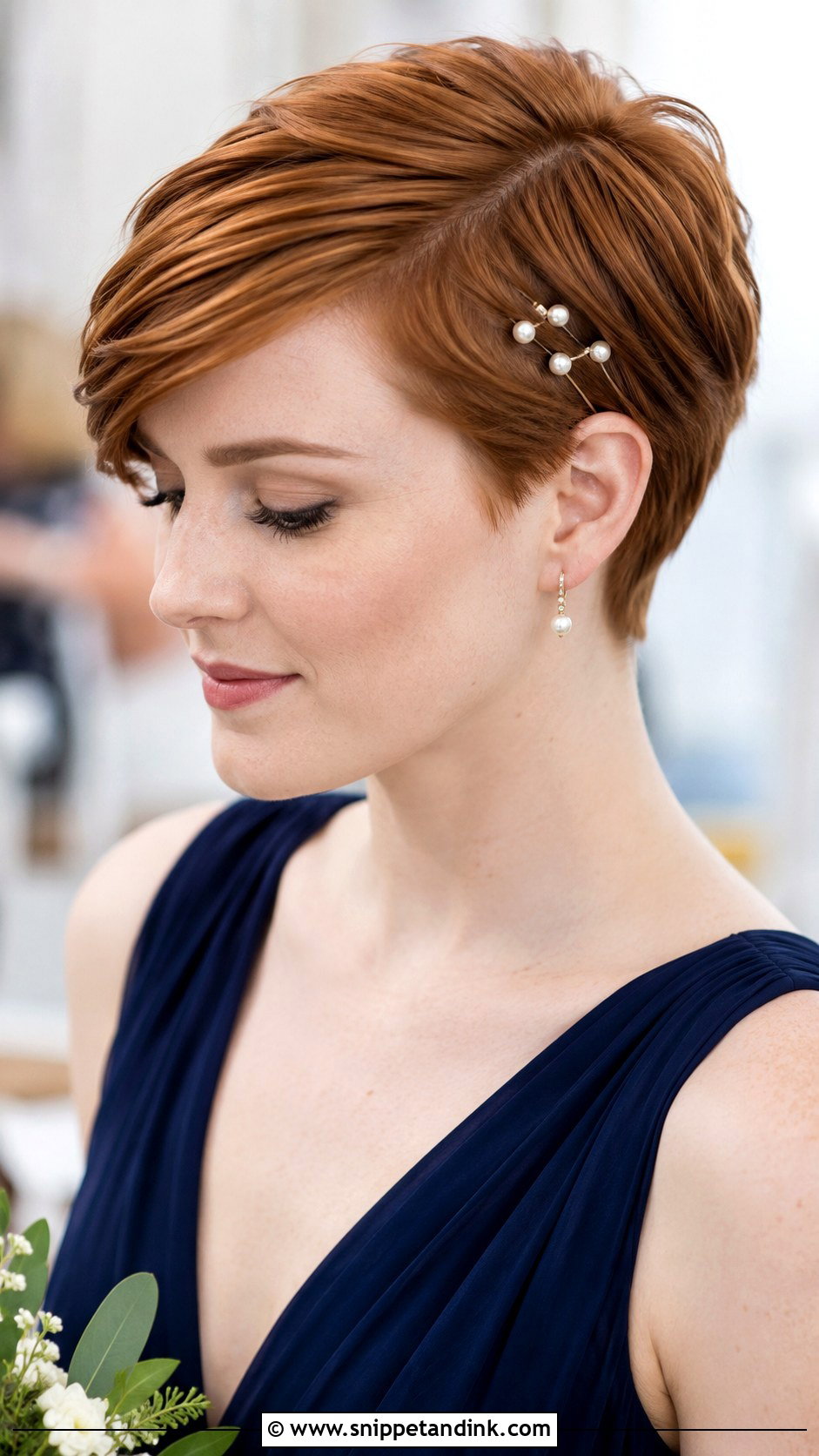
Bridesmaid pixie hair puts all the attention on texture and shine, since there’s no length to shape. I work a pea-sized amount of styling cream through with my fingers, direct the fringe with a small round brush, and finish with a light flexible spray. One slim headband or a single pearl pin is plenty; more crowds the cut. Short hair also makes makeup and earrings more visible, so both deserve extra thought.
27. Bridesmaid Side Swept Hair
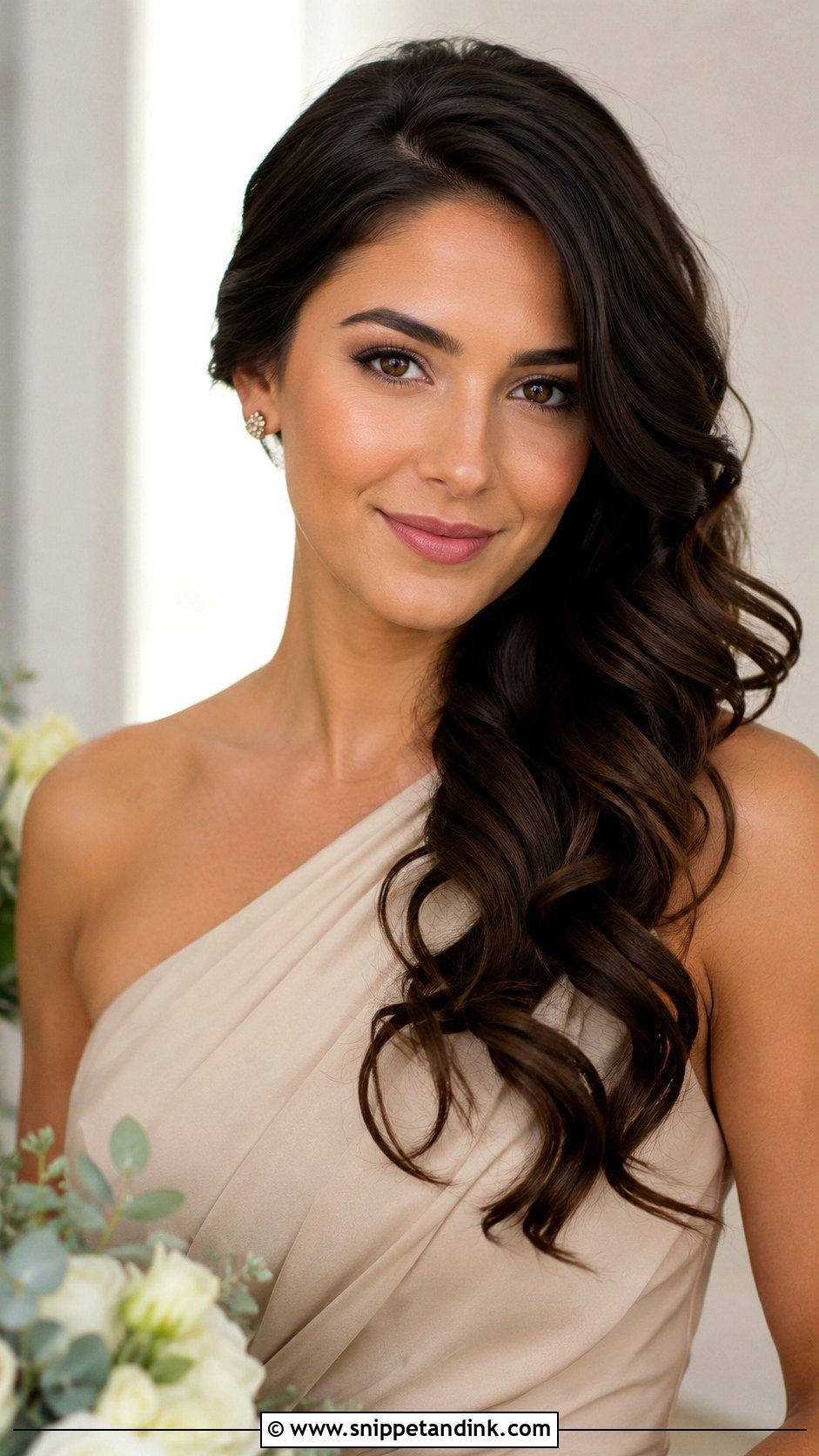
Side-swept hair shows the neckline on one side and covers it on the other, which is why it pairs so naturally with one-shoulder gowns and dresses with detailed straps. Keeping all that weight on one side needs hidden anchoring. I cross two pins behind the ear on the far side and tuck the sweep under the waves so it can’t slide back. Ask your stylist which side balances the strap before she starts curling; switching sides later means redoing the set.
28. Bridesmaid Middle Part Hair
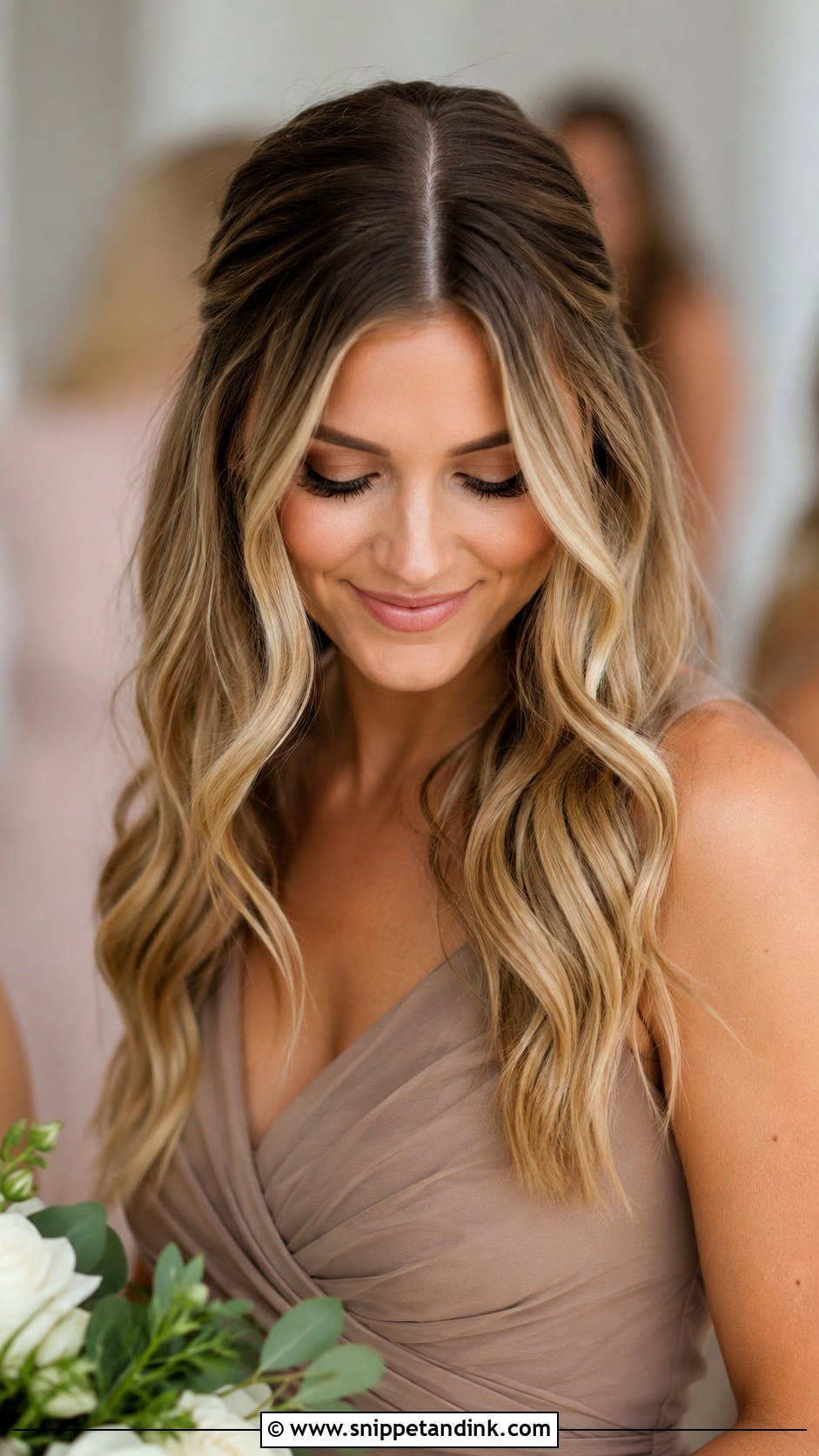
A middle part is the simplest way to make a mixed bridal party look matched, because the part shows in every face-on photo even when the styles behind it differ. It also exposes any asymmetry, so I check the line in the mirror and in a quick phone photo before setting anything. Worn down, a center part needs polished ends to look formal enough. Minimalist dresses and natural makeup sit comfortably with it.
29. Bridesmaid Hair With Pearl Pins
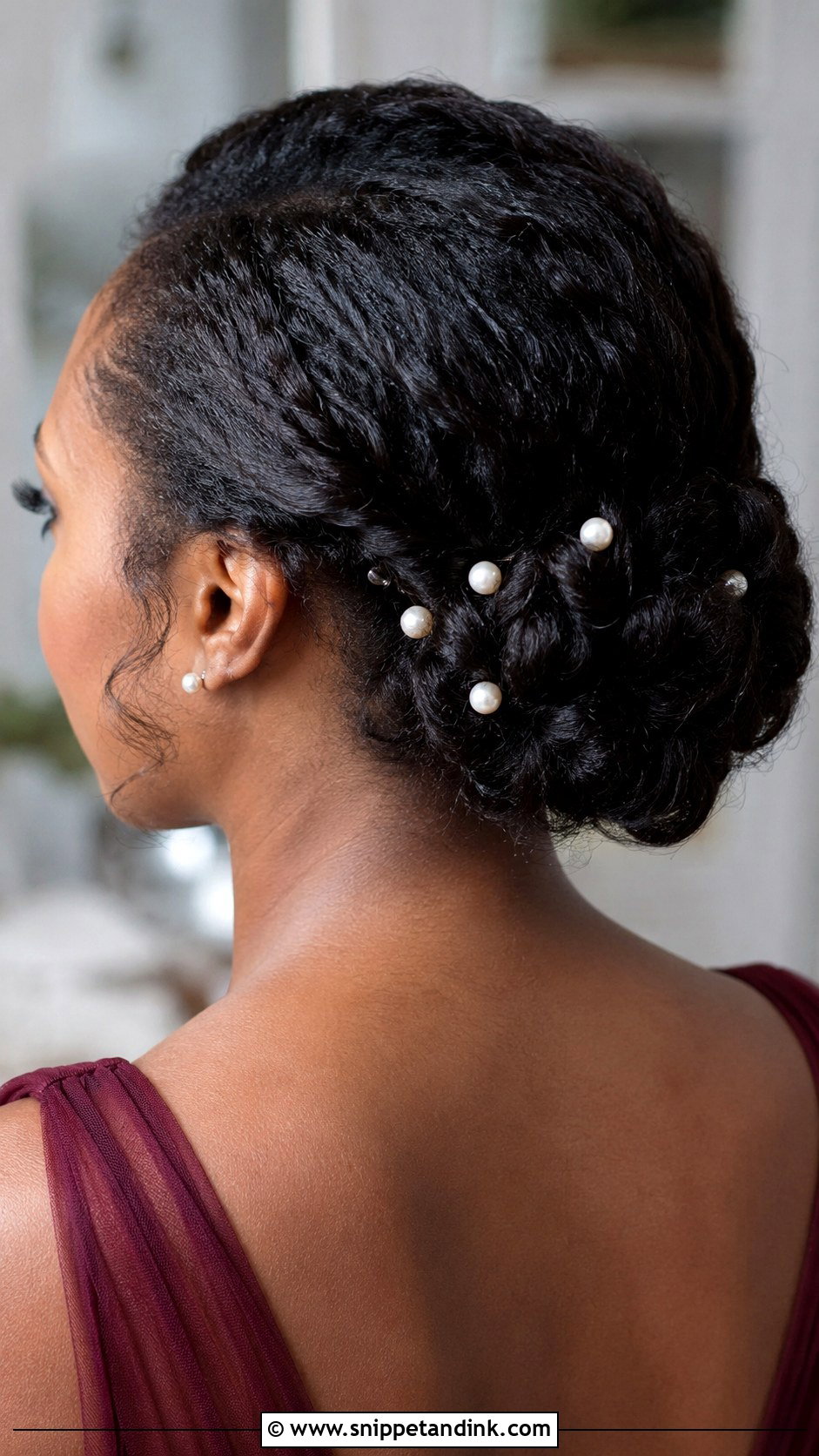
Pearls look better few than many. I finish the hairstyle completely first, then place pins where they follow the shape: along a braid, in the curve of a low bun, at the twist of a half-up section. A bun with a dozen pearls starts to look busy from behind, while a handful spaced out reads as intentional. Spiral-stem pearl pins stay put through hugs better than straight ones.
30. Bridesmaid Hair With Bow
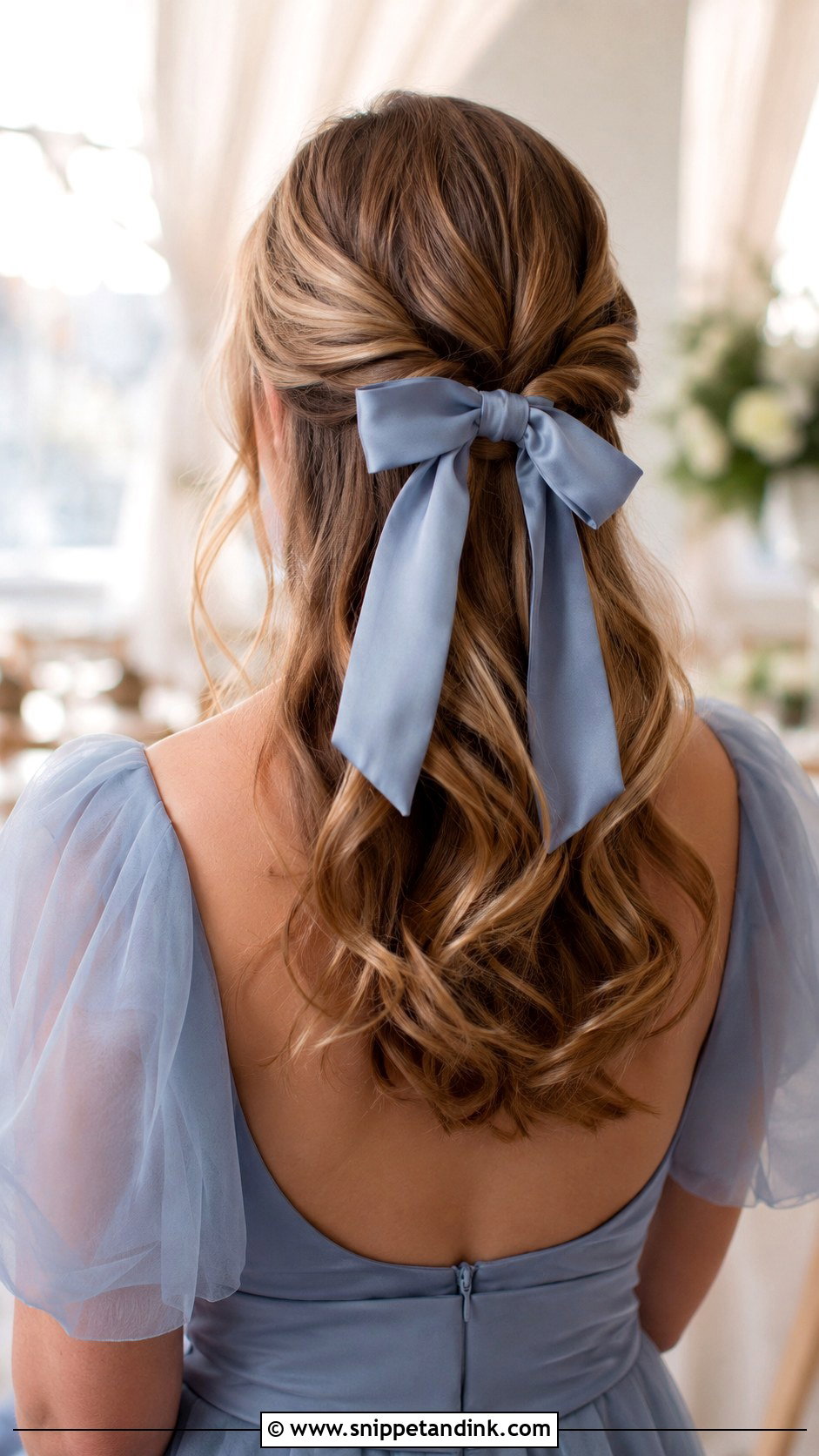
A bow is the focal point, so I keep everything around it quiet. It can tie off a half-up section, wrap a low ponytail or sit just under a bun. Fabric changes the effect more than people expect: velvet feels wintry and weighty, while organza looks light enough for summer. I attach the bow to a separate clip so I can place it precisely and it won’t twist sideways during hugs. A neutral shade or one matched to the dress keeps it grown-up.
Arriving at the Chair With Hair I Can Actually Work With
Hair holds best when it’s clean but not washed that same morning. I ask bridesmaids to wash it the evening before, dry it completely and keep conditioner off the roots. Freshly washed hair is too slippery for pins to grip, while hair left unwashed for several days carries enough oil to make curls drop.
Leave out oils, leave-in serums and heavy masks for a day or two beforehand. Wear a button-up shirt so you can change without pulling anything over your head. If you’re bringing clip-ins, have them washed, brushed and already color-matched, and tell your stylist in advance so she can plan the extra minutes.
Settle on your style before the wedding morning, too. A look chosen in the chair often isn’t one the schedule has room for.
A Hair Repair Kit Small Enough for a Bridesmaid Clutch
By the reception, something always loosens. These fit in a small pouch and save most evenings:
- Bobby pins in your own shade, more than you think you’ll need
- A travel-size flexible hairspray
- Two clear elastics
- A small comb or folding brush
- Blotting papers for the hairline on a hot day
If a section falls, don’t take the whole style down. Twist the loose piece, tuck it into the nearest pinned area and cross two pins over it in an X. That fix usually lasts through the dancing.
One Shared Detail Is Enough to Tie a Bridal Party Together
The right bridesmaid style is the one she can forget about once it’s pinned. Buns, waves, half-up looks, ponytails, braids and short cuts all belong in a modern bridal party, and which one fits depends on her length, texture, neckline and weather. If the bride wants cohesion, I pick a single shared element, such as a center part, pearls or a low placement, and build each bridesmaid’s style around it. Everyone looks connected, and nobody is stuck in a style her hair can’t hold.
You'll Like These Ideas:


Leave a Reply