
If a bridesmaid can’t decide, I usually steer her toward a low bun. Of all the bridesmaid hairstyles I do, it’s the one that survives wind, hugs, humidity and a full dance floor with the fewest touch-ups, and it never pulls focus from the bride. It sits comfortably with satin and chiffon, in a ballroom or on a beach. The variety comes from texture and placement: sleek and tight to the nape, loose and wavy, braided, or finished with pearls or flowers. Below are twenty versions with notes on the hair type, length and dress each one actually works with.
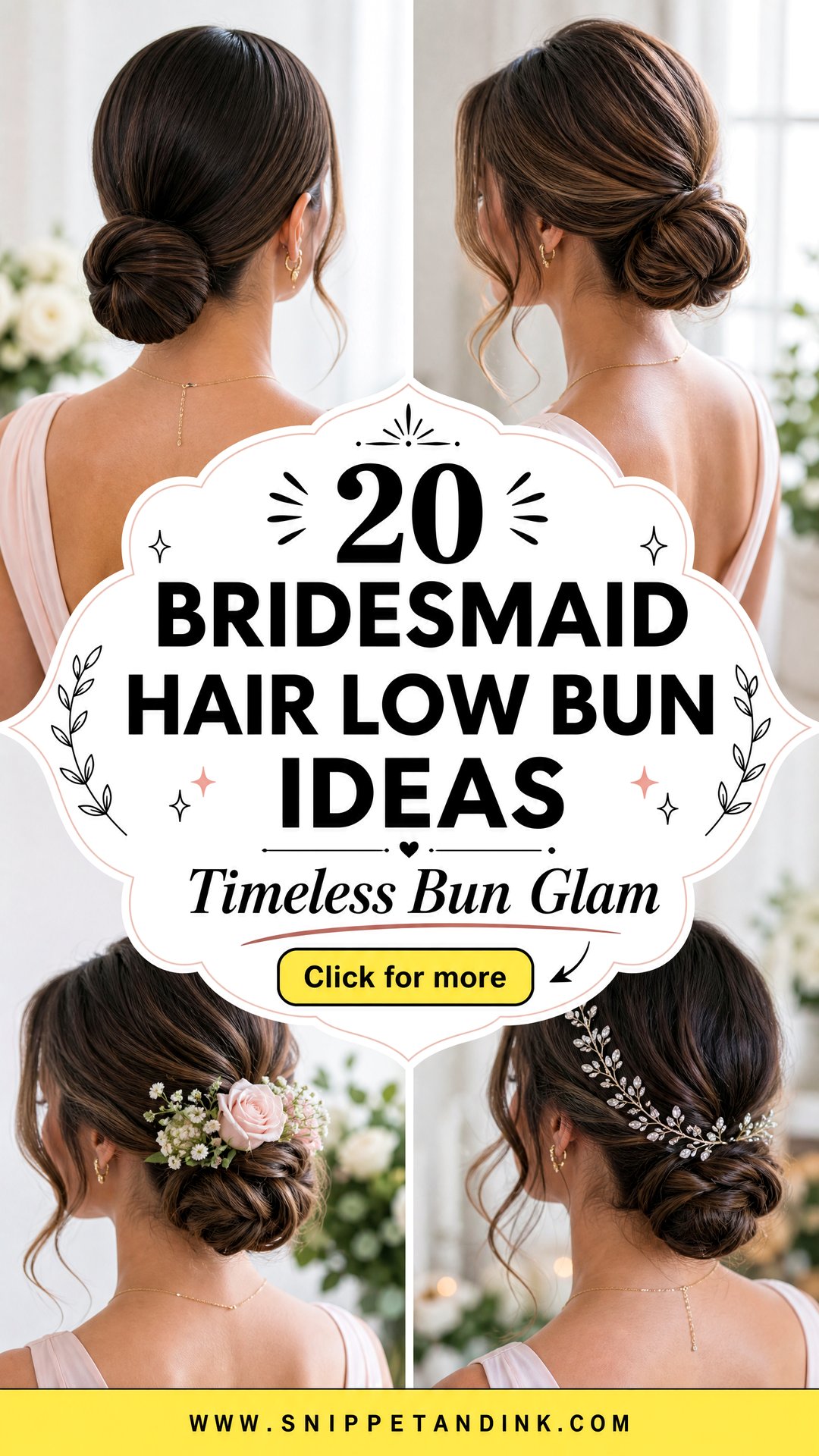
How Low Should the Bun Sit for Your Dress?
Low covers quite a range, from the occipital bone at the back of the skull down to the top of the neck. Where I place it depends mostly on the neckline.
- High necks and halters: higher, around the occipital bone, so the bun doesn’t sit on the fabric and get pushed around every time she turns her head.
- Strapless, square and sweetheart necklines: right at the nape, which balances bare shoulders.
- One-shoulder dresses: slightly off-centre, on the side with the bare shoulder.
- Low-back dresses: centred and compact, so it doesn’t cover the back detail.
Check the bun in a side mirror while sitting down. A bun that looks right standing can press against a high-backed chair at the reception, which pushes the pins into the scalp and slowly flattens the shape.
Veils and hair accessories change the answer too. If the bride wants her bridesmaids in matching combs or vines, I set every bun at the same height so the accessories line up in the group shot, even when the hair lengths differ. A bridesmaid with very short hair may need her bun a little higher than the rest, simply because that’s where her hair reaches, and that’s a fair trade.
1. Sleek Low Bun Bridesmaid Hair
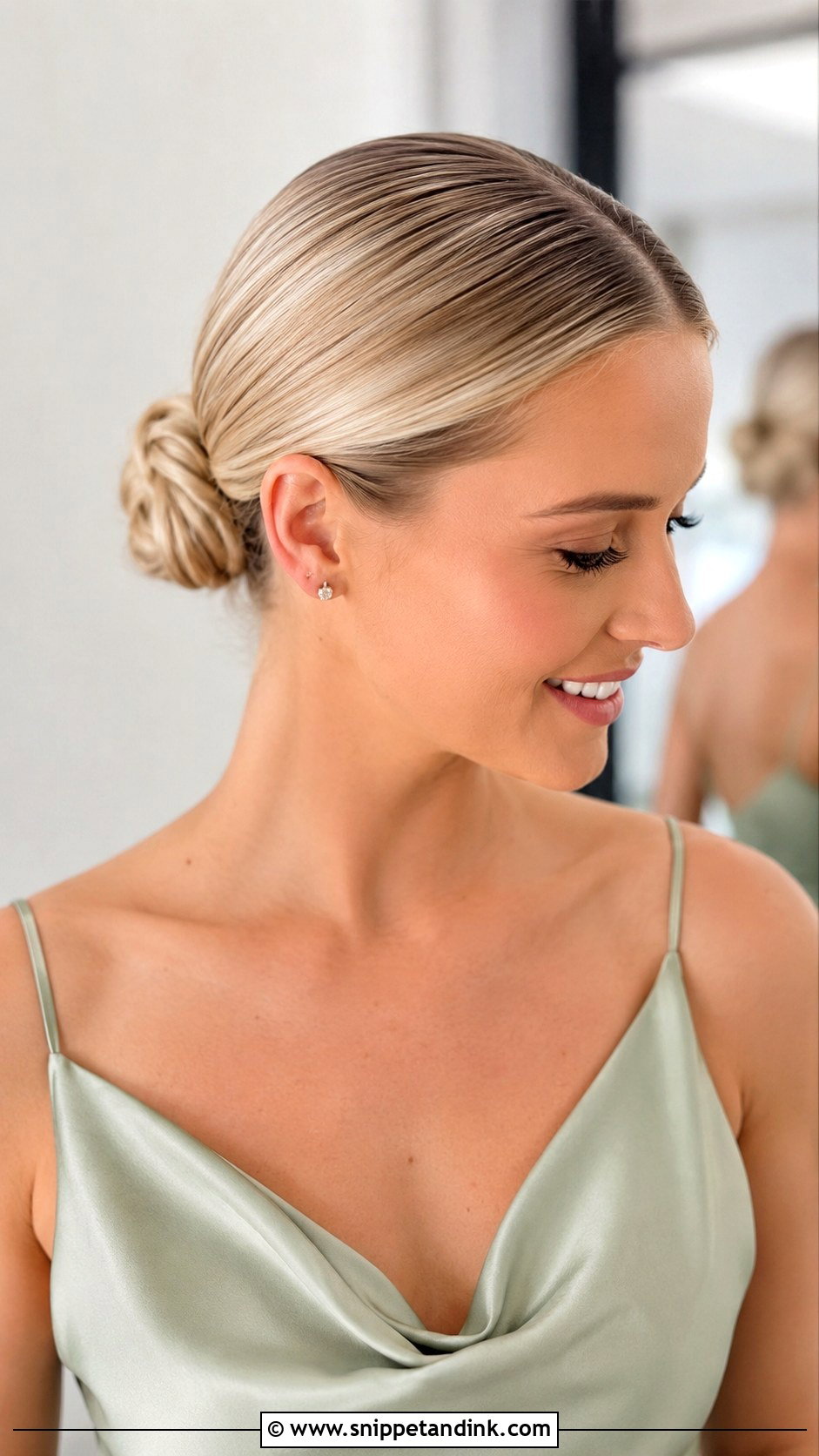
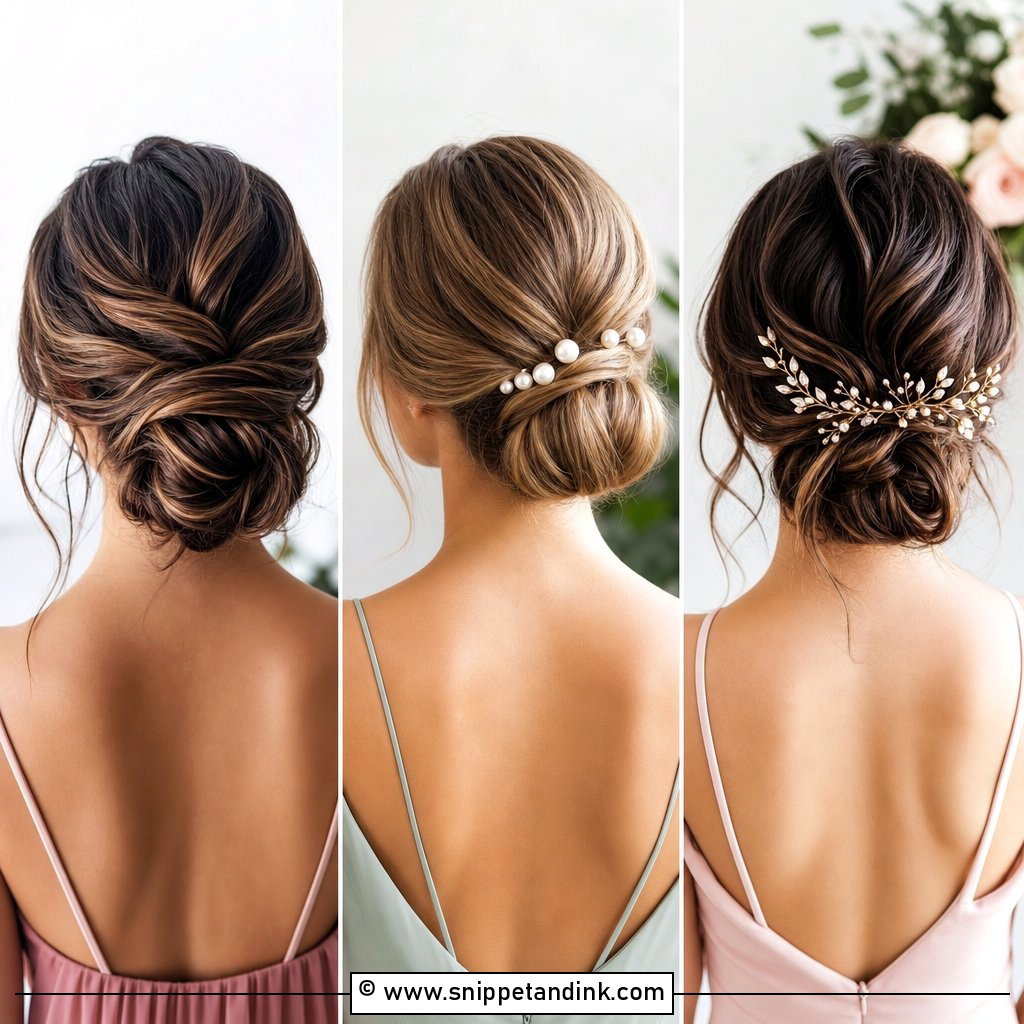
Sleek low bun bridesmaid hair is the most practical style on this list for humidity. Smoothed hair has nothing to frizz into. I brush it back with a little serum, secure a firm ponytail at the nape, then wrap and pin the bun around it. That elastic base is what makes it last a twelve-hour timeline. A centre part looks modern, a side part looks softer. It suits high necks, square necks, strapless and one-shoulder dresses because the neckline stays clear. The honest drawback: a sleek bun shows every bump, so it takes longer to do than it looks.
2. Soft Low Bun Bridesmaid Hair
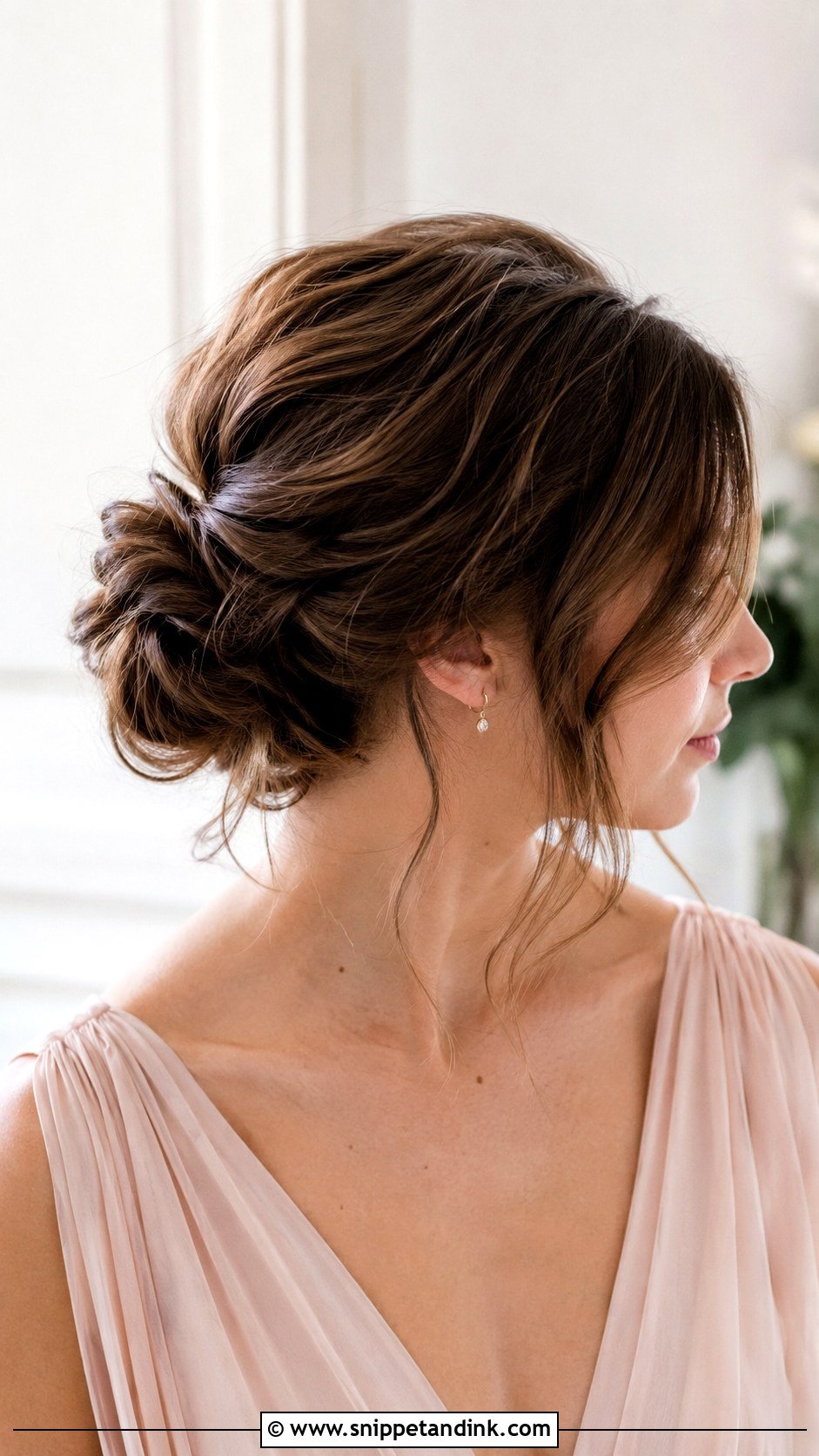
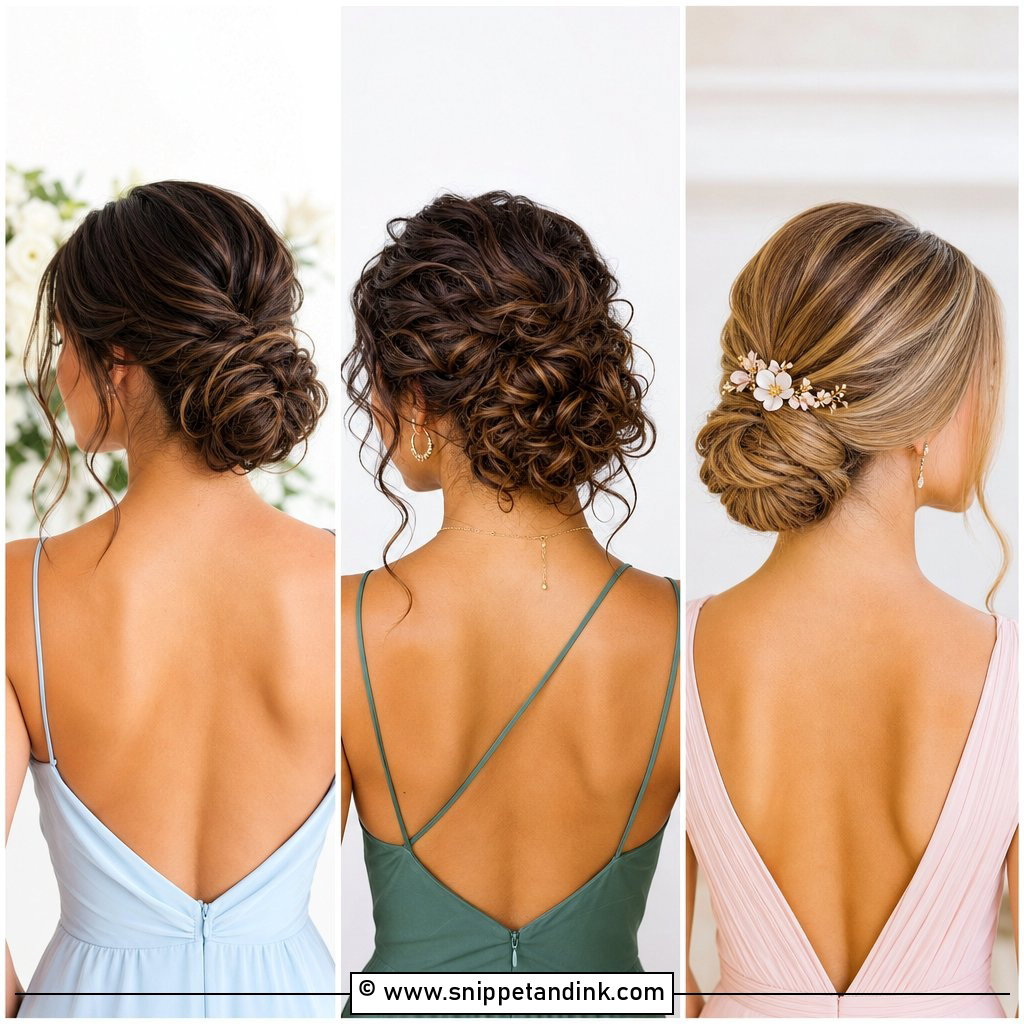
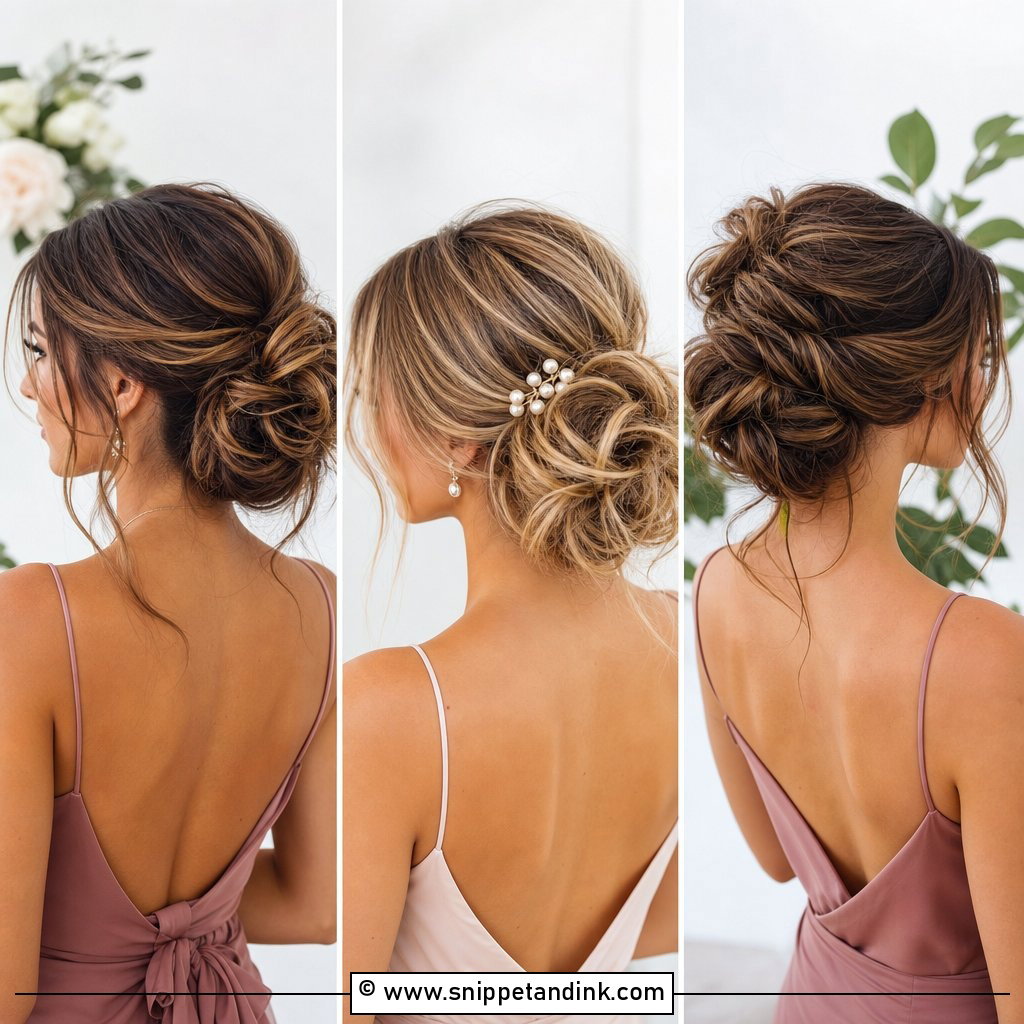
A soft bun starts with waves, not with the bun. I curl the hair first, let it set, then gather it loosely at the nape and pin sections in place rather than wrapping them tight. A few face-framing strands soften the jawline. The airy look comes from the crown, so I add a little volume there and build a solid pinned base underneath that nobody sees. Spring weddings, outdoor ceremonies and dresses with fine detail suit it well.
3. Textured Low Bun Bridesmaid Hair
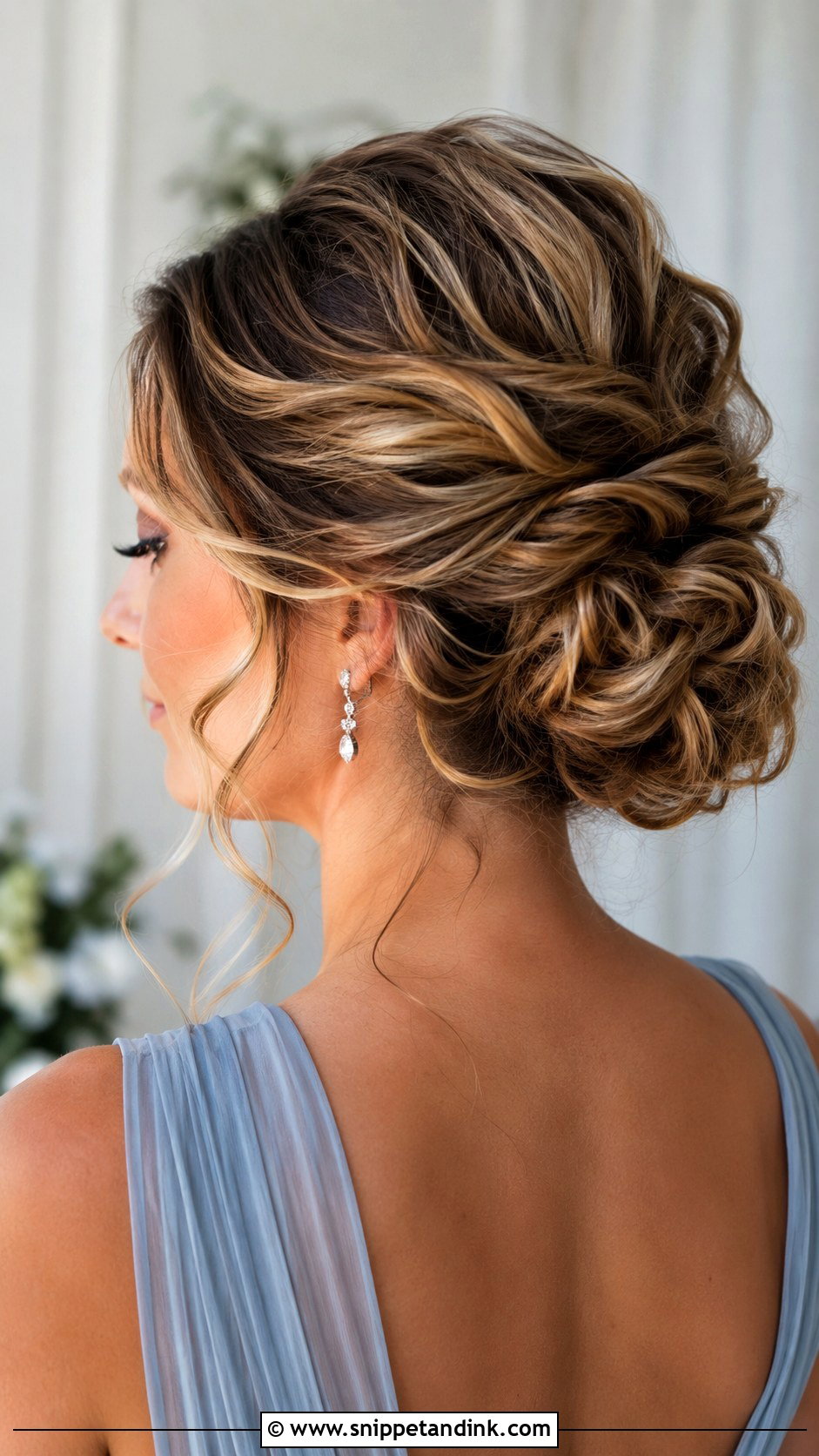
Fine and medium-density hair gets the most from a textured bun. Waves and a little teasing at the crown make the hair look like there’s more of it, and pinned twists build a bun bigger than the hair could manage sleek. Texture also swallows pins, so the back looks clean even with a dozen holding it. I use a texture spray before twisting, not after, so the grip goes in where it’s needed. It pairs well with mismatched bridesmaid dresses because it doesn’t look too formal next to any of them.
4. Messy Low Bun Bridesmaid Hair
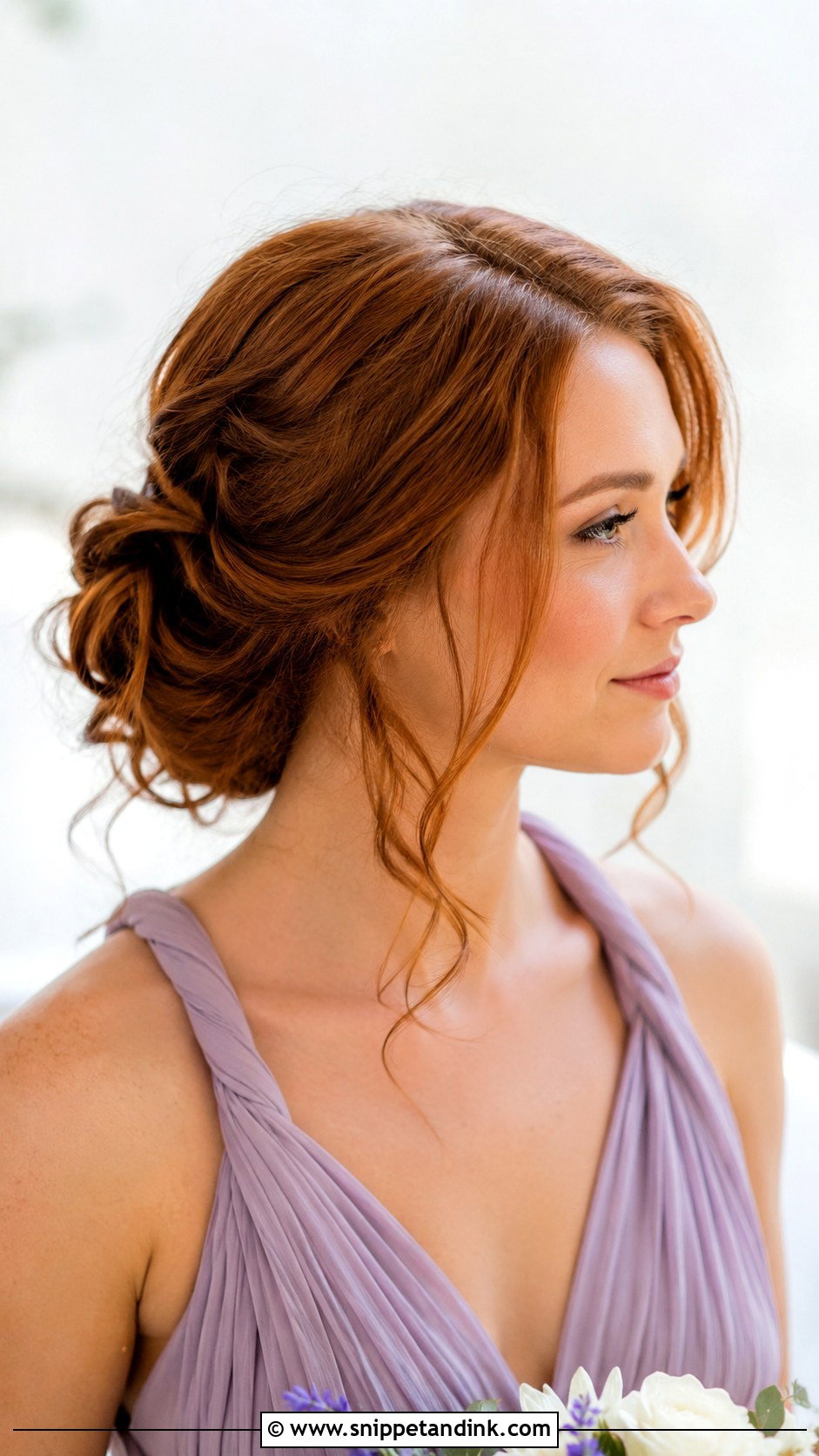
A messy bun has to be the most structured style underneath. The looseness on the surface only lasts if there’s a strong, pinned foundation doing the work. Freshly washed, silky hair won’t hold this; I add mousse or texture spray first to give it grip. Then the bun goes in low and loose, with pieces tucked in by hand rather than wrapped. Rustic and garden weddings suit it. I’d skip it for a black-tie room, where it can read as unfinished next to formal gowns.
5. Low Chignon Bridesmaid Hair
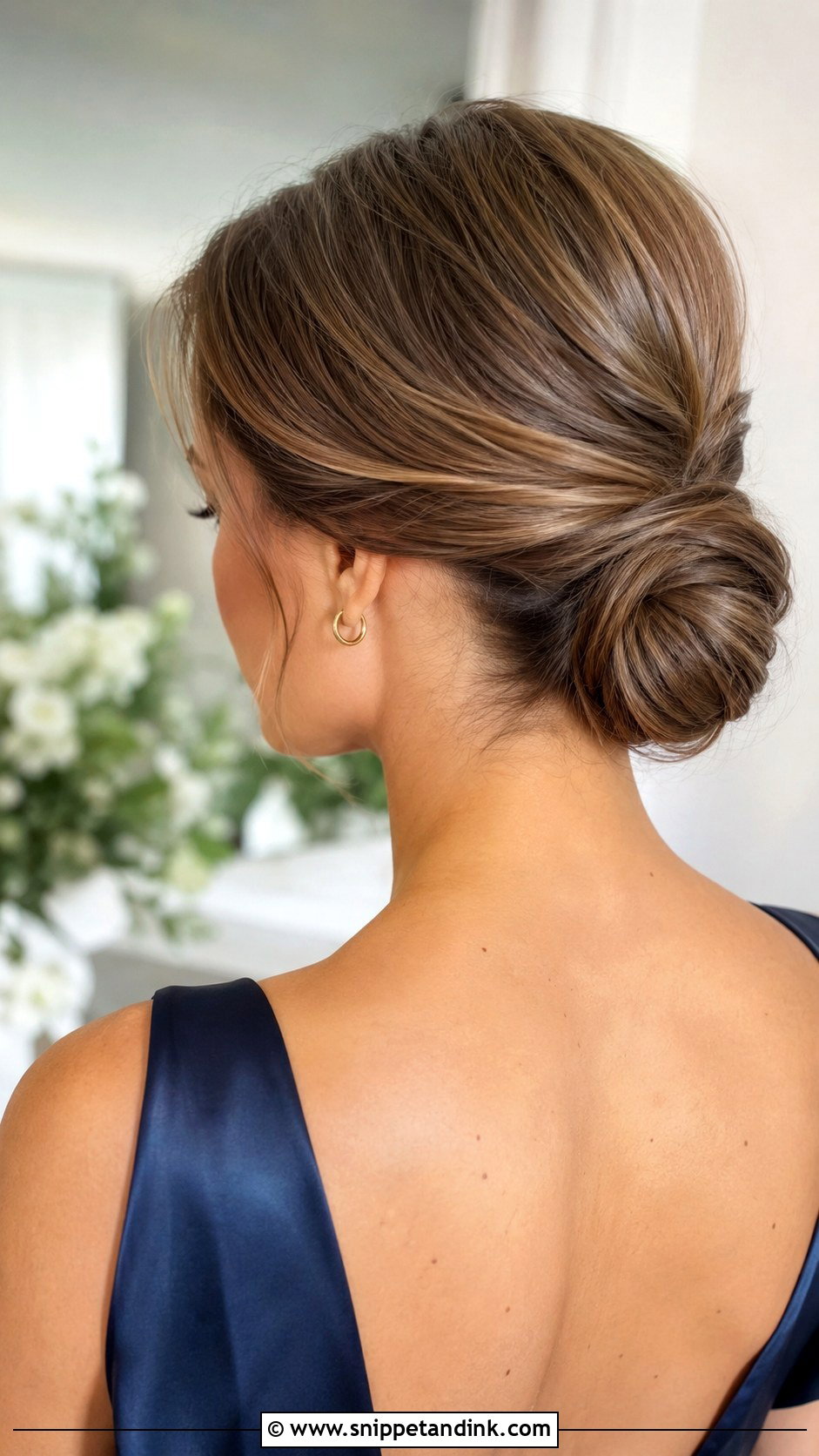
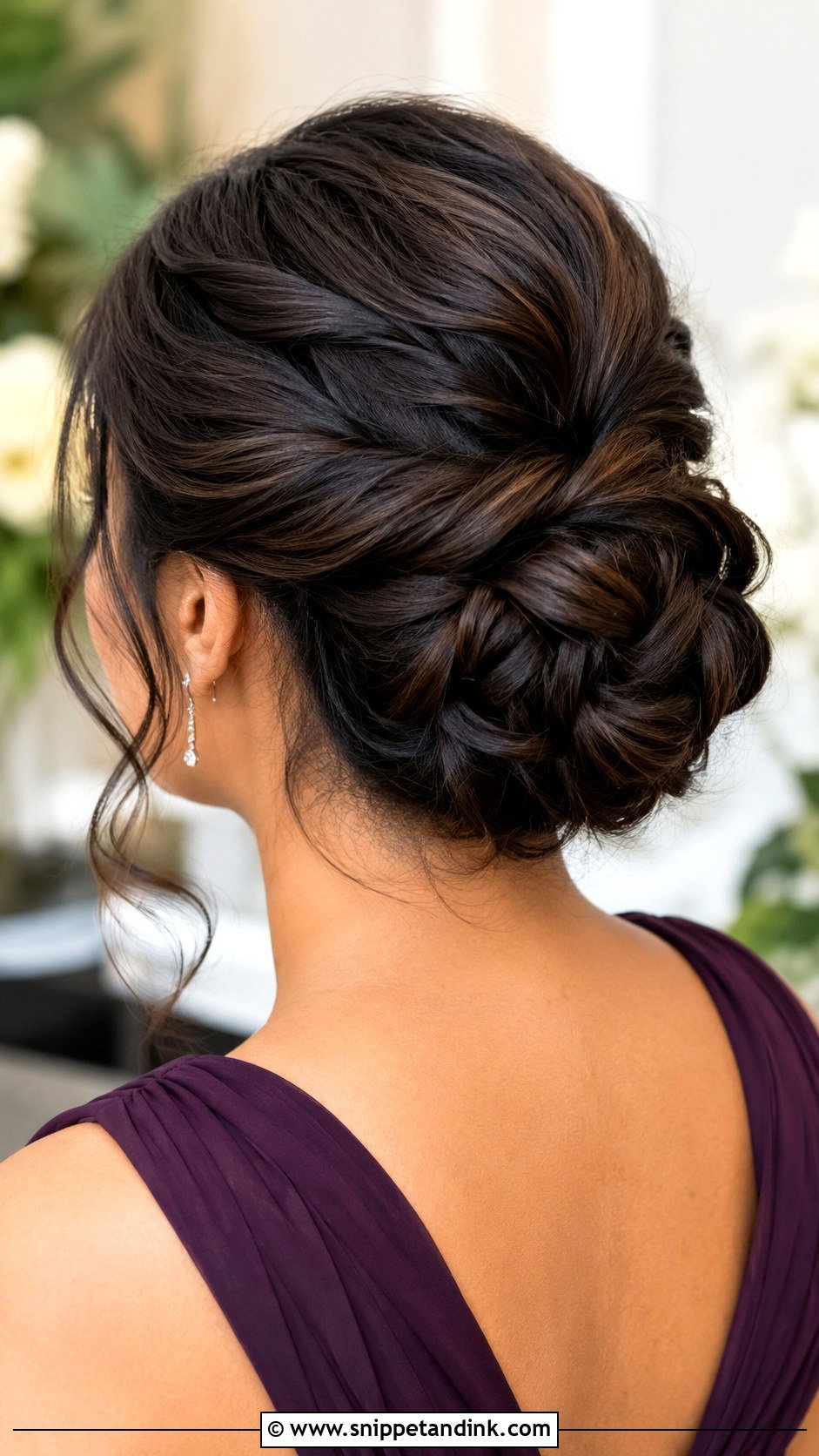
Chignons are smoother and more tucked than a casual bun, which is why they look right at any formal wedding. I shape them as a soft roll, a folded bun or a rounded knot at the nape, and the fold is where the craft is, since a chignon with visible pins looks rushed. Pearl studs and simple makeup are all it needs. It’s also the easiest shape to replicate across a whole bridal party, because it depends on technique more than on the hair itself. A clean part and a little lift at the front keep it from looking old-fashioned.
6. Braided Low Bun Bridesmaid Hair
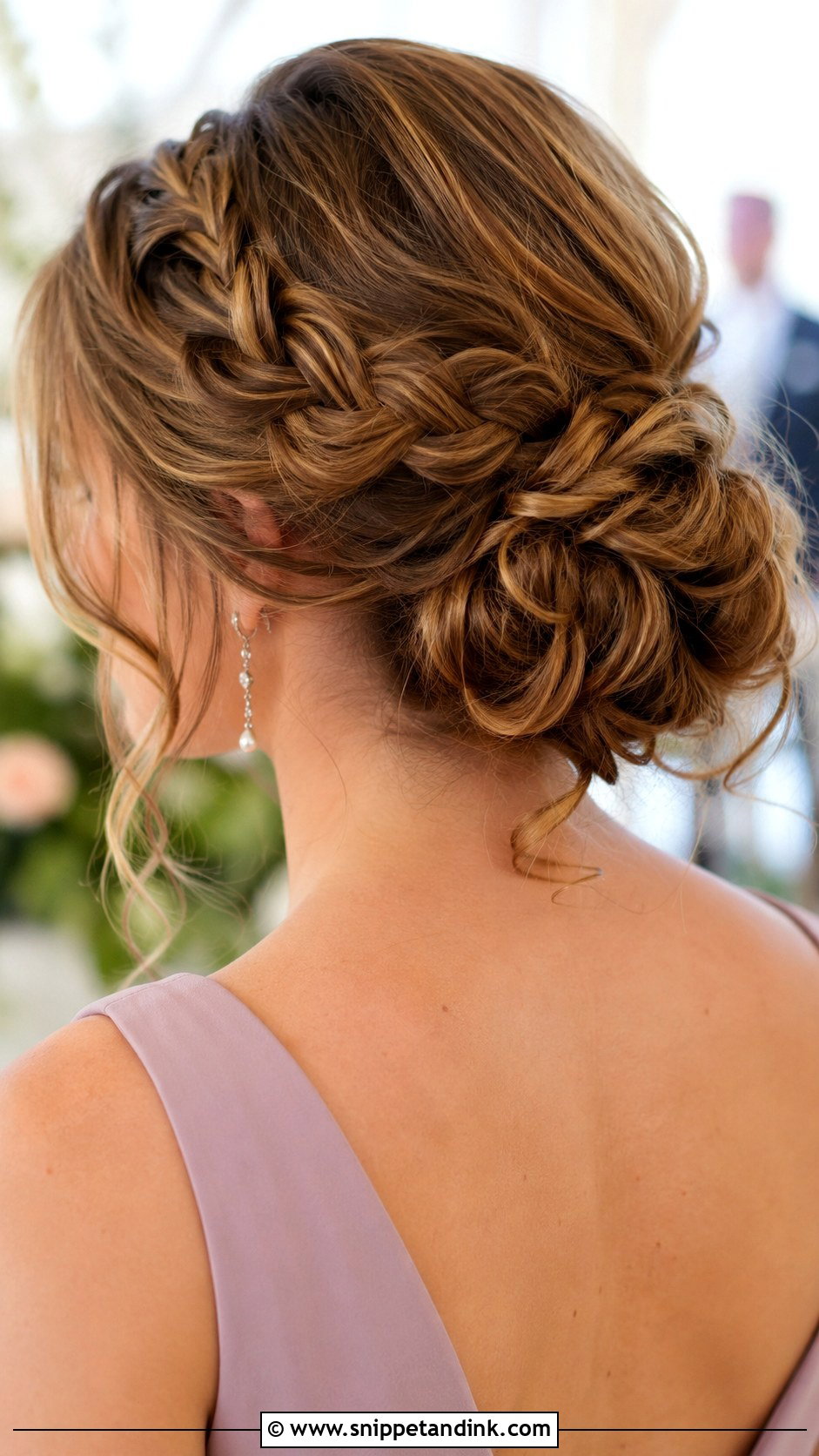
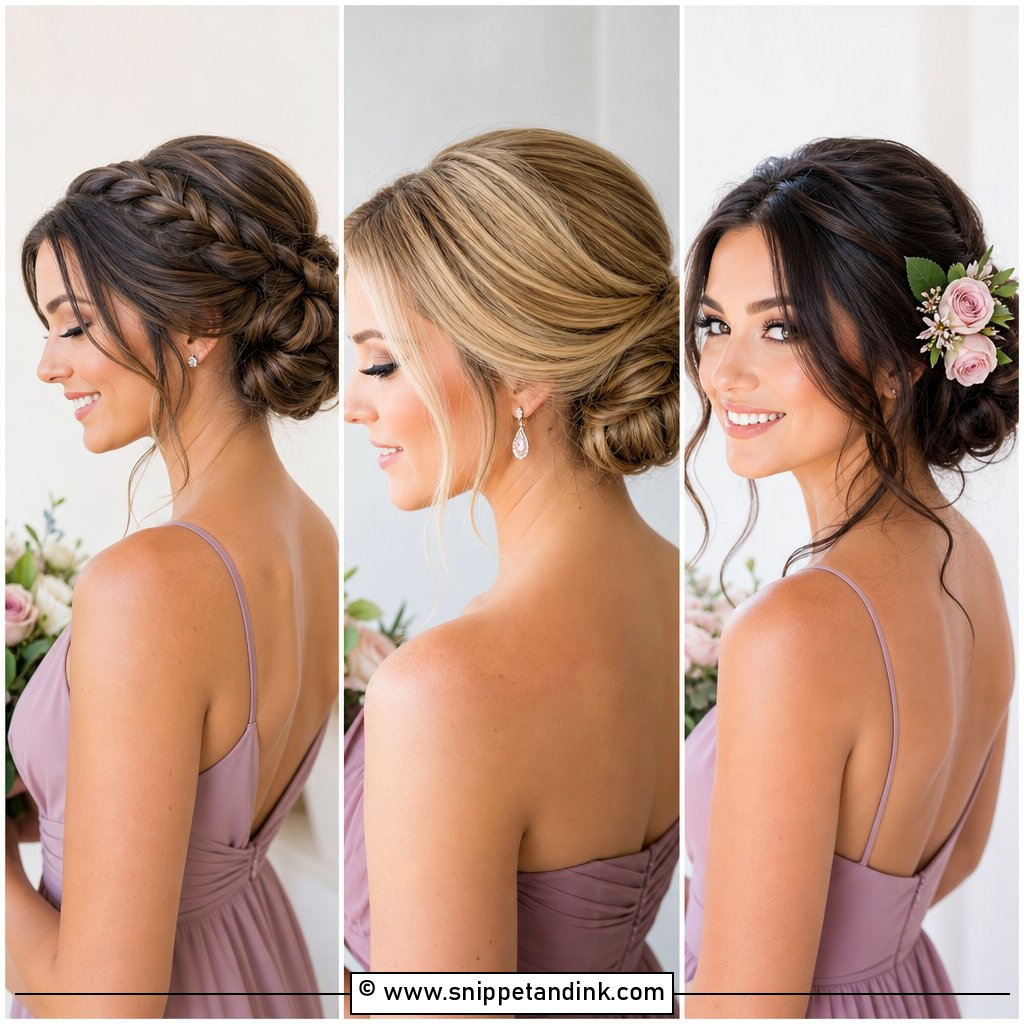
A braid gives a low bun detail without needing an accessory, and it does a practical job too: it catches short layers that would otherwise slip out around the ears. Start it at the hairline, run it along one side or wrap it into the bun itself. I braid firmly, pin it, and only then loosen the edges with my fingertips; loosening first makes a braid that slides apart by evening. Tiny pins or a small floral accent can be added if the theme calls for it.
7. Side Braid Low Bun Bridesmaid Hair
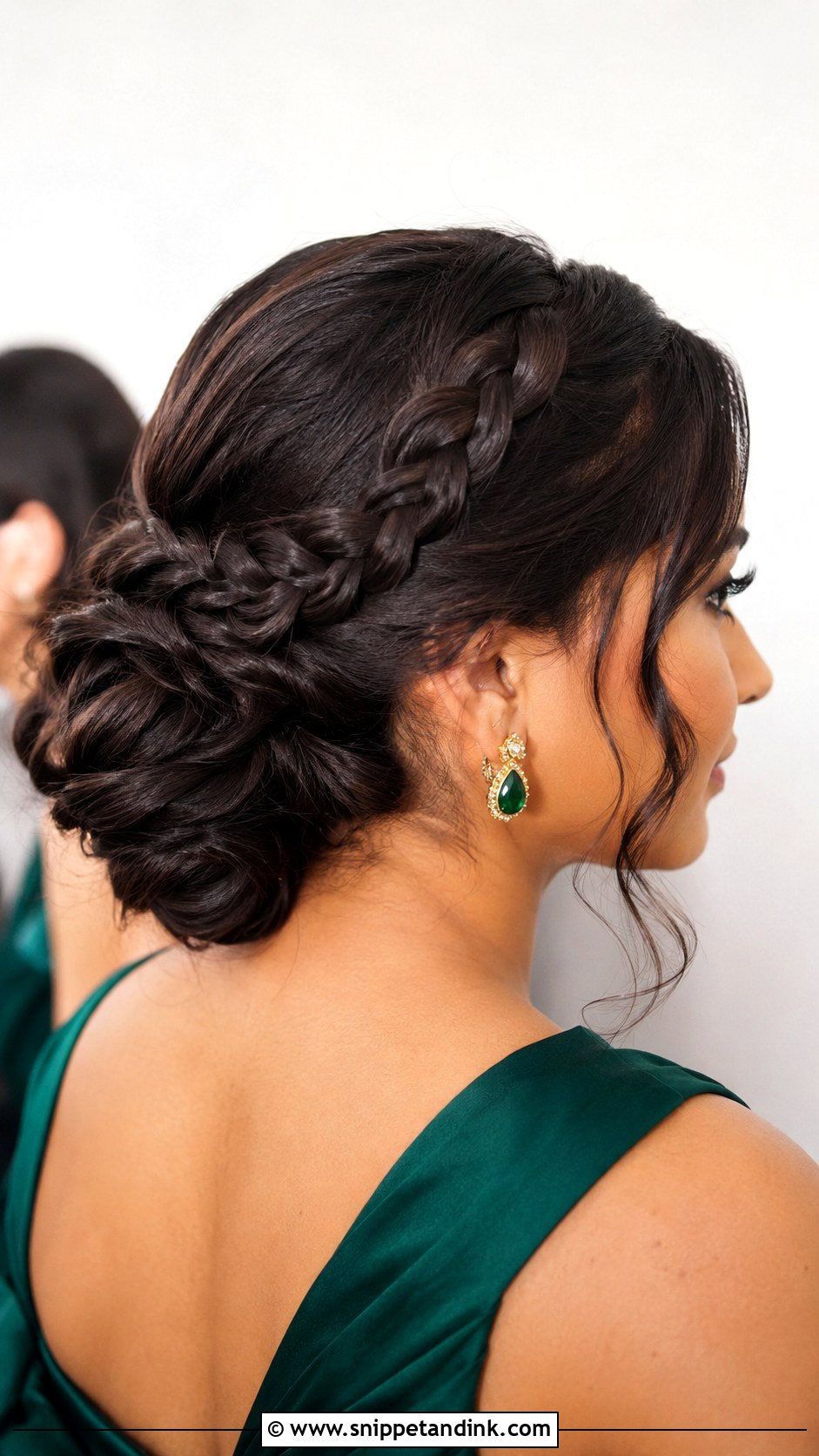
Here the braid becomes the main feature. It begins near one temple, follows the side of the head and blends into the bun at the opposite side or the centre nape. Highlighted and balayage hair shows this off well, because the braid shows each colour in turn. Simple dresses suit it best, since the hair is already doing the decorative work. The bun stays soft and round so the braid flows into it instead of hitting a hard edge.
8. Twisted Low Bun Bridesmaid Hair
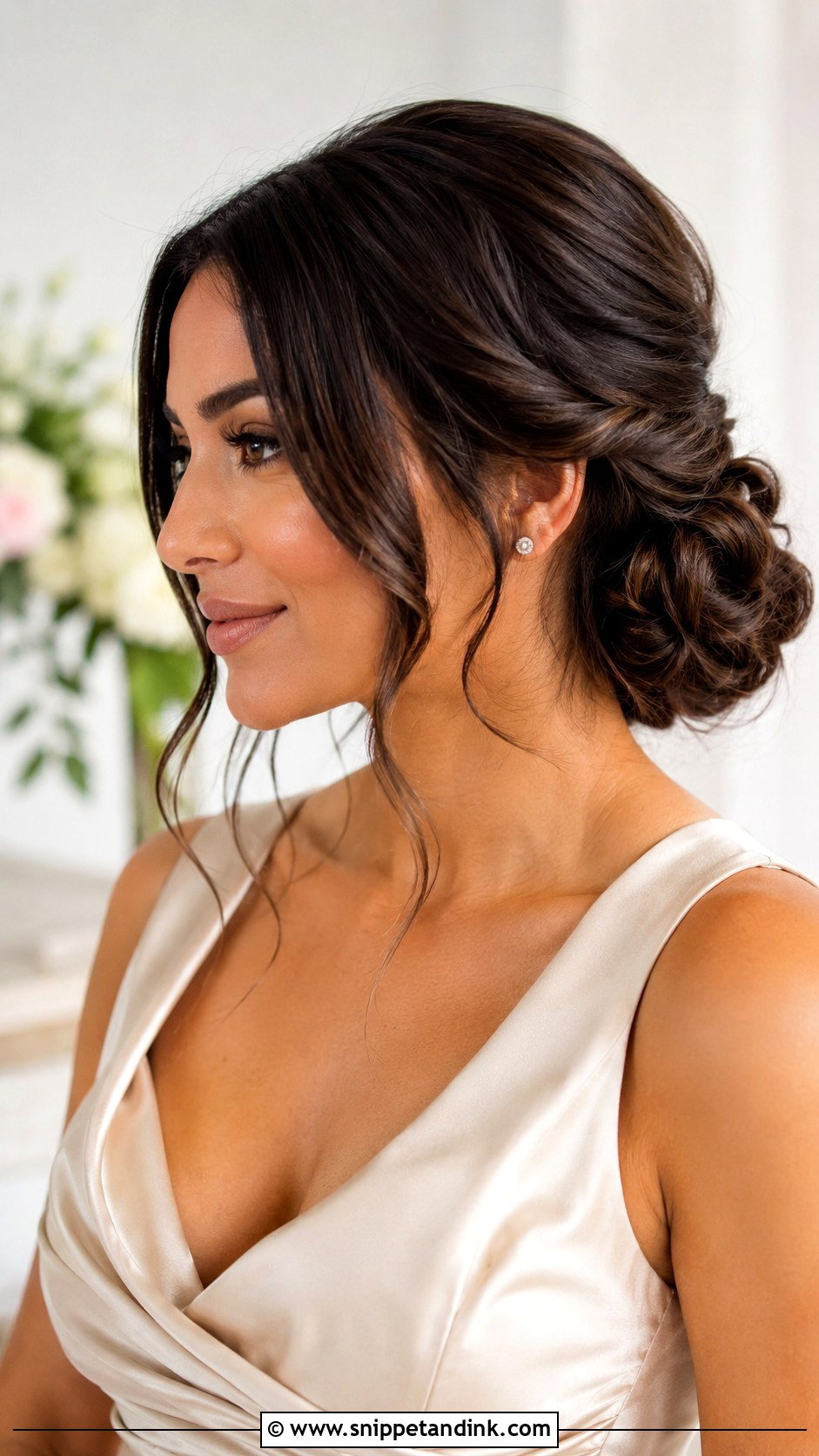
Twists sit halfway between sleek and textured, and I reach for them with layered hair. A short layer that would poke out of a sleek bun can be rolled into a twist and pinned along with it. Each section is twisted back toward the nape and pinned into the bun, which builds dimension without looking busy. It adapts to fine or thick hair and to medium or long lengths. Shoulder-baring and collarbone necklines show it off best, with small earrings.
9. Middle Part Low Bun Bridesmaid Hair
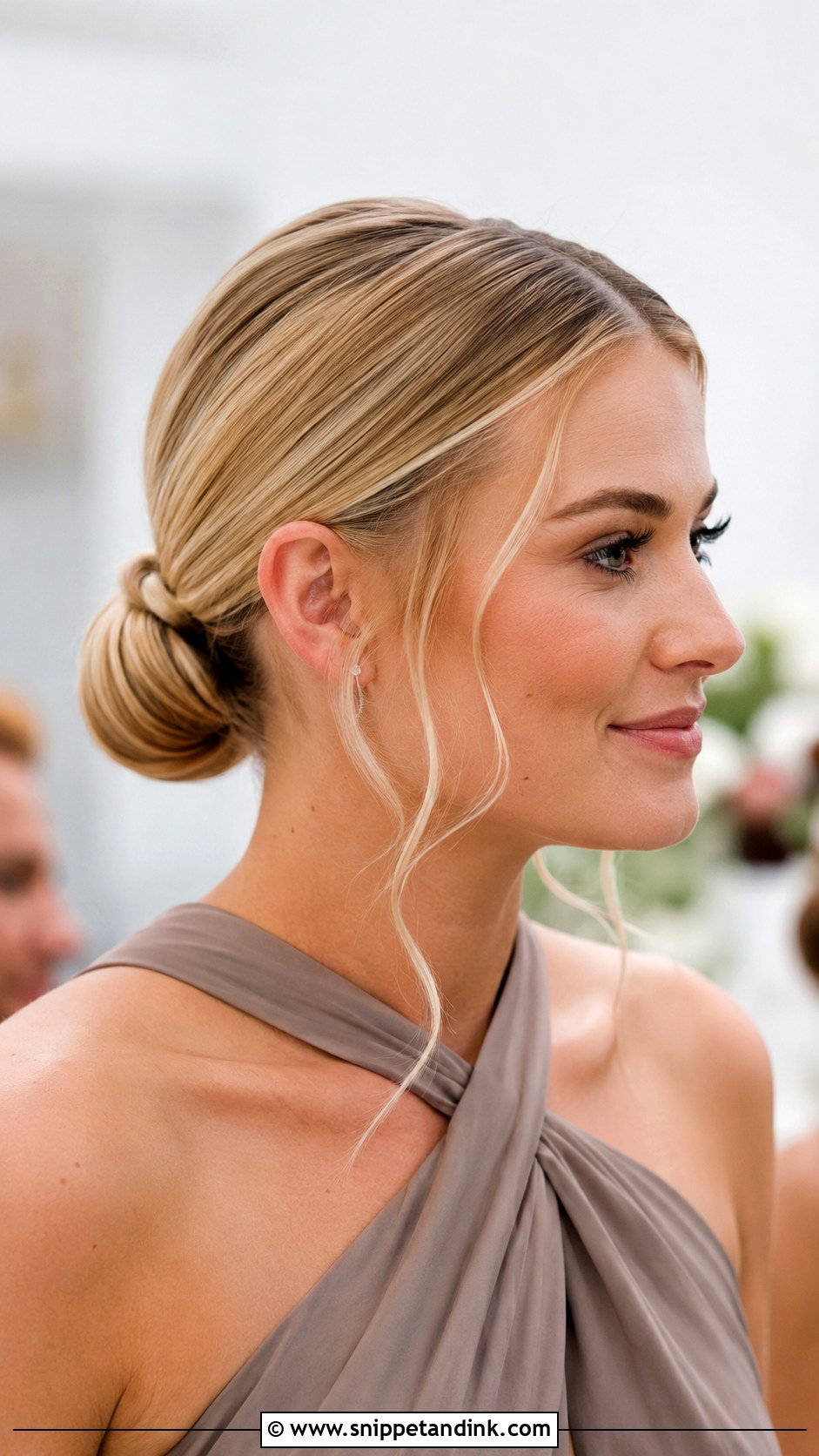
A centre part shows every flaw in the front sections, so this is where I spend the time. The part has to be clean, and the two front sections need a little lift at the root or they lie flat against the head in photos. From there the hair is smoothed or waved into a bun at the nape. The symmetry draws the eye to the cheekbones and to statement earrings. Two thin tendrils curled away from the cheeks soften it if a bridesmaid finds it too severe.
10. Side Part Low Bun Bridesmaid Hair
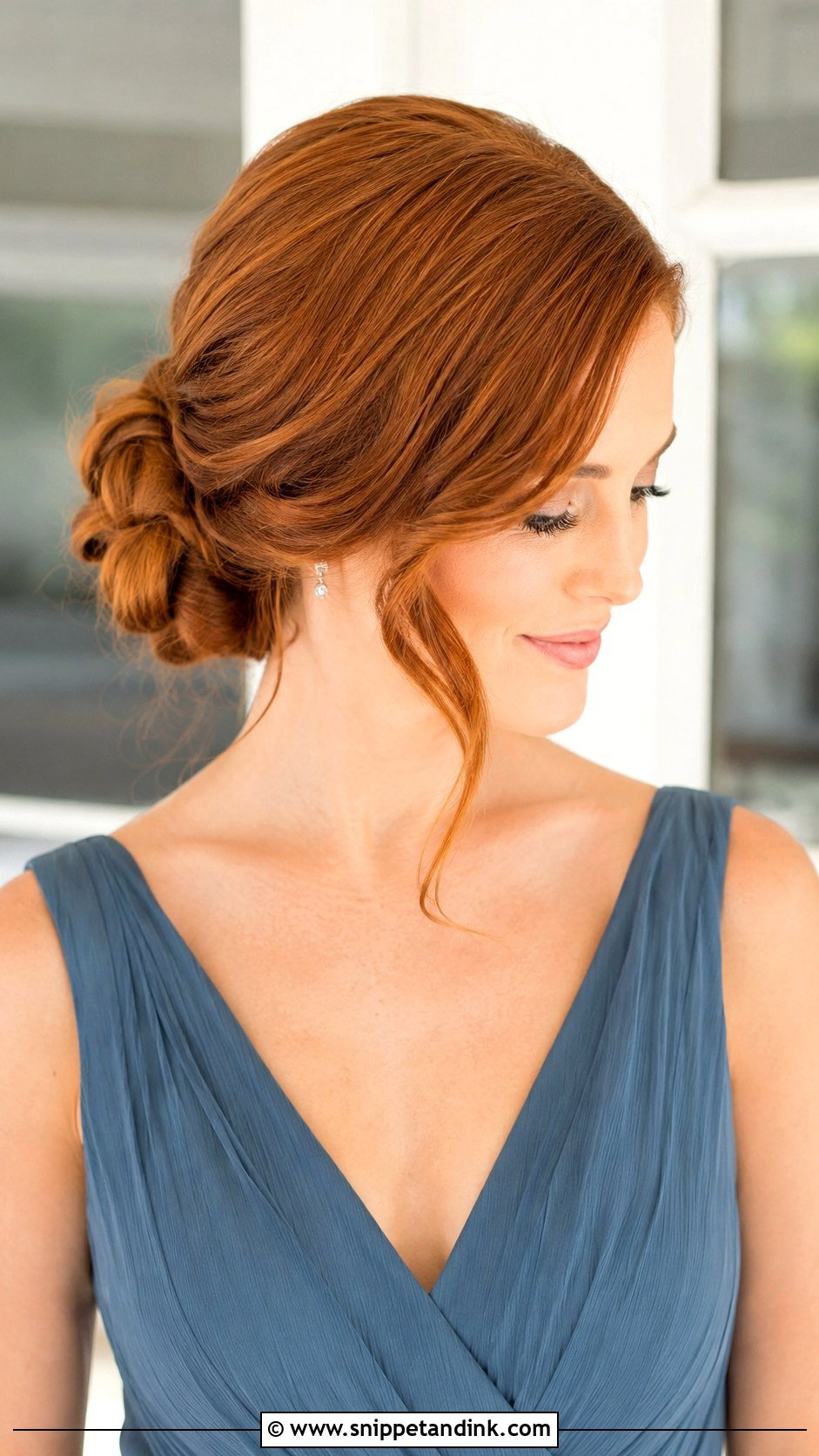
A deep side part makes the front of a low bun move, and it gives a bit of coverage to a bridesmaid who doesn’t like her whole forehead on show. I set the bun at the nape or slightly toward the side opposite the part, which balances the sweep. Off-the-shoulder, one-shoulder and vintage-style dresses suit it. A smoothing cream keeps the front polished while a bit of texture through the bun stops the whole thing looking flat.
11. Low Bun Bridesmaid Hair With Face Framing Pieces
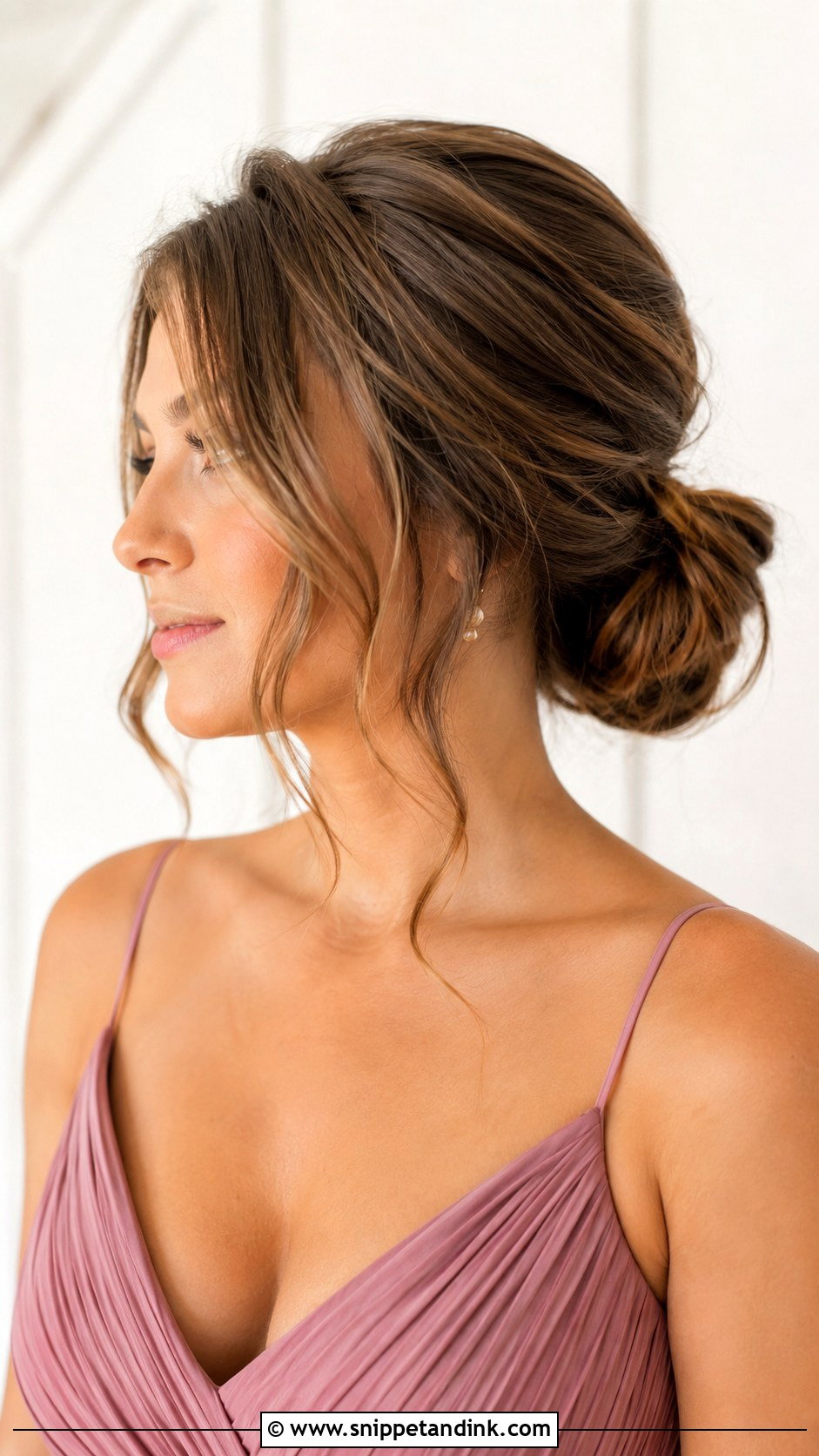
Face-framing pieces are the most requested change at bridesmaid trials. Some people simply feel exposed with everything pulled back. The bun stays low and secure, and a few strands come out at the temples, cheekbones or jaw. They work with curtain bangs, long layers and medium lengths. My rule is that the pieces must be chosen and curled, never just left out. Random strands go frizzy within an hour and look like the style is falling down. A light finishing spray keeps them moving but holding shape.
12. Low Bun Bridesmaid Hair With Curtain Bangs
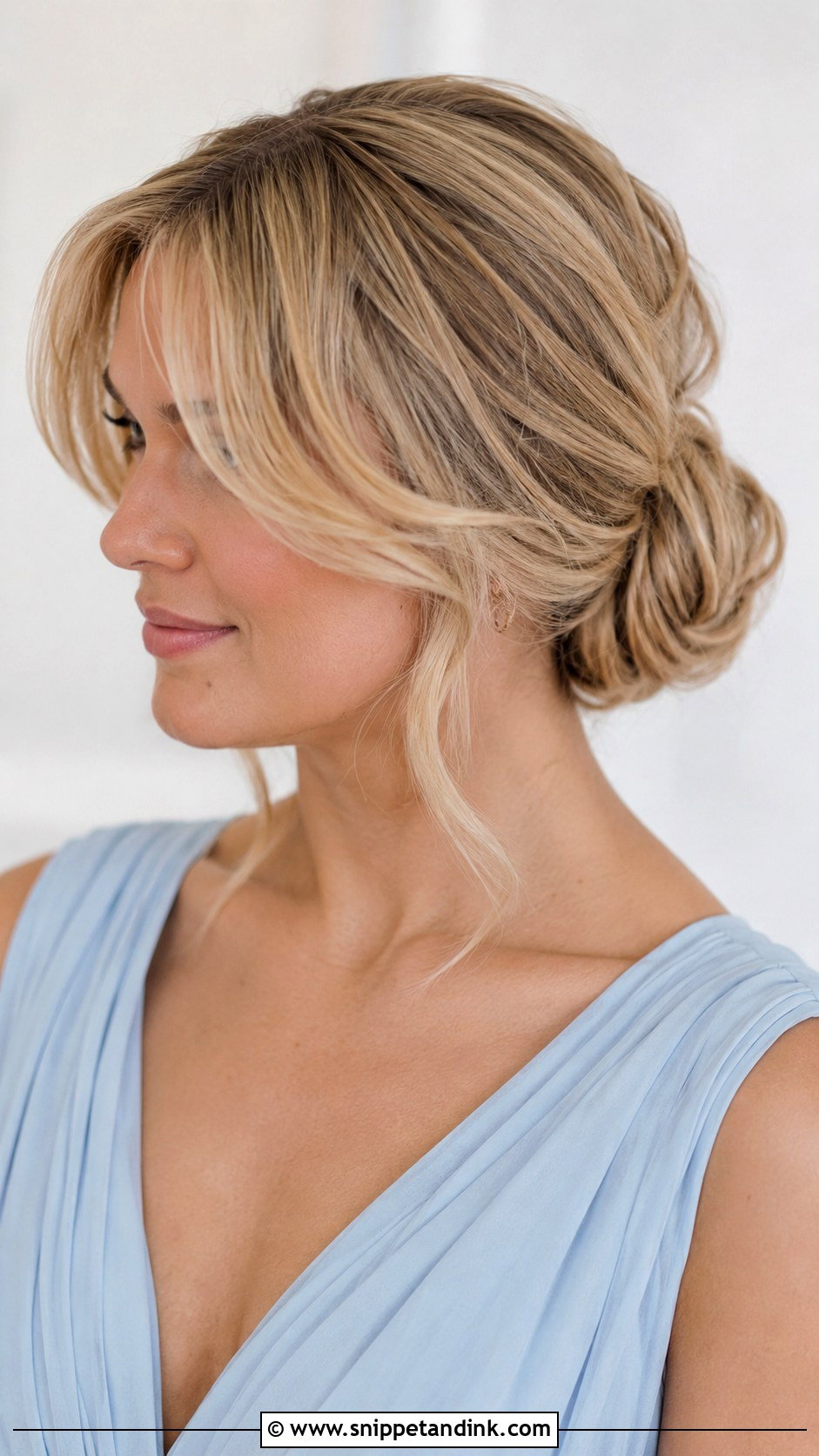
Low bun bridesmaid hair softens a lot once curtain bangs come into it. I blow-dry the bangs over a round brush before anything else, so they sweep away from the eyes, then gather the rest into the bun, which can be sleek, twisted or textured. Bangs separate into strings if they’re sprayed heavily, so I keep the hold light at the front. Bridesmaids who dislike fully pulled-back hair are usually happy with this compromise.
13. Low Bun Bridesmaid Hair With Pearls
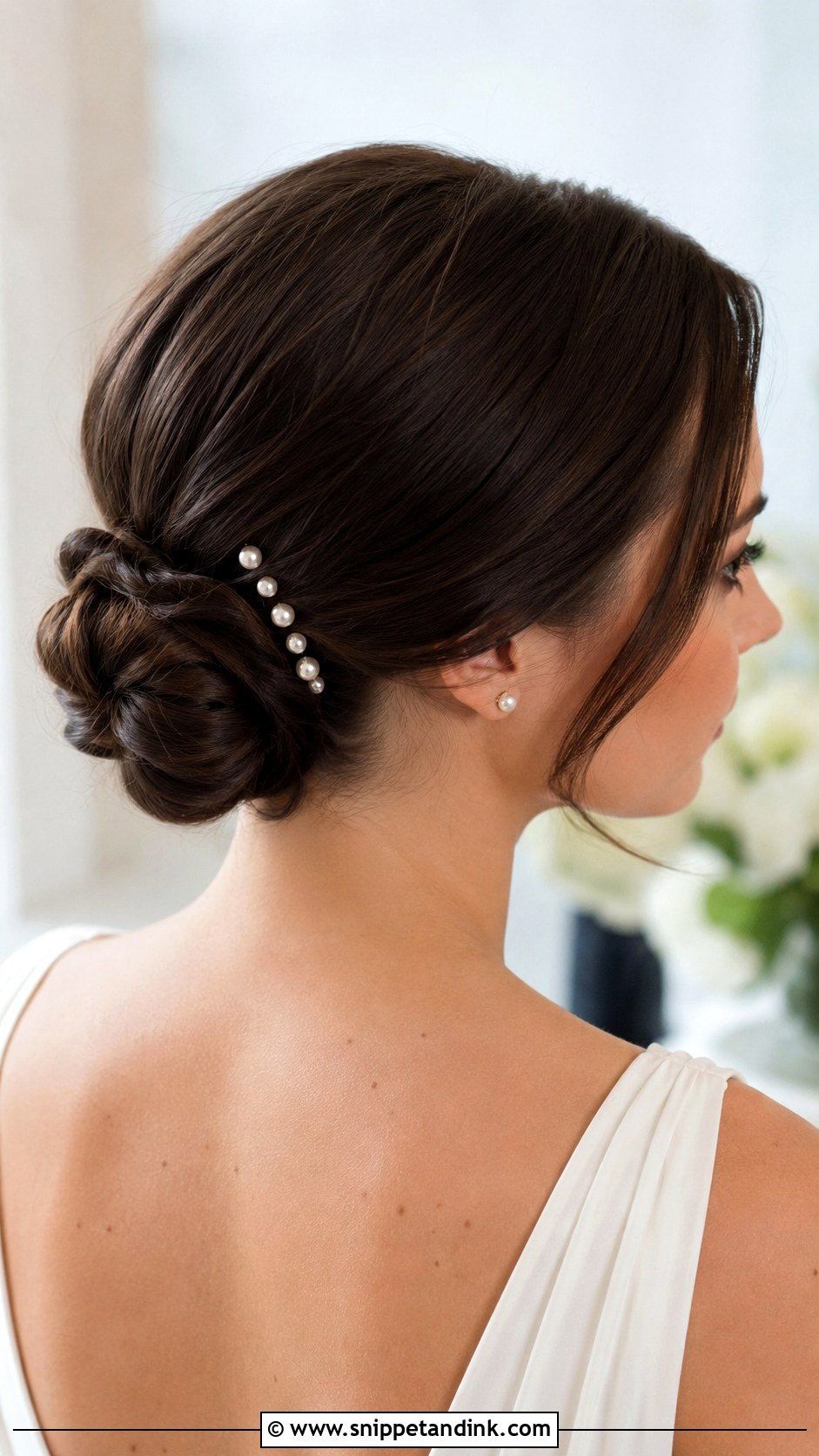
Pearls finish a low bun for a classic wedding, as pins, a comb or tiny accents scattered along the bun. Placement is everything. A cluster along one side of the bun looks deliberate; pearls dotted evenly all over look like a pattern. They show up most on dark hair and add a softer shine to blonde and red hair. Satin dresses and formal venues suit them. Push each pin in at an angle toward the centre of the bun so it grips instead of sitting on the surface.
14. Low Bun Bridesmaid Hair With Flowers
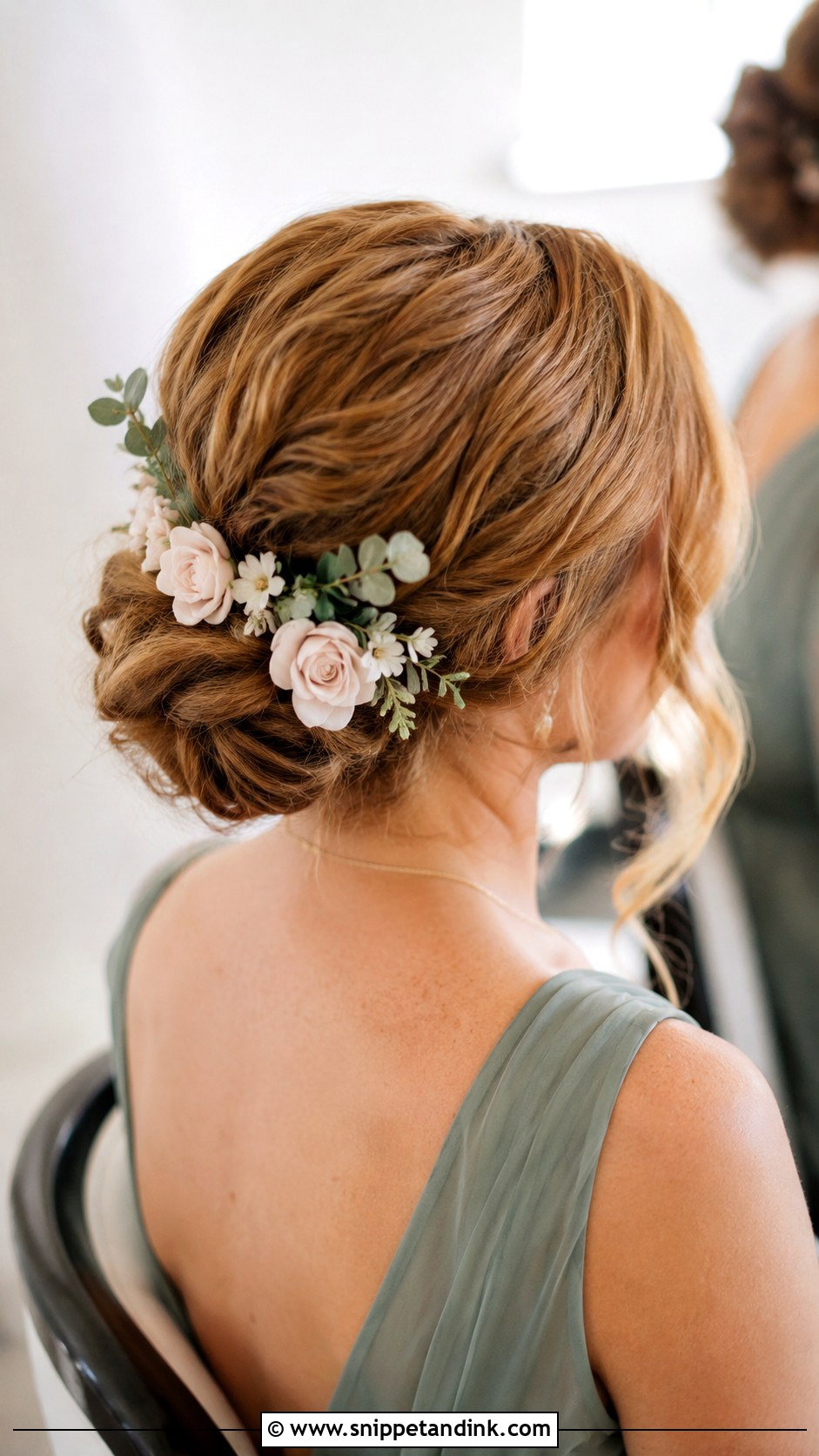
Flowers on a bun should be small and light, tucked around it, set on one side or woven into twists. Heavy blooms drag a low bun downward through the day. Baby’s breath, spray roses and small seasonal flowers all sit well without weighing it down. Fresh flowers wilt in heat, so for summer I’d ask the florist to wire hardy stems or use good faux ones. Match the colours to the bouquets, and build a textured bun first so the stems have something to grip.
15. Low Bun Bridesmaid Hair With Hair Vine
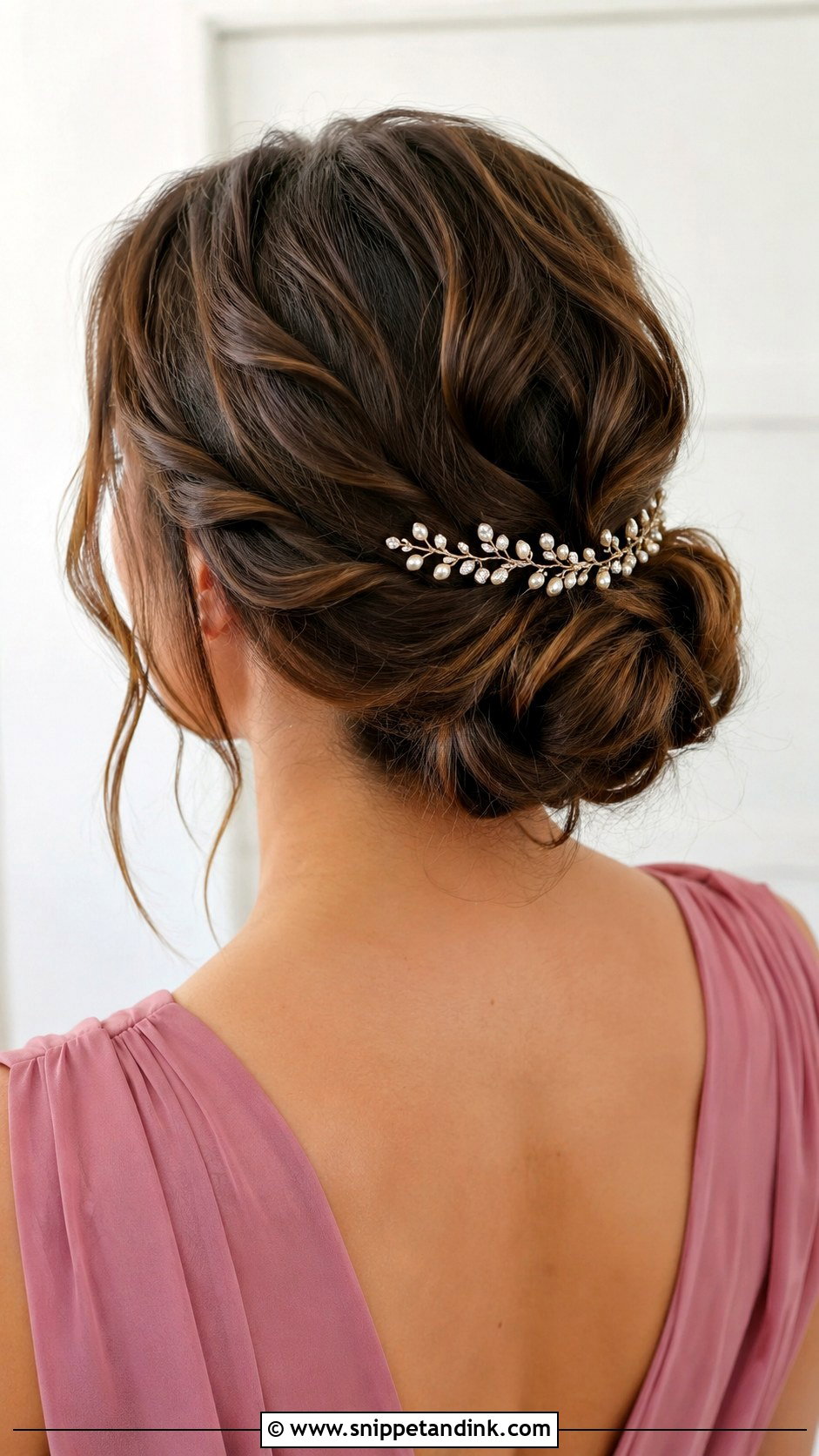
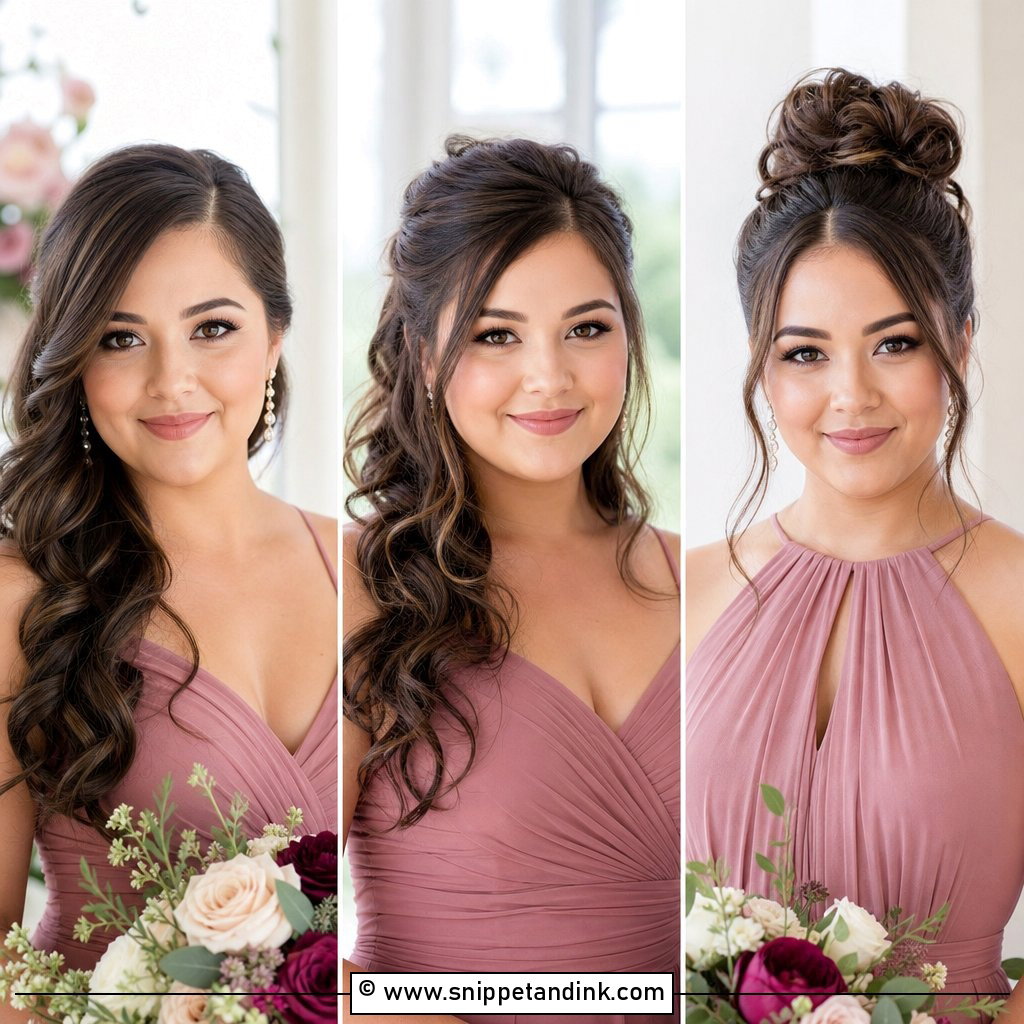
A hair vine is the most flexible accessory for a low bun. It can wrap above the bun, curve along one side or sit across the back like a band. Twisted and textured buns take it best, since the wire can follow the movement of the hair and be pinned through it every few centimetres. Pick pearls, crystals or tiny leaves according to the theme. Keep the front plain so the vine and the bun shape do the talking.
16. Low Bun Bridesmaid Hair For Short Hair
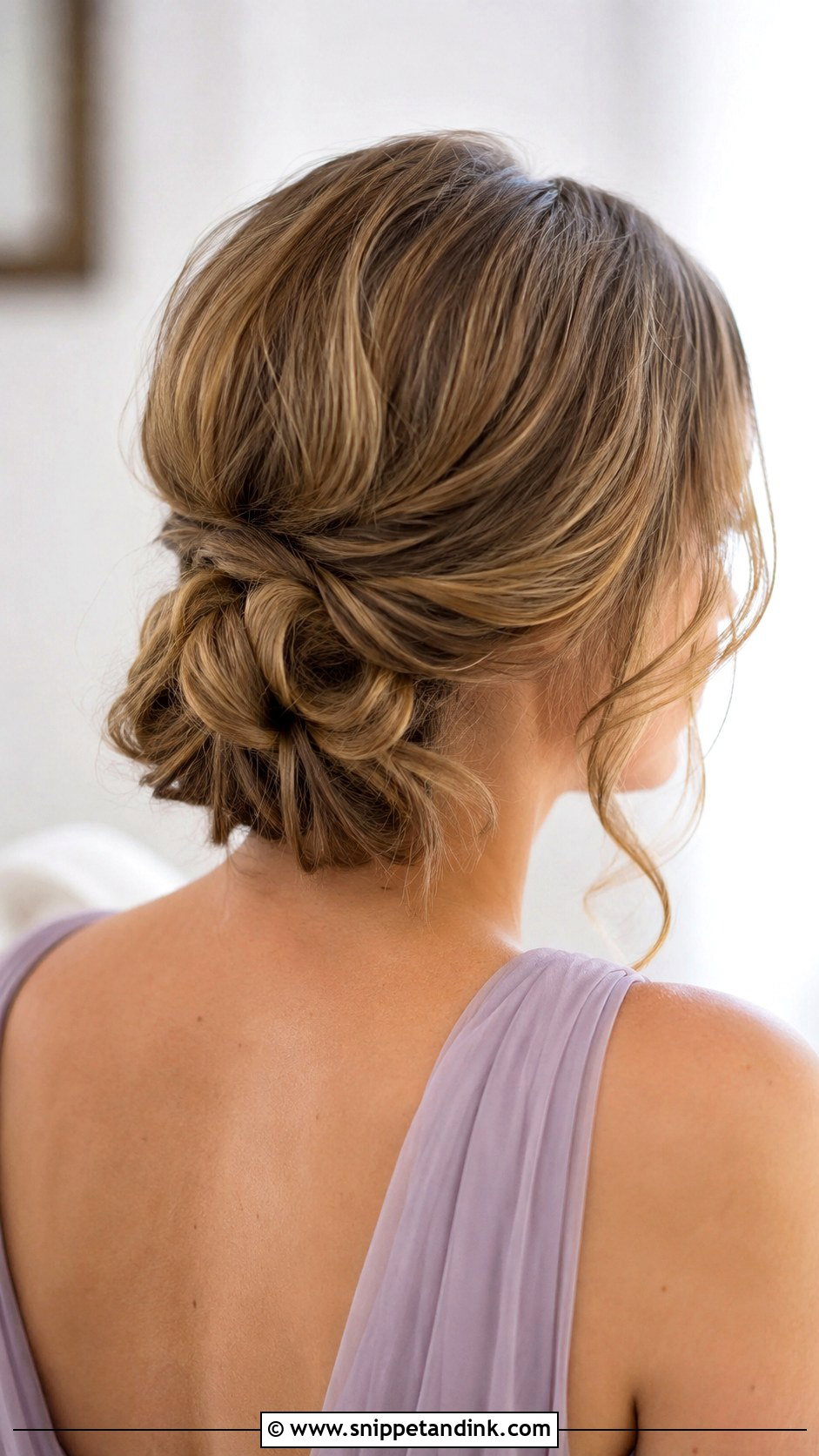
Short hair can do a low bun if it reaches the nape, but it won’t be a big one. I curl it first for grip, tease lightly and tuck the sections into a small shape, using more pins than usual. Padding or a few clip-in extensions can add fullness when needed. Bobs and lobs leave short pieces at the back of the neck that won’t reach the bun, so a small comb or clip is useful to cover them. Aim for neat and secure over large.
17. Low Bun Bridesmaid Hair For Long Hair
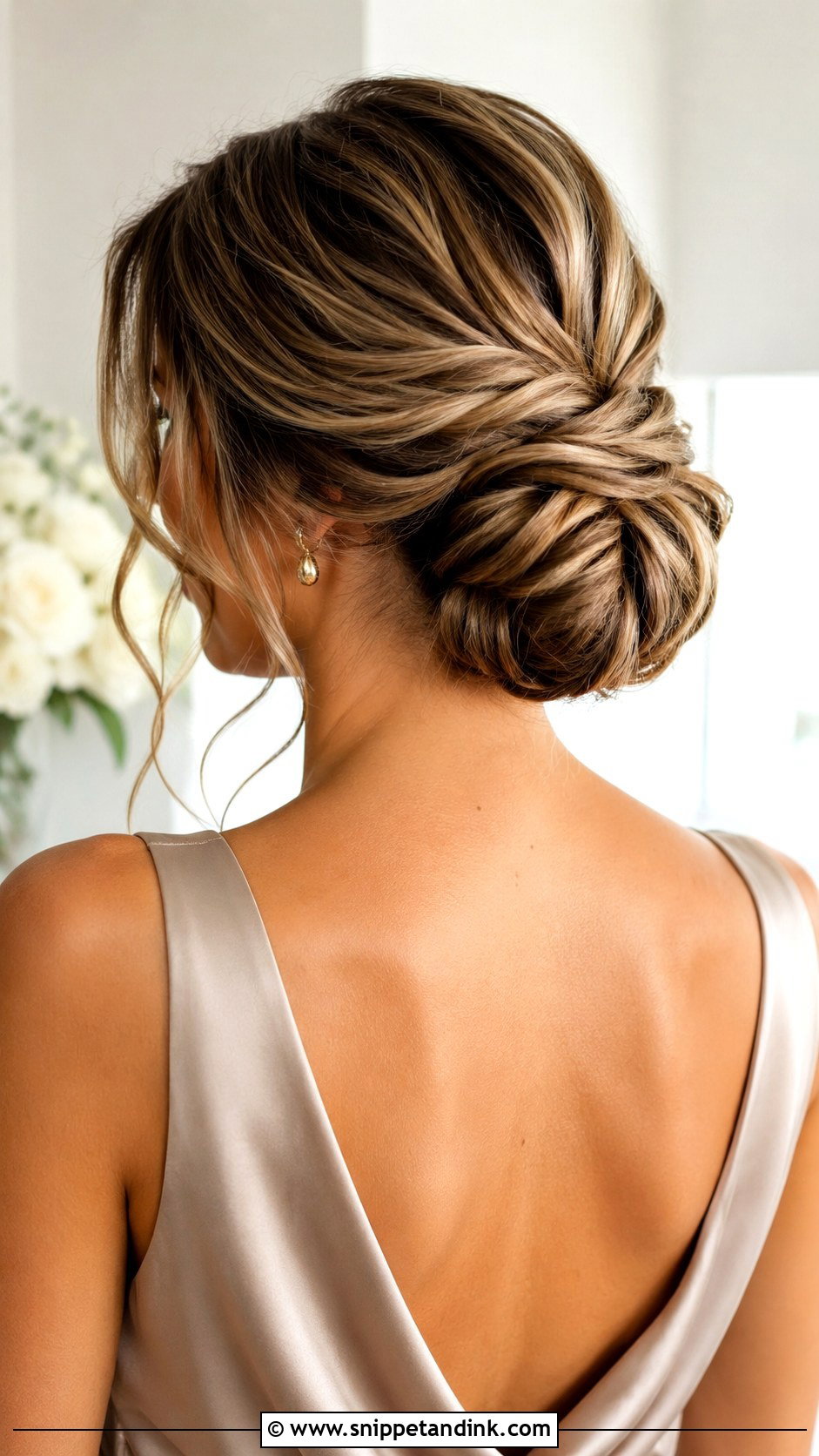
Long hair gives you folds, braids and a full, soft bun, but its weight is the problem. A large bun hanging at the nape slowly drags pins loose. I split long hair into sections and pin each one into a sturdy base close to the head rather than wrapping one huge length. Wave the hair before pinning so the bun has movement, and keep it compact if the bridesmaid is wearing statement earrings. Once pinned up, long hair can’t drop its curls in humidity the way loose styles do.
18. Low Bun Bridesmaid Hair For Curly Hair
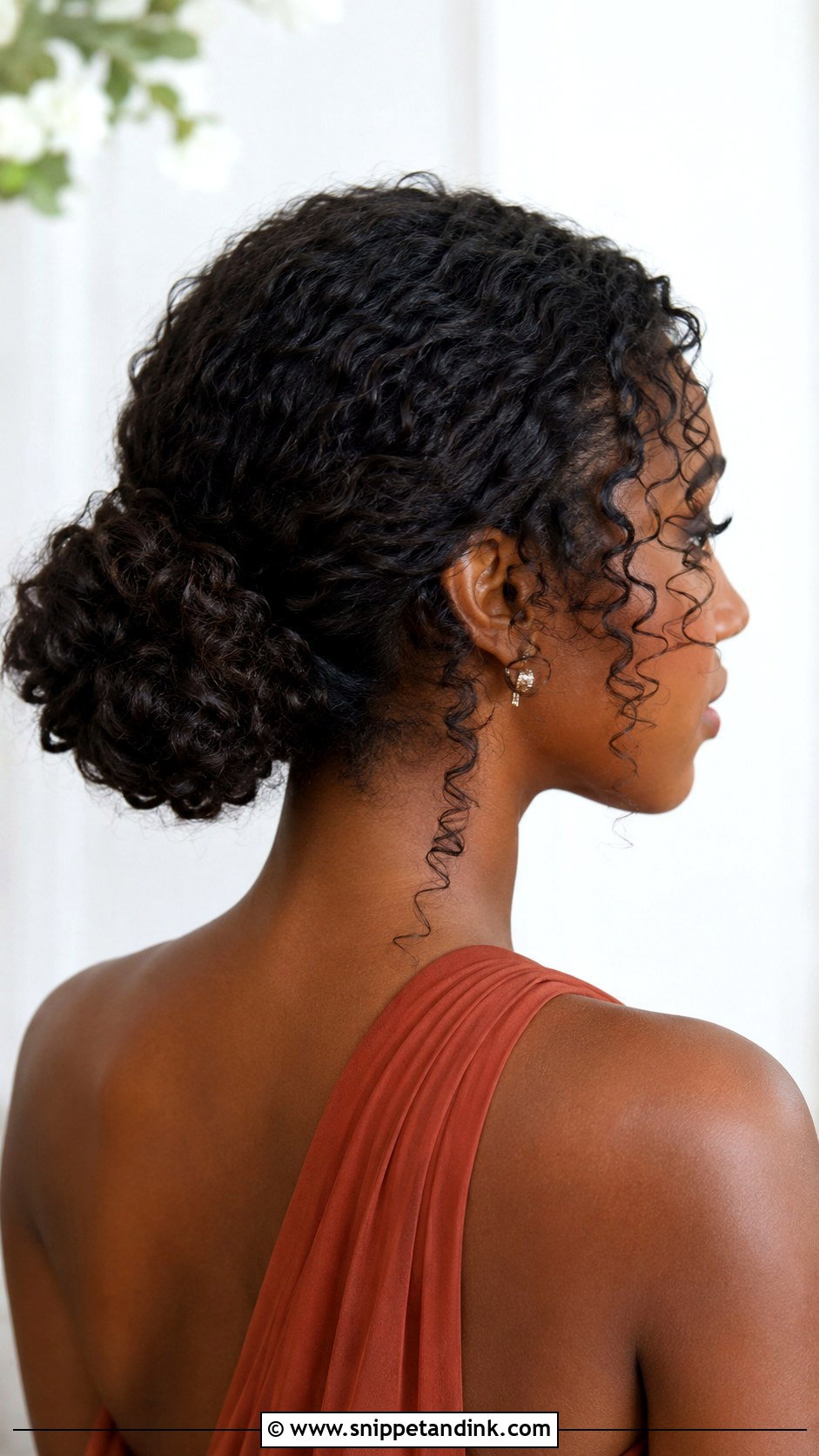
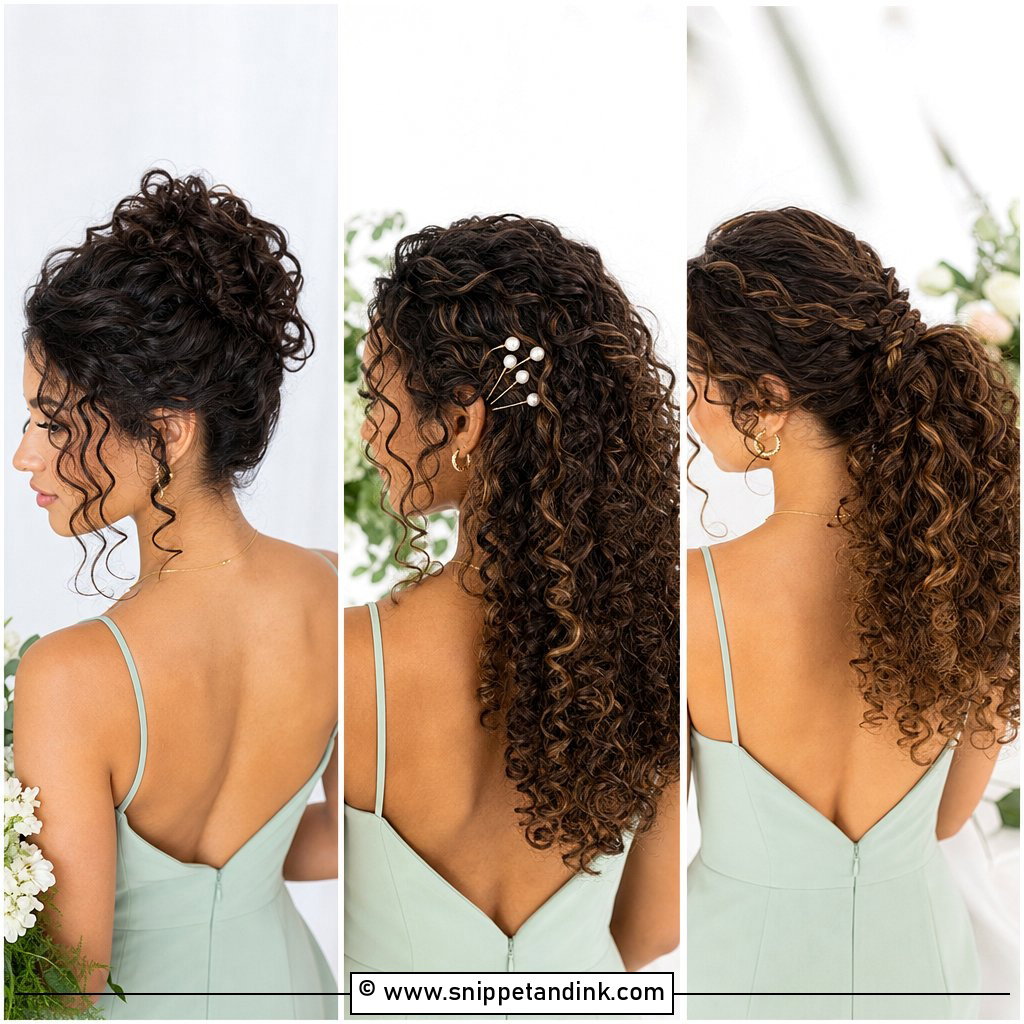
With curly hair, I gather the curls low and pin them into a round bun with the curl pattern still showing, rather than smoothing everything flat. Curl cream and a touch of gel define them, and pins with a firm grip go in from underneath. Leaving a couple of defined curls at the face keeps it from looking severe. Of all the textures, curly hair holds a low bun best in humidity because the style is built around the curl instead of fighting it.
19. Low Bun Bridesmaid Hair For Thin Hair
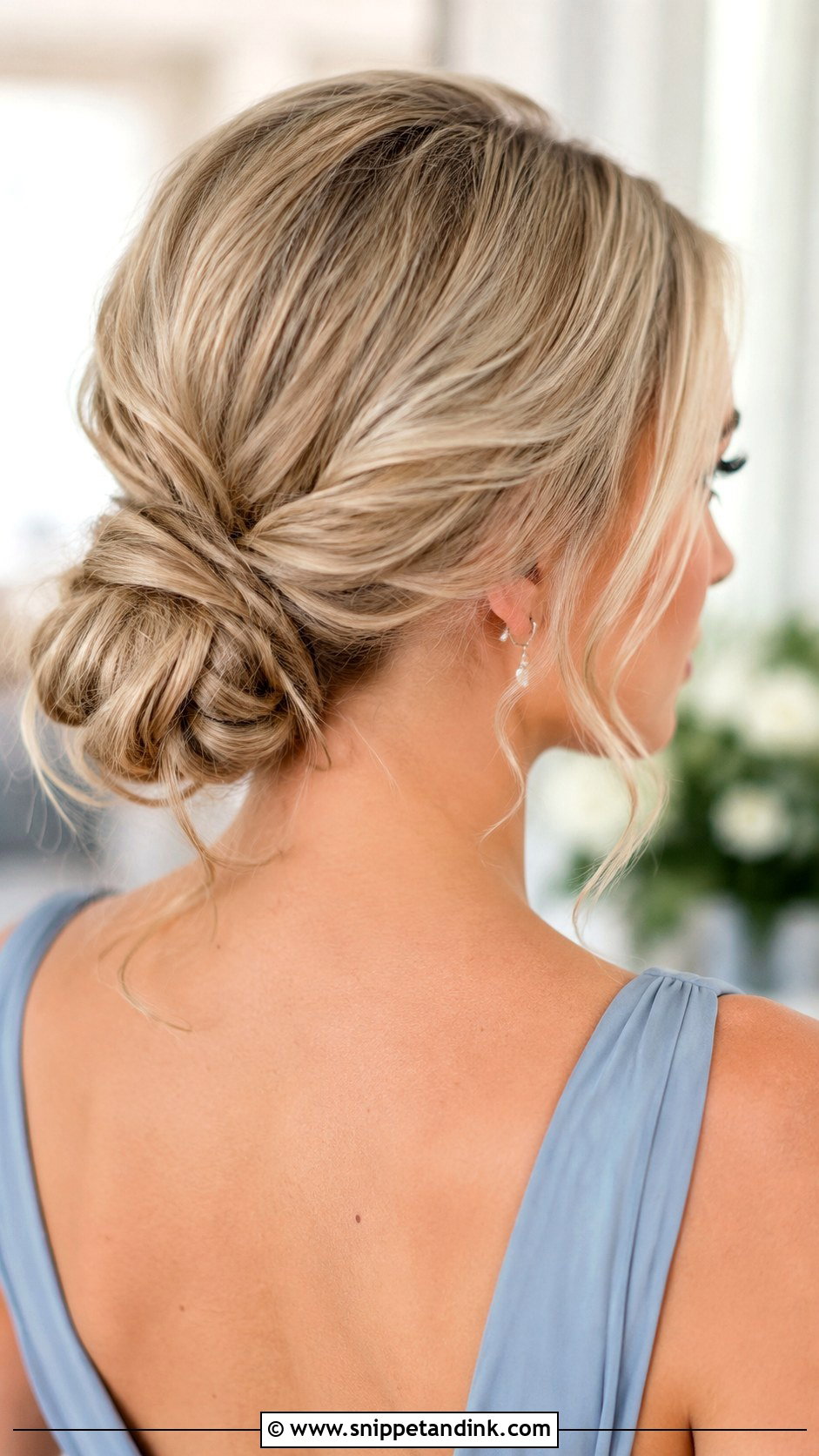
Thin hair needs volume built in before it’s pinned. I wave it, tease lightly at the crown and through the lengths, and use a texture spray, then pin it into a loose twisted bun. A small bun pad helps, as long as it’s hidden completely and in the right shade. Pulling thin hair tight shows the scalp and makes the bun look even smaller, so I keep the tension soft. A sleek bun is the one I’d avoid here.
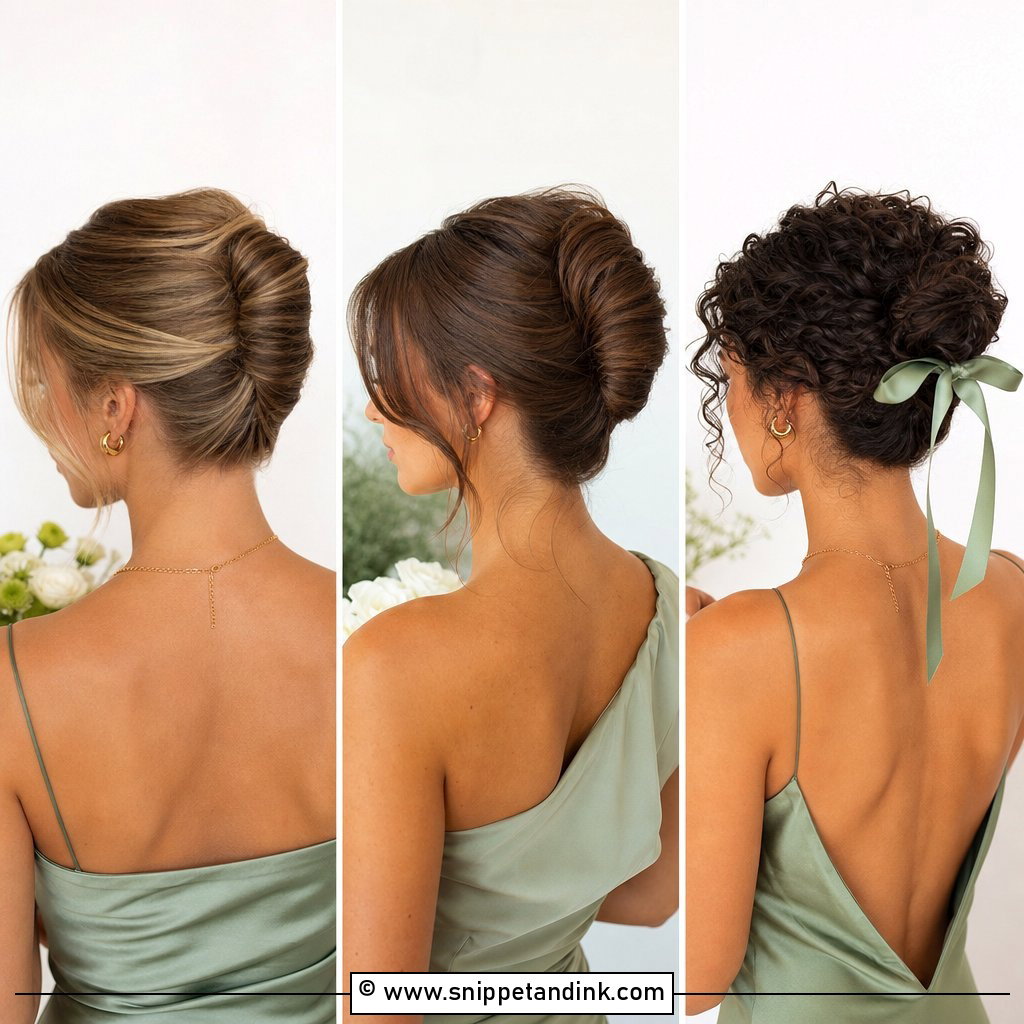
20. Low Bun Bridesmaid Hair For Thick Hair
Thick hair makes a full bun easily, but it’s heavy, and that weight can give a bridesmaid a headache by the reception. I split it into smaller sections, pin each one close to the nape and build the bun up from there rather than wrapping it all in one go. A sleek bun looks very polished on thick hair, while a twisted bun cuts down the bulk and adds detail. Strong pins and firm spray are not optional. Done well, it should feel lighter on the head than it looks.
A Bun That Doesn’t Ache by Hour Six
Tension headaches are the most common complaint I hear from bridesmaids in updos, and almost always the cause is a tight ponytail base or pins scraping the scalp. A low bun should feel secure, not tight. Here is how I build one that lasts and stays comfortable.
- Prep with texture. Hair washed the day before holds pins better than hair washed that morning.
- Tie the base snug, not tight. If she winces when I tie it, I loosen and retie.
- Pin into the elastic. Pins that grip the elastic base hold more than pins pushed straight against the scalp.
- Use U-pins for shaping and bobby pins for locking. U-pins shape the bun without pressing on the head.
- Spray from a distance. Heavy spray close up makes the bun stiff and itchy.
Taking It Out Without Tangles
At the end of the night, remove the pins one by one before touching the elastic. Then work a little conditioner or oil through the lengths and finger-comb from the ends up. Brushing straight through a sprayed, teased bun is how hair snaps.
Low and Secure From the First Photo to the Last Song
A low bun covers more needs on a wedding day than any other bridesmaid style. It’s secure, it suits almost every dress, and it adapts across lengths and textures. Sleek reads formal, soft and textured reads romantic, and braids, twists, pearls, flowers or a vine can tie it to the theme. Decide on the hair texture and dress neckline first, then the finish. Built on a firm base with plenty of pins, it should still be in place for the last dance.
You'll Like These Ideas:


Leave a Reply