
Being a bridesmaid at an Indian wedding means your hair has to keep up with mehendi, haldi, sangeet, the wedding and the reception, often over two or three days, while you dance, carry trays and stand in every family photo. It also has to sit one step below the bride’s. The 25 styles below run from gajra buns and jasmine braids to sleek ponytails and Hollywood waves. For each, I’ve noted how I’d build it, what hair it suits and where it tends to struggle, so you can match a style to your outfit, your hair length and the event.
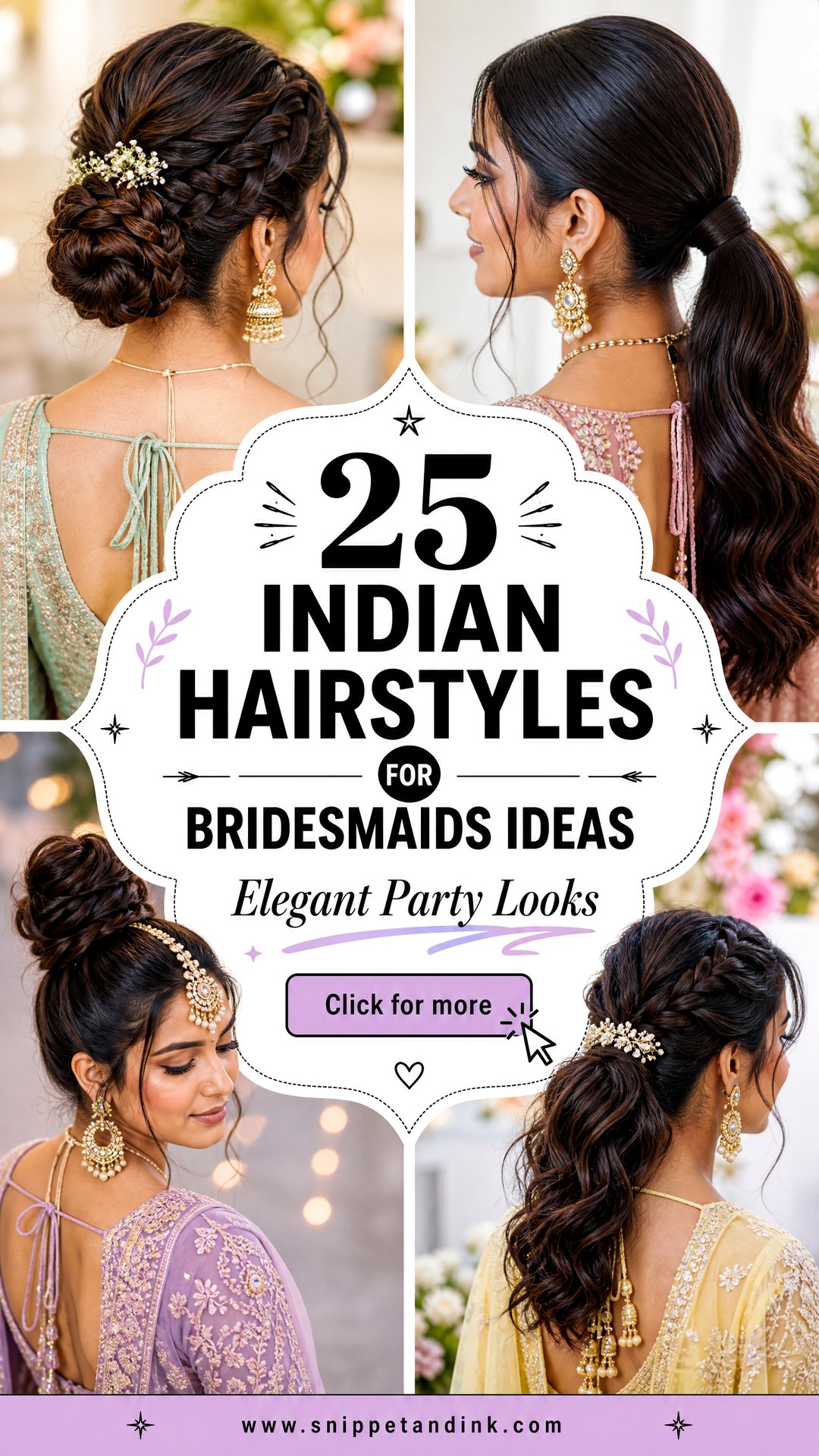
Coordinated, Not Identical: Hair for a Whole Bridesmaid Group
Brides often ask whether all the bridesmaids should have the same hairstyle. I rarely recommend it. The same bun on very thick hair and very fine hair looks like two different styles anyway, and someone with a short bob can’t match a long braid.
What works better is one shared element. All low styles, for example, with each person in the bun, braid or ponytail that suits her hair. Or everyone in different styles with the same flower, the same gold pins or the same side part. In group photos, that reads as planned without forcing anyone into something that doesn’t work on her.
When one stylist is doing everyone
Quicker styles like sleek buns, ponytails and side braids help the schedule. Elaborate braided updos for every bridesmaid can push the bride’s own appointment late. Arrive with clean, completely dry hair, and have your outfit and jewelry with you so the style can be checked with the dupatta on.
1. Indian Bridesmaid Low Bun With Gajra
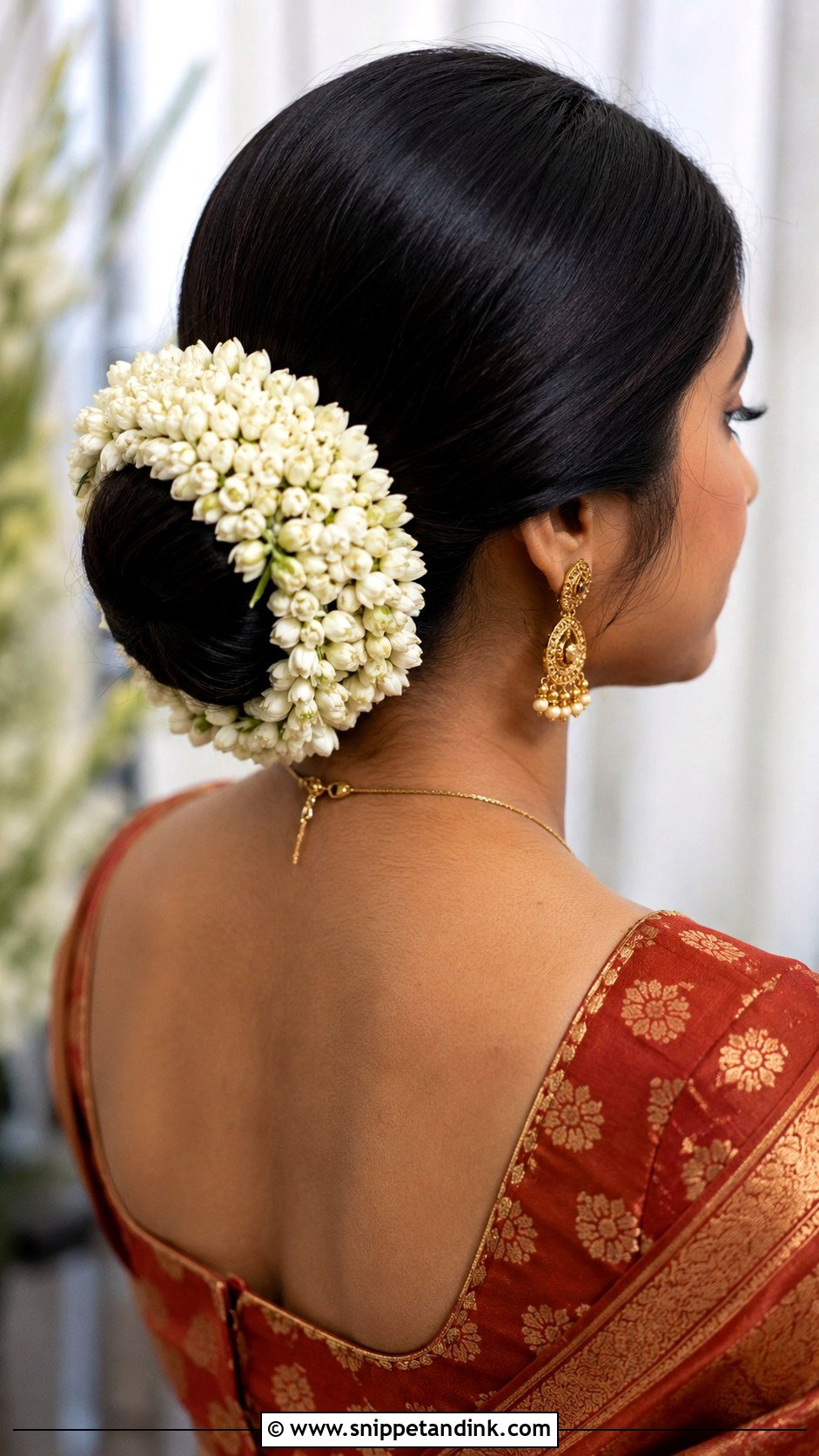
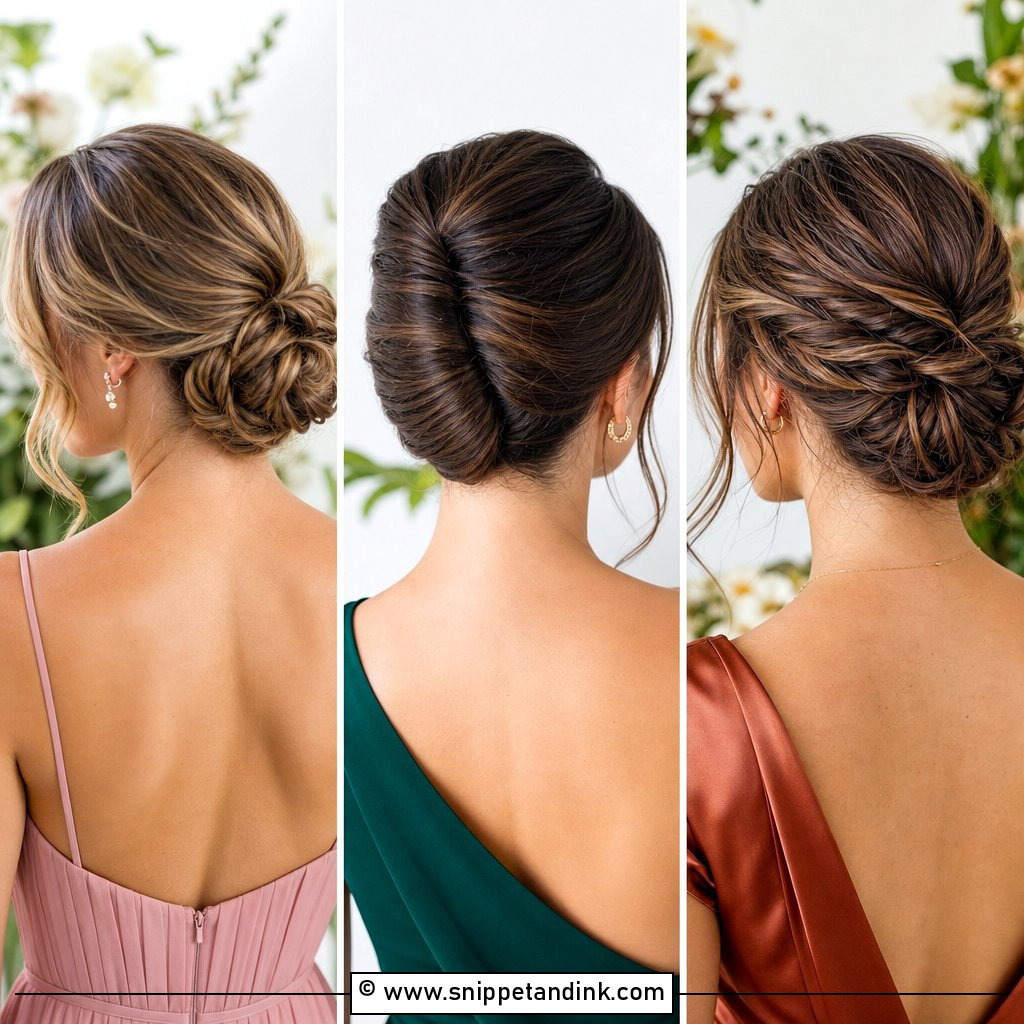
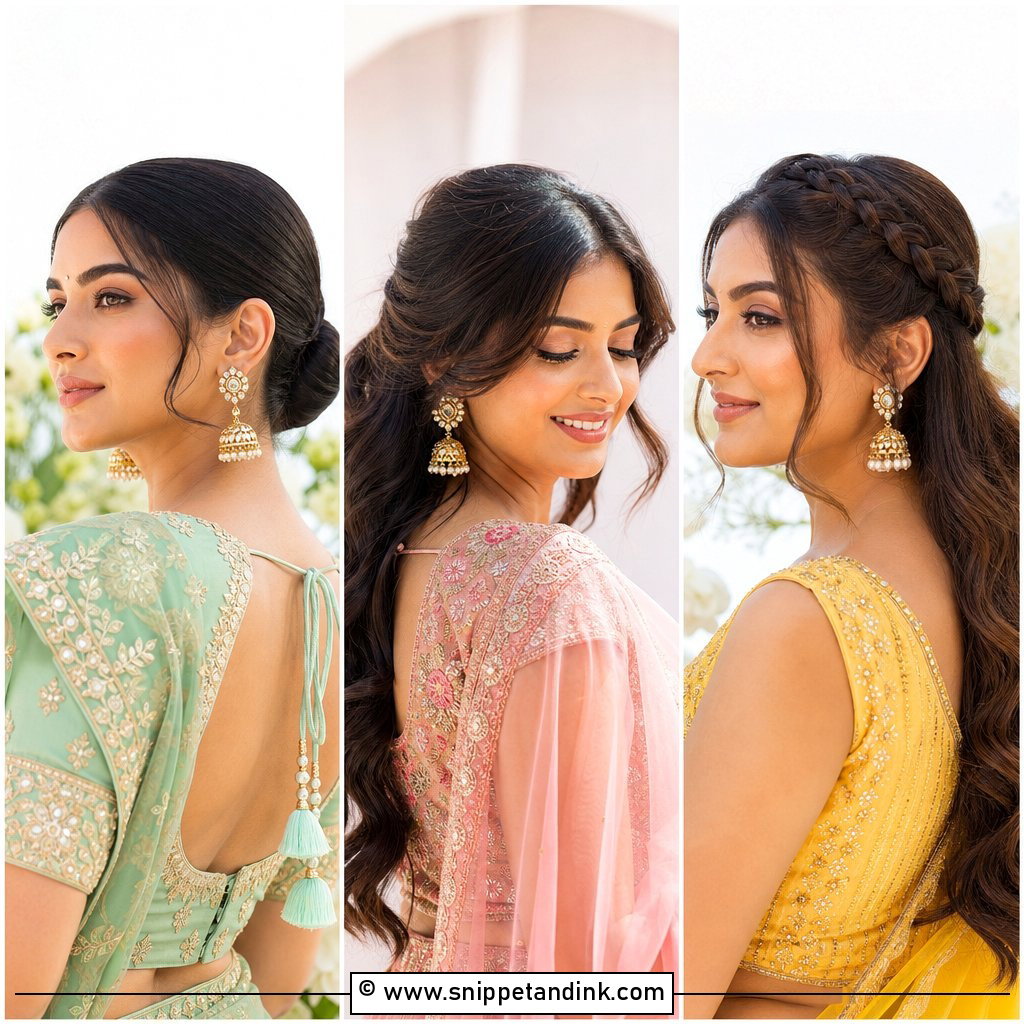
I keep a low gajra bun for a bridesmaid noticeably smaller and cleaner than the bride’s, because in group photos the eye should go to her first. It sits at the nape, which suits sarees, silk lehengas and temple jewelry, and gives a dupatta something solid to pin into. Fresh jasmine adds fragrance and a classic wedding feel, and it does weigh the bun down, so the base needs firm crossed pins. Center or soft side part, depending on what flatters your face.
2. Indian Bridesmaid Soft Curls With Maang Tikka
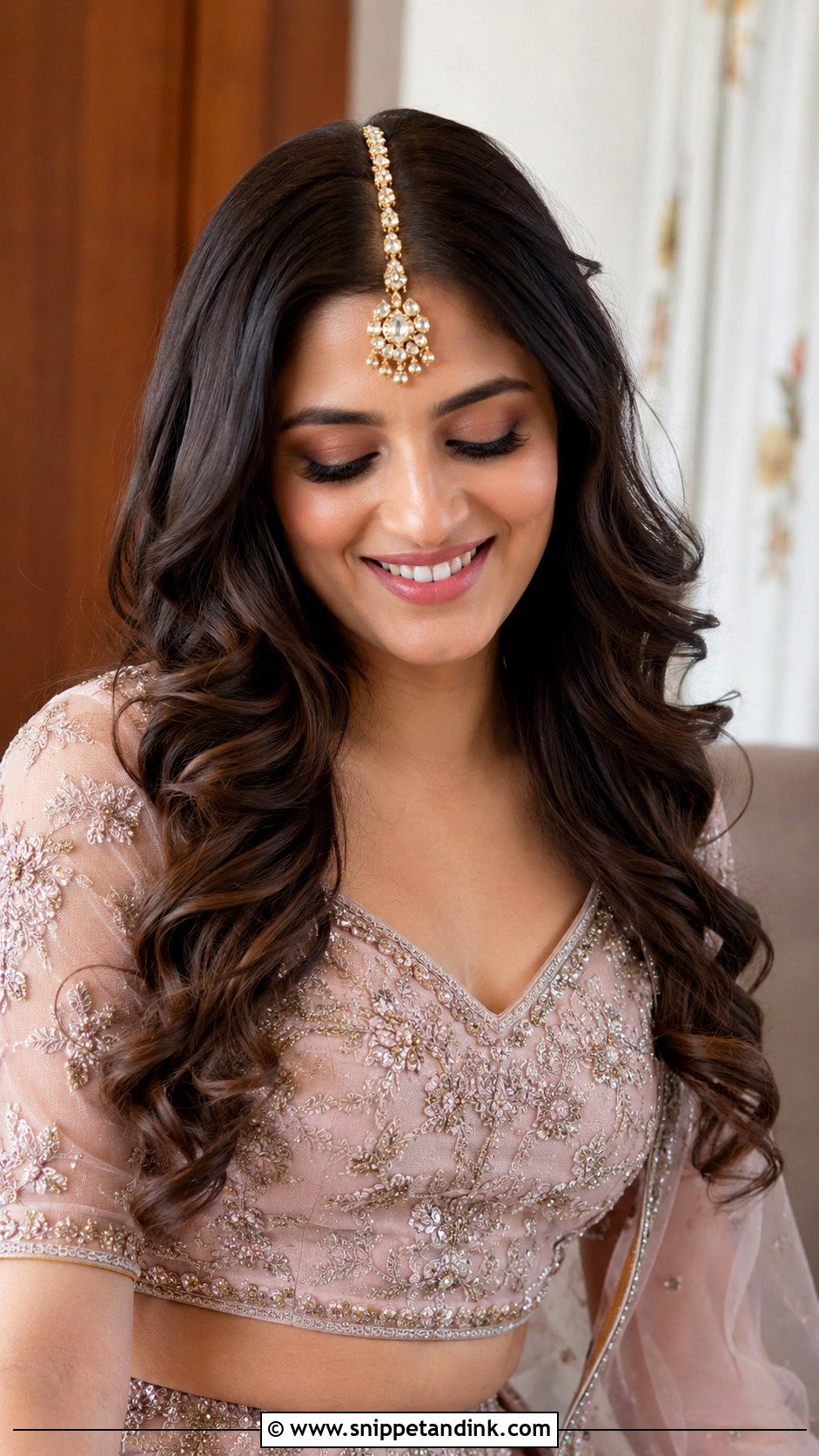
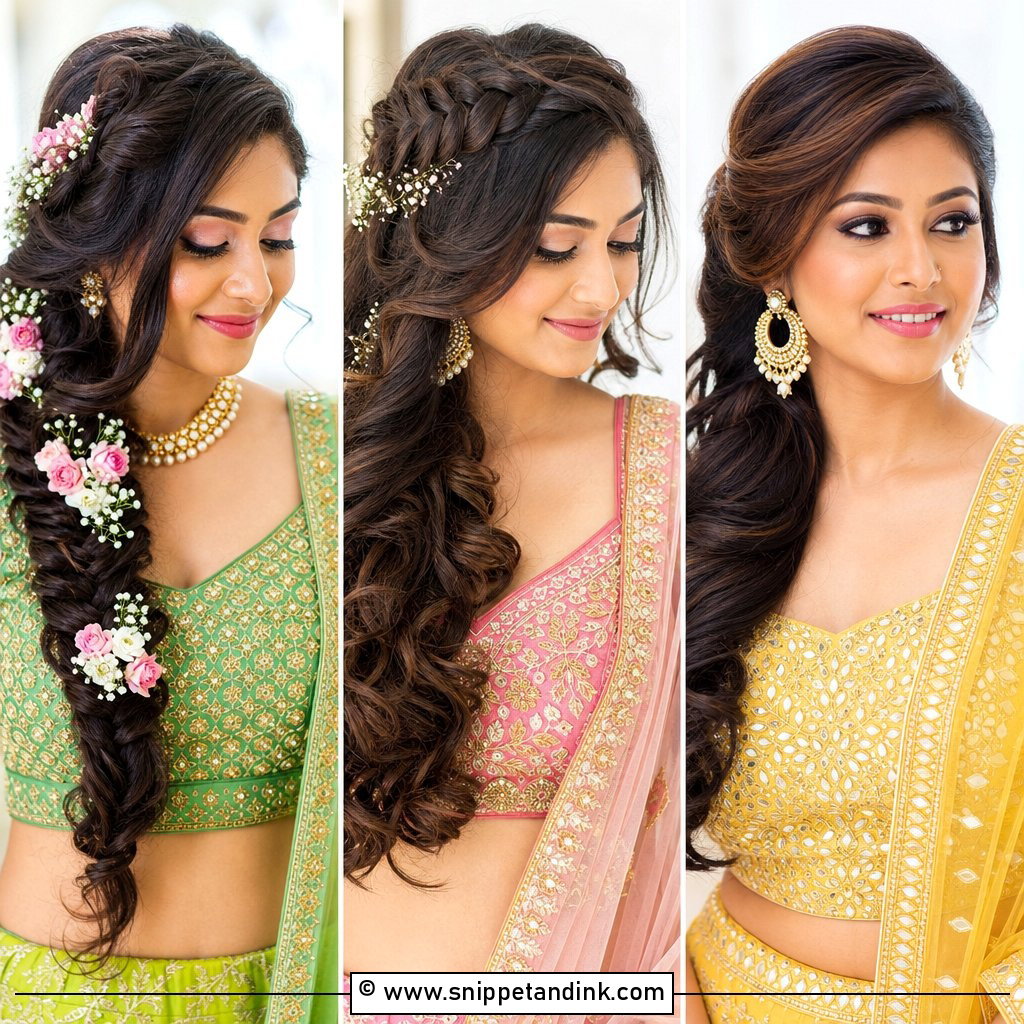
Soft curls with a maang tikka are the open-hair look I do most at sangeet, engagement and reception functions. I set the curls on a medium barrel, let them cool completely, then brush them out so they look soft rather than tight. A middle part gives the tikka a straight line. If a dupatta will go over the head, I put two hidden grips at the crown for the dupatta pins to catch, which stops the fabric from dragging the curls flat.
3. Indian Bridesmaid Braided Bun
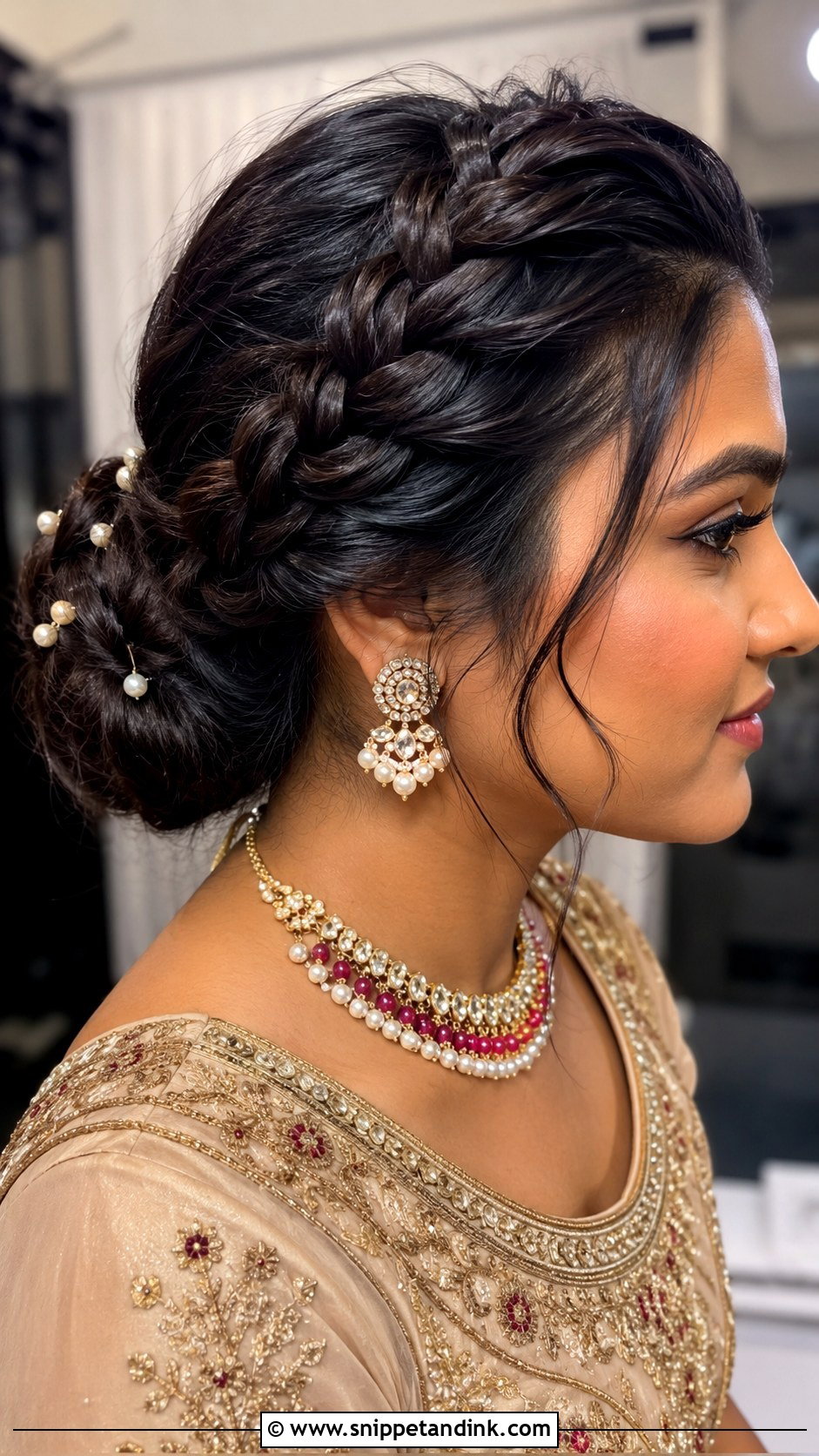
Thick hair is what a braided bun handles best. Braiding the length first compresses it, so the bun ends up neater and lighter than a plain coil. The braid can wrap around the bun, sit across the crown or blend into the base. It keeps hair off the neck at an outdoor wedding. On fine hair, I’d add padding underneath, since a braid coiled from thin hair gets small. Pearl pins, small flowers or a simple passa finish it.
4. Indian Bridesmaid Side Braid With Flowers
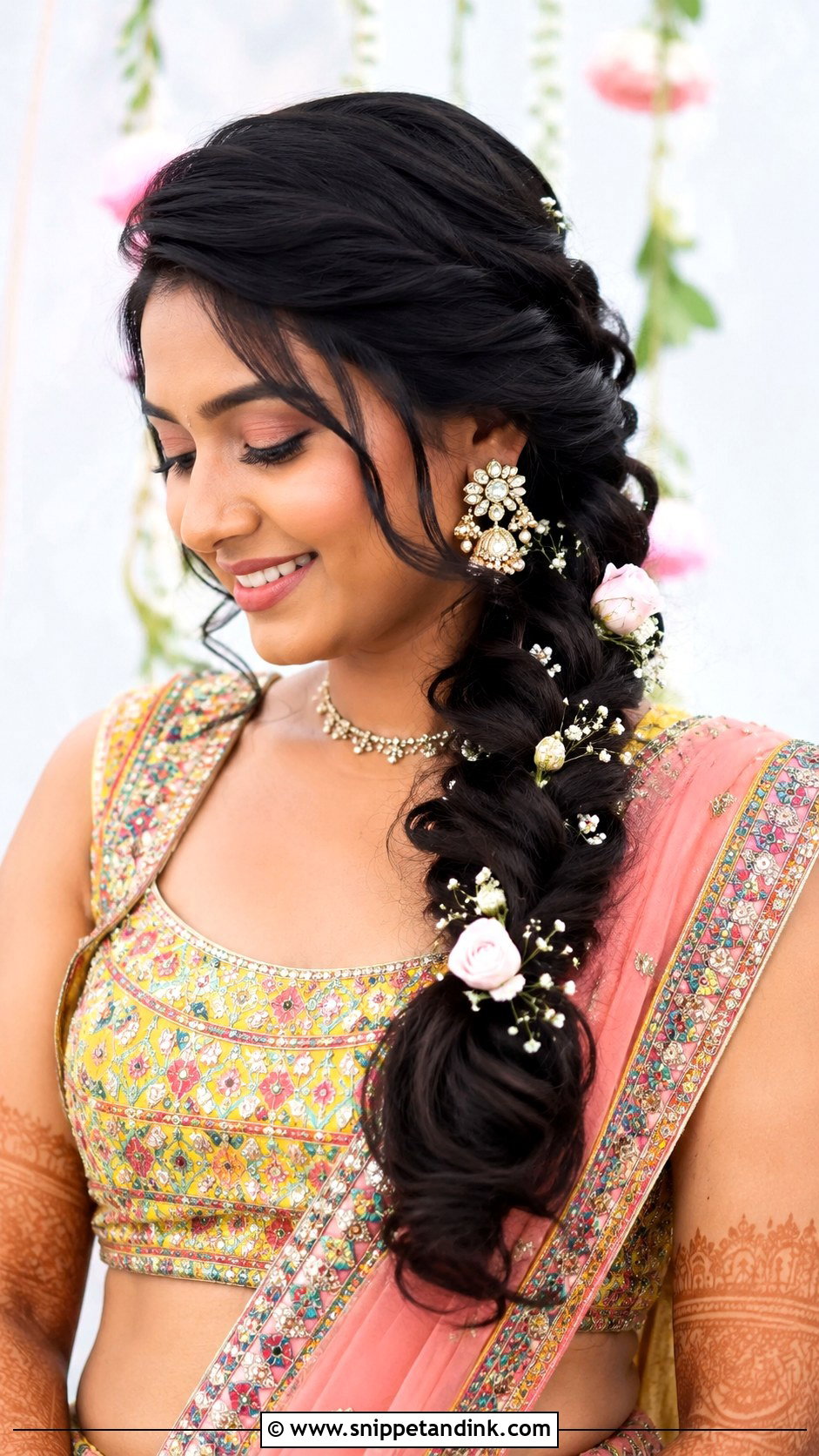
At a mehendi and daytime wedding functions, a side braid with flowers is the most practical style I know: it keeps hair off your hands while henna dries. It rests over one shoulder and shows in front-facing photos. Loose and pulled apart reads romantic; tighter holds better through dancing. Jasmine buds, baby’s breath or marigold accents tuck along it. Roses are more delicate and brown quickly in heat, so add them last if you use them.
5. Indian Bridesmaid Half Up Curls
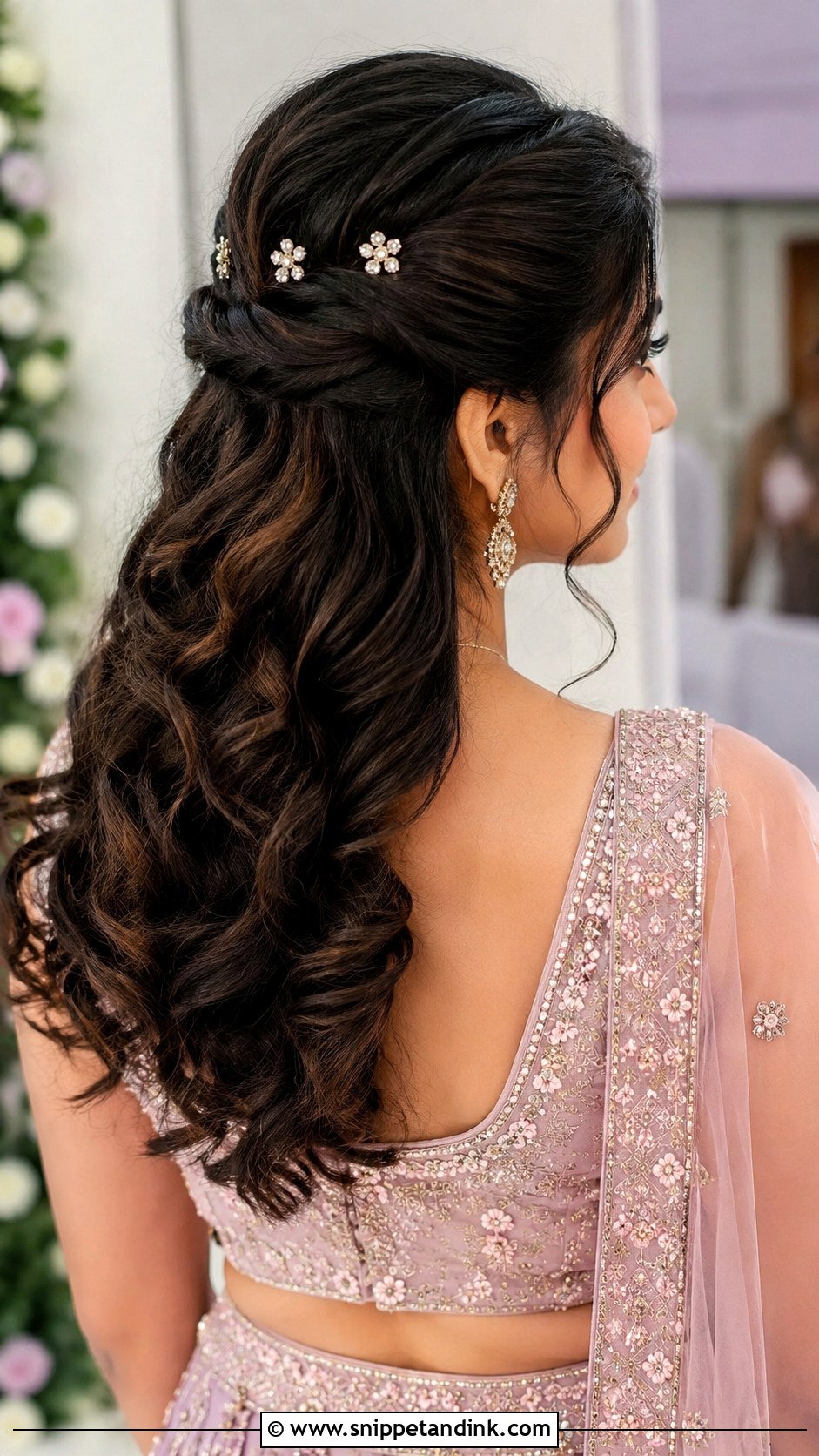
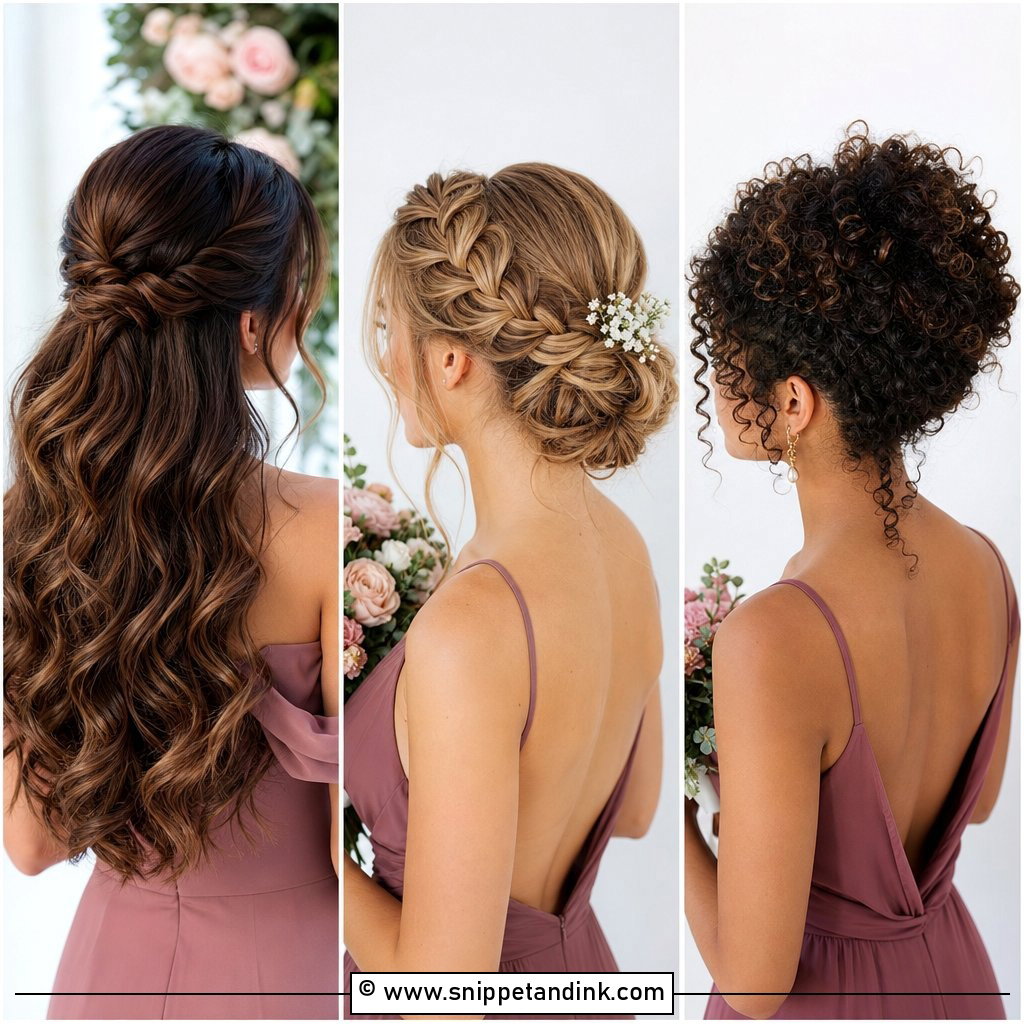
Half up curls give you open hair with the front pinned back. The top section can be twisted, braided or softly puffed while the rest falls in loose curls. It keeps hair off the face during ceremonies and leaves room for earrings, a maang tikka or a hair chain. The weak point is always the lower curls, which drop faster than pinned hair, so I set them with a little more product than I’d use in an updo. It suits medium to long hair with pastel lehengas, reception gowns and embroidered sarees.
6. Indian Bridesmaid Sleek Low Ponytail
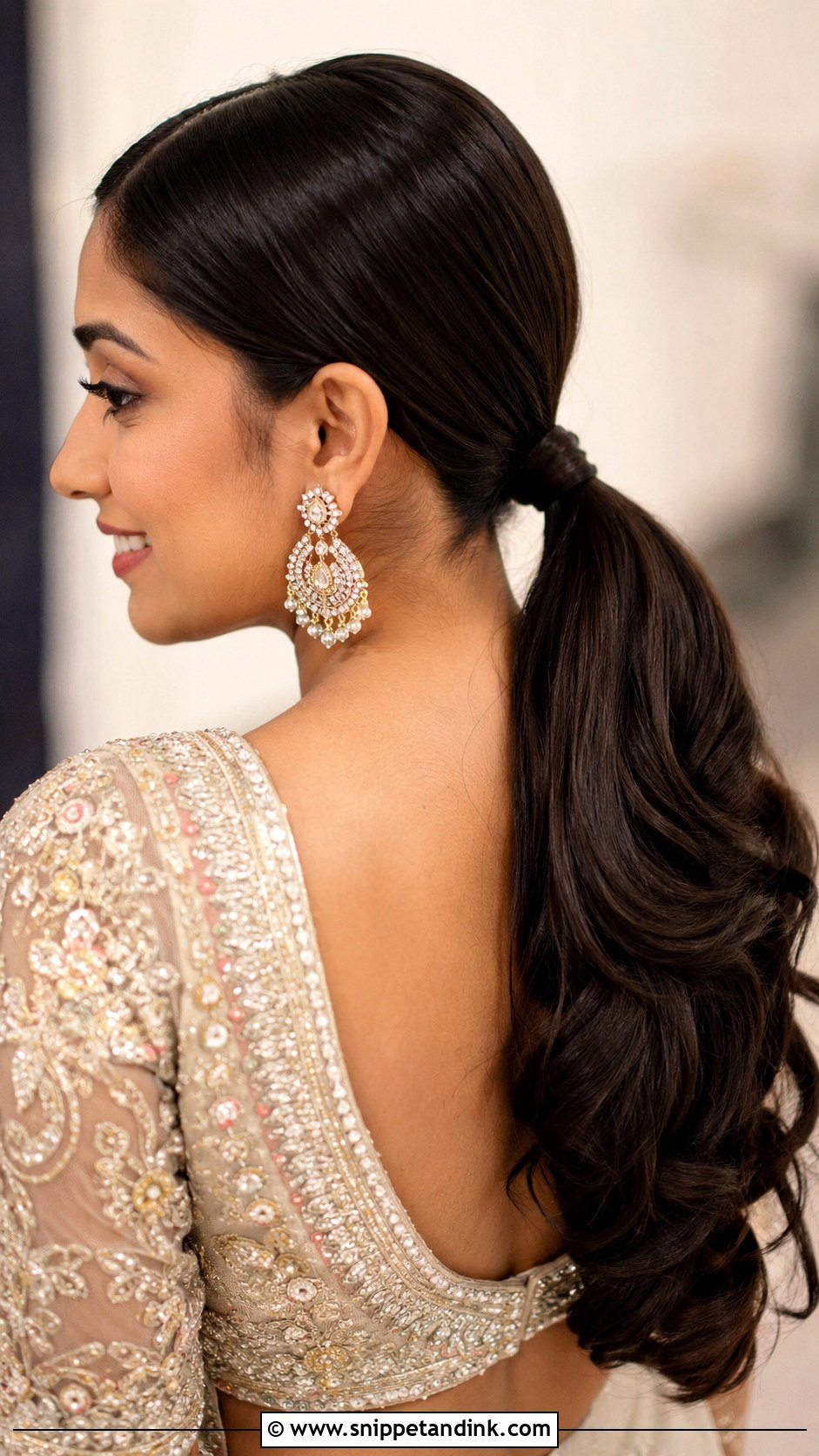
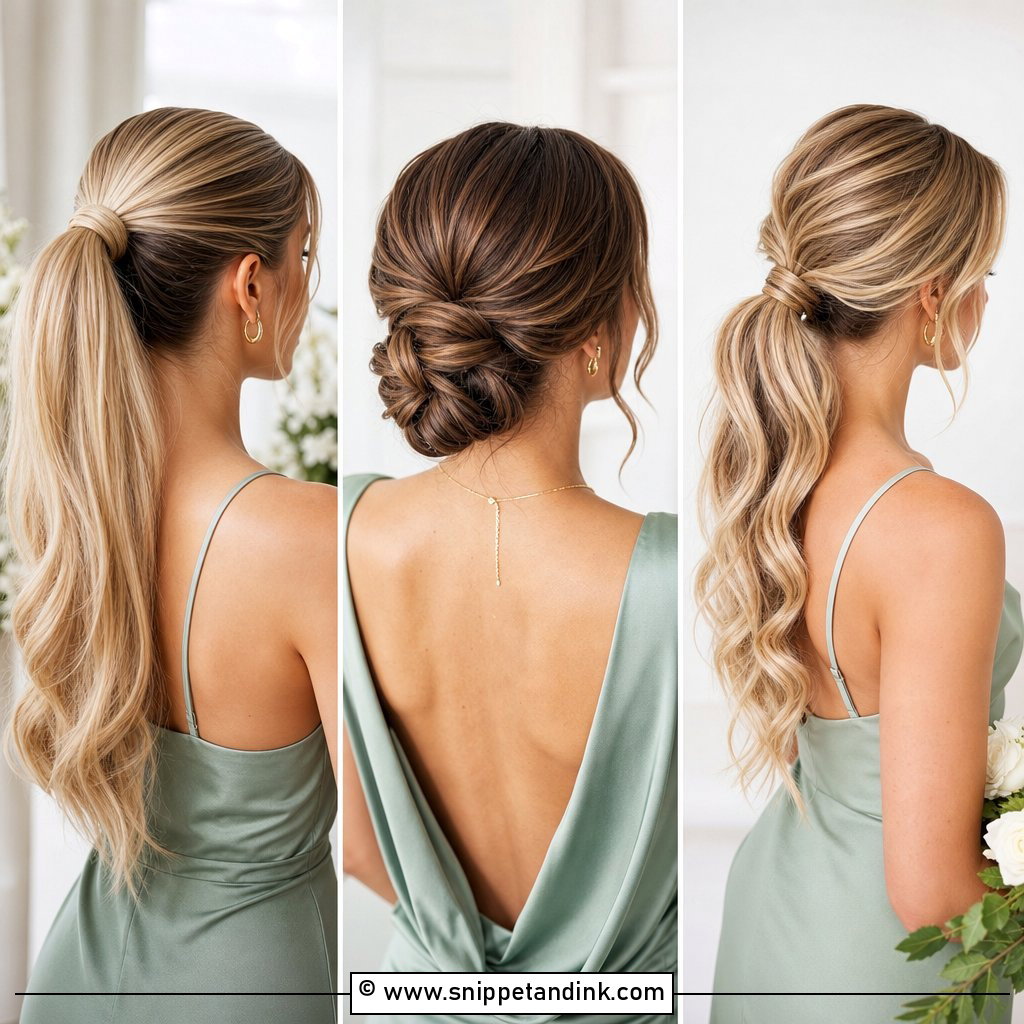
A sleek low ponytail is the right answer when the outfit is the statement: a high-neck blouse, a cape dupatta, big earrings. I part it neatly, smooth it down with gel at the roots and tie it at the nape, then wrap a section around the elastic. The ends can be straight, waved or curled. In humidity, it holds far better than open hair because the crown is fully controlled. One honest drawback: a sleek finish shows every bump, so it takes careful brushing.
7. Indian Bridesmaid Messy Bun With Face Framing
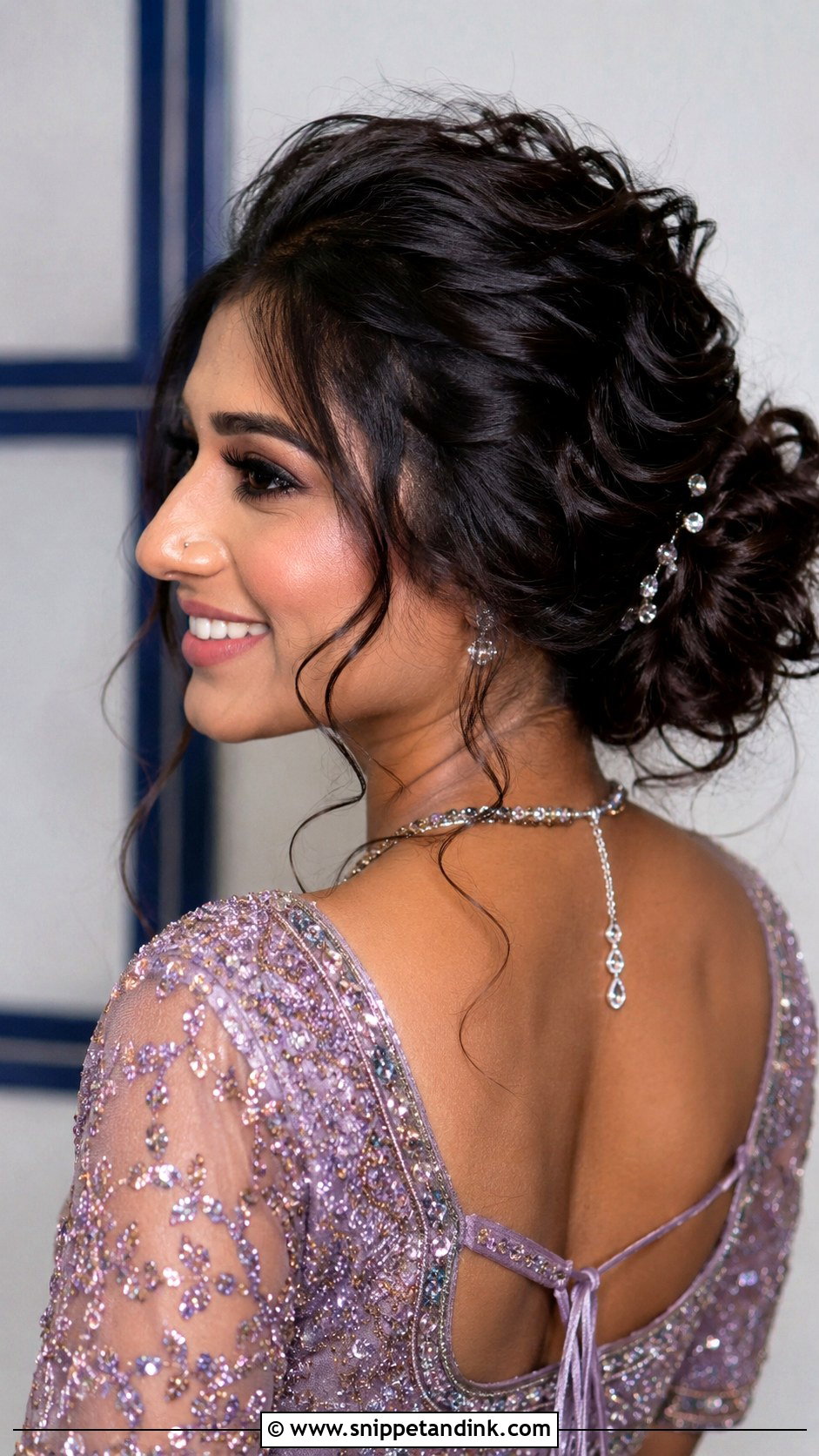
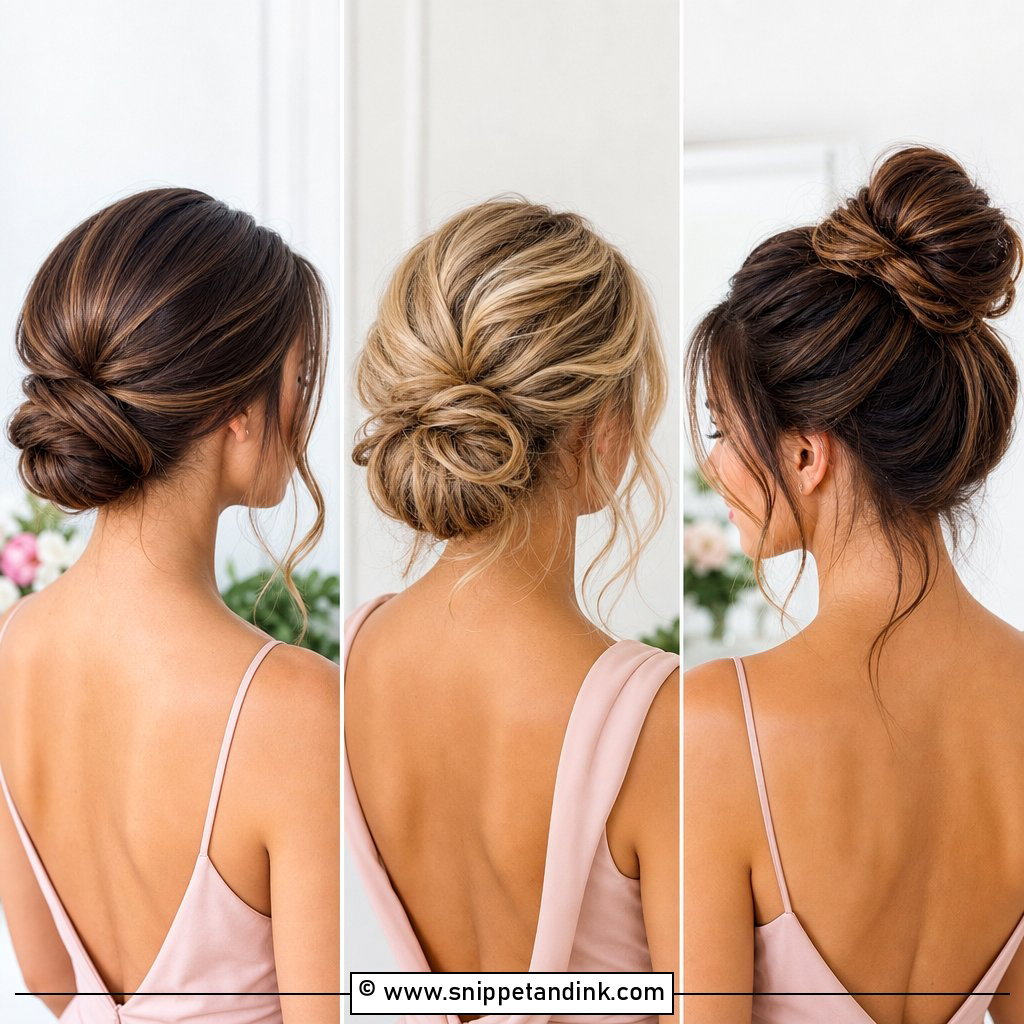
Airy, not careless, is the standard I hold a messy bun to. Underneath there’s a firm base and plenty of pins; the texture on top is placed by hand. The face-framing pieces near the cheeks soften heavy earrings and bold makeup. It suits sangeet, cocktail and reception nights. Wavy or slightly curled hair grips best; very straight, silky hair needs texture spray first or it slips. Small floral pins or crystals help a simple outfit.
8. Indian Bridesmaid Fishtail Braid
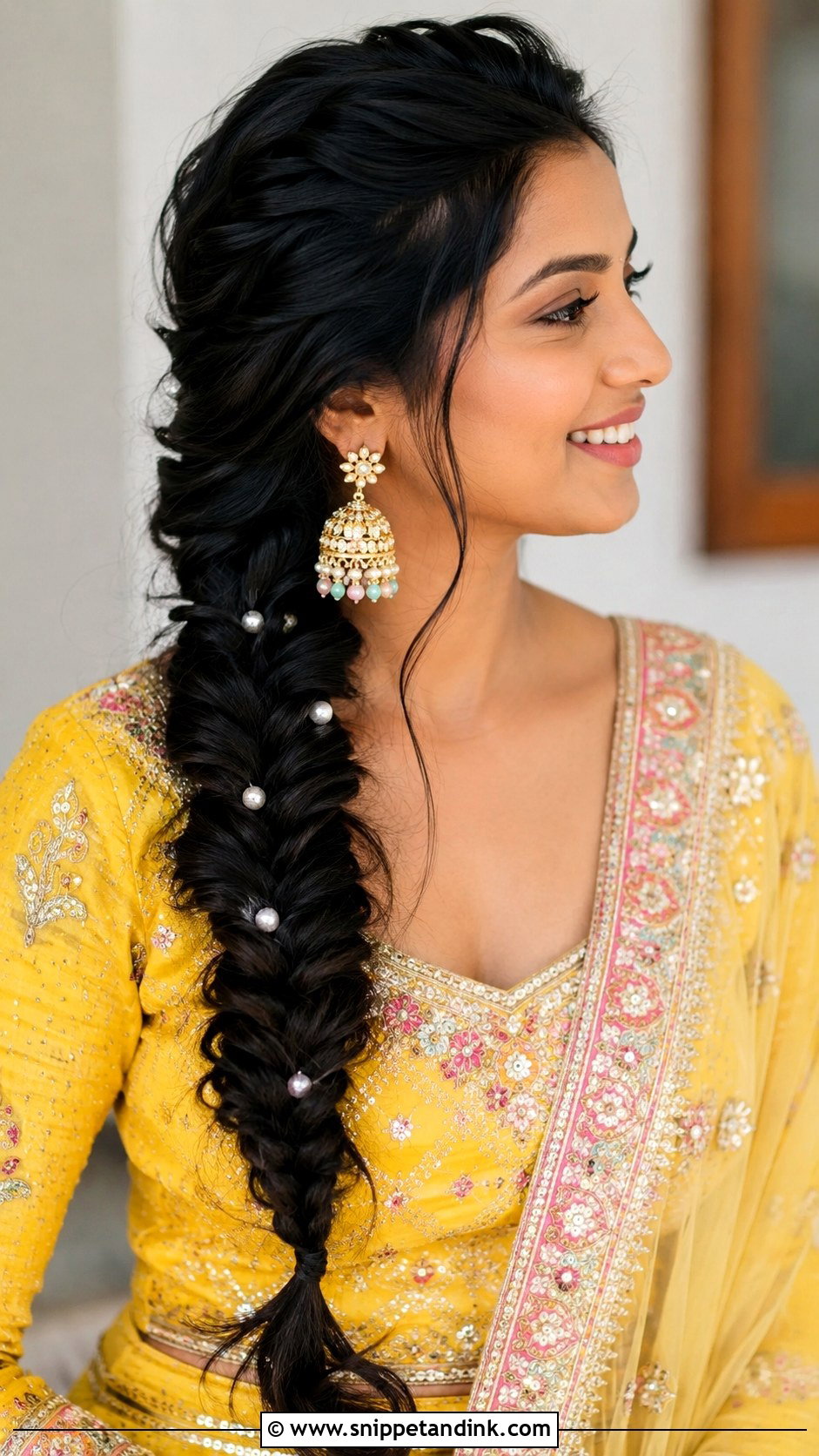
A fishtail braid looks finer and more detailed than a regular plait, and once tied it stays secure through a long, active day. It can go down the back or over one shoulder, depending on the blouse and jewelry. I braid it tight, then pull the edges apart so it looks fuller. Tiny flowers, pearls or gold pins along it work for mehendi, haldi and outdoor ceremonies. It needs long hair; on shoulder-length hair the braid gets too short to show the pattern.
9. Indian Bridesmaid Open Waves With Side Pin
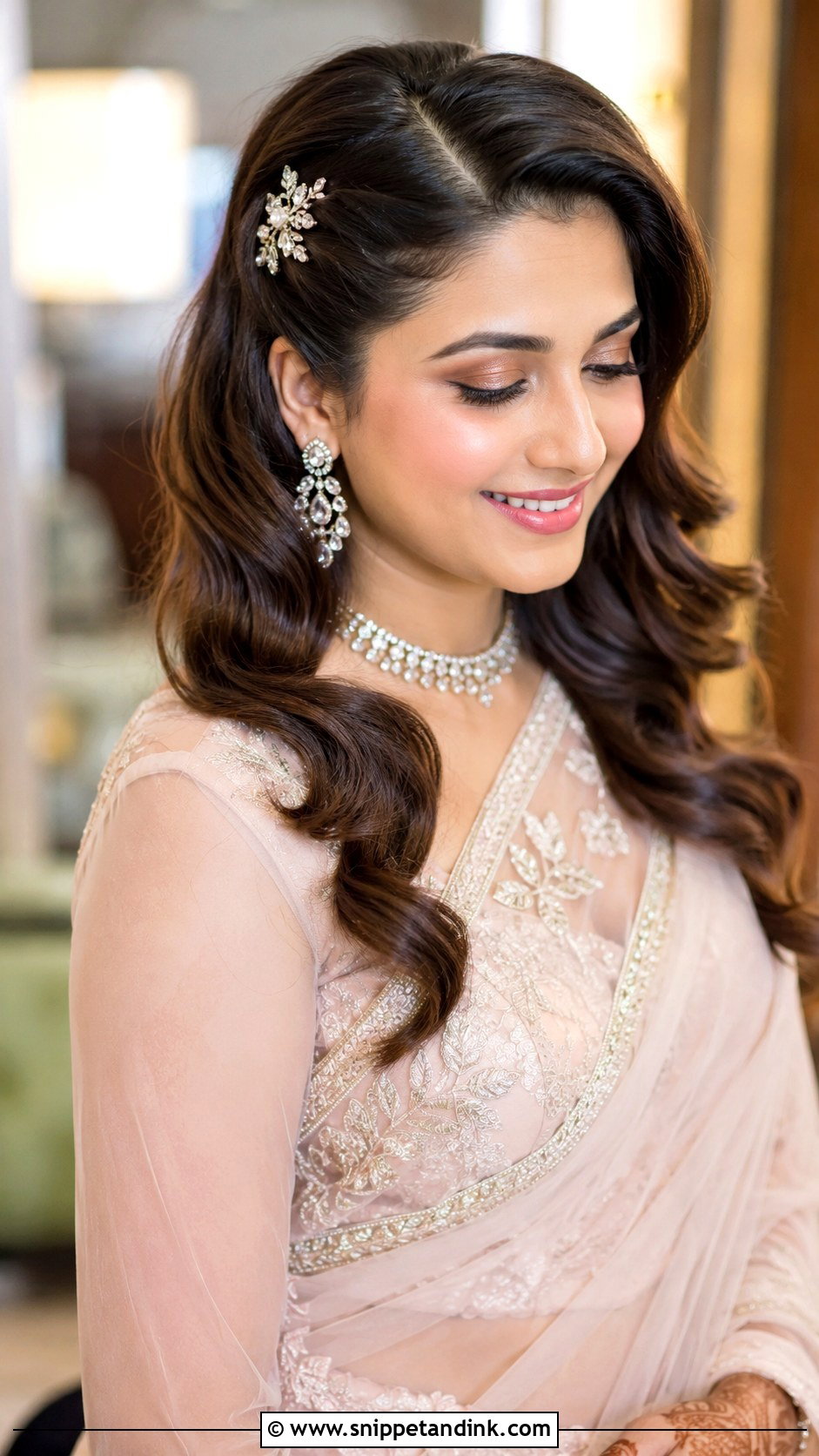
Open waves with a side pin are what I suggest when the outfit already has heavy embroidery or a dramatic dupatta and the hair needs to stay quiet. One side is pinned back to show an earring; the rest falls in soft, glossy waves. Pick the pin to suit the event: pearl for daytime, kundan for evening, a floral comb for mehendi. I secure the side with two crossed grips under the decorative pin, because the clip alone won’t hold the weight of the hair through a long day of photos.
10. Indian Bridesmaid Crown Braid Bun
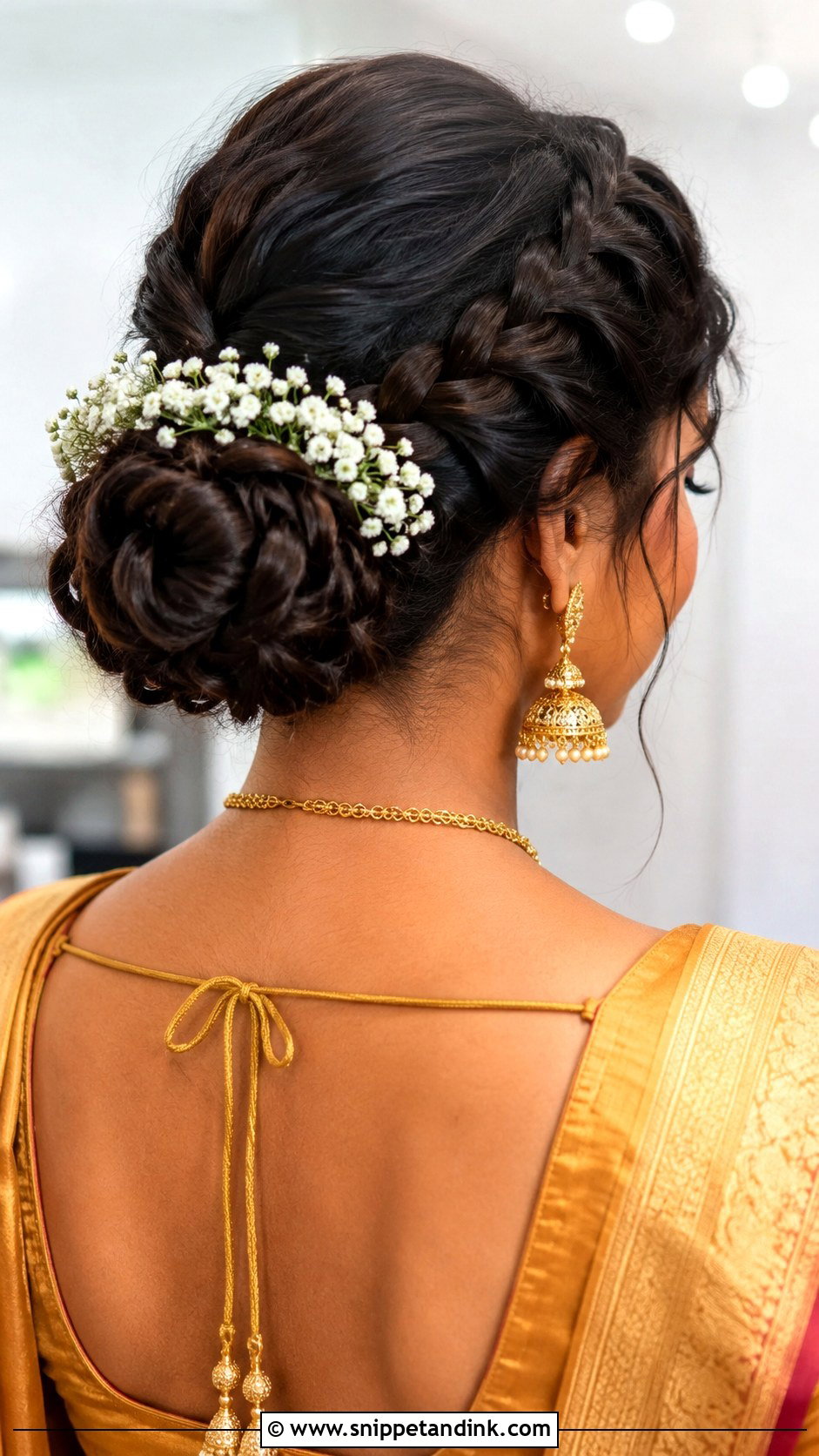
A crown braid bun can easily look bridal, so the trick for a bridesmaid is restraint. The braid wraps around the head or across the crown and joins a low or mid bun. Keep the bun smooth and the braid gently pulled apart, and stop at tiny jasmine buds or gold pins for decoration. It frames the face well and gives structure under a dupatta. It suits sarees, long earrings and traditional necklaces at the wedding ceremony.
11. Indian Bridesmaid Bubble Braid Ponytail
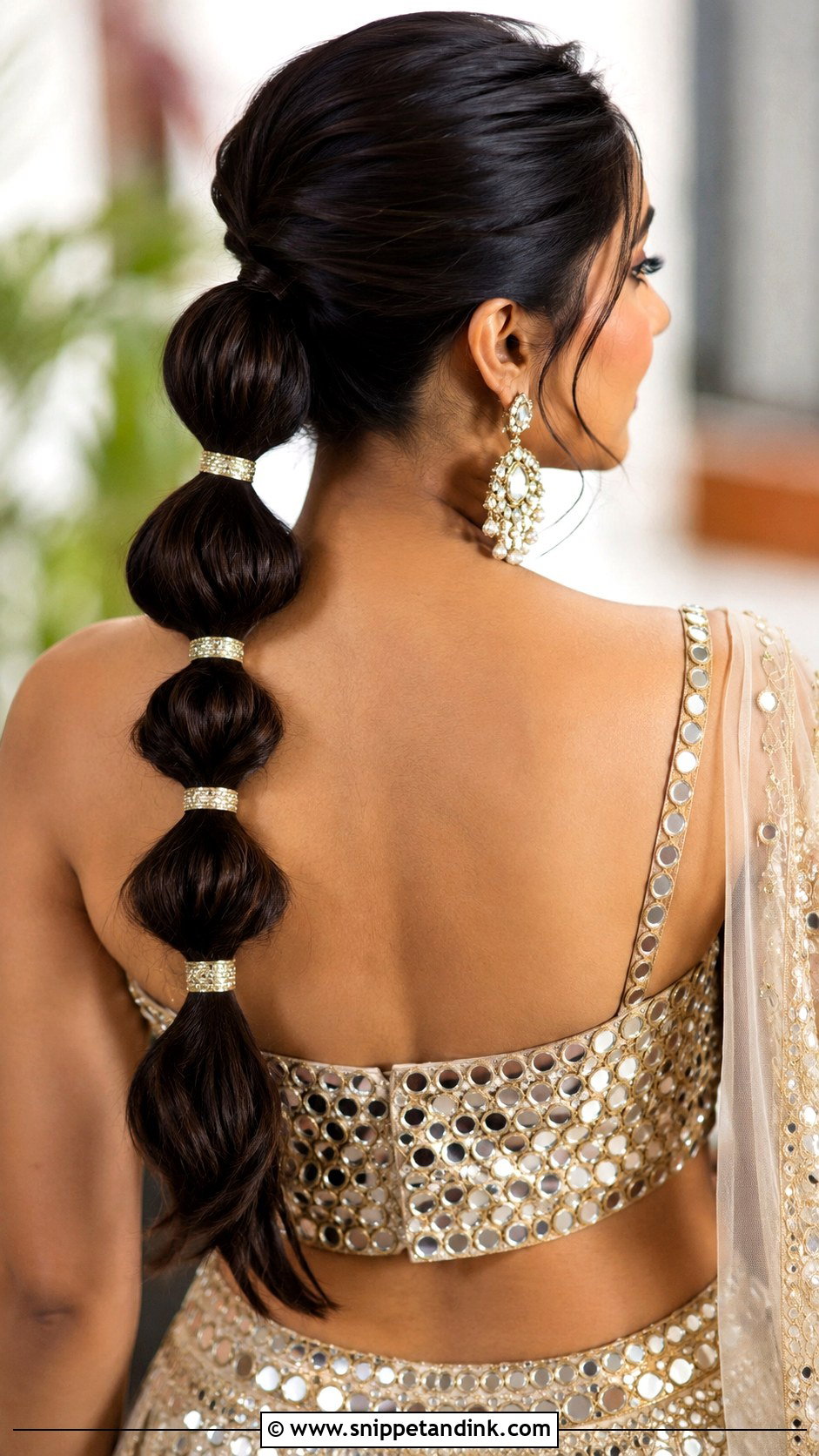
A bubble braid ponytail is one of the best styles for dance-heavy events because nothing comes loose. I tie a ponytail, then add hidden clear elastics at intervals and gently pull each section into a rounded bubble. Gold cuffs, pearl ties or small flowers between the bubbles make it festive. It pairs well with mirror-work lehengas and modern shararas. On very long hair, it also prevents the tangles you get from swinging open hair all night.
12. Indian Bridesmaid Twisted Half Up Hairstyle
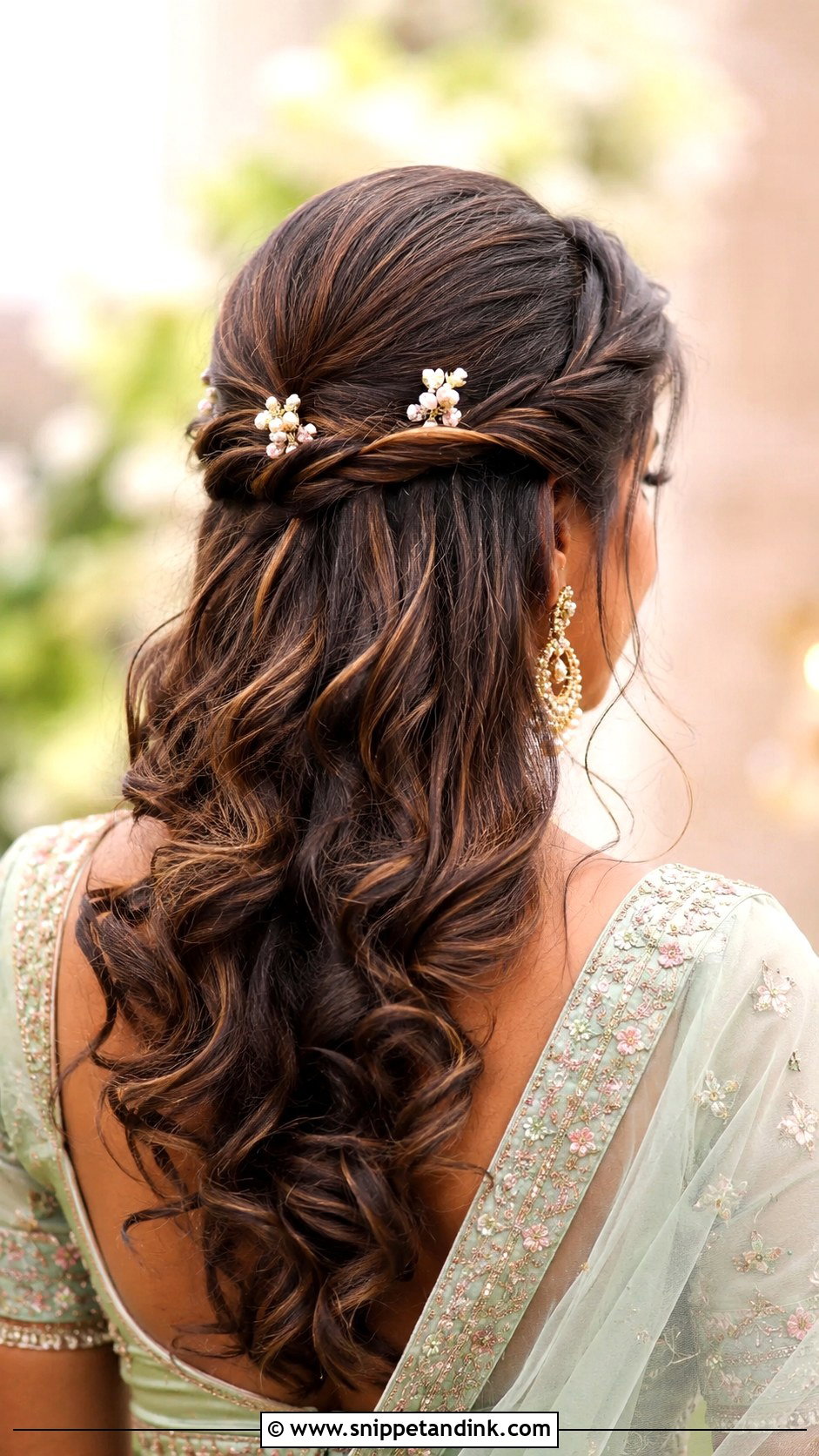
Two front sections twisted back and pinned at the crown, with the rest left in curls or waves: a twisted half up is simple and quick. It keeps the face open and adds a little volume. A maang tikka, matha patti or small floral pins fit with it. It suits medium-length hair better than many heavy buns. I’d choose it for a haldi, an engagement or a daytime wedding.
13. Indian Bridesmaid Floral Juda
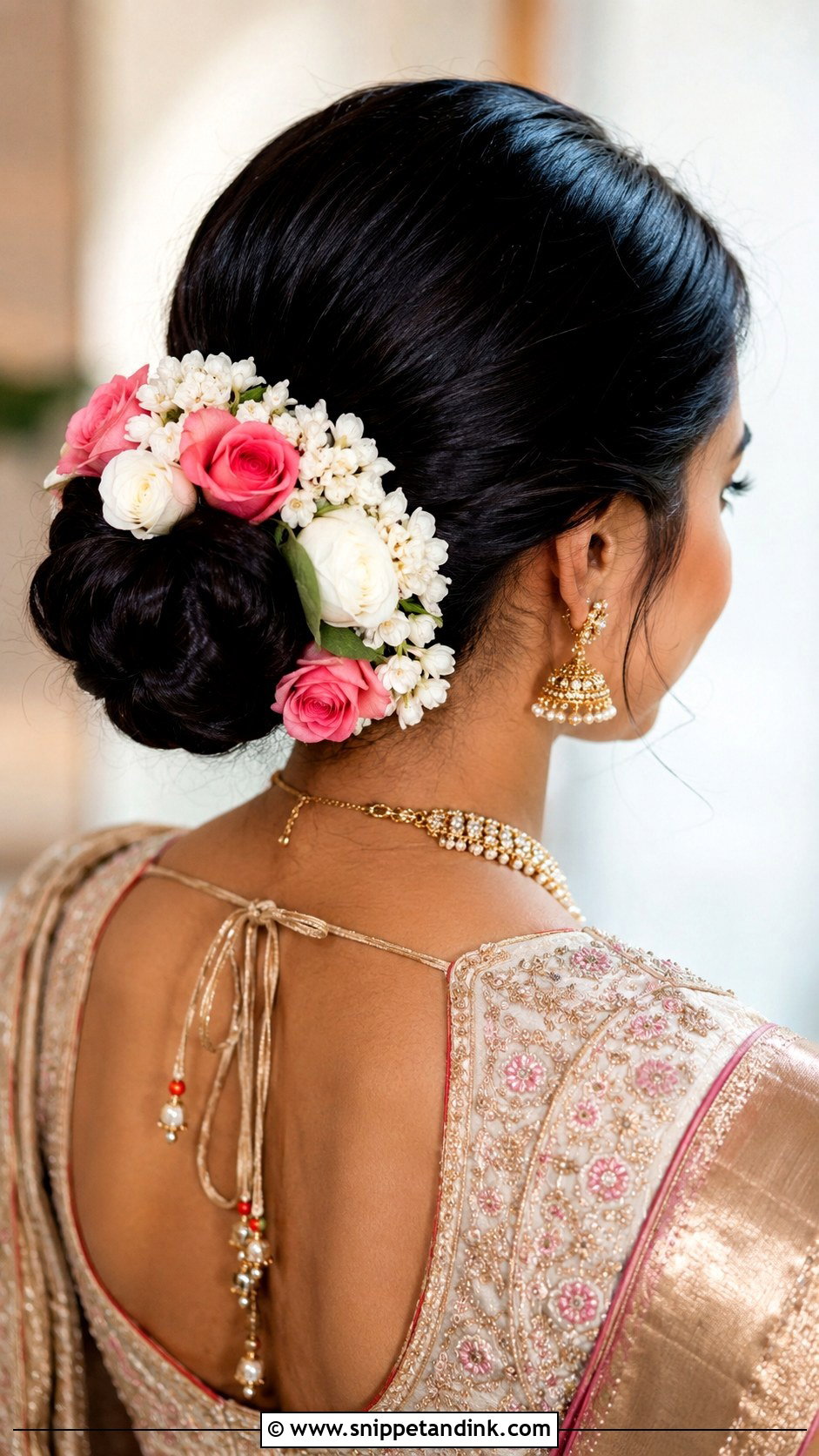
A floral juda is a classic Indian bun dressed with fresh flowers at the base. For bridesmaids, I keep the flower placement smaller than the bride’s. Roses, jasmine, mogra, and baby’s breath all work, though jasmine, mogra and baby’s breath last longer than roses out of water. It suits sarees and lehengas with traditional jewelry and holds well through long rituals. From behind, especially with an embroidered blouse or deep back neckline, it’s one of the best views on this list.
14. Indian Bridesmaid Loose Braid With Gajra
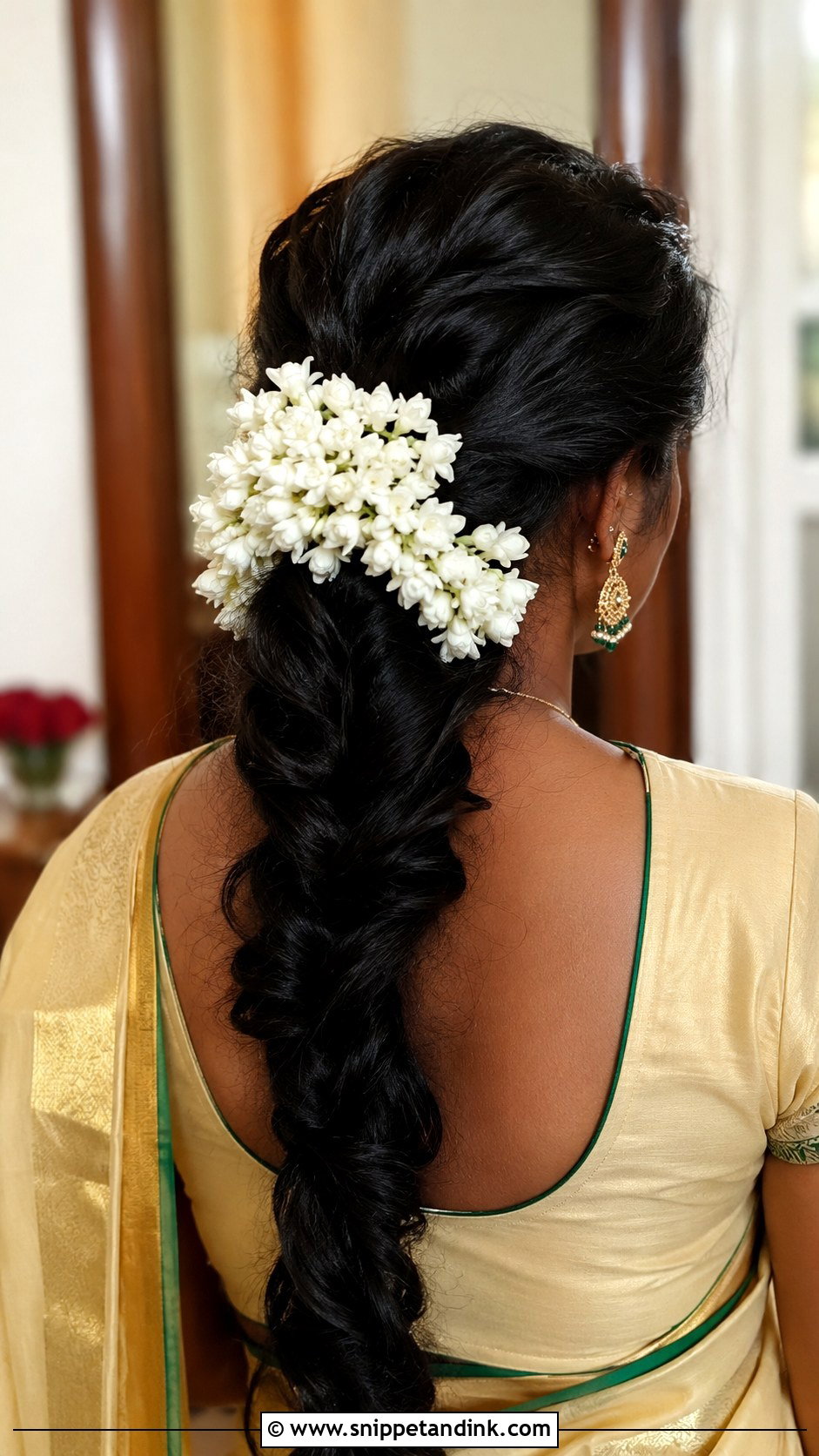
A loose braid with gajra works for South Indian, North Indian and fusion looks. The gajra can wrap the start of the braid, run along it or sit near the end. I pin it every few centimeters with U-pins so it doesn’t twist around to one side. Keep the braid slightly pulled out for fullness. It suits silk sarees, lehengas and long jhumkas, and it’s comfortable for a full day.
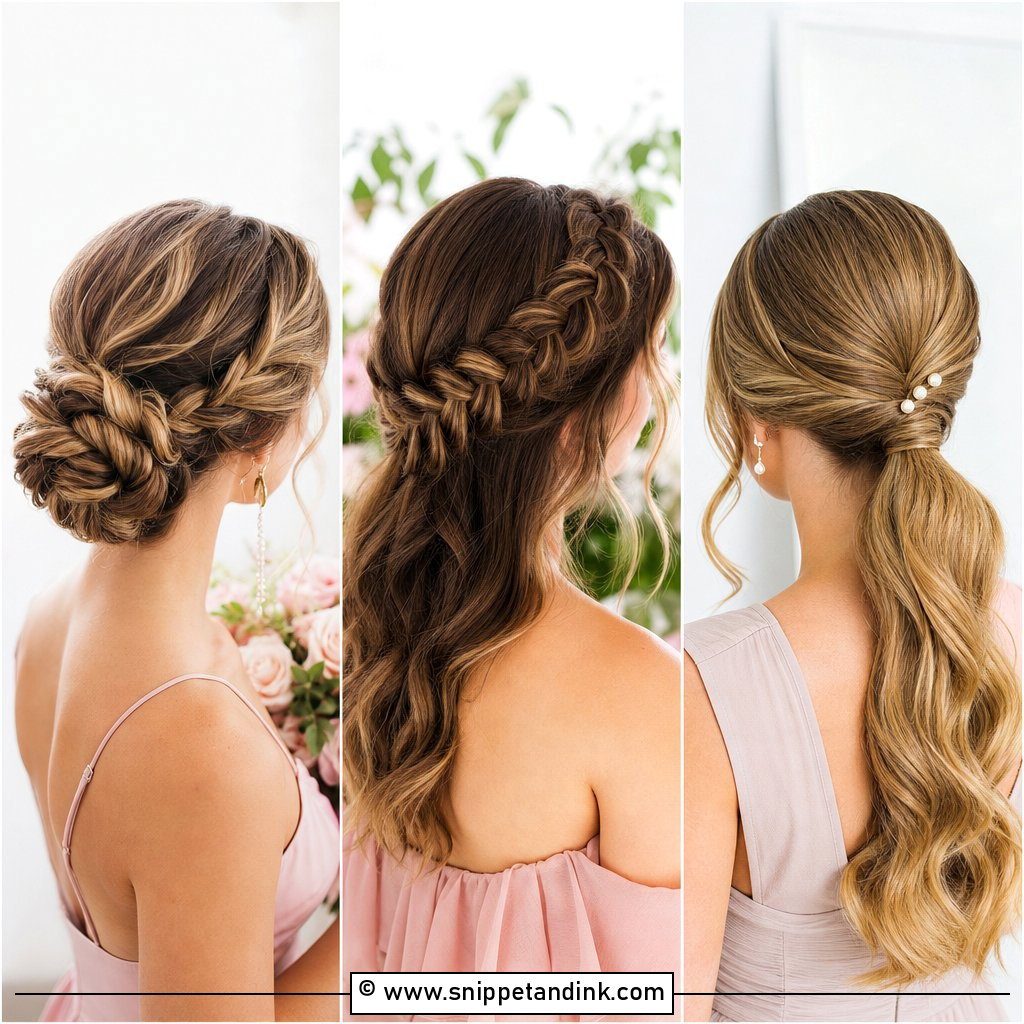
15. Indian Bridesmaid Hollywood Waves
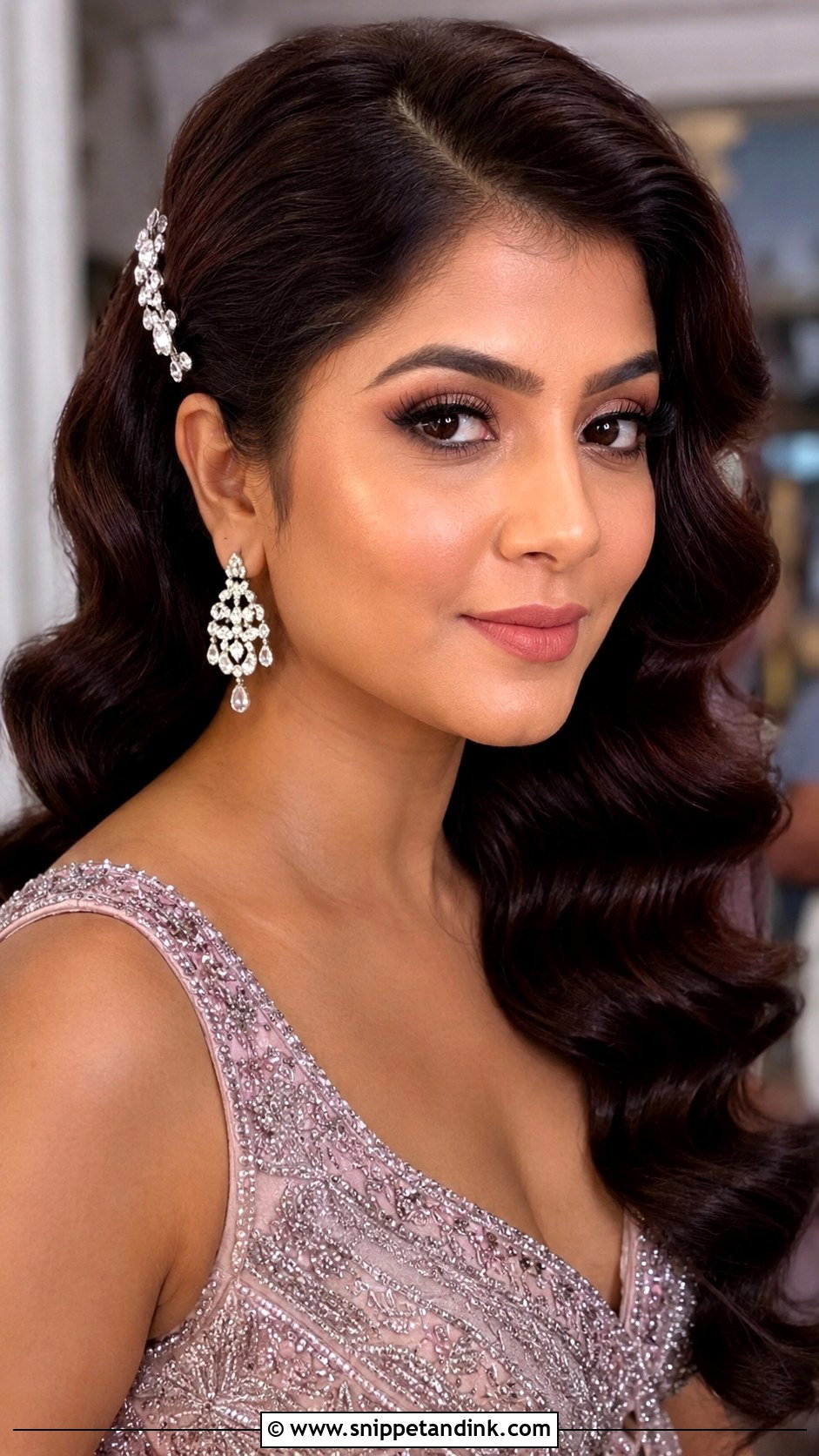
Hollywood waves are smooth, glossy and all shaped in the same direction, then brushed into one ripple. The polish comes from a smooth blow-dry first; on frizzy hair, skipping that step means the wave won’t hold. They suit evening functions, cocktail events and formal receptions with gowns, pre-draped sarees and sleek lehengas. A deep side part is more dramatic; a center part is softer. I keep accessories to one jeweled clip or nothing.
16. Indian Bridesmaid High Bun With Maang Tikka
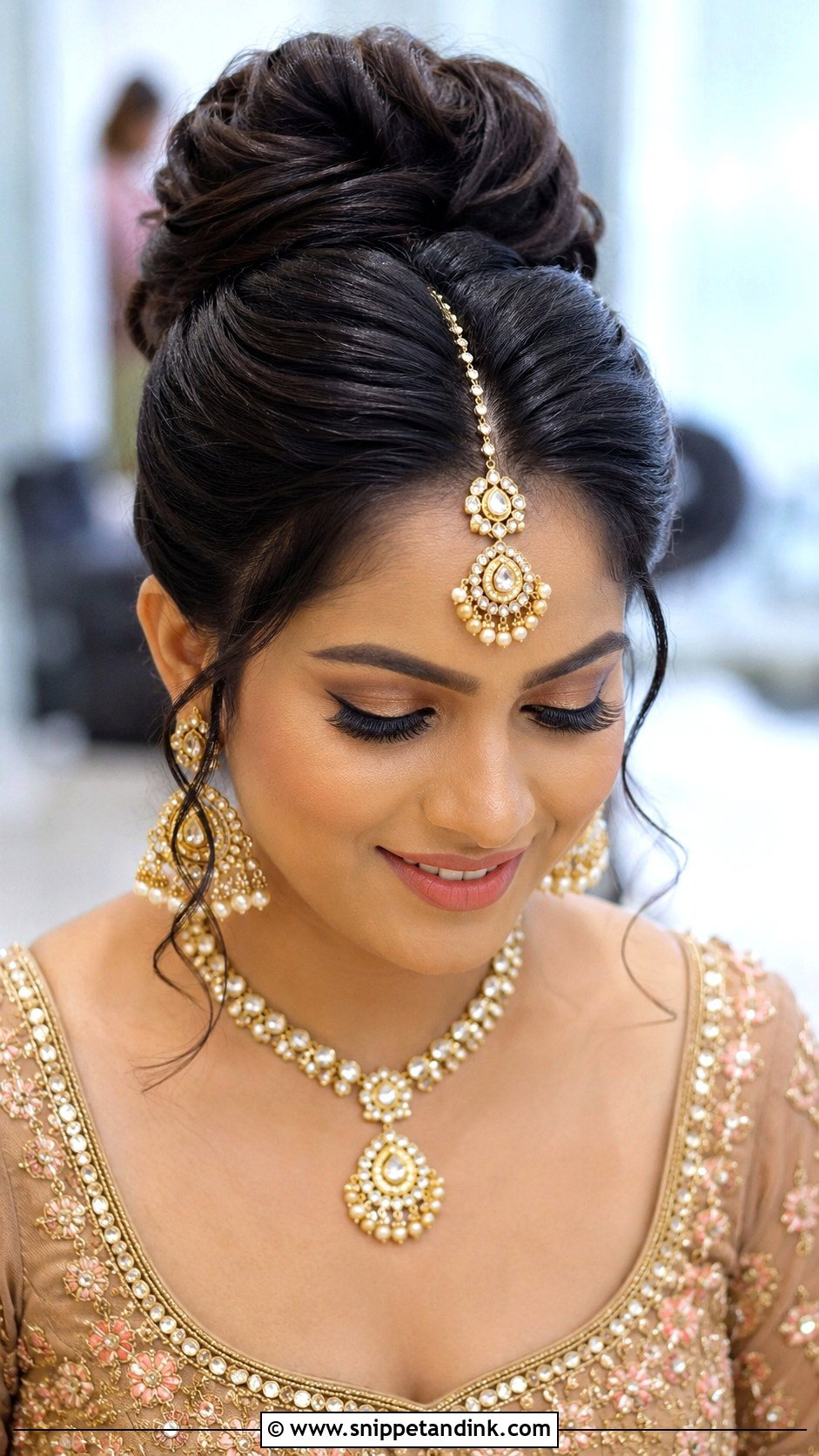
A high bun with a maang tikka gives height and keeps the neck clear, which helps with high-neck blouses and in warm ceremonies. The bun can be round and neat or softly textured. I’d caution against it if your dupatta goes over your head, since a high bun lifts the fabric into an awkward peak. Pair it with statement earrings and a structured lehenga, and keep the accessories lighter than the bride’s.
17. Indian Bridesmaid Side Swept Curls
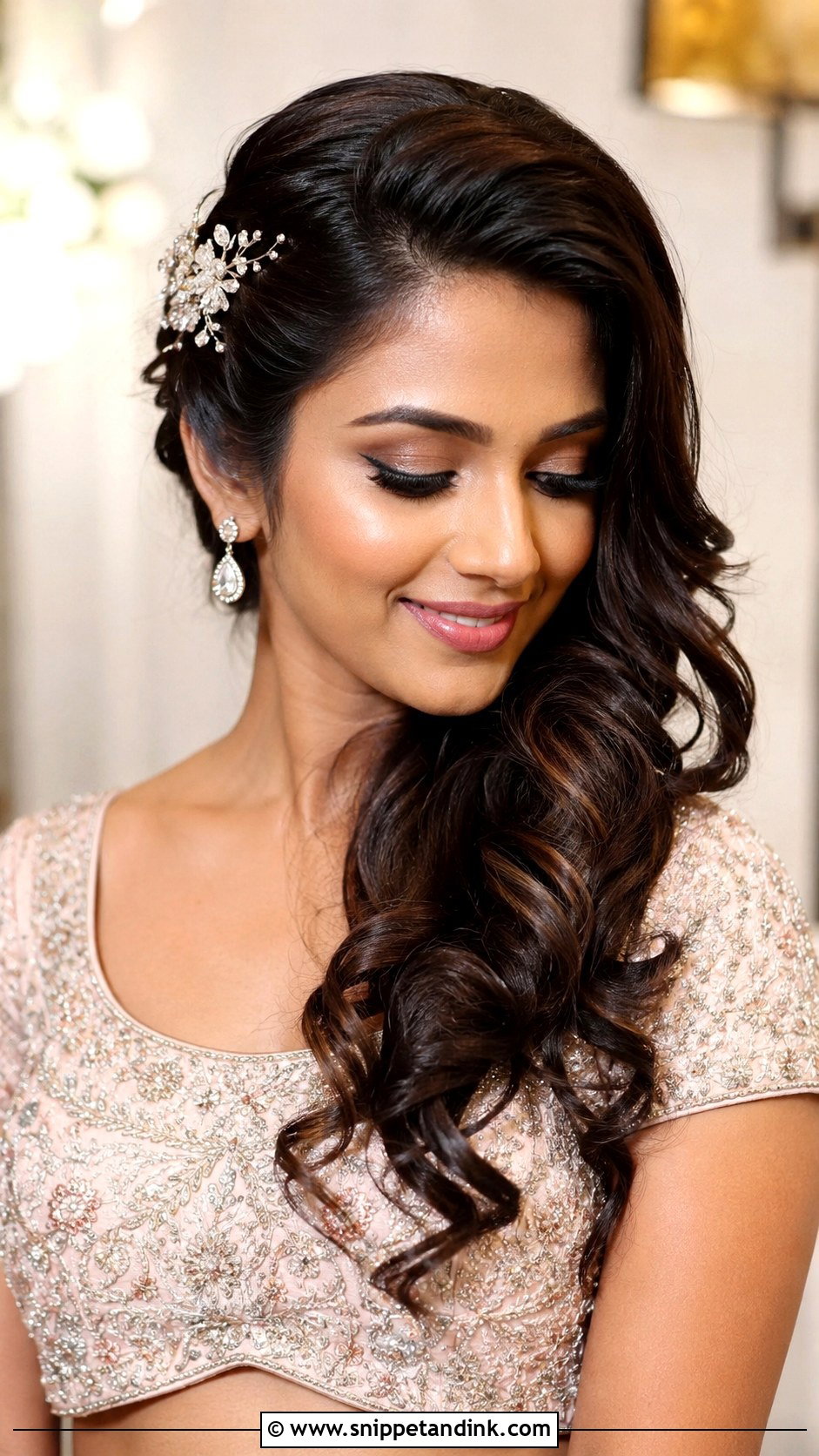
Side swept curls sit over one shoulder and suit off-shoulder blouses, one-shoulder drapes and heavily embroidered dupattas. The hair is curled, brushed softly and pinned to one side. Hidden pins at the back keep it stable through dancing and greetings; I cross them behind the ear so the curls don’t drift back. A small crystal clip or floral accent at the pinned side finishes it.
18. Indian Bridesmaid Sleek Center Part Bun
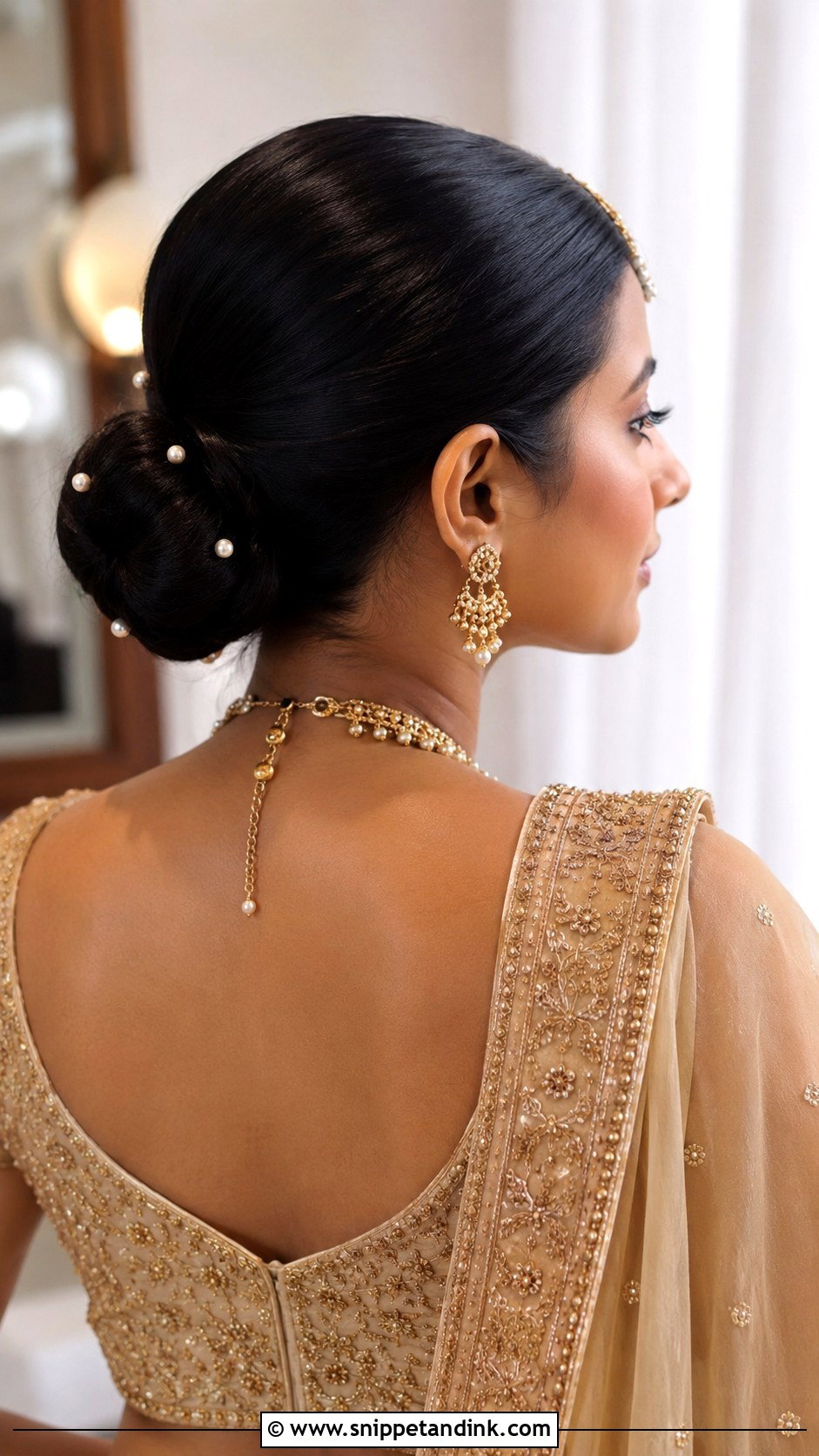
If you want a style that won’t move all day, a sleek center part bun is it. The hair is parted in the middle, smoothed close and tied into a low bun. It holds through heat, humidity, rituals and long photo sessions better than almost anything else here. It lets jewelry, makeup and outfit details lead, with sarees, lehengas and structured Indo-western outfits. Add a small gajra, pearl pins or a gold accessory for a traditional event.
19. Indian Bridesmaid Waterfall Braid With Curls
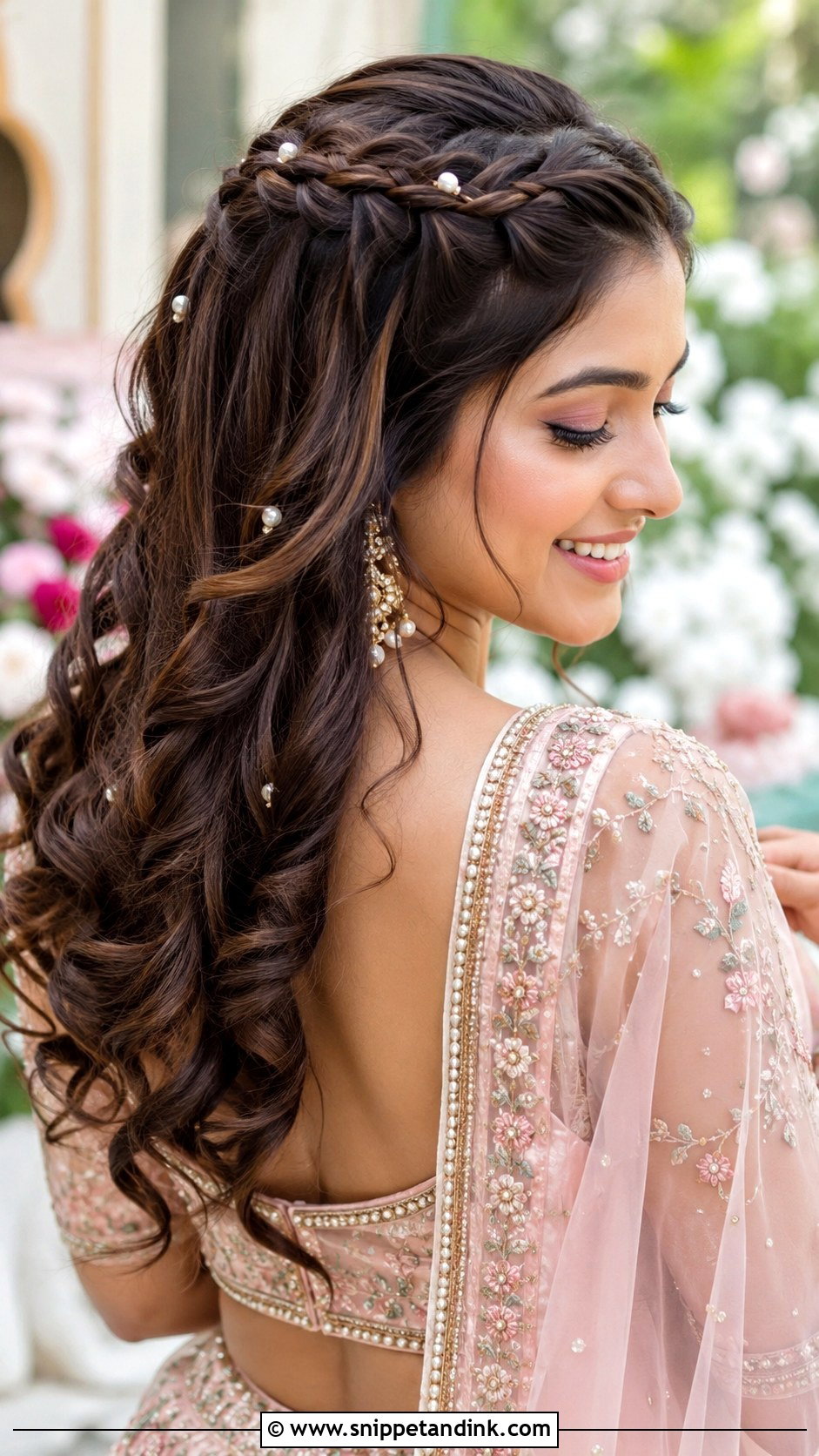
A waterfall braid runs across the crown while sections drop through it into loose curls below. It gives detail at the back without any heavy accessories. It needs medium to long hair and looks fuller over soft waves. I’d note that the dropped sections are open hair and lose curl at the same rate, so I set them well. Tiny flowers or pearls along the braid suit a mehendi, haldi or garden wedding.
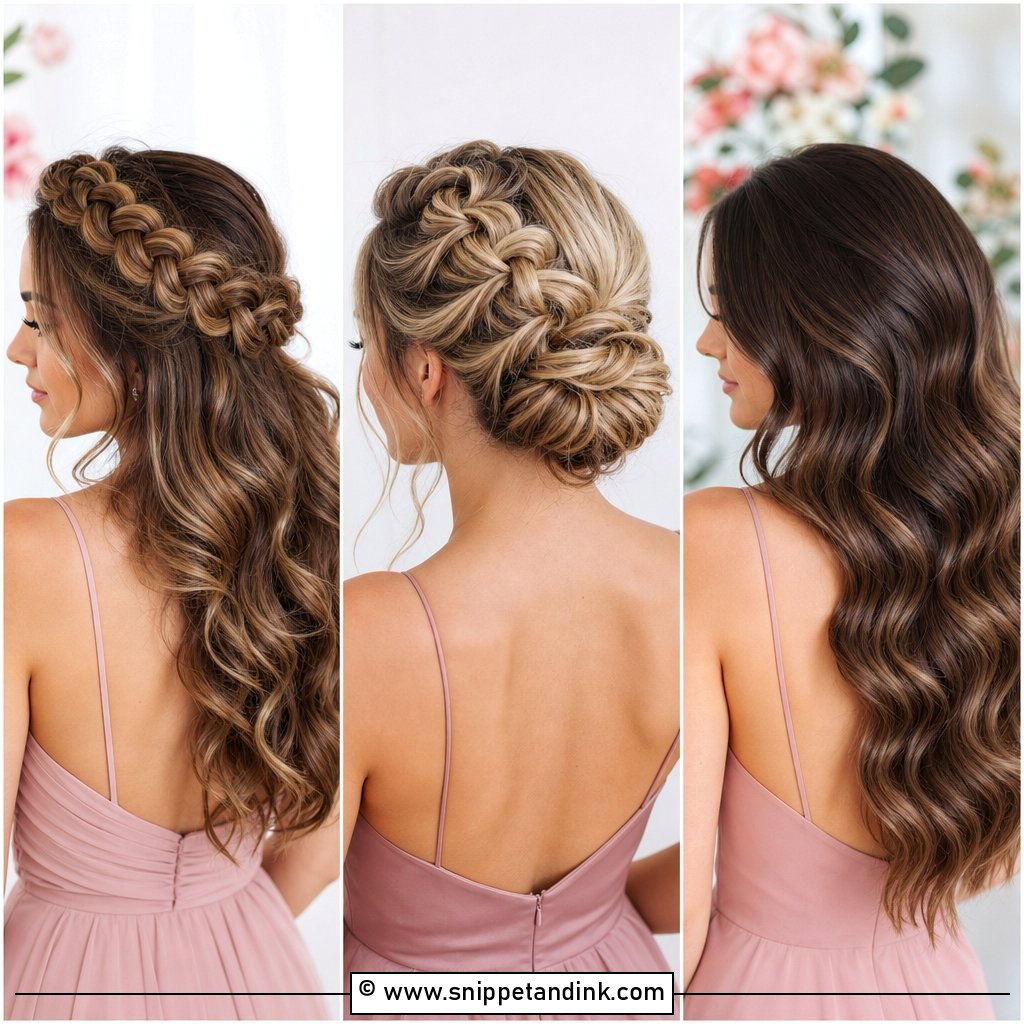
20. Indian Bridesmaid Textured Low Bun
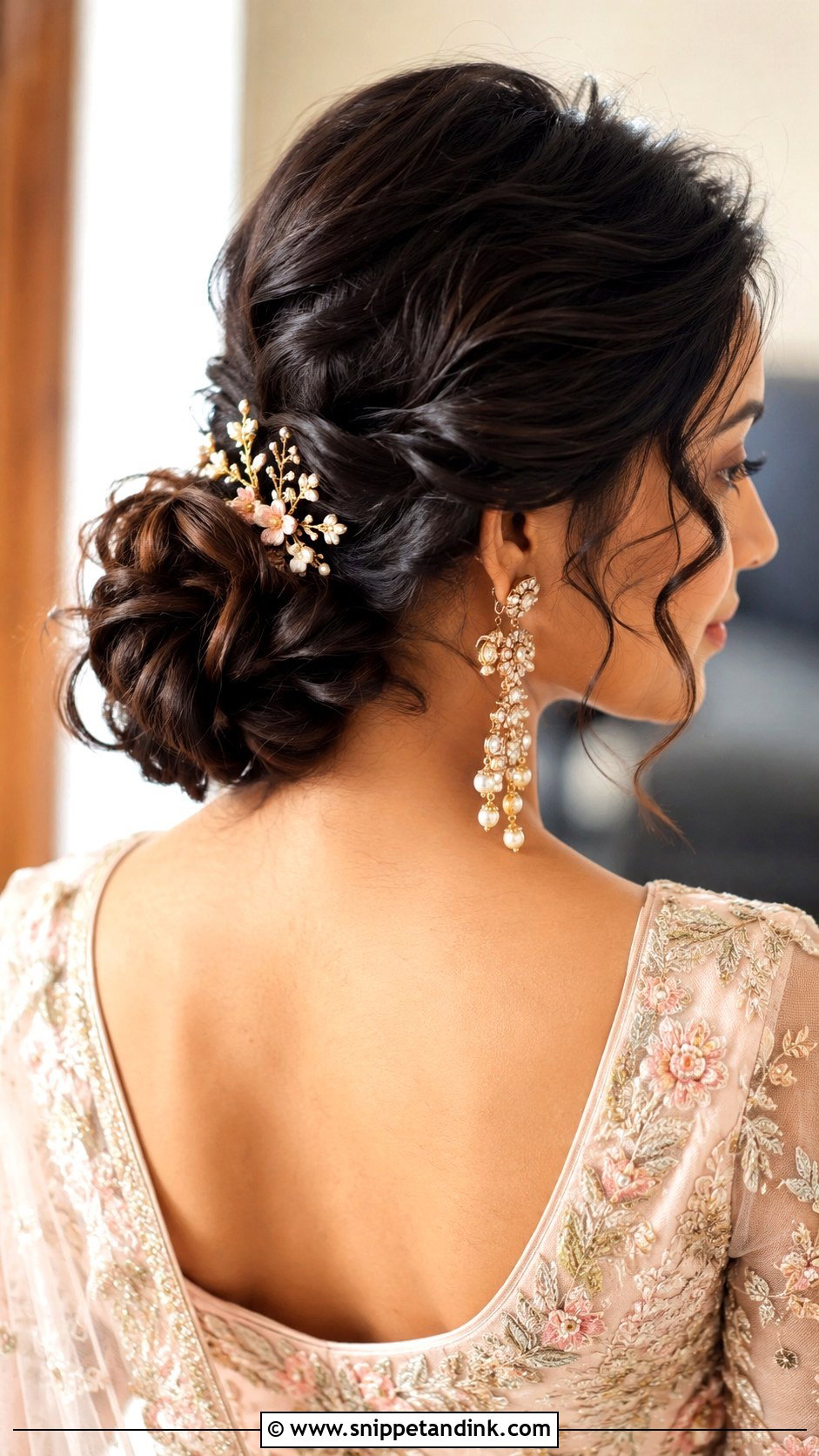
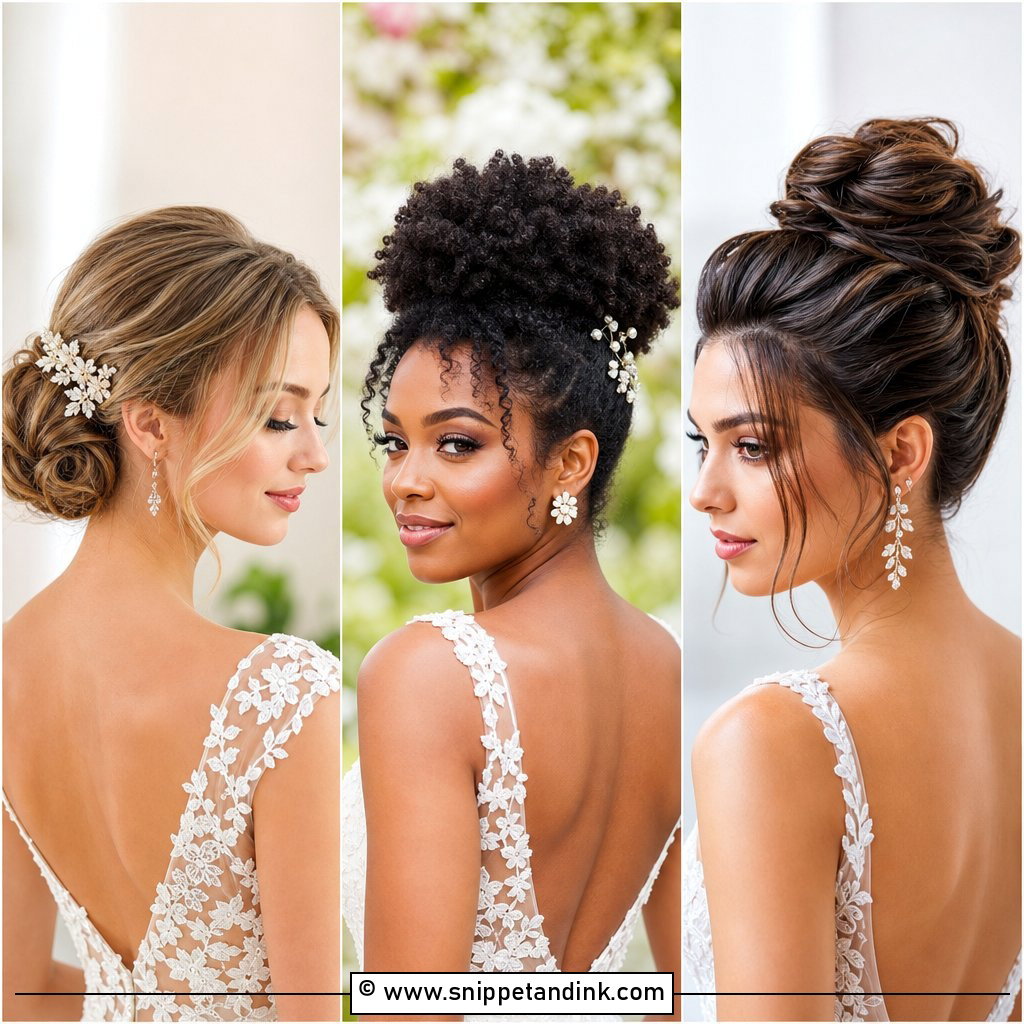
A textured low bun is the softer version of the classic. The hair is curled or waved first, then pinned into a loose but secure shape, which gives depth and a fuller look in photos. That texture also helps on fine or medium hair, giving pins more to grip and the bun more volume. Decorate with pearl pins, small flowers or a delicate comb. It pairs well with pastel outfits and embroidered sarees.
21. Indian Bridesmaid Long Braid With Hair Accessories
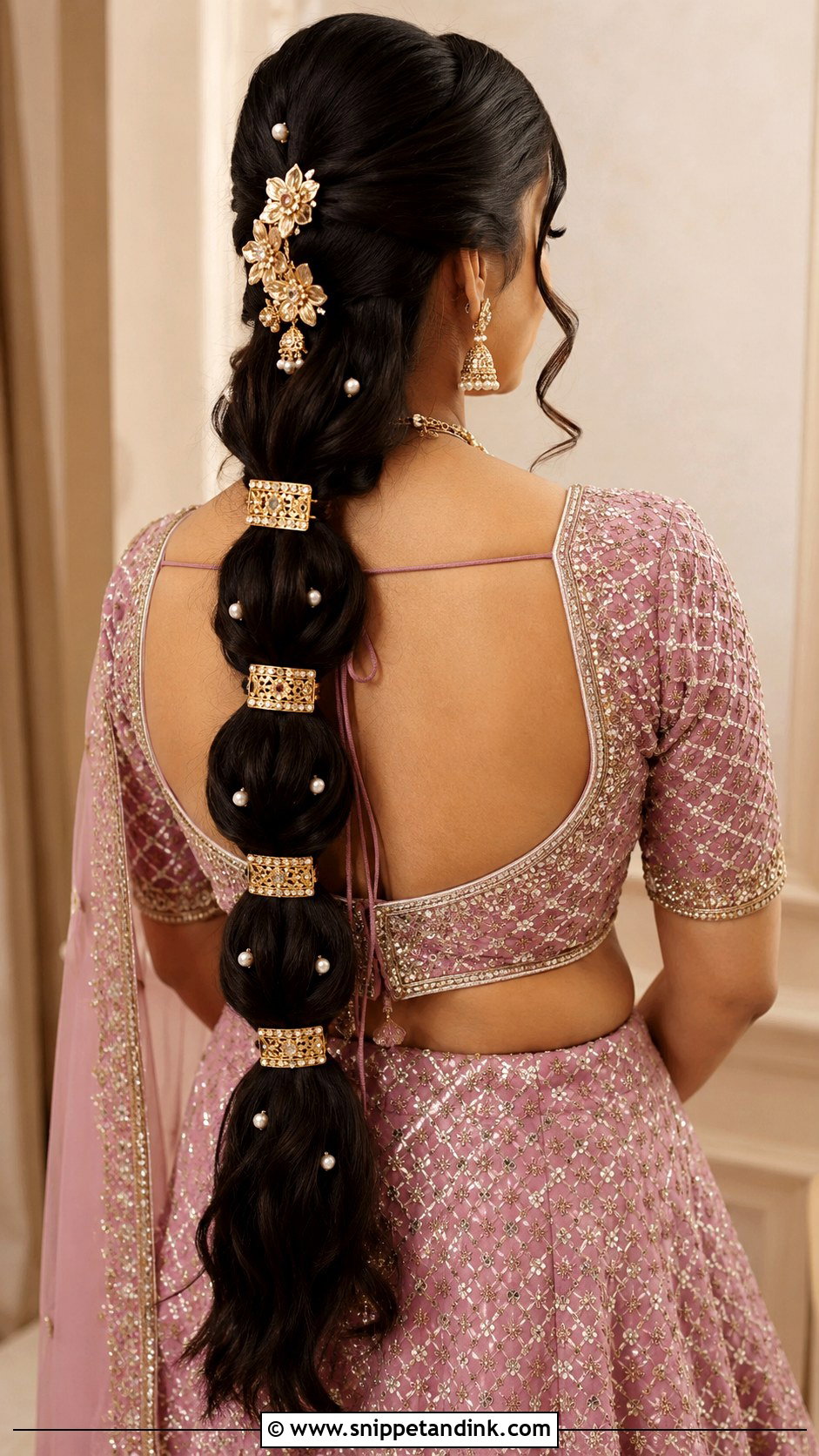
A long braid with hair accessories suits a traditional look that still feels current. The braid can be classic, Dutch, fishtail or pulled apart for volume. Decorative pins, pearl strings, gold cuffs or small flowers go along it to match the outfit. I clip accessories into the braid’s crossings so they don’t slide down as it moves. It suits long hair and full-day celebrations, with a saree, lehenga, or anarkali.
22. Indian Bridesmaid Curly Bun With Flowers
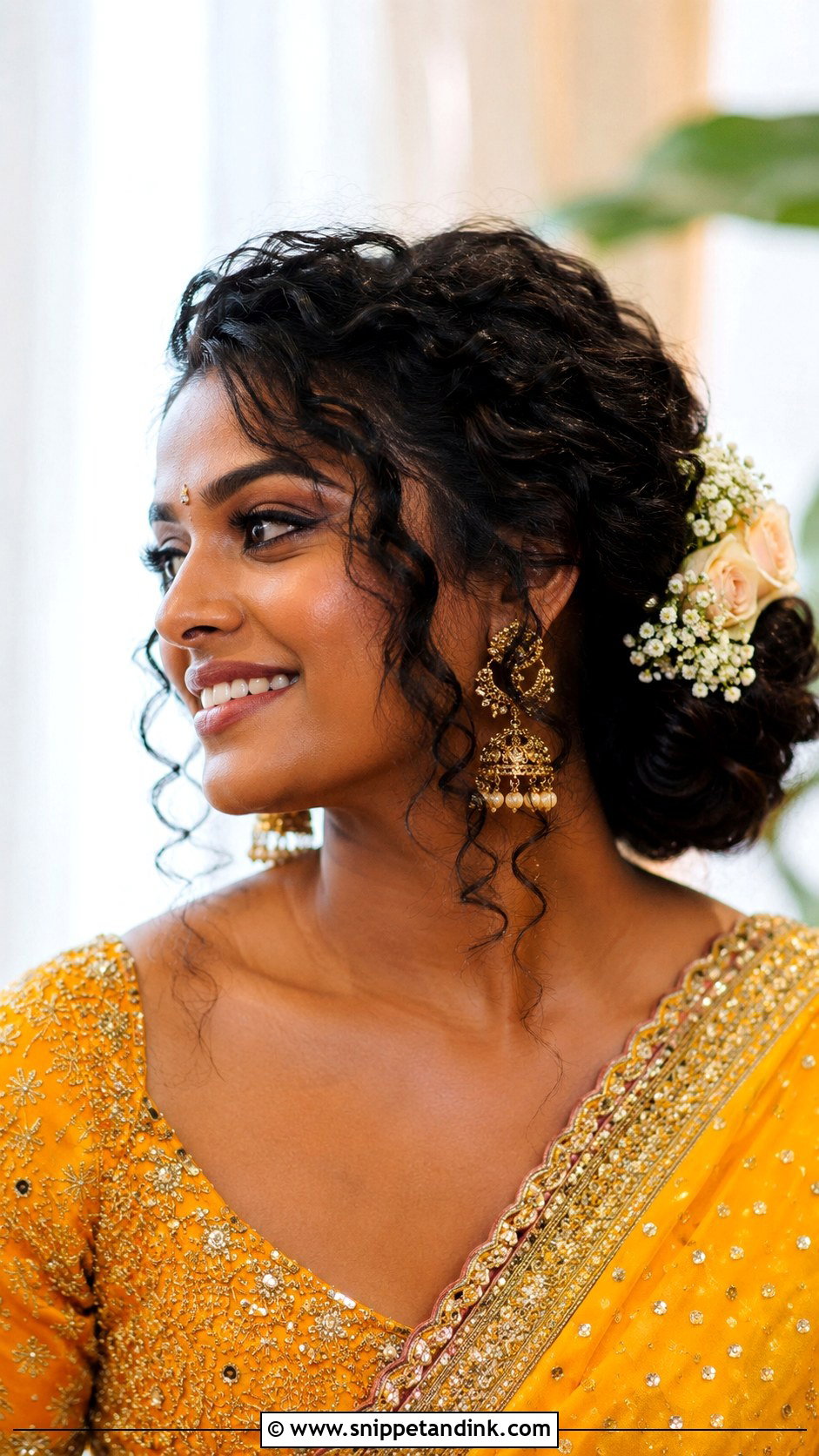
Naturally wavy or curly hair is often forced flat for weddings, and it shouldn’t be. A curly bun works with that texture: the curls are pinned into a bun so their shape stays visible. I define the curls with a cream and diffuser, never a brush. Fresh flowers can sit on one side or at the base, and a few curls left at the front keep it soft. It suits lehengas, sarees and delicate jewelry.
23. Indian Bridesmaid Straight Hair With Maang Tikka
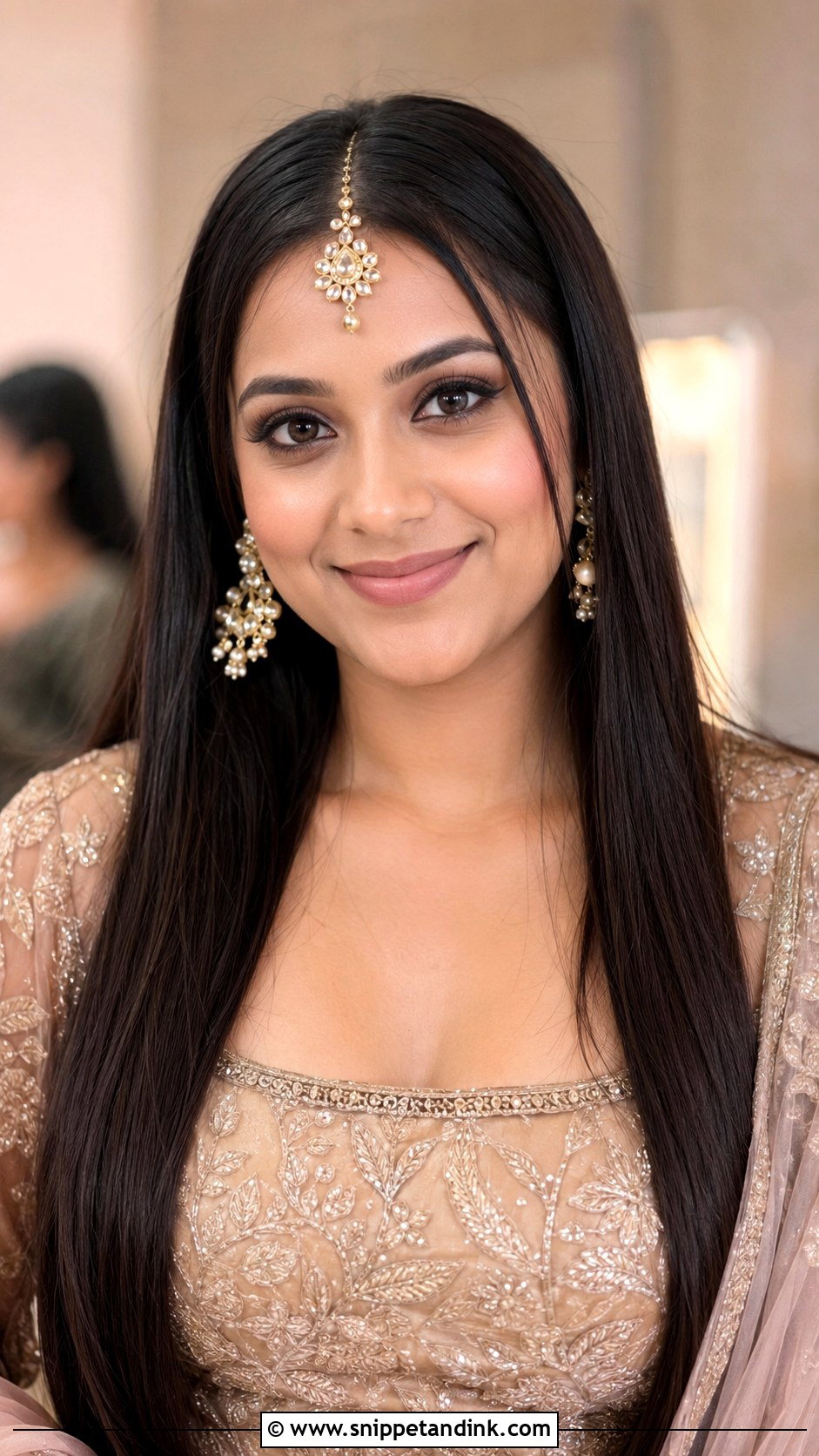
Straight open hair with a maang tikka is simple and sleek. I blow-dry it smooth and curve the ends slightly so it doesn’t look flat in photos. A center part gives the tikka a clean place to sit. It suits heavy earrings, embroidered blouses and bold eye makeup. Straight hair reacts to humidity quickly, so this is best at indoor events or in cooler weather. A light shine serum adds polish.
24. Indian Bridesmaid Braided Ponytail
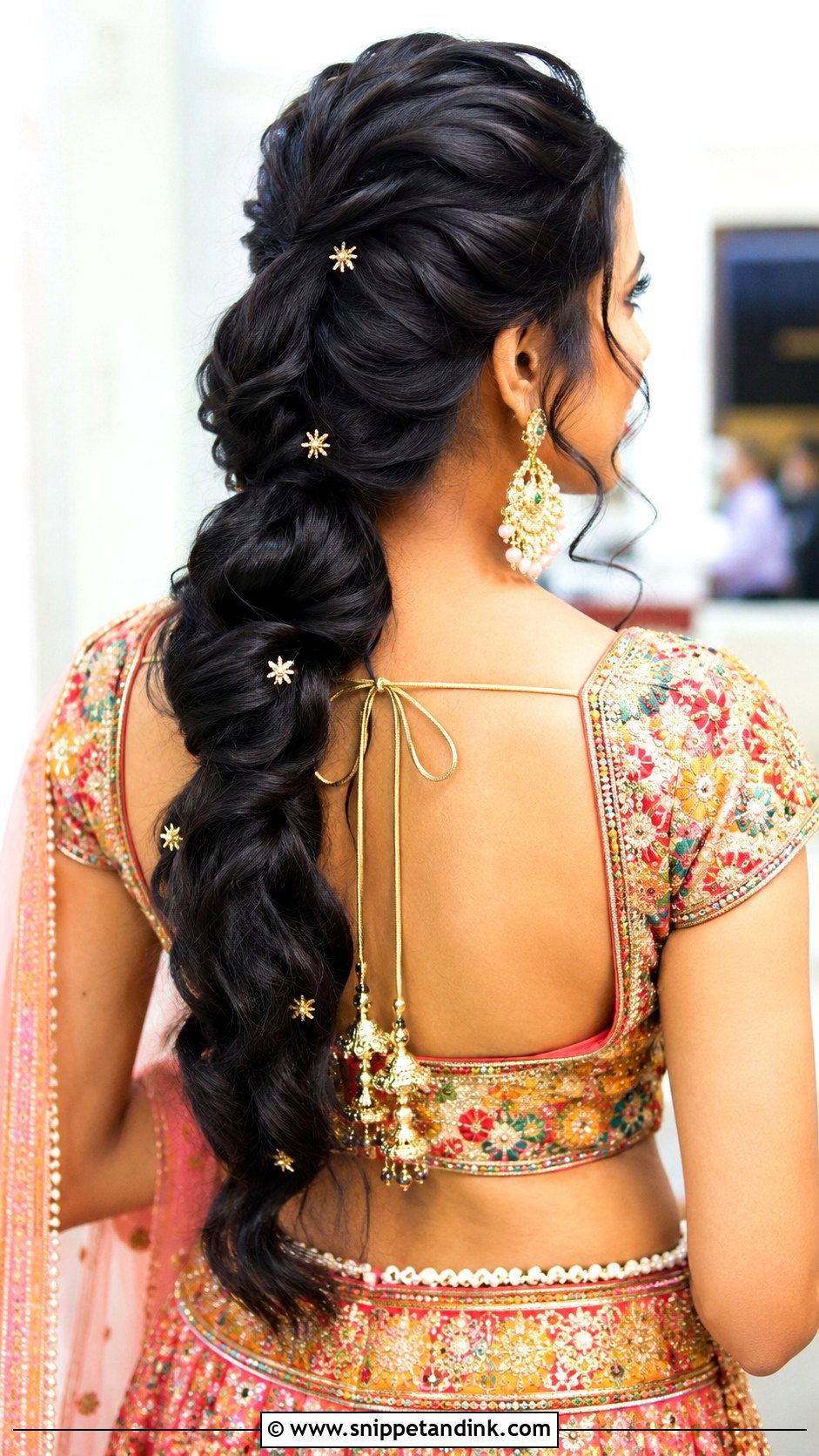
A braided ponytail adds a braid’s detail to a ponytail’s lift. The crown can be sleek, puffed or softly twisted, then the length is braided. It’s secure and youthful, and ideal for dancing at sangeet or mehendi. A thick, loose braid gives volume; a tight one looks sharper. I hide the elastic under a wrapped section and add small gold accessories or pearl pins. It suits lehengas, shararas and fusion outfits.
25. Indian Bridesmaid Poola Jada Inspired Braid
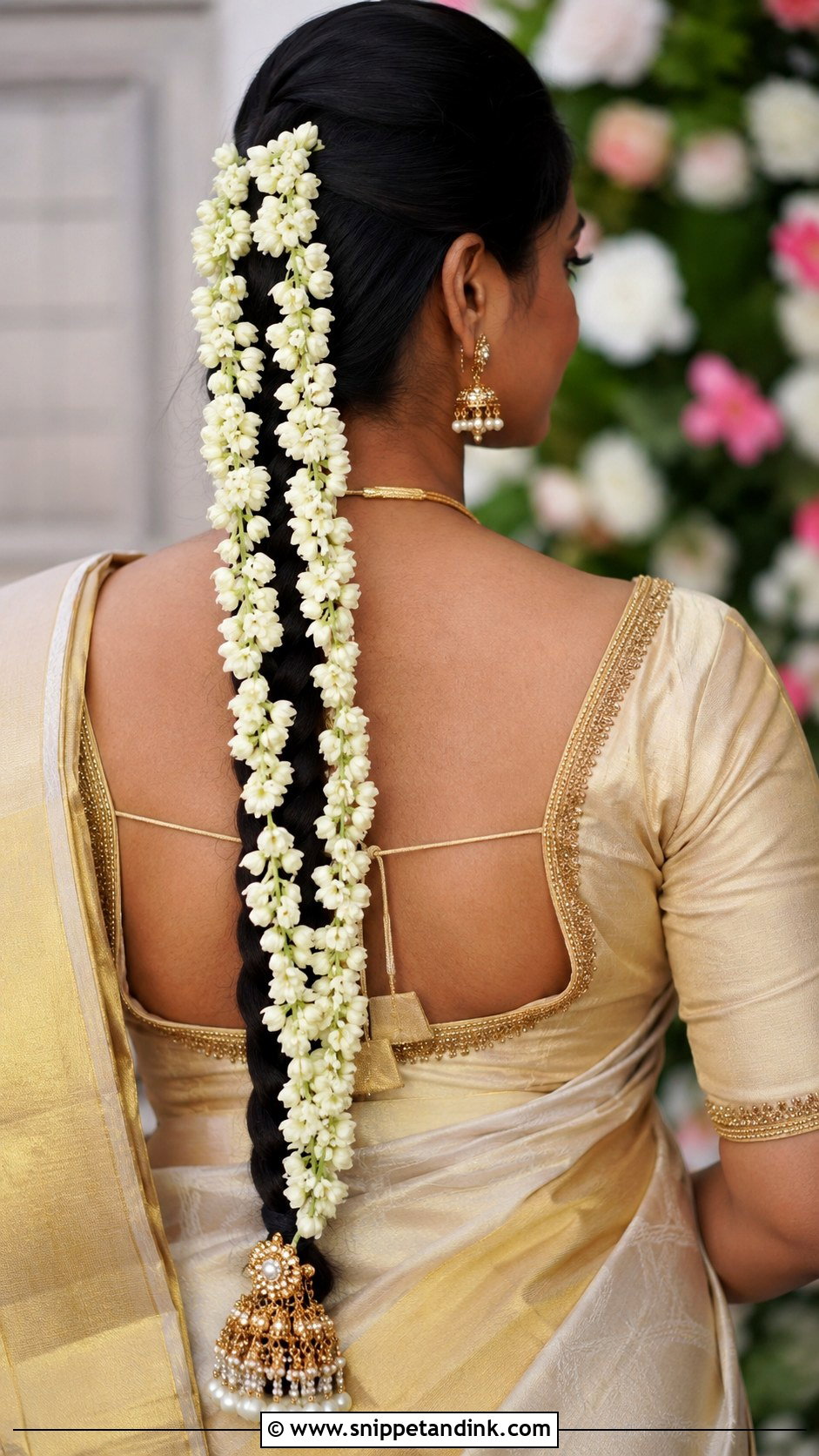
The traditional Poola Jada is an elaborate flower-covered braid worn by South Indian brides, so a bridesmaid version has to be pared back. I use a single string of jasmine down the braid or a few floral clusters at intervals, with one small ornament at most. It suits silk sarees and temple jewelry. From the back it’s very striking, and it’s secure through long rituals. Keep the flower placement balanced so it looks festive without competing with the bride’s.
No Stylist for the Mehendi? Styles You Can Manage Alone
Not every bridesmaid has a stylist booked for every function. Some of these styles are realistic to do yourself with a little practice; others really need a second pair of hands.
- Easy alone: the sleek low ponytail, the side braid, the bubble braid ponytail, the twisted half up and open waves with a side pin.
- Possible with practice: the braided ponytail, a textured low bun, a messy bun and straight hair with a maang tikka.
- Better with help: Hollywood waves, the crown braid bun, a waterfall braid, the floral juda and anything with a gajra wrapped evenly around it.
Practice the actual style at least twice in the week before, timing yourself, and wear it for a few hours to see whether it holds. Keep the kit simple: bobby pins matching your hair color, clear elastics, a fine comb, a flexible hairspray and a curling iron if you need one. A style you can do well is better than an ambitious one you’re redoing in a hurry before the baraat arrives.
Agree on the Plan With the Bride, Then Pick Your Style
Indian bridesmaid hair can be traditional, modern, simple or glamorous depending on the event. For the wedding ceremony, buns, gajra looks and long braids feel right. Mehendi and sangeet suit ponytails, side braids, curls and half-up looks. Receptions call for polished waves or sleek finishes. Think about your jewelry, dupatta, neckline, weather and hair texture before choosing. And check with the bride; most brides have an opinion on how their bridesmaids’ hair should sit next to theirs.
You'll Like These Ideas:


Leave a Reply