
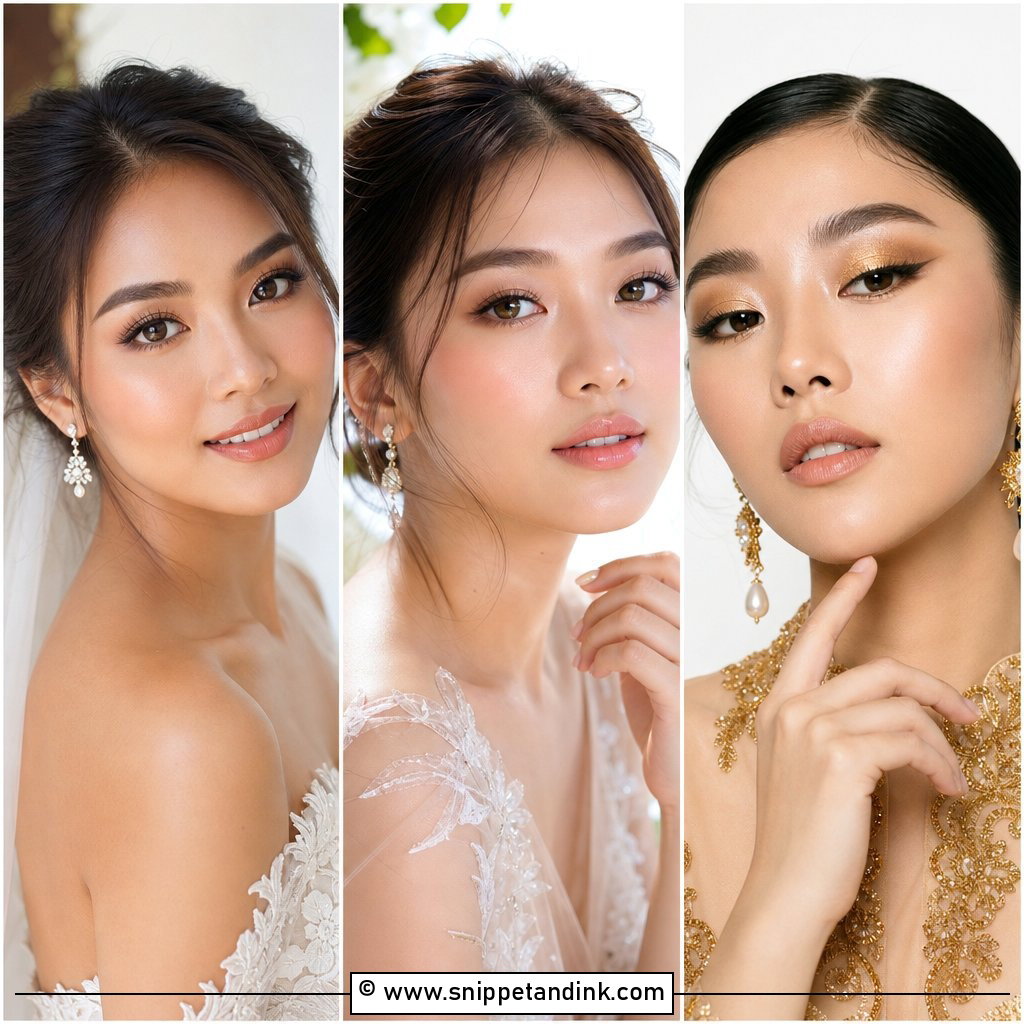
A Chinese wedding day asks more of makeup than most. It often starts before sunrise with door games, moves through a tea ceremony at one or both family homes, and ends at an evening banquet with an outfit change or two. The face I build has to sit next to red qipao, qun kwa embroidery, a white gown and heavy gold jewelry, and still look like the bride at midnight. Most of my work comes down to a long-wearing base, eye definition placed for monolid and hooded lids, and a lip that can change with the outfit. Below are the twenty looks I’m asked about most, from ceremonial red to barely-there, with what I’d watch for in each.
Red Qipao at Dawn and a White Gown by Evening, on One Base
Many Chinese brides wear two or three outfits in one day, and there’s rarely time for a full redo between them. So I plan the makeup as a fixed foundation with a few parts that change.
- Stays the same all day: skin, brows, liner and lashes. I build these to last from the first door game to the last toast.
- Changes with the outfit: lip color, and sometimes a little more blush or shimmer. A rose-nude for the white gown can become a true red for the qipao in two minutes.
- Gets a touch-up: blotting and powder through the T-zone before the banquet entrance, plus fresh concealer under the eyes if there were tears at the tea ceremony.
At the trial, try every outfit with the base, and change only the lip. If the eyes look wrong with one outfit, choose a more neutral eye rather than planning a full change you won’t have time for.
1. Red Qipao Bridal Makeup
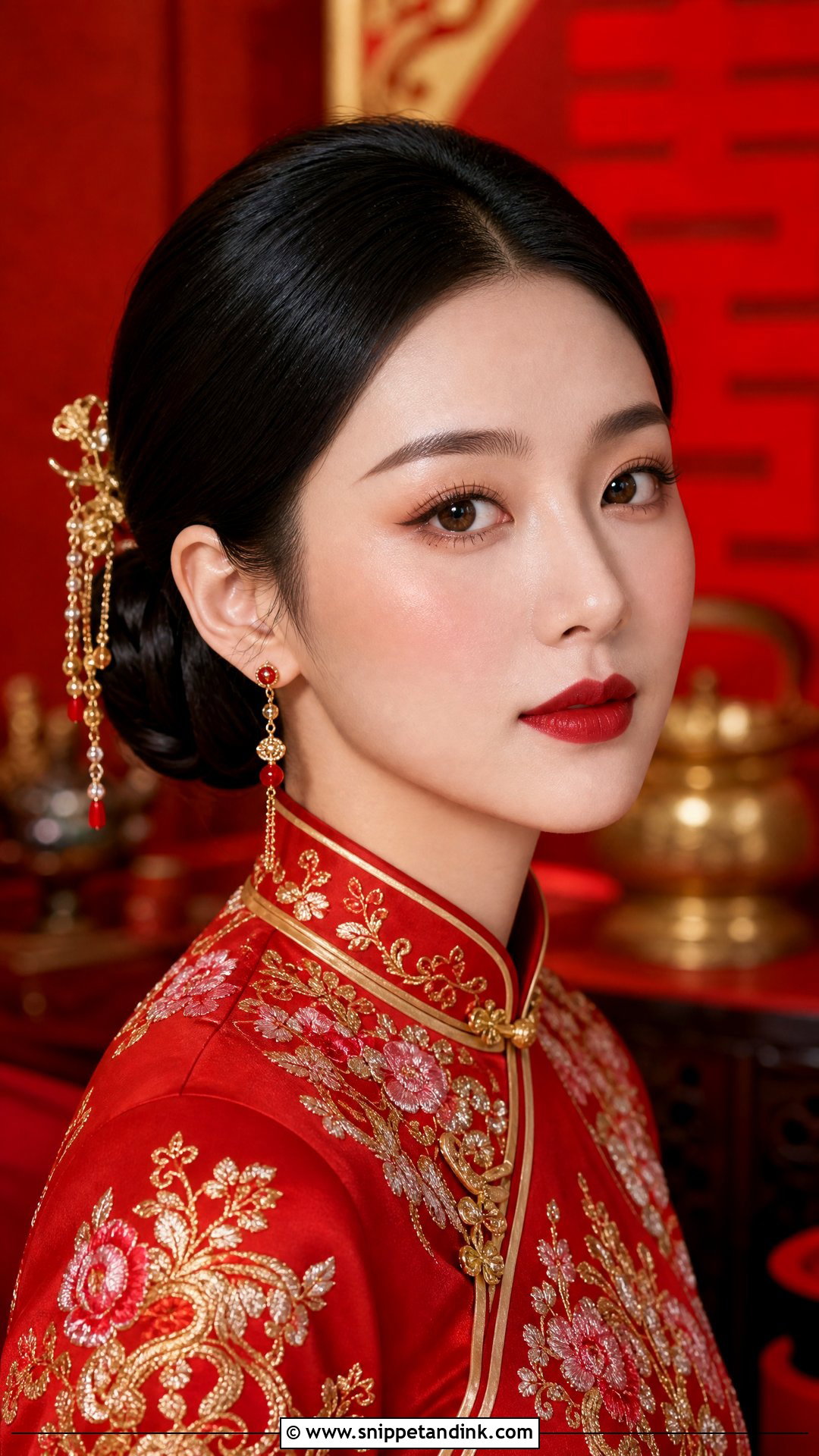
Red qipao is the brightest thing in the room, so the makeup has to hold its own without fighting it. I match the lip to the dress under daylight, not salon lights, because a red that matches indoors can look orange or pink beside satin outside. The center of the face stays softly matte, with a champagne highlight only on the top of the cheekbones. On the eyes, warm brown shadow and a fine black line open monolid, hooded and almond eyes without covering the lid. A rose blush keeps the skin from looking washed out against so much red.
2. Chinese Tea Ceremony Makeup
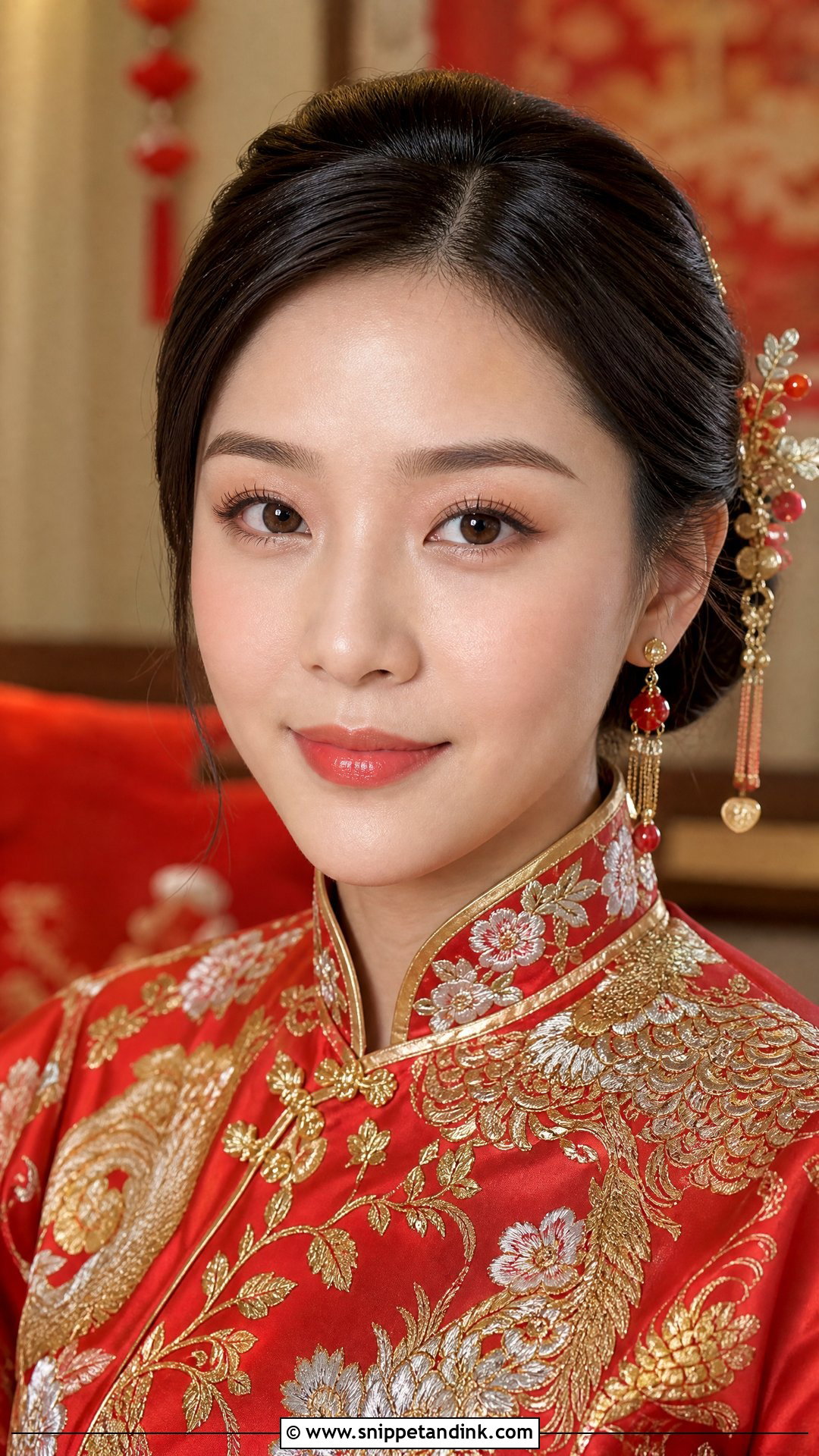
The tea ceremony is the moment that tests makeup hardest: you’re kneeling or bowing close to elders, your face is a few inches from theirs, and there’s often crying. I use a demi-matte base that looks like skin up close, peach-beige shadow, soft brown liner, and individual lashes concentrated at the outer corners. Dark lipstick is a nuisance here because it marks every tea cup, so I lean toward a muted coral or rose stain blotted between layers. A little flush on the cheeks stops the face looking flat beside red and gold.
3. Soft Glam Chinese Bridal Makeup
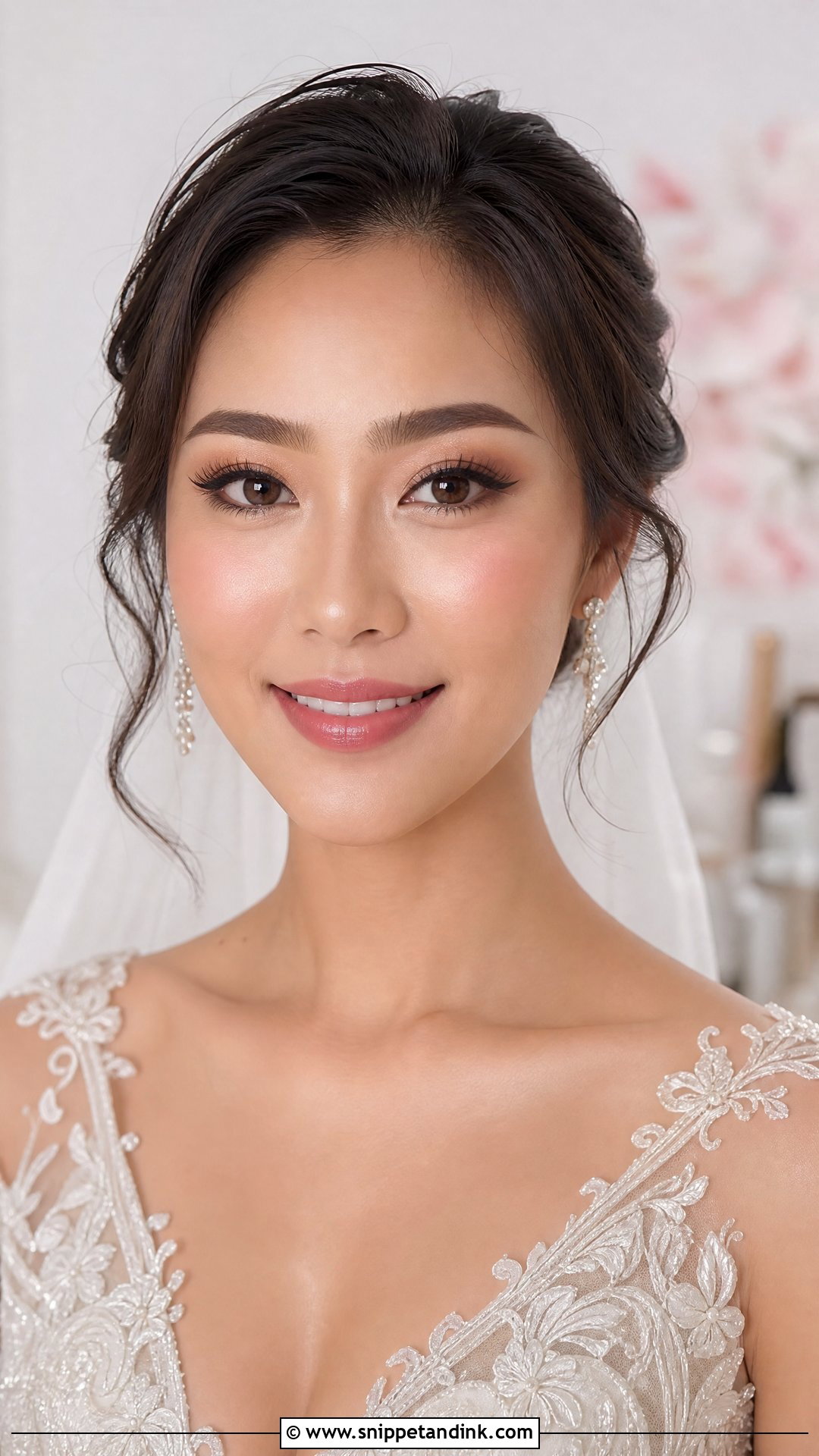
Soft glam is the look I recommend when one face has to carry both a white gown and a red reception outfit. Smooth skin, softly sculpted cheeks, a touch of shimmer on the lid and a neutral pink lip. On monolids and hooded eyes, I place taupe or warm brown shadow slightly above where the crease would be, checked with the eyes open, so the depth shows in photos rather than disappearing into the fold. A thin wing gives structure and blush blended up toward the temple lifts the face without heavy contour.
4. Natural Chinese Bridal Makeup
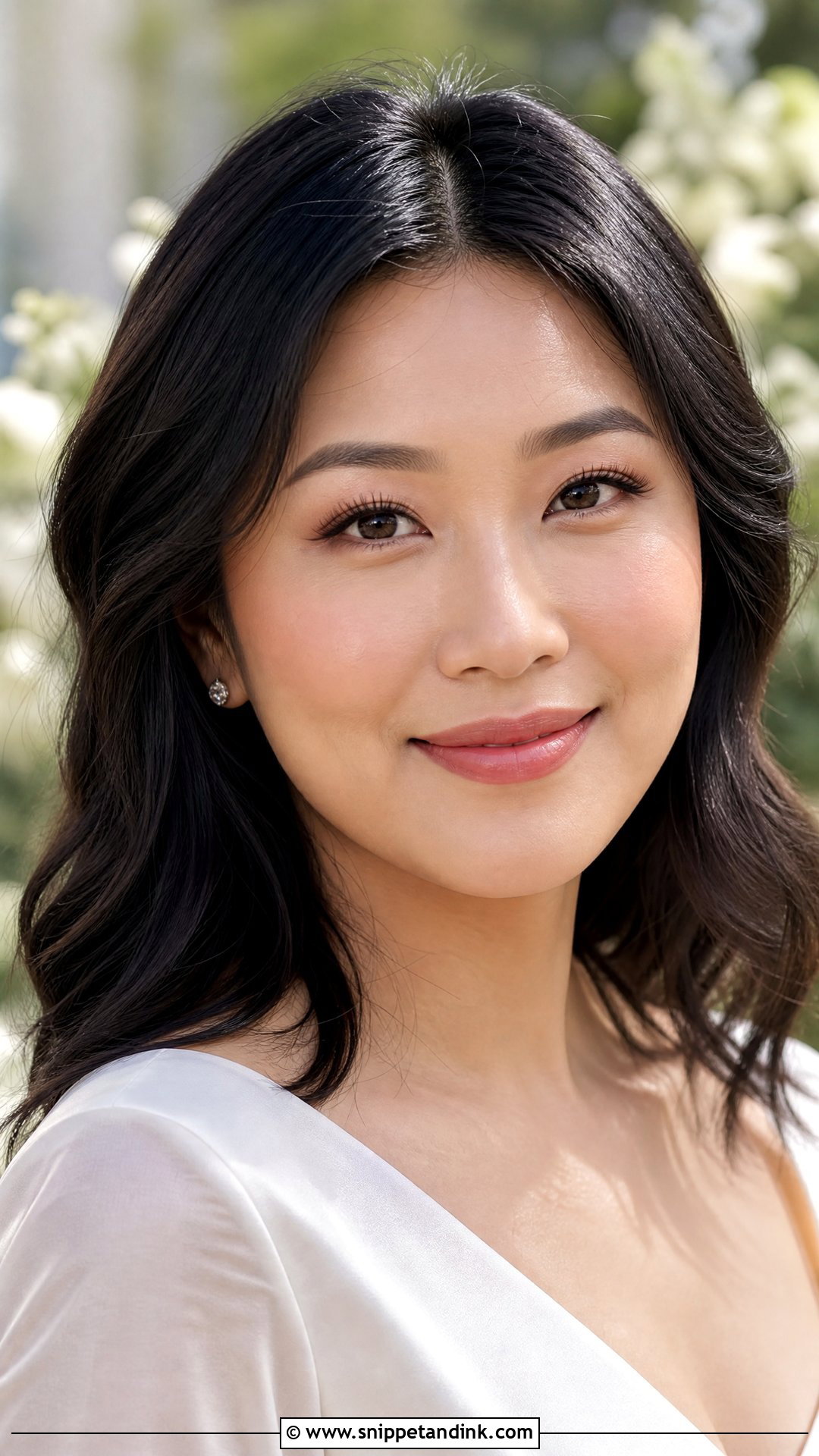
Natural bridal makeup is about restraint, not skipping steps. I use a sheer foundation and spot-conceal only where there’s redness or darkness, which keeps freckles and skin texture visible. Curled lashes and tightlined brown liner define the eyes without visible makeup on the lid. Cream blush gives a flush that sits in the skin rather than on top. The trade-off is staying power: sheer bases fade faster, so plan a quick blot and concealer touch-up before the banquet. It suits morning ceremonies and brides who rarely wear makeup.
5. Classic Red Lip Chinese Bridal Makeup
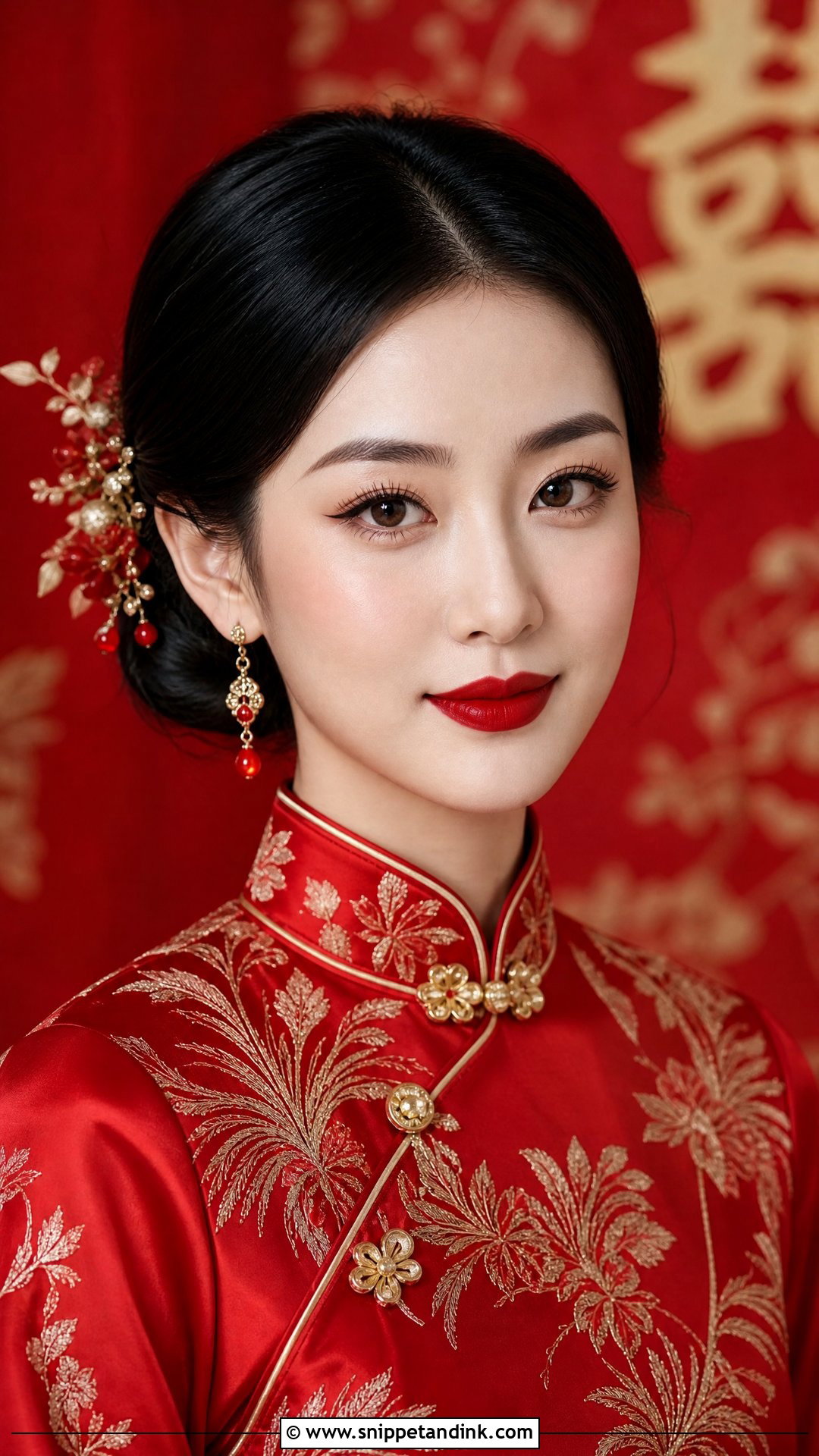
A red lip with qipao, kua or gold jewelry is a classic for a reason, but the shade matters more than the tradition. Blue-reds look crisp on cool undertones; brick reds suit warm ones; a true red sits in between. I keep everything else quiet: softly powdered skin, groomed brows, a thin black wing and matte beige and brown on the lid. The work is in the edges. I line the whole lip, apply in thin layers and blot between them, which stops it bleeding into fine lines as the day goes on.
6. Dewy Chinese Bridal Makeup
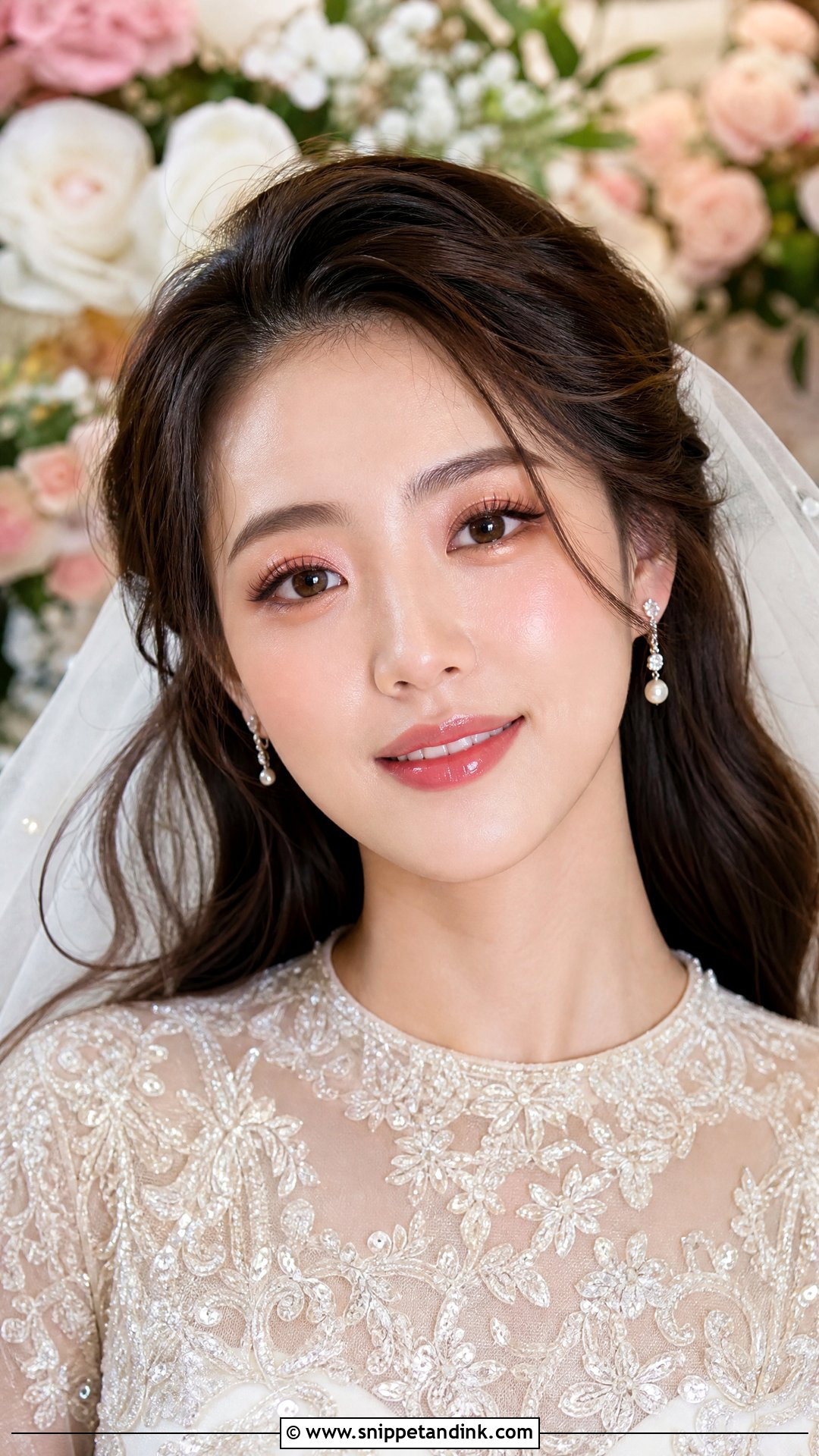
Dewy skin depends on where the glow goes. I set the T-zone lightly so the forehead and nose don’t turn shiny under flash, then add radiance only to the cheekbones, brow bone and inner corners. Rose-gold or champagne shadow brightens the eyes, and a peach-pink cream blush melts into the skin. The look suits bright indoor venues and spring weddings. I’d avoid it for brides with oily skin in humid weather; by the afternoon, dewy and greasy look the same in photos.
7. Matte Chinese Bridal Makeup
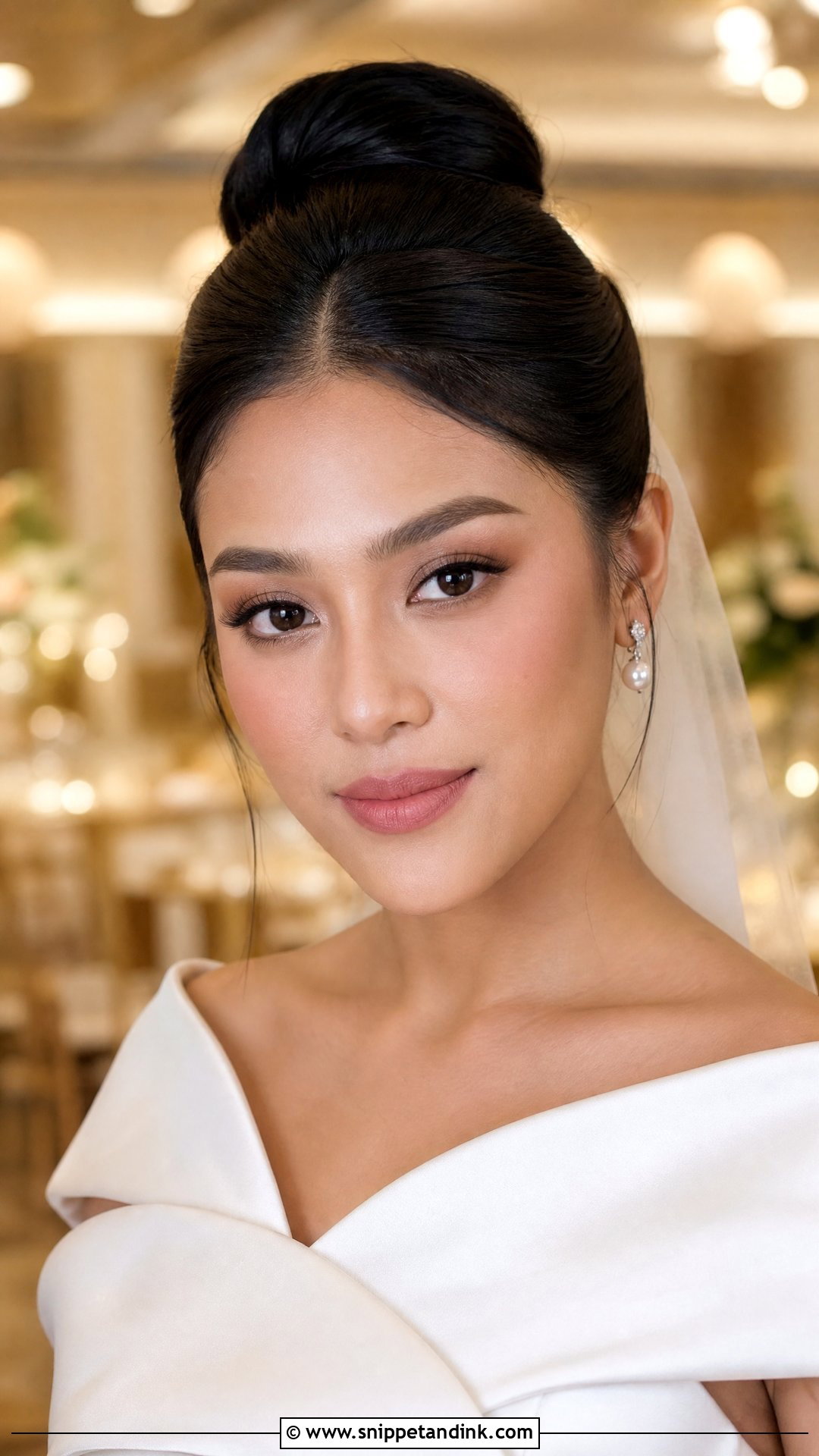
Matte doesn’t have to mean flat, and that’s the mistake I correct most often. I prep with a hydrating primer, use long-wear foundation only where it’s needed, and press a finely milled powder through the forehead, nose and chin rather than all over. Matte taupe and chocolate shadows give the eyes structure without glare in flash. A blurred rose or peach-nude lip, soft contour and muted blush keep the face dimensional. This is the base I trust for humid summer weddings and very long days.
8. Monolid Chinese Bridal Makeup
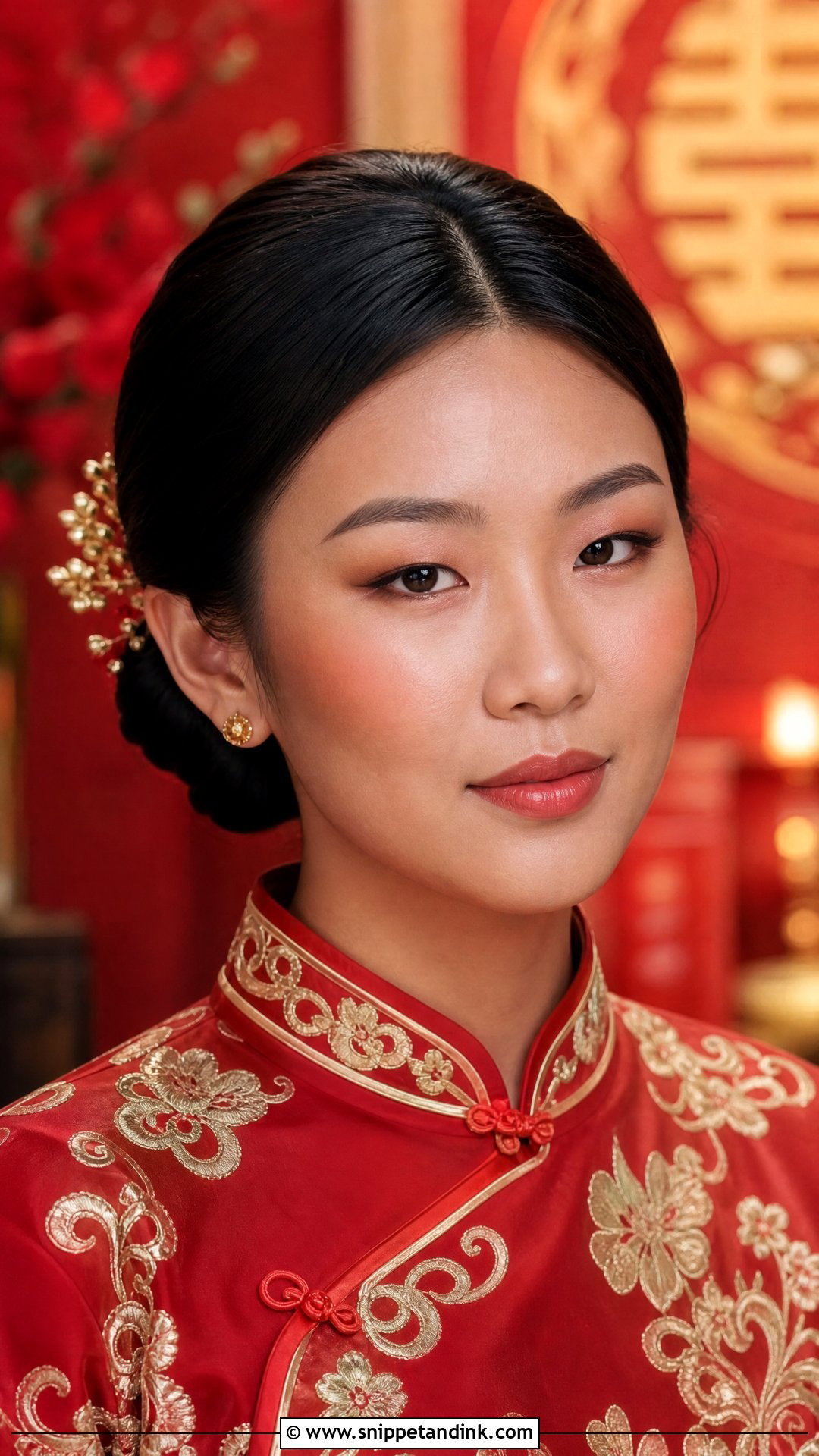
On monolids I never try to draw a crease that isn’t there; it disappears as soon as the eye opens. Instead I build gradient shadow, darkest at the lash line and fading upward, so the depth stays visible. Bronze, taupe and plum-brown all suit bridal looks. Liner needs to be waterproof, because smooth lids press against the brow bone and transfer non-waterproof formulas within an hour. I keep the line thin at the inner corner and slightly thicker at the outer edge, and use half lashes or individual clusters, which feel lighter than a full strip.
9. Hooded Eye Chinese Bridal Makeup
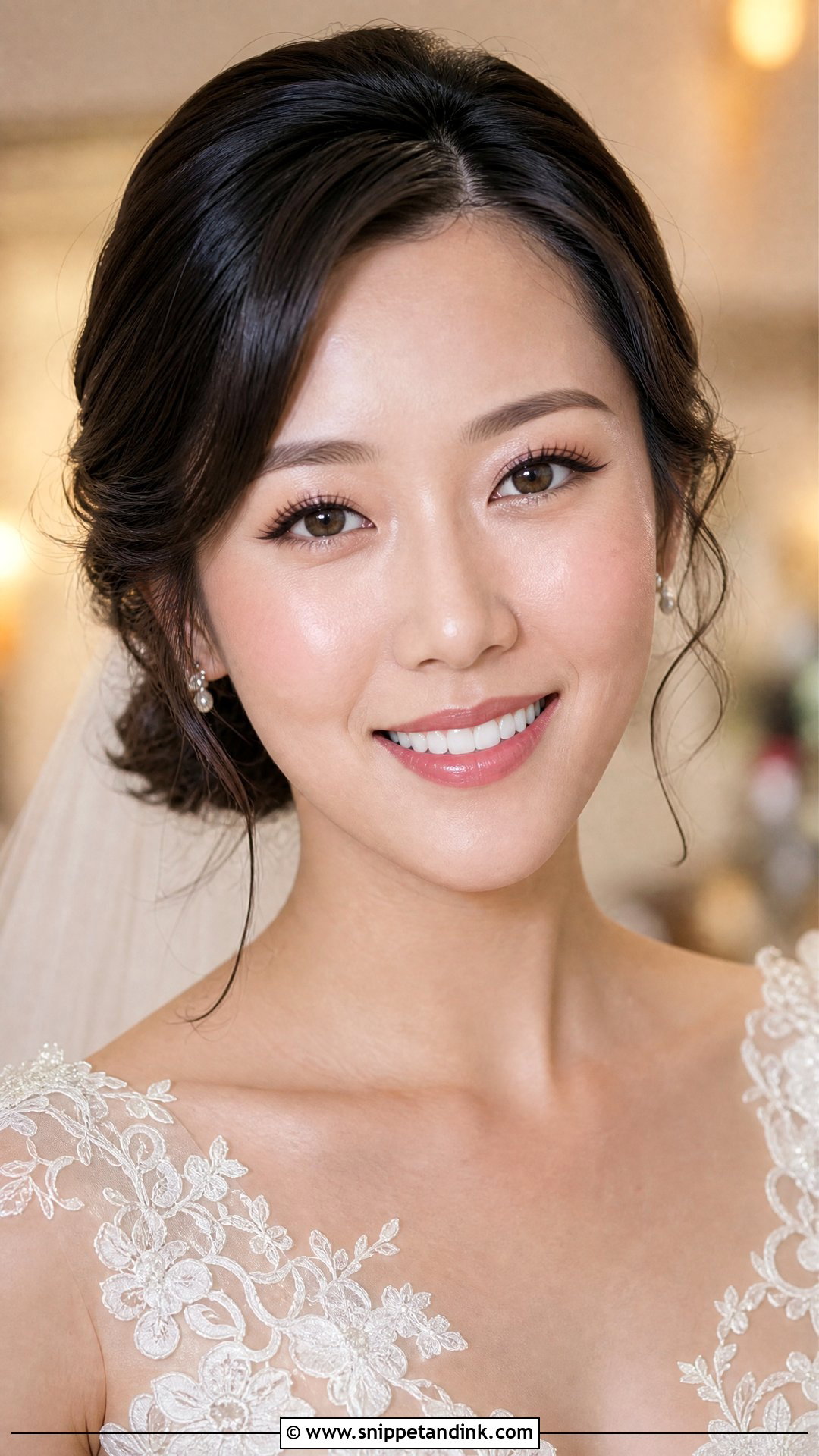
Hooded eyes hide most of what goes on the lid when they’re open, so I always do the placement with the bride looking straight ahead. Shadow goes slightly above the natural fold and is blended upward. Thick liner shrinks the visible lid, so I keep it fine, with a small lift at the outer corner. Lashes that are longer in the center or outer third open the eye without touching the brow bone. Waterproof mascara is non-negotiable; hooded lids smudge regular formulas onto the upper lid.
10. Double Eyelid Chinese Bridal Makeup
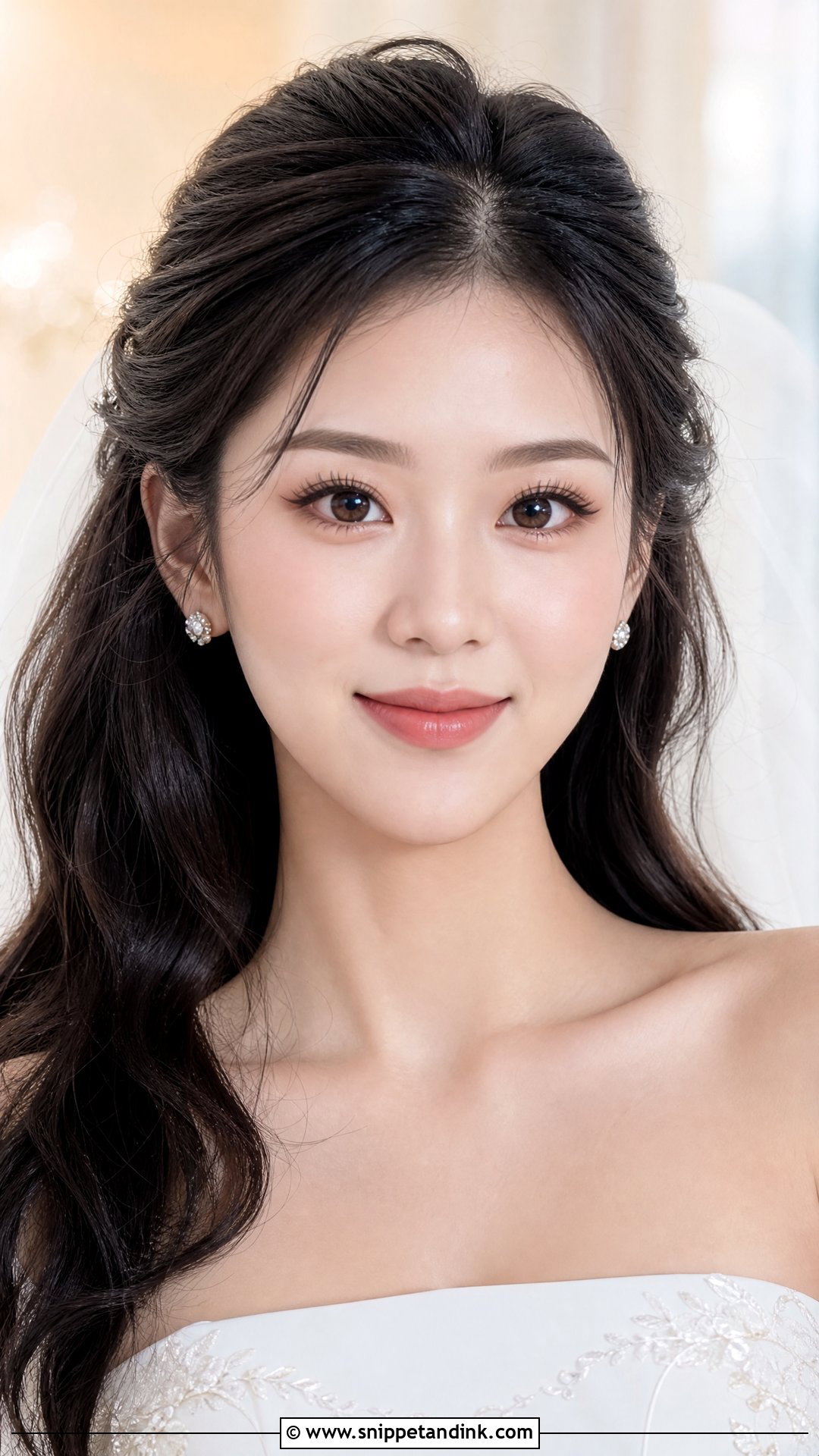
Double eyelids give more visible space, so this is where I can use more shadow without it looking heavy. A champagne lid, a warm brown crease and a deeper outer corner create a lifted shape. I keep shimmer finely milled, because chunky glitter reads as specks in high-resolution photos. A slim dark wing and curled lashes finish the eye. The lip can then follow the dress: rose beige with a white gown, a soft red with a qipao.
11. Gold Chinese Bridal Makeup
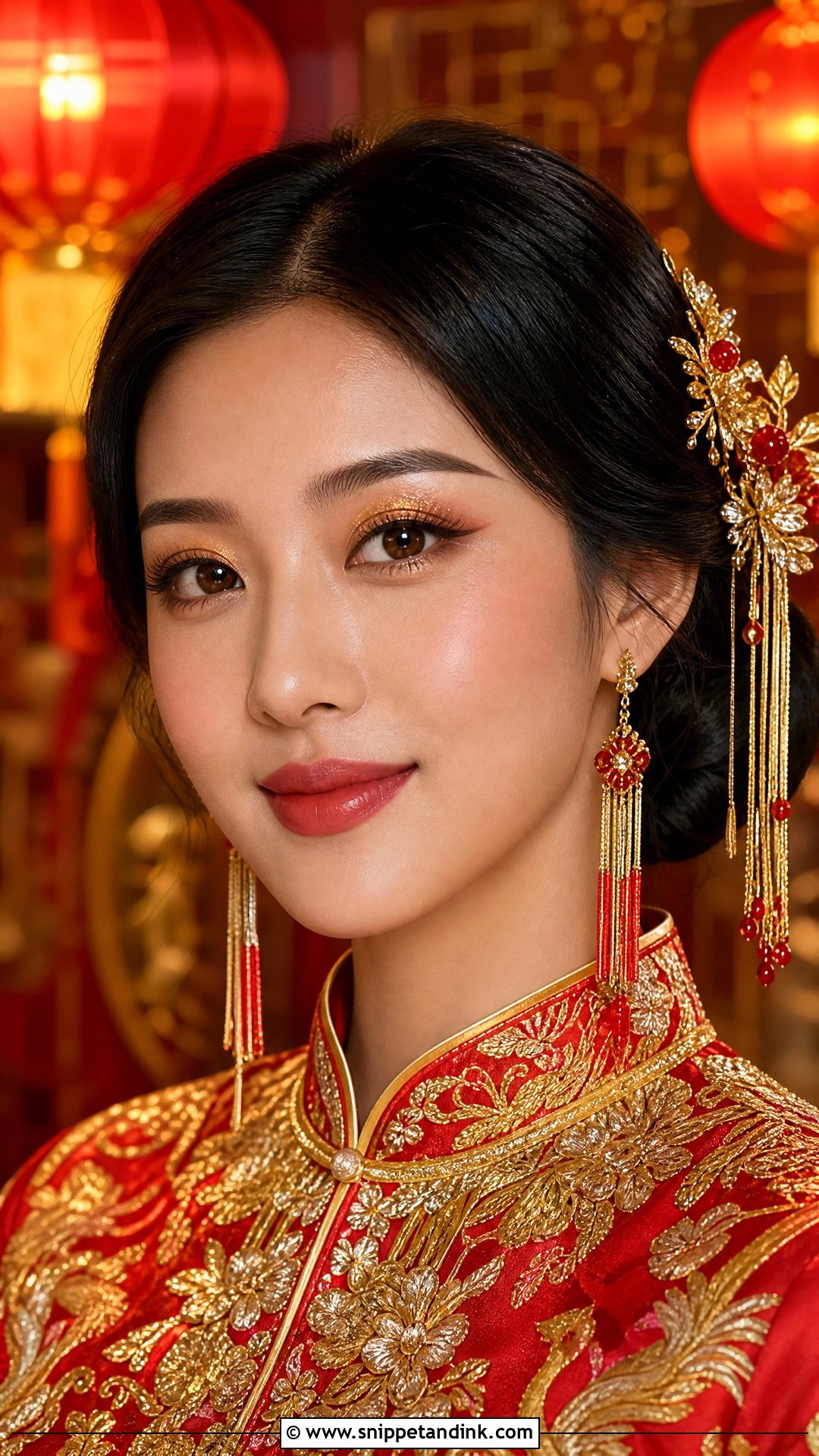
Gold eye makeup looks right next to red outfits and gold embroidery, but only in the right tone. I use antique or champagne gold on the center of the lid and inner corner, never bright yellow glitter, which can look costume-like next to real gold jewelry. Warm brown deepens the lash line. A peach or apricot blush supports the gold, and the lip can be red or a warm nude. Gold catches candlelight and banquet lighting well, which makes it a good evening choice.
12. Rose Gold Chinese Bridal Makeup
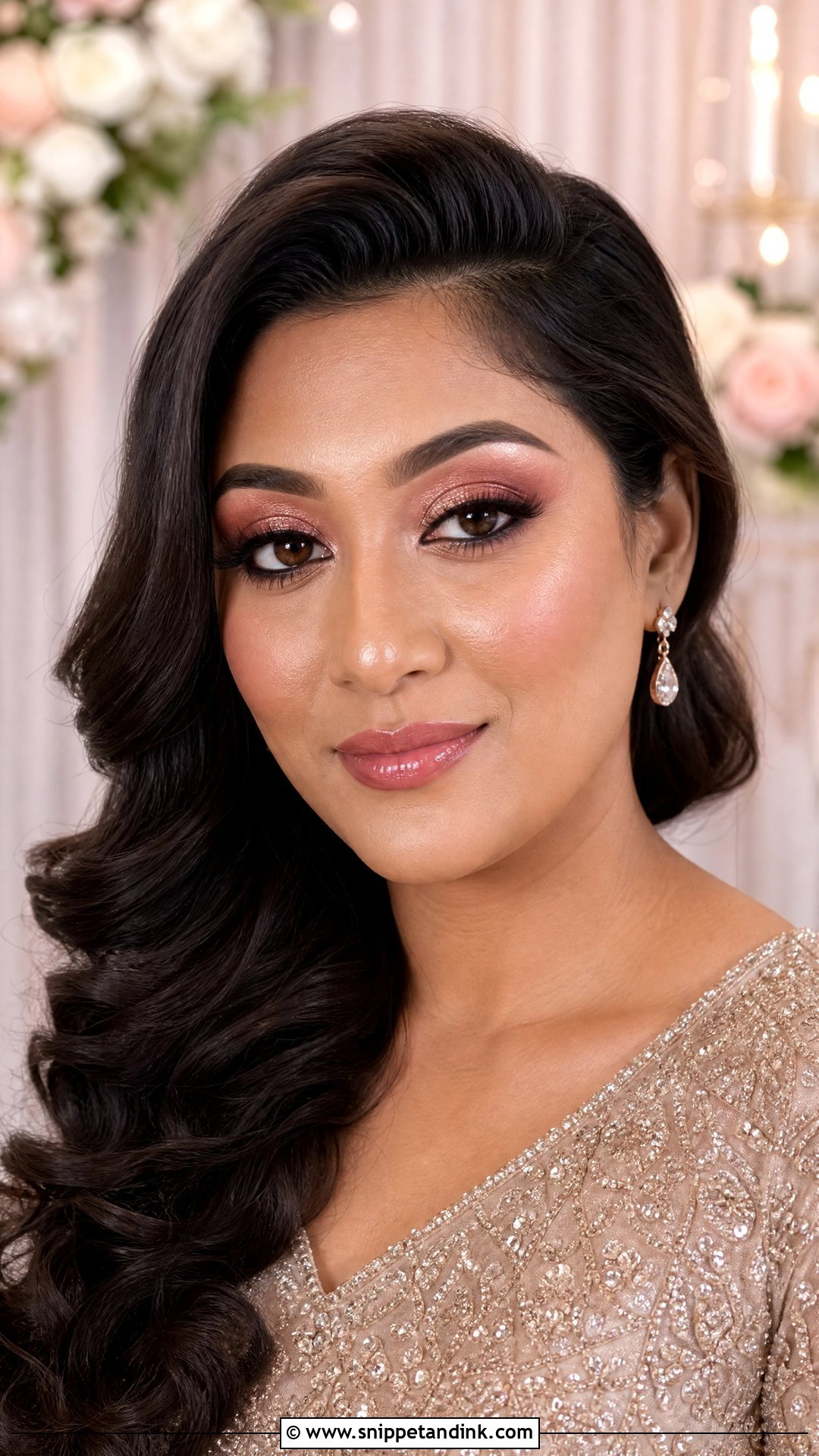
Rose gold is softer than gold and more forgiving across skin tones; on light to tan skin it adds warmth without going orange. I put rose-gold shimmer on the lid, dusty rose in the transition and soft brown near the lashes, with brown-black liner so the definition isn’t harsh. It works with white gowns and also gives a red qipao a more modern feel. A glowing base, peach-pink blush and a satin rose lip tie it together.
13. Pink Chinese Bridal Makeup
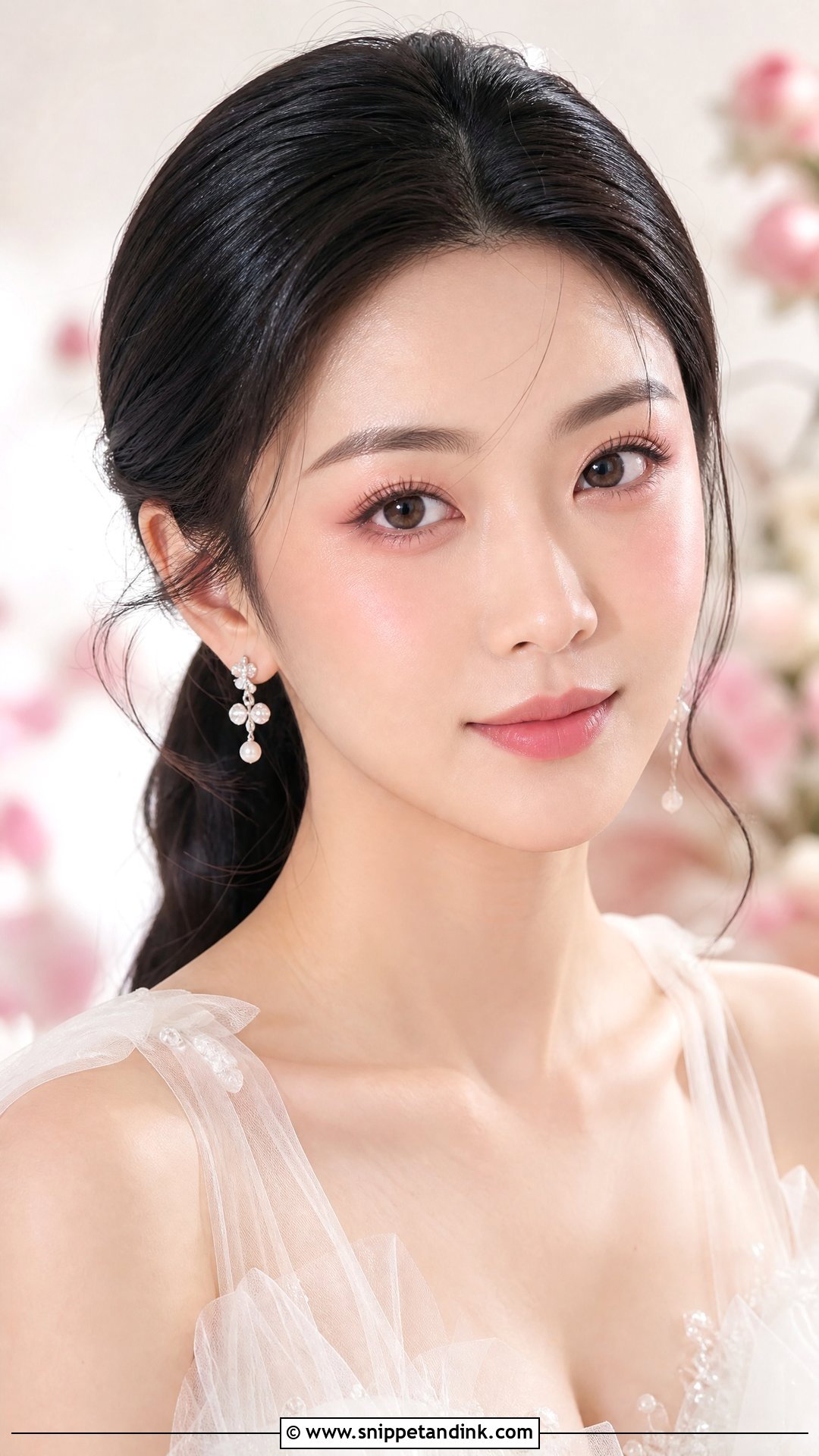
Pink can go young quickly, so I use muted, slightly dusty pinks rather than bright candy shades. A pale rose lid with taupe-brown depth at the outer corner keeps the eye from looking puffy, which pink shadow alone can do. Fine dark brown liner and wispy lashes keep it open. Petal-pink blush goes high on the cheek, and a satin pink lip ties the face together. It suits a white gown with pink flowers in the hair and very little jewelry.
14. Peach Chinese Bridal Makeup
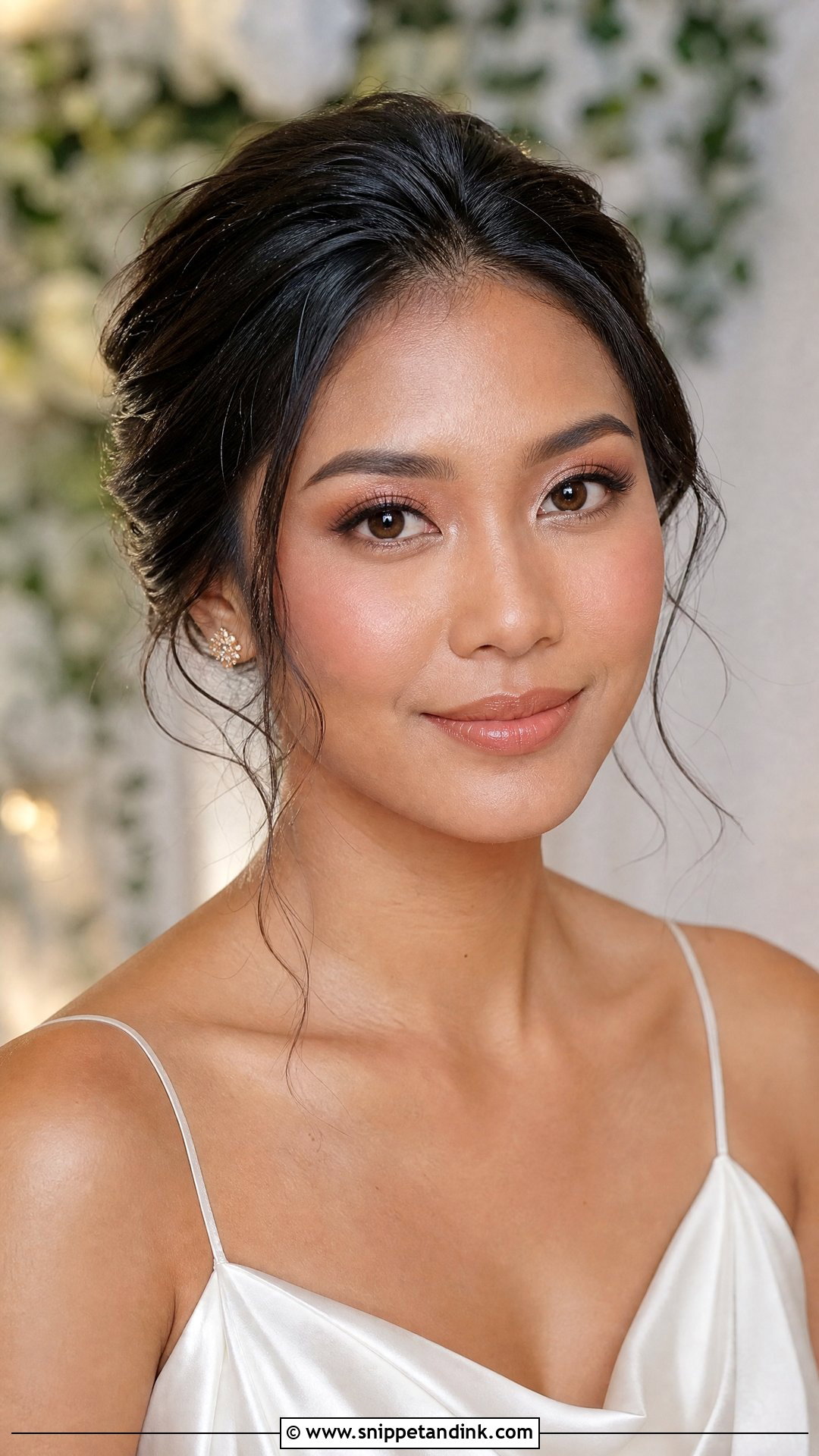
Peach is one of the most flattering tones I use on Chinese brides with warm or neutral undertones; it brightens sallow skin without the obvious pink. Peach-beige goes across the lid, warm brown at the outer corner and a touch of champagne at the inner corner. Brown liner looks softer than black here. The base stays light and glowy, with a satin peach blush and a coral-pink lip. It’s at its best in daylight and suits ivory gowns and modern qipao.
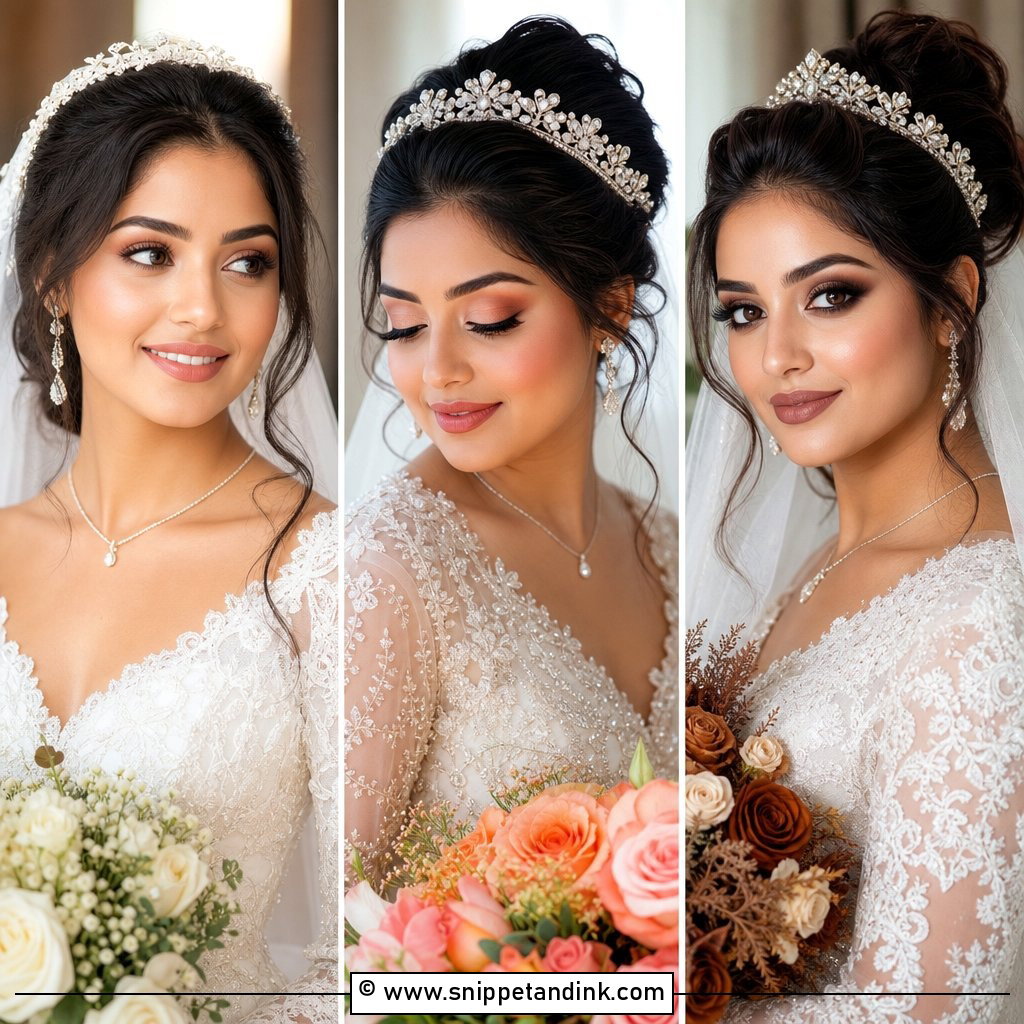
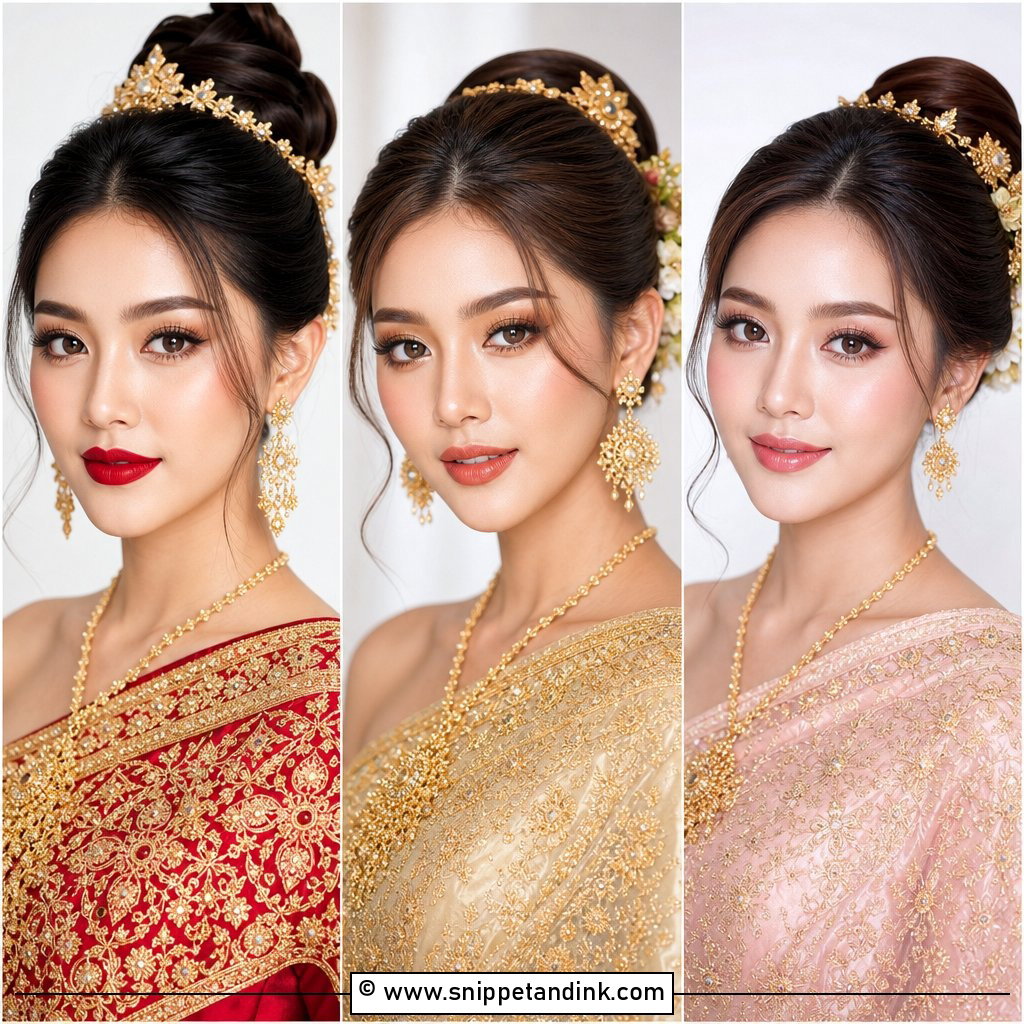
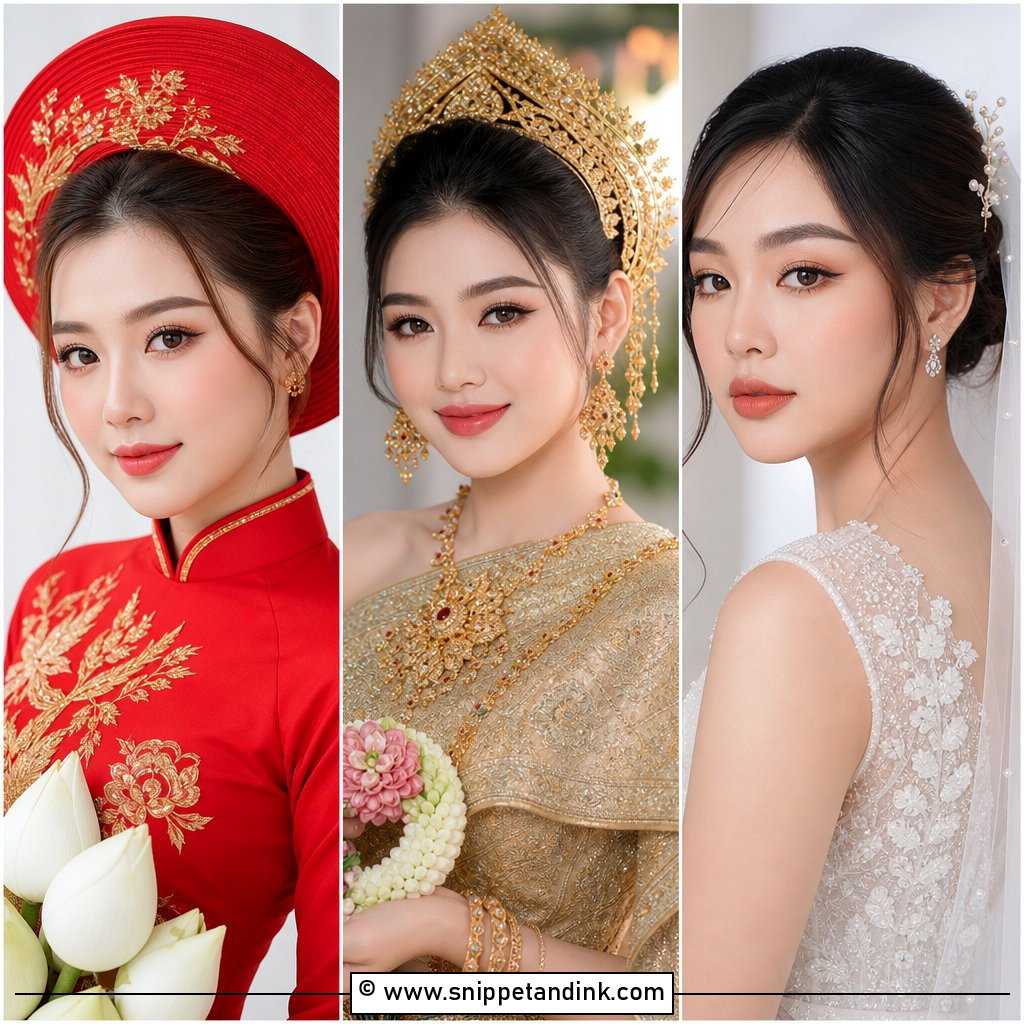
15. Brown Smokey Chinese Bridal Makeup
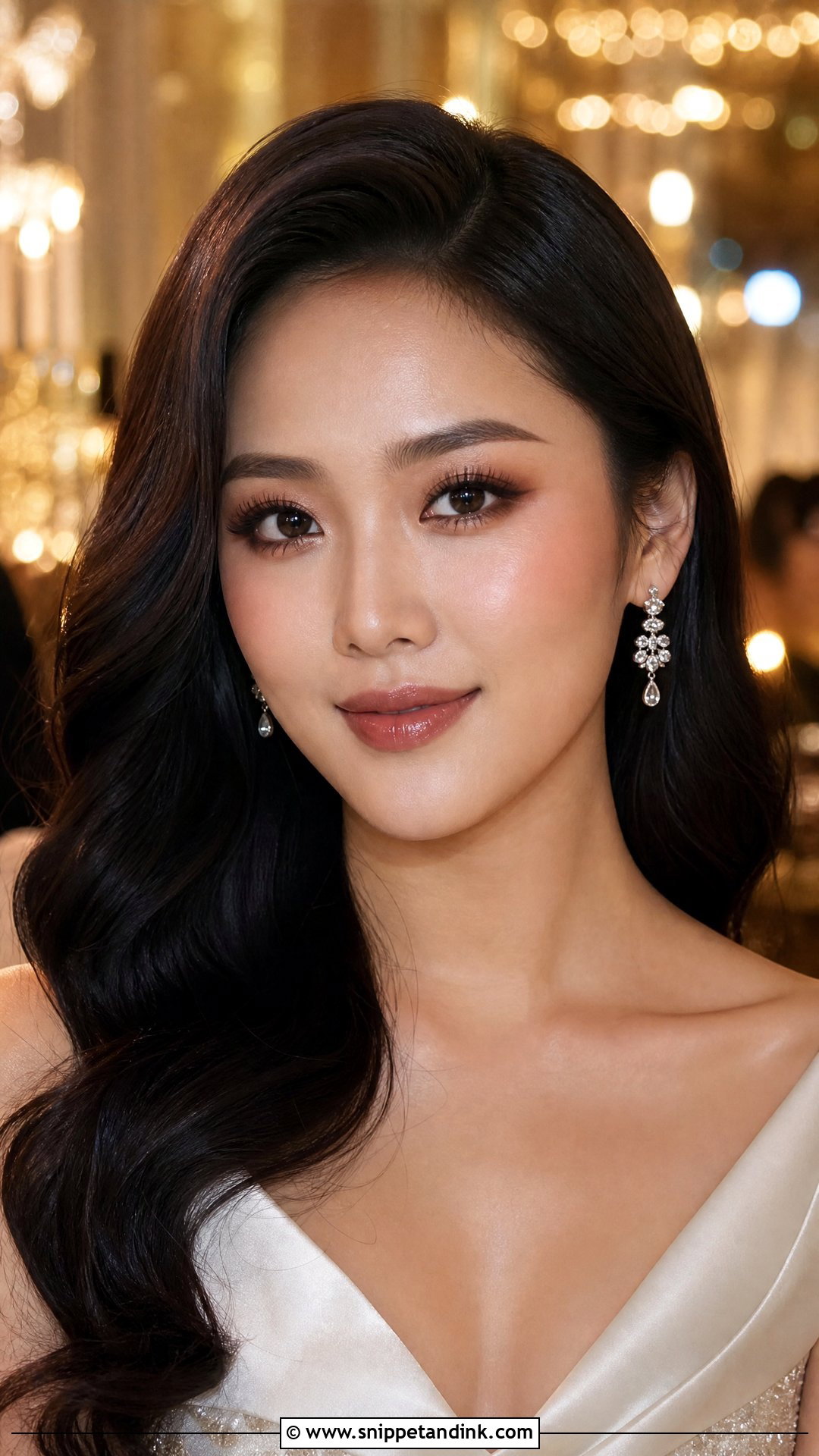
A brown smokey eye gives the drama of a smoky look without the hardness of black, which can make Asian eyes look smaller in photos. I blend chocolate, bronze and taupe in a soft gradient, keeping the darkest shade at the lash line and outer corner so the eye still lifts. A waterproof pencil smudged into the upper lash line makes lashes look fuller. The rest of the face stays balanced, with soft contour and a nude-rose lip. It’s my usual suggestion for an evening reception change.
16. Minimal Chinese Bridal Makeup
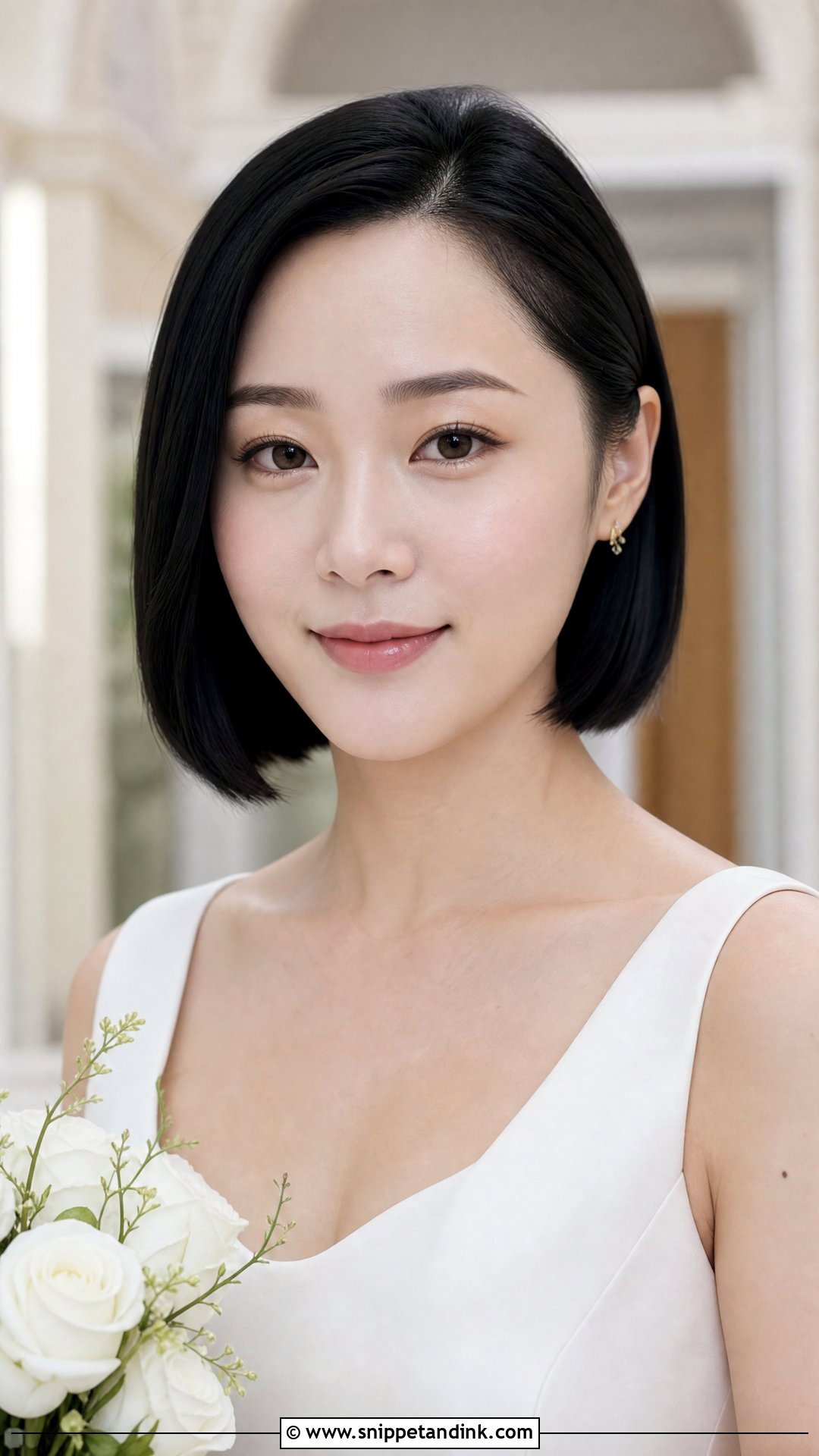
Minimal is harder than it looks because nothing hides a mistake. The skin should look even but still like skin, so I use a light tint or thin foundation and set only where creasing or shine shows up. Soft brows, beige shadow, curled lashes and tightlined brown liner define the eyes quietly. A rose or peach cream blush and a lip tint close to your own color finish it. It suits civil ceremonies and small weddings, and brides who’d feel strange in anything heavier.
17. Korean Inspired Chinese Bridal Makeup
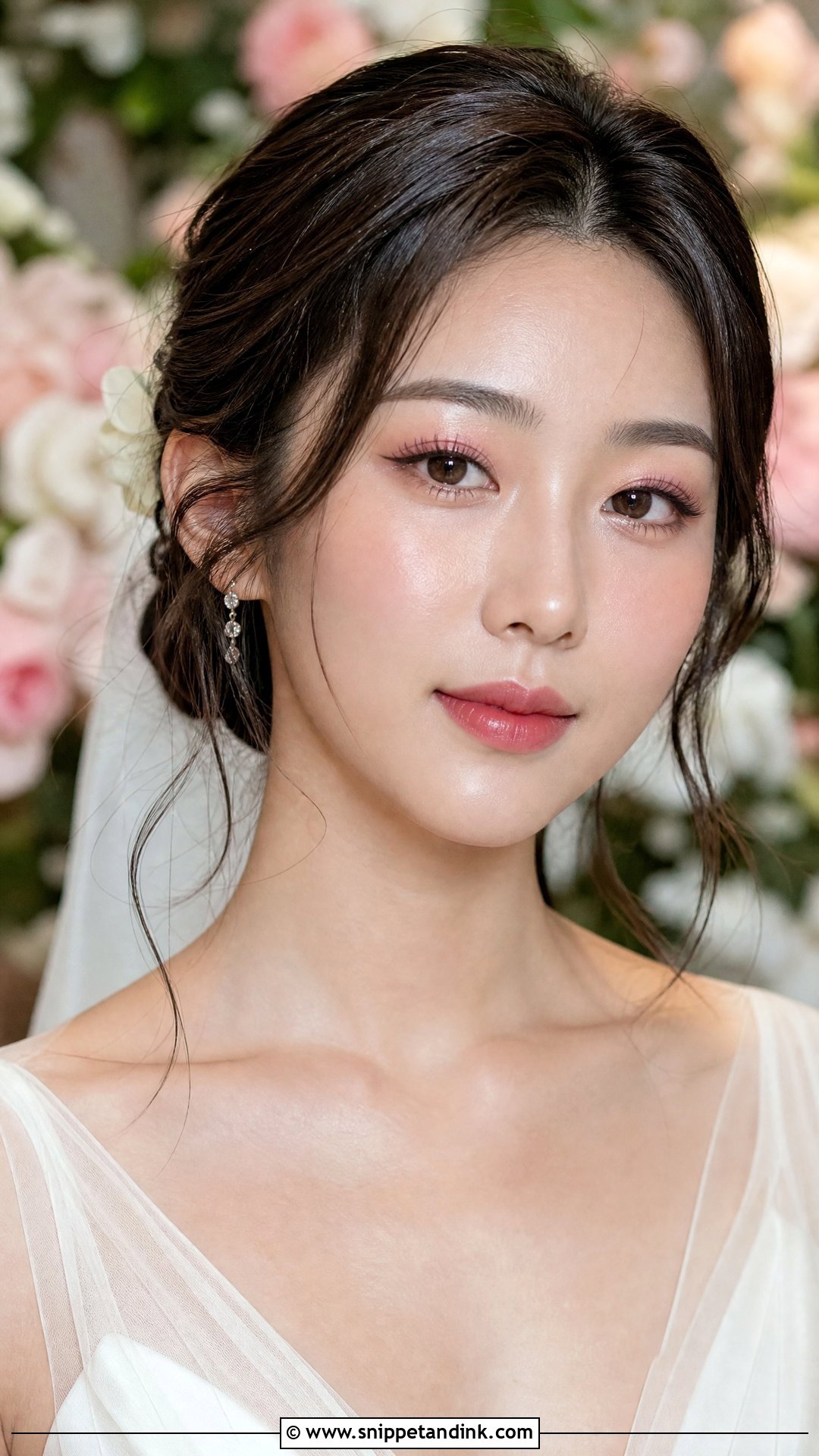
Korean inspired Chinese bridal makeup is built on hydrated skin: I spend longer on prep than on foundation, layering a light essence and moisturizer so the base sits smoothly. Brows are straight or gently arched, lids get a delicate shimmer, and liner is very fine. Lashes should look separated, not dense. Blush goes high on the cheeks in a watercolor wash, and the lip tint is blurred at the edges. Bright, youthful skin is the goal, so I keep powder minimal and go easy on contour.
18. Hong Kong Bridal Makeup
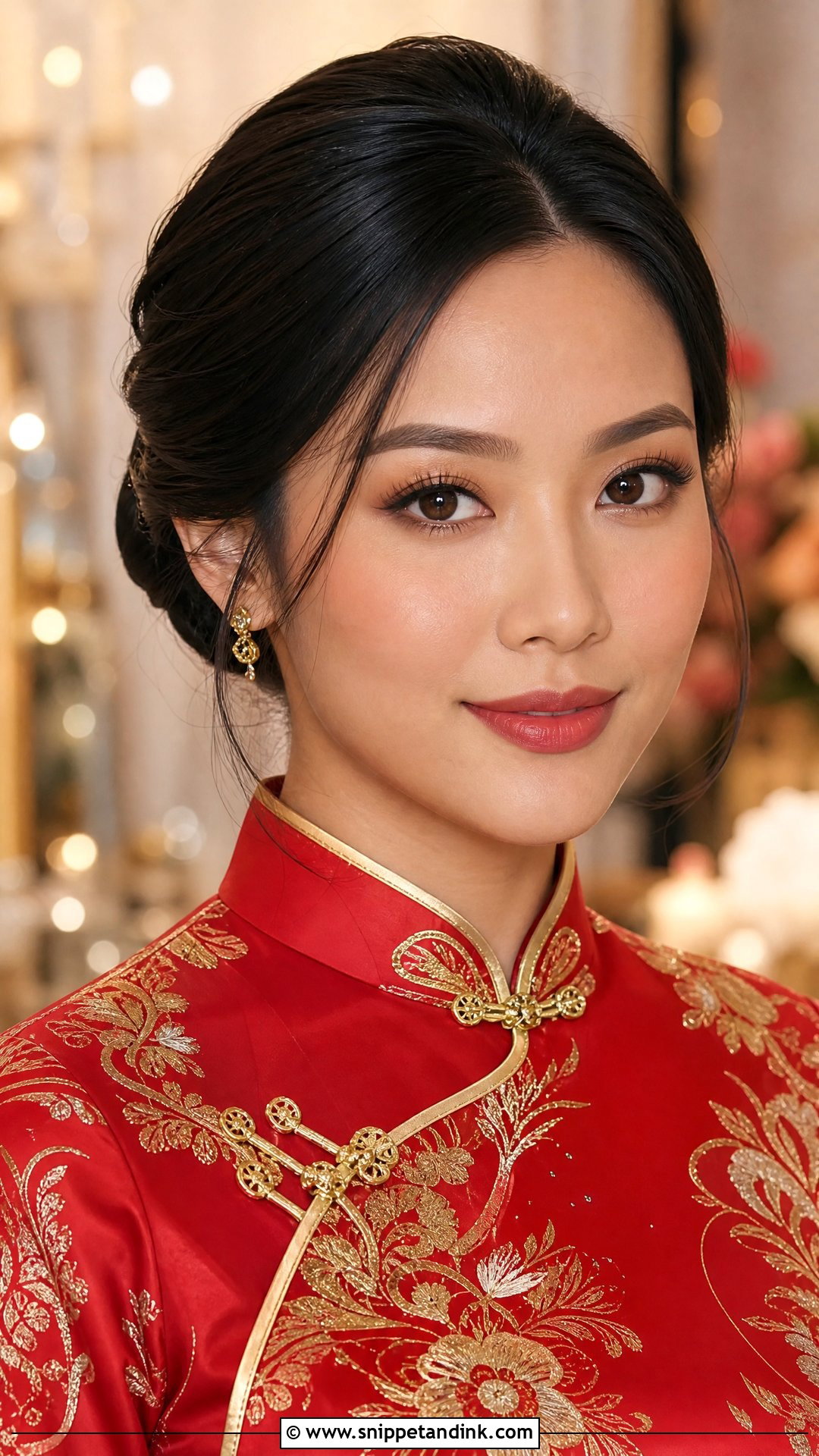
Hong Kong weddings often move from tea ceremony to registration to banquet to portraits in one long day, so this style is about long wear. The skin is smooth with controlled glow rather than a wet finish, because banquet lighting is harsh and flash bounces off shine. Neutral brown shadow, clean liner and defined lashes read well across a large banquet hall. I usually prepare two lip shades, one for each outfit, and a slightly stronger blush than usual so the face doesn’t look pale under the strong overhead lights.
19. Shanghai Bridal Makeup
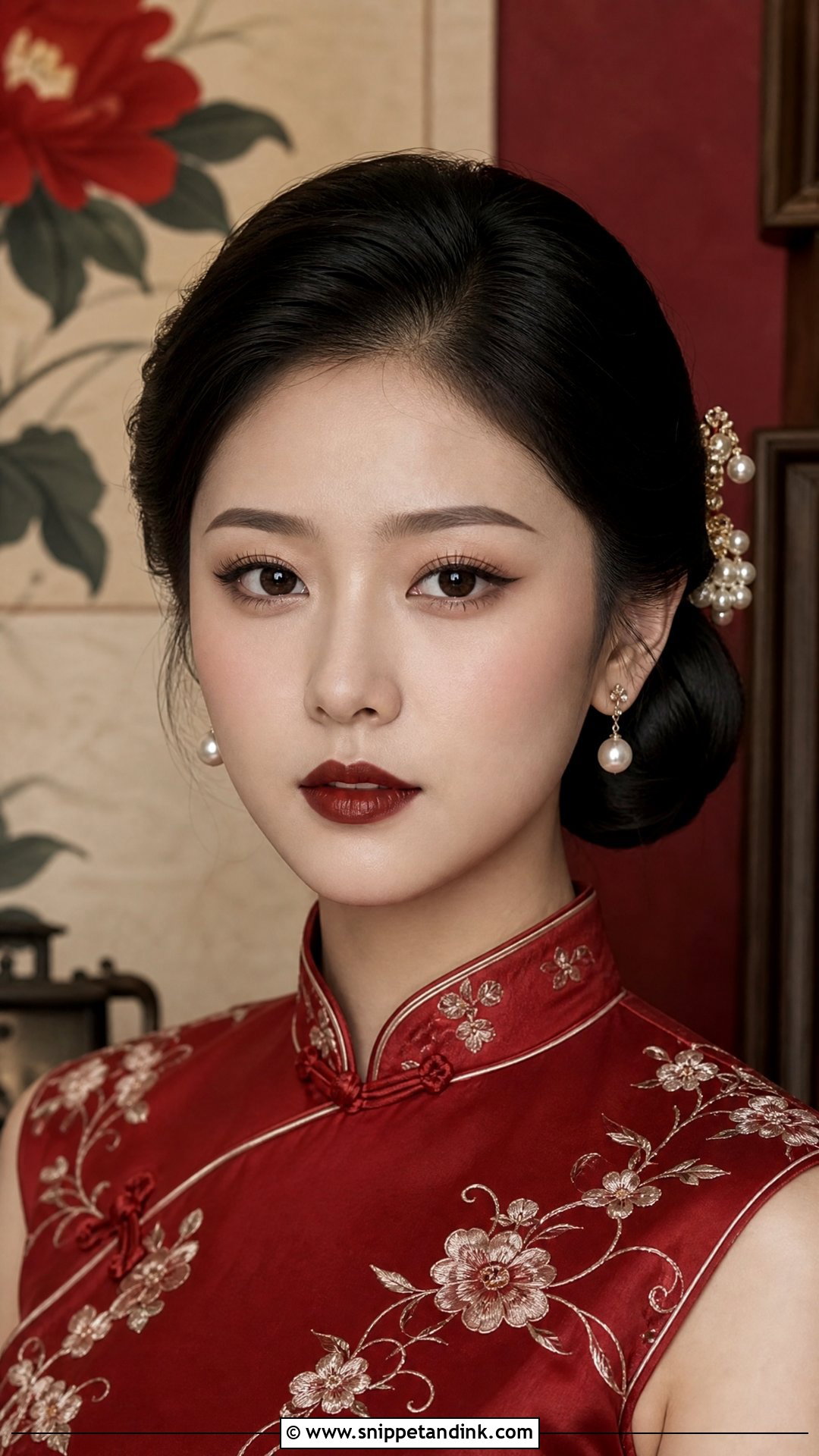
Shanghai-inspired makeup draws on 1930s glamour: softly powdered skin, defined brows, satin red or deep rose lips and clean liner. The risk is looking like a costume, so I keep the base modern and luminous under the powder and use champagne beige shadow with a slim wing instead of heavy vintage contouring. A touch of warm blush keeps the face alive beside a bold lip. It pairs naturally with a qipao, pearl earrings and finger waves or a sleek low bun.
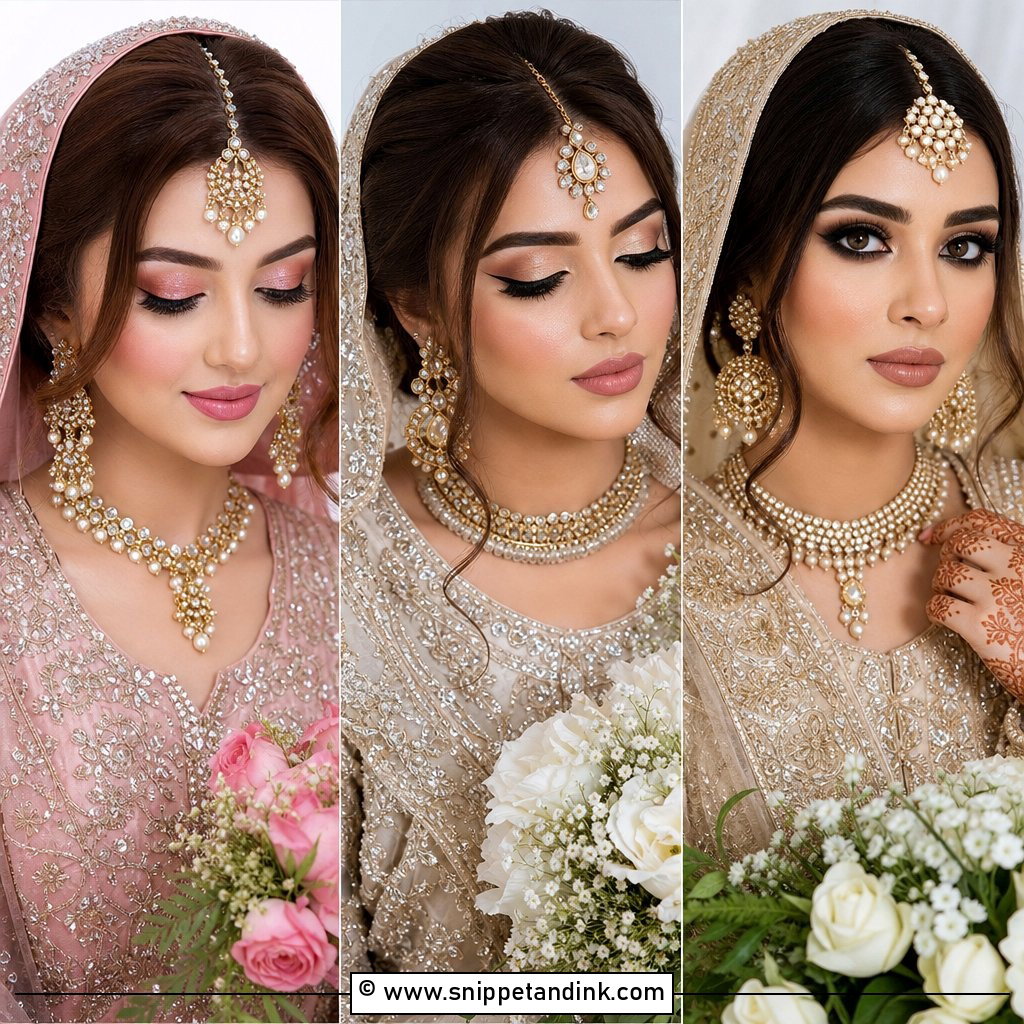
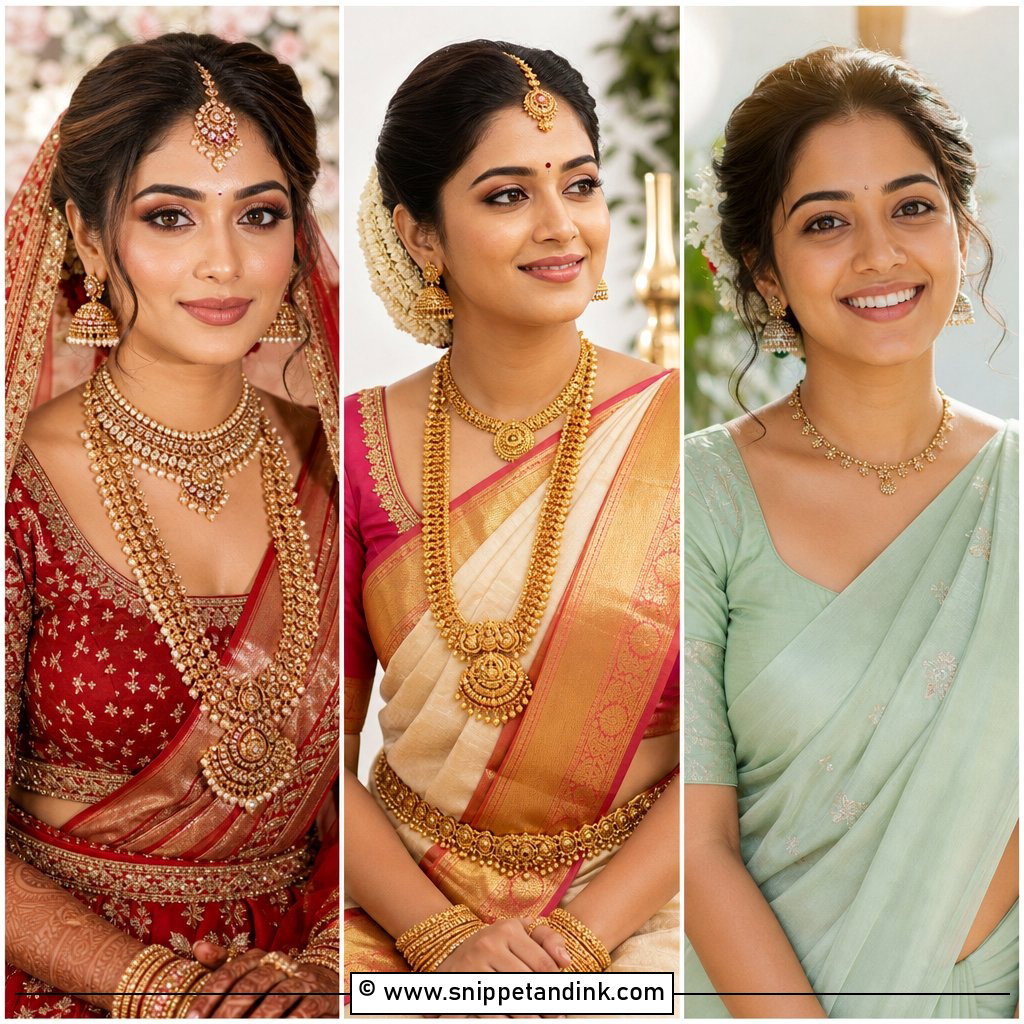
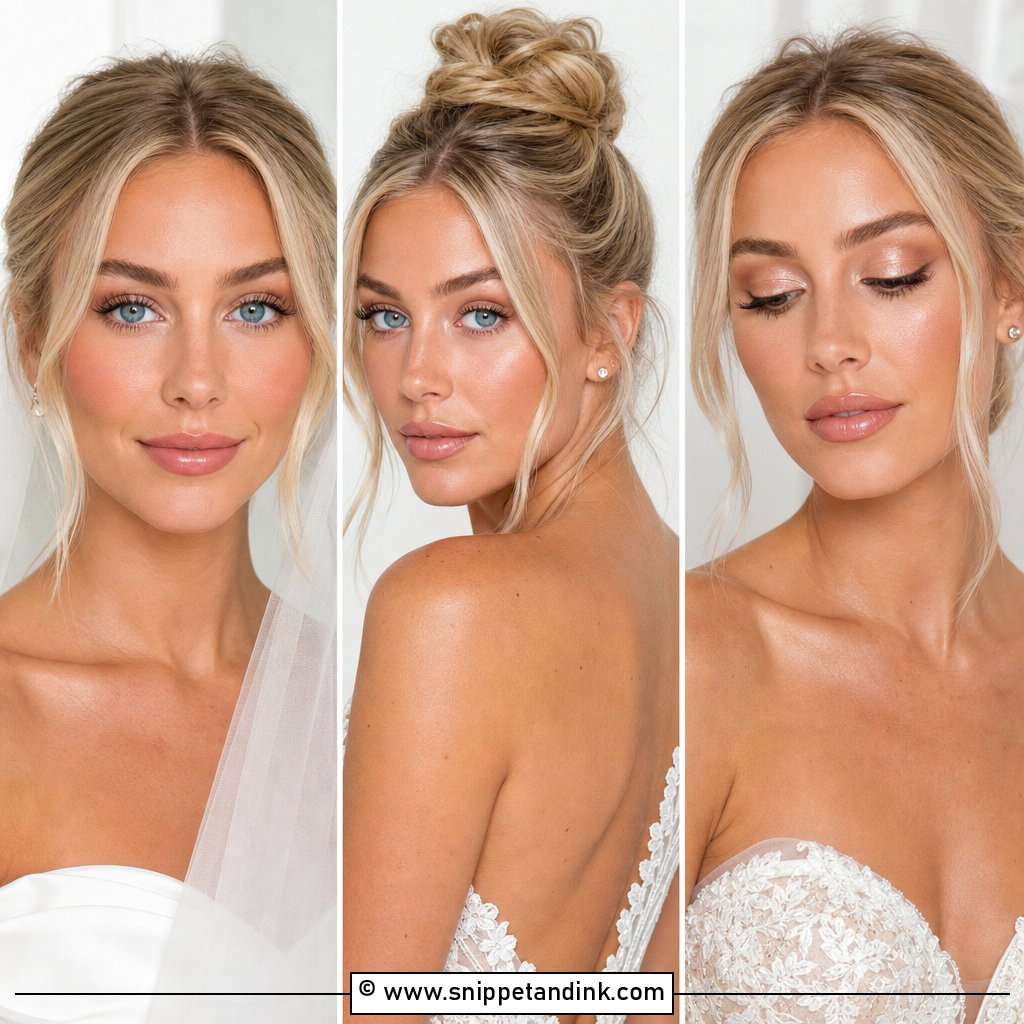
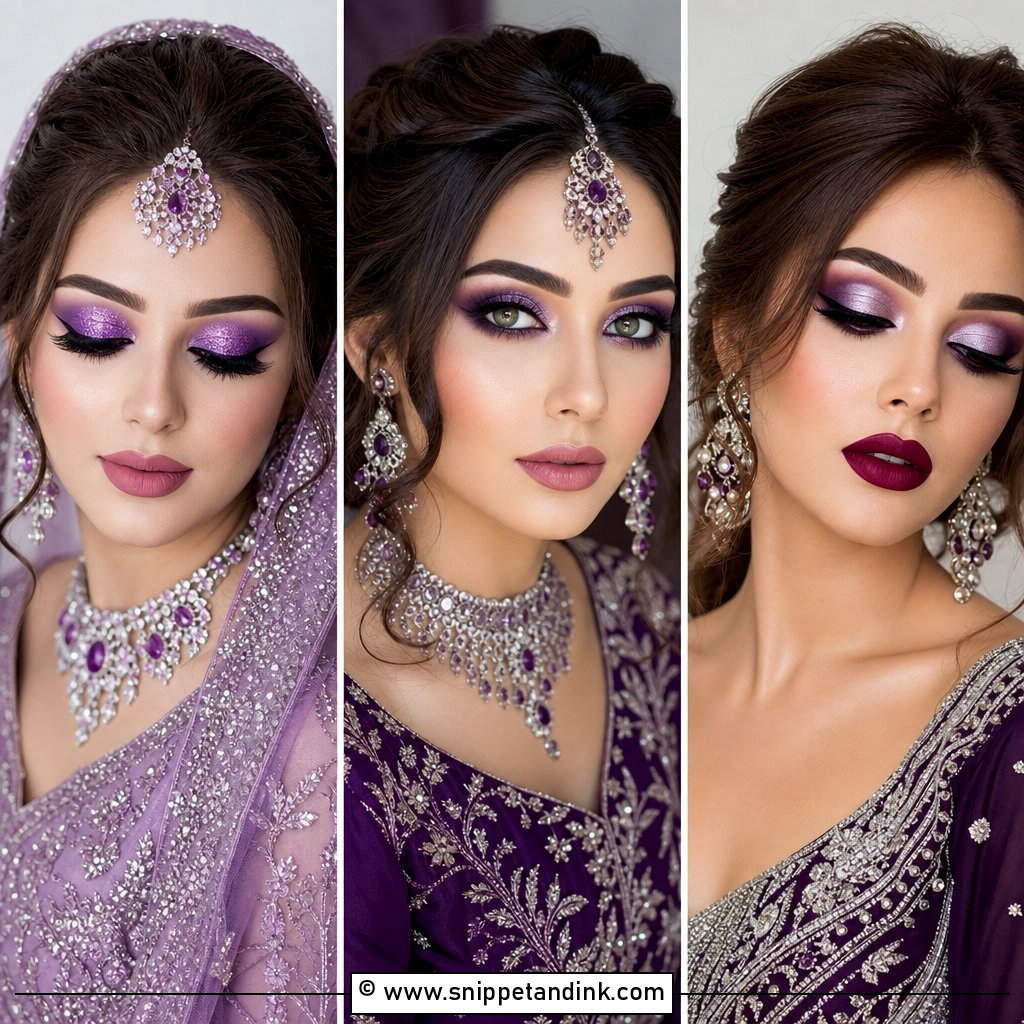
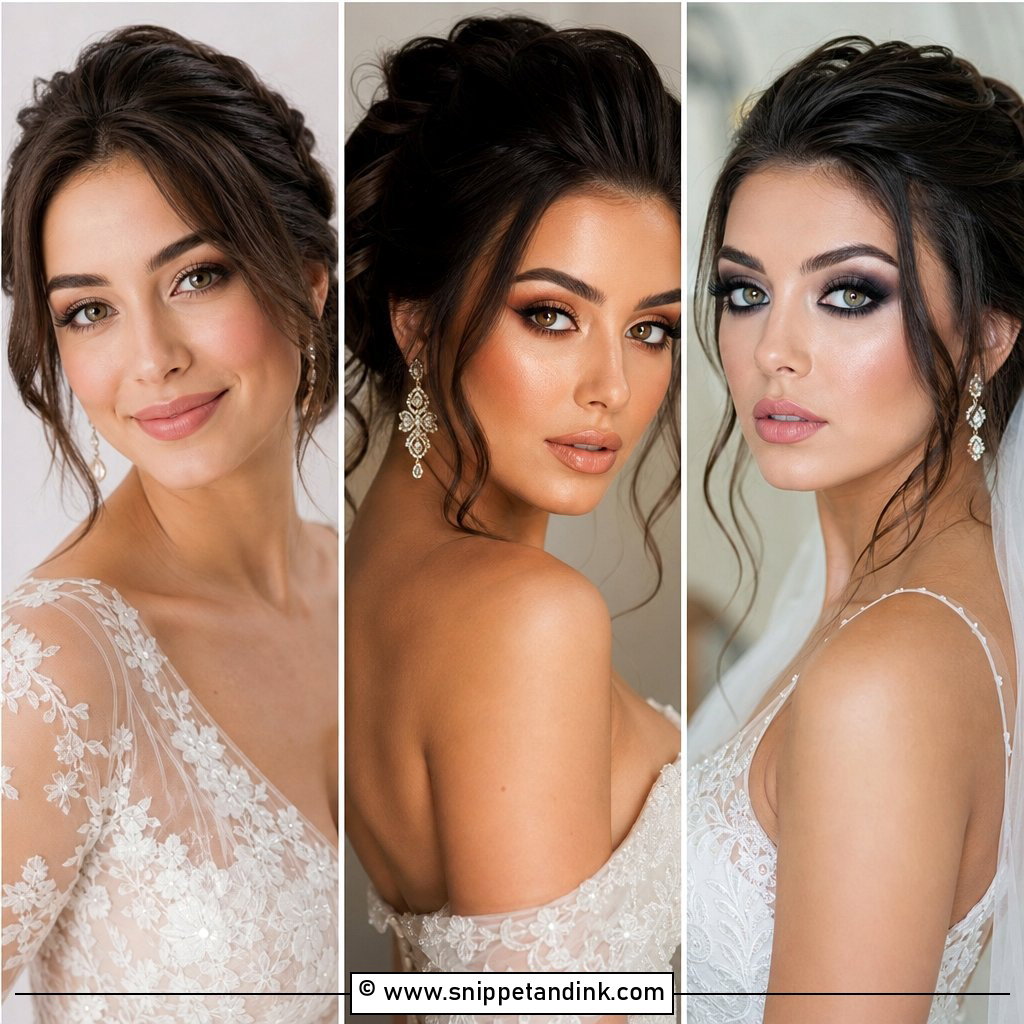
20. Modern Chinese Bridal Makeup
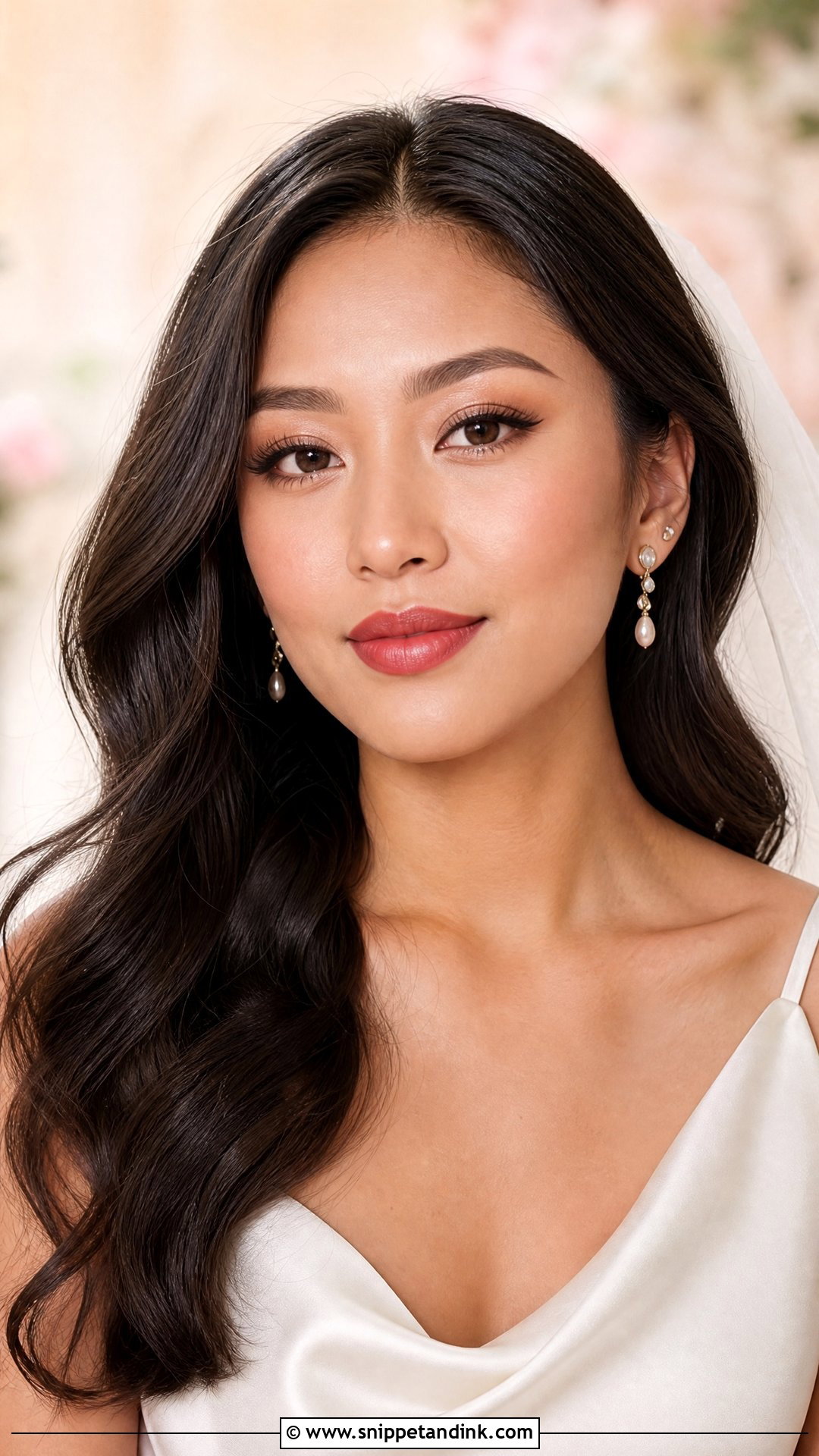
Modern Chinese bridal makeup combines perfected skin, softly sculpted cheeks, defined eyes and a lip that can move between ceremony and reception. I keep the eyes in neutral brown with a little shimmer and lifted lashes, so they suit every outfit. A soft matte or satin base stays camera-ready all day, and a rose-nude or muted red lip finishes it. It works across qipao, kua, Western gowns and contemporary reception dresses, so it’s the one I suggest when a bride can’t decide between traditional and modern.
Why Red Fabric Changes How Your Skin Photographs
Saturated red reflects color onto the face, especially under the chin and on the neck. In photos it can make the skin look flushed or slightly orange, and any redness around the nose and cheeks looks stronger. That’s why I correct redness carefully before a qipao look and keep blush a little cooler than the dress.
Foundation should match the neck and chest, not just the face, because a high mandarin collar frames the jawline and any line between face and neck shows straight away. Check the trial photos with flash on and off; flash shows shine and a foundation with a high mineral SPF can look whiter on camera.
What goes in the banquet touch-up pouch
- Blotting papers and a small pressed powder
- Each lip color you’re wearing, with its liner
- A cotton bud and a little micellar water for smudged liner
- Lash glue, in case a cluster lifts during the toasts
Give the pouch to a bridesmaid who’ll be with you during outfit changes. Toasting at each table often means kissing guests’ cheeks and drinking from many cups, so a lip check after the table rounds is worth the minute it takes.
Building a Face That Lasts From Door Games to Banquet
There’s no single right look for a Chinese wedding; the right one fits your features, your outfits, your venue and your schedule. Red lips and gold tones suit tea ceremonies, while rose, peach and brown shades often work better with Western gowns. On monolid, hooded and almond eyes, placement matters more than how much product goes on. Keep liner controlled, lashes comfortable and the base long-wearing. From dewy natural makeup to classic red qipao glam, aim for a face that feels like you in person and still holds up in photos.
You'll Like These Ideas:


Leave a Reply