
Chinese bridal dress carries layers of meaning, and families read those layers closely. Red is still the favoured colour because it stands for luck, happiness and celebration, and gold embroidery speaks of blessings, prosperity and family honour. Brides now choose between a Cantonese qun kwa, a fitted qipao, flowing hanfu outfits and fusion looks, and many wear more than one: something formal for the tea ceremony, something easier for the banquet. The twenty-five looks below cover that range, with my notes on how each one moves, kneels and sits, since that’s what you’ll live in all day.
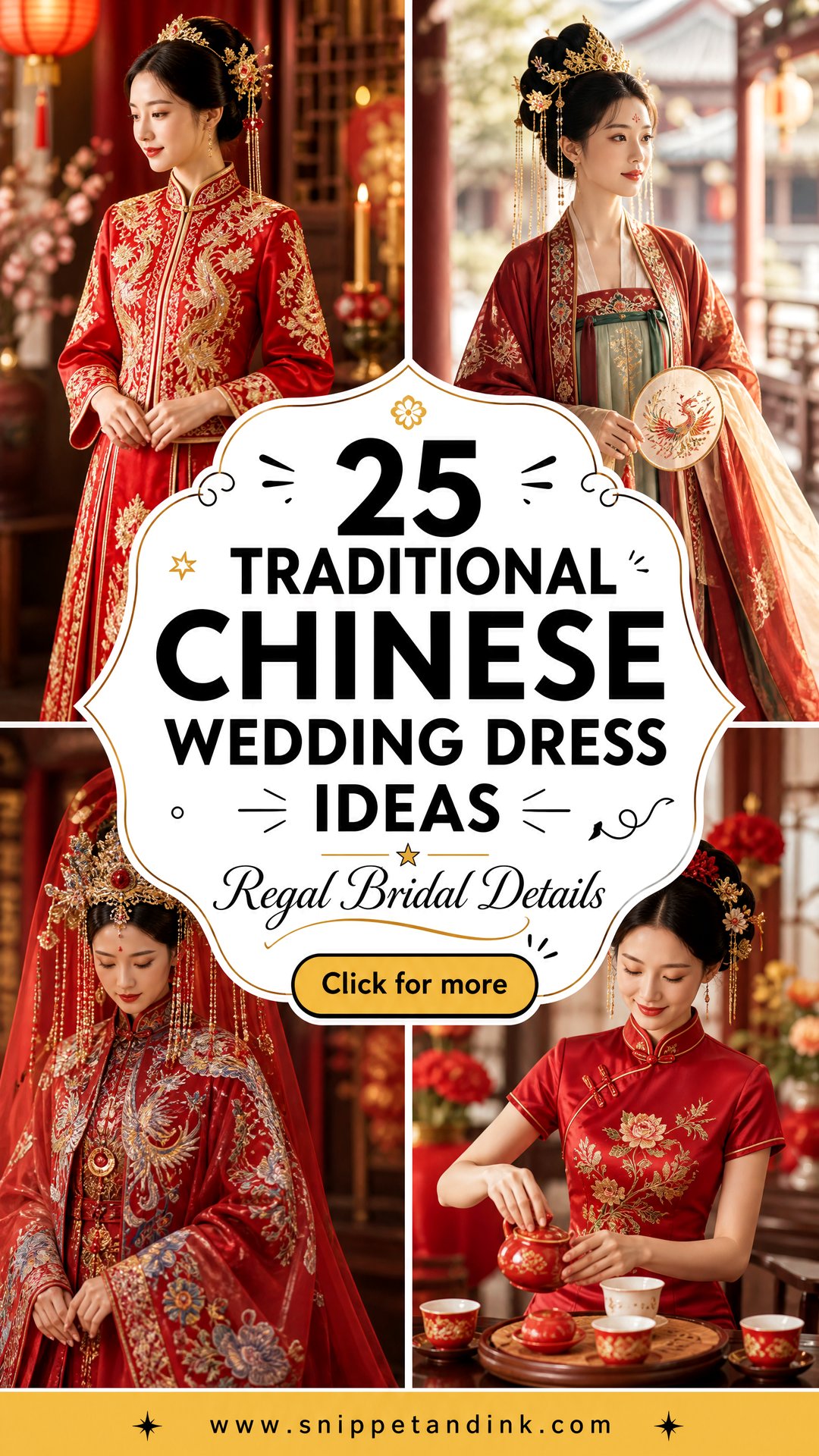
Colours and Motifs Older Relatives Will Read
Chinese bridal dress is read by the older generation as much as it’s admired. Before a bride falls for a dress, I ask what her parents and grandparents expect, because a few details carry strong meaning.
- Red and gold signal joy and prosperity and are almost always welcome.
- Pink is celebratory and generally accepted for engagements and changes.
- All-white, black and very dark blue are traditionally tied to mourning, so many families prefer a red accent if you wear them.
- Dragon and phoenix together represent a balanced marriage; the phoenix alone is the bride’s symbol.
- Peonies suggest prosperity, and paired birds or butterflies suggest a loving couple.
Customs differ between Cantonese, Teochew, Hokkien, northern and diaspora families, so treat these as starting points and ask your own elders. A short conversation early saves a lot of tension later, and families often have an heirloom piece or a preferred colour they’d love to see worn.
1. Red Qun Kwa Wedding Dress
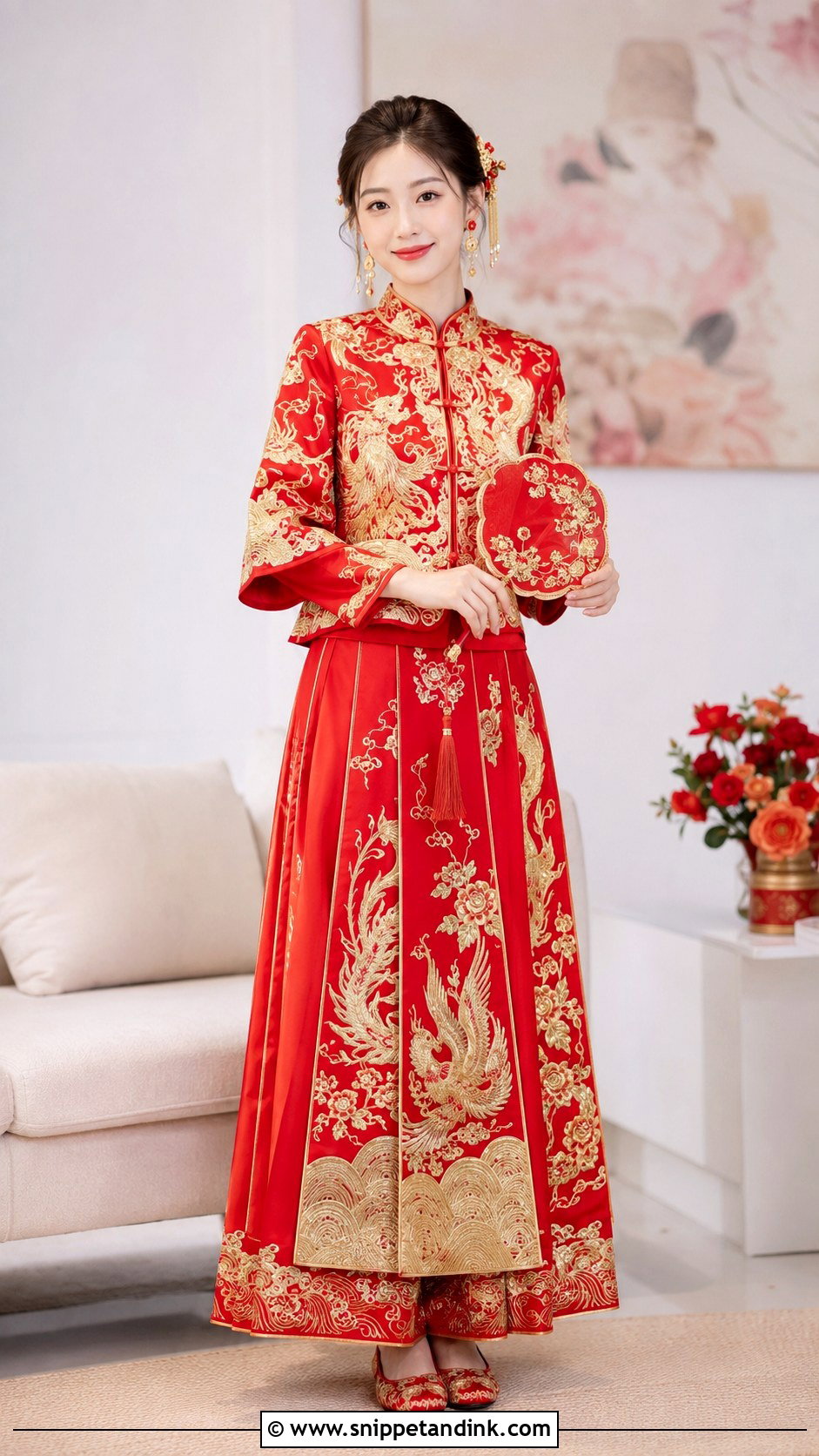
The qun kwa is the Cantonese bridal set most families recognise: a structured jacket and matching skirt, covered in gold dragon, phoenix, peony or cloud embroidery. It’s the classic tea ceremony outfit. The density of the embroidery is what sets the price and the weight, and a fully covered jacket can feel like a light coat, so I’d try one on for a full half hour before deciding. Red embroidered flats or low heels let you kneel and greet relatives. Gold jewelry, a neat updo and a red fan complete it.
2. Gold Qun Kwa Wedding Dress
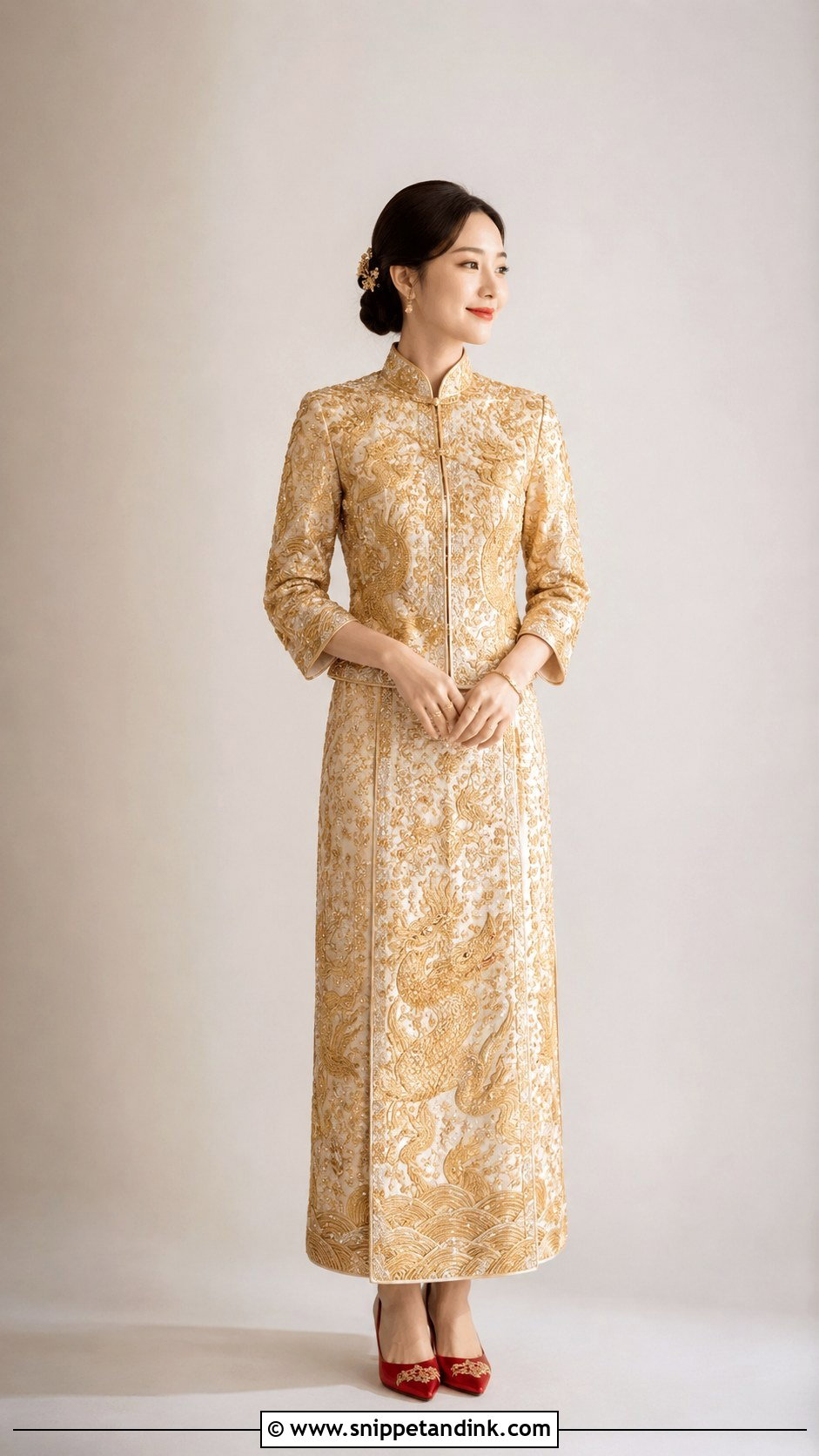
Gold as the main colour turns the qun kwa brighter and even more ceremonial. Here the metallic thread does all the work, so this suits a luxurious tea ceremony or a second outfit kept for portraits. Gold thread can feel stiff at the collar and underarm, which is where I check for rubbing at a fitting. Red satin shoes, small gold earrings and one bracelet keep it balanced. A sleek low bun lets the embroidery around the collar and shoulders show.
3. Red Xiuhe Wedding Dress
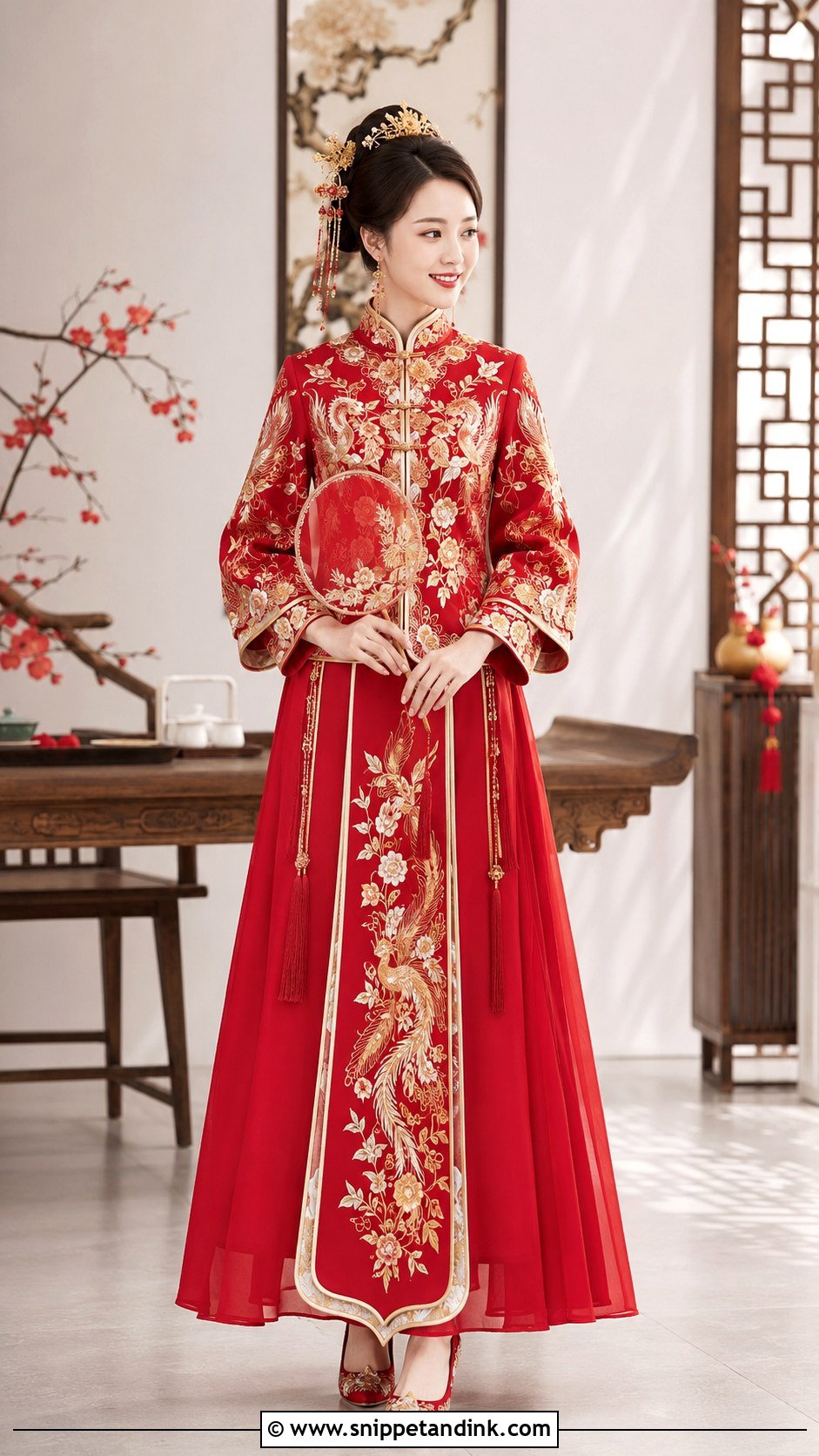
Compared with a structured qun kwa, the xiuhe usually has a looser top and a flowing skirt, so it feels softer and moves more freely. Embroidered birds, flowers, clouds, butterflies or lucky symbols give it a gentle look. It’s the outfit I’d suggest for a bride facing a long tea ceremony with many relatives, because nothing pinches when you bend to serve. Embroidered shoes, a gold comb and a small red clutch or fan finish it. The relaxed cut also suits a wide range of body shapes.
4. Dragon And Phoenix Qun Kwa Wedding Dress
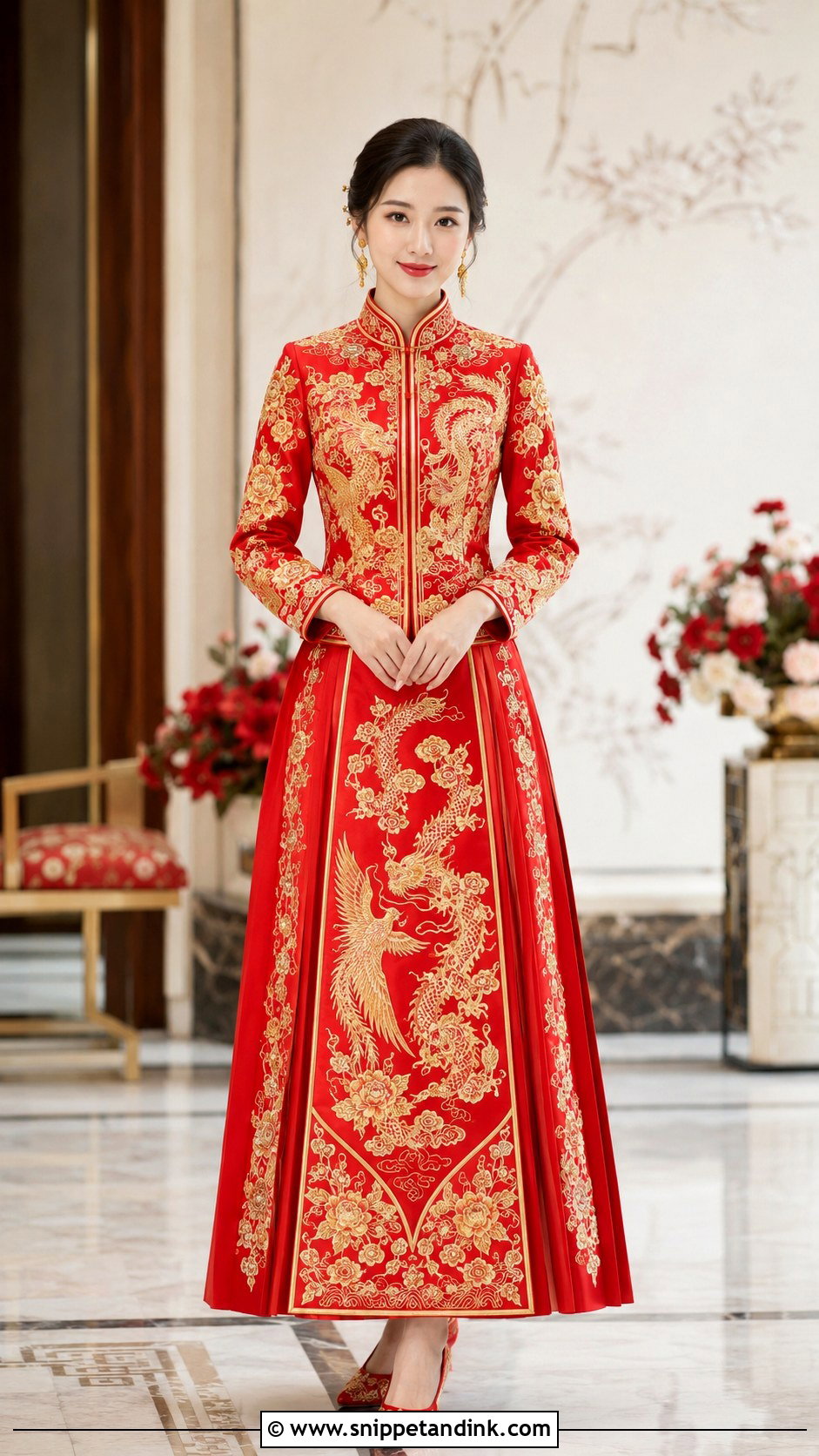
Dragon and phoenix together are the strongest symbol you can wear. The dragon stands for strength and fortune, the phoenix for grace and harmony, and paired they represent a balanced marriage. On a red base with dense gold embroidery, this is the most classic qun kwa of all. Ask to see how the two motifs align across the front opening when the jacket is closed; on a well-made piece they meet without breaking. Gold drop earrings, red heels and a smooth updo with a traditional hairpiece suit a formal tea ceremony.
5. Red Qipao Wedding Dress
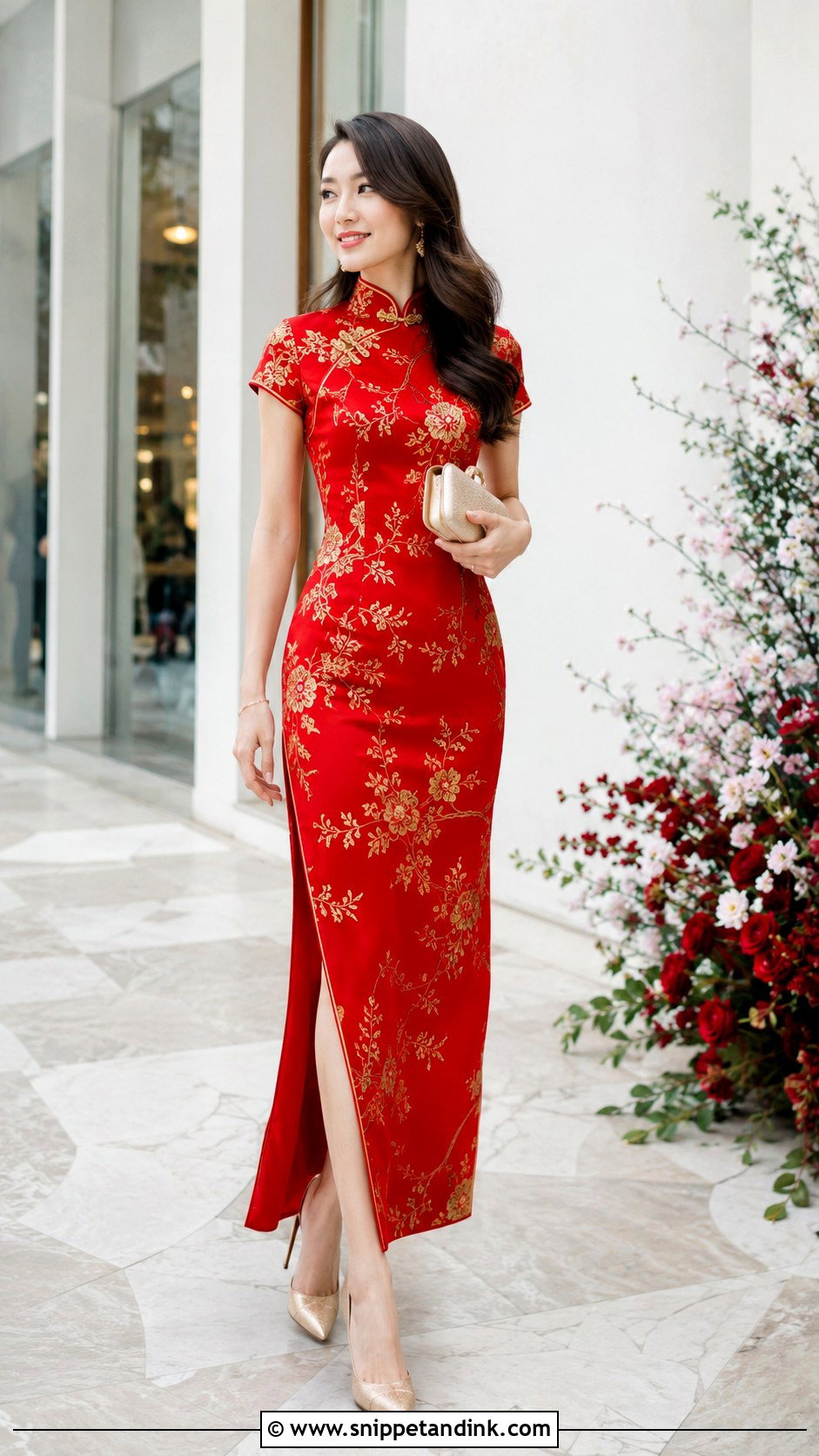
A qipao gives you the traditional details in a sleek, fitted shape: mandarin collar, side slit and frog closures. Silk, satin or brocade all suit, with gold embroidery, pearl buttons or small floral patterns for depth. A qipao fitted closely needs room to sit, so I measure the hip seated, not standing, and set the slit height to the shoes you’ll wear. Pointed heels, a small gold clutch and soft waves or a chignon finish it. It moves easily from a civil ceremony to the banquet entrance.
6. Long Sleeve Qipao Wedding Dress
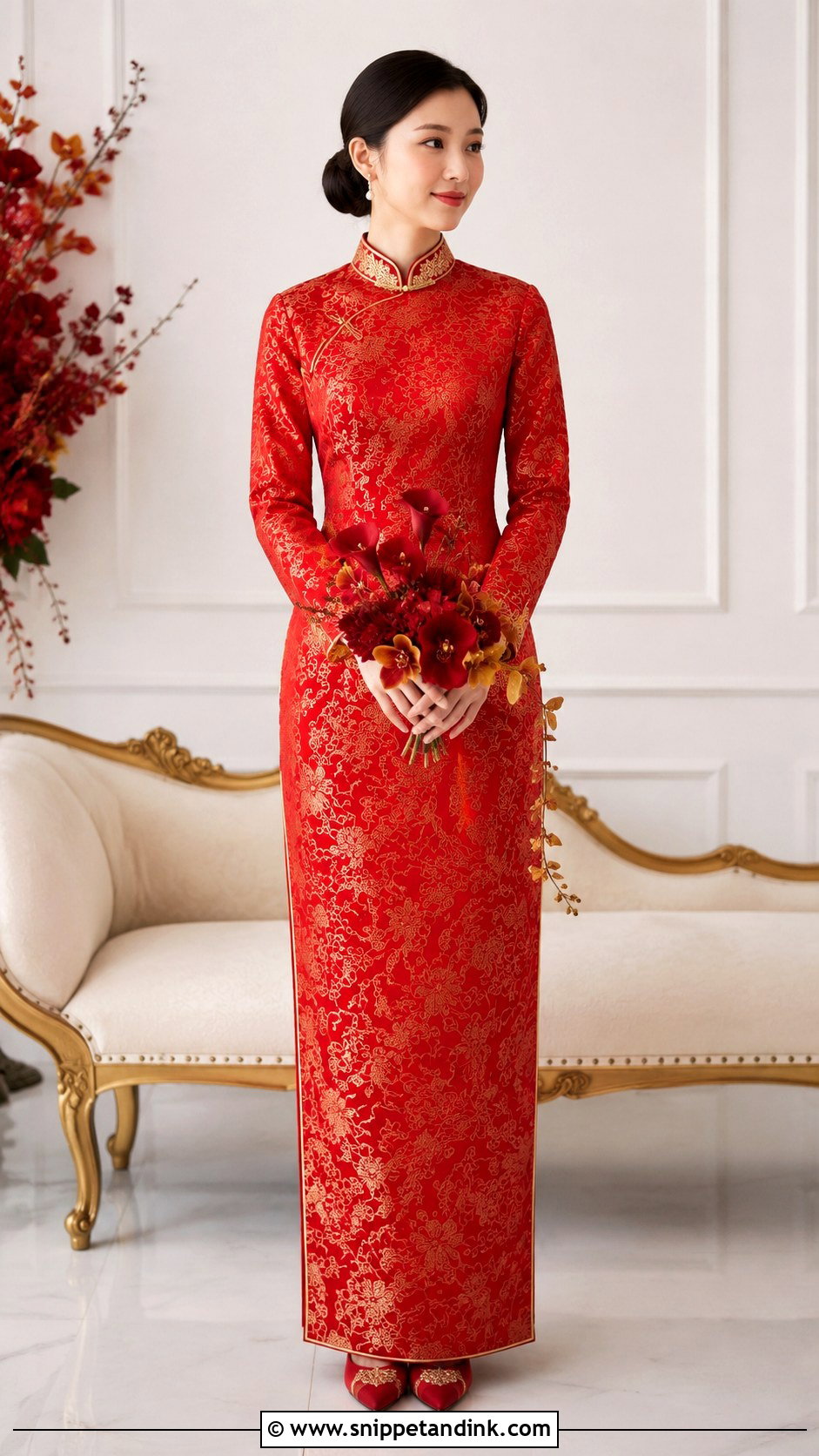
Long sleeves make a qipao formal and modest without losing the fitted line. Red silk, jacquard or brocade with gold embroidery at the collar, cuffs and hem is the classic version. Pair it with closed-toe heels, pearl earrings and a neat bun. It suits cooler seasons and formal venues, and it’s the option I suggest if you’d like a covered style without a two-piece set. The fitting point is the sleeve head: a tight armhole pulls the whole dress up when you pour tea, so ask for a little more room there.
7. Short Qipao Wedding Dress
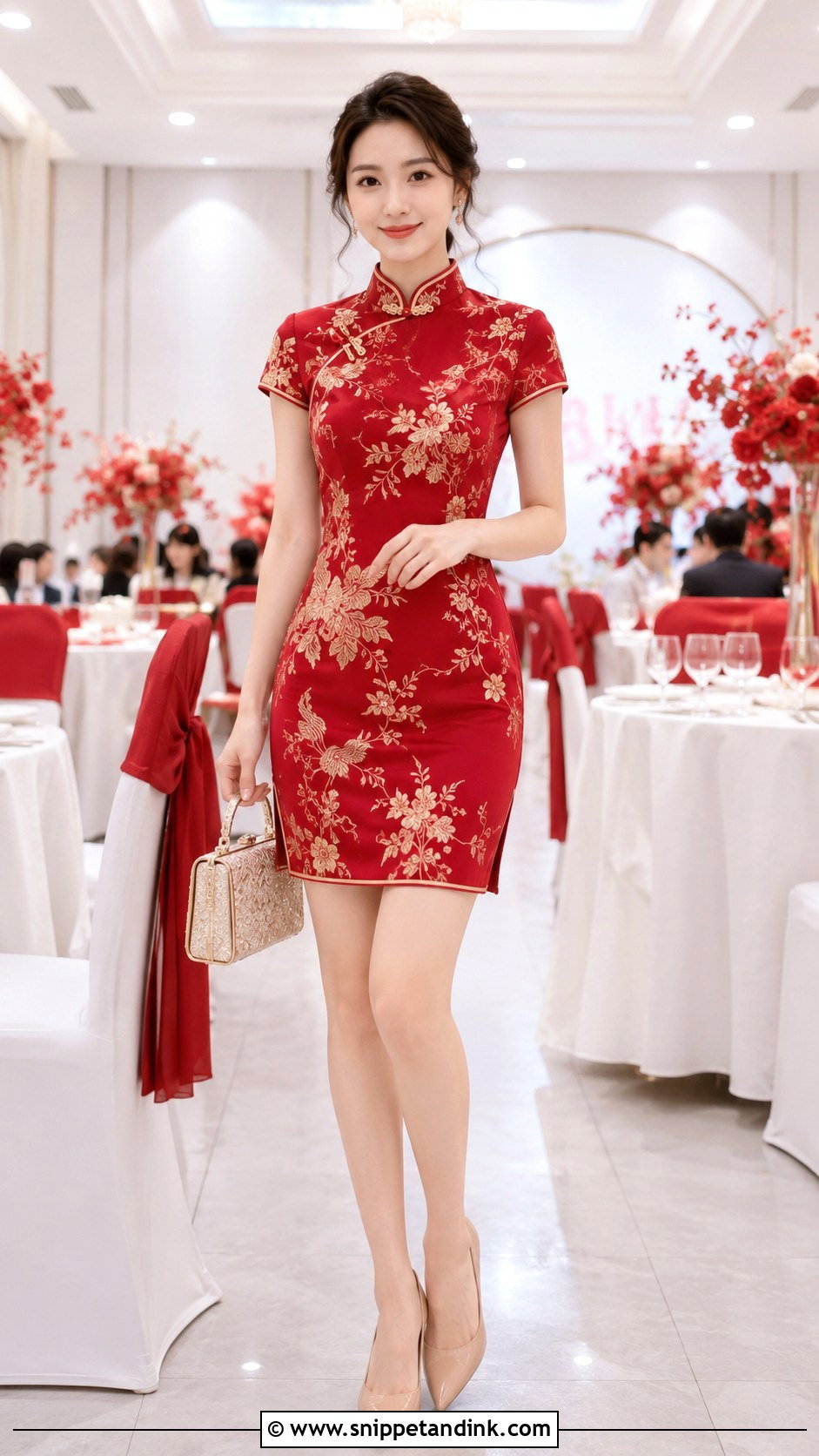
Short qipaos are for dancing. A red or blush version with gold embroidery still reads bridal, especially with good heels and polished accessories, and it’s far easier to move in during a relaxed reception or after-party. Keep it tailored but forgiving, because a short fitted dress rides up and creases at the hip once you sit. I’d check the length while seated before the final hem. A small structured bag, delicate earrings and fresh makeup finish it.
8. White Qipao Wedding Dress
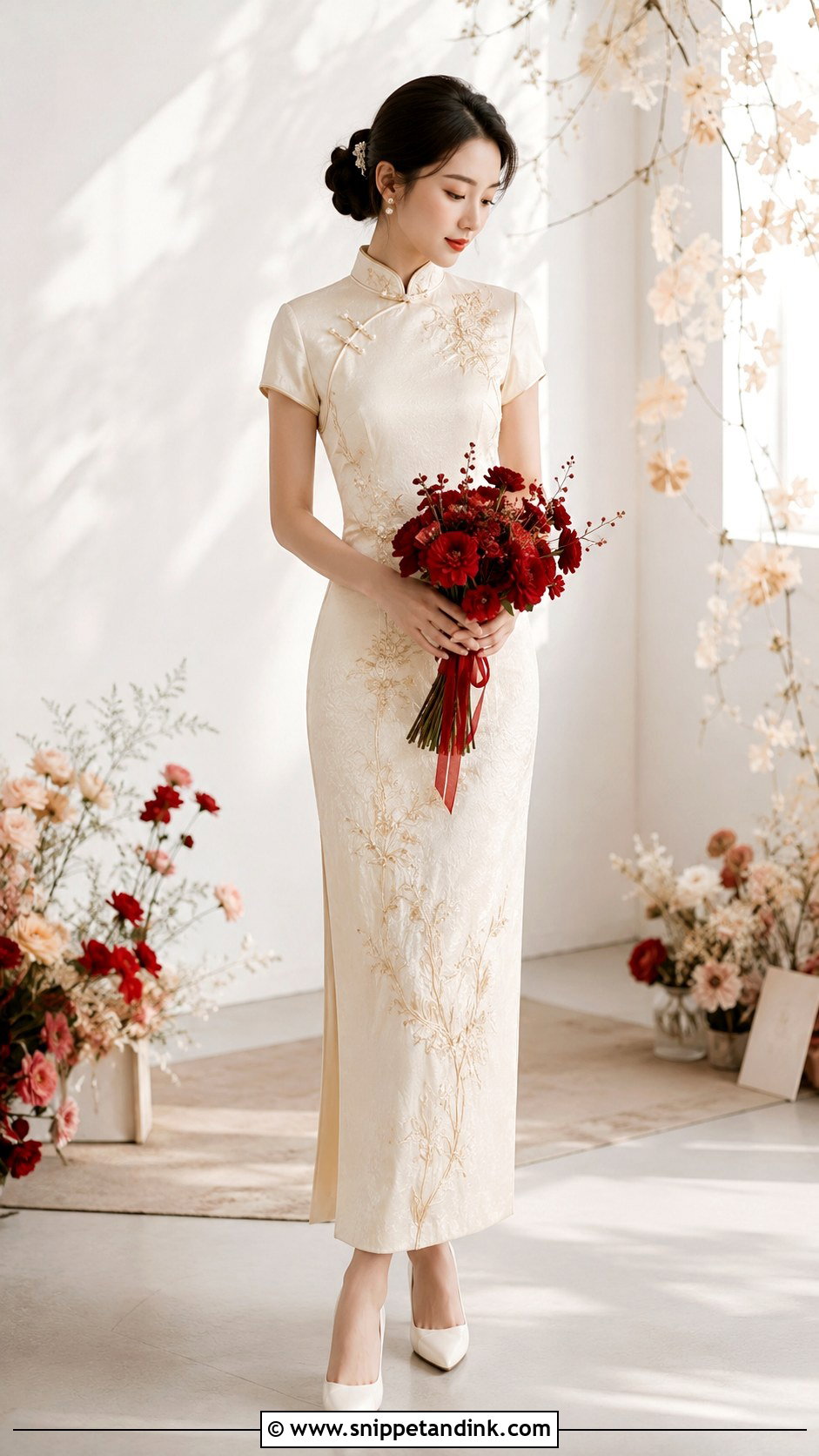
White in Chinese tradition has long been connected with mourning, so a white qipao is a conversation to have with older family before you buy. Many brides solve it with red details: red piping, a red bouquet or a red hair ornament alongside the mandarin collar, pearl buttons, lace or light embroidery. It suits engagement photos and a Western-style ceremony. Ivory heels, pearl earrings and a smooth low bun keep it clean, and it combines easily with Western bridal pieces.
9. Champagne Qipao Wedding Dress
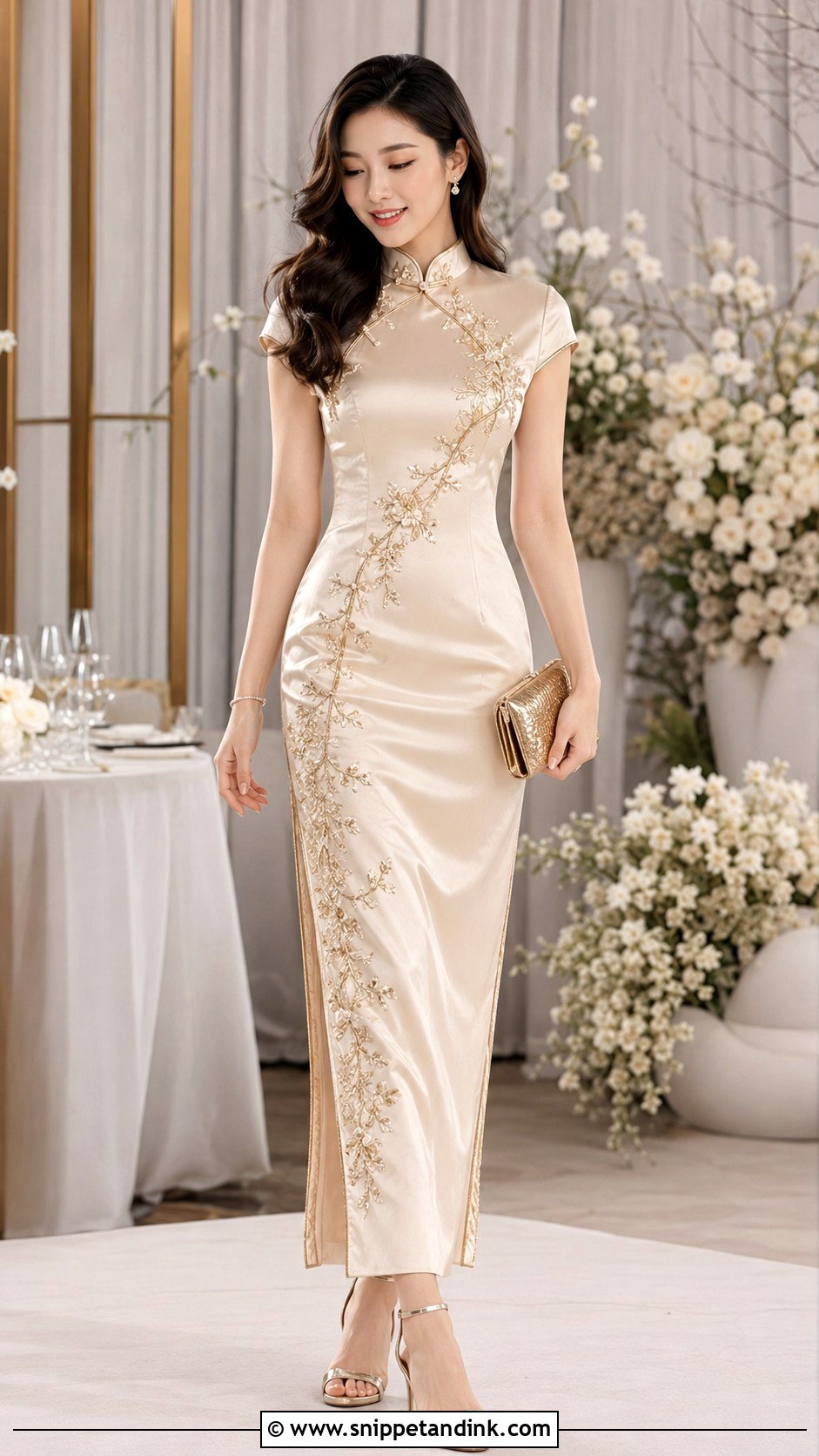
Champagne sits halfway between ivory and gold, so it’s formal without the intensity of red. Gold embroidery, pearl trim and satin all suit it, and it glows under warm banquet lighting. That’s also its risk: under cool or mixed lighting champagne can look flat or grey, so I’d see it in a photo taken at the venue if you can. Metallic heels, a gold clutch and simple jewelry keep the dress in focus, with a side-parted updo or soft waves. It works especially well as a second reception look.
10. Pink Qipao Wedding Dress
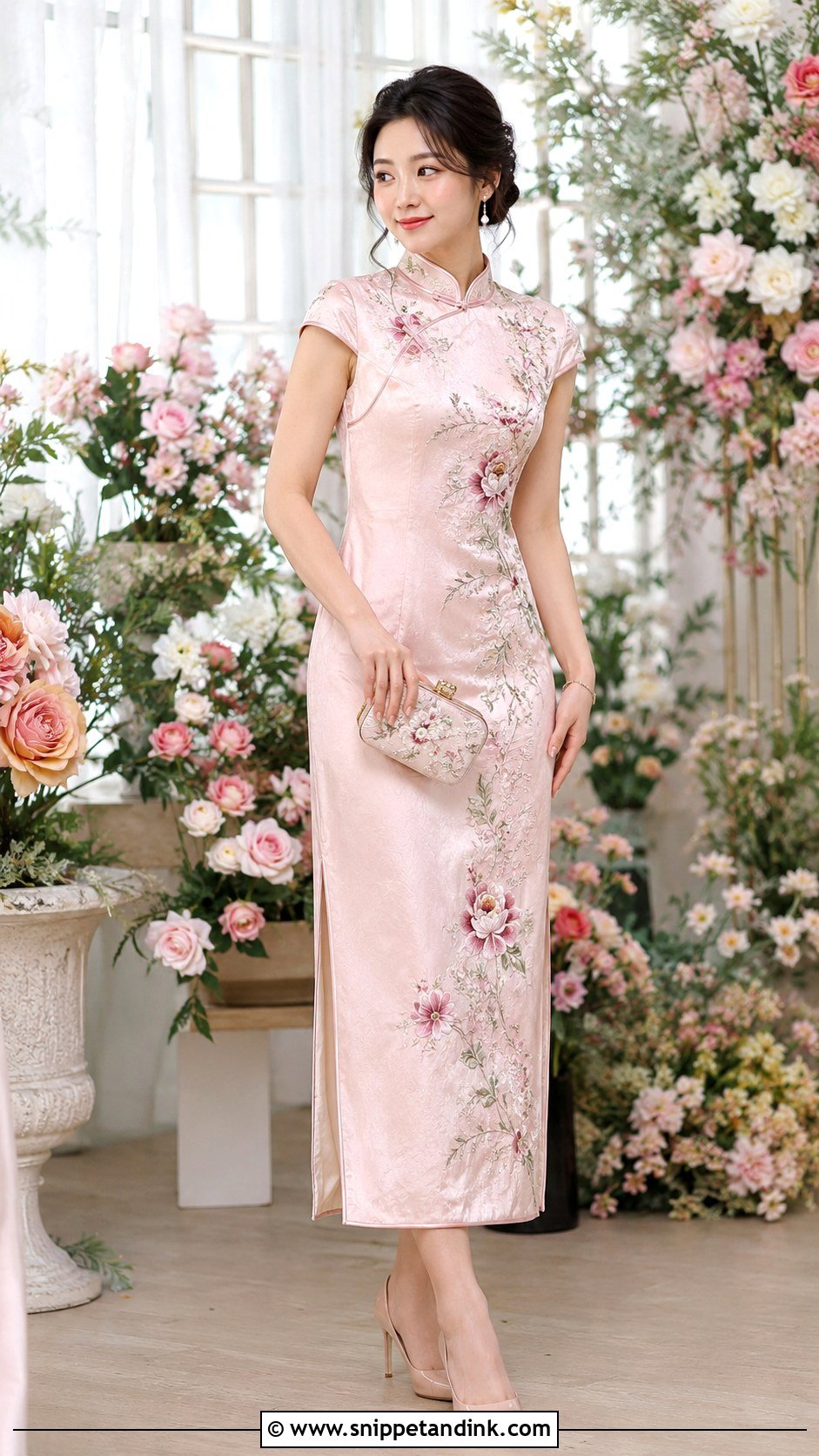
Blush, rose and dusty pink suit engagement photos, reception changes and modern tea ceremonies. Floral embroidery, satin and delicate frog buttons keep a pink qipao polished, and nude or gold heels, pearl earrings and a small embroidered clutch complete it. Pink is a celebratory colour in Chinese tradition, so families usually accept it readily. My advice is to keep the makeup slightly warmer than the dress; matching pink on lips, cheeks and fabric turns the whole look sugary.
11. Red Hanfu Wedding Dress
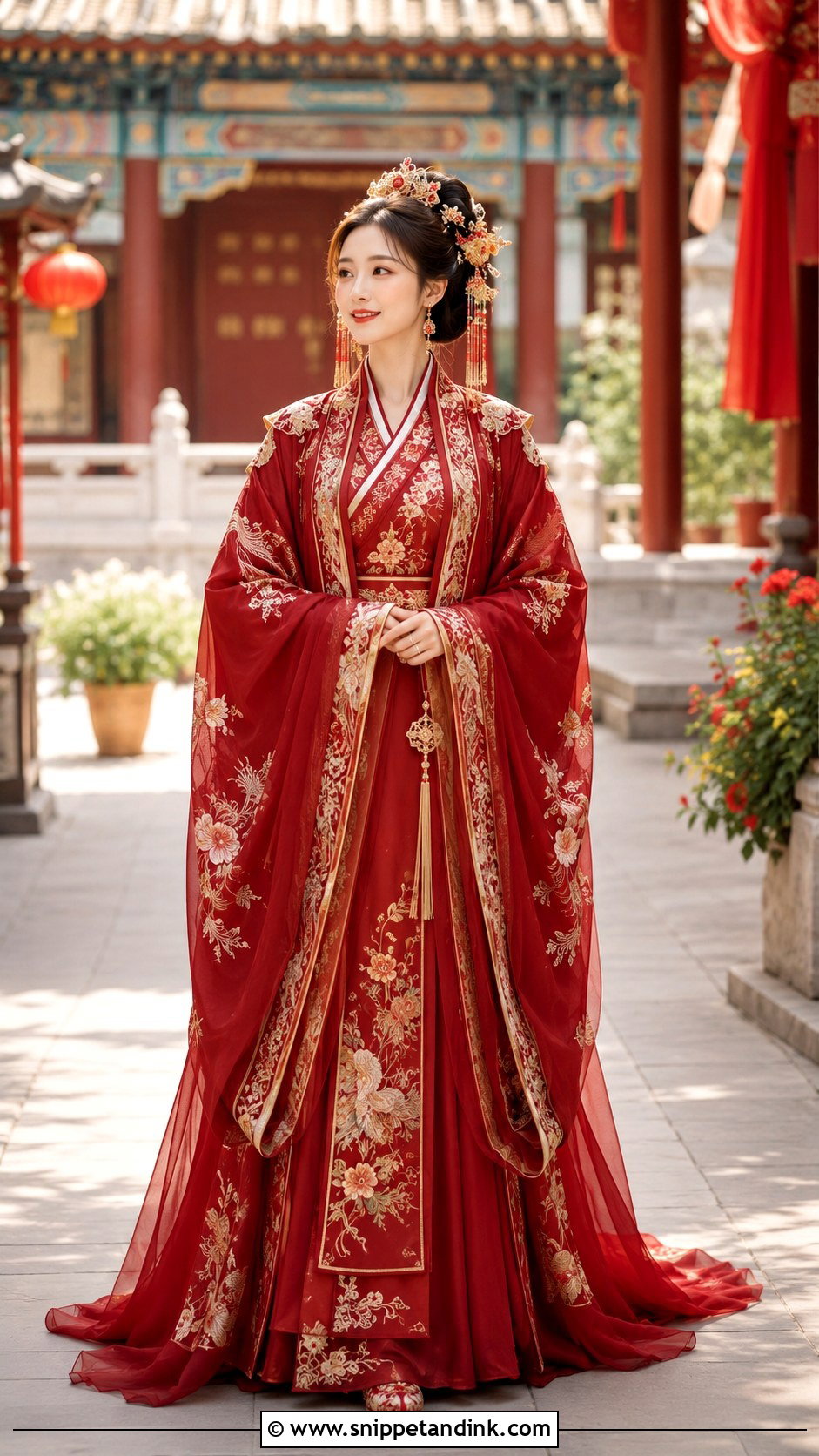
Hanfu is the most dramatic outfit here. Wide sleeves, layered robes, a cross collar, a long skirt and a sash create flowing movement and a strong ceremonial presence. Choose red with gold trim or embroidered clouds and flowers. Those sleeves need practice: they trail into tea cups, drag on tables and catch on chairs, so I’d walk and serve in the outfit before the day. Embroidered cloth shoes or hidden platforms add comfort and height, and a structured updo with gold hairpins balances the volume. Outdoor portraits show it at its best.
12. Tang Dynasty Hanfu Wedding Dress
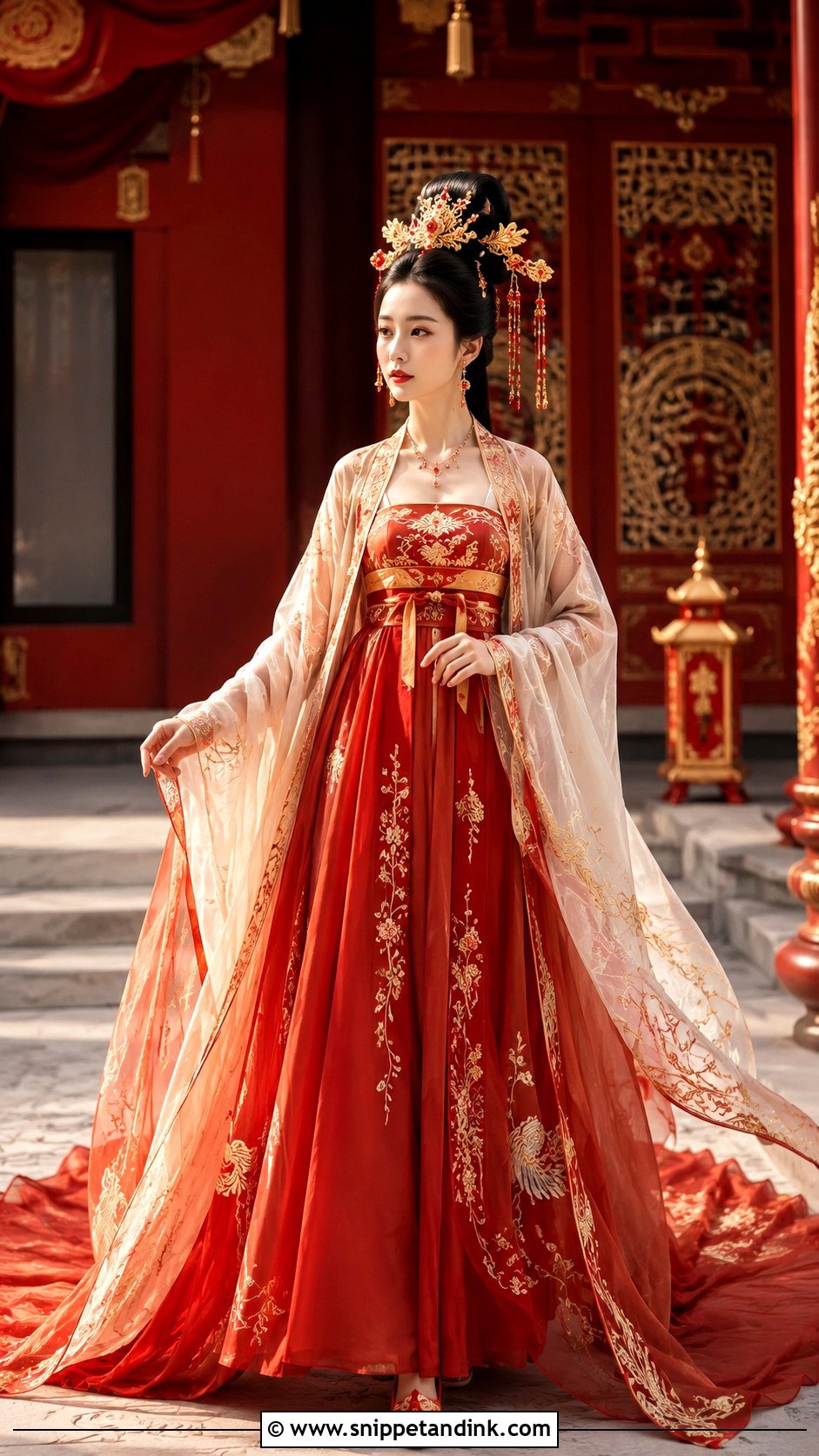
Tang-style hanfu is grand and artistic: a high waist set just under the bust, flowing layers, a draped shawl and wide sleeves. Red and gold with green accents create the rich historical mood. Pair it with ornate hairpins, dangling earrings and embroidered shoes. Because the silhouette is spacious, it’s comfortable to wear, but the shawl slides constantly unless it’s pinned at the back of each shoulder. It’s a strong choice for portraits and heritage-focused weddings.
13. Ming Dynasty Hanfu Wedding Dress
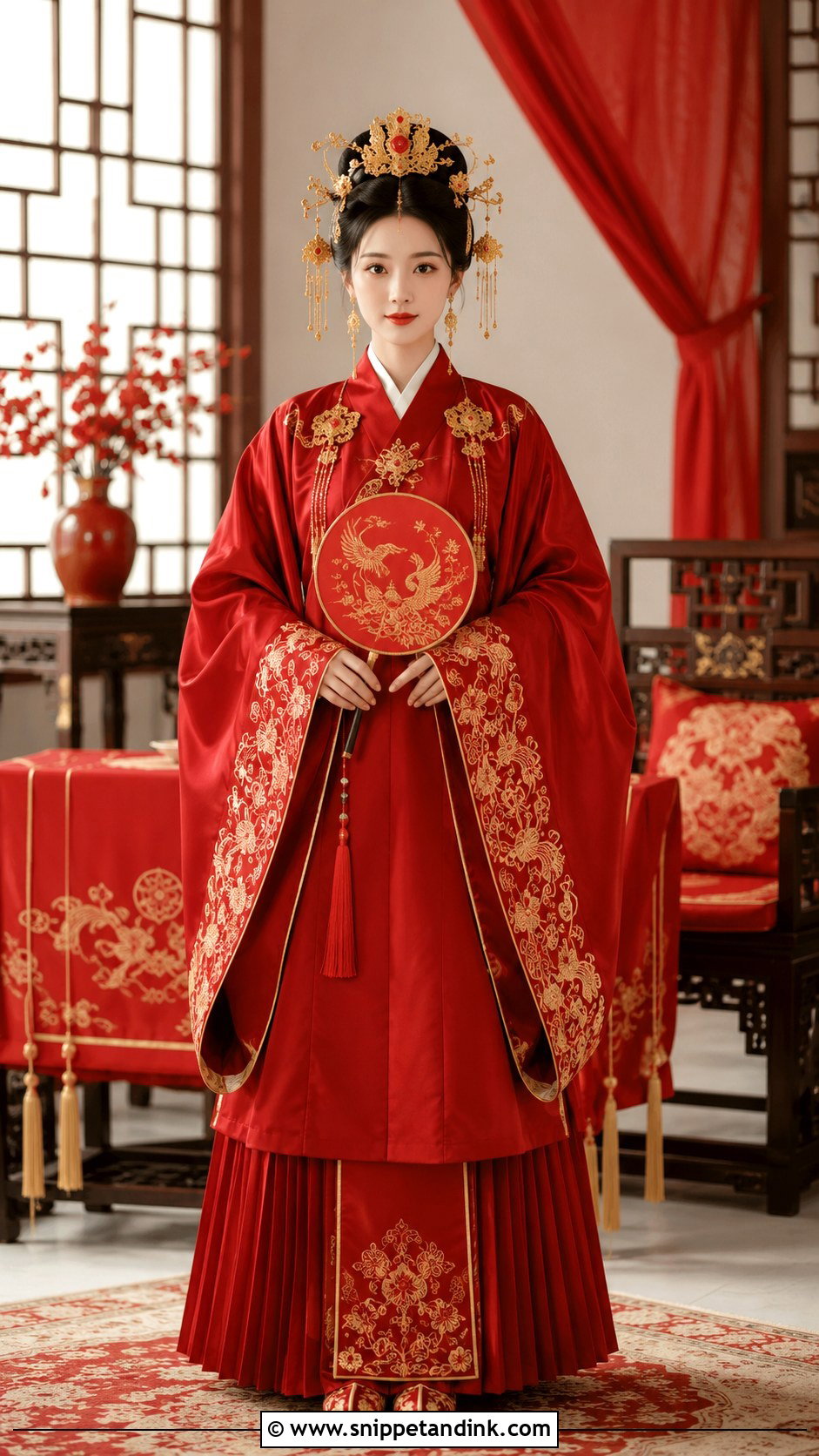
Ming-style hanfu is more structured and dignified: a red robe over a pleated skirt with wide sleeves and a balanced shape from shoulder to hem. Gold trim, cloud patterns and woven motifs add ceremony. The pleated mamianqun skirt is heavier than it looks, so I make sure the waistband ties firmly over a slim inner layer rather than bulky clothing. Embroidered shoes, a red veil or fan and classic gold jewelry finish it. It gives full coverage and presence without a fitted silhouette.
14. Song Dynasty Hanfu Wedding Dress
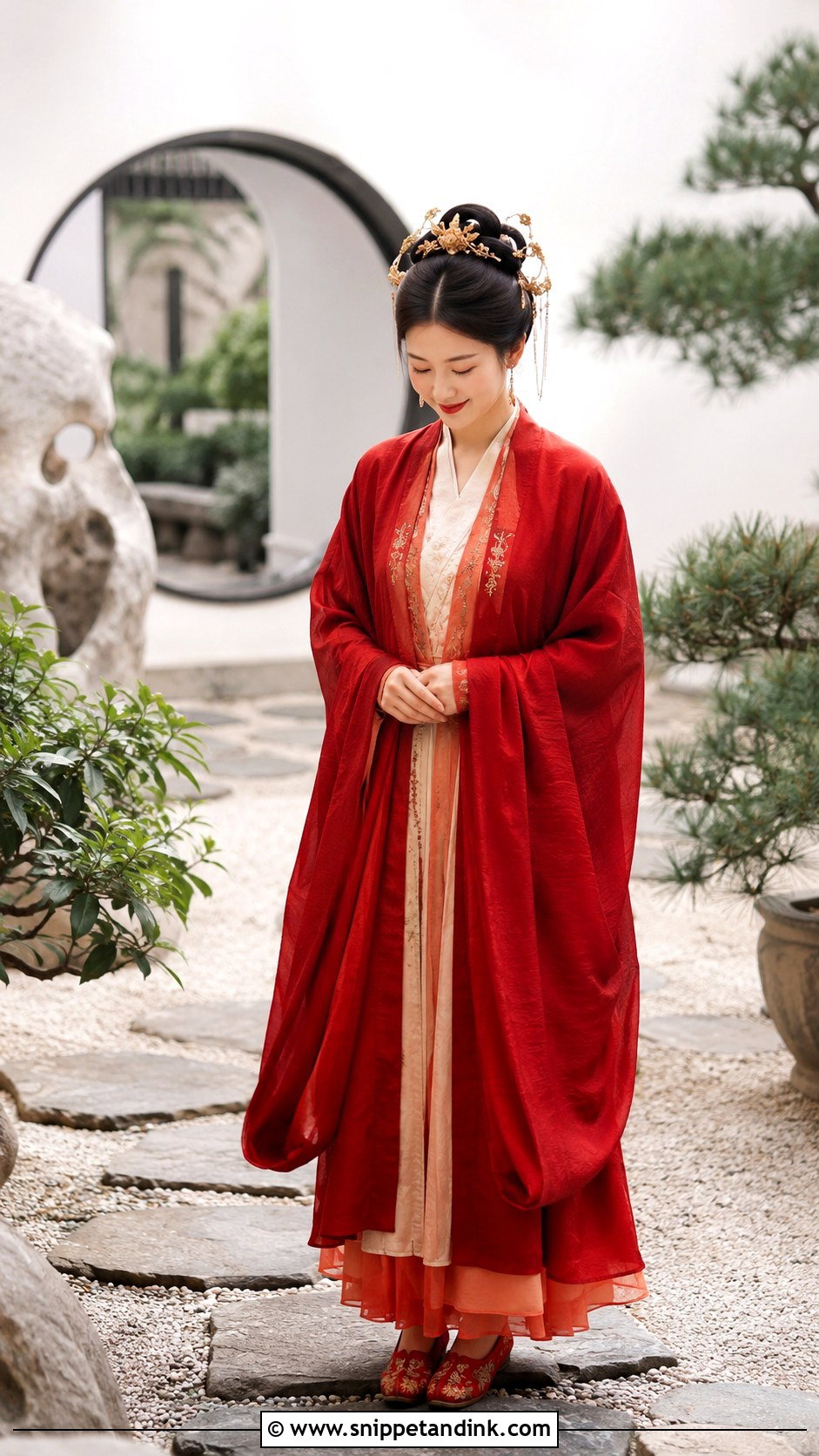
Song-style hanfu is the quiet one. The lines are cleaner and more restrained than Tang looks, with long sleeves and gentle layers, often a red or deep burgundy robe over a lighter inner garment. I like it for intimate ceremonies and garden photos, where heavy ornament can look out of place. Simple gold hairpins, embroidered flats and small earrings keep it calm. Choose a fabric with a soft sheen, since matte layers in burgundy can photograph dark.
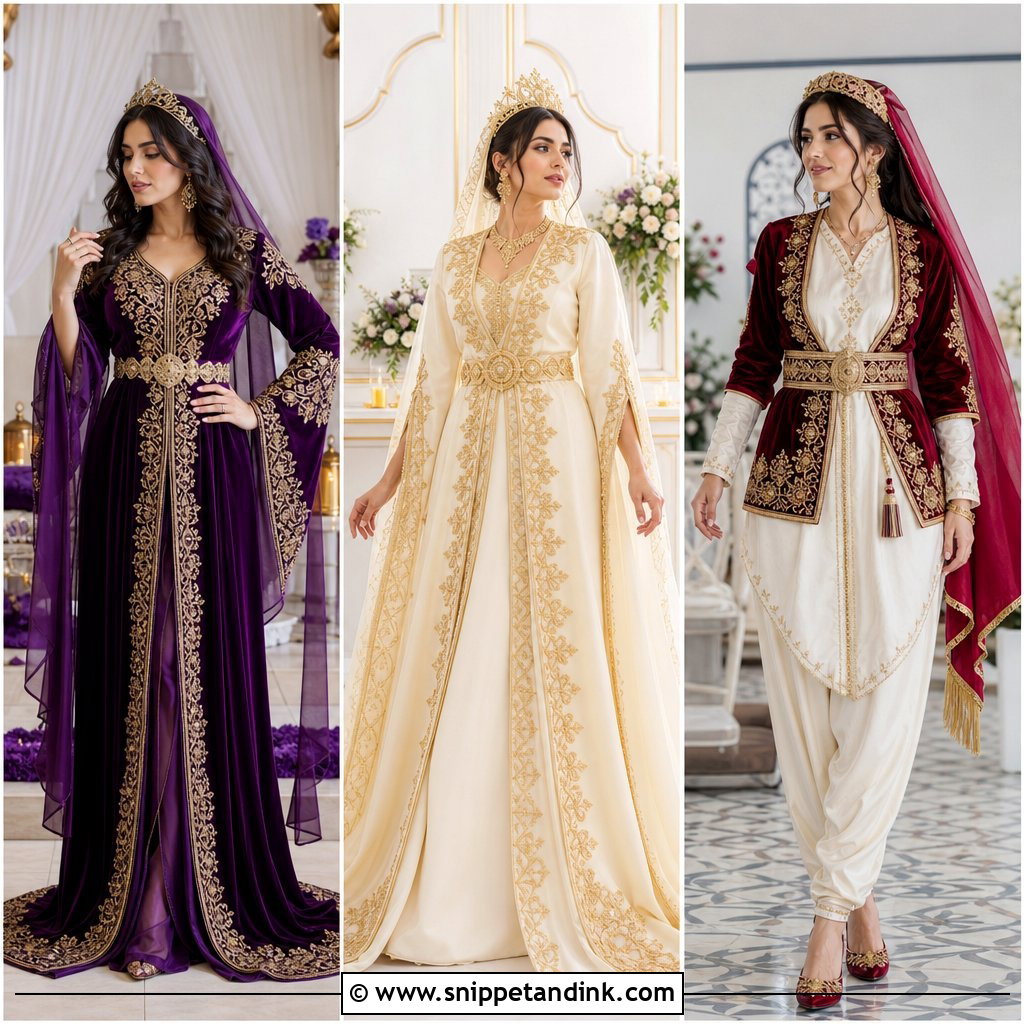
15. Fengguan Xiapei Wedding Dress
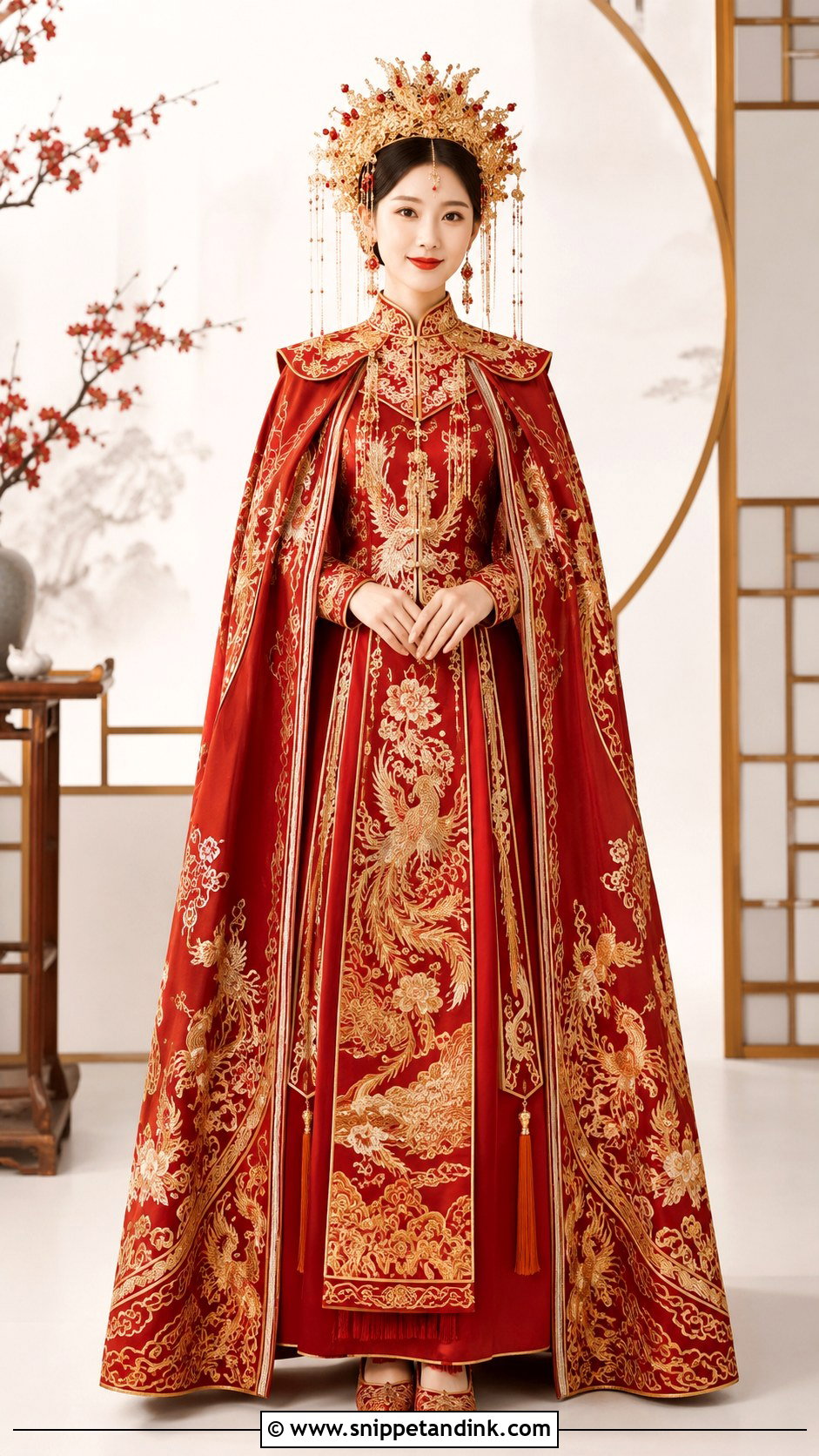
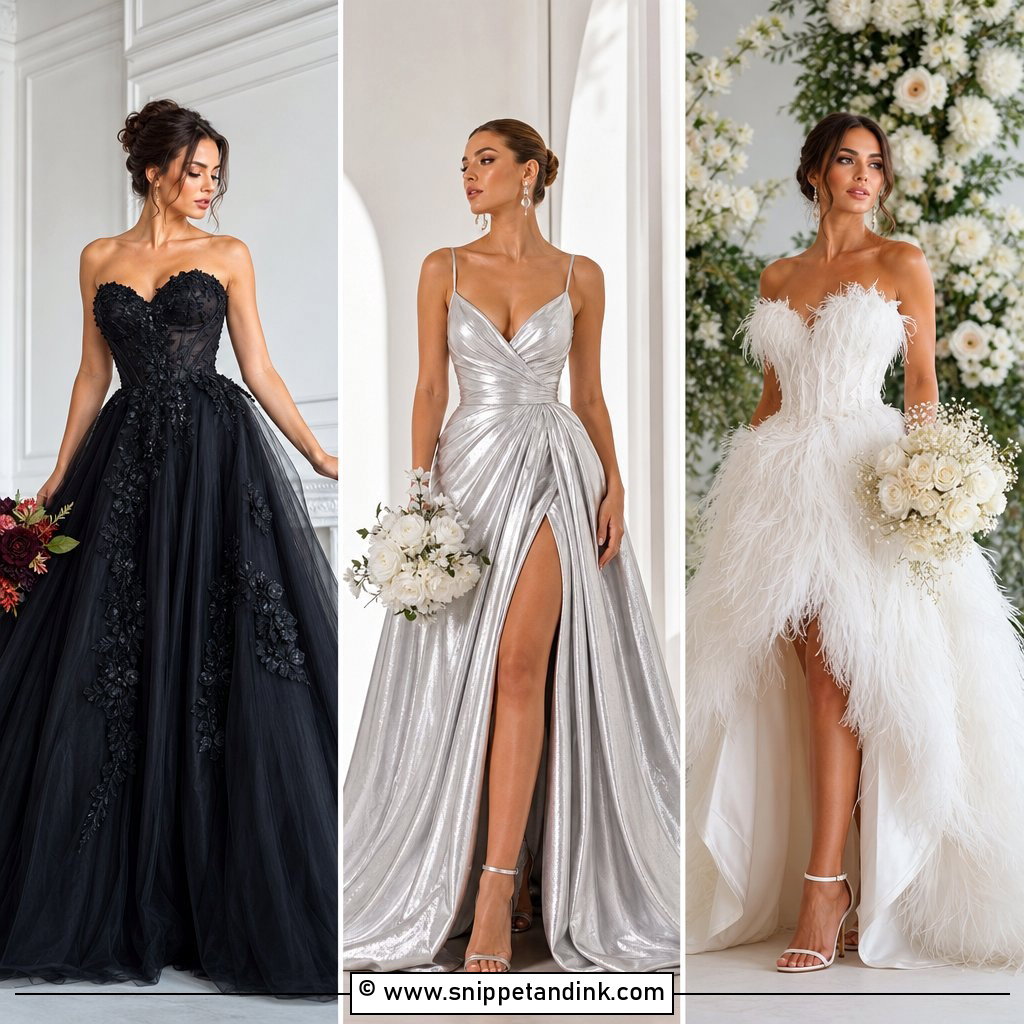
Fengguan xiapei means phoenix crown and embroidered cape, and it’s the most ceremonial outfit in Chinese bridal dress. The richly decorated robe or cape comes with a phoenix crown-inspired headpiece, usually in red and gold with layered accessories. Full crowns are heavy, and wearing one for hours strains the neck, so I plan it for portraits and the key ceremony moments, with a lighter hairpiece afterward. The hair underneath needs a firm base to anchor the crown. This look is meant to be grand, and that’s its appeal.
16. Red Wedding Dress With Phoenix Crown
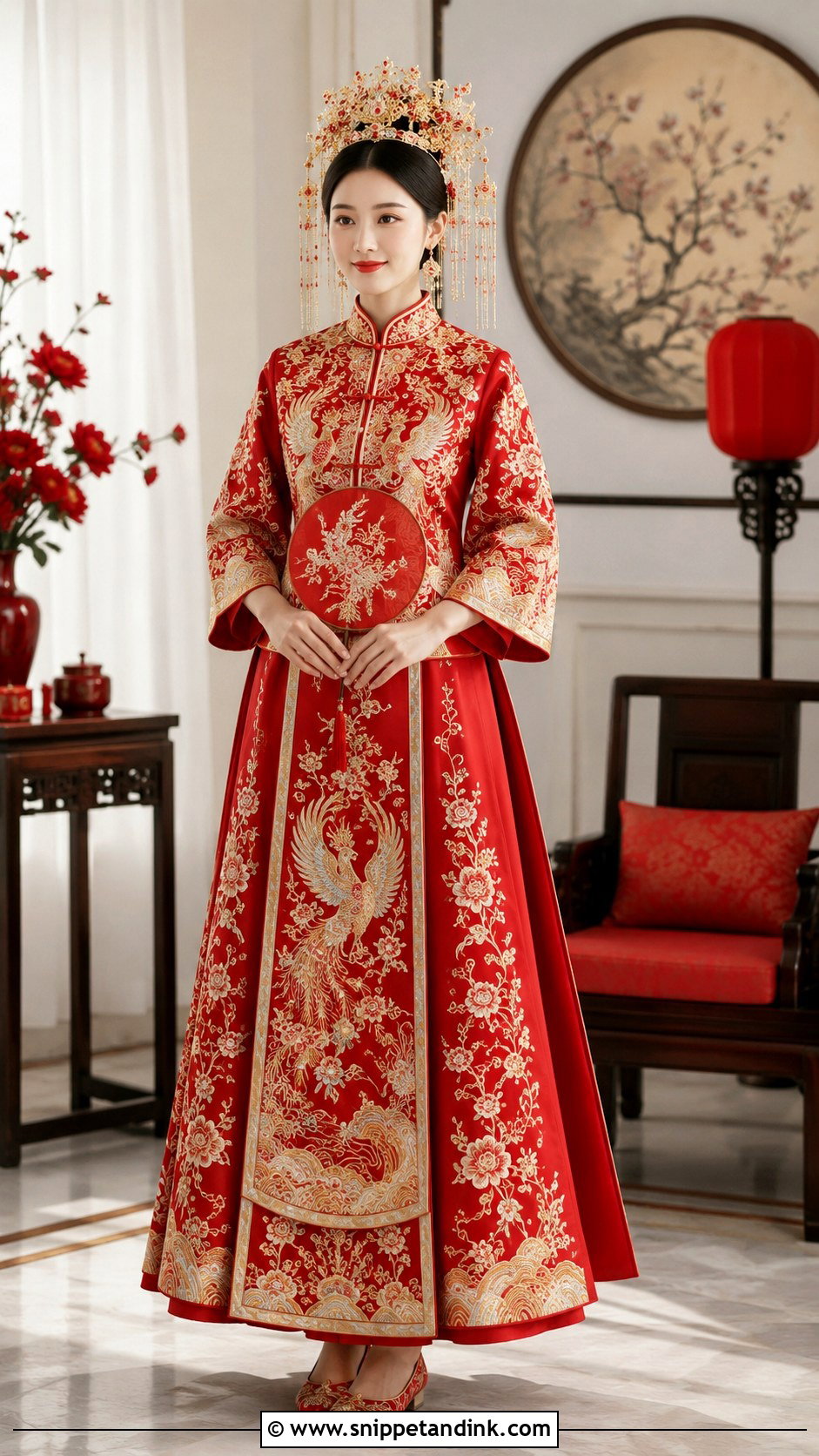
You don’t need the full fengguan xiapei to wear a phoenix crown. Pair the crown with a xiuhe, a qun kwa or a hanfu robe depending on how formal you want to go. The crown adds height, shine and ceremony, so the dress underneath should fit well and stay simple near the neckline. I’d keep earrings small; drop earrings swing into the crown’s dangling ornaments. Red embroidered shoes and a fan complete it for indoor portraits, tea ceremony photos or a grand entrance.
17. Red Bridal Cape Qipao Wedding Dress
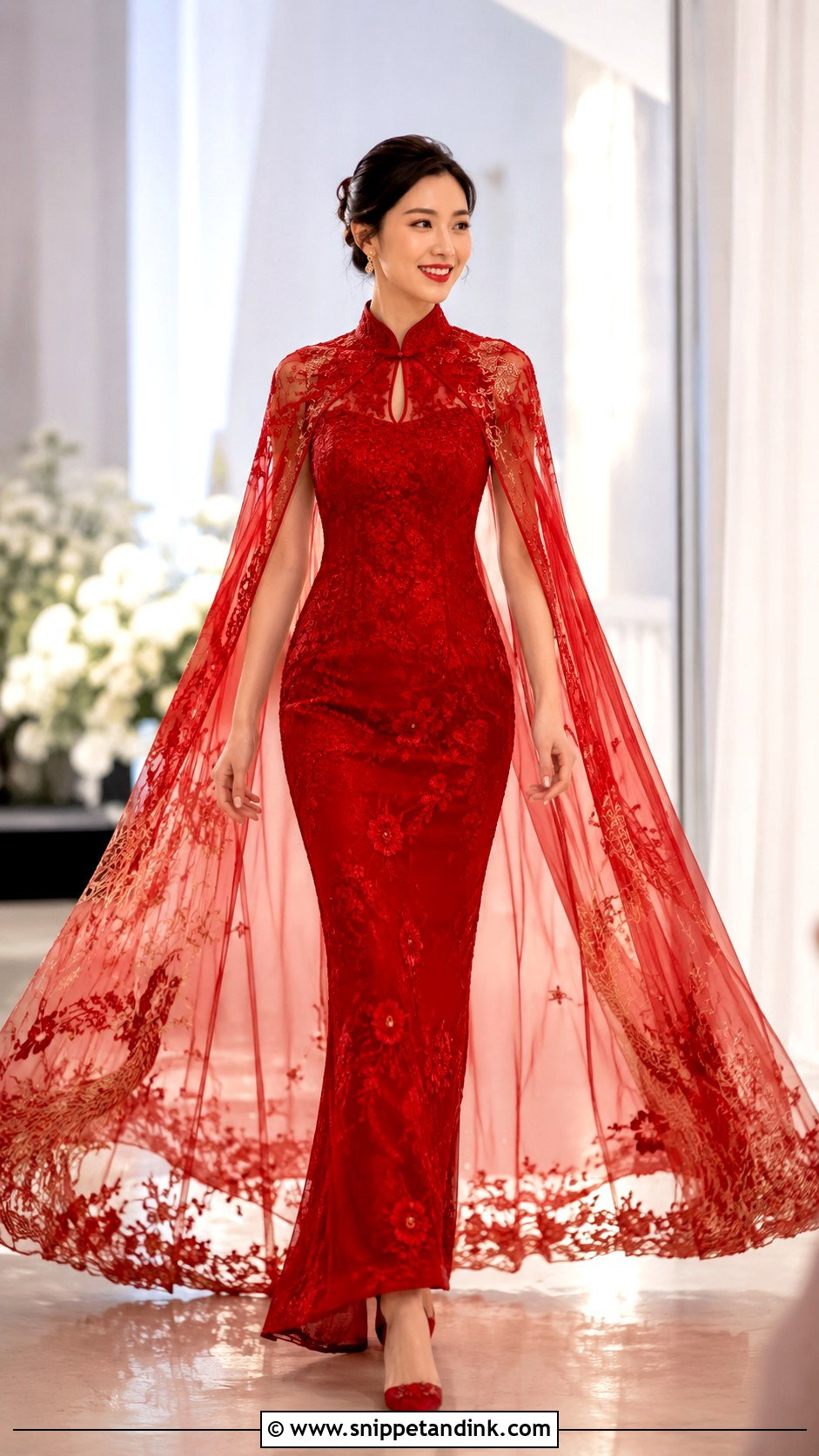
A cape over a red qipao combines a fitted shape with movement around the shoulders and back. Sheer tulle, embroidered organza or brocade-trimmed fabric keeps the cape bridal rather than theatrical. It works best in motion, so it shines at a banquet entrance or in walking portraits. The cape should attach at the shoulder seams or with hidden snaps, not tie at the throat, which pulls the mandarin collar out of line. Pointed heels, a polished updo and small gold earrings finish it.
18. Embroidered Red Satin Wedding Dress
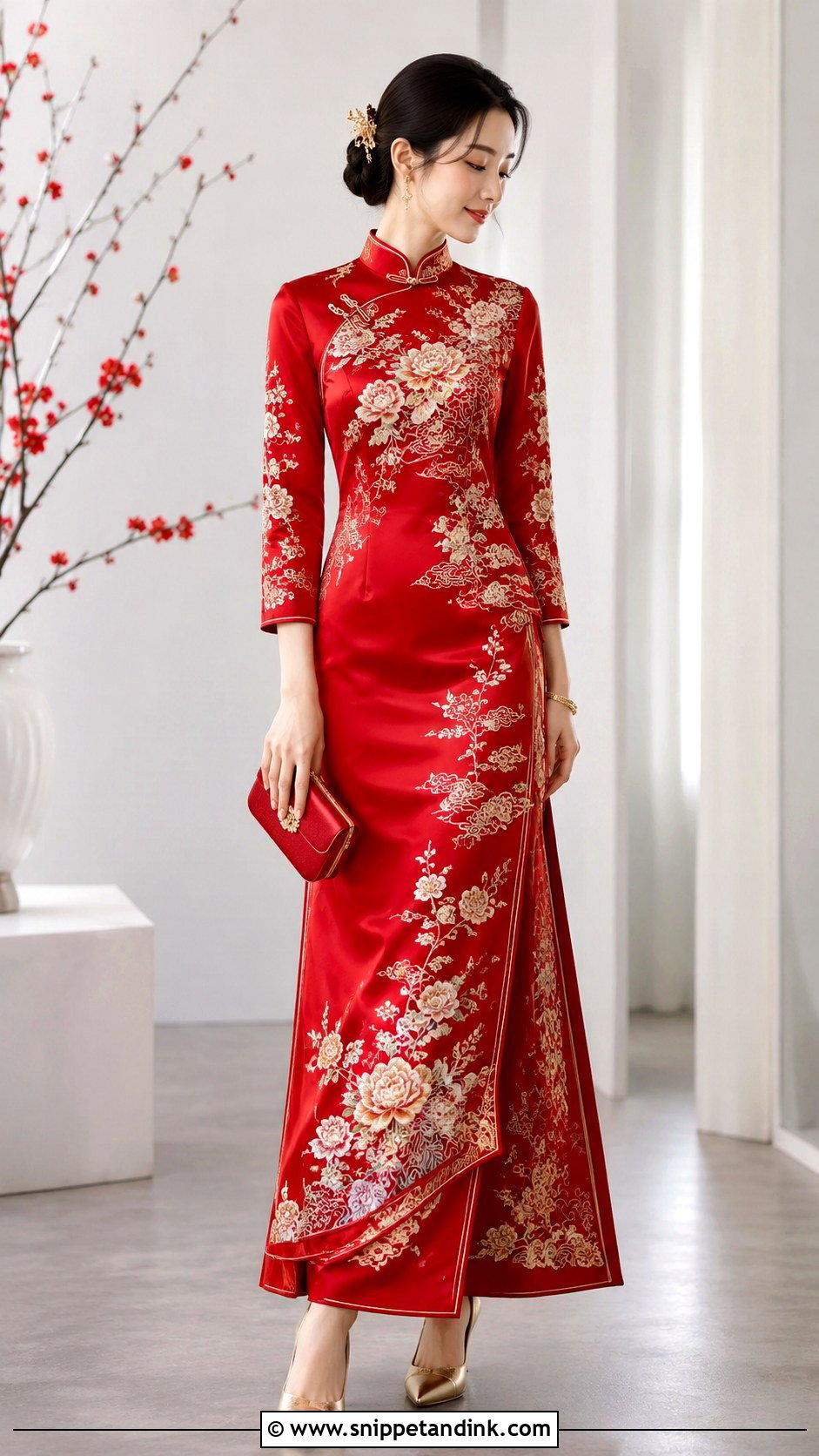
Red satin has a smooth surface that carries embroidered flowers, birds, clouds or lucky patterns well. The cut can be a qipao, an A-line or a fitted gown with a mandarin collar. Satin reflects light strongly, so keep the hair clean and the jewelry simple. Its weakness is creasing: red satin shows every wrinkle from a car journey, so I bring a handheld steamer and never let the bride sit in it until we arrive. Gold heels and a red clutch keep it formal without weight.
19. Red Brocade Wedding Dress
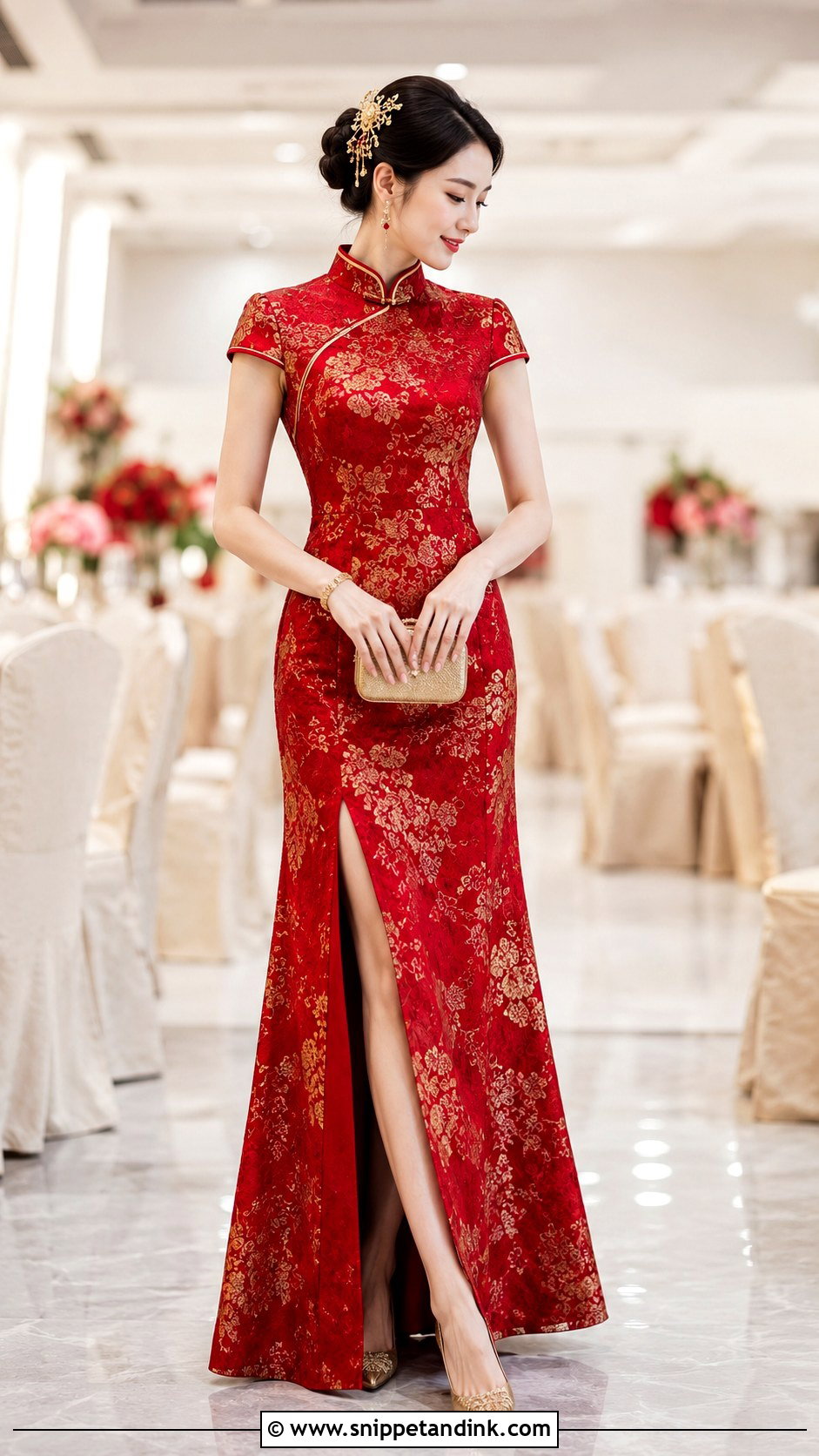
Brocade has its pattern woven in, so a red brocade dress has depth before any embroidery is added. A brocade qipao, xiuhe or structured gown looks rich up close and in detail shots. It’s also stiff and warm, which makes it better for cooler seasons and air-conditioned banquet halls than a summer garden. Keep the silhouette comfortable and avoid extra layers. Gold shoes, a matching comb and delicate earrings are enough.
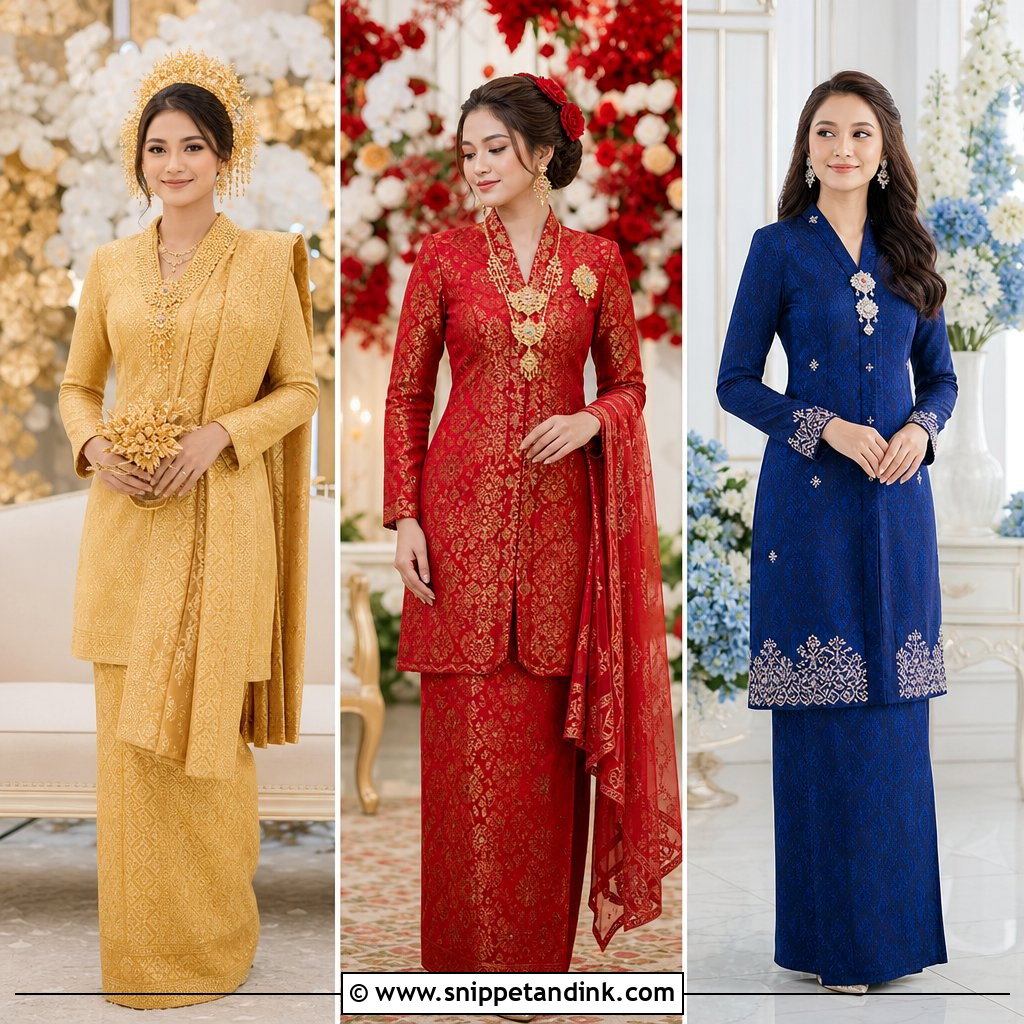
20. Red Lace Qipao Wedding Dress
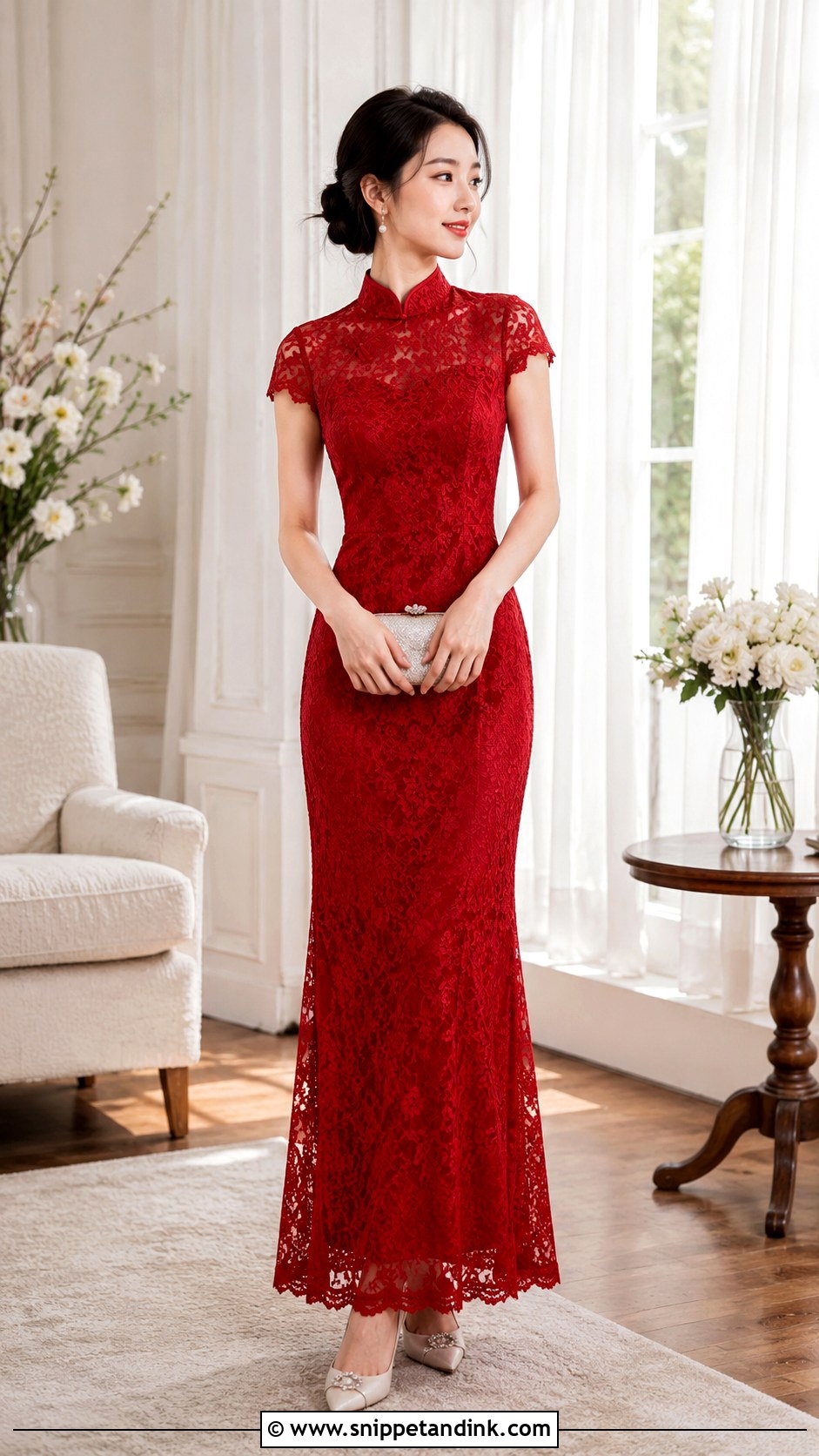
Lace softens the qipao’s fitted line, while the mandarin collar and traditional closures keep it clearly Chinese. Always choose lined lace. A gold or nude underlayer gives dimension, while a red lining keeps it rich and solid. Lace on a close-fitting dress can stretch at the seat after hours of sitting, so I prefer a corded lace with some body over very fine Chantilly. Simple heels, pearl earrings and a small clutch suit it, with a low bun or soft waves.
21. Red Velvet Qipao Wedding Dress
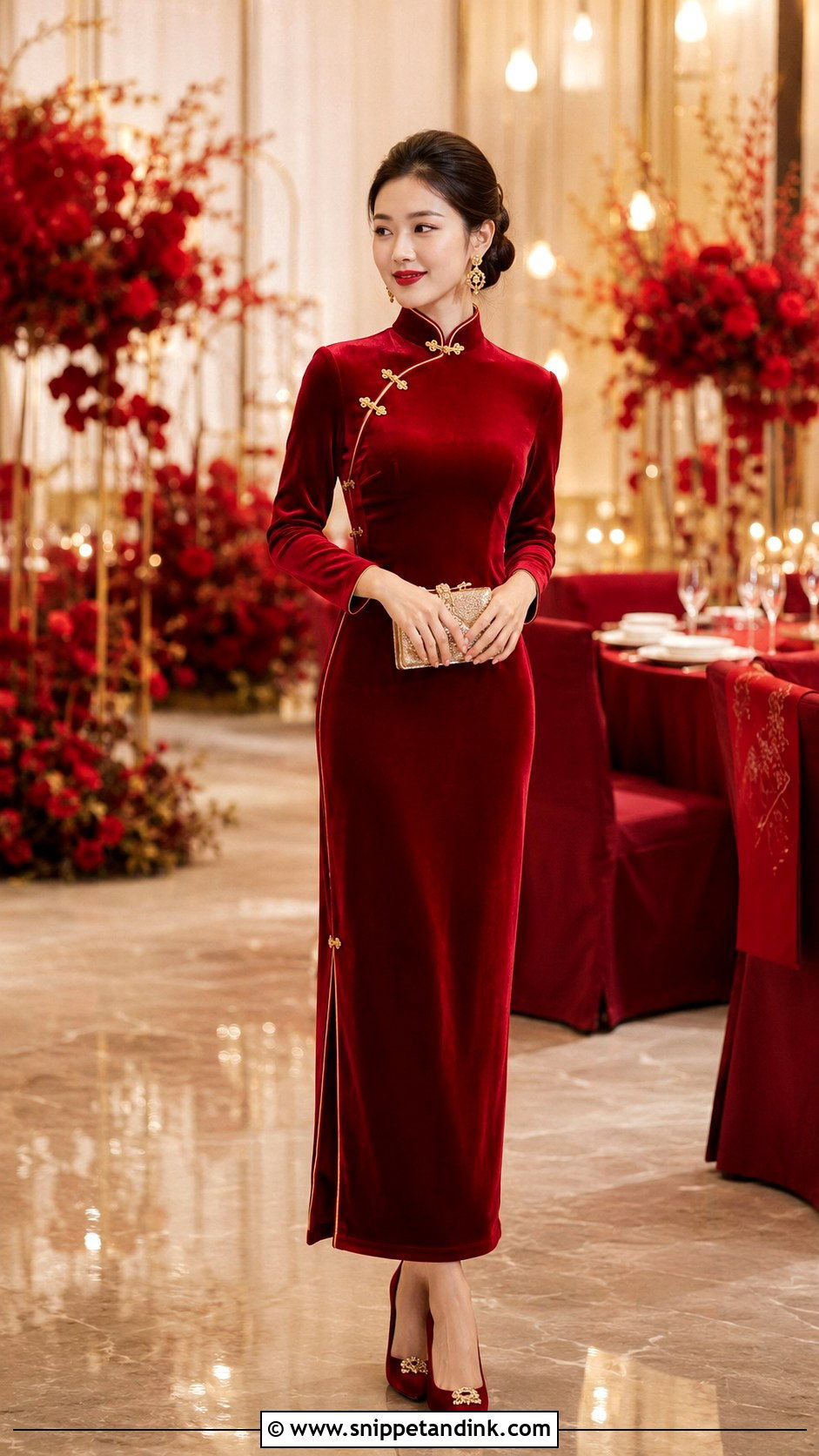
Velvet suits winter. Deep red, wine or ruby velvet with gold buttons or subtle embroidery gives the qipao shape a soft, deep surface that photographs warmly. Closed-toe heels, gold earrings and a sleek clutch go with it. Velvet is warm and heavy, and its pile marks when pressed, so I wouldn’t choose it for a hot venue and I’d hang it rather than fold it before the wedding. Keep the neckline uncluttered for evening banquets and formal indoor ceremonies.
22. Two Piece Chinese Wedding Dress
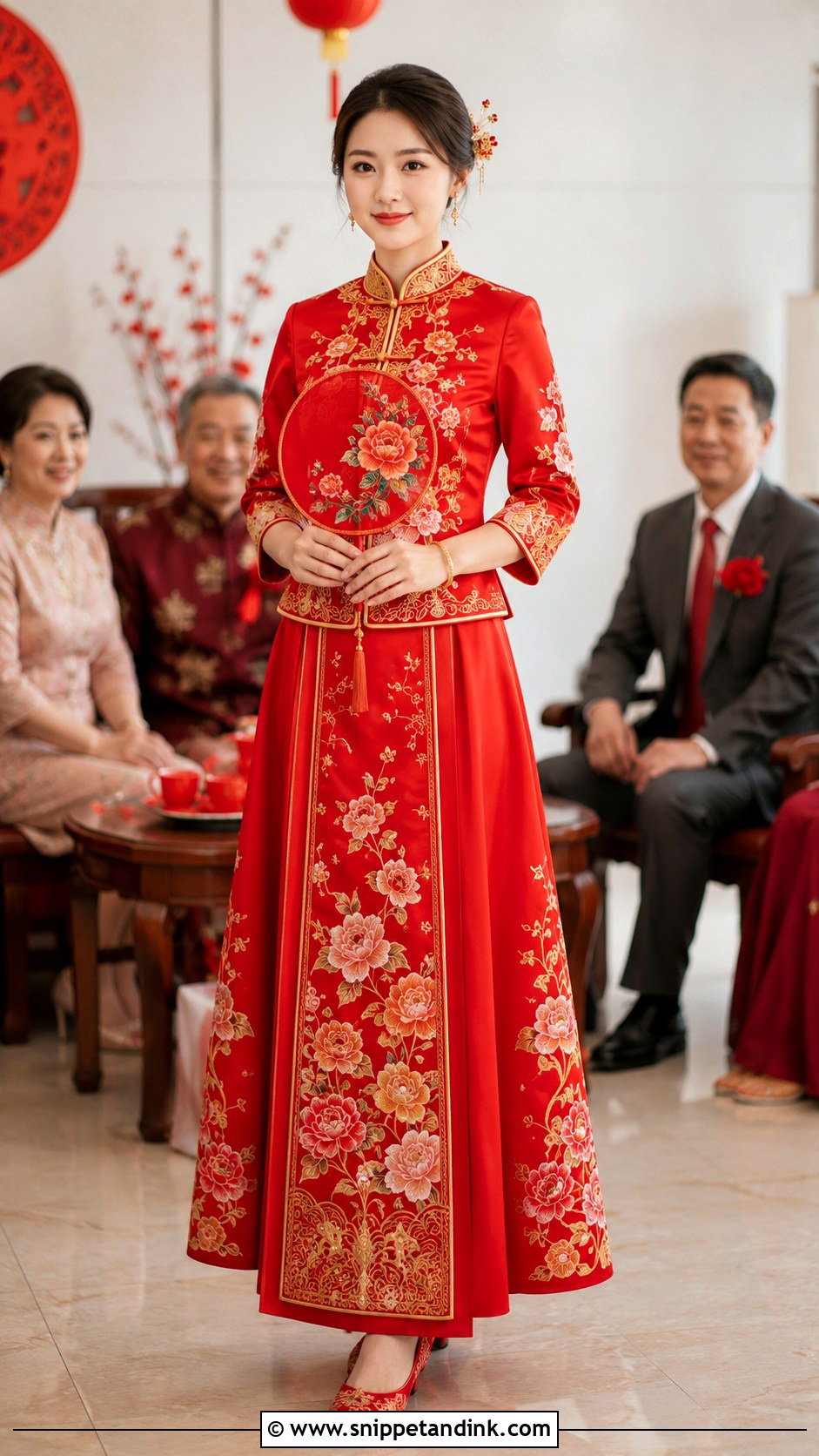
Separates are the practical choice. A two piece Chinese wedding dress can be a xiuhe, a qun kwa or a modern top and skirt with traditional details. A red embroidered jacket with a matching skirt is the classic tea ceremony outfit, and softer fabrics lighten it. Because the two parts are fitted separately, they’re more forgiving than a one-piece dress, which matters when top and bottom sizes differ. Embroidered flats or low heels, a gold bracelet and a fan complete it.
23. Modern Chinese Tea Ceremony Dress
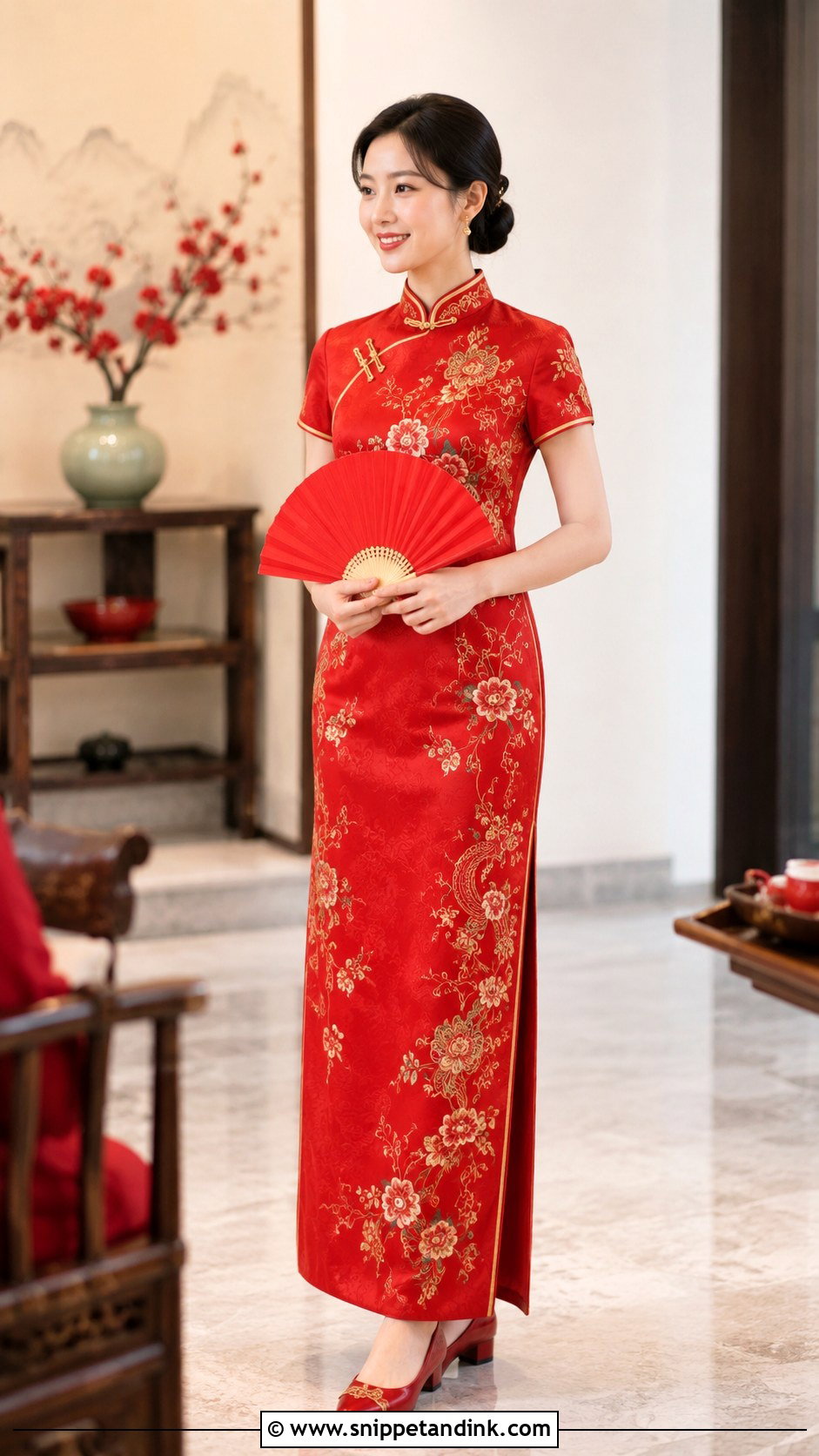
Not every bride wants a heavy outfit for the tea ceremony, and a lighter choice is perfectly respectful. A fitted red qipao, a soft xiuhe or a simple embroidered dress all work, provided the details carry the meaning: mandarin collar, red, gold embroidery or traditional buttons. You’ll stand, kneel and bow while serving tea to each relative, so I check that the skirt allows a full kneel and the shoes slip off easily. Small gold earrings, a red fan and a neat hairstyle finish it.
24. Traditional Chinese Reception Dress
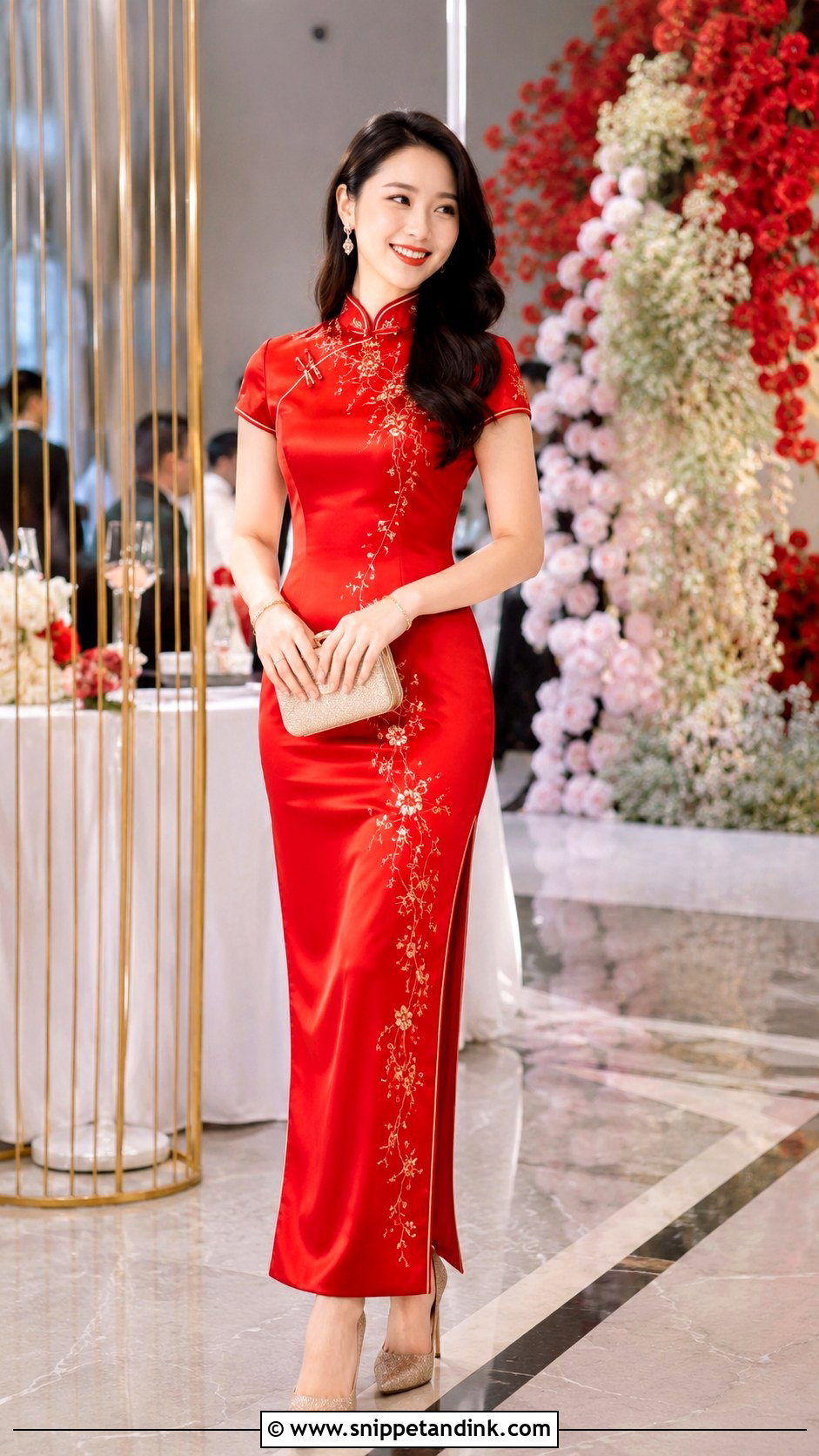
At the reception, ease matters most. Many brides change into a qipao because it’s polished but lighter than an embroidered ceremony outfit. Red, champagne, blush and gold all suit. Choose heels you can stand in for hours, a small clutch and jewelry that won’t snag the fabric. If the ceremony outfit was ornate, this one can be sleeker. A side slit, satin finish or subtle embroidery adds drama while leaving you free to toast each table and greet guests.




25. Red And Gold Chinese Bridal Outfit
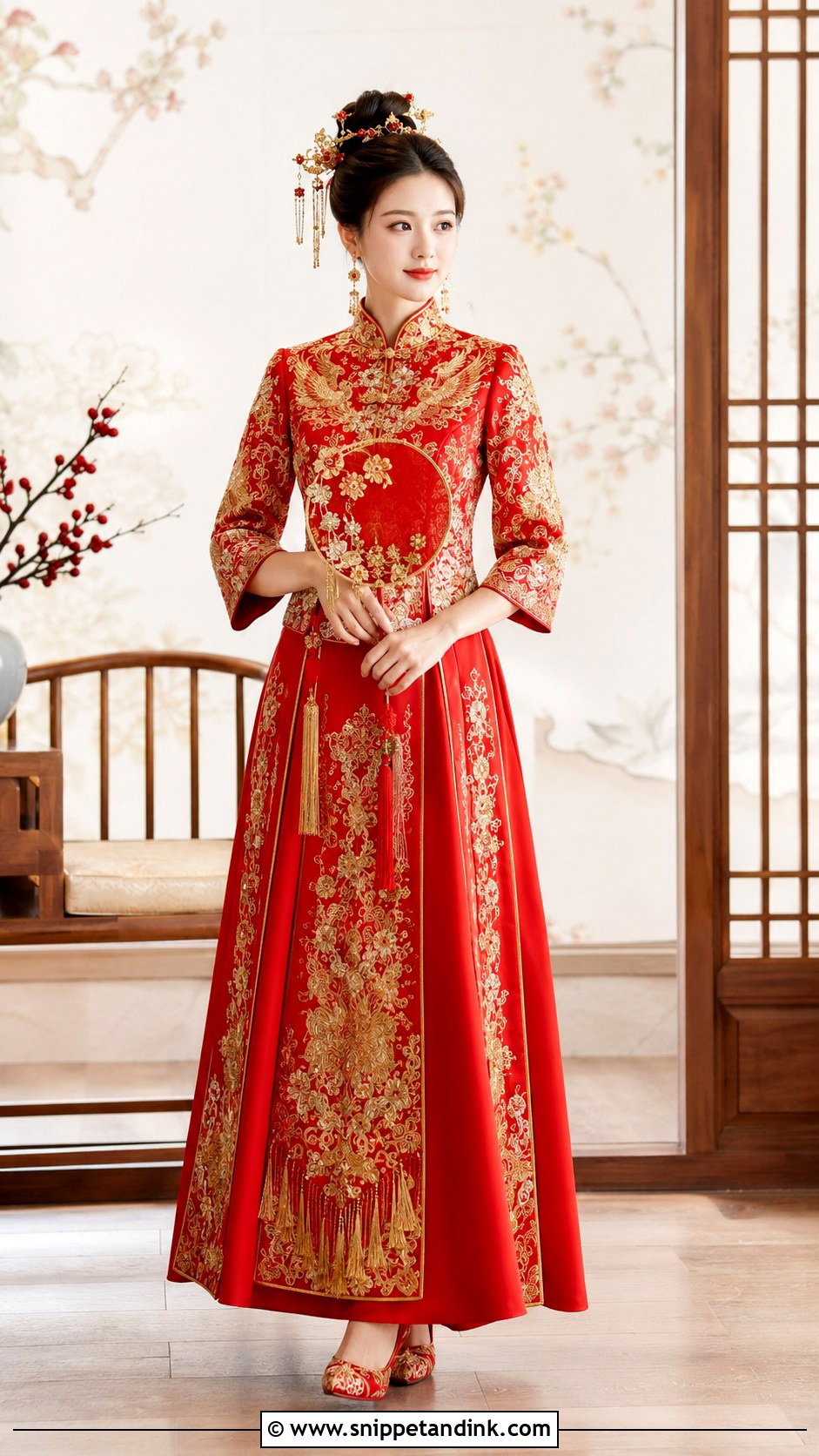
Red with gold is the pairing most brides picture first. Red carries celebration and joy, gold adds richness, and together they work on a qun kwa, xiuhe, qipao, hanfu or fusion gown. Pick the silhouette for your ceremony, then build around it: gold earrings, red shoes, a fan and a polished hairstyle. Heavy embroidery calls for simple accessories, while a cleaner dress can take a stronger hairpiece or statement jewelry. I’d match the gold tones across thread, jewelry and shoes; yellow gold beside rose gold looks accidental in photos.
Two, Three or Four Outfits: Planning the Banquet Changes
Changing outfits during a Chinese wedding banquet is common, and each change takes longer than people expect. Once you count undressing, dressing, swapping hairpieces and fixing makeup, I allow around twenty minutes per change, and I plan where each one falls between courses.
- Write down which outfit belongs to which moment: tea ceremony, banquet entrance, toasting tables, send-off.
- Choose a single hairstyle that works with every headpiece, or schedule the hair change with your stylist ahead of time.
- Hang the outfits in order in one room near the hall, with shoes and jewelry bagged beside each.
- Ask one helper to own the changes. She should practise every closure, frog button and sash beforehand.
- Keep a small kit: safety pins, fashion tape, a steamer, blotting papers and the lipstick for each look.
Renting, borrowing or inheriting a qun kwa
A fully embroidered qun kwa is a significant purchase, so many brides rent one or wear a mother’s or grandmother’s. Older pieces often need gentle repair to loose threads and careful refitting, and older metallic thread may have dulled. I’d have an heirloom checked by a specialist months ahead, since adjustments to dense embroidery are slow, and never let anyone iron directly over the gold work.
A Red Thread Through Every Change of Dress
Traditional Chinese wedding dress ideas span a wide range, and each one says something different. The qun kwa is classic and ceremonial, the qipao sleek, the xiuhe soft and comfortable, hanfu flowing and historical, and fusion pieces bring in modern colour and lighter fabric. Most brides wear two or three of them in one day. Choose each outfit for the moment it has to serve, keep red somewhere in every look if your family values it, and make sure you can kneel, bow and sit in all of them.
You'll Like These Ideas:


Leave a Reply