
Most of the Chinese brides I dress wear more than one outfit, and the dress for each part of the day does a different job. A red qun kwa for the tea ceremony has to let you kneel and serve. A qipao for the banquet has to look sharp under ballroom light. A white gown with a mandarin collar might carry the Western ceremony. Red is still the colour families expect, because it stands for luck and joy, and gold embroidery, phoenixes, peonies and silk bring the cultural meaning. Below are thirty traditional and modern options, with notes on how each one actually wears.
Planning the Outfit Changes Around Tea, Banquet and Toasts
The number of outfits matters less than when you change. I plan changes backward from the schedule, because every switch costs time and someone has to help you with buttons, hairpieces and makeup touch-ups.
- Tea ceremony: choose something you can kneel and bow in repeatedly. Qun kwa and Xiu He Fu were made for this; a tight mermaid gown was not.
- Western ceremony, if you have one: this is where a gown with a train or a white qipao fits best.
- Banquet entrance: many brides change into a red qipao or fusion dress here, often between courses.
- Toasting the tables: you’ll walk the whole room, so a shorter hem and lower heels pay off.
Allow twenty to thirty minutes per change, longer if hair accessories have to come out. Keep a small kit in the changing room with safety pins, a steamer, blotting papers and spare hairpins. If the hair changes with the outfit, book the stylist for the whole evening, not just the morning.
1. Red Qipao Wedding Dress
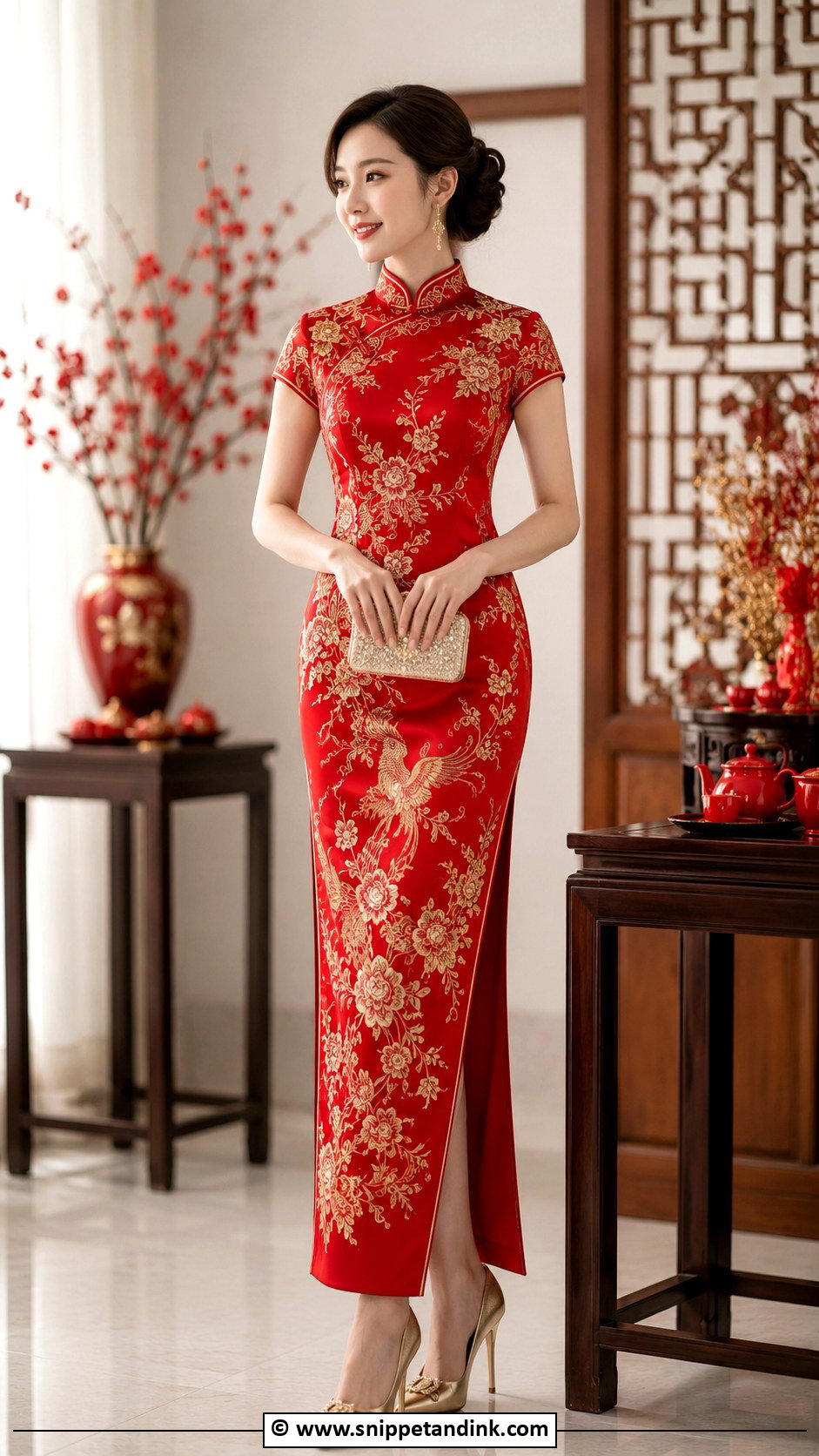
The red qipao is the classic: fitted body, high mandarin collar, side slit and frog buttons. It works for a tea ceremony, a banquet entrance or a reception change. Silk, satin and brocade all suit it, with gold phoenix, dragon, peony or cloud embroidery for a festive note. The fit point I watch is the collar: if it’s even slightly tight, you’ll feel it every time you bow your head to serve tea. A stretch lining and a tailored waist make a modern cut more comfortable. Finish with gold heels, small drop earrings, a sleek bun and a red or gold clutch.
2. Red Qun Kwa Wedding Dress
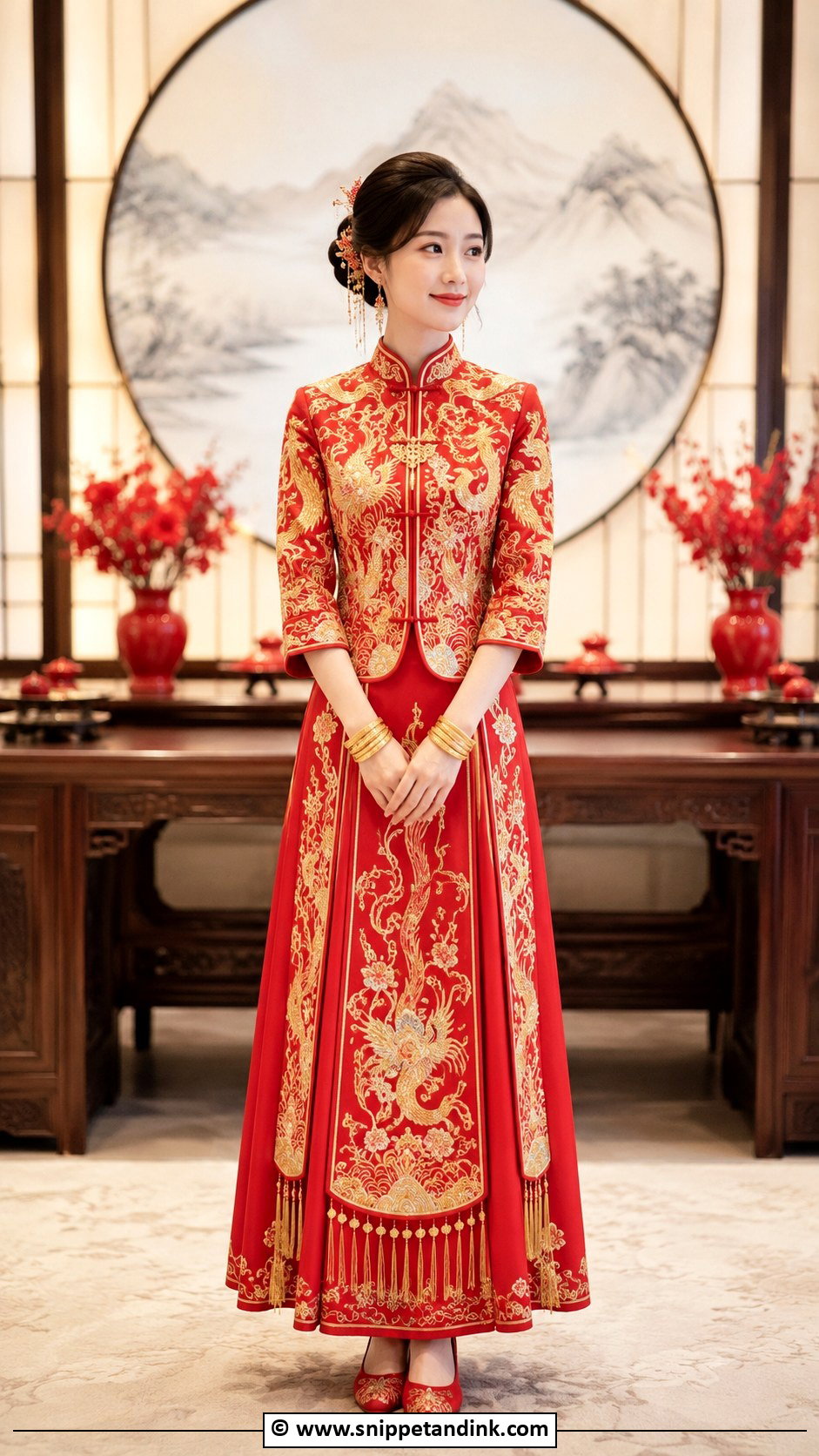
Qun kwa is the Cantonese two-piece: a structured jacket over a matching skirt, usually covered in gold or silver embroidery. It’s heavy. A densely stitched jacket carries real weight on the shoulders, so try it on for longer than you’d try a gown. I’d pick one where the embroidery is evenly spread rather than packed at the front, because it hangs better and doesn’t tip forward. Gold bangles, simple heels and a neat updo let the needlework lead. It covers the arms and suits families who want the most traditional look.
3. Xiu He Fu Wedding Dress
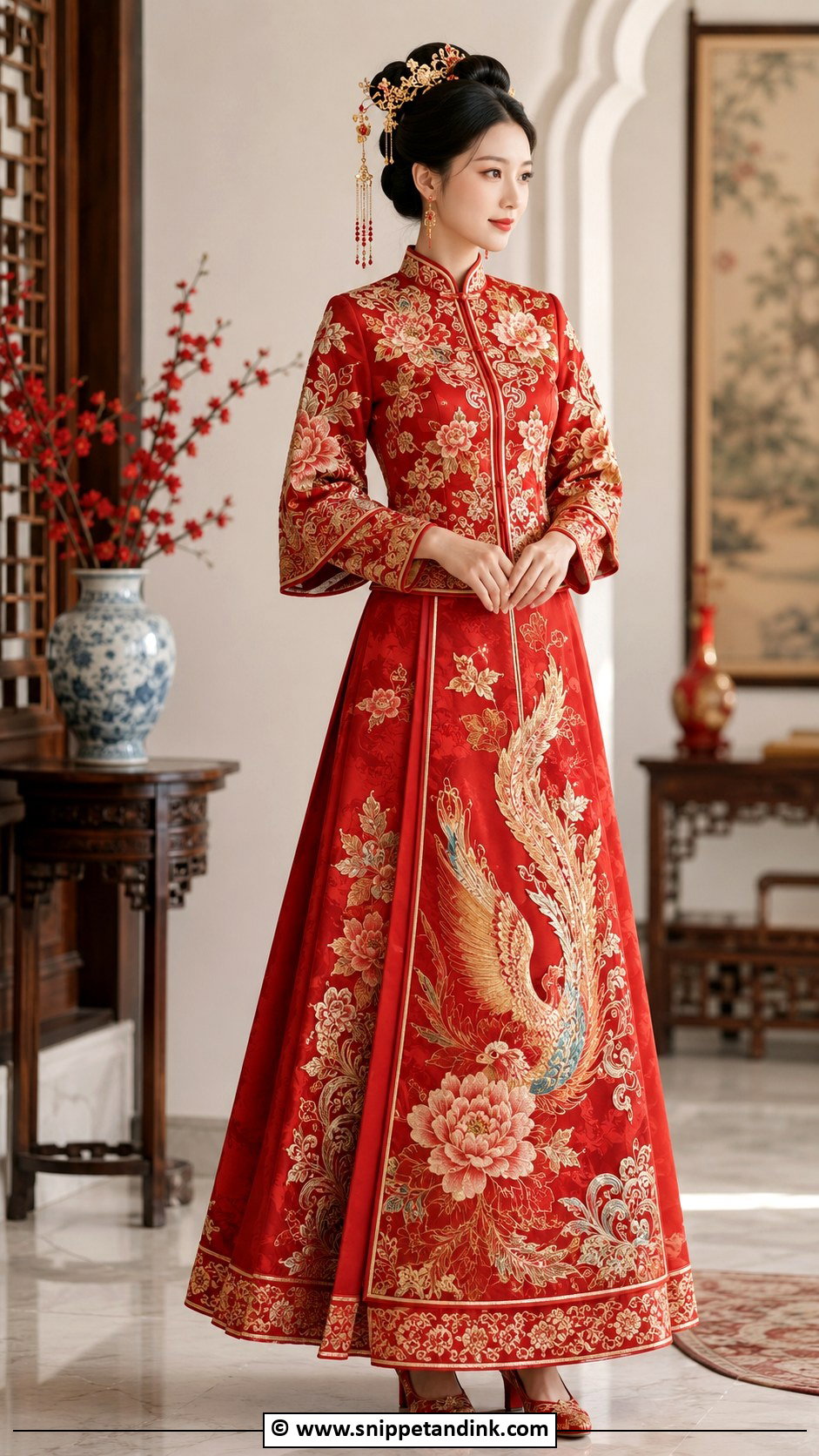
Xiu He Fu is softer than qun kwa: a looser jacket, a flowing skirt and traditional embroidery, often with wide sleeves, peonies and phoenixes on red. That looser cut is why I suggest it for long tea ceremonies. You can kneel, stand, greet relatives and kneel again without the jacket riding up. It doesn’t cling at the waist or hips, which many brides find easier to wear. Embroidered red shoes, gold hair pins and simple makeup with a red lip complete it.
4. Red Hanfu Wedding Dress
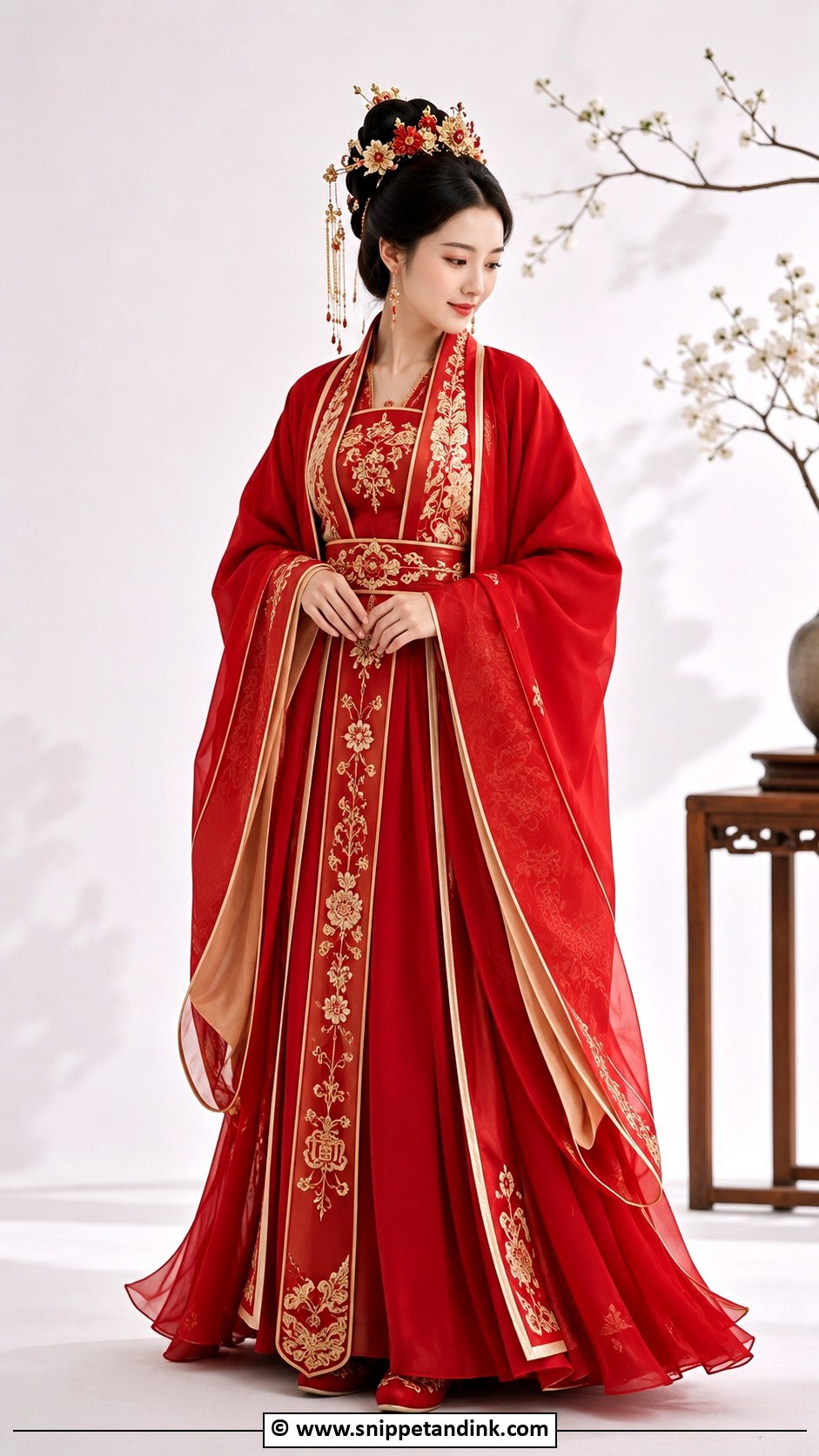
Hanfu wedding robes are layered: long sleeves, a flowing skirt and a crossed-collar or wrap bodice. Red and gold are most common, with burgundy or ivory trims as a personal twist. All those layers are warm, and the wide sleeves trail into teacups and dinner plates, so I’d save a full hanfu for the ceremony and portraits and change before the banquet. In summer, ask for lighter fabric in the inner layers. A traditional hairpiece or a structured bun keeps the neckline of the wrap clear.
5. Fengguan Xiapei Wedding Dress
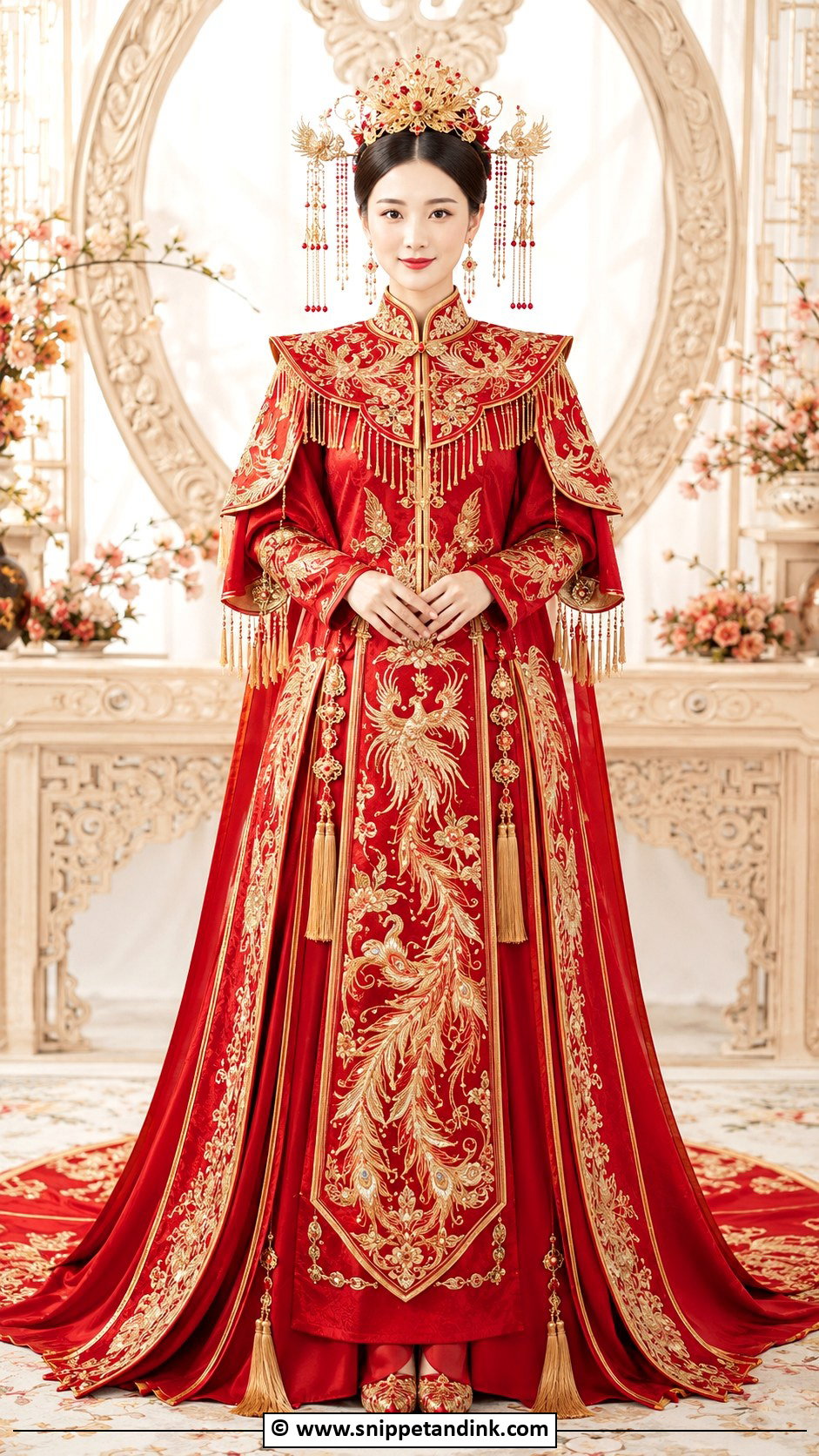
Fengguan xiapei is the most regal option: a richly decorated robe or two-piece, a phoenix crown-inspired headpiece and a ceremonial shoulder cape, often with beadwork and tassels. The crown is the part to plan around. A full phoenix crown is heavy and needs to be anchored by a hairstylist, and most brides can’t wear one comfortably for more than a few hours. Keep makeup smooth and hair neat underneath, with comfortable shoes hidden under the skirt. It’s at its best in formal portraits and the ceremony itself.
6. Modern Qipao Wedding Dress
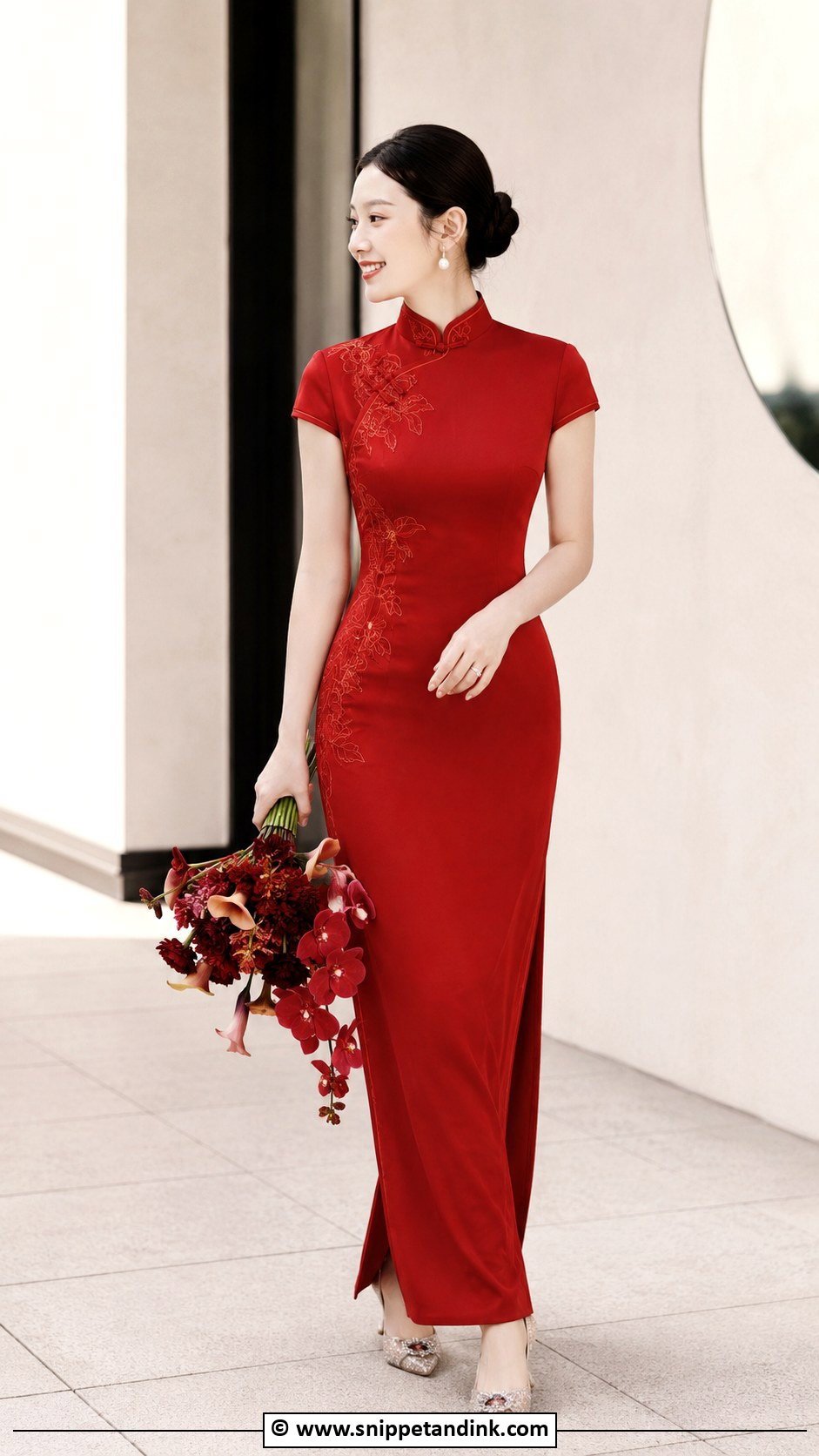
A modern qipao keeps the mandarin collar and fitted shape but might add cap sleeves, sheer panels, softer fabric or a train. Embroidery is usually lighter, which makes it easy to wear at a reception. The tailoring has to skim rather than grip: horizontal pull lines across the bust or hips mean it’s too tight, and a qipao shows them instantly. Red is the default, though blush, ivory and gold suit fusion weddings. Pointed heels, pearl earrings and a slim clutch finish it.
7. White Qipao Wedding Dress
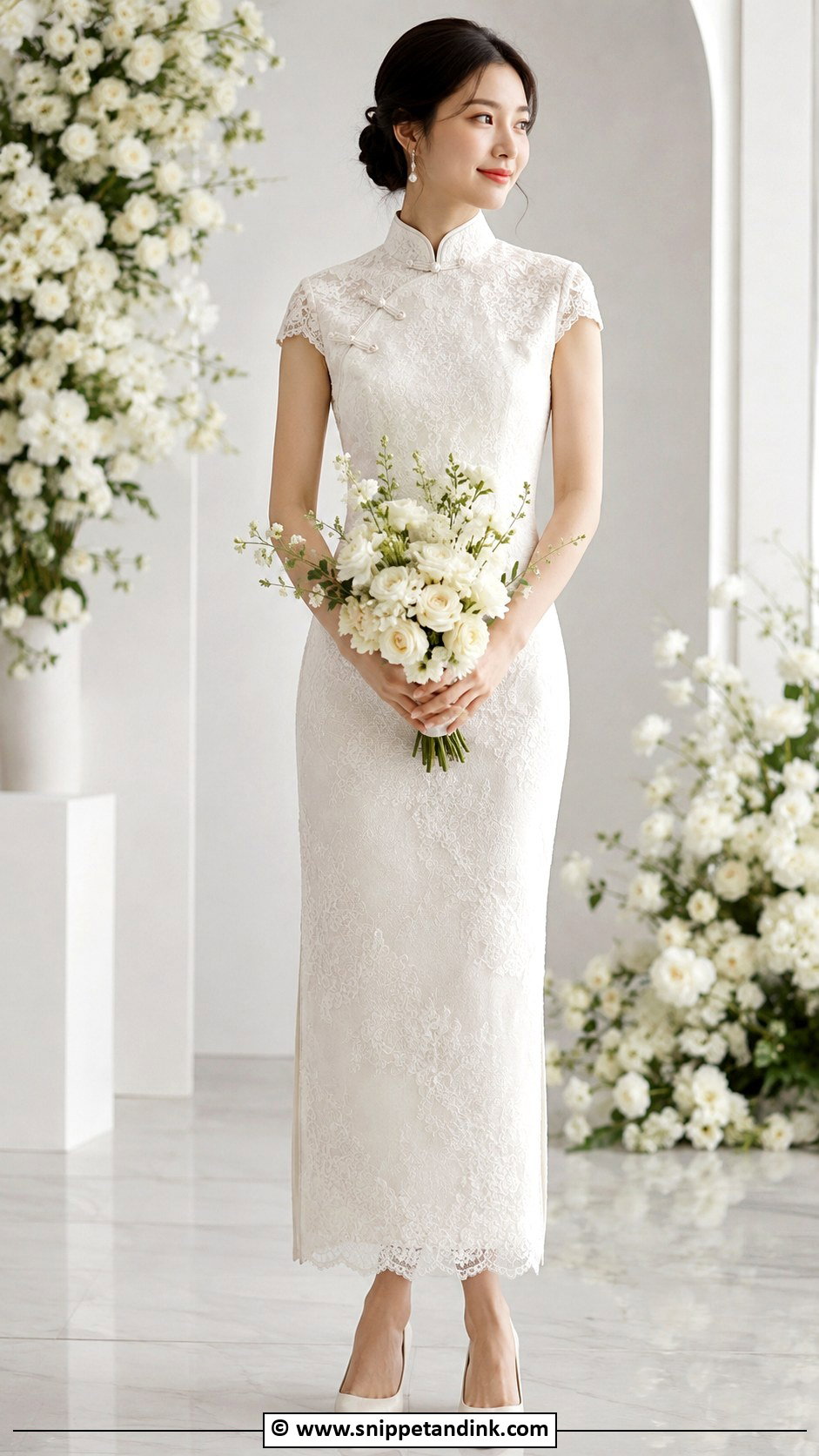
A white qipao blends both traditions: white reads as Western bridal, while the collar, frog buttons and slim cut are Chinese. Lace, satin, jacquard or silk with subtle embroidery all work, and gold or red piping adds meaning. One thing I raise with brides: some older relatives associate head-to-toe white with mourning, so I often add red shoes, a red hair piece or red piping for family events. Ivory heels, pearl jewelry and a low bun keep it soft.
8. Gold Qipao Wedding Dress
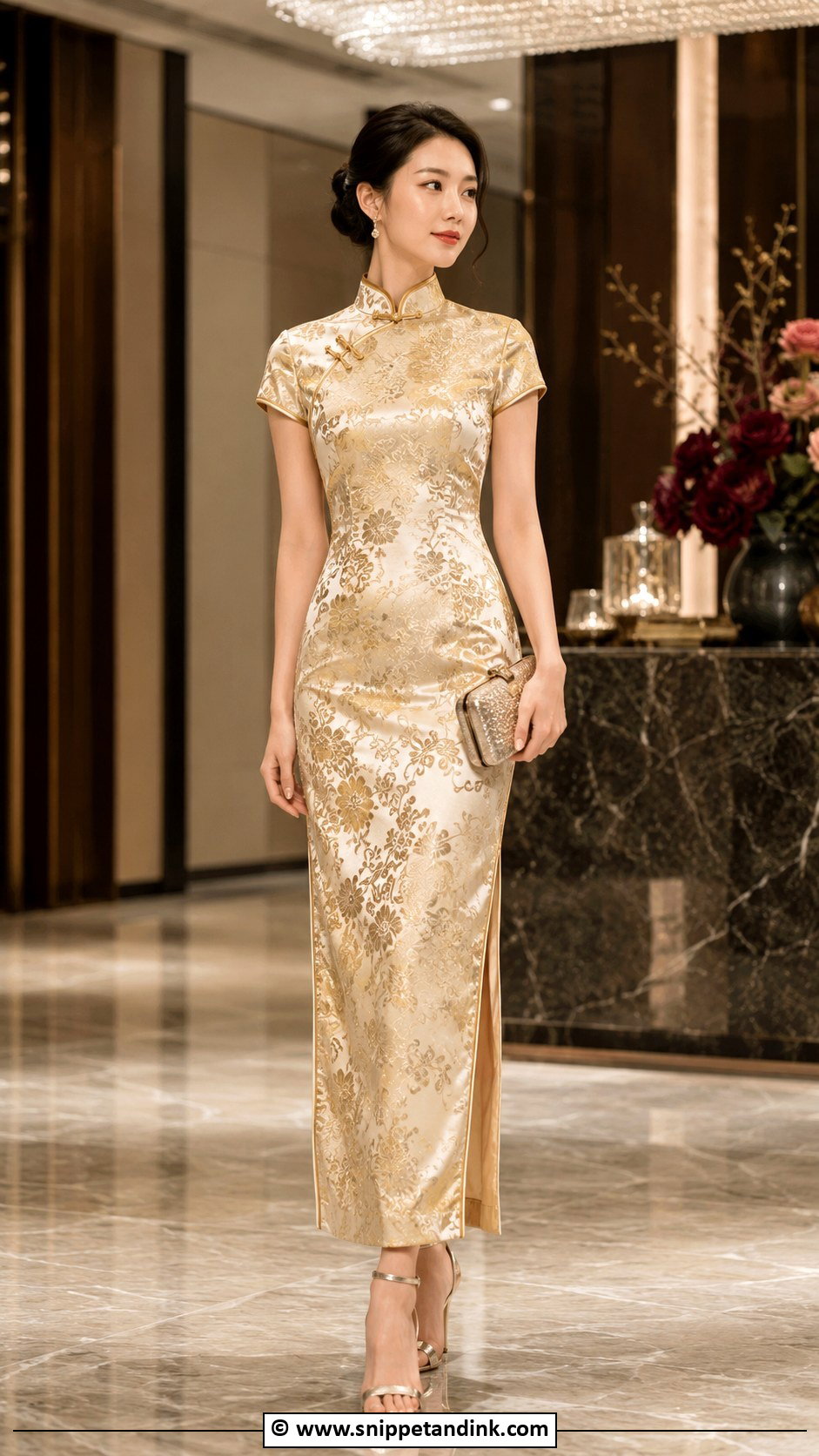
Gold reads as wealth and celebration, and it glows under warm banquet lighting. A soft champagne gold is subtle; metallic brocade makes an entrance. Since the fabric is the feature, I keep the silhouette clean and the accessories small. Watch metallic brocade on camera, as it can flare into a white hotspot under direct flash, so a matte gold is safer if your photographer shoots with flash. Nude or gold heels, simple earrings and a red lip suit it well in ballroom photos.
9. Champagne Chinese Wedding Dress
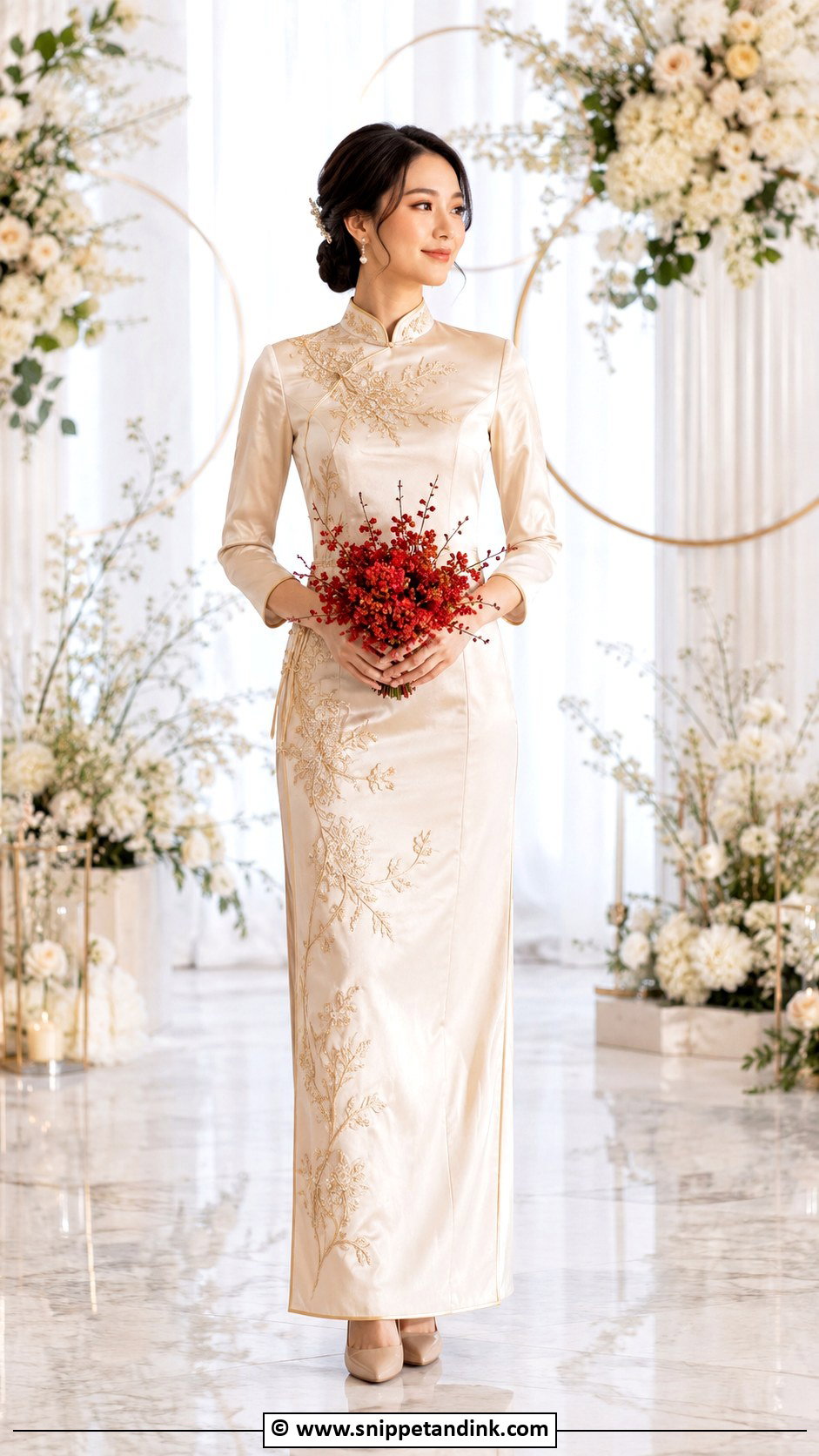
Champagne sits between red and white, warm without being bright, and it suits many skin tones. It can be a qipao, an embroidered gown or a modern dress with a mandarin collar and knot buttons. Gold thread, pearl beading or floral jacquard keep it from looking plain. I check it against the bride’s skin in daylight because champagne can lean pink or grey depending on the dye. Nude heels, pearl drops and a gold comb keep the palette quiet; a red bouquet or clutch adds the traditional nod.
10. Red Lace Qipao Wedding Dress
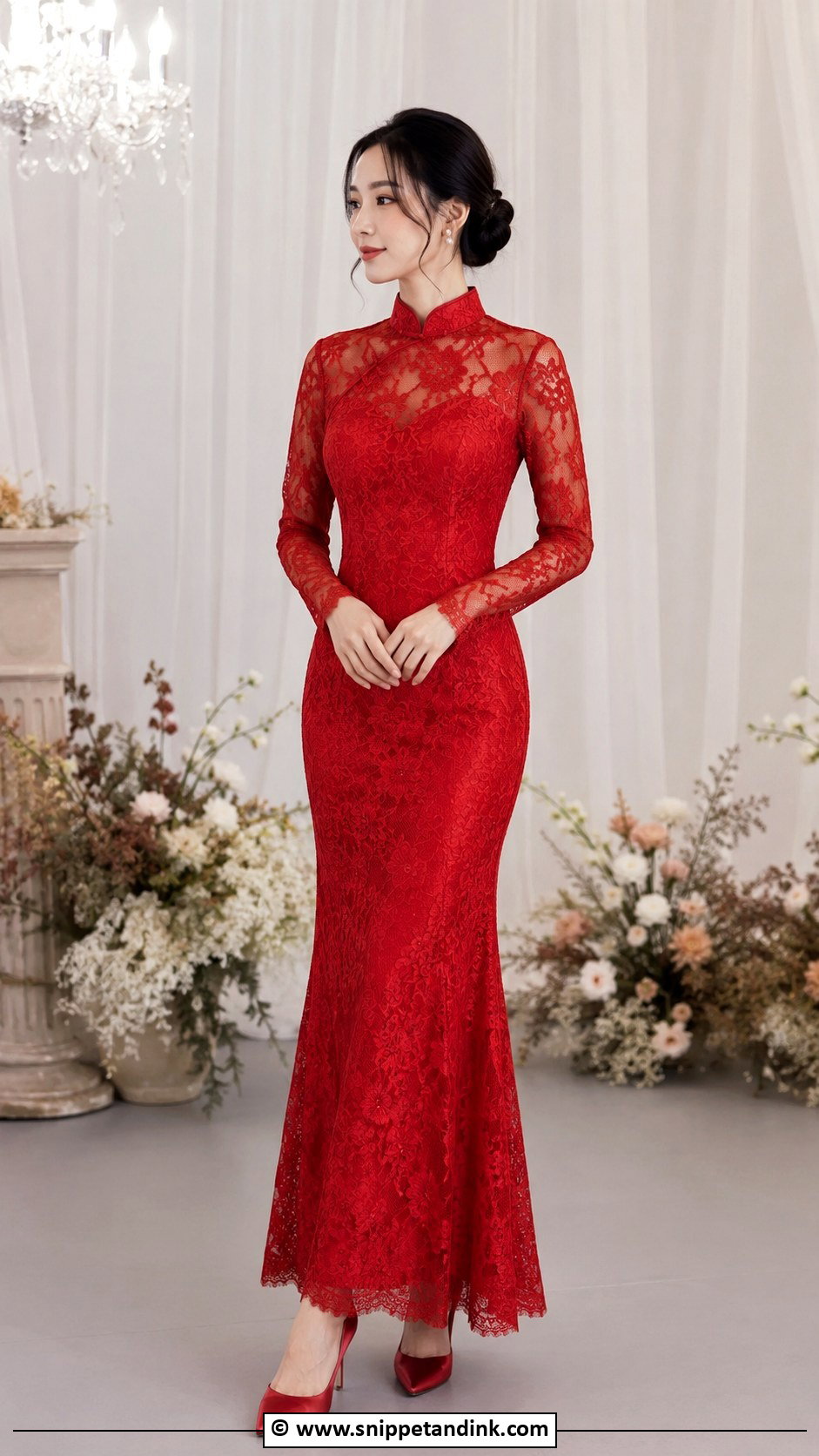
Lace softens the qipao’s structure while keeping the collar and outline, and it’s lighter than full embroidery. Lined lace gives coverage; sheer lace sleeves feel delicate. A knee-length or midi version is easy for dancing, and floor-length is more formal. Red lace is unforgiving at the seams, since the pattern rarely matches across a side seam on cheaper versions, so I look at the sides first. Satin heels, pearl studs and a neat chignon are all it needs.
11. Embroidered Dragon Phoenix Qipao
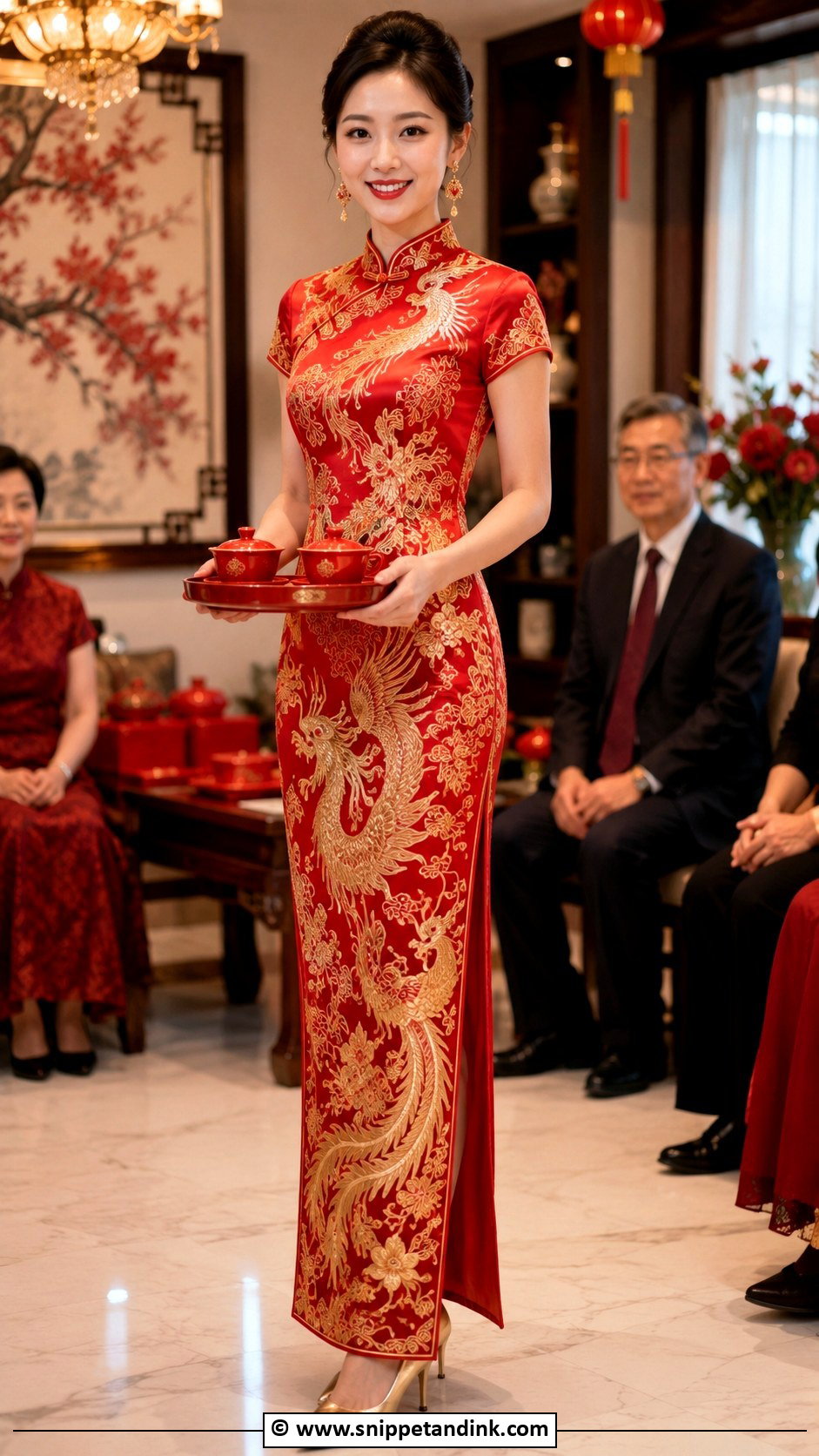
Dragon and phoenix together stand for a balanced, blessed union, which is why they appear on so many bridal pieces. On a fitted qipao, placement matters more than size: embroidery running along the bodice, hem or side panels follows the body, while a large motif centred on the stomach doesn’t. Red with gold thread is classic, and burgundy or deep rose works too. Gold jewelry, red heels and a clean updo suit it, and it reads clearly in photos of the tea ceremony.
12. Peony Embroidery Chinese Wedding Dress
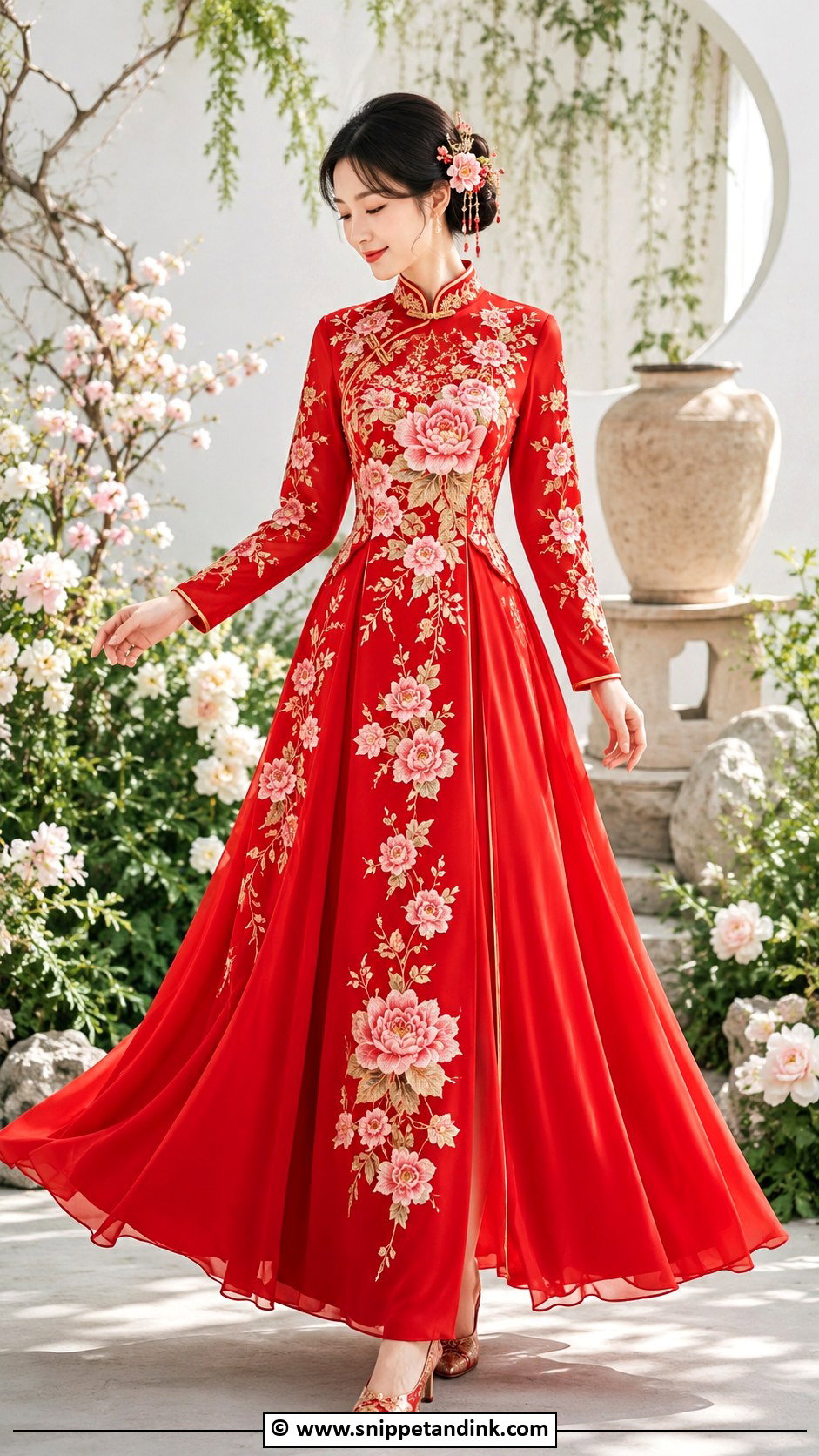
Peonies stand for honour and prosperity, and they appear on qipao, Xiu He Fu, hanfu and fusion gowns. The colour of the thread changes the mood: gold on red is traditional, blush or ivory on champagne feels modern. I’d keep floral hair pins smaller than the flowers on the dress so they don’t compete. Delicate earrings and comfortable heels finish the outfit. It suits brides who want symbolism without a dragon’s weight.
13. Red Brocade Chinese Wedding Dress
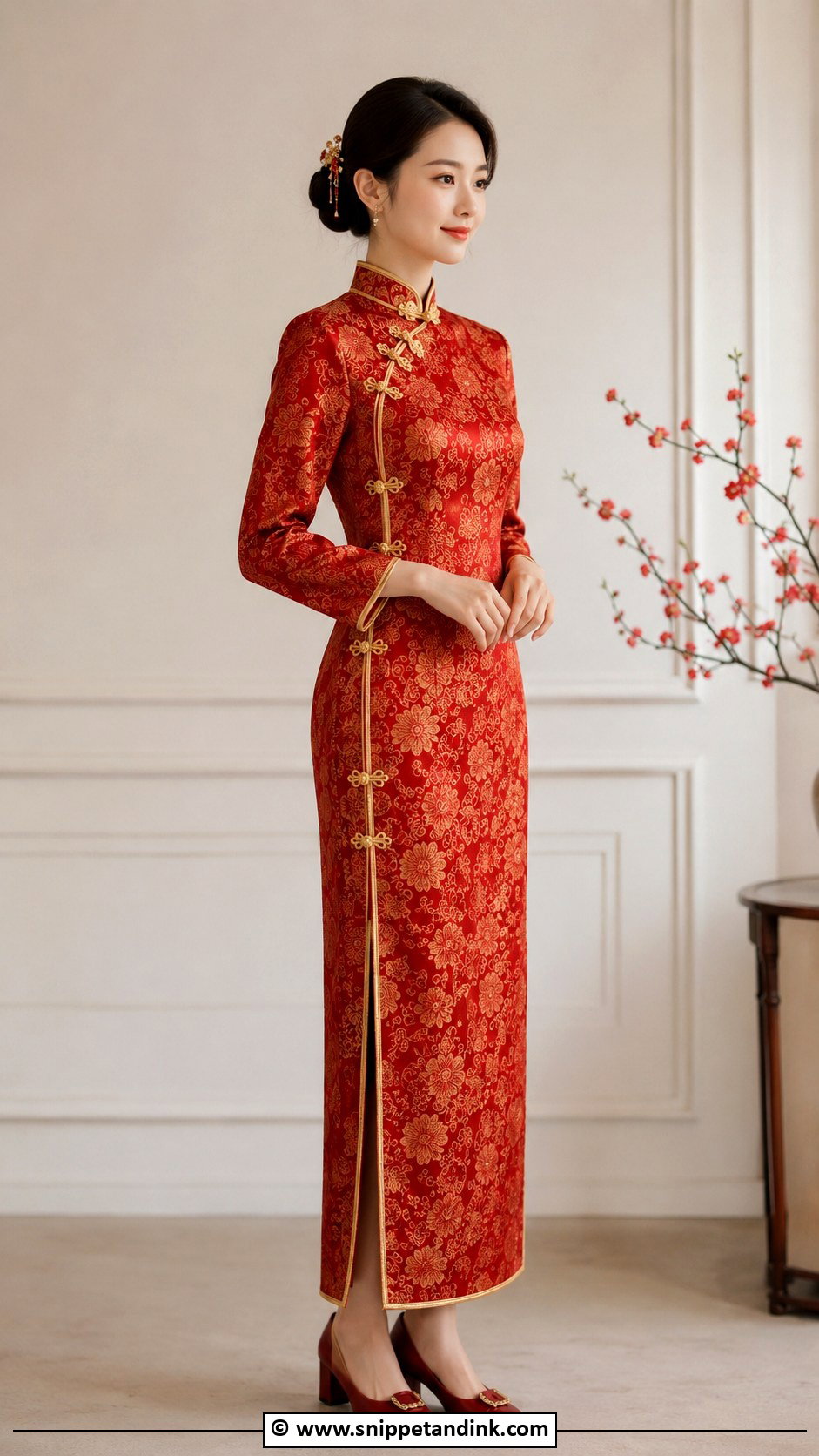
Brocade has its pattern woven in, so you get floral, cloud or symbolic texture without beading. It’s heavier and holds shape, which makes it good for qipao, structured jackets and two-piece sets in cooler months. That same weight makes it hot in summer, so I steer warm-weather brides toward silk instead. For a clean result, keep embroidery to a minimum; for more drama, add gold trim and traditional buttons. Gold block heels, a smooth bun and classic makeup finish it.
14. Red Satin Qipao Wedding Dress
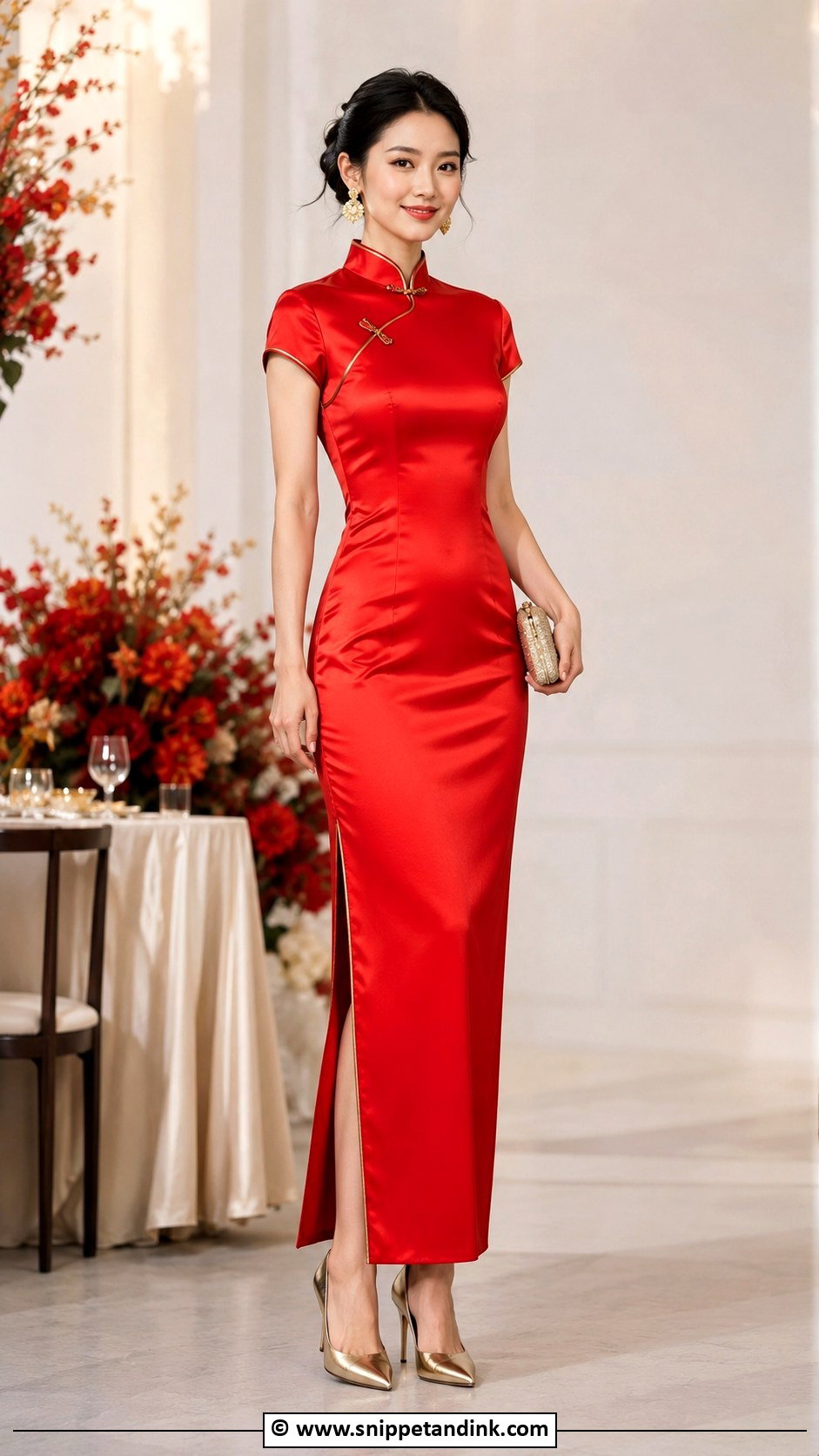
Satin catches light, which makes it look glossy and modern at indoor ceremonies and evening banquets. It also shows every fitting mistake, so a red satin qipao needs precise tailoring, a smooth lining and a hidden zip. Satin creases at the lap after the tea ceremony too, which is why I keep a steamer in my kit for the change before dinner. A little gold embroidery at the collar, cuffs or hem is enough detail. Metallic heels, a small clutch and sculptural earrings complete it.
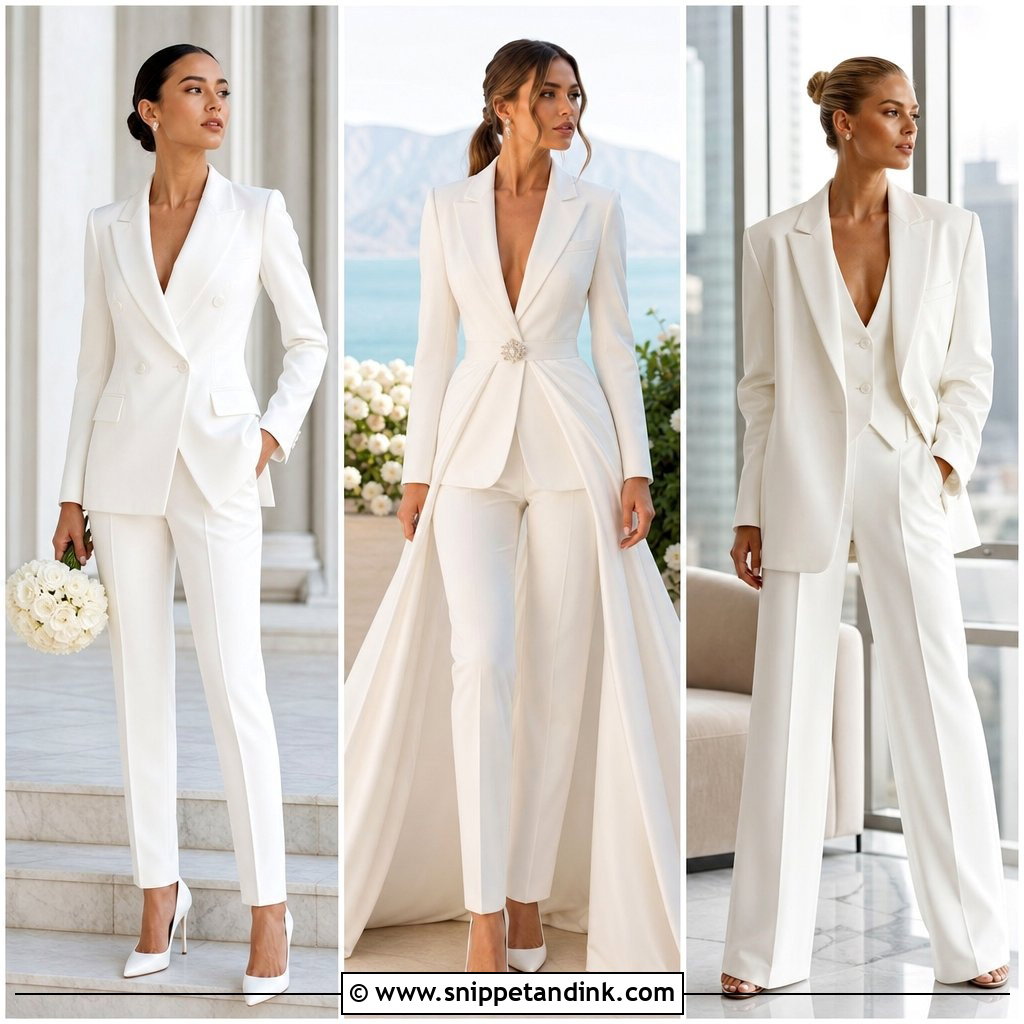
15. Sleeveless Qipao Wedding Dress
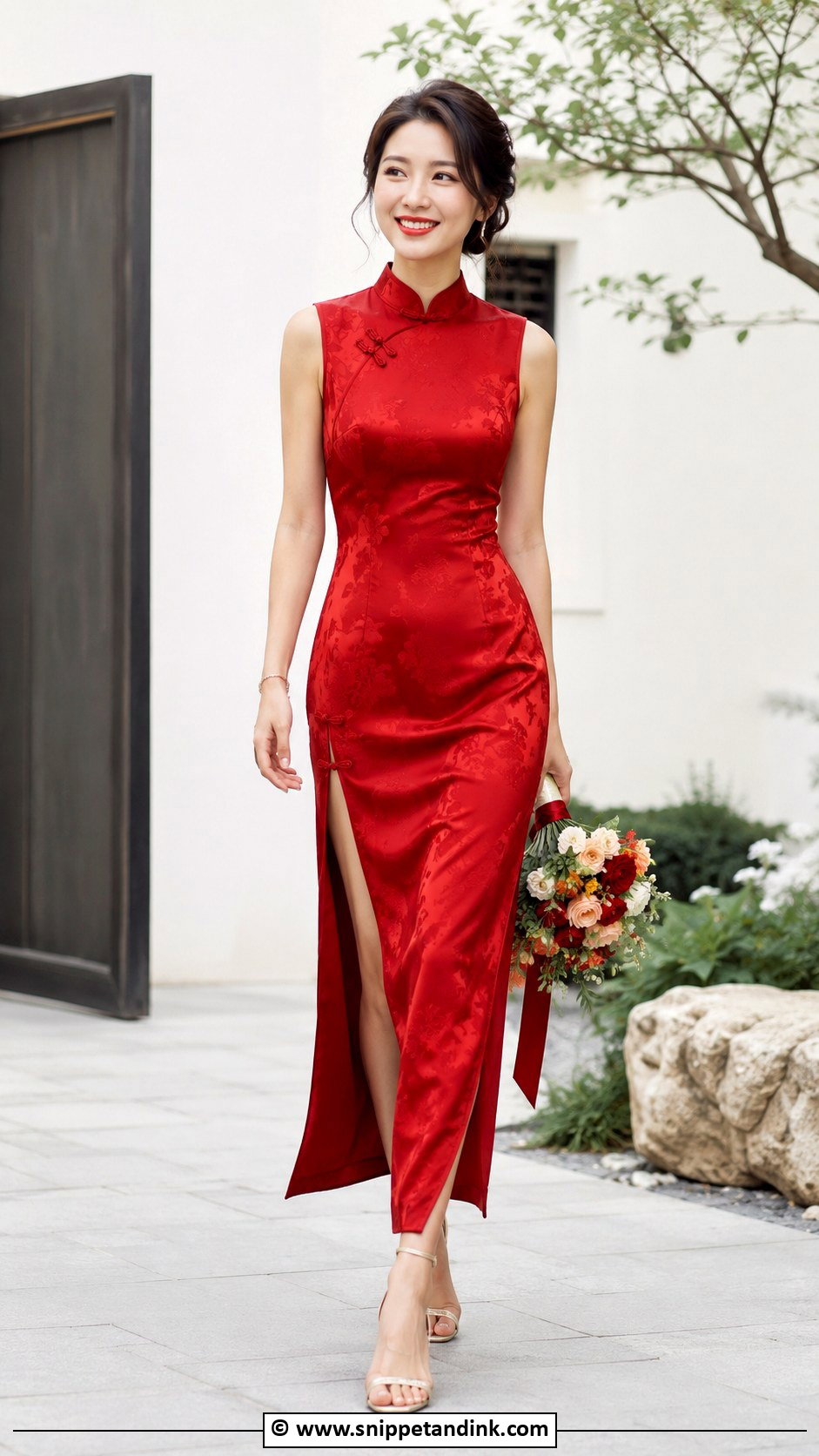
Sleeveless qipao suits warm weather, destination weddings and easy reception looks. It keeps the collar and fitted cut but feels lighter, and works in red, ivory, blush, champagne or gold. A thicker fabric gives structure; a silk blend moves more. Mind the slit height for family events, since a slit that’s fine standing can open higher when you sit or kneel. For the tea ceremony, I like a matching shawl or short jacket over the shoulders. Strappy heels, a slim bracelet and simple earrings finish it.
16. Long Sleeve Qipao Wedding Dress
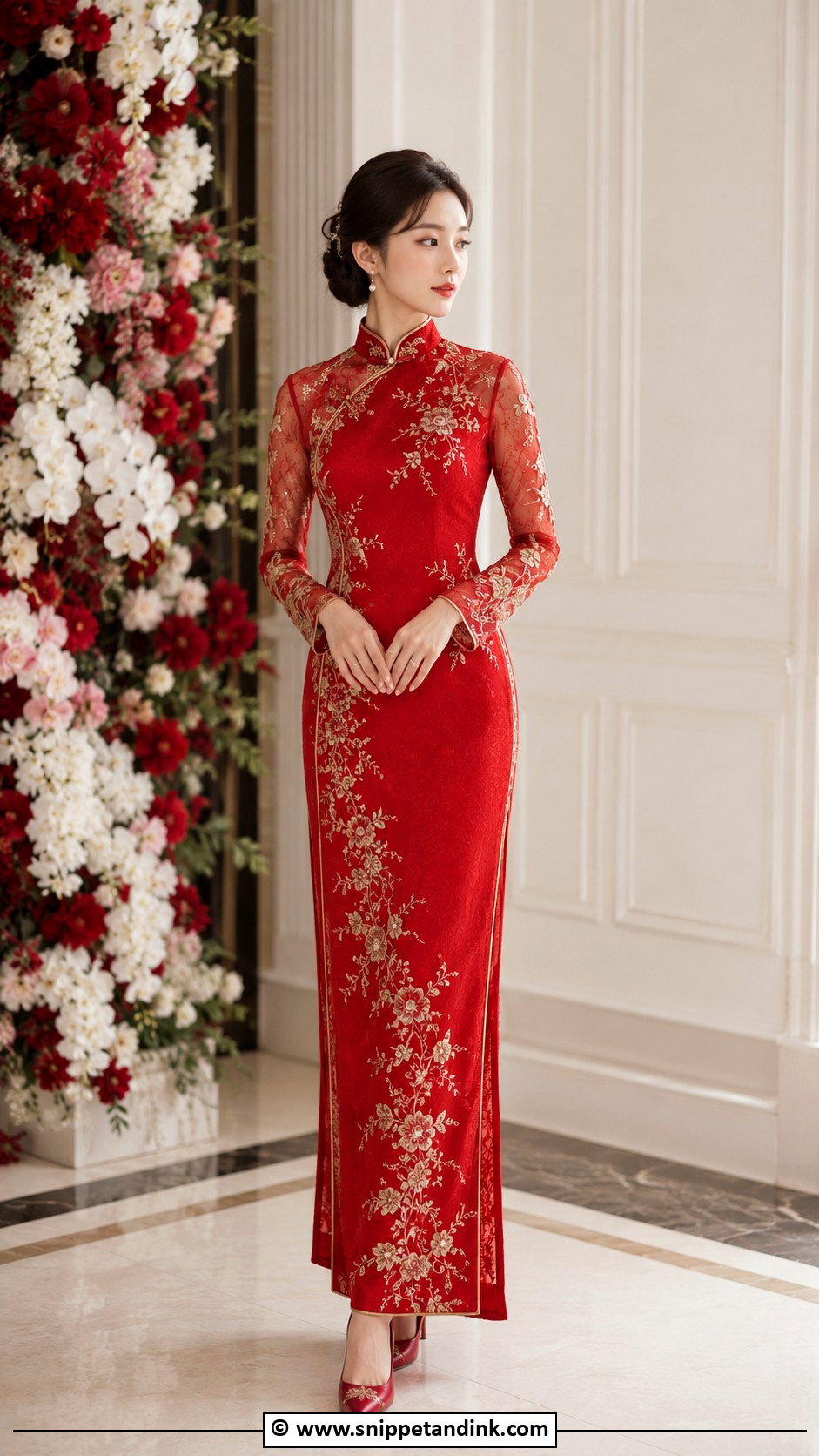
Long sleeves give coverage and suit autumn, winter and formal indoor weddings. They can be satin, lace, sheer tulle or embroidered mesh. Red with gold details is traditional; ivory lace leans fusion. Long sleeves on a fitted qipao need to be cut with enough room at the elbow, or pouring tea becomes awkward, and that’s what I test first. Closed-toe heels, pearl earrings and a low bun suit it. With ornate sleeves, skip the bracelets.
17. Short Qipao Reception Dress
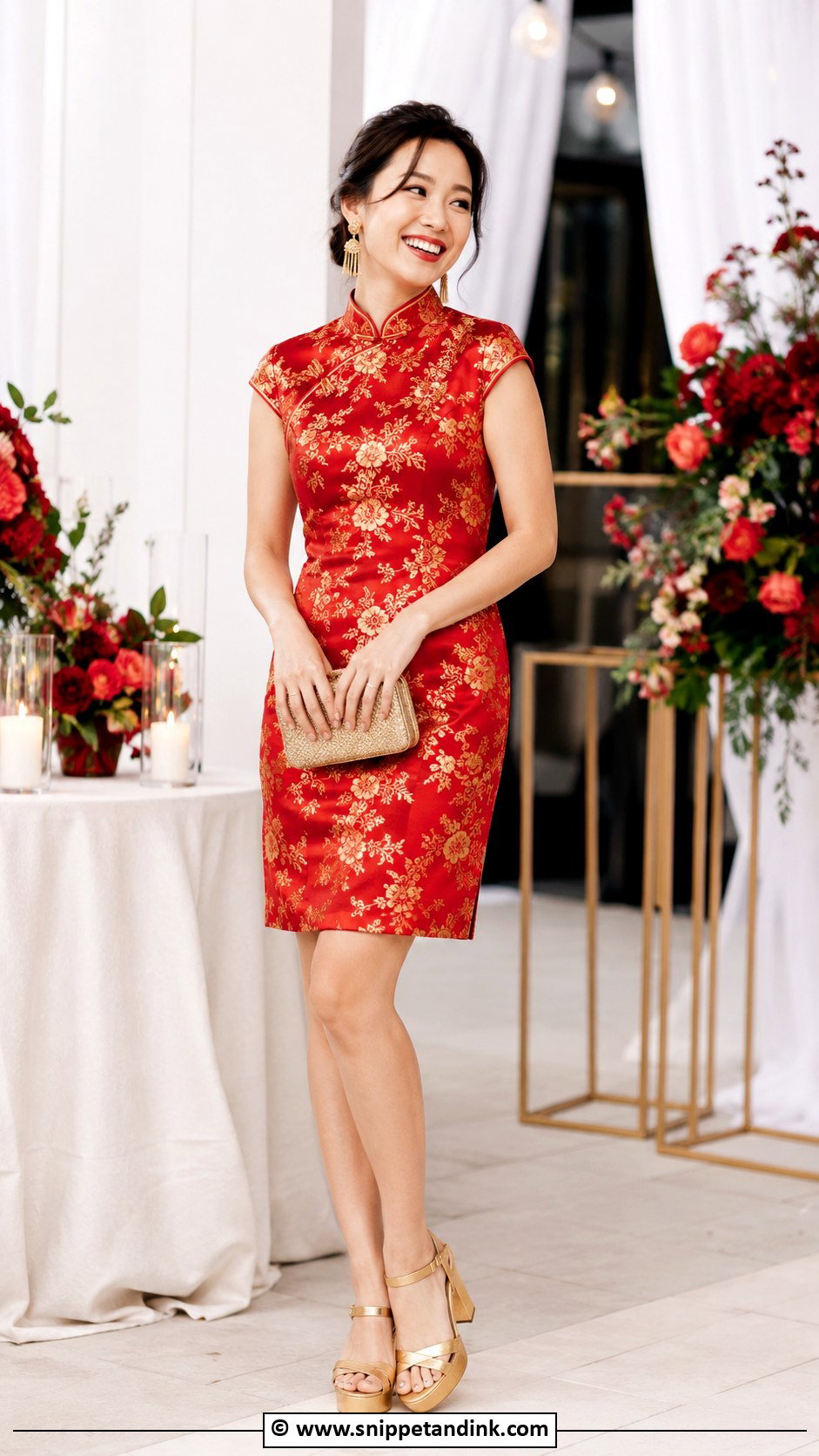
A short qipao is the outfit for dancing and greeting guests after the formal part. Knee-length red with gold buttons feels festive; above-knee feels modern. Pick the length based on the room: grandparents at the head table may prefer the knee version, and you’ll be bowing to them. Brocade, satin or lace all work. Block heels are kinder than stilettos for a long banquet of table visits. Add a small clutch and statement earrings.
18. Chinese Wedding Dress With Train
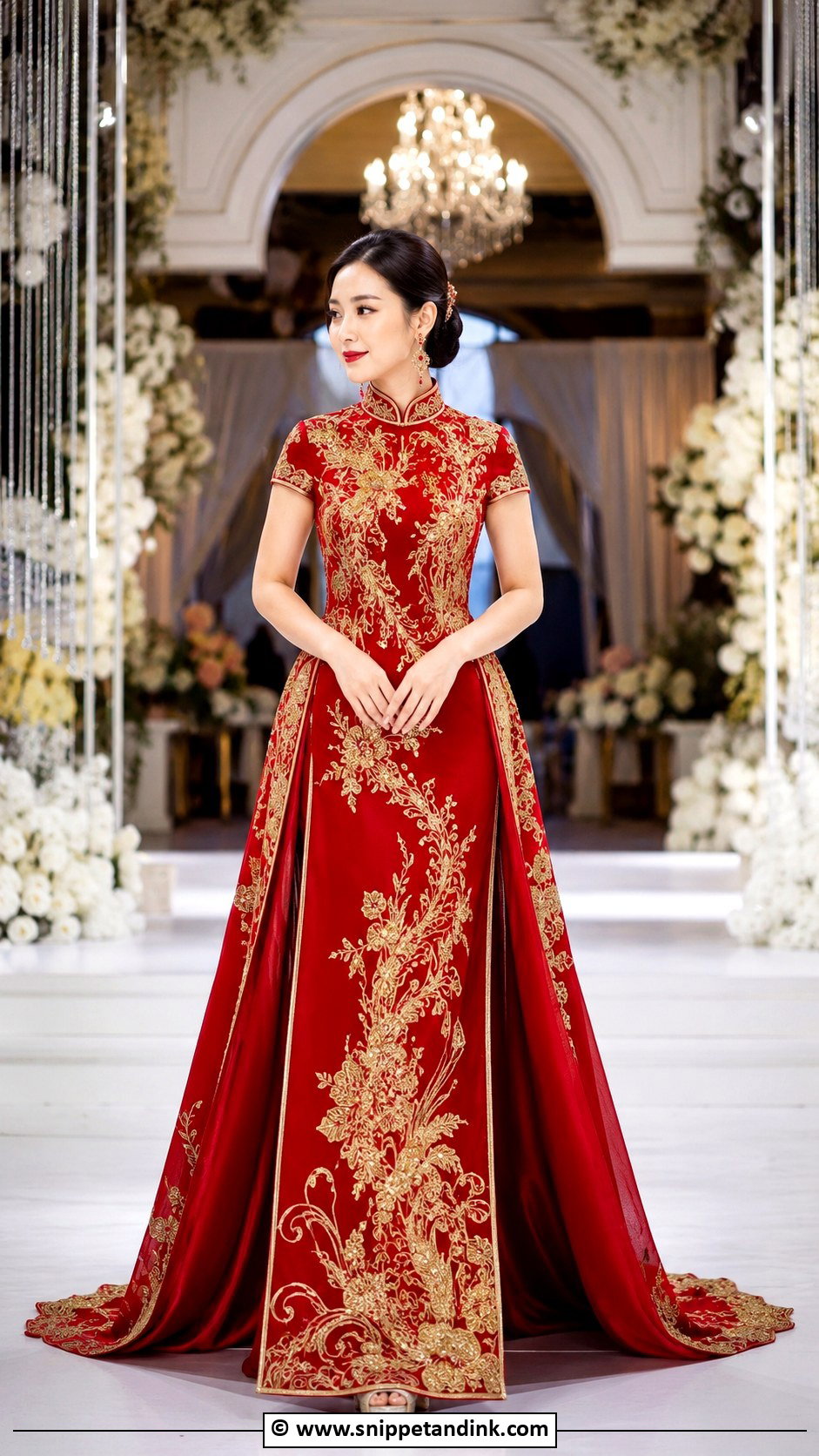
A train turns a qipao, modern gown or fusion dress into a formal entrance piece while the collar, buttons and embroidery keep it Chinese. Embroidery that flows from the bodice down into the train looks deliberate. I’d almost always choose a detachable train here, since a fixed one drags through the tea ceremony and makes kneeling difficult. Hidden platform heels give extra height under a long hem. Drop earrings and a smooth veil or hair accessory complete it for grand venues and portraits.
19. Chinese Wedding Dress With Cape
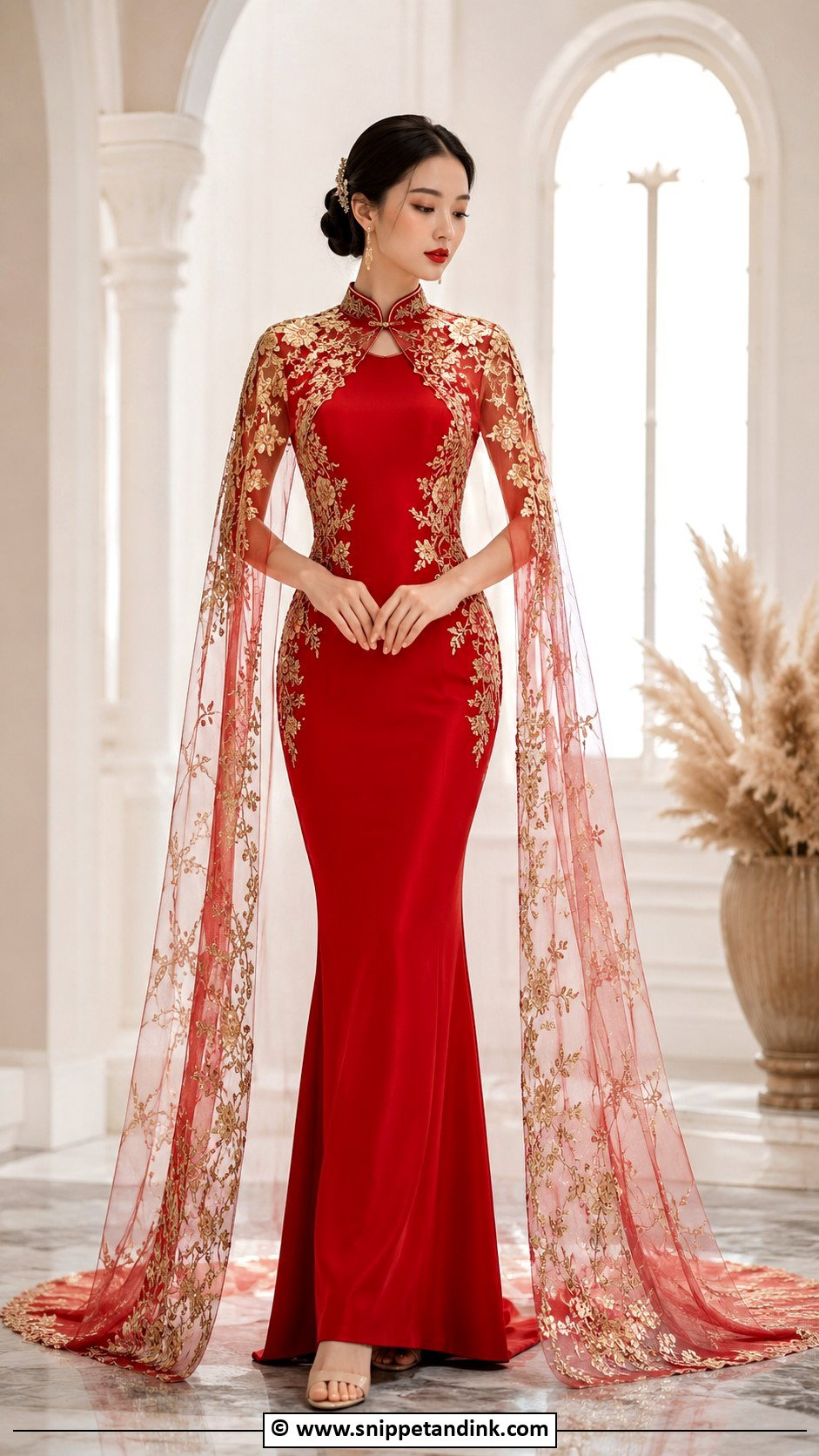
A cape gives movement and drama without a heavy train, and it creates clean lines from the back and side in photos. It can be sheer, embroidered or satin, or styled after traditional shoulder coverings, over a qipao, slim gown or hanfu-style dress. Red with a sheer gold-embroidered cape is festive; ivory with red trim is fusion. Check the fastening: a cape tied at the neck shifts when you bow, so I prefer one stitched or hooked at the shoulders. Keep heels and jewelry simple.
20. Chinese Wedding Dress With Mandarin Collar
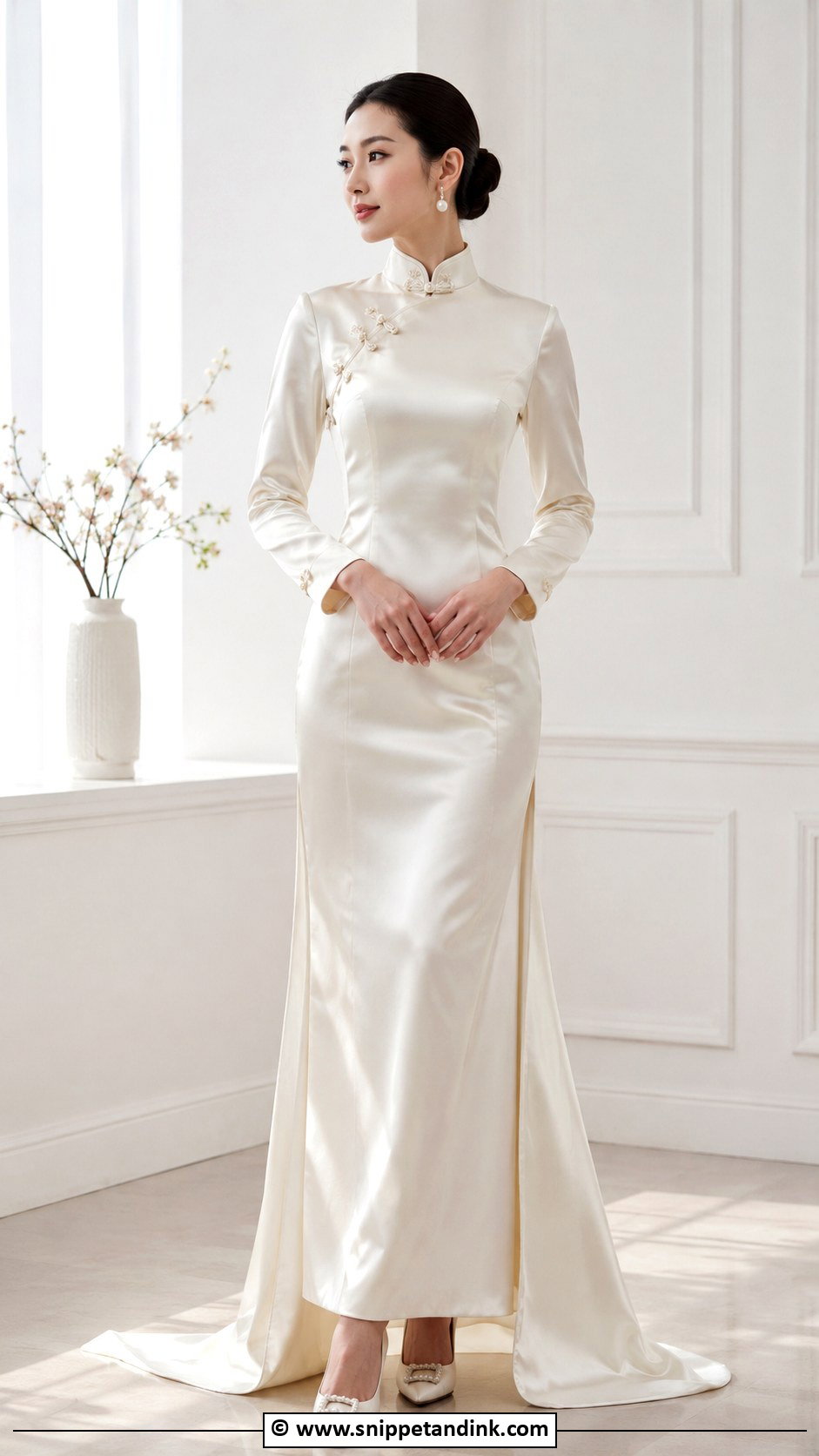
The mandarin collar is the subtlest way to bring heritage into a Western gown. It can sit on a qipao, an A-line, a sheath or a lace dress, and it frames the face so you don’t need a necklace. Red silk is classic, ivory lace bridal, champagne satin soft. Collar height matters with your hair: a tall collar under loose hair can look cramped, so I usually pair it with a sleek updo. Earrings and pointed heels are enough.
21. Chinese Wedding Dress With Gold Embroidery
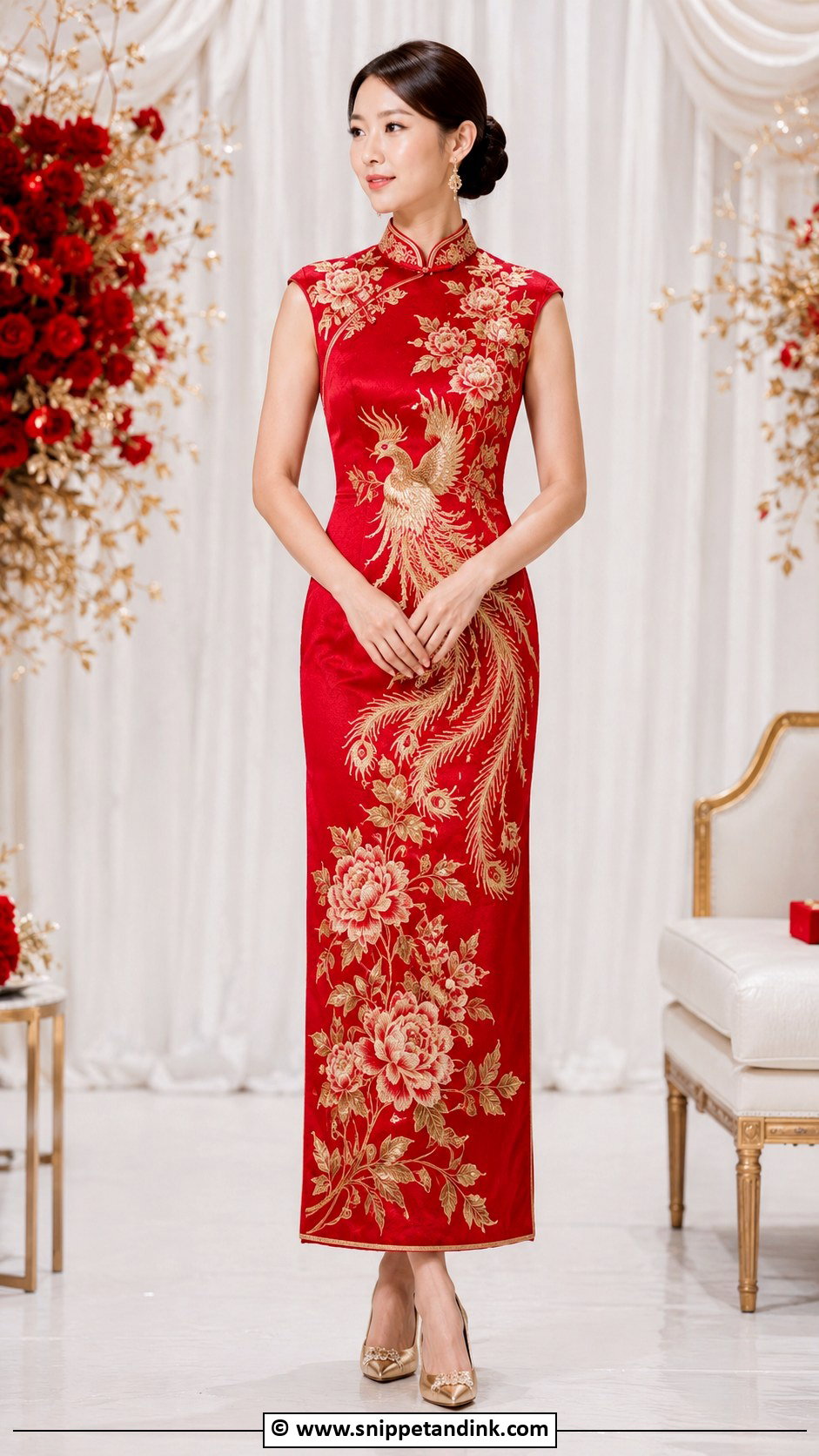
Gold thread suits red, burgundy, ivory, champagne and blush. Phoenixes, peonies, clouds, butterflies and double-happiness symbols are the common motifs. For a grand tea ceremony, dense embroidery across bodice and skirt looks right; for a modern reception, a fine line along the collar, cuffs or hem. Heavy metallic embroidery is stiff and can scratch the inner arm, so check that the lining covers the backs of the stitches. Gold heels, simple earrings and a smooth hairstyle are plenty.
22. Red And Gold Chinese Wedding Dress
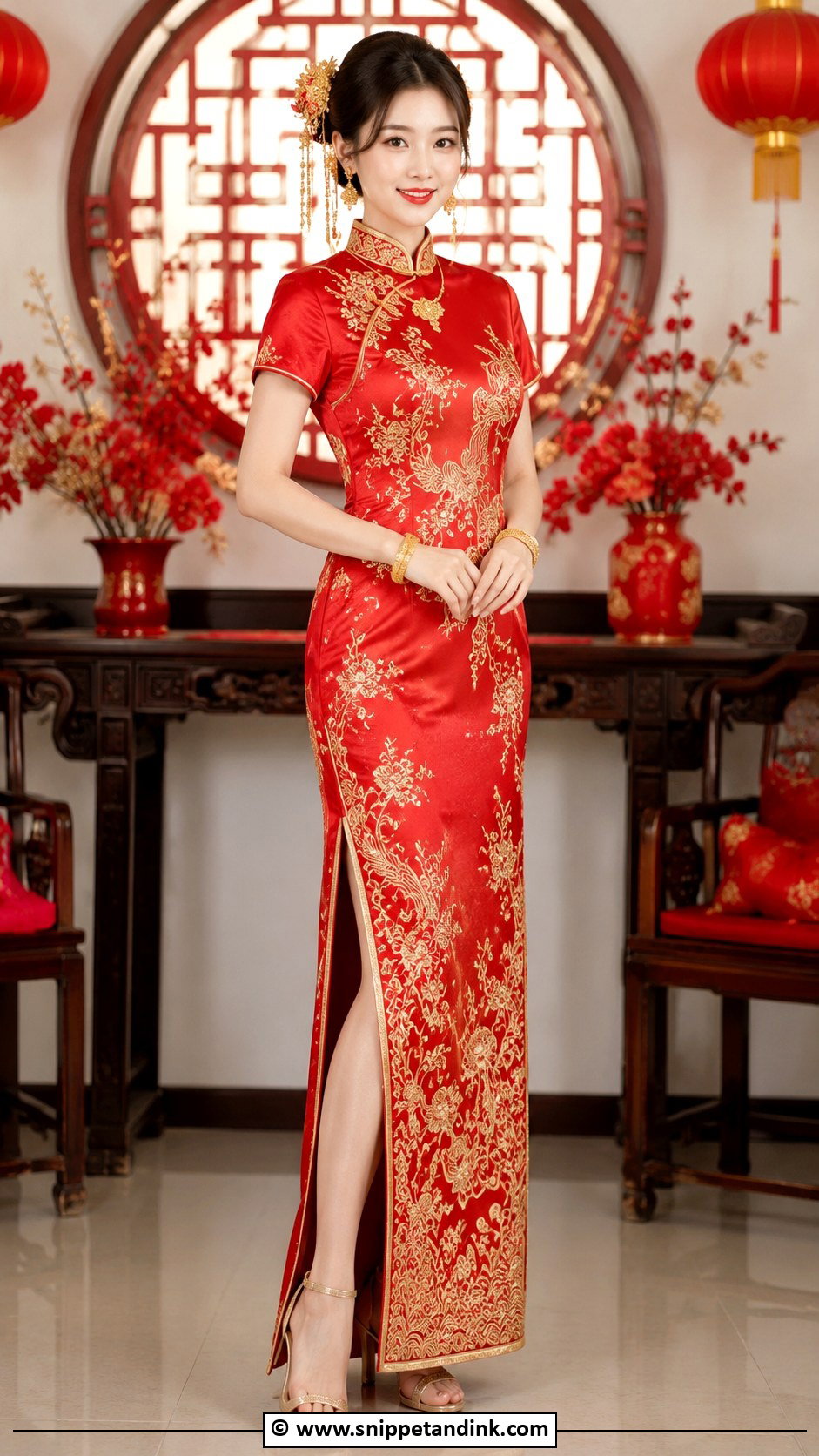
Red and gold is the pairing most families recognise straight away: red for joy and luck, gold for celebration. It works on almost every silhouette here, from qipao and qun kwa to Xiu He Fu, hanfu and modern gowns. Gold dragon and phoenix work on red is the classic version; red satin with fine gold trim is softer. I keep the gold in jewelry the same tone as the thread, as yellow gold next to rose-toned thread looks mismatched up close. Add red or metallic heels and a neat hairstyle.
23. Burgundy Chinese Wedding Dress
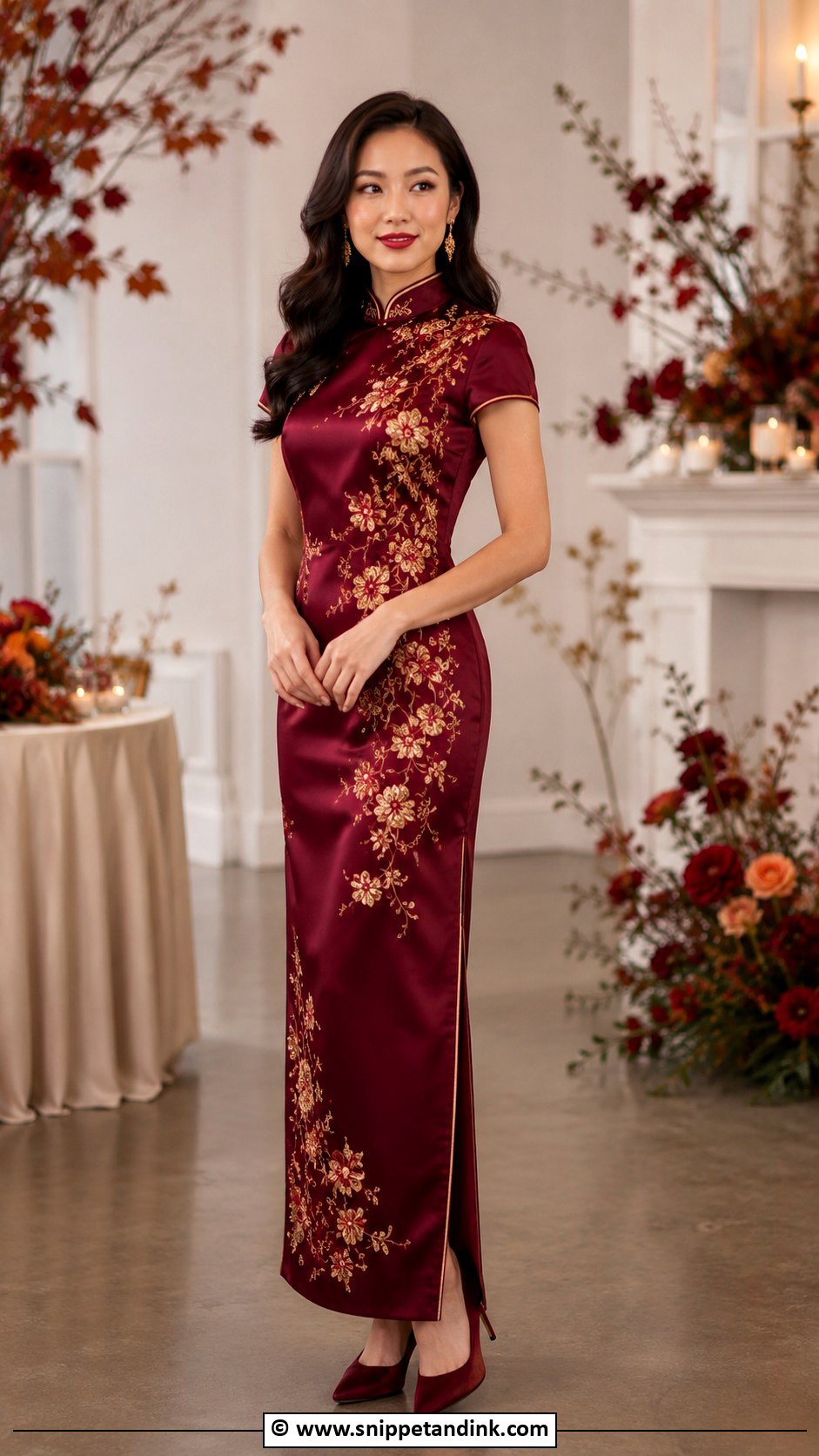
Burgundy is a deeper alternative to bright red, still celebratory but quieter. It suits velvet, satin, brocade and silk jacquard, and it’s well matched to autumn and winter weddings. Gold embroidery warms it up; black or deep red piping makes it more dramatic. If your family feels strongly about bright red, I’d show them a swatch first, since some read burgundy as too sombre for a wedding. Gold heels, soft waves and a red-toned lip suit it.
24. Pink Chinese Wedding Dress
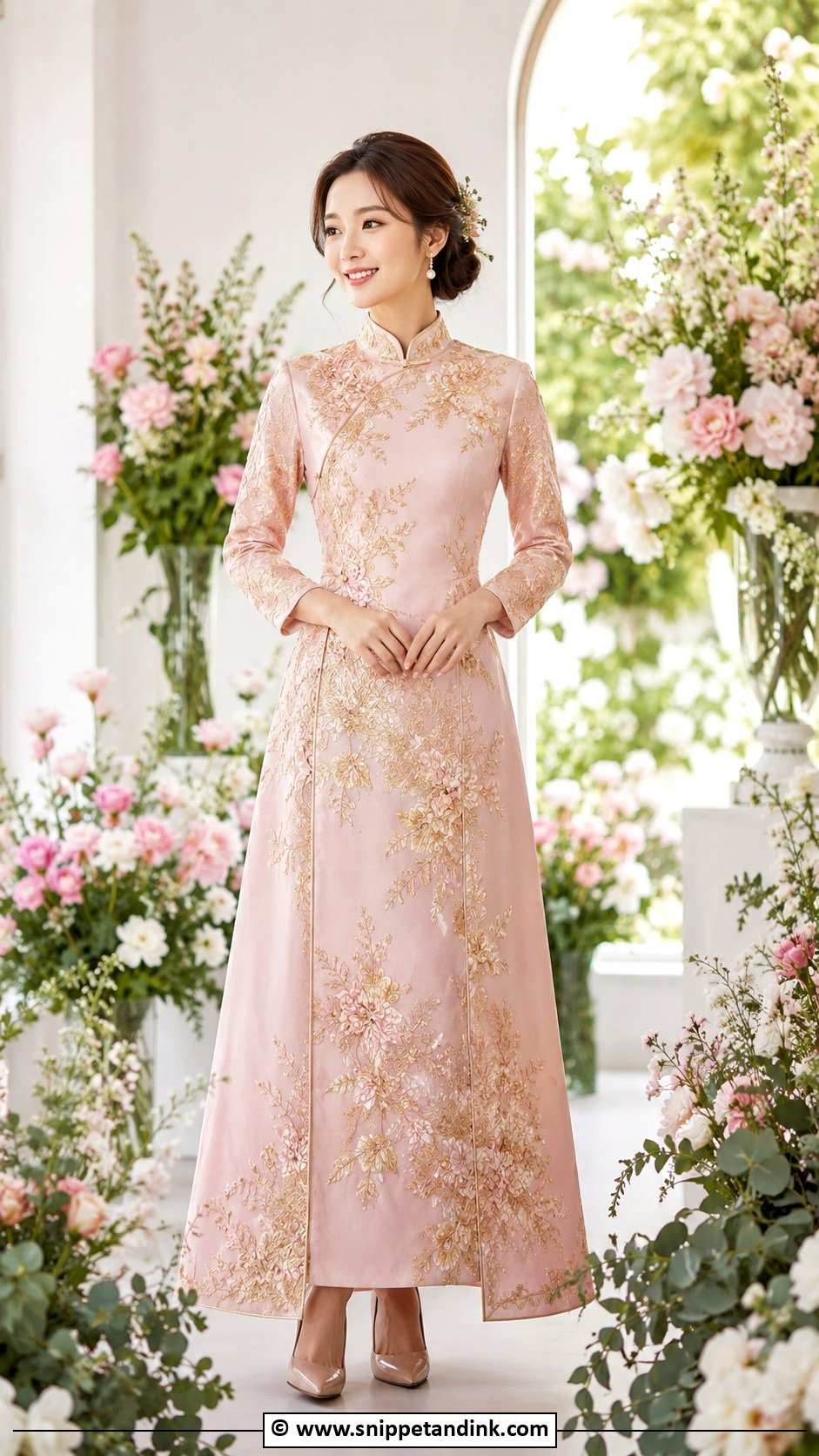
Pink is the softer route, from blush and dusty rose to peach, and it pairs well with gold embroidery, pearls and floral motifs. It can be a qipao, a modern A-line or a reception dress with a mandarin collar. Pale pink can fade to almost white in bright daylight photos, so a slightly deeper rose holds its colour better outdoors. Nude heels, pearl earrings and soft makeup complete it; red accessories or gold pins add tradition. Spring weddings and garden portraits suit it.
25. Ivory Chinese Wedding Dress
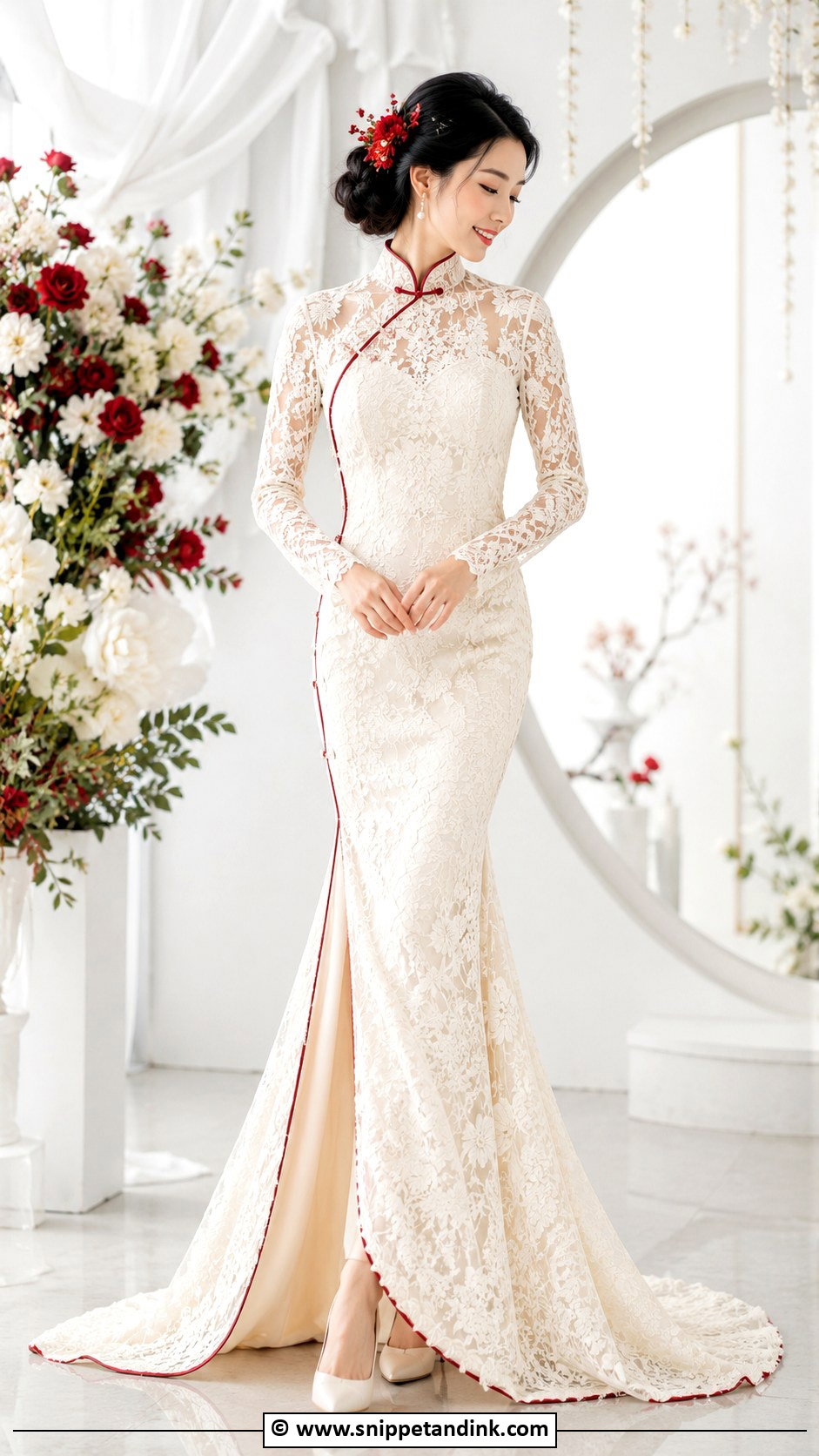
Ivory is softer than pure white and sits well against gold, red, champagne and pearl. A mandarin collar, frog buttons, floral embroidery or a qipao-inspired cut connect it to Chinese bridal style. Lace reads romantic, satin polished, brocade textured. As with white, I like a red element somewhere for family events, such as red shoes, a red hair piece or gold jewelry. Ivory heels, pearl earrings and a neat bouquet finish it.
26. Chinese Wedding Dress With Western Gown Skirt
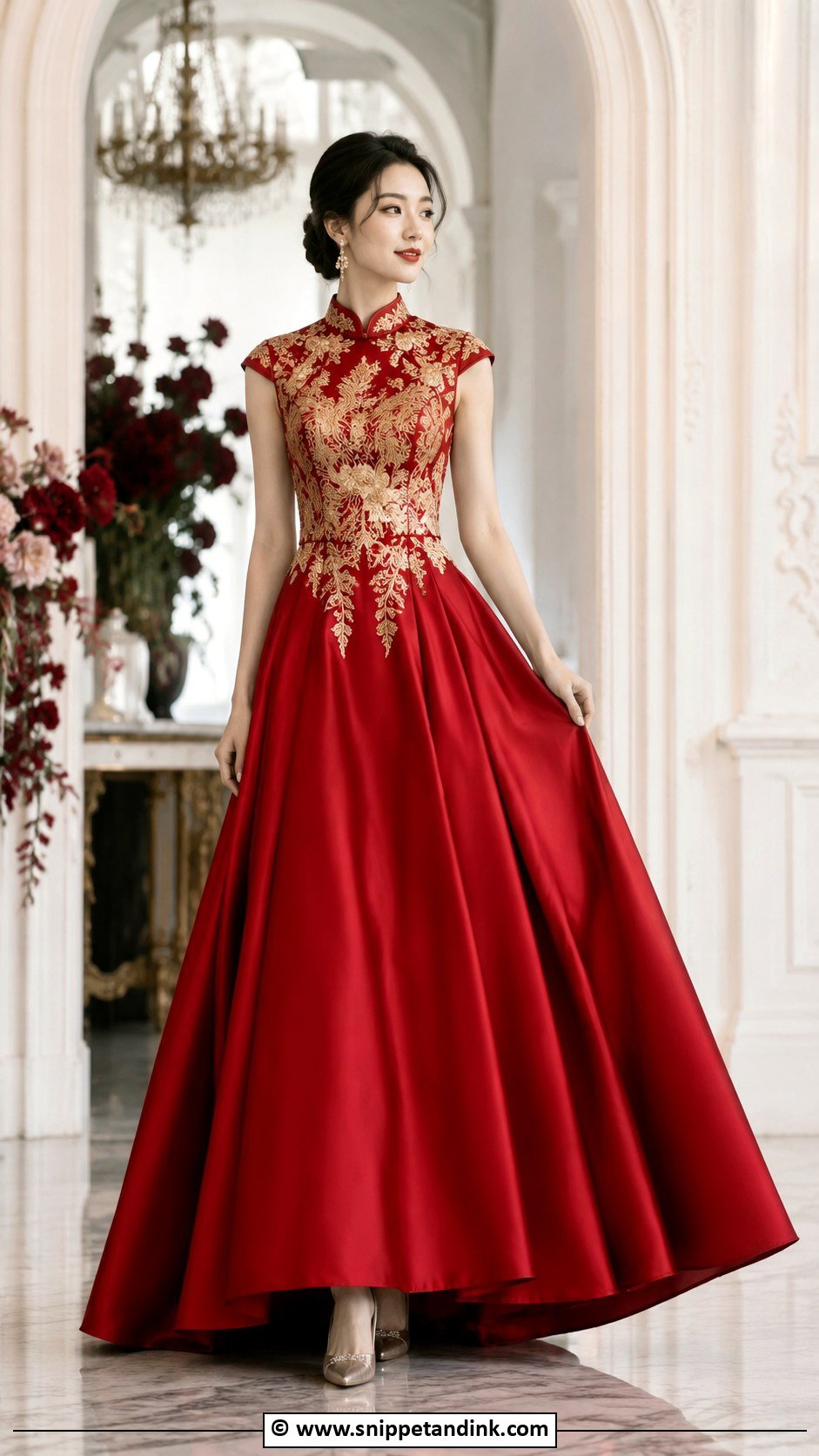
This fusion pairs a mandarin collar or qipao bodice with an A-line, ball gown or mermaid skirt. You get a traditional neckline and embroidery on top of a classic wedding silhouette, which means one dress can cover ceremony and reception. Red is bold; ivory with gold embroidery is softer. The bodice and skirt need to come from one fitting plan, since a qipao bodice cut tight over a heavy skirt pulls down at the waist seam. Earrings, a structured updo and heels suited to the skirt length complete it.
27. Two Piece Chinese Wedding Dress
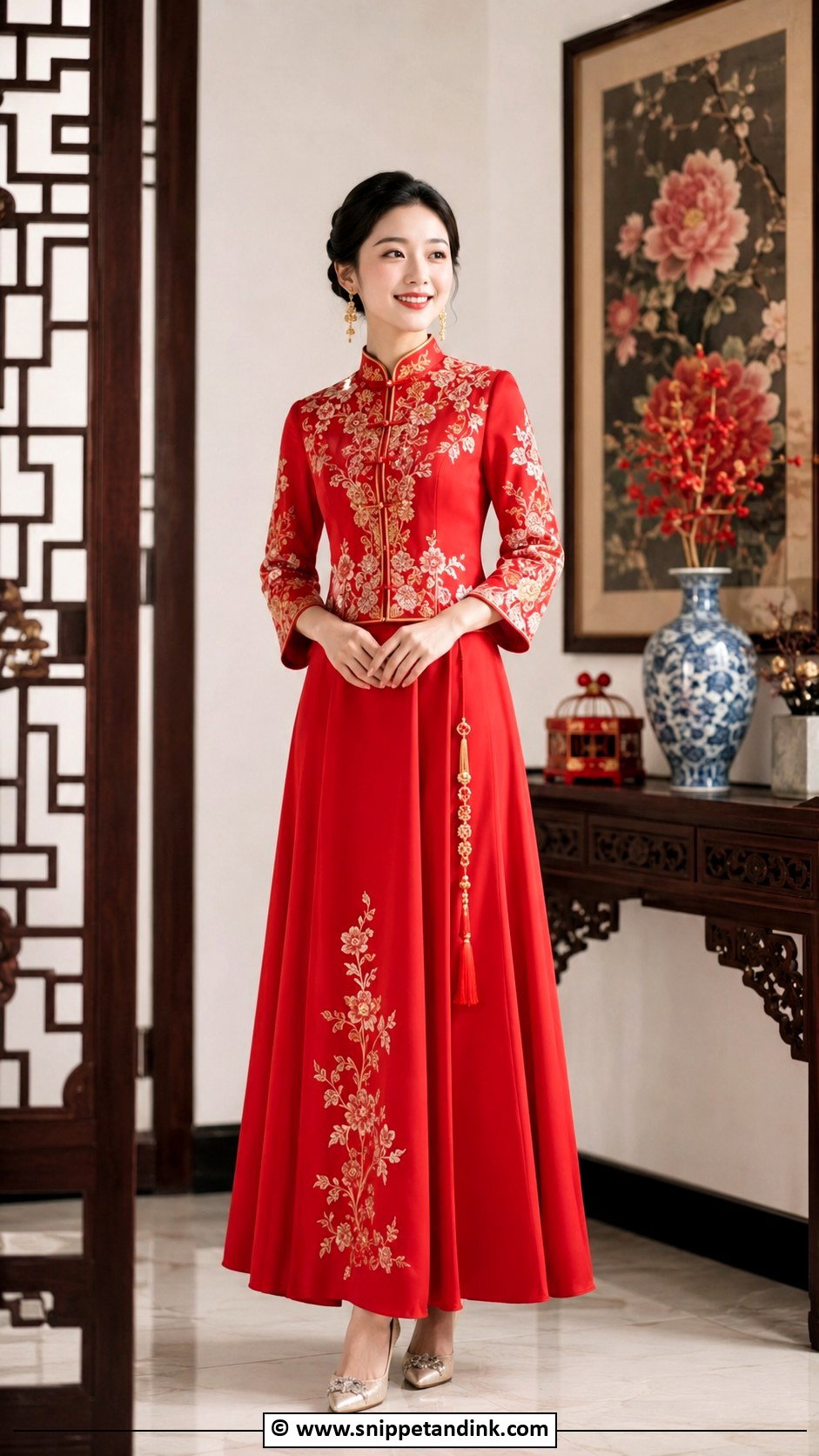
A two piece Chinese wedding dress can be a qun kwa, a Xiu He Fu or a modern crop top and skirt with Chinese details. A structured embroidered jacket over a flowing skirt is traditional; a fitted mandarin-collar top with a satin skirt is modern. Separates are easier to alter because each piece is fitted on its own, which I find helps brides whose top and bottom measurements fall in different sizes. Red and gold suit the ceremony, blush and champagne the reception. Comfortable heels and gold earrings complete it.
28. Plus Size Chinese Wedding Dress
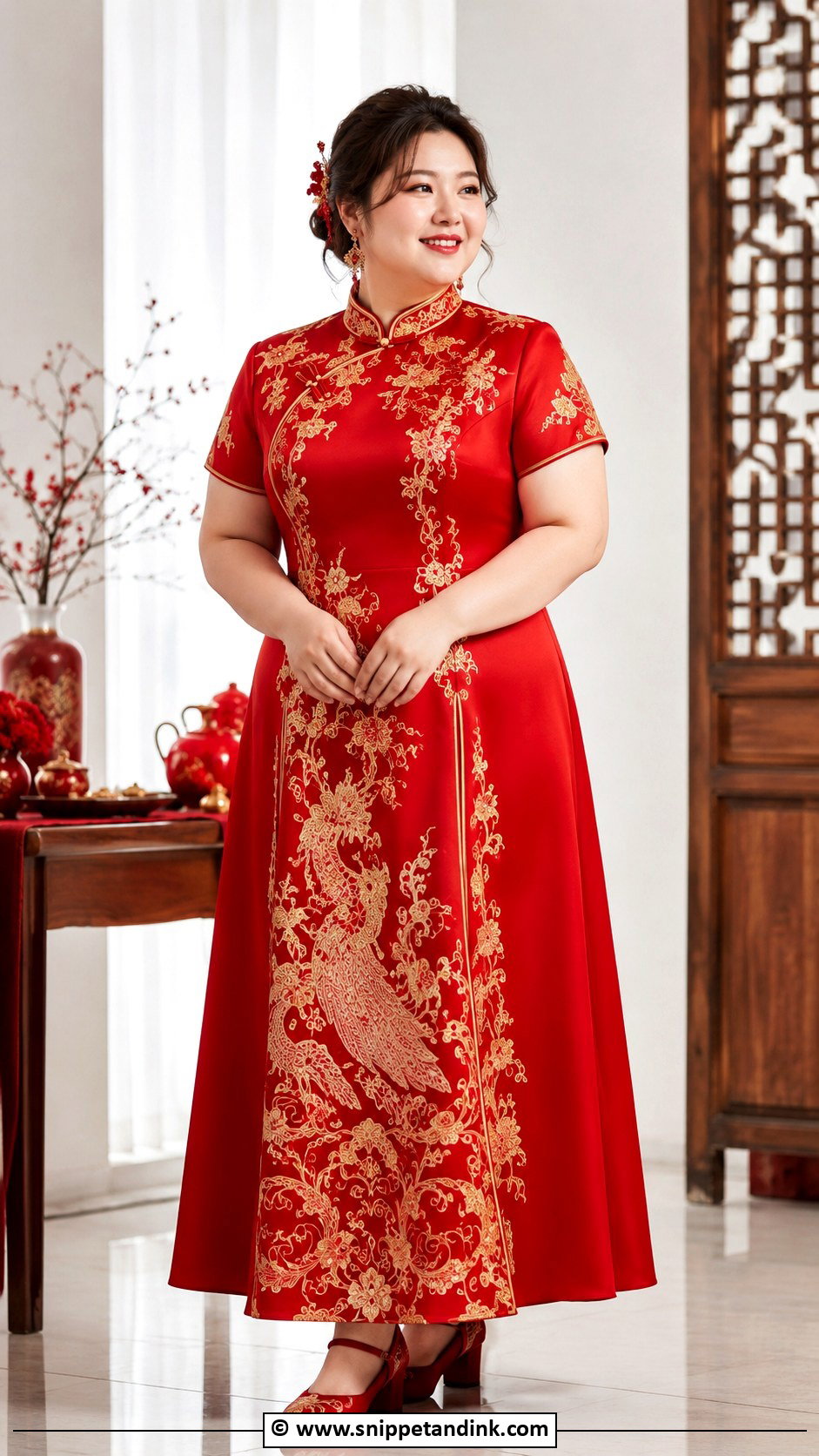
Fit is what makes a plus size Chinese wedding dress work. Look for structured fabric, a smooth lining and closures that don’t pull across the bust or waist; frog buttons that strain open are the first thing I check. A-line qipao gowns, Xiu He Fu and hanfu give shape without restricting you. If you love the fitted qipao, choose one with some stretch, well-placed seams and a slit that lets you walk. Stable block heels and statement earrings help, and so does a hairstyle balanced to the collar. Before buying, sit, bow and walk in it.
29. Maternity Chinese Wedding Dress
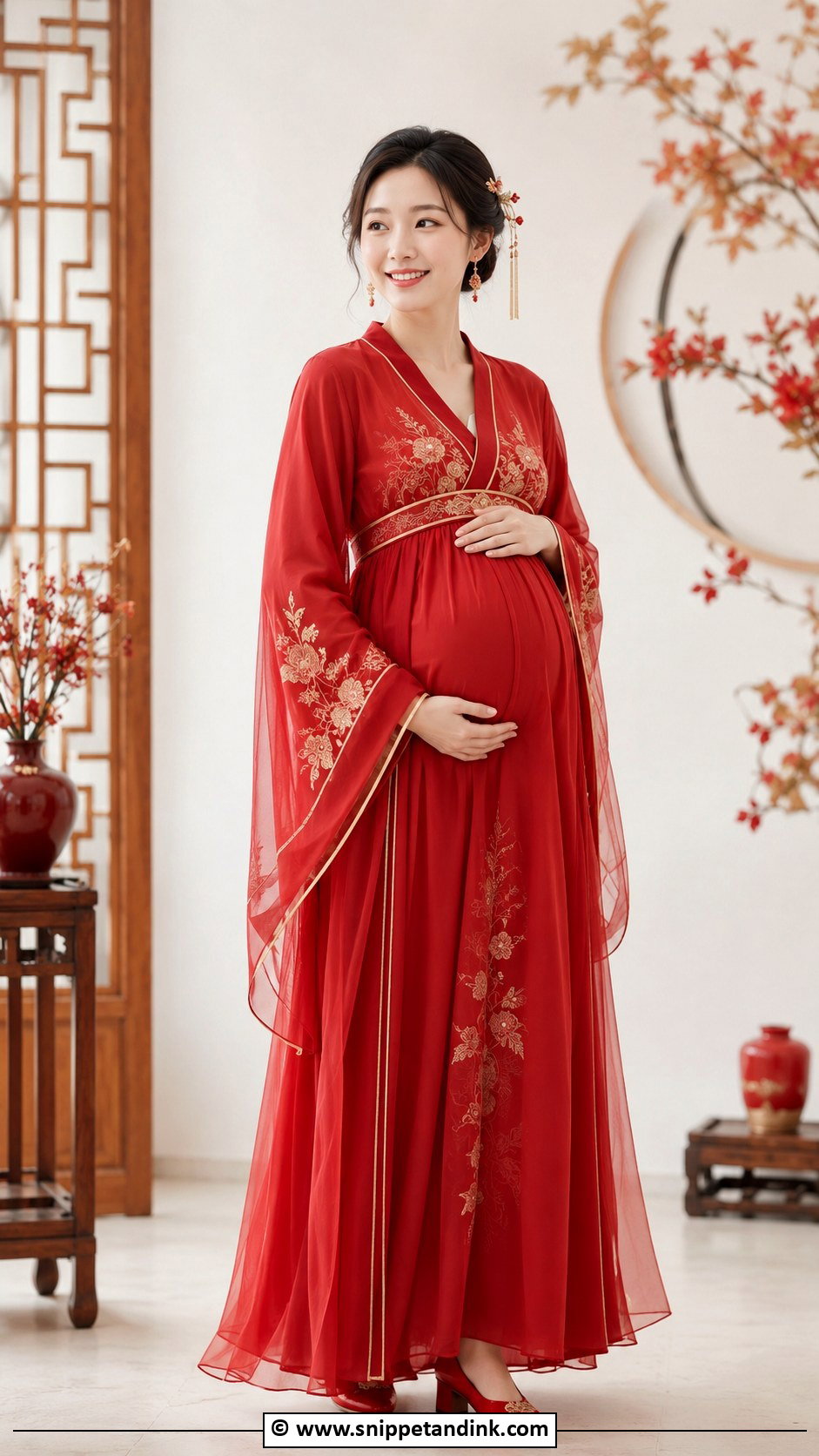
For a pregnant bride, comfort comes first. A hanfu-style dress, an empire-waist qipao gown or a flowing Xiu He Fu set looks right without pressing at the waist. Look for breathable fabric, adjustable closures and a roomy skirt. I’d book the final fitting as close to the date as the seamstress allows, because the bump changes week to week. Red satin, soft silk or light brocade all look festive. Low block heels, delicate earrings and a soft updo finish it, and keep the hem off the floor so you can walk safely.
30. Minimal Chinese Wedding Dress
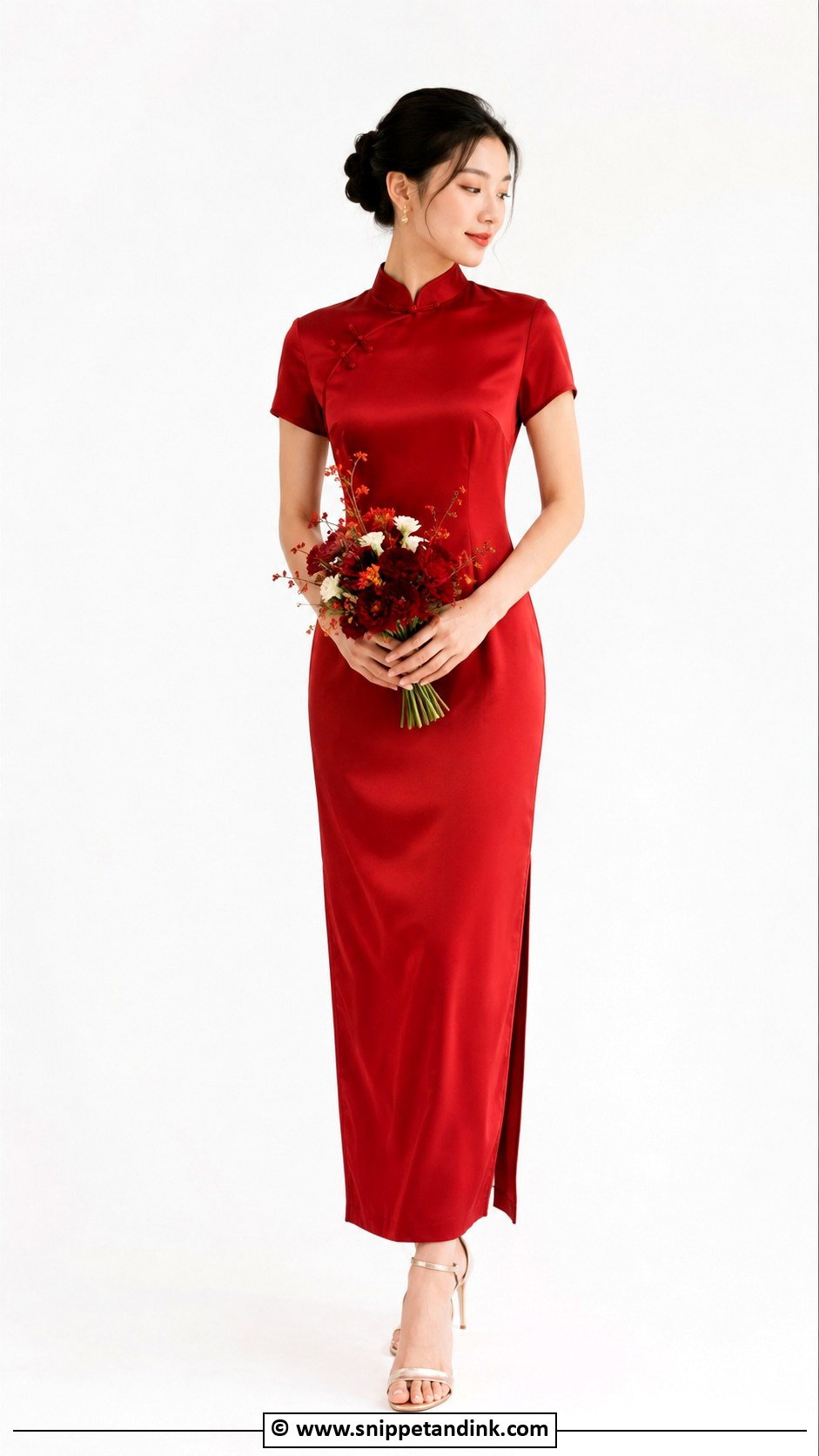
Minimal versions rely on fabric and cut instead of embroidery: a plain red qipao, an ivory mandarin-collar gown or satin with a few knot buttons. One meaningful detail is enough. Because there’s nowhere to hide, I spend more fitting time on these than on embellished dresses. City weddings, civil ceremonies and intimate receptions suit the style. Sleek heels, pearl or gold earrings and a polished bun complete it, with red shoes or a gold pin as a small traditional touch.
Rent, Buy or Commission Your Qun Kwa?
A hand-embroidered qun kwa is slow to make. Dense gold and silver work takes many months of needle time, so if you want one commissioned, start the conversation close to a year ahead and ask the maker for an honest timeline. Machine-embroidered versions are quicker and cheaper but look flatter up close.
Renting is common for the tea ceremony, especially for a piece you’ll wear for a couple of hours. Bridal shops usually include basic adjustments, but rental pieces can’t be cut, so fit comes from pins and clips. Some families pass a qun kwa down, and wearing your mother’s is a lovely gesture; just book a seamstress who has worked on embroidered garments before taking in a single seam.
Caring for Gold Thread and Silk After the Wedding
Metallic thread tarnishes when it meets moisture, perfume and skin oils, so I tell brides to spray perfume before dressing and let it dry. After the wedding, have a cleaner who handles embroidered silk look at the piece; many general dry cleaners refuse heavy metal-thread embroidery, and that’s a fair warning sign.
- Store flat or loosely folded with acid-free tissue between layers, never creased across the embroidery.
- Use a breathable cotton bag or box, not plastic, and keep it away from damp walls.
- Add cedar or lavender sachets near silk, not touching it, to deter moths.
- Take it out and refold along new lines once a year so the creases don’t set.
Matching the Dress to the Moment It Has to Carry
Start with the schedule, then the dress. If your day includes a tea ceremony, a banquet and a Western ceremony, you may want a red qun kwa or Xiu He Fu for the first, a qipao for the second and a fusion gown for the third, or one adaptable piece that covers two. Talk to your parents early about which traditions matter most to them. Then think about season, comfort and how many changes you can realistically fit in. Red and gold will always feel right at a Chinese wedding, but ivory, blush, champagne and burgundy can carry just as much meaning when the details are chosen with care.
You'll Like These Ideas:





Leave a Reply