
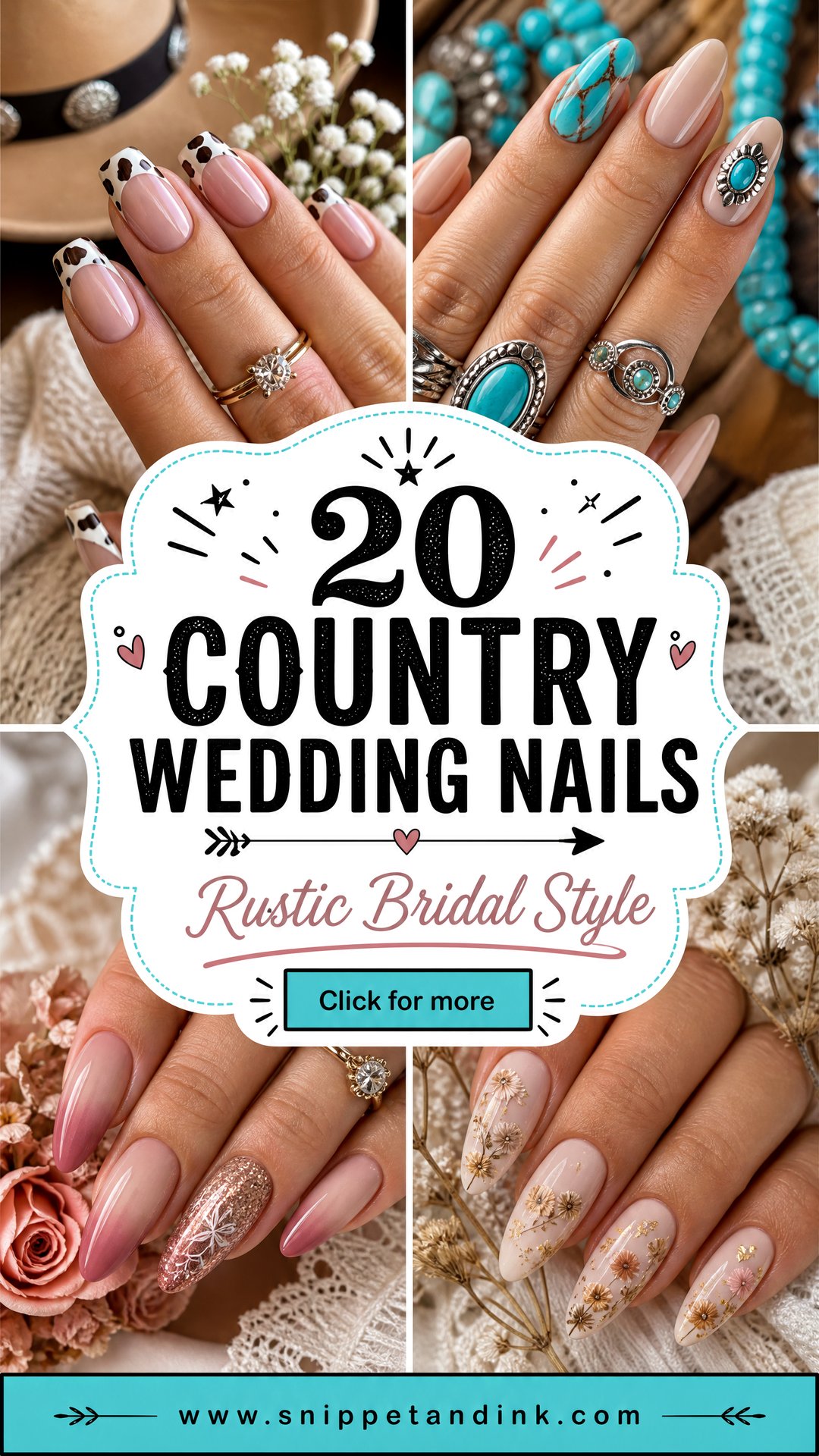
A country wedding asks more of a manicure than a ballroom does. Your hands will be carrying a bouquet through long grass, adjusting a veil in the wind, and probably hanging string lights the afternoon before. So when a bride books me for a barn, ranch or field wedding, I start with wear and only then talk about art. The sets below run from quiet blush French tips to turquoise stone and tiny horseshoes, and each one comes with what I’d actually watch for at the table. Think about how the nails sit next to your dress, bouquet, boots, denim jacket or venue, and keep the theme to a nod rather than a costume.
Setting Your Nail Date When You’re Also Building the Venue
Barn and backyard weddings usually come with a DIY afternoon: hay bales, string lights, mason jars, chairs. That work is rough on a fresh set, so I plan the appointment around it rather than the other way round. Gel or builder gel done two or three days out gives the product time to settle and still leaves you a full two weeks of wear for the honeymoon.
- Book a trial or a cheaper practice set about a month before, so we can see how the shade looks against your dress fabric and how the length feels while you work.
- If you’re doing setup yourself, wear thin gardening or nitrile gloves; dust and wood splinters scratch top coat faster than anything else.
- Keep the length short to medium if you’ll be lifting, tying or hammering. Long coffin nails take a beating on a ranch.
- Bring your shoes or boots and a swatch of the gown to the appointment. I match nude and white shades in daylight by the window, not under the desk lamp.
Press-ons are a sensible backup if you’re nervous about chipping. I’d still have them sized and shaped professionally, because a press-on that’s too wide for your nail bed lifts at the sides by the end of the reception.
1. Country Wedding Nails With Soft Pink French Tips
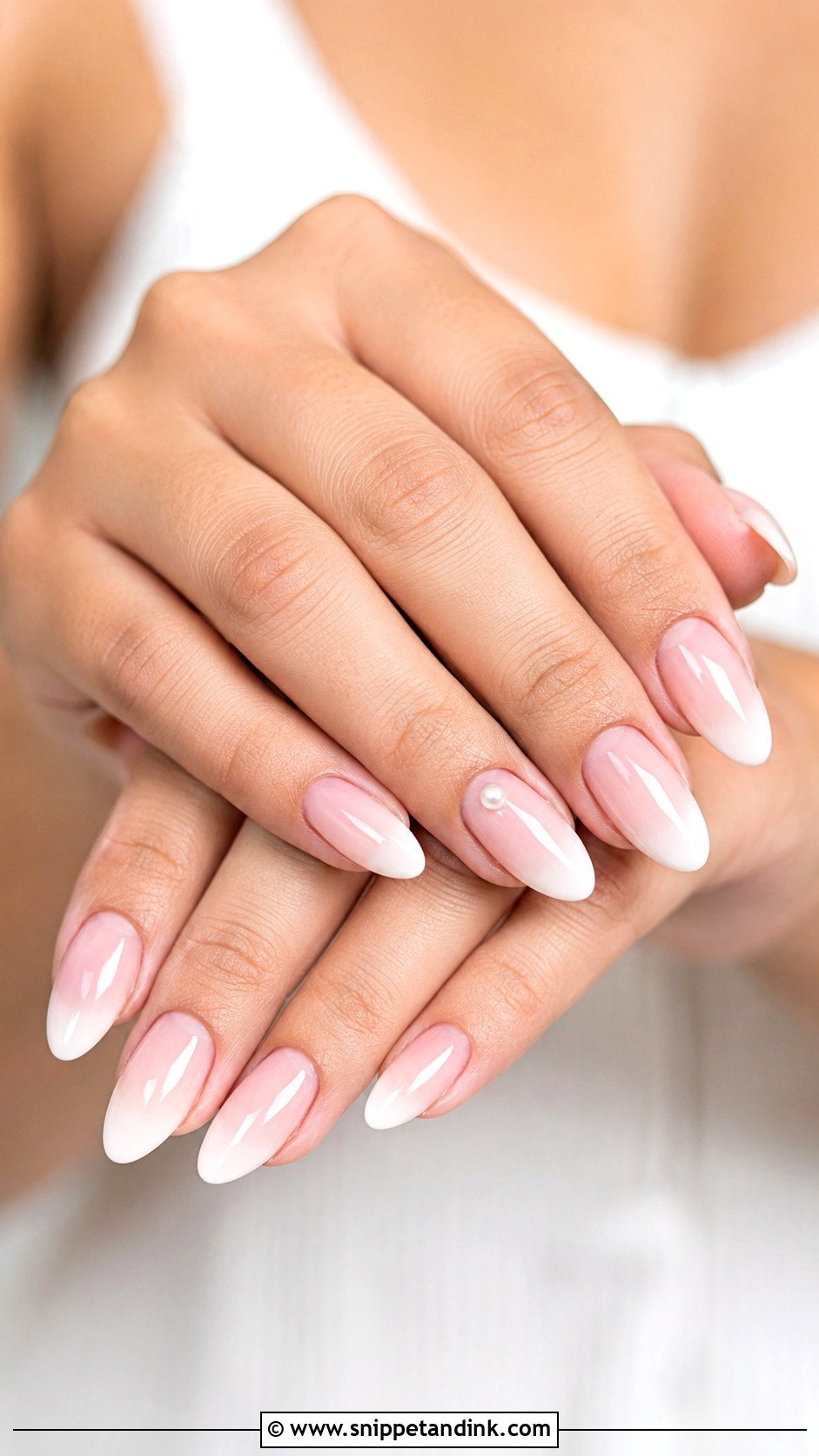
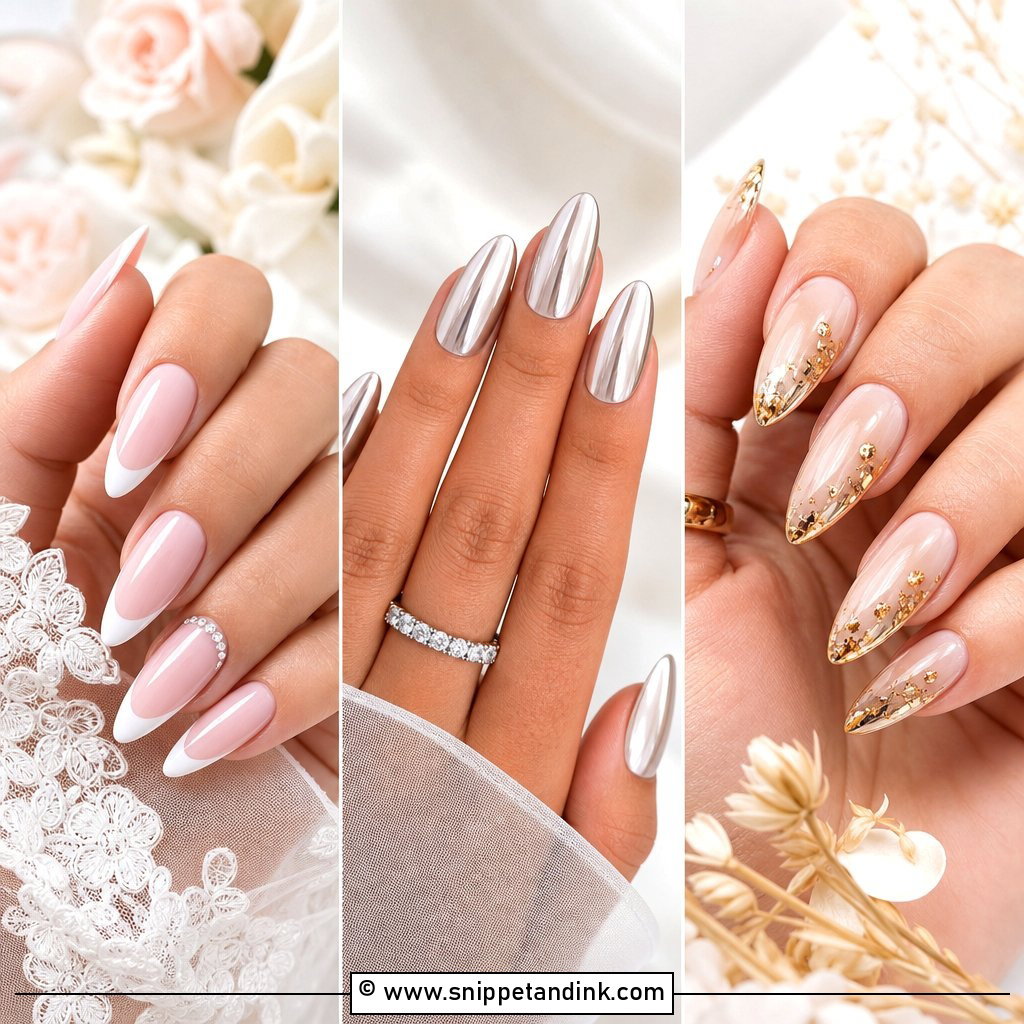
This is the set I book most for outdoor brides, because it forgives a lot. I build a sheer milky pink base first, then pull the white tip thinner than a salon French and soften the smile line with a dry brush so there’s no hard edge for the camera to catch. Almond and oval shapes let that diffused line curve naturally. If you want something extra, one tiny pearl on the ring finger is plenty; a second one starts to look like a different design.
2. Country Wedding Nails With Milky White Chrome
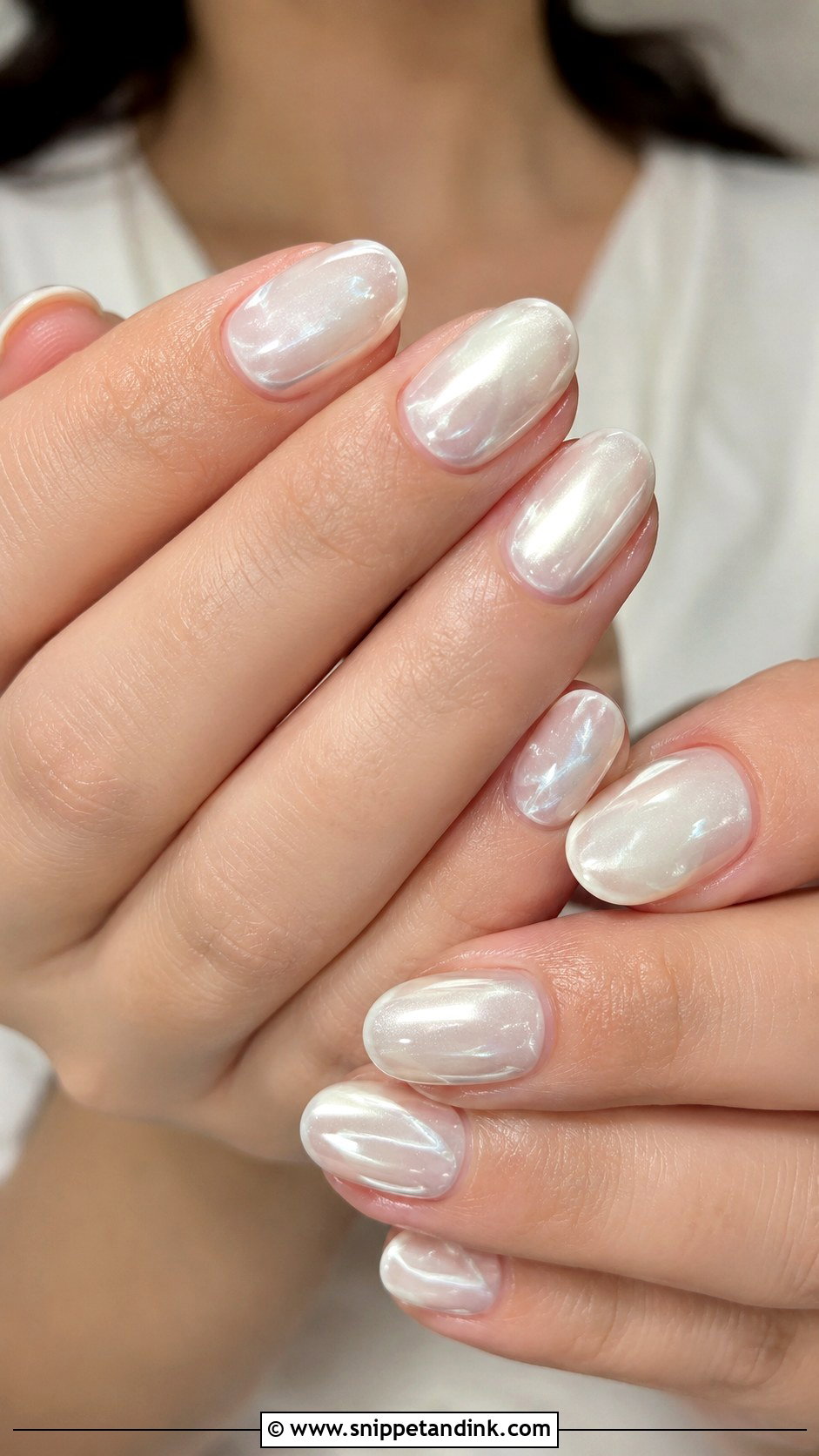
Chrome powder only grabs properly when it’s rubbed into a no-wipe top gel that’s been cured, so the base underneath decides everything. I lay a jelly ivory or milky white first and keep the powder pressure light, which gives a glazed glow instead of a mirror. On short square nails it reads modern; on almond it softens. In midday sun the full mirror version throws glare straight back into a ring shot, which is why I talk outdoor brides into the gentle pass.
3. Country Wedding Nails With Lace Accent Nails
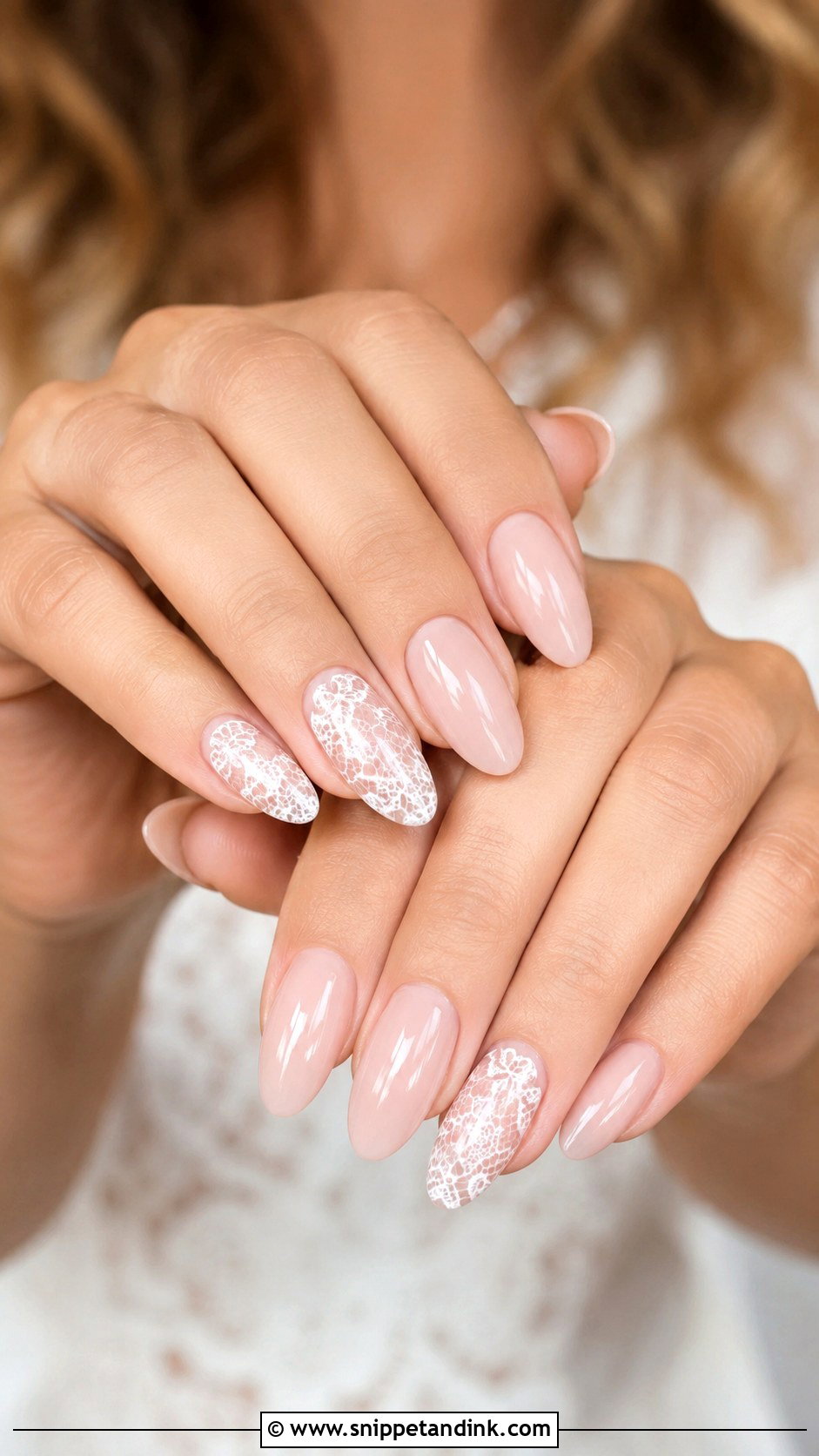
Lace is the easiest country detail to get wrong, because heavy stamping turns into grey smudge at arm’s length. I use fine stamping plates or hand-paint an open pattern on one or two nails over a sheer nude, and leave plenty of base showing between the motifs. If your gown has a specific lace, bring a photo and I’ll echo its scallop rather than copy it. Pair it with plain glossy neighbours or a soft French, not both.
4. Country Wedding Nails With Nude Pearl Details
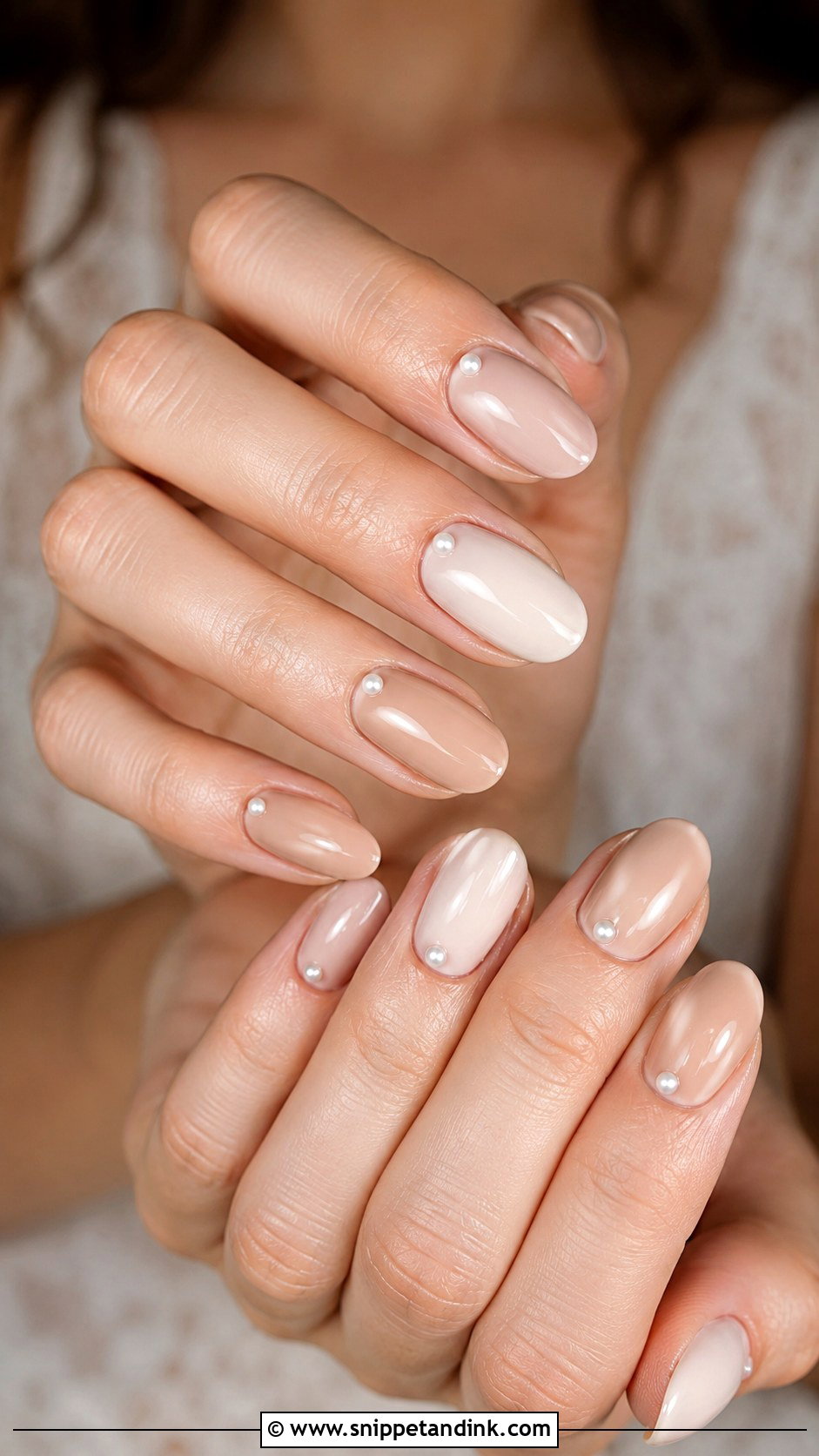
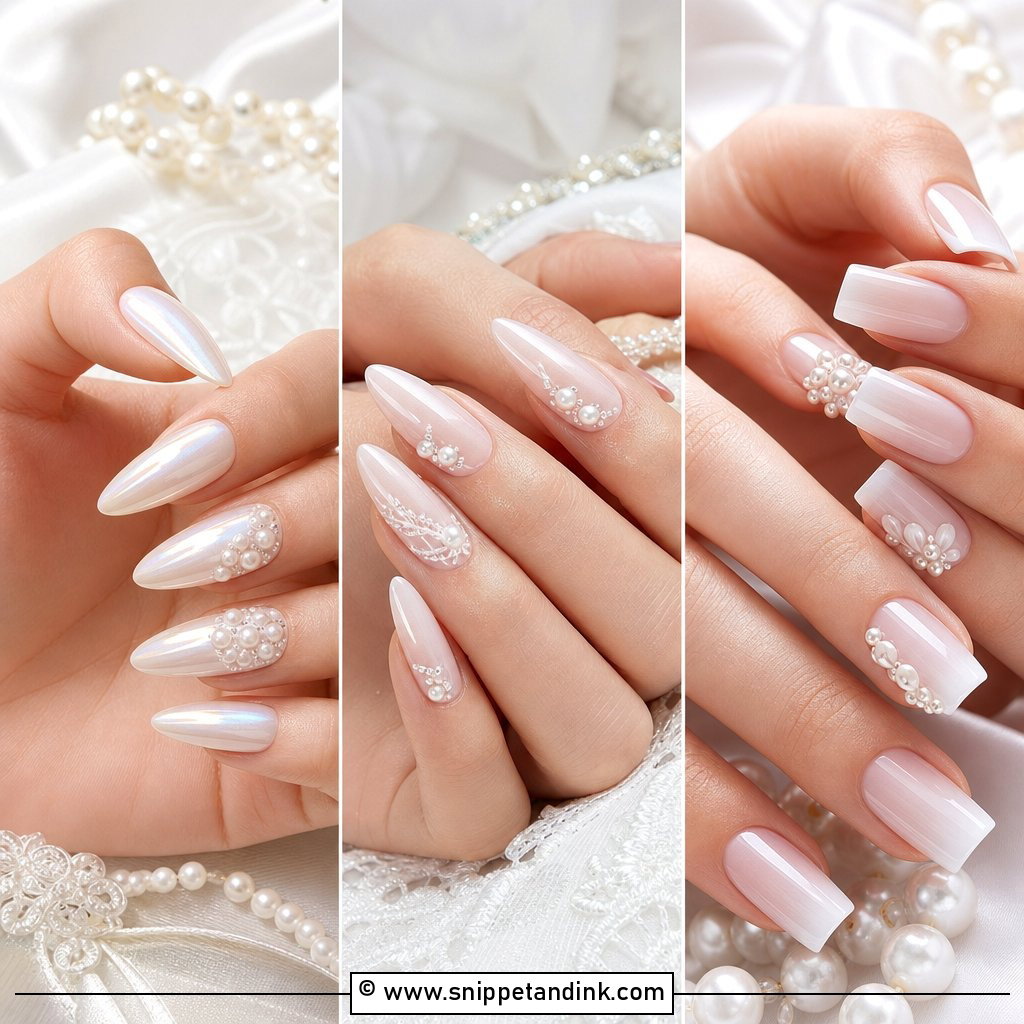
Pearls look sweet in photos and catch on everything in real life, so placement matters more than the number. I set flat-backed pearls just above the cuticle where they’re protected, and I cap them with builder gel so the edges don’t lift. A warm nude or beige pink base works on most skin tones; I swatch two against your knuckles in daylight before I commit. Short oval nails keep the set practical if you’re also arranging centrepieces or holding a toddler flower girl.
5. Country Wedding Nails With White Floral Art
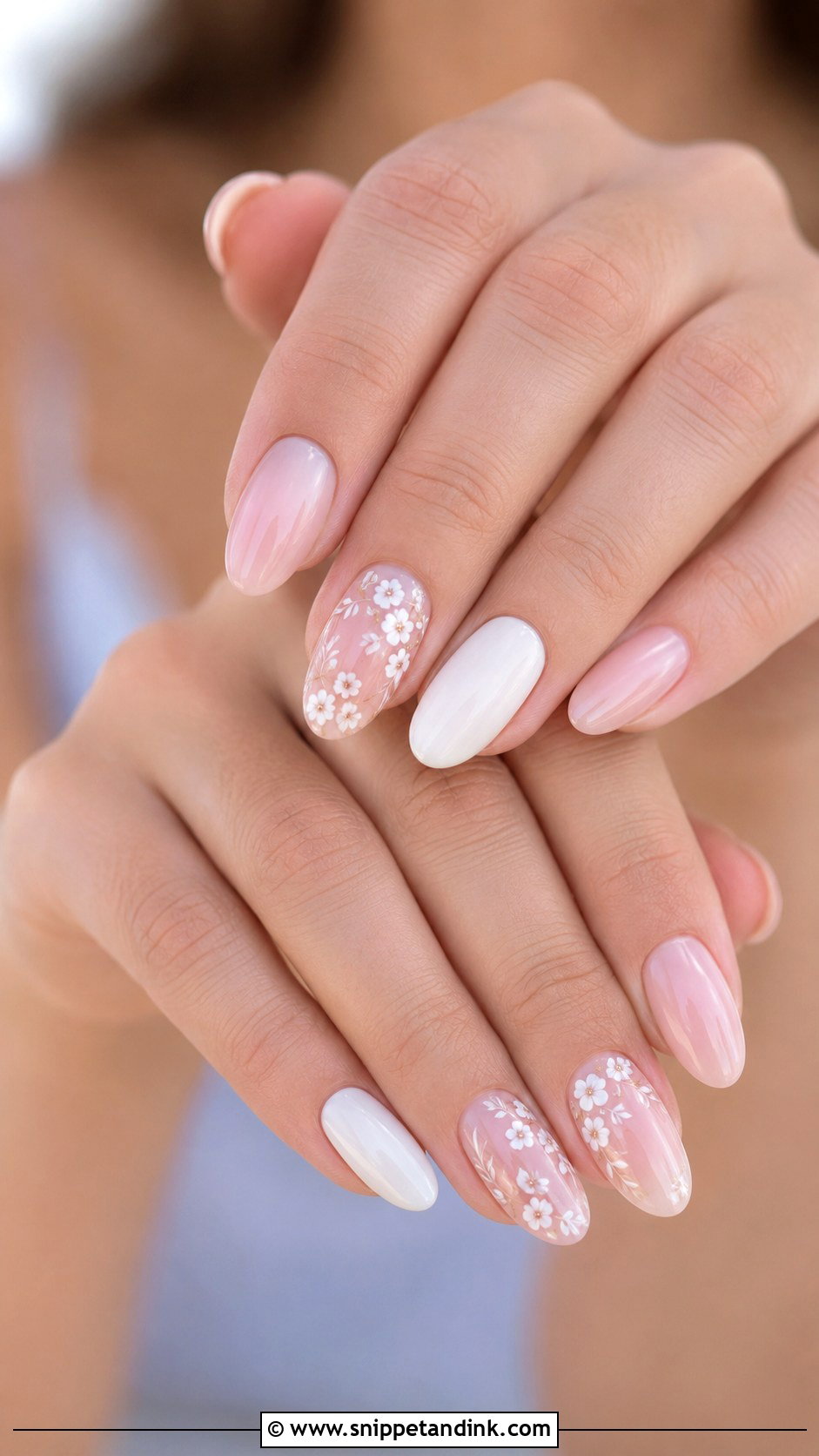
Hand-painted white florals come out best small. I dot five-petal flowers with a fine detail brush over a sheer pink or milky base, usually clustered near the tip on two or three nails so it looks like pressed blossoms drifting rather than wallpaper. A satin top coat flattens shine and makes the petals look softer. If your bouquet is mostly wildflowers, I keep the centres yellow instead of white so they read as daisies.
6. Country Wedding Nails With Cow Print French Tips
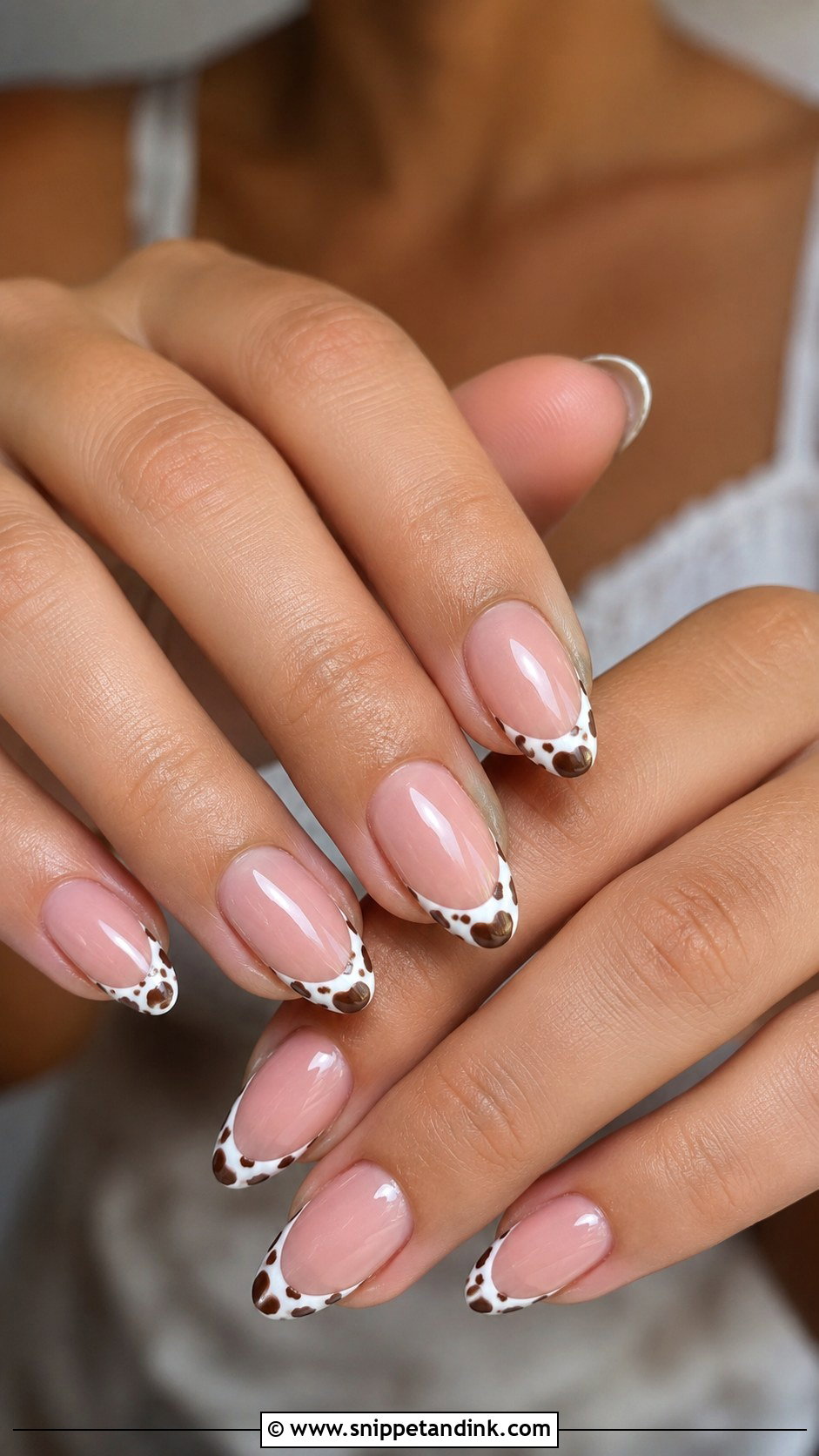
Full cow-print nails tend to look like a costume, which is why I confine the pattern to the tip. Cow print French tips over a nude or pale pink base give you the ranch reference and still leave a clean bridal nail in close-up. Brown and white feels warmer and sits better beside ivory; black and white is sharper and pairs well with black boots. I paint the spots freehand and irregular, because stamped spots repeat and the eye picks that up fast.
7. Country Wedding Nails With Turquoise Accent Nails
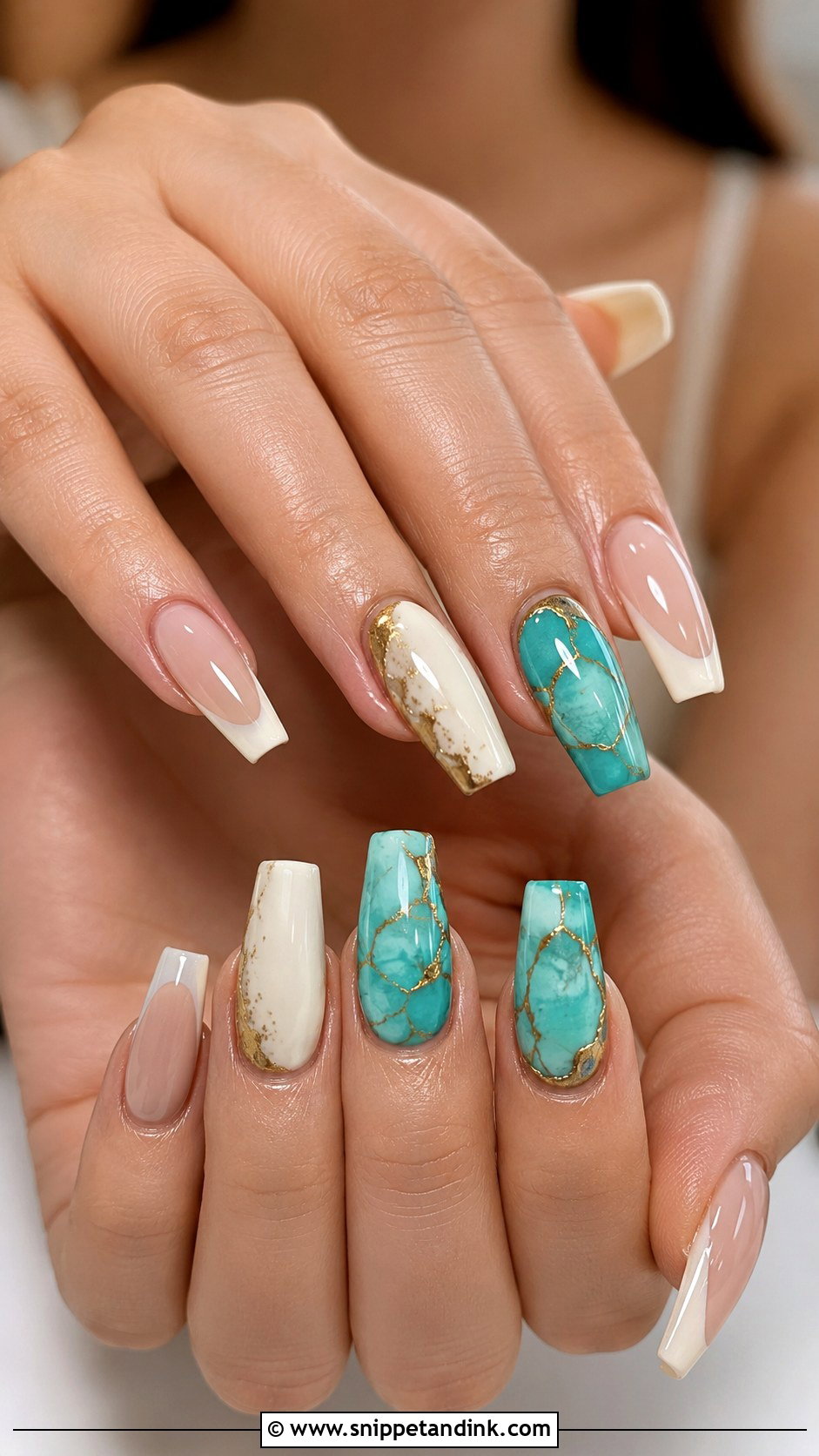
Turquoise stone art is mostly a marbling job. I lay down the turquoise, drag thin black or gold veins through it while the gel is still wet, and cure it before it spreads, so each accent nail looks like a different piece of stone. One or two accents are enough; the rest stay sheer nude or creamy white. It sits best beside silver jewellery and a palette with sage, tan or dusty blue, and it needs almond or coffin length to show the matrix properly.
8. Country Wedding Nails With Dusty Rose Ombre
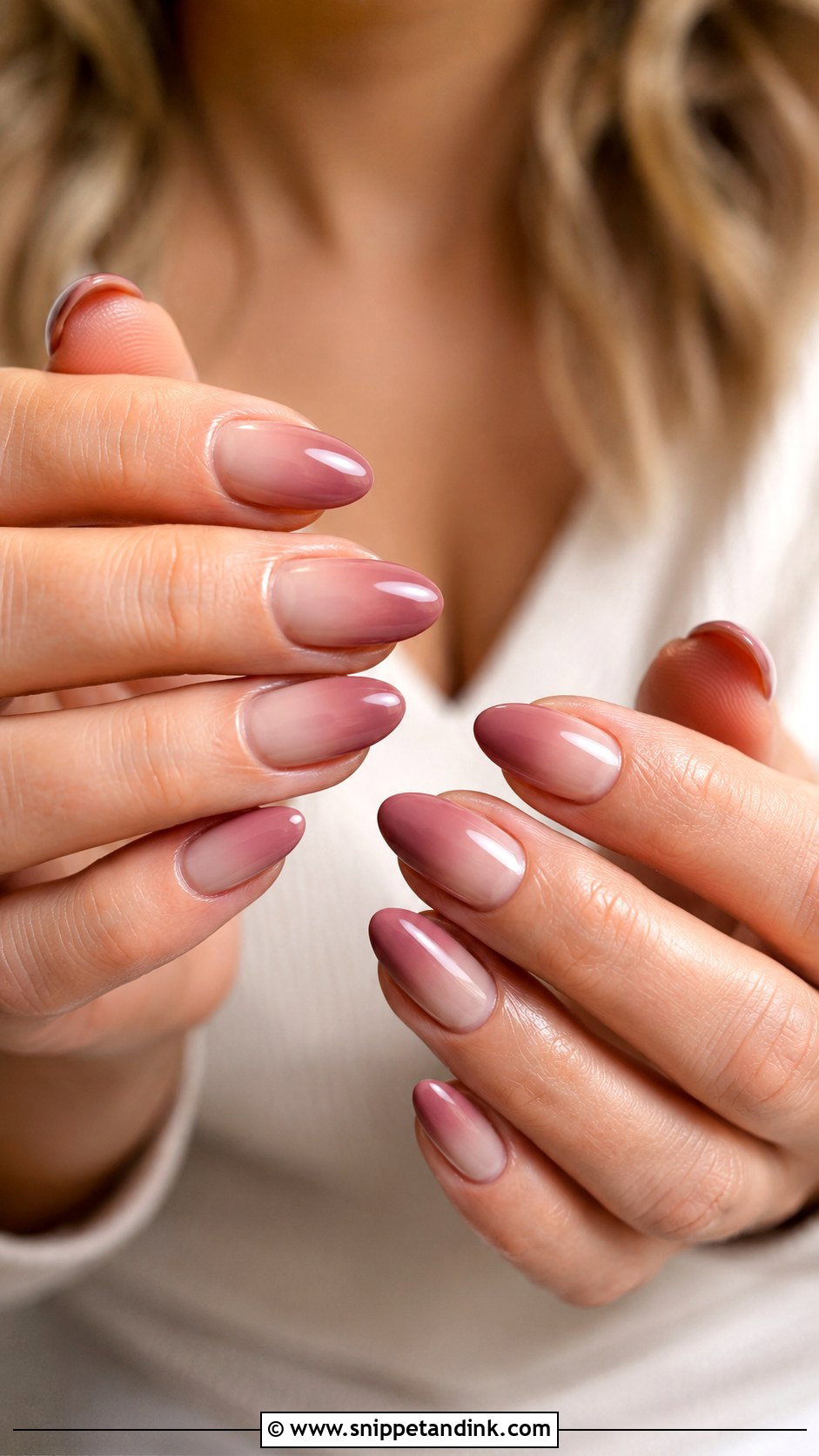
Dusty rose ombre is warmer than classic blush and kinder to olive and deeper skin tones, which tend to make pale pink look chalky. I sponge or airbrush the rose into a nude base so the blend has no visible band, then seal it with gloss or a whisper of shimmer. It suits fall barn weddings and blush bridesmaid palettes especially. Almond, oval and medium coffin all carry the fade without it looking cut off.
9. Country Wedding Nails With Champagne Glitter Ombre
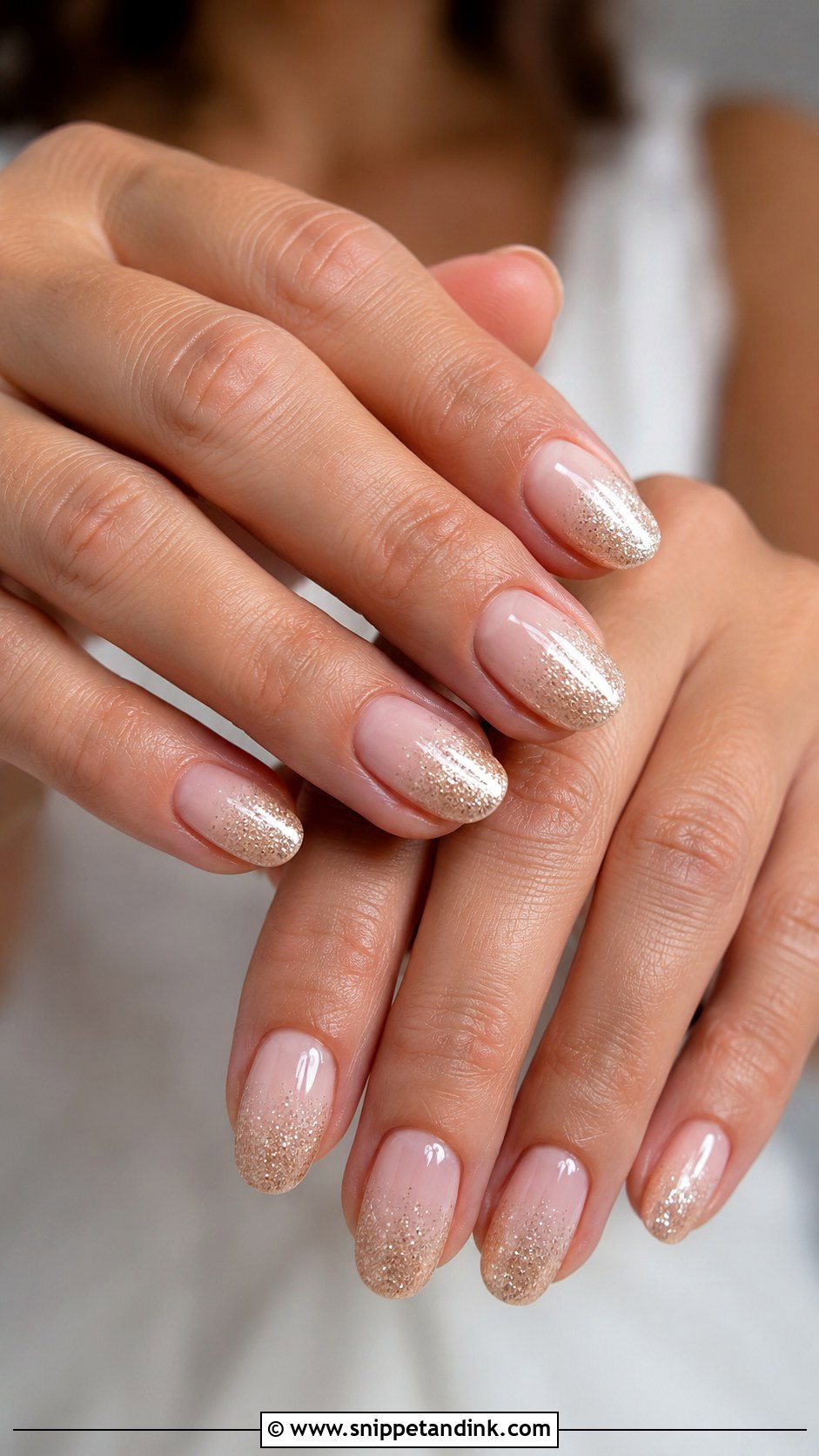
Champagne glitter ombre nails are where I steer brides who ask for silver, since warm champagne sits with ivory dresses and dried florals while silver can look icy at golden hour. I fade fine glitter from the tip up over a nude or sheer pink base. Chunky glitter is the mistake to avoid: it scatters light into blotches on camera and leaves a bumpy top coat. Fine glitter works on short nails just as well as long coffins.
10. Country Wedding Nails With Ivory Bow Details
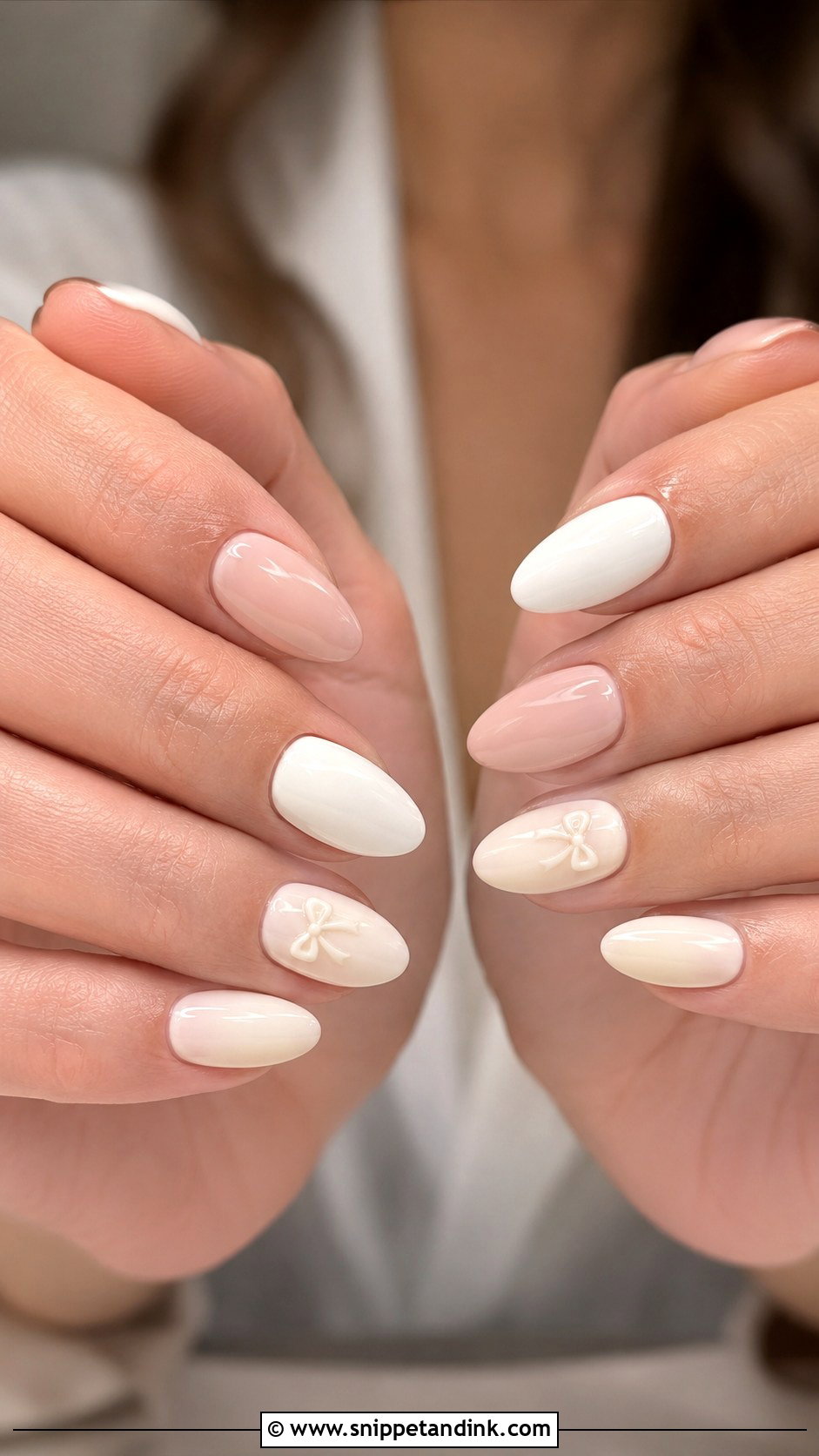
A bow stays grown-up when there’s only one and it’s tiny. I paint a flat ivory bow for short or working nails; the 3D resin version looks sweet on longer sets but snags lace and veil tulle, so I only use it if the dress has neither. Over a milky white or soft nude base, with gloss or a pearl finish, it echoes satin ribbon on a bouquet wrap. Two bows per hand is where it tips from bridal into cute.
11. Country Wedding Nails With Beige Plaid Accents
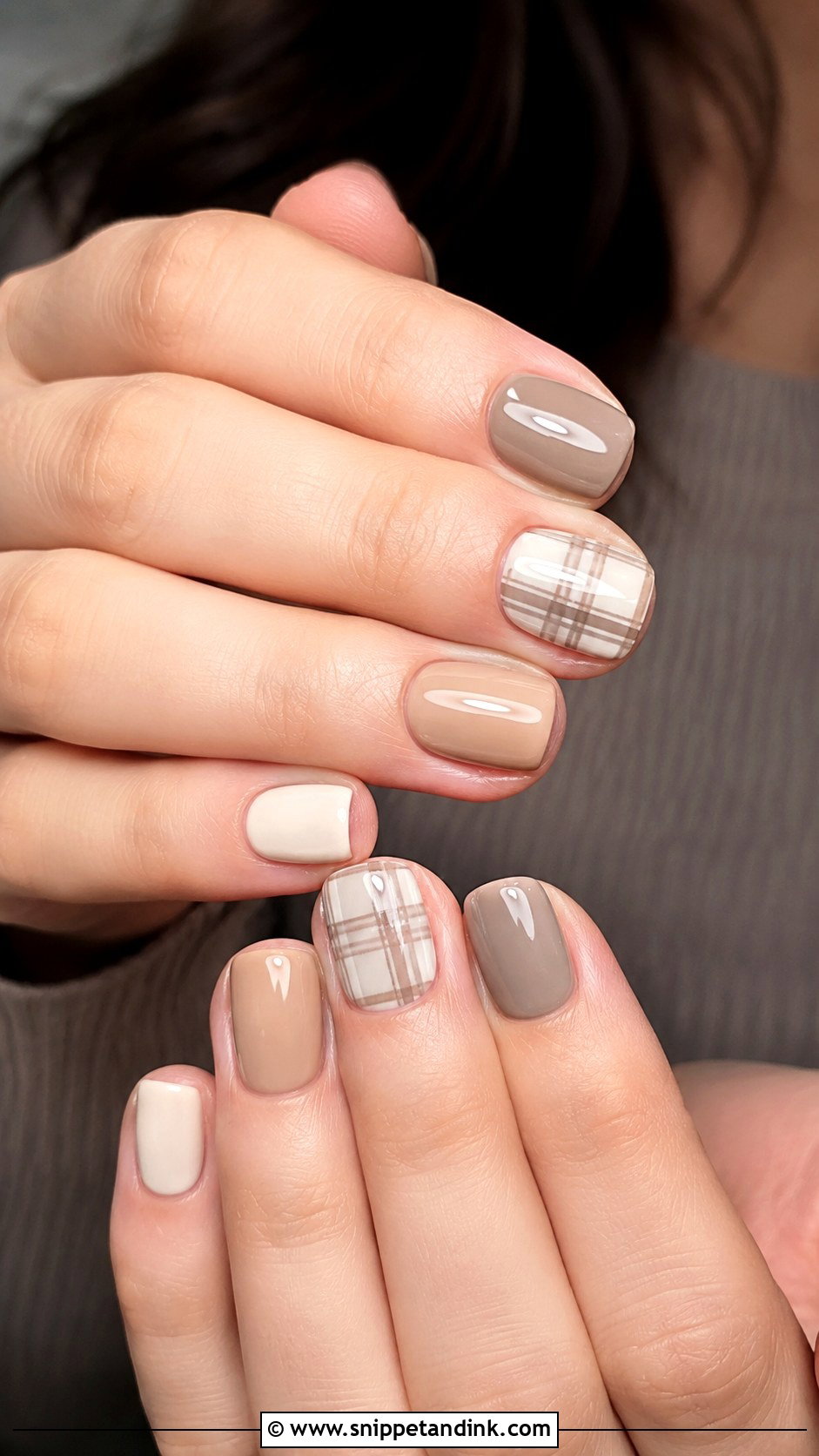
Plaid only works at this scale if the lines are hair-thin. I use a long striping brush in beige, white and soft taupe over a creamy nude, and cross the lines at slightly uneven gaps so it looks woven rather than printed. Dark lines turn it into a flannel shirt, which is fun for a rehearsal dinner and too casual for the ceremony. Keep it to one or two accent nails on short square or almond shapes so the grid stays crisp.
12. Country Wedding Nails With Sage Green Florals
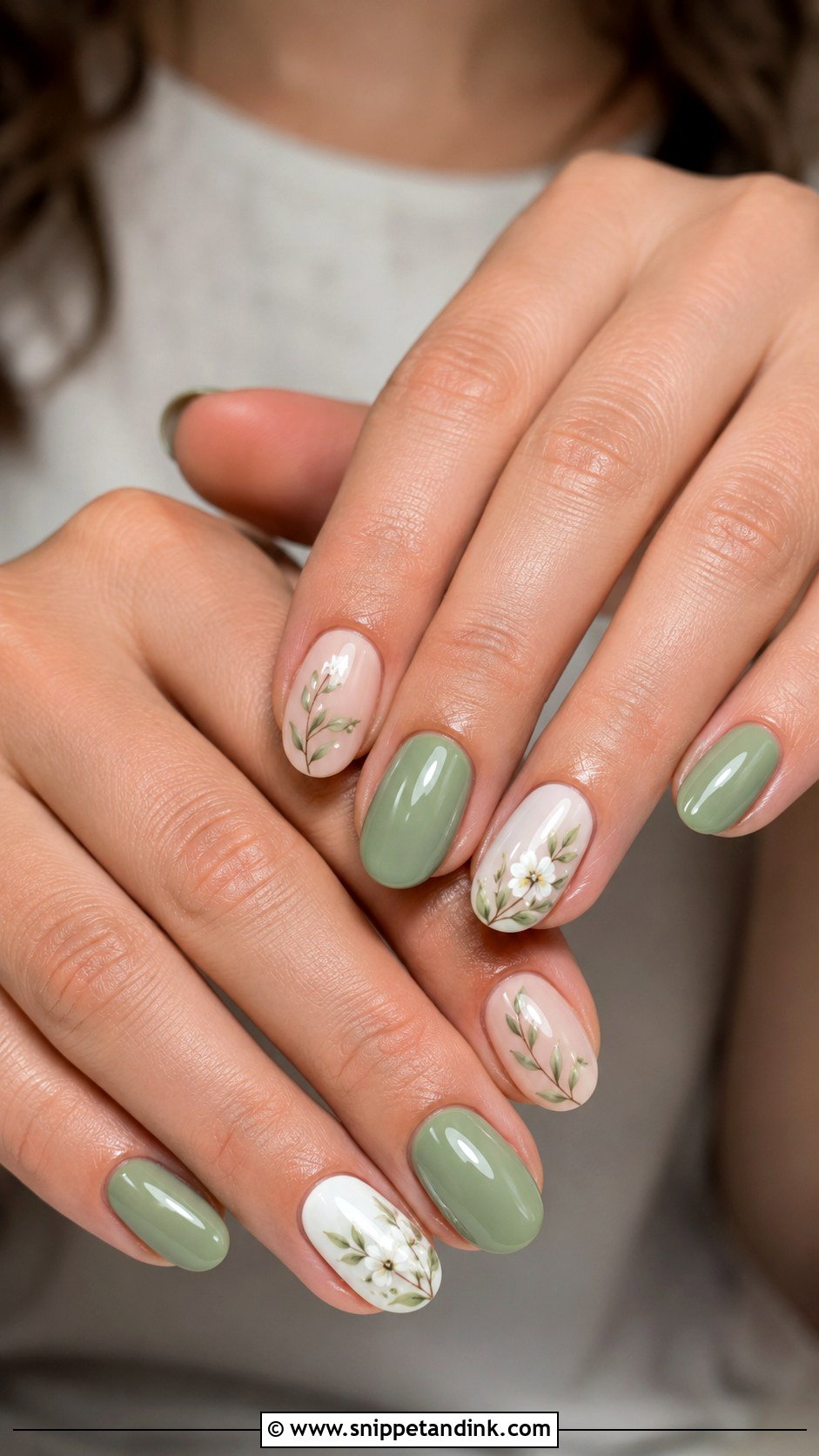
Sage greenery is forgiving because leaves are naturally irregular, so a slightly uneven stroke still looks right. I paint thin sage stems and a few tiny white blooms on accent nails over sheer nude or soft pink, matching the green to your eucalyptus if you bring a sprig. Thick leaves look like clip art; keep them airy. It suits spring and summer greenery most, though it sits happily with fall neutrals too, on almond or short oval nails.
13. Country Wedding Nails With Brown And Cream French Tips
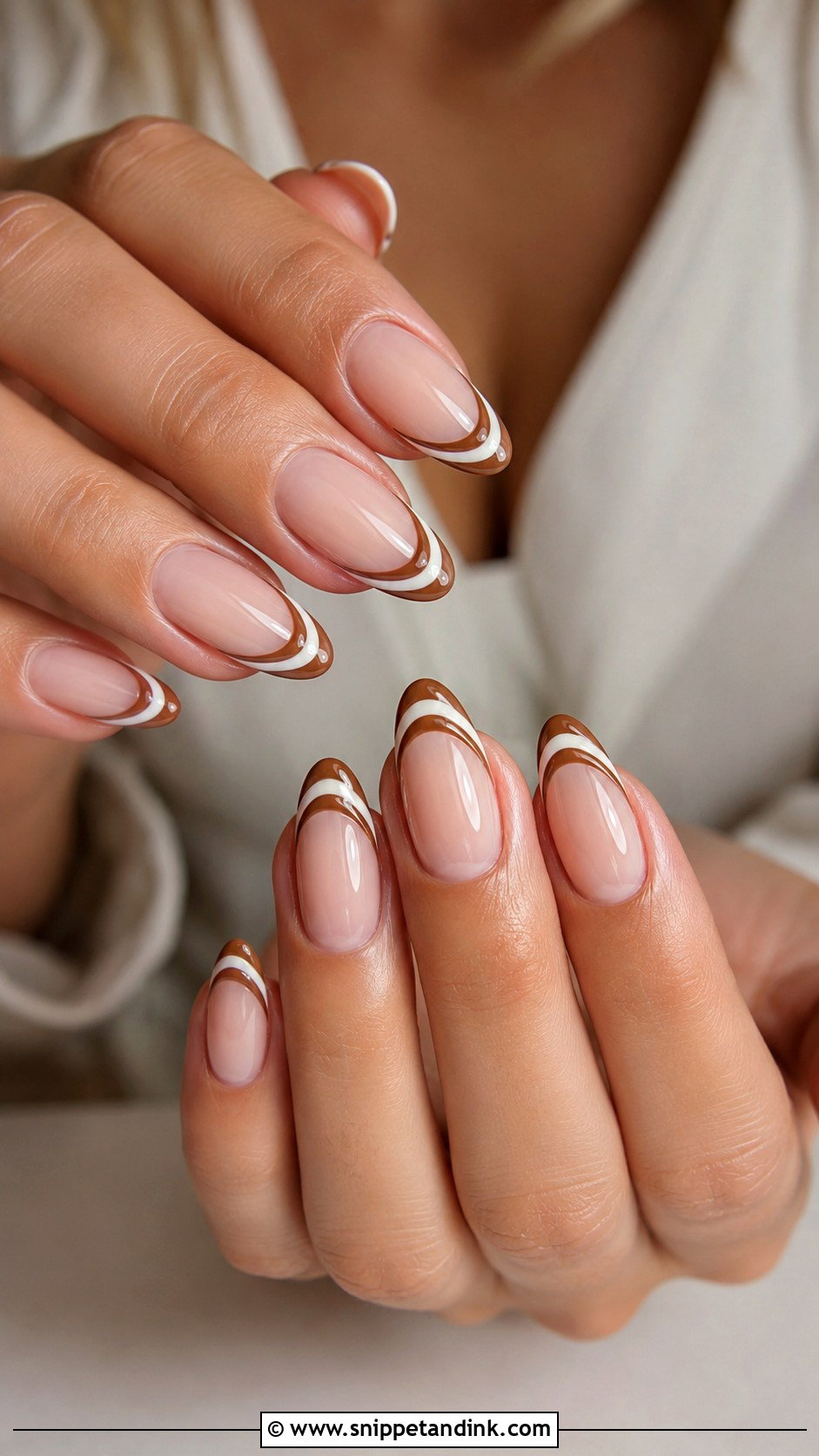
Brown can read muddy on hands if the shade is off, so I mix it toward caramel and test it against your skin before painting. The tips themselves are cream, either outlined in that warm brown, done as a double French line, or alternated across the set. The French structure keeps the earthy palette looking finished. Fall weddings, ranch venues and champagne or beige gowns suit it best, and a high-gloss top coat keeps it from feeling everyday.
14. Country Wedding Nails With Tiny Horseshoe Art
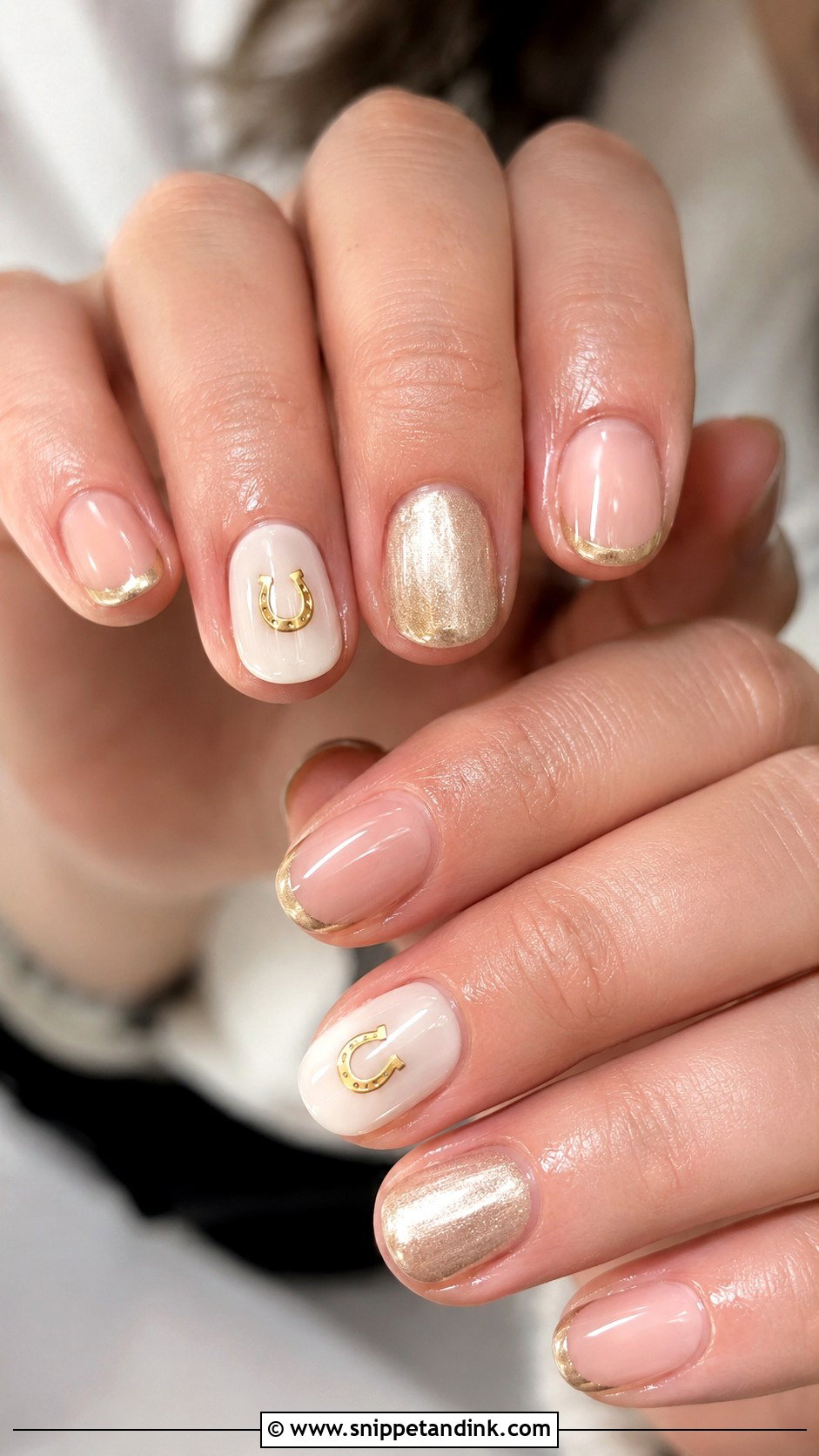
Tiny horseshoe art is a good luck charm you can actually wear to the altar. I paint it on one accent nail, no wider than a lentil, in white, gold or silver over sheer pink, nude or milky white. Scale is the whole trick: once the horseshoe fills the nail it starts to look themed. Horse lovers and ranch couples tend to want it pointed open-end up, the way it’s hung for luck, so tell me which way you want it before I start.
15. Country Wedding Nails With White Marble And Gold
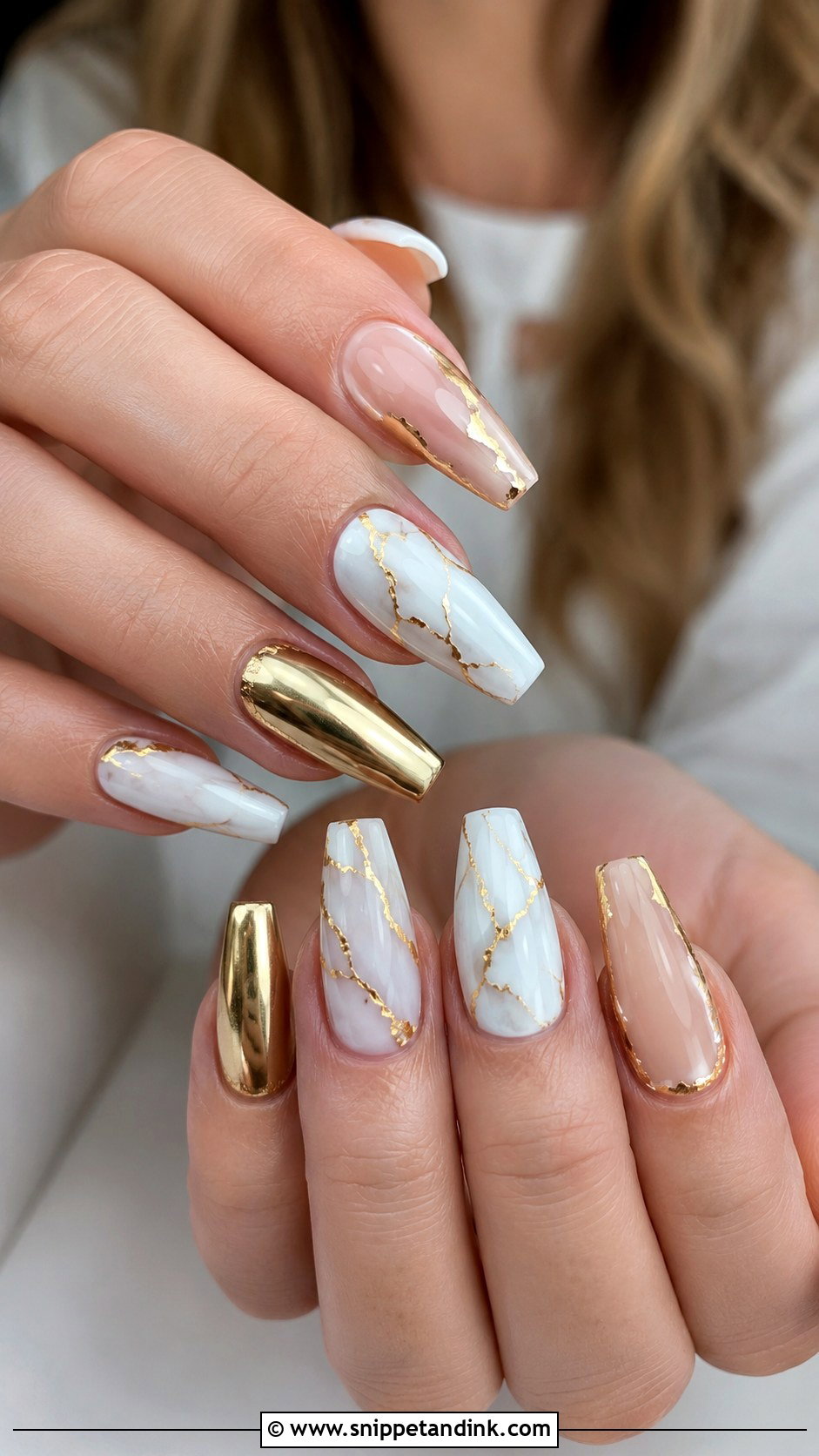
Marble done for a bride should be cloudy, not graphic. I blot grey and white into a milky or ivory base with a little alcohol so the veins blur, then lay thin gold leaf or a gold line along one edge. High-contrast black veining fights with an ivory dress. It looks right with wooden farm tables and creamy flowers, and almond or coffin gives the marble enough room to move.
16. Country Wedding Nails With Dried Flower Details
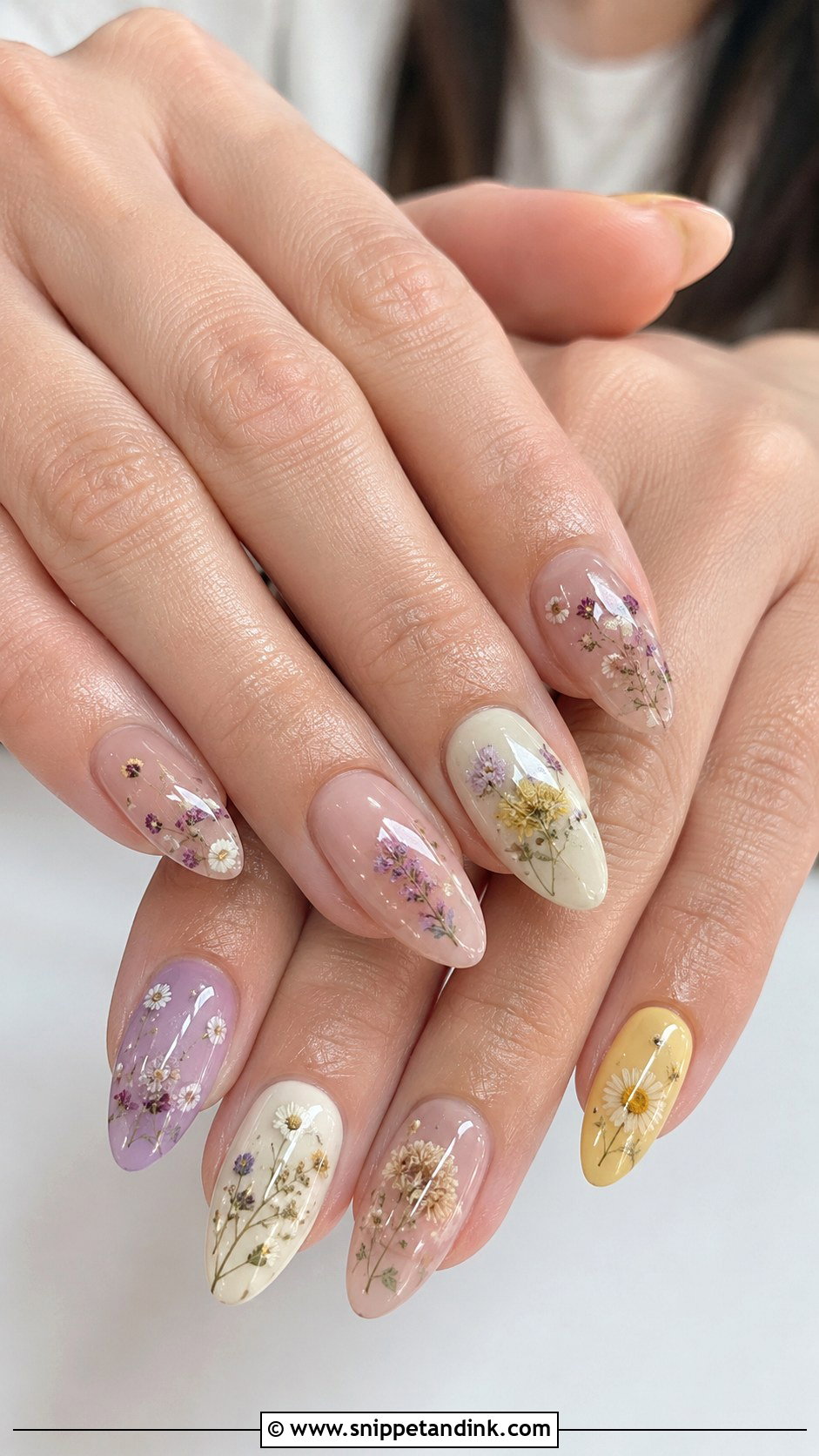
Dried flower details need encapsulating, not just a top coat. I lay real pressed blooms into a thin layer of builder gel over a clear, nude or milky base, then cap them so the surface is completely smooth; flowers left sitting proud will lift and catch hair within a day. Thin, flat blooms like baby’s breath, small lavender sprigs and pale yellow petals behave best. If you want the flowers to match your bouquet, buy them dried and pressed ahead rather than pressing fresh ones the week of the wedding.
17. Country Wedding Nails With Almond Nude Shimmer
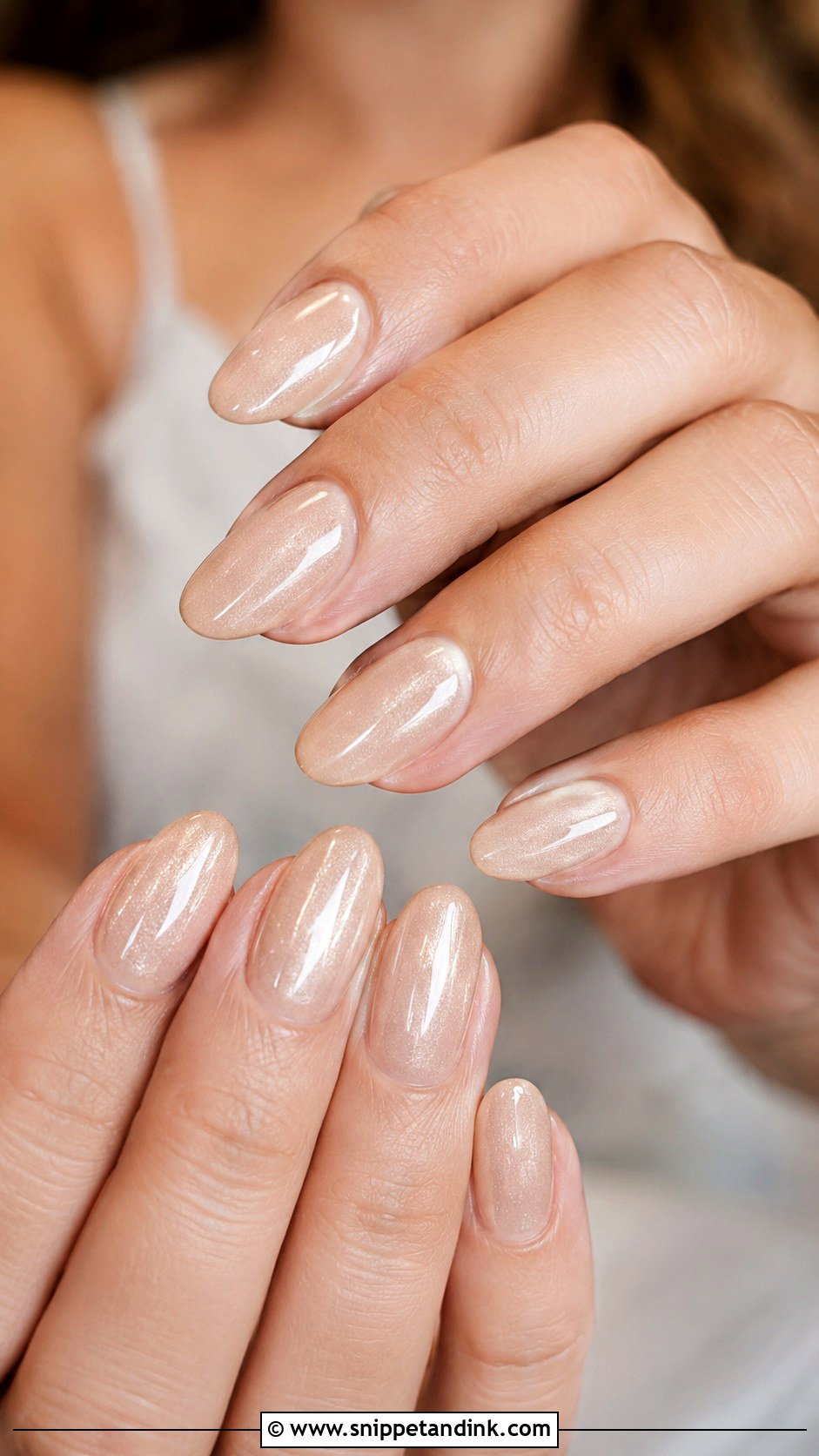
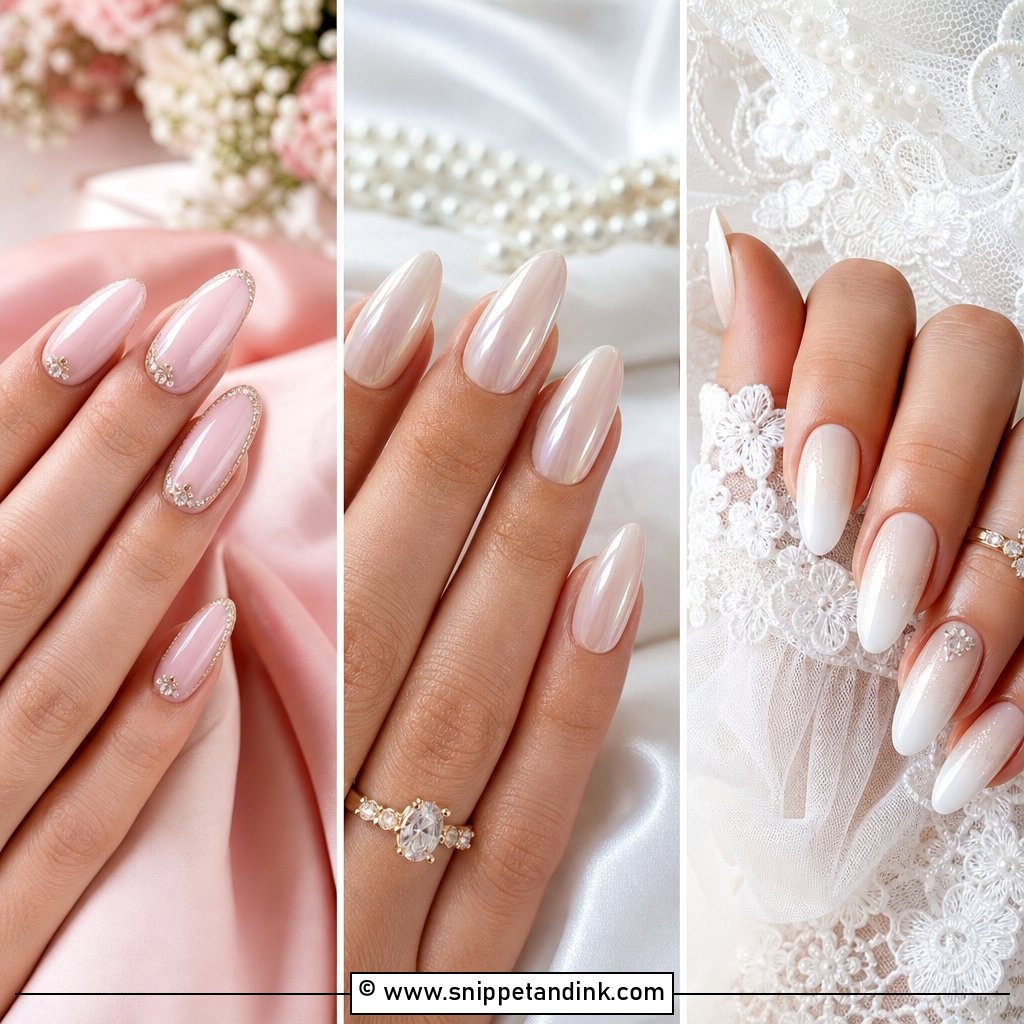
For brides who don’t want any art, shimmer does the work. I match the nude to your undertone first, peachy or rosy or neutral, then add one coat of fine pearl or champagne shimmer so the hands glow without visible glitter. Almond shaping lengthens the fingers. The finish only looks expensive if the cuticle work underneath is careful, so this is the set where I spend the most time on prep.
18. Country Wedding Nails With White Boots Accent Art
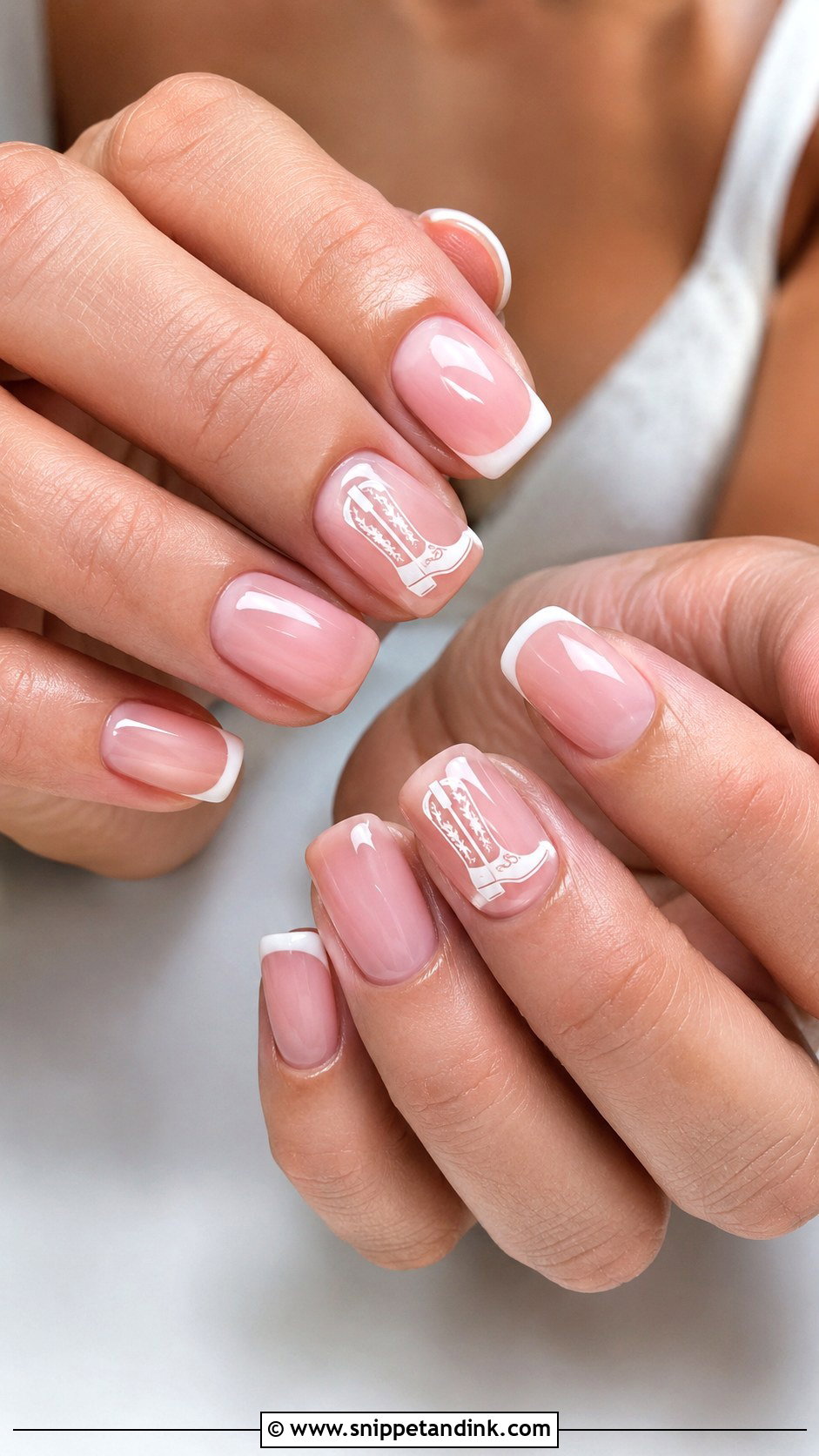
Boot art is hard to read when it’s small, so I simplify the silhouette to the shaft, heel and a single stitch line in white over sheer pink or nude. One accent nail is enough; the rest stay glossy, milky or French-tipped. Too much detail and the boot turns cartoonish once it’s under a centimetre wide. I’d save it for brides who are genuinely wearing boots down the aisle, otherwise the reference gets lost.
19. Country Wedding Nails With Blush And Gold Foil
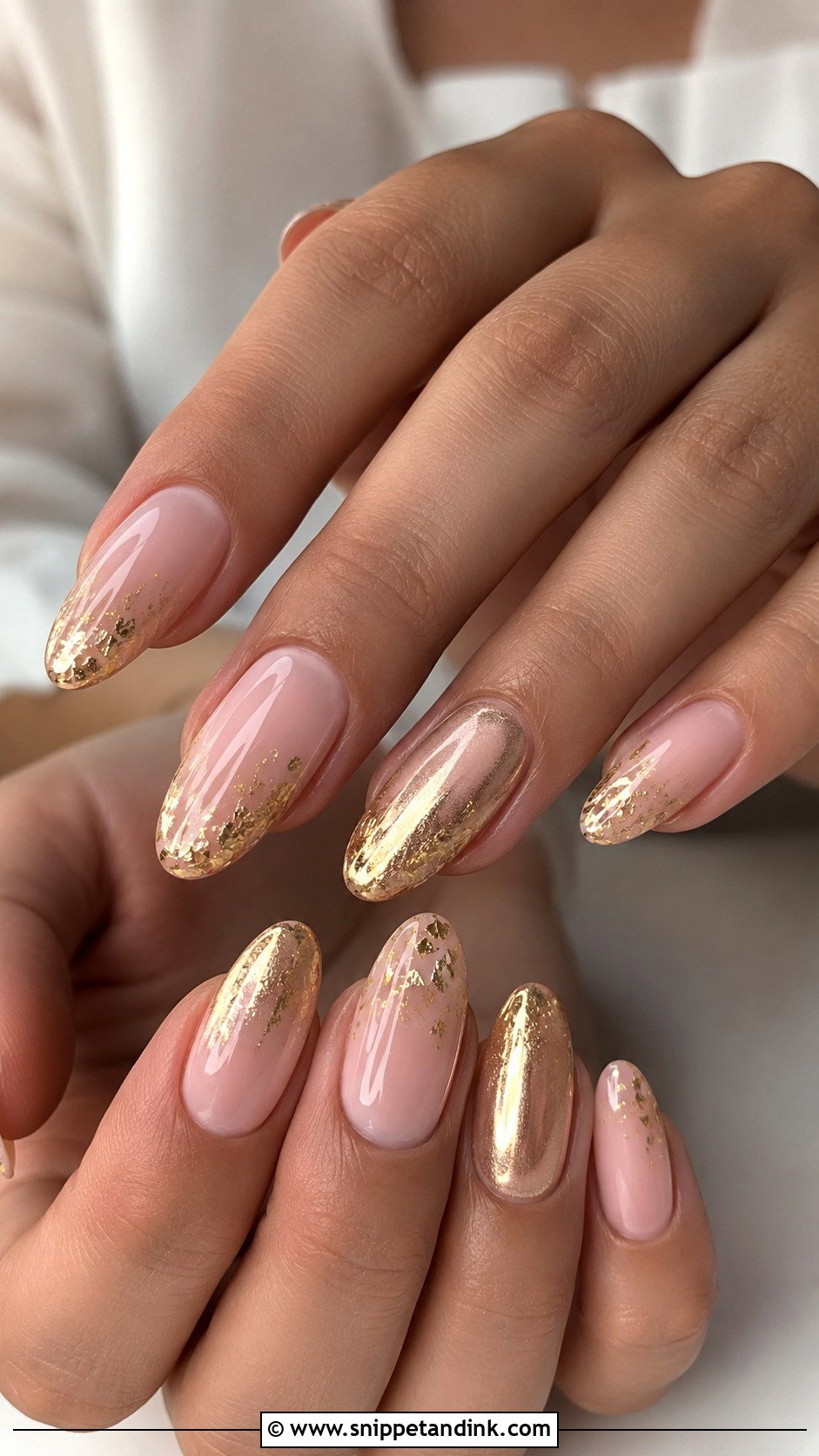
Gold foil gives sparkle without glitter’s grit. Over a translucent blush or sheer rose base, I press torn pieces of gold leaf near the tip and cuticle so the coverage looks scattered, then seal it under gel so the edges can’t flake. Heavy foil coverage looks brassy outdoors. It suits warm-toned bouquets, champagne accessories and most shapes from short oval to long almond.
20. Country Wedding Nails With Simple White Short Nails
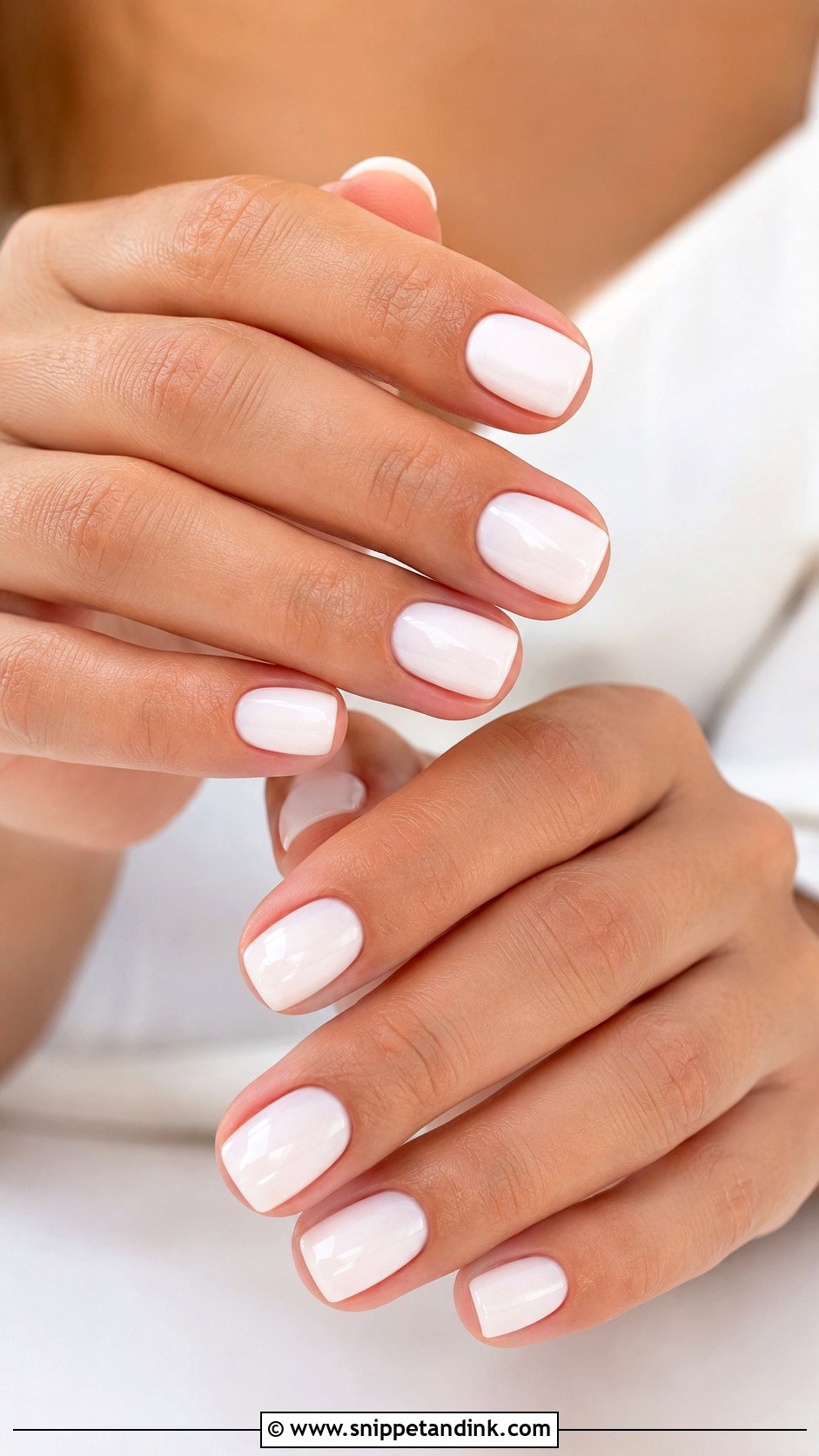
Short white nails are the most practical set here and the one people underestimate. A milky white or ivory gel at a short square or rounded length survives setup day, carrying chairs and a long night of dancing, and still looks tidy at the brunch afterwards. Bright opaque white can look stark beside an ivory gown, so I usually tint it a shade warmer. A pearl top coat or a single dot of shimmer near the cuticle is all the decoration it needs.
Golden Hour Will Warm Your Whites, So Plan the Shade for It
Country weddings are often photographed in low evening sun, and that light shifts everything toward amber. A milky white that looked crisp under salon lighting can turn slightly cream, and a pale pink can read nude. I deal with this by testing shades outside and leaning one step cooler than you’d pick indoors if most of your portraits are at sunset.
Close-up ring shots are less kind than you’d expect. The camera notices dry cuticles, a lifted edge and glitter that’s slightly raised far more than it notices the art itself. Use cuticle oil every night of the wedding week and again the morning of, and ask your photographer to shoot hands before the bouquet stems have stained your fingers green.
If a Nail Breaks Between the Ceremony and the Barn Dance
It happens: a fingertip catches on a gate latch or a heavy door. I send outdoor brides home with a tiny repair pouch for a bridesmaid to carry.
- A fine glass file to smooth a jagged edge before it snags your veil
- Nail glue and a spare press-on or two cut to your shape and painted in your base shade
- A small bottle of the base colour in regular polish for touch-ups, since it dries without a lamp
- Cuticle oil and a lint-free wipe
A short, filed-down nail on one finger is far less noticeable in photos than a jagged one, so if all else fails, file it neat and carry on.
Balance the Ranch Details Against a Clean Base
Most of the sets above share one rule: a plain, well-prepped base carries the design, and the country detail sits on top in small doses. Soft French tips, milky chrome, nude shimmer and short white nails lean classic. Lace, cow print tips, turquoise stone art, sage florals and tiny horseshoes add the rustic voice. Pick one voice per hand, keep the length comfortable for the work you’ll be doing that week, and the set will hold up from the ceremony through the last song.
You'll Like These Ideas:


Leave a Reply