
Country brides tend to ask me for nails that look like they belong with linen, wood and dried flowers rather than a ballroom. That usually means warm neutrals, creamy whites, muted blush, sage, small hand-painted florals and a little pearl or gold, kept soft enough for close-up ring photos. A rustic set doesn’t need a theme painted on every finger. It needs the right undertone for your skin, a shape you can live with while you’re carrying a bouquet and hugging relatives, and a finish that won’t chip on a farmhouse door latch. The twenty sets below range from plain classics to detailed art, with notes on what I’d check before I paint each one.
Wear Gloves While You Hang the Bunting
Country weddings tend to be hands-on. Brides tie jam jars, arrange flowers, fold napkins and carry crates in the days before, and that’s how a fresh manicure gets chipped before anyone sees it. I’d rather plan around it than repaint at midnight.
- Timing: gel or builder gel one to two days before the wedding; regular polish the day before, since it needs hours to harden fully. If you’re setting up decor that week, book after the heavy work is done.
- During setup: wear cotton or rubber gloves, and don’t use your nails to open tape, boxes or ring boxes.
- Hand skin: close-ups show dry knuckles and ragged cuticles. Use a cuticle oil twice a day for the week before, and hand cream at night.
- Fake tan: apply it before your appointment, not after, or the colour stains around the cuticles.
1. Rustic Wedding French Tip Nails
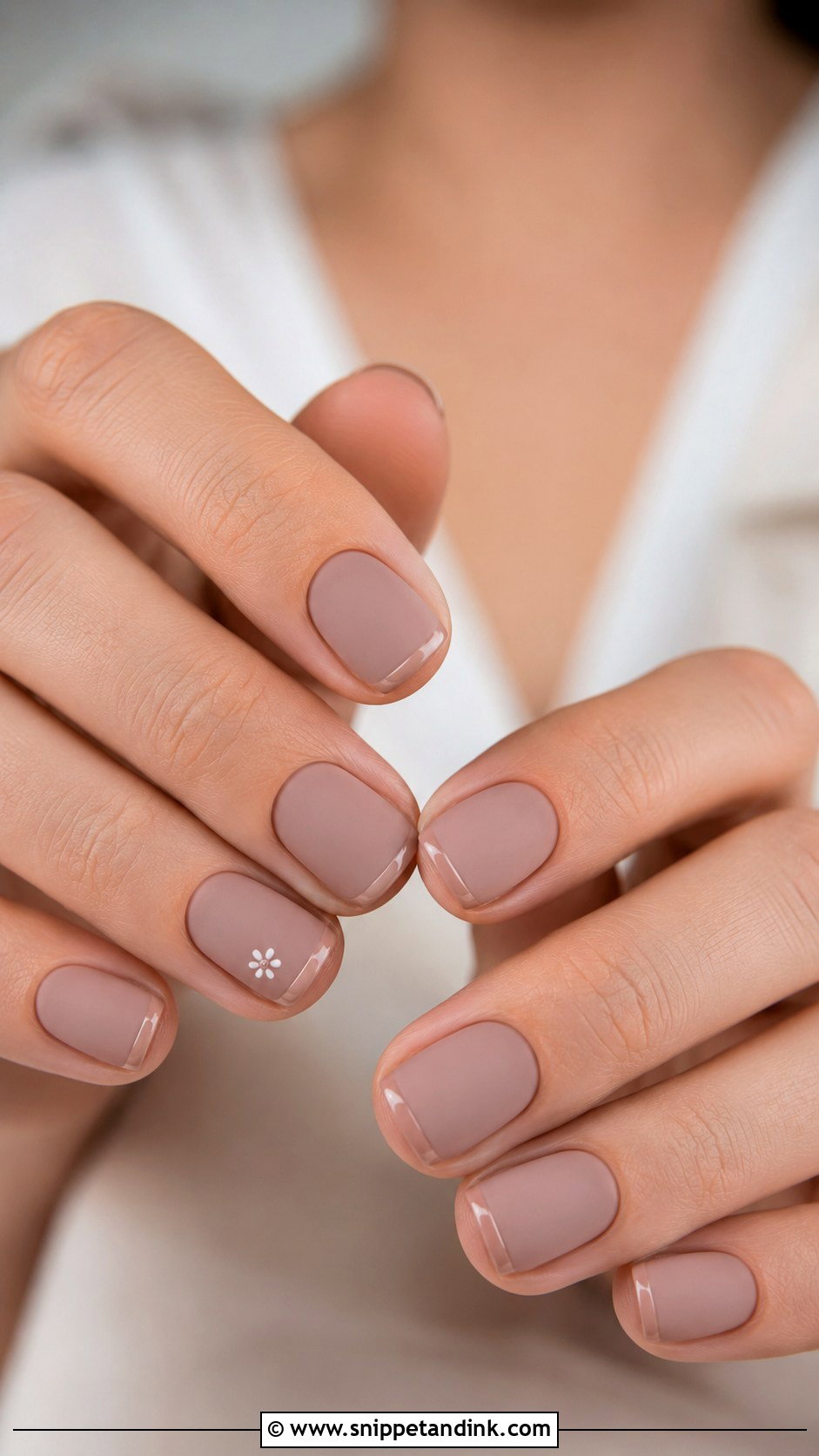
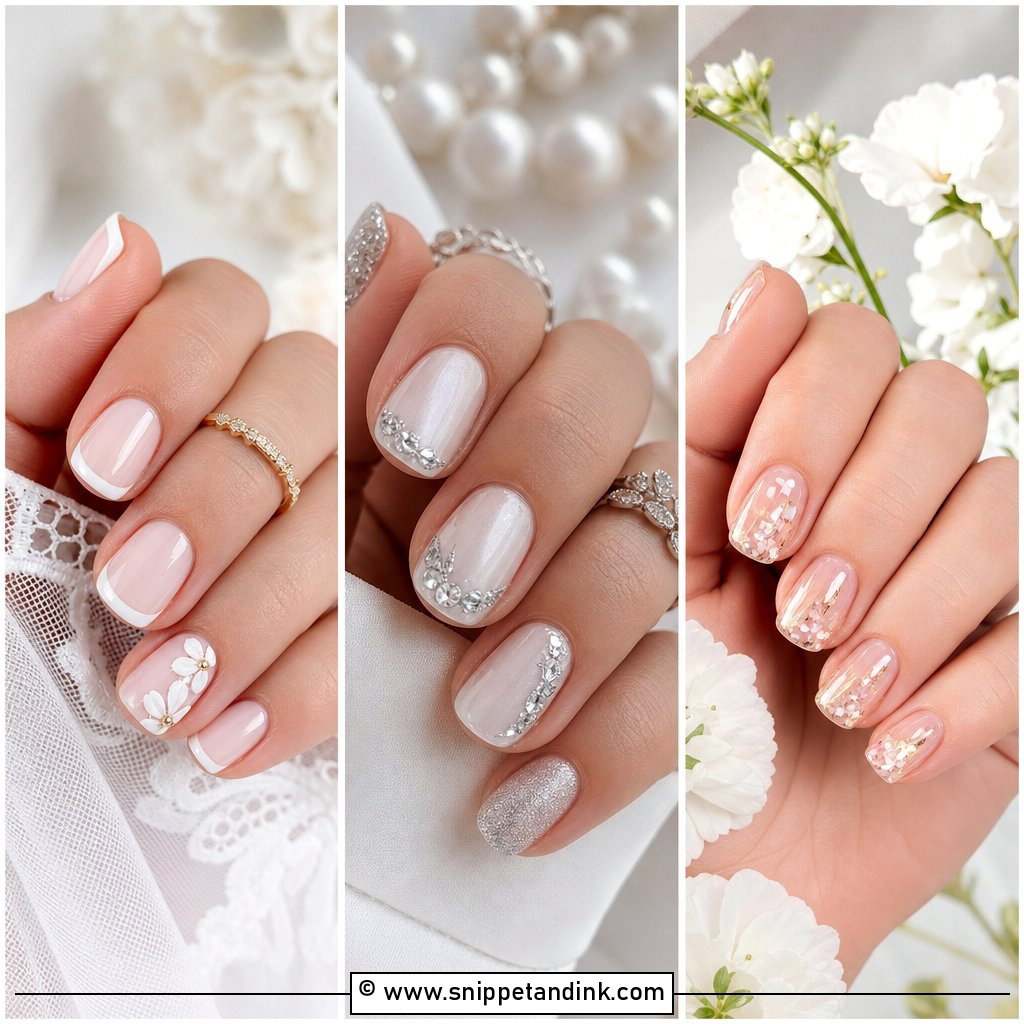
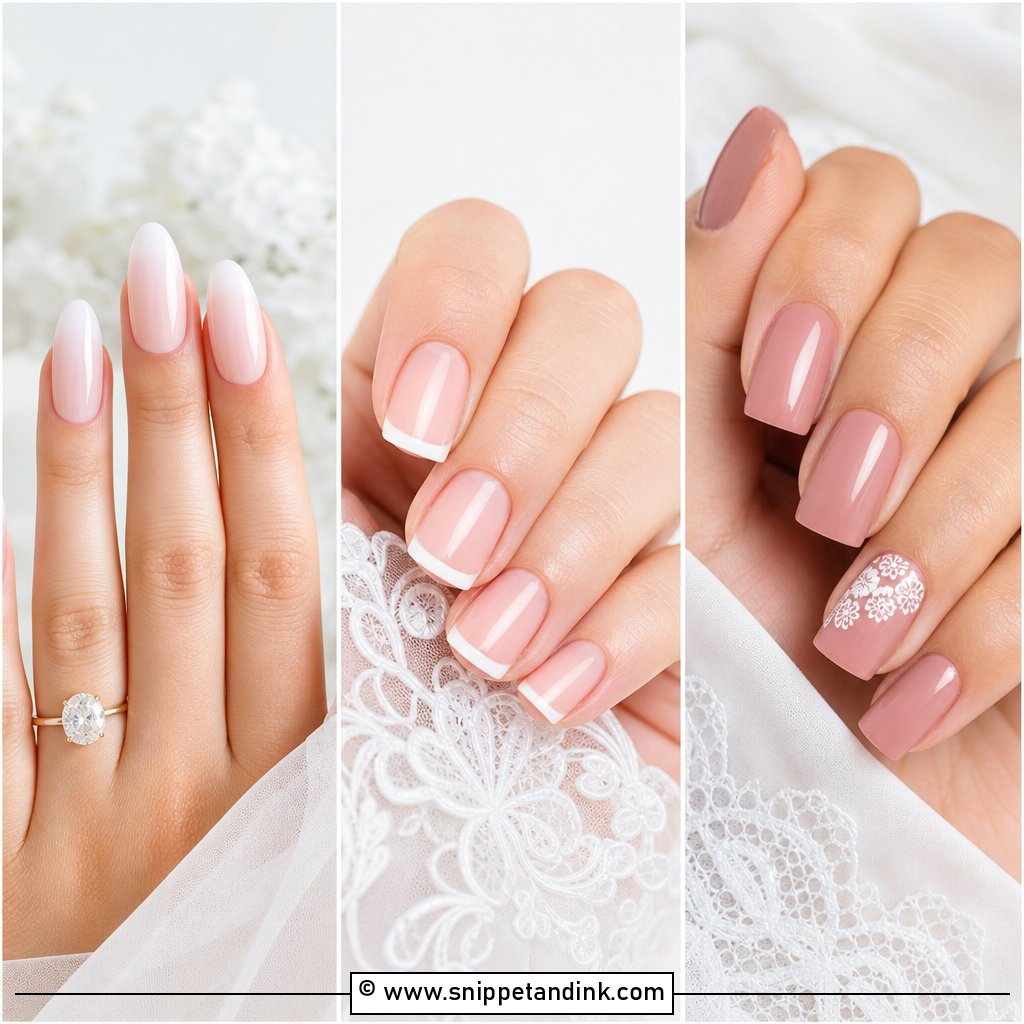
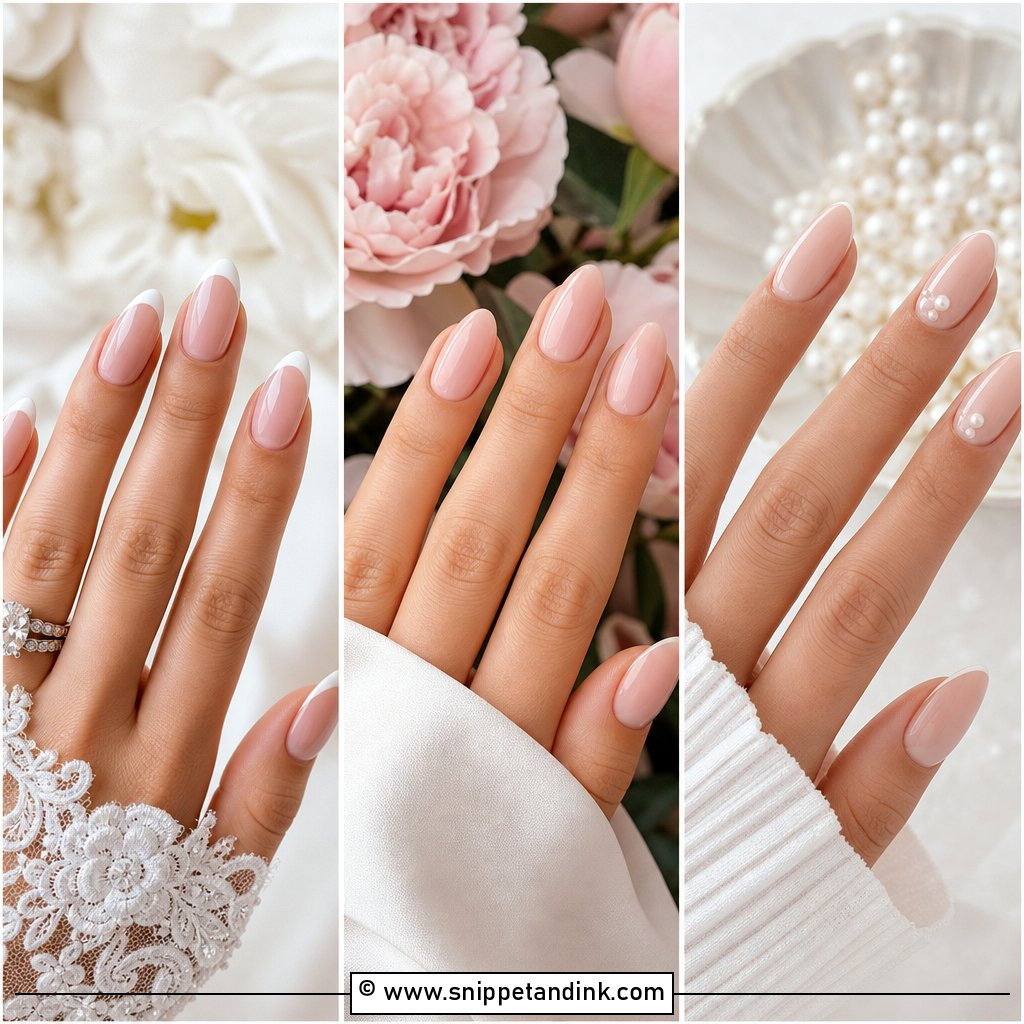
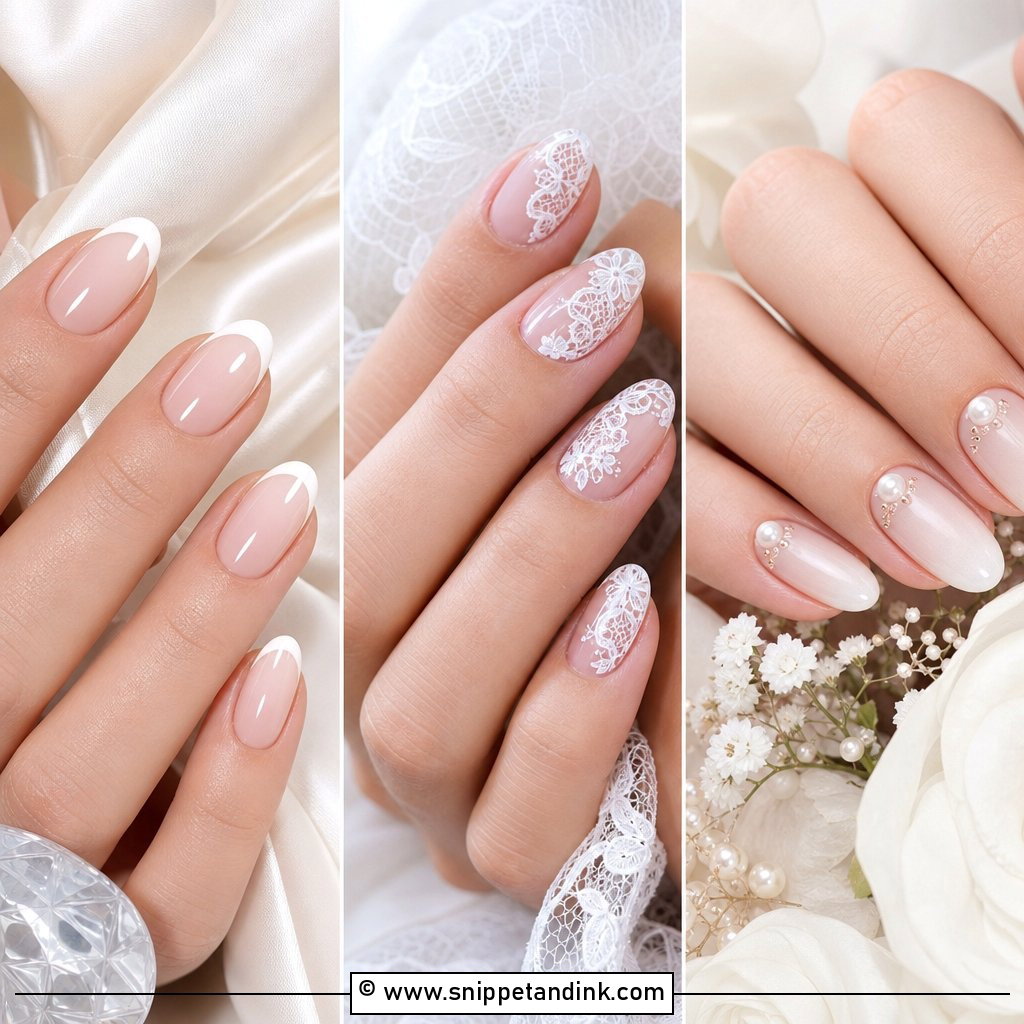
A French manicure for a barn or garden wedding works best with the tip softened. Bright white reads stark next to ivory fabric, so I mix the tip toward cream, almond beige or warm off-white over a sheer pink or nude base. The smile line should follow your natural free edge, which is why almond, oval and short squoval suit it best. If you want a rustic nod, add one tiny flower, a fine gold line or matte top coat on a single accent. On very short nails, I keep the tip thin or it shortens the fingers.
2. Rustic Wedding Milky White Nails
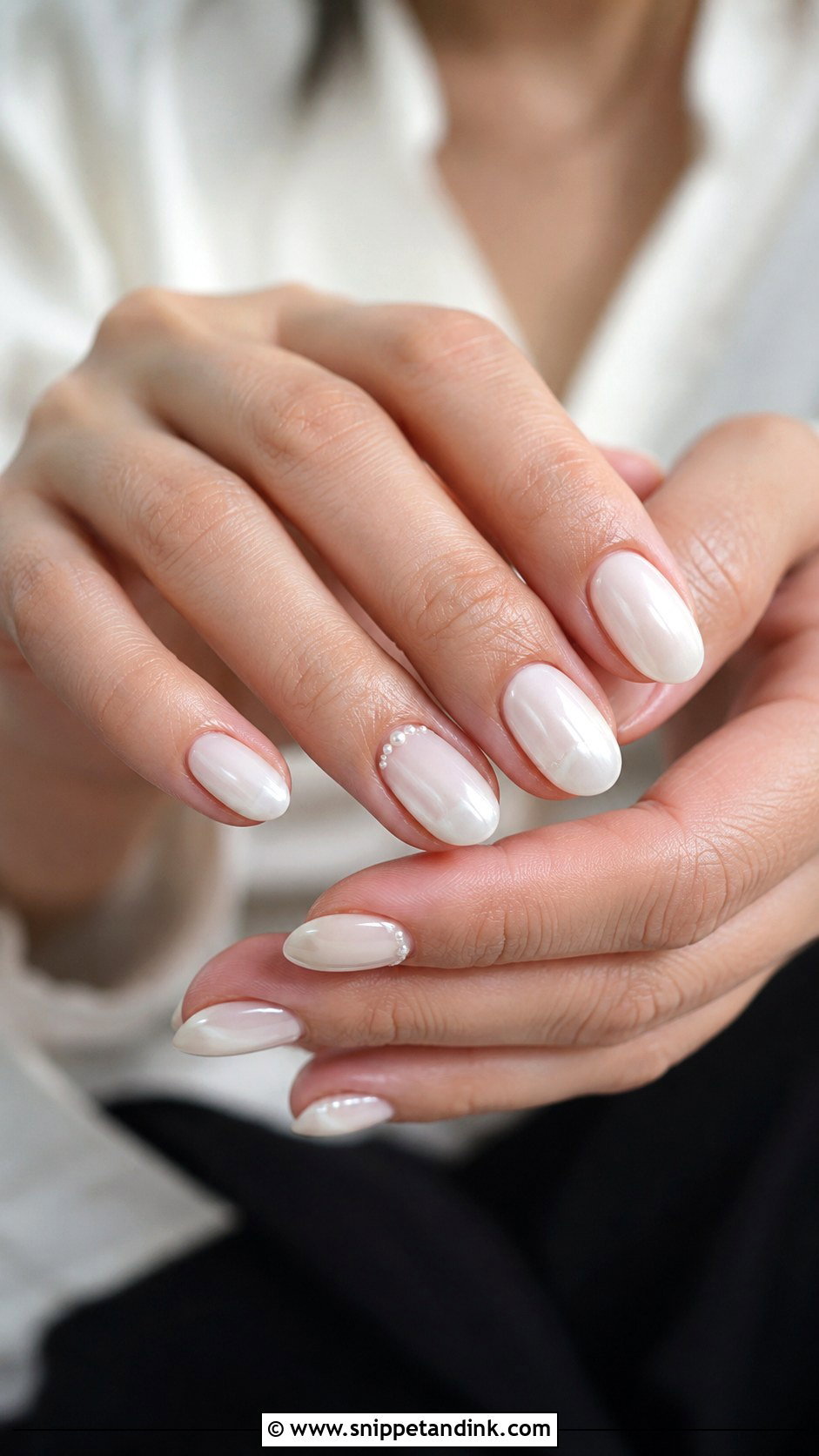
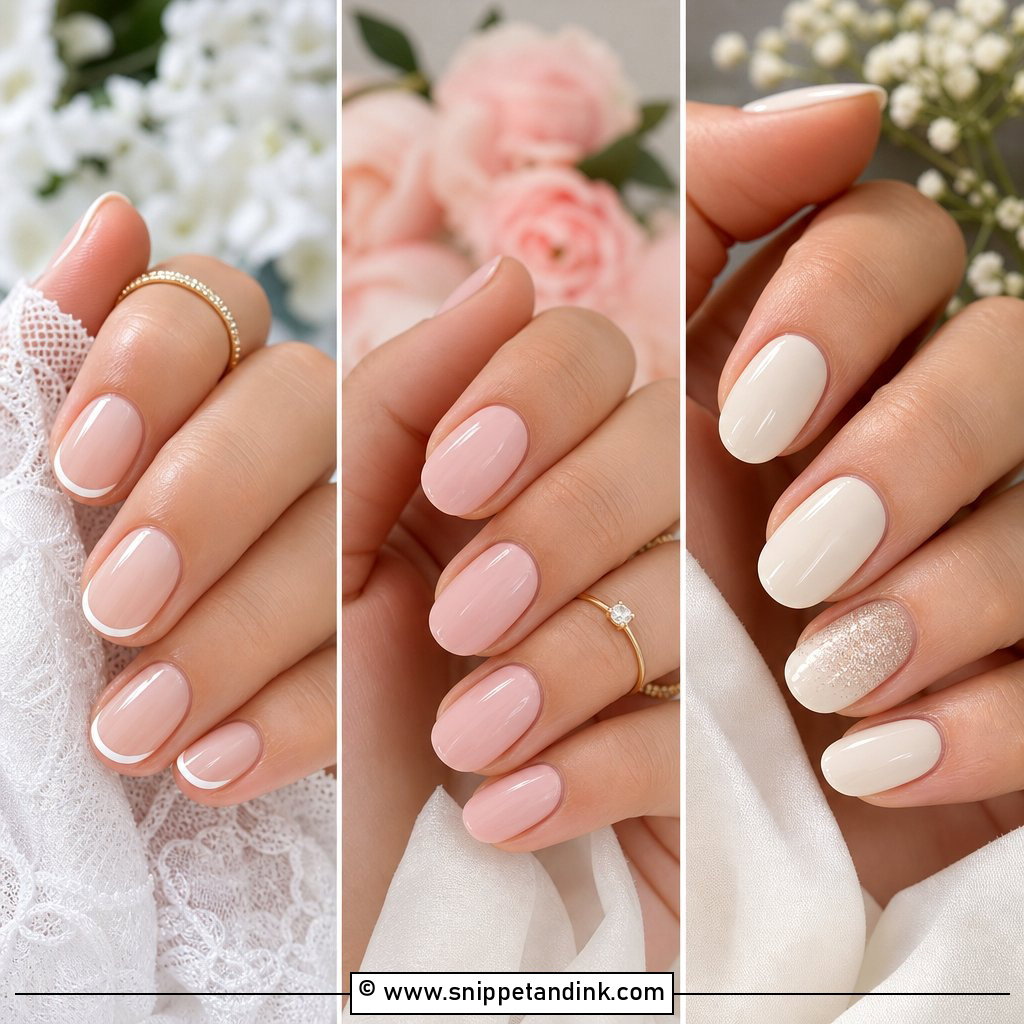
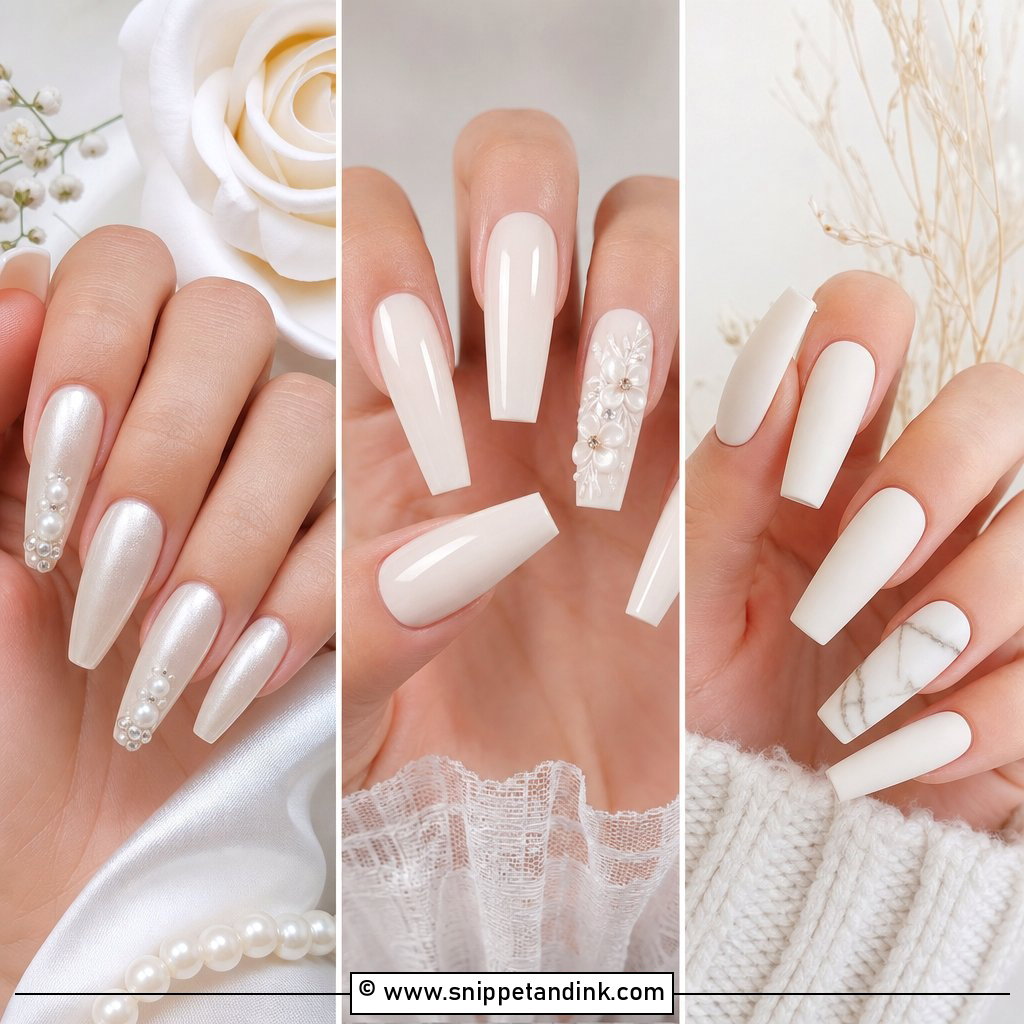
Milky white nails are a translucent, creamy white rather than a solid one, and that difference matters with an ivory or champagne dress, which a stark white polish can make look dingy. I build it in two or three thin coats of a sheer milk shade so the nail bed glows through. Medium almond or short oval keeps it refined. A subtle chrome glaze or a few tiny pearls near the cuticle add detail. The trade-off is that sheer whites show any staining on the natural nail, so I buff and clean the plate carefully first.
3. Rustic Wedding Nude Almond Nails
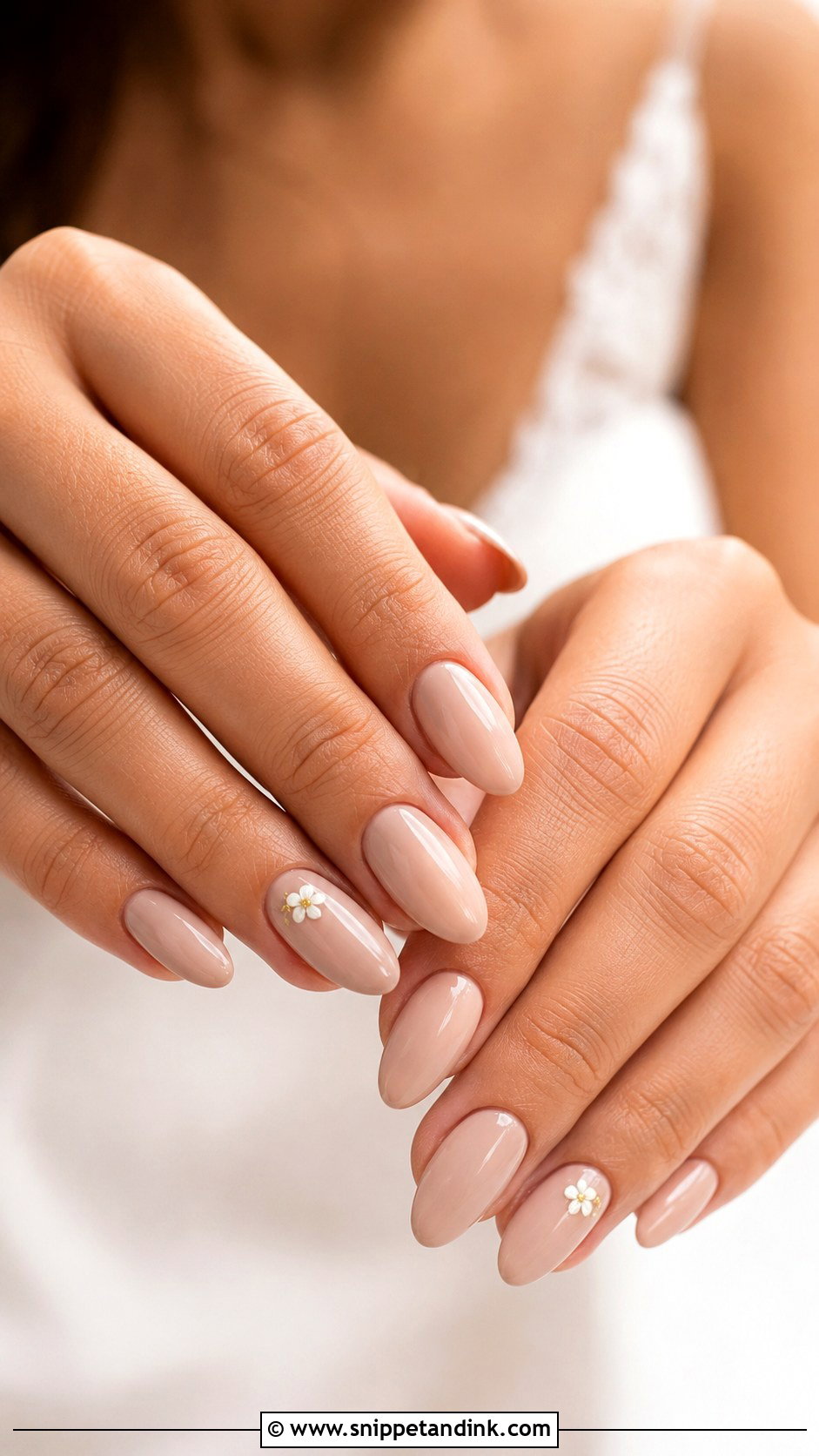
Nude almond is the set I’d choose if you want your ring to be the only thing anyone looks at. The almond shape lengthens the fingers, and the right nude makes the hand look polished rather than painted. Undertone decides the shade: peachy beige on warm skin, pink nude on cool skin, caramel or cocoa nudes on deeper skin. A nude that’s too pale on deep skin looks chalky in photos, which is the most common mistake I correct. Glossy is classic; a velvet matte feels earthier. Bridesmaids can wear the same idea in their own nude.
4. Rustic Wedding Sage Green Nails
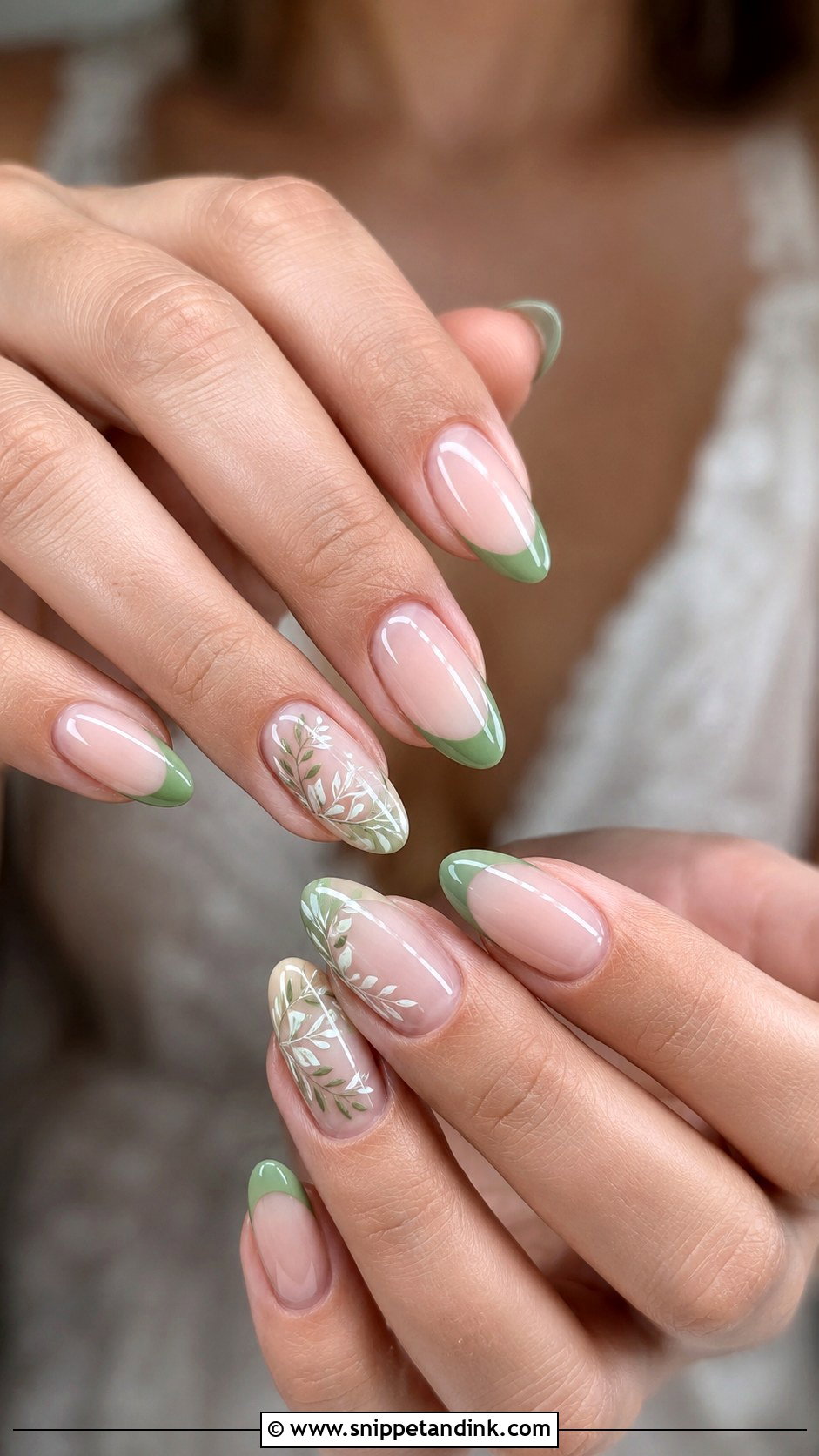
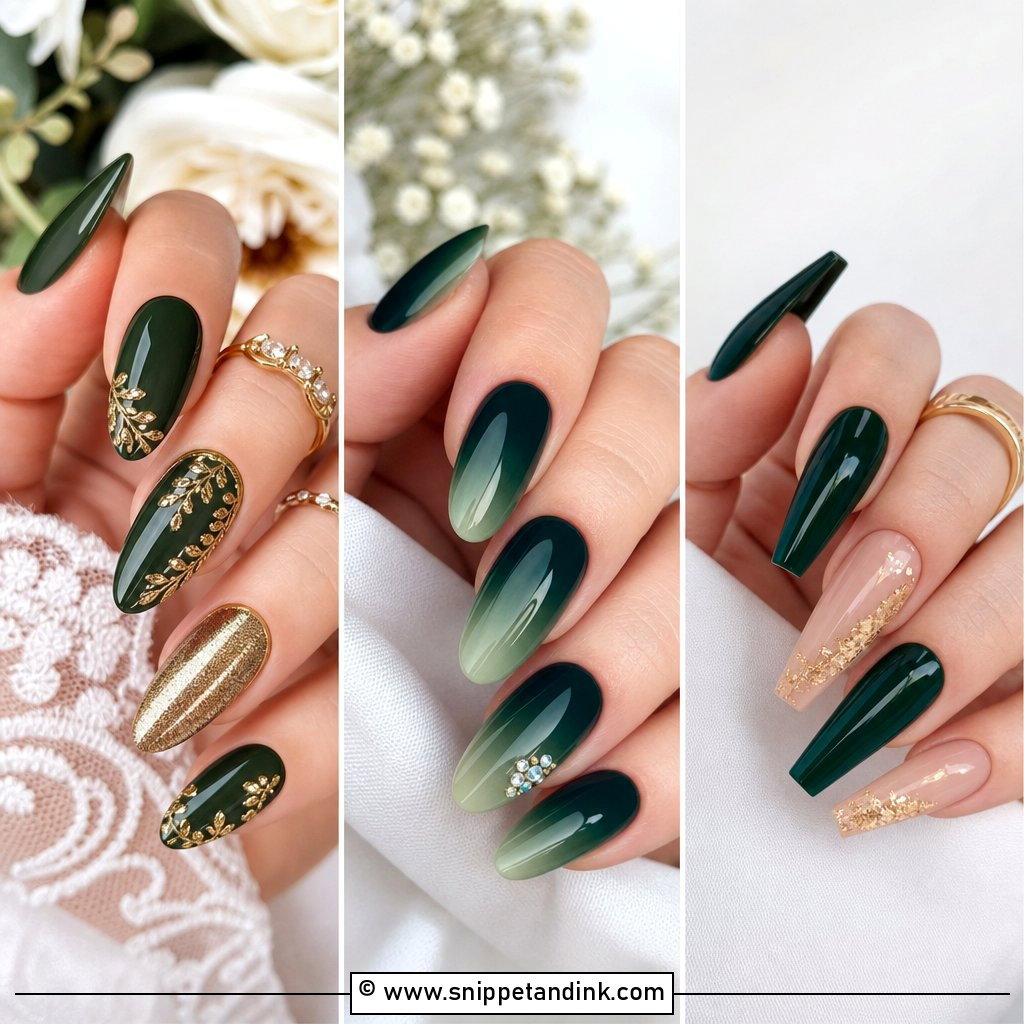
Sage is calm on its own, but a full set of sage can look heavy next to a white dress. I usually do sage French tips over a sheer nude, with one or two accent nails carrying fine white leaves or tiny flowers, or a little gold foil. Glossy reads fresh; matte gives a dried-herb look. Sage polishes vary a lot from grey to minty, so bring a photo of your greenery or a fabric swatch. It suits spring gardens, summer ceremonies and early autumn decor heavy on eucalyptus and olive.
5. Rustic Wedding Dusty Rose Nails
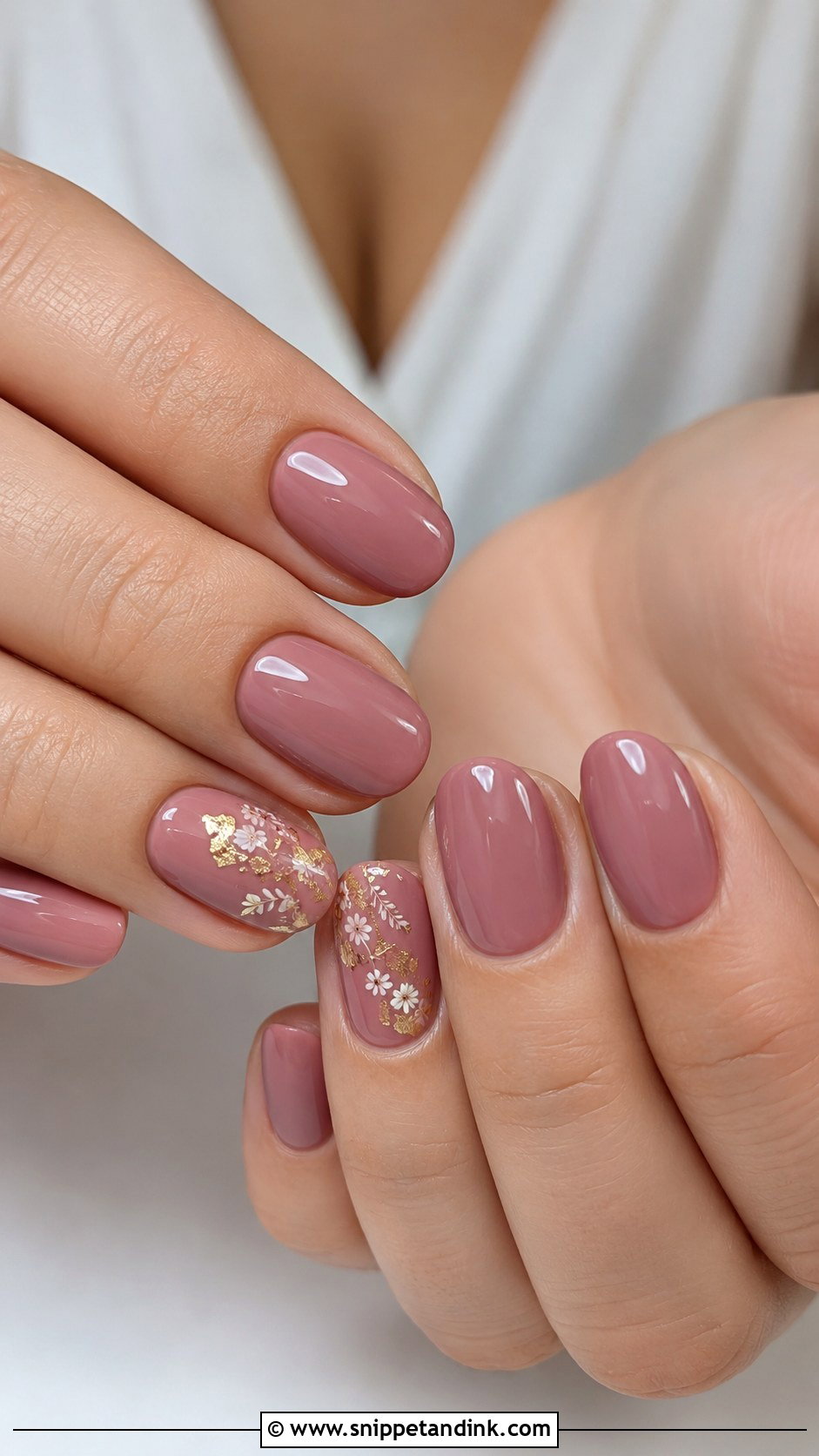
Dusty rose nails are pink with a grey-brown softness, which keeps them from looking sweet. They’re one of the easiest colours to wear across skin tones, and they work on short square, oval or almond shapes. For a bridal touch, I add a sheer shimmer overlay or a few small ivory flowers, or gold foil on the ring finger. Dusty rose sits well with champagne dresses, blush bouquets and mauve bridesmaid gowns. It’s the colour I suggest to brides who want some colour but feel nervous about it.
6. Rustic Wedding Lace Nails
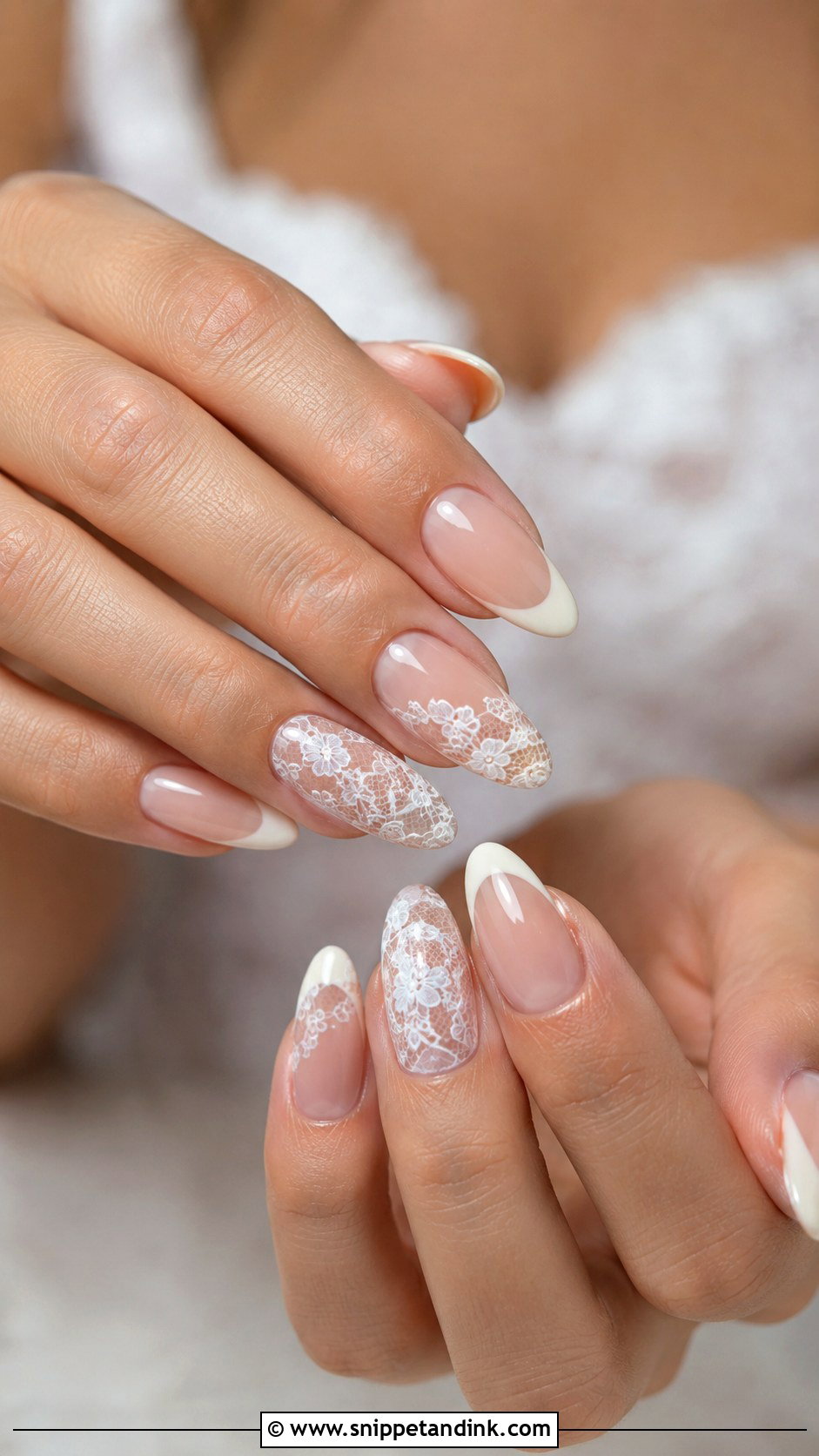
Lace art is fine linework, and it’s slow to paint, so I keep it to one or two accents per hand. Over a sheer nude, blush or milky base, I paint the scallops and mesh with a long, thin liner brush and a slightly thinned white gel so the lines stay crisp. Thick lace looks like a sticker. If your dress has lace sleeves, bring a close-up photo of the pattern and I’ll echo its motif rather than copying it. A soft almond or oval shape keeps it graceful; pearls or a French tip can join it.
7. Rustic Wedding Floral Nails
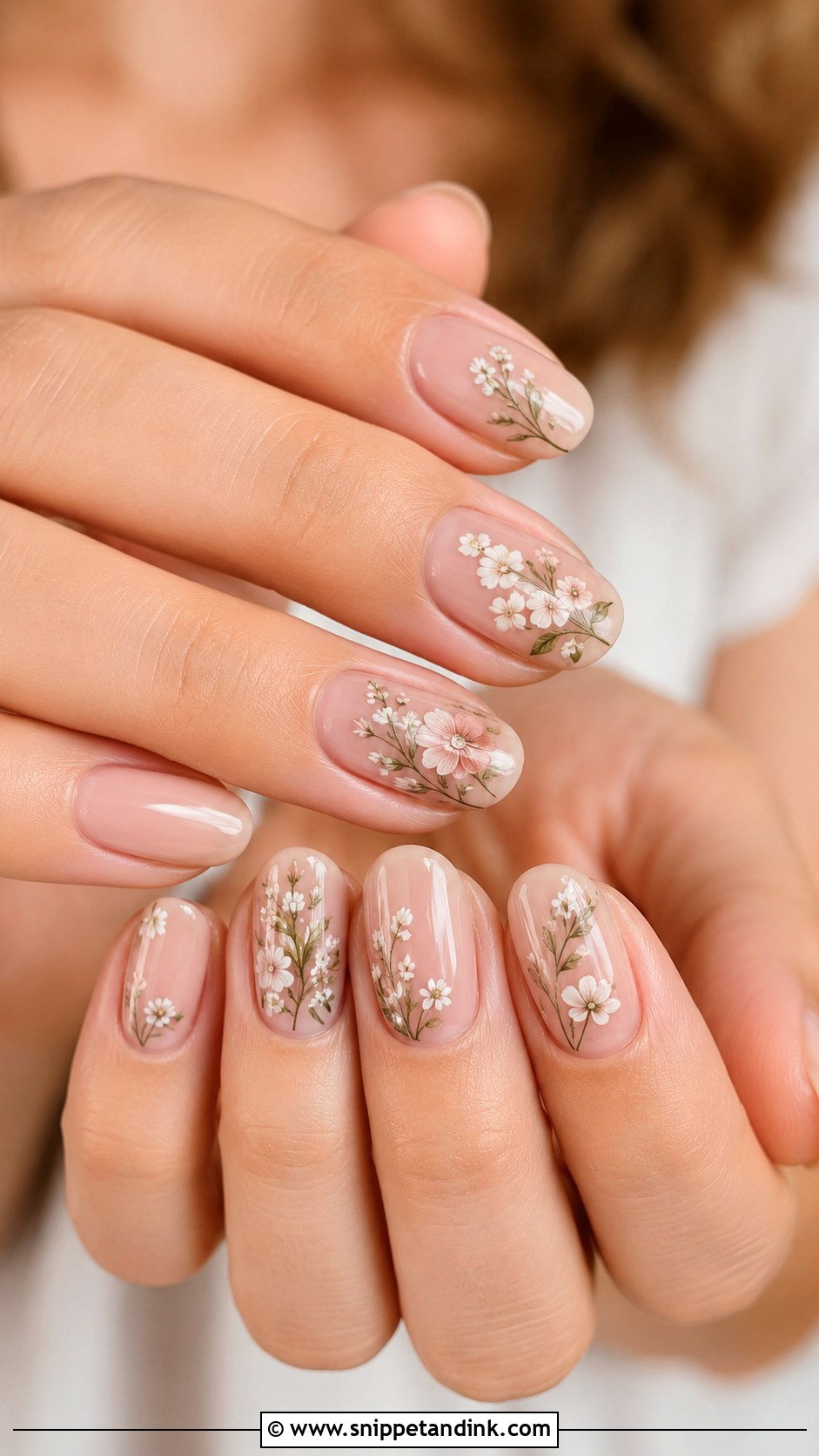
Small flowers look hand-painted; large ones look like a printed fabric. I work on a sheer nude, milky pink or soft beige base and paint tiny blooms in white, blush, lavender or dusty blue, with thin green stems so they look gathered rather than stamped. Two or three floral nails per hand is enough. I like matching a flower or two from the bouquet, which only needs a photo from your florist. This is my favourite set for wildflower bouquets and outdoor ceremonies.
8. Rustic Wedding Pearl Nails
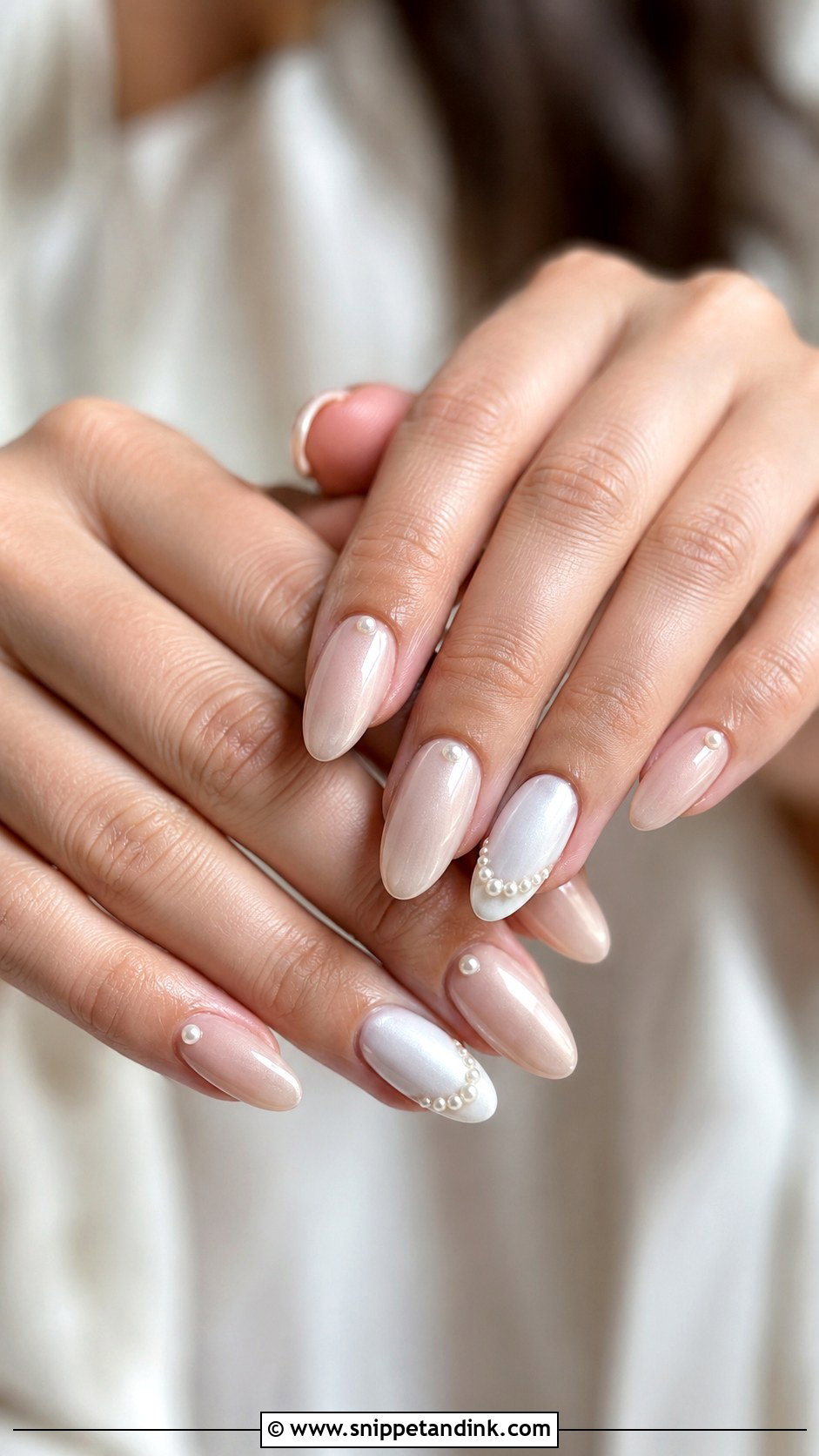
Pearls add texture without sparkle, and restraint is everything with them. I place a few small flat-backed pearls near the cuticle, along a French line or lightly across one accent, set into gel and sealed round the edges. Larger domed pearls catch on lace, veils and knitwear, so I keep them small and avoid them on the thumb and index finger, which do the most work. A creamy nude, blush or milky base suits them. They pair naturally with pearl earrings, satin and lace.
9. Rustic Wedding Gold Foil Nails
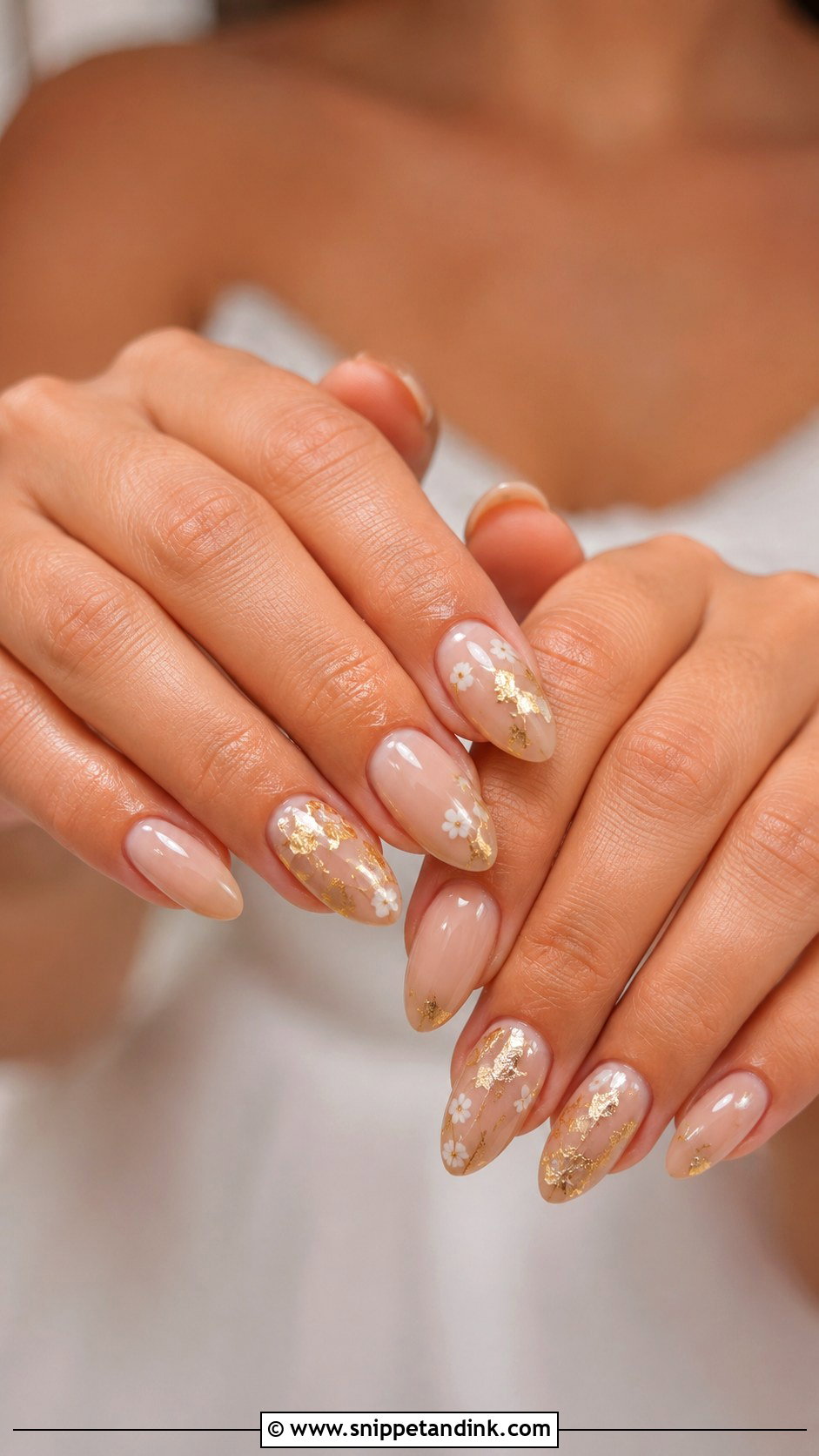
Gold foil nails echo candlelight, wood and antique brass, so they sit well in a rustic setting. I tear transfer foil into irregular flakes and press them onto tacky gel over a nude, beige, blush or milky base, then seal with top coat. Scattered flakes look organic; solid coverage looks like glitter. Almond and oval shapes keep the metal refined. If your jewellery is rose gold or silver, I’d match the foil to it rather than defaulting to yellow gold.
10. Rustic Wedding Matte Nude Nails
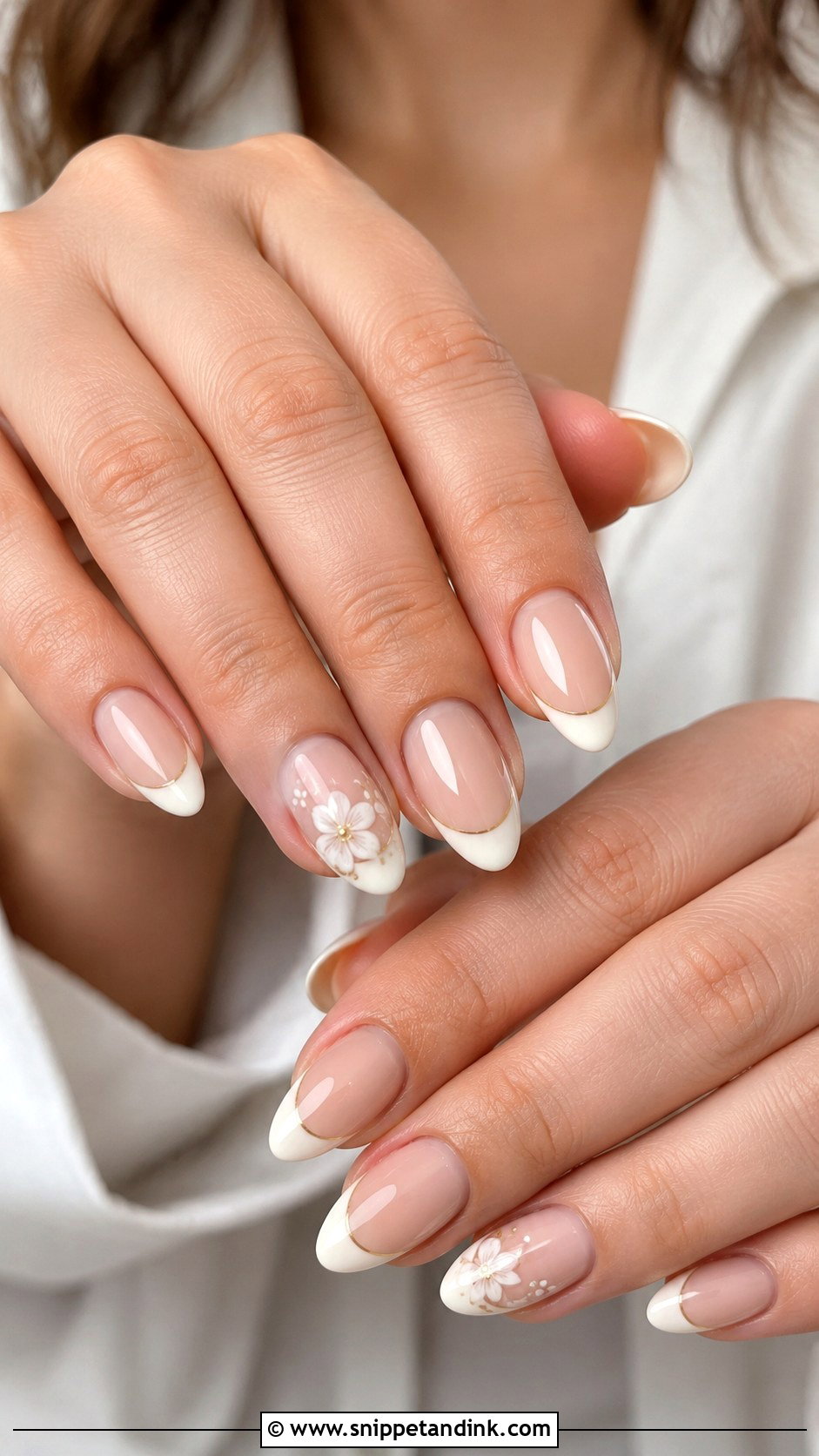
Matte top coat gives a velvet finish that looks earthier than gloss, and it’s lovely on warm beige, taupe, muted pink or caramel nudes. The honest downside is wear. Matte finishes can pick up stains from fake tan, hand cream and dark fabrics, and they polish to a sheen where the fingers rub. I apply it as close to the wedding as I can. A glossy French tip over a matte base adds a little contrast, and short squoval or medium almond suits it.
11. Rustic Wedding Champagne Nails
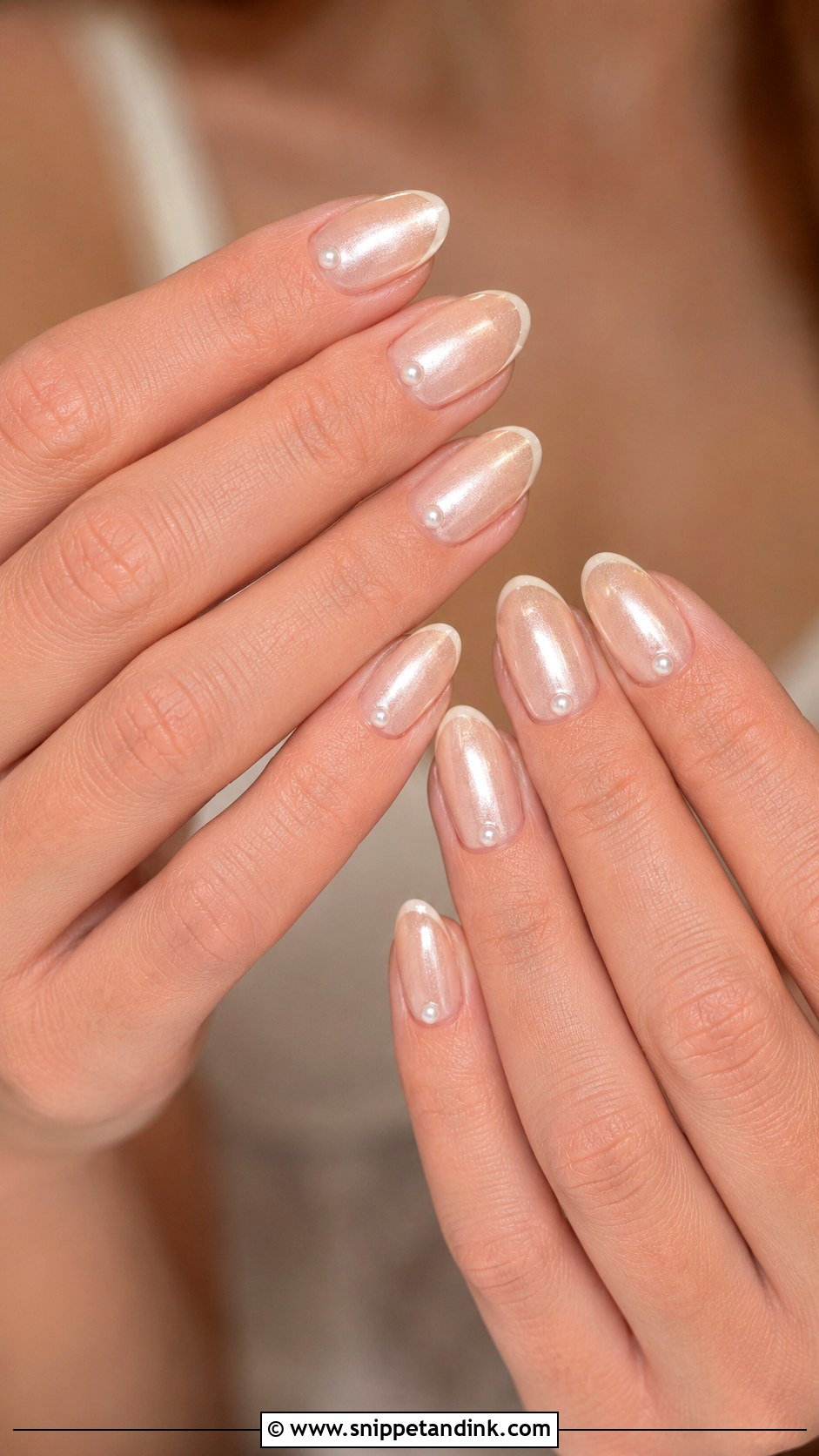
Champagne sits between nude, beige and gold, so it flatters most skin tones and gives a glow without the brightness of silver. For a rustic wedding, I’d choose a sheer champagne shimmer or a satin chrome rubbed in lightly rather than a mirror finish. Oval or almond keeps it soft. It suits ivory gowns, gold jewellery and candlelit receptions, and a thin ivory French tip or a single pearl can be added. Shimmer hides small chips better than any cream colour, which helps on a long day.
12. Rustic Wedding Brown Nails
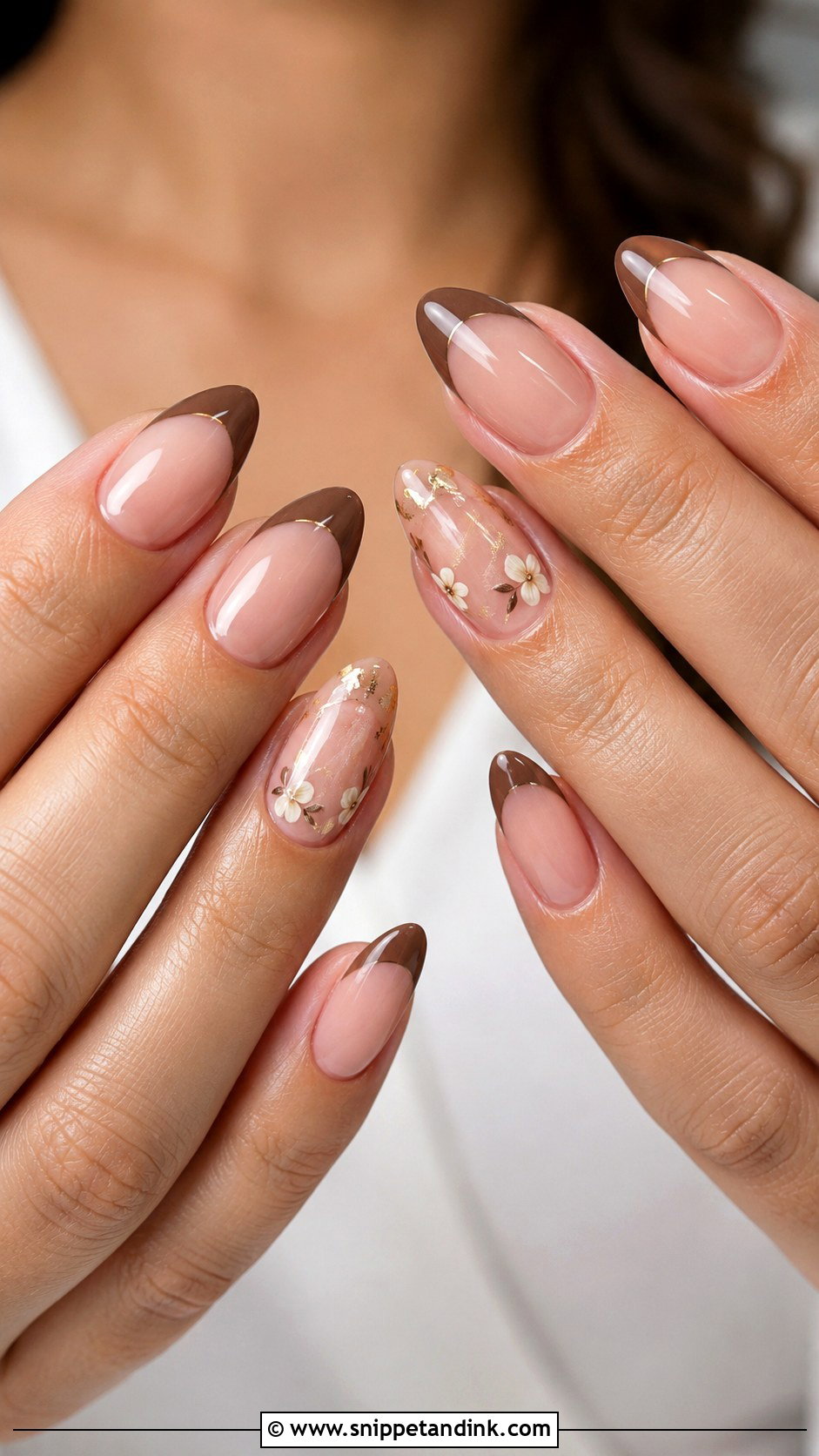
Brown nails look chic at a rustic wedding when the shade is warm and soft: mocha, latte, cinnamon or milk chocolate. Dark espresso is a lot for a bride unless your palette is dramatic. A brown French tip over a nude base suits autumn barns, and a tonal set with each nail in a slightly different brown looks considered. Gold foil or tiny cream flowers bring it back to bridal. Brown polish shows regrowth at the cuticle quickly, so time it within a couple of days of the wedding.
13. Rustic Wedding Terracotta Nails
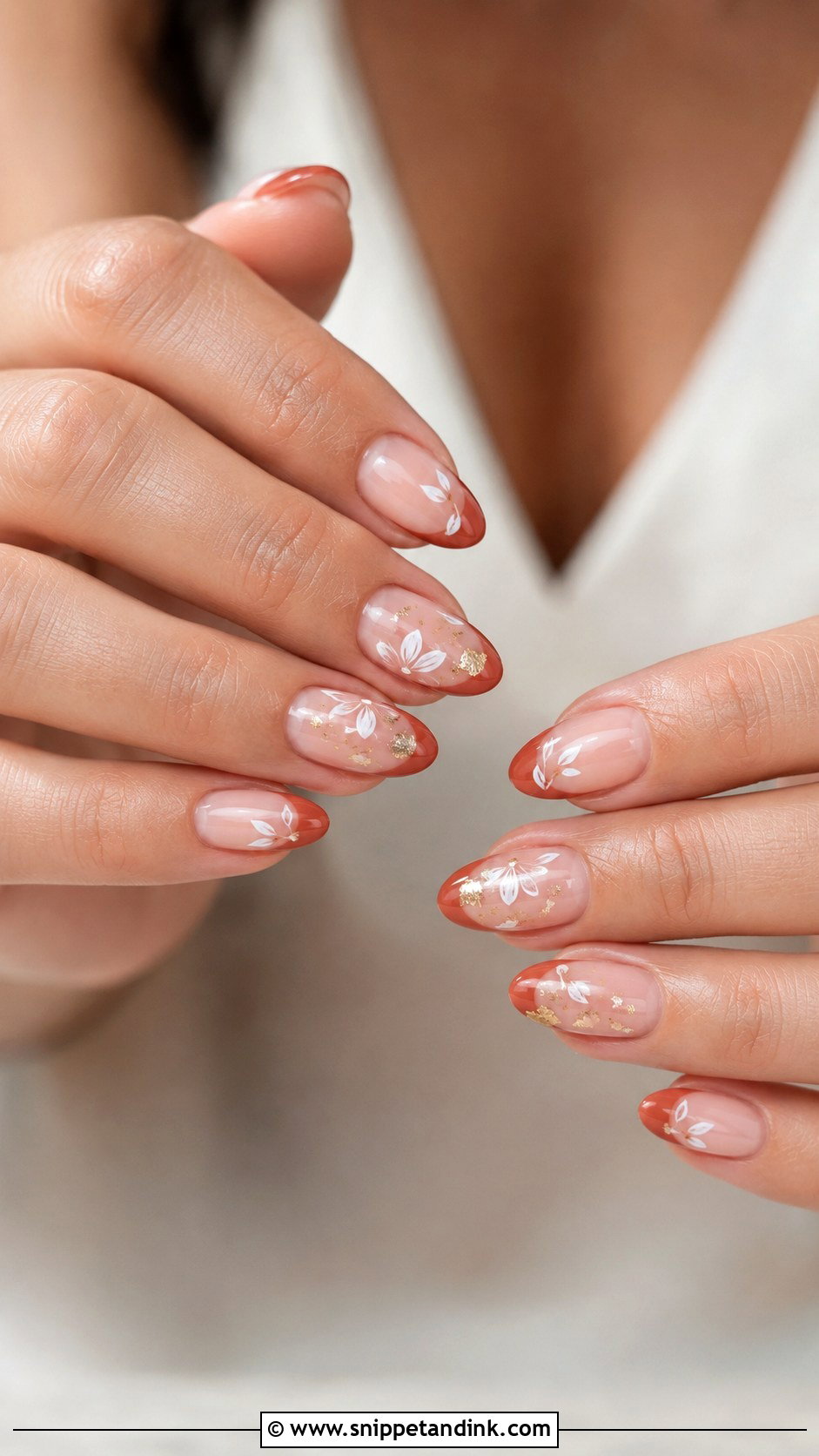
Terracotta suits desert, boho and autumn weddings, especially alongside ivory, rust, olive and dried flowers. For a bride, I’d mute it toward clay rather than a bright orange, and often use it only as a French tip over sheer nude, which looks softer than a full colour. Tiny white flowers, gold foil or fine line art add detail. It’s a strong colour on bridesmaids too. Orange-based shades can look brighter in outdoor light than indoors, so check your chosen bottle by a window.
14. Rustic Wedding Blush Pink Nails
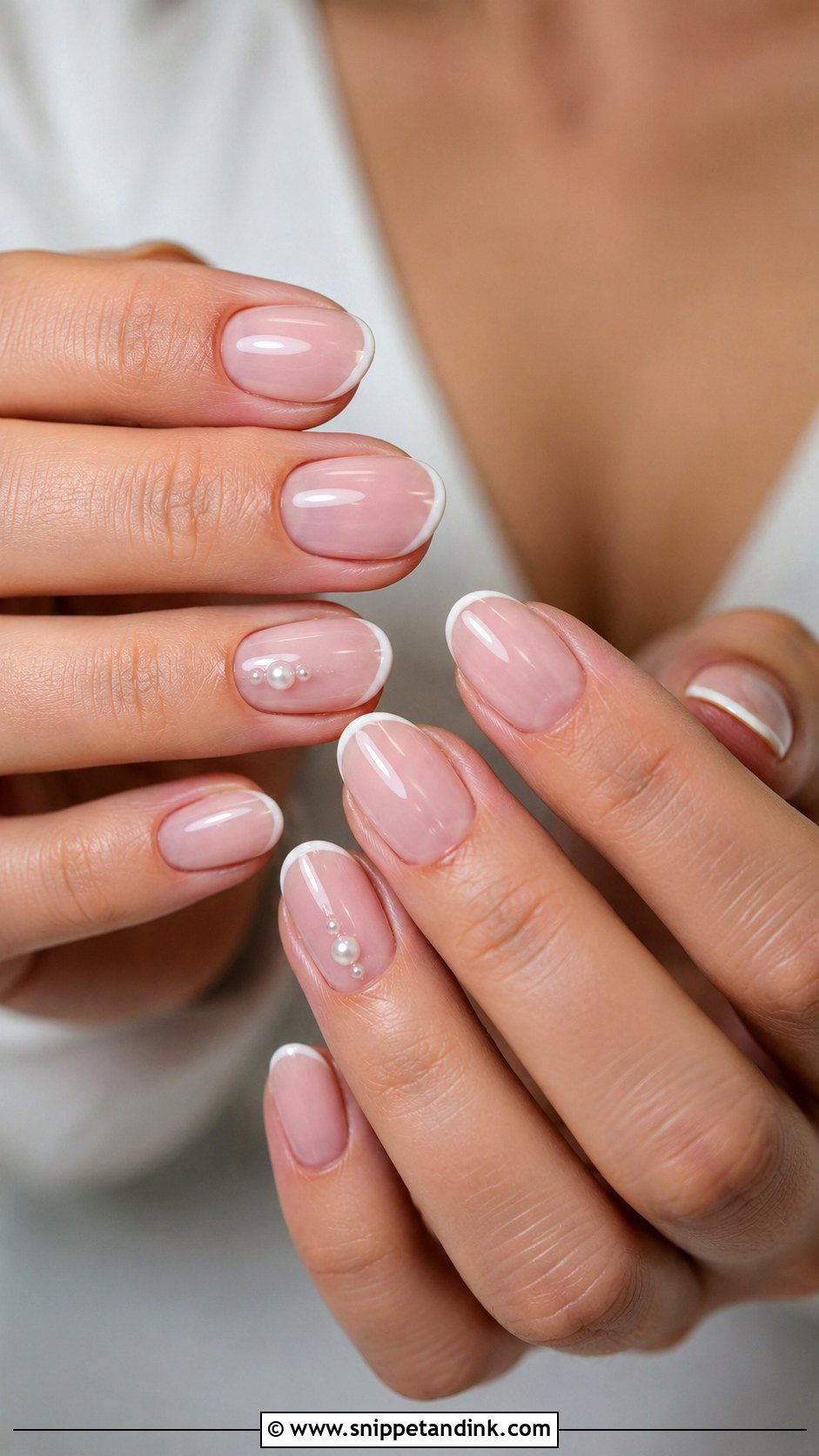
Blush is the shade I paint most often for brides, because a sheer pink makes hands look clean and rested without looking done. I build it in thin coats so it stays translucent. A micro French tip, a thin gold line, tiny pearls or small white flowers can be layered on top. It sits easily with almost any dress, bouquet and skin tone, and works from spring to early autumn. Glossy is classic; a glazed finish feels more modern. If your nails have ridges, ask for a smoothing base first, since sheer colour shows them.
15. Rustic Wedding Ombre Nails
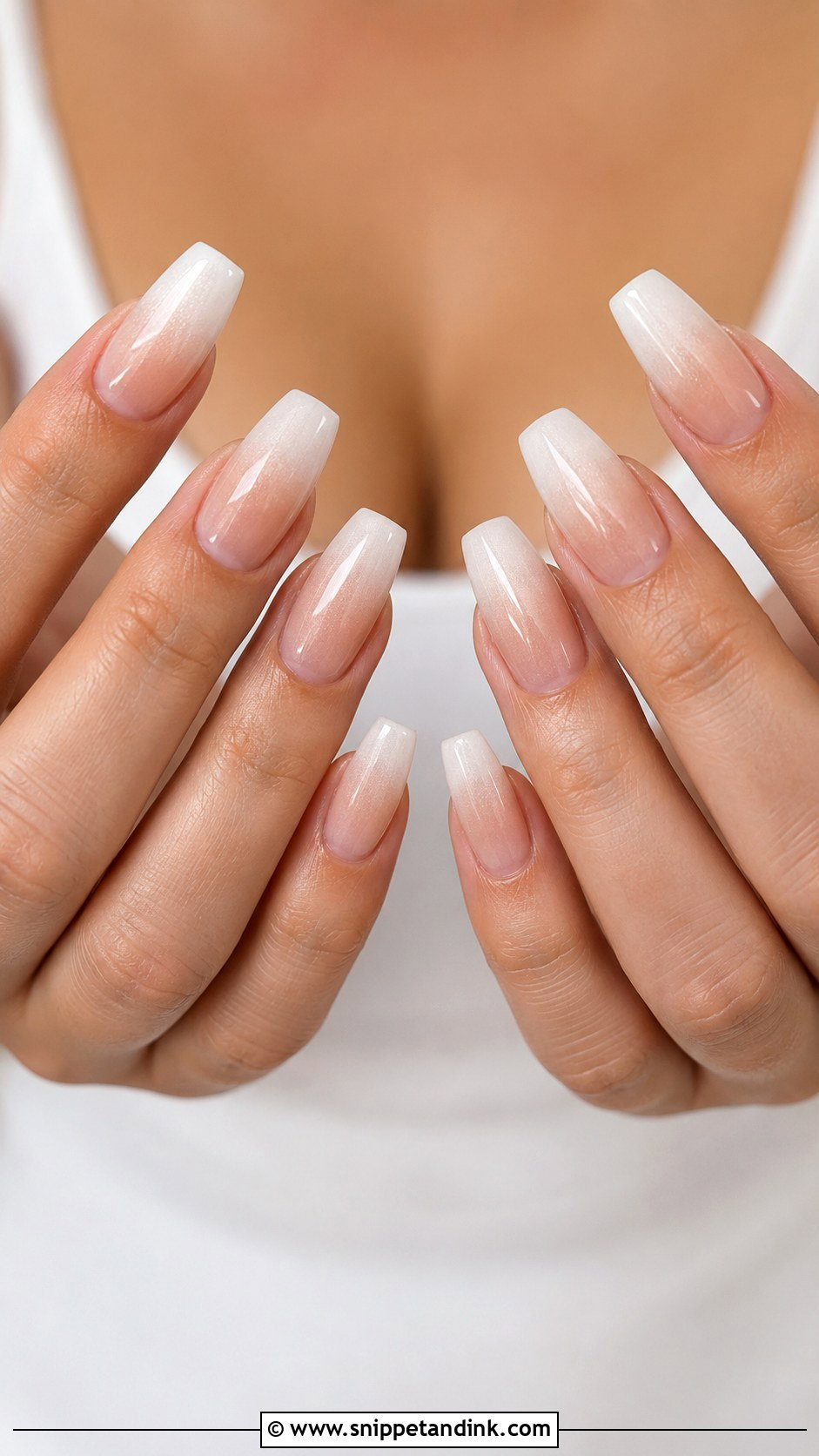
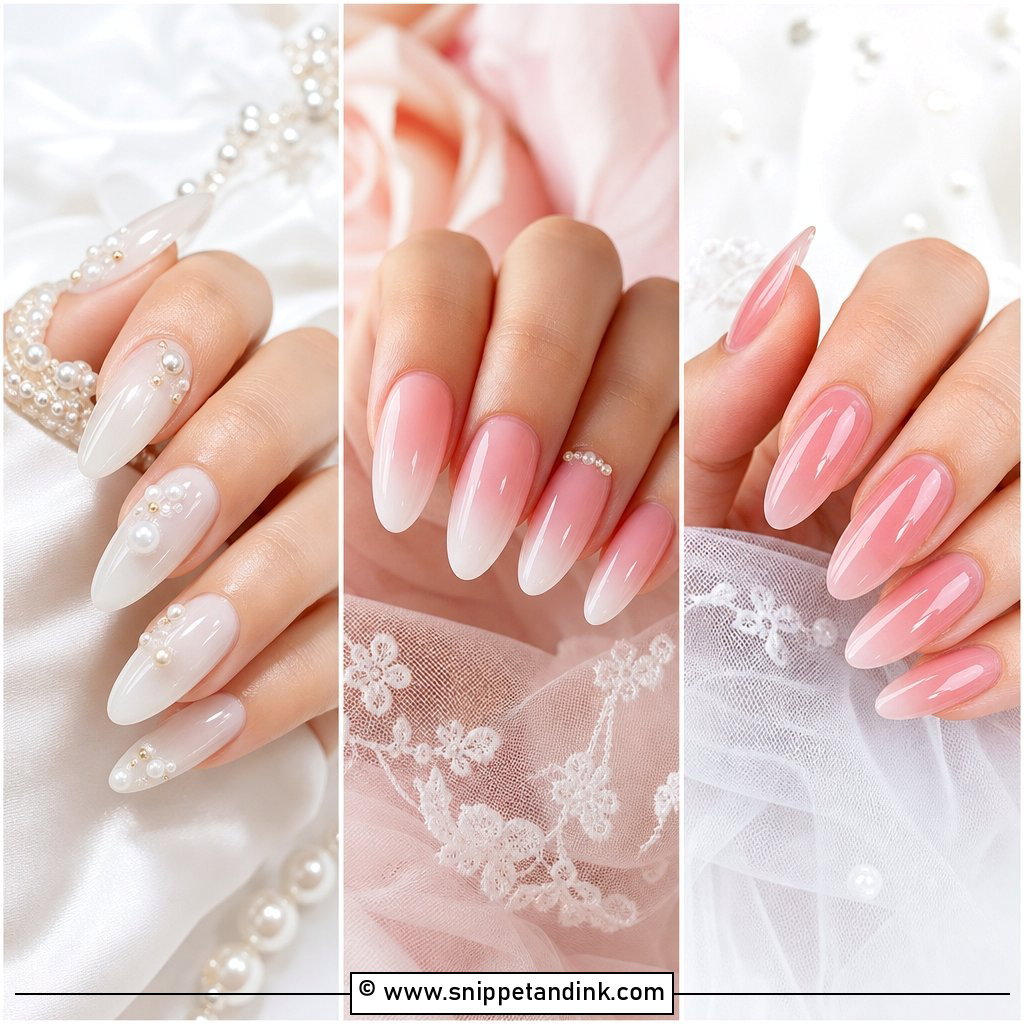
Ombre is the most forgiving way to wear two colours. Nude to ivory, blush to milky white, beige to champagne or soft pink to cream all fade gently. I sponge or brush-blend the colours so there’s no visible line, which takes a few thin passes rather than one heavy one. Medium almond, coffin and oval give the fade room to show. A barely-there shimmer top coat adds glow in photos. It’s one of the few designs that still looks intentional as your nails grow out after the honeymoon.
16. Rustic Wedding Dried Flower Nails
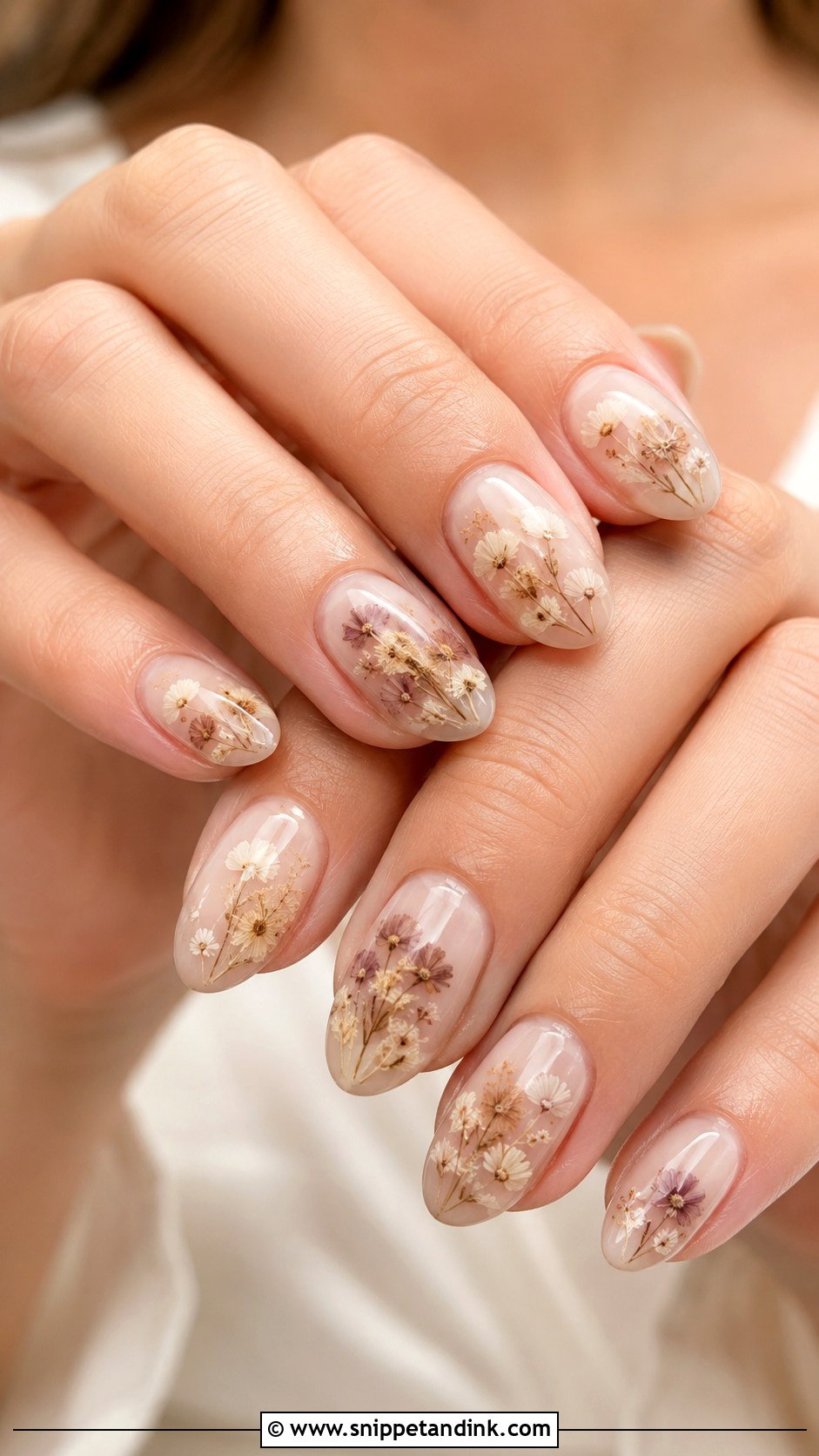
Dried flower nails use real pressed petals sealed into gel, and they’re the most on-theme set for a rustic wedding. I choose tiny, very flat blooms in ivory, dusty yellow, mauve, lavender or soft brown and lay them over a sheer nude, milky or pale pink base. They go on accent nails only, under enough top coat that no edge can lift or catch. This suits wildflower bouquets and barn venues, and the result looks genuinely handmade because it is.
17. Rustic Wedding White Chrome Nails
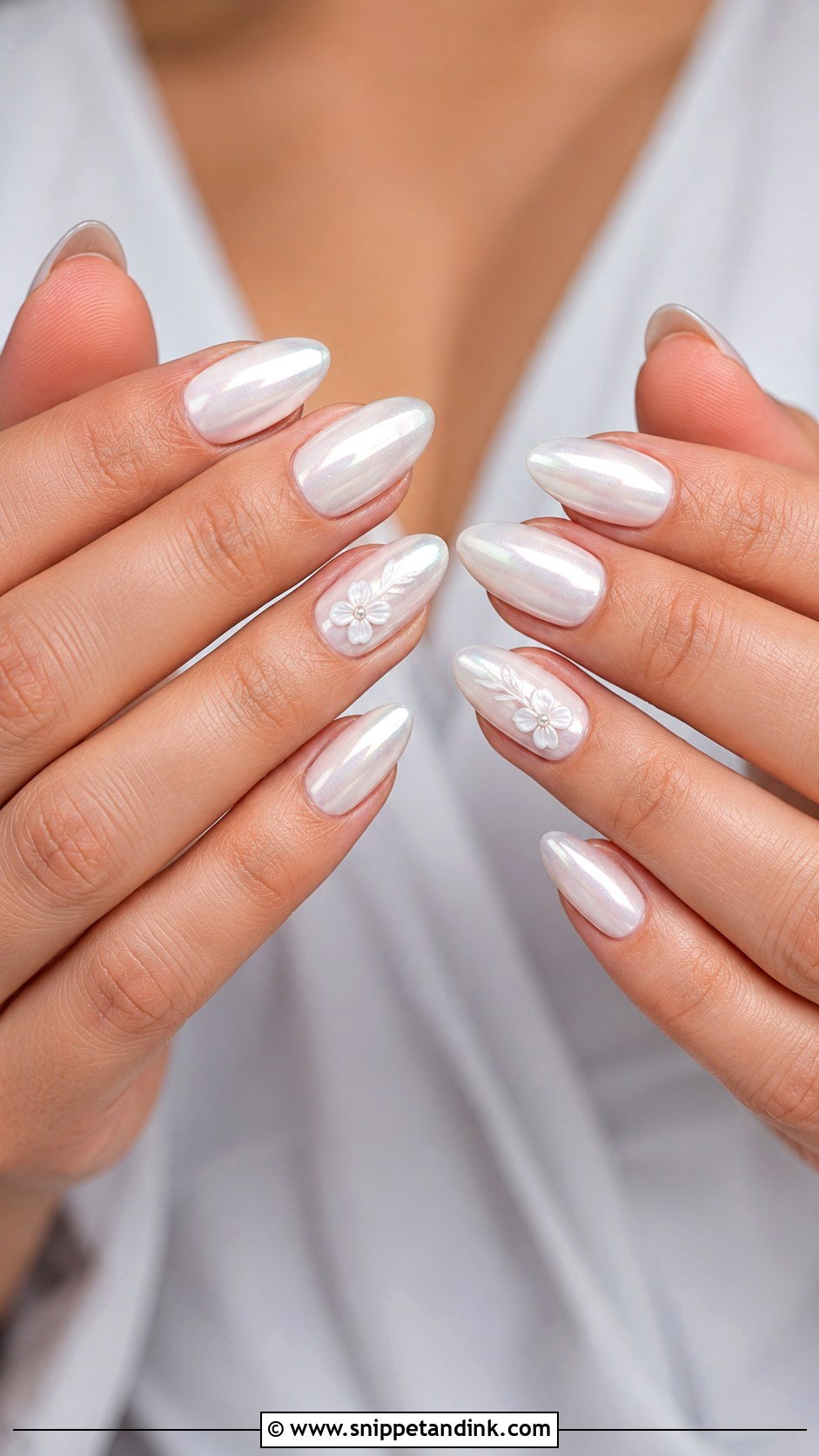
White chrome can feel too futuristic for a country wedding, so I soften it. A pearl or glazed white, rubbed lightly over a creamy or nude base, reflects light gently instead of acting like a mirror. Almond or oval suits it far better than very long dramatic shapes. It pairs well with simple gowns, pearl accessories and natural makeup, and a tiny floral accent warms it up. Chrome powder shows every bump under it, so the base needs to be perfectly smooth.
18. Rustic Wedding Taupe Nails
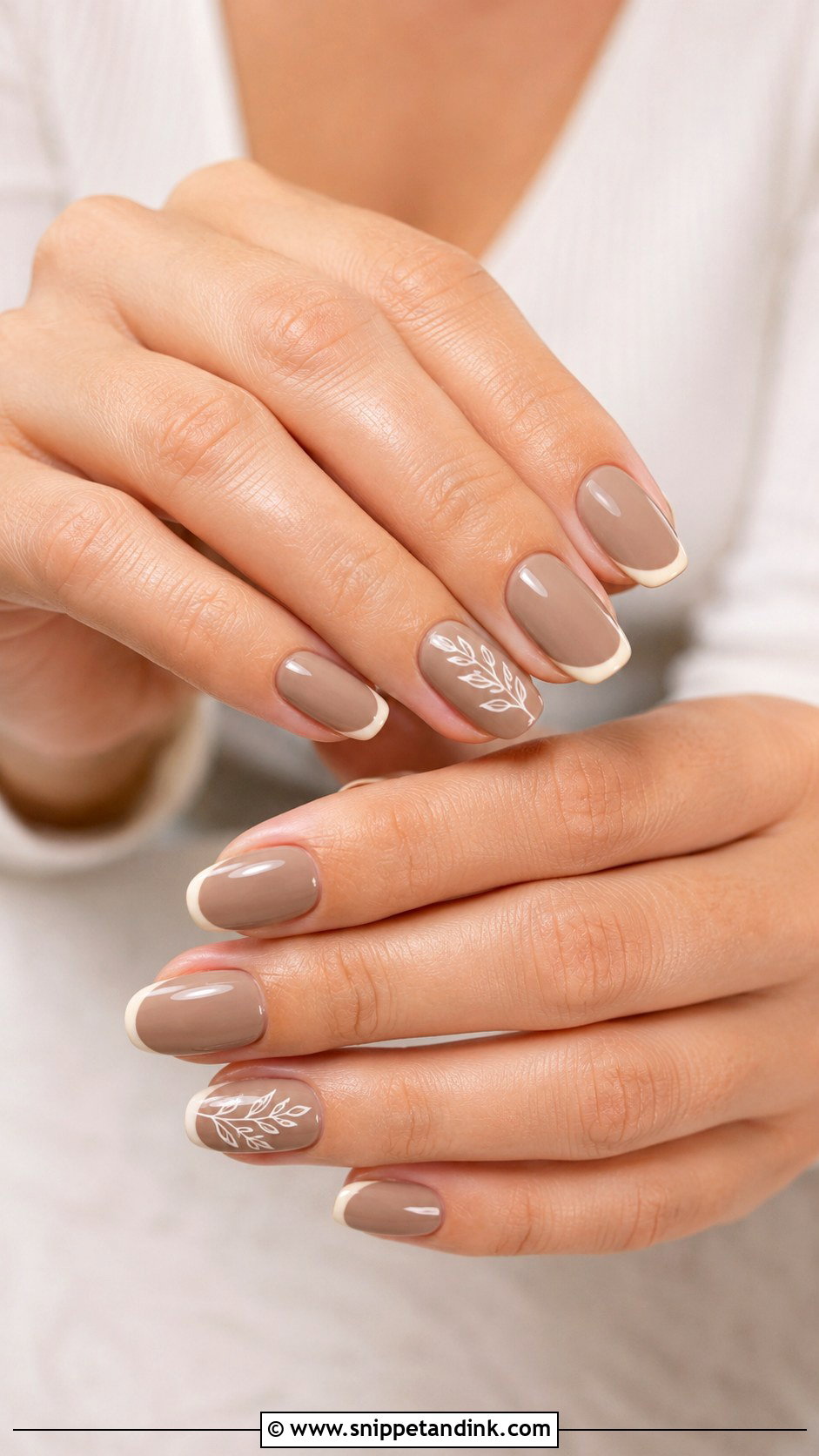
Taupe sits between grey, beige and brown, which makes it a quiet, slightly unexpected choice. I pick the undertone from your palette: warmer taupe for rust, tan and gold decor; cooler taupe for dusty blue or soft grey. It looks right with ivory dresses, stone bridesmaid gowns, olive greenery and dried arrangements. A glossy top coat, a thin cream French tip or one nail with fine white botanical line art keeps it bridal. On some skin tones a cool taupe can look dull, so I always swatch it against your hand.
19. Rustic Wedding Short Nails
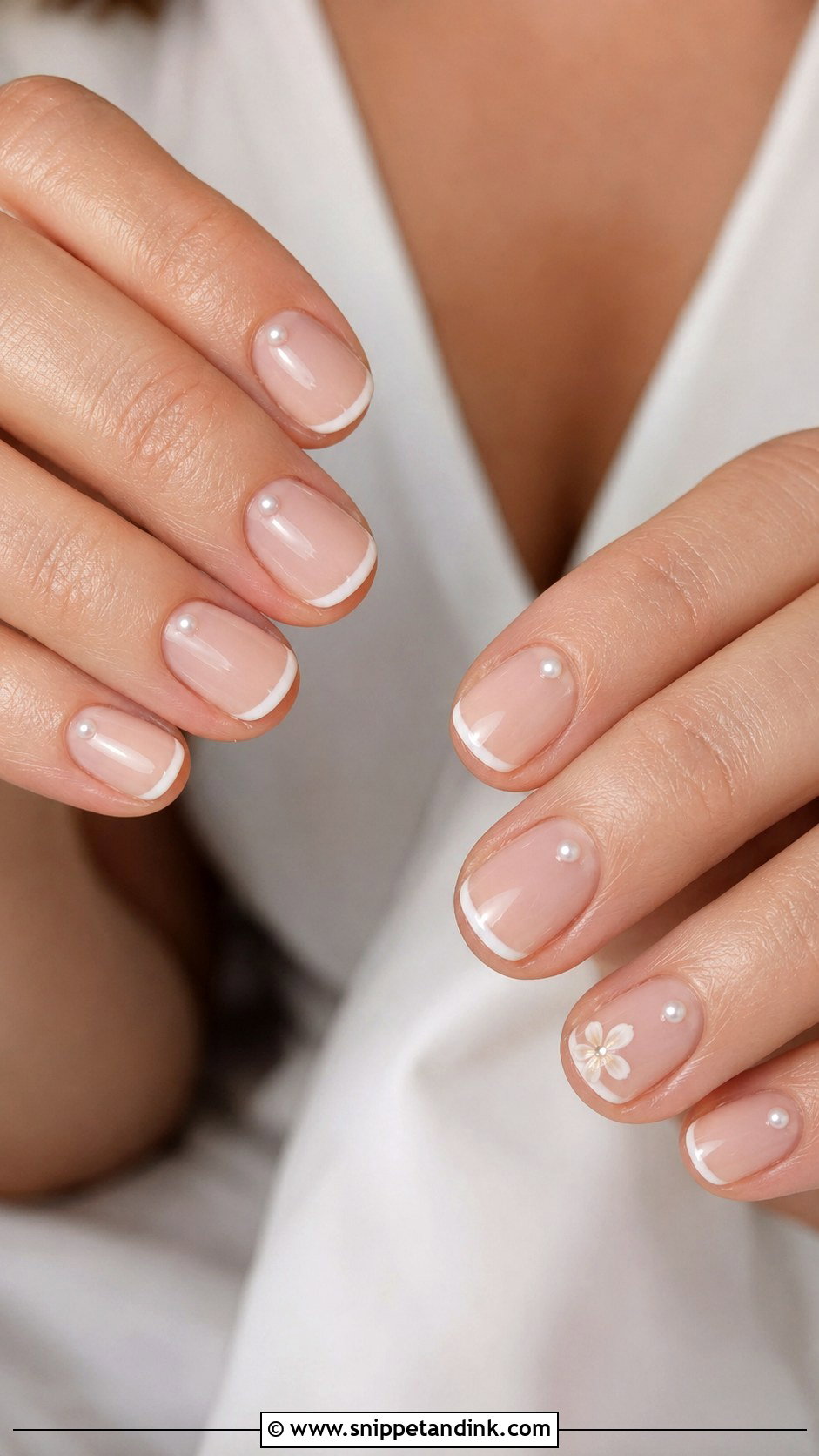
Short nails look completely bridal when the shape and cuticles are neat. A short squoval or soft round shape suits most hands, with a sheer blush, milky white, nude, taupe or soft beige base. Detail should stay small: a micro French tip, a tiny pearl, a gold dot or one flower. I spend most of the appointment on the cuticles and the shape here, because on short nails that’s what the camera sees. They’re the practical answer for brides who use their hands all day or simply feel like themselves with short nails.
20. Rustic Wedding Acrylic Nails
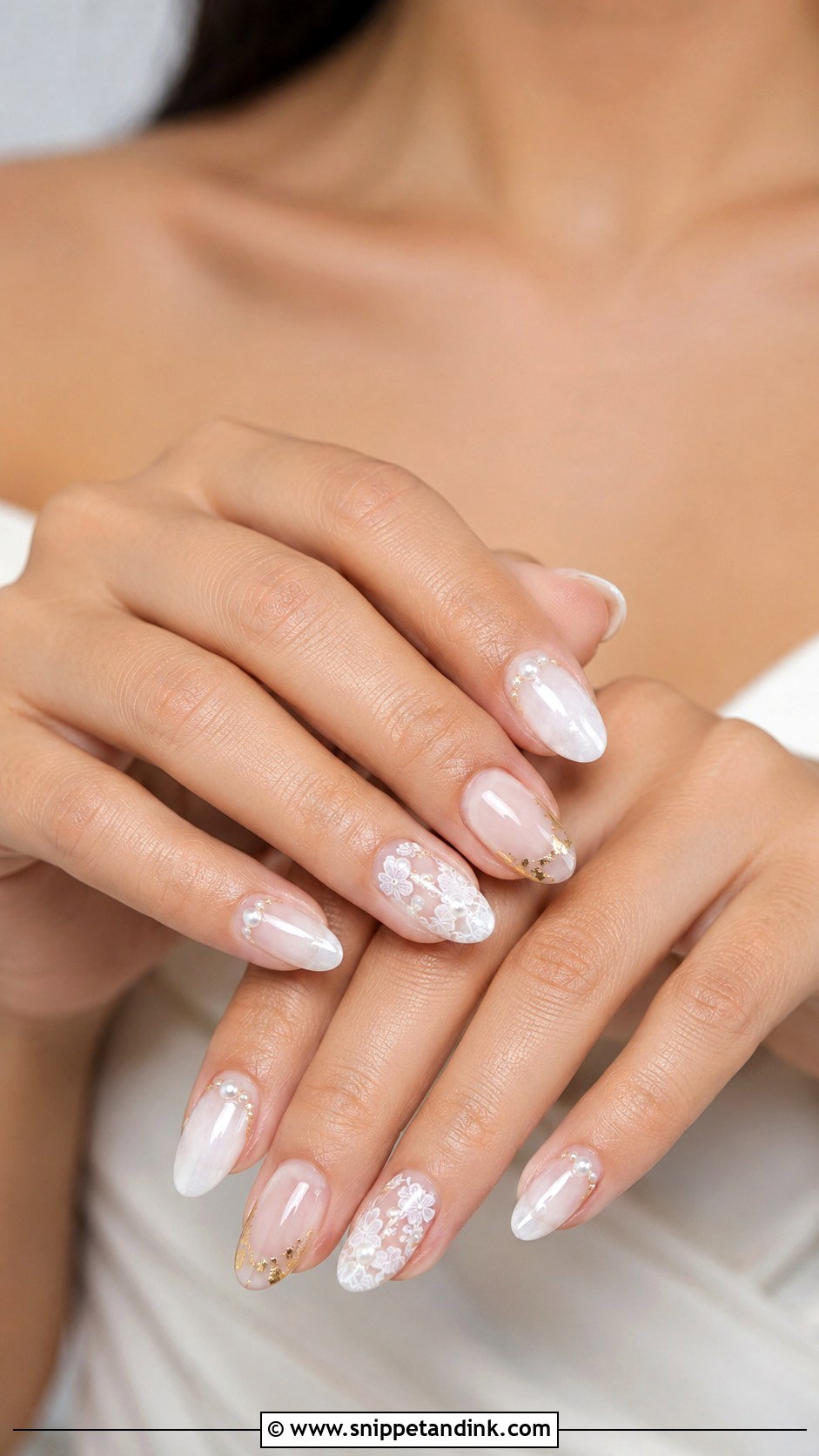
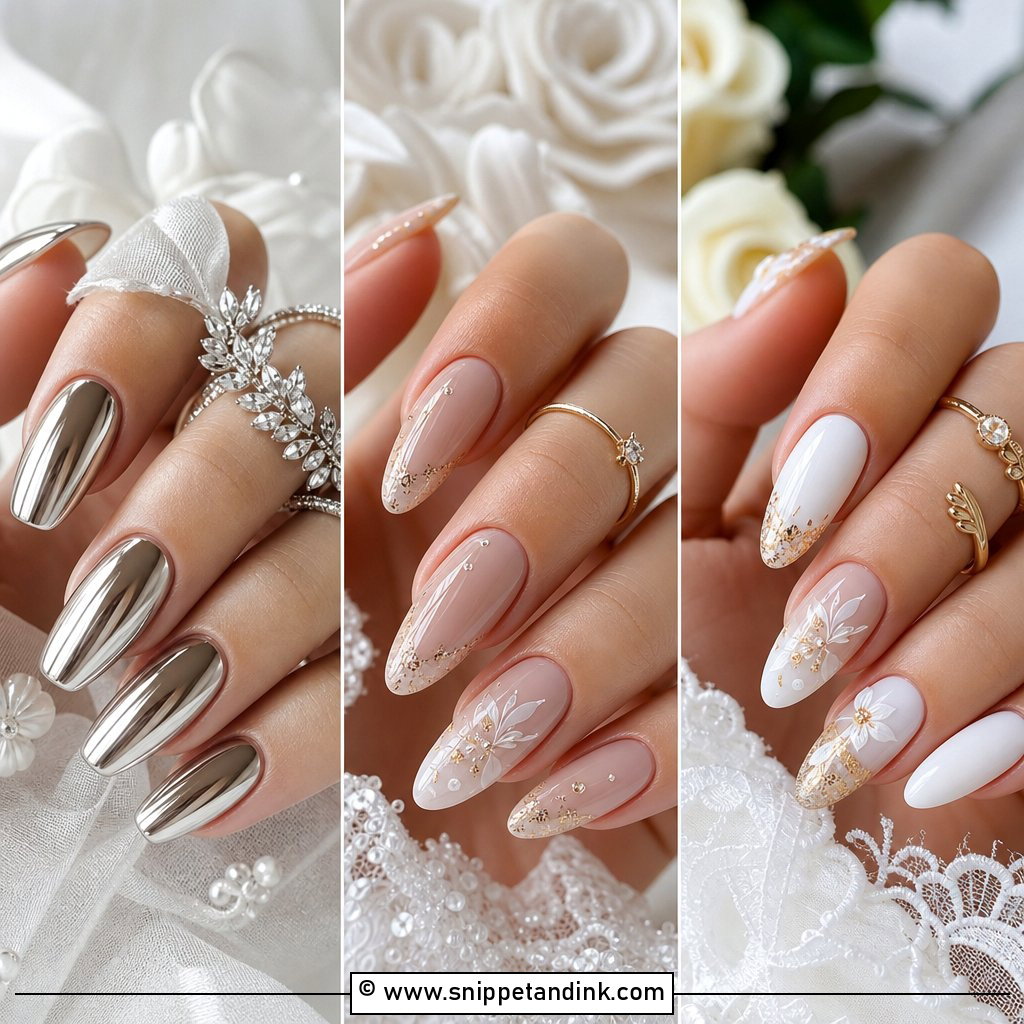
Rustic wedding acrylic nails give length, strength and a sculpted shape, which helps if your natural nails break easily. For a rustic look, I’d stop at medium almond, oval or soft coffin; very long lengths look out of place and get in the way of buttons and bouquet stems. Milky white, nude, blush, champagne, sage and warm beige keep the palette soft, and acrylic has room for lace, pressed flowers, pearls or foil. Pick one of those, not all of them. Get the set done a week or so ahead so you’re used to the length by the day.
A Chip Two Hours Before the Ceremony
It happens, usually from a car door or a stubborn bouquet ribbon. Most chips can be hidden well enough that no camera will catch them, as long as you’ve planned a little.
- Ask your nail artist for the shade name, or buy a small bottle of regular polish in the closest match, and pack it with a nail file.
- File any snag smooth first, so it doesn’t catch on lace or your veil.
- Dab a thin layer of colour into the chip only, let it dry, then add a second thin layer and a clear top coat.
- For a split or broken tip, a drop of nail glue and a small piece of silk wrap holds until the end of the night.
How Pressed Petals Get Sealed Into a Nail
Several sets on this list use real dried flowers. I build a thin layer of clear gel, place the petal while it’s tacky, cure it, then cap it with enough clear gel to bury every edge before the top coat. Thick or curled petals can’t be sealed properly and will lift, so ask for flowers that are pressed paper-flat. Done well, they last as long as the rest of the manicure.
Hands, Ring and Bouquet in One Frame
A rustic bridal manicure works when it sits quietly beside your ring, your dress and your flowers. Milky white, sage accents, dusty rose, lace, pearls or a little gold foil can all do that. Keep the shape practical, choose the shade by your undertone rather than the bottle, and limit the art to a couple of accents. Bring photos of your dress fabric and bouquet to the appointment, and you’ll leave with a set that looks right in the close-up ring shot and still looks neat when you wave goodbye.
You'll Like These Ideas:


Leave a Reply