
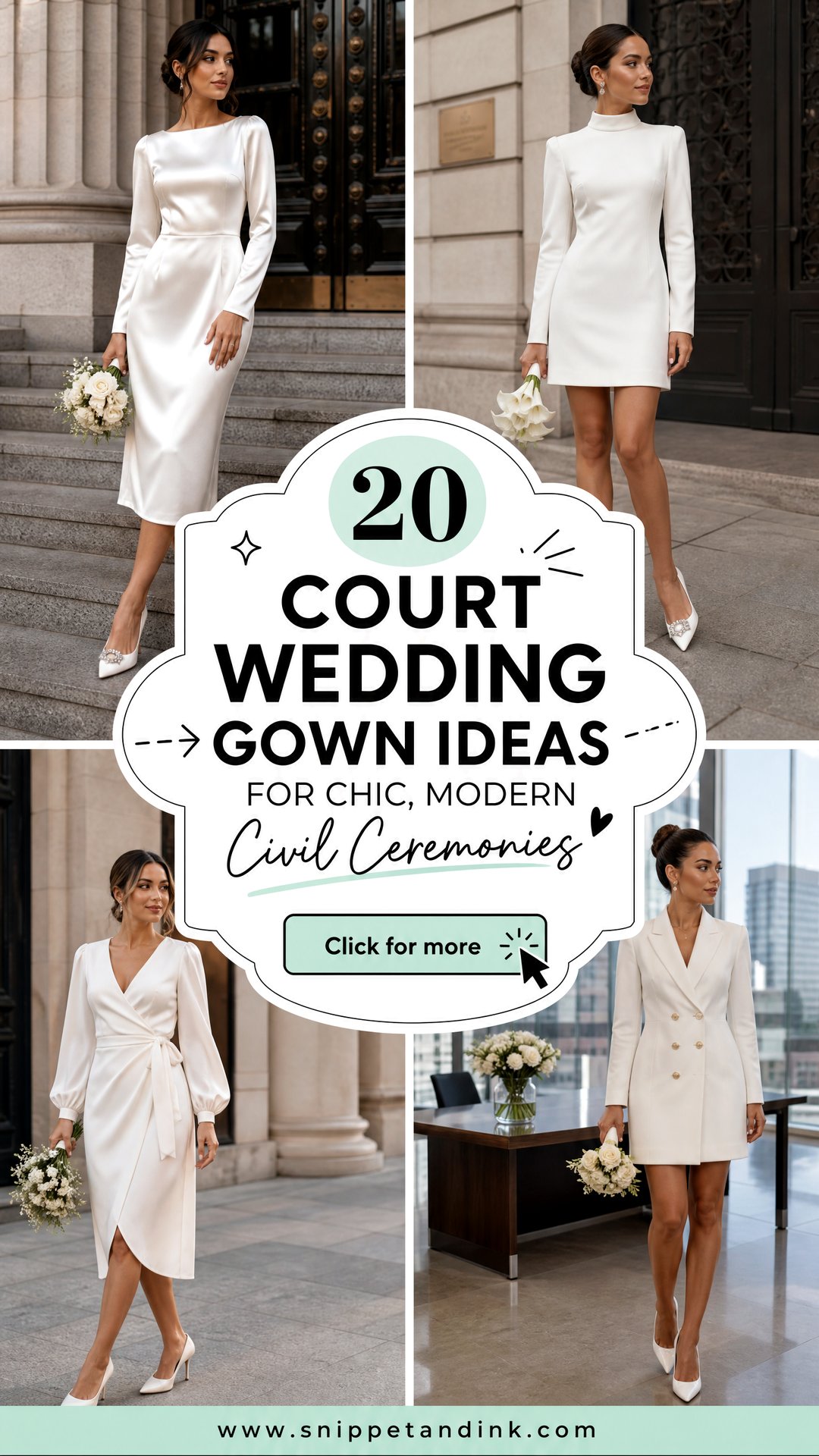
A civil ceremony is short, but you’ll look at the photos for the rest of your life, so the dress still deserves real thought. For courthouse brides I look at different things than for a ballroom: a hem that handles stone steps, shoes that cope with marble floors and long corridors, and a bag small enough to get through security. The options below range from sleek satin midis and tailored blazer dresses to full-length gowns, in white, ivory, cream and pale champagne. Each one comes with the styling and fitting notes I’d give at an appointment, so you can see how the whole outfit holds together from veil to shoes.
Buying a Courthouse Dress on a Short Timeline
Civil ceremonies are often booked weeks out rather than a year, and that changes where you shop. Made-to-order bridal gowns commonly take several months to arrive, before any alterations. If your date is close, look at off-the-rack bridal samples, ready-to-wear white dresses and occasion wear, which you can take home the same day.
Whatever you buy, leave time for a tailor. Simple alterations on a midi or a sheath usually take a couple of weeks, longer in spring and summer. Buy for the widest part of your body, since taking a dress in is far easier than letting it out, and most ready-to-wear seams have little spare fabric.
- Order online early enough to return it if the white looks blue or yellow against your skin.
- Bring your ceremony shoes to the first fitting, not a borrowed pair.
- Ask for a steam and press after alterations so the dress comes home ready to wear.
1. Satin Midi Court Wedding Gown
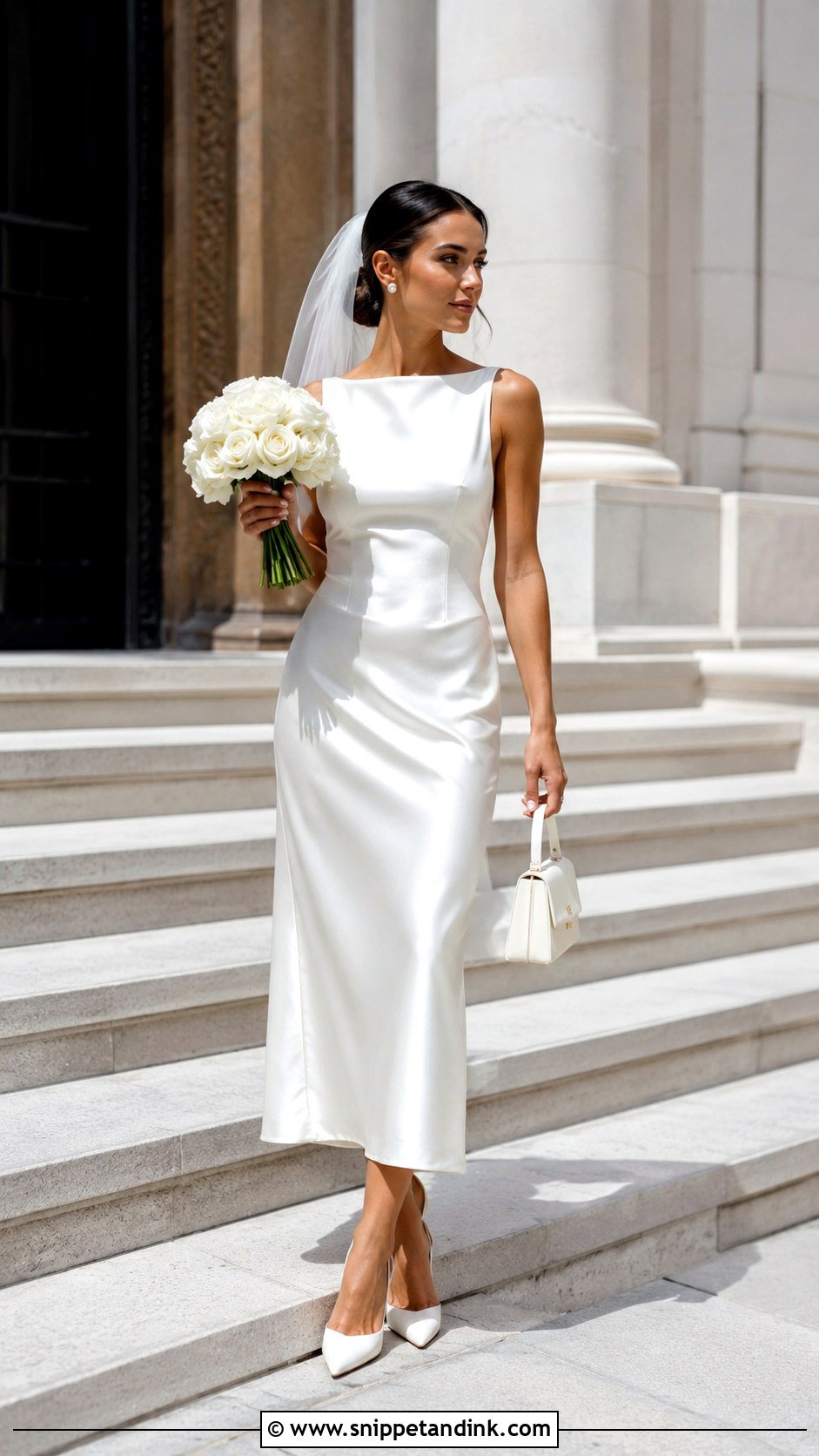
Satin cut on the bias drapes close to the body and moves when you walk, which is exactly what you want in a small room with no aisle to fill. Pick ivory or soft white with a draped neckline and a gently defined waist. Bias satin is honest about what’s underneath, so try it with your actual underwear and look in daylight, not just under fitting-room lights. Pointed slingbacks, pearl drops and a small structured bag finish it, and a short tulle veil says bride without extra bulk. Add a tailored ivory coat if it’s cold, and keep the bouquet to a few white roses or calla lilies. It’s also the dress on this list you’re most likely to wear again.
2. Long Sleeve Mini Court Wedding Gown
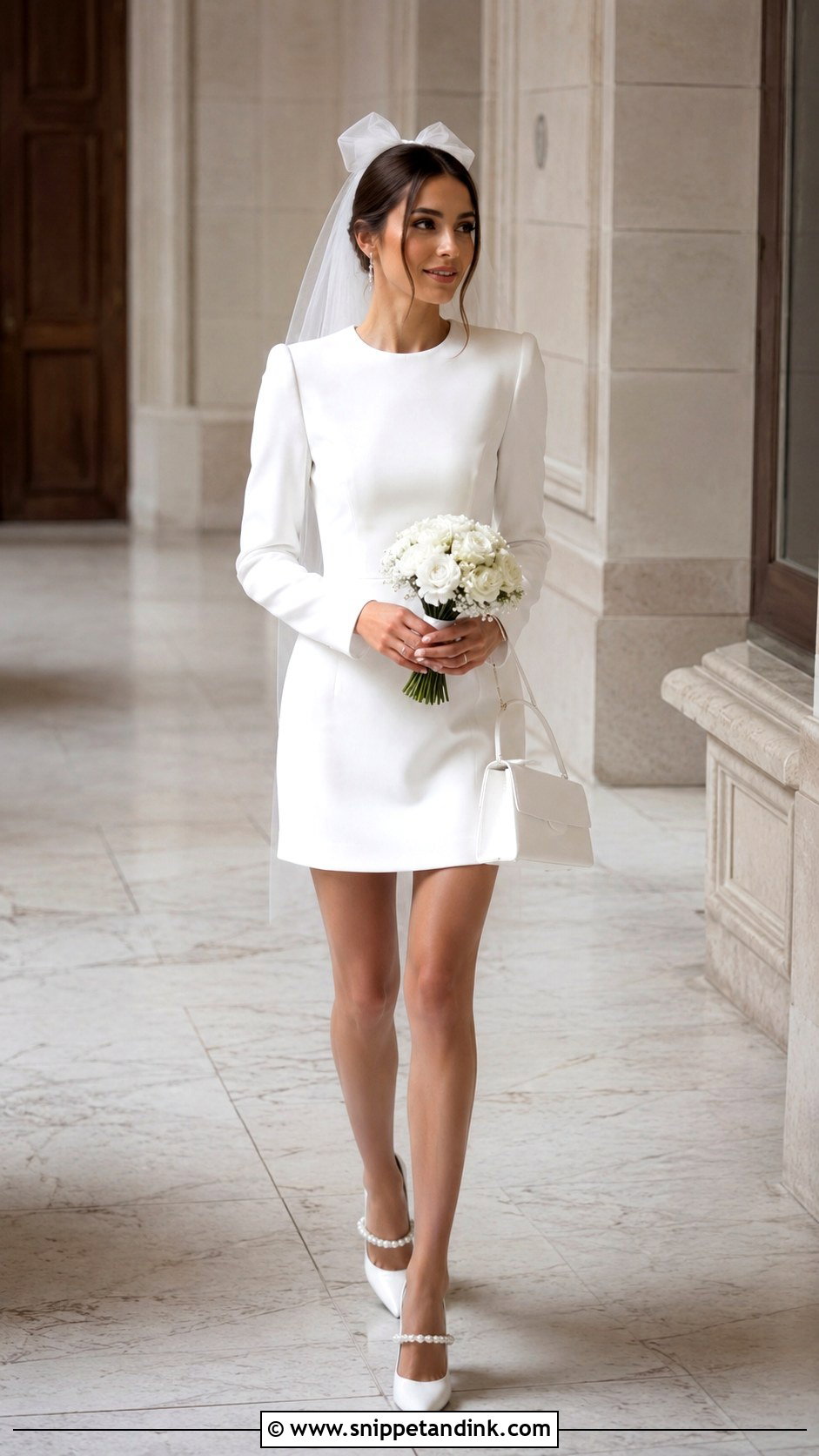
A long-sleeve mini is the confident choice for a short civil ceremony. The shorter hem needs a fabric with body, structured crepe, satin or a textured jacquard, so it doesn’t look like a party dress. A bateau neckline and slightly shaped shoulders balance the bare legs. Check one thing before buying: sit down in it. Minis ride up several inches when seated, and you will sit while waiting and again while signing. Closed pumps or pearl-trimmed slingbacks work, and sheer white tights help in winter. A bow veil or a ribbon in the hair is plenty.
3. Tea Length A-Line Court Wedding Gown
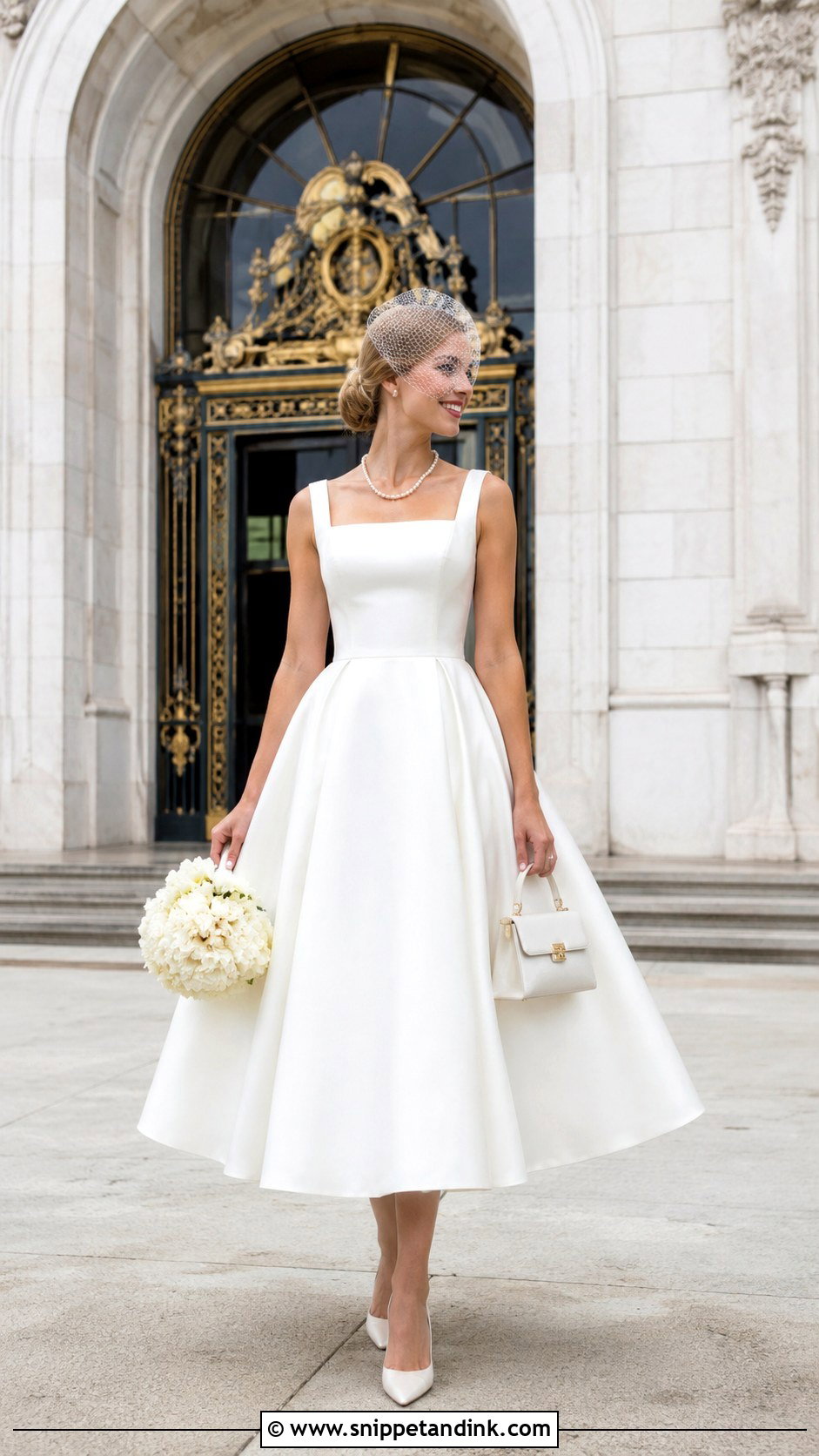
Tea length lands somewhere between knee and ankle, and it gives a courthouse look an instant 1950s feel. A fitted bodice and a defined natural waist over a skirt in Mikado, organza or structured satin keep that full shape standing. The catch is that this hem puts your shoes on full view, so they have to be good: pointed pumps, low block heels or embellished slingbacks. A pearl necklace, a small framed bag and a birdcage veil complete the period mood. If veils aren’t you, a low bun with a decorative comb does the same job, and a petite bouquet keeps the proportions right.
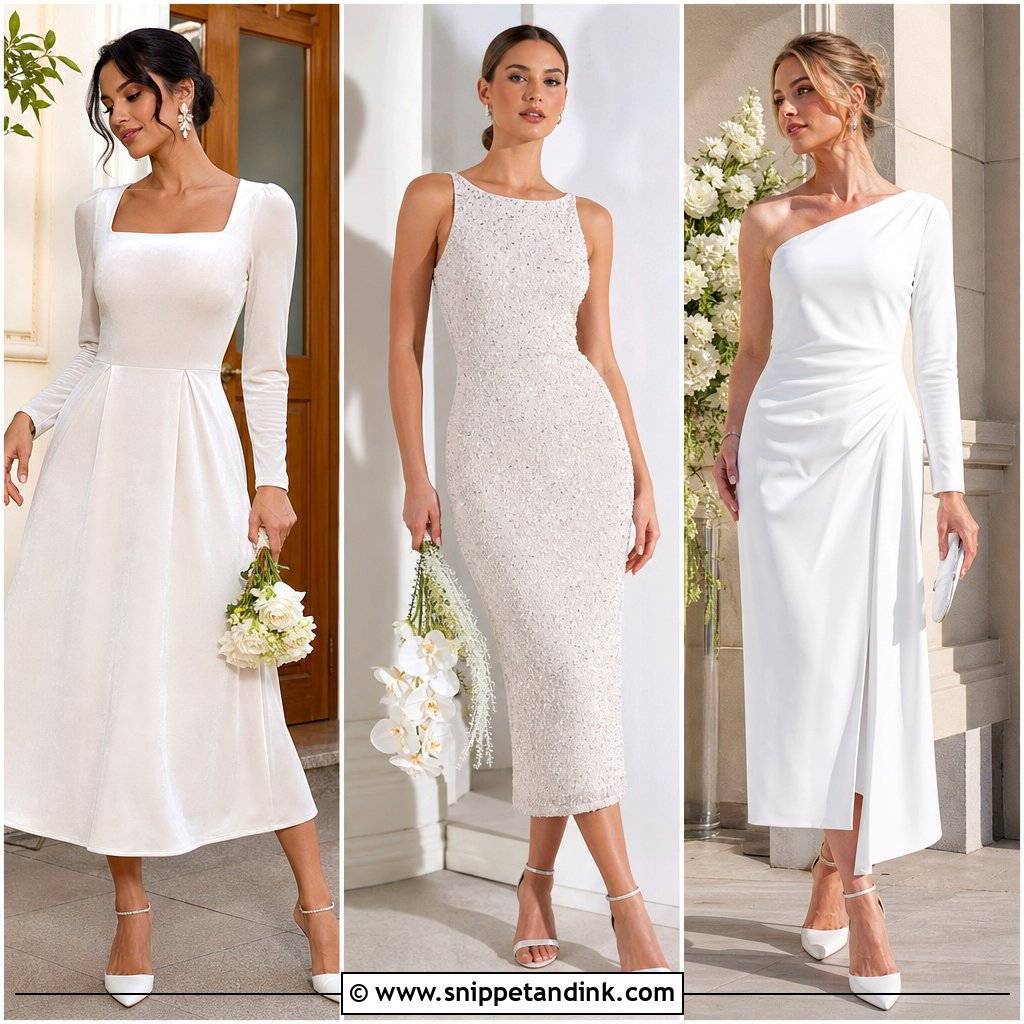
4. Square Neck Column Court Wedding Gown
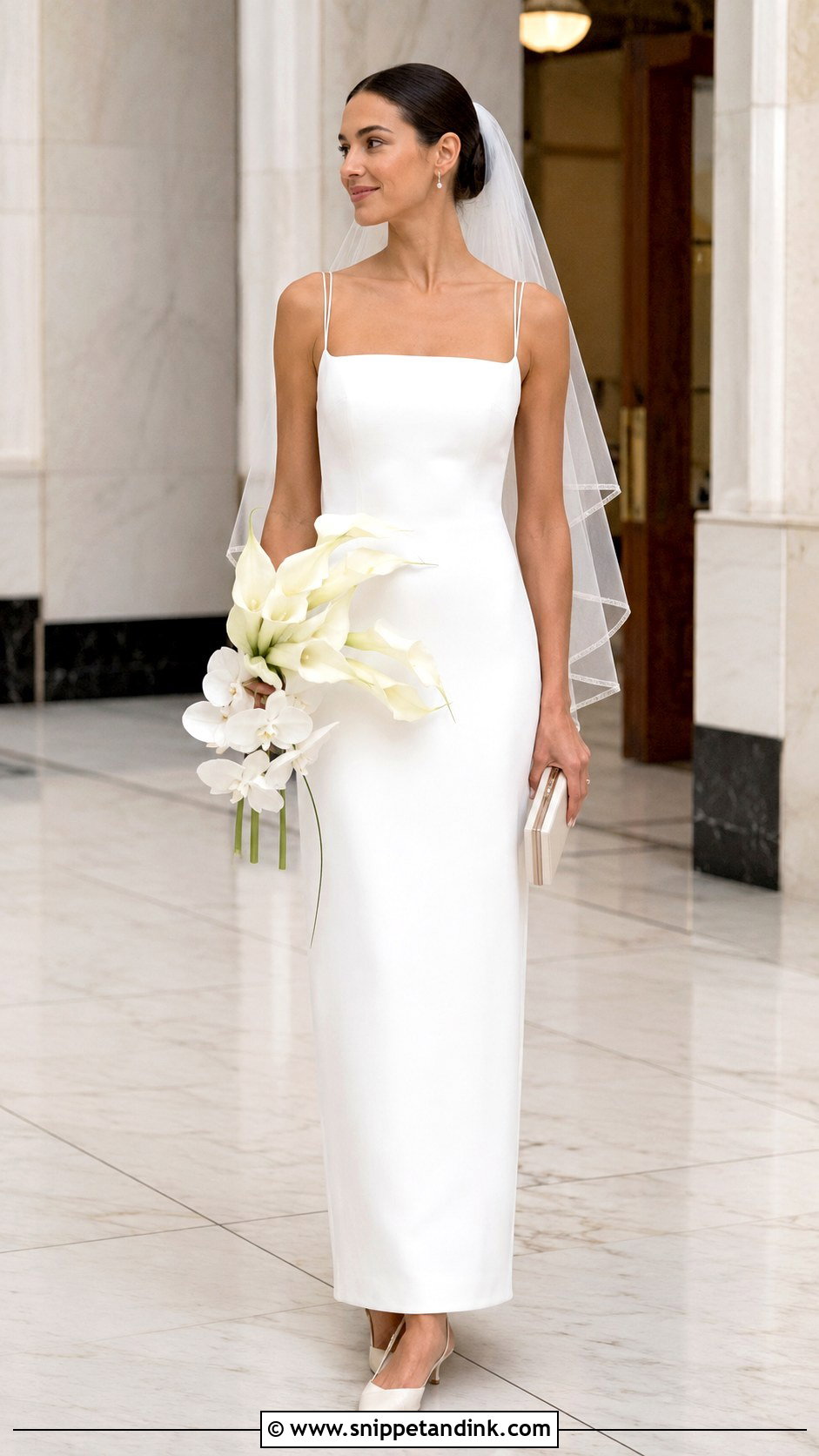
Why a column? Because it follows the body without a wide skirt, so corridors, doorways and lifts stop being an issue. A square neckline gives it a sharp, modern frame. I’d choose substantial crepe or lined satin; thin fabric in a column shape shows every seam of what’s underneath. Delicate straps suit warm weather and short sleeves add coverage. If you want waist definition, look for subtle seaming instead of a contrast belt, which breaks the long line. Kitten heels, slim pearl earrings and a sculptural bouquet keep it uncluttered.
5. Off Shoulder Midi Court Wedding Gown
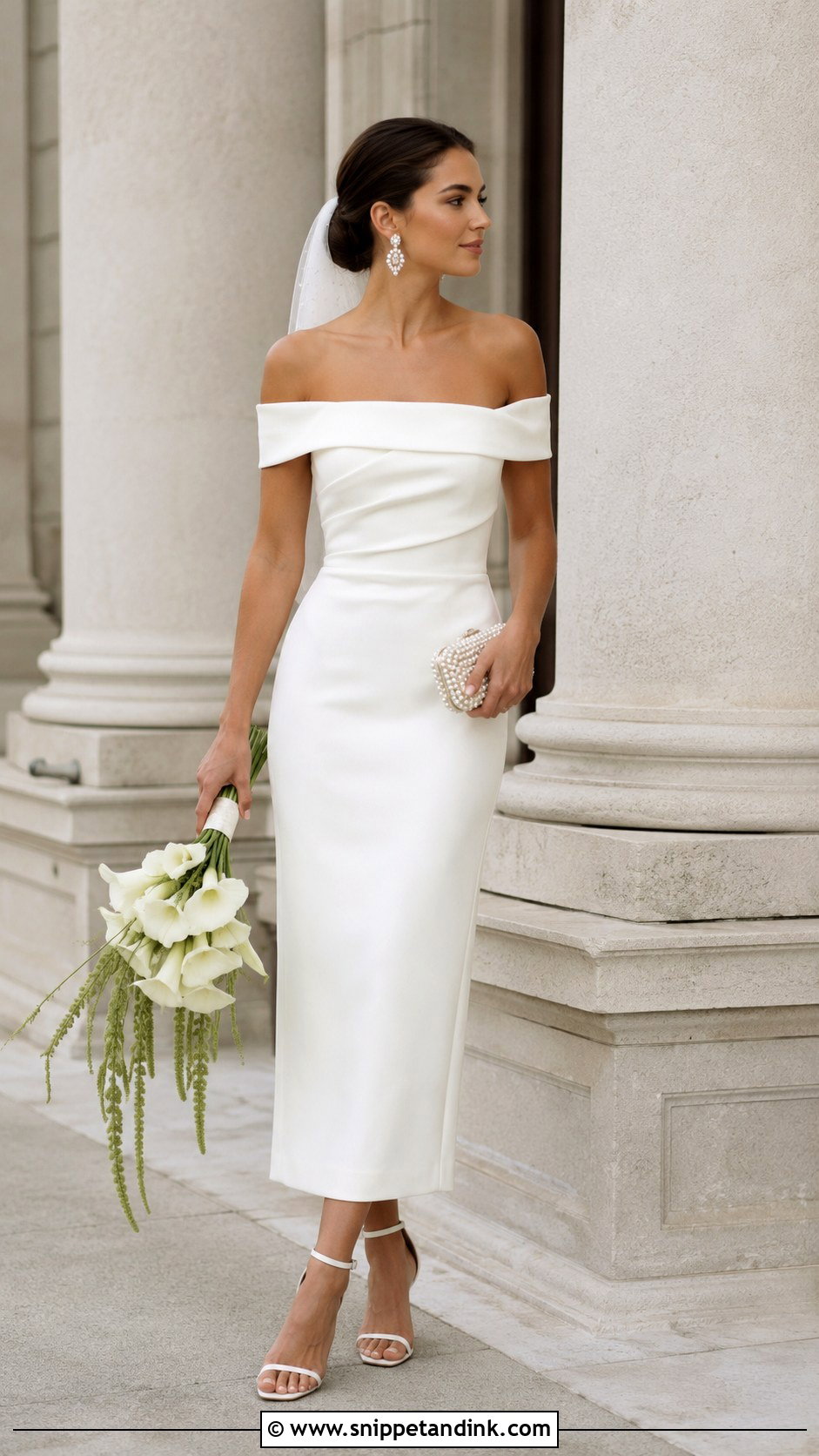
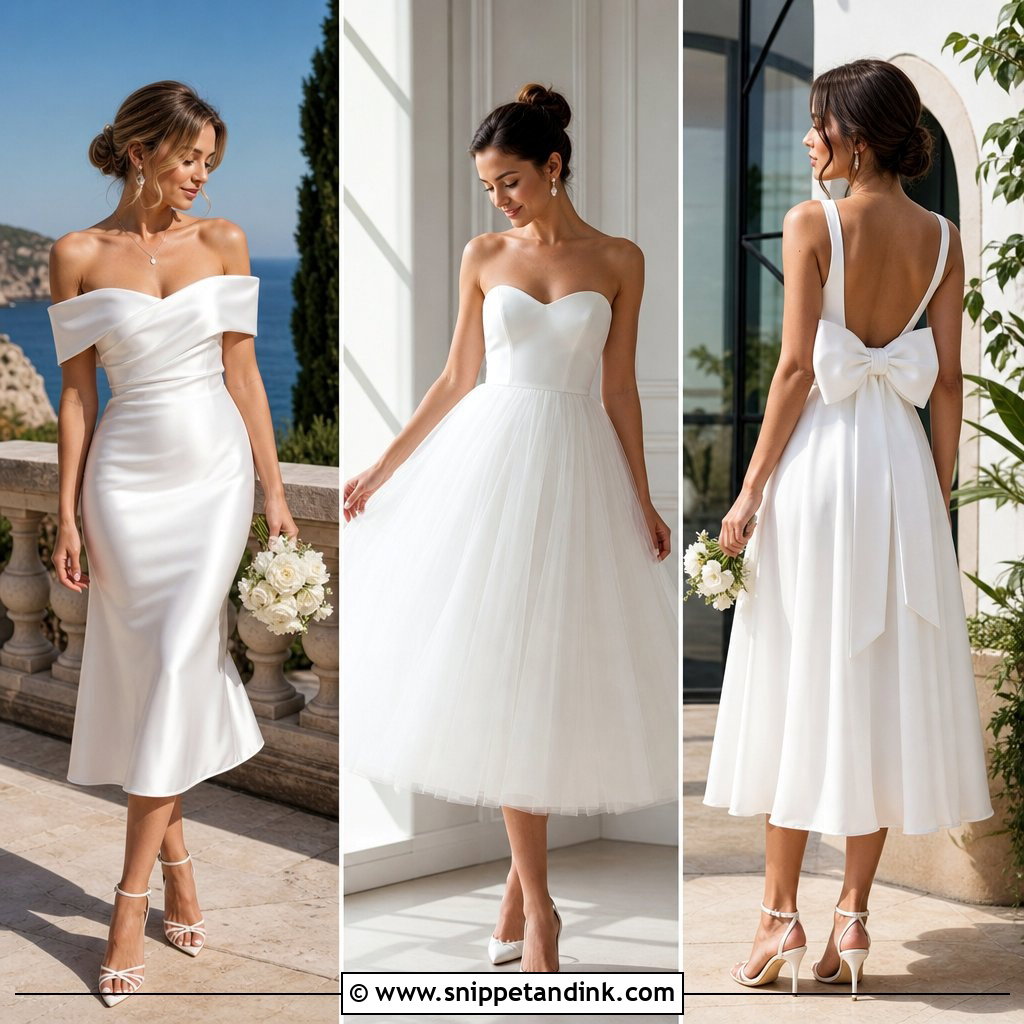
An off-the-shoulder midi brings in a romantic note without making the outfit feel too grand for a registry office. A folded neckline or softly draped sleeves frame the shoulders, over a fitted bodice and a straight or lightly flared skirt in crepe, satin or matte faille. The neckline is the jewelry here, so skip the necklace and wear statement earrings with a low chignon. Off-shoulder sleeves need to be fitted with your arms moving, since you’ll be lifting a pen and hugging family. A short veil tucked under the bun and a bouquet with long green stems finish it.
6. Lace Sheath Court Wedding Gown
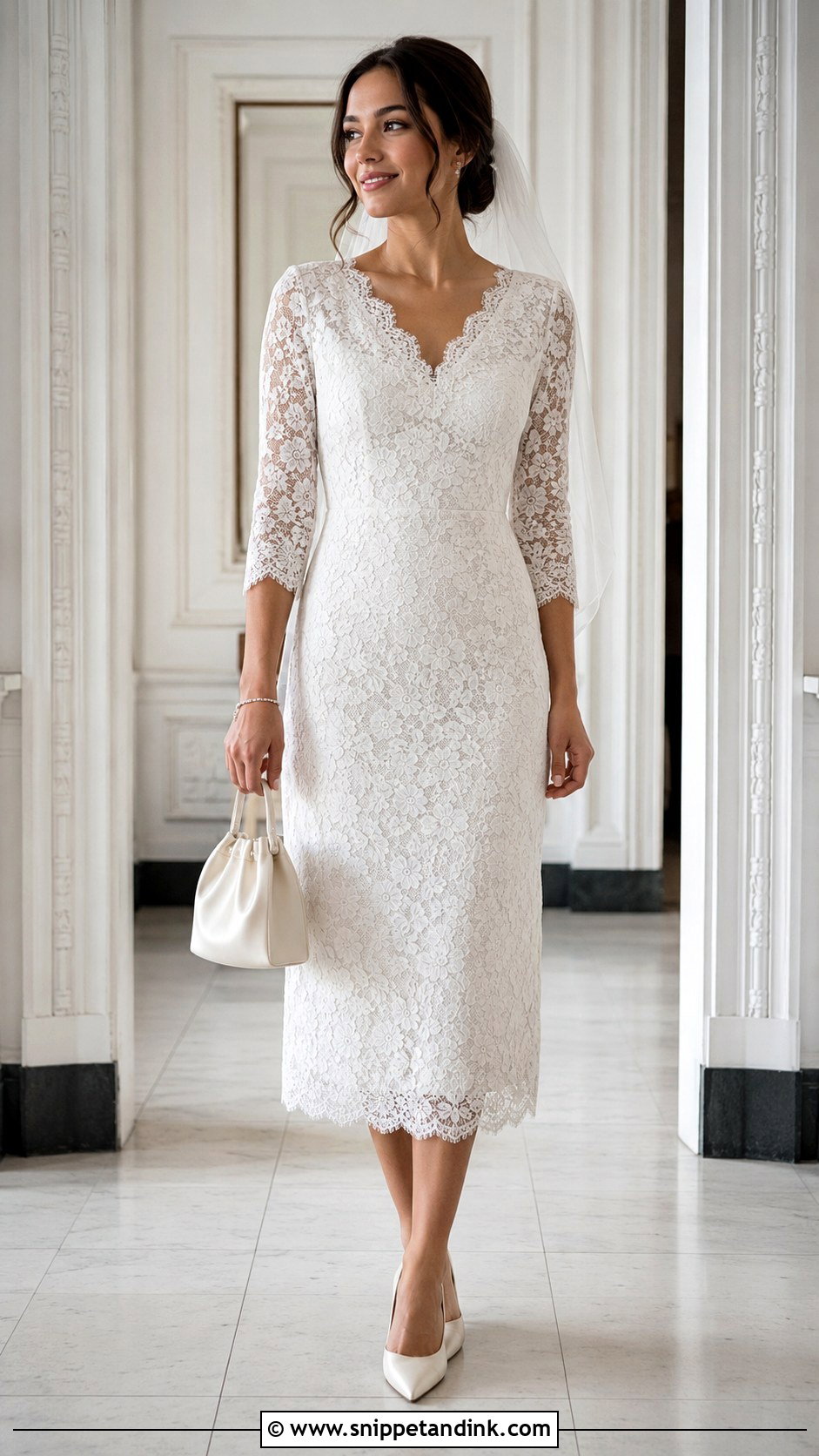
Lace and a sheath shape give you tradition without the volume of a ballroom skirt. Choose lined floral lace at knee, midi or ankle length, ideally with a scalloped neckline and fitted three-quarter sleeves. The fit has to be close but not tight across the hips, because lace sheaths pull and twist when you walk if there’s no ease. Ivory pumps lengthen the leg, and a small satin bag holds what you need. With this much texture, a raw-edge short veil and a bouquet of a single flower variety stop the outfit from getting busy.
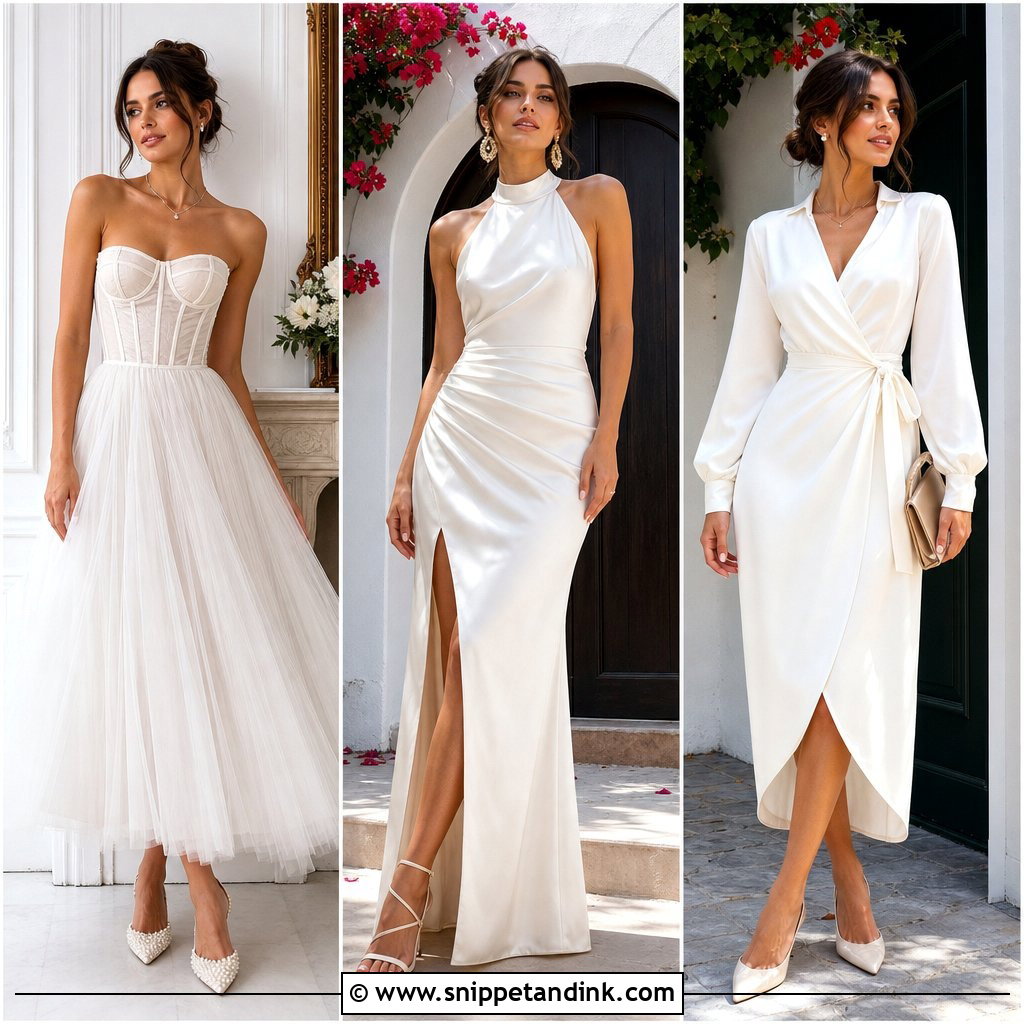
7. Halter Satin Court Wedding Gown
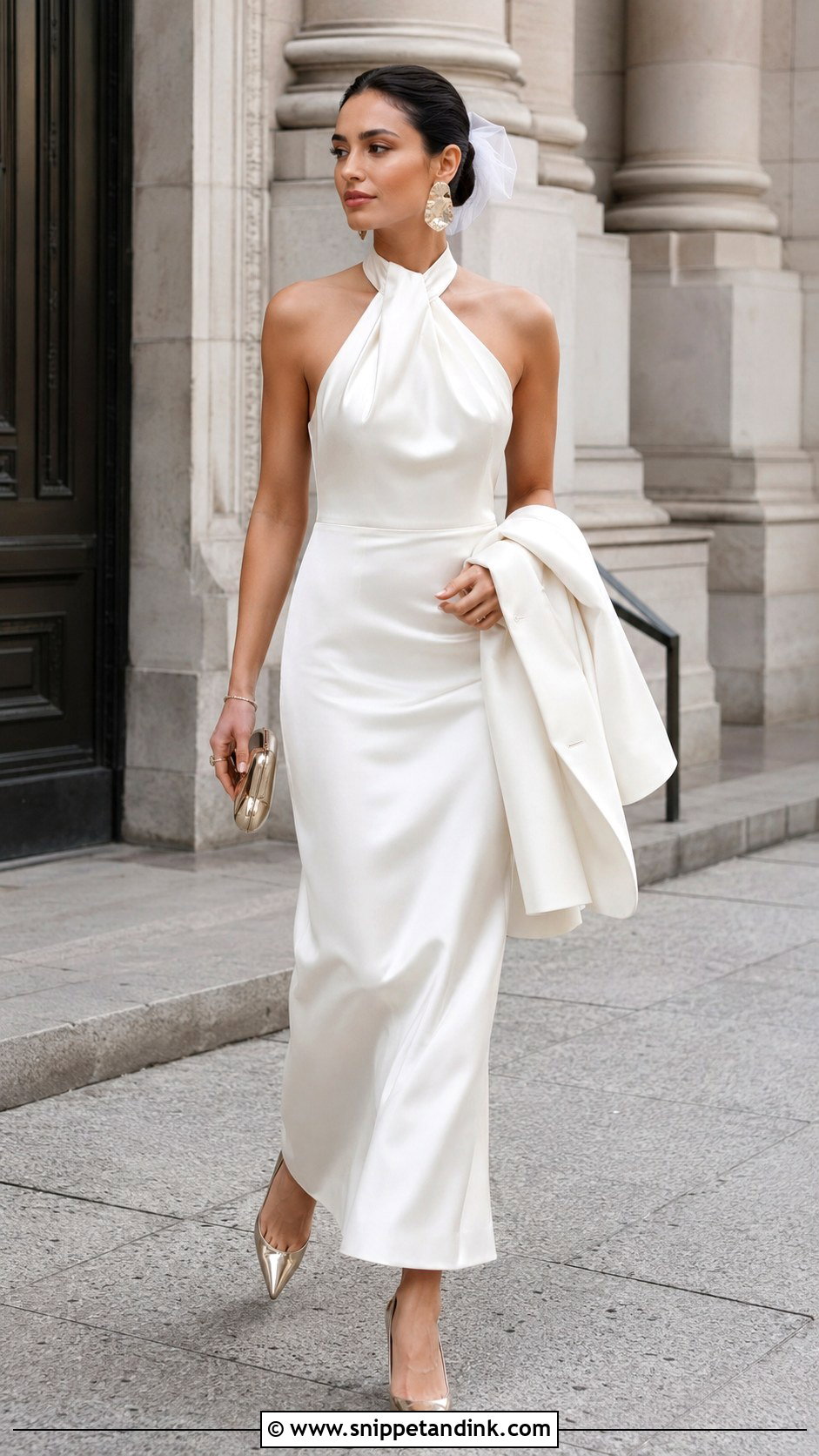
A halter satin gown has clean lines with a little drama at the shoulders. A midi or slim ankle-length cut with a high halter neck and a softly defined waist is the shape to look for. Wear your hair up; the halter needs a clear neck to look right, and loose hair crowds it. A short tulle bow or a minimalist hairpiece suits this neckline better than a traditional veil. Courthouses are often air-conditioned, so a fitted ivory blazer is worth carrying for the waiting room, then off for photographs. White orchids or roses in a small bouquet stay in keeping.
8. Bow Back Mini Court Wedding Gown
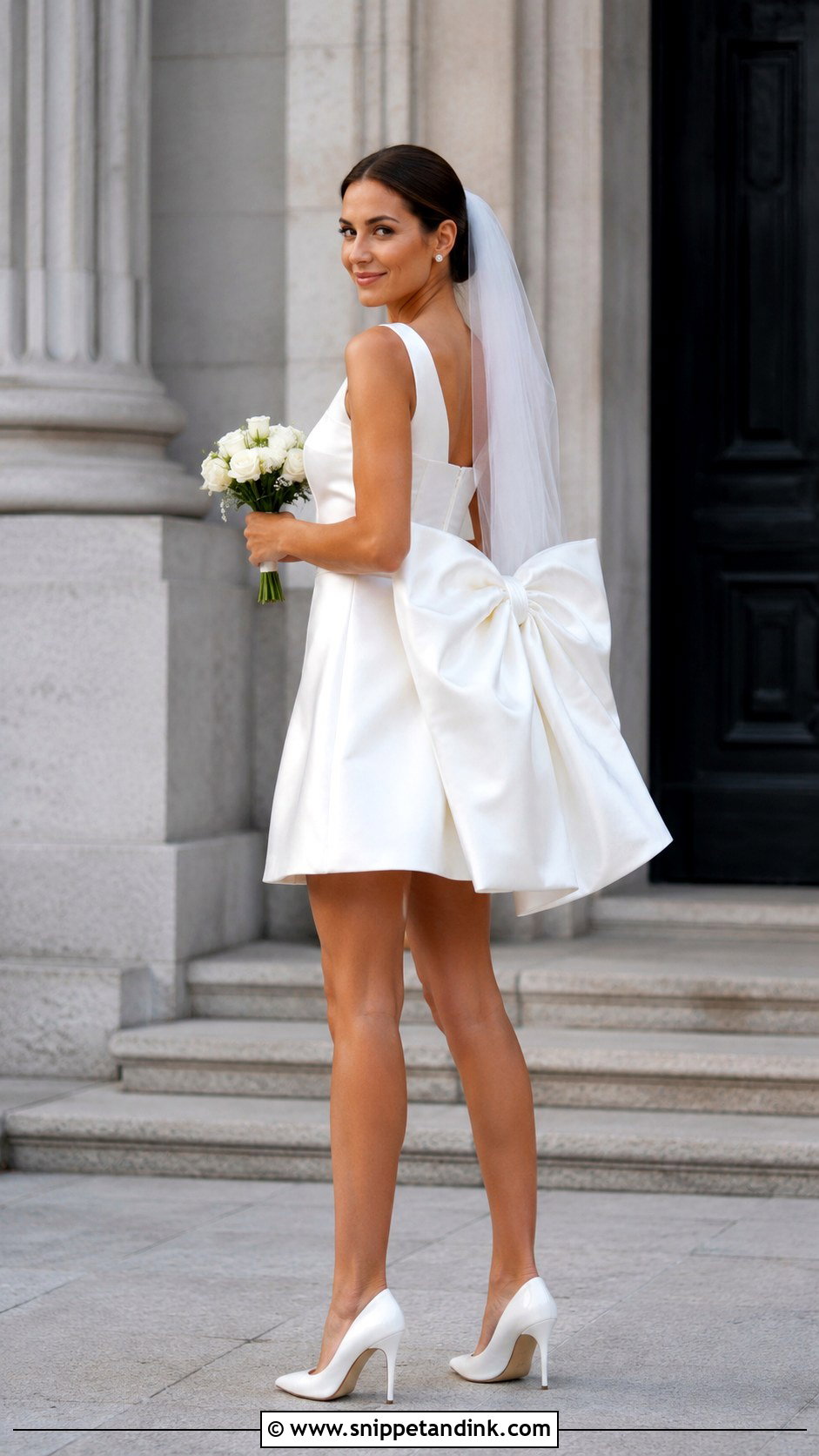
Think about the back. Courthouse photos often happen on the steps, and a good number are taken as you walk away, so a structured bow at the waist or lower back turns a plain mini into a bridal one. Matte crepe and duchess satin hold a bow’s shape; softer fabrics let it droop by lunchtime. Keep everything else clean: pointed white pumps, small studs, a smooth satin bag. A neat bun or short hair leaves the bow on show. If you want a veil, go shoulder length and removable, so you can take it out for portraits.
9. Cape Sleeve Midi Court Wedding Gown
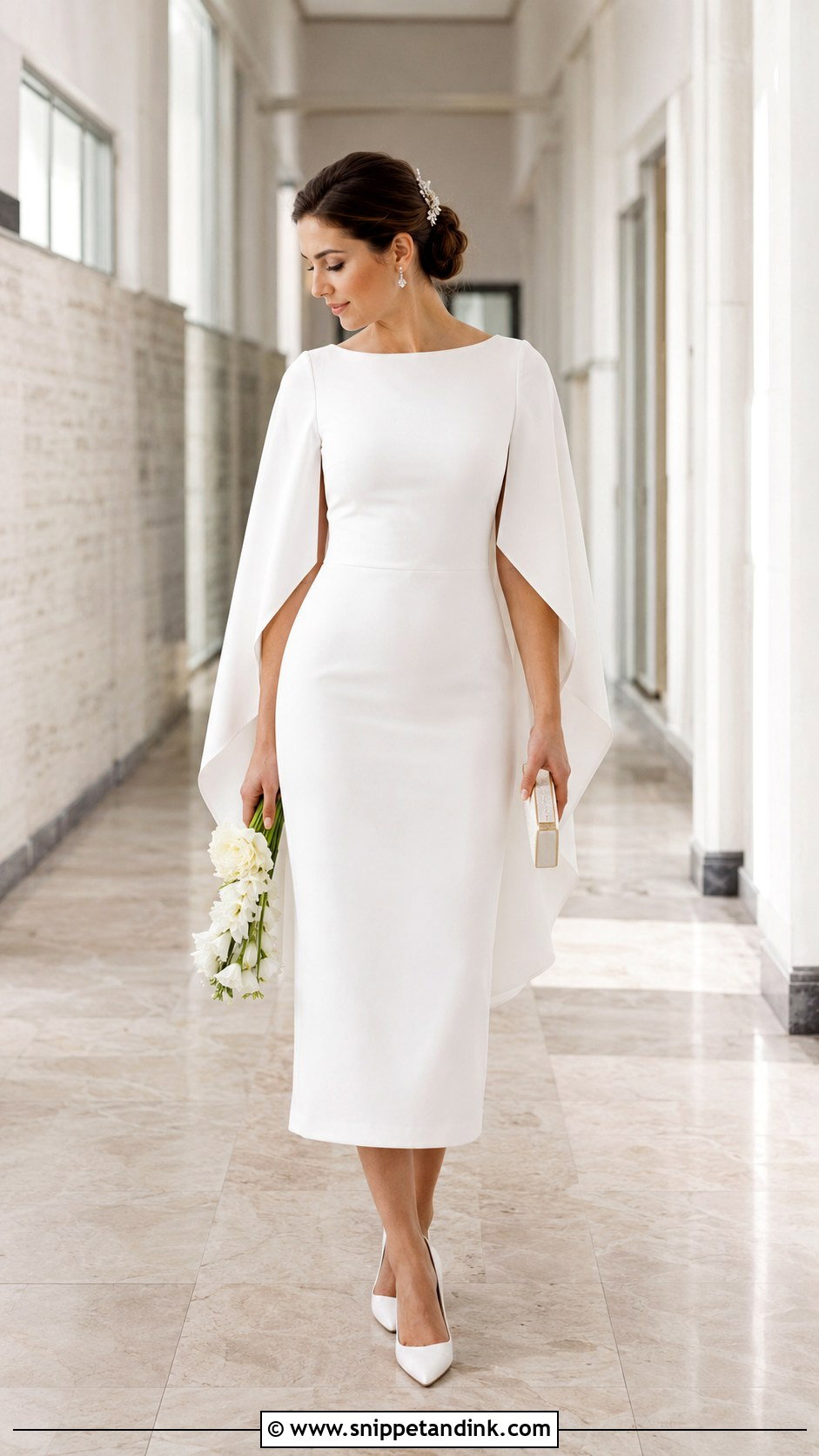
Cape sleeves give coverage and movement in one piece, which saves carrying a jacket. Look for a straight or softly fitted midi with panels falling from the shoulder to the elbow or wrist, in light crepe or chiffon so the cape floats rather than hangs. Skip the necklace if the neck is high or the shoulder construction is detailed. One practical point I always raise: long cape panels drag across a desk when you lean in to sign, so pin or hold them back when it’s time for the register. A narrow bouquet held below the waist keeps the shoulders visible.
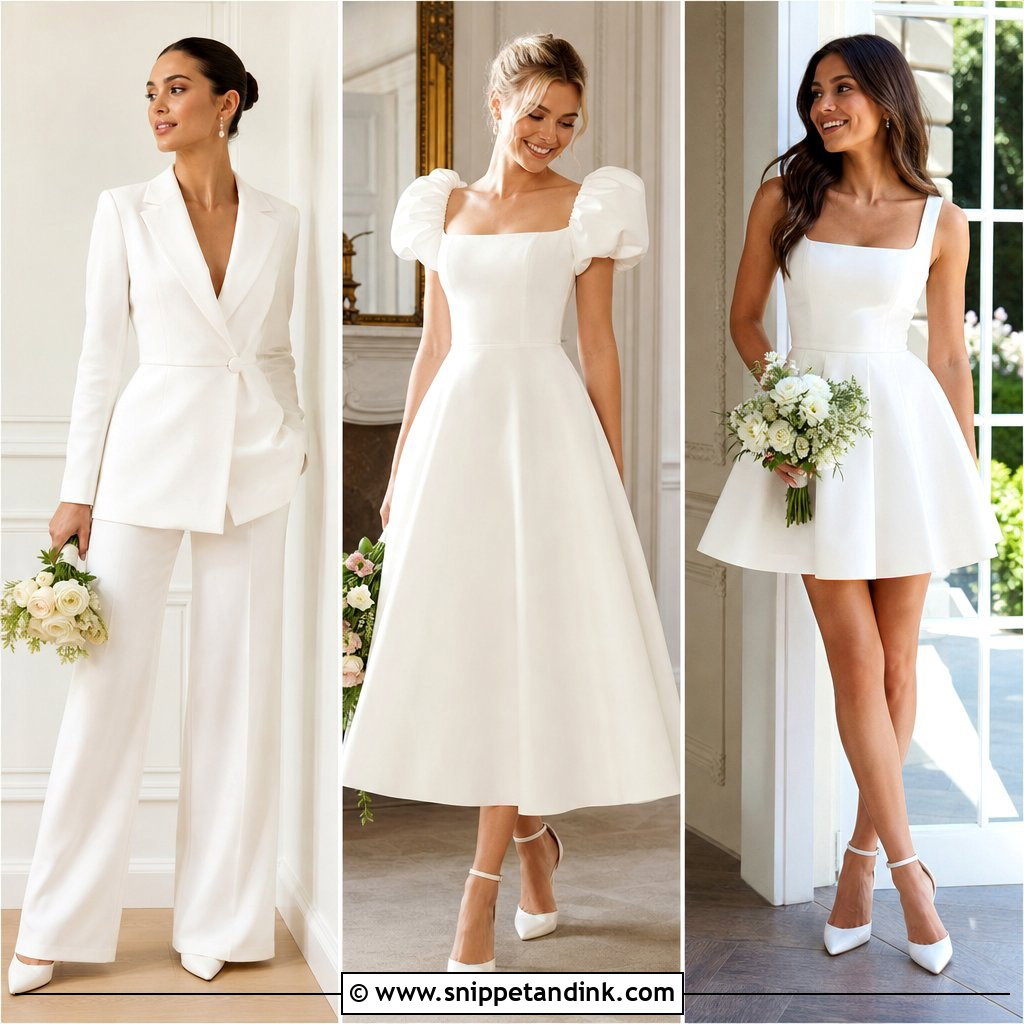
10. Blazer Mini Court Wedding Gown
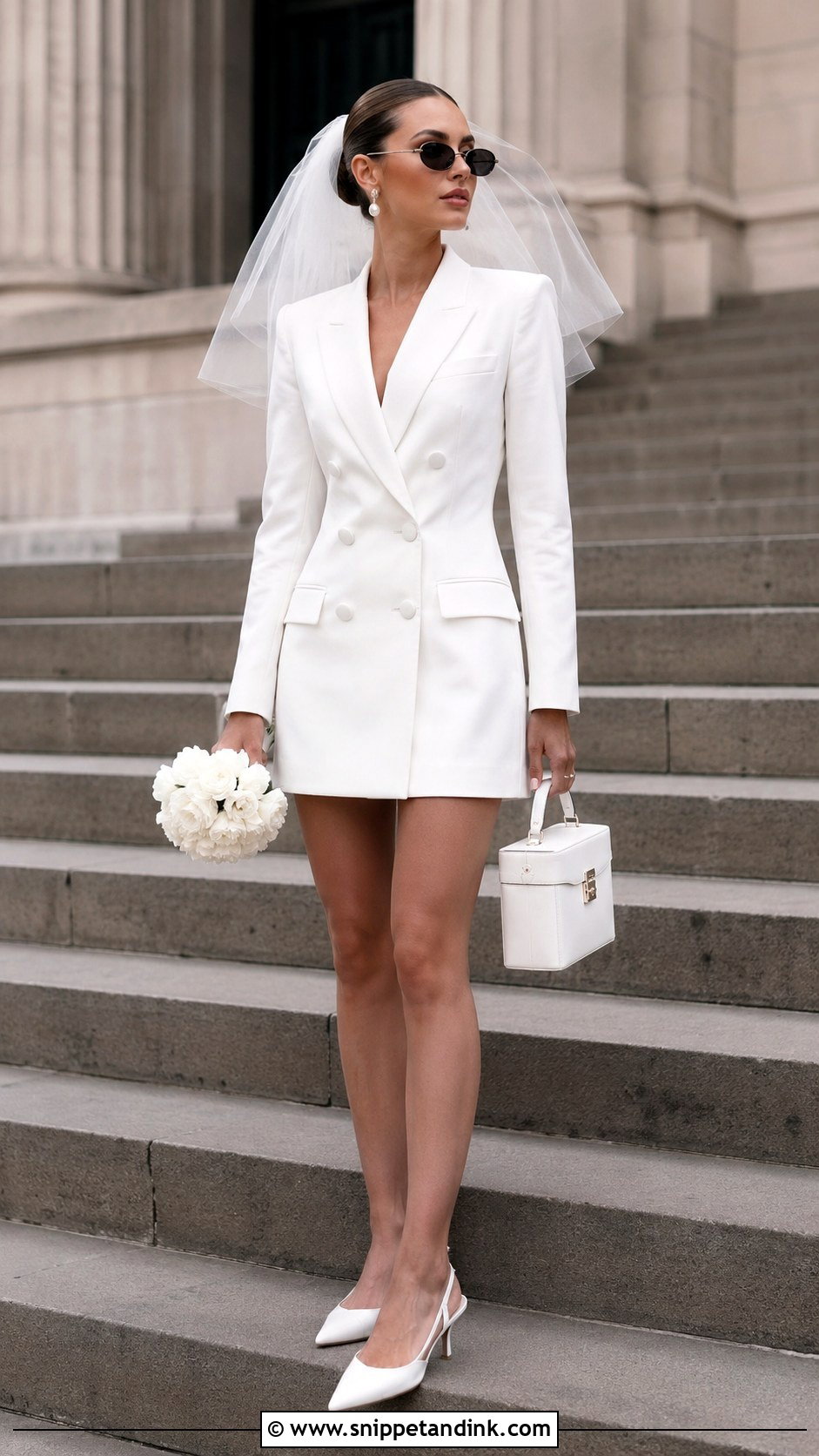
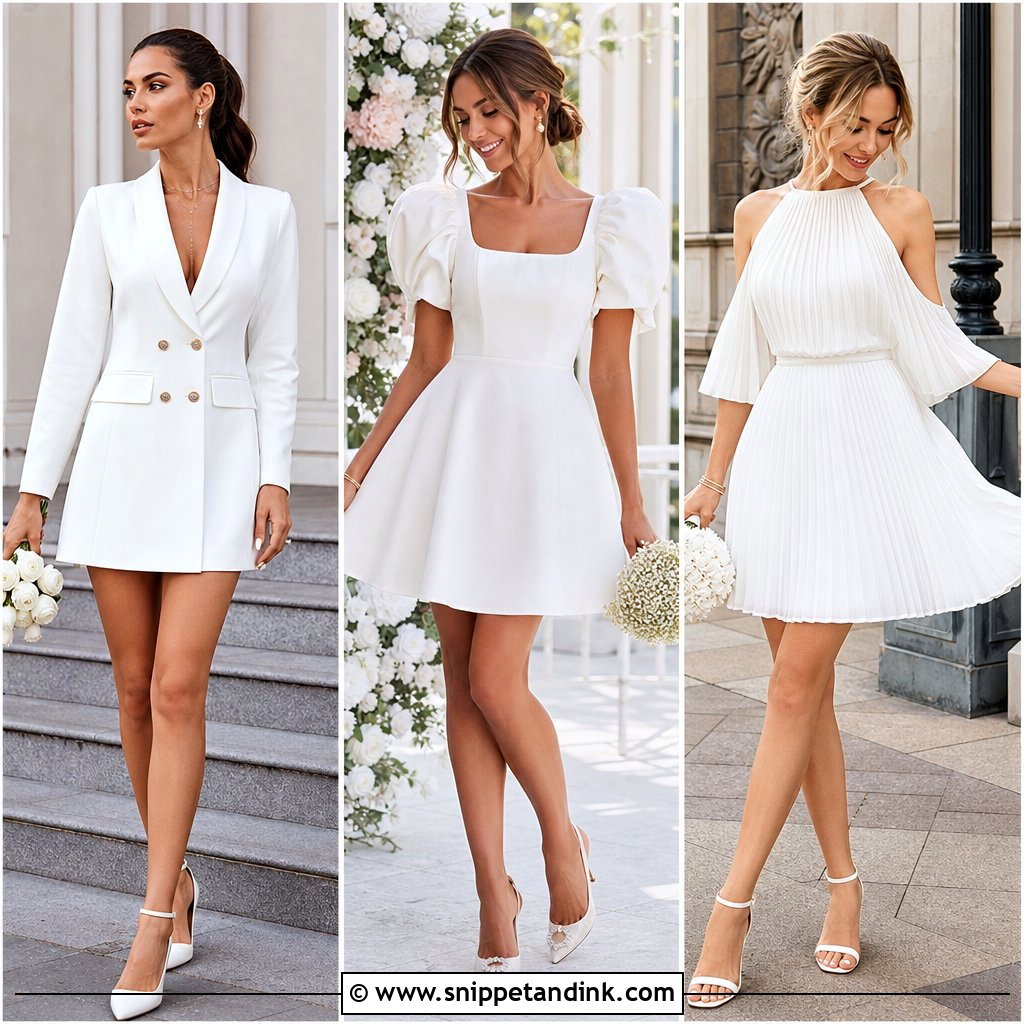
A white blazer dress is the most tailored outfit here, and it lives or dies on fit at the shoulder. Double-breasted or wrap-front, with a defined waist and enough length to sit without worrying, it needs a smooth lining so the heavier cloth hangs straight. Pointed pumps or slingbacks suit warm months; polished ankle boots and sheer tights work in winter. A small pillbox headpiece or short veil softens the strong shoulders. Have the tailor check the jacket length while you’re seated, since a blazer dress that looks right standing can be far too short when you sit for the ceremony.
11. High Neck Mini Court Wedding Gown
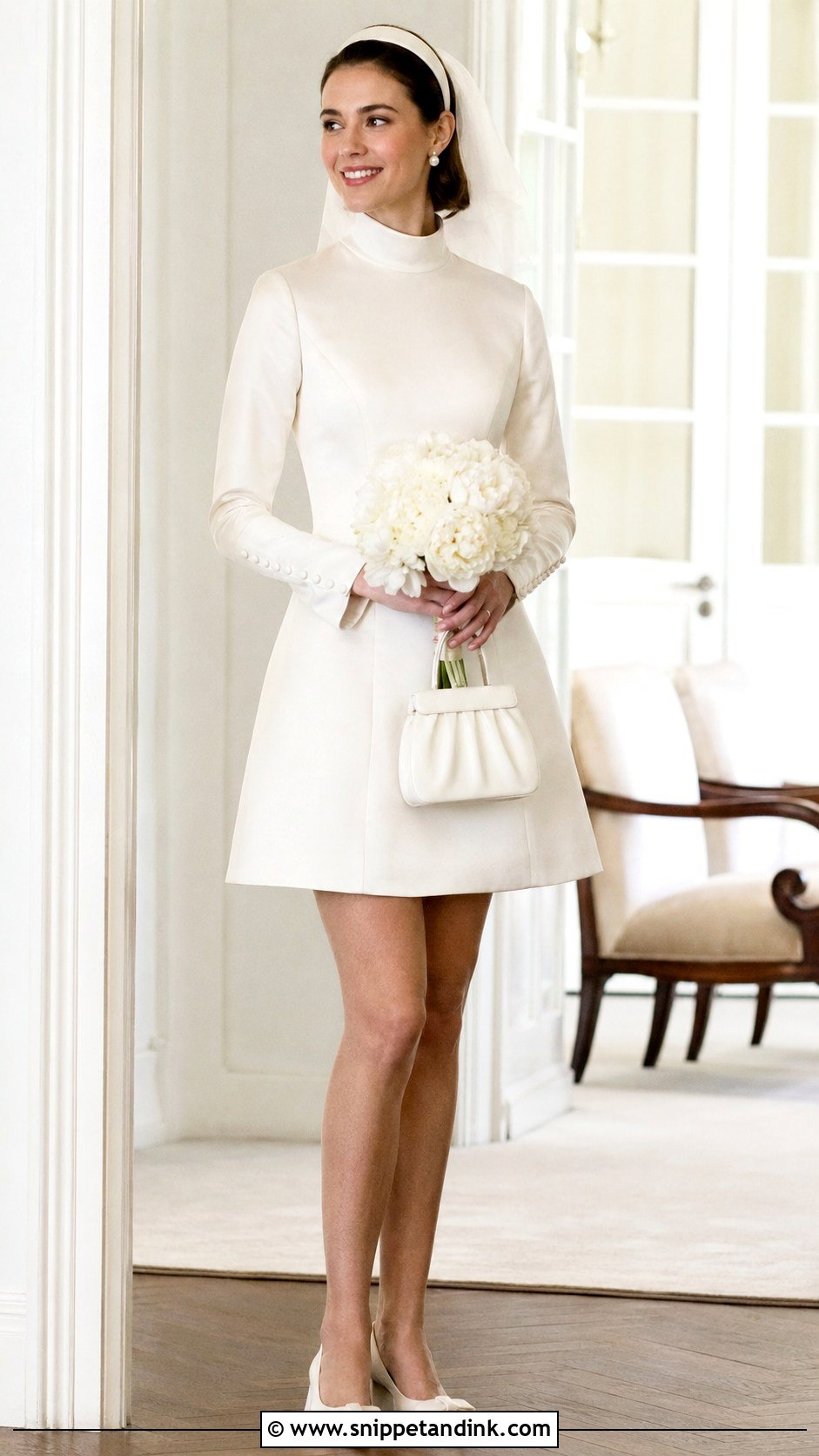
A high-neck mini borrows from 1960s bridal dressing: a raised collar, long sleeves, covered buttons and a short A-line skirt. Textured jacquard, lace or firm crepe give it interest without bold accessories. The covered top and short hem balance each other, so keep the hem precisely tailored rather than very short. Low block heels or pointed slingbacks handle courthouse floors. Pearl studs, a small top-handle bag and a neat headband suit the retro mood, and a short veil should attach at the crown so it doesn’t hide the collar. A round bouquet echoes the dress’s tidy shape.
12. Puff Sleeve Midi Court Wedding Gown
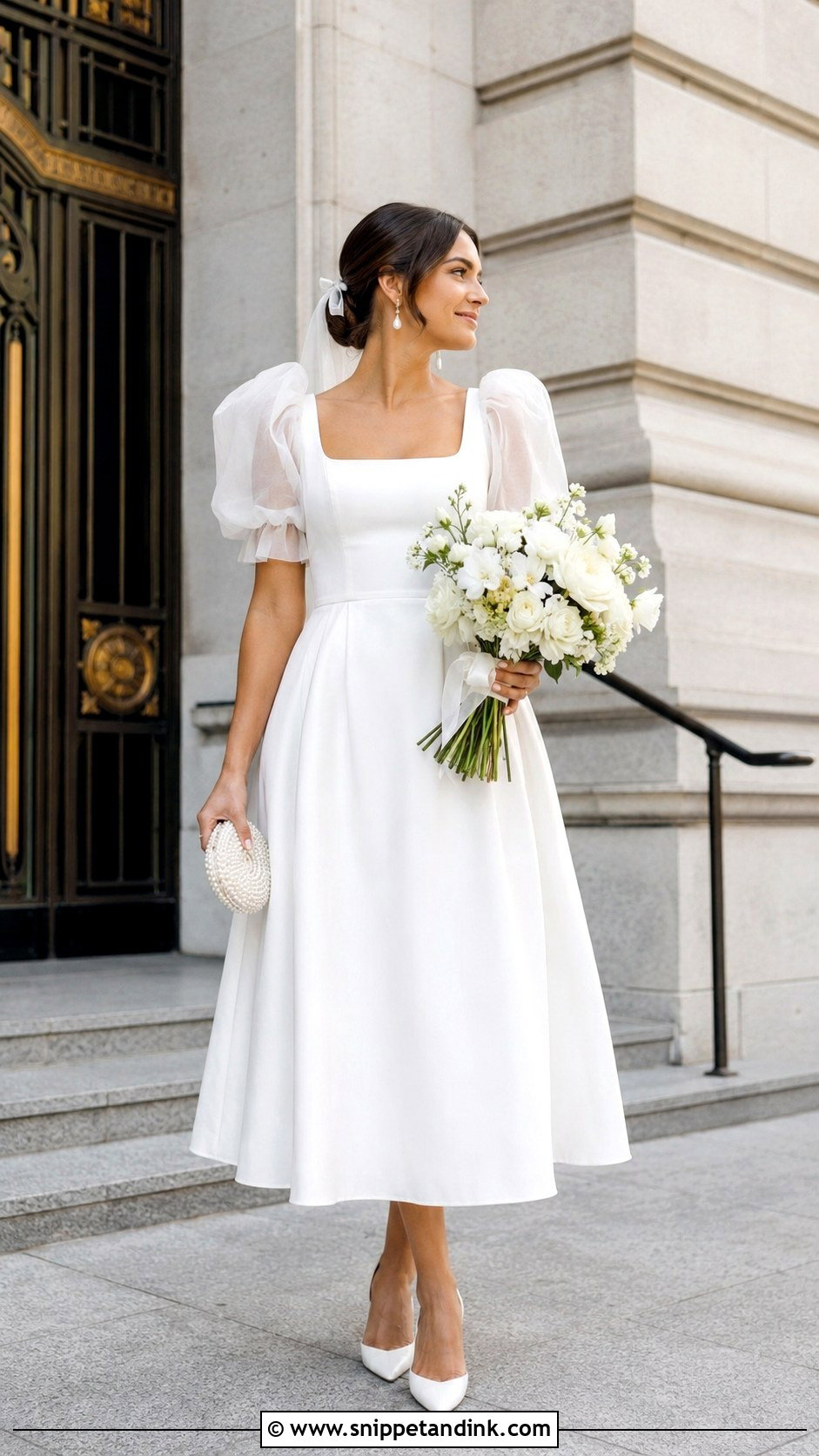
Puff sleeves add personality, and the fabric decides the mood. Organza puffs look airy; crepe or satin ones look more structured and hold their shape better through a day of hugging. A square or sweetheart neckline, a fitted waist and a gently flared midi skirt balance the sleeve volume. Pair it with slim pointed heels, not chunky platforms, which make the whole outfit top-heavy at both ends. A pearl clutch and drop earrings are enough. Hair can go into a low bun or sleek ponytail, and a narrow ribbon veil keeps it light.
13. One Shoulder Draped Court Wedding Gown
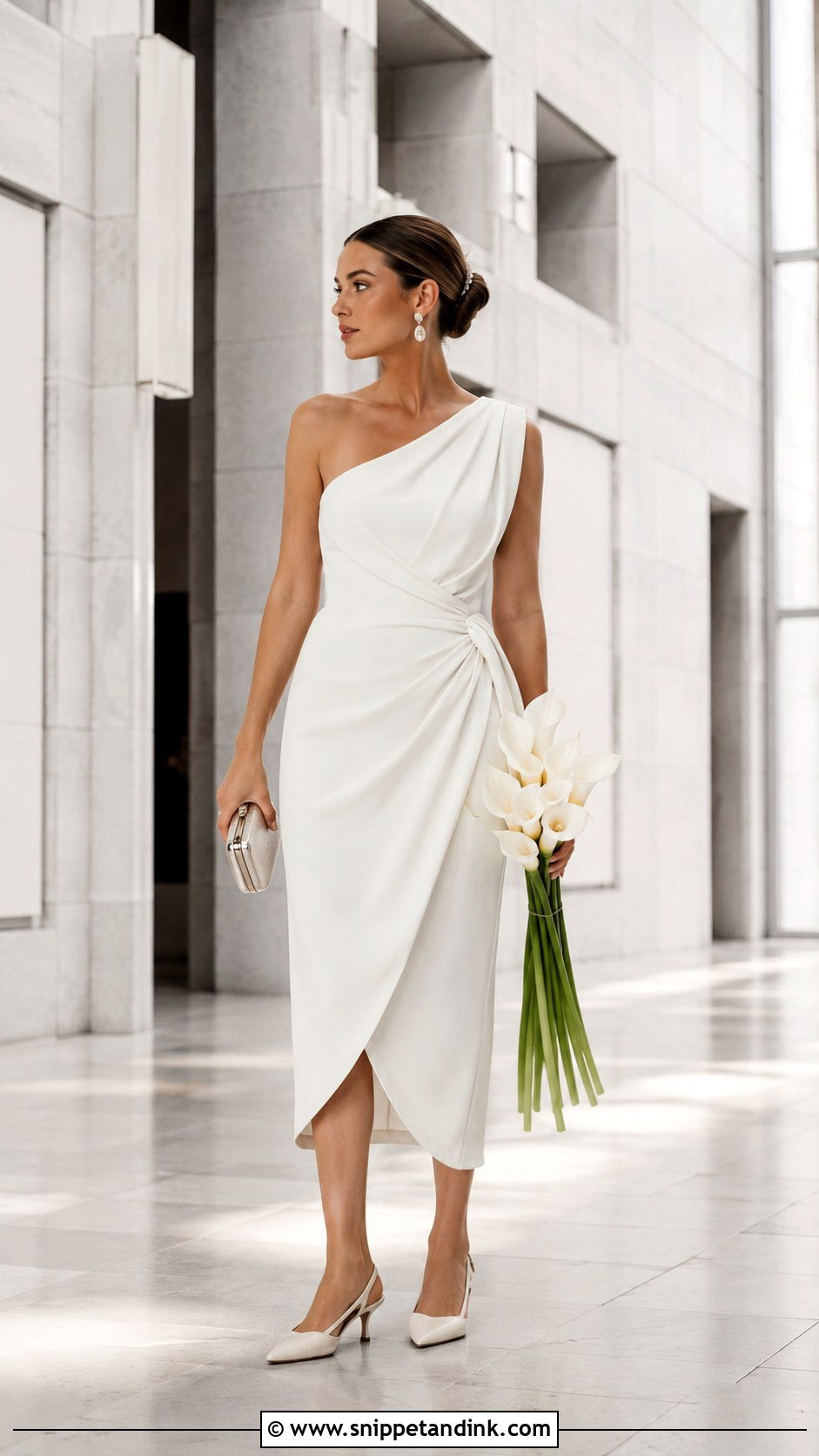
One shoulder and controlled draping make the most fashion-led outfit on this list. Crepe jersey, satin or a light cady fold well without bulk, at midi or ankle length. The construction inside matters as much as the outside. A one-shoulder bodice needs firm internal support so it doesn’t tip toward the bare side as the hours pass. Sweep your hair away from the covered shoulder, wear one statement earring or a deliberately mismatched pair, and consider a sculptural hair pin instead of a veil. Calla lilies or long-stemmed white flowers suit the long lines.
14. Slip Court Wedding Gown With Tailored Coat
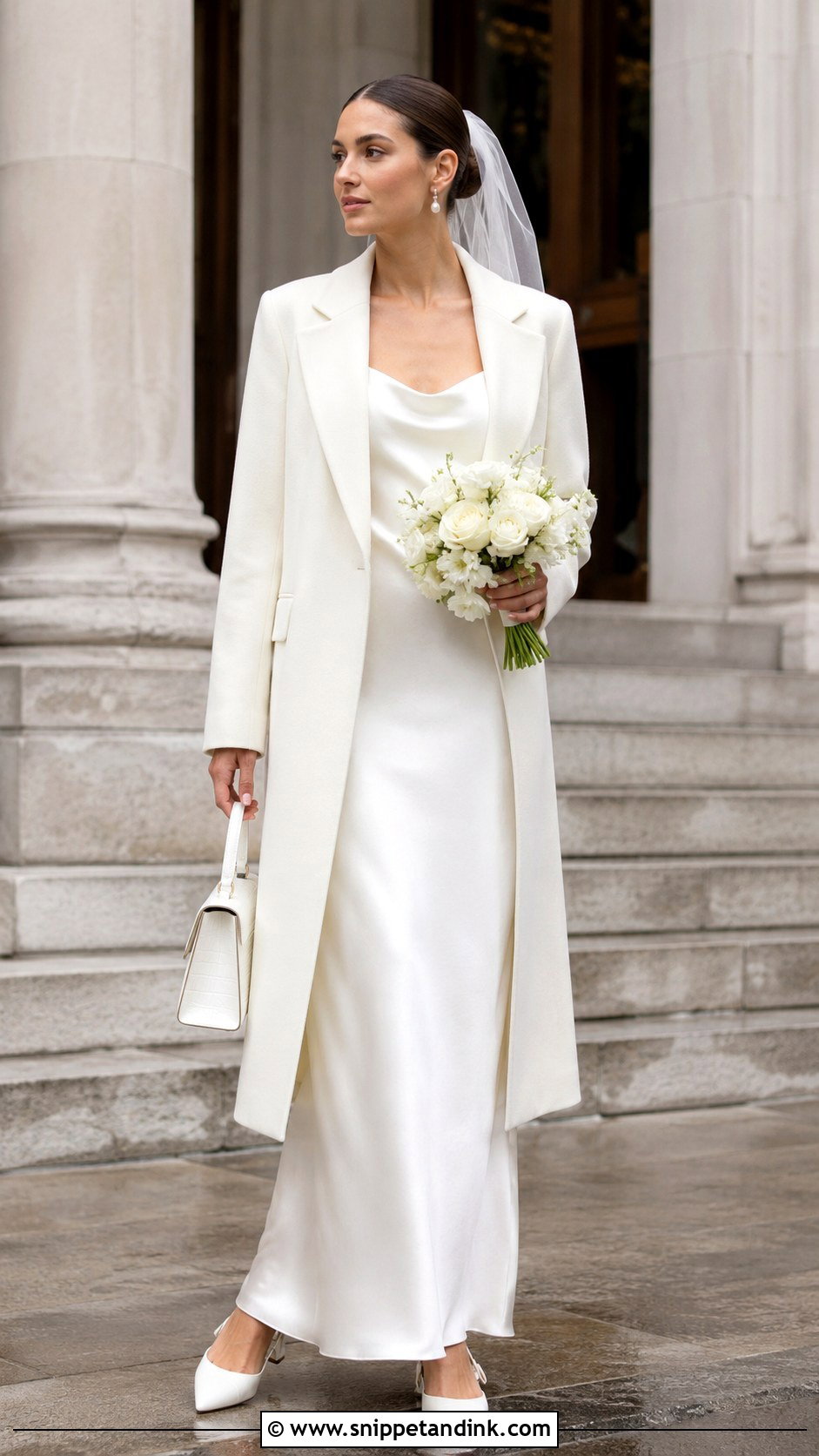
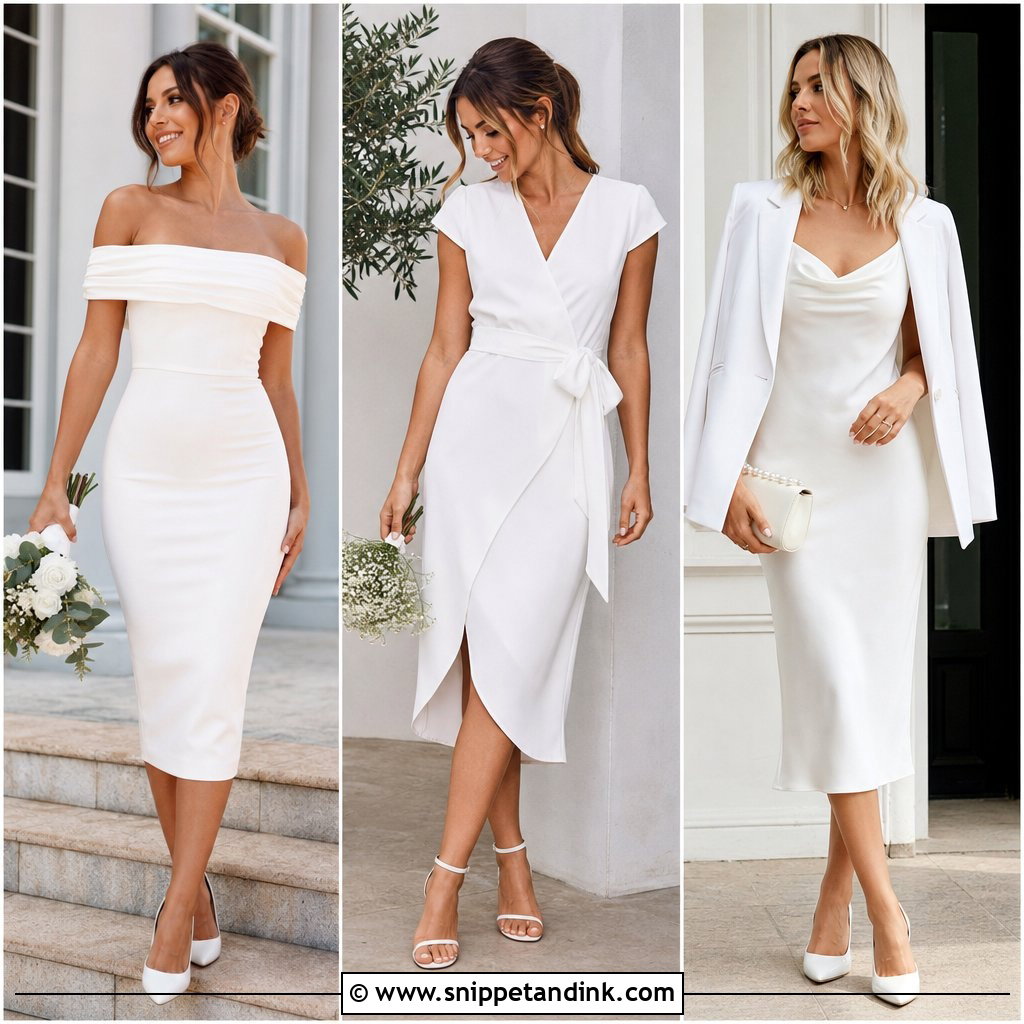
A slip dress under a tailored ivory coat is my favorite courthouse look for fall and winter. The slip should be lined satin or a silk-like fabric with adjustable straps at midi or ankle length; unlined slips cling and show everything in cold air. The coat should end either just below the dress hem or cleanly at the knee, never an inch above it, which creates two competing hemlines. A sleek bun keeps the layering looking deliberate. Wear a short veil for the ceremony and take it out before putting the coat on for outdoor portraits.
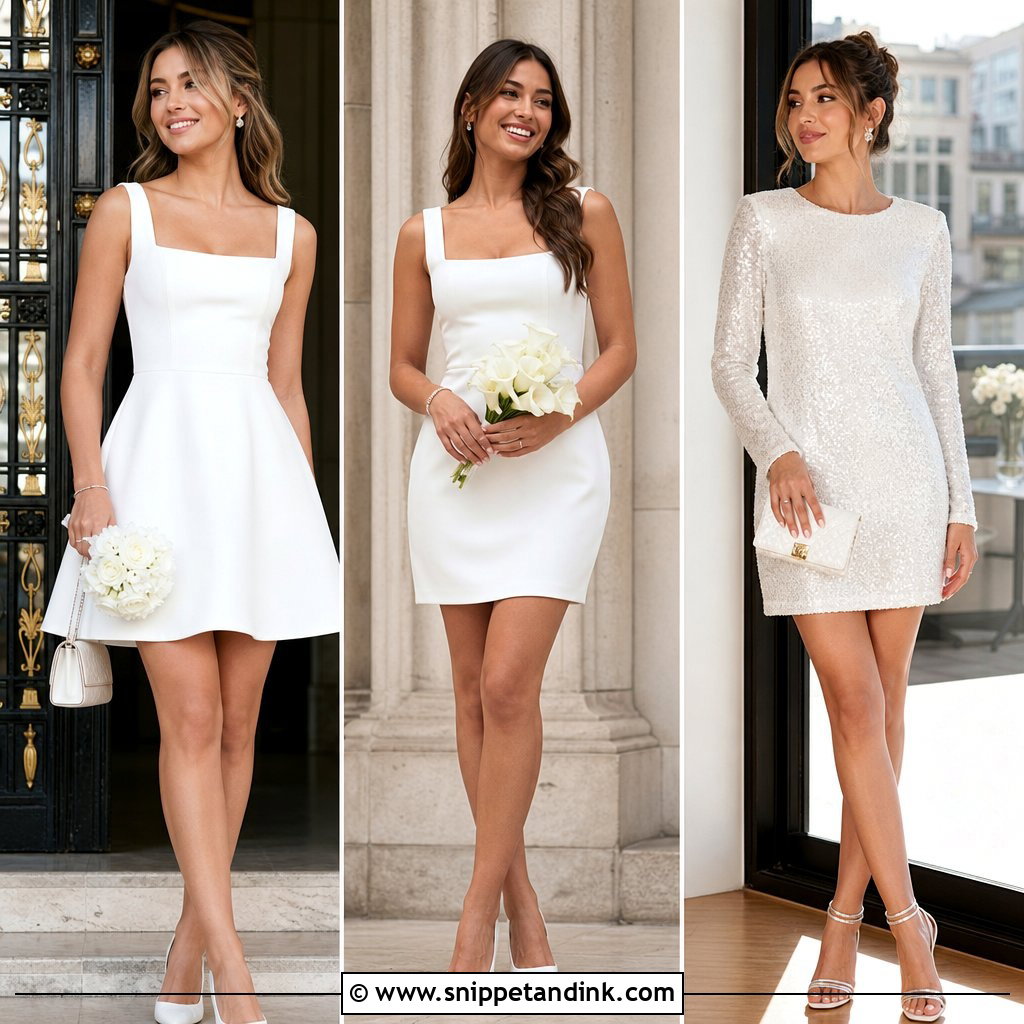
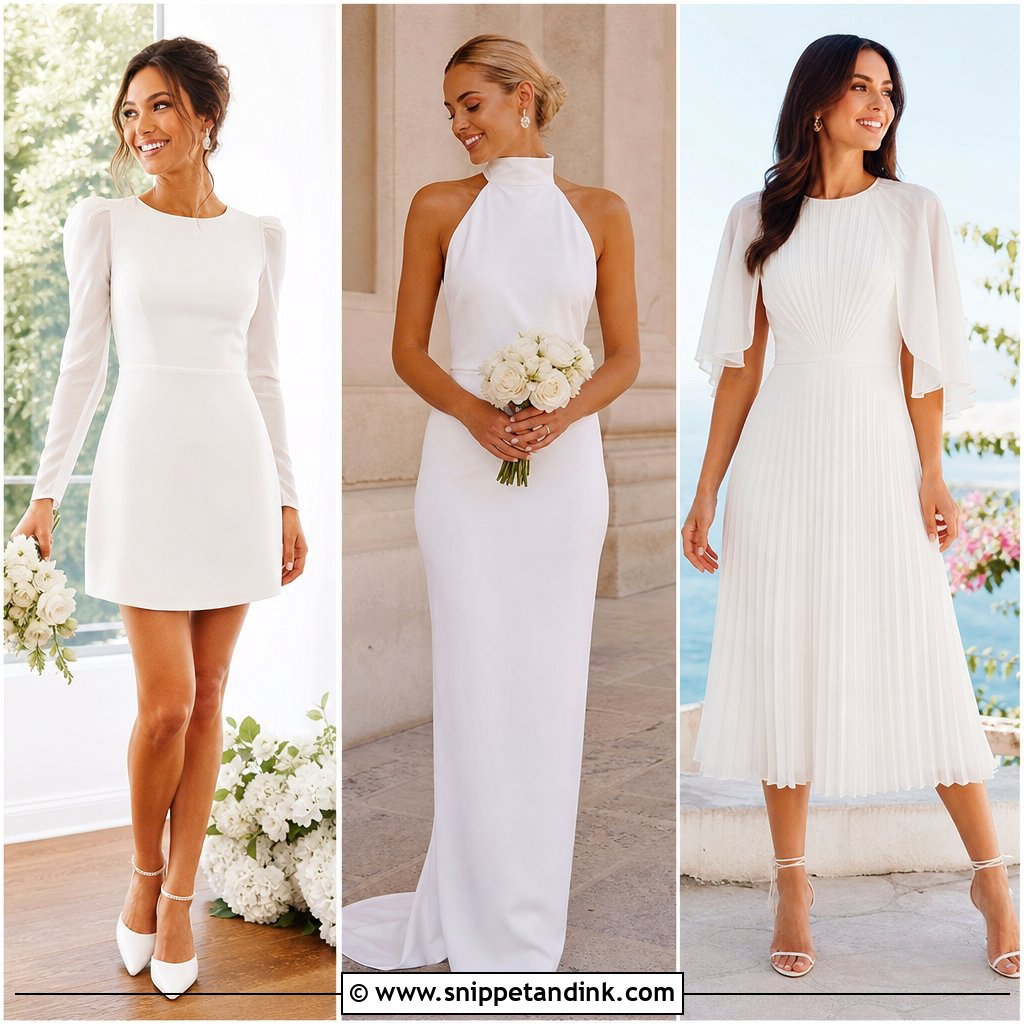
15. Strapless Midi Court Wedding Gown
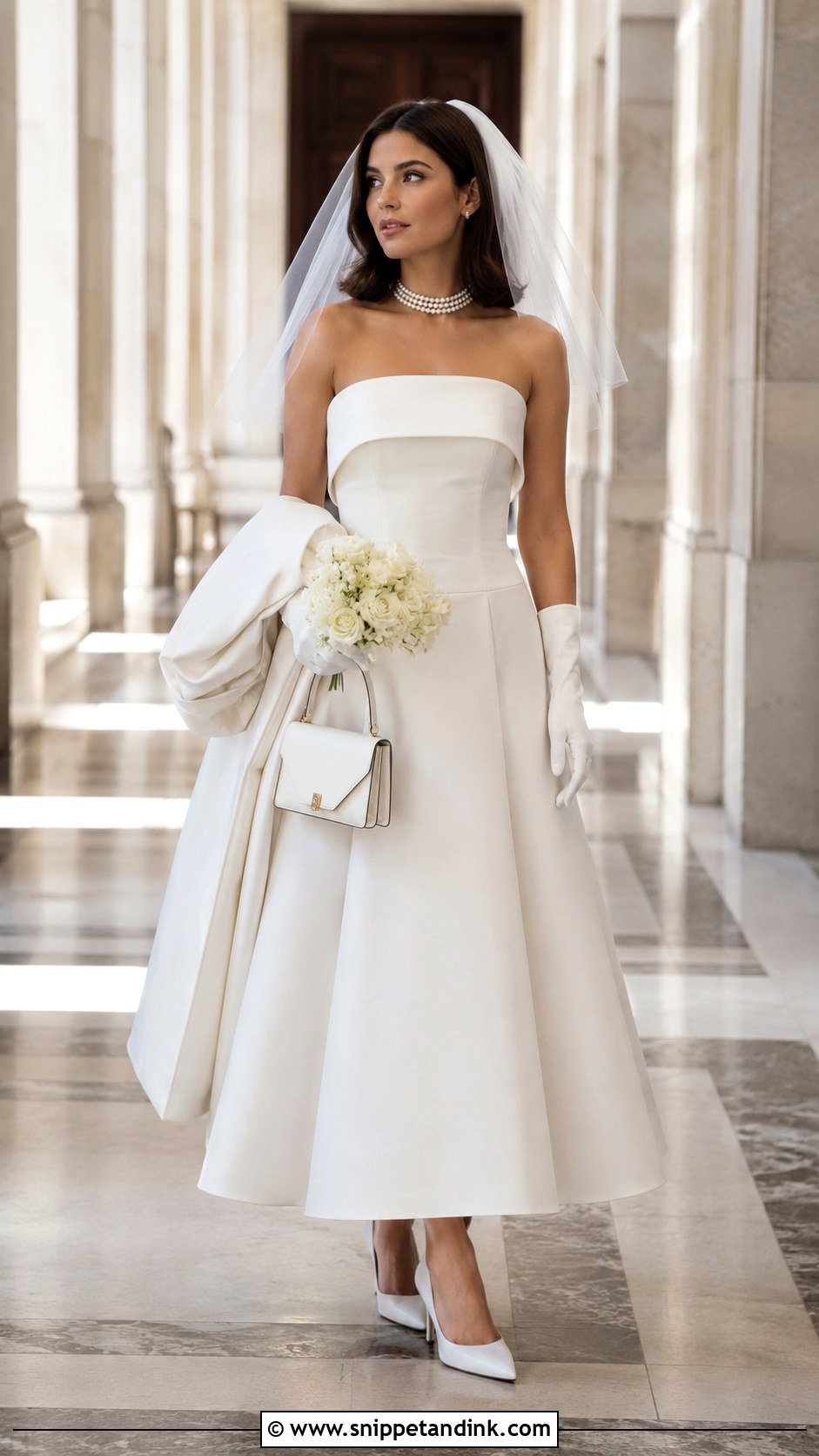
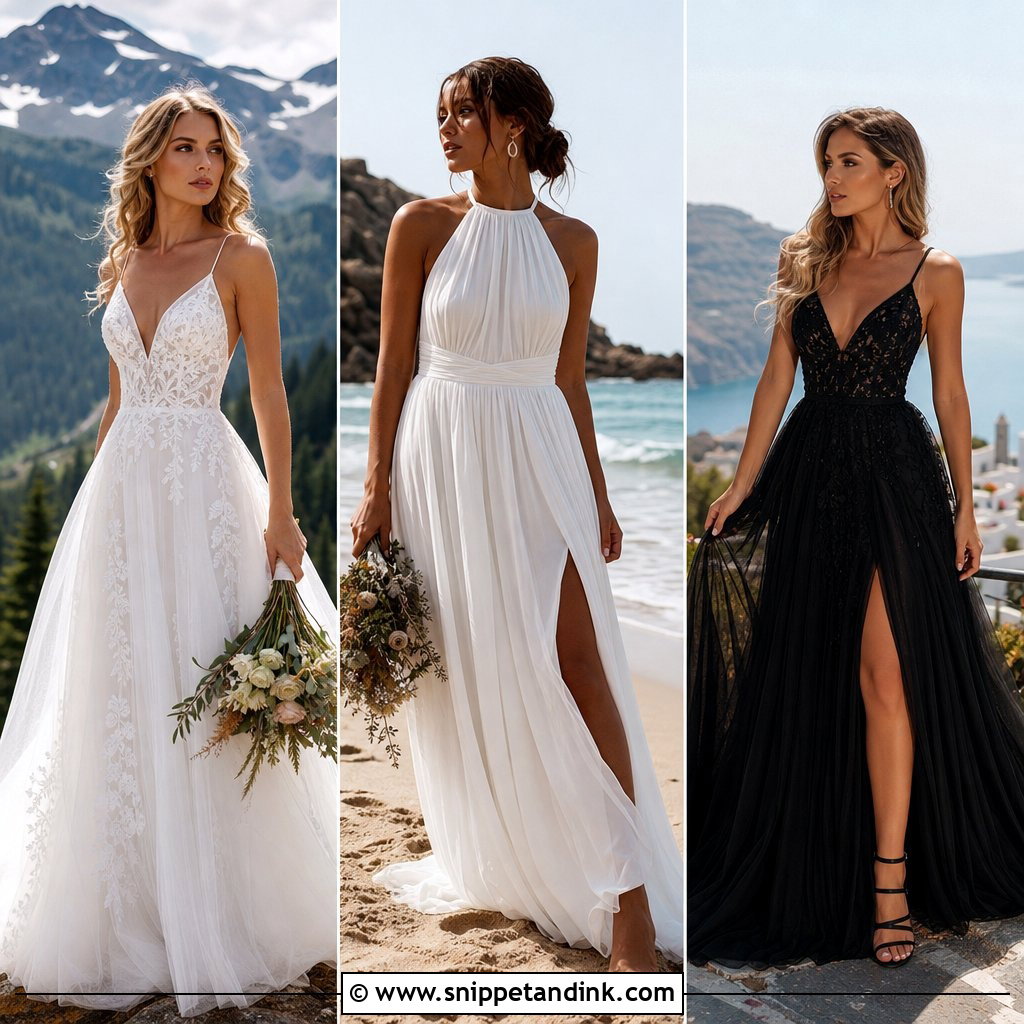
A strapless midi is a blank canvas, which is both its strength and the reason accessories matter so much. The bodice must have real internal support, boning and a grip strip at the top, and a straight, softly curved or folded neckline. An A-line skirt reads romantic, while a fitted pencil silhouette looks sharper. Short gloves, a pearl choker or small pendant and pointed pumps add polish. Bring a cropped jacket or coat in the same white or ivory tone, because two different whites side by side show clearly in photos.
16. High Low Court Wedding Gown
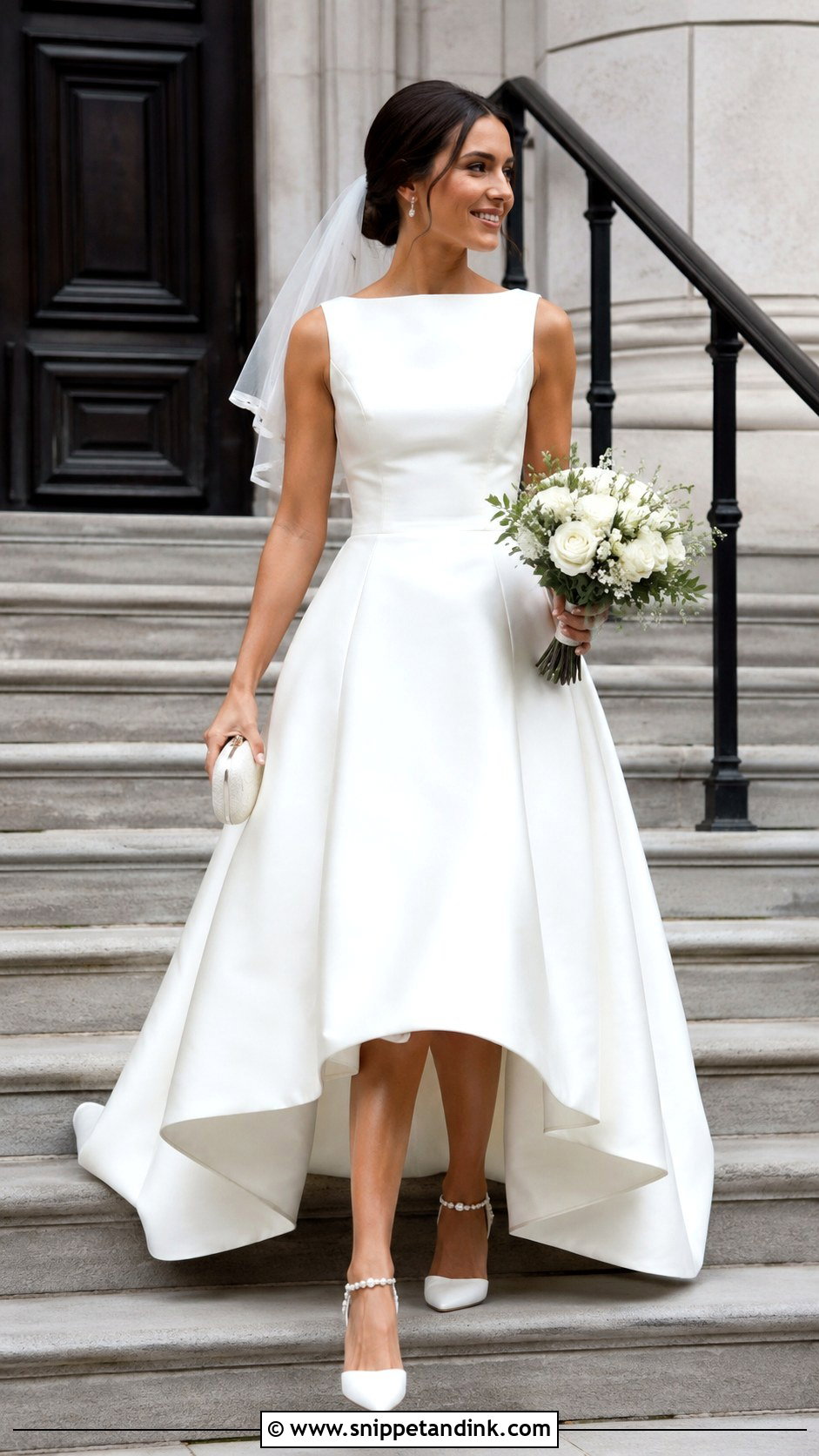
High-low hems solve a real courthouse problem: you can climb stone steps without lifting your skirt, and you still get a little length behind you. Keep the difference between front and back modest rather than adding a long train. Structured satin, Mikado or crepe holds a crisp shape at that angled hem. Since your shoes will show, choose a pair you love, pearl heels or pointed pumps. A short veil keeps the uneven hem clear, and carrying the bouquet at waist height stops it from cutting across the line.
17. Wrap Midi Court Wedding Gown
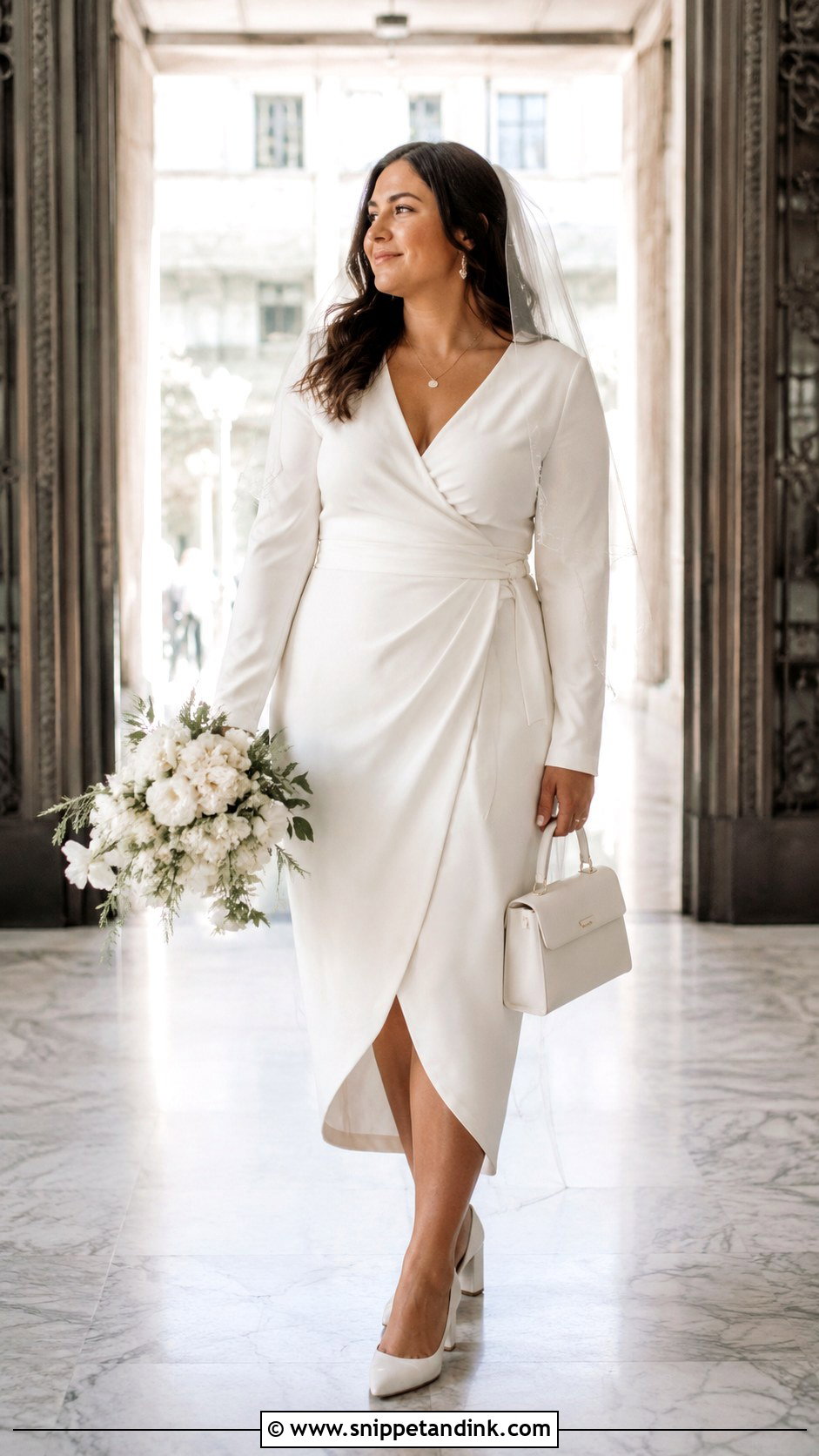
Wrap dresses adjust at the waist, which makes them one of the most forgiving shapes for different bodies and for days when you’re nervous and eating little. Choose a true wrap or a securely stitched faux wrap in matte crepe or satin, and check the overlap when you sit and walk. A true wrap with too little overlap will open at the knee. Pointed block heels and medium drop earrings suit the V-neck; a short pendant is fine if it stays simple. Have the sleeves and hem tailored precisely, because an untailored wrap can drift into looking like everyday wear.
18. Modest Long Sleeve Court Wedding Gown
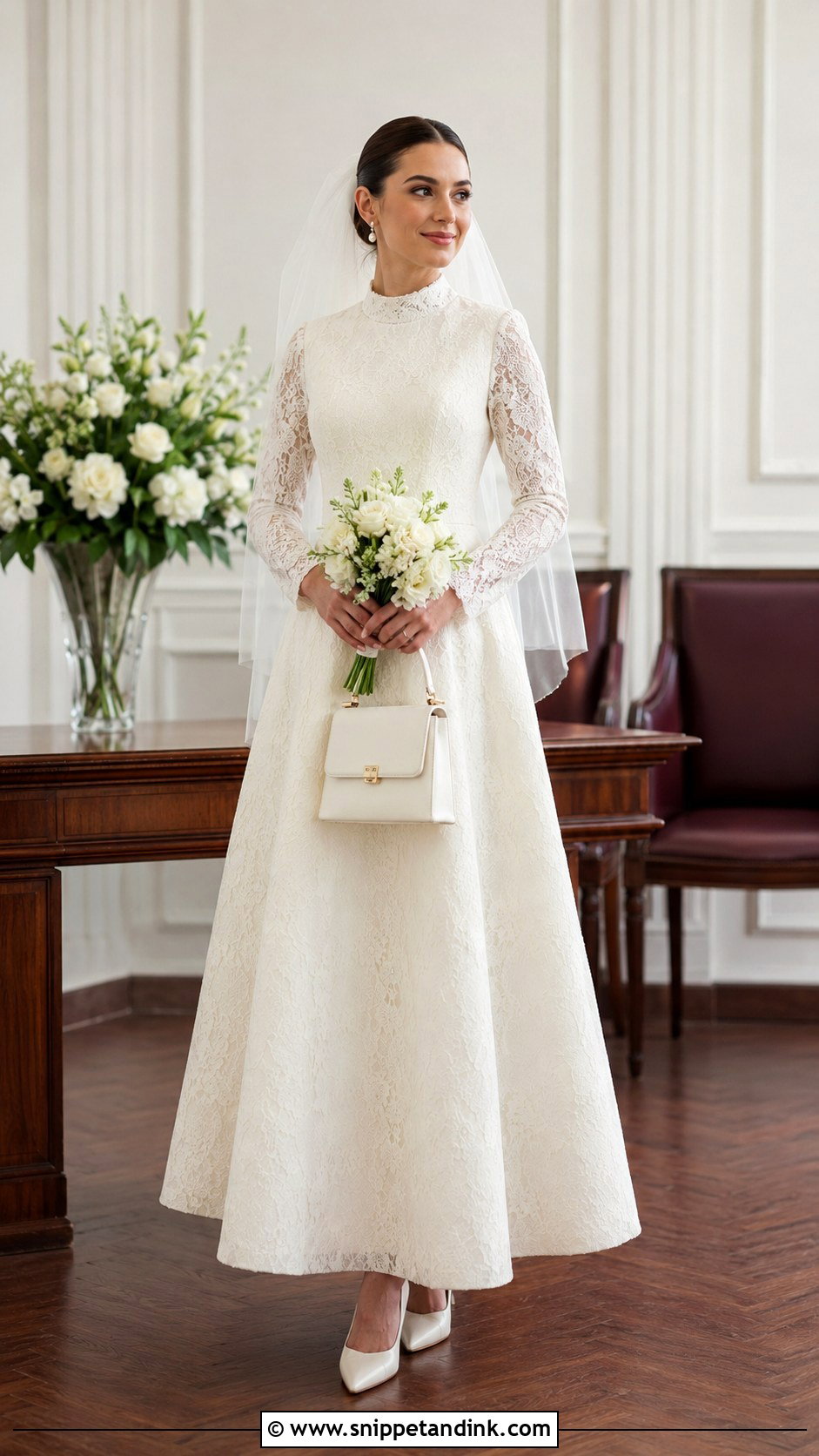
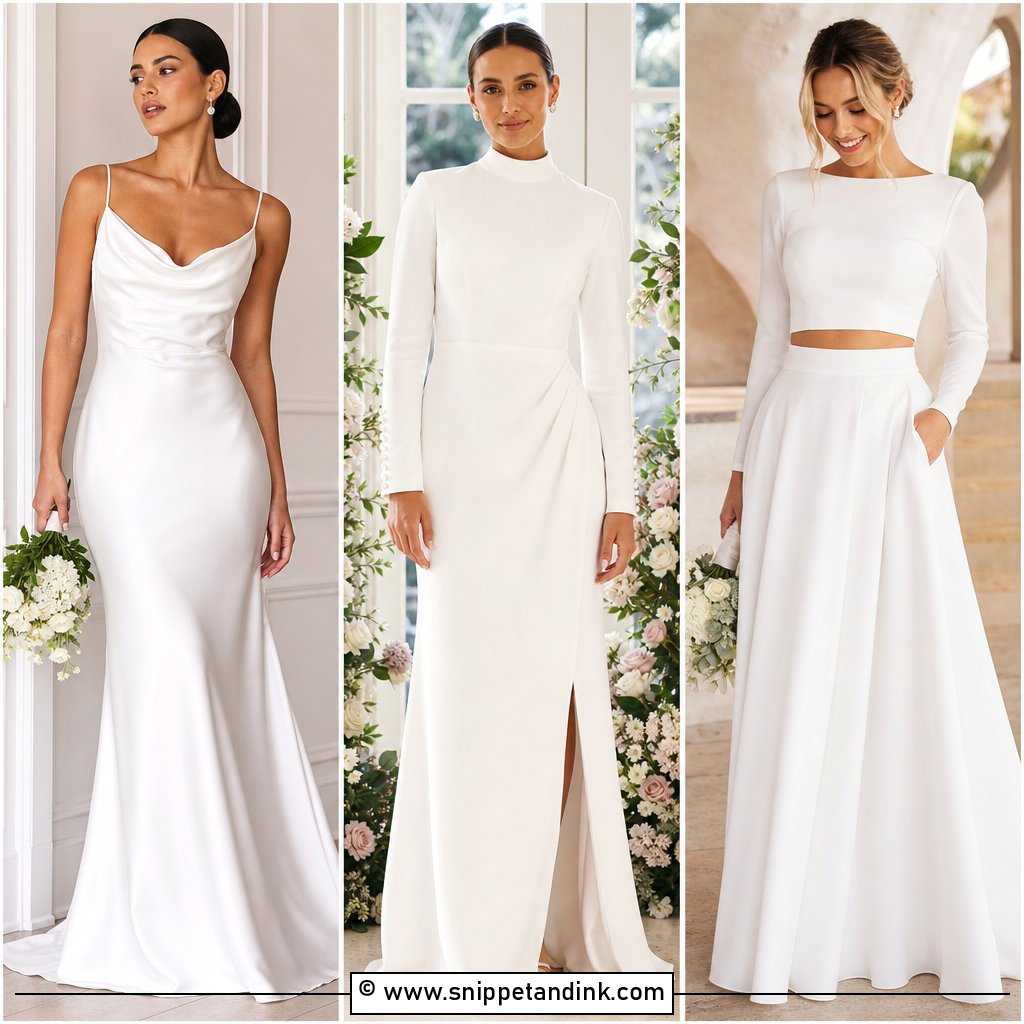
A modest long-sleeve gown can look as current as anything else here when the tailoring is sharp. An ankle-length A-line or column with a high neckline, lined sleeves and a clearly defined waist keeps it from looking heavy. Crepe gives the cleanest line; light lace adds a traditional note. Lined sleeves matter more than people expect, since unlined lace scratches at the inner arm. Closed pumps or low block heels, pearl earrings and a small structured bag finish it. A simple veil can sit under a low bun, or choose a head covering in the same fabric so the whole look reads as one piece.
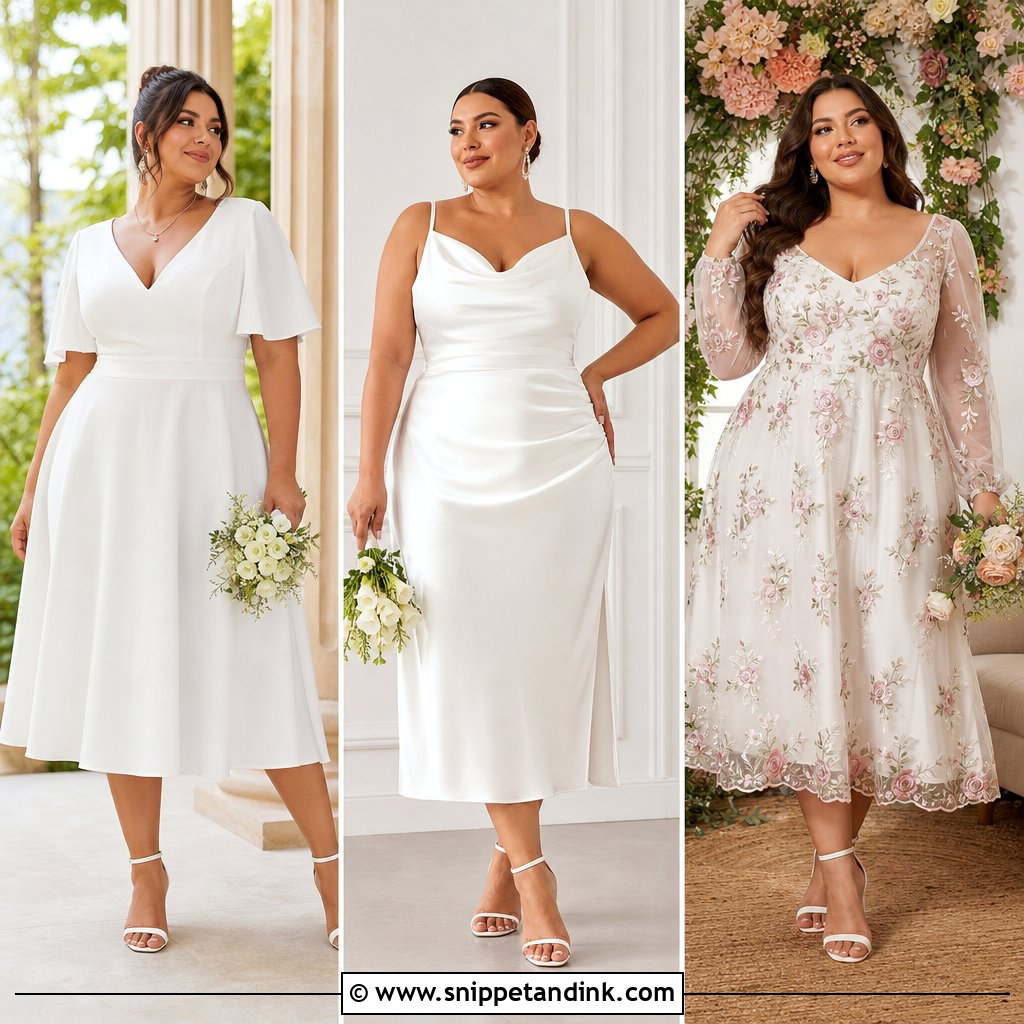
19. Empire Waist Maternity Court Wedding Gown
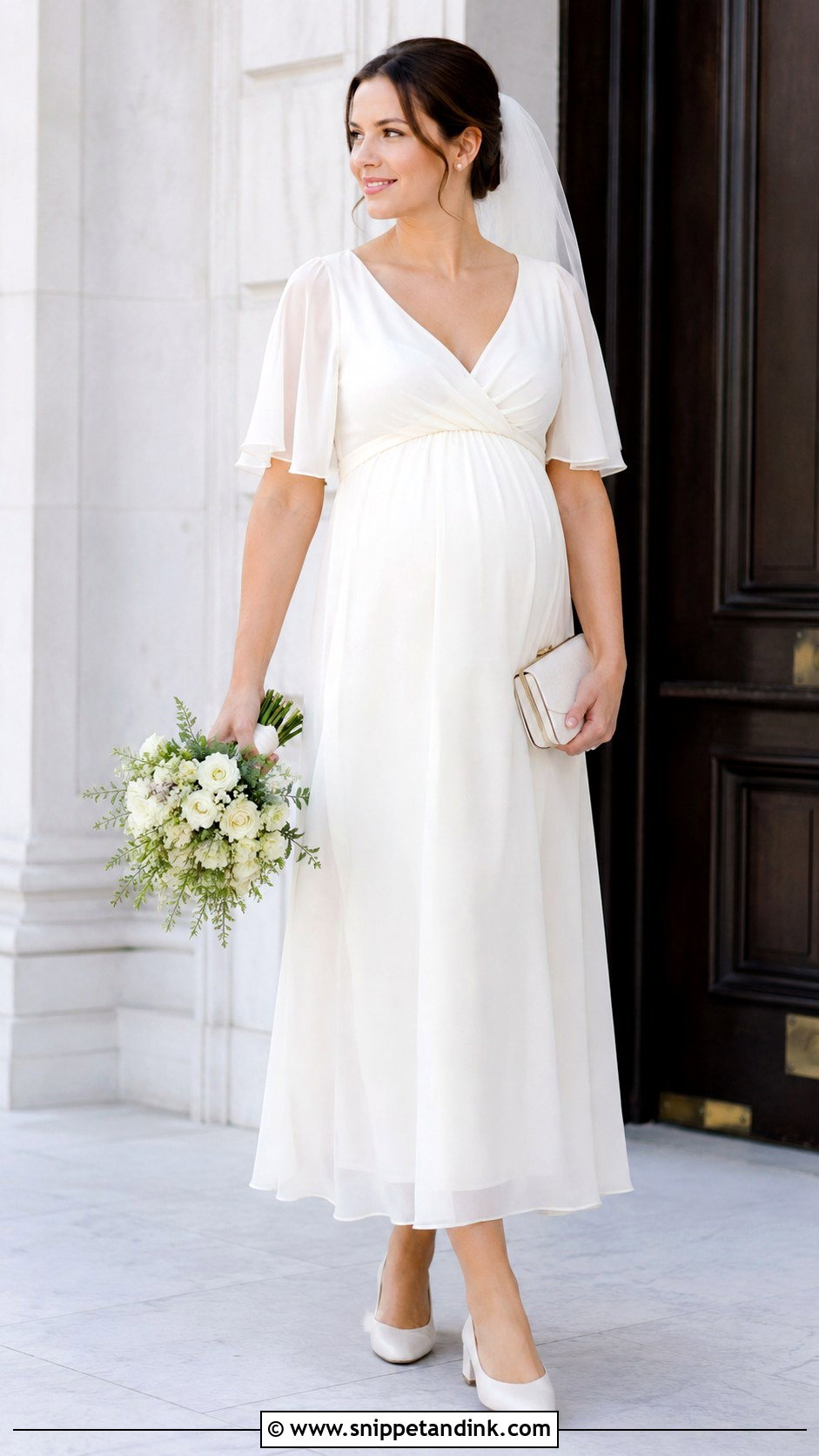
An empire waist gown gives a pregnant bride structure above the bump and room below it. The bodice should sit securely under the bust before the skirt falls to midi or ankle length in stretch crepe, chiffon or lined jersey. Bodies change quickly in pregnancy, so I book the final alteration as close to the date as the seamstress allows, usually within a week or two. Choose shoes for stability over height: low block heels or embellished flats. Hold the bouquet slightly to one side, which looks more natural in photos than holding it directly over the bump.
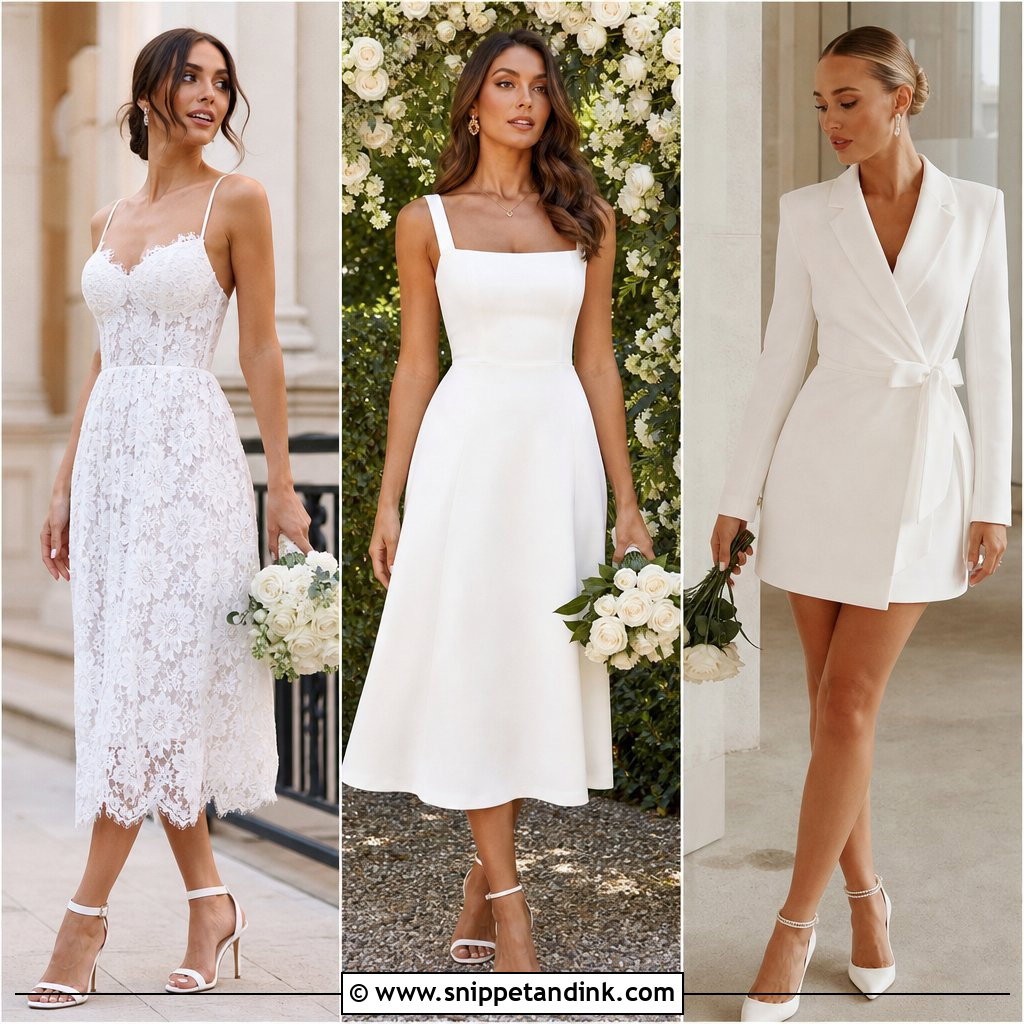
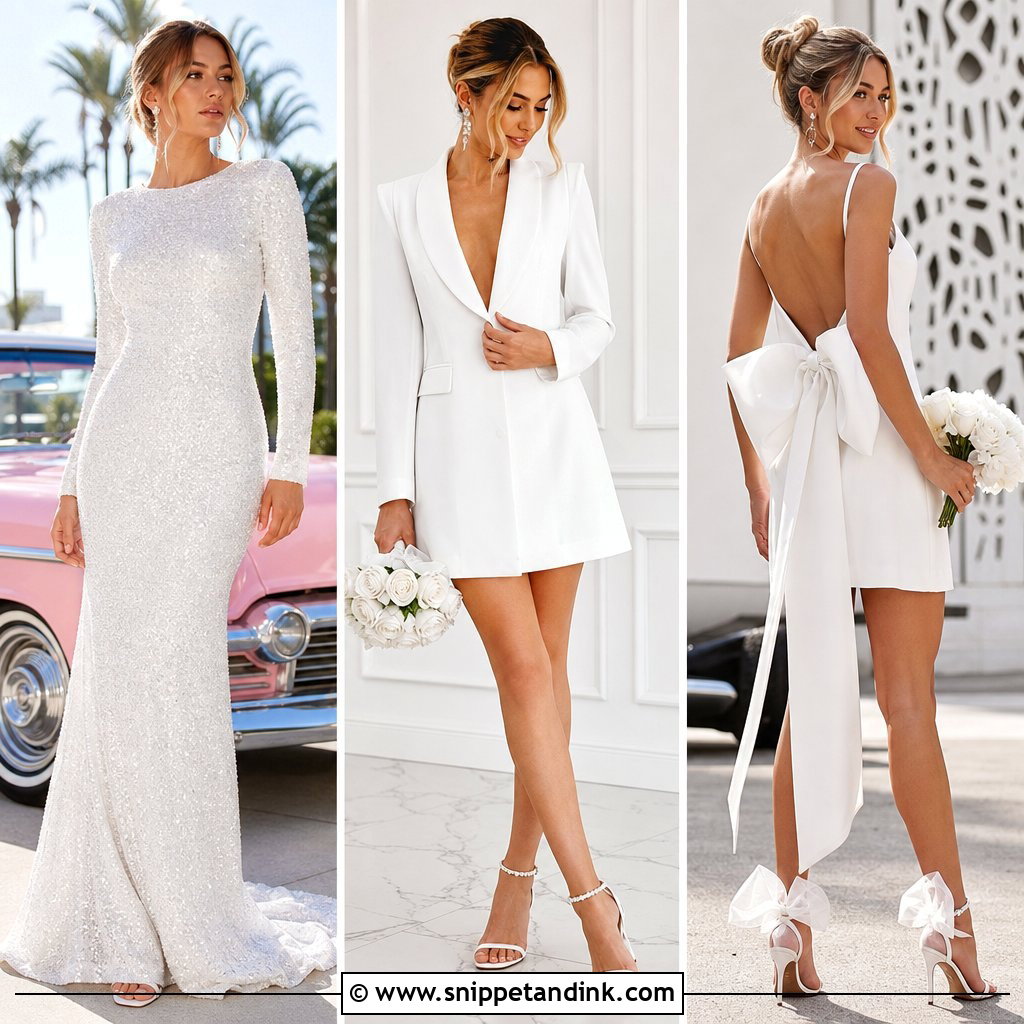
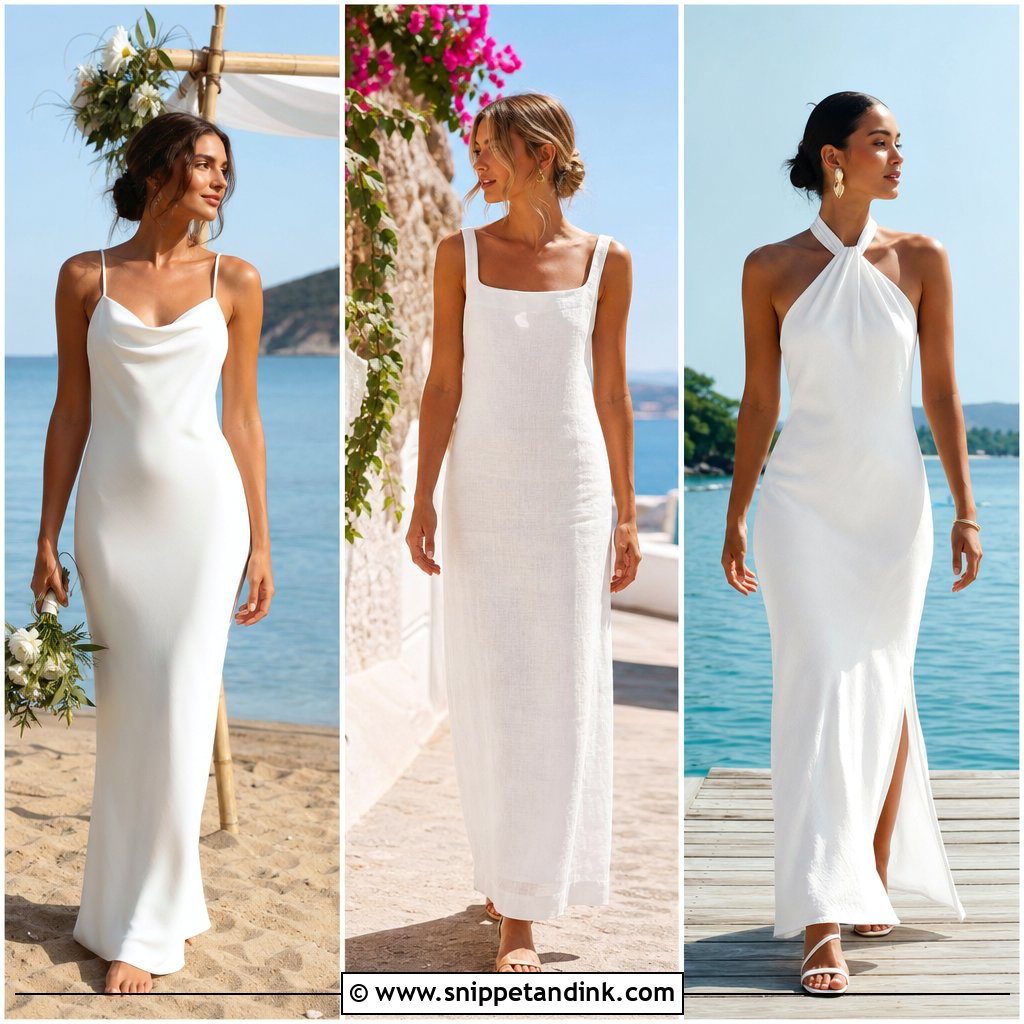
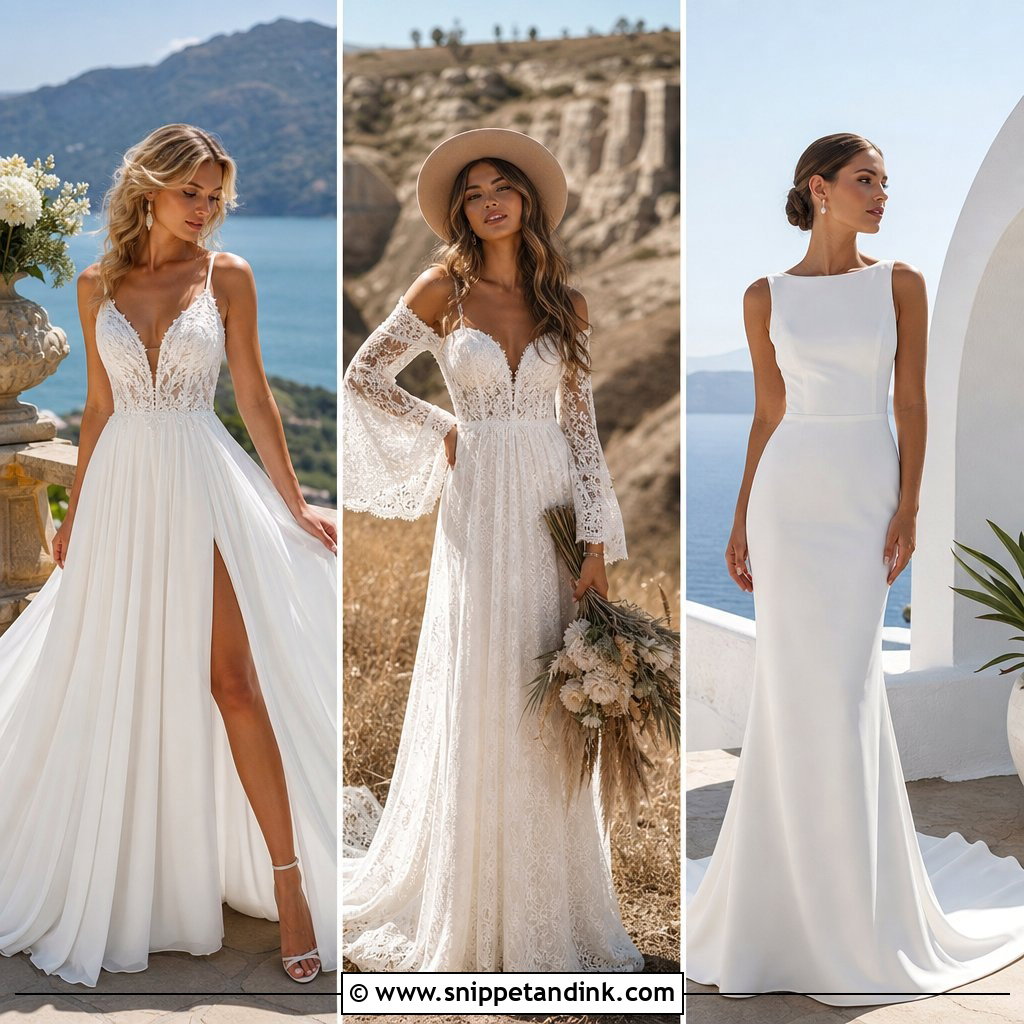

20. Jacket Dress Court Wedding Gown
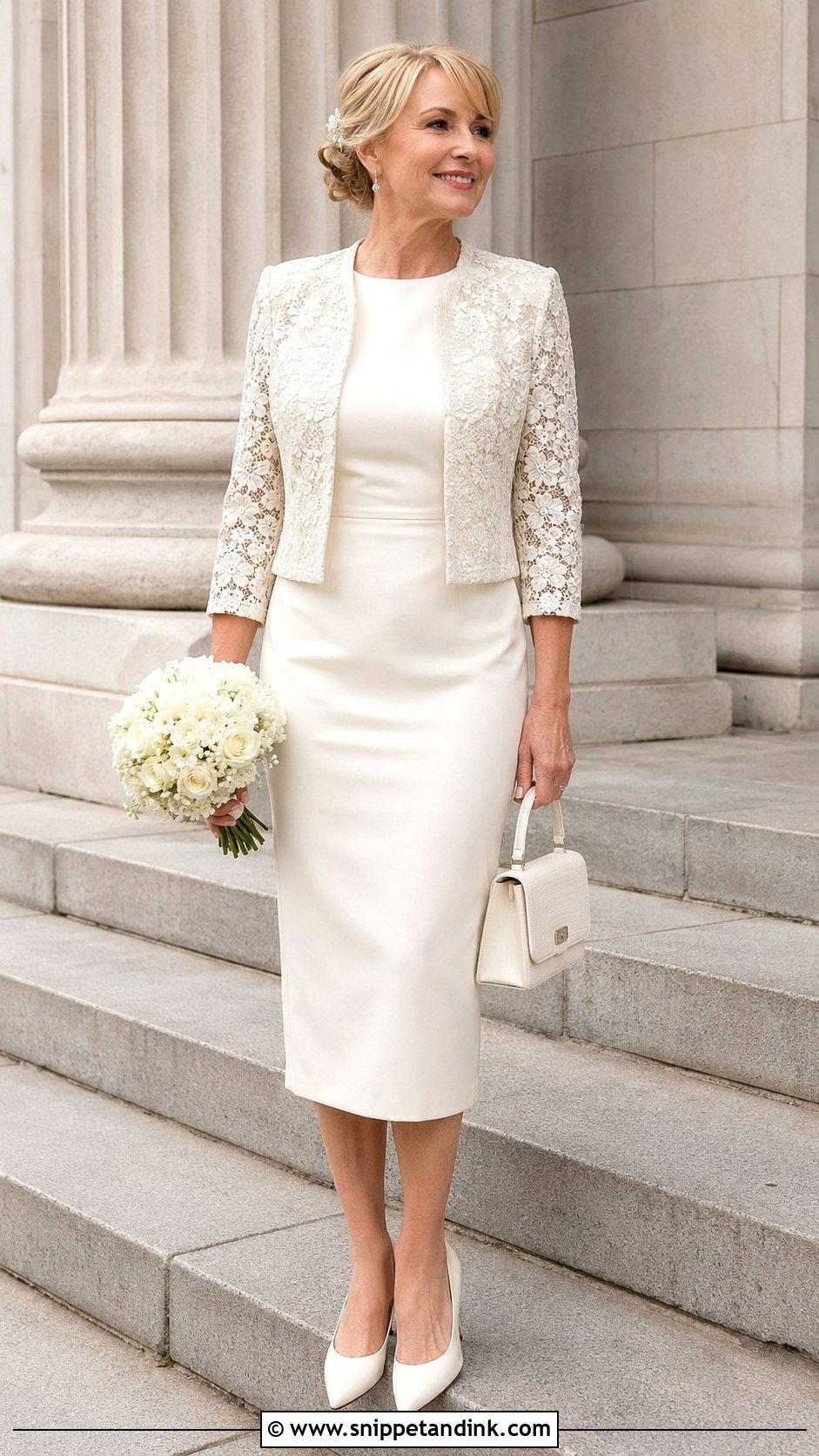
A matching jacket and sheath has a tidy, grown-up feel that suits second weddings and anyone who wants arm coverage. Start with a knee-length or midi sheath in crepe, lace or structured satin, then a cropped jacket that ends at the waist without adding bulk. Bracelet-length sleeves leave room for a watch or a pearl cuff. Matching fabrics look formal, while a lightly textured jacket over a plain sheath adds depth. Pointed pumps, pearl earrings and an ivory bag finish it, and a small fascinator or comb makes it bridal. A compact bouquet with a little color suits the mood.
Security Lines, Waiting Rooms and Office Light
A courthouse is a working government building, and the outfit has to cope with that. Many have airport-style screening at the door, so carry a small bag that empties quickly and expect to walk through in your shoes. You’ll often wait in a corridor with other couples, sometimes longer than the ceremony itself, so a dress you can sit in without crushing matters more here than at a venue wedding.
Indoor offices are usually lit by cool overhead lighting, which can make bright white look slightly blue and ivory look warmer than in the shop. If you’re torn between shades, take a photo of both in an office or a hallway with similar lights. Outdoors on the steps, soft cloudy light is kinder to satin than direct midday sun, which bounces off the fabric.
What goes in that small bag
- The identification and paperwork your registry office asked for, checked the night before.
- The rings, held by one named person.
- Lipstick, blotting papers and two safety pins.
- Tissues, because short ceremonies still make people cry.
If a restaurant lunch or a party follows, plan the change now rather than on the day. Many courthouse brides swap the veil for a hair clip and add a jacket, so the same dress takes them from the registry desk to the dinner table without a full outfit change.
Dressed for Ten Minutes, Photographed for Years
The best courthouse bridal outfit lets you walk, sign and hug without fiddling with anything. Short, midi, tea-length and full-length gowns can all work; what matters is the building, the weather, how far you’ll walk and whether lunch or a party follows. Prioritize a secure neckline, a breathable lining and a hem you can manage on steps, and book alterations even for a simple dress. Keep shoes and accessories in support of the gown. A plain dress fitted well will look better in those photos than an elaborate one that needs constant adjusting.
You'll Like These Ideas:



Leave a Reply