
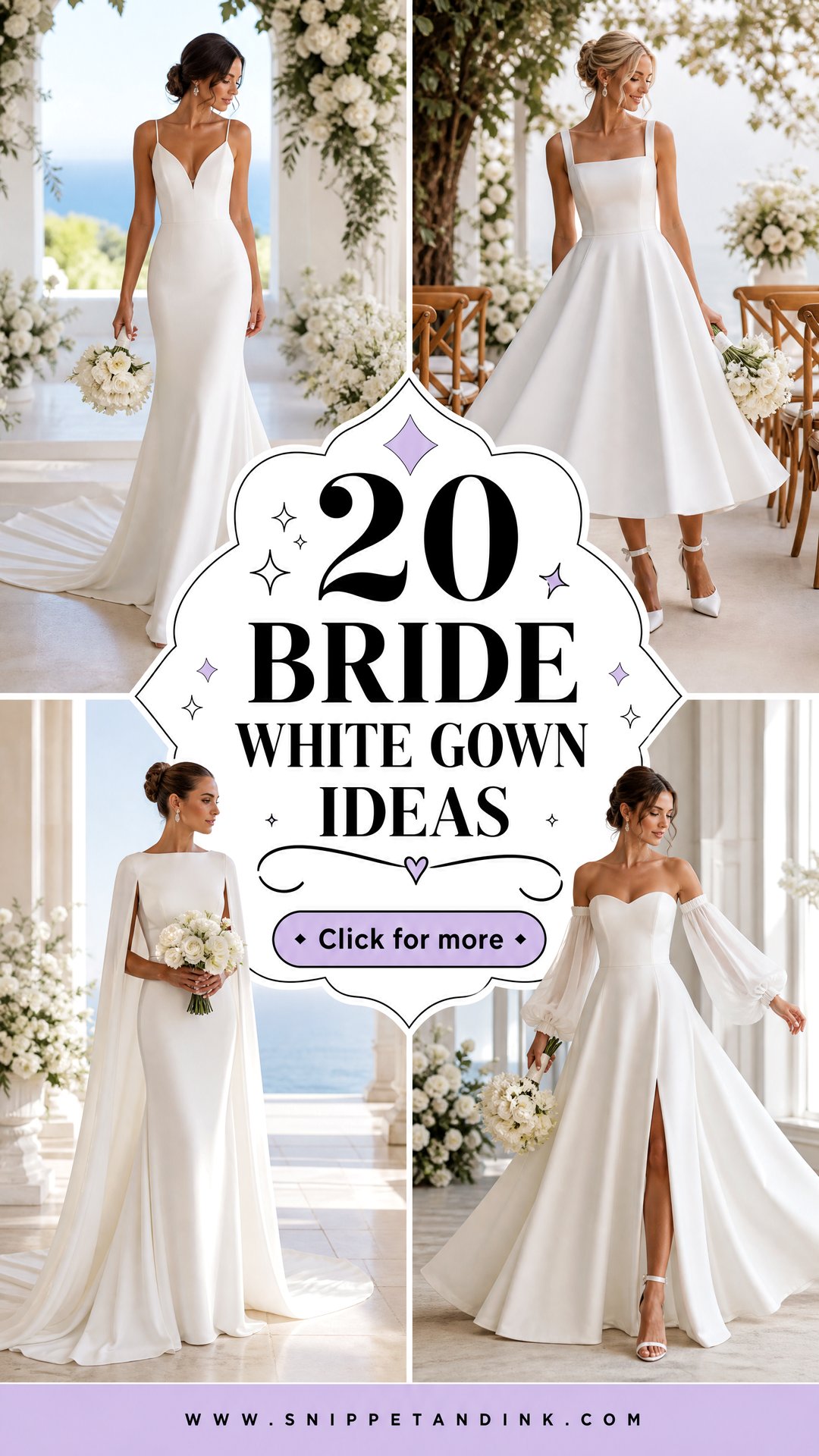
Brides often fall for a neckline or a fabric in a photo, then find the gown looks quite different once it’s on with shoes, a veil and hair. That’s why I always style the whole look at an appointment, not just the dress. The twenty white gowns below each come with the accessories, shoes, hair and outer layers I’d pair them with, and a note on who each shape suits or doesn’t. You’ll find ball gowns and crepe columns, lace sleeves and halters, plus a few with removable parts. Keep in mind that bridal white is a range rather than one colour, and the shade that flatters you matters as much as the silhouette.
Which White Suits You? Testing Shades in Daylight
Bridal salons tend to stock gowns in several whites, and the names vary from designer to designer. Roughly, you’ll see bright or optic white, a softer natural or diamond white, ivory with a hint of yellow, and warmer shades like champagne or nude under white lace. Under shop lighting they can look almost identical. Outdoors they don’t.
When I help a bride choose, I ask for a fabric swatch in each shade and take her to a window. Hold each one under your chin without makeup. If your skin looks grey or sallow, the shade is wrong. As a loose rule, very fair and cool skin can look washed out in bright white and warms up in soft white; olive and deeper skin tones often carry bright white well; ivory flatters many warm undertones. It’s a starting point, not a law.
Think about the venue too. Bright white can glare in strong sun and lose its detail in photos, while ivory tends to hold texture outdoors. In a dim church or ballroom, the difference matters less. Whatever you pick, match your veil to the gown with a swatch, since a veil one shade whiter will make the dress look discoloured.
1. White Satin A-Line Bridal Gown
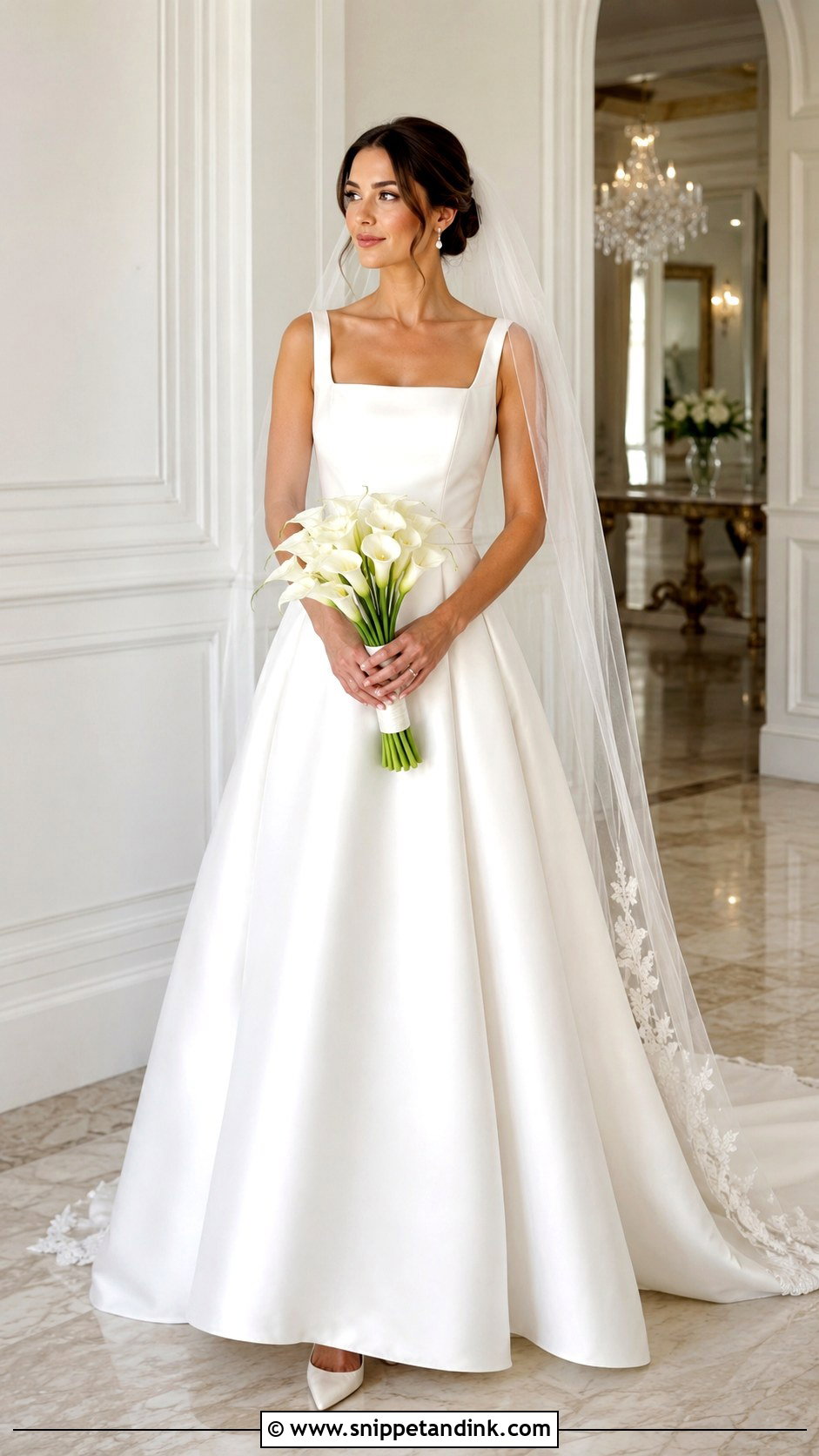
Satin A-lines are where I’d send a bride who isn’t sure what she wants, because almost everyone can wear one. The skirt skims the waist and widens gradually, so it moves well and hides nothing awkwardly. A structured bodice with a square or softly scooped neck frames the face. Satin is heavier than it looks and shows creases from sitting in the car, so steam it at the venue, not at home. Pointed ivory pumps, pearl drops and a plain chapel veil keep it clean, with a compact bouquet of white roses or calla lilies. A low bun keeps the focus on the fabric. Add a cropped satin jacket if it’s cold.
2. White Strapless Ball Gown
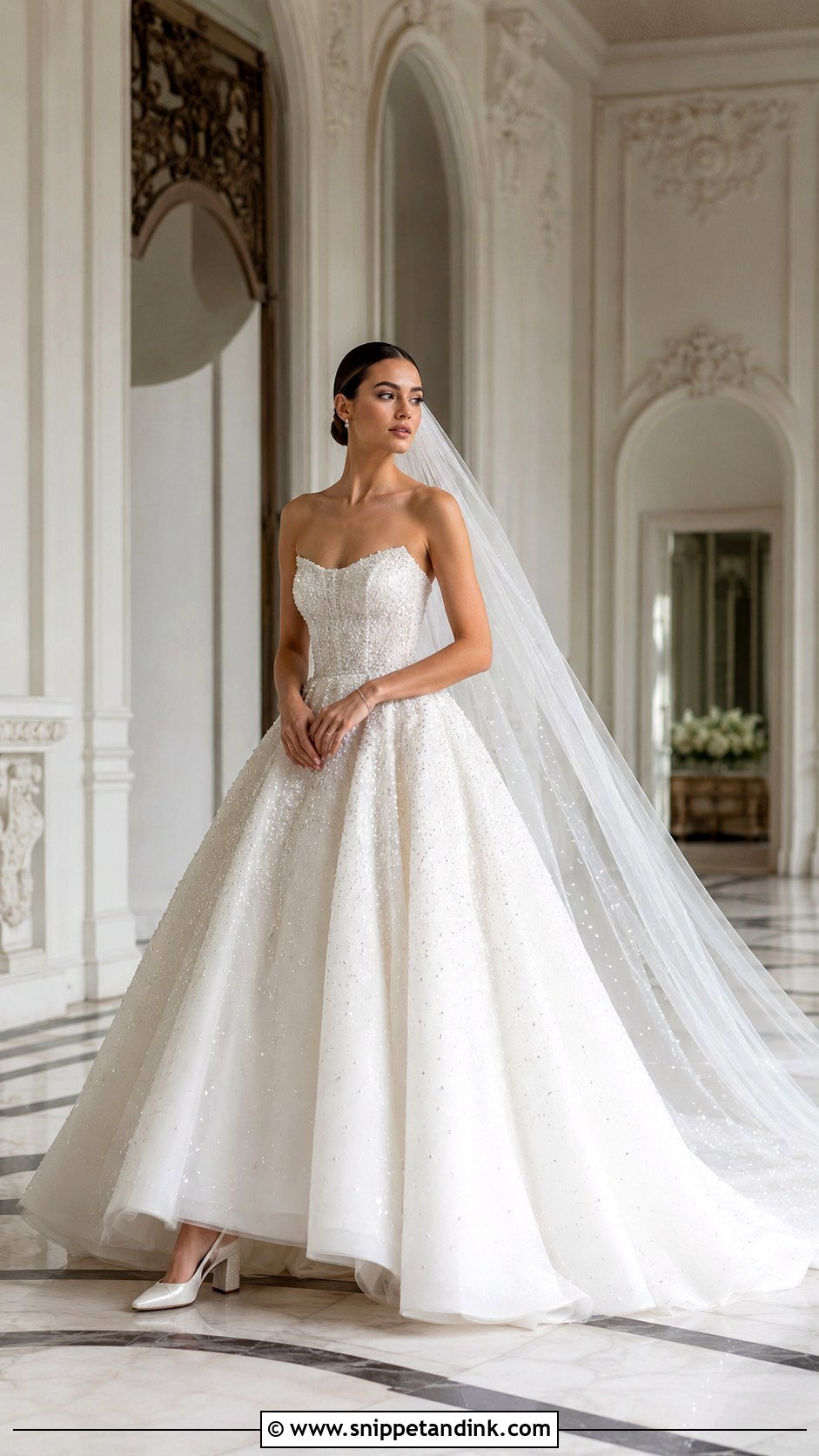
Everyone pictures the strapless ball gown, and few realise how much the inside does. A secure strapless bodice is held up by boning and a waist stay, not by the bust, so the fit at the waist is what matters. If you can slide two fingers in at the top edge, it’ll slip by the first dance. A soft scoop or a gentle cat-eye neckline modernises the line. Crystal studs, a fine bracelet and block heels hidden under the skirt let you stand for hours. A cathedral veil suits a big room; a fingertip veil keeps it lighter. Put the hair up so the shoulders show.
3. White Lace Long-Sleeve Gown
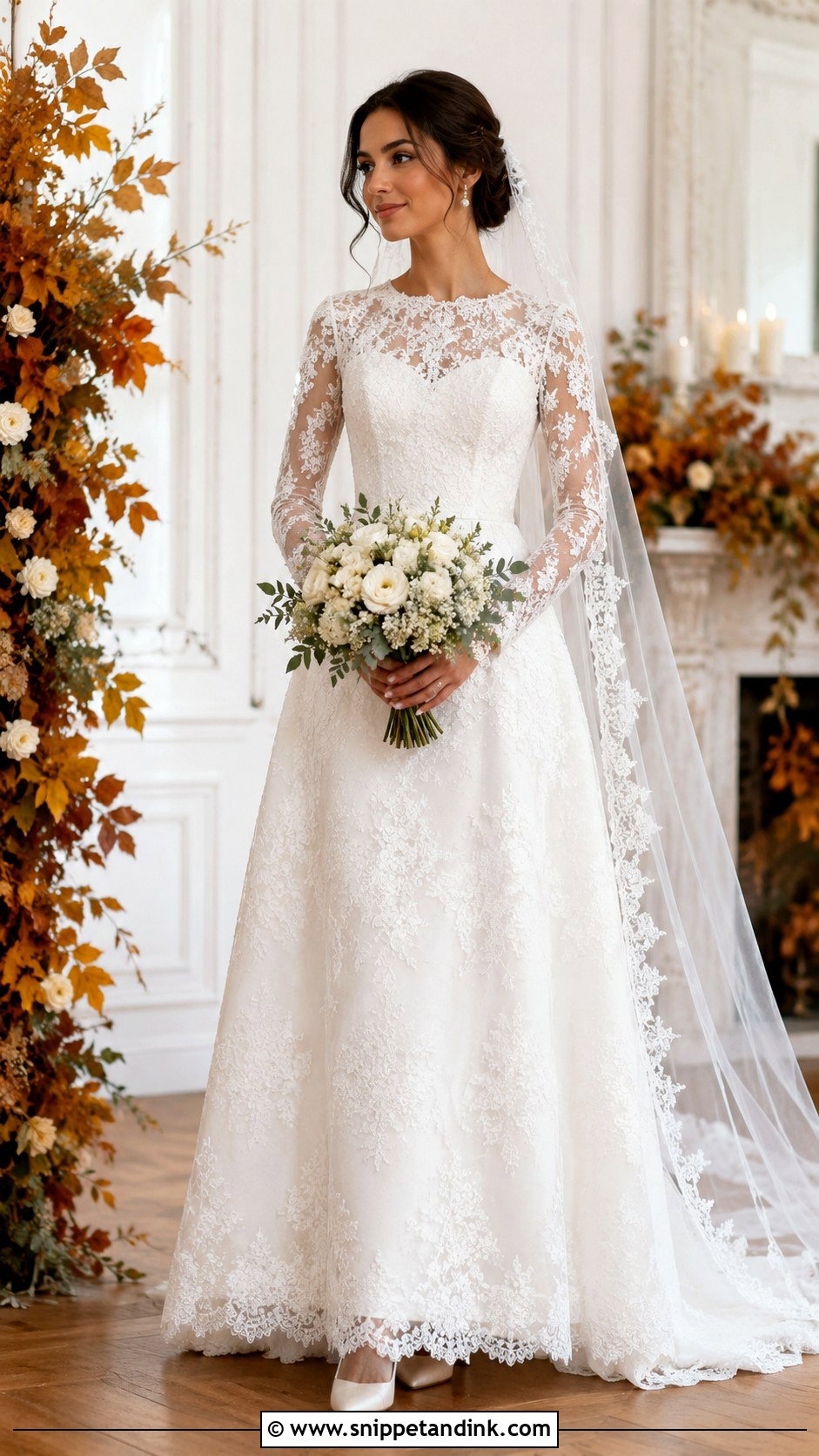
Lace sleeves need lightness elsewhere, or the dress starts to feel heavy. I look for a softly fitted bodice, a clear waist and a flowing A-line skirt, with sheer sleeves so the lace pattern shows instead of a solid block of white. Check the cuffs: tight lace at the wrist restricts movement when you hold a bouquet or sign the register, so lift your arms at the fitting. Pearl earrings, closed-toe ivory heels and a lace-edged veil that matches the dress lace keep it cohesive, and repeating one motif, pearls or a floral shape, ties the look together. It suits autumn, winter and air-conditioned rooms.
4. White Off-the-Shoulder Bridal Gown
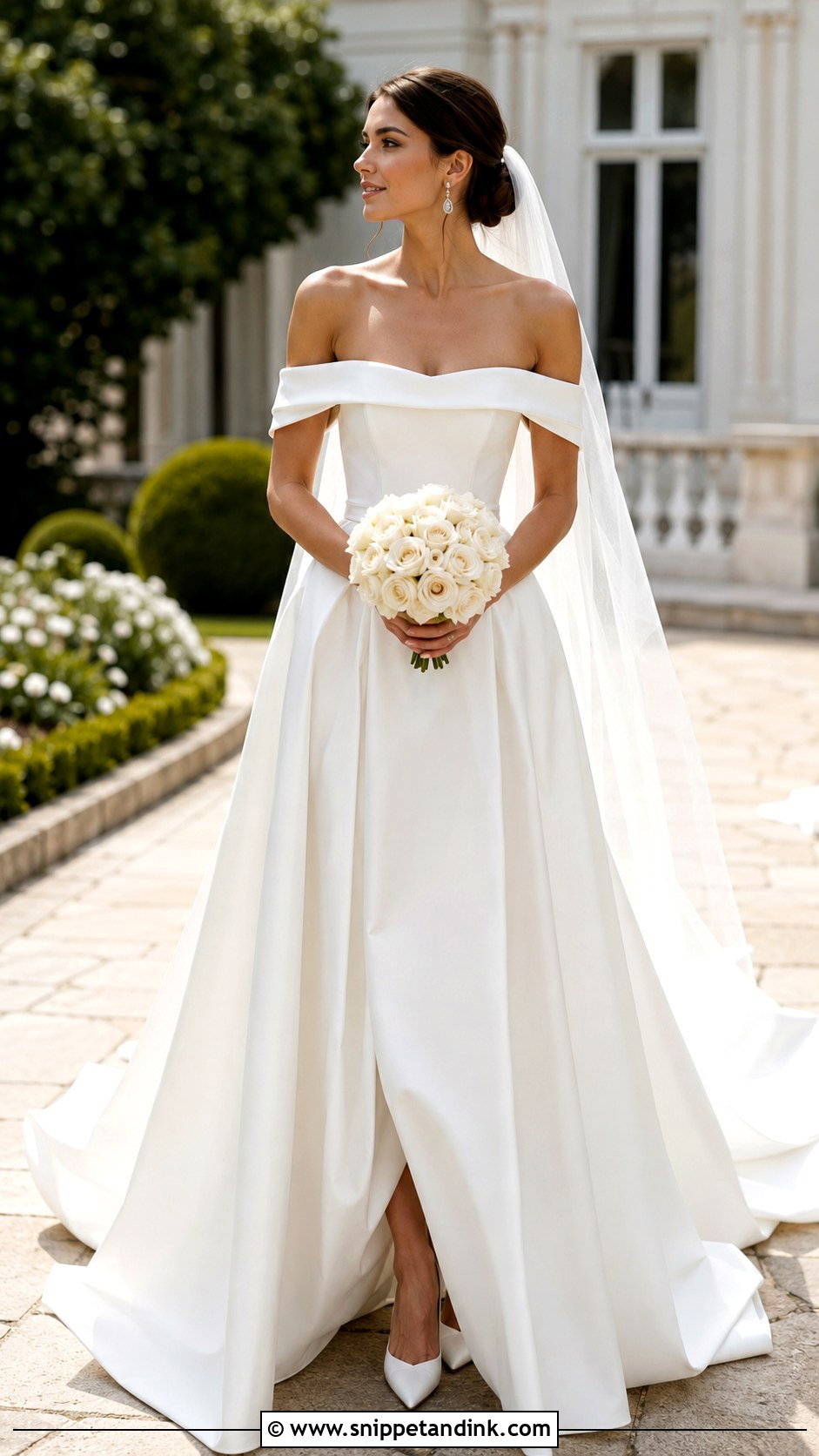
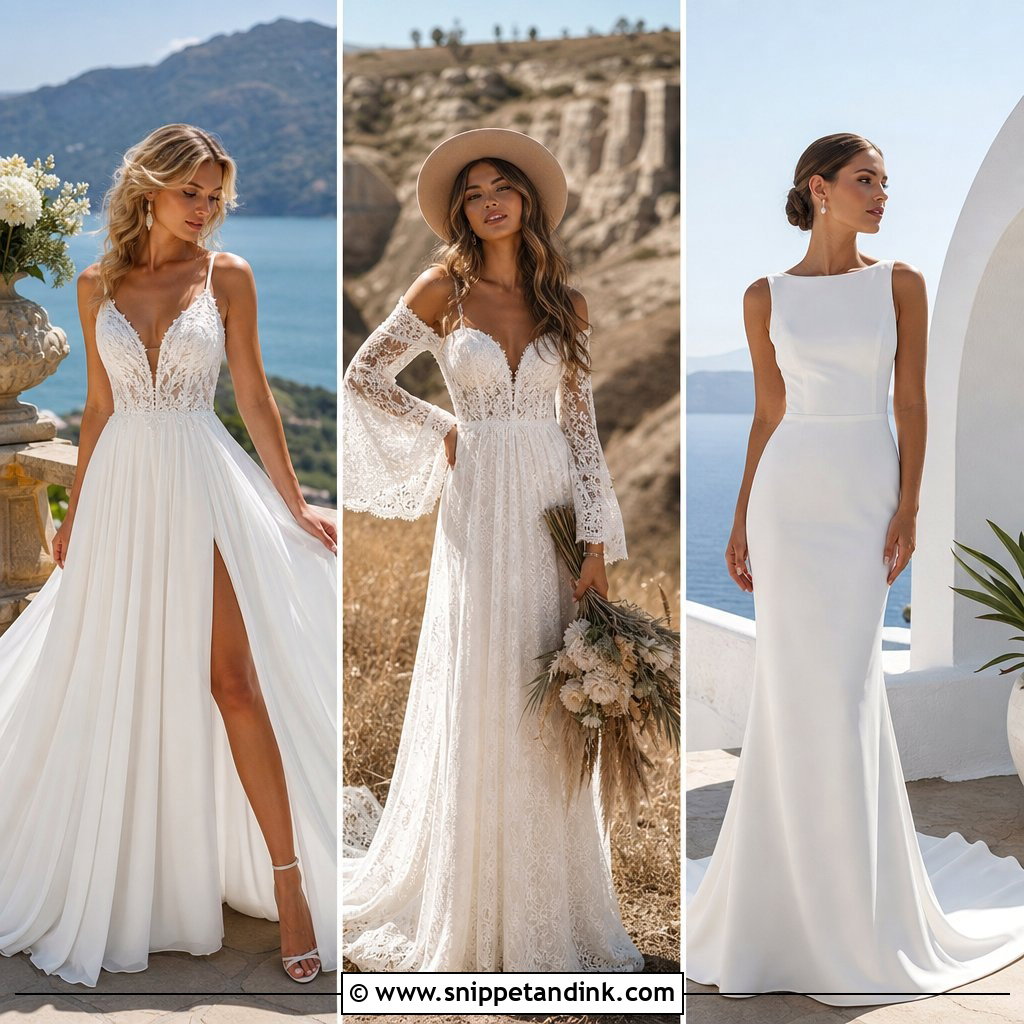
Off-the-shoulder sleeves sit on the upper arm, which means they restrict how high you can lift your arms. That’s the trade-off I explain first. Inside, you want a corseted bodice that holds the dress, so the sleeves aren’t doing the work. A full skirt keeps it traditional; a fit-and-flare feels more current. With pleated, lace or appliquéd sleeves, skip the necklace. A fine pendant works only if the sleeves are plain. Wear the hair up or swept to one side so the collarbones show, and attach the veil under the hair. It’s lovely in gardens, estates and formal indoor rooms.
5. White Mermaid Bridal Gown
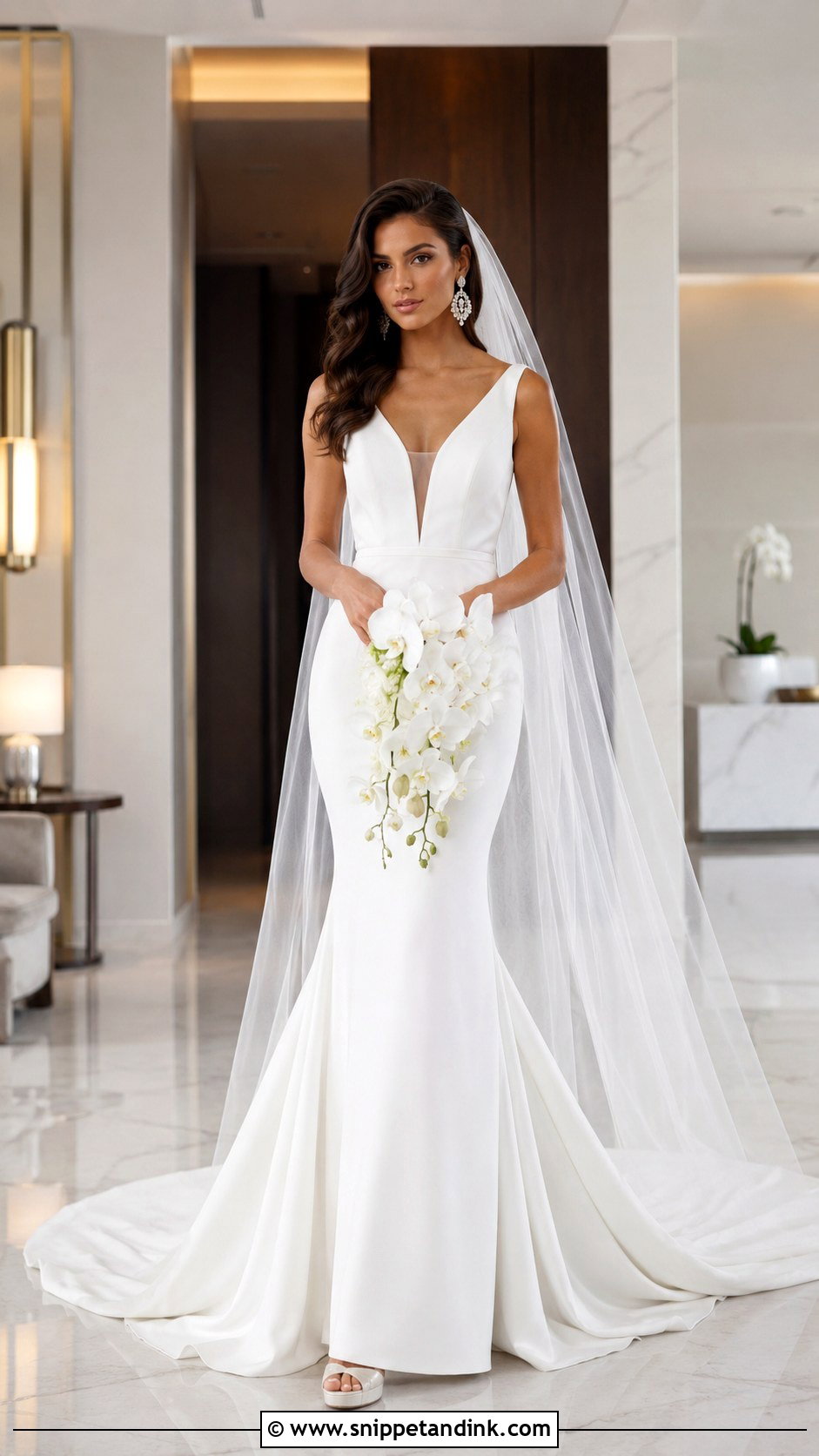
Mermaid gowns are fitted all the way to the knee, so they need more fittings than any other shape and they show any weight change. Stretch crepe is the most forgiving fabric for it; lace and beading look richer but give you less room to move. The flare should start at or slightly above the knee. Too low and you’ll walk in tiny steps all day. Sit down at every fitting and climb a step. Platform sandals add height without a narrow heel, and a long plain veil balances the sculpted line. Keep the bouquet narrow or cascading so it doesn’t block the waist.
6. White Square-Neck Bridal Gown
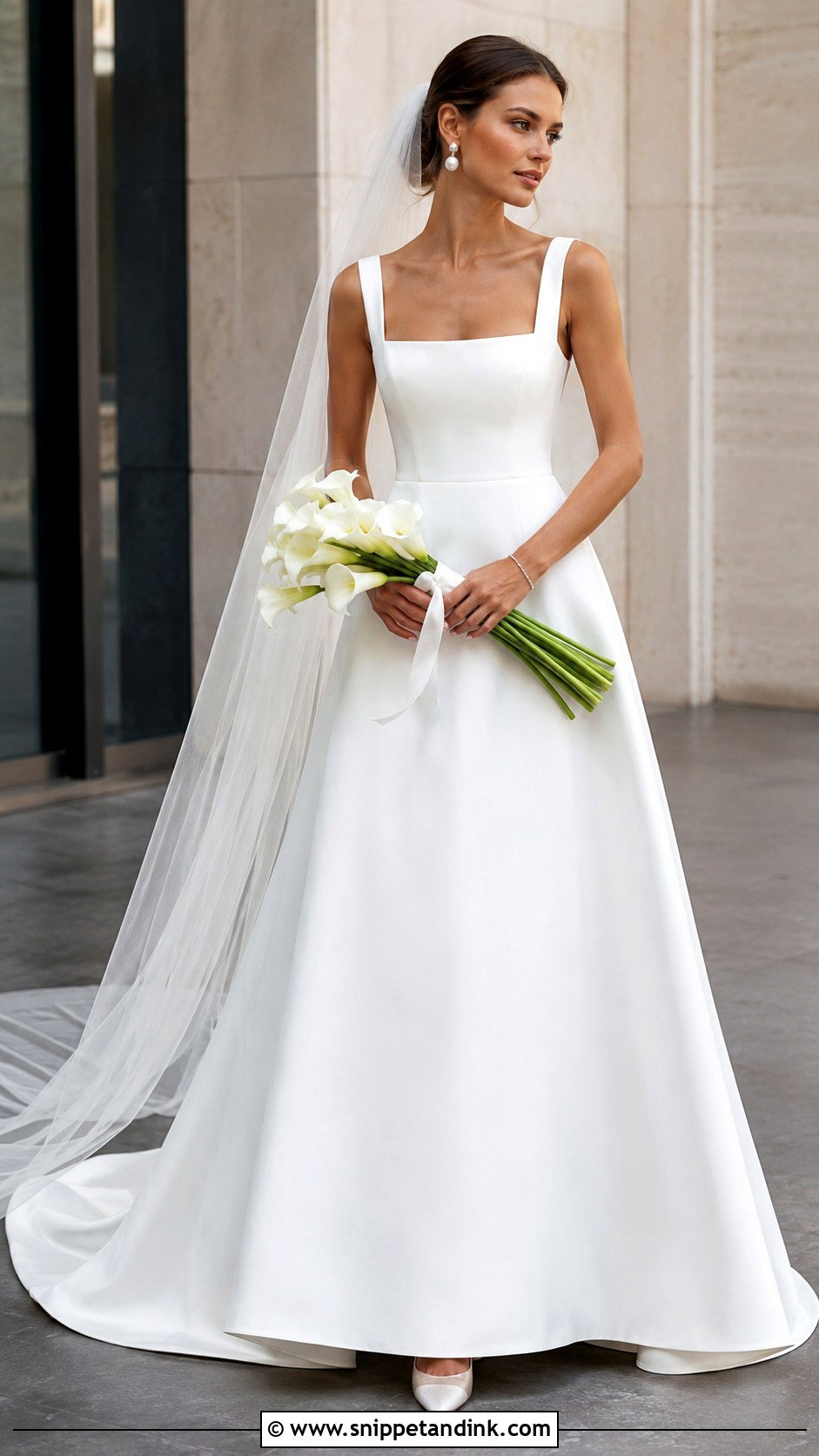
Square necklines are kind to most busts and show off the collarbone, and they work with wide straps, short sleeves or fitted long sleeves. The fit along the top edge has to be exact; if it gapes when you bend, the straight line turns into a curve and loses the whole point. A smooth A-line keeps it understated, and a basque waist adds definition. Pearl-and-gold earrings, a slim bracelet and low pointed heels suit it, along with a sheer fingertip veil. A neat bun or smooth waves tucked behind the ears keep the neckline clear. Long-stemmed greenery works in a city or gallery ceremony.
7. White Basque-Waist Ball Gown
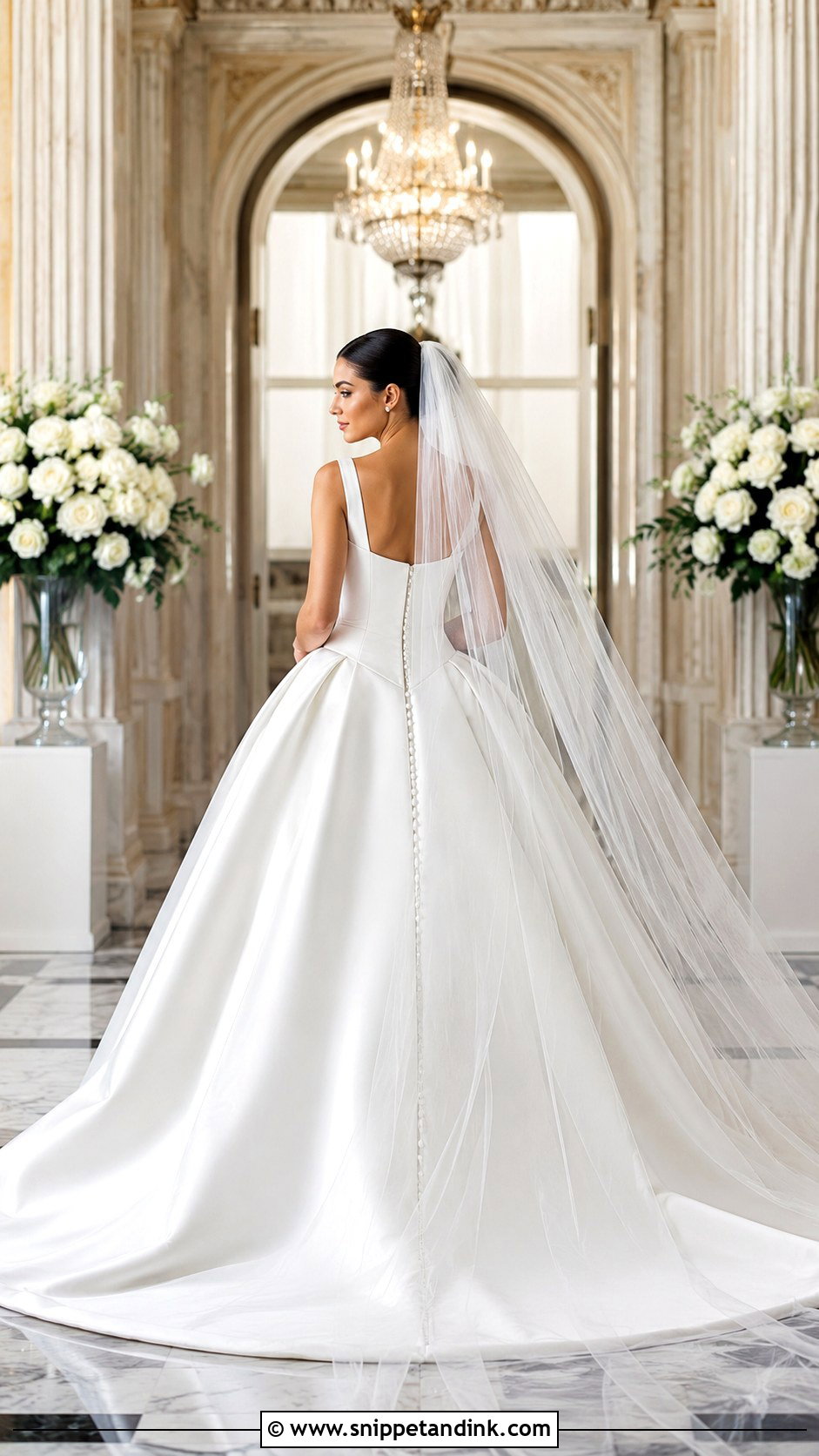
A white basque-waist ball gown has a bodice that dips into a V below the natural waist, and that point visually lengthens the torso. It’s flattering on many shapes, though a very short torso can feel cut in half by it, so try it before deciding. Structured satin, a full skirt and covered buttons down the back give it its regal feel. Keep the neckline simple so the waist detail reads. A cathedral veil, pearl studs and platform pumps support the volume, with a formal updo. A detachable bolero adds coverage for a religious ceremony. Big rooms suit it, because the shape holds up across distance.
8. White Drop-Waist Bridal Gown
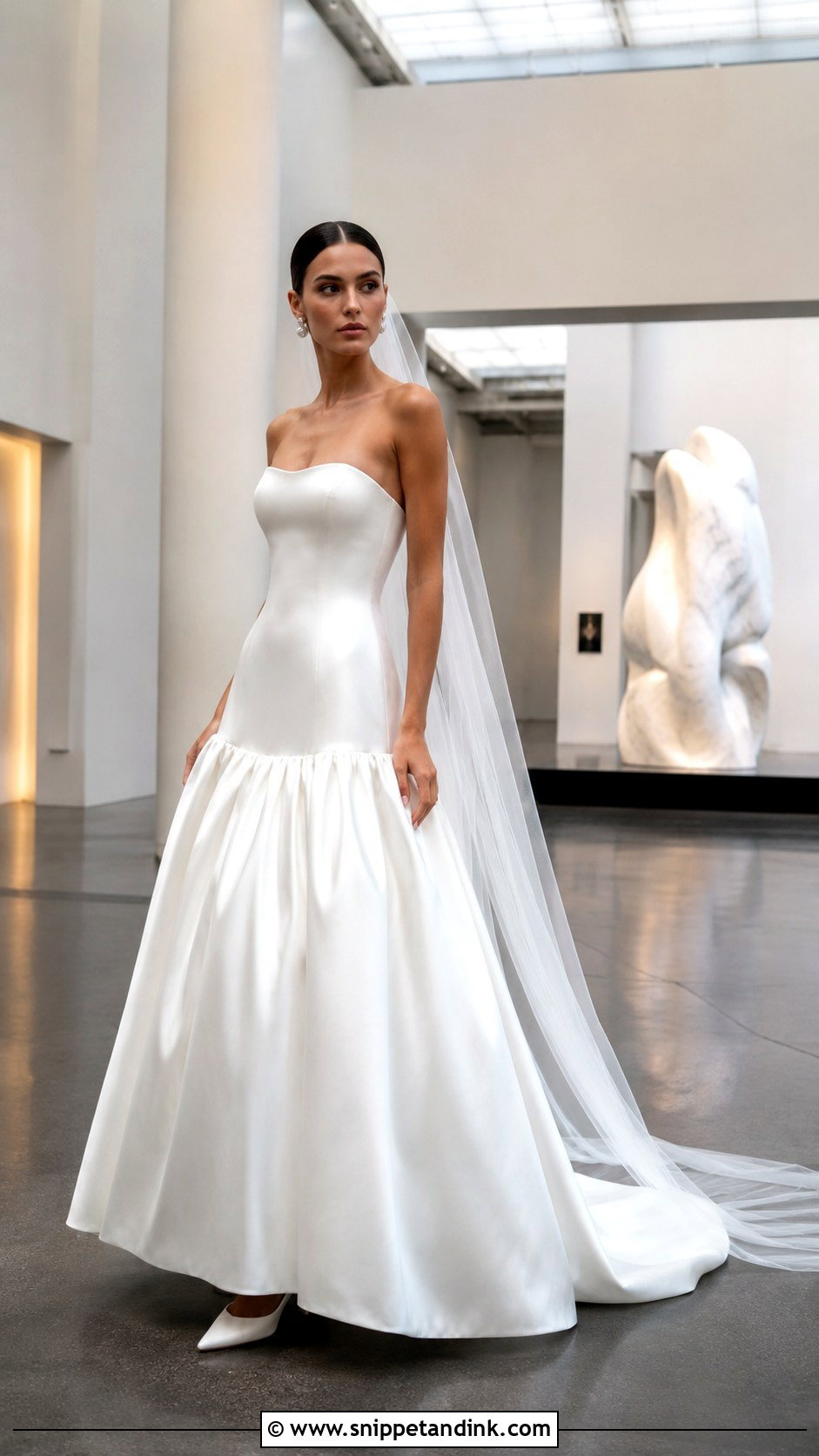
A drop waist runs the bodice down to the hip before the skirt opens, so it suits a longer torso best. On a petite bride, the low seam can shorten the legs; I’d have her compare it with a basque waist side by side. Crisp satin, silk faille or mikado hold the shape cleanly. A softly curved strapless neckline balances the long bodice, and you need to check that the hip seam doesn’t ride up when you sit. Sculptural earrings, pointed white pumps and a plain floor-length veil are enough, with a sleek bun or centre-parted ponytail. A one-flower bouquet suits museums, lofts and modern ballrooms.
9. White Floral Appliqué Gown
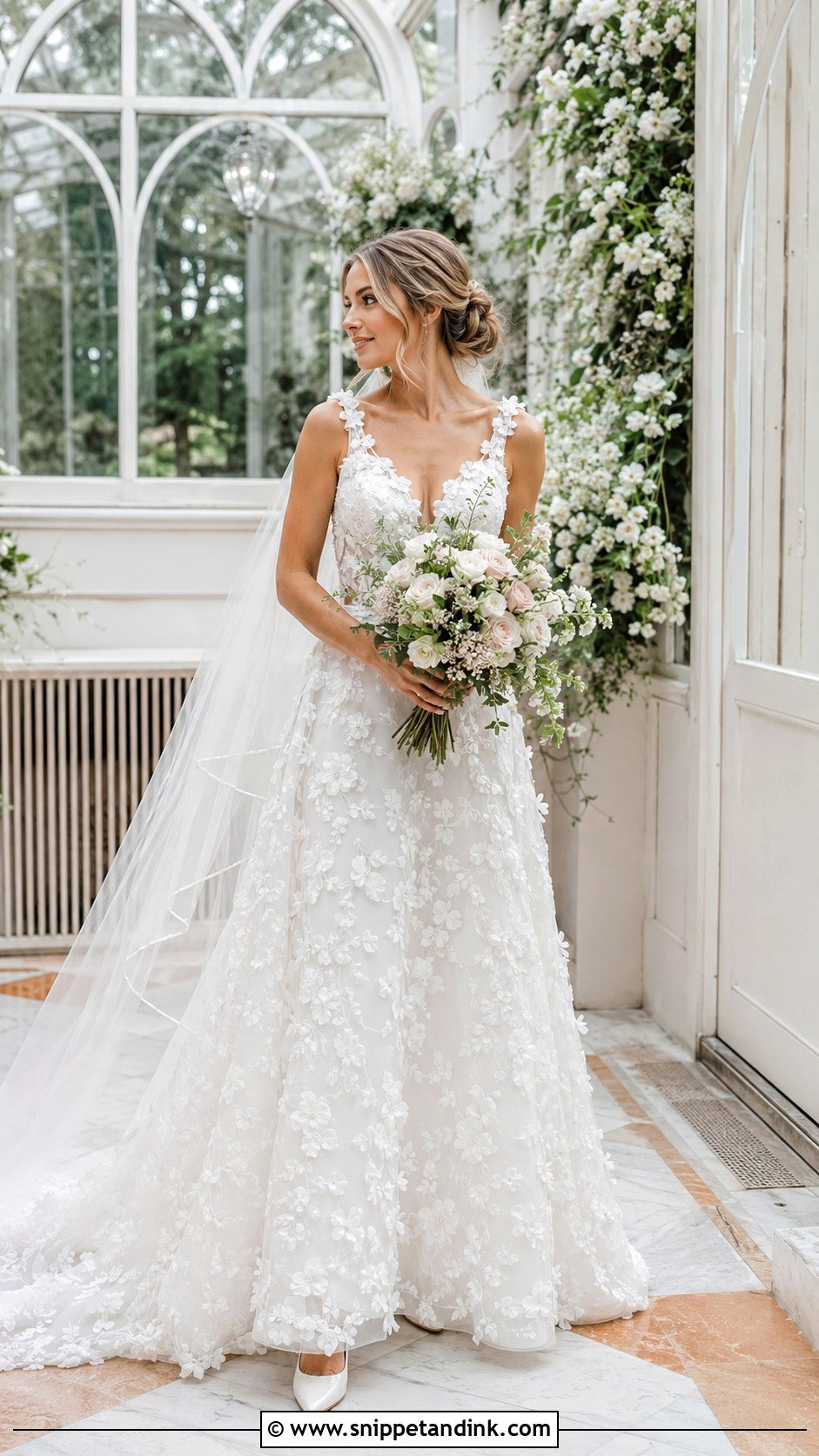
Three-dimensional appliqués are where the craftsmanship of a gown really shows, and also where cheaper dresses give themselves away. Look at how each flower is attached; hand-stitched appliqués lie flat, while glued ones lift at the edges after a few wears. Placement changes the effect. Clustered at the neckline, they frame the face; scattered over the skirt, they feel like a garden. An A-line or ball gown gives them room. Pearl studs, satin pumps and a clean-edged sheer veil let the dress lead, and a bouquet with similar flower shapes connects the two. Conservatories and spring gardens suit it best.
10. White Minimalist Crepe Gown
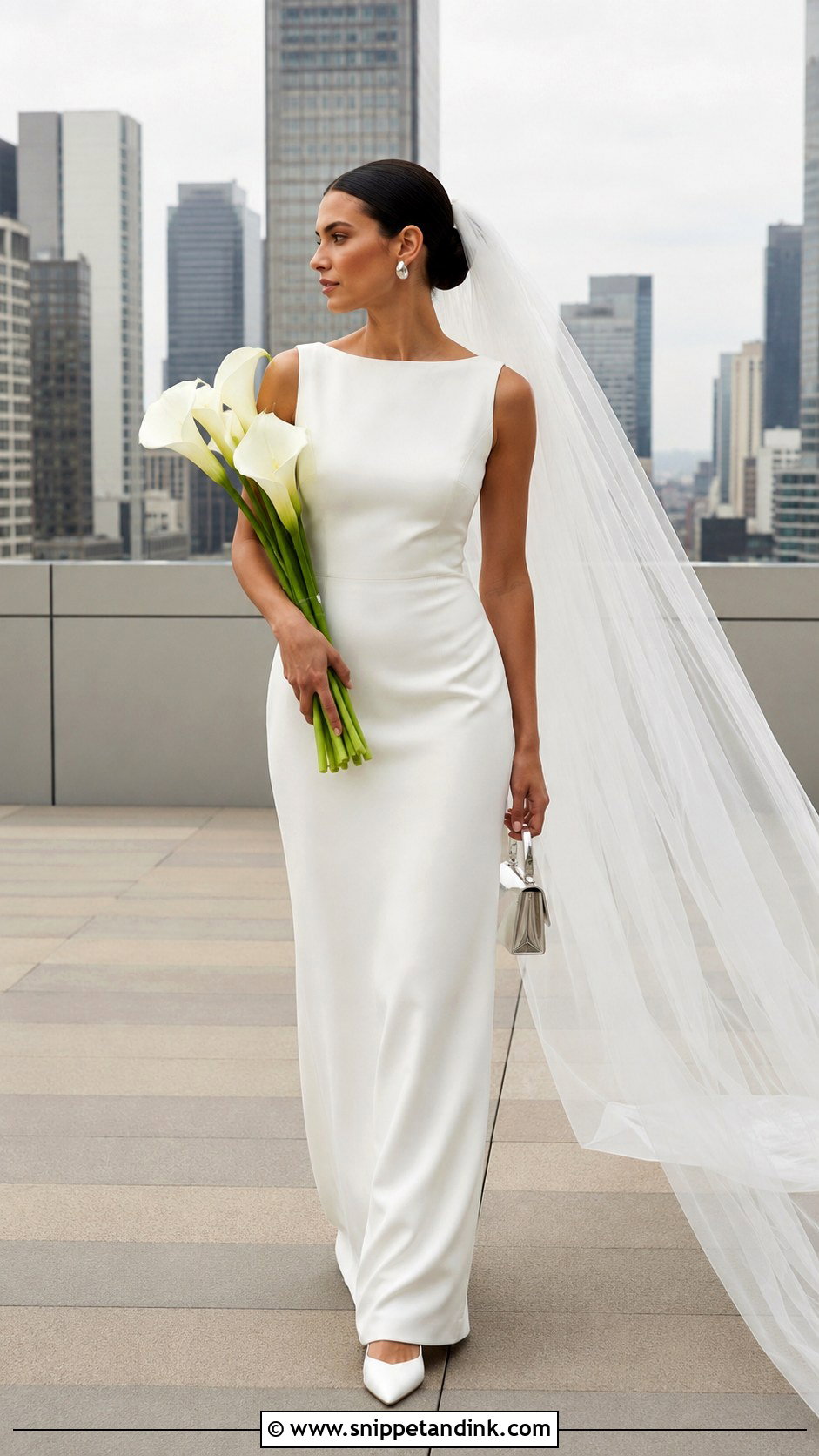
Crepe has almost no surface detail, so it hides nothing. That’s why I tell minimalist brides to spend on fit rather than embellishment. A column, sheath or fit-and-flare with a bateau, square or draped neck shows its clean lines only if the seams lie flat and the hem is exact. Crepe also shows underwear lines more than any other bridal fabric, so test your foundation garments under it. Metallic earrings, pointed pumps or slingbacks and a long veil for the ceremony give it drama without changing its character. A smooth bun or glossy waves suit it, as does a sculptural bouquet of calla lilies for a courthouse, rooftop or gallery wedding.
11. White Corset Bridal Gown
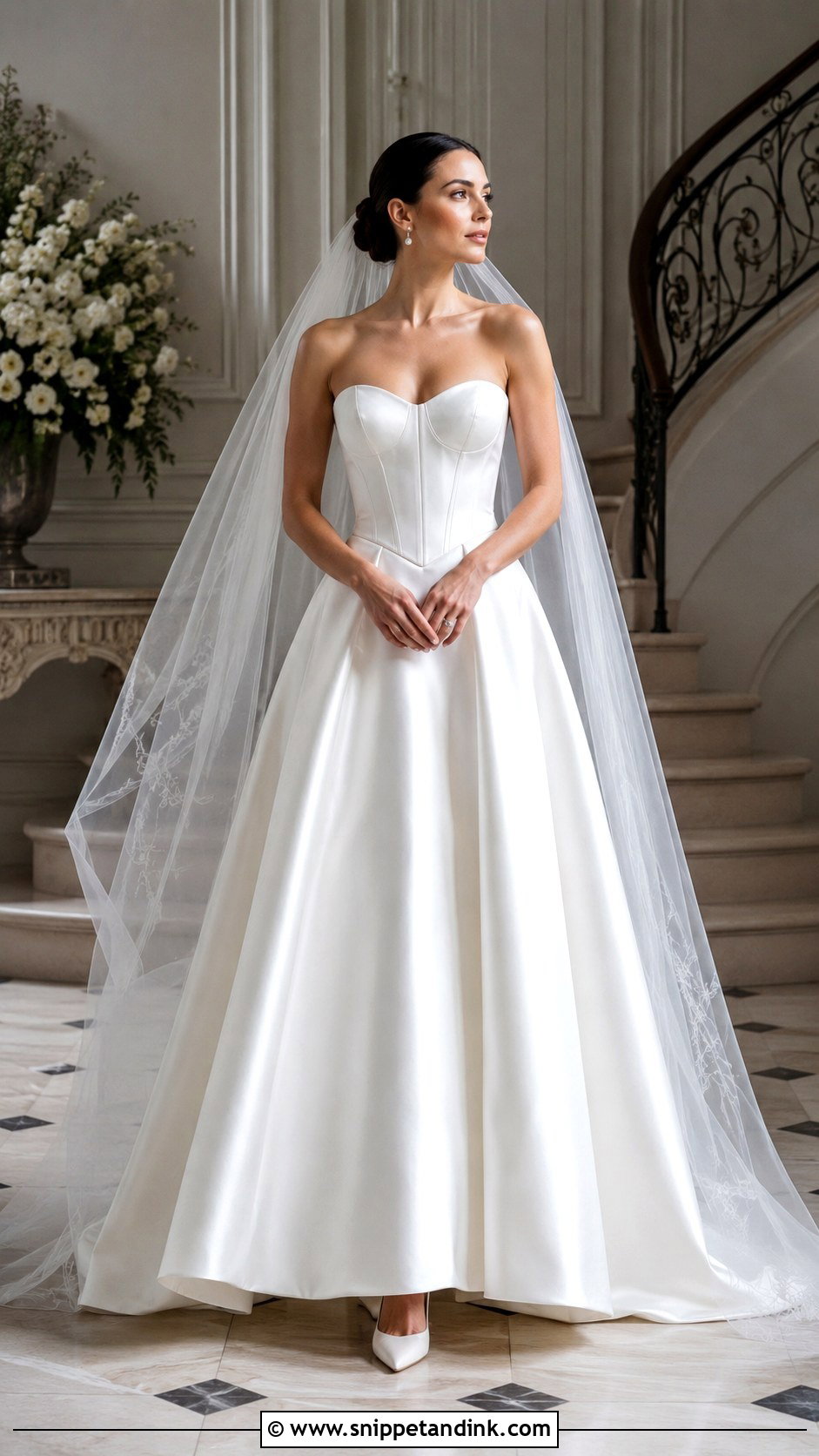
Visible corsetry is everywhere right now, but a corset bodice has to be properly built to look right. Look for real boning, smooth cups and lined or carefully placed sheer panels; flimsy plastic bones bend and leave ridges after a few hours. Pair it with a full satin skirt for drama or chiffon for something softer. Sit, bend and raise your arms at every fitting, because a corset that’s comfortable standing can dig in at the hip when you’re seated for dinner. Drop earrings, closed-toe pumps and a veil that falls past the train keep attention on the bodice, and detachable sleeves add ceremony coverage if you need it.
12. White High-Neck Bridal Gown
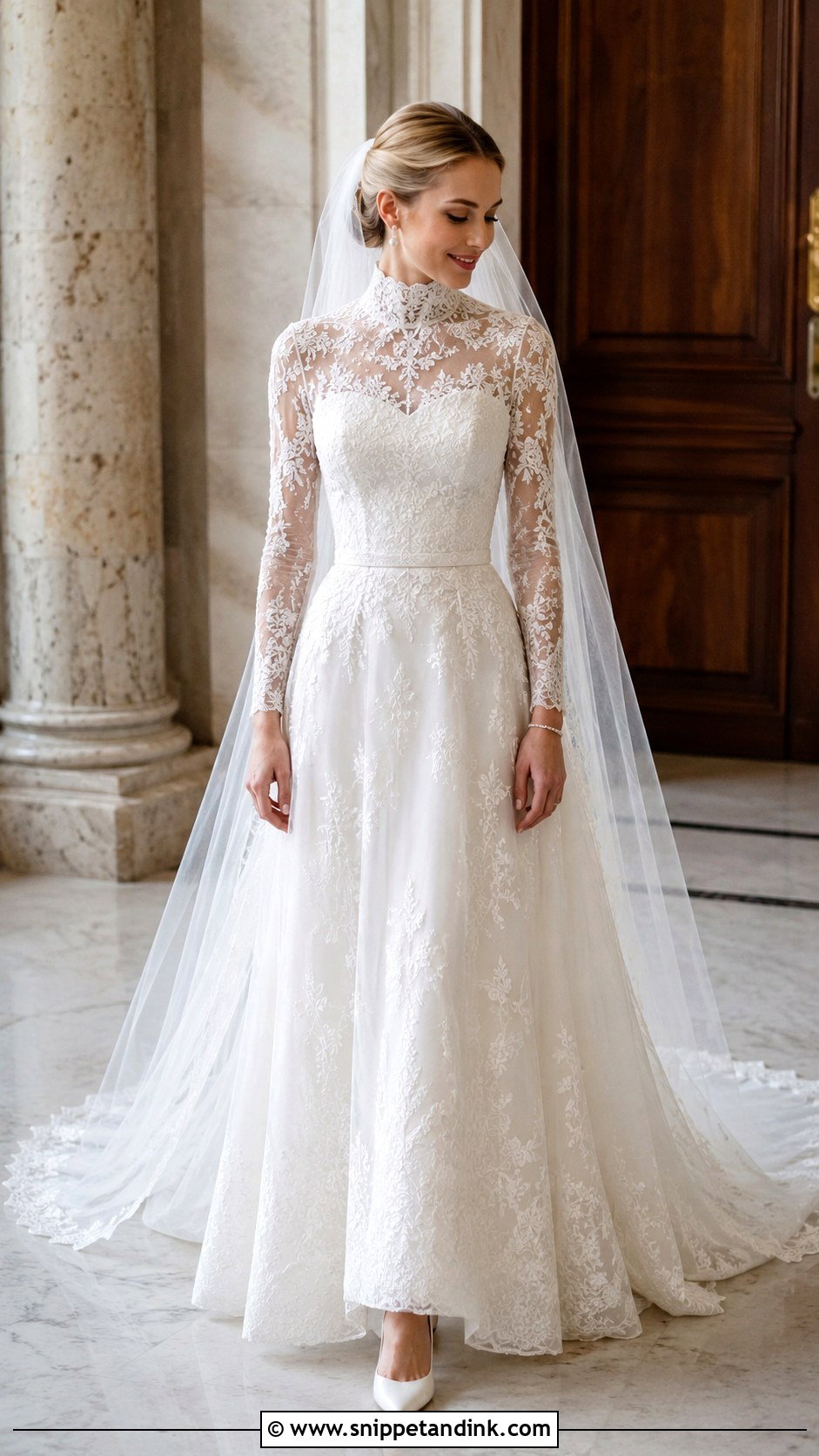
High necks frame the face and give real coverage, but they can feel heavy if the fabric is dense. Fine lace, smooth crepe or sheer embroidered tulle keep it light. Have the collar fitted with room for a finger; a high neck that’s even slightly tight feels like a hand at your throat after six hours. A fitted bodice with an A-line skirt balances it, and long sleeves make it more formal. Skip the necklace, wear small pearl earrings and put the veil under a neat updo. A slim bracelet or one hairpin adds detail without crowding the neck. It suits cooler seasons, historic venues and formal ceremonies.
13. White Halter-Neck Bridal Gown
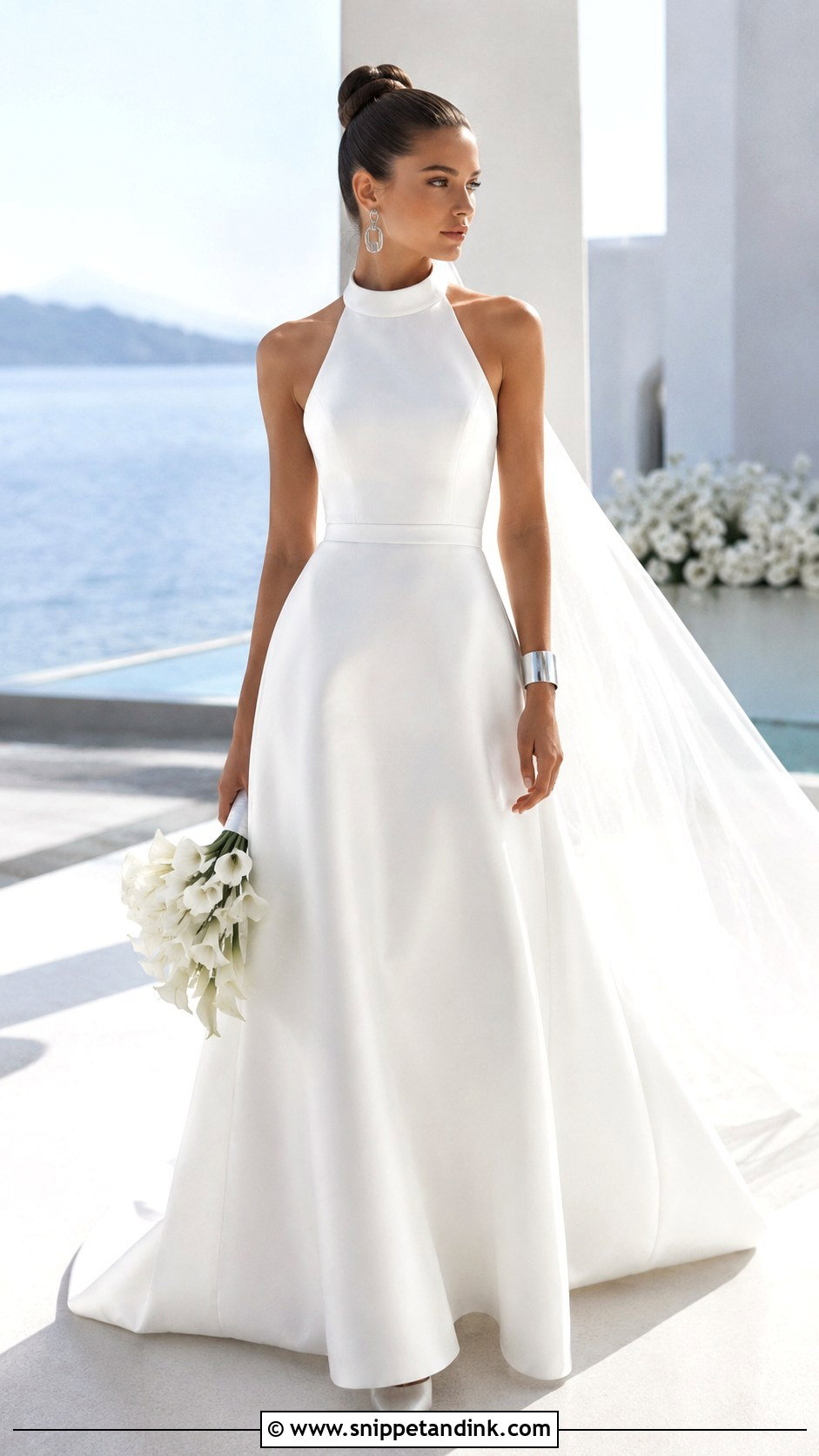
A white halter-neck gown draws the eye up and shows off the shoulders and back. It suits athletic or broad shoulders particularly well, and it’s one of the easier strapless alternatives to support, since the halter takes some weight off the bodice. Smooth satin or fluid crepe show the neckline crisply; lace softens it. Statement earrings and a metallic cuff are all the jewellery it needs, with sleek pointed heels. Hair goes up or back, since loose hair tangles around the halter. A detachable veil can come off after the ceremony for a waterfront or hotel reception.
14. White Chiffon Empire-Waist Gown
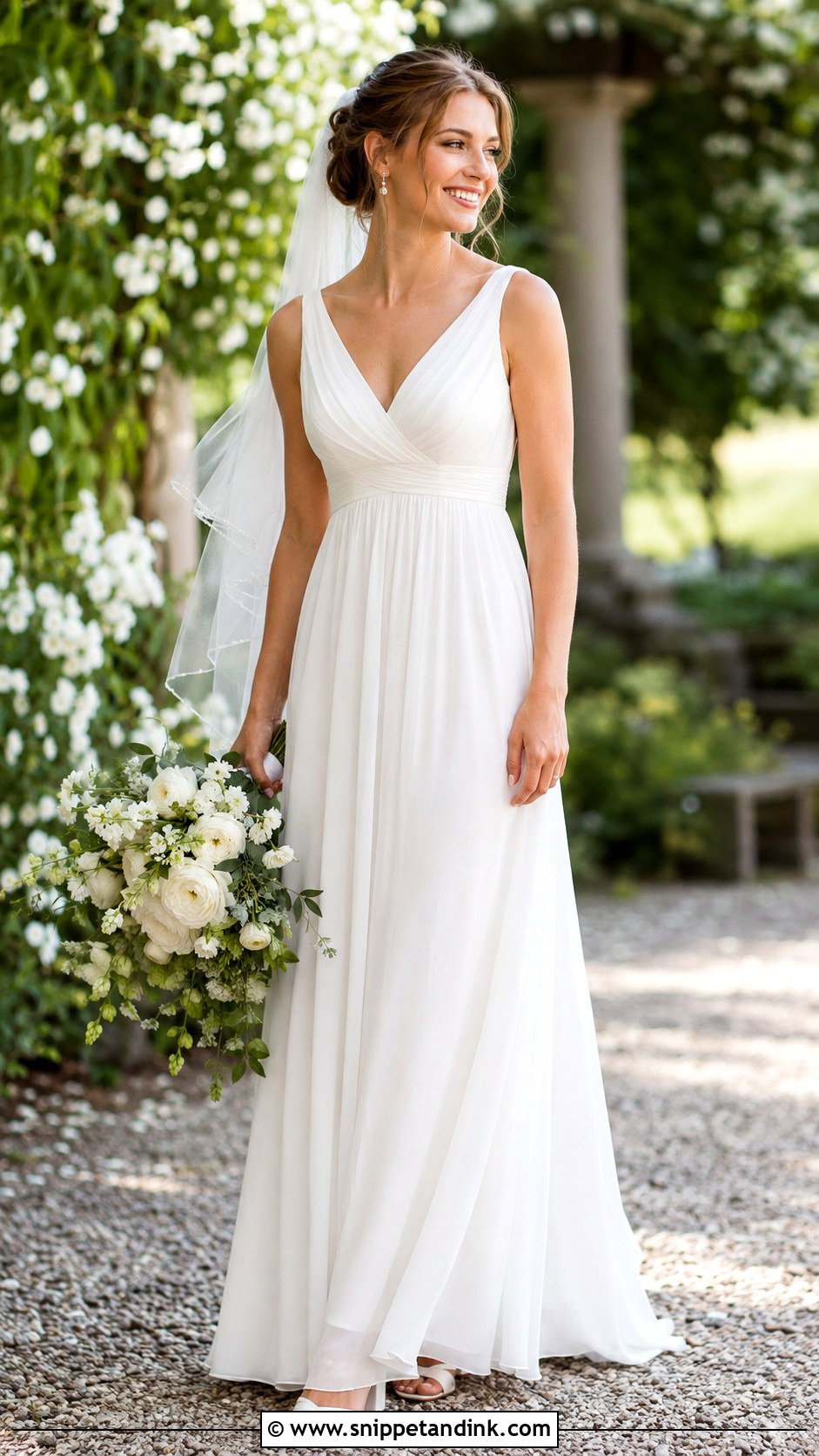
Empire waists sit under the bust and let the skirt fall freely, which makes them one of the most comfortable shapes to wear in heat. They also suit brides who want nothing fitted through the middle, and many pregnant brides choose them. Choose a softly draped V or scoop neck with straps that actually support you; chiffon has no structure of its own. Low block-heel sandals sink less into sand and lawn. Fine earrings, a light fingertip veil, a relaxed updo and a loose bouquet of white flowers with greenery match the easy movement. Ask your seamstress for a discreet bustle so the train doesn’t drag at the reception.

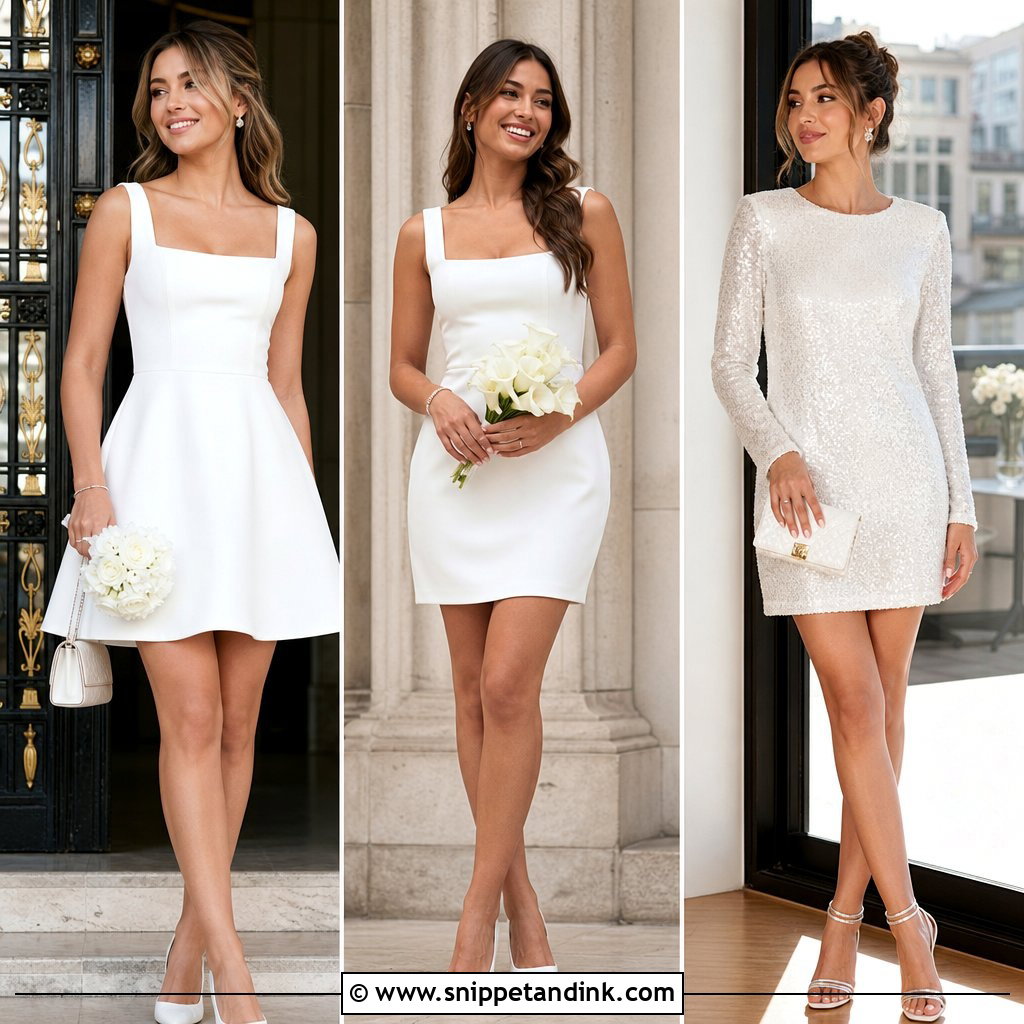
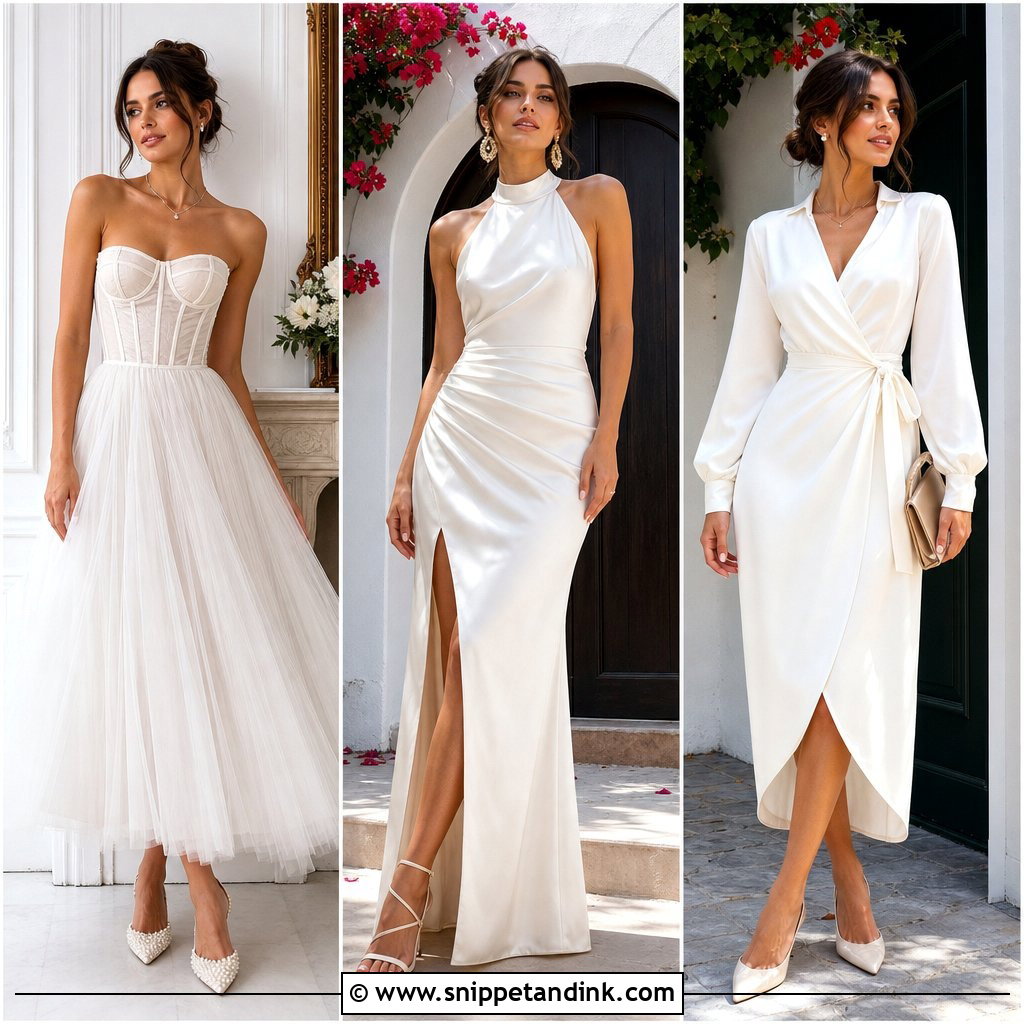
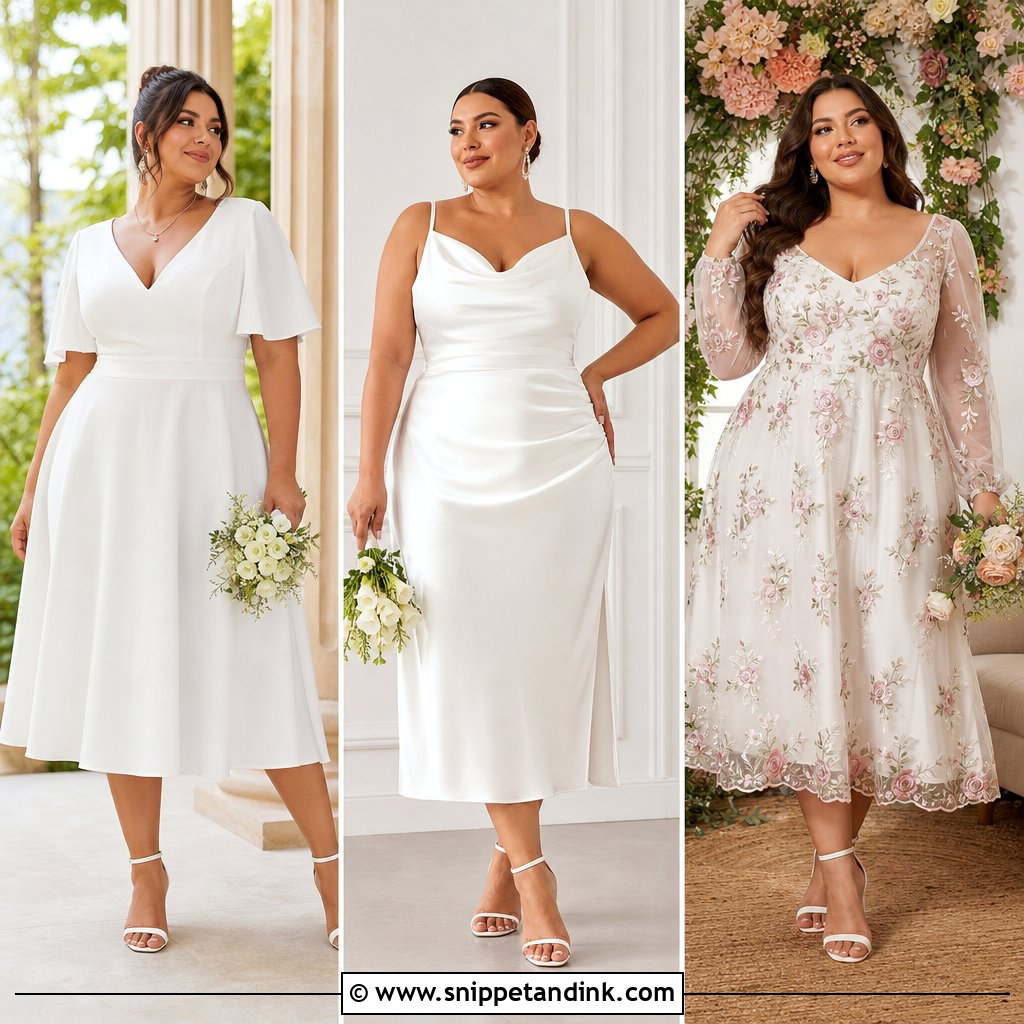
15. White Tea-Length Bridal Gown
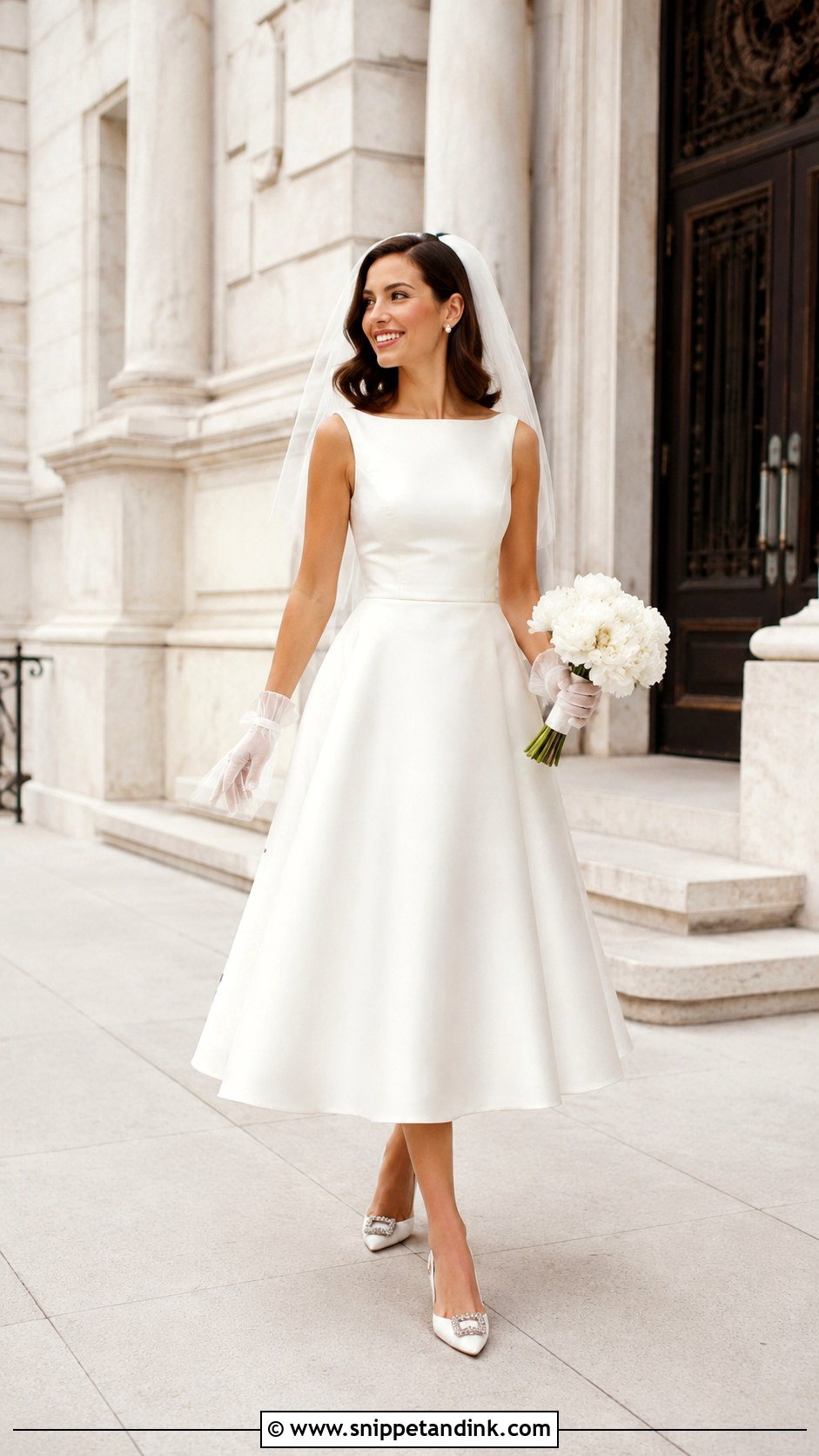
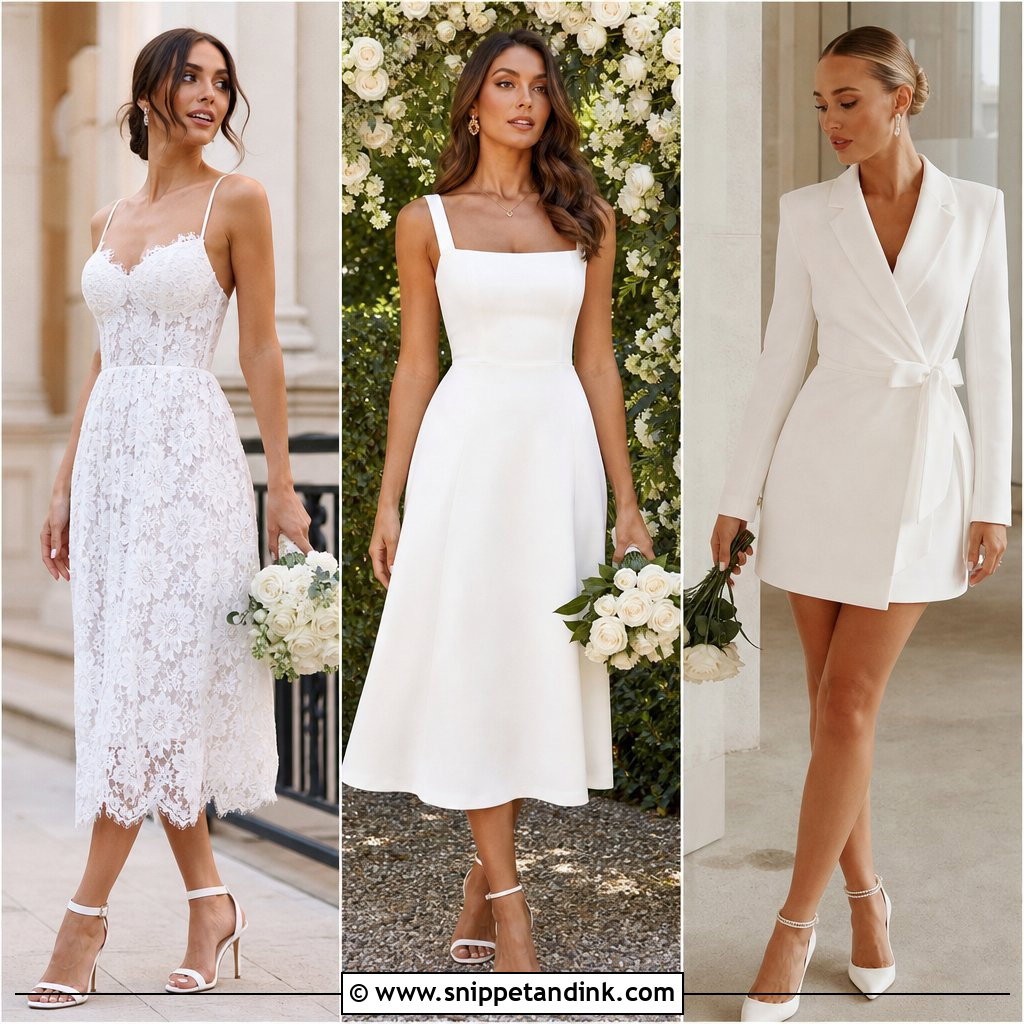
Tea length ends between knee and ankle, which puts your shoes on show all day, so pick them with as much care as the dress. Pointed pumps, embellished slingbacks or block heels in white, ivory or metallic tones all work. An A-line with a fitted bodice, wide straps or a bateau neck keeps the retro shape. Short gloves, pearl studs and a birdcage or shoulder-length veil lean into the period mood; use two of the three, not all, or it starts to look like fancy dress. Polished waves or a smooth bun finish it. It’s practical for a registry office, a restaurant or a garden where a train would collect grass.
16. White One-Shoulder Bridal Gown
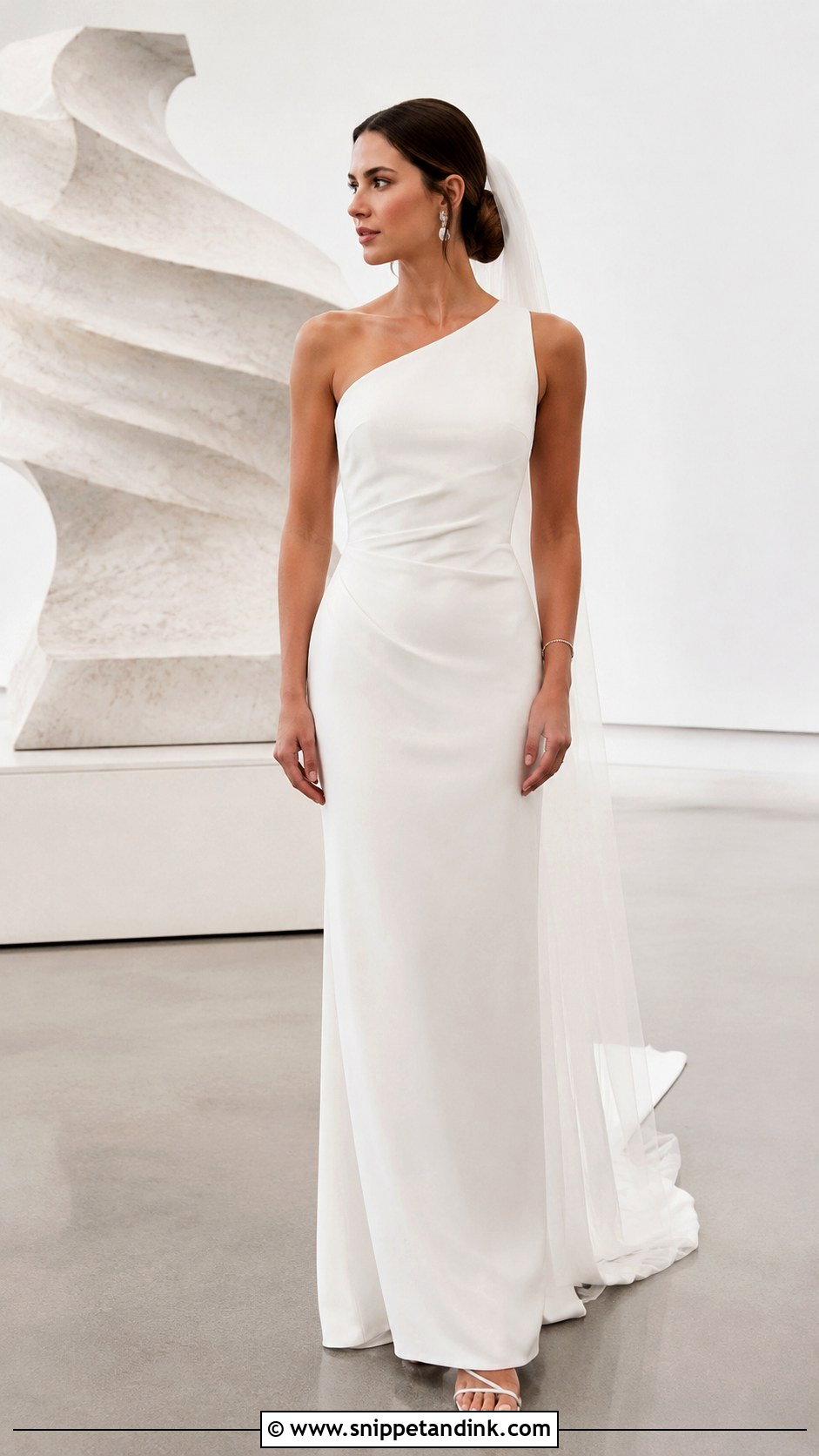
One shoulder gives the gown a single diagonal line, and that line has to stay crisp to work. Smooth crepe or satin hold it better than soft drapes, which can slide off the shoulder through the day. Check the bare-side edge in a mirror while lifting your bouquet. A column skirt keeps it sleek; an A-line adds movement. Statement earrings on the exposed side and a slim bracelet replace a necklace. A low side bun or tucked waves keeps the shoulder clear, and the veil should attach behind the shoulder so it falls cleanly. Rooftops, galleries and modern ballrooms suit its clean lines.
17. White Beaded Bridal Gown
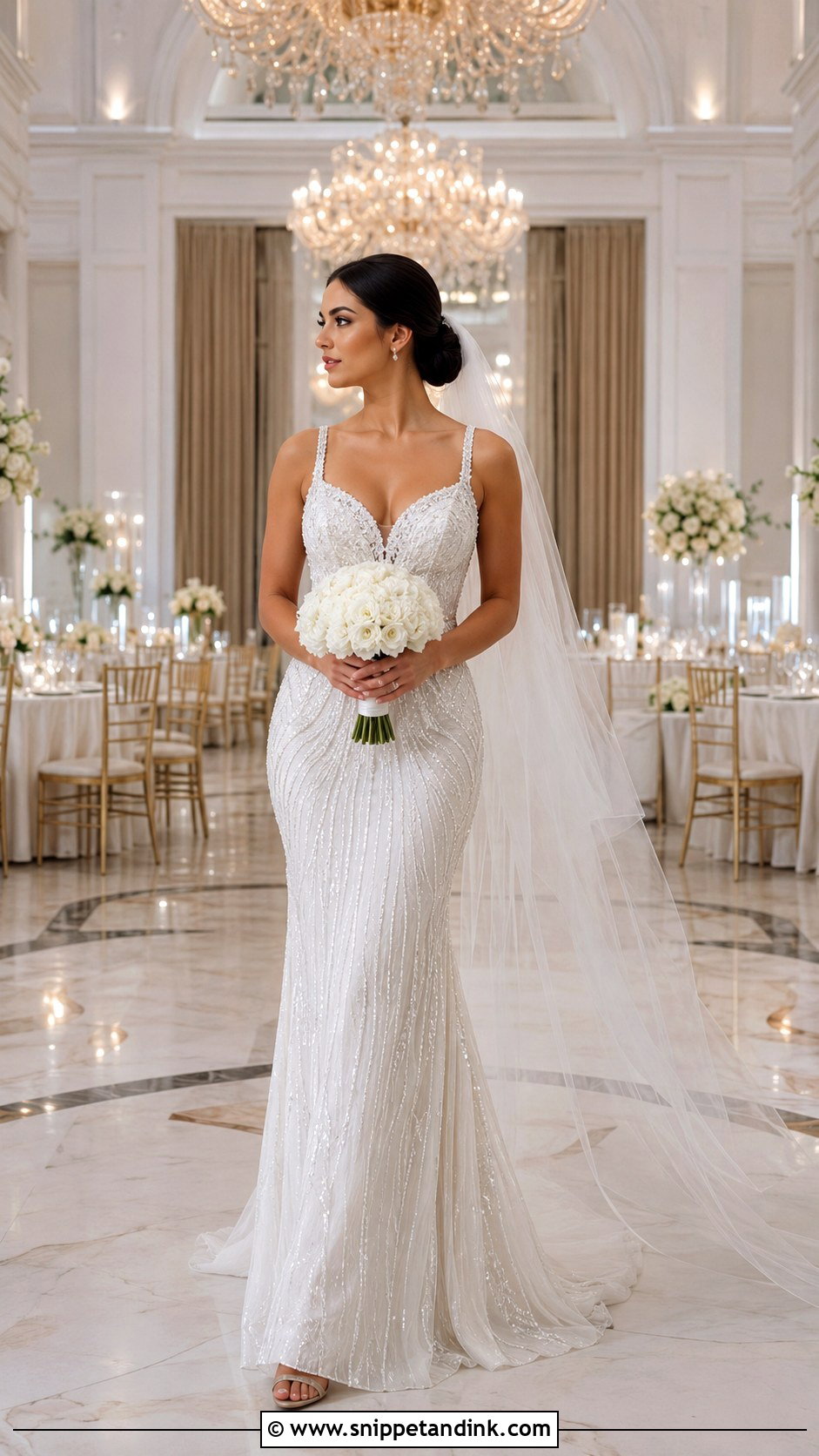
Beading catches light, and it also adds weight. A heavily beaded gown can weigh several kilos, which you’ll feel by the evening, so check the weight at fittings and ask how the beads are attached. Beading that follows the body’s lines, running vertically or concentrated at the bodice, looks intentional; beads scattered without direction look busy. Look at the lining under the arms too, because exposed beading rubs. Keep everything else plain: crystal studs, neutral heels, a plain tulle veil, a simple bouquet wrap. A smooth updo and luminous makeup suit evening receptions and grand hotels.
18. White Cape-Sleeve Bridal Gown
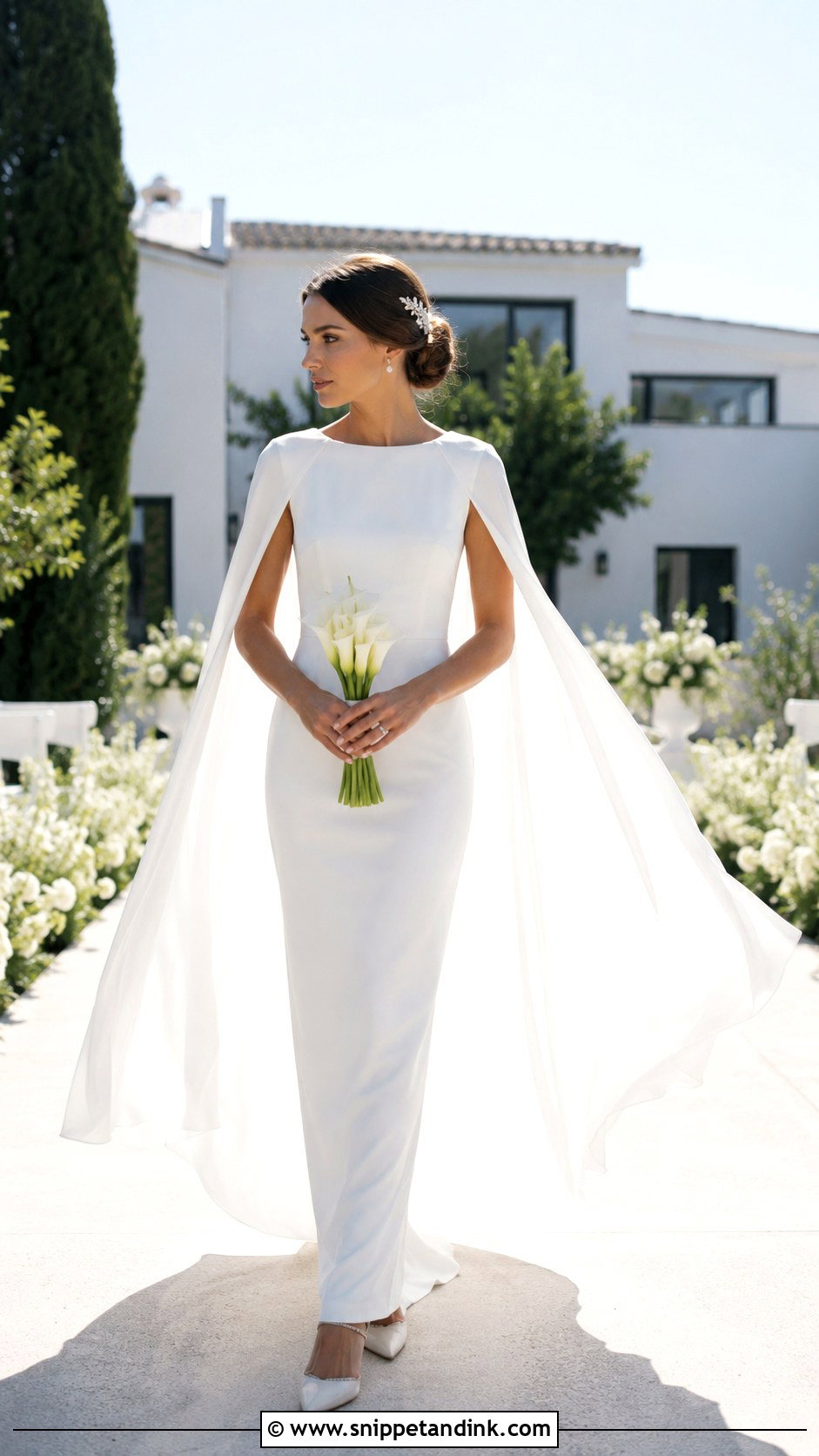
Cape sleeves give coverage and movement at once, and they can stand in for a veil entirely. The cape might fall from the shoulders, the neckline or the back. Pair it with a streamlined column or A-line so the whole gown doesn’t drown in fabric. A detachable cape is the more practical version, since you can wear it for the ceremony and take it off before dancing. Put the hair up, because loose curls tangle in the cape edge, and keep earrings small. A narrow bouquet keeps the long line, and it moves well at formal indoor weddings or scenic outdoor ceremonies.
19. White Gown With Detachable Overskirt
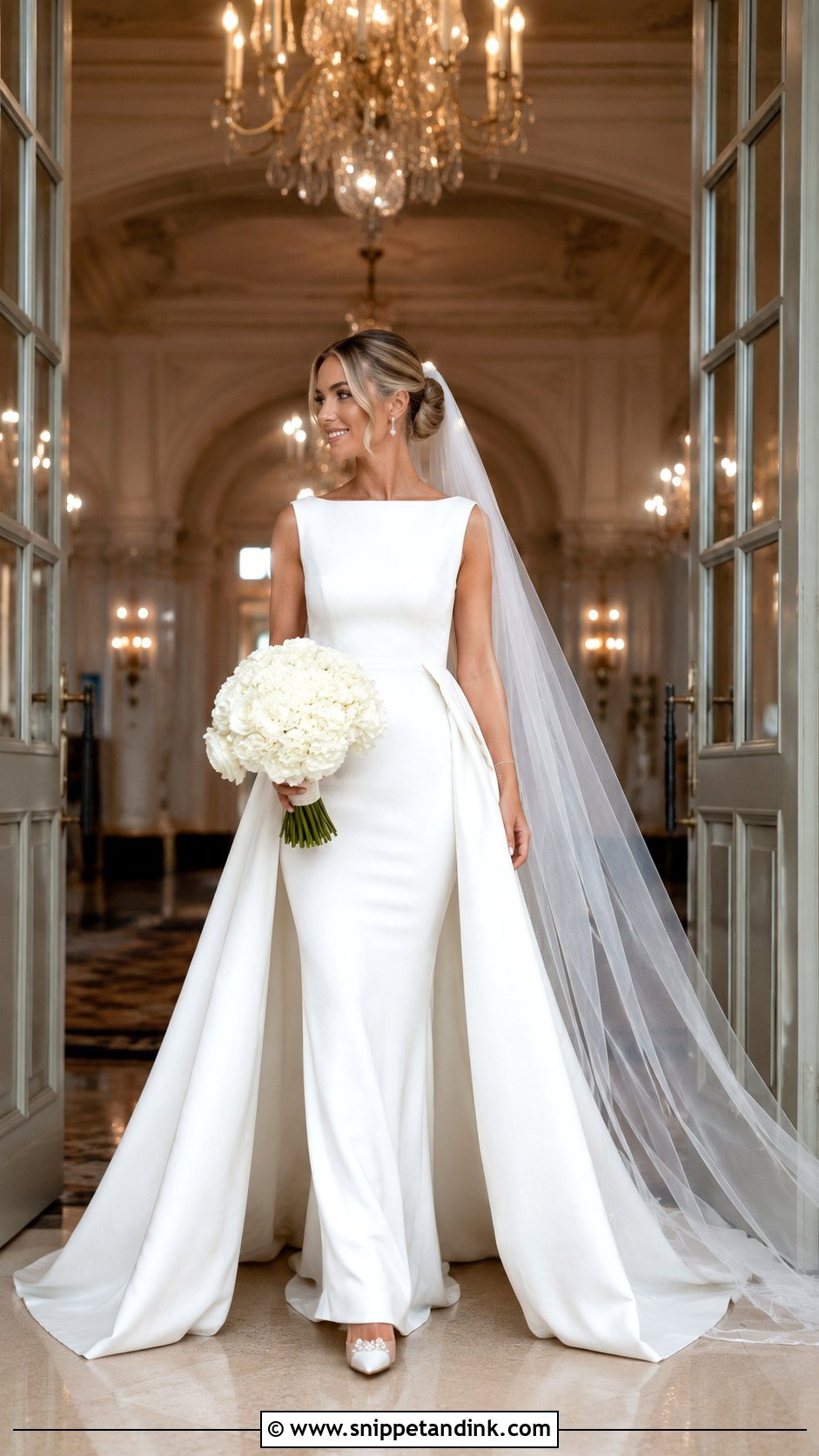
An overskirt gives you a ceremony gown and a reception dress in one, without a costume change. The base is usually a fitted crepe, satin or lace dress, with a full skirt and train clipped or buttoned over it, then removed after portraits. I’d test the release more than anything: the closure should be flat under the bodice, hold through a full walk and turn, and come off in a minute with one helper. Show that helper how before the day. Keep the shoes, pearls and updo the same for both versions, with a long veil that can also come off. It gives you traditional aisle drama and freedom later.
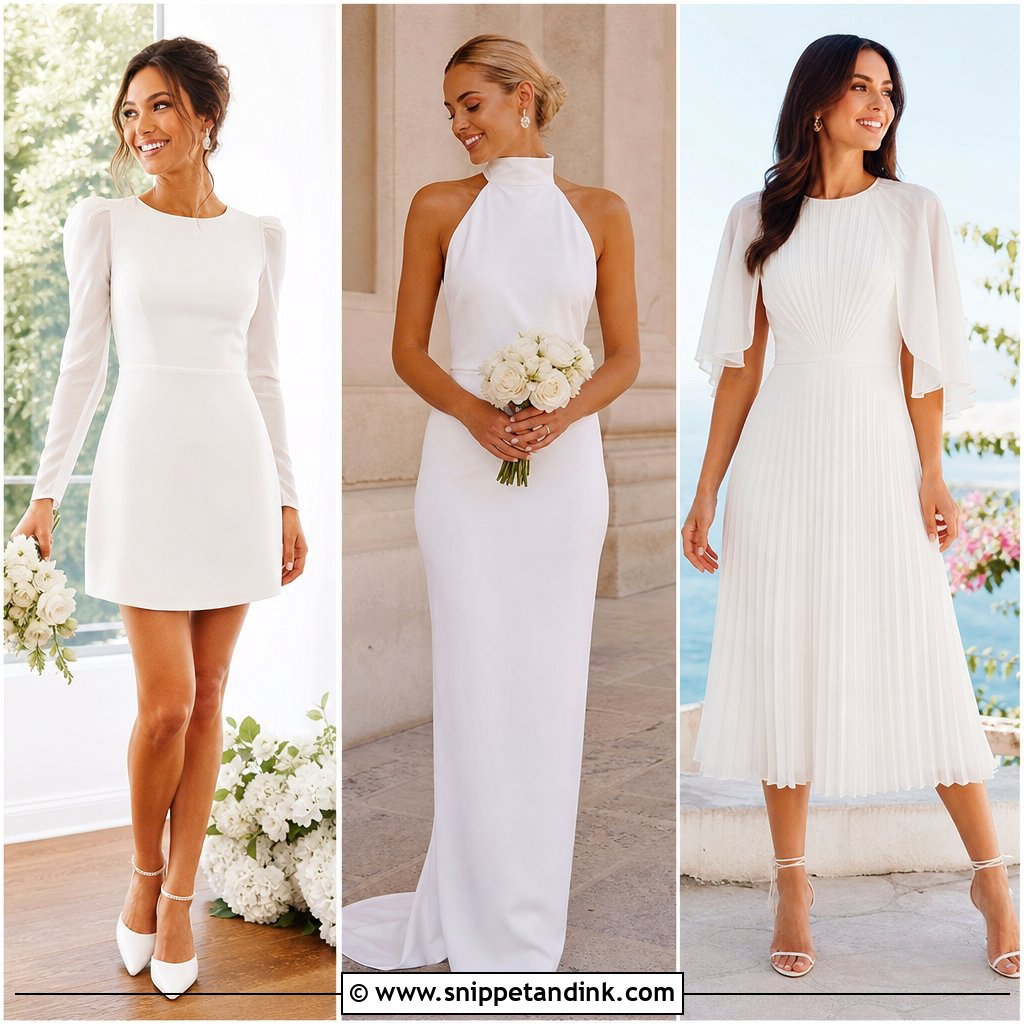
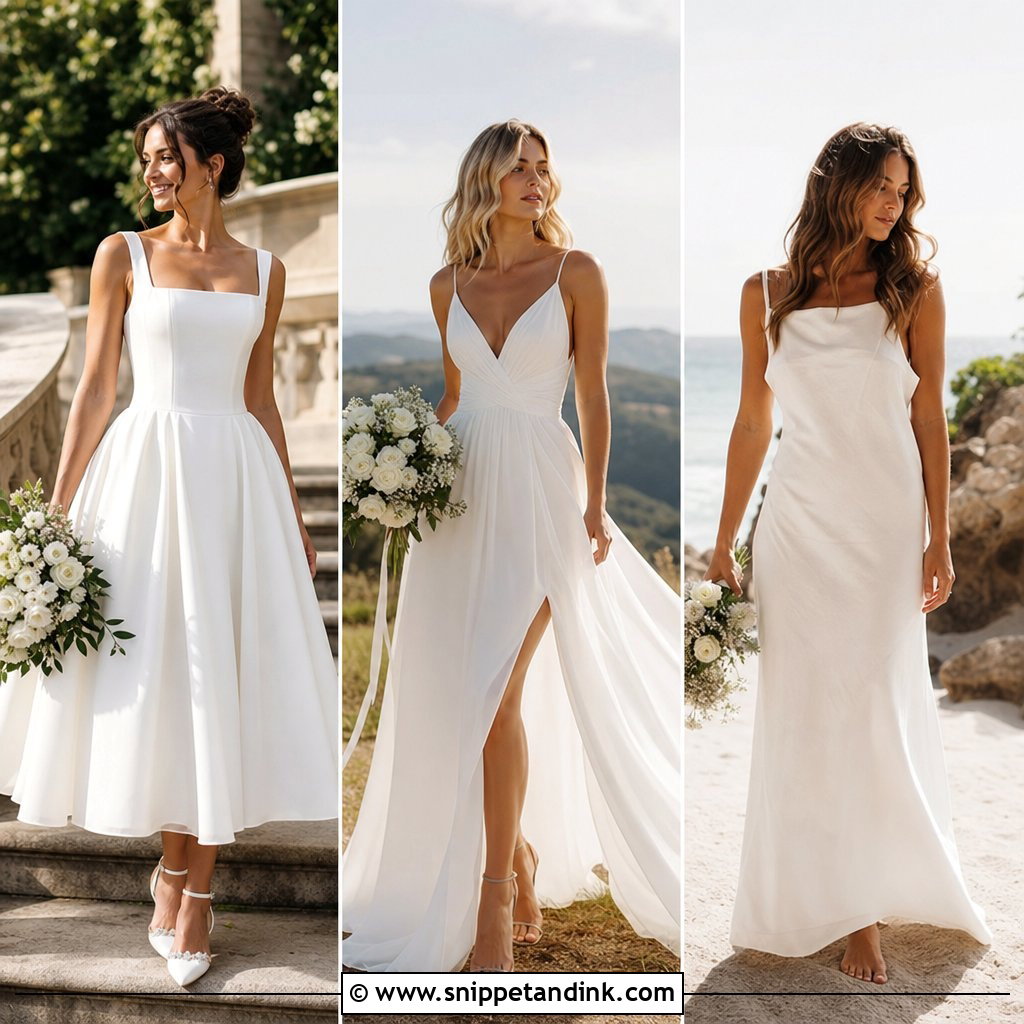
20. White Gown With Detachable Sleeves
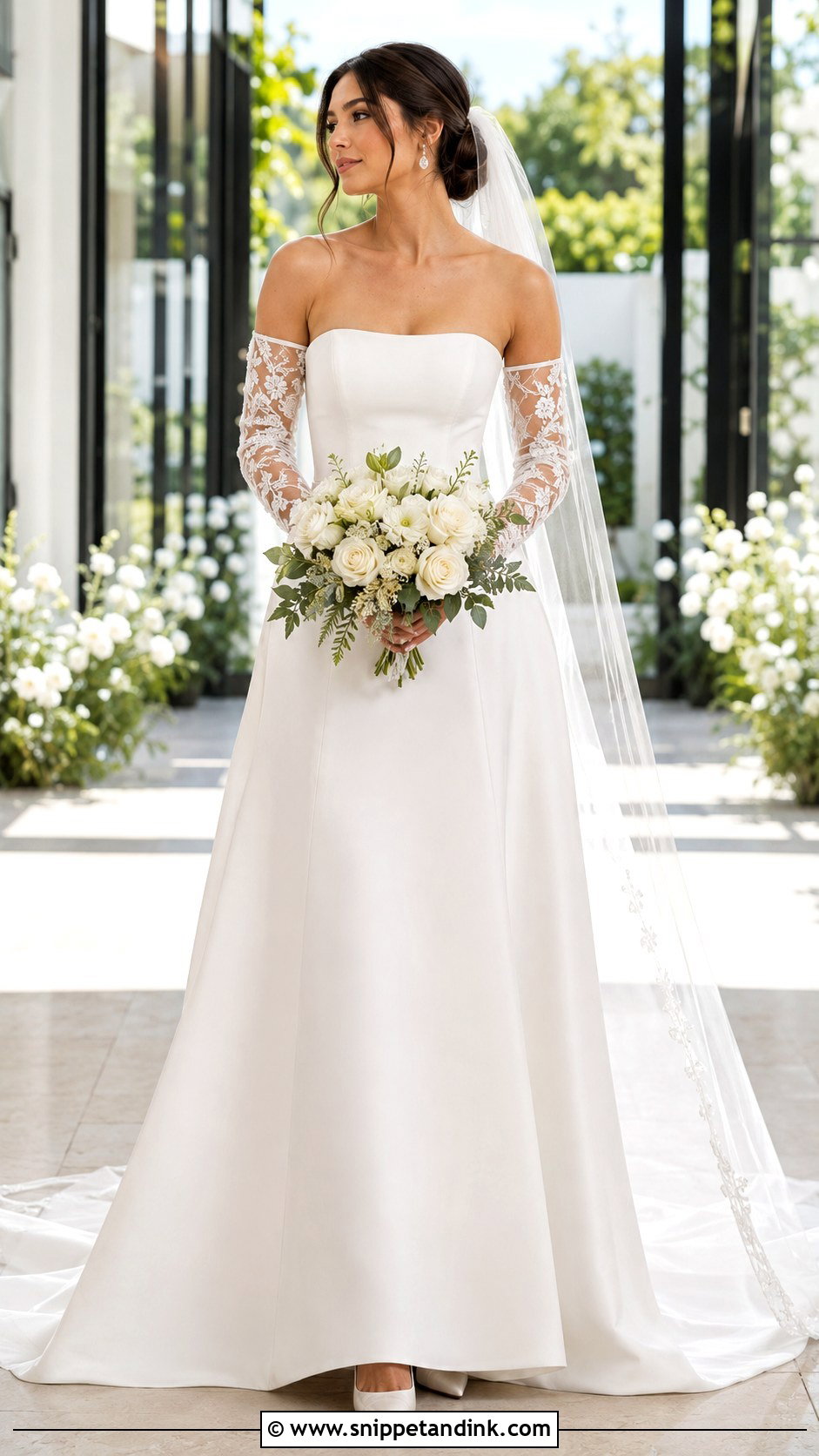
Detachable sleeves let one gown handle two settings: covered for a church or a cold ceremony, strapless for a warm reception. Start with a structured bodice and any skirt shape, then add lace, tulle or satin sleeves. The detail I insist on is how they attach. Snaps, buttons or elastic should be hidden under the neckline edge, so that the bodice looks finished on its own and the sleeves look built in when worn. Elegant pumps, small drop earrings and a veil in the same fabric as the sleeves tie it together, with a low bun. It’s practical when the two halves of the day have different temperatures or dress codes.
The Calendar Behind a Wedding Gown
Brides are often surprised by how long a gown takes. Lead times vary a lot between designers and shops, so ask for yours in writing, but this is the rough rhythm I plan around for a made-to-order dress:
- Start shopping around nine to twelve months out. It leaves room for a second round of appointments if the first doesn’t land.
- Order by about eight months before. Many gowns are made after you order, and production often takes four to six months, longer for heavy beading or custom changes.
- First alteration fitting roughly two to three months before the wedding, bringing your shoes and underwear.
- Final fitting one to two weeks out, with whoever will dress you, so they learn the fastenings and bustle.
Short on time? Off-the-rack and sample gowns can be taken home the same day, and many ready-to-wear designers ship in a few weeks. You’ll trade some choice of size and shade, but alterations can still make them fit.
What happens to the train after the ceremony
Any train longer than a sweep needs a bustle so you can dance. An over bustle hooks the train up to buttons at the back of the waist and suits lighter fabrics. A French or under bustle tucks it beneath with numbered or colour-coded ribbon ties, which looks tidy on satin and full skirts. Many seamstresses add a bustle as part of alterations, and it’s well worth a practice run at the final fitting.
Move in It Before You Say Yes
Ball gowns, crepe columns, lace sleeves, halters and gowns with parts that come off cover very different weddings, and you won’t know which one is yours until you’ve moved in a few. At appointments, sit down, walk, lift your arms and feel the weight of the skirt and train. Once the dress is settled, plan the shoes, jewellery, veil, hair and bouquet around it as one look, not five separate purchases. Then put the money into alterations. A simple gown that fits exactly will always look better than a costly one that doesn’t, and you’ll be comfortable enough to forget you’re wearing it.
You'll Like These Ideas:









Leave a Reply