
A pencil gown follows the body closely and drops in a narrow, straight line to the hem. It gives you the shape of a fitted dress without the flare of a mermaid skirt, and in my fitting room it’s the silhouette that shows the most about how well a dress has been altered. It suits a formal ceremony, a city wedding, a relaxed garden party or a courthouse morning, and the fabric, neckline and sleeves decide whether it reads minimal, romantic, vintage or glamorous. What it never forgives is a careless fit through the hips and knees. The twenty looks below run from satin with a cathedral veil to lace midi dresses with pumps, and for each one I’ve noted what I’d check before you commit.
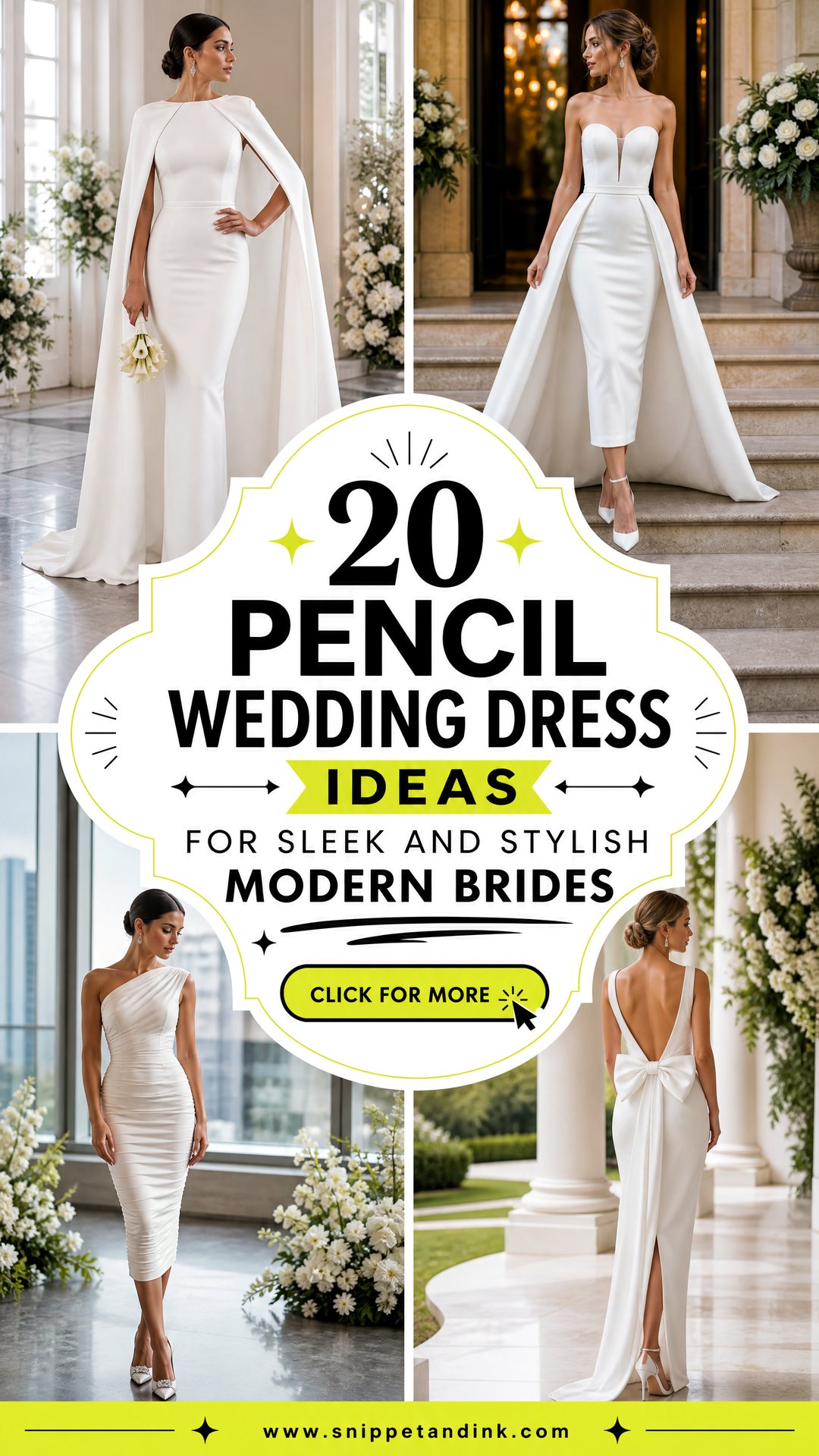
Pencil, Sheath or Column? How the Shapes Differ on a Real Body
Brides often arrive using these words interchangeably, and the difference matters once you’re in the dress. A sheath skims the body loosely and falls straight. A column is straight from shoulder to hem with almost no waist. A pencil is the most fitted of the three, hugging the hips and narrowing slightly toward the knee, which is exactly why it looks so sharp and why it asks more of your stride.
I’d steer you toward a pencil if you like structure and your venue involves short walks rather than lawns and gravel. I’d think twice if the day has lots of stairs, a long aisle on grass or a dance floor you plan to own, unless the dress has a generous vent. When you try one on, sit in a low chair, climb a step and turn quickly. If any of those makes you hold your breath, try a sheath in the same fabric before giving up on the look.
1. Strapless Satin Pencil Wedding Dress
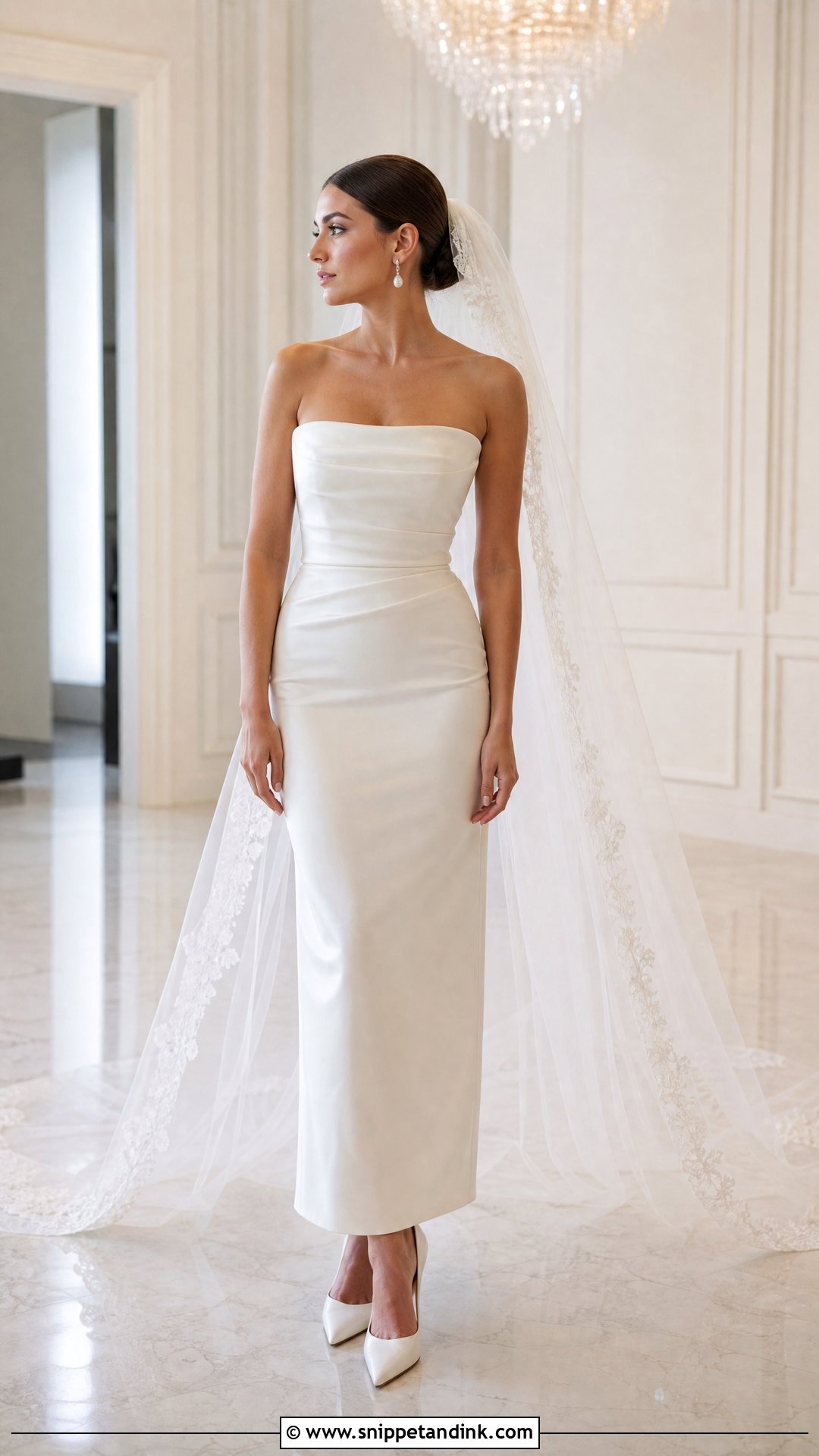
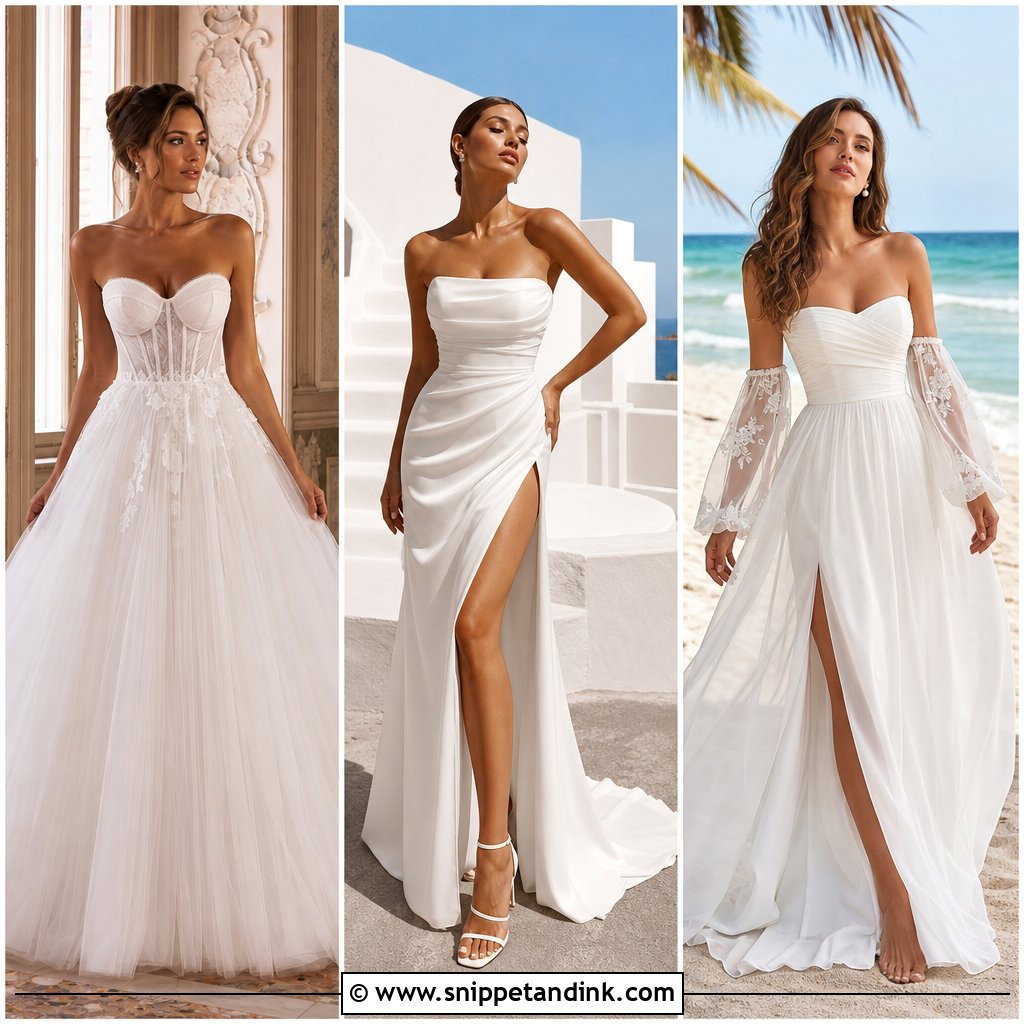
Strapless satin is the cleanest version of this shape, and the fit at the ribcage is what holds it up. I fit the boned bodice snug around the ribs rather than tight across the bust, because a strapless top anchored only at the bust slides down every time you sit and stand. Structured satin falls smoothly over the hips, though it also shows every crease across the lap after a long ceremony, so ask how your fabric recovers. A straight or softly curved neckline, pointed ivory pumps, pearl drops and a small satin clutch keep it quiet, and a cathedral veil adds drama without disturbing the line. Covered buttons or a small bow at the back give a plain front something to answer. Hair stays sleek: a low bun or pinned waves.
2. Long Sleeve Lace Pencil Wedding Dress
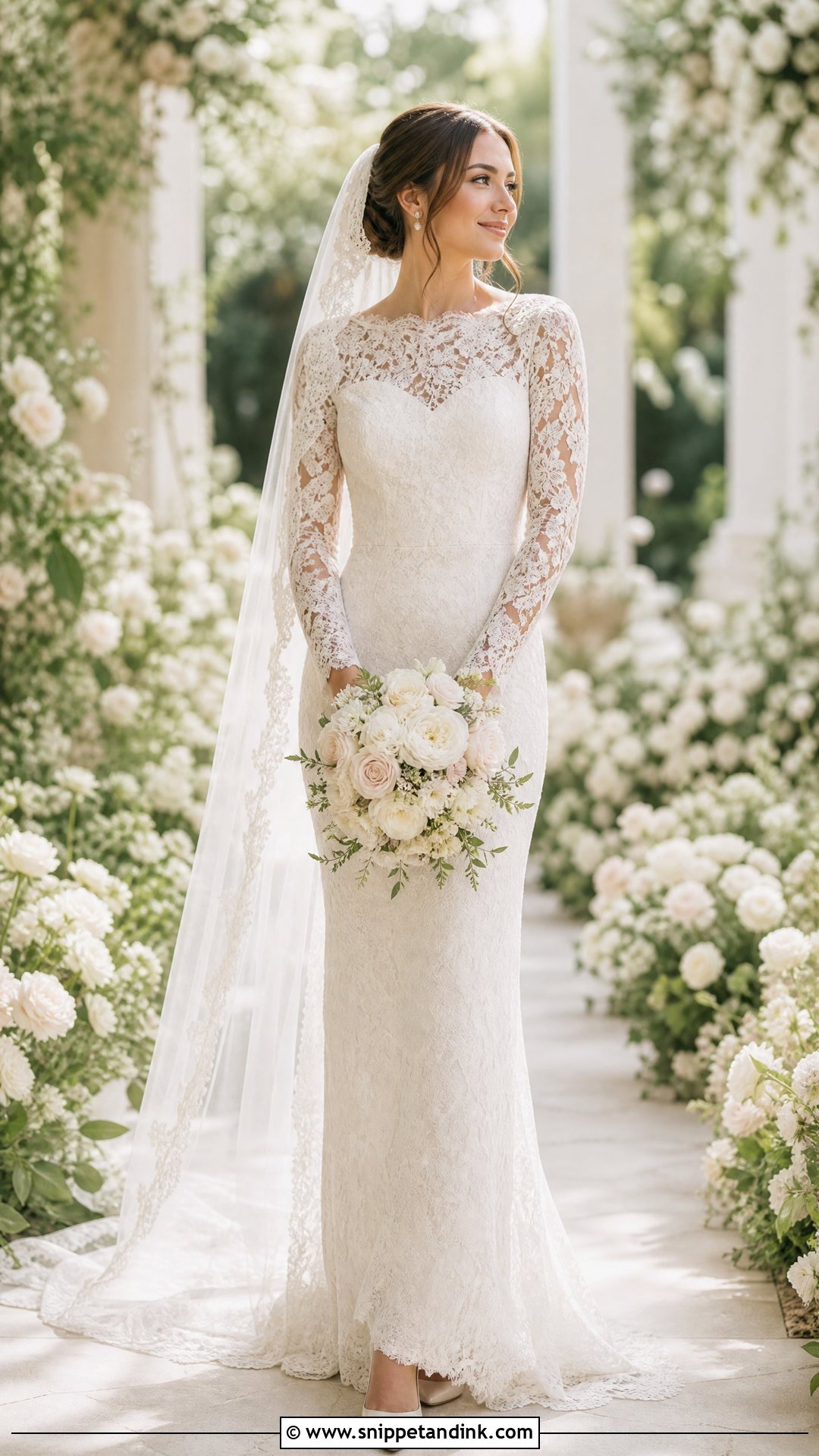
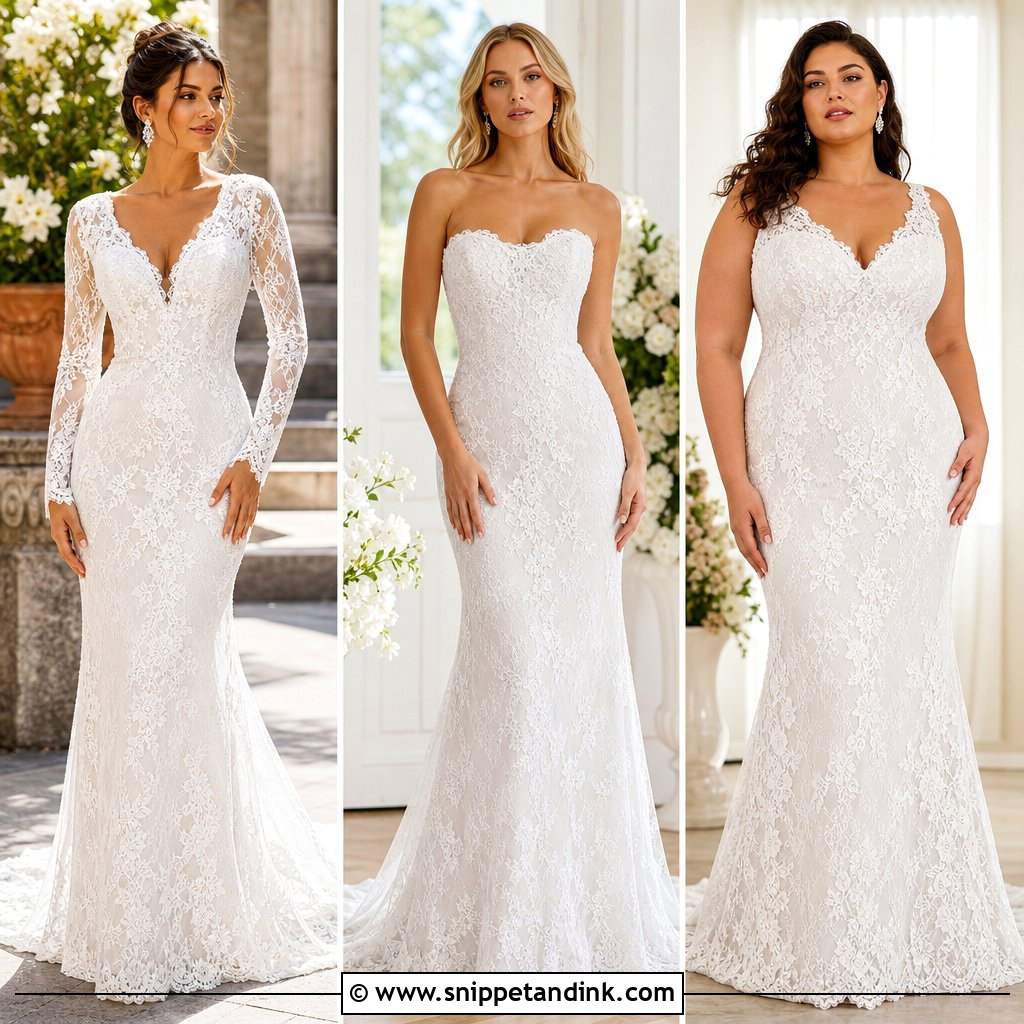
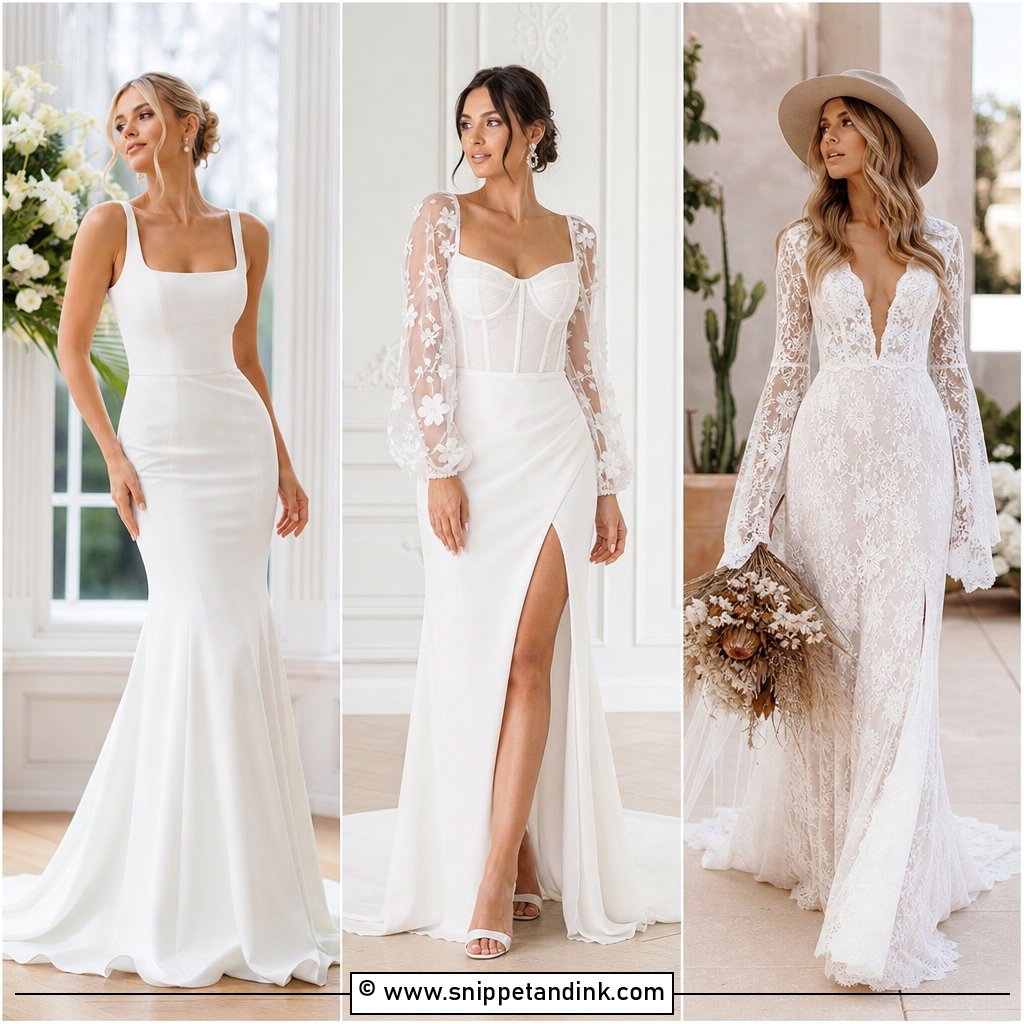
Lace softens a close fit, and the sleeves are where it succeeds or fails. Long sheer lace sleeves need a sleeve cap cut high enough to let you hug and raise a glass; set too low, they pull the whole bodice upward when you lift your arms. Floral lace feels romantic and geometric lace looks cleaner, and a good seamstress will cut around the motifs at the hem instead of chopping through them. Pair it with closed-toe ivory heels, small pearl studs, a fingertip veil edged in matching lace and a low chignon that keeps the neckline and sleeves visible. Under lace, I choose smooth, low-profile shapewear, and a discreet back slit or stretch lining makes walking far easier.
3. Square Neck Crepe Pencil Wedding Dress
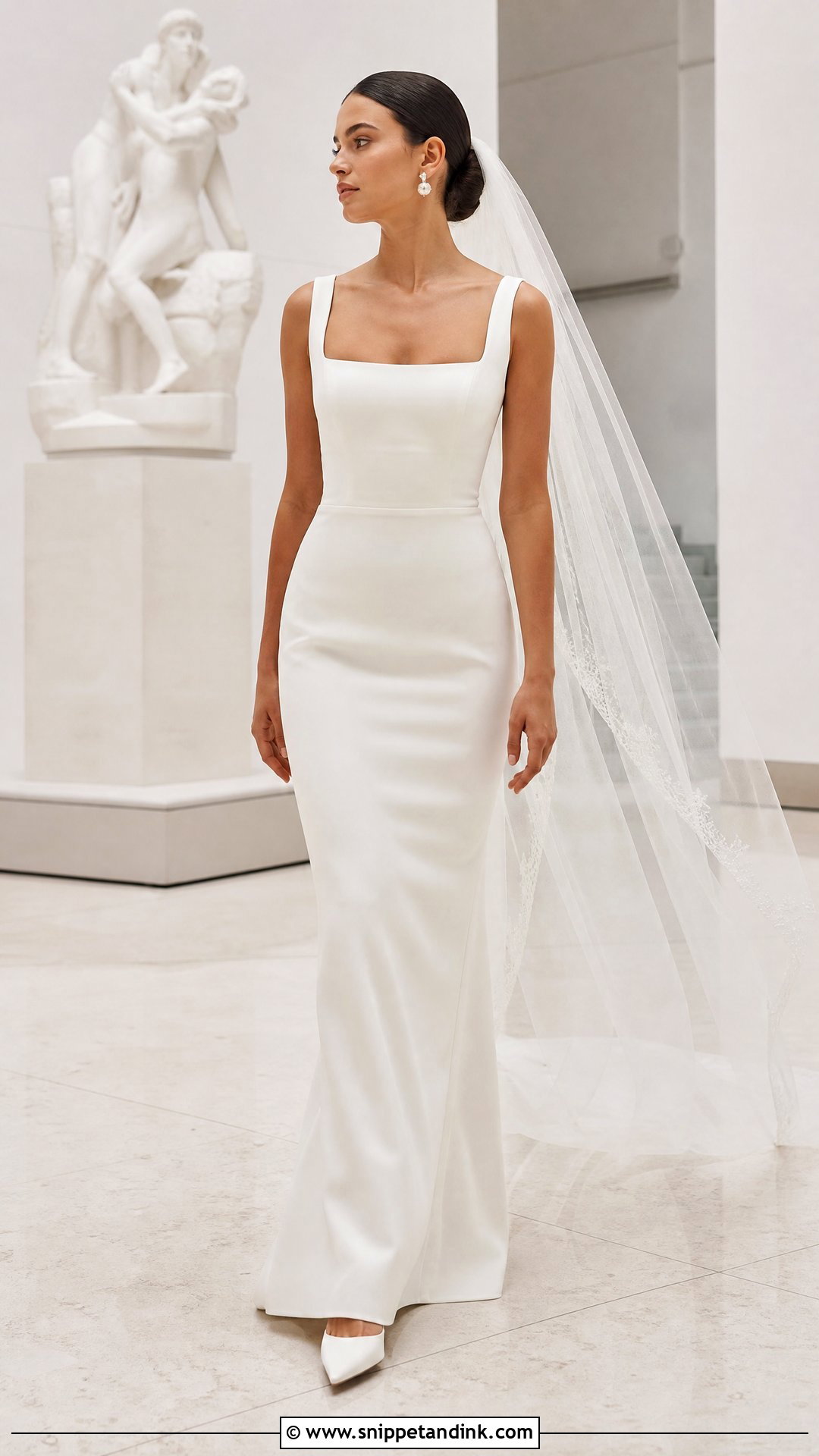
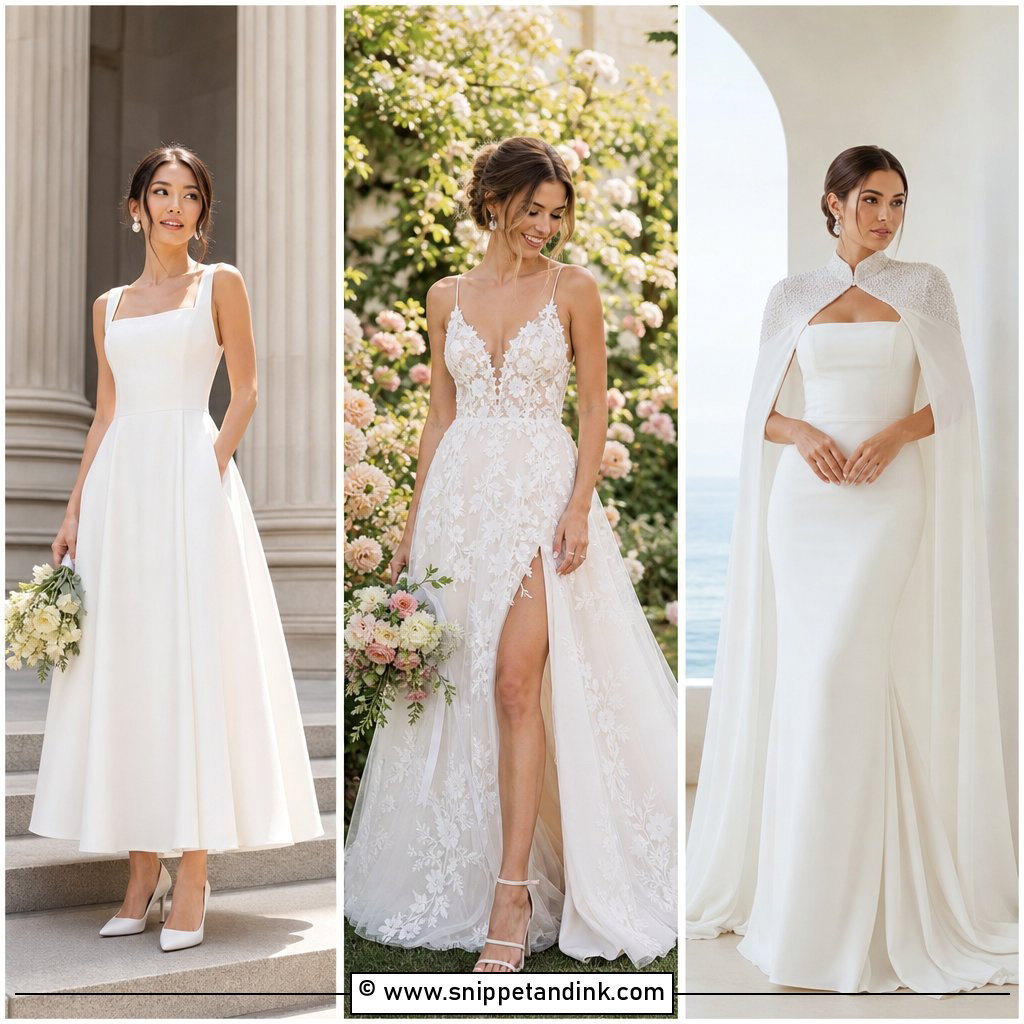
A square neckline frames the collarbones, and the wide straps are a gift for anyone who needs real bust support in a narrow dress. Medium-weight stretch crepe moves with you better than a rigid fabric, though it relaxes a little over a long day, so I fit it snug rather than tight. Crepe is also honest about what’s underneath, which makes undergarment choice part of the fitting, not an afterthought. Pointed slingbacks, sculptural pearl earrings and a plain cathedral veil keep it modern, with a structured mini bag for portraits. For gentle waist definition I’d use curved princess seams instead of a belt, and a center-parted low bun shows off the neckline in museum, rooftop or minimalist settings.
4. Off Shoulder Pencil Wedding Dress
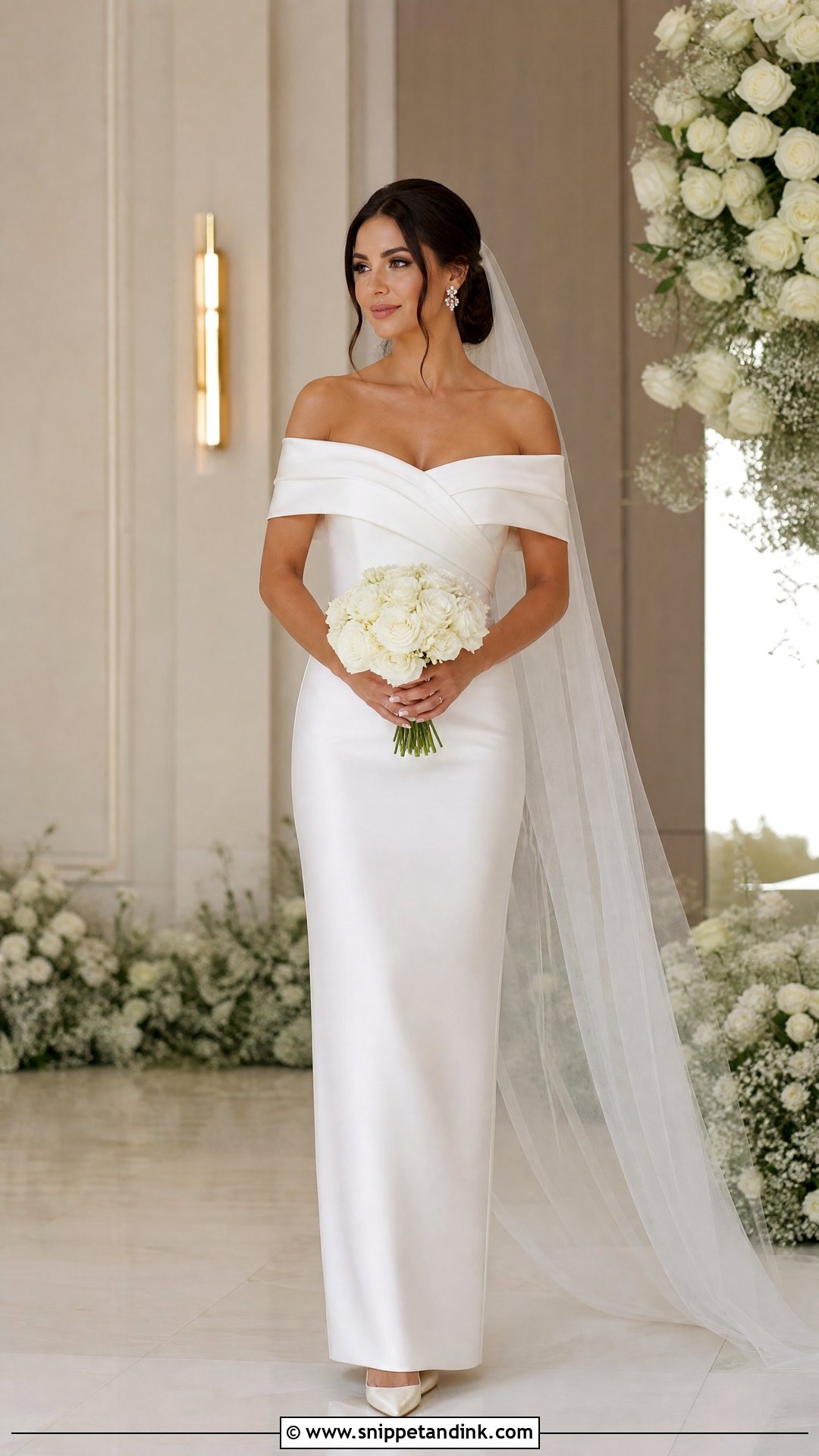
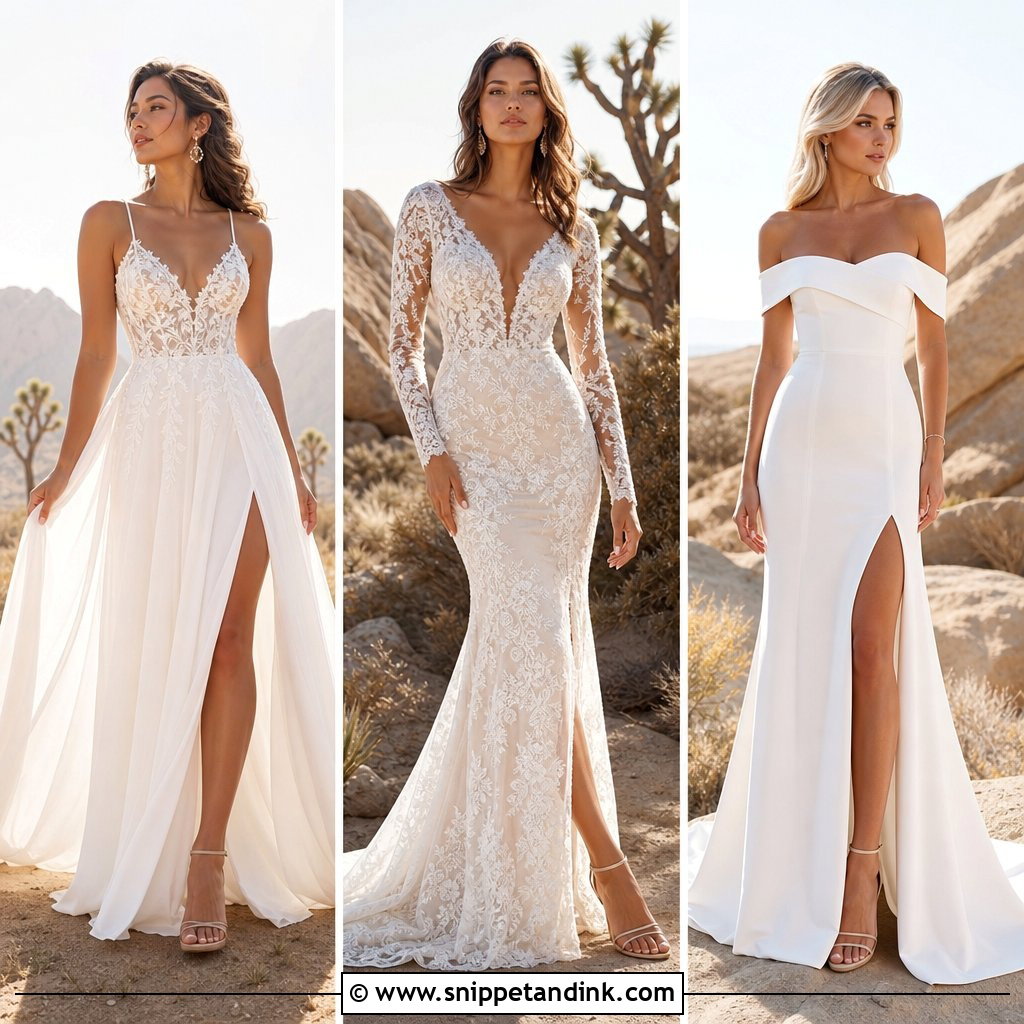
Off-the-shoulder bands look effortless in photos and take the most engineering of any neckline here. Folded satin gives structure, and lace or tulle sleeves give a lighter finish, but either way the band needs silicone grip or a hidden elastic, or it creeps up your arms within the hour. I always ask brides to lift both arms and hug me before the neckline is finalized. Crystal drop earrings, ivory pointed pumps and a long plain veil set under a low bun complete it, and I skip the necklace so the collarbones stay the focus. A small rounded bouquet echoes the controlled lines, and a back slit keeps the walk natural.
5. High Neck Pencil Wedding Dress
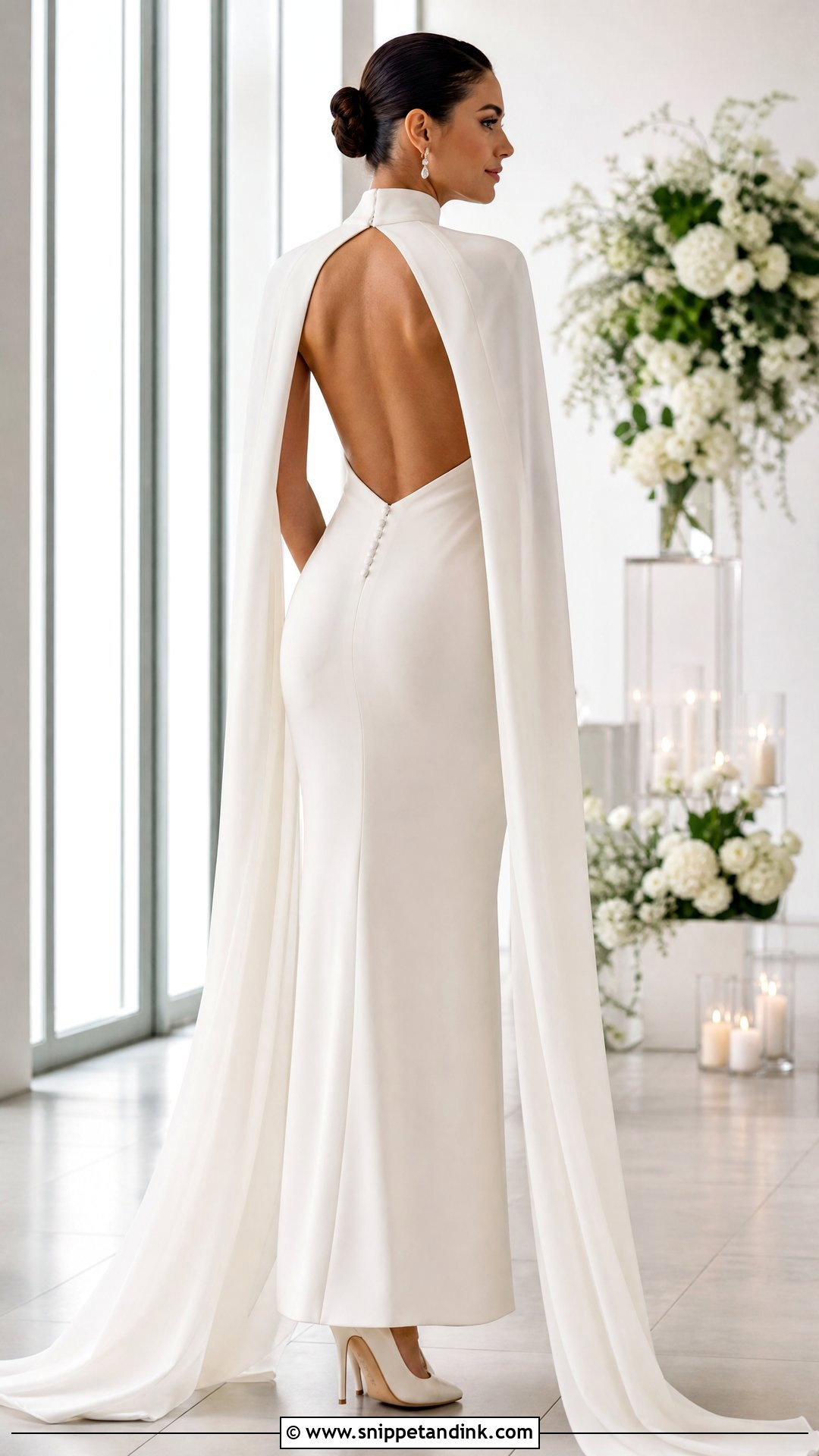
A high neck can make a narrow dress look sharp and fashion-led, yet it isn’t for every neck. On a shorter neck, a tall mock collar can crowd the jaw, and I’d lower it to a softer funnel or swap to a sheer yoke. Lace, crepe or smooth satin all work, balanced by an open back or a row of buttons behind. Pointed pumps, delicate earrings and a clean low ponytail or bun keep attention on the collar. Instead of a traditional veil, a sheer cape veil fixed at the shoulders adds movement behind you while leaving the slim skirt visible. With this much coverage I’d keep it for cool-weather ceremonies and polished city venues.
6. Cap Sleeve Pencil Wedding Dress
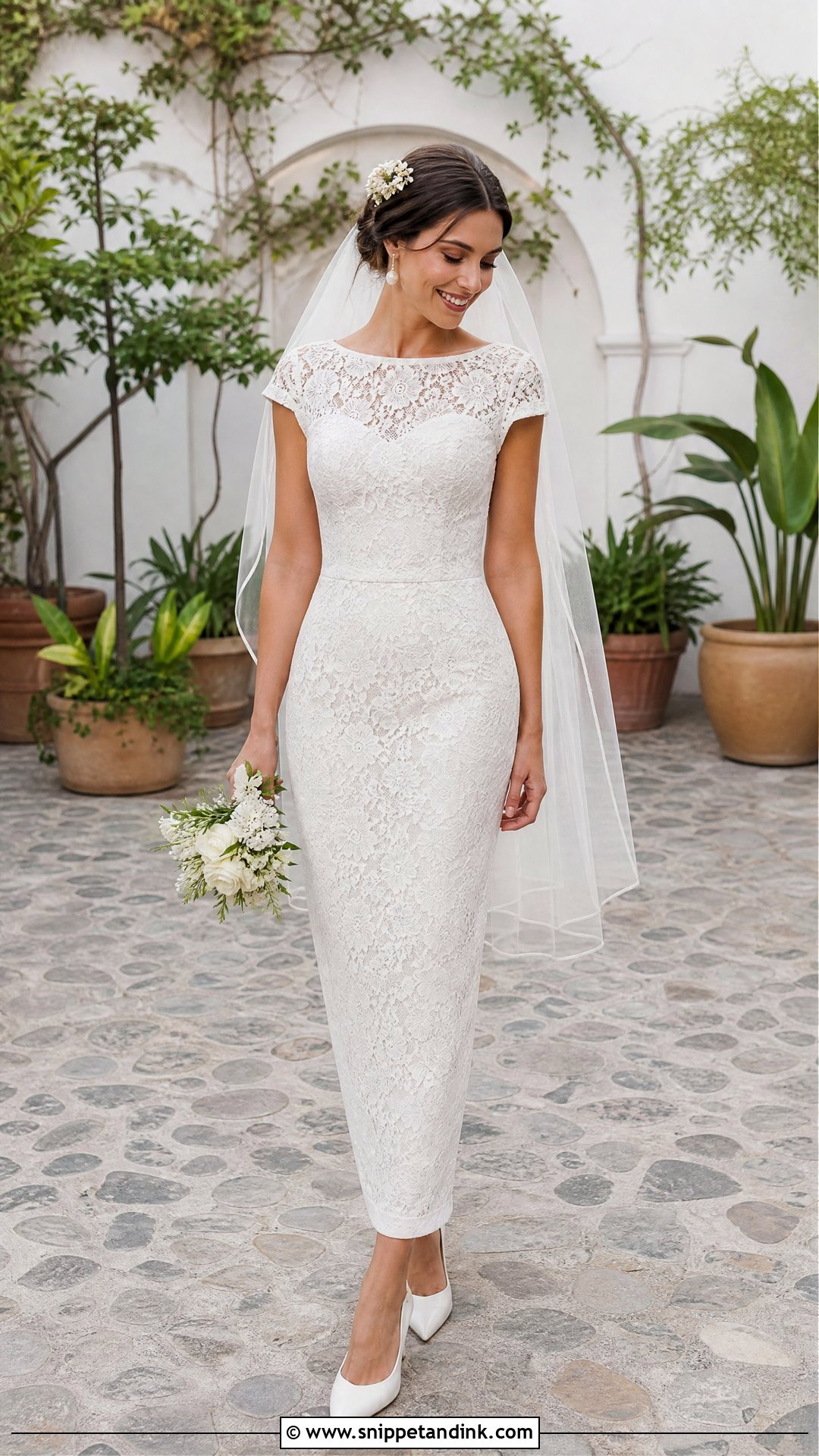
Where a cap sleeve ends decides whether it flatters. If it stops at the widest part of the upper arm, it draws a line there; a fraction shorter or longer usually looks better, and that’s an easy adjustment to ask for. Cap sleeves sit well with a bateau, scoop or modest V-neck, in smooth crepe for minimalism or embroidered lace for a more traditional finish. Pearl earrings, closed-toe pumps and a waist-length or fingertip veil keep it light, with a small floral comb in a soft updo. A floor-length skirt needs a back vent for walking and sitting, and on a shorter version slingback heels lengthen the leg.
7. Tea Length Pencil Wedding Dress
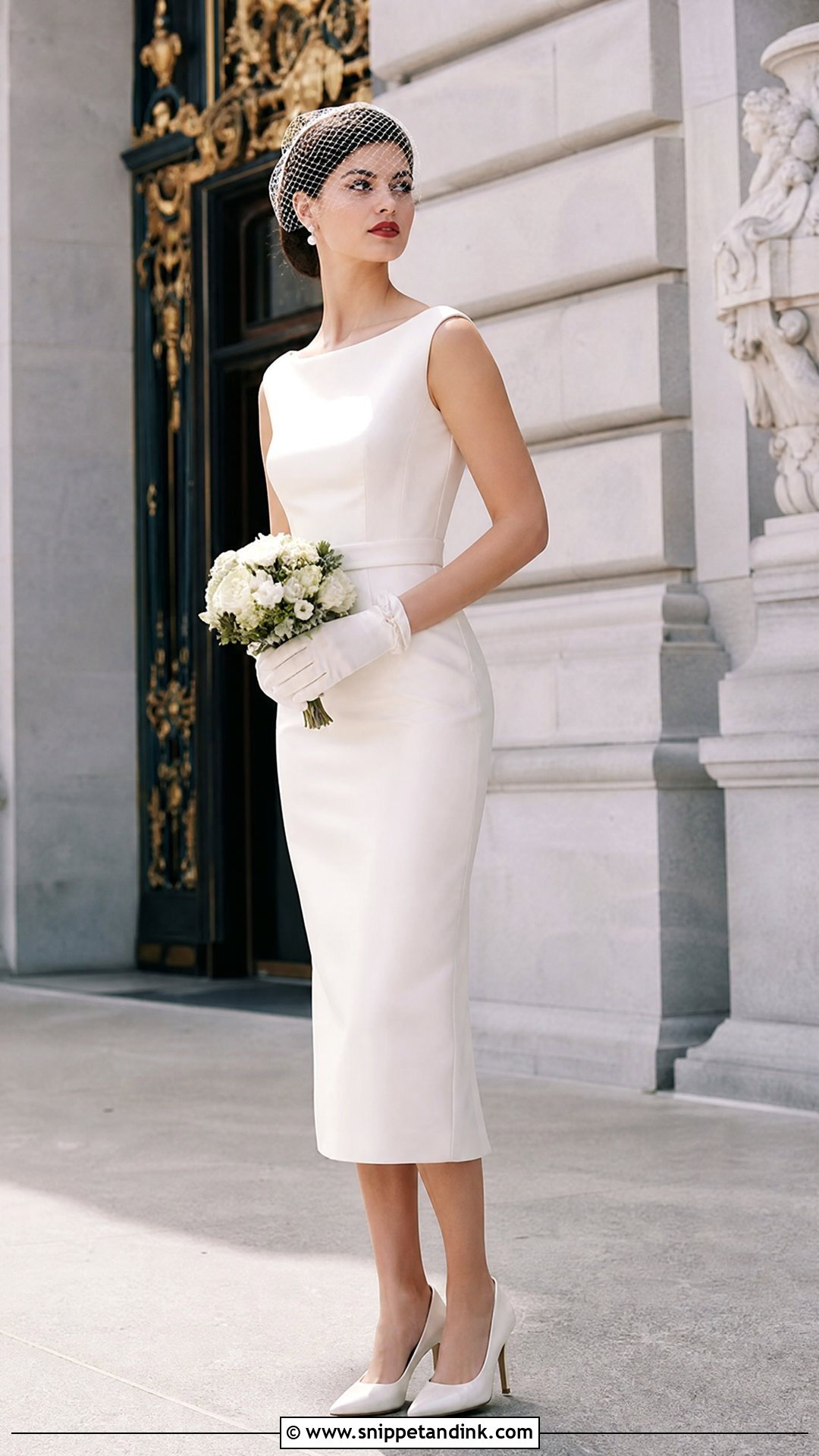
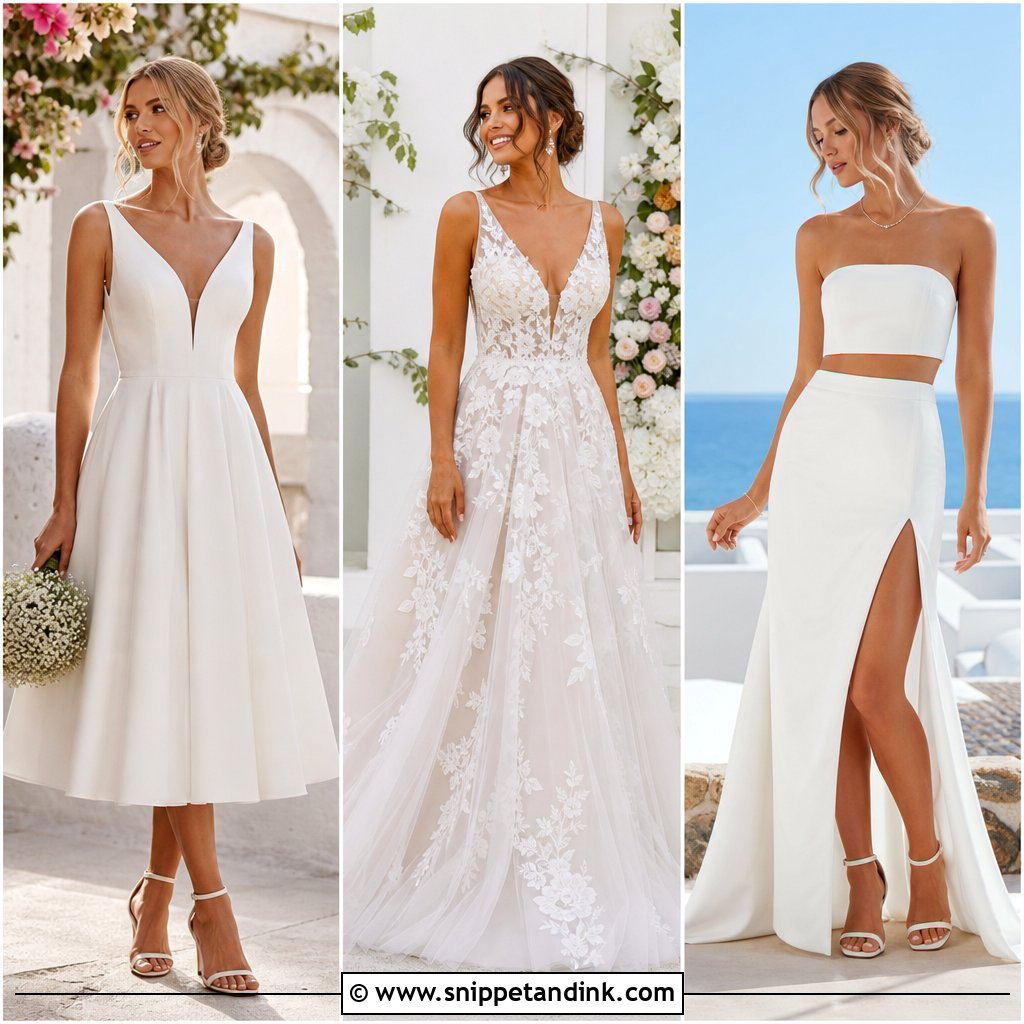
Tea length puts the shoes and legs on show, so I treat them as part of the dress rather than an add-on. The hem falls between the knee and the ankle, and I set it with the actual heels on, because two centimetres either way changes how the calf reads. Satin, faille or structured crepe with a defined waist and a back vent keeps the vintage line crisp. Pointed pumps or slim ankle-strap heels, short gloves, pearl earrings and a birdcage veil complete the period feel, with a compact bouquet in proportion. A fitted jacket or a detachable bateau overlay adds ceremony coverage. Through the knees, it should skim rather than squeeze, especially at city hall or a restaurant lunch.
8. Midi Pencil Wedding Dress
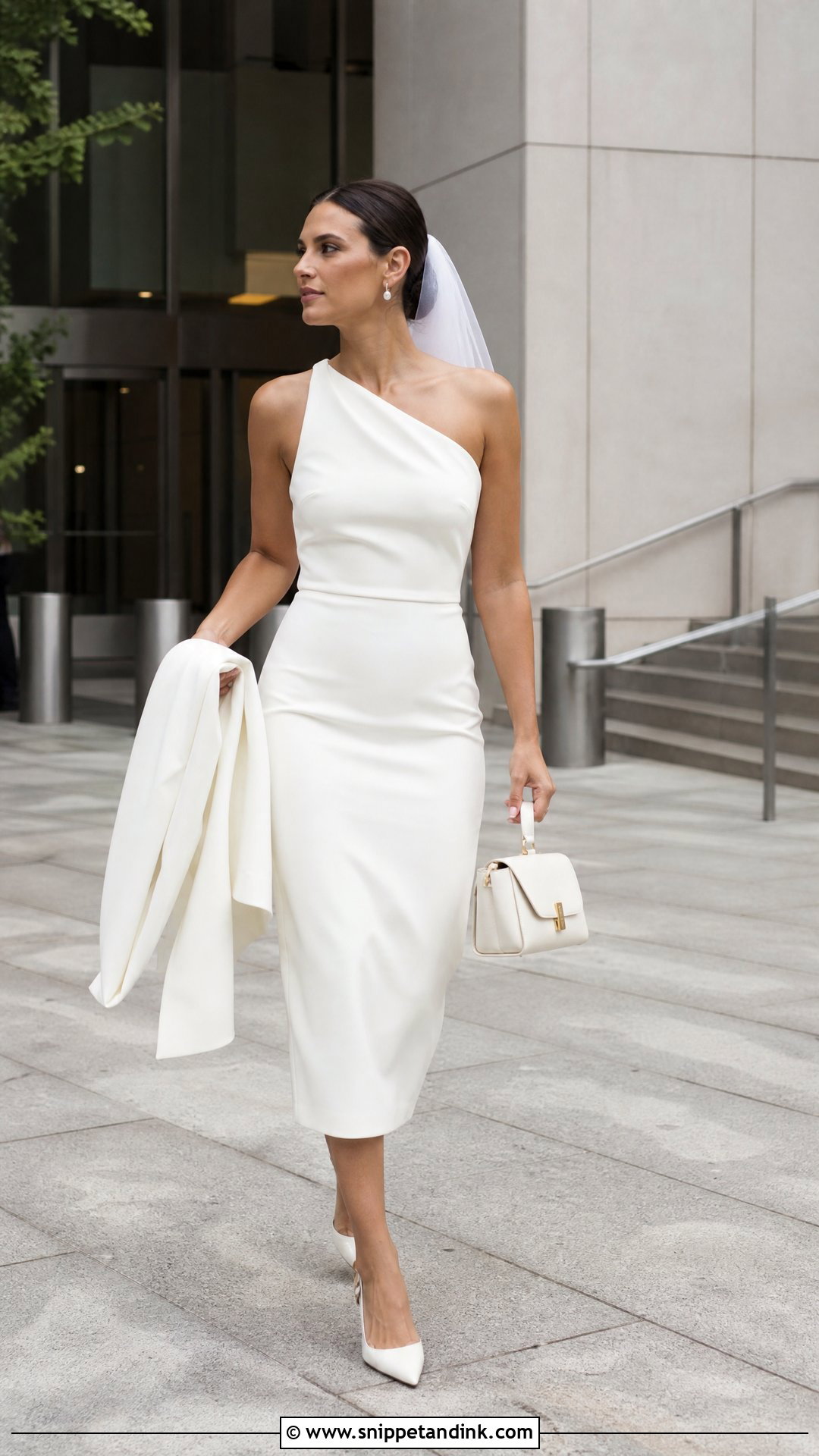
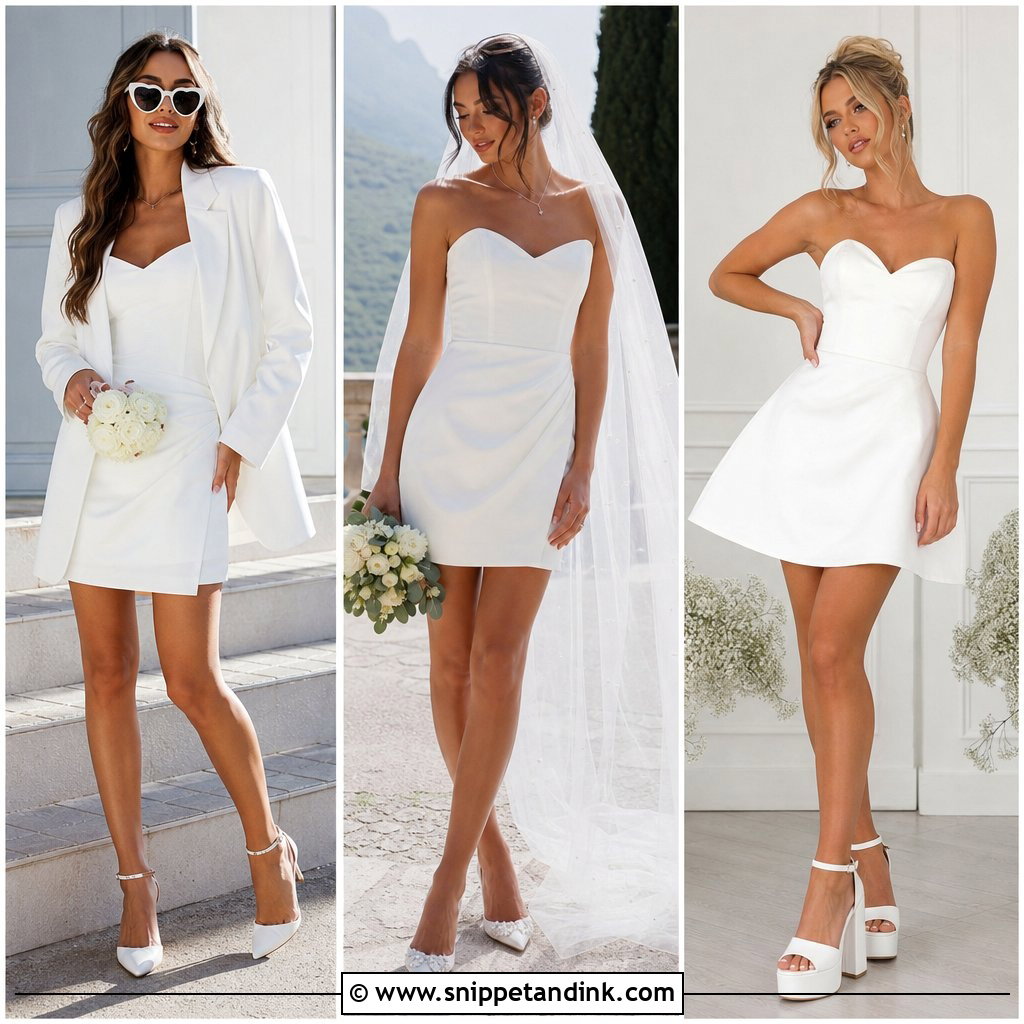
Midi is the most wearable length in the whole group, and the most forgiving to alter. I like the hem to land just below the knee or at the narrowest point of the calf, never halfway down the fullest part. Make sure there’s stretch in the fabric or a back slit, then let an asymmetric or square-neck bodice add character. I finish it with pointed slingback heels, a structured mini bag, small hoops and a short veil or hair bow. Smooth crepe looks citified, lace looks more bridal, and a tailored blazer covers you between locations. As a courthouse dress or an easy second look, it’s hard to beat.
9. Backless Pencil Wedding Dress
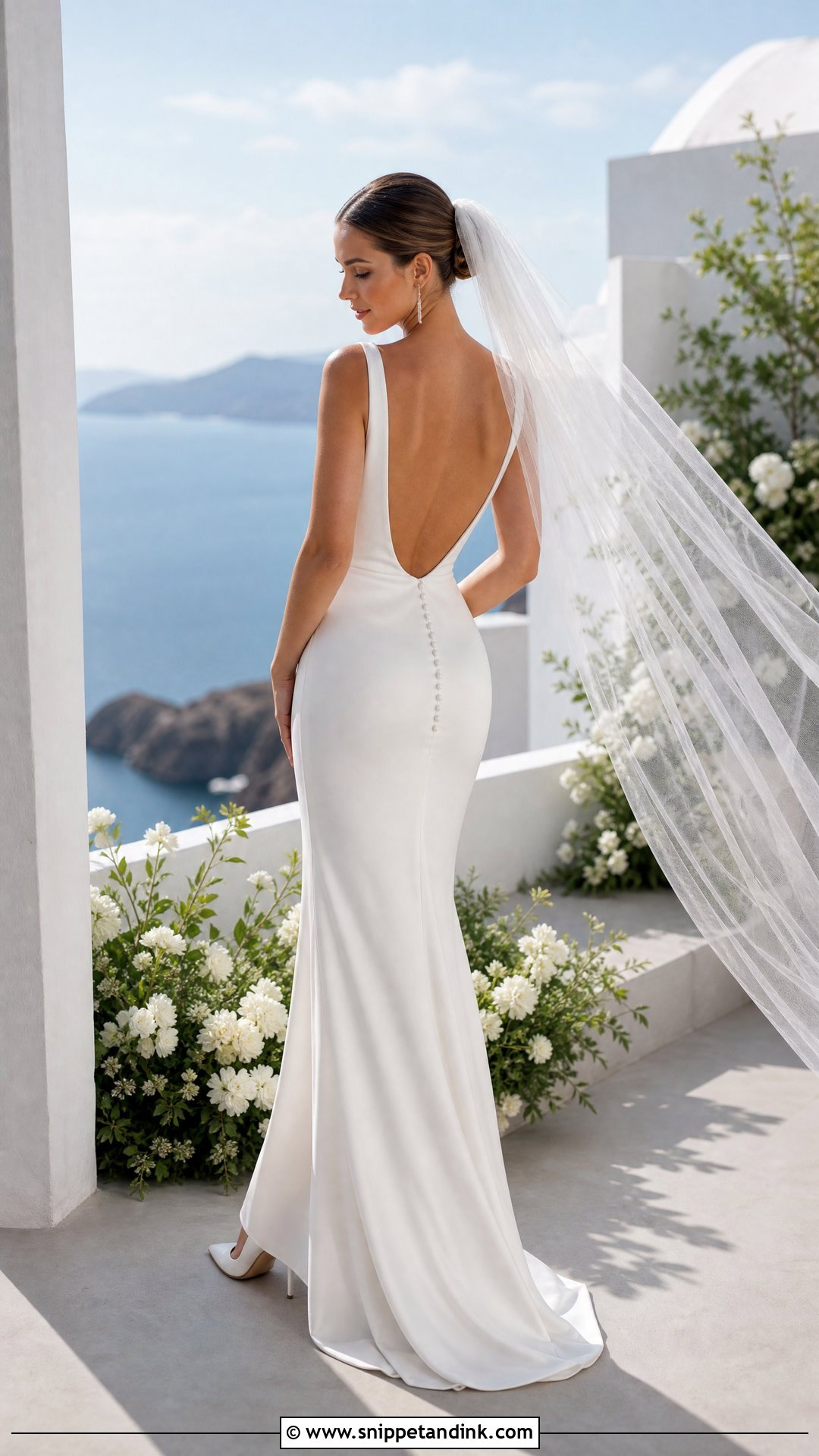
Backless dresses are judged from the side as much as the back. The edge of an open back should lie flat against the skin; if it stands away when you lean forward, the fit at the side panels needs taking in. Choose a secure bodice with supportive side panels and a back drop you’re comfortable sitting in, since the lowest point drops further when you’re seated. Crepe or satin keeps the skirt smooth, and lace edging softens the opening. Sewn-in cups usually beat any stick-on solution over a long day. Wear a low bun or side-swept waves, delicate drop earrings, pointed ivory heels and a sheer veil set below the hair, with covered buttons below the opening for a clean finish.
10. One Shoulder Pencil Wedding Dress
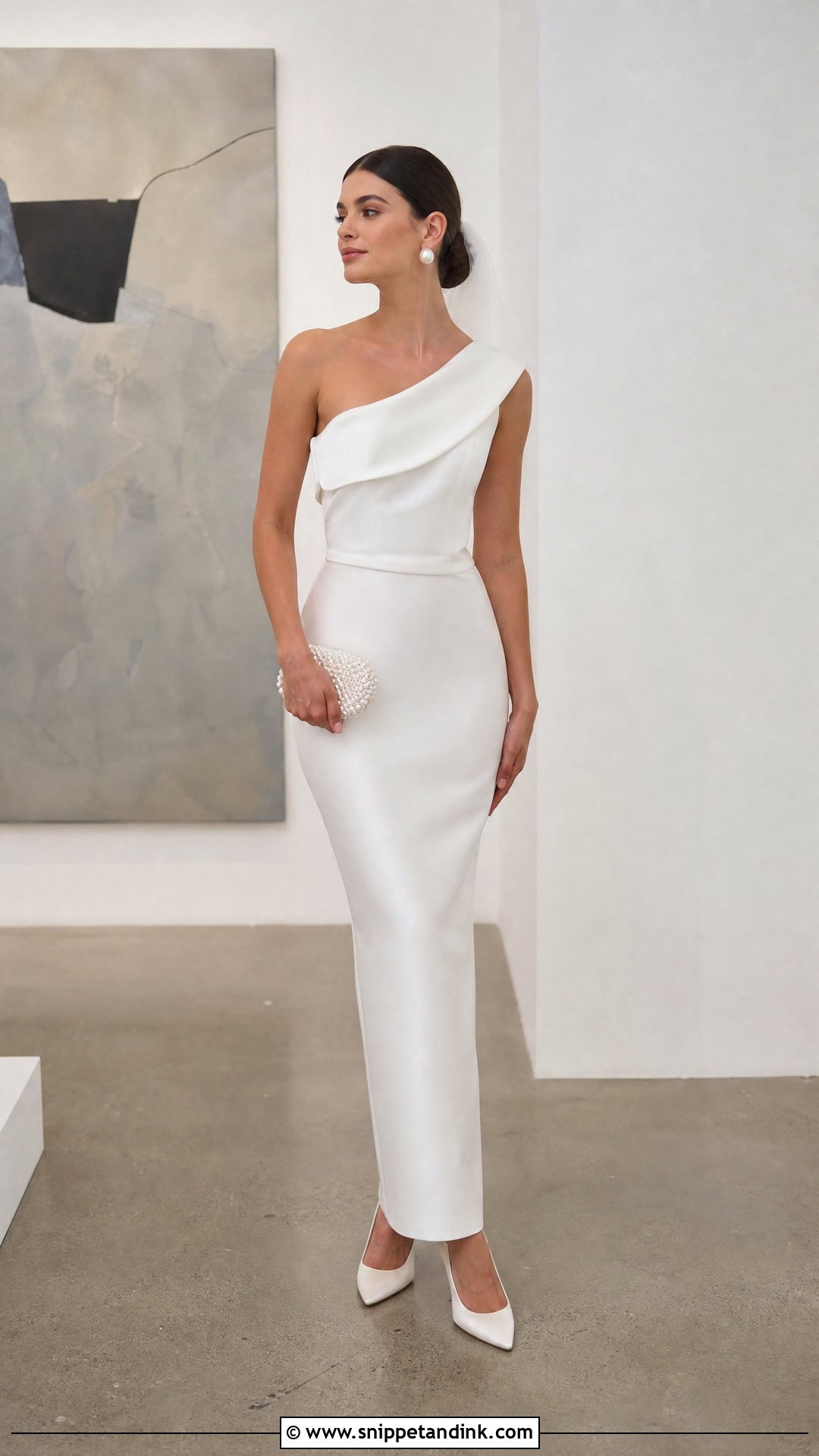
One shoulder carries the whole bodice, so I check that strap’s anchoring before anything else. A sculpted fold, soft draping or a single fitted sleeve all work, but the bodice needs internal grip or boning that doesn’t depend on the strap alone. Keep the skirt plain so the asymmetric line gets its moment. Sleek pointed pumps, a metallic or pearl clutch and a single statement earring on the bare side are all it needs. A smooth low bun keeps the neckline clear, and a short tulle veil or a long one set beneath the bun works better than a full veil. Leave the necklace off, because it fights the diagonal.
11. Cowl Neck Pencil Wedding Dress
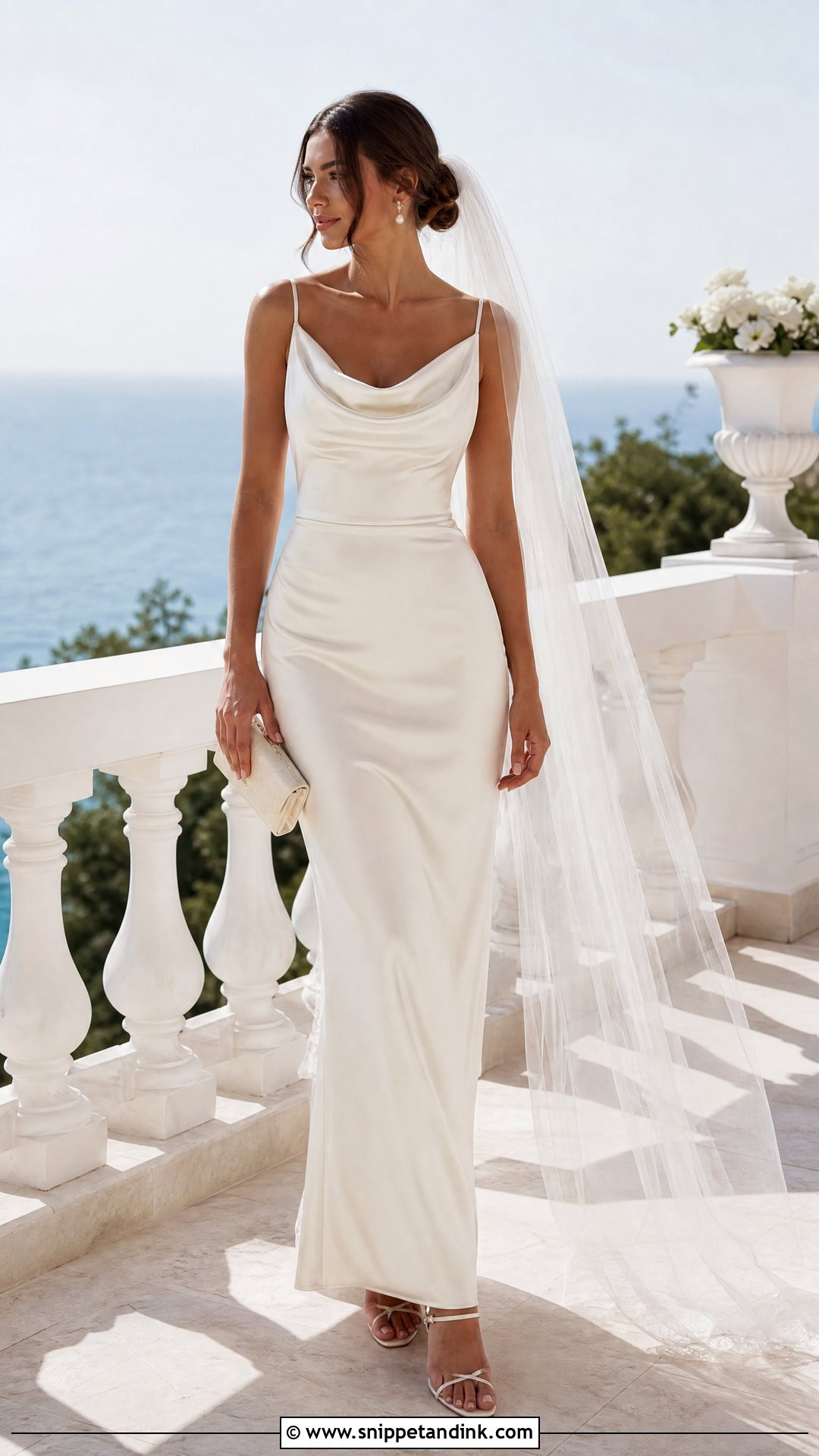
A satin cowl neckline softens a narrow gown, and bias-cut satin is the least forgiving fabric I fit. It clings wherever the body curves, so a supportive bodice underneath is not optional if you want coverage. My test for any cowl is to lean forward as if signing the register: if the drape opens too far, I add a weight or a small hidden tack. Slim strappy heels, pearl drops, a light fingertip veil and a small satin clutch continue the smooth texture, with soft waves or a loose low bun. A low cowl back gives an understated front something to answer, and I’d lean toward warm-weather or coastal settings for it.
12. Corset Pencil Wedding Dress
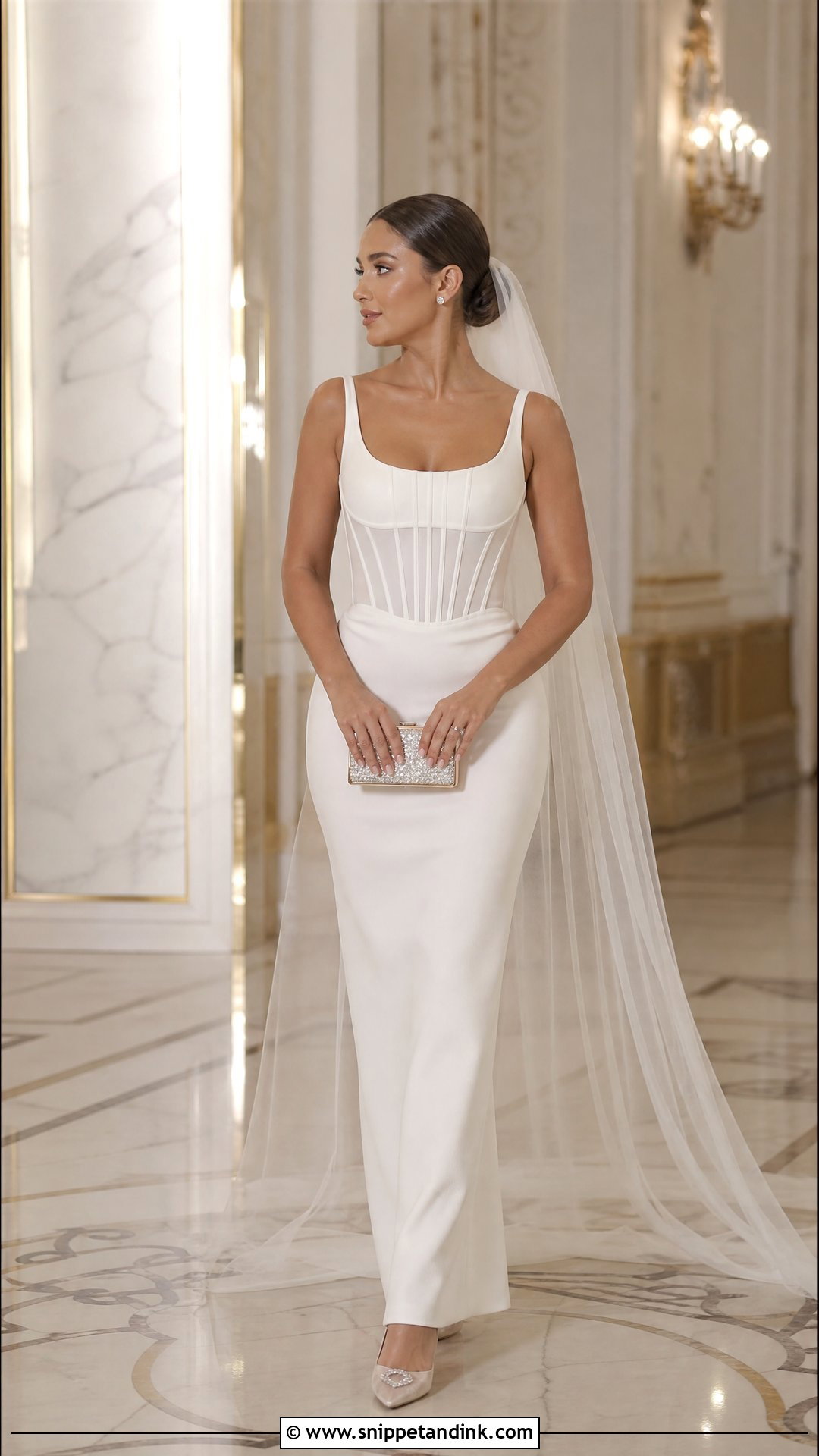
Corsetry should support, not restrict, and you can feel the difference within ten minutes of sitting. Exposed boning looks contemporary, while covered structure feels more traditional; flexible steel bones bend with the body better than plastic ones, which can kink after hours of wear. A scoop, sweetheart or straight neckline all suit the shape. I always have the bride sit, breathe deeply and eat a few bites at a fitting, because dinner is where a too-tight corset shows itself. Pointed heels, a sheer cathedral veil, crystal studs, a small structured clutch and a smooth chignon finish it. Stretch crepe or lined satin below the waist helps you move in a ballroom or estate setting.
13. Peplum Pencil Wedding Dress
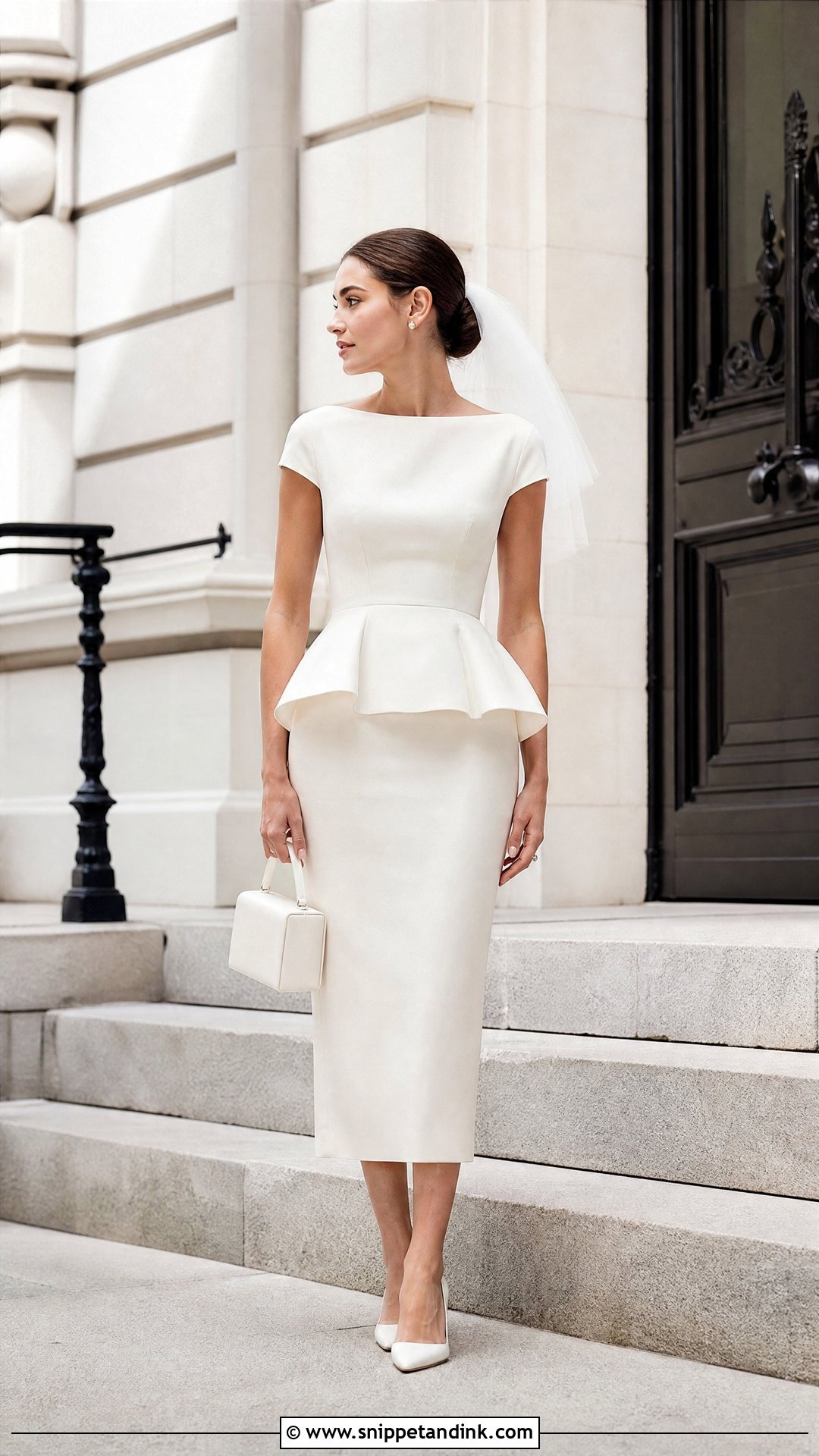
A peplum adds architecture at the hip, and it adds width there too, so placement is everything. I keep a high-waisted peplum short and close to the body, starting at the natural waist, so it lifts the eye instead of widening the hip. It can be curved, sharply tailored or detachable for two looks in one. Pointed pumps, pearl studs, a compact top-handle bag and a short veil or small bridal hat match the tailored mood. A neat bun or polished shoulder-length waves, a plain skirt with a center-back slit and very little embellishment complete it for a city venue or a formal lunch.
14. Cape Pencil Wedding Dress
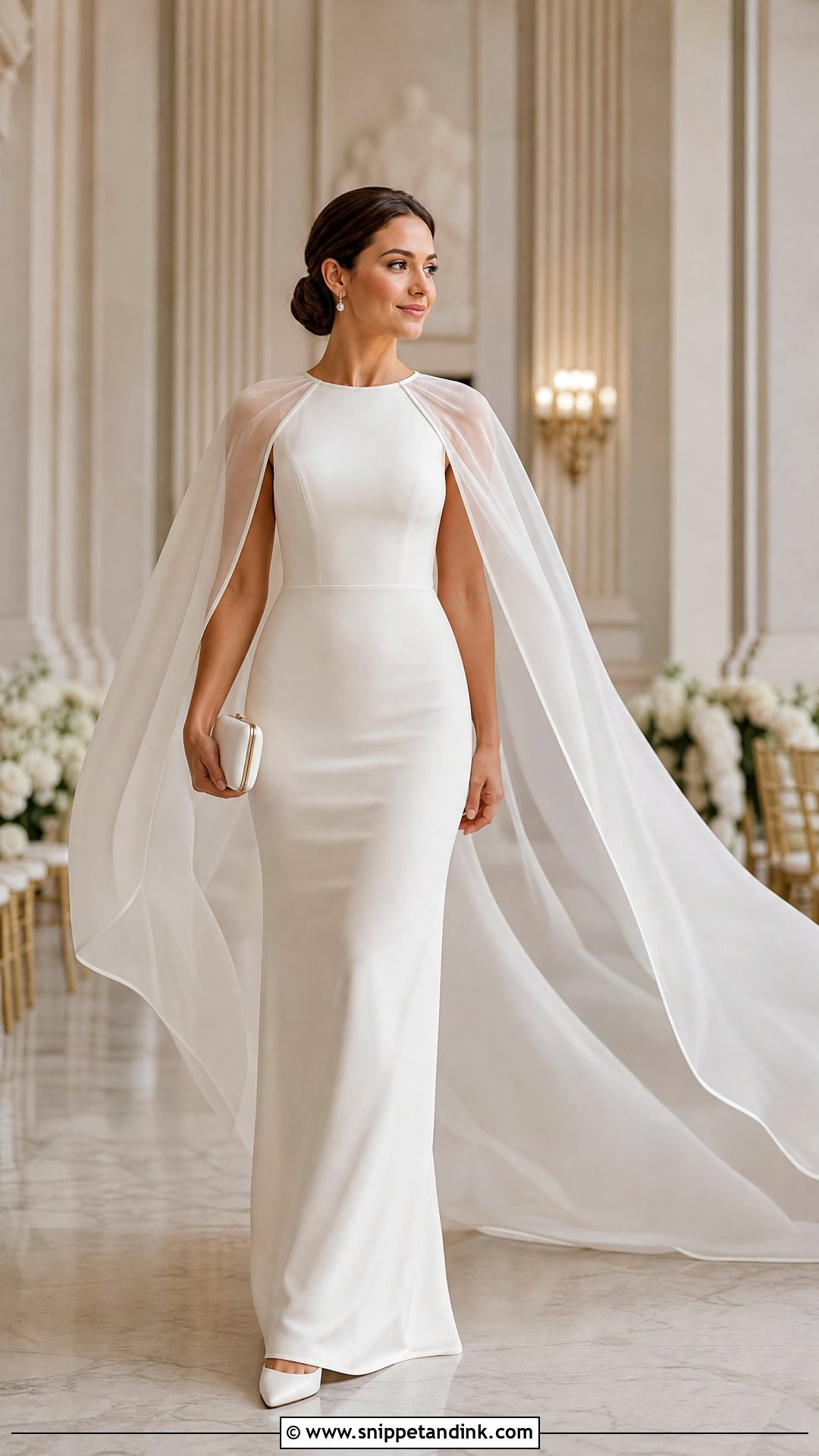
A cape turns a plain sleeveless gown into an entrance, as long as it stays put. I fasten capes with hidden hooks or snaps at the shoulder seams, never just a tie at the neck, because a cape that slides backward pulls on the throat all evening. Start with crepe or satin, a clean neckline and a narrow floor-length skirt, then choose sheer tulle for air or structured crepe for a tailored finish. Pointed pumps, small earrings and a smooth clutch keep everything else restrained, and a low bun lets the cape sit neatly. It can replace a veil, or partner a short one if the fabrics don’t clash. Make it detachable so the reception is easier, especially in cooler months.
15. Detachable Overskirt Pencil Wedding Dress
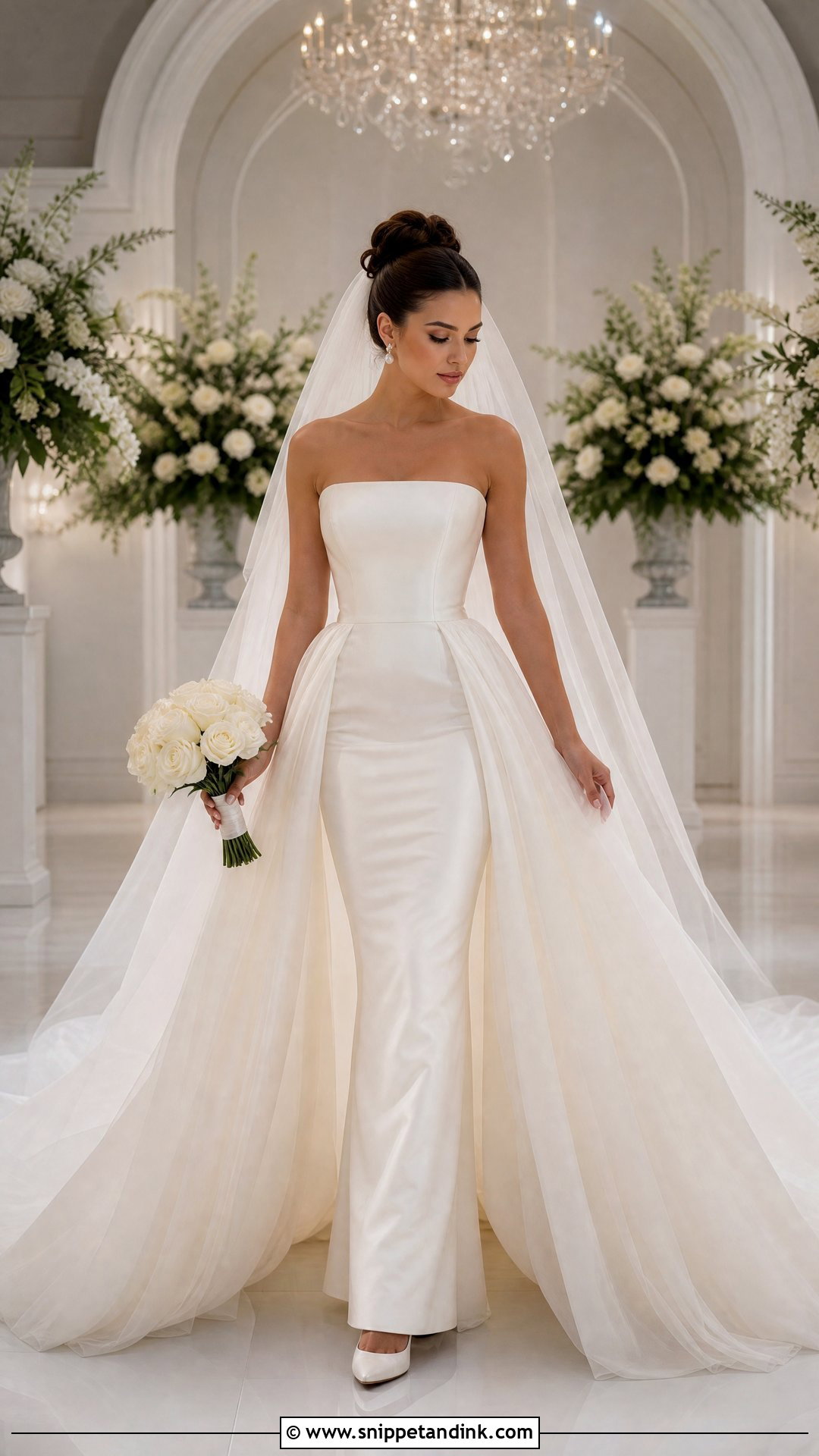
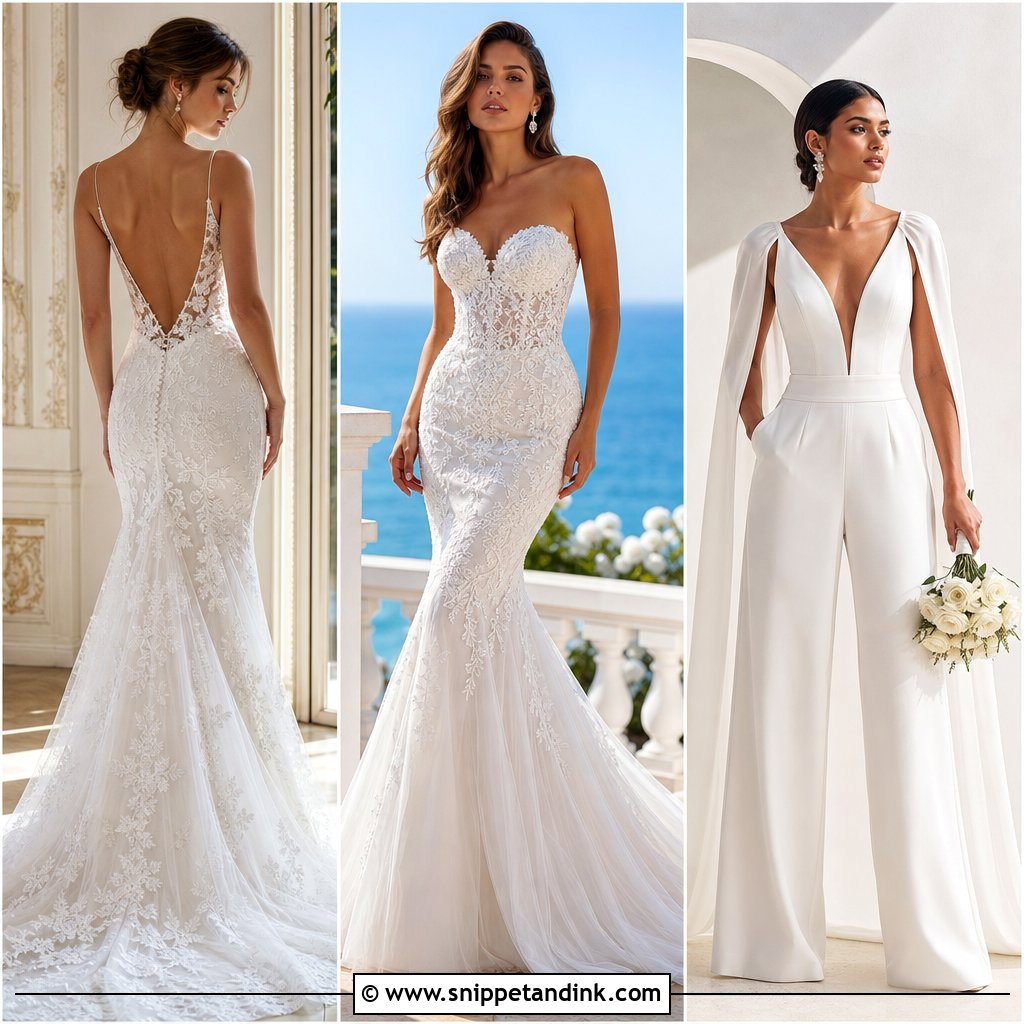
An overskirt gives you a ceremony gown and a reception dress in one fitting appointment. The base should be a fitted crepe, satin or lace gown that looks finished on its own; the overskirt attaches at the natural waist in mikado for structure or tulle for softer volume. Heavy mikado can drag the waistline down over the day, so I ask for a waist stay or extra hooks inside to share the weight. Wear it with a cathedral veil, pearl earrings and closed-toe heels, then switch to a shorter veil, statement earrings or a sparkling comb once it comes off. Have your maid of honor practice releasing it before the wedding, because hidden fastenings are fiddly under pressure.
16. Beaded Pencil Wedding Dress
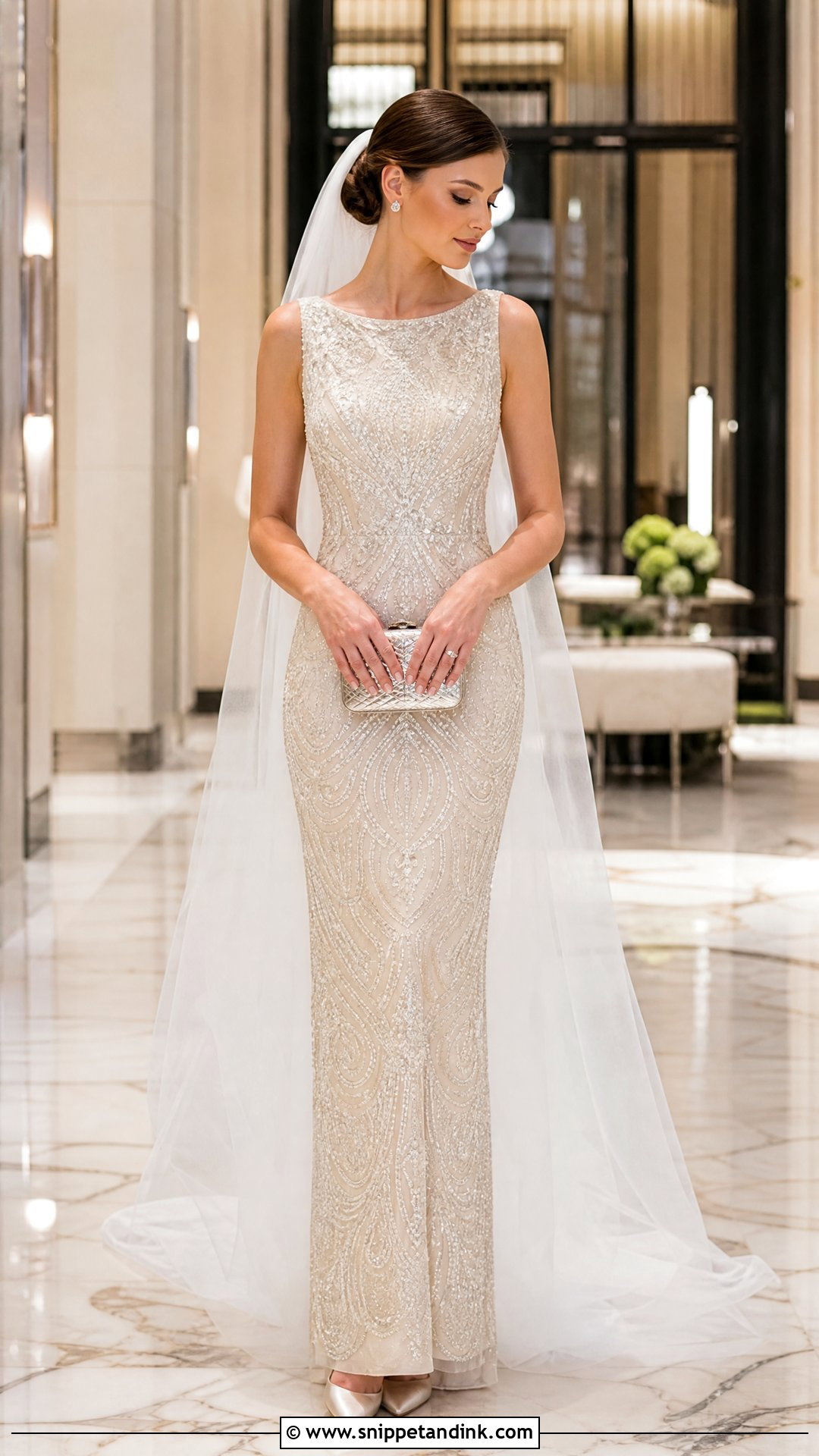
Beadwork brings light to a narrow dress, along with weight and a habit of snagging. All-over beading is glamorous; beads concentrated at the neckline, waist and sleeves feel quieter. A neutral lining under ivory beads makes the pattern readable without looking sheer. Beads catch fine tulle, so I pair this gown with a plain veil cut from a softer tulle and keep it away from beaded edges where I can. Simple satin pumps, crystal studs, a small metallic clutch for the reception and a smooth low bun or side part are enough. Check the shoulders after an hour of wear, as heavy beading drags on narrow straps.
17. Ruched Pencil Wedding Dress
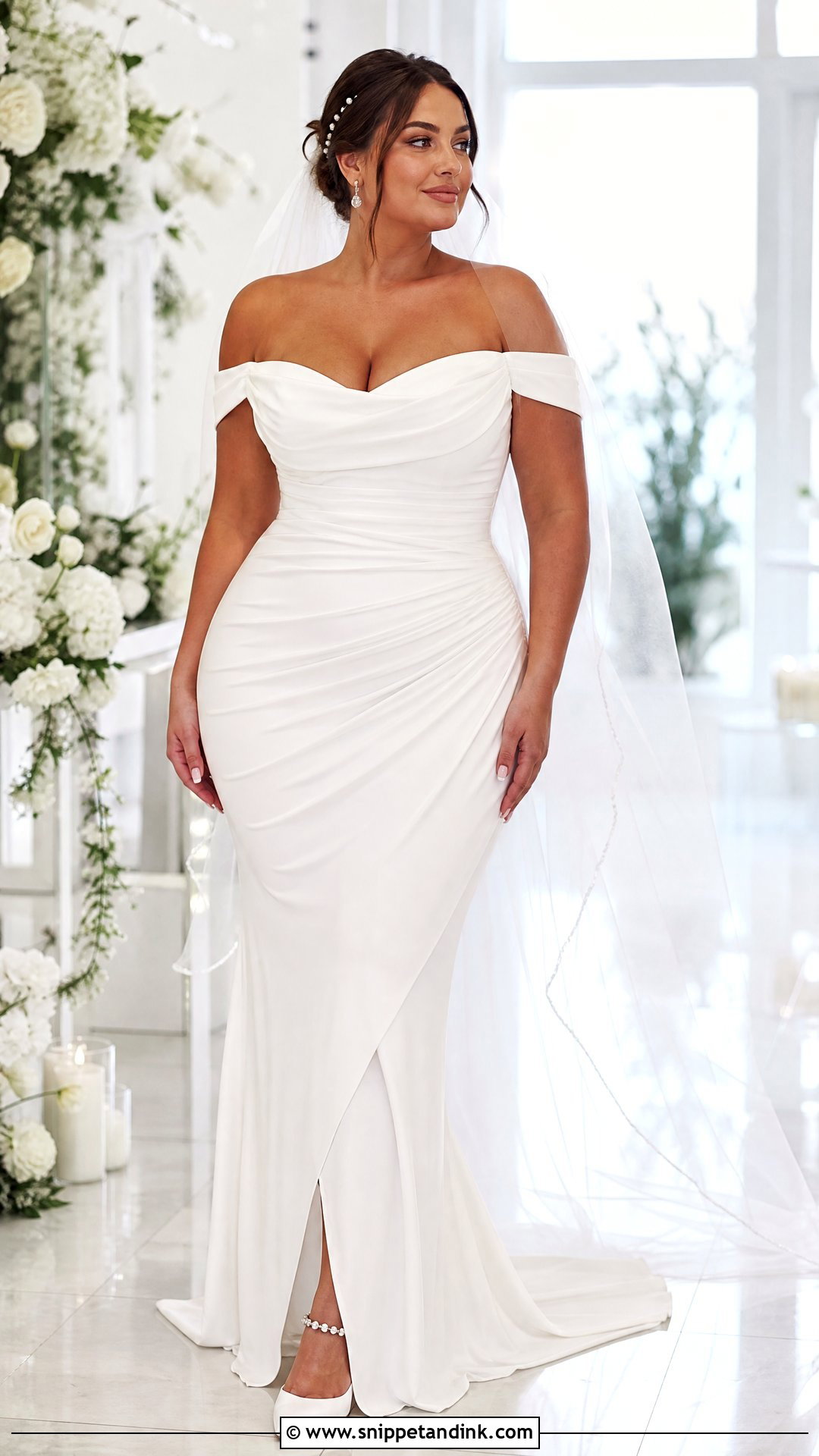
Ruching is kind to the waist and hips, and tricky to alter, because the gathers have to be redistributed rather than simply taken in at a seam. Look for diagonal or side-gathered ruching in stretch crepe or matte jersey over a substantial lining. An off-the-shoulder, V-neck or asymmetric bodice suits the sculpted effect. Pointed heels, drop earrings and a clean fingertip veil keep it simple, and I’d add a slim bracelet or pearl hairpins rather than a belt, which interrupts the drape. Agree where the gathers should land before any cutting starts. A back slit or wrap panel adds movement, and the shape works across a wide range of sizes.
18. Petite Pencil Wedding Dress
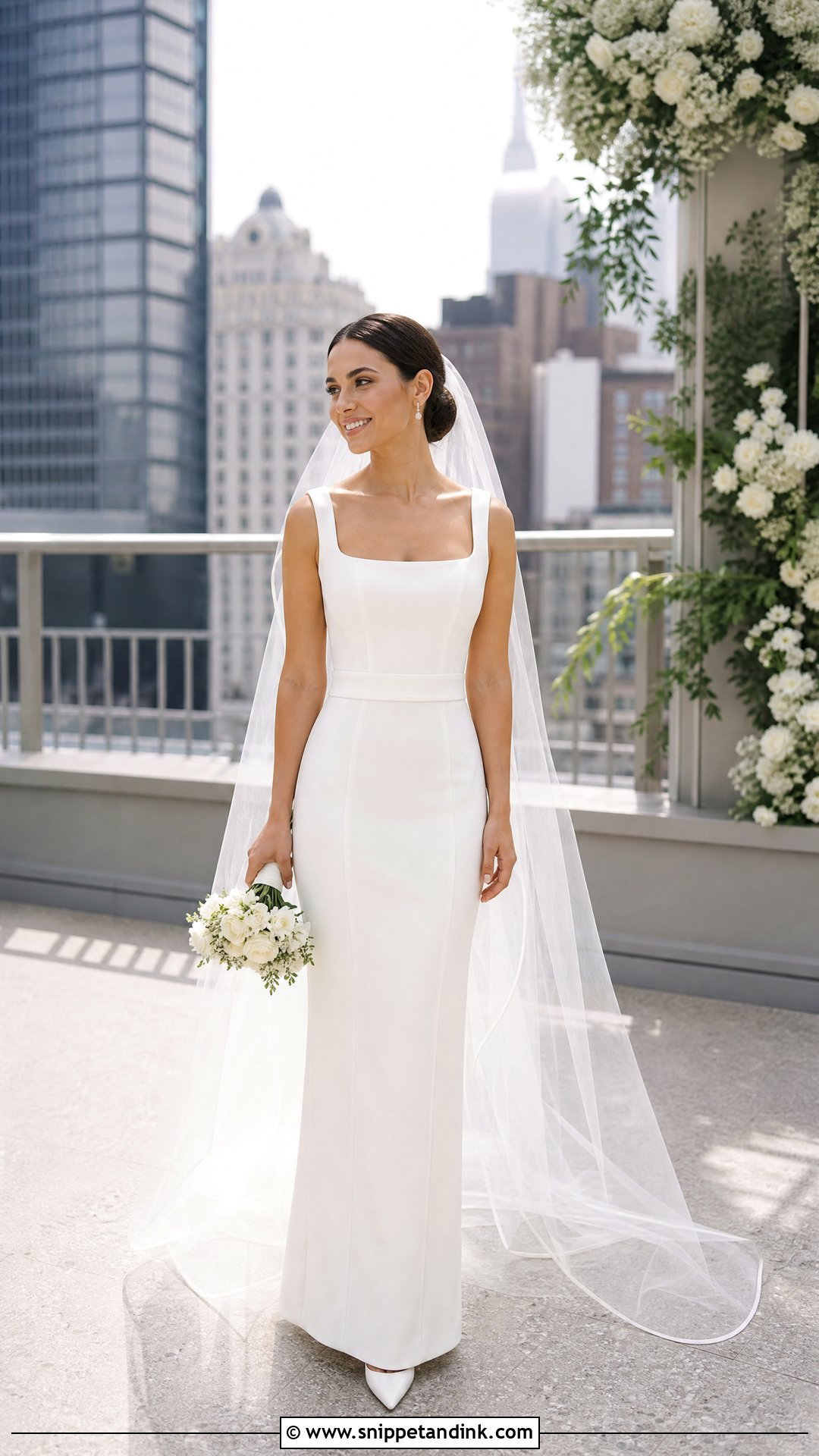
On a petite frame, a pencil dress can make you look taller, provided the proportions are rebuilt rather than just shortened. If a dress has lace or a detailed hem, I often take length out at the waist instead of the hem so the detail survives and the back vent keeps its proportion. A high or natural waist, a clean bodice and a skirt that skims without pooling at the floor do the most work. A V-neck, square neck or narrow straps open the upper body. Pointed pumps, delicate earrings and a chapel-length veil rather than an enormous cathedral one keep the scale right, and vertical seams or covered buttons down the back lengthen the line further.
19. Pencil Wedding Dress With Bridal Jacket
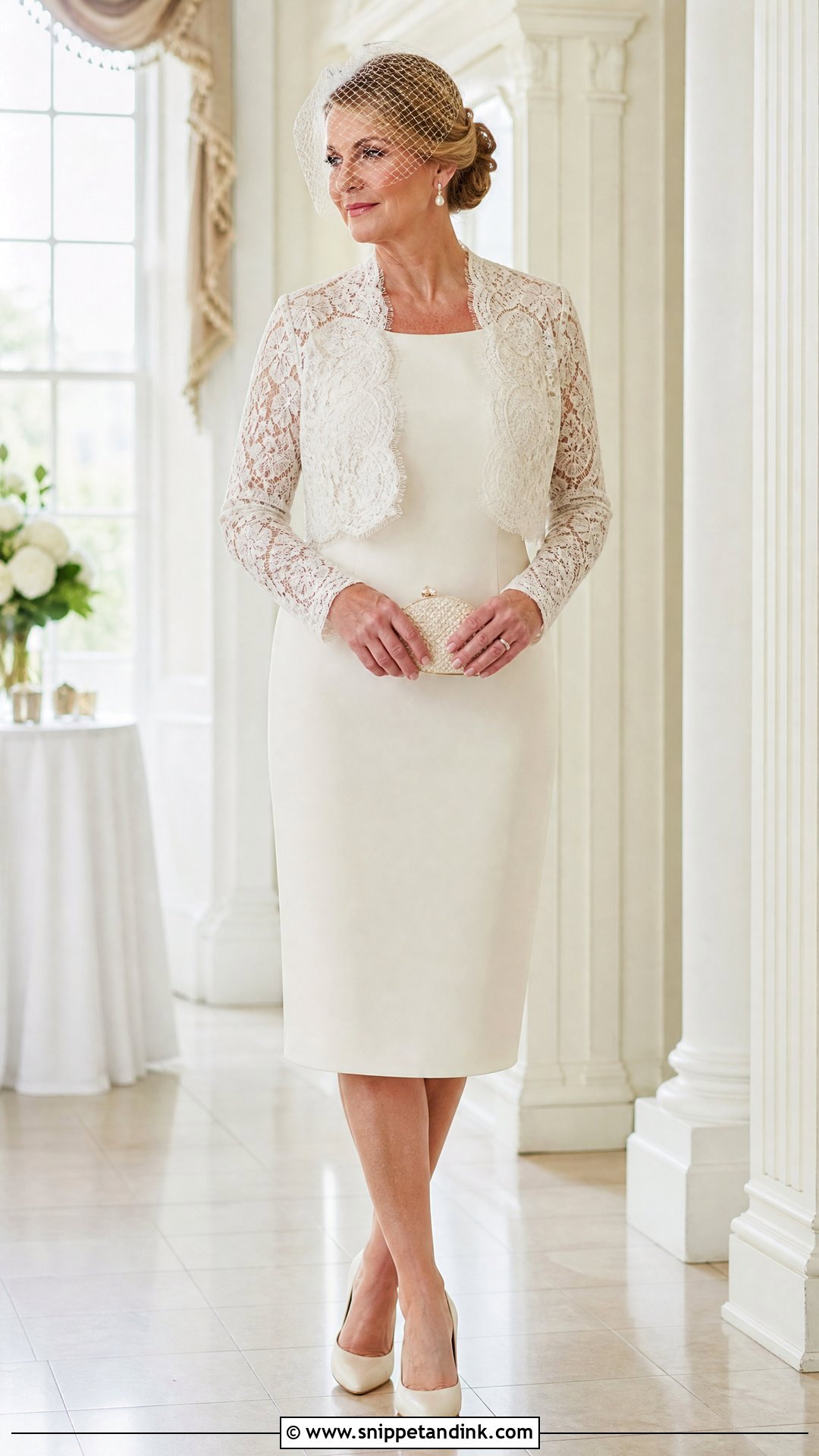
A jacket gives you ceremony coverage and a second look without committing to sleeves. Start with a sleeveless or strapless crepe gown, then add a cropped lace jacket, satin bolero or tailored long-sleeve topper. I end the jacket at the natural waist; any longer and it chops the narrow line in half. Closed-toe pumps, pearl earrings, a small clutch and a fingertip veil under a smooth updo complete it, and the jacket comes off for the reception. Matching fabrics blend into one garment, while lace over satin makes a visible contrast. Have the jacket fitted with the dress on, not separately, so the shoulders line up.
20. Bow Back Pencil Wedding Dress
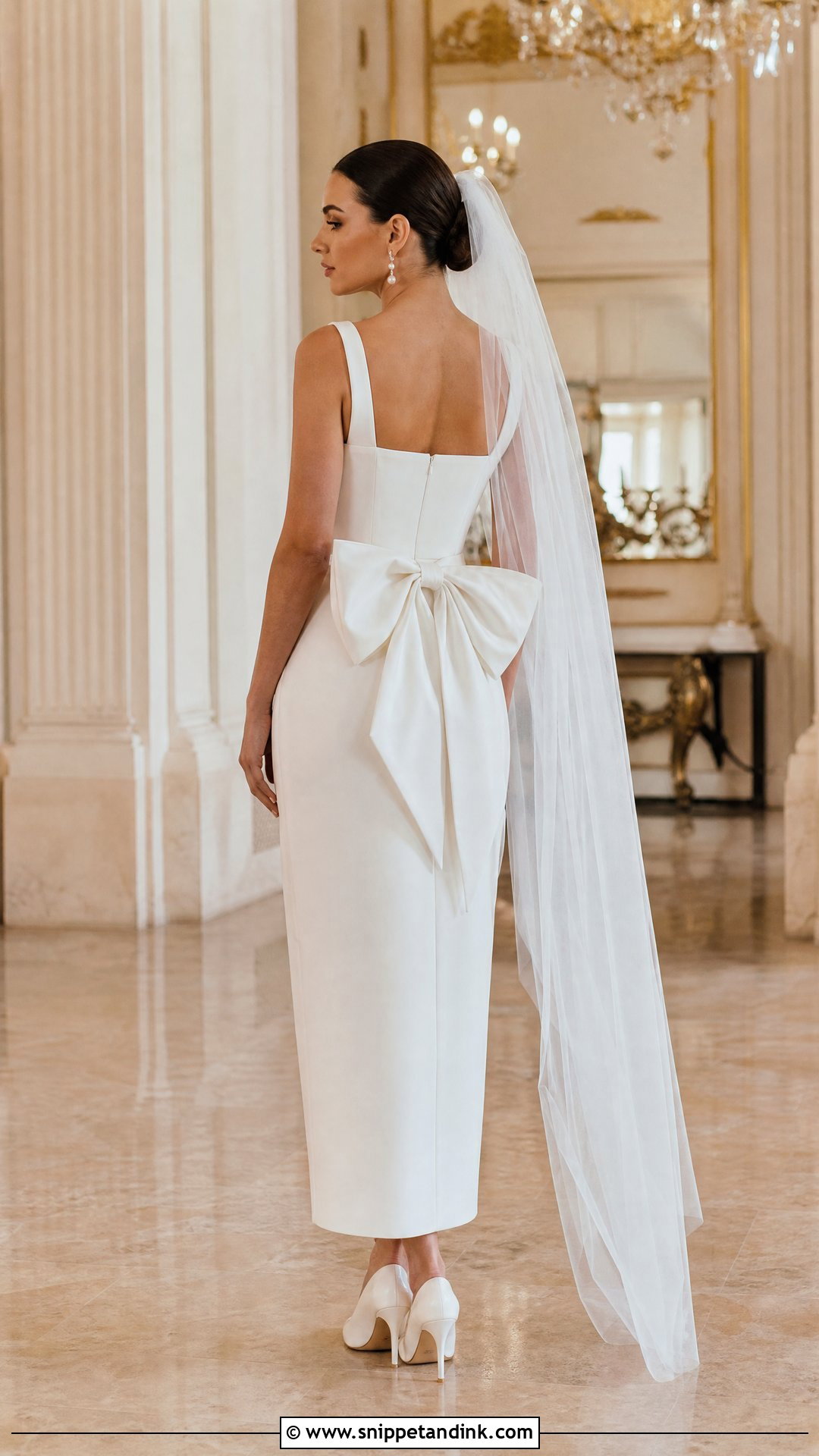
A bow at the back is the detail people remember as you walk away, and the one that gets crushed first. At the waist, it flattens every time you sit in a car or on a chair, so I ask for a lightly interfaced bow and pack a hand steamer for touch-ups. Structured satin or mikado holds a bow best, with a square, strapless or bateau neckline in front. Size it to the narrow skirt so it looks intentional, whether it sits at the waist, across the shoulders or above a short train. Pointed pumps, pearl drops and a plain veil you can lift off for back views finish it, with a sleek bun or polished ponytail so nothing hides the bow.
Vents, Slits and Kick Pleats Decide How You Move
A narrow skirt only works if the opening at the back is right, and this is where I spend most of my alteration time.
- A center-back slit is the simplest choice. I set its top just above the back of the knee, which frees the stride without showing much leg.
- A kick pleat hides extra fabric inside the slit, so it opens only when you step. It’s the neatest option for lace and satin.
- A side slit looks more modern and dances well, but it shows leg when you sit, so check it in a chair.
- A godet or lining with stretch adds movement without any visible opening, though it softens the sharp silhouette slightly.
Timing your fittings
Fitted gowns need more alteration time than full skirts, because every centimetre at the hip shows. I like a first fitting roughly two to three months before the wedding, a second once the main changes are done, and a final one about two weeks out with your shoes and undergarments. Bring the exact shapewear you’ll wear on the day to every appointment; swapping it at the end can undo the fit through the hips.
Sitting Through Dinner in a Fitted Gown
Nobody photographs you eating, yet the meal is the longest stretch you’ll spend in the dress. Before the final fitting, sit for twenty minutes in a dining chair, lean forward as if reaching for a glass and stand up again. Watch for the skirt riding up above the knee, the zip straining at the waist and creases setting across the lap. A little extra ease at the waist, a stretch lining or a slightly longer vent solves most of these. I’d also carry a small steamer or ask your venue for one; satin and crepe both recover from lap creases quickly with a few seconds of steam.
Last Fitting Checks for a Narrow Skirt
A pencil gown should feel supportive and comfortable from the ceremony through the last dance, and that comes from the fitting more than the label. Start with the mood you want, then compare fabrics, necklines, sleeves, lengths and detachable pieces. Crepe looks modern, satin brings structure, lace brings romance. Choose accessories that sharpen the narrow line rather than crowd it. Above all, book proper alterations and practice walking, sitting and turning in the finished dress. From a classic strapless gown or a bridal jacket to a cape or a short courthouse dress, the right version will feel like it was cut for you, because it should have been.
You'll Like These Ideas:



Leave a Reply