
A court wedding gives you more freedom with the dress than almost any other ceremony, and less room to hide a bad choice. The space is small, the guests stand close, and the whole thing is over before a fussy outfit has had time to settle. I tend to steer courthouse brides toward little white dresses, tailored shapes, sleek midis, lace and vintage tea lengths, mostly because they cope with corridors, benches and a lunch afterward. Short or floor-length both work, depending on the season and on you. Below are twenty complete looks, each with what I’d check before buying.
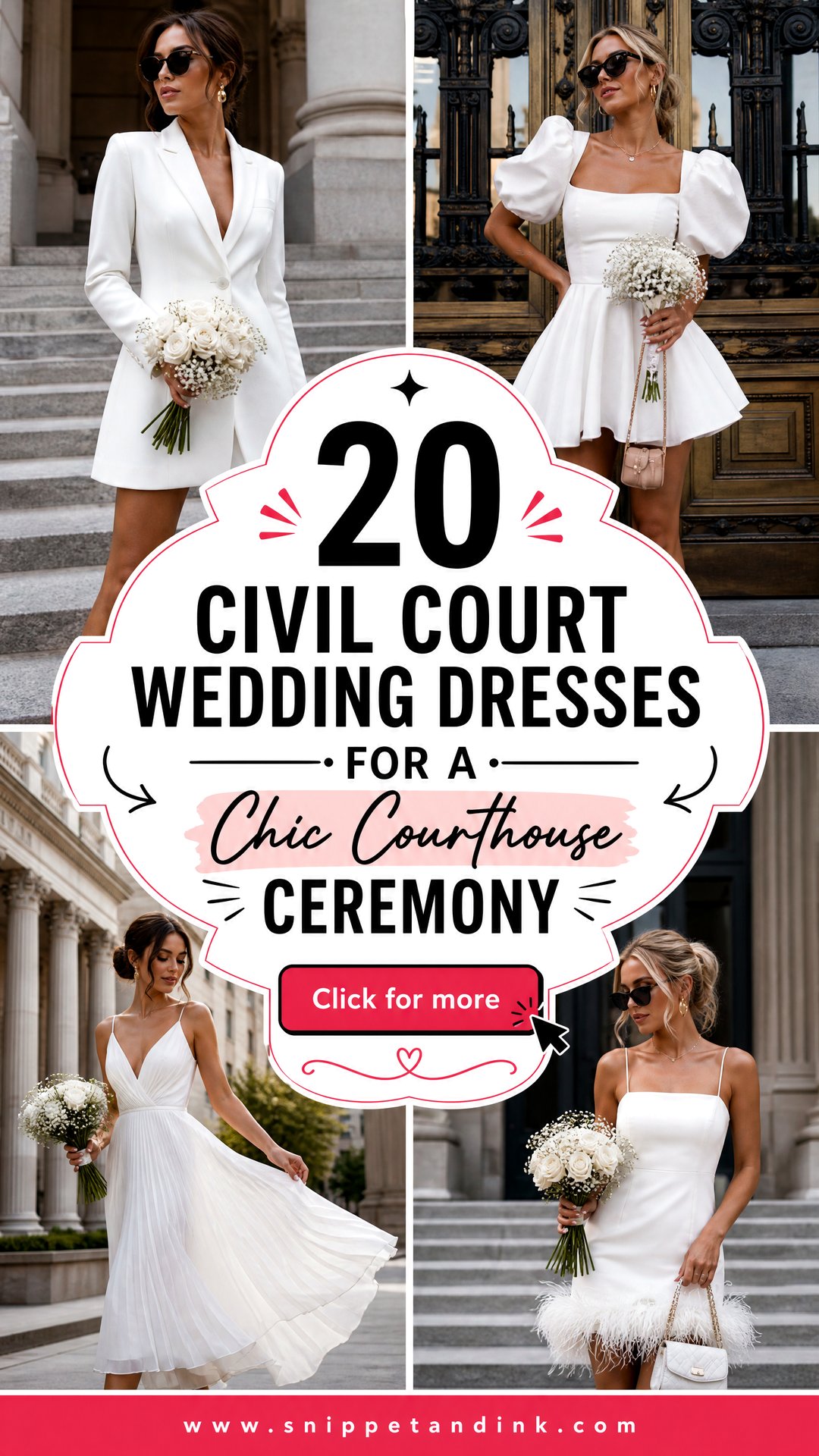
Is a Short White Dress Appropriate in a Courtroom?
Generally, yes. Courts and registry offices expect respectful dress rather than anything bridal in particular, and a white mini sits comfortably within that. Where I do urge caution is in working courthouses, the ones that also hear cases. You may share a lobby and a security line with people having a hard day, and a very revealing or extravagant look can feel out of place there.
A few things are worth confirming with the office before you shop:
- How many guests the room holds. A small room makes a full skirt or a long train awkward for everyone.
- Whether you can take photos inside, and where. Some offices allow it only in a designated room.
- How long your slot is. Many give you fifteen to thirty minutes, so complicated bustles or multiple outfit changes won’t fit.
- What security allows. Scissors, sharp hairpins and some sprays may not pass, so pack the emergency kit for the car.
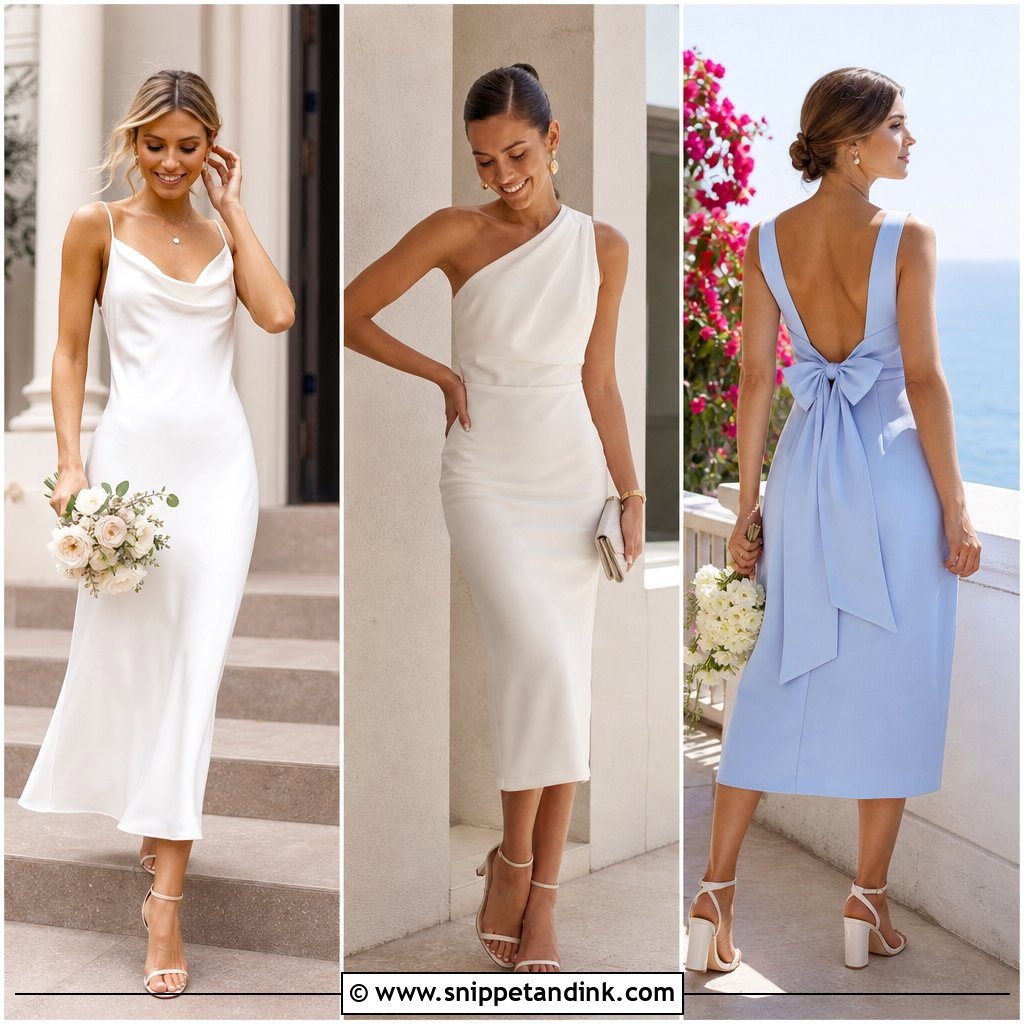
If the building feels formal, a coat or blazer over a bare dress lets you be modest during the legal part and reveal everything outside.
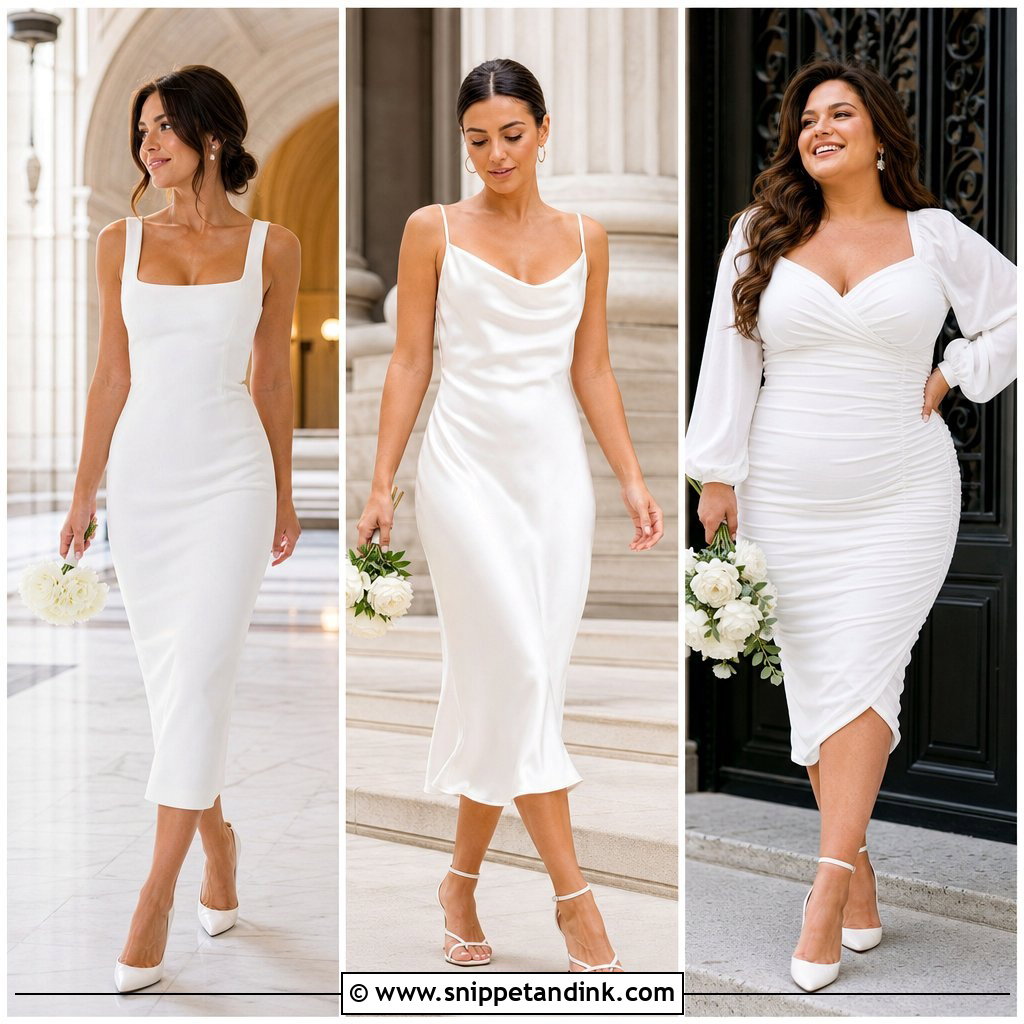
1. White Satin Mini Civil Court Wedding Dress
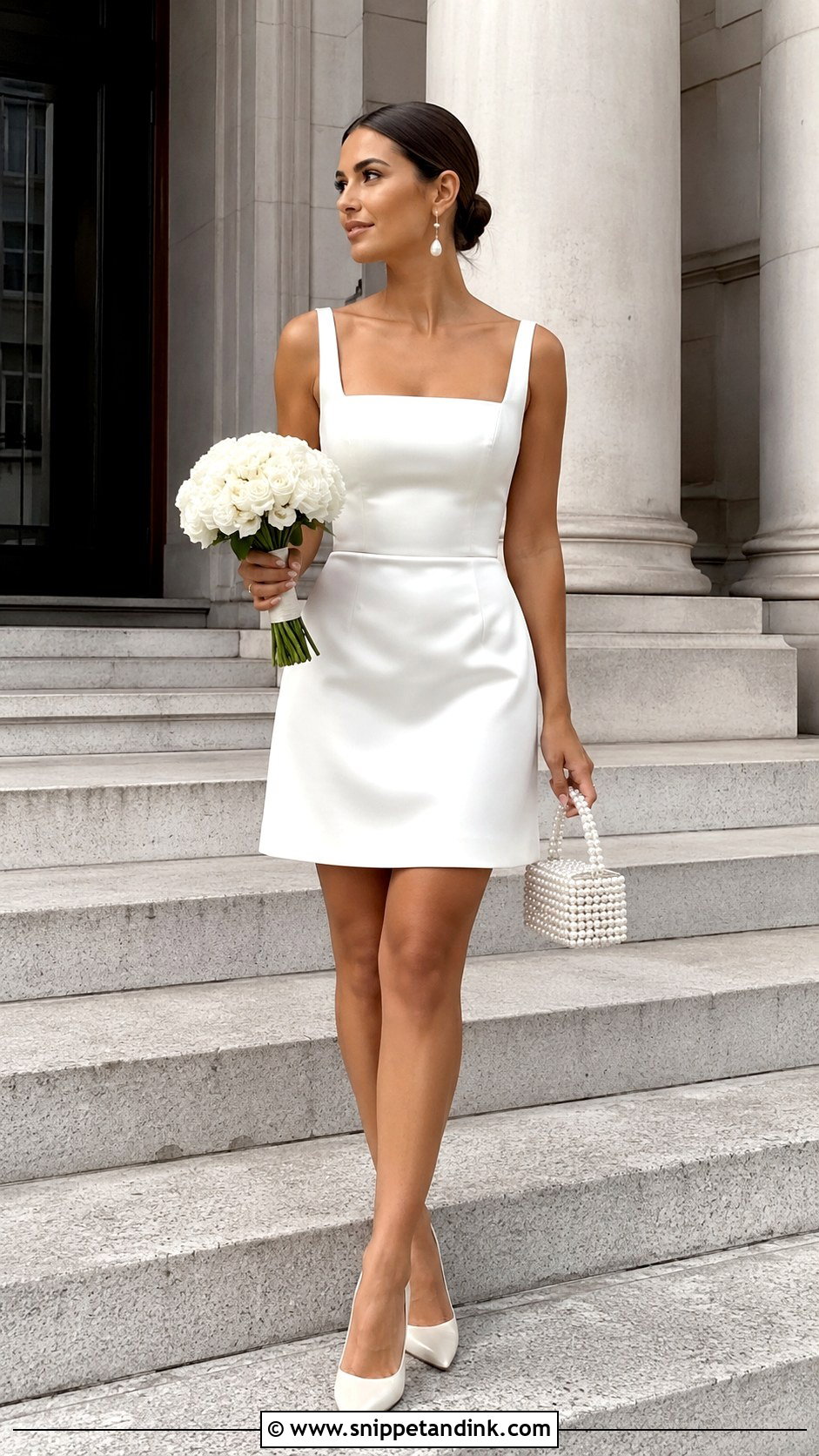
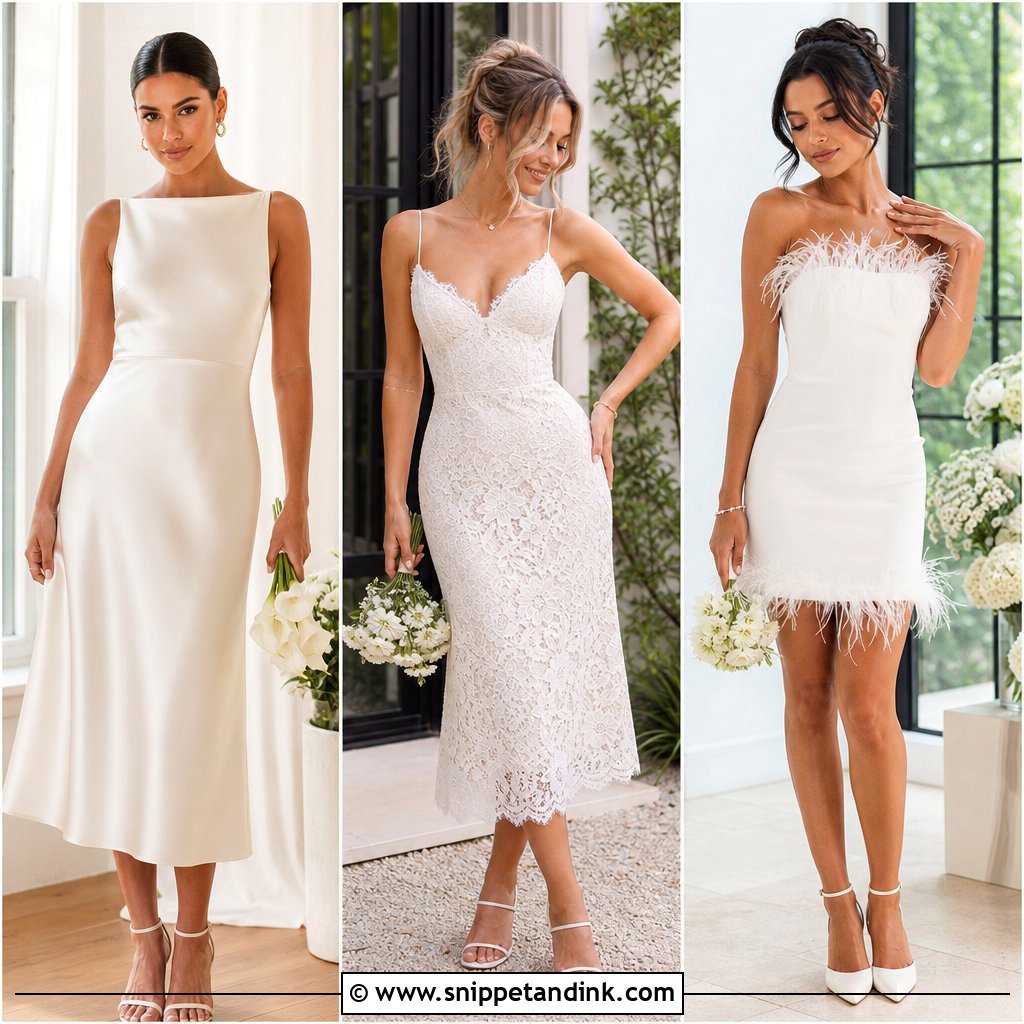
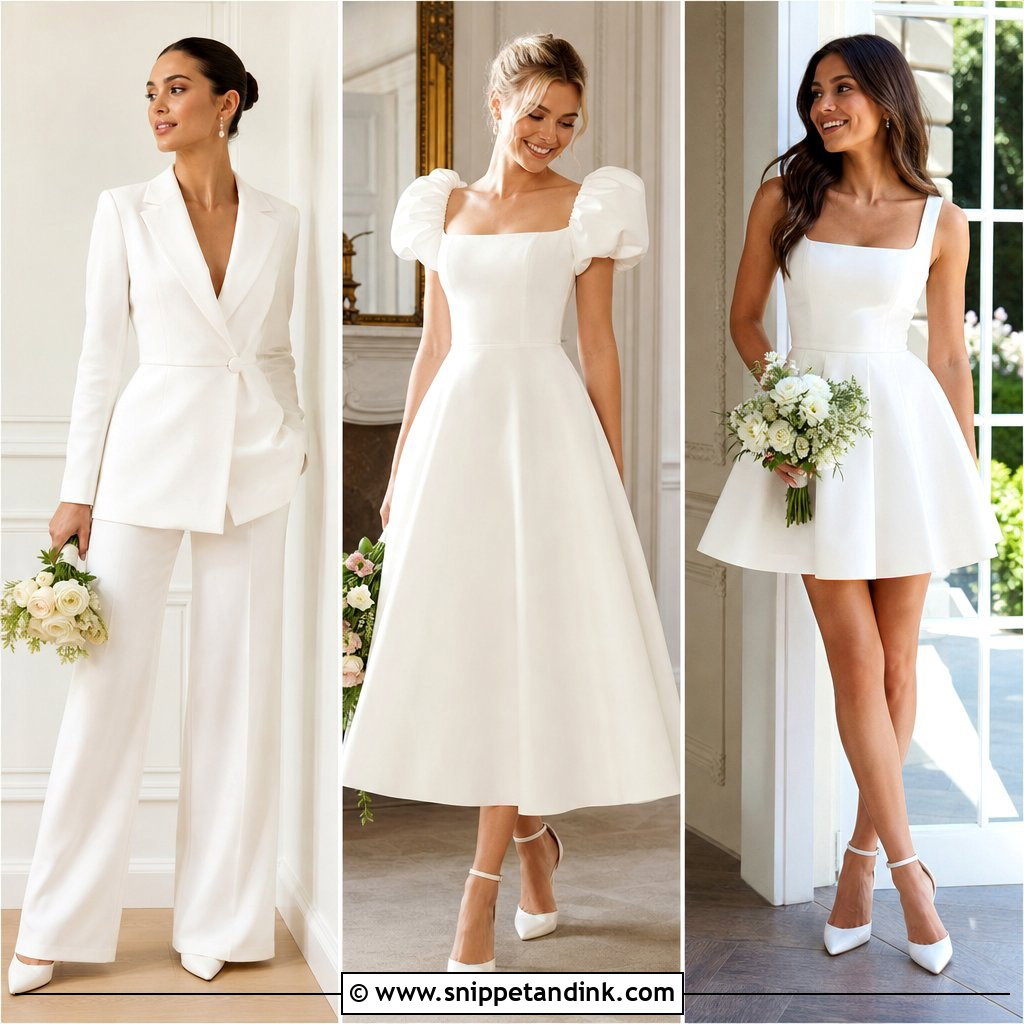
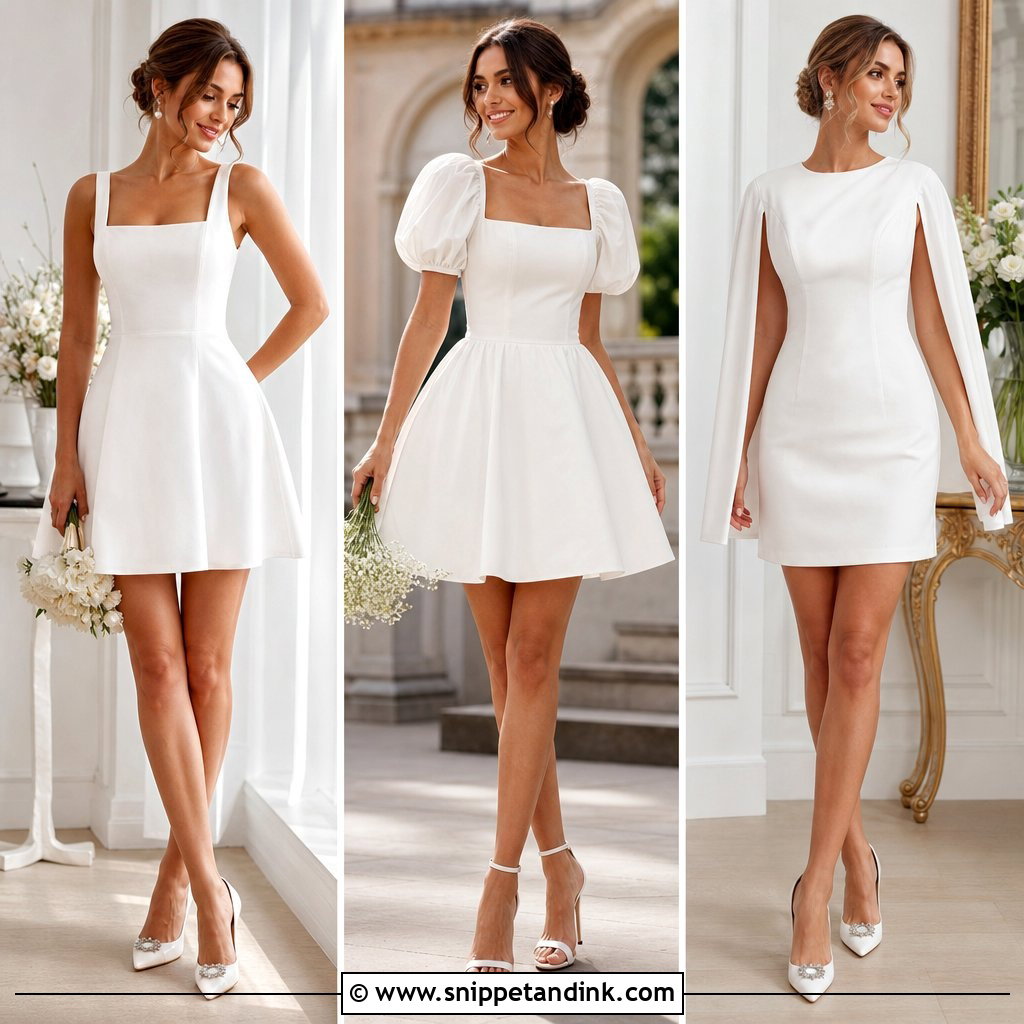
Satin minis live or die by structure. A square neckline, a fitted waist and a shaped skirt keep the fabric from collapsing into something that looks like a slip. Satin picks up light, so even a plain cut reads as an occasion dress. Low slingbacks or pointed pumps you’ve actually walked in, a small pearl bag and drop earrings are enough. When the hem feels short, sheer tights or a tailored ivory coat solve it without changing the look. A neat bun or a waved bob keeps the outfit crisp.
2. Lace Midi Civil Court Wedding Dress
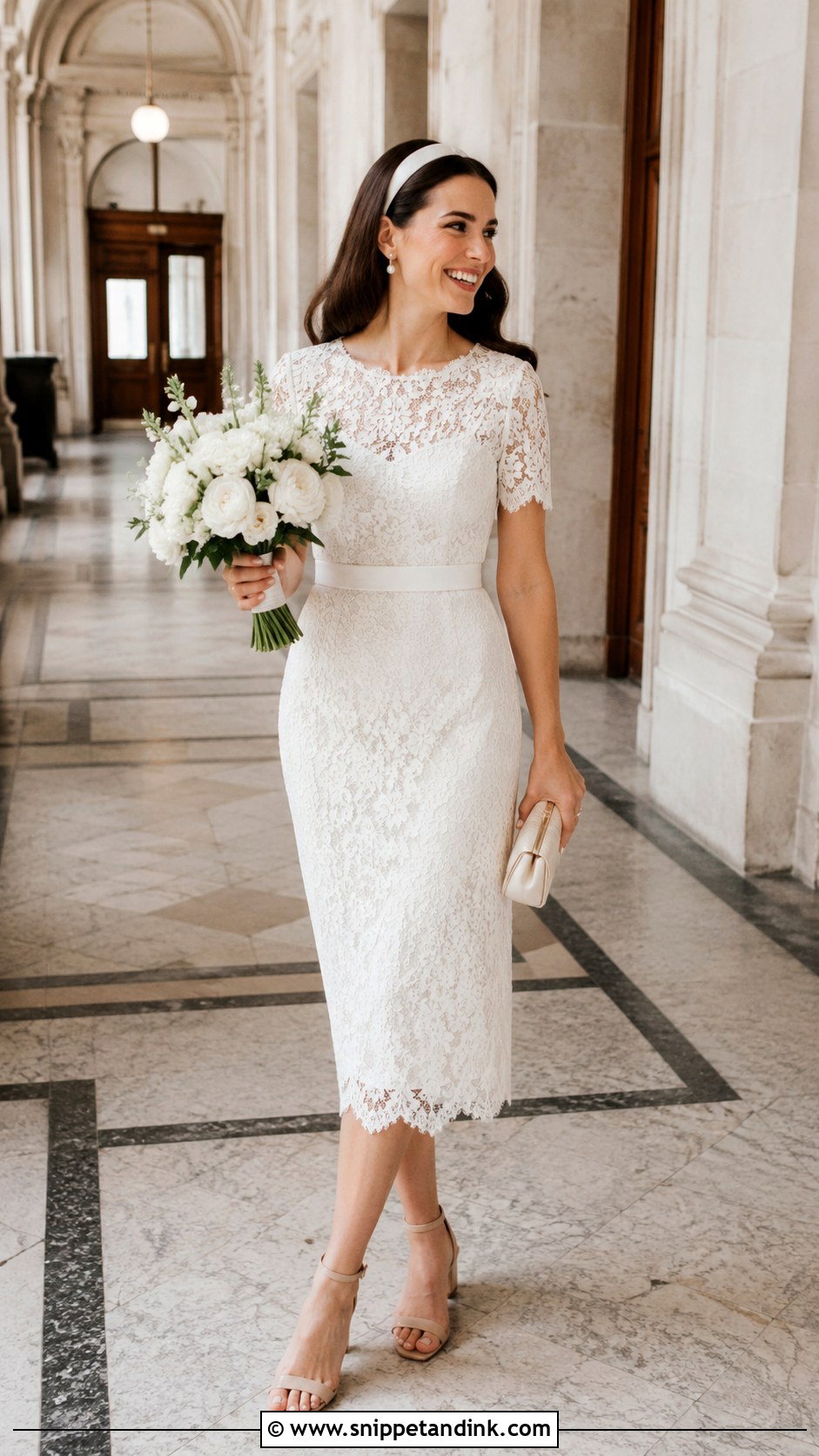
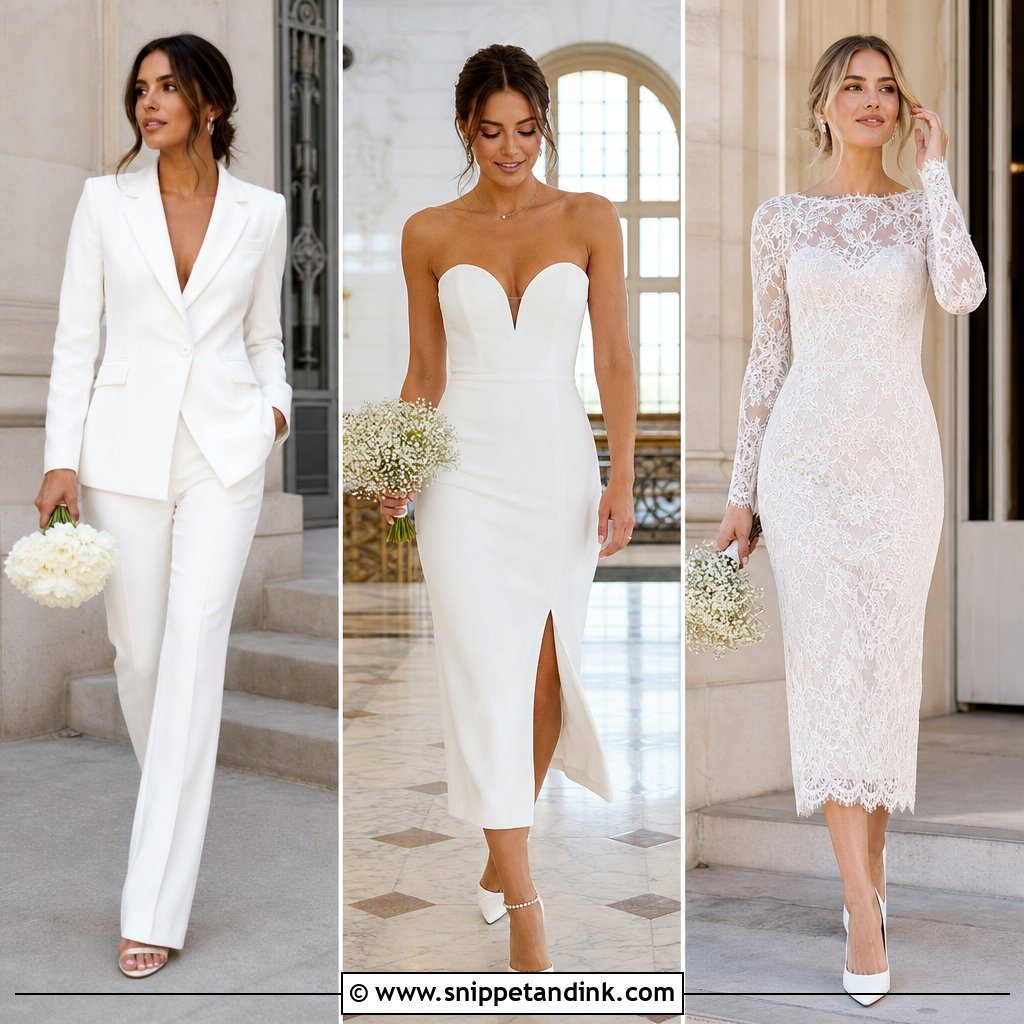
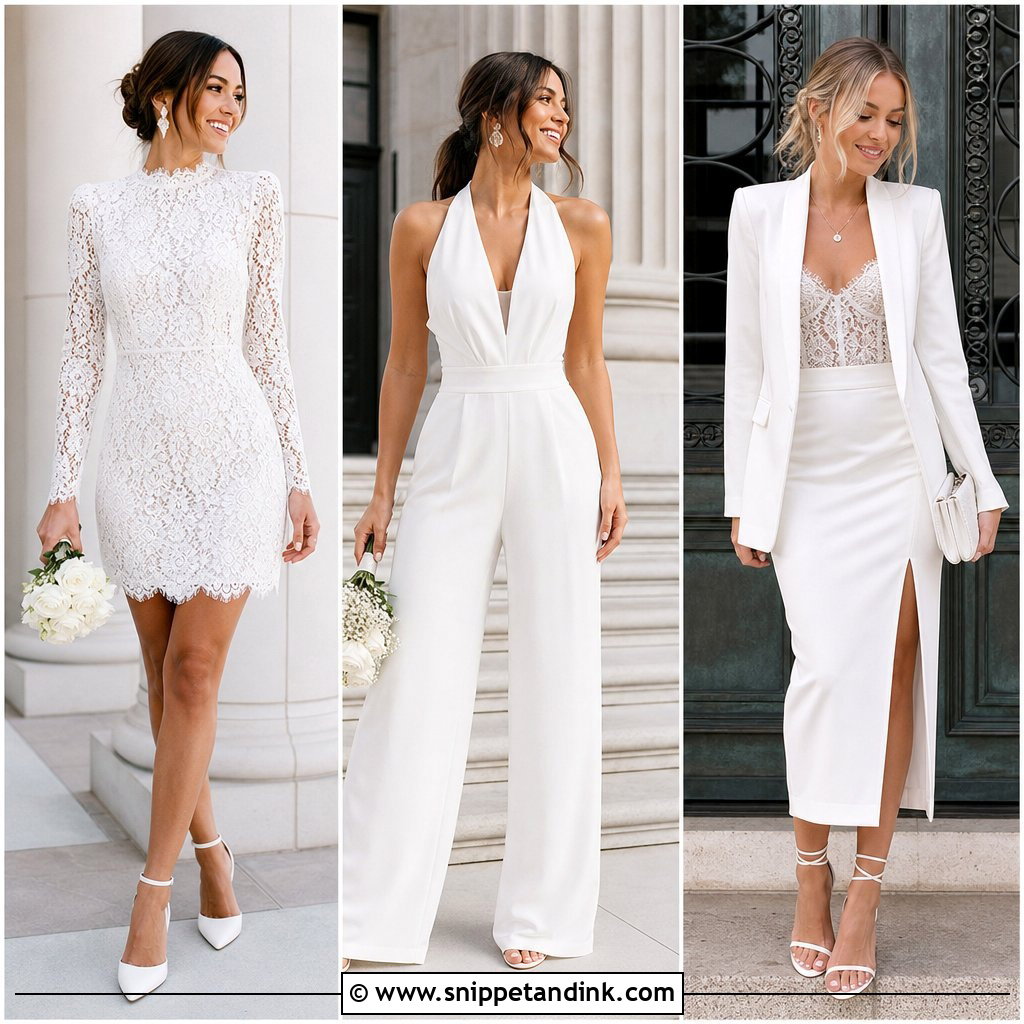
Lace over a smooth lining is what makes a midi look bridal rather than like a summer dress. Look closely at the lace edge along the hem and sleeves: a scalloped finish looks expensive, a raw cut edge frays and looks cheap within a day. Short sleeves feel light; long lace sleeves suit cooler months. A narrow satin headband in place of a veil, ivory block heels and pearl studs keep it gentle. In older courthouses with wood panelling, the lace texture holds up well against a dark backdrop.
3. Long Sleeve Crepe Civil Court Wedding Dress
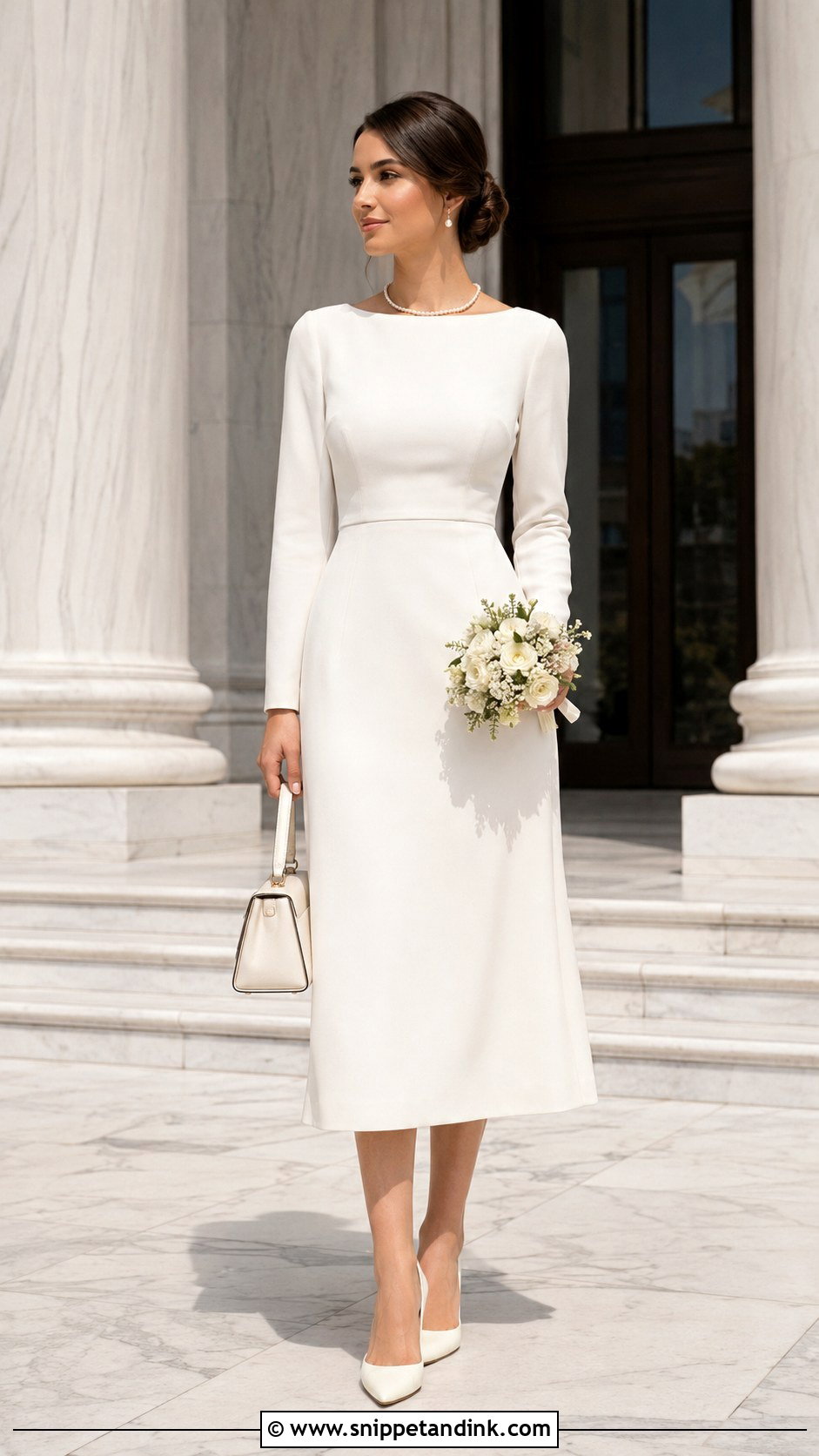
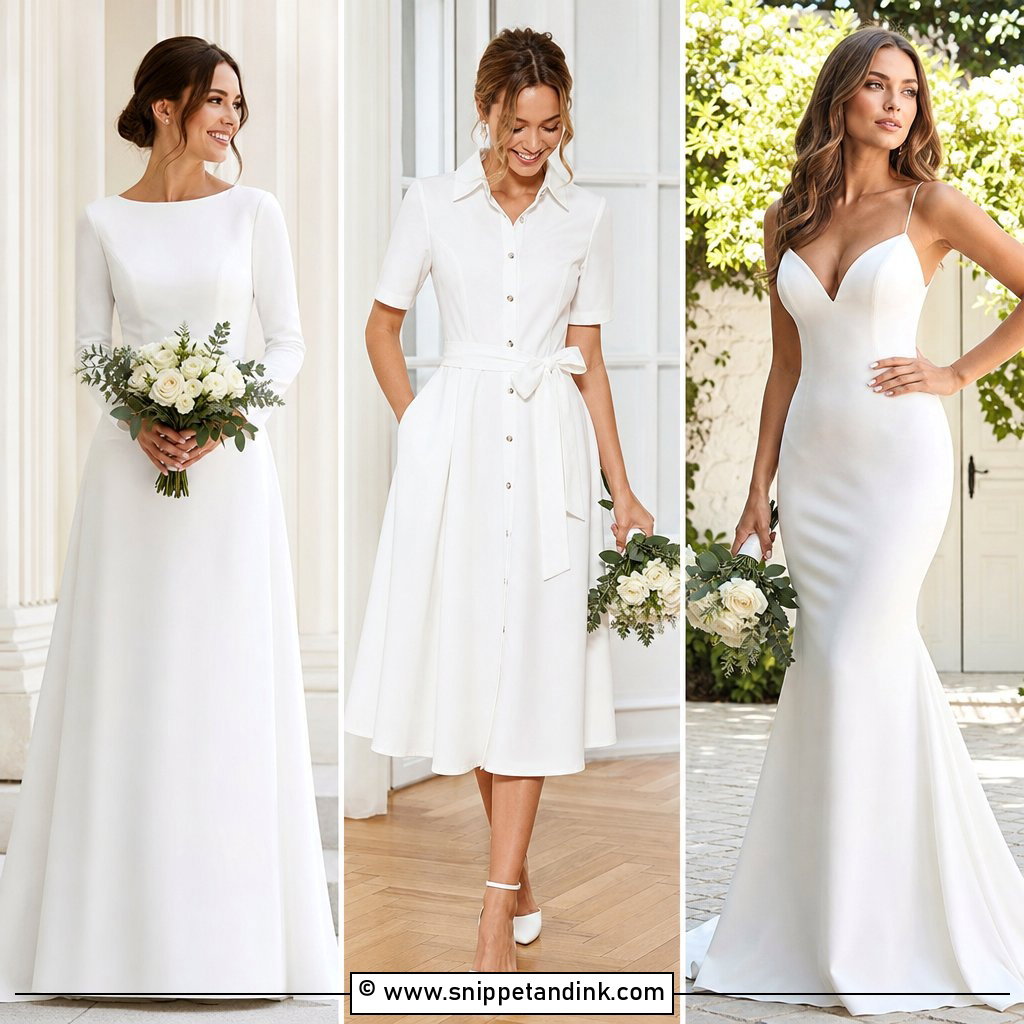
Crepe is the fabric I suggest to brides who hate fuss. It drapes, it doesn’t shine, and it shrugs off creases better than satin. For a modest long-sleeve midi, the sleeve fit matters most: crepe has little give unless it’s stretch crepe, so check you can lift a glass and reach across a table. A bateau or soft V neckline keeps the shape balanced. Closed-toe pumps, a low chignon and a small white bouquet keep it quietly bridal, and a cream coat takes it into winter.
4. Strapless Column Civil Court Wedding Dress
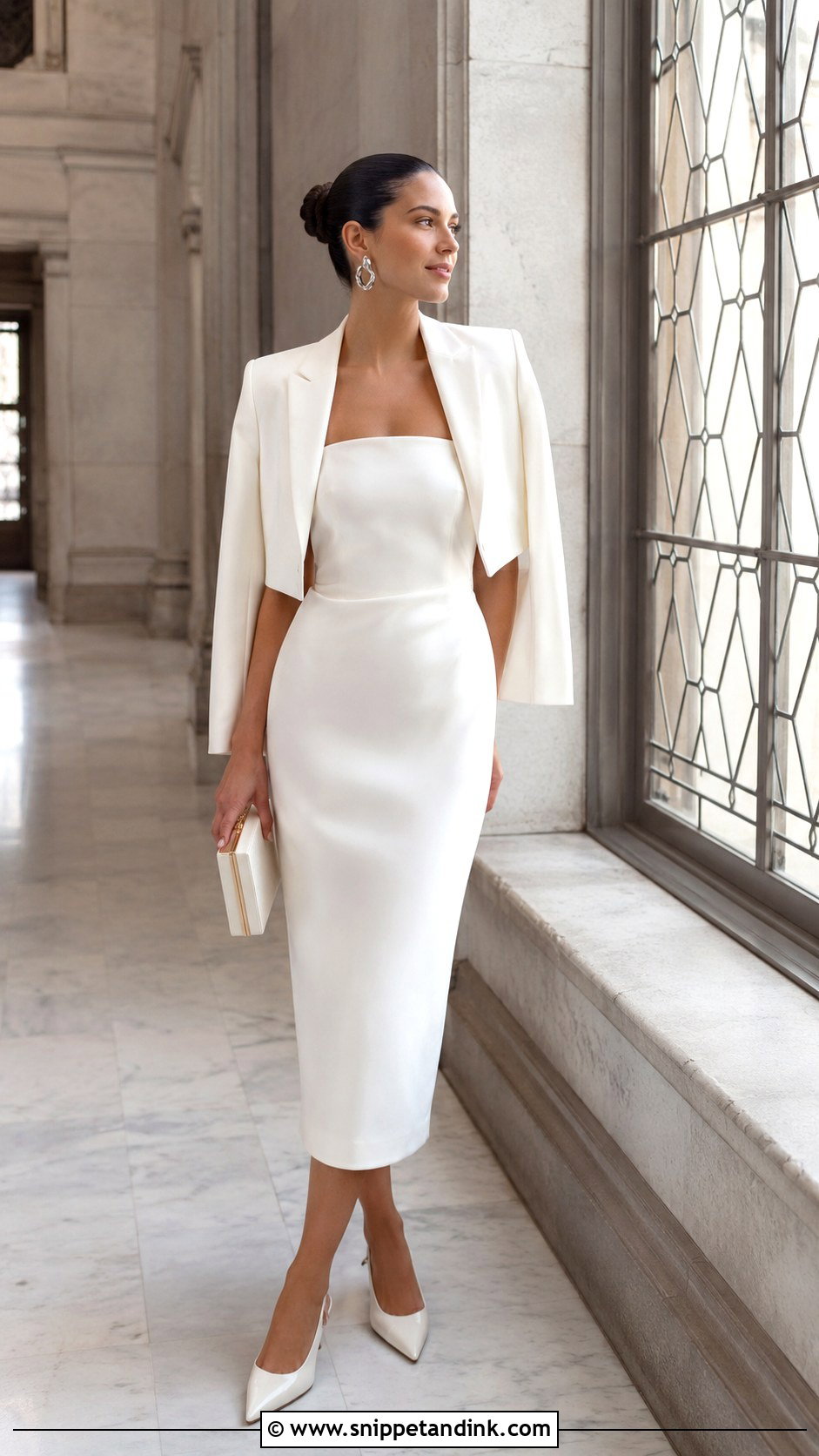
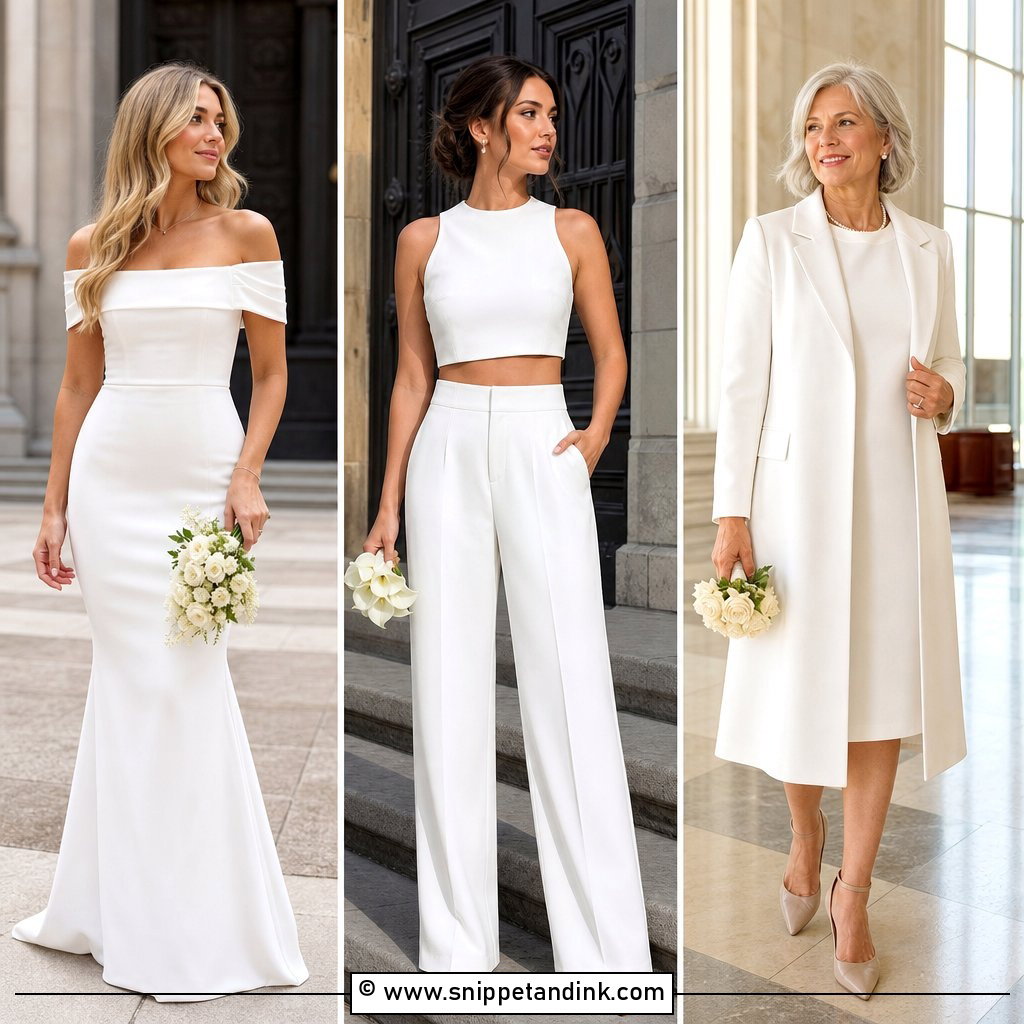
Strapless only works if the bodice holds itself up. When I fit one, I want internal boning and a grip band at the top edge, and I ask the bride to sit, hug, and bend; if she reaches for the neckline even once, it isn’t secure. Mikado and substantial satin keep a column crisp all day. A cropped blazer covers the shoulders inside a formal building and comes off for portraits. Pointed slingbacks and sculptural earrings suit the clean line.
5. Square Neck A-Line Civil Court Wedding Dress
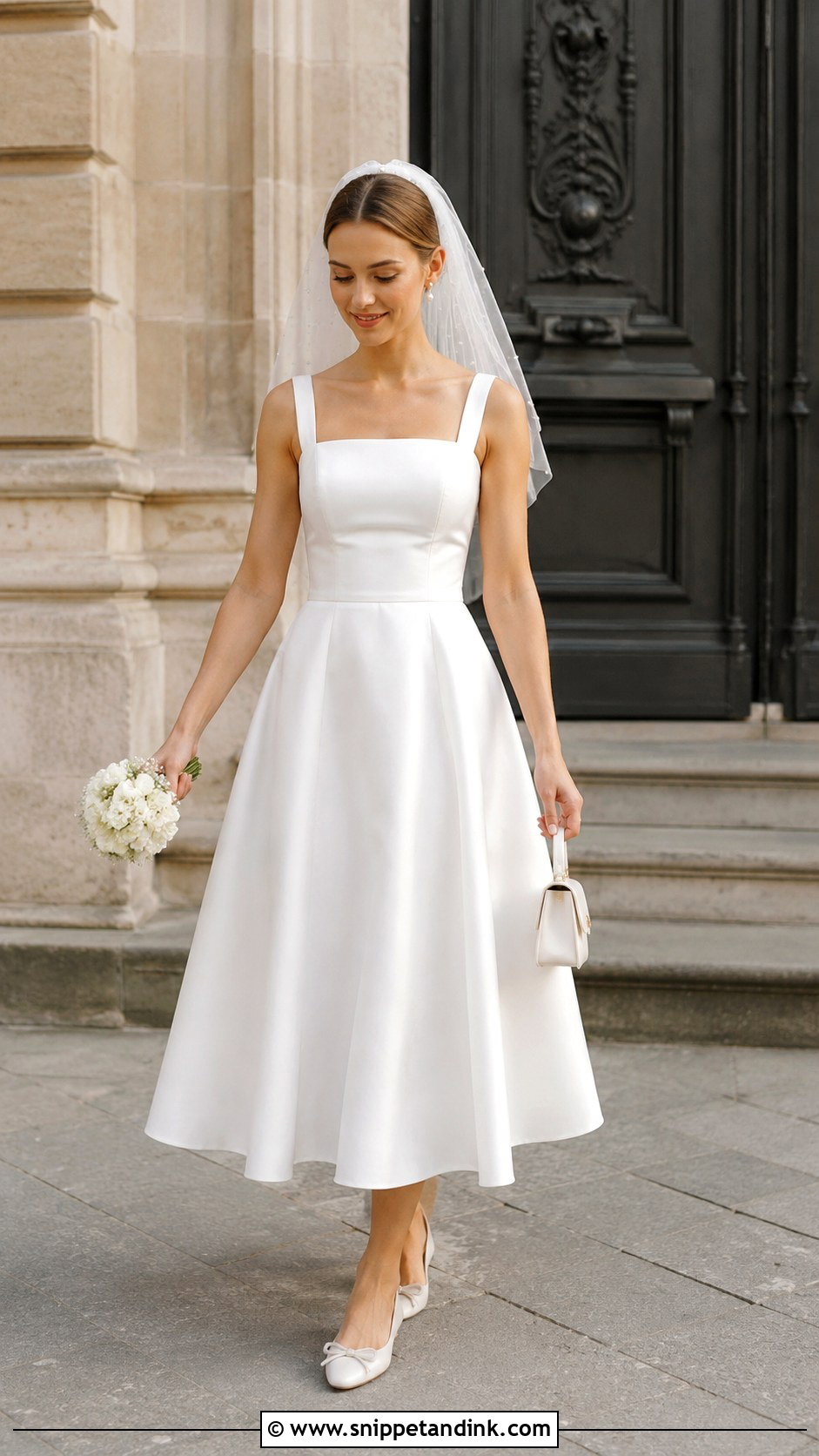
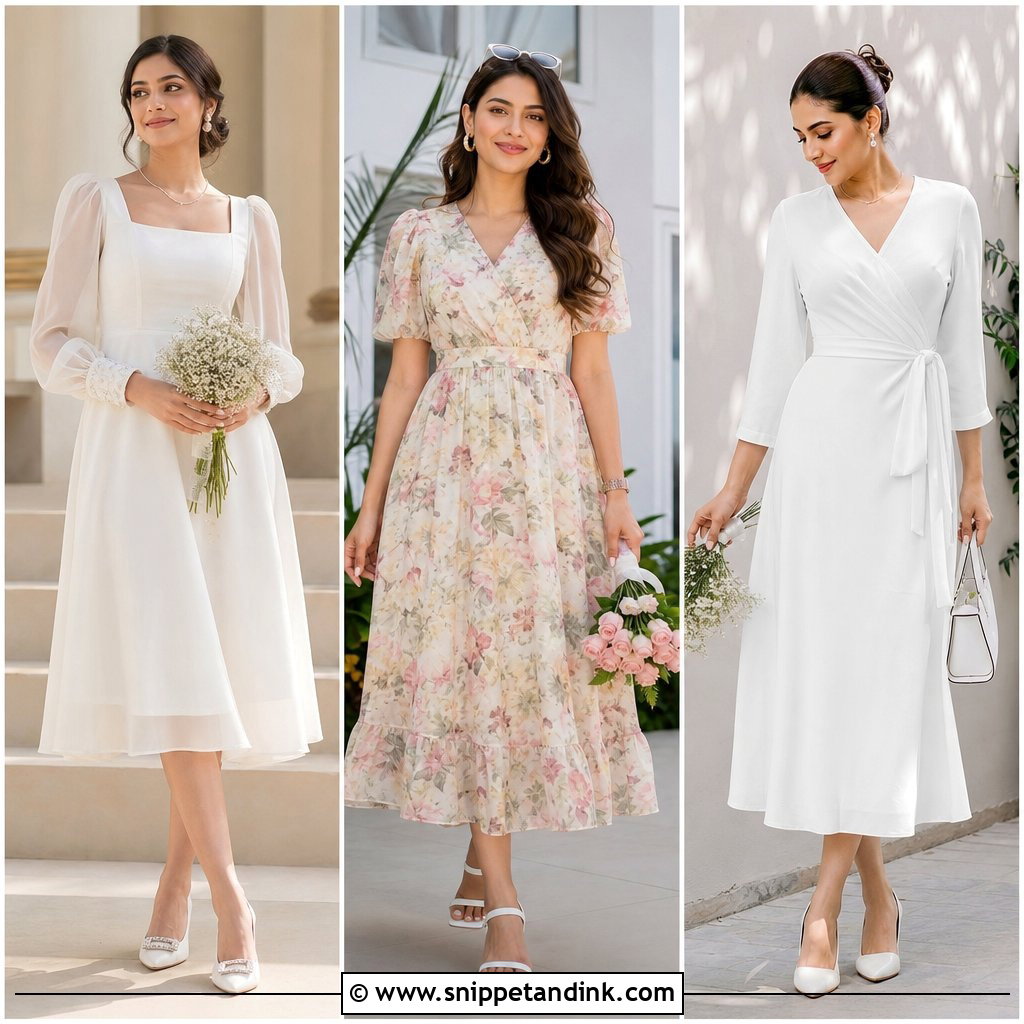
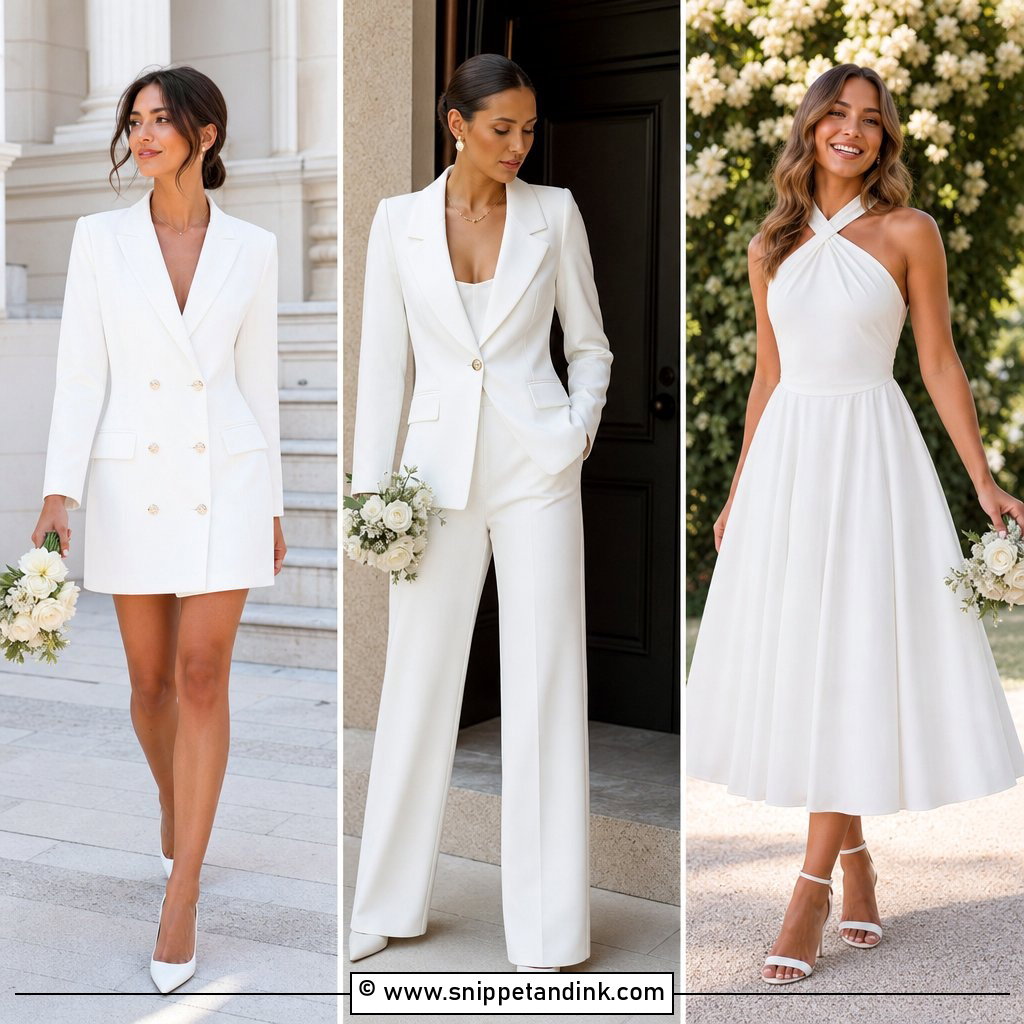
Square neck plus A-line is the shape I’d hand to almost anyone unsure where to start. This civil court wedding dress defines the upper body and then lets the skirt fall away from the waist, which flatters a wide range of figures. Wide straps hide a regular bra. Ballet flats or low pointed heels depend on how far you’ll walk. A short pearl veil and a soft updo add the bridal detail. White flowers with pale green stems carry it into a daytime lunch.
6. Tea-Length Fit-And-Flare Civil Court Wedding Dress
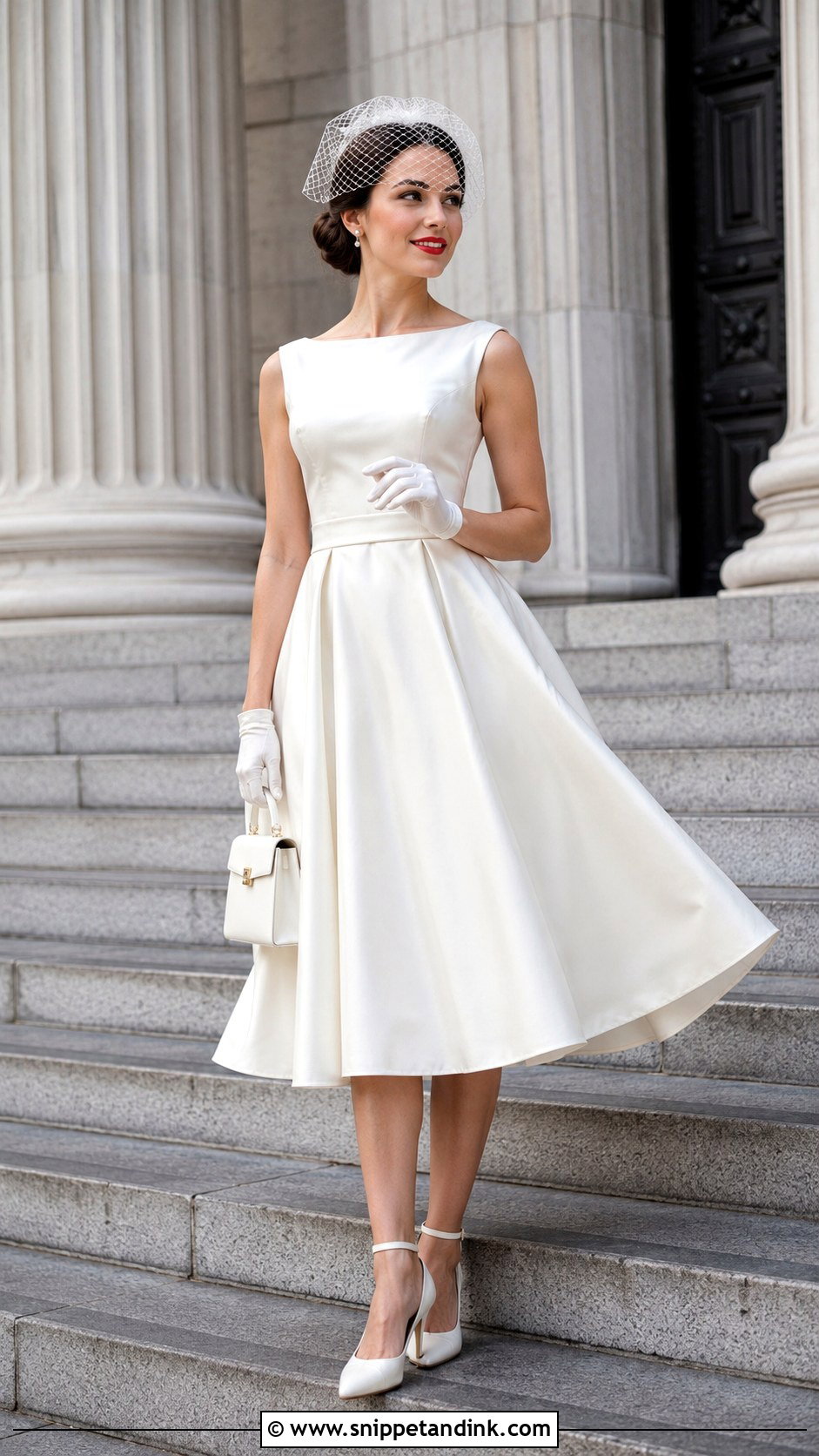
Fit-and-flare in a tea length needs a skirt fabric with body, or the flare droops by noon. Mikado, crisp satin and embroidered organza all hold out. Because the hem shows your feet, shoes become part of the look: ankle-strap pumps or pointed kitten heels. Short gloves and pearl studs push it toward retro; a satin bow in the hair keeps it modern. A birdcage veil works if you like the vintage note, though I’d skip it for very short hair, where it can look like a costume piece.
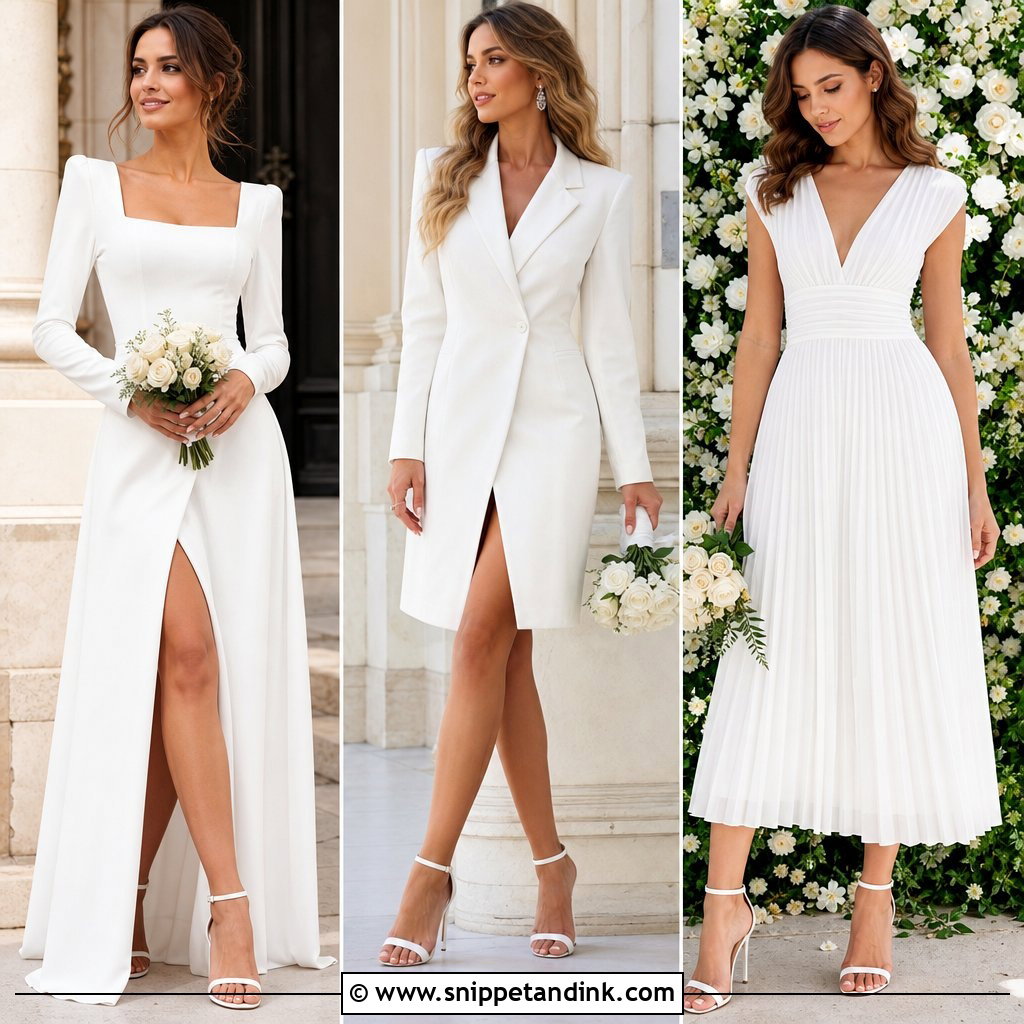
7. White Blazer Civil Court Wedding Dress
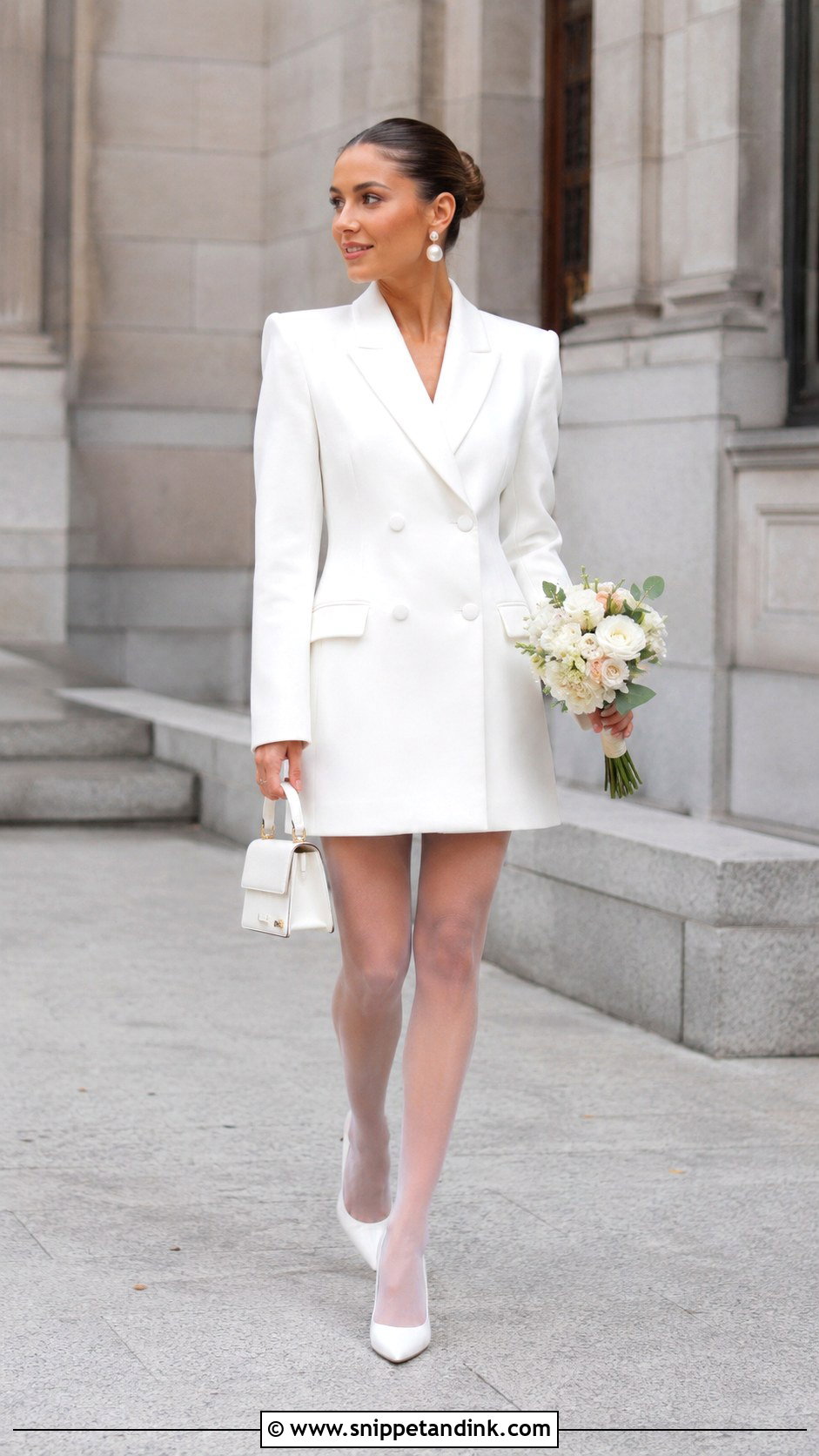
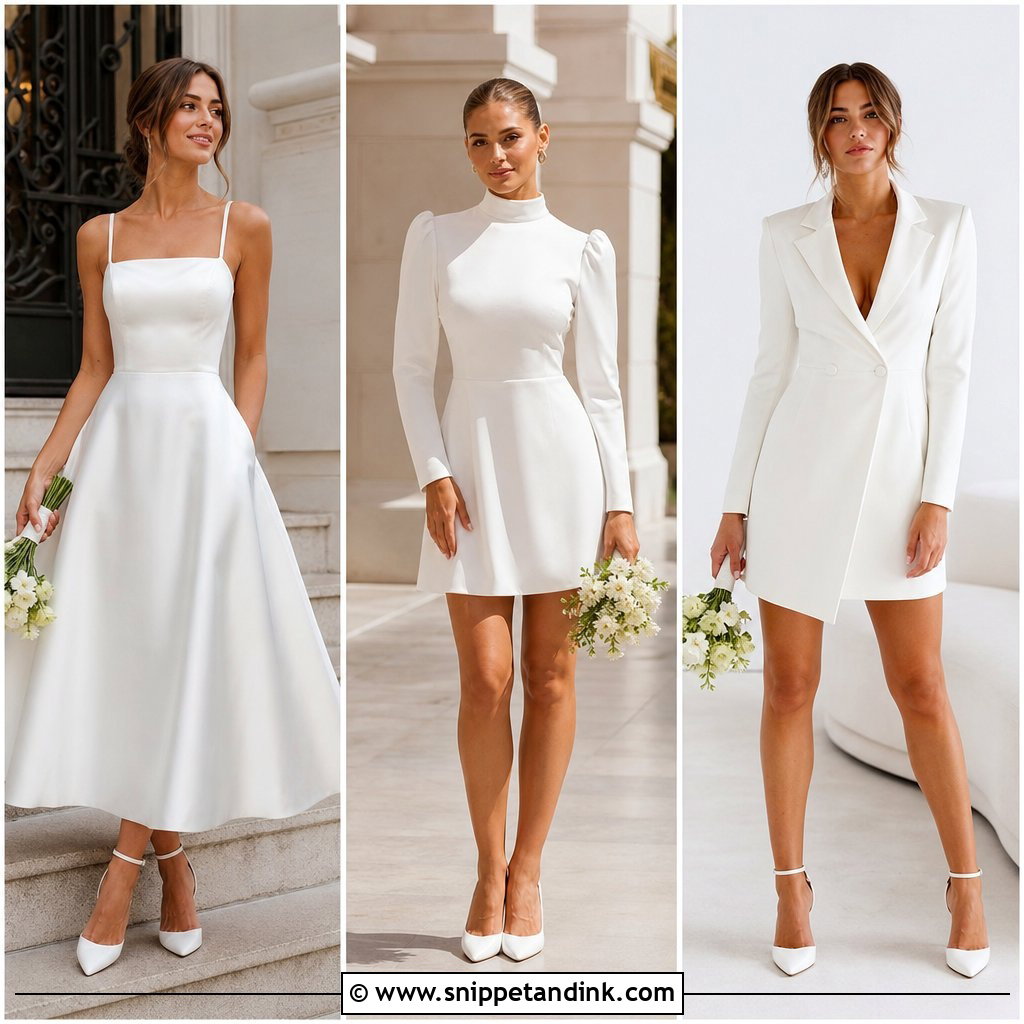
Blazer dresses need a lining. Without one, the fabric clings to tights and bunches at the hips when you walk. Look for a secure double-breasted or wrap closure, structured shoulders, and enough length to sit. Pointed pumps, a sleek bun and bold pearl earrings keep the professional feel, and a compact bouquet softens it. It’s the most city-looking dress here and suits urban streets for portraits afterward.
8. One Shoulder Midi Civil Court Wedding Dress
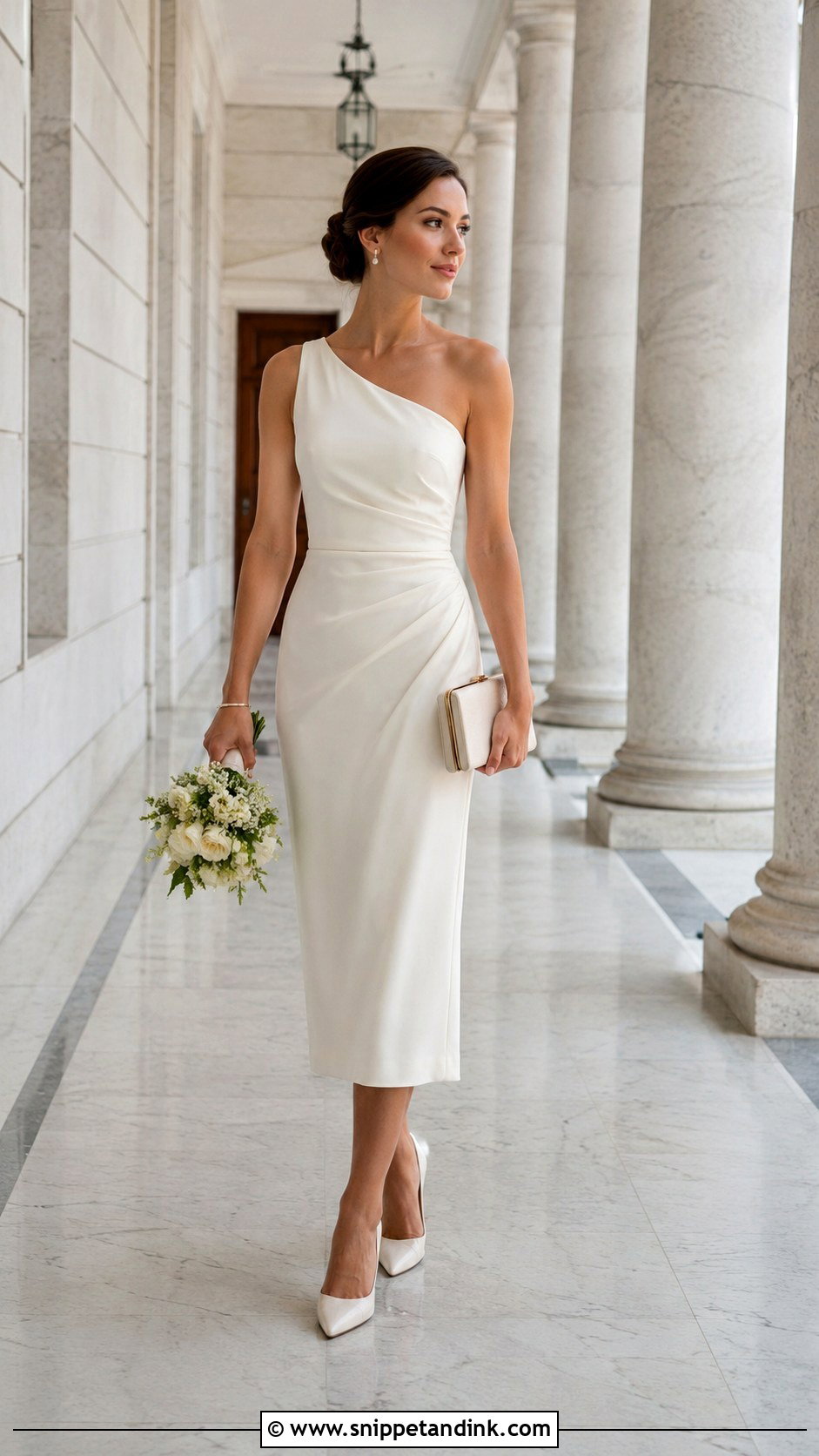
A one shoulder midi dress already has its focal point, so keep the fabric solid and the trim minimal. One styling detail people miss: carry the clutch on the covered side, so your arm doesn’t block the bare shoulder in photos. Skip the necklace. Sweep the hair back. In cold weather, a long ivory coat comes off once you’re indoors.
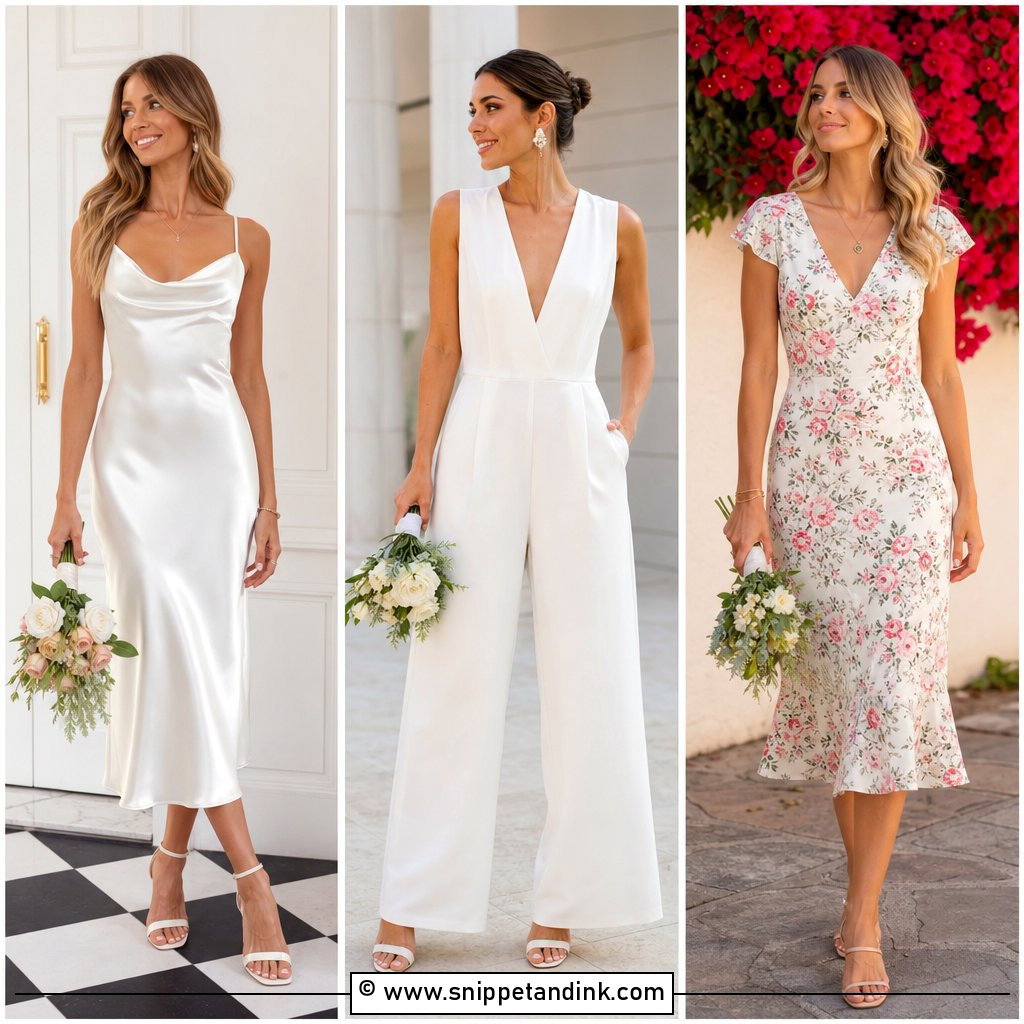
9. High Neck Slip Civil Court Wedding Dress
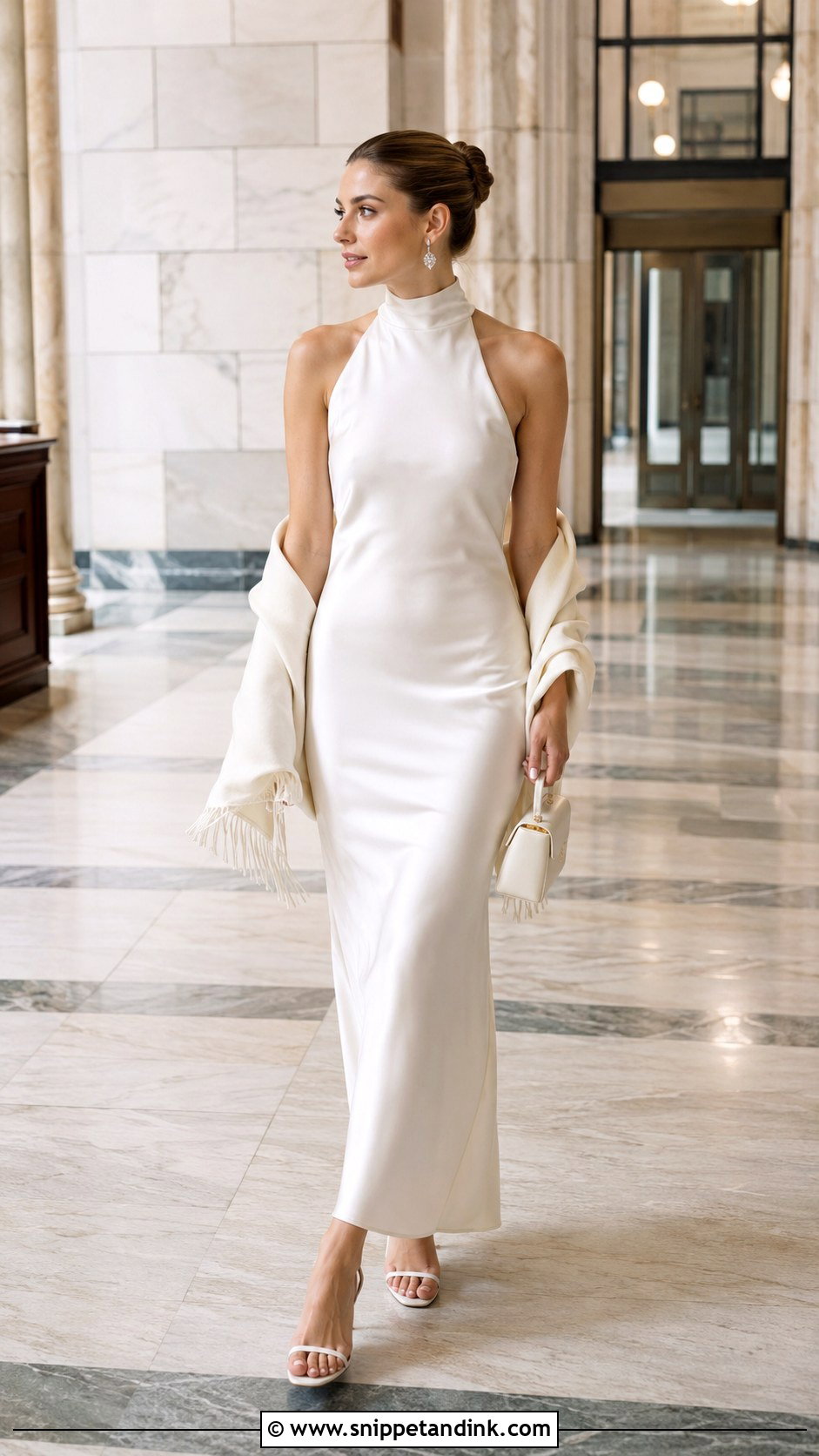
Raising the neckline on a slip dress changes its whole mood, from loungewear to something you could wear to sign a legal document. Bias-cut satin flows, but it’s unforgiving: it shows underwear lines and clings at the stomach, so fit it in the exact shapewear you plan to wear. An open back adds interest. Slim slingbacks and a structured mini bag give the softness some contrast. Pull the hair into a neat bun so the high neck stays visible.
10. Off Shoulder Midi Civil Court Wedding Dress
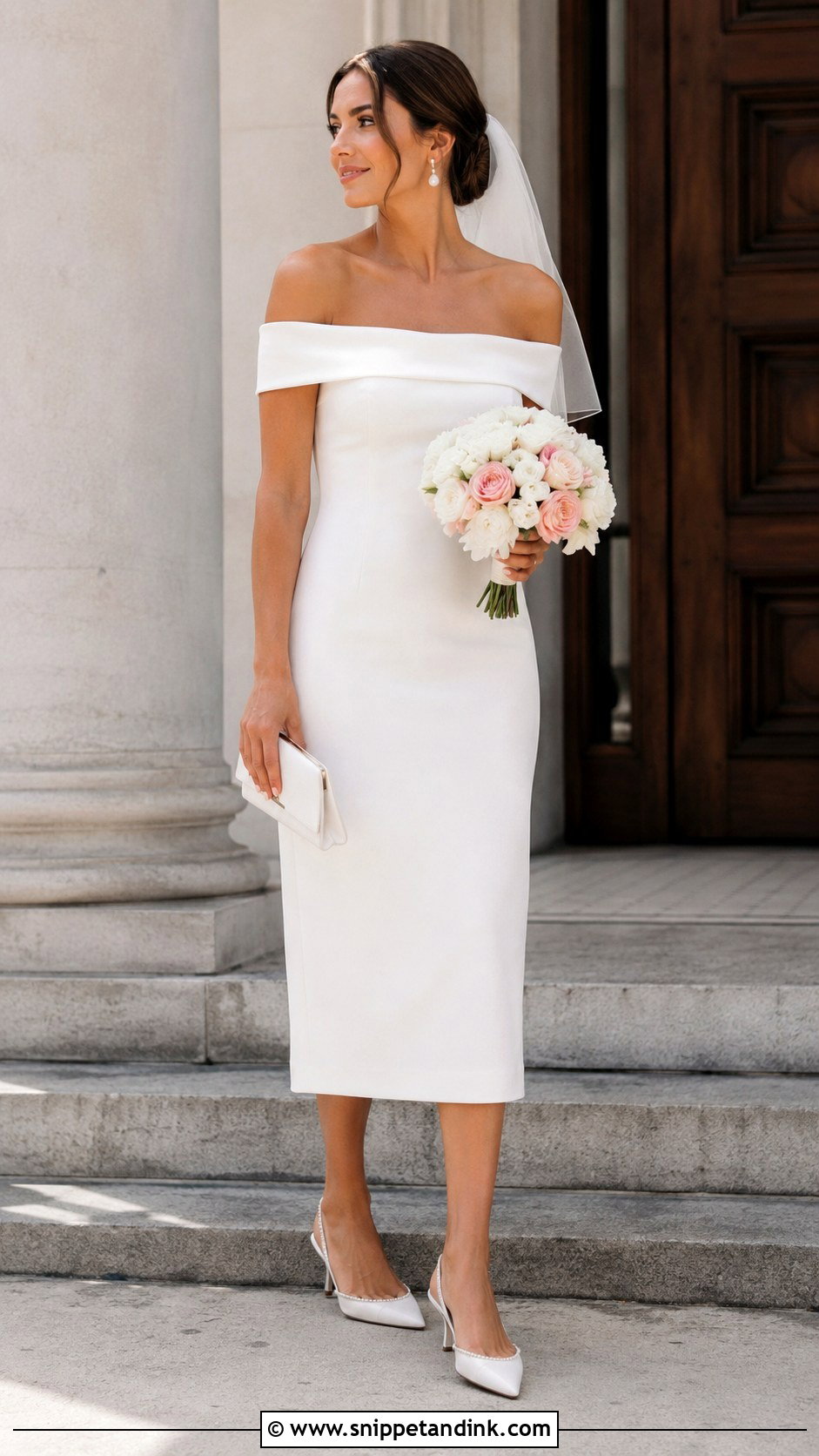
Off-shoulder sleeves can trap your arms. That’s the first thing I check: lift both arms to shoulder height, and if you can’t, the sleeve band is set too low or too tight. Crepe looks smooth and modern; satin glows. A short veil tucked under a low bun frames the neckline without covering it. Leave the necklace off. It’s a warm-weather dress, best when you’re taking portraits outside on the steps.
11. Puff Sleeve Mini Civil Court Wedding Dress
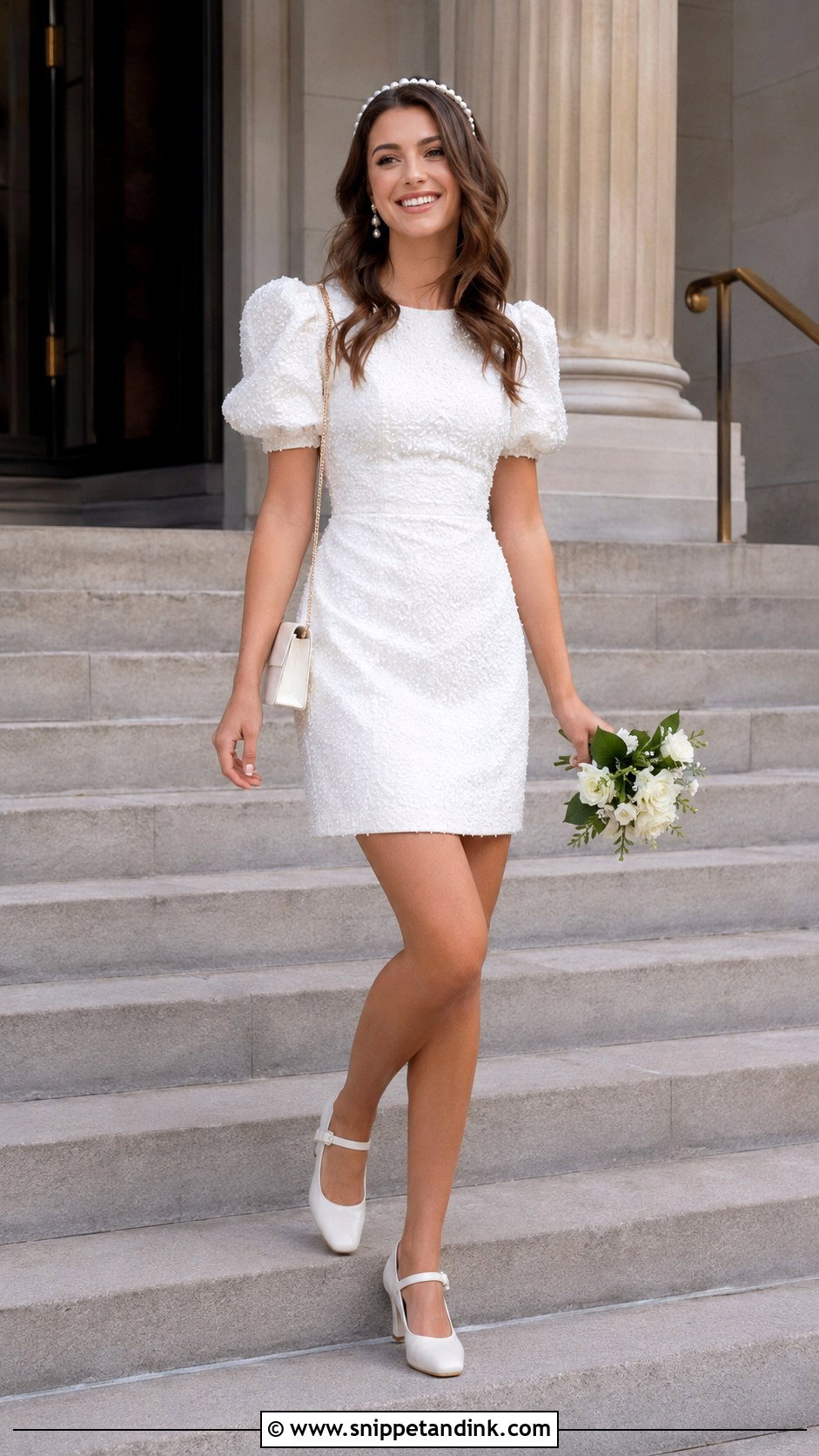
Keep the sleeve volume gentle on a puff sleeve mini dress, since a big puff plus a short skirt can tip into childlike. A fitted waist anchors the proportions. A bit of embroidery or a small bow makes it feel special. Mary Janes or closed-toe kitten heels suit the shape, with a pearl headband and loose waves. It’s a spring dress; for chilly mornings, a longer coat covers it on the walk in.
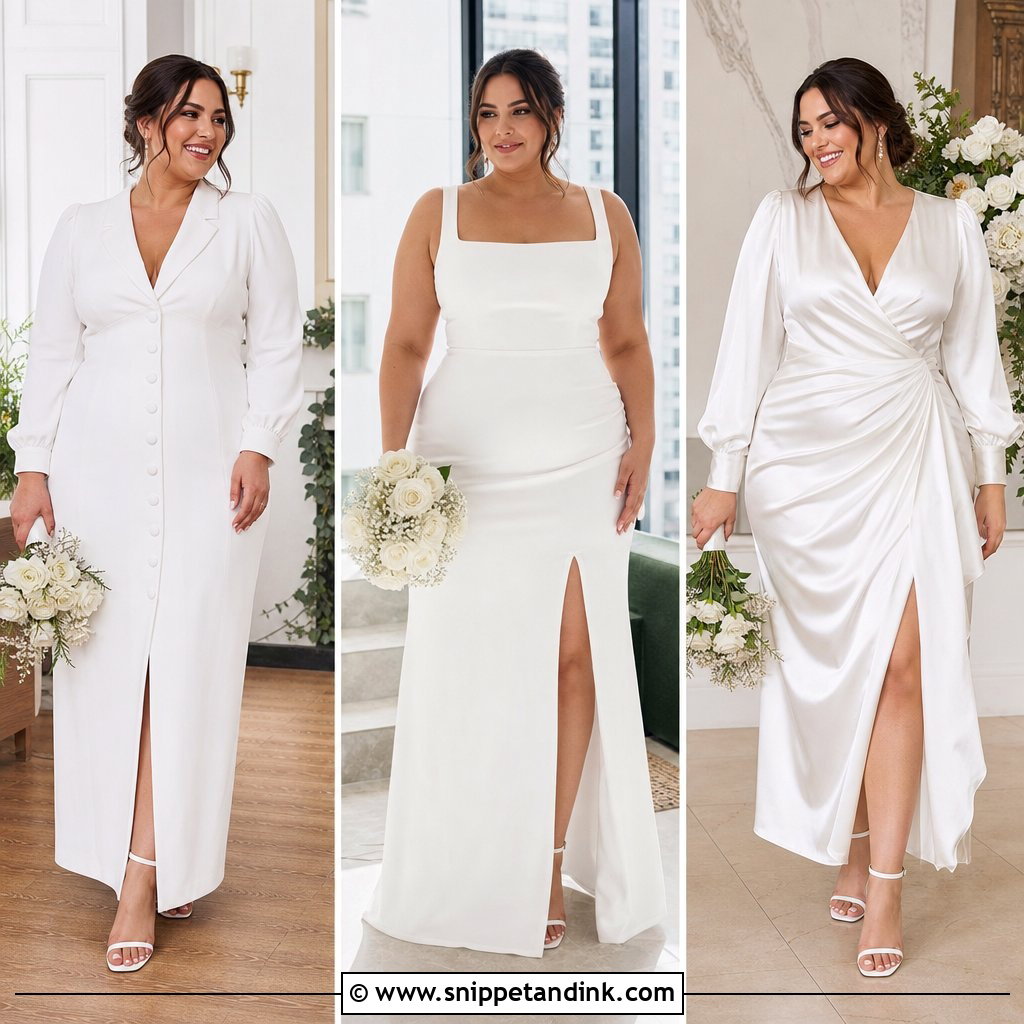
12. Wrap Midi Civil Court Wedding Dress
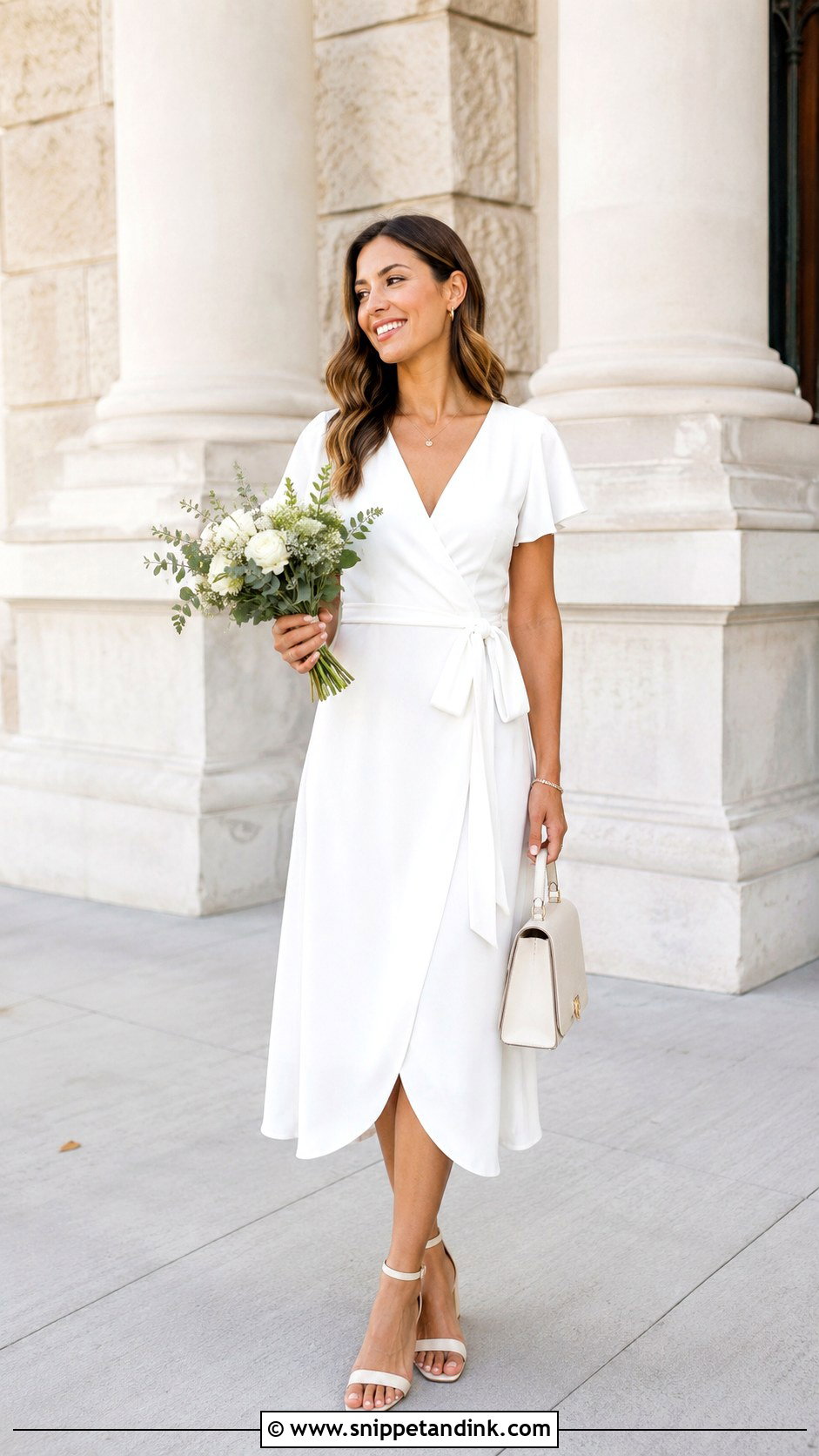
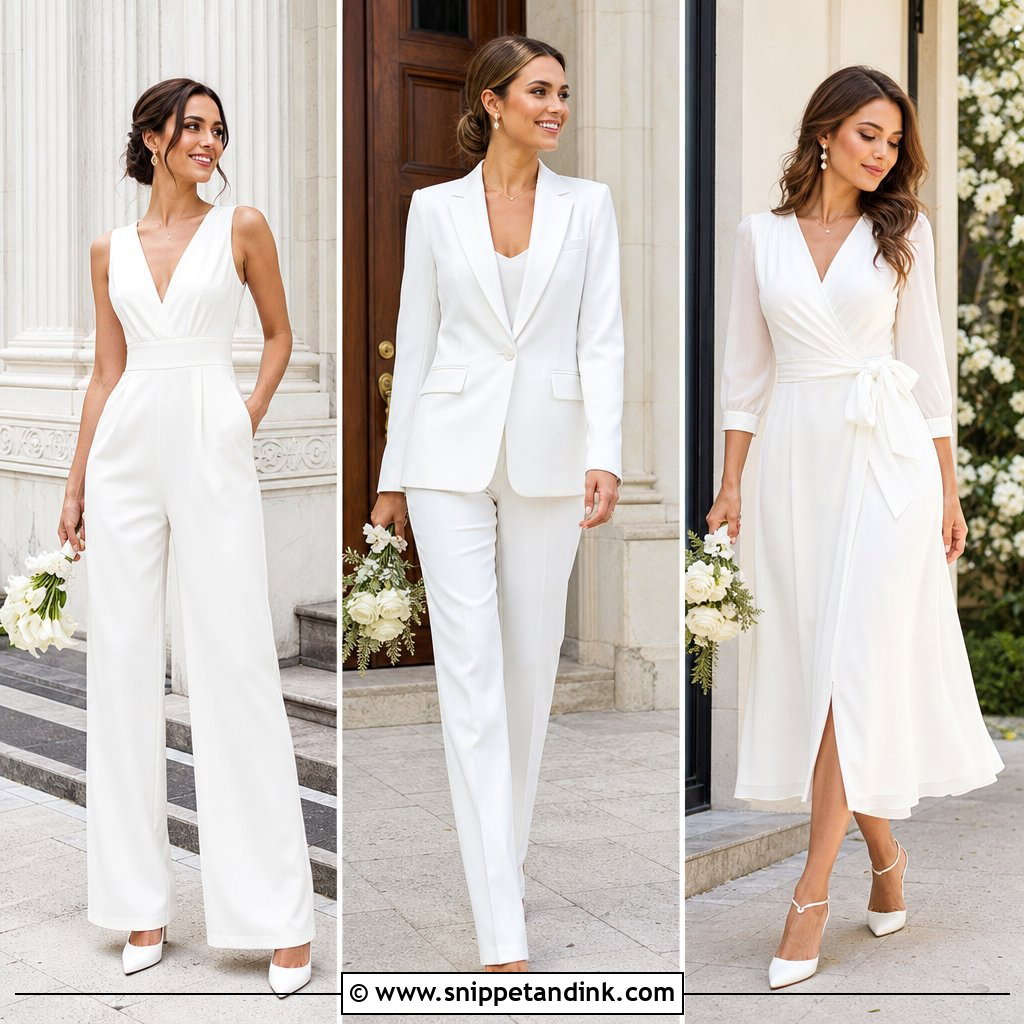
You will wait at a court wedding, sometimes a while, and a wrap midi is the dress that stays comfortable through it. The tie lets you loosen the waist after lunch. I check two things: that the fabric is fully opaque in daylight, and that there’s a snap at the V, because wrap fronts open when you lean. Flutter sleeves soften it. Block-heel sandals, a delicate pendant and a loose low bun suit a warm-weather ceremony.
13. Pleated Chiffon Civil Court Wedding Dress
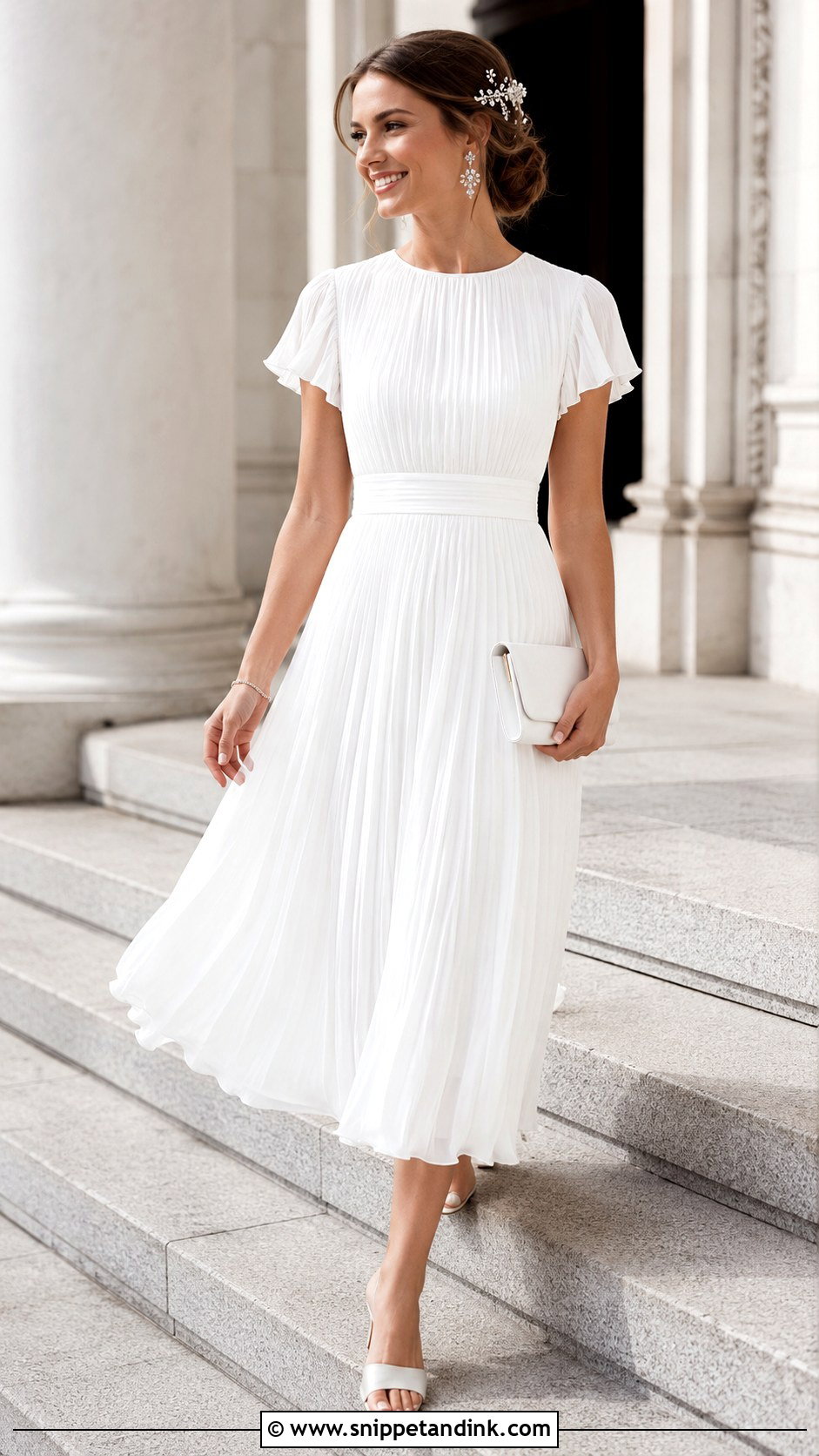
Chiffon pleats are lovely until the wind catches them on the courthouse steps. That’s the honest trade-off. Narrow pleats over a substantial lining behave far better than loose, wide ones, and a fitted waistband keeps the shape defined. A high neck or flutter sleeves balance the movement of the skirt. A hair comb with a little sparkle replaces the veil. Low block heels keep you steady on stone.
14. Cape Sleeve Civil Court Wedding Dress
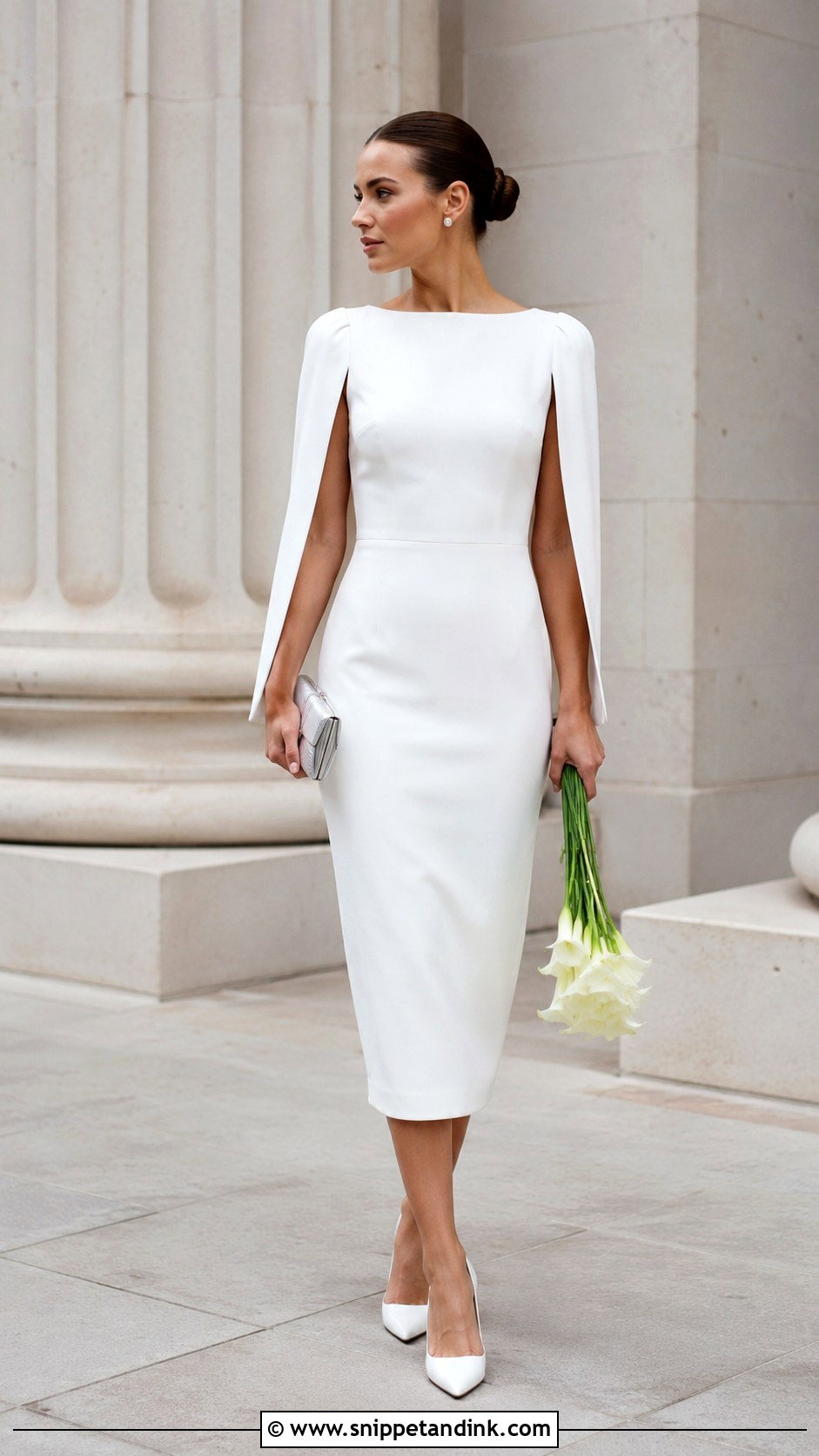
Cape sleeves give ceremony without a train. Crepe moves well and stays matte. Since the cape takes up the space around your shoulders, keep the jewelry to small studs and the hair sleek, or the neckline looks crowded. A narrow, long-stemmed bouquet echoes the vertical lines. One practical point: try sitting in it. Capes can bunch behind you on a chair back, so have the seamstress tack it if it does.
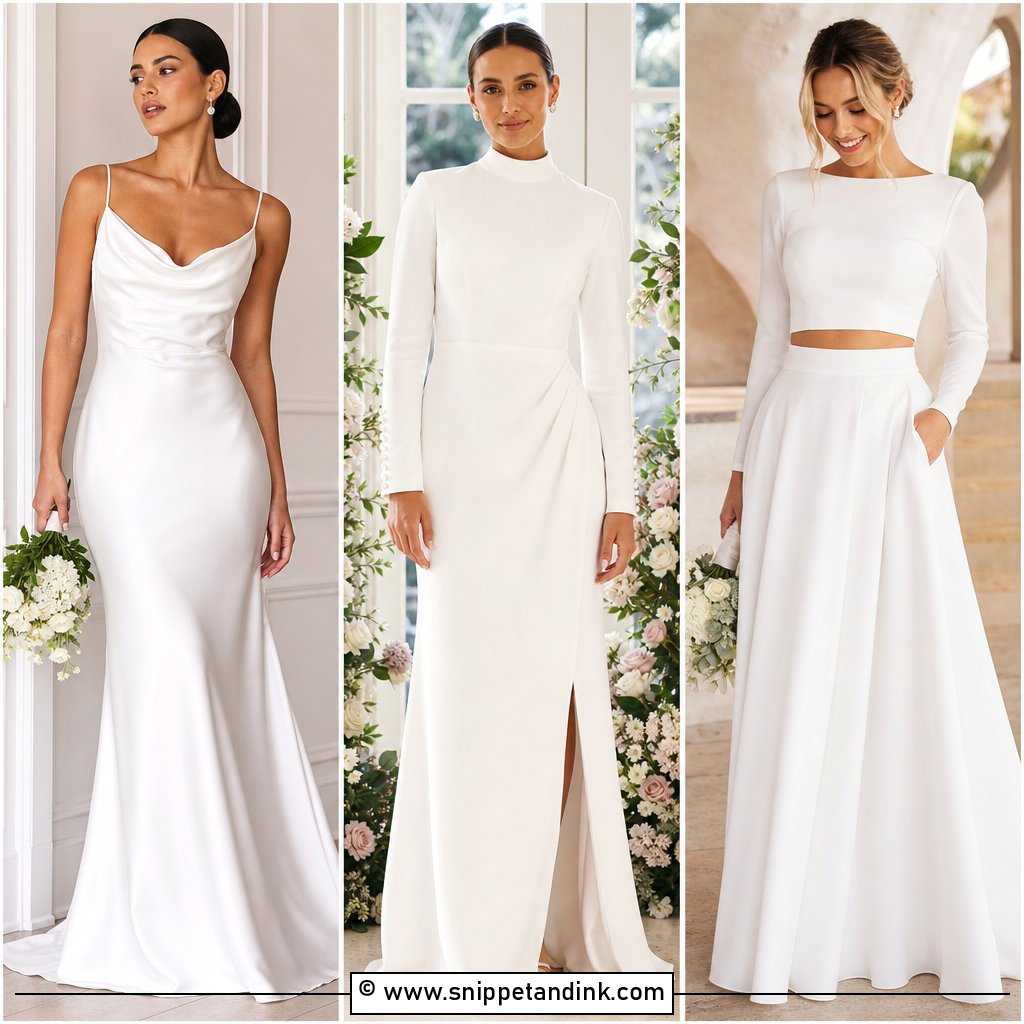
15. Button-Front Tea-Length Civil Court Wedding Dress
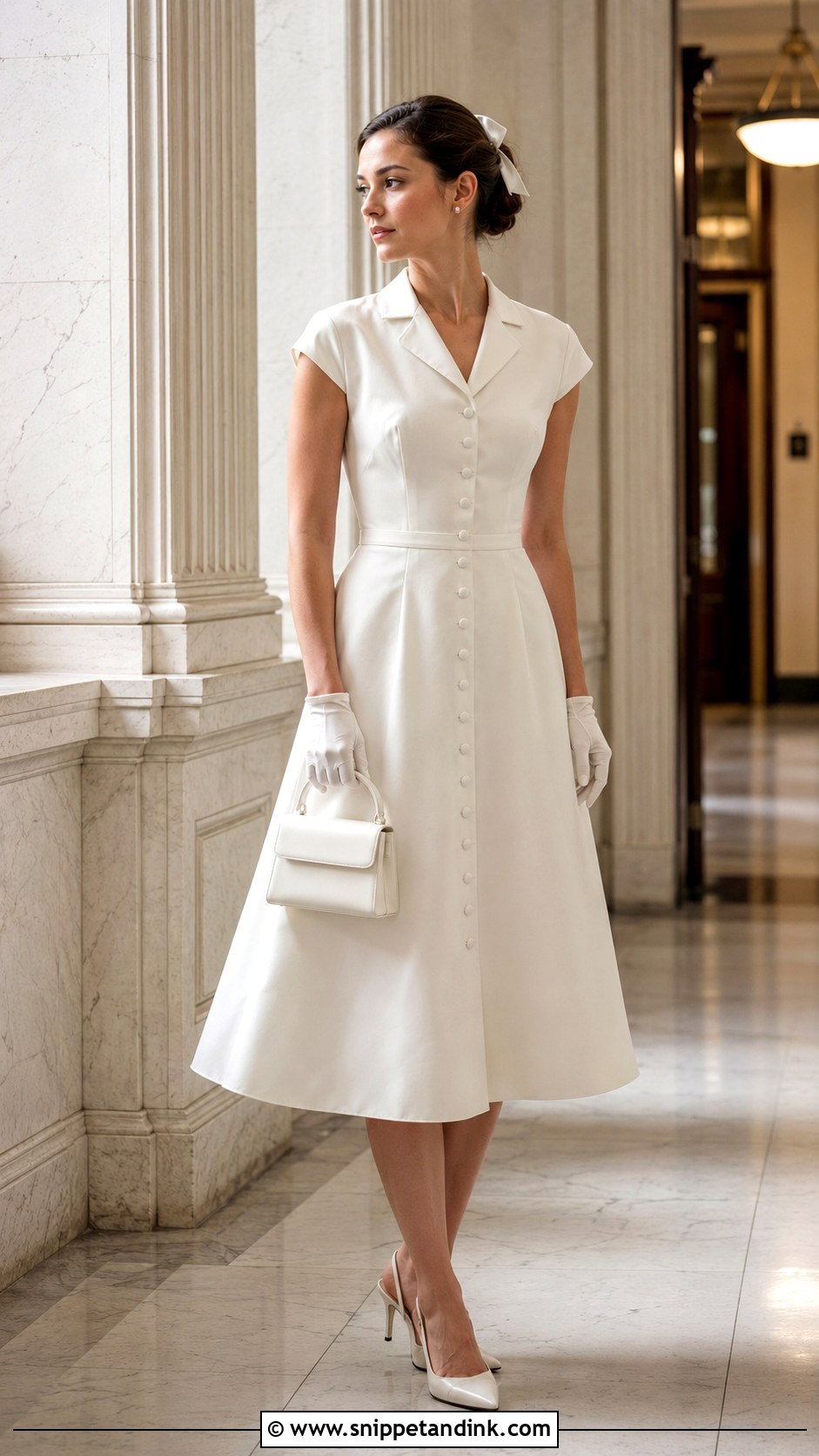
Covered buttons give a tea-length dress detail that shows up well in close photos. Check the button loops, though: elastic loops are quick to fasten on the morning, while hand-sewn rouleau loops look finer but take ages without help, so plan for a friend with patient fingers. A V or collared neckline leans vintage. Smooth satin is formal; cotton jacquard is relaxed for a daytime wedding. Slingbacks and pearl studs finish it, and short gloves are optional.
16. Floral Jacquard Mini Civil Court Wedding Dress
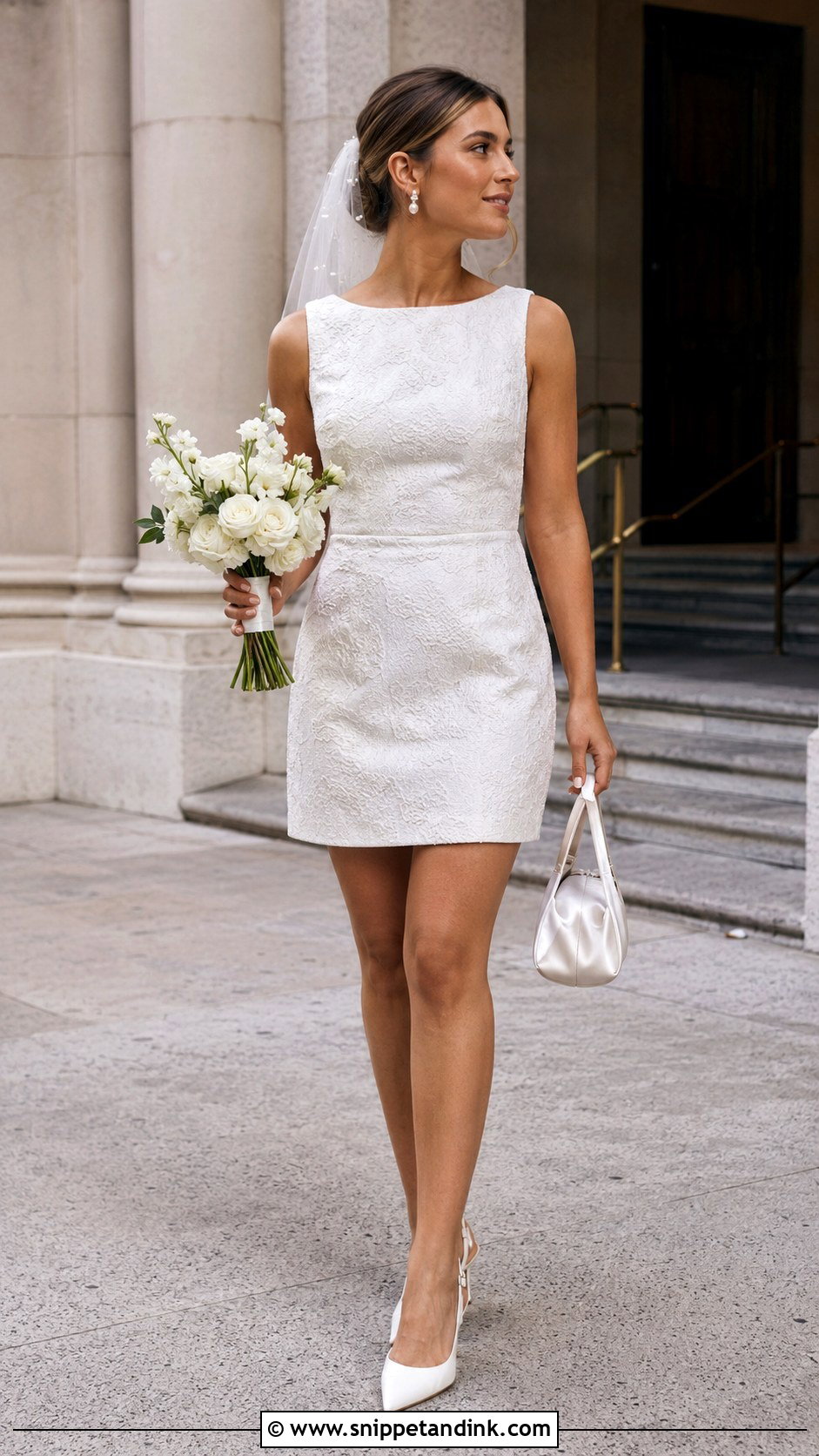
Woven florals catch light more quietly than sequins, which is why I like jacquard for a small room. A fitted bodice with a straight or gently flared skirt keeps the textured fabric looking refined rather than costume-like. Ivory slingbacks, a satin bag and pearl earrings stay out of its way. Choose a bouquet with little greenery so the flowers don’t fight the pattern. Afterward, flats and colored accessories turn it into a party dress.
17. Feather Trim Mini Civil Court Wedding Dress
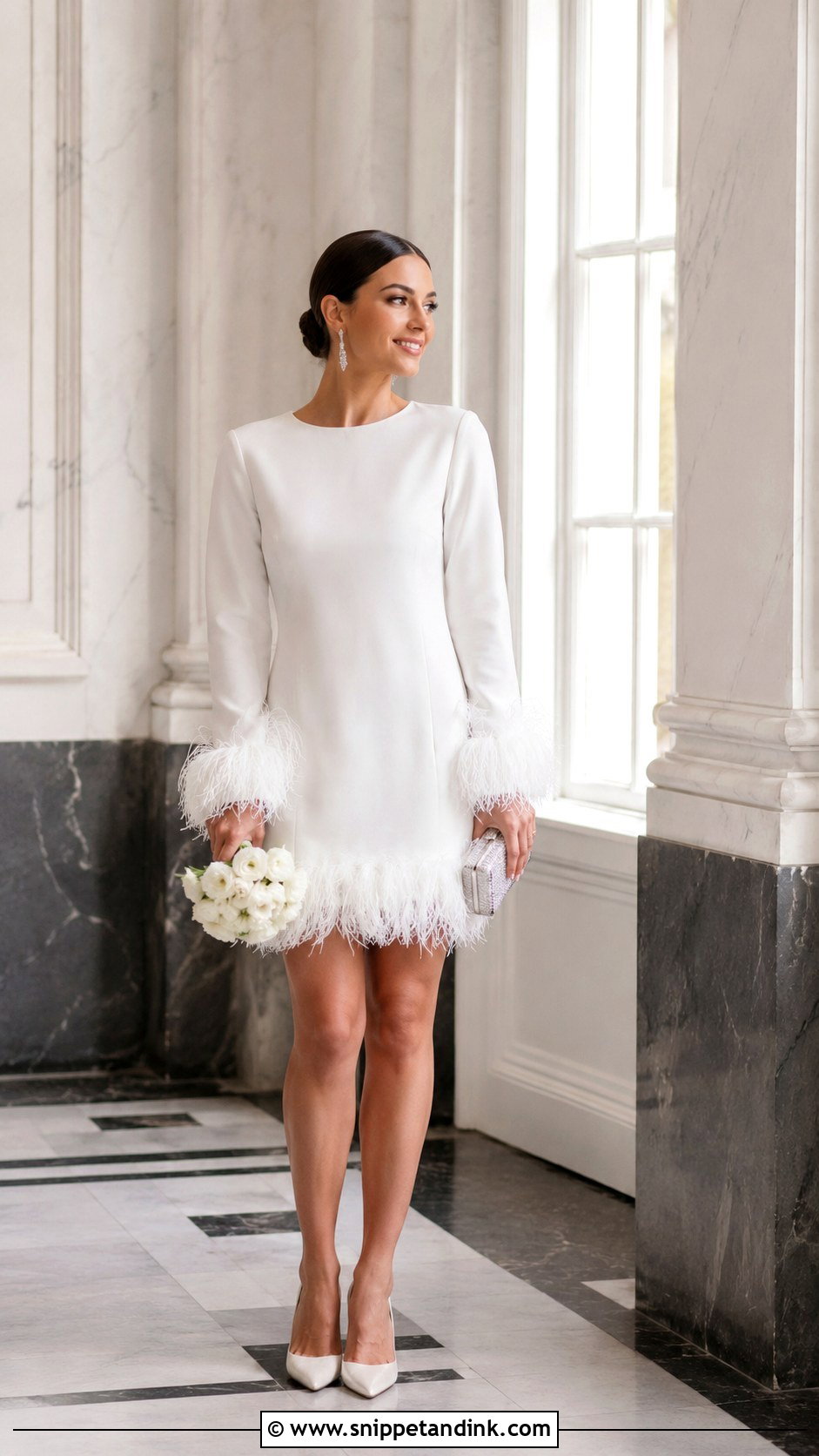
Feathers are easiest to live with at the cuffs or hem, not all over. Full feather dresses shed, catch on everything, and leave fluff on your partner’s jacket. A simple shift or fitted mini balances the trim. If you’re worried feather trim feels too playful for a formal building, wear a tailored ivory coat for the legal part and take it off for photos. Keep the hair smooth and the bouquet compact.
18. Empire Waist Maternity Civil Court Wedding Dress
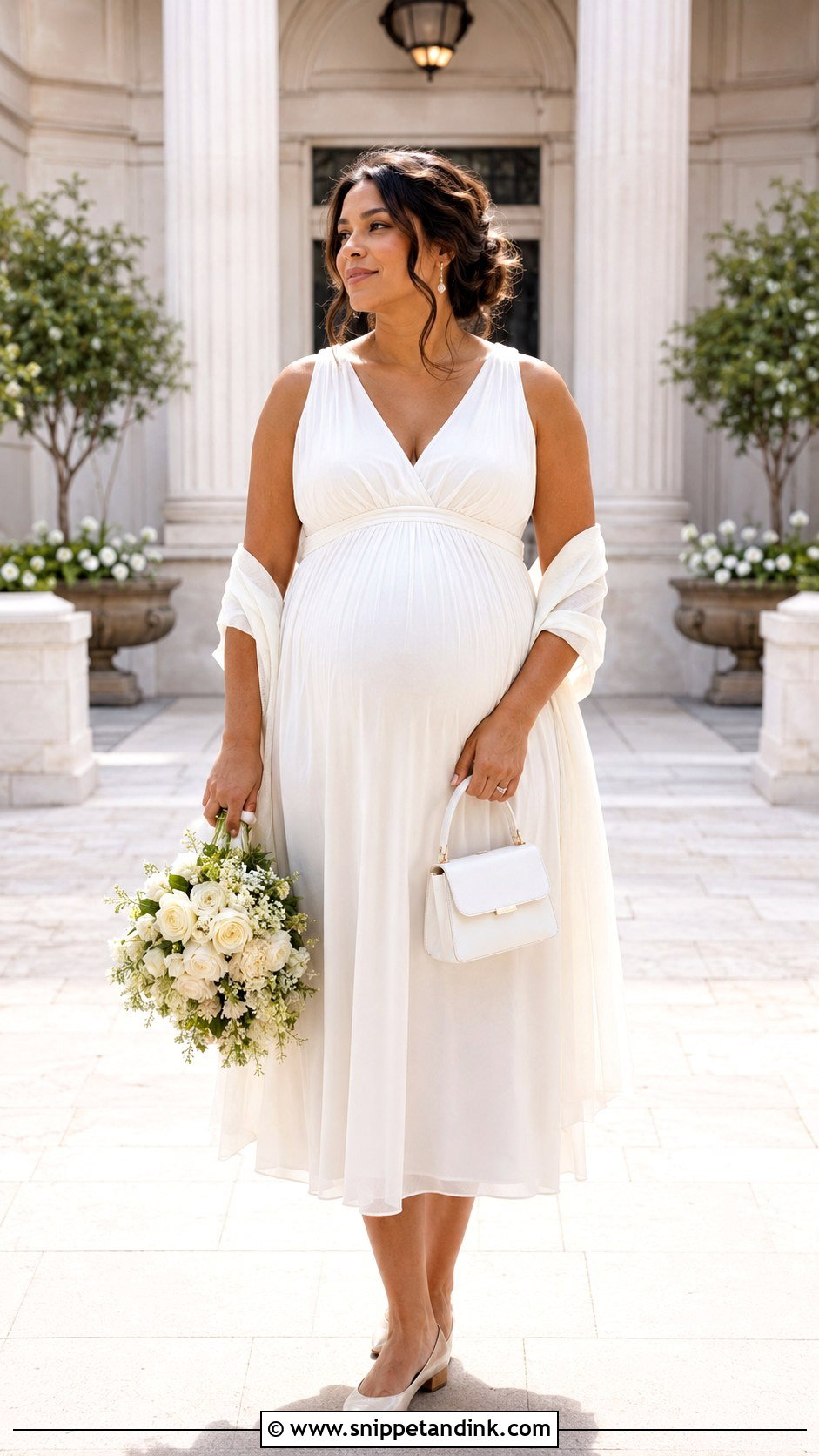
For a pregnant courthouse bride, the empire waist sits above the bump and lets the skirt fall freely. I’d buy close to the date and have the final fitting no more than a couple of weeks before, because the body keeps changing. Stretch crepe, lined chiffon or smooth jersey flex without looking casual. Supportive flats or low block heels matter more than usual. A light shawl, a loose updo and a rounded bouquet complete it; breathable fabric beats anything restrictive.
19. Plus Size Ruched Civil Court Wedding Dress
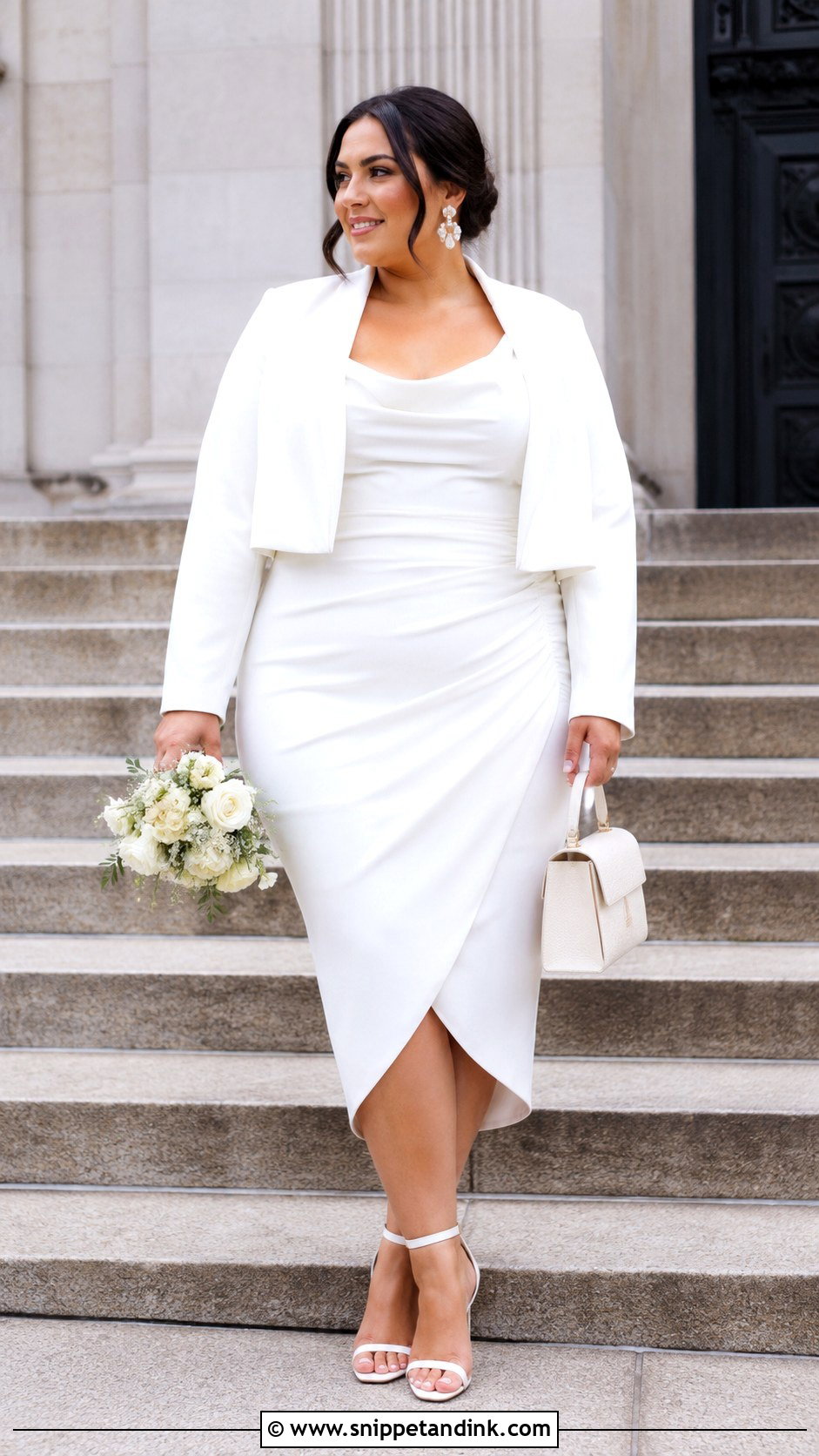
Ruching gives texture and a little forgiveness through the middle of a plus-size dress. Side gathering with a draped neckline and sleeves that don’t grip the arm is the combination I look for. Stretch crepe or lined jersey follows the body smoothly. Choose a dress with a defined waist rather than one designed to hide your shape, and have it altered properly; the number on the label means nothing once a seamstress has fitted it. Stable block heels and a cropped blazer finish the outfit.
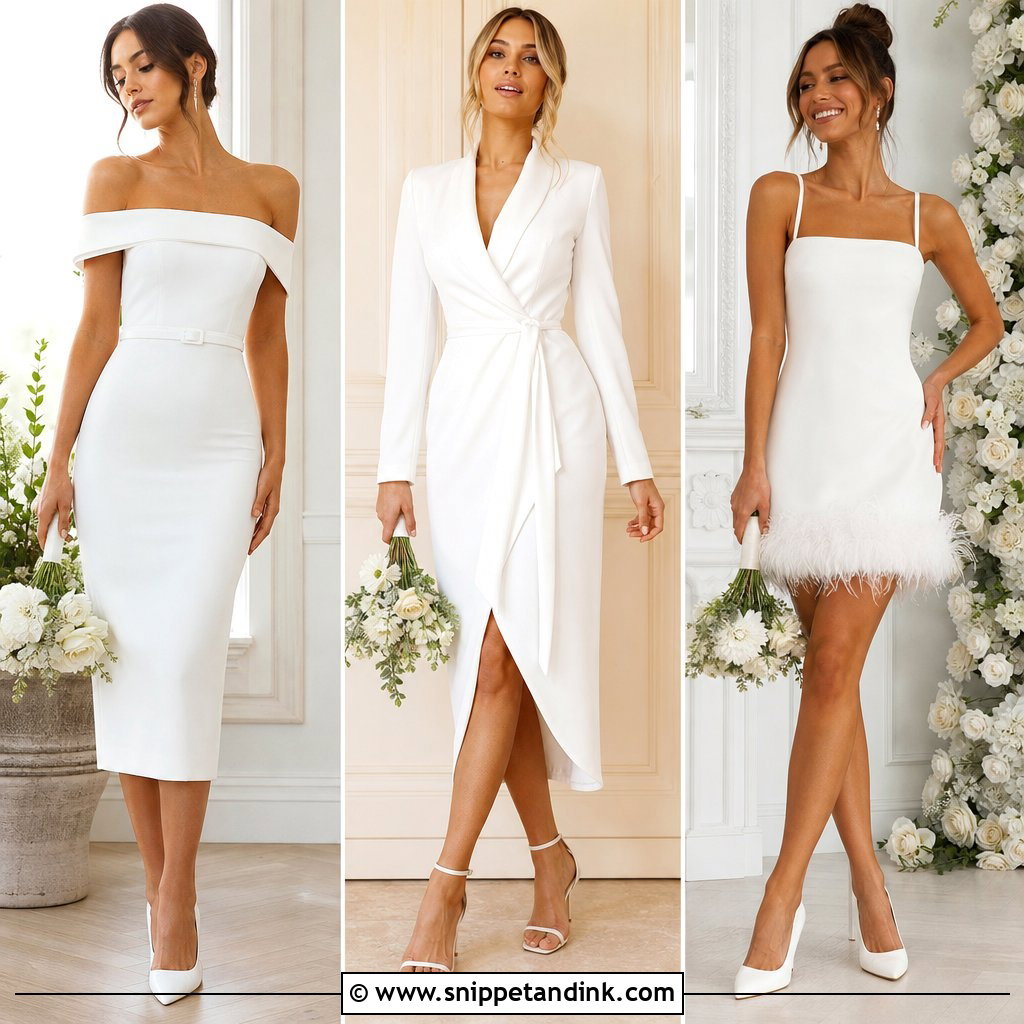
20. Velvet Midi Civil Court Wedding Dress
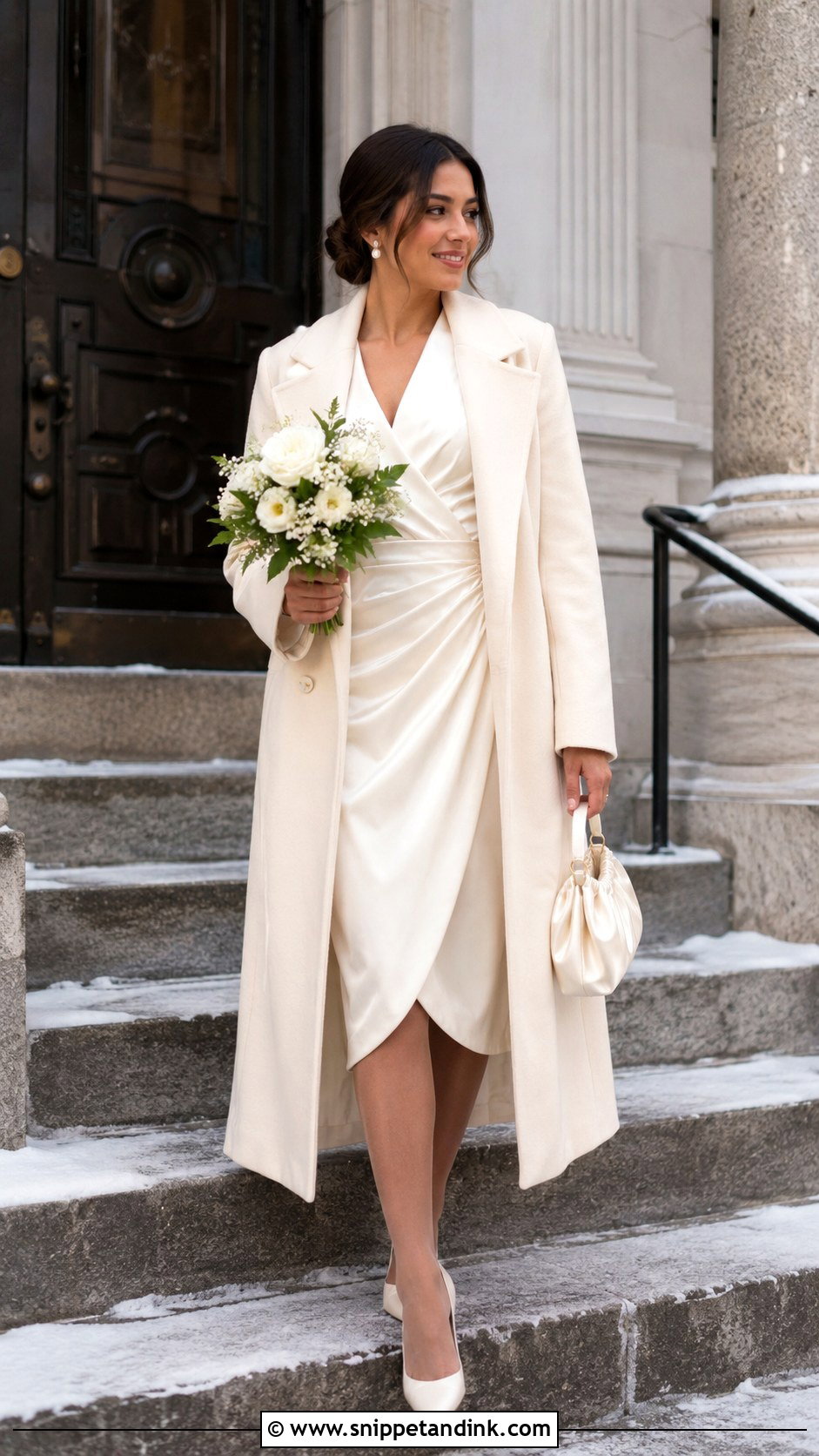
Winter is when velvet earns its place. A white or ivory velvet midi dress is warm, and the pile gives it depth in photos. Keep the cut streamlined, so a wrap or column, because velvet adds bulk. Velvet also marks if you press it, so steam it from the inside and never iron the face. Long sleeves, sheer tights and closed-toe pumps handle the cold, and a long cream coat for arrival photos looks right with deep green foliage in the bouquet.
Which of These Dresses Earns a Second Wear
One of the best things about a court wedding dress is that you might wear it again. In my experience, some styles make that jump far more easily than others.
Easy to rewear
Crepe midis, wrap dresses, blazer dresses and jacquard minis go straight into a wardrobe. Swap ivory accessories for color and nobody reads them as wedding dresses. Satin slips work too, with a knit thrown over them.
Harder to rewear
Lace tea lengths, cape sleeves and feather trim stay bridal looking. You can still keep them well: have them cleaned soon after the day, since sugary drinks and body oils can leave yellow marks that appear only months later. Store them folded in acid-free tissue in a breathable box, away from light. Avoid wire hangers for anything heavy, and pad the shoulders of satin or crepe so it doesn’t stretch.
Some brides dye a white dress afterward. Natural fibers like silk and cotton take dye well; polyester satin mostly doesn’t, so check the label before you plan on it.
Sit, Reach and Walk Before You Buy
These twenty dresses cover the range, from a satin mini to velvet, and any of them can work at court. Satin and crepe give clean lines; lace, tea lengths and covered buttons bring vintage character; jacquard, capes and feathers bring texture. Whichever you pick, test it sitting, walking and with your arms raised, in your wedding shoes. Book alterations early. Then stop at one hair detail, a small bouquet and shoes you can stand in, because a courthouse outfit rarely needs more than that.
You'll Like These Ideas:


Leave a Reply