
A Desi bride rarely wears one face. She wears a haldi face, a mehndi face, a baraat or wedding face and often a reception face, each under different light and next to a different outfit and jewelry set. When I plan bridal makeup for South Asian weddings, I start with the outfit color and the heaviest jewelry, then work backwards to undertone and skin texture, because a red lehenga with a kundan set asks for very different definition than an ivory nikkah outfit with pearls. The ideas below run from classic red and gold to soft nude and pink, and they cover Indian, Pakistani, Bangladeshi, Sikh, Hindu and Muslim ceremonies, plus plenty of modern South Asian bridal inspiration for each event.
Mapping Five Events Onto One Skin Plan
Most of the brides I work with have between three and five functions in a week, and the skin takes a beating long before the wedding day. I plan the makeup for the whole run at once, not event by event, so the heaviest face lands where it matters and the lightest lands where turmeric, oil or sweat would ruin anything more.
- Haldi: tint, concealer, cream blush, waterproof brows and lashes. Nothing that needs to survive being rubbed.
- Mehndi: fresh and colorful, applied before the artist starts on your hands.
- Sangeet: sweat-proof base and waterproof eyes, built for movement.
- Wedding or baraat: your fullest and longest-wearing face, with lashes and liner at full strength.
- Walima or reception: often a new direction, applied over skin that needs extra hydration by now.
The weeks before
Book your trial a month or two out, ideally wearing the jewelry for the main event or something close in weight. Keep threading and waxing to a few days before, never the morning of, because the redness and small bumps show through foundation. I’d avoid any new facial, peel or bleach treatment in the last couple of weeks; if your skin reacts, there’s no time left to settle it.
Tell your artist which functions you’re doing yourself. A bride who does her own haldi and mehndi makeup needs a simple routine she can repeat, and it is worth practicing it twice before the week begins.
1. Red Desi Bridal Makeup
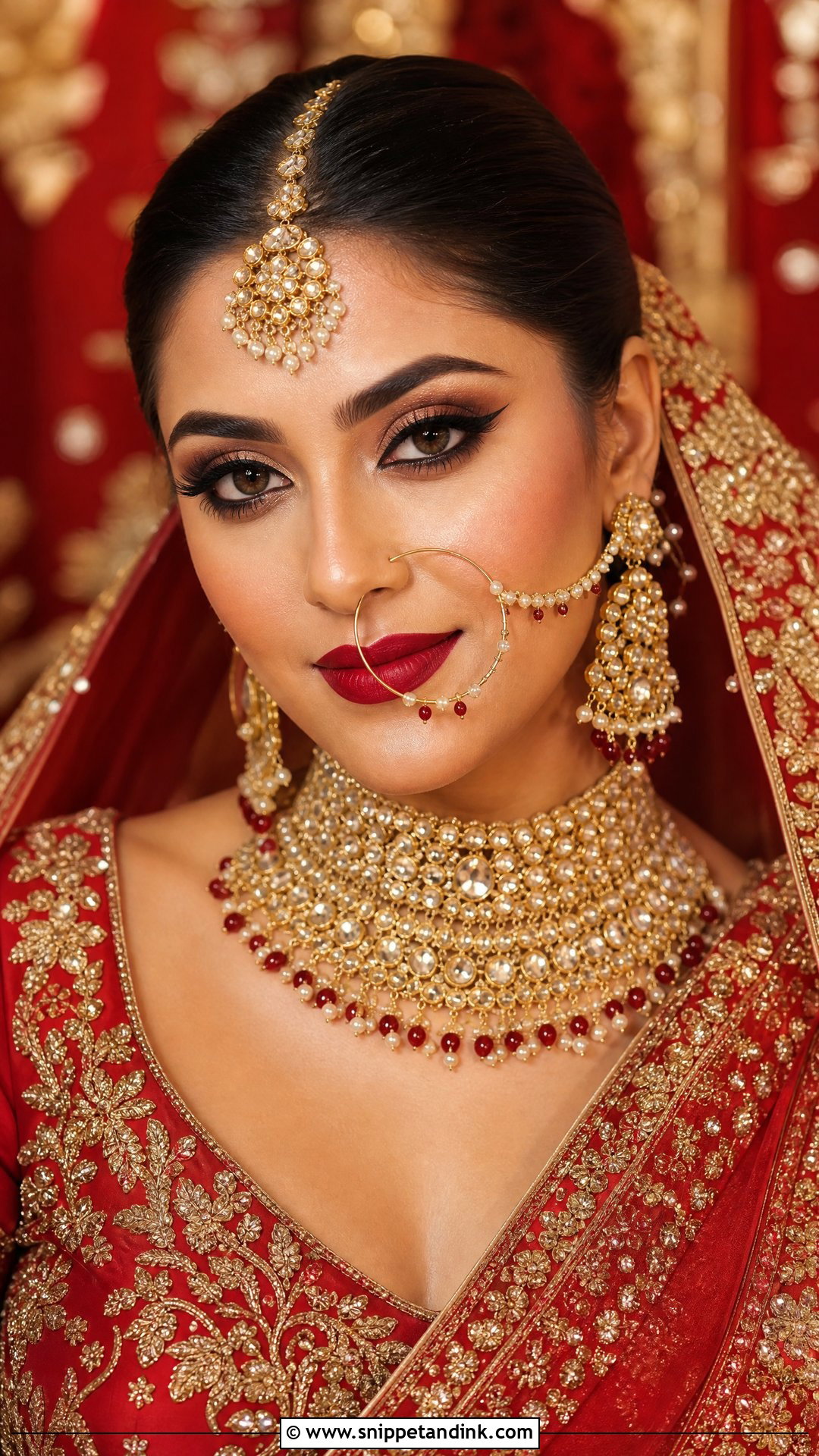
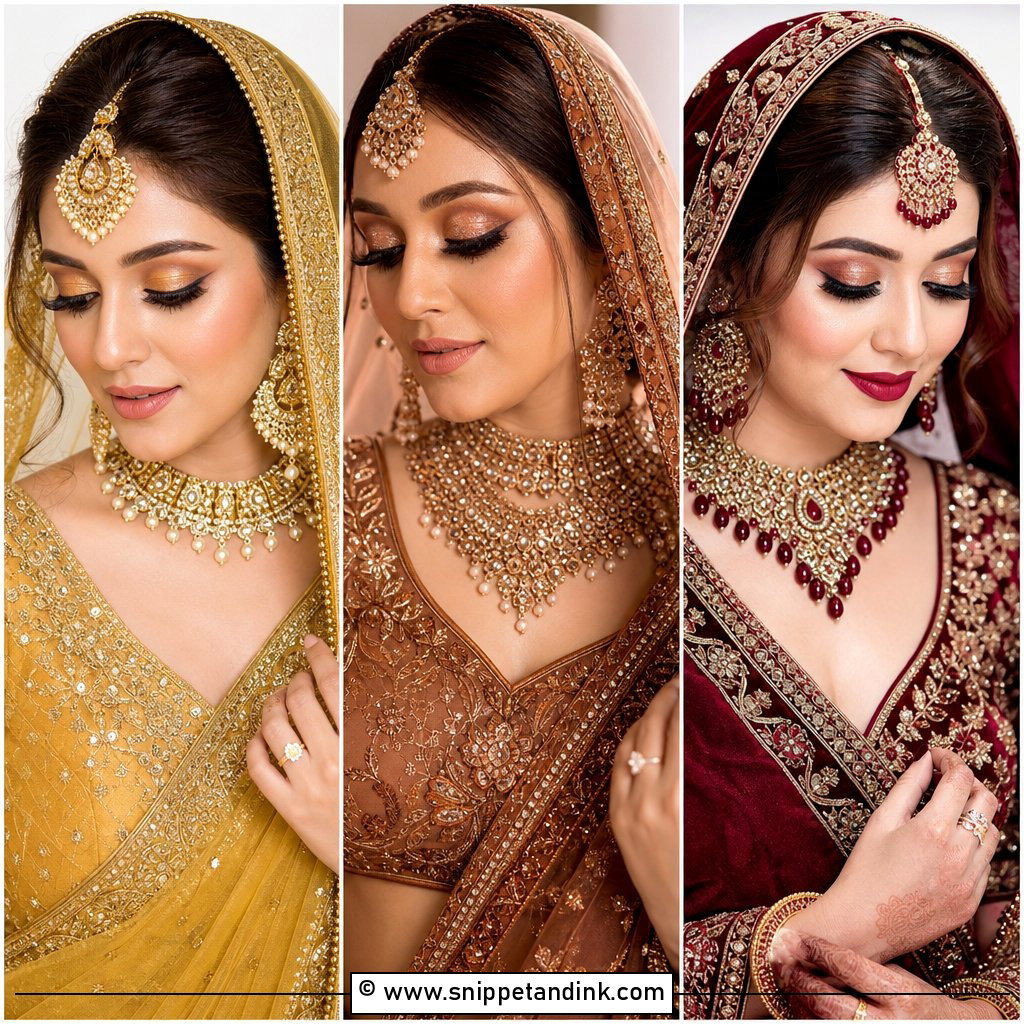
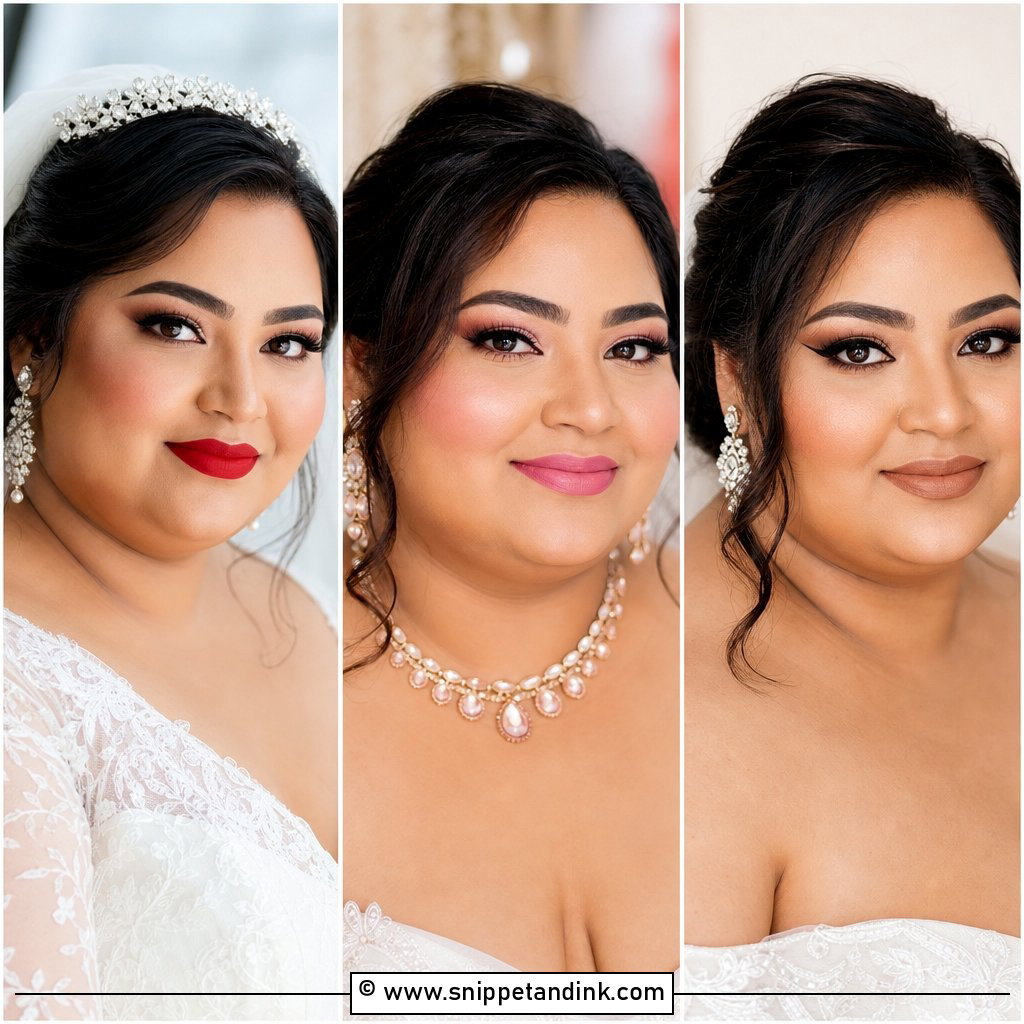
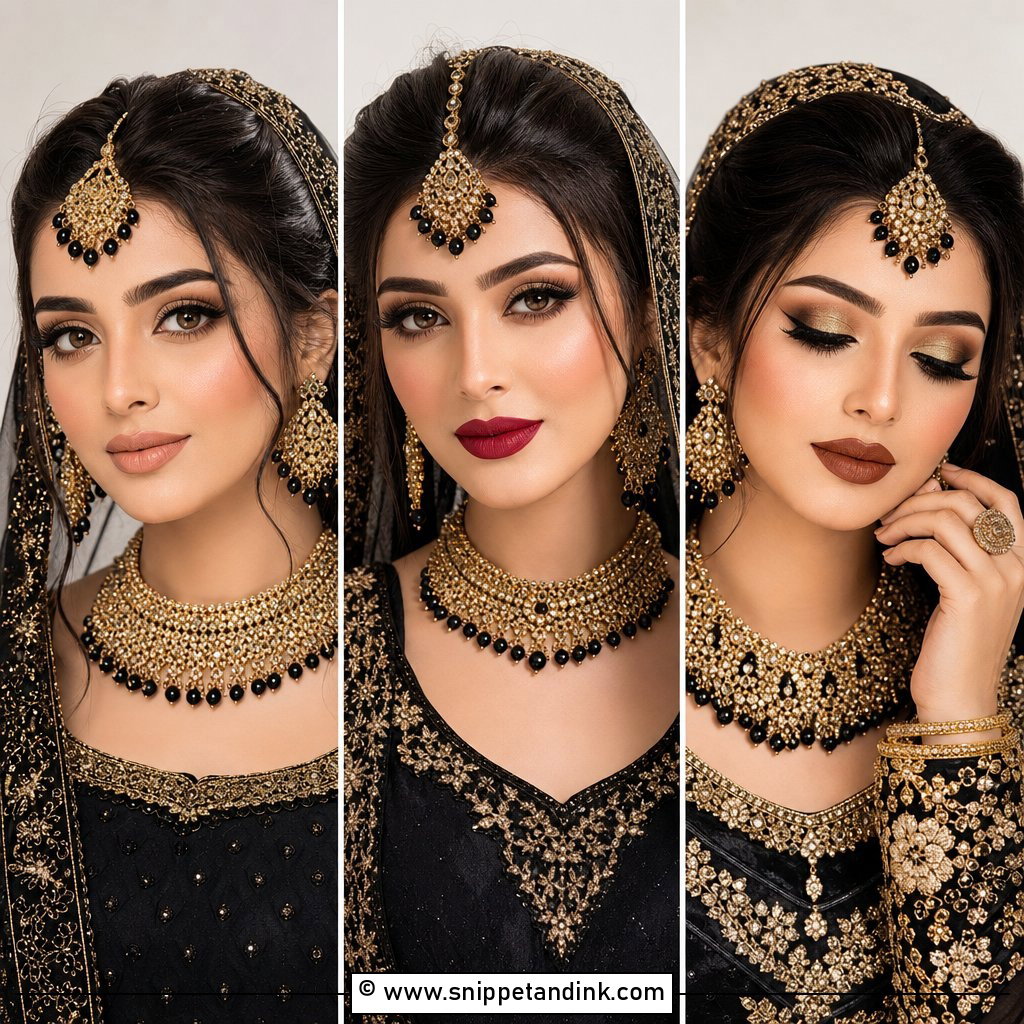
Red bridal makeup suits a red lehenga, saree, gharara or sharara: a satin-matte base, warm gold lids, black liner, soft brown crease depth and a deep red or ruby lip. The detail I watch most is the brow. A heavily filled brow next to a red lip and a big tikka tips the face into harshness, so I keep it shaped but a shade lighter than the hair. Champagne highlight on the cheekbones and inner corners brings the face forward against all that red. For baraat, Hindu and Sikh ceremonies where the outfit is already loud, this is the look that holds its own.
2. Soft Glam Desi Bridal Makeup
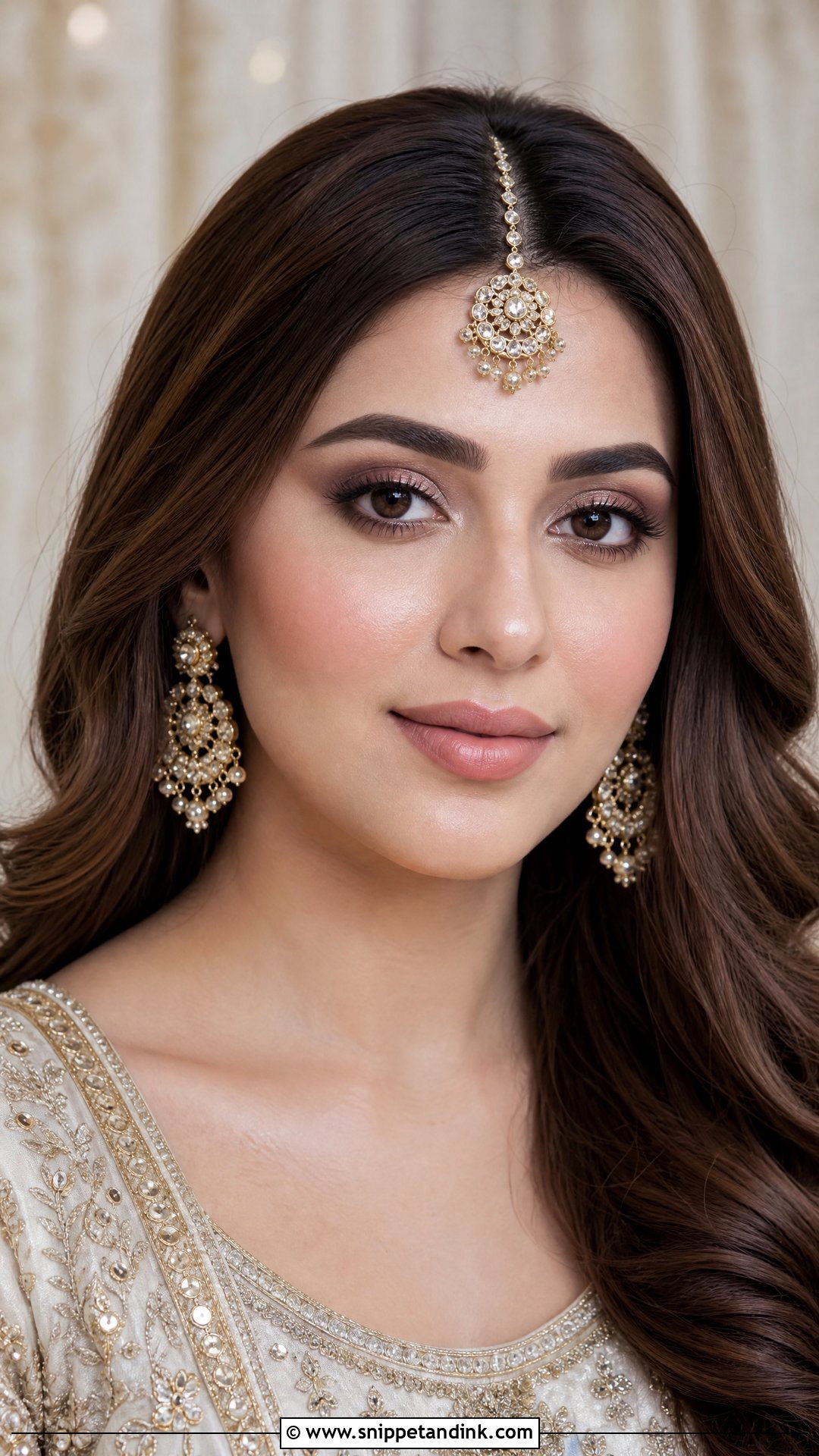
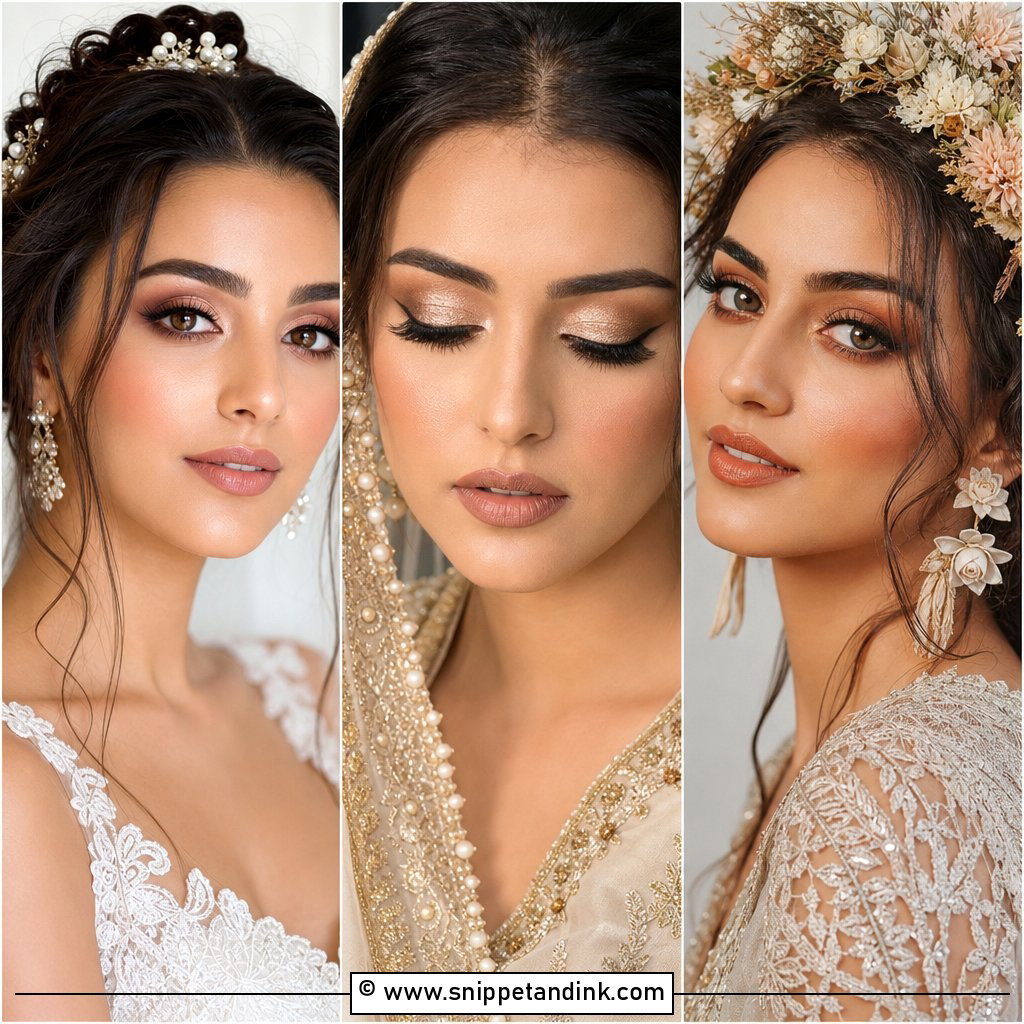
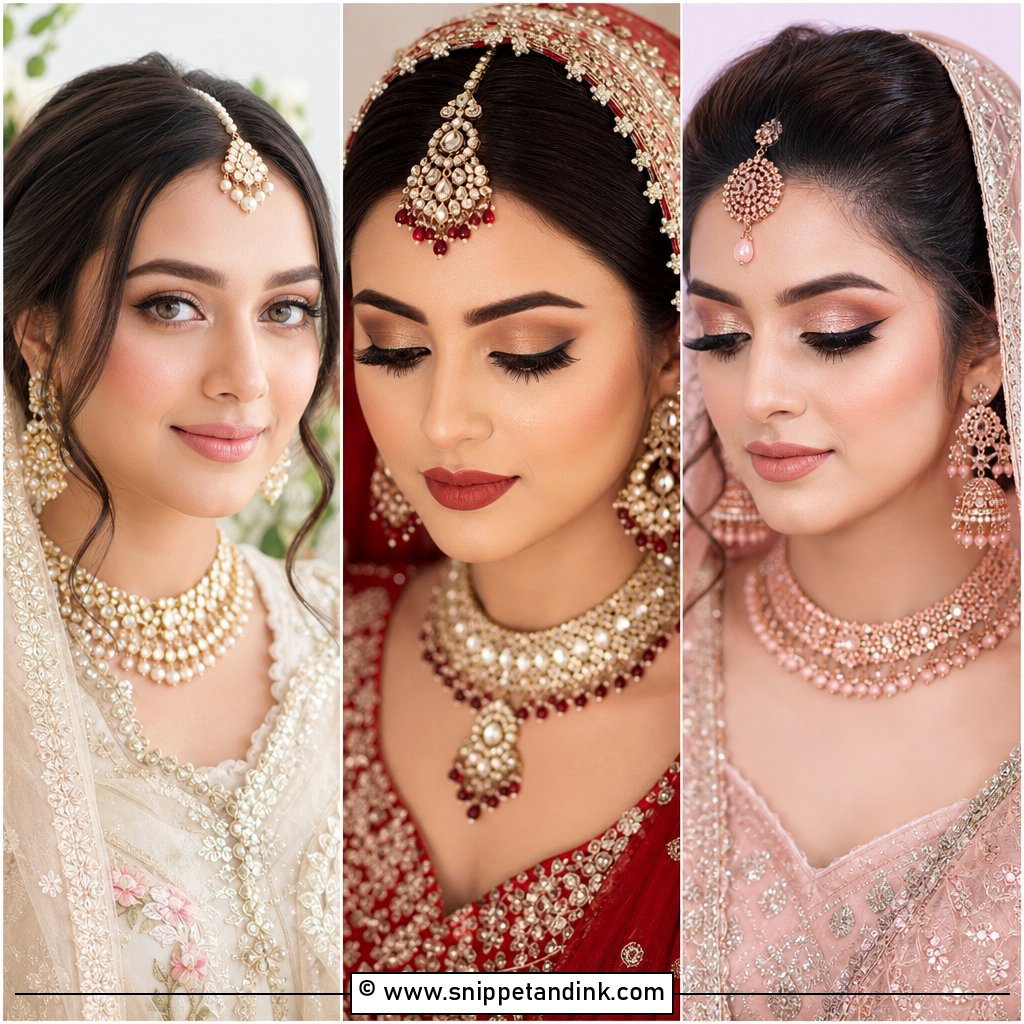
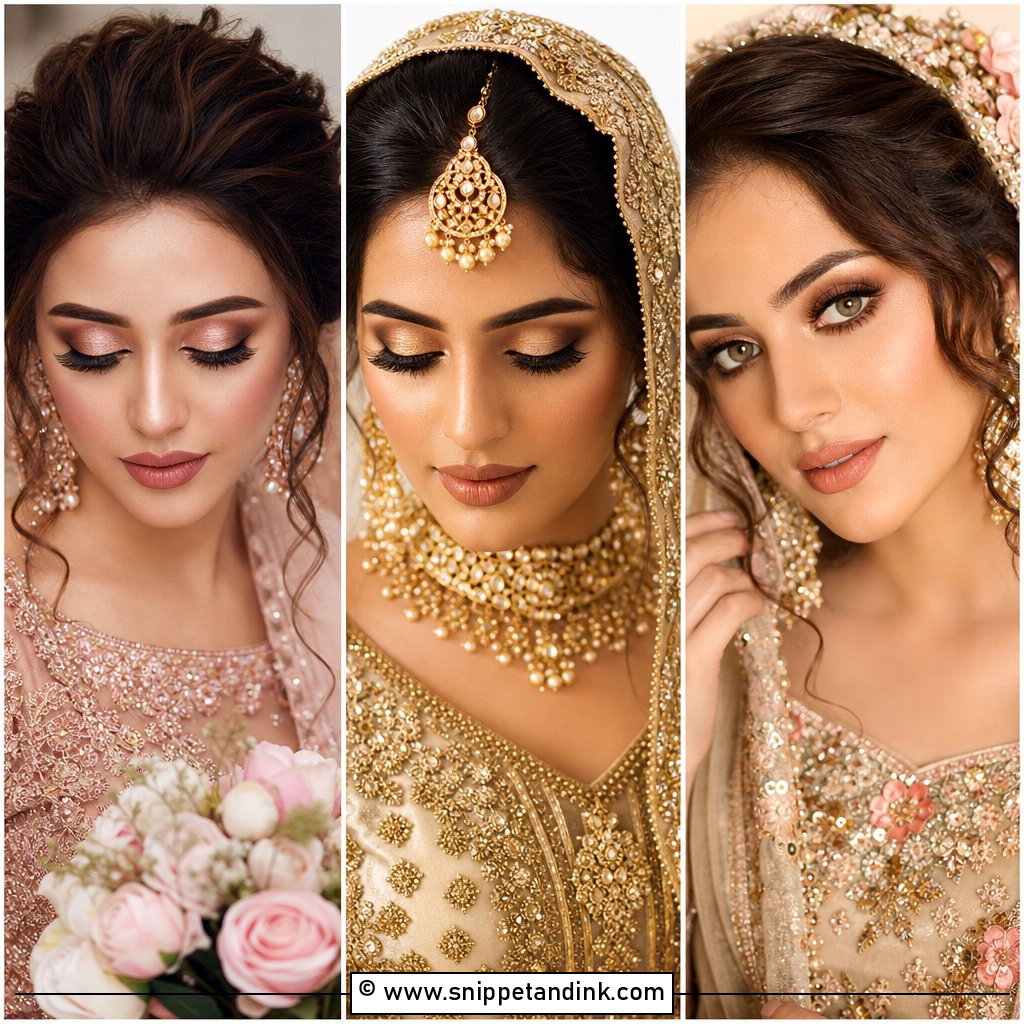
Soft glam is the request I hear most from brides who are nervous about looking unlike themselves. Neutral brown lids, diffused liner, fluttery lashes, soft contour, peach-pink blush and a creamy nude rose lip. The base still has to be long-wearing, so I build it in thin layers rather than one thick coat, which is what keeps it from looking flat. Ask your artist to blur every edge around the eyes and cheeks. It sits well with ivory, blush, champagne, pastel green and pale gold outfits, and daytime or outdoor ceremonies.
3. Gold Eye Desi Bridal Makeup
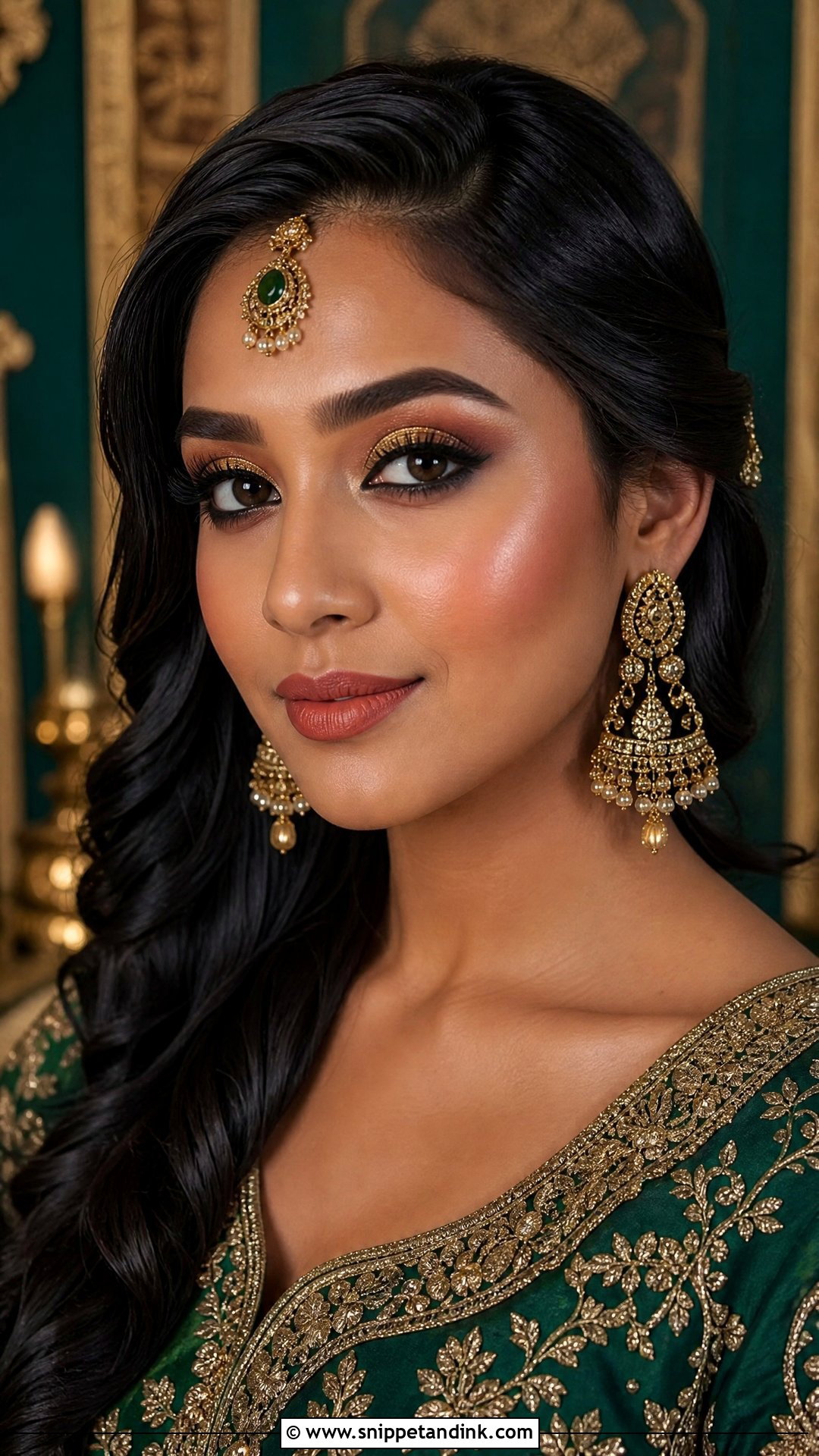
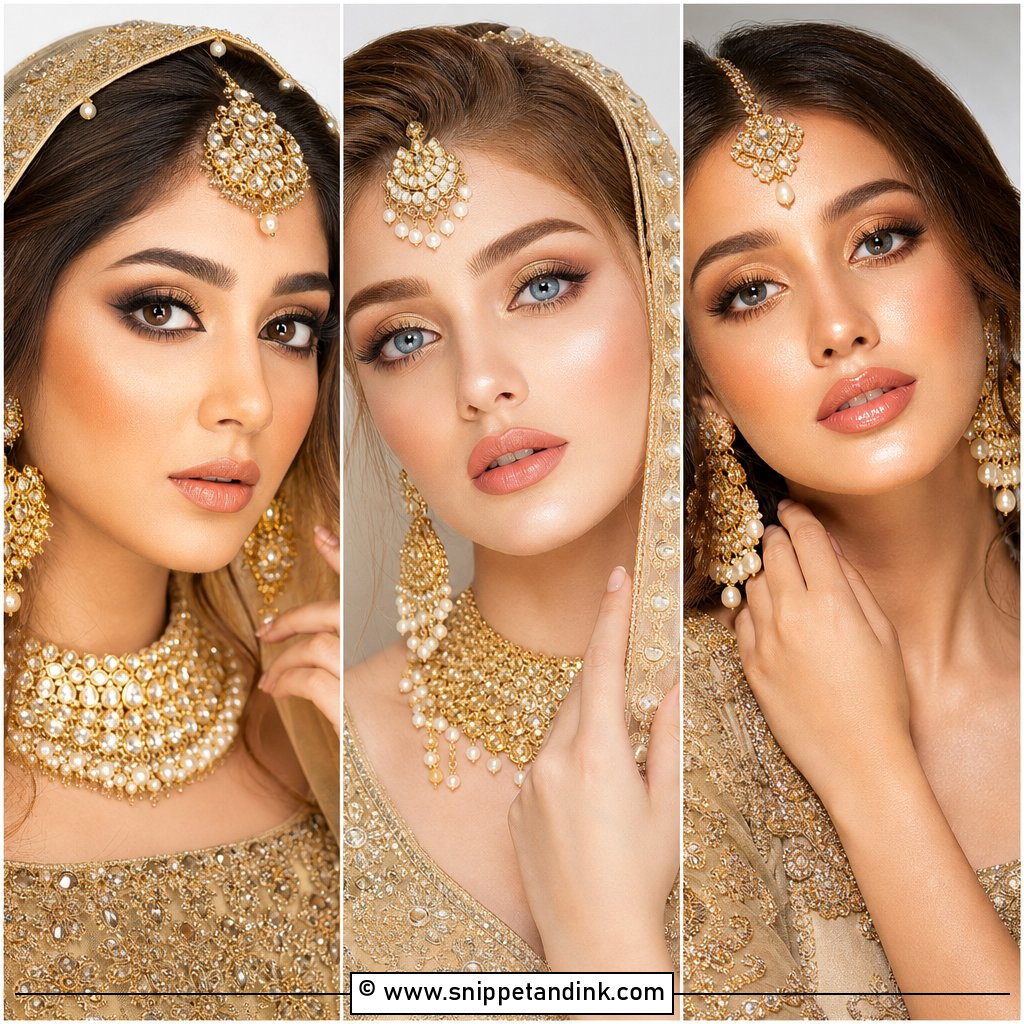
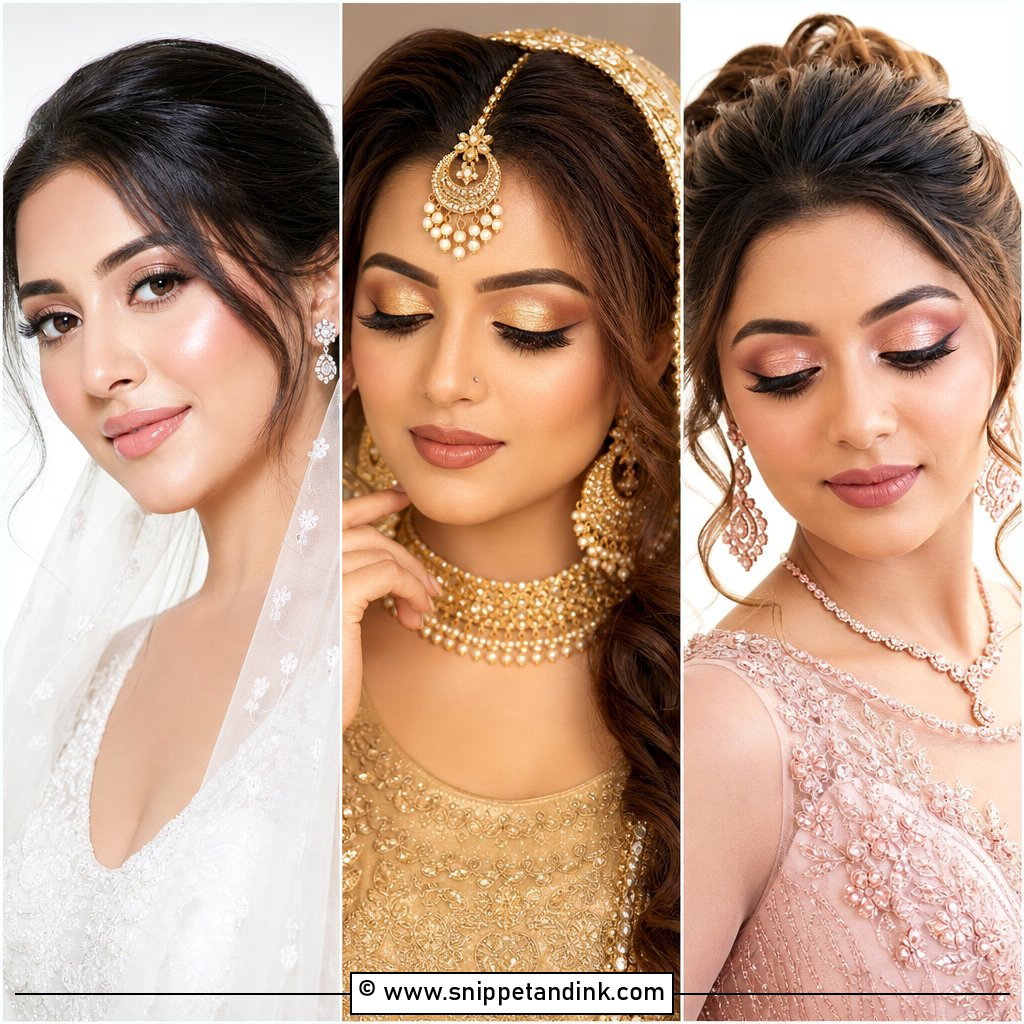
Gold on the lid warms the whole face and repeats the metal in your jewelry, but the shade has to match your undertone. Yellow gold reads rich next to warm red and maroon; champagne gold sits better with pastels and ivory, and on cool-toned skin a yellow gold can look brassy. I keep the crease softly bronzed, the lash line dark and the lower waterline lightly smoked with brown or black kajal, then finish with a rose, terracotta or nude brown lip. Gold pigment catches every light source in a hall, which is why I reach for it at sangeet and receptions.
4. Dewy Desi Bridal Makeup
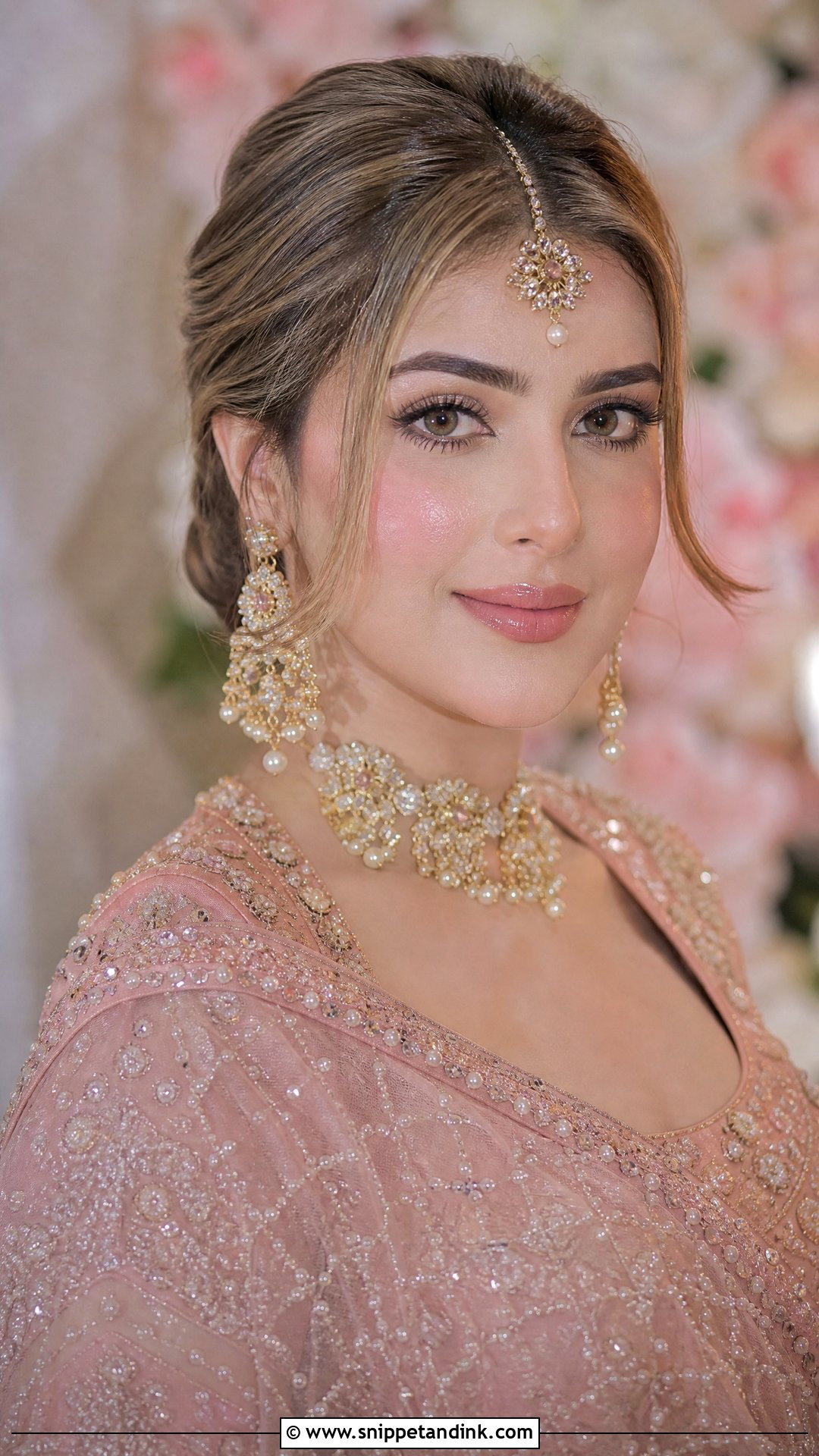
Dewy skin on a bride is controlled glow, never an oily finish. I use a long-wear foundation with a natural finish and add sheen only to the high points: tops of the cheekbones, brow bone, the center of the lid. Soft bronze eyes, wispy lashes, peach blush and a glossy pink nude lip keep it young. If your skin gets shiny by midday, you can still wear this; I powder the T-zone and keep the glow strictly to the places light naturally hits. Engagements, nikkah and garden weddings suit it best.
5. Matte Desi Bridal Makeup
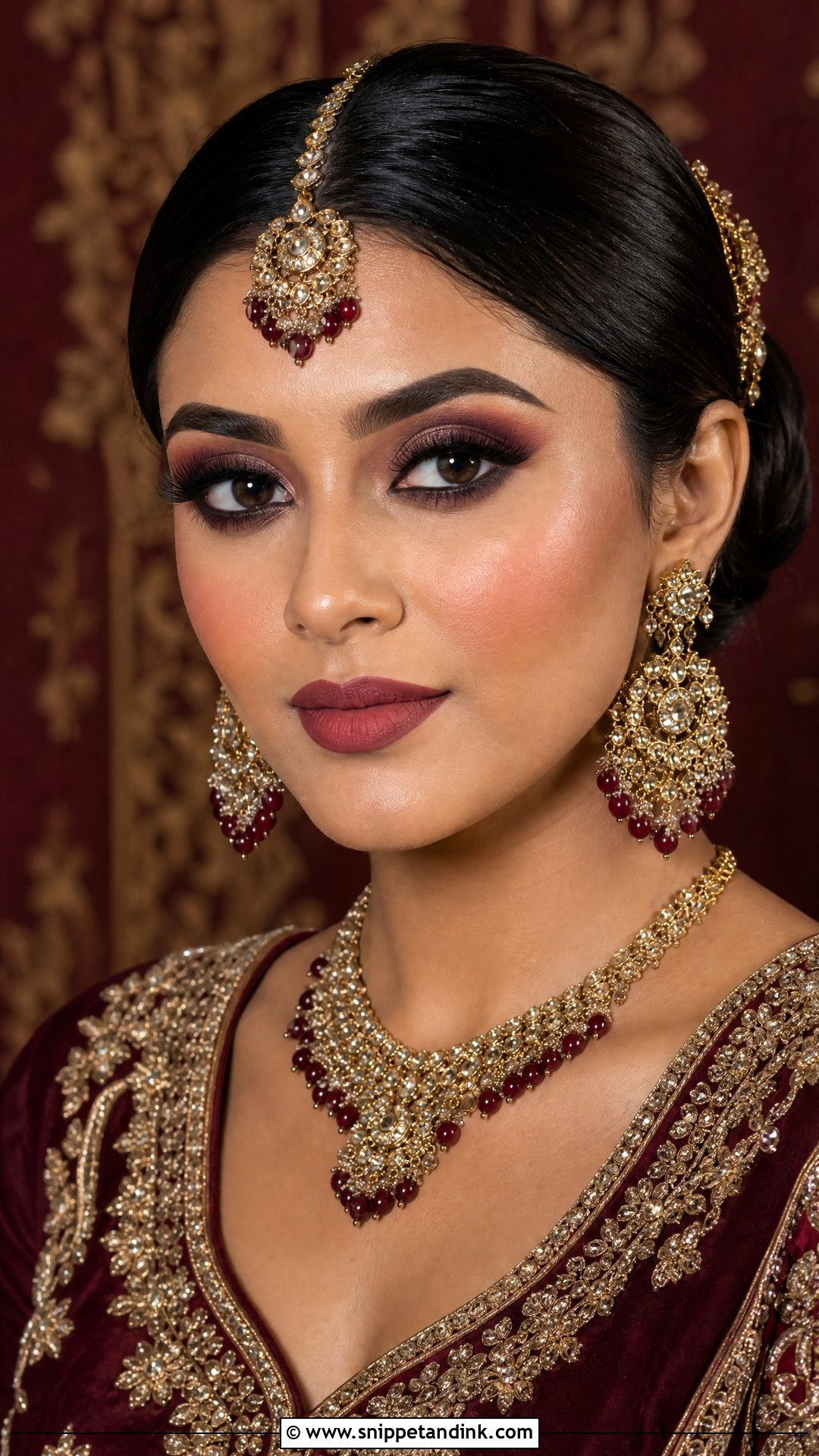
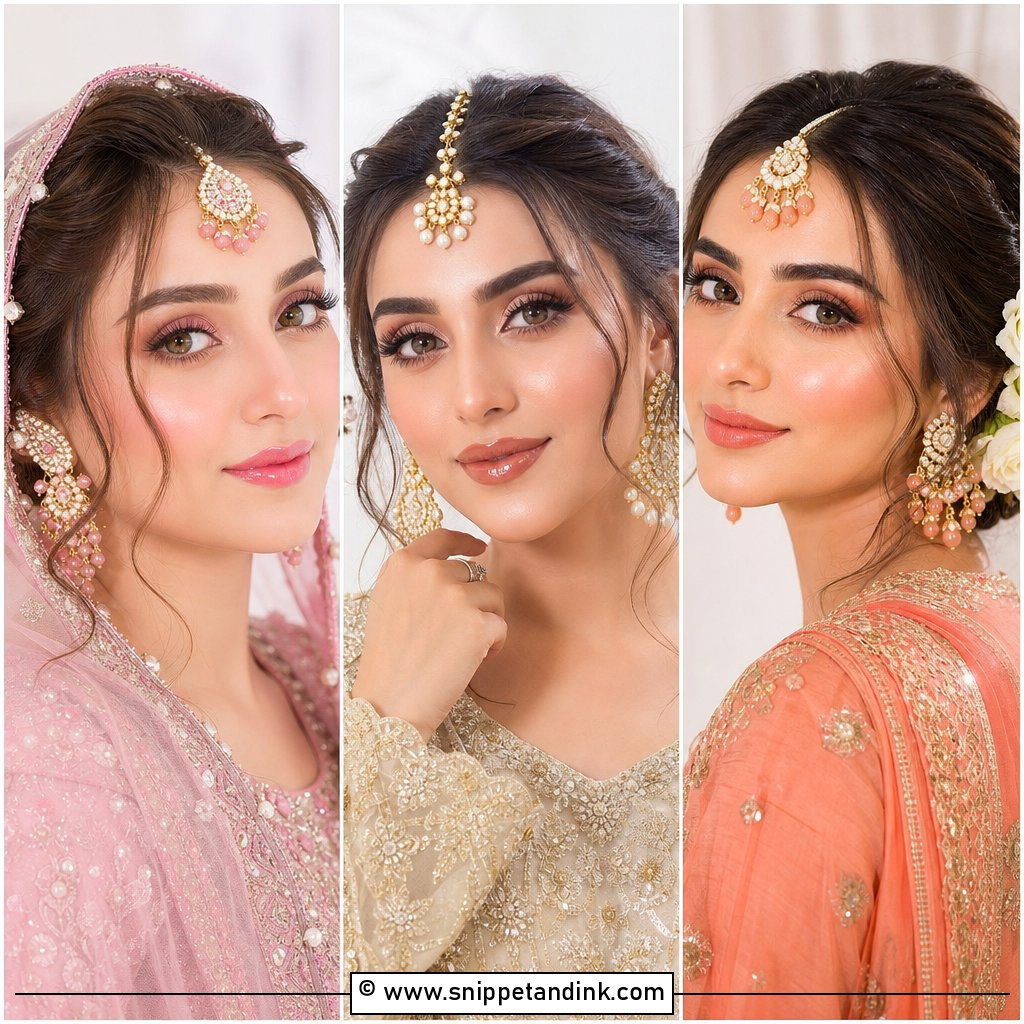
Humidity, long rituals and heavy jewelry are where matte earns its place. The face is a velvet base, lightly baked under-eyes, sculpted cheeks, defined brows and matte lids in brown, plum or bronze, finished with a matte red, mauve or cinnamon nude. The risk is dryness. A matte base laid over dehydrated skin cracks around the nose and mouth by the third hour, so I spend more time on hydration under this look than under any dewy one, and allow a whisper of satin on the cheekbones.
6. Pakistani Bridal Makeup
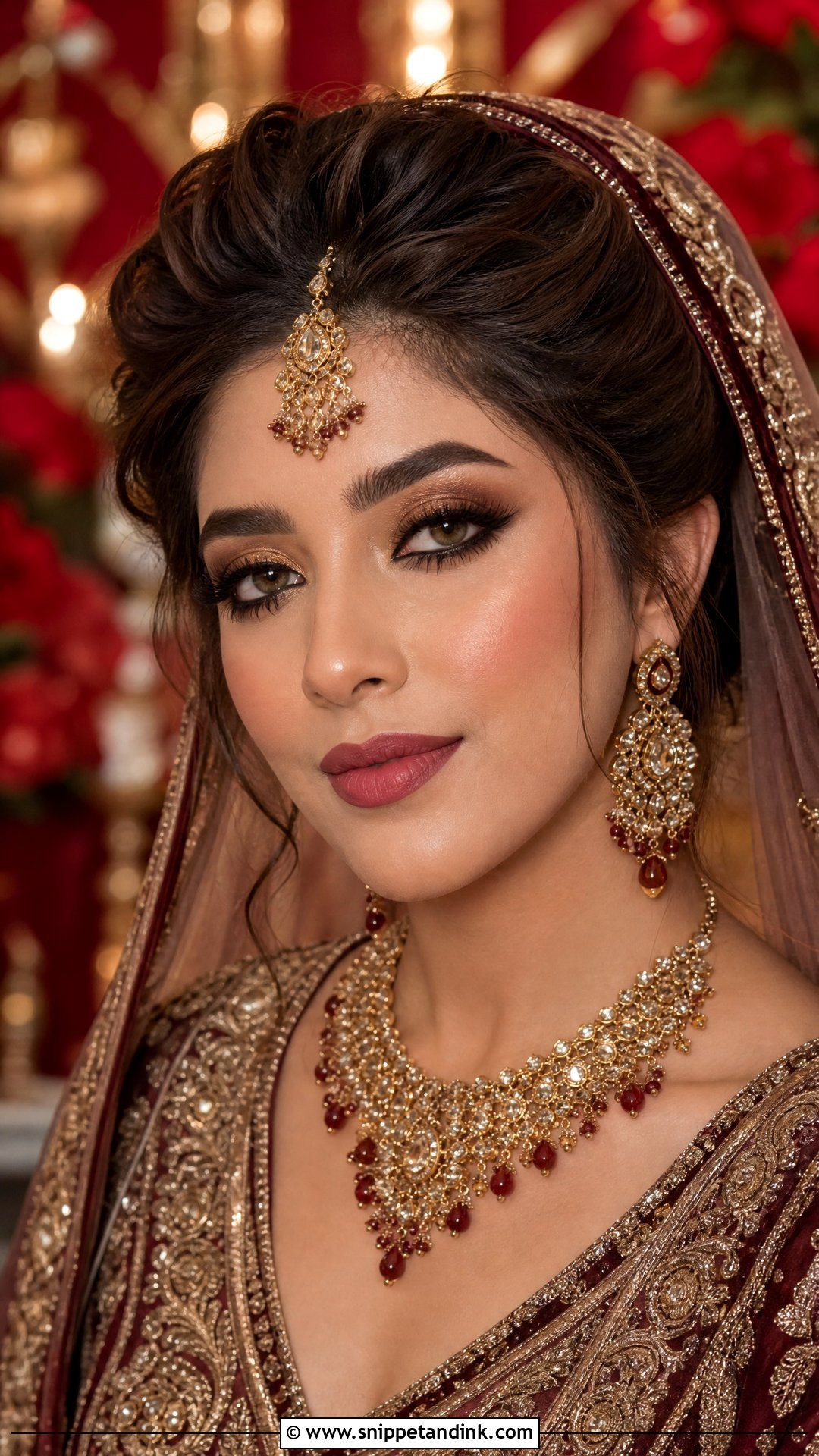
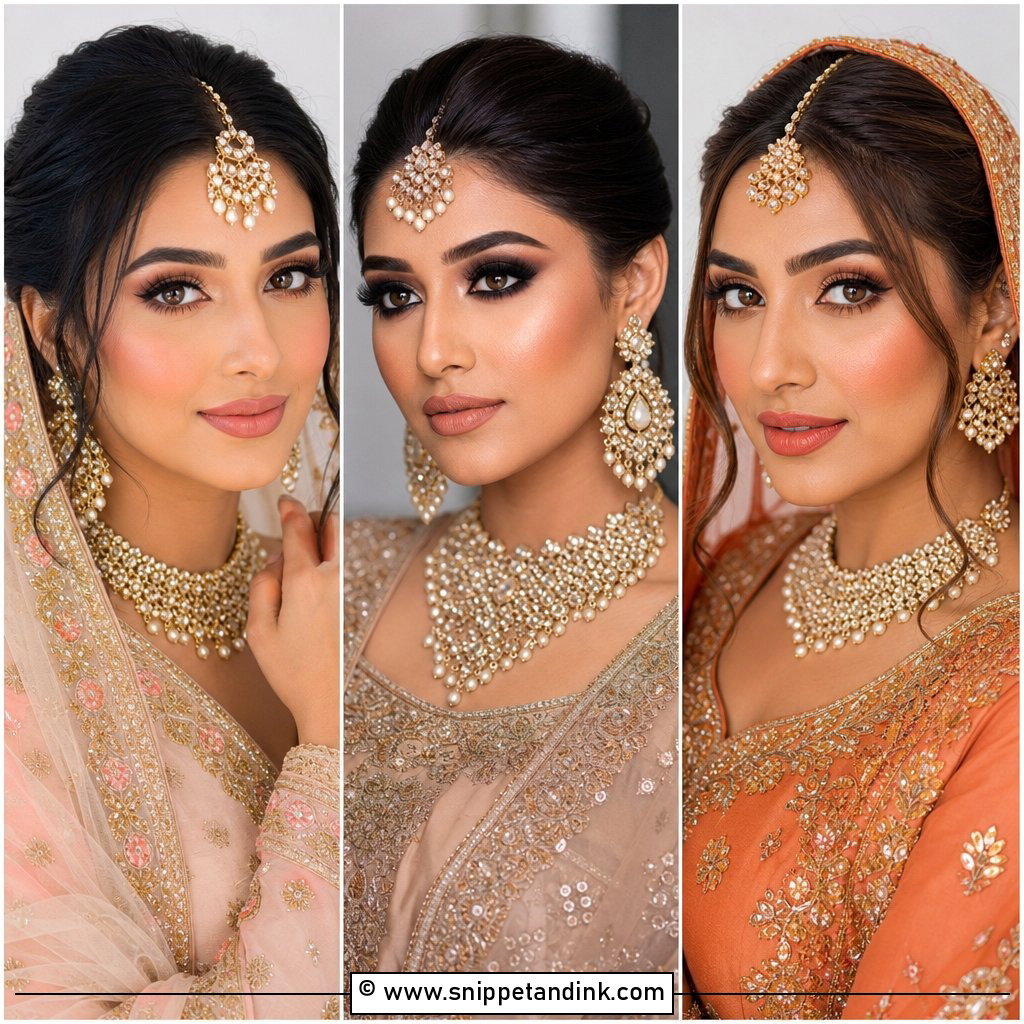
Pakistani bridal faces lean on flawless skin, defined eyes, careful contour and rich lip color. For baraat I like bronze or antique gold lids, black liner, full lashes, a softly smoked lower lash line and a deep rose or burgundy lip, with blush placed high to lift the face. Red, maroon, rust, gold and emerald outfits with heavy embroidery carry this easily. To modernize it, I soften the brows and keep highlight refined instead of metallic, which matters once a dupatta is pinned around the face and casts shadow across the cheeks.
7. Indian Bridal Makeup
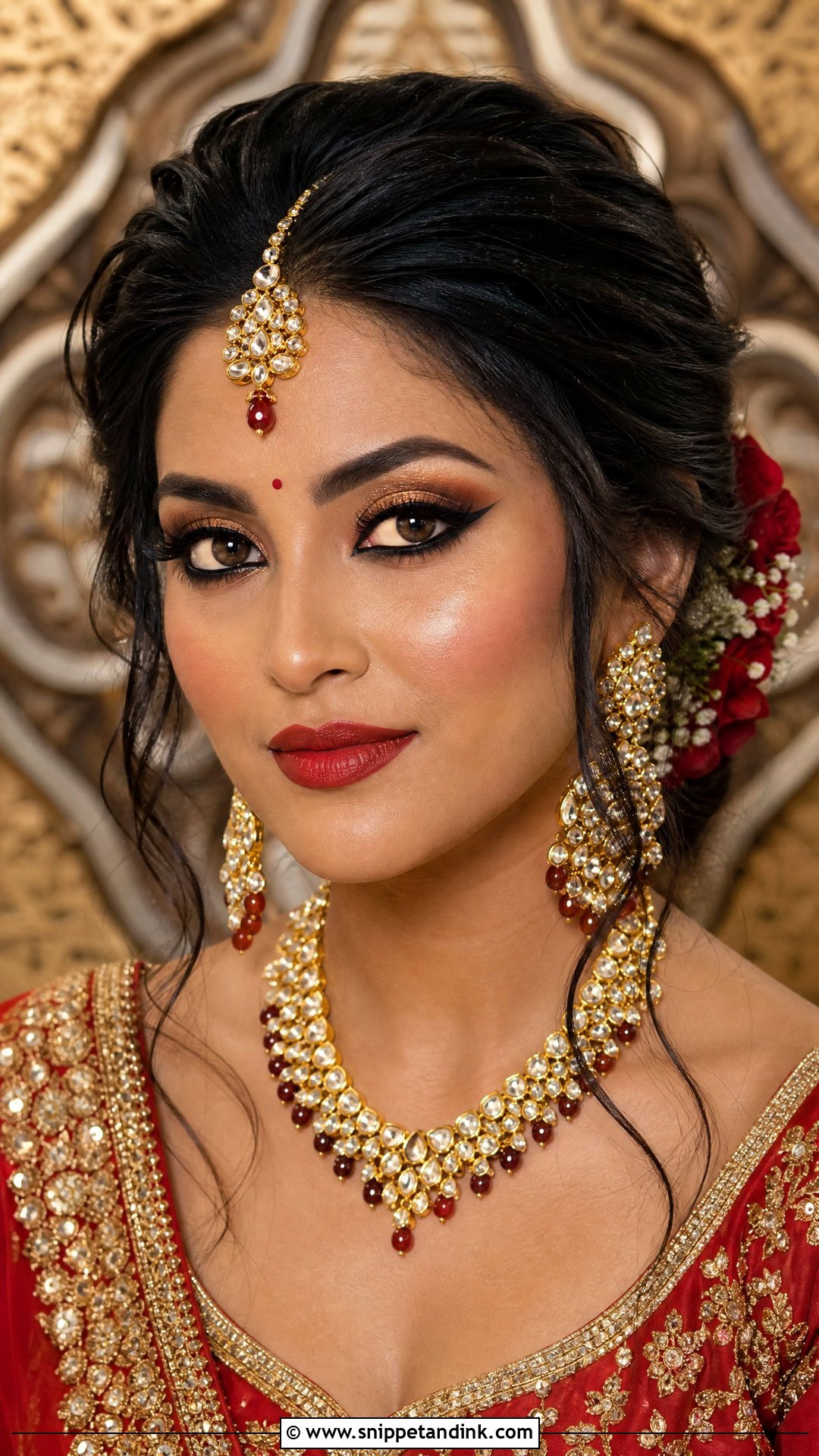
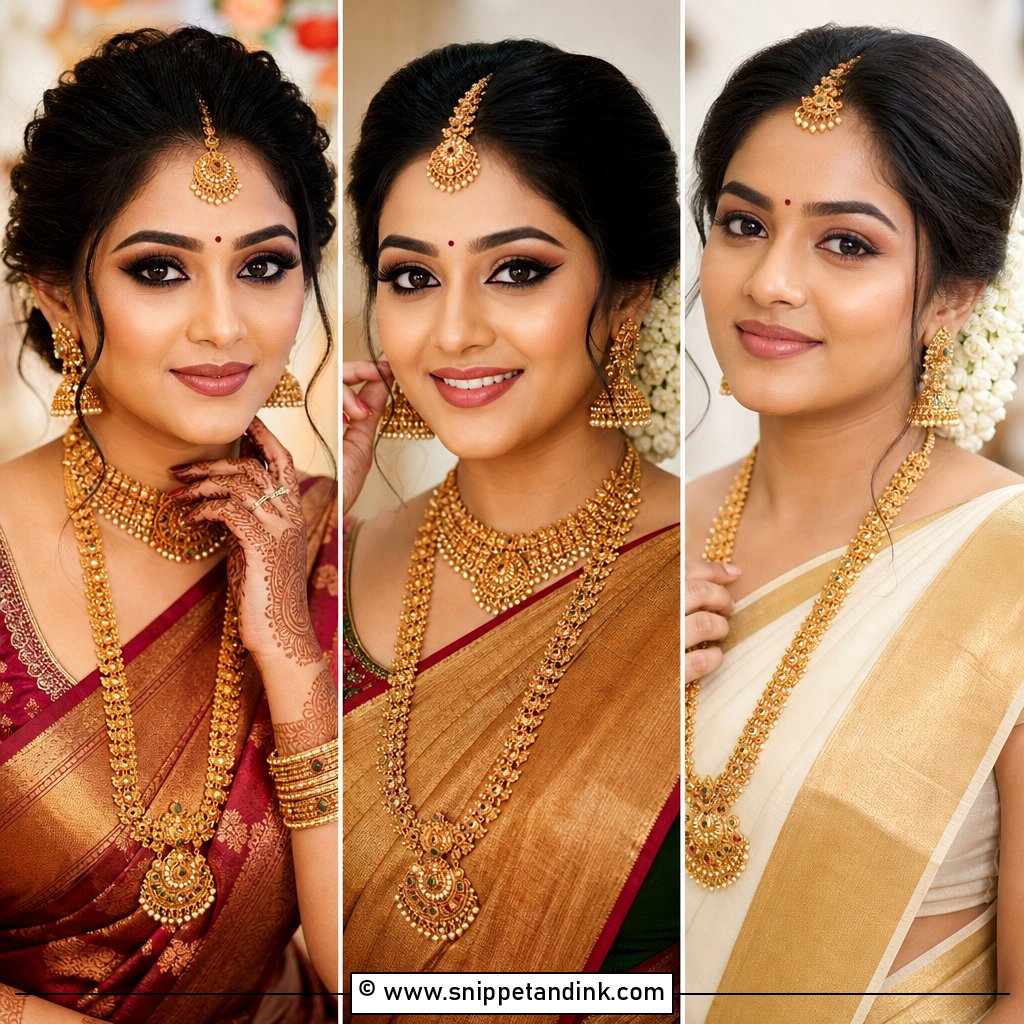
Indian bridal makeup changes a lot by region, so I always ask where the family is from and what the main ritual involves before I pick a lip. The familiar version is bronzed gold eyes, winged liner, kajal, full lashes, warm blush and a red or brick lip on a base flexible enough for rituals, family photos and reception lighting. It works with lehengas, sarees, temple jewelry, kundan sets and floral accessories. If red feels too much, rosewood or terracotta nude keeps the warmth. What I check last is the bindi: its color and size have to agree with the lip and the jewelry.
8. South Indian Bridal Makeup
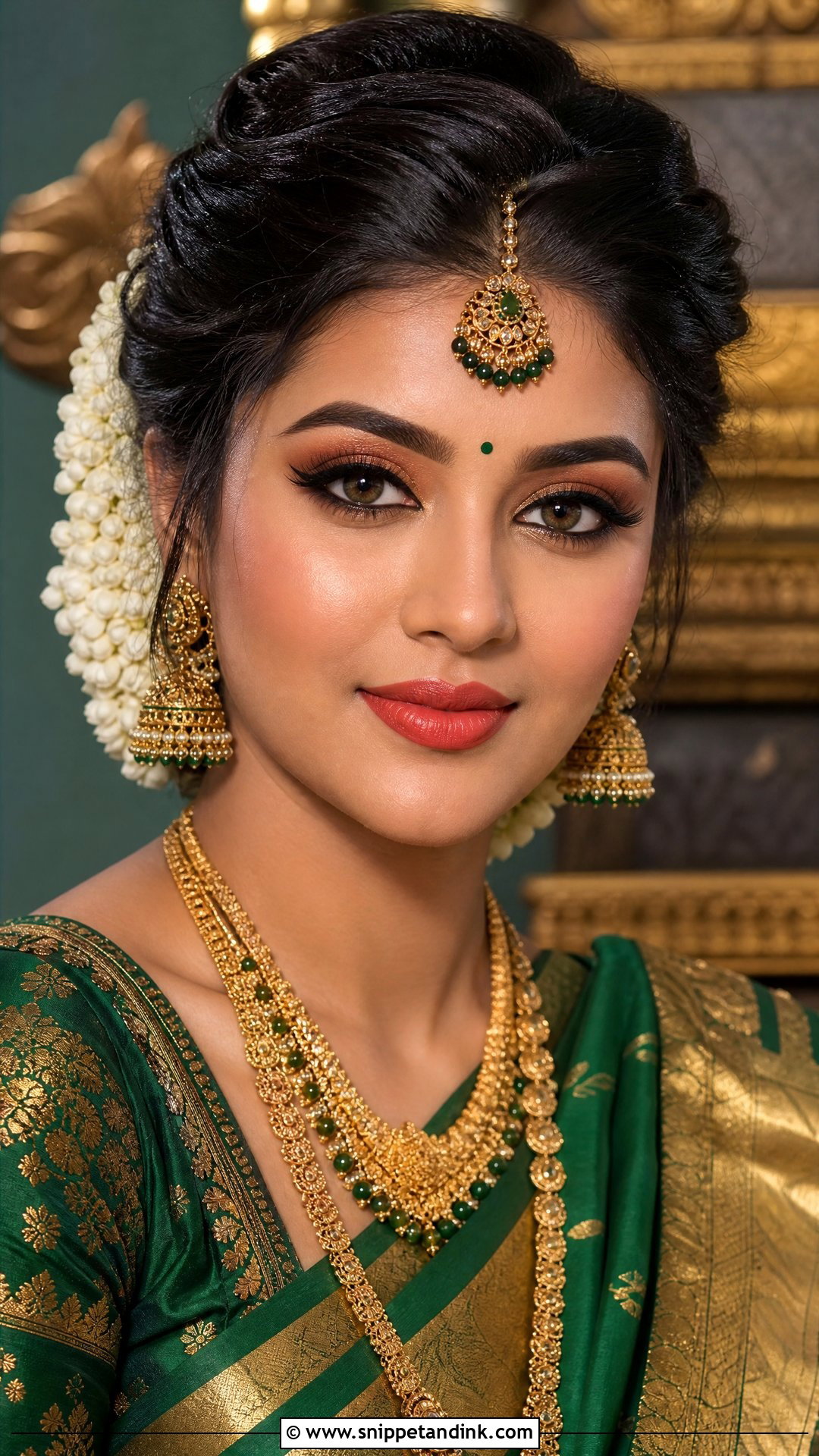
South Indian bridal makeup is built around silk sarees, temple jewelry, jasmine and traditional hair, and the ceremonies often start early in the morning. Gold, copper and bronze lids work with Kanjivaram sarees in red, green, purple, orange or gold, with black kajal, neat liner, fluffy lashes and a red, coral or brick lip. Morning muhurtham light is cooler and flatter than evening light, so I go a touch warmer on the blush than I would for a reception. Keep the highlight soft; temple jewelry already throws plenty of light onto the face.
9. Bengali Bridal Makeup
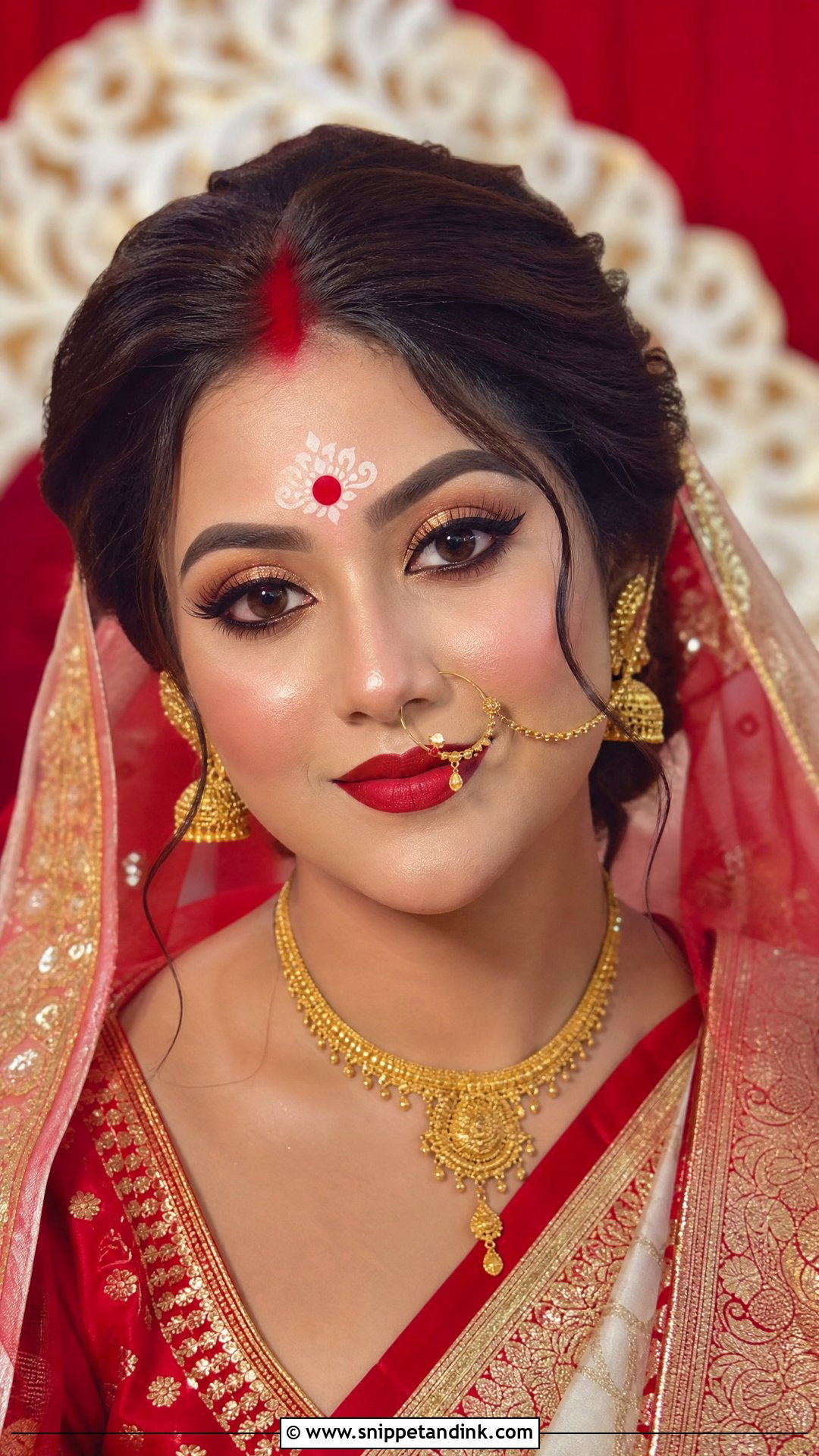
Bengali bridal makeup is about expressive eyes and a red lip. Gold or bronze shimmer on the lids, black winged liner, kajal and defined lashes sit on a smooth base with soft contour and warm blush. A classic red lip ties it to a red and white saree, alta and a red bindi. If the bride is having chandan dots painted along the brows and forehead, I finish the base and set it fully first, because sandalwood paste won’t sit cleanly on fresh, tacky foundation. Brows stay softly structured so the eyes lead.
10. Muslim Bridal Makeup
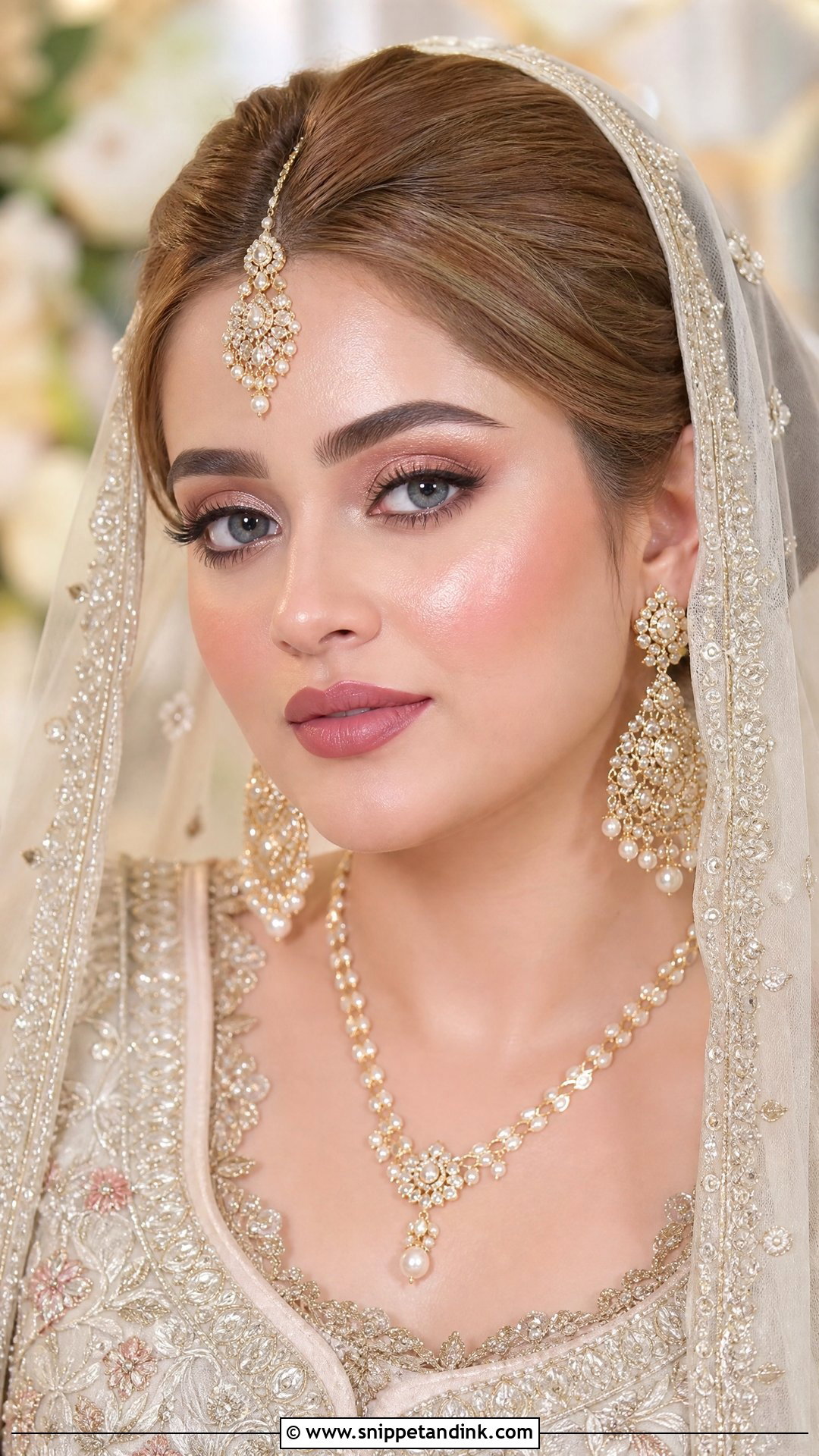
Muslim bridal makeup moves with the event. For nikkah, many brides choose ivory, champagne, blush or pastel and want soft rose makeup; for baraat or walima, deeper eyes and sculpted cheeks often feel right. My usual nikkah palette is champagne lids, brown liner, airy lashes, rose blush and a muted mauve or pink nude. When the dupatta frames the face closely, the complexion is literally the focal point, so I spend the extra time on even skin around the hairline and jaw rather than adding more color.
11. Sikh Bridal Makeup
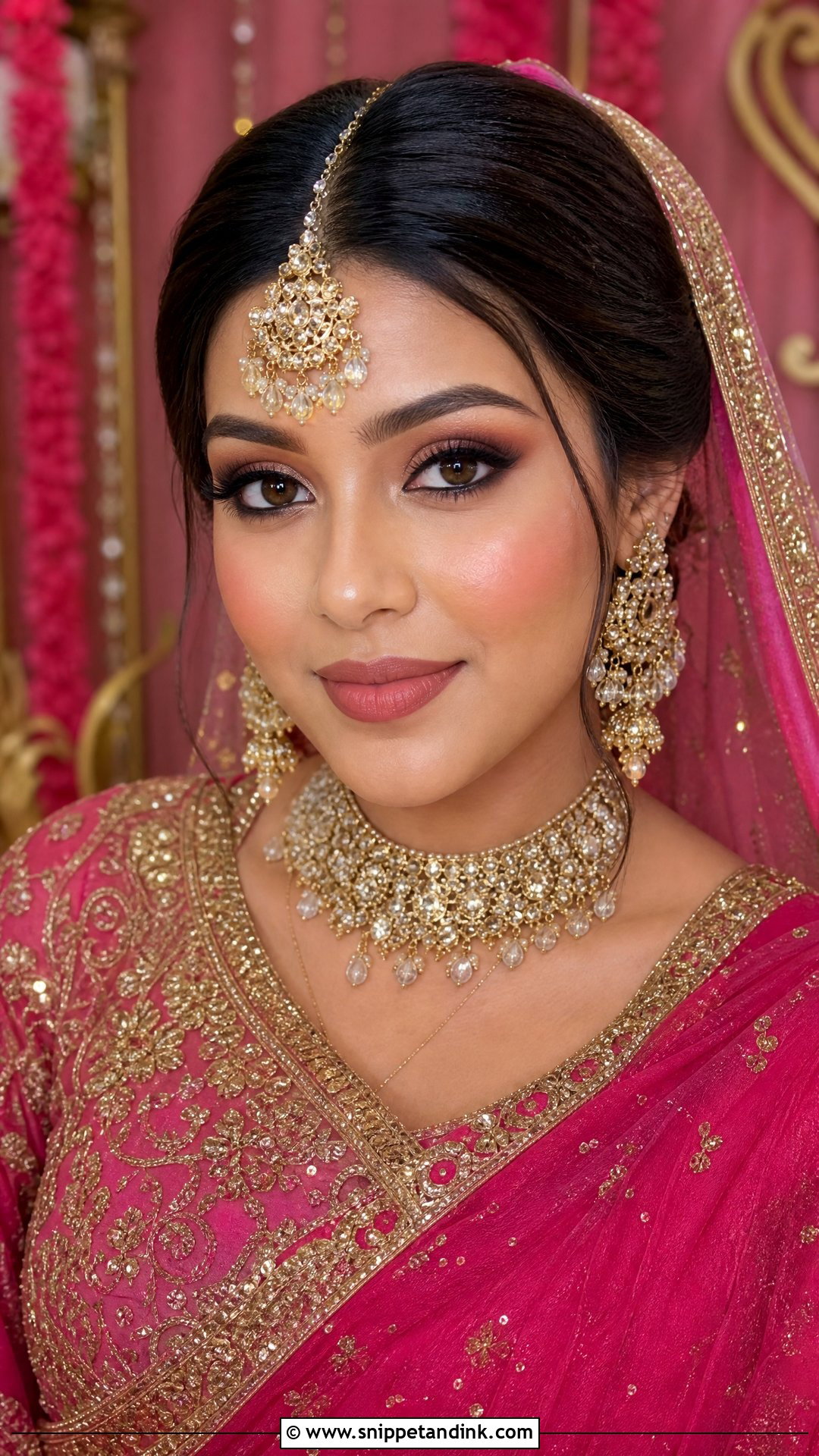
Sikh brides often wear red, pink, ivory or deep jewel tones with statement matha patti, passa and a heavily styled dupatta, and the makeup has to define features without fighting all that metal. I use satin skin, softly smoked brown eyes, black liner, kajal and a rose or berry lip, with soft contour and fresh blush. Anand Karaj ceremonies often begin early, so the base goes on in the small hours and has to survive the ceremony, the milni and long family portraits. That is exactly when I choose a long-wear foundation over anything prettier but softer.
12. Nikkah Bridal Makeup
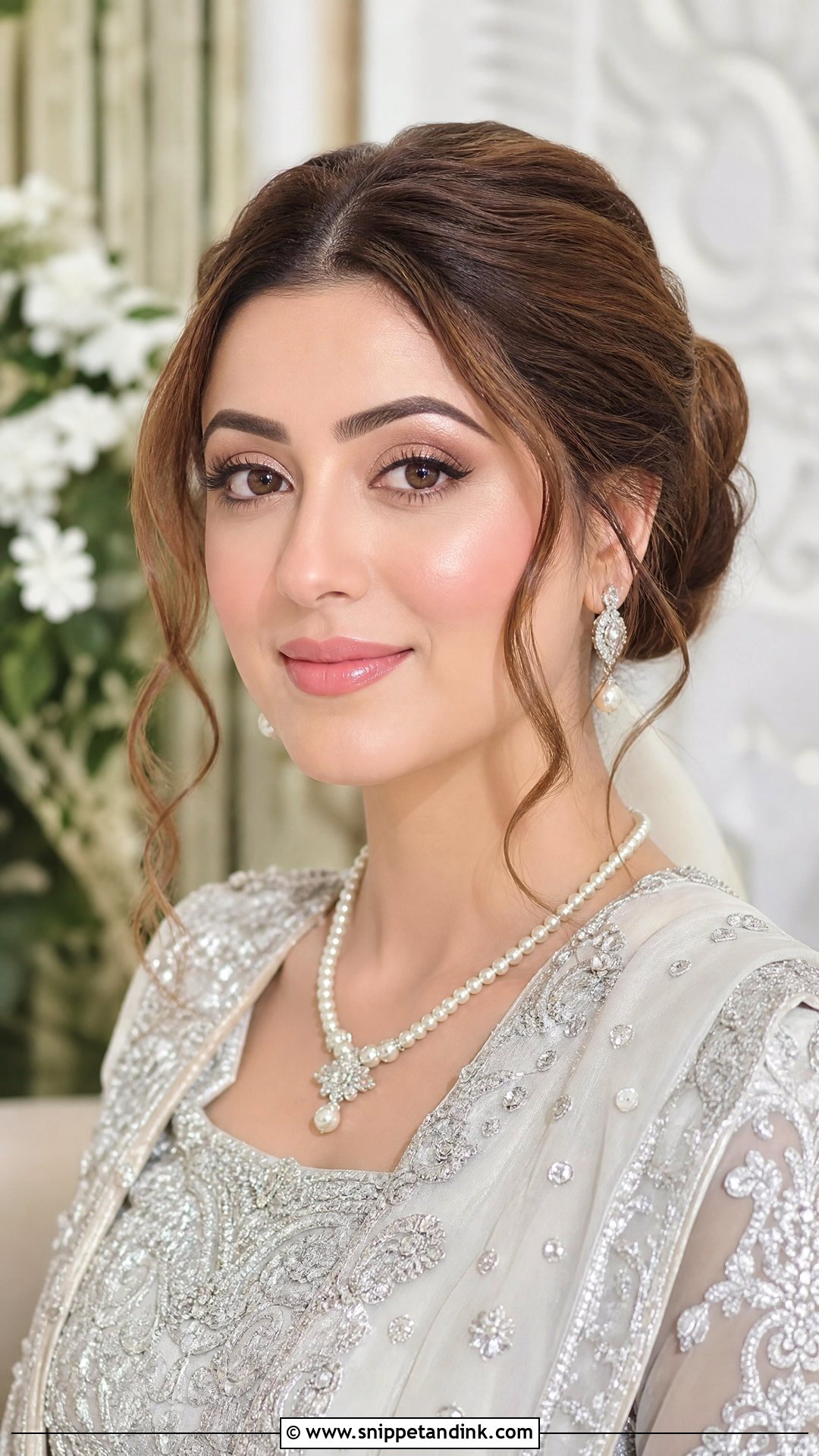
Nikkah makeup is quieter than baraat makeup. Champagne, pearl, rose and taupe on the eyes, thin brown or black liner, natural lashes, rosy cheeks and a pink nude lip. A satin or dewy finish suits both indoor and daylight photos and ivory, white, blush, pistachio, silver and champagne outfits. The mistake I see is going so soft that the bride disappears in group photos. I keep a little more lash and liner than feels necessary in the mirror, because the camera flattens definition.
13. Walima Bridal Makeup
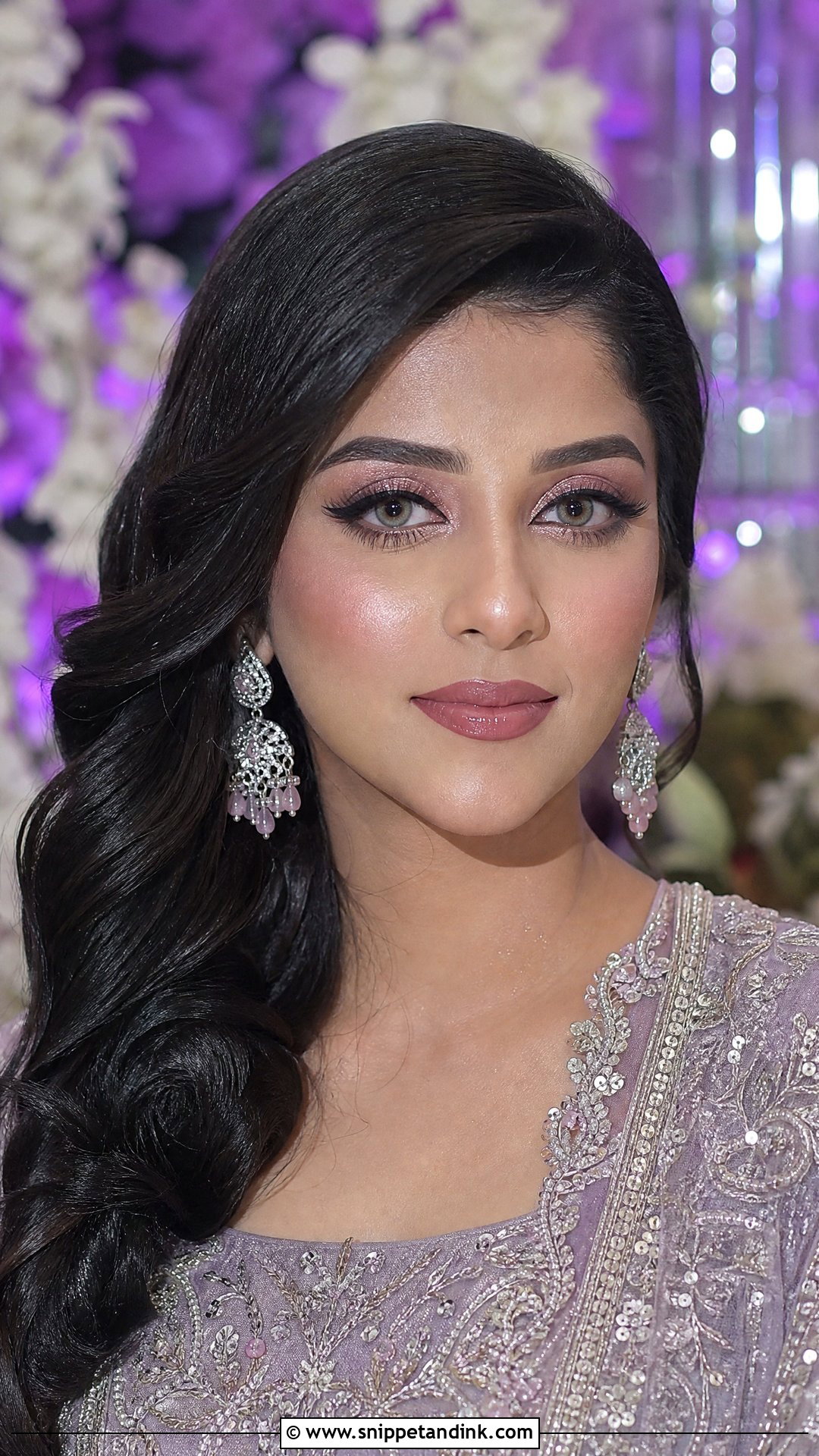
By walima the bride has usually been through two or three long days, and her skin often shows it. I prep with extra hydration and keep the base thinner. Pastel outfits, silver embroidery and champagne tones pair with cool rose lids, taupe shimmer, mauve blush and a glossy pink or nude lip, with liner lifted but light so tired eyes look open. A soft contour gives structure under evening lights without turning the face dramatic.
14. Reception Desi Bridal Makeup
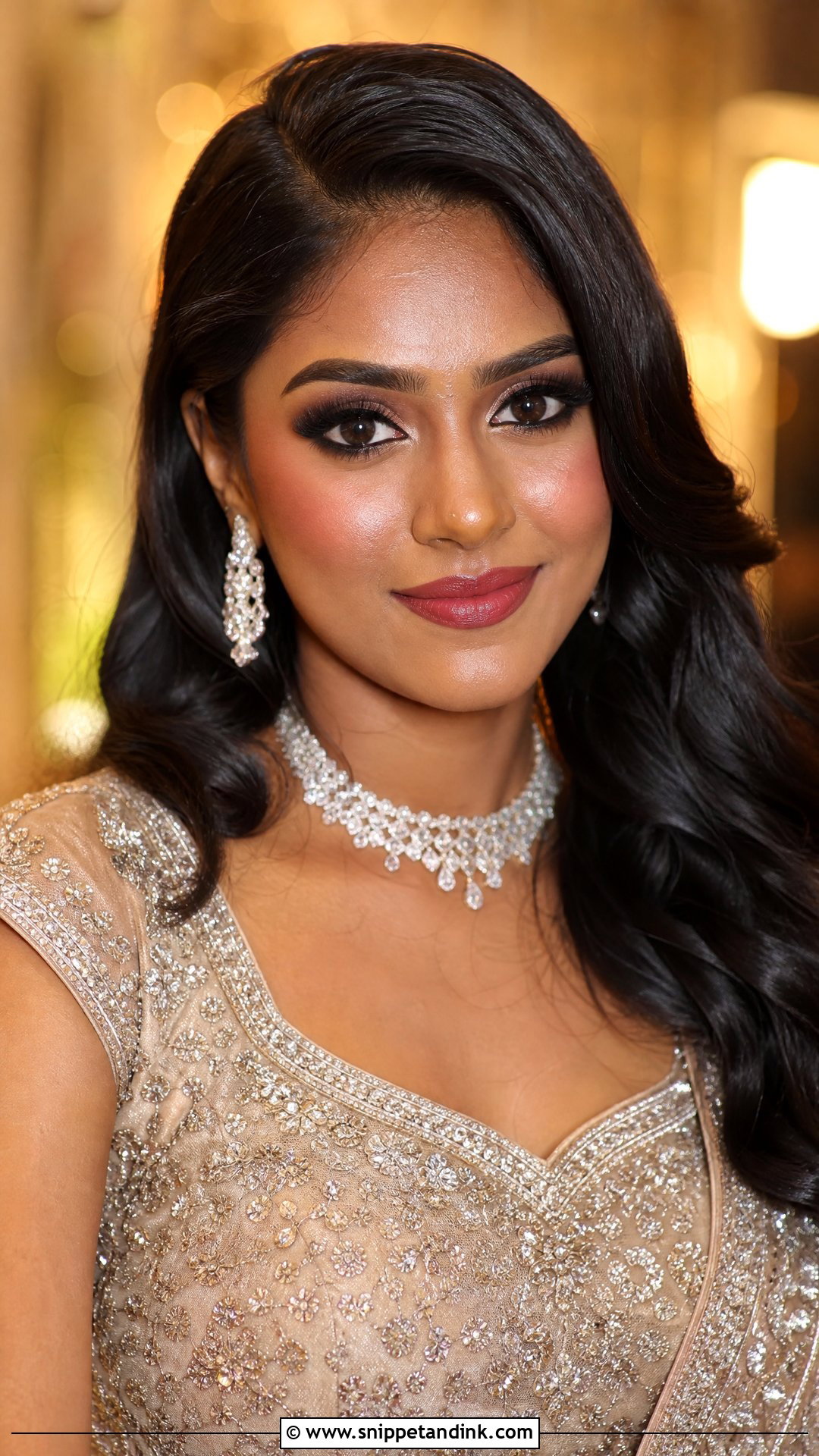
Receptions are where many brides want to change direction completely. A softly smoked eye in bronze, chocolate or charcoal, sculpted cheeks and a satin nude, berry or deep rose lip, on a base a little more defined than your daytime face. This is the place for extra lashes, more highlight and a sharper cheek contour. Gowns, fusion lehengas and sarees all carry it. Choose a comfortable lip, though: you’ll be greeting guests, eating and talking for hours, and a drying liquid lipstick starts flaking at the center of the lips first.
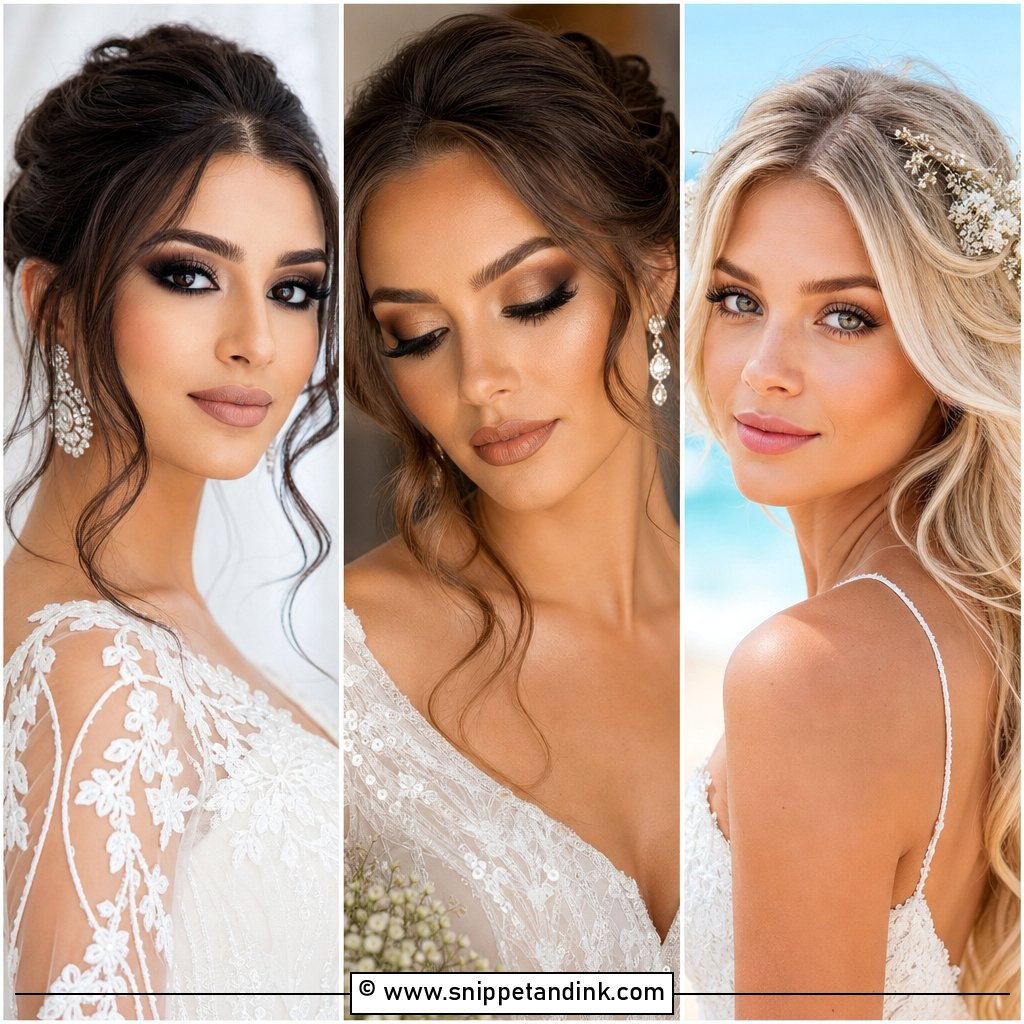
15. Sangeet Bridal Makeup
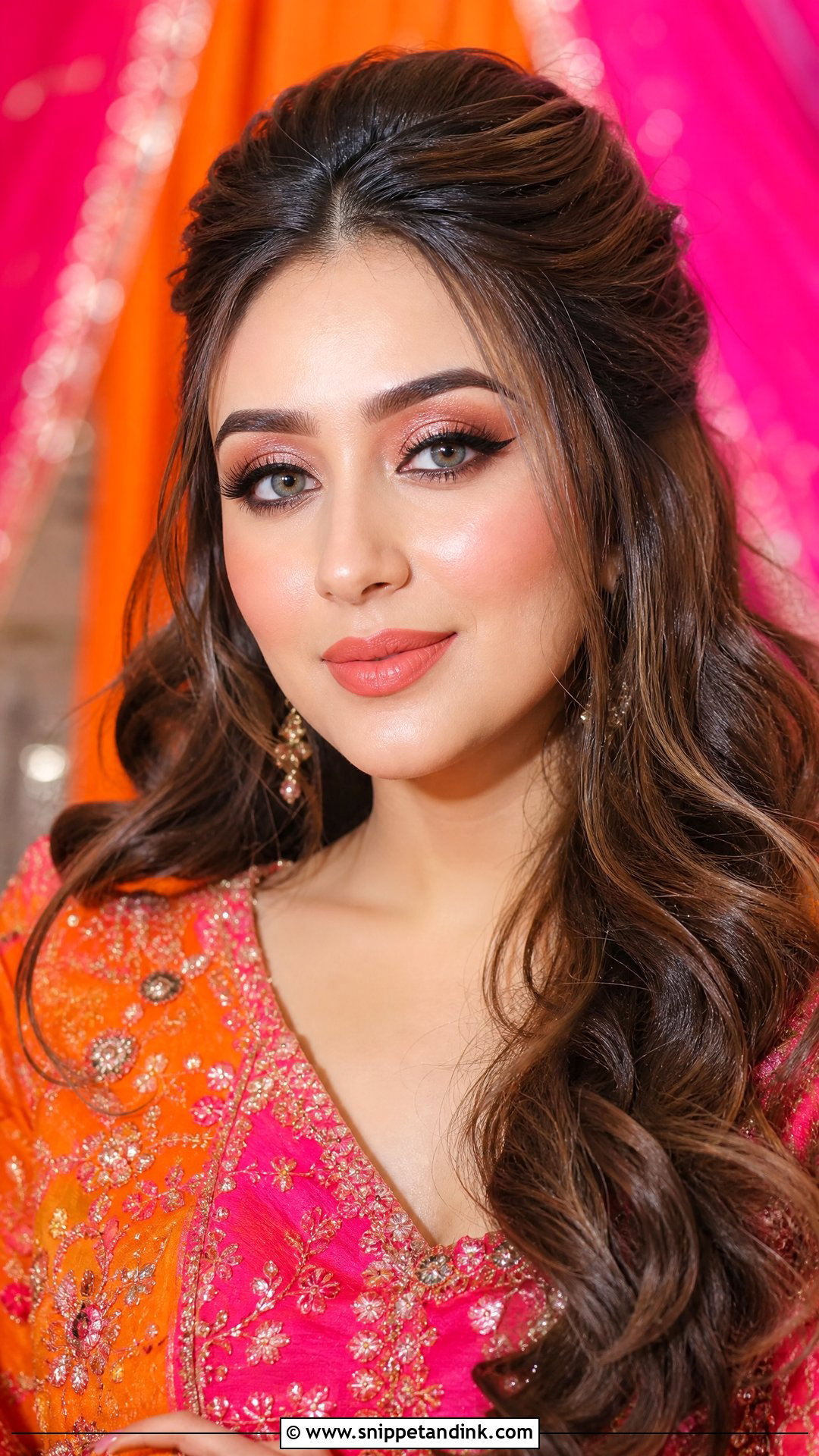
Sangeet means dancing, and sweat is the real enemy. I use a long-wear base, a sweat-resistant primer on the forehead and upper lip, and waterproof liner and mascara. Bronze shimmer, rose gold lids or a jewel-toned accent work with bright lehengas, finished with lifted liner, full lashes, peachy blush and a nude or coral lip. Skip sticky gloss if you plan to dance all night; hair whipping across your face will stick to it in every candid. This is the event where sparkle feels right.
16. Mehndi Bridal Makeup
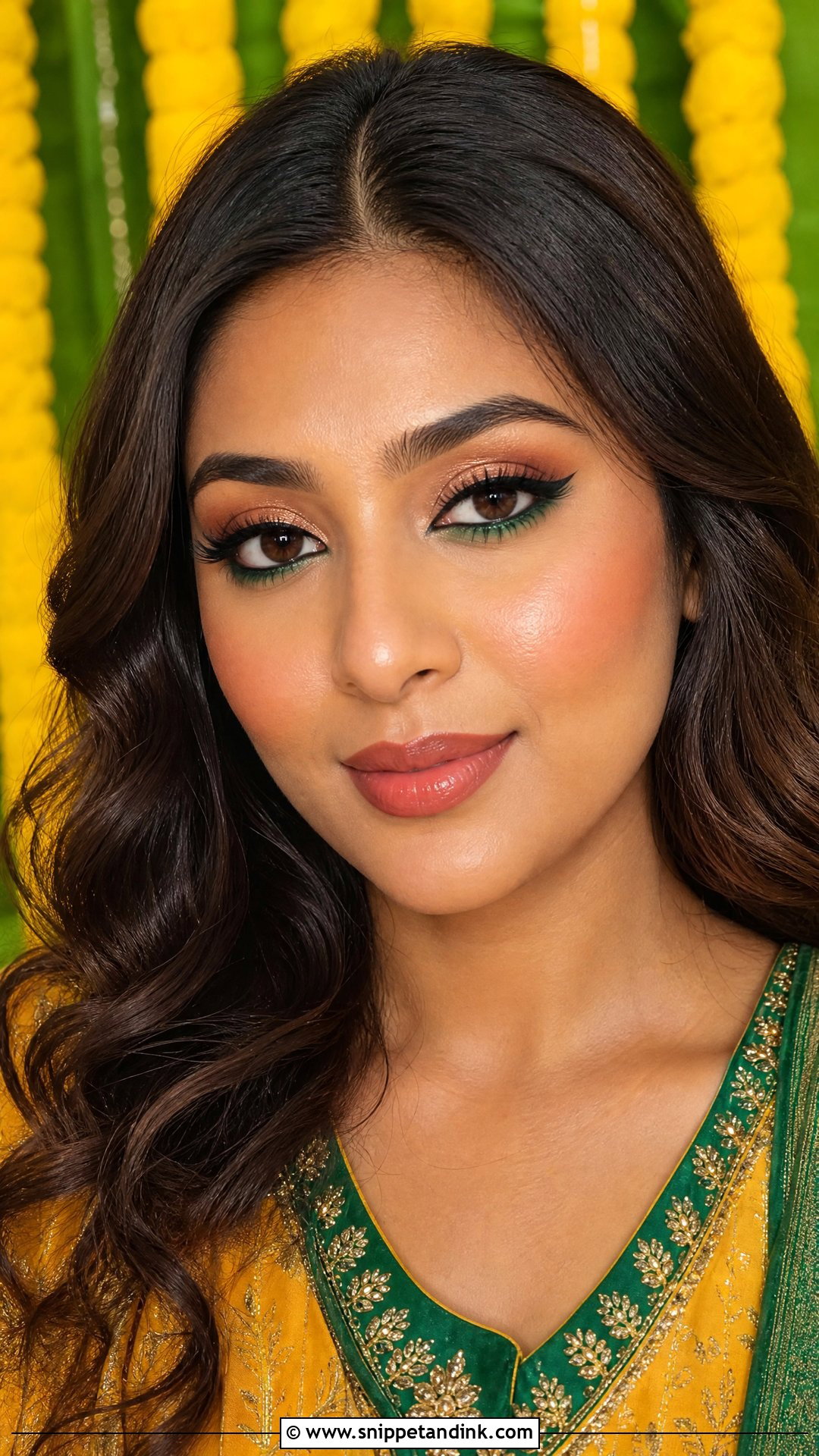
At the mehndi you sit for hours while the artist works, so the makeup needs to look fresh at the end rather than at the start. Green, yellow, orange, pink and floral outfits pair with warm peach blush, soft bronze eyes and a coral or rosy lip. A pop of emerald, teal or olive along the lower lash line is a fun touch, with the rest of the face kept calm. Use waterproof eye products if there’s dancing or outdoor heat. Since your hands and feet will be wet with paste, plan the makeup before application begins; touching up your face with drying mehndi on both hands is close to impossible.
17. Haldi Bridal Makeup
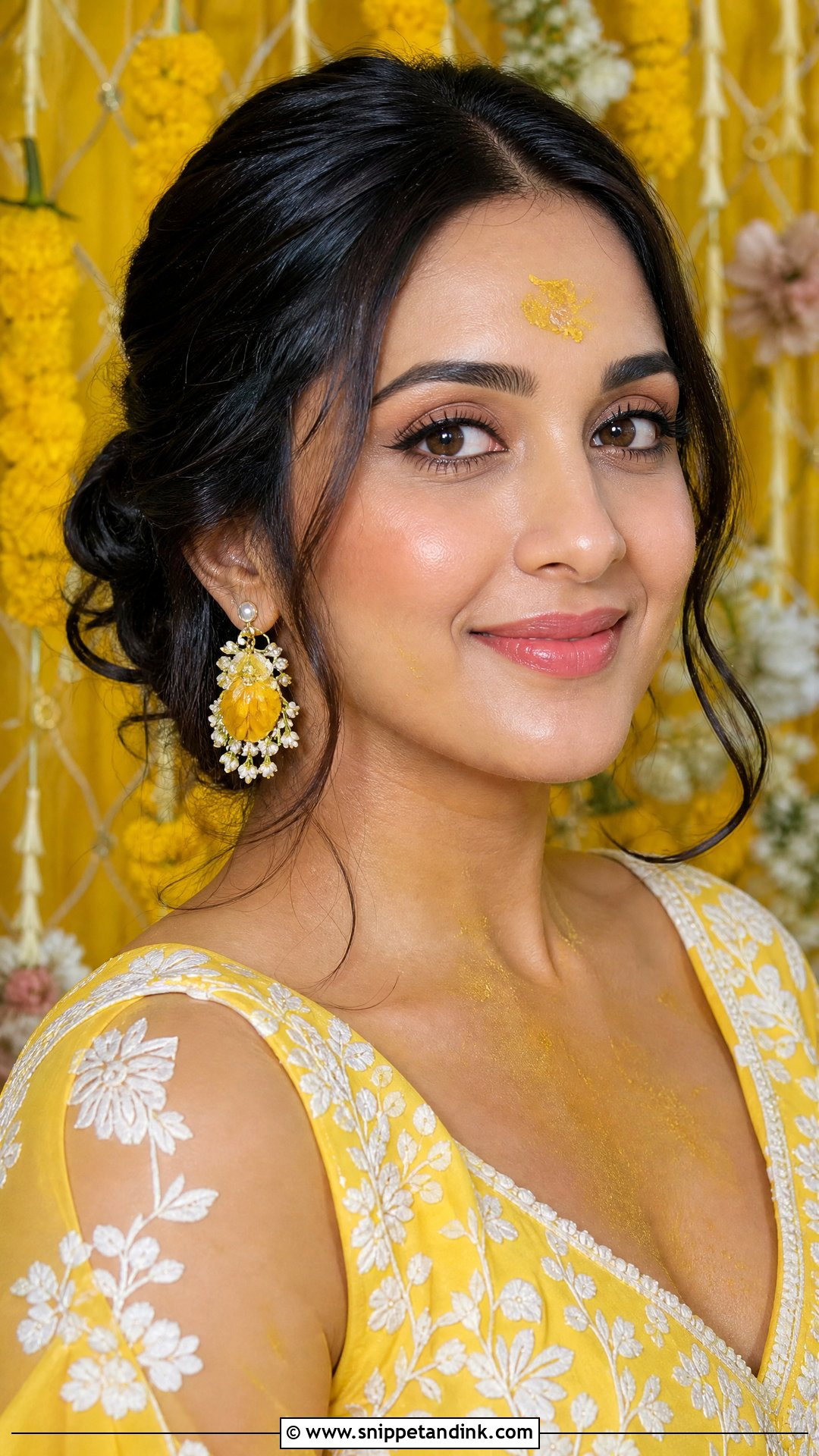
Haldi makeup should be almost nothing. Turmeric paste, oil and flowers will be rubbed over your face, so a breathable tinted base, spot concealer, cream blush, brushed brows, curled lashes and a peach or pink lip tint are all you need. Waterproof brown liner and a touch of champagne shimmer if you want definition. I never put full foundation and lashes on a haldi bride; it all gets wiped off, and the paste settles into heavy makeup in streaks. Yellow, white, orange and floral outfits look happiest with this much restraint.
18. Burgundy Desi Bridal Makeup
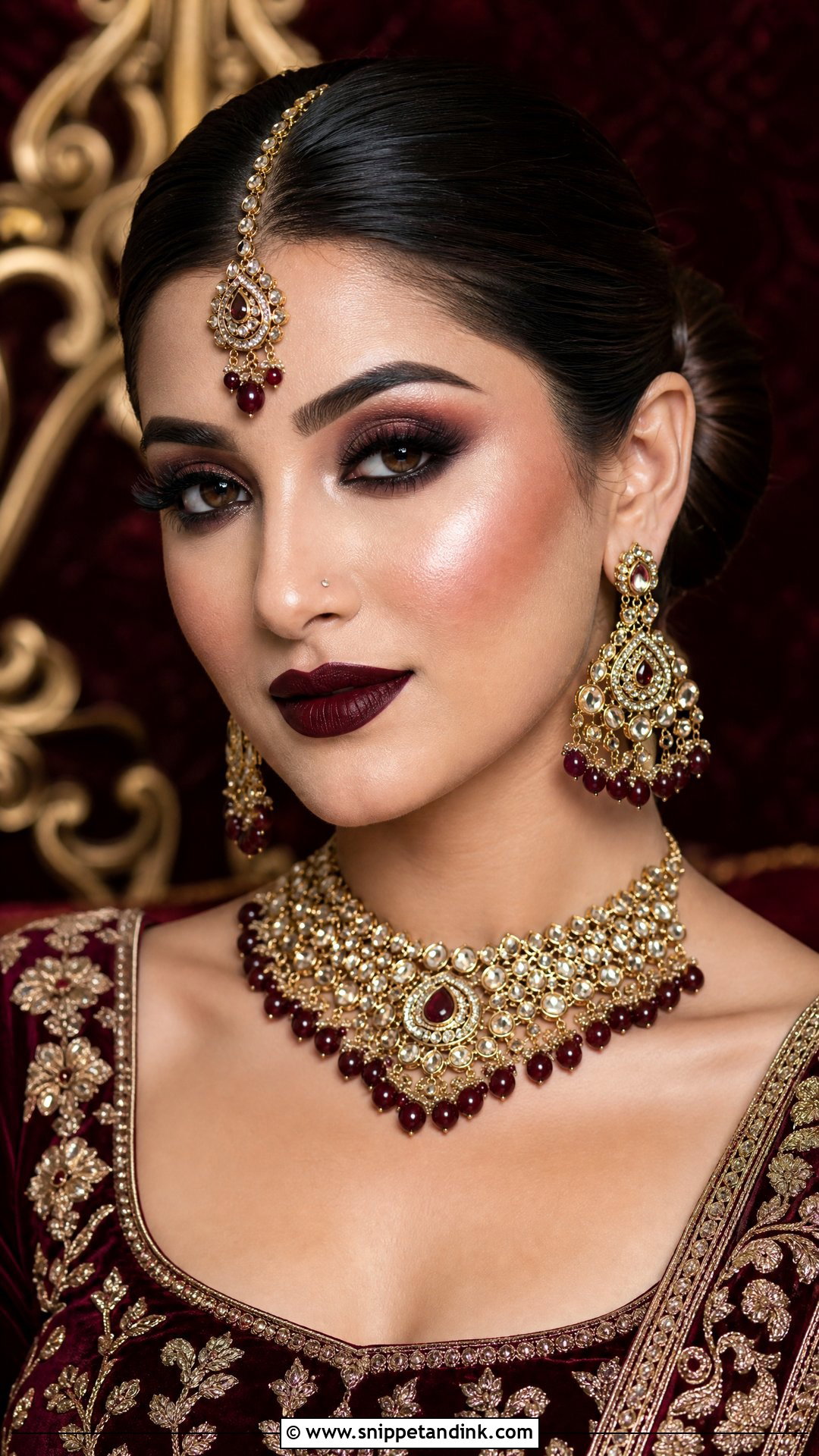
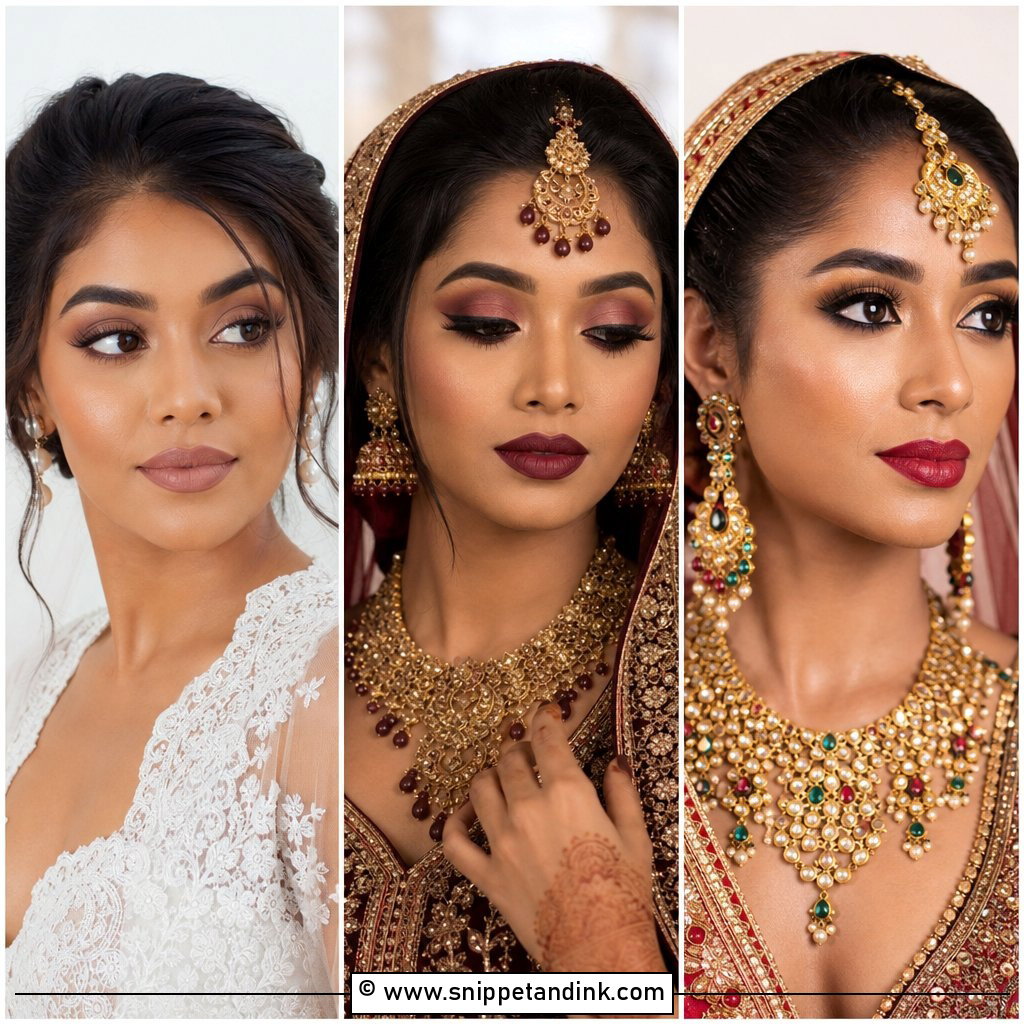
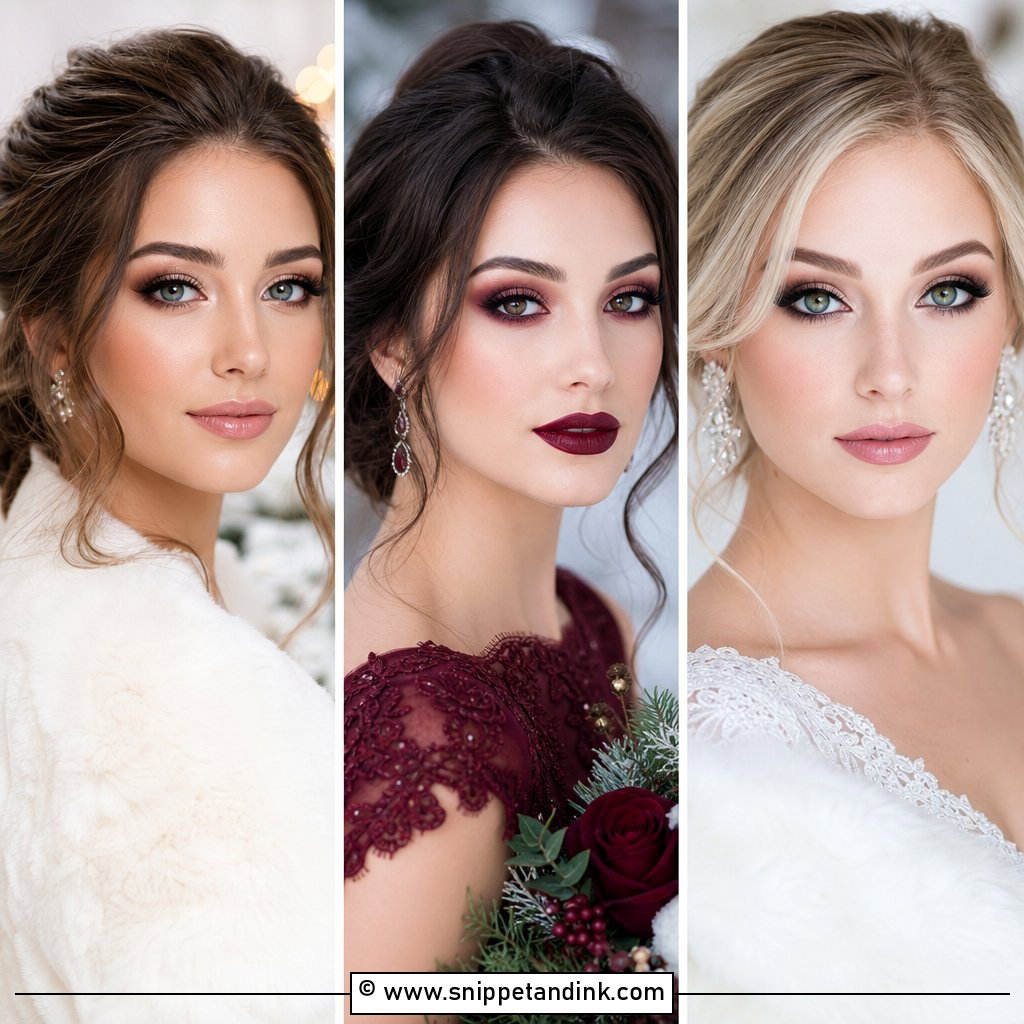
Burgundy belongs to evening and winter weddings. Warm brown or plum lids, softly smoked liner, full lashes, sculpted cheeks and a burgundy or wine lip. With a lip that deep, I keep the skin clean and the blush soft, and I only let the eyes go equally heavy if the outfit is very grand and the bride’s features can take strong contrast. It pairs with maroon, gold, emerald, navy, blush and deep red. A deep lip shows every wobble at the edge, so I line and blot in two rounds and leave the brush for the end.
19. Nude Desi Bridal Makeup
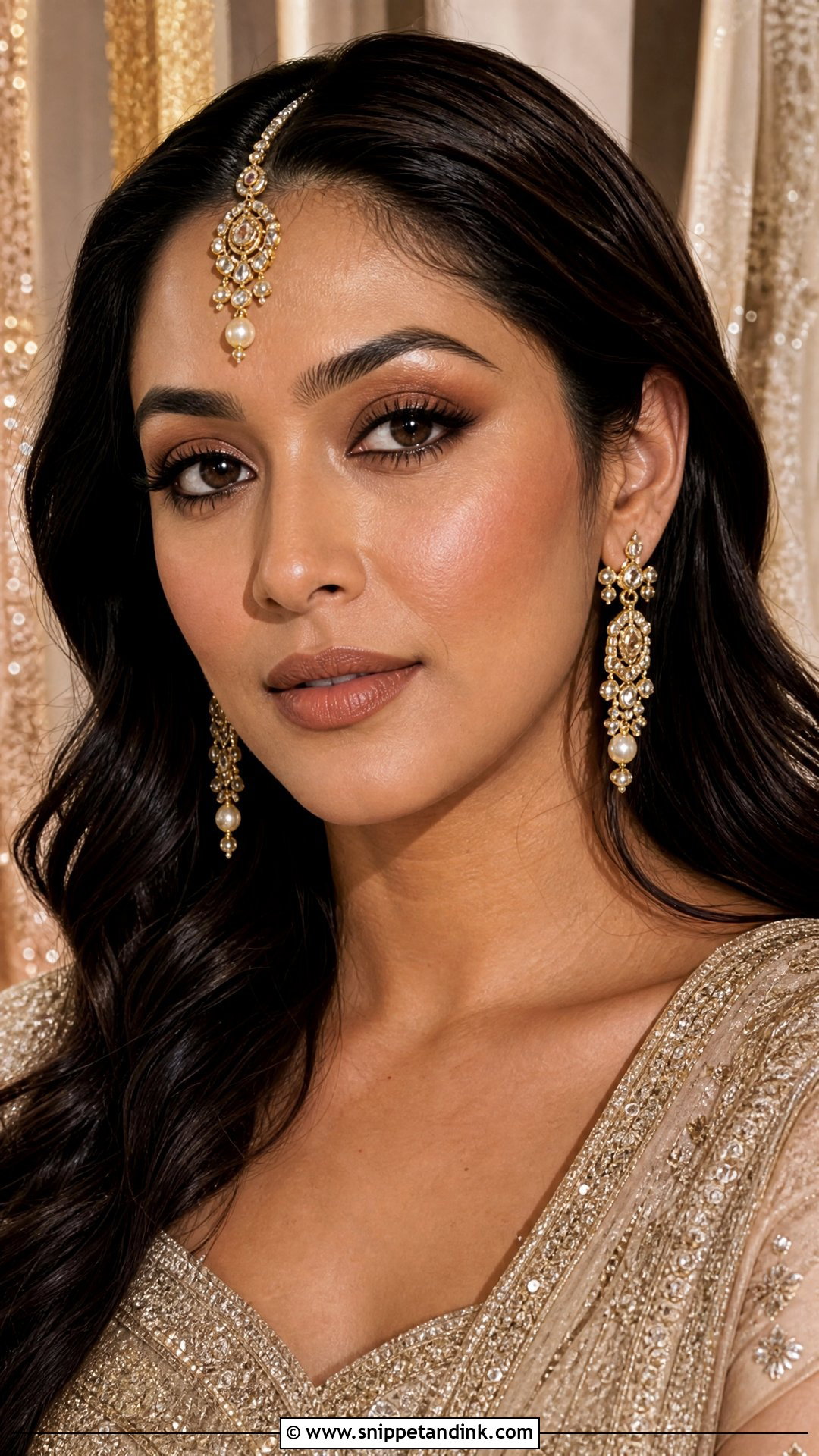
Nude does not mean plain. The best version uses sculpted skin, soft brown eyes, fluffy lashes, warm blush and a nude matched to your undertone, not to a photo. Fair and light skin usually suits beige rose or peach; medium and olive skin looks right in caramel rose or terracotta; deep skin glows in cocoa, cinnamon or berry-brown. The common failure is a nude that’s paler than your lips, which reads grey and tired in photographs. Keep enough eye definition that the face holds up. Pastel outfits, civil ceremonies and reception gowns suit it.
20. Pink Desi Bridal Makeup
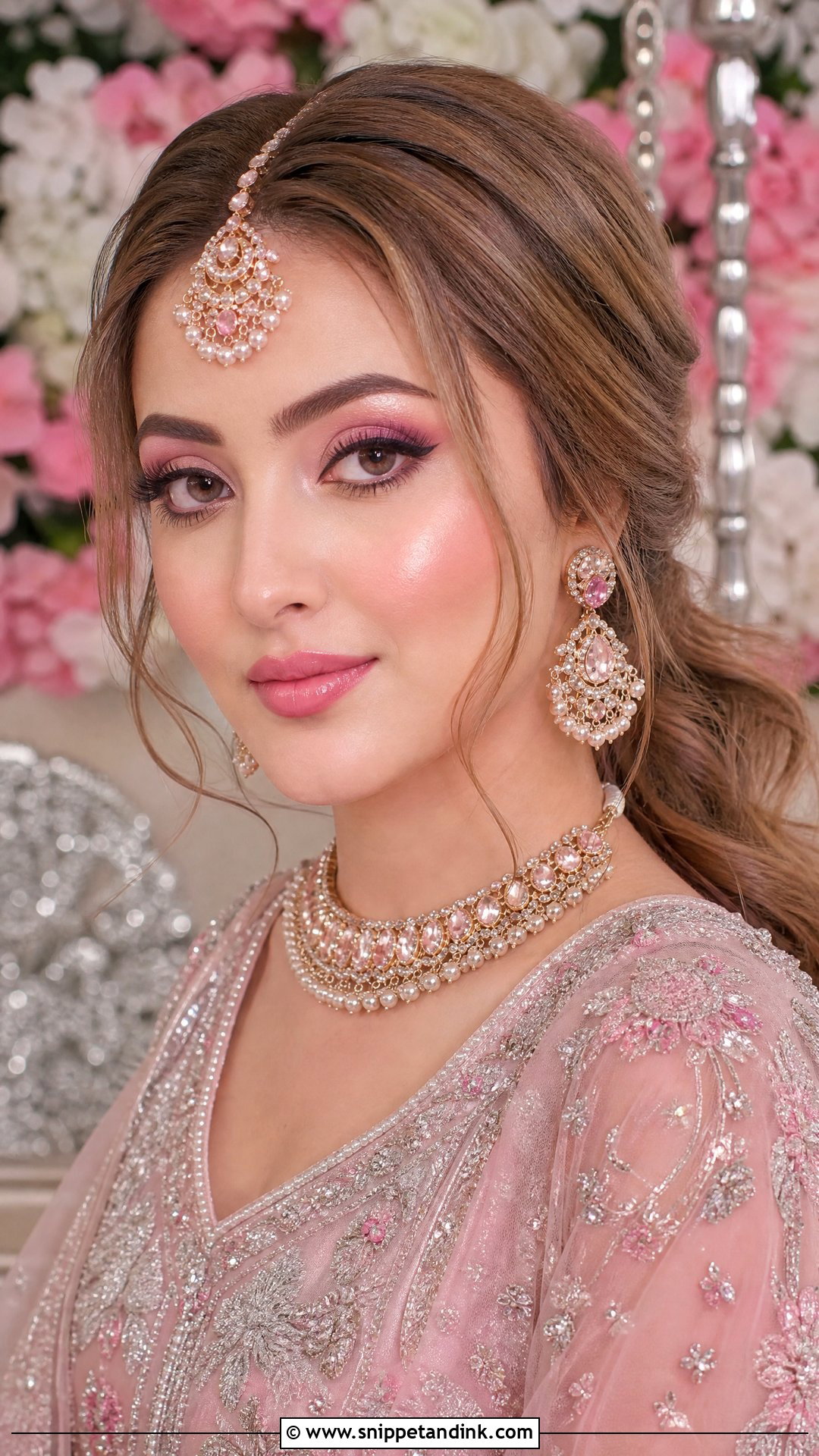
Pink makeup works when the pink is the right temperature. Warm undertones look healthier in peachy pinks; cool undertones suit mauve pinks, and getting this backwards makes skin look either sallow or ruddy. I use rose, mauve or blush on eyes, cheeks and lips, grounded with brown liner and natural lashes, and blend blush high toward the temples to lift the face. A single-toned pink face sits well with blush lehengas, ivory sarees, silver embroidery and pastel outfits for engagements, nikkah, walima and daytime weddings.
21. Smokey Eye Desi Bridal Makeup
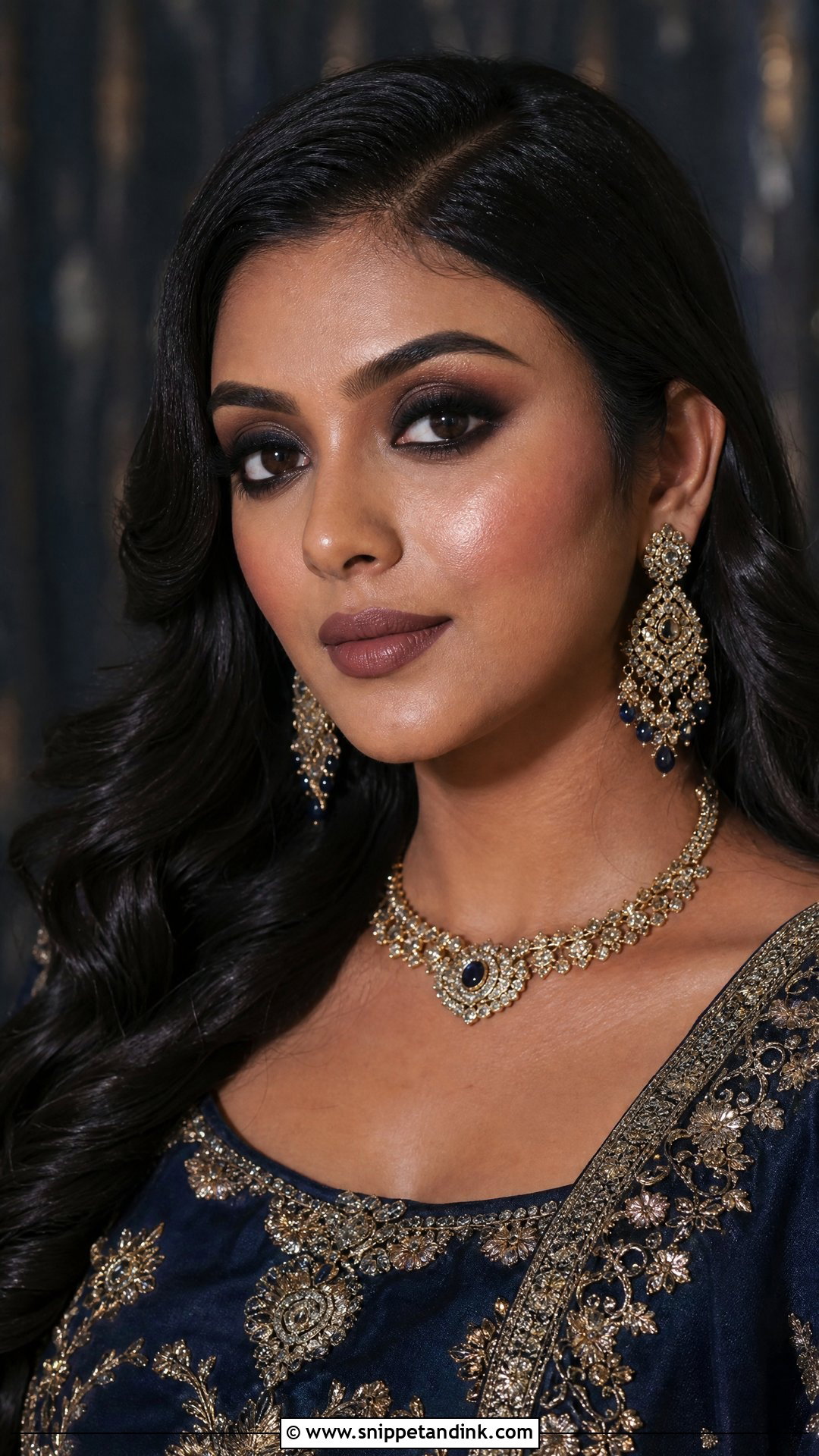
Smokey eye Desi bridal makeup lets the eyes carry the drama so the lip doesn’t have to. I build smoke in brown, bronze, plum or charcoal rather than flat black across the lid, and blend the outer edge upward so the eye lifts instead of drooping. Under the eye, I brighten with a peach corrector before concealer; without it, a dark smoked lid makes South Asian under-eyes look shadowed and tired. Finish with a smooth base, soft contour, warm blush and a nude, rose or muted berry lip for receptions, sangeet nights and evening ceremonies.
22. Winged Liner Desi Bridal Makeup
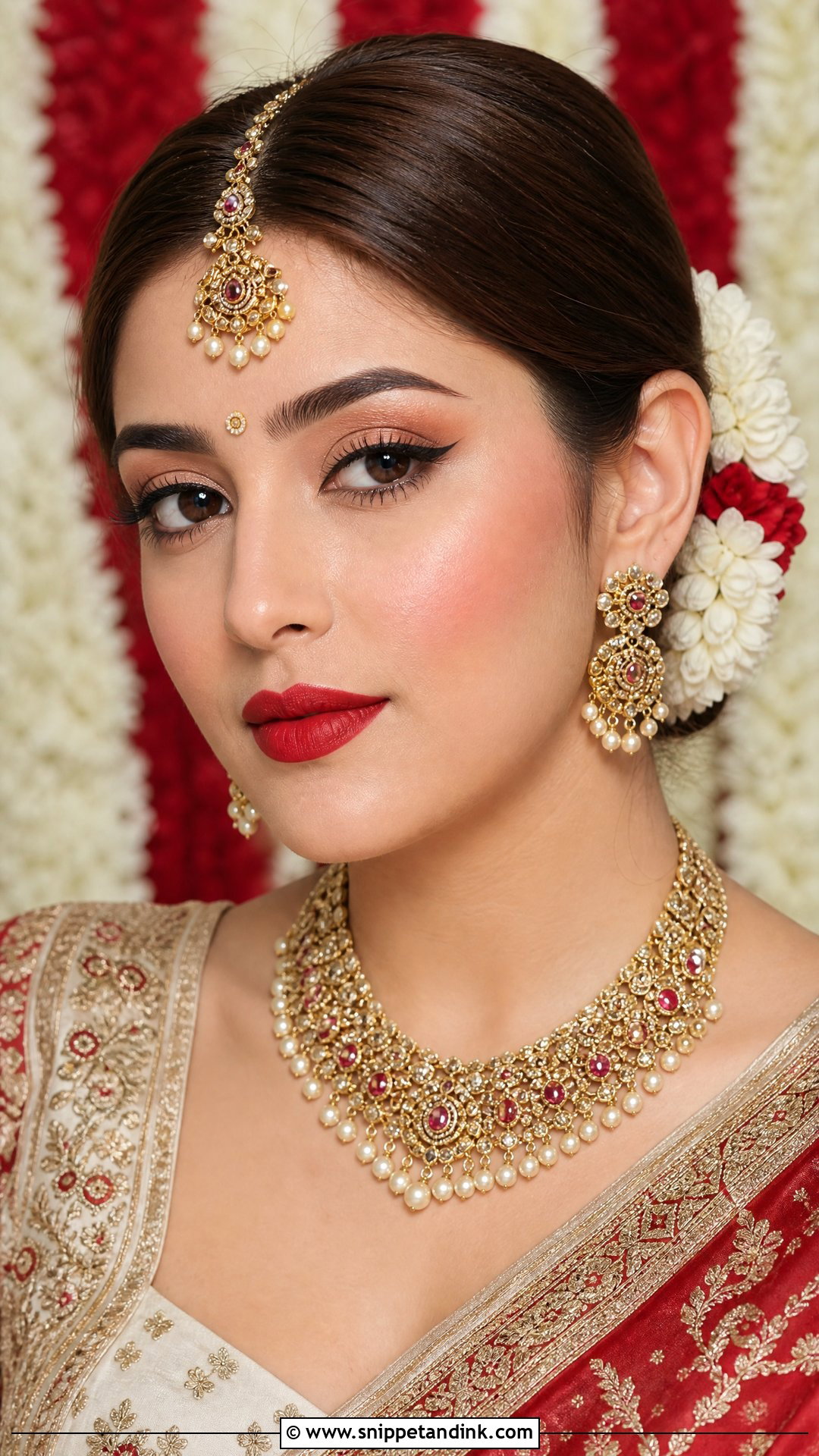
Winged liner gives definition without heavy eyeshadow, and it suits most eye shapes if the wing follows your lower lash line rather than a stencil. I start with neutral lids, a softly deepened crease, a black or dark brown wing and curled lashes. Add kajal for a traditional effect or keep the lower line soft for a modern one. Hooded eyes need the wing drawn with the eyes open, otherwise it folds and breaks into a bent shape. Pair it with satin skin, warm blush, a red, rose or nude lip, a bindi, tikka and sleek hair.
23. Minimal Desi Bridal Makeup
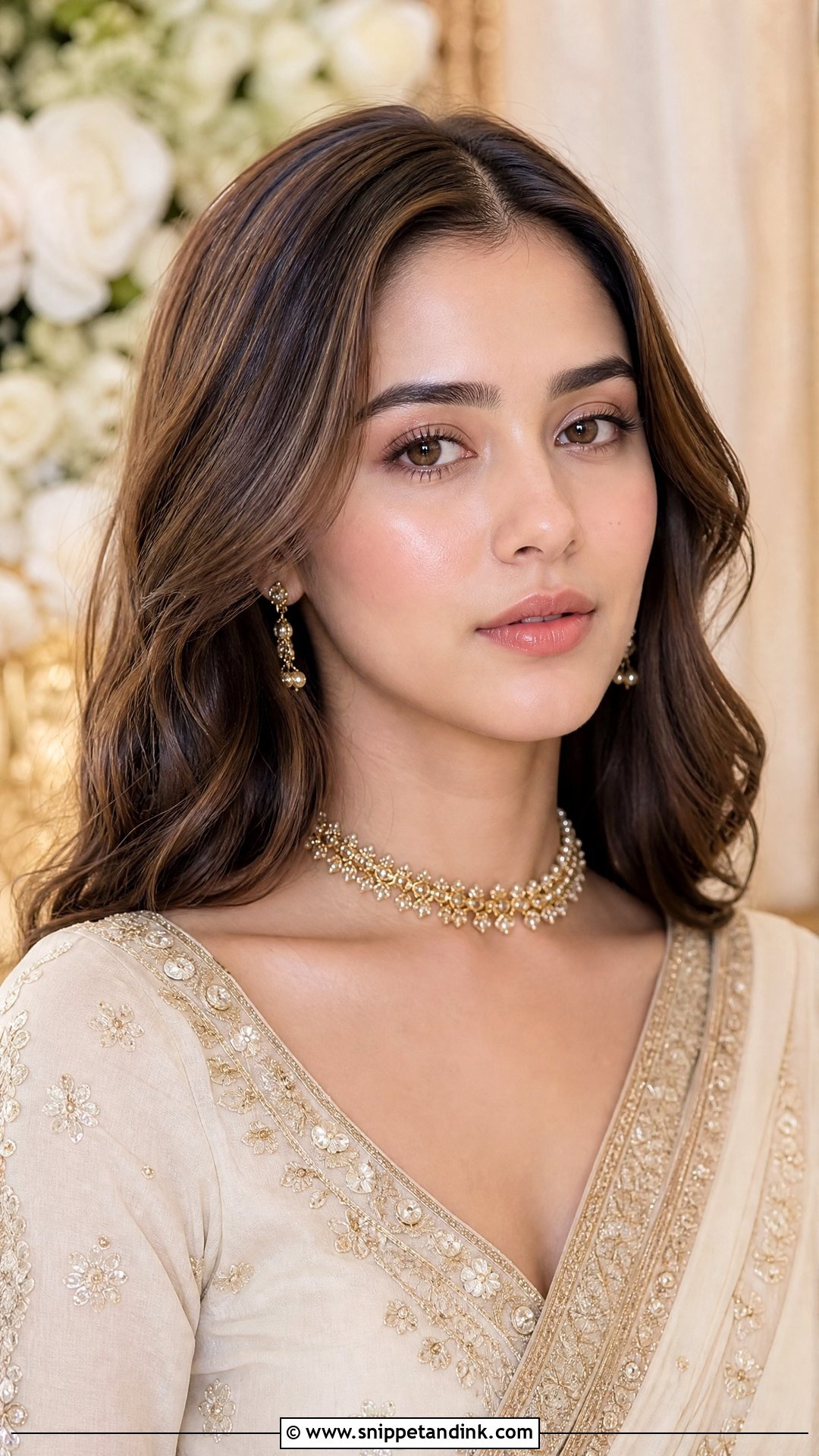
Minimal makeup is for the bride who wants to look polished and entirely herself, but it is not bare skin. It still needs enough coverage and definition to hold up in photos. I use a skin-like base, spot conceal only where needed, set the center of the face lightly, then add natural brows, soft brown liner, light lashes, cream blush and a tinted rose or nude lip. Simple sarees, modern lehengas, civil ceremonies and small nikkah events suit it. Be honest at your trial: if you’ve never worn lashes, even light ones will feel odd for the first hour.
24. Glam Desi Bridal Makeup
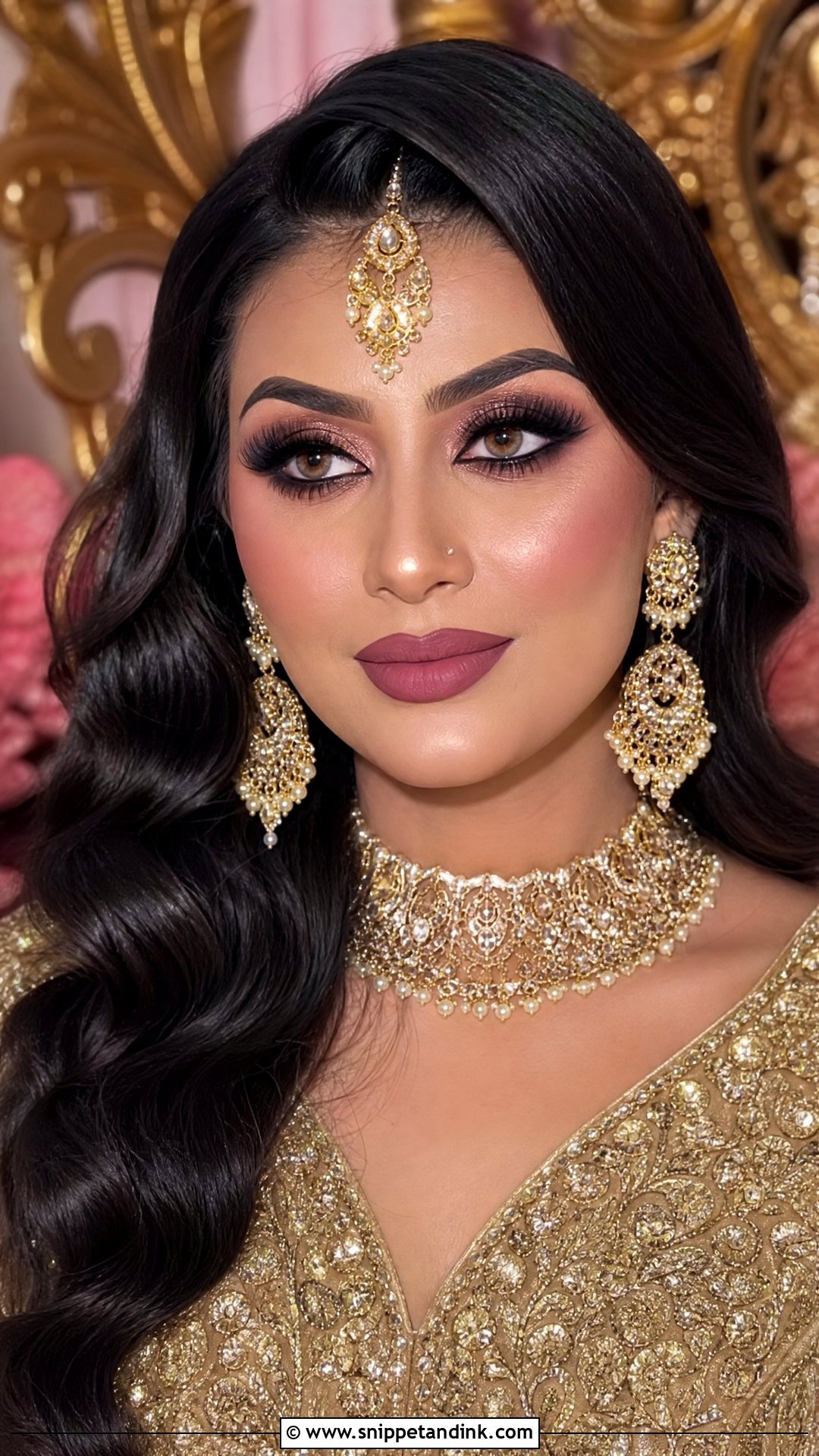
Full glam is a complete transformation: full-coverage long-wear foundation, bright under-eyes, sculpted contour, glowing highlight, dramatic lashes, defined brows and a statement lip, with bronze, gold, rose gold or smokey brown eyes chosen to match the outfit. The way to keep it current is soft blending and no grey contour or blocky brows. Big wedding halls and night events with embellished outfits need this much. Because coverage is heavy, I insist on a trial in similar lighting; full glam that looks right under a ring light can look masklike in daylight.
25. Modern Desi Bridal Makeup
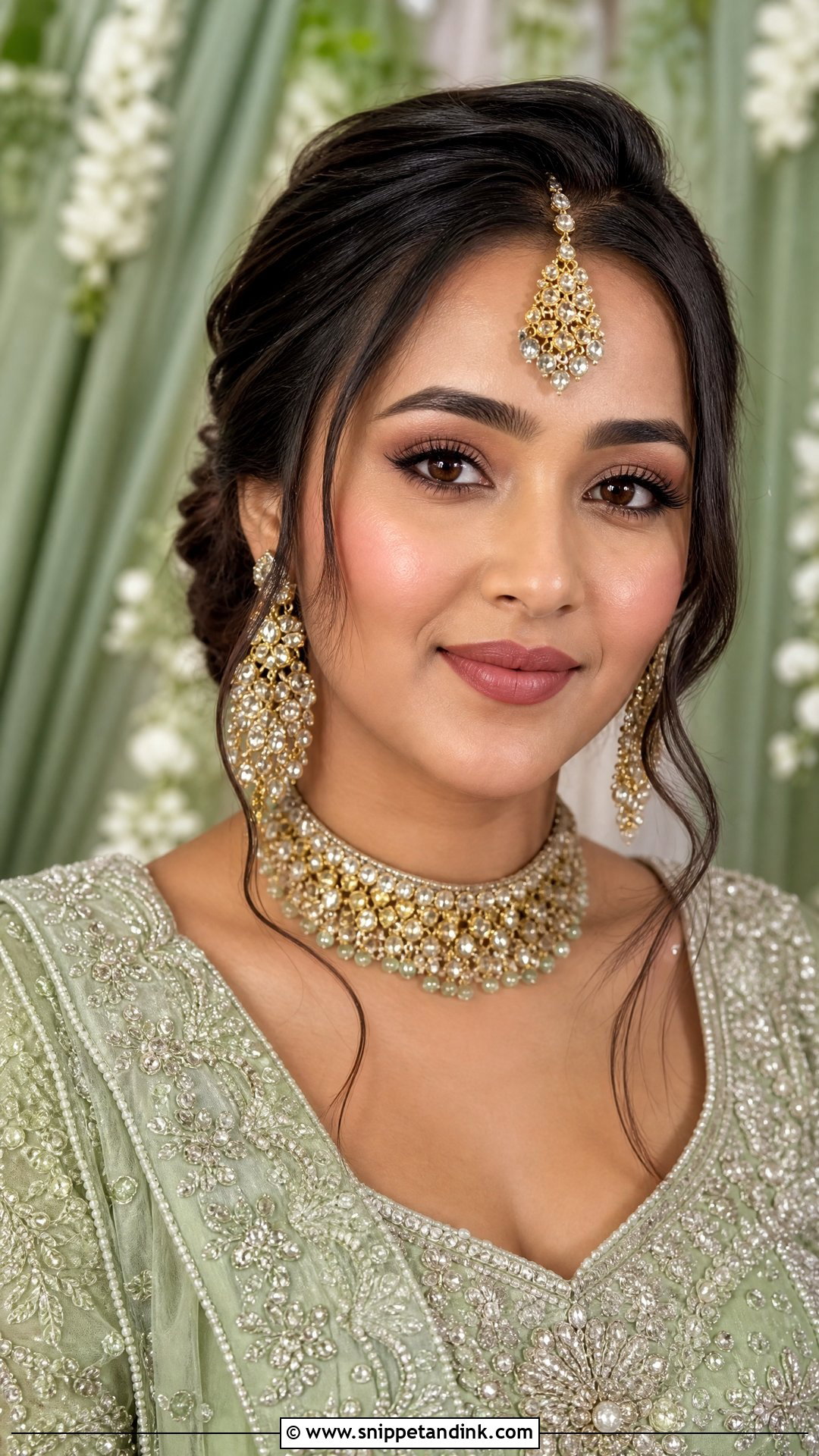
Modern Desi bridal makeup keeps the tradition and drops the heaviness: radiant skin, softly laminated brows, diffused lids, lifted liner, airy lashes and a lip that suits the bride’s natural coloring instead of the trend. It pairs with contemporary lehengas, pastel sarees, fusion gowns, pearl jewelry and minimal styling. Brides who care about phone photos as much as professional ones tend to like it, because lighter layers look truer on a phone camera’s processing than thick, sculpted makeup does.
Nath, Tikka and Dupatta Against Fresh Makeup
South Asian bridal jewelry sits directly on the face, which no makeup tutorial ever accounts for. The way I sequence a bride’s dressing is shaped almost entirely by what will touch her skin afterwards.
The nose ring and the lip
A large nath rests near the upper lip and its chain runs across the cheek. I apply and set the lipstick before it goes in, and I choose a transfer-resistant formula for the main event, because a glossy lip will be smeared by the ring within minutes. Blush goes on below the line where the chain sits, or it rubs off in a stripe.
Forehead pieces and pinned dupattas
Matha patti, tikka and passa sit on the hairline and press into foundation. I set the hairline and forehead thoroughly with powder before any metal goes on, and I keep a tissue between the jewelry and the skin while pinning. A dupatta pinned over the head rubs the temples and cheeks every time you turn, so those areas get a final mist of setting spray after dressing, not before.
Flash and the white cast
Some loose setting powders and sunscreen-heavy foundations bounce flash back and leave a white cast under the eyes in photos. On a wedding day with a photographer using flash, I bake with a tinted powder or skip baking, and I test the base at the trial by taking a flash photo on a phone. If the under-eyes glow white in that photo, they will in the album too.
Pack a small touch-up kit for whoever stays near you: your lipstick and liner, blotting papers, a cotton bud, a small powder and lash glue. Those few items fix almost everything that goes wrong after the photos start.
Your Face Has to Last Through Every Ritual
The right Desi bridal look is the one that agrees with your outfit, your ceremony, your skin and the jewelry you’ll carry on your face. Red lips and gold eyes will always belong at a baraat, and soft glam, dewy skin, nude lips, pink tones and minimal looks have just as much room. Save reference photos, book a trial, check the base in light like your venue’s, and wear it for a few hours before you decide. A good bridal face should still look like you after the rituals, the tears and the dancing.
You'll Like These Ideas:


Leave a Reply