
An engagement cake is usually the first cake a couple orders together, and it tends to be booked in a hurry. It doesn’t need to look like a wedding cake, and honestly it shouldn’t: smaller sizes, brighter colours and a bit of humour suit the occasion. The orders I see most now are clean buttercream, vintage piping, heart shapes, pearls, a touch of gold and short single or two-tier cakes. Backyard, restaurant, garden or living room, the venue shapes what will survive the afternoon. Below are twenty engagement cake images worth saving, with my notes on how each is made and who it suits.
How Much Cake an Engagement Party Actually Needs
Engagement parties often have plenty of other food, so guests take smaller slices than at a wedding. I size for party portions, which are a little larger than wedding finger slices. Every bakery calculates portions differently, so treat these as rough guides and confirm with your baker.
- Close family dinner of eight to twelve: a six-inch round, or a tall mini cake.
- Party of twenty to thirty: an eight-inch round, or a two-tier cake of six and eight inches.
- Fifty or more: a two-tier cake with a sheet cake in the kitchen, or a cupcake tower with a small cutting cake on top.
Height matters too. A tall cake with four layers serves more than a short one of the same width, and it looks more impressive in photos. If you love a design but the size is too big, ask for it scaled down rather than ordering a huge cake and wasting half.
1. Simple Engagement Cake
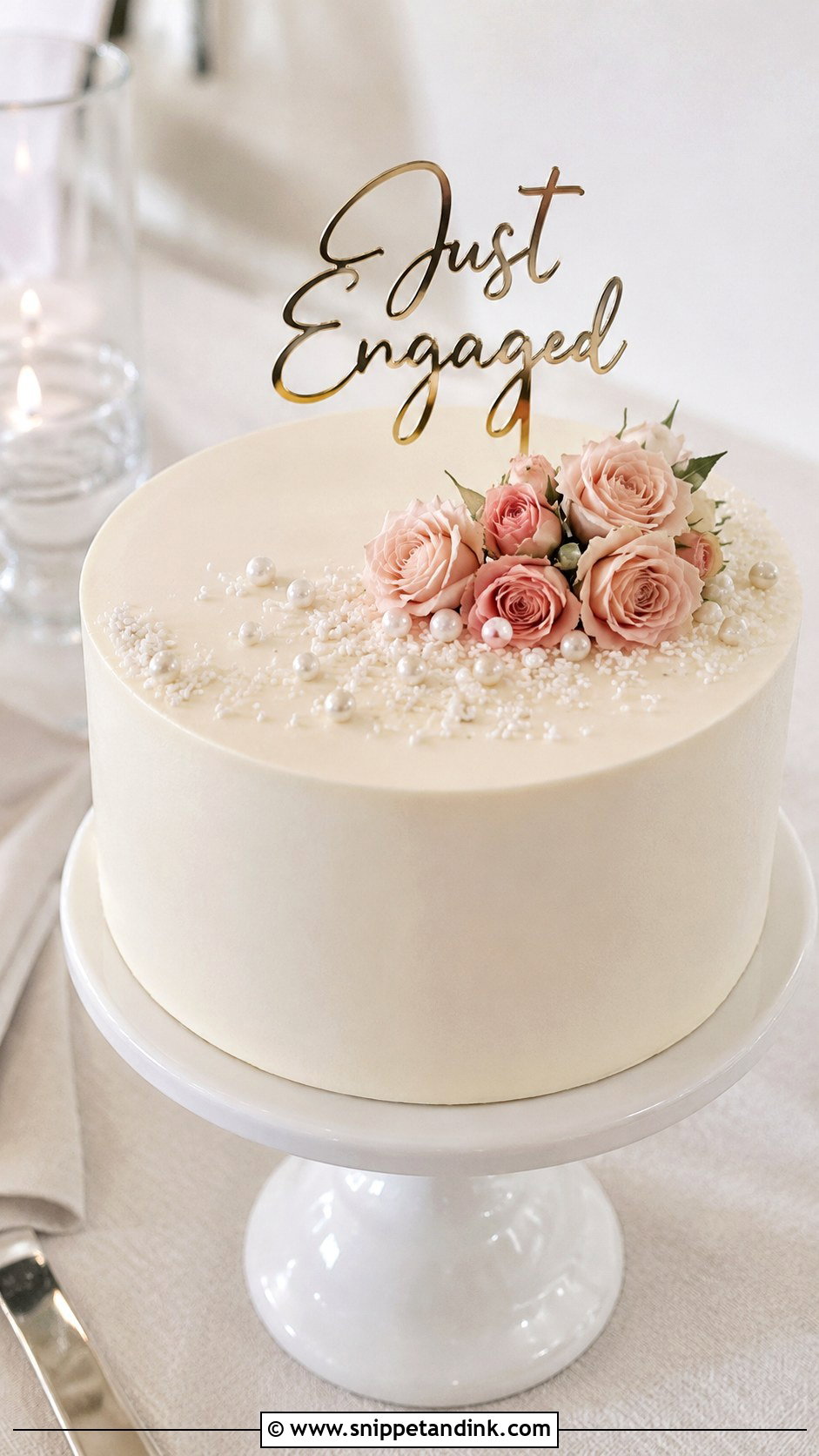
Plain cakes are where a baker’s skill shows most, because there’s nothing to hide behind. Smooth white buttercream on a round cake, a sharp top edge and one accent, maybe a small gold topper or three flowers, can look expensive. I chill the cake between coats and finish with a hot scraper to get that edge. Minimal party decor and dinner celebrations suit it. Vanilla, almond or a champagne-flavoured sponge keeps it light.
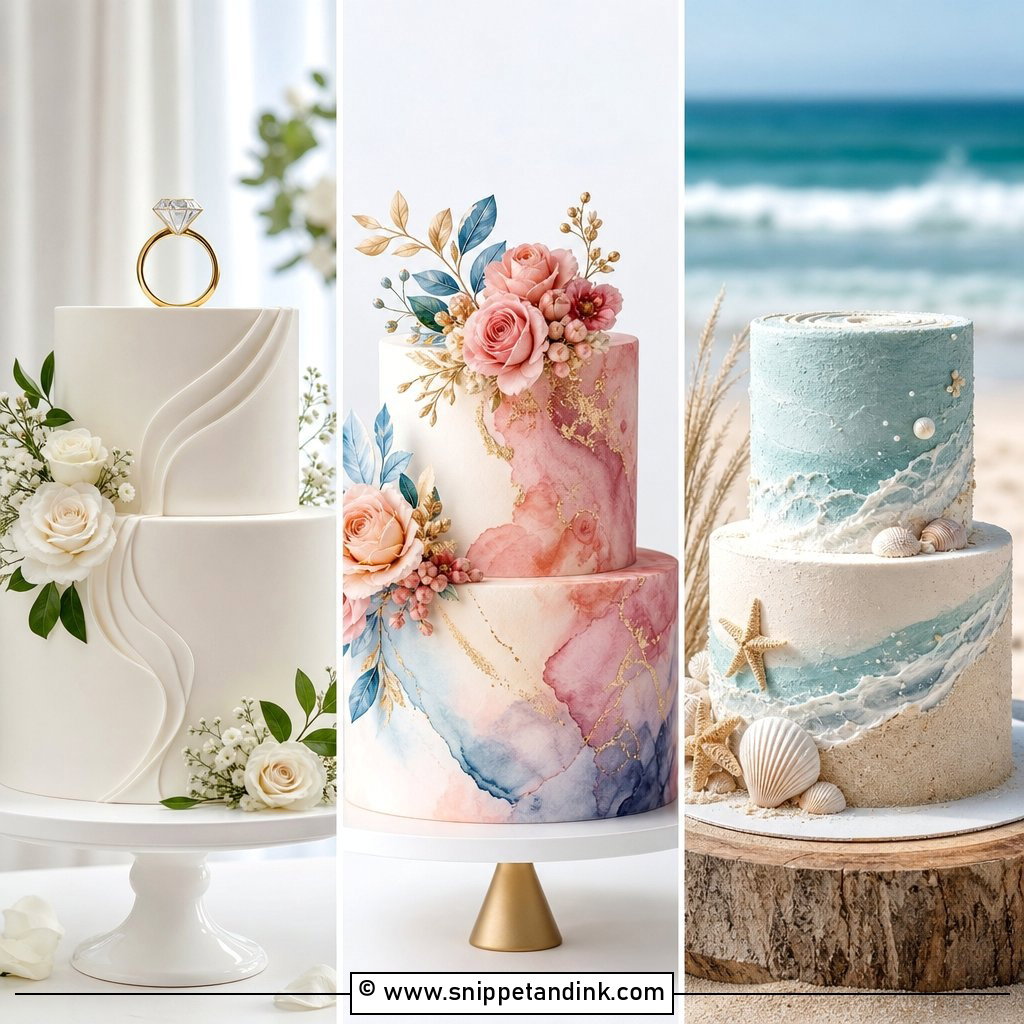
2. Engagement Ring Cake
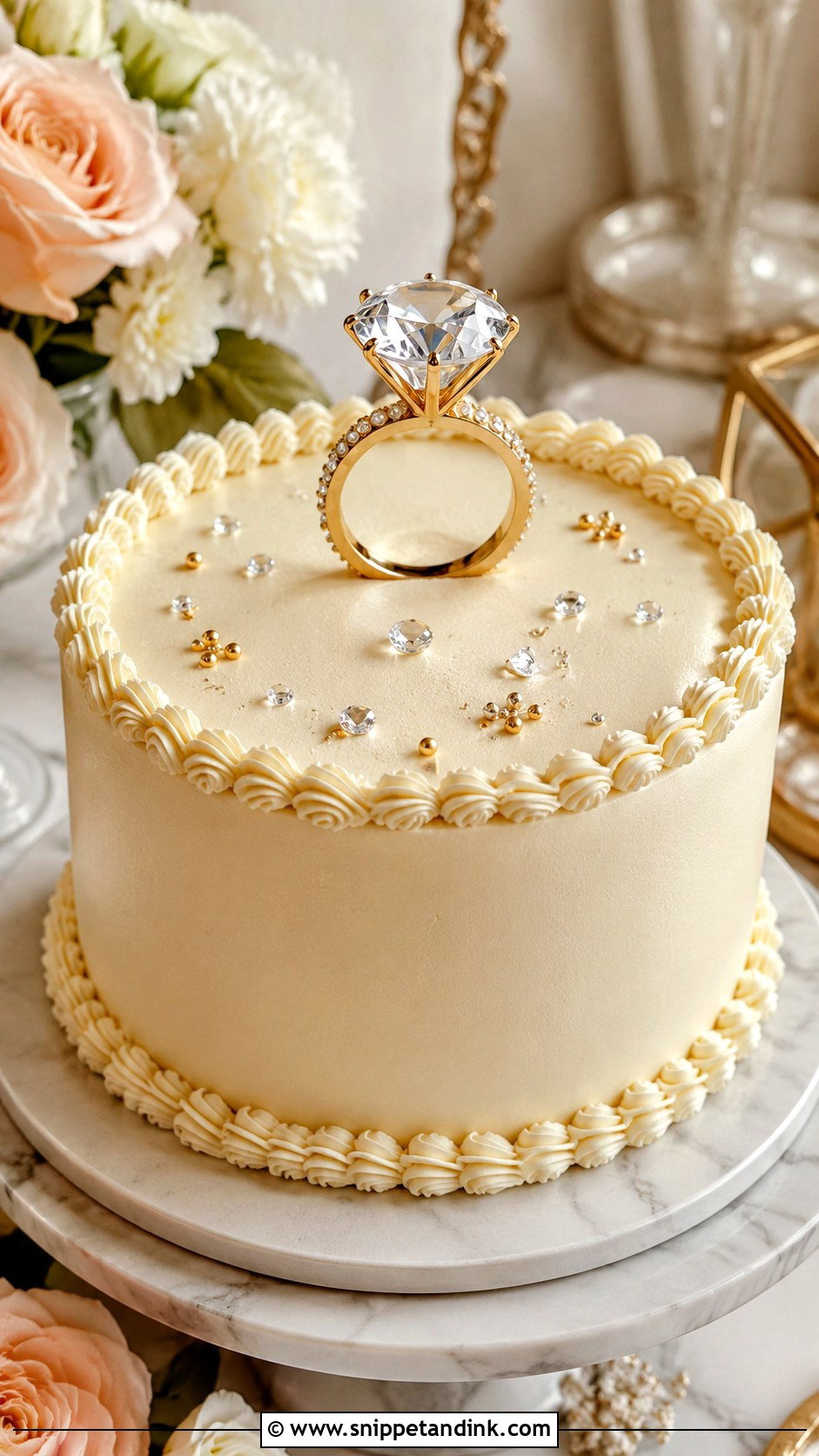
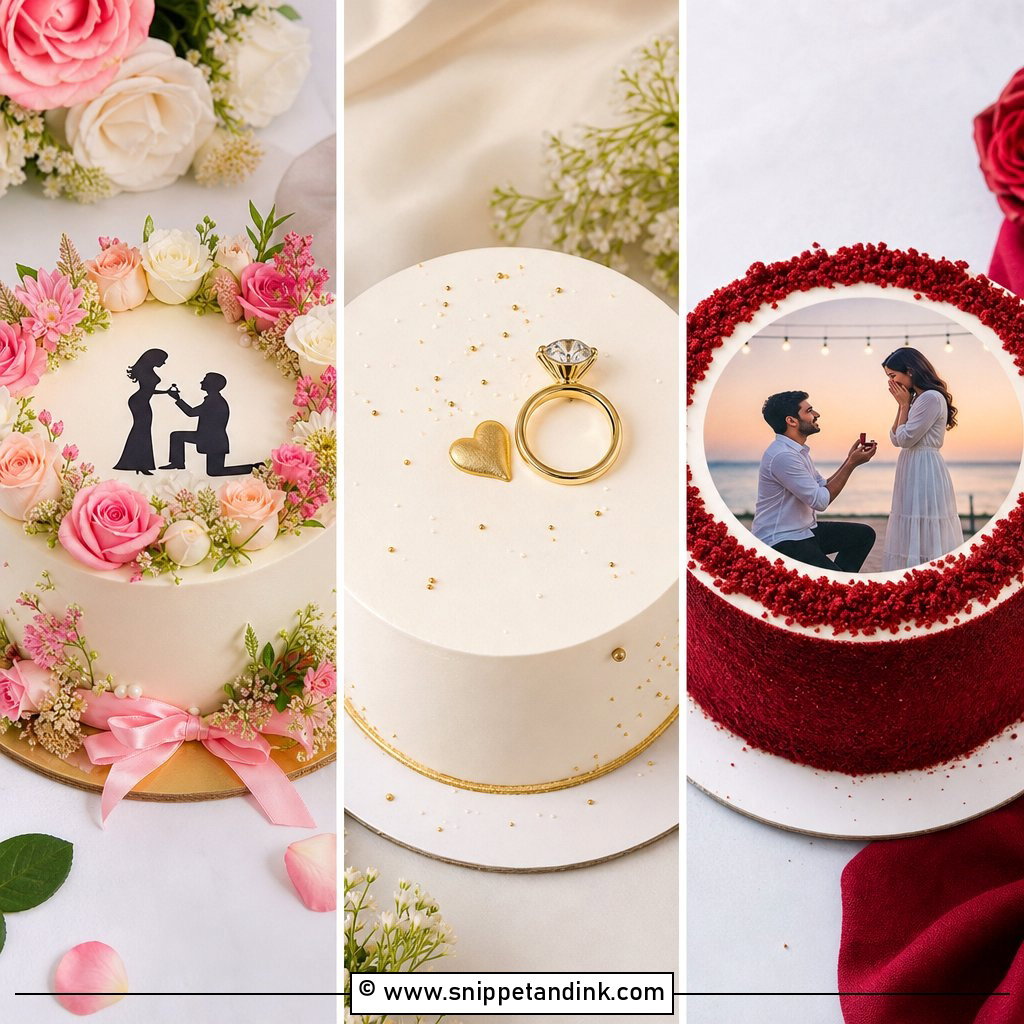
Nothing explains the party faster than a ring. An engagement ring cake might carry a ring topper, sugar diamonds, or a round design that frames the ring like a setting. I make sugar gems from isomalt, which gives real clarity and catches light, though it softens in humidity, so they go on at the last moment. White buttercream with gold and a pearl border keeps it refined. It’s a fun one for a surprise party straight after a proposal.
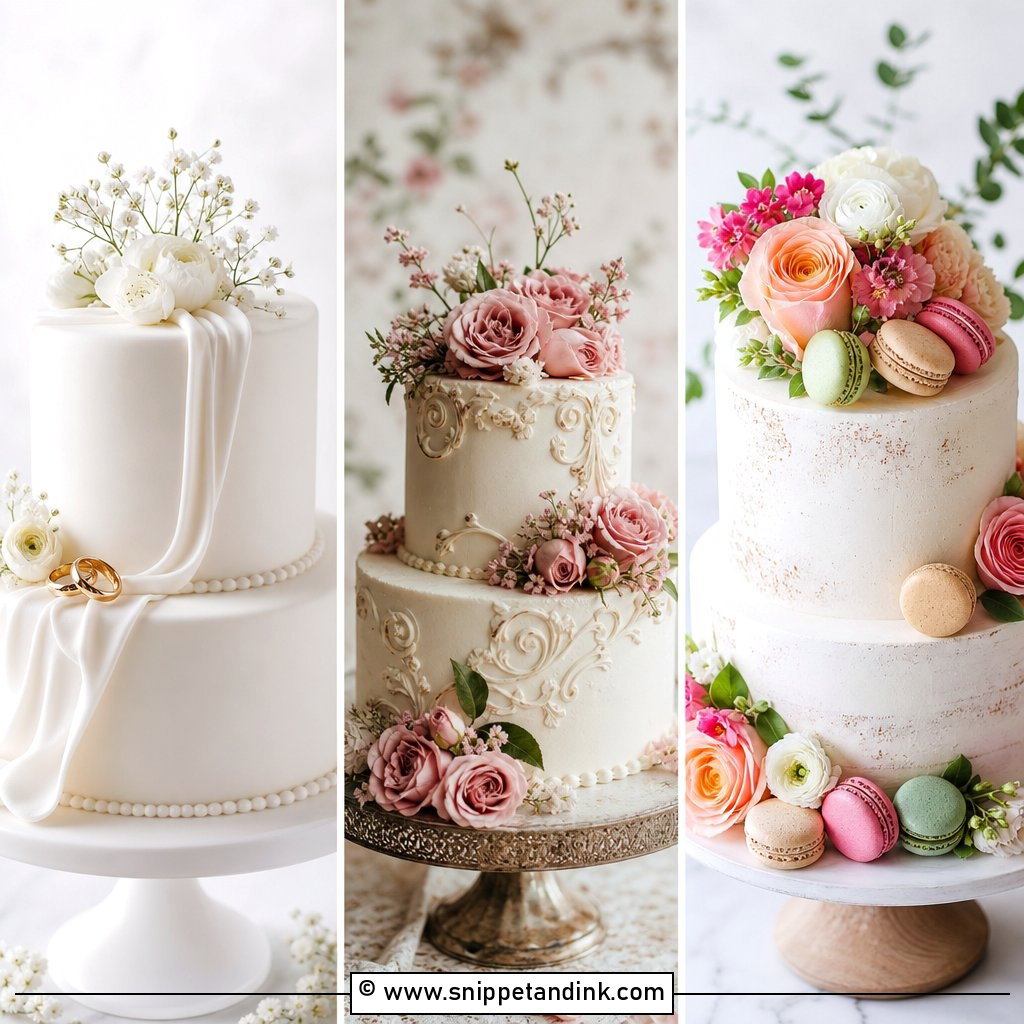
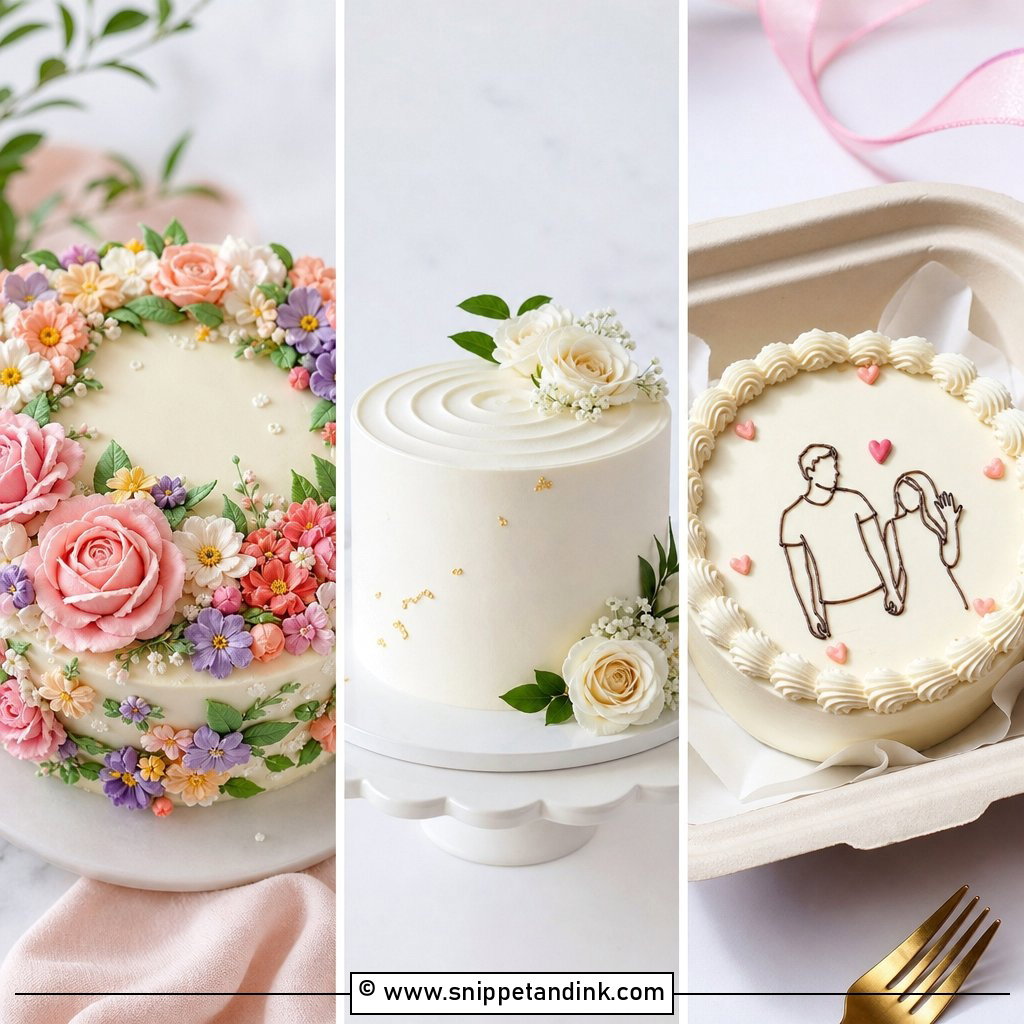
3. Floral Engagement Cake
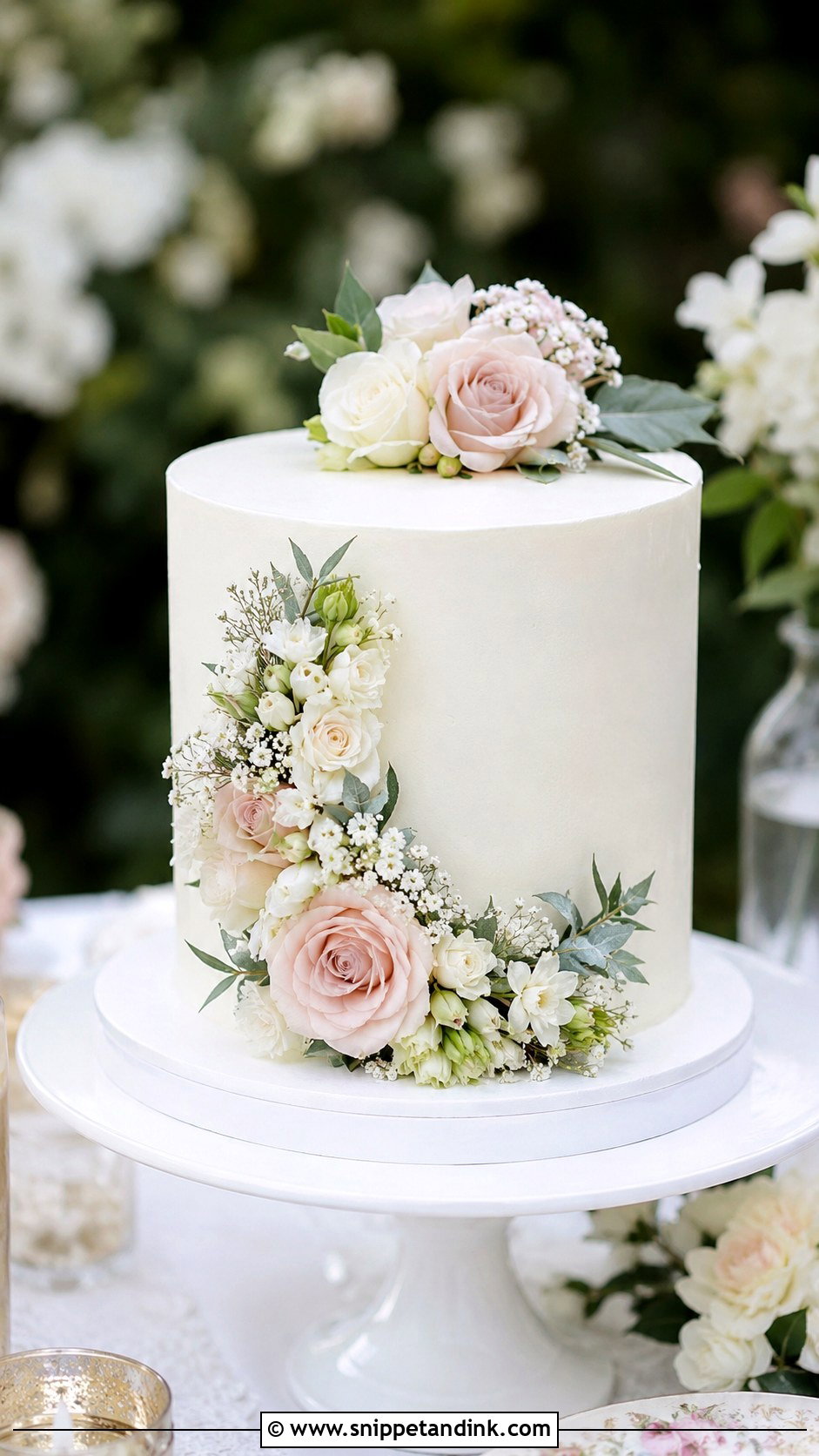
Flowers can carry a simple single tier, either as a crescent on the front, a trail down one side or a crown on top. Blush roses, ivory blooms, baby’s breath and pale greenery are the requests I get most. Real flowers are fine as long as they’re food-safe and their stems are wrapped; baby’s breath in particular shouldn’t be pushed straight into icing. Garden parties and brunches suit this style. Lemon or strawberry sponge matches the freshness.
4. Heart Engagement Cake
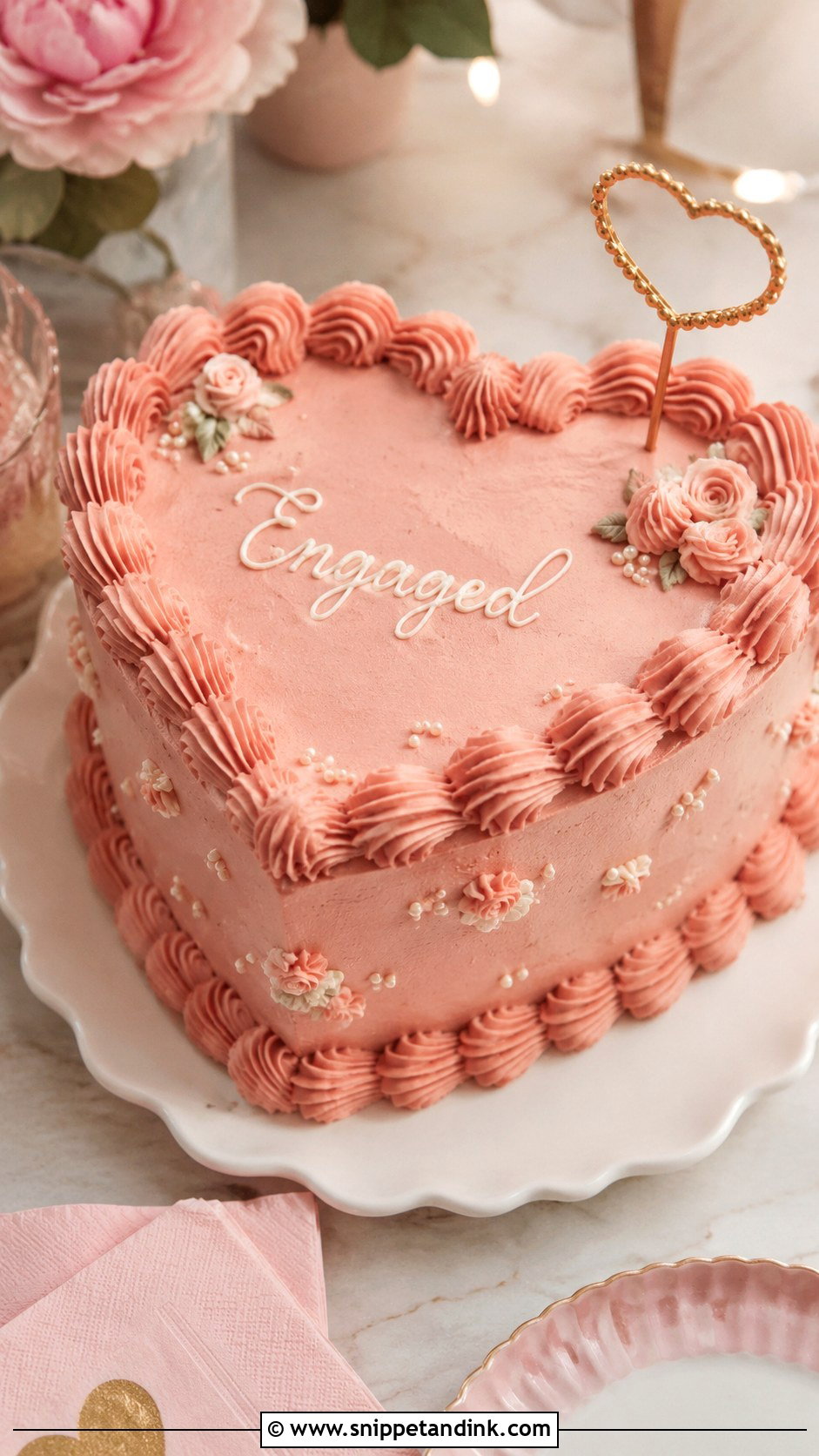
Heart cakes are everywhere right now, and the shape does most of the work. Cutting a heart from a round and a square gives cleaner sides than a heart-shaped tin. Vintage piping, pink frosting, pearls and a short message like “She Said Yes” or “Forever Starts Here” finish it. They suit smaller parties and look their best photographed from above. I pipe the lettering last so I can centre it against the finished border.
5. Two Tier Engagement Cake
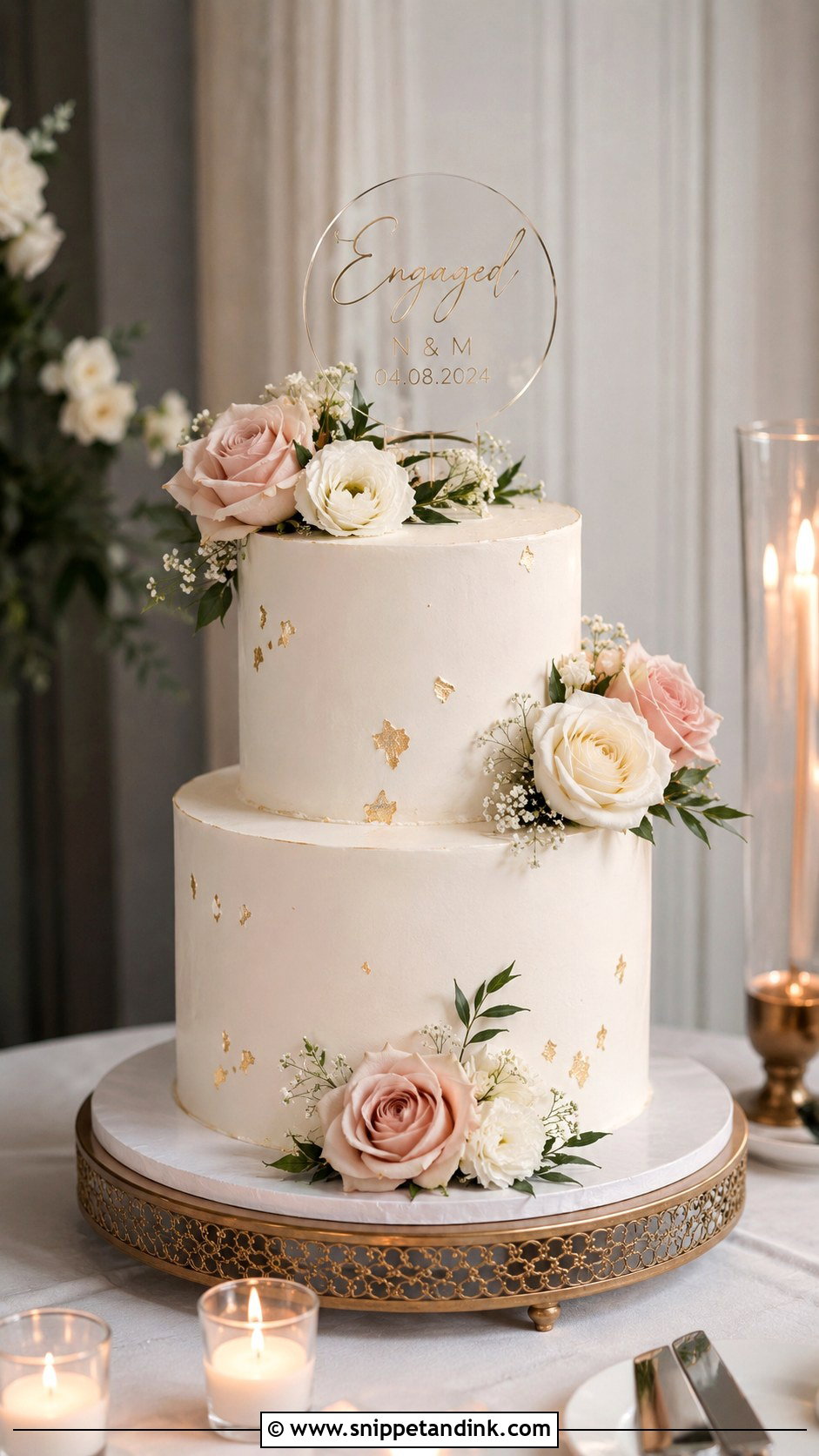
Two tiers make the cake a centrepiece without looking like a rehearsal for the wedding. I keep the bottom tier simple and put the main detail on the top, whether that’s gold leaf, blush flowers or a ribbon. Two tiers also means two flavours, which helps when the families have different tastes. Even a short two-tier cake needs dowels in the bottom tier, so make sure whoever moves it knows it’s heavier than it looks.
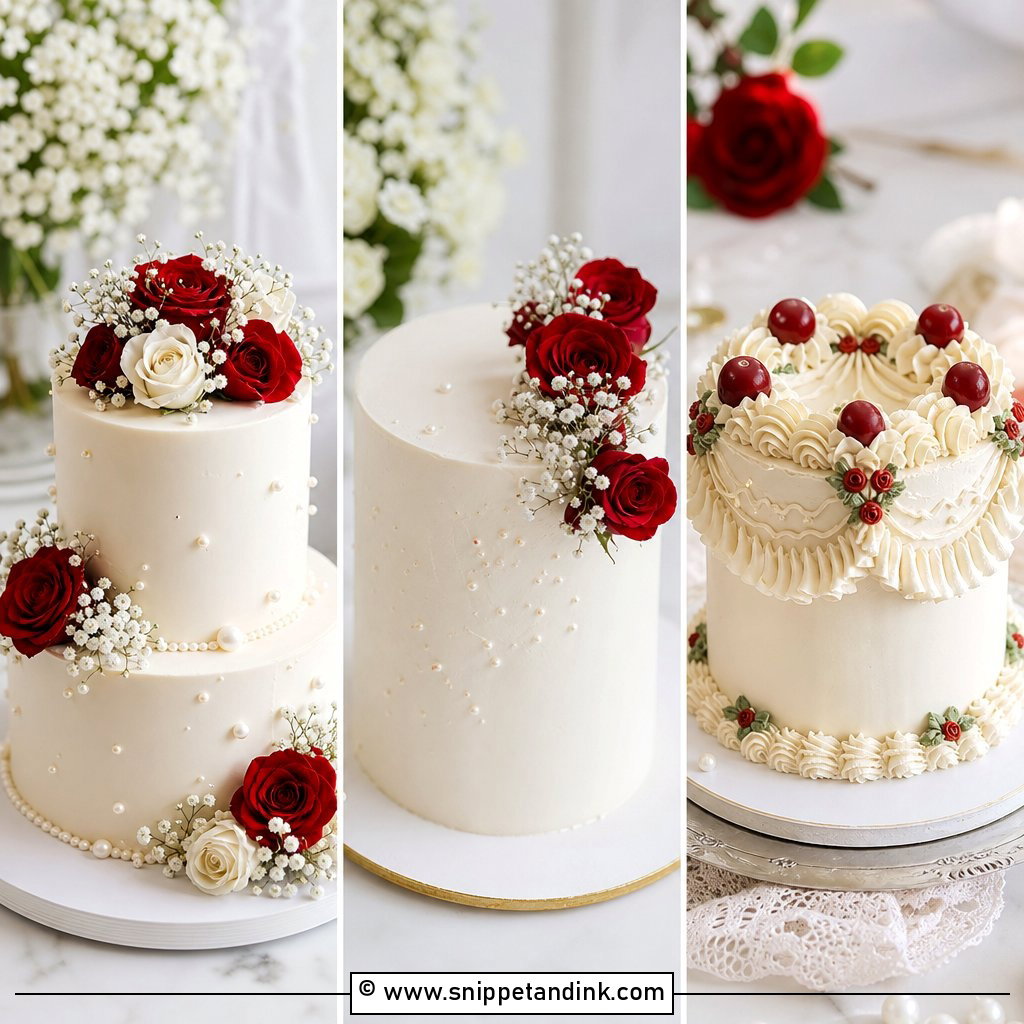
6. Vintage Engagement Cake
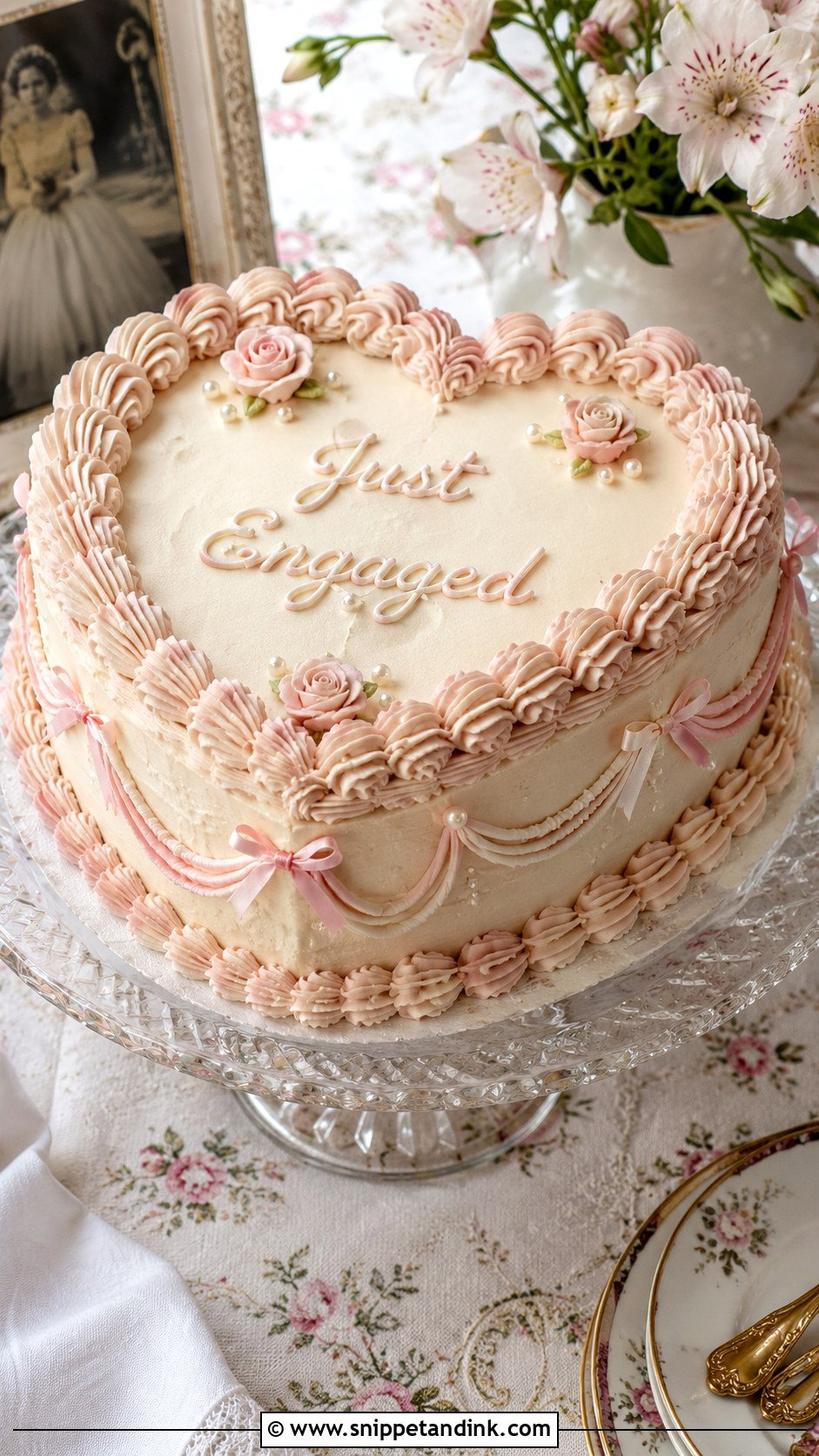
Vintage piping is the trend I’ve been asked for most in the last couple of years. Shell borders, ruffles, swags, bows, cherries and pearls all done in buttercream, usually in pink, ivory, pale blue or butter yellow. It takes a firm American or Swiss meringue buttercream to hold piped shapes, and it doesn’t like warm rooms, so keep it out of direct sun at a garden party. A heart shape makes it even more charming. Red velvet or strawberry sponge goes well with it.
7. Gold Engagement Cake
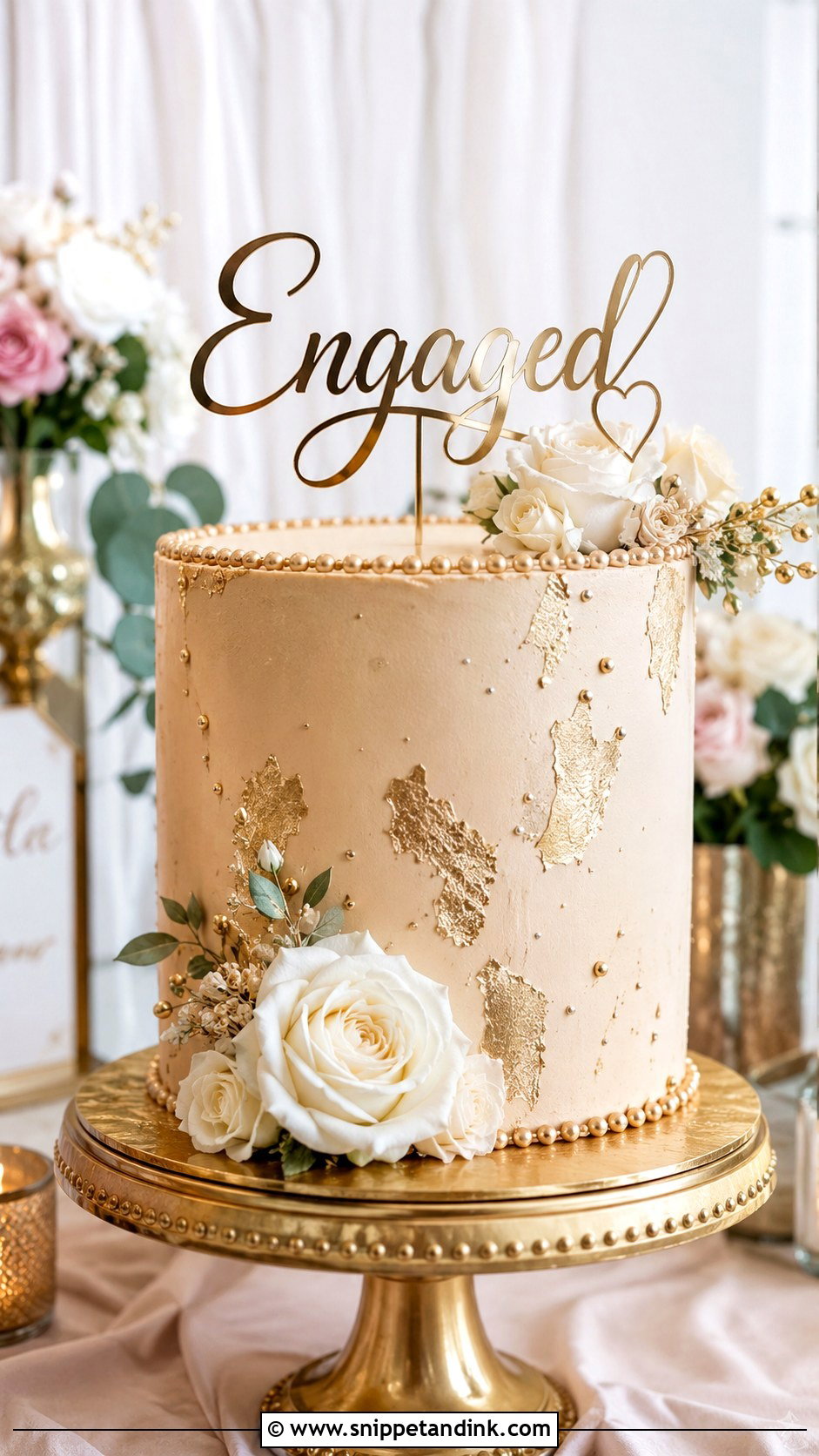
Gold takes a plain cake to a party piece quickly, but a little goes a long way. Edible leaf, gold pearls, a painted edge or a thin drip are all options; I’d choose one, not four. Gold looks best against white, ivory, blush, black or sage. Check that any gold dust is labelled edible rather than “non-toxic,” which only means it’s decorative. Evening parties and restaurant dinners suit it.
8. White Engagement Cake
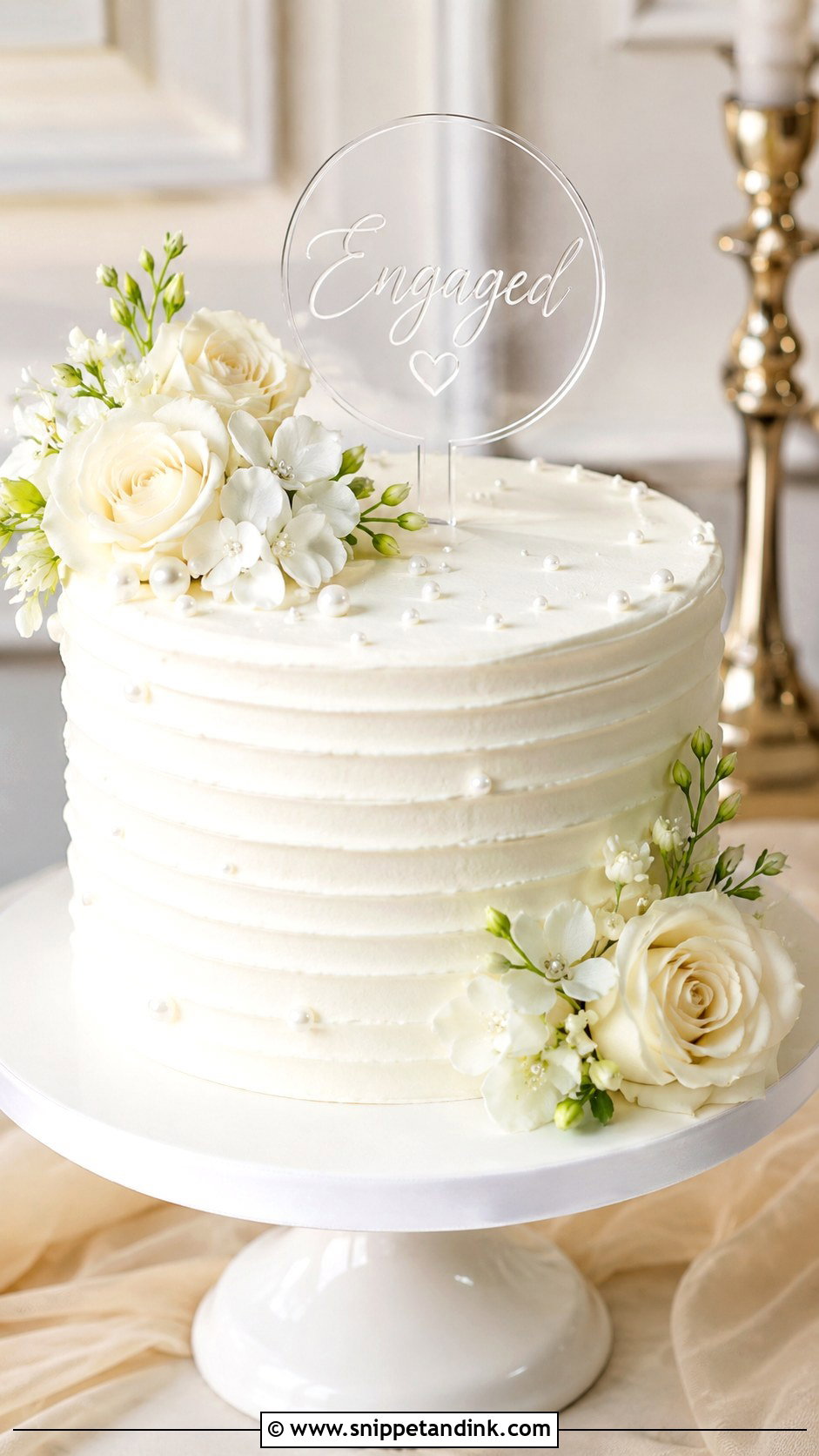
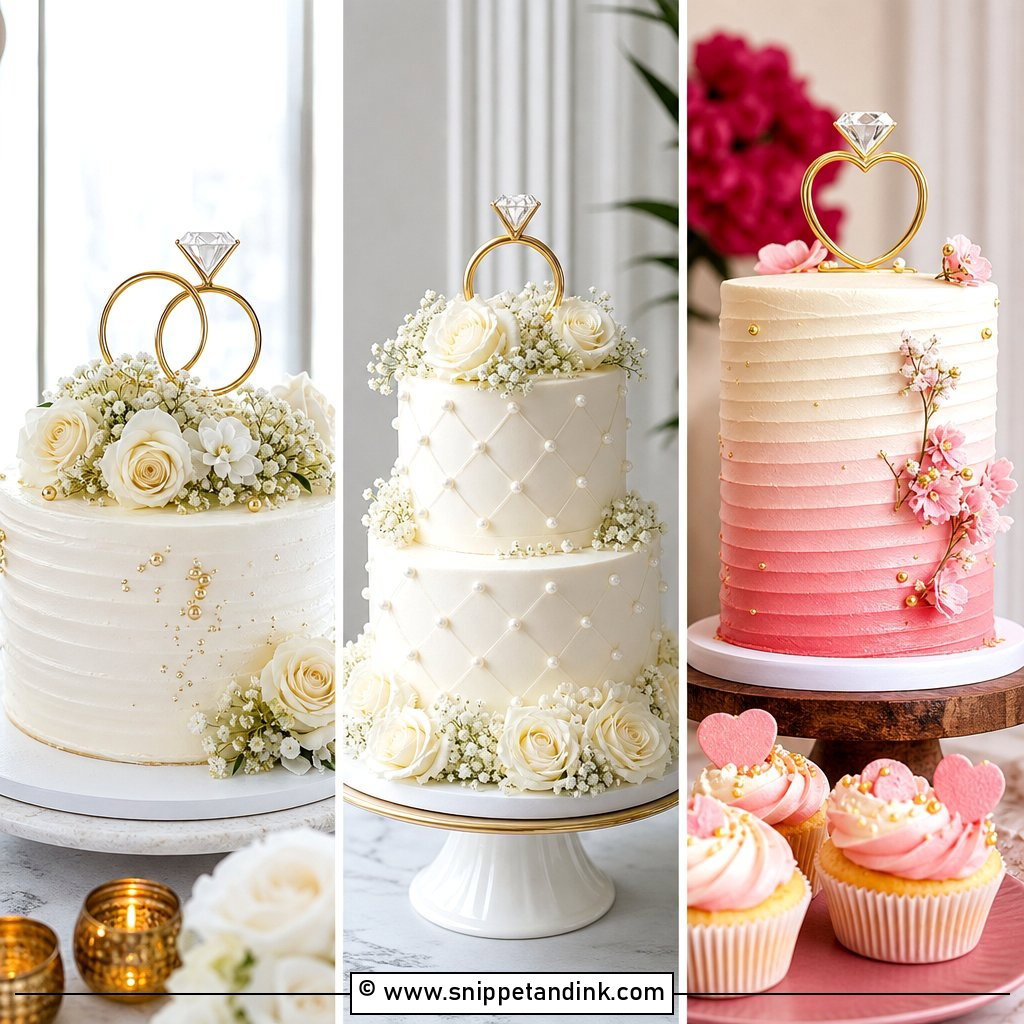
An all-white cake can look a lot like a wedding cake, so I keep engagement versions smaller or add a playful topper. Texture does the work when the colour is plain: ribbed buttercream, soft piping, pressed flowers or pearls. Ribbing is done with a comb scraper while the buttercream is still soft, and it hides small imperfections better than a smooth finish. Coconut, almond or lemon sponge suits it.
9. Pink Engagement Cake
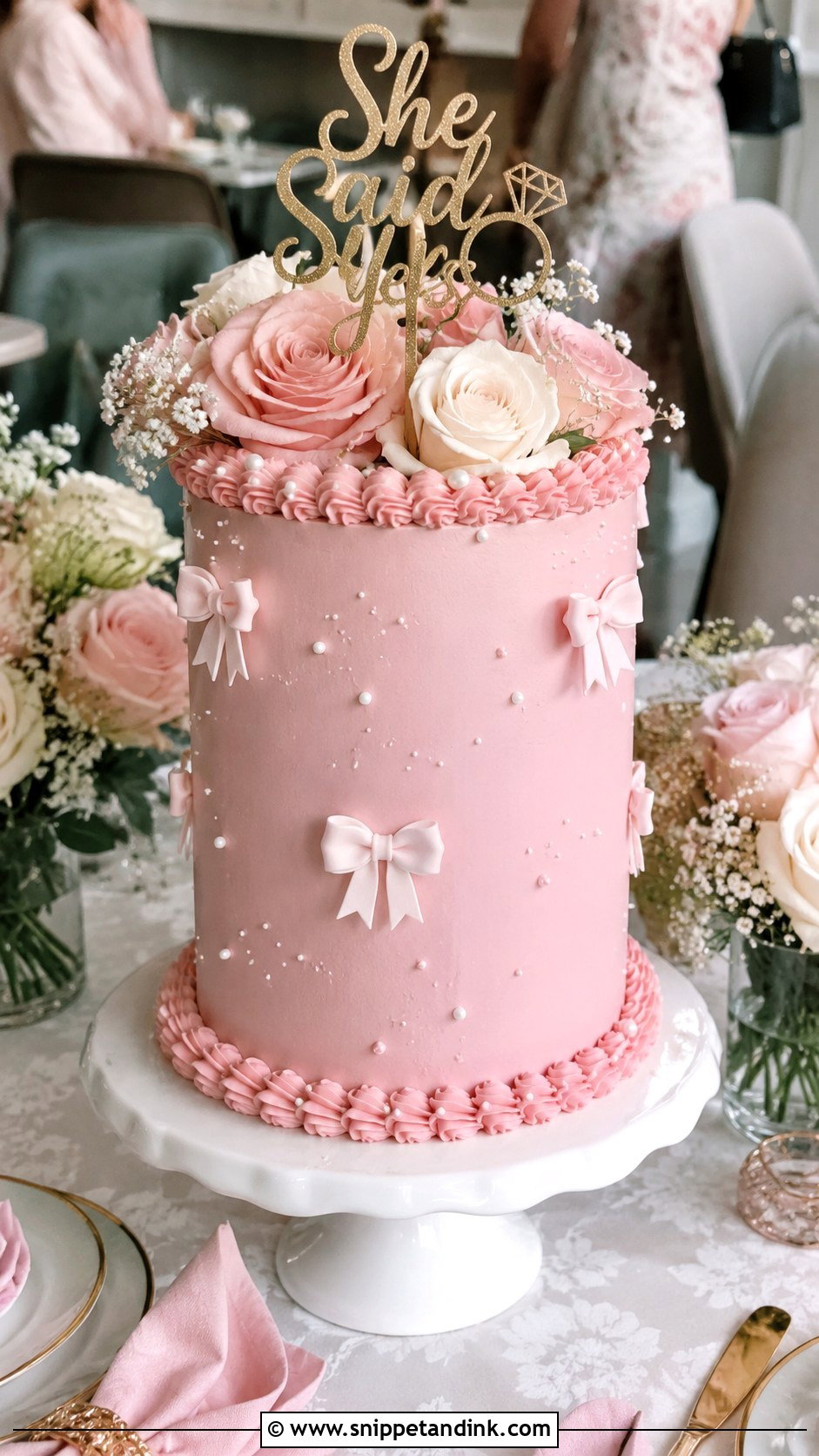
Pink covers a huge range, from soft blush to hot pink, and the shade sets the tone. I’d pick one main pink and one accent, such as white, gold or pale green. Pink buttercream pairs well with vintage piping, bows and pearls. Be aware that strong pinks can fade under bright light within hours, which is another reason to keep the cake in the shade. Strawberry, raspberry and funfetti flavours fit the colour.
10. Black And Gold Engagement Cake
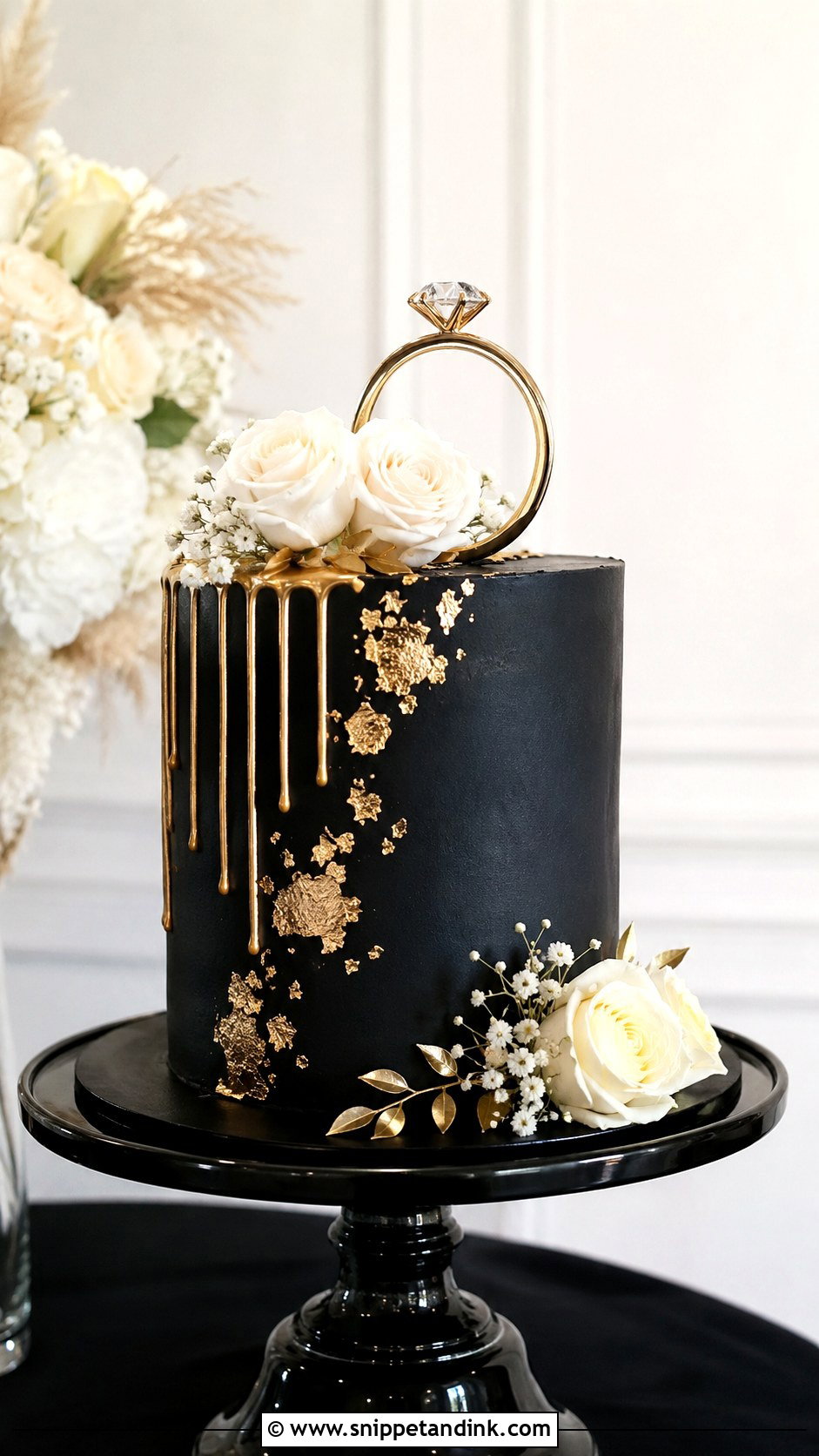
Black and gold is the most dramatic look here, ideal for evening and formal parties. Black buttercream needs a lot of colouring, which can stain mouths and taste bitter, so I start from a chocolate base or use black fondant. A tall round shape with gold leaf or a drip looks sharp. Keep everything else restrained, perhaps with a few white flowers for contrast. Chocolate, espresso or cookies-and-cream sponge matches the mood.
11. Pearl Engagement Cake
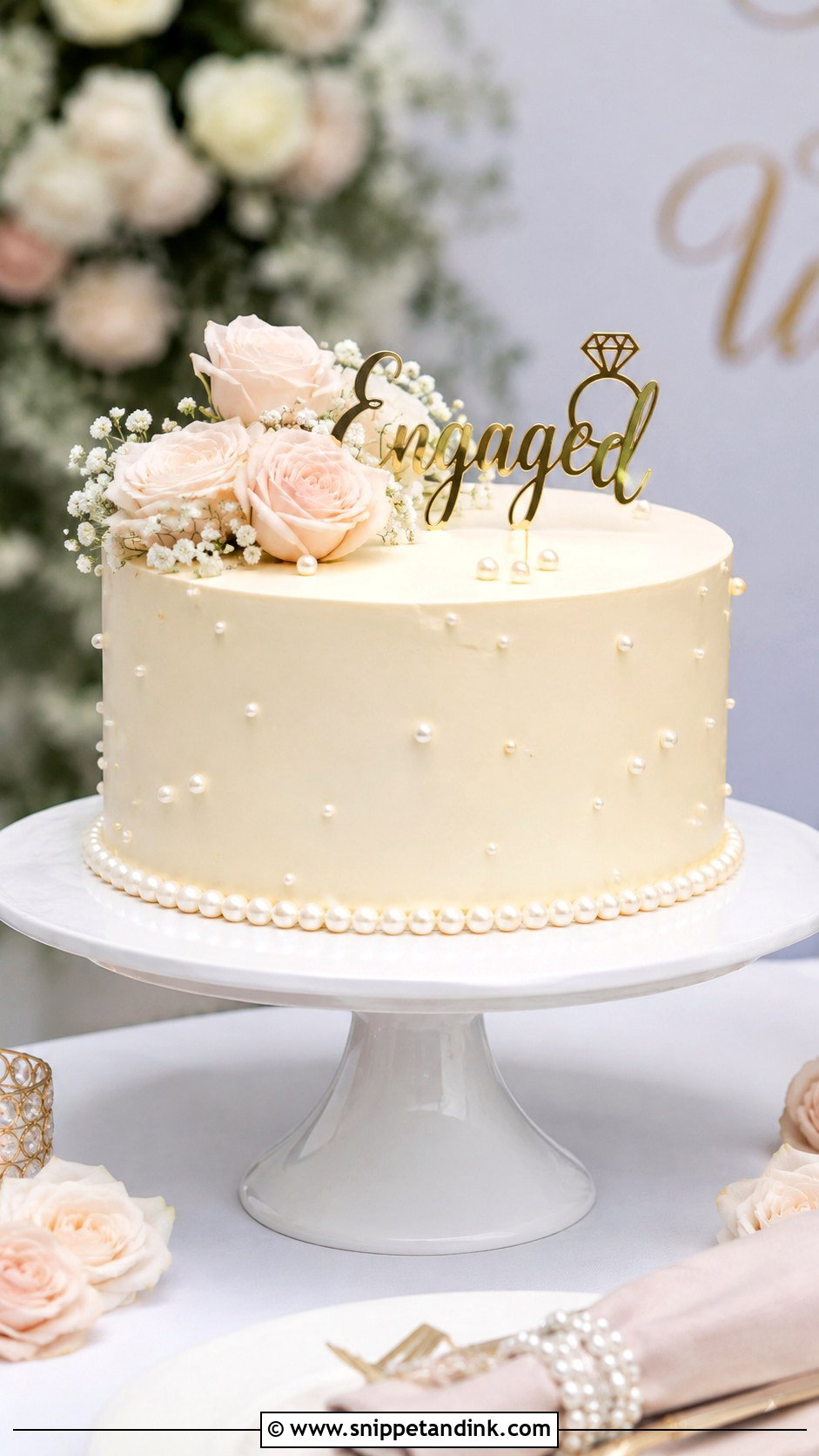
Pearls tie in nicely with the ring itself. Scattered loosely or used as a border around each layer, they work on buttercream, fondant or a floral cake. Sugar pearls are crunchy, and some are very hard, so I use them sparingly where children are eating. Ivory, blush, champagne and white set them off best. White chocolate or vanilla almond sponge keeps it delicate.
12. Sheet Engagement Cake
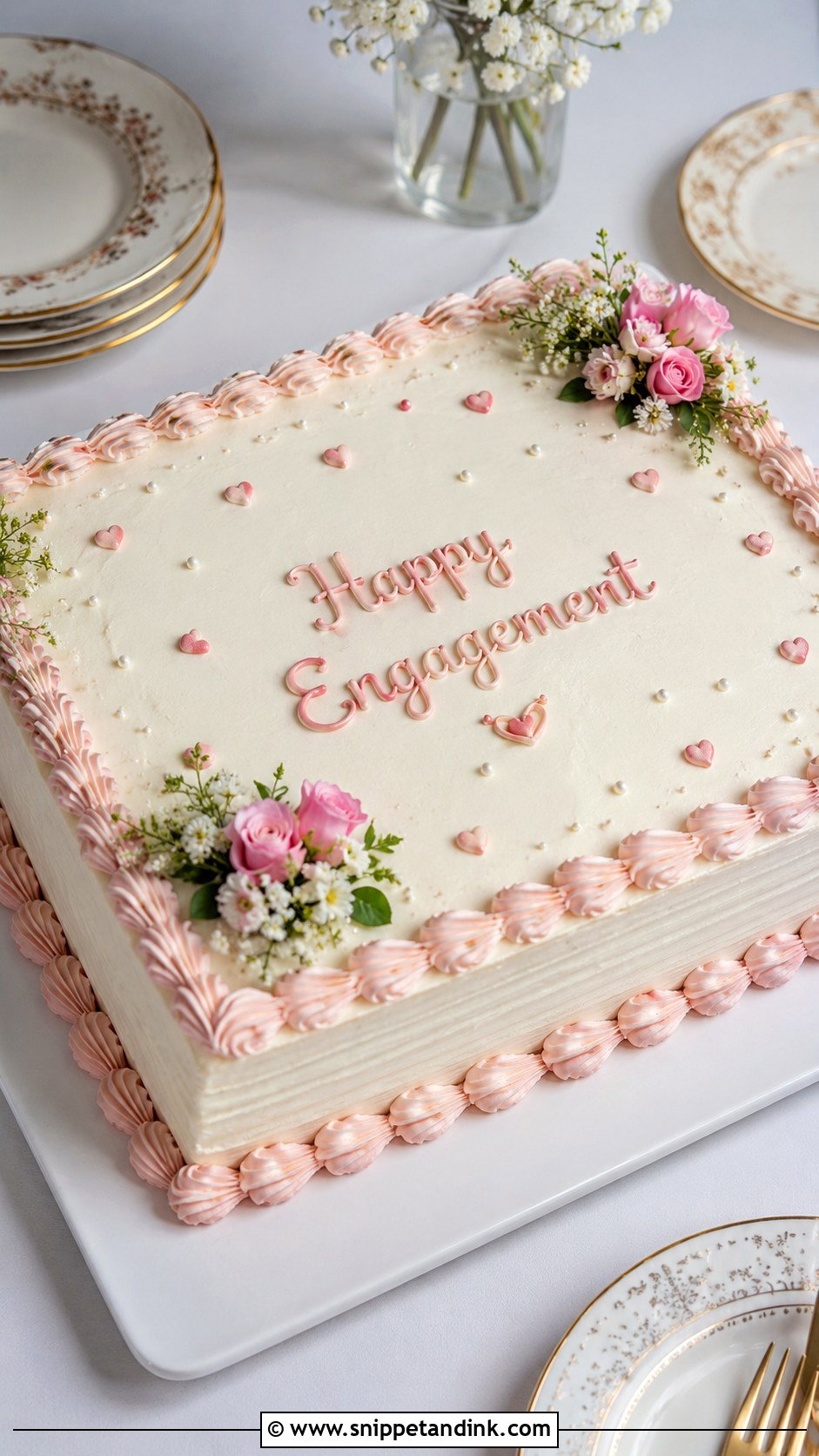
A sheet engagement cake is the most practical cake on this list, and there’s no shame in that for a big family gathering or an office party. Rectangular cakes cut into even portions quickly, with no stacking or dowels. Piped borders, fresh flowers and a centred message like names, a date or “Just Engaged” dress it up. Crowd flavours such as vanilla, chocolate or marble work best. Keep the border neat, as the edges are what people see first.
13. Cupcake Engagement Cake
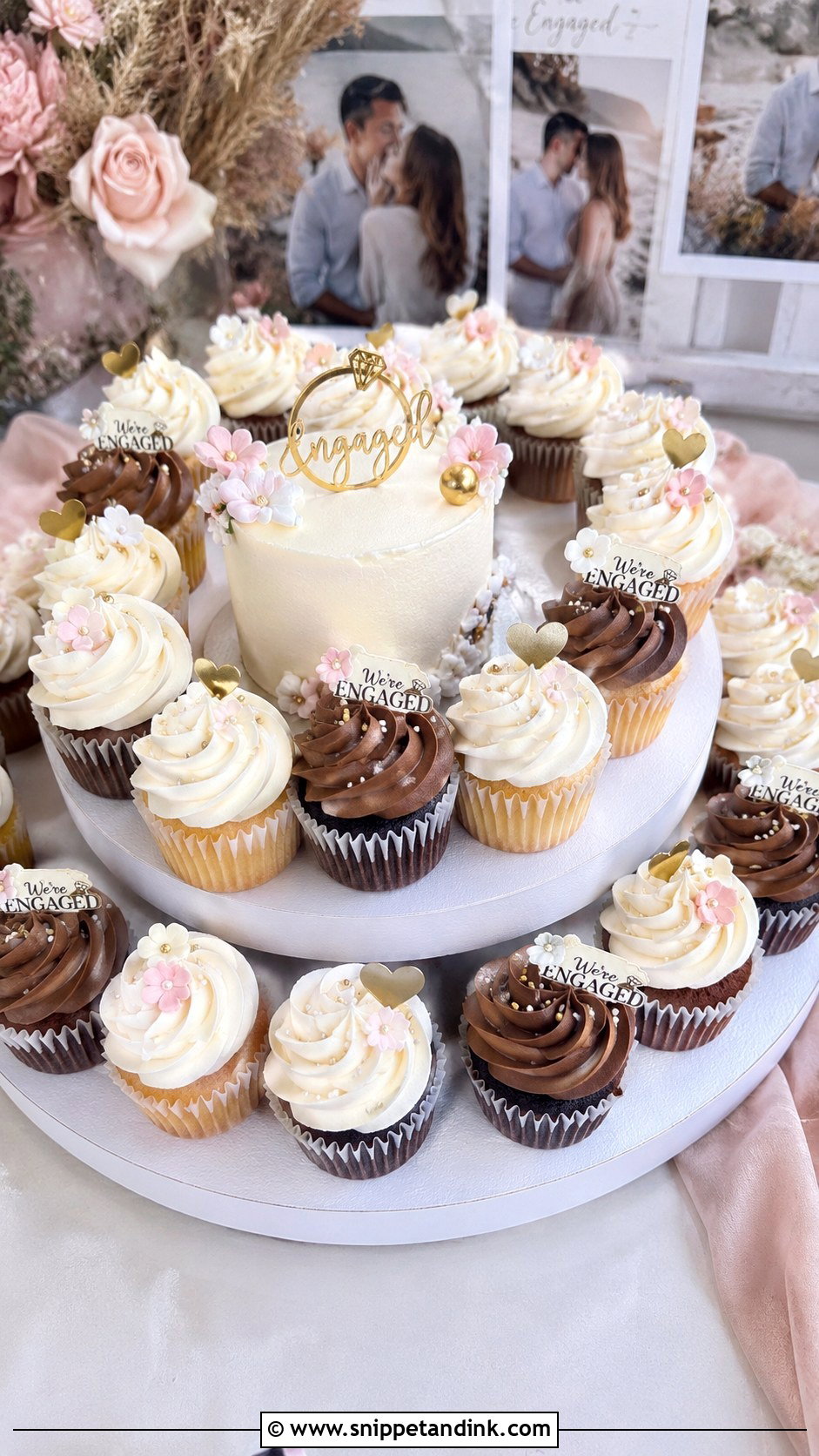
Cupcakes solve the serving problem: no cutting, no plates needed. I usually put a small cutting cake on top of a tower or arrange the cupcakes in a heart or ring shape. Match the frosting colours across the batch so the display looks planned, then add mini toppers or gold hearts. A mix of vanilla, chocolate, red velvet and lemon covers most guests. Frosting swirls on cupcakes soften in heat faster than a coated cake, so these suit indoor or shaded tables best.
14. Rustic Engagement Cake
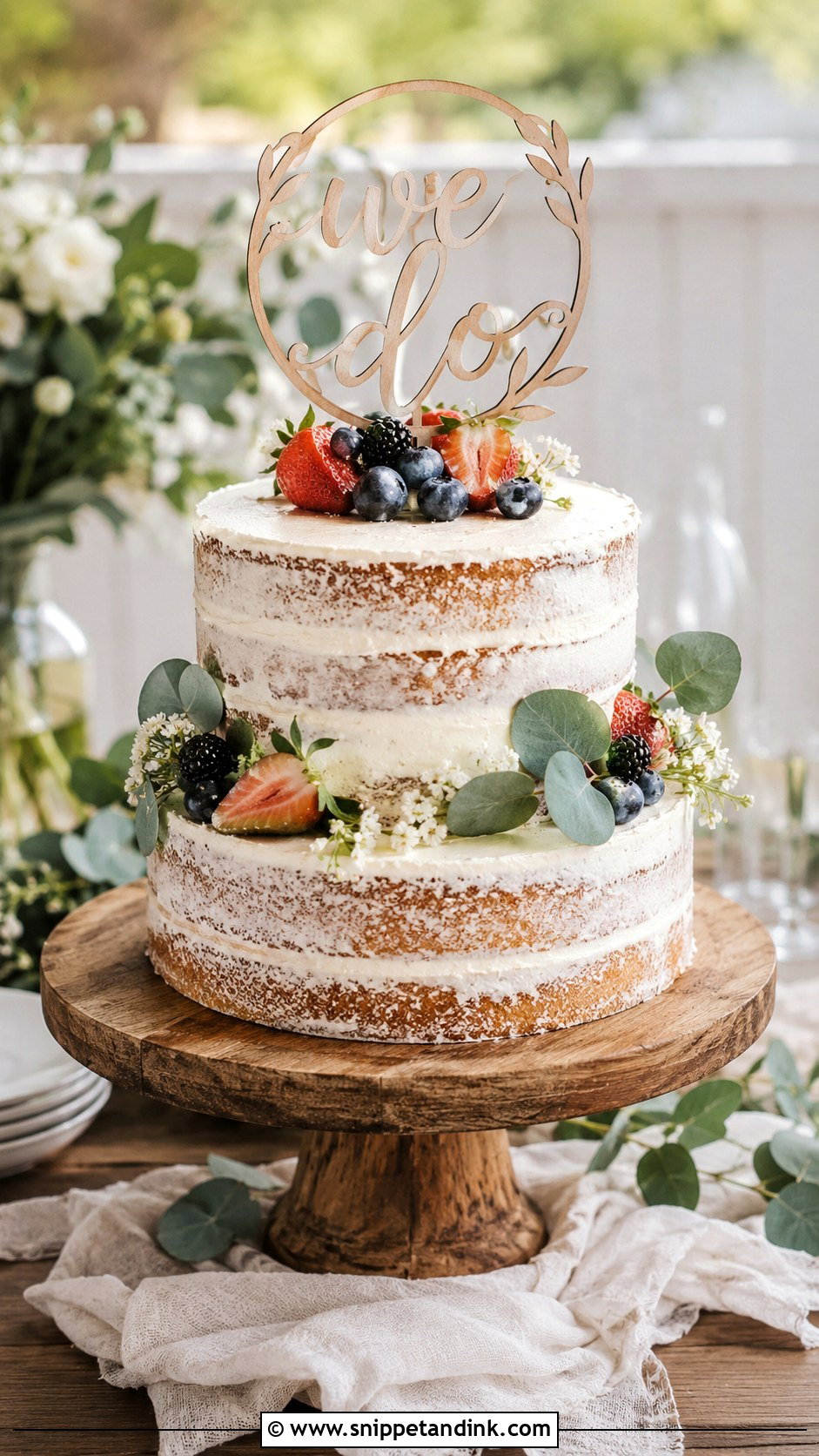
Rustic cakes look relaxed but need careful work to avoid looking unfinished. Semi-naked frosting, berries, greenery and simple flowers are the usual elements. Because the sponge is exposed, it dries out quicker, so I brush it with syrup and tell clients to serve it within a few hours. Backyards, barns and family dinners suit it. Carrot, spice or lemon sponge holds up well.
15. Modern Engagement Cake
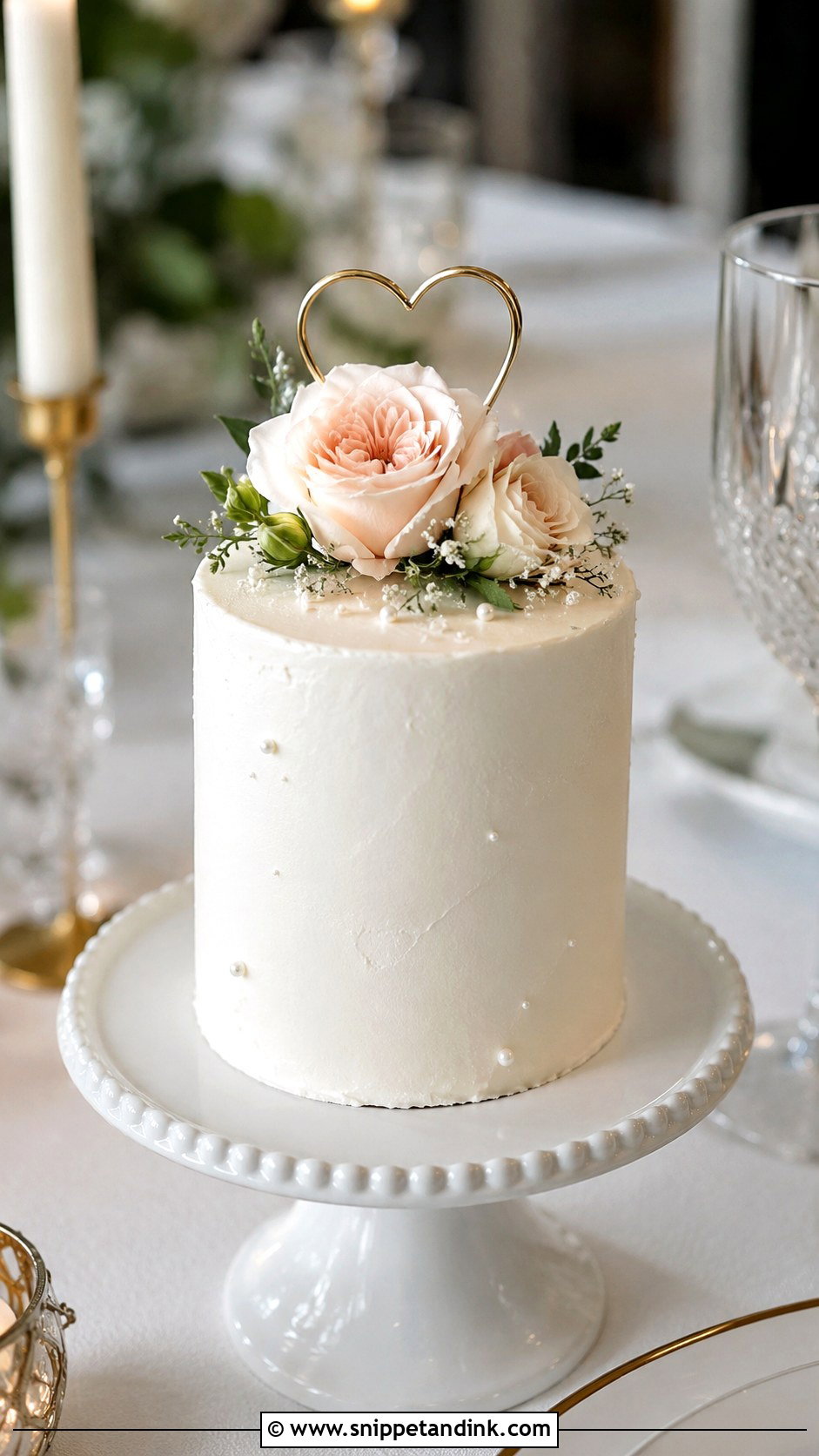
A modern engagement cake has one bold idea: a colour block, abstract texture, sculptural sugar flowers or a sleek acrylic topper. Everything else stays clean. A tall single tier, about six inches high, can look as striking as two tiers if the edges are crisp. Taupe, sage, black and soft blush are good colours. Vanilla bean or pistachio sponge suits it.
16. Marble Engagement Cake
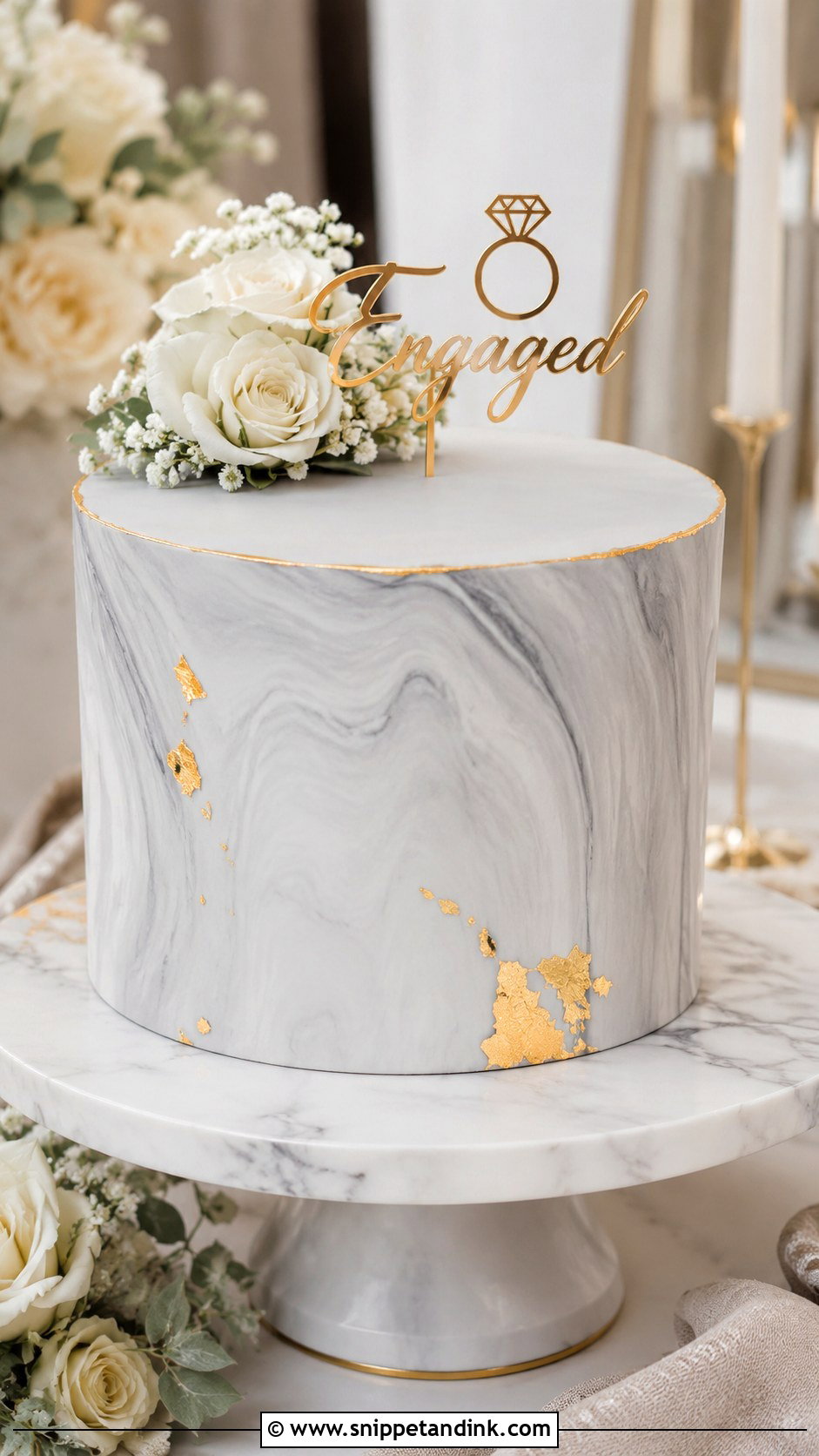
Marbling is done by twisting two colours of fondant together before rolling, so no two cakes look the same. White and grey is classic; blush and ivory softer; black and gold bolder. Over-twisting muddies the colours, so I stop early while the veins are still distinct. A gold edge or simple flowers keep the engagement theme visible. Salted caramel or chocolate marble sponge is a fun match.
17. Red Velvet Engagement Cake
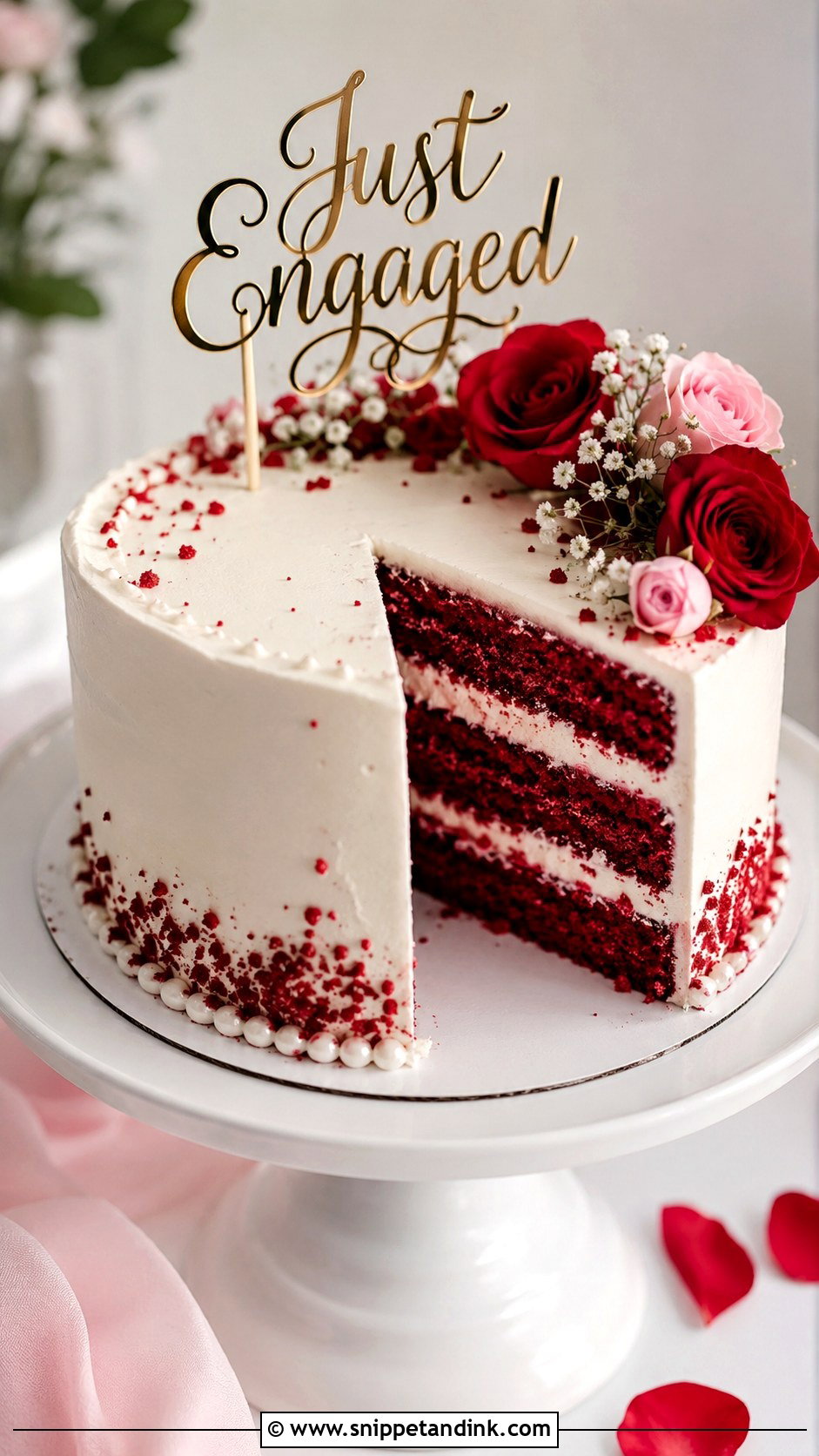
Red velvet hides its drama inside, which is what makes it fun at a party: white frosting outside, deep red when cut. Cream cheese frosting is traditional, but it’s soft and doesn’t like heat, so for outdoor parties I use a firmer cream cheese buttercream. A vintage heart with red crumbs, piped borders or small roses works well. It’s familiar enough that most guests will happily eat it.
18. Chocolate Engagement Cake
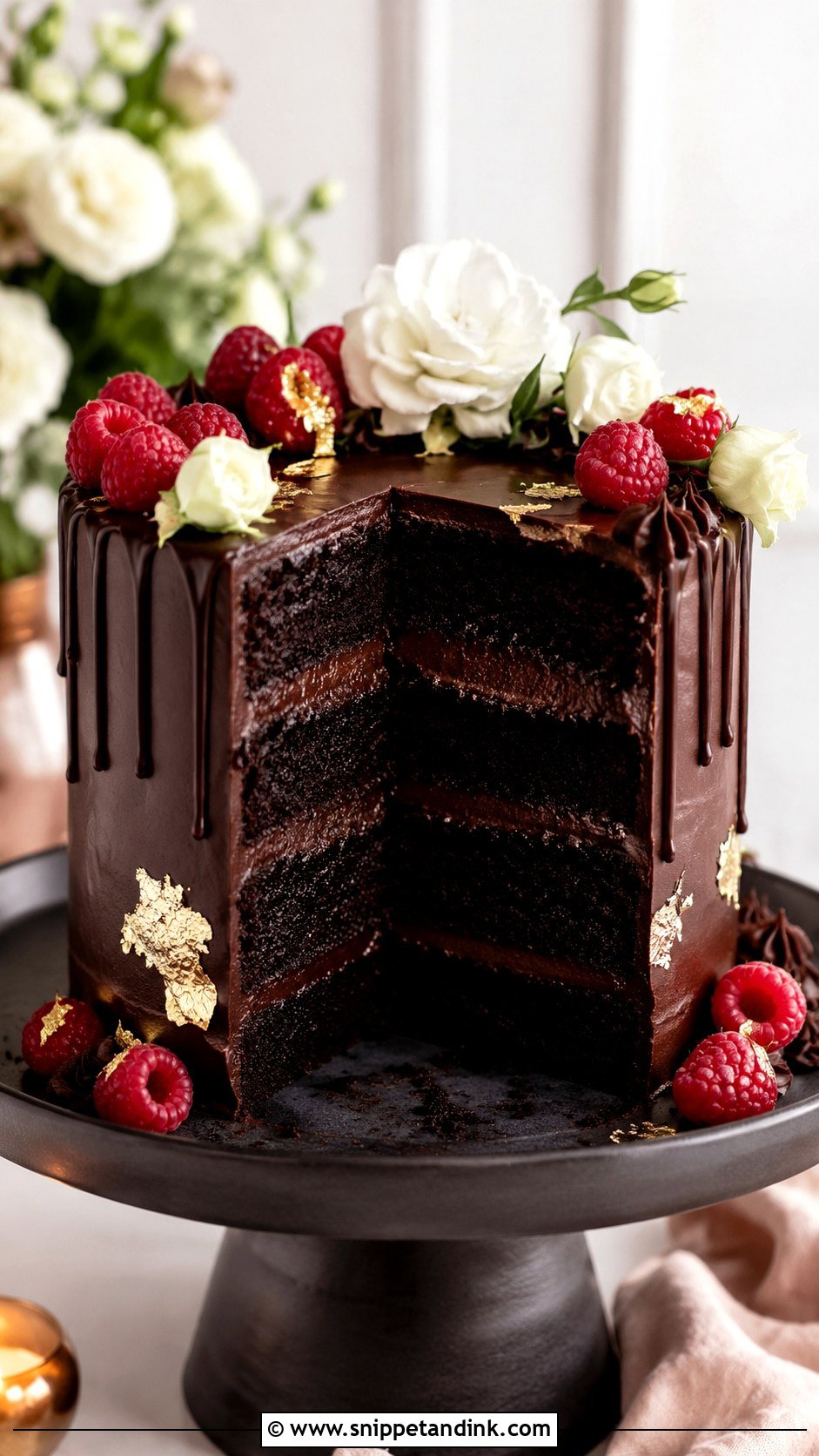
Chocolate engagement cake pleases most crowds and needs little decoration. A glossy ganache, drip or dark cocoa buttercream looks rich with gold leaf, berries or white flowers. Ganache sets firmer than buttercream, which makes it the better choice in a warm room. Fillings like chocolate raspberry, mocha or salted caramel make it memorable. A gold “engaged” topper or blush flowers lighten the dark colour.
19. Mini Engagement Cake
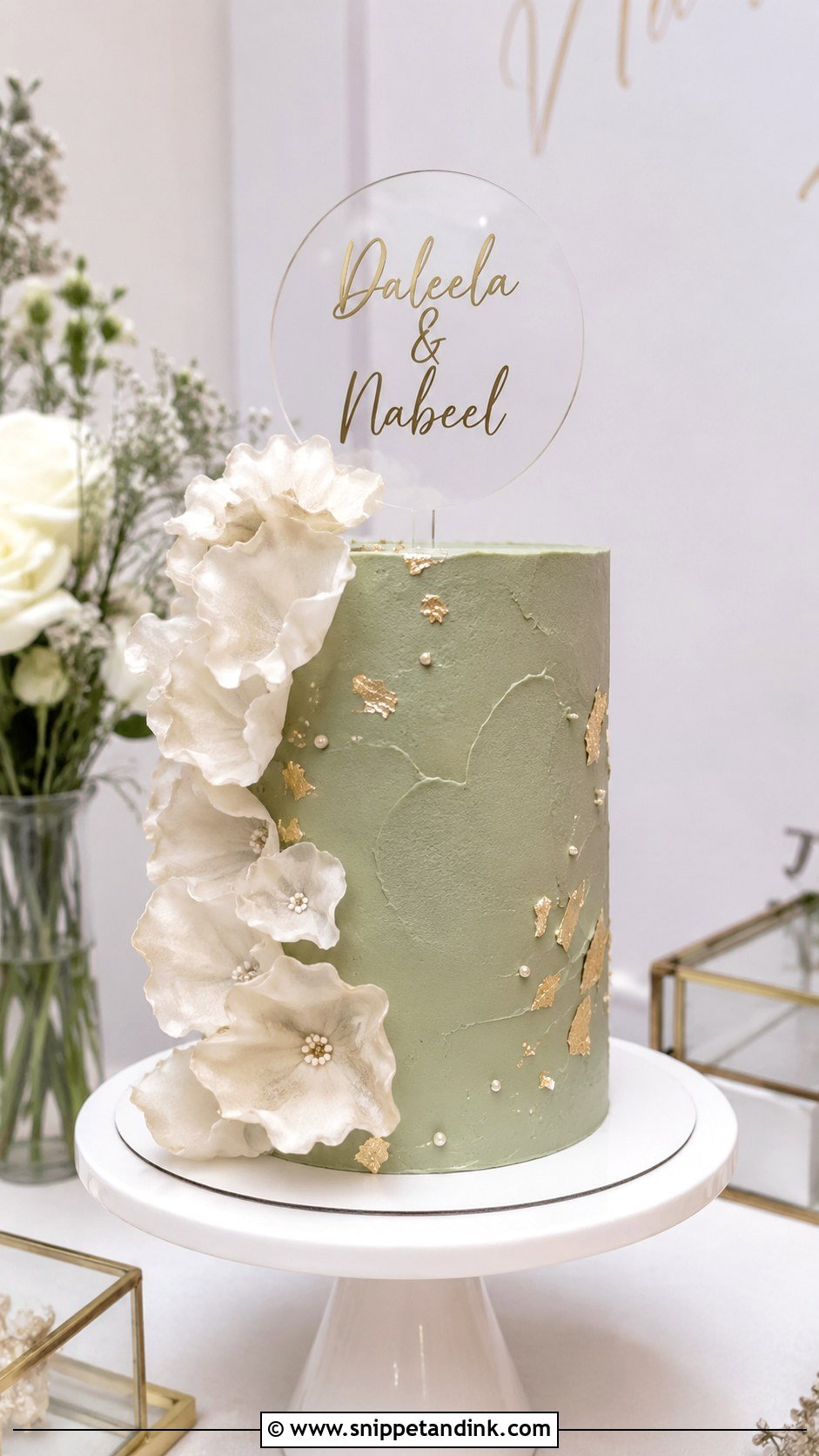
A mini cake suits an intimate dinner or a celebration with just close family. Four or five inches across with tall layers is enough for a handful of people. One detail is all the surface can take: a flower cluster, a pearl border, a gold heart or a short message. Put it on a cake stand to give it height in photos. It’s also the easiest size to order at short notice.
20. Engagement Cake With Topper
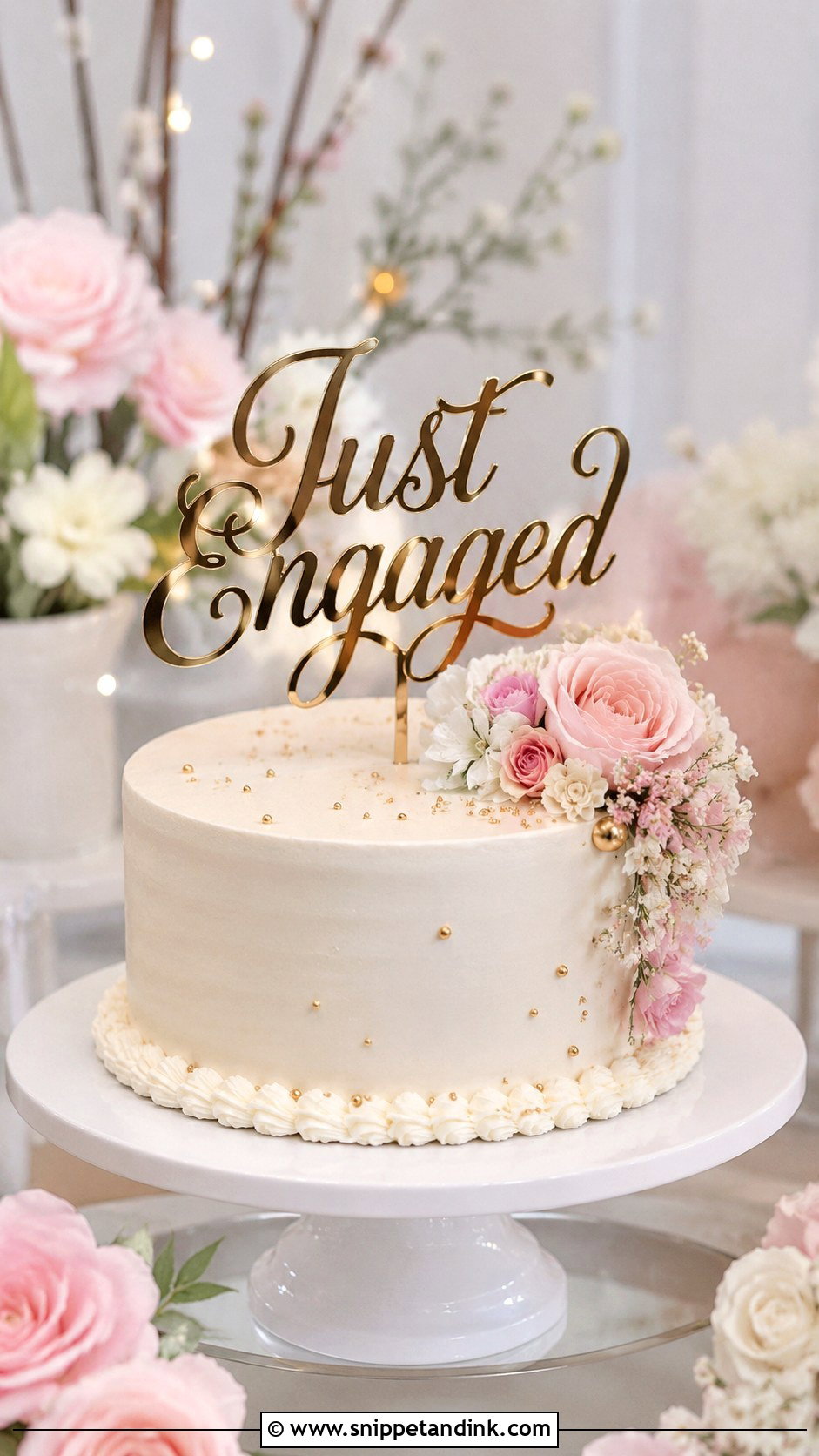
A topper is the quickest way to make any cake read as an engagement cake. It might say “Just Engaged,” “She Said Yes,” the couple’s names or a simple heart, in acrylic, wood or metal. Toppers need a cake firm enough to hold their picks; on soft buttercream, I add a straw or dowel underneath so they don’t lean. Keep the decoration below them simple. This is the most budget-friendly way to theme a cake.
Ordering at Short Notice, Without Panic
Engagement cakes are often ordered with only a week or two to spare, especially after a surprise proposal. That’s workable if you choose designs that don’t need long drying time. Buttercream, piping, fresh flowers and toppers can usually be done in a few days. Sugar flowers, isomalt gems and detailed fondant work need more time, as each piece has to dry before it goes on.
Busy months like December and wedding season fill up fast, so call bakers rather than waiting on email replies. If your first choice is booked, ask whether they can do a simpler version of their design.
Three details to confirm in writing
- The exact spelling of both names, and any message on the cake. Lettering mistakes are the most common complaint on celebration cakes.
- Allergies among the guests. Nut, gluten and dairy free options need to be planned, not swapped on the day.
- Pick-up or delivery time, and where the cake will wait. A car boot in summer can ruin buttercream within an hour, so carry it flat on the floor with the air conditioning on.
A Cake That Feels Like the Two of You
An engagement cake should reflect the couple rather than act as a small wedding cake. Simple, floral, vintage, modern, rustic or rich with chocolate, the right one fits the mood of the party, serves the guests and holds up for the length of the event. A clear shape, a short colour palette and one strong detail are what make a cake look good in photos. Before ordering, think about the venue, the weather and how many people will actually want a slice.
You'll Like These Ideas:


Leave a Reply