
An engagement cake used to be an afterthought on the dessert table. Now it’s often the first cake a couple orders together, and I treat it as a dry run for the wedding: you learn which flavours you love, how buttercream behaves in your venue, and how much detail you actually want. Below are 25 designs I’m regularly asked for, from smooth white rounds to heart cakes with vintage piping, with notes on what each one needs from the baker and from you. A cake for twelve people at home and a cake for sixty in a rented room are very different jobs, so keep your guest count in mind as you read.
Working Out How Much Cake a Party Actually Needs
The first number I ask for is the guest count, and the second is whether there’s other dessert. Engagement party slices are cut bigger than wedding slices, because nobody is full from a three-course meal, so a cake that serves 24 at a wedding might only serve 16 to 18 at a party. Bakers’ charts vary, so ask yours which portion size they quote.
- Up to about 12 guests: a six-inch round or a petite heart cake is plenty.
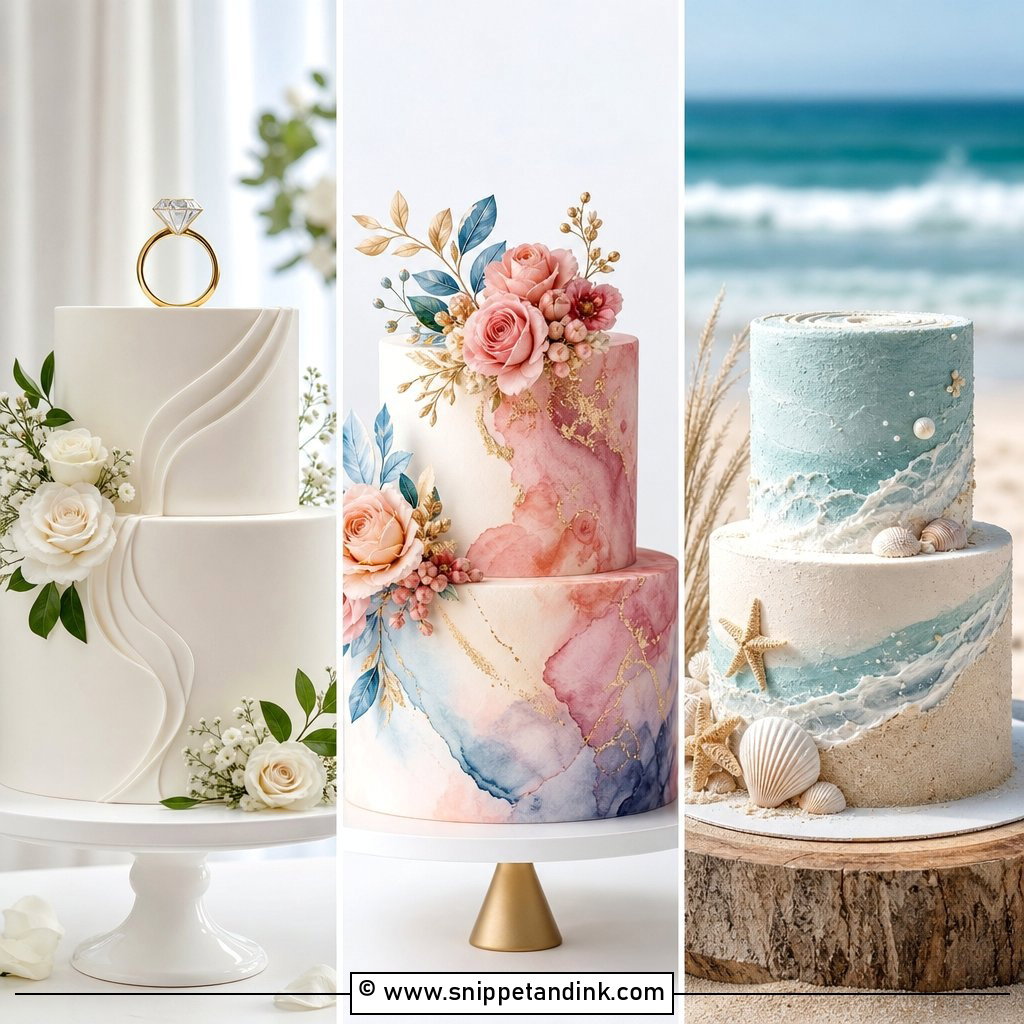
- Around 20 to 30 guests: an eight-inch round, or a six and eight-inch two-tier if you want height.
- 40 guests or more: a two-tier cake plus a kitchen sheet cake kept in the back is cheaper than a third tier.
- A dessert table alongside: you can cut the cake order by roughly a third.
Lead time matters as much as size. Custom piping, sugar flowers and specific colours need notice, and popular bakers fill their weekends early. I’d get in touch four to eight weeks ahead for a decorated cake, and longer around holidays.
1. Simple White Engagement Cake
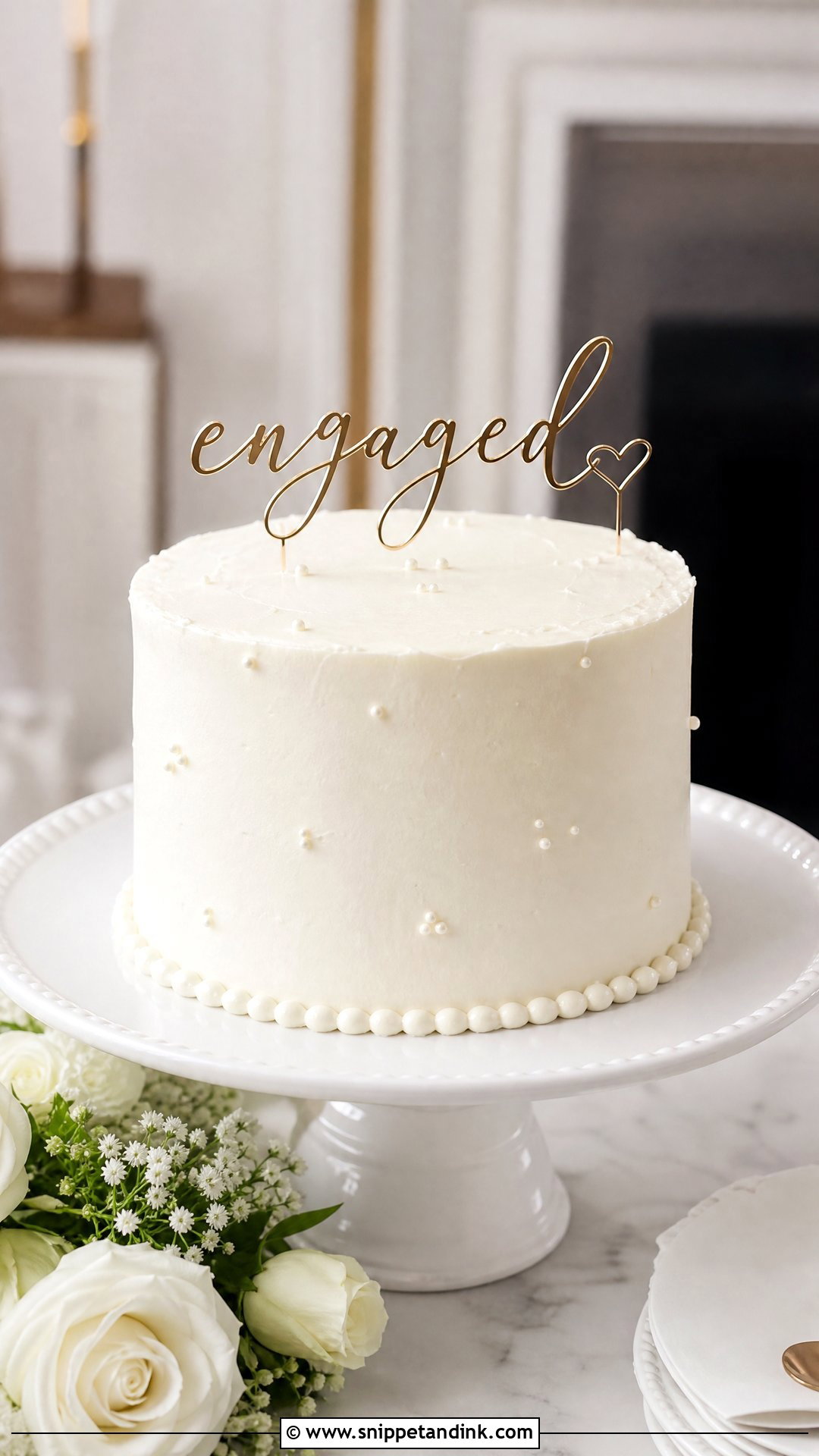
A plain white cake is harder to make than it looks, because there’s nothing to hide behind. Every bulge in the buttercream and every soft corner shows. I’d keep it to one or two round tiers with sharp, smooth sides, and let a small topper or a thin pearl border carry the decoration. It sits comfortably with neutral linens and candles. Inside, vanilla bean or almond suits the clean look, and white chocolate works if your guests like things sweet.
2. Heart Shaped Engagement Cake
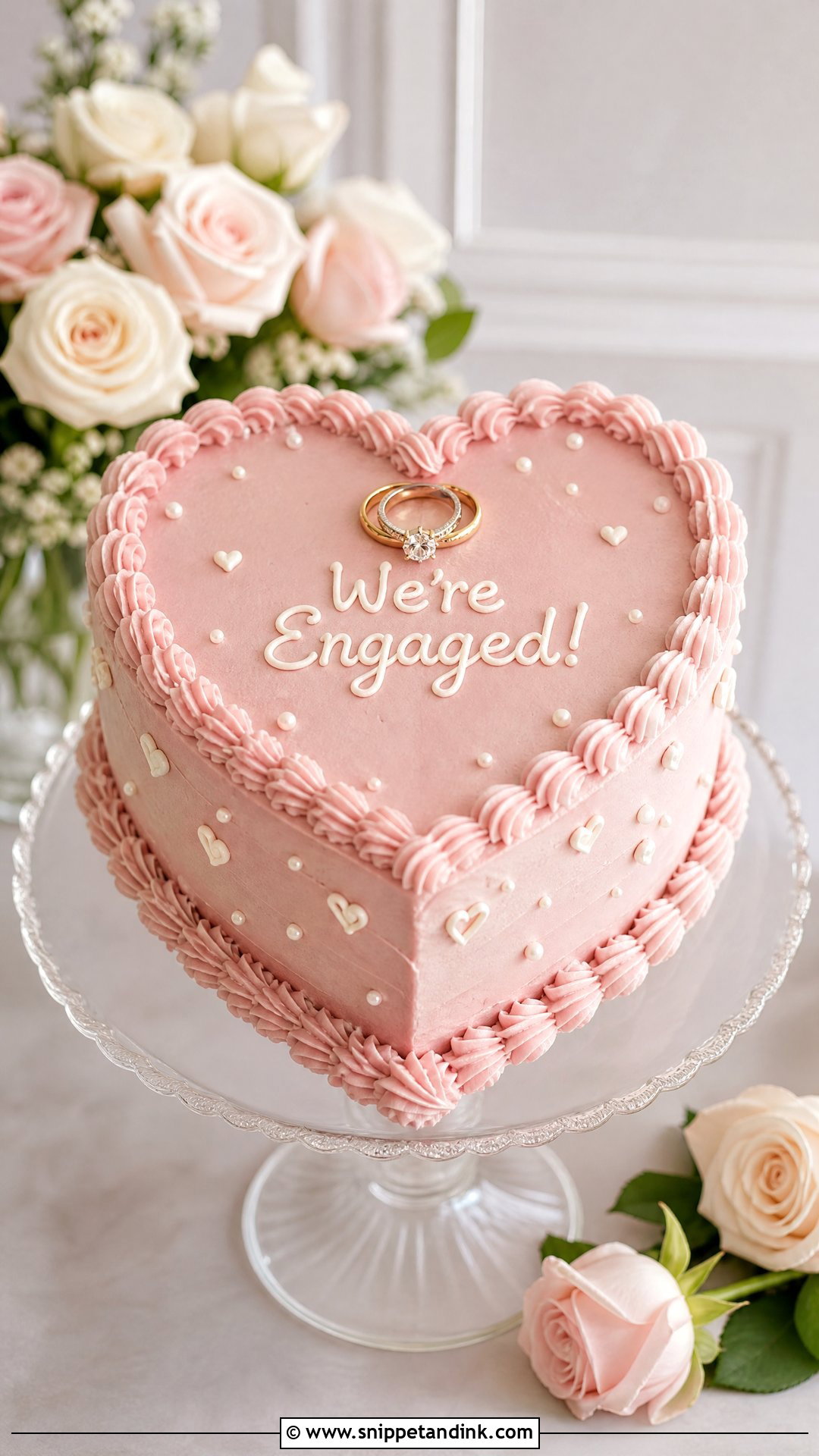
A heart shaped engagement cake reads as romantic before anyone gets close enough to read the message. Most of mine are covered in buttercream and finished with piped borders and a short line in the middle, “just engaged” or the couple’s initials. The tricky part is the point of the heart: piping has to slow down there or the border bunches up. It suits small parties and proposal dinners. Red velvet or vanilla with raspberry are the flavours I’m most often asked for.
3. Vintage Engagement Cake
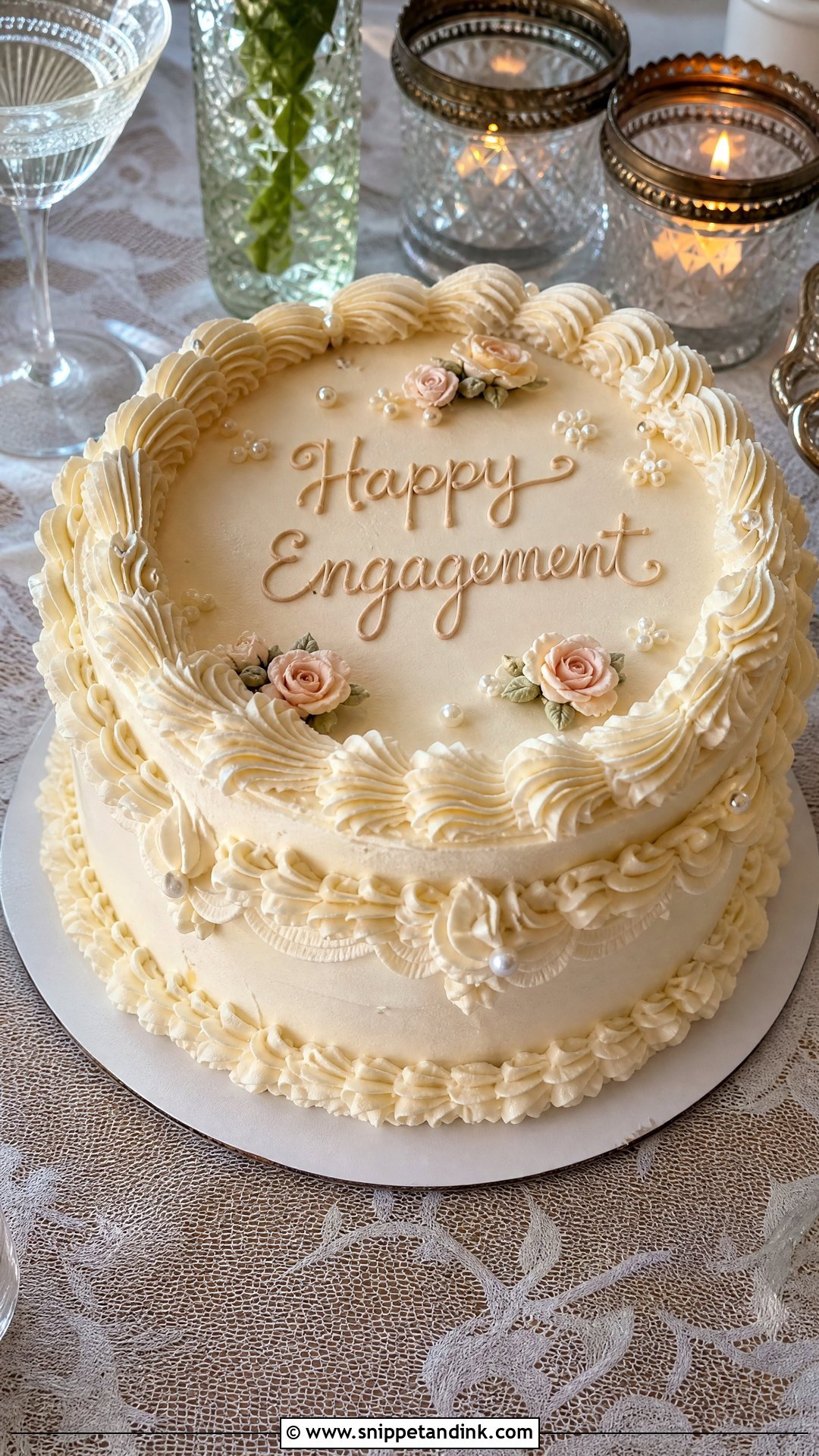
Vintage cakes are all about layered piping: shell borders, ruffles, swags, pearls and a scripted message on top. I build the piping in passes from the bottom up, letting each layer set a little before the next one goes on, otherwise the weight of the top layers drags the lower ones. Buttercream is the right medium here because it gives that creamy, hand-piped texture fondant can’t. The risk is overcrowding, so I always leave some smooth space between the rows.
4. Two Tier Engagement Cake
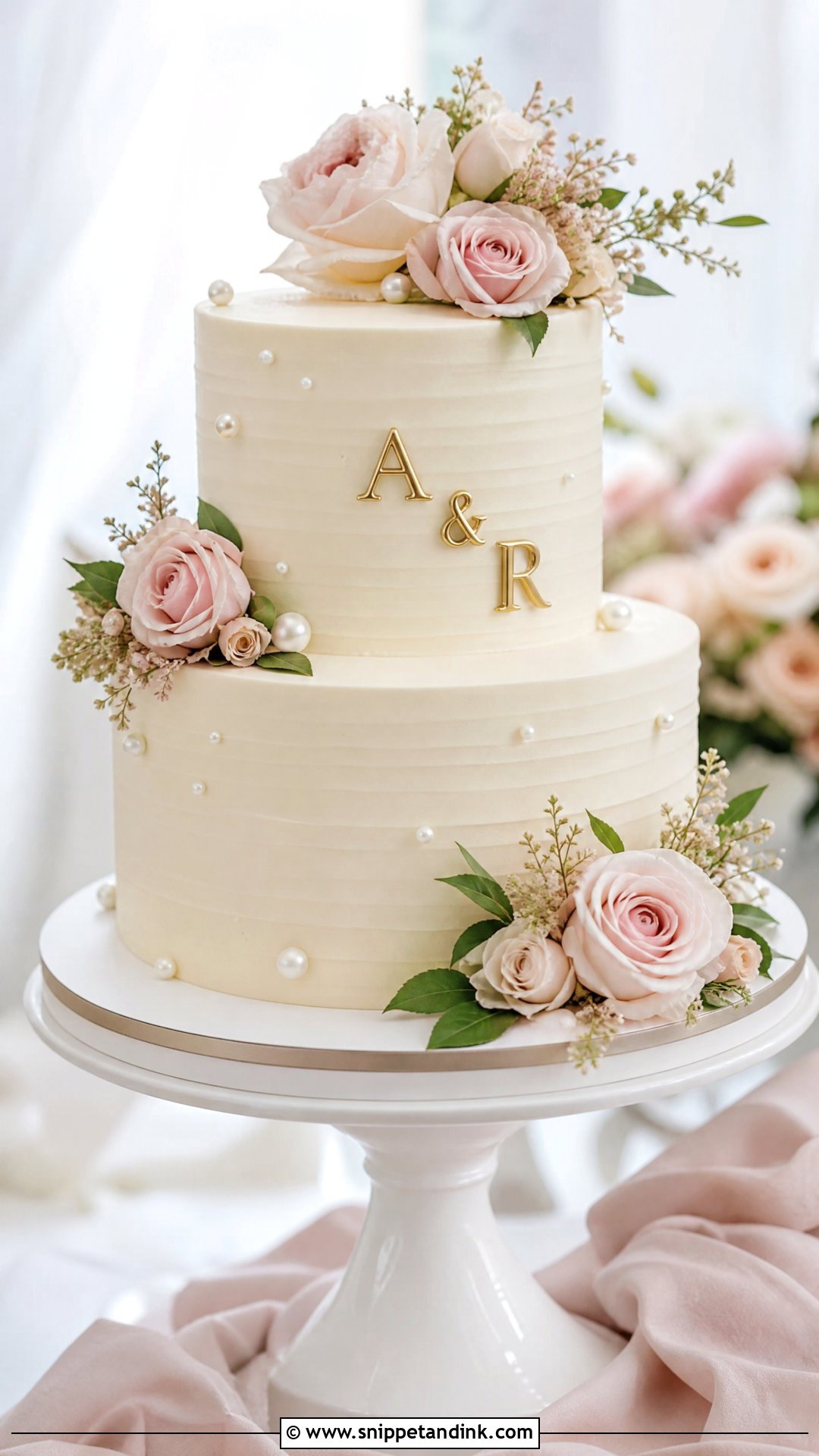
Two tiers make the cake a proper centrepiece without needing a wedding-sized guest list. I usually let the bottom tier carry the texture or florals and give the top tier the topper or monogram, so the eye moves up. Two tiers need internal dowels and a cake board between them, even when the top tier is small. You can split flavours too: vanilla almond on top, chocolate raspberry underneath, which gives guests a real choice.
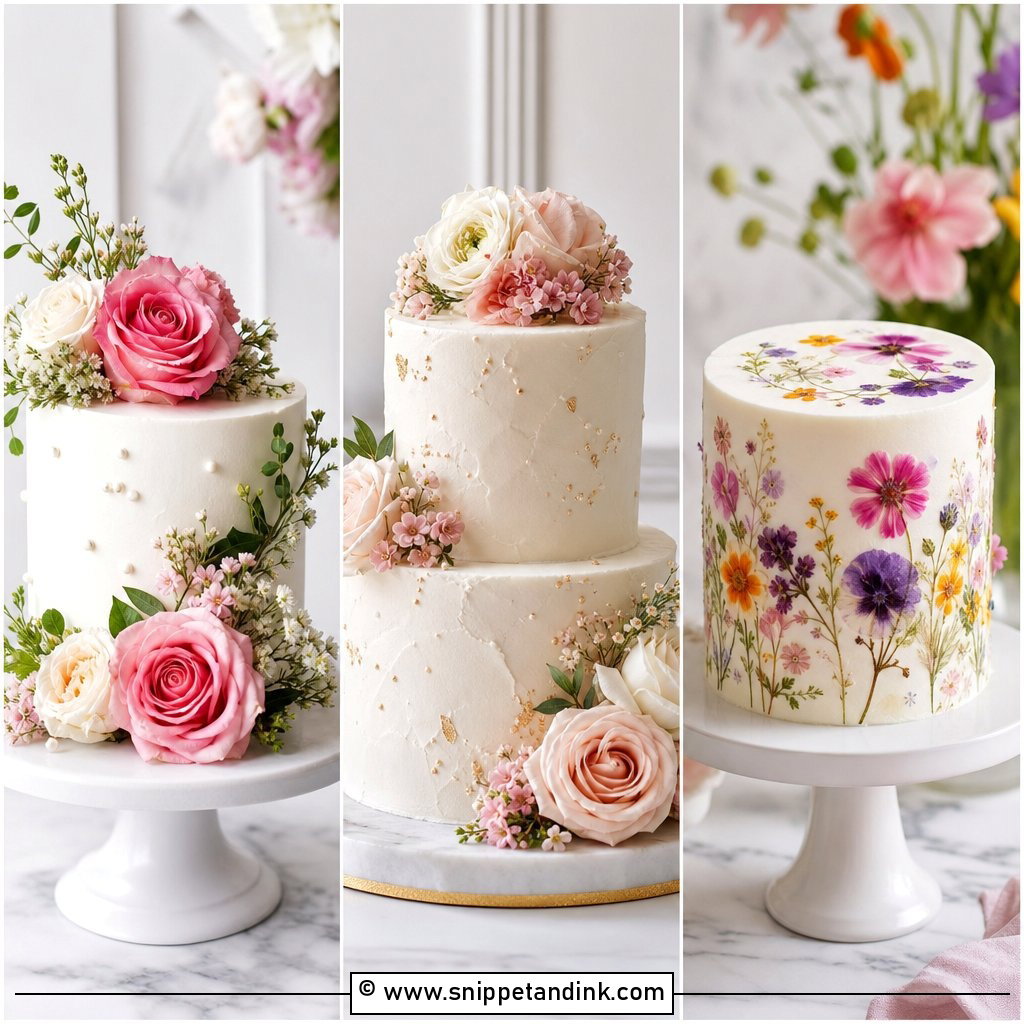
5. Floral Engagement Cake
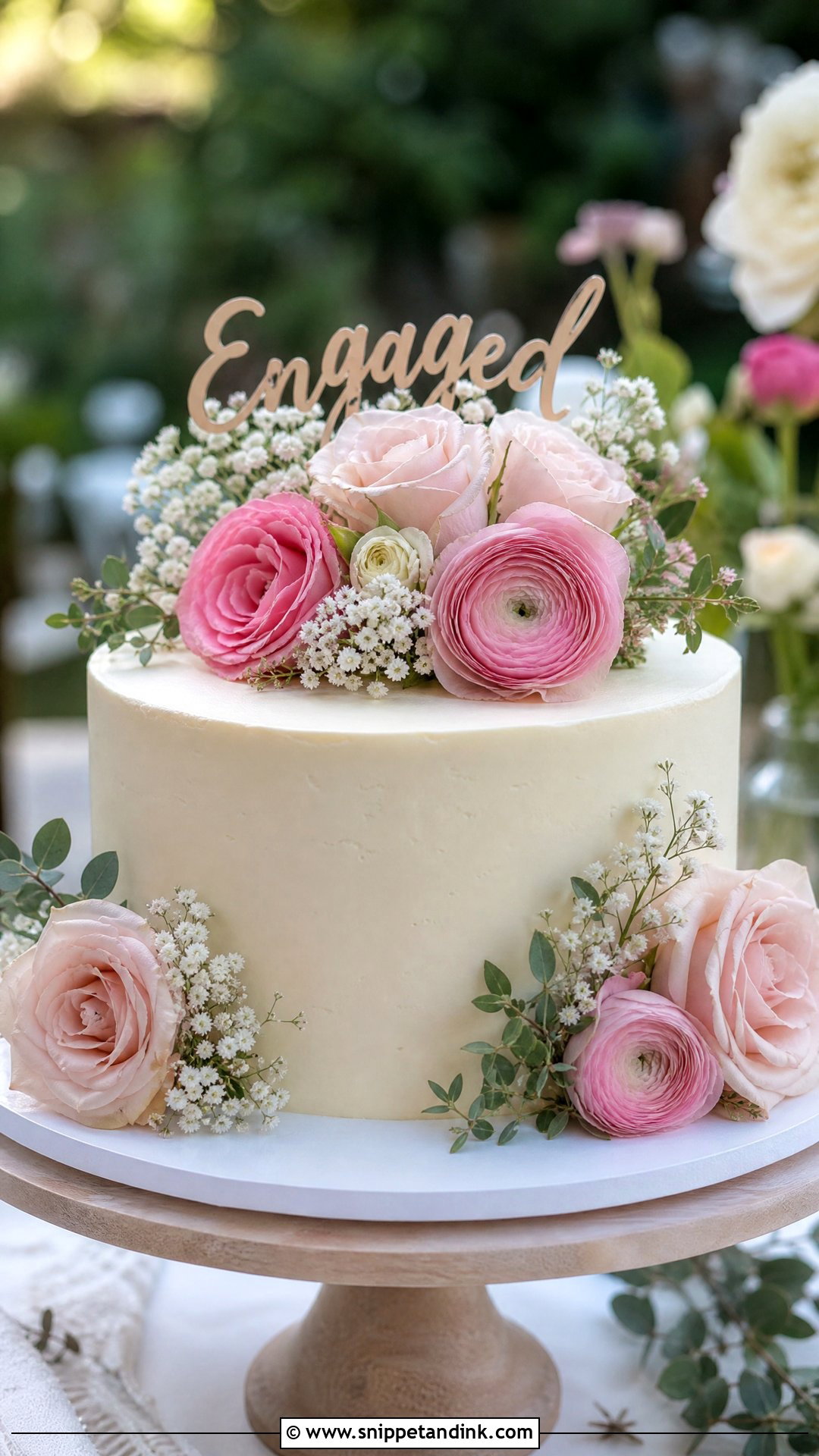
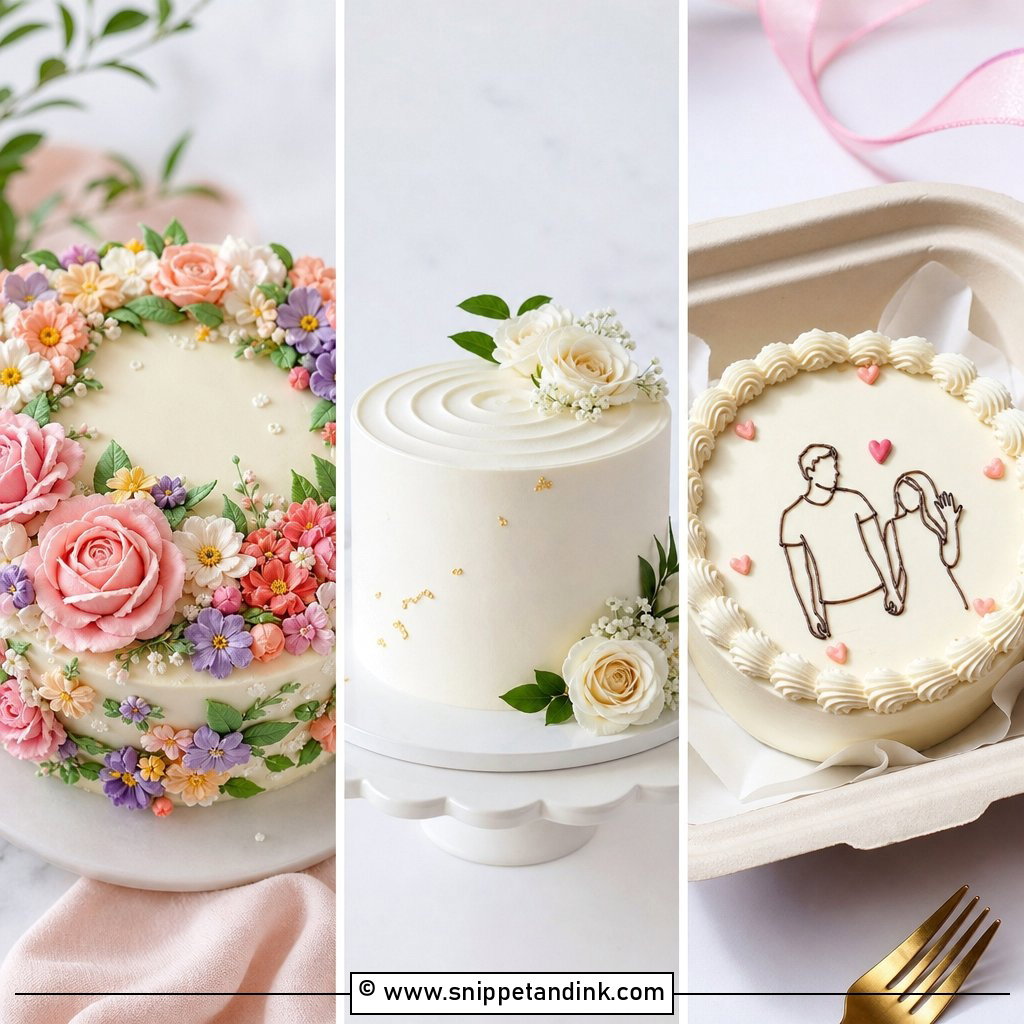
Florals finish a dessert table faster than almost anything else. I’ll use fresh flowers, sugar flowers or pressed edible blooms depending on the party, and the choice changes the cake’s mood a lot: roses and ranunculus read formal, daisies and wildflowers read relaxed. A smooth buttercream base keeps the focus on the blooms. Fresh flowers always need to be food-safe and prepared before they touch frosting, which I cover further down, because it’s the step people skip.
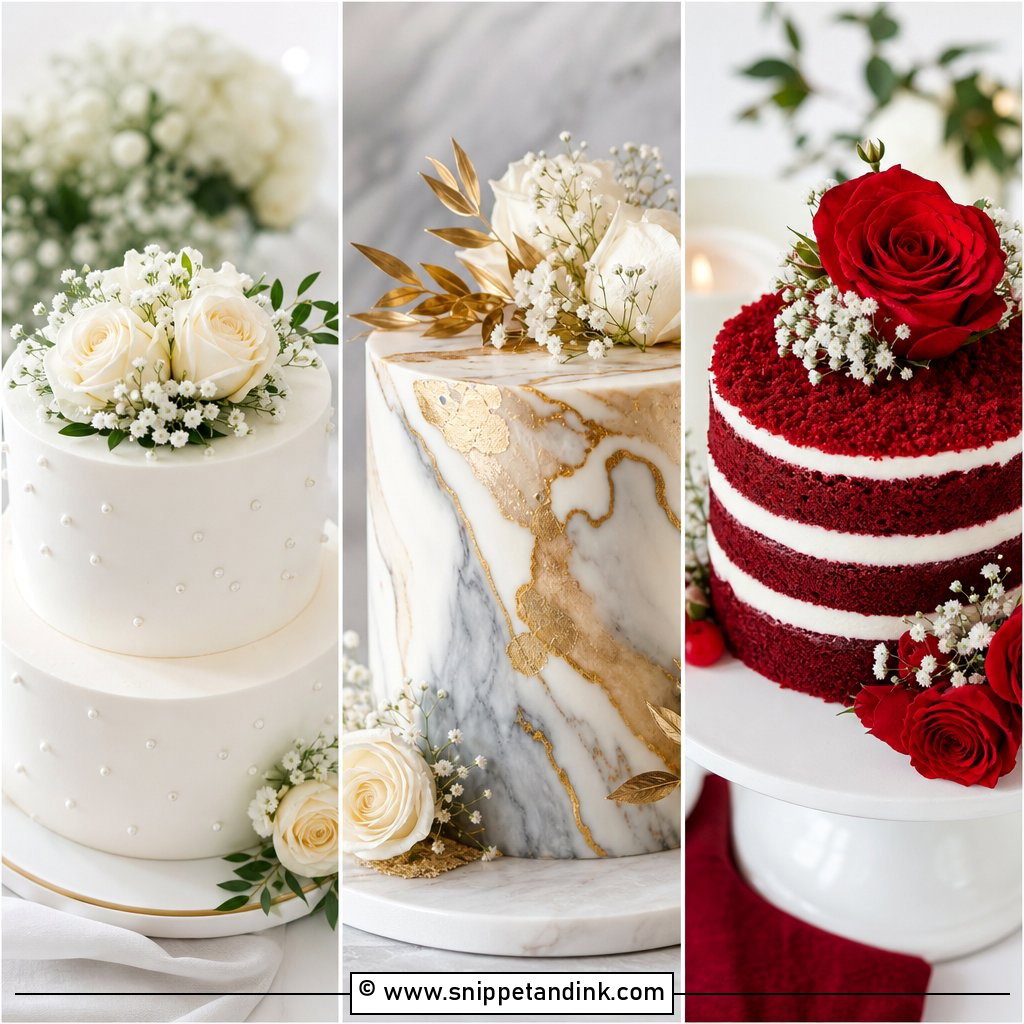
6. Gold Engagement Cake
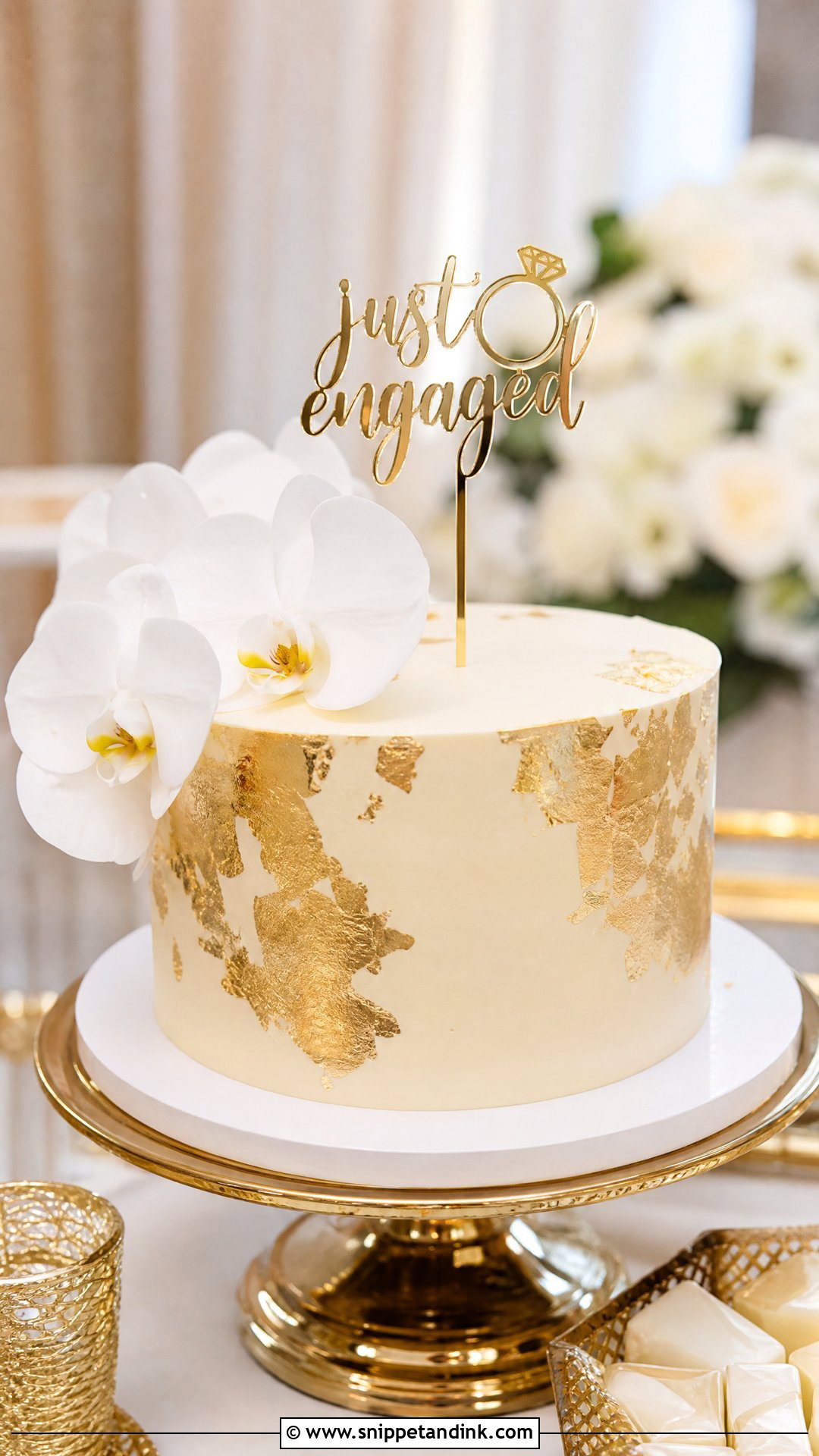
Gold can be painted edges, edible leaf, a metallic drip or an acrylic topper, and the rule I follow is one gold technique per cake. Two or three together starts to look like a shop display. White buttercream with scattered gold leaf and a few white flowers is my usual starting point. Metallic paint needs a dry, firm surface to sit on, so it behaves better on fondant or well-chilled buttercream. Salted caramel and chocolate both suit the richer look.
7. Blush Pink Engagement Cake
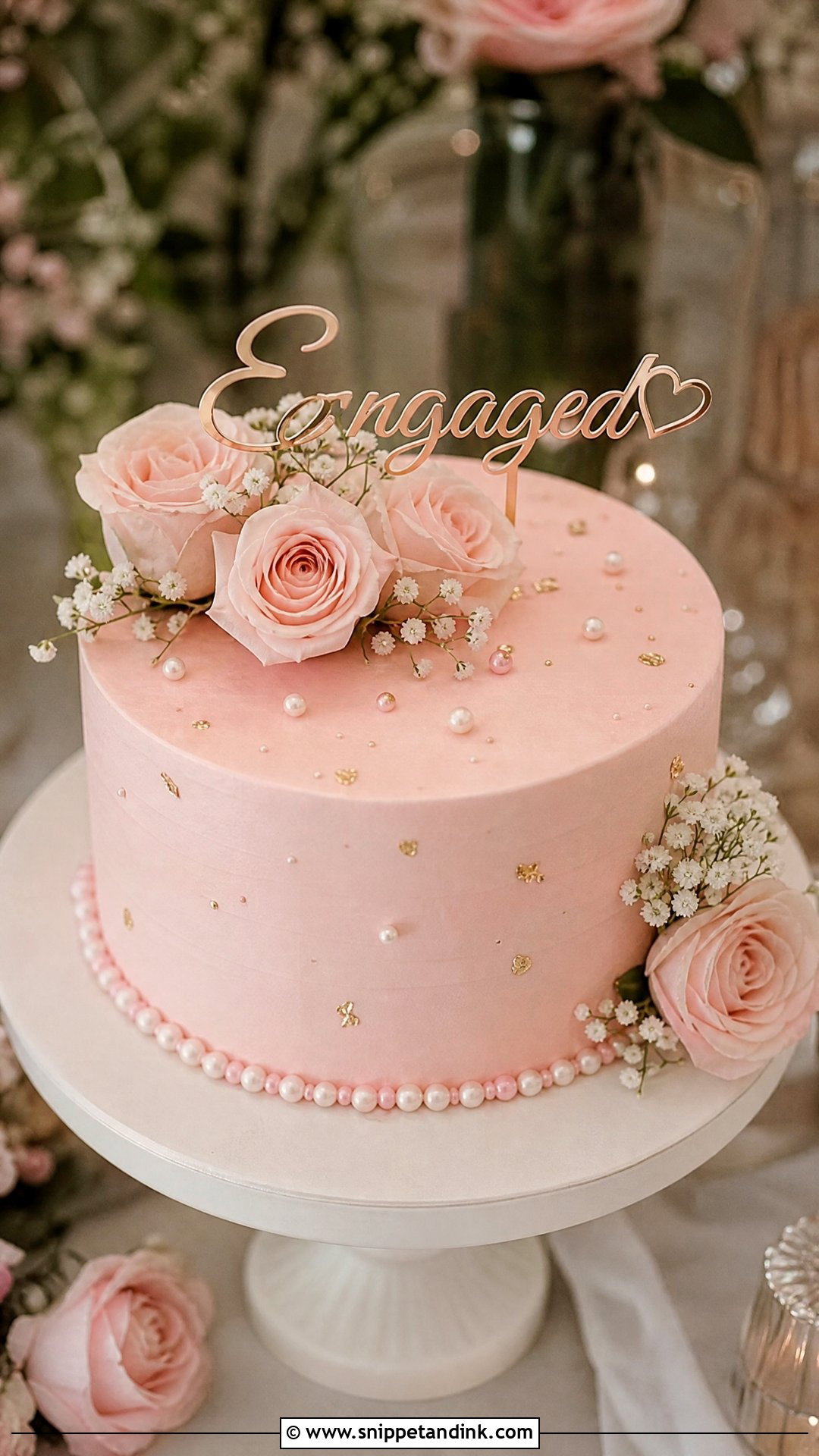
Blush pink is easy to match with flowers and table settings, and it’s the colour I find most forgiving in natural light. It can be fully pink or white with blush accents; smooth sides look modern and piped rosettes look classic. One thing to know: pinks tinted with natural colourings can fade if the cake sits in strong sun, so keep it out of the window. Raspberry vanilla or a light rosewater sponge suit the colour.
8. Black And White Engagement Cake
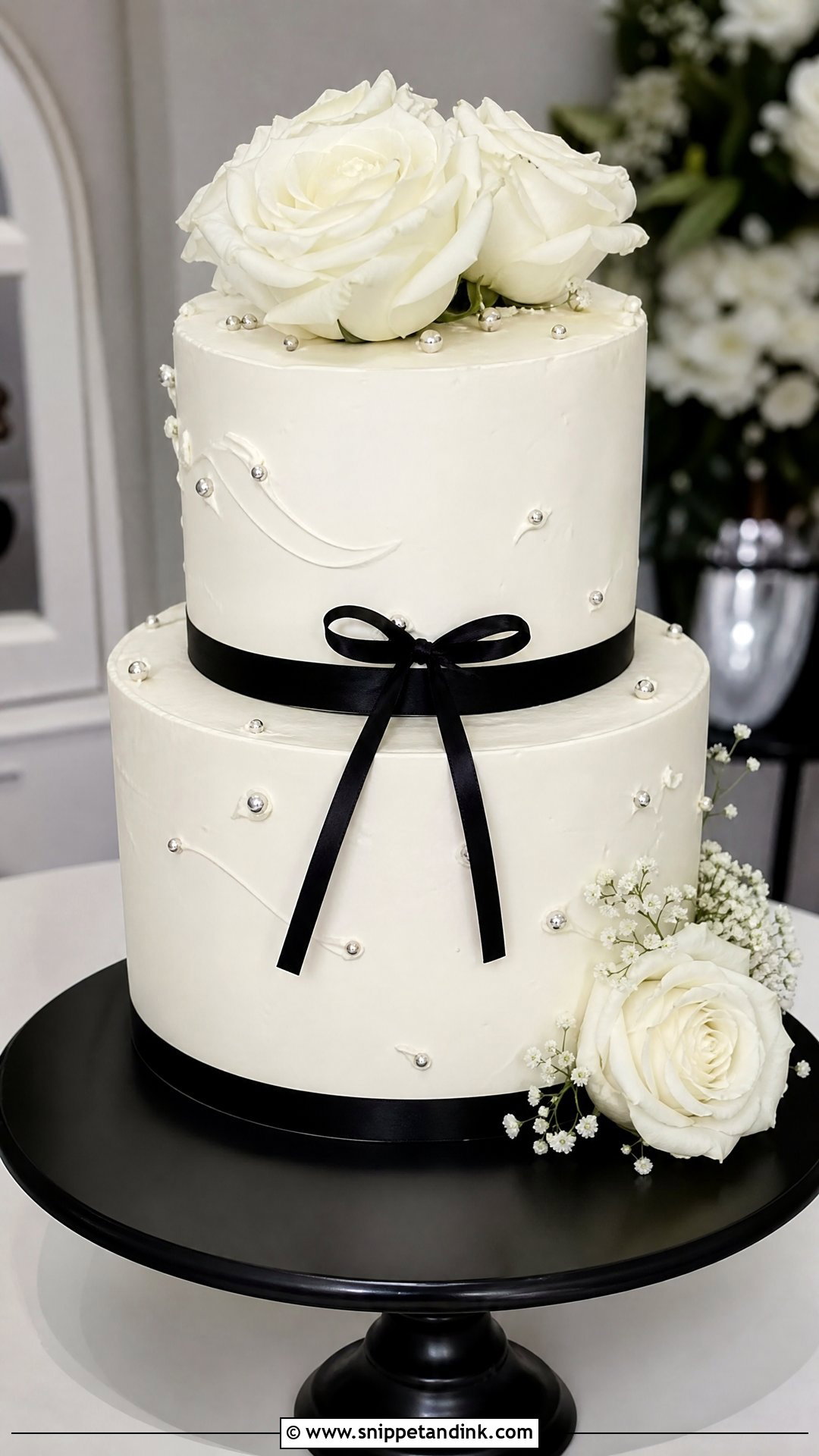
Black and white is a confident choice for evening parties and minimal rooms. It can be white buttercream with black ribbon details, or a black tier under white florals. Black frosting takes a great deal of colouring and can stain teeth and lips, so I often make the black elements in fondant or keep them to thin accents. Keep the lines crisp. Cookies and cream or mocha flavours match the look without making it too sweet.
9. Pearl Engagement Cake
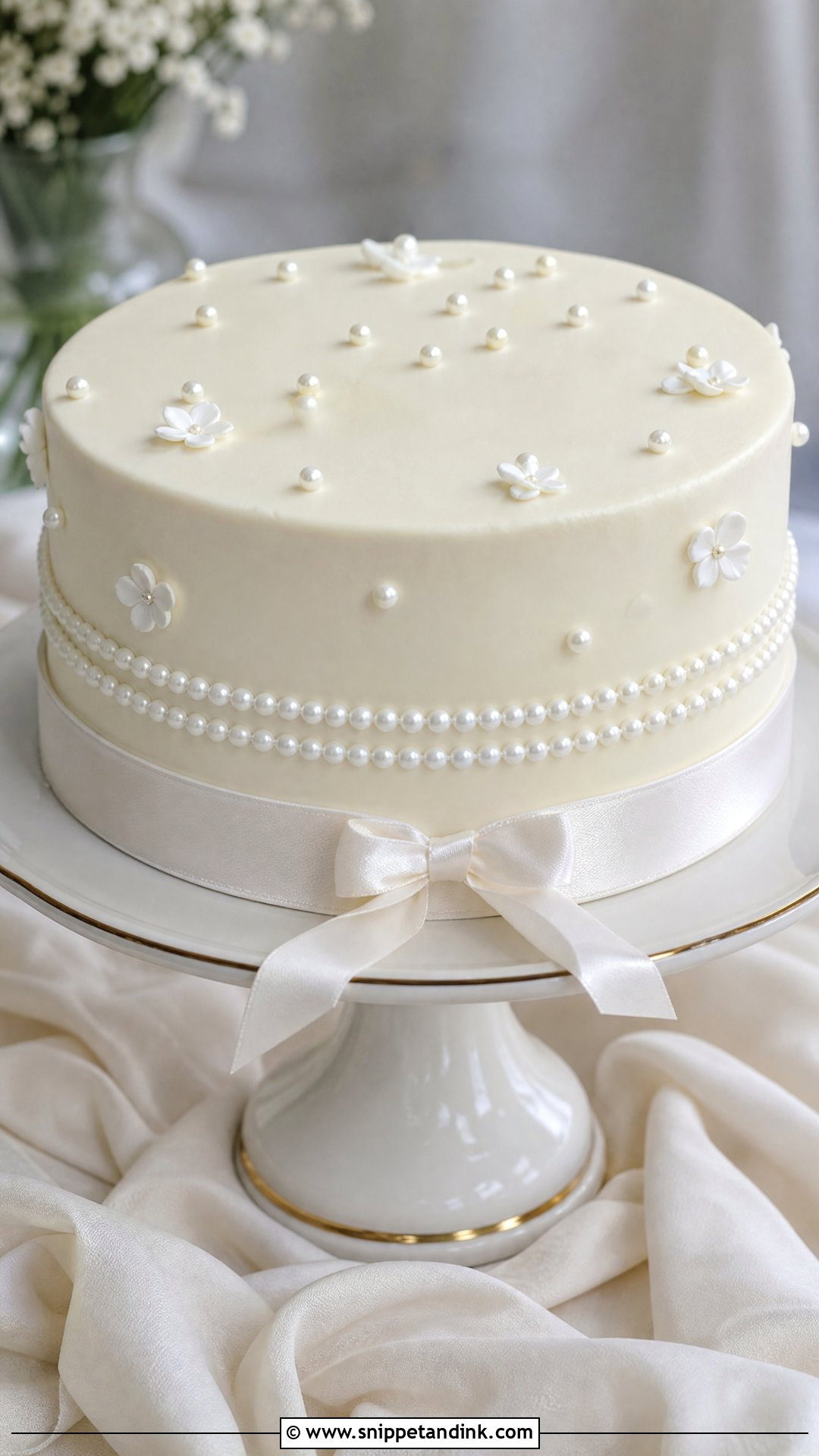
Edible pearls can be scattered, set in borders or placed in tidy rows, and each placement changes the feeling: scattered is playful, rows are formal. They give a bridal hint without turning the party into a rehearsal of the wedding. I press each pearl in while the buttercream is still soft, because once it crusts they won’t stick and tend to roll off in transit. White, ivory or pale pink bases show them best.
10. Minimalist Engagement Cake
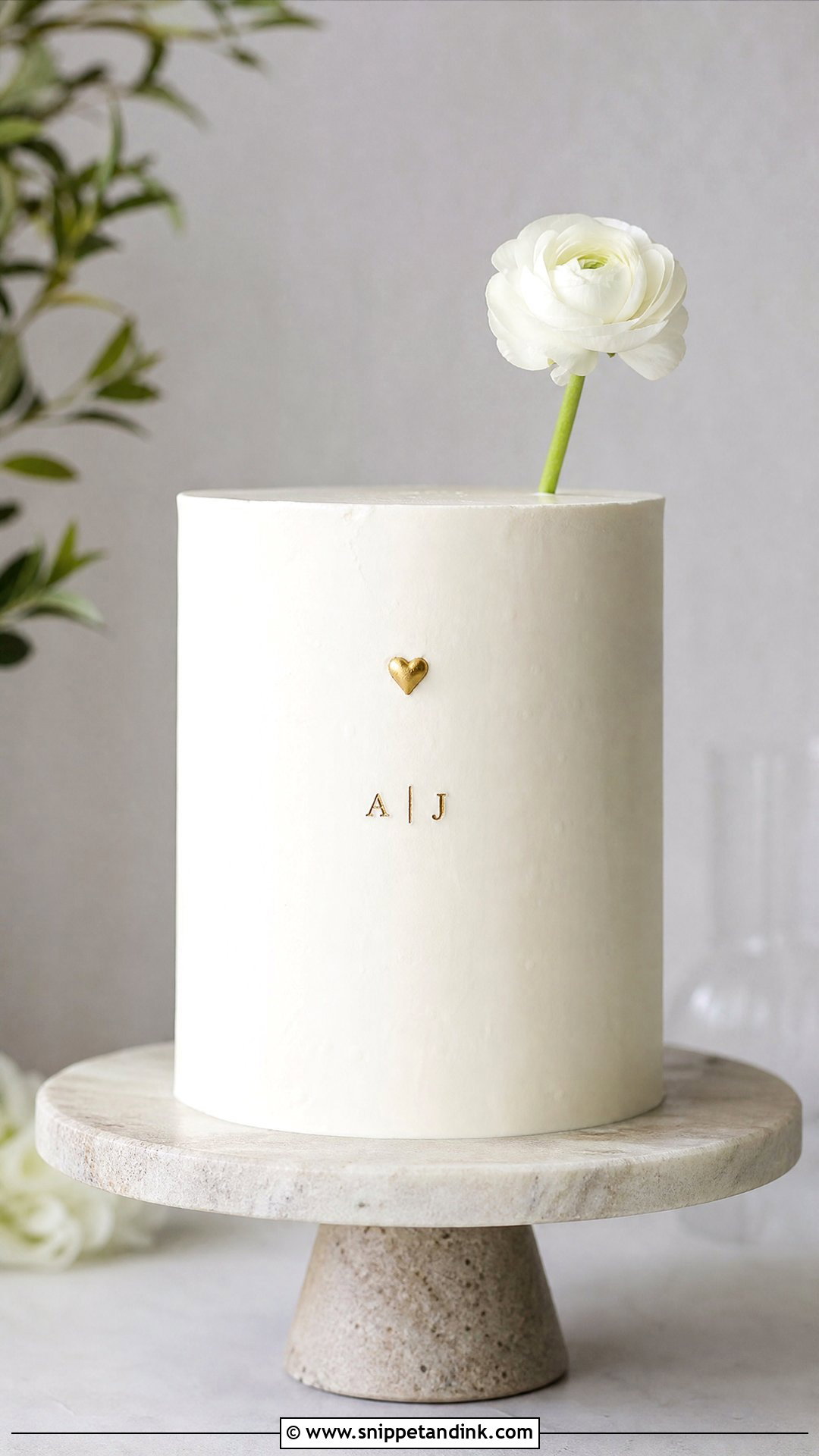
A minimalist engagement cake has one detail and a lot of clean space around it: a tiny topper, a single flower stem, a small gold heart or initials in simple script. The finish has to be close to flawless because nothing distracts from it, so I give these cakes an extra chill and a final scrape before they leave. It suits smaller parties well since it doesn’t need size to feel finished. Lemon or chocolate hazelnut give it real flavour.
11. Rustic Engagement Cake
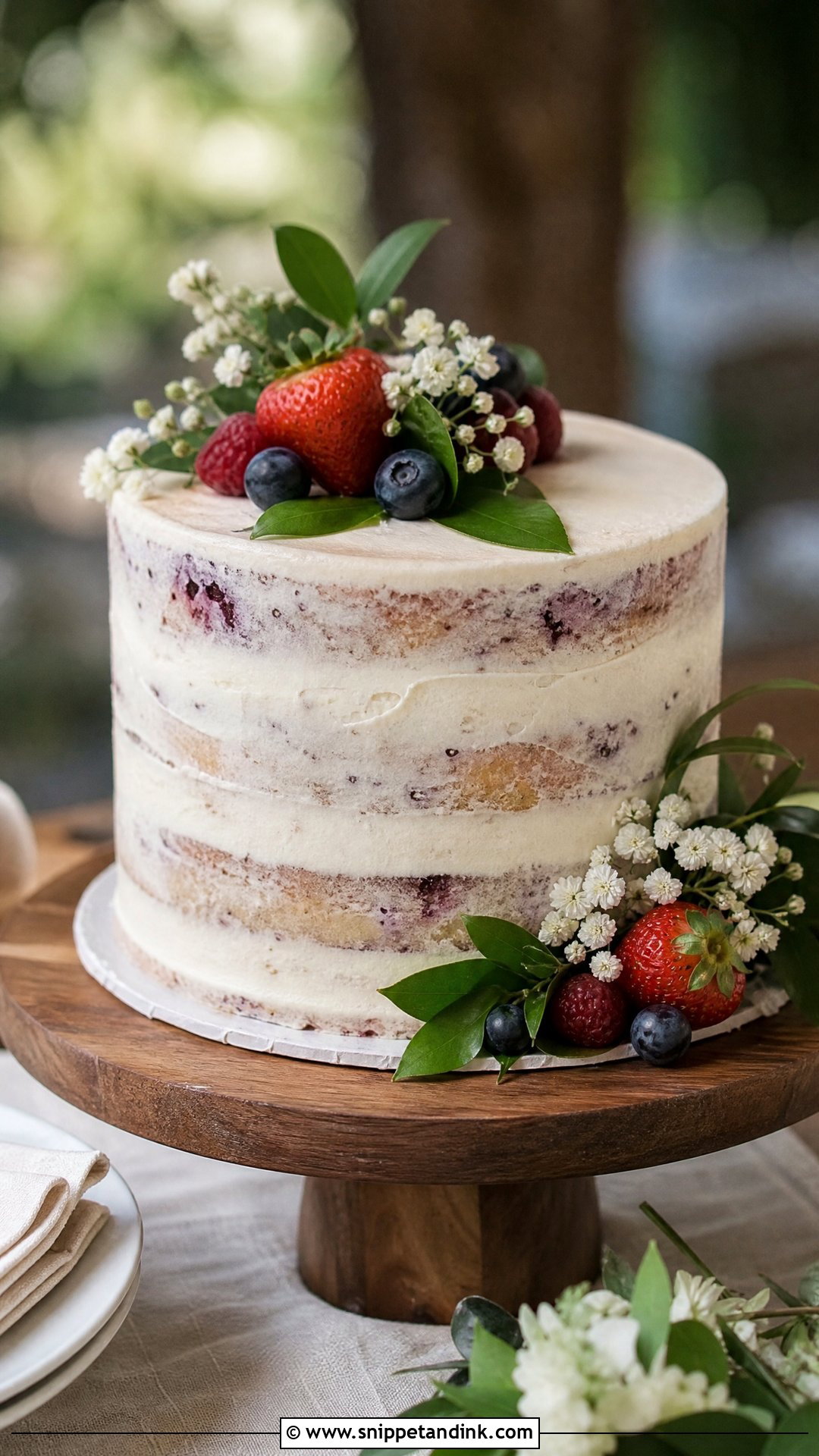
Rustic cakes are semi-naked or roughly textured and finished with flowers, greenery, berries or a wooden topper. They don’t need to be perfectly smooth, which is part of the appeal. The catch with semi-naked frosting is that exposed sponge dries out faster, so I’d keep these out of direct air until close to serving and ask your baker to brush the layers with syrup. Carrot or spice cake suits the backyard and barn settings this look belongs in.
12. Engagement Cake With Fresh Flowers
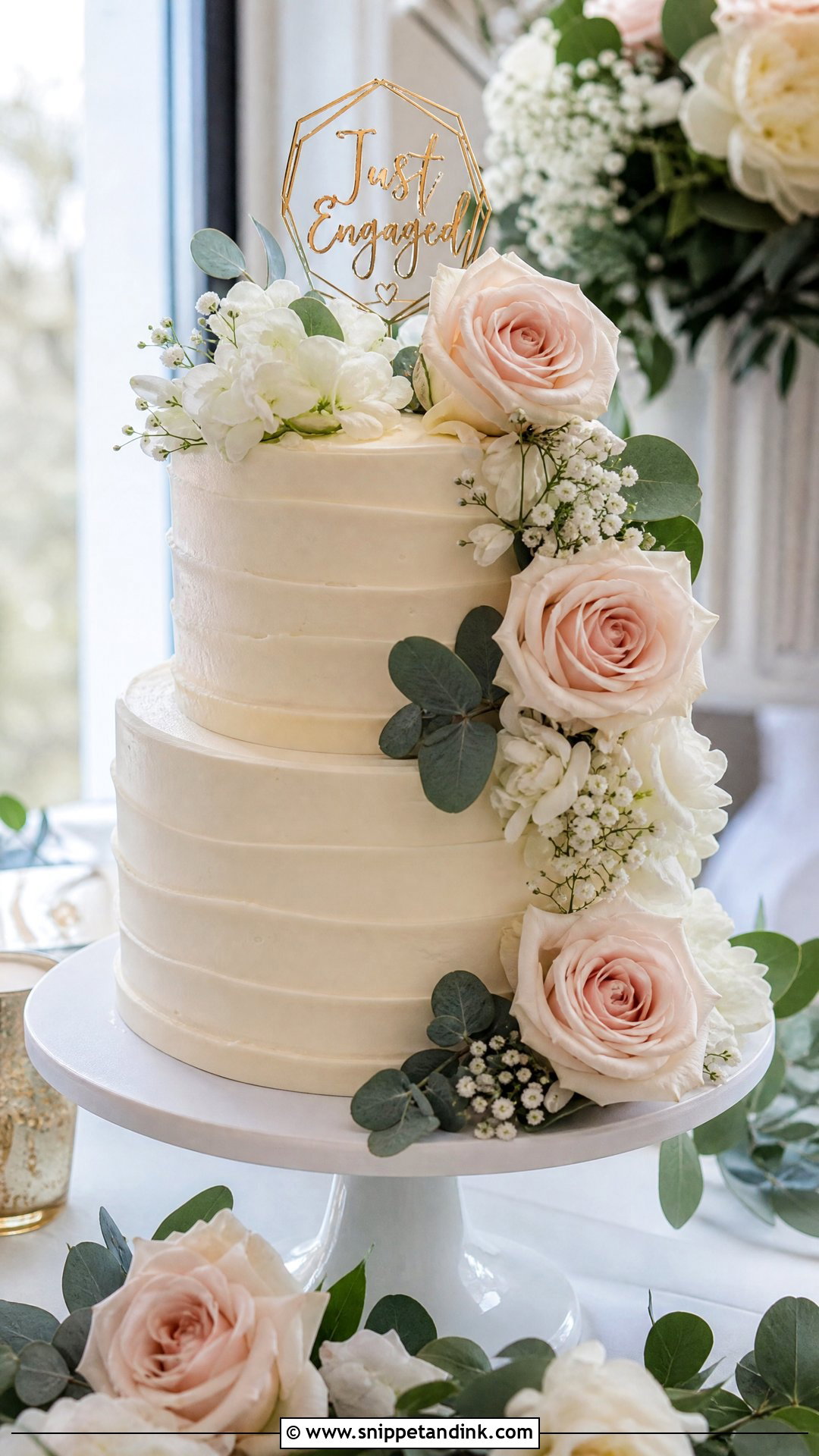
Fresh flowers can cascade down the side, cluster on top or frame the base. White roses and soft greenery are the classic pairing; bright seasonal flowers suit a bolder palette. The cake underneath should stay simple. This design depends on your florist and baker talking to each other: I want to know which stems are coming, when they’re cut, and whether they’ve been grown without pesticides, because I’m the one placing them on something people will eat.
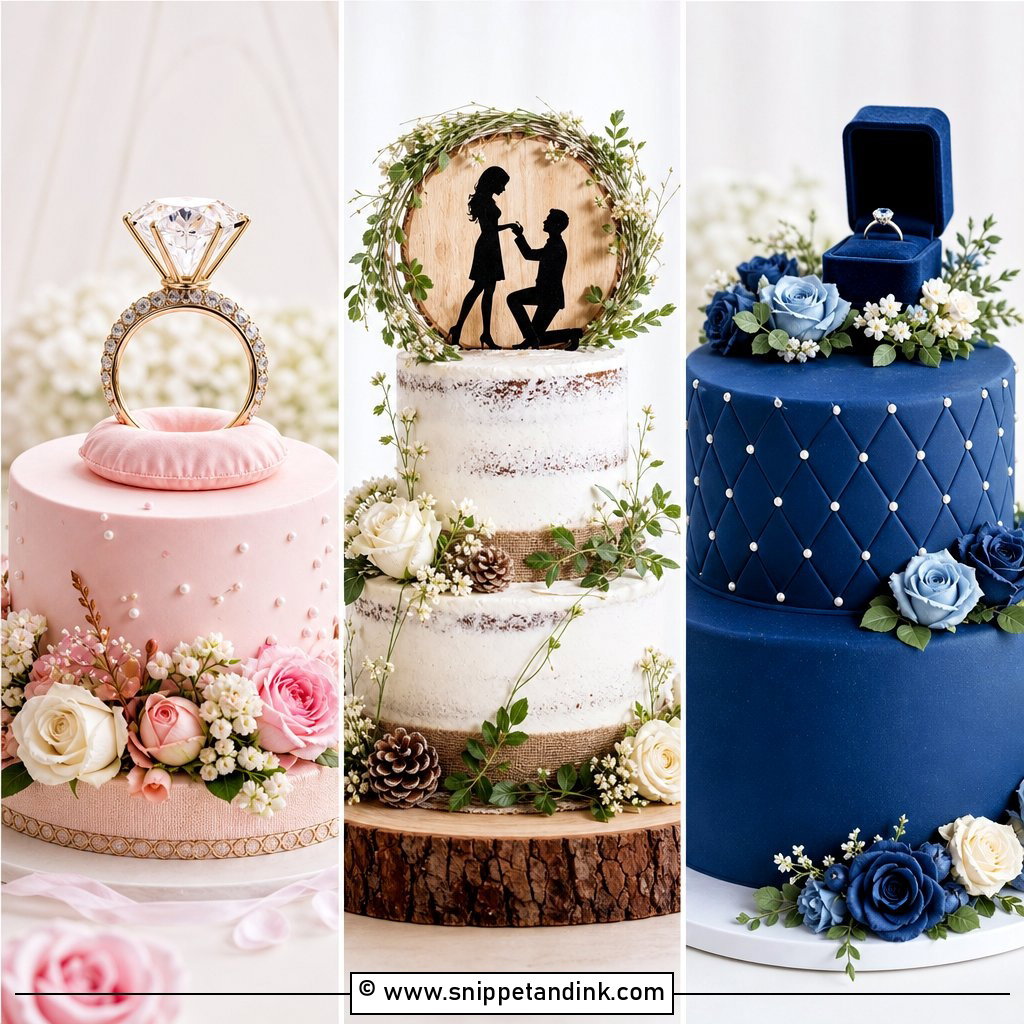
13. Engagement Cake With Ring Topper
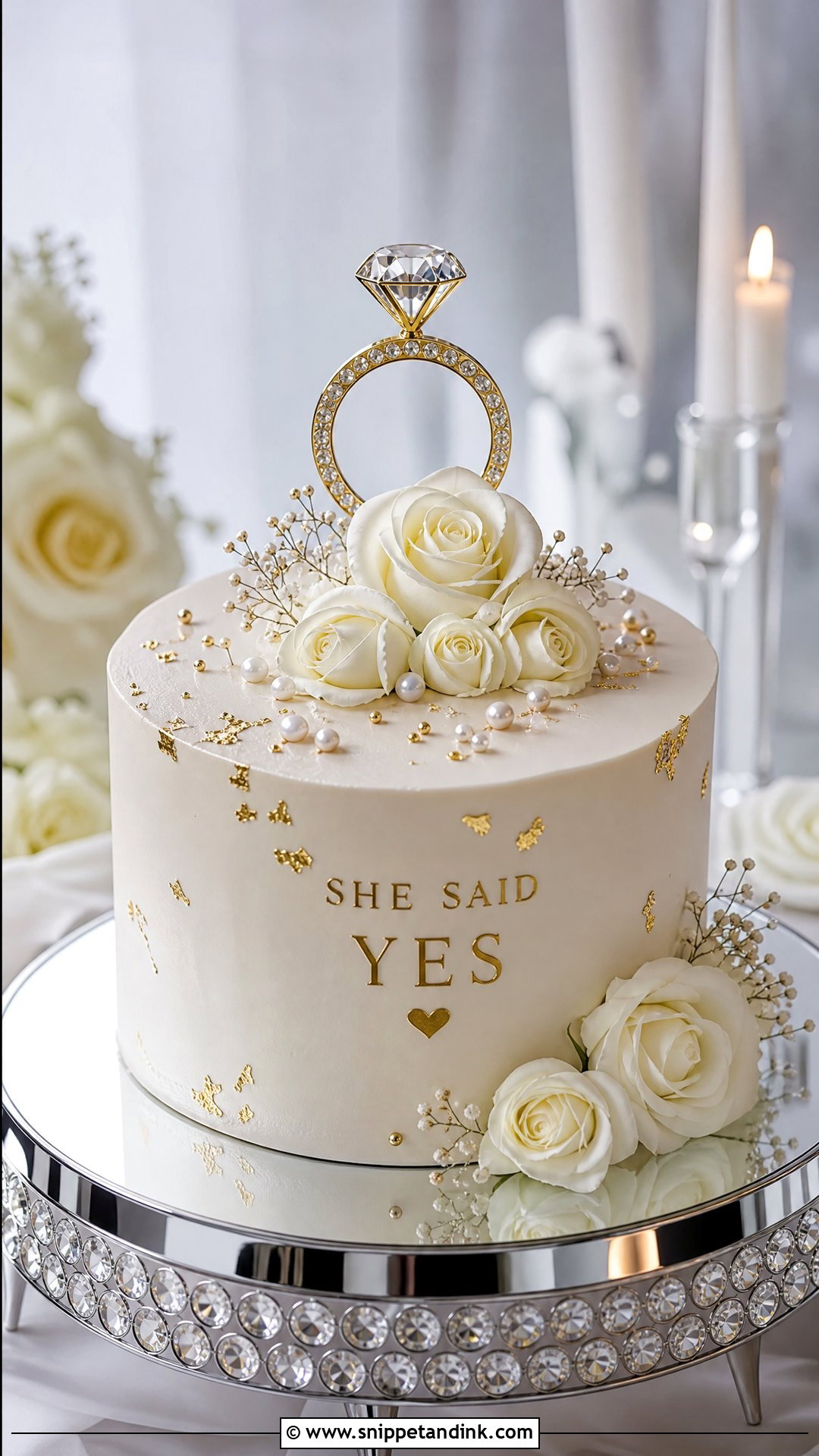
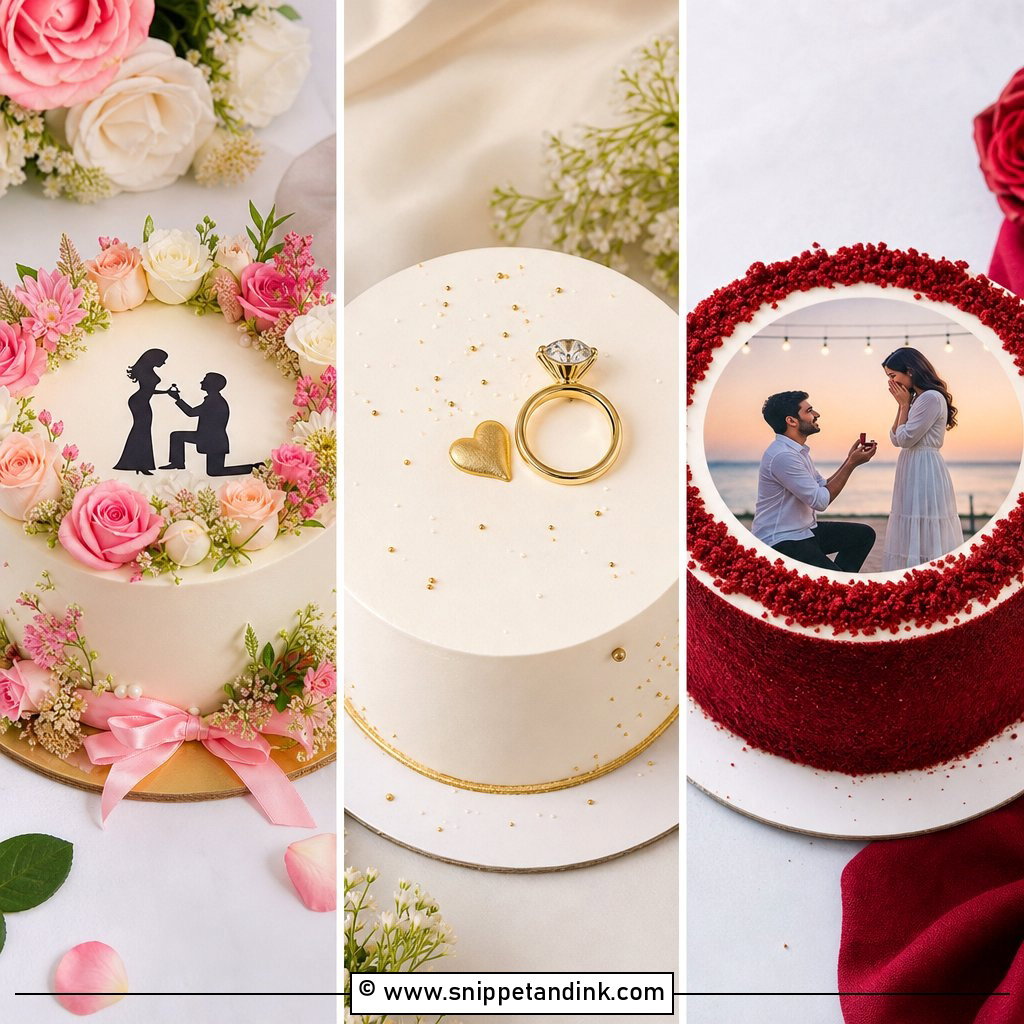
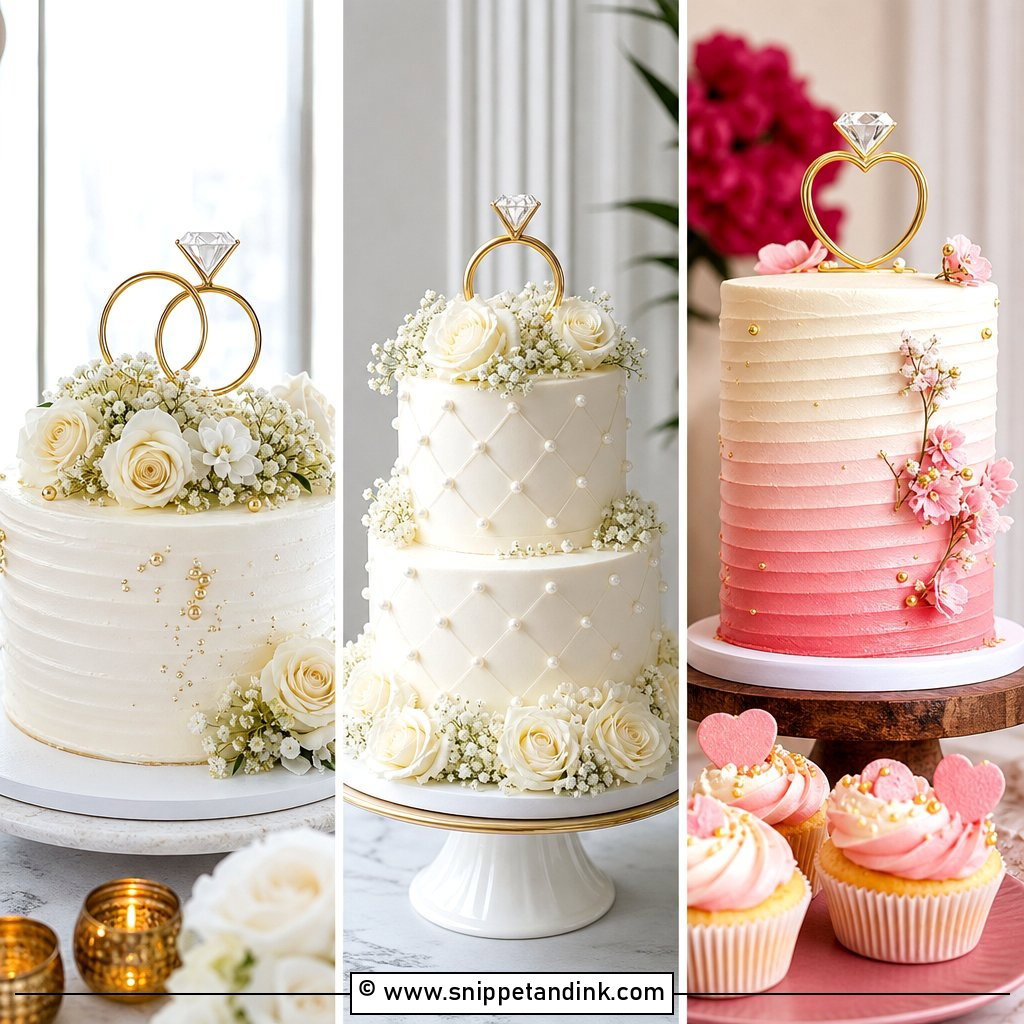
A ring topper tells everyone what the party’s for. Toppers come in acrylic, metal or crystal styles, and the size matters more than people expect. On a single six-inch tier a large ring topper looks top-heavy and can tip if the buttercream softens, so I’d keep it in proportion or anchor it with a longer pick. The cake beneath should stay plain, perhaps with pearls or a little gold leaf. Vanilla and chocolate both work, since the design is doing the talking.
14. Engagement Cake With Names
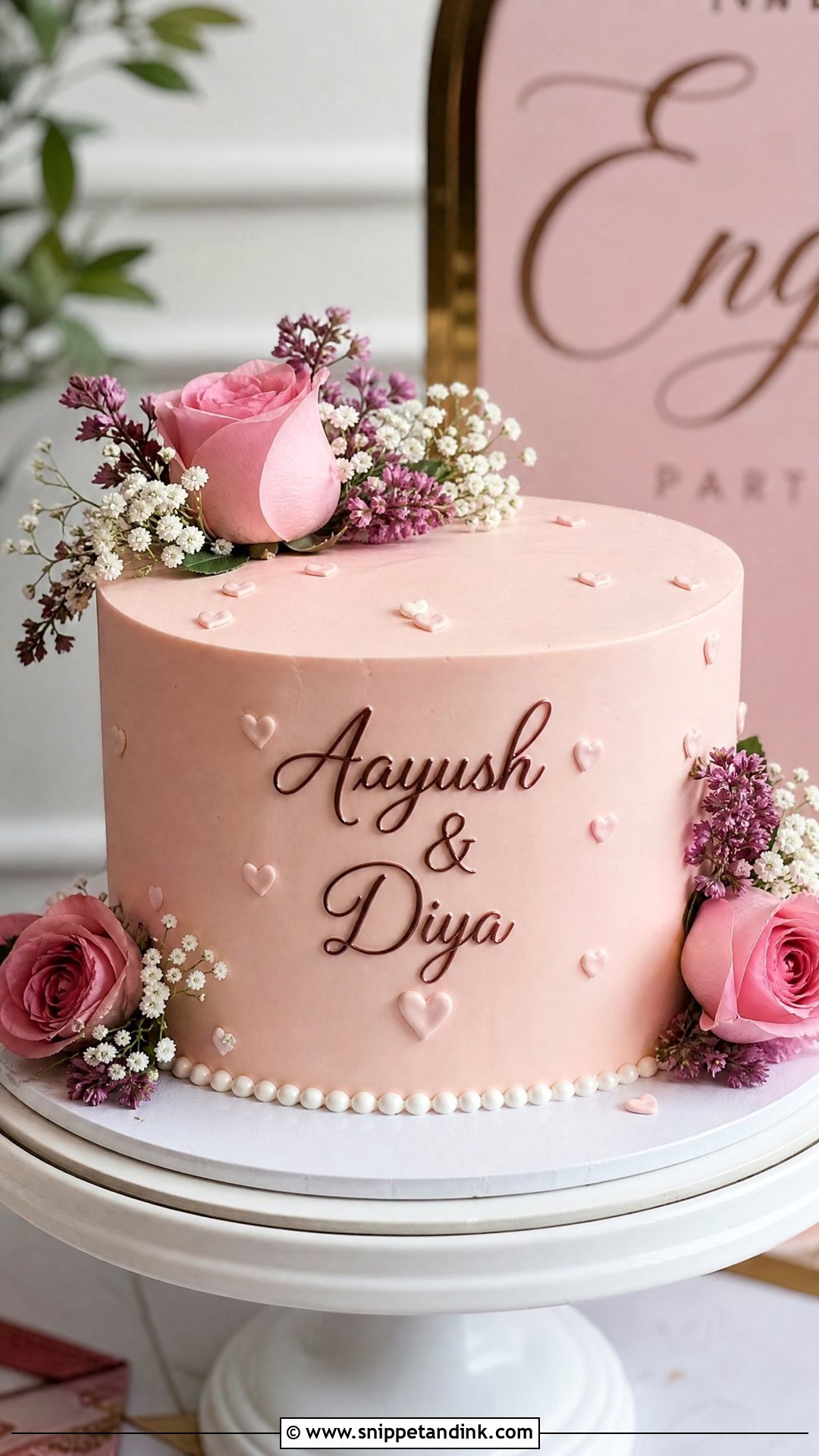
An engagement cake with names feels personal without a complicated design. First names, initials or a future shared surname go on the top or front. I pipe lettering on a smooth, slightly crusted buttercream base, because soft buttercream lets the letters sink and blur. A clean script reads well from a distance. Check the spelling with your baker in writing; it’s the most common last-minute mistake on any personalised cake.
15. Engagement Cake With Date
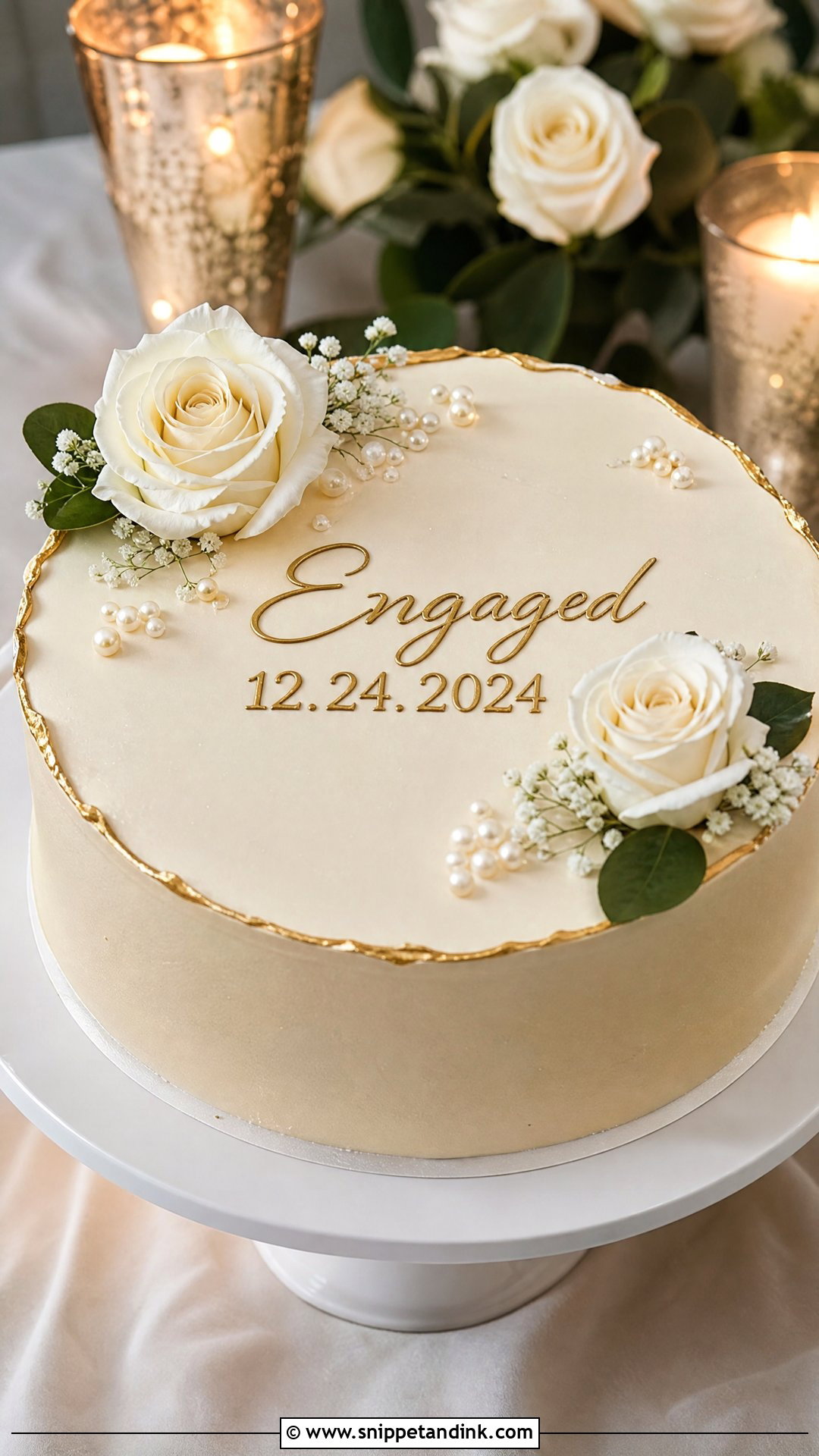
Putting the proposal date or party date on the cake turns it into a keepsake in photos. I can pipe it, stamp it into fondant or put it on a topper; a topper is the only version you can keep afterwards. Keep everything else soft so the date stays the focus. Ivory and champagne bases suit it, with a thin gold border if you want polish. Lemon or vanilla raspberry give a fresh flavour.
16. Engagement Sheet Cake
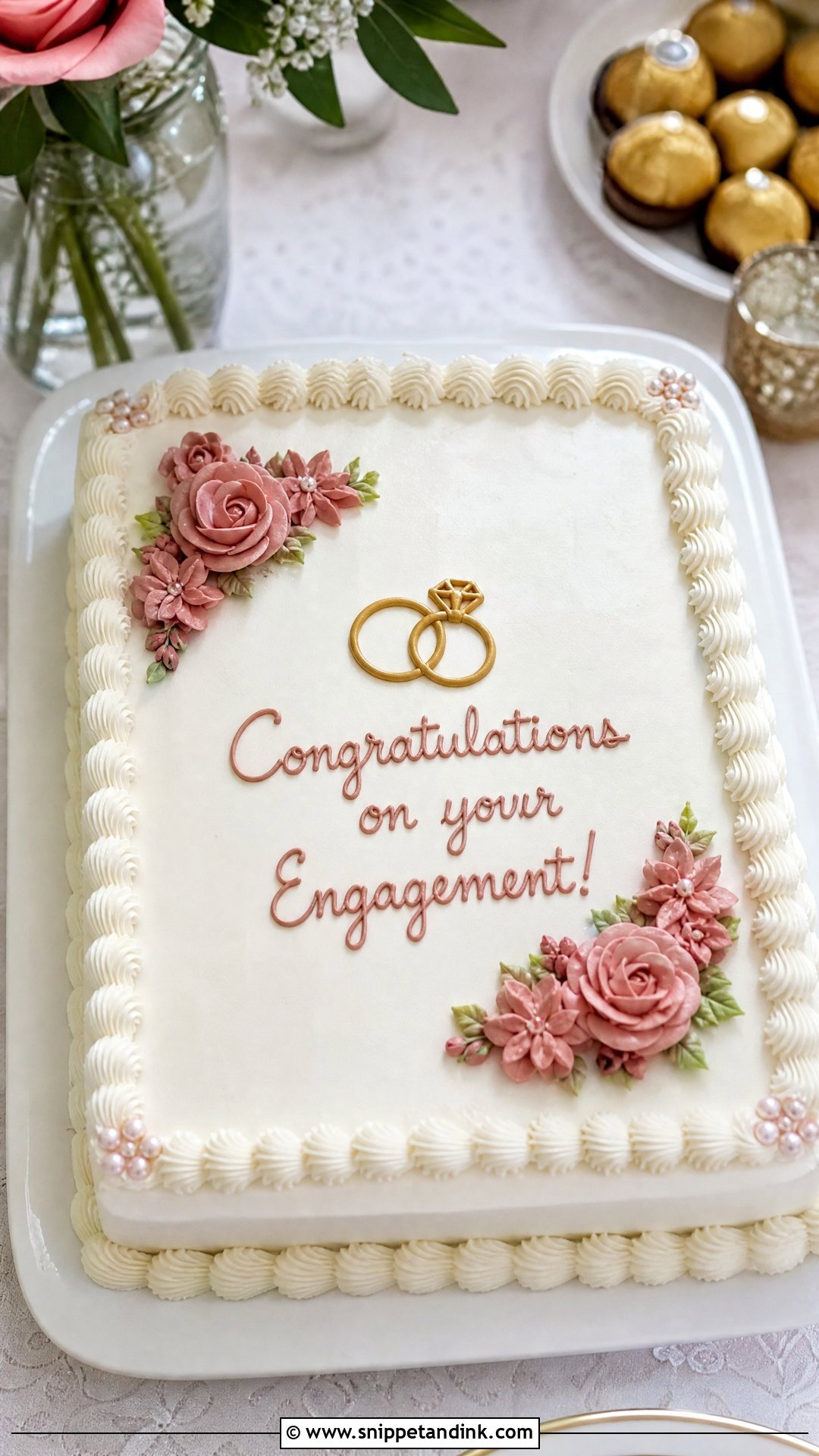
A sheet cake is the practical answer for a large, casual party. It’s cheaper per slice, easier to transport and much easier to cut evenly than a tall round cake. The top has room for piped borders, buttercream flowers, names or a simple ring drawing. Plain sheet cakes can look like an office party, so I’d keep the palette to two colours and spend the effort on neat piping. Vanilla, chocolate and marble are the crowd favourites.
17. Small Engagement Cake
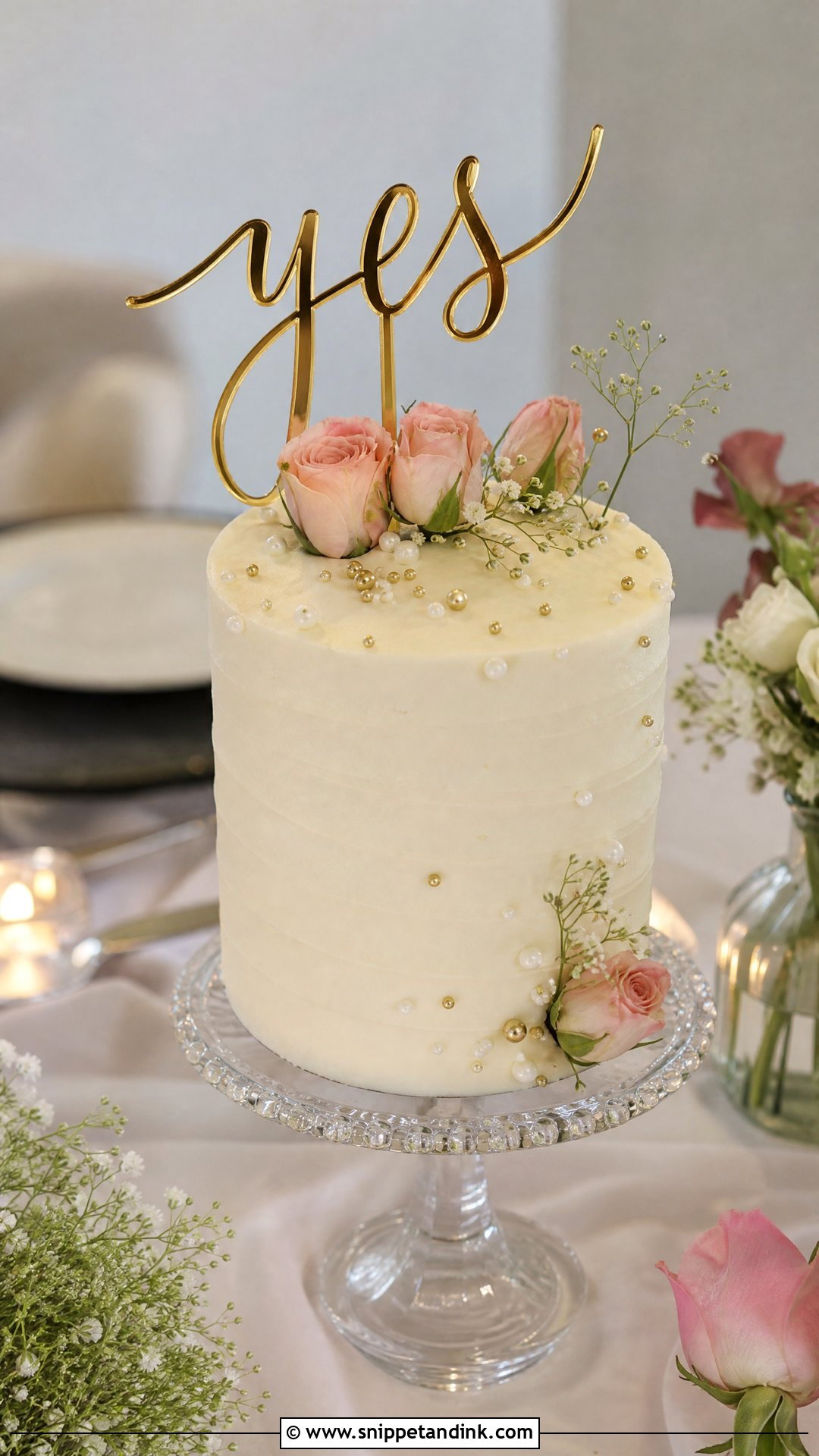
Small cakes suit private dinners or a dessert table with other sweets. A six-inch round cake or petite heart can still look finished with smooth buttercream, a few flowers and a small topper. A small cake also leaves budget for a better flavour or more detailed piping. I’d avoid big decorations here; an oversized bloom on a six-inch cake hides the shape entirely. Red velvet or lemon raspberry make a lovely compact cake.
18. Engagement Cupcake Cake
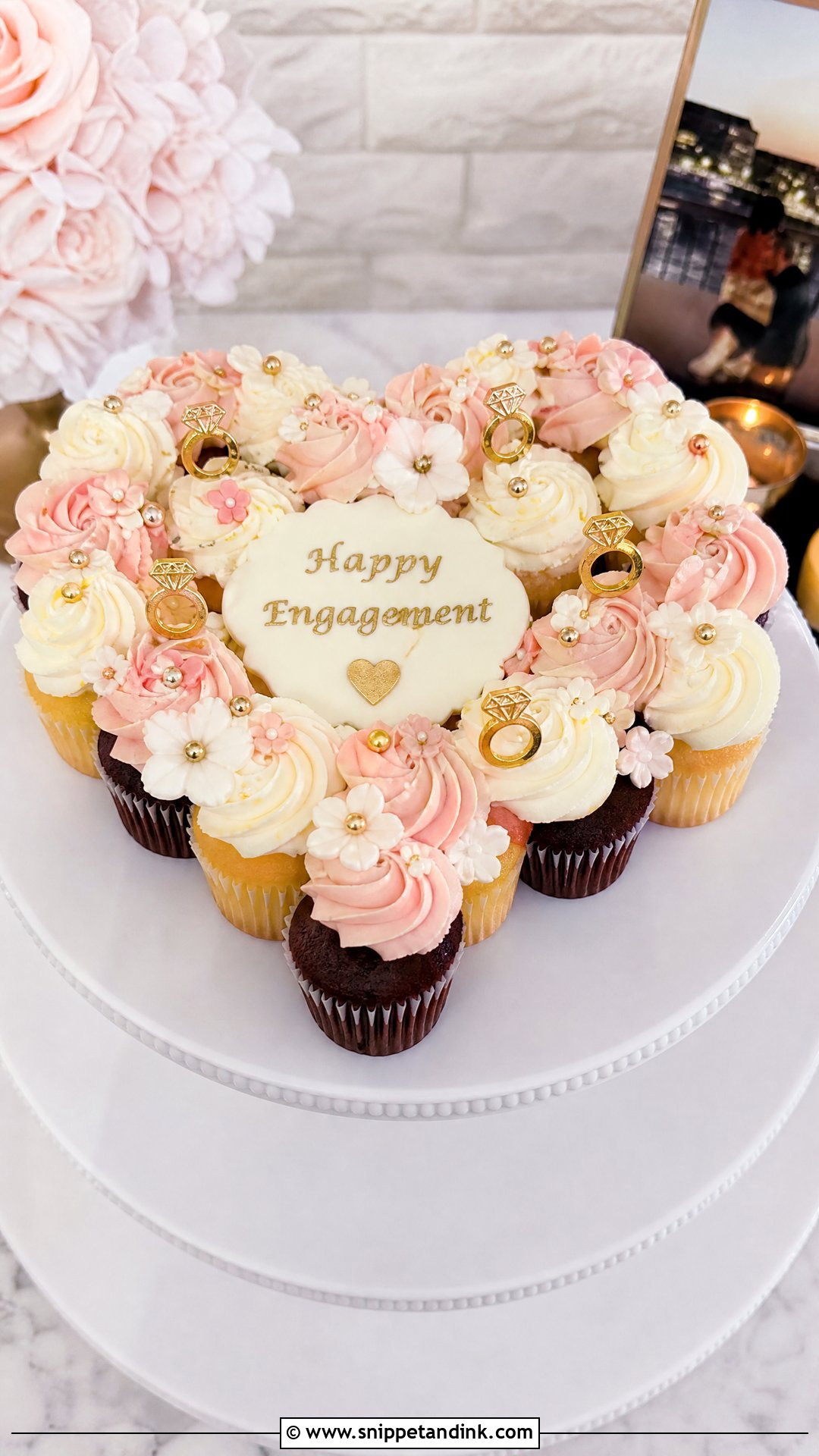
An engagement cupcake cake is cupcakes arranged into a heart, a ring or initials, frosted across the gaps so it reads as one design. Guests can grab dessert without anyone cutting and plating, which helps at outdoor parties and anywhere people are mingling. It’s also the easiest way to offer several flavours. The joined frosting makes the first few cupcakes messy to pull out, so set out napkins and a small spatula next to it.
19. Engagement Drip Cake
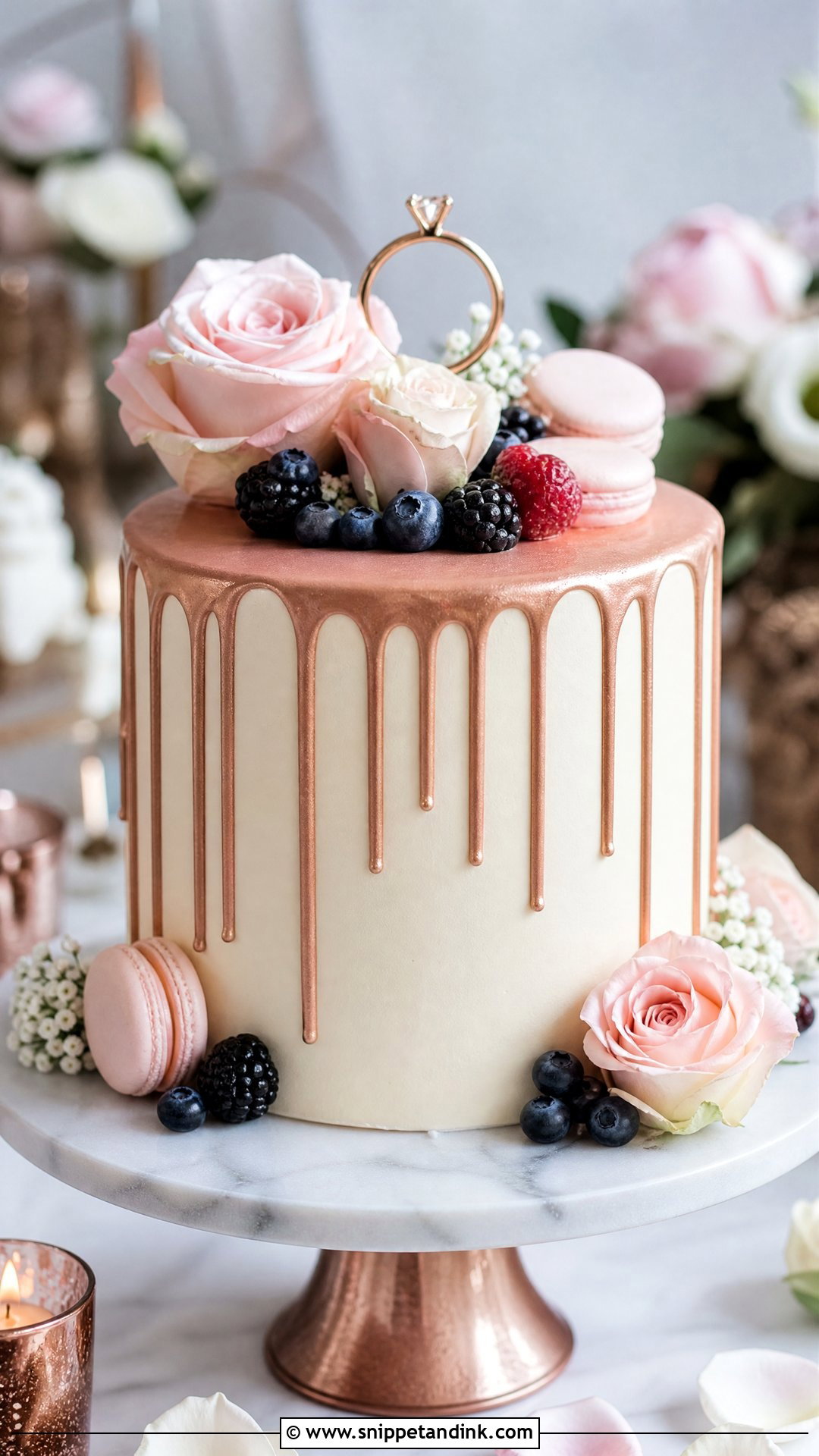
An engagement drip cake looks polished but playful. The drip can be white chocolate, caramel, ganache or a tinted shade to suit the palette. I test the temperature of the drip on the side of a chilled cake before committing: too warm and it runs to the board, too cool and it stops in stubby blobs. A smooth, cold buttercream surface is essential. Fresh flowers, macarons or berries on top give it height.
20. Engagement Cake With Macarons
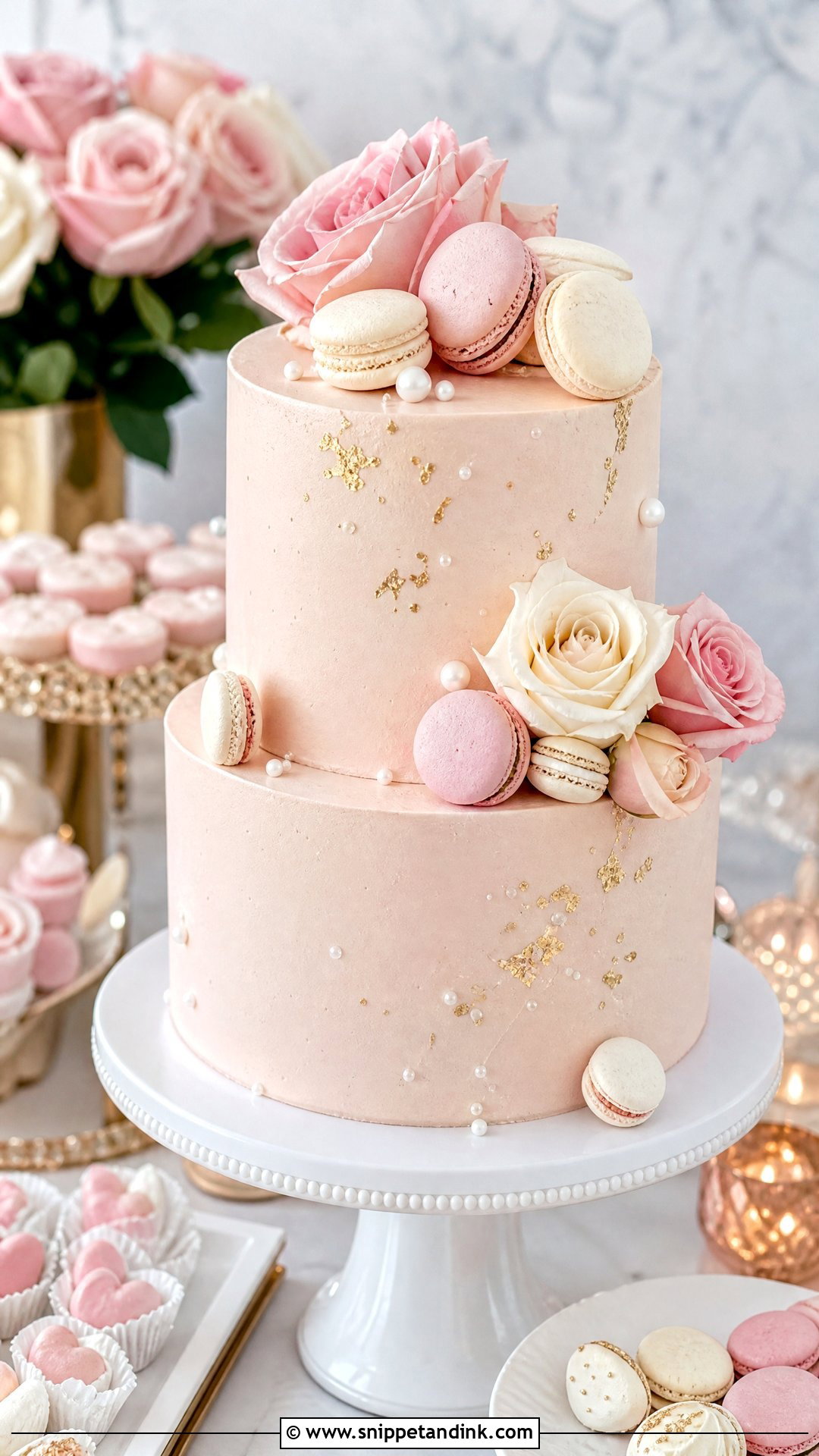
Macarons can be stacked on top, placed around the base or mixed with flowers and berries. I match their shells to the frosting so the cake reads as one palette. Macarons soften as they absorb moisture from buttercream, so I add them as close to the party as possible, ideally on site. The cake can be one tier or two depending on numbers. Vanilla raspberry cake with pink macarons is a reliable pairing.
21. Engagement Cake With Edible Pearls
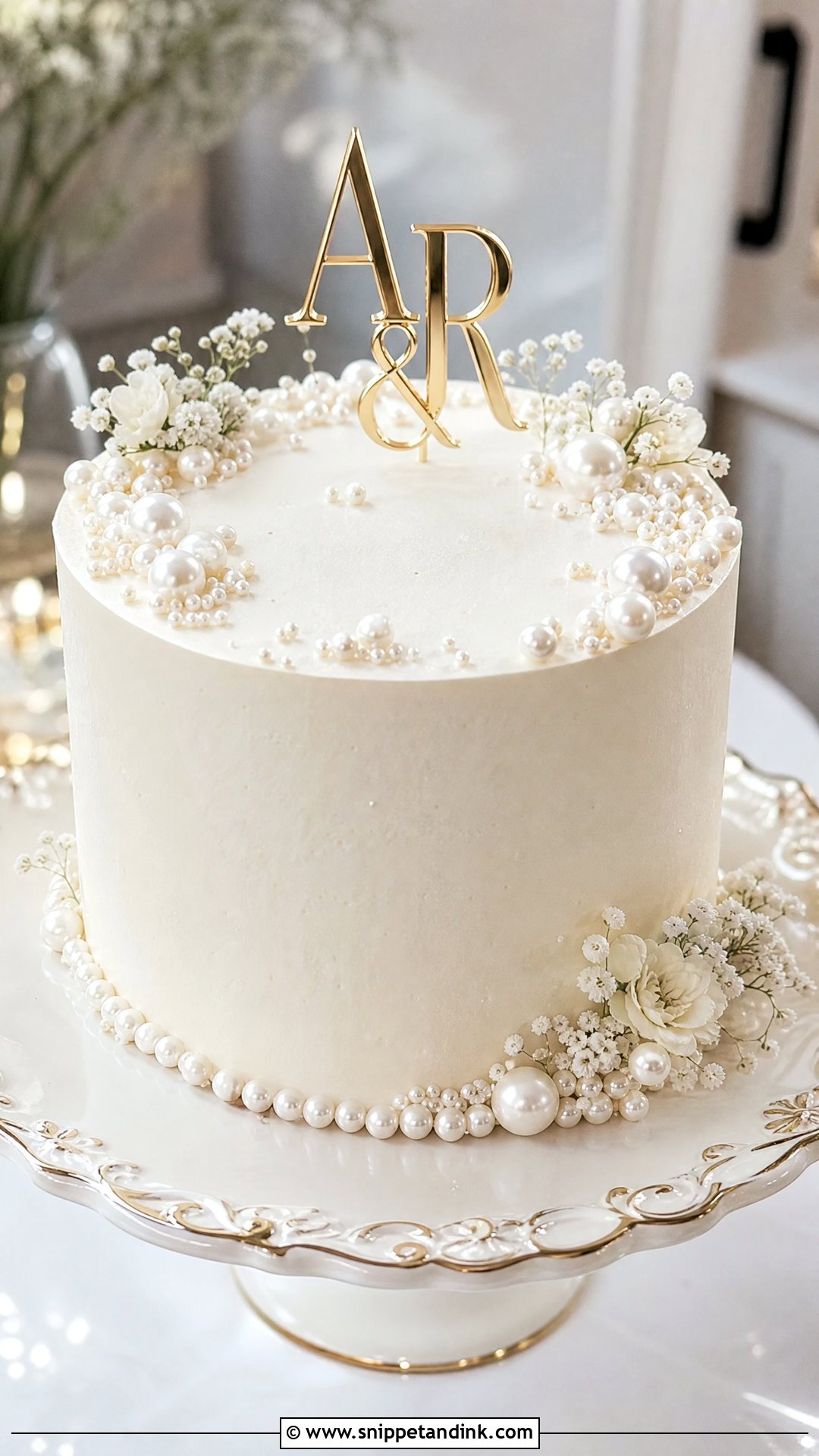
Here pearls are a single accent rather than the whole design: an outline along the bottom edge, a frame around the top or a scatter across one side like confetti. I like this version for couples who want a hint of bridal without much shine. Small pearl clusters on white or ivory buttercream stay light enough for an engagement party. A simple topper or a few sugar flowers completes it, and almond or coconut sponge suits the soft finish.
22. Modern Engagement Cake
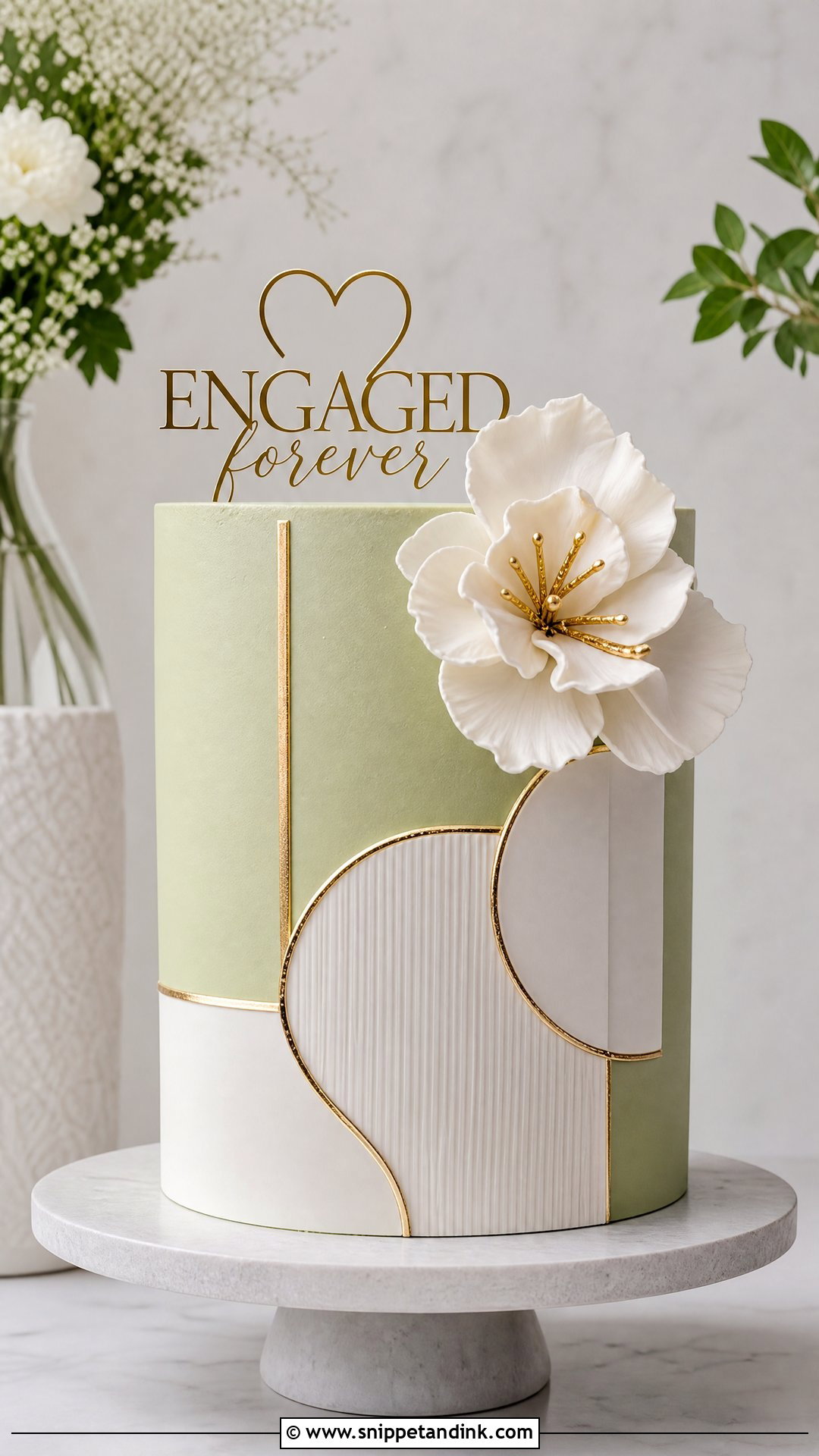
Modern cakes use clean shapes, colour blocking, abstract texture or one sculptural detail. A tall single tier with razor-sharp edges is the most common version I make. Sharp edges are easier to hold in fondant or a firm ganache than in soft buttercream, so mention the look you want early, as it can change what the cake is covered in. Let one design choice lead. Pistachio or lemon olive oil fit the unexpected feel.
23. Engagement Cake With Roses
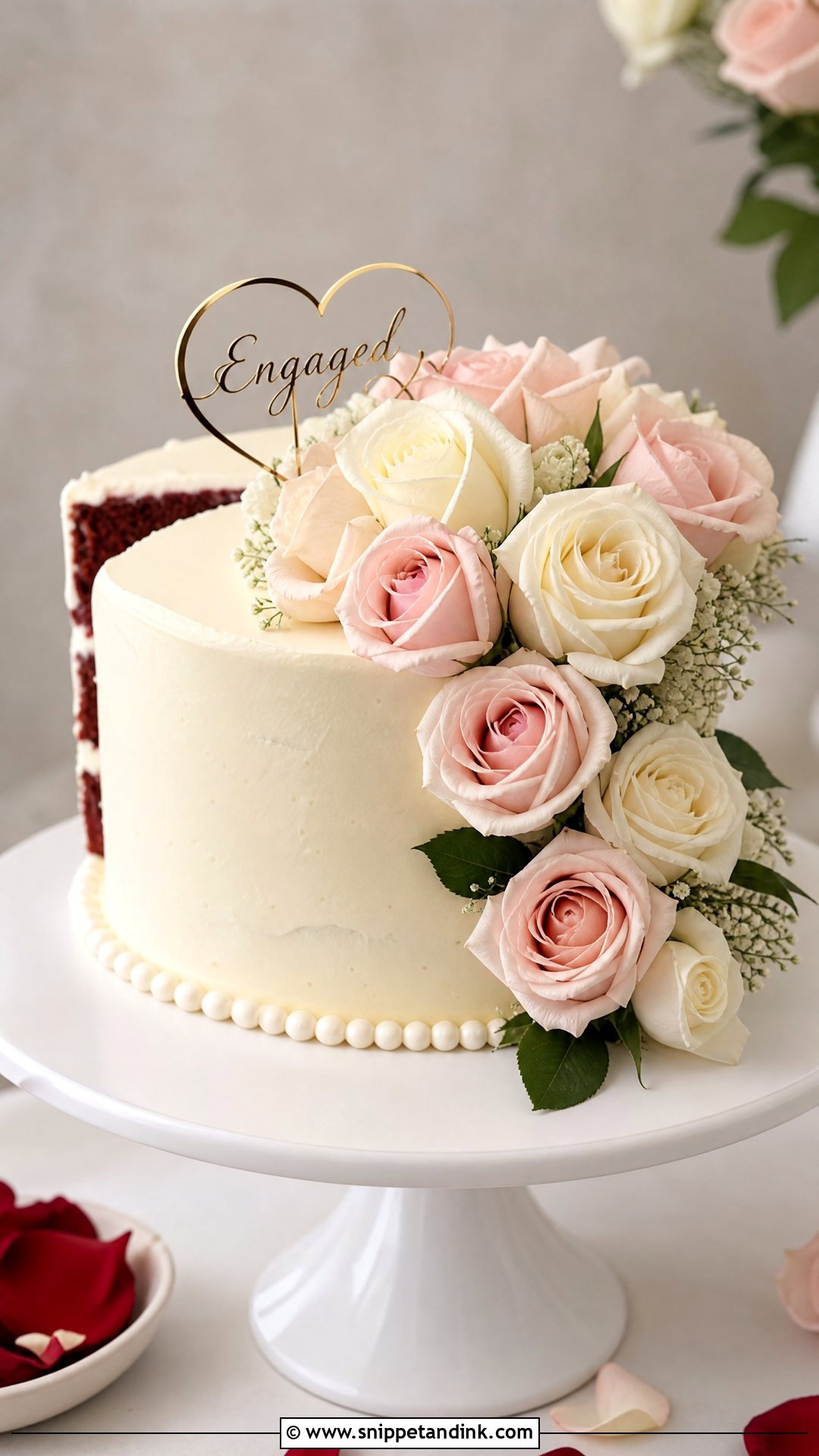
Roses are the flower everyone recognises. They can be fresh, sugar or piped, set as a cluster or a cascade down the tiers. Red roses feel bold; blush and white feel gentle. Sugar roses take time to make and dry, so they need to be ordered with enough notice, often a couple of weeks for a full cascade. Keep placement balanced so the cake doesn’t look heavy on one side. Strawberry or red velvet pair naturally.
24. Engagement Cake With Buttercream Flowers
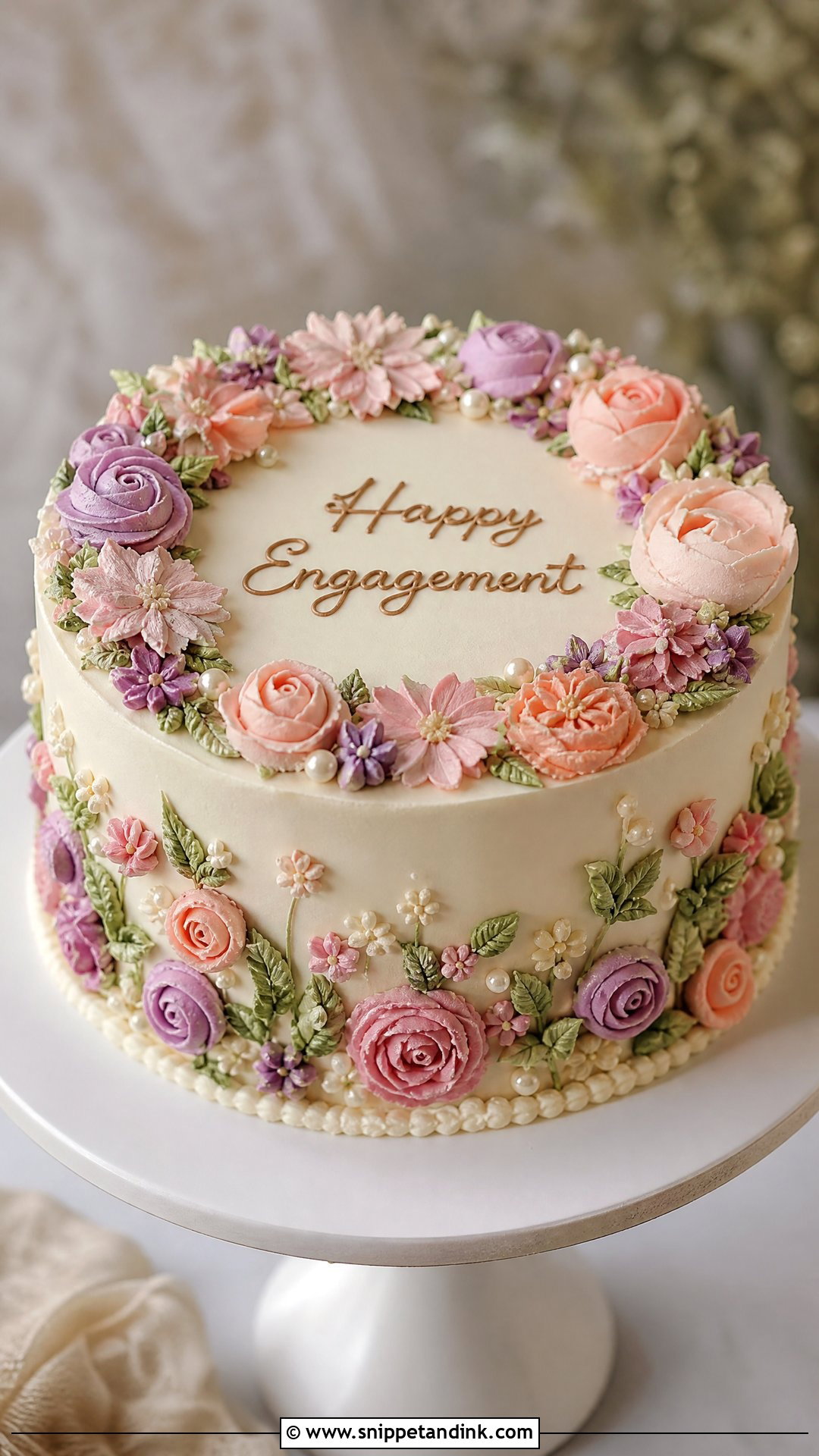
Buttercream flowers keep every decoration edible and give full control over colour. They suit round, heart, sheet and vintage cakes, and they’re the best route when fresh flowers aren’t practical. The petals need a stiff, stable buttercream; a soft whipped style droops in a warm room within the hour. I pipe them on chilled cakes so they set in place. Lemon or almond sponge suits the pastel shades they usually come in.
25. Engagement Cake With Gold Leaf
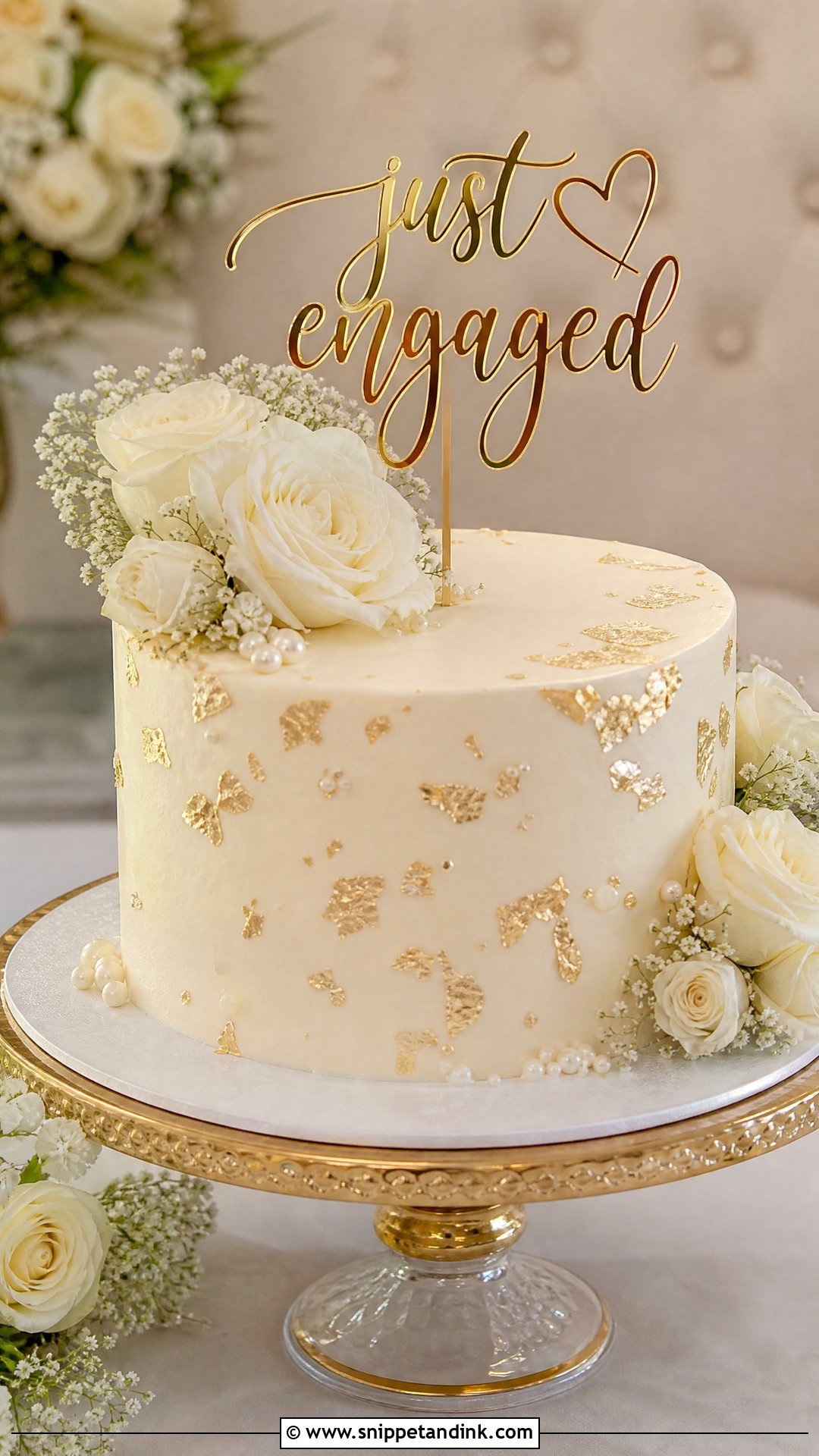
Gold leaf looks expensive when it’s used with a light hand. I place small pieces on the sides, the top edge or near floral clusters with tweezers or a dry brush, since fingers make the leaf cling and tear. It shows up well on white, black or deep green frosting. White buttercream with gold leaf and soft flowers is one of the most adaptable designs here. A gold topper or initials adds personalisation. Chocolate ganache and vanilla caramel suit the rich look.
Buttercream, Heat and the Car Ride Over
Most cake disasters I hear about happen between the bakery and the table. Buttercream softens as soon as the room gets warm, and a cake moved from a cold fridge into a humid room will sweat, leaving beads of moisture that make colours bleed and gold leaf slide.
- Carry the cake flat on the floor of an air-conditioned car, never on a seat, which slopes.
- Put it on its table out of direct sun and away from candles and heaters.
- Leave a chilled buttercream cake out about an hour before cutting so the sponge isn’t cold and dense.
- In real heat, ask about a ganache or fondant finish, which stand up to warmth far better than whipped or meringue buttercreams.
Which Flowers Can Go Near Frosting
Flowers bought for a vase are often sprayed and treated, which is fine in water and not fine pressed into something people eat. I ask for blooms grown without pesticides, and I wrap the stems in floral tape or slide them into small food-safe picks so the cut ends never touch the cake. Some popular flowers should stay off cakes entirely, including lily of the valley, hydrangea, foxglove and daffodils. Roses, ranunculus, chamomile and herbs like rosemary are safer choices, and I still keep them on the surface rather than inserted into the sponge.
A Cake That Sounds Like the Two of You
The cake that works is the one that reflects the couple rather than whatever is trending this month. A simple white round can feel as special as a gold-leaf tiered cake when the details are considered. Before you pick a design, tell your baker the guest count, the venue, whether the cake will sit out in sun or air-conditioning, and how it will be served. Those four answers shape the cake more than any inspiration photo, and they make the engagement cake a useful rehearsal for the wedding one.
You'll Like These Ideas:


Leave a Reply