
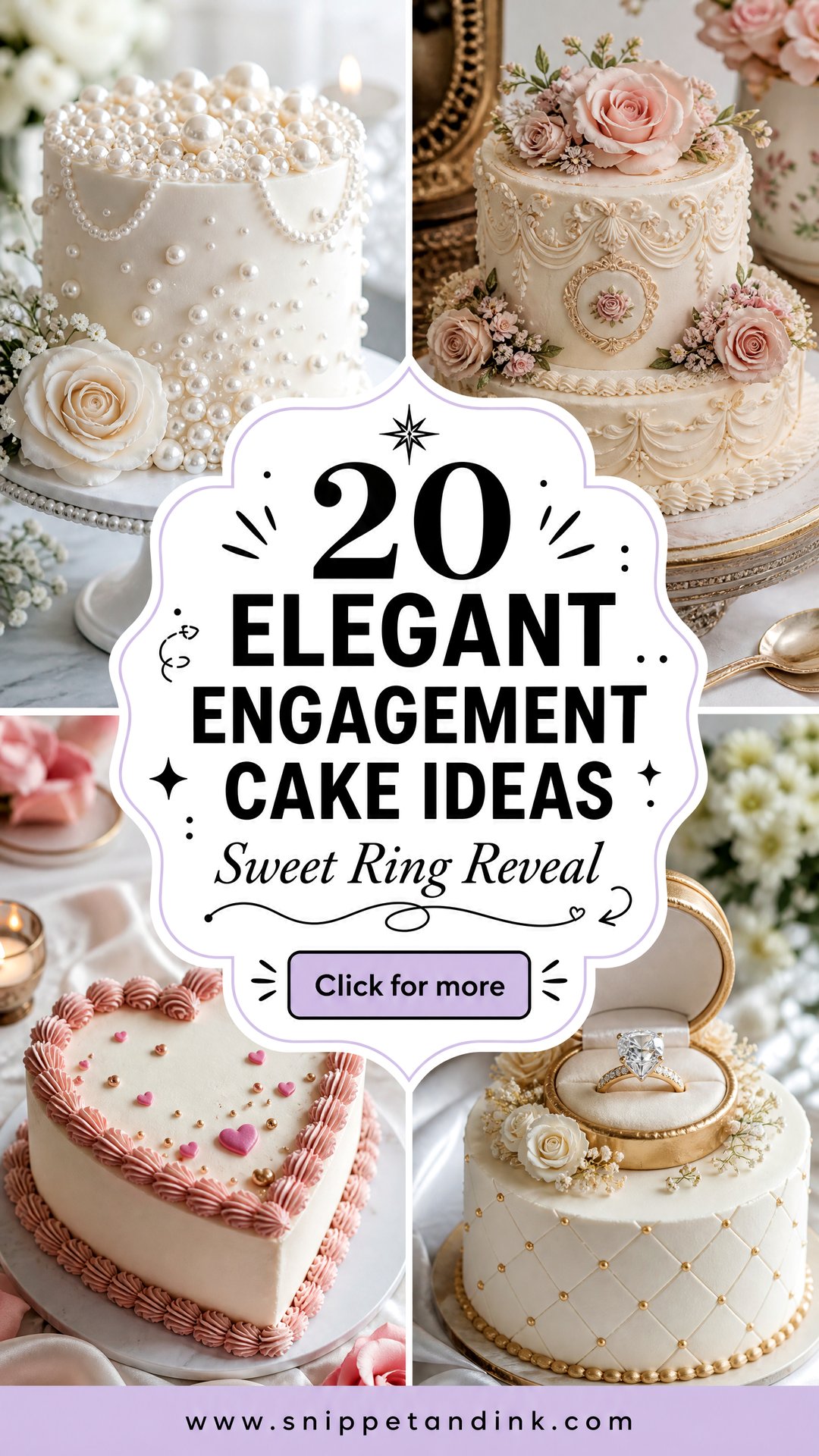
An engagement party cake has a smaller job than a wedding cake, and that’s freeing. It needs to look good on a dessert table, feed the room and say something about the two of you, without the pressure of a five-tier centerpiece. The designs I’m asked for most at the moment are clean finishes, pale colours, flowers, pearls and bows, with one personal detail. Start with the party itself: how many people, indoors or out, afternoon or evening. Then pick the shape and finish. Here are twenty I’d be glad to make, with what each one needs from the baker.
How Big Should an Engagement Party Cake Be?
I size these cakes differently from wedding cakes. At a wedding most people take a slim finger slice after dinner. At an engagement party the cake is often the main dessert, so slices are bigger and fewer people skip it.
- A 6 inch round usually gives around 10 to 12 party slices
- An 8 inch round gives roughly 20 to 24
- A 6 and 8 inch two tier stack covers about 30 to 35 people
- Heart and novelty shapes give fewer slices than a round of the same width
These are rough guides and every baker’s chart is a little different, so give yours a guest count and let them work it out. If the guest list is large, a small decorated cake for display plus a plain sheet cake in the kitchen is a sensible way to feed everyone without paying for extra tiers.
Order early. Most custom bakers book up a few weeks ahead, and handmade sugar flowers or painted details need extra time to dry before they go on.
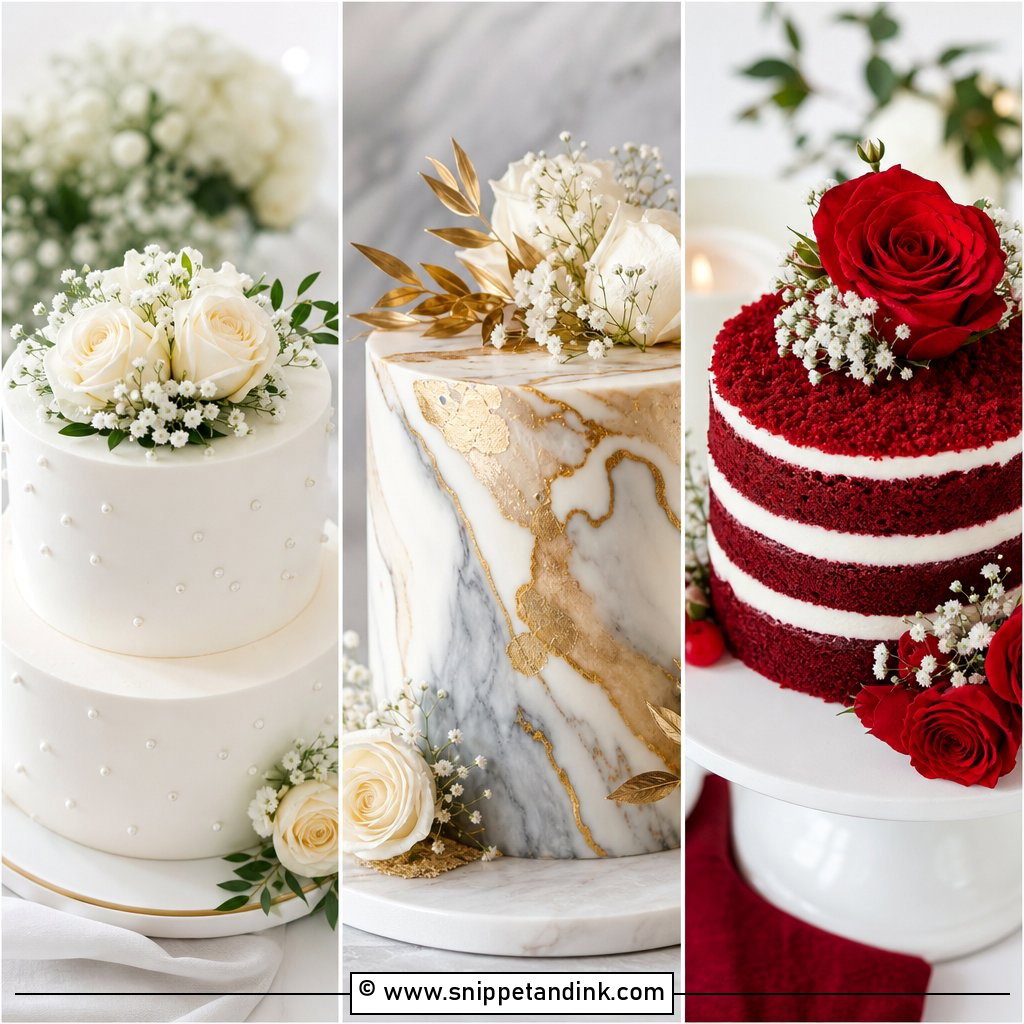
1. White Tiered Engagement Cake
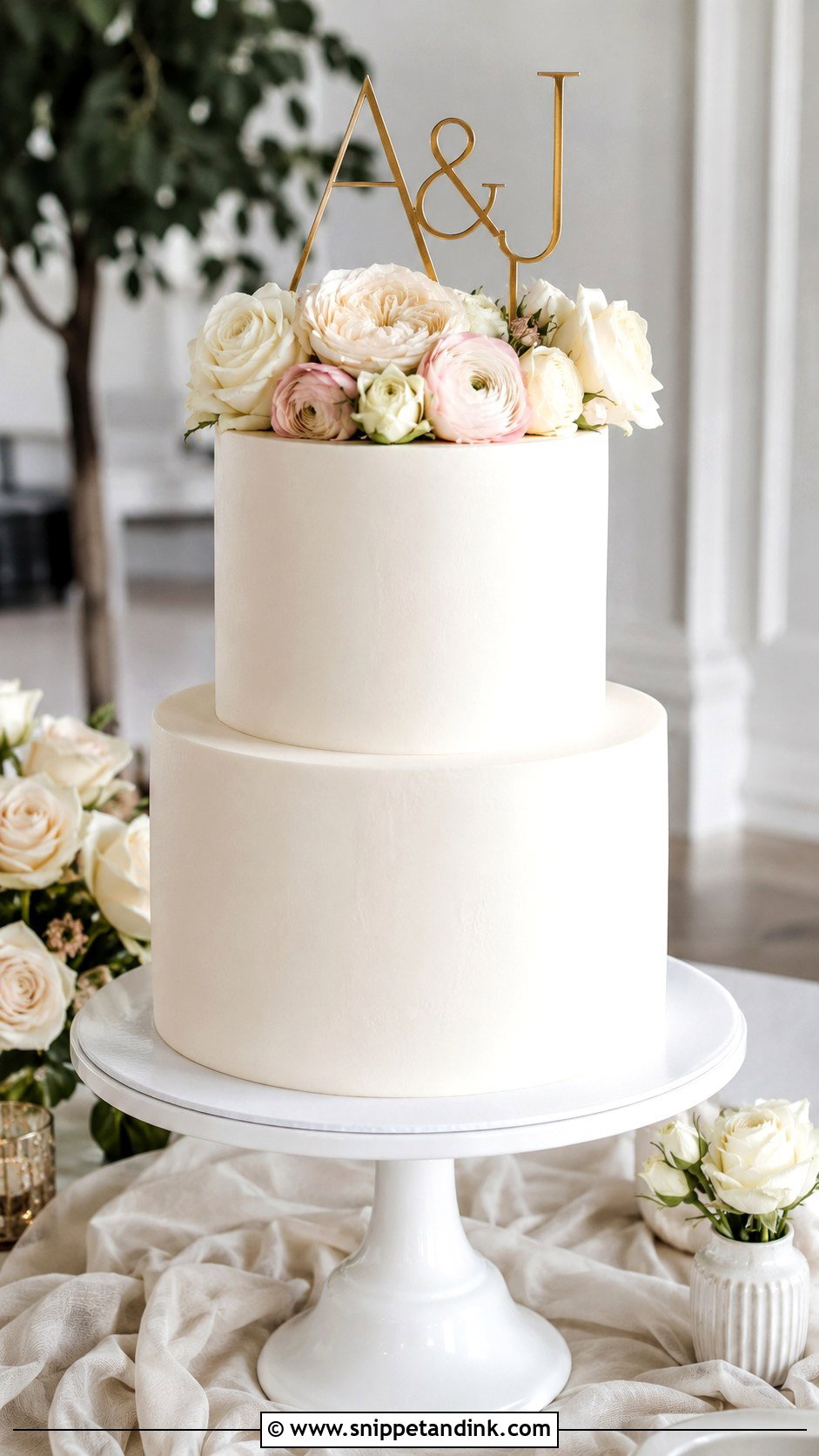
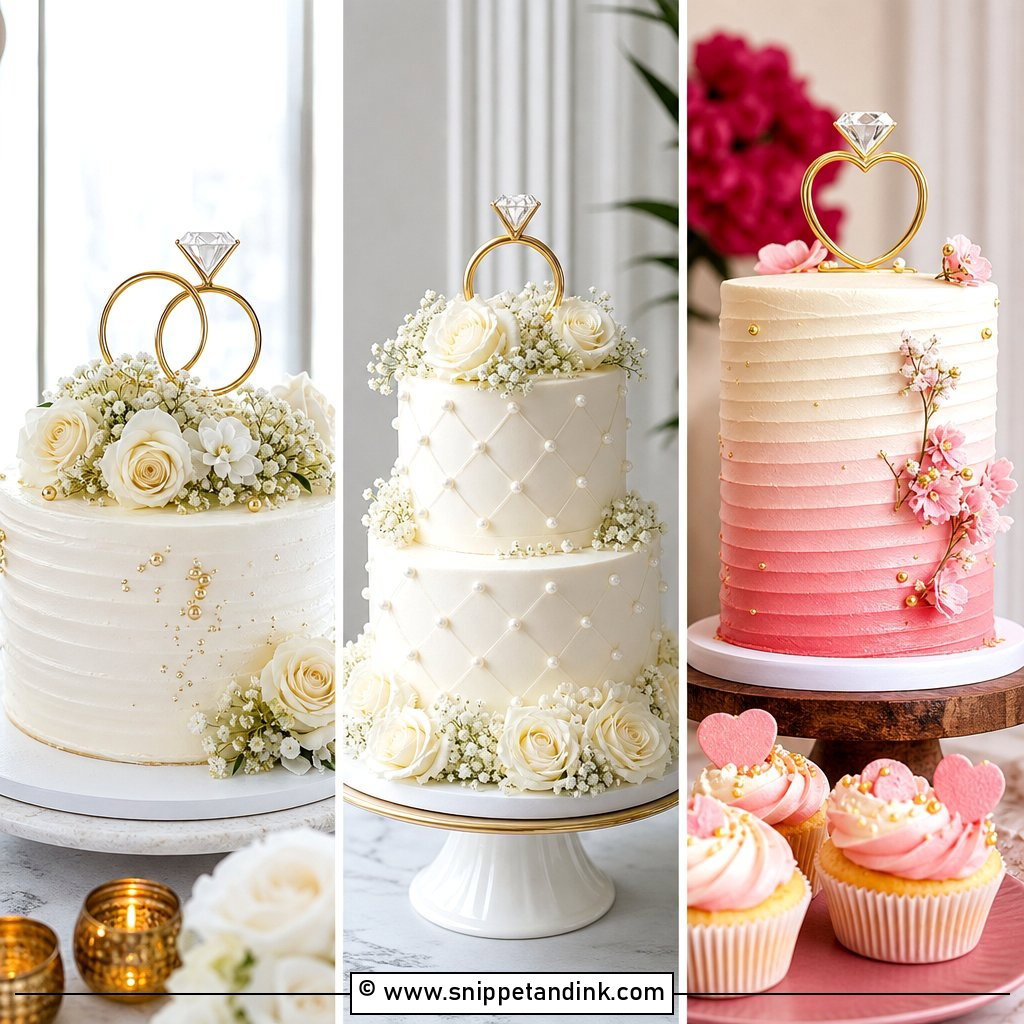
White tiers are the safest way to make a dessert table look finished, because the shape does the formal work and the colour stays out of the way. Two tiers suit a smaller party; three turns it into the centerpiece. I finish in buttercream when the room is cool and fondant when it isn’t, since fondant gives sharper edges and shields the cake from warm air. Ivory roses or ranunculus add softness. A slim gold initials topper keeps it personal without cluttering the top tier.
2. Blush Pink Engagement Cake
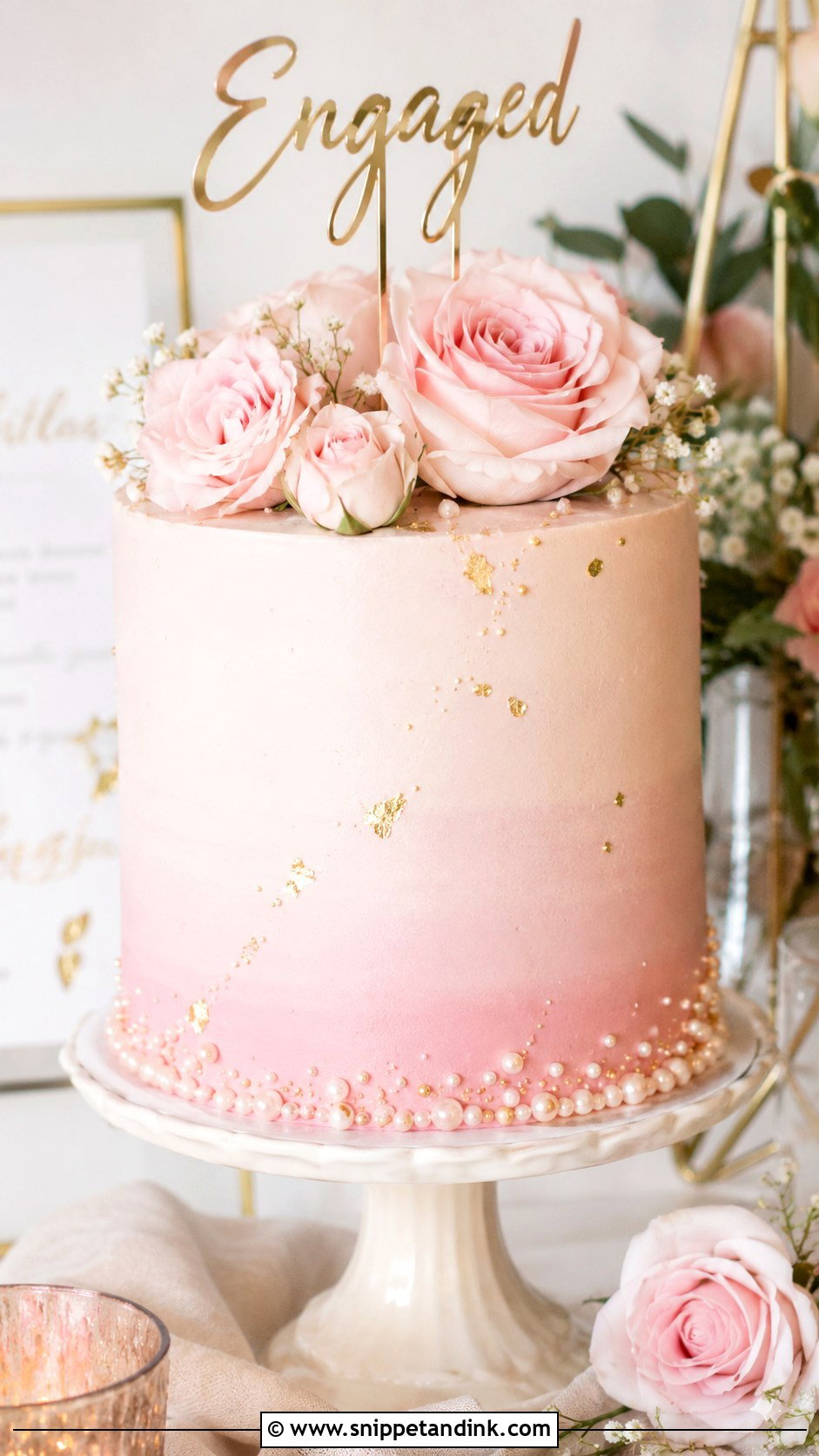
Blush pink is warm without shouting. On a single tier I pipe small pearl borders and add one floral cluster; on two tiers a soft ombre from deeper pink at the base to almost white at the top reads well across a room. Pink buttercream fades under strong sunlight and fluorescent kitchens alike, so I tint a touch deeper than the target and keep the cake covered until it’s set out. Strawberry or raspberry fillings sit naturally with it. A little gold helps, but keep the pink as the lead.
3. Gold Accent Engagement Cake
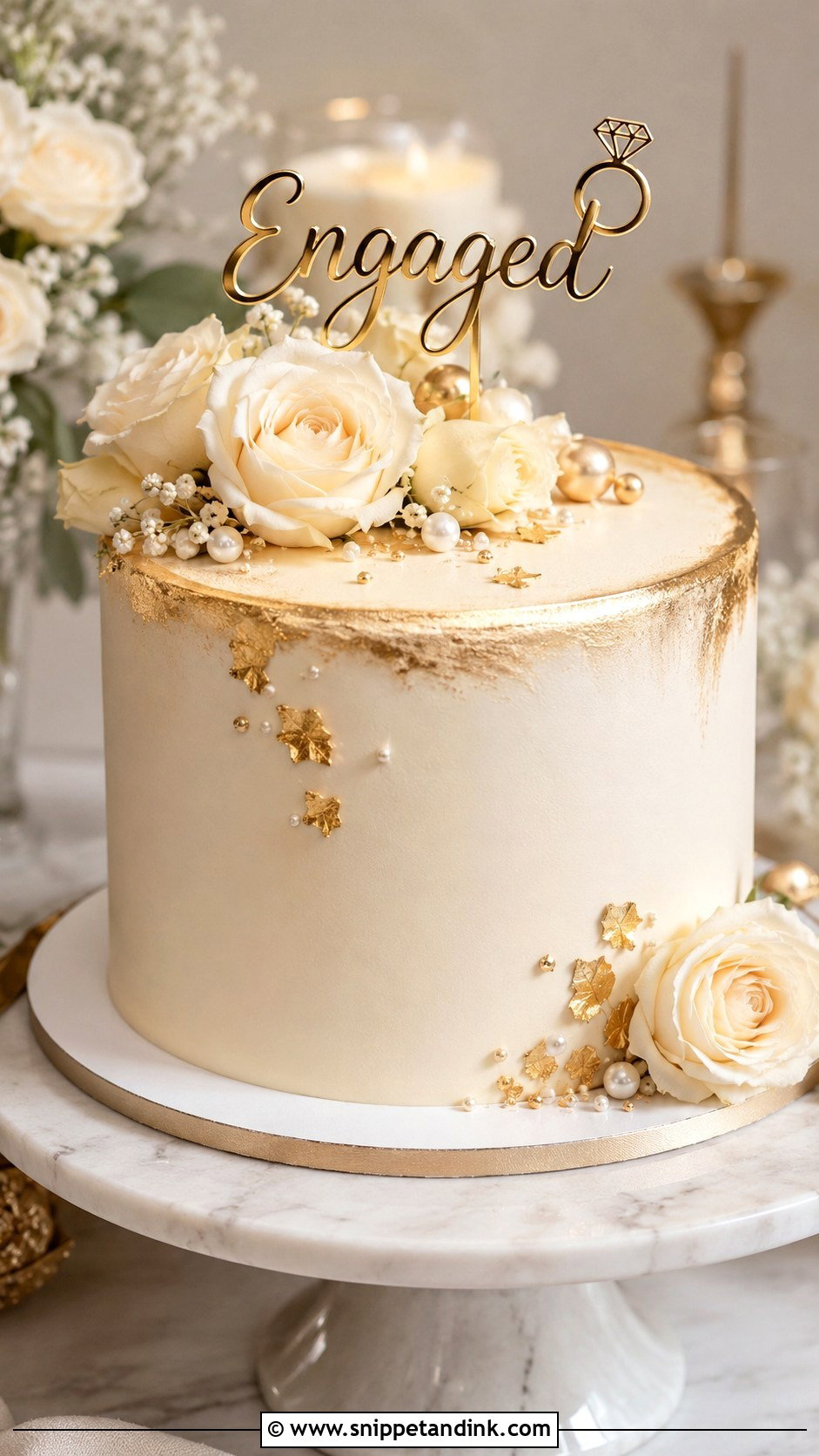
Gold works best in small doses. Brushed gold edges, scattered edible gold leaf or a thin metallic drip on a white or ivory cake looks rich; gold all over looks like a trophy. I apply leaf with a dry brush on a chilled surface, because it sticks to warm buttercream in patches and tears. Round and square cakes both take it well. Cream roses or white orchids keep it refined. Caramel or vanilla bean inside suits the warmth of the metal, and a gold “engaged” topper ties it off.
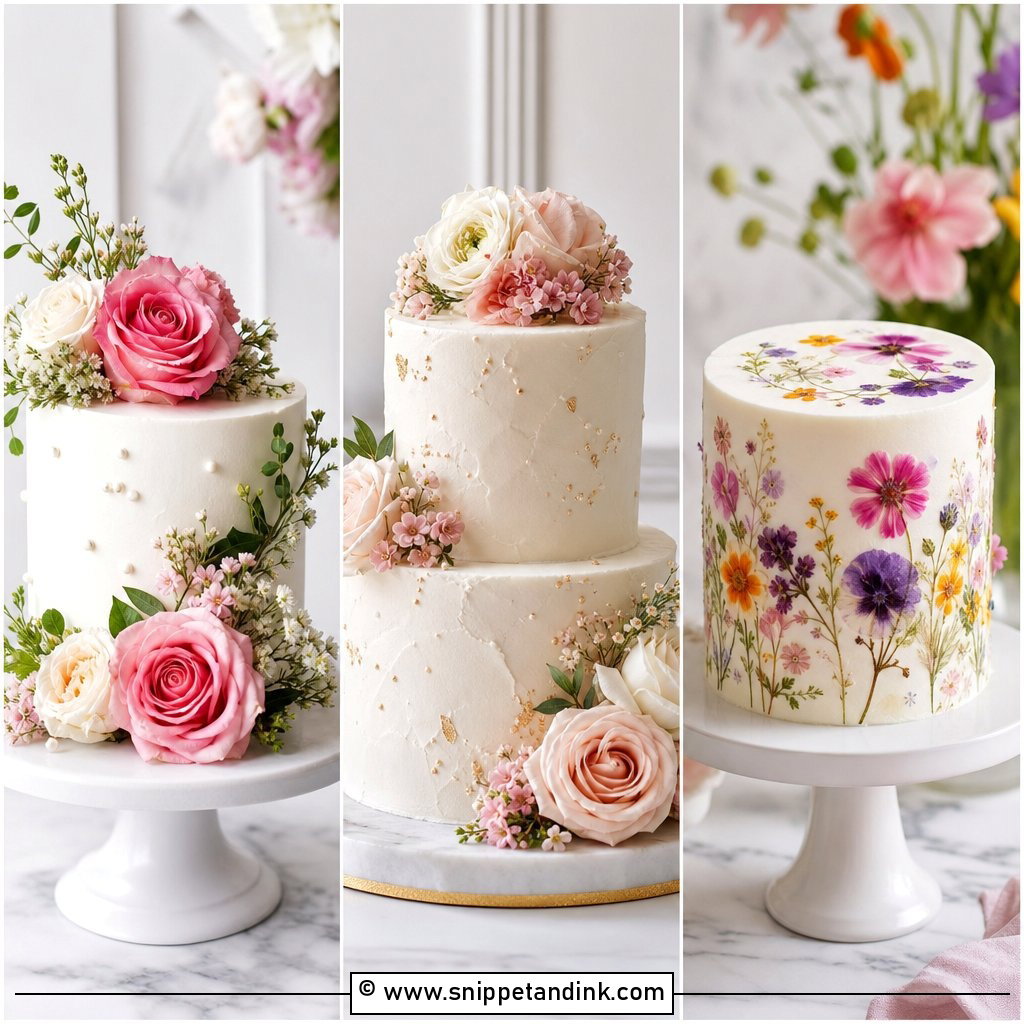
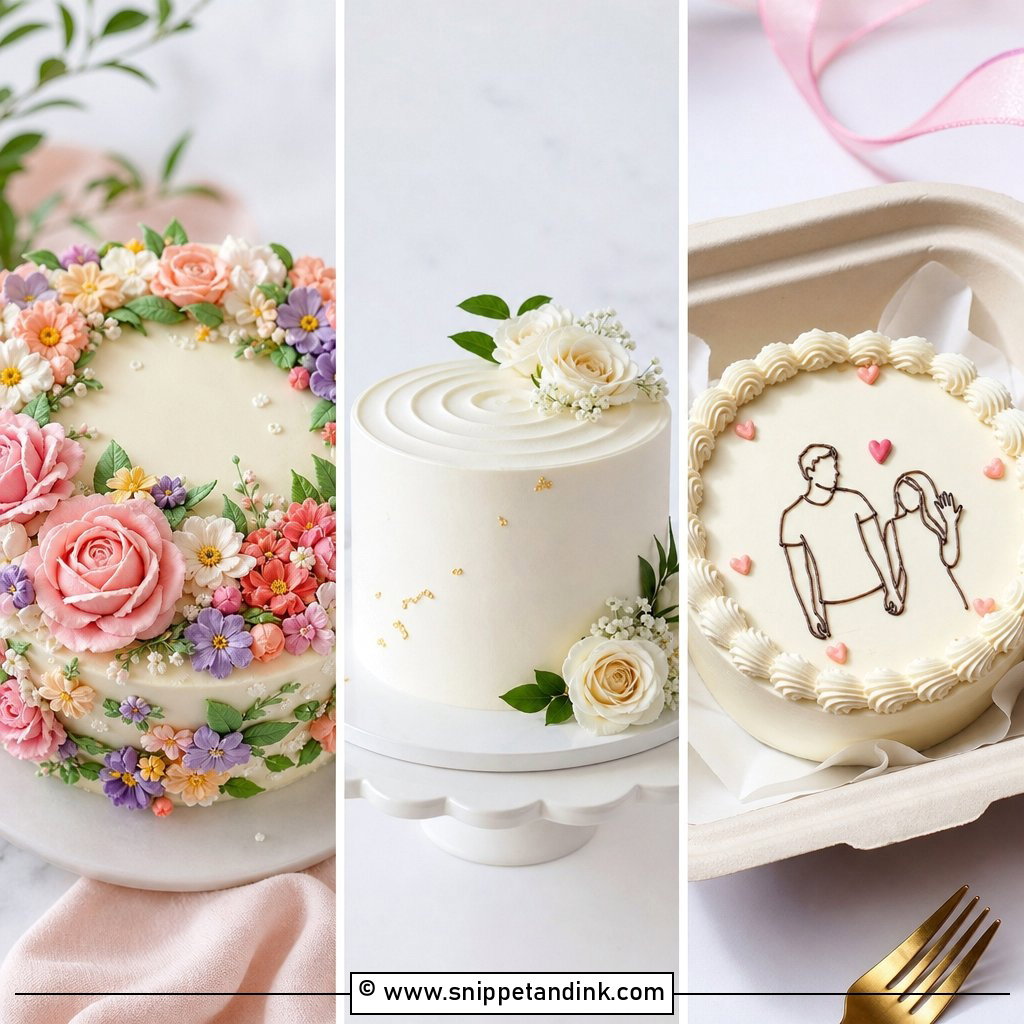
4. Floral Engagement Cake
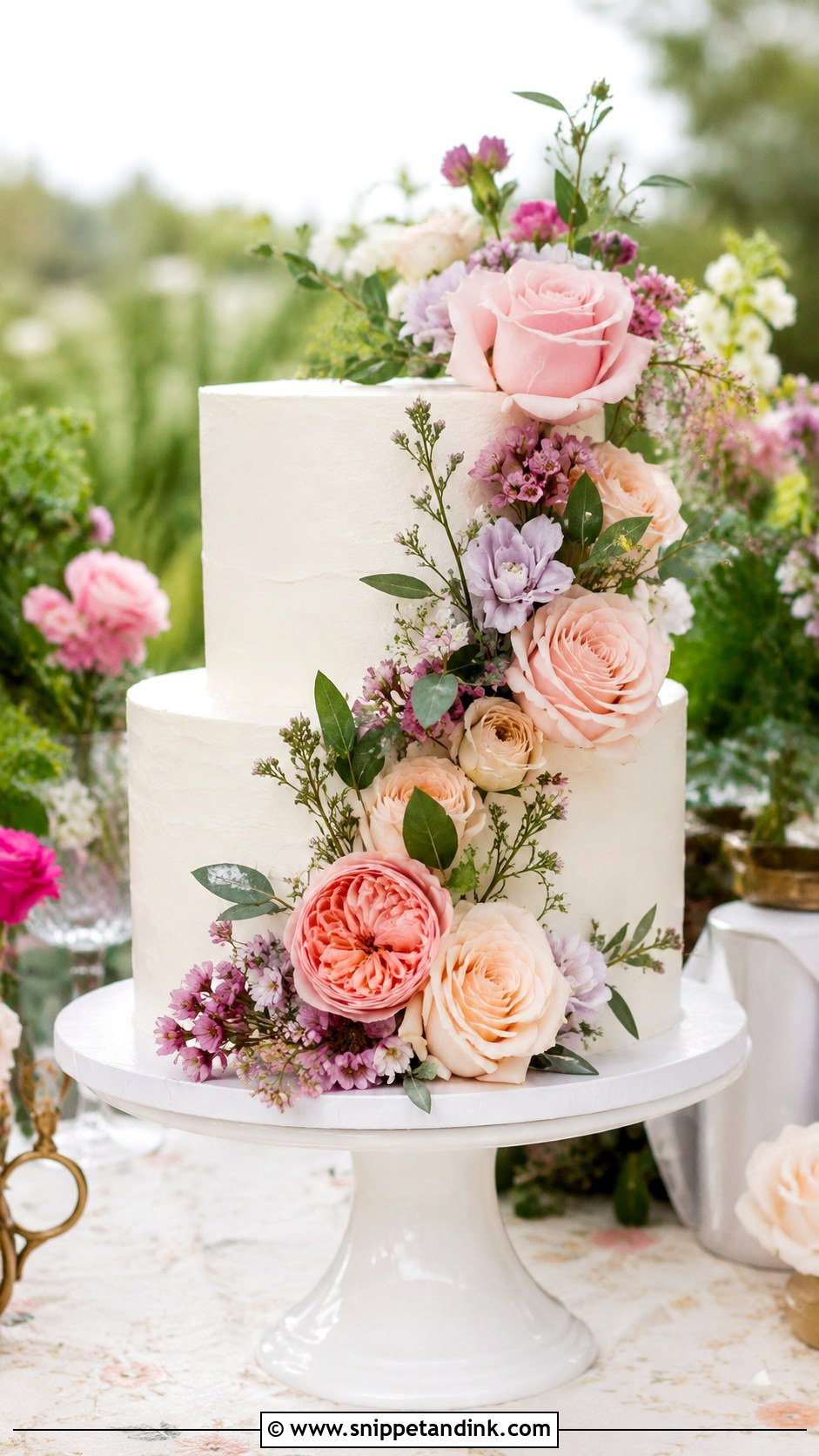
Flowers and celebration cakes go together naturally, and the choice is really fresh versus sugar. Fresh blooms look lush and cost less, while sugar flowers are fully edible, hold their shape in heat and can be made weeks ahead. Pick one palette; ivory, blush, mauve and peach together work because they sit close in tone. A diagonal cascade, a half-moon cluster or a crown on the top tier are the placements I use most. Keep the cake underneath plain so the flowers carry it.
5. Pearl Engagement Cake
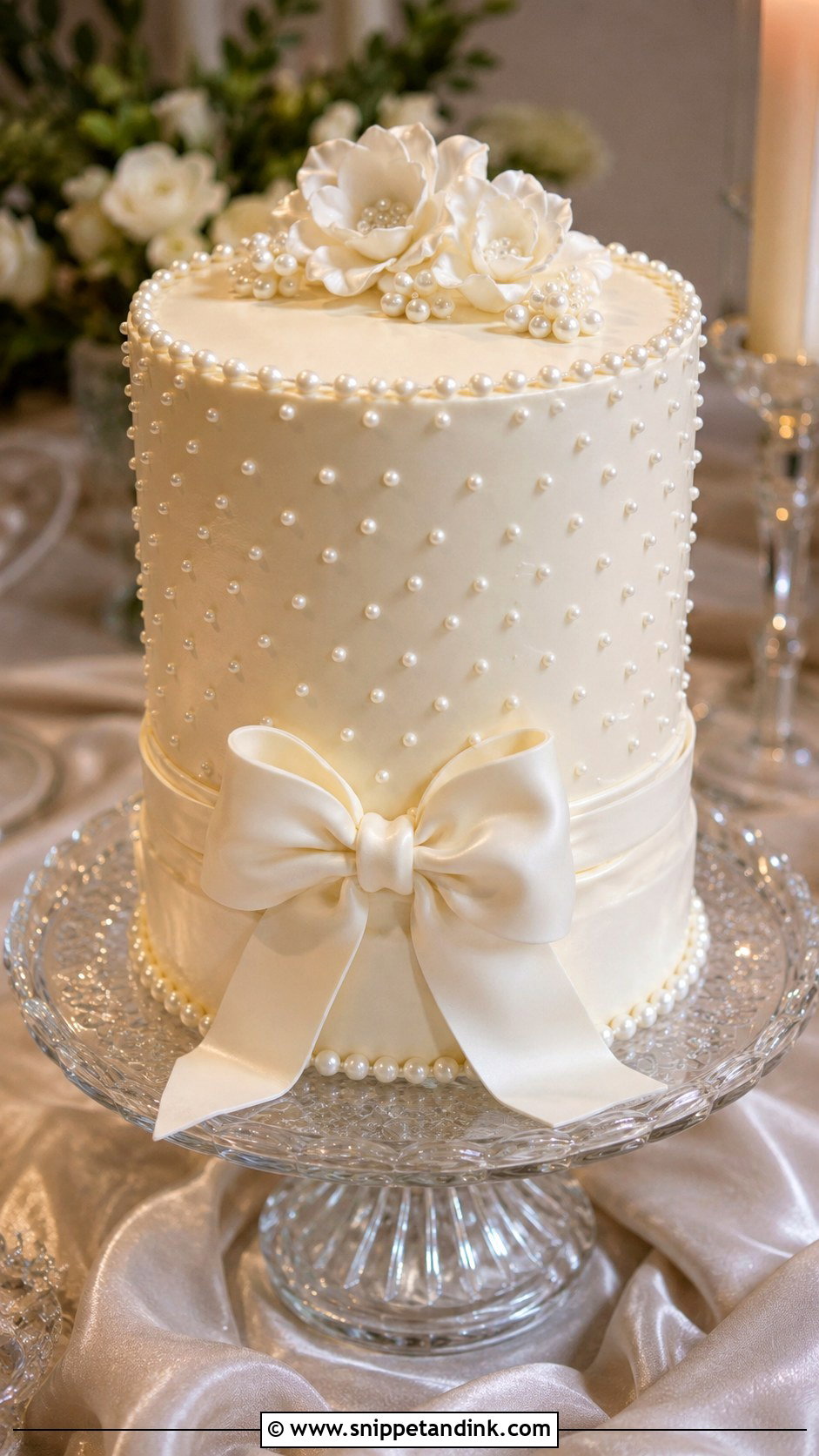
Edible pearls catch light in a quiet way that suits white, ivory or pale champagne icing. I place them with tweezers and a tiny dot of piping gel, because pressed straight into buttercream they sink slightly and lose their round shape. Scatter them lightly, set them in straight lines, or run them round the base as a border. For a modern look, cluster pearls on one side of a tall single tier and leave the rest bare. Coconut, lemon or almond keep the flavour as light as the look.
6. Minimal Engagement Cake
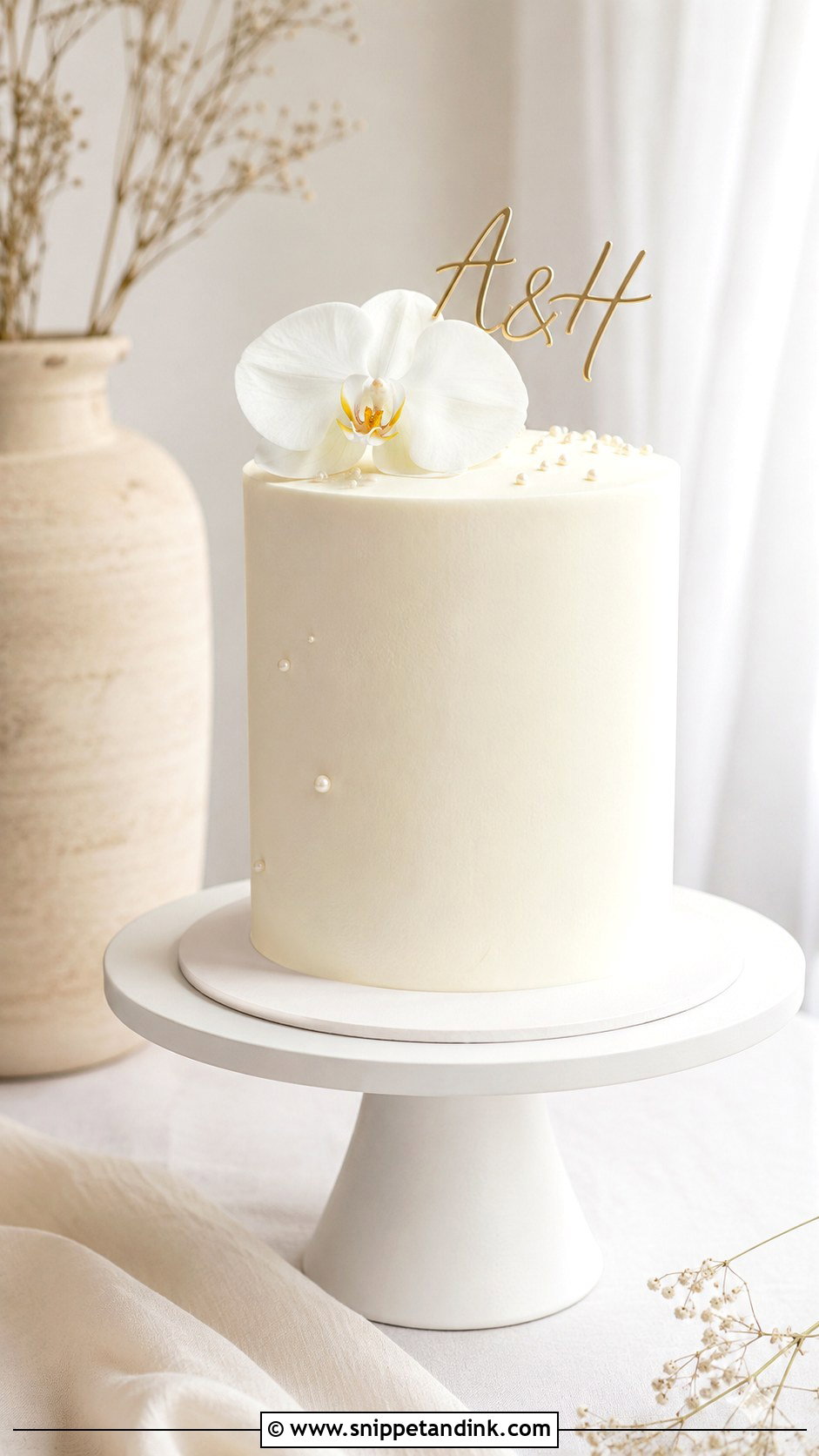
Sometimes the most elegant cake is the one with the least on it. A minimal engagement cake lives on clean lines and one detail: a single flower, a tiny topper, a ribbon or initials. The difficulty is that there’s nowhere to hide. Every bump in the icing shows, so ask your baker for sharp edges and a tall single tier if you want it to look intentional. I’d steer couples away from this one for an outdoor summer party, because a minimal buttercream finish shows heat damage immediately.
7. Vintage Engagement Cake
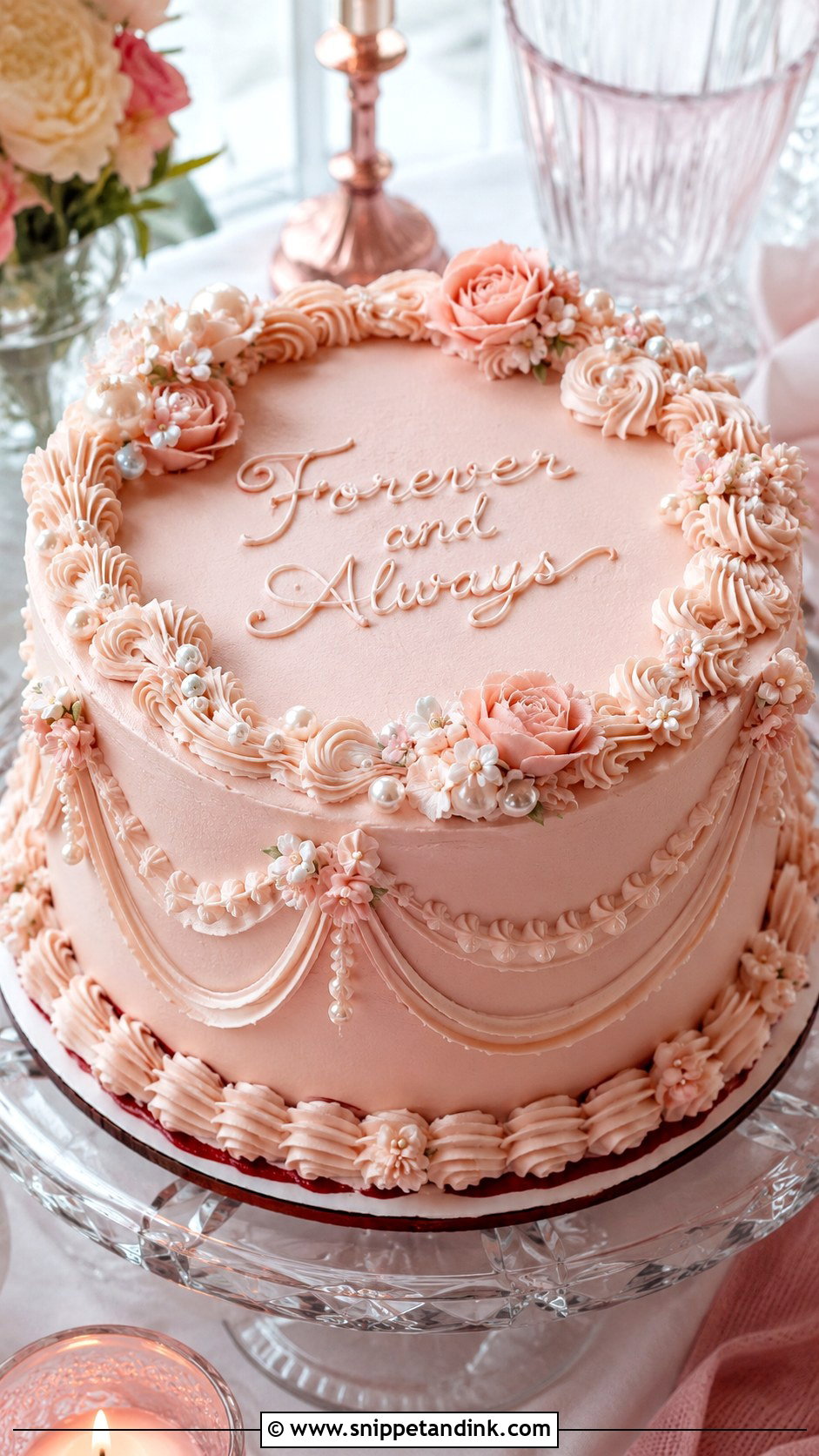
Vintage piping is back, and I’m glad, because it’s a real skill to see on a cake. Think shell borders, swags, small rosettes and handwritten messages, usually on ivory, blush, pale blue or butter yellow. The work needs a stiff buttercream so the ridges stay crisp, and it doesn’t like a warm room. A heart shape reads romantic, a round shape reads classic. Keep the piping even and symmetrical; a lopsided swag looks home-made in the wrong way. Red velvet or vanilla raspberry suits the nostalgic mood.
8. Heart Engagement Cake
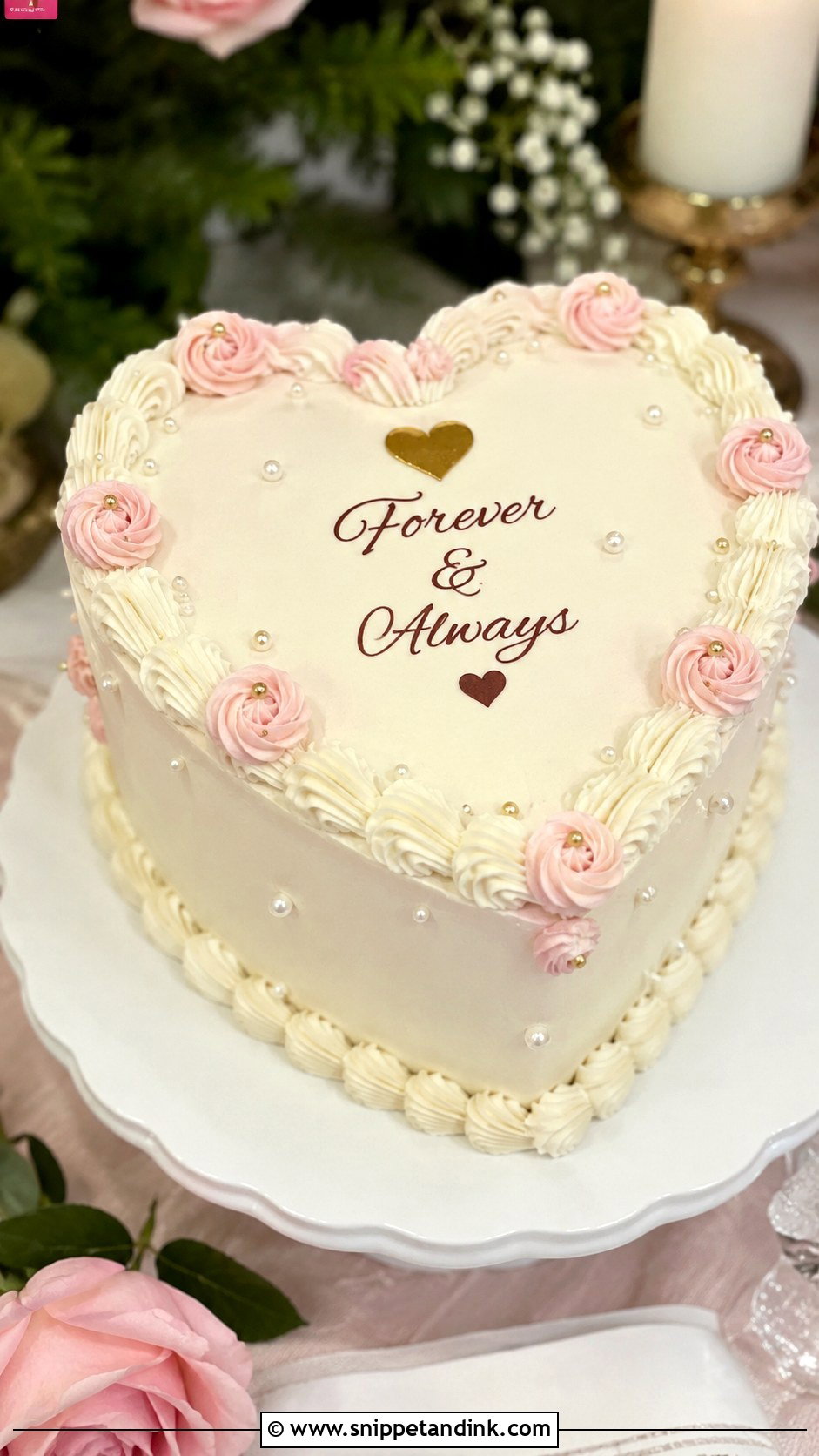
A heart engagement cake already says what the party is about, so the decorating can stay simple. Smooth buttercream, a piped border, a few pearls and a short message on top is enough. Heart cakes are harder to cut into neat portions than rounds, so I tell couples to expect fewer slices from the same diameter. White, blush or pale lavender keep it grown-up. For a modern version, try a clean heart with one floral corner. Strawberry or chocolate cherry suit the romance.
9. Two Tier Engagement Cake
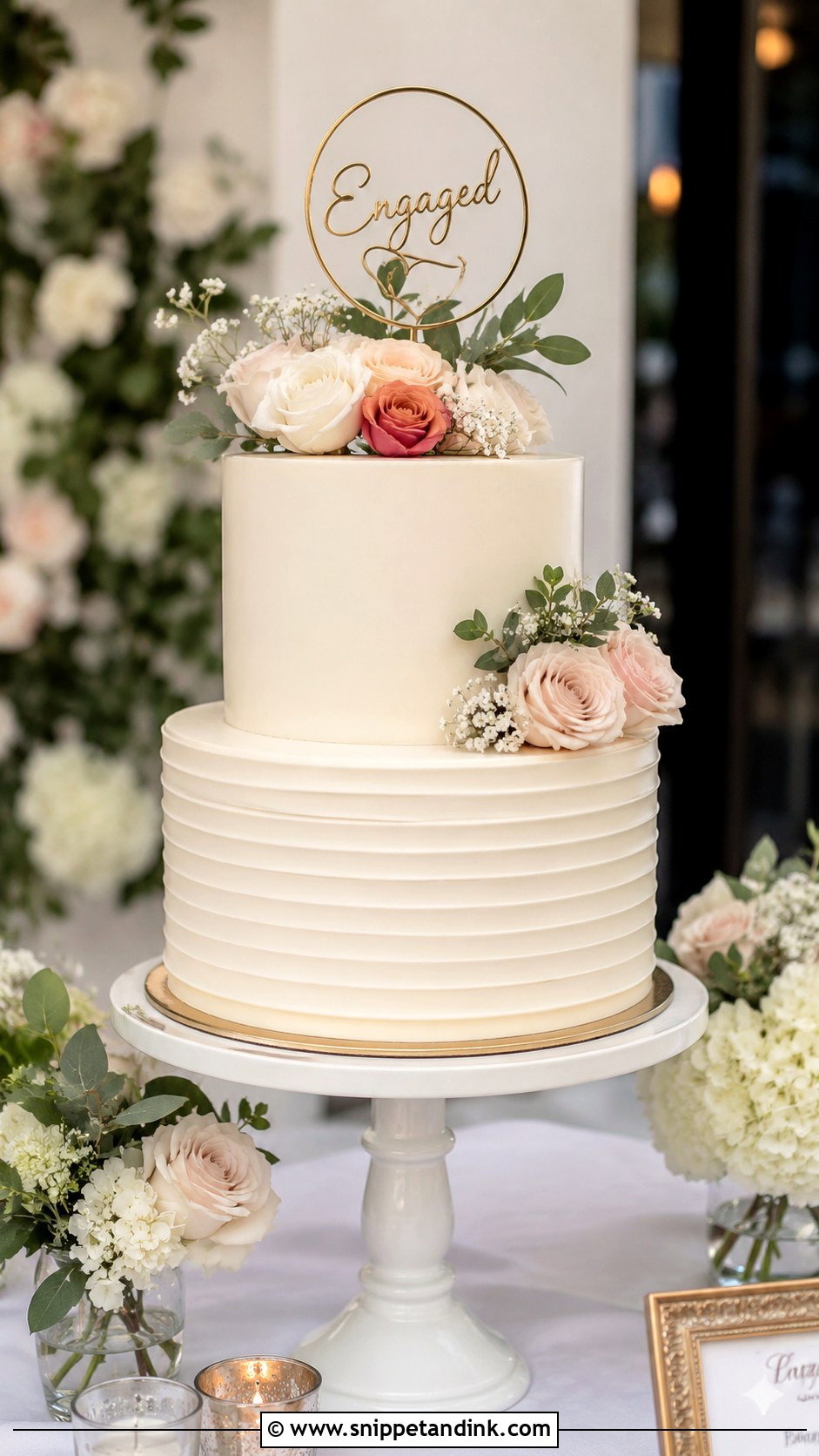
A two tier engagement cake gives height without the formality of a full wedding cake, and it’s the size I recommend most for a mid-sized party. I like texture on the lower tier, ribbed buttercream or soft ruffles, with a smooth top tier for contrast. Anything stacked needs dowels in the bottom tier to carry the weight; ask your baker, because skipping them is how tiers lean on the drive. Flowers between tiers fill out the profile. Two flavours, one per tier, gives guests a choice.
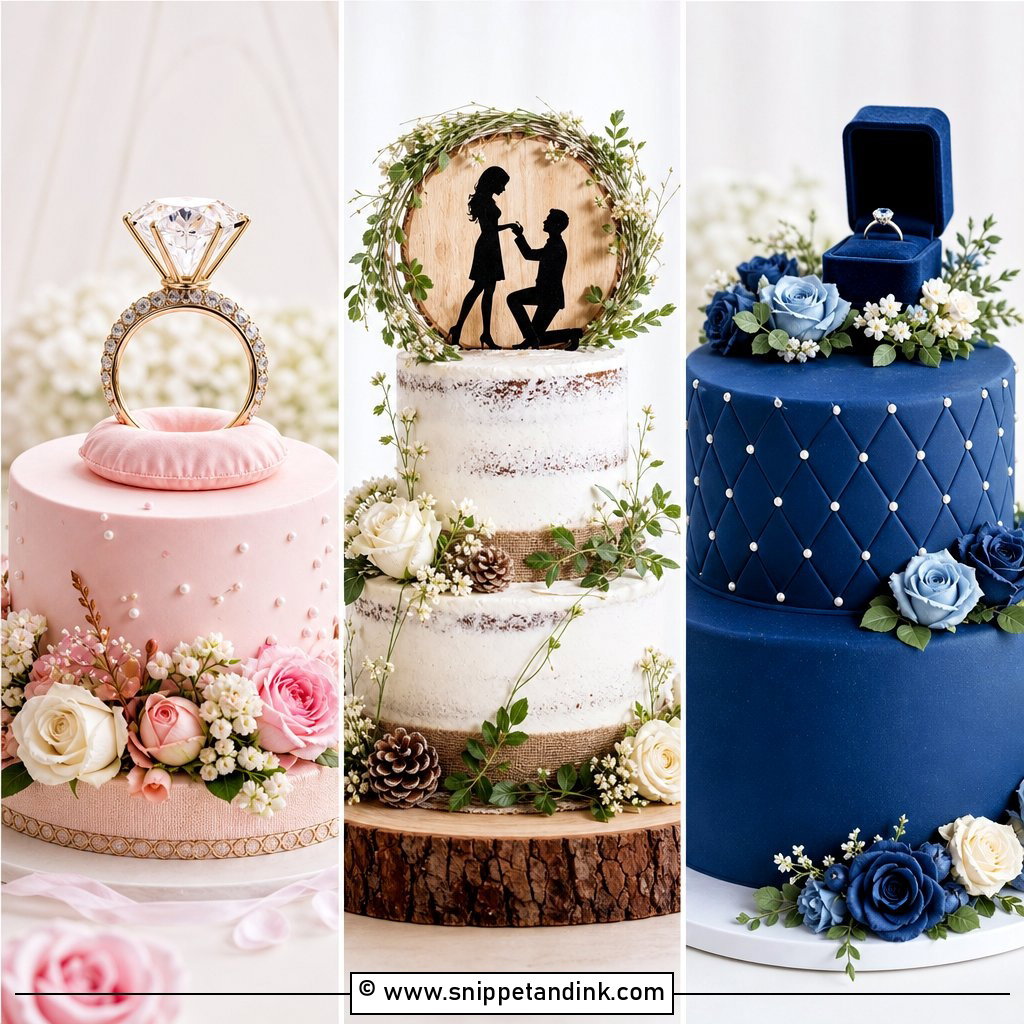
10. Engagement Ring Cake
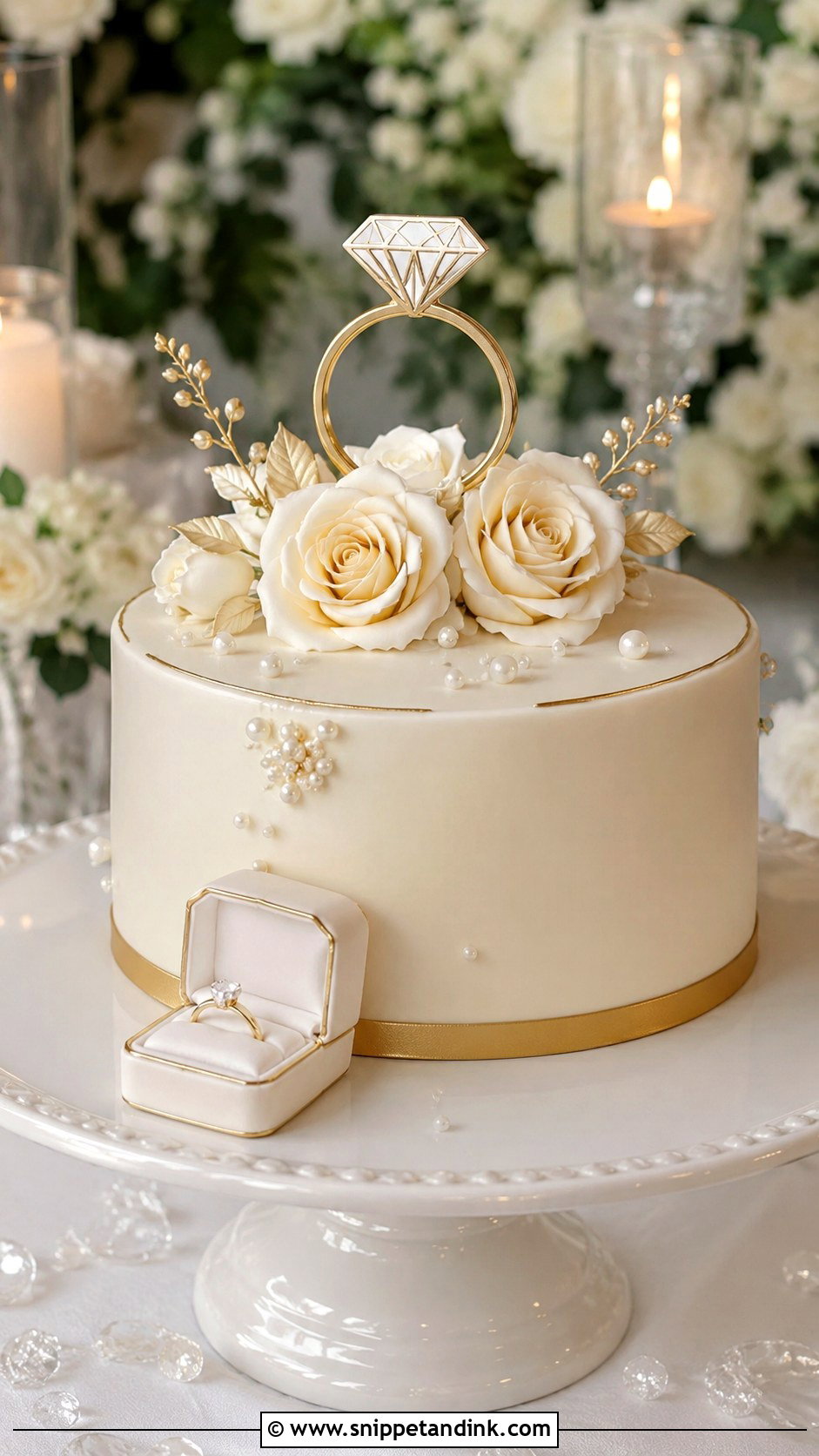
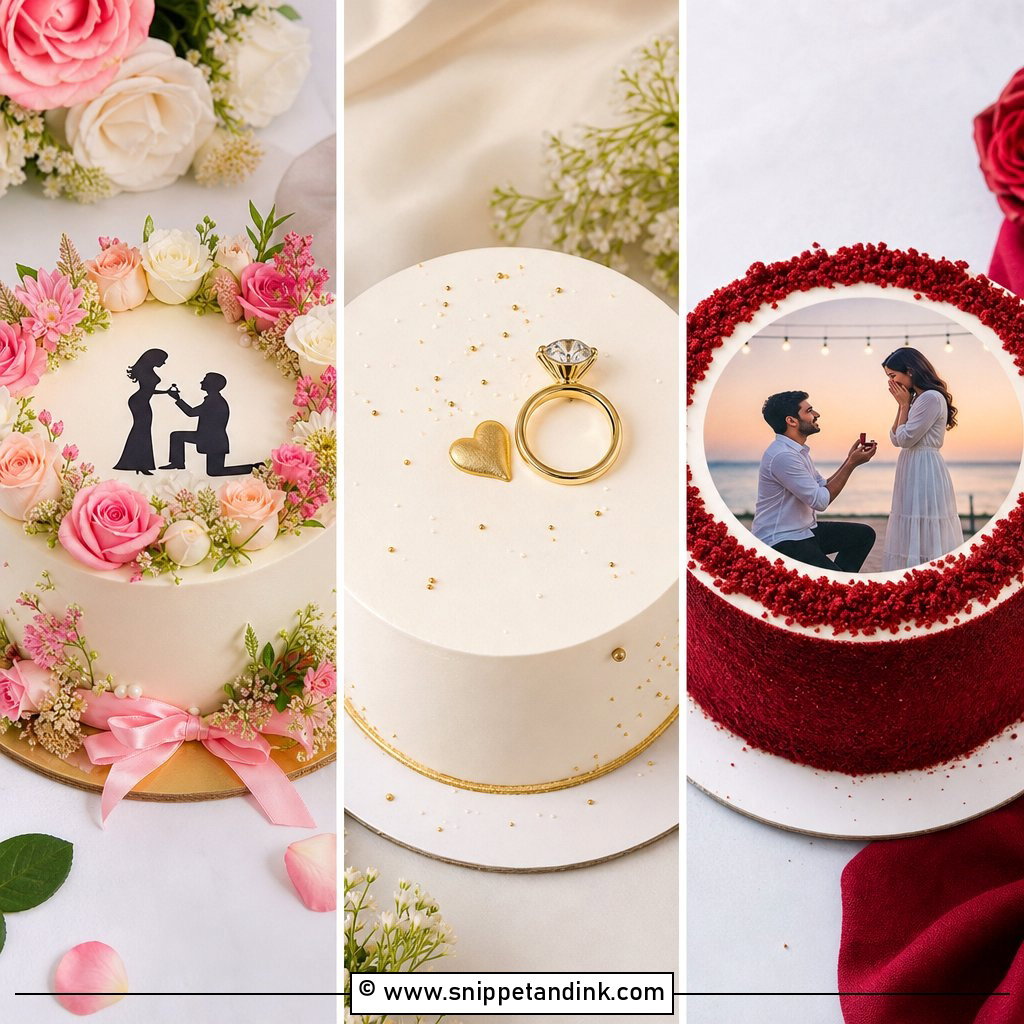
An engagement ring cake can tip into novelty fast. I’d rather keep the ring as a refined topper, a small fondant ring box or a delicate motif on the front than shape the whole cake like a diamond. A smooth white cake with gold trim and a crystal-style topper is easy to read from across a room, which matters at a surprise or announcement party where guests see it before they hear the news. Sugar flowers or a ribbon keep it soft, and white chocolate raspberry suits the bright look.
11. Black And White Engagement Cake
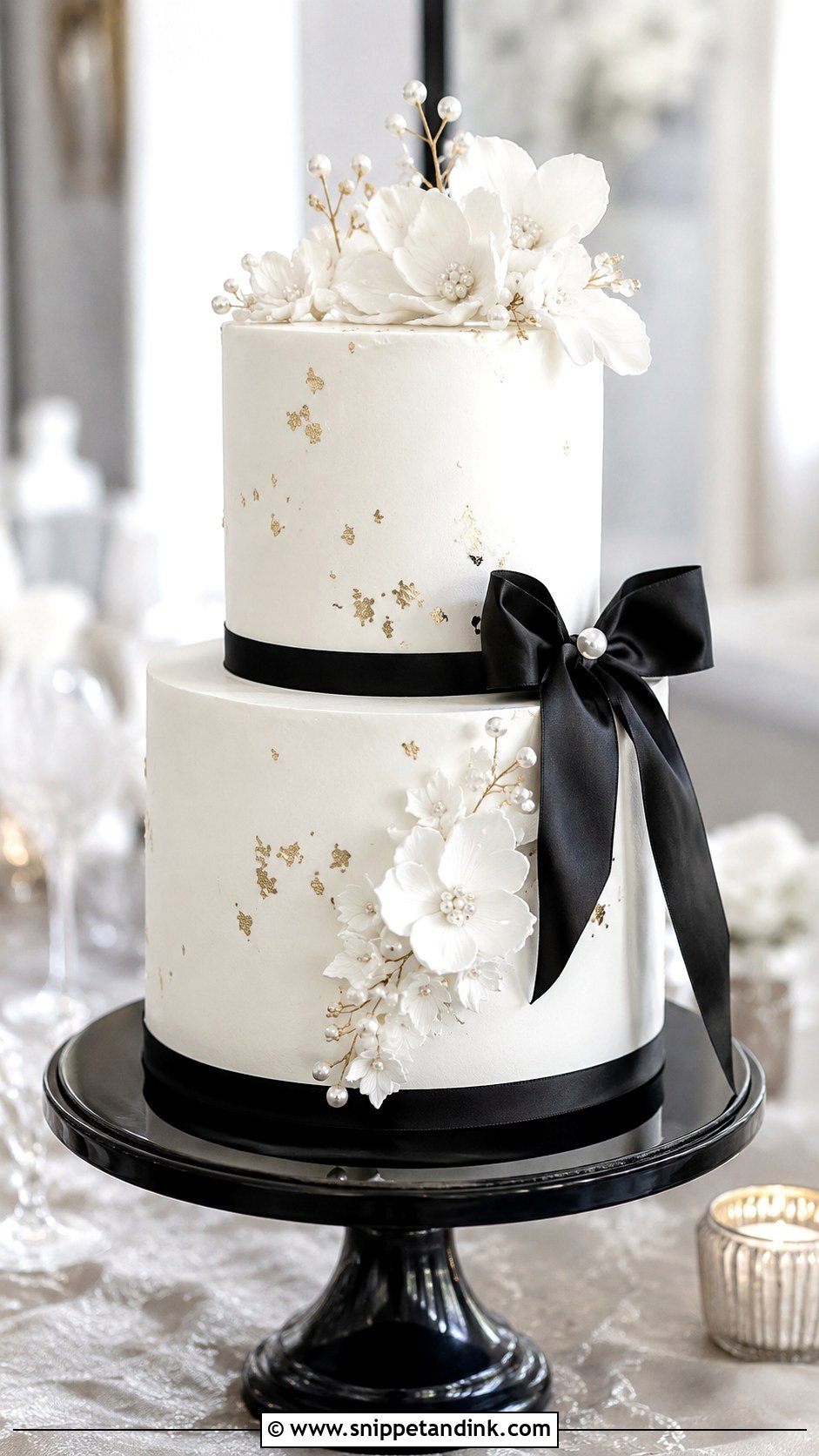
Black and white is graphic, and it suits couples whose style is sleek rather than sweet. A white cake with a black ribbon, black sugar flowers or fine black piping keeps the contrast controlled; one black tier over one white is the bolder route. Black icing takes a lot of colouring and can stain teeth and lips, so I usually reserve it for fondant details or a thin outer layer rather than the whole cake. A touch of gold or pearl softens it. Chocolate or cookies and cream suit it inside.
12. Sage Green Engagement Cake
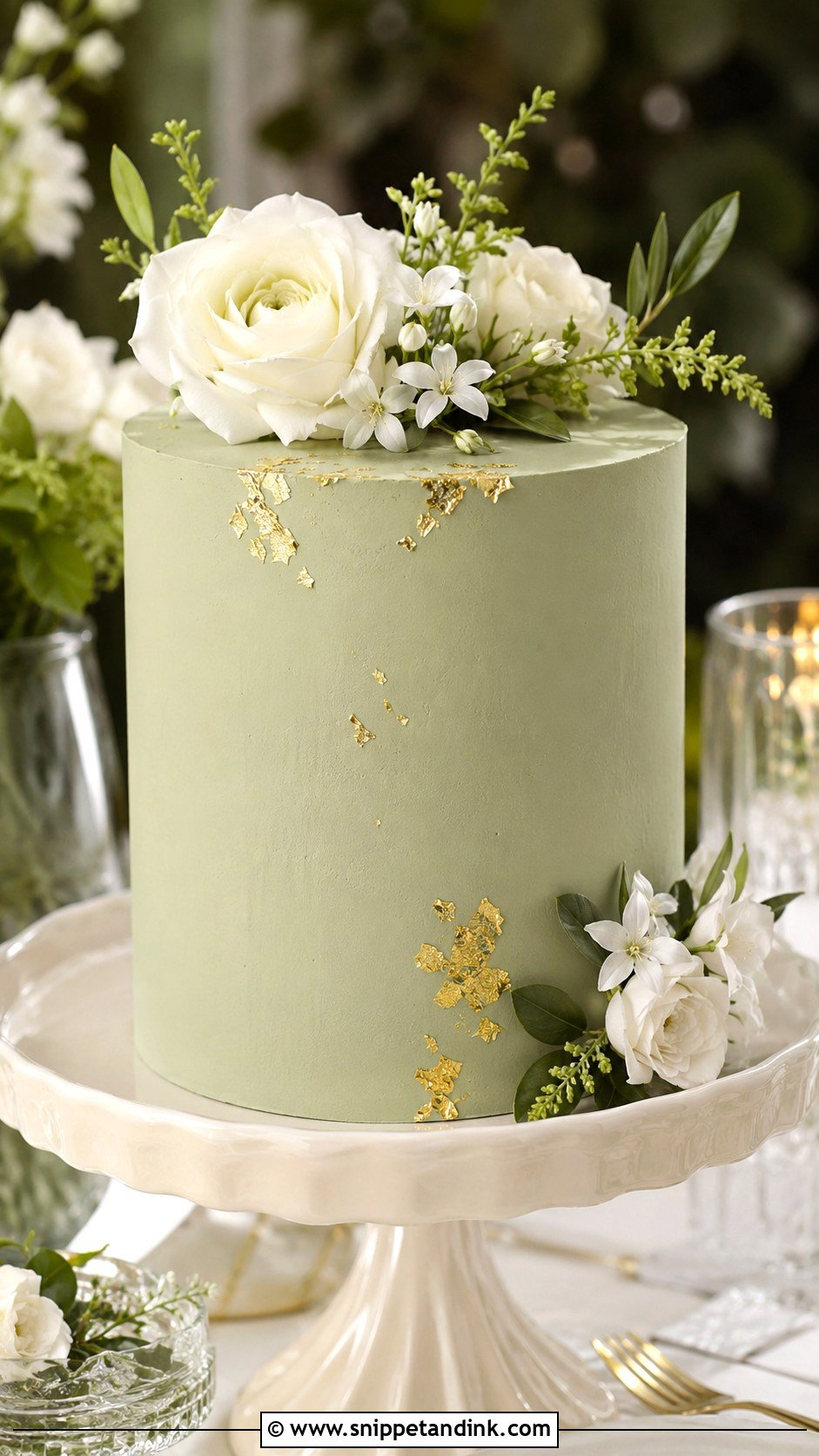
Sage green reads fresh and calm, and it suits garden parties and brunch celebrations. Smooth sage buttercream with white flowers and a little greenery looks natural without going rustic. Greens can shift towards grey or olive depending on the butter, so I always mix a test swatch in the actual buttercream rather than trusting the colour chart. Gold leaf or pearls make it more polished. Lemon elderflower and pistachio are the flavours I’d pair with it.
13. Blue Engagement Cake
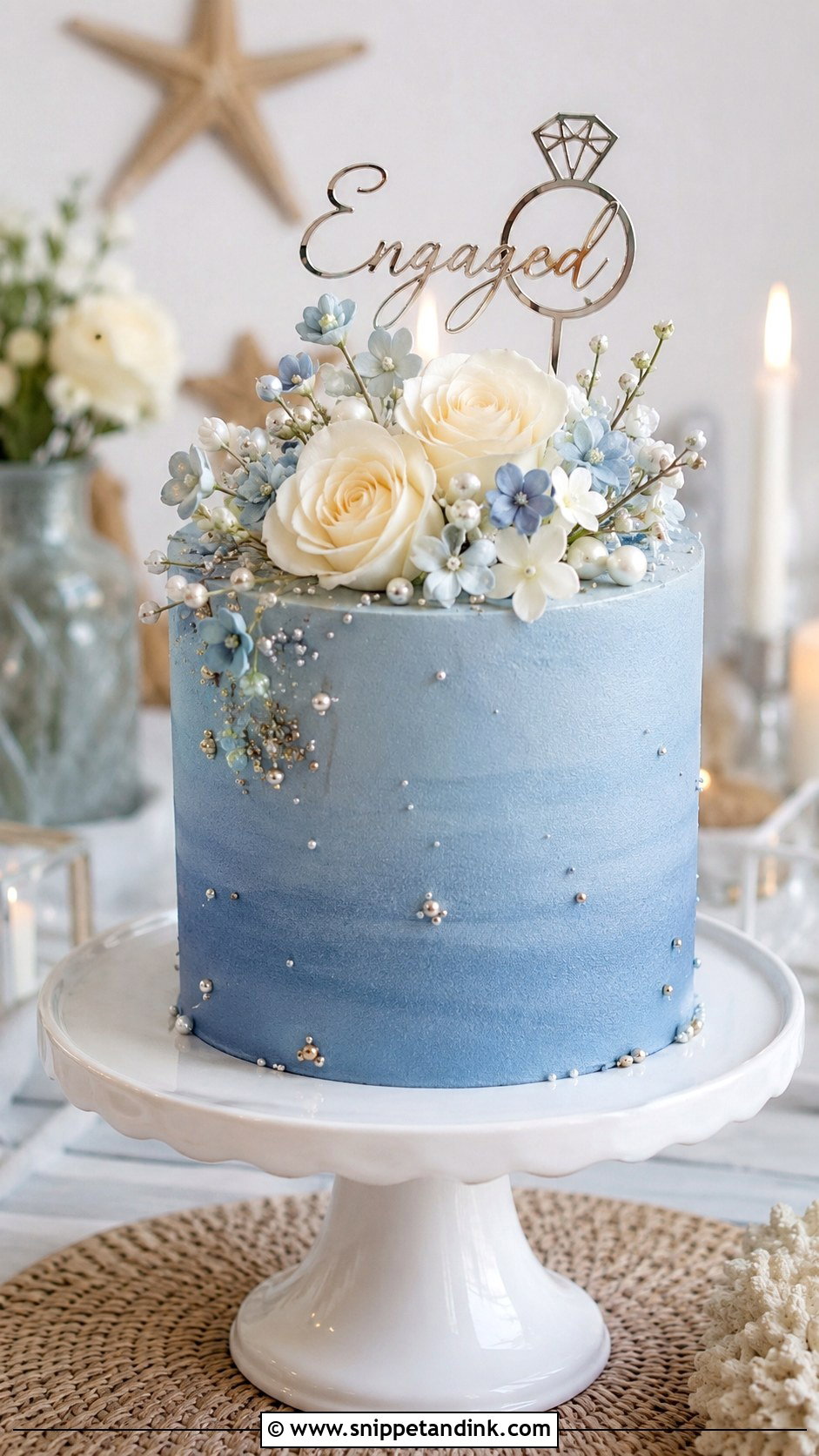
Pale blue is a little unexpected at an engagement party, which is part of its appeal. Powder, dusty and sky blue all suit an elegant table, finished smooth with white flowers, pearls or silver. An ombre fading gently from deeper blue to almost white is very pretty when the steps are even. Blue buttercream on a yellow butter base turns slightly green, so for a true blue I either use a whiter shortening blend or a little violet to correct it. Coconut or blueberry lemon suits the cool palette.
14. Marble Engagement Cake
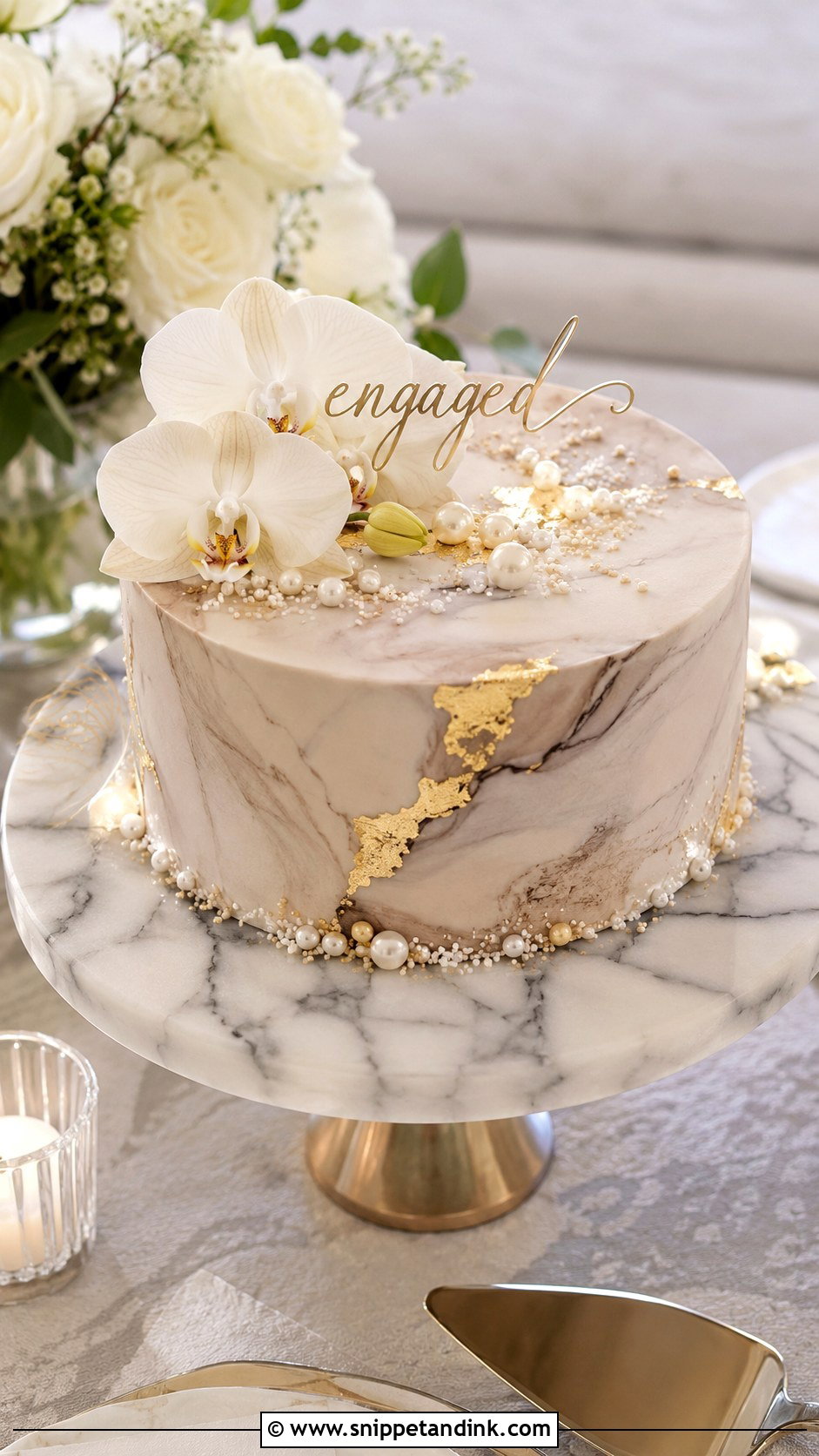
Marbled icing gives a stone-like, modern finish, usually soft grey, white, ivory or beige with gold leaf along a vein. It only works on very smooth fondant or very smooth buttercream, where the veining can stay crisp. I knead the colour through fondant in streaks and stop early; overwork it and the marble turns into a flat grey. One cluster of white orchids or roses softens it. Salted caramel or mocha suits the look, and it belongs on a plain table where it isn’t competing.
15. Bow Engagement Cake
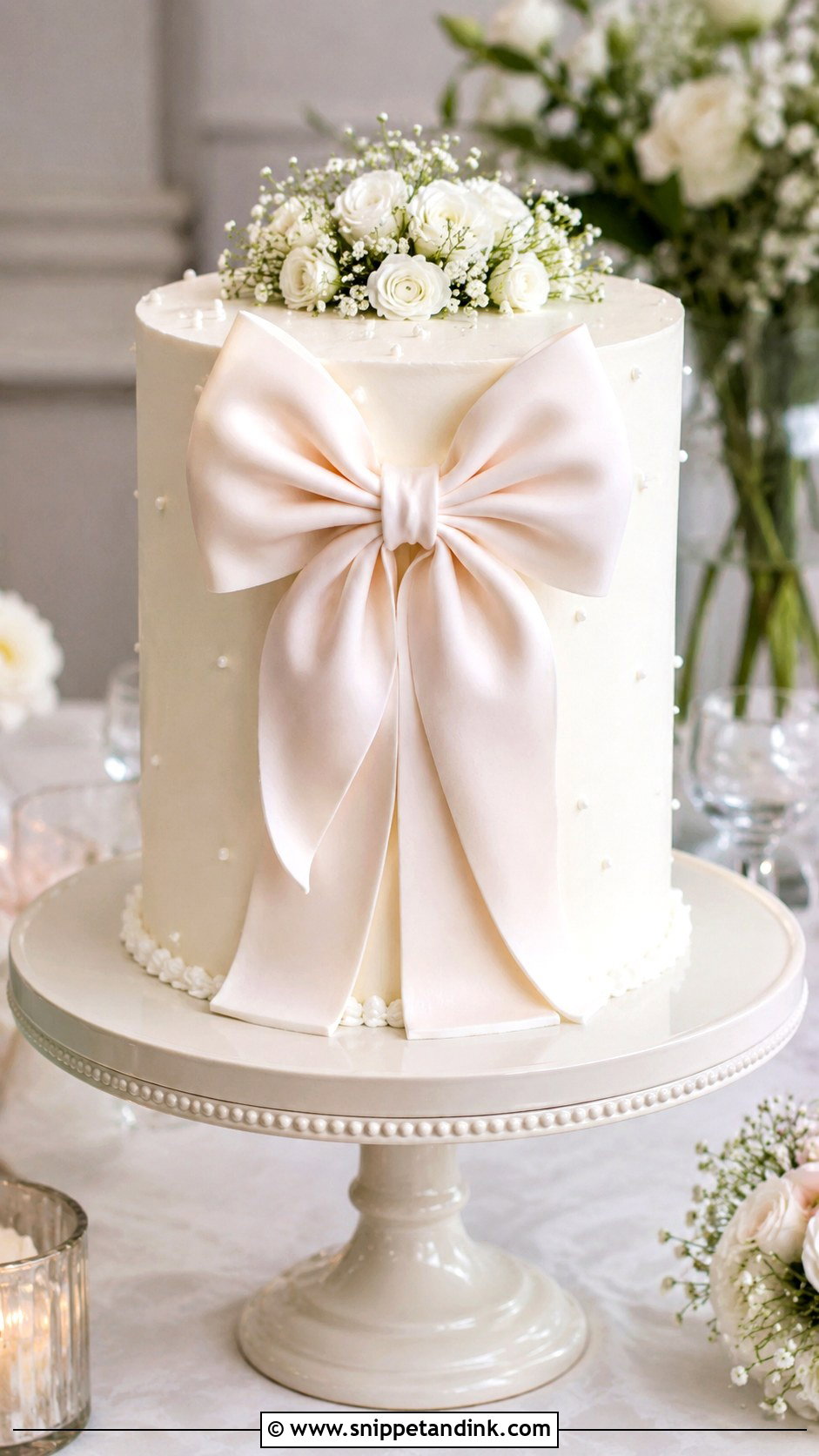
Bows are everywhere right now, and one large bow does more than ten small ones. They can be fondant, chocolate, wafer paper or real ribbon. Real ribbon should never touch buttercream directly, or the grease seeps through; I back it with a strip of fondant or acetate first. A blush bow on a tall white cake looks soft, while a black bow on ivory feels sharper. Add a few pearls if you like, but the bow is the design.
16. Pressed Flower Engagement Cake
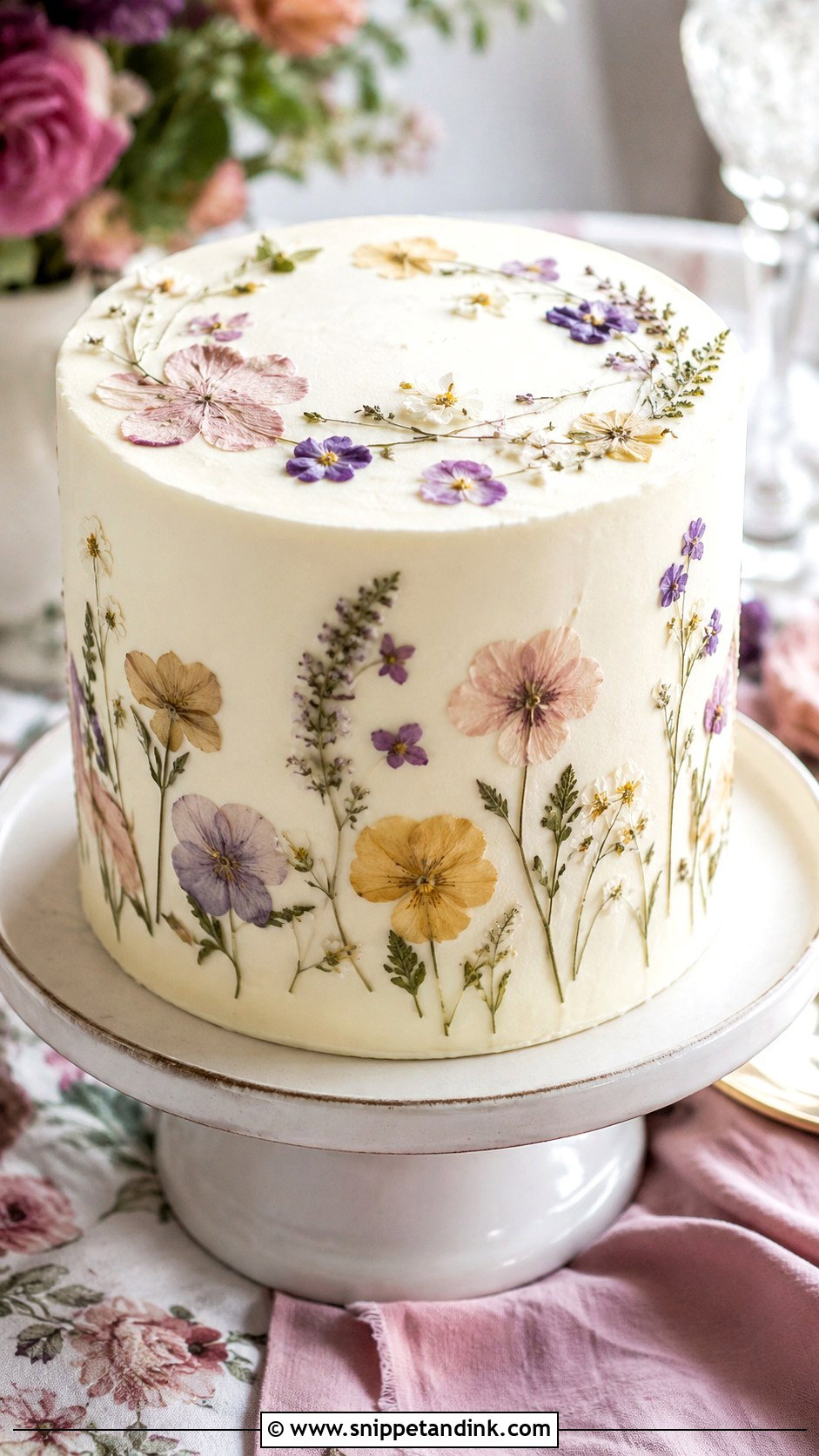
Pressed flowers lie flat against the icing, so you get a garden look with no height at all. Every flower must be edible and grown without pesticides, which usually means buying from an edible-flower supplier rather than a florist. Keep the palette tight: ivory, lavender, blush and pale yellow sit well together. Smooth buttercream is the best background. Pressed petals can darken where they touch moist icing, so I press them on as close to delivery as I can. Lemon or honey cake suits the daytime mood.
17. Semi Naked Engagement Cake
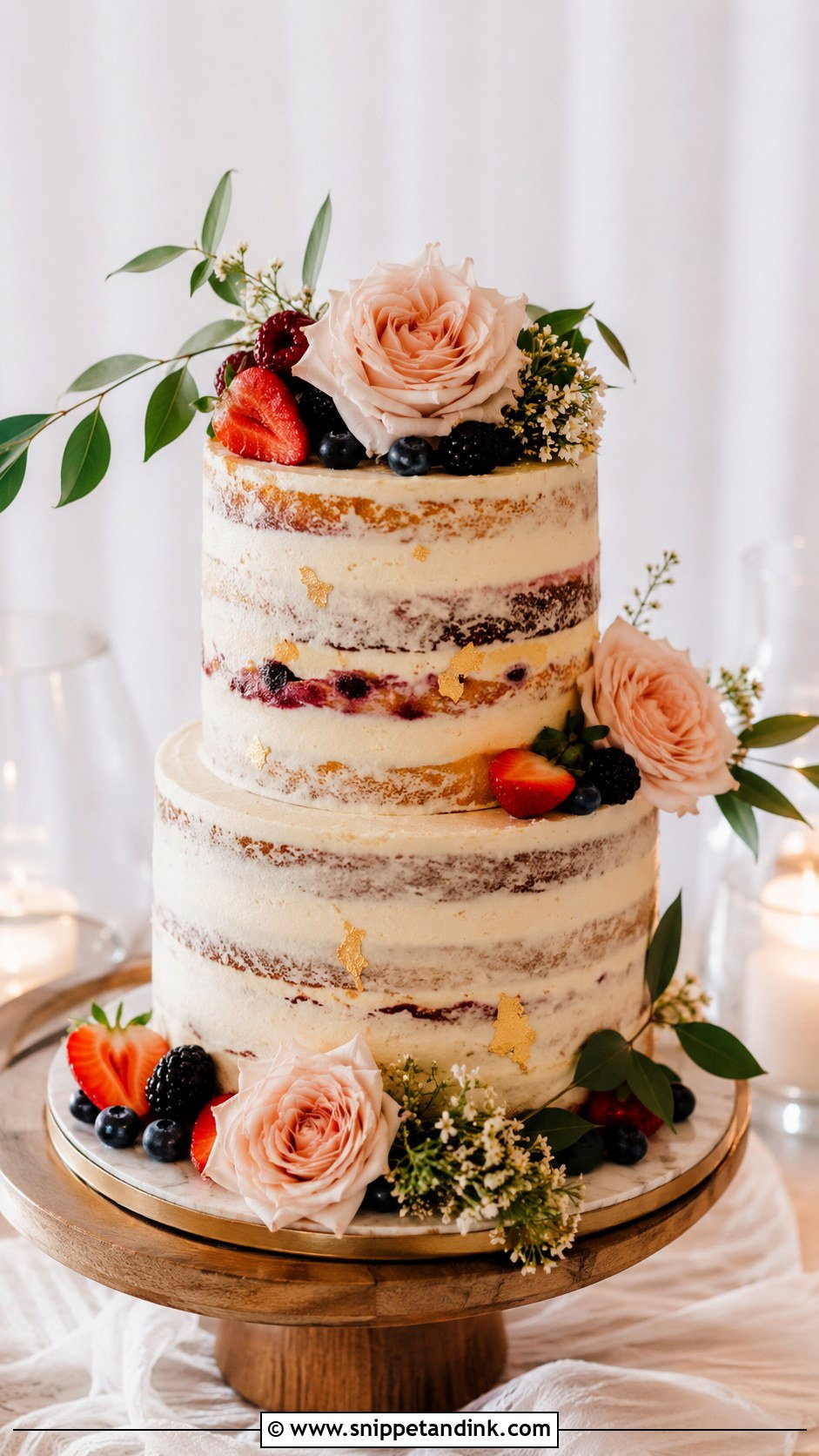
A semi naked engagement cake has a thin scrape of frosting with the layers showing through, so it looks relaxed without being unfinished. The exposed sponge dries out faster than a fully covered cake, which matters if it’s sitting out for hours; I brush the layers with syrup and set it out as late as possible. Fresh flowers, berries or a little gold leaf dress it up. Two tiers on a ceramic stand looks right at an intimate party. Carrot and lemon cakes both suit this finish well.
18. Watercolor Engagement Cake
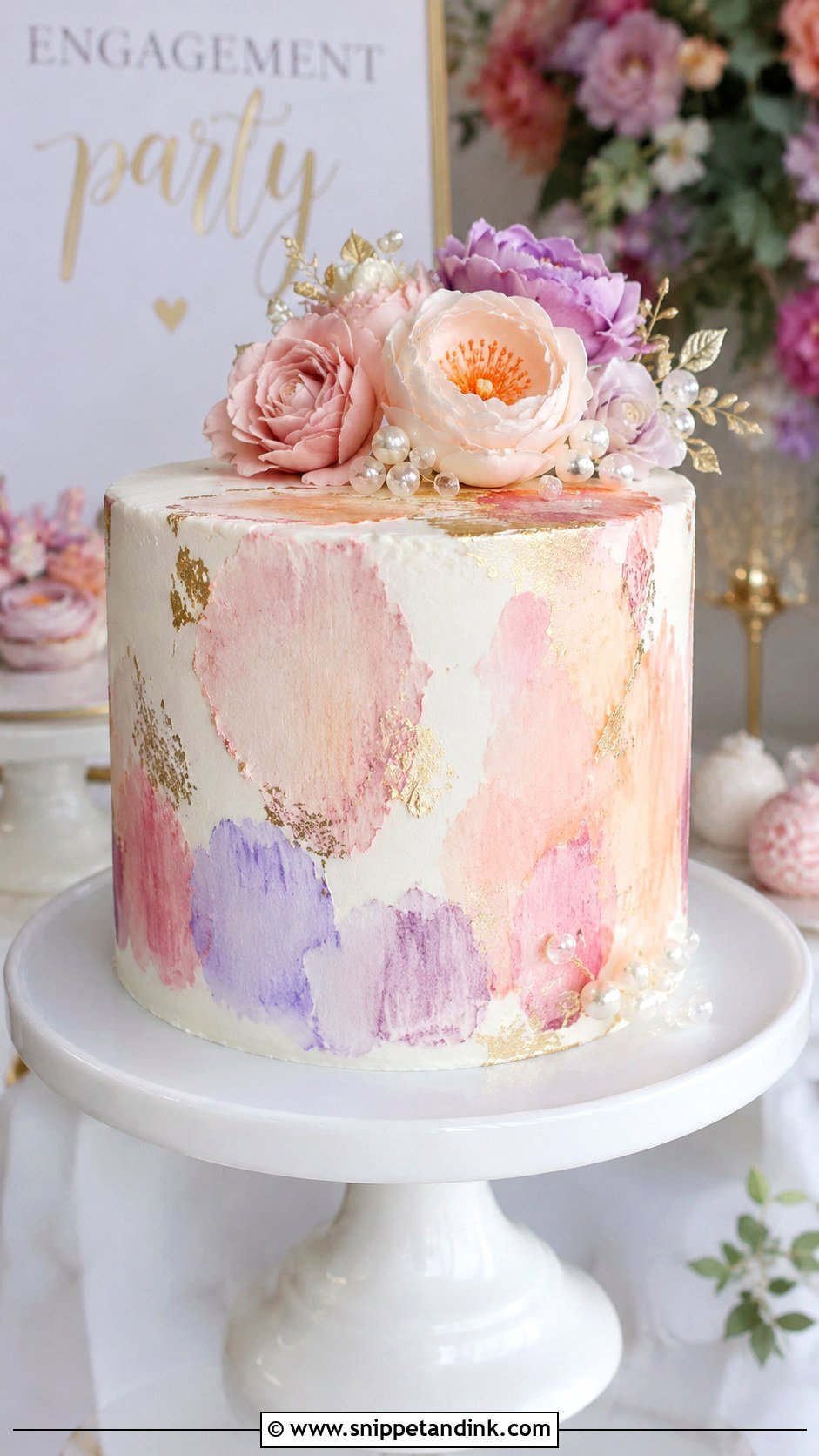
Watercolour icing blends two or three colours into the sides so it looks painted rather than piped. Blush and peach, lavender and sage, or dusty blue with white all work. I apply the colours with a palette knife and then scrape once; scrape twice and they turn muddy. Pair it with a clean shape and one accent such as gold leaf or a few sugar flowers. It suits one tier or several. Lemon raspberry inside keeps the whole thing light.
19. Monogram Engagement Cake
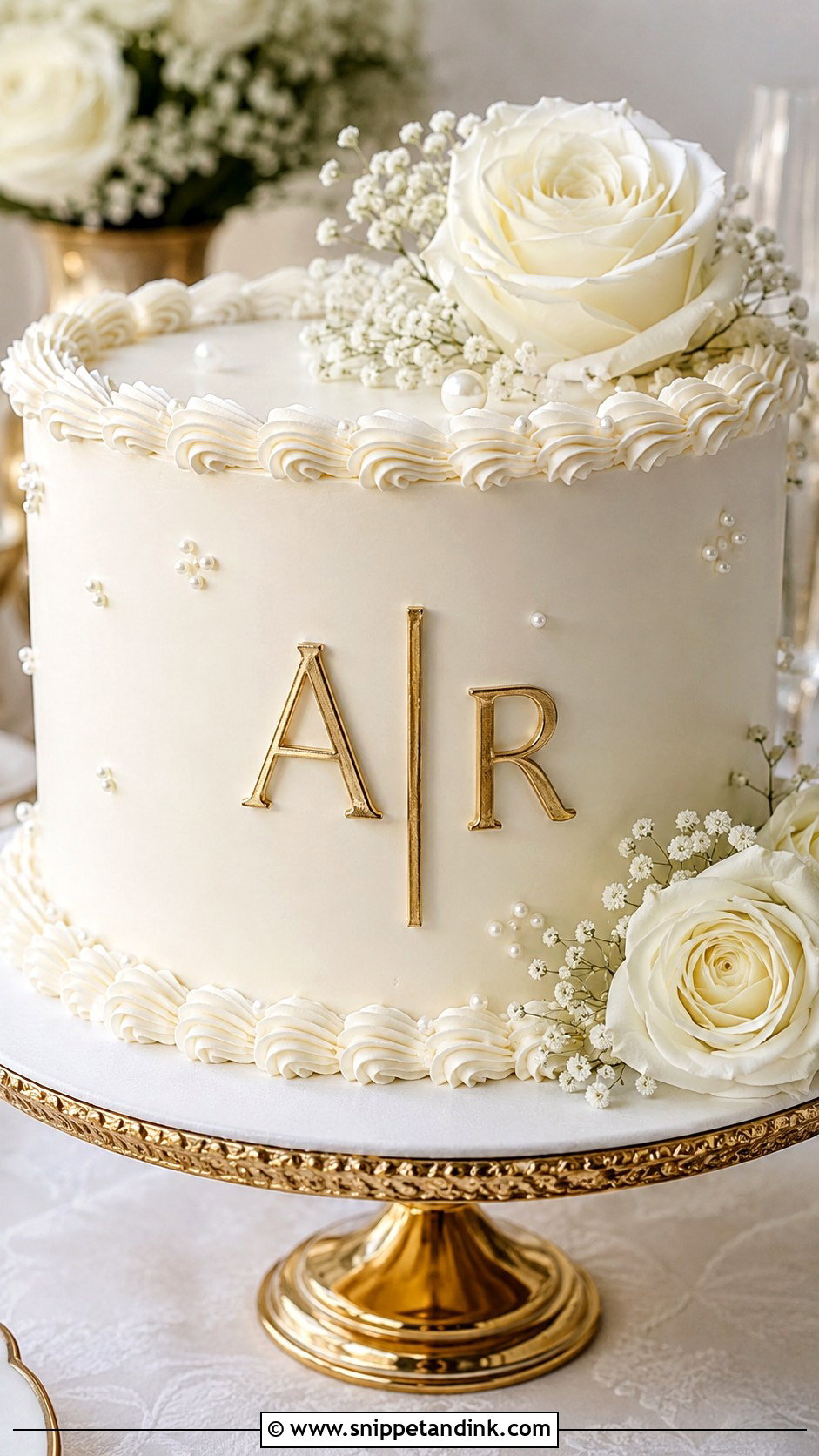
Initials on the front make the cake feel custom without any fuss. Gold, white or raised lettering all work on a plain ground such as smooth ivory buttercream or pale fondant. Hand-painted gold letters need a firm surface, so I usually paint onto a fondant plaque rather than straight onto soft icing. A few flowers or a clean border frame them. One tier suits a small gathering, two feels more formal. Vanilla bean or almond keeps the flavour as simple as the design.
20. Square Engagement Cake
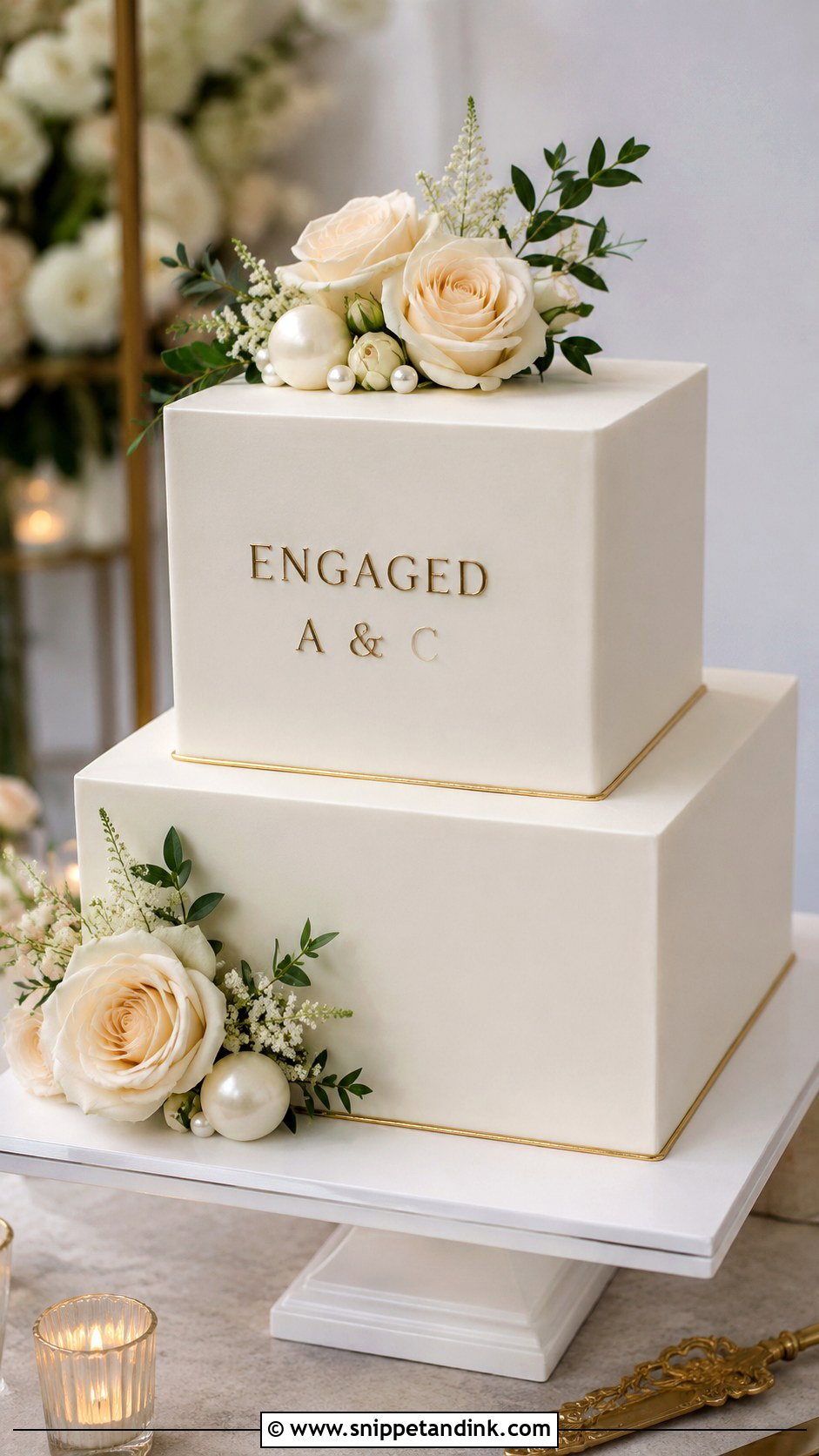
Square cakes look crisp and a bit architectural next to the usual rounds. The corners are the challenge: they’re the first place buttercream sags and fondant tears, so a square needs a more experienced hand than a round of the same size. Fondant shows the sharp edges best, though careful buttercream can do it. A slim floral spray, gold trim or a minimal topper is enough. Squares also cut into neat, even portions, which helps at a busy party. Chocolate ganache or caramel suits the clean shape.
Real Blooms Against Icing Need Checking First
Fresh flowers look wonderful on cake, but not every flower is safe to put near food. Some popular florist stems, such as lily of the valley, foxglove, hydrangea and oleander, are toxic, and many cut flowers are sprayed with pesticides.
I only use flowers grown for food contact or from a supplier who can confirm they’re unsprayed. Stems are wrapped in floral tape and pushed into a straw or a flower pick so sap never touches the icing. Tell your florist the flowers are for a cake when you order, and remove them before cutting.
Getting Buttercream Through a Warm Afternoon
Buttercream softens quickly once a room passes about 24 degrees, and a cake taken from a cold fridge into a humid room will sweat, leaving beads of water that can streak colours and loosen gold leaf.
For home parties I ask couples to clear a cool spot away from windows and the oven, keep the cake in its box until about an hour before it’s shown, and plan the cutting before the sun moves round. If you’re collecting it yourself, carry it flat on the floor of the car, never on a seat, with the air conditioning on. An outdoor summer party is the one time I’d push you towards fondant or a ganache coating under the decoration.
One Clear Idea on the Cake Is Plenty
An engagement cake doesn’t have to be big or complicated to feel special. Whether it’s white tiers, a heart, flowers, a monogram or pale pearls, the rule I work by is the same: one main feature, and everything else supports it. Decide that first, then let the icing, colour and stand fall in behind it. Share your guest count, venue and a couple of photos with your baker early, and you’ll get a cake that suits the party rather than one copied from a screen.
You'll Like These Ideas:


Leave a Reply