
An engagement cake has an easier job than a wedding cake. It doesn’t have to feed two hundred people, survive a five-hour reception or match a florist’s palette, so you can be far more playful with it. The cakes I’m asked for most right now are small and personal: smooth buttercream, pearls, a bit of gold, heart shapes, pressed flowers, vintage piping and a short topper message. Below are the designs I’d sketch for a couple, with notes on which ones suit a backyard party, which travel well to a restaurant, and which flavors behave under each finish.
How Big Should an Engagement Party Cake Be?
Most couples over-order. At an engagement party, the cake is usually one dessert among several, served after drinks and food, and people take small slices. I size these cakes for party portions rather than wedding fingers, and I assume not everyone will eat a piece.
- Dinner for ten or twelve: a 6-inch round, two or three layers, is plenty.
- Twenty to thirty guests: an 8-inch round or a small two-tier cake.
- Forty and up: a two-tier cake or a cutting cake backed up by a sheet cake kept in the kitchen.
Exact servings vary with layer height and how generously someone cuts, so treat these as starting points and tell your baker your real head count. Taller cakes give more slices from the same width, which is useful when you want a small footprint on the table.
Ask about allergies before you settle on a flavor. Almond sponges, nut pralines and coconut coatings are the usual snags at a family party, and I find a small separate gluten-free or nut-free cake is easier to get right than reworking the main one. Label it clearly on the table so nobody has to ask.
1. Just Engaged Cake
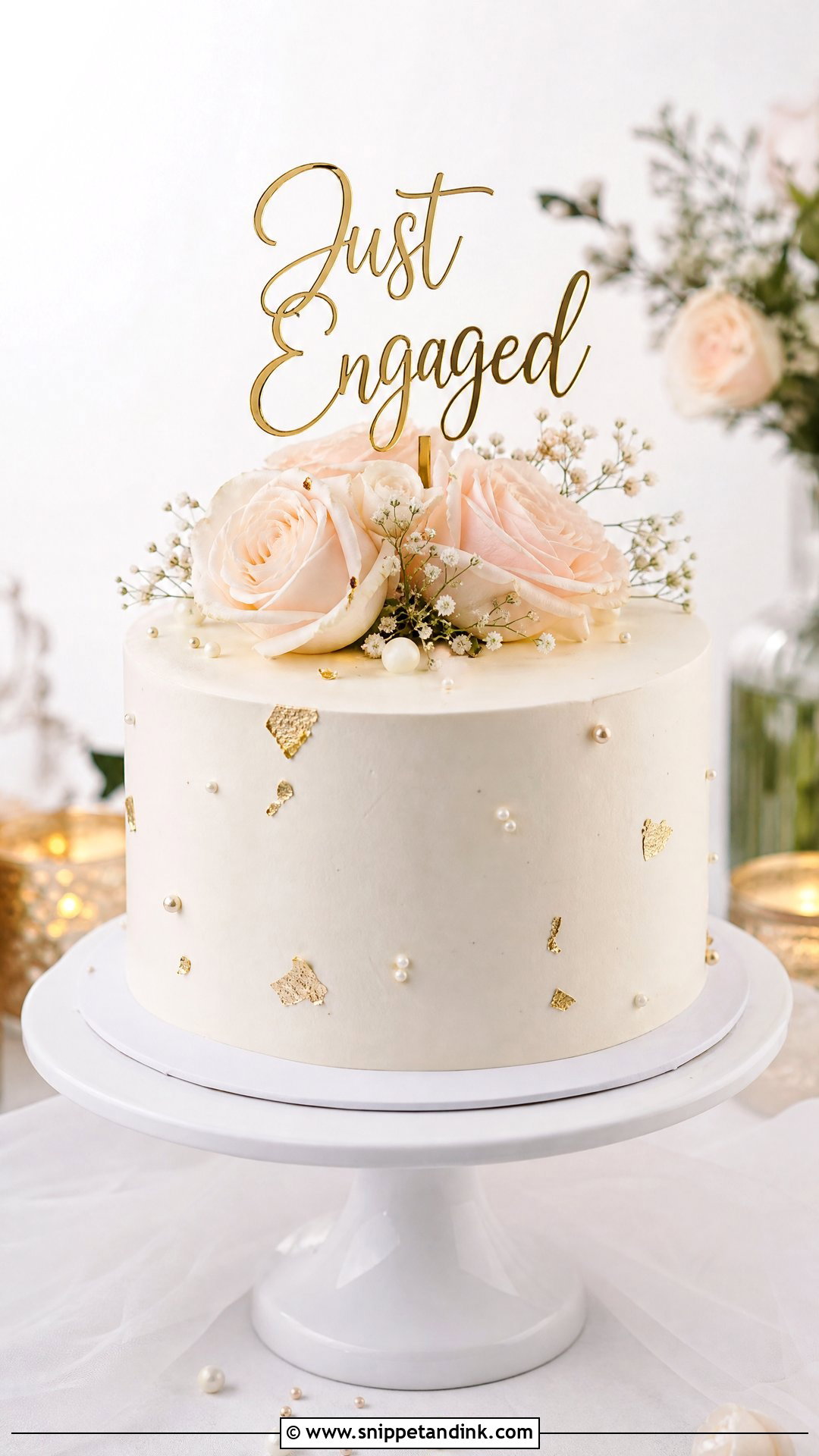
The topper does all the talking here, so the cake under it should stay quiet. I start with a smooth round in vanilla, almond or champagne, finish it in white buttercream, and add a “Just Engaged” topper with a few blush flowers, pearls or a patch of gold leaf. Acrylic toppers are heavier than they look; on a soft buttercream top they lean within an hour unless the stakes reach well down into the cake. Backyard parties, brunches and restaurant dinners all suit it, and the message reads clearly from any angle.
2. Engagement Ring Cake
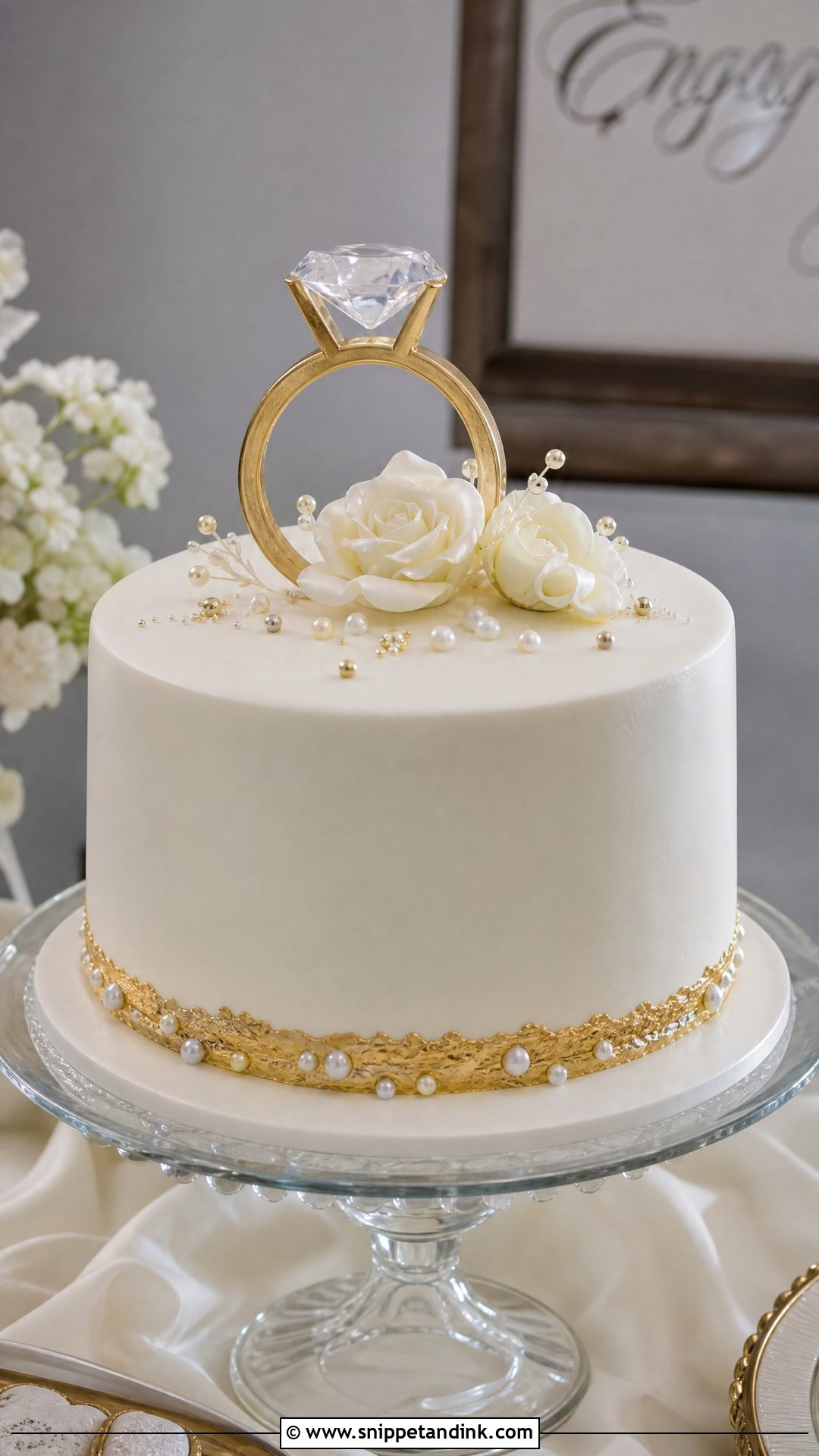
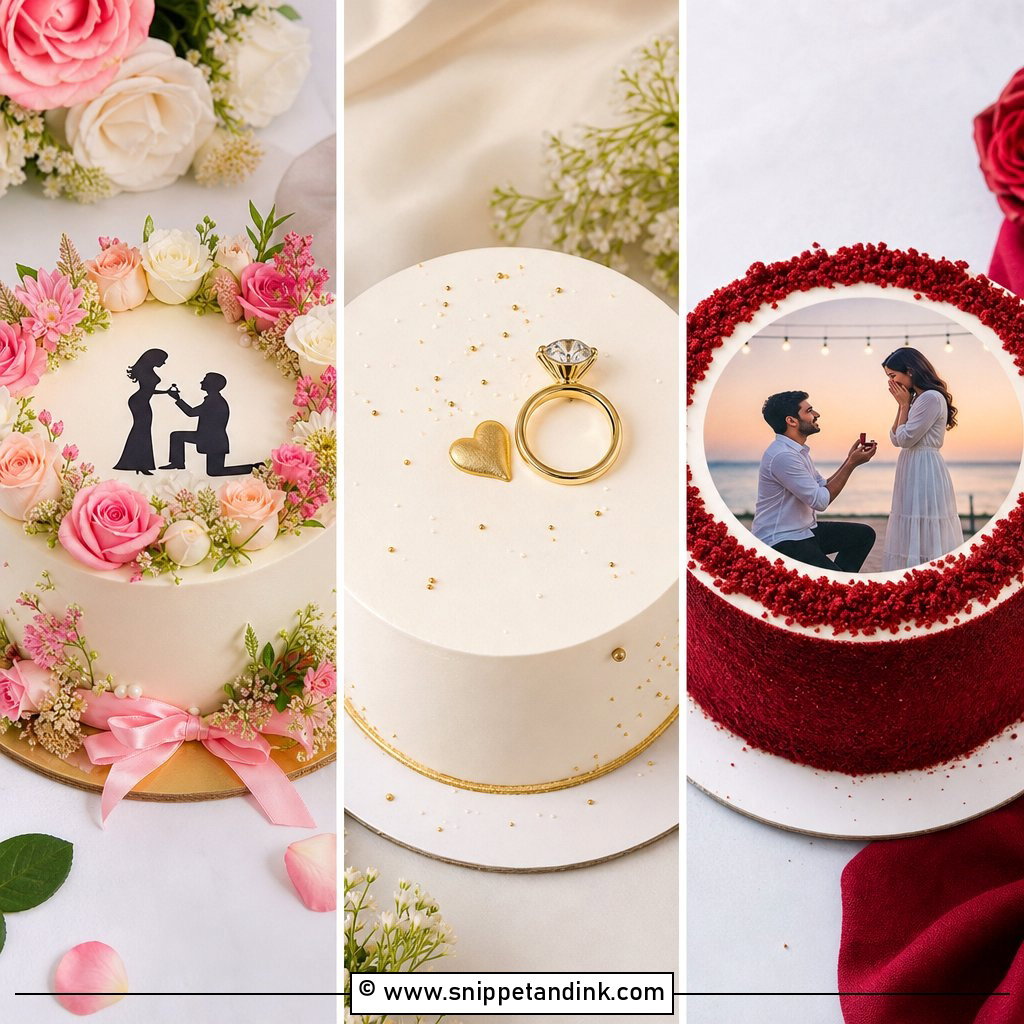
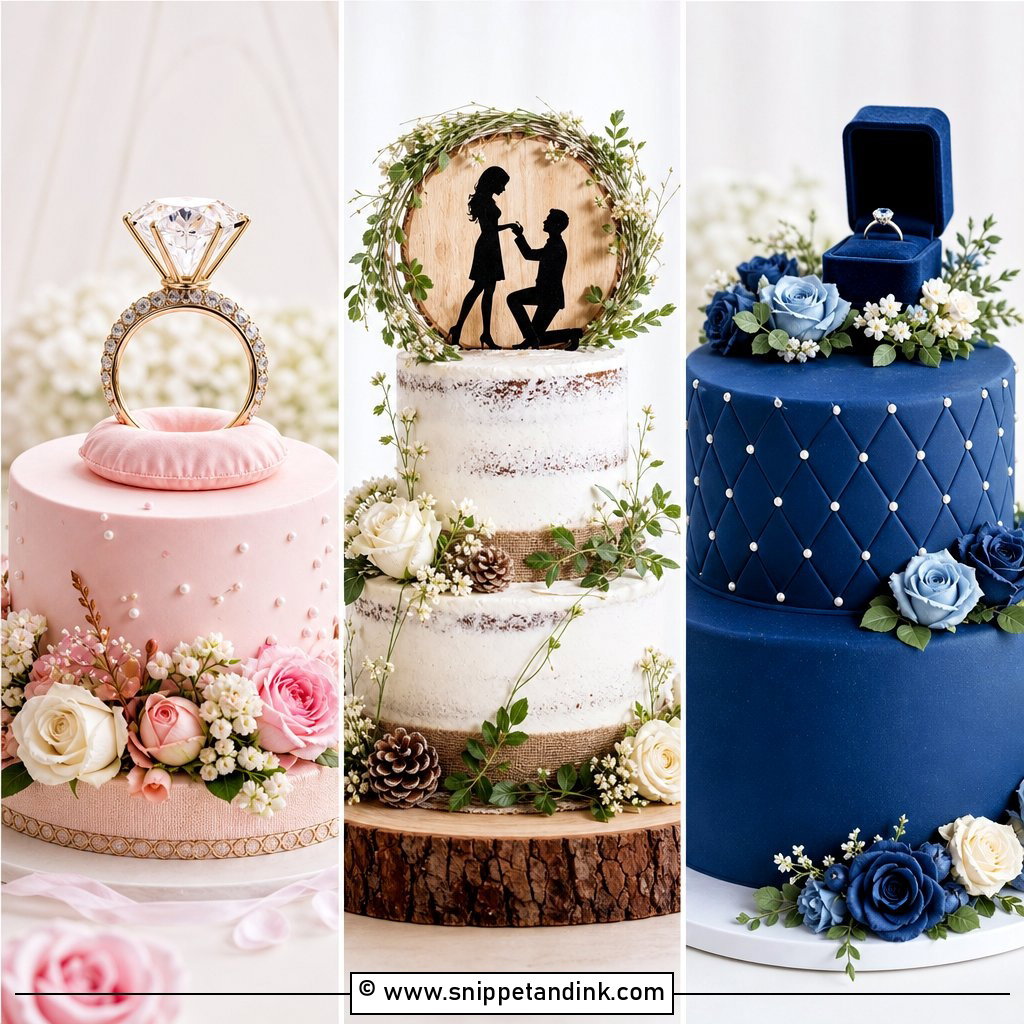
A ring on top tells everyone what the party is for before anyone says a word. I make it round or heart-shaped with a ring topper, edible “diamond” details or a piped ring outline, celebrating the proposal moment without spelling it out. Ivory buttercream lets the sparkle show, and gold accents can echo the real setting. Vanilla bean, white chocolate or strawberry champagne fit the mood. Keep the ring small. An oversized sugar ring looks like a toy, and the finer it is, the more it resembles the real one.
3. Heart Engagement Cake
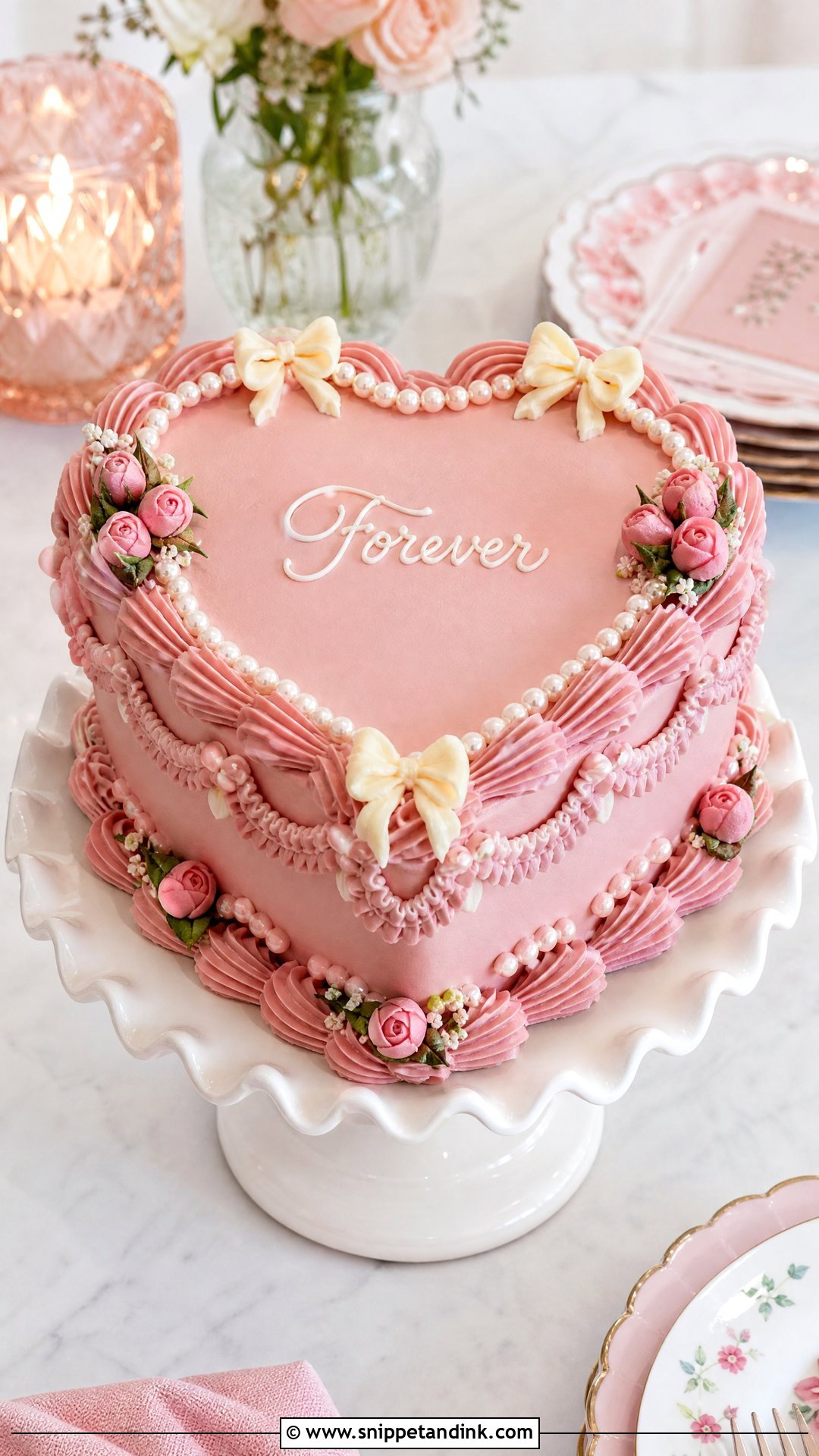
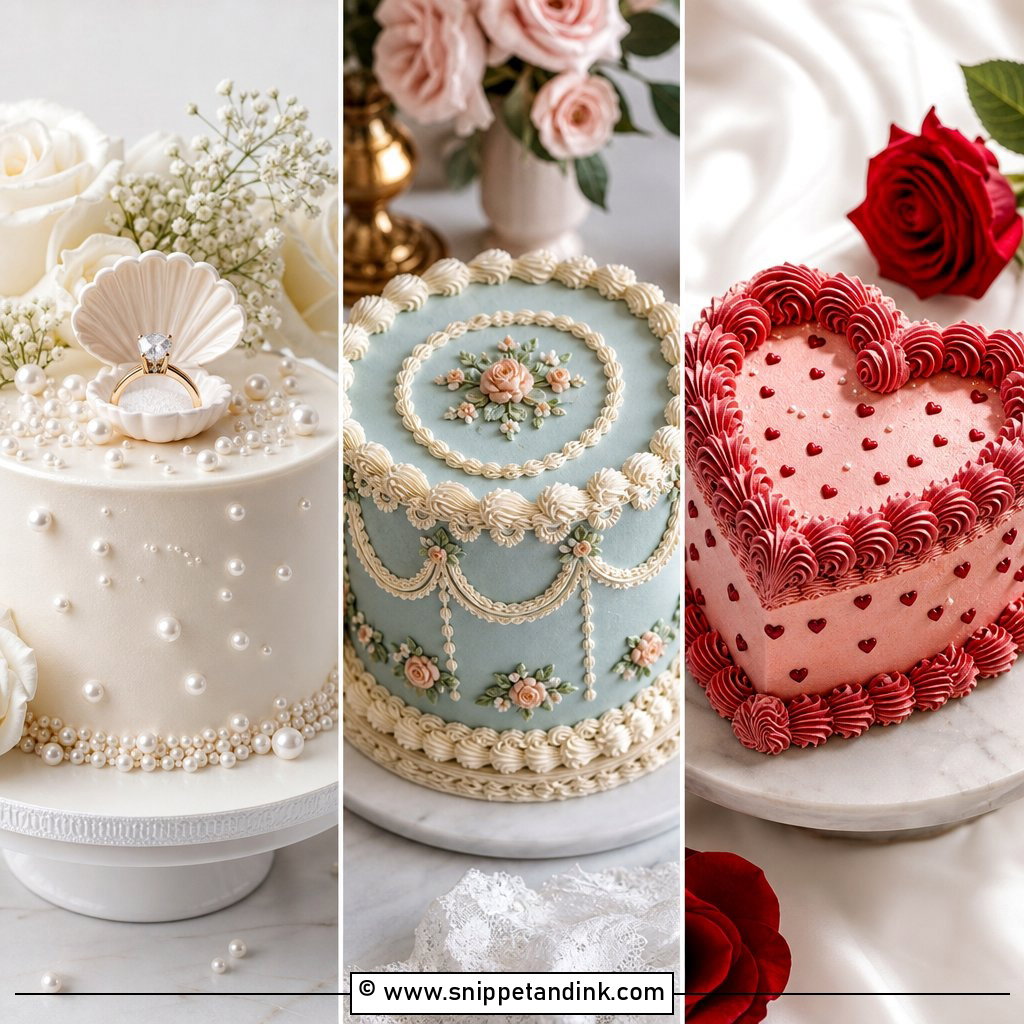
Hearts are the shape I’d steer you to for a small party, because a single heart tier looks detailed and finished on its own. Pink, ivory or red buttercream, piped borders, little bows, pearls and a short line like “She Said Yes” or “Forever.” Vintage piping on a heart is slow work, and every shell has to match its neighbour around the curve, so give your baker time. For flavor, choose something that cuts cleanly: vanilla, chocolate, red velvet or lemon. Center the message and keep the piping even, especially at the point, where uneven work shows first.
4. White Engagement Cake
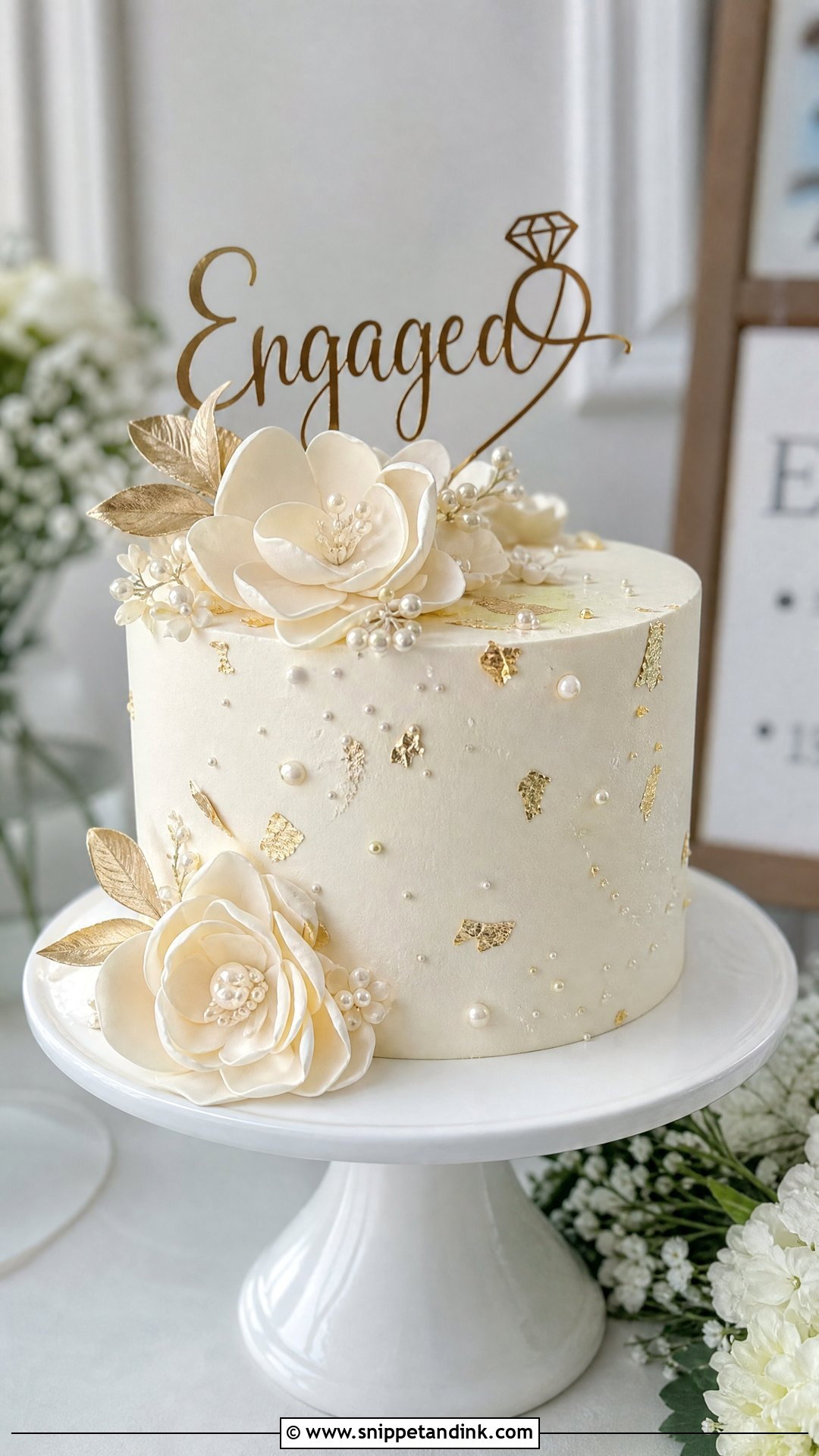
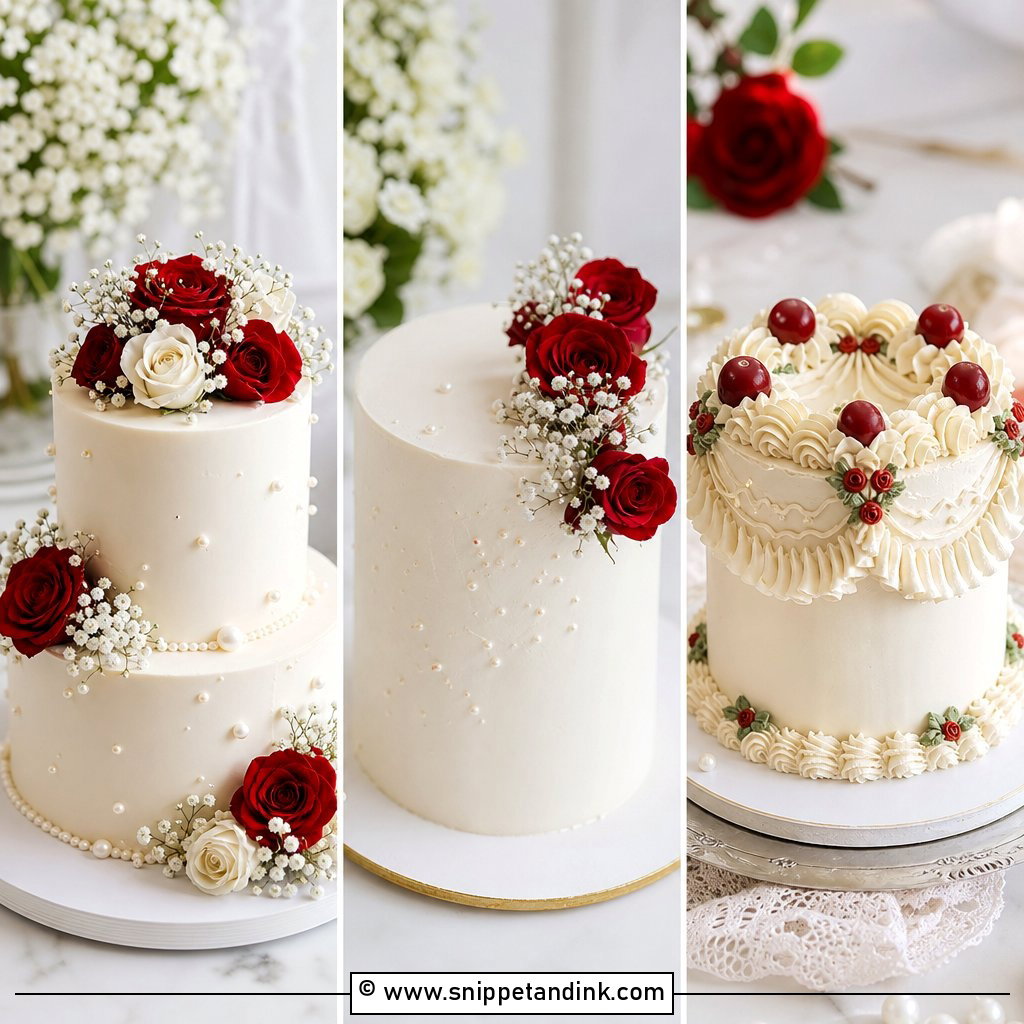
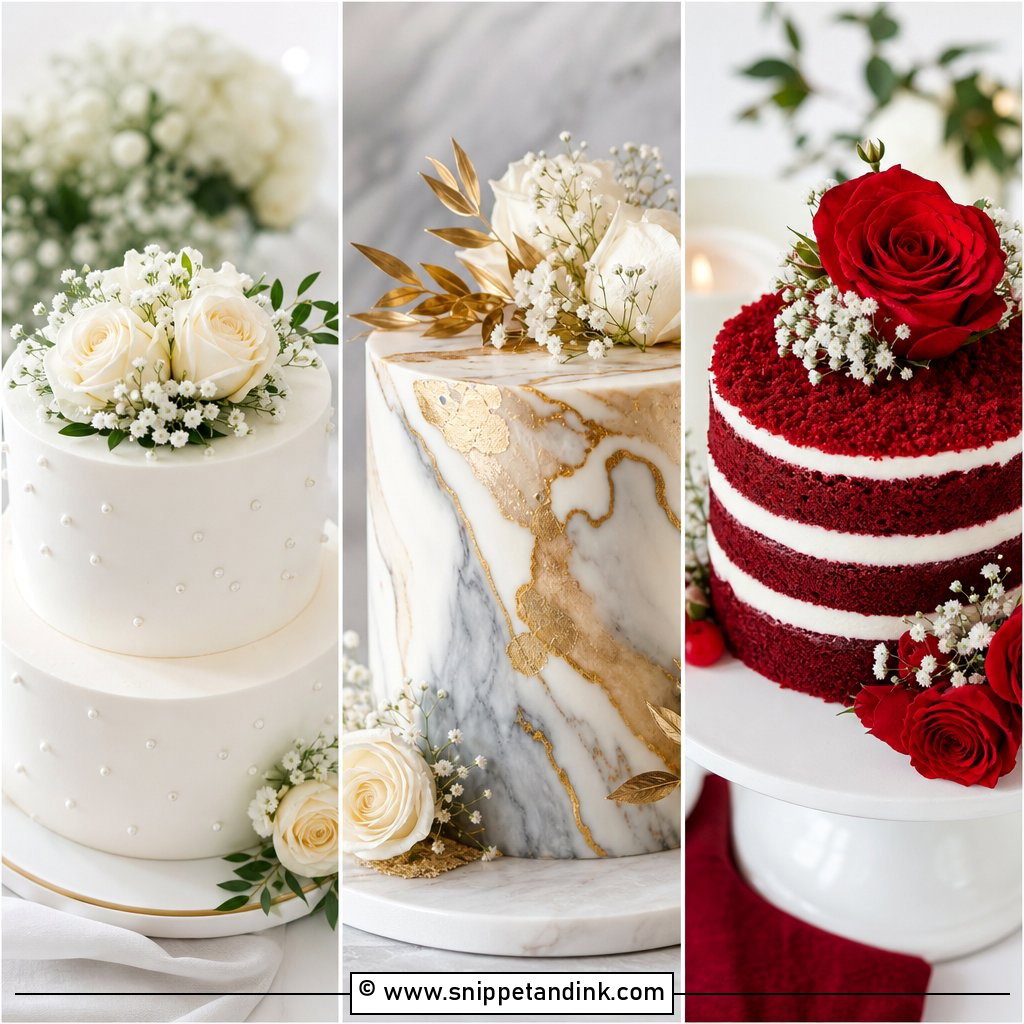
White is the easiest cake to style and the hardest to fake. Smooth white buttercream shows every air bubble and palette knife mark, so a white cake is where you see whether a baker can really finish. It takes flowers, pearls, gold flecks, ribbon or a fine topper equally well. One tier for an intimate gathering, two for a bigger party. Vanilla, almond, coconut or white chocolate suit it. I’d skip extra colors and let texture and height do the work.
5. Gold Engagement Cake
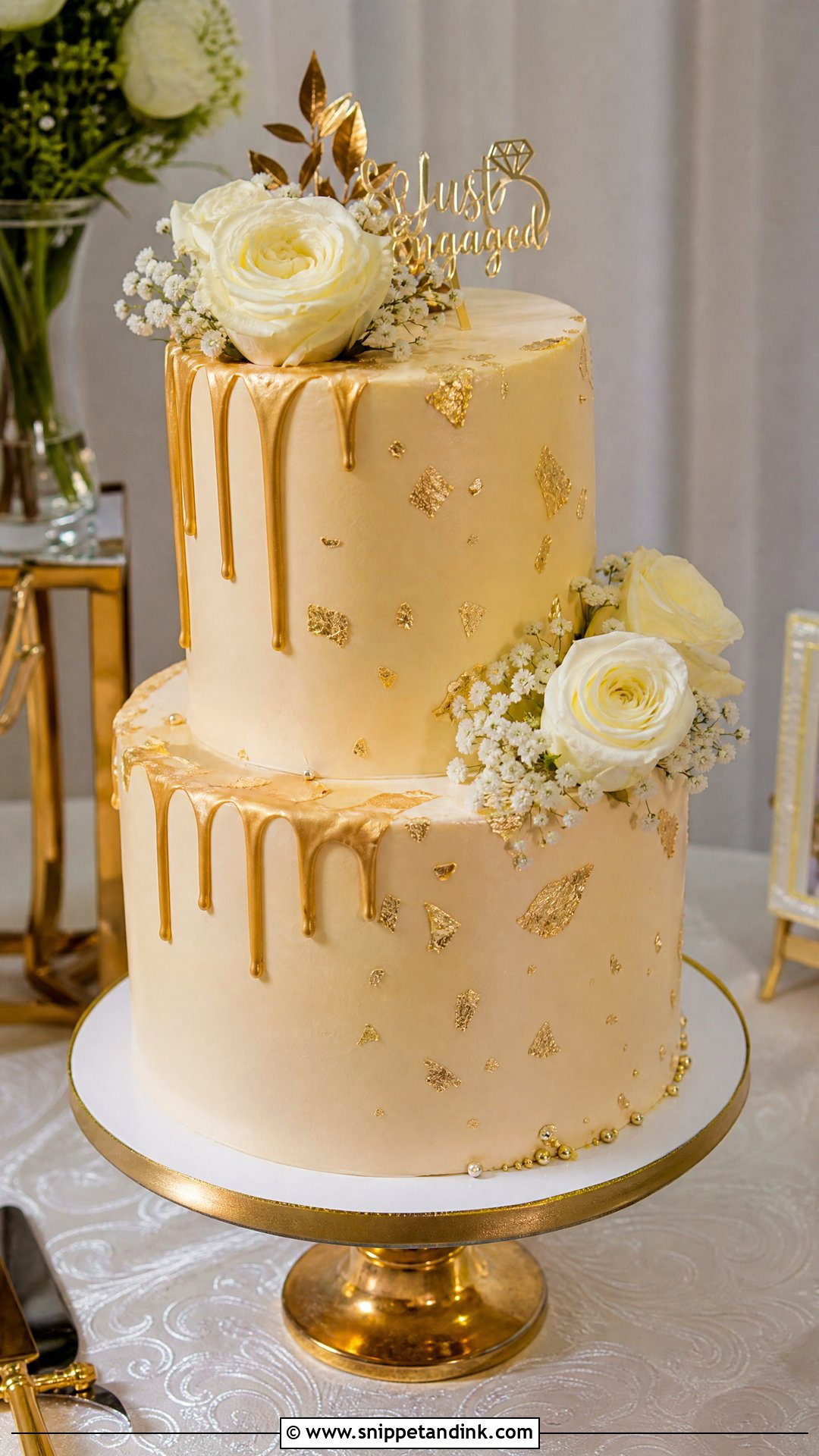
Gold engagement cake details read celebratory without getting loud, as long as gold stays an accent. On white or cream I use edible gold leaf, a gold drip or painted gold edges. I paint gold over a set drip rather than mixing it in, because mixed into warm chocolate it dulls to mustard. White roses, blush blooms or a little greenery go well with it. Vanilla caramel, chocolate ganache and almond raspberry are crowd-friendly flavors that still feel a step up. Add initials or the engagement date to make it yours.
6. Floral Engagement Cake
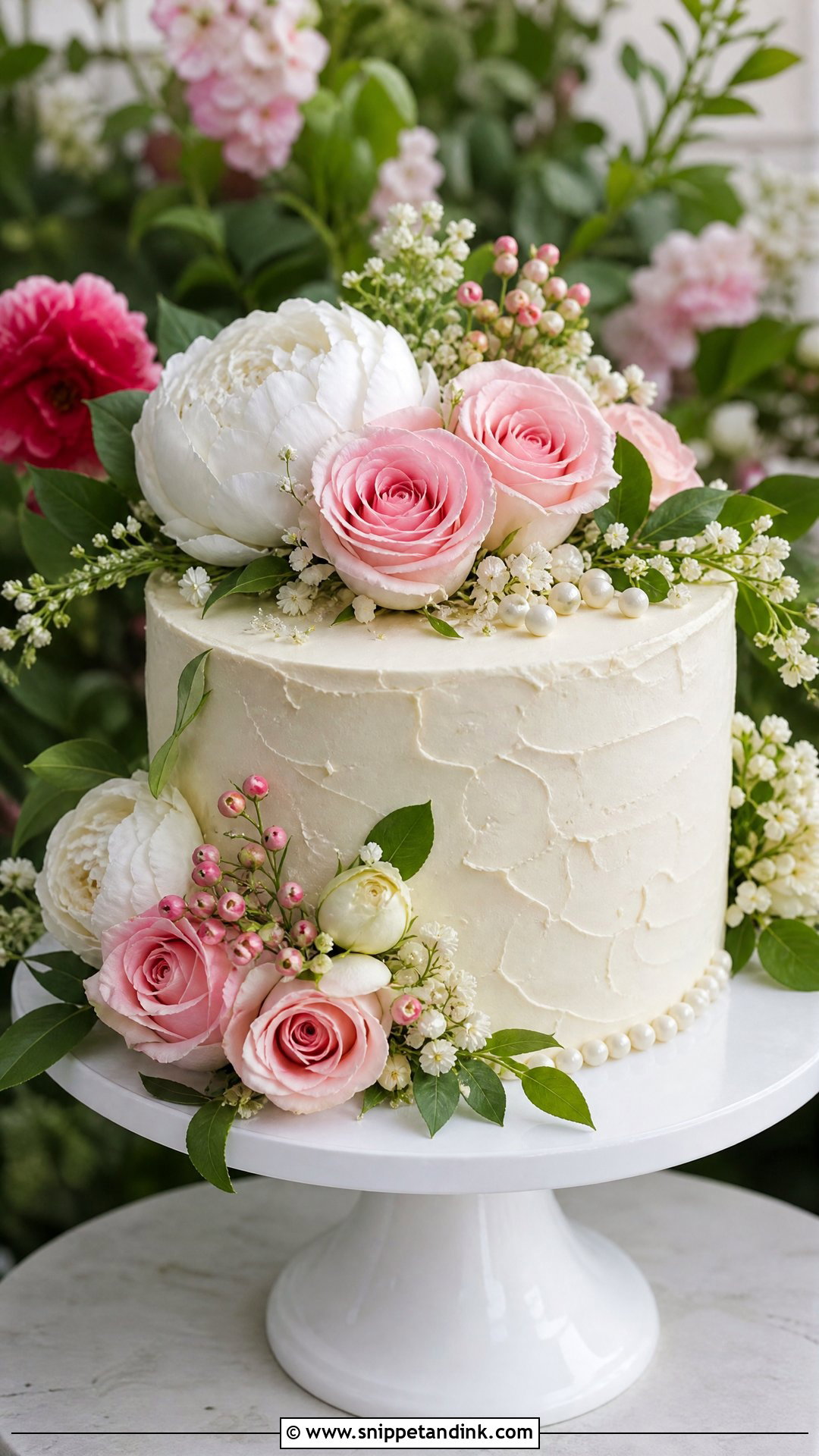
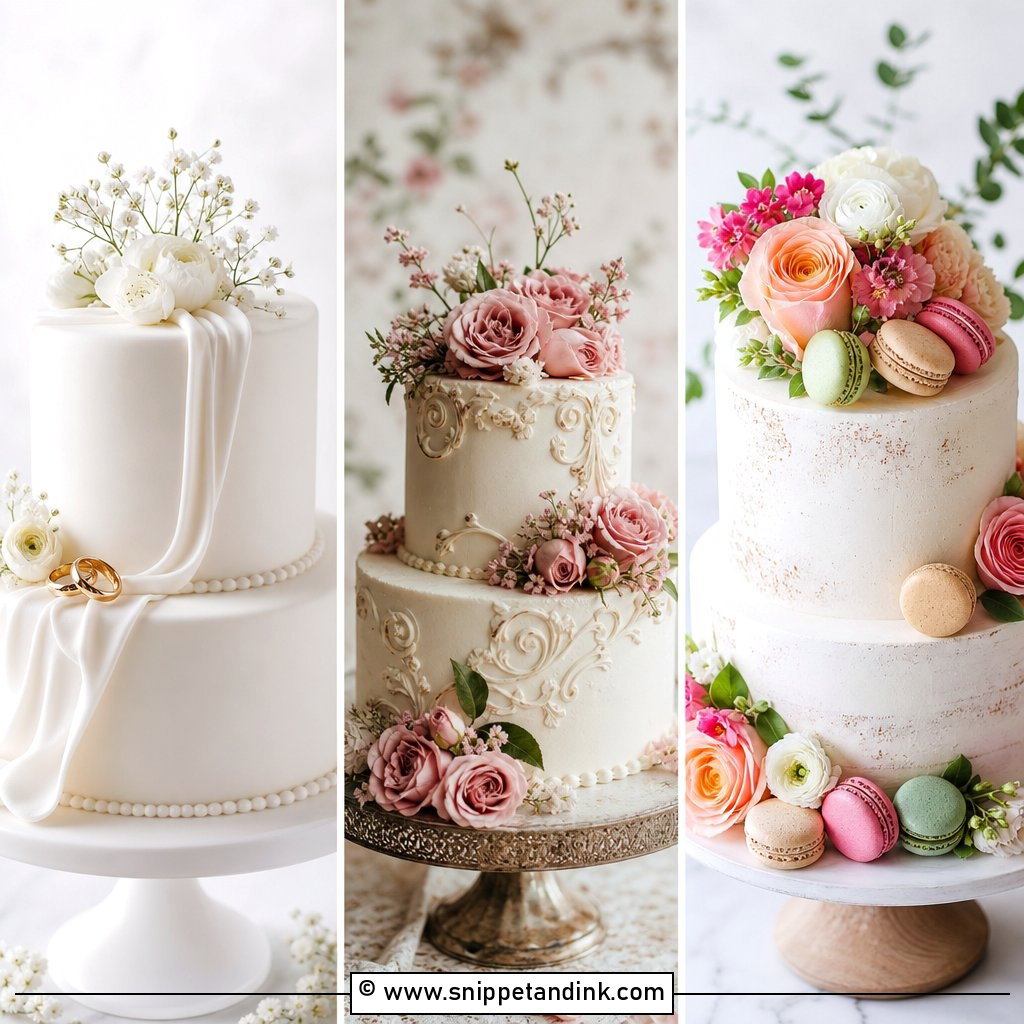
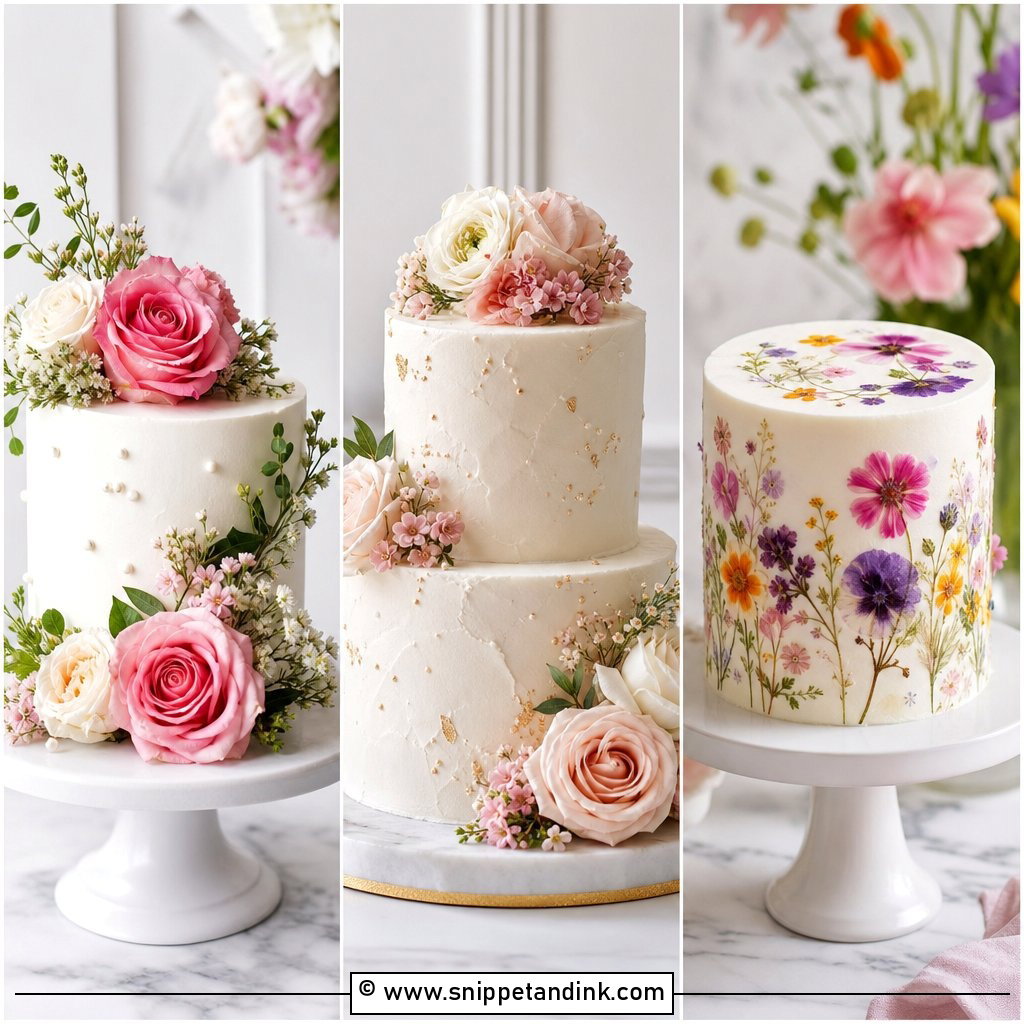
Each flower sets a different mood: roses classic, peonies lush, daisies sweet, wildflowers relaxed. A white, blush, sage or pale blue buttercream base gives them room. Fresh, sugar and pressed edible flowers all work, but they don’t behave the same. Fresh blooms need a florist who knows which are food safe and stems that are wrapped before they go near the cake. Sugar flowers last and can be kept. Pressed edible flowers are the flattest and most delicate. Match the flowers to the party decor if you can; a garden brunch and an indoor dinner suit different blooms.
7. Blush Pink Engagement Cake
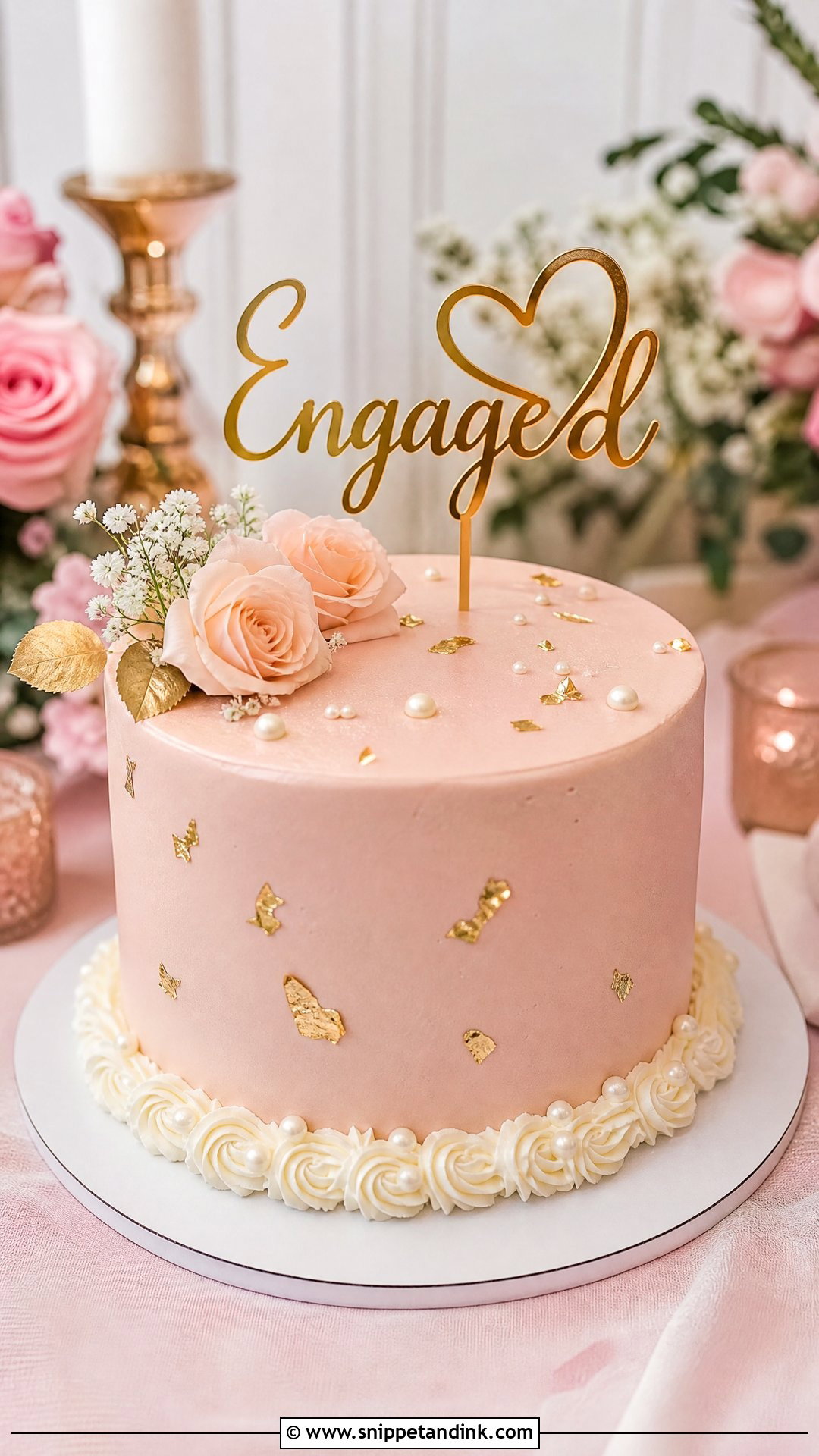
Blush is forgiving in a way bright pink is not. It works in buttercream, fondant, wafer paper or a watercolor finish, and it pairs well with ivory piping, pearl sprinkles, fresh roses or a gold “Just Engaged” topper. Strawberry, vanilla raspberry, champagne and almond suit the color. One thing to watch: pinks fade in direct sunlight, so a blush cake left on an outdoor table for hours can look pale by the time it’s cut. Pick one strong feature, such as the heart shape, an ombre or a floral cluster, rather than all three.
8. Vintage Engagement Cake
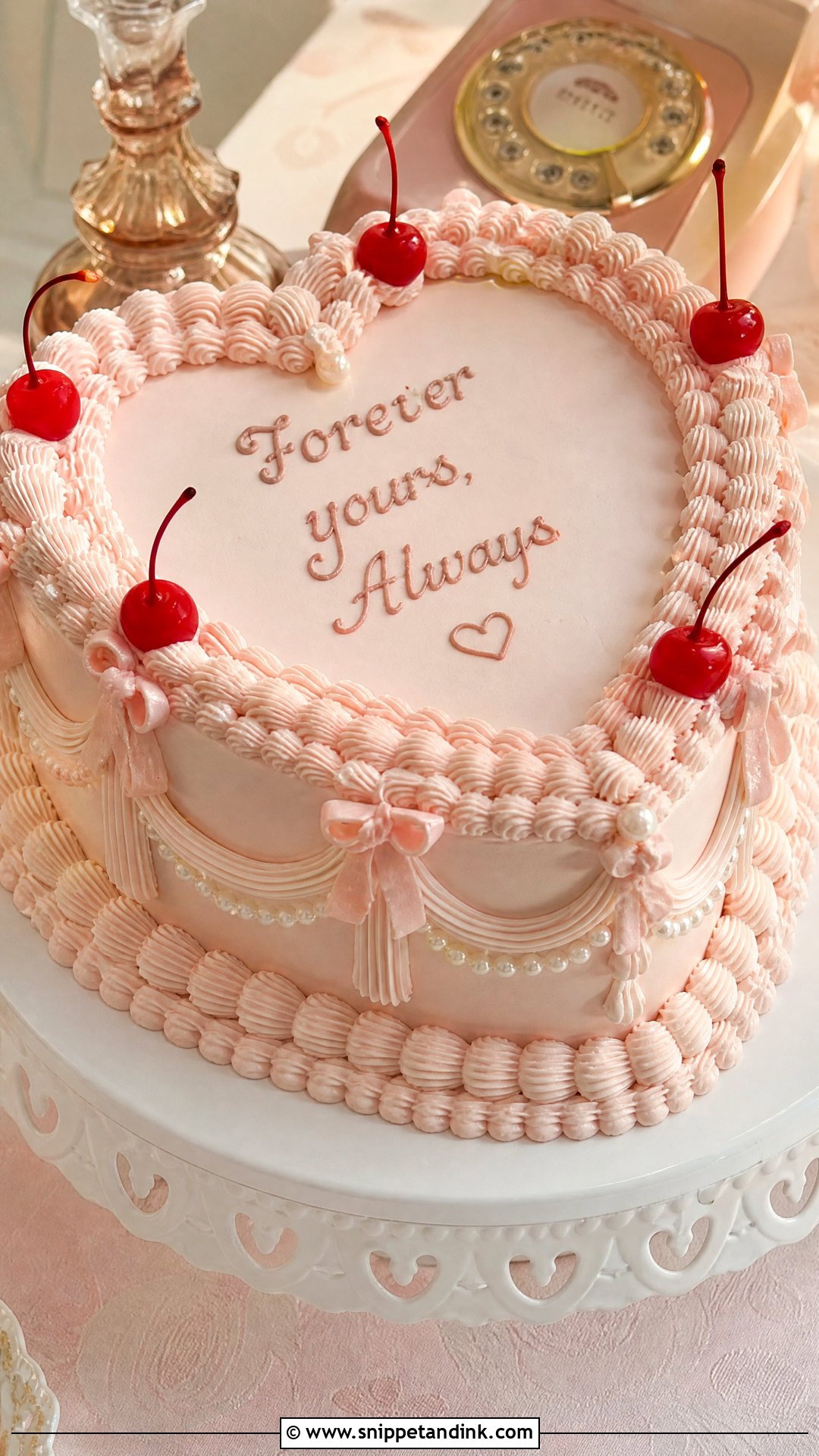
Vintage cakes are all piping: shells, ruffles, borders, bows and a piped message, in the style of an old-school bakery. Heart shapes are the popular base, though rounds work too. White, blush, red and pale blue are reliable colors. I pipe these in a slightly stiffer buttercream than I’d use for smoothing, so the ridges stay sharp in a warm room. Red velvet, vanilla, chocolate and strawberry are classic flavors underneath. Keep the words short; the piping is already busy.
9. Minimalist Engagement Cake
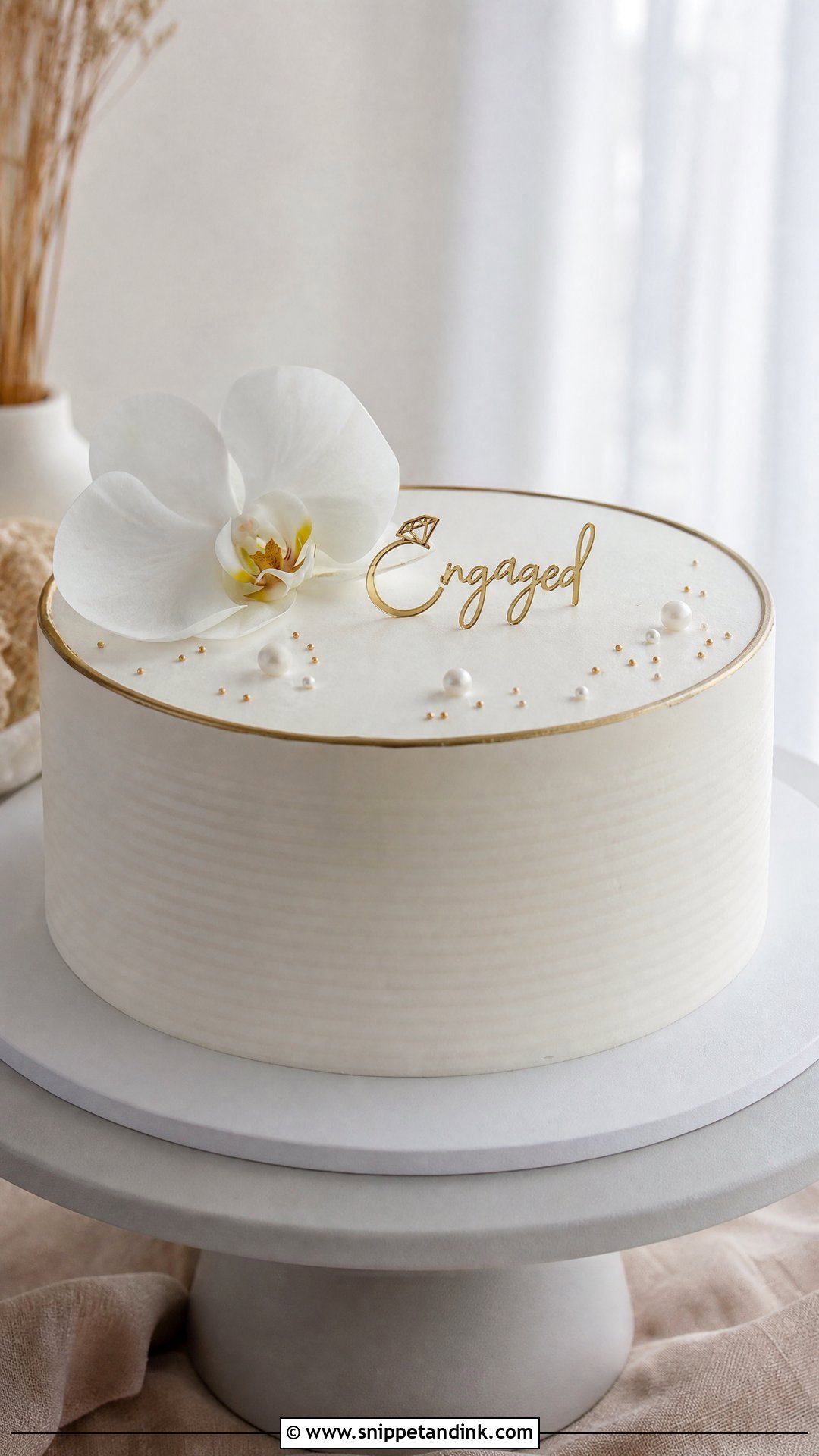
Minimal doesn’t mean easy. Smooth buttercream, a clean shape, a soft color and one detail, such as a tiny gold topper, two initials, a single flower or a thin ribbon at the base. With so little decoration to hide behind, the edges have to be sharp and the sides perfectly straight, which is why I chill and re-scrape these more times than any other cake. Vanilla bean, lemon, coconut or dark chocolate are good flavors. Modern apartments, rooftop parties and small family dinners suit the look.
10. Two Tier Engagement Cake
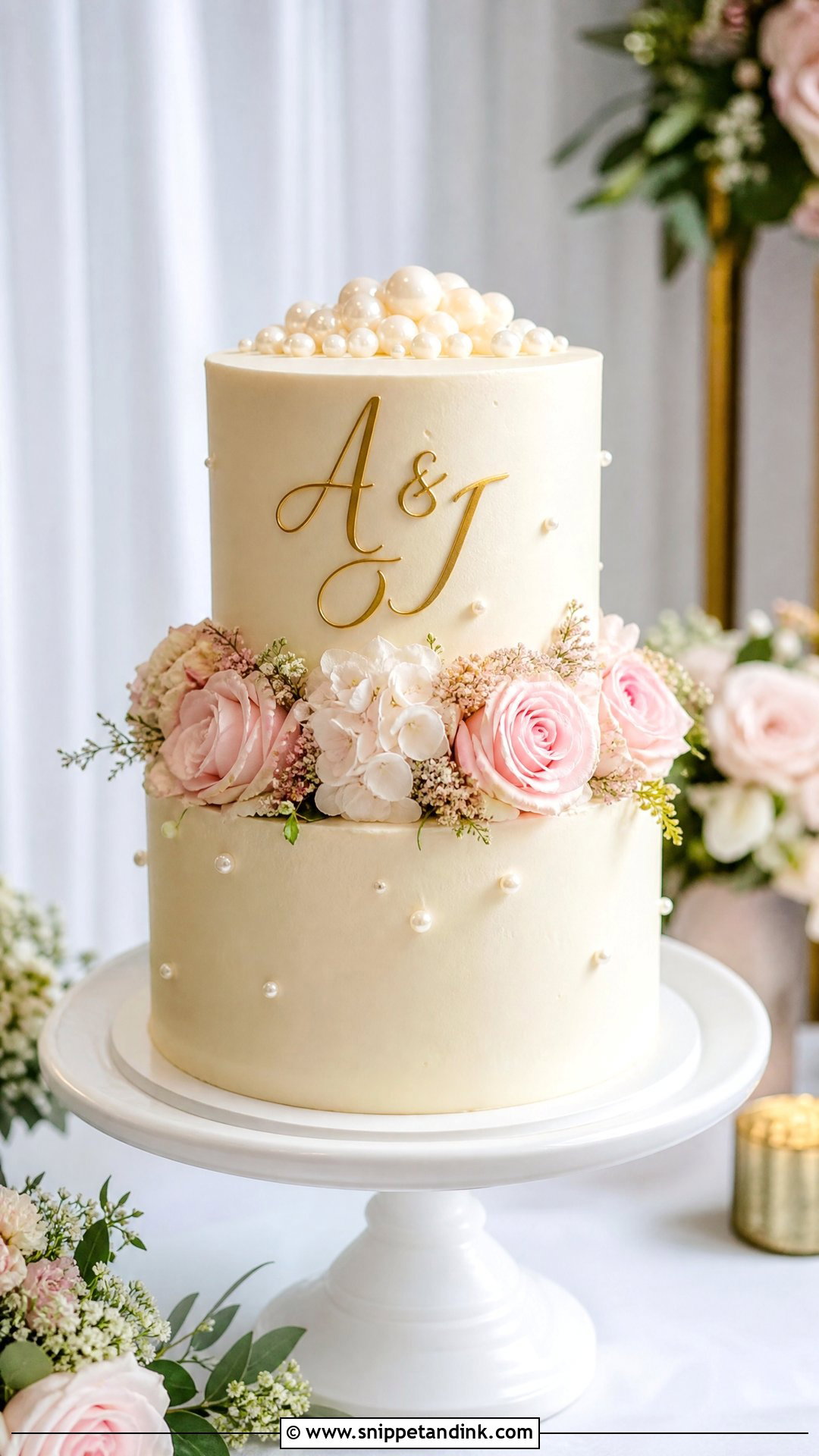
Two tiers give presence on a dessert table where a single cake can look lost. I’d suggest it once you’re past roughly thirty guests. Keep both tiers white with flowers between them, or texture the bottom and smooth the top. A two-tier cake also lets you serve two flavors, such as vanilla raspberry above and chocolate ganache below, which settles the debate between the two of you. Stacked tiers need dowels and a center board even at this size. A topper, initials or the date finishes it.
11. Rustic Engagement Cake
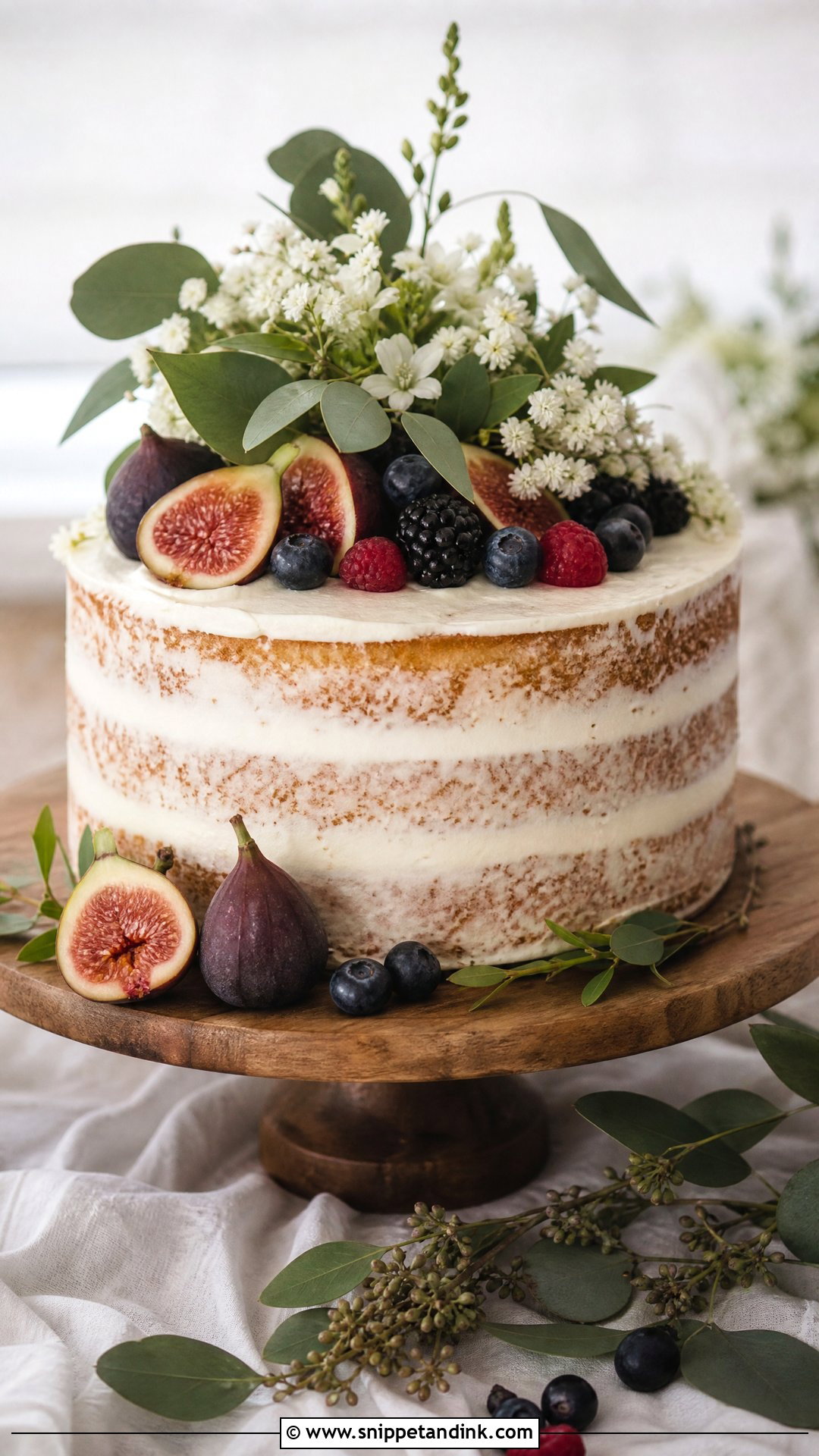
Semi-naked buttercream is the signature rustic finish, with a thin scrape that lets the sponge show through. That thin coat also means the cake dries out faster than a fully frosted one, so I don’t finish it until the day of the party. Fresh berries, figs, greenery or simple flowers dress it. Carrot, spice, vanilla berry or chocolate espresso suit the cozy look. A wooden stand or a plain ceramic plate completes it. Rustic still needs level layers; a leaning naked cake looks sloppy, not relaxed.
12. Pearl Engagement Cake
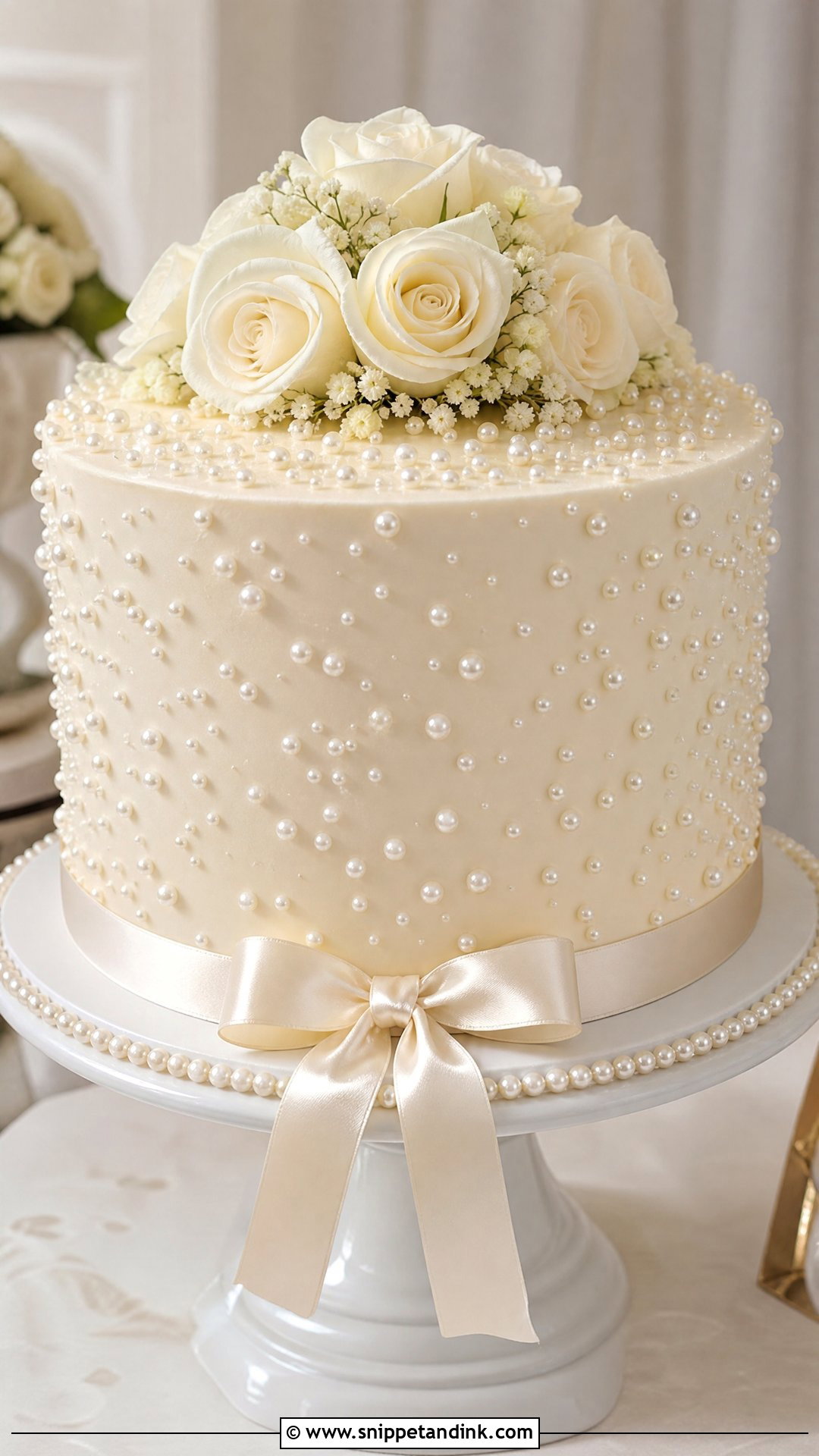
Pearls are the detail I see on more engagement cakes than any other right now. Scatter edible pearls across smooth buttercream, ring them around the base, or use them to outline a heart. White, ivory, champagne and blush keep them soft. I mix two or three sizes and place them with tweezers, because a handful thrown at the cake just looks like sprinkles. Vanilla bean, almond, coconut or white chocolate pair with it. Satin ribbon or a small cluster of flowers finishes the design.
13. Black And White Engagement Cake
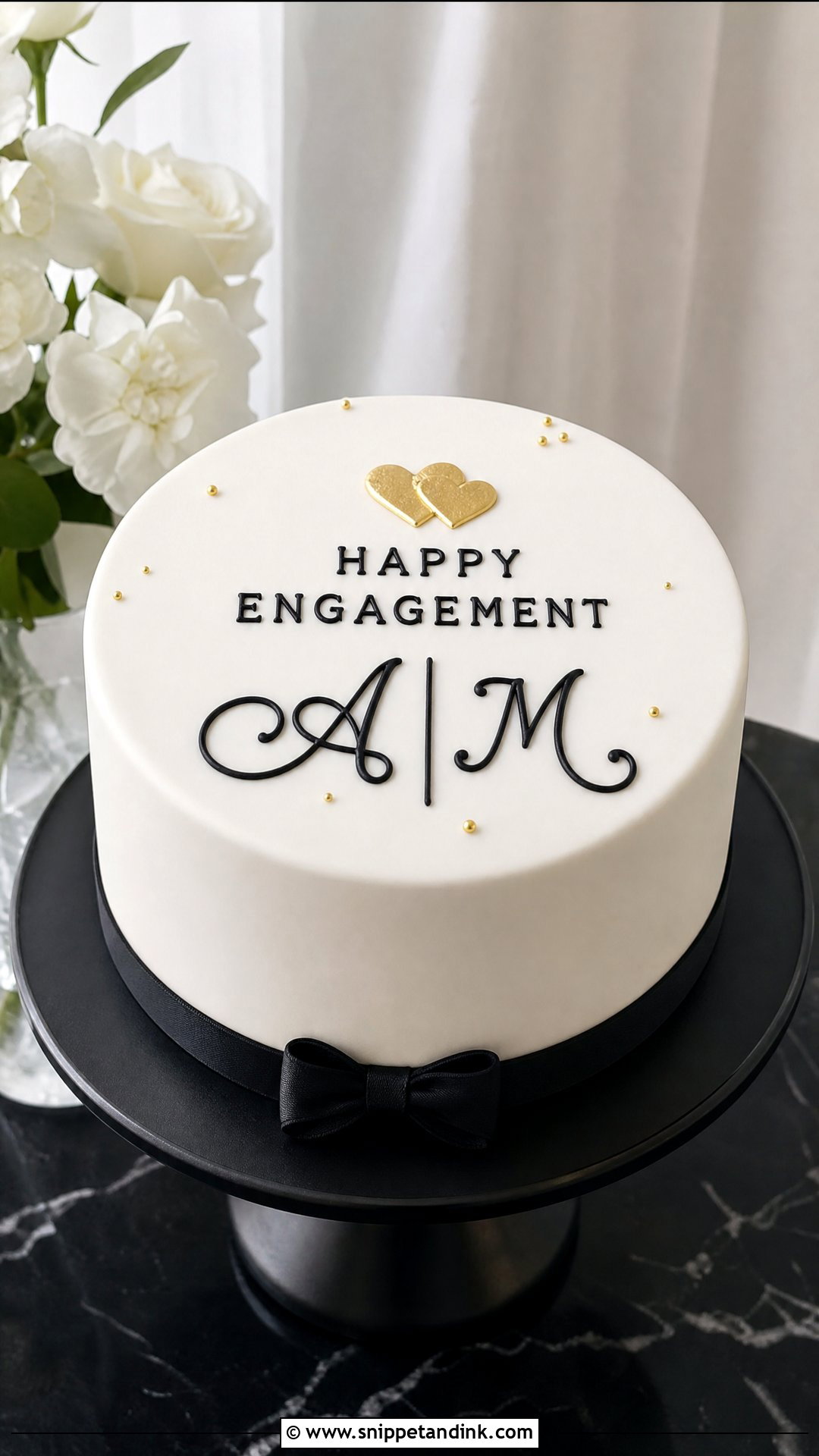
Black and white is the sharpest look in this list. A white base with black piping, black ribbon or a clean monogram is crisp; flip it to a black cake with white lettering for more drama. I make black icing from a dark cocoa base so it doesn’t need a whole bottle of coloring, which keeps it from tasting bitter. Chocolate, cookies and cream, vanilla or black cocoa sponge all fit. A touch of gold adds warmth. Evening parties and city venues suit it far better than a garden brunch.
14. Red Velvet Engagement Cake
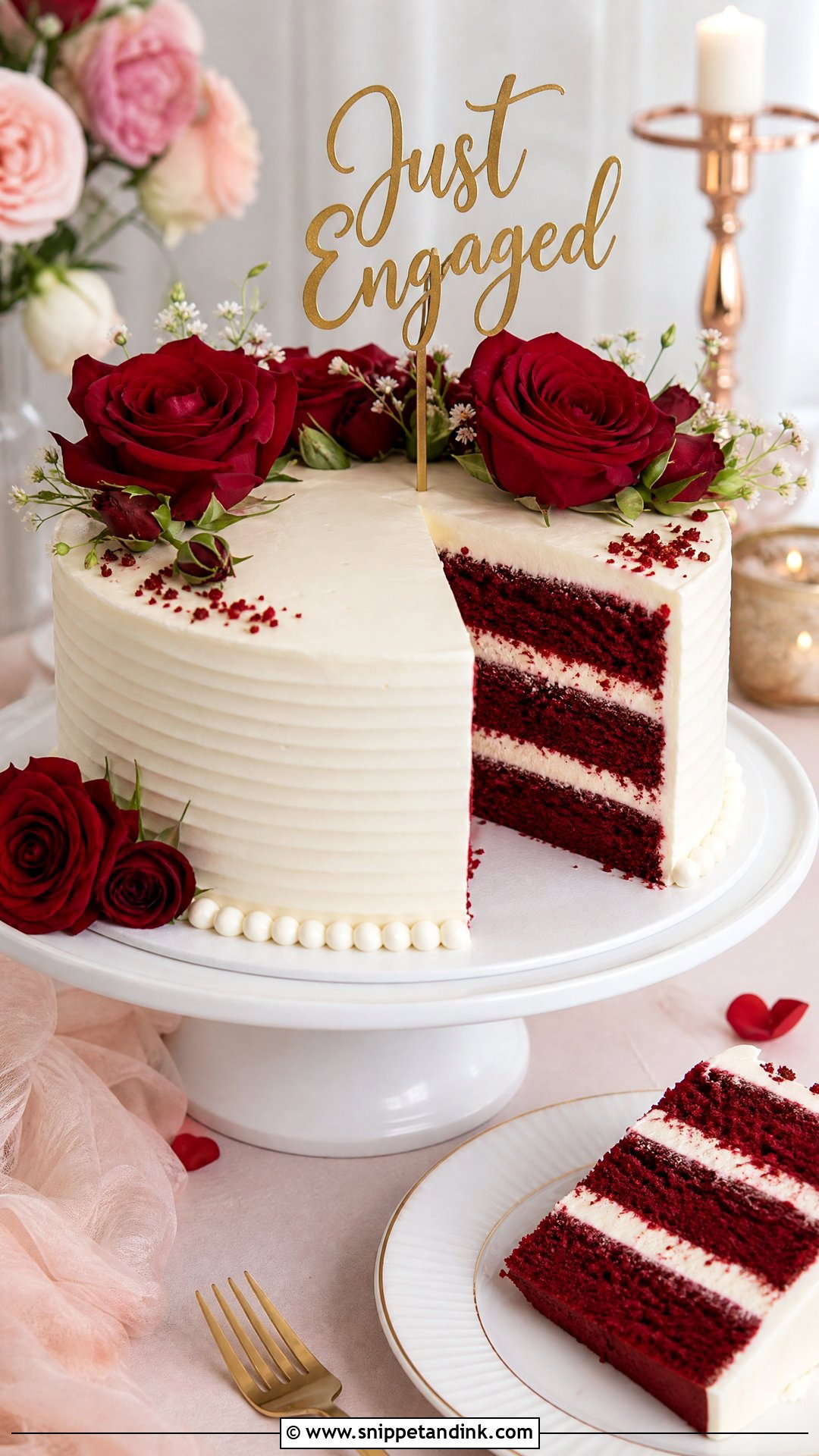
Here the flavor carries the romance. The deep red crumb with cream cheese frosting looks best the moment it’s cut, so I make sure the first slice happens in front of the guests and the camera. Outside, white frosting with red roses, pearls or a heart shape keeps it classic. Cream cheese frosting is softer than buttercream and needs to stay cool, so this isn’t the cake for an afternoon in the sun. A small gold topper or a scripted line is all it needs.
15. Chocolate Engagement Cake
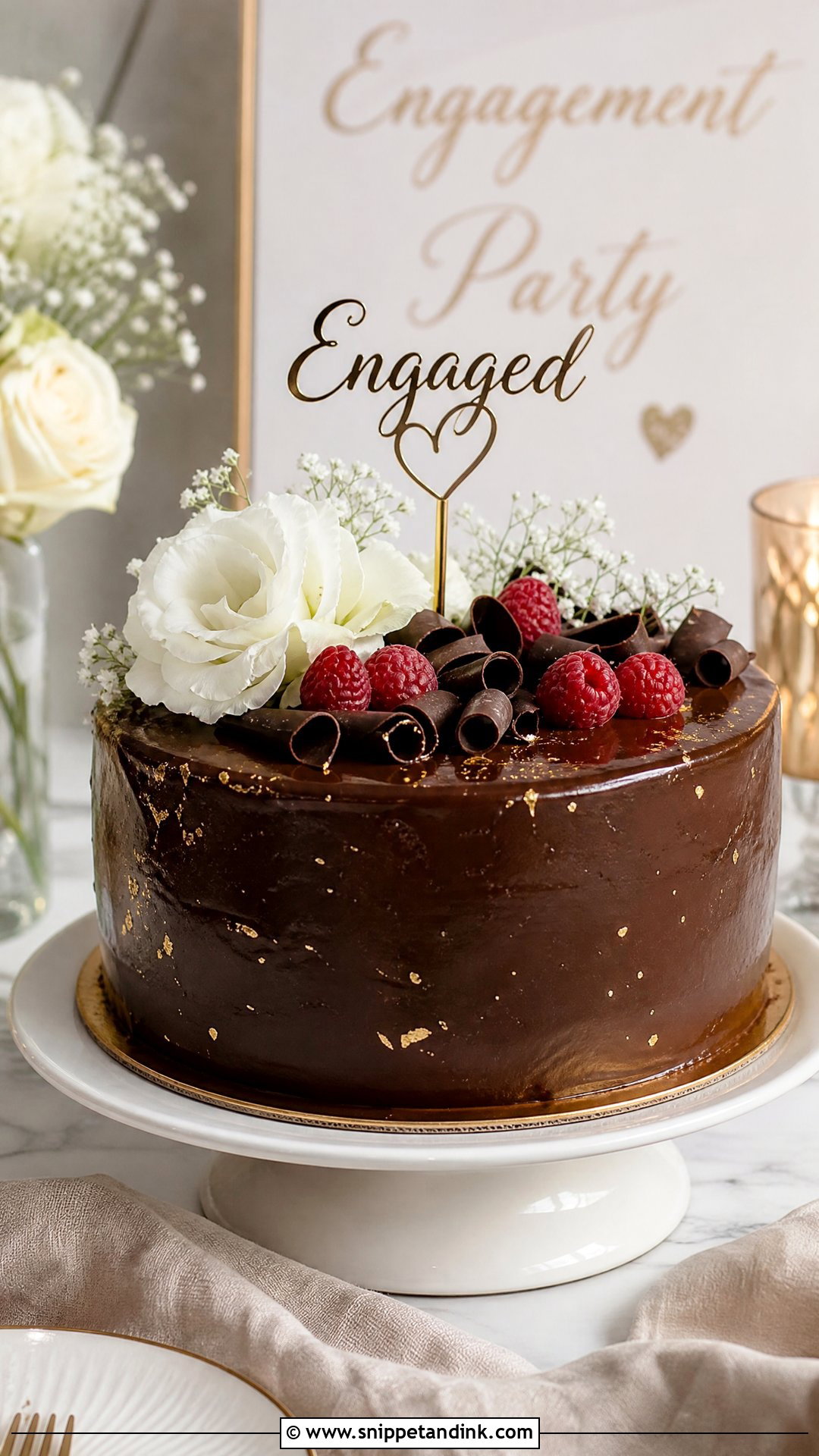
Chocolate is the one flavor almost every guest will eat. Glossy ganache, chocolate curls, gold flecks, berries or a soft floral topper make it party-ready, and dark chocolate sets off white flowers and metallic accents well. Chocolate fudge, chocolate raspberry, mocha and salted caramel chocolate all add depth. Ganache is also my favorite finish for sharp edges, and it’s sturdier in warm weather than buttercream. Keep the surface smooth and let the toppings frame the cake rather than burying it.
16. Lemon Engagement Cake
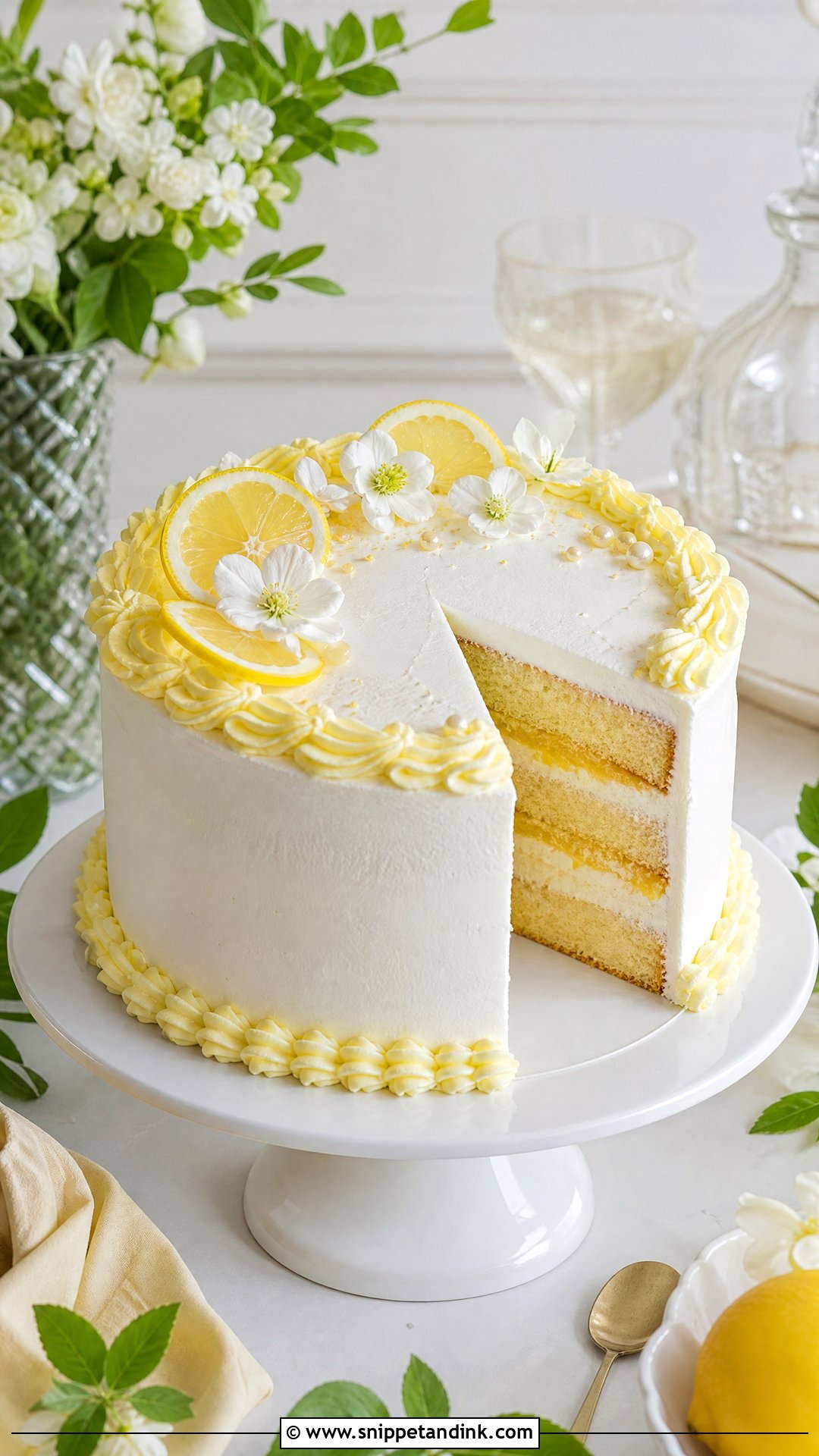
Lemon is my spring and summer suggestion, because it cuts through sweet frosting after a meal. Lemon curd inside and soft buttercream outside give a pale yellow hint without turning the whole cake yellow. Lemon slices, white flowers, tiny pearls or pale yellow piping decorate it. Fresh lemon slices weep after a few hours, so I add them close to serving or use candied slices that hold. A white cake with a few citrus details usually looks prettier than a fully yellow one. Garden brunches and patio parties suit it.
17. Coconut Engagement Cake
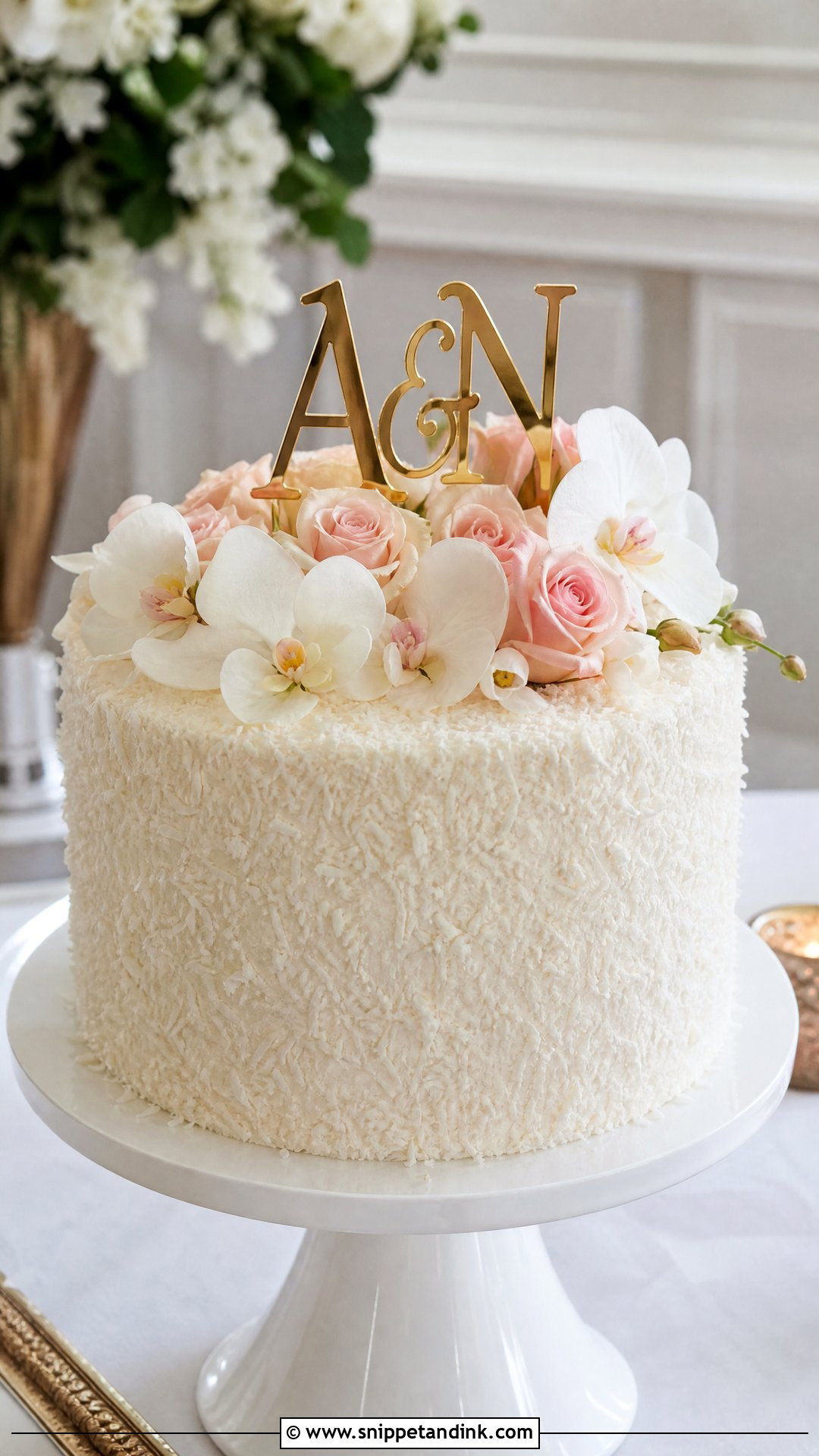
Shredded coconut on the outside gives texture without any piping skill, and it hides small imperfections beautifully. The coating has to be pressed on evenly, though, because patchy coconut is the first thing guests notice. White orchids, blush flowers, gold initials or an “Always” topper add romance. Inside, lime curd, vanilla cream, pineapple or white chocolate ganache all pair well. It feels lighter than chocolate and a little tropical without a beach theme. Check for coconut allergies before you commit to it.
18. Watercolor Engagement Cake
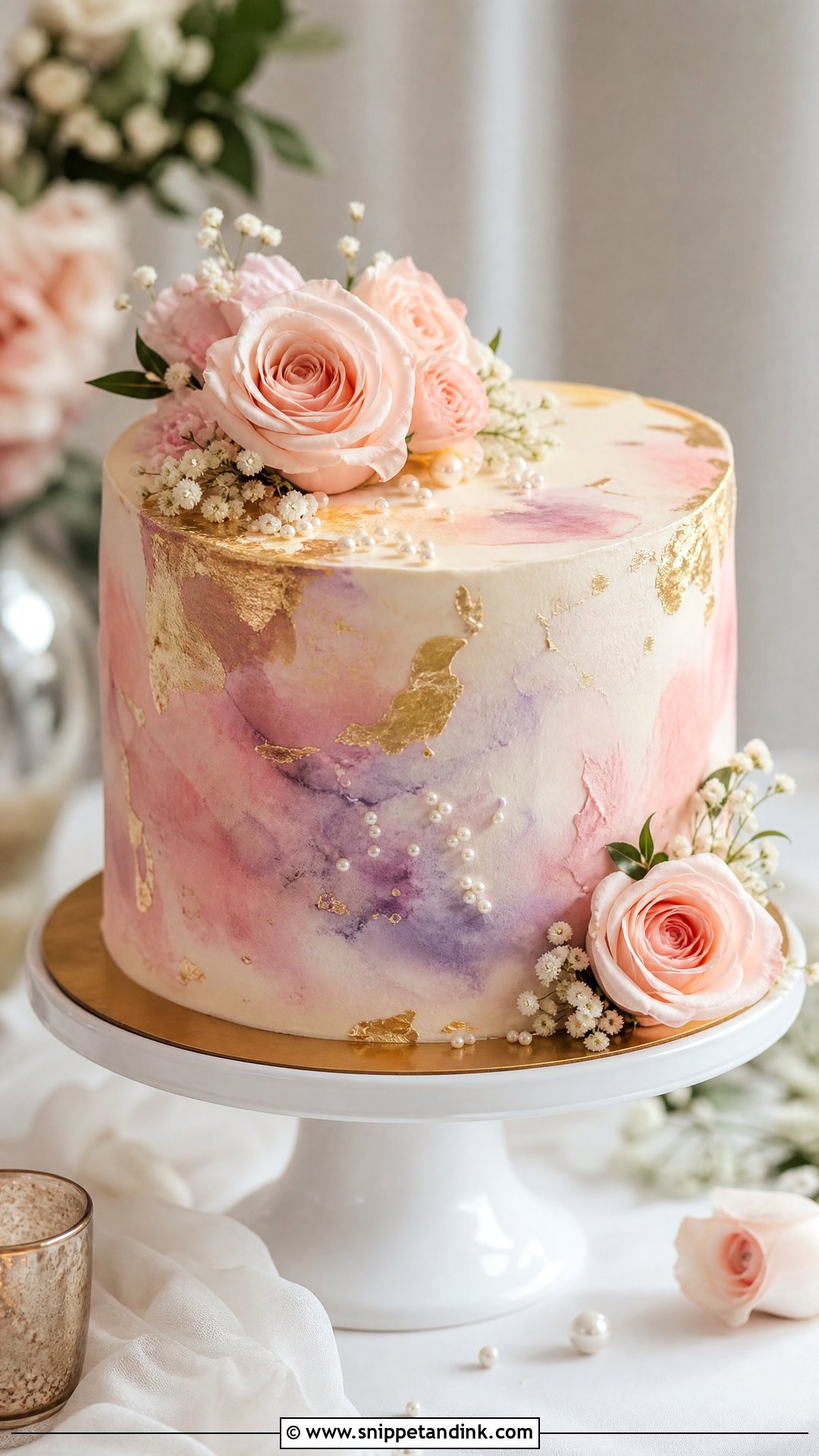
A watercolor finish blends soft shades across buttercream: blush, peach, lavender, pale blue or champagne. I apply the colors in loose patches, then scrape once or twice while the frosting is still soft, so they melt into each other instead of streaking. Over-scraping turns them into one muddy shade. Gold leaf, fresh flowers or a simple topper finish it. Vanilla, almond, berry or champagne flavors fit. It’s a good answer when the party has a palette but you don’t want a solid-colored cake.
19. Ombre Engagement Cake
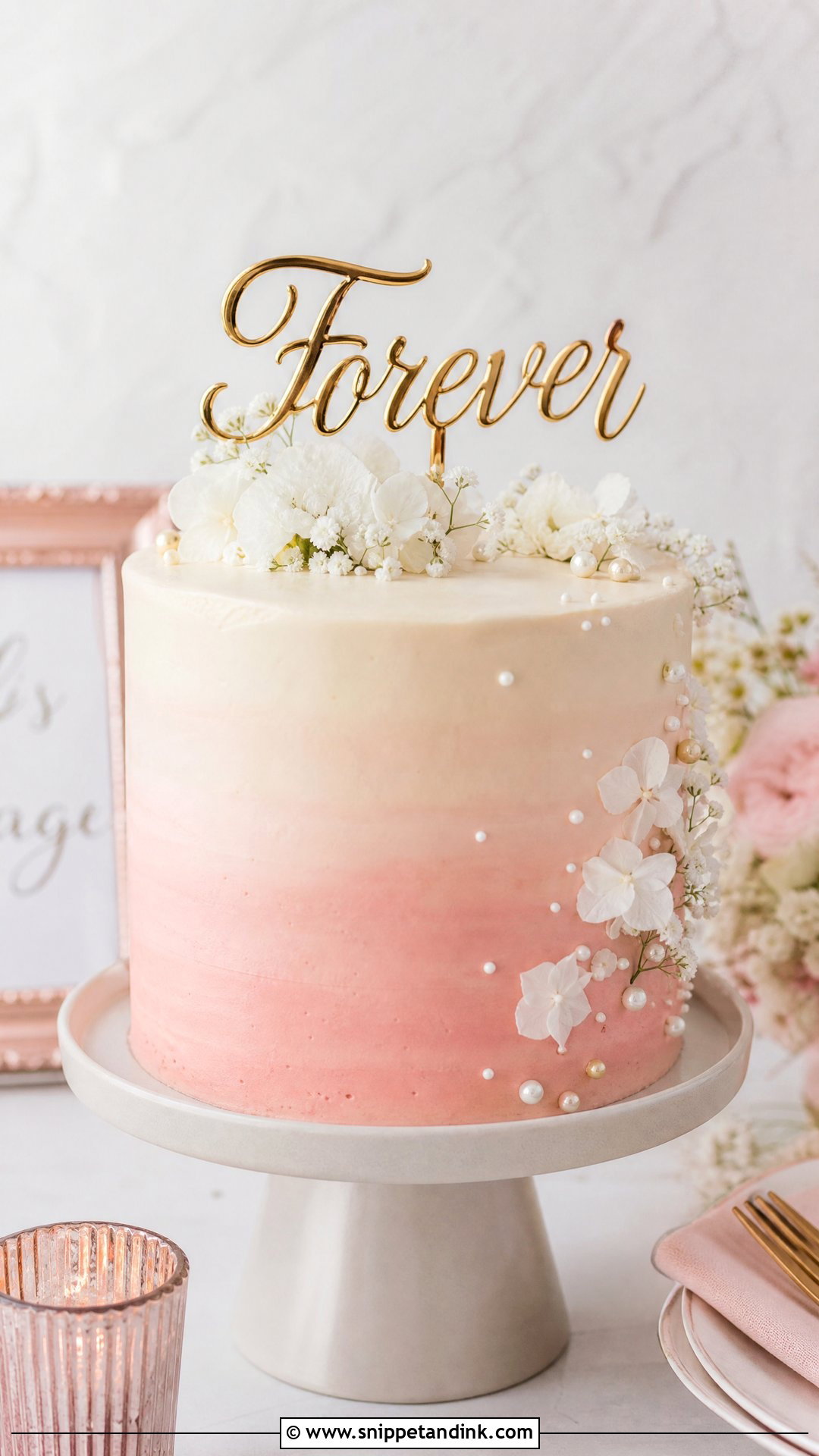
Ombre shifts from one shade to another down the cake: blush to white, blue to ivory, lavender to cream, peach to champagne. Buttercream gives the softest blend. I mix all the shades from the same base color before I start, adding a little more each time, because separately tinted batches never sit next to each other quite right. Minimal flowers, a topper or pearls keep the focus on the gradient. Flavor can match the color, strawberry for pink, but it doesn’t have to.
20. Pressed Flower Engagement Cake
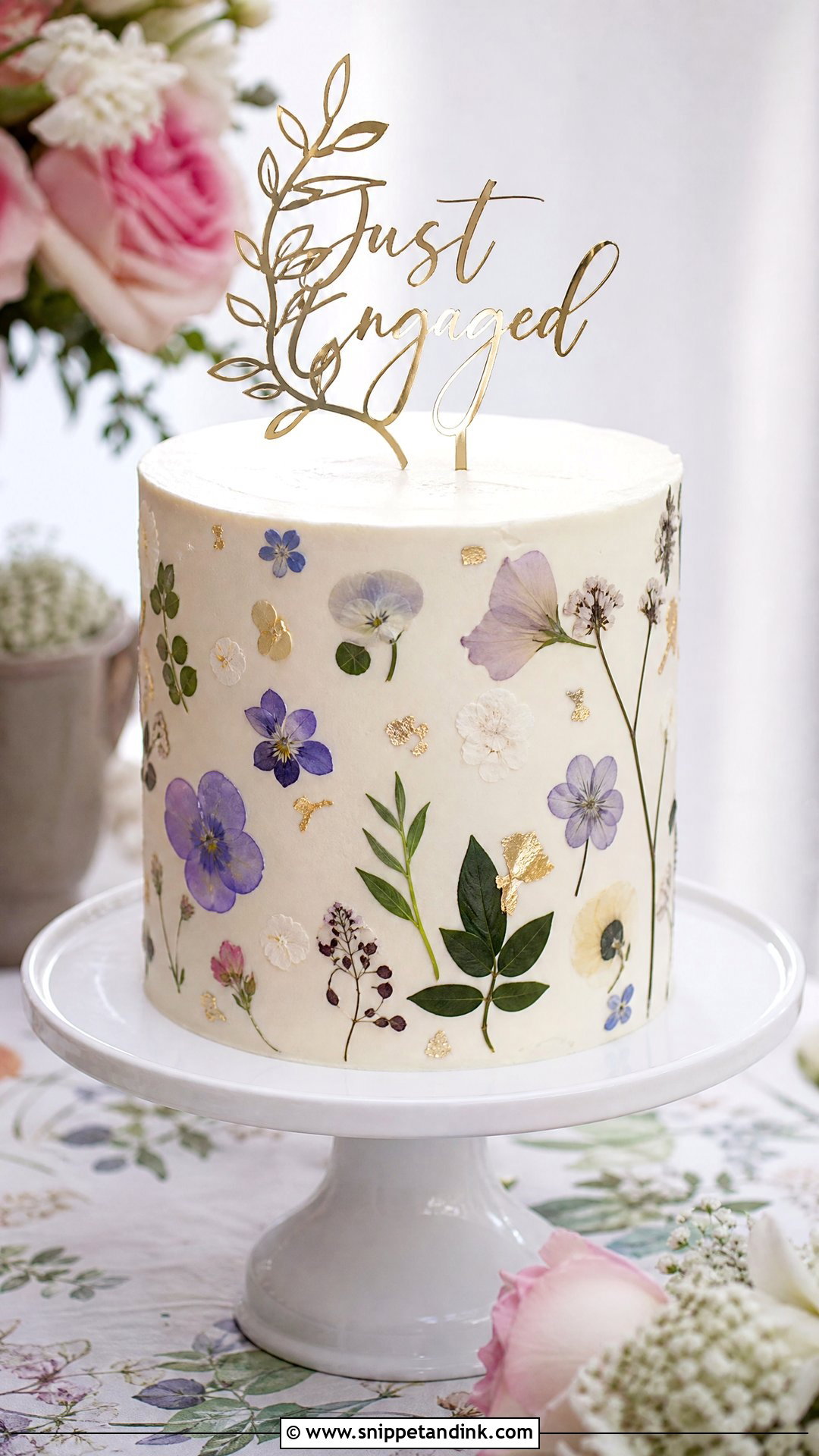
Pressed edible flowers lie flat against the sides of a white buttercream cake like a garden pressed in a book. Pansies, violas and cornflowers are common choices because they press thin and keep their color. They’re fragile and pick up moisture from the frosting, so I place them on a chilled cake and serve it the same day. Vanilla, lemon, honey or lavender flavors suit the mood. Keep the flowers to one tight palette and leave space between them. A small gold topper or a neat piped border is enough.
21. Bow Engagement Cake
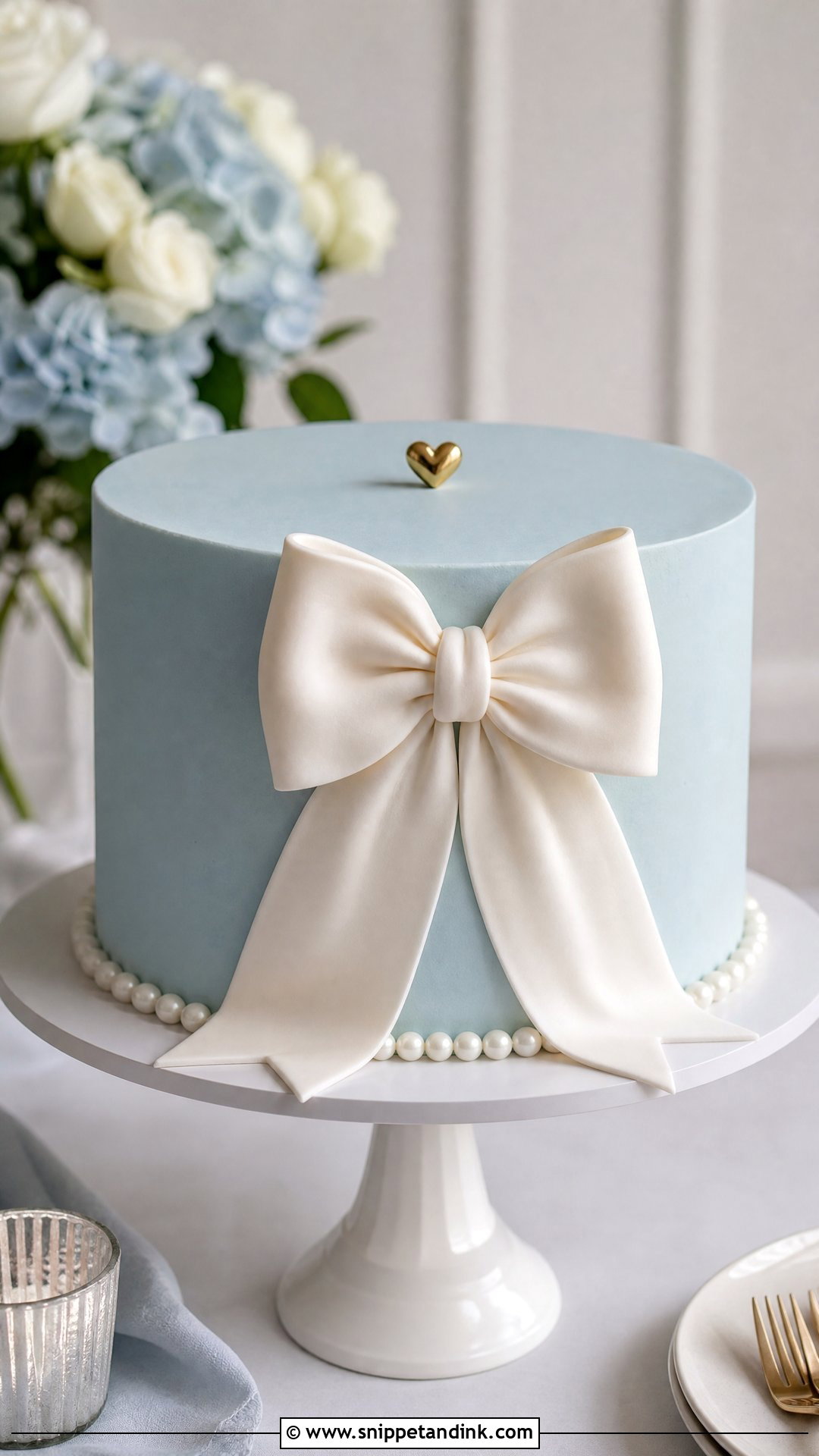
A bow is the friendliest detail to personalise. It can be fondant, piped buttercream, sugar paste shaped like ribbon, or a real ribbon with a food-safe backing. Blush on white reads romantic, black on white reads modern, pale blue reads soft. Fondant bows need to dry for a day or two before they go on, or the loops sag. Vanilla, strawberry, almond or chocolate all suit it. Size matters most: the bow should be about a third of the cake’s width, not half.
22. Sheet Engagement Cake
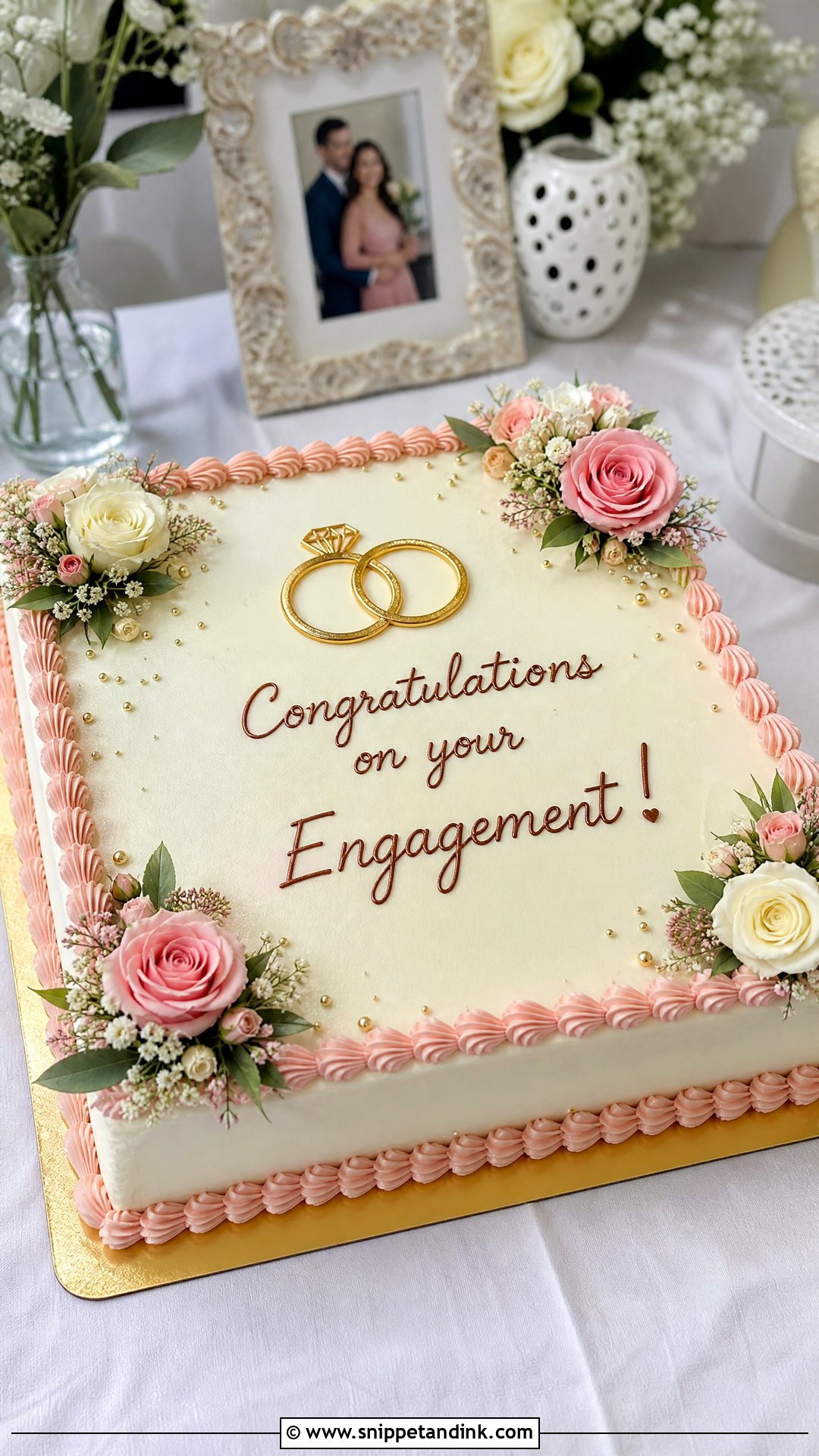
Sheet cakes are the practical answer for a big family party. They slice into neat squares and feed a crowd for less. I dress them with piped borders, floral corners, pearls and a centered line like “Congrats Engaged Couple.” Vanilla, chocolate, marble, carrot or lemon all work, and a half-and-half sheet keeps two camps happy. The flat top gives room for names and the date. Keep to one main color, one accent and lettering big enough to read in photos.
23. Cupcake Engagement Cake
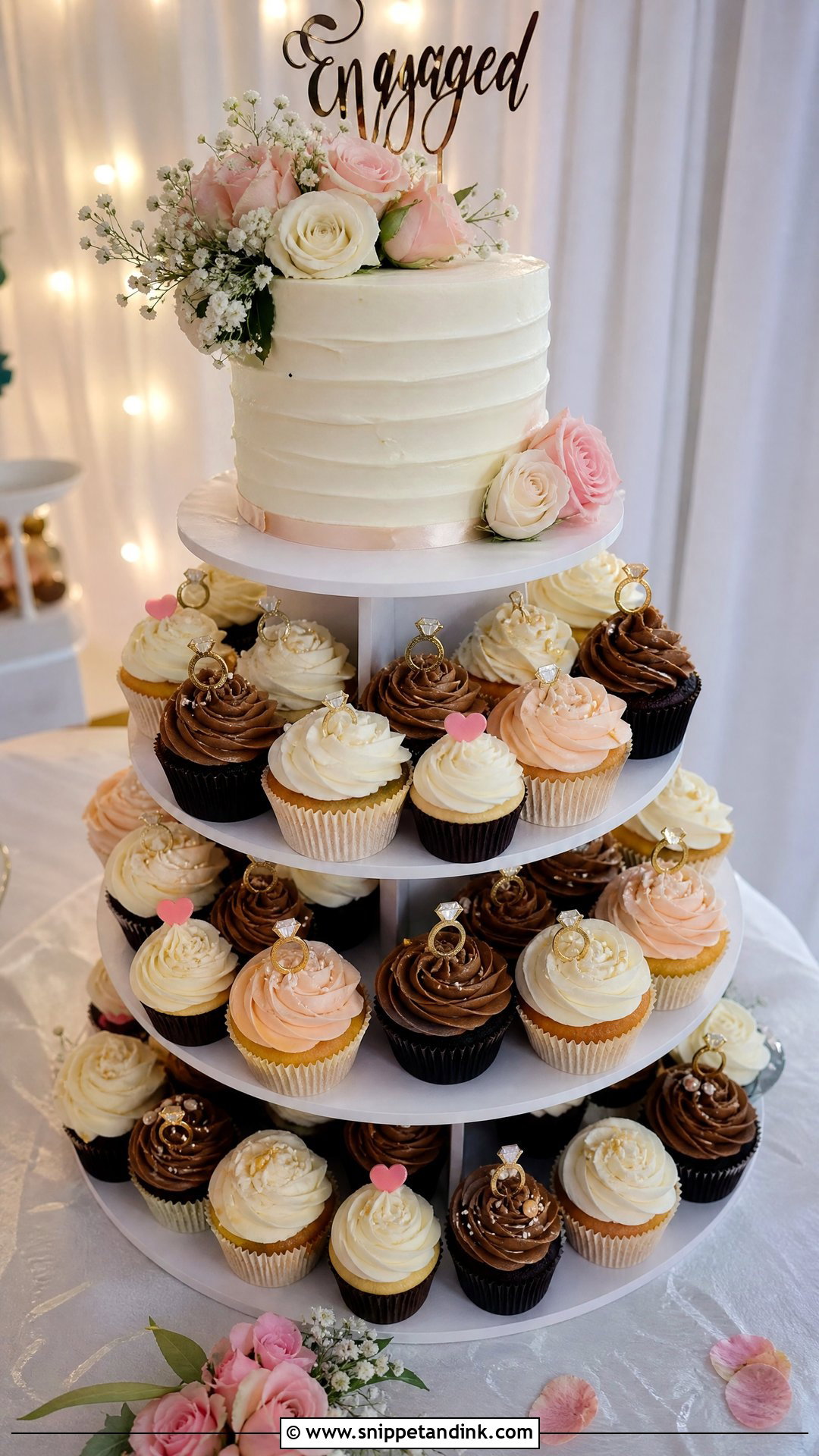
A cupcake engagement cake is a tiered stand of cupcakes with a small cutting cake on top for the couple. You get the look of a tower and guests serve themselves. Matching frosting, pearl sprinkles, mini ring toppers or little hearts keep it coordinated. Mixed flavors are fine: vanilla, chocolate, lemon and red velvet. I set matching liners and frost the cupcakes in the same swirl so the stand looks deliberate, and I remind couples to bring the stand itself; venues rarely have one.
24. Monogram Engagement Cake
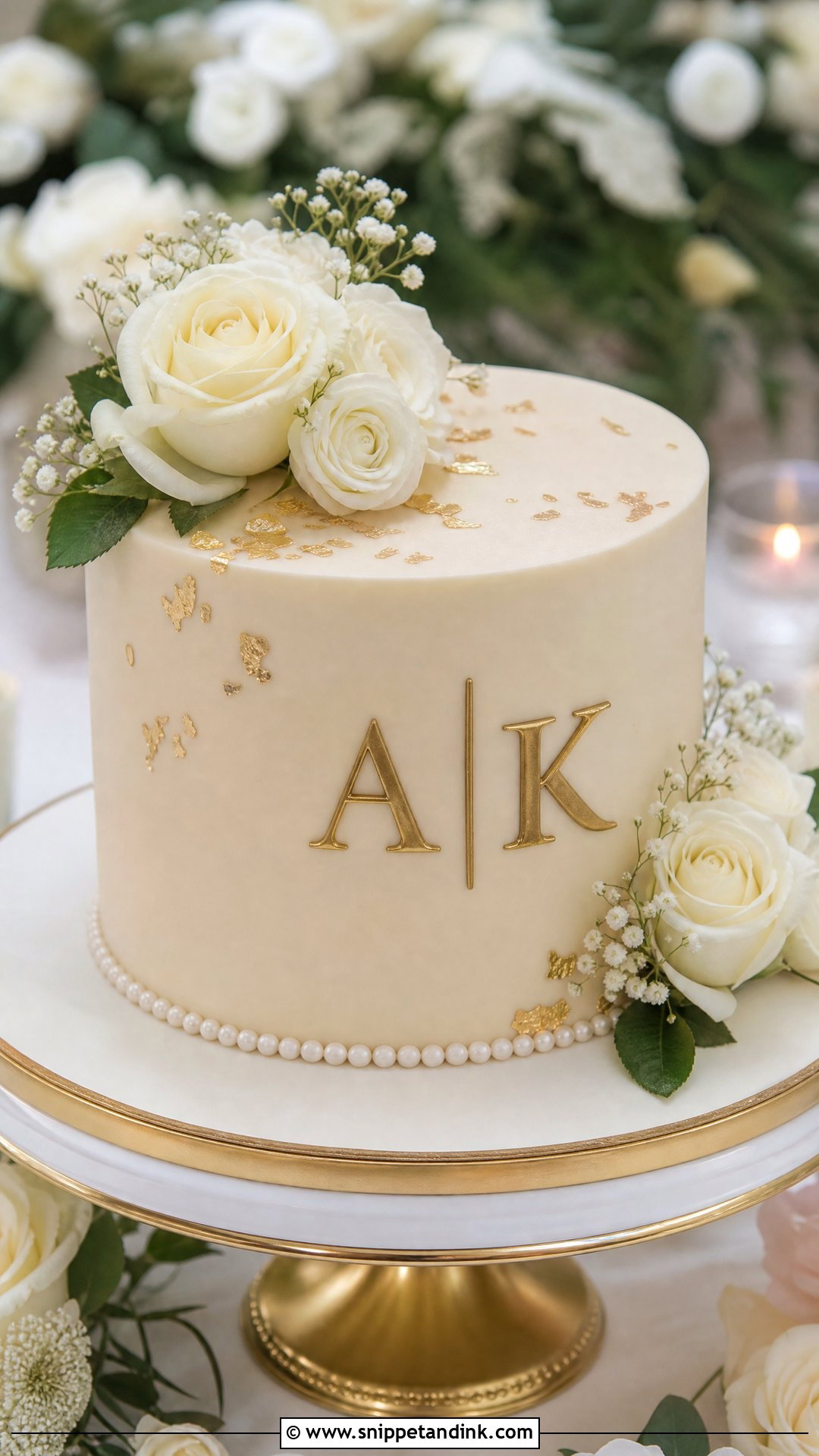
Initials are the most adaptable personal touch. Gold, black or white letters go on the front of a smooth round in buttercream or fondant, with pearl borders or flowers if you want them. Ivory and gold feel formal, blush and white feel soft, black and white feel bold. I cut monograms from fondant with a template rather than piping them freehand, so both letters match in weight. Vanilla almond, chocolate, raspberry or champagne flavors suit it. Make the letters readable but leave cake showing around them.
25. Photo Engagement Cake
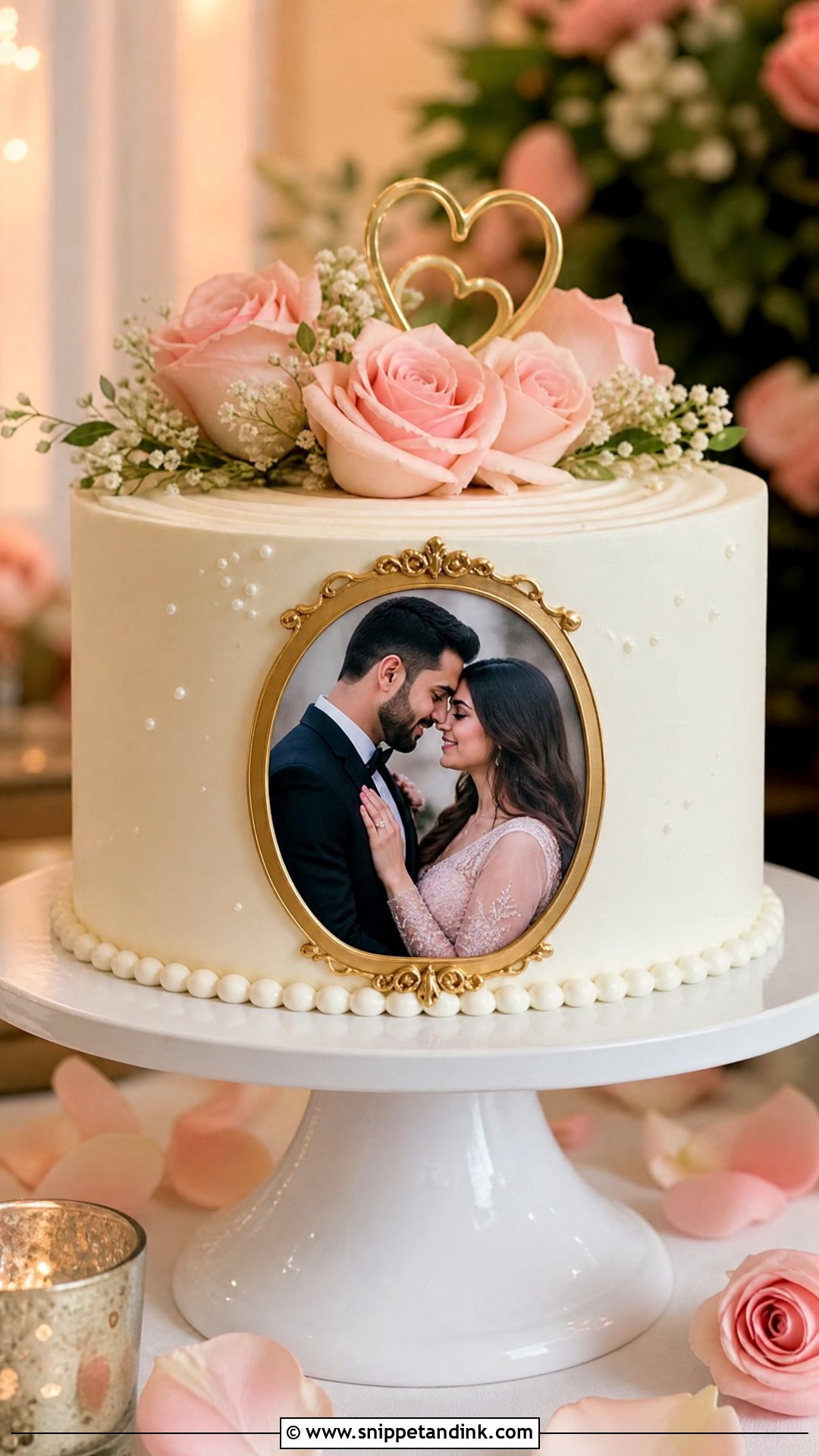
Edible photo prints let the cake tell your story. The image is printed with edible ink on a thin sugar sheet and laid on smooth buttercream, framed with flowers, pearls or a piped border. Keep everything else simple so the photo stays the focus. Prints work best on a cold, firm surface; on soft frosting they absorb moisture and the colors bleed if the cake sits too long. Choose a bright, sharp photo and frosting colors that match the party. Vanilla, chocolate or strawberry, whatever your guests love.
Short Notice, Restaurant Rooms and the Drive Over
Engagement parties are often planned in a few weeks, and that’s fine for most of these designs. Simple buttercream, sheet cakes, cupcake stands and topper cakes can usually be done with a couple of weeks’ notice, depending on the baker’s calendar. Sugar flowers, detailed vintage piping and custom fondant monograms take longer, so I’d ask early if your heart is set on one of those.
If the party is at a restaurant
Call the restaurant before you order. Many charge a cake-cutting fee for outside desserts, some don’t allow them at all, and few have fridge space set aside for you. Ask whether staff will cut and plate it, and whether they’ll provide a knife and server.
Getting it there in one piece
Carry the box flat on the floor of the car, not on a seat, which slopes. Run the air conditioning, drive slowly round corners and go straight there. Buttercream cakes are happiest cool until about an hour before serving, so they can soften enough to taste good without slumping.
A Small Cake With Your Story on It
The cake that feels like the two of you will always beat the trend of the month. A plain white cake with the right topper can be just as memorable as a vintage heart with every border piped. Think about the venue, how many people are coming, the flavors you both love and the photos you want. Then pick details that belong to your story, such as initials, flowers, ring accents, pearls or a short message, and the cake turns a sweet announcement into something people remember.
You'll Like These Ideas:


Leave a Reply