
An engagement party cake has a different job from a wedding cake. It usually feeds fewer people, it often gets ordered with only a few weeks’ notice, and it tends to sit in a living room or a restaurant’s private room rather than a climate-controlled ballroom. When a couple asks me for one, I want to know how many guests are coming, where the cake will stand and how long it will be out before anyone cuts it. Those answers rule out more designs than taste ever does. The ideas below run from a single tier with one flower to a full dessert table, with notes on how each one behaves once it leaves my kitchen.
Sizing and Ordering an Engagement Cake in a Few Weeks
Engagement parties are often planned quickly, so the first conversation I have is about servings and time, not color. Party slices are cut bigger than wedding slices, and guests who have just eaten a full meal take less than guests at an afternoon drinks party. As a rough guide, a two-layer six-inch round gives about ten to twelve party slices and an eight-inch about twenty, though every baker cuts a little differently.
- Give your baker a firm guest count and say whether there’s other dessert. A full dessert table means the cake can be smaller.
- Ask how much notice the design needs. A plain buttercream cake can often be done within a couple of weeks, while sugar flowers, hand painting and sculpted shapes need longer because sugar work has to dry for days.
- Send a photo of the table or room, plus the invitation if you have one. It tells me more about color and scale than a mood board does.
- Mention allergies and anyone who doesn’t eat dairy or gluten early, since some frostings can’t simply be swapped later.
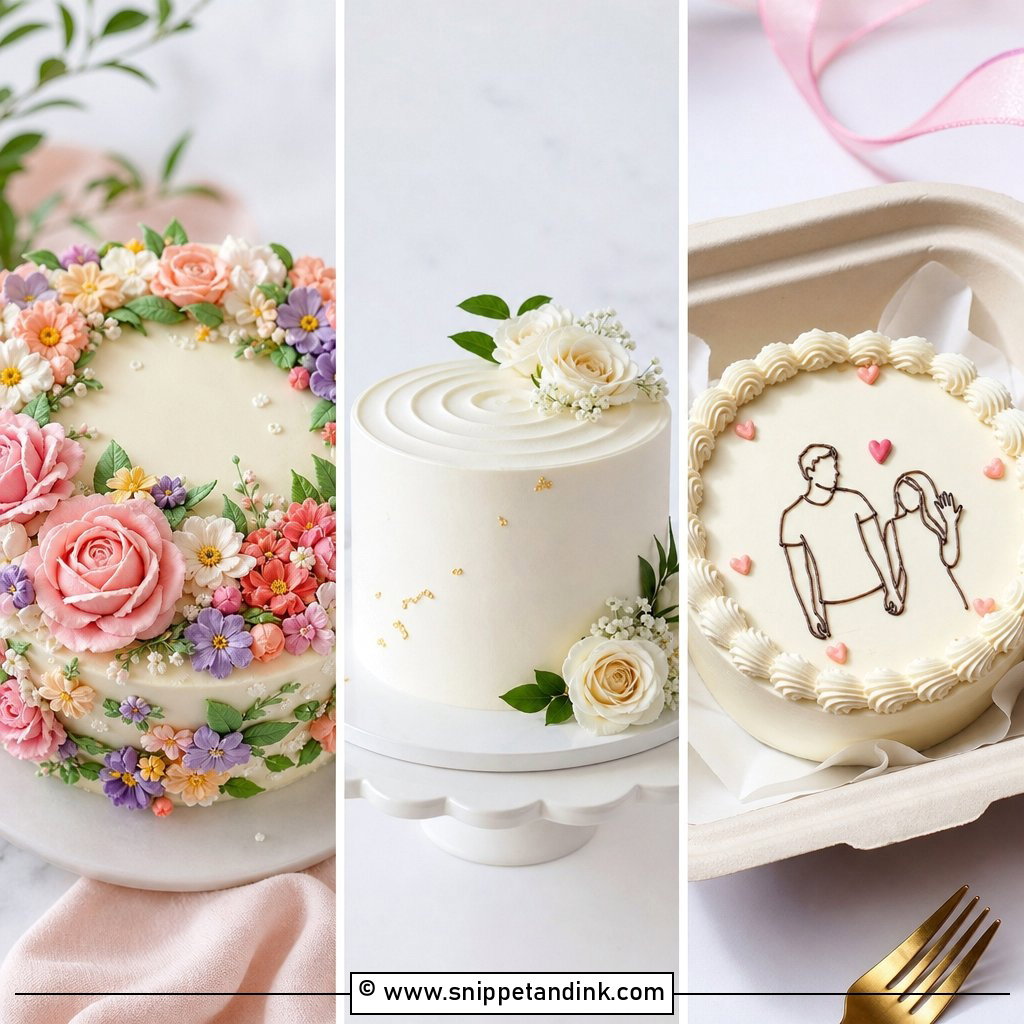
1. Floral Engagement Cake
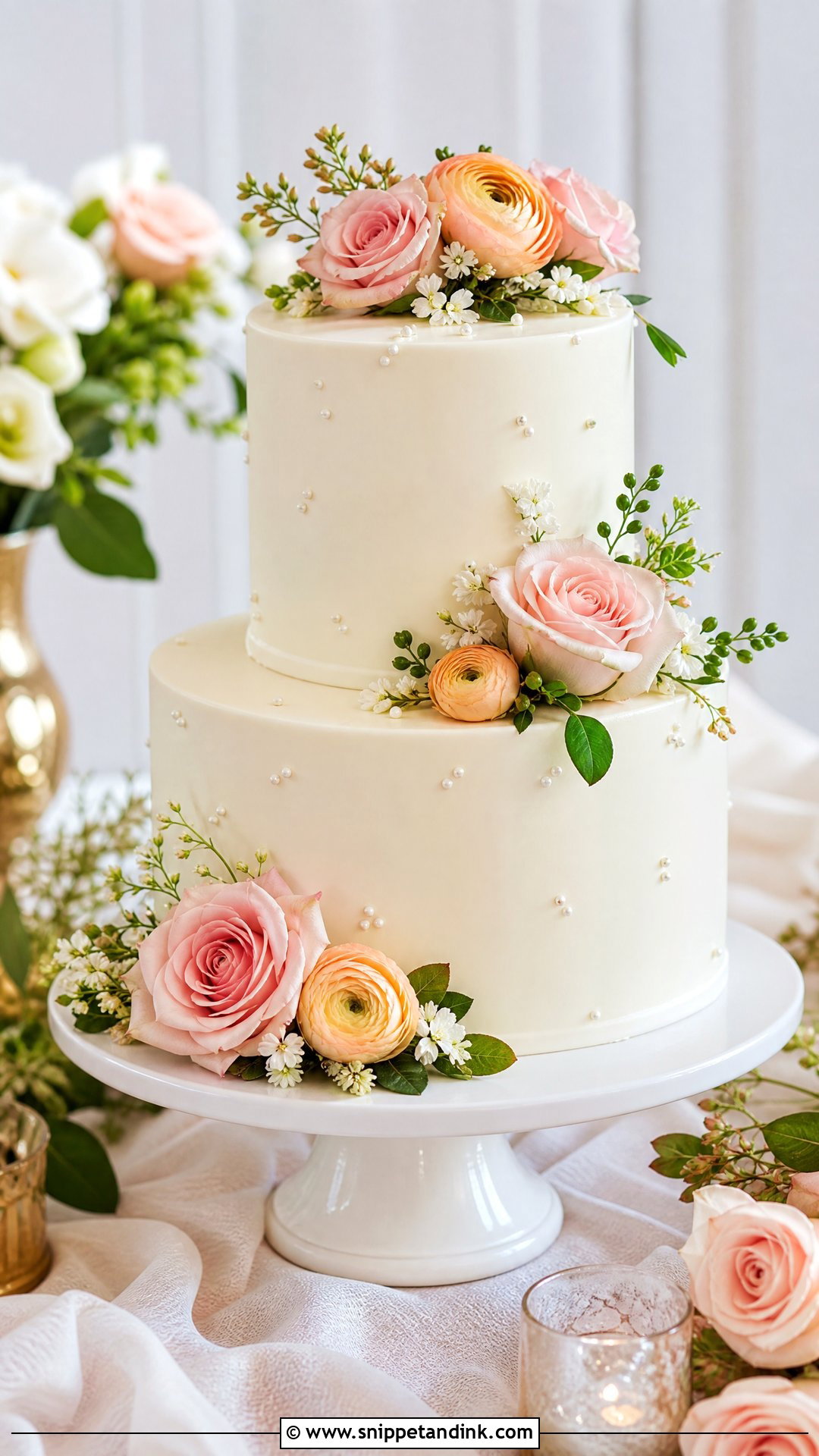
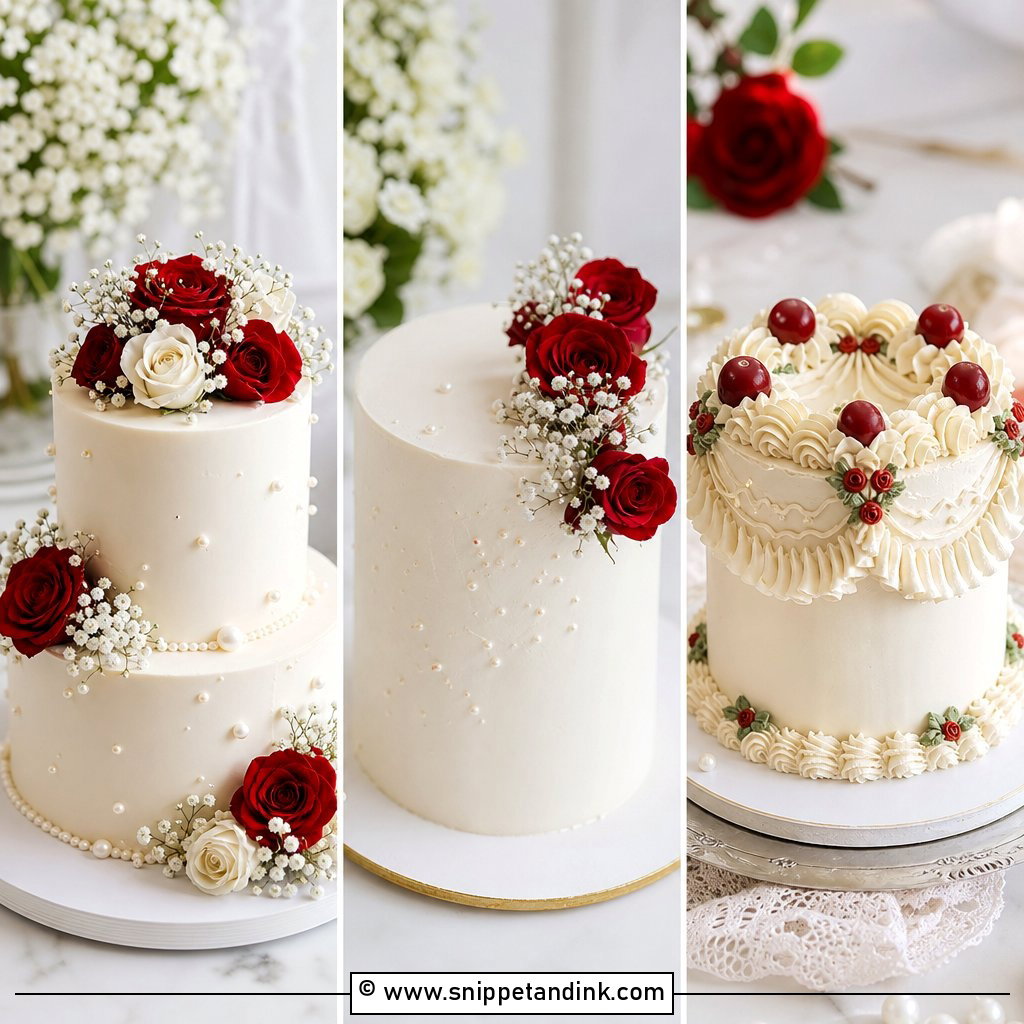
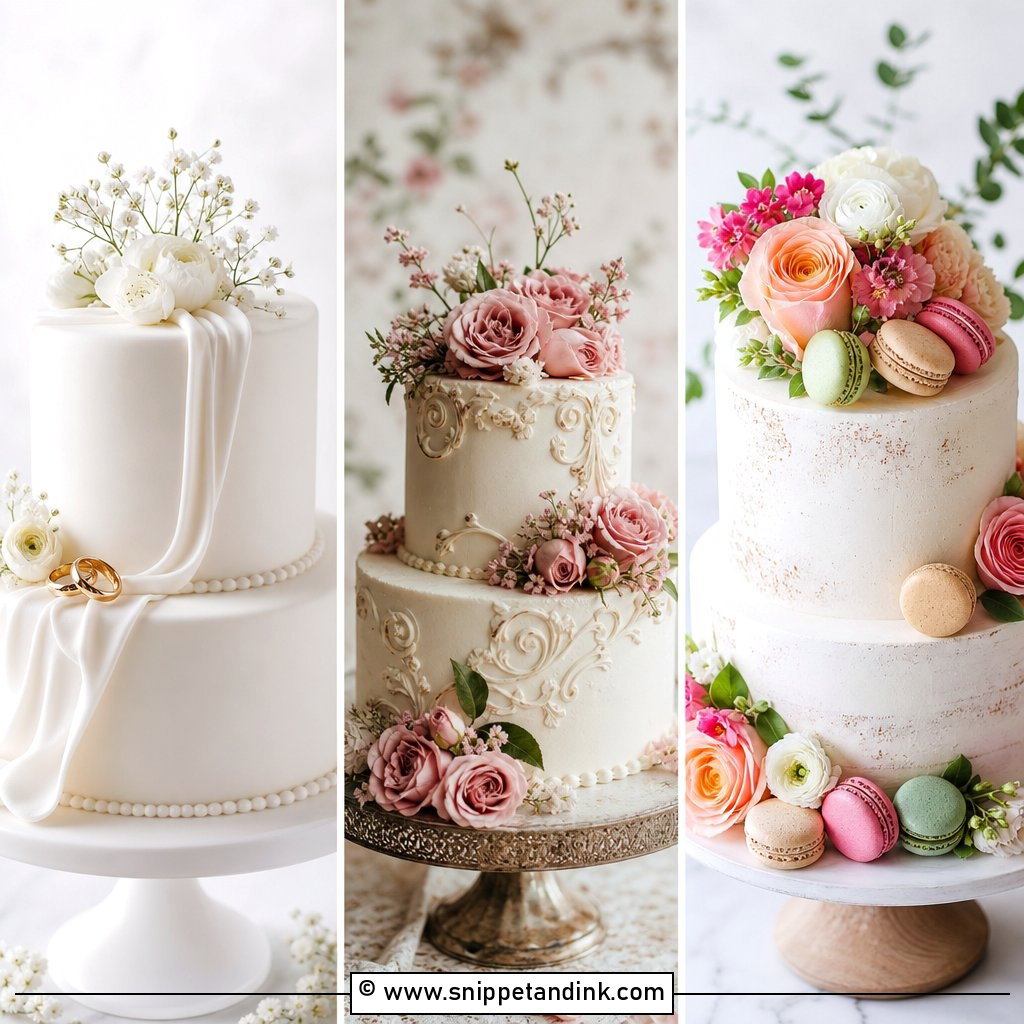
Fresh flowers are the decoration I’m asked for most, and they need the most handling. Every stem that touches the cake gets wrapped in floral tape or set into a posy pick, because sap and florist chemicals shouldn’t meet the frosting, and I check each variety against a food-safe list before it’s cut. Sugar flowers cost more and need days to dry, but they won’t wilt during a long afternoon party. Garden roses, ranunculus and spray roses in ivory, blush or peach sit well on smooth buttercream or fondant. One cluster placed off to the side looks more current than a full cascade, and it leaves room for the knife.
2. Minimalist Engagement Cake
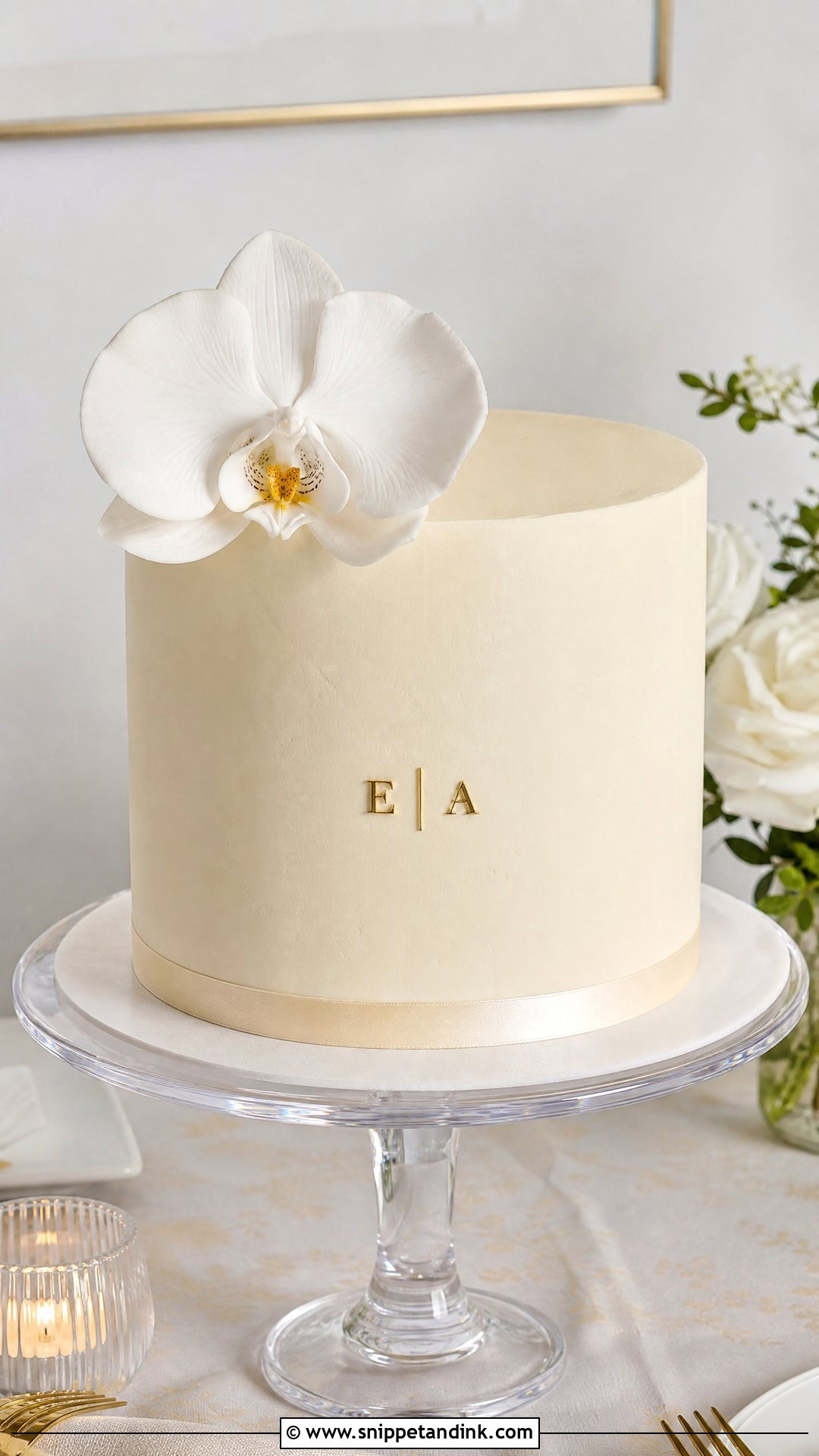
Plain cakes are the hardest to fake. With only smooth buttercream, a sharp top edge and one decoration, every air bubble and soft corner shows, so this is where I spend extra time chilling and scraping between coats. A single flower, small gold initials, a slim ribbon or a tiny “engaged” topper is enough. I’d steer you away from this design if the cake will sit in a warm room for hours, because a sharp edge is the first thing to slump. Vanilla, almond, lemon or a champagne-style sponge all suit it, and the shape carries the rest.
3. Heart Engagement Cake
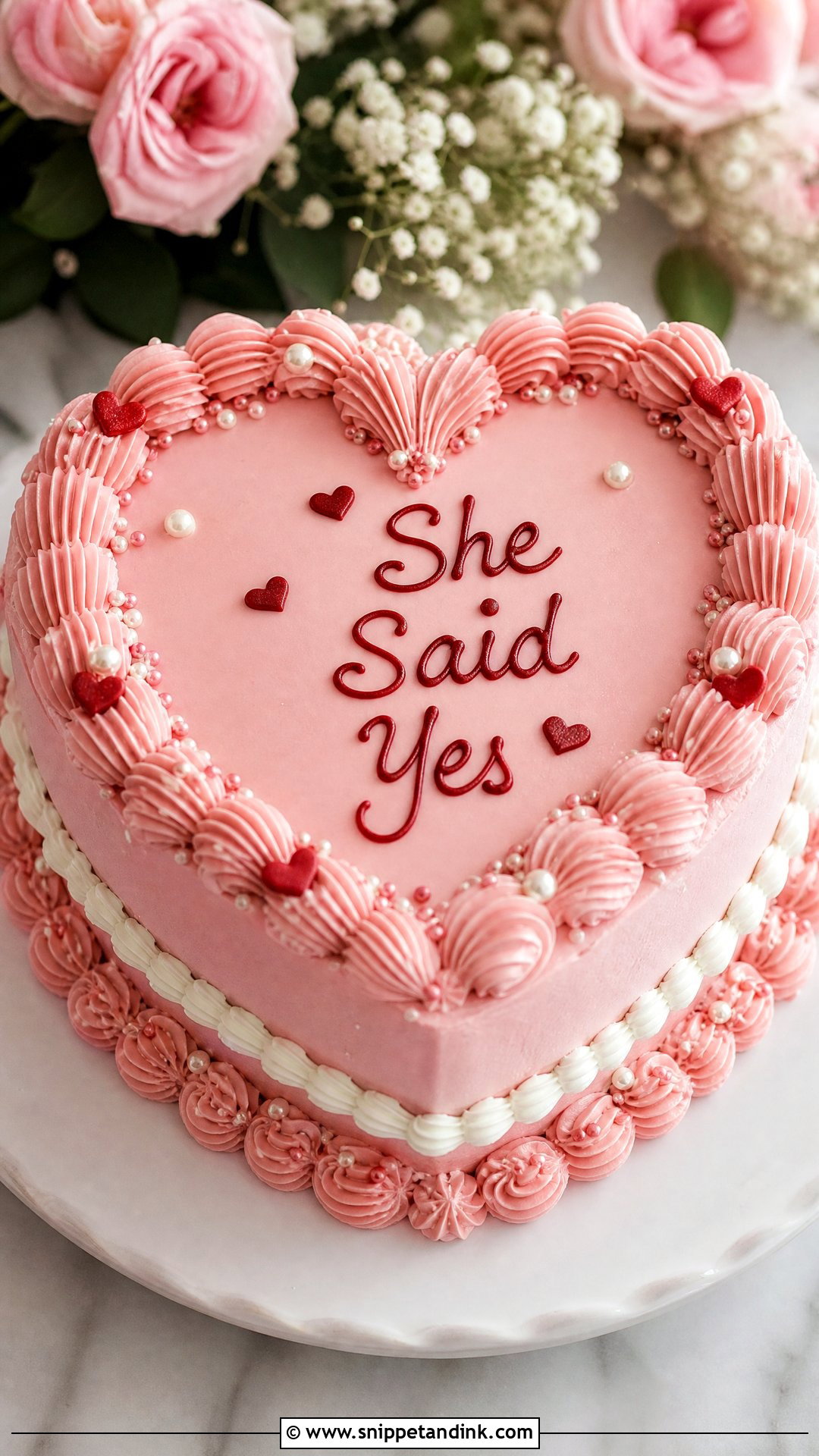
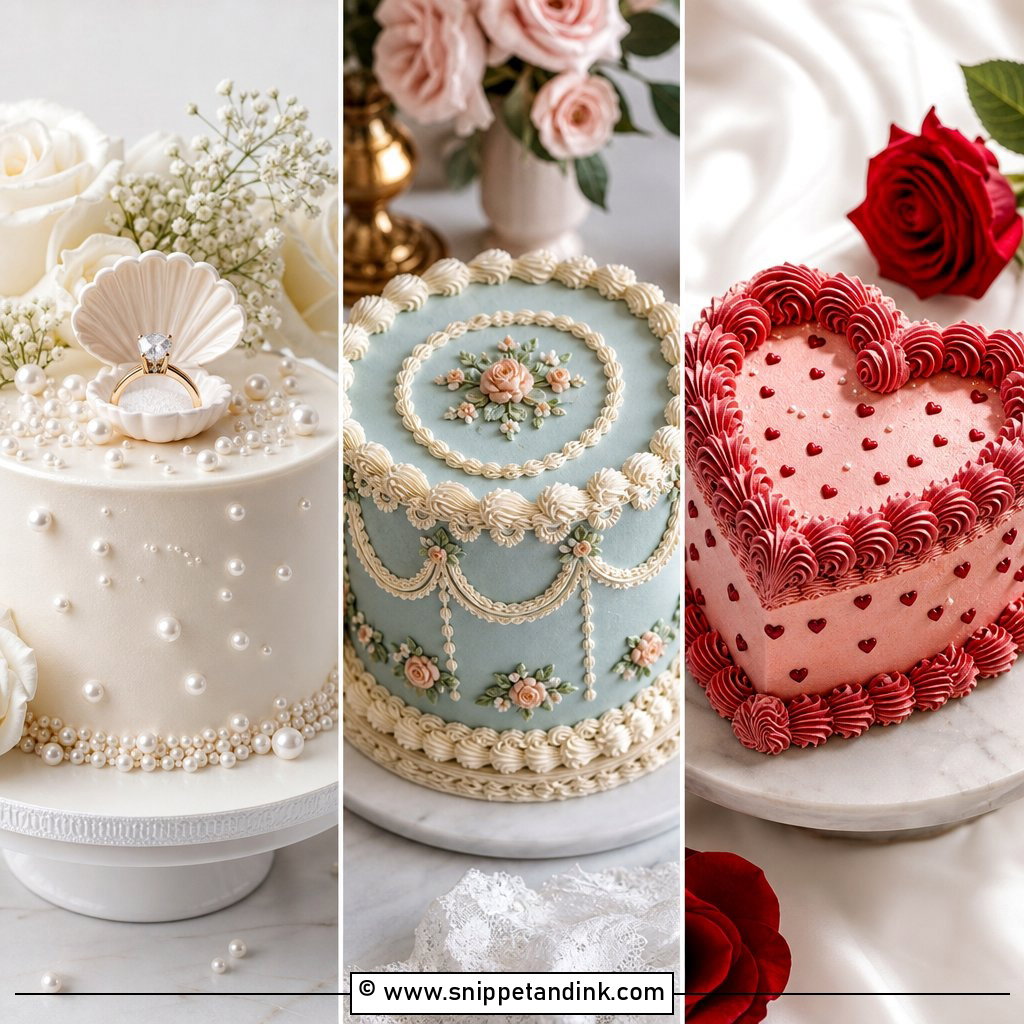
Heart shapes are a favorite for small dinners because one tier is plenty and nobody expects height. The tricky spot is the point at the bottom: it’s narrow, it dries out first and it’s where crumbs show through a thin coat, so I build it slightly fuller and trim it back. Piped borders give a vintage feel; smooth frosting with a short message looks more modern. Phrases like “She said yes,” “Forever starts here” or two initials fit comfortably on an eight-inch heart, while longer lines get cramped. Pink, white, red and ivory are the classic colors, though powder blue or champagne feels fresher.
4. Vintage Engagement Cake
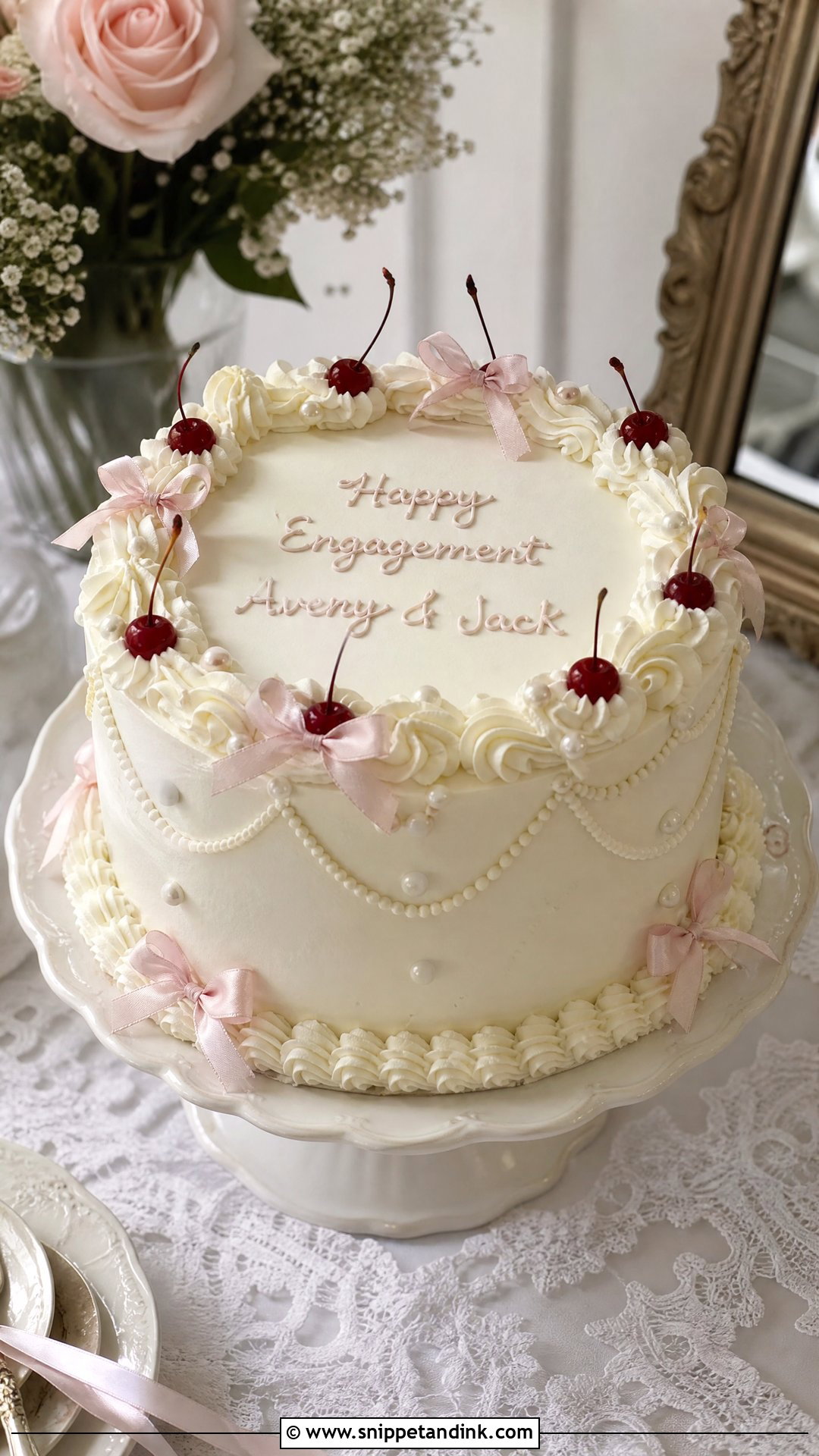
Lambeth-style piping needs a frosting that holds a ridge. The piped shells, ruffles, swags and bows on these cakes stay crisp in American buttercream, which crusts, or in a stiff Swiss meringue buttercream kept cool. Whipped cream won’t hold them at all. Cherries, pearls and a hand-piped message finish the look. White and ivory keep it classic, while butter yellow, baby blue or deep red push it toward retro. On a heart-shaped base it’s especially sweet, though the curves take noticeably longer to pipe evenly.
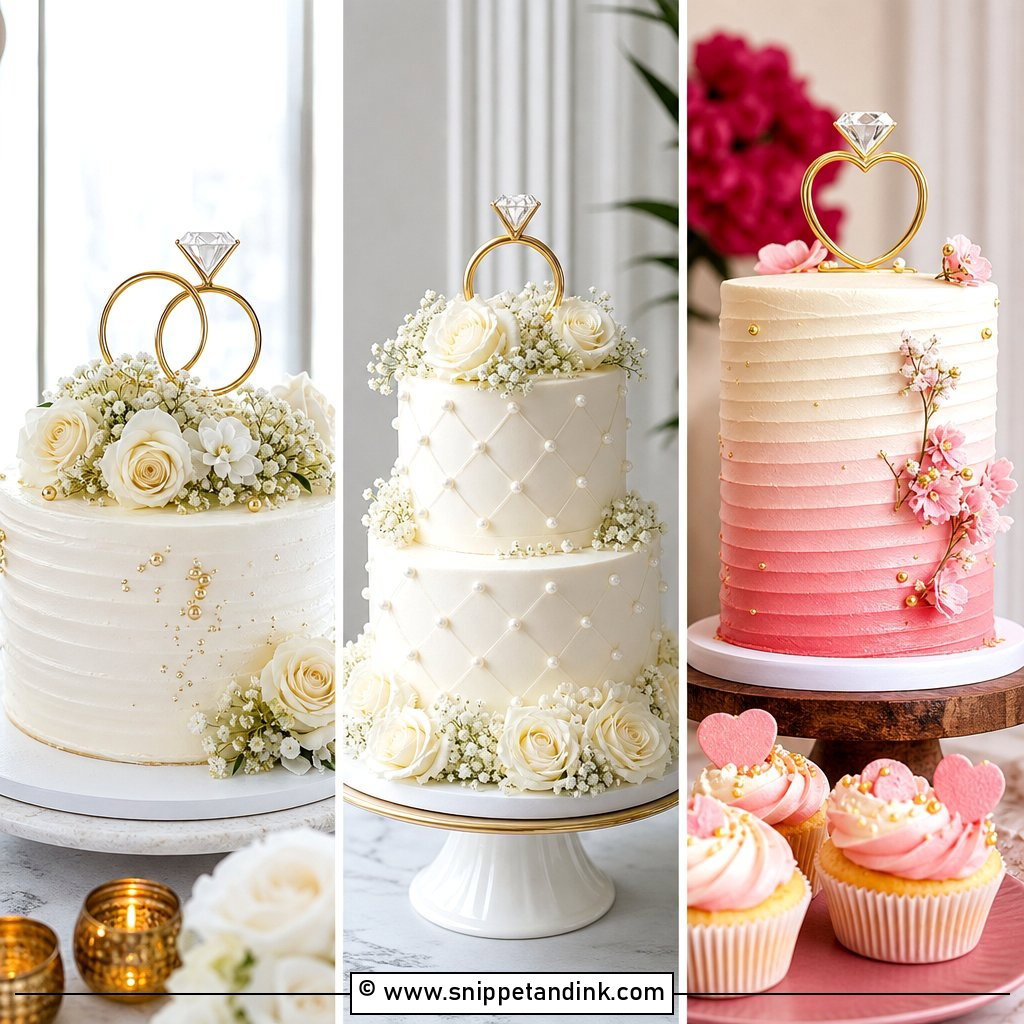
5. Two Tier Engagement Cake
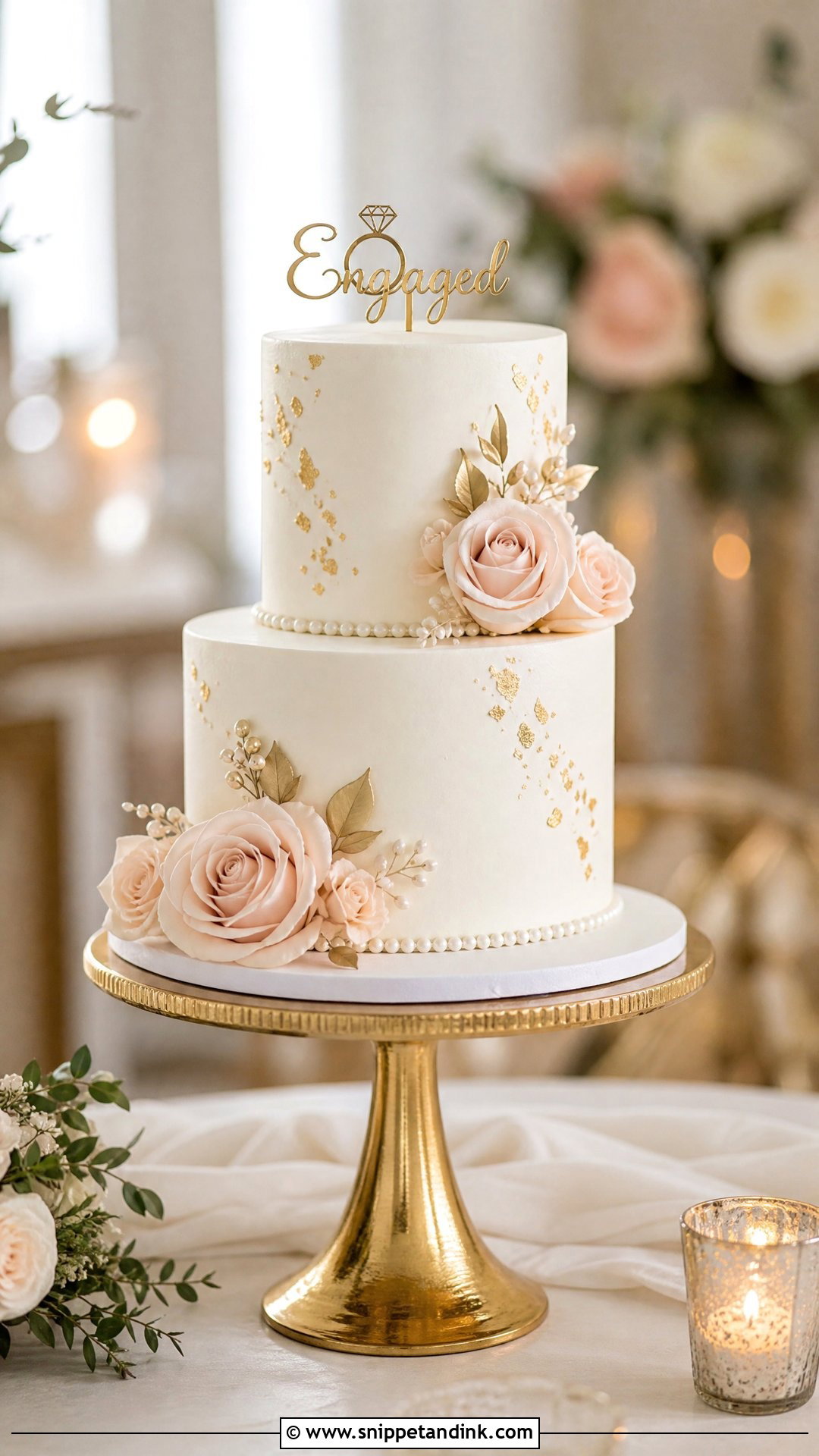
Two tiers give a medium-sized party a real centerpiece without the formality of a wedding cake. Any stacked cake needs dowels or sturdy straws in the bottom tier to carry the top one, and that matters more than the decoration, especially if the cake has to travel. You can split the flavors, say vanilla raspberry on top and chocolate ganache below, so guests get a choice. Smooth buttercream, fondant, florals, pearls and metallic trim all suit it. I keep the top tier visually lighter than the bottom so the cake doesn’t look top-heavy.
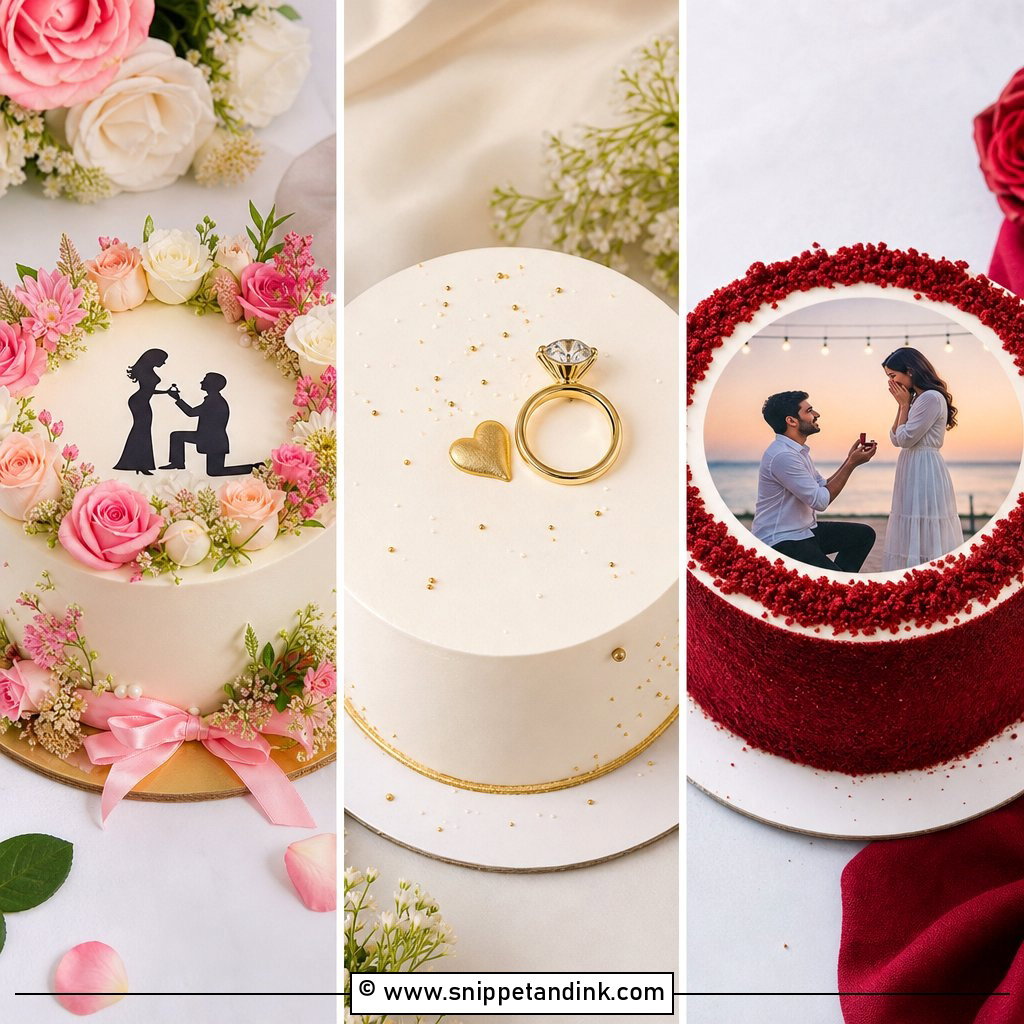
6. Ring Engagement Cake
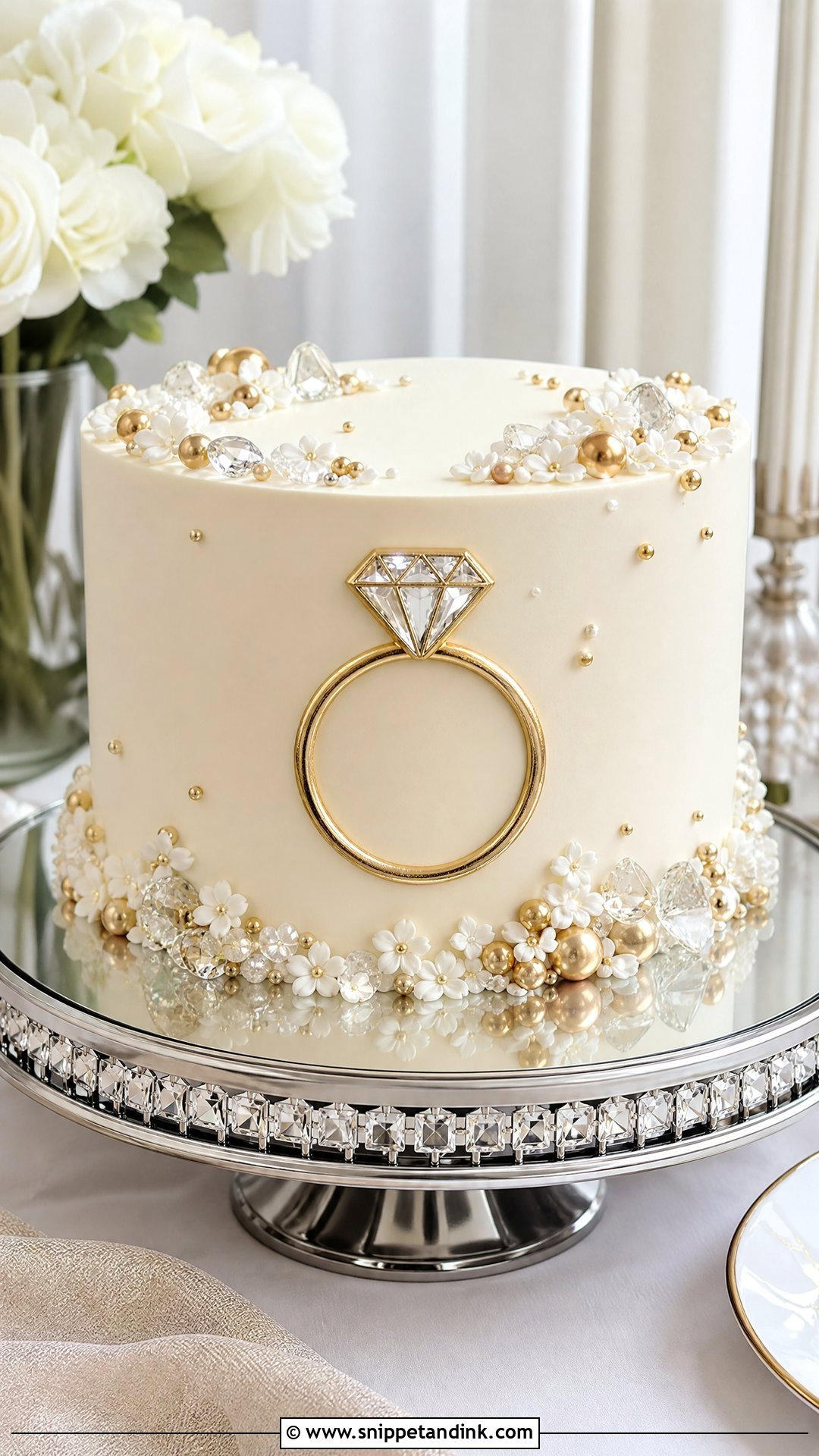
The ring is the whole point here, so everything else stays quiet. It can be a gold topper, a piped outline, a fondant ring painted with luster, or edible sparkle across the front. Painted fondant rings are fragile, and I always make a spare in case one cracks on the way. An ivory, blush or champagne base sets off gold best. A few sugar flowers, small pearls or a short message are plenty. Proposal parties and family announcements suit this one because the theme is obvious from across the room.
7. Gold Engagement Cake
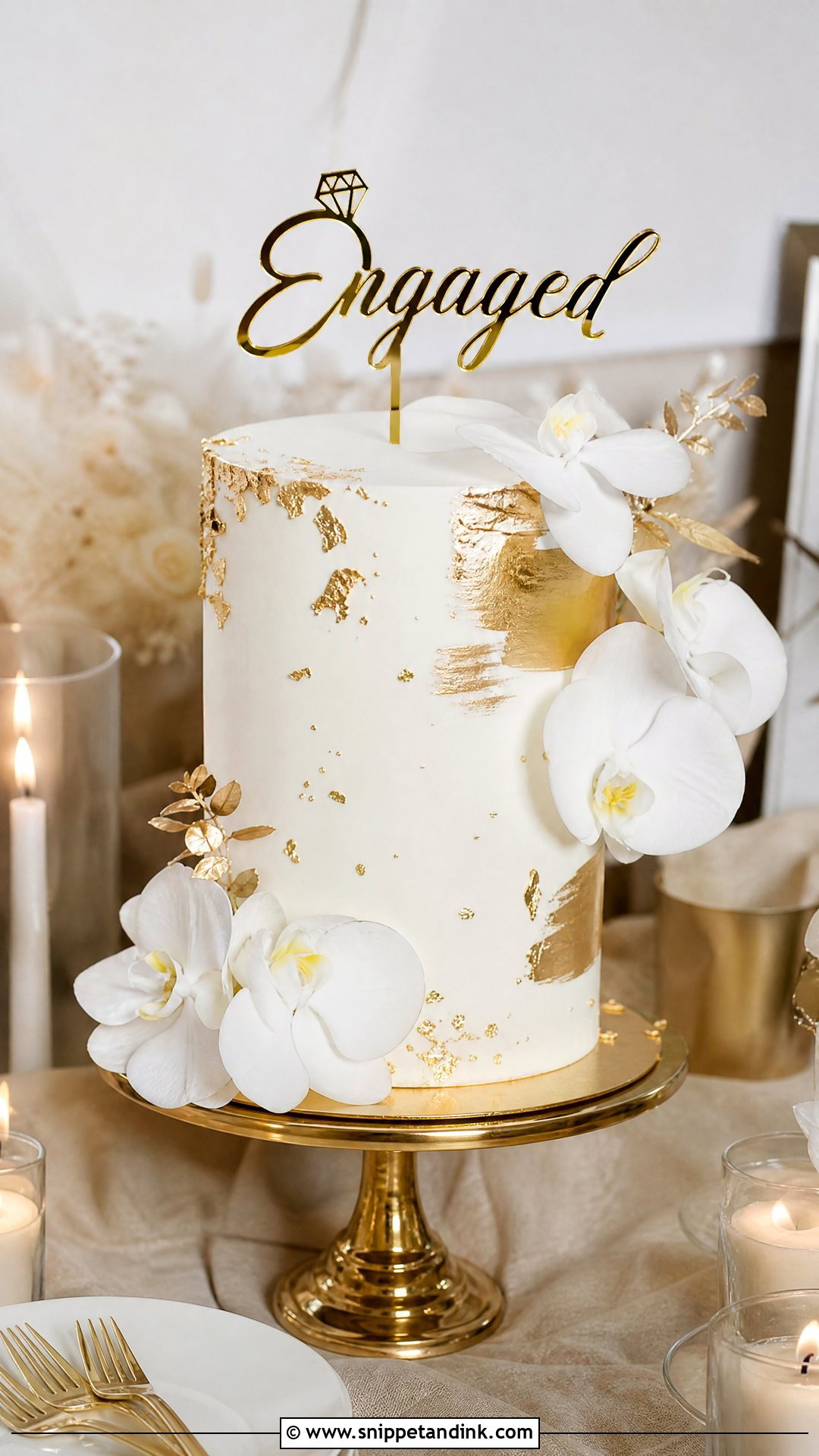
Gold does a lot of work on its own, which is why I keep the rest of the decoration controlled. Edible gold leaf, painted brush strokes, gilded edges or a gold acrylic topper can turn a plain cake into an evening-party cake. One question worth asking your baker: some metallic dusts are labeled non-toxic rather than edible, and those belong only on pieces you remove, never on frosting people eat. Scattered leaf over buttercream reads softer, while a fully gilded tier or a gold drip reads bolder. White, ivory, sage, navy and black all pair well, and candlelit rooms show the shine best.
8. Pearl Engagement Cake
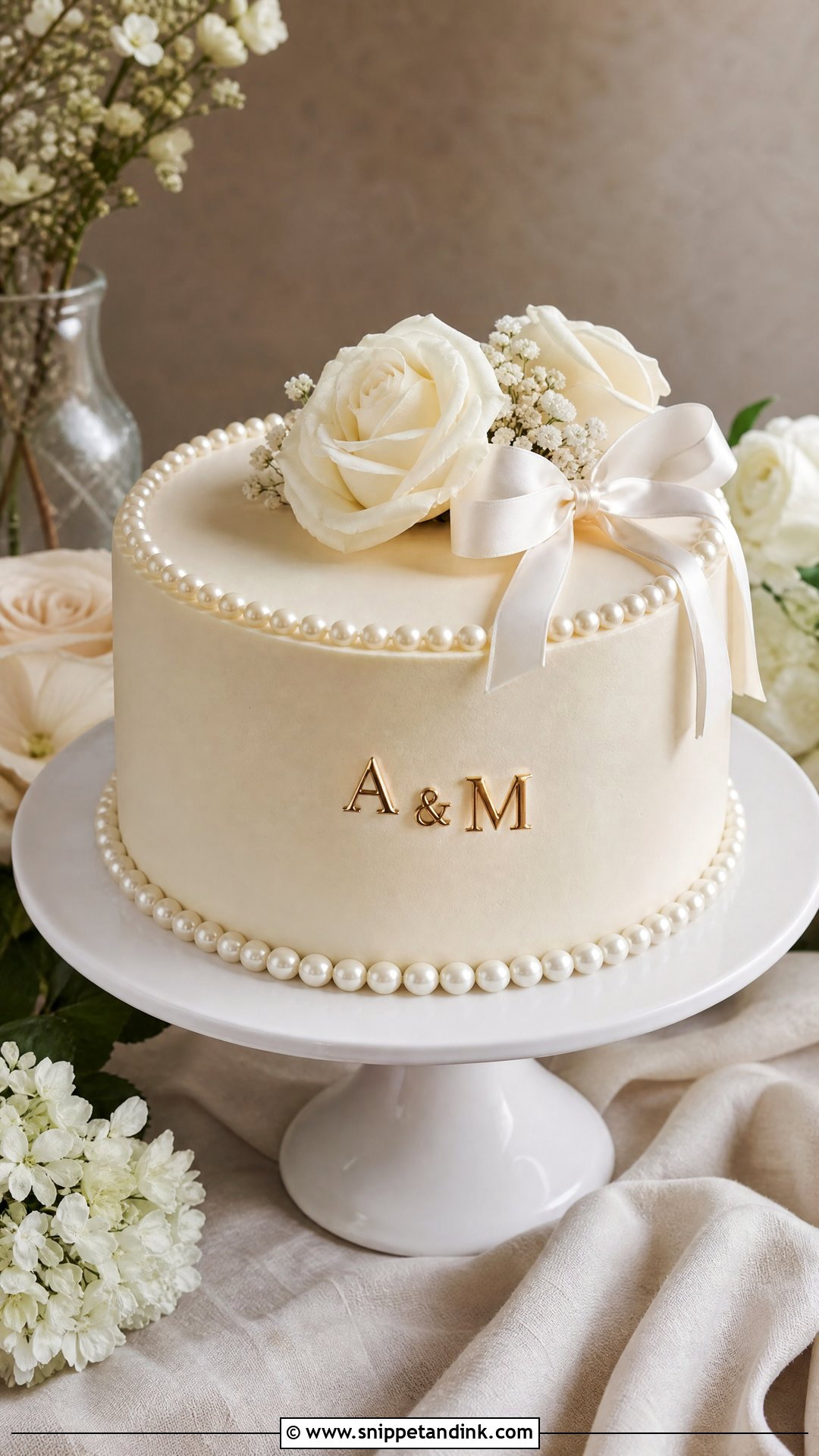
Edible pearls are sugar dragées, and they’re harder than most people expect, so I use the smaller sizes on any cake children will eat. They can ring the base, scatter over the sides or run in clean vertical lines, and they suit ivory buttercream, white fondant, champagne tones or pale pink. On buttercream I press them in while the coat is still slightly soft; on fondant each one needs a dot of edible glue. Satin bows and small florals pair well. A measured pattern looks deliberate, while pearls everywhere start to look heavy.
9. Bow Engagement Cake
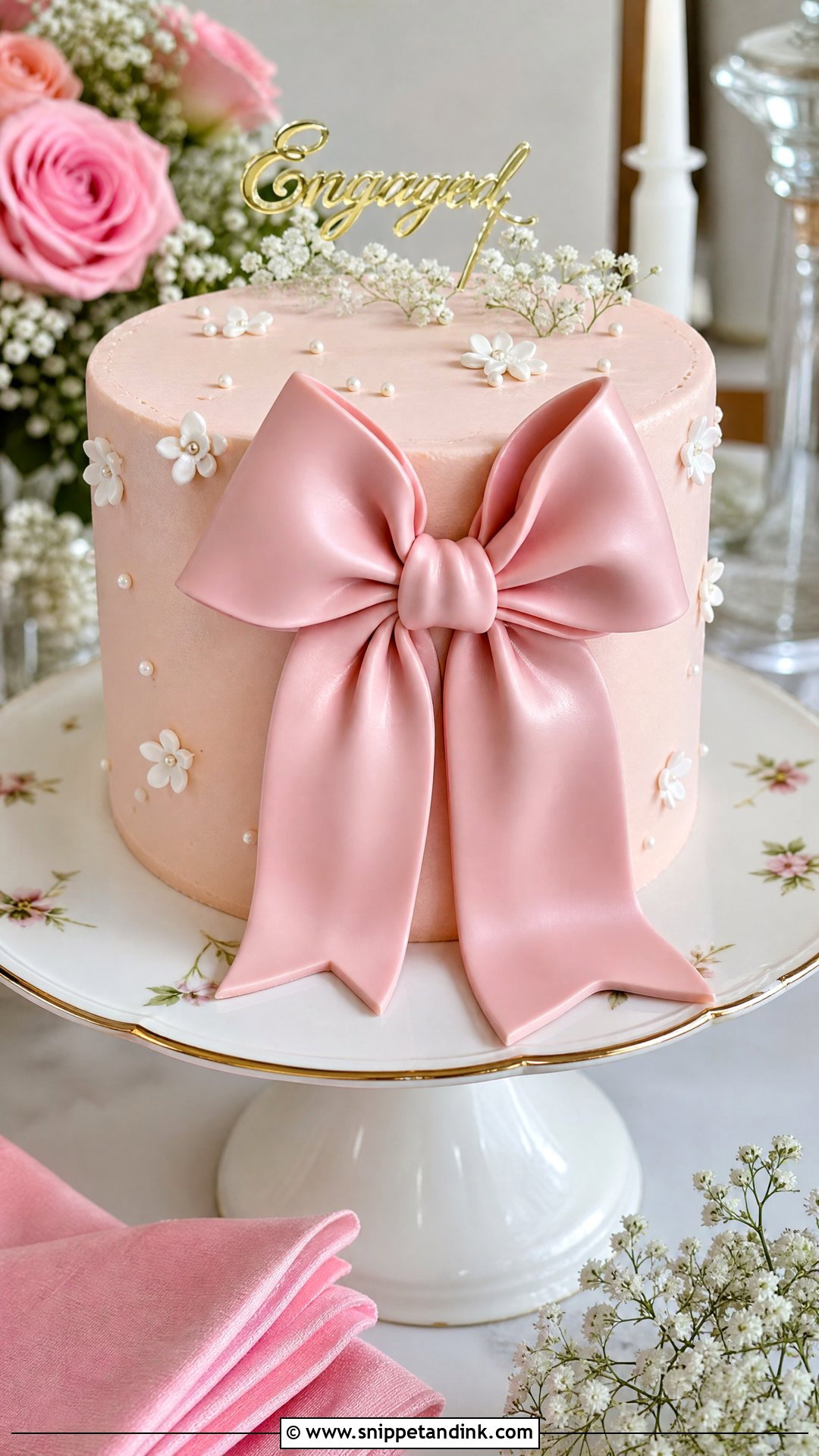
Bows are everywhere right now, and the material changes how they behave. Fondant bows hold a crisp shape but need a day or two to firm up. Buttercream bows are softer and best kept small. Silk ribbon is quickest, but it has to be backed with acetate or parchment or the butter in the frosting will stain it. Wafer paper makes light, airy loops that go limp in humidity. One large bow on the front looks like a wrapped gift; small bows around the tiers feel daintier. White, blush, pale blue and butter yellow suit it, and minimal flowers keep the bow in charge at a brunch or tea party.
10. Rustic Engagement Cake
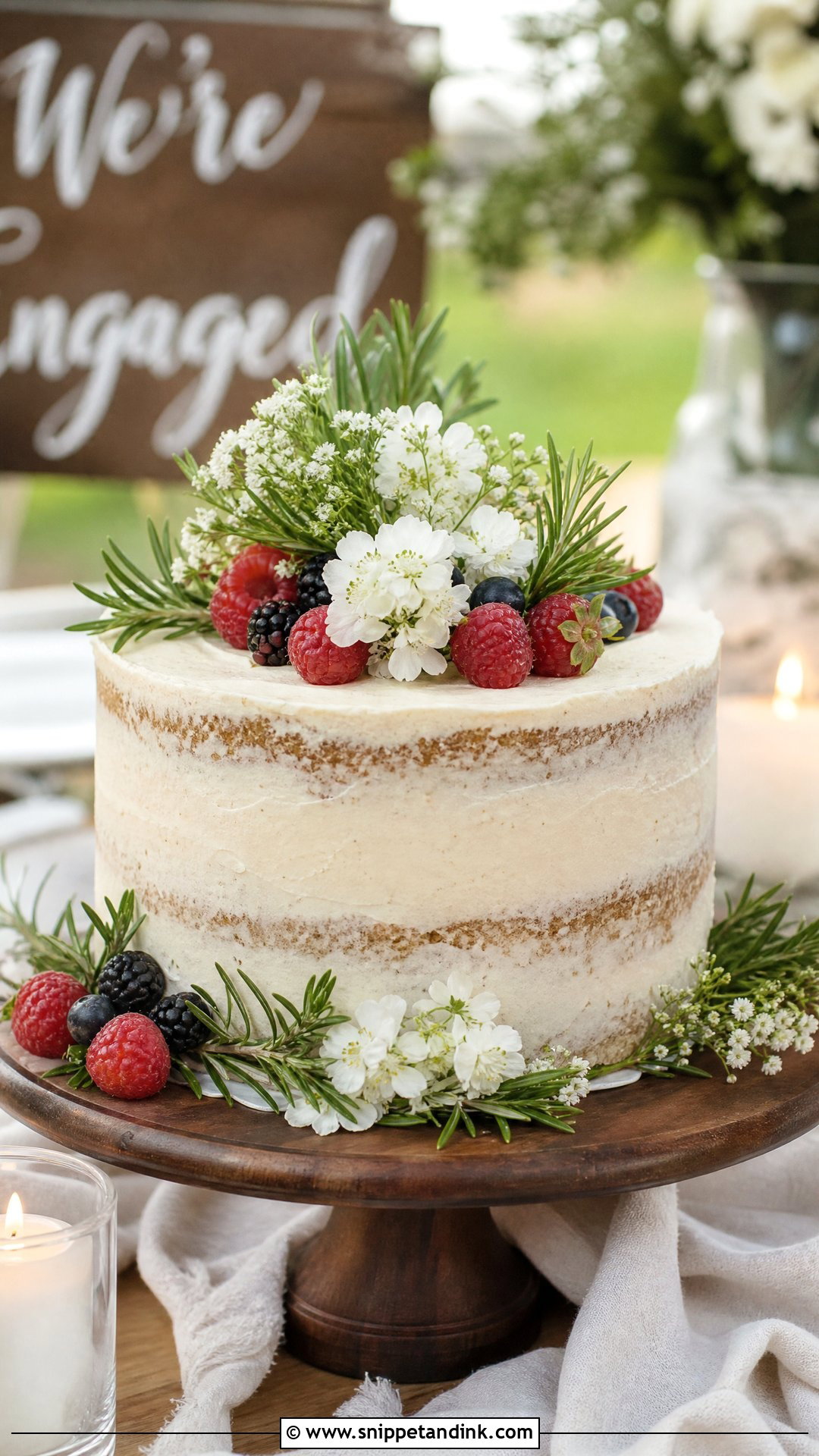
Semi-naked cakes look relaxed, but they’re the least forgiving about time. With only a scraped crumb coat, the sponge dries at the edges much faster than a fully frosted cake, so I assemble these as close to the party as possible and ask that they stay boxed until serving. Textured buttercream, fresh berries, greenery and simple flowers fit the look, and carrot, spice, lemon, chocolate or vanilla bean all suit it. A wooden stand or ceramic platter finishes it off at backyard dinners, barns and garden venues, especially with linen and wildflowers around it.
11. Boho Engagement Cake
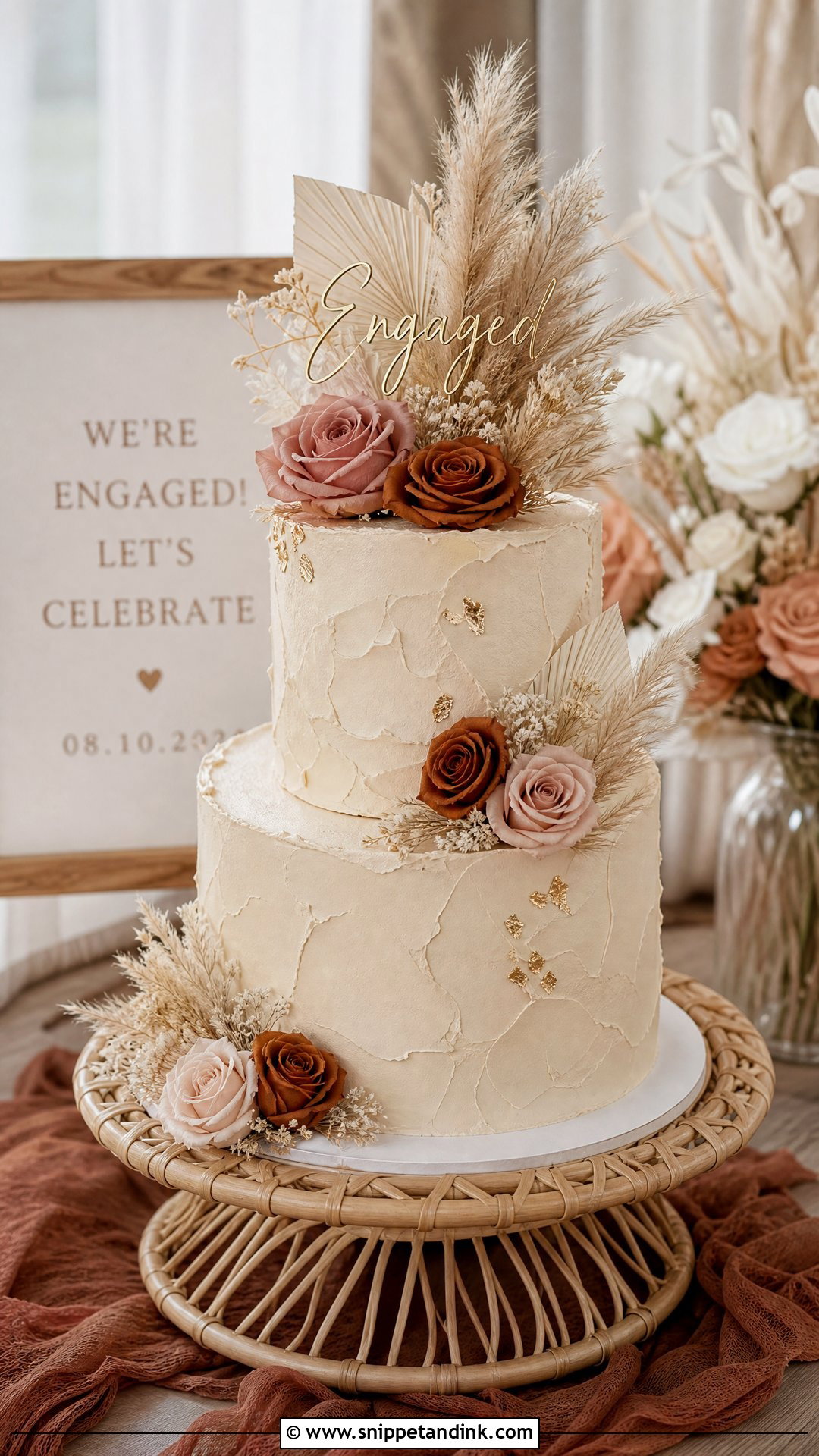
Dried elements make this cake, and they’re also where I’m most careful. Dried flowers, pampas grass and grasses are usually sprayed or dyed, so they never go straight into the frosting; I wrap the stems or rest them on a small barrier. Muted palettes of ivory, tan, rust, terracotta, sage and dusty rose sit well with rough buttercream and a rattan-style topper. Keep the arrangement airy and to one side so it frames the cake rather than hiding it. One or two tiers both work for picnics, desert-inspired decor or modern rustic venues.
12. Marble Engagement Cake
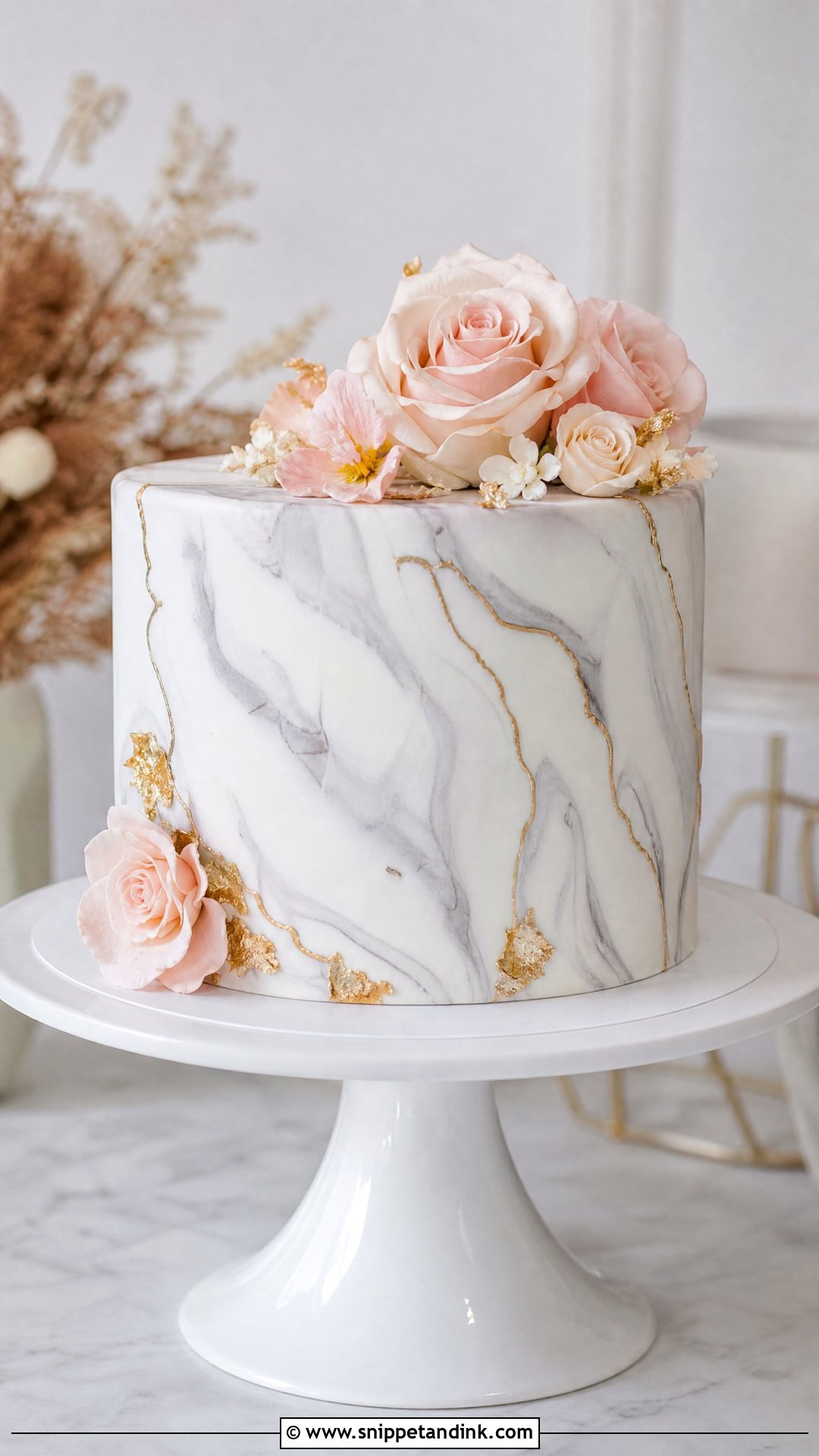
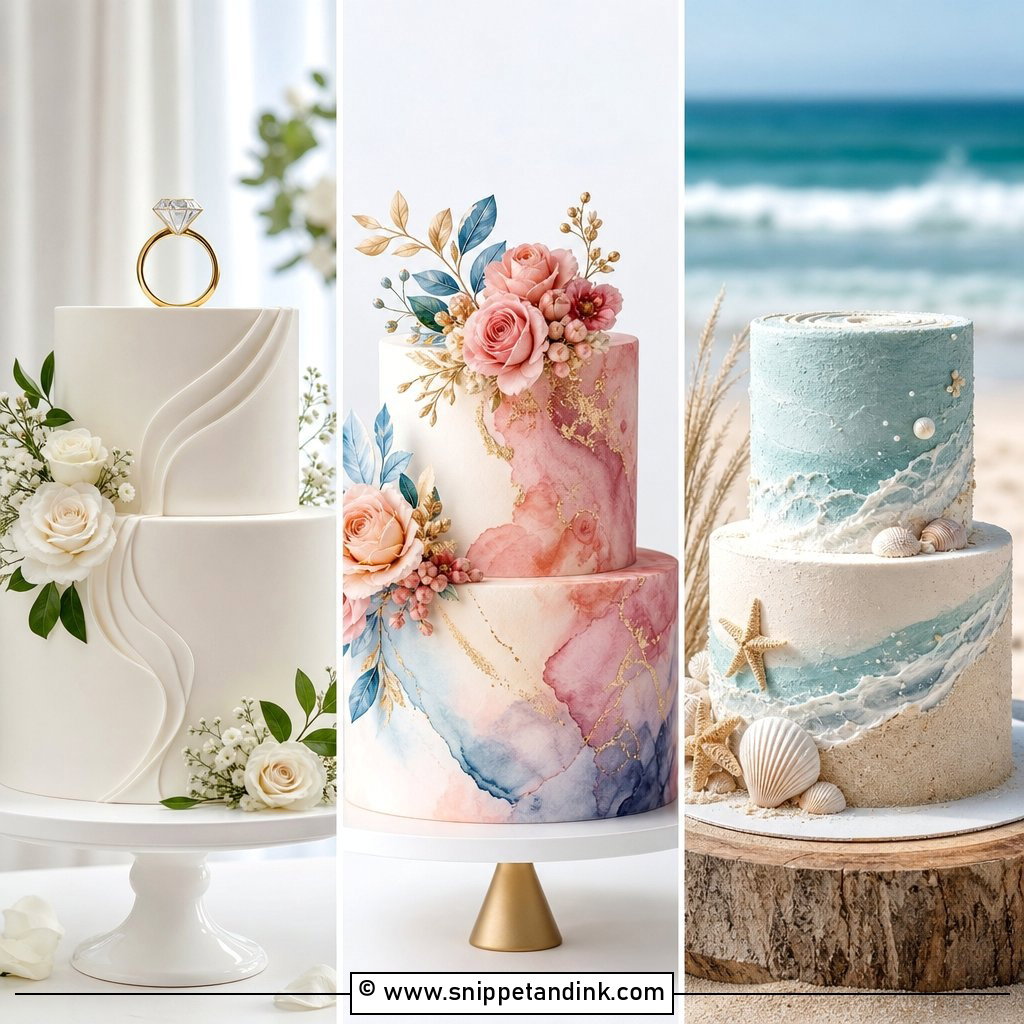
Marbling is easiest to control in fondant, where I twist two colors together and roll them out, but it can also be done by dragging a second color through buttercream or painting veins with thinned edible color. Overworked fondant turns streaky and muddy, so I stop kneading early. White and gray is the classic version; blush, blue and green marble suit more unusual palettes. A small topper, a few sugar flowers or thin metallic lines are enough on top. Couples who like clean decor but want some movement on the cake tend to land here.
13. Ombre Engagement Cake
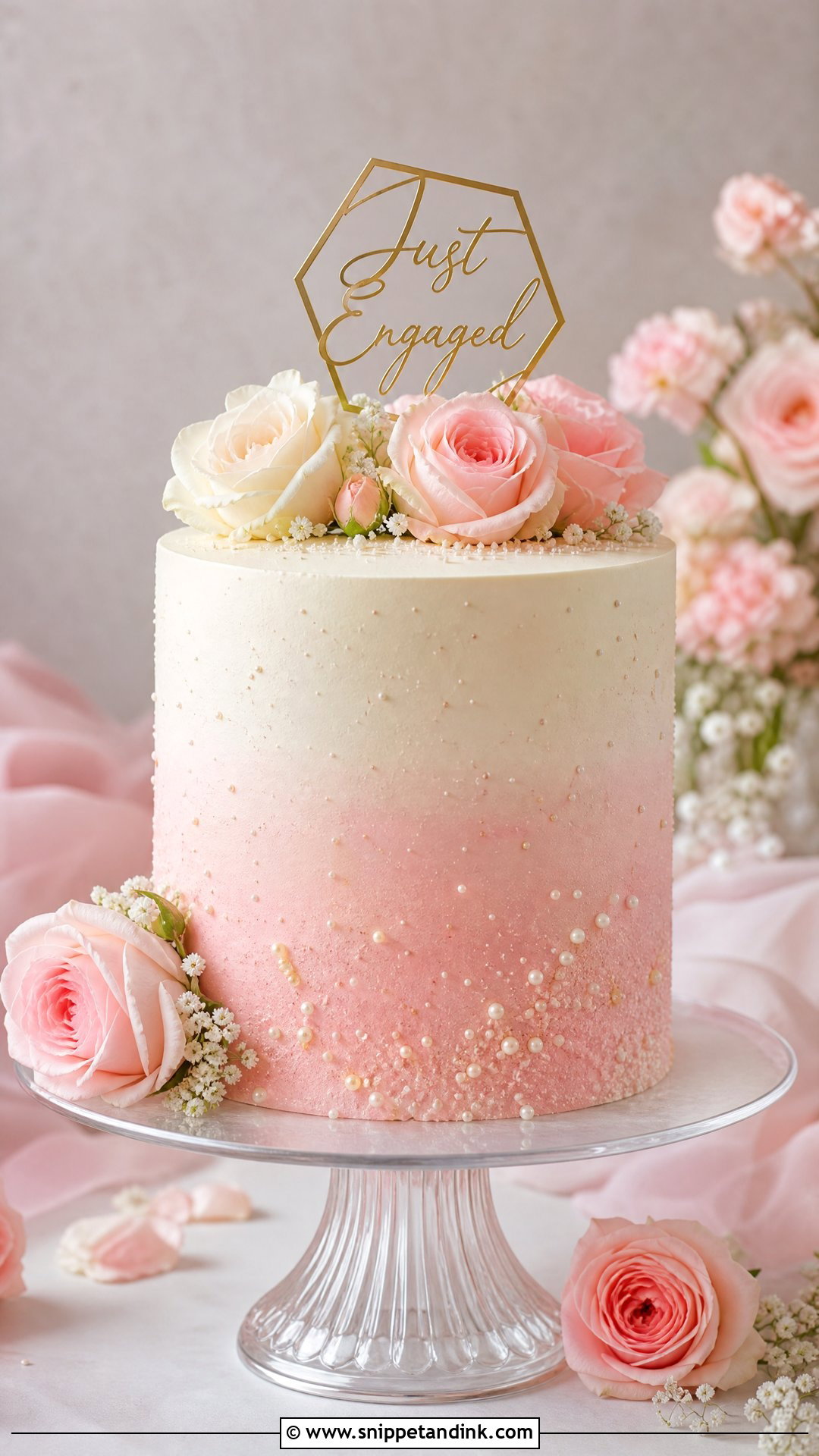
Ombre is one of the easiest ways to bring a party color onto the cake. I mix three or four shades from one base so the steps are even, then blend the joins with a bench scraper, which is why buttercream suits it far better than fondant. White to blush, ivory to peach and pale blue to navy are the requests I see most. Fresh flowers, pearls, edible glitter or a simple topper finish it. Daylight shows the gradient best; under warm indoor bulbs the palest steps can flatten out. Strawberry, lemon and raspberry flavors match the lighter colors.
14. Watercolor Engagement Cake
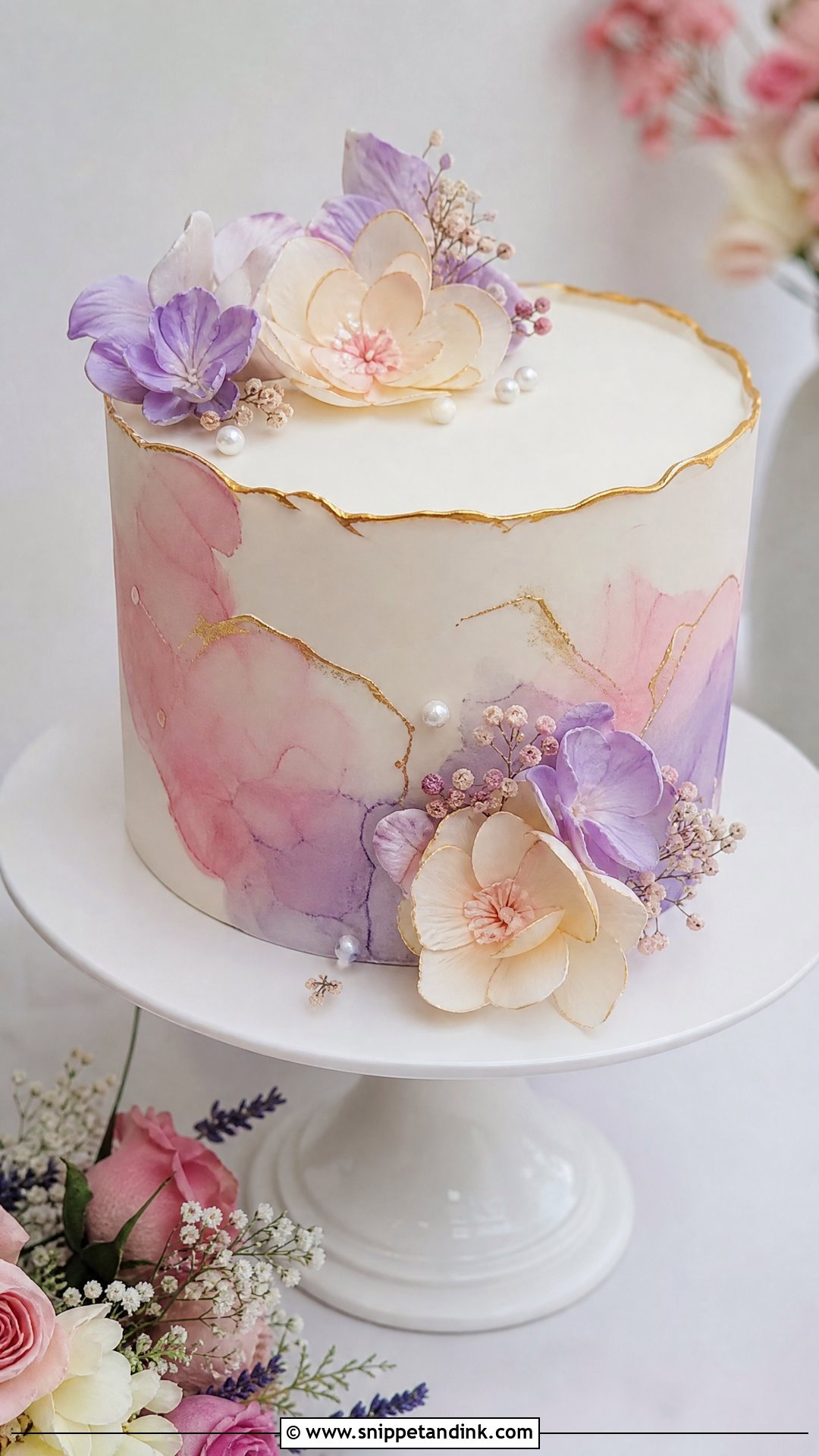
Watercolor finishes are either painted with diluted gel color or made by smearing small dabs of tinted buttercream and scraping them smooth. The risk is mud. Blush next to sage can blend into brown where they overlap, so I keep competing colors apart and let white space separate them. Lavender, peach, sage and dusty blue are popular. Thin gold lines, small flowers or a simple topper are plenty. It’s easy to match the cake to the invitations or a painted backdrop, which makes it a natural fit for garden parties and creative couples.
15. Geometric Engagement Cake
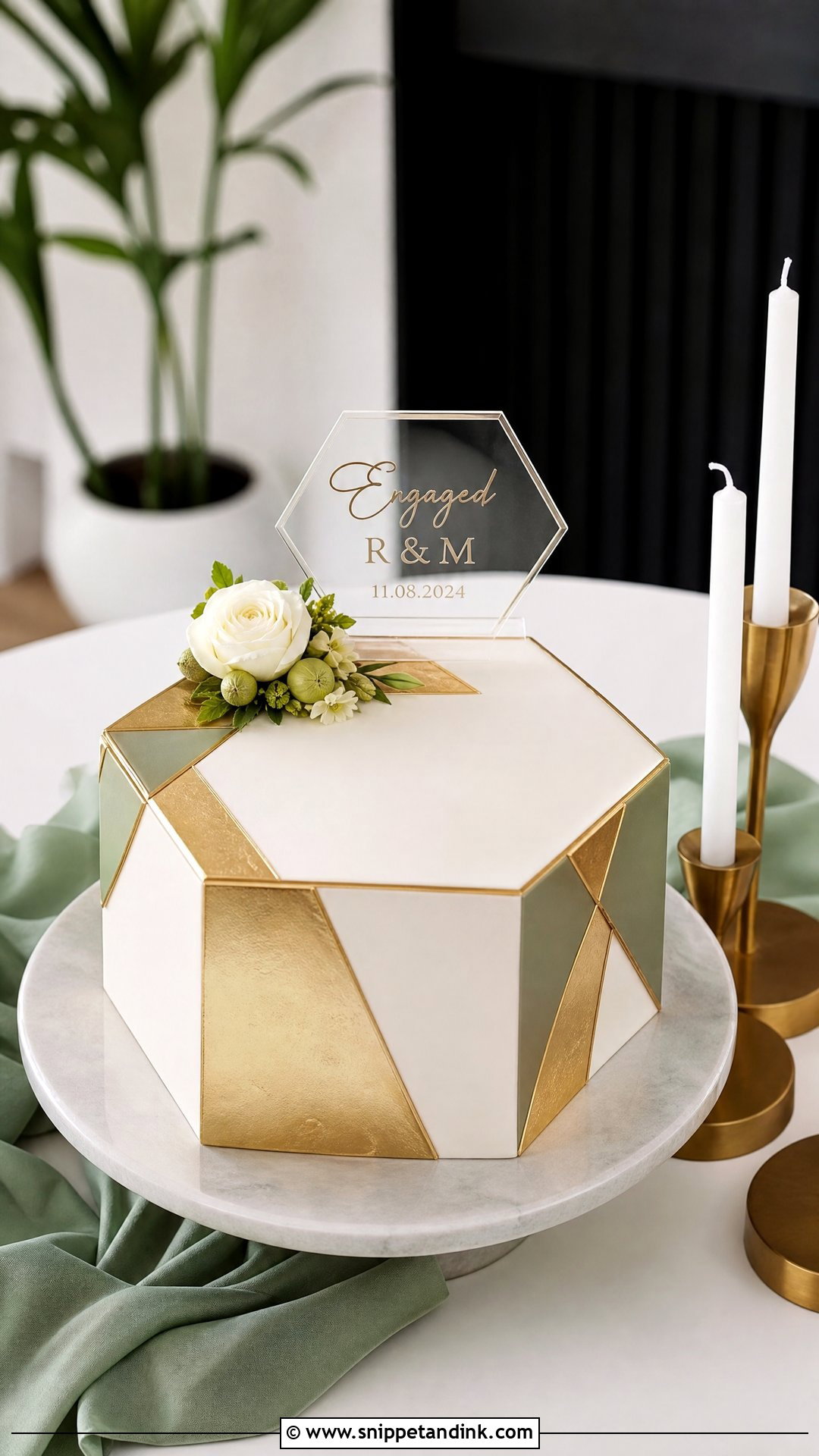
A geometric engagement cake depends on sharp angles, and sharp angles need fondant or a firm ganache underneath. Hexagon tiers, crisp panels, metallic shapes and angular color blocking all rely on that ganache coat so the corners don’t round off in a warm room. White, black, gold, sage, terracotta and blush all work depending on the party. The shape already provides the interest, so one flower cluster or a simple topper is enough. Rooftops, galleries and minimalist homes suit it well.
16. Black And White Engagement Cake
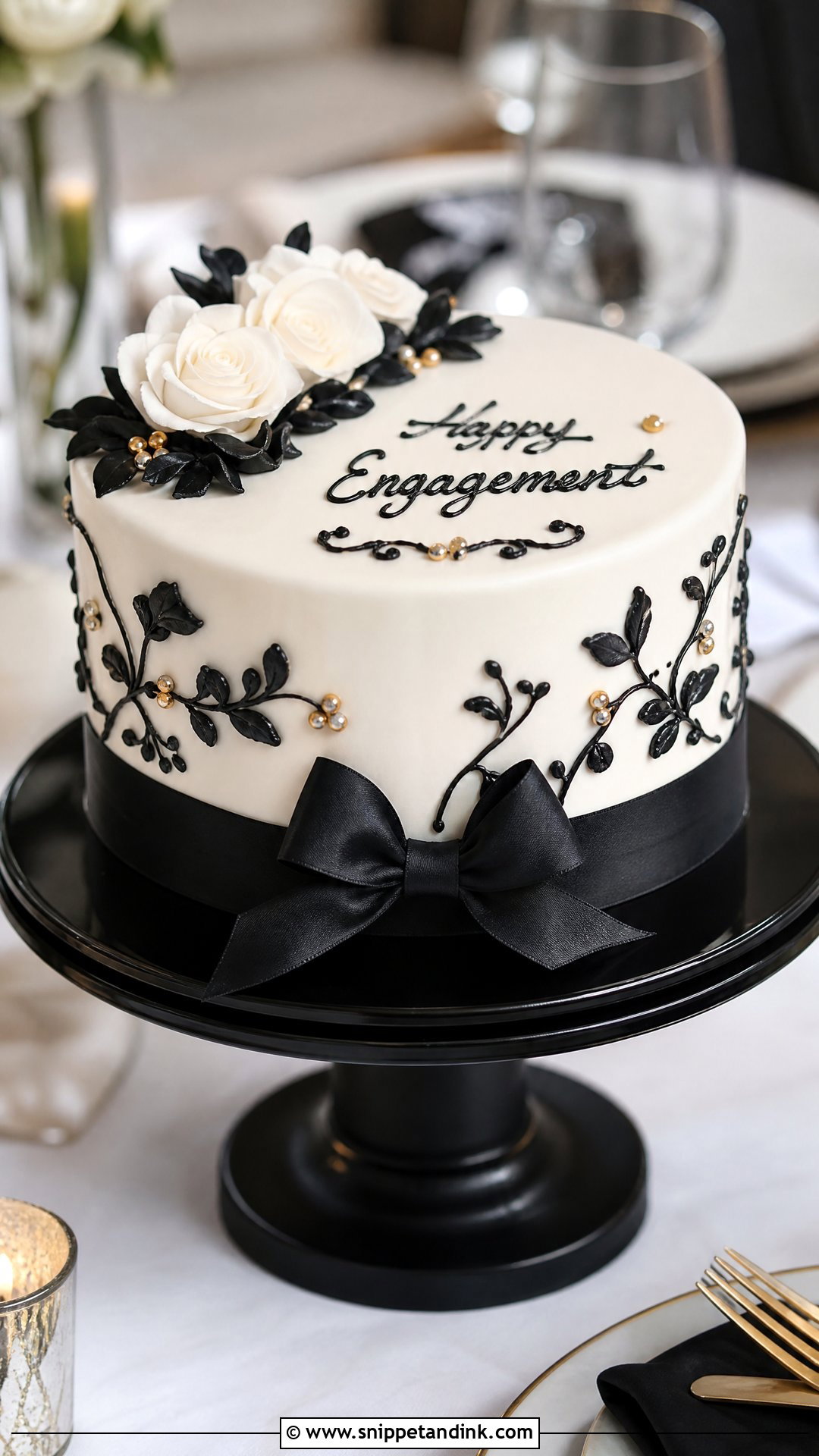
Black frosting is the part to plan for. A true black takes a lot of gel color, which can stain lips and teeth and leave a bitter taste, so I start from chocolate buttercream or keep the black to accents on a white base. Black ribbon, piping, florals, script lettering or thin bows all give contrast without a fully black tier. Gold accents warm it up. Evening parties and formal dinners suit it best. A whole black tier can look heavy; a few strong lines usually look sharper.
17. Blush Pink Engagement Cake
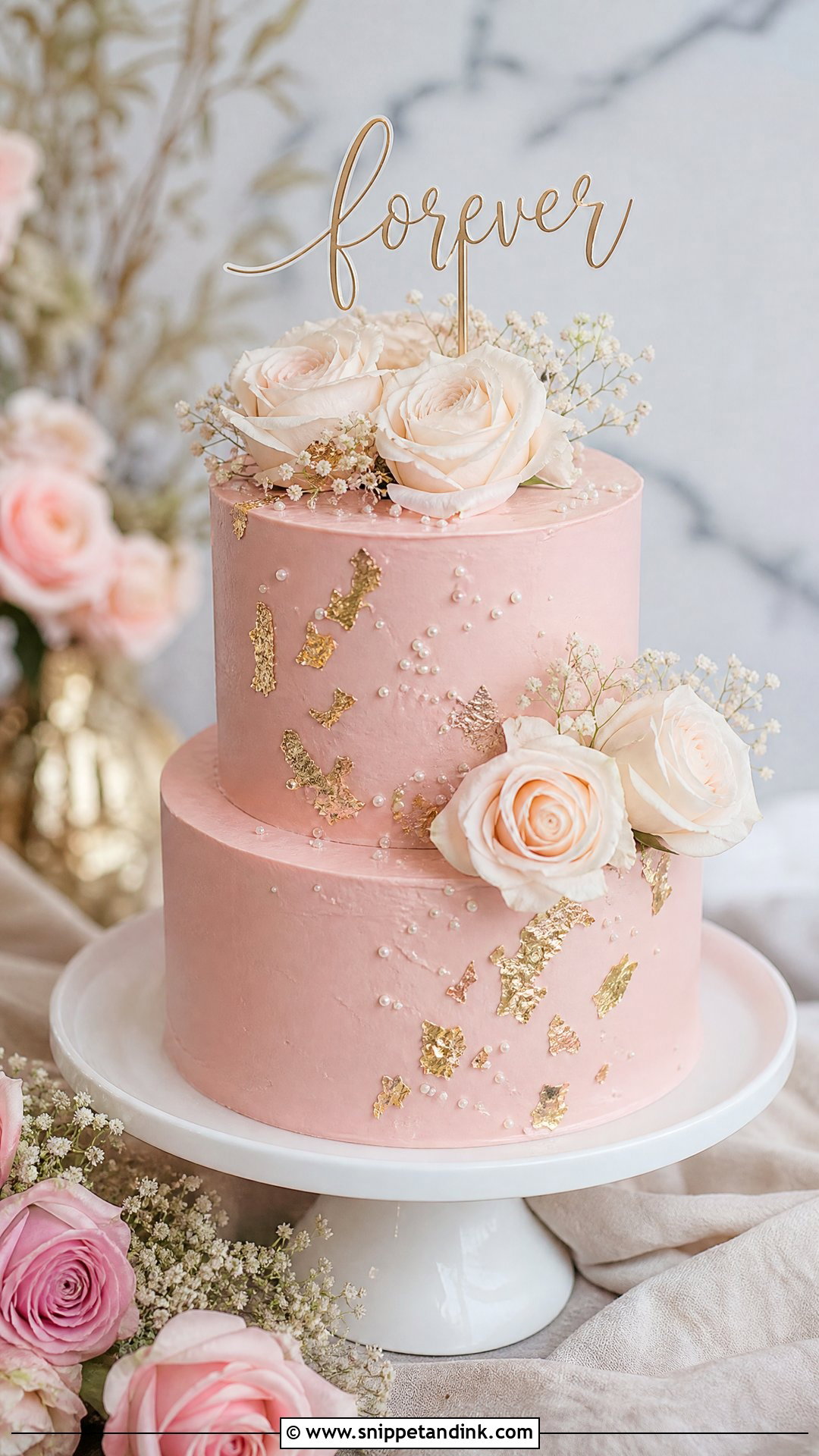
Blush is the shade I mix most often and the hardest to keep consistent. One drop too much pink gel and it turns bubblegum, and tinted buttercream deepens as it sits, so I color it the day before and judge the settled shade. The same blush looks classic with white flowers, playful on a piped heart and more formal on tiers with gold leaf. Vanilla, strawberry, almond, rose and raspberry suit it. Keep it soft rather than bright; pale pink sits far more kindly beside skin tones in party photos.
18. Sage Green Engagement Cake
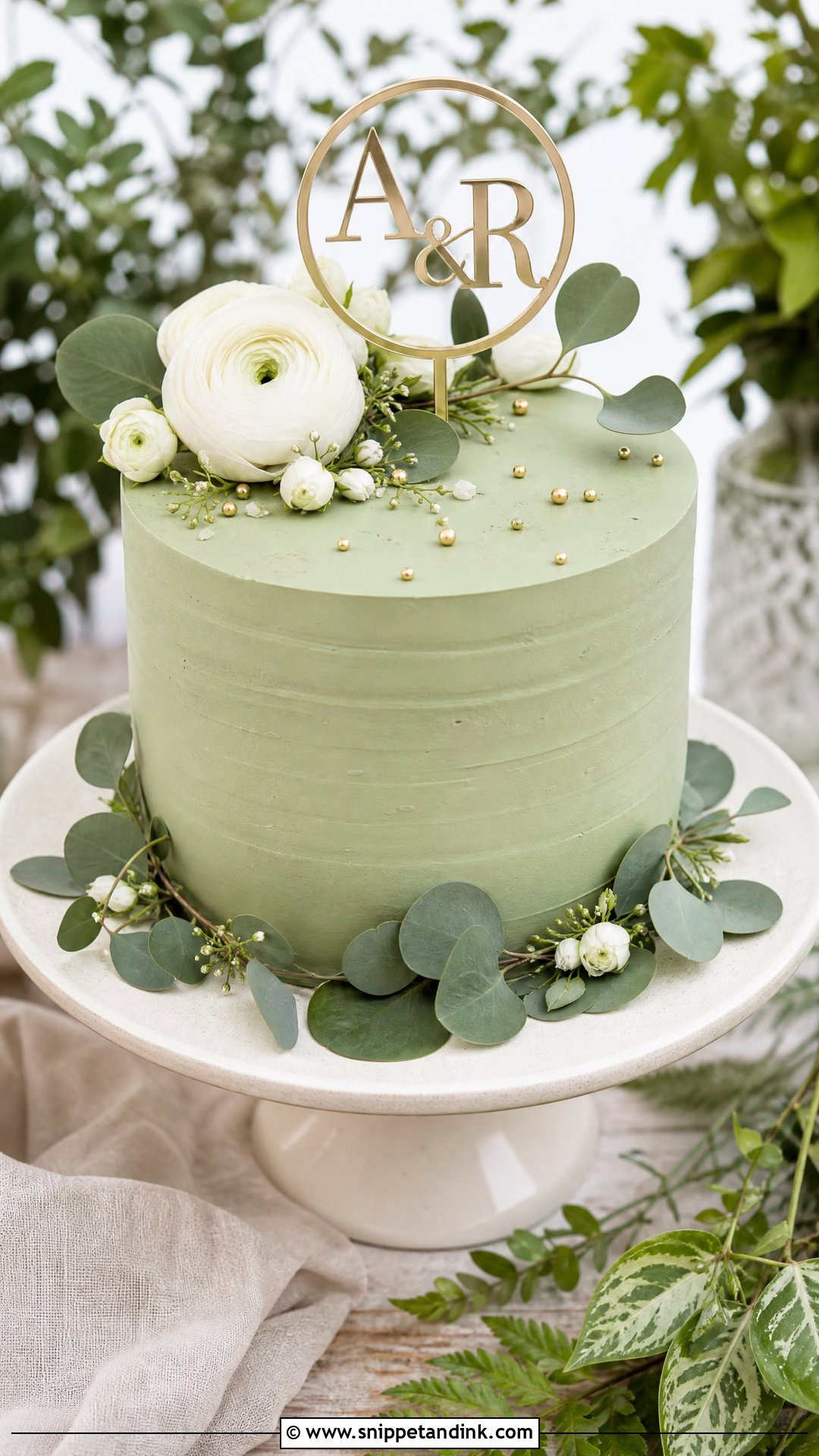
Sage looks calm on a table, but it tips into army green or gray very easily. I build it from a touch of green softened with a hint of brown or ivory, and I always check it in daylight before committing. It pairs with white flowers, gold details, dried grasses, pearls or plain greenery, and fits garden parties and boho tables. The cake can be fully sage, faded to white, or white with sage accents. Lemon, pistachio, almond and matcha-style flavors sit naturally with it. Smooth buttercream and a small floral cluster keep it clean; textured frosting softens it.
19. Blue Engagement Cake
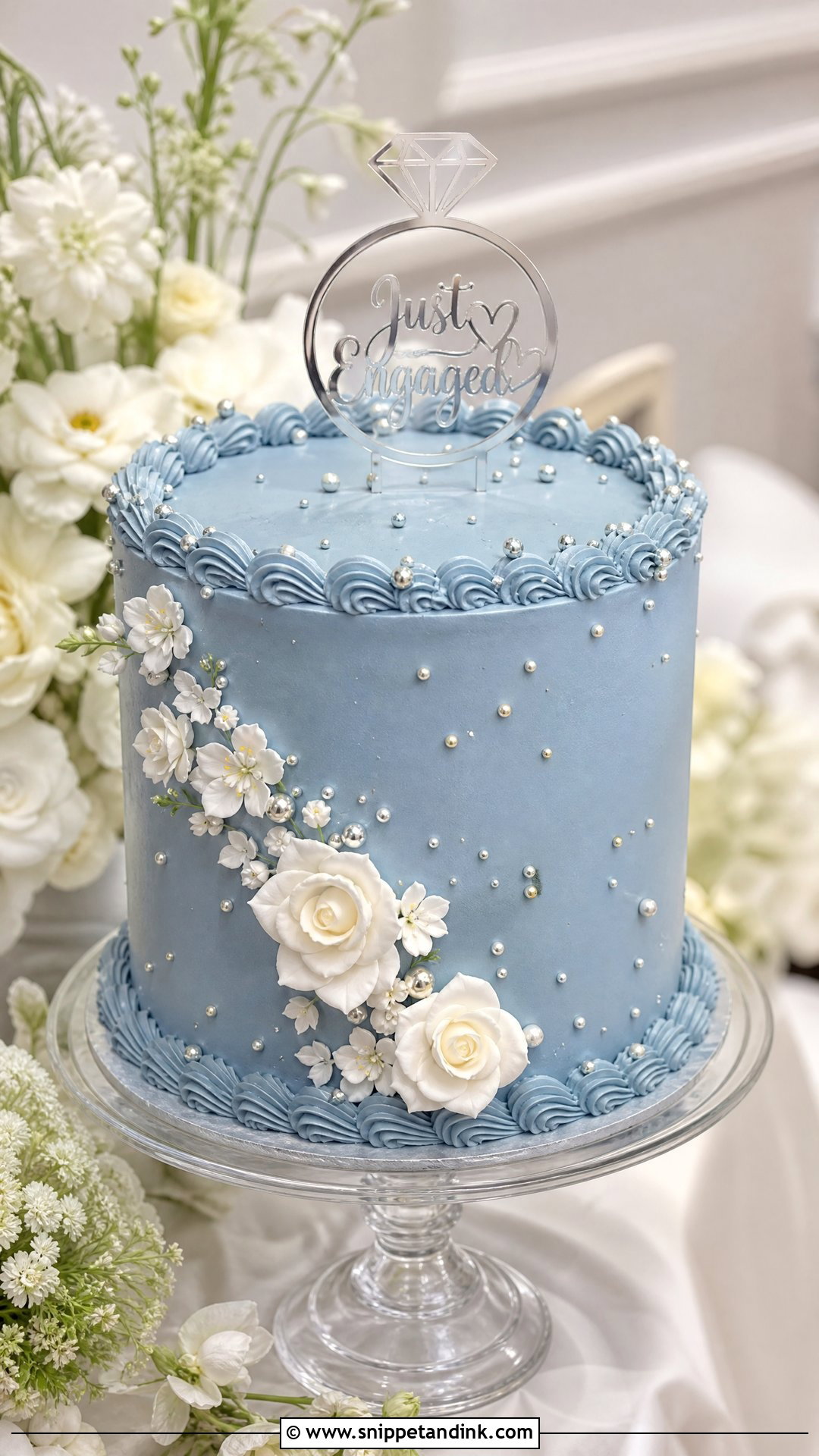
Blue covers a wide range. Pale blue reads soft, navy reads formal, and dusty blue sits between them, which is why it shows up so often at engagement parties beside white flowers, pearls and silver or gold accents. Navy needs the same caution as black: it takes a lot of color and can stain, so I often keep it to one tier or a ribbon. The cake can be smooth, ombre, watercolor or piped in a vintage style, and it suits coastal themes well. Vanilla, blueberry, lemon and almond fit the shade.
20. Champagne Engagement Cake
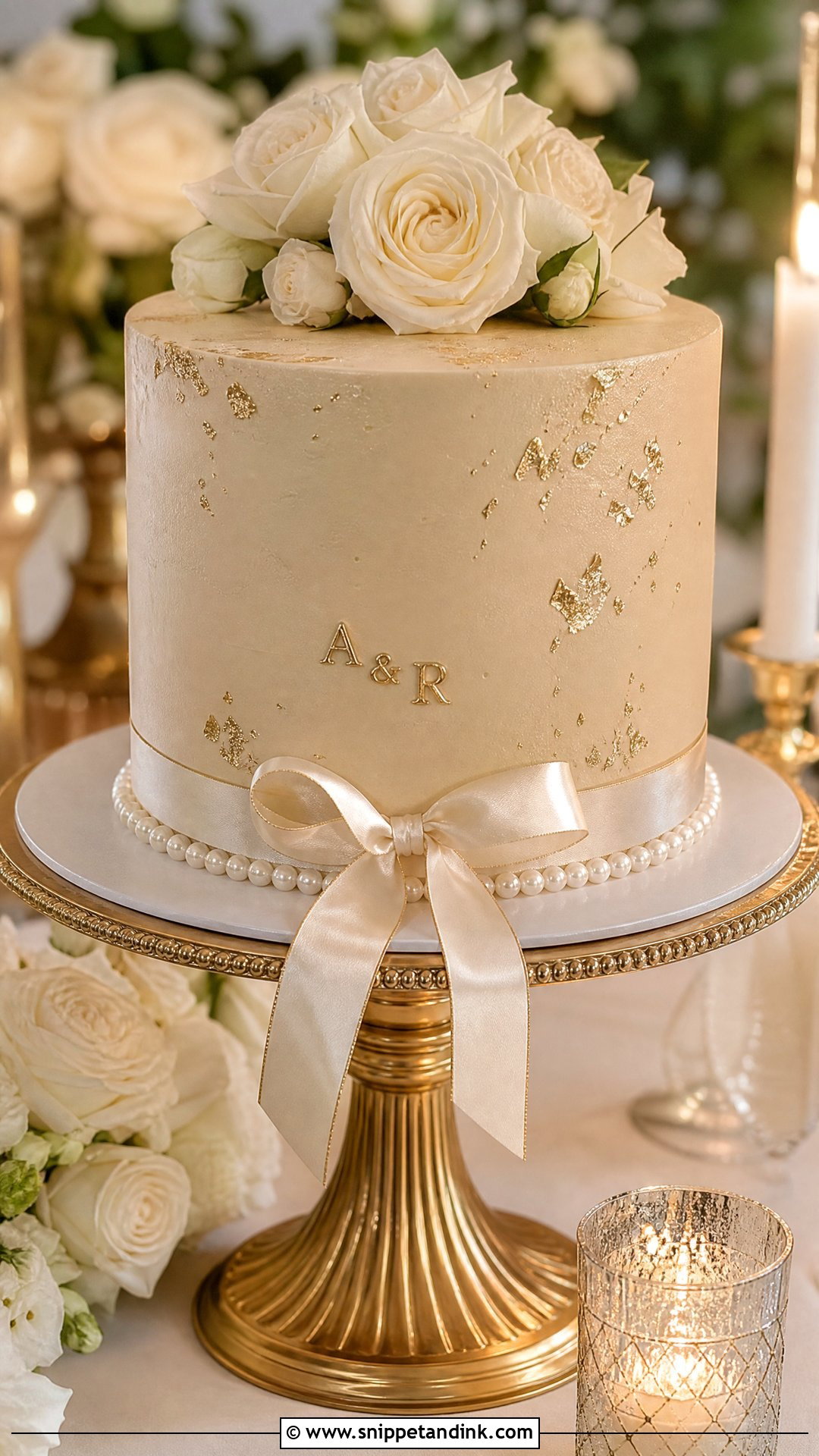
Champagne sits somewhere between ivory, beige, blush and soft gold, and under candlelight it has a warmth plain white doesn’t. Satin ribbon, pearls, gold leaf, white roses or delicate piping all suit it. The flavor can play on the name with vanilla bean, almond, caramel or brown sugar, and a champagne-style sponge can be made without any alcohol. Smooth buttercream keeps it modern, while ruffled piping makes it softer. Because the color is so subtle, I check it beside the table linens; against an ivory cloth it can almost disappear.
21. Photo Engagement Cake
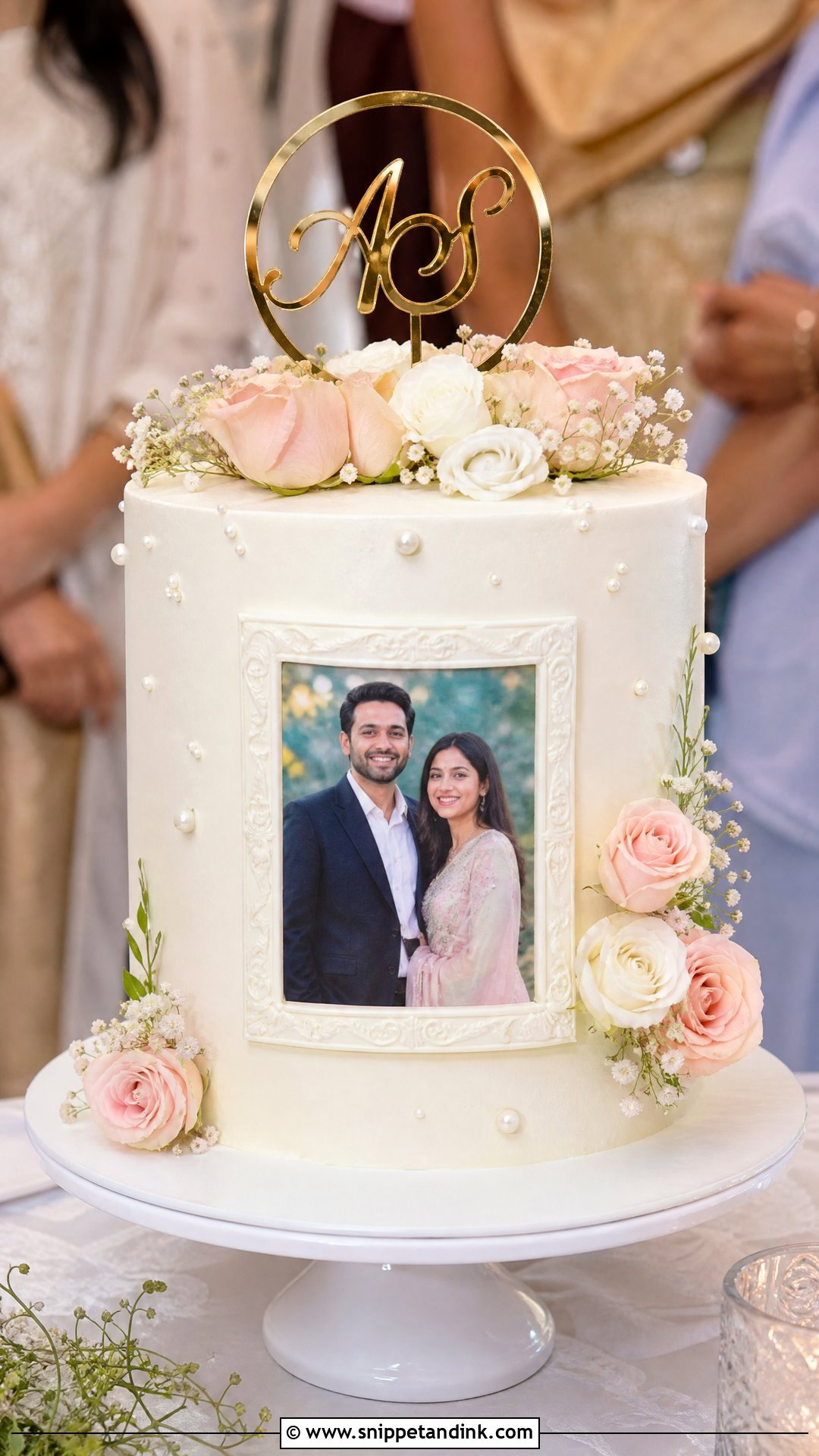
Photo cakes are usually printed with edible ink on a frosting sheet or wafer paper. Frosting sheets draw moisture out of buttercream and can blur if they sit on it too long, so I add the print as late as I can, and direct sun will fade edible ink within hours. The image can also be framed in fondant or set up as a topper. A plain base keeps the picture clear, with soft colors pulled from the photo and a few flowers, pearls or initials around the frame. Send your baker the highest-resolution file you have; a cropped phone screenshot prints blurry.
22. Monogram Engagement Cake
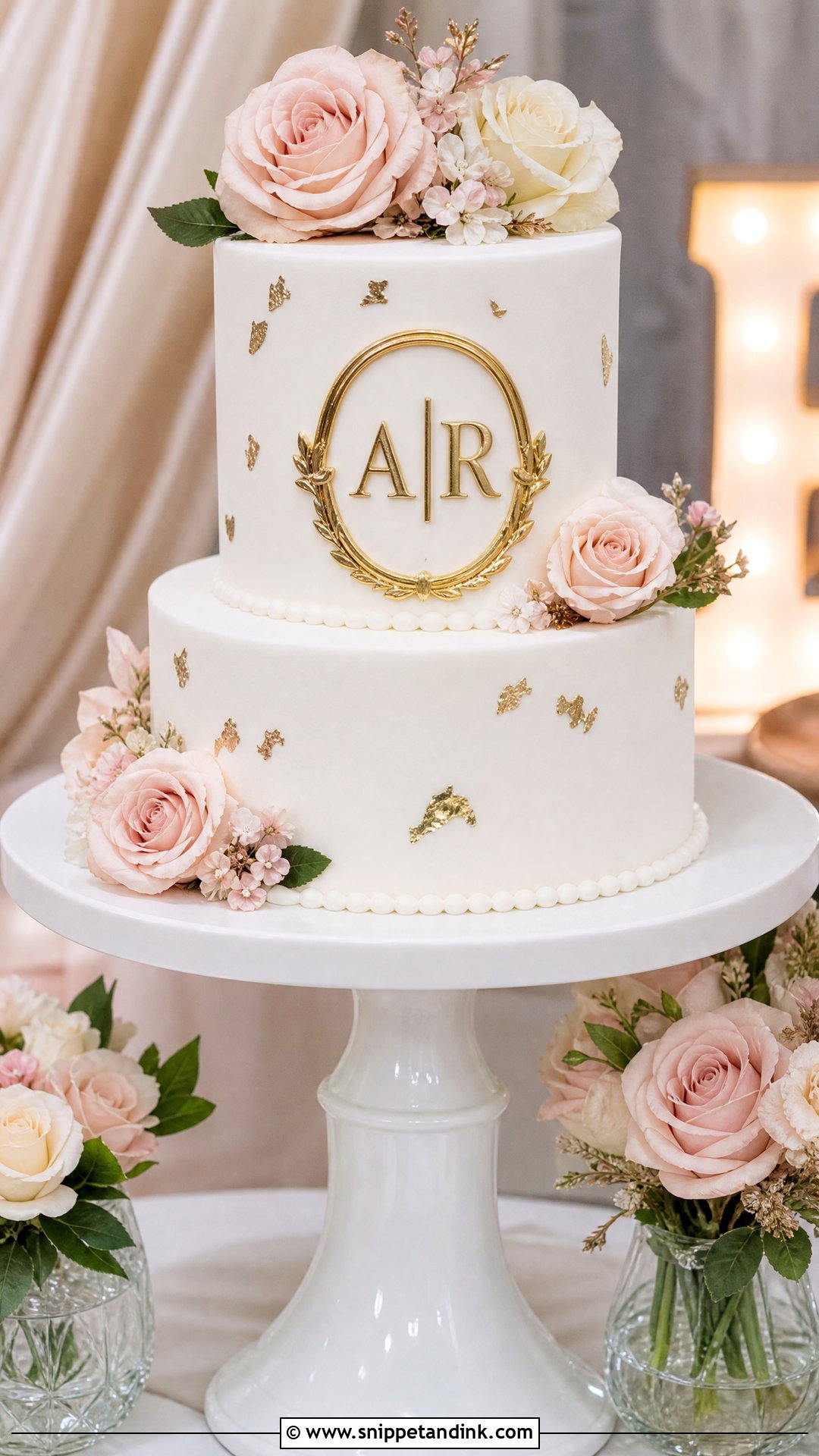
Initials work on almost any cake, from plain buttercream to two floral tiers. They can be an acrylic topper, a fondant plaque, piped letters or edible gold. Piped script is the hardest to keep even, so for an intricate font I’d suggest a plaque or topper instead. Make the letters large enough to read from a few steps back. White, ivory, blush, navy, sage and black all pair well with gold or silver initials, and the result feels custom without committing to a theme.
23. Bento Engagement Cake
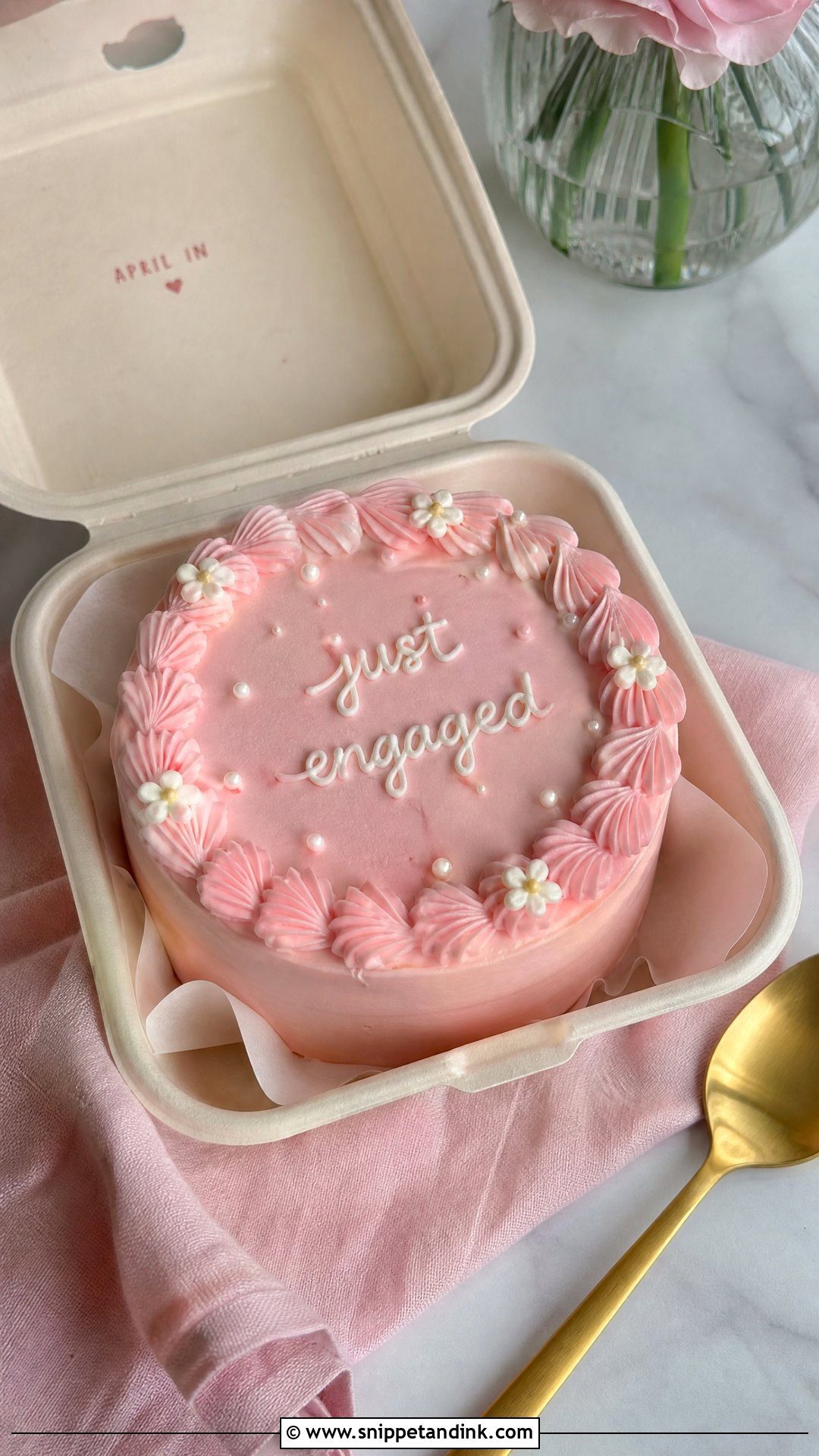
Bento cakes are small, usually about four inches across, boxed with a fork and enough for two to four people. They suit private proposals, couple photos or a surprise gift before a bigger party. With such a tiny surface, I limit the design to one short message and one or two details, such as tiny hearts, a piped border, mini flowers or initials. Pink, white, lavender, red and cream are popular. The box keeps it safe but also traps condensation if it goes from a fridge into a warm car, so open the lid for a few minutes before taking pictures.
24. Cupcake Engagement Cake
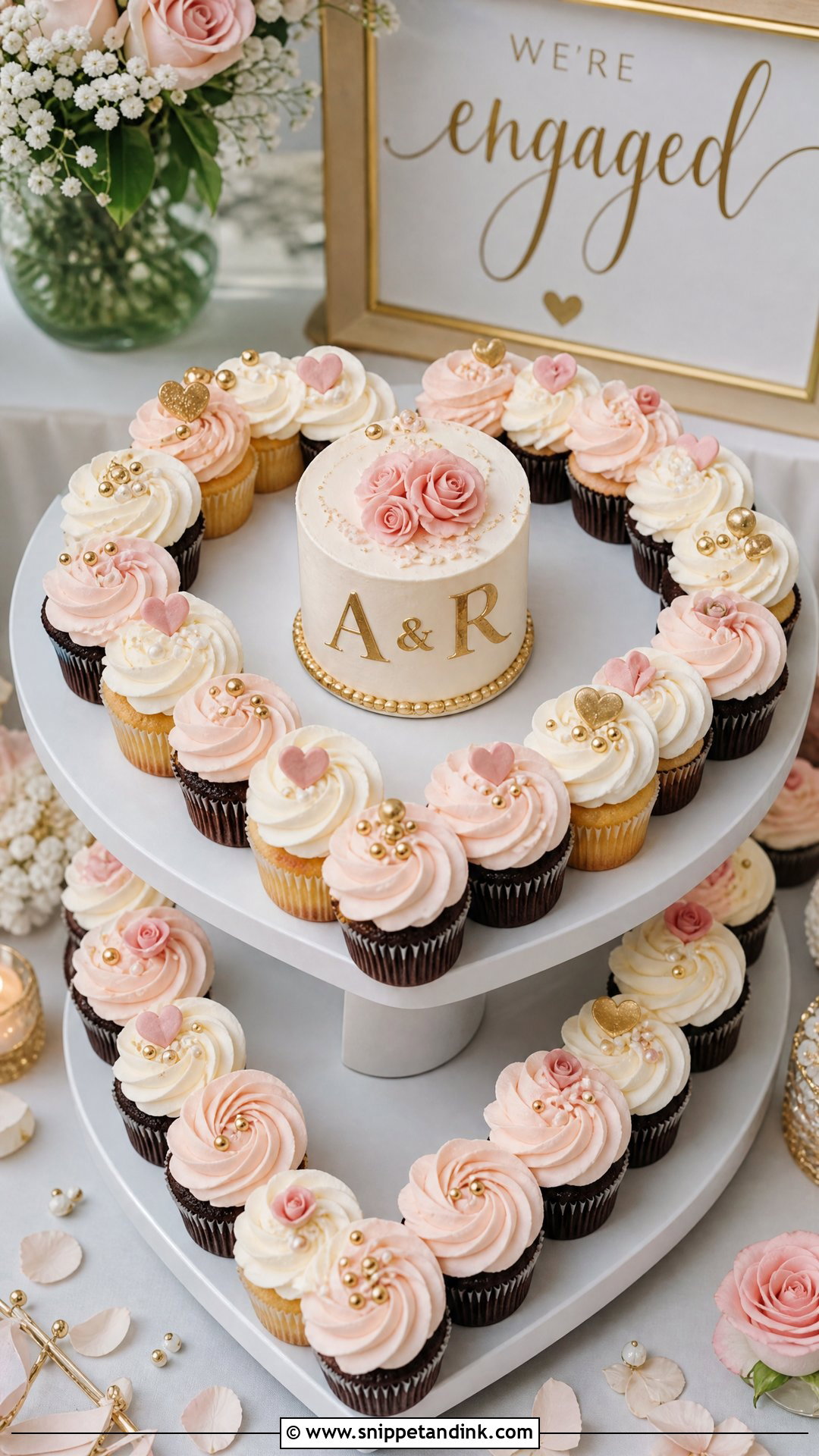
A cupcake engagement cake lets guests serve themselves, which helps at a casual party where nobody is assigned to cutting. Arranged into a heart, a ring or a tiered stand, the set needs one thread running through it: matching frosting, the same topper, edible pearls or initials. Several flavors are fine, such as vanilla, chocolate, lemon and red velvet, but I keep the frosting color consistent so the arrangement reads as one design. Pull-apart cupcake cakes frosted as a single surface look tidier but get messy to serve. A small top cake gives you the traditional cutting moment.
25. Dessert Table Engagement Cake
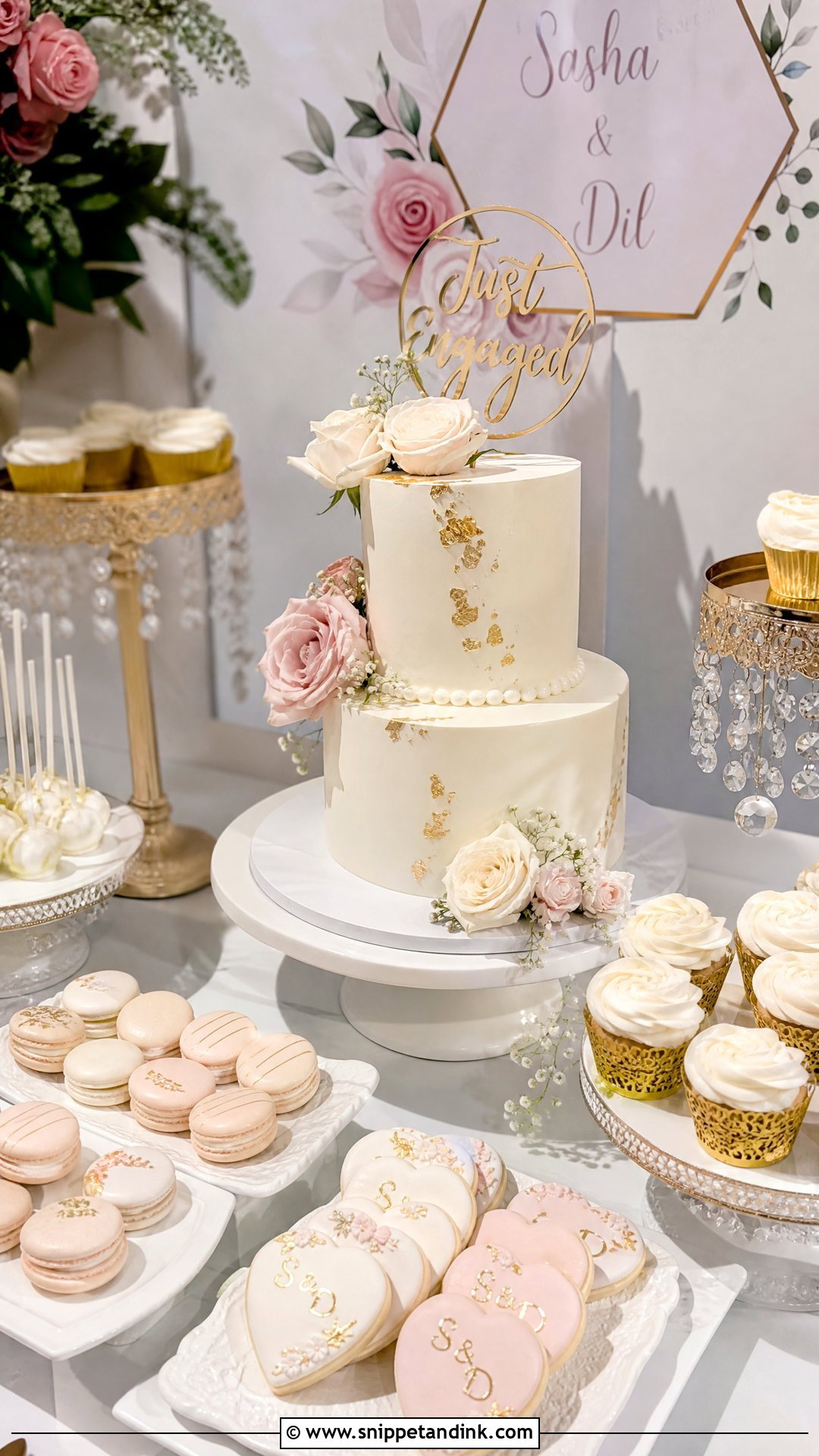
A cake that heads a dessert table doesn’t have to feed everyone, because cookies, mini cupcakes, macarons, cake pops, brownies and mousse cups carry part of the load. That means a smaller cake can still look generous, and I usually size it for around half the guest list. Pick one palette for every item so the table looks planned, and raise the cake on a stand so it reads as the centerpiece. Flowers, candles and framed signage fill in around it. Bigger parties benefit most, since guests get variety and the line moves faster.
How Buttercream, Fondant and Gold Behave Once the Party Starts
Most engagement cakes spend their first hours in rooms that weren’t designed for cake. Here is what I warn couples about, depending on the finish they choose.
Warm rooms and outdoor tables
Swiss meringue buttercream tastes lighter but softens quickly in heat, and piped details start to droop first. American buttercream crusts and holds up a little better, and a ganache coat under fondant is the sturdiest choice I have for a summer garden. Keep the cake out of direct sun, and don’t set it near a buffet with chafing dishes.
Fridge to room, and why fondant sweats
A chilled fondant cake carried into a humid room collects beads of moisture on the surface. It dries off if you leave it alone, but touching it leaves marks and can lift luster dust. I’d rather a fondant cake arrive cool, not fridge-cold, and stay boxed until it settles.
Prints, flowers and metallics
Edible photo prints fade in sunlight and soften on buttercream, fresh flowers start to wilt after a few hours out of water, and gold leaf can lift at the edges in humidity. None of that is a reason to avoid them. It just means these details go on last.
Getting the Cake Home and Onto the Table
If you’re collecting the cake yourself, put the box on a flat surface such as the floor of the car or a trunk lined with a non-slip mat, never on a seat or someone’s lap, because seats tilt. Run the air conditioning and drive as if there’s a full bowl of soup on board. A stacked two-tier cake should already have its support inside, so ask when you collect it whether anything needs placing on arrival.
At the party, choose the cake’s spot before it arrives, away from windows and heaters. For neat slices, dip a long knife in hot water, wipe it dry and wipe it again between cuts. Fresh flowers and toppers come off before serving, and someone should know to look for dowels in the lower tier.
A Small Cake Can Carry the Whole Party
Size doesn’t decide how memorable an engagement cake is. A small heart with the right message can mean as much to a couple as a two-tier floral cake. Start with the setting: indoors or outside, how warm the room gets, how long the cake stands before it’s cut. That narrows the frosting and the decoration for you. Then settle on the mood and match the topper, flowers and flavor to it. Bring that order of decisions to your baker and the design conversation gets much shorter.
You'll Like These Ideas:


Leave a Reply