
Curly hair arrives at a trial with half the work already done. It has volume, movement and texture that straight hair needs a hot tool and a can of spray to fake. My job with a curly bride isn’t to iron that out; it’s to give the curls a shape and make sure they still look like curls at the end of the night. Loose waves, springy ringlets and tight coils all behave differently, so with each of the twenty styles below I’ve noted what kind of curl it suits, how I pin it and what tends to go wrong.
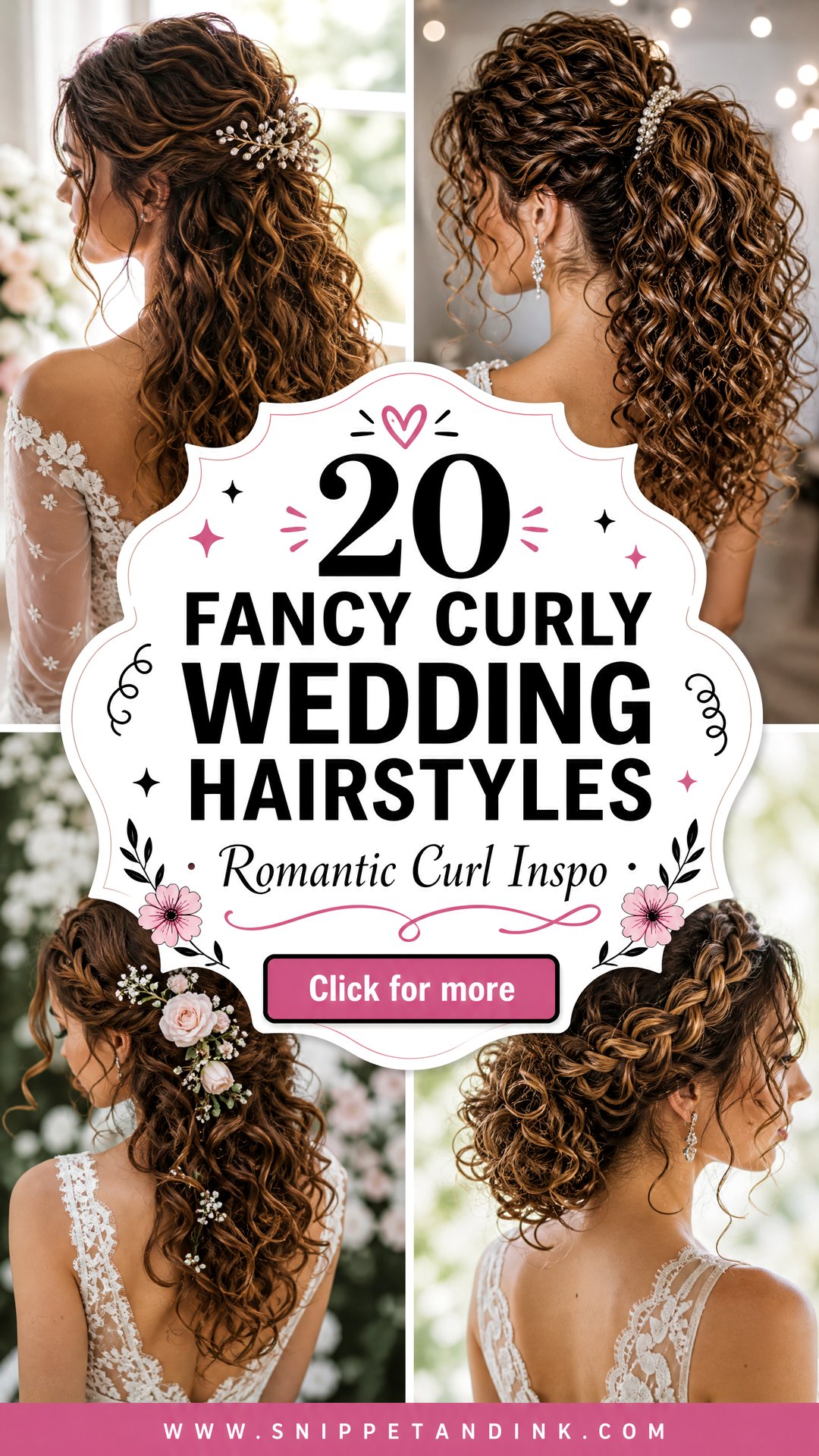
Wavy, Ringlet or Coily Hair Each Hold a Different Shape
When someone says curly, I need to know which kind, because the same style behaves very differently on each. This is how I’d sort the styles below by curl pattern.
- Loose waves and S-shaped curls: they drop fastest, especially in humidity. Updos, braided styles and low buns last longer than styles worn down. If you want it down, I often set it with a curling iron over your natural pattern so it holds.
- Defined ringlets: almost everything works. Half up, side swept and down styles show the curl best, and they hold their spiral well if they’ve been set with gel and left to dry untouched.
- Tight coils: they have the most volume and the most shrinkage. High buns, crown braids and sculpted updos make the most of the density. Styles worn down need stretching, by banding or a braid-out, if you want length.
Many heads have more than one pattern, often looser on top and tighter underneath. I plan around the pattern that will be on show, and pin the rest where it won’t be seen.
1. Curly Wedding Updo
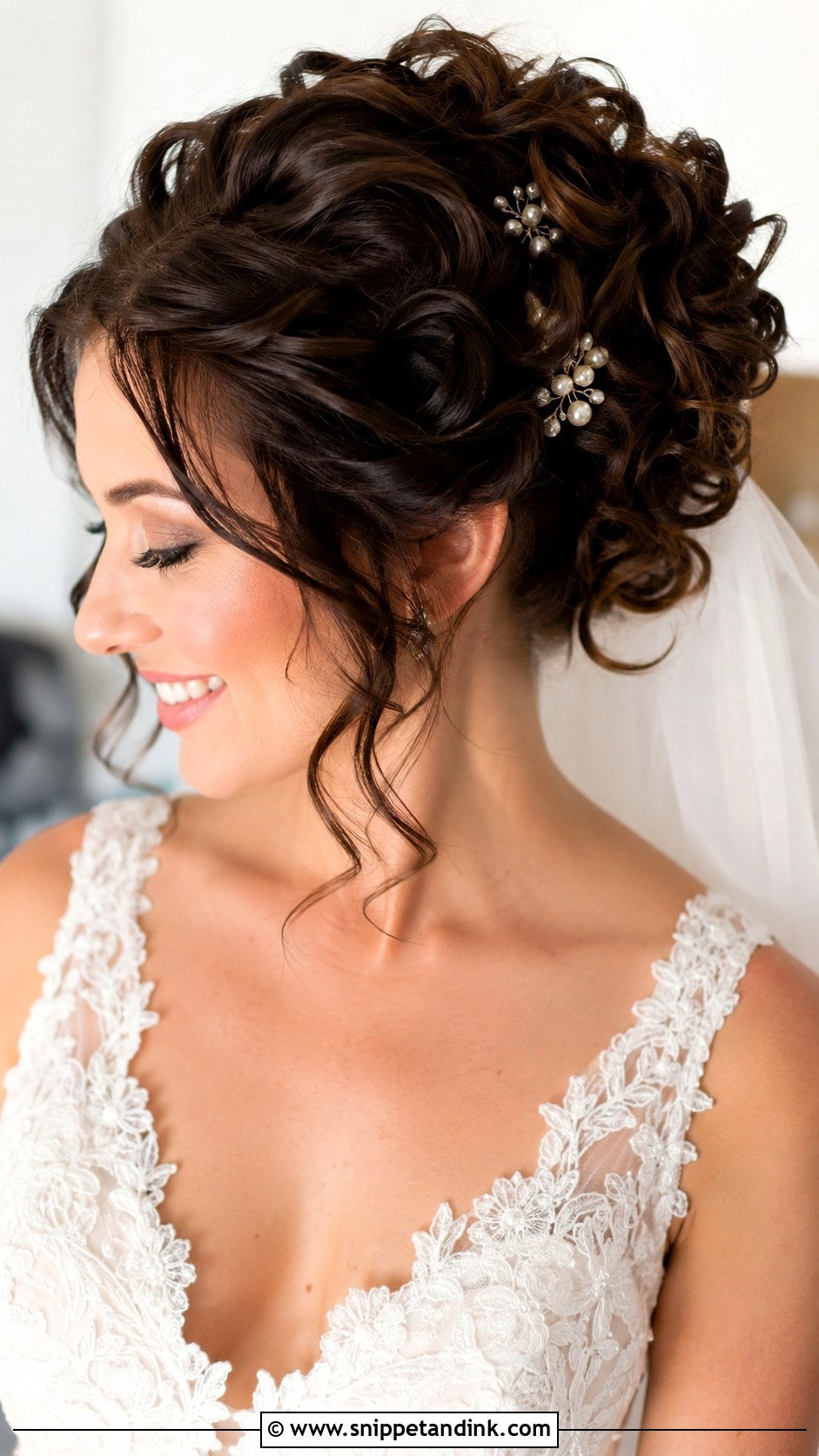
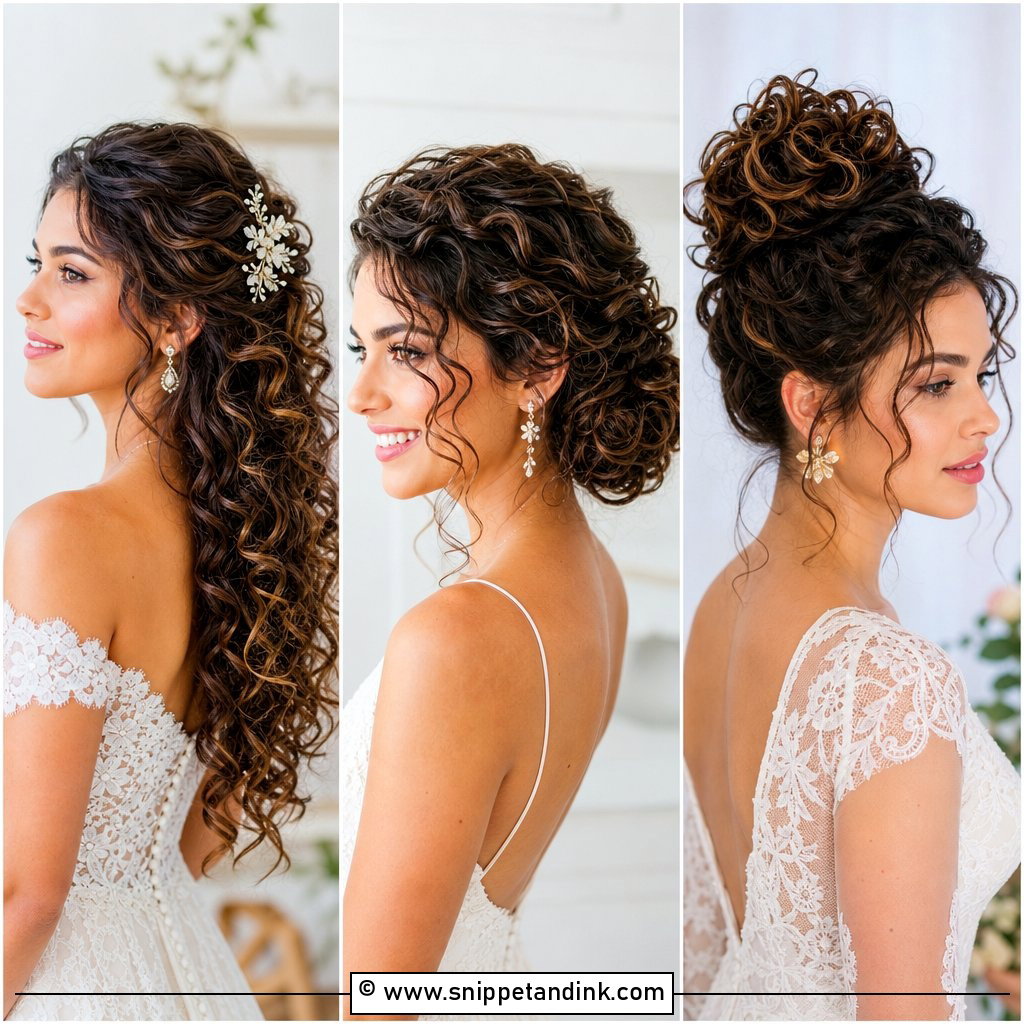
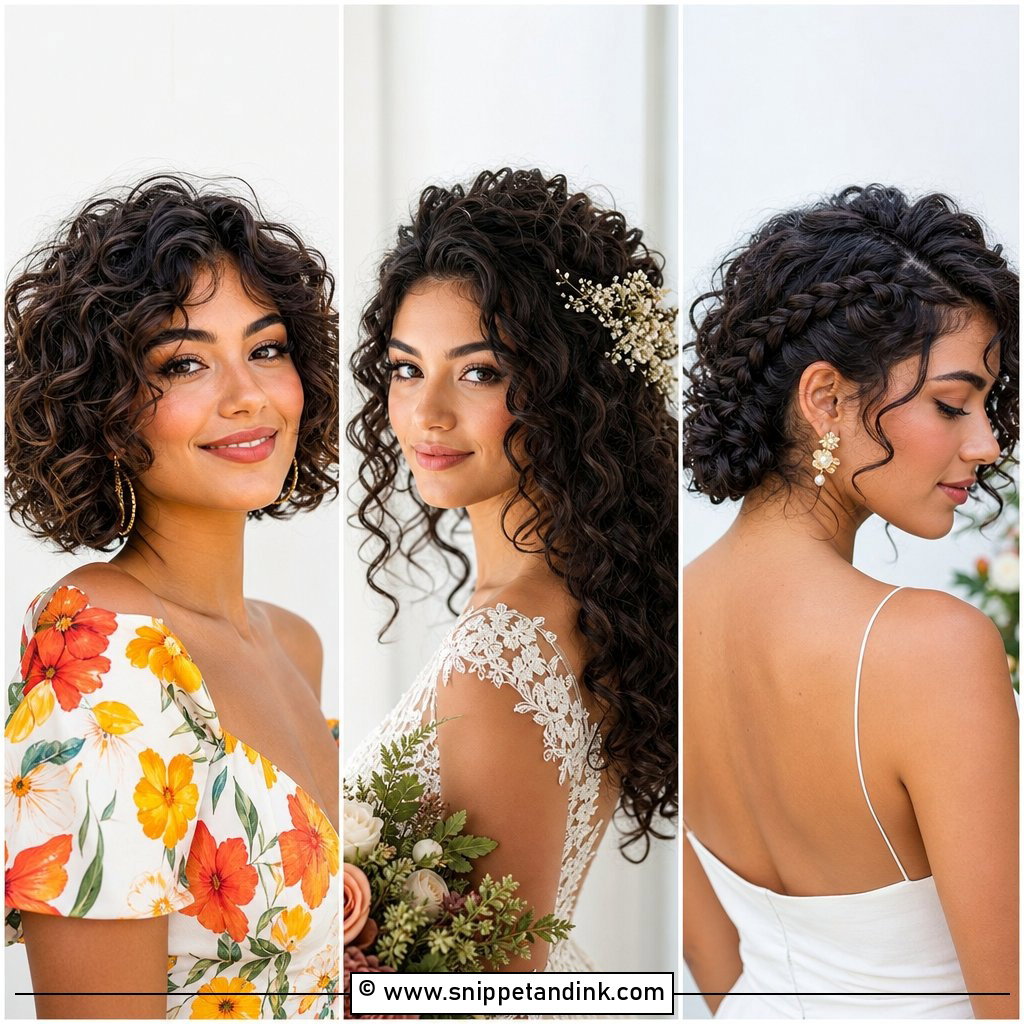
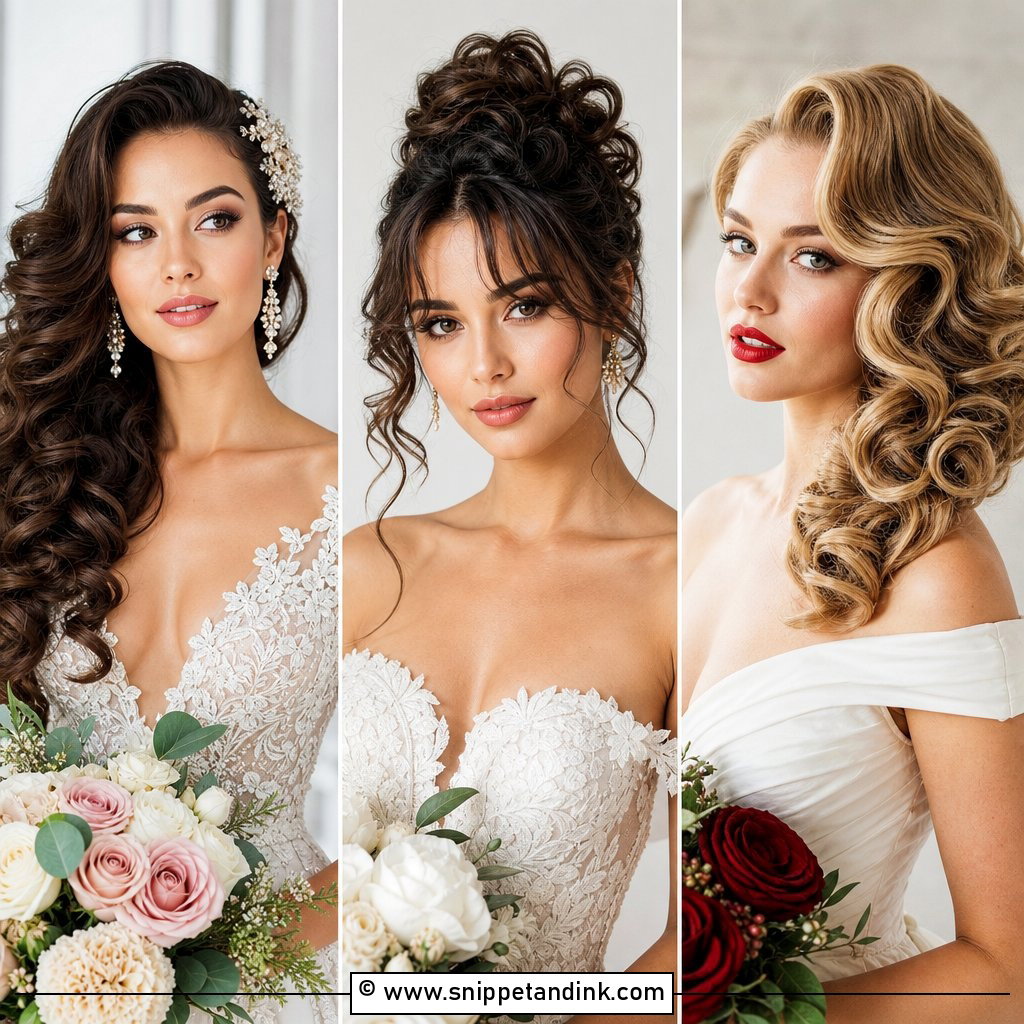
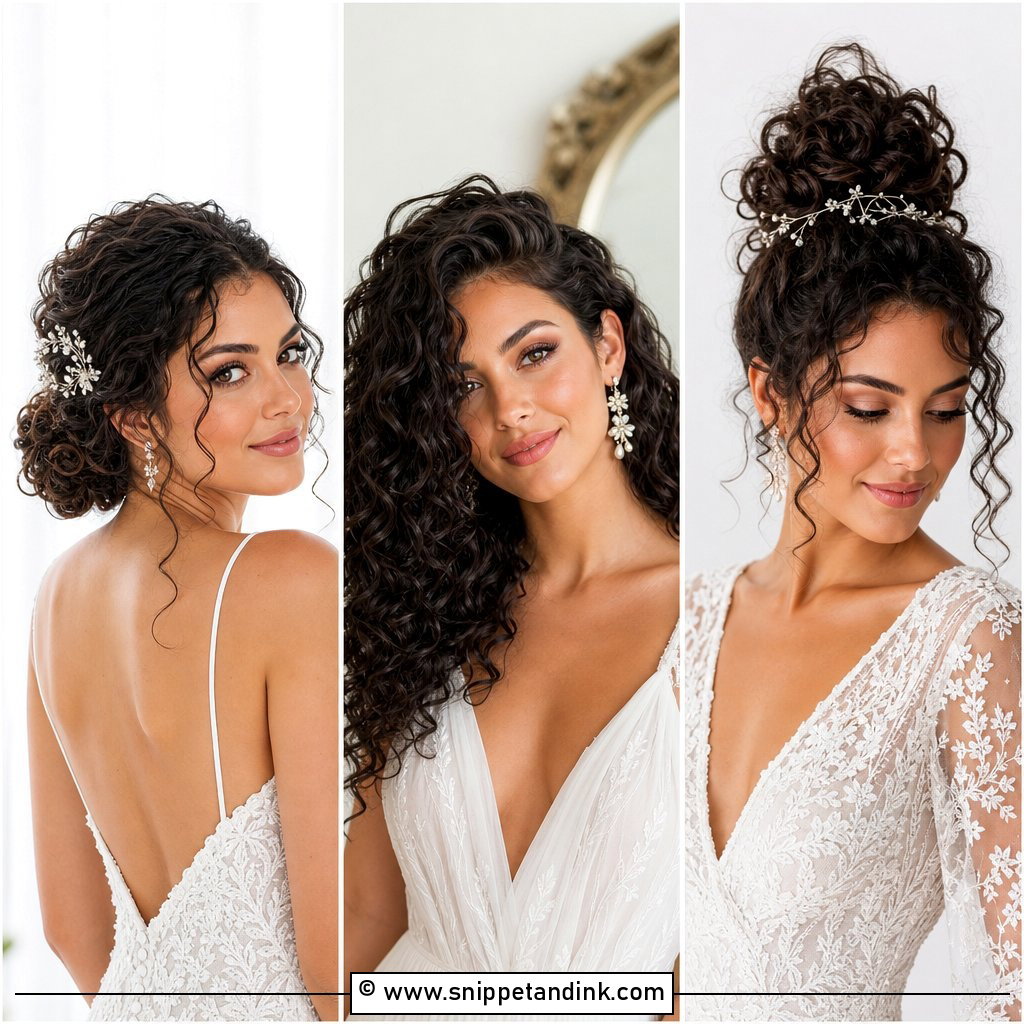
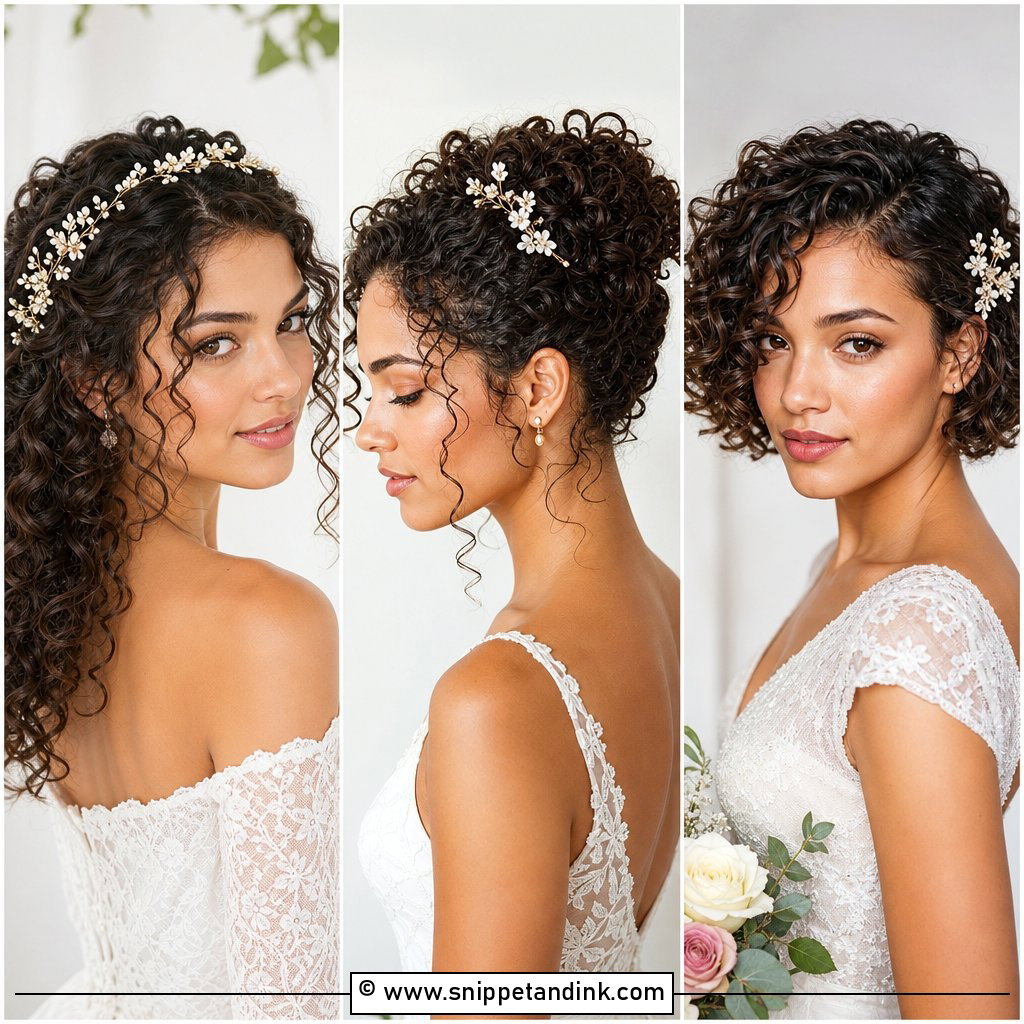
An updo is the safest bet for a long day, because once curls are pinned they can’t frizz out of shape across your shoulders. I gather them at the crown or the back of the head in sections, pinning each group where it naturally falls instead of forcing it into a smooth roll. For curly hair I use U-shaped pins more than bobby pins: they hold the curl in place without flattening it. A few curls stay loose around the face so it doesn’t look severe. It suits lace gowns, off-shoulder necklines and long cathedral veils.
2. Curly Wedding Bun
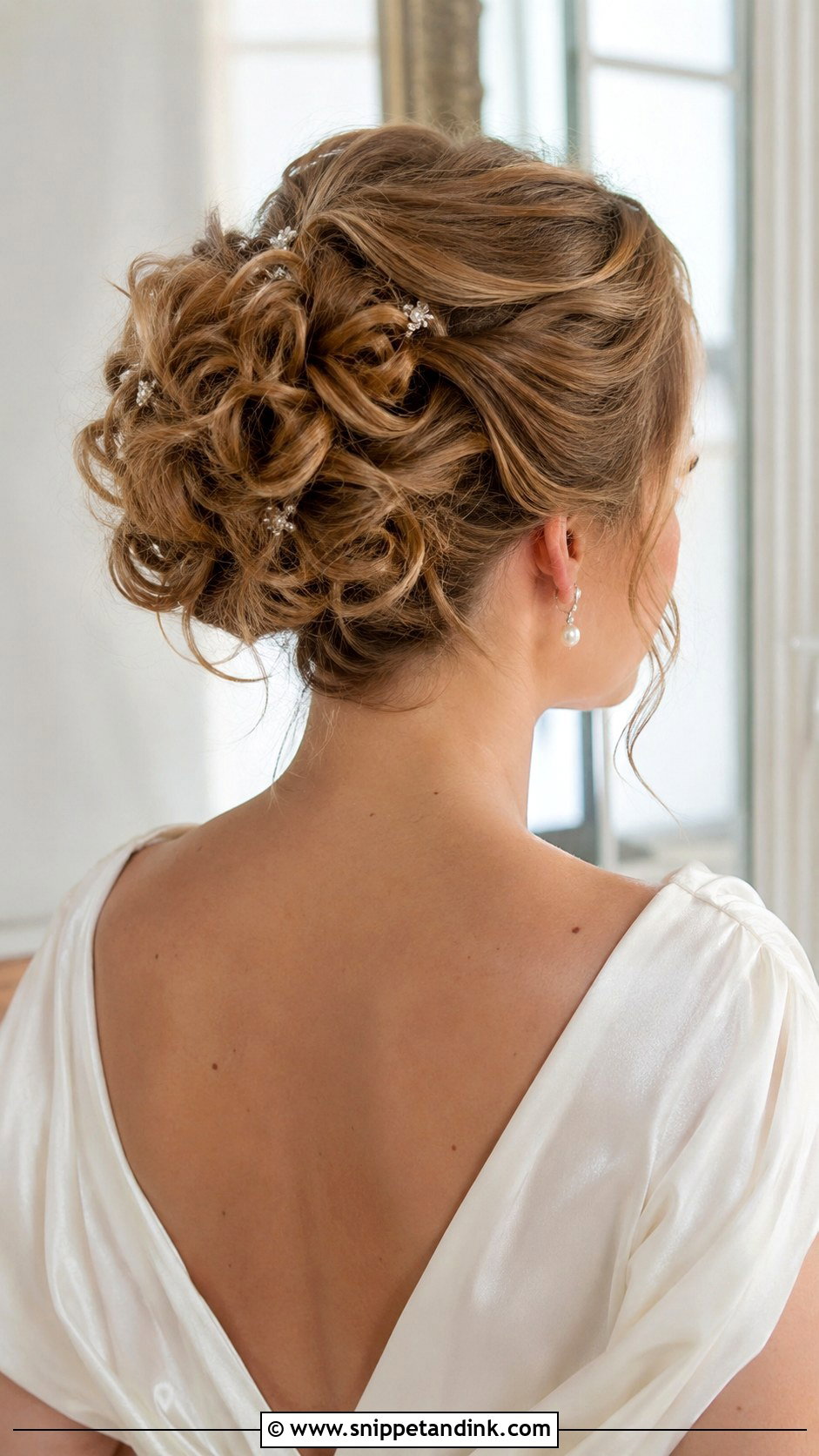
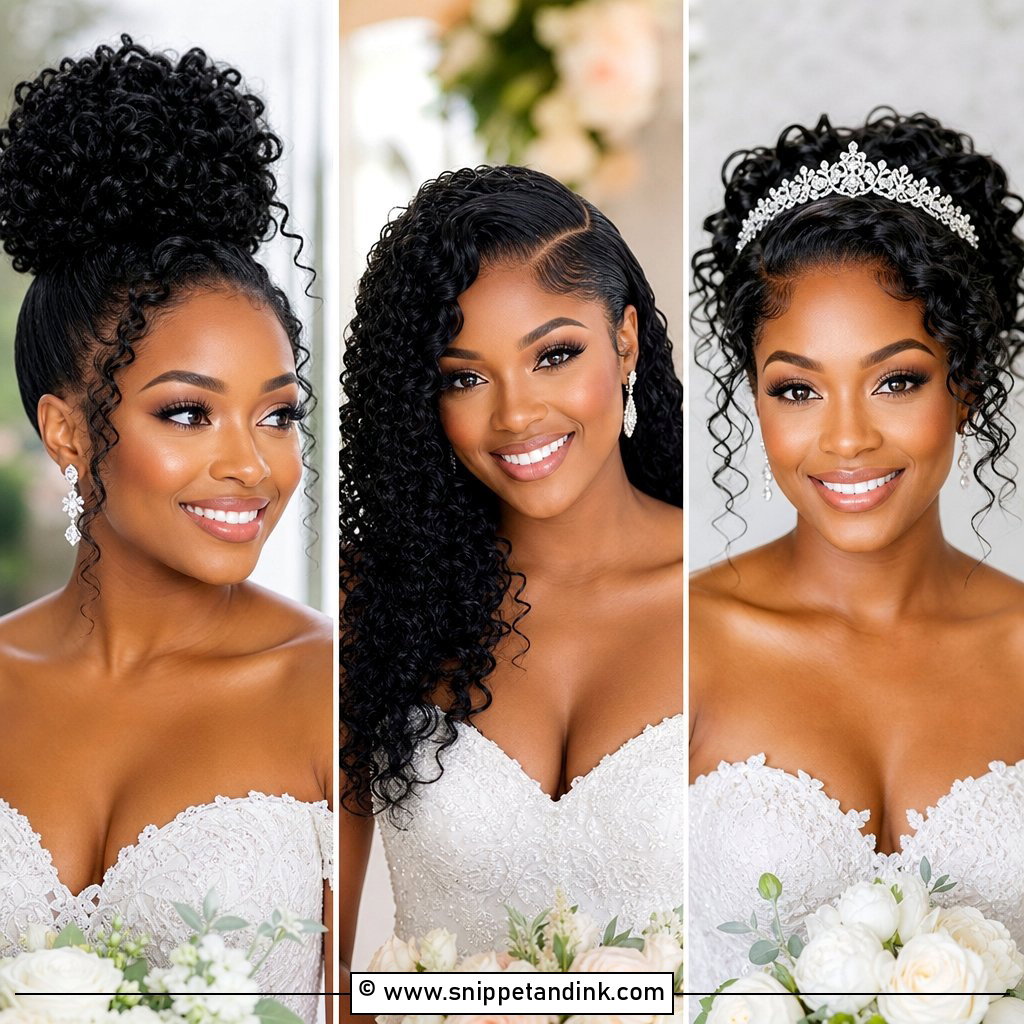
A curly bun barely needs teasing, which is a relief, since backcombing curly hair leaves a knotty mess at take-down. I define the curls first with cream or gel and let them set, then pin them into the bun so each one keeps its spiral. Low at the nape reads soft; higher on the head reads more formal and suits a ballroom. With open-back gowns and jeweled combs or pearl pins, the texture gives a bun more detail than any smooth chignon can.
3. Curly Wedding Half Up Half Down
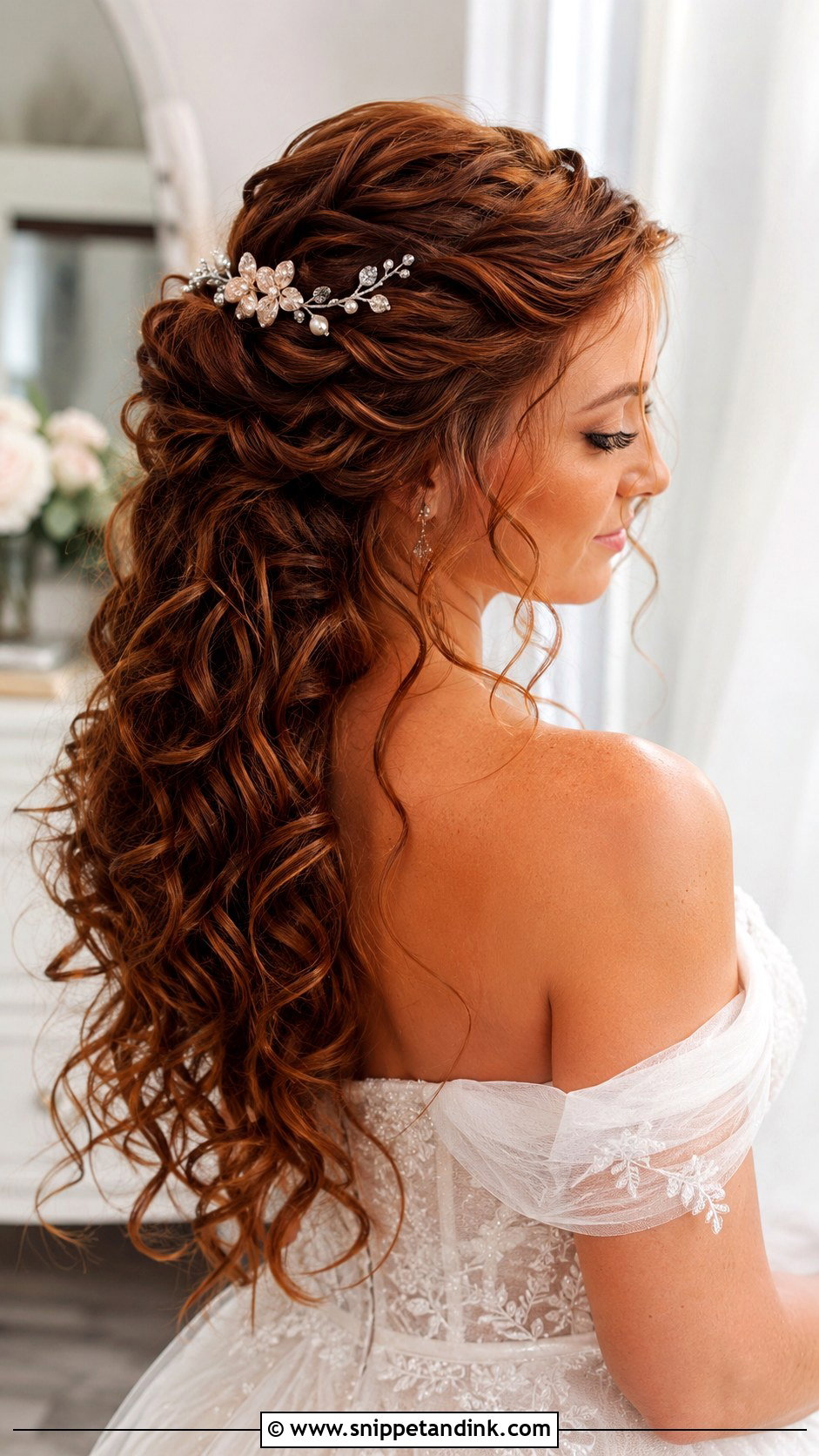
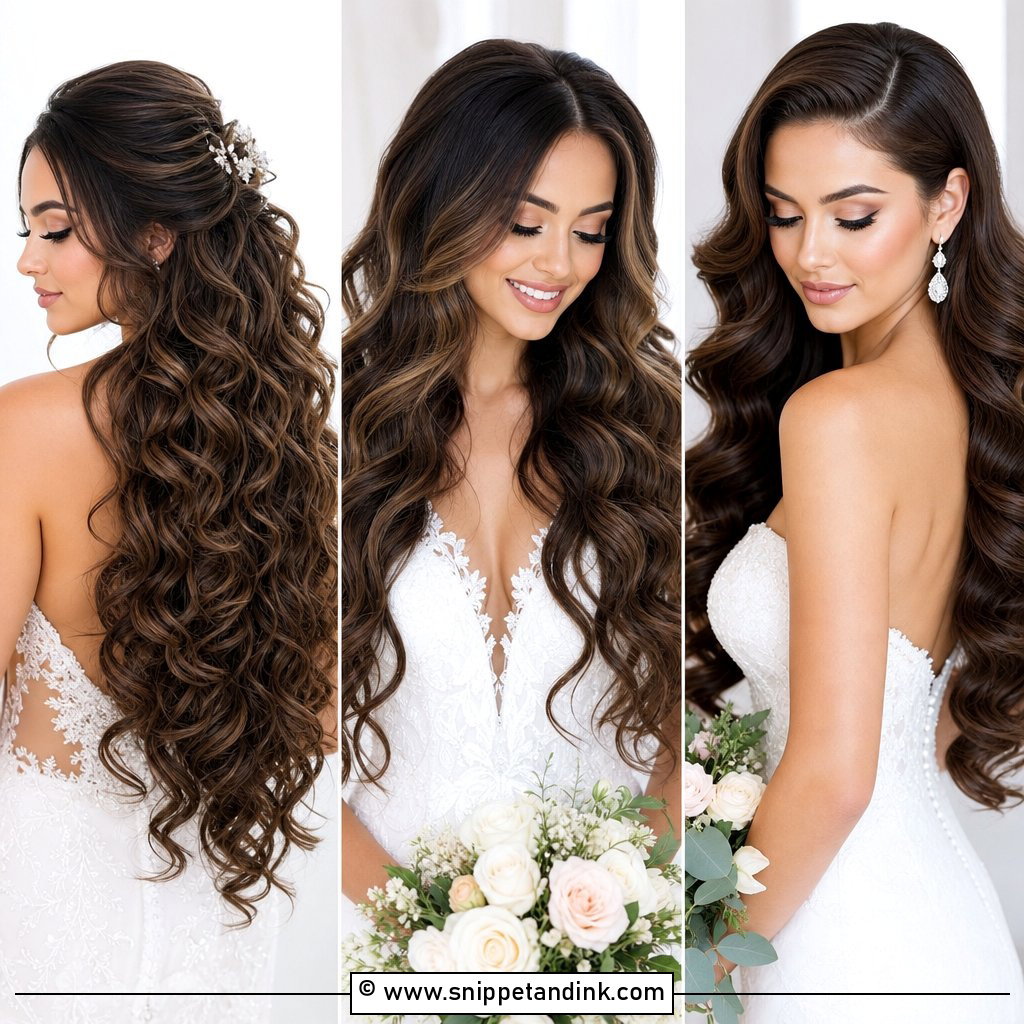
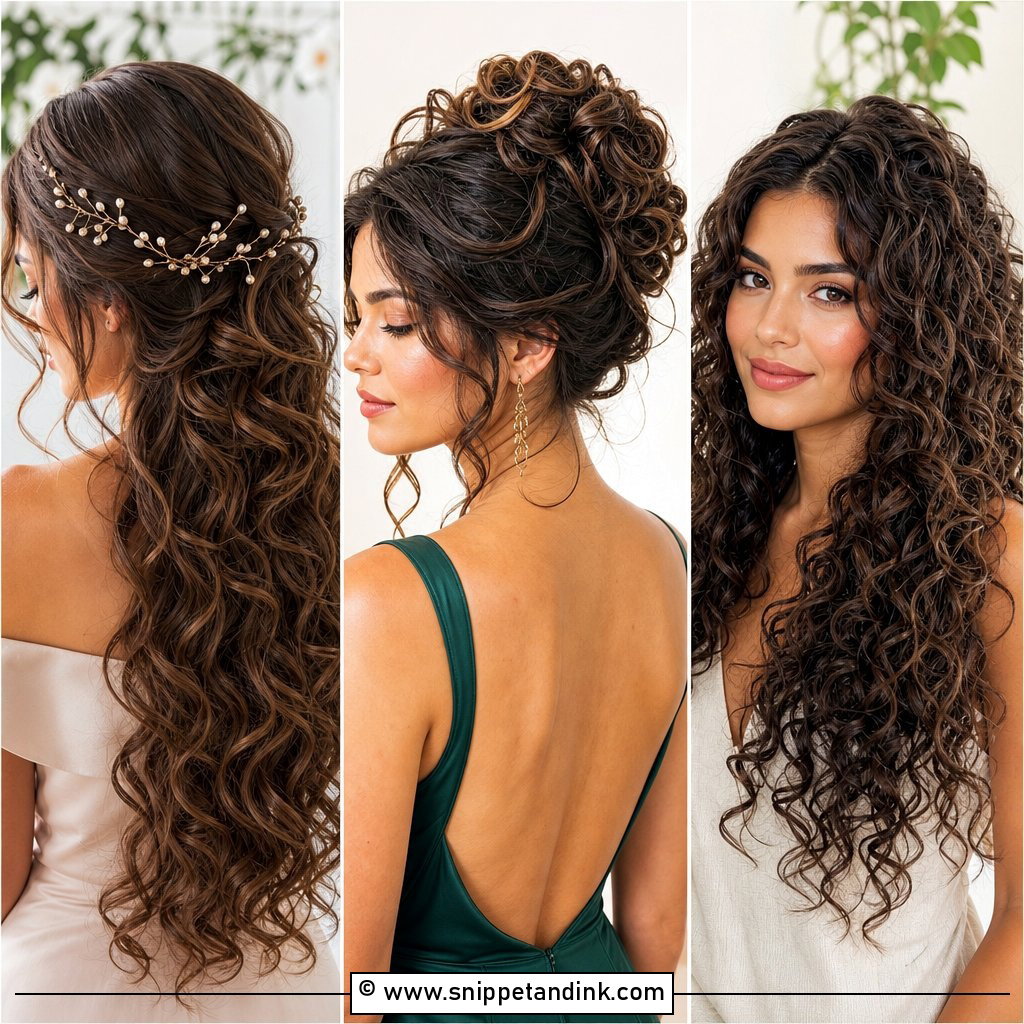
Half up half down is the style I’m asked for most by curly brides who don’t want to lose their length. The top section gets twisted, braided or pinned back, and the rest falls over the shoulders. The thing to plan for is weight: curls that are left down will keep expanding as the day goes on, so I keep the crown slightly lifted to balance the extra volume below. Floral pins, crystal combs and sweetheart necklines all work. If your curls are very tight and dense, I take a larger top section, or the half that’s down overwhelms the half that’s up.
4. Curly Wedding Ponytail
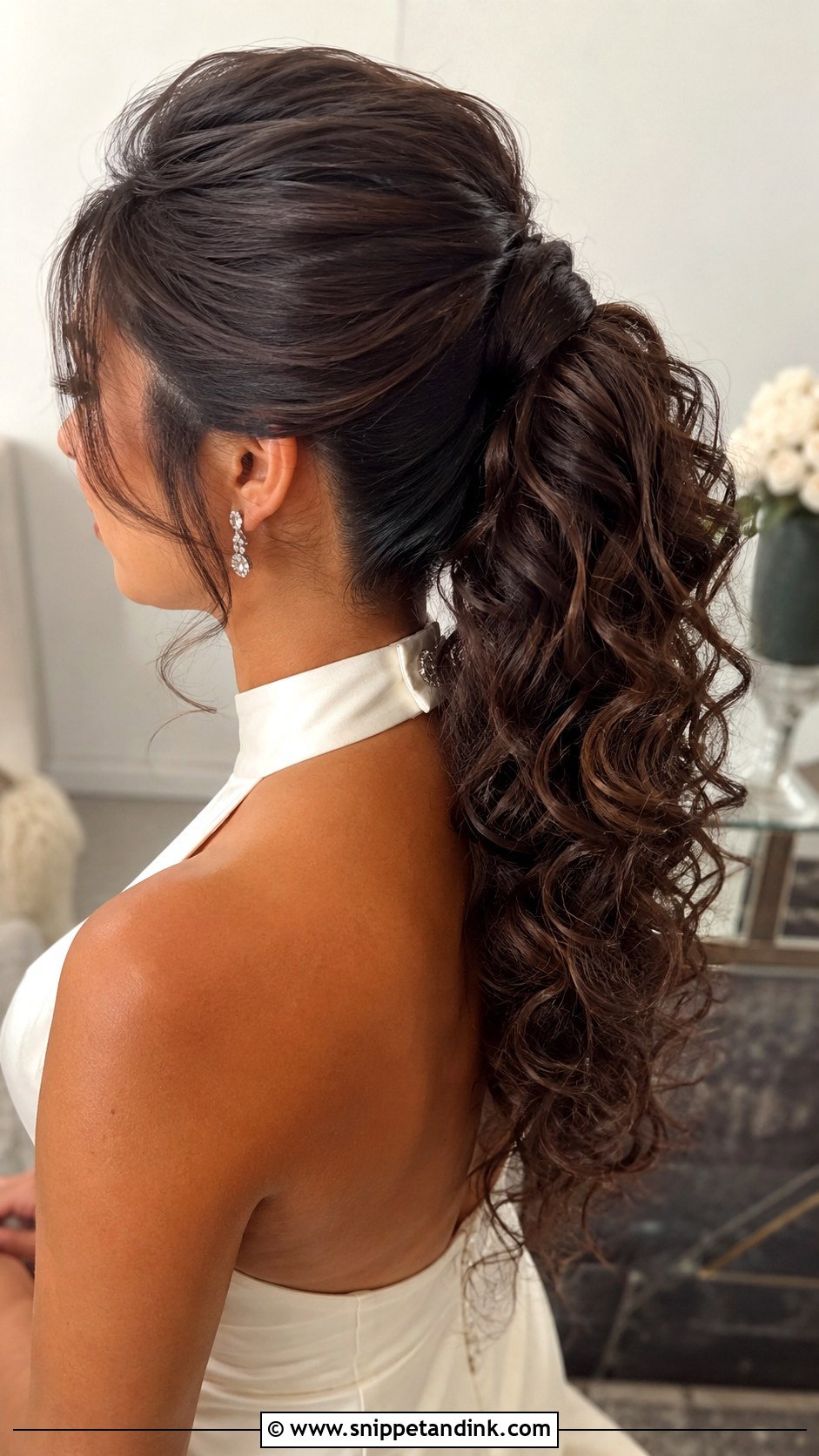
A curly ponytail only looks bridal when the top is controlled and the length does the talking. I smooth the sides with a gel and a soft brush, secure the tail with a thin elastic, then wrap a section of hair around the base and pin it underneath. The crown gets a little lift before the elastic goes in. High necklines and dramatic backs suit it, and you can add a bow or a small comb. Watch the weight of very long, thick curls: a high pony can pull on the scalp by evening, so I sit it slightly lower for brides with heavy hair.
5. Curly Wedding Hair Down
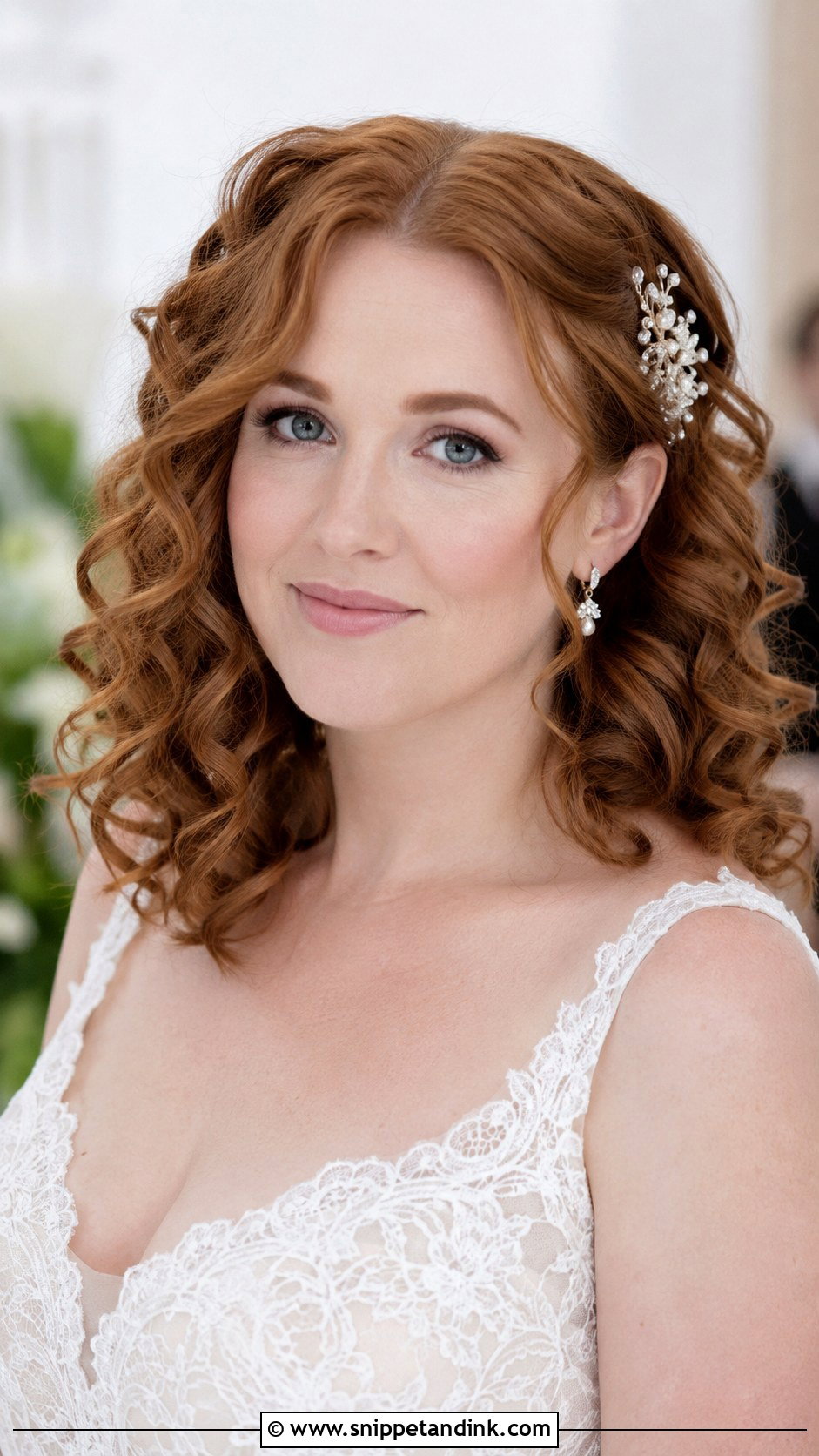
Curls worn down are the most natural option and the least forgiving. They’re exposed to humidity, hugs and your own hands all day. I prep with a leave-in, a curl cream and a gel with real hold, let the cast dry completely, then scrunch it out so the curls are defined and separated. A center part looks modern; a deep side part is more glamorous. Hair needs enough length to move around the shoulders. Add a veil tucked at the crown or a side clip. I’d only recommend this one if you’ve tested your products in similar weather, because frizz on loose curls is the hardest thing to fix on the day.
6. Curly Wedding Low Bun
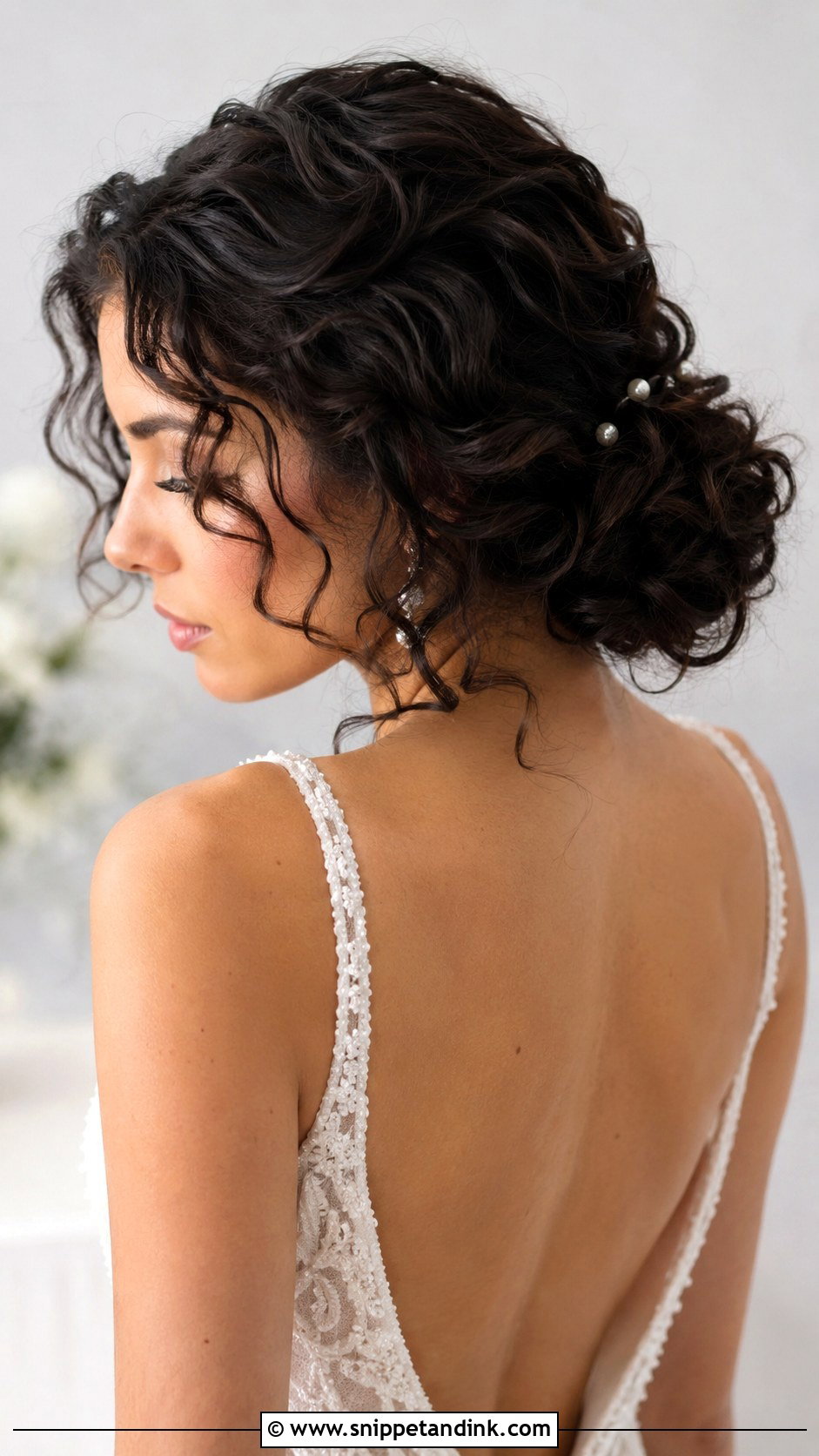
A low bun at the nape suits curly hair because the natural fullness makes it look generous without a padded insert. It also sits under a veil comb, hair vine or detailed gown back without crowding anything. I pin a few curls around the outside of the bun for texture and leave a couple at the face to soften the jaw. It’s practical too: hair is secure and off the neck, yet the shape still looks relaxed. Garden ceremonies, churches and beach venues all suit it.
7. Curly Wedding High Bun
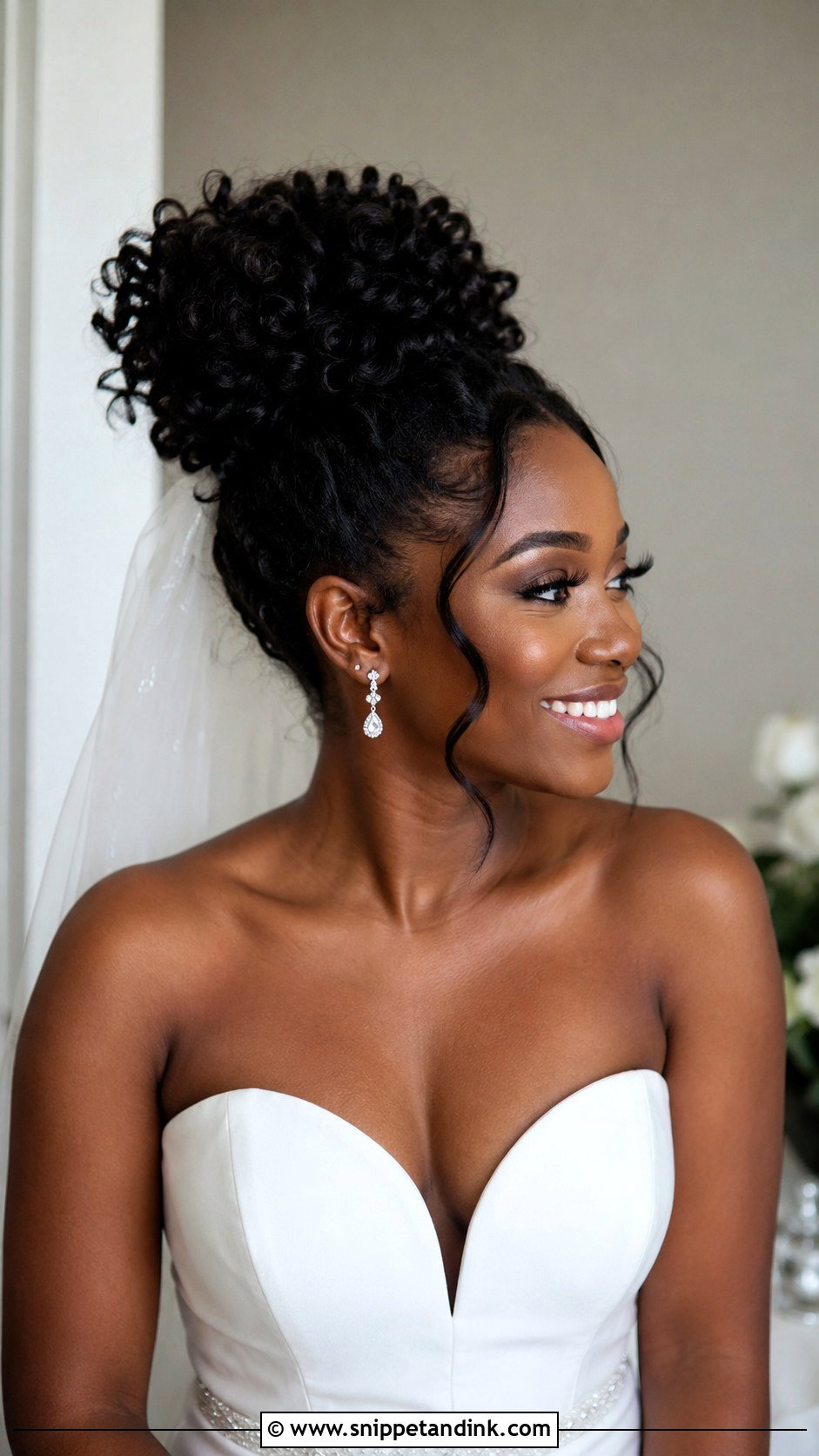
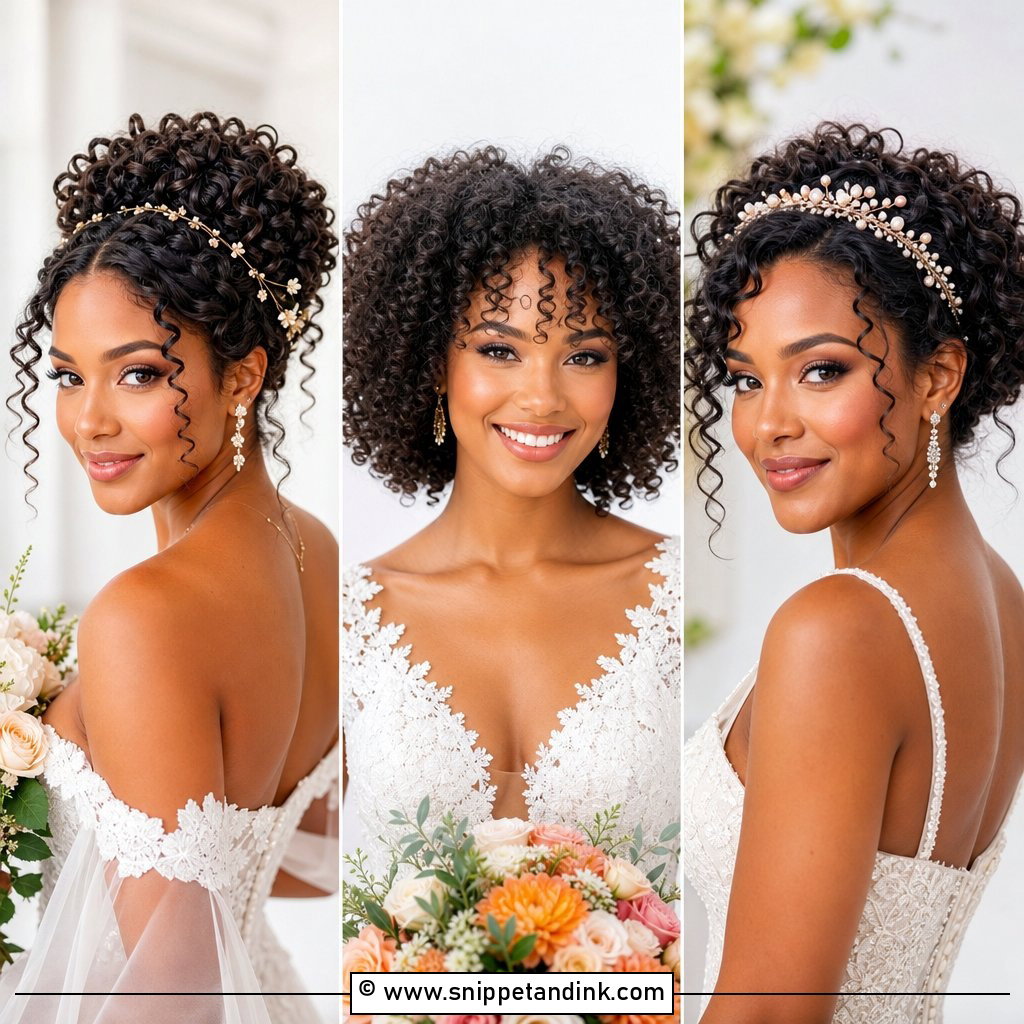
There’s something regal about a high curly bun. It lifts the face, shows the cheekbones and gives a strong silhouette under a tiara or with statement earrings. Thick curls are ideal, because their volume builds a round bun on its own; on finer curly hair I add a small amount of matching extension hair in the bun to fill it. Leave a few curls at the temples for softness, or keep the front smooth and let the bun hold all the texture. It’s my favorite for warm weddings, since it keeps curls off a sweaty neck.
8. Curly Wedding Side Swept Hair
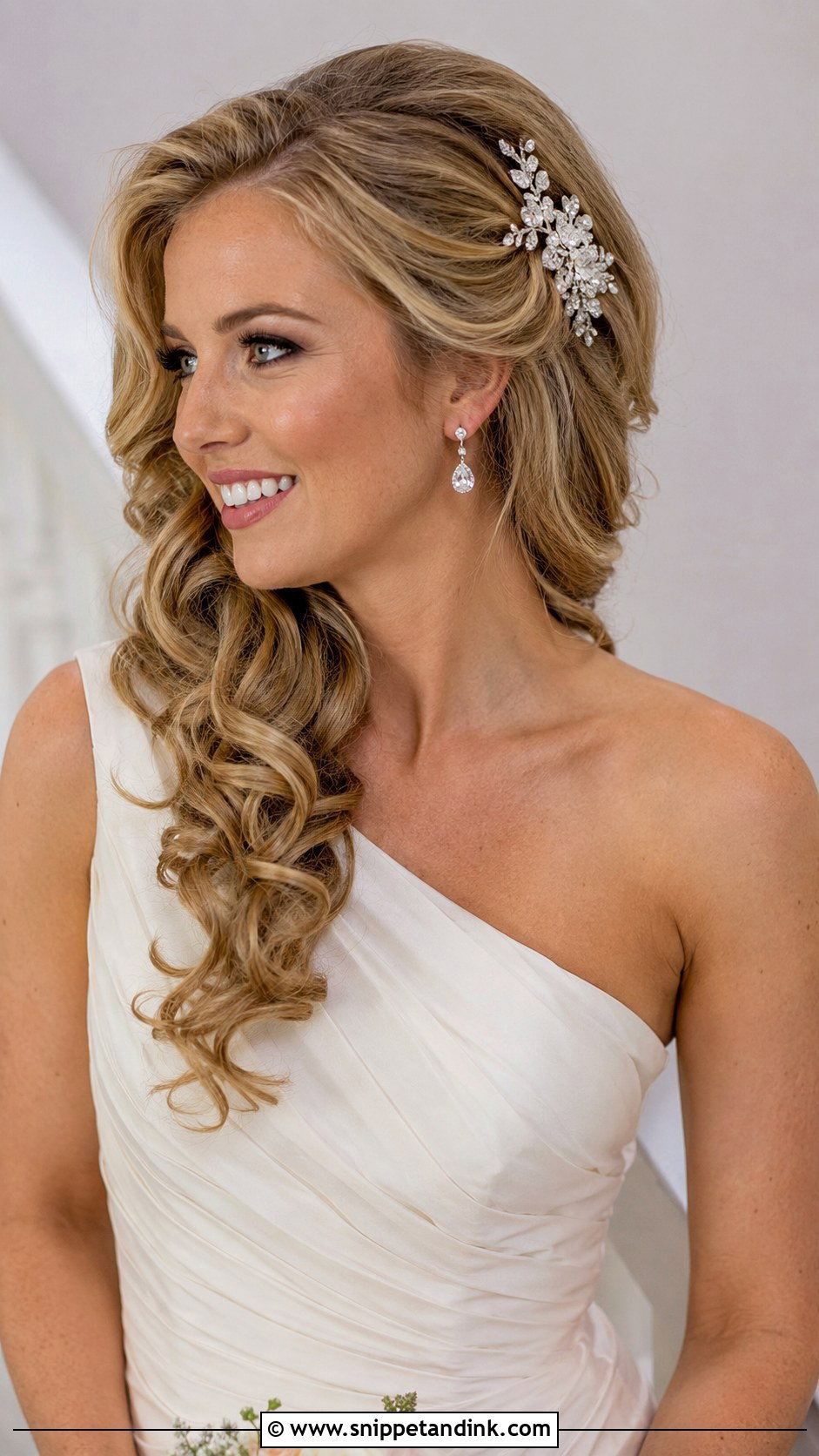
Side swept curls have a red-carpet feel, and they photograph from both front and back. I gather the curls over one shoulder and anchor the back with crossed bobby pins hidden under the top layer, otherwise the weight drags everything back to center within an hour. One-shoulder and strapless gowns suit it, as do vintage looks. A crystal comb or floral clip on the swept side finishes it. Don’t brush curls into this shape. Brushing turns ringlets into a frizzy cloud, so I place them by hand.
9. Curly Wedding Chignon
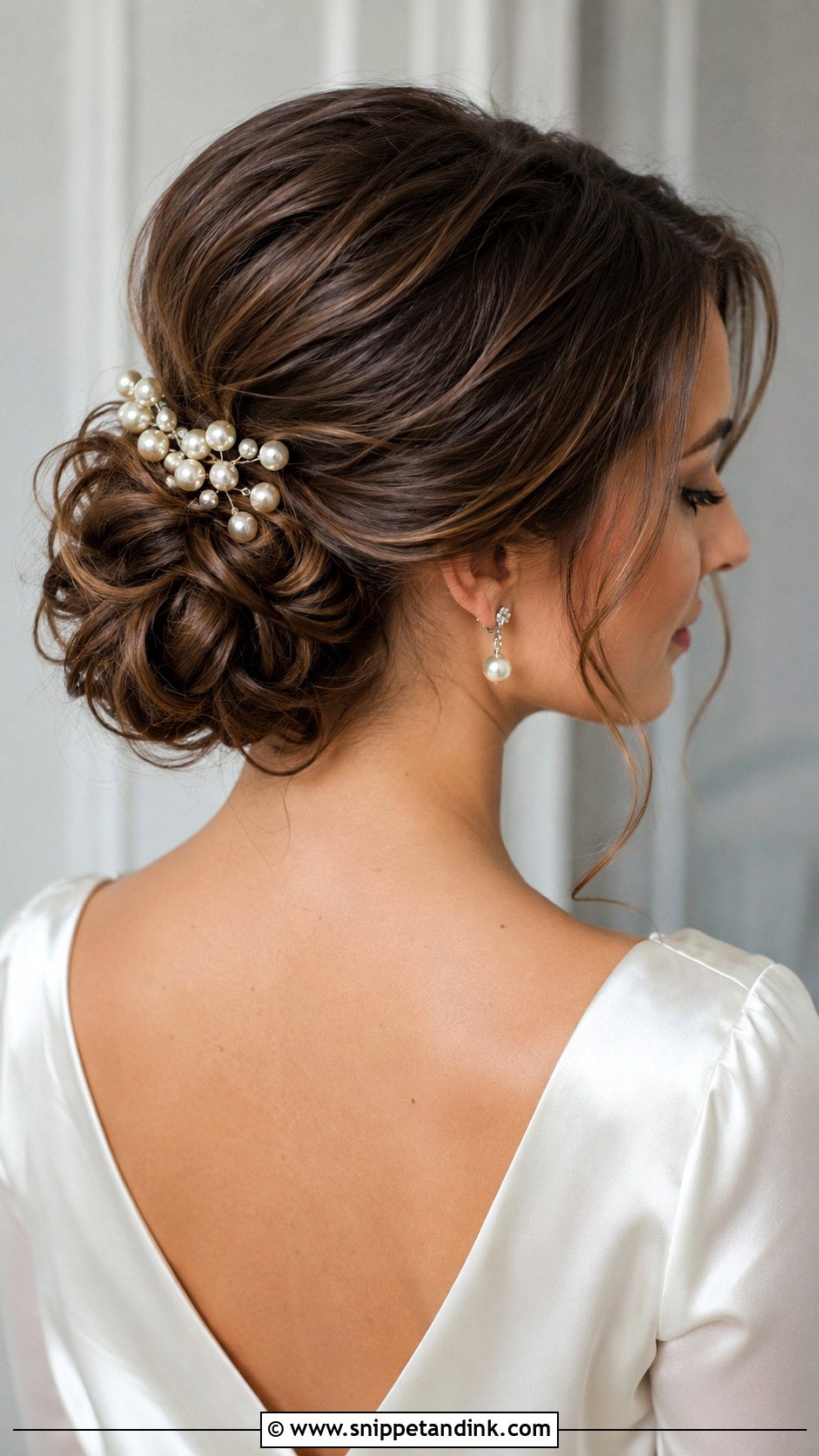
A chignon is more structured than a messy bun but still has texture. I tuck the curls into a soft roll at the nape, either centered or slightly to one side, and leave a little curl detail visible around the edges so it doesn’t read as if your curls were hidden away. Gentle lift at the crown keeps the head shape balanced. Pearl pins, lace veils and satin gowns suit its tailored feel. It’s a good middle ground for a bride who wants something classic but doesn’t want her texture smoothed out completely.
10. Curly Wedding Updo With Veil
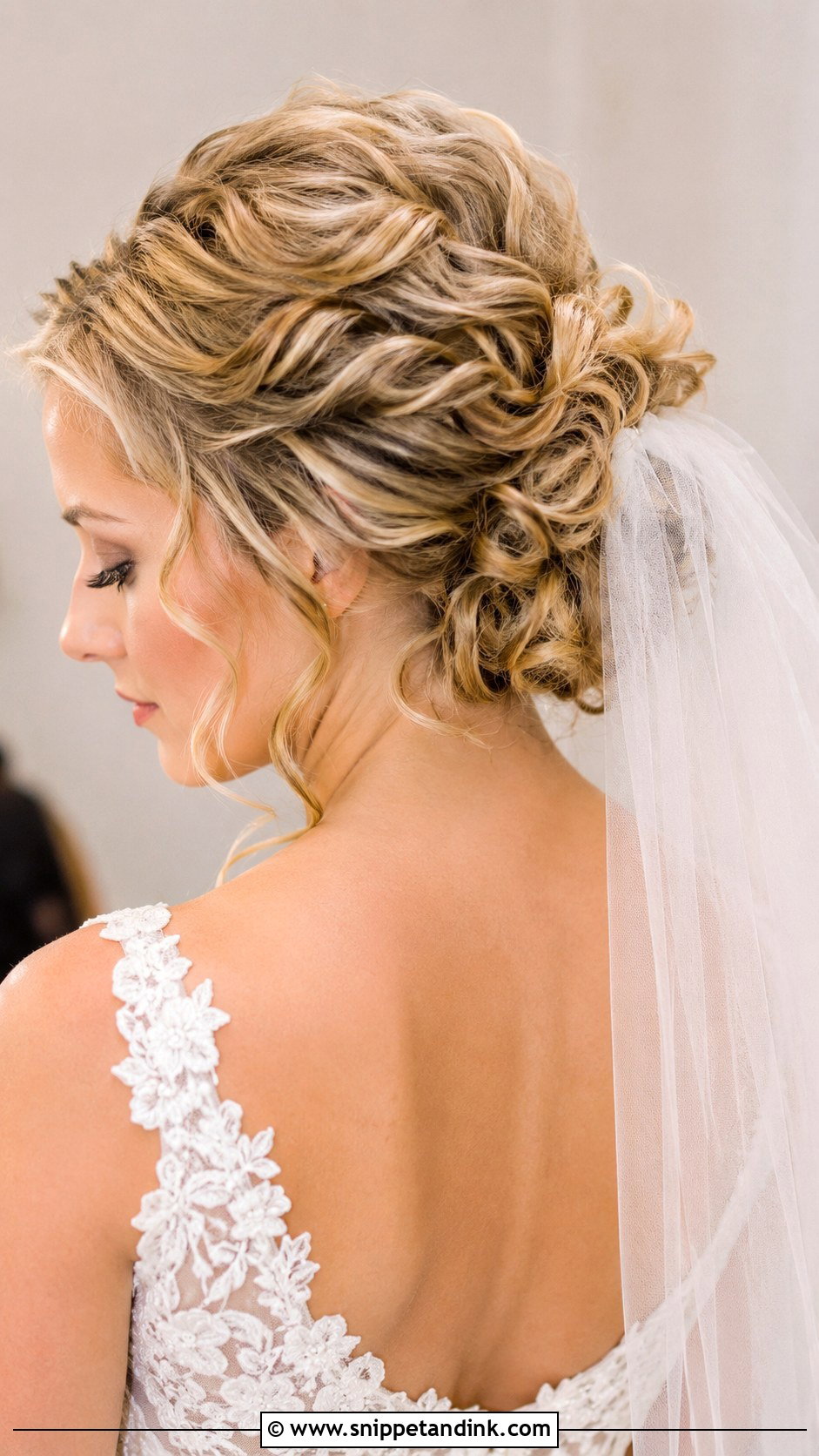
If the veil matters as much as the hair, I design the updo around it. Curls give a veil comb more to grip than slippery straight hair, but I still build an anchor first: two bobby pins crossed in an X right where the comb will go, so it hooks onto something solid. Light fingertip veils, chapel veils and heavy cathedral lengths all need that anchor. Under the bun looks romantic; above the bun looks more traditional. I keep curls visible around the comb so the style doesn’t vanish under tulle.
11. Curly Wedding Hairstyle With Tiara
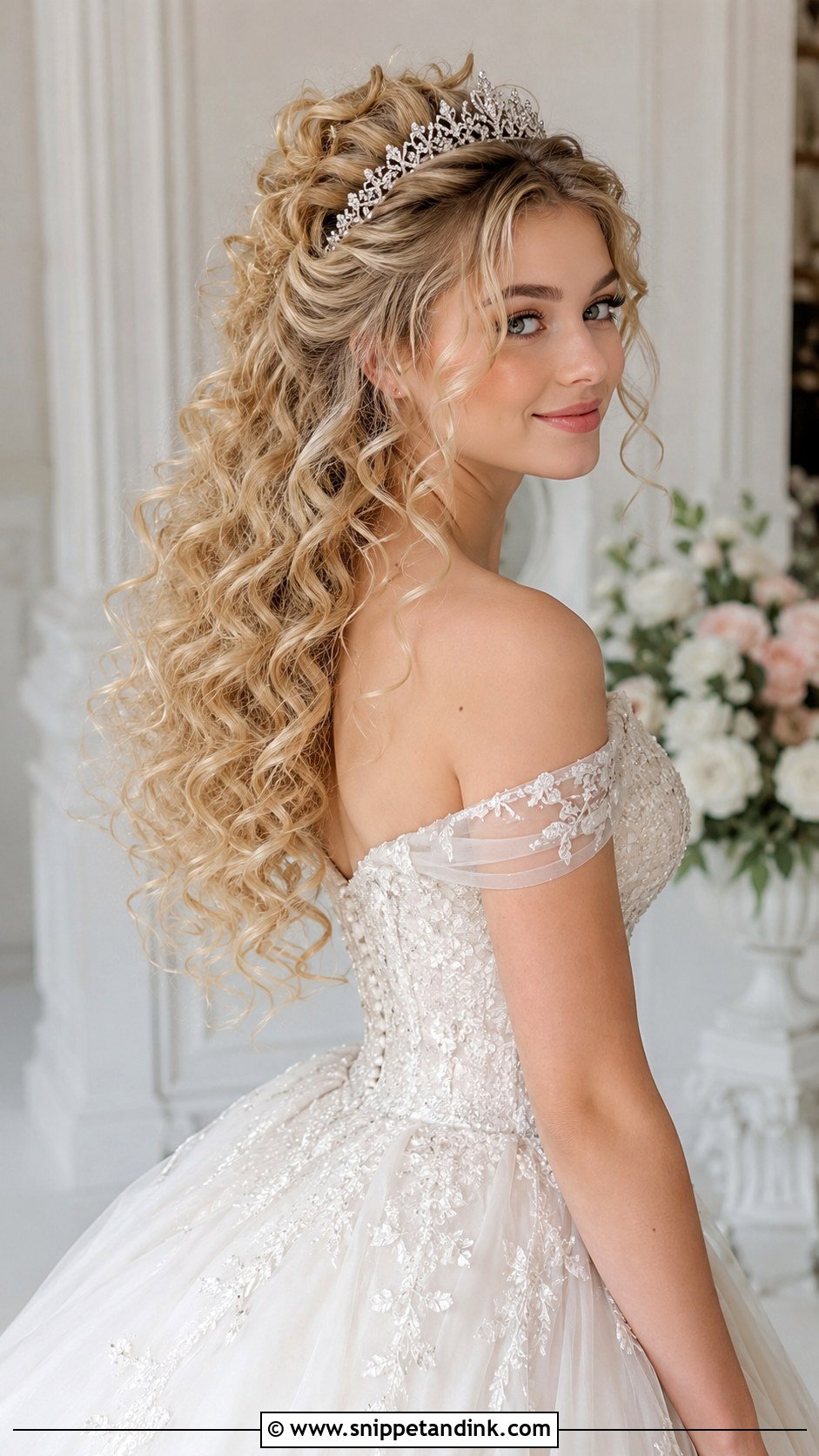
A tiara needs volume behind it, and curly hair supplies that naturally. A curly updo, half-up style or soft bun all work as a base. I keep the front smooth enough for the band to sit flat, then build the curls up behind it. The secret is fixing it properly: I braid a thin anchor section underneath or pin through the side loops of the tiara so it doesn’t tilt once you start moving. Leave other accessories out, because the tiara is enough, and it reads best in formal portraits.
12. Curly Wedding Hairstyle With Flowers
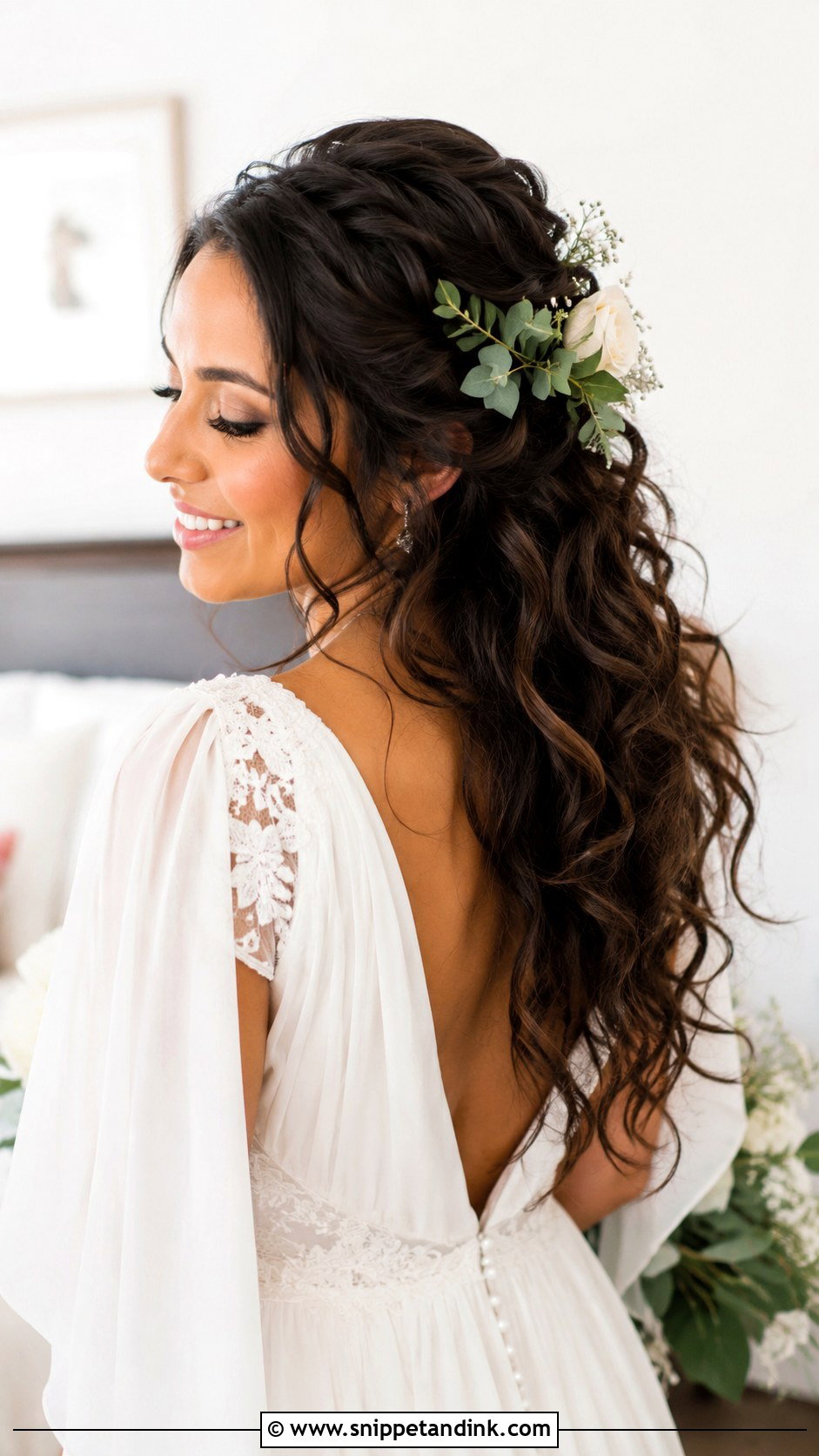
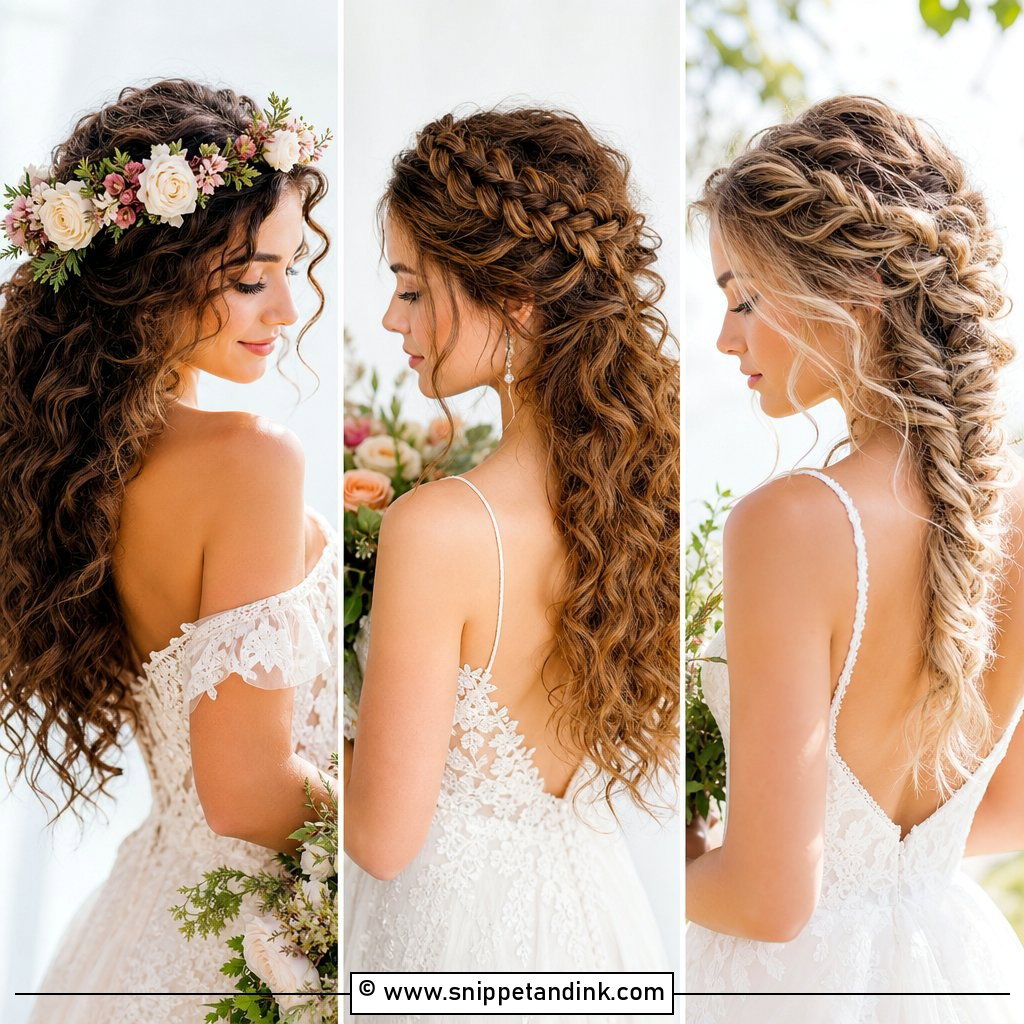
Fresh flowers sit well in curls because the texture hides the stems and wires. Small blooms, baby’s breath, spray roses or a little greenery tucked into loose curls, a half-up style or a low bun all work. I ask the florist to wire and tape the pieces so I can pin them, and to choose hardy flowers; soft-petaled blooms like gardenias bruise and brown within hours against warm skin. Use flowers as accents, matched to the bouquet, rather than covering the hair, which already has plenty going on.
13. Curly Wedding Braided Updo
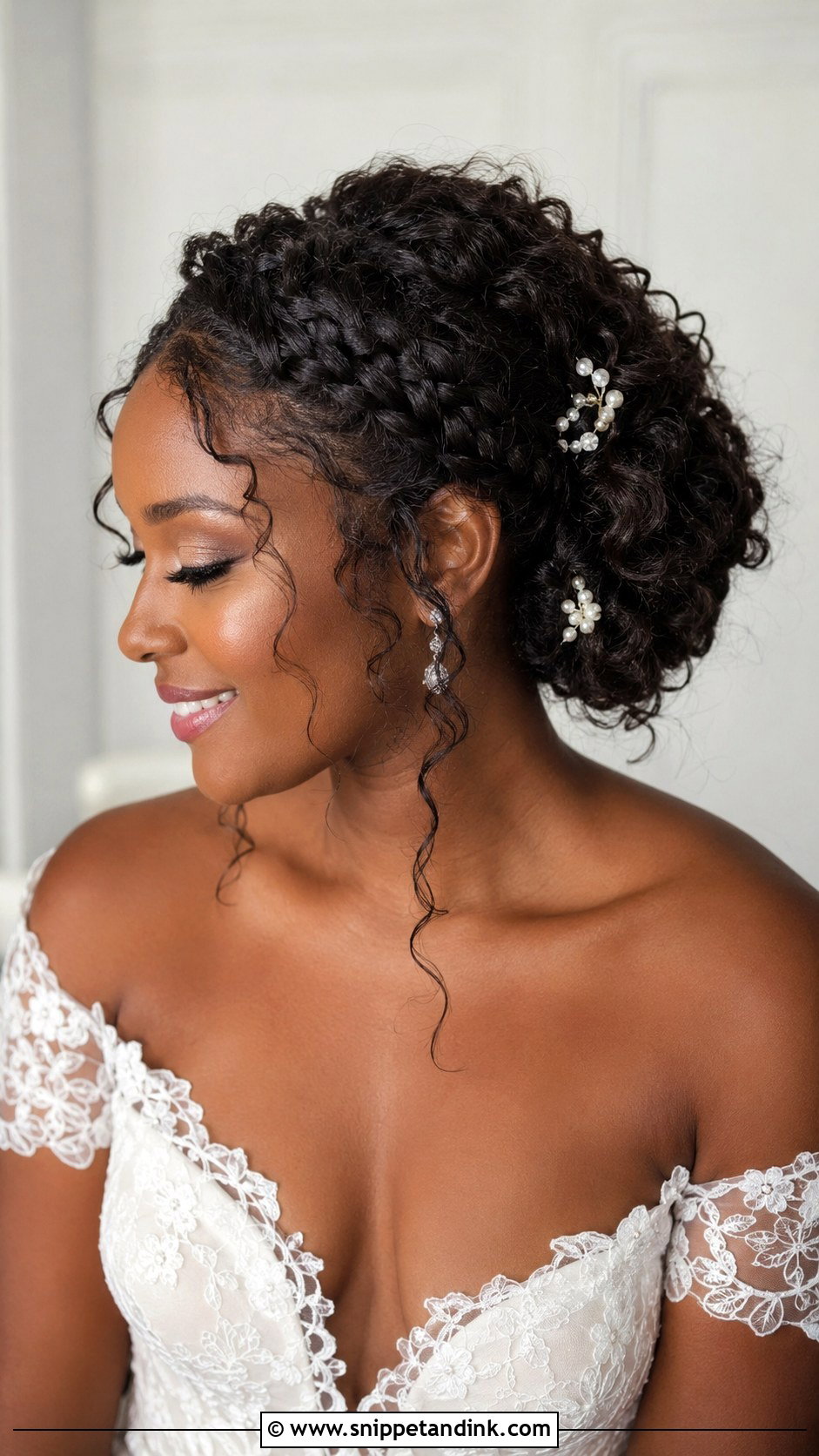
Braids do two jobs in a curly updo: they add detail, and they lock down shorter layers that would otherwise spring loose. I braid along the crown, around the bun or through the sides, then pin the remaining curls up around them. On coily hair I keep the braids looser and slightly pancaked so they don’t look tight against the soft curls. Pearl pins or a small comb finish it. It’s a smart choice if your curls are layered and you’re worried about pieces escaping by the reception.
14. Curly Wedding Crown Braid
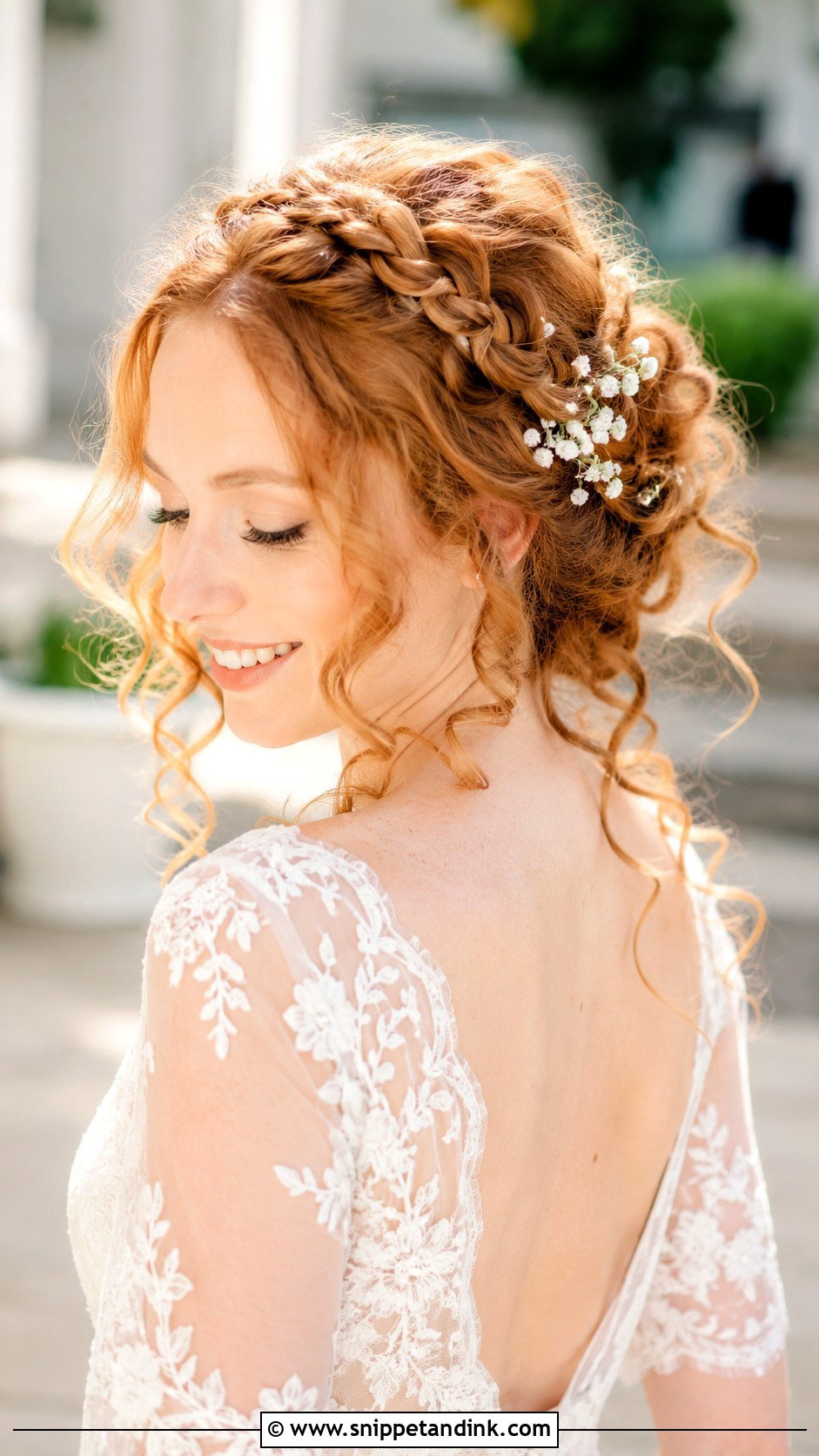
A crown braid sits around the head like a halo, with the curls tucked or left loose at the back. It’s my go-to for outdoor and rustic weddings, because once it’s pinned it doesn’t move in wind. It needs medium to long hair to reach all the way round; if yours is shorter, I braid two sections from the sides and join them at the back. Face-framing tendrils soften it, and tiny flowers, pearls or a veil at the back all work.
15. Curly Wedding Bob
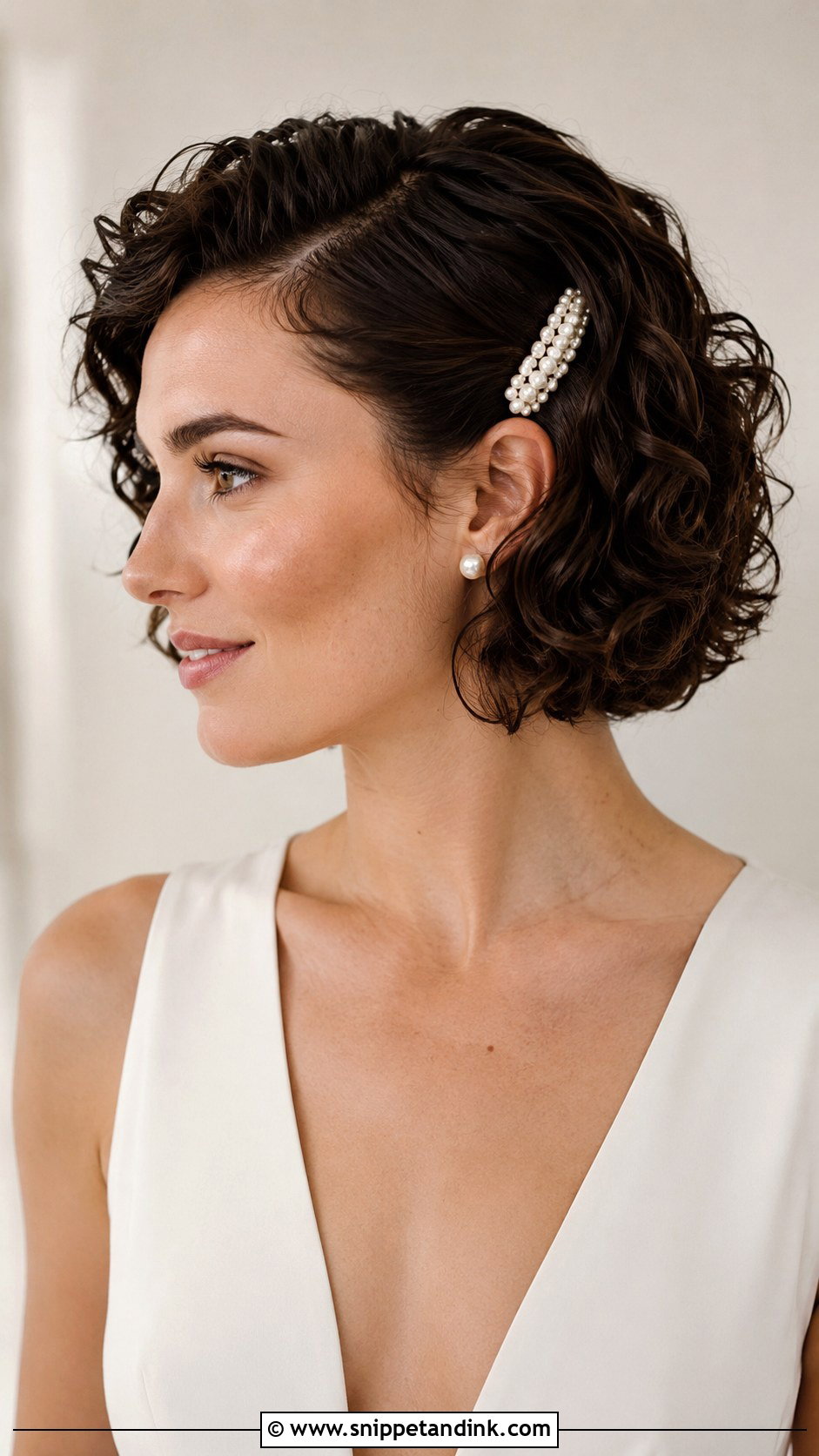
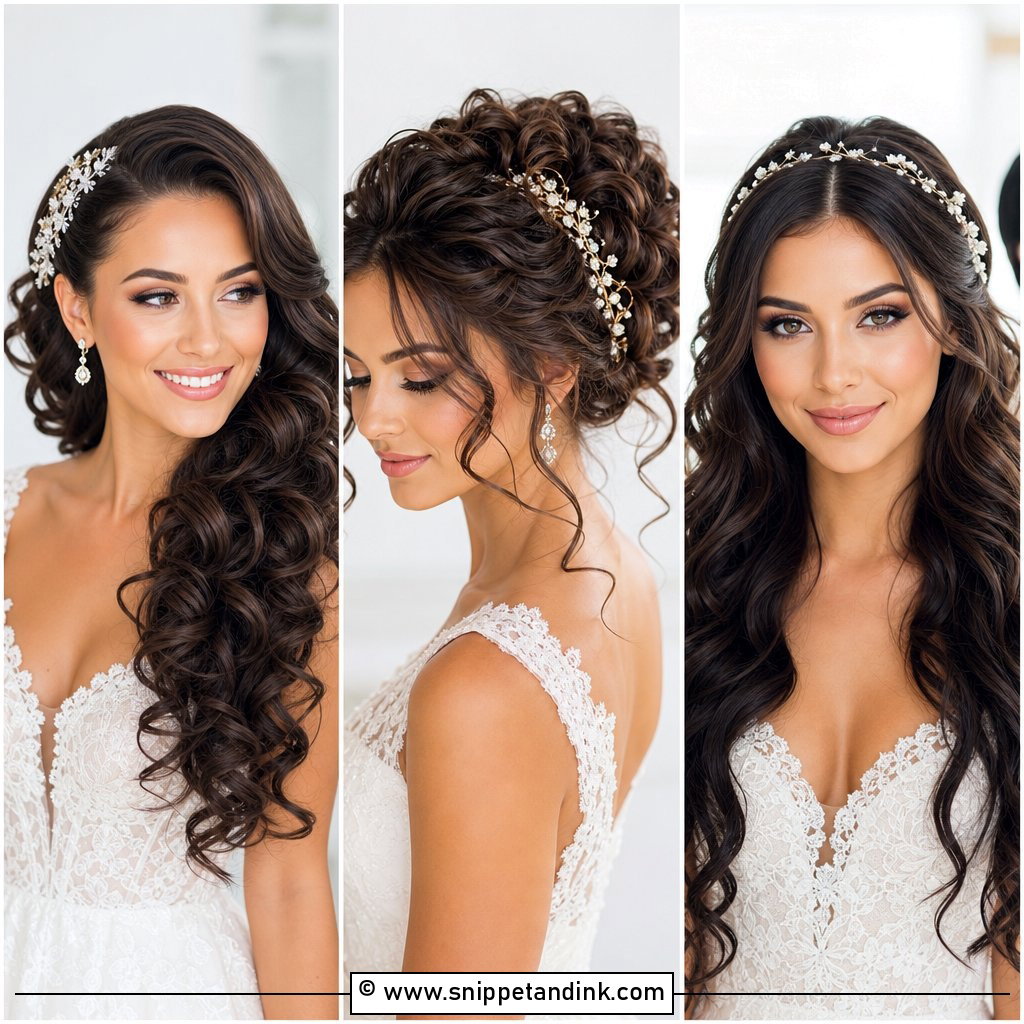
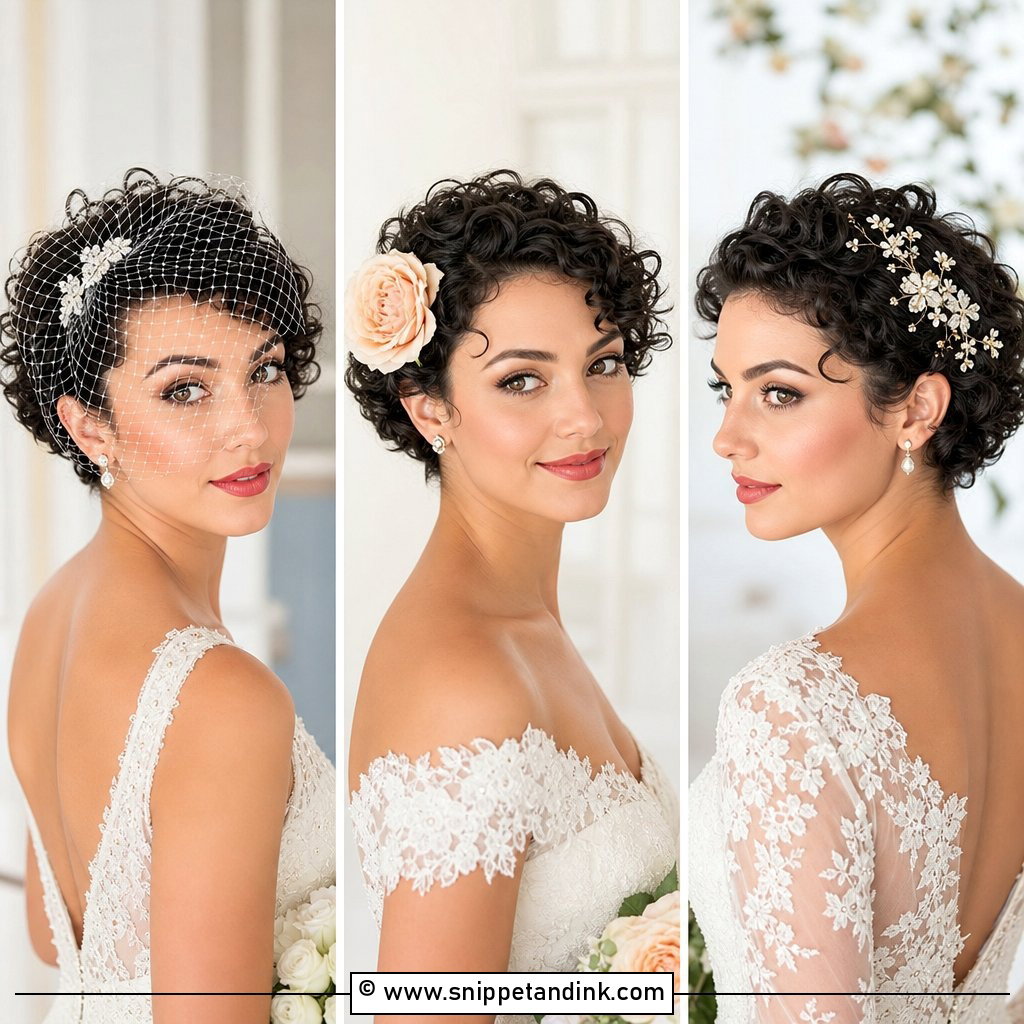
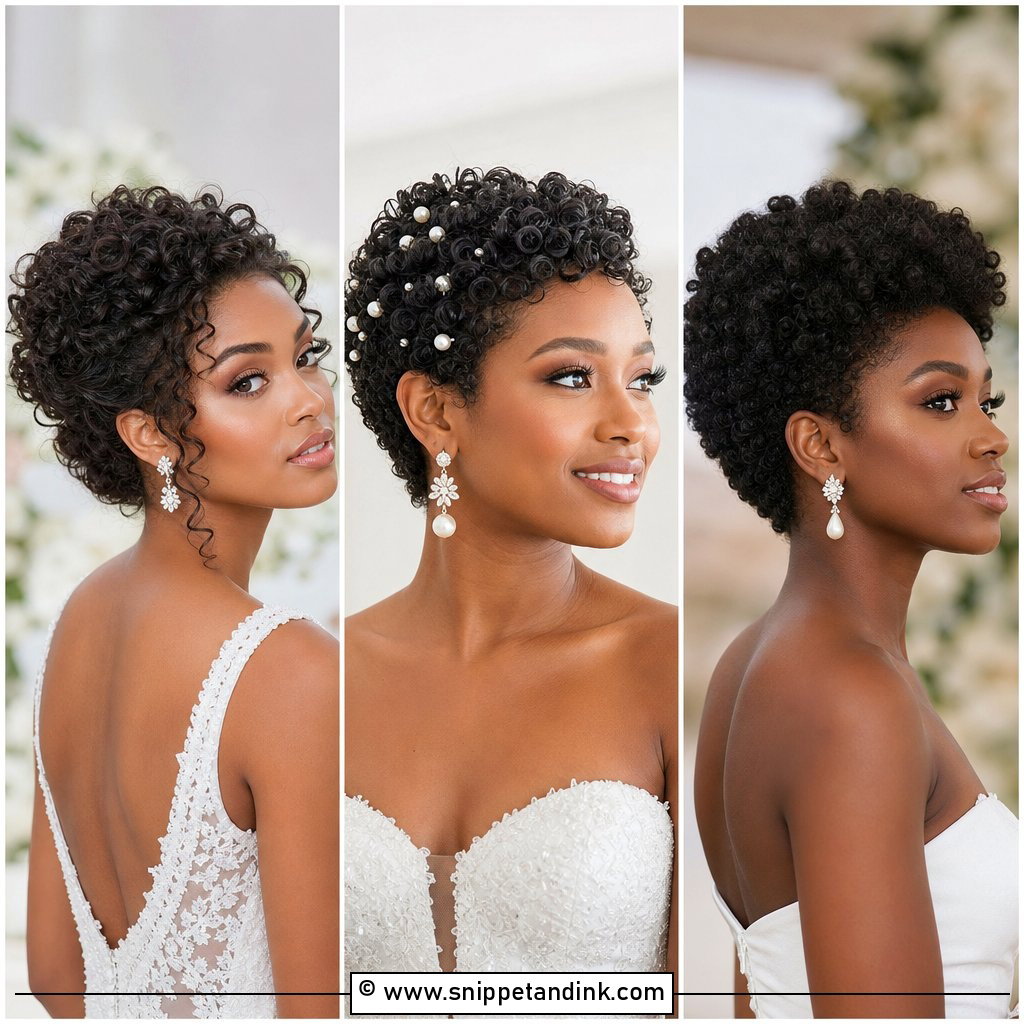
Short curls look polished with very little added, which is why I enjoy styling a curly bob. A side part is more glamorous; a center part is more modern. The whole look depends on definition. I rake a curl cream through damp hair, finger-coil any curls that won’t clump, and diffuse without touching until it’s dry. A pearl clip, mini veil or crystal barrette finishes it. Bear in mind that curly bobs shrink and change shape between wet and dry, so get any trim done at least a couple of weeks ahead.
16. Curly Wedding Pixie
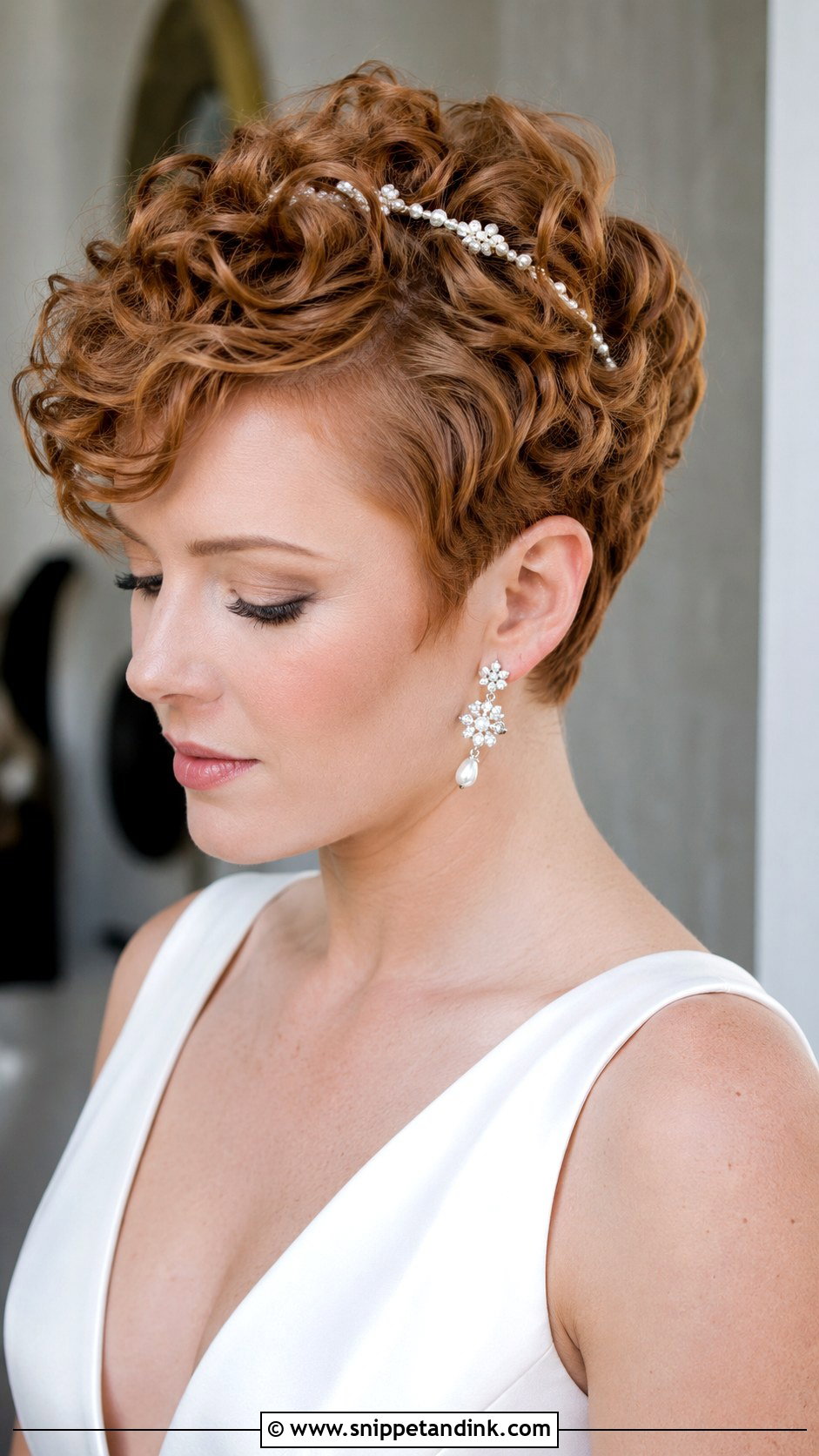
A curly wedding pixie shows that bridal hair doesn’t need length. I shape the curls up for height, sweep them to one side or define them close to the head, and tidy the nape and around the ears so the outline is clean. Statement earrings, bold lashes and clean necklines suit it, and a thin headband, pearl pins or a birdcage veil add detail. Short curls frizz most at the edges, so a little gel or edge control there makes the difference between neat and fuzzy in photos.
17. Curly Wedding Hair With Bangs
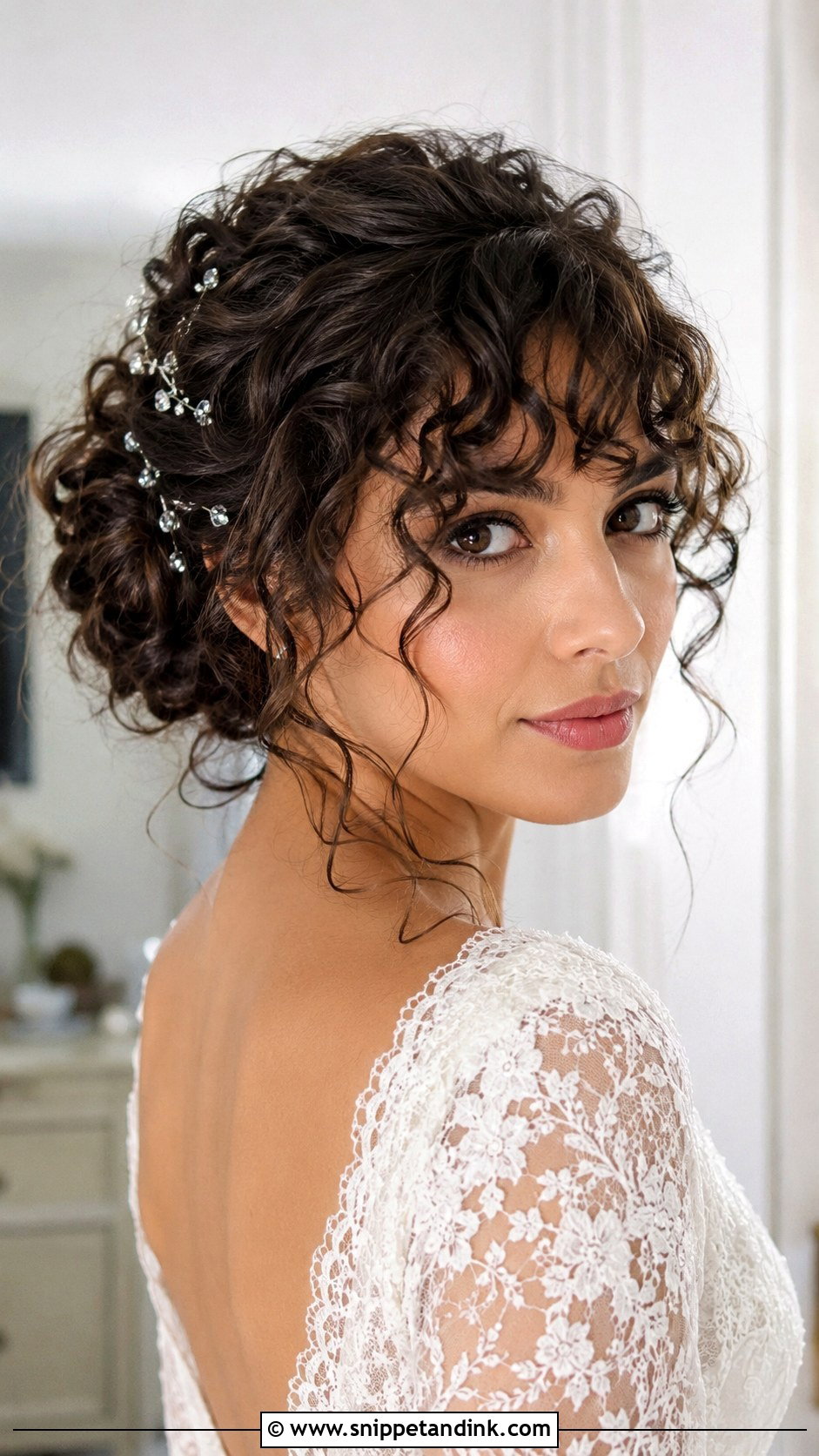
Curly bangs should blend into the style, never sit as a separate block. Styled well, they frame the eyes and soften an updo or bun. If you already wear curly bangs every day, there’s no reason to hide them. I define the fringe with a light cream and flexible hold, since heavy gel makes bangs stiff and crunchy. Don’t cut them in the last week before the wedding: curly bangs shrink when dry and can bounce up far shorter than you expect.
18. Curly Wedding Hair With Pearl Pins
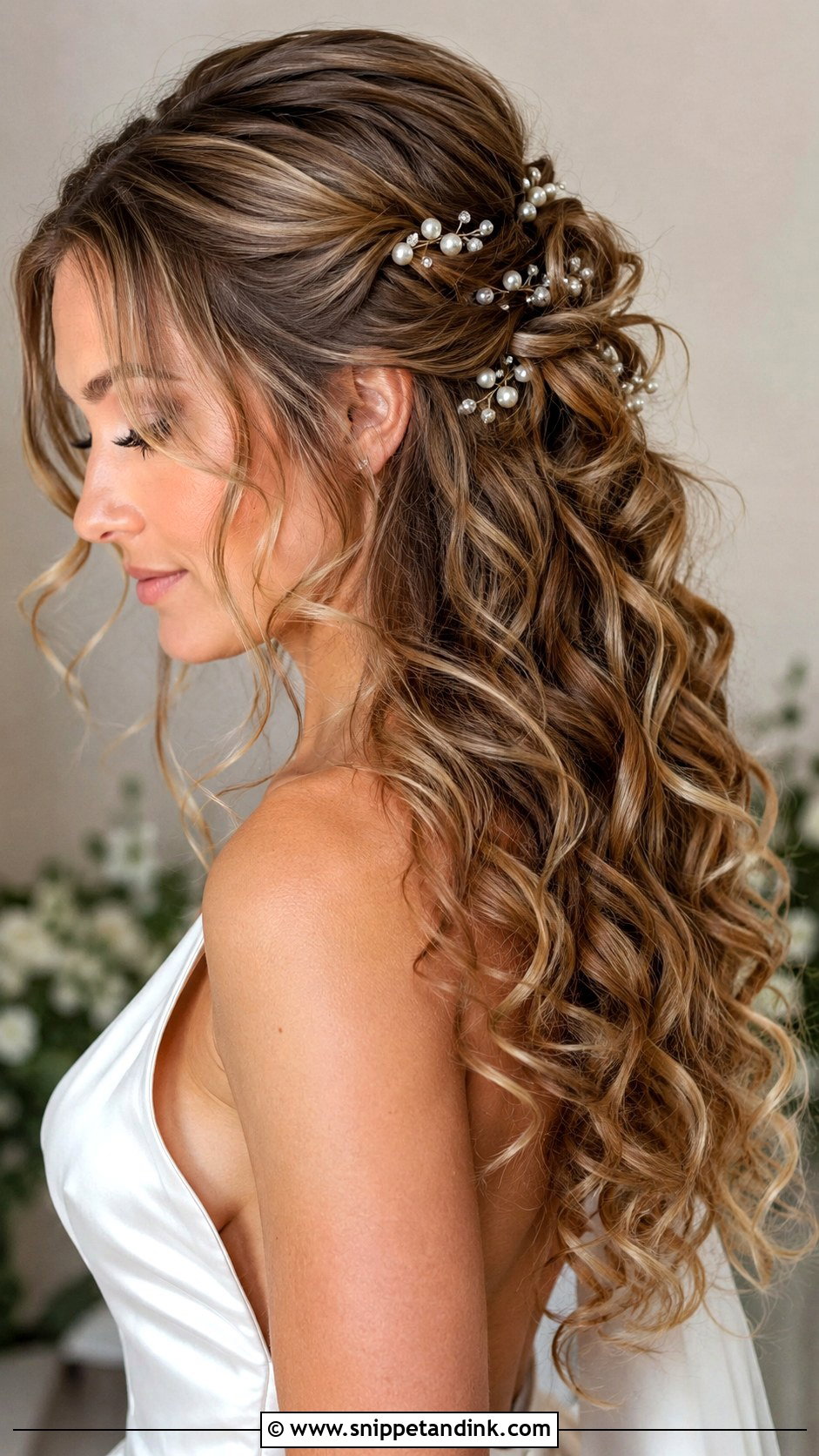
Pearl pins change a curly style without changing its shape. I scatter them through a bun, line them along one side of a half-up style or tuck them into an updo. Pearls stand out against curl texture more clearly than against smooth hair, so you need fewer than you think. I place them where the curls naturally part or dip, not randomly, and I push each pin in at an angle so it catches the curl and doesn’t slide out. Satin gowns, lace sleeves and classic makeup suit them.
19. Curly Wedding Hair With Headband
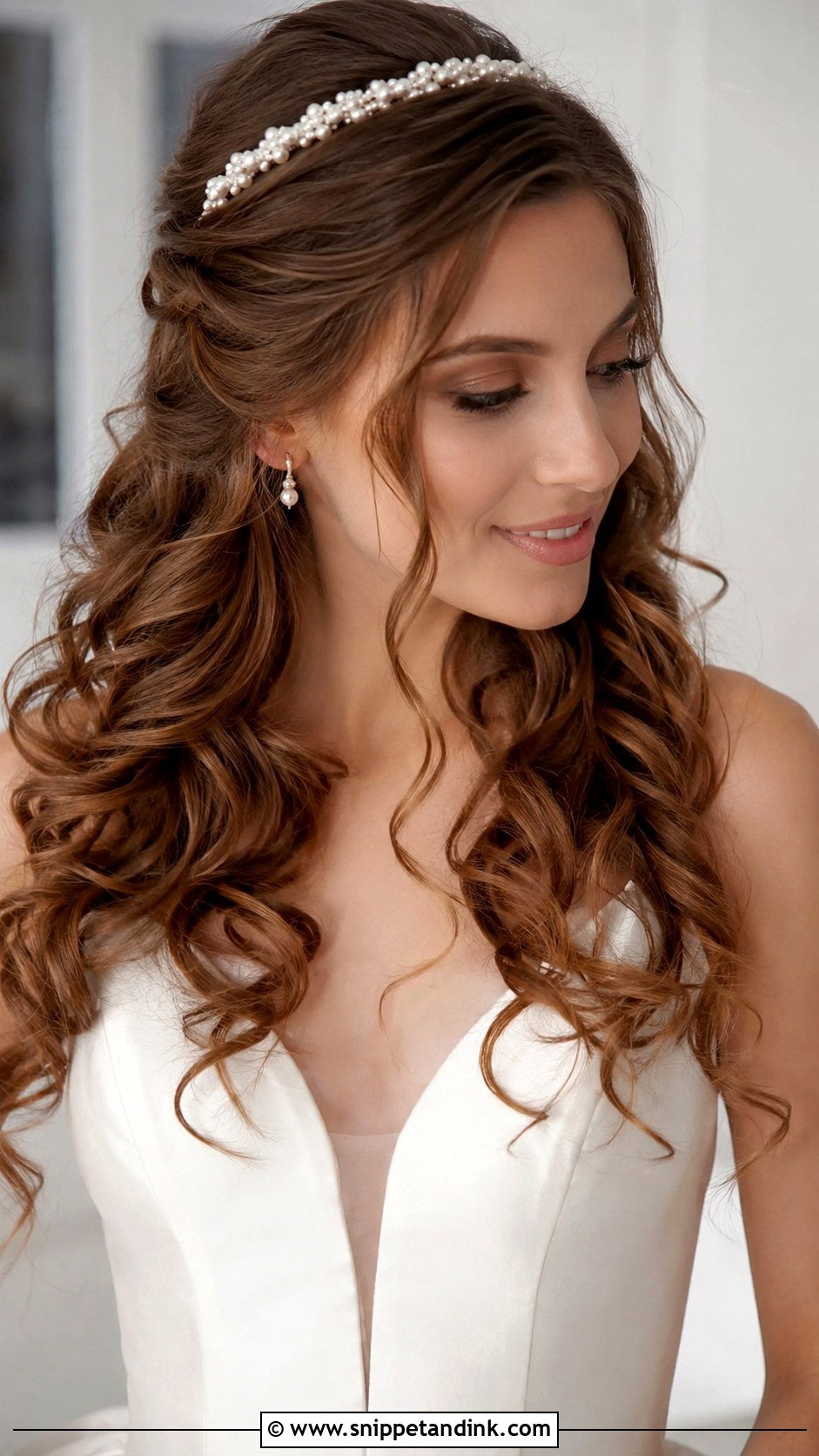
A headband stays visible from every camera angle, which makes it a good choice if you want your hair accessory in the photos. It works over loose curls, framing a half-up style or in front of a low bun, in pearl, crystal, satin or floral. Most headbands press curls flat at the root, so I lift the crown before the band goes on and keep the curls full behind it. If headbands give you a headache after an hour, choose a flexible one or a style with combs instead of a rigid arch.
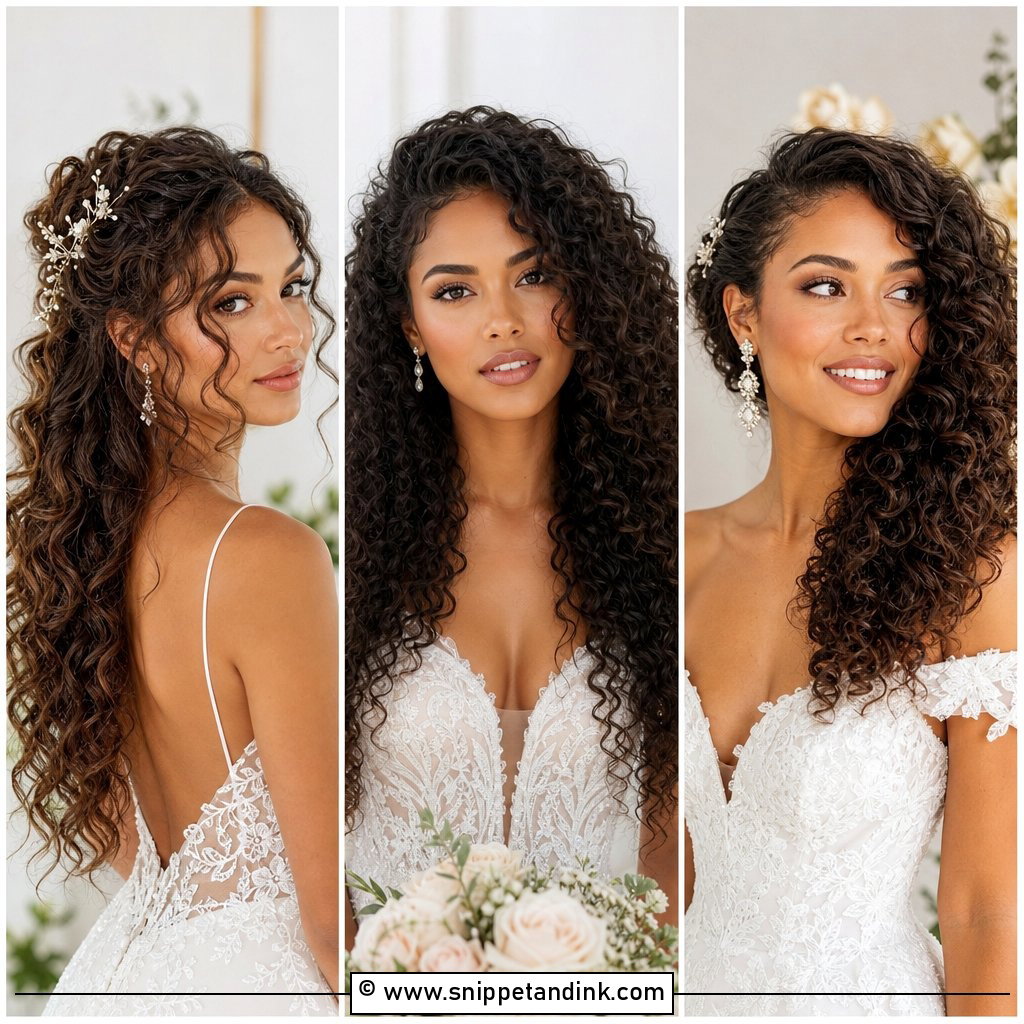
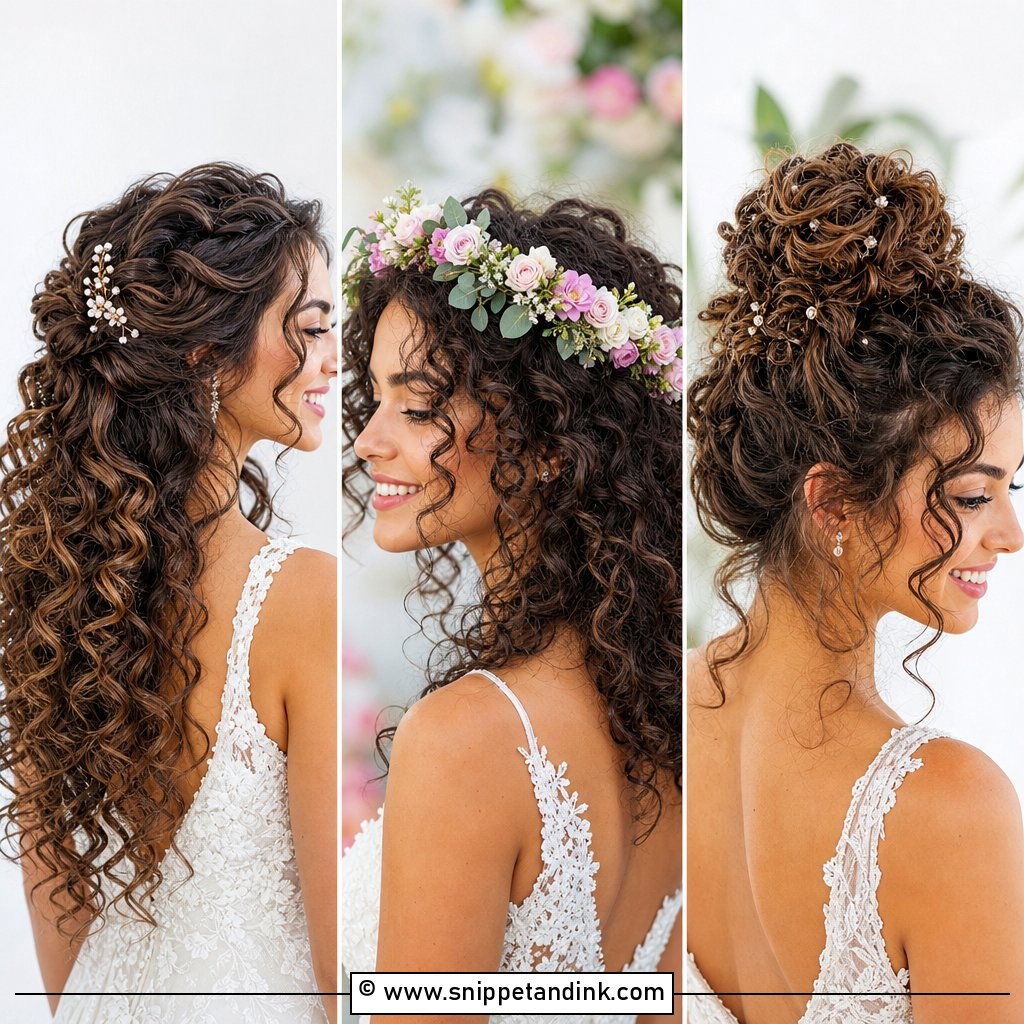
20. Curly Wedding Hair With Hair Vine
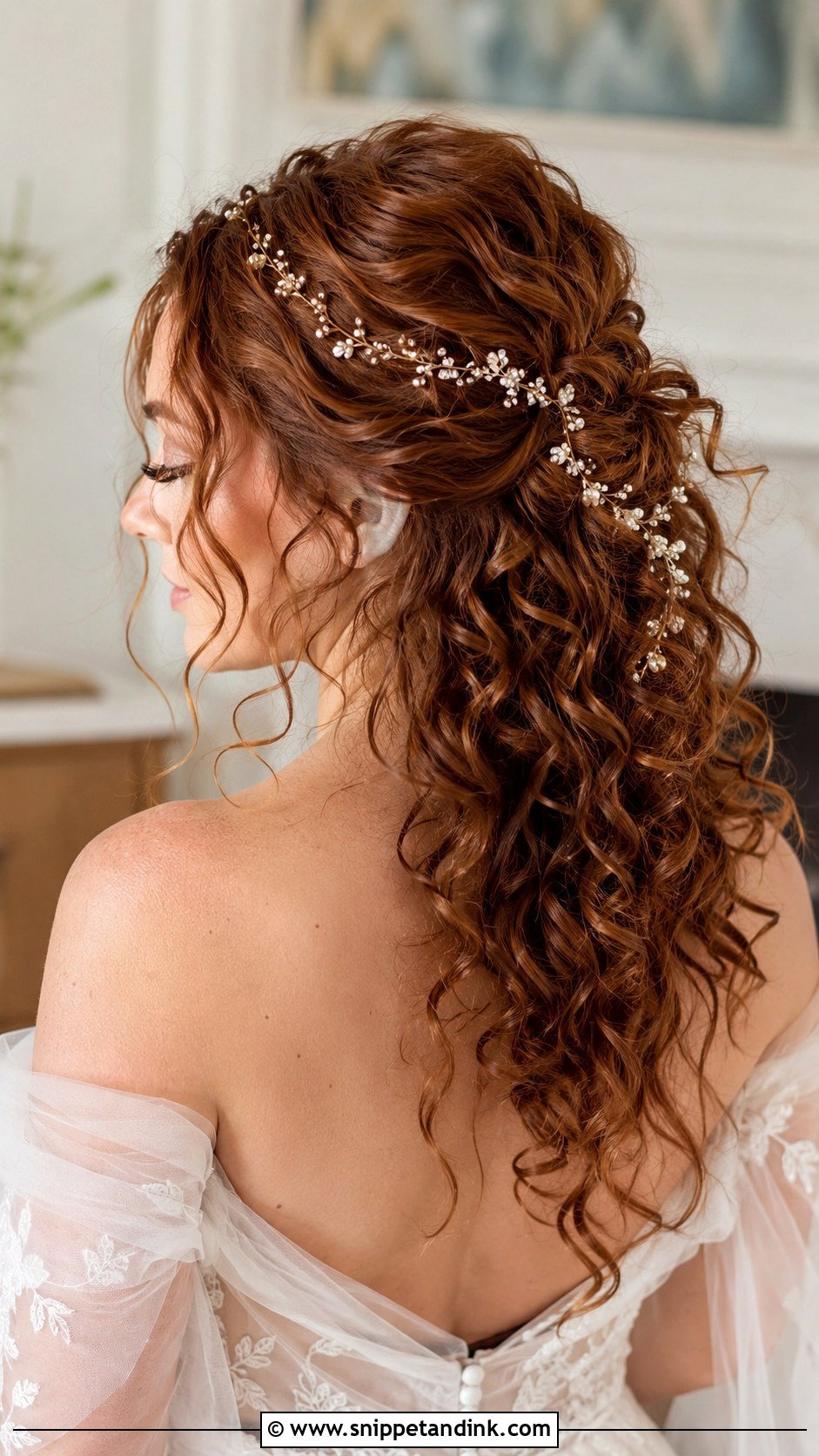
Hair vines are made for curly hair, since the wire bends to follow the curves. I wrap one around a bun, run it along the side of a half-up style or weave it through the back, pinning every few inches so it doesn’t shift. Choose pearls, crystals or flowers to match the dress. The vine should follow the existing shape of the curls rather than sit stiffly on top; if it looks like it’s floating, it needs more pins underneath, not a different shape.
The Last Wash Before the Wedding, and What Comes After
With straight hair I can fix most prep mistakes with heat on the morning. With curls, I can’t. The wash routine in the 48 hours before the wedding decides how your curls look, so this is what I ask curly brides to do.
- Wash, condition and style the day before, using the products you used at your trial. Don’t try a new gel or cream that week; new products react unpredictably.
- Let the hair dry completely. Thick or coily hair can take many hours to air-dry, so diffuse on low if your evening is short. Damp curls left overnight come up flat and frizzy.
- Sleep in a satin bonnet or loosely piled on top of your head with a satin scrunchie, on a satin pillowcase if you have one.
- Arrive with no product added that morning. I refresh with a fine water mist and a little leave-in, then reshape the curls with my fingers.
What to Ask a Stylist About Curly Hair
Plenty of stylists list curly hair as a specialty after doing waves with a curling iron. Ask to see photos of finished styles on hair with natural texture similar to yours, and ask whether she works with your curls as they are or straightens first and re-curls. Both are valid, but you should know which you’re booking. Also ask how she’ll take the style down at the end of the night, since a stylist who knows curls will tell you to undo it with conditioner, not a brush.
Your Curls Are the Shape; Pins Just Hold It
Every style here works because it uses the curls’ natural volume and movement instead of fighting them. Updo, low bun, half-up, ponytail, bob or pixie, the right one is the style that suits your curl pattern, your dress and how long you’re happy to have hair on your neck. Book a trial with the products you’ll use on the day, test your veil and accessories at it, and wear the style for a few hours afterward. If the curls still look defined and secure by evening, that’s your style.
You'll Like These Ideas:


Leave a Reply