
A masquerade asks something of your hair that an ordinary formal night doesn’t: it has to share space with an object strapped to your face for four or five hours. Most masks tie with ribbon or sit on an elastic band that crosses the back of the head, exactly where a bun or a curl set wants to live. So the hairstyle and the mask have to be planned together. Below are 20 looks I’d happily build for a ball, with notes on where each one sits, how it handles a ribbon, and which hair it really suits.
How Your Mask Fastens Changes the Whole Hairstyle
The first thing I ask anyone booking a masquerade style isn’t about the gown. It’s how the mask stays on. Each fastening presses on a different part of the head, and the hairstyle has to give it something to hold.
Ribbon ties
Ribbons cross the back of the head and knot at the occipital bone or just above it. A low bun or chignon sitting below that line gives the knot a ledge, so it doesn’t creep downward as you dance. Satin ribbon slips on silky hair, so I pin it to the hair with a bobby pin on each side behind the ears, hidden under the ribbon itself.
Elastic bands
Elastic grips tighter than ribbon and leaves a dent in smooth hair. Sleek styles show that dent the moment the mask comes off. Braids, curls and textured updos hide it far better, and a band running over a braid barely leaves a mark.
Stick masks and headband masks
A mask on a handle, or one fixed to a headband, frees the back of the head completely. That’s when I’d consider a high ponytail, a tiara bun or a bouffant, the shapes a ribbon would squash.
Whatever the fastening, bring the actual mask to your trial rather than a photo. Its weight, the width of the band and where its edges land at the temples all change where I place pins and how much hold I use.
1. Classic Low Chignon
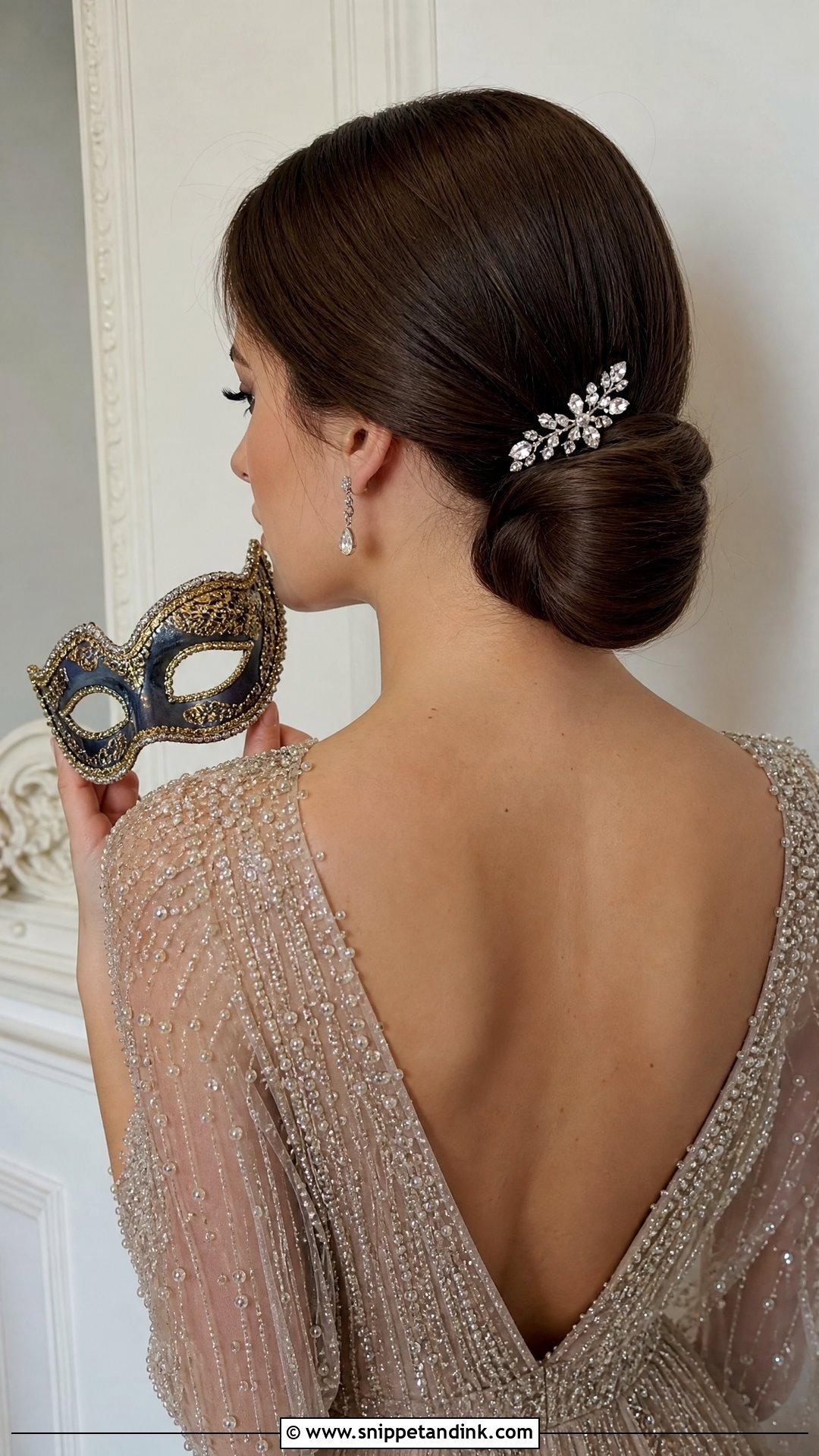
A low chignon is my default when someone hands me a heavy mask with a ribbon tie. The roll sits just under the occipital bone, so the ribbon can pass above it and knot in the groove between the roll and the crown, where it won’t slide down. I anchor the base with crossed bobby pins before I roll, because a chignon held only by its outside pins loosens the first time the ribbon gets tightened. Put a jeweled pin at the side of the roll, never on top, or the ribbon will knock it out.
2. Romantic Half-Up Half-Down
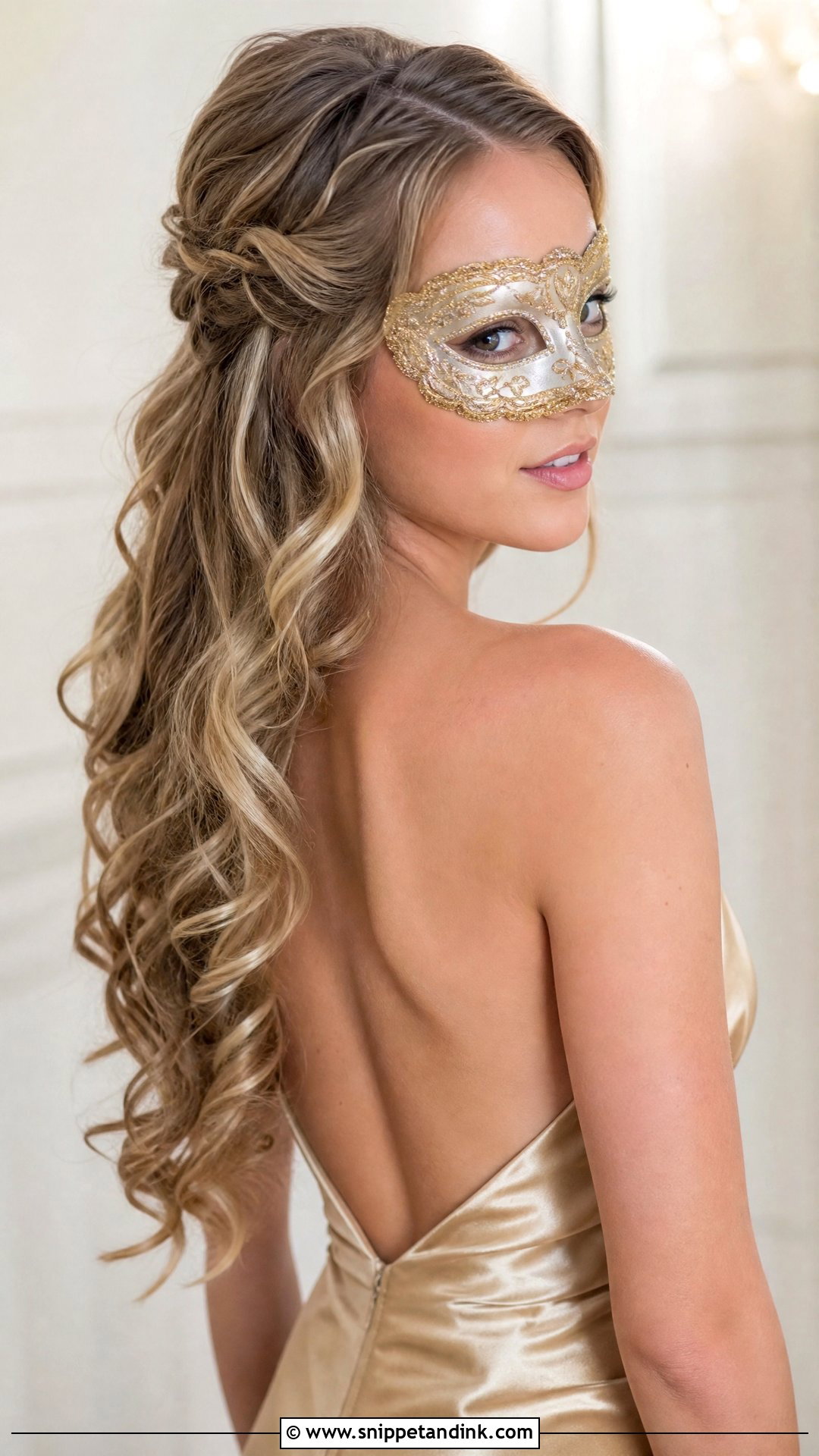
Half-up hair is the best way to wear your lengths down at a ball, as long as the pinned section does real work. I gather the top section at the height where the mask ribbon will cross, then twist it before pinning so the ribbon has a ridge to rest on instead of sinking into the curls below. Curls that are pinned to cool after the iron hold far longer than ones brushed out straight away. A delicate hair vine can trail along the twist, but keep it under the ribbon line so the two don’t tangle. Very fine, slippery hair is better off in a full updo; loose lengths under a ribbon tend to go flat by midnight.
3. Grecian Goddess Braid
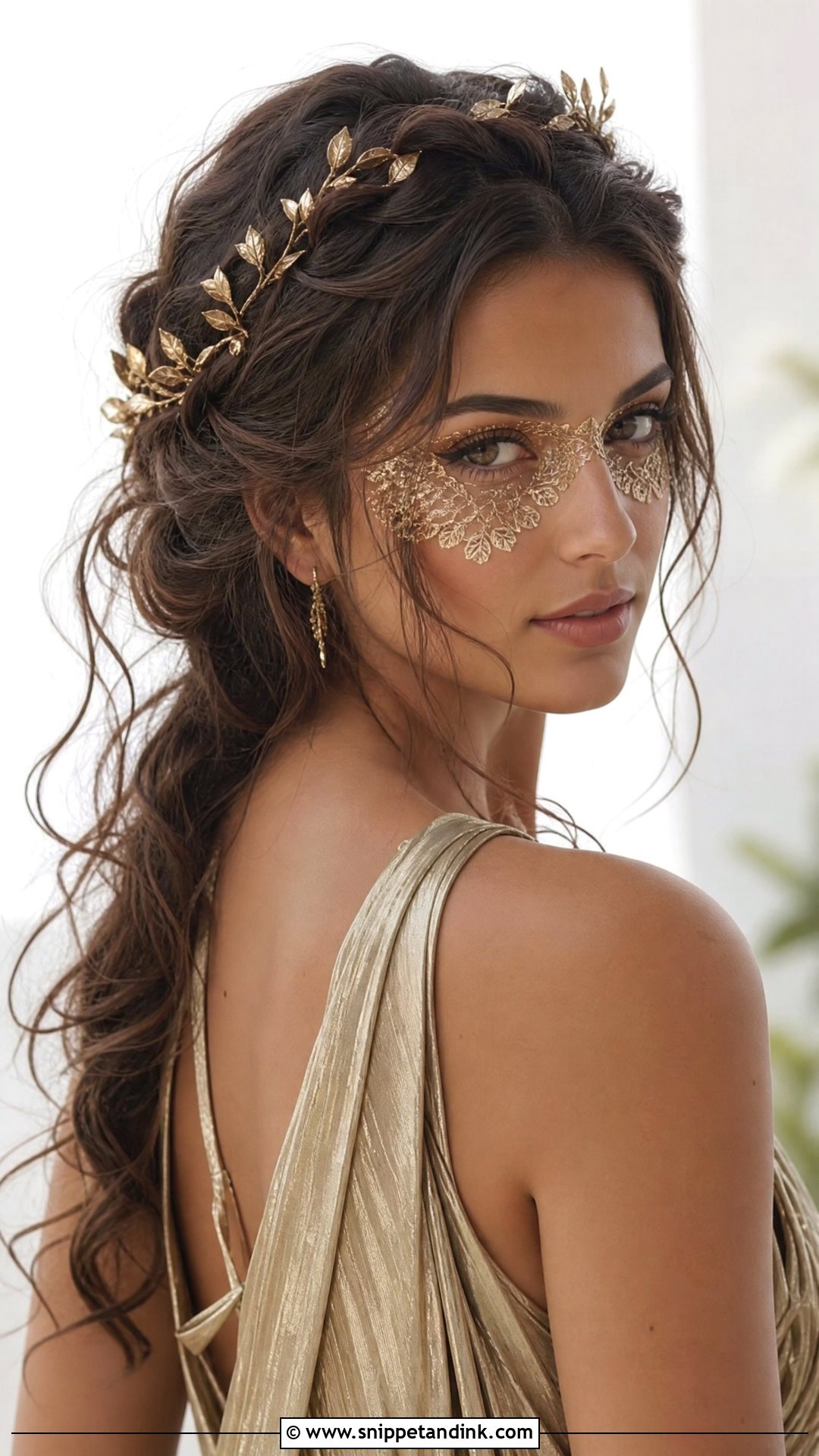
A Grecian goddess braid wraps the crown like a band, which makes it one of the few styles where the mask can tie right over the braid and stay put. After pinning, I gently pull the edges of the braid wider, because a tight braid looks thin in candlelight and gives the ribbon nothing to grip. Gold leaf pieces suit draped gowns in metallics. Leave tendrils at the temples only if they’re curled with some hold, since straight wisps get caught under the mask edge and poke at your eyes all night.
4. Sleek High Ponytail
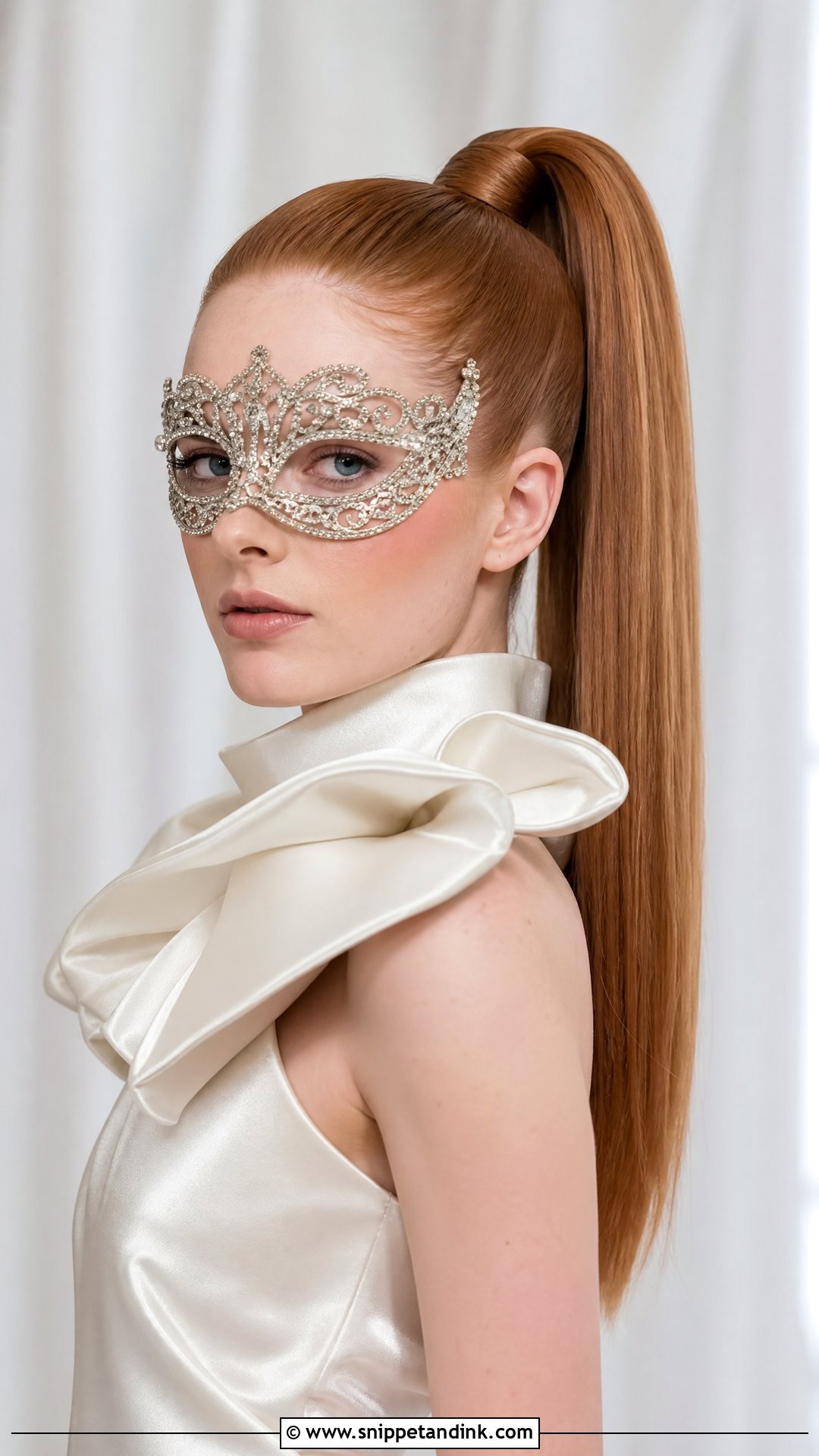
A high pony is pure drama, but I’m honest with clients about the mask problem: a ribbon tie and a high elastic compete for the same spot. It works best with a stick mask or one built on a slim headband. I smooth the hair back with a firm gel and use two stacked elastics, one to set the position and one to carry the weight, then wrap a strand around the base and pin it underneath. Long, heavy hair drags at the scalp after a few hours at that height, so if that bothers you, drop the pony to mid-crown.
5. Voluminous Hollywood Waves
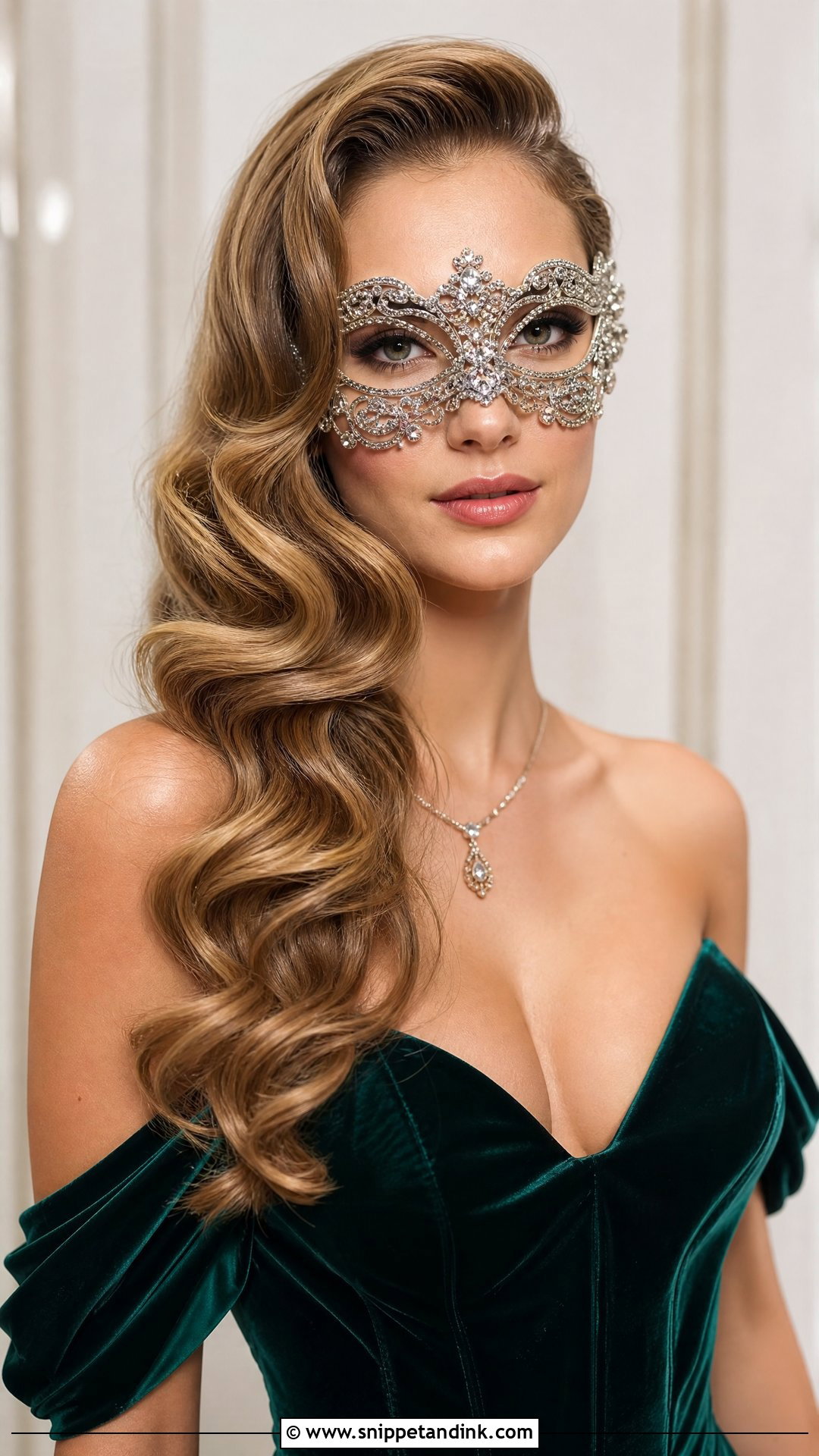
Hollywood waves come from a set, not just a curling iron. I curl every section in the same direction with a large barrel, pin each curl in a coil while it cools, then brush the whole head out into one continuous wave and clip the ridges while the spray dries. Swept to one side, they leave the other ear clear for the ribbon knot. The weak point is humidity. A packed ballroom softens the pattern by late evening, so I finish with a light-hold spray rather than a heavy shine product that drags the wave down.
6. Crystal-Embellished Updo
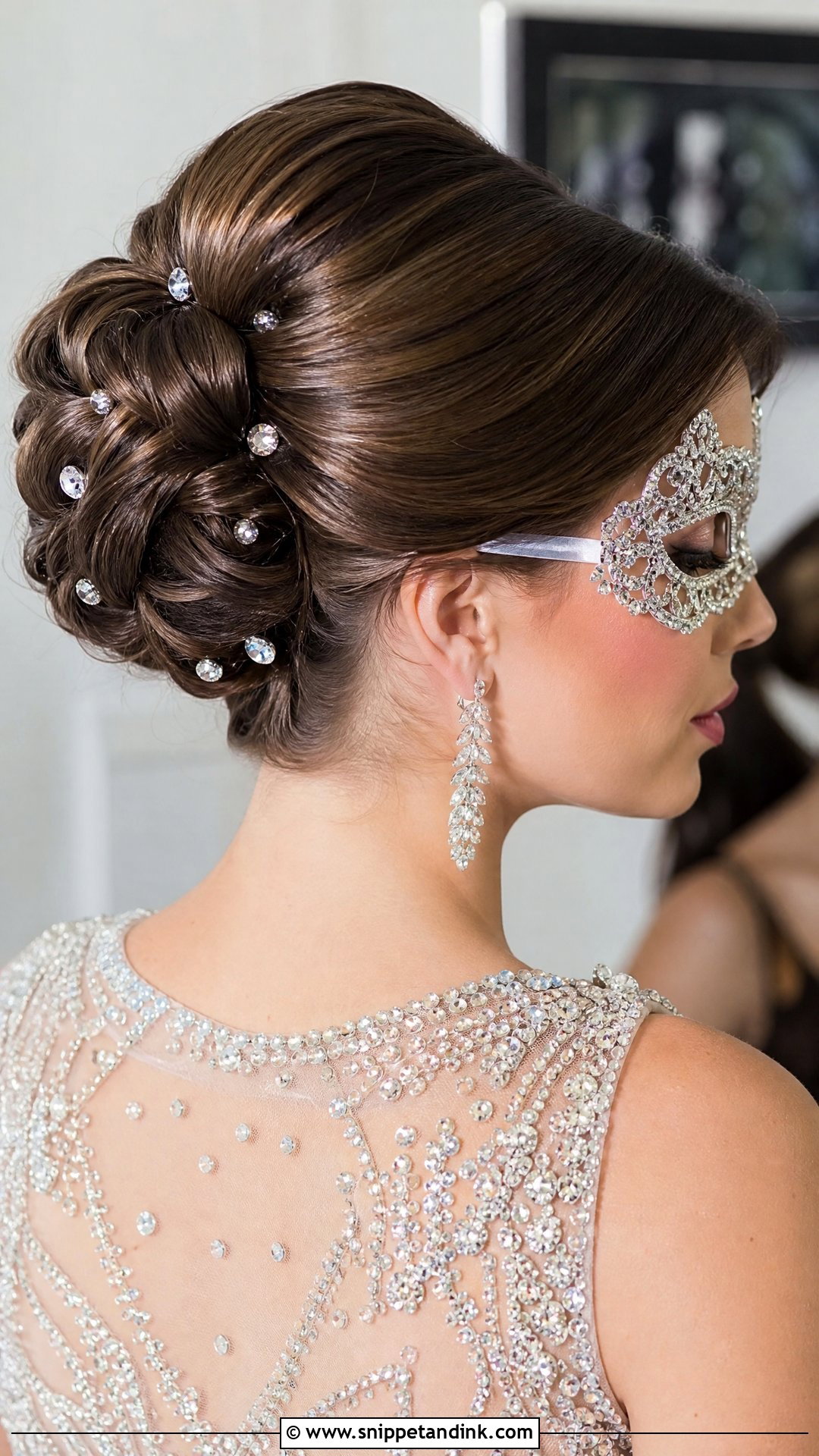
Crystals belong where the light hits them, which in a ballroom means the top and sides of the head, not the nape. On a crystal-embellished updo I add the stones only after the structure is fully pinned, using crystal pins on wire stems that grip into a twist. Glued-on gems are a mistake on hair you want out by morning. Match the metal to the mask’s trim, too; silver settings against a gold mask look accidental rather than chosen.
7. Waterfall Braid With Loose Curls
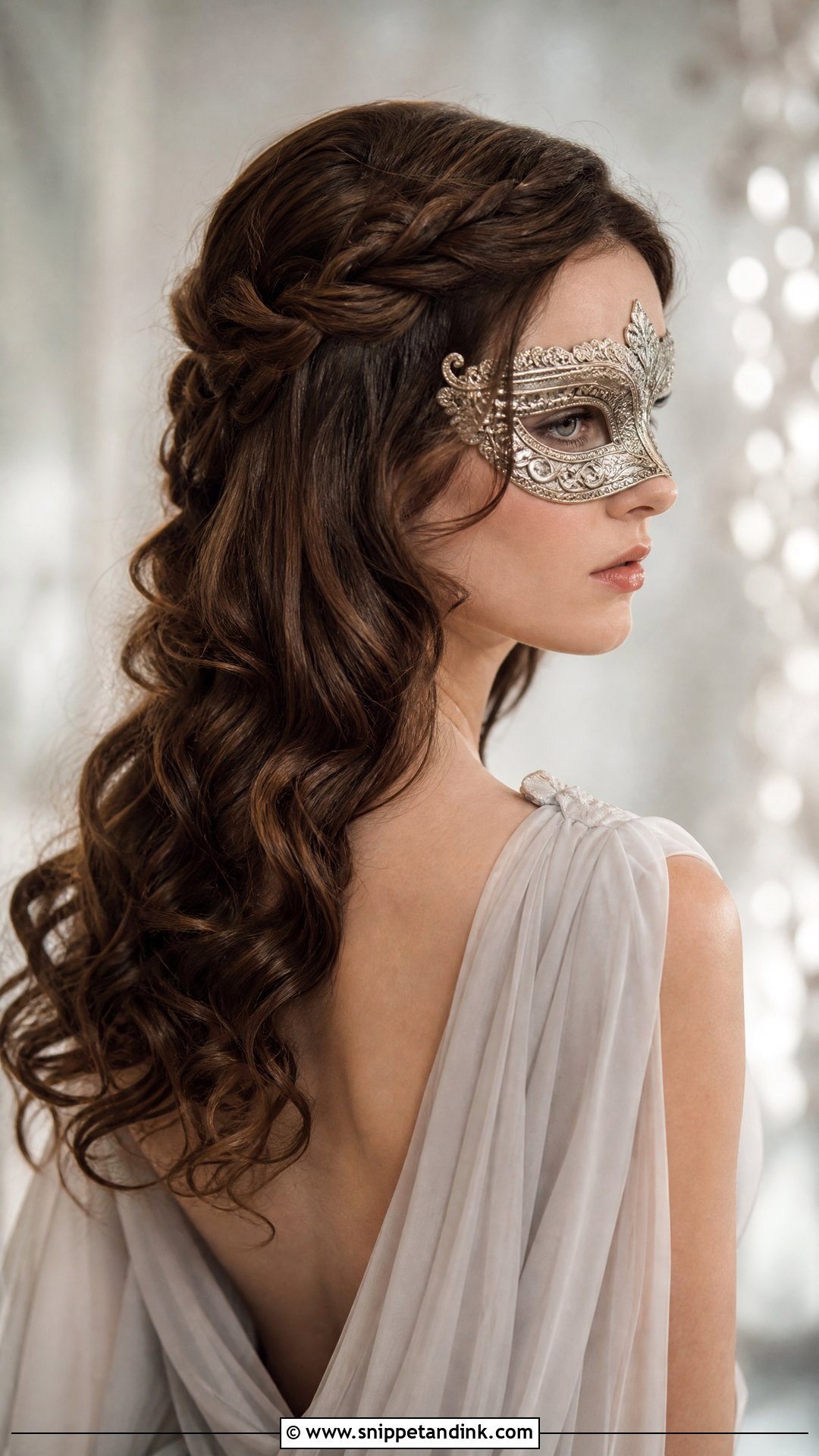
You get a lot of detail from a waterfall braid with very little structure, so it sits comfortably under a plain mask that doesn’t need competition. The braid also works as a shelf: I tuck the ribbon ends under it so they don’t dangle into the curls below. It needs hair at least shoulder length with a few layers, because very blunt hair makes the dropped strands look uneven. On fine hair, mist the crown with a dry texture spray first or the braid drifts loose within the hour.
8. Romantic Rose Bun
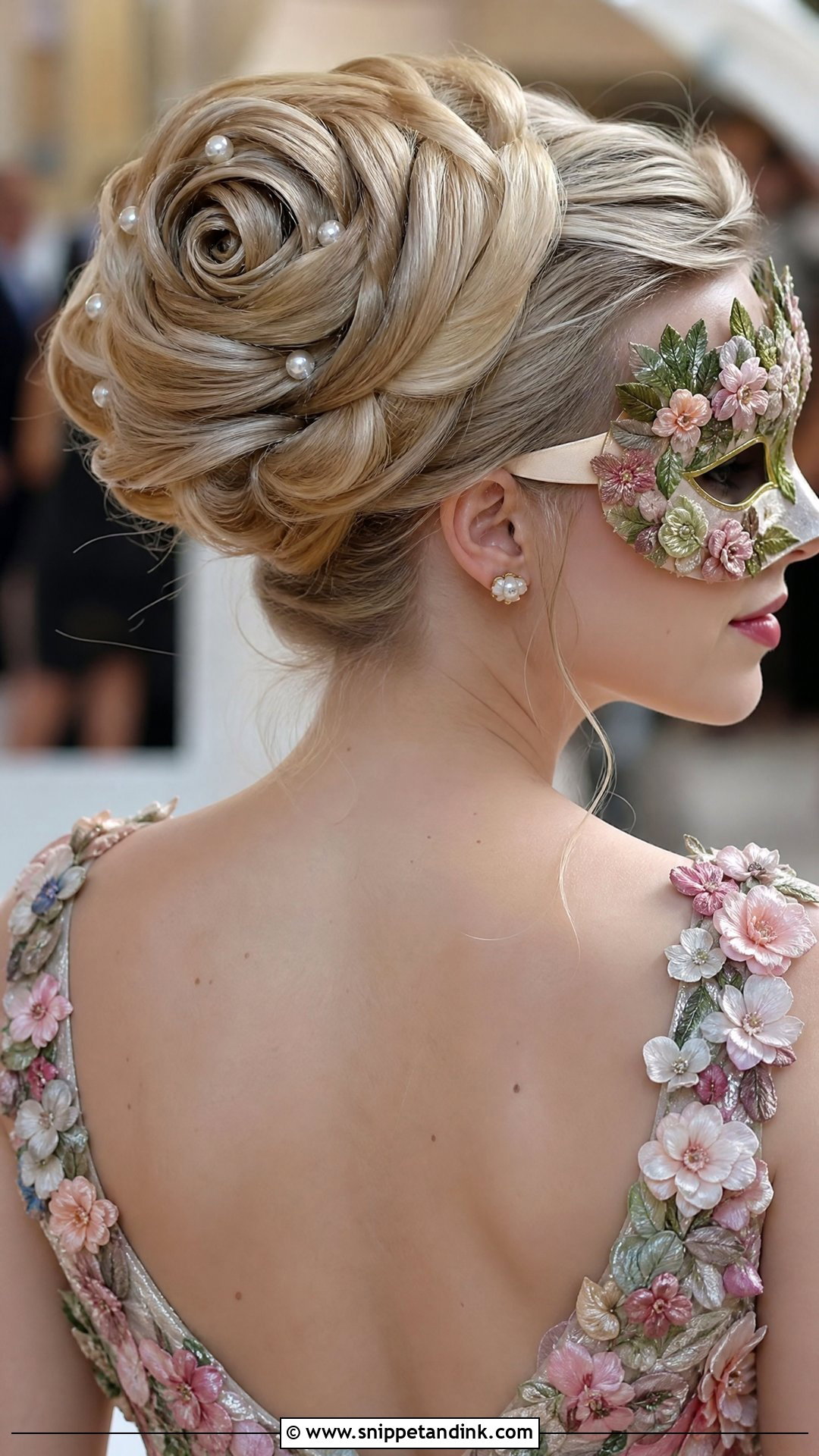
The rose bun is mostly a twisting trick. Each section is twisted, coiled around the center and pinned at the base of its petal, and from across a room it reads as far more intricate than it is. When a mask ties at the back, I place the rose slightly off-center so the knot sits beside it instead of crushing it. Freshly washed, silky hair won’t hold the petals; second-day hair or texture spray makes all the difference. Tiny pearl pins in the folds suit a floral or garden mask.
9. Twisted Crown Braid
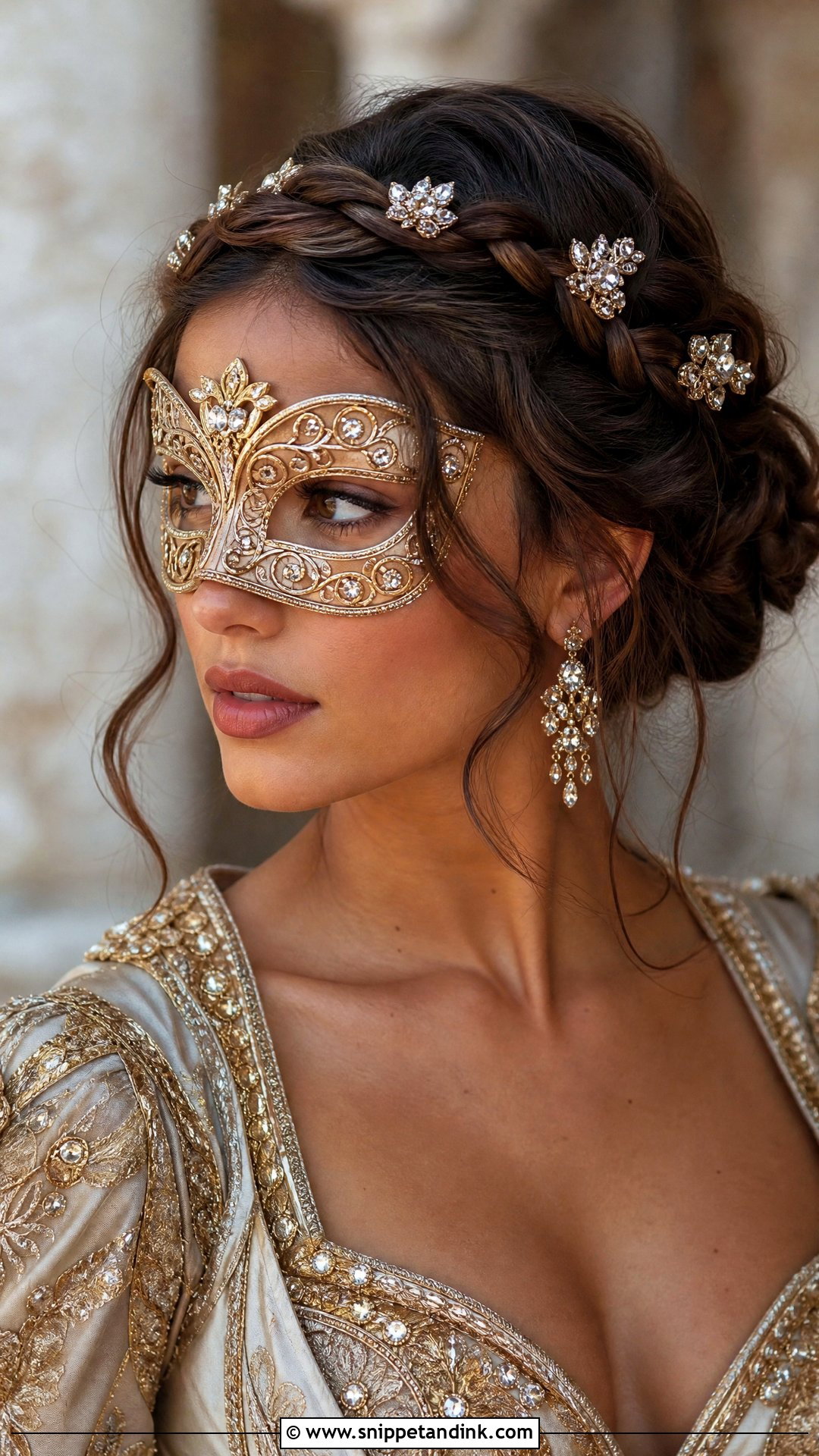
Two rope twists pinned around the head give you a crown that’s sturdier than a braid and faster to make. I twist each side away from the face and push U-pins into the twist every few centimeters, which keeps it locked through hours of dancing. Shoulder length and longer is the realistic minimum. Shorter hair runs out before the twists meet at the back, and then I bridge the gap with a jeweled clip. A mask ribbon can rest directly on the twist without denting it.
10. Sleek Low Bun
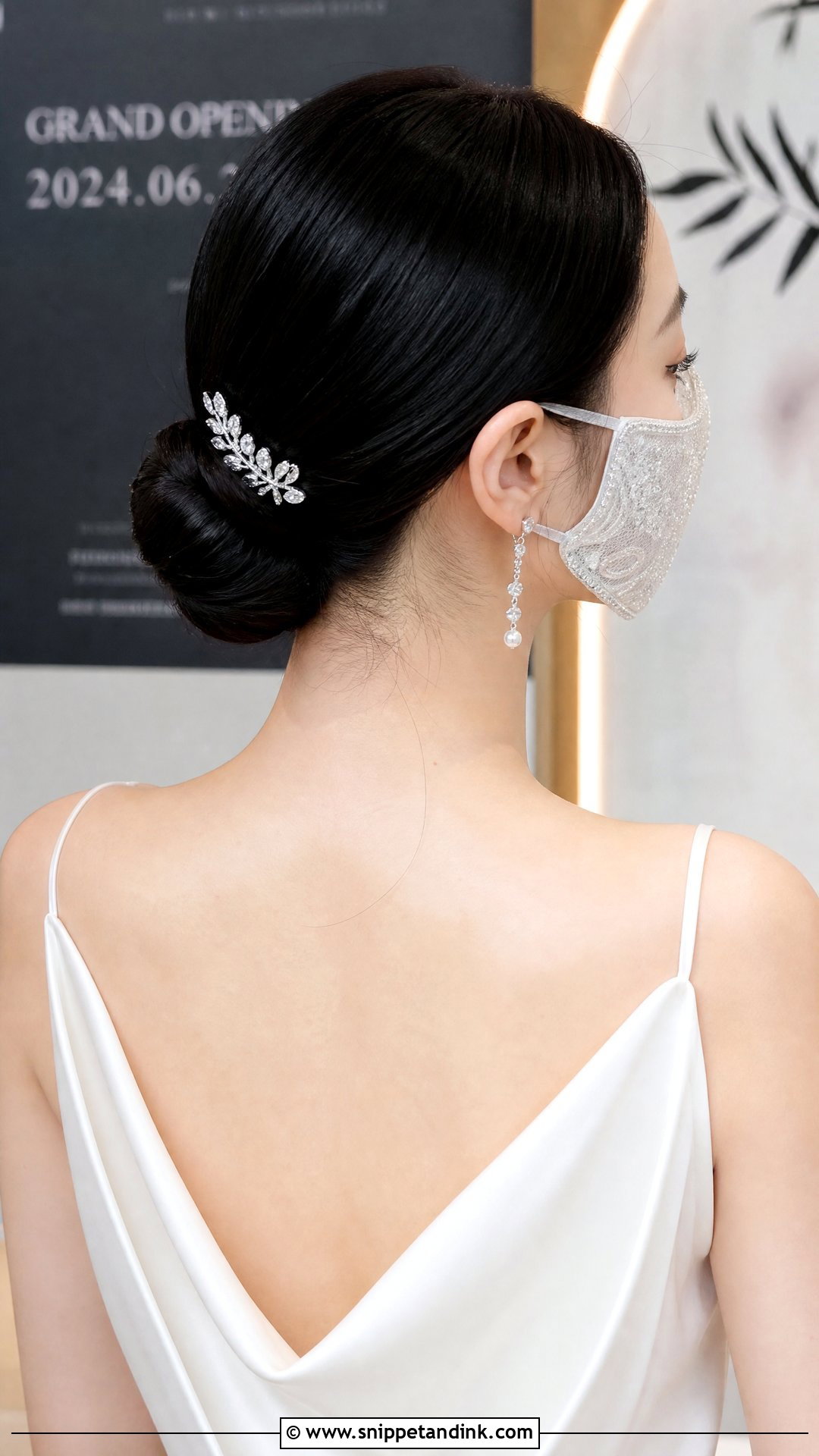
Next to an ornate mask, the quietest style on this list is often the smartest. A sleek low bun is smoothed with a little gel or cream, gathered at the nape and wound tight. The skill is in the part and the finish: a clean line, and no bumps above the ears where the ribbon will press. It suits nearly every face shape. On very thick hair I split the ponytail in two and wrap each half separately, so the bun doesn’t end up huge and heavy at the neck.
11. Side-Swept Curls
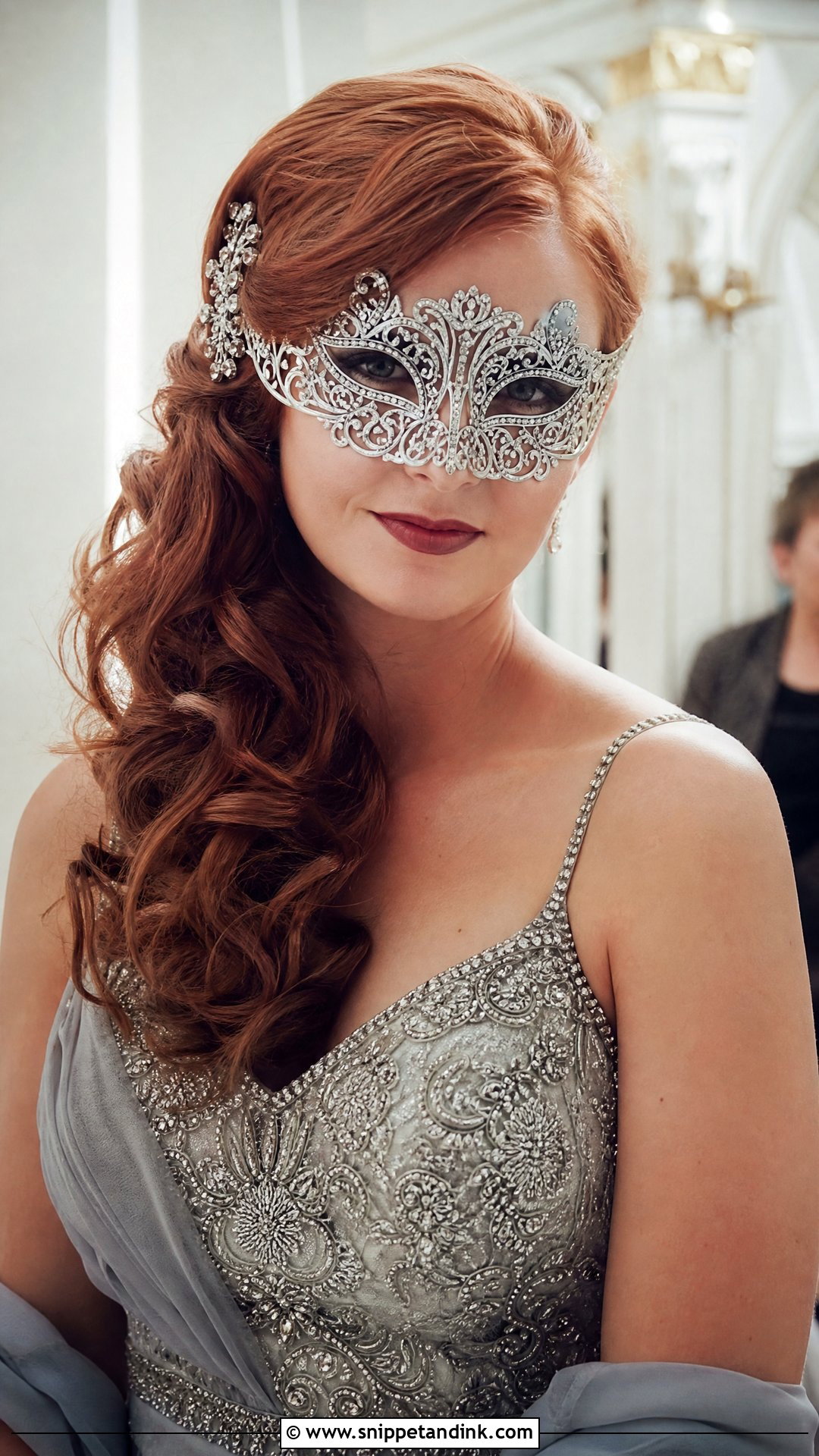
Side-swept curls look loose, yet they hang on one hidden pin line. I pin the opposite side flat behind the ear with a row of crossed bobby pins, then drape the curls over. A decorative comb covers those pins and gives the ribbon something to tie against. With a one-shoulder gown, sweep toward the bare shoulder; curls resting on fabric get rubbed flat much faster than curls on skin.
12. Double Braided Updo
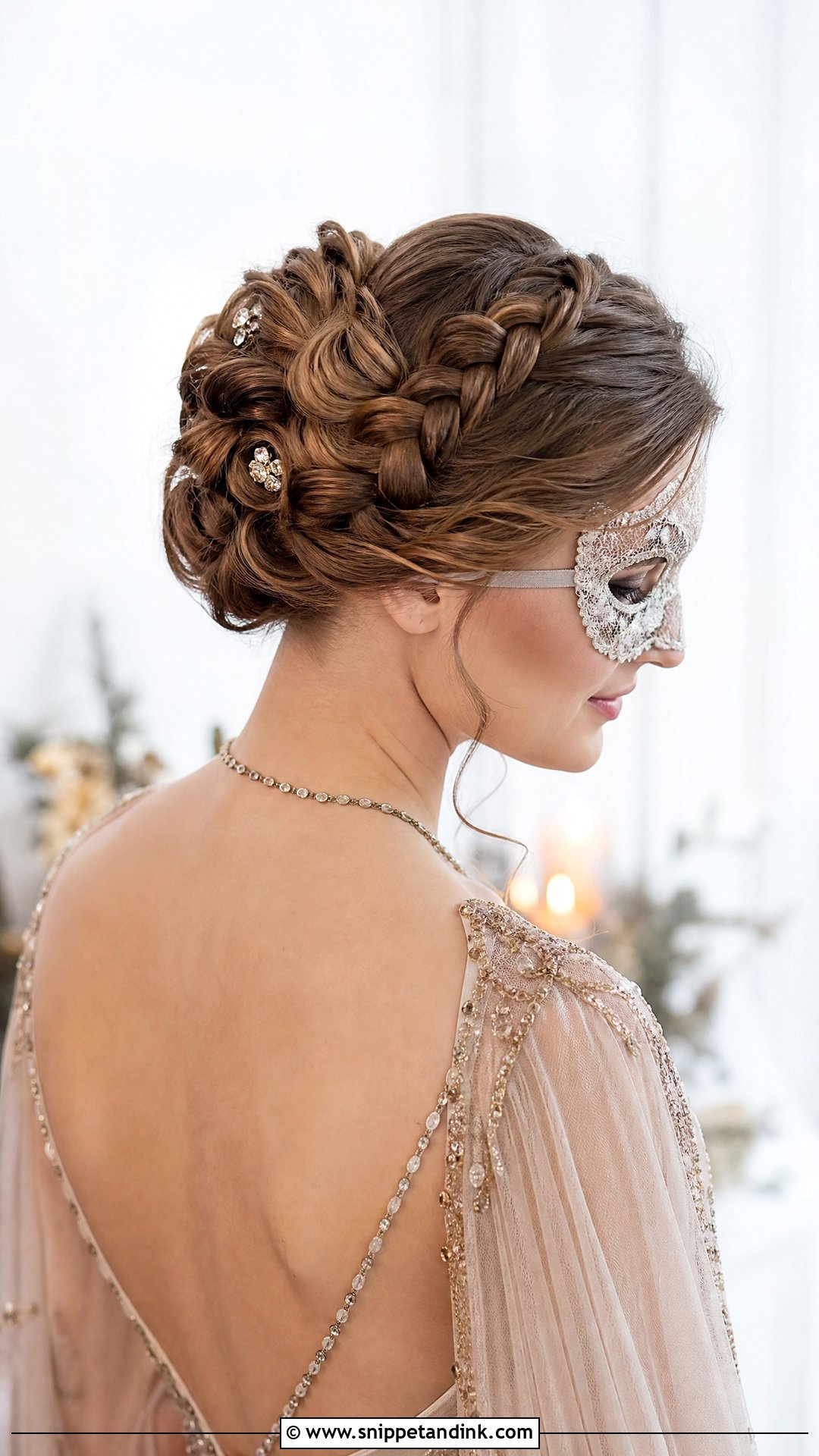
The double braided updo starts with two braids, one from each side, crossed at the back and gathered into a knot. It has a slightly bohemian feel, which suits a less formal masquerade, and it’s one of the most secure styles here because every section is locked inside a braid. I braid with a bit of styling cream so flyaways don’t pop out an hour later. Push jeweled pins in along the direction of the braid; set crosswise, they snag on a shawl or wrap.
13. Pinned Curls With Decorative Combs
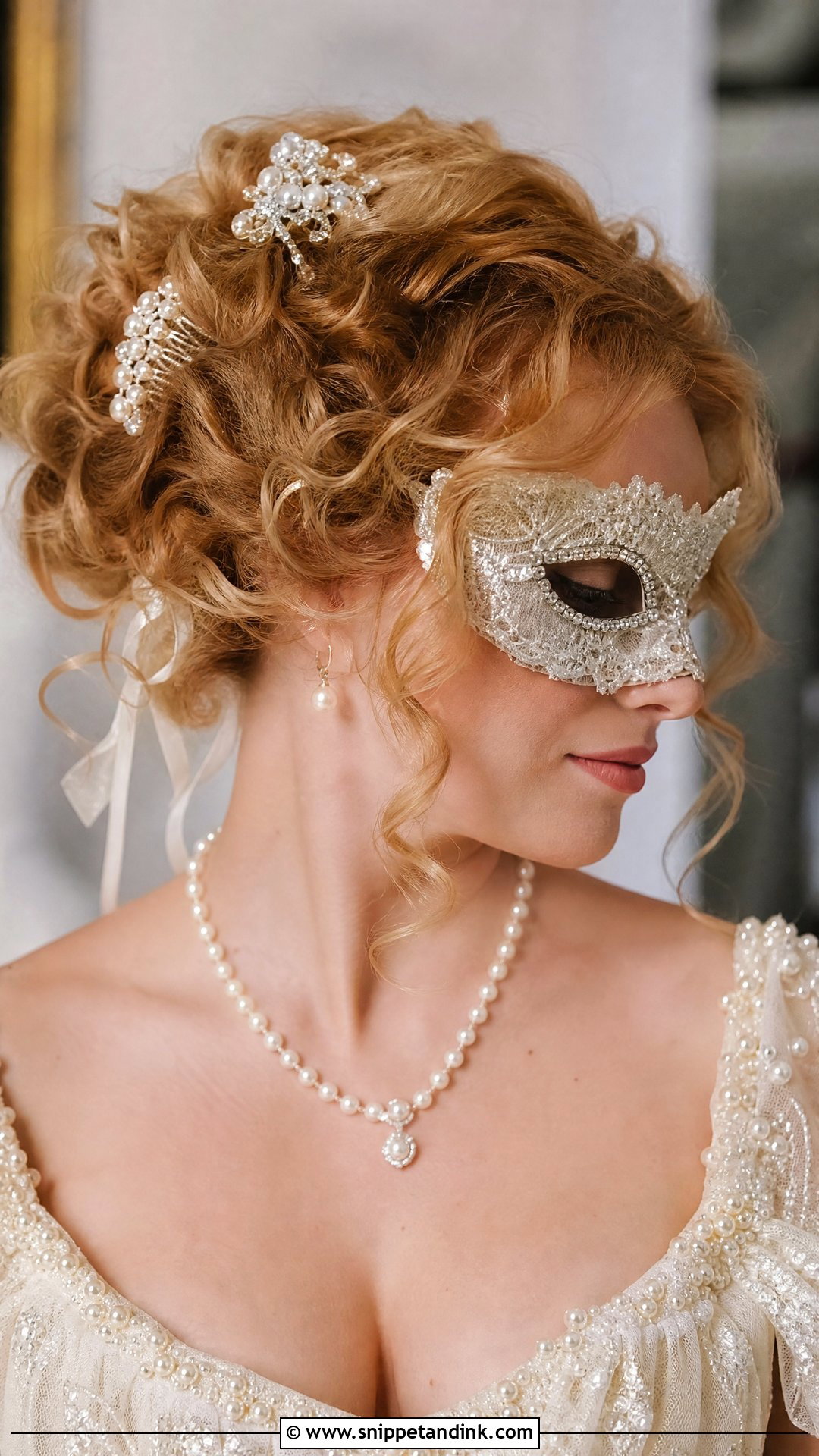
Pinned curls are an old technique. Each curl is formed, rolled and pinned flat to set, then arranged into a soft shape at the back. Combs bring the sparkle, but a comb only holds if it has something to bite into, so I slide it into a section lightly backcombed at the root. You can pin everything up or let a few curls hang. Pearl combs with a pearl-trimmed mask make the whole outfit look planned.
14. Braided Bun With Jeweled Pins
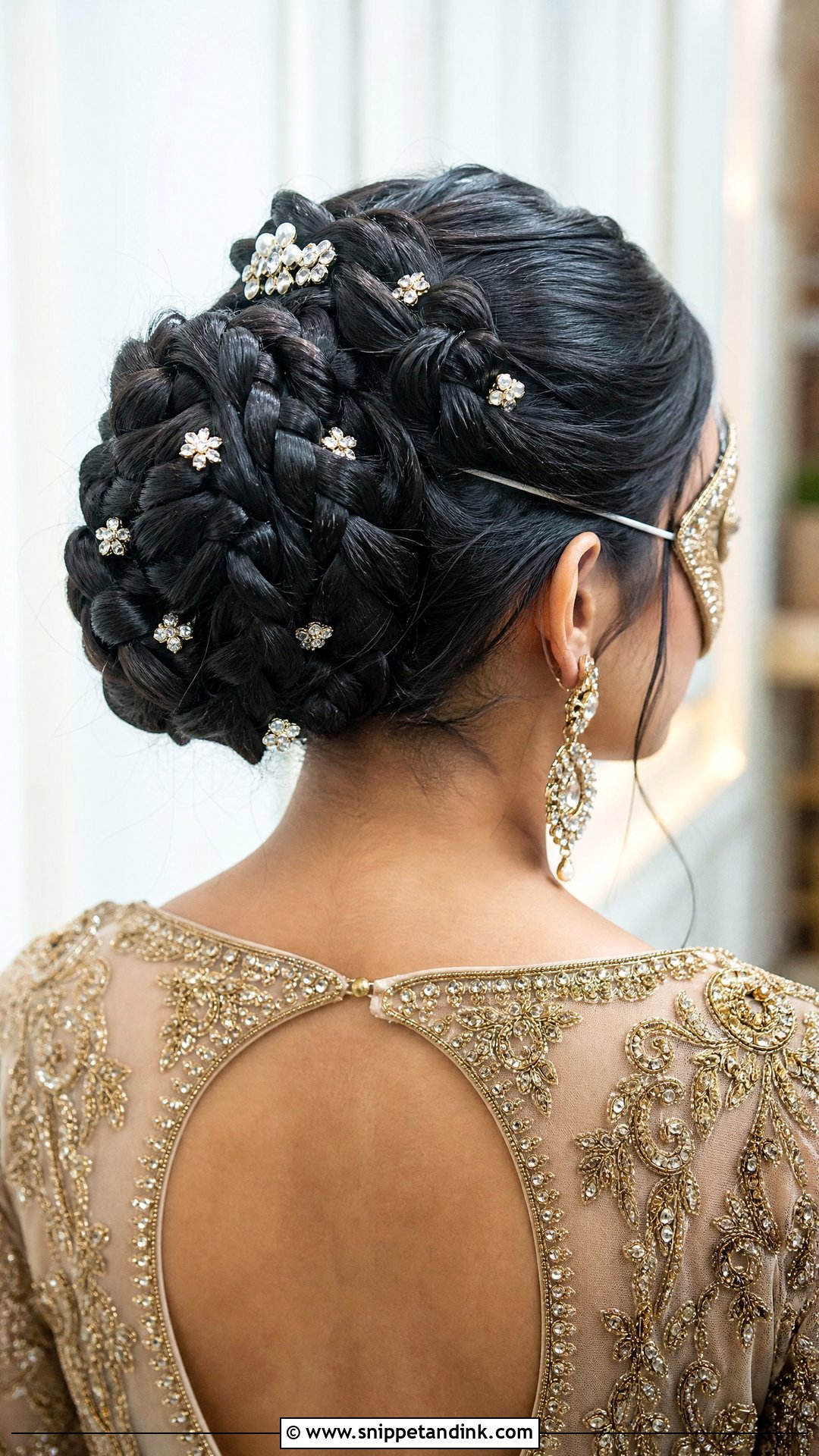
Braid the length first, then coil that braid at the back or nape and pin it: that’s the whole method. Because the braid is the bun, it barely moves, which is why I suggest it to anyone planning to dance hard. Thick hair is ideal. Fine hair makes a skinny braid, so I’ll often hide a small padded bun underneath for size. Scatter jeweled pins along the coil so they catch the light when you turn your head.
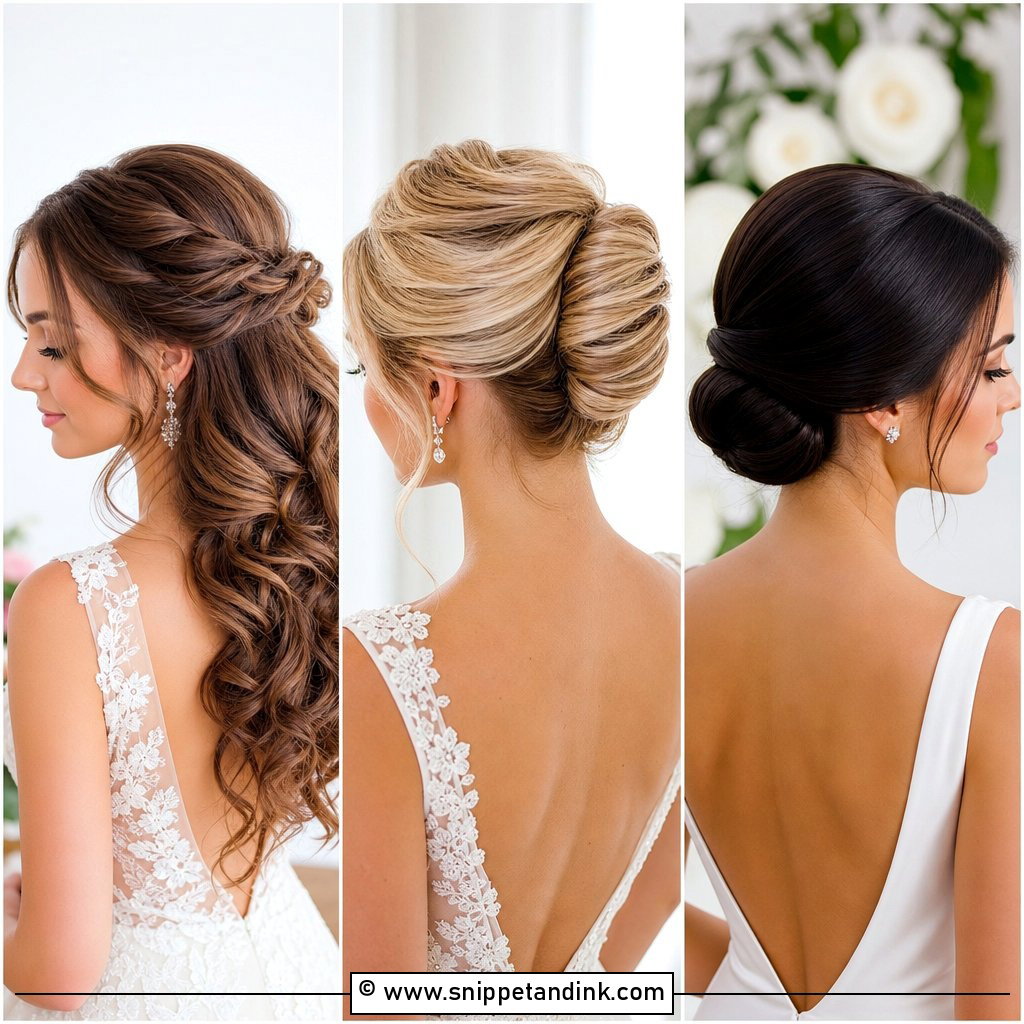
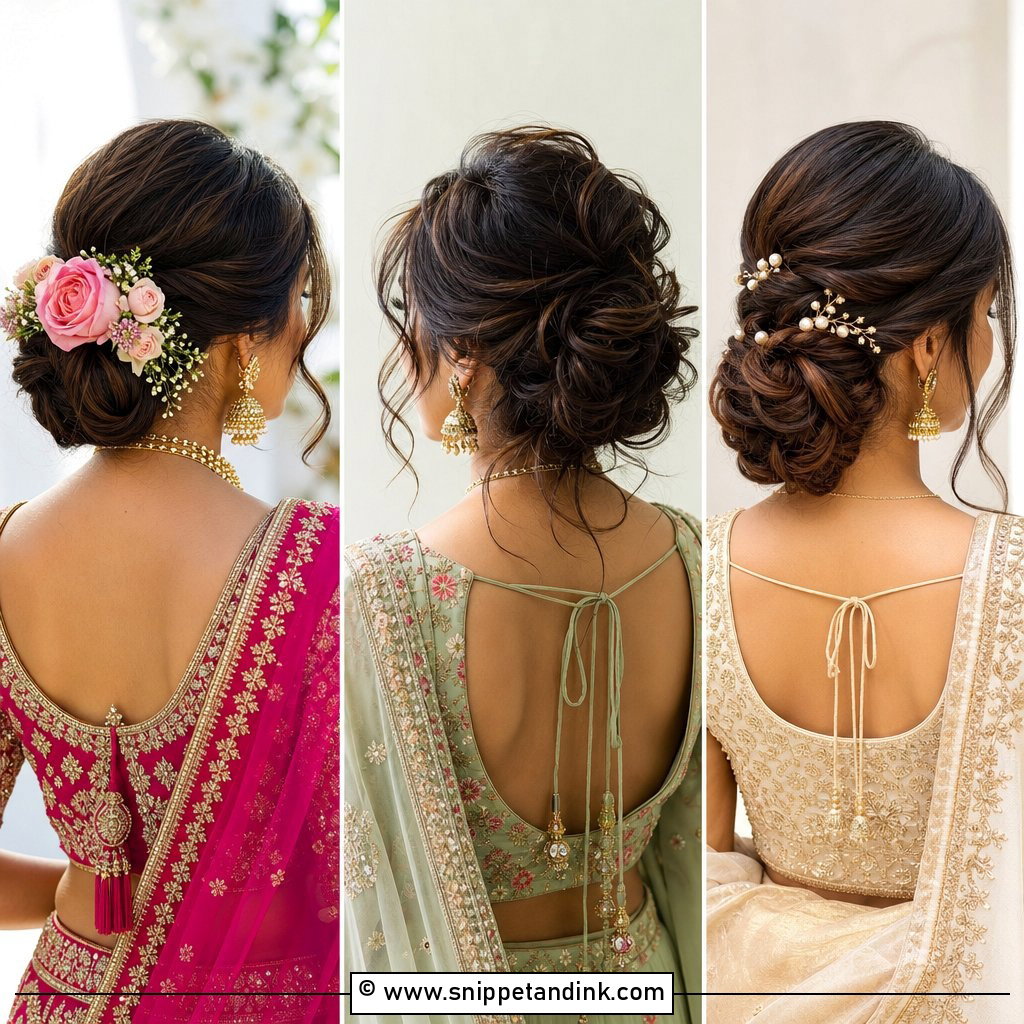
15. Vintage Finger Waves
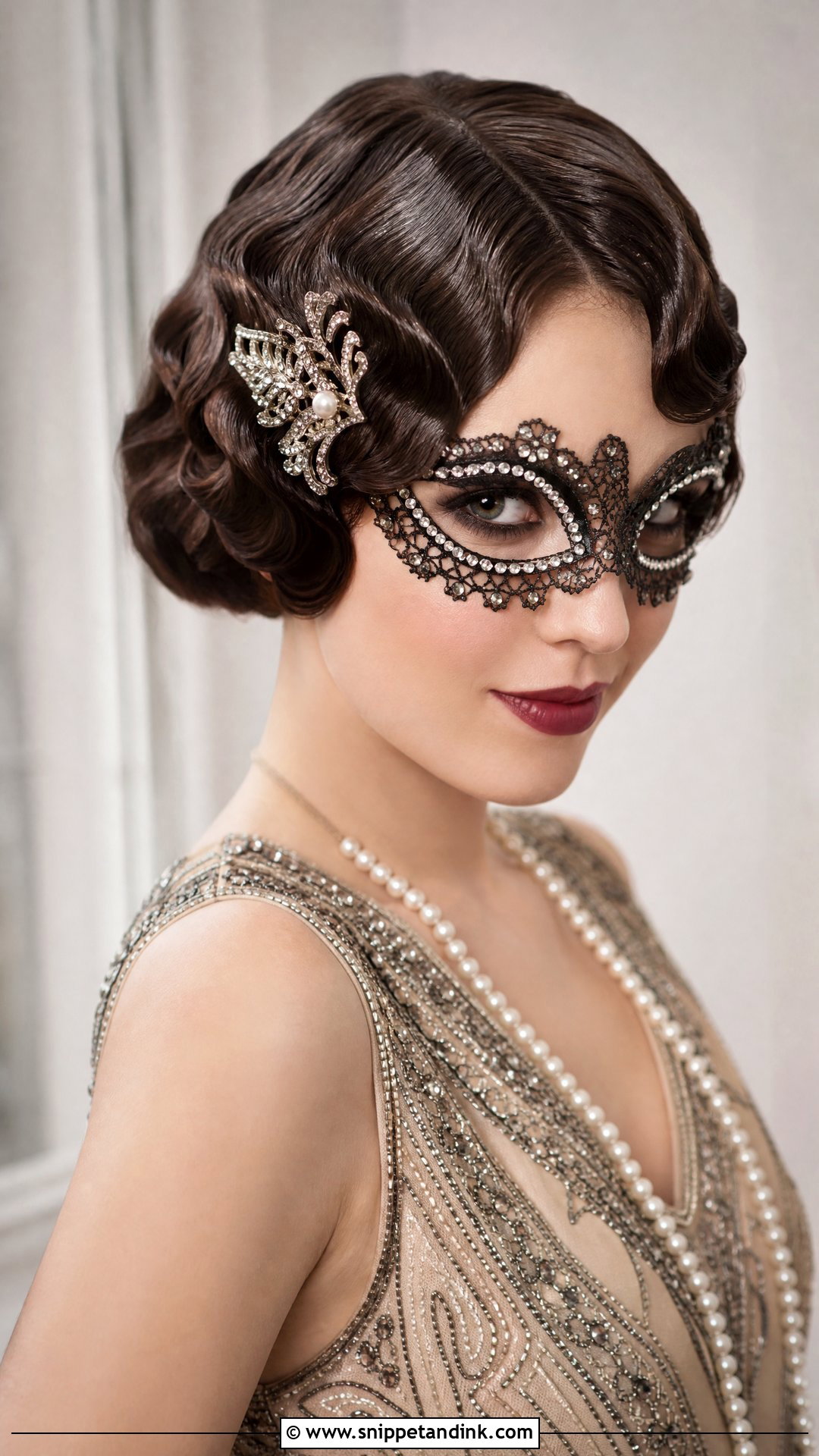
Finger waves are pressed, not curled. Wet hair is coated in setting lotion, pushed into ridges with the fingers and a fine comb, then clipped until completely dry. That’s where the patience goes, and why I mostly recommend them for bobs and lobs; on long hair the waves usually run into a pinned roll at the nape. They lie flat against the head, so even a snug mask sits cleanly over them. An art deco mask and one jeweled clip on the side finish it.
16. Loose Updo With Face-Framing Tendrils
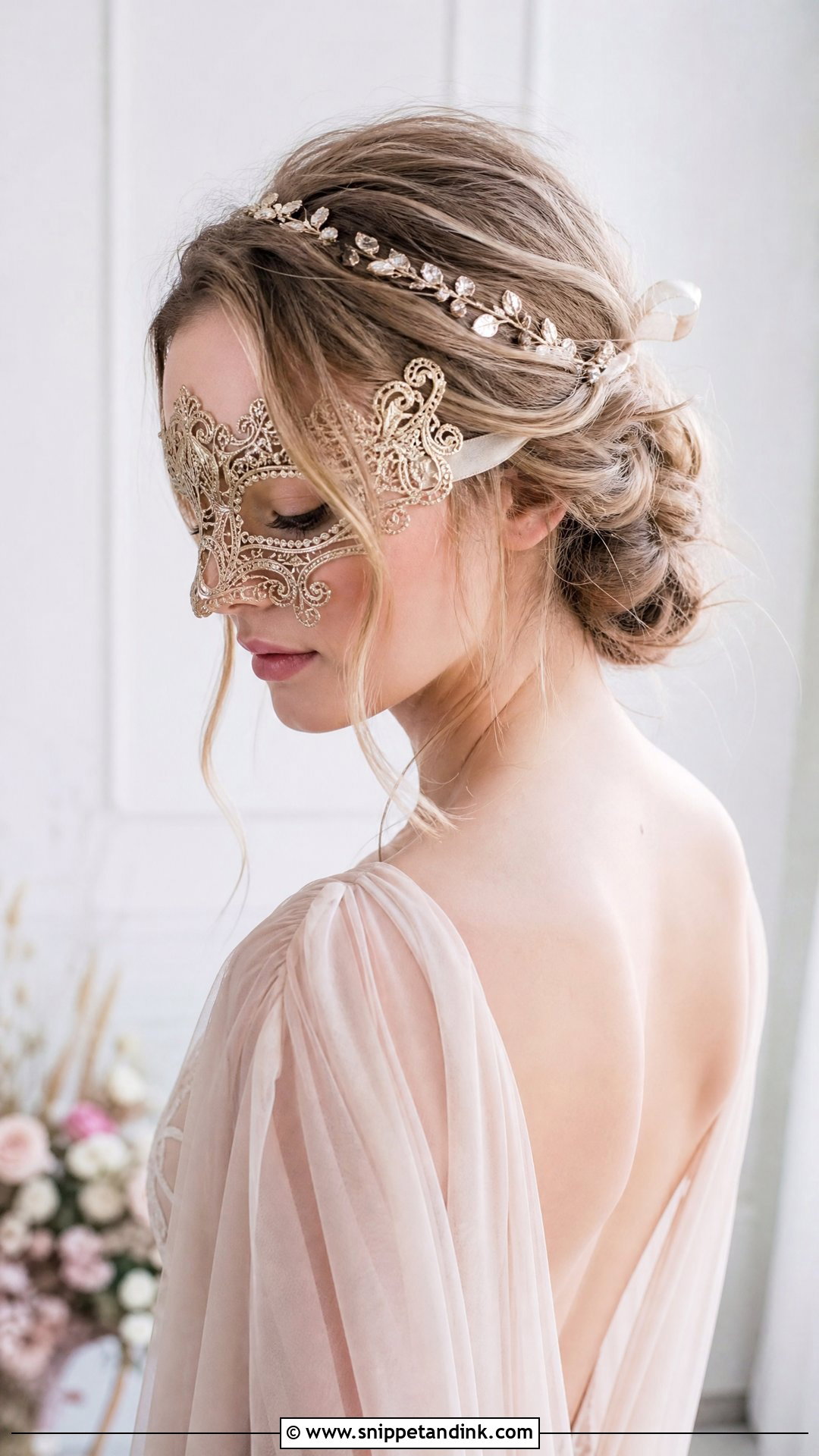
A loose updo still needs firm pinning inside. I build a secure base knot first and pull pieces out afterward, so the softness lives on the surface and not in the structure. The wispy tendrils around your face should be curled, set and then broken up with the fingers; straight pieces get trapped under a mask edge and look like a mistake. Medium to long hair works best, and a thin hair vine woven through the knot adds sparkle with almost no weight.
17. High Bun With Tiara
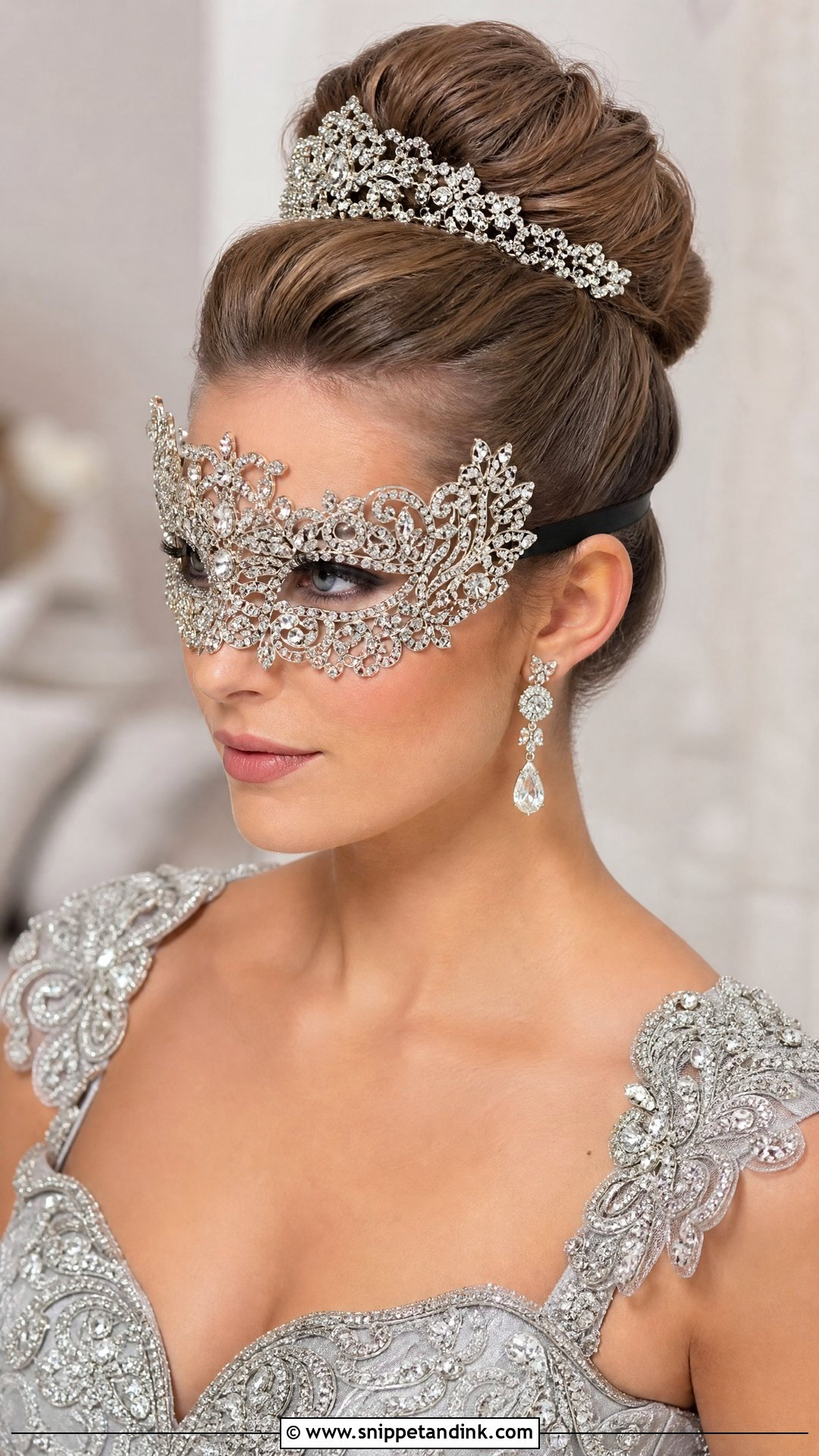
For a true princess moment, a high bun with a tiara is hard to beat, but it has to be planned with the mask. A tiara and a ribbon tie both want the area around the crown, so this pairing works best with a stick mask or one on its own headband. I place the tiara first, push its combs into a backcombed band of hair, then build the bun right behind it so the two read as one shape. Check where the tiara band and the mask edge meet at the temples. Two hard edges pressing the same spot get sore within an hour.
18. Curly Updo for Natural Hair
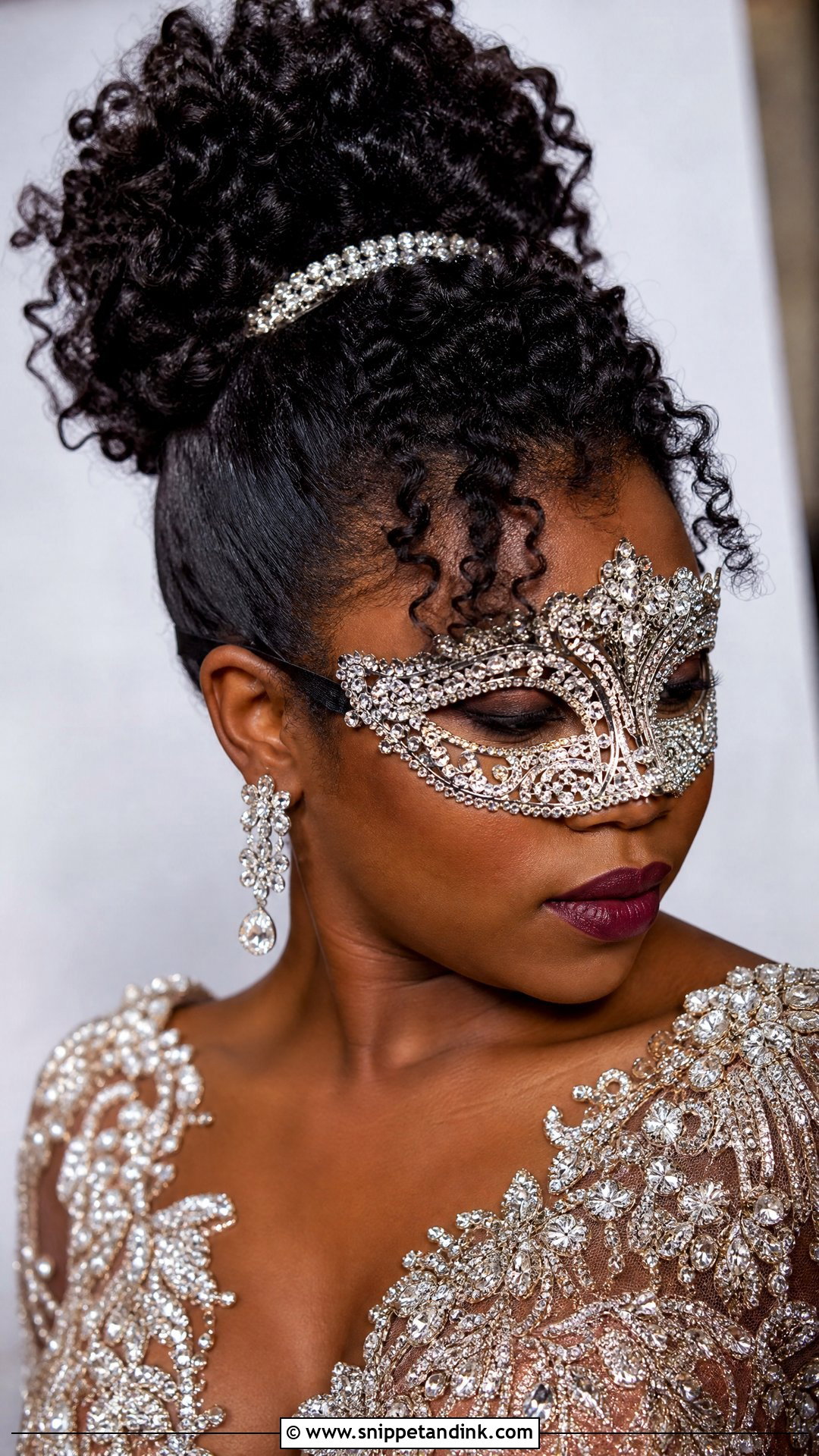
Natural curls hold an updo shape better than straight hair does, because the texture grips itself. I stretch coily hair slightly, gather it at the crown or the back, and secure the shape with large U-pins; bobby pins tend to vanish into the volume. Moisturize well before styling so the curls stay defined under ballroom heat. A hair cuff or jeweled pin anchors more easily in curls than a comb, and a few loose curls at the face soften the frame around the mask.
19. Bouffant With Cascading Curls
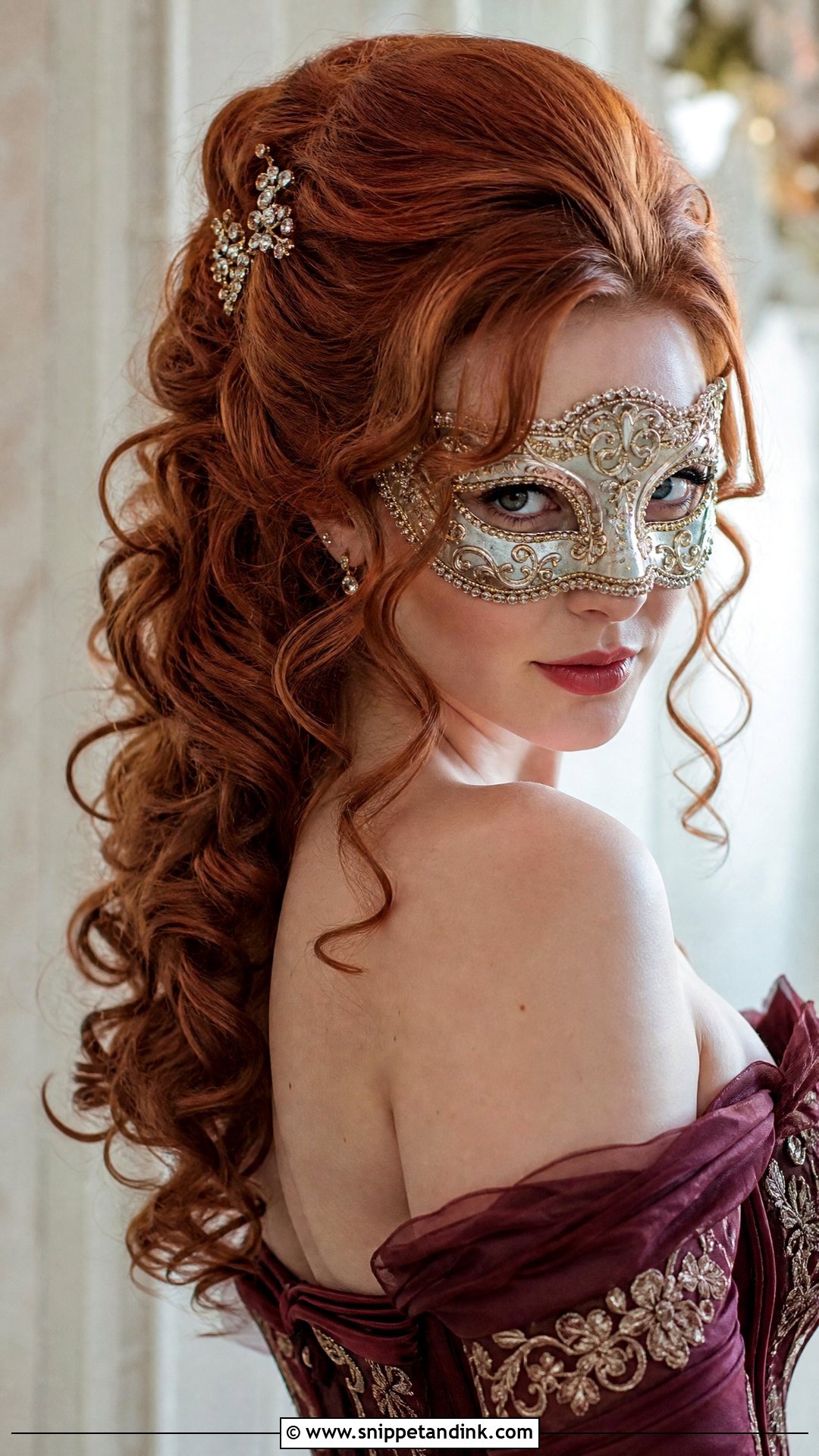
A bouffant adds height right where a tall, ornate mask needs a counterweight. I backcomb the crown in thin sections at the root only, smooth a top layer over it, and pin from underneath so the smooth surface never breaks. The cascading curls below give it movement. Fine hair needs a small padding insert or the lift collapses after a couple of hours. Watch the ribbon path at your trial, since a ribbon tied too high will flatten the whole crown.
20. Twisted Side Updo
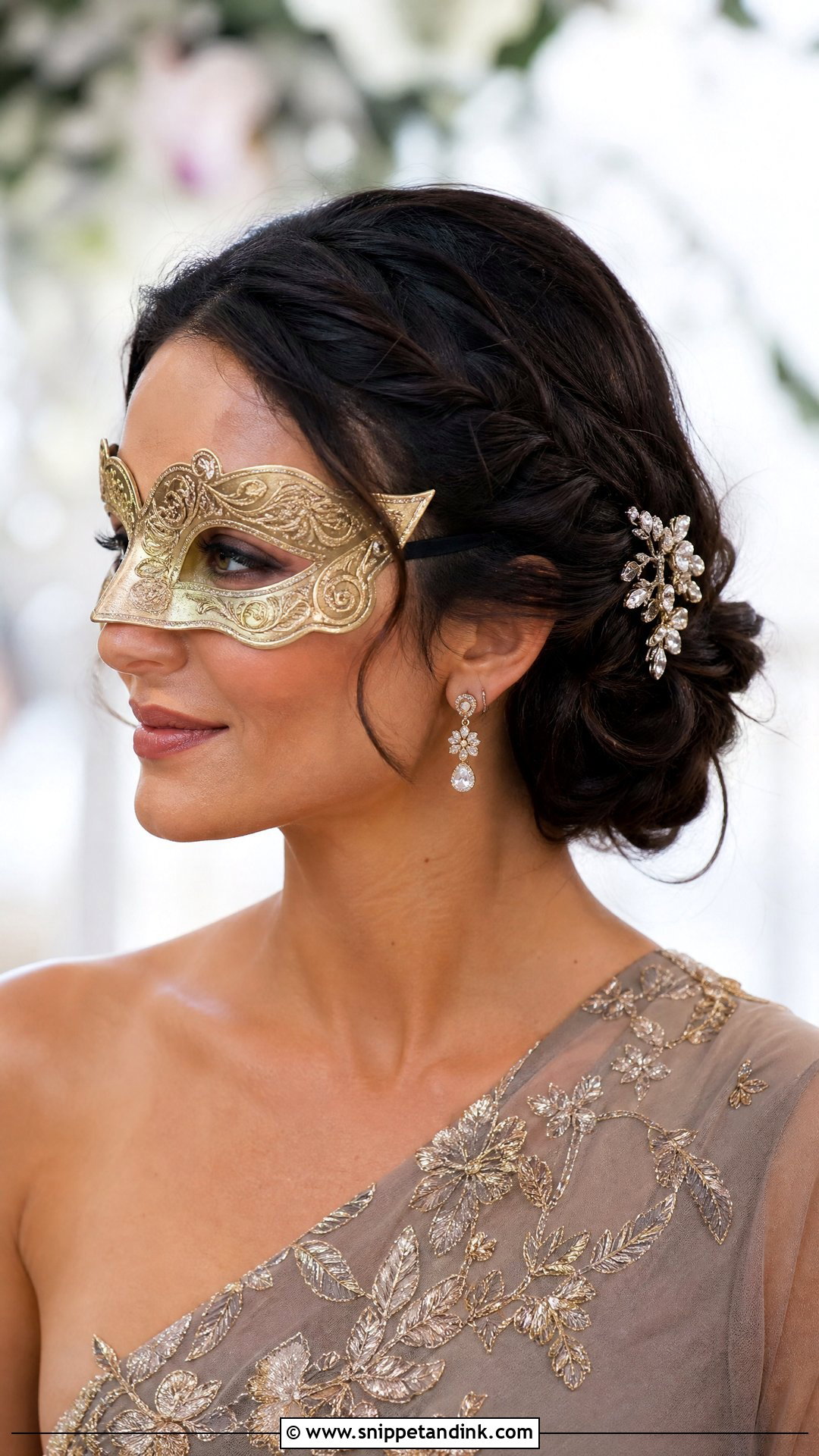
Twisting each section and pinning it diagonally toward one ear builds an asymmetrical knot that’s surprisingly secure. The open side gives the mask ribbon a clean path, and the knot side carries the decoration. I work from the far side across, so each twist overlaps the one before and hides its pins. It suits medium to long hair. A jeweled comb where the twists meet covers the spot where pins most often peek through.
Unmasking at Midnight and Other Late-Night Repairs
A masquerade keeps steady pressure on your hair for hours, and the same few problems show up near the end of almost every ball. Most of them are easy to plan around.
- The ribbon line. When the mask comes off, sleek hair shows a crease where the ribbon sat. Mist hairspray onto a small comb, not onto the hair, and smooth the crease flat. Curls and braids rarely need it.
- A damp hairline. A wide mask traps heat, and the hairline under it gets damp first. Set baby hairs with a gel that holds through moisture, since hairspray turns tacky once it’s wet.
- Pins working loose. Dancing and turning your head loosen anything held only by outer pins. Ask your stylist to lock the base with crossed bobby pins before building the shape on top.
- Accessories knocked out. Combs and crystal pins near the ribbon path get pushed out every time you adjust the mask. Keep them on the opposite side or below the knot.
A small repair kit for your evening bag
Six bobby pins in your hair color, two U-pins if you’re wearing a bun, a travel hairspray, a slim comb and a spare length of ribbon if your mask ties. That covers nearly every fix I’d make myself on the night.
Taking it all down
A pinned, sprayed style comes down best slowly. Find and remove every pin before you touch the hair, then work out the backcombing from the ends up with a little conditioner or oil on your fingers. Dragging a brush through dry teased hair at 2 a.m. is how the breakage happens.
The Mask Sets the Rules, Not the Gown
Your gown sets the mood, but the mask decides what your hair can do. Before settling on a look, work out how the mask attaches, where the ribbon or band crosses your head, and how long you’ll actually keep it on. Low chignons and braided buns are the safest partners for a ribbon tie, high ponytails and tiaras want a stick mask, and loose curls need a solid pin line underneath. Echo the mask’s metal and stones in your hair pieces, keep decoration clear of the ribbon path, and bring the mask itself to your trial. Then you can stop thinking about your hair and enjoy the ball.
You'll Like These Ideas:



Leave a Reply