
Side-swept hair is the style I’m asked for when a bride wants her hair down and soft but still wants her face, neckline and earrings on view. Moving everything to one shoulder does both. It suits glossy Hollywood waves, braids, low buns and loose curls, and it sits comfortably with a veil, combs or pearls. What most photos don’t show is the engineering on the tucked side, which is what decides whether the look survives the day. I’ve noted that for each style below so you know what to ask for at your trial.
Which Shoulder Should the Hair Fall Over?
This is the first decision I make, and brides rarely think about it until the trial. The side the hair falls to is the side people see full of hair; the opposite side shows your face, ear and earring clearly. I weigh four things before I pick up a curling iron.
- Your natural part and any cowlick. Fighting a strong part all day is a losing battle, so the hair usually sweeps away from where it naturally falls heavy.
- The dress. With a one-shoulder gown, I sweep the hair to the bare shoulder so the strap and hair don’t pile up on the same side.
- The ceremony layout. Ask which side of your partner you’ll stand on. Many couples want the open side of the face toward each other, so the photographer catches your expression rather than a curtain of hair.
- Your preferred side for photos. Most people have one, and the open side should usually be it.
Once the side is set, it stays set. I’d avoid switching sides between ceremony and reception, because the pinning and the curl direction are built for one side only.
1. Side Swept Wedding Waves
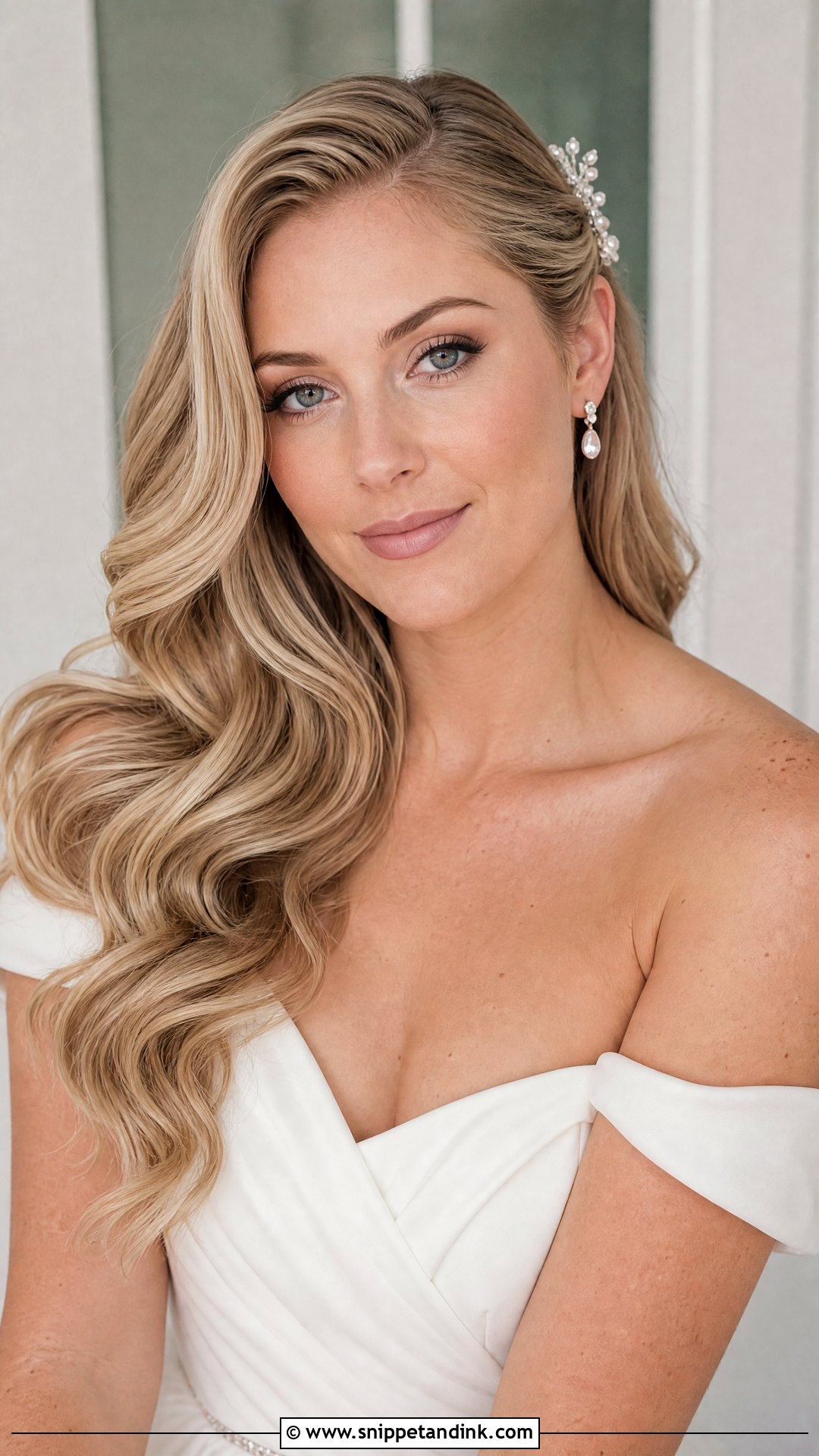
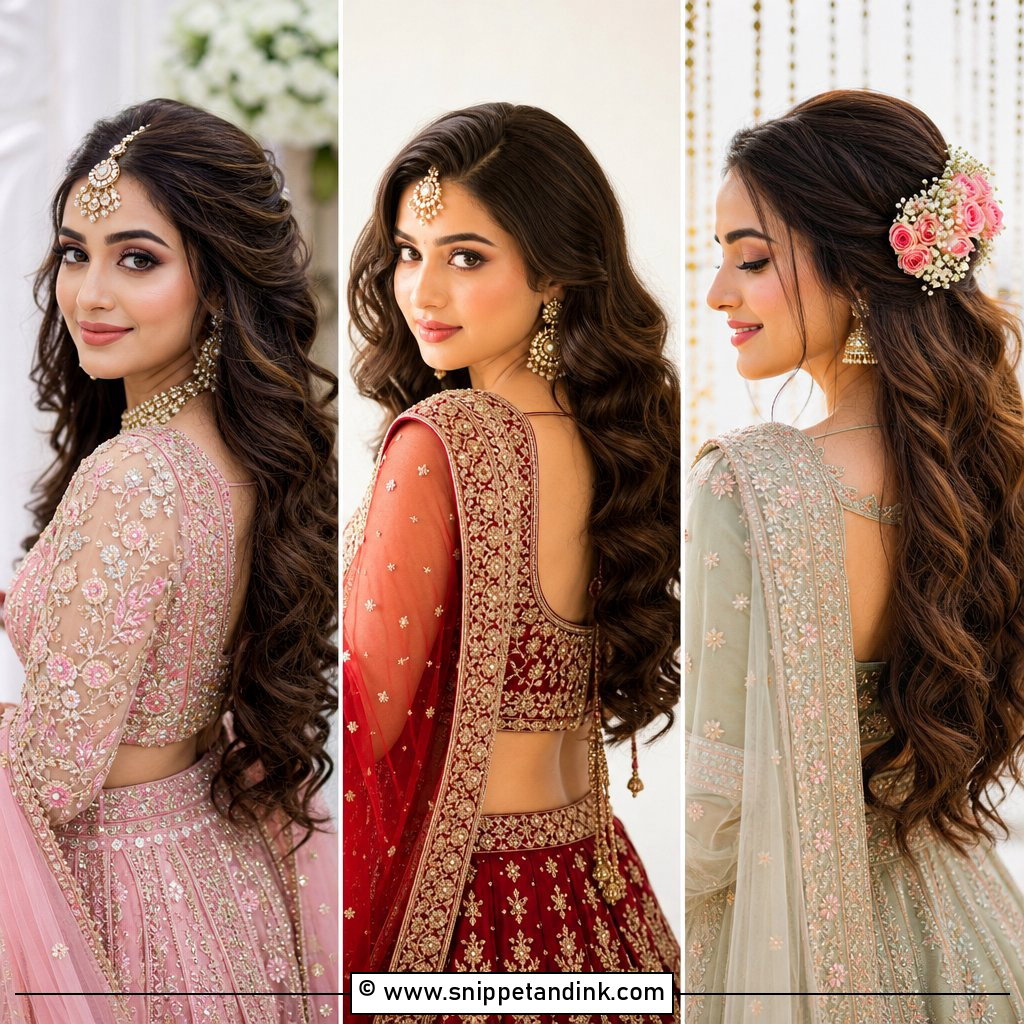
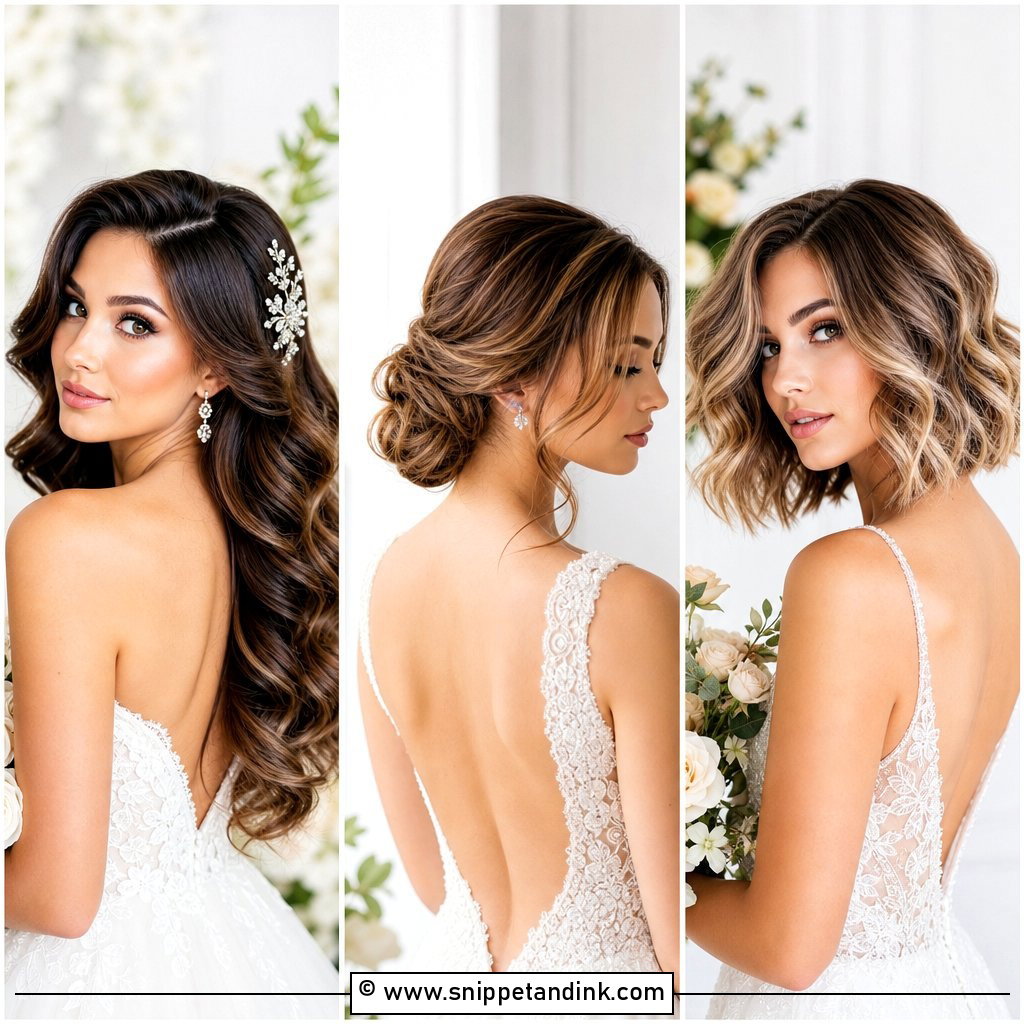
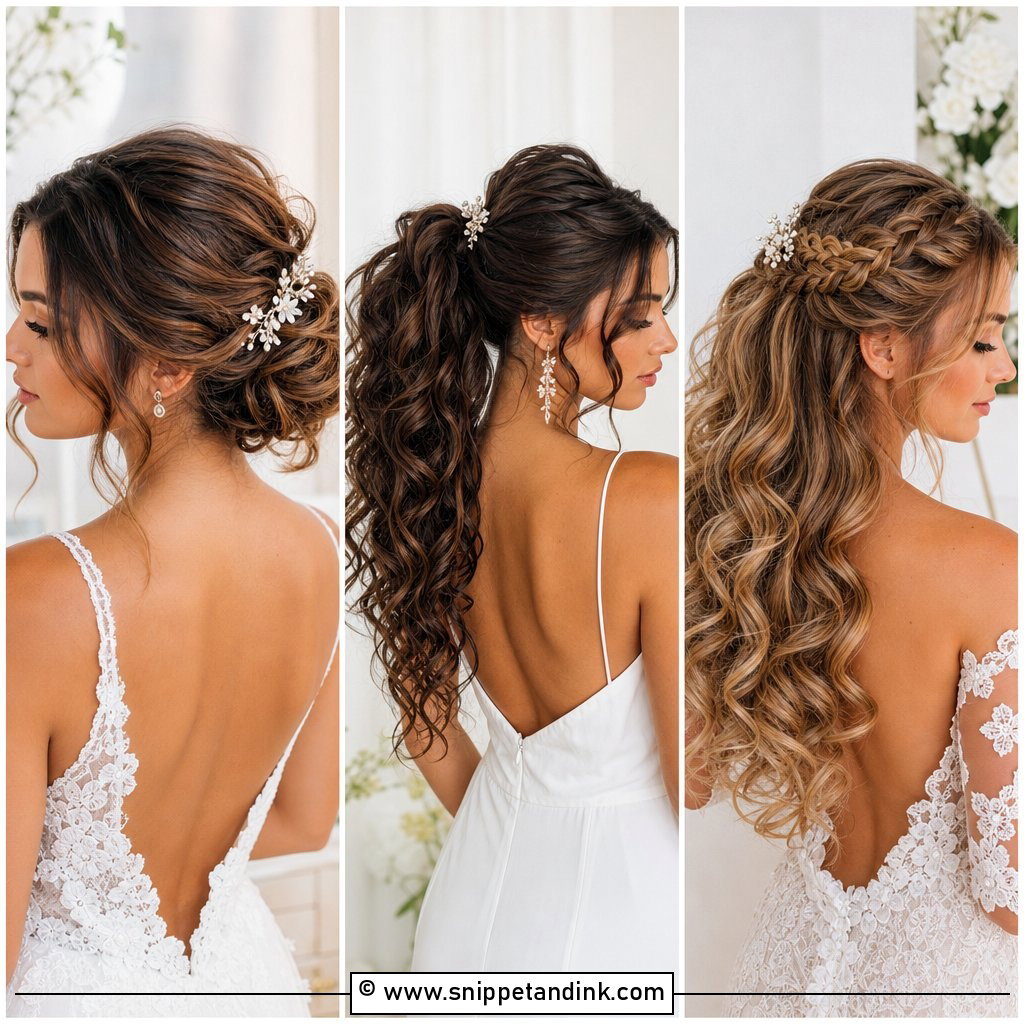
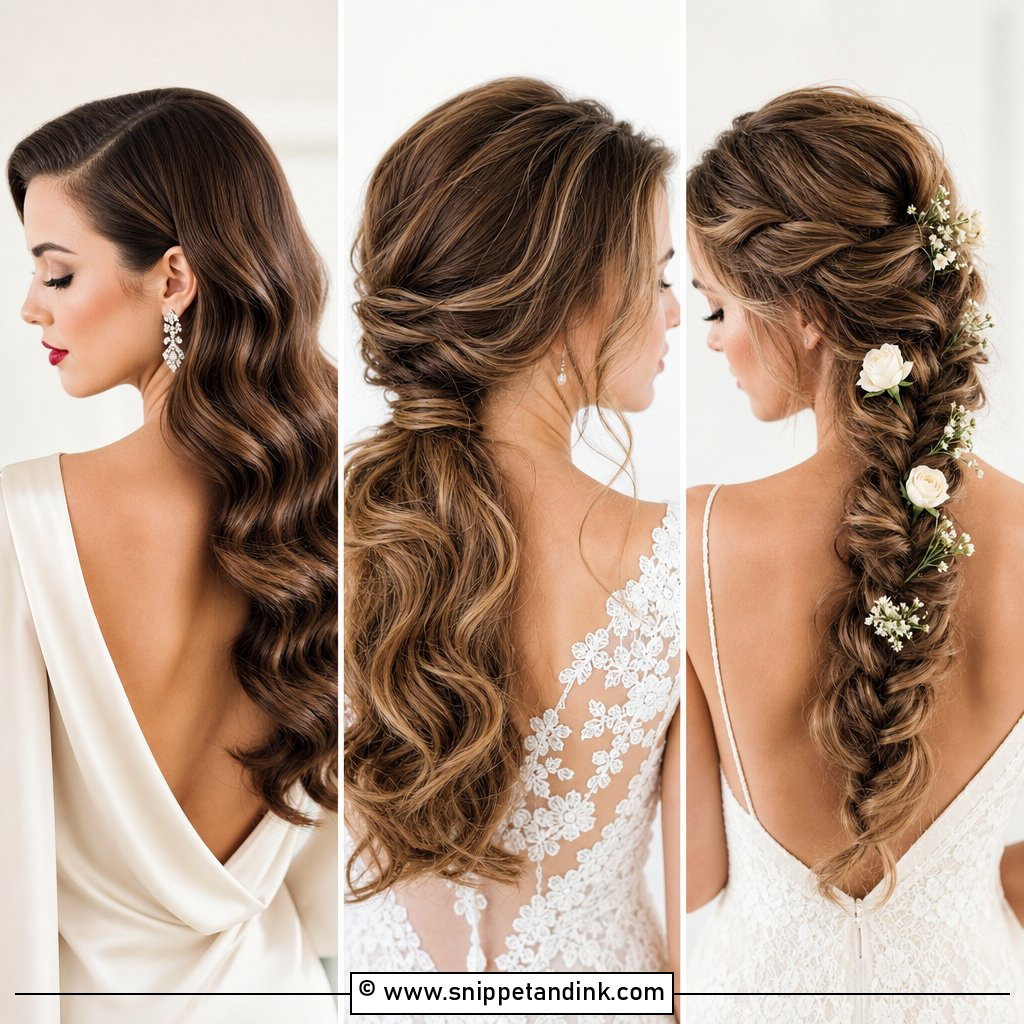
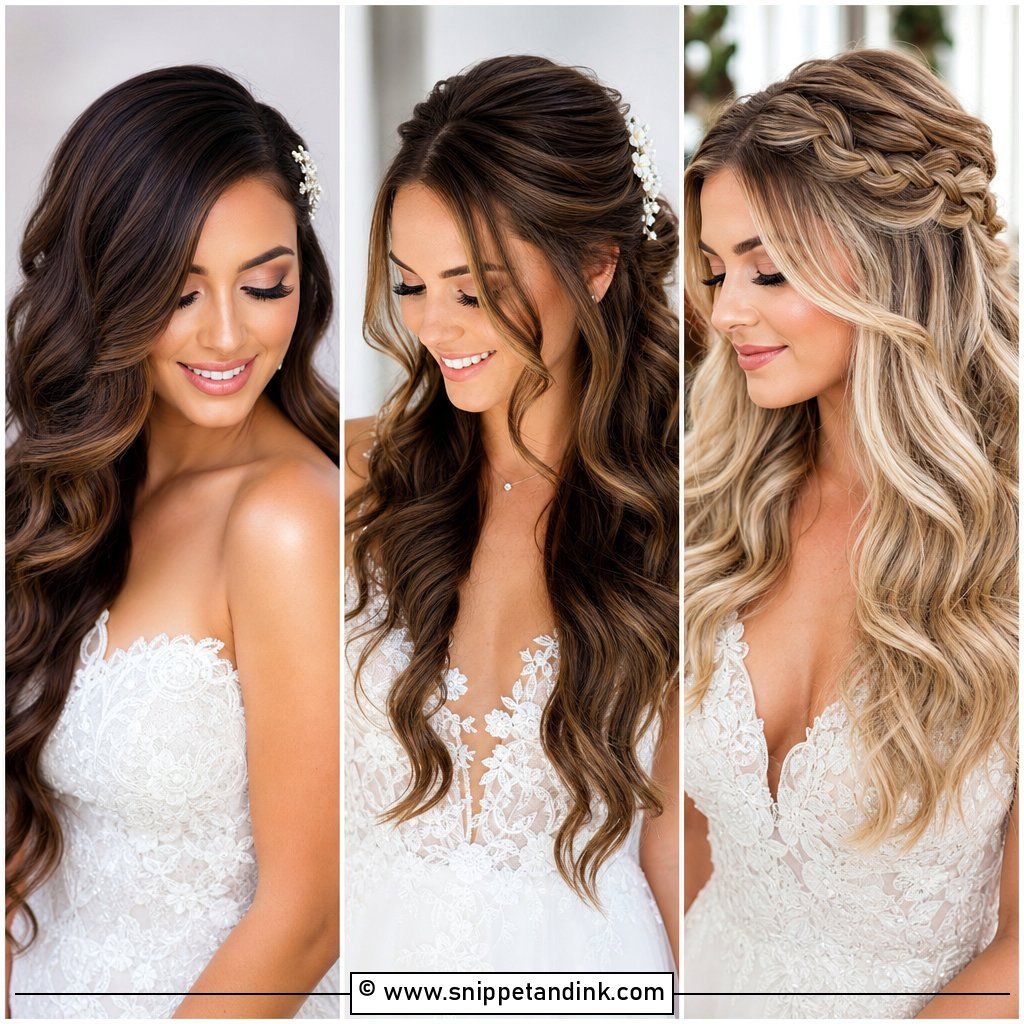
Soft side waves are where most of my side-swept trials start. I set a deep part, curl in wide sections all going the same direction, let them cool completely and only then brush them out so they join into one wave over the shoulder. Brushing hot curls is the quickest way to lose them by lunch. Medium to long hair works best, and a few clip-ins help if your ends are thin. It sits well with strapless, off-shoulder, sweetheart necklines and plain satin, where nothing on the dress competes with the hair. I pin the tucked side with crossed bobby pins hidden behind the ear.
2. Side Swept Hollywood Waves
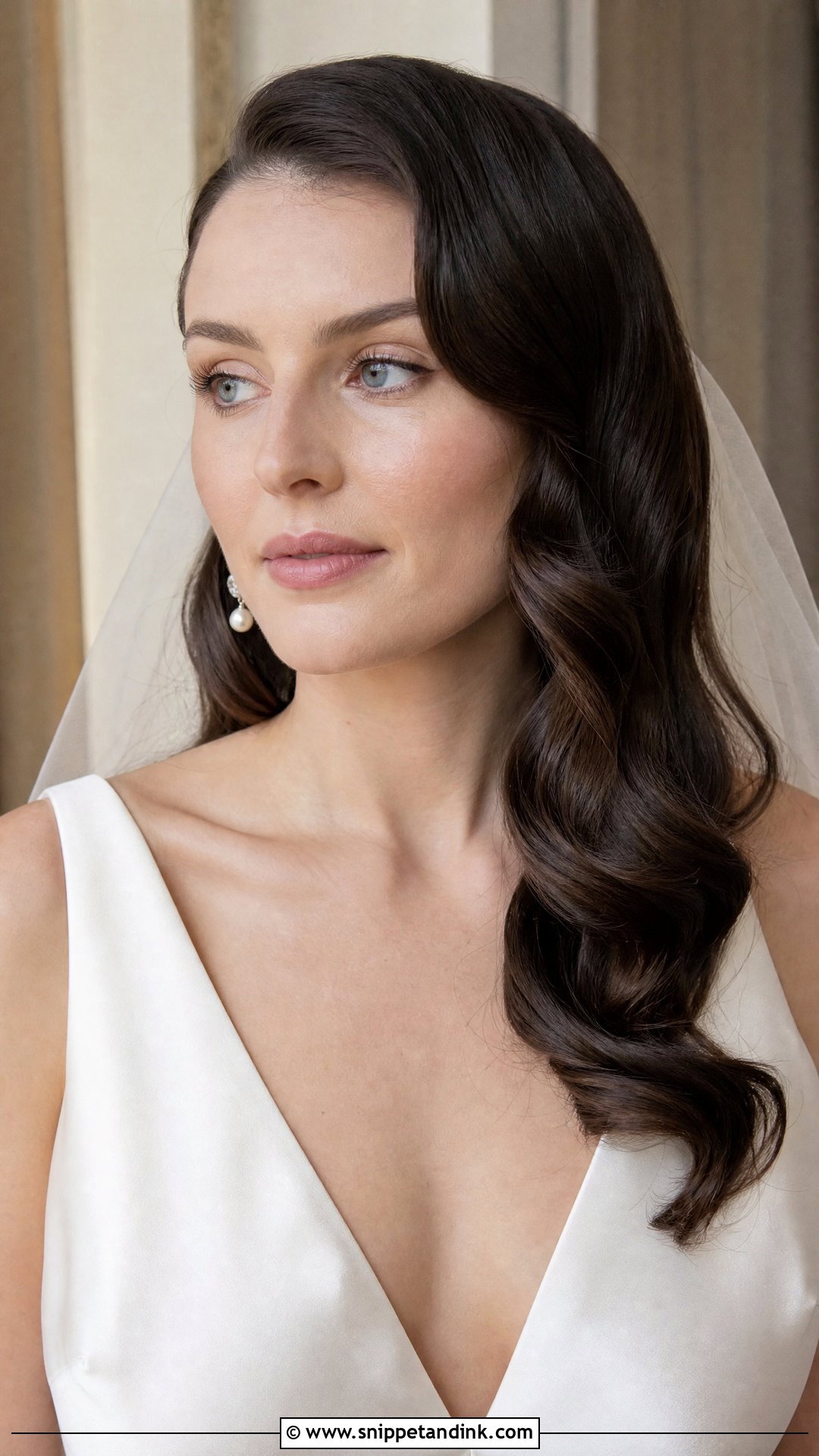
Hollywood waves are the most structured version: smooth roots, a deep part and sculpted waves that fall in one even ripple. The set is everything. I pin each curl flat while it cools, then brush and press the crests in with clips and a little spray. One-length cuts or very long layers give the cleanest pattern; heavily layered hair breaks the wave because the ends sit at different heights. I’d skip extra accessories here. The gloss of the wave already carries it, and the polish suits formal gowns and a classic red lip.
3. Side Swept Low Ponytail
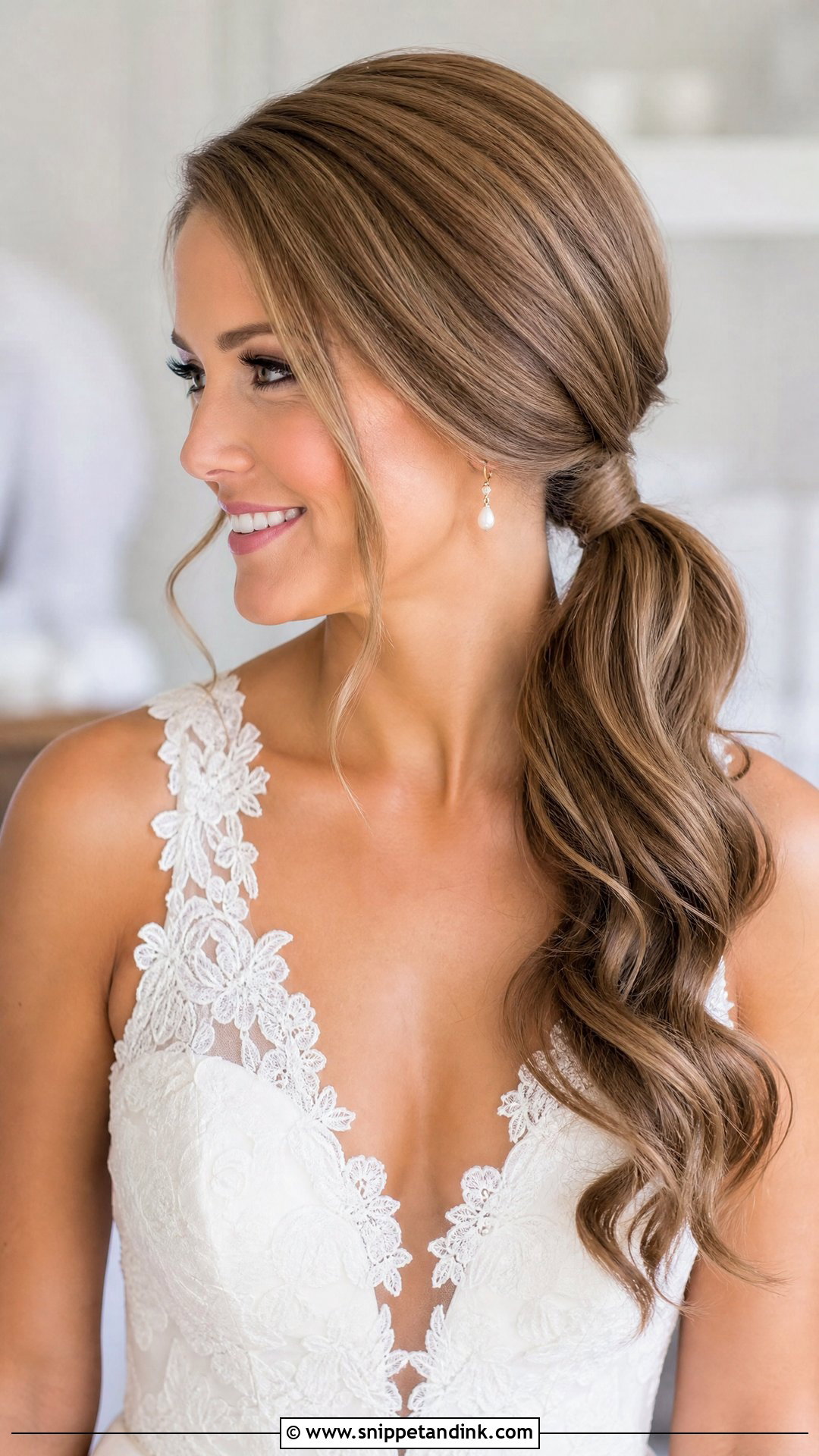
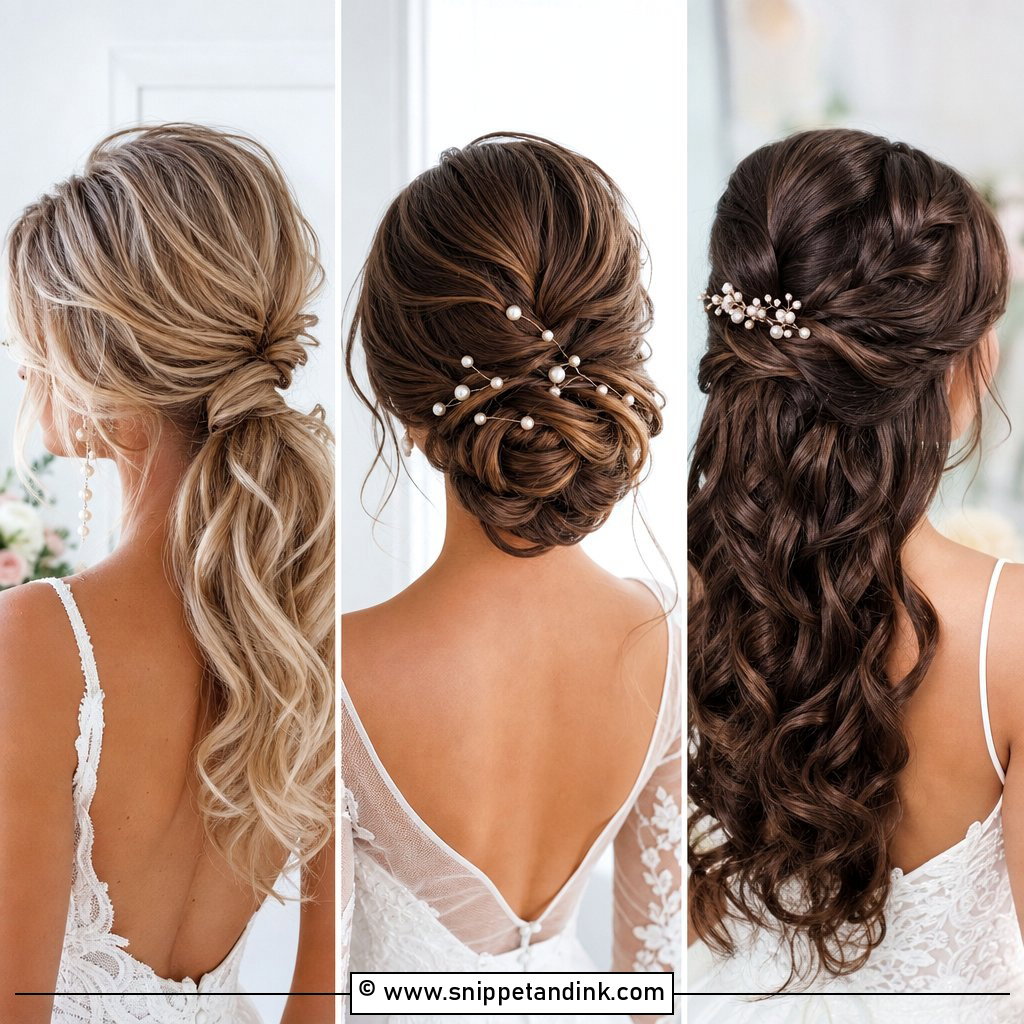
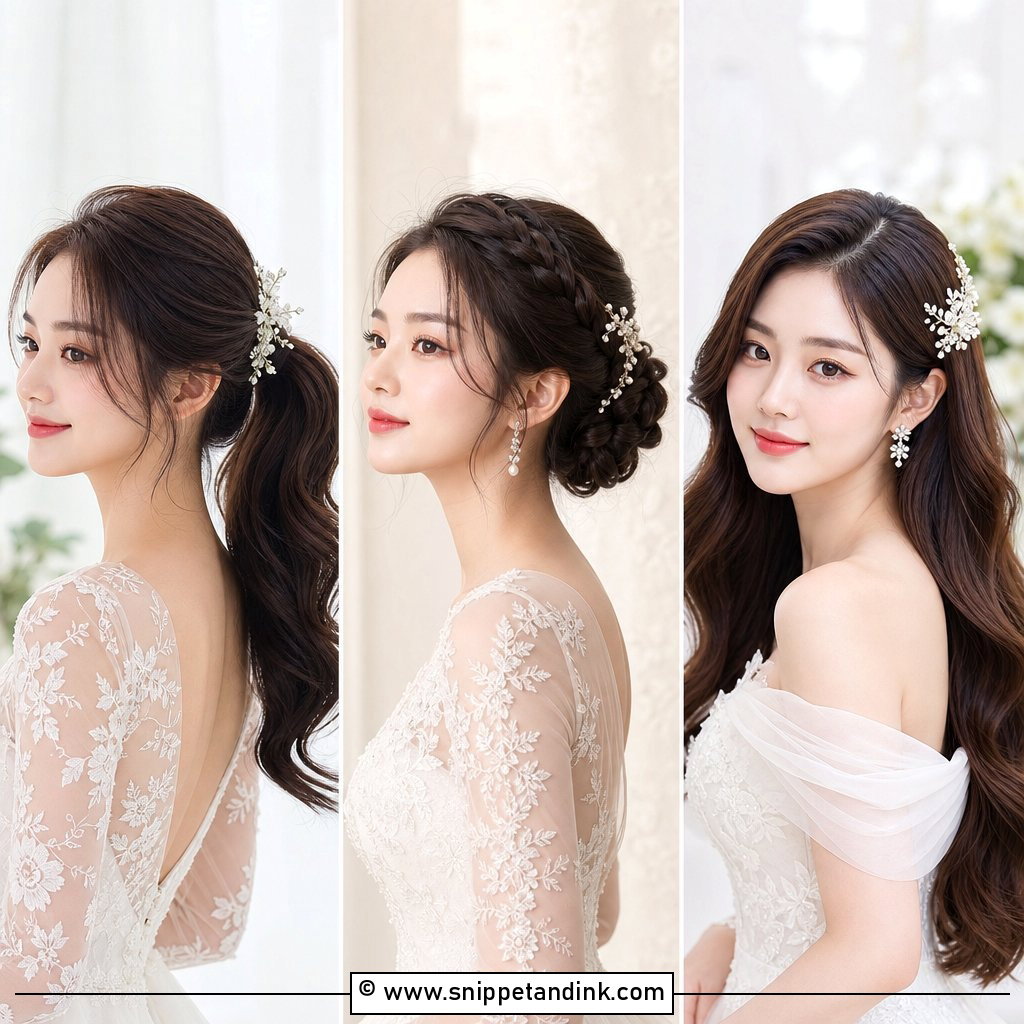
A low ponytail on one side gives you the gathered security of an updo without the stiffness. I anchor it slightly behind the ear rather than at the side of the neck, because a ponytail sitting right on the neck gets pushed around by every turn of the head. Wrapping a strand of hair around the elastic hides the band, and a small comb above it adds a finish. For an outdoor ceremony this behaves far better in wind than fully down hair. Leave a couple of face-framing pieces or it can look severe from the front.
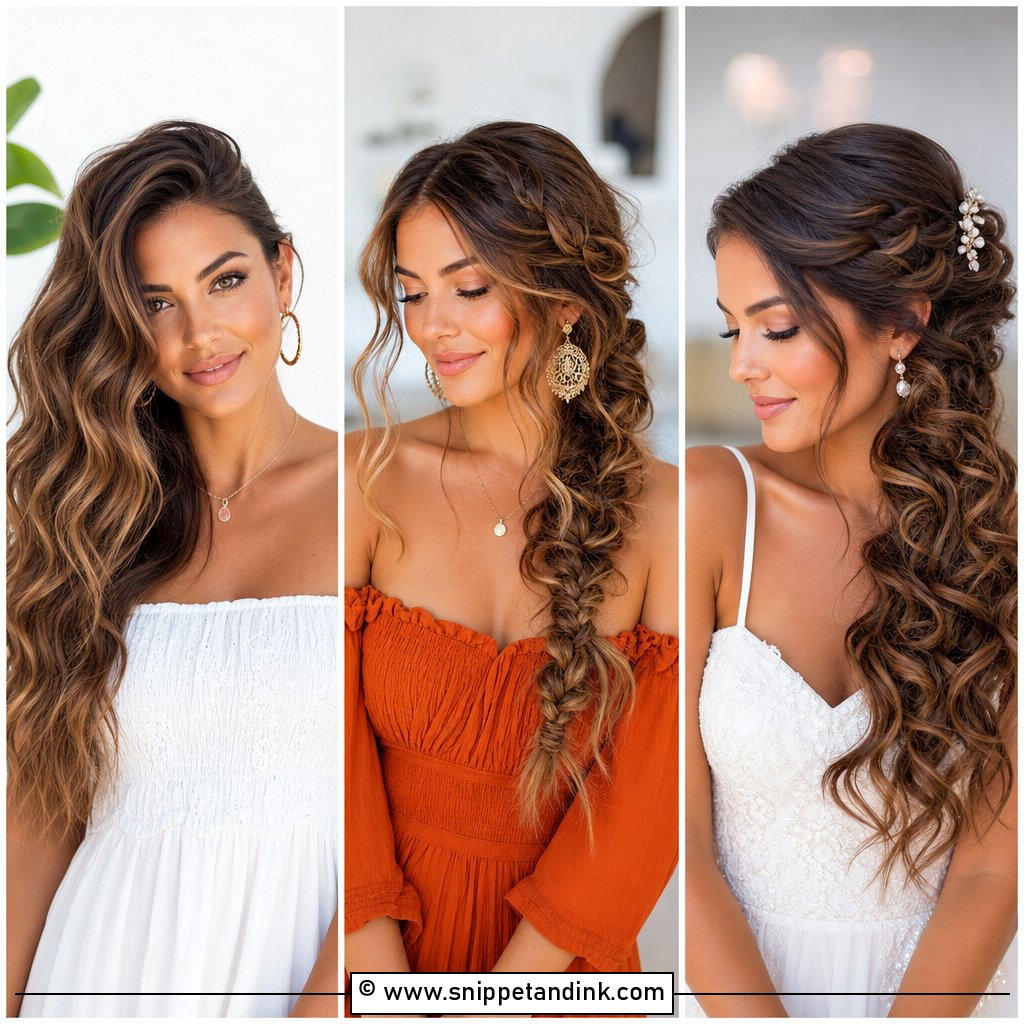
4. Side Swept Curly Wedding Hair
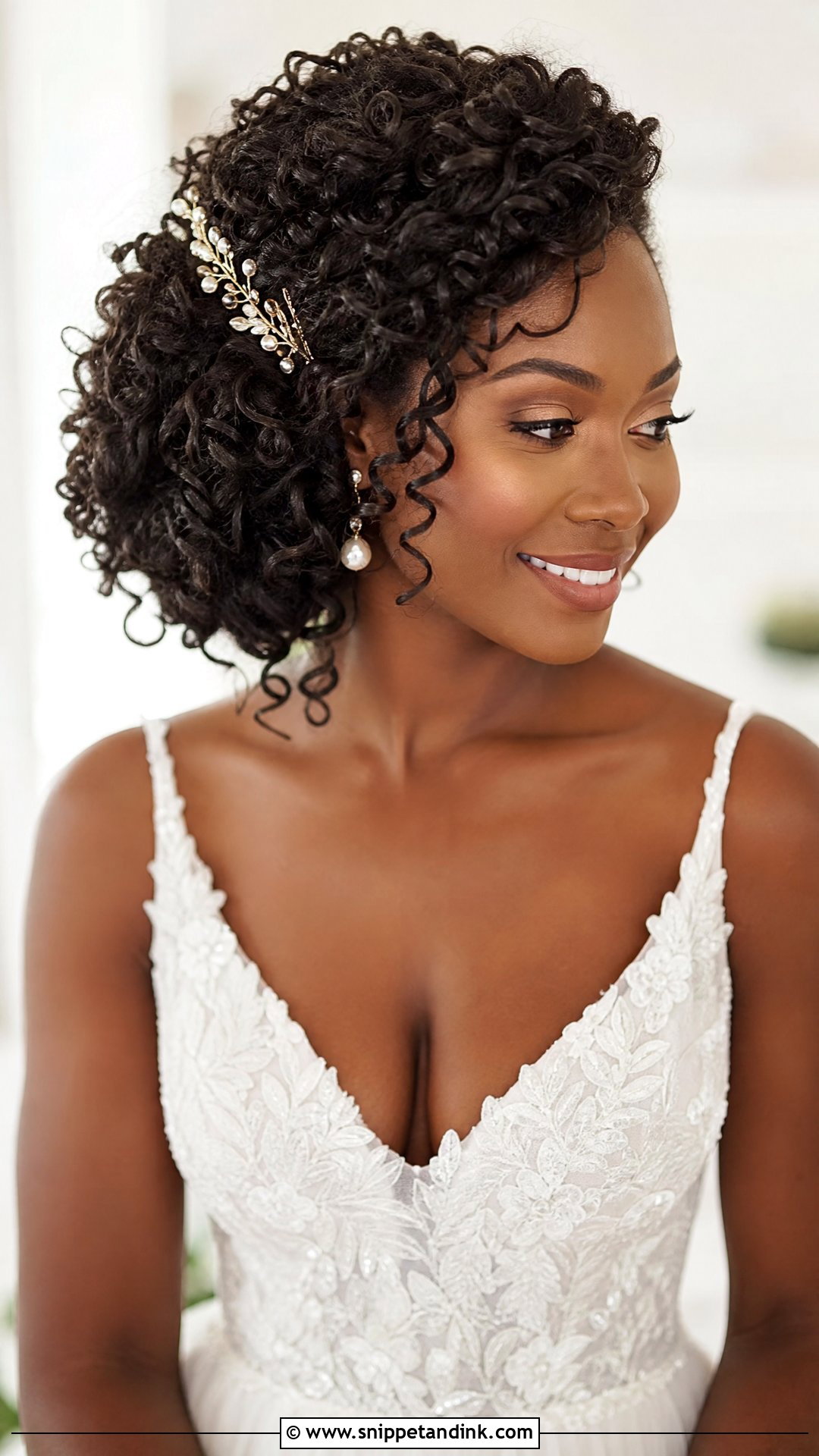
Natural curls make the most textured version of this look, and I don’t fight the curl pattern to get there. I work on curls that have been washed and defined a day or two ahead, gather them gently to one side and pin underneath, never through the curl clumps, so the bounce stays. Brushing dry curls turns them into frizz, so I only use fingers and a pick at the roots. Moisture and a flexible-hold gel matter more than spray. A gold comb or a small floral pin on the pinned side marks the shape without competing with the texture. Coily hair often needs more length than you’d expect to reach the shoulder.
5. Side Swept Wedding Braid
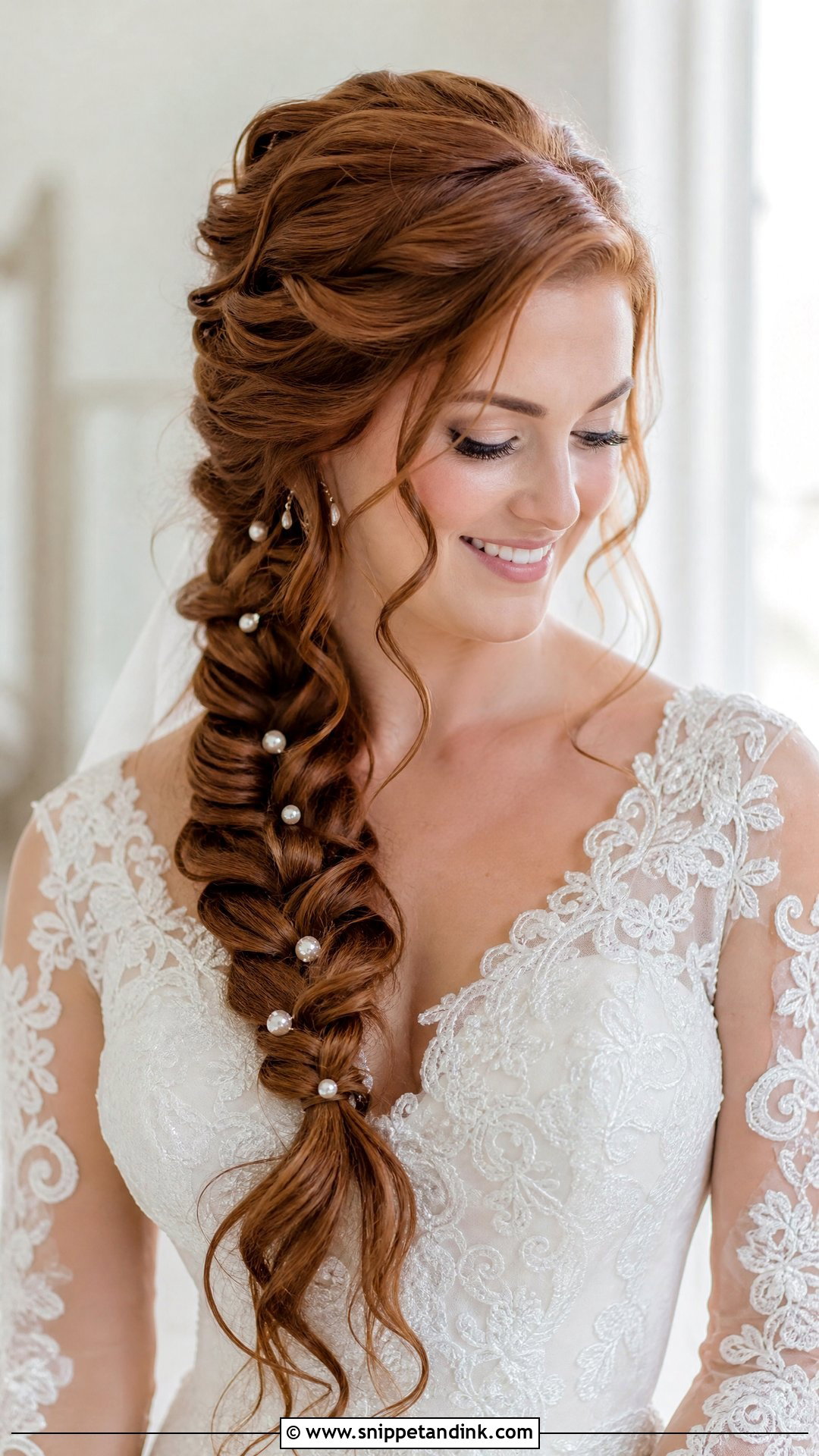
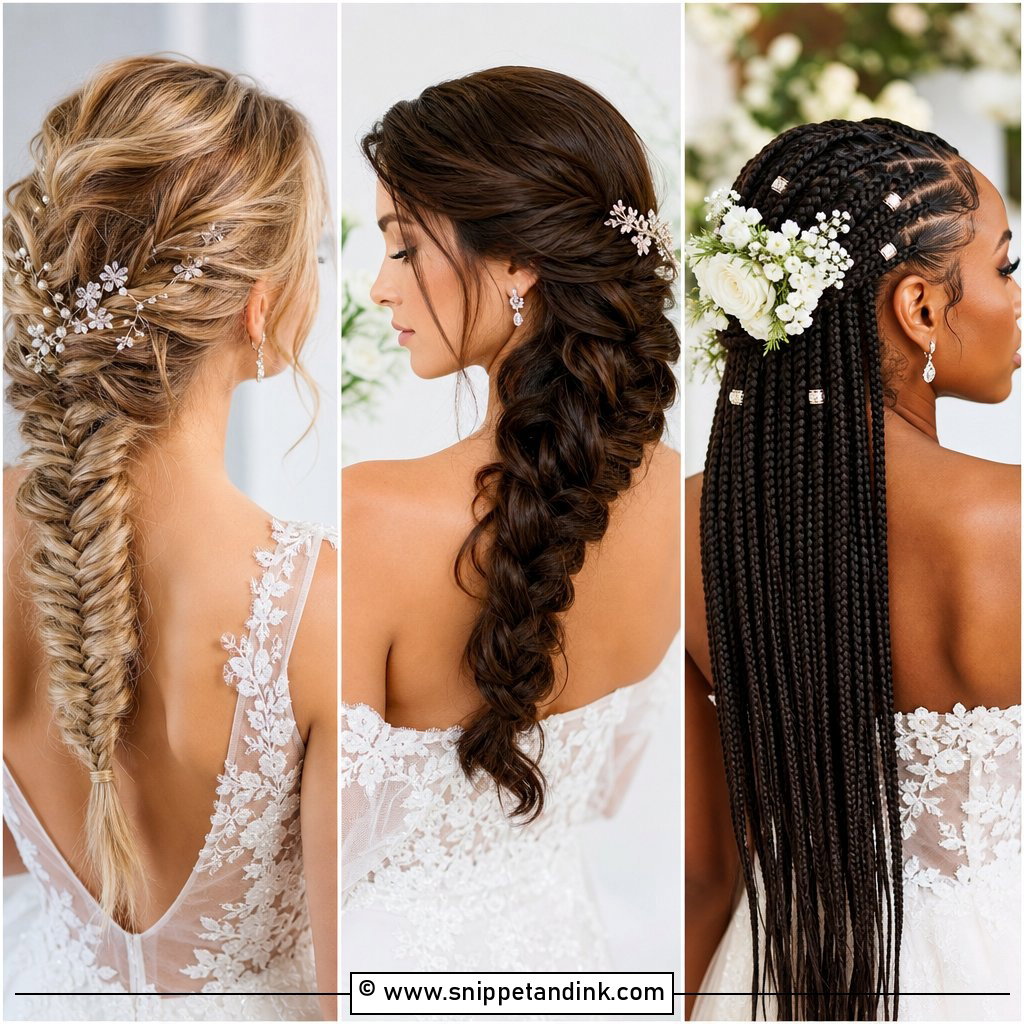
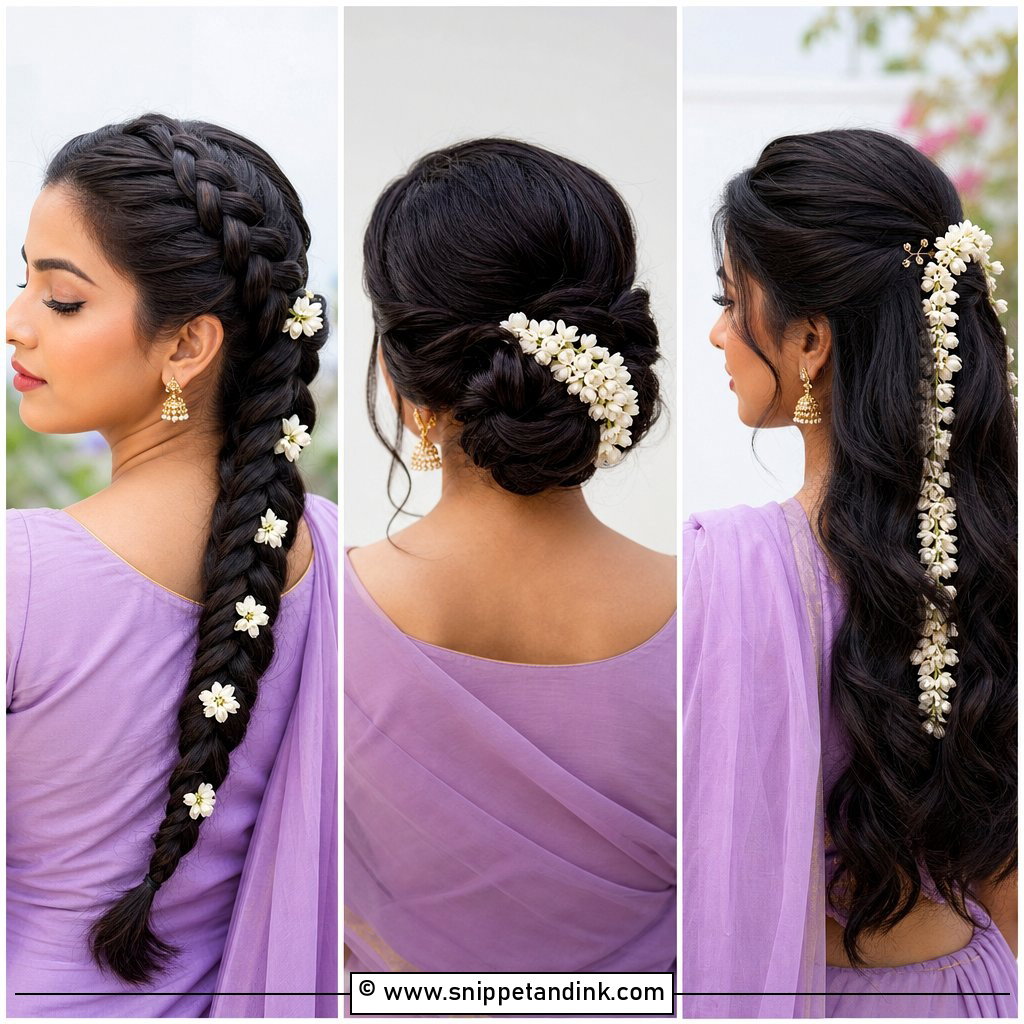
A loose side braid is soft enough for a garden or beach wedding but tidy enough for the aisle. It needs body: thick or long hair, or extensions woven in, because a thin braid looks stringy once it’s pulled out. I braid it fairly tight first and pancake it afterward, gently pulling the loops wider, which gives volume and keeps the braid locked. Pancaking a loose braid makes it collapse. Small flowers or pearl pins tuck into the loops easily, and the braid frames an open back well since it hangs to the front.
6. Side Swept Fishtail Braid
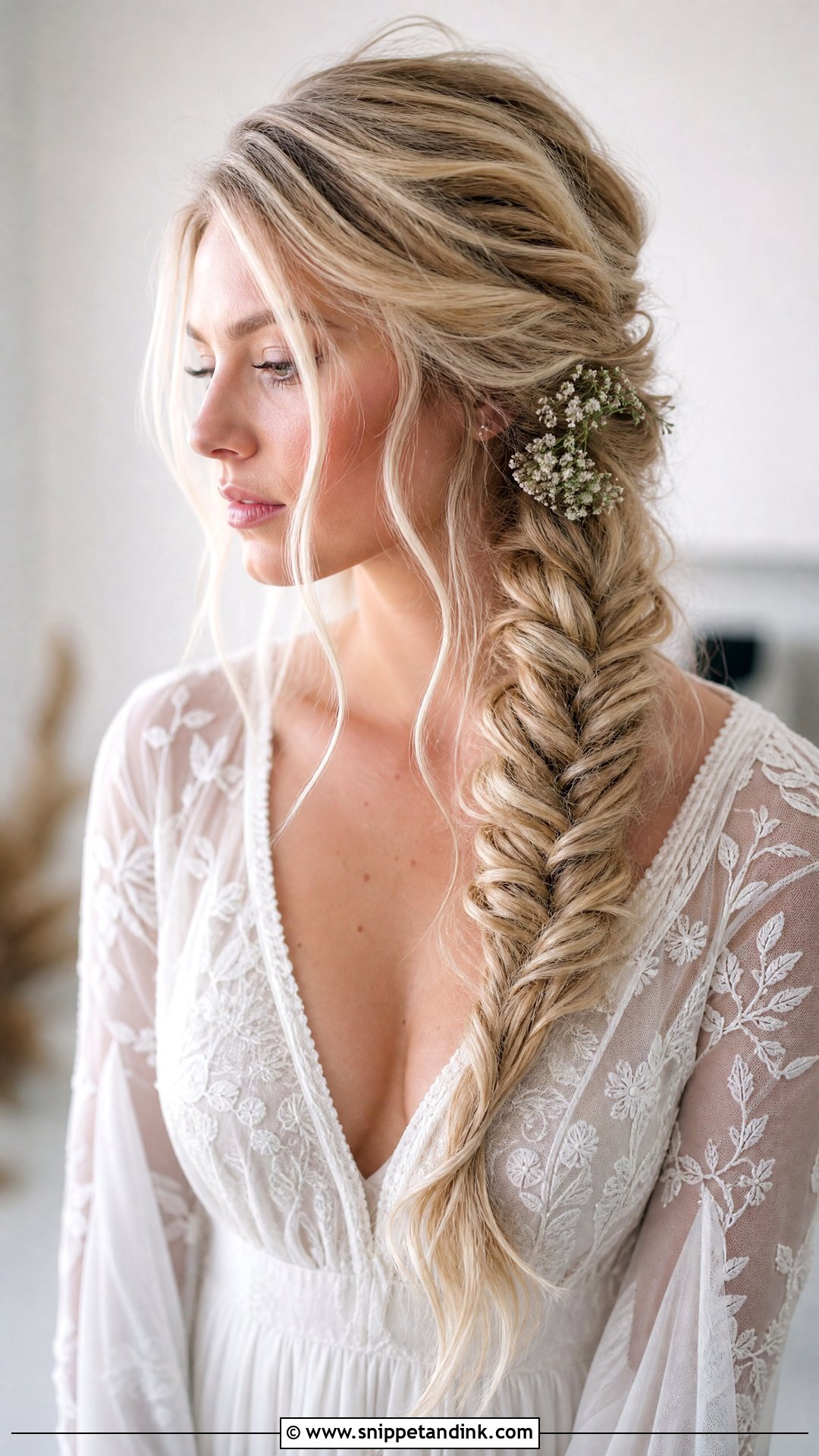
Fishtails have a finer, woven texture than a regular three-strand braid, and they read clearly from both front and side in photos. I start them loose near the part with some lift at the crown, then work over the shoulder. The finer sections make fishtails slow to do and harder to fix if a section drops, so I’d book a bit of extra chair time. Gently pulling it apart afterward stops it looking like a school plait. It pairs naturally with lace and boho gowns; a thin hair vine woven along it is the accessory I reach for most.
7. Side Swept Half Up Wedding Hair
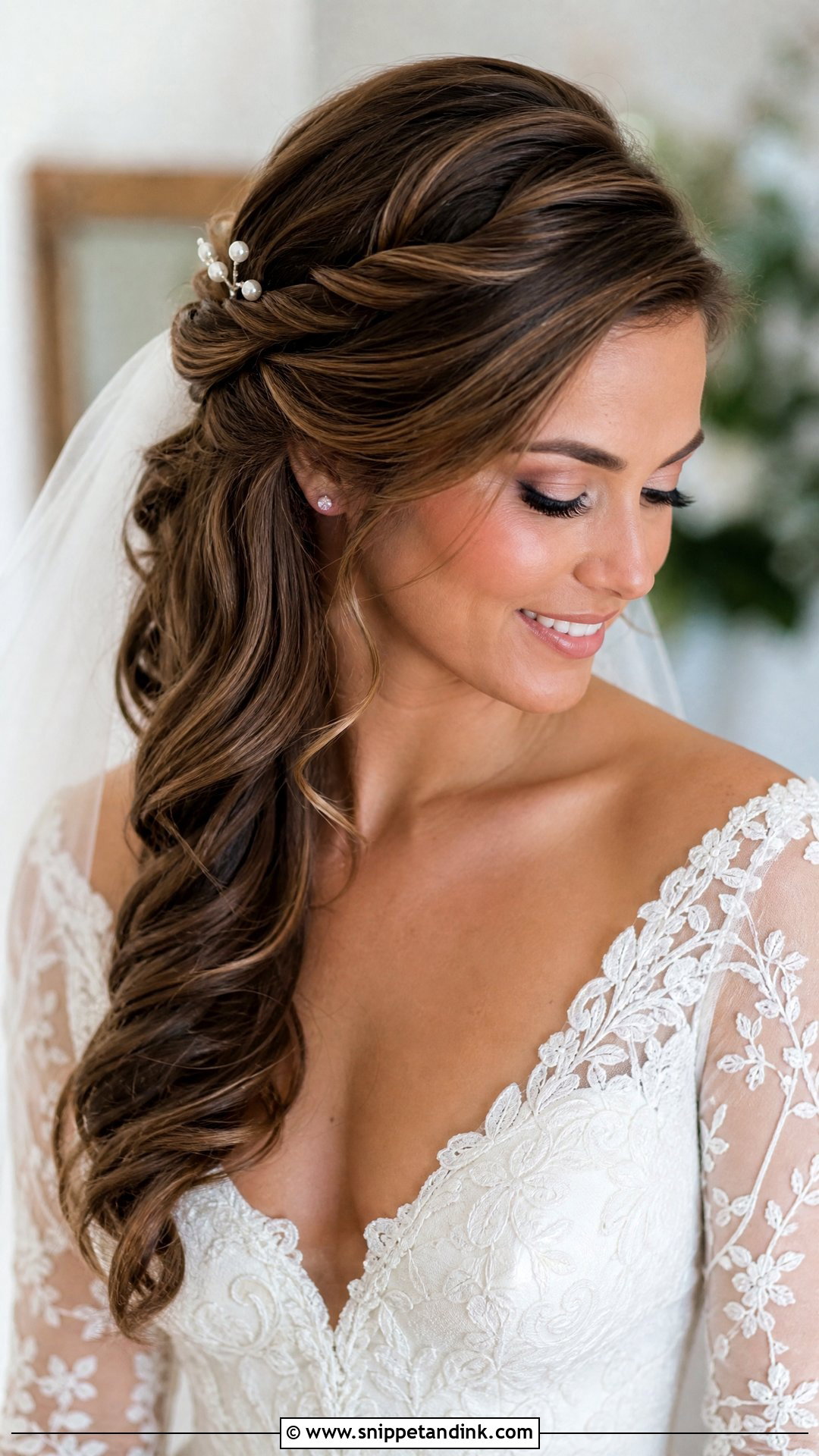
A side half-up style gives you loose hair with a pinned section that actually holds. I take the top section back in a twist or small braid and secure it to one side, and the rest sweeps over the opposite shoulder. That pinned section doubles as the base for a veil comb, which is why I suggest this one often to brides who want both. It suits long layers, medium hair, waves and curls. Keep the front soft; if I pull it too tight, the face loses the softness the rest of the style creates.
8. Side Swept Wedding Updo
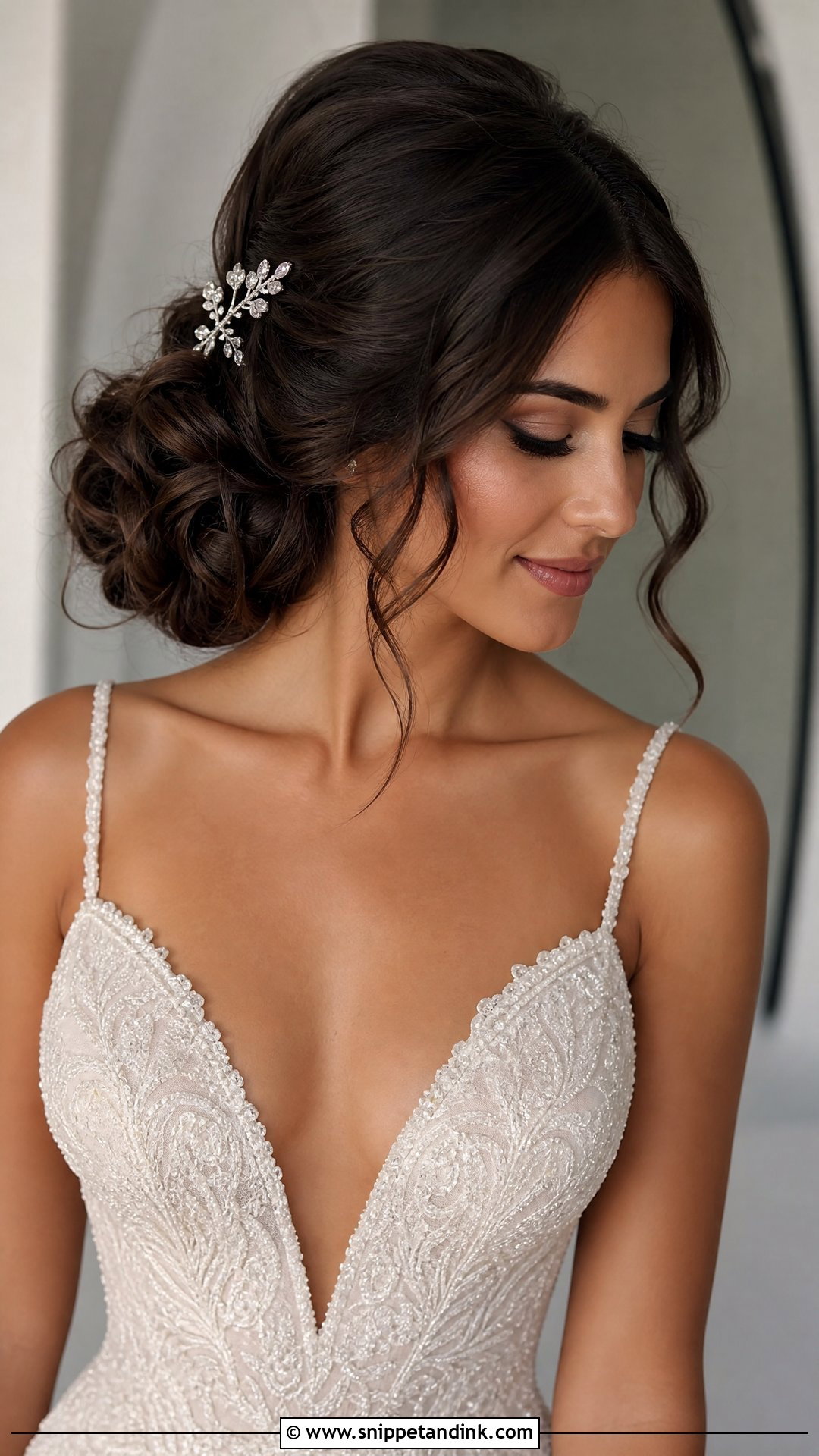
This updo gathers the hair low and slightly off-center, so you keep the side direction with the hair off your shoulders. It can be smooth, twisted or curled, but whatever the finish, balance is the thing I check in the mirror and from behind. A bun sitting too far to one side looks lopsided once a veil goes on. It flatters one-shoulder gowns, high necklines and detailed backs. I build the base on a small hidden ponytail so the weight sits on the elastic rather than on pins alone.
9. Side Swept Low Bun
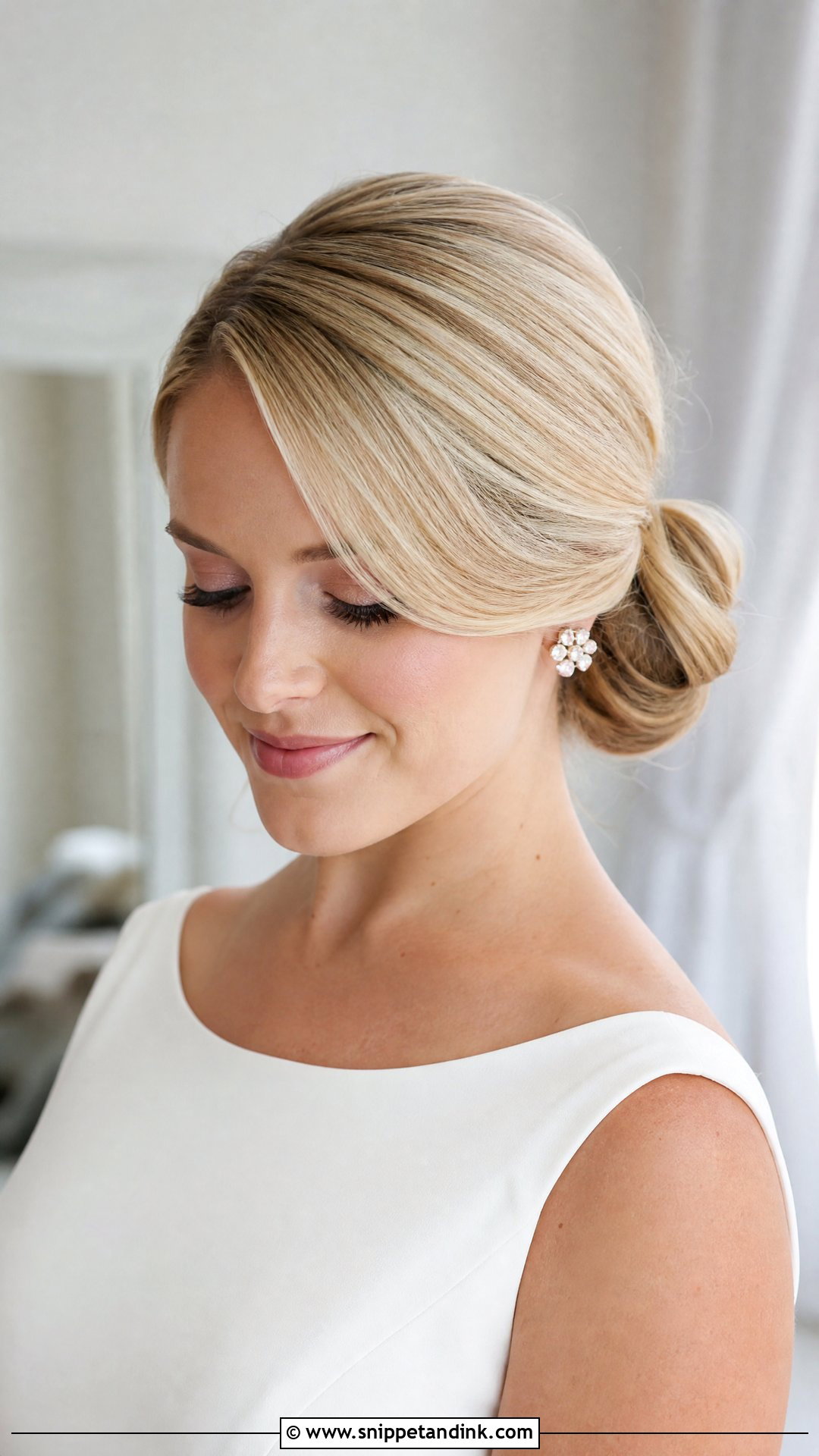
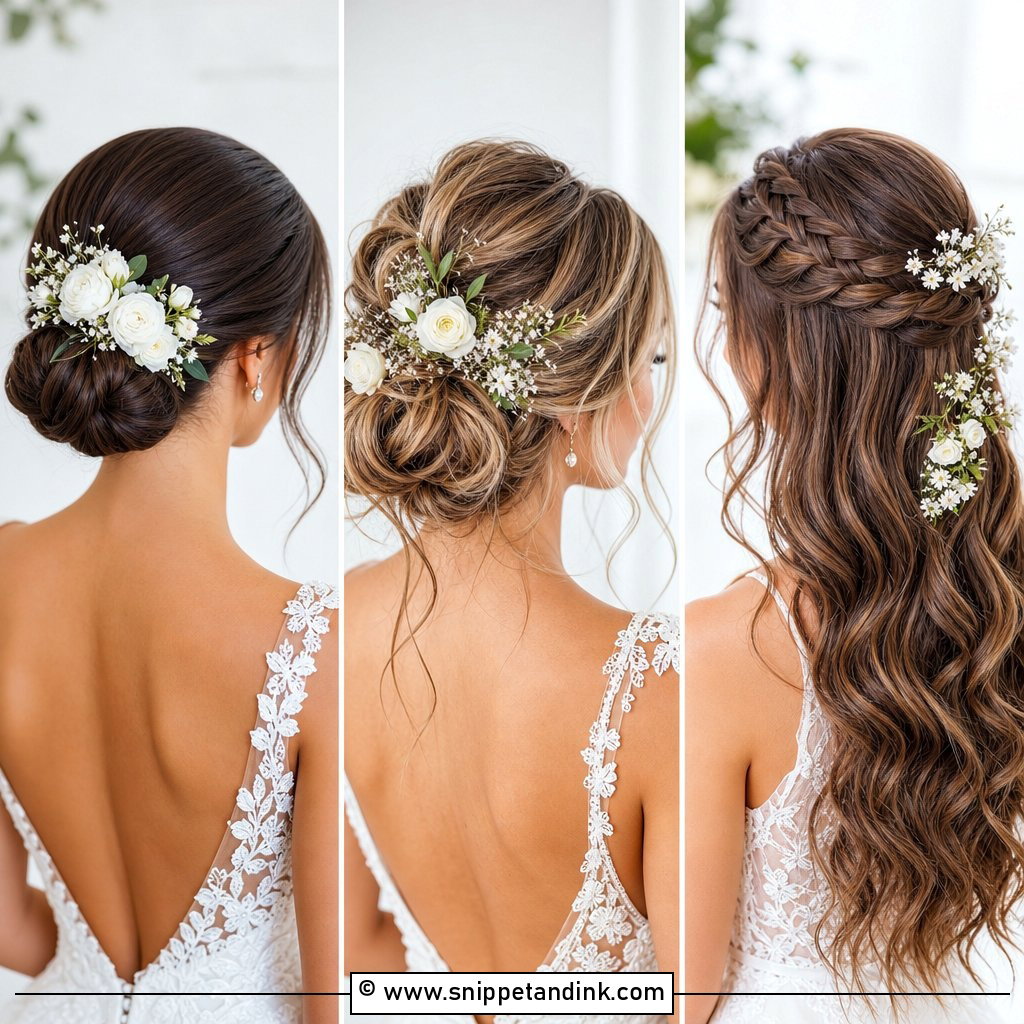
Easy to wear for twelve hours, and that’s why I like it. The hair is parted to one side, smoothed or waved, and gathered into a bun near the nape. It can be sleek for a modern gown or looser for a softer dress. In hot weather, a properly pinned low bun holds up far better than curls left down, which drop as the neck warms. A few soft pieces around the face stop it from looking strict. I finish with a flexible spray rather than a hard one so it moves without cracking.
10. Side Swept Chignon
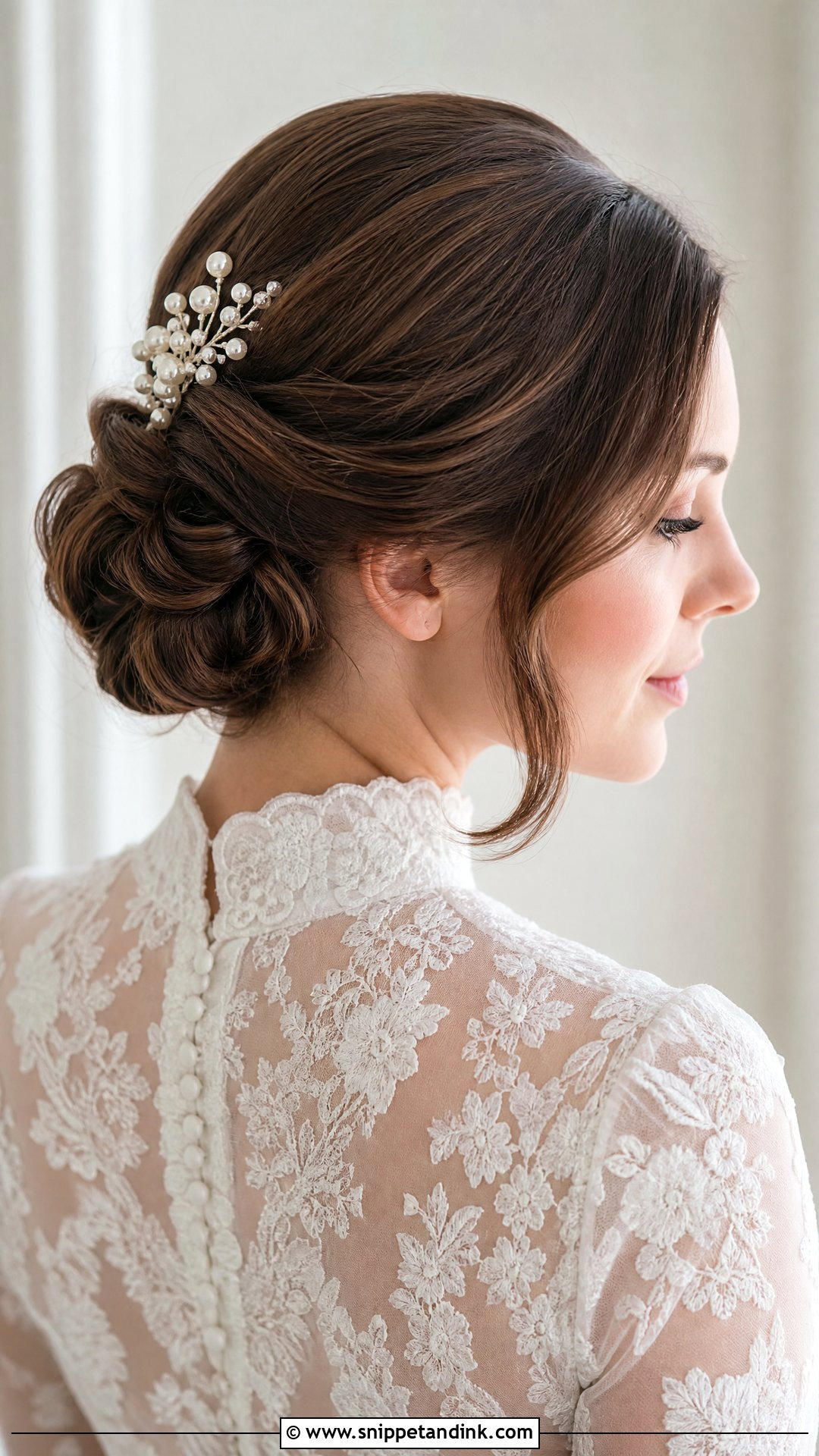
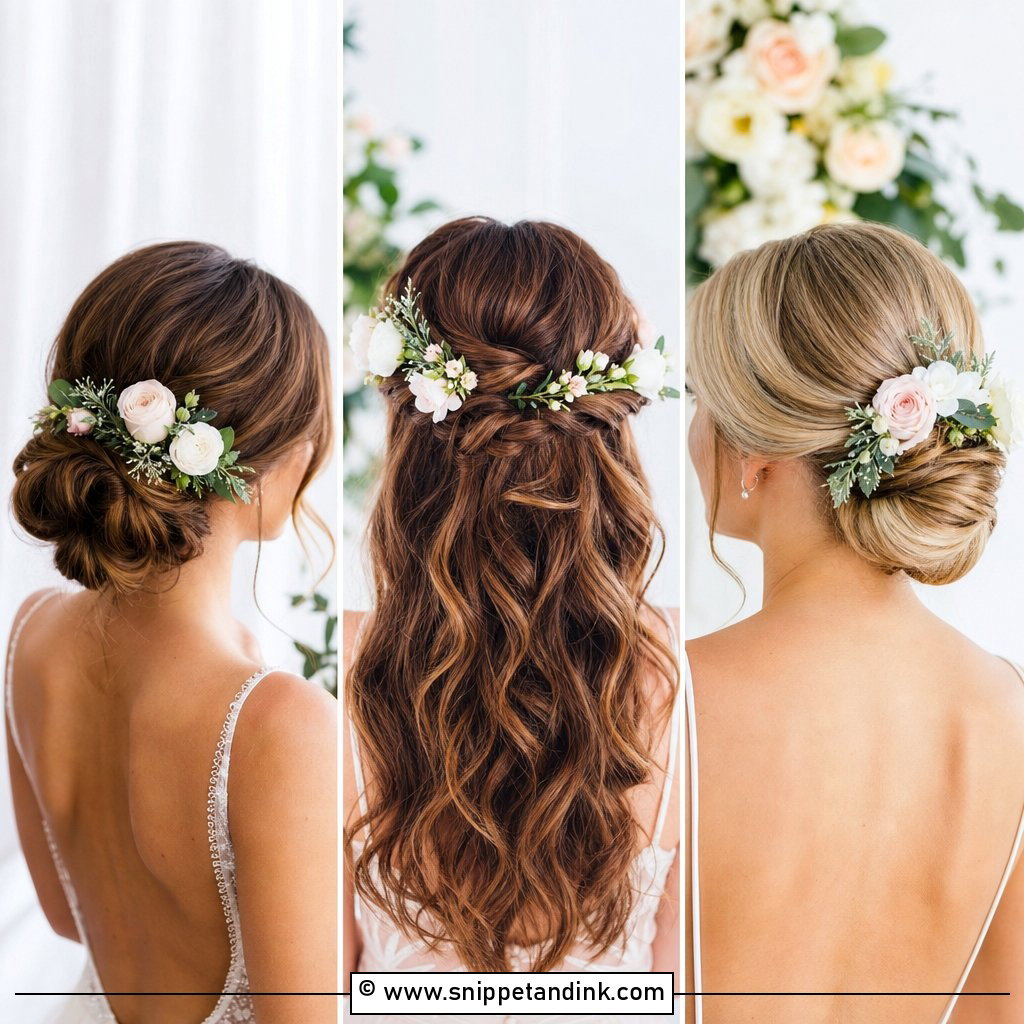
The chignon is a tucked, rolled shape set low and off to one side, and it suits formal ceremonies, courthouse weddings and black-tie receptions equally well. It can be tight and clean or a little airy. Where I place it depends on the face and neckline: lower for long necks and high collars, a touch higher for a strapless dress so the line from neck to shoulder stays open. Fine hair often needs a small donut or padding inside the roll to hold its size. A single accessory above it is plenty.
11. Side Swept Wedding Hair With Veil
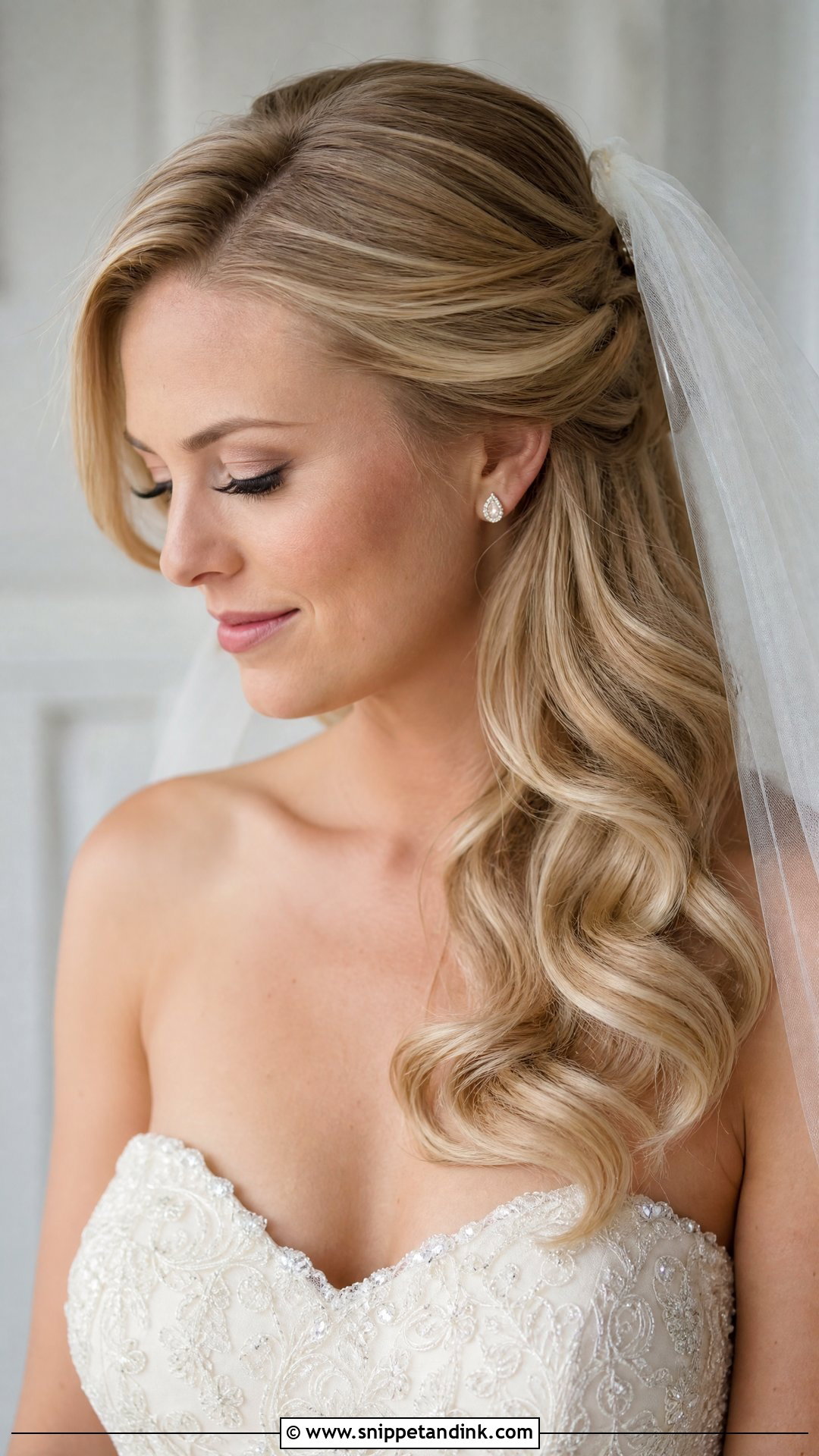
With a veil, the sided style has to be planned around where the comb goes. Waves, low buns, half-up hair and side ponytails can all carry one. For down styles I usually anchor the comb at the crown or just above the pinned side, where I’ve built a little grip with crossed pins. For buns and chignons, the veil can sit just above or tucked under the gathered hair. Bring the actual veil to your trial, not a similar one: weight varies a lot, and a heavy cathedral veil can drag a style that a light fingertip veil sits on happily.
12. Side Swept Wedding Hair With Hair Comb
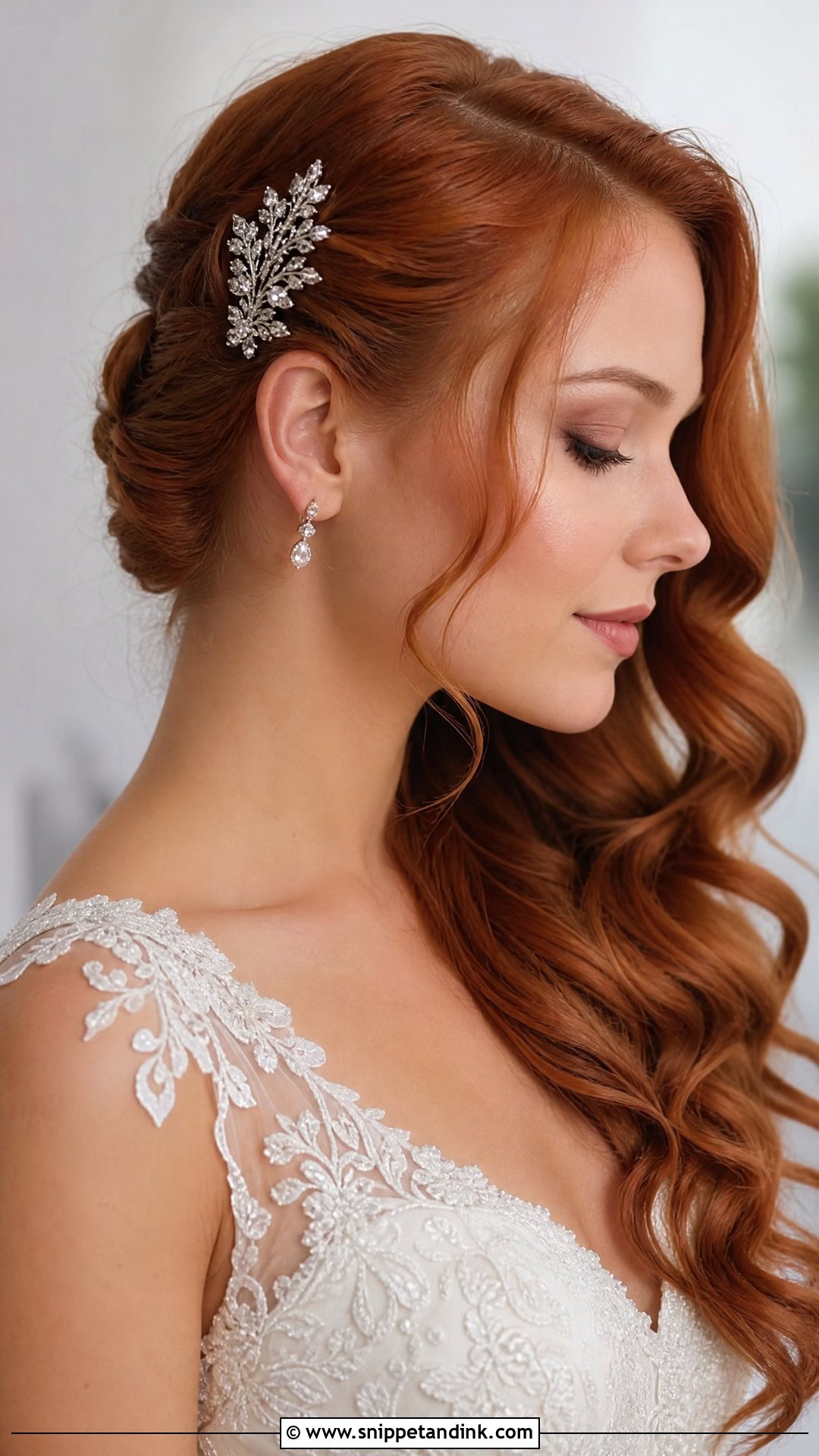
A hair comb adds detail without piling on accessories, and on a side style it also does structural work. I place it on the tucked side, just above or behind the ear, slid into a base of crossed pins so it can’t wobble. Pearl combs read soft, crystals catch the light in evening photos and floral metalwork adds texture. Match the comb’s size to how much hair you have; a large comb on fine hair slides and shows its teeth. It works with waves, curls, half-up hair and low buns.
13. Side Swept Wedding Hair With Flowers
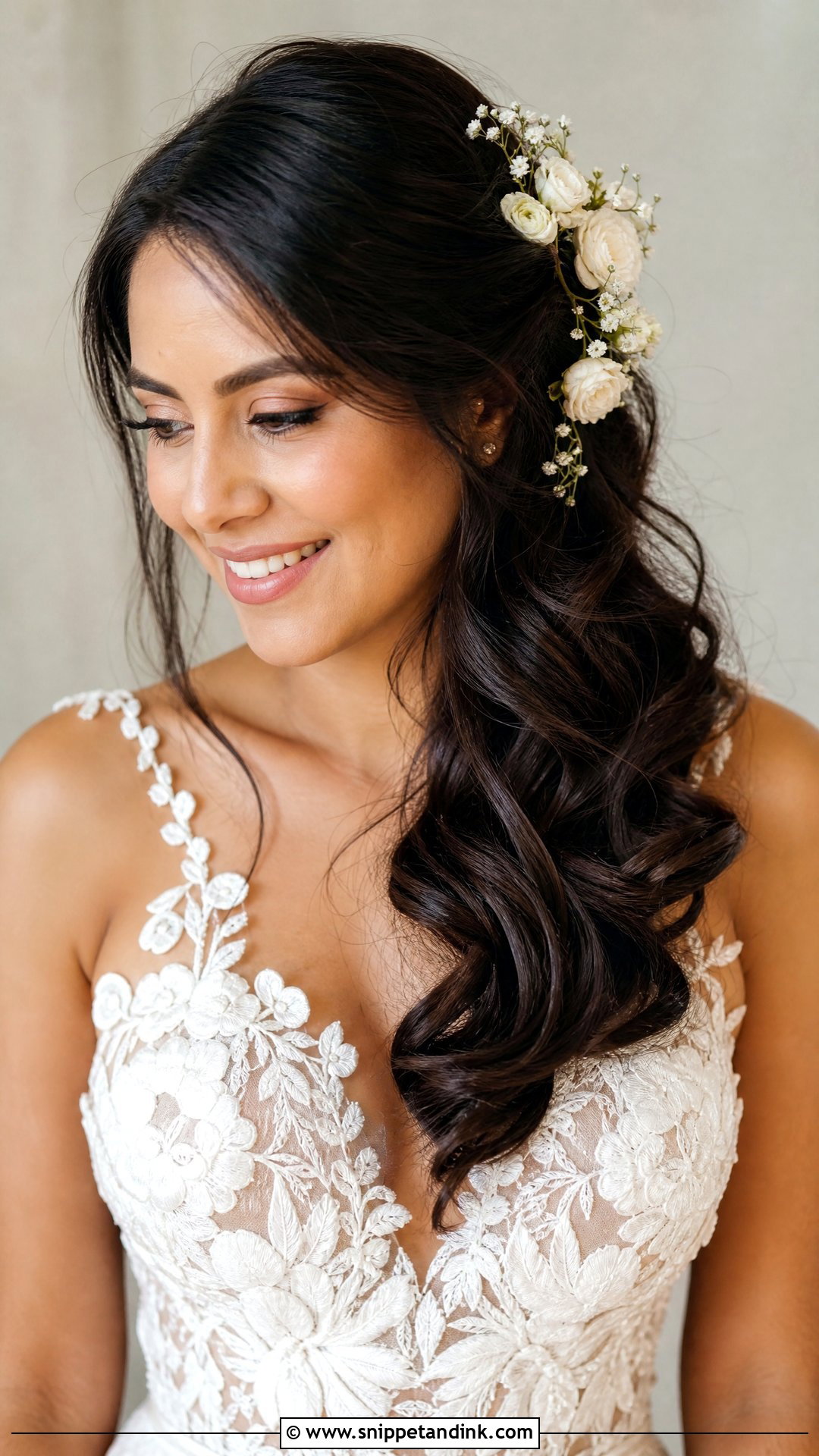
Fresh flowers in a side-swept style suit outdoor and garden weddings, tucked into waves, along a braid or above a low bun. Smaller blooms are easier to secure and lighter on the hair, so they stay put. I ask the florist to wire and tape stems and keep them in the cooler until the last moment; unwired stems wilt quickly against a warm neck. Hardy flowers like spray roses and waxflower last longer than delicate ones such as gardenia, which bruises at a touch. Repeat a bloom from your bouquet, and scatter a few small ones rather than one big cluster.
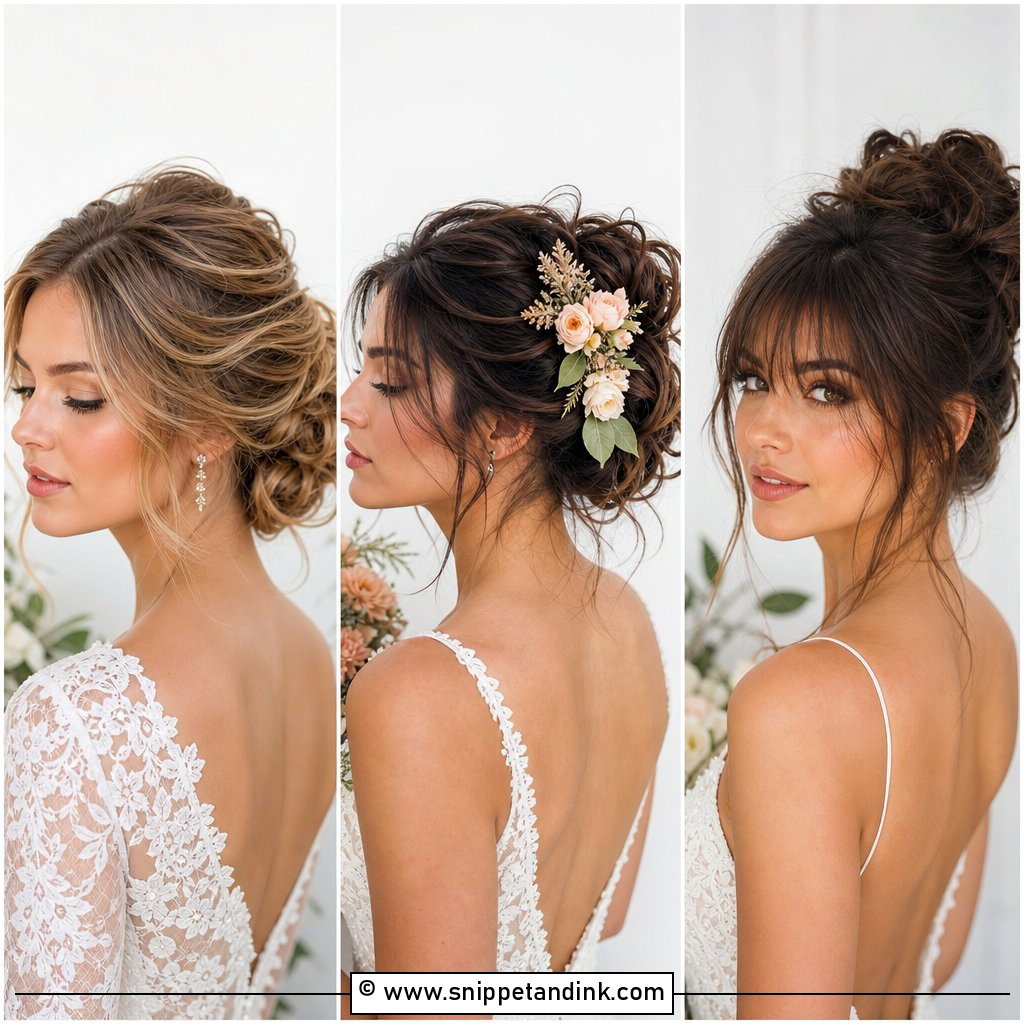
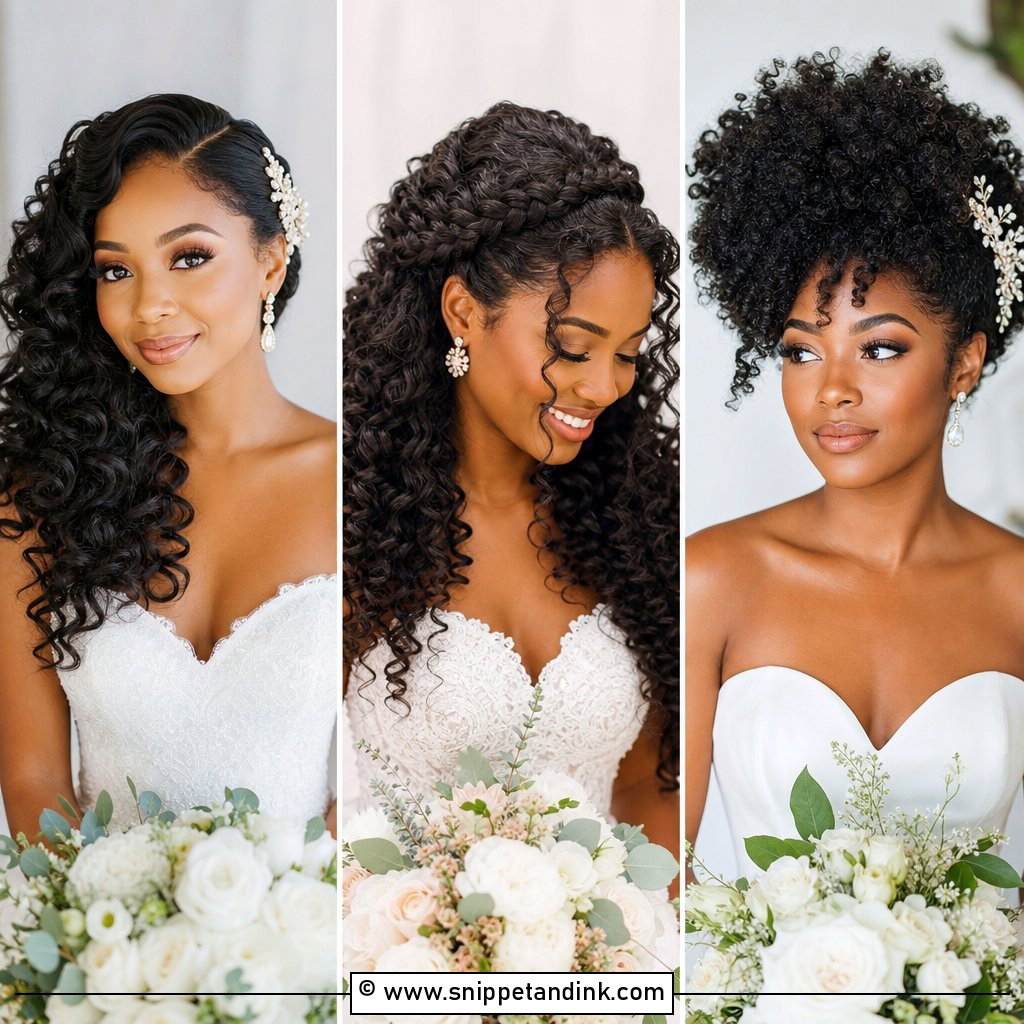
14. Side Swept Wedding Hair For Long Hair
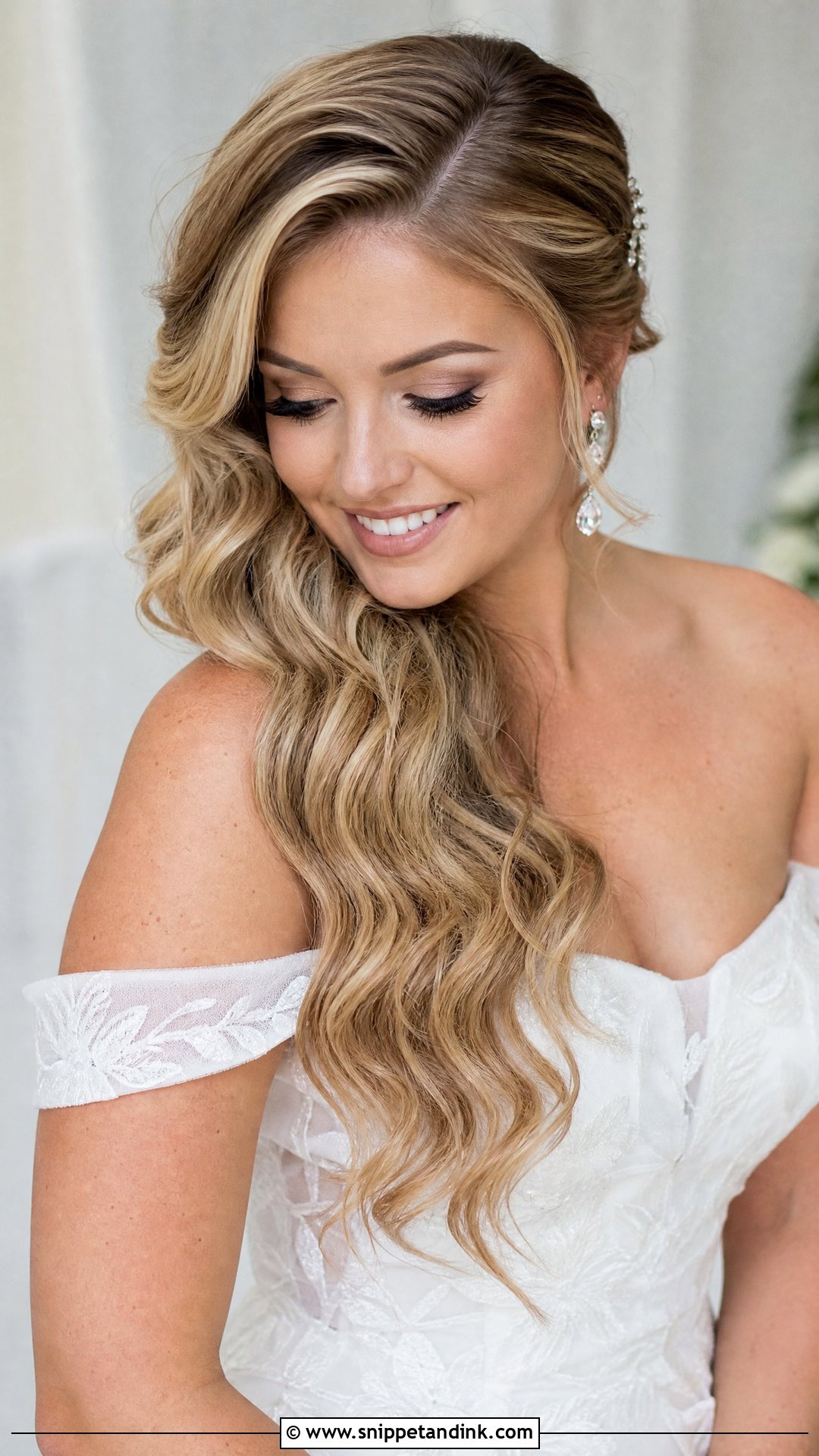
Long hair gives the most room for volume and shape, but its weight works against you. Cascading waves, a full side braid, a curly ponytail or half-up with long ends all work, but every one of them needs proper prep and hidden support. Long layers help the curls hold and keep the bottom from looking heavy. If your hair is very thick, I’ll create controlled volume at the roots and build a firm anchor on the tucked side, often a tiny braid running behind the ear that the pins grip into. Open necklines and statement earrings suit it best.
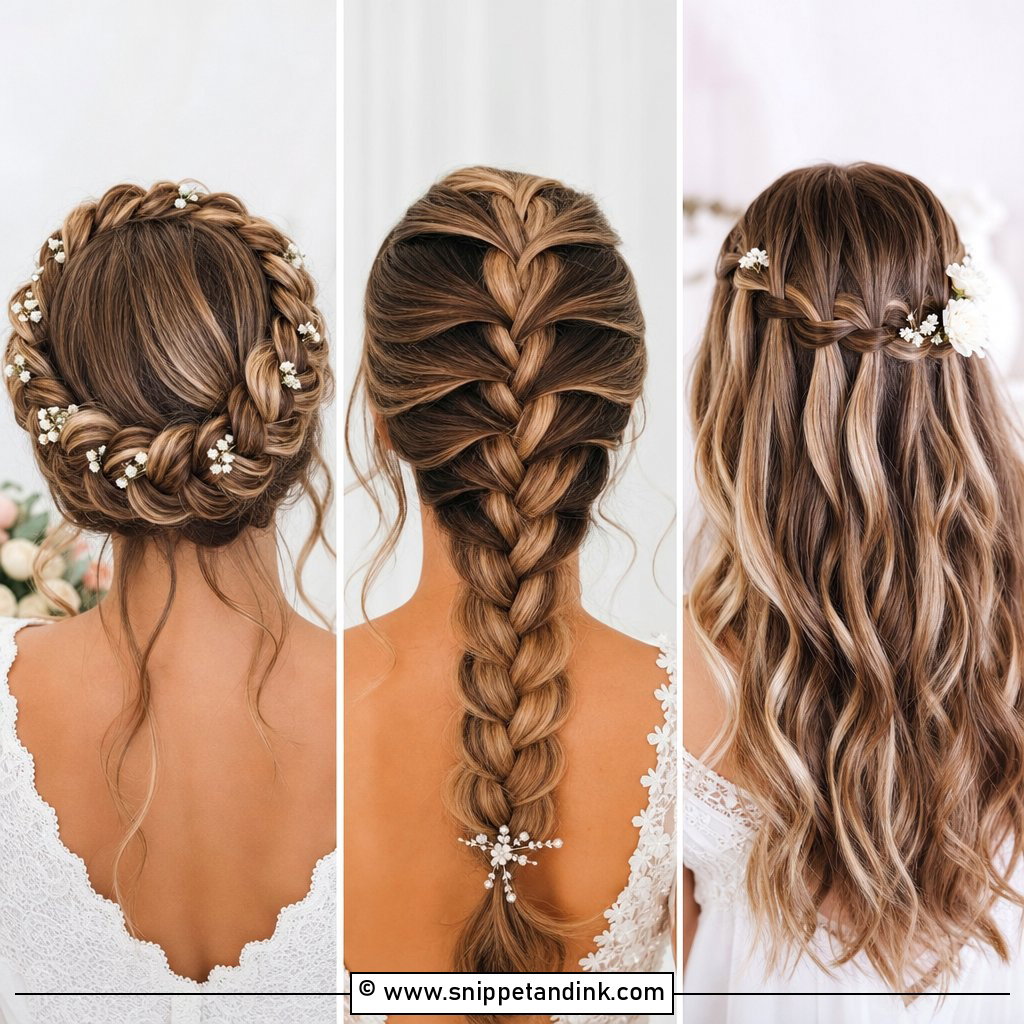
15. Side Swept Wedding Hair For Medium Hair
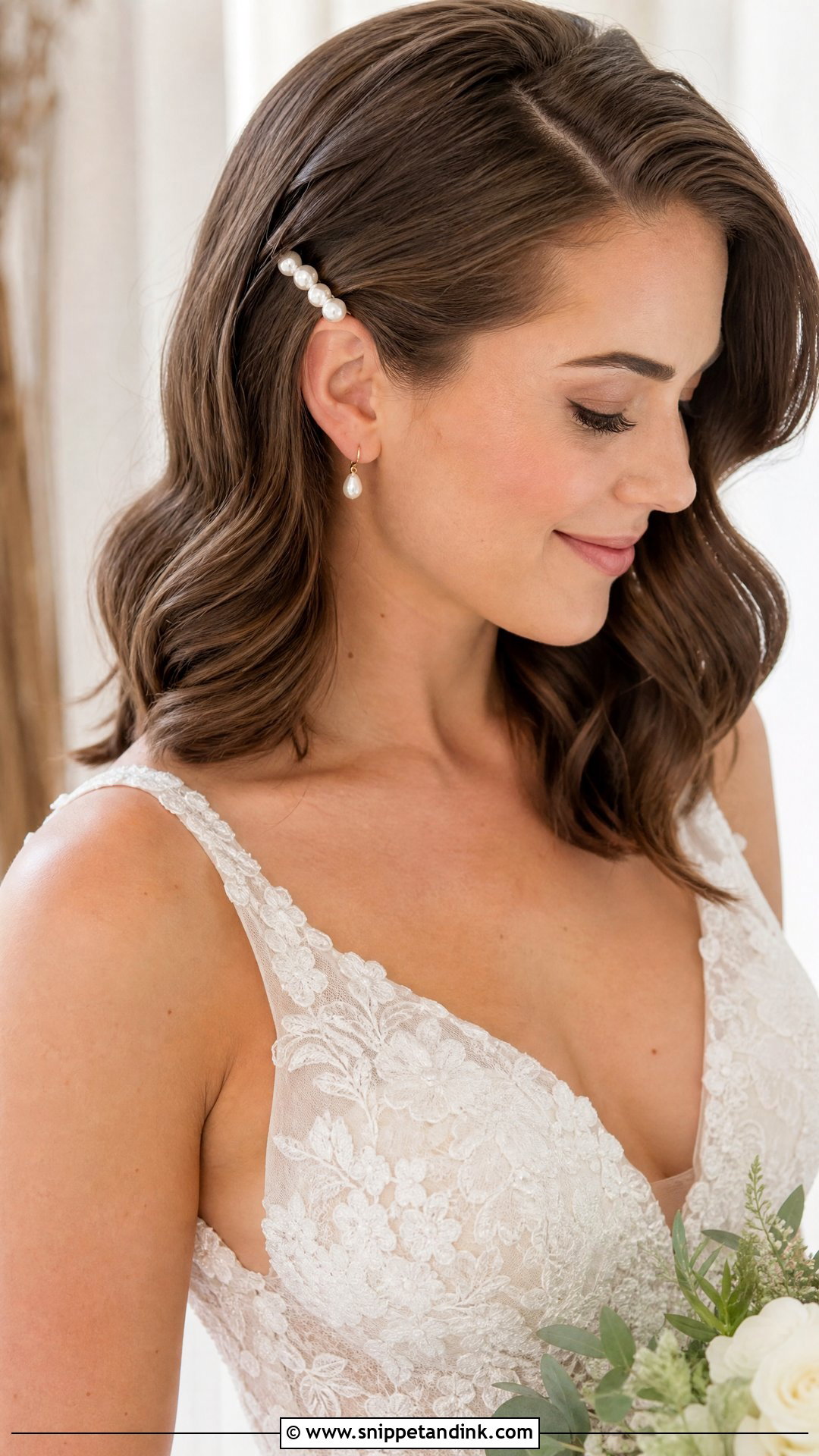
Shoulder and collarbone length looks every bit as bridal as long hair once the shape is planned. Side waves, soft curls, tucked bobs and half-up sections all suit it. This length actually holds curl better than very long hair because there’s less weight pulling it straight. I build volume on the sweeping side and keep the pinned side neat, but the ends need to reach the shoulder to read as a sweep. If yours don’t quite, a few clip-ins on the sweeping side solve it.
16. Side Swept Wedding Hair For Short Hair
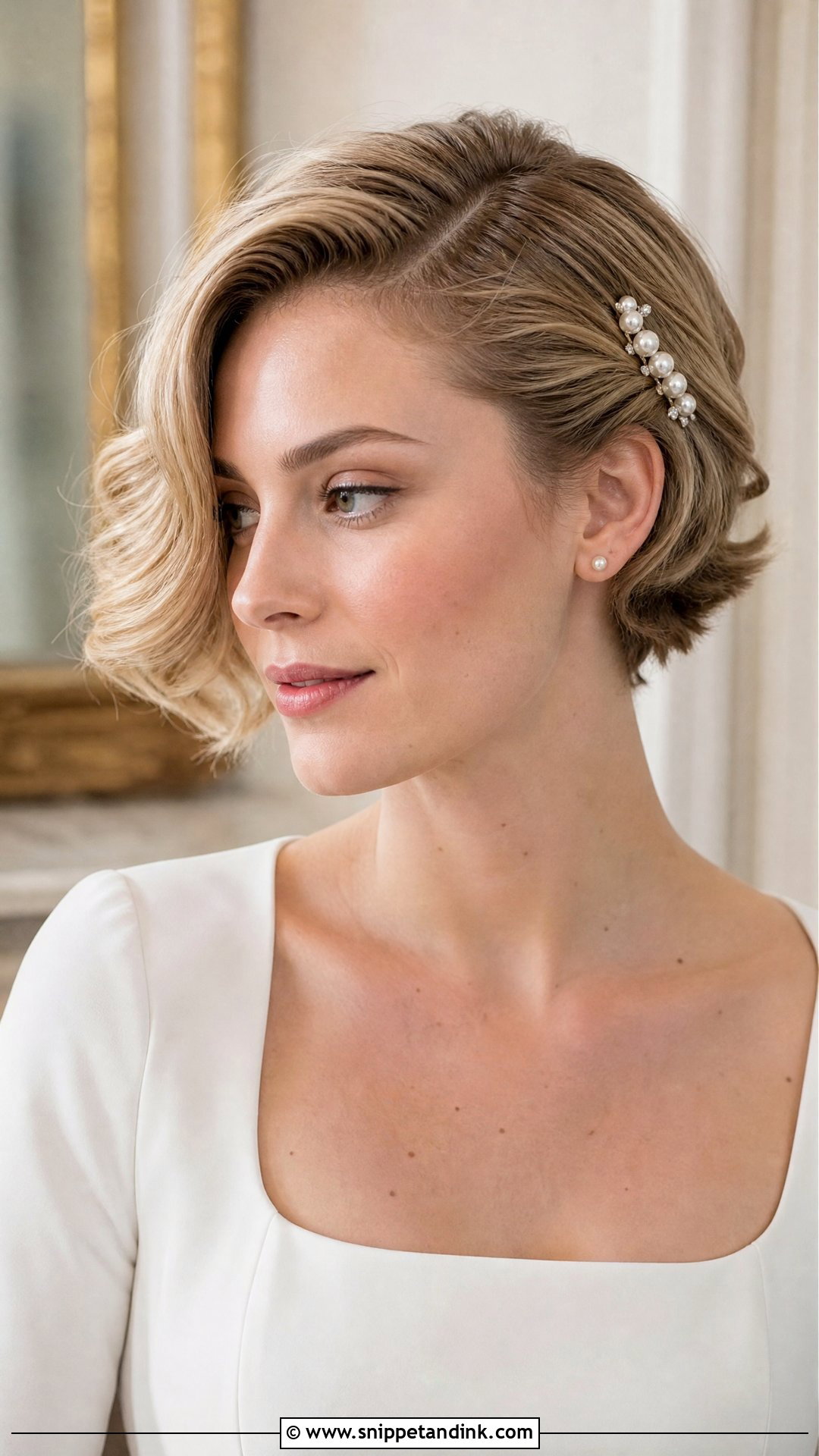
Short hair takes a side sweep better than most brides expect. A bob, lob, pixie or cropped cut can be worn with a deep part, a smooth bend, soft curls or a tucked side. My aim is to enhance the haircut you already have, not disguise it. That usually means more shine, defined texture and a deliberate part rather than any extra pieces. Earrings, a headband or delicate pins are far more visible with short hair, so choose them knowing they’ll be in every close-up. Get a trim about two weeks before, so the shape is fresh but not freshly cut.
17. Side Swept Wedding Bob
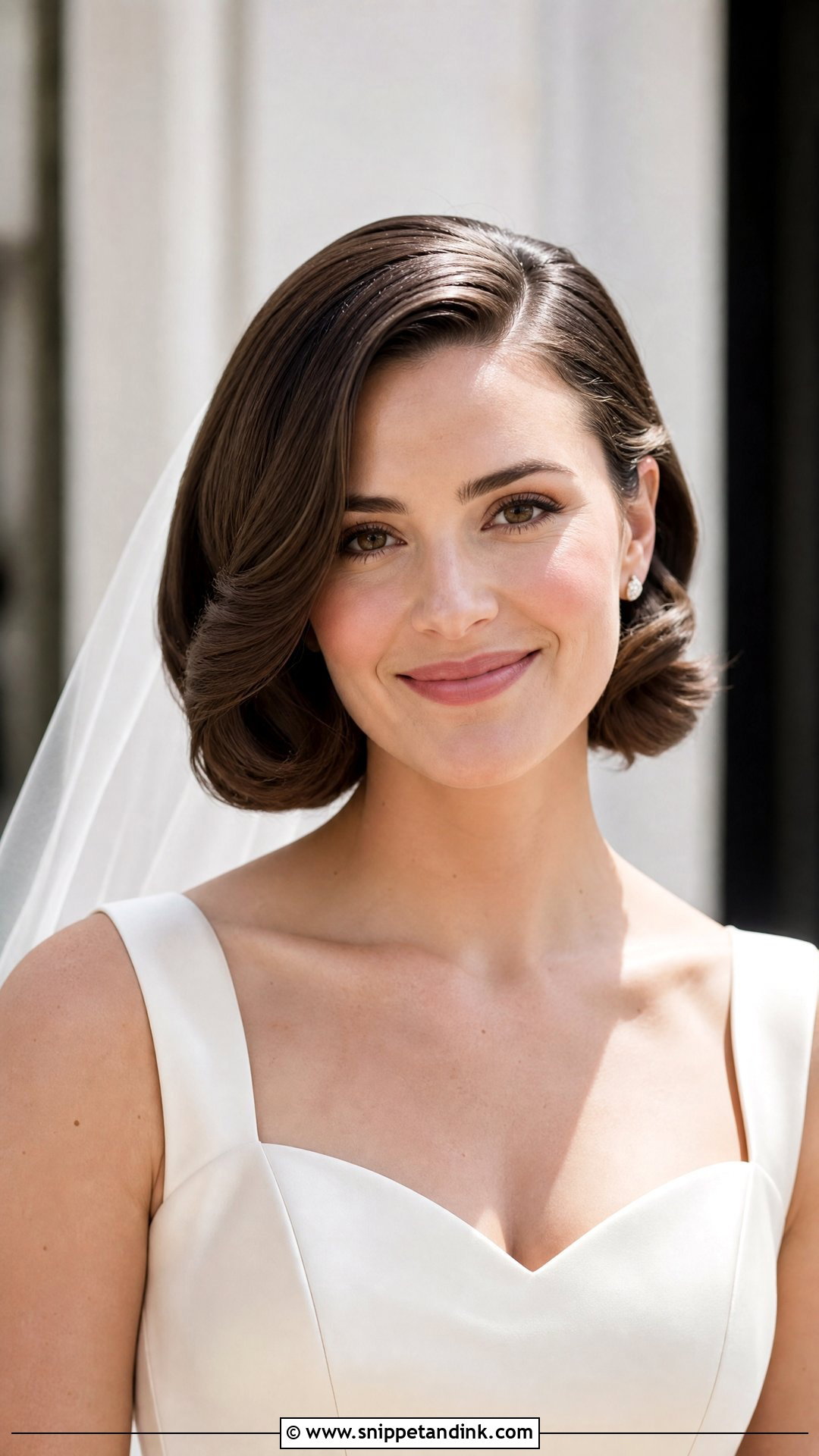
A side-swept bob keeps clean lines with a little softness. I style it sleek with a deep part, set it into vintage bends, or tuck one side behind the ear with a comb. A blunt bob looks softer with loose waves; a layered bob shows its shape best brushed smooth to one side. It frames the jaw and cheekbones well in portraits. The one thing I watch is the tucked side, because bob-length hair escapes from behind the ear as the day goes on; two crossed pins hidden at the nape keep it there.
18. Side Swept Wedding Pixie
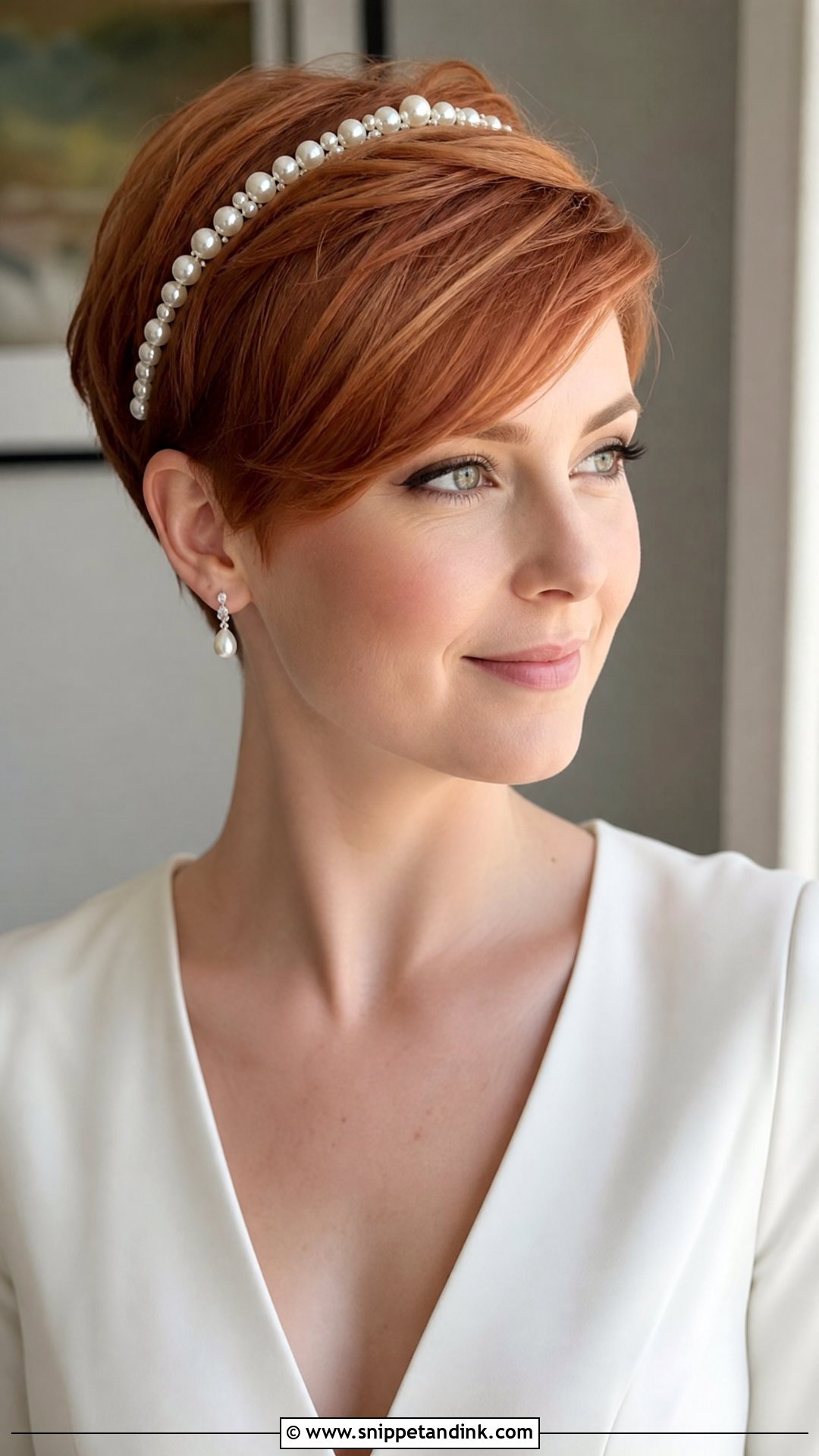
On a pixie, the sweep comes from the part and the roots, not from length. I deepen the part, lift the roots on the heavy side and brush the front across the forehead. Products matter more than tools here: a light paste or pomade gives hold without stiffness. It works with sparkly clips, pearl headbands or a birdcage veil, and it leaves your makeup and jewelry fully on show. The finish can be sleek or textured. Have the front shaped at your last cut rather than the week of the wedding.
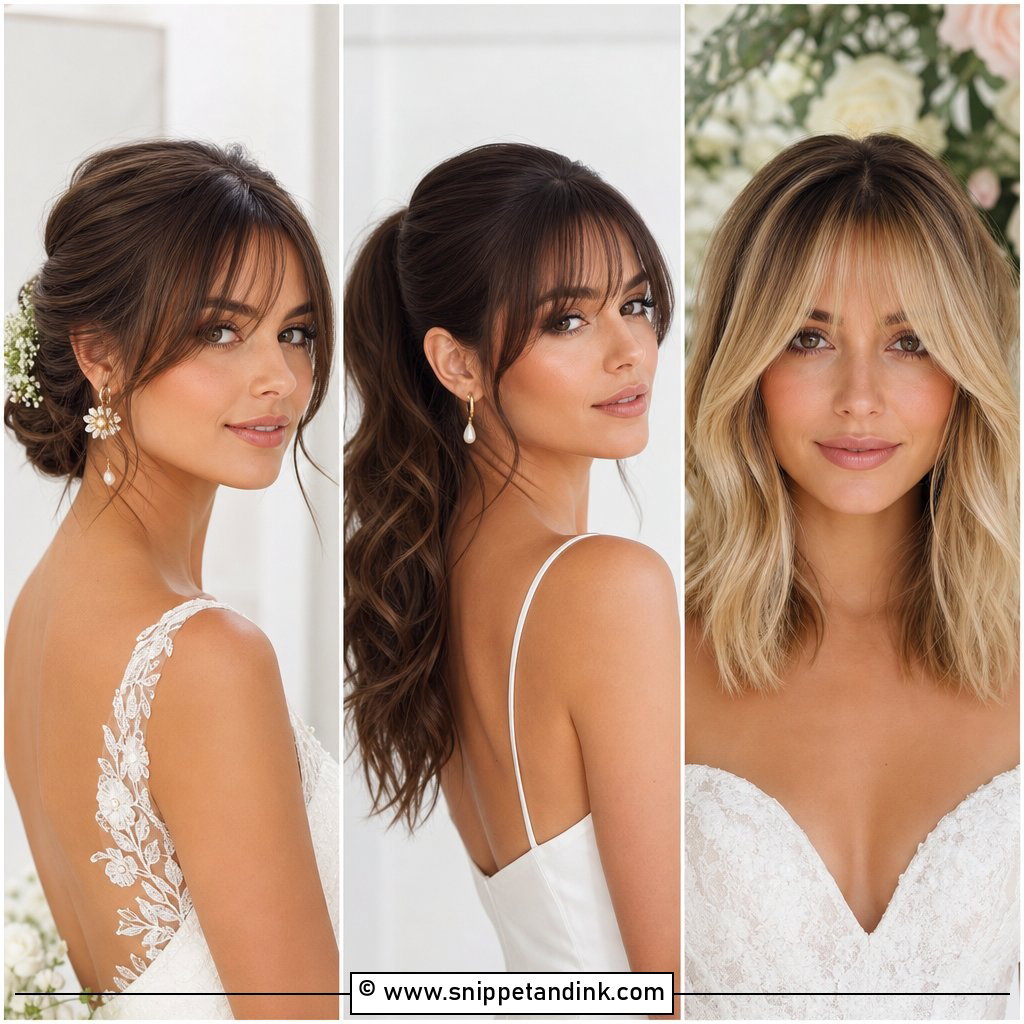
19. Side Swept Wedding Hair With Bangs
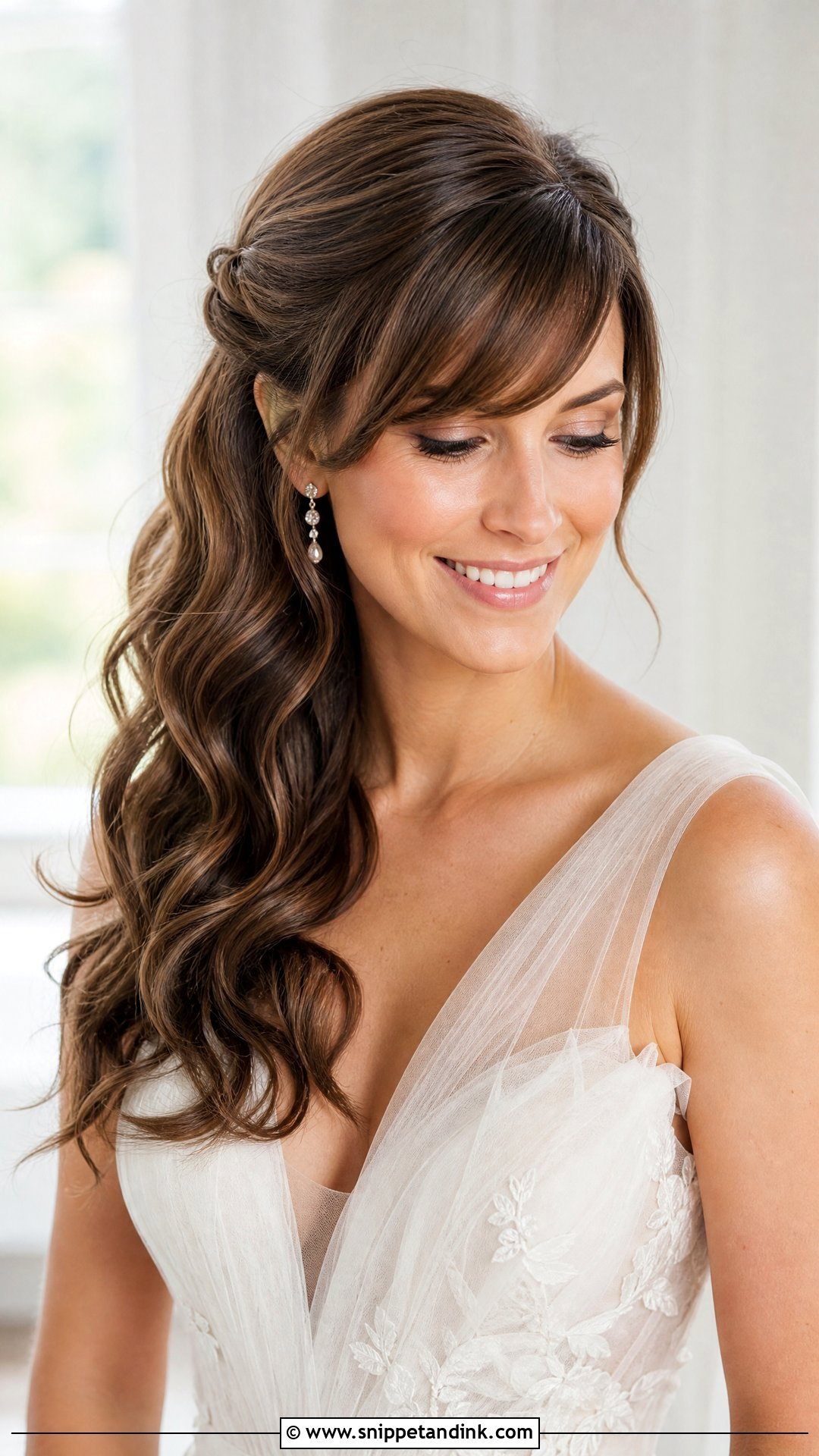
Bangs need to belong to the side sweep, not sit apart from it. Curtain bangs, side bangs and longer face-framing pieces all blend well when I blow-dry them in the direction of the sweep. Straight-across bangs are much harder to blend and tend to split. At the trial, I watch how the fringe moves when you smile, turn and hug someone, because that is when it parts or falls in your eyes. A small amount of styling cream keeps flyaways down while leaving the front touchable.
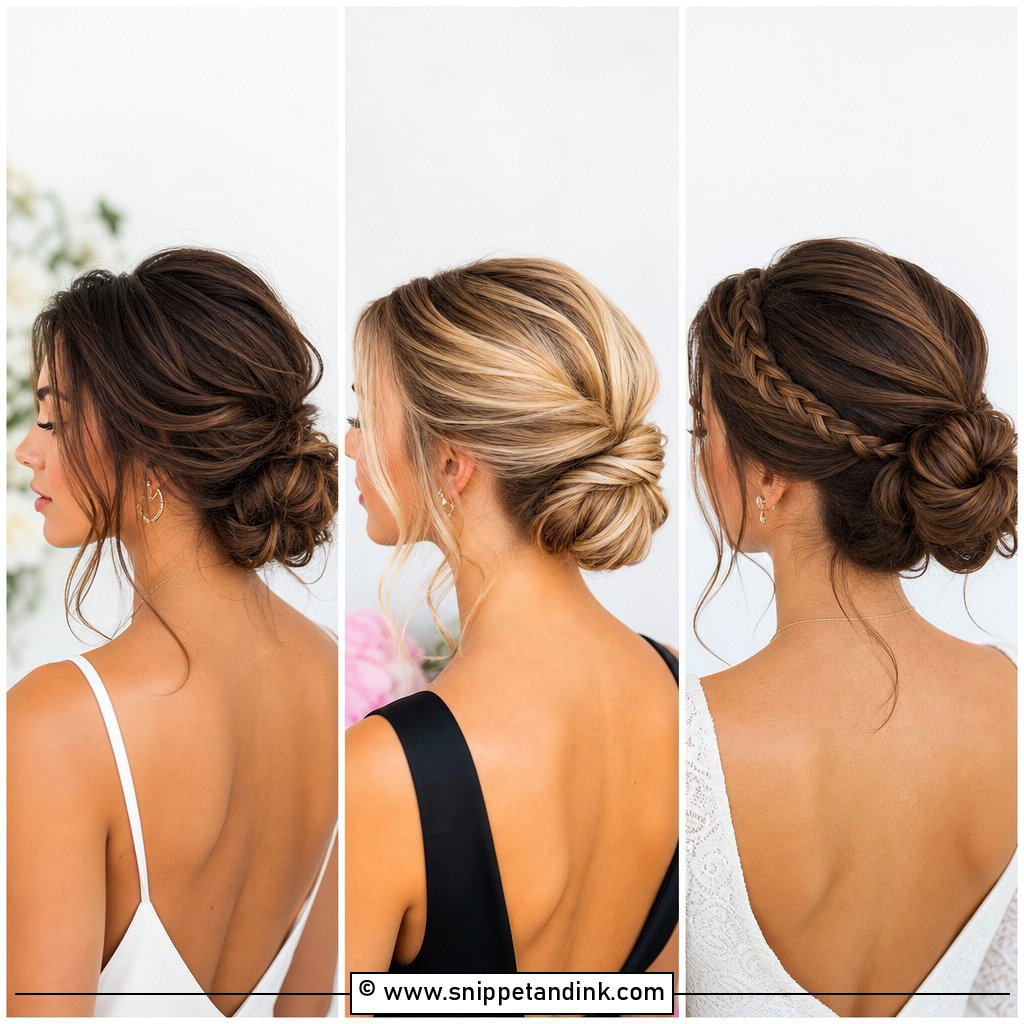
20. Side Swept Wedding Hair With Pearls
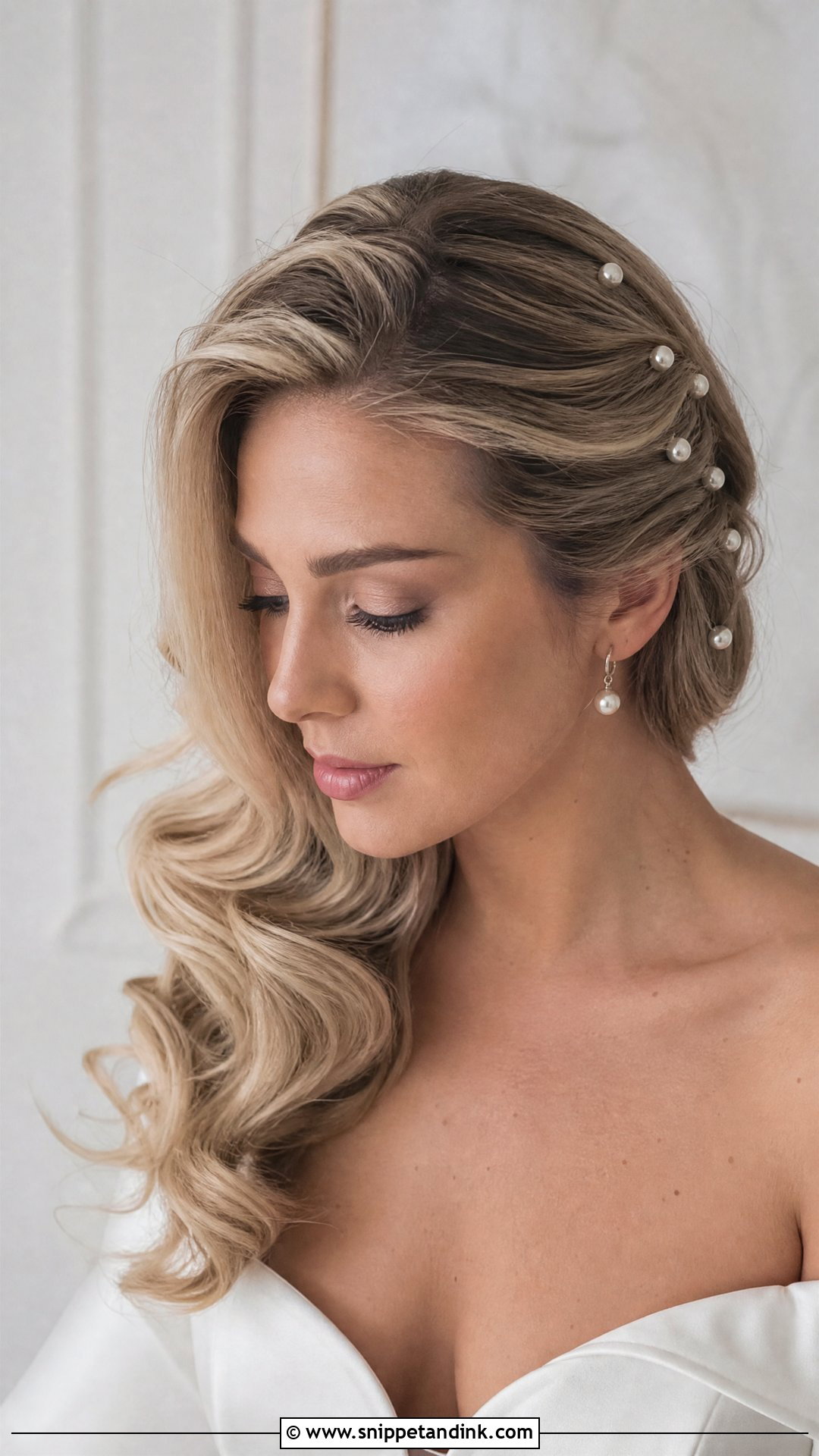
Pearls work as pins, a comb, a vine or scattered accents through waves and braids, and a sided style gives them room to show. I place them along a line, following the curve of a bun or the edge of a braid, rather than dotting them at random, which can look like debris from a distance. Three to five pins usually say more than fifteen. Pearl pins grip less than plain bobby pins, so I always slide them into hair that’s already secured. They suit satin, lace, tulle and simple modern gowns.
The Hidden Anchor Behind the Ear
Every side-swept style depends on what’s holding the tucked side. All of the hair is pulling toward one shoulder, so if that side is only held by a couple of loose pins, it creeps forward by the first dance. My usual base is a line of bobby pins crossed in pairs down the back of the head, just behind the ear, sometimes over a tiny braid so the pins have something to grip.
Very thick or long hair often needs more: a small hidden elastic gathering the bulk at the nape before it’s directed over the shoulder. Fine, slippery hair needs texture spray or dry shampoo worked in first, or the pins slide straight out. If you’re doing your own hair or a friend is, this anchor is the step not to skip.
What Happens to a Sided Style by the Last Dance
Hair resting on a warm shoulder all day does drop. The curls nearest the neck relax first, and the section lying on the dress gets flattened by hugs and sitting back in chairs. I curl those pieces slightly tighter than the rest for that reason, so they relax into the right shape rather than straight.
- Self-tanner and body makeup transfer onto the hair that rests on your shoulder, and from there onto a pale dress. Let any tan set fully the day before.
- A strapless or beaded bodice catches hair as you move; a light serum on the ends reduces snagging.
- Pack a mini kit for your maid of honor: six bobby pins, a small comb and a travel spray are enough to re-secure the tucked side between portraits and the reception.
Your Part Line Decides More Than You Think
Wedding siders hairstyles show off your face, neckline and earrings while keeping the hair soft, which is why they stay popular. Your length, texture, dress and venue narrow the choice quickly. Hollywood waves bring glamour, a braid or curly sweep feels relaxed, and a low bun or chignon gives the most staying power. Bring a few saved photos, your veil and your accessories to the trial, and wear something with a similar neckline to your dress so we can see the full line together.
You'll Like These Ideas:


Leave a Reply