
Victorian hair was built on smooth parts, controlled curls and a lot of hidden structure, and that’s the part most modern versions skip. When I style a Victorian look for a bride, I’m aiming for the mood of the era rather than a museum copy: a clean part, shape at the back of the head, curls placed with purpose. It suits a high-neck lace gown, puff sleeves or a cathedral veil, and it can give a plain satin dress some history. Estate venues and garden ceremonies carry it naturally. These fifteen styles run from low chignons to ringlets and pompadours, with notes on how each one is built and who it suits.
What Made Hair Look Victorian in the First Place
The Victorian era ran for more than sixty years, and the hair changed a lot across it. When a bride shows me an inspiration picture, I first work out which part of the period it leans toward, because the techniques differ.
Earlier in the era
Think of a strict center part, smooth bands of hair drawn down over the tops of the ears and a knot or coil low at the back. Ringlets often hung at the sides of the face. This is the version that suits a simple bodice and a long veil.
Later in the era
Height moved up the head. Hair was swept back and lifted at the front and crown, often padded underneath, with curled fringes and fuller shapes that lead toward the pompadour. That version needs a statement collar or puffed sleeves to balance it.
Women of the period padded their styles with pads made from their own saved hair. I use modern mesh or hair pads matched to your shade for the same reason: they give fine hair the volume these shapes need without hours of teasing.
1. Victorian Wedding Chignon
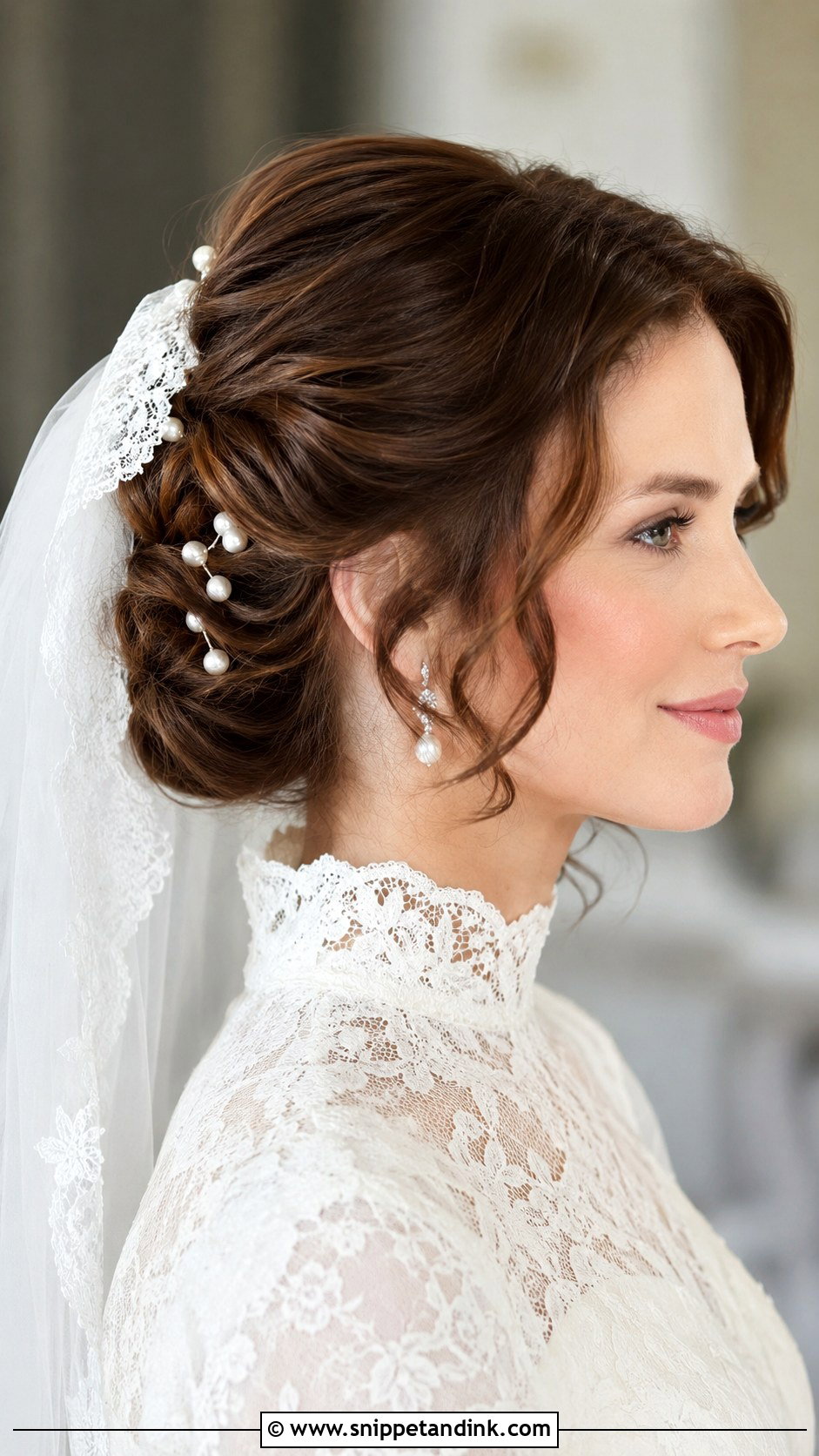
The chignon is where I’d start anyone nervous about looking costumed. Hair is gathered low at the nape, shaped into a smooth knot and softened with a few small curls by the temples or ears. The detail that makes it Victorian is a little lift at the crown; flatten that and it turns into a plain modern bun. I build the lift with light backcombing underneath the top section, then smooth the surface over it. A veil sits just above the knot, and one or two pearl pins are plenty.
2. Victorian Wedding Ringlets
Victorian wedding ringlets fall beside the face while the rest of the hair is pinned back or shaped into an updo. Real ringlets are long spiral curls, so I wrap small sections vertically around a narrow barrel and pin each one while it cools, which is what keeps the coil from dropping. Glossy and separate is the goal; brushed-out ringlets turn into ordinary waves. With a high neckline they frame the jaw nicely. Want a softer version? Loosen them slightly and let them blend into a low bun or half-up shape.
3. Victorian Wedding Braided Bun
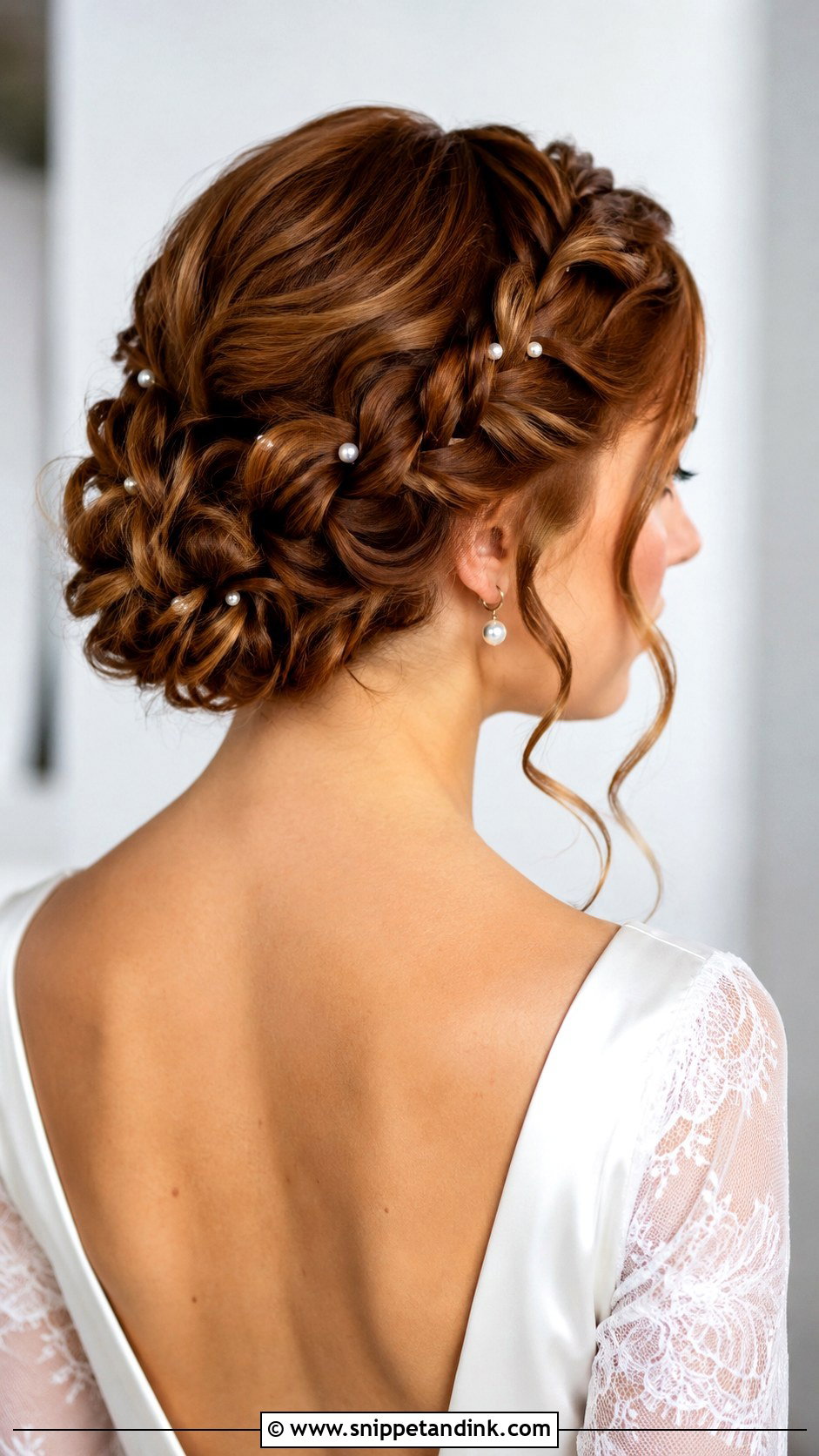
Thick hair is what I’d pick this braided bun for. A braid compresses a lot of hair into a smaller, firmer shape, so a heavy head of hair stays secure and doesn’t pull at the scalp by late afternoon. The braid can run along the sides, wrap into a low bun or be woven through the bun itself. Small flowers and combs tuck straight into the plaits without extra pins. Fine hair can still wear it, though I’d usually pancake the braid wider or add a clip-in piece so it doesn’t look thin.
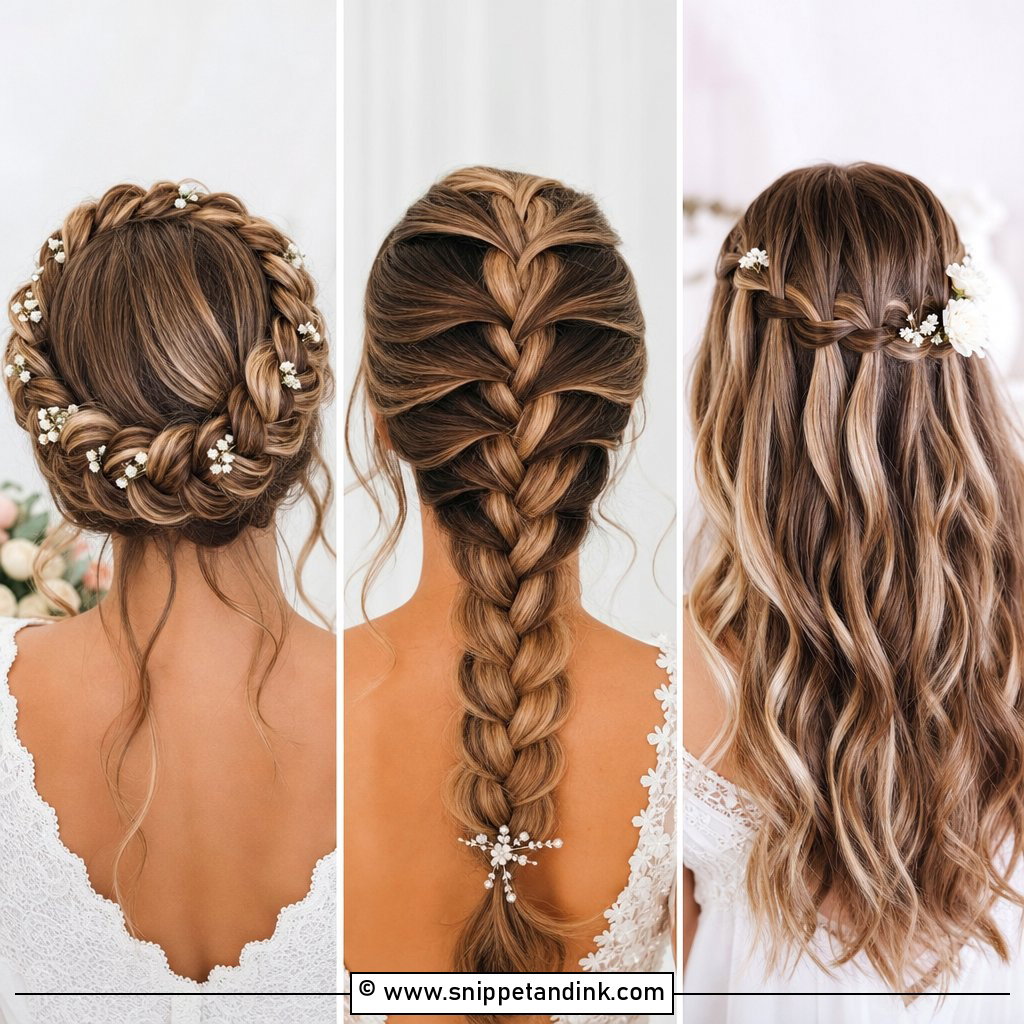
4. Victorian Wedding Crown Braid
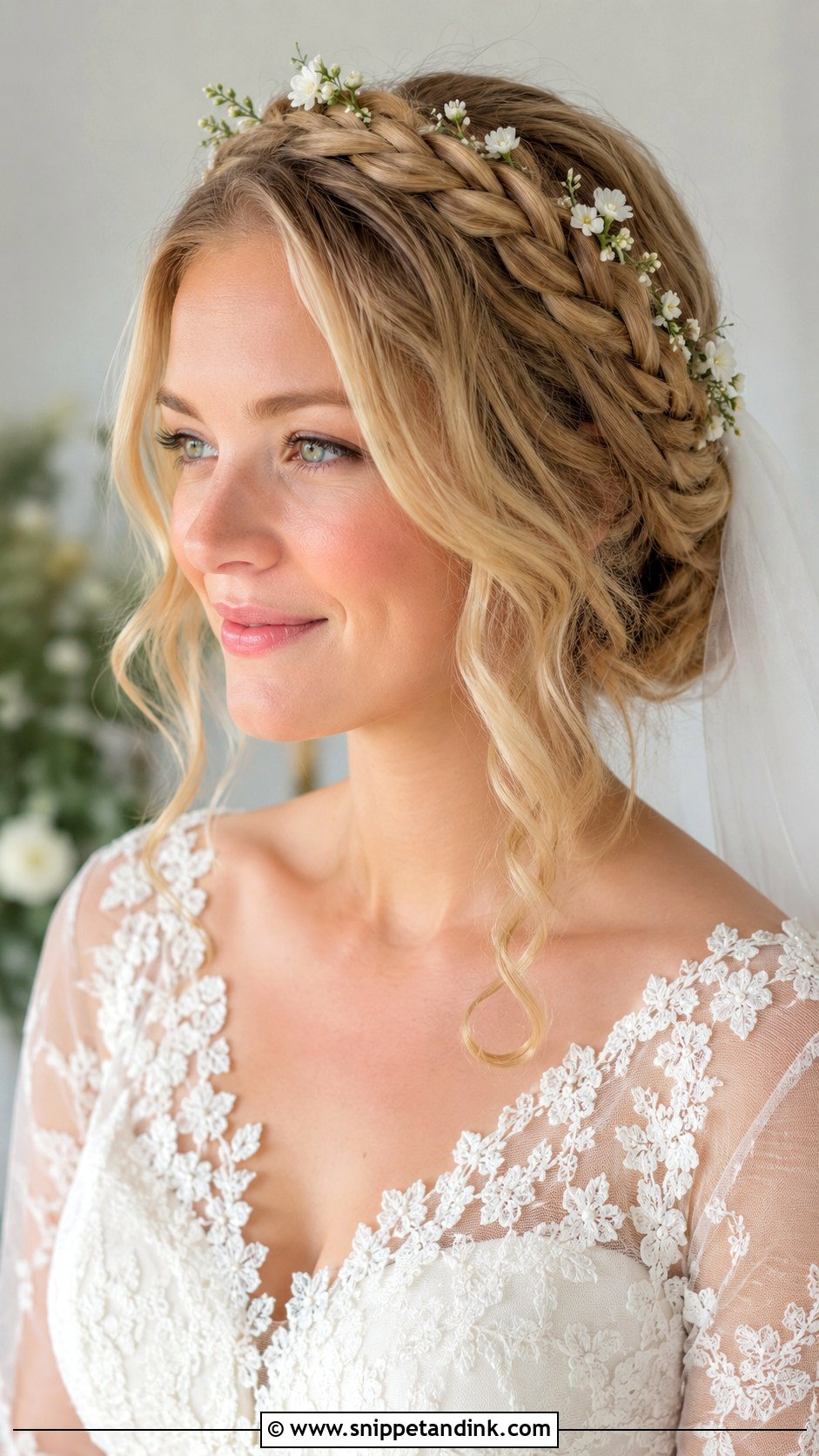
A crown braid wraps around the head like a soft halo and keeps every strand off the neck, which matters outdoors in warm weather. It needs length: the braid has to travel from one side, around the back and over the top, so hair shorter than shoulder blades usually needs a few extensions braided in. I pin it with U-pins along the inside edge so nothing shows. Sleek reads formal; pulled loose, it softens. Set the veil underneath the braid so the plait still shows in photos taken from behind.
5. Victorian Wedding Gibson Tuck
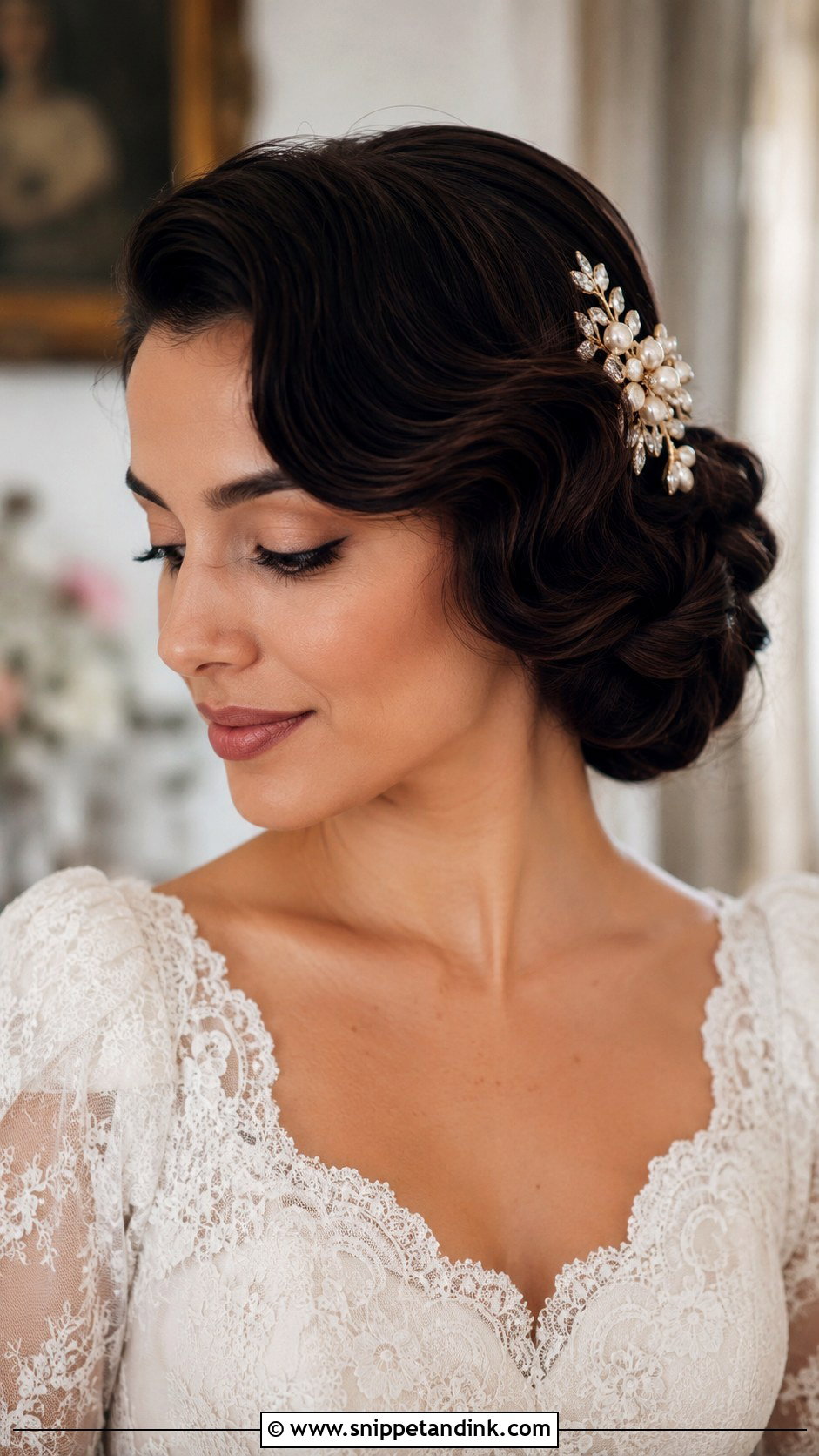
The Gibson tuck rolls hair inward at the back into a rounded shape with soft volume at the crown. It actually takes its name from a later turn-of-the-century illustration style, but it sits comfortably beside Victorian dresses and gives you a gentler alternative to a tight bun. I prep the hair with texture spray first, because freshly washed, slippery hair slides out of the roll. It keeps the neck open, which suits lace collars and drop earrings. Leave a couple of fine tendrils at the face, no more, or the shape looks unfinished.
6. Victorian Wedding Half Up Hair
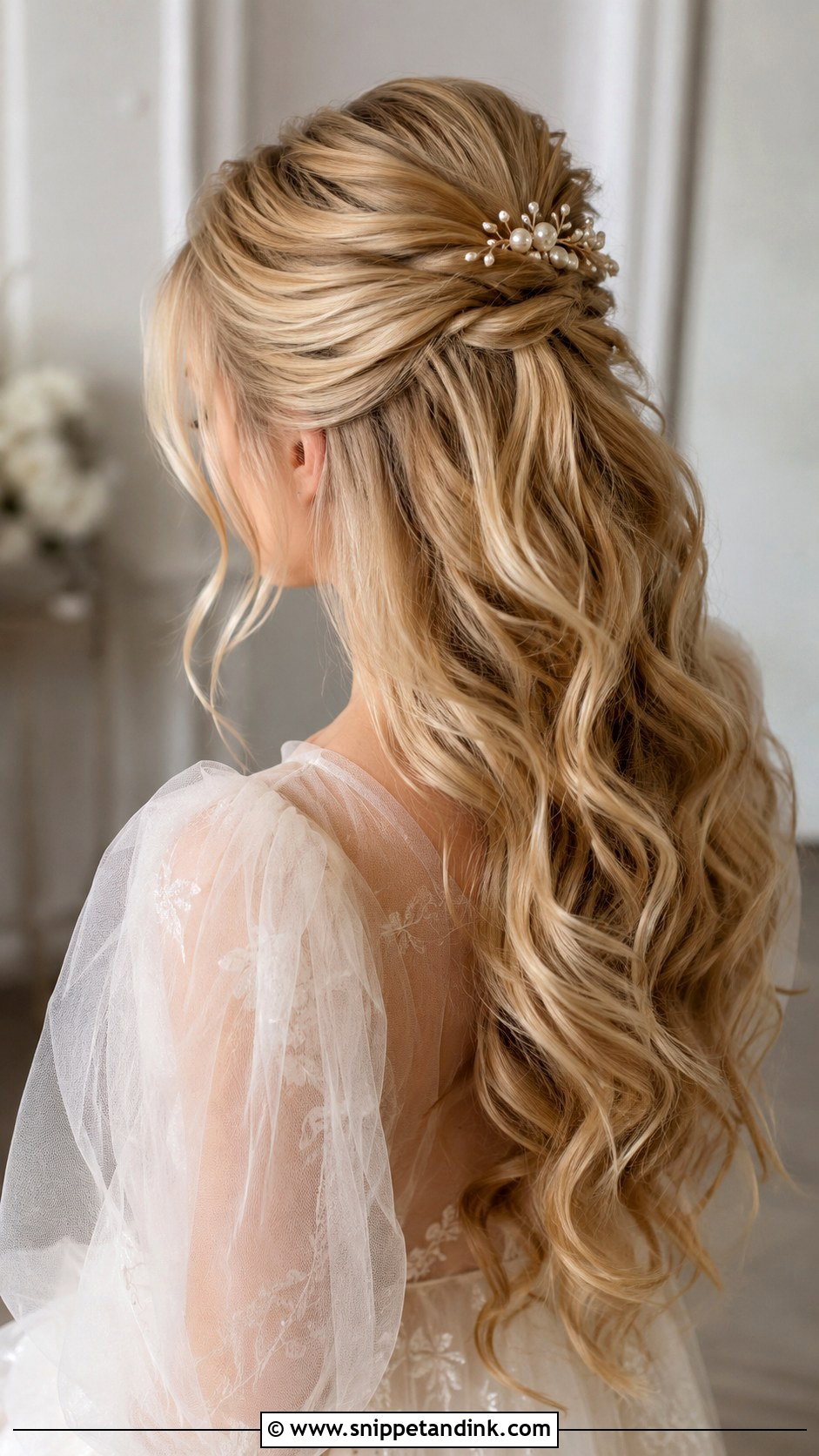
Half up hair keeps your length on show while the top section is twisted, braided or pinned back and the rest falls in curls. It suits long and medium hair. For a Victorian feel, the crown needs a little height and the face a couple of framing curls. Where the hair gathers at the back, a pearl comb, floral pins or a narrow ribbon covers the join. I’d be honest about humidity here: the loose lower half is the part that falls first, so it needs a firmer curl set than you’d think.
7. Victorian Wedding Low Bun
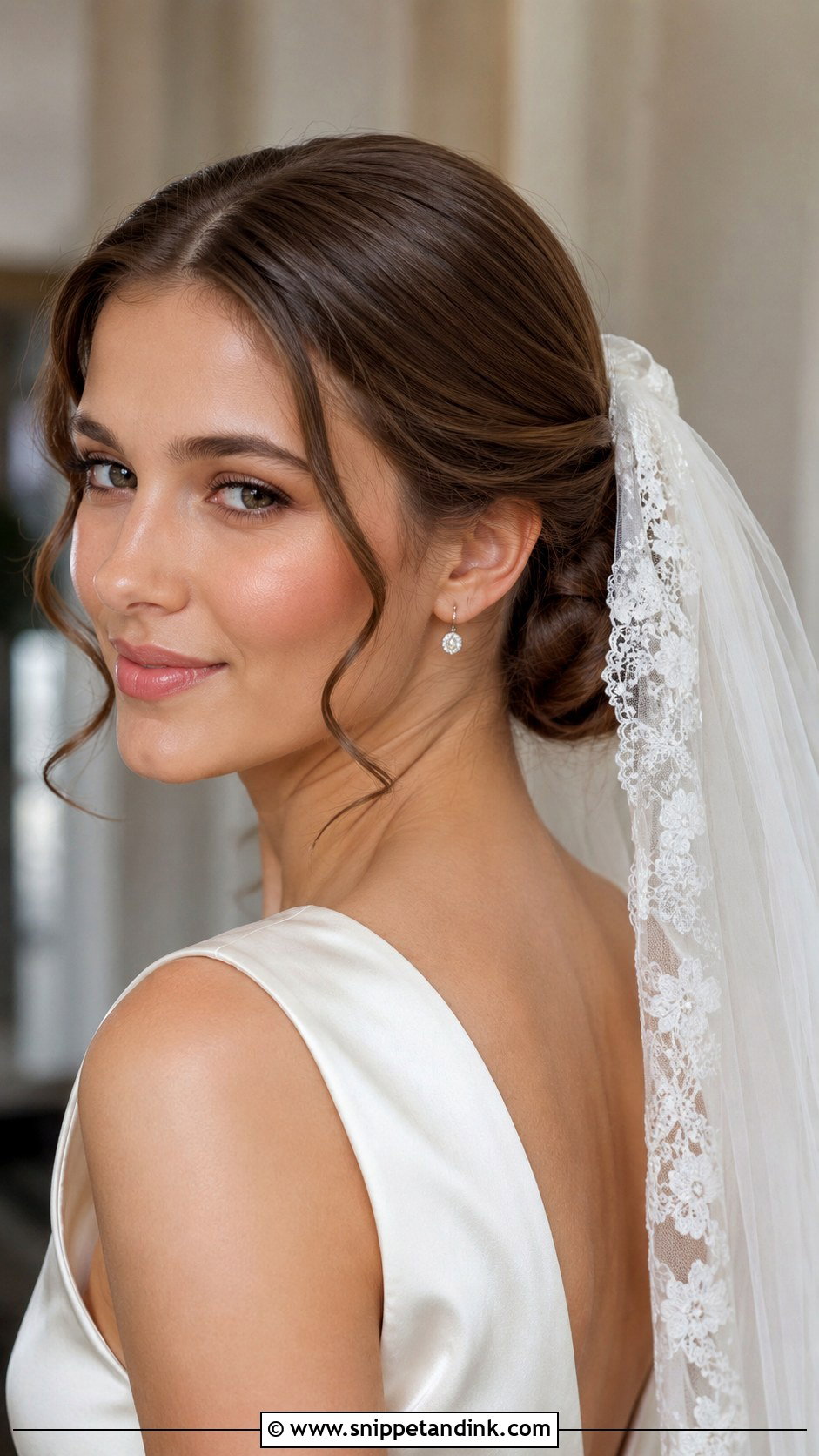
A low bun sits close to the nape and lets the accessories lead: a lace veil, a pearl headpiece, a vintage comb. It can be smooth, twisted, braided or slightly full depending on the dress. I keep the part clean and sweep the sides back softly, covering the tops of the ears if you want the earlier mid-century line. Two small curls near the face add romance. Of everything on this list, it’s the one I trust most for a fourteen-hour day, because it sits on a firm base and the veil weight goes straight onto it.
8. Victorian Wedding Curly Updo
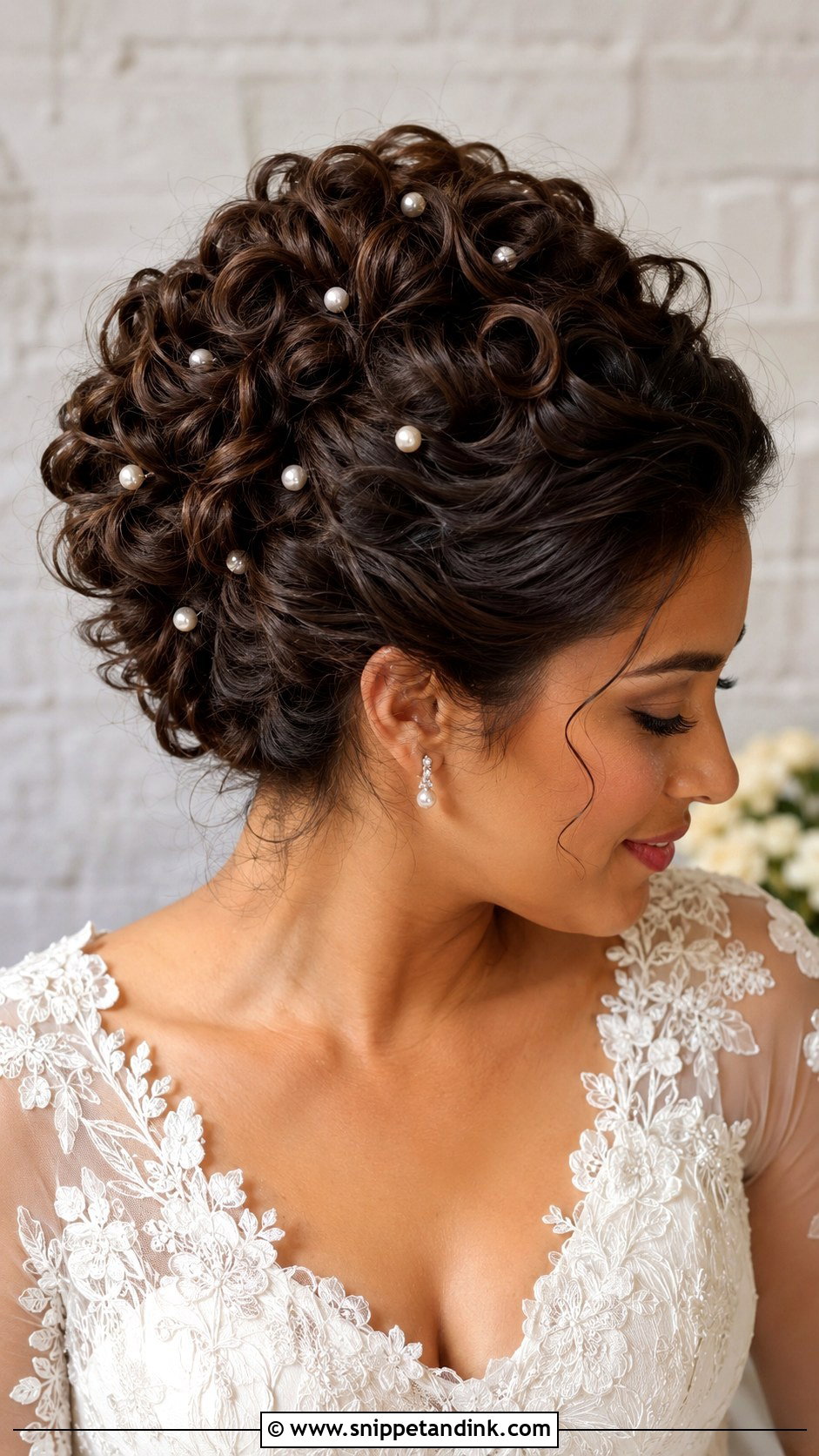
Naturally wavy or curly hair has a head start with a curly updo, since the texture already gives depth. I pin each curl individually into a shape at the back or crown, arranging them in a deliberate pattern instead of piling them. A random pile looks collapsed in photos from the side. Scatter a few small pearl pins or flower accents through the curls. Off-the-shoulder gowns and lace sleeves both suit it, and the veil should attach underneath the updo so it doesn’t crush the top layer.
9. Victorian Wedding Side Part Updo
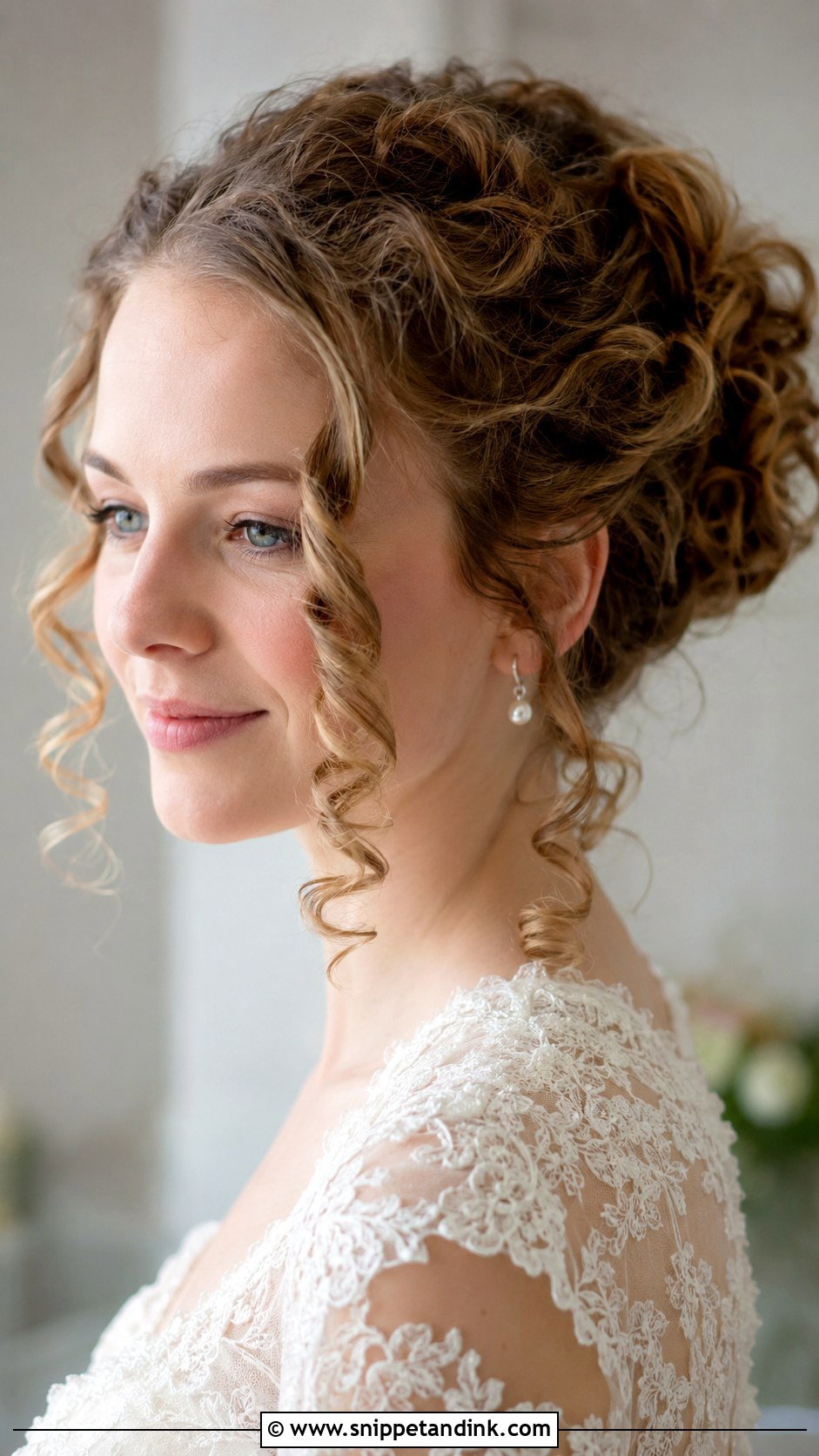
The side part updo is the gentler alternative to a center part, and on many faces it’s the more flattering one. The deep part adds shape to one side, while the rest sweeps into a bun, twist or coil. Keep the front smooth with a slow wave rather than a sharp modern swoop; that wave is what dates it to the era. I put any pearl pins, lace comb or flower on the fuller side to balance the weight. One warning: a part you don’t normally wear will try to spring back, so set it while the hair is damp.
10. Victorian Wedding Flower Hair
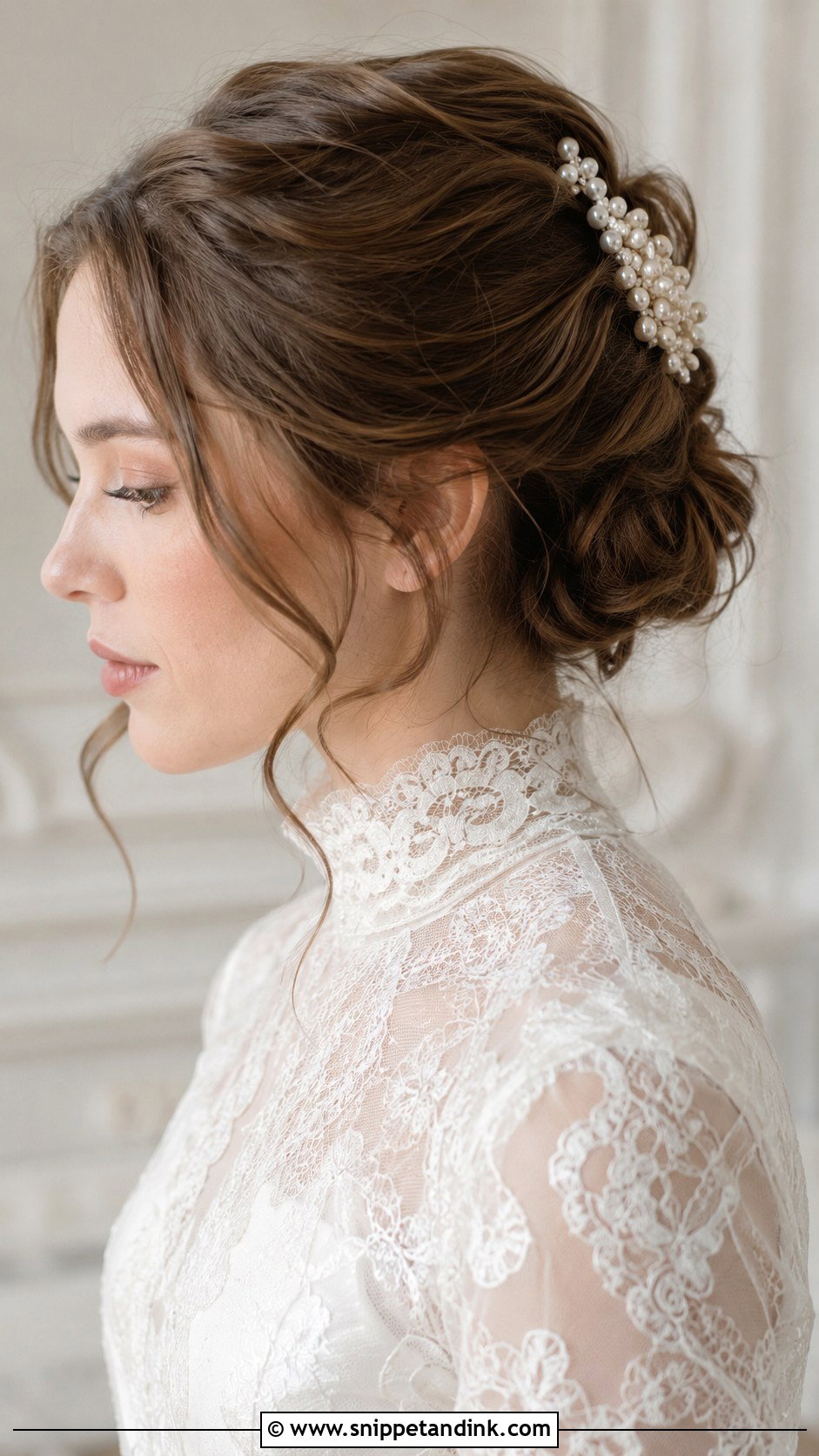
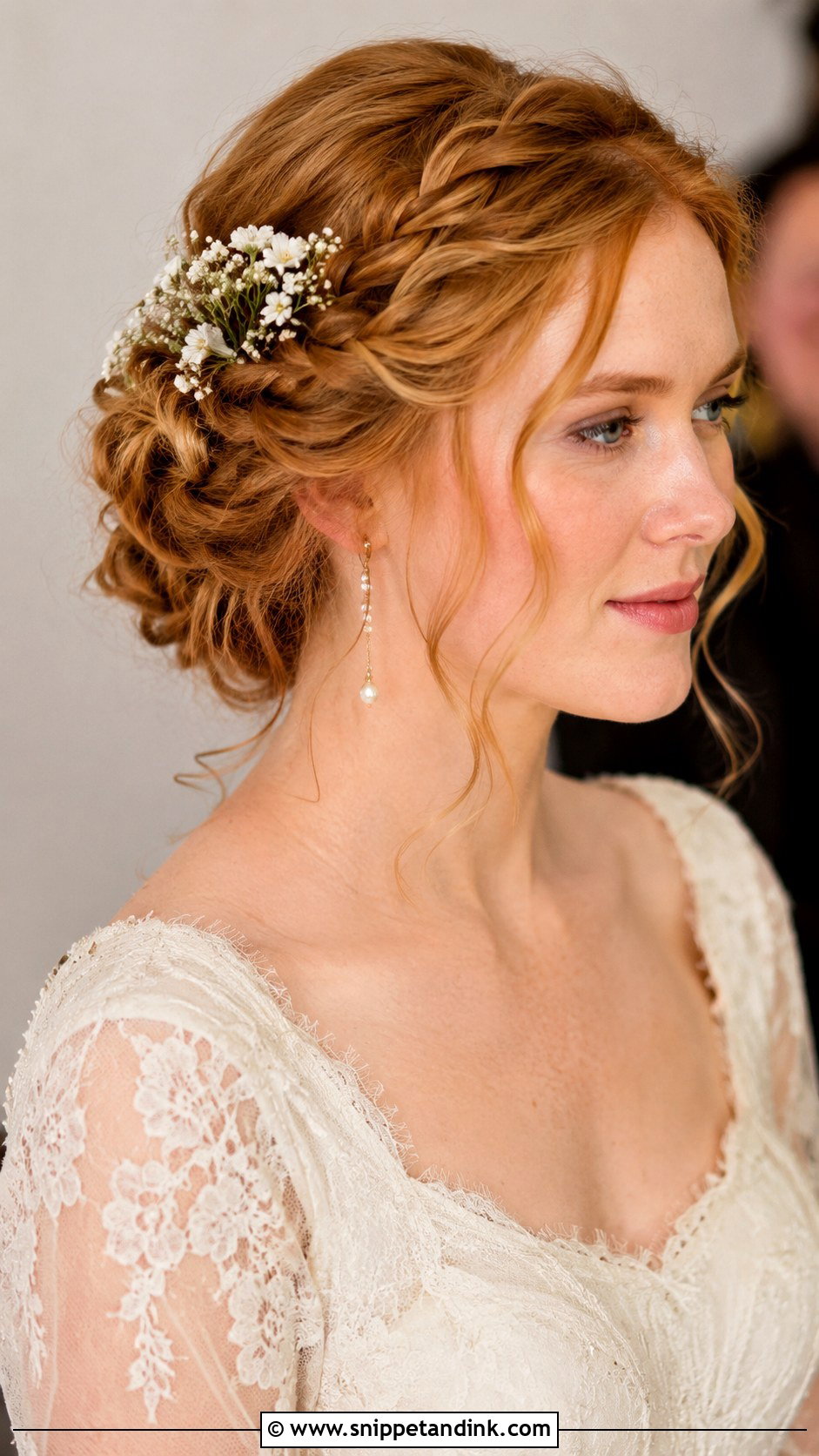
Victorian brides genuinely wore orange blossom, so flowers in the hair are one of the most historically faithful details here. Small white blossoms, baby’s breath or cream florals tuck into braids, buns or curls. Keep them small; big heads overpower the fine structure of a period style. Fresh flowers look natural but wilt in heat, so I wire them in as late as I can. High-quality faux stems stay unchanged from ceremony to reception, which makes them the safer call for a summer garden wedding. They suit a soft chignon, crown braid or ringlet updo best.
11. Victorian Wedding Pearl Updo
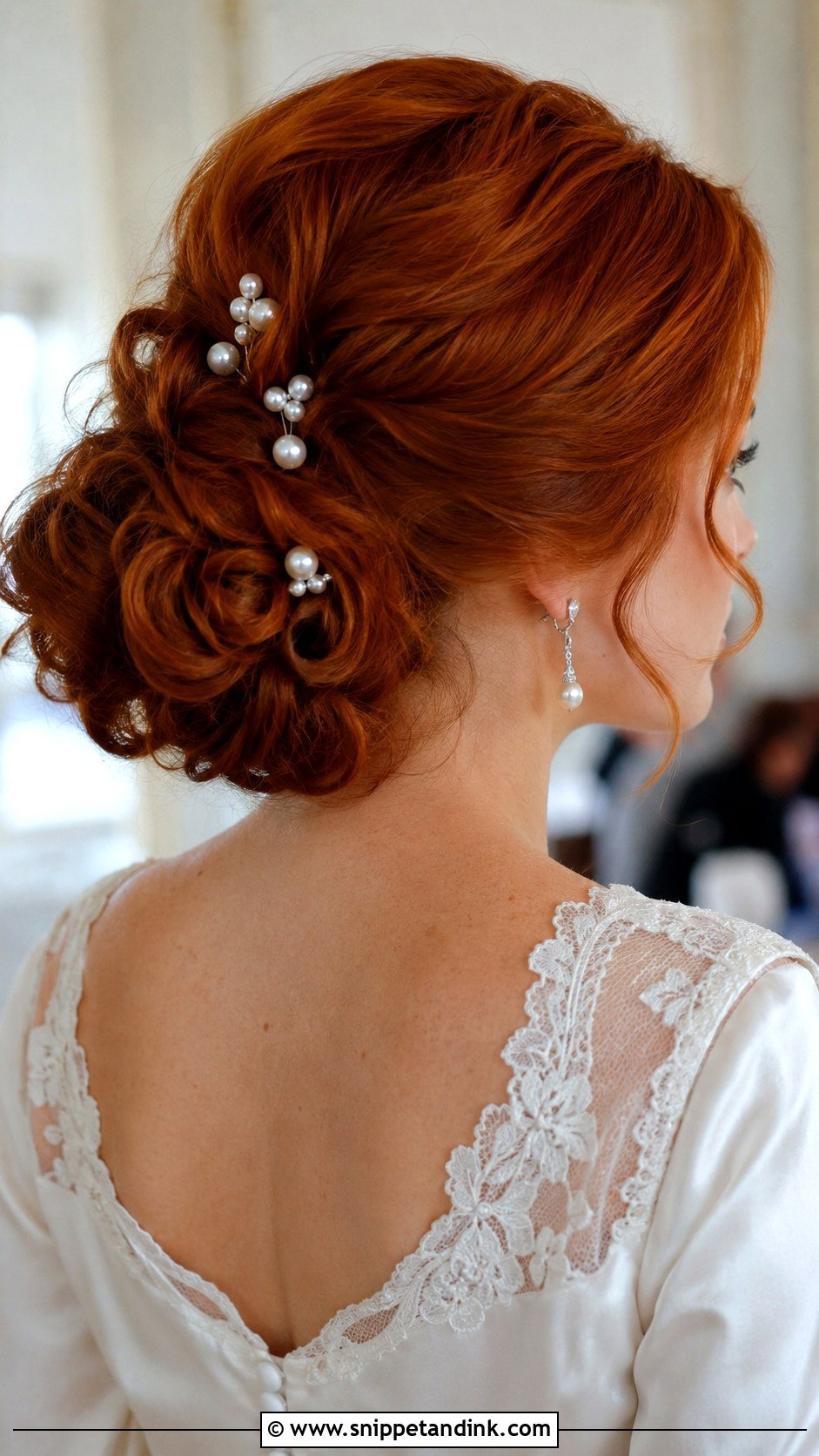
Pearls match the soft, refined mood of Victorian bridal beauty, and they work on almost any base here: a chignon, curled updo, Gibson tuck or braided bun. Pins, combs, a headband or tiny scattered pearls all do the job. The mistake I see is scattering them evenly over the whole head. Concentrate the detail around the bun or along one side, and leave the rest plain so the shape reads. Lace gowns, satin dresses and heirloom jewelry all carry a pearl updo well.
12. Victorian Wedding Veil Hair
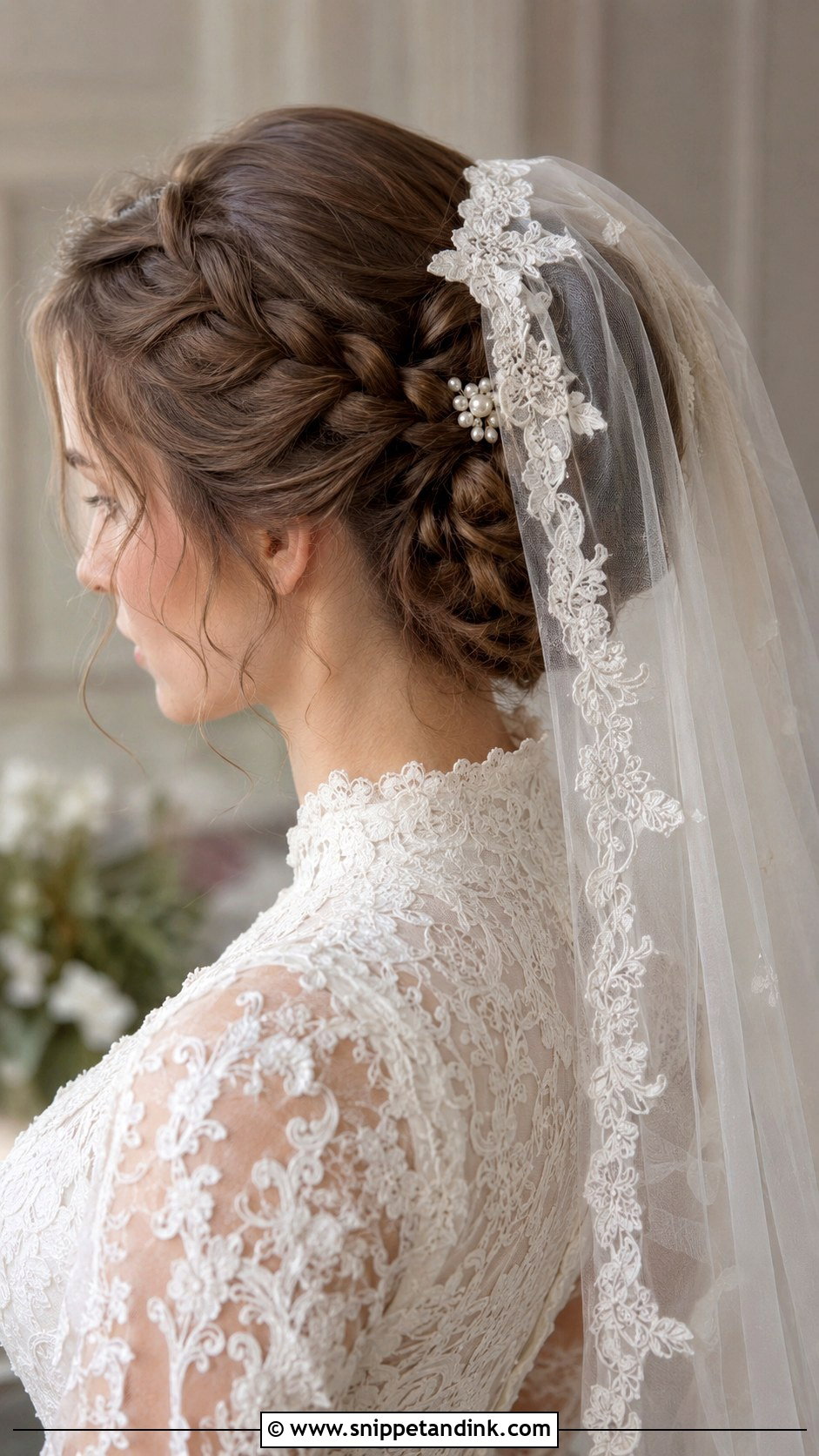
Veil hair has to work twice, with the veil on and after it comes off. That means enough structure to carry the comb and enough detail to stand alone afterwards. Low buns, braided chignons, Gibson tucks and curled updos all qualify. For a Victorian line, set the veil at the crown or just above the bun and let the lace or tulle fall around the shoulders. Heavy lace veils pull backward, so I anchor the comb into a small hidden ponytail or braid, never into loose hair. With a plain veil, add pearls, flowers or a braided detail; with heavy lace, keep the hair clean.
13. Victorian Wedding Pompadour Updo
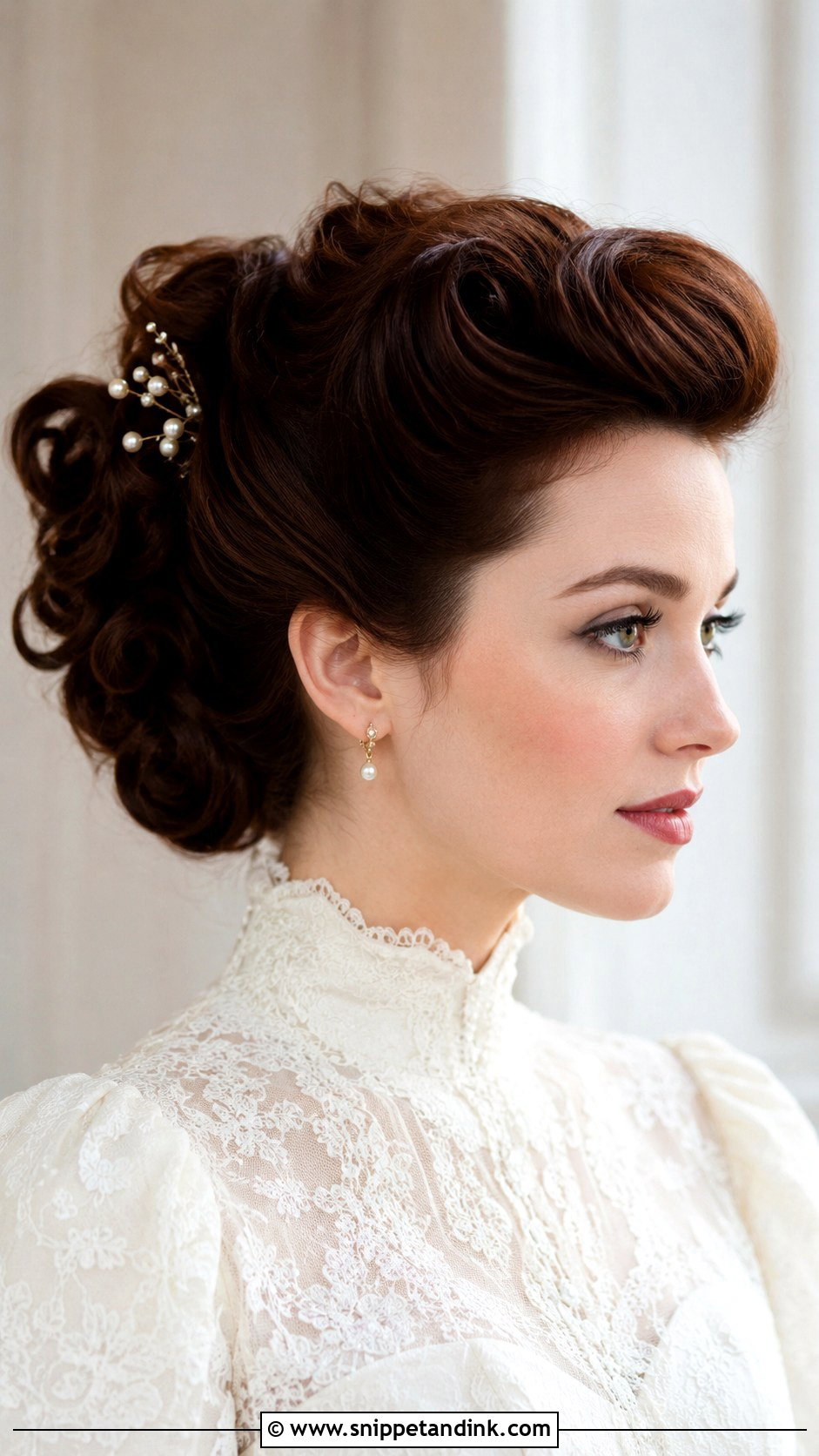
The pompadour lifts the front away from the face and blends it back into a bun, twist or curled updo. It belongs to the later end of the period and has the most presence on this list, so it suits a formal gown and a high neck. Smooth and rounded is right; tall and stiff starts to look theatrical. I use a padded base under the front section, often a small hair pad matched to your color, so the height doesn’t depend on backcombing alone. Soften the edges with small curls near the ears or nape, and keep the comb small.
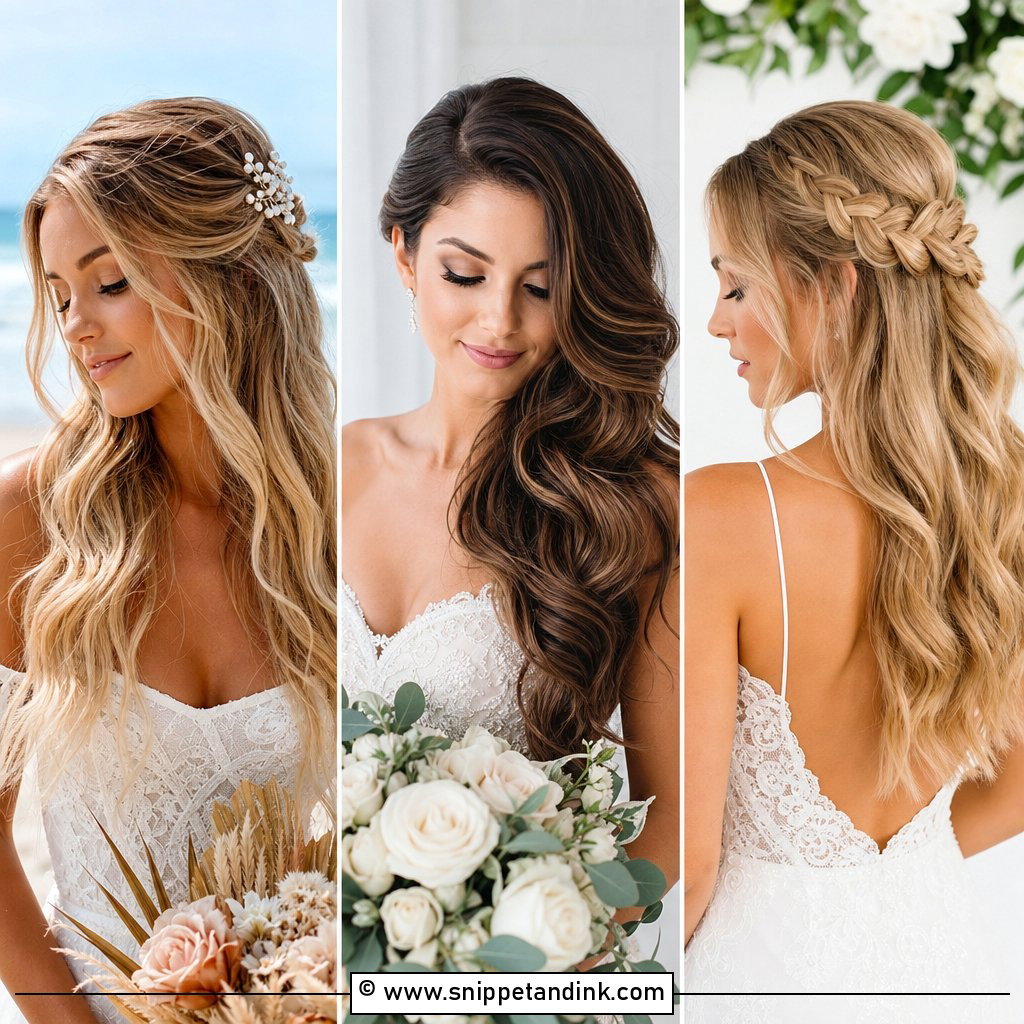
14. Victorian Wedding Braided Half Up Hair
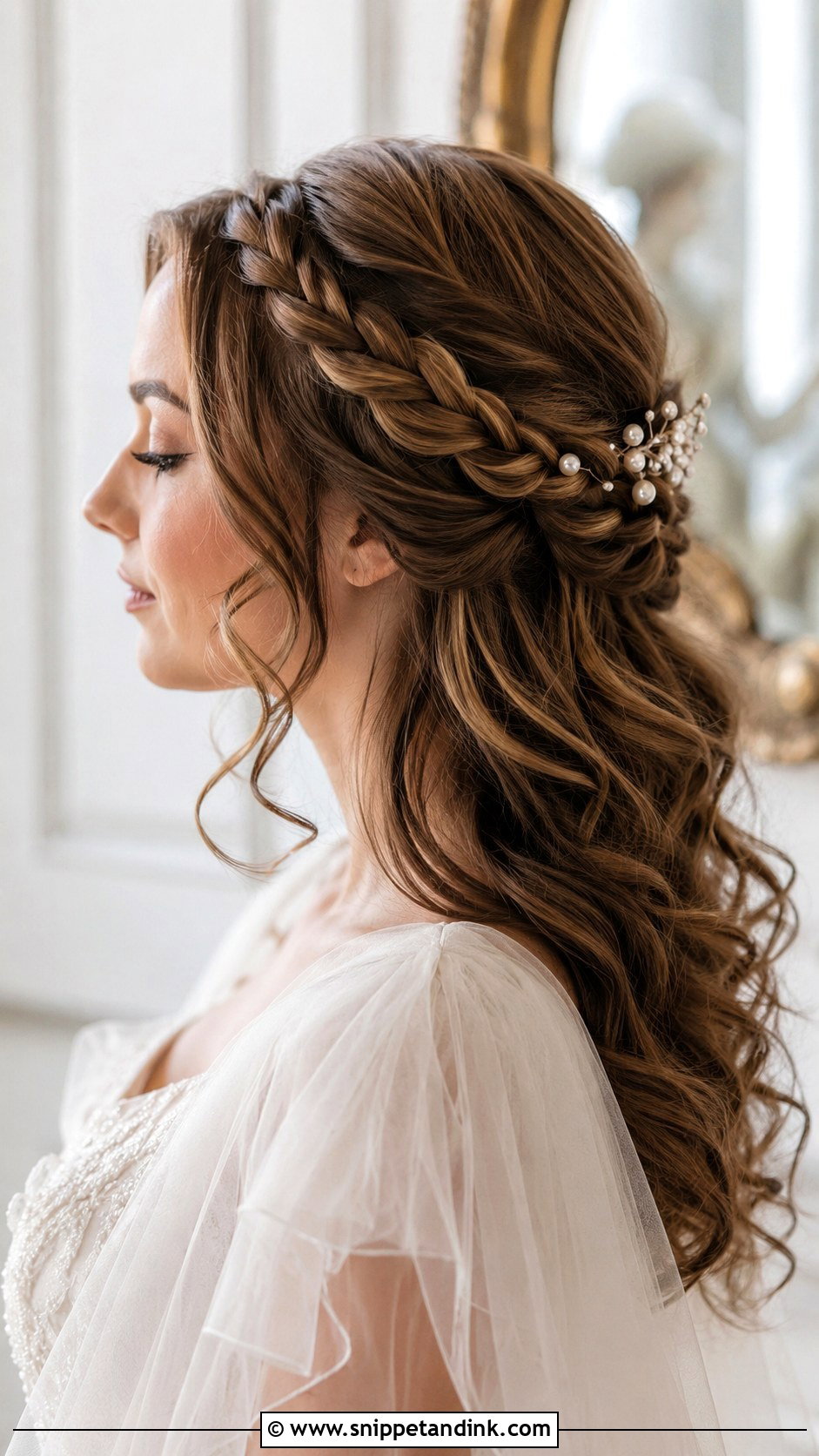
Braided half up hair suits a bride who doesn’t want a full updo but needs the top secure. The upper sections are braided or twisted back and pinned together, while the rest falls in curls or waves. I pin the braids where they meet with crossed bobby pins, then cover that join with tiny flowers or pearls. Defined, smooth curls underneath make it feel historic; brushed-out waves make it feel modern. It sits well with lace, tulle and soft sleeves.
15. Victorian Wedding Loose Curls
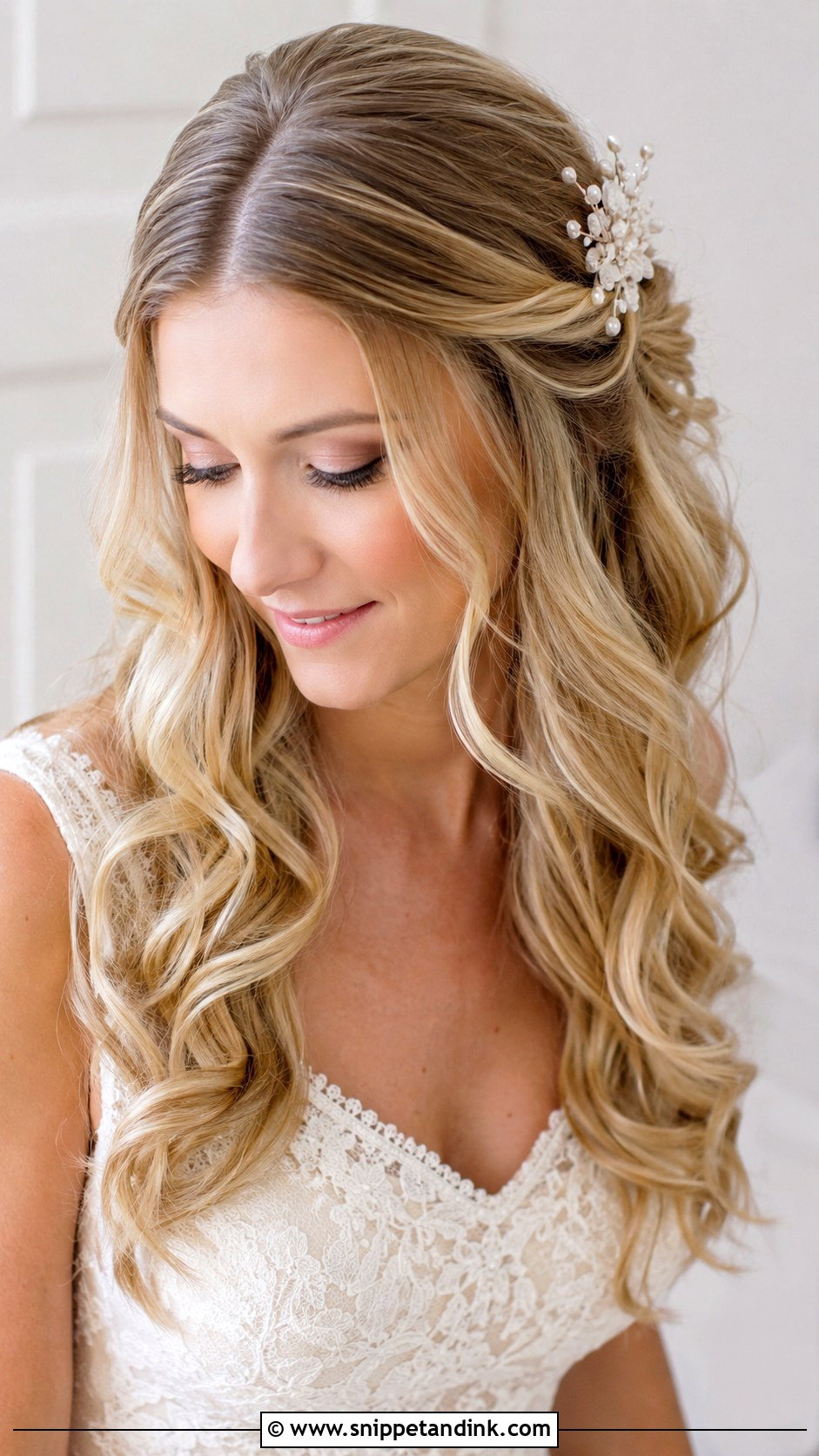
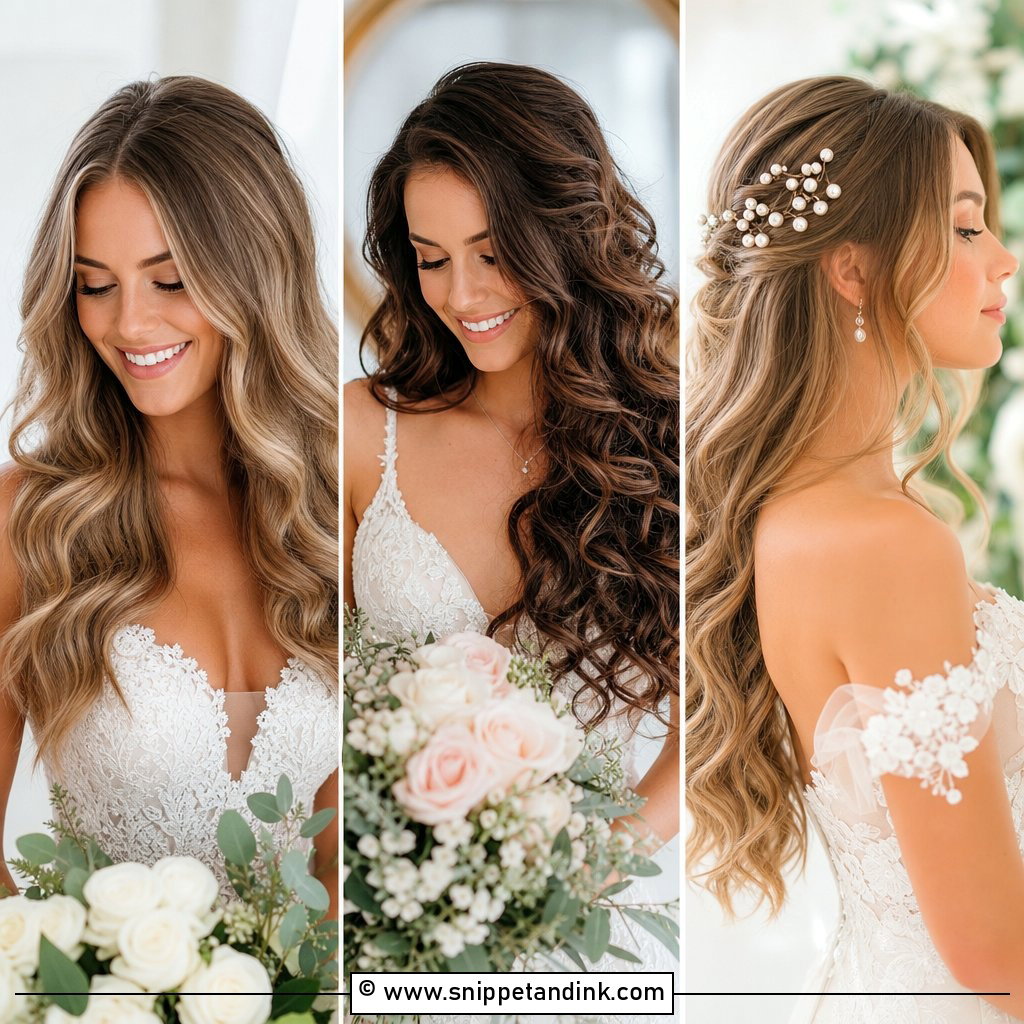
Loose curls are the most relaxed take on the era. What keeps them from looking like everyday hair is the Victorian framing: a center part, sides pinned back, a small braid or a delicate floral comb. The curls need real hold to get through photos and dancing, so I set them with a strong-hold mousse before curling and a flexible spray after. Long hair and layered cuts show the movement best. Simple veils and pearl clips keep it gentle.
Where Period Styles Tend to Fail by the Reception
These styles are more structured than most modern bridal hair, so the failures are predictable. Here’s what I plan around at the trial.
- Ringlets dropping. Humid air relaxes tight spirals first. I set them with a small barrel, pin each one until fully cool and avoid touching them with a brush.
- The bun sliding. Heavy lace veils drag a low knot downward. A hidden elastic base under the bun gives the comb something solid to hold.
- Padding showing through. A pad that’s the wrong shade peeks through fine hair in flash photos. Match it closely, or cover it with a thin layer of smoothed hair.
- A sore scalp. Crown braids and pompadours put weight on a few points. If something pinches at the trial, say so; it will hurt more after six hours.
Bring the dress or a top with the same collar to your trial. A high Victorian neckline changes where the hair has to sit, and it’s much easier to move a bun two inches at a trial than on the morning itself.
Enough Period Detail to Feel Historic, Not Costumed
There are a lot of directions here, from polished chignons and ringlets to braided buns, pearl updos and half-up curls. What they share is restraint. Enough period detail gives the old-world feeling, while too much tips into costume. Start from your dress neckline, your veil, your hair texture and how much you can tolerate pinned up all day. Structure lovers tend to settle on a chignon, Gibson tuck or pompadour. Softer tastes lean toward ringlets, loose curls or a braided half-up. Then test it at a trial with the actual veil, because that’s where period styles show their weak spots.
You'll Like These Ideas:




Leave a Reply