
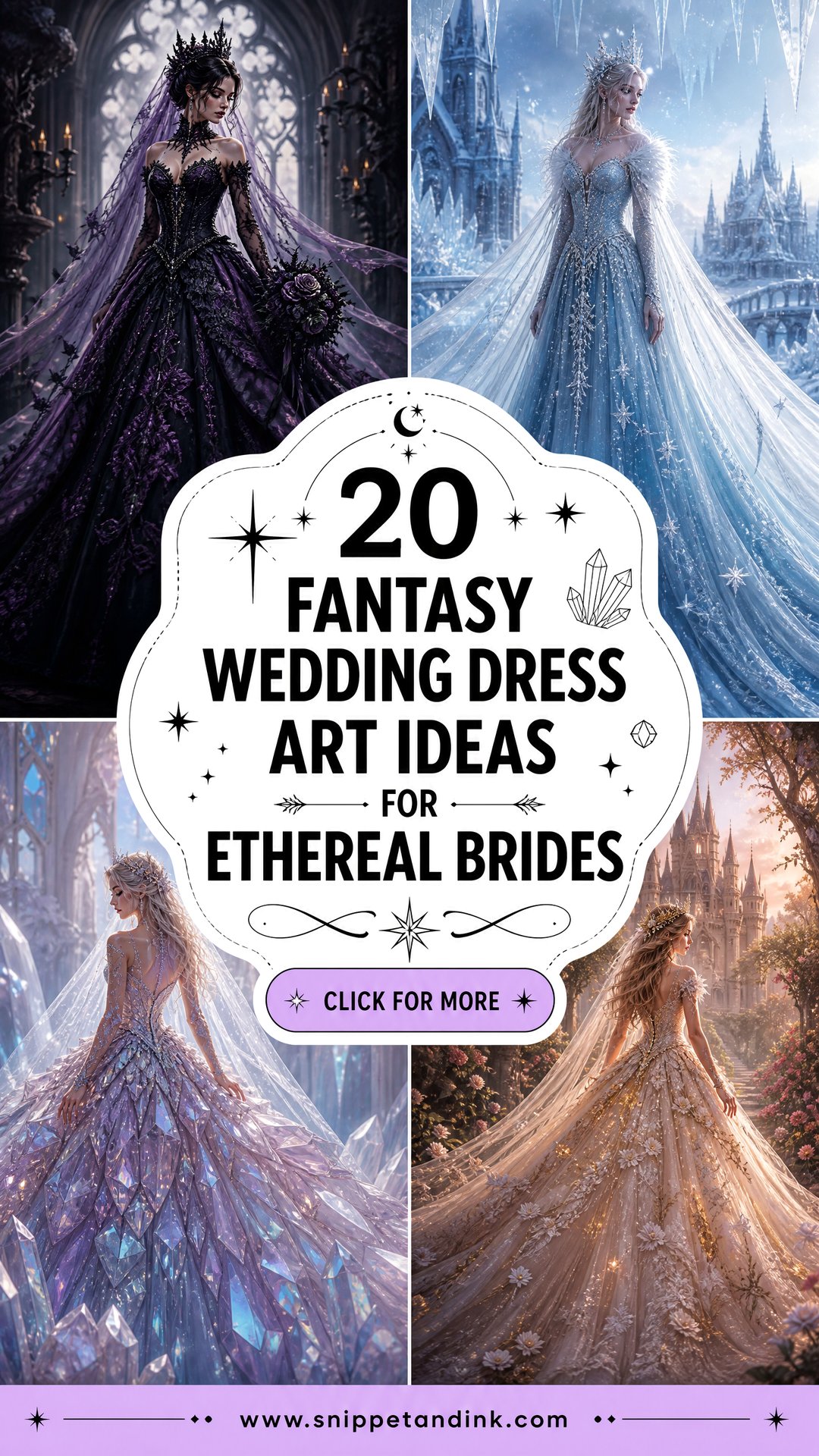
Drawing Fabric So It Moves the Way Real Gowns Do
Fantasy bridal art looks most believable when the fabric behaves like the real thing. I spend my working days watching gowns move on brides, and the same few rules apply whether the dress is a fitting-room sample or an elf queen’s gown.
Heavy fabrics fold less
Satin, brocade and velvet fall in a few deep folds with soft highlights along the ridges. Chiffon, tulle and organza break into many small folds and let light through, so draw the legs or underskirt faintly behind them. If every fabric folds the same way, the dress looks like one material.
Volume needs support
A full ball gown skirt is held up by petticoats or a crinoline, so the skirt line curves out from the hip, not from the knee. A fitted bodice has seams and boning that run vertically. Hinting at a few seam lines makes the gown look constructed rather than painted on.
Trains and capes follow gravity
A train lies flat on the ground behind a standing bride and lifts only when she walks or wind catches it. A cape hangs from where it is attached, usually the shoulders or under the shoulder blades, and drapes from there. Draw the attachment point and the rest follows.
1. Elven Fantasy Wedding Dress Art
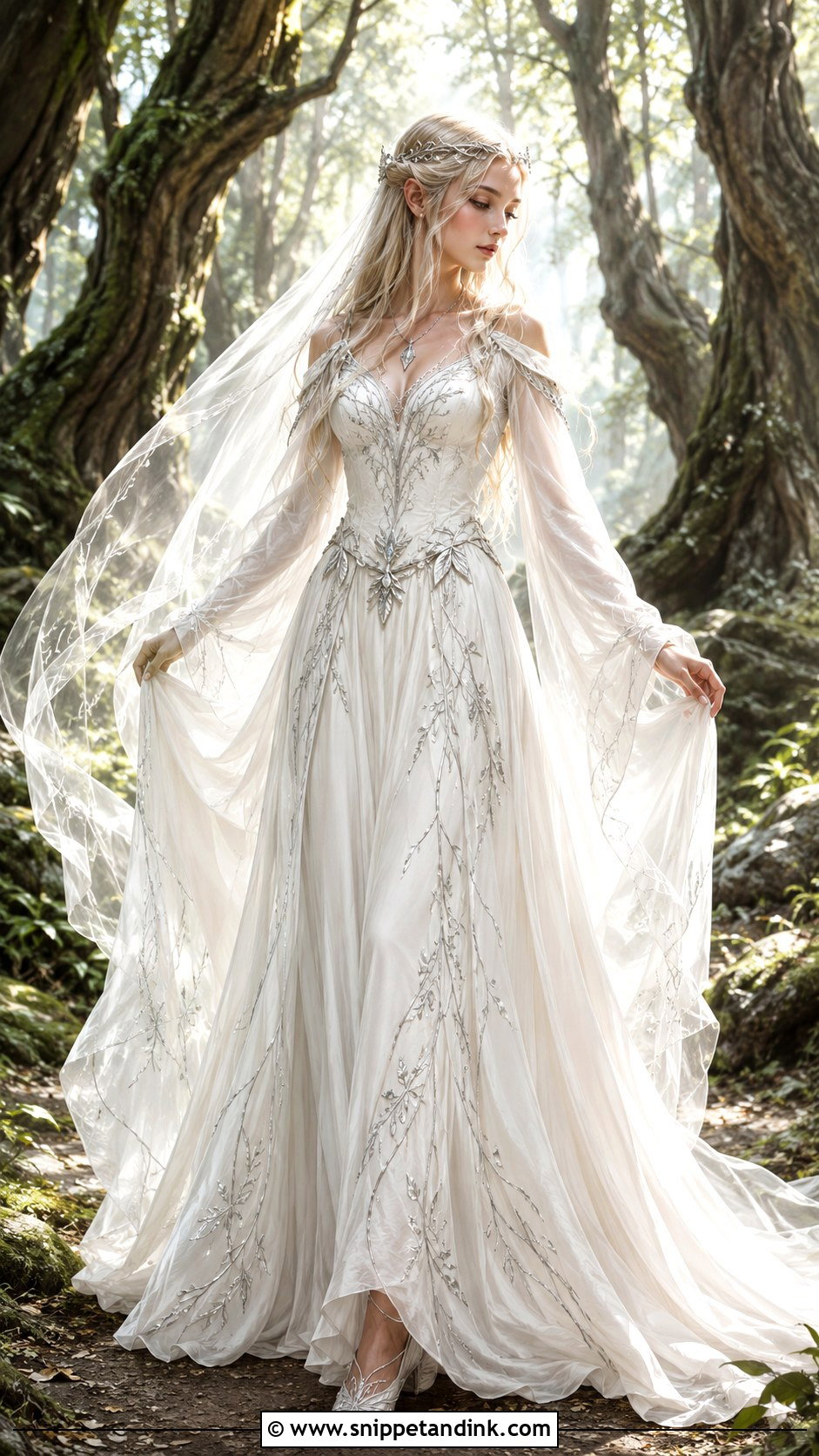
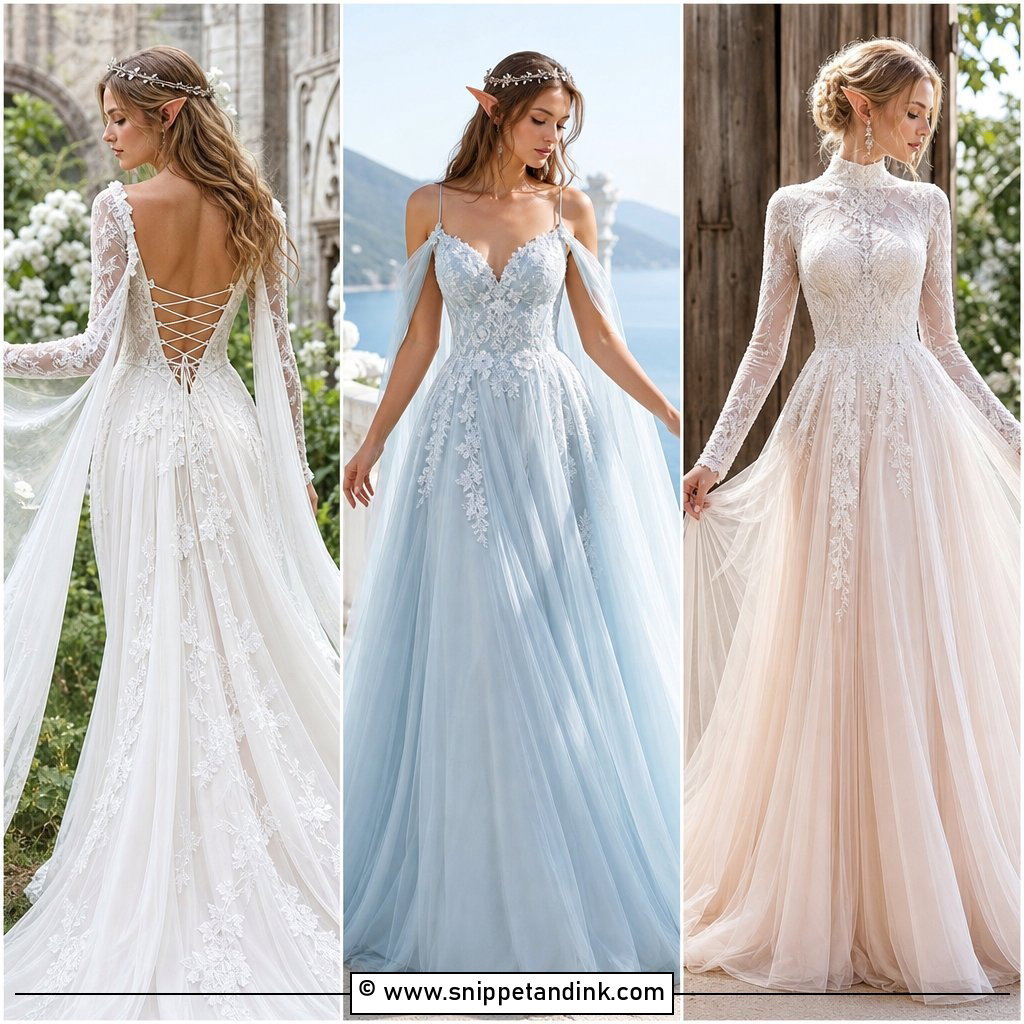
An elven bridal gown works on paper when the layers look like they weigh nothing. Start with a fitted ivory bodice and silver embroidery that curls like branches, then let an A-line skirt of several sheer layers drift around the feet. Draw the hem of each layer at a slightly different height; real chiffon never lines up perfectly, and that unevenness is what makes it look like mist. Long bell sleeves should open below the elbow so the hands stay visible. Silver slippers, a leaf belt and a fine circlet over loose waves or braids finish her, with a sheer veil tucked beneath the circlet. Tall trees and pale flowers do the rest.
2. Fairy Fantasy Wedding Dress Art
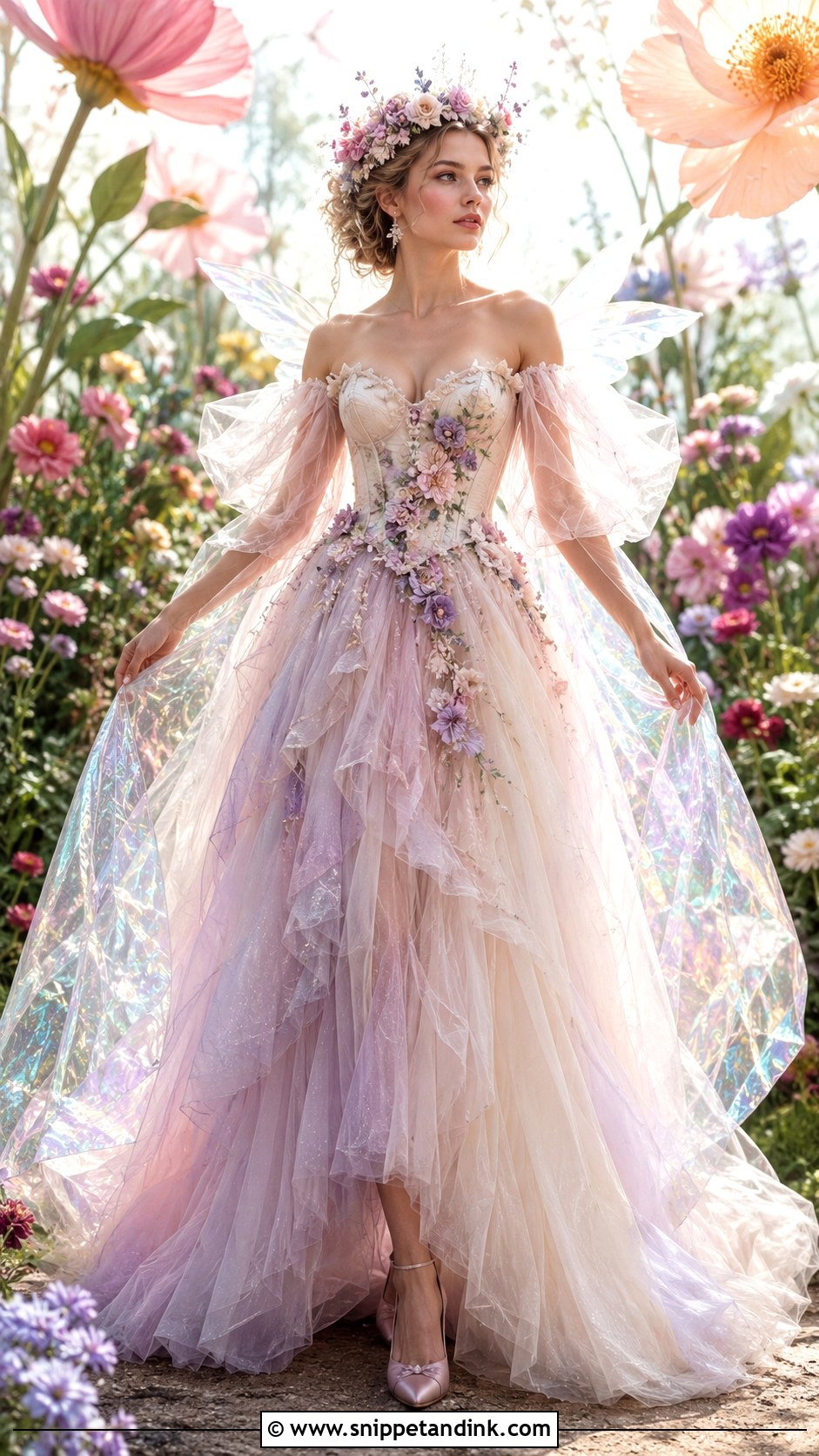
Could a wedding dress look as light as a petal? Overlap blush, ivory and pale lavender tulle in a short-front, long-back skirt, and remember that tulle stacks: three colours layered read as one soft blended tone, not stripes. A corset with tiny floral appliqués and pearls gives the bodice weight to anchor all that air. Sheer puff sleeves and embroidered vines join top to skirt. I’d skip literal insect wings. A sheer cape cut into a wing shape, with faint iridescent lines, is more bridal and is something a dressmaker could actually build. Satin shoes, an ankle chain and a small flower crown, then oversized blooms and morning light behind her.
3. Medieval Fantasy Wedding Dress Art
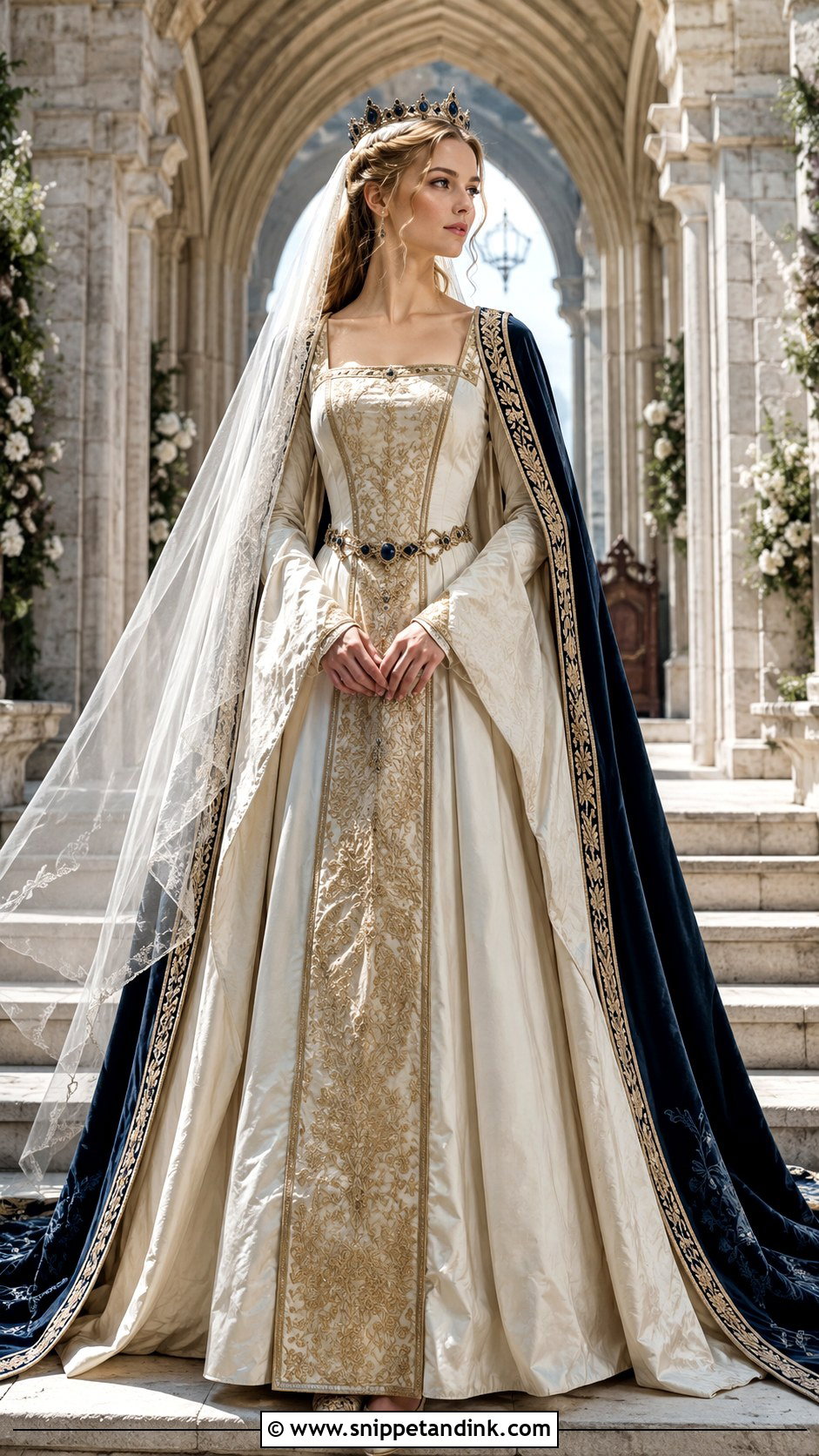
For a regal medieval look, the square neckline and long trailing sleeves set the period before any detail does. Ivory silk for the gown, muted gold brocade for a front panel from neck to hem. Brocade is stiff and heavy, so draw it hanging flat with few folds while the silk around it ripples; that contrast tells the viewer which fabric is which. A gem-set belt with long ends, a light velvet cloak fastened with two floral clasps, embroidered slippers and a narrow crown over a sheer veil complete her. Keep jewellery small. Stone stairs and arched windows frame it well.
4. Celestial Fantasy Wedding Dress Art
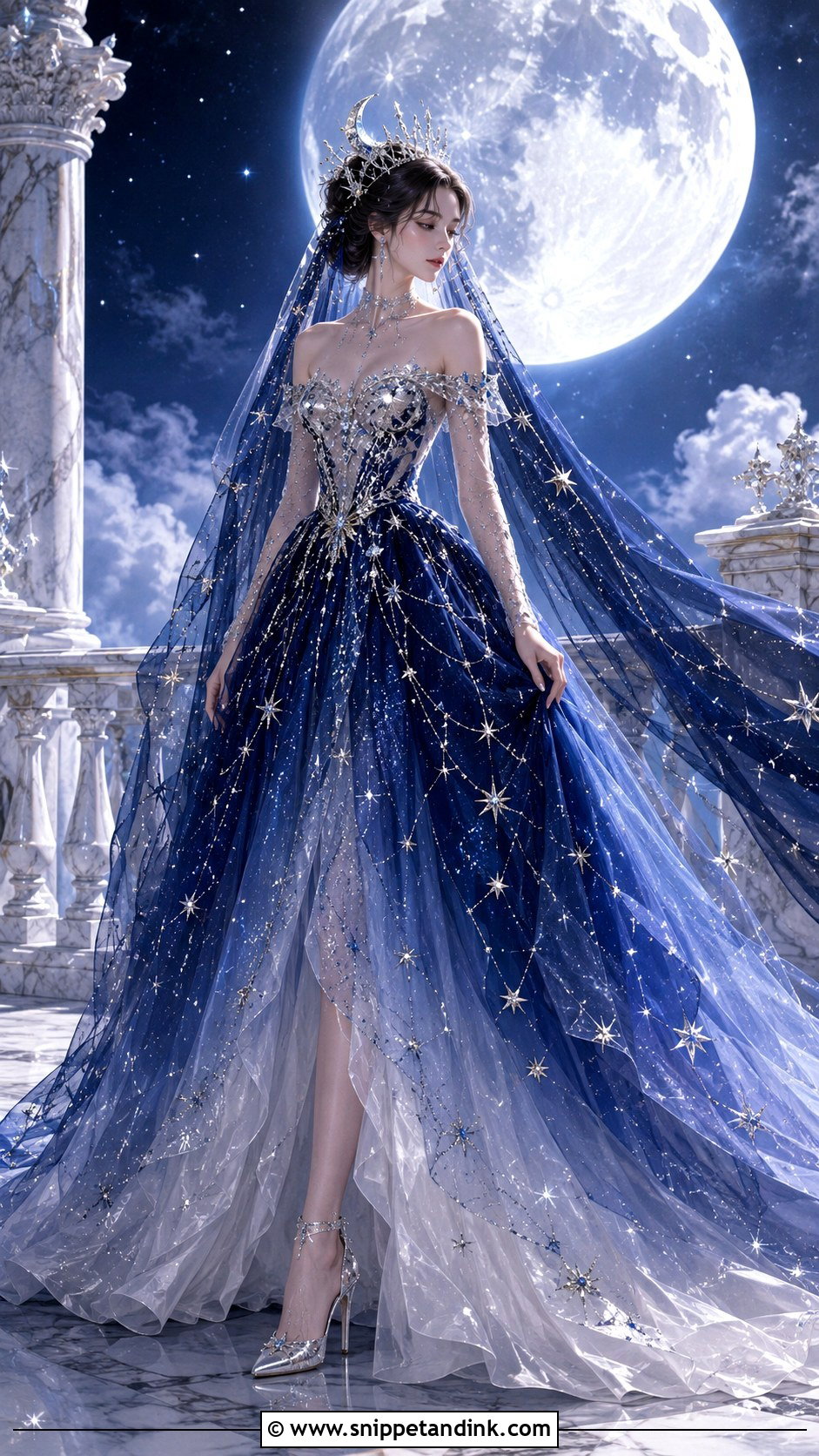
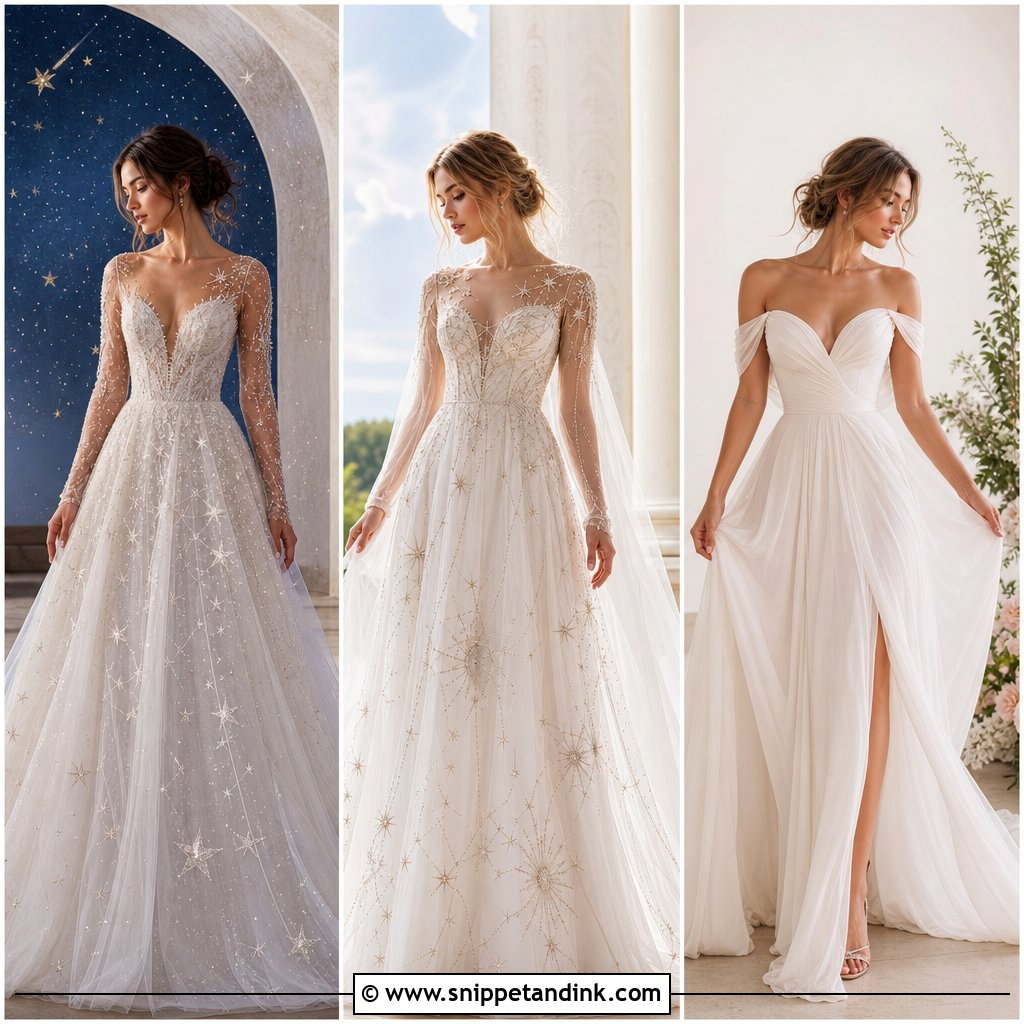
Night-sky dresses fail when the colour gets too dark to see. Fade a midnight-blue ball gown into silver and white toward the hem, so the lightest fabric sits where the eye travels last. Crystals on the bodice arranged as constellations, a few stars on the skirt, and sheer bishop sleeves dotted with silver balance the volume. Metallic heels, a crescent headpiece, star earrings and a long navy veil edged in embroidery add the story. A narrow silver belt marks the waist without breaking the fade. Put her on a marble balcony under a bright moon, with cool highlights on the folds so the blue still reads as a wedding gown.
5. Forest Fantasy Wedding Dress Art
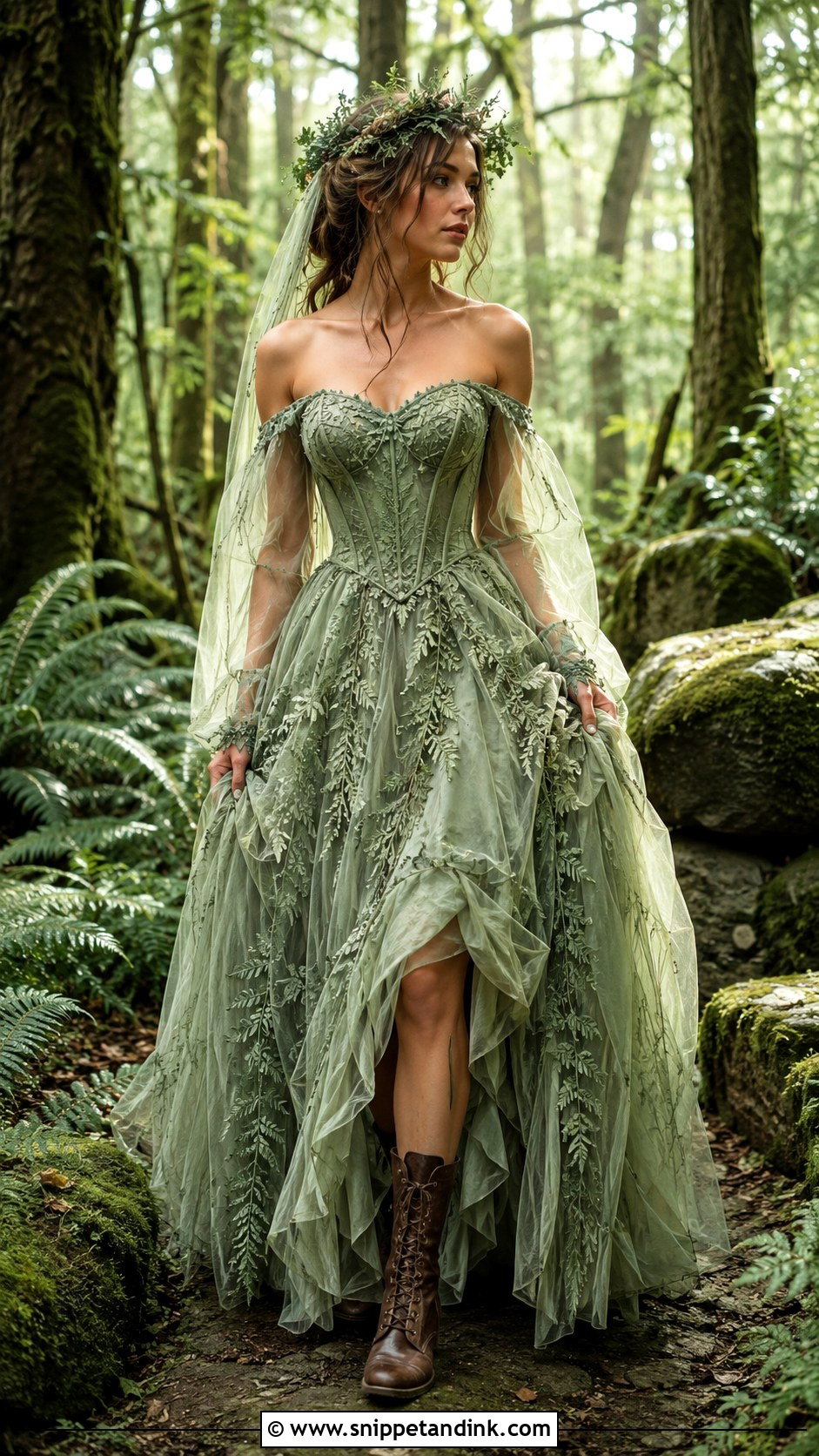
Imagine a bride walking through an ancient forest with leaves catching in her train. Sage-green is the colour, with a corset, an off-the-shoulder neckline and a full layered skirt. Put the heaviest embroidery at the hem, ferns, moss and small white flowers, and thin it out toward the waist. That is how embroiderers grade a design on a real gown, because it keeps the bodice light and draws the eye down. Detached sheer sleeves with leaf cuffs, lace-up brown boots for rough ground, a botanical crown and a gauzy green veil. Filtered daylight keeps the folds readable.
6. Gothic Fantasy Wedding Dress Art
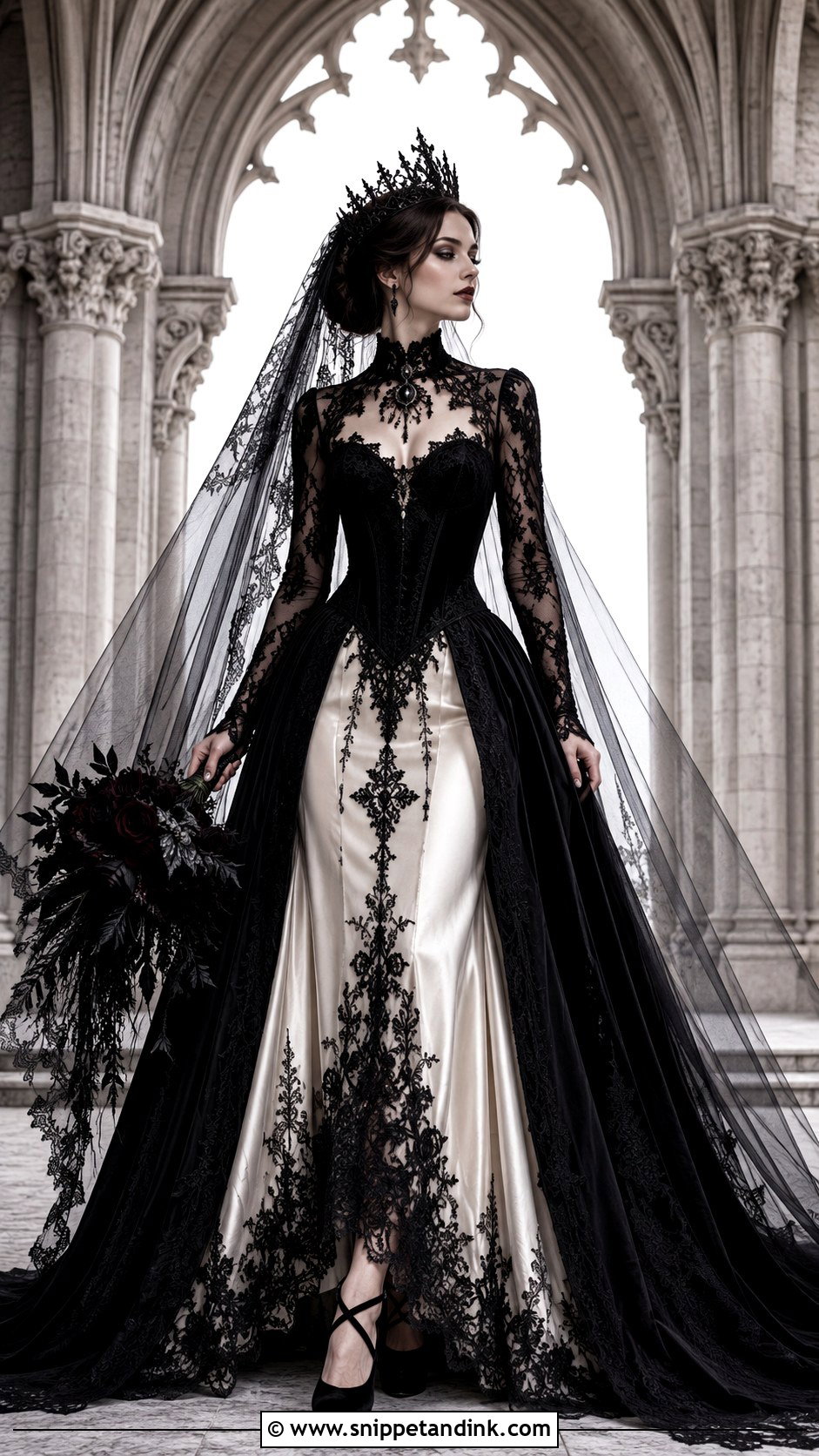
Black and ivory together is the whole point of a Gothic bride, so plan where each sits. A pointed corset, a high lace neck and long fitted sleeves, then a skirt that hugs the hips and opens into a chapel train lined in ivory satin, visible only when the train turns. Black floral embroidery over the ivory panels ties the two colours together. A jewelled choker, a pointed crown, lace gloves and velvet heels. The veil goes black and sheer, with a scalloped edge. Sleek hair or a low braided bun. Candlelight and stone arches suit the mood, but keep the lighting crisp enough to show how the gown is built.
7. Mermaid Fantasy Wedding Dress Art
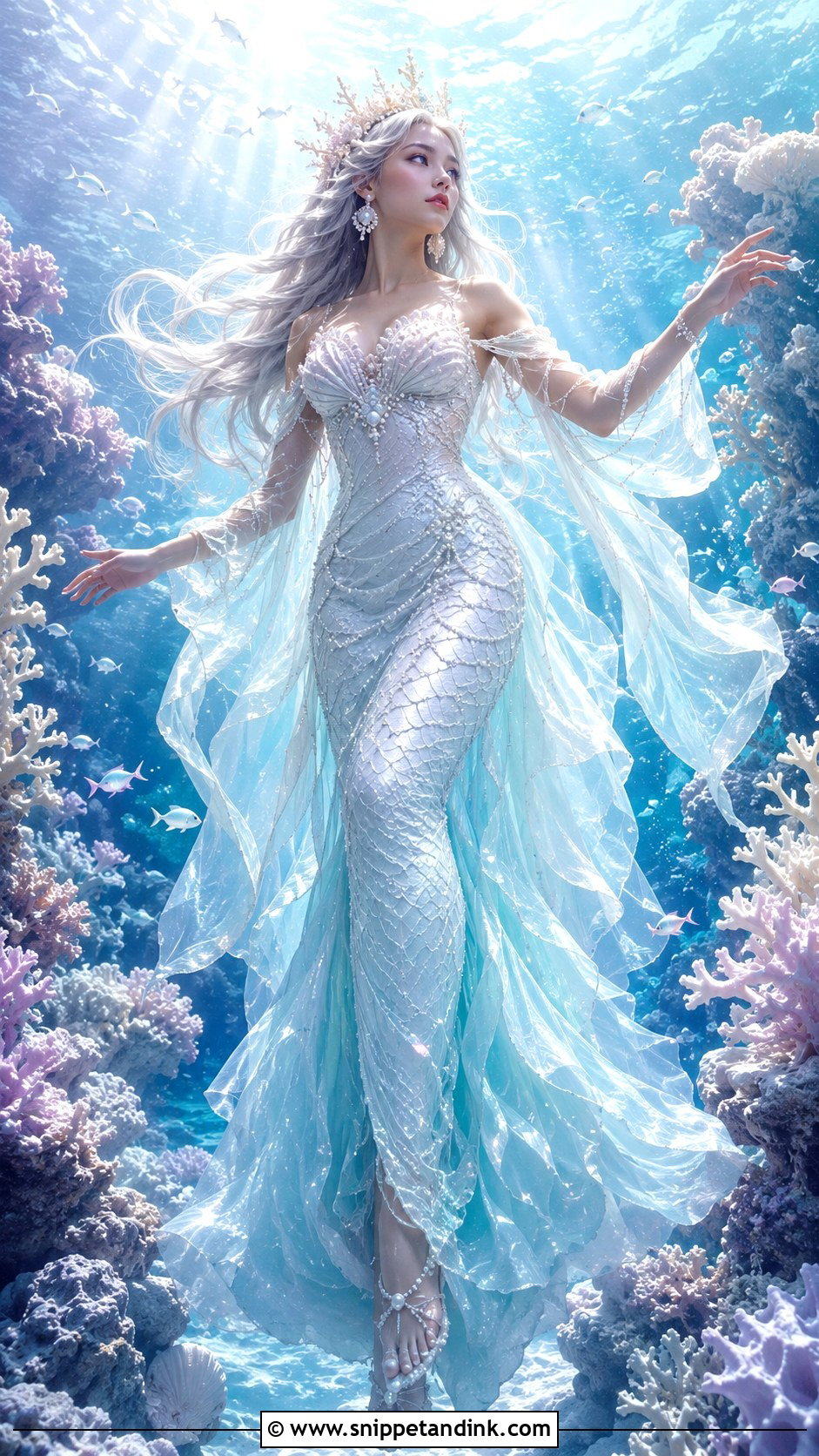
An underwater gown is convincing when every line flows like water. Fit a pearl-white mermaid shape through the knee and flare it into layers of sheer aqua organza. When I look at beaded fishtails, the scale work is densest at the bust and fades downward, the way a beader grades weight on a real fishtail so the flare can still move. Draped sheer sleeves stand in for fins. Pearl sandals, shell earrings and a coral crown, with a transparent cape fixed at the shoulders instead of a veil. Coral, bubbles and light beams around her, and keep the whole figure in frame so the colour change shows.
8. Dragon Fantasy Wedding Dress Art
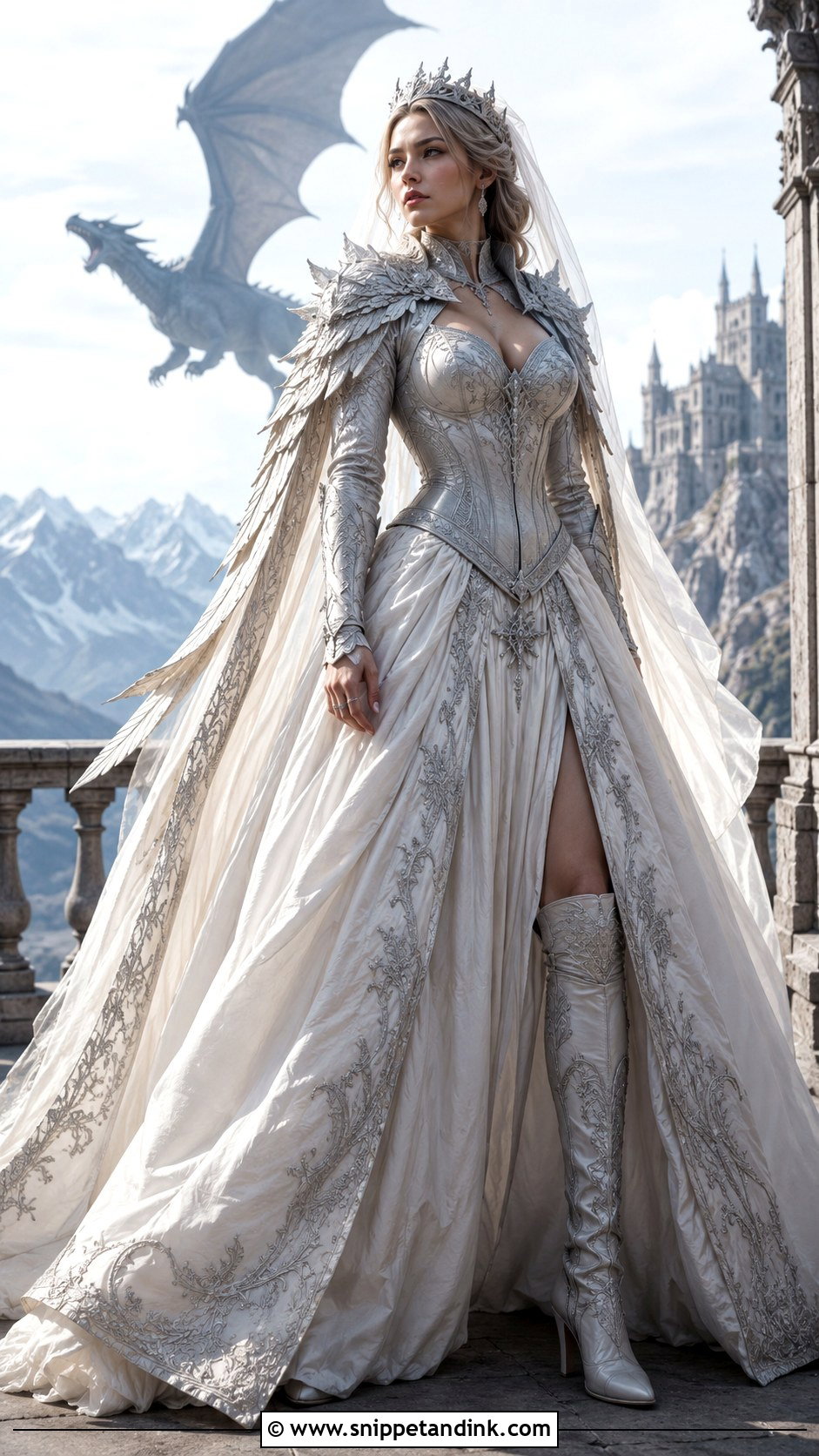
Dragon brides tip into costume quickly. What keeps one bridal is a big ivory skirt. Above it, a structured silver corset with overlapping panels for scales, metallic embroidery at the waist and train, and long sleeves ending in points. A detachable shoulder cape reads as folded wings. Silver boots, a crystal crown and braids threaded with fine chain. An angular-edged veil softens the sharp lines. A mountain terrace, castle towers and a dragon in the far sky; cool bright light separates metal, white fabric and stone.
9. Ice Queen Fantasy Wedding Dress Art
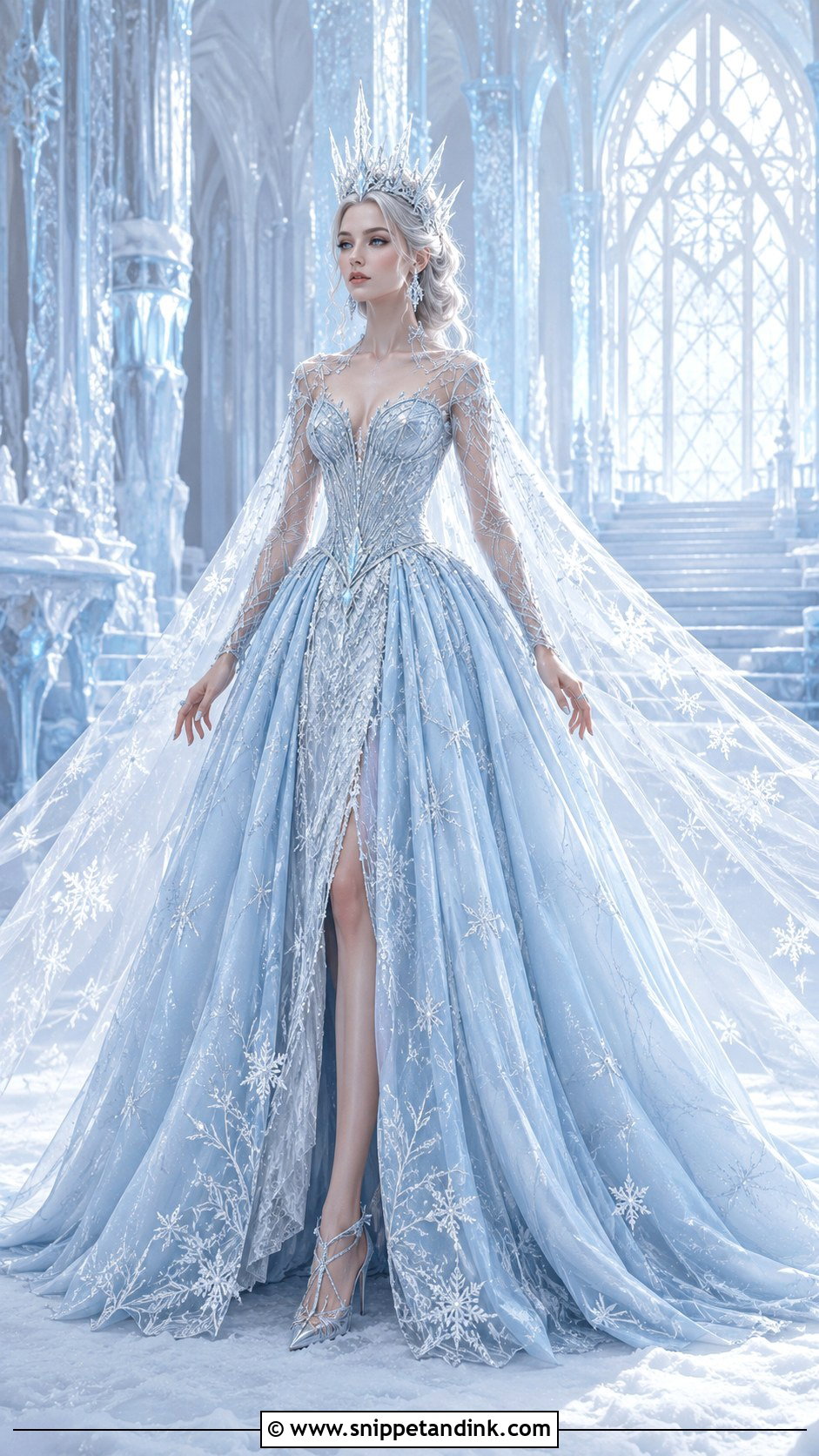
Ice is about contrast: sharp crystals against soft snow. A pale blue ball gown with a basque waist, a crystal bodice and layers of white and blue tulle gives you both. The point of a basque waist is that it lengthens the torso, which matters under a heavy skirt. Sheer sleeves get branching frost embroidery, and the train fades to icy ombre at its edges. Silver pointed heels, crystal drops and a tall glass-like crown. A sheer cape veil from the shoulders spreads over the snow, and a braided updo keeps the neckline clear. Reflective palace walls help the pale gown stand out from a pale scene.
10. Fire Queen Fantasy Wedding Dress Art
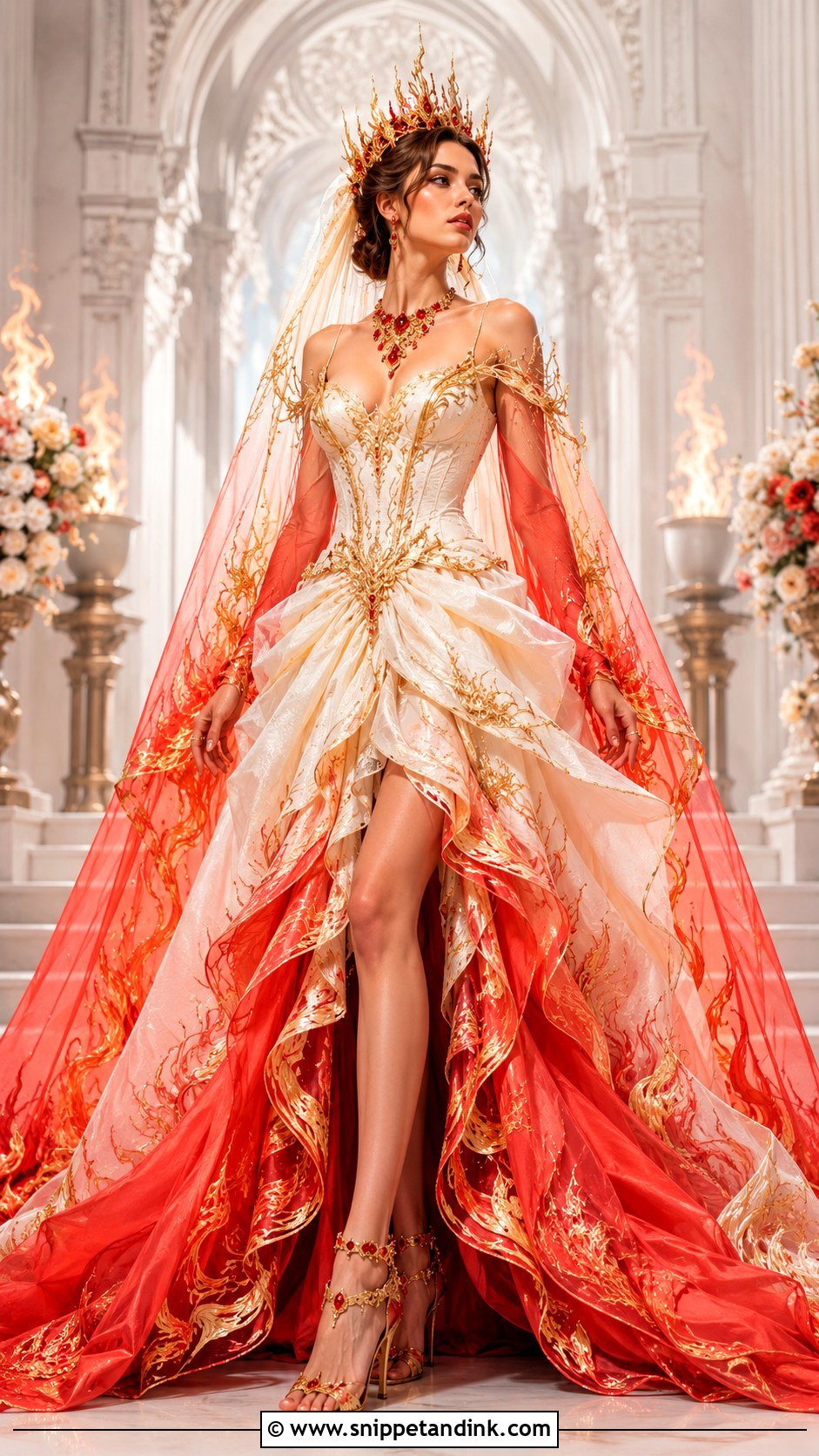
Warm colour can look heavy unless the bodice stays light. Keep it ivory, then let coral, crimson and gold layers rise up the skirt like flames, with gold embroidery curving from the waist to join the two. Transparent red chiffon sleeves off the shoulder, a long ivory train with a vivid border, gold heels, ruby earrings, stacked cuffs and a small flame crown. A red veil that fades to clear gold adds motion. Use clean white light, not orange firelight; warm light on warm fabric muddies every colour into one.
11. Moon Goddess Fantasy Wedding Dress Art
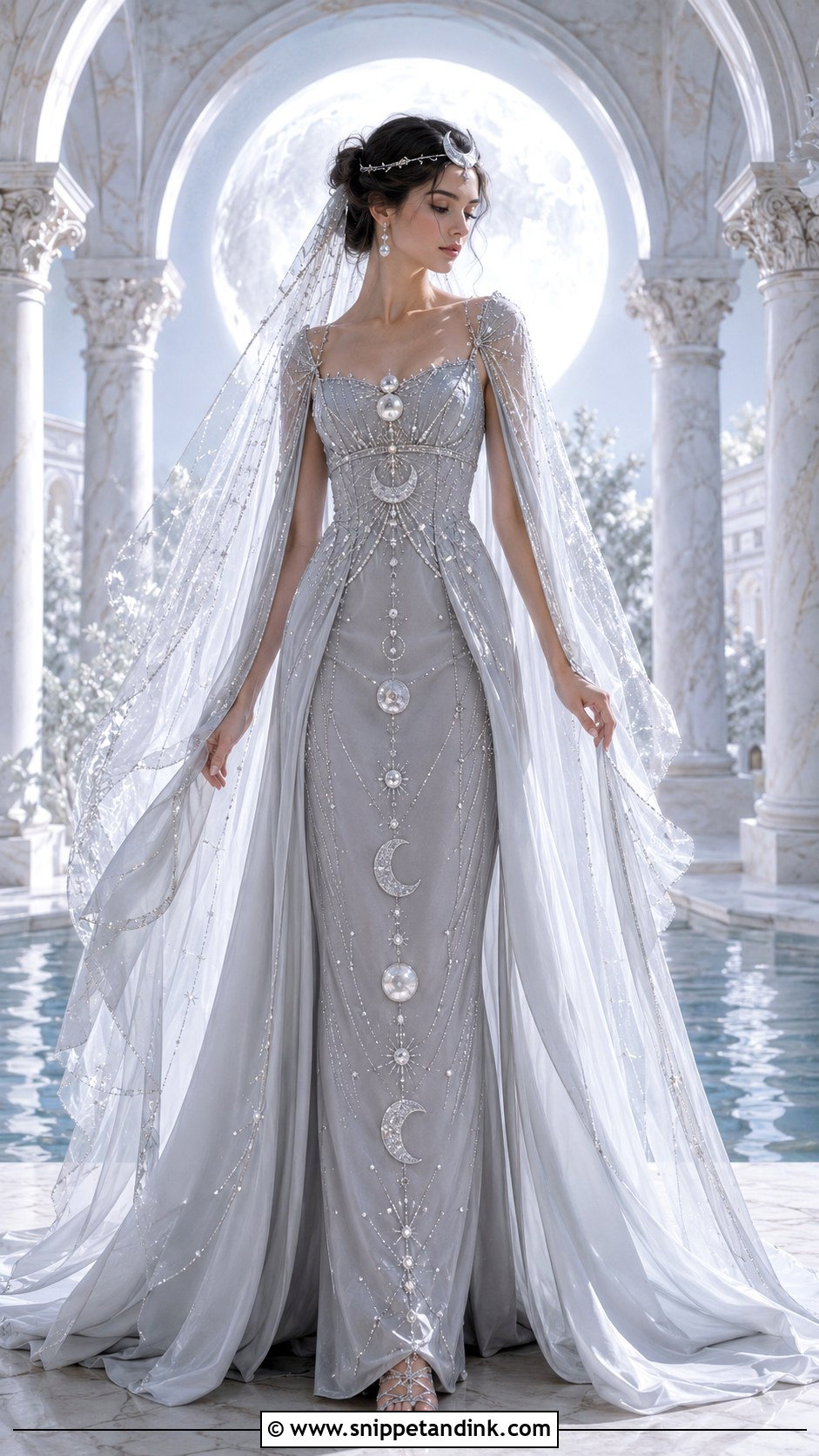
Soft silver light suits a moon goddess wedding dress better than any other theme here. A pearl-grey column with a structured waist and an overskirt that opens at the front gives you two layers to play with. Bead the moon phases across the bodice in fine silver and repeat them on the overskirt edge. Long cape sleeves trail from the shoulders. In my experience pearl-grey can look flat on paper, so add a cool sheen along the folds. Silver sandals, a crescent band, pearl earrings and a veil with tiny reflective beads. Loose waves, still water and a pale temple keep it calm.
12. Sun Goddess Fantasy Wedding Dress Art
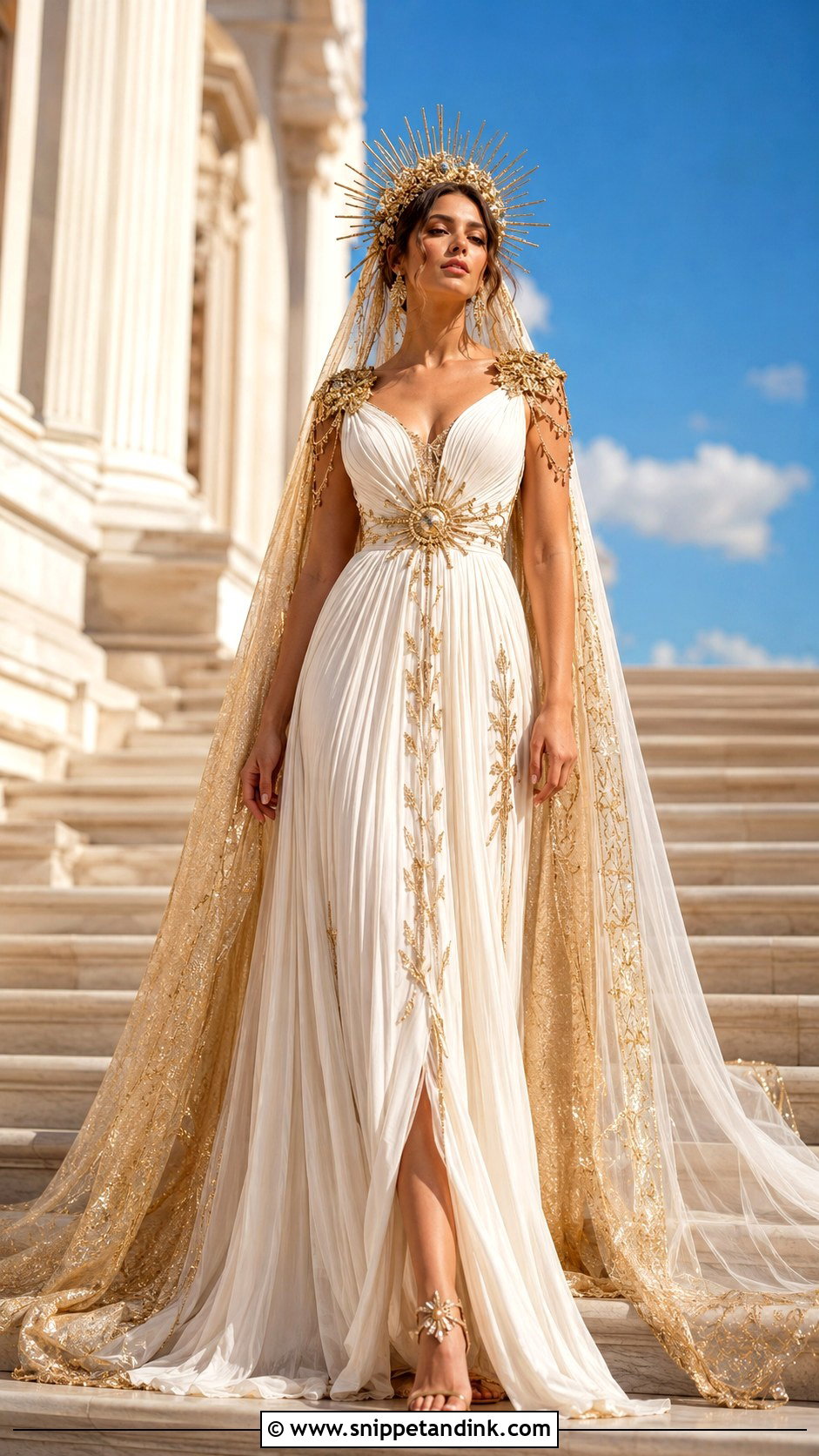
Gold is easy to overdo. A sun bride stays bridal when the base is ivory and the gold is rationed: a pleated bodice, a defined waist, and sun-ray embroidery spreading from the skirt’s centre. A light gold cape attached to jewelled shoulder pieces keeps the arms and seams visible. Metallic sandals, a round sun crown, small gold earrings. Give the long ivory veil only a thin gold border, and a bouquet of white flowers with gold leaves. Wide palace steps, a blue sky and crisp daylight.
13. Butterfly Fantasy Wedding Dress Art
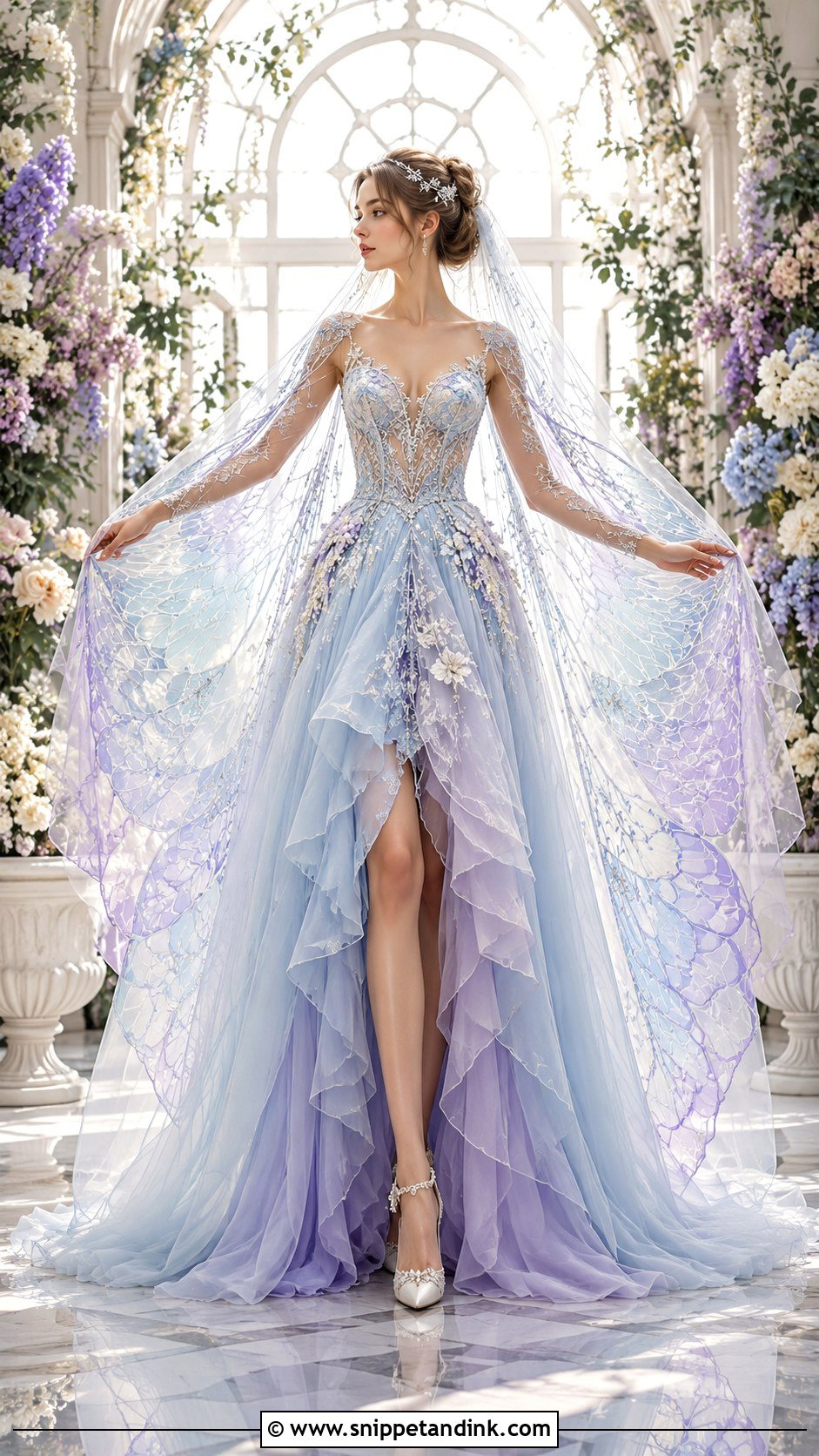
Butterflies scattered at random look like fabric stickers. Build them into the garment instead: mirrored wing-pattern embroidery on an ivory bodice, then skirt panels of white, powder blue and lilac tulle cut with curved edges. Small butterflies cluster near the cuffs of sheer sleeves. A detachable wing-shaped cape fixes below the shoulders and runs into the train; on a real dress, attaching it there keeps the weight off the neckline. Pearl heels, small earrings, a jewelled comb and a narrow veil. Draw her full length in a bright conservatory so the symmetry reads at a glance.
14. Rose Fantasy Wedding Dress Art
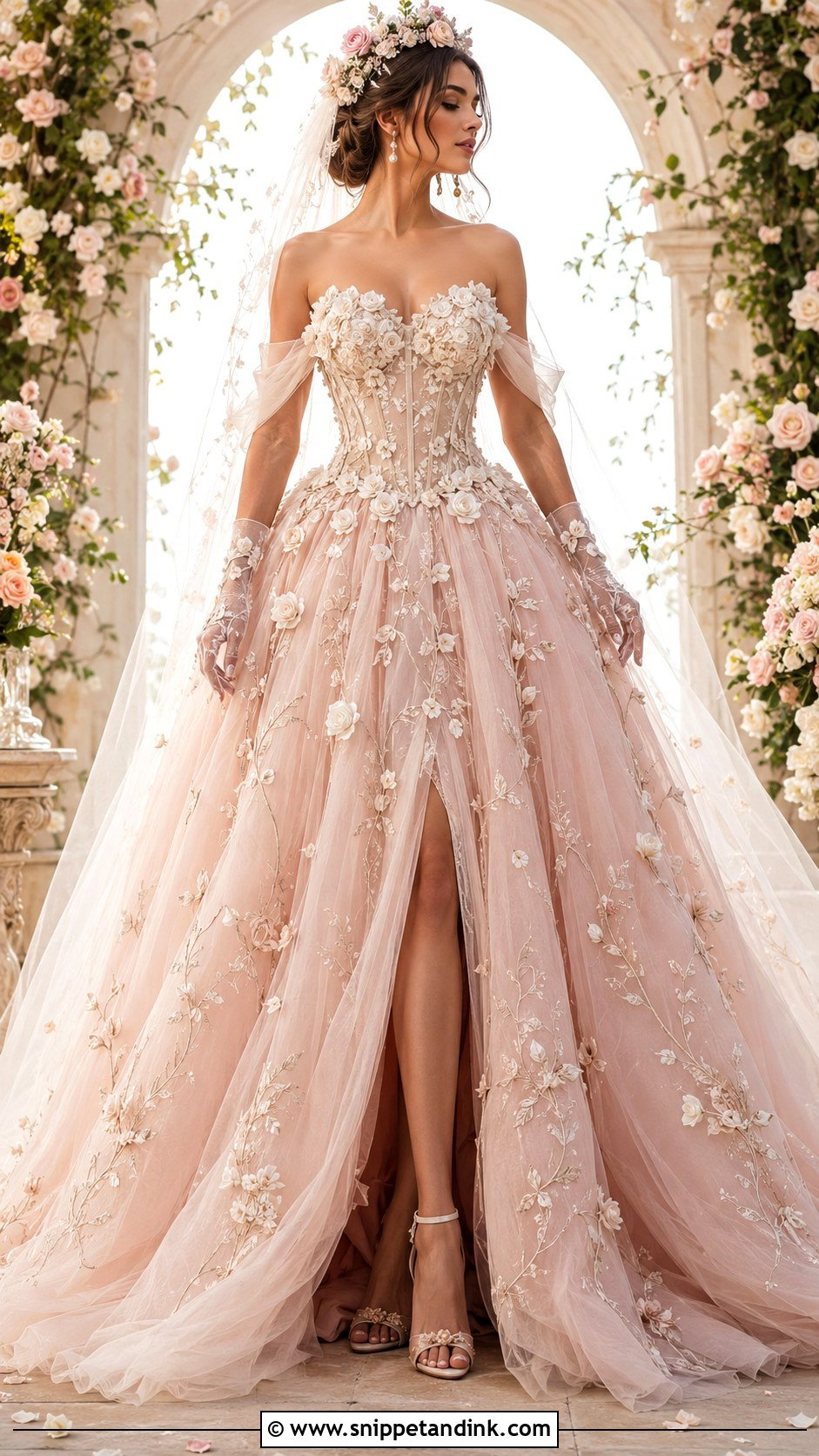
Roses crowd a dress fast, so grade them. Dimensional ivory roses on a champagne corset should flatten as they reach the waist, and the blush ball-gown skirt should carry only embroidered stems and loose petals around the train. I’ve watched raised fabric roses crush the moment a bride sits, which is why most couture houses keep the biggest ones on the bodice. Soft off-shoulder sleeves, sheer gloves with tiny rosebuds at the wrist, champagne heels, pearl drops and a crown of thin gold branches. Keep the cathedral veil plain apart from its edge. Even light under a rose arch shows raised flowers against smooth satin.
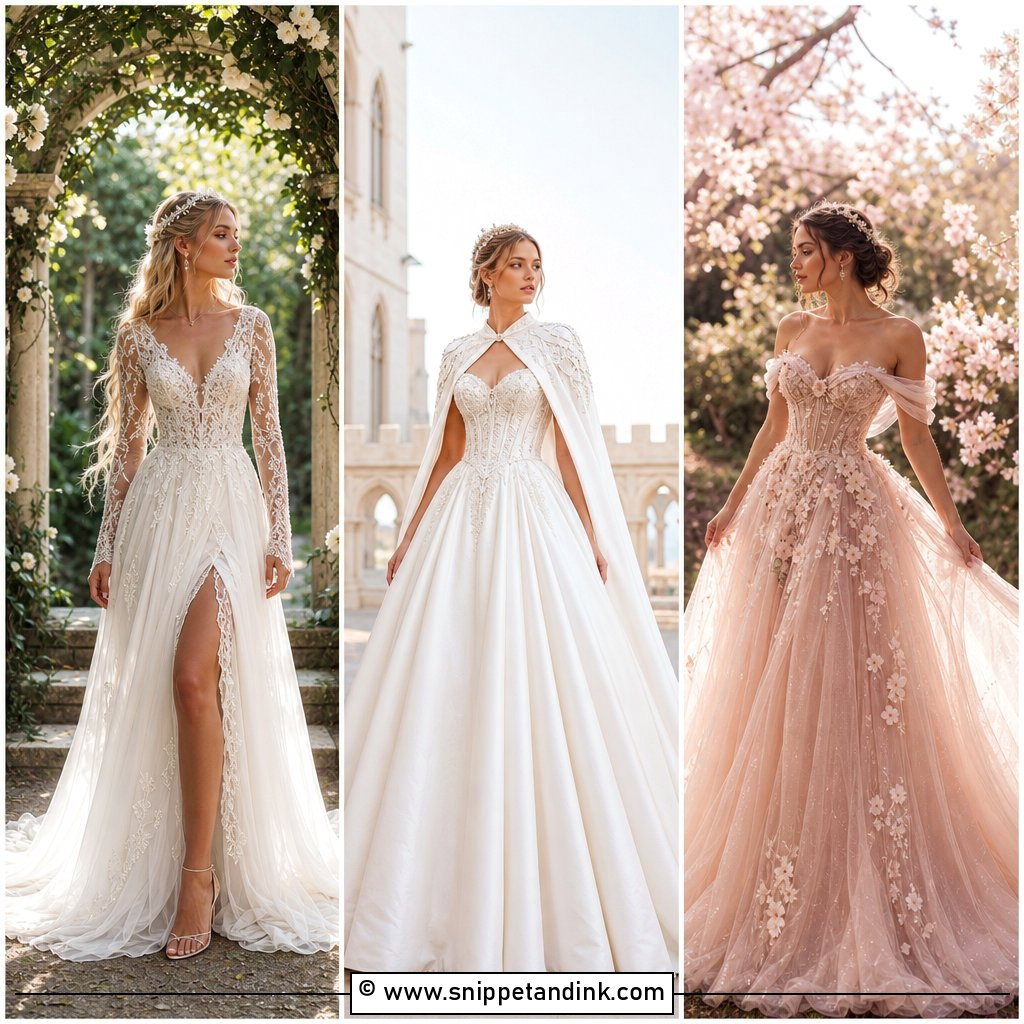
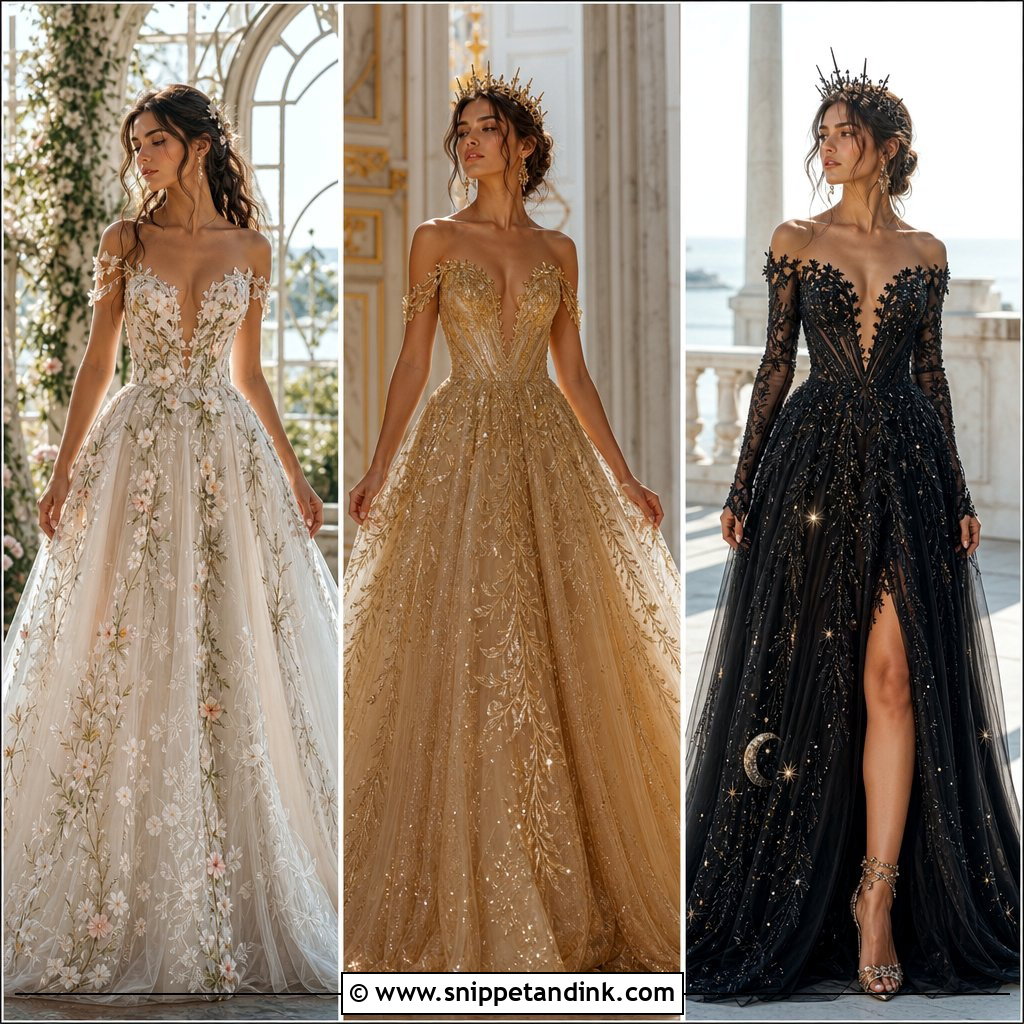
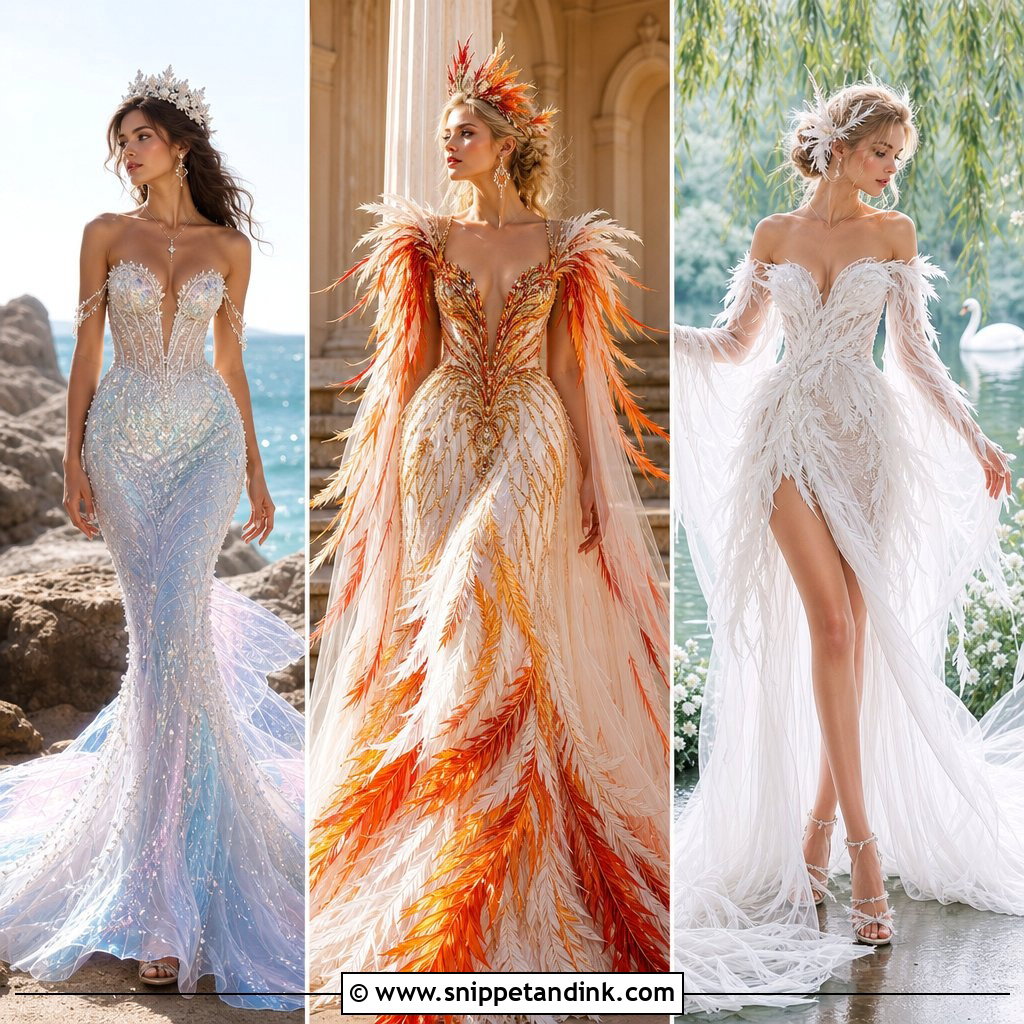
15. Swan Fantasy Wedding Dress Art
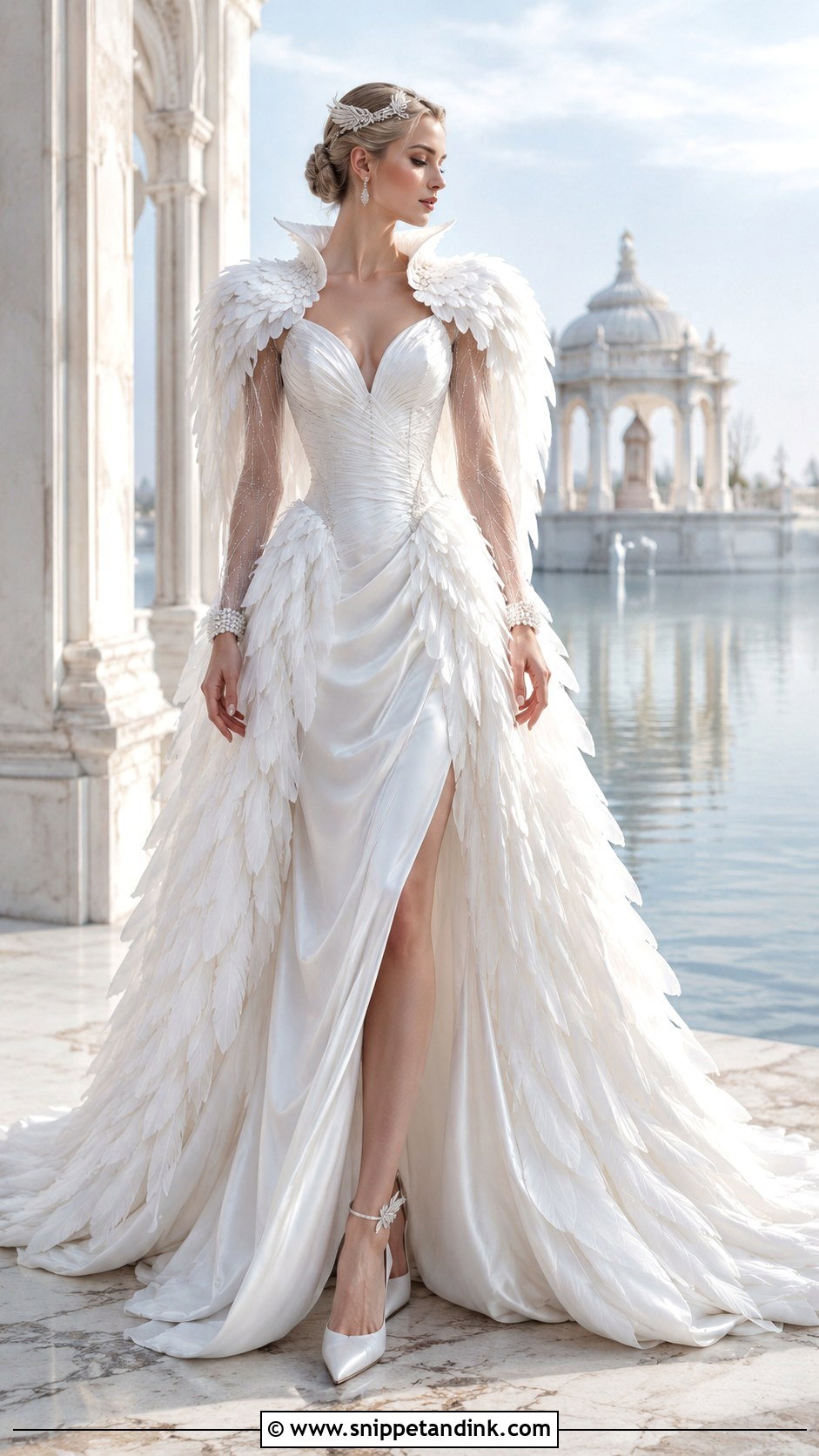
Graceful lines are the whole brief for a swan-inspired wedding dress. A sculpted sweetheart bodice and a dropped waist lengthen the body like a swan’s neck. Under curved organza layers cut like feathers, smooth satin keeps the skirt full but clean. I keep real feathers to the cape edge only; in practice they shed and collect dust, and too many turn the look theatrical. Slim sheer sleeves with pearl cuffs, a folded-wing shoulder cape, white satin heels, pearl earrings and a sweeping silver headpiece. A palace lake with swans far off, and a tall pose that shows the train.
16. Warrior Fantasy Wedding Dress Art
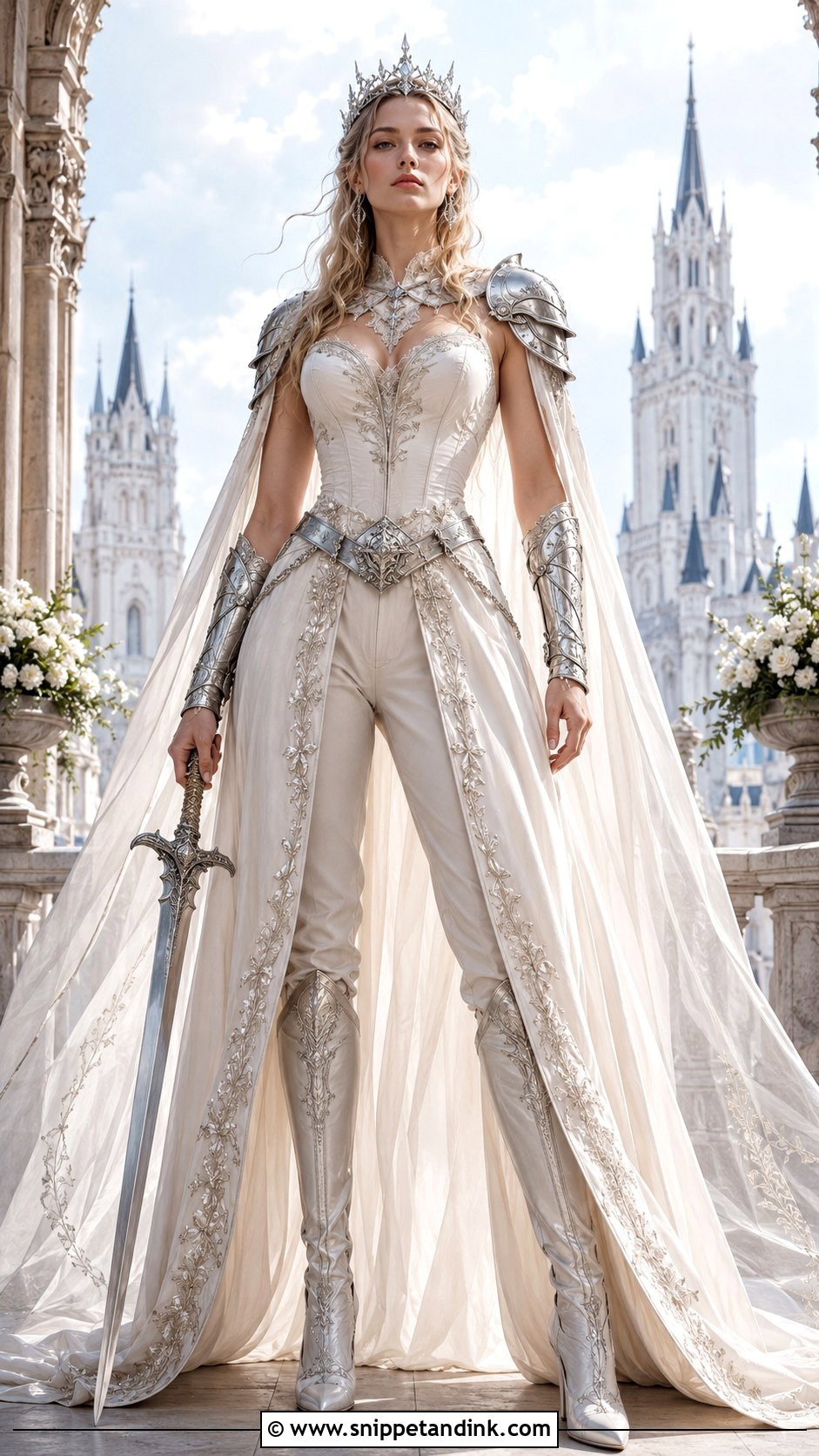
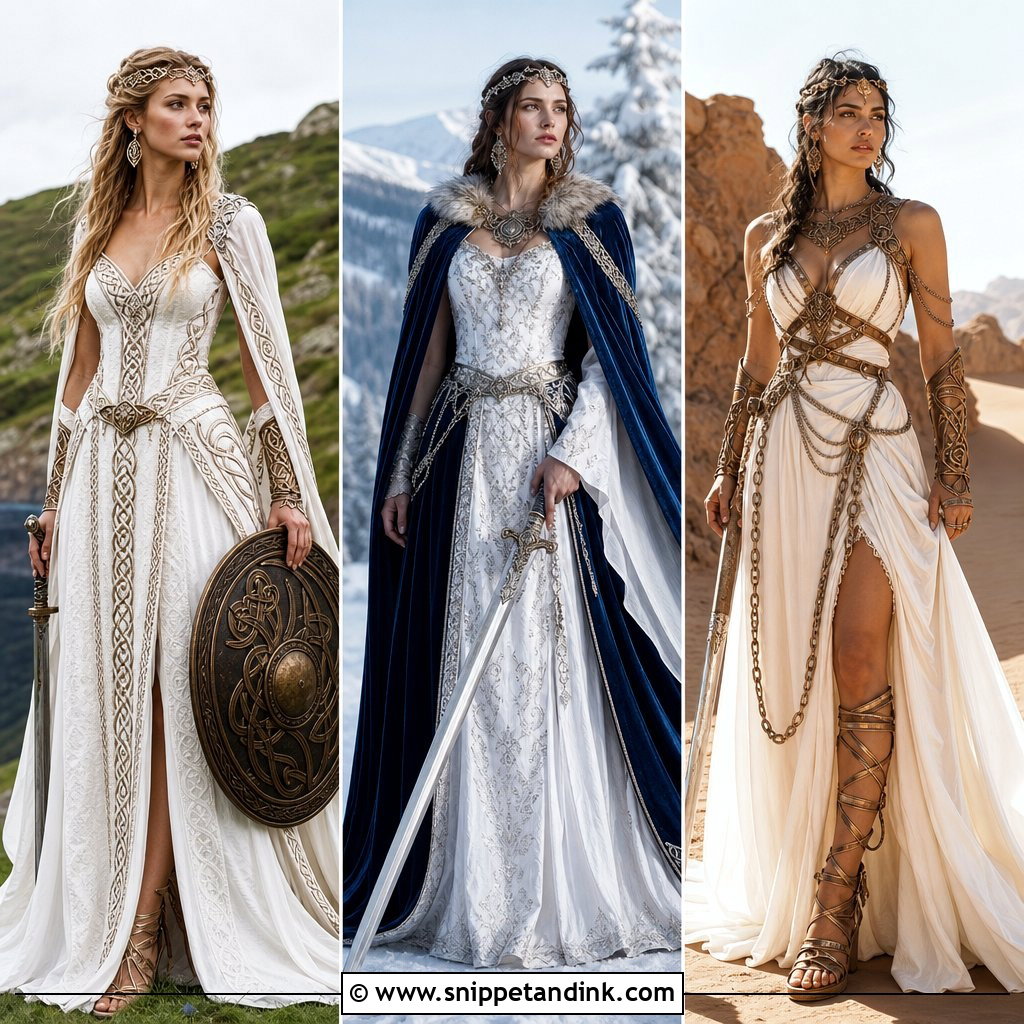
A warrior bride has to look ready to move. A structured ivory dress with an embroidered bodice, a split overskirt and soft trousers underneath gives her that. Light silver shoulder armour, engraved bracers and a narrow metal belt match each other. Draw the armour fitted close to the body; bulky plates at the shoulder make her look like she is wearing a costume over a dress. A long chiffon cape replaces the veil. Ivory knee boots, a small crystal crown and a braided ponytail. Castle terrace, sword point to the ground, every layer visible from cape to boots.
17. Peacock Fantasy Wedding Dress Art
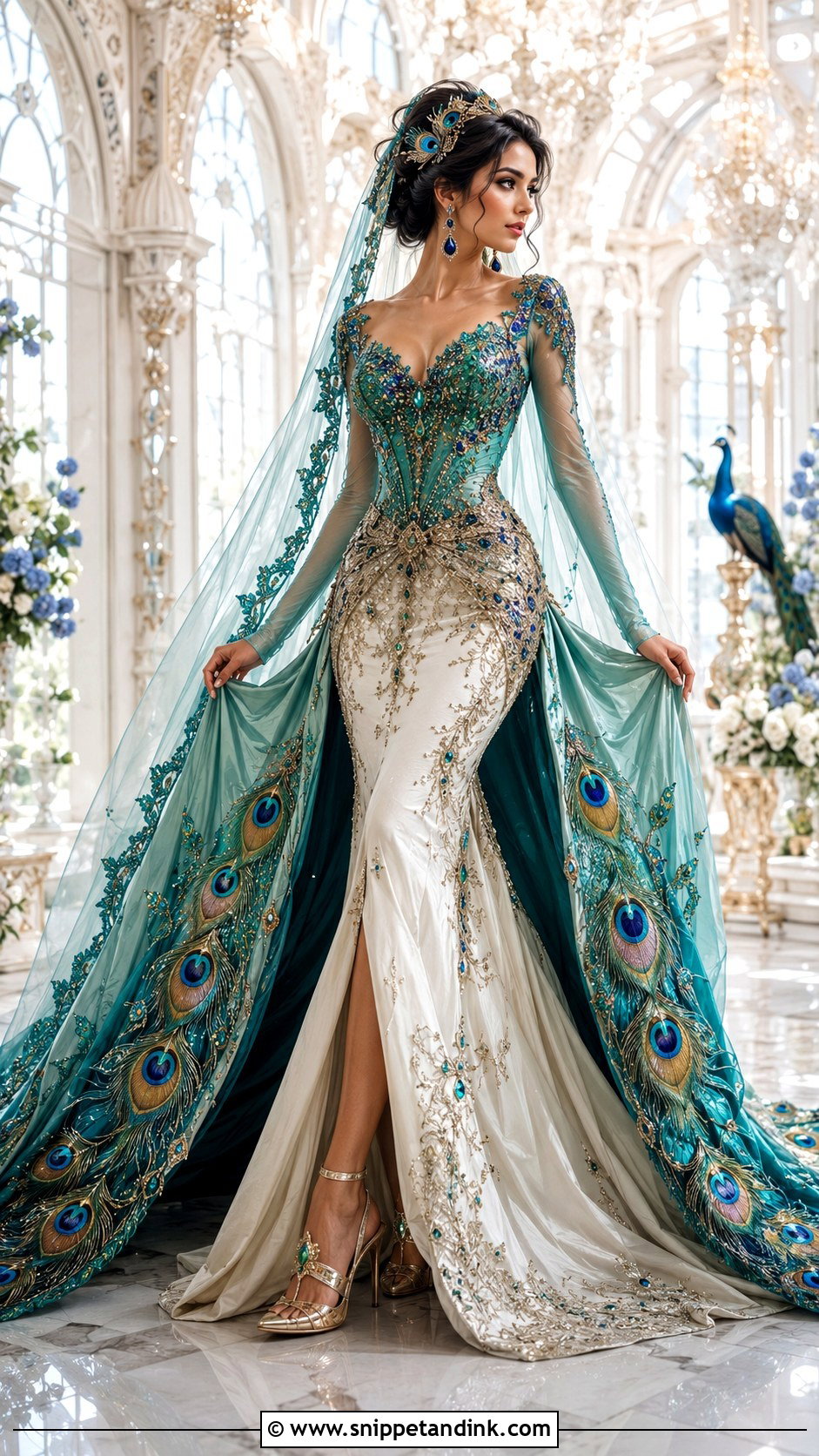
Jewel tones give a peacock-inspired bridal illustration its depth. An emerald fitted bodice with structured shoulders and blue-green crystal work, over an ivory trumpet skirt that opens into a wide train patterned with peacock-eye motifs. Sheer teal sleeves and a detachable emerald overskirt add volume at the back. Gold heels, sapphire earrings and a fan-shaped jewelled comb. With this much colour, the veil needs to stay plain ivory with a thin teal edge. Set her in a pale glass palace or formal garden so the saturated train is the only strong colour, and use a three-quarter pose to show front and train together.
18. Cloud Fantasy Wedding Dress Art
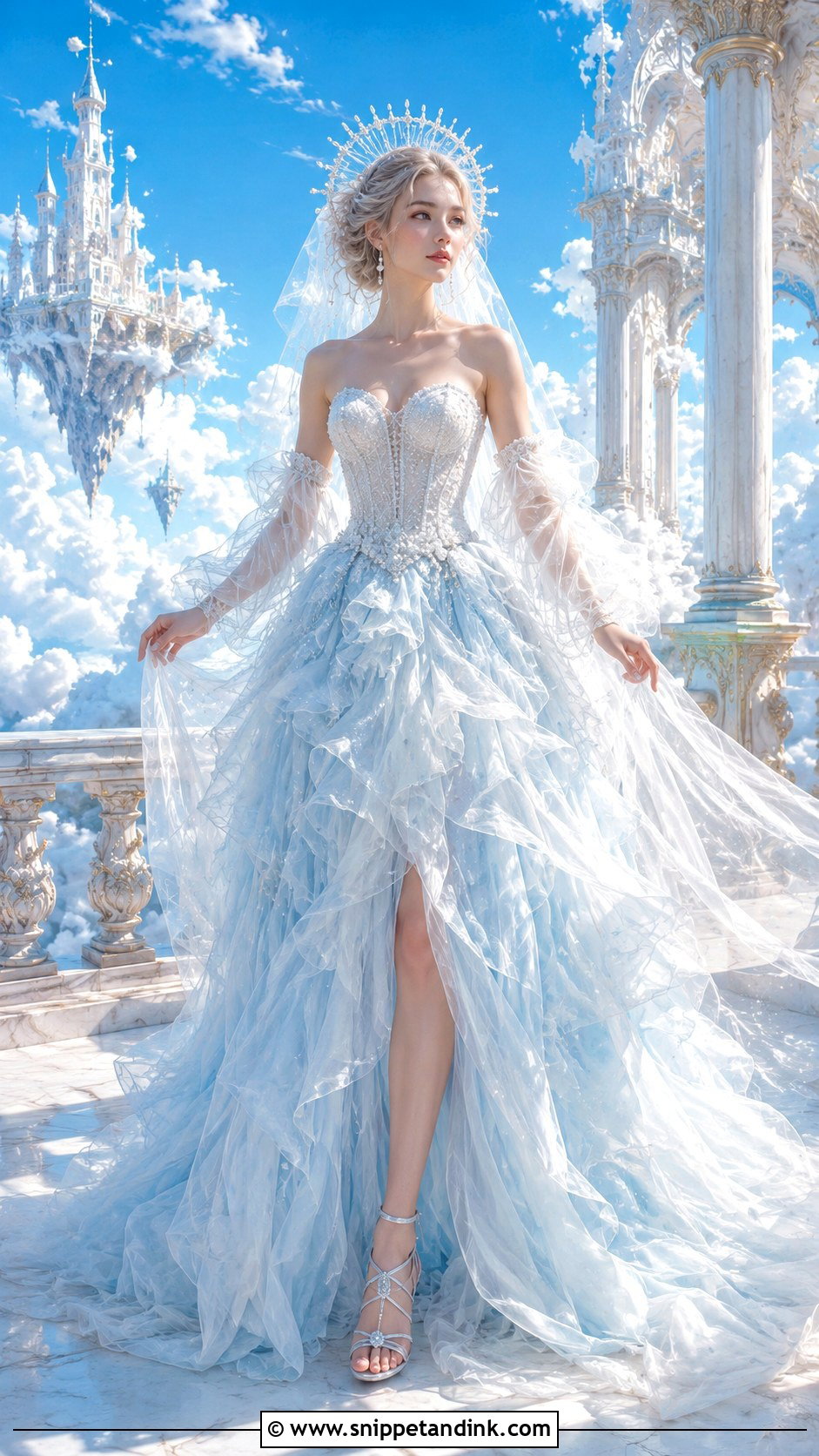
Clouds are made of volume, so the skirt does the work: rounded layers of white and pale blue tulle under a strapless pearl-white bodice with light crystal beading. Draw the tulle in soft bunched curves rather than straight pleats. Separate sheer sleeves gathered at the wrist and a long transparent cape that trails like mist. Silver sandals, cloud-shaped pearl earrings and a fine crystal halo. Keep the veil short; a long veil plus a cape plus a big skirt becomes a blur. A floating balcony, a bright sky and a tall vertical frame.
19. Crystal Fantasy Wedding Dress Art
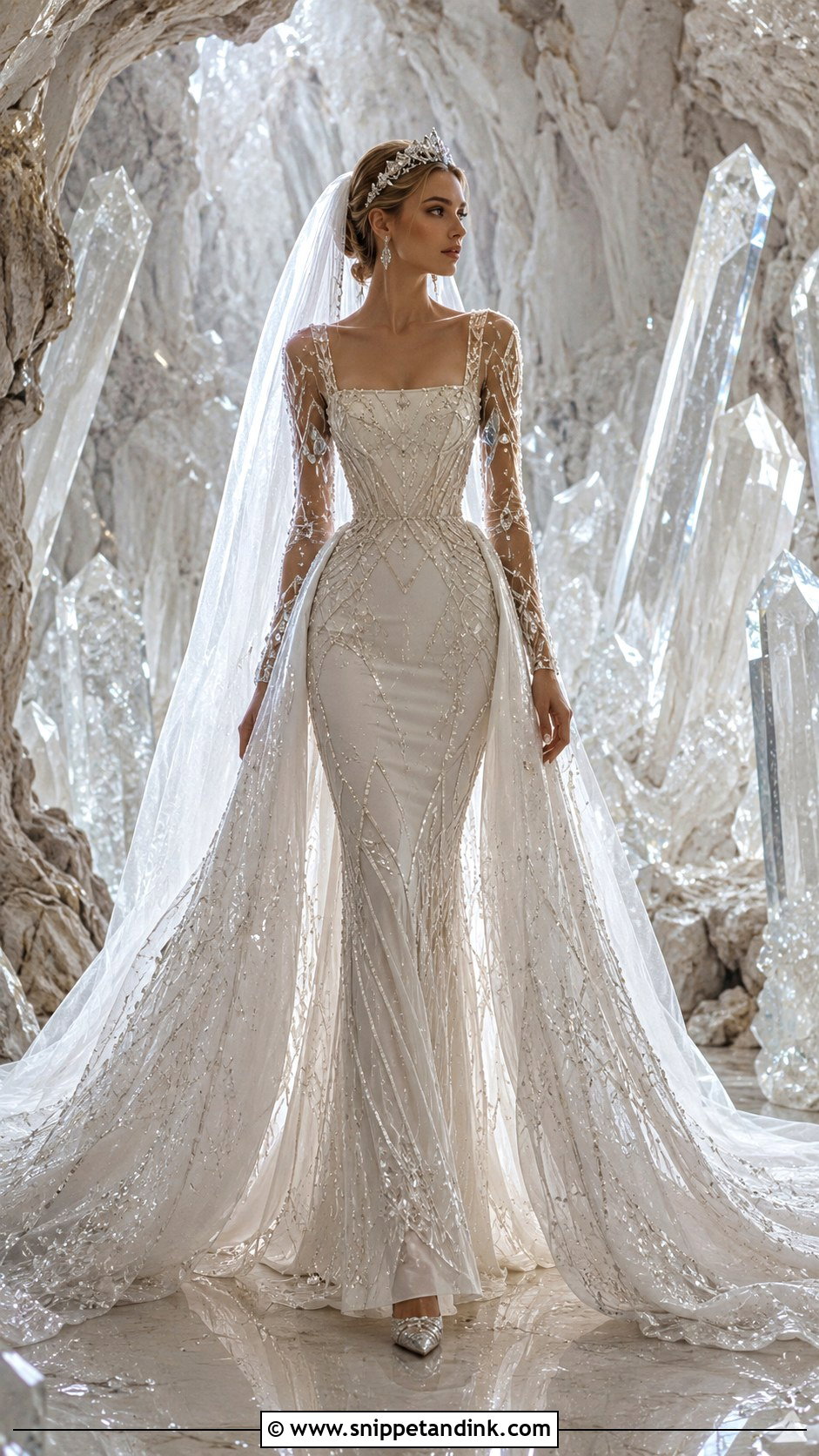
Crystals only sparkle against a shape you can read. Start with a sleek ivory trumpet gown, a square neck and a fitted waist, then cover the bodice in small clear crystals and run a few geometric lines down the hips. Sheer sleeves with crystal cuffs and a lightly embellished detachable overskirt. I always push back on gems over every surface: they hide the silhouette, and on a real gown they make it painfully heavy. Silver pumps, geometric earrings, a faceted headband and a plain cathedral veil. In a bright crystal cavern, use medium contrast so she stands apart from the glittering walls.

20. Enchanted Princess Fantasy Wedding Dress Art
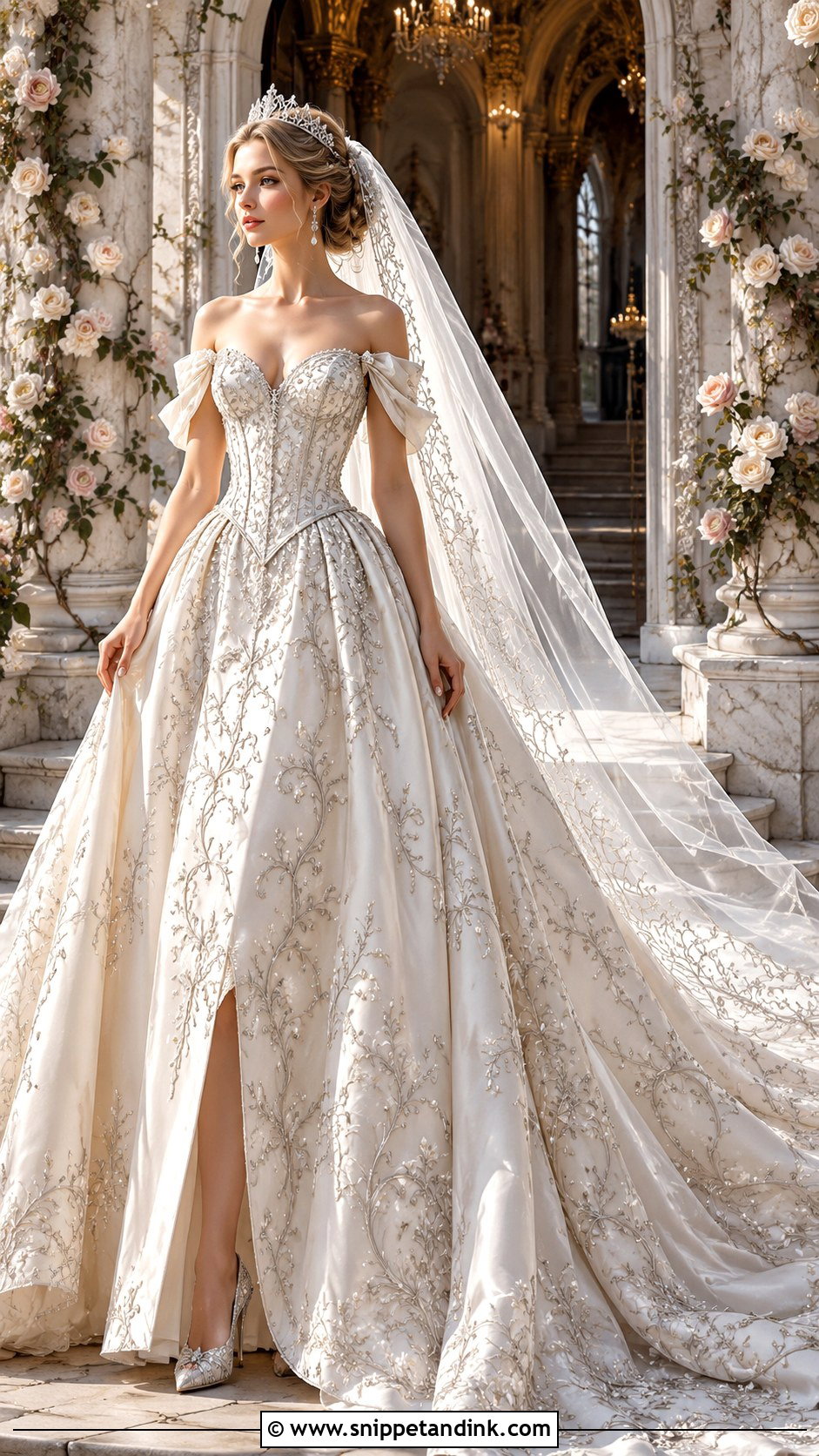
The last design is the classic princess, placed in a detailed fantasy world. An ivory ball gown with a pointed waist and an off-the-shoulder neckline, a full satin skirt under embroidered tulle, and silver vines, tiny flowers and crystals on the bodice and hem. Draped sleeves and a long train fanning out behind. A pointed waist slims and lengthens the bodice above a big skirt, which is why it shows up in so many royal gowns. Crystal heels, a refined tiara, pearl earrings and a cathedral veil set under a braided updo. A small white and blue bouquet, climbing roses at a palace door and morning light.
Can a Dressmaker Turn Your Sketch Into a Real Wedding Gown?
Often, yes, and fantasy art is a good brief to bring to a bridal dressmaker or costume maker. Expect some changes along the way, because a few things that look easy on paper are hard or uncomfortable to wear for a full wedding day.
- Detachable capes, overskirts and sleeves translate well, and they let you change for dancing.
- Grade beading and embroidery from heavy at the hem or bodice to light elsewhere; a fully beaded gown can be very heavy.
- Real feathers, big raised fabric flowers and metal armour need careful placement so you can sit, hug and walk.
- Colour gradients are done by dyeing or layering sheer fabric, and they cost more than plain colour.
- Bring the artwork plus a few photos of real gowns with the same neckline and skirt shape. It helps the maker understand proportions.
A custom gown takes months, not weeks, so start conversations well ahead of the wedding and allow time for at least two fittings. A good maker will tell you honestly which parts of the drawing will work and which should stay on paper.
One Magical Detail, Then Let the Rest of the Gown Step Back
Every design in this set works the same way: colour, silhouette, fabric, accessories and setting all point to one story. Start each drawing with who the bride is, then pick a single fantasy feature, armour, constellations, wings or petals, and let everything else support it. Think about how she moves and which detail the eye should find first. Above all, keep the outline readable from across a room. If the shape is clear at a distance, the small details reward a closer look instead of fighting for attention.
You'll Like These Ideas:


Leave a Reply