
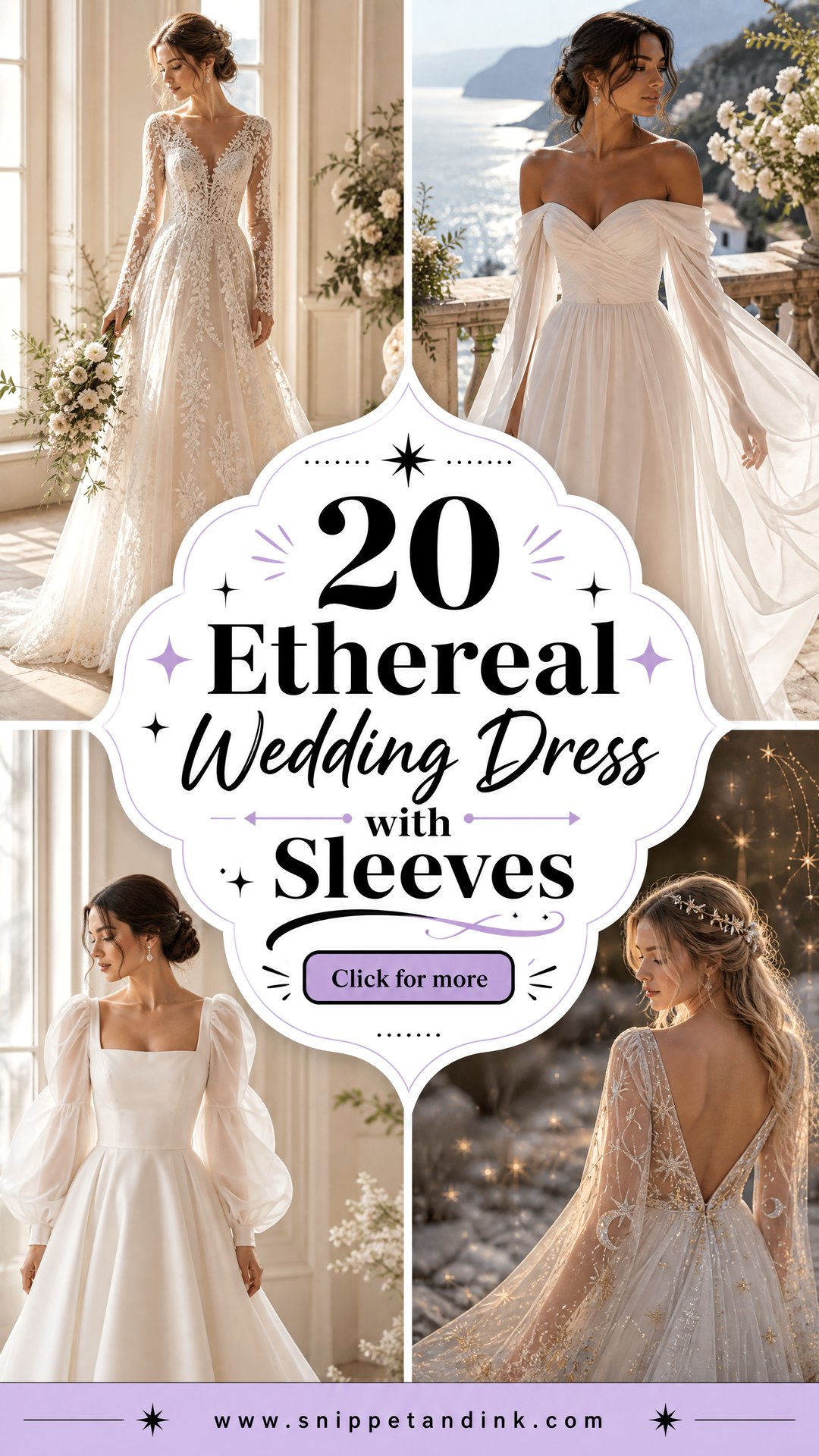
Sleeves are where an airy wedding dress either floats or gets heavy. Sheer ones add coverage you can barely see; loose ones give the gown movement every time you lift a hand; structured ones make a plain dress feel formal. When I dress a bride who wants that soft, dreamy look, I spend as much time on the sleeve as on the skirt, because it’s the part of the dress you’ll feel all day. Below are twenty sleeved gowns, from chiffon for outdoor ceremonies to satin for formal rooms and lace for a woodland venue, each with the shoes, veil and hair I’d put with it.
The Arm Test I Run in Every Fitting Room
A sleeve can look perfect while you stand still in front of the mirror and fail the first time you hug someone. So before a bride falls for a gown, I put her through a few movements.
- Reach both arms straight up, as if pulling a veil over your head. If the bodice rises or the armhole cuts in, the sleeve is set too low.
- Cross your arms in front of you. Tight fabric across the back of the shoulders will split a seam or restrict you at dinner.
- Lift a glass to your mouth and bend your elbow fully. Fitted lace and satin often pull at the inner elbow.
- Hold your hands out for the ring. Check that cuffs, buttons or bell sleeves don’t cover your fingers.
A high, close armhole usually gives more movement than a low, loose one, which surprises people. Also, sheer mesh has a little stretch, while satin and crepe have none, so fitted sleeves in those fabrics need more care.
1. Long Sleeve Lace A-Line Wedding Dress
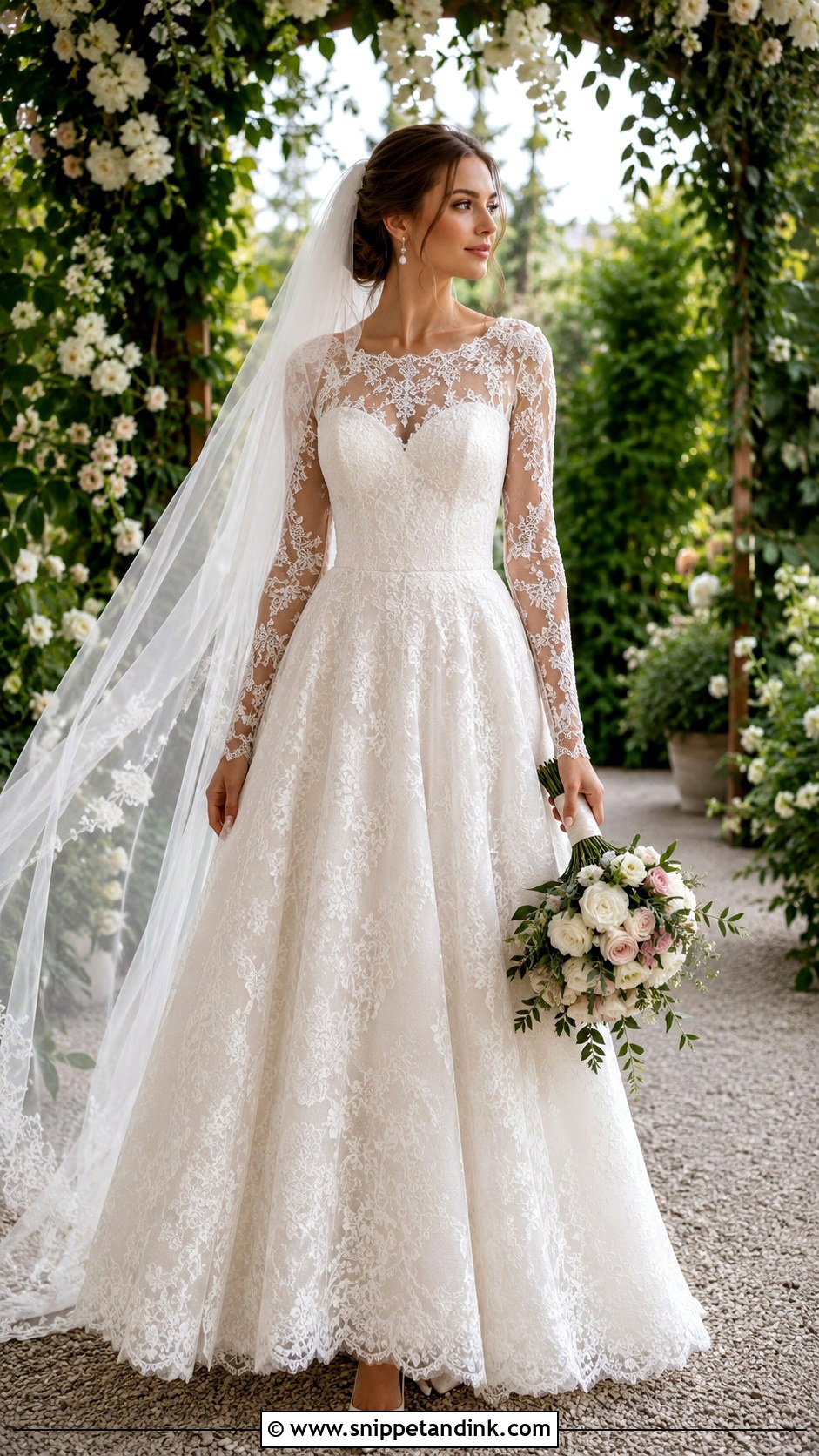
Lace over soft tulle is the combination that moves most naturally, which is why I keep coming back to it on an A-line. The fitted bodice holds the waist and the skirt skims the hips, so you can walk and sit without fuss. Sheer lace sleeves let a little skin show through the pattern, which keeps them from looking heavy. Pearl drops, a fingertip veil and pointed ivory pumps finish it, with a loose low bun so the sleeves aren’t hidden. Ask for the lace to be cut around its motifs at the wrist rather than hemmed straight; it looks far more finished. Gardens, estates or an indoor ceremony all suit it, in most seasons.
2. Illusion Sleeve Tulle Ball Gown Wedding Dress
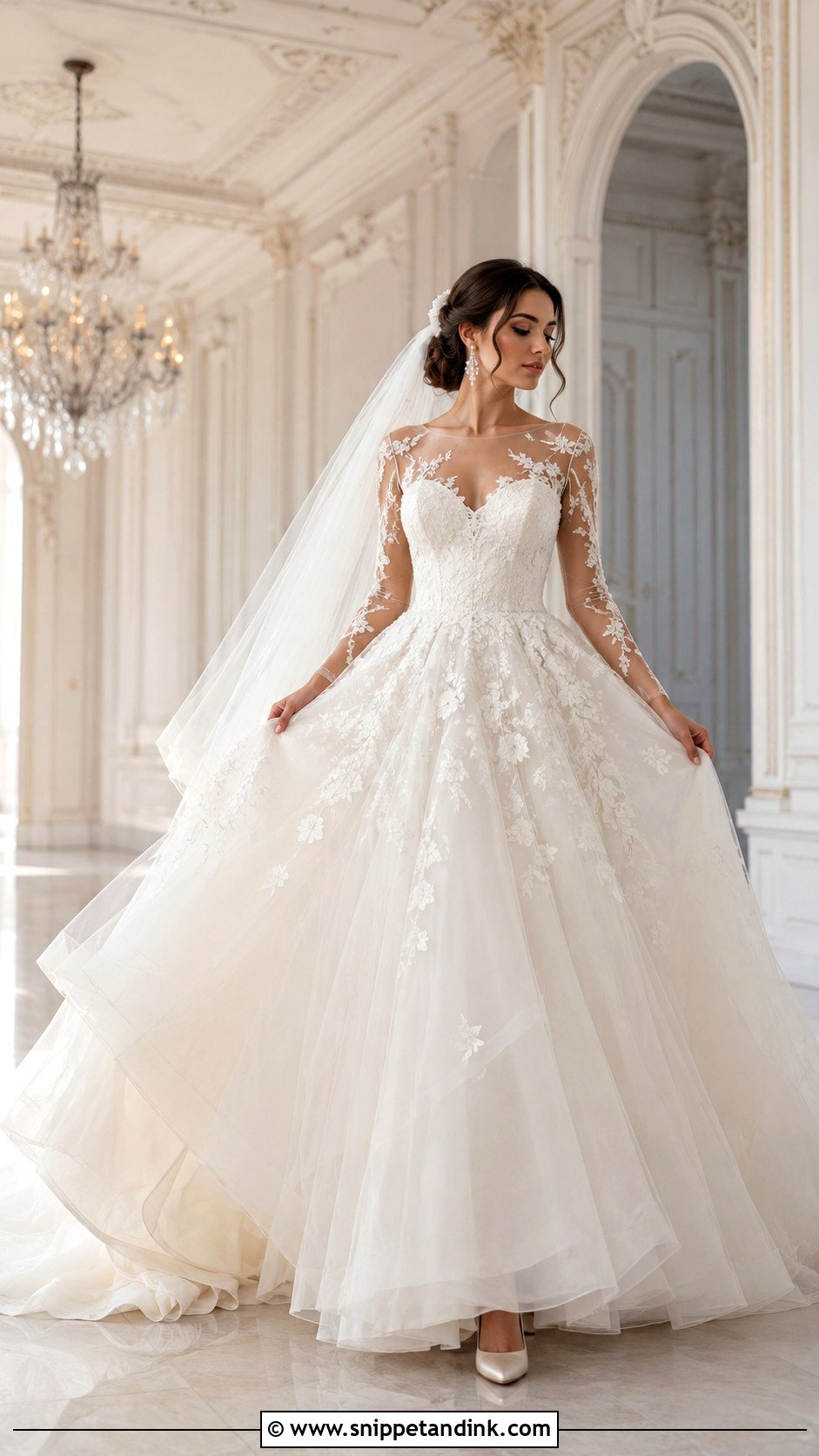
Tulle in layers is the closest thing to weightless a ball gown can be. An illusion sleeve tulle ball gown pairs that with almost invisible mesh sleeves dotted with lace appliqués. The trick is the sweetheart lining under the illusion bodice: it gives the shape and support, and the mesh simply holds the appliqués in place. Have the mesh dyed or chosen to match your skin tone closely; a mismatched shade shows up as a grey film in photos. Crystal studs, a plain cathedral veil and satin heels under the skirt. A textured chignon with a few loose strands. Ballrooms and evening ceremonies suit it best.
3. Off Shoulder Chiffon Wedding Dress With Draped Sleeves
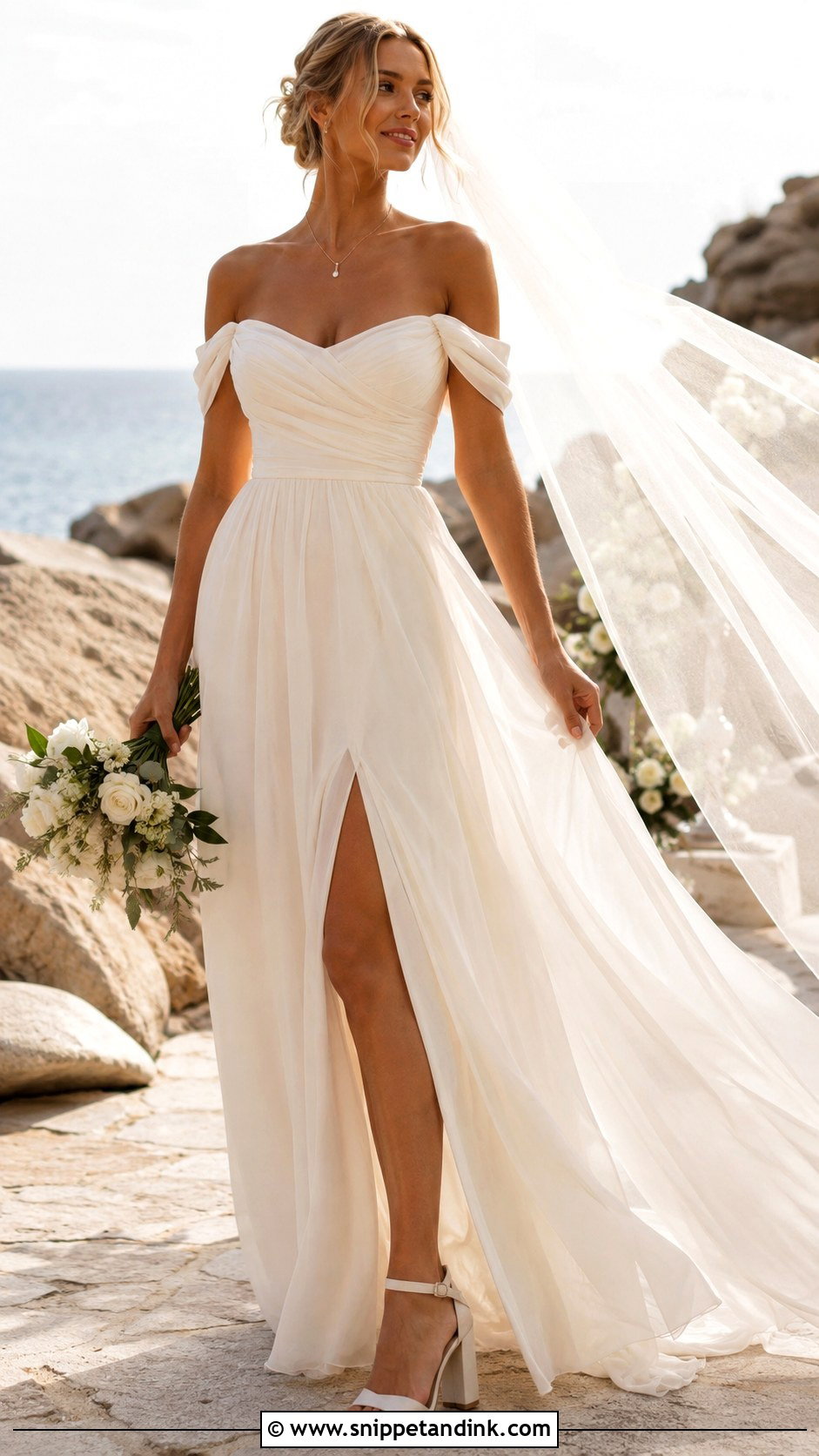
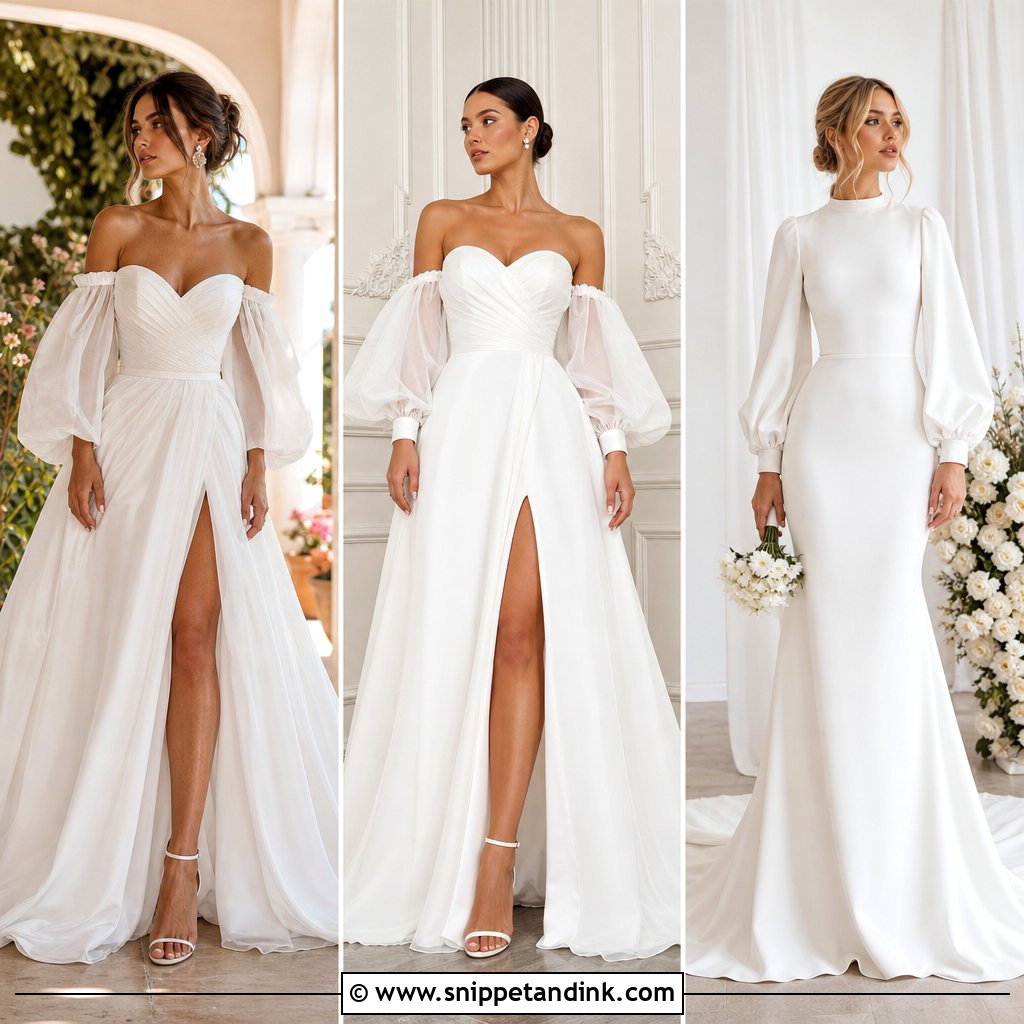
Draped off-the-shoulder sleeves sit on the upper arm, so they move every time you do. That’s lovely in chiffon and frustrating if the bodice isn’t structured, because the weight of the drape drags it down. I look for light boning and a gathered waist, with a flowing A-line or column skirt. A fine pendant, small floral earrings and ivory block-heel sandals for walking on grass or decking. Loose waves or half-up hair. Coast, meadow or a destination wedding where you’ll be moving around more than standing still.
4. Bishop Sleeve Boho Wedding Dress
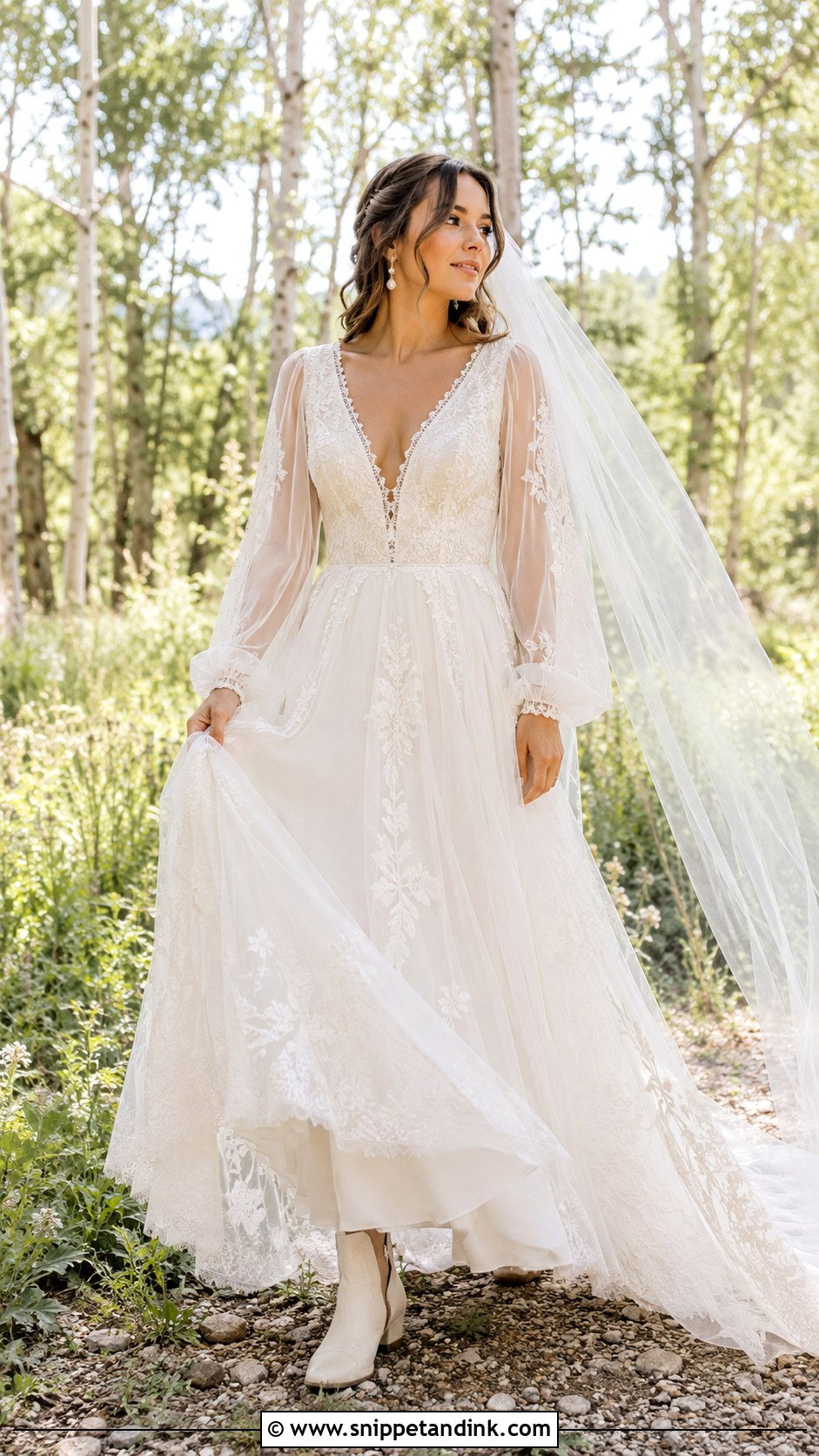
A bishop sleeve boho wedding dress only works if the sleeve is light. Dense fabric gathered at the wrist balloons and adds bulk; embroidered tulle, dotted mesh or fine chiffon just billows. The cuff should be snug but not tight, with a button or elastic you can push up to wash your hands. A V-neck and a softly defined waist keep the volume in proportion. Embroidered ivory ankle boots, organic pearl earrings and a chapel veil with minimal edging. Loose braids or natural waves. Woodland ceremonies and outdoor venues with lots of greenery suit it.
5. Flutter Sleeve Tulle Wedding Dress
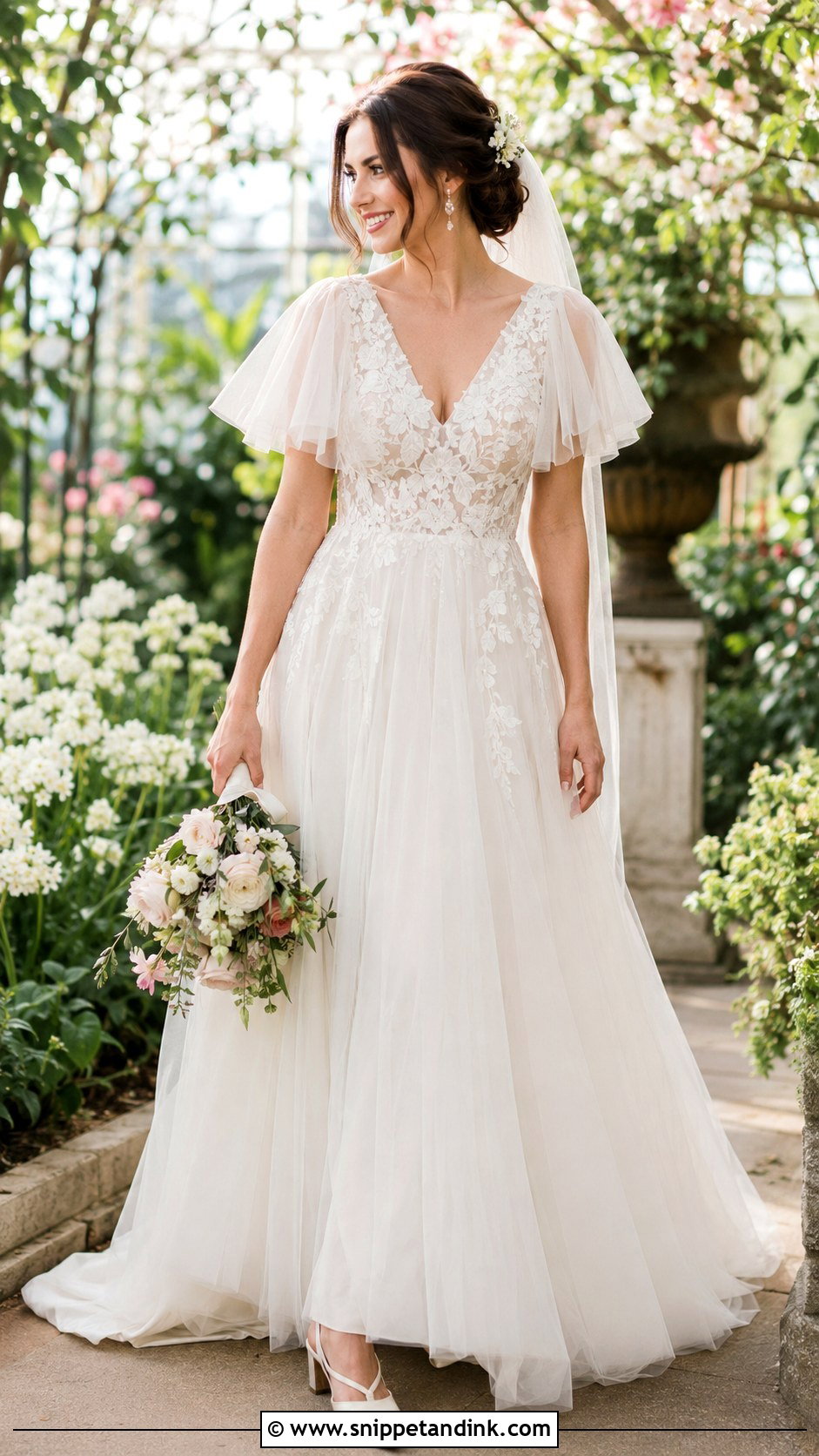
Flutter sleeves fall from the shoulder in soft layers, and they move with each step. I steer brides away from stiff ruffles that hold a fixed shape; what you want is fabric that drops. A fitted V-neck bodice balances the volume and a sweeping A-line skirt finishes it. A light scatter of floral appliqués around the bodice links sleeve and skirt. Vine earrings, a narrow floral comb and comfortable ivory slingbacks. A single-layer veil keeps it all visible. Spring gardens and conservatories are its natural home.
6. Cape Sleeve Wedding Dress
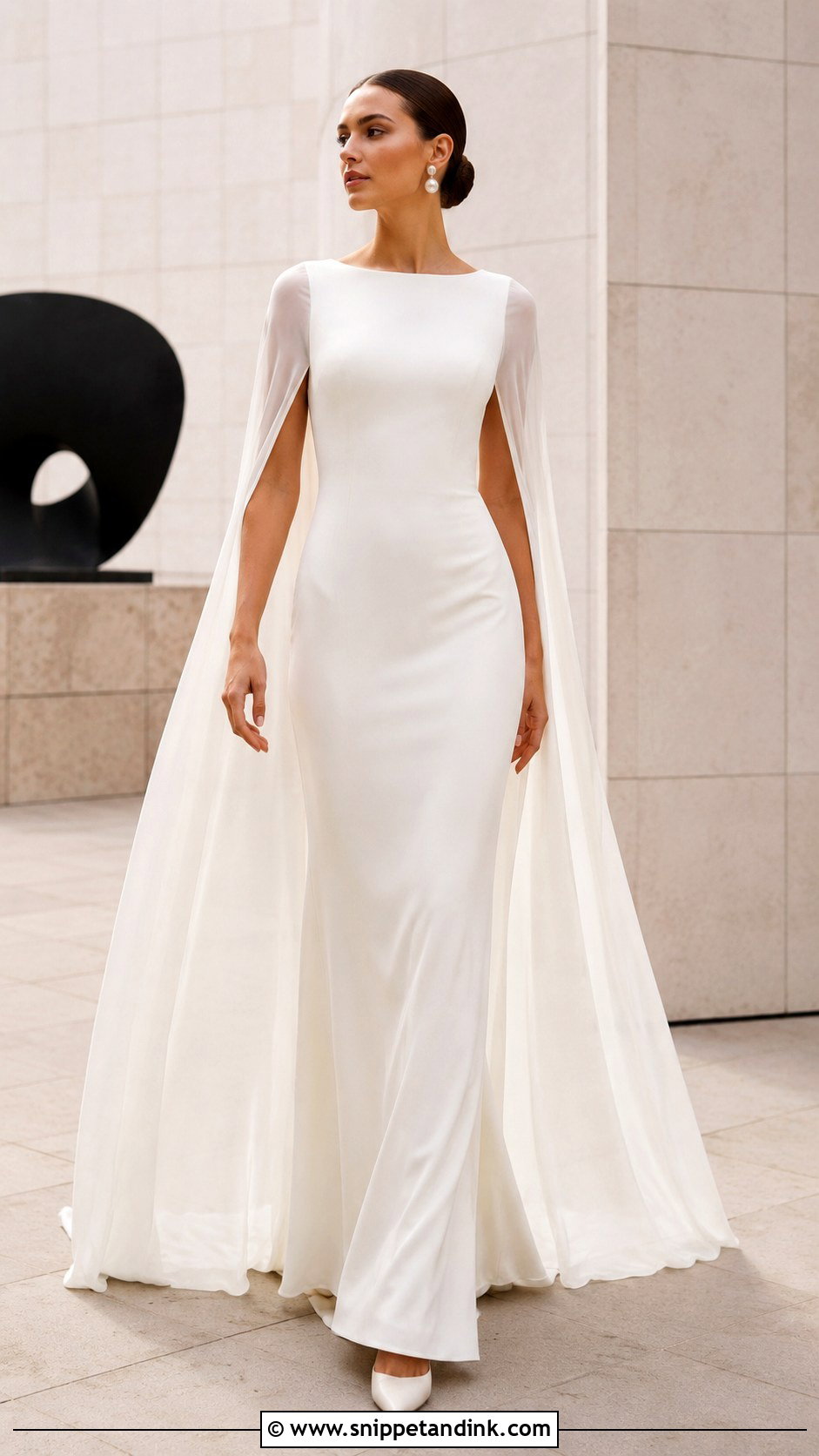
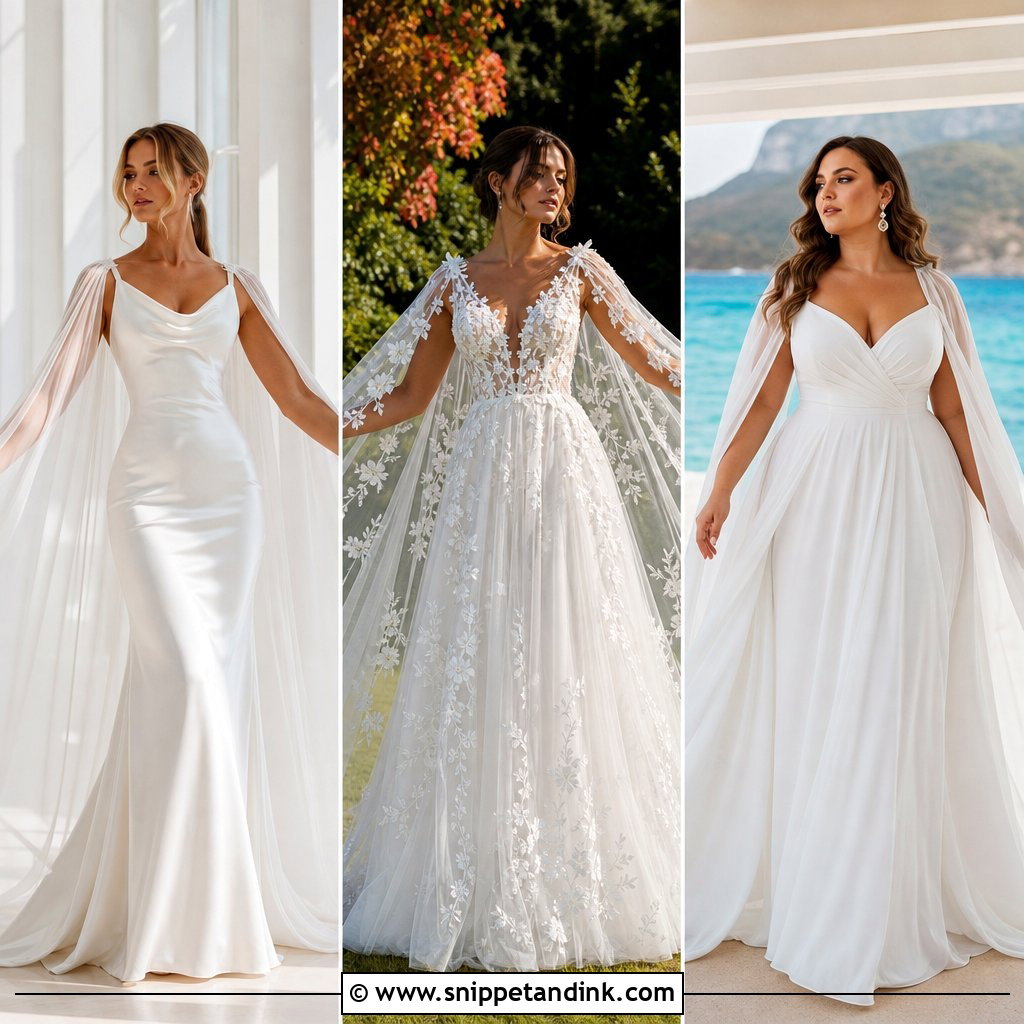
A cape sleeve gives you drama without anything around your arms. Sheer panels fall from the shoulders and move behind you, over a clean crepe column or a simple A-line. Chiffon and soft tulle are the right weights. Keep embellishment minimal. Sleek ivory pumps, sculptural pearl earrings and a smooth low bun; a veil is optional since the cape already trails. Here’s what I check: whether the panels can be caught on a chair back or tucked under when you sit. Museums, modern venues and open landscapes where the fabric catches a breeze all suit it.
7. Bell Sleeve Lace Wedding Dress
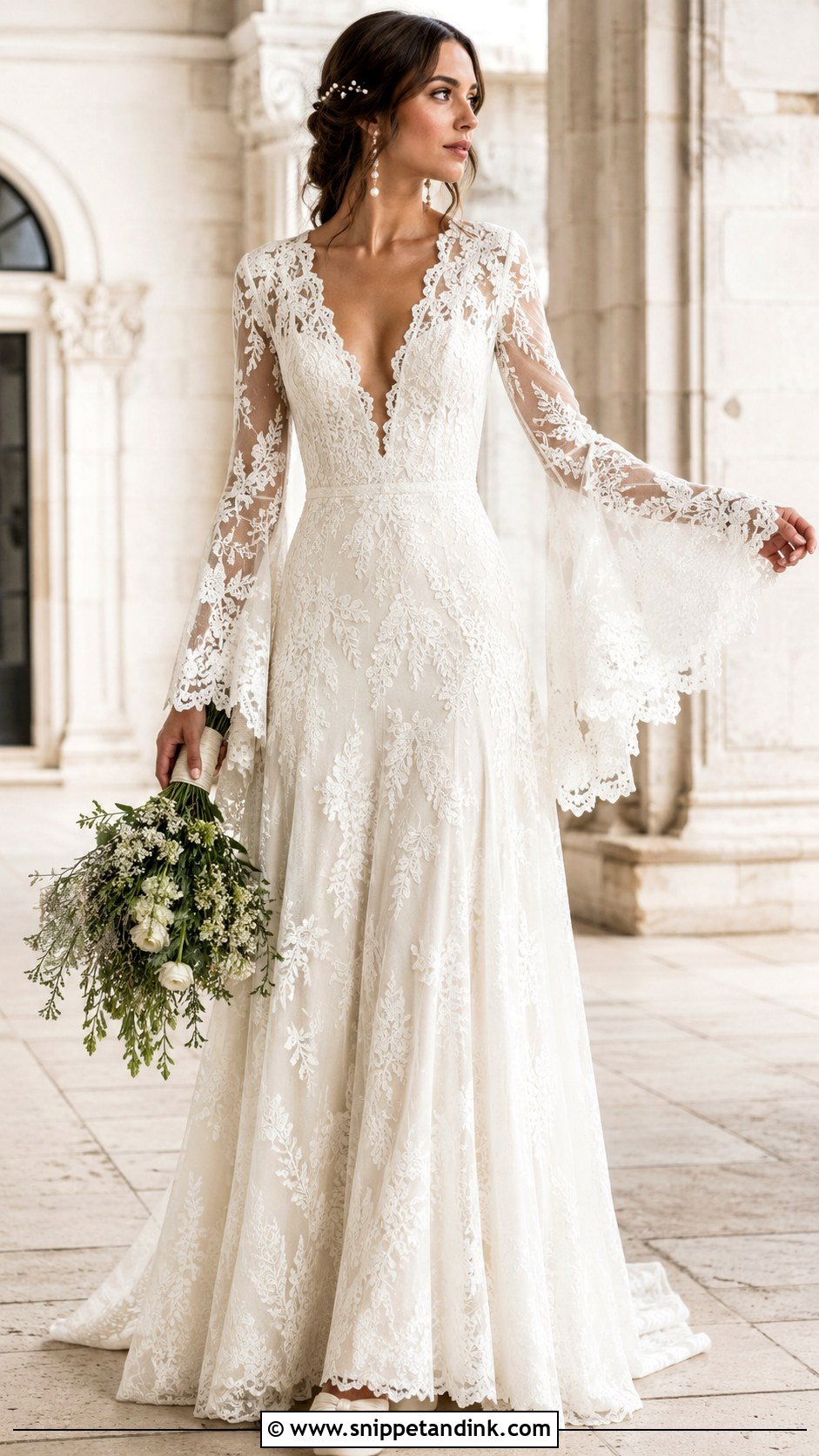
Wide bell sleeves give lace a vintage feel, and the wearable ones fit closely to the elbow before they flare. If the flare starts at the shoulder, it hides your whole shape. A fitted bodice and fluid skirt keep it from looking like a costume. Fine botanical lace, scalloped cuffs and a modest train add detail. Pearl hairpins, drop earrings and ivory platform sandals for stability. Bell sleeves drag through cake icing and catch on chair arms, so practise lifting your hand from the wrist when you reach for things. Estates, old houses and artistic, relaxed celebrations suit it.
8. Detachable Sleeve Corset Wedding Dress
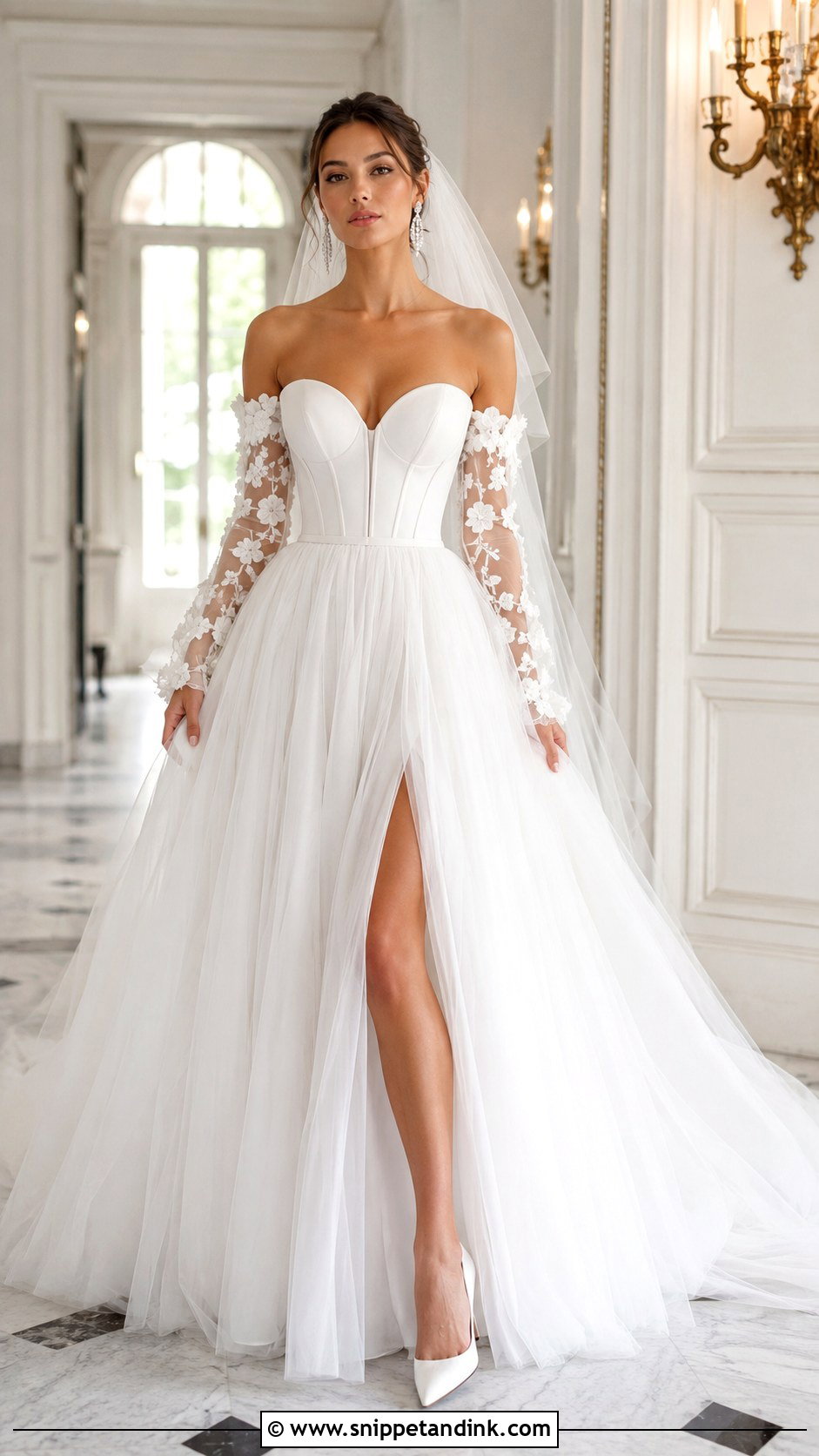
Detachable sleeves give you two looks in one dress, and they solve a common problem: coverage for a religious ceremony, then freedom for the dancing. A softly structured corset bodice with a curved or sweetheart neckline, then sheer fitted sleeves for the vows. Matching appliqués on both pieces make them look like one design. Crystal earrings, satin pointed pumps and a long veil under a polished updo. The attachment is everything: test that the snaps or loops stay hidden when you raise both arms, and practise removing them with a bridesmaid so it takes a minute rather than ten.
9. Floral Appliqué Sleeve Wedding Dress
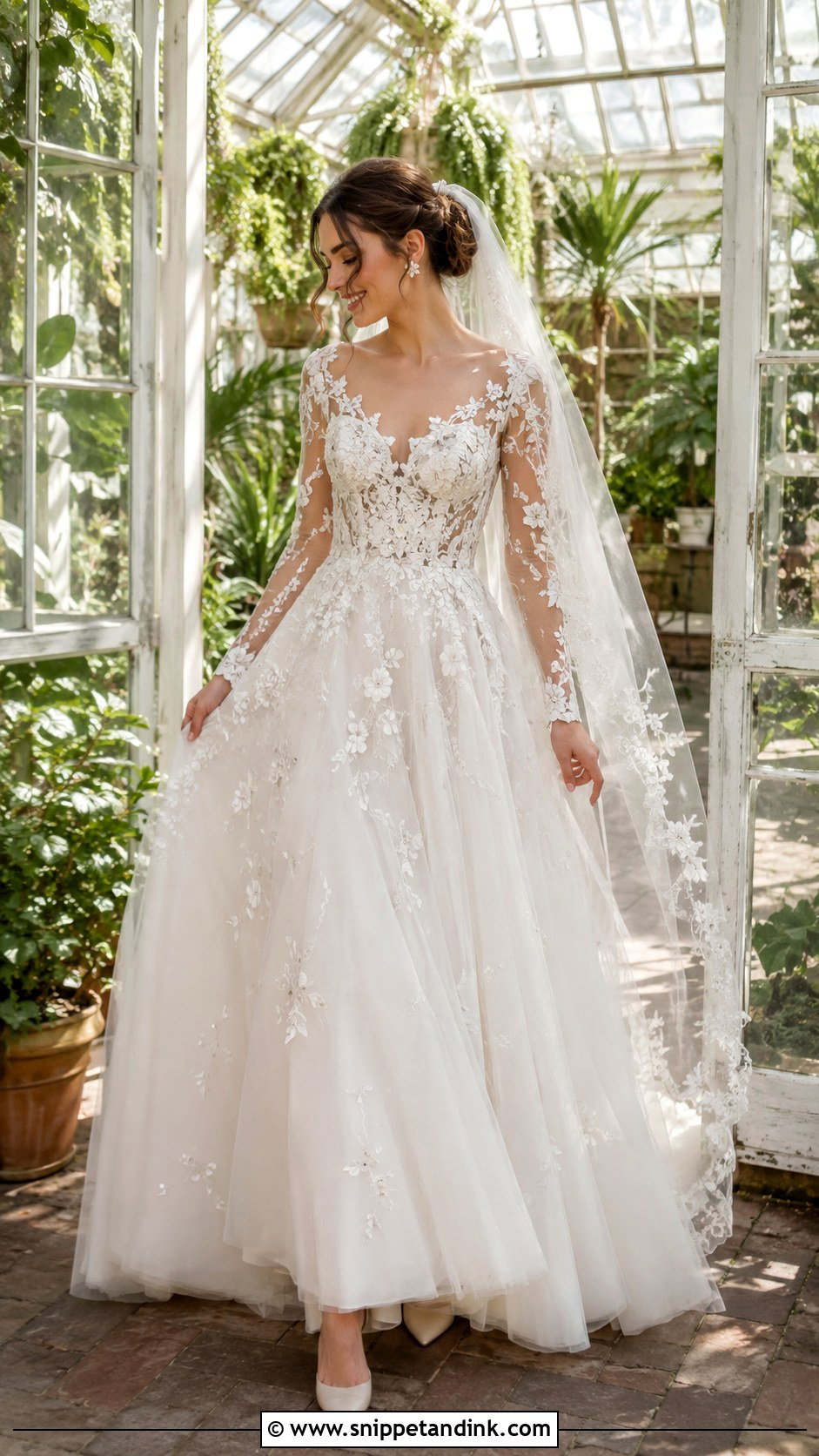
Appliqué flowers can look as if they’re growing over the bodice and down the arms. The best versions fade out: dense at the shoulder, scattered toward the wrist and skirt. A light tulle A-line keeps the raised decoration balanced. Small floral studs, ivory pumps and a sheer veil edged with matching motifs. One understated hairpin in a soft updo is plenty. Raised petals flatten if the dress is packed tightly, so I ask that it travel on a hanger with tissue around the sleeves. Botanical gardens, woodland venues and spring ceremonies suit it.
10. Pearl Beaded Sleeve Wedding Dress
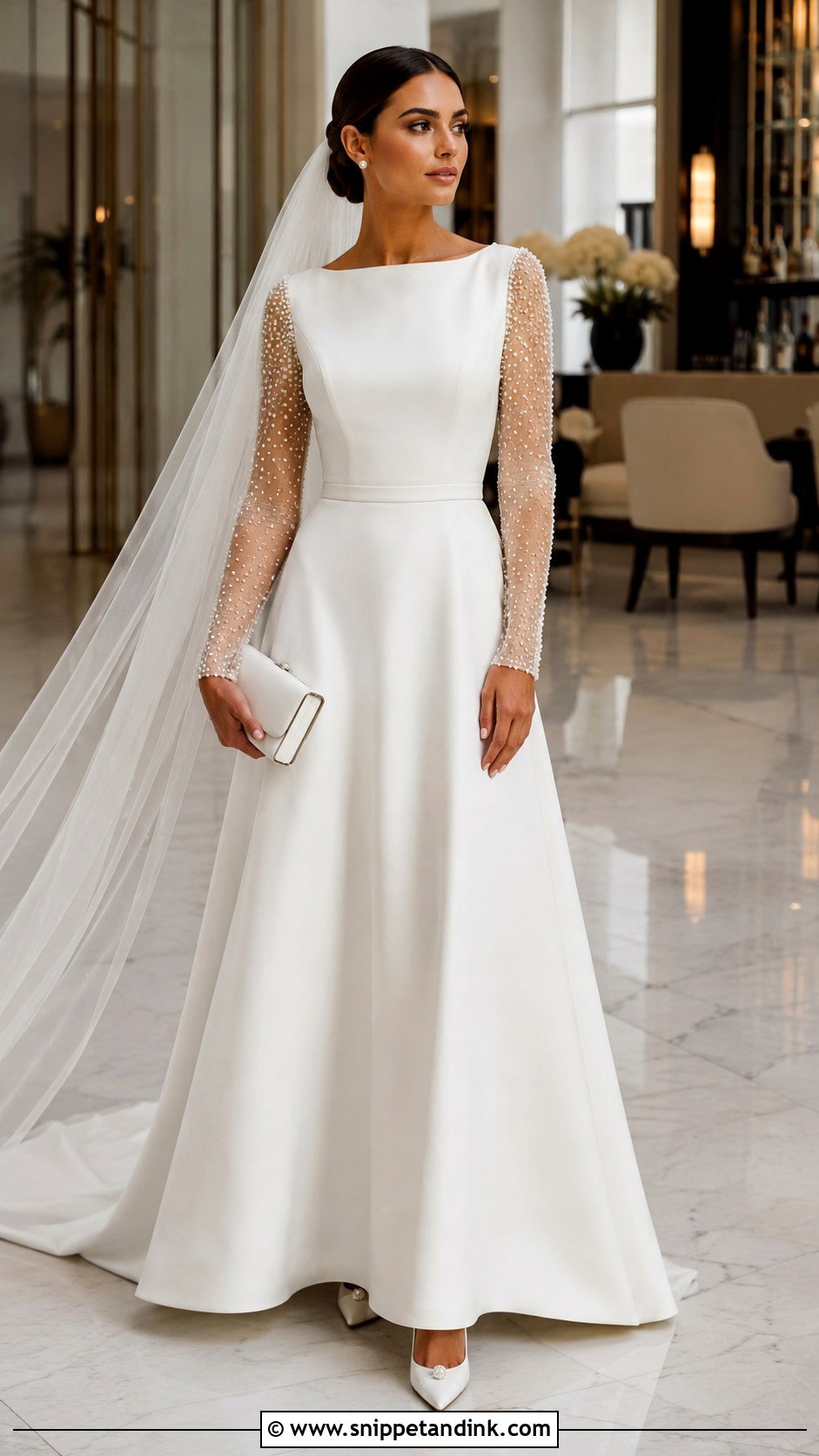
Pearls scattered over a sheer sleeve look like light from across the room. Keep the silhouette simple, a clean A-line or a fitted crepe gown, so the arms carry the detail. Beading is heavy, and a densely pearled sleeve pulls at the shoulder seam after a few hours, so I ask how the beads are attached and whether the seams inside are smooth. Pearl studs, a satin clutch, pointed ivory heels and a plain veil. A sleek bun keeps it modern. Formal hotels and evening receptions with clean architecture suit this one.
11. Fitted Sleeve Satin Wedding Dress
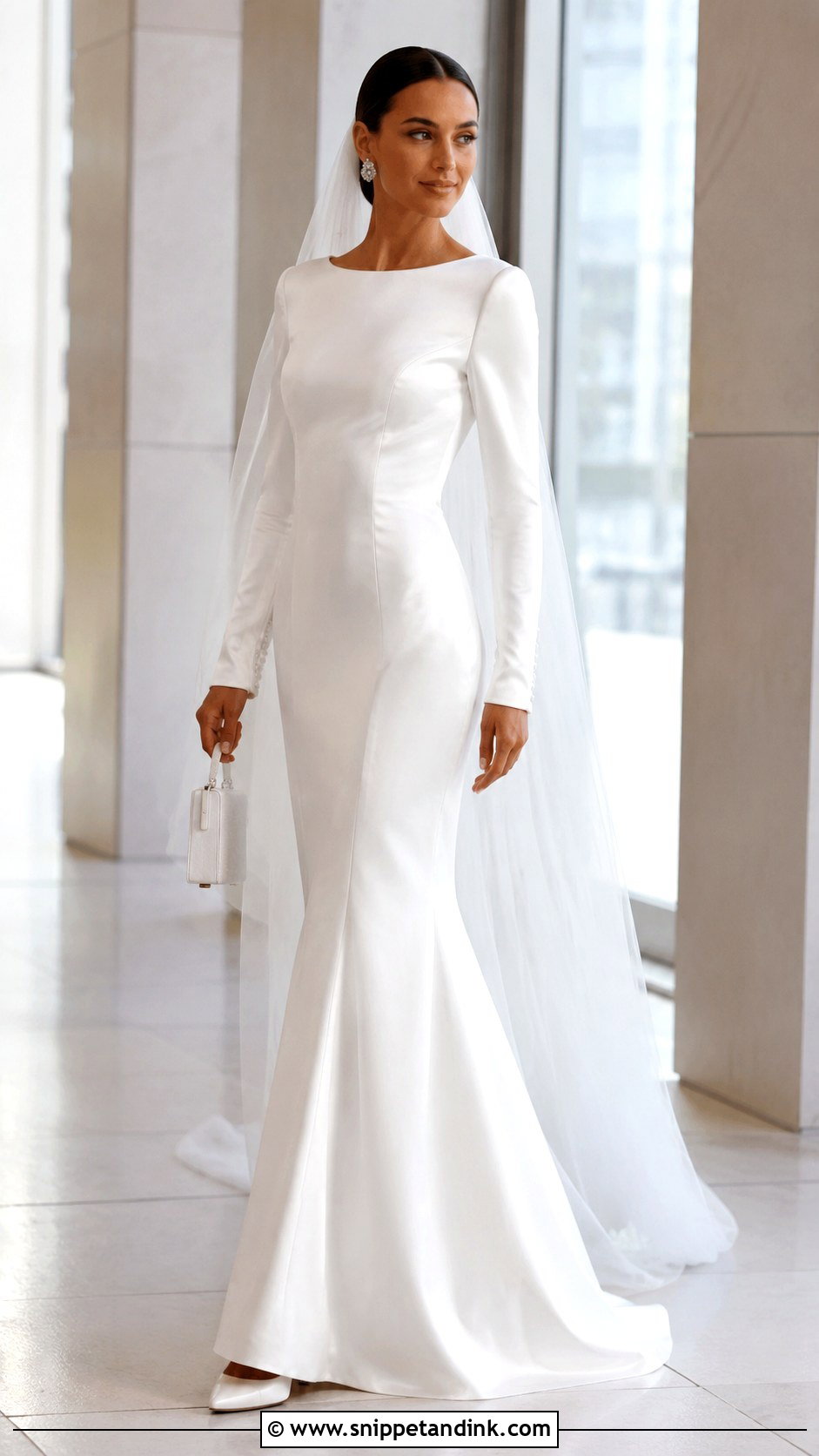
Fitted satin sleeves look simple and are surprisingly hard to get right. Satin doesn’t stretch, so the sleeve has to follow the arm without pulling at the shoulder or the wrist, and I always test it by having the bride cross her arms and lift a glass. A sculpted waist with a softly flared skirt suits it, with covered buttons at the cuffs and back. Bateau, square or a soft scoop neckline. Crystal earrings, a structured mini bag and satin pumps. A long plain veil adds softness. Formal city venues and winter ceremonies are where it shines.
12. High Neck Lace Sleeve Wedding Dress
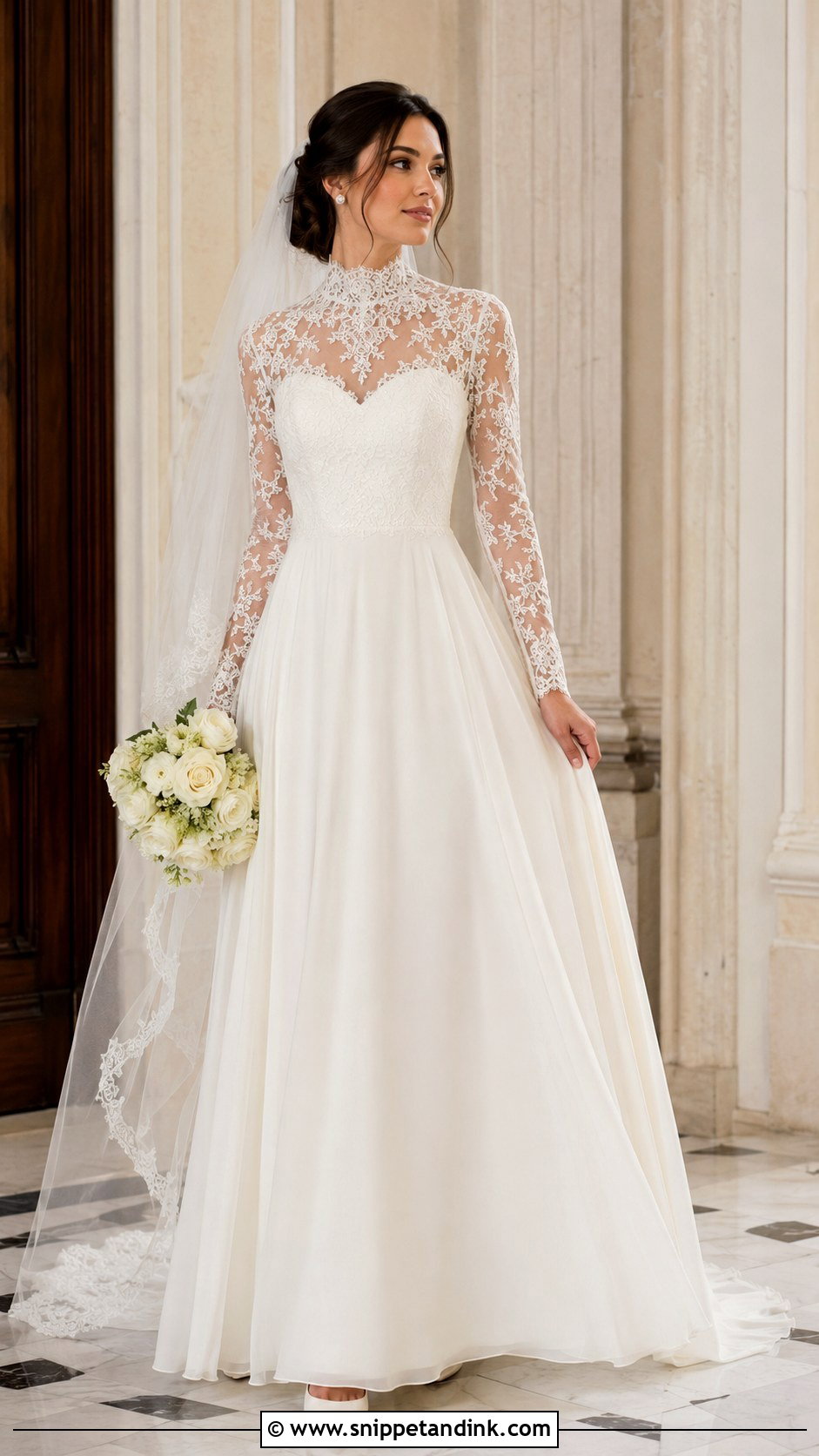
A high lace neck feels light when the collar and arms are sheer and the opaque part is only a sweetheart or camisole lining underneath. That way you get coverage without a solid block of fabric up to the chin. A natural waist and a flowing chiffon or tulle skirt keep it from feeling severe. Delicate studs, a low chignon and a chapel veil placed beneath the hair. Closed-toe ivory pumps. No necklace; the collar already frames your face. I always check the lace edge at the throat, because a scratchy collar is all you’ll think about by evening.
13. Basque Waist Wedding Dress With Sleeves
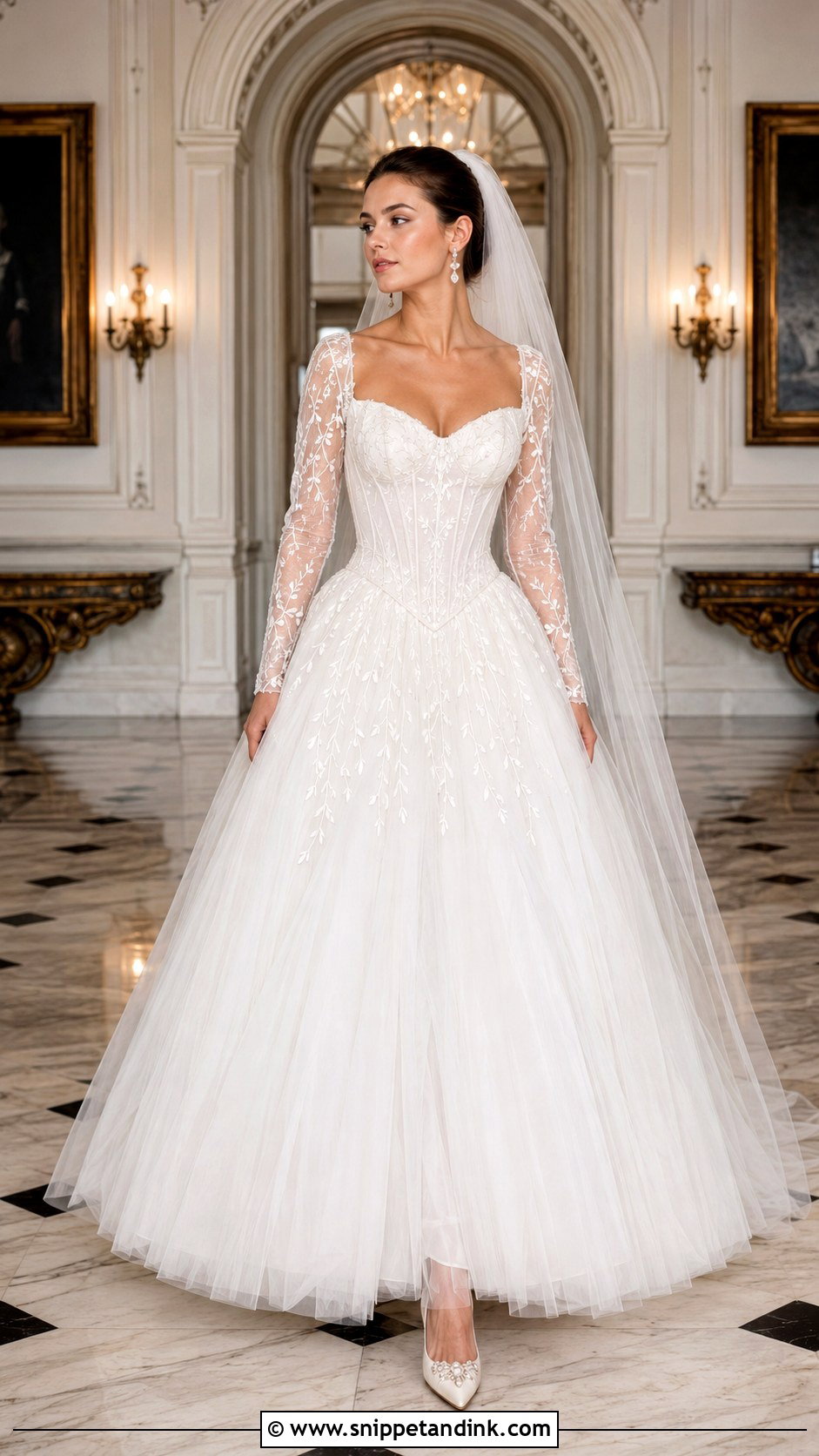
The basque waist dips to a point at the centre front, which lengthens the torso before the skirt opens out. It’s flattering on most figures, but it needs a properly boned bodice to hold the point flat. Sheer fitted sleeves soften all that structure. Embroidered vines, covered buttons or scattered pearls connect bodice and skirt. A long plain veil, crystal drops and pointed ivory heels. Soft updo, so the waistline stays visible. For grand estates and ballrooms it looks regal without feeling stiff.
14. Square Neck Puff Sleeve Wedding Dress
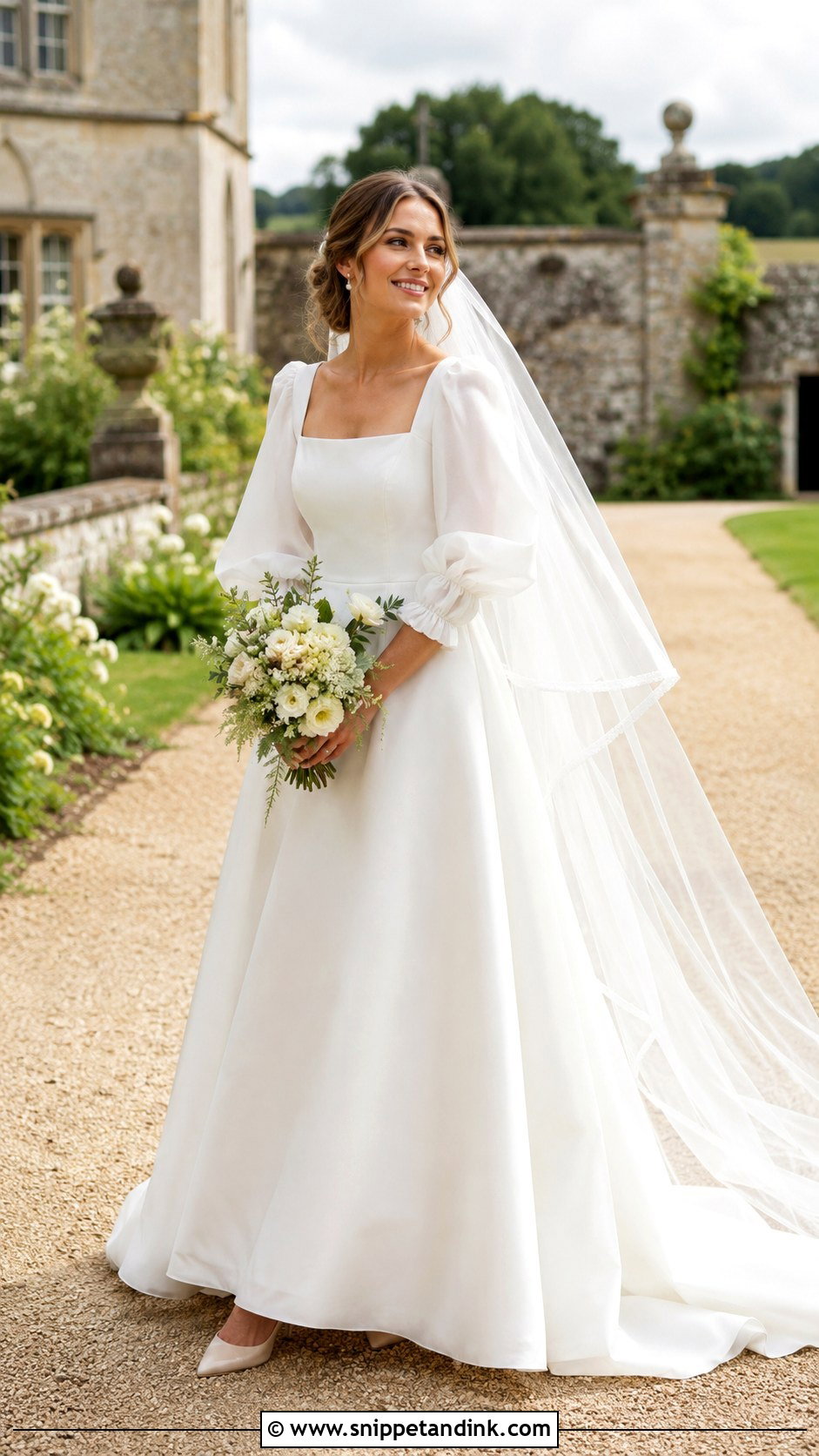
Puff sleeves on a square neck have a hint of history, and the scale decides whether they look romantic or overpowering. I like sleeves that gather lightly at the shoulder and taper well before the wrist. Silk organza holds its shape best; lightweight satin and dotted tulle are softer. A fitted bodice and A-line skirt keep it balanced. Pearl drops, a narrow ribbon-trimmed veil and low ivory heels. A loosely pinned bun. Garden estates and countryside venues with older buildings suit it.
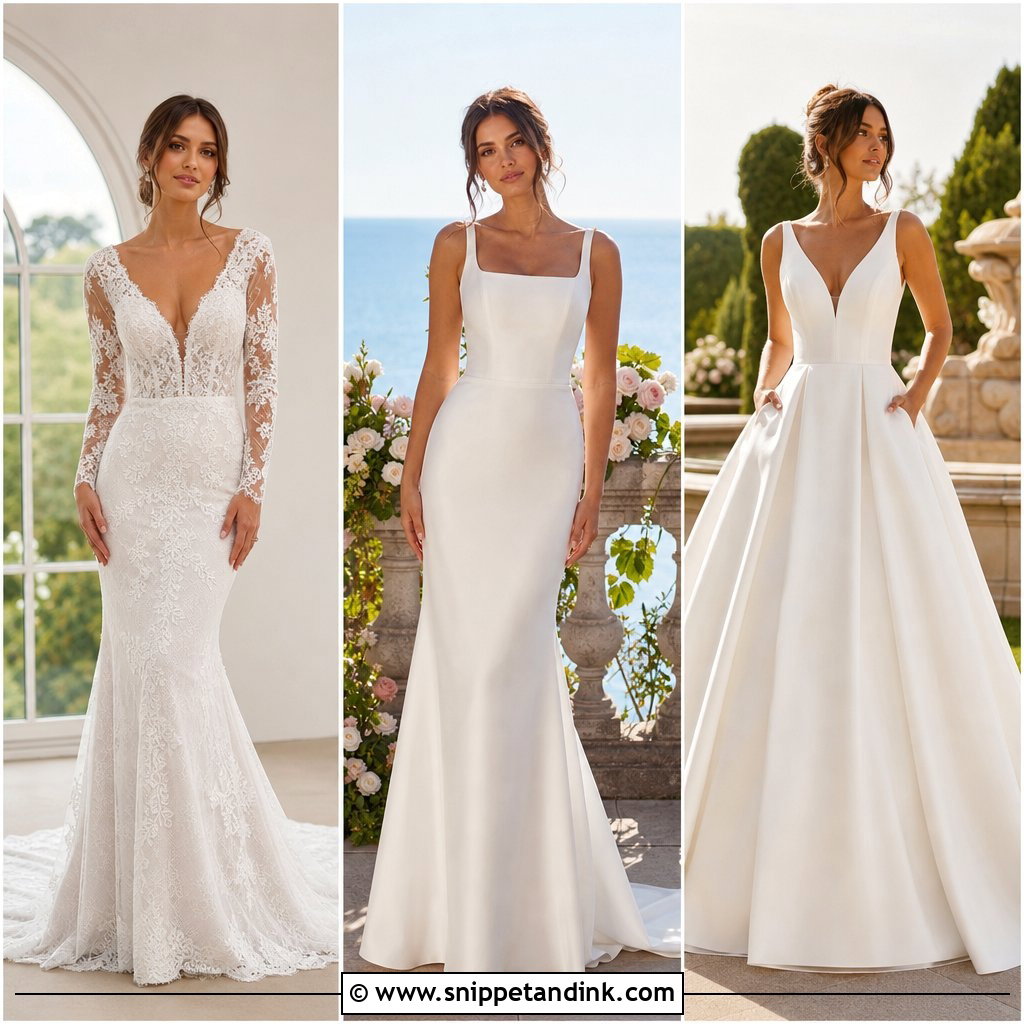
15. Vintage Lace Sleeve Wedding Dress
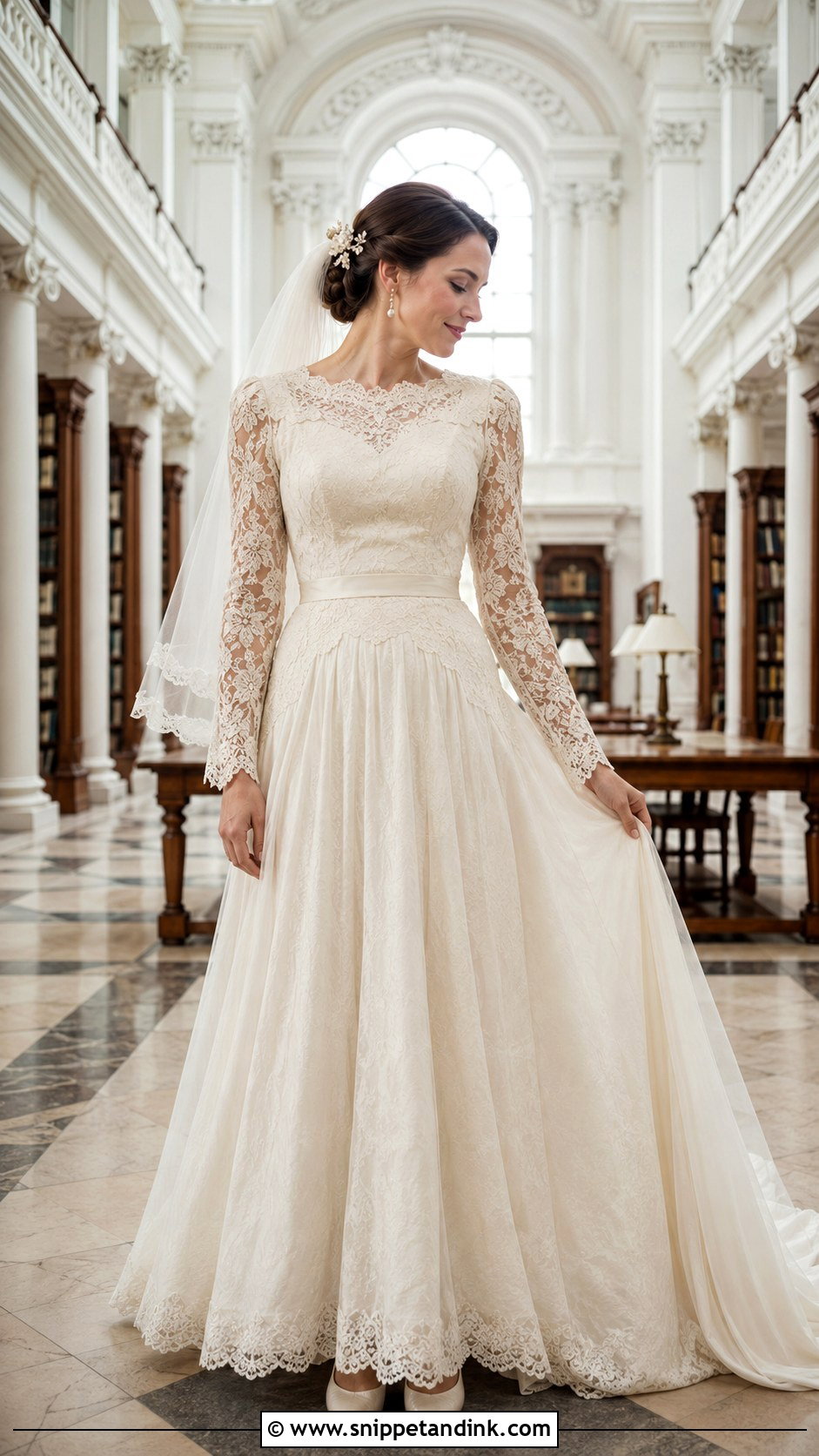
Old lace gives a gown a personal feel, as if it’s been in the family. A vintage-inspired cut with fitted sleeves, scalloped cuffs and a gently defined waist is the version I’d look for, over a flowing skirt or soft sheath. Ivory or cream flatters older lace patterns far more than stark white, which can make lace look flat. An antique-style comb, small pearl earrings and closed-toe heels. Keep the veil plain. Ask whether the sleeves can be lined with soft tulle if the lace feels rough on your skin. Historic homes, libraries and courtyards suit it.
16. Celestial Embroidered Sleeve Wedding Dress
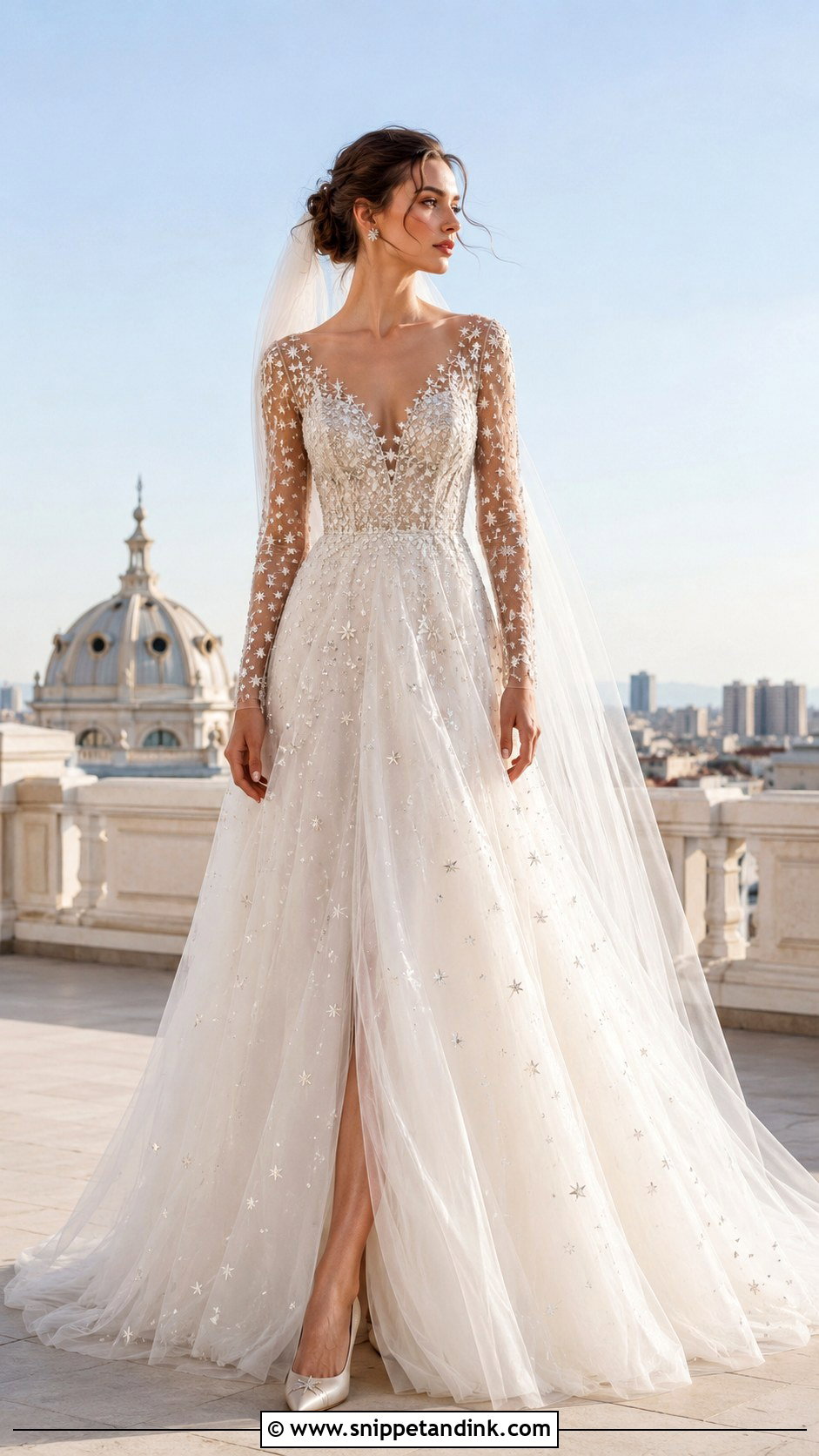
Celestial embroidery looks grown-up when the motifs are tiny and spaced out; big moons start to look like a theme party. Stars, fine rays and beaded constellations on sheer sleeves, over a streamlined tulle A-line or a softly fitted shape. Silver thread, clear crystals and pale pearls give shimmer without colour. Star studs, metallic ivory pumps and a plain veil so the sleeves aren’t covered. A smooth half-up style. Evening ceremonies and rooftops come alive with it, because the beads catch artificial light more than daylight.
17. Organza Sleeve Minimalist Wedding Dress
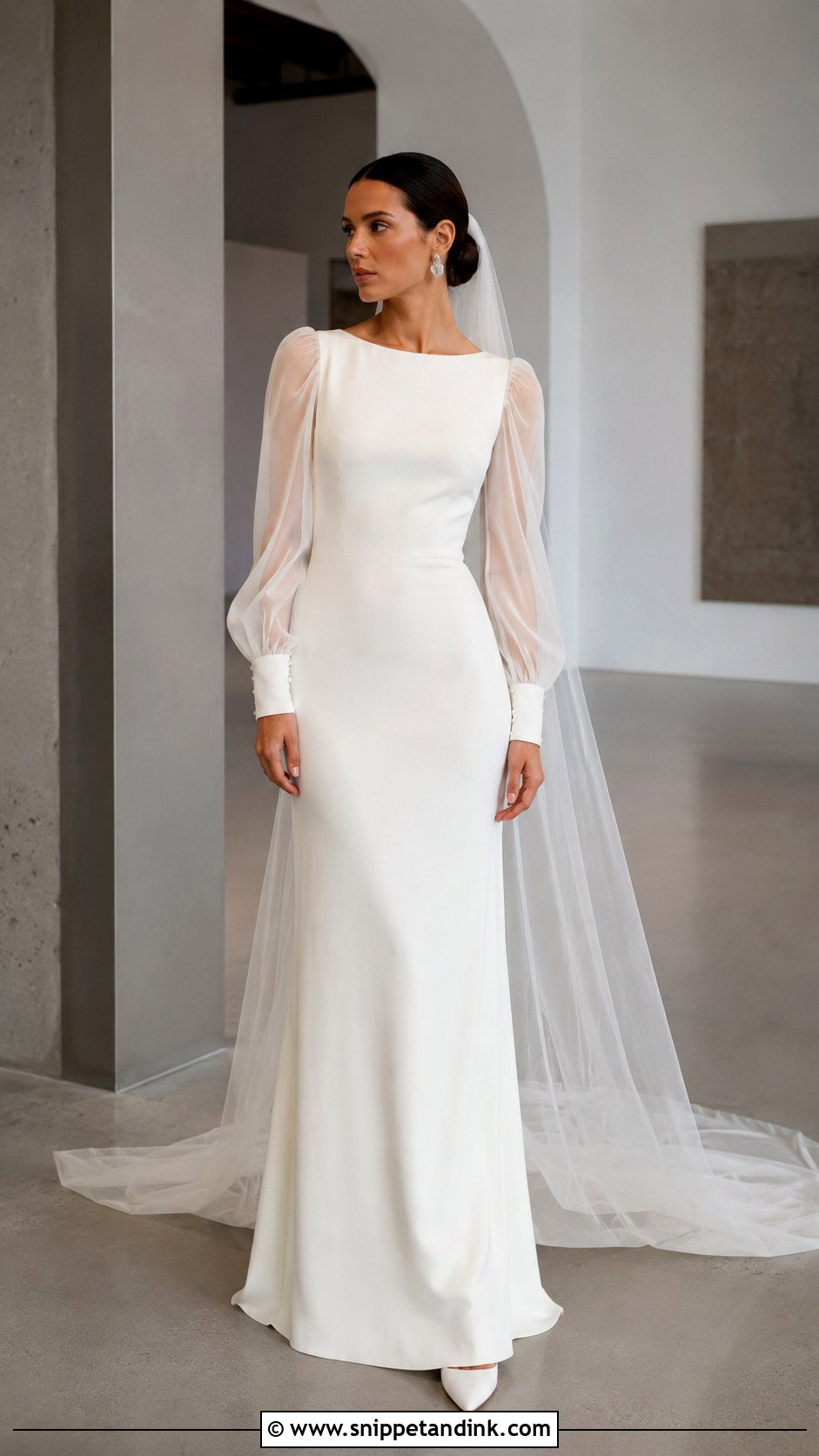
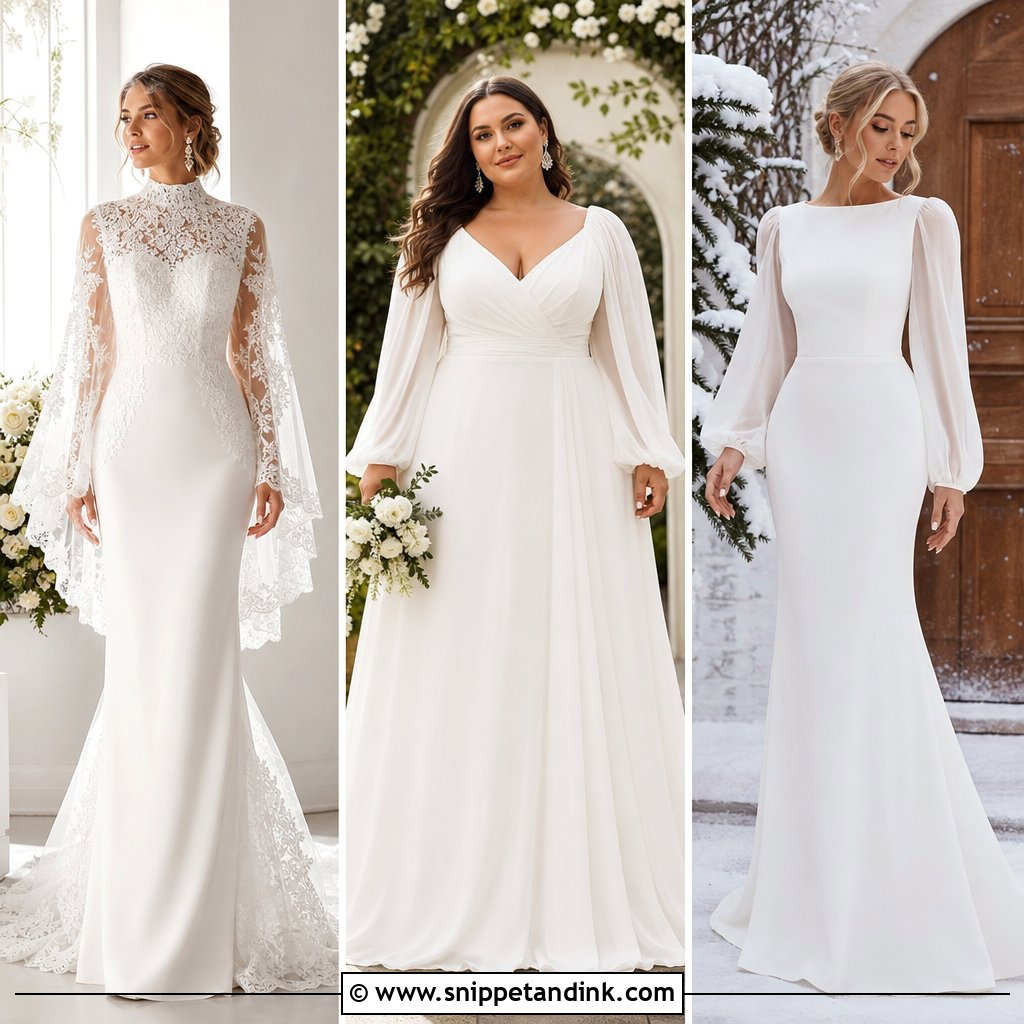
Crisp organza sleeves give volume without any lace or beading, which suits a bride who wants the airy effect in a modern way. A simple crepe or matte satin gown with a fitted waist and a clean skirt, and transparent sleeves gathered at the shoulder with slim cuffs. With no decoration to distract, tailoring is the whole job. Sculptural earrings, pointed ivory pumps and a smooth cathedral veil. A sleek bun or low ponytail. Organza creases sharply when crushed, so it needs steaming and shouldn’t be squashed under a coat. Galleries and contemporary hotels are a good match.
18. Plus Size A-Line Wedding Dress With Sleeves
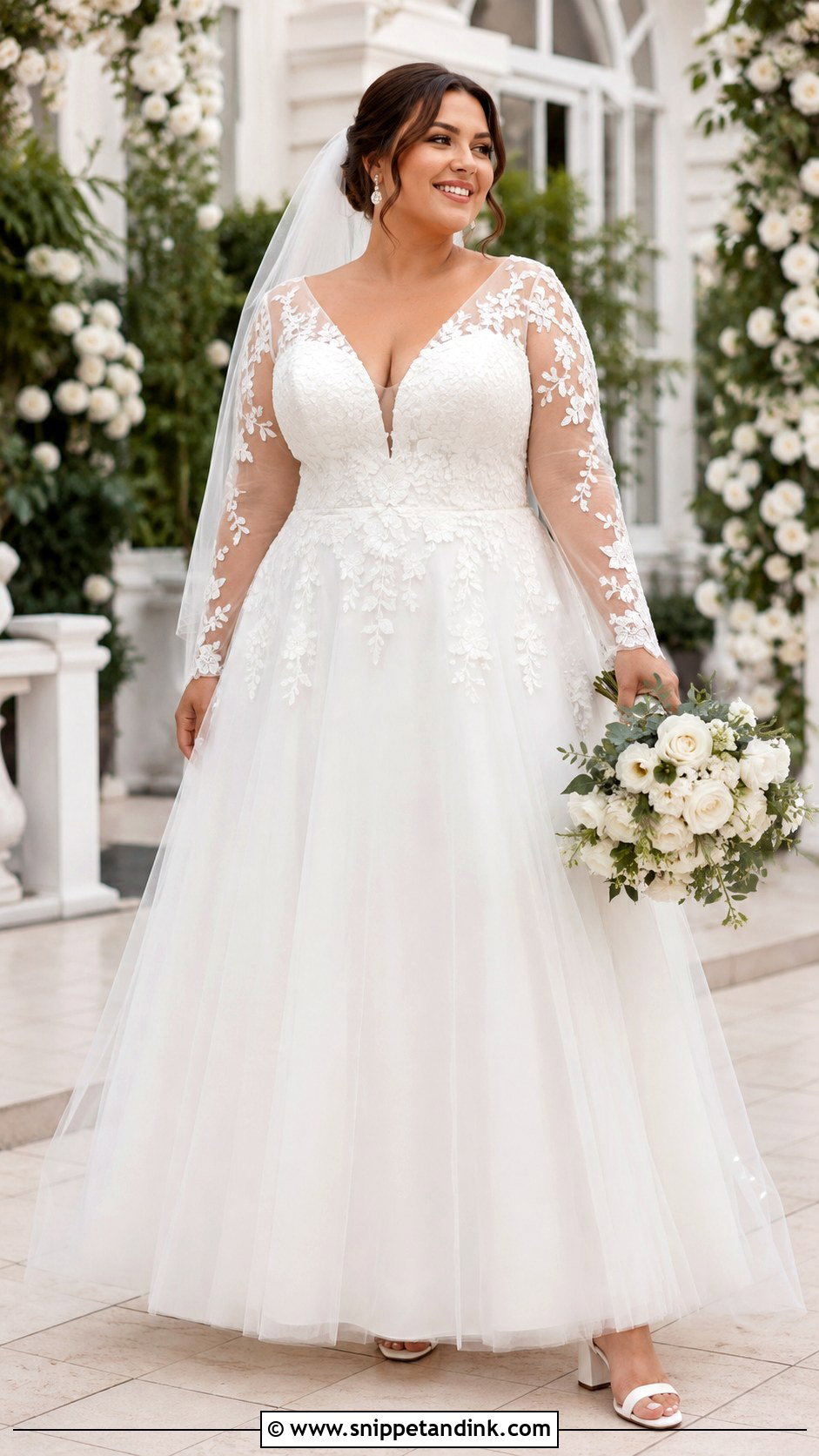
For plus-size brides, I look for a structured inner bodice with soft tulle over it, so the support is built in rather than relying on visible corsetry. Sheer sleeves with appliqués placed where you want coverage keep the arms light. A V-neck or curved neckline draws the eye up, and a defined waist lets the skirt fall smoothly. Supportive block heels, comfortable drop earrings and a single-layer veil. Sleeve mobility is where plus-size gowns often fall short, because sample armholes are cut small. Raise and bend your arms at every fitting. Gardens, ballrooms and destination weddings all work.
19. Petite Sheath Wedding Dress With Illusion Sleeves
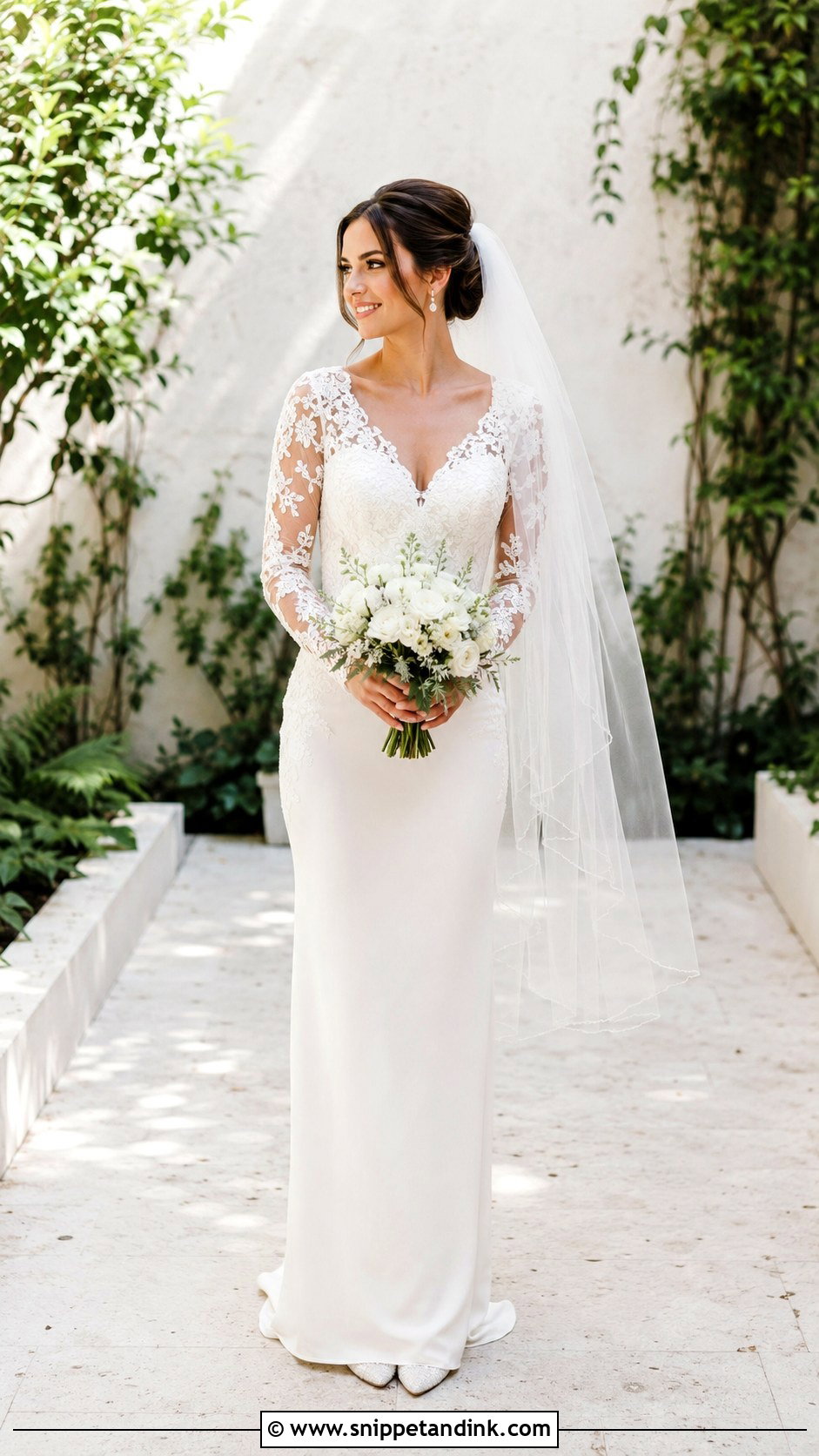
On a petite bride, a sheath wedding dress with illusion sleeves keeps one unbroken line from shoulder to hem. Choose delicate lace motifs and a narrow skirt; big appliqués swamp a small frame. A V-neck, natural waist and a short train help lengthen. The sleeves must fit exactly at the shoulder and wrist, because spare fabric there instantly makes the dress look borrowed. I usually have them shortened from the shoulder so the cuff detail stays intact. Pointed ivory heels, petite drops and a narrow fingertip veil, with a lifted updo for a little height.
20. Blush Tulle Wedding Dress With Sheer Sleeves
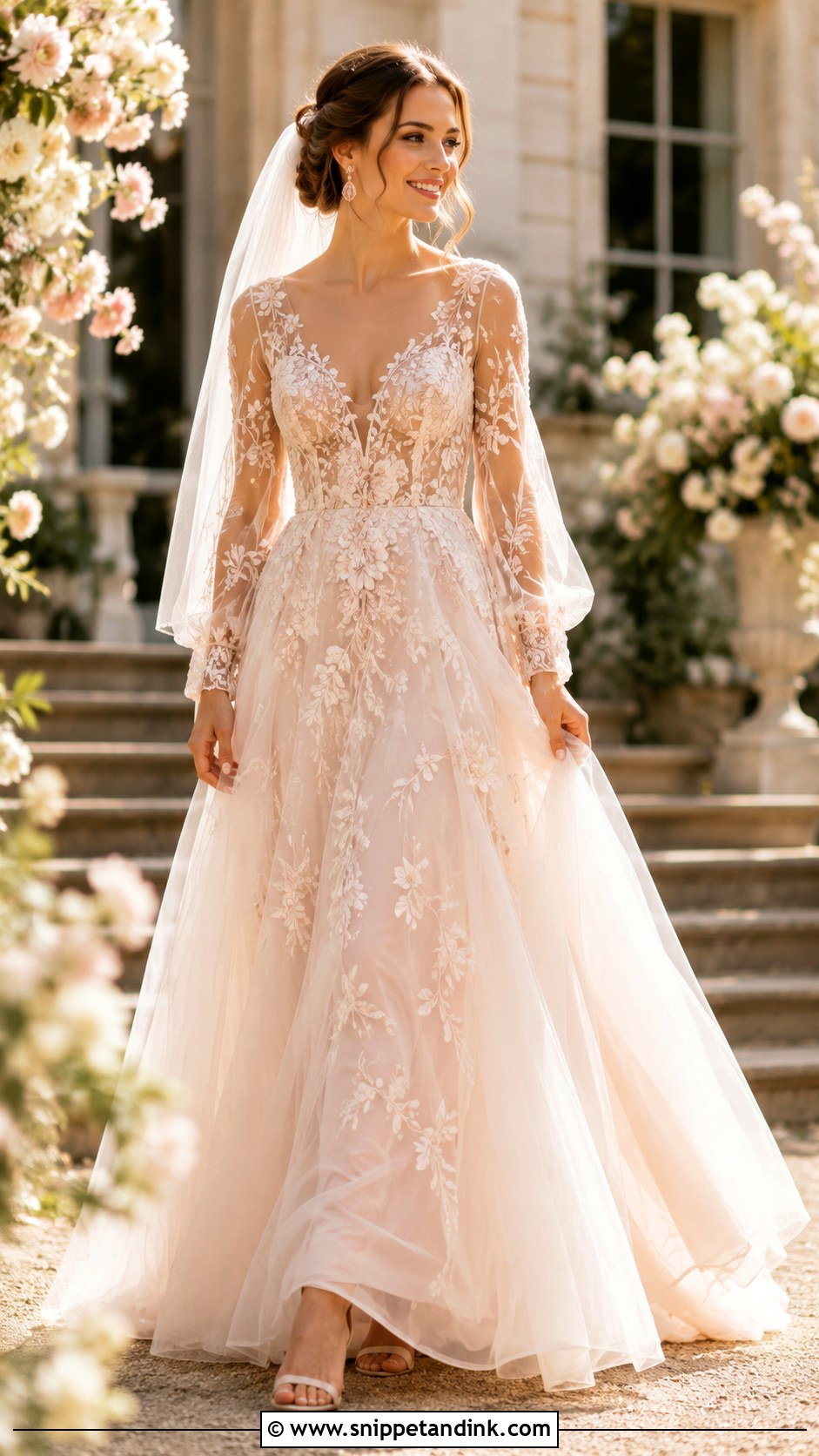
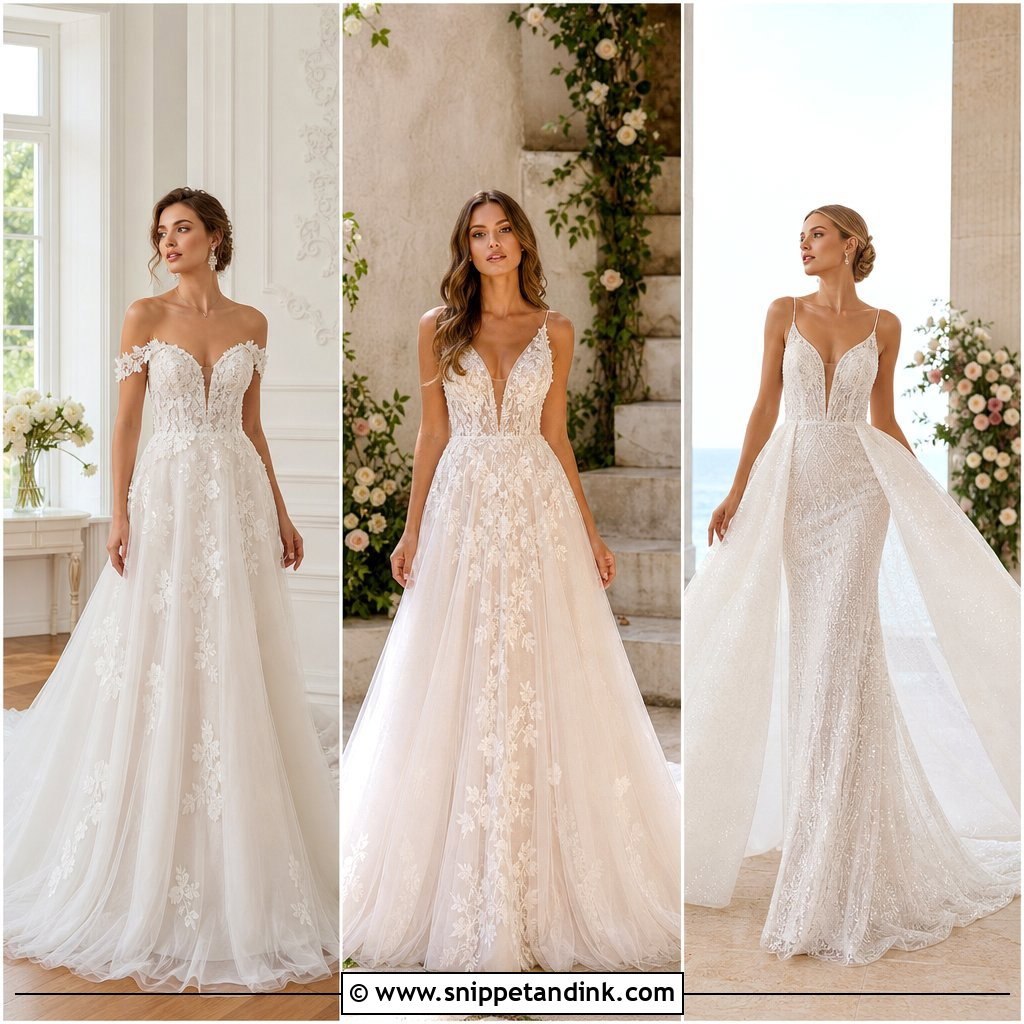
A blush layer under ivory tulle gives depth while the dress still reads as bridal. Muted pink, champagne or nude lining under several soft ivory layers; sheer sleeves with tonal floral embroidery tie the colour through. A fitted bodice and flowing skirt keep the focus on the shade. Rose-gold earrings, ivory heels and a plain veil matched to the top tulle layer, not the lining. Keep flowers soft. Try it in daylight, since the blush shows more strongly outdoors. Gardens and sunny spring or early autumn ceremonies suit it.
Sleeves for a Hot July Garden or a Frosty December Chapel
Sleeves aren’t only for cold weather. In heat, sheer tulle, illusion mesh and fine chiffon let air through and protect shoulders from sun. Heavier lace sleeves with a full lining trap warmth, so for a summer wedding I ask whether the lining can stop at the elbow.
In winter, satin, crepe and lined lace sleeves keep you warmer, but they’re harder to layer over. A fitted coat crushes puff and bishop sleeves, so plan a cape or wrap instead.
What a seamstress can and can’t change
- Shortening a sleeve with scalloped lace cuffs often means taking it up from the shoulder, which is more work than a straight hem.
- Illusion mesh sleeves can usually be narrowed easily; appliqués may need moving afterwards.
- Adding sleeves to a strapless gown is possible with matching fabric, but leave plenty of time for it.
- Making a tight sleeve bigger is hard if there’s no spare seam allowance, so try the sample on properly before ordering.
If you’re between two gowns and one has sleeves you’re unsure about, wear it for a full half hour at the shop rather than five minutes. Sleeves that feel fine at first often start to itch or pinch once your arms warm up.
Which Sleeve Will You Forget You’re Wearing?
Sleeves set the mood of the whole dress. Sheer lace reads delicate, chiffon moves, and satin looks formal. Bishop, bell, cape and puff sleeves draw the eye, while fitted or illusion designs give quieter coverage. When you compare gowns, think about the venue, the weather, the fabric weight and how the sleeve looks from behind as well as the front. Let shoes, jewellery, hair and veil support the sleeve rather than compete with it. Most of all, wear the one you can move, hug and dance in without thinking about your arms.
You'll Like These Ideas:



Leave a Reply